Blog

  • Making marriage, family a priority

    Making marriage, family a priority

    THE PARENTS: Shanay Rowe, 38, and Marrita (Rita) Rowe, 35, of Upper Darby

    THE CHILD: Christopher, 12

    FORMED A BLENDED FAMILY: July 2, 2022

    AN INDELIBLE MOMENT: On a recent night, dinner segued into a spontaneous party, all three of them pulling up YouTube and TikTok videos and rocked the moves of the wu-tang and the jerk — ”our own little family dance party,” Shanay says.

    Within the first five minutes of their first date — a picnic at the Curtis Arboretum, because it was fall of the first pandemic year — Shanay brushed a bit of flotsam off Rita’s eyelash. It was a sticky-hot October day, but they didn’t want the date to end, so they sought refuge in a nearby Barnes & Noble.

    They had their first kiss in the aisle, amid the books.

    “It felt very natural, very familiar; it didn’t feel like someone I was hanging out with for the first time,” Shanay says. She had recently written a nonfiction book about gender expression and sexuality, and Rita was eager to talk about that along with other titles both of them had read and loved.

    “She loved art, books, reading, studying,” Rita remembers. By Thanksgiving, when she found herself eagerly anticipating spending the holiday together, she knew: “This is my person; this is who I want to start building traditions with.”

    There was just one momentary roadblock: Rita had an unspoken rule that she didn’t seriously date people with children. Shanay had a 10-year-old son and talked about him effusively on that first date.

    “I was like: Girl, you know I have a kid. I like him, he’s pretty cool, I spend a lot of time with him.” The more Shanay described Christopher — a baseball player, an avid Eagles fan, a warm and adventurous kid — the more Rita wanted to meet him.

    “I knew the life I lived as a single, childless woman allowed me to travel and offered me a lot of spontaneity,” she says. “But prior to me settling down with Shanay, I’d put down firmer roots and was looking for someone who shared those same priorities.”

    Shanay was technically a single parent, but likes to joke that she shares custody with “an amazing village” that includes Christopher’s biological father (a longtime friend), her mother, her brother, and her grandmother.

    She always knew she wanted to be a mother, but in her mid-20s, years before marriage equality became nationwide law, “the whole idea of settling down, trying to conceive, and being a queer woman didn’t even seem like an option.” Although Christopher switched weekly from Shanay’s house to his father’s, “I was not creating family with another person.”

    Gradually, Rita began to play a more significant role: She worked remotely from Shanay’s house so she could spend one-on-one time with Christopher during his days of virtual school. “It was a time to see him in his element, and him getting to see me in mine. We’d have breakfast together and lunch together; we’d talk about our favorite television shows.”

    Christopher talked about Rita as “part of the family” and made her cards that said, “Best Bonus Mom Ever.” In April 2021, she moved in permanently — a bittersweet transition because it meant leaving a home in West Oak Lane that she’d inherited from her grandparents.

    Meanwhile, Shanay had proposed, spontaneously proffering a ring one night while the two were watching Christmas movies; she’d planned to save the proposal until February 2021 but couldn’t wait. Later, in July, she engineered a more elaborate proposal, a catered picnic in Franklin Square on a weekend when Rita’s family was visiting.

    Getting married mattered to both of them. “I run into many younger queer folks who still don’t necessarily know older queer people who are married — and when we talk about queer Black folks who are married, that number shrinks,” Shanay says. “It was important to me to be a bit of a living example for those who are coming up behind us.”

    Rita says she never viewed herself as “other” because of her sexual orientation. “I always knew one day I’d be married; I just couldn’t parse out how that was going to happen.”

    It did happen, this summer, at The German Society of Pennsylvania, an archival library that felt like the ideal setting. Eighty-five friends and family members joined them for a reception in the historic ballroom.

    Christopher was front and center: dressed in a suit and a pair of shined Oxfords, walking his grandmother down the aisle, standing between Shanay and Rita as the pastor blessed them as a family.

    Shanay Rowe with son Christopher

    Shanay has always been frank with Chris about homophobia, “the harsh reality that everyone isn’t always going to be super-friendly about the fact that he has two mothers. It meant a lot to him, as a kid, to know he had that family unit, also.”

    Rita cherishes the moment they were presented as “Mrs. and Mrs. Rowe” — she’d taken her wife’s last name because Shanay had been the one to propose — and the sight of a roomful of people who were there to support their union.

    “It solidified: Not only am I taking this journey with my partner and family, but there’s a whole community around us that wants us to succeed. Being married: I think of it as a responsibility and an adventure. I have to take care of this woman and love this woman; if I don’t have the tools, one of the people in that room will have them.”
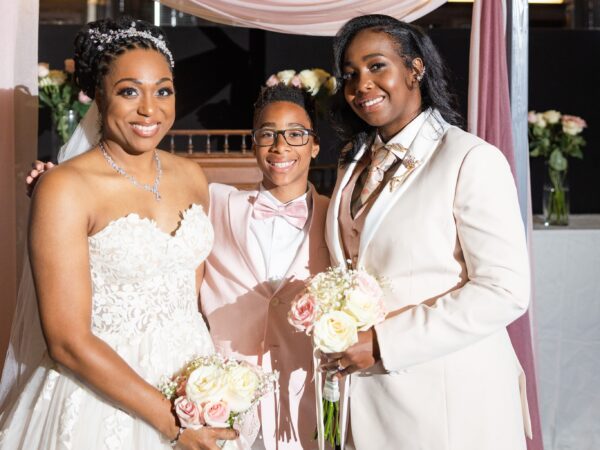
    Christopher and “bonus mom” Rita at the July wedding that affirmed their blended family.

    For Shanay, too, the tearful, smiling faces of family and friends made her feel loved, validated, and supported. But it was Christopher’s response that made the deepest impression.

    “Rita danced with her father; I did my dance with Chris,” Shanay recalls. “It was the sweetest thing. He took my hand, got very close and said, ‘I don’t know what to do.’ I put his hand around my waist and said, ‘You’re going to follow me.’ We danced to ‘If I Could’ by Regina Belle, a tearjerker. I said, ‘Do you need to cry? It’s OK; you can cry.’ He leaned on me and said, ‘I’m so happy for you.’ That was a highlight of a moment. It made me feel like I had made the right decision.”

  • Where is the Umbrella Man statue that used to reside outside the Prince Theater?

    Where is the Umbrella Man statue that used to reside outside the Prince Theater?

    For almost 30 years, he stood in sun and darkness, rain and snow, on the streets of Philadelphia.

    Known popularly as “Umbrella Man,” he stepped forward, as if signaling a cab in the rain. He was last seen in front of the then-Prince Music Theater in the 1400 block of Chestnut Street.

    But sometime in 2015, along with the Prince, he disappeared.

    Where did he go? Whatever became of “Umbrella Man”? Those questions were posed to us by a reader through Curious Philly — the forum where you can ask our journalists questions.

    Allow us: He’s not in Philadelphia anymore. He’s on tour. But his home is not far away: Hamilton, N.J., as a matter of fact.

    But let’s step back. The actual name of the six-foot-10, 460-pound sculpture is Allow Me. It depicts a man in a three-piece business suit. He’s holding an umbrella in his right hand and gesturing with his very, very long left index finger, as if saying, “Wait a minute.”

    That title, though. Whoever brought down a cab with an “Allow me”?

    Allow Me is the work of American sculptor Seward Johnson II, grandson of the founders of Johnson & Johnson. It’s part of a series Johnson calls “Celebrating the Familiar.” You’ve probably seen many of the pieces in the series, and that’s the way Johnson likes it. He makes multiple copies of daily-life sculptures — boy with ice-cream cone, man with newspaper, senior lady with grocery sack, window-washer, traffic cop — and distributes, displays, or tours them throughout the country. Another one, titled “The Consultation,” is at the campus of the Presbyterian Medical Center just off 39th and Filbert Streets in West Philadelphia.

    The J. Seward Johnson sculpture “Allow Me” when it was near the Warwick Hotel on South 17th Street in photo taken Feb. 15, 2001.

    According to the Johnson Atelier Inc., the organization that tracks and controls Johnson’s productions, the original Allow Me was created in 1981. In 1983-4 a series of copies was made, for a total of seven, from the same cast, which was destroyed thereafter (apparently the casts wear out). The atelier says the Philadelphia Allow Me was the last one.

    Allow Me had a long, rough run in Philadelphia. Its first sojourn here was in an exhibit of Johnson’s works in 1983-4, in front of the Four Seasons hotel on the Parkway. There it charmed lawyer and art collector Joseph D. Shein, who bought it from Johnson and had it set up in 1985 in front of the Shein-owned building where he ran his offices, at the corner of 17th and Locust Streets.

    In this Sept. 6, 1985 image from the Philadelphia Inquirer, lawyer and art collector Joseph D. Shein sits with “Allow Me,” a statue by Seward Johnson II. It had just been installed in front of what were then Shein’s offices at 17th and Locust Streets.

    There, Umbrella Man stood for just about 20 years. Many a cabbie was said to stop, only to curse and move on. Street lore had it that he got the Philadelphia treatment, with generous applications of cigarette butts and gum.

    In 2005, Shein donated the statue to the Prince. Umbrella Man was plunked just to the right of the main entrance, where he remained into 2015. Abuse continued: Luckless pedestrians walked into him, and during the joyous October 2008 street celebrations after the Phillies’ World Series triumph, vandals attempted to uproot poor Umbrella Man, leaving him crooked, graffiti scrawled on his forehead.

    "Allow Me" Statue - Knocked Over During the Phillies Parade

    And then … he went away. In 2010, the Prince declared bankruptcy. After protracted uncertainty, the building was bought by a group of business investors, to be sold in 2015 to the Philadelphia Film Society, its current tenant who changed the name to the Philadelphia Film Center. According to the Johnson Atelier, that year the atelier bought Allow Me back.

    Little by little, people noticed he wasn’t there.

    Although the final price is proprietary, most sculptures in the “Celebrating the Familiar” series, according to the Johnson Atelier, run for $84,000, but Allow Me is now in the Johnson catalog for $130,000.

    Where is he now? His physical home is the Johnson Atelier in Hamilton, N.J., next to Grounds for Sculpture. But Umbrella Man himself is on tour, according to the atelier e-mail: “[T]his sculpture is now actively traveling with the other Johnson pieces in the foundation’s touring exhibits throughout the US and Europe.”

  • How to not get frostbite or hypothermia when the weather is freezing

    How to not get frostbite or hypothermia when the weather is freezing

    With an onslaught of freezing winter weather, doctors have one message for Philadelphians: Stay inside as much as possible.

    “In order to get frostbite, you have to be out in freezing temperatures,” said Bob McNamara, chair of emergency medicine at Temple University’s Lewis Katz School of Medicine. “So the number-one thing would be to stay inside.”

    People should also be concerned about hypothermia, McNamara said, which can occur indoors too, if people don’t have proper heating. “Roughly half the cases of severe hypothermia we see happen indoors,” he said.

    But fear not! There is plenty you can do to prepare for the winter not-so-wonderland.

    While curling up under a fuzzy blanket is always a good call, here are some tips from experts, including one who’s been to Antarctica.

    Frostbite

    When the body gets cold, it restricts blood flow to the extremities, prioritizing major organs instead. So the first signs of frostbite include tingling or pain in the fingers, toes, ears, nose, and elsewhere on the face. Numbness and graying patches of skin are more serious indicators that frostbite is setting in.

    Older people and young children are at high risk, as is anyone with a medical condition that might affect their circulation.

    How to prevent frostbite

    Nothing beats staying indoors, but if you have to venture out, try to spend as little time outside as possible, McNamara said. And go prepared.

    Ted Daeschler, a scientist at the Academy of Natural Sciences of Drexel University, has gone on a research expedition in Antarctica, where he and colleagues camped in 5- to 15-degree temperatures.

    He said he often wore two pairs of socks, hooded long underwear, a second layer of long underwear, shirt and pants, a fleece jacket, insulated wind pants, a wind jacket, a neck gator, and wool hat and gloves.

    “Still there were times when the wind made it too cold to work outside and we remained in our camp,” he wrote in an email.

    While you may not need to go to Antarctic levels of preparedness, it’s a good idea to follow the advice your parents gave you as a kid: warm hat, gloves, snow boots, a wind-resistant jacket, and layers of clothing. The air between layers retains heat, McNamara said.

    When to get help for frostbite

    “If you catch frostbite early, it can be reversed,” McNamara said.

    Mild cases of frostnip, in which the skin feels cold and is just starting to tingle, can be reversed by getting indoors or using a warm bath, he said.

    But if the skin becomes pale, waxy, or hard, people should seek medical attention. Those are signs of tissue loss and may require amputation.

    “Every winter we see people who lose body parts from frostbite in the city of Philadelphia,” McNamara said.

    Hypothermia

    When the body is exposed to the cold for long periods of time, it can lose heat faster than it can produce it, causing a dangerously low body temperature, according to the Centers for Disease Control and Prevention. Wet conditions are especially dangerous, even when temperatures are above freezing.

    “Hypothermia is a life-threatening condition,” McNamara said. Major organs can stop functioning properly when body temperature drops.

    It can be difficult to spot, though. People may have slurred speech, stumble or trip over themselves, and seem confused. “A mistake people can make is to think they just had too much to drink,” McNamara said.

    How to prevent hypothermia

    Stay inside and stay dry, the CDC recommends. People should check on neighbors and the elderly to make sure everyone has functioning heat. “Not just a space heater,” McNamara said.

    When to get help for hypothermia

    If you think someone has hypothermia, call 911 and get medical attention, McNamara said.

    If you’re stranded or waiting for emergency responders, try to get the person dry, wrap them up in blankets, and get them as warm as possible.

    And a warning on alcohol: While some people believe drinking can stave off the cold, it’s actually very dangerous, McNamara said. Alcohol dilates the blood vessels on the skin, making you feel warm. But this process increases heat loss. So you won’t know you’re cold and you’ll be getting colder by the minute, McNamara said.

    Another concern doctors in the emergency room see during cold snaps: people with broken bones and head injuries from slipping and falling on ice.

    “All the more reason to stay indoors,” McNamara said.

  • Dexter, the U.S. Navy’s last working horse, is buried in Philly

    Dexter, the U.S. Navy’s last working horse, is buried in Philly

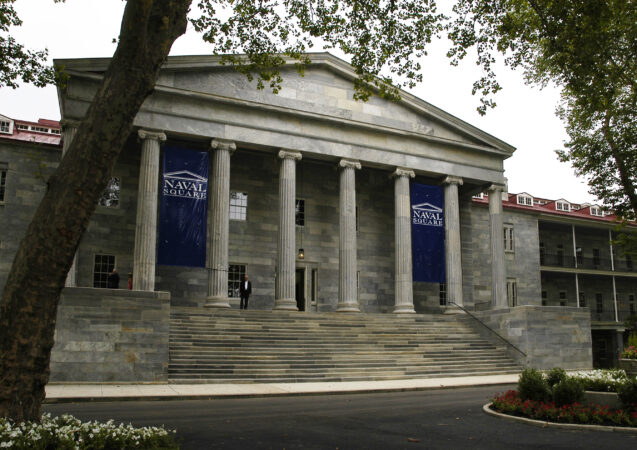
    Naval Square, as it is now known, has been many things before becoming a gated community of expensive condos on the banks of the Schuylkill in a neighborhood with many names.

    The Inquirer calls the area Schuylkill, but others might use Devil’s Pocket, Southwest Center City, or Graduate Hospital, the newest name on the block.

    But whatever you call it, the 24-acre plot of land on Grays Ferry Avenue has been associated with the Navy since 1827 and has the unusual distinction of being the final resting place of Dexter, the Navy’s last working horse.

    A reader interested in learning more about the horse — the questioner thought it was a mule — asked about it through Curious Philly, the Inquirer and Daily News question-and-answer forum through which readers submit questions about their communities and reporters seek to answer them.

    First, a little history about the site.

    The Philadelphia Naval Asylum, a hospital, opened there in 1827.

    From 1838 until 1845, the site also served as the precursor to the U.S. Naval Academy, until the officers training school opened in Annapolis with seven instructors, four of them from Philadelphia.

    In 1889, its name was changed to the Naval Home to reflect its role as a retirement home for old salts, as they used to call retired sailors. It closed in 1976, when the Naval Home moved to Gulfport, Miss.

    It was in the service of the Naval Home that Dexter came to Philadelphia.

    Originally an Army artillery horse foaled in 1934, Dexter was transferred to the Navy in 1945 to haul a trash cart around the Naval Home.

    Despite his lowly duties, the men — only men lived there — loved him.

    “That horse was more human than animal,” Edward Pohler, chief of security at the home, told the Inquirer in 1968. “He had the run of the grounds and would come to the door of my office every day to beg for an apple or a lump of sugar.”

    The chestnut gelding was retired in 1966 and sent to a farm in Exton, but that did not last long. Naval Home residents who missed him committed to paying the $50 monthly bill for his feed and care.

    For two years he grazed on a three-acre field that residents dubbed Dexter Park.

    But on July, 11, 1968, Dexter, who had stopped eating and was not responding to medication, died at the age of 34 in his stall with a little human intervention to make it pain-free.

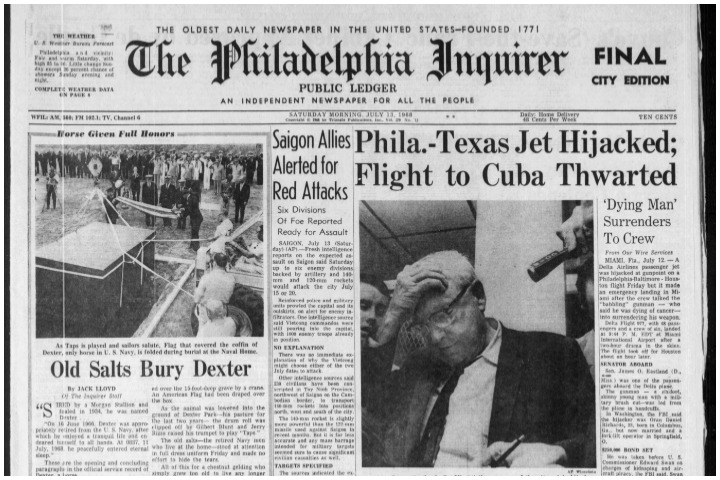
    The story about the funeral for Dexter was on the front page of the Inquirer on July 13, 1968.

    The next day, 400 people, including Navy men in dress uniform, turned out for a burial with full military honors.

    Dexter was placed in a casket measuring 9 feet long, 5 feet wide, and 5 feet deep, with an American flag draped on the top. Retired Rear Adm. M.F.D. Flaherty, the home’s governor, offered final words, saying, “Dexter was no ordinary horse.”

    As the casket was lowered by a crane into the 15-foot-deep grave, Gilbert Blunt rolled the drum and Jerry Rizzo played “Taps” on his trumpet. Members of the honor guard folded the flag into a triangle of white stars on a blue field and presented it to Albert A. Brenneke, a retired aviation mechanic and former farm boy from Missouri who was Dexter’s groom.

    Brenneke recalled Dexter fondly, saying the horse was “very gentle and playful” and “liked to nibble on you,” according to news coverage of the funeral.

    No sign exists marking Dexter’s final place.

    The pasture, however, did not remain empty for long.

    According to the December 1968 issue of the Navy magazine All Hands, a retired 16-year-old Fairmount Park Police horse named Tallyho took up residence at the Naval Home after Dexter’s death.

    But, unlike Dexter, Tallyho, a bay gelding, was a gift to the home’s residents and did not receive an official Navy serial number.

    “As was the case with Dexter, Tallyho’s only duty will be to contribute to the happiness of the men who share their retirement with him at the U.S. Naval Home,” the magazine said.

    What happened to Tallyho after he went to the Naval Home is not clear.

  • 1990s flashback: When the desire for Starter jackets turned deadly

    1990s flashback: When the desire for Starter jackets turned deadly

    Just before midnight on March 4, 1990, 15-year-old Darius Lamont was pulled through the back door of a friend’s home in Charlotte, N.C.

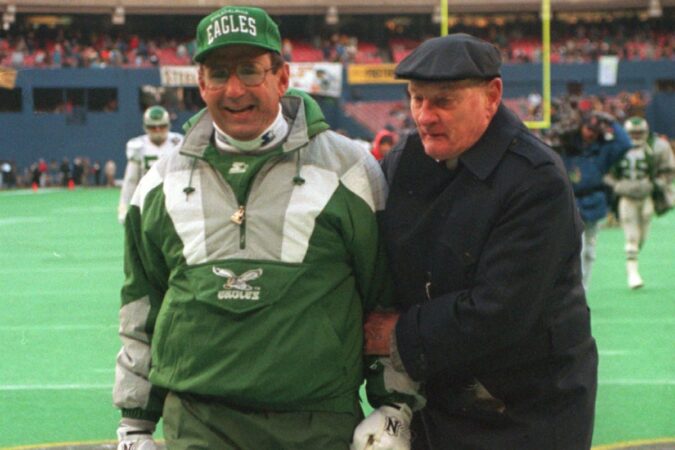
    His attacker wanted the teenager’s green-and-white Eagles Starter-brand jacket, valued at $125. During their struggle, the attacker pulled out a gun and shot Lamont in the face.

    When police arrived, the jacket was gone. Lamont died 10 hours later.

    His death — like the jacket — was part of a trend.

    The growing popularity of professional sports in the late 1980s and early ’90s spawned a new cultural status symbol: expensive sports gear lined in team colors and affixed with hulking logos. The apparel was marketed to the eager-to-impress in their teens and early 20s. But the gear was so popular that some young wearers became crime victims.

    As the 2017 NFL season kicks off and sports stores start to push their cold-weather gear, we look back on the chaos that followed the rise in sports-gear popularity and crimes spurred by the Starter-brand jacket trend.

    In the 1980s and ’90s, the jackets were manufactured by the Starter Corp. of New Haven, Conn. The company was licensed to produce gear for all the major professional teams, including baseball, hockey, basketball, and football. While the brand still exists, it’s now an underutilized subsidy of Iconix Brand Group, which continues to sell the jackets for about $100 each.

    Starter’s business peaked in 1992, when the brand made $350 million in sales. The most popular product was the winter-weight jacket, worn by gangster rappers and Hollywood superstars alike.

    But the status symbol also led to a secondary industry: jacket theft. In Philadelphia, especially in the lower Northeast, some who couldn’t afford one turned to violence.

    Two and three times a week, the police blotter was full. On one week in 1993:

    – “14-year-old boy was jumped by a group of four men at 8:45 p.m. Jan 23 in the 6300 block of Charles Street and robbed of his $100 warmup jacket”

    – “14-year-old boy was punched and robbed of his $100 Starter jacket at 9:15 p.m. Jan. 22 in the 4100 block of Levick Street by a group of three teen-age boys”

    – “A 13-year-old boy was robbed of his $100 Starter jacket at 3:15 p.m. Jan. 21 in the 1500 block of Foulkrod Street by a 15-year-old boy”

    Philadelphia police went so far as to send the freshest-faced cops undercover as decoys to catch would-be thieves. A Mayfair neighborhood group offered to put jackets on a registry, scribbling assigned serial numbers in three separate and secret locations on the jackets. But the thieves caught on, cutting out the serial numbers after they were lifted.

    In 1993, when Robert Levins was inspector of the Northeast Police Division, he told then-Daily News columnist Jill Porter that he would lecture parents.

    “I tell parents that I wouldn’t buy one for my child because of the fact — why put a target on your kid?” he said. “Why make your kid a victim? Buy him a nice coat, but it doesn’t have to be a Starter jacket or a sports team jacket.”

    Porter wrote in response: “Sounds good to me, but try telling that to your kid.”

    James Lamont, Darius’ father, told the Charlotte Observer that he had given his son money for Christmas to buy the jacket.

    “It’s a shame you can’t buy something for your child,” he said, “without worrying if he’ll be safe to wear it.”

  • Starting a gym was one scary workout for City Fitness’ Ken Davies

    Starting a gym was one scary workout for City Fitness’ Ken Davies

    Think your gym time is killer? That hour on the elliptical machine? That muscle-taxing combination of burpees, lunges, and side planks that make you want to collapse in a pile of sweat and tears?

    Try owning the gym.

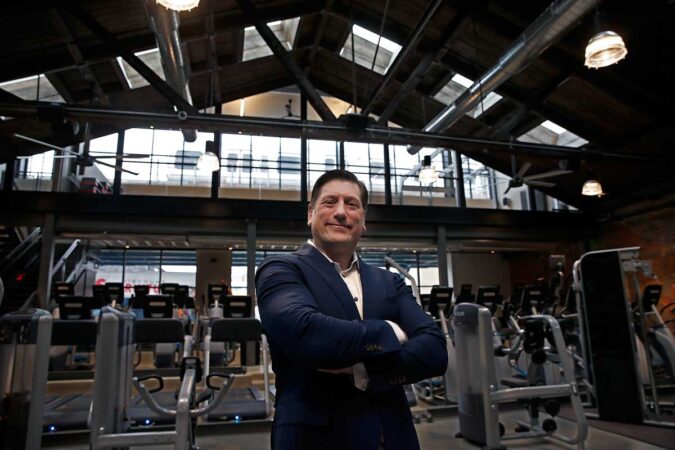
    With his fifth City Fitness location recently opened in Fishtown, and No. 6, the biggest and swankiest of them all, planned for 44,000 square feet in the Sterling apartment building at 18th  Street and JFK Boulevard late this year or early next, founder and CEO Ken Davies is in a good place. But it wasn’t that long ago just the opposite was true.

    The financial hole Davies was in was the ultimate cardio challenge.

    He hit bottom in 2008, a year after opening the first City Fitness on the edge of Northern Liberties, at Second and Spring Garden Streets, just as a recession was bearing down. He reached the precipice of bankruptcy before pulling back.

    “I was beat up,” Davies, 44, a standout wide receiver at Radnor High School and Millersville University, recalled recently. “I didn’t even enjoy it anymore. I wasn’t even working out.”

    It’s a wonder he was making it out of bed those days.

    Davies, who is divorced, had drained the $175,000 he had accumulated in a 401(k) from earlier lucrative jobs in risk management and commercial real estate. He was missing mortgage payments on a house in Stratford, which he had remortgaged for $125,000 and then for an additional $25,000, to help meet his capital needs. He also was delinquent on repayment of a $1.25 million loan from the U.S. Small Business Administration, owed $75,000 on credit cards, had an unsecured loan for $50,000, and needed to repay $70,000 he had borrowed from two friends.

    Plus, he had lost his primary job in information, analytics, and marketing for the commercial real estate industry because he didn’t disclose his gym business.

    One of the worst times, Davies said, was “when I basically slept in a van for a week because I was locked out of my house because I couldn’t pay my mortgage.” The other was when his debit card was declined at Wawa for a $1 purchase.

    “That was the lowest point in my life,” he said.

    City Fitness is now profitable, with gross revenues of $7.5 million, 100 employees, and national growth aspirations, Davies said.

    “I believe he is someone to watch in the fitness industry,” said Wes Deming, principal of All Commercial Capital L.L.C., who was a member of City Fitness before agreeing three years ago to serve as its financial adviser. As such, he is helping Davies locate expansion financing.

    “It can be tough,” Deming said.

    That’s true for many reasons, said Mike Trimble, a vice president in commercial lending at TD Bank. Lack of collateral is one, because most gym owners lease facilities. Another is uncertainty of membership duration.

    Which explains the lack of enthusiasm Davies encountered early on:

    “One banker said, ‘If you were Walt Disney, we wouldn’t lend to you if it was a gym.’ They hated gyms. Even to this day, even with my success, it’s still difficult.”

    Incorporating in May 2005, Davies started paying $20,000 a month to rent the Second and Spring Garden location, which he expected to have open for business in 2006. He was selling memberships for $29.99 a month based on poster-board depictions of what he planned for the site.

    About 300 memberships were sold. Buyers turned against Davies when no gym materialized, accusing him on at least one blog site of stealing their money, he said.

    It took five months to secure the Small Business Administration loan. Build-out  took  an additional six or seven. The first City Fitness gym opened in August 2007. By then, about 10 percent of the presale members had asked for refunds, Davies said.

    Then “things turned from bad to worse,” as can be expected when expenses — equipment leases, instructors, software, office and cleaning supplies, rent — exceed income. Membership sales were slow and revenue from personal training virtually nonexistent, which Davies largely attributed to the recession. Debt mounted.

    To help turn things around, he borrowed the low-cost strategy of a competitor, Planet Fitness. City Fitness memberships dropped to $19.99 a month, quickly attracting 1,000 sign-ups.

    “They have a great model,” Davies said of Planet Fitness, where memberships are currently offered for $10 a month. “But you can’t provide the gym I wanted.”

    That’s a place where equipment is replaced every three years, a robust schedule of group exercise is offered along with top-notch training programs, and where service with a smile and fastidious cleaning are priorities, said Tom Wingert, marketing director for City Fitness. Memberships now start at $49.99 a month.

    “City Fitness’ costs are a direct result of how expensive it is to maintain the level of quality seen in our clubs,” said Wingert, who last year created the city wellness initiative, My City Moves, to achieve another City Fitness objective: community-building.

    “Fitness is a moving target,” said Tracy Shannon, an owner of competitor Sweat, which has been in business since 1997 and plans to open its eighth gym in March at 1 South Broad Street.

    Success is “about staying ahead of the game” and keeping members happy, Shannon said. “If you think you have it figured out, it changes.”

    It wasn’t until 2012 that Davies could open a second location, in the city’s Graduate Hospital section. A smaller “express gym” opened in South Philadelphia in November 2014, followed in April 2015 by what Davies said has been the only failure so far, a personal-training studio in Society Hill at Fourth and Walnut Streets. It reopened Feb. 6 as an express gym.

    Opening in December in Fishtown was a full-scale gym that will offer 25,000 square feet of workout space when fully built out. TD Bank is sold on what Trimble said is “a model that works.”

    Integral, he said, is “an unbelievably strong brand particularly driven by the quality of the offering and Ken’s commitment to building a culture there.” TD has provided $1 million in financing for Fishtown, and a $100,000 letter of credit to support the Sterling lease.

    These days, Davies said, he functions in a state of  “productive paranoia”  because “things can always change.”

    “It’s something that keeps me driven but grounded at the same time.”

  • Joe Conklin recalls Dougherty, in his own voice

    Joe Conklin recalls Dougherty, in his own voice

    IN OLNEY, there was the Schwarzwald Inn, the Heintz plant, the Olney Times and Cardinal Dougherty. For years I didn’t even know Cardinal Dougherty was a person; I thought it was a giant company.

    Cardinal Dougherty High School was bigger than U.S. Steel. At least it felt that way when I was growing up. I thought it was around for 100 years before I arrived and I figured it would be around for 100 more after I left.

    But this mammoth Catholic institution on 2nd Street above Godfrey, the largest Catholic high school in the world with 6,100 students at its peak in the mid-1960s, will close its doors later this month.

    Named in honor of Cardinal Dennis Dougherty and opened in 1956, the school is survived by more than 40,000 alumni and another 1,000 or so teachers, administrators and staff. In lieu of angry letters to the Archdiocese, please enjoy the experience.

    I’m one of seven in my family to walk the halls of the big CD (Maureen ’69, Jim ’70, Joan ’72, John ’74, Kathy ’78, Joe ’80 and Eileen ’82). Our house was two blocks from the school, so my familiarity with Dougherty started long before my years as a student.

    The school is almost outside the city, just short of Cheltenham Avenue. But we always thought it was cool that you could see all the way to City Hall when you were walking home.

    Dougherty was a constant topic of conversation at the kitchen table. I’d hear my brothers dropping the names of the school’s great athletes: Maurice Savage, Billy Magarity, George Paull, Mike Dennery, Joe Empson, Stevie Conway, Kathy Bess, Kevin Kane, Jim Cooper, Lawrence Reid. CD was the big leagues. To even make one of the sports teams at Dougherty you had to be an exceptional athlete. I played a lot of intramurals.

    I still can hear my sister Joan belting out show tunes from her years in the plays. I still can hear her because she hasn’t stopped belting them out.

    My earliest memory of CD was seeing the world-famous Cardinal Dougherty marching band high-stepping down 2nd Street when I was 5 years old. The band was bigger than life. Bold colors head to toe, dressed like the British Royal Guards, but with our colors: long garnet coats with gold sashes, bright white pants, shiny white shoes. The drum major boldly brandished a gold staff and wore a hat that was a foot tall with a tassle on top, also a foot tall. The band was followed by the drill team: 100 girls with matching berets, suits and boots, marching in lock step. Think Catholic Rockettes.

    They segregated the boys from the girls at the school; it was called co-institutional. One of its most unique physical characteristics was a wall of corrugated steel running straight through the center, dividing the girls’ side and the boys’ side, on all floors. The curriculum was decidedly asexual. (The wall came down in the summer of ’69.)

    I had some great teachers at Dougherty. Mr. Frank Rauscher comes to mind immediately. Junior year, English 3, “Word Wealth.” We had an athletic director who addressed students not by name, but by number. He was a grouchy old priest who set up shop in the little room in the corner of the gym. He would jump out when he heard the clicking of leather soles on the gym floor. If he caught you walking across the hardwood with your shoes on, he’d give you two demerits.

    In my senior year I took advantage of a great opportunity to announce the basketball games for the legendary Bob Harrington, dean of Catholic League coaches. Once during a timeout he leaned over the scorer’s table and said: “Hey, Conk. No funny comments when our guys are on the line, OK?” Yes, Mr. Harrington.

    The student body that topped out at 6,100 kept dwindling, though, to an enrollment of 641 today. The neighborhood has changed and not enough families are sending their kids to this Catholic high school anymore.

    Now the decision to close the school has been made. U.S. Steel started dismantling its Fairless Hills, Bucks County, plant in the early ’90s, but after retooling, the complex still functions today. They got smaller and smarter. The opinion here is that Dougherty could have done the same.

    But I don’t live in Olney anymore and I didn’t send my kids to school there, so I can’t point fingers.

    When I graduated from eighth grade at St. Helena’s School, I brazenly threatened to go to Central High. My mother said: “No, you need the priests at Dougherty.” She was right. I’m richer for the experience.

    Joe Conklin is a comedian and master impressionist, the “Man of a Thousand Voices.” His work is featured most weekdays on the “Morning Show” on WIP (610-AM). You can hear some of Joe’s impressions and see his appearance schedule at www. joeconklin.com. In his words: “I needed the priests, the characters, the rules, the opportunities, the friendships, the microphone, the stage, the right from wrong. So raise a glass [or a can of Schmidt’s] as ‘our sons and daughters hail, we hail Cardinal Dougherty High!’ “