Blog

  • What we missed on our roundup of Philadelphia’s 76 most iconic dishes

    What we missed on our roundup of Philadelphia’s 76 most iconic dishes

    We knew that a list of 76 iconic Philadelphia foods would leave something out. It did. After hearing from readers — and revisiting a few of our own debates — we had to mention six items that deserve a place in the city’s culinary canon. They don’t replace the original 76; they just expand the conversation.

    The ‘combo’: Hot dog and fishcake on a roll
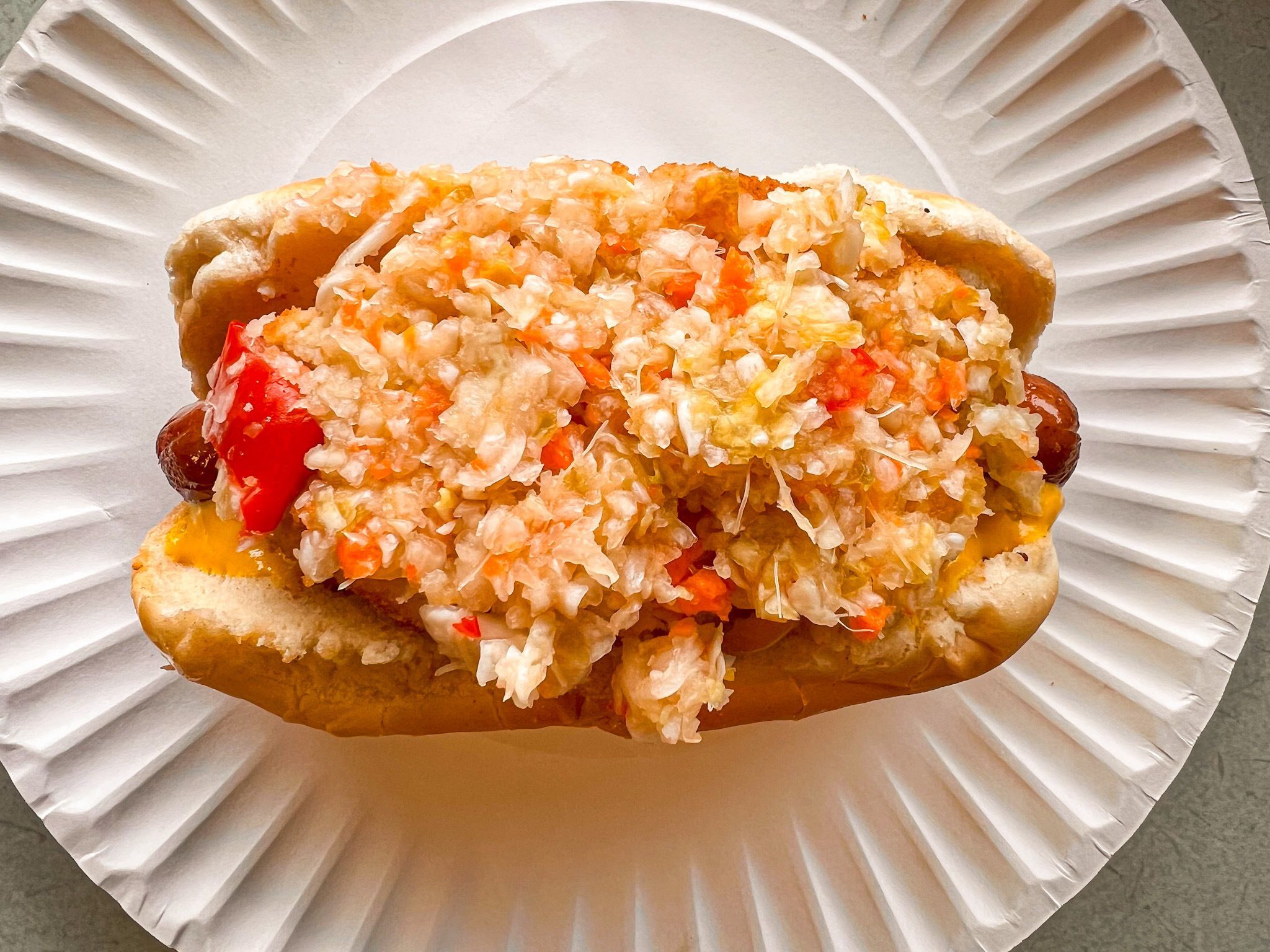
    The hot dog-fish cake combo topped with pepper hash at Lenny’s Hot Dogs in Feasterville.

    Long before Philadelphia claimed the cheesesteak as its signature sandwich, another pairing drew a following: the hot dog and fishcake combo. Culinary historians generally agree that Abe Levis (rhymes with “crevice”) created it in 1895 by pressing a fried fish cake atop a grilled frank on the same bun at his luncheonette on Sixth Street near Lombard.

    Instant surf-and-turf!

    Levis also created Champ Cherry, the bright-red, cider-like soda that became the combo’s traditional companion. The Old Original Levis shop changed hands several times, spawned a few short-lived offshoots, and finally closed in 1992 under owner Elliott Hirsh, who later revived Levis as a store in Abington from 2012 to 2017 while marketing Champ Cherry in cans.

    But tastes have changed and the brands are moribund, as Hirsh, now 80, acknowledged: “I’ve been actively trying to find someone that wants to take it over. And not even sell it. Just take it over. I’d hate to die and take it with me, but that’s what we’re going to do.”

    The hot dog-fishcake combo, at least, survives. Just after World War II, Levis rival Lenny’s Hot Dogs also sold them from a stand nearby at Fifth and Passyunk.

    Lenny’s secret sauce was the pepper hash — a sweet-and-sour relish of cabbage and bell peppers that cuts through the richness of the dish— created by owner Lenny Kravitz’s mother, Ida.

    Kravitz expanded Lenny’s to several locations from Mount Airy to Margate, N.J. In the 1980s, he sold his final shop, at 6620 Castor Ave. in the Northeast, to Wayne Knapp. Kravitz died in 1998.
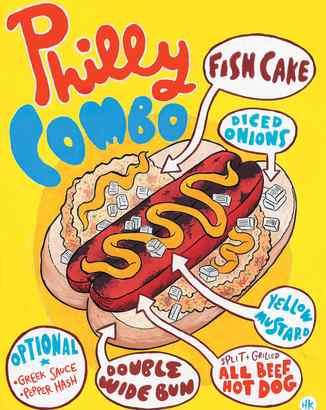
    Hawk Krall’s illustration of the “surf ’n turf” Philly combo (fishcake and frank) was originally done for SeriousEats.com.

    Knapp later relocated Lenny’s to Feasterville. That shop as well as Johnny Hot’s, John Danze Jr.’s truck stop on Delaware Avenue in Fishtown, are among the few standard-bearers of this classic. Be sure to add a squirt of yellow mustard and a smattering of diced onions, as illustrator Hawk Krall suggested in his 2009 poster print of the sandwich.

    Chicken salad and oysters
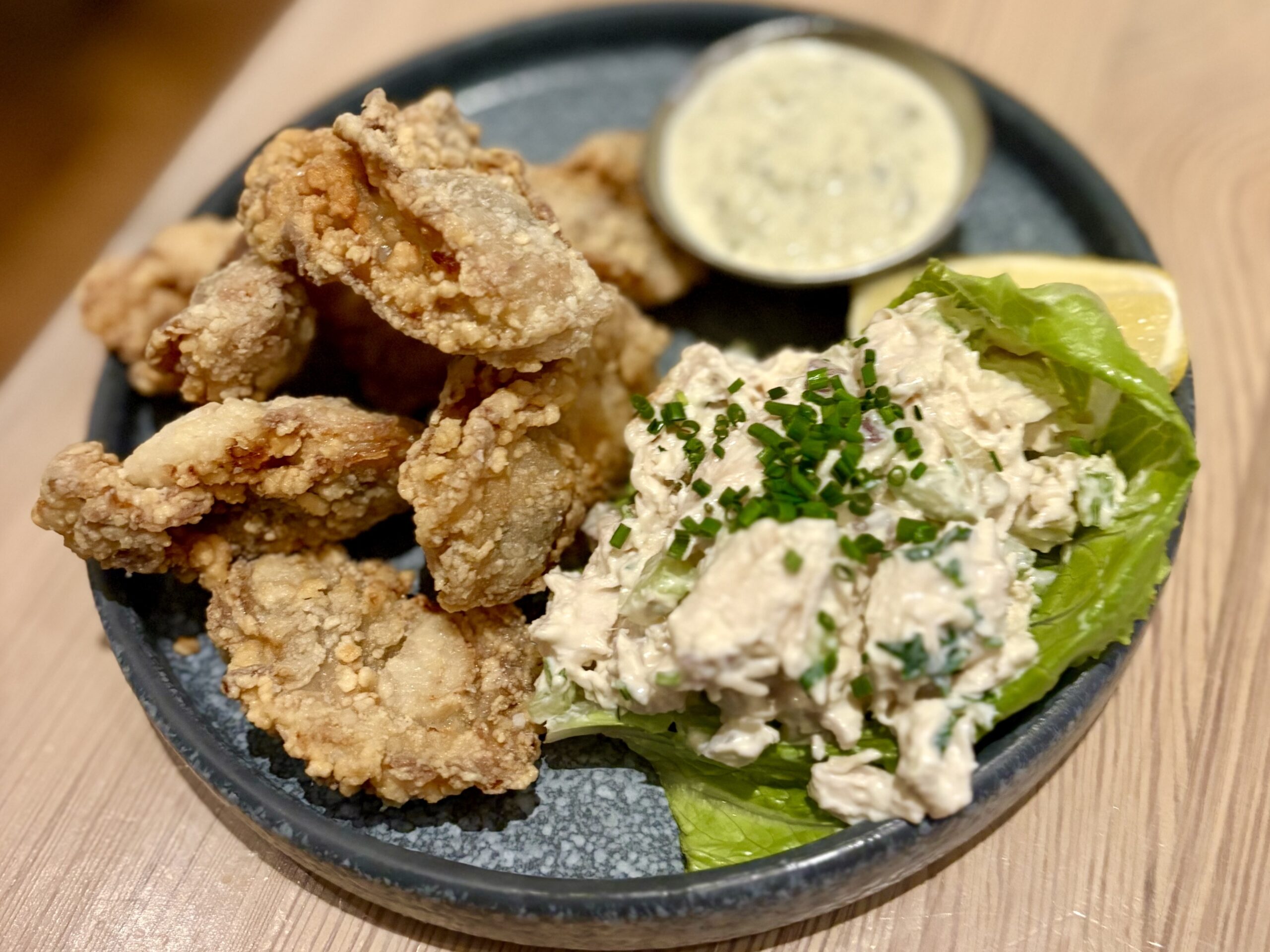
    Fried oysters with chicken salad from Oyster House.

    As for another curious combo, only in Philadelphia would someone look at cool, creamy chicken salad and crunchy fried oysters and think, “Of course those belong together.”

    The unlikely pairing has been a local specialty for well over a century, dating to the city’s grand oyster houses, hotels, and taverns in the late 1800s. One popular explanation of its origin holds that tavern keepers paired cheap, plentiful oysters with more expensive chicken to stretch a serving. Food historian William Woys Weaver has noted that Philadelphia’s finest hotels elevated the dish, serving chicken salad dressed with tarragon mayonnaise and encircled by crisp fried oysters. More humble versions turned up in neighborhood brew houses and lunch counters across the city.

    Similar dishes appeared in New York, Baltimore, and Boston, and some historians believe that Philadelphia’s influential Black catering families helped popularize the combination. What is certain is that chicken salad and oysters were served at an organizing meeting of Philadelphia’s Union League in 1862.

    The combo’s popularity has ebbed in recent years, and its primary home is now Oyster House near Rittenhouse Square, whose family ownership dates back nearly 80 years.

    Crazy Richard’s Peanut Butter
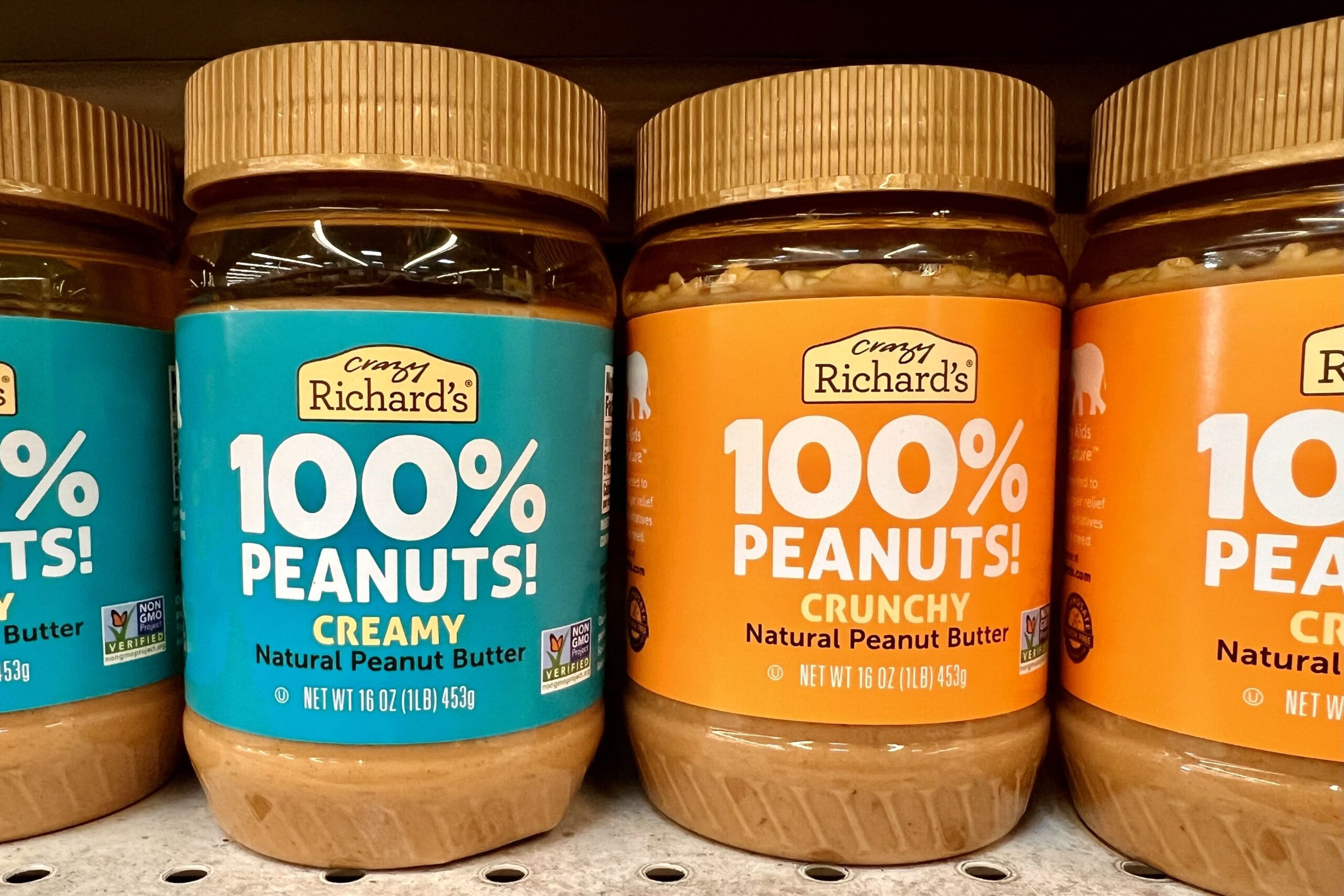
    Crazy Richard’s Peanut Butter, founded in 1972, is still available on grocery shelves.

    Life was all Skippy and Jif in the early 1970s when a Philadelphia music teacher decided to grind peanuts in his kitchen because he couldn’t find peanut butter that tasted the way he remembered.

    Richard Marcus was a conductor, pianist, radio host, and founder of the Society Hill School of Music & Art. Frustrated by the sweetened, homogenized spreads that dominated grocery shelves, he bought five pounds of peanuts at Reading Terminal Market, roasted them, and blitzed them in his blender. The result was nothing more than peanuts — no sugar, salt, or oils.

    Friends loved it. By 1972, they convinced him to package it. Marcus produced an initial run of about 144 jars, selling them through Philadelphia delis and health-food stores. He called it Crazy Richard’s, his wink to skeptics who thought he was nuts for marketing a peanut butter that separated naturally and required stirring.

    Word of mouth did the rest. Marcus eventually gave up his music school to run the business full time, first contracting production in Conshohocken before opening plants in Pennsauken and later Bellmawr. At its peak under his ownership, Crazy Richard’s sold about 750,000 jars a year throughout the Mid-Atlantic and Northeast and by mail. Marcus insisted that there was no secret recipe: “It’s just ground peanuts.”

    In 1991, Ohio’s Krema Nut Co. bought Crazy Richard’s and kept Marcus’ one-ingredient recipe intact. Today, 12 years after his death, the brand is sold nationwide. The “Crazy Richard” on the label is still the Philadelphia musician who proved that sometimes the simplest ideas stick.

    Fishtown Iced Tea
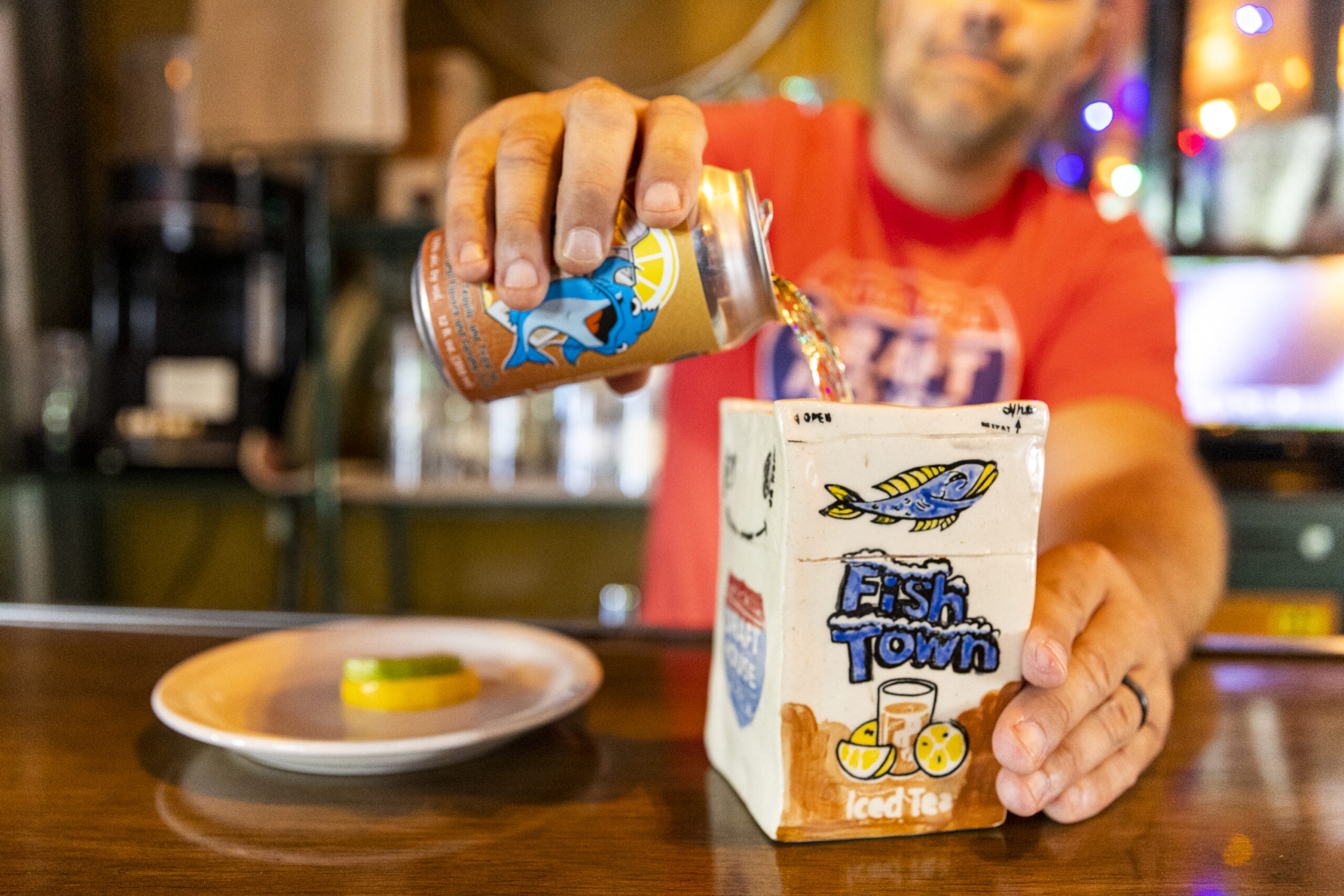
    Canned Fishtown Iced Tea is poured by Interstate Drafthouse co-owner Mike McCloskey into a custom-made ceramic carton.

    Long Island has its iced tea. Why shouldn’t Fishtown? Created in 2013 at Interstate Drafthouse on Palmer Street, Fishtown Iced Tea spikes a 16-ounce carton of Arctic Splash iced tea with a shot of Jim Beam bourbon, turning a childhood lunchbox staple into an adult version of the sugary, dangerously smooth cocktail. Its roots are distinctly regional. Besides milk, Lehigh Valley Dairy, Wawa, Swiss Farms, and Turkey Hill also sold iced tea in pint cartons that generations of Philadelphians grew up drinking.

    During the pandemic, when Pennsylvania temporarily allowed to-go cocktails, Interstate sold enough Fishtown Iced Tea to keep the bar afloat. In 2022, the popularity inspired a canned version from Rectified Spirits, made with vodka, rum, tequila, and triple sec instead of bourbon.

    In a twist, the ready-to-drink cocktail debuted just as Lehigh Valley discontinued Arctic Splash cartons, ending an era for the drink that inspired it.

    Edamame dumplings from Buddakan

    The edamame dumplings at Buddakan.

    One of Buddakan’s signature dishes is the edamame dumpling, filled with mashed soybeans and served in a truffled Sauternes-shallot broth. Michael Schulson, then chef de cuisine at Stephen Starr’s Old City destination, came up with the idea in 2000 while developing the menu for Starr’s next project, Pod, whose opening in University City was six months away. “Every dish I made, Stephen would say, ‘We’re putting this on the menu at Buddakan,’” Schulson said. “I’d say, ‘What about Pod?’”

    The original version was an edamame ravioli, featuring a yellow pasta wrapper in a caramelized Sauternes-shallot broth, transforming what was then an unfamiliar ingredient to many American diners — young Japanese soybeans — into one of Buddakan’s signature dishes. (It made it onto Pod’s menu, too.) When Buddakan New York opened in 2006 with Schulson leading the kitchen, the ravioli evolved into the translucent har gow-style dumpling that has since become its best-known form, before it later arrived on the menu in Philadelphia. It’s still a bestseller.

    After leaving Starr, Schulson adapted the concept at his restaurant Sampan, serving edamame dumplings in a caramelized shallot and sake broth, and later at Double Knot with truffles.

    Cheesesteak egg rolls
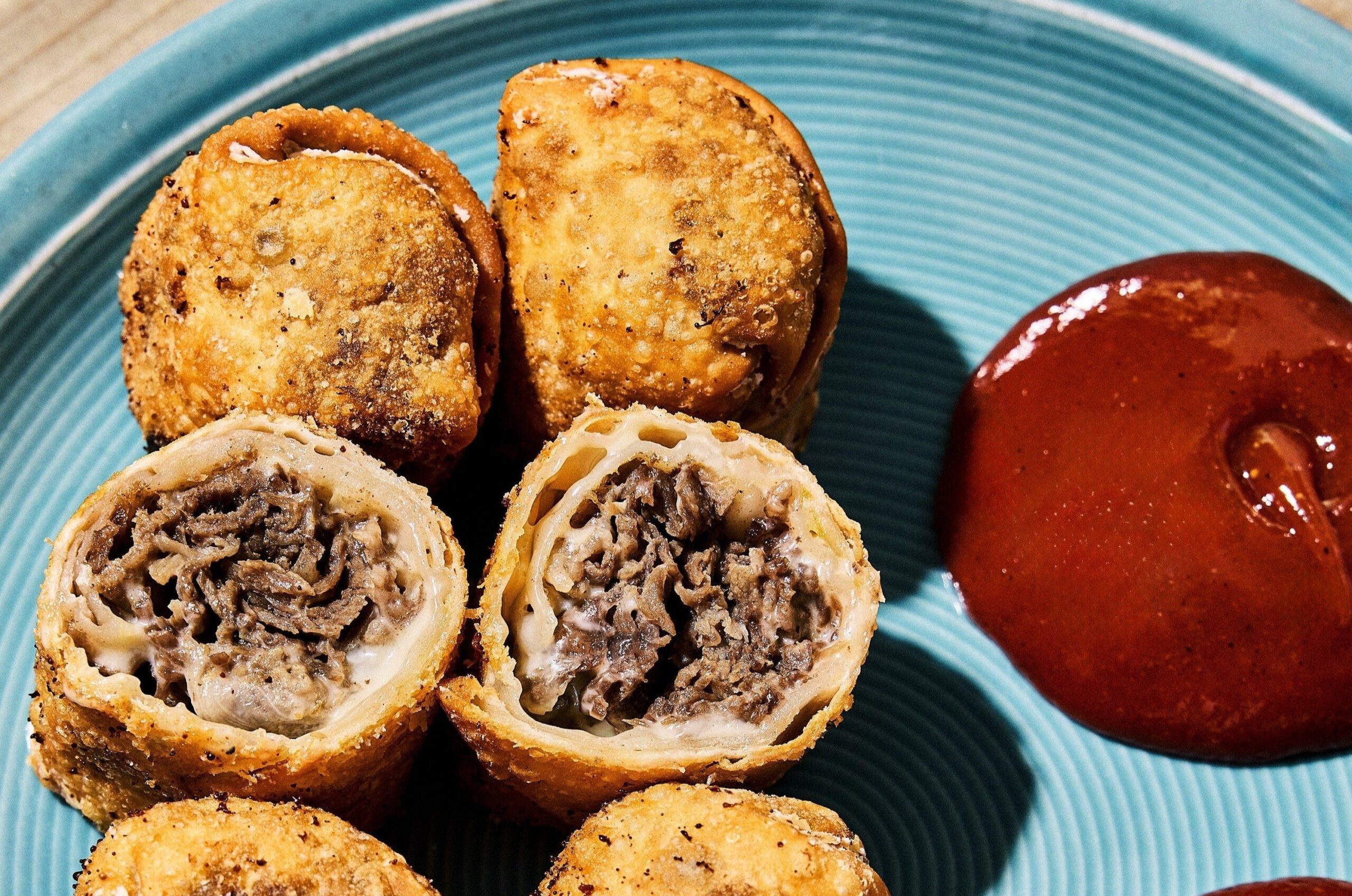
    The cheesesteak egg roll from Continental Mid-town.

    Stuff steak and cheese into an egg-roll wrapper, deep-fry it, and you’ve got one of Philadelphia’s signature mashups: the cheesesteak egg roll.

    They’re everywhere now, from neighborhood pubs to white-tablecloth steakhouses, and go by “spring rolls” at some places, but their rise can be traced to two nearly simultaneous Philadelphia stories in the mid-1990s.

    One unfolded at the old Four Seasons Hotel on the Parkway. Former chef David Jansen said that after preparing a banquet for the New York Rangers in 1994 or 1995, prep cook Mui Lim put leftover cheesesteak filling into spring roll wrappers and fried them as a snack for the kitchen crew. They went on the menu soon after at the hotel’s Swann Lounge. Today’s Four Seasons Philadelphia, now at the Comcast Technology Center, serves wagyu cheesesteak spring rolls with sweet-and-spicy pepper relish.

    The other story played out in Old City, where the novelty became a menu staple at the Starr-owned Continental. In 1996, Starr hired Sam “Chef Sammy D” DeMarco to develop dishes for the year-old restaurant. DeMarco already served a Philly cheesesteak dumpling at First, his New York restaurant, but Starr wanted something original.

    DeMarco turned the dumpling into a cheesesteak spring roll. “It was taking a classic, nostalgic American snack and presenting it in a fresh way,” said DeMarco, now executive chef at Bungalows Resort in Scottsdale, Ariz.

    Like the old Buzz Aldrin cocktail, the roll became a classic. Starr said Continental Mid-town, near Rittenhouse Square, now sells 500 a week.

    From the Continental, the idea spread rapidly. Davio’s owner Steve DiFillippo was joining staff for a preshift meal at his former Center City Philadelphia location shortly after it opened in 1999 when chef David Boyle served cheesesteak egg rolls that his wife had made at home. DiFillippo insisted that they be added to the bar menu, overruling managers who felt that they were too déclassé for a posh steakhouse. The Boston-based Davio’s turned the line into a frozen-food item, selling millions through supermarkets and QVC until rising beef prices during the pandemic made them impractical, DiFillippo said. They’re still on the restaurant menus in King of Prussia and elsewhere.

    Though DiFillippo copyrighted the name “Philly Cheese Steak Spring Rolls” in 2002, “I’m not going to claim I invented anything,” he said. “But I was the first one to take them into stores and really commercialize them.”
  • Jaylen Brown 🤝 Sixers | Sports Daily Newsletter

    Jaylen Brown 🤝 Sixers | Sports Daily Newsletter

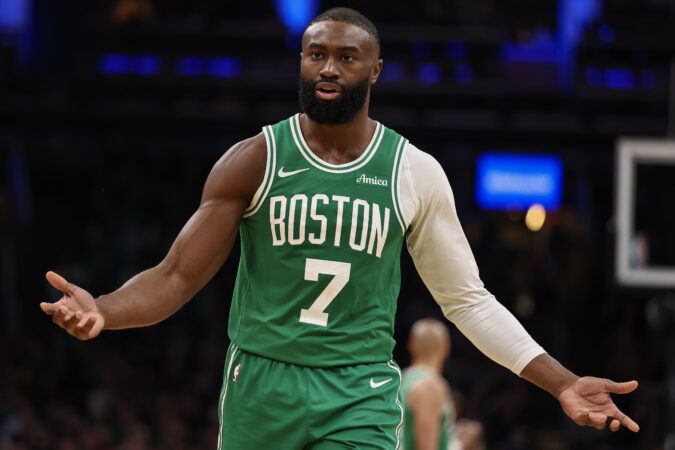
    The 76ers stunned the NBA world on Wednesday.

    It wasn’t just by simply acquiring the stellar Jaylen Brown from the rival Boston Celtics, it was the manner in which they did it. Four draft picks and Paul George? Wild.

    In Brown, the Sixers receive a 2024 Finals MVP who finished sixth in the voting for this season’s regular-season award. They got someone with the size, versatility, and defensive skill to complement the Tyrese Maxey-VJ Edgecombe duo. And they unloaded George’s contract. Predictably, the internet had plenty to say about the deal.

    There’s always risk. There’s always the question of Joel Embiid’s health. But for now, we can step back and consider a world in which the Sixers are legitimate title contenders as David Murphy shares his take on the trade.

    — Maria McIlwain, @phillysport, sports.daily@inquirer.com.

    If someone forwarded you this email, sign up for free here.

    ❓Do you think Jaylen Brown will be a good fit with the Sixers? Why or why not? Email us back for a chance to be featured in the newsletter.

    Big, bad Flyers

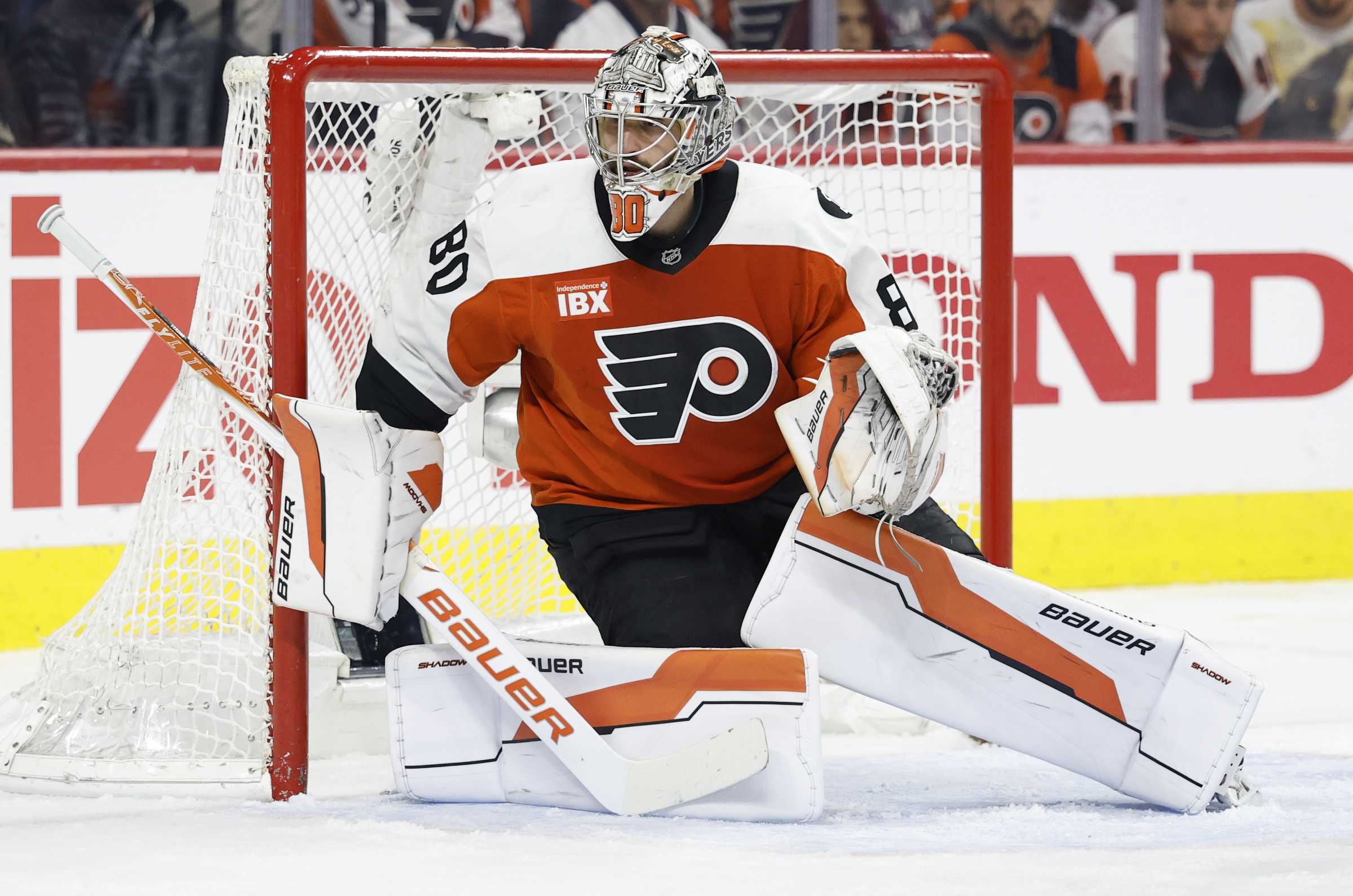
    Flyers goaltender Dan Vladař is back in the fold.

    Over the years, it’s been clear that physicality is part of the Flyers’ DNA — just look at the franchise’s two best players, Bobby Clarke and Eric Lindros.

    So as Danny Brière, who was 5-9 and 174 pounds as a player, builds the next iteration of the Flyers, it’s no surprise he goes to a tried-and-true playbook.

    Is he trying to build this millennium’s Broad Street Bullies? Not exactly. But bringing back big guys like Dan Vladař (6-5) and Tyson Foerster (6-2) gives us an idea of what the brass is looking for.

    Jackie Spiegel has more on Vladař and Foerster, as well as the newest members of the organization.

    A new dawn

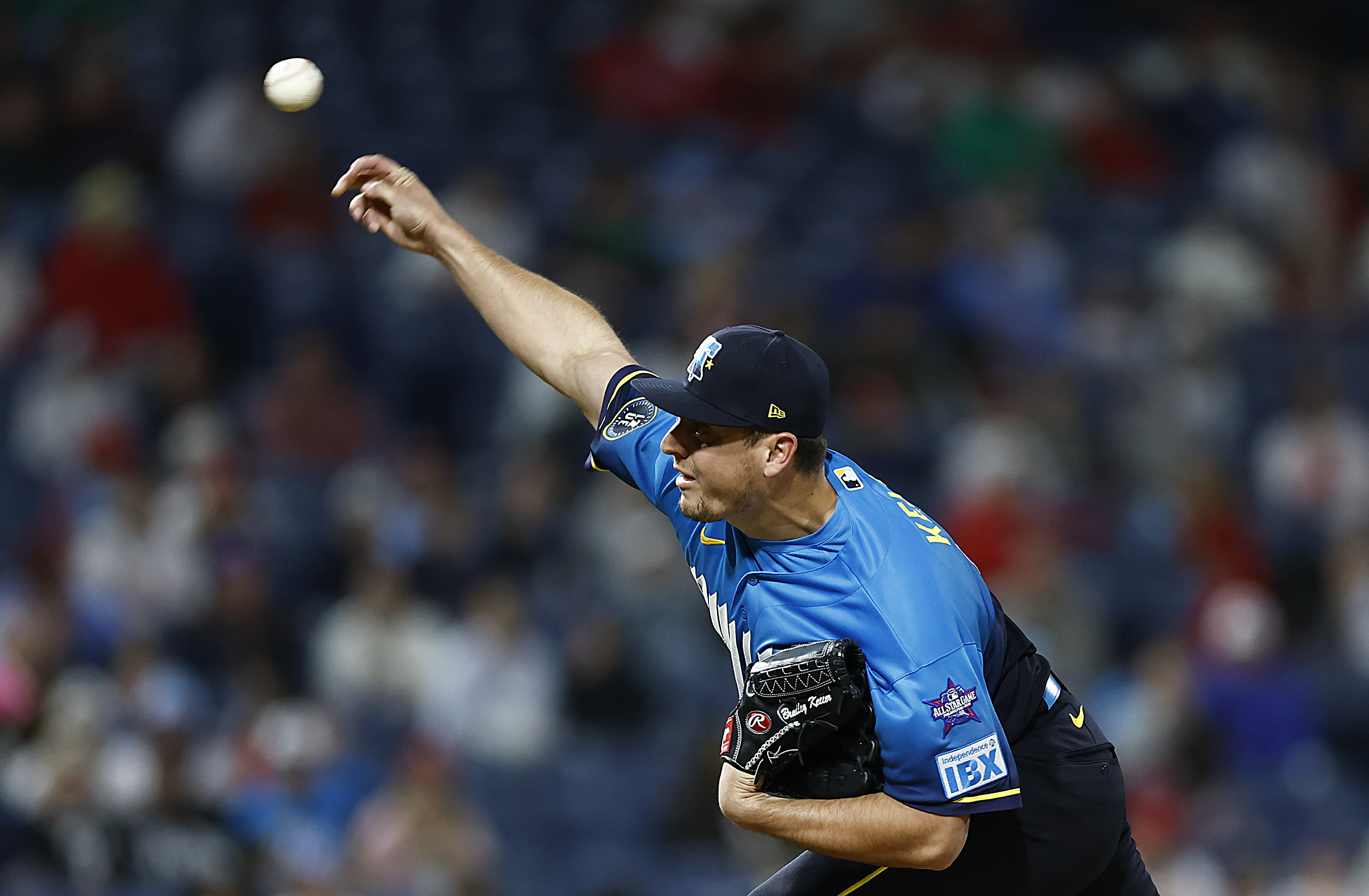
    Phillies pitcher Brad Keller could return before the All-Star break.

    A few weeks ago, Phillies reliever Brad Keller knew something was off before he even got out of bed. He’d just had a rough outing the night before vs. Milwaukee, and when he woke up, he couldn’t straighten his elbow.

    He ended up going on the injured list with right forearm tendinitis. But on Wednesday, he was eager to see how he’d respond after facing live hitters for the first time in more than two weeks. The result? “A night-and-day difference,” he said.

    Trea Turner homered for the third straight game as the Phillies handled the Pirates, 10-6, for their seventh win over the last nine games.

    Next: The series vs. the Pirates wraps up with a matinee today (12:35 p.m., NBCSP). Pirates righty Jared Jones (1-1, 5.76 ERA) will face off against Alan Rangel (0-1, 4.50).

    Ring the bell

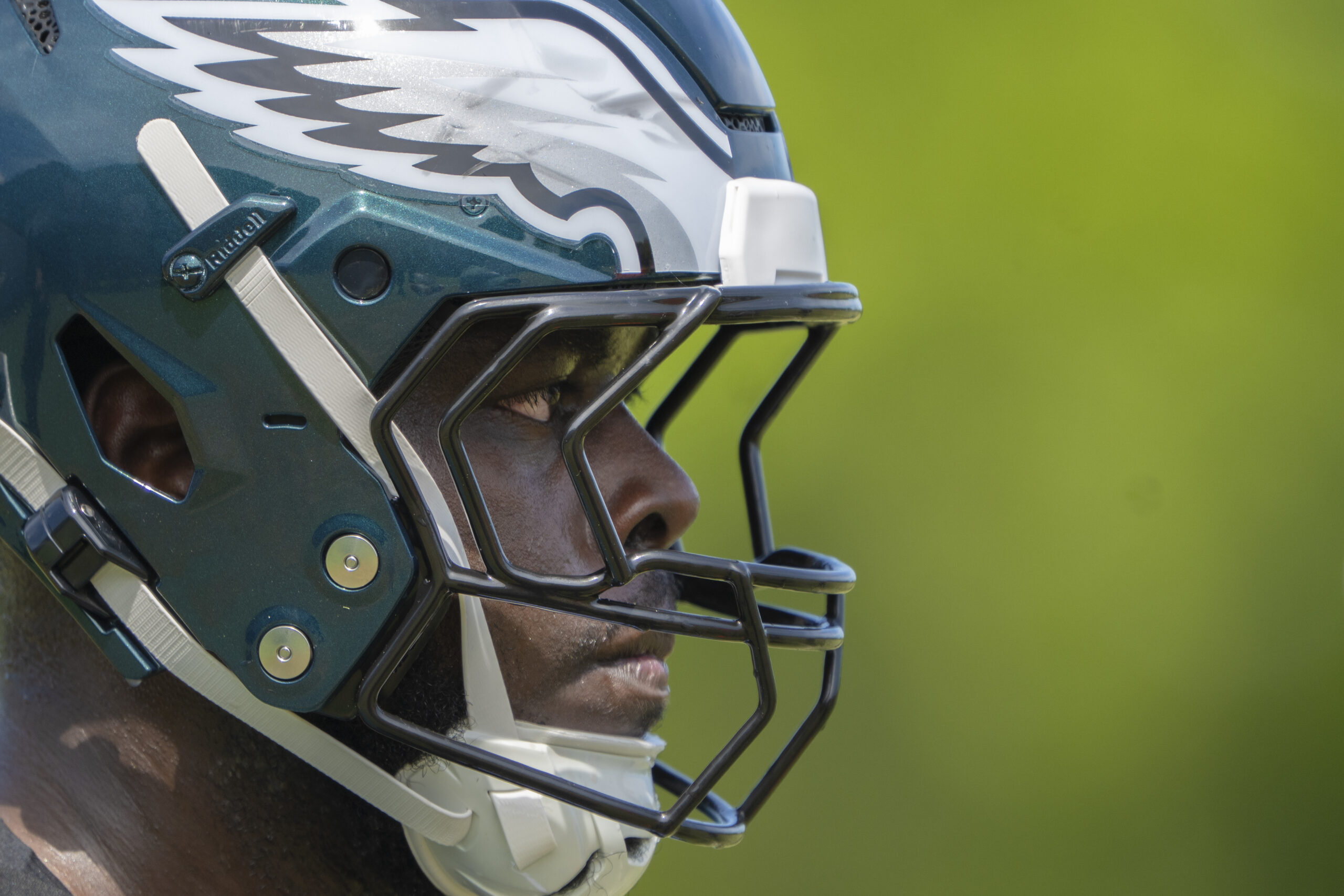
    Eagles’ Markel Bell practice during rookie camp on Friday, May 1, 2026, at the Jefferson Health Training Complex in Philadelphia.

    Today’s Eagles newcomers aren’t just new to the Eagles, they’re new to the NFL. Offensive lineman Markel Bell was drafted out of Miami in April and surprisingly took first-team reps during OTAs. That doesn’t necessarily mean he’ll be a Week 1 starter, but he could see meaningful snaps as a rookie.

    The next newcomer is new to football. Joshua Weru is an undrafted free agent from the International Player Pathway program who joined a pro rugby club at age 14 and has represented Kenya internationally in the sport. He may have a long path to the 53-man roster, but he definitely seems like an interesting story.

    Speaking of Eagles linemen (or former Eagles linemen), Jason Kelce helped raise $1.26 million for the Eagles Autism Foundation in four events across two days in Sea Isle City.

    Round of 16 bound

    U.S. striker Folarin Balogun encourages the crowd after scoring his goal in the first half of Wednesday’s game.

    The U.S. men’s soccer team finally ended its 24-year wait to win a World Cup knockout game, though it came at a cost.

    Wednesday’s 2-0 win over Bosnia and Herzegovina featured goals by Folarin Balogun and Malik Tillman, but also a red card to Balogun that means he’ll miss the round of 16 matchup against Belgium in Seattle on Monday.

    On this date

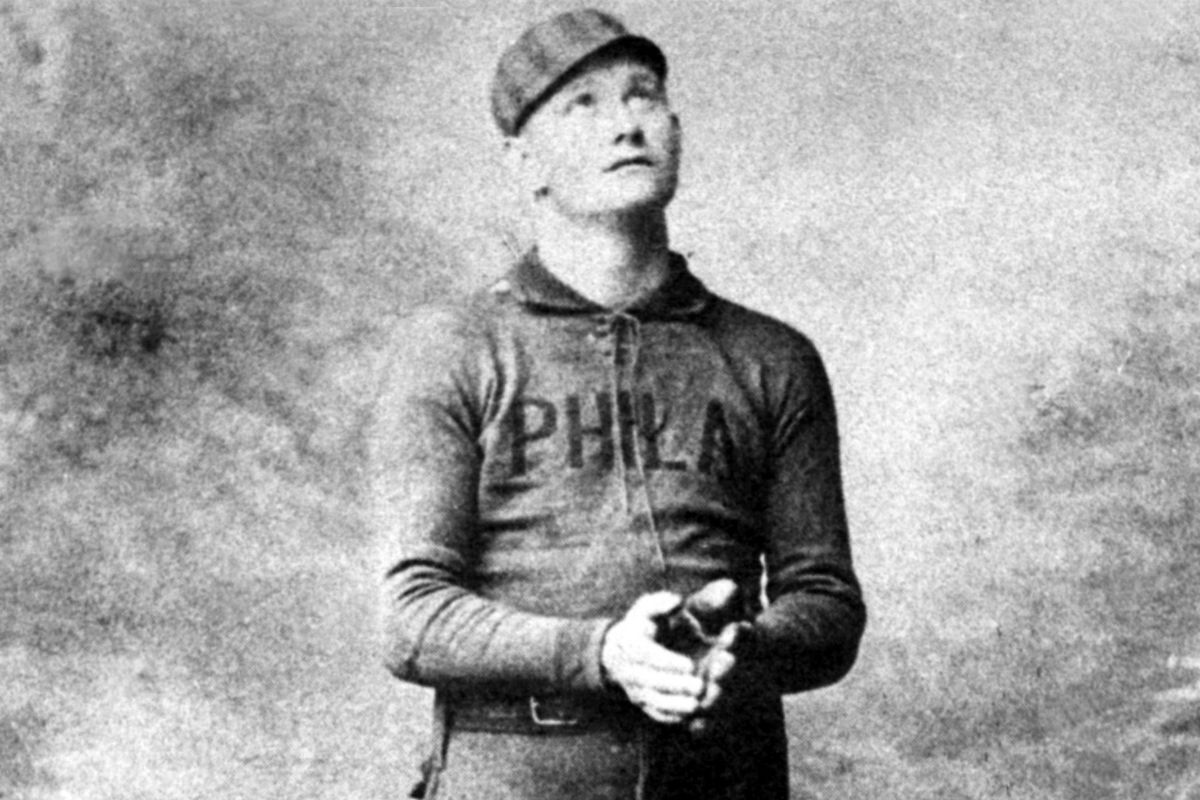
    The Phillies’ Ed Delahanty.

    OK, this is a bit of a weird one. Ed Delahanty dominated the National League in the late 1800s and at the turn of the century. Primarily an outfielder, he spent 13 of his 16 major league seasons with the Phillies and slashed .348/.415/.508 (and .346/.411/.505 for his career, which also included stints with the Cleveland Infants and Washington Senators). He also was the first major league player to hit over. 400 three times.

    But drinking issues began to loom large after he moved on to Washington. While the team was in Detroit, he boarded a train bound for New York but was kicked off after drunken and disorderly behavior, according to the Society for American Baseball Research. He then fell from a bridge spanning Niagara Falls and died on this day in 1903.

    He was elected to the National Baseball Hall of Fame via the Old Timers Committee amid World War II in 1945, but his induction ceremony in Cooperstown, N.Y., wasn’t held until 2013, 110 years after his death.

    What you’re saying about upsets

    We asked: Tell us about the biggest upset you’ve ever witnessed in any sport. What made it so special?

    Three upsets that I watched on TV. 1969 Joe Namath and the Jets upset the unbeatable Baltimore Colts. Because of the great Lenny Moore I was a Colts fan. 1980 Winter Olympics at Lake Placid when our young college guys carried the U.S. to a stunning upset of the USSR’s supposedly unbeatable team. And 1985 on April 1 my 47th BD Villanova Wildcats upset highly favored Georgetown 66-64 with an incredible 79% shooting percentage. I would guess that Pope Leo then Robert Prevost was cheering on his Wildcats. Everett S.

    Not the most personally sentimental, but biggest upset in my book has to be the Brady-era Pats’ first Super Bowl loss, some ragtag Giants spoiling an undefeated season with such tools as an off-brand Manning and a football pinned on a helmet. It had seemed unfair that Randy Moss had joined New England, but it all led to nothing more than this. — D. Stone

    We compiled today’s newsletter using reporting from Gina Mizell, David Murphy, Jackie Spiegel, Mia Messina, Scott Lauber, Jeff Neiburg, Becca O’Reilly, Jonathan Tannenwald, and Marcus Hayes.

    By submitting your written, visual, and/or audio contributions, you agree to The Inquirer’s Terms of Use, including the grant of rights in Section 10.

    Thanks for reading, and we’ll be back tomorrow with one last newsletter before the holiday weekend! — Maria

  • As Congress comes to Philadelphia, Josh Shapiro takes center stage in America 250 celebrations

    As Congress comes to Philadelphia, Josh Shapiro takes center stage in America 250 celebrations

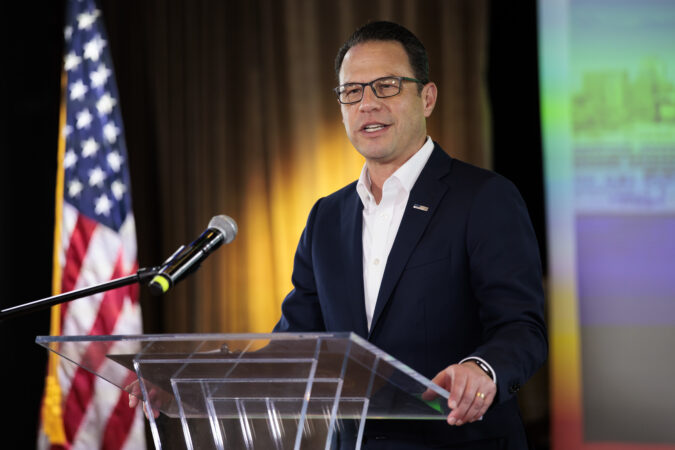
    Pennsylvania Gov. Josh Shapiro has a message for members of Congress when they convene at Independence Hall in Philadelphia on Thursday:

    This is the birthplace of democracy, and with it, comes the responsibilities that America’s founders left behind.

    “The founders made clear that we have a real responsibility to do the work to constantly perfect our union,” Shapiro said in an interview this week, ahead of his speech before the ceremonial meeting of Congress, marking 250 years since the Declaration of Independence was signed in that same building. “And that the Congress of the United States has a unique responsibility in that to be a check on the executive branch.”

    Those words come at a critical inflection point in America’s history, amid a tumultuous presidency, and as Shapiro is rumored to have aspirations of a White House bid in 2028. The first-term Democratic governor will appear before approximately 40 bipartisan members of Congress in Old City at the event convened by U.S. Rep. Brendan Boyle (D., Pa.), speaking to the lawmakers from across the country about their collective duty to the public. Shapiro will attend numerous other 250th celebrations across Philadelphia in the coming days, during which he said he plans to share his optimism for America’s future and deep concerns that President Donald Trump has led the nation astray from its founders’ design.

    “I don’t think patriotism belongs to one party. I don’t think it should ever be partisan,” Shapiro said. “Unfortunately, Donald Trump routinely divides us, routinely injects partisanship into his definition of patriotism, and his actions, in many ways, are the opposite of patriotism.”

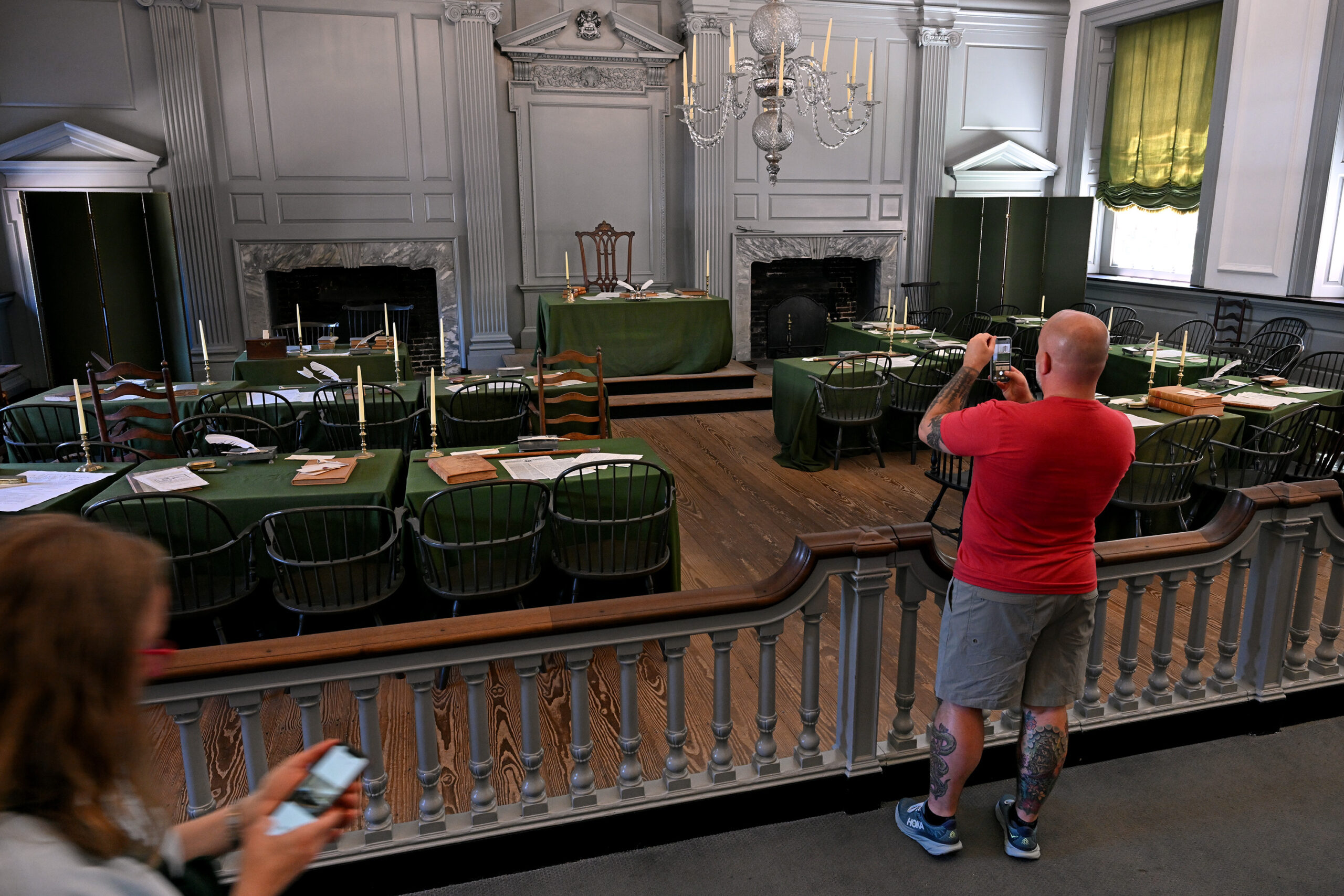
    Assembly Room in Independence Hall (Pennsylvania State House) Monday, June 15, 2026. This is the exact space where the Second Continental Congress met and the Declaration of Independence was adopted.

    As Trump plans to spend America’s 250th birthday hosting a political rally on the National Mall — with no plans to visit Philadelphia, the city where the nation was founded — Shapiro sees his own role as a unifier, and in direct contrast to Trump. As attention shifts to Philadelphia this weekend, he’ll appear on the national stage from sunup to sundown at events and on frequent TV hits — all with a home-turf advantage for his 2028 presidential prospects, as the governor of the nation’s quintessential swing state and also most important to the country’s founding.

    “[Celebrating the 250th] allow the spotlight to shine on Shapiro, even though it’s not entirely about him,” said Alison Dagnes, a political-science professor at Shippensburg University. “Do I think that helps his ambitions? Sure.”

    ‘Direct contrast’

    Sitting with Shapiro in his Harrisburg office earlier this week, it’s undeniable that he’s a history nerd — another reason why he was built for the moment.

    He casually quotes segments of The Federalist Papers, and references his favorite story about Benjamin Franklin‘s fixation on a half-sun on the back of George Washington’s chair during the 1787 Constitutional Convention, which Franklin remarked during the U.S. Constitution signing that “it is a rising and not setting sun.” Without having to look for its location, he points to his right to a portrait of Franklin, one of his predecessors as governor of Pennsylvania, hanging on his office wall. He notes lesser-known Pennsylvanians who played an important role in the nation’s founding whom he plans to highlight over the coming days.

    “You know, I hate to quote a guy not from Pennsylvania,” Shapiro said, returning to The Federalist Papers to recite James Madison’s concerns about giving an executive too much power.

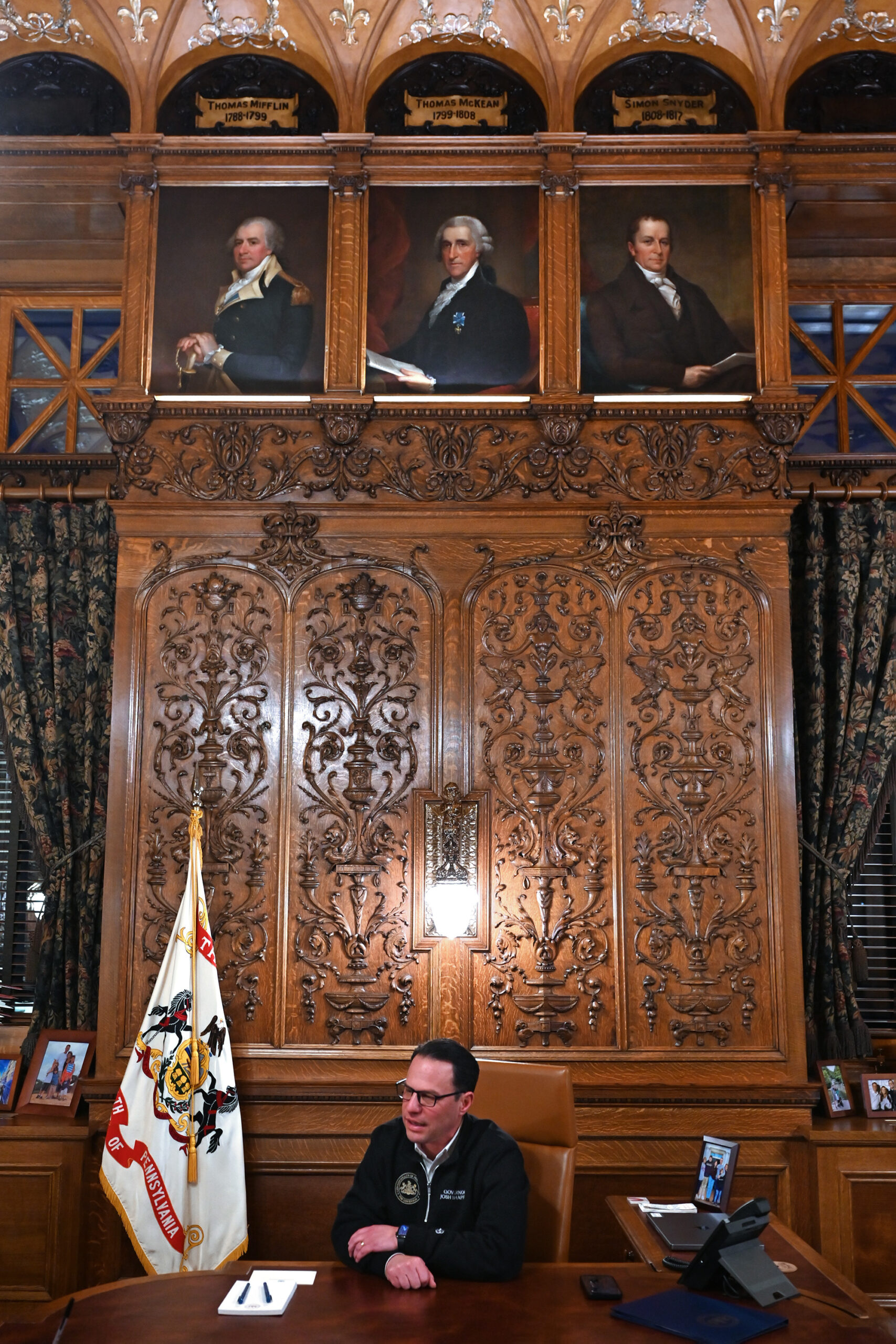
    Gov. Josh Shapiro in the Capitol in Harrisburg Feb. 21, 2023.

    “If Madison were here today, he’d be really concerned about how one man has accumulated so much power and is wielding it in really dangerous ways, and I hope that at this 250-year mark we find our way back to that balance and back to the constraints on the people who lead our government,” he said.

    Shapiro sees his leadership style as a “direct contrast” to Trump’s, especially at this moment.

    “[Trump] restricts peoples’ freedom and liberties,” the governor added. “He whitewashes our history. That doesn’t further a sense of community, that doesn’t further patriotism. All that does is divide us, and I refuse to participate in that.”

    But for the next few days, Shapiro said his approach to the 250th celebrations is to: “Celebrate America, find ways to bring people together, and to have some fun in the process.”

    Fair games

    Despite his overtures of political unity, Shapiro has faced accusations from Republicans in recent days for playing partisan games over Pennsylvania’s participation in Trump’s 16-day Great American State Fair. Shapiro, in addition to several other Democratic governors last week, announced that Pennsylvania would not take part in the fair due to his administration being unable to secure any state businesses to sponsor the exhibit. Staffing and sponsoring the exhibit on the state’s dime would have cost $700,000 that would be better spent on in-state 250th events, he said this week.

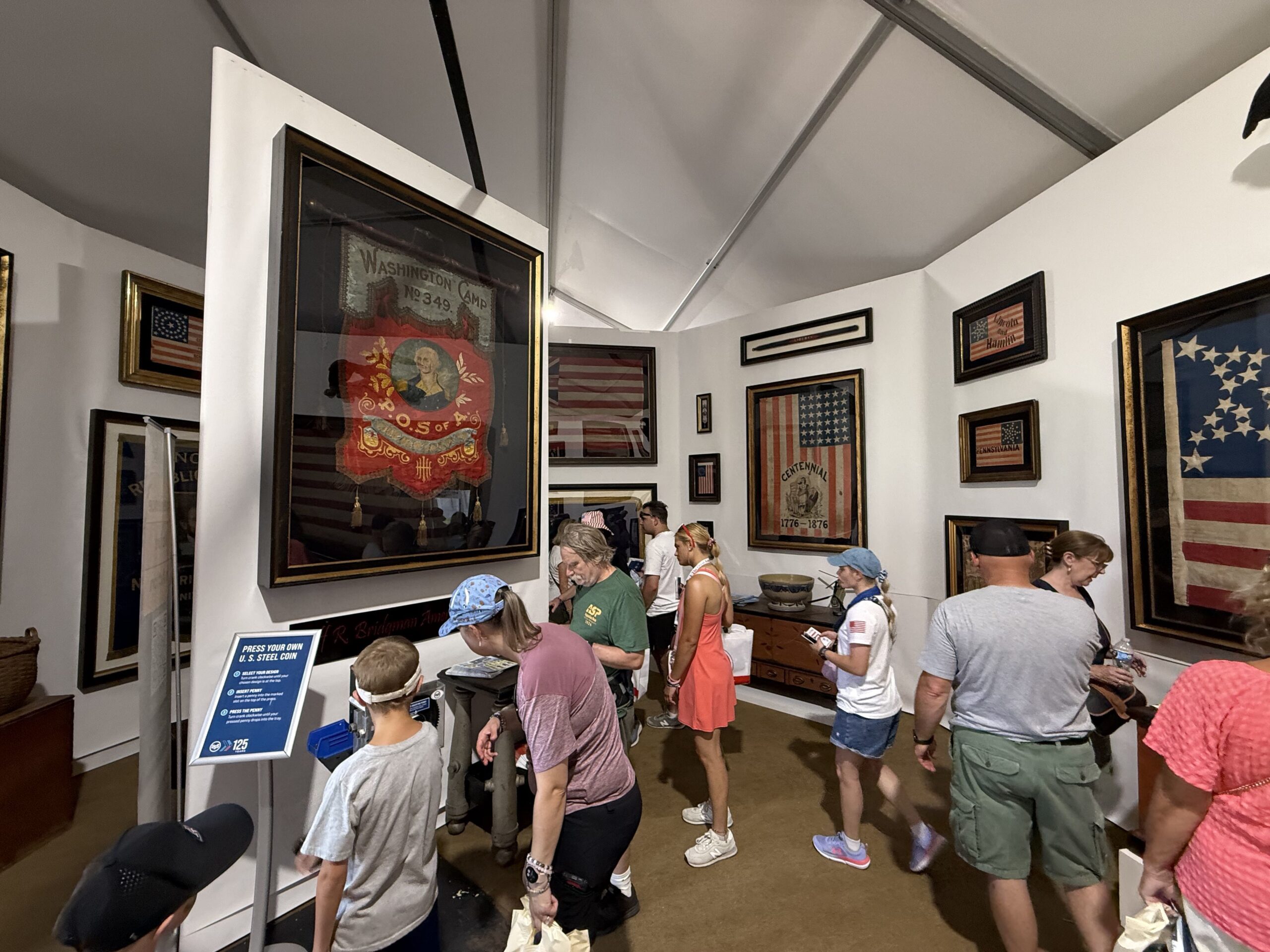
    In the weekend that followed, Pennsylvania’s U.S. senators, Republican Dave McCormick and Democrat John Fetterman, made a push to fill the state’s empty exhibit. By Tuesday, it was filled with antique flags lent by a York County man, bags of potato chips from Snyder County, and a Christmas tree display from Fayette County, among other Pennsylvania-centric items.

    Pennsylvania’s pavilion showcases state history and memorabilia at the Great American State Fair on June 30, 2026, in Washington, D.C.

    Some of the businesses originally told Shapiro’s office they didn’t have enough time to participate. But when McCormick and Fetterman approached them with the idea to fill the empty pavilion, they joined in.

    “They obviously had a change of heart at the last minute. That’s fine,” Shapiro said about the revived Pennsylvania pavilion.

    State Treasurer Stacy Garrity — Shapiro’s Republican challenger for governor, who has aligned herself with Trump — in a statement called Shapiro the “only career politician who has politicized America 250.”

    “Josh Shapiro put his political ambitions above his commonwealth and his nation when he pulled Pennsylvania out of the national celebration of our 250th birthday in a pitiful attempt to score cheap political points with the liberal wing of his party,” Garrity said.

    Beyond the 250th

    Shapiro’s strength as a politician has always been his ability to appear “harmonizing” and bringing people together, dating back to his days as a Montgomery County commissioner, Dagnes said.

    A careful politician, Shapiro is known to stick to his message and has faced criticism from some fellow Democrats for his well-rehearsed statements.

    When Shapiro delivers his messages of unity and freedom to a broader audience in the coming days, voters are likely to view them as authentic — one of the most important qualities to any presidential hopeful, she added.

    “If [California Gov.] Gavin Newsom is the guy who’s gonna punch Trump in the face, then Shapiro is going to be the guy who’s like, ‘No, let me offer you an alternative,’” Dagnes said.

    “It’s what he should be doing right now, because this is what America is about,” she added.

  • Summer of sports continues

    Summer of sports continues

    After he and Phillies star Bryce Harper unveiled the 2026 All-Star Game logo last July, the team’s managing partner and CEO John Middleton gushed about how “very, very real” hosting the Midsummer Classic felt a year out from first pitch.

    “It was real in Atlanta,” Middleton said, three days after the 2025 All-Star Game was played at Truist Park, home of the Braves. “And became a lot more real this afternoon, with the celebration, and the kickoff and everything else. It’s so much bigger than it was in ’96.”

    Baseball’s All-Star Game was last staged in the City of Brotherly Love three decades ago, at the since-demolished Veterans Stadium, when there was only a home run derby and the game itself to enjoy. The 2026 edition is expected to be a “Rocky”-sized draw, especially with the festivities coinciding with the country’s 250th birthday.

    “It’s great for baseball to be able to, kind of, piggyback right on top of the July Fourth celebration,” Middleton said. “There’s gonna be millions of people in town.”

    The sports fan masses will continue to flood Philly into late summer when two marquee sports events close out August: the University of Pennsylvania hosts the “Tennis Classic” Aug. 23-29, a showcase featuring some of the top women’s professional players; and after a 10-year hiatus, the Cycling Classic returns to Philadelphia on Aug. 30, when top male and female riders cycle through the city and its outskirts — including the famed Manayunk Wall — en route to a dramatic finish on the Benjamin Franklin Parkway.

    Best of all? The Cycling Classic is free.

    While the FIFA World Cup leaves Philly after this weekend’s July 4 match, there will be lots of places in town showing the Final on July 19 from East Rutherford, N.J. And, lest we forget the Birds. The NFL preseason kicks off Aug. 13.

    The logo for the 2026 Major League Baseball All-Star Game in Philadelphia.

    MLB All-Star Week: July 10-14

    The five-day All-Star extravaganza starts with the HBCU Swingman Classic on July 10. In its fourth year, the Swingman Classic features 50 Division-I players from historically Black colleges and universities, selected by a committee that includes Hall of Famer Ken Griffey Jr.

    The opening rounds of the Major League Baseball draft follows on July 11 at the Pennsylvania Convention Center, while the All-Star Futures Game is played July 12 at Citizens Bank Park.

    The Home Run Derby and All-Star Game round out the festivities on July 13 and 14, respectively, with both events also at the Bank. Diehard Phillies fans can see some of the team’s legends at the Capital One All-Star Village, including scheduled appearances by Hall of Famer Steve Carlton and 2008 World Series champions Ryan Howard, Cole Hamels, and Jimmy Rollins.

    “I’m old enough that I was here [in Philadelphia] as an adult in ’76 [the bicentennial],” Middleton had said. “It’s gonna be a spectacular year for Philadelphia.”

    Philadelphia Tennis Classic: Aug. 23-29

    Tennis fans can see some of the top-ranked women’s players compete at the University of Pennsylvania’s Hamlin Tennis Center. The WTA 125 tournament features rising stars and established players in a somewhat compact venue, meaning up-close views of the action from most seats.

    Philadelphia Cycling Classic: Aug. 30

    During his pro cycling career, Freddie Rodriguez rode to great success in this city, winning in 2001 (then called the Philadelphia International Championship).

    “I made a career out of this race. It’s the closest thing we have to the Tour de France,” Rodriguez, 52, said. After a 10-year pause, the premier U.S. cycling event returns to Philly, and Rodriguez will be on the other side this time, as a TV commentator.

    Philly native Eric Robbins, one of the race organizers, said that from the outset, the mission was to not only bring back the event, but eschew public funding (the race is presented by AmeriGas).

    “It was really important to give back to the city,” Robbins, a co-owner of the Philadelphia Cycling Classic said. “All these other wonderful sporting events, there’s a price tag that comes with them. This is an absolutely free event. We’re bringing the stadium to the streets.”

    Fans can line the Philly streets and see elite international men’s and women’s riders tackle the 14.4-mile loop that includes the grueling Manayunk Wall. The women’s race is 62 miles total, and the men’s is 120 miles. The race dates to 1985 — then known as the CoreStates — won by Olympic speed-skating gold medalist Eric Heiden. Other iconic riders who have competed in Philly include Tour de France legend Greg LeMond.

    Pro cyclist Robin Carpenter, a member of the Modern Adventure team competing this year, grew up steps from the Manayunk Wall summit and competed in the last edition in 2016, when riders finished on the Wall. Carpenter, 33, said he’s thrilled the race is back, and that the course organizers have restored the Benjamin Franklin Parkway finish.

    “The Wall changed the dynamic of the race a fair bit,” Carpenter said. “Going up the wall every time was always bananas. It is a tunnel of noise. Super loud. The Parkway finish makes the race more open from a competitive standpoint.”

    Rodriguez added that the Parkway finish is comparable to the dramatic last stage of the Tour de France, along the Champs-Élysées.

    “It feels like that,” Rodriguez said. “When it comes to U.S. racing, this is probably our best classic race. It’s right up there with the quality of riders and the quality of the event.”

  • How a Schwenksville couple built a wildlife habitat in their yard

    How a Schwenksville couple built a wildlife habitat in their yard

    Larry Cohen and Marla Hexter’s Schwenksville neighbors often stop by to admire the wildflower meadow in front of their home.

    Some admirers, Larry said, ask for advice. They are considering replacing their front lawns with a meadow as he did.

    They crave the profusion of blue cornflowers, red poppies, yellow black-eyed Susans, purple larkspur, a variety of bee balm and more. The flowers attract 17 bird species including bluebirds and gold finch, as well as pollinating insects. The meadow now extends from the frog pond in front of the house to the curb where wisteria entwines the mailbox.

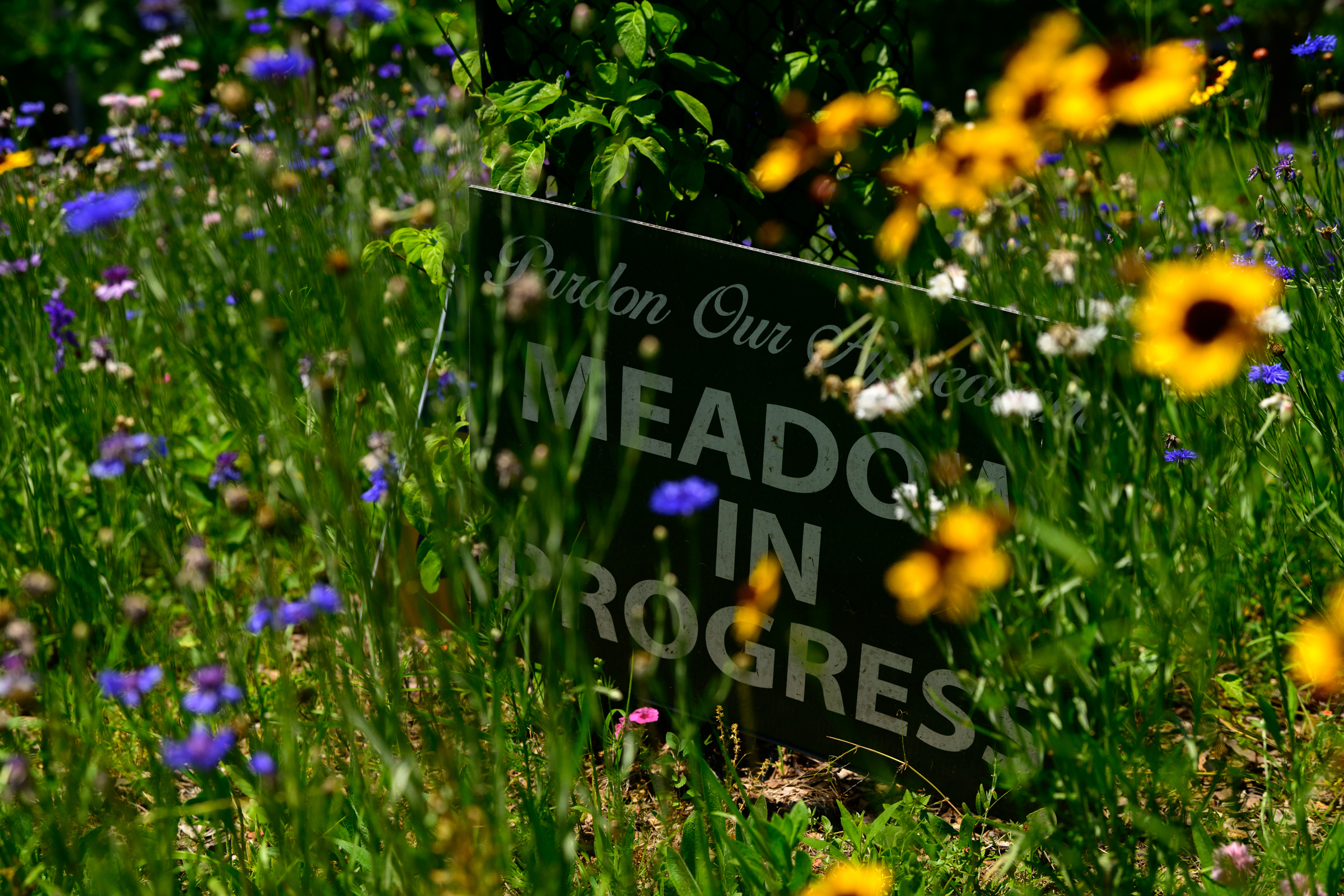
    A sign reading, “Pardon Our Appearance, Meadow in Progress,” sits in the newer of two meadows planted in Hexter and Cohen’s front yard.
    The newer of two meadows grows in Hexter and Cohen’s front yard.

    Set among the blossoms is a metal sculpture of a woman holding the female symbol of a circle over a cross. It was fashioned by the late Zieglerville artist Phillip Smith.

    The meadow project began in 2023 when Cohen and Hexter enlisted the services of S. Edgar David of SED Design in Blue Bell. David Brothers Landscape Services in Collegeville removed the grass, seeded wildflowers, and continues to cultivate the meadow.

    When Cohen and Hexter purchased the property of more than an acre in 2015, Callery pear trees flanked the driveway. The invasive species has been replaced with yellowwood, larch, maple, and swamp oak and smoke trees. Cohen protects the bark of the young trees with chicken wire to deter deer.

    A frog sits in the pond in the home’s front yard.
    Another frog in the pond.

    The backyard, where rescue dogs Barkley and Caleb romp, has an azalea-shaded swimming pool and a vegetable garden fenced in to keep out rabbits and other marauders.

    In raised beds, Hexter grows beets, carrots, cabbage, green beans, English peas, garlic, blackberries, and raspberries — which birds eat — and onions, a deterrent to slugs and snails. Strong scented marigolds also repel pests.

    There are five rain barrels around the house as well as several bird feeders, a blue bird house, and a bat house — as yet unoccupied.

    By the front door is a sign designating the property as a “Wildlife Habitat.” Another says “Welcome” in English and Farsi. Cohen spent time in Afghanistan.

    A “Certified Wildlife Habitat” sign and a “Welcome” sign on display in the couple’s yard.
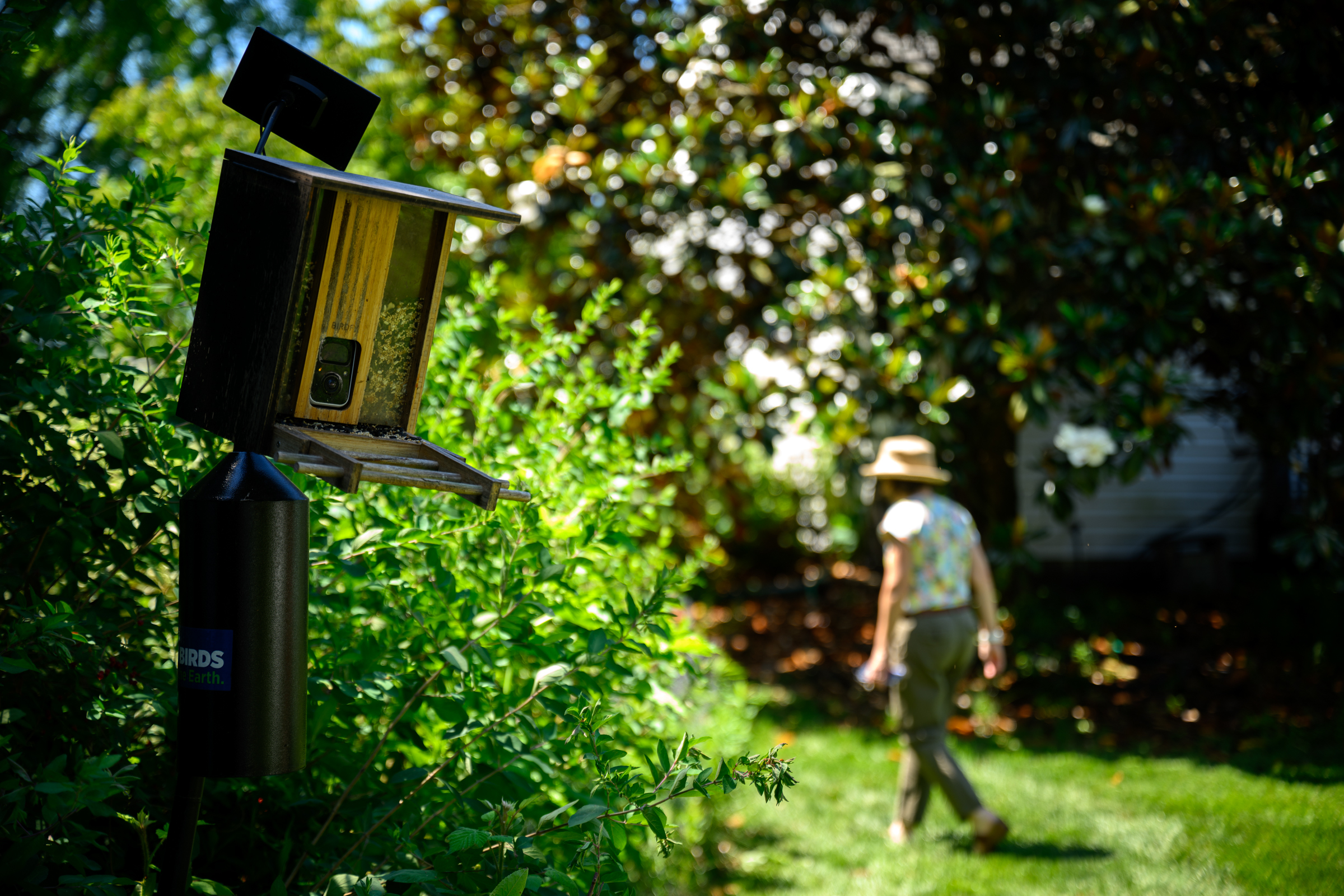
    A bird feeder with a built-in camera sits in the backyard.

    His and Hexter’s careers sent them all over the world. He worked in the foreign service for the U.S. State Department and she was with the CIA.

    The couple live by the motto “Think globally act locally,” considering the broader health of the entire planet while focusing on practical, hands-on solutions to protect habitats and help the environment.

    They have solar paneling on the south-facing roof of their two-story home; a geothermal heating and cooling system; energy-efficient insulation, doors, and windows; and two electric vehicles.

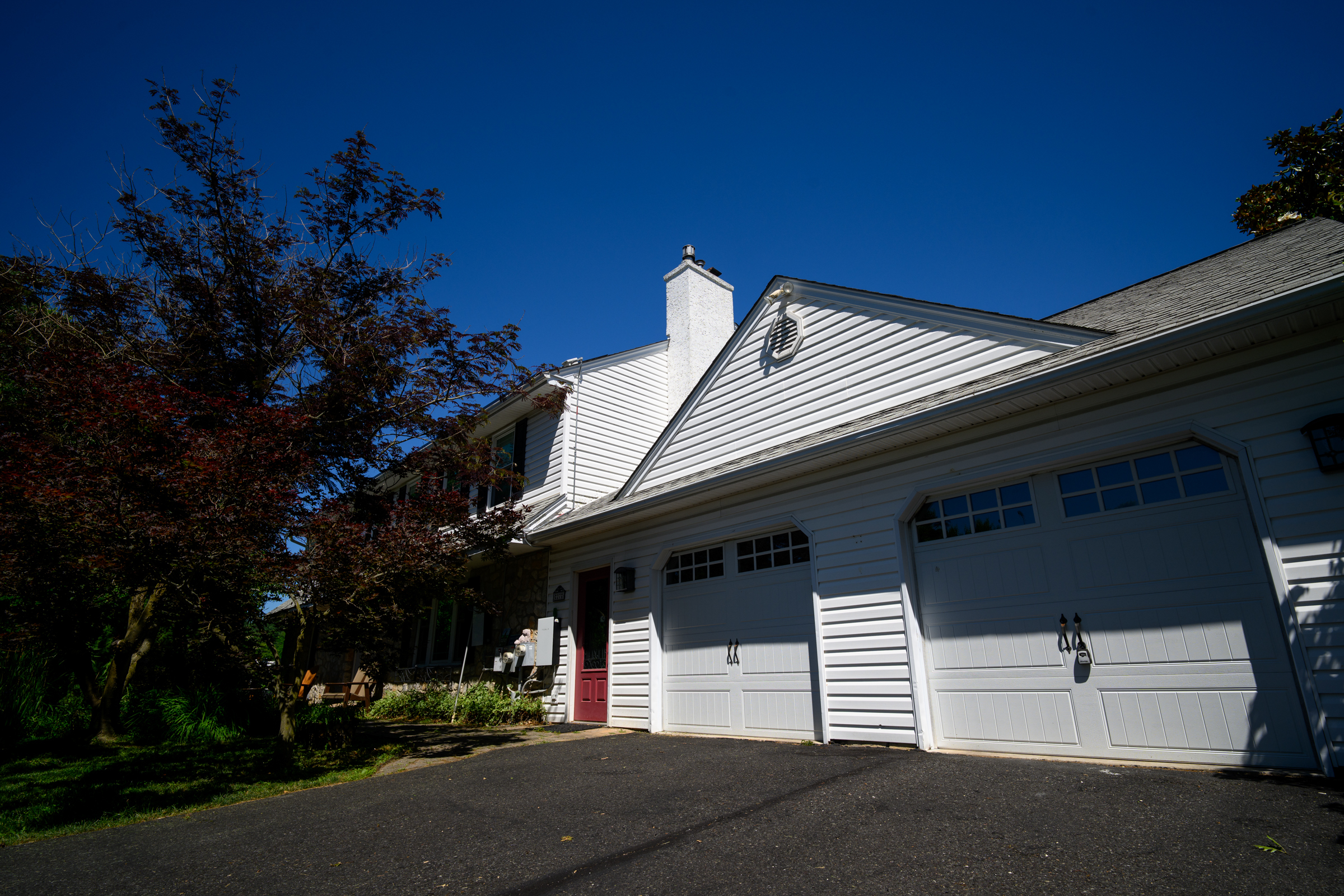
    Between meadows and trees, only the roofline and solar panels are visible from the driveway.

    Cohen and Hexter met on a blind date in Washington, D.C., and married in 2000. After postings in Africa and Brazil they lived in Virginia.

    When they retired they wanted a home where Hexter would have space to garden, and where they could age in place. They were familiar with Montgomery County because Cohen grew up in Pottstown, where his great-grandfather emigrated from what is now Slovakia in the late 1880s.

    The home Cohen and Hexter bought was built in 1986 as a one-story with two bedrooms and a bath. In the 1990s a second floor with three bedrooms and two baths was added as well as a two-car garage.

    The two-car garage was added onto the home by a previous owner.
    Marla Hexter cleans up some overgrown carrots in her vegetable garden.

    The couple liked the downstairs sleeping area and walk-in shower and rooms upstairs to host family. They each have a son and daughter from previous marriages, and three grandchildren.

    The house has a ramp to the backyard deck and a ramp from the house to the garage, built by prior owners.

    But the wooden deck was rotting. The couple replaced it with Trex, a sturdy wood composite. They furnished the deck with an attractive table and chairs made of recycled plastic and decorated it with containers of flowers and potted fig trees.

    Bees collect pollen from a magnolia flower in the backyard.
    A house sparrow grips a tree branch in the front yard. Since they planted the meadows, neighbors have commented on the number of birds that visit their neighborhood, the couple said.

    Growing the fruit has been a challenge for Hexter who gathered tips from local growers and from the annual fig festival in Lower Pottsgrove.

    She and her husband are active in the community. “It is our plan to stay here forever,” Hexter said.

    Is your house a Haven? Nominate your home by email (and send some digital photographs) at properties@inquirer.com.

  • Philadelphia’s historic sites draw tourists from around the world. They’re getting an incomplete version of the President’s House.

    Philadelphia’s historic sites draw tourists from around the world. They’re getting an incomplete version of the President’s House.

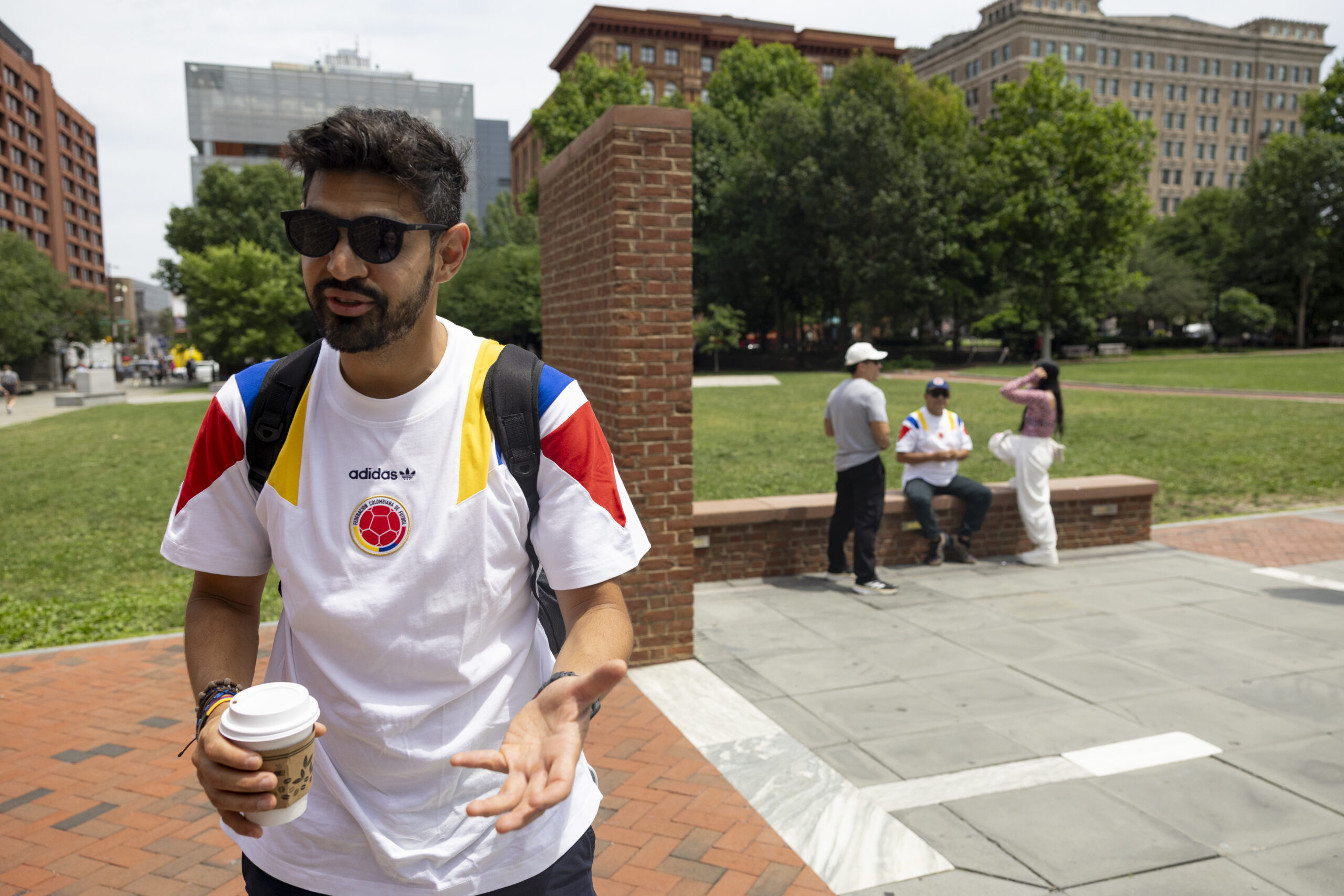
    On a sweltering and humid summer afternoon — as tourists and historical reenactors milled about Old City ahead of 250th anniversary celebrations — Cristian Marín guided his family through the President’s House.

    Loyal soccer fans, Marín’s family had traveled from Colombia to visit their son in Philadelphia, attend the World Cup matches, and see the Revolutionary Era sites.

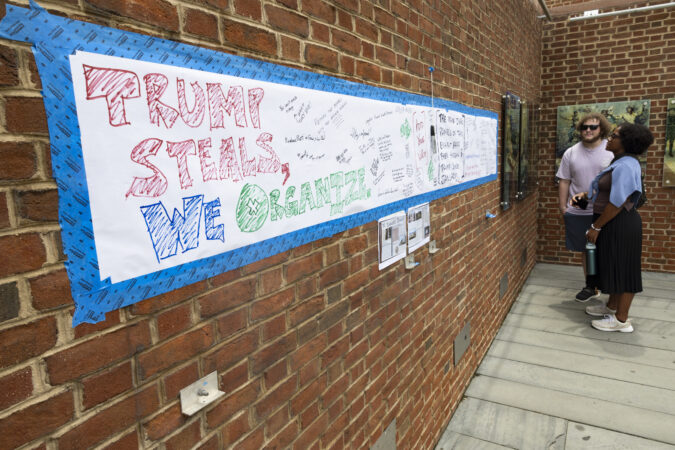
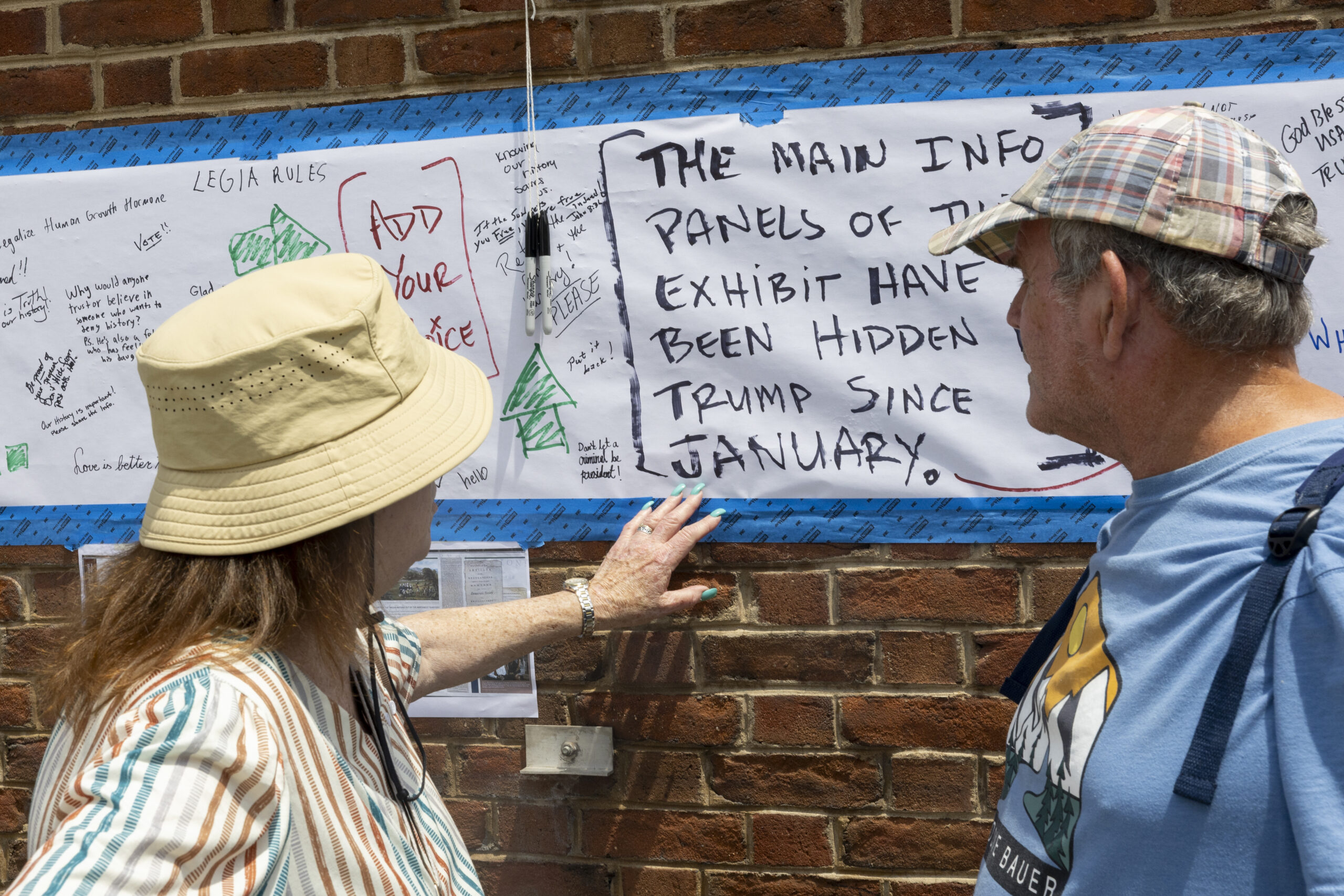
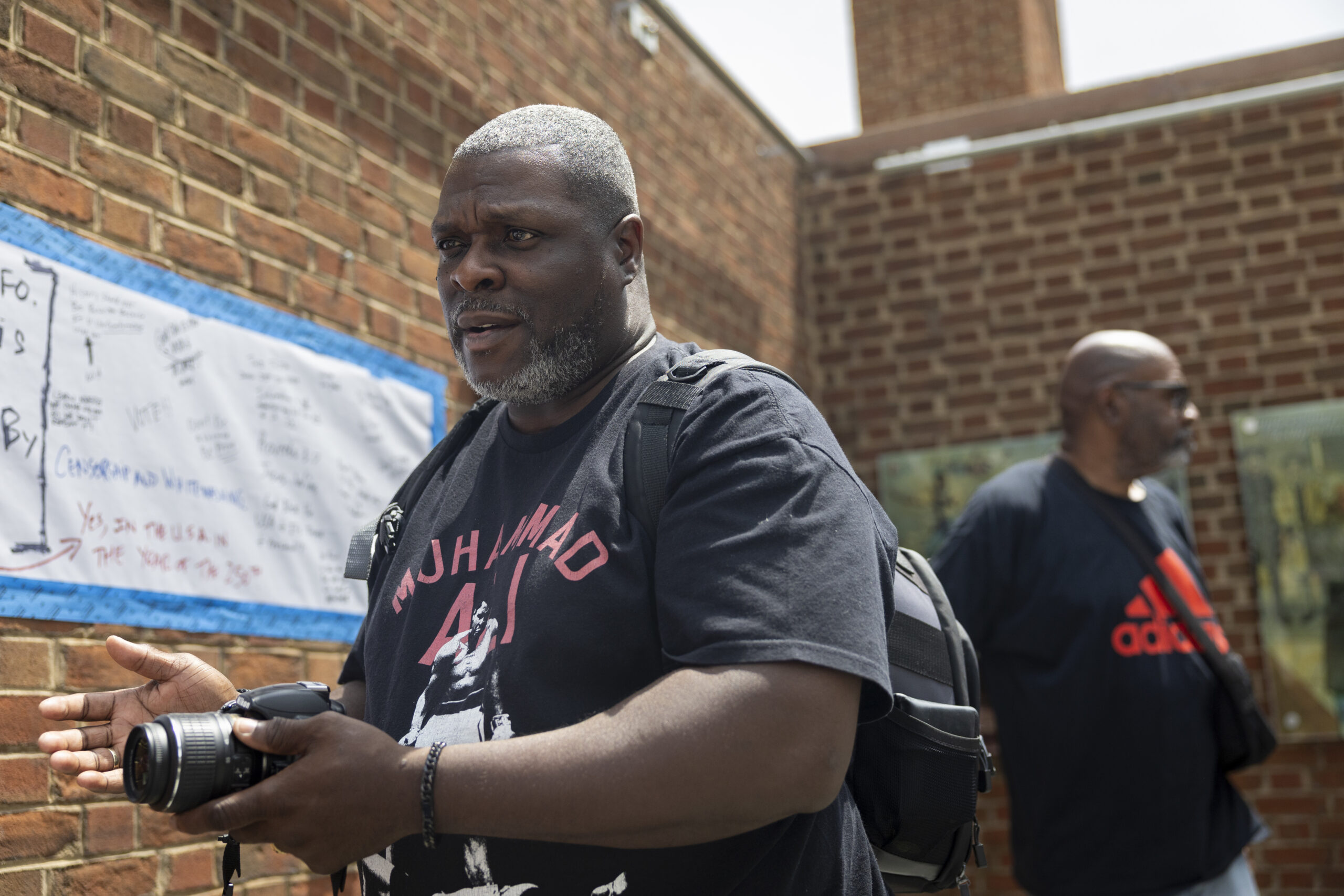
    But it was up to Marín, 37, to play tour guide last Friday and explain to his family why large gaps of brick wall were covered by paper adorned with handwritten messages expressing their indignation with President Donald Trump after his administration removed exhibits about slavery at George Washington’s former home in Independence National Historical Park.

    Marín’s family started laughing from pure disbelief about the “craziness of the situation,” he said.

    Marín’s relatives are among an influx of tourists visiting Philadelphia in the lead up to the city’s Semiquincentennial festivities only to find themselves confronted with evidence of the largely partisan battle playing out over how to tell the complicated story of America’s founding.

    “For me, it’s shocking to see a country trying to erase that history,” said Marín, a freelance journalist. “I think it’s important to remember our past in order to just not repeat those kinds of things.”

    Cristian Marín, 37, tours the President’s House in Independence National Historical Park last week.

    Ahead of the 250th, both Philadelphians who have been engaged in the fight to protect historical exhibits and tourists who have wandered through the President’s House for the first time, have lamented the Trump administration’s changes to the exhibit, which was largely dismantled by the administration earlier this year.

    They told The Inquirer that the missing panels, such as those that discuss the brutality of slavery, do a significant disservice to understanding the full picture — even the ugly parts — of U.S. history.

    “History is going to be out there, and the more we share history, the better for everybody,” said Hector Vargas, 40, from New York. “For the new generation, and even ourselves, because this is something from the past and we need to understand better — what happened and how this great country basically became the great country it is.”

    The Philadelphia Convention and Visitors Bureau estimates that from 250th-related events alone the city will welcome over 1.5 million overnight visitors in 2026.

    But the turmoil facing the President’s House is hanging over the celebrations, as the site’s stakeholders and the Trump administration battle over which version of history residents and visitors will see as they celebrate on Independence Mall.

    Judges presiding over lawsuits related to the President’s House or other threats by the Trump administration to change historical content at national parks have viewed the Fourth of July as a deadline to set the record straight as to whether the federal government has the authority to rewrite history.

    Some advocates believe the Trump administration saw it that way, too.

    Visitors read unofficial signage put up to protest the Trump administration’s changes to the President’s House site, which memorializes the nine people enslaved by George Washington in Philadelphia.

    The Inquirer reported that the federal government also quietly removed mentions of slavery from Independence Hall and a panel under Thomas Jefferson’s portrait at the Second Bank — sending a new wave of outrage among historians and advocates ahead of this weekend.

    “In the 250th anniversary of the founding of the Declaration of Independence, there’s probably increased impetus and motivation to get these changes installed before the dawn of the Fourth,” said Paul Steinke, executive director of the Preservation Alliance for Greater Philadelphia.

    ‘They want to make us believe that slavery did not happen’

    Perched on folding chairs bordered by patriotic banners that flapped in the wind, dozens of Philadelphians spent their Friday night at the People’s Plaza, a concrete gathering space just steps away from the President’s House eight days before the 250th anniversary.

    A truck displaying a digital screen with the name of the event, “Trump Fascism: Historical Erasure and the Battle Over the Truth,” parked across the street.

    With Independence Hall towering behind them, state Rep. Chris Rabb, attorney and advocate Michael Coard, civil rights organizer Masaru Edmund Nakawatase, and visual artist Dread Scott railed against the federal government’s changes to history at an event hosted by Refuse Fascism, an anti-Trump organization.

    The gathering is one of many events opponents to the Trump administration’s actions are holding in the days surrounding the 250th. Coard’s group, Avenging the Ancestors Coalition, is hosting its annual Black Independence Day on July Fourth at the President’s House.

    “We have so much power and it scares these people. If it didn’t scare them, why would they be worried about this exhibit right here?” Rabb (D., Philadelphia) declared, pointing at the President’s House.

    Rabb, who will represent parts of Philadelphia in Congress after winning the Democratic primary for the Third District in May, has often spoken of how he is a descendant of both a signer of the Declaration of Independence who enslaved people and of Black abolitionists.

    The Trump administration had spent a year eyeing the President’s House and other exhibits before they abruptly dismantled the site in January, just weeks into the nation’s 250th year. Last year, the president had issued an executive order directing parks to conduct a content review of materials that could “inappropriately disparage Americans past or living.”

    Subsequent legal battles have allowed some — but not all — of original panels to be reinstalled, though the administration can now install its own spin on history at the President’s House, the Third Circuit Court of Appeals in Philadelphia has ruled.

    But the struggle to confront the full scope of U.S. history is baffling to some visitors, like Camila Ordenana, 24, from Ecuador. Ordenana, who ventured from Guayaquil to Philadelphia to attend a World Cup game, said she has never seen this kind of censorship in her other travels.

    “It is weird, because we have been to several places, several historical cities, like, I can remember going to the U.K. or going to Germany, and you can learn about the experience in a very neutral and respectful way,” Ordenana said.

    Katrie White, 53, from Illinois, traveled to Philadelphia specifically for sightseeing to learn more about African American history. She said she was disturbed by the removal of the signs.

    “They want to make us believe that slavery did not happen,” White said. “And that’s how it affected African Americans, that it wasn’t a big deal, that it made us better. But of course, we all know that it didn’t, and it really did affect us. It was a trauma that is still carried on to this day.”

    Many Philadelphians appear to agree.

    A recent Suffolk University / Inquirer poll found that a quarter of city residents see preserving historic sites as Philadelphia’s top responsibility to the nation ahead of the 250th.

    Richard Porter (left), 52, of Michigan, at the President’s House last week.

    Gathered by the Market Street entrance of the President’s House last Friday, looking at the colorful illustration panels that remained, Richard Porter grappled with the impact of the removals, saying that without the educational information, “We’ll repeat it over and over again.”

    The Michigan resident said that the country is at a point where it needs to move forward but that the changes to the President’s House are sowing further divisions.

    “This is an everyday battle. It’s not just today or for the 250; this is all the time,” Porter said.

  • 6 ways to shift your stress mindset to dial down daily anxiety

    6 ways to shift your stress mindset to dial down daily anxiety

    To deal with a stressful world, many of us try to avoid and reduce the stress. But what we believe about stress may have just as important a role in helping us deal with it.

    Psychologists call this our “stress mindset” — our belief that stress can debilitate us or enhance us and have positive consequences.

    Research from the past decade shows that these beliefs can affect our psychology and physiology; people who are more inclined to see the positives of stress are more likely to experience improved performance, boosted mood and, in fact, reduced stress.

    Importantly, you can change your stress mindset, experts say.

    “If somebody perceives that stress has benefits for them, they’re likely to engage in a stressful situation much more adaptively,” said Sarah Williams, a sport and performance psychologist and associate professor at the University of Birmingham in England.

    Having a stress-is-enhancing mindset is less about “Pollyannaish” positive thinking or toxic positivity and more about acknowledging that a stressful experience can “lend itself to growth, to opportunities,” said Alia Crum, an associate professor of psychology at Stanford University who first developed a psychological measure for stress mindsets in 2013.

    “So rather than trying to remove stresses and calm everybody down, it’s about trying to help people understand the benefits of when they feel stressed, what those responses can do for them, how they can fuel them to perform better,” Williams said.

    In other words, stress — and how we think about it — may actually help us thrive.

    What our mind does to stress

    The negative effects of stress are still real. Stress, especially if it is chronic, can cause physical and mental illnesses or premature aging.

    But the true nature of stress is more complex.

    “The body’s stress response was not designed to kill us,” Crum said. “It was designed evolutionarily to help our bodies, brains, and minds rise to the occasion and meet the challenges and threats that we are faced [with].”

    (When most people say “stress,” they are usually referring to “distress,” the negative side of stress. Eustress, by contrast, is what researchers consider motivating and energizing stress.)

    There are four ways that our mindsets change how stress affects us, Crum said.

    First, what we believe changes what we pay attention to. Believing that stress is inherently harmful can cause people to overly fixate on the bad and “freak out or check out” as a result, Crum said.

    Second, our stress mindset changes what we are motivated to do. When people believe stress can be enhancing, they are more likely to engage with it in appropriate ways.

    Third, what we believe changes our emotions. “Something I always tell people is often the detrimental thing is not the stress,” Williams said. “It’s the stressing about the stress.” Conversely, believing that stress is enhancing can boost positive emotions, research shows.

    And fourth, there is evidence that mindset can change our body’s physiological response to stress, including by decreasing levels of salivary cortisol, our body’s principal stress hormone.

    Research shows that having a more stress-is-enhancing mindset is linked to better mental health outcomes in the long run, including higher resilience, more optimism, and lower anxiety and depressive symptoms, Williams said.

    Crum said she has tested stress mindsets in different groups of people — students, athletes, workers — across different cultures, and, on average, all groups fell more on the stress-is-debilitating side of the scale.

    The one exception she has found? Candidates working to become Navy SEALs. “These are people who are literally choosing to go into one of the most stressful experiences, professions that exist on the planet,” Crum said. “So they must have a belief that stress can serve them.” (Nevertheless, Navy SEAL candidates who had greater stress-is-enhancing mindsets were more likely to persist through training, have faster obstacle course times, and have fewer negative evaluations from their peers or instructors.)
    This is not to say that the stressor, whether it’s a big job interview, getting an F on an exam, or a tough relationship conversation, is necessarily a good thing or something we enjoy.

    But the stressor is distinct from our experience of the stress.

    “You’re only stressed about things that matter to you,” Crum said. We should “welcome stress” because stress is “a sign that there’s something you care about.”

    Malleable mindsets

    Shifting stress mindsets — and reaping the benefits — is possible for anybody, even for those with the deepest struggles, researchers say.

    Early research found that presenting people with evidence of the benefits of stress could shift their mindset and confer psychological and physiological benefits.

    In a 2017 study published in the journal Anxiety, Stress, & Coping, Crum and her colleagues presented 113 participants with a three-minute video that emphasized either the enhancing or debilitating properties of stress. Afterward, participants took part in a mock job interview — a typically stressful activity — and received either positive or negative feedback.

    Participants who learned that stress is enhancing experienced more improvements to their positive emotions regardless of whether they were told they performed well or poorly. They also exhibited more cognitive flexibility, which is the ability to adapt our thinking and behavior to different contexts. Conversely, participants who learned that stress is debilitating had worse cognitive and emotional outcomes.

    But more recently, Crum and colleagues found that giving a more holistic perspective of stress and emphasizing the power of mindsets may be even more effective, according to a 2023 study in Journal of Experimental Psychology: General. This “metacognitive” approach improved self-reported physical health symptoms and work performance compared with people who were wait-listed for the training.

    And compared with participants who learned only about the positive benefits of stress, those who received the metacognitive approach were more able to maintain the stress-is-enhancing mindset even when presented with evidence of negative effects of stress a week or two later.

    People who can imagine themselves succeeding in a stressful situation may further shift their belief that stress can be enhancing, according to a 2023 study conducted by Williams and colleagues. “We’re almost training the brain to connect the responses to stress with that positive outcome,” Williams said.

    Researchers are careful to note that just because our stress mindset matters, it doesn’t mean it’s “all that matters,” Crum said. “It’s just one piece of the puzzle to help us live happier, healthier, more productive lives.”

    How to shift your stress mindset

    Here are steps experts say you can take to shift your stress mindset.

    Acknowledge the stress. Instead of denying it or trying to suppress it, say what is stressing you aloud. Notice your physiological responses — elevated heart rate, sweatier palms — and remind yourself that “this is my body preparing for me to perform,” Williams said.

    Welcome the stress. It is a sign that there’s something you care about, which can be focusing and energizing if you allow it to be.

    Use the stress response. Instead of expending effort and resources trying to avoid the stress, “utilize the narrowed focus, the increased arousal and energy that happens in the body in order to meet the goals that you have,” Crum said.

    Fuel your stress mindset. Think about a time in your life when you’ve excelled or grown the most. “Anytime you want to, you know, level up, there’s usually some stress involved,” Crum said. “So we just need to remember that is evidence to fuel and sustain the belief.”

    Try stress-mindset micropractices. Take moments to reflect on what stresses you have and what you care about most. This is something Crum says she does when she makes the transition going up the stairs into her workplace and again when returning home.

    Complement with other stress management strategies. More research needs to be done about what contexts and scenarios call for different approaches to stress, experts say. But strategies such as reframing negative experiences and slowing our breath also can help alleviate stress and improve mood.

  • Alexander Hamilton believed in Philadelphia’s prosperity and insisted the Federal Bank be headquartered in the city

    Alexander Hamilton believed in Philadelphia’s prosperity and insisted the Federal Bank be headquartered in the city

    The Revolutionary War ended in 1783, but when the 1790s rolled in, America was in an economic spiral. Citizens were broke. Businesses were going under. The government had little money.

    So the first United States Treasurer Alexander Hamilton came up with a plan to create a national bank to serve as the primary fiscal agent for the federal government. It would issue paper money, pay America’s bills, provide loans to private citizens, and collect taxes so the country could fund itself.

    “Hamilton had been studying the British banking system for decades,” said Lynn Nash, a park ranger at Philadelphia’s First National Bank that is managed by the U.S. National Park Service. “He did a deep dive and decided America needed a similar system to build more fiscal authority.”

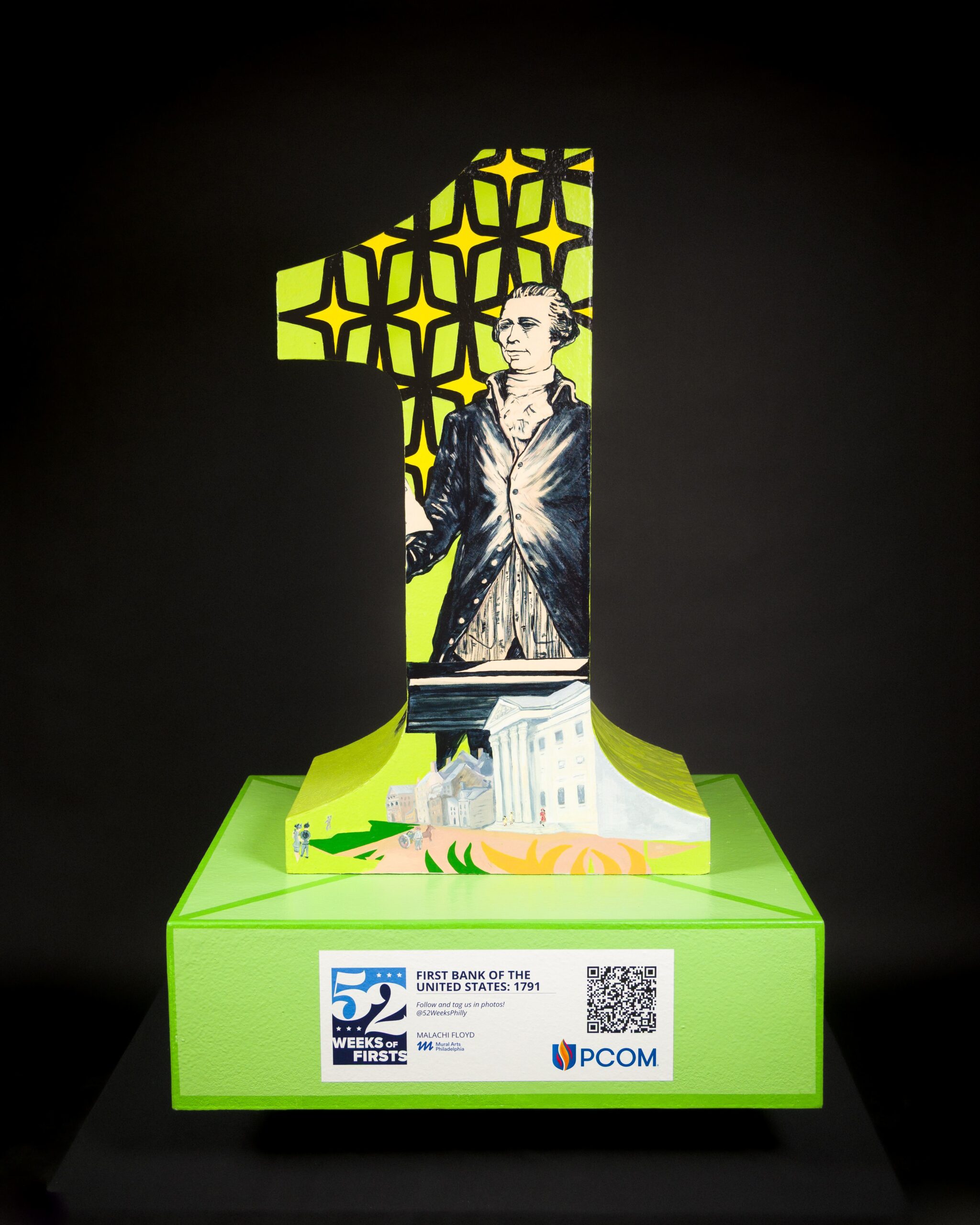
    Malachi Floyd’s image of Alexander Hamilton, stacks of money, and the original First Bank of the United States’ building honors Philadelphia’s history as the seat of the federal banking system.

    On Feb. 8, 1791, Congress passed a law establishing America’s first federally backed bank, which was located inside Philadelphia’s Carpenter’s Hall.

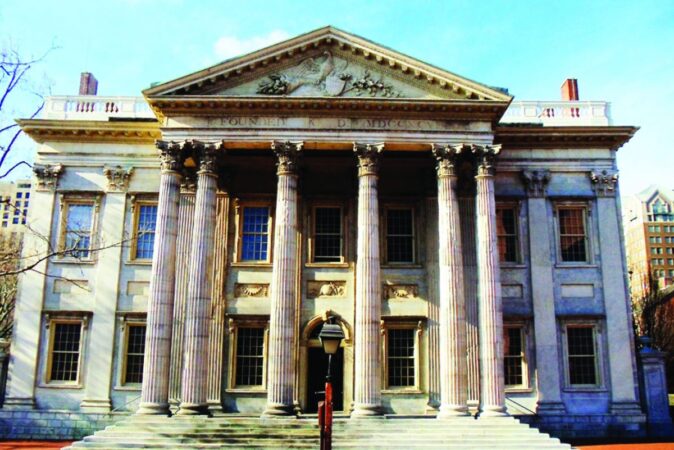
    The city will celebrate America’s First National Bank Saturday, July 4, at the First Bank of the United States, 120 S. 3rd St., where it moved in 1797. The Independence Day fete is part of the Philadelphia Historic District’s 52 Weeks of Firsts program.

    In honor of the Semiquincentennial, the National Park Service will reopen the First Bank to the public on July 1, following a multiyear $43 million rehabilitation. The gleaming Greek Revival-style building will feature exhibits centering on the history of American banking.

    America’s first commercial bank, the Bank of North America, was charted by the Continental Congress in 1781 to provide loans to colonists and fund the Revolutionary War. And some lawmakers, especially Thomas Jefferson, thought that was sufficient and that the Federal Bank overstepped the Constitution.

    While lawmakers settled into their capital digs in Washington, D.C., in 1800, Hamilton argued that the Federal Bank should be kept in Philadelphia through the end of its charter.

    “He writes a letter to George Washington telling him how the bank needs to be housed in a large commercial seat,” Nash said. ”And that he knows Philadelphia will remain prosperous.”

    The First Bank of the United States’ charter ended in 1811. Hamilton had died by then and President James Madison did not renew the charter. The next year, the building was purchased by Stephen Girard, who opened a private bank in the space.

    “But the War of 1812 was hard on the economy again,” Nash said. On April 10, 1816, Madison signed legislation establishing the Second Bank of the United States at 420 Chestnut St., Nash said.

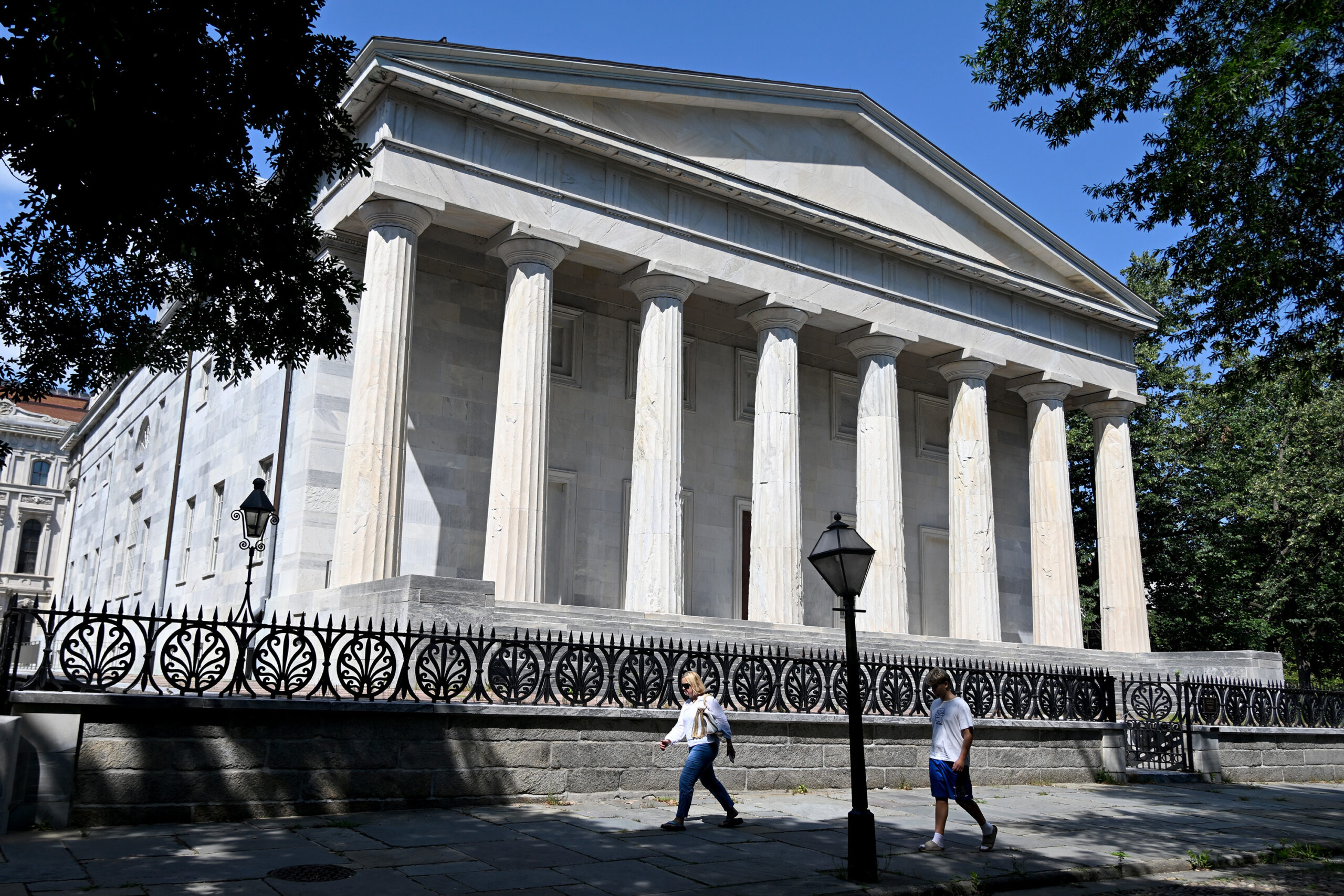
    (Today that building is the Second Bank of the United States Portrait Gallery.)

    Second Bank of the United States at 420 Chestnut Street. Today it is the Second Bank of the United States Portrait Gallery.

    Its charter expired in 1832; Andrew Jackson was president, and he, too, opposed the idea of a federal bank. The charter was not renewed and America didn’t have a federal banking system for 77 years.

    In 1907, New York financier J.P. Morgan and a consortium of bankers stopped the American banking system from collapsing by extending a line of credit to banking institutions. Without a federal banking system, the government could not bail these institutions out, so government officials began discussing the establishment of yet another national bank.

    Finally, President Woodrow Wilson signed the Federal Reserve Act in 1913, setting up the federal banking system we know today.

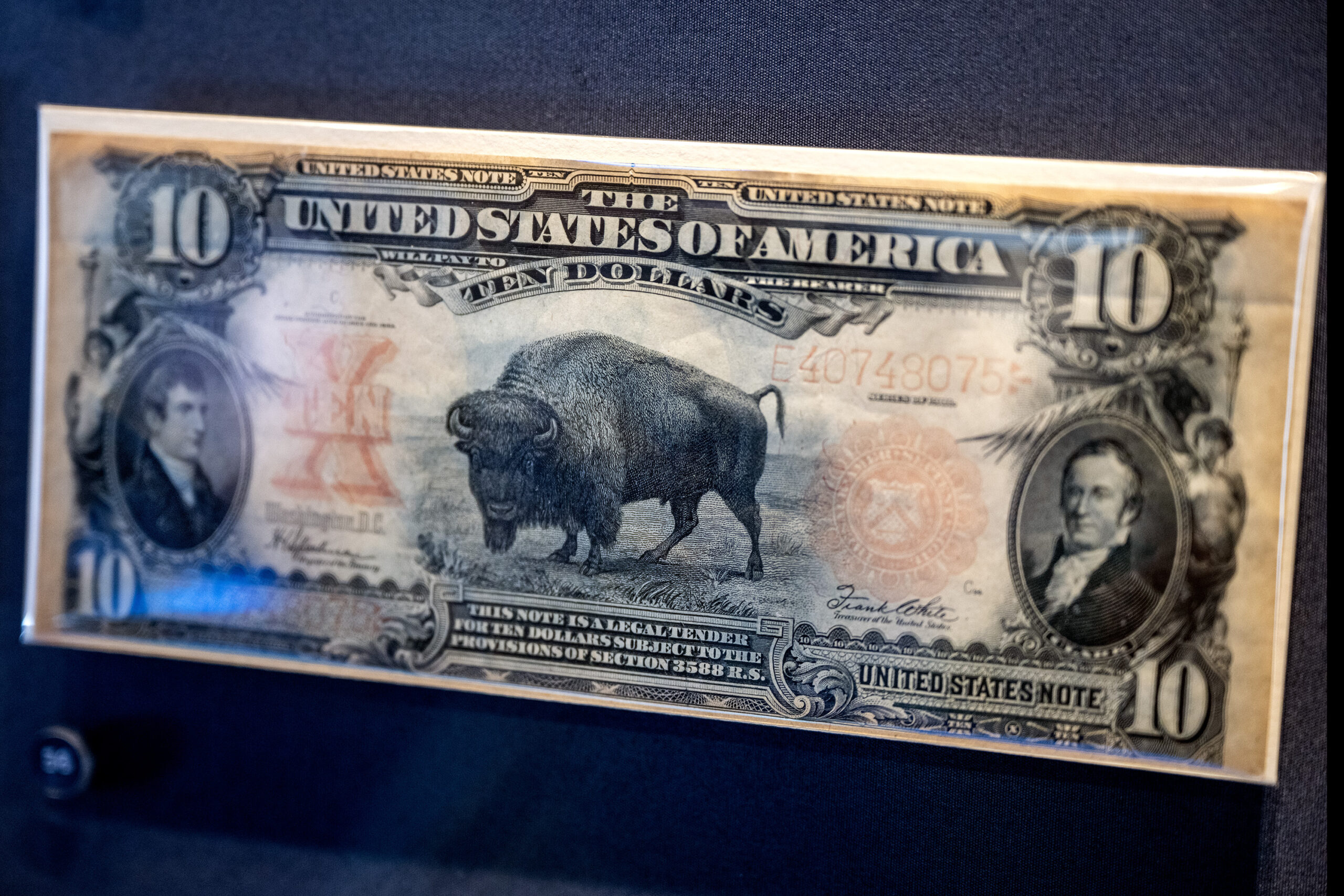
    A 1901 $10 Bison Note on display at the Federal Reserve Bank of Philadelphia’s newly redesigned “Money in Motion” exhibit Thursday, May 7, 2026. The bill was issued during the 100 year anniversary of the Lewis and Clark expedition. The exhibit features nearly 400 historic artifacts and interactive installations that explore currency and the Federal Reserve’s mission.

    The Federal Reserve is headquartered in D.C., but there are 12 branches across the country; Philadelphia is home to one of them.

    Today, the Federal Reserve acts as a fiscal agent for the U.S. Treasury, which issues paper money, collects taxes, and pays America’s bills. It does not offer private loans to businesses or individuals.

    Like the national banks, the Federal Reserve also began with a 20-year-charter. But in 1927, Congress passed the McFadden Act, granting the Federal Reserve Bank perpetual succession.

    “The government finally agreed that a federal banking system was something America needed,” Nash said. “It just took them more than 100 years to agree.”

    America’s First National Bank Firstival will be celebrated on Saturday, July 4, from 11 a.m. to 1 p.m., the First Bank of the United States, 120 S. Third St.

    The Inquirer is highlighting a “first” from the Philadelphia Historic District’s 52 Weeks of Firsts program each week. A “52 Weeks of Firsts” podcast, produced by All That’s Good Productions, drops every Tuesday.

  • Letters to the Editor | July 2, 2026

    Letters to the Editor | July 2, 2026

    Messy MOU

    This eternal blustering by the U.S. and Iran over the control of the Strait of Hormuz is just that. Two nation-states vying for control of a waterway neither has the right nor historical precedent to. I can’t say I blame Iran, which from any vantage point was — despite its history — unjustifiably attacked by Israel and the U.S. Where is Iran in this picture? Why is President Donald Trump taking full responsibility for keeping it open? What role should a NATO peacekeeping force be playing? Why are the peace negotiations being driven by Trump and Iran? Where is Israel in that picture? Unless Israel is totally complacent and under the thumb of Trump, how can he and Iran expect to sign a treaty governing southern Lebanon? Something just doesn’t smell right.

    Tim Reed, Philadelphia

    Heat safety

    As Philadelphia welcomes thousands of visitors for a summer filled with historic events, matches, and celebrations, it’s important to remember that extreme heat poses serious health risks.

    Extreme heat is the leading cause of weather-related deaths in the United States. Forecasts suggest above-average temperatures throughout summer — and we’re all really seeing the truth of that this week. The combination of heat, humidity, and dense crowds can quickly lead to heat-related illnesses.

    There are three simple but critical steps everyone should follow:

    • Stay hydrated. Drink water regularly, even if you do not feel thirsty. Avoid sugary, caffeinated, and alcoholic beverages.
    • Stay cool. Take frequent breaks in shaded or air-conditioned spaces. If your home is too warm, visit public places such as libraries, malls, or designated cooling centers.
    • Stay connected. Check in on friends, family, and neighbors, especially those at higher risk. Make sure pets also have access to water and shade.

    Philadelphia’s historic summer events should be a time of celebration. By taking a few simple precautions and looking out for one another, we can ensure this season is not only memorable but safe for all.

    Jennifer Graham, CEO, American Red Cross Southeastern Pennsylvania Region

    Hubris

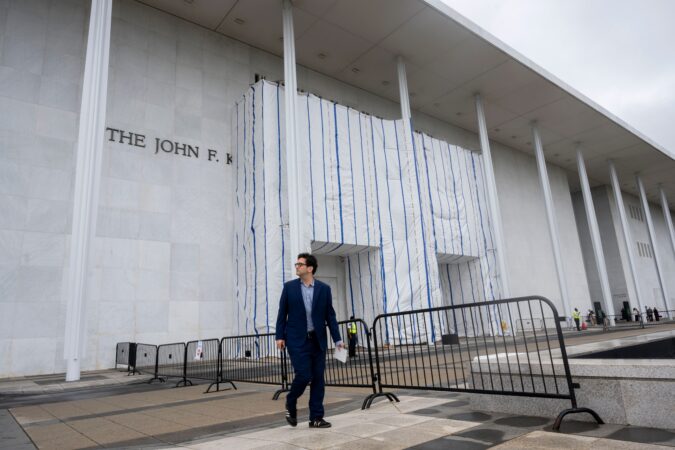
    The latest example of legal malfeasance by the U.S. Department of Justice takes the form of its newly filed brief contesting the removal of Donald Trump’s name from the John F. Kennedy Center for the Performing Arts.

    Ignoring Public Law 88-260, which established the center as “a living memorial to be named in [JFK’s] honor,” the brief asserts that Trump’s name should also be on it. The reason being that the center’s trustees thought Trump’s experience building things warrants his name being placed back above President Kennedy’s, even though Trump was 25 when the center opened and he had nothing to do with its construction.

    The brief gets worse, stating that Trump’s “construction abilities” would fix the building and restore it as a crown jewel of D.C. Apparently, neither the board of trustees nor anyone at the Justice Department has seen what Trump has done to two of the district’s other crown jewels — the Lincoln Memorial Reflecting Pool and the East Wing of the White House.

    Even if the laughable assertions in the brief were true, they are meaningless. The center was named for an assassinated president, and the name of a narcissistic opportunist doesn’t belong there, legally or otherwise. It’s impossible that Todd Blanche was unaware of this frivolous argument. This further cements his place as likely the most unfit person ever nominated to serve as attorney general. The only law he cares about is the law of Trump.

    Stewart Speck, Wynnewood, speckstewart@gmail.com

    Join the conversation: Send letters to letters@inquirer.com. Limit length to 150 words and include home address and day and evening phone number. Letters run in The Inquirer six days a week on the editorial pages and online.

  • Horoscopes: Thursday, July 2, 2026

    ARIES (March 21-April 19). A problem can seem small to everyone else and still feel enormous to the person living it. Because problems don’t obey laws of scale. Small things can have tremendous emotional significance. If it’s a big deal to you, it’s a big deal, period.

    TAURUS (April 20-May 20). It’s an ideal moment to update your surroundings and relationships to match who you are now. Your closet, like your contact list, contains artifacts from previous chapters. Release what no longer reflects your current life.

    GEMINI (May 21-June 21). Each individual who interacts with others is both a person, and an idea of a person. We never interact with people completely objectively. We interact with them and our ideas about them at the same time. Today, some of those ideas will need updating.

    CANCER (June 22-July 22). What you want is in fine alignment with the interests of those around you. This makes manifestation much easier. You won’t have to convince anyone. No hard sell — no soft sell either — just building on the enthusiasm that already exists.

    LEO (July 23-Aug. 22). You’ll work without proof that you’re doing it right. But you know that even if this idea doesn’t work, you’ll have another one. Your confidence doesn’t depend on success. It depends on your faith in your own ability to keep creating.

    VIRGO (Aug. 23-Sept. 22). It’s not true that all dark clouds have a silver lining. Sometimes it’s black. Sometimes it’s gold. Sometimes everything disperses in a fog so diffuse there’s no lining at all. But every weather reveals something that sunshine alone cannot.

    LIBRA (Sept. 23-Oct. 23). There are things you know but don’t yet know that you know. Writing has a way of revealing them. Once thoughts leave the swirl of the mind and take shape on a page, patterns emerge, priorities become obvious and hidden assumptions introduce themselves.

    SCORPIO (Oct. 24-Nov. 21). Smart people sometimes hide behind being smart. You’ll be around the dynamic today — people trying to have interesting conversations instead of real ones. Things gets better when nobody is trying to prove anything. So how can you put them at ease?

    SAGITTARIUS (Nov. 22-Dec. 21). Where does your responsibility end and theirs begin? Today you can clean up some of the blurred lines between “my job” and “your job.” Remember that what you establish in the early stages of a relationship is likely to become the norm.

    CAPRICORN (Dec. 22-Jan. 19). What if the universe wants to give you what you ask for, but it doesn’t understand the request? In some small way, give the very thing you want. This will serve as an example — a template for the universe to follow and scale up.

    AQUARIUS (Jan. 20-Feb. 18). Animal trainers know that training a relaxed animal is challenging, while training a stressed animal is near impossible. The human animal also learns better without too much stress and pressure. The education itself is challenge enough.

    PISCES (Feb. 19-March 20). Throughout history, reasonable people have accomplished unreasonable things — things they never imagined they could do. Don’t let a momentary crisis of confidence keep you from going forward. Doubt yourself if you must, but march on anyway.

    TODAY’S BIRTHDAY (July 3). It’s your Year of the Vineyard of Dionysus. In Greek myth, the god of wine, theater and celebration taught that pleasure and creativity are close companions. Gatherings become collaborations. Fun turns into opportunity. Joy proves productive. More highlights: You’ll make game-changing sales. You’ll clear up a cluttered area of your life and have a deep peace. Your powers of attraction grow. Aries and Leo adore you. Your lucky numbers are: 15, 20, 41, 6 and 9.