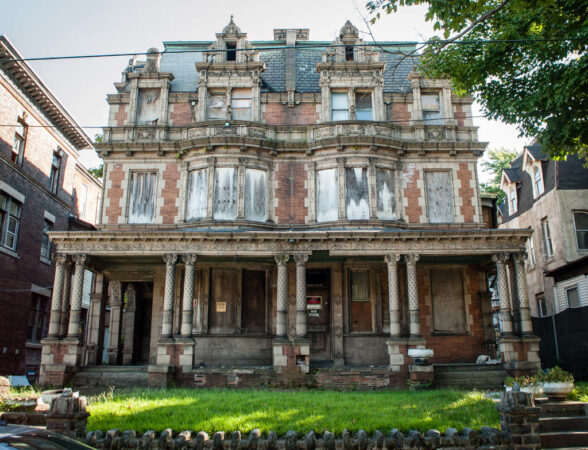
A unique — and formerly crumbling — historic property in North Philly is poised for new life.
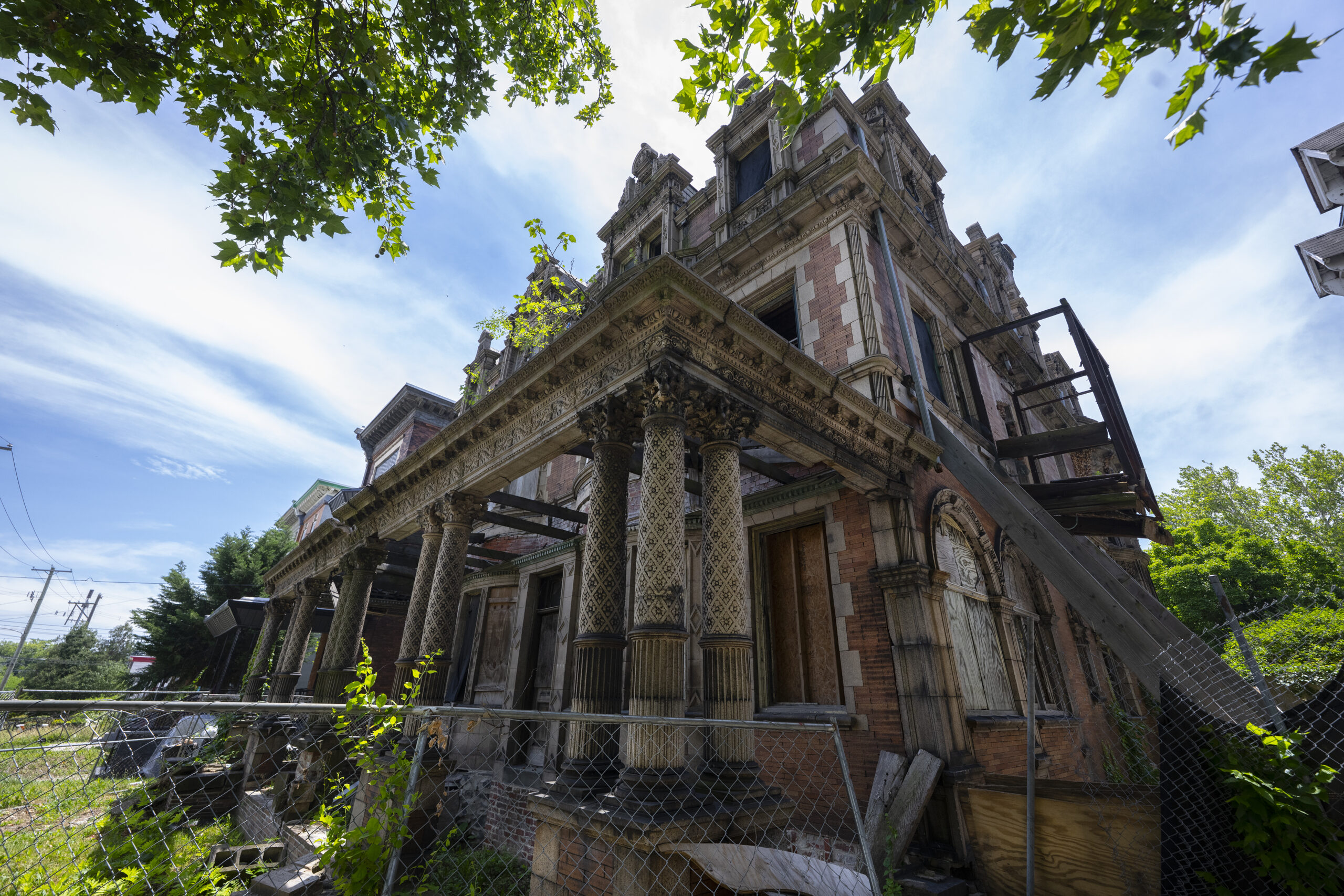
The twin mansion on the 2200 block of West Tioga Street is almost 130 years old. The Conkling-Armstrong Terra Cotta Co. had the building constructed near its factory to show off its products to potential customers: late-19th-century developers and architects. Elaborate details and decorations make it one of a kind.
But the building has been vacant for a while and fell into disrepair. Now, a local developer has big plans to reimagine it.
Keep scrolling for that story and more in this week’s edition:
The Conkling-Armstrong Houses weren’t safe to walk through when Brian Wise, an affordable housing developer, got a hold of them. He’s since spent $1 million to lay the groundwork for redevelopment.
His plan is to build 12 apartments in each of the roughly 5,000-square-foot houses that make up the twin mansion. And he wants to build two additions in the back to fit more apartments.
Wise plans for most of the homes to go to low-income tenants who use Philadelphia Housing Authority vouchers to help pay their rent.
Philly’s zoning board gave Wise the green light last month, but he still needs approvals from the Philadelphia Historical Commission.
Keep reading to learn more about the developer’s plans for the site and the historical legacy of the company behind the Conkling-Armstrong house.
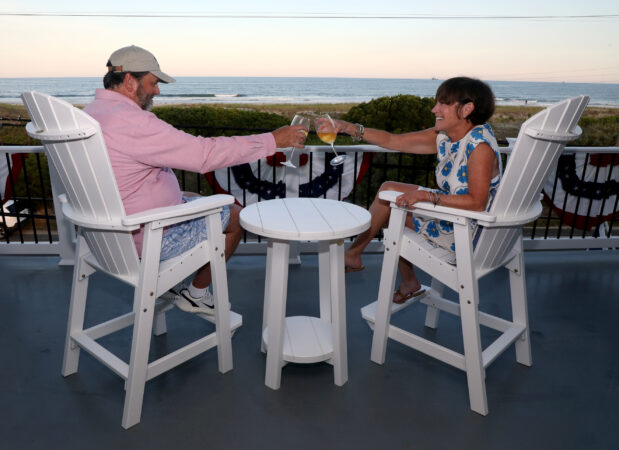
Beautiful views come at a premium at the Shore. And Shore homeowners want to make sure they’re getting the most out of their investment.
As Laura Glantz, partner at a Jenkintown-based architecture firm, told my colleague, “When a view is one of a property’s greatest assets, every design decision should work to celebrate and preserve it.”
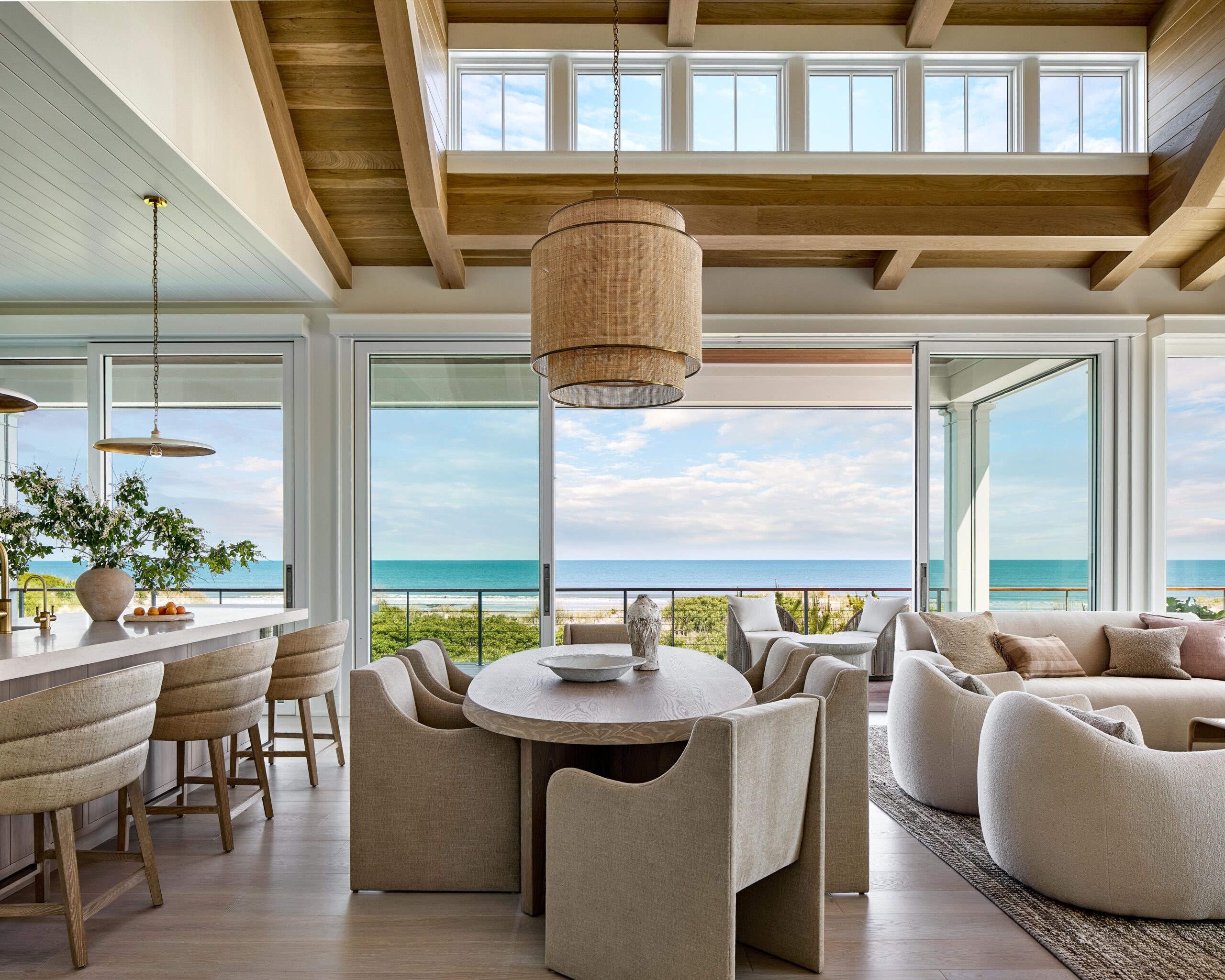
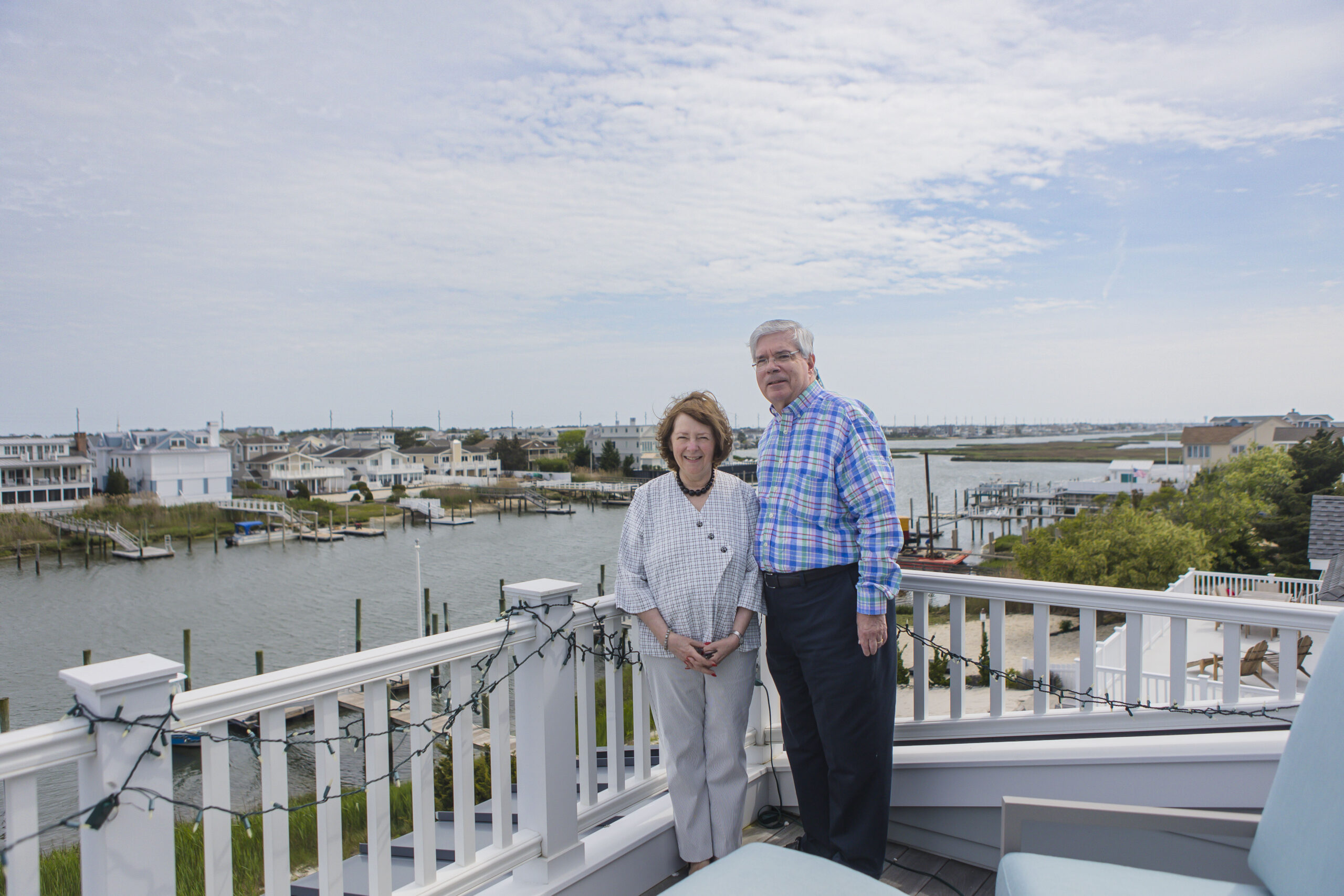
When Katie and Randy Zakreski rebuilt their home in Strathmere, they wanted to optimize views of the ocean on one side and the bay on the other.
That meant installing as many windows and glass doors as possible on every floor. They don’t mind not having much wall space for pictures, since the views act as dynamic wall furnishings.
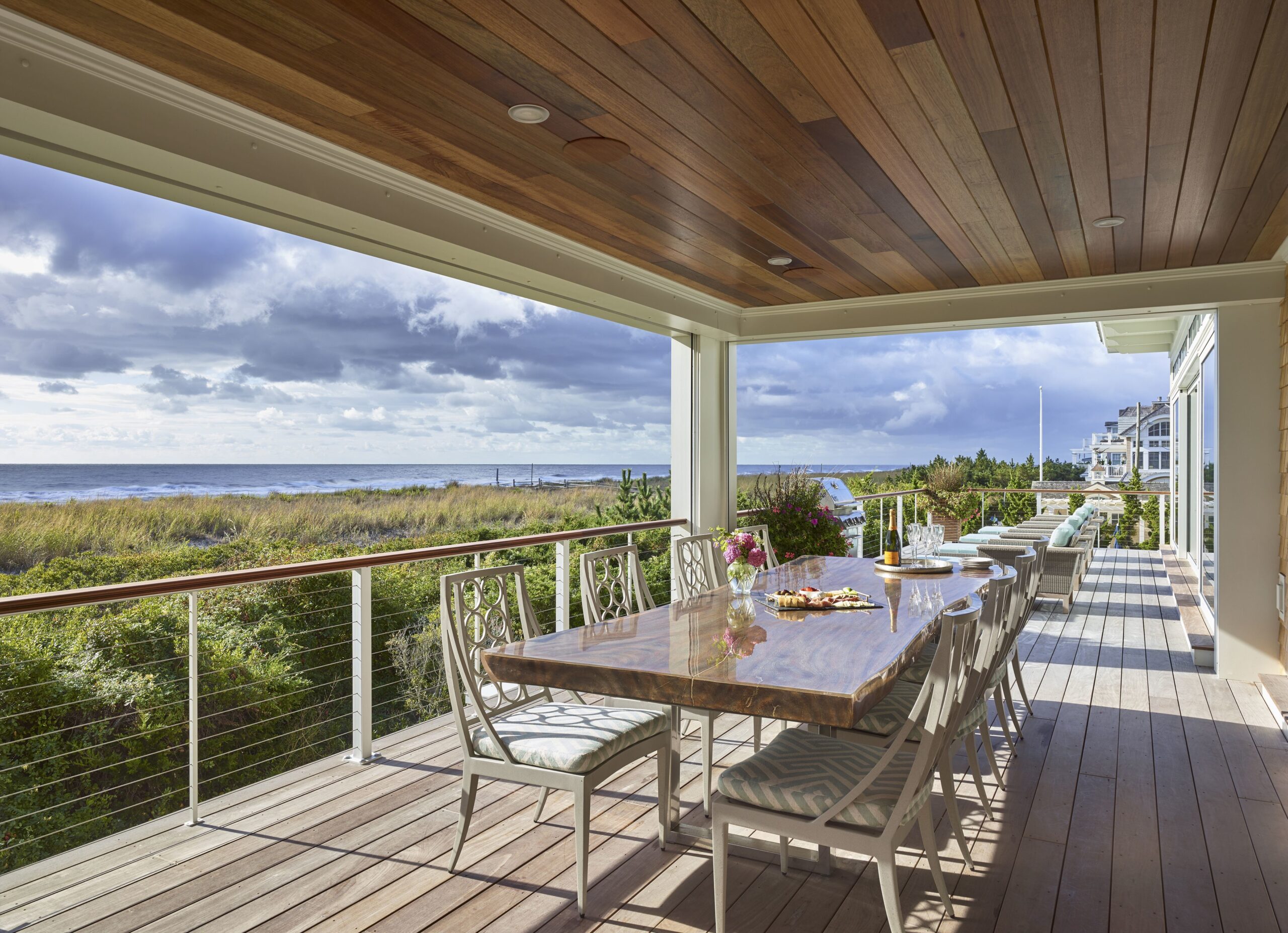
Views dictated the layout of their home inside and out. They have five exterior decks from which to look around.
Coming up the driveway of this Schwenksville home, you can’t really see the house. All that’s visible is solar panels on the roof, peeking out from behind trees and a meadow.
Homeowners Marla Hexter and Larry Cohen take caring for the environment seriously. They’ve got two electric vehicles, a geothermal heating and cooling system, and those solar panels.
They also have two wildflower meadows in their front yard. The meadows replaced their typical lawn and extend from their frog pond to the curb. They’re beacons for admiring neighbors, some of whom ask for tips for creating their own meadows.
The wildflowers attract pollinating insects and 17 bird species.
Hexter and Cohen grow vegetables and added a house specifically to welcome bats.
Shoutout to Bruce R. and Merrily T. for knowing that.
―
Does your town let you keep chickens in your backyard? Collingswood is one of the local places that ban the animals.
Some residents there have been fighting for years to have chickens and the fresh eggs they lay. But they’ve got reason to hope that this year will be different.
Try to stay cool and enjoy the rest of your week.
By submitting your written, visual, and/or audio contributions, you agree to The Inquirer’s Terms of Use, including the grant of rights in Section 10.
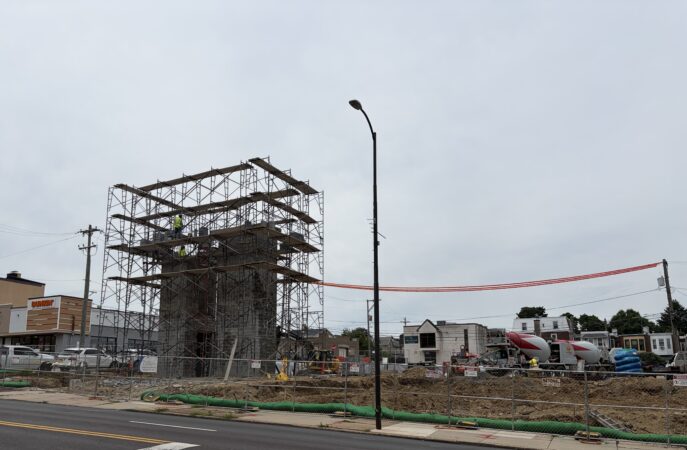
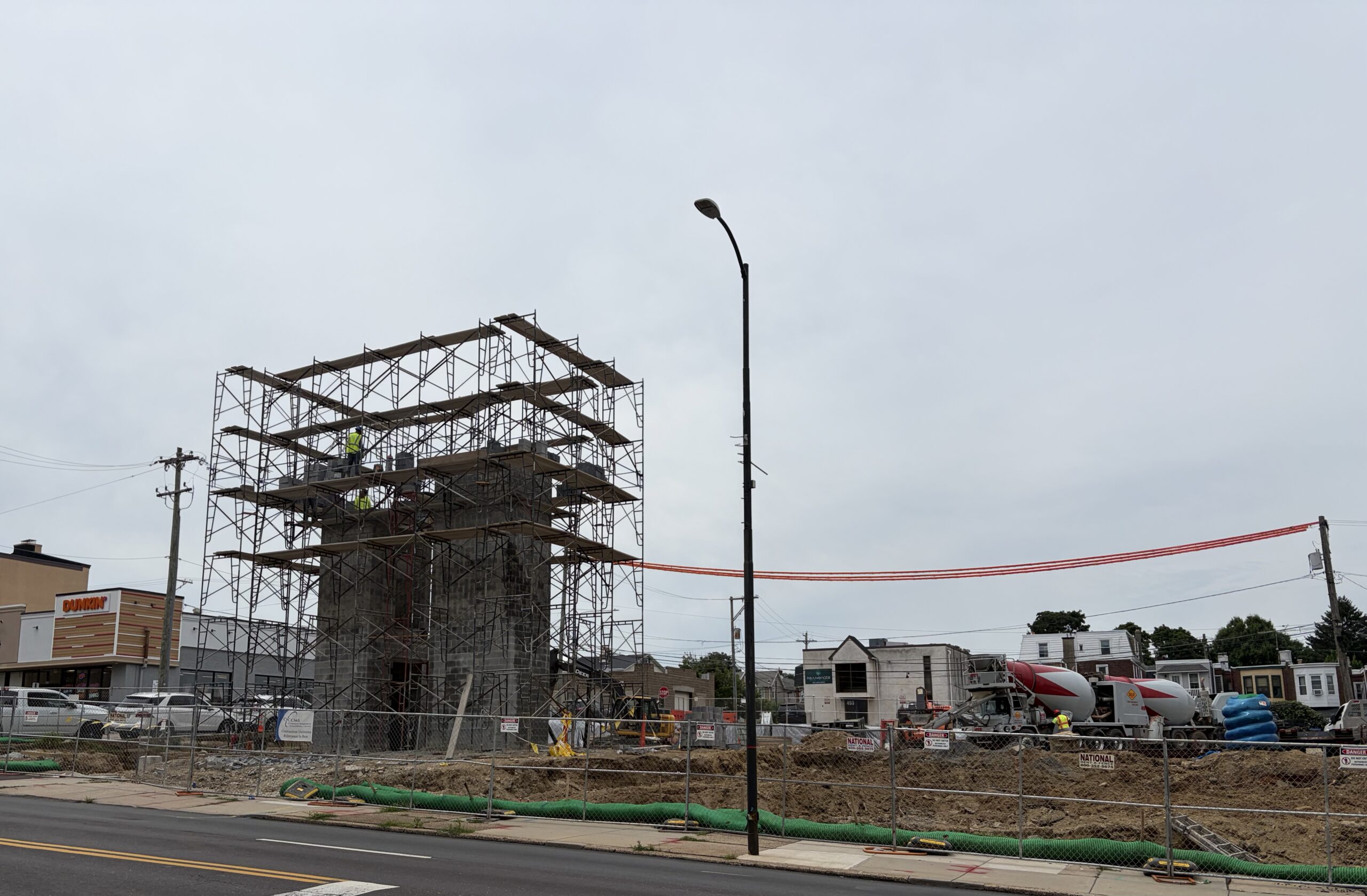
Construction is underway on a mixed-use apartment building facing York Road in Jenkintown.
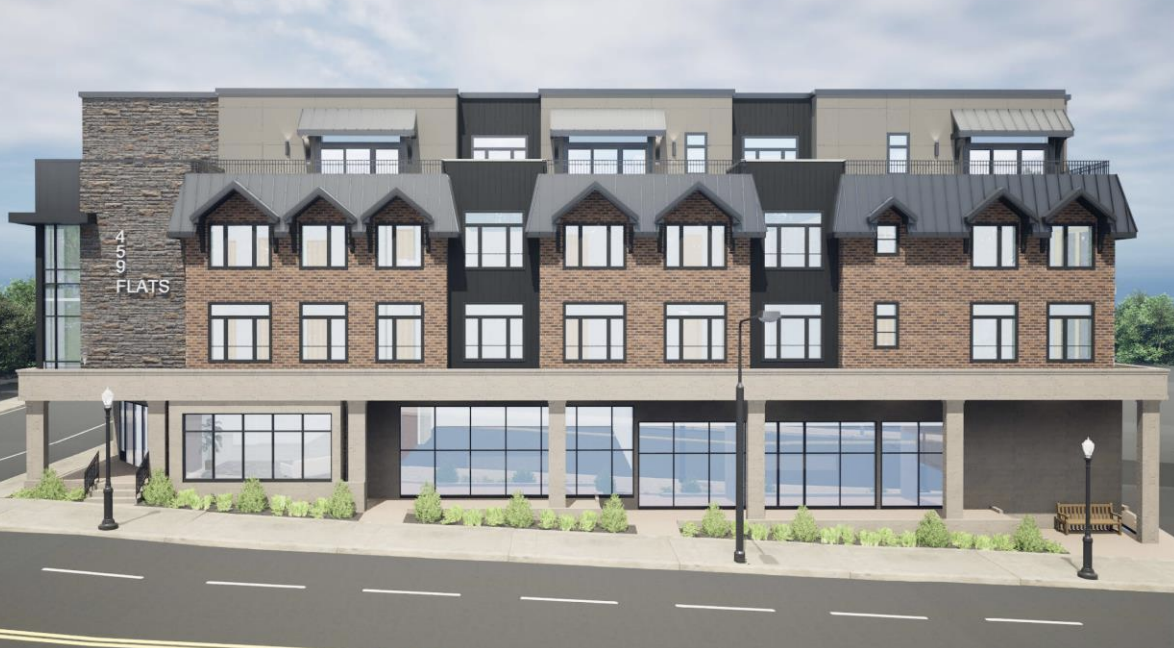
Plans for the new building, which will sit at the intersection of Route 611 and Cherry Street across from Dunkin’, include 40 apartments and a ground-floor commercial space.
The four-story structure also includes a parking garage with 48 spaces. Eight of those will be reserved for the retailer, developer and owner Vincent Celenza said.
Rendering of an apartment complex at Route 611 and Cherry Street in Jenkintown set to open next year.
Some Jenkintown residents have previously voiced concerns about parking permit arrangements for new apartments, arguing that charging for the spots encourages occupants to use free street parking instead.
But Jenkintown Borough Manager George Locke said he’s heard some argue that no-cost parking permits could present a different problem: “[An] owner might just work the cost of parking into all leases and that might negatively affect those who chose not to drive and use public transportation instead.”
Celenza said he hasn’t decided yet how to handle parking permits. “That was one of [the borough’s] concerns,” he said.
An older building on the site, Helweg Funeral Services Inc, was demolished earlier this month.
Celenza bought the land in 2022 from the trust of the Helweg family funeral home’s owner, Mary Welham Wurmstedt, according to property records.
Newspaper archives indicate the Helweg funeral home had operated on the property since at least the 1930s. Helweg’s has merged with another funeral home and is now located two miles down the street in Abington.
Celenza went through several rounds of planning with Jenkintown, which requested fewer apartments and a wider sidewalk on Cherry Street, Locke said. Celenza agreed to those requests in the final plan submitted last summer.
Construction is underway on a new 40-apartment complex and commercial space at Old York Road and Cherry Street in Jenkintown.
The developer will also add a small public area with two benches on a back corner of the property at Cherry and Johnson Streets.
The apartment complex, named 459 Flats, is set to open in June 2027, Celenza said.
Average rent for the apartments, which range from studios to two-bedroom units, will be about $2,400 per month.
This suburban content is produced with support from the Leslie Miller and Richard Worley Foundation and The Lenfest Institute for Journalism. Editorial content is created independently of the project donors. Gifts to support The Inquirer’s high-impact journalism can be made at inquirer.com/donate. A list of Lenfest Institute donors can be found at lenfestinstitute.org/supporters.
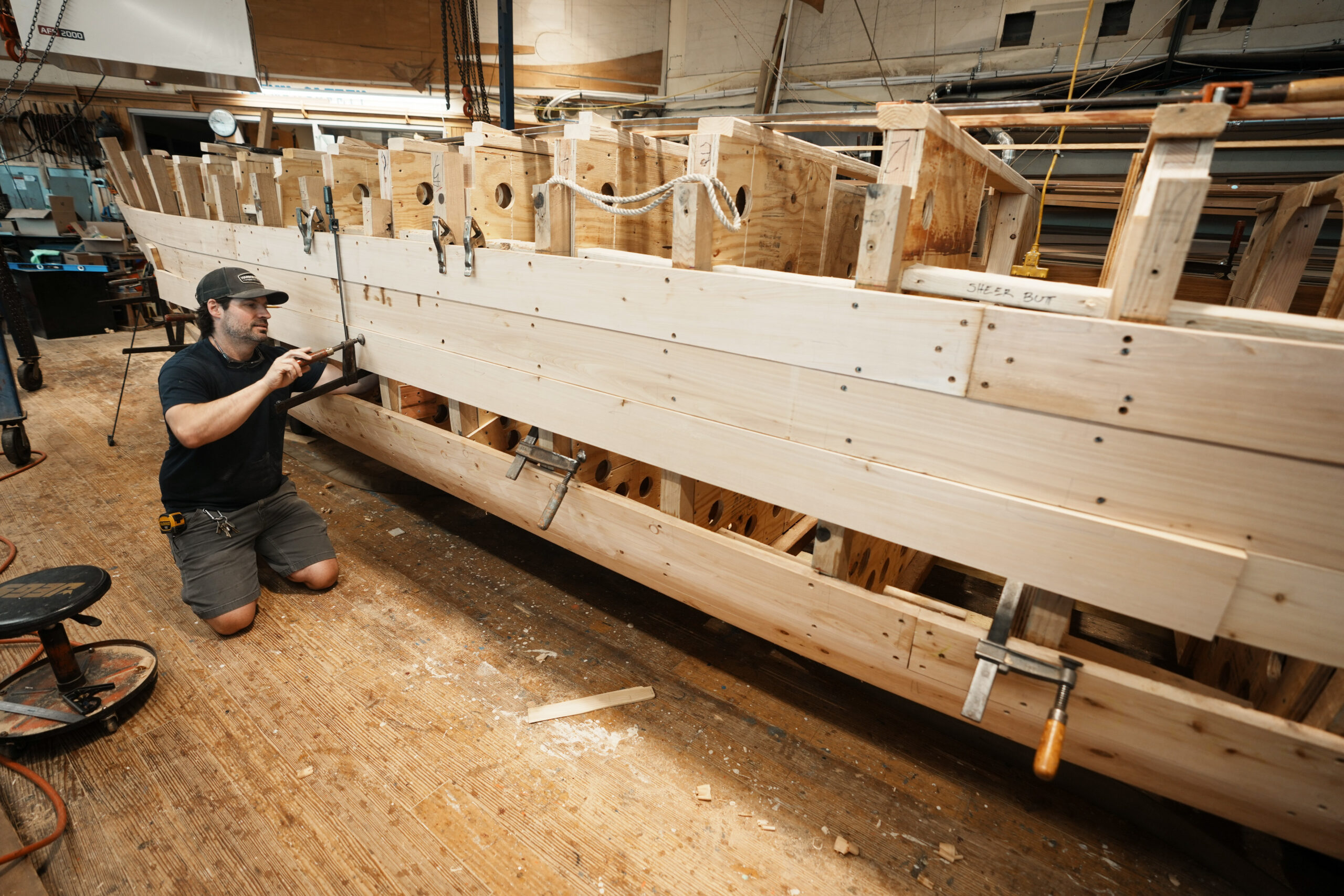
The floor of David Dormond’s workshop is scattered with wooden planks, shaving piles, and machines that scream “DO NOT TOUCH!” In the middle of it all sits a 40-foot-long, 3500-pound wooden boat that looks like it could hold an army.
That’s because it’s meant to. Well, sort of.
It’s a Durham boat, named because the design was used to transport iron from Durham Ironworks in Bucks County to Philadelphia. It is better known as being the model of boat George Washington used to cross the Delaware with his Patriot troops on Christmas in 1776.
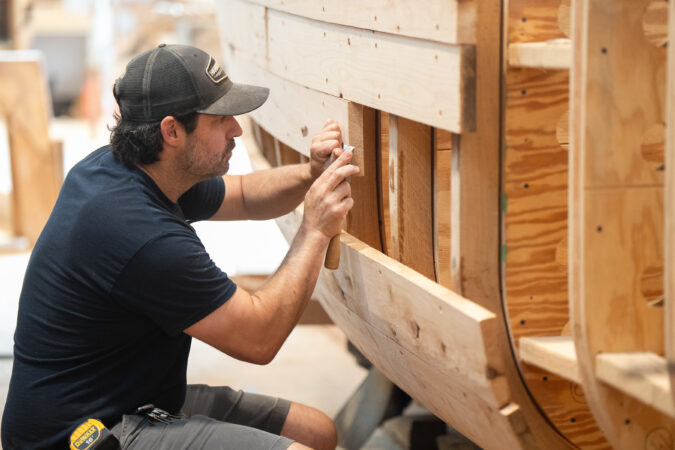
At the Independence Seaport Museum in Philadelphia, David Dormond is replicating the boat Washington used to cross the Delaware River, June 18, 2026.
“The moment Washington decided to use these boats to cross the Delaware and storm Trenton changed the tide of the [Revolutionary] War,” said Dormond, who is the director of the Seaport Boat Shop at the Independence Seaport Museum (ISM). “It was one of the pivotal points for the U.S. in gaining our freedom.”
Dormond and his team have built a full-scale replica of the Durham boat to be displayed in Washington Crossing Historic Park. Authenticity was at the forefront of its construction, with Dormond committed to making the boat as historically accurate as possible.
The wood for the replica was sourced locally, including cedar from Medford, N.J., and white oak for the framing from Reading.
David Dormond and his team have spent more than a year constructing the boat in the Seaport Boat Shop at the Independence Seaport Museum in Philadelphia.
“The reason we do that is to keep things just the same as they would’ve been in the 1700s,” Dormond said. “When they were building these boats, they weren’t bringing lumber in from across the country, they were using what they had available to them, so we follow in that tradition.”
Nearly every part of the boat was handmade by Dormond and his team, down to the bolts holding the wood together. They steam-bent the frames and used 18th-century-style spokeshaves and batten strips to help shape the boat like they would have in Washington’s day.
But this boat, now on display in Washington Crossing Historic Park, isn’t just for viewing. Visitors will be able to board the ship and see how grand it was in height and length, but also how cramped the 8-feet-wide interior was for the 2,400 soldiers that crossed the Delaware.
Most of the boat was handmade, with emphasis on using 18th-century materials to make it as period-accurate as possible.
The park currently has four Durham boats that sit on the water and are used for historical reenactments. This new boat will be parked on land along the waterline, and will be the first that visitors can walk onto and interact with directly.
“We were talking about some of the things that people are interested in learning about when they come to the park, but that they can’t necessarily experience. [And] people often asked about the Durham boats,” said Jennifer Martin, director of Friends of Washington Crossing, who collaborated on the boat project with ISM.
Martin said civilian support played a vital role in the Revolutionary War, and part of that was boat-building.
“This was trade work. This is something that was passed on and learned,” she said. “I think that there’s an art to handcrafting things and getting people to understand that life was very different in the 18th century.”
At the Independence Seaport Museum in Philadelphia, David Dormond is replicating the boat Washington used to cross the Delaware River, June 18, 2026.
Planning for the build started two years ago, with full-time construction beginning in spring 2025. The plans were made by a designer in Maine in the 1960s; Dormond and his team modified them to be truer to what they know of boat-building processes of the 1700s.
Dormond has built boats at ISM for almost 13 years, and this one is “one of the bigger vessels that we’ve done,” he said. The shop cycles between larger construction projects and simpler boat restorations, commissioned by both institutions, like Washington Crossing, and private customers.
“It’s a part of our history, so it’s neat to bring back and share that with the public and create something that will be a landmark for visitors at the park for years to come.”
The Durham boat project is part of a larger revitalization of the riverside at Washington Crossing Historic Park for America’s 250th. This includes a new ADA-accessible trail complete with signs with original artwork that depicts the history being taught.
At the Independence Seaport Museum in Philadelphia, David Dormond is replicating the boat Washington used to cross the Delaware River, June 18, 2026.
The park has also invested greatly in a Williamsburg-style experience for the roughly 10,000 field trip students that visit every year. Activities such as hands-on butter churning, gardening, blacksmithing, woodwork, quill handwriting, and soldiers drills give visitors a glimpse into 18th-century living.
“When people come to the park, a lot of our programs are free,” Martin said. “We wanted to be really intentional with creating more of these living history, immersive learning opportunities that people could experience every day that they come to the park.”
Though the shop’s team has some finishing touches to make, the boat is currently on display at Washington Crossing Park, ready for visitors amid the nation’s 250th anniversary.
It will be officially completed and installed by the end of July. It will be posted in the park indefinitely, with Dormond and his team assisting with any maintenance needs to keep it preserved for many years, and visitors, to come.
The Durham boat is on display at Washington Crossing Historic Park, 1112 River Rd., Washington Crossing, Pa. washingtoncrossingpark.org
This holiday weekend, tourists are coming from far and wide to visit the city and to tour Independence National Historical Park. But at the embattled President’s House Site tourists will not be seeing the complete version of history. So we asked them what they thought.
And heading into this historically hot weekend, we looked at mid-summer temperature changes throughout the years and learned that July in Philly has become 4.4 degrees hotter since 1940 on average.
Plus, we missed a link to the top story in yesterday’s newsletter about how different this year’s July Fourth celebration will look — and how much more it will cost taxpayers. You can read that story here.
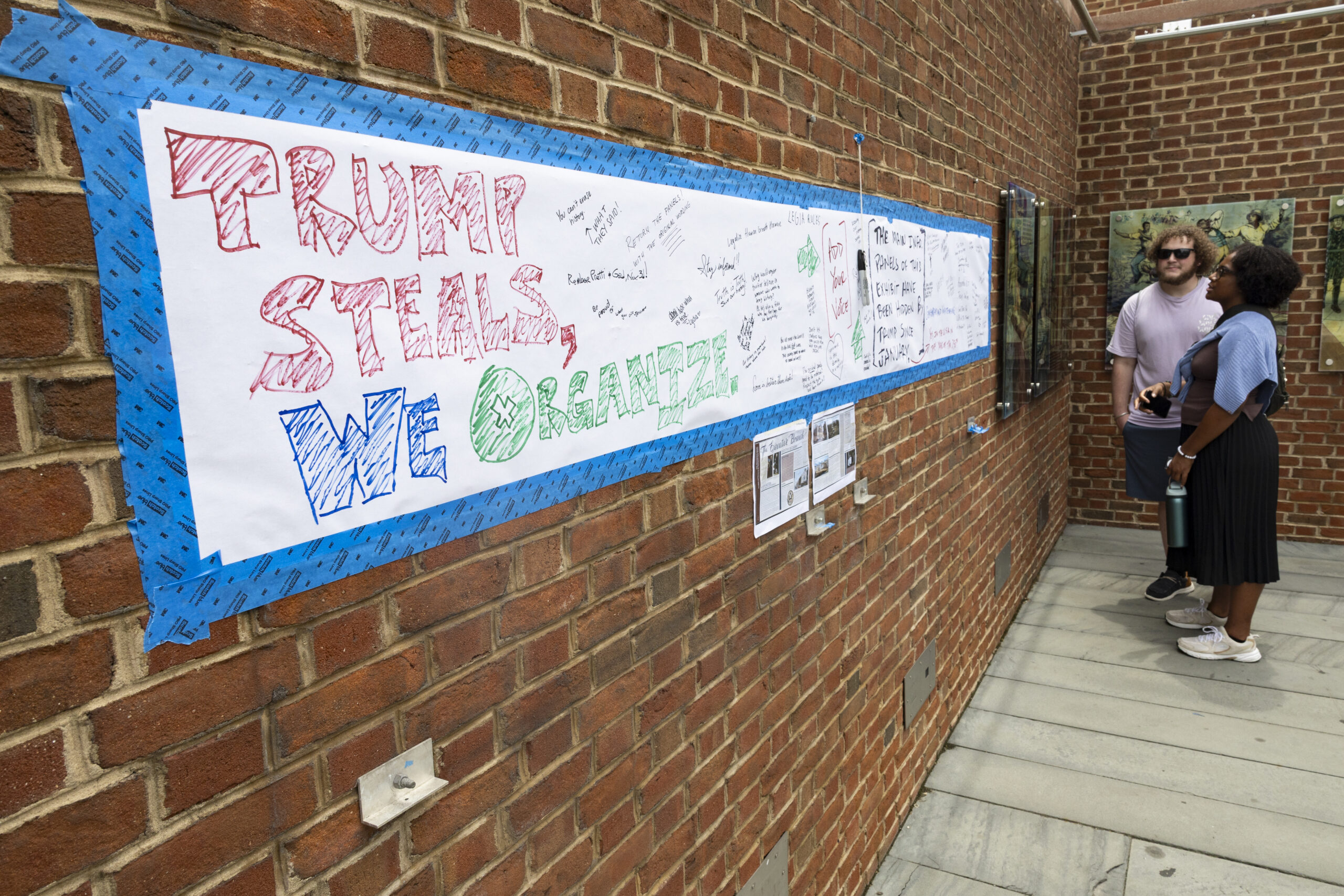
An influx of tourists visiting Philadelphia in the lead-up to the city’s Semiquincentennial festivities find themselves confronted with large gaps of brick wall at the President’s House site, where exhibits about slavery were removed by order of President Donald Trump.
The gaps are evidence of the partisan battle playing out over how to tell the complicated story of America’s founding.
Ahead of the 250th, both Philadelphians who have been engaged in the fight to protect historical exhibits, and tourists who have wandered through the President’s House for the first time, have lamented the Trump administration’s changes to the exhibit, which was largely dismantled by the administration earlier this year.
Tourists told The Inquirer that the missing panels, such as those that discuss the brutality of slavery, do a significant disservice to understanding the full picture — even the ugly parts — of U.S. history.
Over the past 85 years, the average July temperature in Philadelphia has risen 4.4 degrees, according to an analysis of historical weather data.
Philadelphians sweated through Julys in the 1940s, brooding over World War II as temperatures averaged in the mid-to-upper 70s, including nighttime lows.
But today, we swelter under average July temperatures of around 80 degrees — and those nighttimes have become warmer.
Last summer, police scoured the basement of the crumbling Olney house at the center of a sprawling investigation into the disappearance of at least two women. But last year, drugs — not missing women — were their focus, despite pleas from concerned relatives.
Peco and its workers union, IBEW Local 614, resumed bargaining for a new contract Wednesday morning, with three days to go before a strike deadline.
Pa. Gov. Josh Shapiro will attend 250th celebrations across Philly in the coming days, and he said he plans to share his optimism for America’s future amid deep concerns that President Donald Trump has led the nation astray from its founders’ design.
Bucks County approved its first paid parental leave policy. Full-time employees with at least one year of service will now be able to take up to eight weeks of consecutive leave.
A developer has plans to turn a church at South 42nd and Pine Streets into 35 apartments, some with affordable rents.
In 1978, a professional soccer team launched in Philly with rock star owners.
Peter Frampton, Paul Simon, and Rick Wakeman of Yes — and rock executives like Rolling Stones manager Peter Rudge and music agent Frank Barsalona — had stakes in the Philadelphia Fury of the North American Soccer League.
But the Fury couldn’t make soccer happen in Philly until the Union arrived in 2010. Reporter Matt Breen has the full story.
🧠Trivia time
This Founding Father believed in Philadelphia’s prosperity and insisted that the Federal Bank be headquartered in the city.
🍸 Drinking. The water ice martini, garnished with a pretzel stick, has the energy of a South Philly summer distilled into a cocktail.
🎡 Considering. Columnist Jenice Armstrong traveled to Washington, D.C., to check out President Trump’s “America’s Great State Fair.” She left underwhelmed.
🏀 Waving goodbye to. Kelly Oubre is leaving the 76ers. He reportedly agreed to a two-year, $17 million deal with the Indiana Pacers.
🧩 Unscramble the anagram
Hint: This singer has been recruiting Philly area “soldiers” for her concert on the Fourth of July.
Cheers to Rich and Lucie Lipko, who solved Wednesday’s anagram: Barrington. A Tennessee-based packaging company is closing its plant in the Camden County borough.
Photo of the day
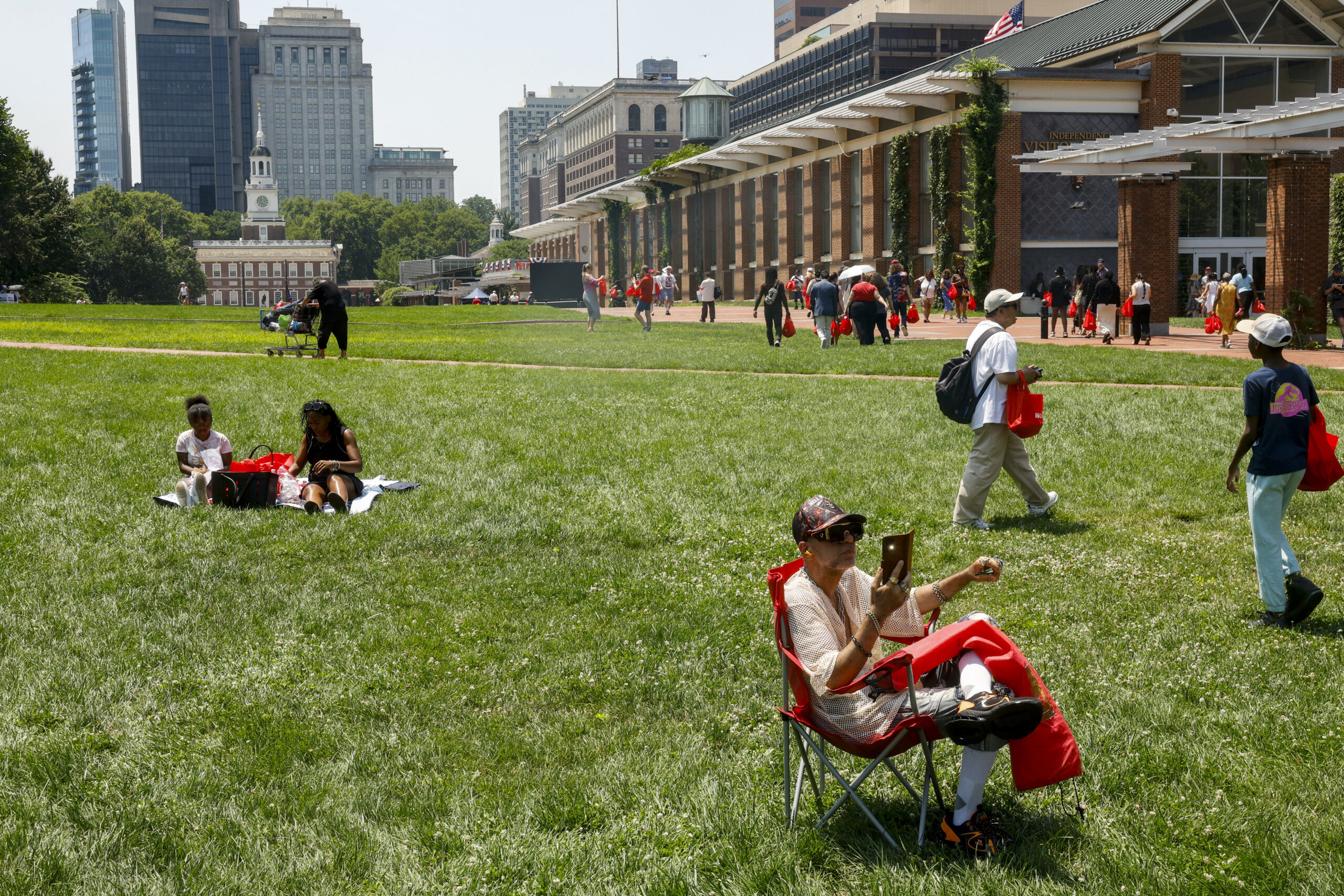
Attendees relax and enjoy their free hoagies at Independence Mall.
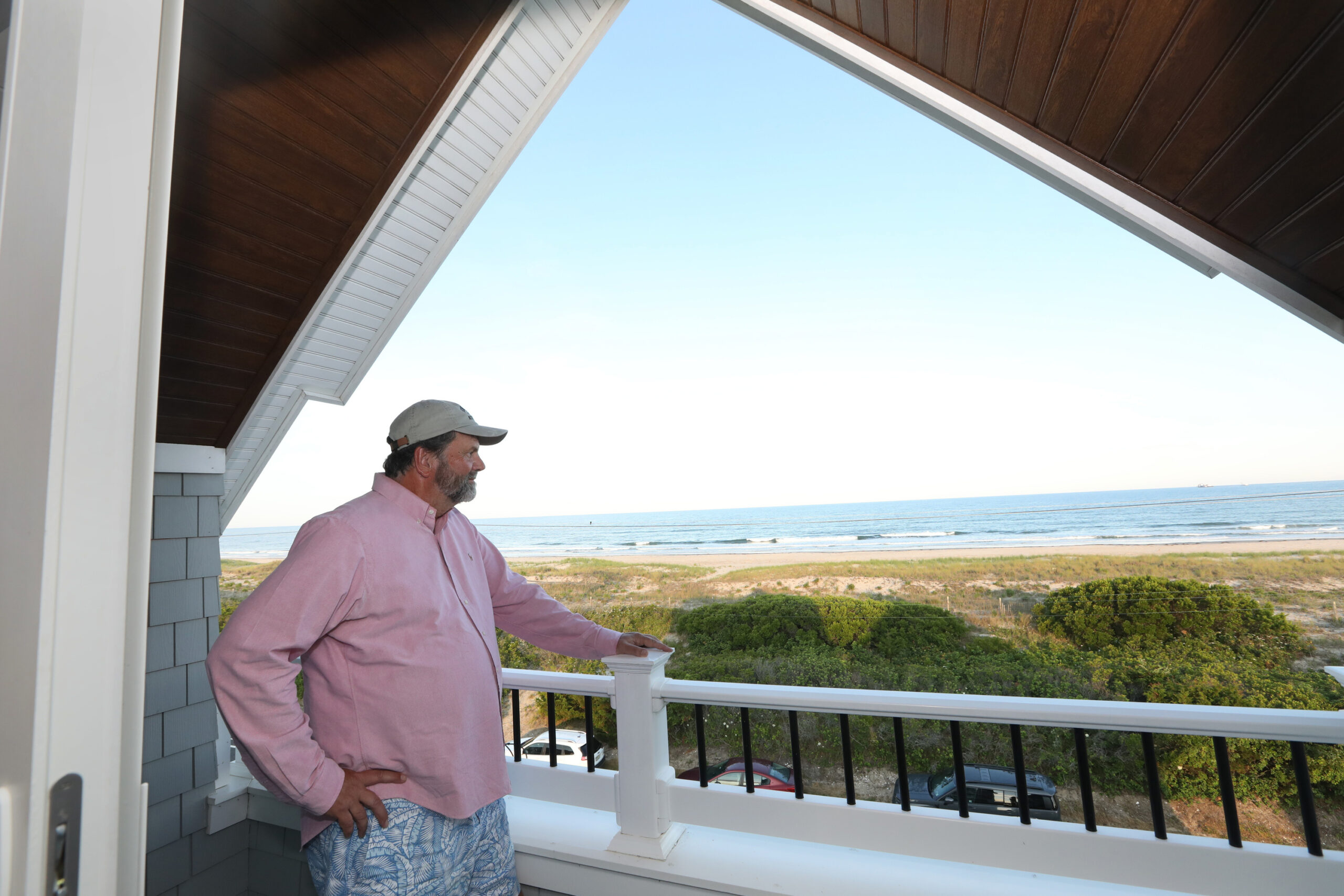
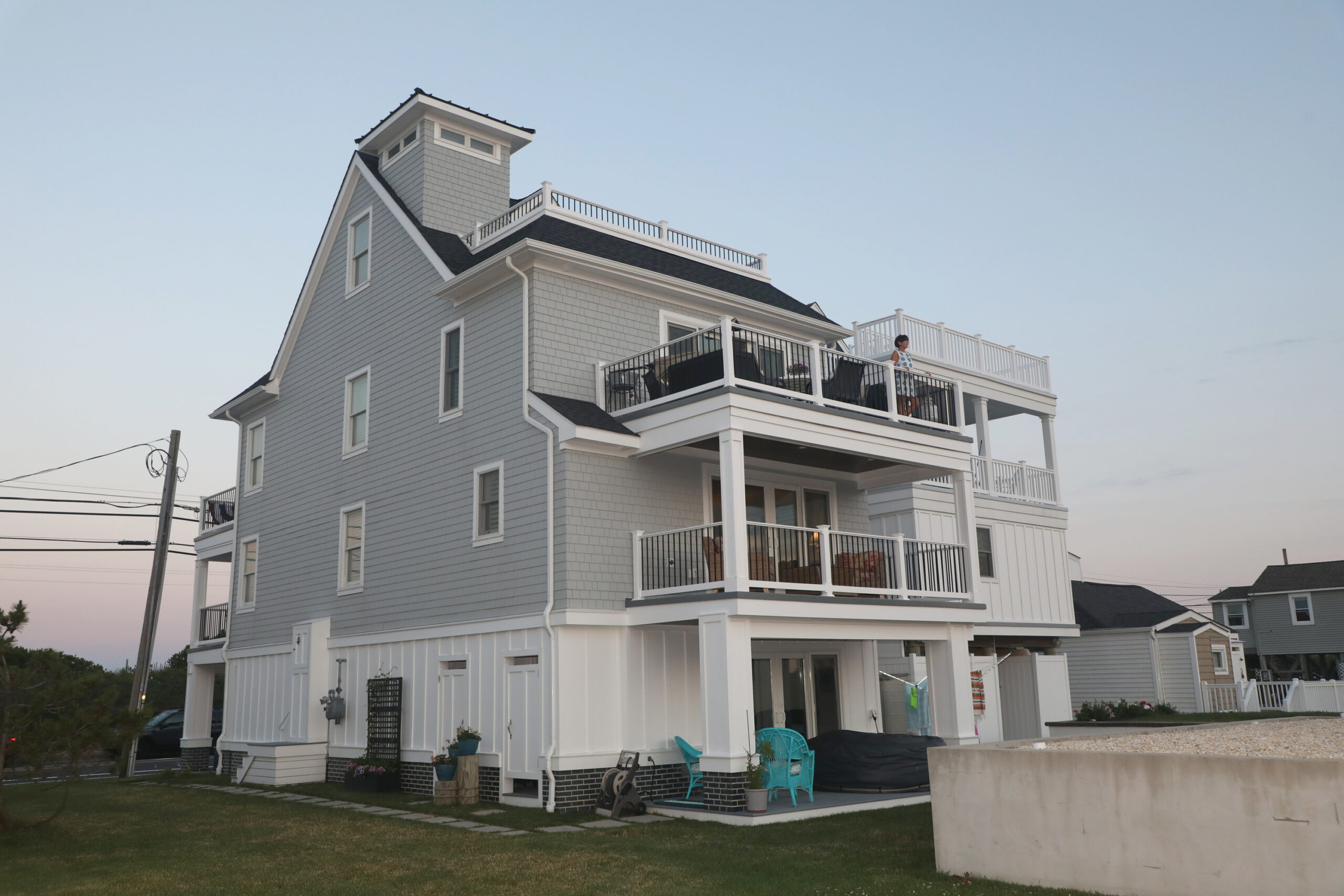
Sandwiched between the ocean and bay, Katie and Randy Zakreski’s Strathmere home has stunning views from nearly every window. When they were planning a complete rebuild in 2023, optimizing those views was top of mind.
Working with architect James Chadwick and Oliver Home Builders, they built a three-story, three-bedroom house with the garage on the first floor. From the bedrooms on the second floor, they see dunes on the ocean side and marshland on the bay side.
The open-concept third floor includes the kitchen, dining room, and living room, where glass windows and doors offer vast water views. A fourth-floor loft that serves as Randy’s office is also surrounded by glass.
“We decided we’d give up picture space and wall space to have as much glass as possible on each floor,” Katie said. “It feels like the outside is inside.”
Randy Zakreski’s office opens up to a view of the ocean.
It’s why many people dream of owning a Shore house — to witness sunrise and sunset over the water, spy on local wildlife, and enjoy the ever-changing views of the ocean and bay.
“When a view is one of a property’s greatest assets, every design decision should work to celebrate and preserve it,” said Laura Glantz, partner at Asher, Slaunwhite + Partners based in Jenkintown.
From the earliest stages of planning, the home’s floor plan, windows, doors, decks, and outdoor spaces are carefully positioned to optimize the views. That often includes creating a seamless relationship between indoor and outdoor spaces.
The Zakreski home in Strathmere has several decks to see the ocean and the back bays.
For the Zakreskis, it influenced the entire layout of their house. Abundant ocean and bay views are also visible from their five exterior decks — two in the front and three in back.
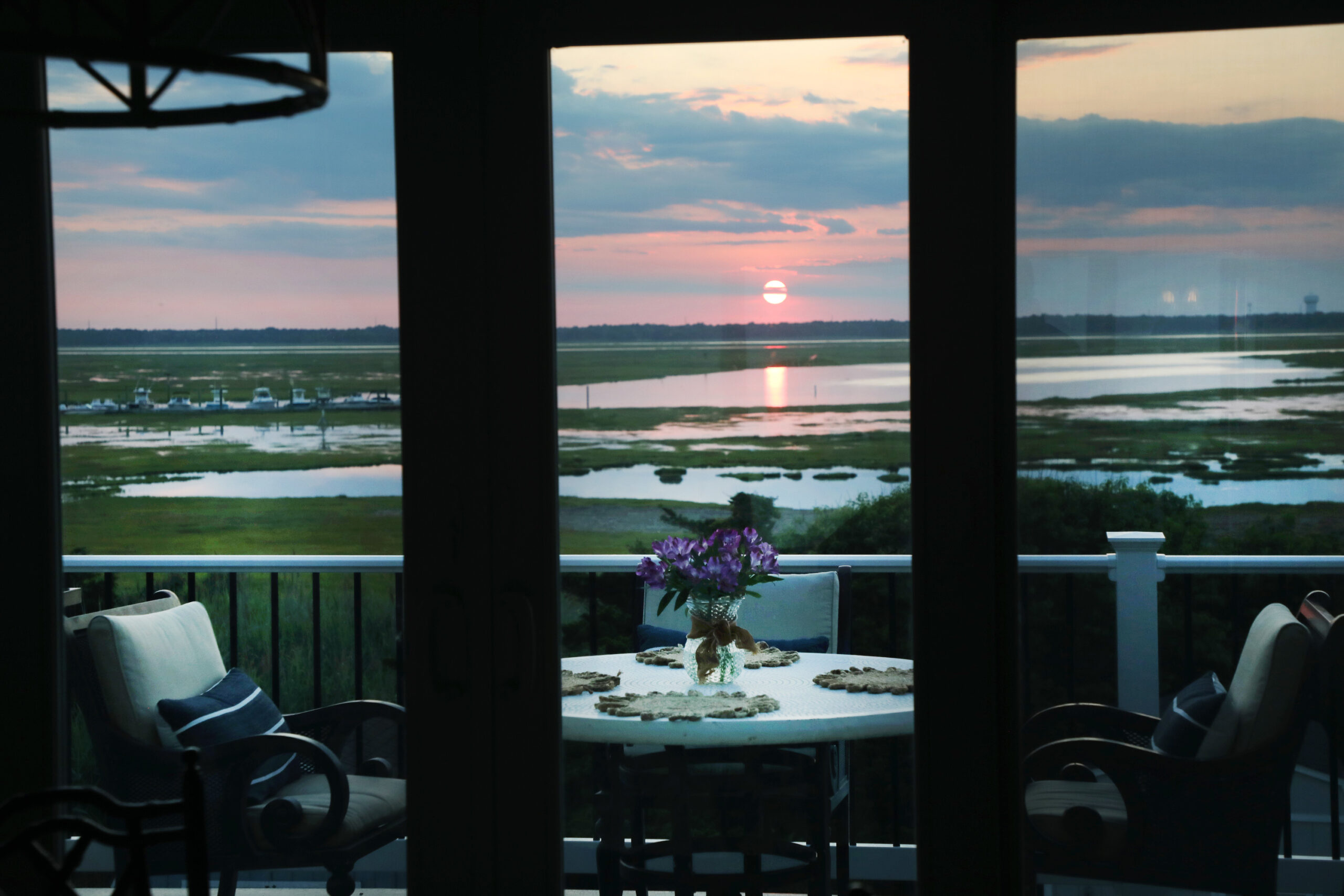
“At night, especially after daylight savings time, we’re making dinner and out back you see this orange ball as the sun is setting,” Katie said. “It takes your breath away.”
Optimizing views from the inside
Many homeowners enjoy their Shore homes year-round. Designing interior spaces to maximize views ensures they can appreciate the beauty of the Shore in every season and all weather.
The orientation of a waterfront home can dramatically influence its natural light. Oceanfront homes facing north or northeast greet the day with morning sunshine and sunrises, while bayfront homes facing south or southwest enjoy sun-filled afternoons and colorful sunsets.
Open floor plans allow light to pass through without obstruction. Layouts that include a main living area and kitchen with a wide, sweeping view of the horizon, make it feel like you’re outside while sitting on the couch or at the kitchen table. The most compelling views are often found from upper levels of the home.
Katie and Randy Zakreski’s back deck looks over the inland waterway, and glass doors from the kitchen to the exterior provide views from the inside.
When Mary Simmonds and Richard Stewart rebuilt their bayfront home in Avalon in 2021, they hired Clermont-based Blane Steinman Architects and J.G. Popper Custom Builders. The floor plan included an open concept with high ceilings to capture as much light as possible.
“We are not boaters, but there’s something special about being on the bay,” Simmonds said. “We have a bay view on two sides of the house, and we can see the sun rise.”
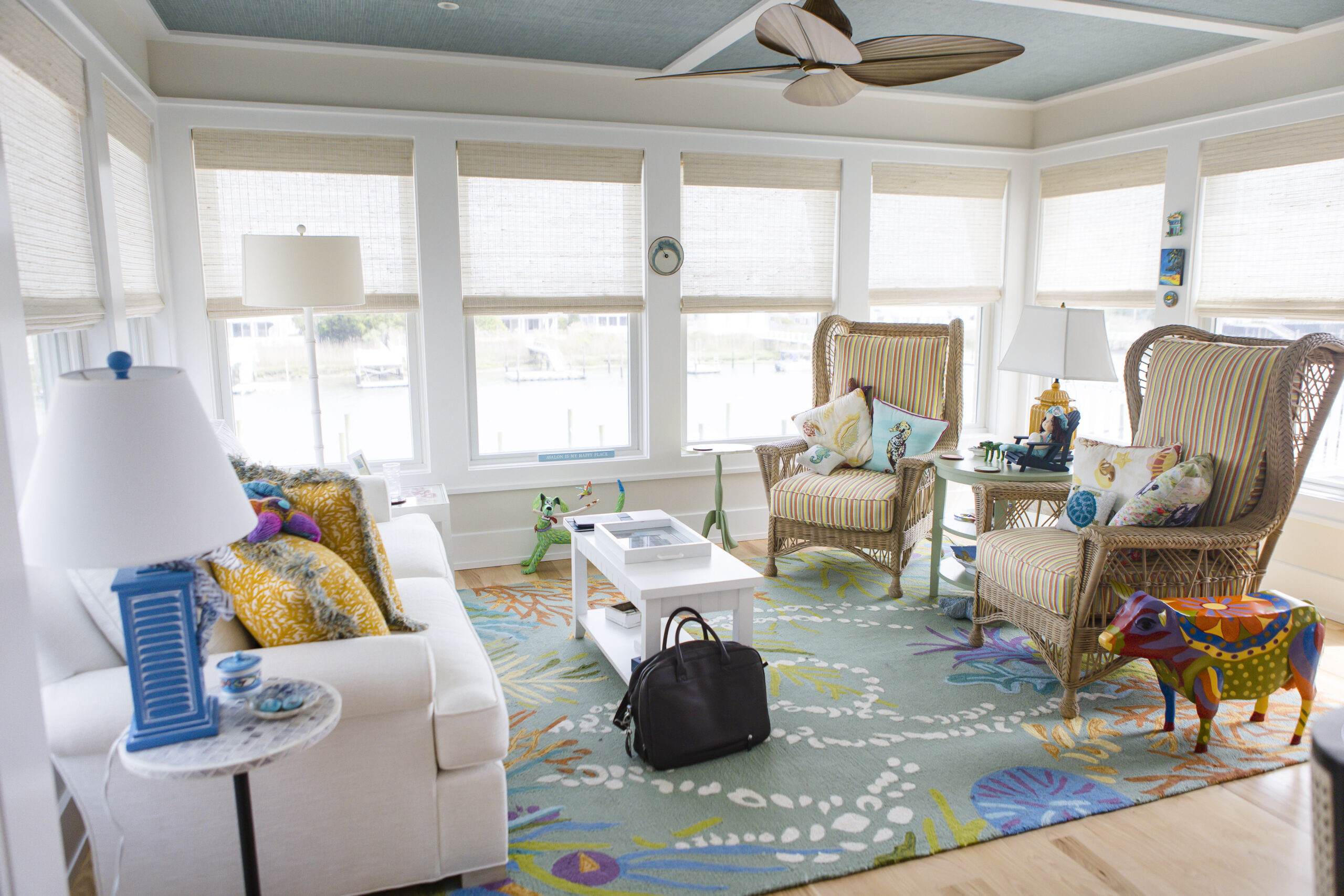
The home features plentiful windows and sliding glass doors to three water-facing decks. The living room on the second floor, oriented for a dramatic bay view, is Simmonds’ favorite spot to relax. Stewart prefers reading in the sunroom, which also enjoys spectacular views of the bay.
The sunroom of Mary Simmonds and Richard Stewart’s home, where Stewart prefers to spend time, has windows on all sides, as shown in this 2023 photo.
Window and glass door placement are key for optimizing views. The size and placement of windows should balance daylight, privacy, and visibility of outdoor features. Sliding glass doors can serve as a huge picture window with an unobstructed view to the world outside.
Carefully composed windows should frame the landscape as one would frame a work of art, making the surrounding environment an integral element of the room itself, Glantz said.
“There are companies who make glass that turns opaque with just the press of a button, so you don’t even need blinds,” said Mallory Oliver Stampone, president of Oliver Custom Home Builders in Strathmere. “But it’s very expensive.”
When houses are built very close together, as is often the case at the Jersey Shore, side walls just feet from the next-door neighbor’s house can have limited windows. The Zakreskis have decorative shutters for privacy.
Large lift-and-slide door systems with minimal frame profiles are often employed to blur the boundary between inside and out, allowing the landscape to become the focal point, Glantz said.
An Andersen Weiland Liftslide door system is an example of how to use large panes of glass in a Shore home so water views are fully enjoyable even from the indoor living spaces.
Maximizing outdoor views
Outdoor spaces, including decks, balconies, and porches, create additional opportunities to enjoy beachy surroundings.
As with the home’s orientation, outdoor spaces facing the ocean will enjoy morning sun while those facing the bay will catch sunsets.
“We’ve seen a definite shift from maximizing the size of a deck to maximizing the experience of being on it,” said Jodi Lee, senior vice president of marketing at Virginia-based Trex Co., which makes decking products. “Rather than simply building larger decks, homeowners are creating thoughtfully planned spaces that optimize sight lines while supporting multiple activities.”
Mary Simmonds and Richard Stewart on their balcony in Avalon in 2023.
Those features include multilevel layouts, built-in seating, strategically placed planters, and designated zones for dining, entertaining, and relaxing.
Homeowners can employ railings made with glass slats or panes, stainless steel rod systems, and cables, which are less obstructive. Be sure cable systems include components that won’t rust, and for safety, be sure kids can’t climb on them.
Landscaping should enhance the setting without blocking views. Some homeowners prefer a natural look with native plants and trees. Avoid planting trees that may obstruct the view as they grow larger.
This photo shows an example of cable railings, which can keep an outdoor living space safely cordoned off without taking away from visibility of the surrounding nature.
“Thoughtful planting strategies can frame desirable views, soften transitions between architecture and nature, provide privacy where needed, and direct attention toward key focal points,” Gantz said. “Hedges, shrubs, and carefully composed planting beds can create outdoor spaces that are as welcoming and thoughtfully scaled as the rooms within the home.”
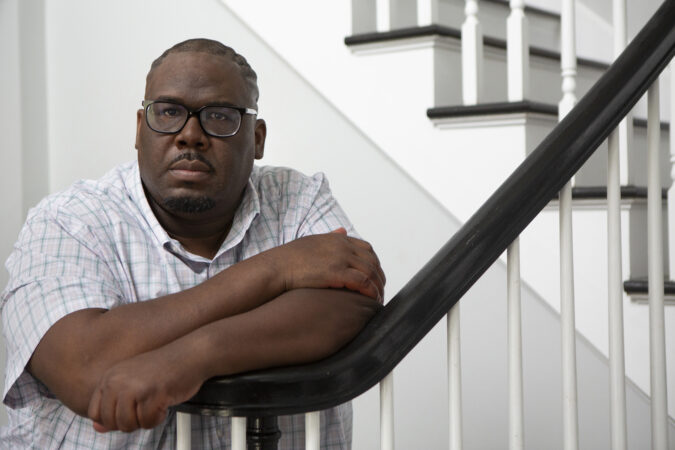
Benjamin Pinckney, 46, has dreamed of becoming a physician assistant since just after his 20th birthday.
He had been targeted by a drive-by shooter in Jacksonville, Fla., and hospitalized with two gunshot wounds. During his weeklong hospitalization, he said, a physician assistant changed the course of his life by visiting his hospital bed each day and warning him that Black men with gunshot wounds often end up paralyzed — or worse.
“I used to run the streets, you know, on the wrong sides of the track,” Pinckney said. “He made me promise that I would never come into his ER that way again. That was the last conversation we had, right before I was discharged.”
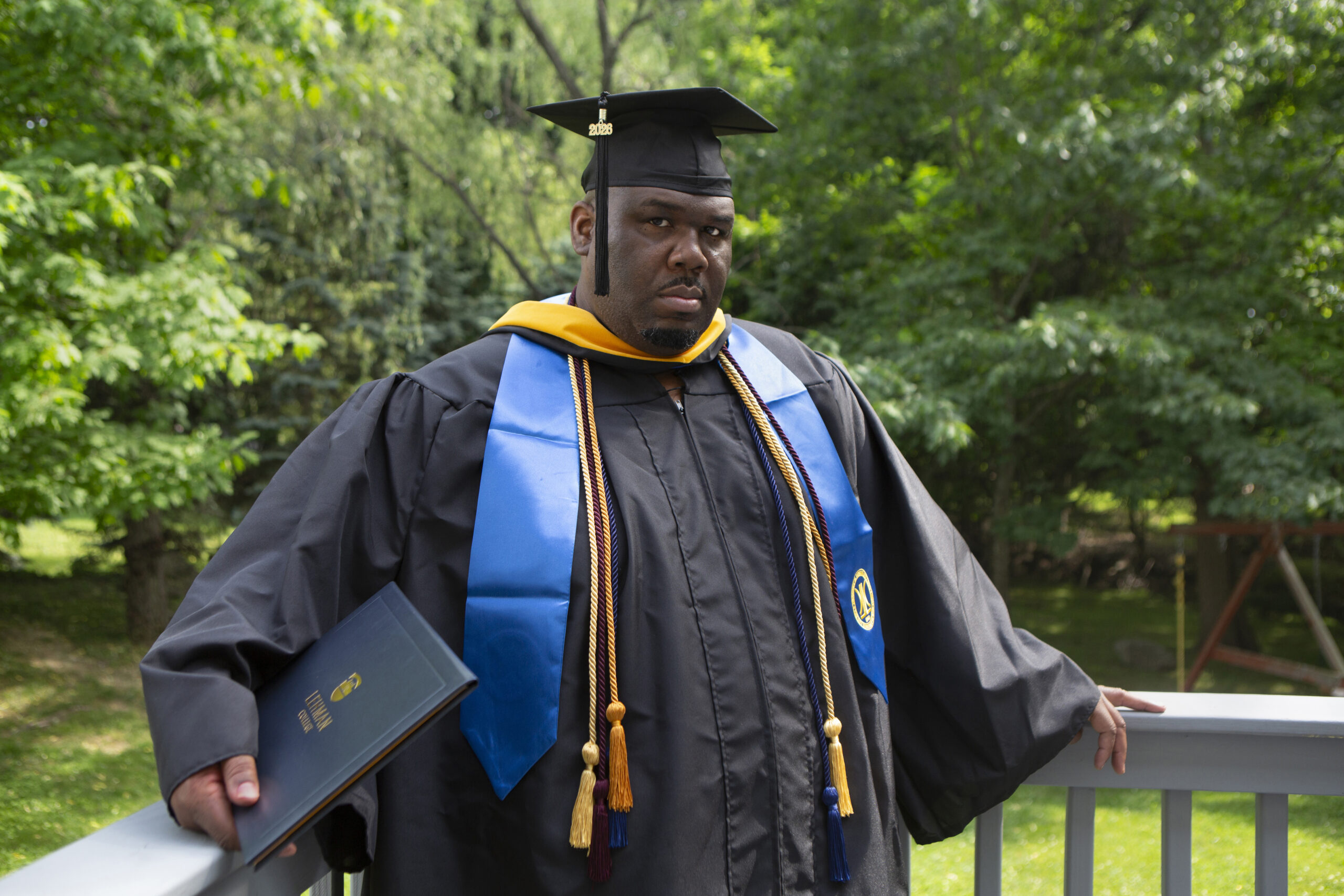
His goal since then has been to become a physician assistant. Pinckney, who spent most of his career working for New York City’s Department of Sanitation and as an Army Reserve medic, recently took a step toward achieving it. In May, he graduated with departmental honors from Lehman College with a Bachelor of Science degree.
After moving from New York to Prince George’s County, Md., he’d planned on applying for physician assistant school this year. But now, he’s worried his dream may be thwarted by new student loan rules.
Starting July 1, the amount of money graduate students will be allowed to borrow from the federal government will be capped. The new student loan limits are part of the GOP’s tax-and-spending legislation known as the One Big Beautiful Bill Act, which President Donald Trump signed into law last year.
The caps are intended to curb the cost of higher education and student loan debt, according to the Trump administration.
But critics widely agree the new limits are too low, especially for students allowed to borrow only $20,500 a year in federal loans due to the law’s controversial definition of a “professional degree.” On June 24, a federal judge temporarily blocked the Department of Education from enforcing that definition. Still, for many students, the new caps won’t cover the combined cost of tuition, housing, and living expenses.
This could leave hundreds of thousands of students who borrow money for graduate school each year at the mercy of private lenders with higher interest rates and fewer repayment options.
Some experts and students also worry that the limits will threaten efforts to diversify the healthcare workforce by deterring minorities and people from low-income households from applying to graduate programs. A drop in incoming students could worsen existing rural and primary care shortages, they argue.
Many politicians and loan experts have acknowledged that the cost of higher education needs to be addressed. But the new federal loan limits are “just not going to achieve that goal,” said Todd Pickard, president of the American Academy of Physician Associates, one of several organizations that have sued the Department of Education over the rules.
“It’d be like if you had a hangnail and I cut your whole arm off instead of just taking care of your hangnail,” Pickard said. “The treatment doesn’t match the problem.”
‘A rock and a hard place’
Students working toward what the law describes as “professional degrees” — including trainee doctors, dentists, pharmacists, and chiropractors — will be allowed to borrow up to $200,000 total, and no more than $50,000 a year.
Meanwhile, the median cost of attending a public medical school is nearly $300,000 over four years, while the median cost of a private medical school education exceeds $400,000, according to the Association of American Medical Colleges.
The caps were set even lower for those pursuing other “graduate” degrees, who face a $100,000 borrowing limit for federal loans over the course of their degree programs. The annual limit for this category of students is only $20,500. Students pursuing physical therapy, physician assistant, and nursing degrees were originally included in this group. But according to new guidance issued by the Department of Education on June 29, some of these students will at least temporarily be able to borrow up to the higher limit, according to The Associated Press.
The Department of Education, which has been sued by clinician trade groups and about two dozen states over the new rules, did not respond to questions for this article.
As the law was written, a physician assistant student who completed their degree within the average two to three years would not have been eligible to borrow the full $100,000. Meanwhile, physician assistants typically start their careers with an average debt of $112,000, meaning some could be forced to finance their education with higher-interest private loans.
“I feel like I’m between a rock and a hard place,” said Olivia Trull, 24, who is scheduled to begin the physician assistant program at Northwest University in Kirkland, Wash., this summer. The 28-month program costs $137,000, with about $62,000 in tuition and fees estimated for the first year, she said. That doesn’t include living expenses.
Before the court order, Trull said she qualified for the maximum annual allotment under the new rules of $20,500 in federal loans during her first year of graduate school. The balance would need to be financed through a private lender.
She anticipated she would need up to $100,000 in private loans to finance her graduate degree and would face loan payments of more than $3,000 a month when she was done.
“I have to actually sit down and have a conversation with myself,” Trull said, to consider “if I want to be drowning in debt for the next 10 years of my life.” One private bank offered her a loan with an interest rate of nearly 14%, she said.
Pinckney, who said he finished his undergraduate degree with about $10,000 in federal student loan debt, said some of his friends who have already applied for private student loans have been quoted interest rates as high as 13%. Meanwhile, interest rates for federal loans for graduate students, which are set annually, are currently about 8-9%. Federal loans also offer more flexible repayment options than private loans typically do.
In May, 25 states and the District of Columbia filed a federal lawsuit against the Department of Education over the new rules. The complaint described the law’s “professional degree” definition as “arbitrary and capricious.”
In a separate federal lawsuit filed in June, the American Academy of Physician Associates and the PA Education Association alleged that the new rules deny students the loan amounts needed to attend physician assistant schools. They argue that PA students should be able to access the higher loan limits available to students in medical school and other professional degree programs. (While “physician assistant” and “physician associate” typically refer to the same role, the AAPA adopted the title “physician associate” in 2021 because of “concern that ‘assistant’ does not reflect the important role of PAs in delivering high-quality healthcare to patients.”)
Meanwhile, Trump administration officials have contended the cost of graduate school is too high across the board. Education Secretary Linda McMahon, speaking before a House committee in May about the new limits, said, “It is our overall goal to bring down the cost of college and education.”
Indeed, some experts acknowledge that the new limits may be helpful in bringing down costs. The federal Grad PLUS loan program, established by Congress 20 years ago, did not cap the amount graduate students could borrow in federal loans. That program was eliminated in the One Big Beautiful Bill Act.
“There is considerable evidence that people borrowed more than they really needed to go to school,” said Sandy Baum, a higher education economist and a senior fellow at the Urban Institute.
Already, some graduate programs have lowered tuition prices, Baum said. In May, for example, the University of California-Irvine announced it would lower the cost of its MBA programs by tens of thousands of dollars to fall below the new federal lending thresholds.
And yet Baum doesn’t anticipate many other schools will follow suit.
“I don’t think we’re going to see some dramatic decline in prices,” she said. “I think some programs could close down because they can’t manage.”
‘Tears have been shed’
The new lending limits will also disproportionately affect Black students, Baum said, because they have historically borrowed more than white and Hispanic students.
For some students who borrowed money to finance their undergraduate degrees, the new limits will hit especially hard. Under the new rules, they will be subject to a lifetime limit of $257,000 in federal student loans.
“There will be students who can’t enroll,” Baum said.
Andrei Robu, 26, a medical student at the Medical University of South Carolina, leads the Financial Literacy Interest Group on the Charleston campus. He said many of his peers are worried that the lending limits will make the student body less diverse.
He is also concerned that, because the demand for acceptance into medical school is already so high, schools could prioritize entrance for students from wealthy backgrounds and “still fill up their classes.”
“That’s just not what we want in our physician workforce,” said Robu, who isn’t subject to the new rules as a current student. “We want to represent the population of the country at large.”
Jasmine Vasquez, 26, who has been accepted into the physician assistant program at South College in Atlanta, decided to defer her enrollment until 2027, partly to see if her financing options change. She is worried about taking on too much debt from a private bank.
“Tears have been shed multiple times,” said Vasquez, who is due to give birth in September. “It’s nothing that’s within my control.”
Betsy Mayotte, president of the Institute for Student Loan Advisors, expects the new rules will force some graduates into bankruptcy when they can’t afford to repay private loans.
First, though, she expects enrollment numbers to drop and some graduate programs to close because they can’t recruit enough students. Completion rates will also drop, she expects, as students run into federal loan limits partway through their degree programs.
Beyond that, she predicts healthcare graduates will seek jobs in high-paying specialties, exacerbating shortages in rural and underserved communities.
“They’re going to go where they can make the most money,” Mayotte said.
Benjamin Pinckney wants to go to graduate school to become a physician assistant. But he worries new federal student loan limits may force him to borrow money from a private bank at a higher interest rate. (Erica S. Lee for KFF Health News)
Pinckney said he is “not really sure” what the future holds. He paid for most of his undergraduate education by working while he was in school, but that’s typically not possible for full-time physician assistant students.
He has considered applying to a biomedical science graduate program instead, which he estimated would cost about $30,000 — an amount that’s “a lot more doable,” he said. It would allow him to potentially work in a lab or in pharmaceuticals, he said. It’s still aligned with medicine, he said, but it wouldn’t help him realize his goal of working with patients.
“Maybe this thing will blow over,” he said of the new federal loan limits. In the meantime, he’s holding out hope.
“If I can influence one person’s life, that would be my way of paying him forward for what he did,” he said, referring to the physician assistant who inspired him back in 1999. “It’s very hard to pivot from that dream.”
KFF Health News is a national newsroom that produces in-depth journalism about health issues and is one of the core operating programs at KFF — the independent source for health policy research, polling, and journalism.
The common wisdom that “There will never be an American pope” went up in white smoke on May 8, 2025, when Cardinal Robert Prevost, a boy from the South Side of Chicago and a graduate of Villanova University, was elected pontiff and took the name Leo XIV.
Now, on the eve of America’s Semiquincentennial, as if to underscore how much has changed, the American pope has been awarded the National Constitution Center’s Liberty Medal. Pope Leo accepted the award at the Vatican on April 30. On Friday, in a ceremony at the National Constitution Center on Independence Mall, the pontiff will address the audience live from the Vatican in a speech that will be livestreamed globally.
The medal, according to the center’s interim president and CEO, Vince Stango, will celebrate how “[i]n formal Vatican statements and public addresses, His Holiness has affirmed that peace cannot exist without freedom of religion, freedom of thought, and freedom of expression, principles that closely align with constitutional protections guaranteed by the First Amendment.”
One reason an American pope was long unthinkable is that American principles have not always aligned with Catholic principles. The proud American refusal to establish the Catholic Church as the national religion flew in the face of traditional Catholic teaching that the church should ensoul the body politic.
That was never going to happen in the United States, of course. Not even close. And so the question then became, from the Catholic point of view, what to say about the American model that included the First Amendment, with its coordinated guarantees of the “free exercise” of religion and the nonestablishment of religion by Congress.
Rome’s response has changed over time. In the late 1800s, Pope Leo XIII noted with approval the religious situation of Catholics in the United States, yet cautioned against the error that separation between the church and the civil power was to be the norm. By the 1950s, though, some Catholic thinkers were claiming the American model, in fact, stated the ideal, reasoning that the First Amendment guarantee of “free exercise” is necessary for a person to honor his God-imposed duties.
By now, even though the Second Vatican Council (1962-1965) stated that it was leaving the church’s traditional teaching “untouched,” the nonestablishment of religion and a legal guarantee of individual and group free exercise of religion, subject to just limitations for the common good, constitute the norm proposed by the Catholic Church to the world as we know it.
Pope Leo XIV speaks to members of the Spanish Parliament at the Congress of Deputies, in Madrid, on Monday, June 8.
In speaking to the Spanish Parliament on June 8, for example, Pope Leo insisted that laws must respect “freedom of thought, conscience and religion, a fundamental right that protects the most intimate sphere of the person. The freedom upon which the contemporary state is built, if it is authentic, recognizes the religious dimension of the human person.”
In the ceremony on Independence Mall on Friday, Pope Leo will address a nation in which, for the first time in its history, it is becoming socially acceptable to oppose the free exercise of religion for some people. Litigation that threatens to cancel people’s freedom to live according to their conscience becomes more common. The seal of confession, long protected in the United States, is under assault, and the threat is real. In his address to the Spanish Parliament, Pope Leo warned against the withdrawal of that protection, and the warning needs to be echoed in the United States.
It would be one of history’s great ironies for an American pope to call his country back to a principle that his church learned, in part, from America.
Religious liberty is not the only American principle on the American pope’s mind, as his message to the 2026 graduates of his alma mater makes clear. “This being the 250th anniversary of the United States of America, I would invite you to recall in a special way the guiding principles of the foundations of our nation: ‘We hold these truths to be self-evident: that all [people] are created equal; that they are endowed by our Creator with certain inalienable rights, and among those are Life, Liberty and the pursuit of happiness.’”
The principles of the First Amendment are to be cherished, but prior to those principles, the pope has reminded us, are the principles of the Declaration of Independence around which the nation was formed in 1776. And while the declaration does indeed attest to the nation’s commitment to the people’s Creator-given right to liberty, the outstanding principle of the declaration to which President Abraham Lincoln later found the nation “dedicated” since 1776 was that all people are “created equal.”
When Lincoln summoned the American nation to rededicate itself to the equality of all persons, he did so for good reason: Unless we are related to one another as equals, we are related to one another as fractions to wholes. The three-fifths clause of the original U.S. Constitution gave effect to slavery, a grievous injustice removed by the 13th Amendment in concert with the other Reconstruction amendments. These amendments constitutionalized the nation’s earlier commitment to our having been “created equal,” but not everyone is a believer in the equality of all people.
Today, Americans are divided over the declaration and, specifically, the claim that we are “created equal.” Human equality is said by some to be a self-evident lie, and even among those who pay it lip service, commitment to the basic equality of all people is undermined by identity politics, race-based priorities, and blood guilt.
Pope Leo, though, is not in doubt about the equality of all people. In his first encyclical, Magnifica Humanitas, he writes that we are equal in “ontological dignity, which is neither acquired nor earned, nor does it need to be justified.” This immutable and foundational equality is true of all people because we are, without exception, “created in the image and likeness of God.”
And this is another truth Americans need to reclaim.
In order to reclaim it, we need to understand that human equality was never meant to state something empirical or measurable about people. The equality declared by the declaration and celebrated by Lincoln, and fully constitutionalized by the Reconstruction amendments, depends on what is spiritual in a person, represented by the radical Christian judgment that underneath the obvious and often wonderful diversity of people lies a universal sameness in being created in the divine image.
When G.K. Chesterton was asked, “What is America?” he gave a characteristically smart answer that has been debated ever since: “America is a nation with the soul of a church. America is the only nation in the world founded on a creed. That creed is set forth with dogmatic and even theological lucidity in the Declaration of Independence.”
Pope Leo XIV meets migrants at the Las Raices center, in San Cristobal de la Laguna, Tenerife, Spain, June 12.
Robert Prevost, now Pope Leo, was formed, in part, in that “church” with its declarational creed. He was also, and first, formed in the Catholic Church, with its commitment to the universal equality of all people.
What the American pope can do now, in a way no other person on earth can, is to remind Americans that the equality to which their nation has been dedicated since 1776 depends on what Christianity has shown the world: that even the least, in worldly eyes, are equals in God’s eyes.
Patrick McKinley Brennan is the chair of Catholic legal studies and a constitutional law scholar at Villanova University.
Wynnewood resident Lori Ney, along with her dogs Ava and Lilly, attended the Army’s Pershing’s Own followed by fireworks at the Great Plaza at Delaware River Waterfront in 2023.
Celebrate the nation’s Semiquincentennial at one of these festive events, which are replete with parades, fireworks, and musical performances.
Bala Cynwyd: The Neighborhood Club of Bala Cynwyd’s annual parade starts at the Union Fire House and ends at the playground at Bala Cynwyd Park, where there will be a rock wall, pony rides, a petting zoo, and music. ⏰ Saturday, July 4, starts at 9:30 a.m. 💵 Wristbands are $15-$45 📍 Union Fire House and Bala Cynwyd Park
Ardmore: The community will celebrate the nation’s 250th anniversary with a ribbon cutting for its new mural, a “freedom walk,” and crafts and sweet treats at Linwood Park. ⏰ Saturday, July 4, 10 a.m.-1 p.m. 💵 Free 📍 Throughout Ardmore
Penn Wynne: The Penn Wynne Civic Association’s annual celebration kicks off with a parade at 10 a.m. followed by a carnival at Penn Wynne Park. ⏰ Saturday, July 4, 10 a.m.-12:30 p.m. 💵 Wristbands are $10-$30 📍 Penn Wynne-Overbrook Hills Firehouse and Penn Wynne Park
Narberth: This daylong event kicks off at 10 a.m. with a carnival, games, and pie-eating contest, which run until 1:30 p.m. After a break, the celebration continues at 6:30 p.m. with food trucks, live music, and a reading of the Declaration of Independence before the fireworks show. ⏰ Saturday, July 4, 10 a.m.-1:30 p.m. and 6:30-10:30 p.m. 💵 Free to attend, pay as you go for the carnival and food trucks 📍 Narberth Park
Garrett Hill and Rosemont: This festive hourlong parade starts at the Rosemont Business Campus at the corner of Conestoga and Williams Roads at 10:45 a.m. and ends at Clem Macrone Park, where there will be entertainment and live music. Residents can join in by decorating a bike or float. The judging begins at 10 a.m. ⏰ Saturday, July 4, 10:45 a.m. 💵 Free 📍 Rosemont Business Center to Clem Macrone Park
Reminder for residents: There will be no trash and recycling pickup tomorrow when the township is closed in observance of the holiday. See how your household might be impacted here.
After a 17-year tenure in Narberth, Dan Gold remembers his time in the borough helming Danny’s Guitar Shop as “just perfect.” The Inquirer’s Denali Sagner caught up with the musician, who recently closed the guitar lesson and shop, about his career and what comes next.
World Cup fever continues throughout the region, and one resident who grew up in Lower Merion said the tournament has made him especially proud of his Ecuadorian roots. Rowan Teran, 24, was among those celebrating ahead of the team’s early round match at Lincoln Financial Field, finding joy with his fellow Ecuador fans.
Blackbird Health opened a new clinic last week at 225 E. City Ave. in Bala Cynwyd. The Pennsylvania-based chain offers mental healthcare for children, teens, and families.
🏫 Schools Briefing
Applications are now open for eligible Lower Merion and Narberth seniors to get a 2025 rebate for property taxes paid to the school district. Learn more about the program here.
🍽️ On our Plate
Two new eateries are getting closer to opening in Ardmore. Dessert spot Mango Mango is teeing up a July opening at 38 Greenfield Ave., while Vintner’s Table, a wine bar that dishes up Italian cuisine, is aiming to open in August on Cricket Avenue.
🎳 Things to Do
📖 Book Signing and Discussion with Jessica Knoll and Jennifer Weiner: Shipley School alum Jessica Knoll, who gained acclaim for her 2015 novel Luckiest Girl Alive, will sign copies of her new book, Helpless, and discuss it with fellow local author Jennifer Weiner. ⏰ Tuesday, July 7, 6 p.m. 💵 Free to attend, $25 for the book 📍 Barnes & Noble Bryn Mawr
🎵 Music in the Park: The next concert features a performance by the Brazilian jazz outfit the Minas Trio. ⏰ Wednesday, July 8, 7 p.m. 💵 Free 📍 Narberth Park gazebo
The exterior of the home blends the Arts & Crafts and Tudor styles.
A Wynnewood cottage once part of the Clothier estate is back on the market, this time with a new price. Designed in the Arts & Crafts and Tudor styles, the three-bedroom cottage has a distinctive exterior from its stone facade to its woodwork. Inside, the home has been overhauled to give it modern amenities, including a sleek eat-in kitchen which complements the original herringbone-patterned floors. It also has a patio, a deck, and a fenced yard. There’s an open house Sunday from noon to 2 p.m.
By submitting your written, visual, and/or audio contributions, you agree to The Inquirer’s Terms of Use, including the grant of rights in Section 10.
This suburban content is produced with support from the Leslie Miller and Richard Worley Foundation and The Lenfest Institute for Journalism. Editorial content is created independently of the project donors. Gifts to support The Inquirer’s high-impact journalism can be made at inquirer.com/donate. A list of Lenfest Institute donors can be found at lenfestinstitute.org/supporters.
The young woman with muscular dystrophy wanted a motorized scooter, but her health insurance would only cover a wheelchair.
So she went to Goodwill’s only medical equipment store in South Jersey, where she found a dozen scooters to choose from. She test drove one she liked and bought it at a steep discount.
“She burst into tears and said, `You have no idea what a difference this is going to make in my life,’” recalled Mark Boyd, Goodwill’s president and CEO.
Goodwill Home Medical Equipment on Wednesday opened the region’s second location. The new store is located in Gloucester County, while its flagship, 16,000-square-foot retail store and warehouse is in Camden County.
Both sell sanitized and refurbished medical equipment, including power and manual wheelchairs, hospital beds, canes, walkers, and lift and shower chairs. The stores also offer unopened medical supplies, like adult diapers and colostomy bags.
“When people go to a Goodwill store, they don’t really know what they are looking for — they’re on a treasure hunt,” Boyd said. “But when you get sick or somebody in your family gets sick, all of the sudden you need a specific piece of equipment, and it can be quite daunting.”
The nonprofit thrift organization began offering used medical equipment at roughly one-third the retail price about 15 years ago, Boyd said.
“Financially, it’s a break-even operation, but it’s such a great service to the community,” he said, adding they cater to people with no or limited insurance, or high deductibles.
The new store on Mantua Pike in Woodbury Heights will be open Monday through Saturday from 9 a.m. to 6 p.m., and Sundays from 10 a.m. to 6 p.m. The location on Benigno Boulevard in Bellmawr is open Monday through Saturday from 9 a.m. to 3 p.m., and Sundays from 9 a.m. to 1 p.m.
The two South Jersey stores are the only Goodwill Home Medical Equipment retail locations in the country, according to spokesperson Juli Lundberg.
“The savings are so great that people do travel to us from New York City, the Philly burbs, and Jersey Shore,” Lundberg said. “We have had many other Goodwills across the country inquire about the concept.”
People can donate their medical equipment and unopened supplies at any Goodwill location in New Jersey and Pennsylvania. Donation sites and regular thrift stores can be found at https://www.goodwillhomemedical.org/store-locator. Goodwill staff also will pick up home medical equipment that is too large for a car, according to Lundberg.
Media is celebrating the Fourth of July with festivities at Barrall Field.
Celebrate the nation’s Semiquincentennial at one of these festive events, which are replete with parades, games, food, and music.
Lion’s Club Independence Eve 2.5-Mile Walk and 8K Run: Celebrate the holiday by hitting the pavement for a 2.5-mile walk or an 8K run. The run/walk may be postponed to Sunday in the event of extreme heat. ⏰ Friday, July 3, 7-8:30 p.m. 💵 $32.80 📍 Swarthmore town center
Swarthmore Fourth of July Festivities, SRA Bike Races, and Parade: The day kicks off with a bike race, followed by a children’s parade and then the community parade, with other activities to follow. ⏰ Saturday, July 4, 8 a.m.-1 p.m. 💵 Free 📍 Swarthmore town center
Media Borough Fourth of July Celebration: There will be yard games, live music, food, and kids’ activities like water slides and face painting, in addition to a bike decorating contest. ⏰ Saturday, July 4, 10 a.m.-noon 💵 Free 📍 Barrall Field, Media
Rose Valley Borough Fourth of July Parade: The annual parade, complete with decorated bikes and wagons, will start at the Moylan-Rose Valley SEPTA station and end at Rose Valley Swimming Pool, where there will be a flag raising ceremony. ⏰ Saturday, July 4, 2 p.m. 💵 Free 📍 Moylan-Rose Valley SEPTA station and Rose Valley Swimming Pool
America’s 250th Birthday Celebration: To mark the Semiquincentennial, Upper Providence Township is hosting a Fourth of July event complete with games, contests, music, and food trucks. RSVPs are encouraged. ⏰ Saturday, July 4, 1-4 p.m. 💵 Free 📍 Rose Tree Park, Media
The so-called Swarthmore 9, a group of protestors charged with trespassing after refusing to leave a pro-Palestinian encampment at Swarthmore College last year, entered no-contest pleas on Monday to summary noise-violation offenses. As part of the deal, they’ll each undertake community service.
Last week, 33-year-old Michelle Zajko was charged with the first-degree murder of her parents, who the Delaware County district attorney says she killed execution-style inside their Chester Heights home in December 2022. Zajko, a member of the cultlike Zizians, has been a person of interest in the case for years, but maintains her innocence. The DA doesn’t believe she acted alone and is continuing to investigate. The Inquirer’s Vinny Vella explains how new information led to the charges.
A pair of environmental groups are readying to oppose a planned liquefied natural gas export facility in Eddystone. Local communities, including Media and Swarthmore, have stated their opposition to the nearby terminal.
Pepper Lee Boutique and Gina the Jewelry Lady are reopening today at their new storefront at 1176 N. Middletown Rd. in Edgmont Township, above the Country Deli. The boutique will be hosting a grand reopening celebration today from 9 a.m. to 4 p.m. Pepper Lee will be open Wednesdays to Sundays from 9 a.m. to 4 p.m. and Gina the Jewelry Lady will operate Thursdays to Sundays from 9 a.m. to 3 p.m.
The Delaware County Health Department identified this year’s first pool of mosquitoes positive for West Nile virus. The pool was tested on June 16 at Mt. Zion Cemetery in Collingdale. No infections among people have been reported. The department suggests taking steps to reduce the spread of mosquito-borne illnesses by eliminating standing water, using appropriate repellents, and wearing protective clothing.
🍽️ On our Plate
Miller’s Ale House has closed its Springfield location at 18 Baltimore Pike, but continues to operate an outpost at 1119 W. Baltimore Pike at the Promenade at Granite Run.
🎳 Things to Do
🎶 Rose Tree Summer Concert Festival: Tonight, Big Band from the Valley takes the stage, followed by Steve Pullara and His Cool Beans Band, which is performing a morning show tomorrow, and Smoke’s Ebonys and Raising Kane Band on Saturday. On Wednesday, Jimmy and the Parrots will perform, sampling from Jimmy Buffett, The Beach Boys, and Bob Marley, among others. There’s no show on July 4. ⏰ Thursday, July 2-Wednesday, July 8, 7:30 p.m., except July 3, which is at 10 a.m. 💵 Free 📍 Rose Tree Park, Media
🍿 Family Movie and Craft: Catch a screening of Moana and make a tiki-themed craft. ⏰ Friday, July 3, 10:15 a.m.-noon 💵 Free 📍 Media-Upper Providence Free Library, Media
🦋 Nature at Night: Pollinators: Learn about native pollinators at this after-hours event. ⏰ Tuesday, July 7, 6-7:30 p.m. 💵 Free 📍 Tyler Arboretum, Media
The home is located near Springton Reservoir in Upper Providence Township.
Located near Springton Reservoir in Upper Providence Township, this home can accommodate multi-generational living thanks to a two-bedroom, one-and-a-half-bathroom main floor suite with its own kitchen. The rest of the main floor has living and dining rooms, a family room with a brick fireplace, and an updated kitchen with marble countertops and an island with a beverage refrigerator. There are three bedrooms upstairs, including a primary suite with a walk-in closet and dressing room. Out back, a deck overlooks a heated pool and spa. There’s an open house Sunday from 11 a.m. to 1 p.m.
By submitting your written, visual, and/or audio contributions, you agree to The Inquirer’s Terms of Use, including the grant of rights in Section 10.
This suburban content is produced with support from the Leslie Miller and Richard Worley Foundation and The Lenfest Institute for Journalism. Editorial content is created independently of the project donors. Gifts to support The Inquirer’s high-impact journalism can be made at inquirer.com/donate. A list of Lenfest Institute donors can be found at lenfestinstitute.org/supporters.