Philadelphia-based restaurateur Stephen Starr and his company, Starr Restaurants, settled with the National Labor Relations Board in May over union-busting allegations at his D.C. steakhouse St. Anselm, according to a copy of the settlement agreement obtained by the Inquirer.
The move is the latest in a lengthy dispute between Starr Restaurants and D.C. union Unite Here Local 25 at St. Anselm, where staffers voted 51 to 42 in favor ofunionizing in February 2025. Now more than 16 months later, Starr restaurants has yet to recognize the union, with more pending litigation leaving St. Anselm workers in limbo.
Reached on May 25, the settlement resolves a set of unfair labor practice (ULP) allegations that Local 25 filed with the NLRB on behalf of St. Anselm employees in June 2025. They alleged that Starr and a St. Anselm supervisor made promises of improved benefits for workers who voted against the union and directly coerced employees with false information. In one instance, they alleged, Starr interrogated a host about her involvement with Local 25 during a one-on-one conversation.
Starr “made a lot of promises about sick pay, about vacation pay,” Ana Reyes, a St. Anselm line cook, previously told the Inquirer, recalling a meeting the restaurateur had with staff during the union drive.
After an investigation, the NLRB’s general counsel found merit in the accusations that Starr Restaurants had violated the National Labor Relations Act, and it pursued charges against the company.
The settlement is not an admittance of wrongdoing and is similar to the standard penalty Starr Restaurants could have received had the case played out fully, according to James M. Cooney, a Rutgers University labor and employment law professor.
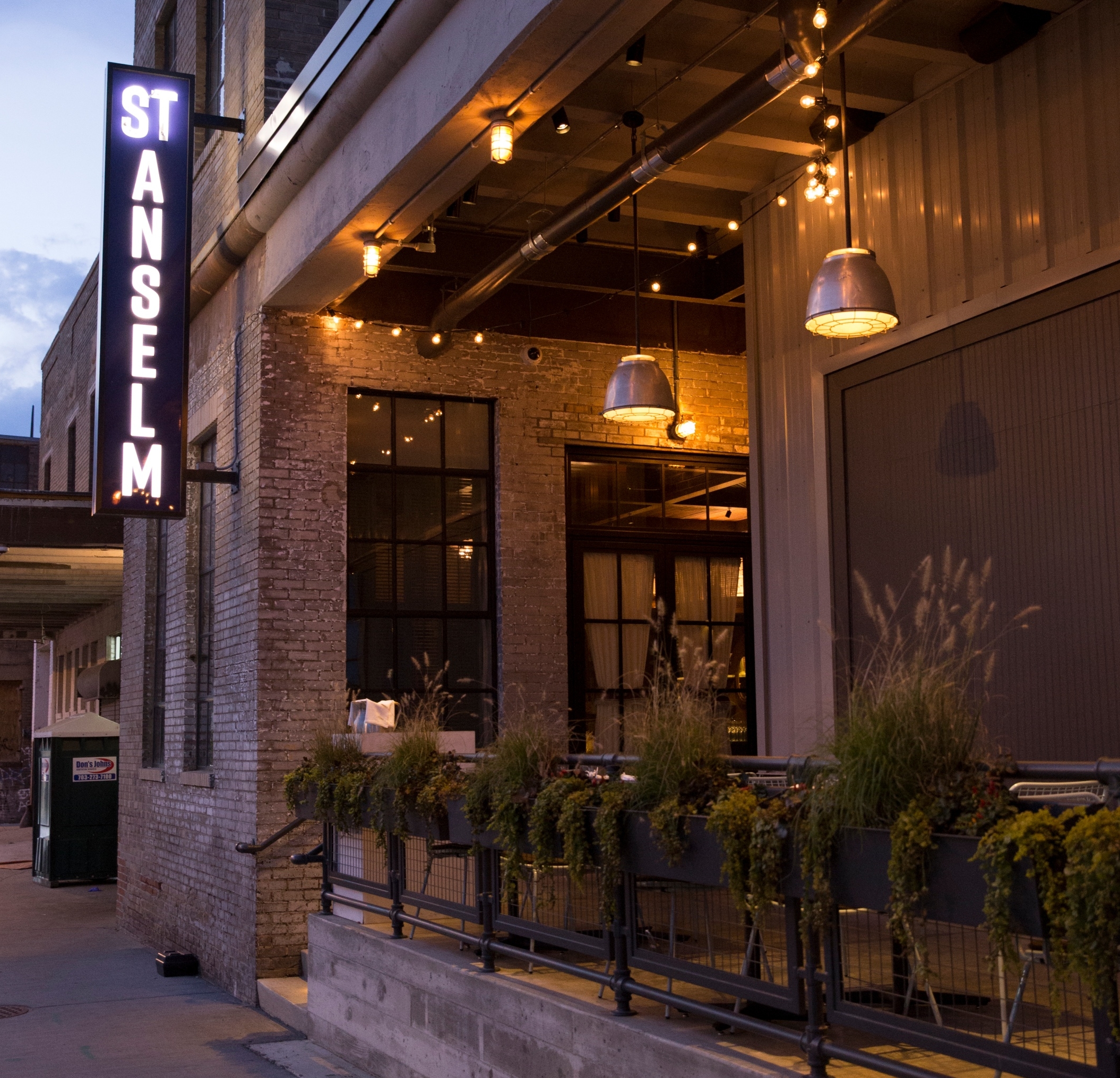
St. Anselm, Stephen Starr’s D.C. steakhouse.
The agreement requires Starr Restaurants to post a notice in St. Anselm for 60 days stating that the company will not:
“Threaten you that it would be futile” to unionize,
Solicit complaints and “imply that we will fix them” in order to discourage union support,
Give new or better wages and benefits to discourage unionizing,
Or “promise to pay you for previously unpaid leave” to dissuade workers from supporting a union.
The settlement “allows us to move on and get back to the business of delivering amazing hospitality to our guests,” a spokesperson for St. Anselm said in a statement. “We have vigorously denied, and continue to deny, all allegations listed in the original complaint, and are fully complying with the terms of the settlement while making no admission of violation.”
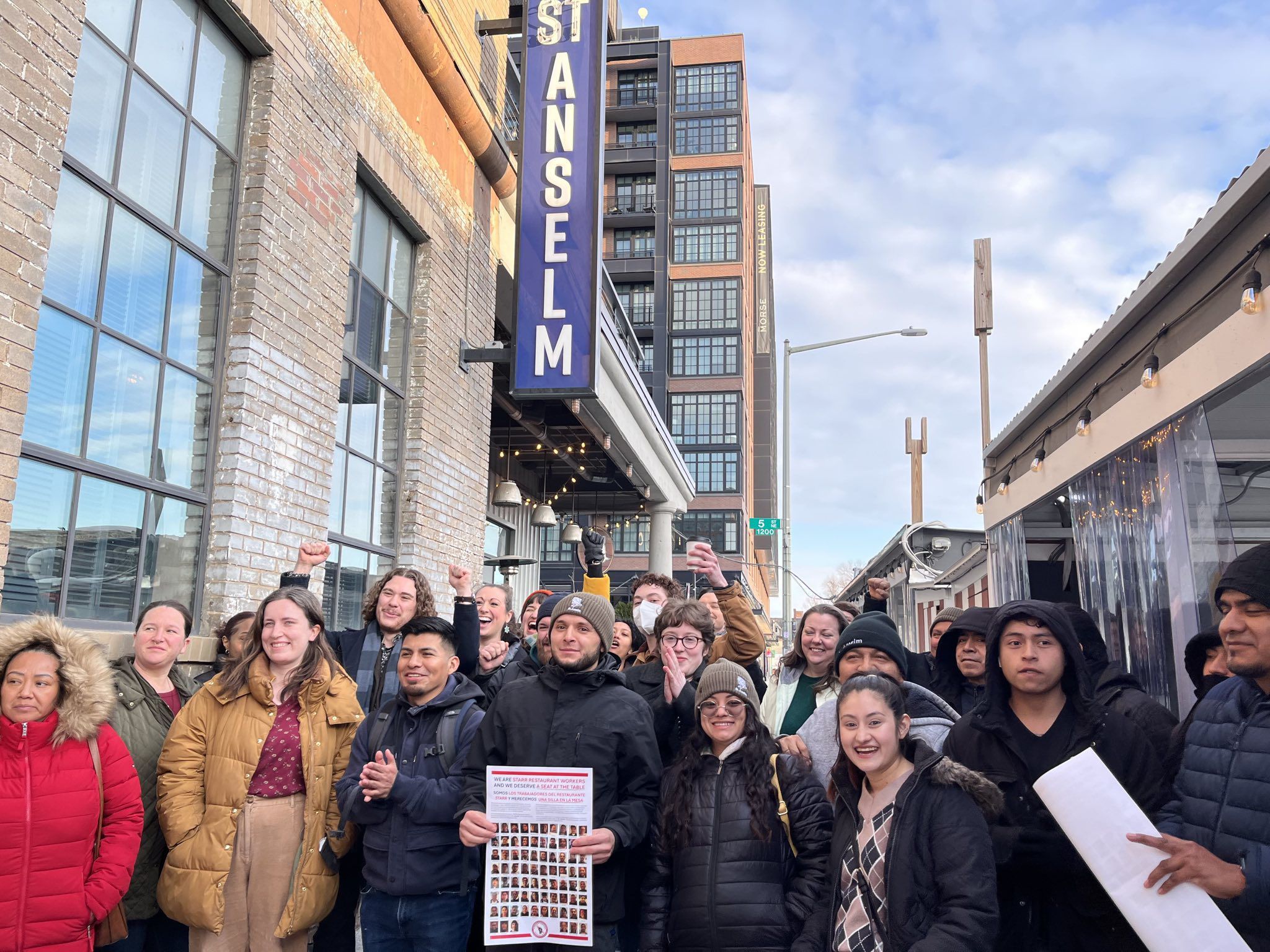
A delegation of workers pose in front Stephen Starr’s D.C. steakhouse St. Anselm before delivering their union petition in Feb. 2025.
That case remains open, and a hearing was held in mid-June where the NLRB heard testimony from witnesses on both sides. Unite Here Local 25, which represents more than 7,500 hospitality workers, is optimistic that settlement will open up a path to union recognition.
“We feel vindicated,” said Paul Schwalb, Local 25’s executive secretary-treasurer. “It’s the same board that’s going to oversee [the unionization case], and we are quite confident — because we did actually follow labor law — that at the end of the day this unit will be certified, and all the objections that Stephen Starr and his many lawyers have filed will be thrown out because they are not true.”
Legalese that ‘meant nothing’
The battle between Starr Restaurants and Local 25 began last January, when the union began to organize at three of Starr’s seven D.C restaurants: Pastis, a French bistro; the Parc-inspired Le Diplomate; and St. Anselm, an upscale steakhouse.
The efforts — which coincided with union drives at two other high-profile D.C restaurants — stood to add 500 members to Local 25. St. Anselm was the only one that voted to unionize. (Local 25 lost the union election at Pastis, and Le Diplomate’s has been suspended indefinitely.)
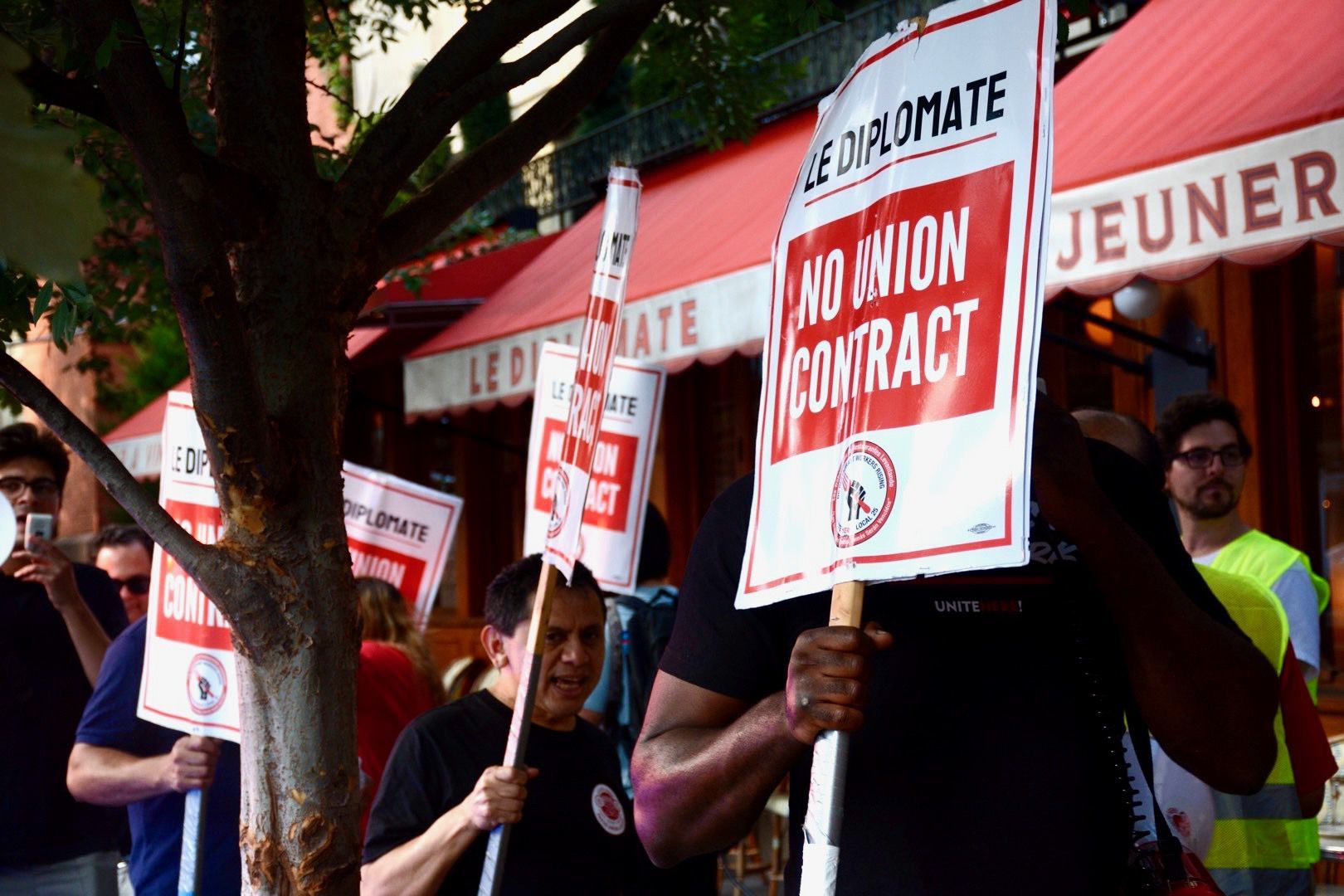
A picket line outside of Stephen Starr’s D.C. restaurant Le Diplomate, led by Unite Here Local 25 after Starr Restaurants challenged a unionization vote at St. Anselm.
Almost immediately, relations soured between Starr Restaurants and Local 25. The restaurant group hired anti-union consultants to meet with St. Anselm staff, Washingtonian magazine reported, while other employees told food publication Eater that Local 25 organizers were ambushing them at their homes to sign cards indicating they wanted a union vote.
Local 25 also called for an ongoing boycott of Starr’s D.C. restaurants — including those where no union efforts were taking place. Top Democrats such as Sen. Bernie Sanders, Rep. Alexandria Ocasio-Cortes, and Sen. Chuck Schumer signed on.
Legally, the settlement doesn’t state that Starr Restaurants broke any laws or affirm any of the union’s allegations. In practice, however, Cooney said that workers and employees might have a different interpretation.
Posting a notice “doesn’t sound very intimidating on its face, but employers will sometimes fight tooth and nail over the wording” or try to hide them, said Cooney. “Looking at it from the viewpoint of the common worker, if they see that notice … I think they would see it as an indication that a company violated the law.”
Starr Restaurants posted the notice required by the settlement inside St. Anselm on June 16 and also emailed a copy to staff.
Greg Varney (left) and Ana Reyes, both with Unite Here Local 25, outside Starr headquarters at 134 Market St. in July 2025.
When St. Anselm server Abigail Dunki-Jacobs received the email, it felt like “a bunch of legalese … that meant nothing,” she told The Inquirer. Dunki-Jacobs, who voted against the union, said she hasn’t heard much chatter among her colleagues after it was posted.
“It just feels like a list of facts to me,” she said. “Nobody even really gives a shit about it.”
Delays upon delays
Local 25 organizers and employees who voted for the union also find the settlement meaningless.
Starr Restaurants “didn’t have to admit to doing anything wrong with the statement they made,” said Ellery Grimm, a member of support staff at St. Anselm who helped organize the union drive. “We’ll be vindicated when we have our contract.”
St. Anselm’s union election case has sat unresolved with the NLRB for nearly a year and half, which Cooney said was abnormal. The agency tends to prioritize certifying election results over unfair labor practice allegations.
The NLRB has been beleaguered by delays for more than year, first from the firing of a board member that left the agency unable to issue rulings, and then from a government shutdown that furloughed employees.
The delays have caused at least one St. Anselm employee to quit. Bridget Killburn, a baker at the steakhouse, left in April after more than three years at the restaurant. She now works at a bakery in Maryland that she said offered higher pay and more time off — two things she hoped the union would’ve won by now.
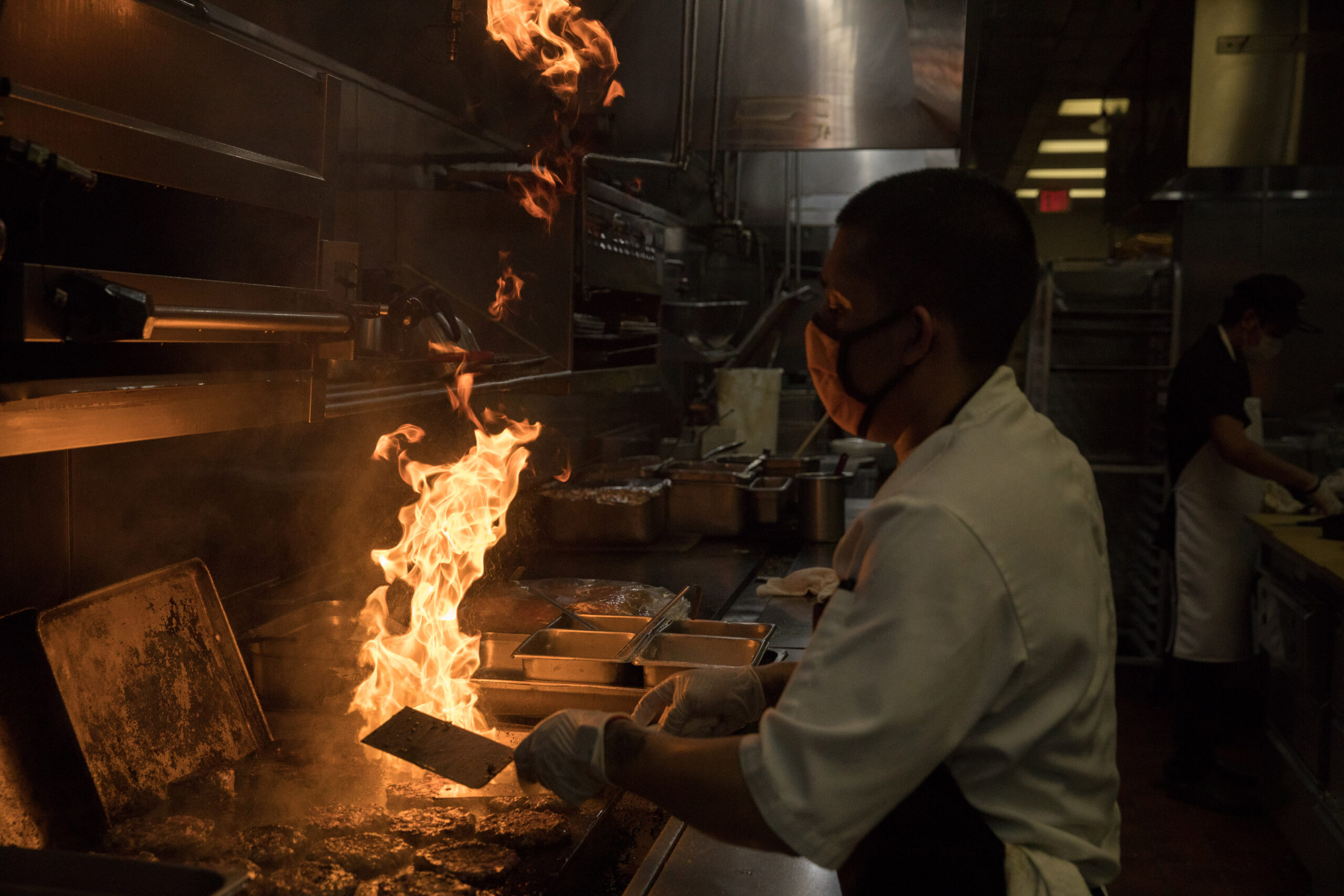
A chef in the kitchen at Le Diplomate, one of Stephen Starr’s three D.C. restaurants that Unite Here Local 25 attempted to unionize.
“I’m someone who wants a very stable job with good pay, good benefits. At this rate, it felt like I was never going to get those things so I needed to try and find a workplace who would allow me to have them,” Killburn said.
Schwalb acknowledged that Local 25 hasn’t done any public campaigning at St. Anselm in months, and has abandoned the union drives at Starr’s other restaurants until all litigation is resolved.
“Rome and the restaurant union — neither one will be built in a day,” he said.
Delaware County is investigating a hack of its network after “unauthorized activity” interfered with systems in late June, disrupting county services.
The countygovernment is “in the process of restoring network access,” according to a statement, and internet and phone service has been restored.
“The County responded to these attempts by taking the proactive but necessary step of shutting down our network to continue to protect sensitive information and critical systems while following industry best practices in response to the intrusion attempts,” the county said.
The scale of the latest hack remains unclear, but the county said in its statement that since the 2020 incident, it has “established critical protections and followed industry recommendations about how to best secure its network assets, and those protections have proven valuable in recent days.”
The public first became aware of disruptions last Friday, when Delaware County Council posted on social media that there was a “network outage” at the Government Center Complex in Media.
Delco also said it plans to reestablish network access, services, and work with cybersecurity experts.
“All our offices remain open and ready to continue serving our residents, and we appreciate the efforts of our staff and departments to find alternate ways to perform their duties throughout this period of network interruption,” the county said.
The delays and detours in services have become frustrating for residents who may have to reschedule appointments with departments like the Register of Wills or at the courthouse.
6ABC reported earlier this week that residents were not able to complete routine procedures at the courthouse, like filing a motion, and that cases were being taken out of order.
Check your change: You might have one of the U.S. Mint’s special-edition coins celebrating the nation’s 250th birthday.
For one year only, circulating nickels, dimes, quarters, and half-dollars will feature new historical designs. Part of the U.S. Mint’s Semiquincentennial program, many of the coins entered circulation at the beginning of the year.
“The program is the most significant redesign of the nation’s circulating coins in the past century,” said Jill Westeyn, acting chief of public affairs at the U.S. Mint. “These coins commemorate 250 years of American Liberty by reflecting our country’s founding principles and honoring our nation’s history.”
What’s on the coins
The quarter is a star of the program, boasting five different designs that highlight pivotal moments in American history.
The Mayflower Compact, signed in 1620 as one of the New World’s earliest documents establishing self-government, inspired one of the quarter’s designs, which features the iconic ship.
Motifs from the Declaration of Independence, the Revolutionary War, and the U.S. Constitution appear on three of the other quarters. Images include Philadelphia landmarks like the Liberty Bell and Independence Hall.
The fifth quarter honors President Abraham Lincoln’s Gettysburg Address. Meant to highlight the Civil War-era speech’s commitment to equality, the quarter depicts Lincoln on one side and clasped hands on the other.
The quarters are scheduled for circulation in separate intervals throughout the year. So far, the Mayflower Compact Quarter, the Revolutionary War Quarter, and the Declaration of Independence Quarter have been released. The remaining two designs will enter circulation later in the year.
The dime and half-dollar feature Liberty, an American allegorical figure of a mythical goddess. The dime includes her cap, a symbol of freedom in ancient Rome, and the half-dollar depicts Liberty gazing to her right, meant to convey looking toward the future.
The nickel may look familiar with its portrait of President Thomas Jefferson, but an addition of the dual date, “1776 ~ 2026,” updates the coin for the anniversary.
A collectible penny with the dual date is alsoavailable for purchase in annual sets sold on the mint’s website. The mint discontinued the copper cent in 2025 because it cost more to produce than it’s worth.
The bipartisan Citizens Coinage Advisory Committee had reportedly proposed designs for the 250th that will not see the light of day, including coins that would have commemorated the end of slavery, the women’s suffrage movement, and the civil rights movement. But Treasury Secretary Scott Bessent, tasked with making the final design choices, did not pick any of those.
Other coins
President Donald Trump’s 24-karat gold coins, which feature his portrait and were also intended to highlight the country’s 250th anniversary, are not among the program. The U.S. Commission of Fine Arts voted unanimously to approve the design in March, but the coins are not slated for production until after July 4.
The U.S. Mint has approximately 1,400 employees across four production facilities (one of which is in Philadelphia), a bullion depository, and its headquarters in Washington, D.C. It produced 8 billion coins during fiscal year 2025, per the organization’s annual report.
In the grand casino of the atmosphere, scheduling outdoor events on July Fourth in the Philly region is almost always going to be a rolling of the bones.
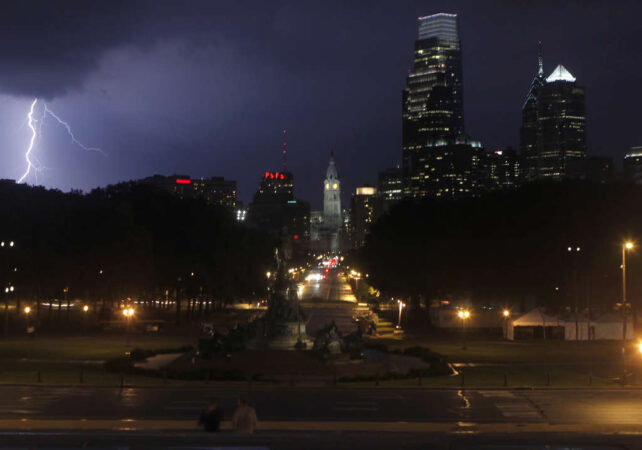
And on the day Philadelphia and the rest of the nation are holding a mass 250th birthday party, the odds may be dicier than usual, with thunderstorms and accompanying lightning possible Saturday afternoon and night, forecasters say.
The National Weather Service on Thursday listed a 50-50 chance of storms Saturday night, and the federal Storm Prediction Center, in Norman, Okla., bumped up the probability of severe storms — those with winds up to 60 mph — to 15%.
July happens to be the peak month for lightning-bearing thunderstorms in Philadelphia, occurring every five days on average, and who doesn’t want to be outside on the Fourth?
As if record-challenging heat and an atmosphere that feels like syrup weren’t enough.
Lightning injuries and fatalities are rare — on average in the last decade, 20 people have been killed annually by lightning in the United States, according to the National Weather Service. But among outdoor events with large crowds across the country, Philly’s July Fourth concert would be among the riskiest for lightning, according to Stephen Strader, disaster specialist at Villanova University.
“It’s way up there, a lot higher than I thought it was,” he said.
The city is well aware of the atmosphere’s capriciousness, the potential risks in July, and the potential effects on the Parkway celebration and the World Cup match in South Philly and has developed safety protocols, said Jeffery Kolakowski, communications director for the Office of Emergency Management.
Unfortunately, for attendees and planners, predicting the when and where for thunderstorms remains elusive.
“There’s uncertainty of the when and where of the storms,” said Rich Thompson, branch chief and lead forecaster at the federal Storm Prediction Center, in Norman, Okla., the source of those severe storm and tornado watches. “It’s still one of the great frontiers of meteorology. It’s incredibly difficult.”
‘Ring of Fire’ fireworks and the weekend forecasts
Readings soared to 97 on Wednesday, and the heat index shot past 105 in Philly as the atmosphere thickened in a hurry.
And it’s about to get thicker. The heat is forecast to peak Thursday and Friday with highs surpassing 100. It could cool down all the way to 99 on Saturday, said Matt Benz, senior meteorologist with AccuWeather Inc. Unfortunately that would indicate increasing volatility in the atmosphere.
High pressure though the atmosphere, the so-called heat dome phenomenon, has put a lid on convective storms, “but that starts to come off Friday into Saturday,” he said. That could lead to “ring of fire” thunderstorms, so named because they form on heat-dome edges. They can be especially nasty.
“We’re worried that something is going to be blowing up,” he said.
The storms could come in one bunch in the early evening and yield to a peaceful night, but they also could come in waves over a period of hours.
Even without strong storms — or storms not in the immediate vicinity of the festivities — lightning strikes are possible.
“Unfortunately that could be the biggest concern that day you’ve got lighting and people outdoors,” said Benz.
The lightning threat
The chances of being struck by lightning are remote, about one in a million in a given year, according to the weather service.
But they do happen: They’re what Strader calls “low probability events” with “high consequences.” In 2019, several people were injured when lightning struck at a PGA tournament in Georgia.
In 2014, a severe thunderstorm forced thousands of concertgoers at Philadelphia’s Made in America Music Festival to evacuate the Parkway for a short time that Sunday evening.
But for the most part, Fourth of July fireworks have been confined to the manmade kind.
In his analysis, Strader looked at thousands of outdoor events attended by 10,000 or more people, what he called “large outdoor public gatherings,” to calculate which ones would expose the most people to cloud-to-ground lightning strikes, taking into account location and time of year.
He found that both the Parkway and World Cup events in Philly this year would rank among the top 6%, using his criteria. The Parkway would be particularly problematic given the lack of shelter options.
All during the events the City’s Emergency Operations Center will be operating with a “play by play” from a National Weather Service forecaster, said Kolakowski.
In the event of lightning he said, “an evacuation of the area could be issued and people would be asked to leave the event ground in a safe manner and seek shelter.”
He said weather messages would be broadcast on screens, loudspeakers, social media, and text alert.
He added that people can get free event or safety alerts by texting CUPPHL or AMERICA to 888-777.
SANTA CLARA, Calif. — Malik Tillman’s shoe was broken.
He’d been stepped on by a Bosnian player, not hard enough to need to leave the game but enough to need a replacement cleat from the bench.
The new one didn’t have any magic dust, but it didn’t need it. Tillman practices free kicks a lot, so he was ready when the moment came.
His team was a goal up, a man down, and fighting with every ounce it had to secure its first men’s World Cup knockout win in 24 years. In the 82nd minute, the chance to regain momentum finally arrived.
Bosnia’s Stjepan Radeljić held back Sergiño Dest, earning the U.S a free kick just outside the 18-yard box. Tillman, with a bloodied sock underneath that new shoe, stepped up to score the goal that clinched the 2-0 win.
“I’ve been dreaming about this game. I’ve been dreaming about maybe taking a free kick and scoring a free kick,” he said. “I practiced this in training, and today I think I showed what I can do.”
Soccer now has its own version of Curt Schilling’s bloody sock saga in the American sports history books — though Tillman is much more soft-spoken than the former pitcher who played for the Red Sox, Phillies, and more.
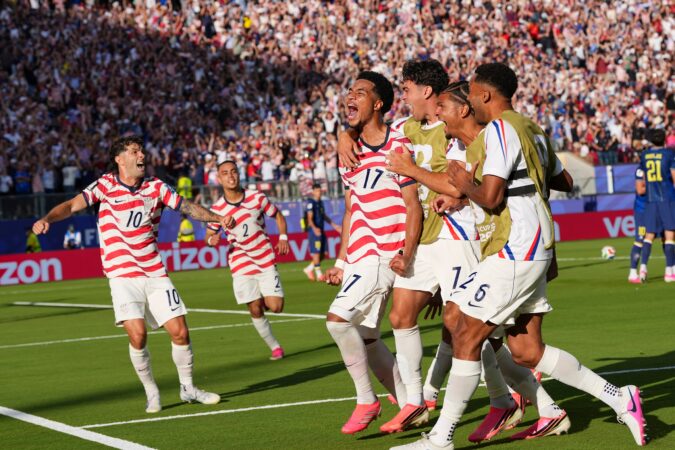
As Tillman ran toward the end line to celebrate, his teammates joined him in a joyous mass, fusing its energy with a crowd that had dug in just as much down the stretch. That energy came through loud and clear all night, in hopes of seeing a new chapter in a story that began when the Bay Area hosted the U.S. men’s soccer team’s first World Cup knockout game of its modern era in 1994.
“I’m a different type of person on the pitch,” Tillman said. “Of course, maybe you don’t really see my emotions, but if you score a goal like this, you guys saw my emotions. It’s a great feeling, and, of course, a very proud moment for me.”
It’s easy to say that the Americans don’t face the kind of pressure as the world’s traditional powers like Brazil, Argentina, England, and Germany. Even next-door neighbor Mexico deals with more, thanks to a rabid fan base that spans both sides of the Rio Grande.
But this time, the weight on the U.S. was massive. A squad of players long hyped as a golden generation had to win this game, or else they’d be tarred as failures in the big moment.
The stakes rose even higher when cohosts Canada and Mexico won their round of 32 contests first. Imagine the reaction in the soccer world had the U.S. failed to match them.
— FIFA World Cup 26 Philadelphia™ (@FWC26Philly) July 2, 2026
There still will be plenty at stake when the Americans play Belgium in the round of 16 on Monday in Seattle. This team still hasn’t beaten a really good opponent in this World Cup, or in general for a while. Nor has anyone forgotten that the ninth-ranked Red Devilsthumped the U.S., 5-2, in March in Atlanta, even if that was a friendly with different squads.
The U.S. also still has a poor all-time record against European teams in World Cups. Wednesday’s win was just the fourth win in 26 such games, against 15 losses and seven ties. Raising the win total to five now would make an all-time impact.
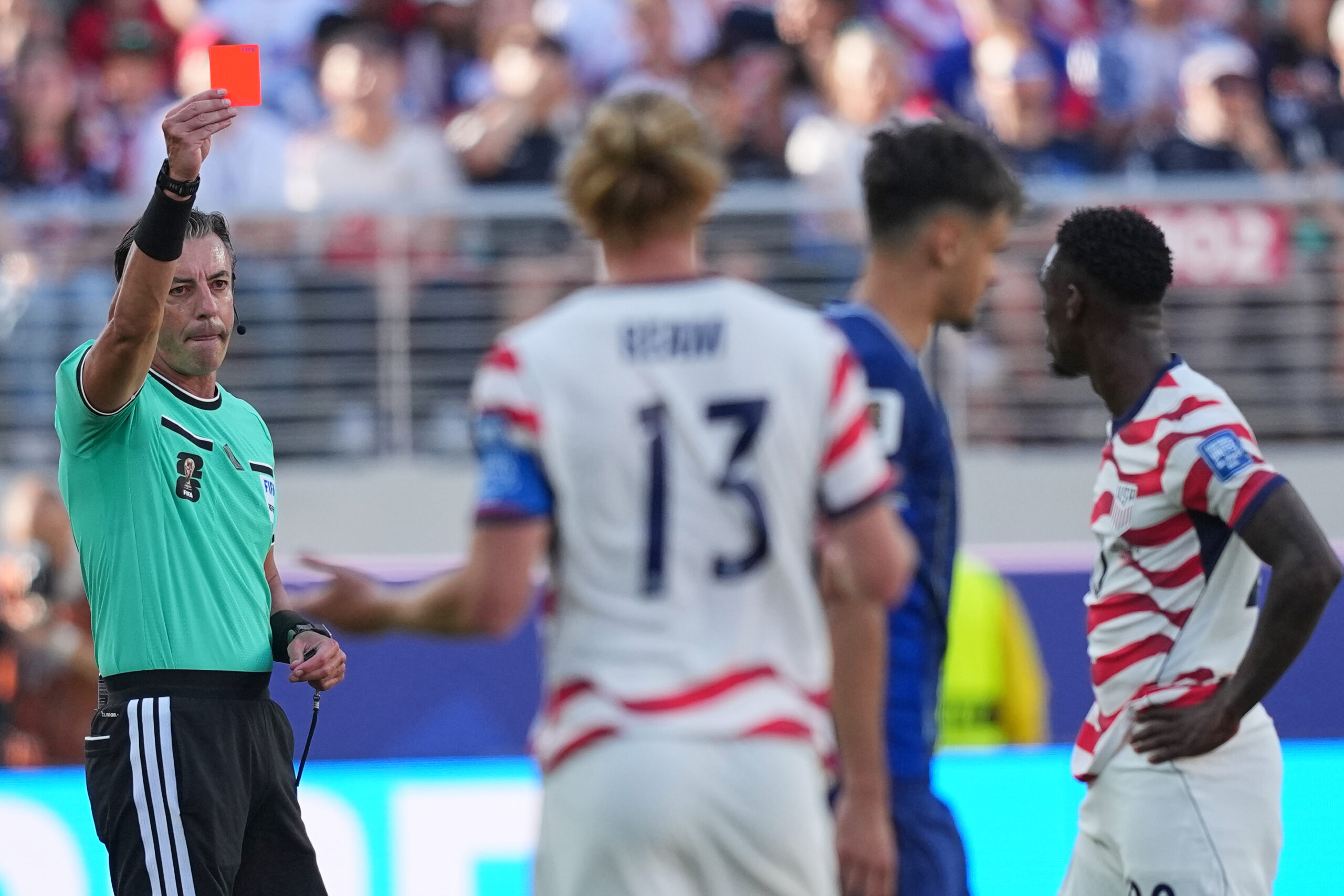
The call certainly was controversial, and by the letter of the law, referee Raphael Claus might have relied too much on slow-motion replay footage instead of watching at real-time speed.
But the decision was not totally wrong. First and foremost, any time a replay shows a player dragging his studs down an opponent’s calf and landing on the foot almost certainly will be a red.
An obvious counter to that is that Lionel Messi wasn’t sent off in Argentina’s group game against Algeria for landing his studs in an opponent’s calf even more directly.
This is life in the sport, and every player knows it. Had Balogun been hit in a similar way, even though the initial collision was 50/50, U.S. fans surely would have brayed for the opponent’s dismissal.
Also, if Balogun had been given a yellow card right away, the odds might have decreased that a video review would upgrade the call to a red.
Referee Raphael Claus (left) showing the red card to Folarin Balogun.
Because there was no card initially, when Claus went to the monitor, all he could do was give a red or let it go. The rules mandate that a video review of a call with no card can’t lead to a yellow. FIFA’s rules also mean U.S. Soccer can’t appeal the decision, though it almost certainly would have lost.
“Typical FIFA,” U.S. veteran Tyler Adams said of the rule book. But he didn’t totally argue with the call.
“You’re asking the wrong person, with how I tackle,” he said. “I think it’s a yellow card. I think when you slow everything down, it’s always going to look worse. I don’t want to say too much.”
It definitely will sting the U.S. to face Belgium’s stars without the striker who has more than justified the hype around his talent. Ricardo Pepi presumably will start, with Haji Wright coming off the bench.
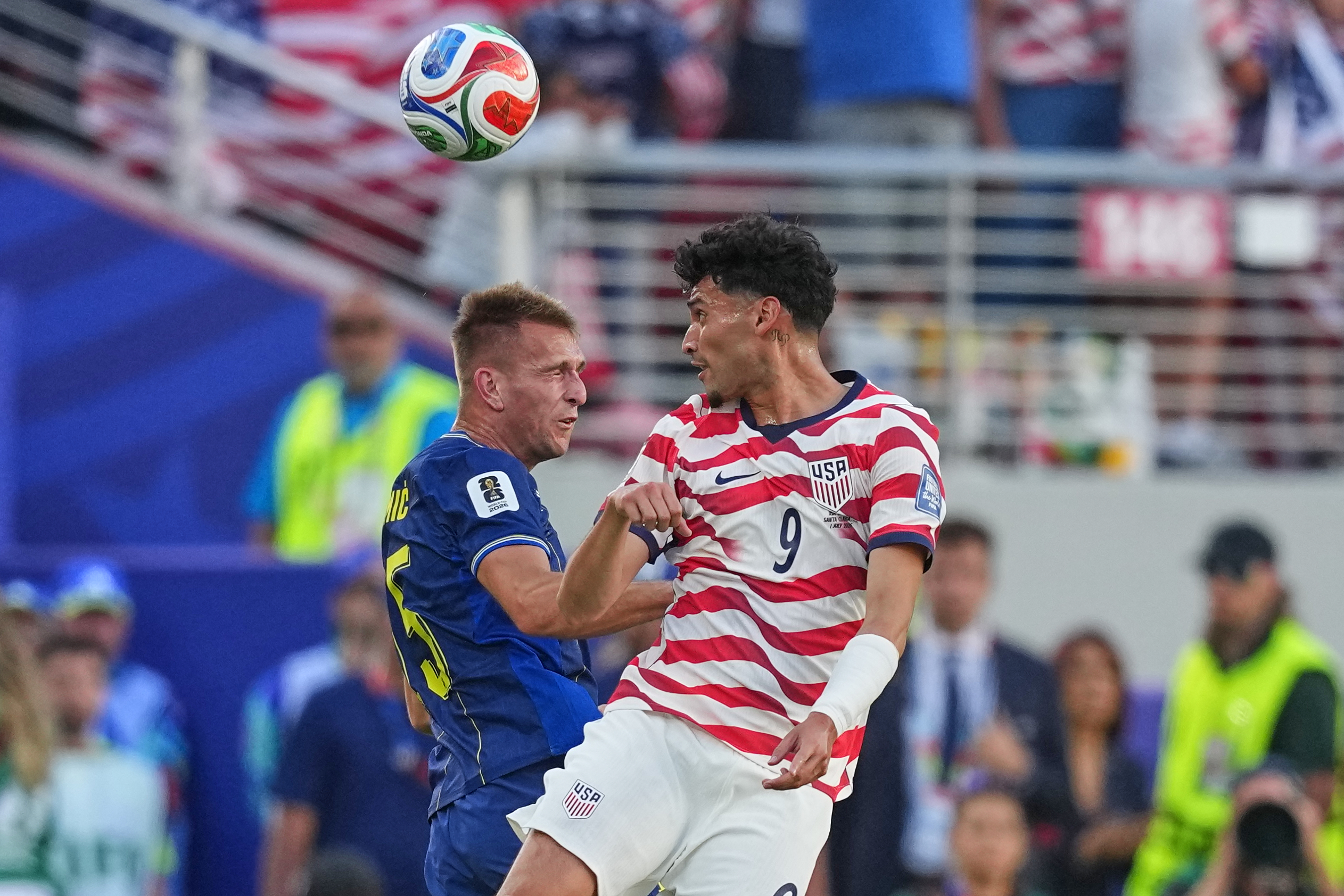
Ricardo Pepi (right) subbed on in the 87th minute to help close out the game.
Pepi didn’t stop to talk with the media after Wednesday’s game, but Wright did. The last U.S. striker to score in a World Cup before Balogun’s three this summer declared himself “always ready and always prepared to give my best for the team.”
There also was lots of support for Balogun from his teammates.
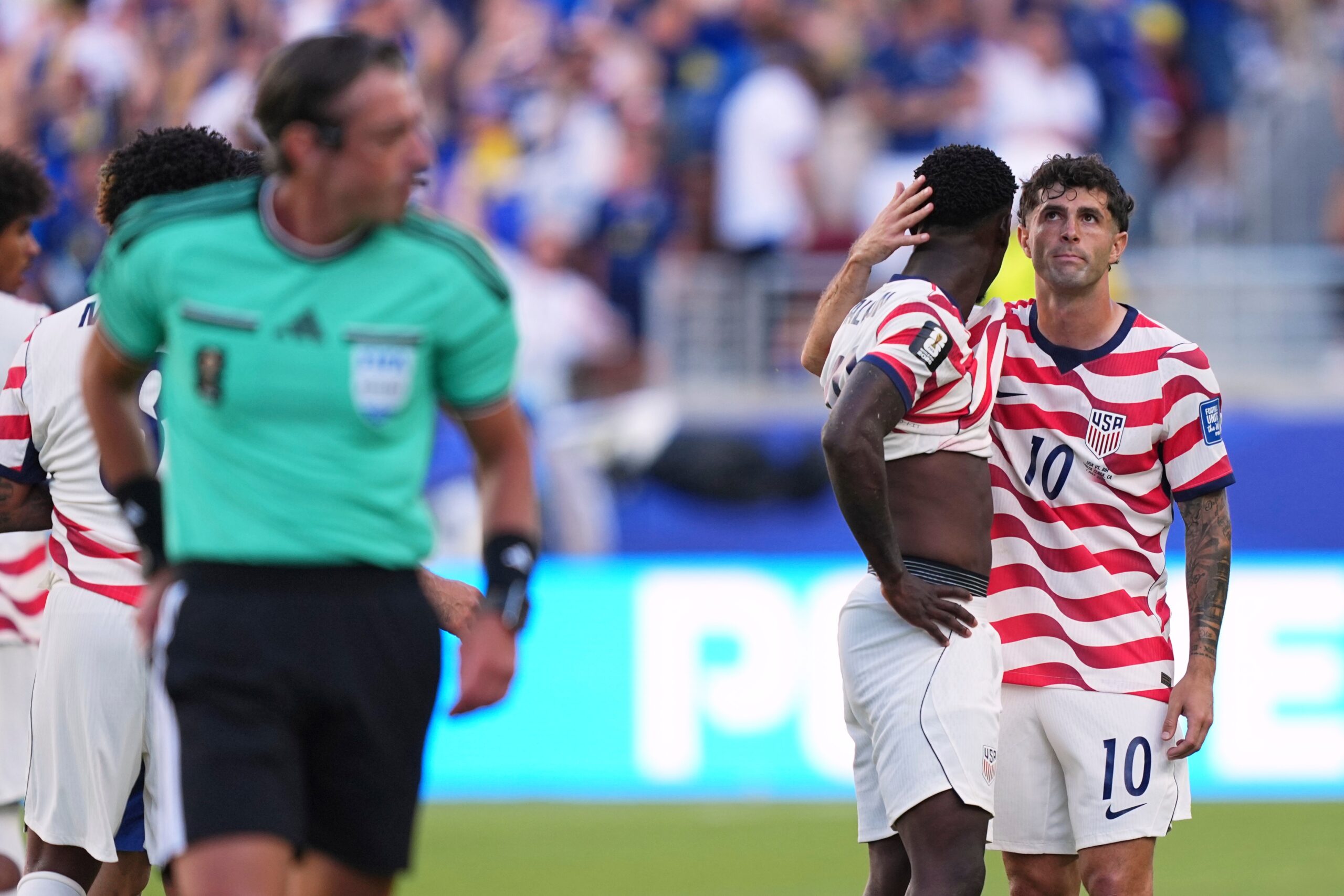
“He’s done so much for us, and now we’ve got his back,” Christian Pulisic said, and Chris Richards said nearly the same words.
Christian Pulisic (right) consoles Folarin Balogun after the striker’s ejection.
Freese’s satisfaction
Let’s close this piece on a positive note.
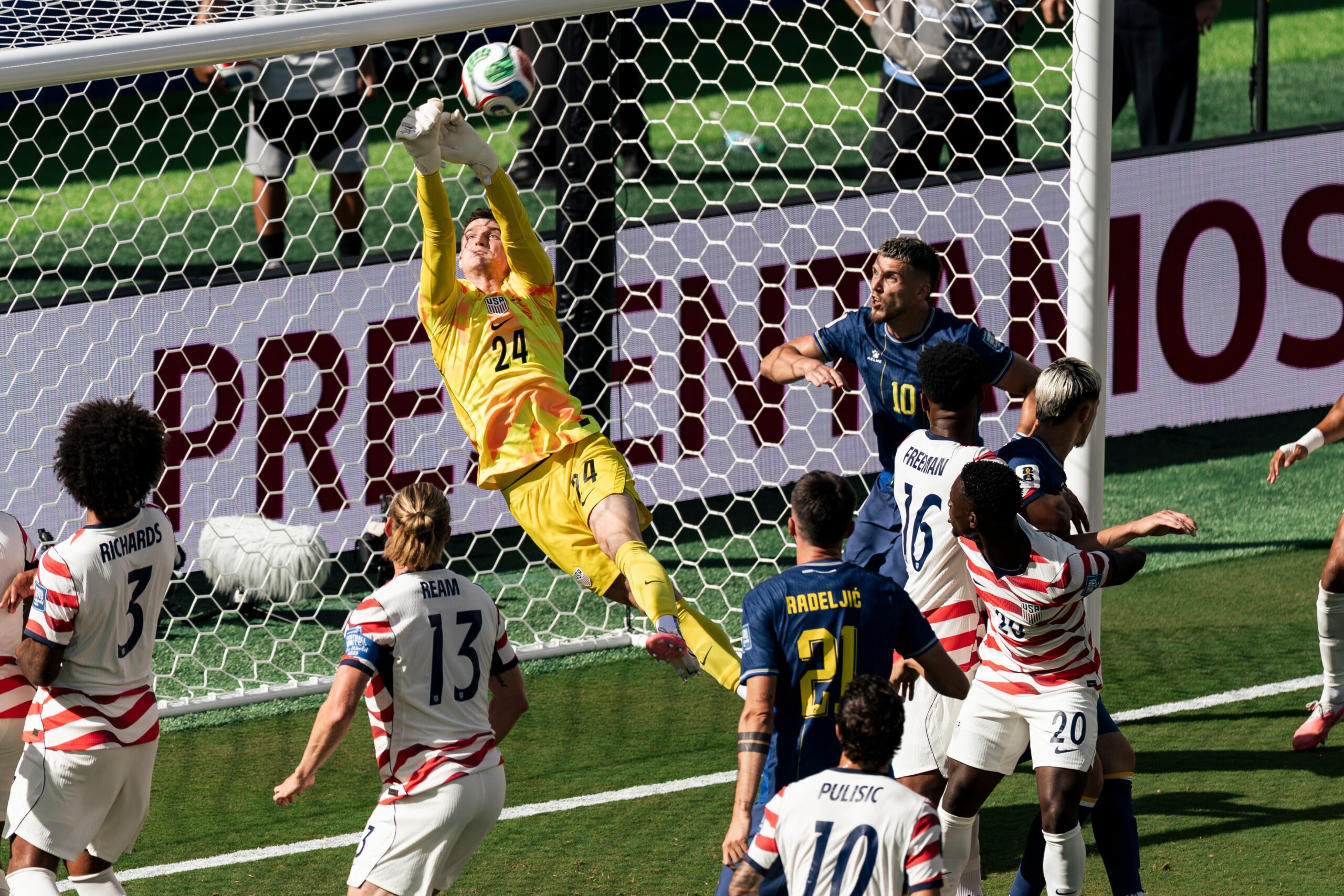
Matt Freese grew up in Wayne idolizing Tim Howard, the U.S. Hall of Famer who cemented his legend with 16 saves in the 2014 World Cup’s 2-1 loss to Belgium. Freese didn’t have to be that busy against Bosnia, but his three stops and command of his box still were plenty to confirm his status as the No. 1 in net.
Now he has a historic reward: being the goalkeeper of record for the first World Cup knockout win in so long.
“It means, really, more than I can say,” Freese said. “You dream of putting your name up there with the guys that you watched growing up. And there’s a lot more to do, but it’s an honor and a privilege to be in goal for this team.”
Matt Freese (center) making one of his big stops in Wednesday’s game.
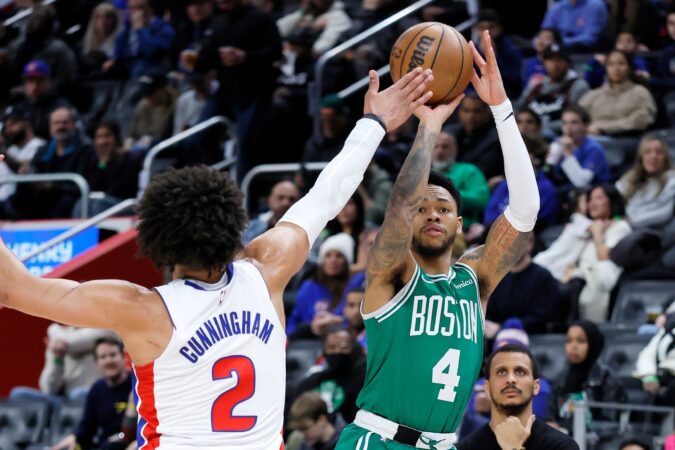
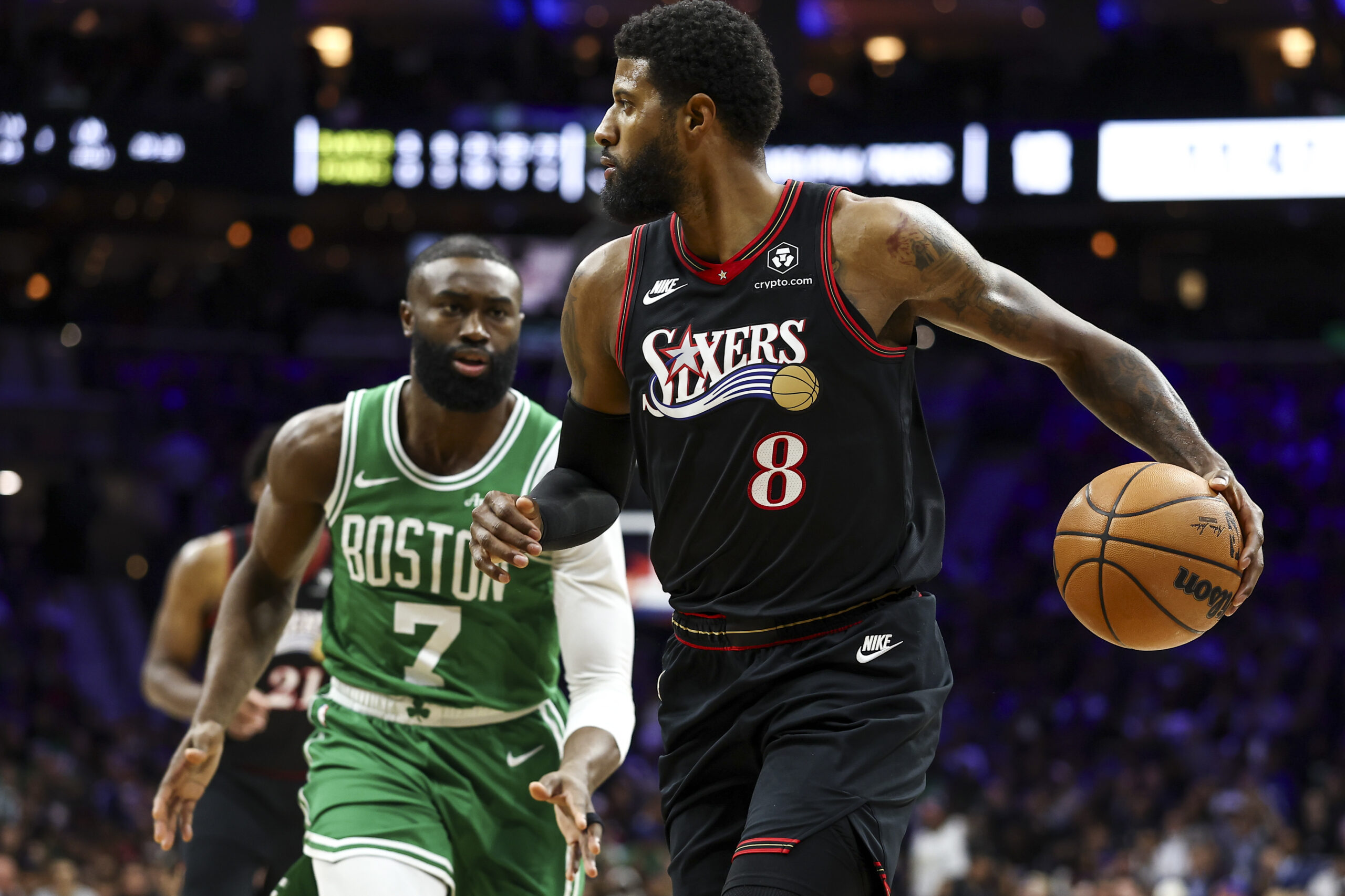
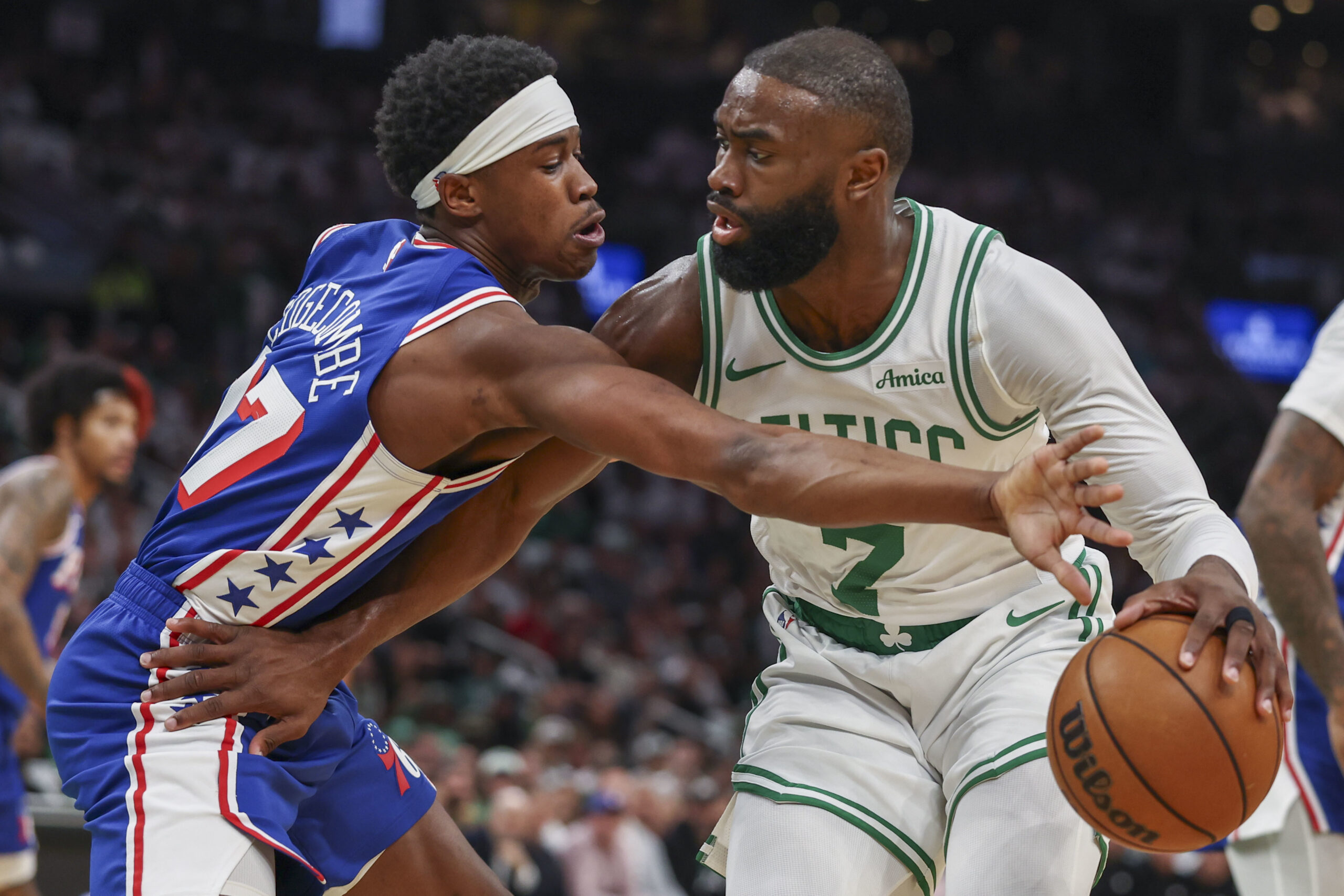
After a relatively slow start to NBA free agency, the Sixers made a shocking trade Wednesday evening, acquiring Jaylen Brown for Paul George and four draft picks.
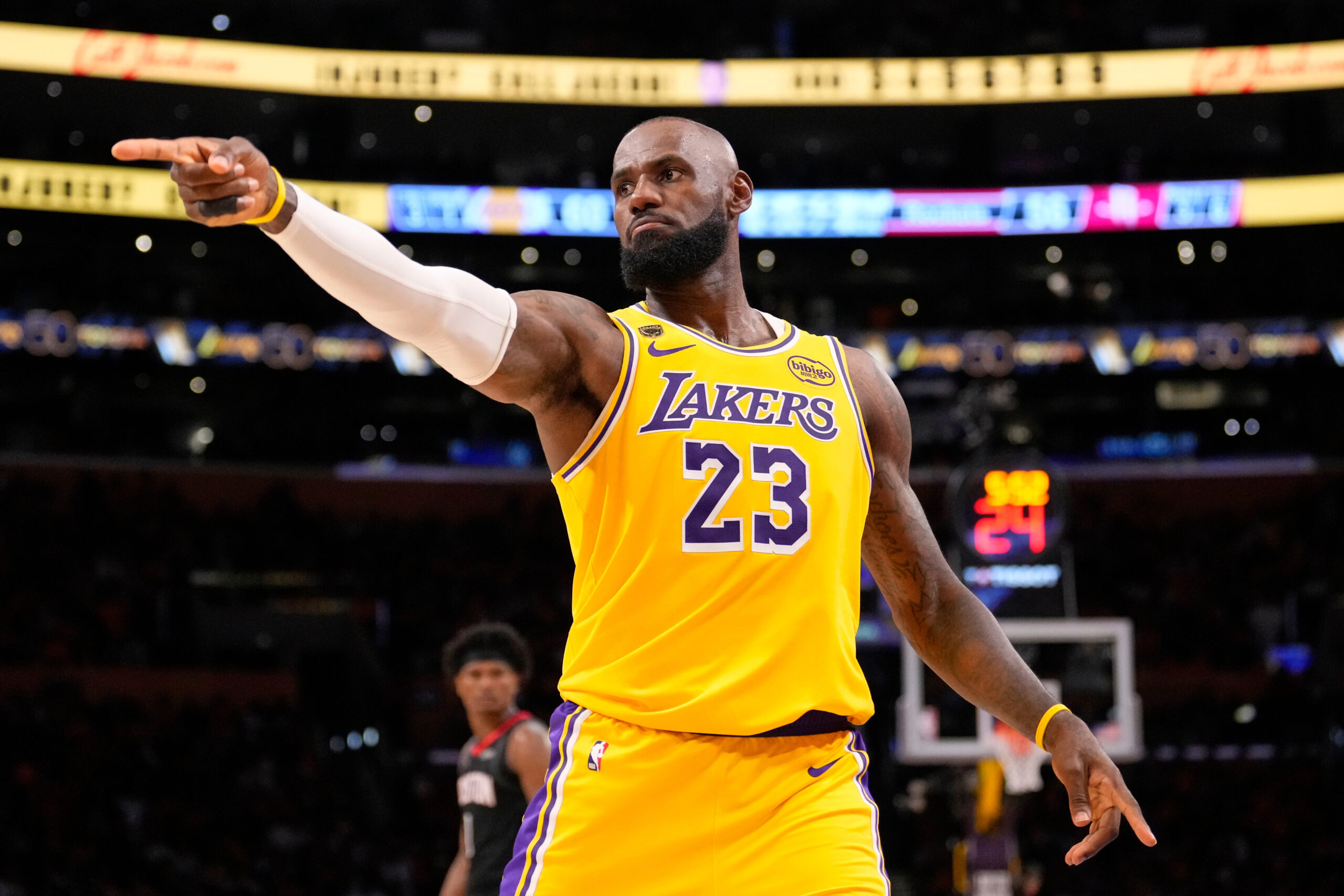
Since the Brown trade, the Sixers have also emerged as potential suitors for LeBron James. Here’s everything you need to know.
The Sixers are suddenly contenders again after the Brown trade, writes columnist David Murphy, who believes it was a steal for the Sixers. The national media seems to agree.
Report: Kyle Lowry to retire as a member of the Raptors
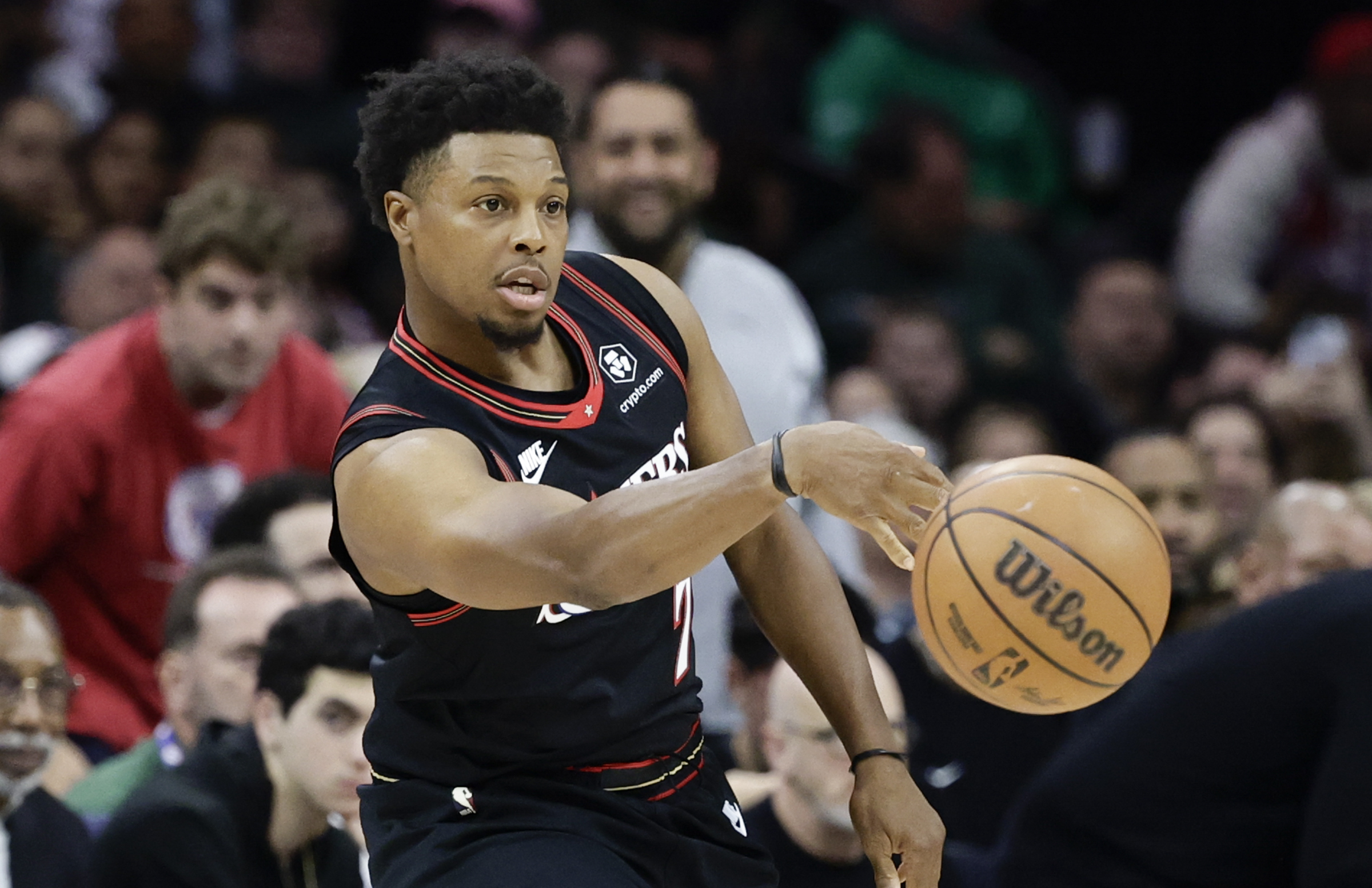
Sixers guard Kyle Lowry passes the basketball against the Milwaukee Bucks on Sunday, April 12, 2026 in Philadelphia.
A bit of unsurprising news: Kyle Lowry, the Philly native-turned-Sixers veteran guard, is officially retiring from the NBA, per a report from Sportsnet.
Per Sportsnet’s report, Lowry will make good on his long-publicized commitment to sign a one-day contract with Toronto, where he became a franchise icon and won the 2019 NBA title, to retire as a member of the Raptors.
At the end of the 2024-25 season, Lowry said he wanted to play one more season to reach 20 for his career, though was more coy when asked about that plan in recent months.
Lowry, who played in 14 games last season, was almost exclusively a trusted and enthusiastic veteran on the bench and locker room, particularly for All-NBA point guard Tyrese Maxey. Lowry initially joined his hometown Sixers off the buyout market in 2024, and averaged 4.7 points and three assists in 72 games with the franchise.
Shortly after ESPN’s Shams Charania reported that the Sixers are making a pitch to LeBron James, his ESPN colleague Brian Windhorst also linked James to the Sixers and discussed how the Sixers might go about trying to recruit James: by using Tyrese Maxey’s connection through agent Rich Paul and Klutch Sports.
“A key factor in any sort of Philadelphia pursuit of LeBron is Tyrese Maxey. That is not only because of his talent, which is awesome, but he’s one of Klutch’s core clients,” Windhorst said. “He’s basically a part of LeBron’s extended family, so you would not only have Jaylen Brown as the addition, you would have Tyrese Maxey as your drawing card.”
The Philadelphia 76ers are expected to emerge as a strong suitor for LeBron James due to the Tyrese Maxey connection, per @WindhorstESPN
Maxey, who shares the same Klutch Sports agency as LeBron, is viewed as a major recruiting tool for Philly. pic.twitter.com/6GCoUHgl9y
Shams: Sixers are ‘trying to make a pitch to LeBron James’
"I'm told the Sixers are also trying to make a pitch to LeBron James… Include the Sixers & maybe 1 or 2 other teams in due time in that mix. The Sixers get Anfernee Simons & they’re obviously trying to continue to add to this team.”
Jalen Brown says he’s ‘still processing’ in first statement since trade
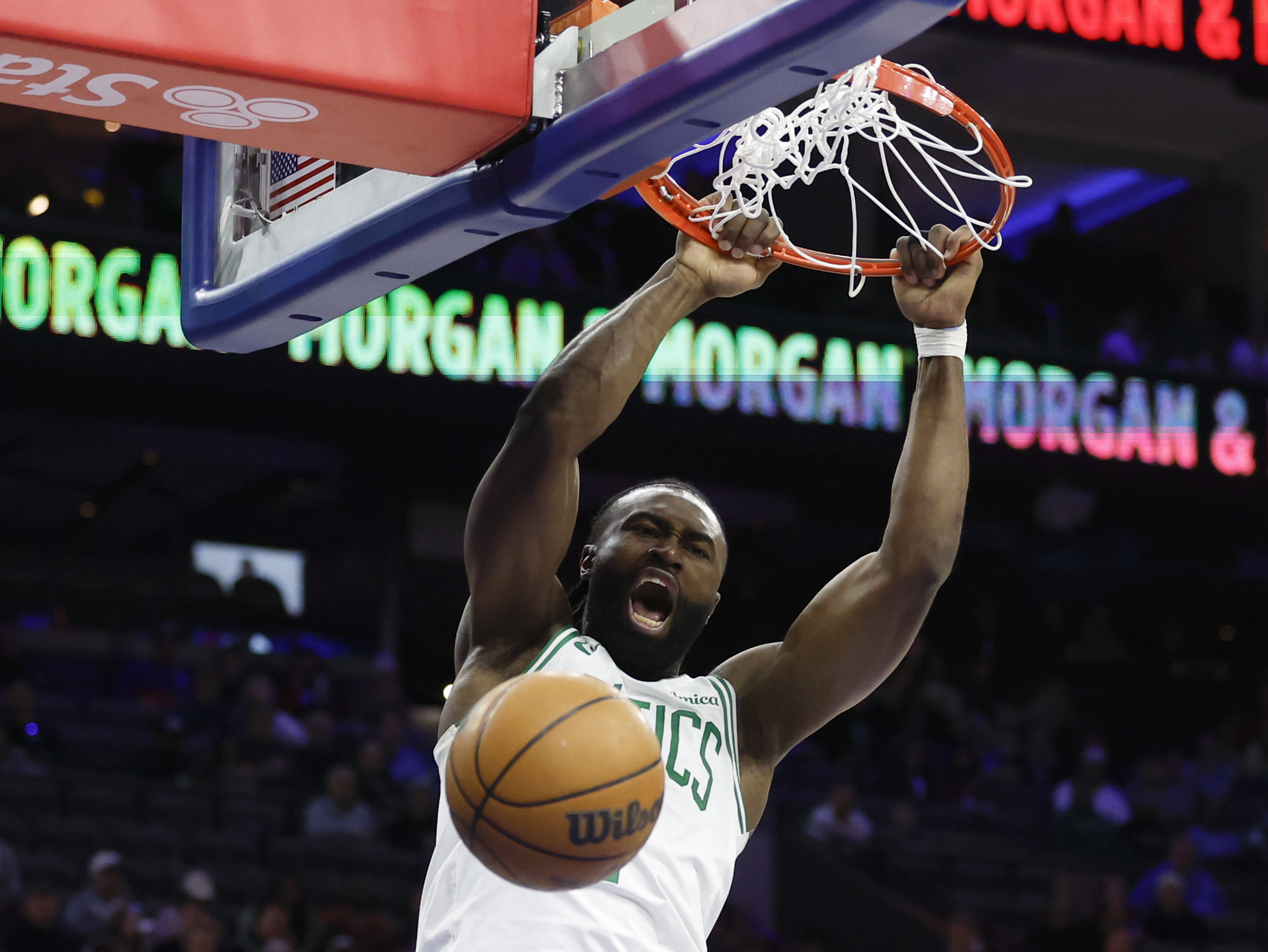
Boston Celtics guard Jaylen Brown is ready to get after it in Philly.
New Sixer Jaylen Brown has spoken. On Thursday, less than 24 hours after he was traded from Boston to Philly, the veteran released a statement on social media. Here it is in it’s entirety:
“First and foremost, thank you to the Most High, even in the midst of adversity. I’m here with gratitude.
“I’m still processing how this all went down. I’m excited and disappointed at the same time. I earned my respect from this city. I never asked for shortcuts or special treatment. I simply showed up every day, put my head down, and accepted every challenge.
“The relationships I built here, the battles we fought together, the championship we brought to this city, and the connection I shared with the fans, I’ll carry on with me.
“Saying goodbye isn’t easy when you’ve invested your heart into something.
“I’m big on respect and actions speak louder than words. To the people of Boston, thank you. To the community I built here I love you, and to the shiftaz we are locked in for life
“As one chapter closes, another begins.
“I’m excited for what’s ahead and grateful for the opportunity to join Philadelphia. Every city has its own identity, its own passion, and its own expectation. I respect that, and I’m looking forward to earning that respect the only way I know how.. through the work.
Anfernee Simons has agreed to sign a two-year, $12.3 million contractwith the 76ers, a source confirmed to The Inquirer Thursday afternoon.
After trading for star Jaylen Brown Wednesday night, the Sixers turned to bolstering their bench after losing sixth man Quentin Grimes, who will reportedly sign with the Los Angeles Lakers. Simons has shot 38.1% on 6.6 career three-pointers during his eight-year career with the Portland Trail Blazers, Boston Celtics, and Chicago Bulls.
Simons also one of Brown’s former teammates with the Celtics last season. Simons averaged 14.2 points, 2.4 rebounds, and 2.4 assists in 49 games before being traded to Chicago for reserve center Nikola Vucevic.
To sign Simons and stay under the first apron, where they are hard capped, his contract will come out of the nontaxpayer midlevel exception. Ariel Hukporti’s one-year, $3.4 million deal, which was agreed to Wednesday, will come out of the $5.5 biannual exception.
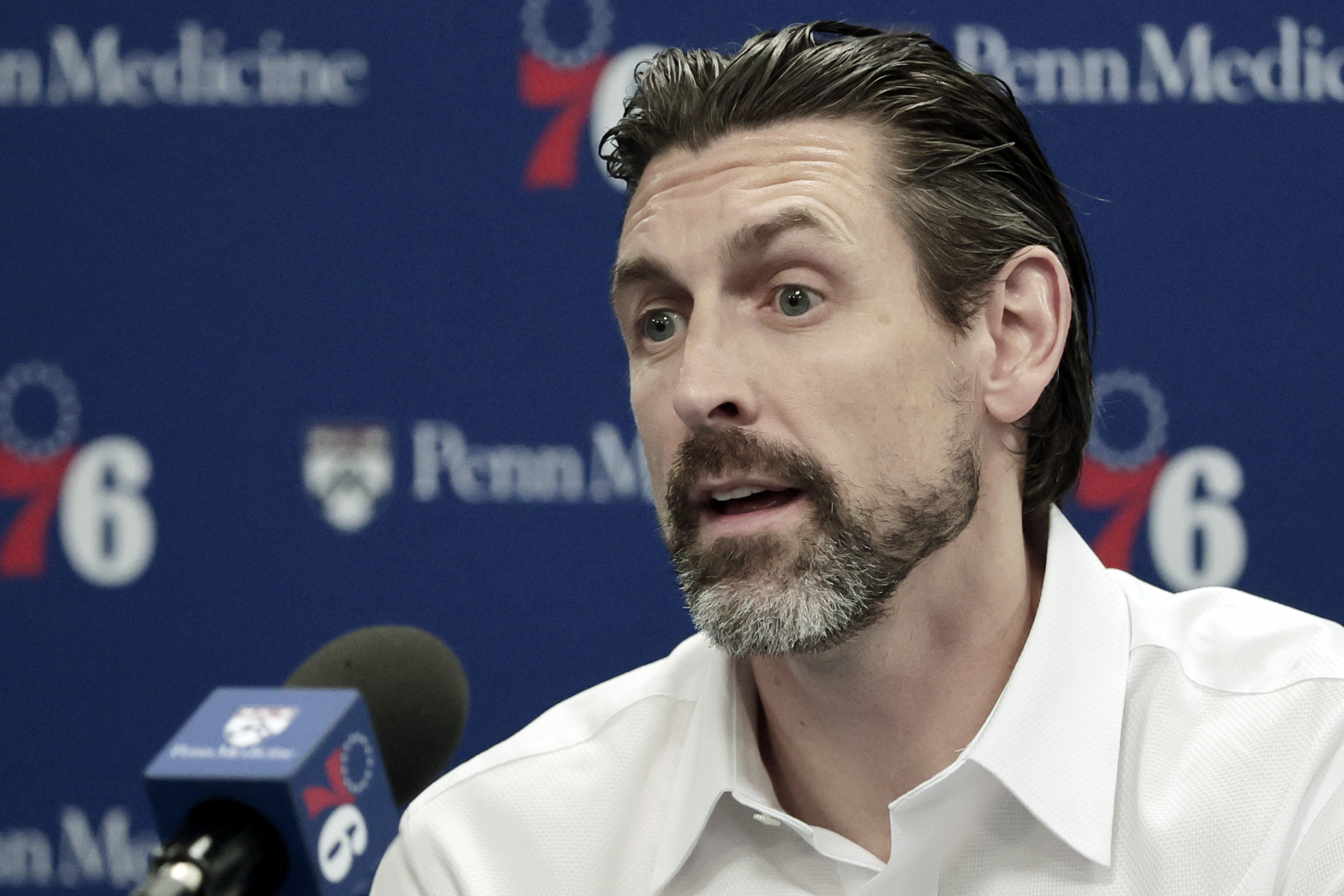
LeBron’s connection to Sixers president Mike Gansey
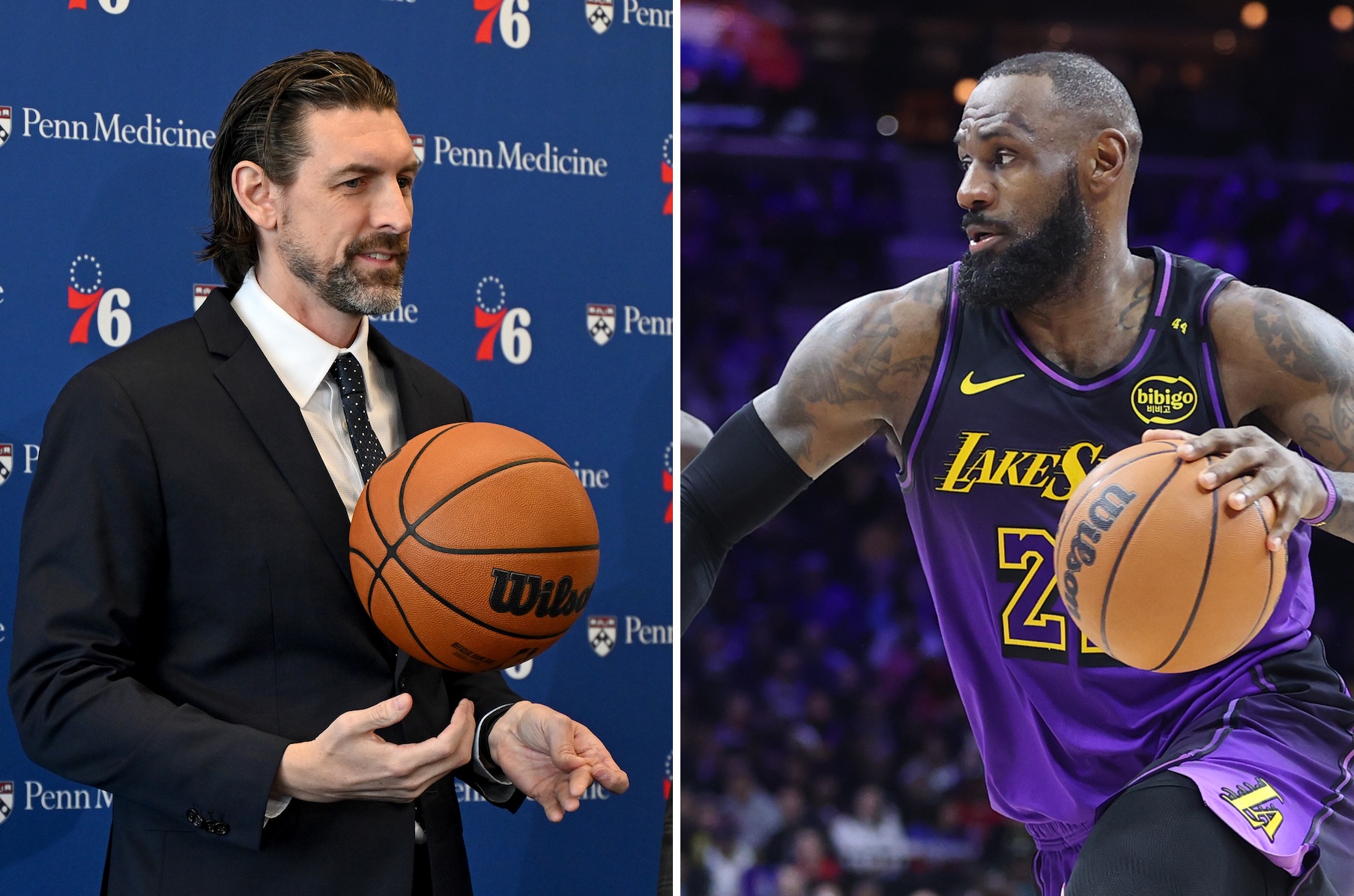
Sixers president Mike Gansey (left) and NBA star LeBron James competed in high school, where James beat out Gansey for Mr. Basketball Ohio in 2001.
The prospect of James coming Philadelphia was already picking up steam on social media following the Brown trade. Then, Steven Gansey, the younger brother of new Sixers president of basketball operations Mike Gansey, looked to add fuel to the fire.
On Wednesday, Steven posted a throwback photo of his brother (far right) alongside James (second from the right) in high school on X. He captioned the post with the eyeballs emoji, insinuating a connection.
As the photo shows, Gansey and James have crossed paths. The two Ohio natives competed in high school. Gansey, who went to have a memorable collegiate career at West Virginia, finished as the runner-up to James in the 2001 Mr. Ohio Basketball race.
Over a decade after facing LeBron on the court, Gansey served in a variety of roles in Cleveland during James’ second stint with the Cavaliers. In 2016, when James willed the team to a 3-1 comeback over the Golden State Warriors in the NBA Finals, Gansey received a ring as the team’s director of development league operations.
Signing James would also be in line with the Sixers president’s resume. Gansey has previously shown that he is not scared of making splashy moves — and bringing in one of the NBA’s all-time greats is a cannonball.
As the Cavaliers general manager, Gansey was part of a front office that traded for stars Donovan Mitchell and James Harden. Now, during his first offseason leading the Sixers, he executed a trade for Brown — another top-tier player. So it wouldn’t appear Gansey is too risk-adverse to add another star to the Sixers roster.
The Sixers swapped Paul George and four draft picks for Celtics forward Jaylen Brown.
Wednesday’s trade between the Sixers and Celtics has left many puzzled, especially in Boston. In exchange for Paul George and four draft picks, the Sixers are getting Jaylen Brown back from Boston.
So who won the trade? Here is what the national media is saying …
ESPN — Sixers: A- | Celtics: D+
ESPN wrote that — with two guards like Tyrese Maxey and VJ Edgecombe and a center like Joel Embiid — Brown could be the fit that the Sixers needed, but that’s also not guaranteed. Meanwhile, the Celtics didn’t fair nearly as well.
“Swapping Brown for George makes the Celtics worse. It clearly makes them worse,” Zach Kram wrote.
The Athletic — Sixers: A | Celtics: D+
Swapping out George for Brown is what the Athletic predicts to be a big difference maker for the Sixers and their role in the Eastern Conference, especially when comparing their most recent seasons, in which Brown had one of the best of his career.
“The Sixers can now roll out a perimeter attack of Maxey, Brown, and Edgecombe, which is going to be nearly impossible for teams to match up against,” Zach Harper wrote. “On the nights Embiid is available and active, they could be one of the best teams in the East. On the nights when Embiid is struggling or unable to play, they’ll still be fine.”
CBS Sports — Sixers: A+ | Celtics: D-
When ranking the worst contracts in the NBA in March, the now-36-year-old George’s deal was No. 4. Moving off that contract and adding Brown is a win-win in CBS’s eyes.
“Brown is coming off a Second-Team All-NBA season. There is a credible reason to believe that the season was fool’s gold,” Sam Quinn wrote. “… He is not, in fact, a Kevin Durant-level individual scorer. But the 76ers did not pay a Durant-level price.”
However, not all outlets were quite as critical of the Celtics.
Yahoo! Sports — Sixers: A | Celtics: B
Yahoo! Sports minced no words in declaring that Philly got the better player in the deal, while also dumping a worse contract. There are, however, still concerns with Brown’s fit with the Sixers.
“Brown isn’t necessarily a strong outside shooter, which is a necessity alongside Maxey and, in particular, Embiid,” Morten Stig Jensen wrote. “Overall, though, Philly takes a step forward here with a pretty durable 29-year-old coming off an outstanding season.”
Bleacher Report — Sixers: A | Celtics: A
Like the rest of the experts, Bleacher Report gave Philadelphia high marks on acquiring Brown, but they also gave the Celtics an A, largely because of what they got back.
“For the Celtics, things had clearly gotten untenable between Brown and the organization. And getting multiple first-rounders for him, considering how widely accepted his future departure was, is good value,” the Bleacher Report staff wrote. “Plus, though he’s entering his age-36 season, George can still be helpful in a complementary role next to Jayson Tatum (and will be more willing to be in that role).”
— Mia Messina
// Timestamp 07/02/26 9:38am
Murphy: The Sixers are suddenly contenders again
Swapping Paul George for Jaylen Brown is a major upgrade.
The 76ers did the unthinkable on Wednesday. They did it to such an extent that it still isn’t thinkable. In fact, it’s barely believable.
Not only did the Sixers come from out of nowhere to stun the NBA by acquiring Celtics superstar Jaylen Brown, and not only did they do it for a criminally cheap price, they also somehow managed to ship out the remaining two years and $110 million remaining on Paul George’s contract.
And, just like that, a new window of title contention has arrived.
That’s the most important takeaway for Sixers fans. Brown is a player who transforms the Sixers in both the short and long term. The 2024 NBA Finals MVP and a sixth-place finisher in regular season voting this year, the longtime Celtics wing is basically the exact player you would create in a lab if you were dreaming up the prefect star to maximize a team with Tyrese Maxey and VJ Edgecombe in the backcourt. He has the size, versatility and defensive chops to help make up for however much of that they give away at the guard position. He is a straight-line player who can get to the rim through traffic with or without the ball in his hands. He is an adequate and willing three-point shooter who showed signs of being much more than that earlier in his career. He can alternate seamlessly between primary and secondary scoring roles. Basically, he is the exact player the Sixers would have been crossing their fingers to have a chance to draft at some point in order to make the Maxey-Edgecombe pairing a legitimate contender.
Even if only half of that was true, the Sixers would have still been justified in making this deal. The unprocessable thing about this deal is the mind-bogglingly low price that Gansey somehow managed to finagle from a Celtics team that doesn’t make many bad decisions.
What moves can the Sixers still make — and is LeBron one of them?
LeBron James is a free agent. Do the Sixers make sense?
Swapping out Paul George’s contract for Jaylen Brown’s still creates a top-heavy cap sheet. The Sixers are now about $2 million under the luxury tax and $10 million below the first apron, where they are hard-capped. And assuming Hukporti’s salary comes out of the non-taxpayer midlevel exception, the Sixers still have $2.6 million from that to spend along with the $5.5 million biannual exception.
The Sixers could add two more players to reach 15 on the full-time roster, though they have often only carried 14 to stay under the luxury tax.
It is reasonable to expect the Sixers will focus on adding one more guard — unless LeBron James wants to come to Philly, of course.
James’ agent, Rich Paul, told Max Kellerman during the pair’s Game Over podcast released Wednesday that he had spoken to between 12 and 14 teams about James. The Sixers would be silly not to be among that group that has reached out, or to join it after the addition of Brown. Gansey’s brother, Steven, also threw gas on the social media speculation when he posted a photo on X of Gansey and James as high-schoolers in Ohio and the eyeballs emoji.
Additionally, Bona’s $2.3 million salary for 2026-27 becomes guaranteed on July 7, while Jabari Walker and Dalen Terry’s deals become fully guaranteed Jan. 10.
Resetting the Sixers depth chart after Jaylen Brown trade
The Sixers have added a few pieces — and lost a few more — so far in free agency, with players like Jaylen Brown and Dean Wade arriving and Paul George, Kelly Oubre Jr., and Quentin Grimes all moving on.
Here’s a look at how their depth chart pans out after those deals:
Point guard: Tyrese Maxey, Labaron Philon Jr.
Shooting guard: VJ Edgecombe, Dalen Terry
Small forward: Jaylen Brown, Justin Edwards
Power forward: Dean Wade, Dominick Barlow, Jabari Walker
Center: Joel Embiid, Adem Bona, Ariel Hukporti, Johni Broome
Legitimate movement occurred Wednesday, when the Sixers added Ariel Hukporti but rotation players Kelly Oubre Jr. and Quentin Grimes reportedly decided to join other teams.
It was a seismic winnow swing for new president of basketball operations Mike Gansey, banking on the Joel Embiid-Tyrese Maxey era rather than toggling between two timelines or fully pivoting into a rebuild around the Maxey-VJ Edgecombe backcourt. It also was an effort to keep up in an Eastern Conference that already boasts the NBA champion New York Knicks, along with revamped Miami Heat and Toronto Raptors teams that recently traded for Giannis Antetokounmpo and Kawhi Leonard, respectively.
To recap …
In: Jaylen Brown, Dean Wade, Ariel Hukporti
Out: Paul George, Kelly Oubre Jr., Quentin Grimes
Unsigned: Andre Drummond, Trendon Watford, Kyle Lowry
When the Pennsylvania Supreme Court authorized the state’s top prosecutor to review Philadelphia’s efforts to reverse tainted convictions, the message was clear.
The move was a stinging rebuke of District Attorney Larry Krasner and attempts by his office’s Conviction Integrity Unit to overturn verdicts it believed were marred by official misconduct.
It was also an unprecedented and dubious decision in which the cure may be worse than the disease.
The justices — Dougherty was joined by Daniel McCaffery, P. Kevin Brobson, and Sallie Updyke Mundy — ruled that any attempts by Krasner’s office to win exonerations must now be overseen by the attorney general.
Justices Debra Todd, Christine Donohue, and David Wecht disagreed, finding little to warrant such sweeping action by the court.
At the heart of the matter was the case of Lavar Brown, who was convicted in the robbery and fatal shooting of the manager of a North Philadelphia Rite Aid.
Krasner’s office believed Brown deserved a new trial because of past prosecutorial misconduct. The victim’s family accused Krasner of a conflict of interest over payments made to the district attorney by former law partners who had been involved in Brown’s case.
As Justice Wecht writes in his dissent, the court’s majority used the Brown case as a springboard to “scrutinize decisions made by the Philadelphia District Attorney’s Office in other, wholly unrelated cases.”
It has been well established that some police and prosecutors have been willing to bend the rules — if not break them — in order to facilitate convictions and arrests. Unlike too many of his predecessors, Krasner has held police officers accountable for unjustified use of force, charging dozens and convicting three.
In some instances, however, victims, law enforcement, and some judges have called foul, accusing Krasner of being overzealous.
The district attorney’s office itself recently withdrew a recommendation to overturn a murder conviction, saying prosecutors had filed court documents that were “not supported by the record.” This looks less like the systemic misconduct the court described than an office catching and correcting its own mistakes.
It is also important to note that Krasner’s integrity unit has not sought to undo the vast majority of convictions. According to the district attorney, just 1.2% of the cases have resulted in his office seeking exoneration. While Krasner and his team believe in the innocence of many of these defendants, it is also important that everyone gets a fair trial — even those who are ultimately found guilty.
Adding another wrinkle to the high court’s decision is the fact that people who had policy disagreements with Krasner at the district attorney’s office are now part of the state attorney general’s office, including some of the veteran prosecutors Krasner fired upon assuming office in 2018.
At the time, Krasner thoughtlessly compared the state office to Paraguay, a reference to the flight of high-ranking Nazi officials to Latin American countries after World War II. Some of those same prosecutors will now be overseeing some of the same convictions they obtained.
Wecht’s fellow justices should consider his words carefully and rethink this oversight measure, which he called “unprecedented and unconstitutional.” A more targeted remedy — one focused specifically on the issues identified in the ruling — would have been far less troubling.
Krasner is far from perfect. In an interview with this board, he acknowledged that some errors have been made by attorneys under his supervision. But for the court’s majority to take the drastic step of removing authority from Philadelphia’s top prosecutor, more substantive charges are required.
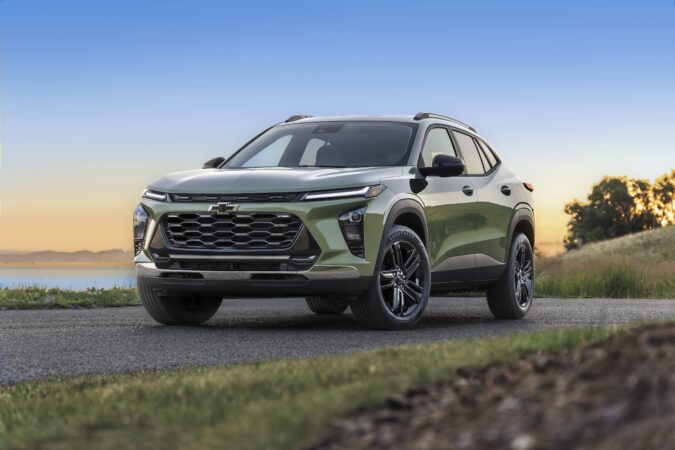
2026 Chevrolet Trax 1LT vs. 2026 Kia K4 Hatchback GT-Line Turbo: Battle of the low(ish)-payment models.
This week: 2026 Chevrolet Trax
Price: $26,280 as tested. Options include $795 for rear cross-traffic alert, lane change alert, adaptive cruise, and rear park assist, and $595 heated steering wheel, front seats, mirrors, and more.
What others are saying: “Highs: Rides and handles well, hushed cabin, cavernous cargo area. Lows: Lackluster acceleration, some scratchy interior plastics, no all-wheel drive,” says Car and Driver.
What Chevrolet is saying: “Bold style that’s in your range.”
Reality: Some real bright spots for the price point.
What’s new: The little crossover gets some new colors for 2026, and that’s it. It received the sharp new Chevrolet looks in 2024.
Safety equipment: I rarely note safety features even after several reader requests because it’s easily searchable, correction-risky information that’s generally matched among models. But at this price point, it’s worth noting standard features include forward collision alert, lane keeper with departure warning, automatic emergency braking, and following distance indicator.
Up to speed: The 1.2-liter, three-cylinder turbocharged engine creates 137 horsepower and gets to 60 mph in 8.8 seconds, according to Car and Driver. The strain to get from 40 to 60 mph is real in the Trax.
In spite of those issues, it’s fairly peppy in everyday use, and I found travel along back roads not bad at all. You’re not going to win any races, but wise philosophers say you really should only compete against yourself. (Mr. Driver’s Seat notes this wisdom while writing a comparison between two vehicles. He is a wiseguy, though, so maybe that counts.) If you have never owned a real car — and this was definitely Mr. Driver’s Seat once upon a time — you might not mind this.
Shifty: The 6-speed automatic transmission is a sad unit to have attached to a small vehicle like the Trax. There’s only shiftability via a button on the shift lever, and it really just allows you to select a top gear. Nice for going down hills, but zero joy is added, in a vehicle where every drop of joy must be savored.
On the road: At first turn, the Trax steering felt so loose and power-assisted that I was ready to weep for the man I would become over the next week. A man who once reviewed a 2011 Corolla and earlier piloted a 1964 Rambler Ambassador.
Surprisingly, though, over test week I found the Trax grew on me. The country road triumphs were not lessened by the little vehicle’s handling, and I liked how it zipped here and there. The Trax only comes in front-wheel drive; all-wheel drive could only brighten the shine on this facet.
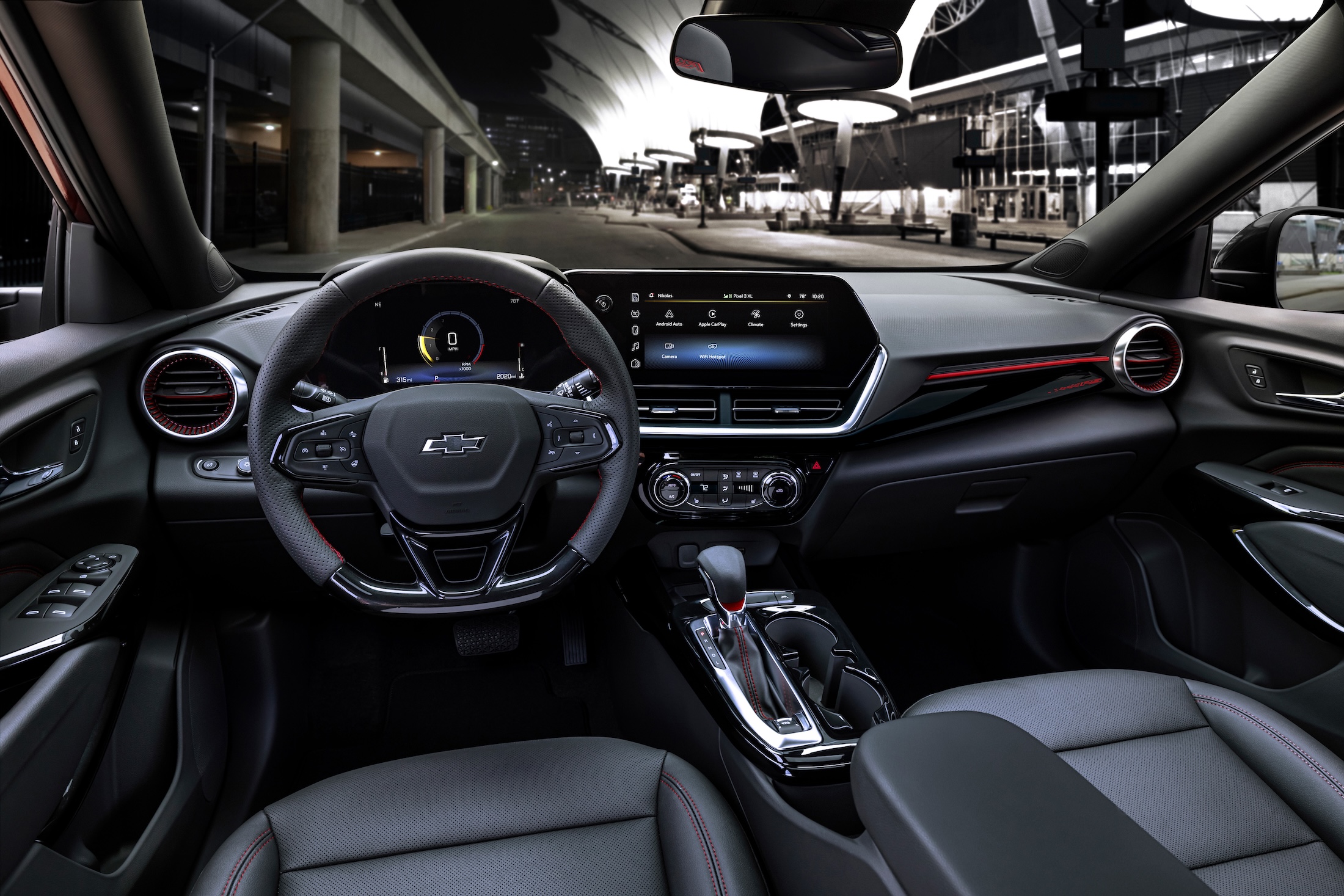
The interior of the 2026 Chevrolet Trax doesn’t necessarily look or feel cheap, but the touchscreen appears smaller than in real life.
Driver’s Seat: Part of what keeps the Trax more sporty than more expensive cars could be its profile. The seats sit quite low for something that appears to be a tall box, and the entry is simple.
The logic of the gauge screen could really use some explaining. Off in the upper right corner and cleverly concealed by the steering wheel are two bits of potentially collision-avoiding pieces of information — whether the high beams are on and the distance to the vehicle in front of you. The Trax even helpfully tells you how many seconds in front of you that car is.
Having to explain to the nice patrol officer that your high beams caused a sideswipe collision or you rear-ended a vehicle while craning your neck to find out if you were at risk of hitting someone probably won’t reduce your fine.
Friends and stuff: Legroom and foot room are good. Headroom is OK; my head reached to about an inch from the ceiling.
The seat feels kind of cheap but not uncomfortable, it’s just a little small in the bottom, so it’s better if you are, as well. The Trax offers no adjustments for recline.
Cargo space goes from 25.6 to 54.1 cubic feet.
Play some tunes: The stereo features a volume button and then everything else is touchscreen time. The Trax features CarPlay, so it’s a tick above the GM vehicles that don’t anymore, although the 11-inch home screen looks straight out of a base-model 2016 Toyota.
Sound from the system is surprising, about an A-.
Keeping warm and cool: A dial controls temperature, another fan speed, and then some smallish buttons in between handle the rest. Hooray for simplicity.
Fuel economy: The Trax averaged around 25 mpg for me and fellow drivers, which is tragic for such a small, underpowered vehicle.
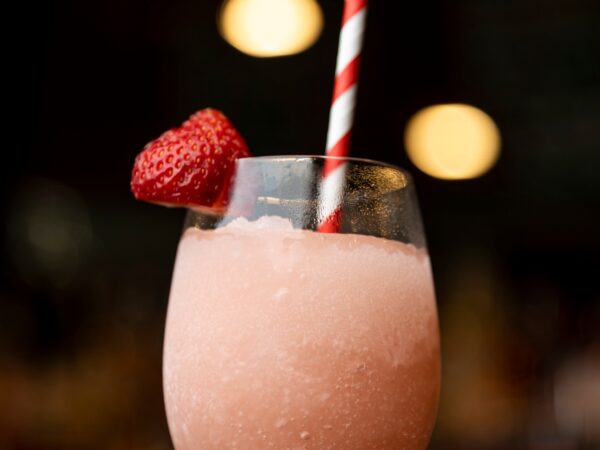
It’s the 250th anniversary of the signing of the Declaration of Independence in Philadelphia, and this week is packed with activities to celebrate. It’s also the 10th anniversary of another historic event: The 2016 frosé — or frozen rosé — frenzy that kicked off when New York City’s Bar Primi put the drink on their cocktail menu and nearly broke the internet.
Concocted in a slushie machine, the eye-catching frozen treat became an instant social media sensation, leading Bon Appétit magazine to publish a variation on the recipe that summer that topped their charts for months on end. Since July 4th weekend looks like it will be a scorcher, now is the perfect time to make frosé at home to celebrate both of these important contributions to the pursuit of happiness.
Frosé at Parc.
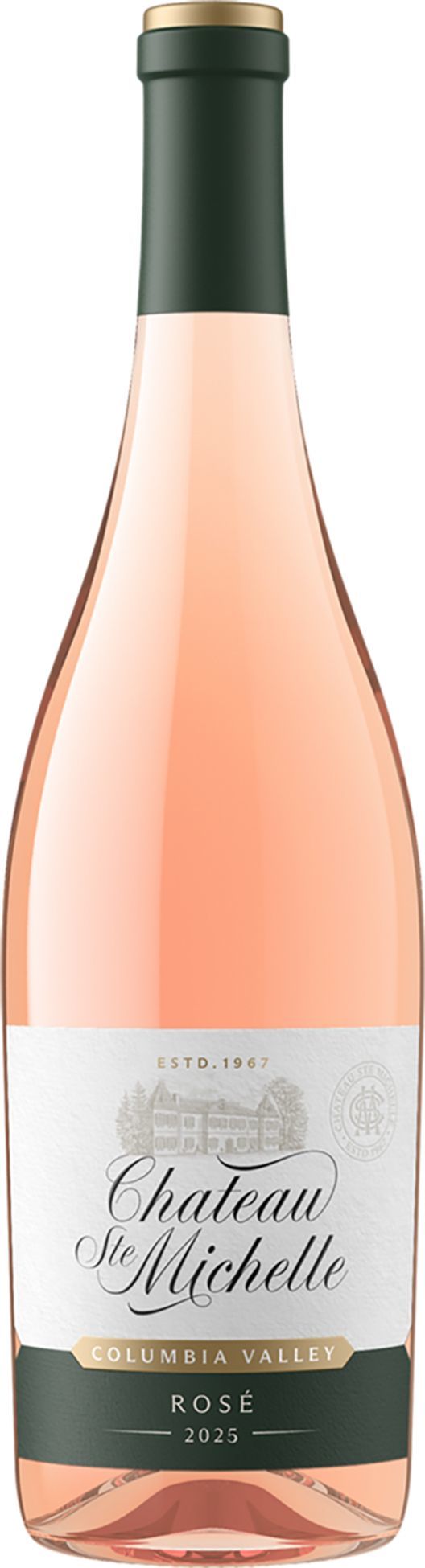
Frosé is not the place for pricy rosés, so save the pale, understated beauties of Provence in the south of France to be enjoyed on their own. The frozen cocktail needs wines with bolder flavors and deeper colors to overcome the dilution and serving temperature, so opt for one with a color that pops on the shelf, like this wine from Washington’s Columbia Valley. There, darker grape varieties like syrah and cabernet sauvignon dominate the blend.
The simplest way to frosé at home is the smoothie method: Fill your blender with frozen strawberries or watermelon and pour in enough rosé wine to cover the fruit and blend, adding sugar to taste as needed. For a more sheer and polished texture, make the drink with ice in place of frozen fruit and stick to clear ingredients. You may also need to spike with vodka and sweeten with a fruit liqueur to overcome the dilution.
The original Bon Appétit recipe explains how to dissolve sugar in water with strawberries and lemon juice on the stovetop to make a simple strawberry syrup suitable for flavoring your frosé and deepening its color, which yields a refined and faithful variant on the Bar Primi classic. If you like your wines pure, undiluted, and dry, and you just happen to own an ice cream maker, your method is much easier. Pour this bottle in and churn about 20 minutes to get the perfect slushie machine texture you know and love.
Chateau Ste Michelle Rosé
Chateau Ste. Michelle Rosé
Columbia Valley, Wash.; 12.5% ABV
PLCB Item #98215 — $10.99 through July 5 (regularly $13.99)
Also available at: Moorestown Super Buy Rite in Moorestown ($10.99; moorestownbuyrite.com) and Hopewell Super Buy Rite in Pennington ($10.99; hopewellbuyrite.com).
John Adams wanted ‘pomp and parade’ to mark July 2. For the 250th, Philly tried, despite the heat.
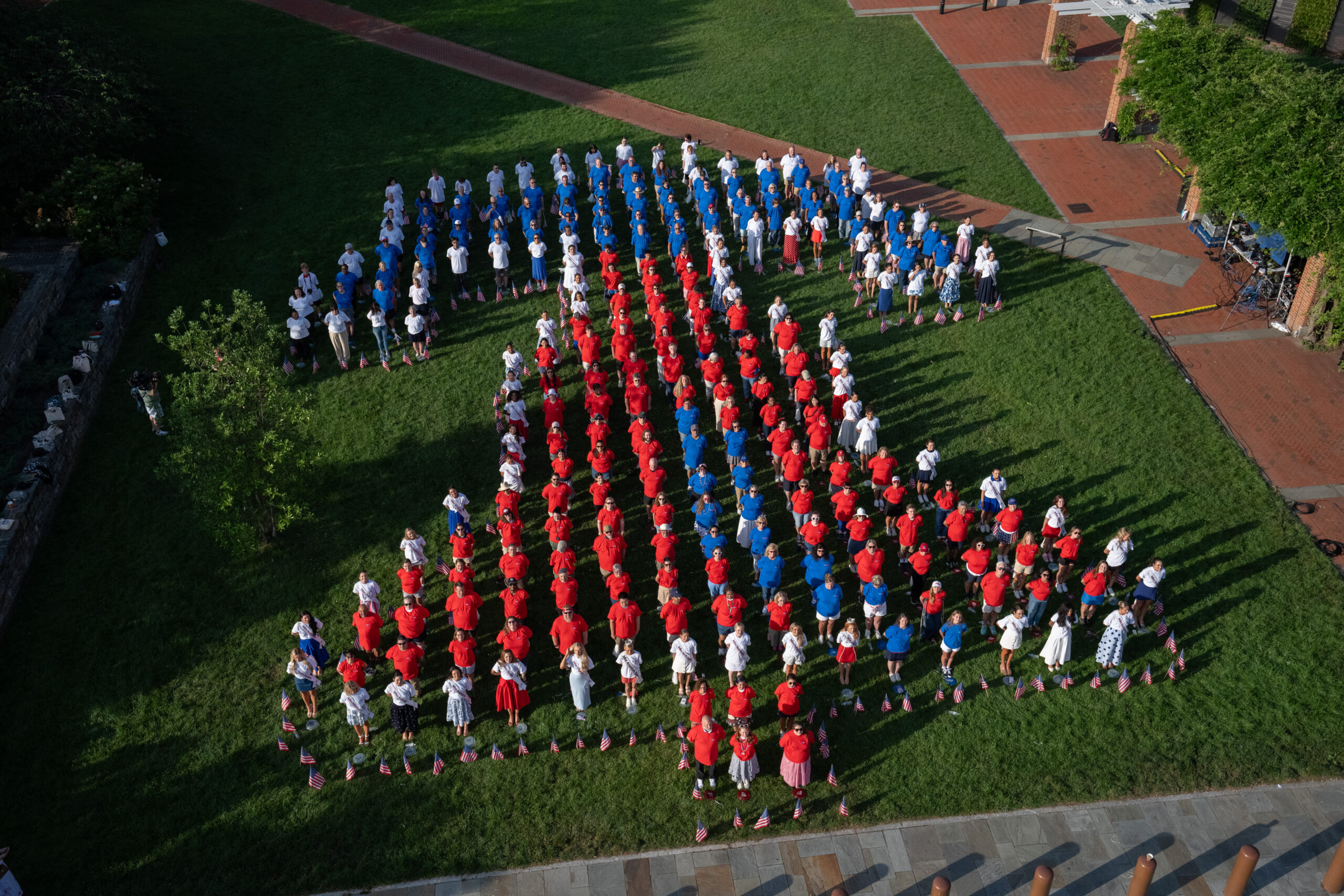
Participants gather to create the Living Liberty Bell, gathering 250 people to form the shape of the famous bell on Independence Mall (with the backdrop of Independence Hall) adorned in red, white, and blue, at Independence Hall, July 2, 2026.
As the mercury climbed above 100 degrees in the Philadelphia region two days before the nation’s 250th birthday, it was, it seemed, too hot for liberty as originally planned.
Thursday marked the start of the Red White & Blue To-Do — Philadelphia’s third-annual celebration of the day the Second Continental Congress voted to adopt a resolution of independence here on July 2, 1776. Though many events honoring that anniversary were planned, several highly anticipated gatherings were canceled or postponed due to the heat.
And yet, despite the oppressive temperatures on a particularly toasty July day in the cradle of the nation’s founding, the celebration started early Thursday.
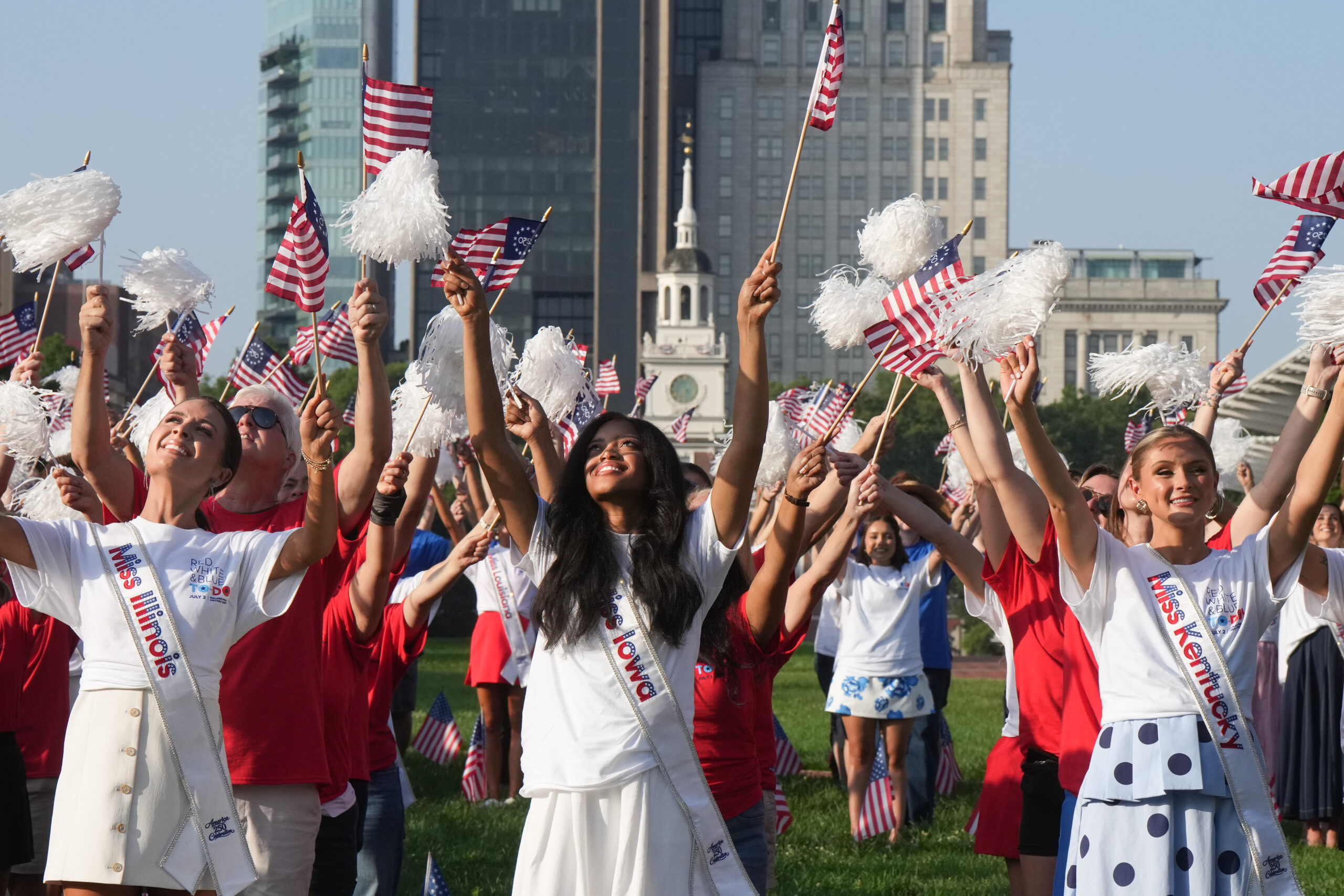
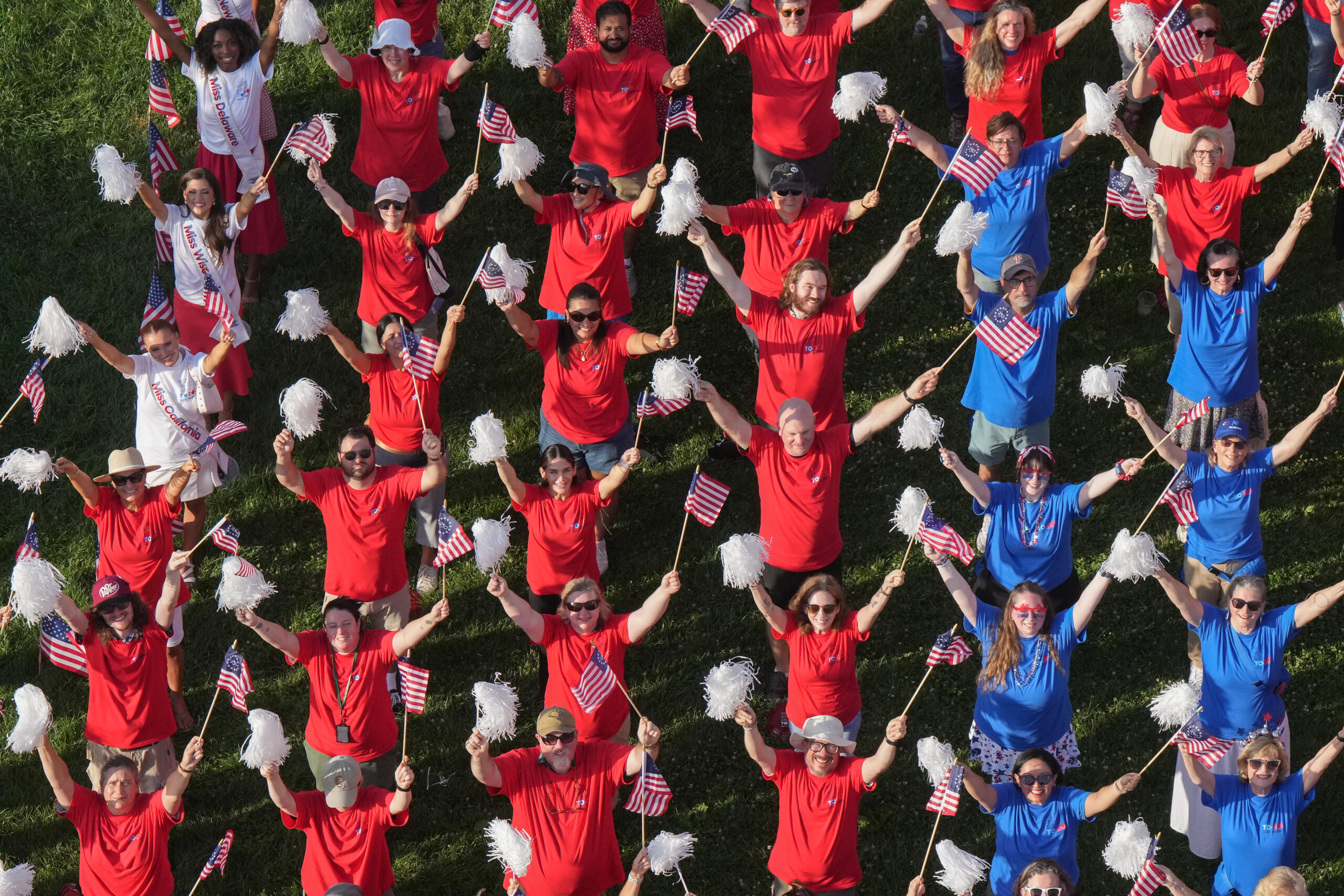
At 7 a.m., some 250 revelers, clad in red, white, and blue clothing, gathered at Independence Mall to make a living Liberty Bell — a representation of a symbol that has defined Philadelphia for centuries, and a touchstone for Americans nationwide. The human formation even captured the bell’s signature crack through an outline of participants wearing blue.
Drone show still set for 10 p.m. tonight over National Constitution Center
While other events have been canceled because of the heat, the Independence Illumination Drone Show is still scheduled for 10 p.m. Thursday over the National Constitution Center and is viewable from Independence Mall.
Photos: Union Pacific’s legendary ‘Big Boy’ locomotive heading to Philly
Union Pacific’s Big Boy No. 4014 will arrive in Philadelphia on Saturday in time for Fourth of July celebrations, completing its journey from the West Coast. The legendary locomotive has drawn thousands of spectators as it has traveled across Pennsylvania.
The Big Boy is headed to Intrepid Avenue and League Island Boulevard at the Navy Yard, where the Port of Philadelphia will host a public viewing from 8 a.m. to 2 p.m. Saturday and again on Sunday from 9 a.m. to 3 p.m. before heading west. Admission is free.
Earlier on Thursday, over-heated train fans gathered near Reading to see Big Boy required medical attention because of the scorching temperatures.
“Preliminary estimates indicate that more than 100 patients required medical evaluation and care throughout the incident,” the Blandon Fire Department, one of the numerous responding agencies, posted on Facebook.
The official high reached 103 Thursday in Philly, tying a record perhaps fittingly set in 1901 when the nation was marking its 125th birthday, halfway to the Semiquincentennial.
The bar is a shade higher Friday when the record is 104, and Saturday’s would be 103, both set during a sizzling heat wave in 1966.
Relief-bearing showers are unlikely Friday, said Patrick O’Hara, meteorologist with the National Weather Service Office in Mount Holly, N.J.
However, the 50-50 chance remains for Saturday night, coinciding with the climax of the city’s Welcome America celebration on a World Cup game.
Severe storms are possible, the federal Storm Prediction Center says.
Sunday, the highs might not get past 90, or the low 80s on Monday.
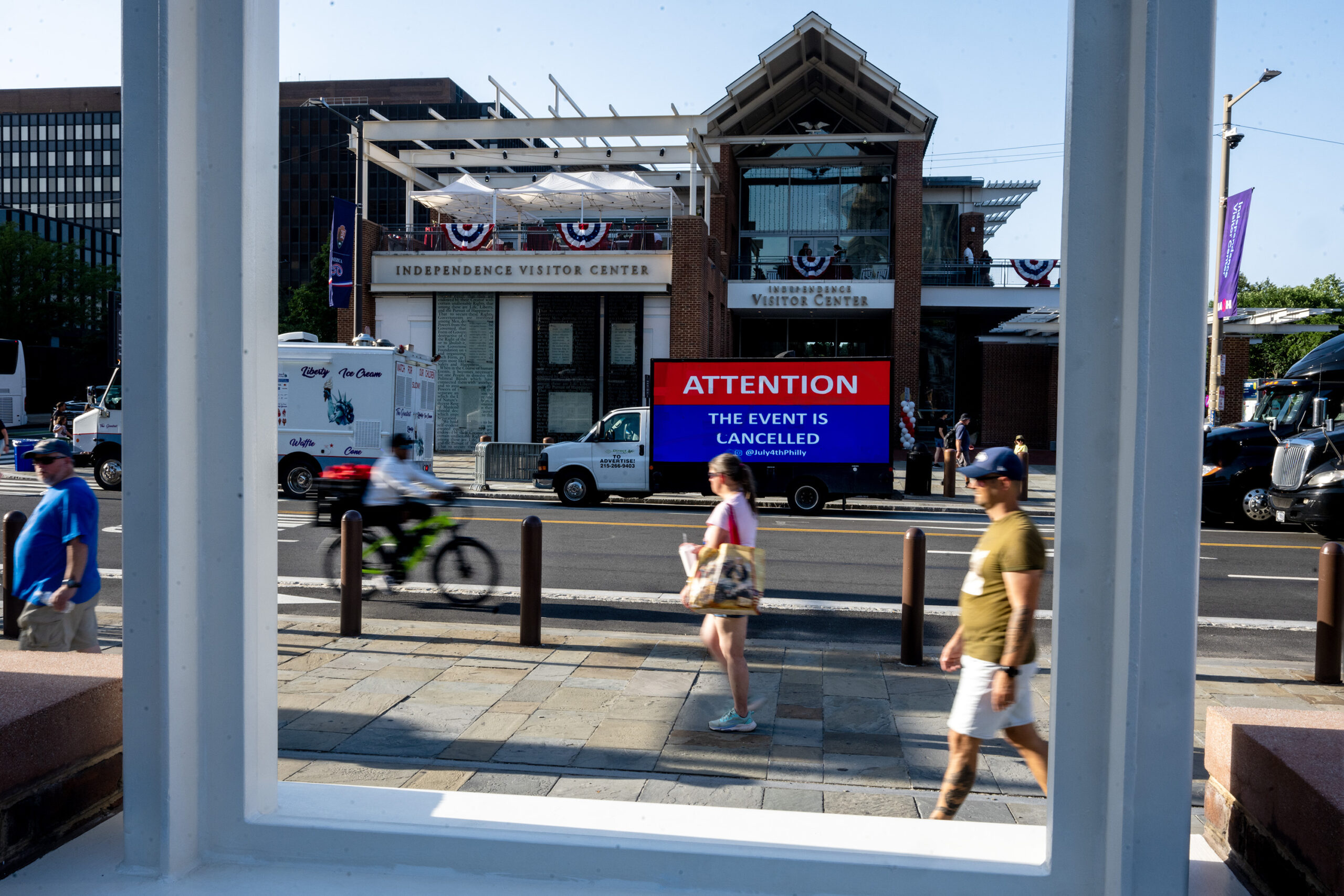
Salute to Service, featuring Queen Latifah, has been canceled because of extreme heat
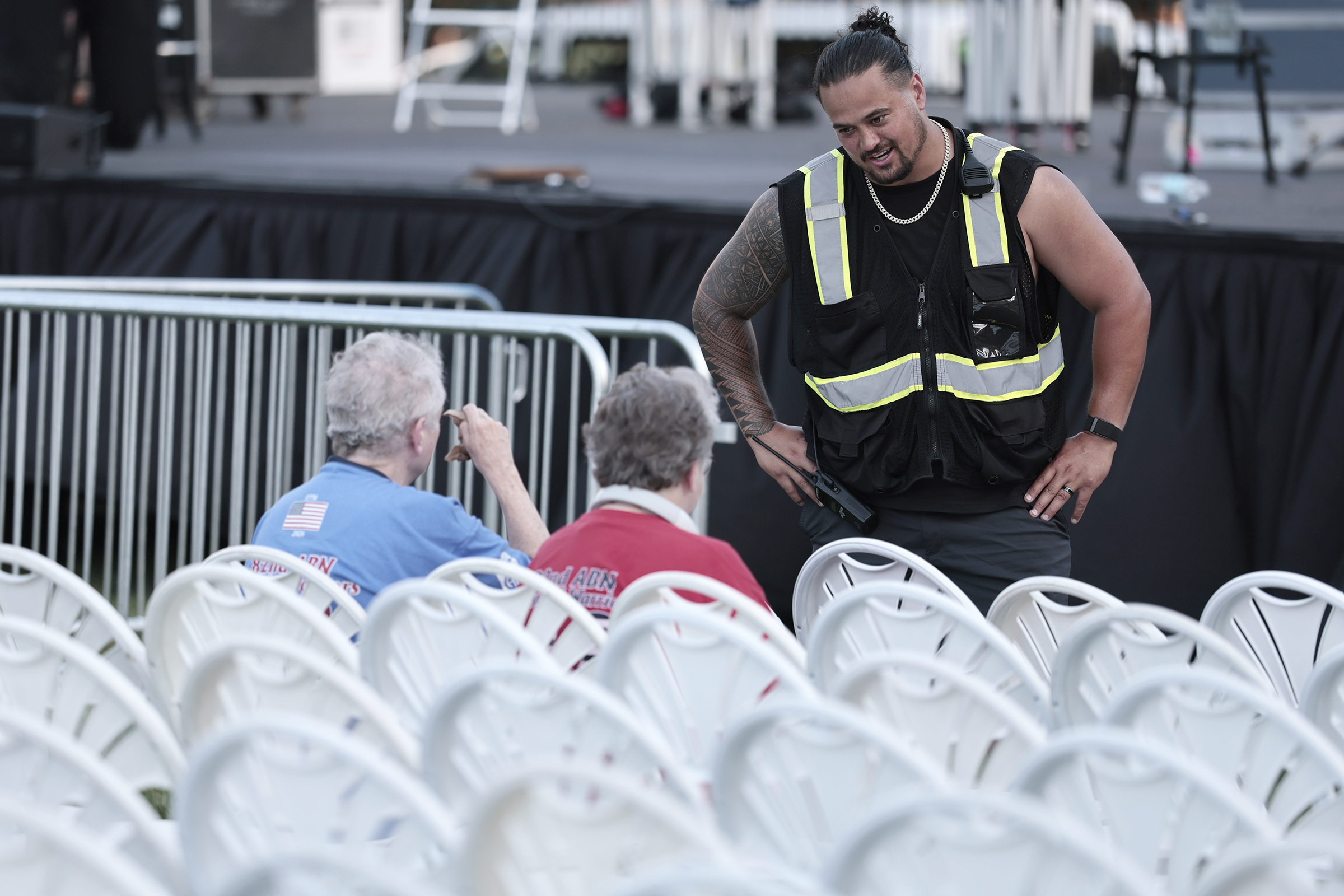
A man working the event (right) tells folks that the Wawa Welcome America’s Salute to Service featuring the United States Army Field Band and Soldiers’ Chorus on Independence Mall with superstar Queen Latifah has been cancelled because of the excessive heat on Thursday, July 2, 2026.
The Wawa Welcome America Salute to Service concert has been canceled because of the extreme heat, organizers announced via social media just after 5 p.m. Thursday.
The concert was to feature Queen Latifah and the United States Army Field Band & Soldiers’ Chorus performing at Independence National Historical Park. It was intended to be a “rousing performance honoring our soldiers and veterans,” according to a description of the event online.
It was set to begin at 8 p.m., but is now among a list of several other events that have been canceled or rescheduled due to the heat blanketing the Philadelphia region. Temperatures topped 100 degrees in the city Thursday afternoon, and the heat is expected to continue into Friday.
Sign announcing the cancellation of Thursday night’s Salute to Service concert featuring Queen Latifah and the U.S. Army field Band and Soldiers’ Chorus at Independence National Historical Park due to a declared heat emergency with 100-plus temperatures.
Artists perform music, poetry at historic locations across Old City
More than two dozen Philadelphia artists filled 11 historic spaces across Old City Thursday afternoon with music, poetry, and powerful vibes as part of WXPN Welcomes the Red, White & Blue To-Do Music Series.
The audience seats, however, were not all filled as crowds remained light and foot traffic across the historic district was much sparser than an average Thursday.
Legendary Philly poet and recording artist Ursula Rucker performed with Miles Orion on guitar at the Arch Street Meetinghouse for a crowd of about a dozen people. She gave moving renditions of her poems — like “Philadelphia Child” and “Fear or Freedom” — and ended her set on “L.O.V.E.”
“Love soft, love hard, just love,” she said, encouraging the small crowd to repeat one of the most powerful words in the English language with her – love.
Over at Mother Bethel AME Church, 21 members of the Mass choir accompanied by an organist and drummer performed gospel music for a crowd of about just as many spectators. The floorboards of the church’s social hall vibrated, hands clapped, and feet tapped as the choir beautifully performed songs like “Battlefield” and “Yes, God is real.”
“They just about blew the roof off!” said Dolly Marshall, who frequents the church.
Marshall, a historic preservation specialist for the city of Camden, is a “Bicentennial baby” who’s celebrating both the country’s birth and her own milestone birthday this year. She’s also a descendent of James Forten, who was a Revolutionary Philadelphia sailmaker, abolitionist, and Black patriot.
“I wanted to be a part of the festivities today. Seeing people come together, we should carry this spirit all year long. You’ve seen the evidence with FIFA and the World Cup too, people coming together from different denominations and different cultures. That’s the beauty of celebrations like these,” she said. “Of course, this coincides with other things that are going on in the country, some that aren’t so pleasant. We’re divided in many ways, so these times also shed light on the work that still needs to be done.”
Rev. Carolyn C. Cavaness, pastor of Mother Bethel AME, said she wanted to open the church’s doors for the Red, White & Blue To-Do because it sits on the oldest parcel of land continuously owned by African-Americans in the country, dating back to 1791.
“I’ve been reflecting, here we’re celebrating the birthday of America but there are people who are not invited to the party. There are people who are still left out. So how do we, in this generation, show that all men and women are created equal?” she said. “And not only in word and ideal but in deed and thought and how we legislate and how we live and embrace each other.”
Mother Bethel AME Mass choir performing as part of @wxpnfm.bsky.social Red, White & Blue music series in Philly today.
At Independence Hall, Hakeem Jeffries said it was important to speak about the history of slavery in America
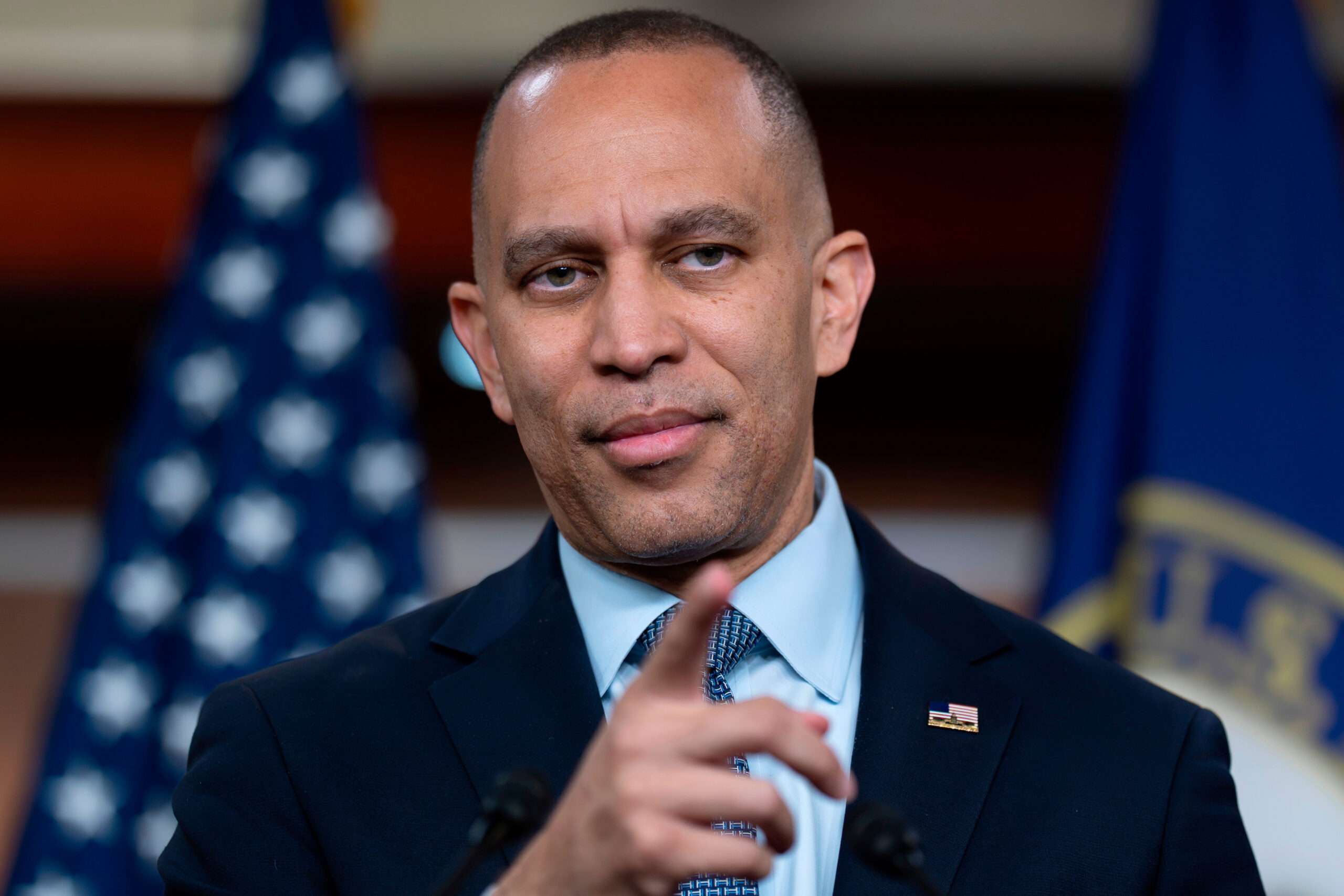
House Minority Leader Hakeem Jeffries during a news conference at the Capitol in Washington in May.
During his speech Thursday afternoon at Independence Hall, Democratic Leader Hakeem Jeffries underscored the country’s history of slavery that coexisted during the nation’s founding. He also emphasized that Americans have no king and should never obey one. He said it was important to speak to those themes to remind people of the founders’ ideals.
“The Declaration of Independence was pretty clear as a defiant document in breaking away from King George III and establishing a country where there would be representative democracy based on the consent of the government, where there are no subjects, only citizens,” he said.
The city of Philadelphia and President Donald Trump’s administration have been embroiled in a battle over language that references George Washington, who enslaved people as the country gained its independence.
Jeffries said he has not had a chance to see the updated language yet.
“But I think it’s important for us to embrace the fact that America was not born as a perfect country, but the framers and the founders of our great republic were able to set us on a path toward always marching to a more perfect union,” he said.
Only a few Republicans, including U.S. Reps. Glenn Thompson and Rob Aderholt, attended Thursday’s session. No members of Republican leadership in Congress attended.
“Speaker Johnson, I didn’t get an opportunity to talk about why he wasn’t present here today, but I’m thankful that I was here, and it’s a very special day that I will,” he said, referring to House Speaker Mike Johnson (R., La.).
Thompson, a Republican who represents Pennsylvania, said he was proud to attend Thursday’s event: “Oh, who would not want to be a part of celebrating the actual 250th anniversary of our independence?”
Several speeches during the special Congressional session emphasized the need for Congress to remain an independent branch and exercise its authority to check power on the executive. To Thompson, the remarks seemed ”a little political,” he said, “but it is an excellent observation, whenever we don’t have a king, we can thank George Washington for that.”
Democratic Leader Hakeem Jeffries says “there are no kings in America” in his speech during the special Congressional session in Philadelphia. pic.twitter.com/KFi7d3WVw1
Philly performances by Jill Scott, The Roots will be featured on CBS primetime special July 4th
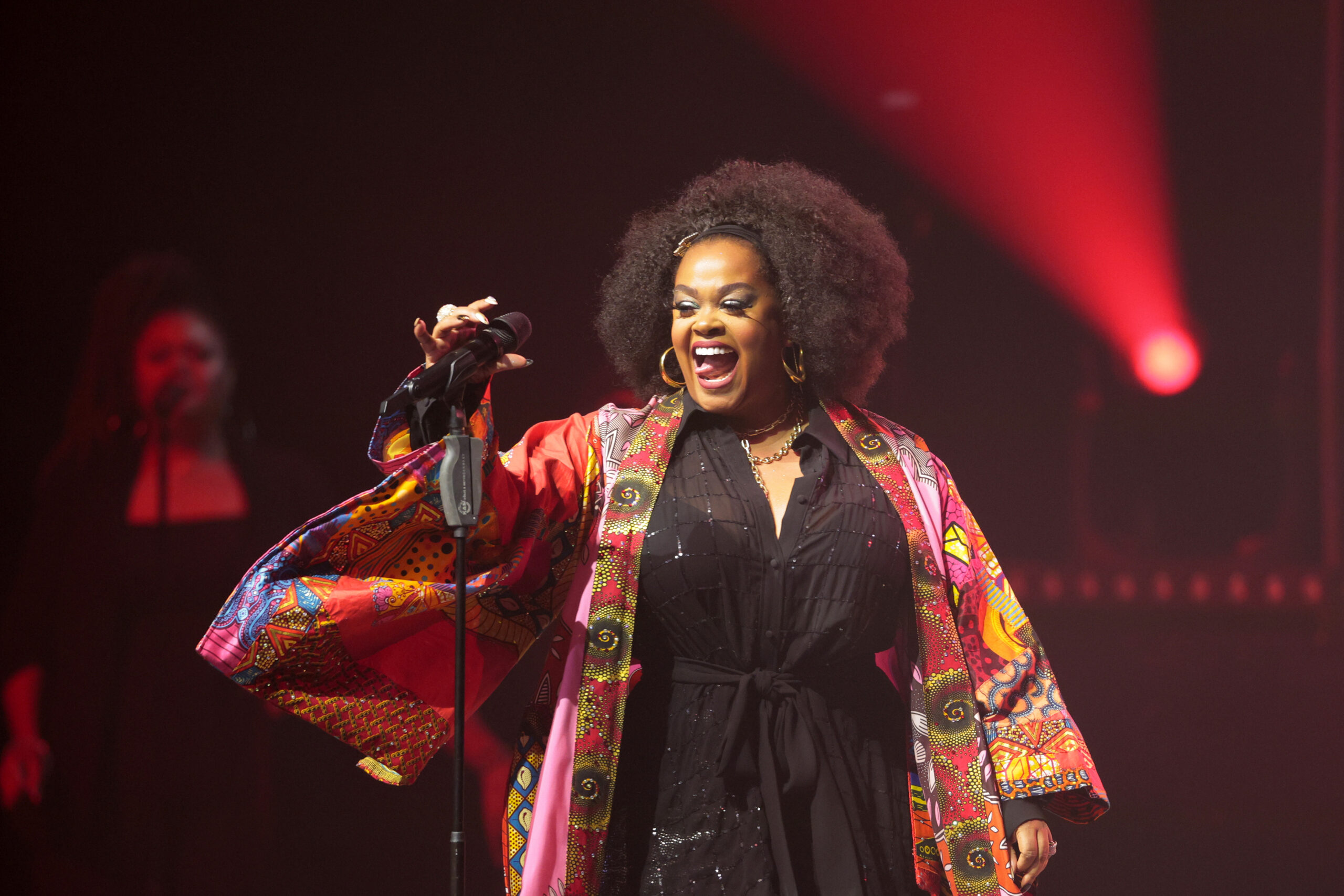
Fil photo of Jill Scott performing at The Met on March 16, 2023.
CBS will highlight performances in Philadelphia by Jill Scott and The Roots during a three-hour “primetime” televised special July 4th, the network announced Thursday.
CBS will broadcast from 8 to 11 p.m. Saturday The Great American Block Party 250 from 8 to 11 p.m. hosted from the nation’s capital by CBS Evening News anchor Tony Dokoupil and Entertainment Tonight co-host Nischelle Turner, the network said.
The special, which will be streamed on Paramount+ and CBS News 24/7, will feature musical performance from across the country, “grill sessions” with Washington chef Rock Harper, and a big fireworks show.
The performances by Jill Scott and The Roots are part of the scheduled One Philly Unity Concert for America in Philadelphia.
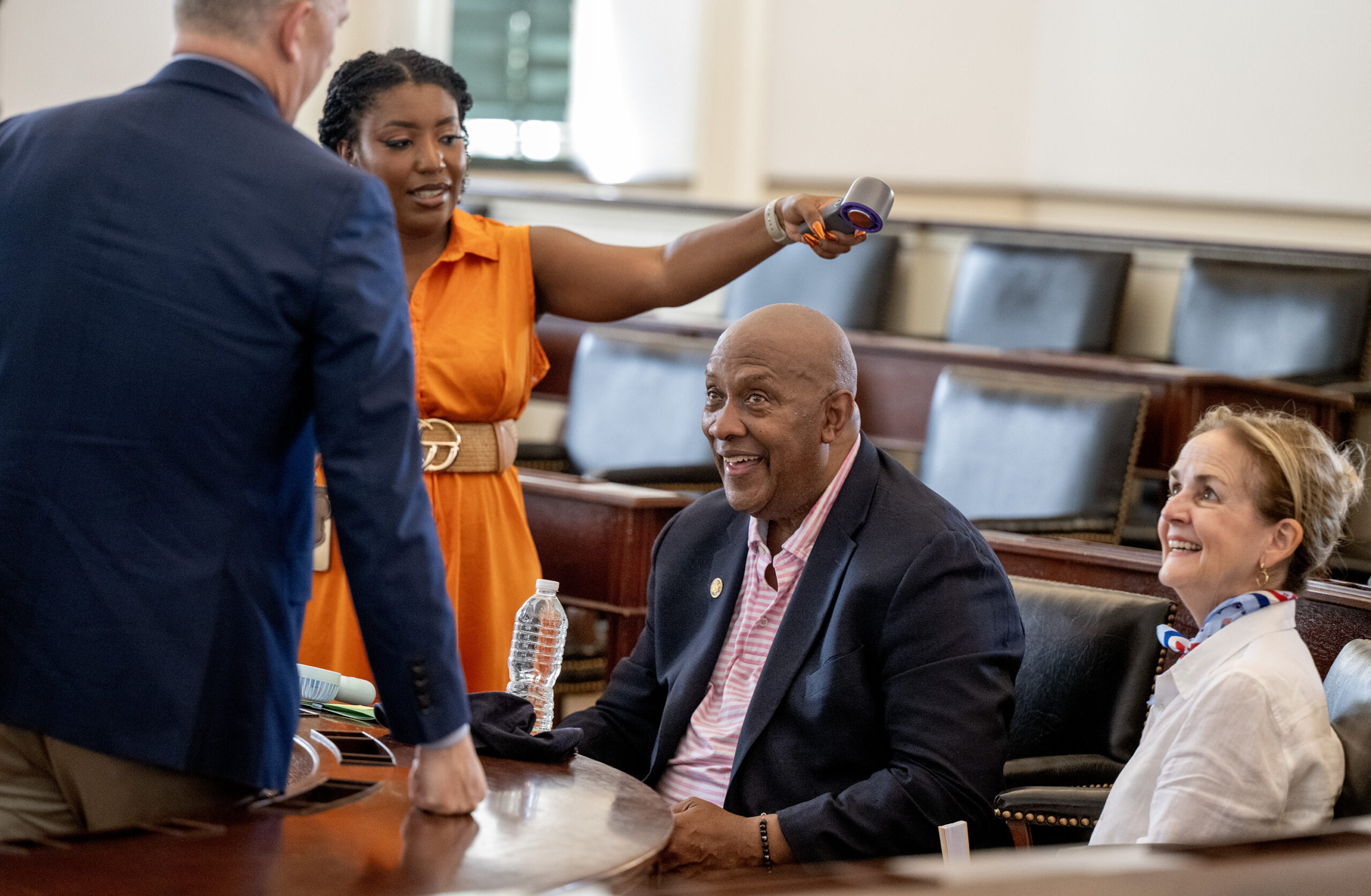
Jarquiza Ayers, on the staff of U.S. Rep. Watson Coleman, uses a handheld fan to cool off U.S. Rep. Dwight Evans, seated In Congress Hall at Independence Hall on Thursday before some 30-40 members of the House of Representatives gathered for a ceremonial event to mark the 250th anniversary of the day the Second Continental Congress voted for independence.
Members of the U.S. Congress lined up Thursday to enter Independence Hall in Philadelphia, the site where, 250 years ago, the Second Continental Congress gathered to declare independence from Great Britain. Rep. Glenn Thompson (R., Pa.) opened the ceremonial event, saying “the origins of our republic trace back to Pennsylvania.”
In speeches, Gov. Josh Shapiro and Democratic Leader Hakeem Jeffries reminded attendees of the history of the founders’ goals that America has no king, and that what would become the legislative branch is separate from the executive and acts as a check on power.
Members of both parties attended, wearing suits and waving fans — a sign of the 100-degree heat outside the Hall in Philadelphia.
Rep. Brendan Boyle, a Democrat whose district includes Independence Hall, had worked for two years to convene a special Congressional ceremonial event to mark the 250th anniversary of the vote to declare independence.
He motioned to pass into the Congressional record that reads: “The members of Congress present on this day come together in the spirit of unity and celebration … to reflect on the best of our nation’s founding ideals.”
About 30 members of Congress attended the special meeting.
Following a benediction from Rep. Robert Menendez (D., N.J.), the special session adjourned.
Extreme heat leads to canceled and postponed July 4 plans across South Jersey
Countless parades, fireworks, drone shows, and more are scheduled for this weekend to celebrate the Fourth of July and the nation’s 250th birthday across South Jersey, but extreme heat is complicating plans.
With temperatures forecast to exceed 100 degrees through Independence Day, some South Jersey towns are taking steps to keep residents out of the heat — even if it means canceling their annual holiday events.
Others that haven’t taken any major steps yet are advising residents to stay hydrated and out of the direct sunlight as much as possible over the weekend.
Essentials carted in ahead of ceremonial Congressional event
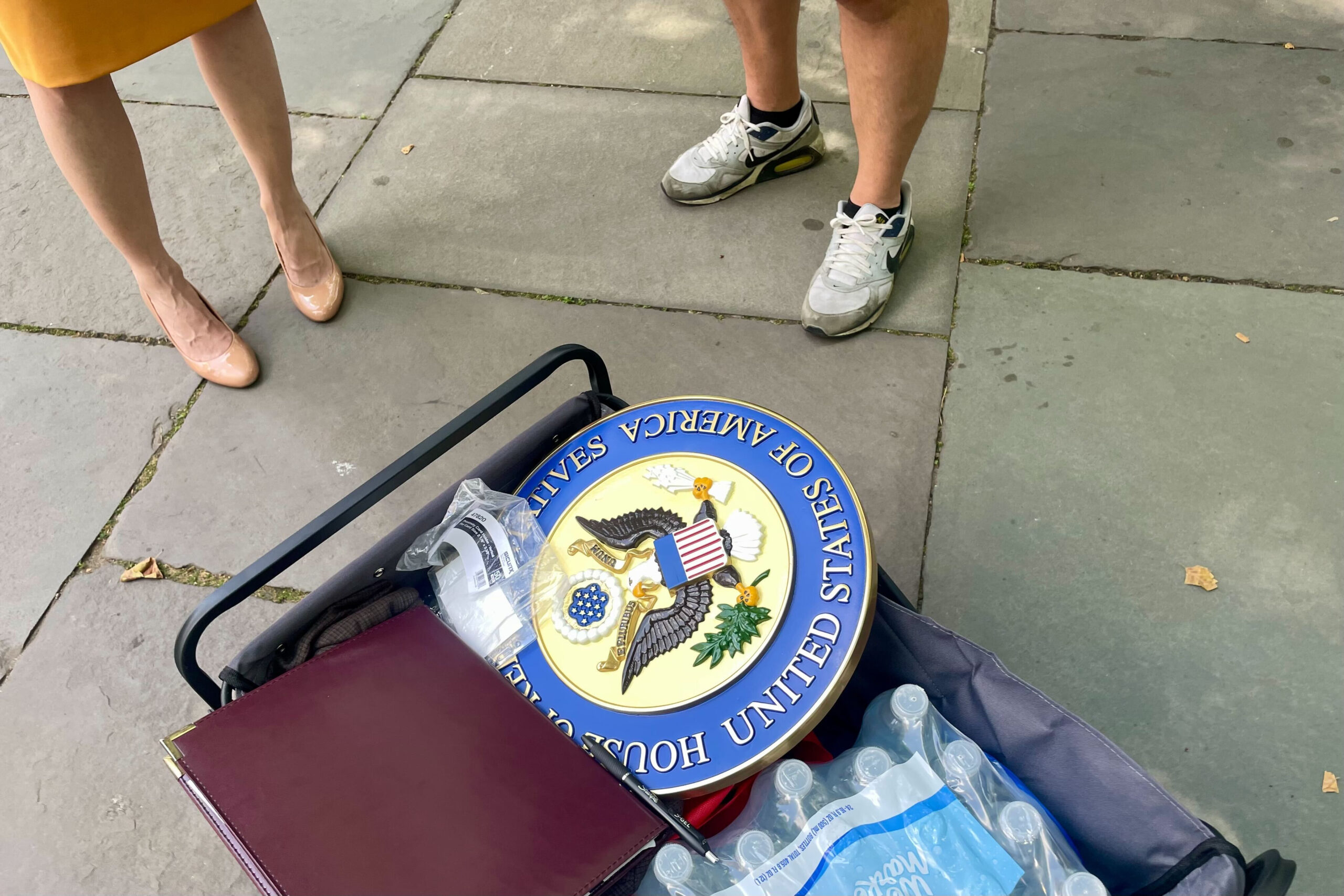
The seal of the U.S. House of Representatives waits outside Independence Hall Thursday, July 2, before some 30 to 40 members of Congress gather for a ceremonial event to mark the 250th anniversary of the day the Second Continental Congress voted for independence.
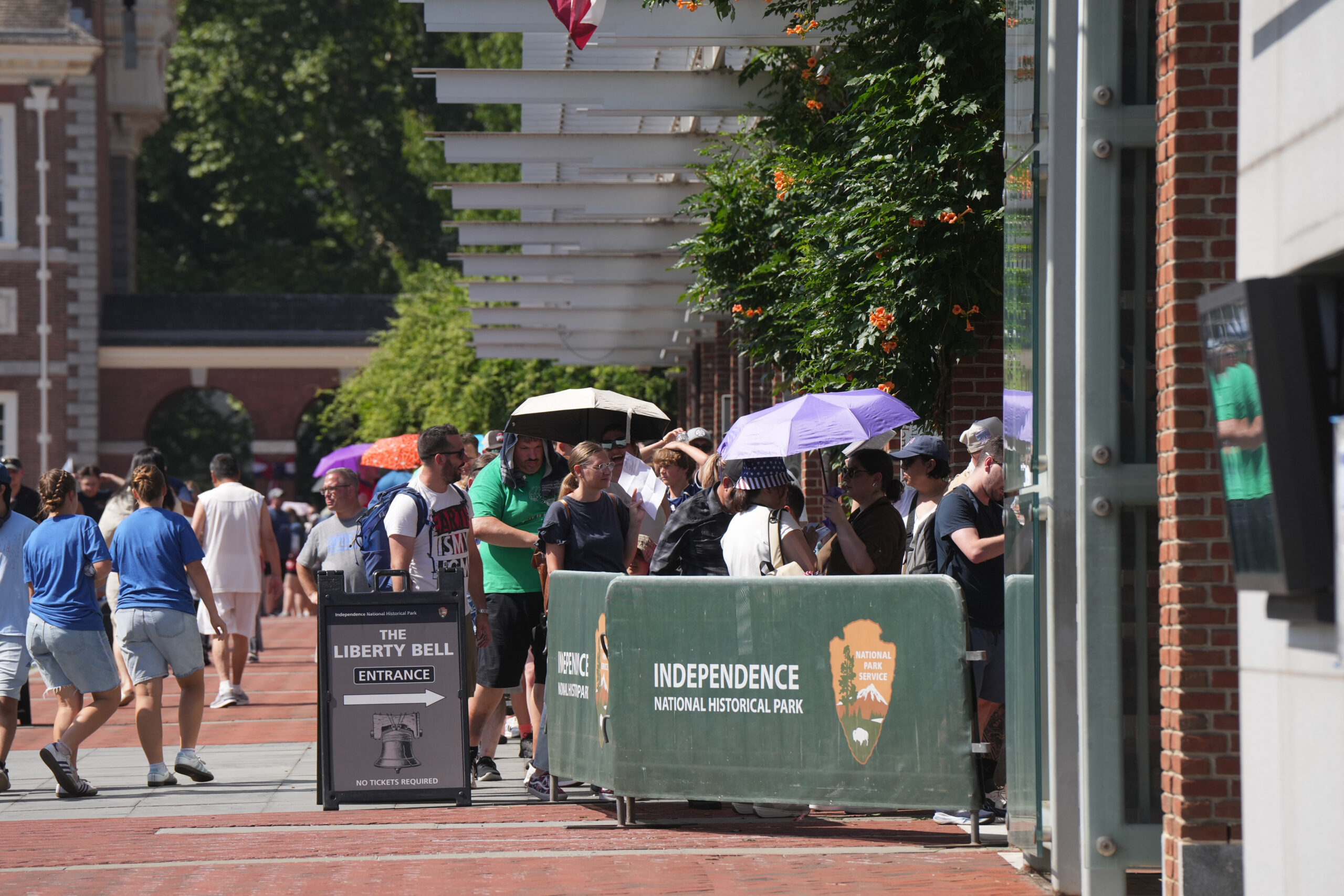
Visitors to the Liberty Bell, in Philadelphia, July 2, 2026.
For the 63rd time in records dating to 1874, the temperature reached 100 degrees on Thursday afternoon, officially in Philadelphia, and the heat index jumped to 109 at 1 p.m.
The forecast high, 103, would match a record for a July 2, set back in 1901 when the nation was marking its 125th birthday,
While summers have become warmer in Philadelphia, 100-degree readings have been relatively scarce this century.
On average, temperatures of 100 or higher have occurred every four years in Philly, but when it reached 100 last summer, that was the first time in 13 years, the longest 100-less stretch on record.
It had reached 100 in three consecutive summers ending in 2012, and five consecutive years ending in 1955.
Things may change tomorrow; it might get a little warmer.
More than 100 mayors learn about historical significance of July 2nd, 1776, at Museum of the American Revolution
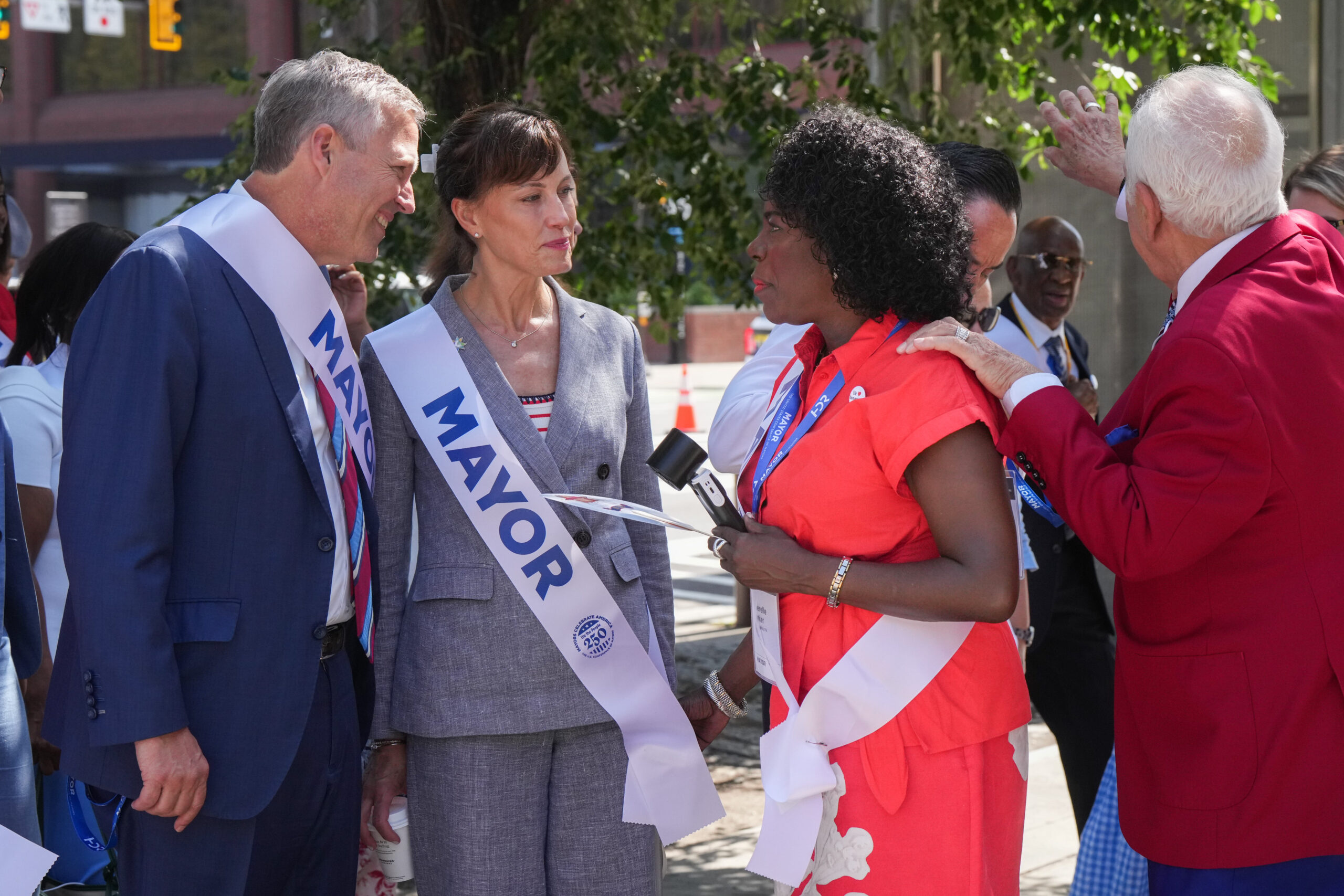
Mayor Cherelle L. Parker interacts with visiting mayors on July 2.
More than 100 mayors, some with families in tow, gathered in a small auditorium in the Museum of the American Revolution and learned about the historical significance of this day 250 years ago.
On July 2, 1776, 12 of the 13 colonies voted in favor of independence from Great Britain, explained Tom Cochran, U.S. Conference of Mayors CEO and executive director. Only New York cast a no vote until a few days later, when it got on board as well.
“We talk about the Declaration, we talk about the Constitution, it was on that day, July 2nd … that we broke,” Cochran said.
He put the work that political leaders executed on that day two and a half centuries ago in terms the modern-day U.S. mayors would understand.
The resolution the officials voted on in 1776 “didn’t have 35 whereas clauses,” Cochran explained, as are common in modern-day resolutions reviewed in local government chambers. This resolution, he explained, only had one clause.
“Resolved, that these united colonies are, and of right ought to be, free and independent states,” Cochran said, quoting the resolution.
It was only in coming together and sharing ideas that the representatives from across the colonies accomplished an extraordinary thing. Philadelphia Mayor Cherelle L. Parker urged the mayors at the symposium to do the same at this meeting.
“May today’s conversations strengthen old friendships, spark new ideas, and renew our shared commitment to public service,” Parker said. “Welcome to Philadelphia, everyone. Let’s roll up our sleeves and continue the hard work together.”
Floats, dance, and a lot of sun: Pomp & Parade winds through historic district
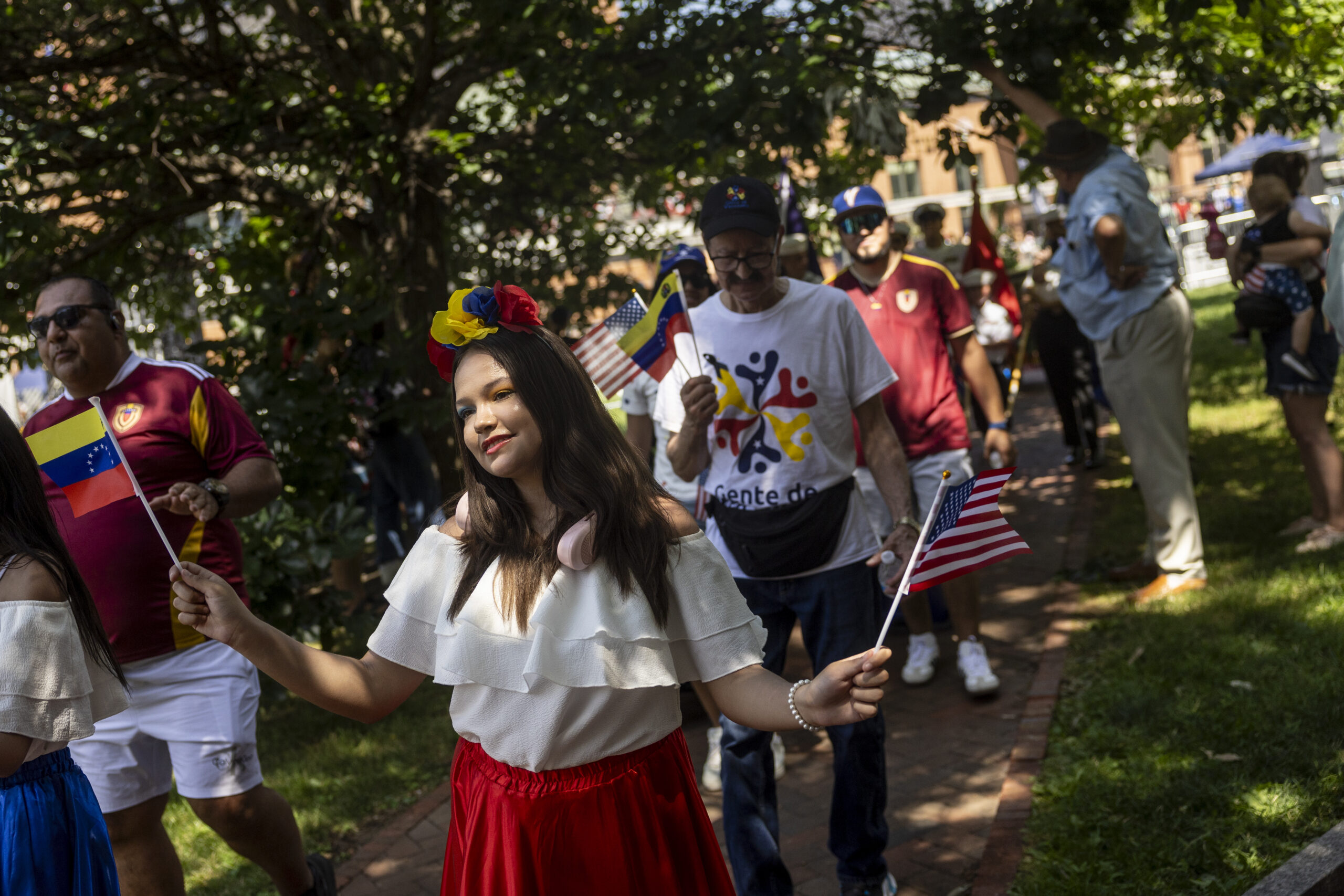
A member of Gente de Venezuela Philly marches through Independence Mall during the Red, White, & Blue To-Do Pomp & Parade event on Thursday, July 2, 2026, in Philadelphia.
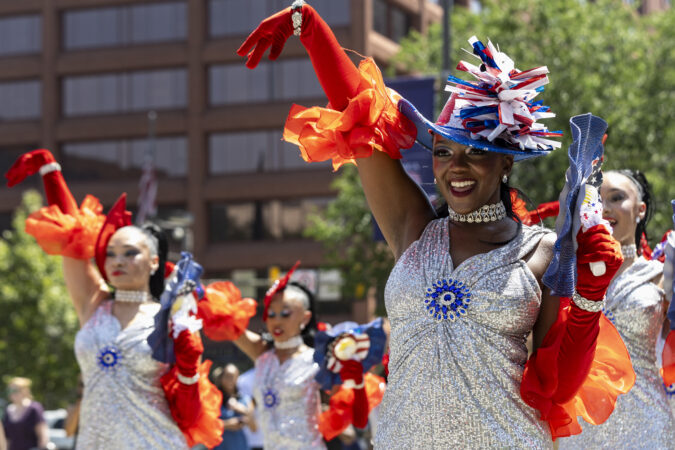
Performers from neighborhoods across Philadelphia and nations around the world weren’t slowed down by oppressive temperatures Thursday as they marched, stepped, and danced their way down Independence Mall in the Red, White & Blue To-Do Pomp & Parade.
The extreme heat did seem to have an effect on attendance, though. Crowds were relatively light along the parade route this year, particularly in areas without shade, of which there are many along the mall.
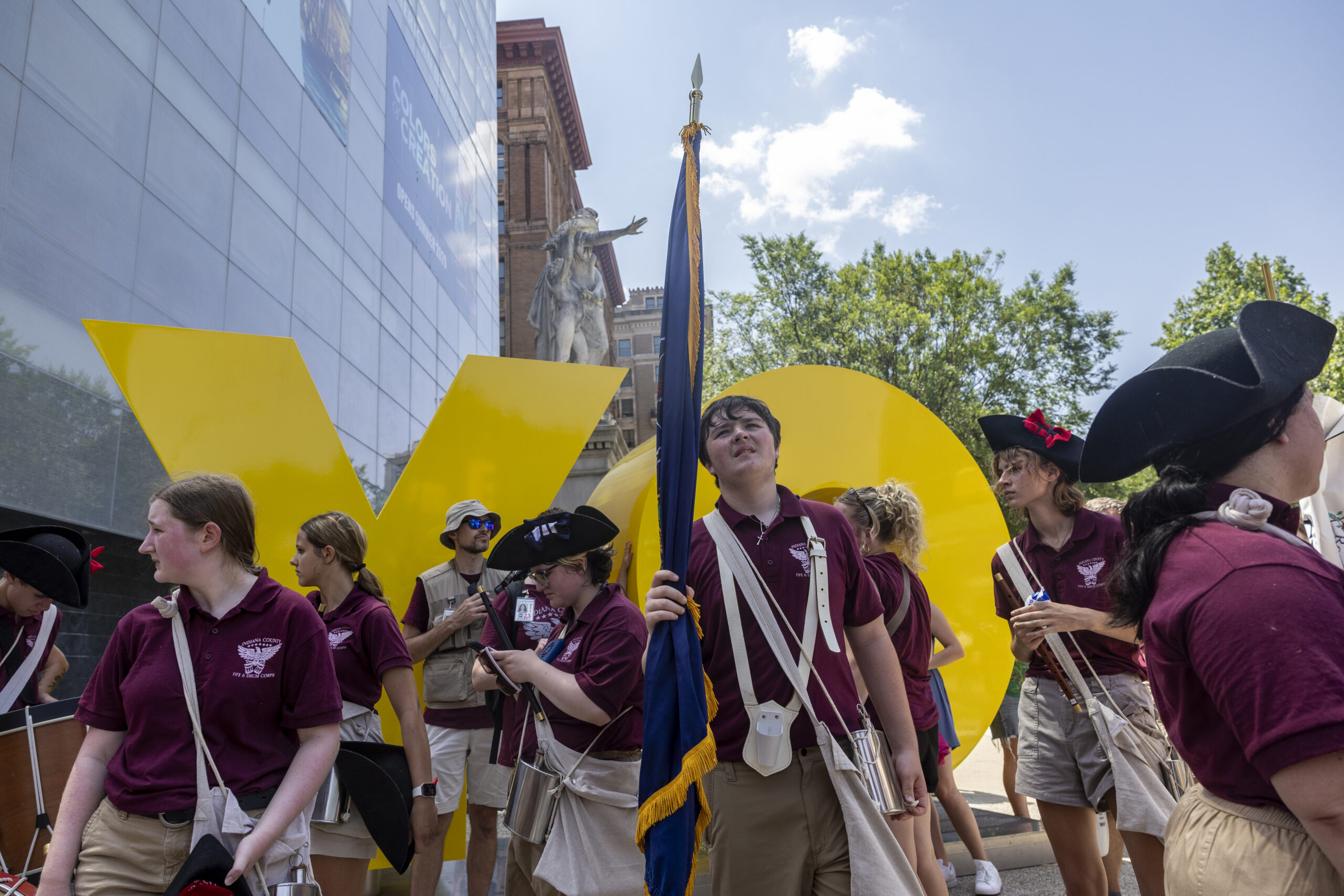
The parade featured cultural groups like Gente de Venezuela Philly, whose members waved Venezuelan and American flags; Banda Escolar de Guayanilla, a marching band from Puerto Rico; the Indiana County Fife & Drum Corps, who brought the history in tricorn hats, and the West Powelton Steppers & Drum Squad, who brought the beat in the heat.
Participants pulled wagons featuring small floats of Independence Hall, the LOVE sculpture, and the Liberty Bell, and a historical interpreter portraying John Adams brought up the rear of the procession.
Despite its name, the parade was a living illustration that this country’s true colors aren’t just red, white, and blue — this nation is a diverse tapestry of vibrant, beautiful hues.
Pastor Funmi Obilana of RCCG Church in West Philly stopped to watch the parade with two other members of her congregation on their way to the President’s House Site. The three women were doing a walking tour of their own city Thursday, stopping at places where their ancestors were once enslaved in advance of Independence Day.
“We are here to pray for this city and this nation,” Obilana said. “Two-hundred-and-fifty years is a big number and it should be a new beginning, not only for Philadelphia, but for the nation.”
Christian Greene, 14, and fellow members of the Indiana County Fife and Drum Corps, a music group for 6th-12th grade students in Indiana County, Pennsylvania, wait for their bus back home after the parade ends in front of the YO statue on Thursday, July 2, 2026, in Philadelphia.
Lori Morgan and her three daughters traveled from Seattle to celebrate the Red, White & Blue To-Do in Philly before heading to Boston for July 4th.
“We knew we wanted to do something historic for the 250th so we thought ‘Let’s go to Philadelphia on July 2, since this is where it all happened,” she said.
The family toured Independence Hall Wednesday, and Morgan said it gave them a new perspective on the days and people that led to the founding of our nation.
“We really thought about how when they did the Declaration it was a hot summer and this weather is helping us empathize with what they went through. It was difficult for them with the heat and tempers and they had to pull it together,” Morgan said. “I just think about those men and they all had different ideas, just like we do today, but they knew they couldn’t fail and they had to come together, and they did.”
Dance4Life from Claymont, Del, in Philly’s Red, White & Blue To-Do parade today
Behind Independence Hall Thursday, where the shade was plentiful, National Park Service rangers, colonial reenactors, and independent guides led several large groups on tours and gave information talks.
Lines for both Independence Hall and the Liberty Bell snaked down the sides of their respective buildings. Directly in front of Independence Hall on the mall, FOX Sports appeared to be setting up a large broadcast booth that an employee said will be used for coverage of the July 4th World Cup game in the city.
Philadelphians also got their side hustle on around the mall, selling everything from 250th flags to homemade buttons that read “Make America humane again” and “Deport ICE.”
What state candidates for governor are doing on Independence Day
(use as desired) Pennsylvania Governor Josh Shapiro shakes hand of Stacy Garrity, 78th State Treasurer, Forum Auditorium, Harrisburg, PA, Tuesday, Jan. 21, 2025. Day of her swearing in.
Treasurer Stacy Garrity, the Republican candidate for Pennsylvania governor, will be spending her July Fourth marching in the Susquehanna County parade Saturday, a spokesperson told The Philadelphia Inquirer.
Her Democratic opponent, Gov. Josh Shapiro, meanwhile, will appear from sunup to sundown at events throughout the city — as well as frequent television hits.
Shapiro has repeatedly raised concern that President Donald Trump has led the nation astray from its founders’ design and initially announced that Pennsylvania would not take part in Trump’s Great American State Fair, before Pennsylvania’s U.S. senators, Republican Dave McCormick and Democrat John Fetterman, made a push to fill the state’s empty exhibit. Garrity, in a statement, said Shapiro is the “only career politician who has politicized America 250.”
March featuring mayors from across the country heads through Historic District
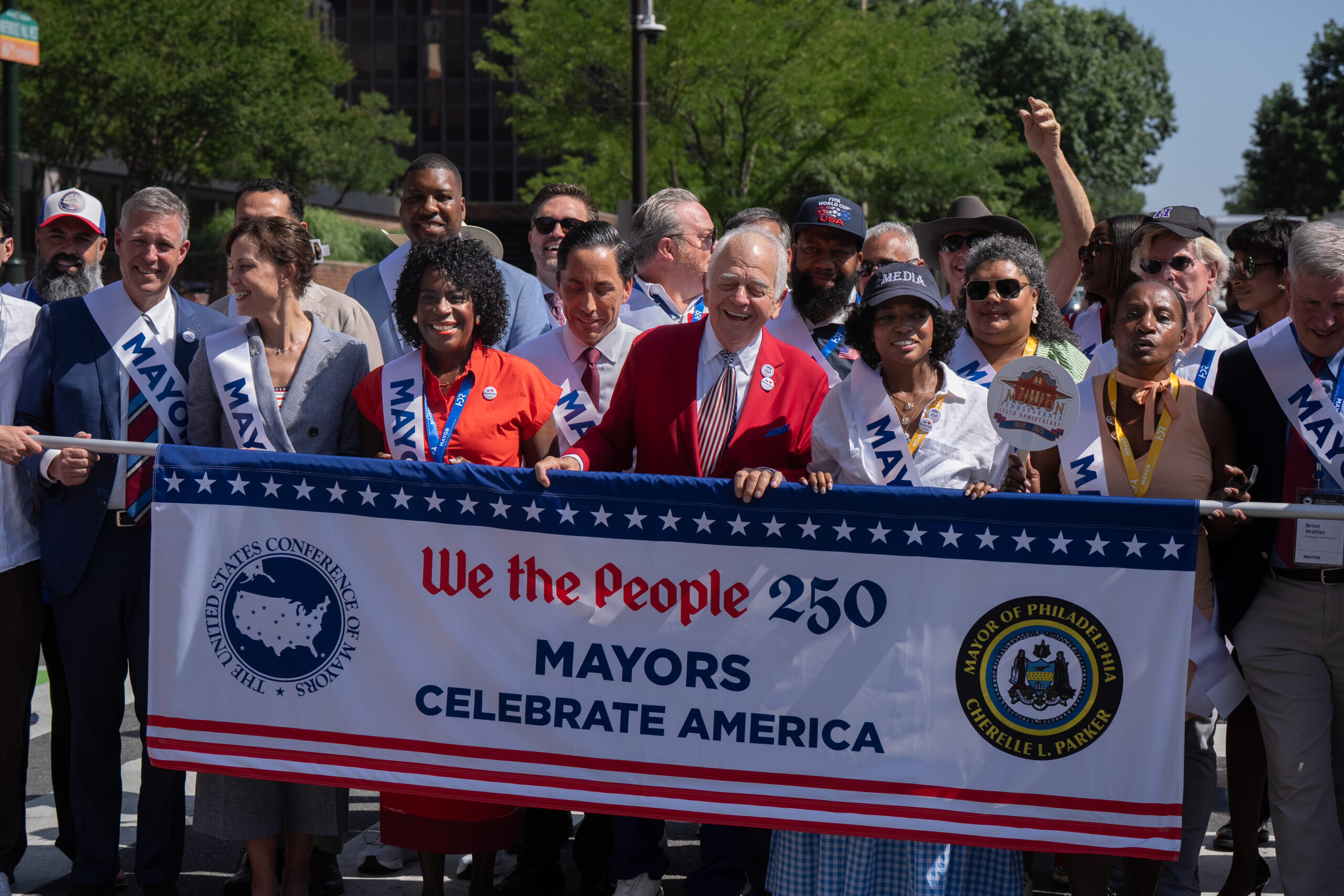
Mayor Cherelle L. Parker leads bipartisan mayors from communities across the nation in a Historic March of America’s Mayors through the birthplace of American democracy, and past Independence Hall, in Philadelphia, July 2, 2026.
In the sweltering shadeless heat of Independence Mall, more than 100 mayors from small towns and big cities across the country disembarked from coach buses donning large white sashes reading “mayor” and styling various patriotic yet professional sundresses and suits.
After a quick photo opp, the crowd of local leaders made its way down Market Street and turned at Sixth Street at the President’s House.
“Hit the music!” someone from the group joked.
Despite no accompaniment, scorching temperatures, and differing political alignments, the mayors quickly befriended one another, many bonding over a shared connection of a city or state.
“There’s so many Michigan mayors here,” one said. “It’s great to be in the city of brotherly love,” someone else from the group shouted to the spectators.
Visitors along the mall, some beating the heat with portable fans or umbrellas for shade, waved and welcomed them while one man followed them juggling.
Philadelphia Mayor Cherelle L. Parker led the charge from the President’s House site to Independence Hall to a collective sigh of relief when the sweat-laden group entered the Museum of the American Revolution for a symposium.
“At a time when too much in our country pulls people apart, mayors have a different responsibility starting with bringing people together,” Parker said. “We share the same mission to serve our people, solve problems and strengthen the communities we are privileged to lead. We fully believe there is no better place for that reminder than Philadelphia because this city tells America’s whole story, no matter how imperfect it may be.”
The National Weather Service sees a 50-50 chance of thunderstorms Saturday night, and some of them may become quite strong.
On Thursday, the federal Severe Storm Prediction Center, in Norman, Okla., increased the probability of severe storms — those with wind gusts up to 60 mph — to 15%.
Forecasters warned that predicting the timing, location, and ferocity of storms would be impossible two days out.
On average, thunderstorms occur every five days in July in Philadelphia, the peak month of the year.
Advocates to host Black Independence Day gathering on Independence Mall on July 4
Avenging The Ancestors Coalition, the advocacy group that pushed to create and maintain the President’s House exhibit memorializing the nine people enslaved by George Washington in his Philadelphia home, will host a Black Independence Day gathering on Independence Mall on July 4.
The event is slated to include reflections on freedom and independence, and an update on the legal battle surrounding the slavery memorial, and a call to action.
As the country celebrates the Founding Fathers’ “righteous battle” against tyranny, it’s important to also acknowledge slavery, said Michael Coard, a coalition founding member.
“You can’t truly love something unless you truly know it,” Coard said. “Until Americans acknowledge and address that bad and especially that ugly, they will never know, and therefore can never love, America.”
The group will meet at the grassy area adjacent to the memorial, which is on the corner of Sixth and Market Streets, at 1 p.m. Saturday.
Philadelphia shipwrights handbuilt a replica of the boat Washington used to cross the Delaware. It’s on display now.
The team at the Seaport Boat Shop at Independence Seaport Museum has built a full-scale replica of the Durham boat — the model of boat George Washington used to cross the Delaware with his Patriot troops on Christmas in 1776.
The boat got its name because it was used to transport iron from Durham Ironworks in Bucks County to Philadelphia. It is on display in Washington Crossing Historic Park.
Two hundred and fifty participants gather to create the Living Liberty Bell to form the shape of the famous bell on Independence Mall adorned in red, white, and blue, at Independence Hall.
Kicking off Red, White & Blue To-Do at 7 a.m. Thursday, 250 people gathered at Liberty Mall to make a “living Liberty Bell.”
(Left to right) McKenzie Kerry, Kate Dimmett, and Reagan Earlywine, stand with other participants who gathered to create the Living Liberty Bell.
Participants wore red, white, and blue (naturally) and included Tess Ferm, Miss America’s Teen from South Carolina, and former city representative Sheila Hess.
Participants gather to create the Living Liberty Bell.
The human formation even captured the bell’s signature crack through an outline of participants wearing blue.
A little later and just down the road, bells rang out at the Betsy Ross House and the official flags rose to signal the beginning of a day’s worth of festivities.
Thursday events include a parade, concert, and drone show
Locals and tourists alike are set to brave 100-degree-plus temperatures to attend the Red, White & Blue To-Do — Philadelphia’s third-annual celebration of the day the Second Continental Congress voted here on July 2, 1776, to adopt a resolution of independence from Great Britain — all day Thursday.
Founding Father John Adams believed July 2 would be celebrated for generations to come with “Pomp and Parade,” but July 4, when Congress approved the Declaration of Independence, got all of the glory and became the day we mark the founding of our country.
Adams’ prognostication in a letter to his wife, Abigail, didn’t come to fruition until 2024, when the Philadelphia Historic District Partners — a coalition of more than 30 institutions, museums, and attractions — heeded his call and created a packed day of festivities across Old City in advance of this year’s Semiquincentennial.
Thursday’s events begin at 7 a.m. with 250 people forming the outline of a “Living Liberty Bell” on Independence Mall and will conclude at 10 p.m. with the “Independence Illumination Drone Show” over the mall.
Highlights include the Red, White & Blue To-Do Pomp & Parade, which begins at 11 a.m. at the National Constitution Center and passes by Independence Hall, and the 8 p.m. Wawa Welcome America Salute to Service concert with Queen Latifah and the United States Army Field Band and Soldiers’ Chorus.
In between, attendees can stop in and cool off at attractions across the city that will host events, like colonial chocolate making at the Betsy Ross House and a scavenger hunt at the Independence Seaport Museum. From 2 to 5 p.m., more than two dozen Philadelphia musicians will perform at 11 locations across the city as part of WXPN Welcomes the Red, White & Blue To-Do Music Series.
Congress to mark 250th anniversary of vote for independence
Historic Interpreter, Lane Norris, as Alexander Hamilton, outside Independence Hall earlier this month.
Members of Congress will gather Thursday at Independence Hall for a ceremonial event to mark the 250th anniversary of the day the Second Continental Congress voted for independence.
U.S. Rep. Brendan Boyle, a Philadelphia Democrat whose district includes the historic site, had worked for years to set up a joint session of Congress — an extremely rare occurrence outside Washington, D.C., since 1800 — on the anniversary.
Thursday’s event will not be a formal joint session. But members of both parties will come together in Congress Hall, the room where the legislative branch convened before relocating to Washington.
First, they’ll proceed into the room with lawmakers from the original 13 states entering first, Boyle said in an interview with the Washington-based streaming network 535. Lawmakers will also tour the Liberty Bell and the time capsule set to be buried on July 4, Boyle said.
“It’s no secret that our politics are more polarized today than at any moment in our lifetime. The way the House has been operating in recent years completely reflects that,” Boyle told The Inquirer in a recent interview. “So for us as members of Congress from both parties to come together, put partisanship aside and focus on national unity, I think that’s something that is incredibly positive.”
Organizers are not publicly releasing details about the Congressional gathering, like timing or who’s expected to attend, citing security concerns.
Lightning injuries are rare, but an expert says the Parkway is an especially risky venue on July 4
In the grand casino of the atmosphere, scheduling outdoor events on July Fourth in the Philly region is almost always going to be a rolling of the bones.
And on the day Philadelphia and the rest of the national are holding a mass 250th birthday party, the odds may be dicier than usual, with thunderstorms and accompanying lightning possible Saturday afternoon and night, forecasters say.
July happens to be the peak month for lightning-bearing thunderstorms in Philadelphia, occurring every five days on average, and who doesn’t want to be outside on the Fourth?
As if record-challenging heat and an atmosphere that feels like syrup weren’t enough.
Lightning injuries and fatalities are rare — on average in the last decade, 20 people have been killed annually by lightning in the United States, according to the National Weather Service. But among outdoor events with large crowds across the country, Philly’s July Fourth concert would be among the riskiest for lightning, according to Stephen Strader, disaster specialist at Villanova University.
“It’s way up there, a lot higher than I thought it was,” he said.
Mayor Parker defends decision to host July 4th Parkway concert despite dangerous heat and high price tag
Mayor of Philadelphia Cherelle Parker speaks during a news conference about the July 4 concert.
Mayor Cherelle L. Parker on Wednesday defended the city’s upcoming July Fourth concert, a seven-hour outdoor spectacle featuring performances from Christina Aguilera, Jill Scott and The Roots, amid concerns over the nearly 100-degree forecast and revelations that the event will cost taxpayers millions more than in years past.
The city has dealt with high temperatures before and has battle-tested personnel and protocols prepared for the evening, Parker told reporters at a news conference in front of the stage at the foot of the Philadelphia Museum of Art steps.
She also addressed the detractors head on.
“I do not apologize to anyone about making sure that the city of Philadelphia, as the sixth largest city in the nation, the birthplace of democracy, we were going to have a celebration that is fitting to and for our historical significance and prominence,” Parker said. “One that could be seen, respected and honored not just in our city and commonwealth and nation but in the world.”
Parker described the concert as the largest July Fourth concert in the city’s history. For an occasion as momentous as the nation’s 250th anniversary in the city that bills itself the birthplace of America, Parker said Philadelphia must rise to the occasion and prove it can achieve ambitious undertakings.
Parker said her administration scaled up the experience including moving the stage back to accommodate an estimated 300,000 concertgoers, and made the stage larger.
“We won’t get a second chance to do this over again, Philadelphia,” Parker said. “We only turn 250 years old once in a lifetime.”