Blog

  • Philly’s final World Cup game is going to be hot. Here’s how fans can beat the heat.

    Philly’s final World Cup game is going to be hot. Here’s how fans can beat the heat.

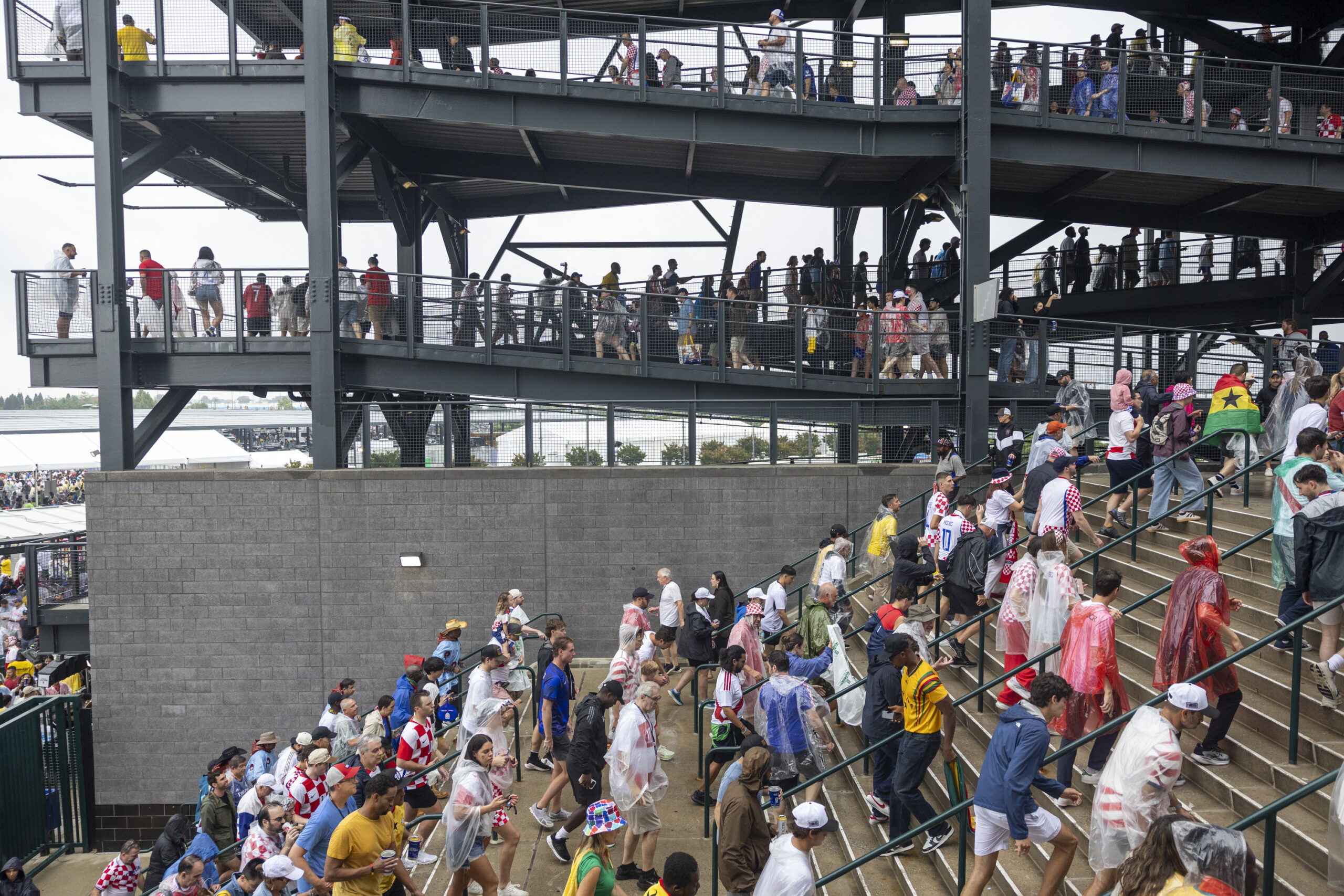
    Philadelphia’s final World Cup game on July 4 will feature plenty of red, white, and blue both inside and outside the stadium when tournament favorite France returns to the city for a round-of-16 knockout round against Paraguay on Saturday (5 p.m., Fox29).

    But the fans will be enduring another day of a brutal heat wave when temperatures are forecast to top out near 100, with steamy, shirt-soaking humidity.

    In addition, potentially strong storms are possible around game time.

    With another anticipated sold-out crowd packing Philadelphia Stadium, FIFA says it is proactively taking steps to help fans beat the heat, planning to place cooling tents with water available to fans “within the stadium footprint at the Stadium Fan Experience,” located just inside the main gates.

    Lincoln Financial Field, known as “Philadelphia Stadium,” is set to host its final game in this World Cup, a Round of 16 game between France and Paraguay on Saturday.

    Additionally, FIFA reminds all fans that they may bring one 20-ounce soft-plastic water bottle into the stadium upon arrival. For those who recall, the resized bottle came only after FIFA last month reduced the size from 1 liter to 20 ounces, following an initial pullback from allowing fans to bring in water altogether. After much pushback, soccer’s governing body relented and allowed the reduced size of an unopened bottle upon arrival as the guideline for all 16 venues.

    “FIFA is committed to protecting the health and safety of all players, referees, fans, volunteers and staff through a tiered heat mitigation model,” a FIFA spokesperson told The Inquirer via statement. “Through close collaboration with the City of Philadelphia, medical experts and emergency authorities, FIFA remains committed to delivering a safe, resilient and memorable tournament experience for everyone involved.”

    Fans attending matches have found ways to beat the heat through metallic cups, keeping drinks colder for longer, offered at the stadium with the purchase of a beverage.

    Where to find water inside Philadelphia Stadium

    If you’re looking to refill your water bottle once inside or just don’t want to wait in long lines at concessions for one, here’s a listing of where all of the water fountains are located in the concourses of each level.

    • 100 Level: Sections 103, 118, and 122
    • 200 Level: Sections 204 and 222
    • Club Level: Sections C3, C19, C24, and C38
    Four of the five matches in Philadelphia have been announced sellouts with Saturday’s final Philly game expected to be the same amid high temperatures.

    What time can fans enter the stadium?

    Fans can enter the stadium and seek shade in the concourses as early as 2 p.m. when gates will officially open, according to a FIFA spokesperson. Teams will emerge for warm-ups one hour before kickoff, and the pregame ceremony will begin 30 minutes before kickoff. For fans looking to head down early via SEPTA’s Broad Street Line, there will be select express trains to the stadium, with SEPTA planning to run additional trains on game day. Fare will be $2.90 as customary, with the return ride after the game free for all fans for up to two hours after the match.

    What’s happening at the FIFA Fan Festival?

    FIFA’s Fan Festival, organized by Philadelphia Soccer 2026, will be just one part of a host of activities planned on July 4 along the Parkway, including the scheduling of a massive concert currently under a bit of controversy.

    However, passing all of that, the last stop on Philly’s PHLASH bus that goes along the Parkway will stop at the Fan Festival, which is scheduled to open its gates at noon on Saturday, showing the first round of 16 match of the day between Canada and Morocco (1 p.m., Fox29).

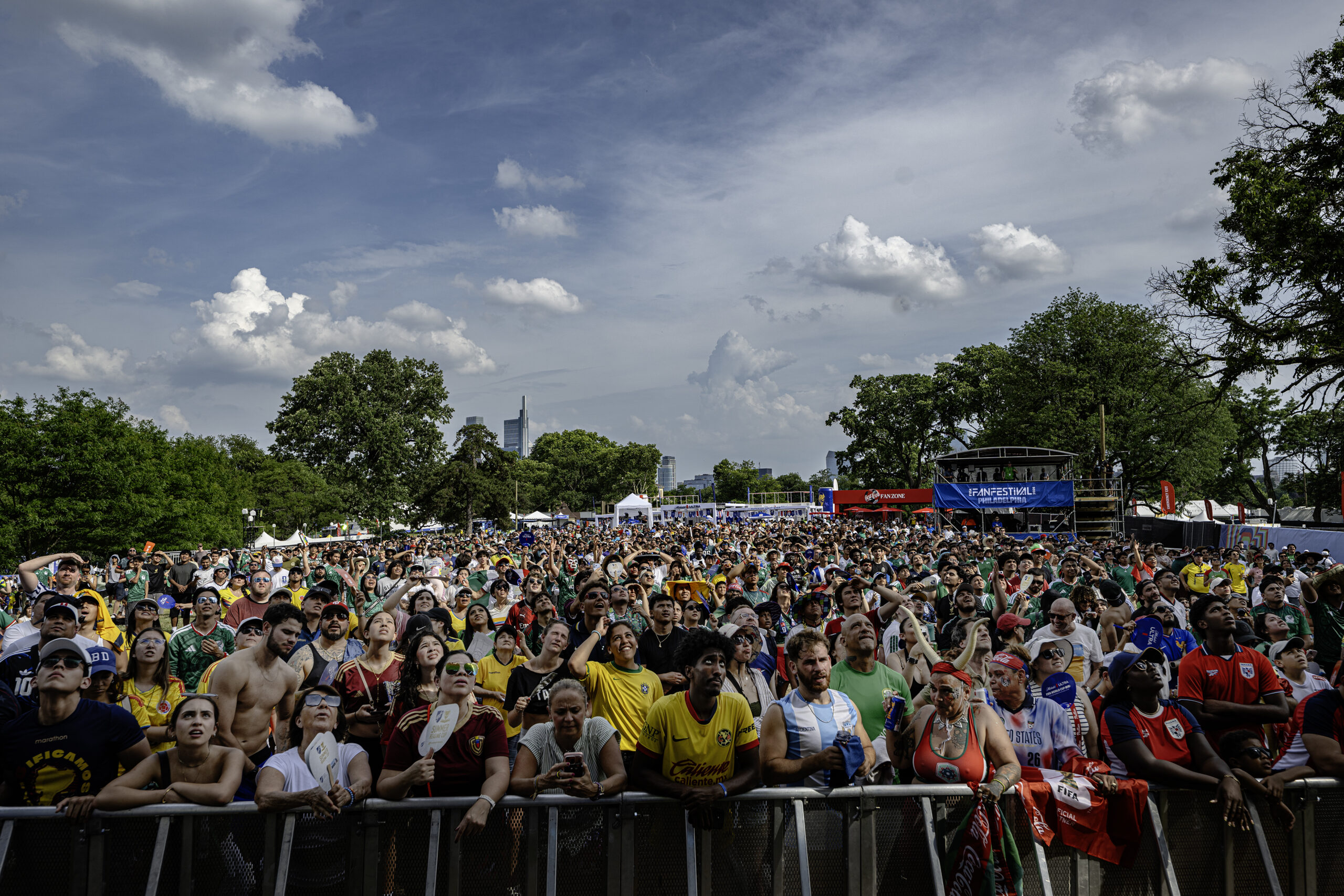
    Event officials say soccer fans gathering to watch Philly’s final game at the FIFA Fan Festival at Lemon Hill will have several ways to beat the heat.

    Nothing is expected to change from what fans can bring onto the festival grounds from the items clearly marked on a longstanding list that was promoted during the Fan Festival’s Know Before You Go campaign released in early June.

    Bottles are allowed on Fan Festival grounds and don’t have to be of the disposable variety, as canisters up to 32 ounces are allowed — but they must be plastic. Additionally, FIFA Fan Festival allows fans to bring their own personal misting fans as well, but the water container can’t exceed 1.5 liters, and handheld fans cannot be battery-operated.

    Melissa Ferdinand, spokesperson for Philadelphia Soccer 2026, told The Inquirer that times are already being adjusted for Thursday and Friday to mitigate fans entering at the hottest part of the day, with temperatures expected to reach triple digits. On Saturday specifically, Ferdinand reiterated what’s on-site and what fans can bring to stay cool and enjoy the match.

    “FIFA Fan Festival Philadelphia has a variety of ways to help attendees beat the heat and enjoy the event safely,” Ferdinand said. “Cooling tents, misting tents, free water refill stations, shaded areas and multiple medical stations are available for anyone feeling the effects of the heat. Additionally, attendees are encouraged to bring a refillable water container with them.”

  • Vatican excommunicates breakaway group, in first major crisis for Pope Leo

    Vatican excommunicates breakaway group, in first major crisis for Pope Leo

    VERBANIA, Italy — The Vatican on Thursday excommunicated all formal followers of a breakaway conservative faction of the Roman Catholic Church, a day after its leaders defied a personal plea from Pope Leo XIV and consecrated four new bishops without his permission.

    The Vatican announced in a decree that the group, the Society of St. Pius X, was in schism with the Church. In an explanatory note about the decree, it also said the society was barred from officiating marriages and hearing confessions, and it warned the society’s followers to stop attending its Masses and participating in its events.

    The Vatican’s note added that all formal followers of the society “are to be considered schismatics and excommunicated” after its leaders consecrated the bishops in a ceremony in Switzerland on Wednesday “against the will of the Holy Father and in open violation of canon law.”

    The society did not immediately comment on the excommunication.

    The schism is the biggest internal crisis of Leo’s young papacy, and a blow to his stated efforts to bridge divisions between Catholics who want to modernize the church, including by ordaining female priests, and conservatives, like followers of the Society of St. Pius X, who hold fast to tradition.

    The Vatican’s decision heightened a decades-long standoff between the Church’s leadership and the society, which is widely known by the acronym SSPX.

    The society was founded in 1970 by Archbishop Marcel Lefebvre in protest against the Church’s efforts to modernize after the Second Vatican Council, held in the 1960s, including by allowing priests to hold services in vernacular languages instead of only in Latin. The society also objects to the council’s efforts to soothe tensions between Catholicism and other Christian faiths, and to take part in interreligious dialogue. And it insists on the primacy of the Roman Catholic Church even as it accuses the modern leaders of heresy.

    Those tensions peaked in 1988, when the society first consecrated four bishops without the permission of Pope John Paul II, who swiftly excommunicated them and Lefebvre.

    Relations thawed somewhat in 2009, under Pope Benedict XVI, who lifted the excommunications of the surviving bishops in a gesture of outreach to all Catholics still attached to celebrating the traditional Latin Mass. But one bishop had provoked outrage by denying the Holocaust.

    That rapprochement ended on Wednesday, after the society defied Leo by proceeding with a consecration ceremony that the group said had brought some 17,000 worshipers to Écône, a small village in Switzerland where the society installed its first seminary in 1970.

    The Vatican’s sanctions on Thursday were even harsher than those imposed in 1988 under John Paul II, when the Vatican only excommunicated its five senior prelates.

    This time, the excommunication applies to all of the society’s priests and formal followers. The Vatican added that the sacraments administered by the society’s priests, including confession and matrimony, were invalid, reversing concessions that Pope Francis had made to the society in recent years.

    The Vatican’s decree left open the possibility of reconciliation for those who renounced the society, saying that “the Church, as a caring mother, will welcome with sincere affection and lively solicitude all those who wish to return to full communion.”

    The Rev. Ian Andrew Palko, an SSPX priest in Texas, said he did not expect the excommunication to lead to many defections. “There may be some who are uncomfortable with” excommunication, he said. But, he added, if the faithful “were worried, it would have already pushed them away.”

    And the Rev. Paul Robinson, the society’s prior in Denver, said he expected communication with Rome would continue, as it did after the 1988 excommunications. “There were plenty of conversations that took place” even after the fact, he said. “So I think there will still be contact with Rome.”

    This article originally appeared in the New York Times.

  • As the Pentagon stays quiet, AP reconstructs a U.S. strike that killed over 100 Iranian children

    As the Pentagon stays quiet, AP reconstructs a U.S. strike that killed over 100 Iranian children

    JERUSALEM — It was the deadliest reported strike in the U.S.-Israeli war against Iran. Most of the victims were children.

    In almost any other conflict, these haunting truths would be seared into national memory. Yet more than 120 days since at least one U.S. missile struck an Iranian primary school, there remains no final accounting of what happened.

    The Trump administration has yet to directly accept the blame or formally release findings of a Pentagon investigation into the bombing, even though the military possessed evidence almost immediately that the site of the school had been struck, a U.S. official with knowledge of the situation, who spoke on condition of anonymity in order to discuss an ongoing investigation, told the Associated Press.

    The AP has reconstructed the story of the attack, beginning in the schoolyard on the morning of Feb. 28, drawing from open-source information, video footage, human rights reports, and interviews with researchers and civilians inside and outside Iran to reveal previously unreported details about the bombing in Minab, including the diversity of children killed.

    Still, many details about the blast remain elusive, as a lack of information from the Pentagon and politicization of the attack by Iran’s theocracy have complicated independent reporting efforts. That has created an accountability vacuum, leaving the families of the victims without resolution. Among the mysteries remaining are the number of munitions that hit the school and a complete list of the dead.

    When asked last week about the incident, President Donald Trump said he hadn’t read the Pentagon’s report and had seen nothing to make him believe the U.S. had carried out the attack.

    “I don’t know that they’re ever going to solve that problem in terms of whose fault was it, because there were missiles flying all over the place,” he said. “I don’t think it was us.”

    Iran’s mission to the United Nations did not respond to a request for comment from the AP.

    Video evidence, interviews and other sources yield a fuller picture

    The reconstruction draws from interviews with U.S. officials, Iranian human rights workers, a resident of Minab, an international representative of the Coordinating Council of Iranian Teachers’ Trade Union, and researchers from major international rights groups.

    Several people who spoke to the AP were in direct contact with the families of victims and rescuers who rushed to the scene. Most requested anonymity for fear of retribution against them and those with whom they spoke.

    Parents called to pick up their kids, then bomb fell

    Skies over the city of Minab, located in southeastern Iran about 16 miles from the Strait of Hormuz, were clear and bright on the morning of Saturday, Feb. 28, a school day in Iran. It was Ramadan.

    Students of the Shajareh Tayyebeh school, Farsi for “Good Tree,” jostled past the colorful murals lining the schoolyard and into the building. Boys and girls filtered into separate spaces with brightly painted desks.

    The school they entered was one of over 30 with the same name established to serve children from families closely tied to Iran’s paramilitary Revolutionary Guard or other state institutions, said Shiva Amelirad, the international union representative who also worked as a teacher in Iran for 18 years and has been in contact with people in Minab.

    Though most schools in Iran operate within guidelines proscribed by the Islamic Republic, the Shejareh Tayyebeh schools were more explicitly oriented toward reproducing and reinforcing the Guard’s worldview, she said, adding that children are civilians regardless of their family backgrounds, and “any attack targeting a school is unequivocally condemnable.”

    The school lay within the same walled compound as a Guard base, according to an AP assessment of satellite imagery and open-source mapping. It was once part of that neighboring base, before it was fenced off and converted over a decade ago.

    Though some of its pupils were the children of Guard officers working on the nearby base, others were local children from Minab, which is populated predominantly by people of the majority-Sunni Baluch ethnic minority who often face repression from the Iranian government, said the Balochistan Human Rights Documentation Network.

    Hundreds of students are believed to have been inside the building by the time teachers and administrators received the news that bombs had begun falling on Tehran around 9:40 a.m.

    Teachers and administrators thought it prudent to send the children home. They called parents on landline phones, summoning them for an early pickup, two people told the AP. A recently released report by Airwars, a London-based independent group that tracks recent conflicts, also found that parents were called to pick up their children.

    At 10:15 a.m., Iran’s state media sent out an advisory, closing schools across the country.

    One father, who lived a short distance away, went immediately to pick up his 10-year-old son, said a resident of Minab, who relayed the stories of several families to the AP. The AP verified details of the residents’ stories against available lists of the dead and rights groups’ chronologies of the day’s events.

    The father noticed his 6- and 7-year-old relatives among the students waiting for their parents, said the resident. He asked them if they’d like a ride home and they said no, that their own father was on the way.

    He left with his child and headed to the supermarket. Ten minutes later, he heard the explosions.

    Multiple munitions pummeled the compound, striking at least five buildings, according to an AP analysis of satellite imagery. Hundreds of pounds of explosives collapsed the school.

    A tiny arm, suspended in the rubble

    The father raced back to a scene of chaos, where onlookers gathered, screaming, as men pawed through smoking rubble to dig out bodies, according to video of the aftermath circulated by Iranian state media.

    Eventually, the father made out two burned figures he believes were those of his relatives, but he couldn’t be sure.

    People kept coming. One man from a nearby Sunni village arrived to search for his nephew after receiving a panicked call from the boy’s mother. In the rubble, he found her dead son.

    Rescuers found small backpacks and children’s drawings, colored pencils and worksheets. Gently suspended, a tiny arm lay in the wreckage.

    Men carried disfigured limbs and torsos to the local hospital, said the Balochistan Human Rights Documentation Network, whose staff spoke with two families of those killed. The AP has not been able to verify how many munitions specifically hit the school, but the attack had left flesh so mutilated that many body parts were unrecognizable.

    By the end of the day, doctors at the hospital estimated they had at least 108 bodies, but cautioned that it was likely an undercount, said the resident of Minab.

    By the next day, state media was saying around 150 had been killed. Soon, it was reporting a death toll of 168.

    “They called the kids martyrs”

    Three days after the bombing, state TV showed thousands of Iranians packing a Minab roundabout, where the crowds faced a podium and a large portrait of Ayatollah Ruhollah Khomeini, the late founder of the Islamic Republic.

    The gathering might have been mistaken for a demonstration, if it were not a funeral. All the parents of victims, regardless of ethnicity or religion, had to participate, said the Minab resident. Most women in the crowd wore the black chador garment customary to the Islamic Republic, even though it’s not typically worn by Baluch people at funerals.

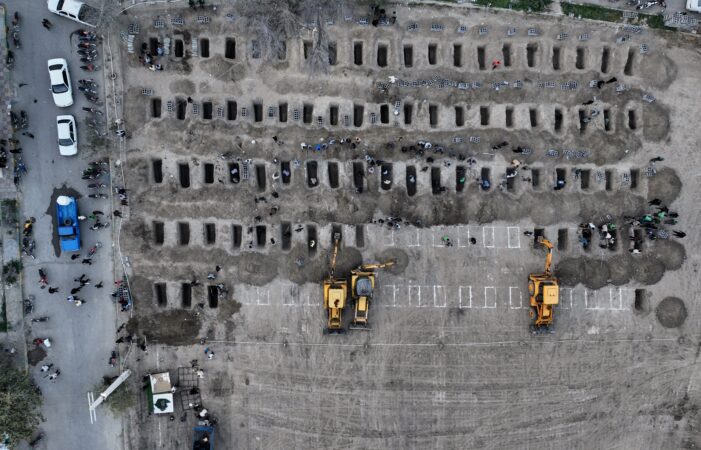
    Parents were told they’d be permitted to take their children’s bodies back to their villages and conduct their own observances, said the resident. In the end, though, many decided to bury their children together.

    In footage captured by drone cameras and circulated by state media, workers broke ground on an earthen lot, creating a grid of tiny, identical, unmarked graves.

    “The state media advocated a narrative based on IRGC interest,” said Amelirad. “You can tell because they called the kids martyrs.”

    The story grows harder to tell

    Strikes continued to ravage Iran, targeting more sites in the opening days than the start of recent U.S. or Israeli military campaigns, including in Gaza, an Airwars analysis found.

    Racing to document the ongoing bombardment, journalists and rights groups struggled to verify details from Minab. They had no access to the target site. Government restrictions in Iran prevented most foreign journalists from entering the country. The opening day of the war, Iran shut down the internet, making it nearly impossible to hear from ordinary civilians.

    As the war progressed and the Strait of Hormuz became a major battlefield, the situation in the province grew more tense, said the resident. All branches of the military were deployed heavily in the area. Families of the victims feared retribution for speaking out. People were reportedly being detained for trying to communicate with foreign media.

    That left Iran’s government in control of the messaging around the strike.

    Iran’s soccer team wore golden “#168” pins on their jackets upon their arrival at the FIFA World Cup.

    The Iranian team negotiating for a pause to the war with the U.S. named itself “Minab 168.”

    The children were depicted as animated Lego figures in viral videos made by pro-Iran groups trolling the U.S.

    “In the aftermath of the attack, Iranian authorities … exploited the suffering of victims’ families and surviving children for propaganda purposes,” wrote Amnesty International in a March report investigating the deaths.

    Through it all, there remained no public list of the names of the dead.

    The Pentagon finds clues in archive

    Locked out of Iran, researchers focused on the question of responsibility.

    Iran blamed the U.S. Trump cast doubt on American culpability and pointed the finger at Iran. Defense Secretary Pete Hegseth said only that the Pentagon was investigating.

    Internally, the U.S. military knew more than it initially let on. The clues were buried in their archives.

    When the news first surfaced, the U.S. military knew they had conducted strikes in the vicinity — though it took the military time to verify the Iranian claims that a school was struck and begin a formal investigation, said a U.S. official with knowledge of the situation, who spoke on condition of anonymity to discuss the ongoing inquiry.

    It appears that while the building housing the school was identified as such by one analyst as early as seven years ago, that discovery was not sufficiently made known across different intelligence and military staffs and agencies, the U.S. official said.

    Ultimately, the building was not known among target developers as a school, revealing potential systematic shortfalls in the target analysis and review process, they said.

    One former Pentagon official, similarly speaking on condition of anonymity, said the bombing came as a natural result of changes made by the Trump administration to reduce staff to mitigate civilian harm and Hegseth’s emphasis on lethality.

    When Hegseth took charge, he slashed the size of an office called the Civilian Protection Center of Excellence, created at the direction of Congress in late 2022. That stopped the office’s work on updating “no-strike lists,” which are lists of protected sites such as hospitals, schools, churches, and mosques, that the Pentagon keeps, said Wes Bryant, who began working at the office in 2024 as the branch chief of Civil Harm Assessments.

    When he was working at the Pentagon, it was well known that the list was out-of-date, he said.

    The search for more answers from Minab

    In the last weeks, researchers have made some progress. Airwars, the conflict research group, spent months combing through open-source information to verify the identity of victims. The group determined the names and identities of 157 of the dead, including 123 children, all 13 or younger, and 34 adults. Among the adults are 26 school staff members (one of whom was pregnant) and five parents — each of whom lost at least one child.

    The group puts the death toll between 157 and 168 and says between 95 and 111 people were injured.

    It’s unclear when the formal results of the military’s Minab investigation will be published. Much of the investigative work has been completed, but the U.S. military’s Central Command, which commissioned the investigation, is currently reviewing the findings.

    Hegseth said last week the report would be divulged “when the appropriate time is right.”

    Findings from similar past investigations have been more timely. When a Hellfire missile killed 10 civilians in Kabul, Afghanistan, on Aug. 29, 2021, the Defense Department claimed responsibility and gave details on its operations in less than a month.

    Some members of Congress still push for transparency.

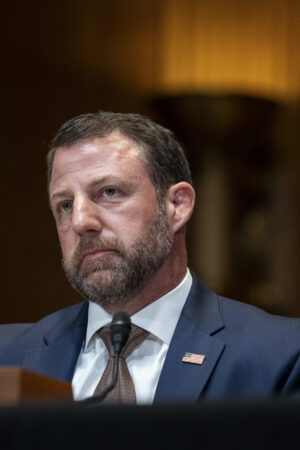
    In a recent interview, Sen. Mike Rounds, a Republican from South Dakota and a member of the Armed Services and Intelligence committees, said Congress has not gotten enough information on the bombing and expected a full report.

    The issue “has not gone away,” he said.

  • Couple climbs needle of Empire State Building

    Couple climbs needle of Empire State Building

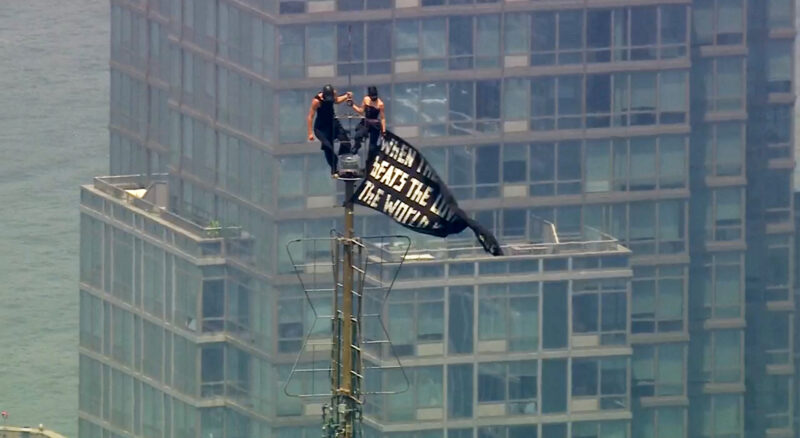
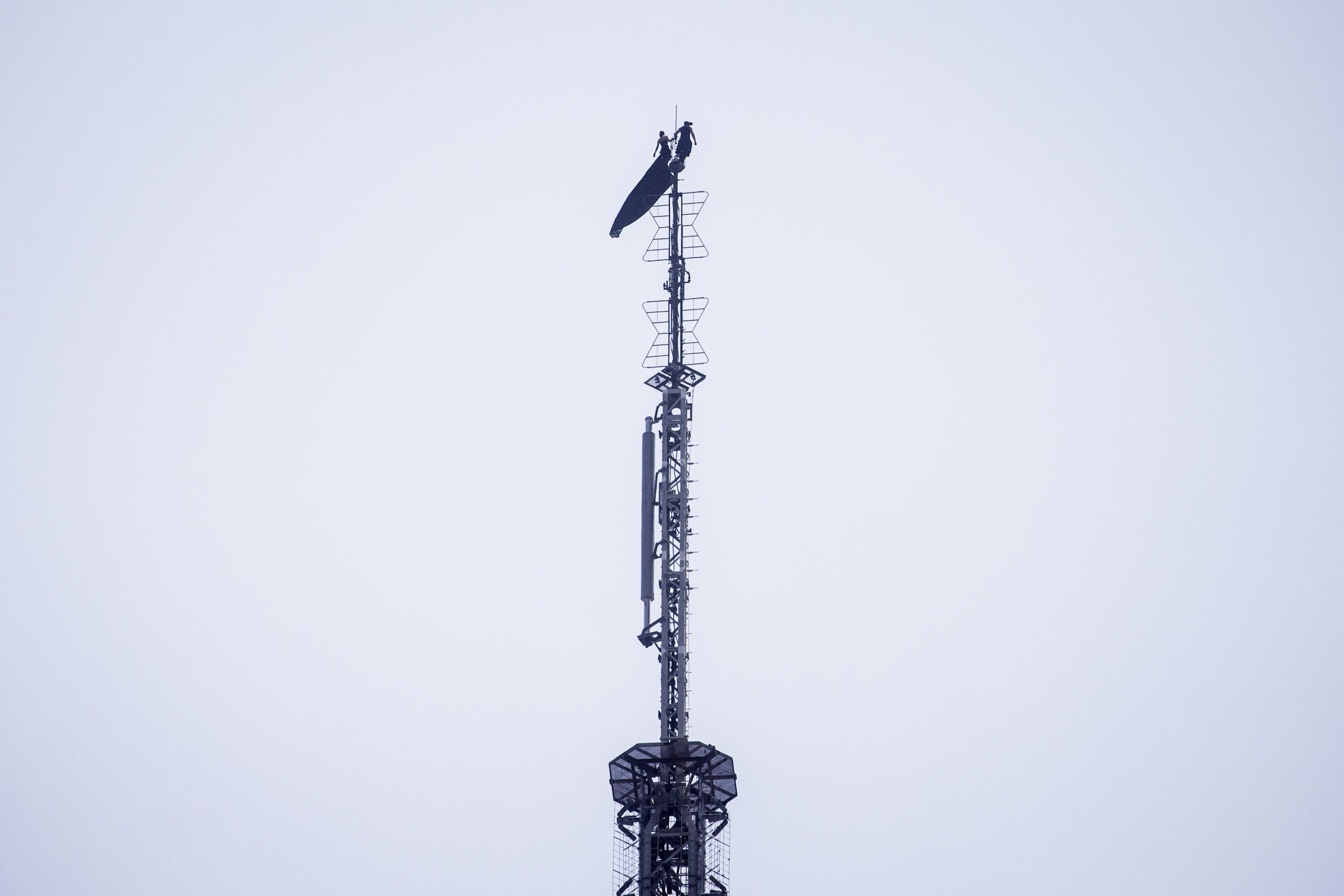
    NEW YORK — A couple known for scaling tall buildings climbed to the top of the needle of the Empire State Building on Wednesday and unfurled a large black banner that flapped in the breeze, about 1,450 feet above the city.

    The couple, Angela Nikolau, 33, and Ivan Beerkus, 32, were taken into custody after the stunt, according to a law enforcement official. Nikolau, according to a police document, was charged with burglary — defined in New York state as unlawfully entering a building with the intent to commit a crime. It was not immediately clear whether Beerkus was also charged.

    Late Wednesday morning, Nikolau posted a video on her Instagram account that showed a vertiginous view from a narrow platform and that was captioned “Currently at the Empire State Building.”

    The message on the banner read: “When the power of love beats the love of power the world knows peace.”

    As they stood atop the skyscraper, Beerkus proposed to Nikolau, the law enforcement official said. A photo Nikolau posted to Instagram shows Beerkus getting down on one knee.

    The law enforcement official gave Nikolau’s first name as Angelina and Beerkus’ surname as Kuznetsov, which appears to be his birth surname.

    The couple were the subjects of a 2024 documentary, “Skywalkers: A Love Story,” about their romance and quest for thrills and fame. In 2022, they climbed Merdeka 118 in Malaysia, which is more than 2,000 feet tall.

    The Empire State Building’s needle, which houses communications equipment and a very tall antenna, rises about 200 feet above the top floor of the building.

    Climbers with a banner atop the spire of the Empire State Building in Manhattan, on Wednesday, July 1, 2026. After making the ascent, the man proposed to the woman on a tiny platform, 1,450 feet above the city. (Dave Sanders/The New York Times)

    It is a surface that is not frequently scaled. In 1994, the French climber Alain Robert did so, according to the Guinness World Records website.

    New York City’s skyscrapers and monuments, however, have long been magnets for climbers.

    Their attempts have ranged from the modest to the truly harrowing.

    In 1918, Harry Gardiner, nicknamed “the Human Fly,” climbed the Soldiers’ and Sailors’ Memorial Arch at Grand Army Plaza in Brooklyn; it is all of 80 feet high.

    Philippe Petit walked a tightrope between the towers of the World Trade Center in 1974.

    In 2008, after three people — one of whom was Robert — climbed the New York Times Building in a matter of weeks, the Times removed some of the horizontal rods that climbers had used to scale it.

    In 2014, a teenager from New Jersey climbed to the spire of the Freedom Tower, which was built on the site of the twin towers.

    Jason Barr, an economics professor at Rutgers University who has studied skyscrapers, said that the initial plans for the Empire State Building did not include a spire or antenna, but after the construction of the Chrysler Building, with its distinctive crown, the building was redesigned to include a mooring mast that would stretch into the sky.

    “These spires are designed partly for aesthetic reasons but also partly for advertising reasons, like, ‘Look at the top of my building’,” Barr said.

    In recent years, artists and exhibitionists have called their unsecured and usually illegal ascents “rooftopping,” documenting the climbs on social media. Aside from structures in New York and Malaysia, Nikolau and Beerkus, have ascended buildings and constructions sites in China and Europe, sometimes with legal repercussions.

    But there have been sanctioned climbs of skyscrapers, too. In 2023, actor Jared Leto scaled 18 floors of the Empire State Building, from the 86th floor to the 104th floor, with permission, to promote a world tour for his band Thirty Seconds to Mars.

    He performed one of the band’s songs from the 104th floor, an unofficial landing off limits to the public.

    This article originally appeared in The New York Times.

  • A major Russian attack kills 21 in Kyiv as Ukrainian strikes batter Moscow’s oil sector

    A major Russian attack kills 21 in Kyiv as Ukrainian strikes batter Moscow’s oil sector

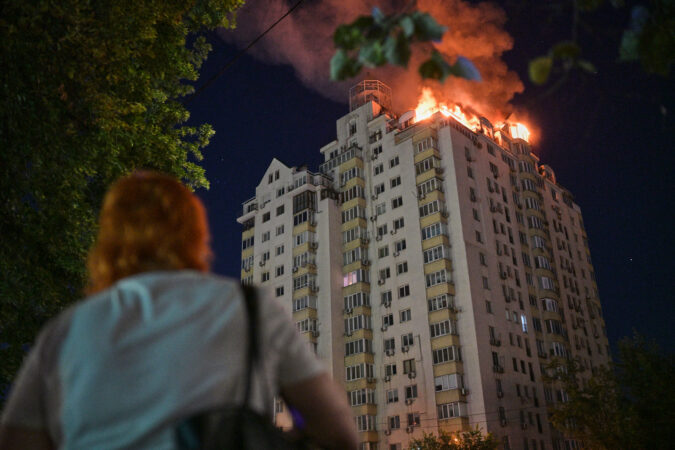
    KYIV, Ukraine — Russia hammered Kyiv in an 11-hour drone and missile attack overnight into Thursday morning, killing at least 21 civilians in the city and injuring scores more in what Moscow said was retaliation for Ukrainian strikes on Russian oil facilities.

    Loud explosions shook the Ukrainian capital, where more than 50,000 people sheltered in subway stations after authorities issued air raid warnings, the Kyiv Metro said. Emergency crews dug through the rubble of collapsed and charred apartment buildings all day in search of victims.

    Russia’s Defense Ministry said in a statement that the bombardment was in response to Ukraine’s recent barrage of long-range strikes, which have caused severe fuel shortages and put pressure on President Vladimir Putin.

    Ukraine’s frequent attacks inside Russia — described by Ukrainian President Volodymyr Zelensky as a 40-day blitz — have especially targeted oil refineries, causing a fuel crisis that has frustrated Russians already feeling the war’s economic toll.

    More than four years after Moscow’s full-scale invasion of its neighbor, Ukraine’s technological advances in drone engineering have in recent months given it an edge, analysts and Western officials say. Its strikes on supply routes behind the front line have robbed the Russian army of momentum on the battlefield and made its progress slow and costly, they say.

    Kyiv’s forces have especially targeted supplies to Crimea, triggering the worst fuel crisis on the Black Sea peninsula since it was illegally annexed by Russia in 2014 and delivering a blow to the Kremlin’s narrative that Moscow is winning the war.

    Ukrainian officials say they are trying to force Putin to the negotiating table, but so far Moscow’s response has been to hit back.

    Diplomatic efforts to end the war, most recently by the Trump administration, haven’t produced results. President Donald Trump and Zelensky are expected to attend next week’s NATO summit in Turkey.

    Putin thinks that time is on his side, that Western support will peter out and that Ukraine’s resistance will eventually collapse under pressure from strategic bombing, analysts say.

    Ukraine’s top diplomat says it was a ‘night of horror’ in Kyiv

    The attack killed 21 people in Kyiv, according to the country’s Emergency Service. More than 90 others were reported injured.

    Foreign Minister Andrii Sybiha said it was a “night of horror” in the capital, which had a prewar population of roughly 3 million people.

    Flashes from exploding drones and missiles lit up the night, and loud booms echoed through Kyiv. Tracers from air defense fire streaked through the air as a huge pall of black smoke rose into the sky.

    More than 30 locations across the city reported damage, including about 20 residential buildings, authorities said.

    Kyiv resident Serhii Budko said three or four ballistic missiles hit his district of the city. “We were inside the shelter and felt the shelter shaking — the ceiling and floor, everything,” the 24-year-old said.

    In Kyiv’s Desnianskyi district, residents were trapped inside a damaged nine-story building, and in the Darnytskyi district, most of a nine-story building collapsed.

    In Ukraine’s central Dnipropetrovsk region, meanwhile, a Russian strike killed a 7-year-old girl and wounded four other people, including an 11-year-old girl, all members of the same family, regional head Oleksandr Hanzha said.

    The bombardment was “exclusively against military or military-linked targets,” Kremlin spokesperson Dmitry Peskov said.

    Russia’s aerial attacks on Ukraine have repeatedly hit civilian areas. More than 16,000 Ukrainian civilians have been killed in the war, according to the United Nations.

    No reliable figures are available for battlefield casualties in the war. A report earlier this year by the Center for Strategic and International Studies, a think tank, estimated that up to 1.8 million soldiers have been killed, wounded, or gone missing on both sides, with Russian troops accounting for most of that number.

    Ukrainian officials urge countries to provide more air defenses

    The attack used “high-precision long-range weapons” and drones to strike weapons factories and energy facilities in and around Kyiv, and “military airfield infrastructure” in other parts of Ukraine, the Russian Defense Ministry’s statement said.

    In all, Russia fired 74 missiles and 496 drones in the attack, Ukraine’s air force said.

    Ukraine’s air defenses have improved throughout the war, especially in countering Russian drones. But it is harder to stop ballistic missiles, which accounted for roughly a third of the missiles fired overnight.

    Sybiha, the Ukrainian foreign minister, said in April that the country’s weapons factories meet up to 75% of its military’s needs. But he and other Ukrainian officials have pleaded with partner countries to supply more Patriot systems that offer the best protection from Russian aerial attacks.

    Ukraine attacks another Russian oil refinery

    Ukrainian forces struck one of Russia’s largest oil refineries overnight in the Nizhny Novgorod region east of Moscow, starting a fire, Ukraine’s General Staff said.

    Also, Ukrainian forces struck a railway bridge over the Siverskyi Donets River in the Russian-occupied Luhansk region, it said. The bridge was used by Russian forces to transport personnel, weapons, and military supplies, according to the General Staff.

  • Immigrant arrests surge to 10,000 in 5 days as ICE clamps down

    Immigrant arrests surge to 10,000 in 5 days as ICE clamps down

    WASHINGTON — Federal immigration officials have detained more than 10,000 people in the last five days, a major surge that has stemmed from a push within Immigration and Customs Enforcement to increase arrest rates.

    Agency leaders in recent days ordered top ICE officials to focus more of their officers’ efforts on picking up immigrants they want to deport, according to documents obtained by The New York Times and interviews with federal officials. ICE officers have arrested people at check-ins, with immigration authorities, during traffic stops and on the street. The push has apparently yielded results, with recent arrest numbers roughly doubling from the 1,000 picked up each day earlier this year.

    ICE officials were told that the White House wanted an increase in arrests, according to three officials with knowledge of the conversations. One of the officials said that it was unclear how long the pace could continue, but that ICE officials had been told that 2,000 arrests a day was the new standard for enforcement.

    The surge has occurred without the fanfare of highly visible operations last year, in which officials announced their intentions ahead of time to target cities, including Chicago and Los Angeles, and send officers pouring into the streets. Markwayne Mullin, the homeland security secretary, pledged to mount a quieter enforcement campaign following the chaos of a monthlong operation in Minnesota, where federal officers killed two U.S. citizens.

    The rise in arrests suggests that President Donald Trump is determined to meet his pledge of mass deportations, a goal that is popular among his conservative supporters but that has fueled a political backlash amid the administration’s heavy-handed tactics. The Trump administration has promised more aggressive actions, particularly after the Supreme Court in recent days expanded the president’s power to set federal immigration policy, but undercut his effort to eliminate birthright citizenship for the children of immigrants in the country illegally and visitors.

    “Our message is clear: If you come to our country illegally, we will find you, we will arrest you and we will deport you,” Lauren Bis, a Department of Homeland Security spokesperson, said in a statement.

    Word of an uptick in arrests has started to trickle out, sowing fear in immigrant communities and among advocates already on edge after the Supreme Court ruled that Trump could end deportation protections for people from disaster- and war-torn countries under the Temporary Protected Status program.

    In recent days, ICE officers have launched an intense push to ramp up arrests. Arrests topped out Saturday when authorities detained more than 2,400 people, according to documents obtained by the Times. The detention population inside ICE facilities has jumped nearly 4,000, to more than 63,000 in the agency’s custody as of Tuesday, according to internal documents.

    In emails to ICE personnel, agency leaders applauded the latest numbers.

    “I want to personally thank each of you for your extraordinary efforts this past weekend,” Marcos Charles, the head of ICE’s deportation wing, wrote this week. “Through your dedication, professionalism, and unwavering commitment to our mission, enforcement and removal operations achieved remarkable operational results.”

    Top ICE officials were told to make sure that as many officers as possible were working seven days a week, and to put 80% of their officers on arrest operations, according to two U.S. officials who spoke on the condition of anonymity to discuss internal conversations. Top supervisors were expected to be working closely on the operations as well.

    Last year, Stephen Miller, Trump’s deputy chief of staff, set a goal of 3,000 arrests a day for the agency, a figure it was not able to hit. Since then, the agency has hired thousands of new officers and has had its budget increased by billions of dollars for the enforcement surge.

    Across the country, immigration lawyers and advocates have reported an uptick in enforcement.

    In South Texas, Sister Letty Ugboaja, a Nigerian nun, was arrested on her way to church on Sunday morning, according to Sister Norma Pimentel, her colleague. Ugboaja is a local nurse who also helps at a parish in the region. Pimentel called local leaders after learning of the arrest, and congressional officials soon got involved and pushed for her release.

    On Sunday, she was let go from ICE custody, and Pimentel was there to greet her.

    Pimentel said that Ugboaja was distraught upon her release.

    “It took her awhile to be able to talk — she was crying,” she said.

    In southern Florida, attorneys have been on alert. Cindy Blandon, an immigration attorney in Miami, said that one of her clients, a Nicaraguan father of two children, had an immigration court hearing set for 2027, but was arrested by ICE on Monday during a routine check-in.

    And in Utah, Ysabel Lonazco, an immigration attorney, has noticed an uptick as well. She has spoken to several clients, including a man who was driving when he was picked up by the agency for overstaying his visa this weekend.

    “It sets further fear in the community,” she said. “People don’t want to leave their houses. They are afraid to drive to do their grocery shopping. They are just terrified with these detentions.”

    One of her clients, Arturo, a 48-year-old Mexican man, was arrested in Salt Lake City on his way to a soccer game Sunday, according to his wife, Veronica. She said the arrest had shattered their family.

    “They’re getting people — be very careful,” her husband told her from ICE detention, she recalled through an interpreter. She said her 13-year-old son was traumatized by the arrest of his father, who had worked most days of the week building furniture before his arrest, she added.

    A Department of Homeland Security spokesperson said that Arturo had illegally reentered the United States and would be held in ICE custody as the agency sought to deport him.

    Veronica said the family had not expected to be caught up in Trump’s deportation sweep.

    “We were worried, but it wasn’t like we were extremely worried. We figured — we don’t have any criminal record, we pay taxes every year,” she said.

    This article originally appeared in The New York Times.

  • America’s rich tradition of July Fourth protest is worth recalling

    America’s rich tradition of July Fourth protest is worth recalling

    No Kings and other protests opposing the policies and executive overreach of the Trump administration continue to draw crowds across the country, most recently on Flag Day, June 14, which was also the president’s 80th birthday. While critics have denounced these demonstrators as un-American — House Speaker Mike Johnson called a 2025 No Kings march a “hate America rally” — those voicing dissent, pushing for change and speaking truth to power are, in fact, participating in a tradition at our nation’s core.

    That tradition dates back to July 4, 1776, when the Continental Congress, citing a list of grievances, declared independence from the rule of a would-be despot, King George III. The founders’ act of resistance set an example that ordinary Americans would follow. According to historian David Waldstreicher, citizens in the early republic used celebrations not just to commemorate independence, but to lay claim to the lofty principles expressed in the Declaration of Independence, namely that all are created equal, that they have unalienable rights, and that government is instituted to secure those rights, deriving its just powers from the consent of the governed.

    The custom continued for two-plus centuries, with Americans regularly marching, picketing, or otherwise taking to the streets on the Fourth to realize a more perfect union.

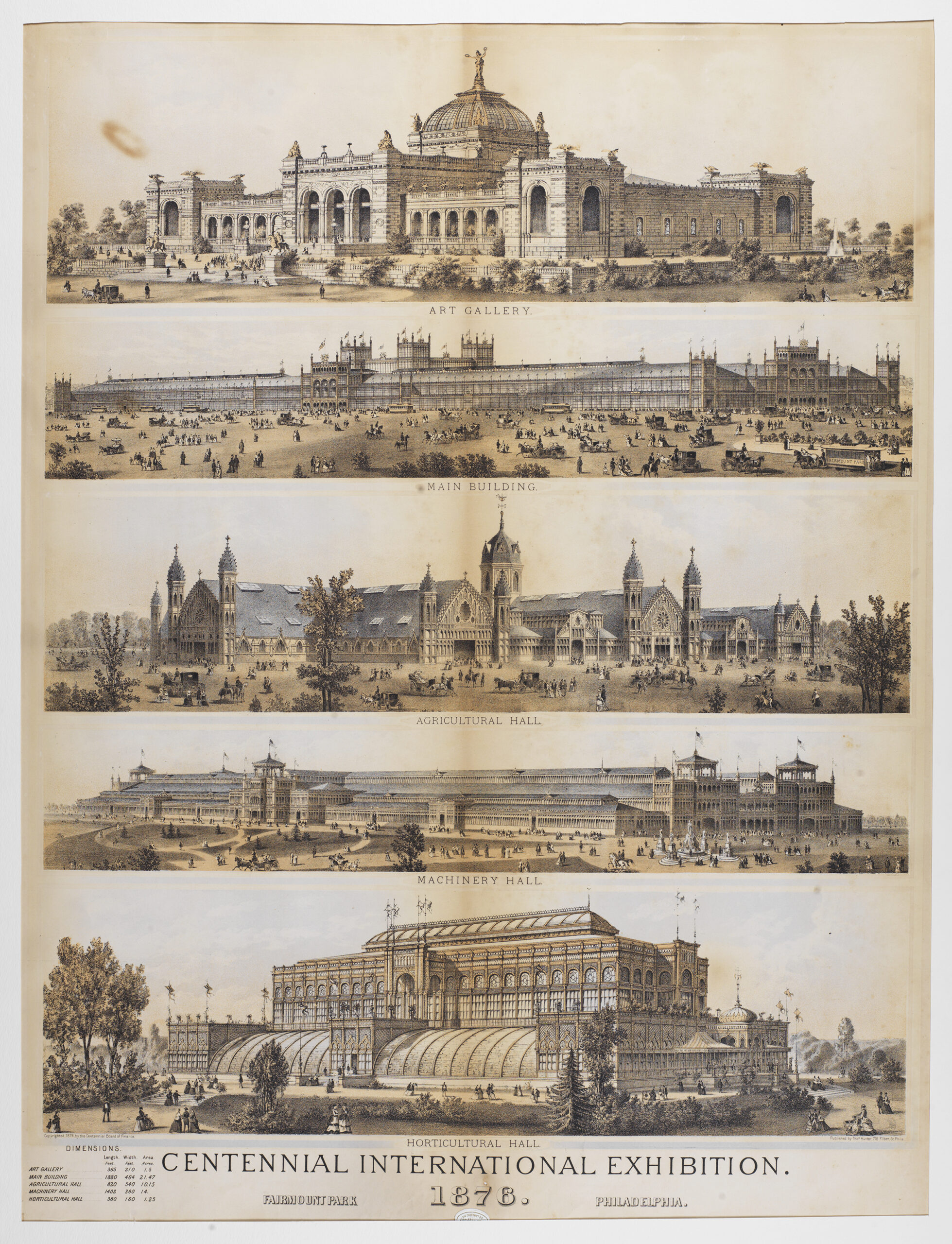
    Centennial International Exhibition, 1876.

    Perhaps the most famous Independence Day protest occurred in 1876 in Philadelphia. As tens of thousands gathered for the Centennial International Exhibition in Philadelphia’s Fairmount Park to celebrate a century of American progress in the arts, in industry, and in economic development, Susan B. Anthony protested the fact that half the nation, women, remained unable to vote and were thus without the unalienable rights named in the declaration.

    Anthony and a determined group of suffragists attempted to introduce a statement drafted by the National Woman Suffrage Association into the exhibition’s official proceedings. When Joseph Hawley, president of the United States Centennial Commission, prevented the women from doing so, Anthony led a procession to Independence Hall, where she read aloud the suffragists’ “Declaration of Rights of the Women of the United States” to a crowd that quickly gathered around her. Patterned after the original declaration, the text condemned the government for denying women the franchise, before ending with a clear demand: “We ask justice, we ask equality, we ask that all the civil and political rights that belong to citizens of the United States, be guaranteed to us and our daughters forever.”

    It took decades of nonviolent action before Congress passed the 19th Amendment, granting women the constitutional right to vote. But Anthony’s principled stance contributed to a rich history of July Fourth protests that continued a century later, as the nation prepared to mark the Bicentennial.

    On July 4, 1976, approximately 10,000 to 15,000 demonstrators massed in Washington, D.C., on America’s 200th birthday. Assembled by the People’s Bicentennial Commission, a New Left group, near the Jefferson Memorial, they marched to the U.S. Capitol under a banner reading, “Independence from Big Business.”

    The group’s populist call for economic democracy resonated in the mid-1970s, when the country was still reeling from a divisive war (Vietnam), a constitutional crisis (Watergate), and an economic recession that saw both inflation (5.97% in July 1976) and unemployment (7.6%) soar. Many people signed the commission’s “Declaration of Economic Independence” calling for limits on concentrated corporate power in the interest of the common good. “We, therefore, the Citizens of the United States of America,” the declaration stated, “hereby call for the abolition of these giant institutions of tyranny … to provide for the equal and democratic participation of all American Citizens in the economic decisions … that effect … our Nation.”

    Other protests occurred across the country, in Detroit and Chicago, as well as Los Angeles, San Francisco, and Seattle. Even Salt Lake City witnessed a small demonstration — albeit on Saturday, July 3, so as not to disturb the Christian Sabbath.

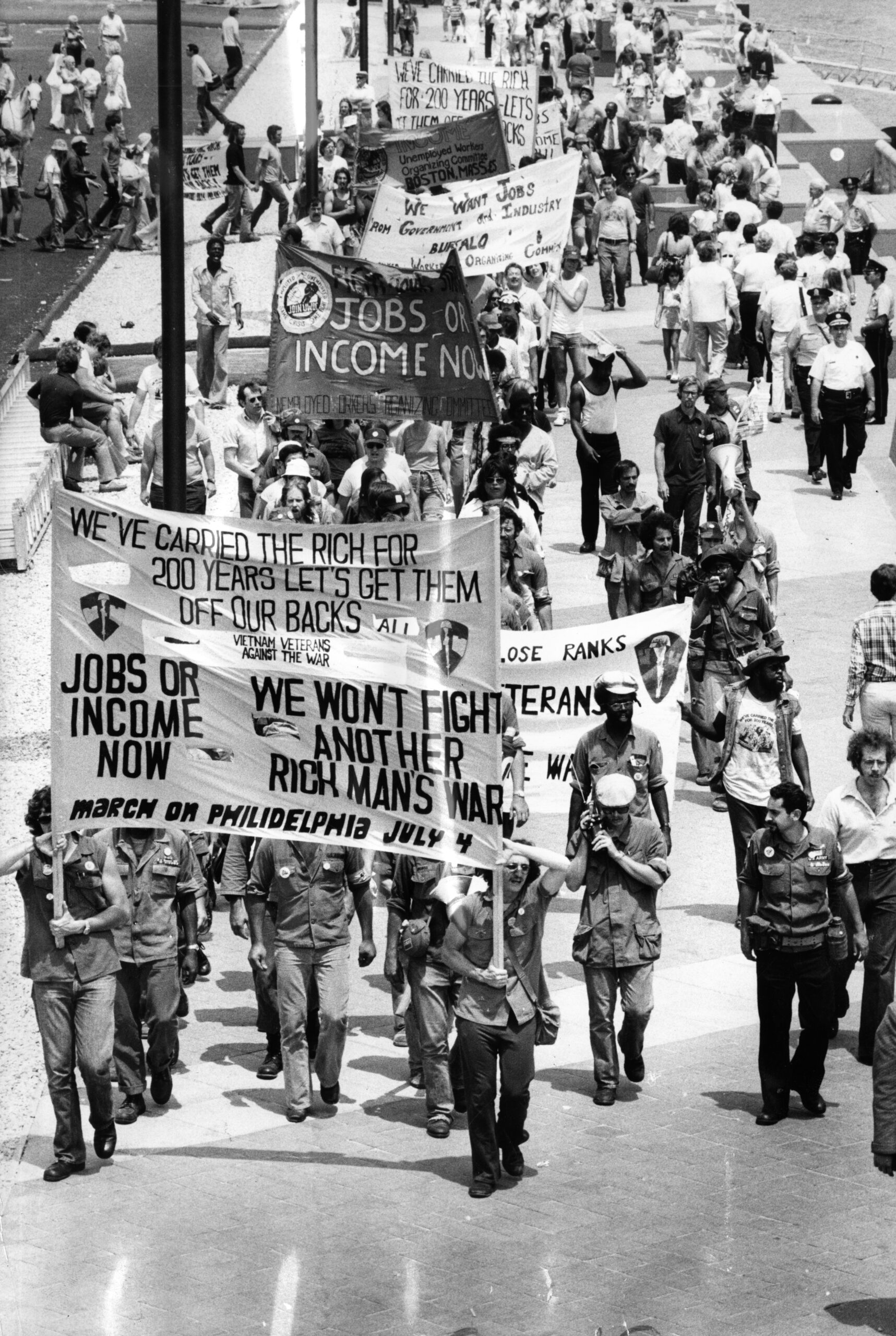
    Marchers with the Rich Off Our Backs Coalition demonstrate at Penn’s Landing in Philadelphia on July 3, 1976.

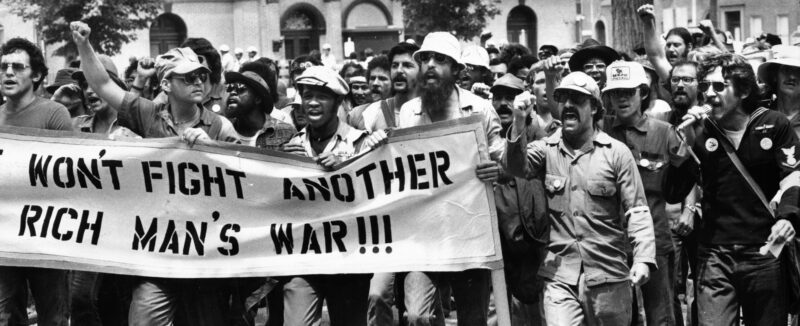
    The largest gatherings, though, were in Philadelphia, where more than 3,000 demonstrators gathered in Norris Square, under the auspices of a group called the Rich Off Our Backs Coalition, to march for jobs and income and economic justice — backed by fatigue-wearing Vietnam Veterans Against the War, who chanted: “One, two, three, four, we won’t fight a rich man’s war.”

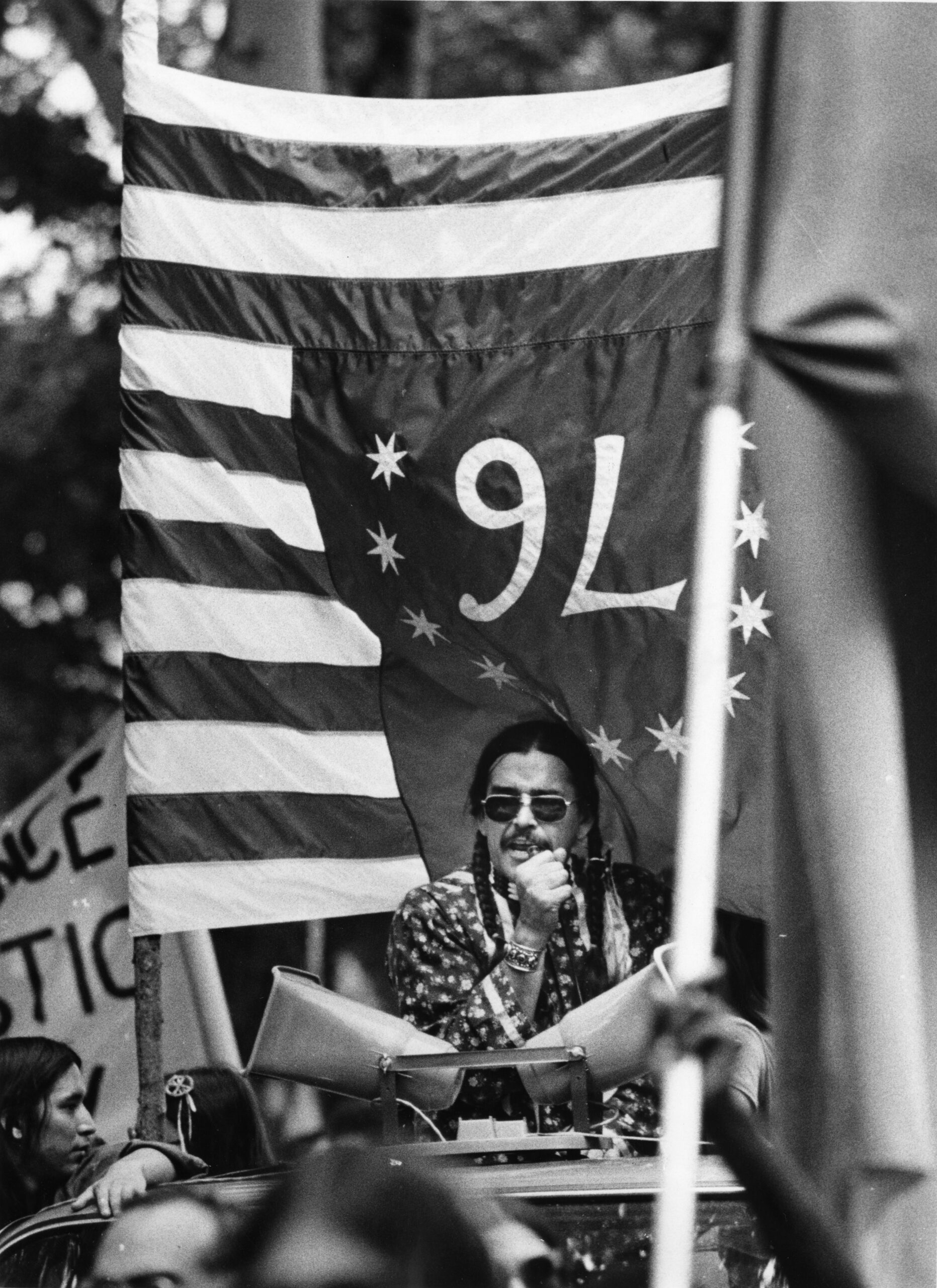
    Another group, the July 4th Coalition, rallied 30,000-plus in Fairmount Park, site of the Bicentennial, to demand Puerto Rican independence, greater rights for Black Americans, Native Americans, and members of the LGBTQ+ community, and much else. Karen DeCrow, president of the National Organization for Women, reread the declaration Susan B. Anthony had introduced a century earlier to flag the limited progress the nation had made toward gender equity since 1876. Black Panther leader Elaine Brown, a native Philadelphian, decried America’s 200-year history of racism.

    A group of Native Americans leads a July 4th Coalition protest parade at 33rd and Diamond Streets in Philadelphia on July 4, 1976.

    Despite opposition — Mayor Frank Rizzo famously requested 15,000 federal troops to maintain order — the demonstrations remained peaceful. Organizers won plaudits even from those who did not necessarily agree with their critiques. Protesters had a right, The Inquirer editors agreed, to call attention to America’s shortcomings, as they saw them. Dissent was as integral to the Fourth of July as bunting and brass bands: Its existence confirmed “the strength and genius of American democracy.”

    Today, according to polls, Americans typically mark Independence Day by barbecuing, shooting fireworks, going to the beach, viewing a parade, traveling, watching patriotic movies, or relaxing at home. Participating in a protest, demonstration, rally, or other nonviolent action does not rate a mention.

    That’s certainly understandable. These days are exhausting, and we all just want a break, a moment to have a laugh with family and friends.

    Yet, America’s rich tradition of July Fourth protest is worth recalling, especially at a time when the nation’s democratic institutions are under stress, for it once served as an essential tool that enabled Americans to hold their leaders to account for the words of 1776. We, the people, have never quite realized those words — written principally by a slave owner, Thomas Jefferson.

    But for 250 years and counting, the Declaration of Independence has set a “moral standard,” as historian Pauline Maier has argued, to which not only feminists and civil rights activists but civil libertarians and laborers have turned time and again in pursuit of liberty from their oppressors, be those would-be tyrants, foreign or domestic.

    M. Todd Bennett, a professor of history at East Carolina University, and David McKean, former director of policy planning in the U.S. Department of State, are the authors of “The Flag Was Still There: A History of the American Experiment in Five Anniversaries” (PublicAffairs, 2026).

    Made By History takes readers beyond the headlines with articles written and edited by professional historians. Opinions expressed do not necessarily reflect the views of The Inquirer.

    Made By History sponsors.
  • Judge blocks Postal Service from imposing restrictions on mail-in ballots

    Judge blocks Postal Service from imposing restrictions on mail-in ballots

    WASHINGTON — A federal judge in Washington on Wednesday blocked the United States Postal Service from carrying out changes to its delivery of mail-in ballots, writing that recent policies directed by President Donald Trump ran afoul of legal terms the agency accepted more than four years ago to ensure timely delivery of mail ballots.

    In a brief opinion, Judge Emmet G. Sullivan pointed to a settlement agreement reached between the NAACP and the Postal Service in December 2021, after the group sued the government arguing that postal delays threatened to disenfranchise voters. At that time, the agency agreed to “prioritize monitoring and timely delivery of election mail.”

    Sullivan, an appointee of President Bill Clinton, wrote that the Postal Service’s proposal, which includes not delivering mail-in ballots in states that decline to hand over voter data to the federal government, violated the settlement agreement, which the parties had agreed would run through the 2028 election cycle.

    Sullivan wrote that Trump’s order appeared “designed to exert federal control over who in the United States may be sent a mail-in or absentee ballot in federal elections by the Postal Service.” He wrote that the agency had previously agreed to outline plans before each national election and meet with the NAACP to explain how it would ensure efficient delivery of election-related mail.

    While another judge in Washington had declined for now to halt the enforcement of the executive order because new rules for the Postal Service had not been finalized at the time, Sullivan concluded that the agency’s recent proposal could be blocked preemptively because it would violate the prior agreement.

    Last week, a judge in Massachusetts struck down the main components of Trump’s order, including the creation of lists of eligible voters and changes to mail-in voting. The ruling from Judge Indira Talwani stated that the Constitution granted authority over elections firmly to the states.

    The NAACP, which brought the lawsuit in 2020 amid a spike in voting by mail during the COVID-19 pandemic, had raised concerns about delays in mail delivery. The group argued that the new proposed changes raised fresh worries for coming elections. Among the changes it contested were the addition of new individualized bar codes on mail-in ballots and a plan to reject ballots from states that do not submit a list of eligible mail-in voters to the Postal Service ahead of time.

    “The proposed USPS changes would have created unnecessary and unlawful barriers, in direct violation of the USPS’s mandate to prioritize election mail,” Anthony P. Ashton, the NAACP’s senior associate general counsel, said in a statement. “Those barriers could have disproportionately harmed Black voters, who are more likely to rely on mail voting due to long-standing inequities in access.”

    “Put simply, the use of mail-in voting helps reduce voter intimidation at the polls and Election Day dirty tricks,” he added.

    Postmaster General David Steiner has said on multiple occasions, including to The New York Times this year, that he would follow court orders governing voting by mail.

    The agency had argued in filings before the decision that the court could not block the changes until it had finalized its rules and that the changes fell outside the scope of the legal settlement.

    The Postal Service has not responded to multiple requests for comment after recent court decisions that partially blocked Trump’s mail voting executive order and the Postal Service’s proposal to impose it.

    Under the 2021 settlement, the Postal Service agreed to take extra steps to expedite mail ballots for all even-year federal elections through 2028.

    William Hensley, a former election mail specialist at the Postal Service who helped establish those “extraordinary measures” while at the agency, said in an interview that they can include dispatching delivery trucks on extra trips, authorizing local postmasters to pay out employee overtime, and in some cases postmarking and turning around mail ballots locally rather than at regional processing centers.

    For this year’s midterm elections, the Postal Service said it will begin enforcing those measures Oct. 27, roughly a week before the midterms.

    This article originally appeared in The New York Times.

  • 🌮 Let’s talk ‘Walking Tacos’ | Down the Shore

    🌮 Let’s talk ‘Walking Tacos’ | Down the Shore

    Walk with me.

    You open the door to the rental and let in the roaring summer sun, and you’re fully prepared for a relaxing day on beach: Toy Story-themed towel, Cherry Float Coke Zeros, and a thin layer of suntan spray coating everything in the canvas tote bag.

    But you could really use a snack.

    There’s a lot going on this holiday weekend, and it’s a mess. So the last thing you need is another one.

    What you’re looking for is a classic Jersey Shore treat, but ice cream isn’t built for travel and a slice of pizza has too many variables.

    You need a “Walking Taco.”

    Walking tacos are offered at the Wells Fargo Center.

    I’m Tommy Rowan, and I’m once again subbing in for Amy S. Rosenberg. I’m a lifelong Jersey Shore-goer who was raised on visits to the Ocean City boardwalk and Wonderland Pier. I spent my teenage years on the Wildwood boardwalk, my 20s in Sea Isle City, and nowadays I have family in North Wildwood. And maybe it’s because I’m within spitting distance of 40, or because places I once loved are being torn down, I find myself wanting to cram in more of everything.

    Which brings us back to the food that moves.

    The “Walking Taco” is for people who want to walk and talk, and who want to fit in more and keep moving.

    It’s a snack-sized bag of Fritos that’s crushed into pieces, garnished with seasoned ground beef, shredded cheddar cheese, and homemade pico de gallo, and eaten with a plastic spoon.

    It encourages you to get your steps in, but it’s not quite fast food. That’s why they don’t call it a “Running Taco.”

    It’s best eaten on the walk to the beach, but if you’re a “save for later” kind of person, it still works: The bag is self-contained, and yet it’s protected from splashes of sand and saltwater. And it’s an easy disposal: Just crush the bag into a ball and toss it in a trash can.

    It’s salty and crunchy and cheesy, but it’s not a true overindulgence.

    A cheeky hot dog stand in Sea Isle City has unfound claims to “the original,” but the product can be found up and down the Philly-favored beach towns between Atlantic City and Cape May — and many swap out Fritos for Doritos.

    And, honestly, what better way to ring in the 250th anniversary of the Declaration of Independence than with a uniquely American product: a nonrecyclable bag of ultraprocessed salty particles, topped with chemically altered cheese strings, covered in oily animal fat, and topped with what can only be described as a “modern interpretation” of pico de gallo.

    It’s America in a fun-size.

    📮 What’s your favorite beach snack? And how do you feel about the “Walking Taco?” What are you eating this holiday weekend? Let me know what you think by replying to this email, and your most interesting responses may end up in a future newsletter. Have ideas or news tips about the Shore or this newsletter? Send them here.

    😡 We’re in for a dangerously hot holiday weekend. Remember to hydrate.

    — Tommy Rowan (🐦 Tweet me at @tommyrowan. 📧 Email me here.)

    If someone forwarded you this email, sign up for free here.

    Shore talk

    🏖️ Pumped up. Sand-pumping operations are expected to begin next week in Ocean City, while replenishment of the Seven Mile Island Beaches will reportedly begin toward the end of the summer. Avalon’s beaches are up first, with work scheduled to start in mid-August, followed by Stone Harbor in October.

    🛵 Take a number. A reminder that New Jersey is now taking appointments for e-riders to register their e-bikes, per a new state law (which doesn’t seem to affect visitors from Pennsylvania). We have a full look at the confusing law here.

    🎃 Halloween in July? Spirit Halloween is getting a head start on the spooky season and listing seasonal job openings on its website, including for pop-up stores at the Shore in May’s Landing, Rio Grande, and Egg Harbor Township.

    🗳️ The mayor is in. For a fifth time, Jay Gillian was sworn in as mayor of Ocean City. He won reelection in May.

    🏫 Stretching out. Dominique Dawes, a former Olympian who founded a chain of gymnastics schools, is planning to open a new location in South Jersey this fall. The new school is part of the former gold medalist’s expansion into the greater Philly region.

    What to eat/What to do

    🎆 Happy Fourth of July weekend! Check out this handy guide to the fireworks shows and festive celebrations happening across the region.

    🇺🇸 The Declaration. Two days before the country’s 250th anniversary, on July 2, Avalon is hosting a public reading of the Declaration of Independence. And then a few days after, on July 8, Cape May is planning its own public reading and reenactment. Both are worth checking out.

    👻🦀 Ghost crabs! Every Thursday between 8 and 9 p.m., the Nature Center hosts a ghost crab hunt on the beaches of Cape May. So grab a flashlight and watch the translucent crustaceans scurry in the spotlight. Preregistration is required.

    🌭 Hot Dog Tommy’s in Cape May. No. 1, fantastic name. No notes. And No. 2, helluva chili cheese dog.

    🎥 Beach movies. Catching a flick outdoors at the Shore is underrated. Ocean air, salty breezes, and overpriced ice cream cones coalesce to create the most perfect conditions to take in a picture. Cape May and Margate show movies on the beach, Sea Isle utilizes the Band Shell in Excursion Park, and Wildwood hosts at Byrne Plaza.

    🧢 Card show. If you’re looking for an escape from the heat this weekend, the Sports Card, Toy, Comic & Collectibles Show will be trading in childhood treasures and autographed memorabilia at the Wildwoods Convention Center on the boardwalk.

    🎸 Free tunes in Atlantic City. On Wednesday, Bayou Blues guitarist-vocalist Tab Benoit is playing Mardi Gras on the Boardwalk, a New Orleans-themed concert series at Kennedy Plaza. The free show starts at 7 p.m.

    🥡 Delicious takeout. Craig LaBan is a big fan of the General Tso’s at China Sea of Absecon. He went inland for his latest list of places to eat at the Shore.

    Shore snapshot

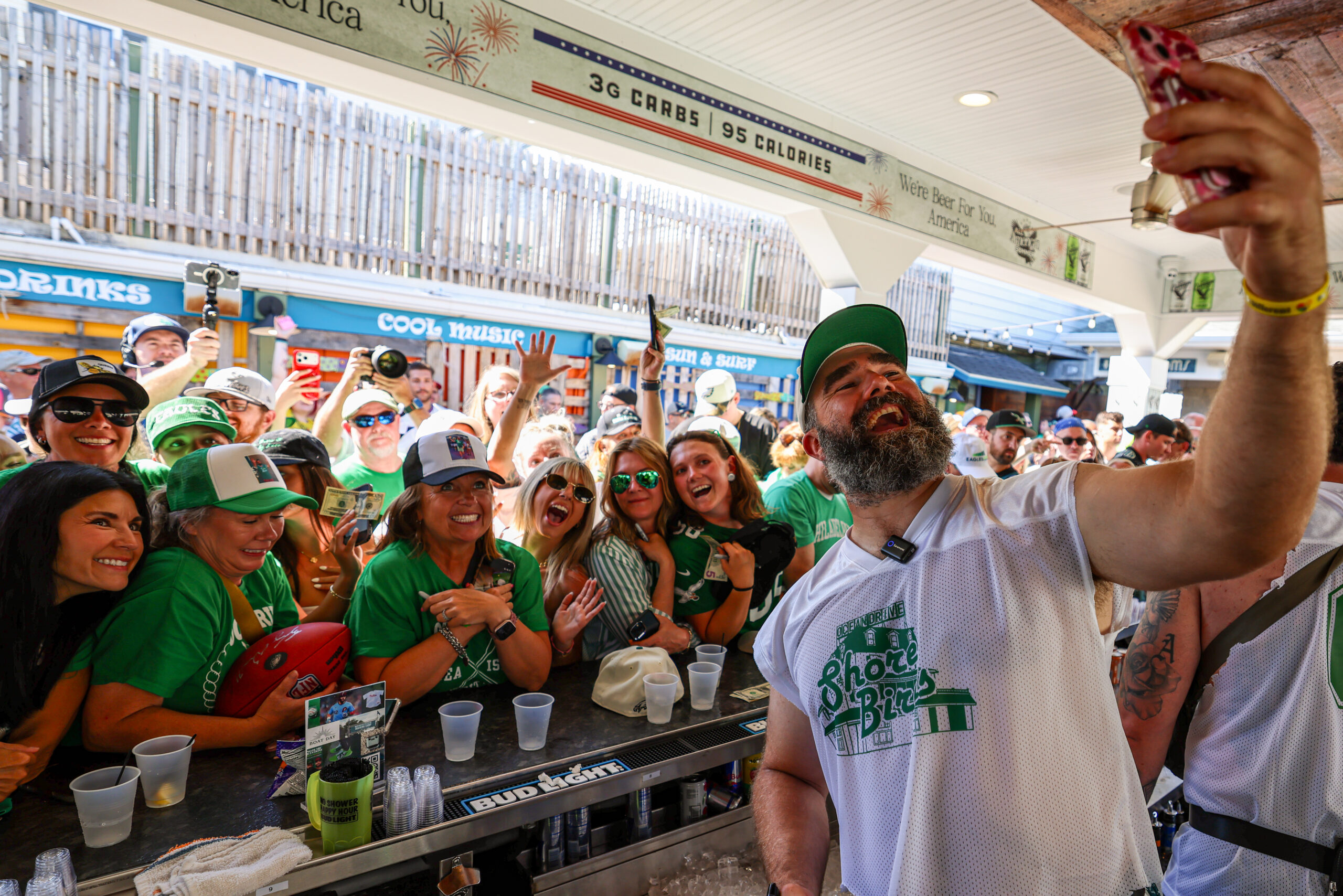
    Jason Kelce takes a selfie with fans at his annual fundraiser in Sea Isle City.

    After starting last year’s fundraiser with tear-away shorts and a Speedo, Jason Kelce was comparatively reserved this year for his entrance at his and wife Kylie Kelce‘s sixth annual “Shore Birds” event at the Ocean Drive in Sea Isle City. The event benefits the Eagles Autism Foundation.

    Vocab lesson

    Semiquincentennial (noun)

    [semi-QUINN-cen-ten-knee-all]

    The 250th anniversary of the Declaration of Independence.

    I hope the next milestone after the Semiquincentennial is easier to pronounce and simpler to spell.

    🧠 Trivia time

    On June 27, 1958, this civil rights leader addressed a convention of Quakers in Cape May in a little remembered episode in this cultural icon’s extraordinary life.

    A. Nelson Mandela

    B. Thurgood Marshall

    C. Rev. Dr. Martin Luther King Jr.

    D. Gloria Steinem

    If you think you know the answer, click on this story to find out.

    Your Shore memory

    I’ve been thinking a lot lately about Wonderland Pier and the unmistakable value boardwalk rides bring to the Jersey Shore, which is what made Joseph Farley’s recent submission jump out.

    The station wagon seemed to bulge like in a Willie the Worm cartoon; where endless hordes of Mickey Mouse types invade a building. Our family of ten filled the seats with the baby on mom’s lap. It was 1955, the tires were near bald and Dad kept a gallon of water handy to feed the radiator should it geyser in heavy traffic. We left Cheltenham, PA for Wildwood already singing, “On the Way to Cape May.” My pockets bulged with the contents of my piggy bank, my life’s savings. It was a six-hour trip, four of them spent in Dorothy, a town on the Tuckahoe Road, enjoying lunch while Dad made repairs to the car.

    That night I choose to ride the “Salt & Pepper Shaker” on Morey’s Pier; a scary ride that took you into the stars. At the top, it flipped upside-down. All the coins in my pockets fell out, clanking off the girders to oblivion. This broke ten-year old, turned moocher, still had a glorious vacation. I returned home brown as a berry with a tale that became family lure, a “feel sorry for dad story” that still brings sympathetic sighs every time I tell it.

    Send us your Shore memory in 200 words! Tell us how the Shore taps into something deep for you, and we will publish them in this space during the summer.

    ✌️ That should do it. Amy’s back from vacation next week, so I’ll see ya at the rest stops.

    — Tommy


    By submitting your written, visual, and/or audio contributions, you agree to The Inquirer’s Terms of Use, including the grant of rights in Section 10.

  • A year ago, Matt Turnbull was watching BKFC from the crowd. Now, he’s ready to bring ‘controlled chaos’ into the ring.

    A year ago, Matt Turnbull was watching BKFC from the crowd. Now, he’s ready to bring ‘controlled chaos’ into the ring.

    In January 2025, Matthew Turnbull sat in the crowd as a fan to watch as Eddie Alvarez headlined KnuckleMania V at Xfinity Mobile Arena, then known as the Wells Fargo Center. Despite a tough loss in his hometown, Alvarez, a Kensington native and former UFC champion, received a hero’s welcome from the crowd.

    “It was one of the craziest sporting events I’ve ever been to live,” Turnbull, a Northeast Philly native, said. “The energy in the building, especially for the main event when Eddie was fighting, I never experienced anything like it. I mean, there’s no one bigger than Eddie. I already saw the best come out of the area. So I’m just going to follow his footsteps.”

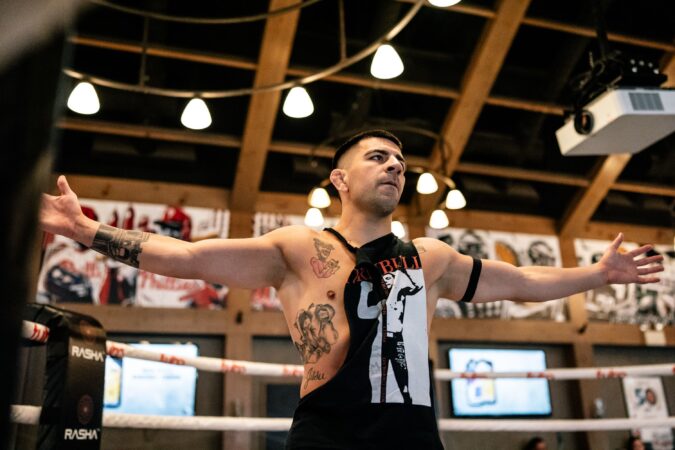
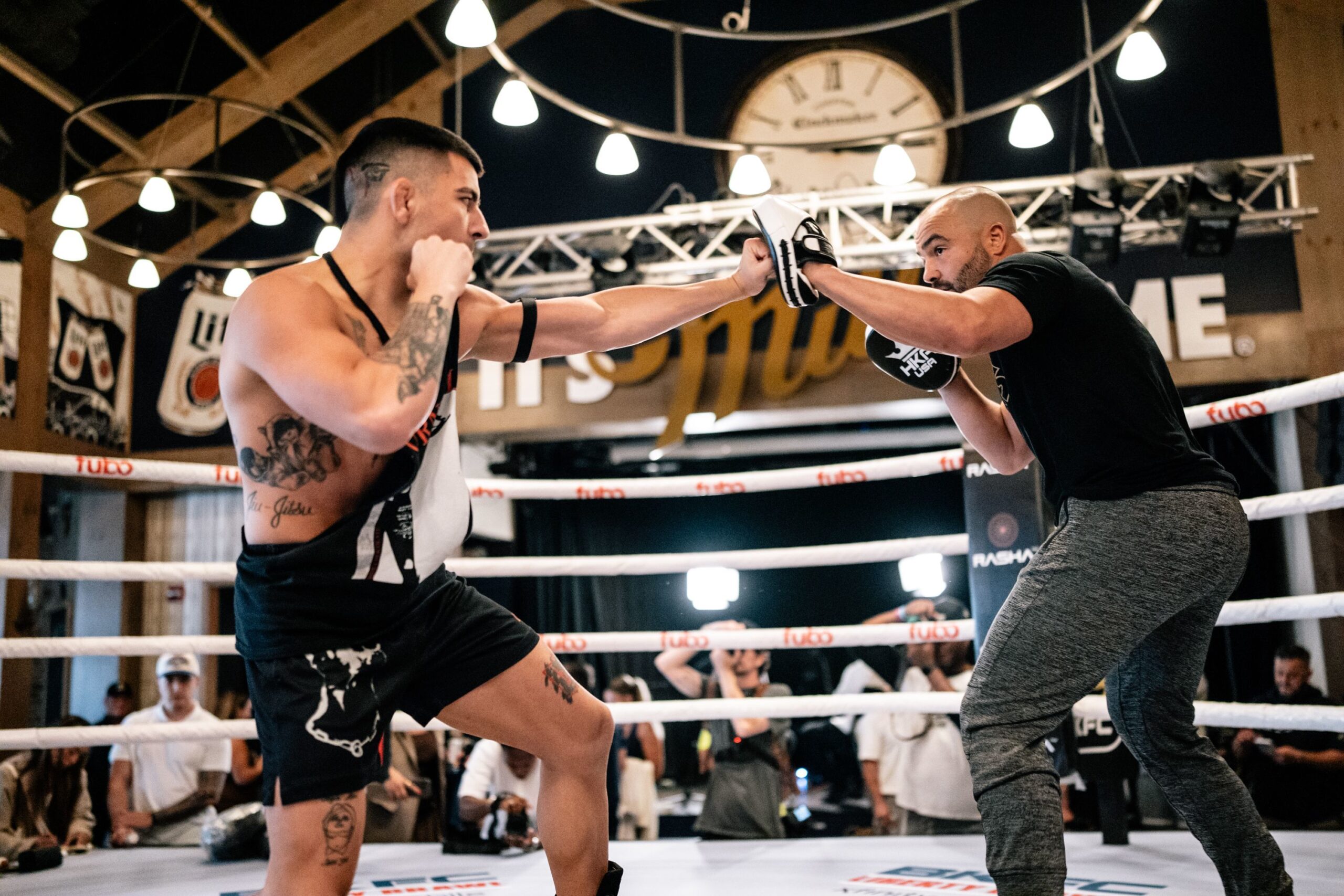
    Over a year later, with a ring set up in the middle of Stateside Live! for open workouts, Turnbull hit mitts with Alvarez as he prepared for his own Bare Knuckle Fighting Championship debut Friday at the same venue.

    “Bare Knuckle was never on my radar, but then I saw the Eddie Alvarez main event and I was like, ‘This is incredible,’” Turnbull said. “And then they hit me up, and I was like, ‘Why not?’ … There’s no lies. You can do the talking and all the fun aspects of getting eyes on you, but when you get into there, it’s nothing but the truth. And I’m a big fan of the truth.”

    Matt Turnbull (left) working out with Eddie Alvarez at BKFC open workouts at Stateside Live!

    Turnbull describes his fighting style as “controlled chaos.” He got his start after he was kicked off Franklin Towne Charter’s high school wrestling team. Afterward, his coach recommended training in jujitsu, which led to him competing in the Philly area-based MMA promotion Art of War Cage Fighting. Three months ago, Turnbull successfully defended his featherweight championship with a submission win against Ryan Yapsam.

    Now, he’s focused on bare-knuckle fighting, which comes with a different training regimen.

    “We’re just using our hands and trying to get used to conditioning our hands for bare knuckles without hurting them in the process,” Turnbull said. “So training with hand wraps as opposed to gloves and doing hand strengthening techniques that I wouldn’t do when I’m going to have a pair of gloves on my hands when I fight. But the discipline is still there. It’s just a little bit different of a path than I’m used to.”

    Turnbull has been training with Alvarez out of his gym, Underground Kings MMA in Newtown.

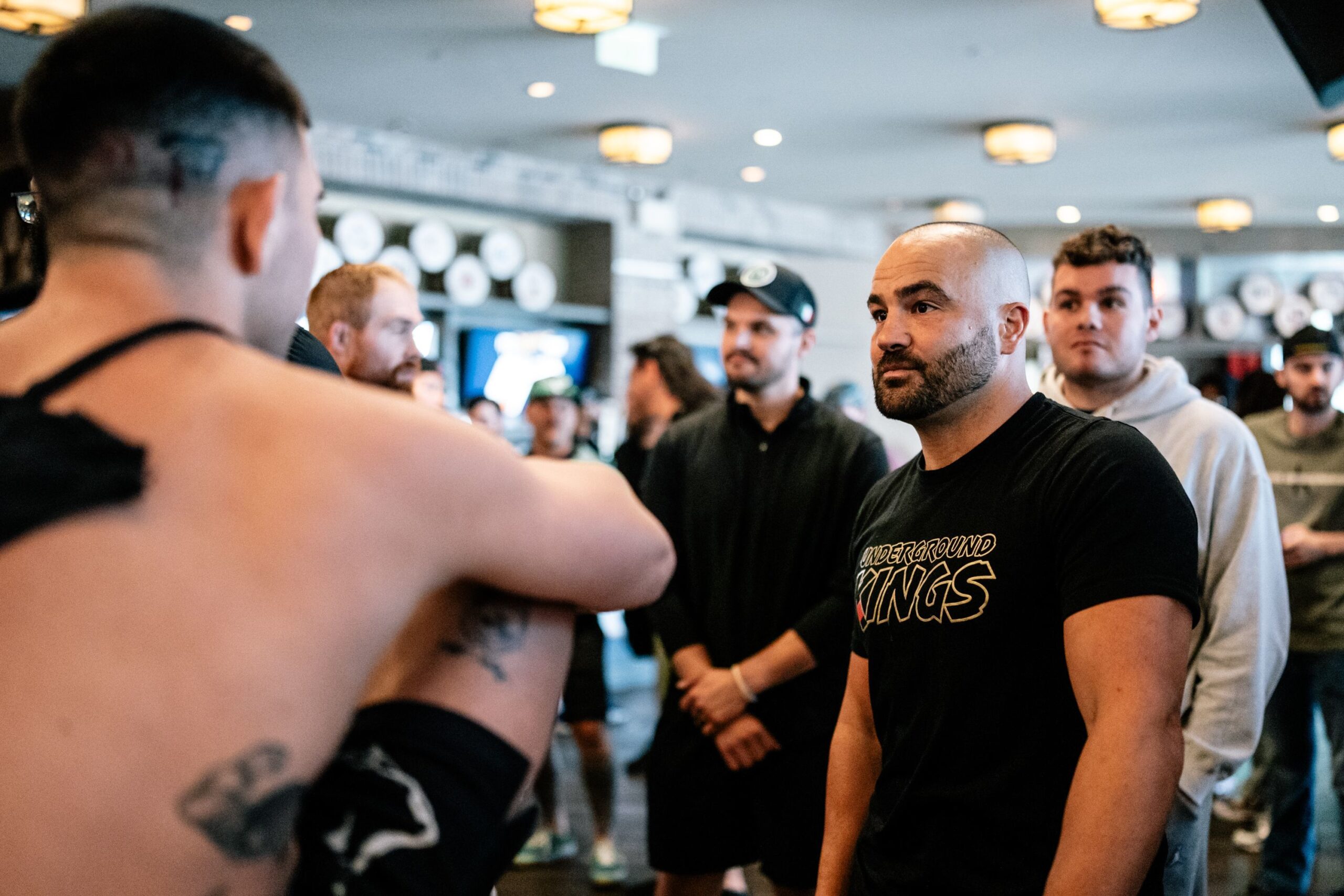
    Eddie Alvarez has been an inspiration for Matt Turnbull’s fighting career.

    “In order to do this sport, one of the leading things you need is toughness,” Alvarez said. “You need to be able to take a shot and take damage and keep going. There’s guys who are very technical boxers who don’t do well here. You’re going to take damage. You’re going to get hurt. You got to be able to overcome. You got to be able to keep going in the face of adversity.

    “Matt Turnbull is that guy. He’s that guy that keeps going, no matter what is going on. He’s built for it. For him, it’s just about honing his skills in boxing. Over the last two months, I’ve never seen a guy grow so much in one sport. So I’m excited to see his showing on July 3.”

    Turnbull originally was scheduled to compete against fellow Philly native Pat Sullivan, who recently pulled out of the fight. The two share some bad blood, including an altercation at open workouts that resulted in Sullivan allegedly biting Turnbull in the back of the head.

    “We’re not going to talk about [someone] who pulls out from a fight because he realized he bit off more than he can chew,” Turnbull said. “Now, I’m fighting Brandon Honsvick. … He’s not as big as a name because he’s not a clown like that. So he doesn’t have a bunch of eyeballs on him and stuff like that. But he’s a much more skilled fighter and someone more deserving of being in the ring with me.”

    Matt Turnbull posted a photo of a scar on the back of his head, following his altercation with Pat Sullivan at BKFC’s open workouts at Stateside Live!

    Sullivan still will compete on the card against a new opponent, Colin Reeser. Meanwhile, Turnbull is set to make his debut against Honsvick on the night before Independence Day in the birthplace of America at Xfinity Mobile Arena.

    “If you’re from Philly, you dream of fighting in that arena,” Turnbull said. “That’s what the goal is. And to be able to do it, especially after people like Eddie, it’s a lot of pressure. So it’s an exciting thing for me.

    “I think I embody what it is to be a Philly fighter. My Instagram name is thephillyfighter. So I try to embody the rawness of it, the intensity, the leave it all in the cage or in the ring mentality, not turning down opportunities or opponents, believe in yourself, and keep fighting until the end.”