Blog

  • Philadelphia’s Senior Law Center has taken over two of CARIE’s advocacy programs

    Philadelphia’s nonprofit Senior Law Center has taken over two of the programs that the Center for Advocacy for the Rights and Interests of the Elderly (CARIE) operated before it abruptly shut down around Thanksgiving.

    The Senior Law Center said this week in an email to supporters that it will continue CARIE’s work to support elderly crime victims under a two-year contract with the Pennsylvania Commission on Crime and Delinquency.

    That contract is for $462,094 per year and has been reassigned to the Senior Law Center. The Senior Law Center has hired four of the five CARIE employees who were involved in that work. The fifth person had already accepted another job, a Senior Law Center spokesperson said.

    Kathy Cubit, CARIE’s former advocacy director, has moved to the Senior Law Center, where she will continue her work on health equity and long-term care. Cubit chairs a group that monitors Pennsylvania’s implementation and development of Medicaid programs.

    CARIE listed 26 employees on its website the week before it closed. Few details were available on why CARIE closed after nearly 50 years. Much of its work involved long-term care ombudsman services for the elderly in most of Philadelphia and in Montgomery County. It lost both of those contracts.

  • Kennedy Center adds Trump’s name to building

    Kennedy Center adds Trump’s name to building

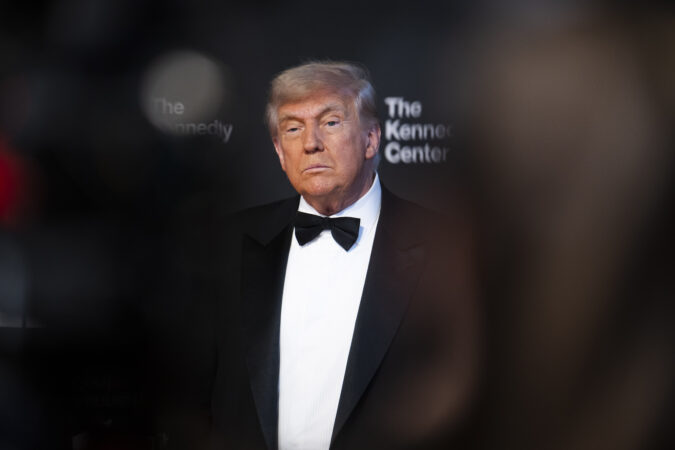
    The Kennedy Center began updating signage on the exterior of the building Friday morning, a day after its board voted to rename the institution “The Donald J. Trump and The John F. Kennedy Memorial Center for the Performing Arts.”

    A blue tarp was stretched across a portion of the building as a small team on scaffolding started the work. Loud drilling could be heard nearby. Inside the building, large letters spelling “Trump” could be seen on the floor of the entry hall, according to a photograph obtained by the Washington Post. Signage elsewhere around the exterior of the institution remained unchanged.

    Thursday’s vote by the board of trustees marked a dramatic change to a building established as a “living memorial” to a slain president. The announcement drew swift condemnation from Kennedy family members and Democratic leaders, who called it illegal and said only Congress could change the center’s name.

    For months, Trump had repeatedly joked about the name change, including at the Kennedy Center Honors earlier this month. The center has seen a year of upheaval since Trump overhauled the institution in February, sparking a wave of firings and resignations. Ticket sales have fallen sharply, according to an October analysis by The Post, and many artists have said they will no longer perform there. The new leadership has boasted of hefty fundraising tallies and has begun to ramp up bookings for Christian and right-wing events.

    “The Trump Kennedy Center shows a bipartisan commitment to the Arts,” Kennedy Center President Richard Grenell wrote Thursday on X. Officials did not cite an authority for the board’s ability to change the institution’s name.

    The current board consists of loyalists to Trump following a purge of trustees appointed by former President Joe Biden. They met Thursday in Palm Beach, Florida.

    This is not the only building to which Trump’s name has been added in recent weeks in Washington. Earlier this month, his administration renamed the building that houses the U.S. Institute of Peace downtown, emblazoning “Donald J. Trump” in several areas of the structure.

    “Boy, that is beautiful,” Trump said at the time, thanking Secretary of State Marco Rubio for putting his name on the building.

  • Hunger monitor says Gaza is still seeing acute malnutrition but not famine

    Hunger monitor says Gaza is still seeing acute malnutrition but not famine

    JERUSALEM — The Gaza Strip is no longer facing famine in any of its regions after humanitarian and commercial food deliveries surged following an October ceasefire between Israel and Hamas, but more than three-quarters of the population, or 1.6 million people, still experience acute food insecurity and malnutrition, the global authority on hunger said Friday.

    The report from the Integrated Food Security Phase Classification (IPC) was the first to be published since the international group of experts declared in August that the Gaza City region was experiencing “man-made” famine as a result of two years of war, displacement, and harsh Israeli restrictions on food and other aid. Although the IPC had projected that by September, more than 600,000 people would experience Phase 5, or “catastrophic” levels of starvation and malnutrition, that figure dropped to 100,000 by the end of November after Israel began loosening the flow of aid as part of an Oct. 10 ceasefire agreement brokered by the United States, according to the latest report.

    Israel has come under intense international criticism this year for choking the flow of humanitarian aid, which Israeli officials said was being stolen by Hamas fighters and resold, prolonging the conflict. In a statement Friday, the Israeli government said the latest report showed “even the IPC had to admit that there is no famine in Gaza” and criticized the group’s findings as based on incomplete data.

    Between “600 and 800 aid trucks enter the Gaza Strip every day, 70% of them carrying food — nearly five times more than what the IPC itself said was required for the Strip,” the Israeli Foreign Ministry said in a statement that criticized the latest IPC report as “deliberately distorted.”

    The IPC said that although the nutrition situation has improved since its August report, acute malnutrition is considered “critical,” or Phase 4 in its five-tier classification, in Gaza City and “serious,” or Phase 3, in the Deir al-Balah and Khan Younis regions. North Gaza is also believed to be suffering from malnutrition, the report warned, adding that conditions remain severe for the most vulnerable populations.

    “Over the next 12 months, across the entire Gaza Strip, nearly 101,000 children aged 6-59 months are expected to suffer from acute malnutrition and require treatment, with more than 31,000 severe cases,” the report found. “During the same period, 37,000 pregnant and breastfeeding women will also face acute malnutrition and require treatment.”

  • Trump’s predecessors would be unsettled by his naming obsession

    Trump’s predecessors would be unsettled by his naming obsession

    It is becoming increasingly clear that Donald Trump and his most ardent supporters view the U.S. presidency as a golden opportunity for branding.

    On Thursday, the White House announced that the John F. Kennedy Center for the Performing Arts would be renamed the Trump Kennedy Center, after what was reported to be a unanimous vote by the board of trustees that the president himself installed there. Trump is the board’s chairman.

    The move was roundly denounced by Democrats and by members of the Kennedy family.

    “Perhaps the board isn’t aware that the Kennedy Center is THE memorial to the president of the United States, John F. Kennedy,” JFK’s nephew Tim Shriver wrote on Instagram. “Would they rename the Lincoln Memorial? The Jefferson? That would be an insult to great presidents. This too is an insult to a great president.”

    Workers install Donald J. Trump above the current signage on the Kennedy Center on Friday, Dec. 19, 2025, in Washington. (AP Photo/Jacquelyn Martin)

    It is also questionable whether it could be done without Congress’s approval, given that the center was established by statute. But the new name was already being affixed to the building on Friday — a move very much in line with other actions taken recently by the Trump administration.

    It freshly rechristened the U.S. Institute of Peace to be the Donald J. Trump Institute of Peace. Tax-deferred investment vehicles for children that are coming in 2026 will be called “Trump accounts.” And a new government website to help people shop for lower-priced drugs can be found at TrumpRx.com.

    This month, the National Park Service added Trump’s June 14 birthday to its list of free-admission days. The president’s birthday coincides with Flag Day. But the Park Service simultaneously dropped its policies of not charging admission on Martin Luther King Jr. Day and Juneteenth, which unlike Flag Day are federal holidays.

    U.S. Treasurer Brandon Beach confirmed in October that the U.S. Mint was drafting $1 coins featuring the image of Trump on both sides to commemorate the 250th anniversary of the nation’s founding.

    Trump’s image is not among the designs for the semiquincentennial coins and medals coin unveiled by the Mint thus far, however — the idea possibly impeded for now by a law that presidents cannot appear on coins until two years after their deaths.

    In 2003, there was a move among Republicans in Congress to replace Franklin D. Roosevelt on the dime with an image of Ronald Reagan. The former president was suffering from Alzheimer’s disease and unable to speak for himself, but his wife, Nancy, put a stop to the effort.

    “While I can understand the intentions of those seeking to place my husband’s face on the dime, I do not support this proposal and I am certain Ronnie would not,” she said. “When our country chooses to honor a great president such as Franklin Roosevelt by placing his likeness on our currency, it would be wrong to remove him and replace him with another.”

    Though the impulse of a real estate developer is to slap his name on everything around him, the nation’s past chief executives, with rare exceptions, have refrained from doing so while in office.

    Perhaps the most notable of those exceptions was naming the capital city in 1791 after George Washington, the nation’s first president, who had selected the site for the federal district. The decision on what to call it was made by a three-member commission to oversee the city’s development that was appointed by Washington.

    Moves to christen institutions and landmarks after history’s most well-regarded presidents have often risen from the ground up and reflected the wishes of local communities. Across the map, there are countless counties and towns, schools and libraries, streets and squares called George Washington, Thomas Jefferson, and Abraham Lincoln.

    Sometimes, the way former presidents have been honored for their historic achievements has gone against their wishes. In 1941, Roosevelt put his hand on his presidential desk in the Oval Office, where he had signed the legislation that made the New Deal a reality, and told Supreme Court Justice Felix Frankfurter precisely what kind of monument he would like to see to his presidency.

    “If any memorial is erected to me, I know exactly what I should like it to be. I should like it to consist of a block about the size of this and placed in the center of that green plot in front of the Archives Building,” Roosevelt said. “I don’t care what it is made of, whether limestone or granite or whatnot, but I want it plain without any ornamentation, with the simple carving, ‘In Memory of ____’.”

    Indeed, that modest block of stone was put into place on Pennsylvania Avenue in 1965. But a little more than three decades later, the largest and most grandiose of all presidential monuments was dedicated in Roosevelt’s honor. It stretches across 7.5 acres along the southwest side of the Tidal Basin.

    And there is irony in the gargantuan Ronald Reagan Building and International Trade Center — a federal building eclipsed only by the Pentagon in size — given the 40th president’s aversion to big government.

    A special poignancy led to the naming of the Kennedy Center. The concept of a national cultural center had been kicking around for decades and was a project embraced by Kennedy’s Republican predecessor, Dwight D. Eisenhower. Kennedy and first lady Jacqueline Kennedy were enthusiasts, and helped raise money, but still couldn’t get it off the ground.

    In a speech at Amherst College less than a month before his 1963 assassination, Kennedy said: “If sometimes our great artists have been the most critical of our society, it is because their sensitivity and their concern for justice, which must motivate any true artist, makes him aware that our nation falls short of its highest potential.”

    “I see little of more importance to the future of our country and our civilization than full recognition of the place of the artist,” he added.

    After his death, his widow asked that the center become a reality and a “living memorial” to her husband. There was still a furious fight in Congress over appropriating government money to the project — $15.5 million in federal dollars to match private donations. Republicans in particular decried it as frivolous.

    But where patronage of the arts has usually been the province of the wealthy, this idea caught on with ordinary Americans.

    “A great number of people throughout the United States have sent in small contributions to the Treasury and to the White House, in denominations of $1 to $25,” Rep. James C. Auchincloss of New Jersey, one of the few Republicans to support providing federal funds for the center, argued on the House floor.

    The measure passed two months after Kennedy’s assassination, on Jan. 23, 1964. President Lyndon B. Johnson broke ground for the center in December.

    “Pericles said, ‘If Athens shall appear great to you, consider then that her glories were purchased by valiant men, and by men who learned their duty,’” Johnson said. “As this center comes to reflect and advance the greatness of America, consider then those glories were purchased by a valiant leader who never swerved from duty — John Kennedy. And in his name I dedicate this site.”

  • Jeff McLane’s keys to Eagles vs. Commanders in Week 16: What you need to know and a prediction

    Jeff McLane’s keys to Eagles vs. Commanders in Week 16: What you need to know and a prediction

    The Eagles travel to face the Washington Commanders in a Week 16 matchup at Northwest Stadium on Saturday at 5 p.m. Here’s what you need to know about the game:

    When the Eagles have the ball: I feel like I keep referring to various Eagles opponents as having one of the worst defenses in the NFL, but that label once again applies this week. The Commanders have been poor for most of their now-lost season. Coach Dan Quinn took over play-calling last month, and there’s been marginal improvement, but this is an old and battered unit that lacks elite talent at almost every position. The Eagles should have the chance to build some offensive momentum and do so against a scheme that has similarities to last week’s opponent, the Raiders. Quinn has evolved some since working under Las Vegas coach Pete Carroll in Seattle, but he won’t sacrifice numbers in coverage, even if his defense has struggled to stop the run.

    Saquon Barkley gave Washington big problems in three meetings with the Commanders last season, collecting 414 yards and seven touchdowns on the ground.

    The Eagles bullied the Commanders on the ground last season, rushing for 668 yards and 12 touchdowns in their three meetings. Washington’s front office addressed its deficiencies up the middle, but the initial criticism directed at signing free agent Javon Kinlaw has proven to be warranted. The defensive tackle hasn’t done much to improve a run defense that’s allowing 4.7 yards per carry and ranks 26th in the league in expected points added (EPA) per rush. The Eagles clearly should lean into the run game, especially more from under center to further establish an identity that the offense has been lacking for most of the season. That might mean more two- and three-tight end sets, and more of the overwhelmed Grant Calcaterra. But it would force Quinn into more base personnel — something he doesn’t want. Also, an uptick in snaps for blocking stud Cameron Latu (stinger) would be a net positive, assuming he’s active.

    The Eagles didn’t throw much from under center vs. the Raiders. But when Jalen Hurts did, he was effective, completing all four passes for 66 yards. The offense has been at its best when the play-action game has been featured. Coach Nick Sirianni and offensive coordinator Kevin Patullo need to increase their usage because Hurts can’t operate consistently in the straight drop-back world. The Commanders are actually worse vs. the pass than the run, at least statistically. They rank last in EPA/per drop-back and 29th in success rate. Injuries haven’t helped. Three of Washington’s edge rushers (Dorance Armstrong, Deatrich Wise, and Javontae Jean-Baptiste) and two of its cornerbacks (Marshon Lattimore and Trey Amos) are on injured reserve.

    Commanders linebacker Bobby Wagner remains one of the top players on the defense.

    The Commanders’ two best defenders might be their two oldest players: edge rusher Von Miller and linebacker Bobby Wagner. Miller still lines up predominantly over the right tackle, but he won’t see longtime foe Lane Johnson. Fred Johnson gets his fifth straight start as the Eagles slow-play the other Johnson’s return until likely the playoffs. Wagner may be Washington’s only above-average run defender. But the future Hall of Famer has clearly lost a step and is exploitable in coverage. Linebacker Frankie Luvu is just as susceptible through the air. He’s allowed 34 catches on 36 targets for 294 yards and four touchdowns. Luvu, who knocked Hurts out of last year’s meeting in Landover, Md., also has a 19.3% missed tackle rate, per Pro Football Focus. It could be another red-letter day for Eagles tight end Dallas Goedert.

    When the Commanders have the ball: Washington has been more competent on offense than on defense, even without quarterback Jayden Daniels, who was officially shut down for the season. Replacement Marcus Mariota may be only 2-5 as a starter with wins over the lowly Raiders and Giants, but he’s more dangerous than the backup the Eagles faced last week, Kenny Pickett. Mariota’s legs present a challenge to a defense that hasn’t handled the quarterback run game that well. He’s rushed 49 times for 298 yards, with offensive coordinator Kliff Kingsbury dialing up long gains on designed runs. Mariota can scramble, too, so the Eagles will need to contain their rush and spy him at times.

    The Commanders don’t go three-and-out much, partly because they have an efficient ground attack. Mariota helps open lanes for a triumvirate of running backs — Jacory Croskey-Merritt (4.5 yards per carry), Chris Rodriguez, Jr. (4.6), and Jeremy McNichols (5.3) — who are better than the league average on their rushes. Vic Fangio’s defense has been better against the run since the Bears disaster, despite having the highest light box rate (60.4) in the NFL, per NextGen Stats. He may need to employ his base five-man front more than normal vs. Washington’s heavy sets. But tight end Zach Ertz’s season-ending knee injury might decrease the Commanders’ 12 and 13 personnel usage.

    Ertz (50 catches for 504 yards and four touchdowns) was having another solid season. His absence creates a void over the middle. The Commanders still have two receivers — the versatile Deebo Samuel and the always-dangerous Terry McLaurin — who will command attention. Eagles cornerback Quinyon Mitchell has been lining up more on the boundary (or short) side of the field, but it may make sense to have him trail McLaurin. If you think the Eagles offense doesn’t utilize under-center enough, just look at the Commanders. They do it less than anyone in the league (8%) and barely throw off it (14%). Kingsbury does use a lot of play action from the pistol, though.

    As former Eagles backups go, give 2023 backup Marcus Mariota the edge over 2024 backup Kenny Pickett.

    And that’s typically when Mariota takes his shots downfield. He airs it out as much as any quarterback (10.2 yards per attempt), but ranks only 28th in 20-plus yard success rate. He might not have as much time in the pocket with left tackle Laremy Tunsil, Washington’s best offensive lineman, out for Saturday. Brandon Coleman will step back into the position he lost when Tunsil was acquired last offseason.

    Extra point: I’m not ready to say that the Eagles have solved all their offensive issues, especially after demolishing the woeful Raiders, but they have made strides since Sirianni stuck his beak more into the overall operation two weeks ago. Receivers A.J. Brown and DeVonta Smith may not love the return to run-heavy play-calling. But having Hurts drop 70% of the time, as he did over a five-game stretch since the bye, wasn’t sustainable. More under center, diversity in the plays, and Hurts on designed runs should be the formula.

    That doesn’t mean the pass offense should be dormant. Quinn doesn’t use as much Cover 3 as Carroll, but he will play a fair amount of single-high safety-man coverage. And he will blitz about 26% of the time. Brown and Smith should have opportunities vs. cornerbacks Mike Sainristil, Noah Igbinoghene, and Antonio Hamilton. I expect early success on the ground will lead to shots won downfield.

    As for Washington’s offense, it turns the ball over at a high clip (20 total turnovers), and the Commanders are last in the NFL in fumble rate. Mariota has three lost fumbles, and the running backs collectively have four. I think the Eagles will take the ball away a few times. And as long as they win the turnover battle, I see a victory. It might not be the cakewalk some have predicted, but despite all the outside dissatisfaction about the team this season, the Eagles exit FedEx with a second straight division crown.

    Prediction: Eagles 30, Commanders 20

  • Trump administration appeals ruling in Harvard research funding case

    Trump administration appeals ruling in Harvard research funding case

    The Trump administration has moved to appeal a federal judge’s ruling in favor of Harvard University on research funding, signaling that its high-profile fight with the university continues.

    In September, U.S. District Judge Allison D. Burroughs ruled that the Trump administration violated the Constitution by freezing federal research funding at Harvard. Burroughs wrote that suspending and canceling more than $2 billion in research grants and other federal actions amounted to retaliation and unconstitutional coercion in violation of Harvard’s First Amendment rights.

    Burroughs wrote that it was “difficult to conclude anything other than that defendants used antisemitism as a smoke screen for a targeted, ideologically-motivated assault on this country’s premier universities” that had jeopardized decades of research.

    The court filing did not outline the administration’s legal argument but signaled it would be appealing Burroughs’s decision.

    The Trump administration has sought to compel cultural change at universities, claiming some have not done enough to combat antisemitism on campus, among other complaints. At several schools, it abruptly froze federal research funding.

    Its most forceful actions have been taken against Harvard. In April, the university refused a sweeping list of demands and filed a lawsuit. The Trump administration sought to bar foreign students and scholars from Harvard, opened investigations, and threatened to block it from receiving federal funding.

    The probes included one into possible violation of Title VI of the federal Civil Rights Act.

    After the ruling, federal grants and contracts for work in fields such as cancer research and quantum science were reinstated, and most of the funding that was owed to Harvard for that work was restored.

    Late Thursday, lawyers for the government filed a notice of appeal.

    A spokesman for Harvard said Friday that the September ruling reinstated “critical research funding that advances science and life-saving medical breakthroughs, strengthens national security, and enhances our nation’s competitiveness and economic priorities. We are confident that the Court of Appeals will affirm the district court’s opinion.”

    An attorney for a group of faculty who separately sued the Trump administration, a case heard concurrently with Harvard’s, did not immediately respond to a request for comment Friday.

    Spokespeople for the White House did not immediately respond to a request for comment Friday. President Donald Trump had vowed to appeal even before Burroughs issued her ruling.

  • Drug companies line up to make deals with Trump after initial hesitation

    Drug companies line up to make deals with Trump after initial hesitation

    When President Donald Trump declared in May that he wanted drug companies to voluntarily cut their prices, few pharmaceutical executives wanted to go first. Now, no one wants to be last — and risk the wrath of the president.

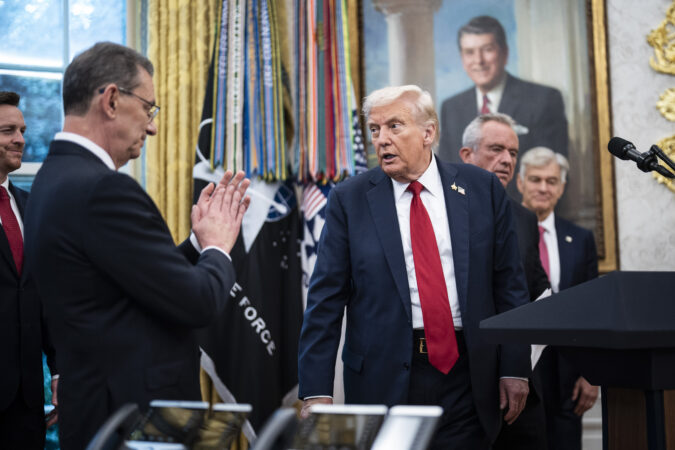
    Nine drug companies announced price cuts with Trump at the White House on Friday, touting discounts on medication to treat diabetes, heart disease, HIV, hepatitis B, and other conditions. The deals will offer discounts on drugs sold to the government and to Americans through a new website, TrumpRx.gov, in exchange for tariff relief and other incentives, including faster FDA reviews for future approvals.

    The program, known as the Most Favored Nation initiative, is an effort to link U.S. drug prices to lower costs abroad.

    “Every president for a generation has promised to reduce drug prices, but … I am the only one of them to ever even think in terms of ‘favored nations,’” Trump boasted Friday, flanked by drug-company executives and health officials.

    Friday’s announcements follow similar deals with five other companies, beginning in September when Pfizer CEO Albert Bourla joined Trump to unveil price cuts. Since then, other drug-company executives have joined Trump to announce discounts on fertility and GLP-1 drugs and other offerings. In return, the administration has lifted the threat of tariffs and offered the companies other benefits, such as priority vouchers to expedite FDA reviews, which can lead to hundreds of millions of dollars in additional revenue for a company if a new drug is quickly approved.

    Amgen, Boehringer Ingelheim, Bristol Myers Squibb, Genentech, Gilead Sciences, GSK, Merck, Novartis and Sanofi all announced new price cuts Friday. Three of the 17 pharmaceutical companies initially targeted by the Trump administration — AbbVie, Johnson & Johnson and Regeneron — have yet to appear with the president to tout price cuts, but officials said that those companies are set to make their own announcements soon.

    Trump has heralded his initiative — which he attempted to pursue in his first term — as one of his most significant achievements this year, arguing that even small savings matter amid the difficulty of curbing drug prices. The deep-pocketed pharmaceutical industry has repeatedly blocked most major efforts at reform for decades, and U.S. drug spending continues to rise, outpacing other wealthy countries.

    “This is the biggest thing ever to happen on drug pricing and on healthcare,” Trump claimed. He also criticized other countries for relying on high drug prices in the United States to subsidize the cost of pharmaceutical research and development, saying that global prices needed to be more equitable.

    “We were subsidizing the entire world. We’re not doing that anymore,” the president said.

    Democrats and outside experts have credited the deals as potentially helping some patients but said the initiative’s overall savings to the U.S. health system will be negligible and dismissed Trump’s hyperbole.

    “It’s a bit laughable to call this ‘the biggest thing ever’ in health policy. I’m not even sure this cracks the top 10 health policy changes,” said Craig Garthwaite, director of healthcare at Northwestern University’s Kellogg School of Management. “Giving Most Favored Nation prices to Medicaid, particularly for older drugs, likely won’t save that much.”

    The president has sought to make regular announcements about his drug-price deals, aiming to show progress and counter voter frustration over rising healthcare costs entering a midterm year that favors Democrats. Trump is timing Friday’s event to be one of his final White House events of the year, before he heads to North Carolina for a rally on affordability and then to his Mar-a-Lago resort.

    Pharmaceutical companies also touted their willingness to cut U.S. prices. A Bristol Myers Squibb executive said the company would provide its blood-thinning drug Eliquis, its most-prescribed medicine, to Medicaid free. Merck said it would offer discounts on its drugs Januvia, Janumet, and Janumet XR, which are used to treat Type 2 diabetes.

    “I reflect on your goal, driving affordability and access to Americans, but equally getting prices up outside the United States,” Merck CEO Robert Davis told Trump. “We’re 100 percent supportive of your actions.”

    Democrats have questioned whether Trump’s dealmaking with the companies is creating a quid pro quo, with pharmaceutical executives striking agreements to give the president a political win in exchange for potential profit.

    “Congress and the American people remain in the dark about the contours of your agreement with the Trump Administration,” Sen. Ron Wyden (D., Ore.) and Reps. Richard E. Neal (D., Mass.), Frank Pallone Jr. (D., N.J.) and Robert C. “Bobby” Scott (D., Va.) wrote in letters sent this week to pharmaceutical executives participating in the initiative. The lawmakers are the top Democrats on four congressional committees that oversee aspects of the U.S. health system.

    Several former FDA officials — including two physicians who recently oversaw the agency’s drug-regulation center — have warned that the voucher program may be illegal and risk undermining public health by streamlining reviews. While the agency’s drug reviews can traditionally take about a year, as scientists pore over safety and effectiveness data, Trump officials have said that the voucher program can guarantee a review within one or two months. The administration has defended the program, saying that safety and effectiveness remain priorities despite the accelerated timetable.

    Trump officials have used other levers, too. The administration has relied on the Centers for Medicare and Medicaid Services’s innovation center, which allows officials to pilot payment changes without seeking congressional approval, to pressure drug companies that do not voluntarily lower prices. Several drug-payment pilots have already been announced, and more are expected on Friday, the people said.

    Wall Street analysts say the companies have incentives to strike quick deals with the administration, rather than tempt Trump’s ire. Medicaid represents a relatively small portion of their business, and many companies are agreeing to price cuts similar to discount programs they have begun.

    Pfizer’s announcement with Trump also sent a signal to the rest of the industry, several pharmaceutical executives and industry analysts have told reporters.

    “When you saw the lack of impact to earnings of the initial companies’ deals, for most coming after, it’s a no-brainer,” said Chris Meekins, a managing director at Raymond James.

    Trump officials have said that the initial negotiations were tough, and securing concessions has become easier over time.

    “I think the first five companies that came through the pipeline were some of the hardest ones to get through,” CMS Administrator Mehmet Oz said in an interview on Dec. 7, pointing to the size of companies like Pfizer, AstraZeneca, and Eli Lilly, which were among the first companies to agree to deals.

    Trump officials have leaned on the healthcare companies’ civic responsibilities, in addition to applying pressure through tariffs and the CMS innovation center.

    Chris Klomp, the head of the Medicare program and a lead negotiator on the drug-price cuts, said he stressed “duty and patriotism” in a conversation with one prominent CEO.

    “And when we got done, he said, ‘I didn’t get into this business for [quarterly earnings],” Klomp said in remarks at last month’s MAHA Action summit. “I have children. I want to make them proud. I understand this is important to you and the president. We will show up.’”


  • How brokers gamed the ACA marketplace, roiling subsidy debate in Congress

    How brokers gamed the ACA marketplace, roiling subsidy debate in Congress

    The Florida insurance brokers offered an enticing deal to unemployed and homeless people: Enroll in a Healthcare.gov health plan they weren’t eligible for in exchange for gift cards, food, alcohol, or cash. They coached them to lie about their income to qualify for heavily subsidized coverage, according to court documents. Sometimes they enrolled people without their knowledge.

    A federal jury convicted Cory Lloyd and Steven Strong last month of collecting millions of dollars in commissions between 2018 and 2022 through a widespread plot to defraud the federal insurance marketplace. People earning at least the federal poverty level can get income-based subsidies to help them afford monthly premiums for plans sold through the Affordable Care Act. Under Lloyd and Strong’s scheme, the federal government paid at least $180 million in ineligible subsidies.

    Many more agents and brokers — likely thousands, according to two career staffers at the Centers for Medicare and Medicaid Services, who spoke on the condition of anonymity because they weren’t authorized to speak to press — are gaming the marketplace where 24 million Americans get health insurance.

    Corruption among Healthcare.gov agents and brokers had emerged as a sticking point in Washington as Congress failed to reach a deal to halt the year-end expiration of enhanced subsidies for insurance premiums, which will drive up the cost of plans for millions of Americans. Republicans invoked the fraud to argue against extending the subsidies while Democrats said the solution is better enforcement rather than withholding assistance from Americans who need it.

    Last year, the Biden administration temporarily suspended 850 insurance agents and brokers suspected of fraudulent or abusive conduct. CMS hasn’t terminated any agents or brokers this year — although spokesman Christopher Krepich said the agency has “initiated terminations” even as it sets up stricter enrollment rules for customers amid Administrator Mehmet Oz’s promises to root out fraud.

    Around 100,000 agents and brokers are authorized by Healthcare.gov. They facilitate more than three-quarters of enrollments. For each person enrolled, insurers pay them a small monthly commission, typically between $5 and $20. Florida, where Lloyd and Strong operated, offers the largest commissions in the country, averaging $28 per enrollee, according to the nonpartisan health policy organization KFF.

    A new government report underscored how easy it is to game the marketplace.

    When the Government Accountability Office, which evaluates federal programs and spending, submitted 20 fraudulent applications to Healthcare.gov for coverage this year, 19 were initially approved even though the agency didn’t submit documents requested to prove income, citizenship, and Social Security numbers. The marketplace terminated one enrollee for insufficient documentation. The government is still paying more than $10,000 a month in subsidies for 18 remaining enrollments.

    Investigators also discovered misuse of Society Security numbers — in one case, a single number was used for 125 policies in 2023 — and identified serious shortcomings in how CMS assesses marketplace fraud.

    Stopping marketplace fraud is “not a priority” for CMS, said Seto Bagdoyan, a director at GAO who worked on the report.

    Krepich said the agency has undertaken “a thorough investigation into improper agent and broker activity” and is committed to “ensuring consumers are never enrolled in coverage without their knowledge or consent.”

    Democrats complain the Trump administration is doing little to fix the problem despite its bluster about waste, fraud, and abuse in federal health programs.

    Rep. Lloyd Doggett (Texas), the top Democrat on a subcommittee overseeing CMS, wrote a letter to Oz last week requesting closer scrutiny of the reinstated agents and brokers. “The remedy is not to deny a mother access to care for her sick child,” Doggett said in a statement. “What we need is effective law enforcement.”

    Like brokers for Lloyd and Strong, who did not return requests for comment, many have enrolled people without their knowledge, switched their plan without their consent or created fake enrollments to maximize commissions.

    The GAO concluded that the enhanced subsidies worsened fraud in recent years as bad actors seized upon the beefier assistance to lure new customers. As enrollments on Healthcare.gov skyrocketed under the extra subsidies, fraudulent sign-ups grew too. The Congressional Budget Office estimated those misstating their incomes to get more subsidies nearly doubled from 1.3 million to 2.3 million between 2023 and 2025.

    “We believe that the expansion of the subsidies — which put more money in the pool — invigorated the financial incentive to sign up as many people as possible,” Bagdoyan said.

    The GAO’s findings were among the hurdles to Republicans in Congress agreeing to extend extra subsidies for a marketplace they’ve accused of failing to sufficiently police from bad actors.

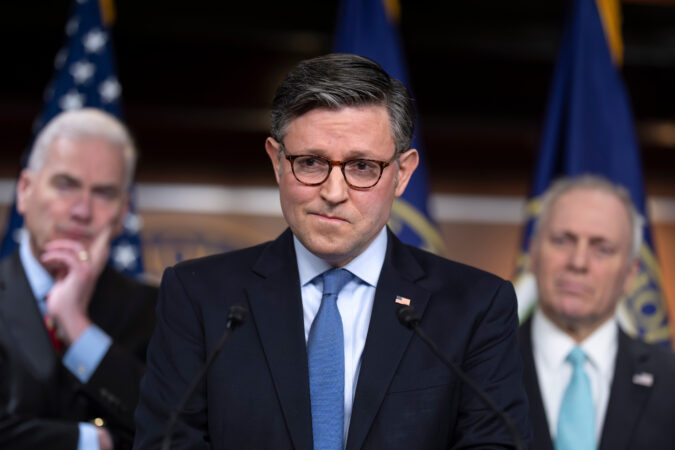
    “These findings validate long-standing Republican warnings: Obamacare’s subsidy system lacks even the most basic guardrails and has created an environment where criminals, identity thieves, and unscrupulous brokers can exploit taxpayers with ease,” House Speaker Mike Johnson (R., La.) said in a statement last week.

    Democrats say the proper response isn’t to let the extra subsidies expire but to go after the brokers.

    “I’ve always said any fraud is too much,” said Sen. Ron Wyden (Oregon), the top Democrat on the Senate Finance Committee, which has oversight of healthcare issues.

    Wyden introduced a bill to create new civil penalties for brokers who commit fraud. He said Republicans haven’t signed onto his bill or offered similar measures.

    After receiving hundreds of thousands of complaints about fraud, the Biden administration started requiring customers to hold a three-way call with their broker and the marketplace call center in July 2024. But the new policy left plenty of loopholes, agents told GAO. The rule didn’t apply to new enrollees. And the marketplace took only “limited steps to verify the identity of the consumer on the three-way call,” the report says.

    Oz has been vowing to root out the abuse, slamming the prior administration for rules he said were too lenient and touting stricter enrollment rules CMS released in June. Those rules don’t include any direct, new restrictions on agents and brokers but could indirectly make fraud harder by ending year-round enrollment for people earning less than 150% of the federal poverty level, roughly $23,000 for an individual.

    “The past administration prioritized achieving big program enrollment numbers over protecting program integrity,” Oz said in a video posted recently to X.

    CMS is also preparing to implement stricter verification requirements laid out in Trump’s sweeping tax-and-spending law he signed this summer. That legislation bans the marketplaces from awarding subsidies before verifying a customer’s personal information, including their income and legal status, before awarding any subsidies, which could make it harder for bad actors to sign people up.

  • Syria welcomes the permanent repeal of sweeping U.S. sanctions

    Syria welcomes the permanent repeal of sweeping U.S. sanctions

    DAMASCUS, Syria — Syria’s government and its allies on Friday welcomed the final lifting of the most draconian sanctions imposed on the country in recent decades.

    The U.S. Congress imposed the so-called Caesar Act sanctions on Syria’s government and financial system in 2019 to punish then-President Bashar Assad for human rights abuses during the country’s nearly 14-year Civil War that began in 2011.

    After Assad was ousted in a lightning rebel offensive in December 2024, advocates — including some who had previously lobbied for the imposition of the sanctions — pushed to have the penalties removed. They argued that the sanctions were preventing international investors from launching Reconstruction projects and blocking Syria from rebuilding its battered economy and infrastructure.

    U.S. President Donald Trump, who had previously lifted the penalties temporarily by executive order, signed off on the final repeal late Thursday after Congress passed it as part of the country’s annual defense spending bill.

    Some lawmakers had pushed for making the repeal conditional on steps by the new Sunni Islamist-dominated Syrian government to protect religious minorities, among other measures. In the end, the sanctions were repealed without conditions but with a requirement for periodic reports to Congress on Syria’s progress on issues including minority rights and counterterrorism measures.

    Syria’s foreign ministry in a statement Friday thanked the U.S. for the move and said it will “contribute to alleviating the burdens on the Syrian people and open the way for a new phase of recovery and stability.”

    It called for Syrian businesspeople and foreign investors to “explore investment opportunities and participate in Reconstruction,” the cost of which the World Bank has estimated at $216 billion.

    Central Bank Governor Abdulkader Husrieh said in a statement that the Caesar Act repeal will facilitate the country’s reintegration in the international financial system by allowing it to seek a sovereign credit rating.

    “Syria will likely start with a low rating, which is normal for countries emerging from conflict,” he said. “The real value lies in the benchmark set by the rating and the road map it provides for improvement.”

    Turkey, Saudi Arabia and Qatar, regional allies of the new Syrian government led by interim President Ahmad al-Sharaa, also welcomed the move.

    “We hope that this step will contribute to strengthening stability, security, and prosperity in Syria by further promoting international cooperation toward the country’s Reconstruction and development,” Turkish Foreign Ministry spokesman Oncu Keceli said in a statement.

    The Saudi foreign ministry commended “the significant and positive role played by U.S. President Donald Trump” in lifting the sanctions.

    Trump previously said that he had moved to remove the penalties at the urging of Crown Prince Mohammed bin Salman, the Saudi de facto ruler, and Turkish President Recep Tayyip Erdogan.

    Also Friday, the United Kingdom — which had previously removed its own broad sanctions against the Syrian government and financial institutions — imposed new sanctions on organizations and individuals it said were “involved in violence against civilians” in Syria.

    They include four people affiliated with Assad’s government in either a military or financial role as well as two people and three armed groups affiliated with the military of the new Syrian government who were allegedly responsible for attacks on civilians during sectarian violence on Syria’s coast earlier this year.

    Clashes erupted in March after a group of Assad loyalists attacked security forces. They spiraled into revenge killings as militants from Syria’s Sunni majority — some of them officially affiliated with the new government’s security forces — targeted members of the Alawites sect to which Assad belongs, regardless of whether they were involved in the insurgency. Hundreds of civilians were killed.

  • Head of workplace rights agency urges white men to report discrimination

    Head of workplace rights agency urges white men to report discrimination

    The head of the U.S. agency for enforcing workplace civil rights posted a social media call-out urging white men to come forward if they have experienced race or sex discrimination at work.

    “Are you a white male who has experienced discrimination at work based on your race or sex? You may have a claim to recover money under federal civil rights laws,” U.S. Equal Employment Opportunity Commission Chair Andrea Lucas, a vocal critic of diversity, equity and inclusion, wrote in an X post Wednesday evening with a video of herself. The post urged eligible workers to reach out to the agency “as soon as possible” and referred users to the agency’s fact sheet on “DEI-related discrimination” for more information.

    Lucas’ post, viewed millions of times, was shared about two hours after Vice President JD Vance posted an article he said “describes the evil of DEI and its consequences,” which also received millions of views. Lucas responded to Vance’s post saying: “Absolutely right @JDVance. And precisely because this widespread, systemic, unlawful discrimination primarily harmed white men, elites didn’t just turn a blind eye; they celebrated it. Absolutely unacceptable; unlawful; immoral.”

    She added that the EEOC “won’t rest until this discrimination is eliminated.”

    A representative for Vance did not respond to a request for comment. Lucas said Thursday evening that “the gaslighting surrounding what DEI initiatives have entailed in practice ends now. We can’t attack and remedy a problem if we refuse to call it out for what it is — race or sex discrimination — or acknowledge who is harmed.”

    She added that “the EEOC’s doors are open to all,” and Title VII of the Civil Rights Act of 1964 “protects everyone, including white men.”

    Since being elevated to acting chair of the EEOC in January, Lucas has been shifting the agency’s focus to prioritize “rooting out unlawful DEI-motivated race and sex discrimination,” aligning with President Donald Trump’s own anti-DEI executive orders. Trump named Lucas as the agency’s chair in November.

    Earlier this year, the EEOC along with the Department of Justice issued two “technical assistance” documents attempting to clarify what might constitute “DEI-related Discrimination at Work” and providing guidance on how workers can file complaints over such concerns. The documents took broad aim at practices such as training, employee resource groups and fellowship programs, warning such programs — depending on how they’re constructed — could run afoul of Title VII of the Civil Rights Act, which prohibits employment discrimination based on race and gender.

    Those documents have been criticized by former agency commissioners as misleading for portraying DEI initiatives as legally fraught.

    David Glasgow, executive director of the Meltzer Center for Diversity, Inclusion, and Belonging at the NYU School of Law, said Lucas’s latest social media posts demonstrate a “fundamental misunderstanding of what DEI is.”

    “It’s really much more about creating a culture in which you get the most out of everyone who you’re bringing on board, where everyone experiences fairness and equal opportunity, including white men and members of other groups,” Glasgow said.

    The Meltzer Center tracks lawsuits that are likely to affect workplace DEI practices, including 57 cases of workplace discrimination. Although there are instances in which it occurs on a case-by-case basis, Glasgow said he has not seen “any kind of systematic evidence that white men are being discriminated against.”

    He pointed out that Fortune 500 CEOs are overwhelmingly white men, and that relative to their share of the population, the demographic is overrepresented in corporate senior leadership, Congress, and beyond.

    “If DEI has been this engine of discrimination against white men, I have to say it hasn’t really been doing a very good job at achieving that,” Glasgow said.

    Jenny Yang, a former EEOC chair and now a partner at law firm Outten & Golden, said it is “unusual” and “problematic” for the head of the agency to single out a particular demographic group for civil rights enforcement.

    “It suggests some sort of priority treatment,” Yang said. “That’s not something that sounds to me like equal opportunity for all.”

    On the other hand, the agency has done the opposite for transgender workers, whose discrimination complaints have been deprioritized or dropped completely, Yang said.

    The EEOC has limited resources, and must accordingly prioritize which cases to pursue. But treating charges differently based on workers’ identities goes against the mission of the agency, she said.

    “It worries me that a message is being sent that the EEOC only cares about some workers and not others,” Yang said.