Blog

  • Horoscopes: Friday, Dec. 19, 2025

    ARIES (March 21-April 19). Don’t bother weighing the positives and negatives. Not only do they lack actual weight, but it’s impossible to know which are “negatives” or “positives” because what seems inconvenient today may prove, in the long view, to be your best luck yet.

    TAURUS (April 20-May 20). Your dream can work! The gatekeepers just don’t see it yet. It’s not for them. So don’t shrink the vision; shift the setting. A different venue, format or audience will be a better fit. This project just needs the proper container.

    GEMINI (May 21-June 21). Some people love with words, others with total silence and careful listening. Some love with support, others with competition. Assume what’s offered is a form of love. If it’s not the kind you most need, keep moving and you’ll find it.

    CANCER (June 22-July 22). Information spreads fast through the gossips, broadcasters and other natural amplifiers. Today, use that to your advantage. Give the talkers something worth talking about, and let their distribution network work in your favor.

    LEO (July 23-Aug. 22). You genuinely want what’s best for others, but you also need care. Can you make more time for yourself? Carve out a few hours for the special things that matter to you — things that have nothing to do with serving others.

    VIRGO (Aug. 23-Sept. 22). Out of kindness, you’ve sometimes dimmed your light around people who feel competitive or fragile. But today, don’t worry. Your brightness will not destabilize others. If anything, when you shine, you expand the field for everyone connected to you.

    LIBRA (Sept. 23-Oct. 23). Those who are unaware of what others expect of them are liable to disappoint people by breaking “agreements” they didn’t even know they made. You avoid this dynamic by staying aware of social contracts, spoken and unspoken.

    SCORPIO (Oct. 24-Nov. 21). To say you’re a dancer seems to imply a certain skill level, but what if being a dancer is just about dancing? Do the action today and don’t worry about the identity. Identity follows action, not the other way around.

    SAGITTARIUS (Nov. 22-Dec. 21). Talk about what you do and what you need. Opportunities aren’t as rare as some would have you believe. There is always room for new ideas, especially ones that improve people’s lives, and those come so easily to you!

    CAPRICORN (Dec. 22-Jan. 19). Your steadiness doesn’t come from rigidity, but from being rooted, like a tree that can bend with the wind. You’ll attract people who need a bit of grounding, and you’ll kindly let them lean on you for the support that is so easy for you to give.

    AQUARIUS (Jan. 20-Feb. 18). Take measures to make sure everyone is on the same page. What could possibly be misunderstood? Check and double-check. Miscommunication leads to mistakes, but good communication and a little diligence now will prevent problems down the line.

    PISCES (Feb. 19-March 20). There is no clear winner today, which is how you know you’re not in a game, but in something with deeper dimensions, like a purpose or an epic story — a grand landscape or a love affair.

    TODAY’S BIRTHDAY (Dec. 19). It’s your Year of the Electric Surprise. Your network expands wildly — coincidences, encounters, coffee meetings and phone calls all lead somewhere thrilling… if not right away then after a bit of follow-through. At certain points, numerous opportunities chase you at once, so you have your pick. More highlights: romance that’s plentiful and genuine, exceptional creative output people pay for, share and celebrate. Taurus and Scorpio adore you. Your lucky numbers are: 5, 19, 8, 14 and 40.


  • Man suspected in Brown University shooting and MIT professor’s killing is found dead, officials say

    Man suspected in Brown University shooting and MIT professor’s killing is found dead, officials say

    A frantic search for the suspect in last weekend’s mass shooting at Brown University ended Thursday at a New Hampshire storage facility where authorities discovered the man dead inside and then revealed he also was suspected of killing a Massachusetts Institute of Technology professor.

    Claudio Neves Valente, 48, a former Brown student and Portuguese national, was found dead Thursday evening from a self-inflicted gunshot wound, said Col. Oscar Perez, the Providence police chief.

    Investigators believe he is responsible for fatally shooting two students and wounding nine other people in a Brown University lecture hall last Saturday, then killing Portuguese MIT professor Nuno F.G. Loureiro two days later at his Brookline home, nearly 50 miles (80 kilometers) from Providence. Perez said as far as investigators know, Neves Valente acted alone.

    Brown University President Christina Paxson said Neves Valente was enrolled there as a graduate student studying physics from the fall of 2000 to the spring of 2001.

    “He has no current affiliation with the university,” she said.

    Neves Valente and Loureiro previously attended the same academic program at a university in Portugal between 1995 and 2000, U.S. attorney for Massachusetts Leah B. Foley said. Loureiro graduated from the physics program at Instituto Superior Técnico, Portugal’s premier engineering school, in 2000, according to his MIT faculty page. The same year, Neves Valente was let go from a position at the Lisbon university, according to an archive of a termination notice from the school’s then-president in February 2000.

    Neves Valente had studied at Brown on a student visa. He eventually obtained legal permanent residence status in September 2017, Foley said. It was not immediately clear where he was between taking a leave of absence from the school in 2001 and getting the visa in 2017. His last known residence was in Miami.

    After officials revealed the suspect’s identity, President Donald Trump suspended the green card lottery program that allowed Neves Valente to stay in the United States.

    There are still “a lot of unknowns” in regard to motive, Rhode Island Attorney General Peter Neronha said. “We don’t know why now, why Brown, why these students and why this classroom,” he said.

    How the investigation has unfolded

    Police credited a person who had several encounters with Neves Valente as providing the crucial tip that led to the shooter.

    “When you do crack it, you crack it. And that person led us to the car, which led us to the name,” Neronha said.

    After police posted images of a person of interest, the witness recognized him and posted his suspicions on the social media forum Reddit.

    But it took days before police say they interviewed him and only after publicizing a video where Neves Valente appeared to run away from the other man. The Reddit commenter didn’t respond to questions from The Associated Press earlier week but returned to the forum on Wednesday night to say that he was just interviewed by investigators.

    His tip gave investigators a key detail: a Nissan sedan with Florida plates. That enabled Providence police officers to tap into a network of more than 70 street cameras operated around the city by surveillance company Flock Safety. Those cameras track license plates and other vehicle details.

    After leaving Rhode Island, Providence officials said Neves Valente stuck a Maine license plate over the rental car’s plate to help conceal his identity.

    Video footage showed Neves Valente entering an apartment building near Loureiro’s in a Boston suburb. About an hour later, Neves Valente was seen entering the Salem, New Hampshire, storage facility where he was found dead, Foley said. He had with him a satchel and two firearms, Neronha said.

    Loureiro joined MIT in 2016 and was named last year to lead the school’s Plasma Science and Fusion Center, one of its largest laboratories. He had been working to explain the physics behind astronomical phenomena such as solar flares.

    The FBI previously said it knew of no links between the two shootings.

    Although Brown officials say there are 1,200 cameras on campus, the attack happened in an older part of the engineering building that has few, if any, cameras. And investigators believe the shooter entered and left through a door that faces a residential street bordering campus, which might explain why the cameras Brown does have didn’t capture footage of the person.

    What happened in past investigations?

    In such targeted and highly public attacks, the shooters typically kill themselves or are killed or arrested by police, said Katherine Schweit, a retired FBI agent and expert on mass shootings. When they do get away, searches can take time.

    In the 2013 Boston Marathon bombing, it took investigators four days to catch up to the two brothers who carried it out. In a 2023 case, Army reservist Robert Card was found dead of an apparent suicide two days after he killed 18 people and wounded 13 others in Lewiston, Maine.

    The man accused of killing conservative political figure Charlie Kirk in September turned himself in about a day and a half after the attack on Utah Valley University’s campus. And Luigi Mangione, who has pleaded not guilty to murder charges in the killing of UnitedHealthcare CEO Brian Thompson in Manhattan last year, was arrested five days later at a McDonald’s in Pennsylvania.

  • Flyers’ five-game point streak is snapped with 5-3 loss at the Sabres

    Flyers’ five-game point streak is snapped with 5-3 loss at the Sabres

    BUFFALO ― The Flyers are having better days lately, but came up short on Thursday night, falling 5-3 to the Buffalo Sabres.

    The loss snapped the Flyers’ five-game point streak and is their first road loss in regulation since a 3-0 stinker against the Tampa Bay Lightning on Nov. 24.

    Things started well for the Flyers. They came out in dominating fashion, but for the 23rd time — in 33 games — they trailed 1-0. It is just their seventh loss (12-7-4) when trailing first.

    Jack Quinn knocked down a Travis Konecny pass in the neutral zone, and the Sabres took the puck the other way. Zach Benson carried the puck down the left board before curling and feeding Mattias Samuelsson at the point. Samuelsson, the son of former Flyers defenseman Kjell Samuelsson, put the puck on net quickly, and Quinn redirected it past Sam Ersson.

    But before the KeyBank Center’s announcer could finish announcing the goal, 58 seconds later, Noah Cates found the back of the net to tie it at 1. Sabres defenseman Rasmus Dahlin moved a dump-in by Cates up the boards, but Bobby Brink picked up the loose puck.

    Brink carried the puck up the boards and maintained control under pressure before turning back down the boards and into the left circle. He dished a backhand pass to Cates, who snapped the one-timer past the glove of former Flyer goalie Alex Lyon.

    According to Natural Stat Trick, by the end of the first period, the Flyers had a 12-4 lead in shots on goal, had 21 shot attempts to the Sabres’ five, and 88.45% of the expected-goals share.

    The Flyers took a 2-1 lead with 8 minutes, 59 seconds to go in the second period. As Trevor Zegras carried the puck through the offensive zone, Cam York cut through the middle, turned, and received a no-look pass from Zegras in the right circle.

    York held the puck and then sent the wrister past Lyon. The goal was the defenseman’s second of the season.

    But in a period that saw an almost even number of shots, 12 for the Sabres and 10 for the Flyers, Buffalo took a 3-2 lead.

    Off a defensive-zone face-off, the Flyers got stuck in their own end, and 32 seconds later, the Sabres tied the game at 2. Travis Sanheim played the puck along the left boards, but right to Buffalo’s Dahlin. He dropped the puck between his legs in front to Tage Thompson, and the winger skated to the middle before beating Ersson.

    The Flyers’ Noah Cates (27) celebrates his goal during the first period on Thursday night.

    Noah Ostlund gave the Sabres their second lead of the game less than three minutes later. With 30 seconds left in the middle frame, he sent a shot from the point past several bodies that appeared to screen Ersson.

    In the third period, Josh Norris scored to give Buffalo a two-goal cushion. Norris was sitting wide-open in front during a power play when he received a cross-crease pass from Benson. The center waited and whipped the puck past Ersson 18 seconds into a high-sticking penalty on Brink. Philly went 4-for-5 on the penalty kill.

    Konecny cut it to a one-goal game with 5:32 remaining off a pass from Emil Andrae. The Flyers had the puck in the offensive zone for 52 seconds when Andrae at the left point found Konecny curling above the right circle.

    The goal, which came from a similar spot as York’s, is Konecny’s 10th of the season and fifth in December. He has 11 points in his last nine games.

    Breakaways

    Buffalo’s Ryan McLeod scored an empty-netter. … The Flyers placed defenseman Egor Zamula on waivers on Thursday. … Defenseman Noah Juulsen and forward Nikita Grebenkin were the healthy scratches. … Ersson allowed four goals on 27 shots. The Flyers put 27 shots on goal, too, with only five coming in the third period. … Flyers forward Matvei Michkov, who was handed a questionable goaltending interference call and was cross-checked while down multiple times — without a call — played 15:27. It is his highest ice time since Dec. 3 (six games ago).

    Up next

    The Flyers head downstate to face the New York Rangers on Saturday (12:30 p.m., NBCSP).

  • Coast Guard abruptly deletes swastika, noose entry from policy manual

    Coast Guard abruptly deletes swastika, noose entry from policy manual

    The U.S. Coast Guard on Thursday deleted language from its new workplace harassment policy that had downgraded the definition of swastikas and nooses from overt hate symbols to “potentially divisive,” an abrupt turnaround after the more lenient interpretation of those items was allowed to take effect this week despite objections from Congress.

    In a message to all Coast Guard personnel, Adm. Kevin Lunday, the service’s acting commandant, said those revisions had been “completely removed” from the policy manual. The document, a copy of which was reviewed by the Washington Post, now shows a large black bar obscuring the relevant chapter in its table of contents and a message directing readers to a separate manual outlining the Coast Guard’s civil rights policies.

    Lunday’s message also says that a separate directive he issued last month prohibiting swastikas and nooses “remains in full effect.”

    The sudden turn of events appeared to satisfy Sens. Tammy Duckworth (D., Ill.) and Jacky Rosen (D., Nev.), who said after Lunday’s announcement that they had lifted their holds on his nomination to become the service’s full-time commandant. Both cited their disapproval of the new policy when explaining earlier this week why they had taken such measures.

    Lunday’s announcement caps a tumultuous few weeks within the Coast Guard, following Washington Post reports detailing the service’s plan to include the incendiary language within its new workplace harassment manual, its vow to reverse course in the face of widespread criticism, and the wording’s surprising retention as the new manual took effect earlier this week.

    In response to the Post’s initial reporting in late November, Lunday issued an order condemning and categorically prohibiting swastikas and nooses, and said then that his directive would supersede any other policy language. But for reasons that remain unclear, Lunday’s order was never incorporated.

    Two people familiar with the policy manual overhaul said this week that the Coast Guard, which is overseen by the Department of Homeland Security, wanted to strike the “potentially divisive” wording from the document but was unable to do so. They spoke on the condition of anonymity to discuss the contentious situation.

    The Coast Guard’s hazing and harassment policy was an early focus of Lunday’s after the Trump administration, upon entering office in January, fired his predecessor, Adm. Linda Fagan — the first woman to lead a branch of the U.S. military. In announcing Fagan’s removal, officials cited among other things her “excessive focus” on diversity and inclusion initiatives.

    Within days, Lunday ordered the suspension of the policy manual that, among its other guidance, said explicitly that the swastika was among a “list of symbols whose display, presentation, creation, or depiction would constitute a potential hate incident.” Nooses and the Confederate flag also matched that description under the previous policy. Lunday was later nominated by Trump to lead the service as its commandant.

    In a statement announcing that she had lifted her hold on his nomination, Rosen said she had put another on Sean Plankey, Trump’s nominee to be the director of Homeland Security’s Cybersecurity and Infrastructure Security Agency, and “will keep that hold in place until we see that this new policy works to protect our men and women in uniform from racist and antisemitic harassment.” She also chastised leadership within the Coast Guard and at DHS who, she said, had been “evasive, misleading, and elusive” as lawmakers sought assurances the “potentially divisive” wording would be cut from the policy manual.

    Homeland Security Secretary Kristi L. Noem said in a social media post earlier Thursday that the language was being removed from the manual “so no press outlet, entity or elected official may misrepresent the Coast Guard to politicize their policies and lie about their position on divisive and hate symbols.”

    Neither DHS nor the Coast Guard has addressed questions seeking to understand whether Lunday, as acting commandant, was empowered to change the manual’s wording on his own or if DHS leadership had to approve it.

    The lack of action, particularly amid a rise in antisemitism, incensed an array of lawmakers, including Republicans, who said Lunday had pledged to them that the “potentially divisive” wording would be removed from the policy manual before it went into effect.

    Several expressed anger at the existence of an official U.S. government document defining swastikas, inseparable from the extermination of millions of Jews in World War II, and nooses, a symbol of racial hatred, as “potentially divisive.”

    Sen. James Lankford (R., Okla.) was among those who registered disapproval with what his office called the Coast Guard’s “conflicting policies.” A GOP aide said Lankford took his concerns directly to the Trump administration and urged officials to change the manual.

  • CHOP faces threat as Trump administration proposes rules to stop gender-affirming care for minors

    CHOP faces threat as Trump administration proposes rules to stop gender-affirming care for minors

    President Donald Trump’s administration proposed a sweeping set of rules Thursday designed to prevent hospitals from providing gender-affirming care to minors, a move that could have consequential implications for Children’s Hospital of Philadelphia.

    CHOP runs one of the nation’s largest clinics providing medical care and mental health support for transgender and gender-nonbinary children and teens and their families. Each year, hundreds of new families seek care at CHOP’s Gender and Sexuality Development Program, created in 2014. The information of CHOP patients who have sought gender-affirming care had been the target of a recent unsuccessful lawsuit from the Trump administration.

    The proposals constitute the most significant moves the administration has taken to restrict the use of puberty blockers, hormone therapy, and surgical interventions for transgender people under the age of 18 — including cutting off federal Medicaid and Medicare funding from hospitals that provide gender-affirming care to children and prohibiting federal Medicaid dollars from being used to fund such procedures.

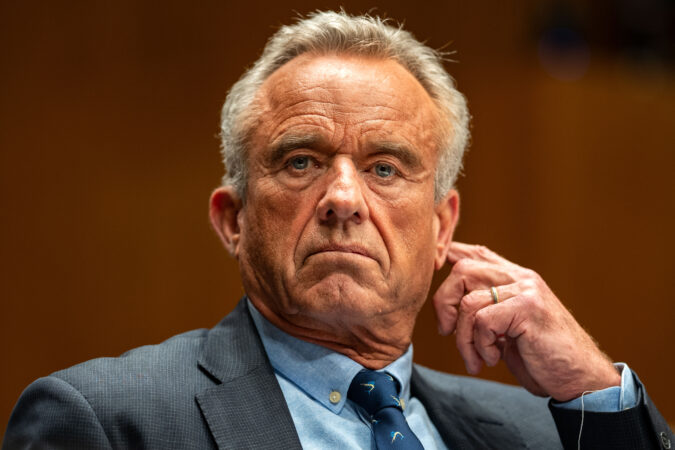
    “This is not medicine, it is malpractice,” Health Secretary Robert F. Kennedy Jr. said, referring to gender-affirming procedures, at a news conference Thursday. “Sex-rejecting procedures rob children of their futures.”

    CHOP, like most other hospitals in the country, participates in both Medicare and Medicaid.

    CHOP declined to comment Thursday.

    The renowned pediatric hospital treats children and teens with gender dysphoria — a medical condition in which a person’s body does not match their gender identity. Its doctors prescribe hormone therapy and puberty blockers.

    The American Academy of Pediatrics and other major medical associations, citing research, widely accept such medications as safe, effective, and medically necessary for the patients’ mental health.

    CHOP has said its doctors do not prescribe any medication before its patients undergo extensive medical and psychological evaluations.

    Gender-affirming care is legal in Pennsylvania, and states, not the federal government, regulate medicine and doctors.

    But Trump has sought to criminalize this care for minors, saying doctors are engaged in “chemical mutilation,” akin to child abuse, and he has called the research “junk science.”

    Just days into his second term in office, the president issued an executive order titled “Protecting Children from Chemical and Surgical Mutilation,” which contains inflammatory and misleading descriptions of largely medically approved transgender care. Kennedy has followed the president’s lead, signing a declaration Thursday rejecting these procedures.

    Other actions proposed Thursday include the U.S. Food and Drug Administration issuing warning letters to 12 manufacturers and retailers for what an HHS news release claims to be “illegal marketing of breast binders to children for the purposes of treating gender dysphoria.”

    The court battle over gender care for minors

    In June, the U.S. Department of Justice issued subpoenas to CHOP and at least 19 other hospitals that treat transgender youth as part of an investigation into possible healthcare fraud. The federal subpoenas demanded patient medical records, including their dates of birth, Social Security numbers, and addresses, as well as every communication by doctors — emails, voicemails, and encrypted text messages — dating back to January 2020.

    The subpoenas touched off a wave of legal battles that continue to play out. Several hospitals around the country, including CHOP, filed motions asking federal judges to block the release of private patient information.

    So far, federal judges in Philadelphia, Boston, and Washington state have sided with the hospitals, ruling the subpoenas were politically motivated.

    In Philadelphia, U.S. District Judge Mark A. Kearney last month determined that the “privacy interests of children and their families substantially outweighs the department’s need to know” such confidential and sensitive information. The federal government has 60 days to appeal the Nov. 21 ruling.

    In September, patients and their parents joined the legal fight to limit the scope of the subpoenas issued to CHOP and UPMC Children’s Hospital of Pittsburgh. The Philadelphia-based Public Interest Law Center (PILC) filed separate but similar legal relief on behalf of families with children and teens who have received gender-affirming care at CHOP and in Pittsburgh.

    The federal judge presiding over the Pittsburgh hospital’s case has yet to issue a ruling. Earlier this week, however, DOJ lawyers said they are willing to accept redacted medical records. They argued that would solve the dispute over patient privacy rights.

    On Thursday, Mimi McKenzie, PILC’s legal director, said the center “strongly disagrees” and would fight the release of redacted medical records.

    “These records are so deeply personal and contain such highly sensitive information about these young patients,” McKenzie said. “There is no anonymization or redaction that can protect their privacy interests.”

    McKenzie said the proposed federal rule to ban all federal funding to hospitals that treat transgender youth would “face a myriad of legal challenges.” She described gender-affirming care as “lifesaving” for many children.

    “The notion that our federal government would tell hospitals to pick which children you want to save — the children who need gender-affirming care or all the other children — is despicable. The cruelty of this administration knows no bounds.”

    Other institutions have recoiled in the face of the Trump administration’s threats.

    Earlier this year, Penn Medicine and Penn State Health cut back gender-affirming care for youth. Nemours Children’s Hospital in Delaware and UPMC Children’s Hospital of Pittsburgh announced they will no longer provide gender-affirming care beyond behavioral health services to new patients.

    All cited fear of federal funding cuts.

  • TikTok signs deal to sell U.S. unit to American investors, including Oracle, Silver Lake

    TikTok signs deal to sell U.S. unit to American investors, including Oracle, Silver Lake

    SAN FRANCISCO — TikTok has signed agreements with three major investors — Oracle, Silver Lake, and MGX — to form a new TikTok U.S. joint venture, ensuring the popular social video platform can continue operating in the United States.

    The deal is expected to close on Jan. 22, according to an internal memo seen by the Associated Press. In the communication, CEO Shou Zi Chew confirmed to employees that ByteDance and TikTok signed the binding agreements with the consortium.

    “I want to take this opportunity to thank you for your continued dedication and tireless work. Your efforts keep us operating at the highest level and will ensure that TikTok continues to grow and thrive in the U.S. and around the world,” Chew wrote in the memo to employees. “With these agreements in place, our focus must stay where it’s always been — firmly on delivering for our users, creators, businesses and the global TikTok community.”

    Half of the new TikTok U.S. joint venture will be owned by a group of investors — among them Oracle, Silver Lake, and the Emirati investment firm MGX, who will each hold a 15% share. 19.9% of the new app will be held by ByteDance itself, and another 30.1% will be held by affiliates of existing ByteDance investors, according to the memo. The memo did not say who the other investors are and both TikTok and the White House declined to comment.

    The U.S. venture will have a new, seven-member majority-American board of directors, the memo said. It will also be subject to terms that “protect Americans’ data and U.S. national security.”

    U.S. user data will be stored locally in a system run by Oracle.

    TikTok’s algorithm — the secret sauce that powers its addictive video feed — will be retrained on U.S. user data to “ensure the content feed is free from outside manipulation,” the memo said. The U.S. venture will also oversee content moderation and policies within the country.

    American officials have previously warned that ByteDance’s algorithm is vulnerable to manipulation by Chinese authorities, who can use it to shape content on the platform in a way that’s difficult to detect.

    The algorithm has been a central issue in the security debate over TikTok. China previously maintained the algorithm must remain under Chinese control by law. But the U.S. regulation passed with bipartisan support said any divestment of TikTok must mean the platform cuts ties — specifically the algorithm — with ByteDance.

    The deal marks the end of years of uncertainty about the fate of the popular video-sharing platform in the United States. After wide bipartisan majorities in Congress passed — and President Joe Biden signed — a law that would ban TikTok in the U.S. if it did not find a new owner in the place of China’s ByteDance, the platform was set to go dark on the law’s January 2025 deadline. For a several hours, it did. But on his first day in office, President Donald Trump signed an executive order to keep it running while his administration tries to reach an agreement for the sale of the company.

    Three more executive orders followed, as Trump, without a clear legal basis, continued to extend the deadline for a TikTok deal. The second was in April, when White House officials believed they were nearing a deal to spin off TikTok into a new company with U.S. ownership that fell apart after China backed out following Trump’s tariff announcement. The third came in June, then another in September, which Trump said would allow TikTok to continue operating in the United States in a way that meets national security concerns.

    TikTok has more than 170 million users in the U.S. About 43% of U.S. adults under the age of 30 say they regularly get news from TikTok, higher than any other social media app including YouTube, Facebook and Instagram, according to a Pew Research Center report published this fall.

  • WNBA players union authorizes negotiators to call a strike if needed during CBA talks

    WNBA players union authorizes negotiators to call a strike if needed during CBA talks

    NEW YORK — WNBA players have authorized their union’s executive council to call a strike if necessary, the union announced Thursday as it continues to negotiate a collective bargaining agreement with the league.

    The WNBPA and league have been negotiating a new agreement for the past few months, extending the deadline a couple of times with the latest one set to expire Jan. 9. The move gives union negotiators another tool to use in talks.

    “The players’ decision is an unavoidable response to the state of negotiations with the WNBA and its teams,” the union said in a statement. “Time and again, the players’ thoughtful and reasonable approach has been met by the WNBA and its teams with a resistance to change and a recommitment to the draconian provisions that have unfairly restricted players for nearly three decades.”

    The union said there was overwhelming support in the vote to allow the executive council to call for a strike when it sees fit. With 93% of players voting, 98% voted yes to authorize a strike if needed.

    “The players’ vote is neither a call for an immediate strike nor an intention to pursue one. Rather, it is an emphatic affirmation of the players’ confidence in their leadership,” the statement said.

    A strike could delay the WNBA expansion draft and the beginning of free agency, which usually starts in late January. The season itself isn’t expected to begin until late April or early May. The Portland Fire and Toronto Tempo will begin play in 2026, with teams in Cleveland (2028), Detroit (2029), and Philadelphia (2030) to follow.

    Players and owners have been meeting regularly to negotiate. Increased salaries and revenue sharing are two big areas that the sides aren’t close on.

    The league offered a max salary that would have guaranteed a $1 million base, with projected revenue sharing pushing total earnings for max players to more than $1.2 million in 2026, a person familiar with the negotiations told the Associated Press. The person spoke to the AP on condition of anonymity Nov. 30 because of the sensitivity of the negotiations.

    “The league remains steadfast in its commitment to reaching an agreement as soon as possible and delivering a 30th season for the players, fans, teams, and partners,” the WNBA said in its own statement later Thursday afternoon. “We have negotiated in good faith and with urgency, and remain focused on finalizing a new collective bargaining agreement that not only meaningfully enhances player pay, benefits, and experience, but also does so in a way that ensures the long-term growth of the game and the league’s capacity to serve the next generation of WNBA players.”

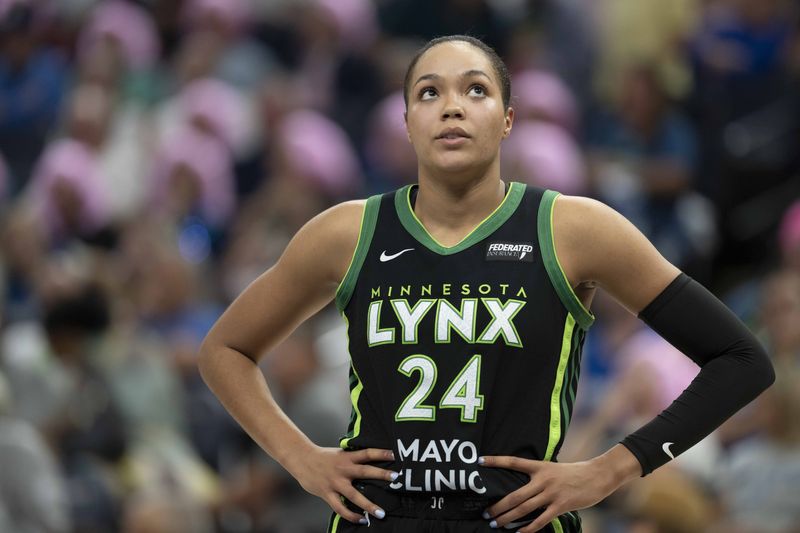
    Minnesota Lynx forward Napheesa Collier is on the executive board of the WNBA players’ union.

    Napheesa Collier, who is on the executive council, said in a Zoom earlier this week that players are also fighting for childcare and retirement benefits. She acknowledged that revenue sharing remains the main issue, which is why other topics haven’t been talked about as much.

    “I don’t think there’s fatigue,” Collier said. “Obviously, there’s frustration in that both sides are trying to get what they want, but we still have that fire within us that we’re willing to do what it takes. We’re going to do whatever it takes to get what we think we deserve.”

    Indiana Fever star Caitlin Clark said at USA Basketball camp last week that this was the “biggest moment in the history” of the league.

    “It’s not something that can be messed up,” Clark said.

    “We’re going to fight for everything we deserve, but at the same time we need to play basketball. That’s what our fans crave. You want the product on the floor. In the end of the day that’s how you’re marketable, that’s what the fans want to show up for.”

  • Trump’s handpicked board votes to rename Washington performing arts center the Trump Kennedy Center

    Trump’s handpicked board votes to rename Washington performing arts center the Trump Kennedy Center

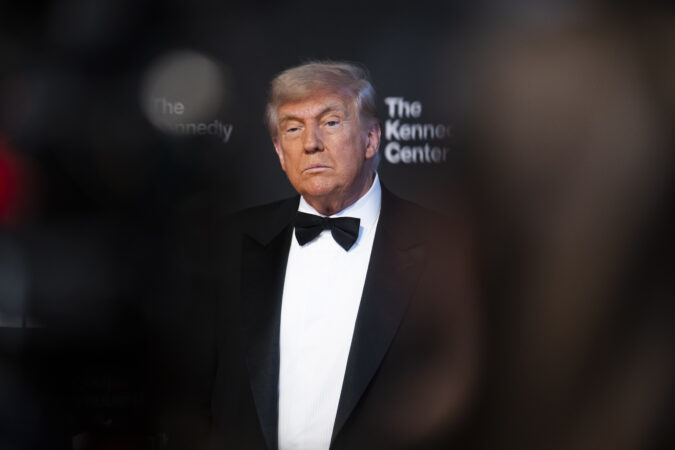
    WASHINGTON — President Donald Trump’s handpicked board voted Thursday to rename Washington’s leading performing arts center as the Trump Kennedy Center, the White House said, in a move that made Democrats fume, saying the board had overstepped its legal authority.

    Congress named the center after President John F. Kennedy in 1964, after his assassination. Donald A. Ritchie, who served as Senate historian from 2009-2015, said that because Congress had first named the center it would be up to Congress to “amend the law.”

    Ritchie said that while Trump and others can “informally” refer to the center by a different name, they couldn’t do it in a way “that would [legally] stick.”

    But the board did not wait for that debate to play out, immediately changing the branding on its website to reflect the new name.

    House Democratic leader Hakeem Jeffries told reporters that legislative action was needed, “and we’re going to make that clear.” The New York Democrat is an ex officio member of the board because of his position in Congress.

    Trump has teased the name change for some time

    “The Kennedy Center Board of Trustees voted unanimously today to name the institution The Donald J. Trump and The John F. Kennedy Memorial Center for the Performing Arts,” said Roma Daravi, the institution’s vice president for public relations.

    She said the vote recognized that Trump saved the center from “financial ruin and physical destruction,” a pair of claims denied by the venue’s ousted leadership.

    “The new Trump Kennedy Center reflects the unequivocal bipartisan support for America’s cultural center for generations to come,” Daravi said.

    Press secretary Karoline Leavitt announced the vote on social media, attributing it to the “unbelievable work President Trump has done over the last year in saving the building. Not only from the standpoint of its reconstruction, but also financially, and its reputation.”

    Trump, a Republican who’s chairman of the board, said at the White House that he was “surprised” and “honored” by the vote.

    “The board is a very distinguished board, most distinguished people in the country and I was surprised by it and I was honored by it,” he said.

    Trump had already been referring to the center as the “Trump Kennedy Center.” Asked Dec. 7 as he walked the red carpet for the Kennedy Center Honors program whether he would rename the venue after himself, Trump said such a decision would be up to the board.

    Earlier this month, Trump talked about a “big event” happening at the “Trump Kennedy Center” before saying, “excuse me, at the Kennedy Center,” as his audience laughed. He was referring to the FIFA World Cup soccer draw for 2026, in which he participated.

    A name change won’t sit well with some Kennedy family members.

    Maria Shriver, a niece of John F. Kennedy, referred to the legislation introduced in Congress to rebrand the Kennedy Center as the Donald J. Trump Center for the Performing Arts as “insane” in a social media post in July.

    “It makes my blood boil. It’s so ridiculous, so petty, so small minded,” she wrote. “Truly, what is this about? It’s always about something. ‘Let’s get rid of the Rose Garden. Let’s rename the Kennedy Center.’ What’s next?”

    Trump earlier this year turned the Kennedy-era Rose Garden at the White House into a patio by removing the lawn and laying down paving stones.

    Another Kennedy family member, Robert F. Kennedy Jr., serves in Trump’s cabinet as secretary of the Department of Health and Human Services.

    Trump showed scant interest in the Kennedy Center during his first term as president, but since returning to office in January he has replaced board members appointed by Democratic presidents with some of his most ardent supporters, who then elected him as board chairman.

    He also has criticized the center’s programming and its physical appearance and has vowed to overhaul both.

    Trump secured more than $250 million from the Republican-controlled Congress for renovations of the building.

    He attended opening night of the musical Les Misérables, and last week he served as host of the Kennedy Center Honors program after not attending the show during his first term as president. The awards program is scheduled to be broadcast by CBS and Paramount+ on Dec. 23.

    Sales of subscription packages are said to have declined since Trump’s takeover of the center, and several touring productions, including Hamilton, have canceled planned runs there. Rows upon rows of empty seats have been seen in the Concert Hall during performances by the National Symphony Orchestra.

    Some performers, including actor Issa Rae and musician Rhiannon Giddens, have scrapped scheduled appearances, and Kennedy Center consultants including musician Ben Folds and singer Renée Fleming have resigned.

  • SEPTA’s board approves 2-year contract with transit agency’s largest union

    SEPTA’s board approves 2-year contract with transit agency’s largest union

    SEPTA’s board on Thursday approved a new contract with the transit agency’s largest union, Transport Workers Union Local 234, and a second smaller union representing vehicle operators in the suburbs of Philadelphia.

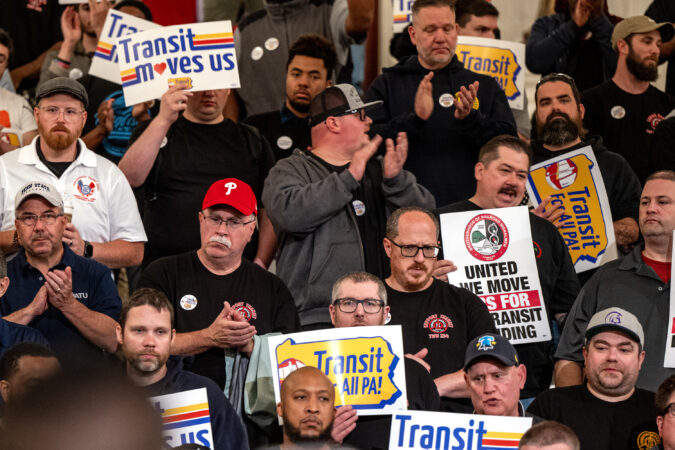
    Members of TWU Local 234 voted Wednesday night to approve a two-year contract that will deliver a 3.5% pay raise, bolster the union’s pension funds, and expand health benefits for new employees.

    SMART Local 1594, which represents approximately 350 operators, reached a deal with the transit agency earlier this month.

    “These contracts are fair to our hardworking frontline employees and fiscally responsible to our riders and the taxpayers who fund SEPTA,” said SEPTA General Manager Scott A. Sauer.

    For TWU Local 234, the two-year contract disrupts a pattern of three consecutive one-year contracts. TWU president Will Vera said that with the FIFA World Cup, MLB All-Star Game, and America’s 250th birthday coming to Philadelphia in 2026, both parties agreed to a two-year contract so as not to interrupt service during these global events.

    The union represents 5,000 operators, mechanics, cashiers, maintenance people, and custodians who work on SEPTA’s buses, subways, and trolleys. Before this latest deal, TWU members were working without a contract since Nov. 7, and members voted unanimously on Nov. 16 to authorize leaders to call a strike if contract negotiations didn’t go as planned.

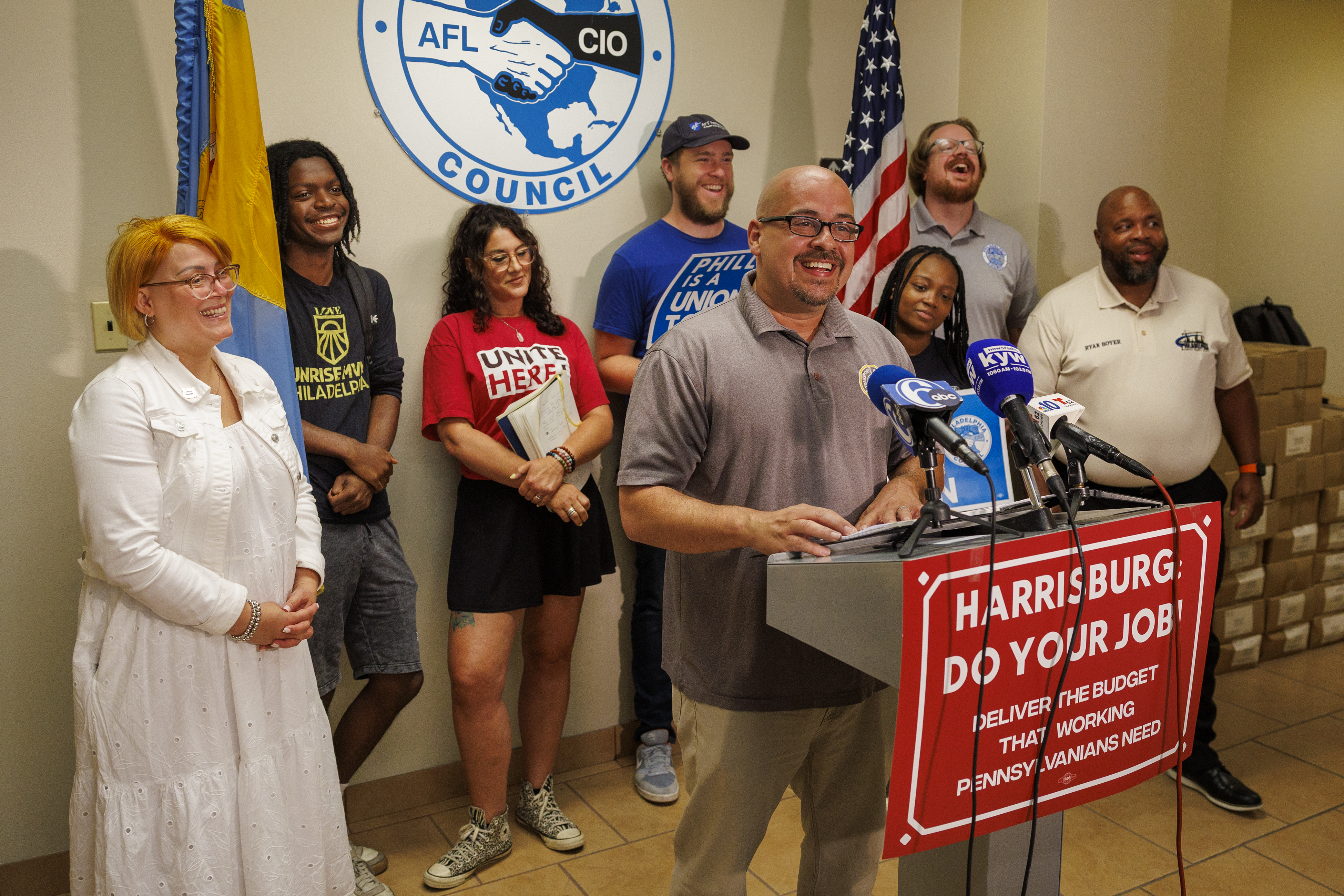
    Will Vera, vice president TWU Local 234, urged lawmakers in Harrisburg to deliver a budget during a speech in July at the AFL-CIO headquarters in Philadelphia.

    However, Vera said that this contract is a major win, especially for attracting new hires. Before this, new employees could not begin receiving dental and vision care until they completed 15 months on the job. The new contract shrinks that time down to 90 days.

    “I really got tired of explaining to the new hires for 15 months that they just have to clean their teeth,” Vera said. “I wanted this to be a retention contract, to not only keep people here, but to make this an attractive place to come work for SEPTA.”

    Philly’s transit unions don’t hesitate to strike if needs aren’t met. SEPTA unions have struck 12 times since 1975, earning SEPTA the title of one of the most strike-prone agencies in the country. Its last strike was a six-day effort in 2016 that ended one day before the presidential election.

    The negotiations come on the heels of SEPTA’s worst financial period in its history, the agency said. SEPTA isn’t alone, though. Transit agencies throughout the country are in funding crises as inflation rises, federal funding shrinks, and state subsidies fail to increase each year.

    Sauer, SEPTA’s general manager, added: “I am grateful to Governor [Josh] Shapiro and his team for their efforts to help us resolve differences and reach an agreement. Securing two-year contracts provides important stability as we approach the major events coming to Philadelphia in 2026.”

  • Eagles a near-touchdown favorite for matchup at Commanders; plus, odds for Jalen Hurts and more

    Eagles a near-touchdown favorite for matchup at Commanders; plus, odds for Jalen Hurts and more

    The Eagles (9-5) are on the doorstep of becoming the first NFC East team to repeat as division champion since they won four straight from 2001-04. Philadelphia only needs one win or a Dallas loss to clinch the division.

    The Eagles play their only Saturday game of the year against the Commanders this week. After winning 12 games and making the NFC championship game last year, Dan Quinn’s team has gone just 4-10. Before winning last week against the Giants, Washington had lost eight straight games. Starting quarterback Jayden Daniels battled various injuries this season and was ultimately shut down earlier this week. In his place, Marcus Mariota will make his eighth start of the season.

    Here’s a look at the updated player props and game lines for Saturday’s matchup.

    Game line

    The Eagles sit as 6½-point favorites at both FanDuel and DraftKings, though the latter is slightly more confident in Philadelphia winning.

    FanDuel

    • Spread: Eagles -6.5 (-110), Commanders +6.5 (-110)
    • Moneyline: Eagles (-300), Commanders (+245)
    • Total: Over 44.5 (-105) Under 44.5 (-115)

    DraftKings

    • Spread: Eagles -6.5 (-110), Commanders +6.5 (-110)
    • Moneyline: Eagles (-310), Commanders (+250)
    • Total: Over 44.5 (-105) Under 44.5 (-115)
    Eagles quarterback Jalen Hurts threw for 175 yards last week.

    Passing yard props

    Jalen Hurts has thrown for 230 yards or more in three of his last four games. The one outlier was last week, where Hurts only finished with 175 passing yards. His line is set around 220 yards at both sportsbooks. The Commanders allow over 246 passing yards per game, which ranks fourth worst league-wide.

    Mariota has thrown for over 200 yards in six of his seven starts. But over the Eagles’ last three games, opposing quarterbacks have averaged 119 passing yards. Mariota’s line is set at 202.5 yards at both sportsbooks.

    FanDuel

    DraftKings

    Passing touchdowns

    Hurts has thrown for two or more touchdowns in just two of his last six games. But facing a struggling Commanders defense, the sixth-year pro is favored to reach that mark. Mariota has two touchdown passes in three of his last six starts, but the former Eagle’s touchdown prop is available at much longer odds.

    FanDuel

    DraftKings

    Rushing yards

    Saquon Barkley has rushed for over 75 yards in each of his last two games. Last week, Barkley had 22 carries but averaged just 3.5 yards on each. The Penn State alum is averaging just 3.9 yards per attempt season-long, down from the 5.8 he averaged last year en route to winning NFL offensive player of the year. Barkley has received 240 of the 299 non-quarterback rushing attempts this season.

    On the other hand, the Commanders do not have a true bell cow running back. Jacory Croskey-Merritt and Chris Rodriguez have split carries, and Jeremy McNichols has been more involved than an average No. 3 back. Last week, Croskey-Merritt took advantage of an increased opportunity due to Rodriguez being held out with a groin injury. The Alabama native recorded a new career-high in carries (18) across 96 yards. Rodriguez will likely be available for Saturday’s game.

    FanDuel

    DraftKings

    Receiving props

    A.J. Brown’s three-game, 100-yard streak ended last Sunday. Still, Brown caught his fourth touchdown in the Eagles’ last four games. DeVonta Smith had just two receptions against the Raiders last week. The 27-year-old is averaging just 45 receiving yards over his last three games, across 11 total receptions. As of late, the Eagles’ most productive pass catcher has been Dallas Goedert, who has caught 14 passes over his last two games and found the end zone twice vs. Las Vegas.

    Deebo Samuel leads the Commanders with 65 receptions but has been a streaky performer. The longtime 49er has recorded under 30 receiving yards in 5 games this season, the same amount of games that he’s had over 50 in. And while Terry McLaurin has only played in seven games due to injury, he has perhaps been Washington’s best receiver when healthy. McLaurin has been active for the Commanders’ last three games and has averaged almost 70 yards in each. The two-time Pro Bowler also has two touchdown receptions in that span.

    FanDuel

    DraftKings

    Touchdown props

    Last Sunday, most of the Eagles’ offensive regulars got in on the scoring action. Barkley and Brown found the end zone once each, and Goedert found it twice. But Hurts and Smith have both gone quiet on the scoring front. Hurts last scored a rushing touchdown on Nov. 23 against the Cowboys and only rushing scores in two of his last eight games. Smith has gone scoreless his last five games and last caught a touchdown on Nov. 10.

    For Washington, McLaurin has caught touchdowns in two of his last three games, but Samuel has none over that span. Last week, Croskey-Merritt scored his first touchdown since Oct. 5.

    FanDuel

    DraftKings