Blog

  • 🦅 Mighty Mitchell | Sports Daily Newsletter

    🦅 Mighty Mitchell | Sports Daily Newsletter

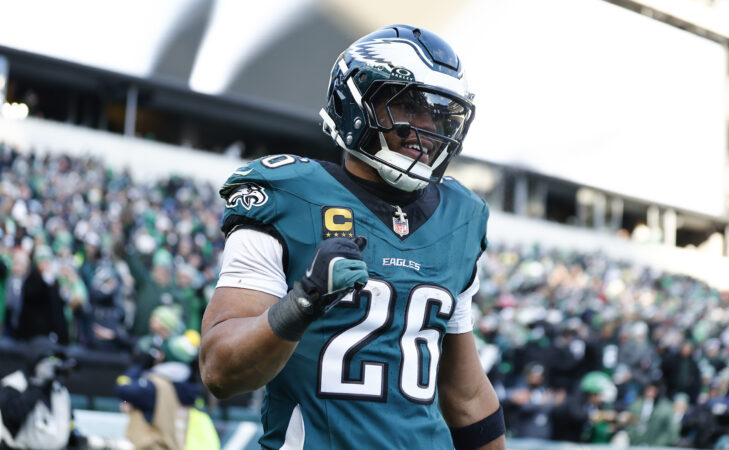
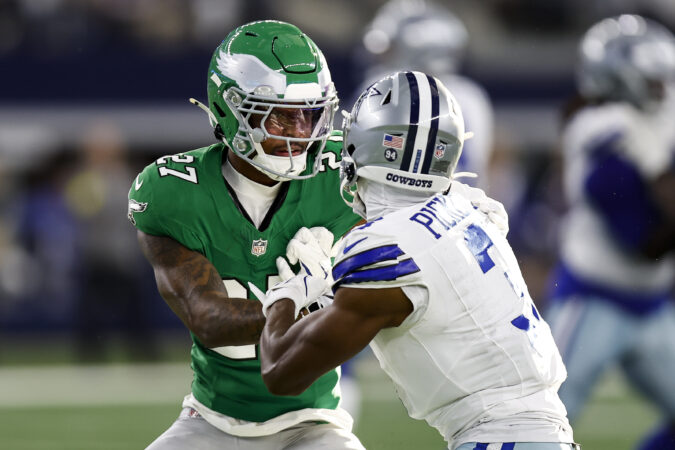
    Quinyon Mitchell is one of the least-tested cornerbacks in the league this season.

    Whether he’s traveling with opponents’ top receivers or lining up on the boundary, the second-year pro has managed to lock down his side.

    That accomplishment doesn’t come as a surprise to Vic Fangio, who said Mitchell “hasn’t deviated from his process.” And the 2024 first-round pick out of Toledo isn’t cocky about his success, either.

    But how can a cornerback improve when quarterbacks aren’t throwing the ball his way? In the last two games, Mitchell has been targeted just four times, conceding one catch for seven yards.

    Here’s how the 24-year-old would answer that: “I always expect every play, every down, that the ball’s going to come my way.”

    And on the other side of the ball, Saquon Barkley may have had a disappointing statistical year after last season’s heroics, where he became the ninth player in NFL history to rush for 2,000 yards in a season.

    No one has ever done it twice, so repeating those numbers were going to be a stretch. But who could have seen this coming? It’s Week 15, and Barkley still is 60 yards shy of reaching 1,000 on the season. Said Barkley: “Sometimes that’s how the game goes.”

    However, the running back believes he can still make a big impact when the games matter most.

    Maybe that’ll come in Week 16, with the NFC East title and a playoff berth on the line.

    — Isabella DiAmore, @phillysport, sports.daily@inquirer.com.

    If someone forwarded you this email, sign up for free here.

    What we’re …

    🤔 Wondering: What the Commanders are saying about the Eagles ahead of Saturday’s matchup.

    💸 Wagering: The Eagles are a near-touchdown favorite against Washington. Here’s a look at other player props.

    📖 Reading: The Eagles fan who is tracking every team’s Tush Push success — and whether or not they voted to ban it.

    ‘It humbles you’
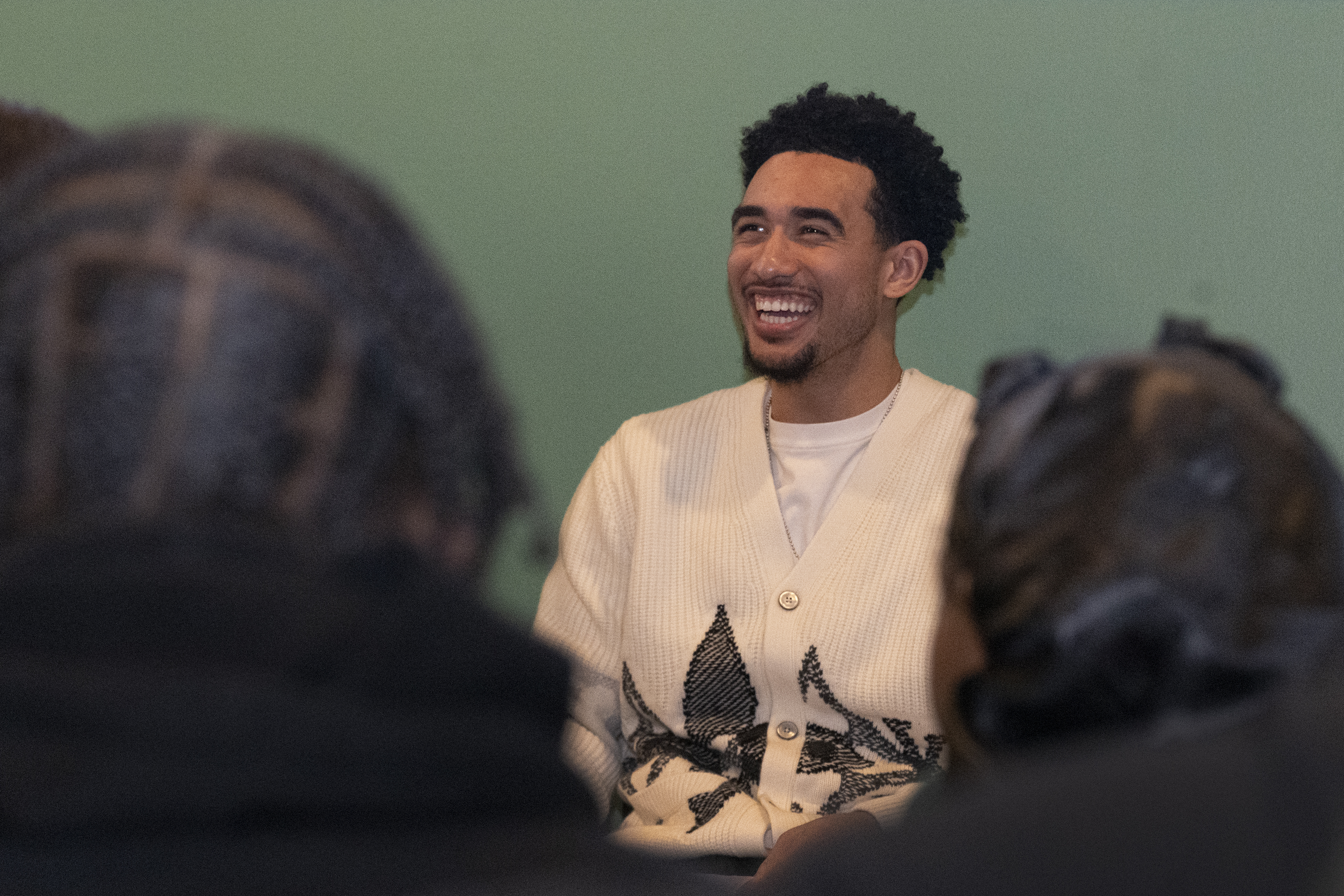
    Sixers’ Jared McCain spoke with student about mental health and the challenges he faced recovering from a past his injuries at Level Up Philly on Wednesday.

    Since high school, Jared McCain has shared his life on TikTok for his fans, but he didn’t expect just how many haters would also come his way. On Wednesday, in partnership with Penn Medicine and the Sixers’ Assists for Safe Communities initiative, McCain spoke with over 40 students at Level Up Philly about protecting his own mental health.

    McCain has experienced the highs and lows since entering the NBA in 2024. As he worked his way back into the lineup, McCain said there’s a huge mental aspect to his recovery that fans may not see, and one of the biggest lessons he’s learned is not to judge, because everyone is going through something on their own that he might not see.

    Why Michkov is playing less
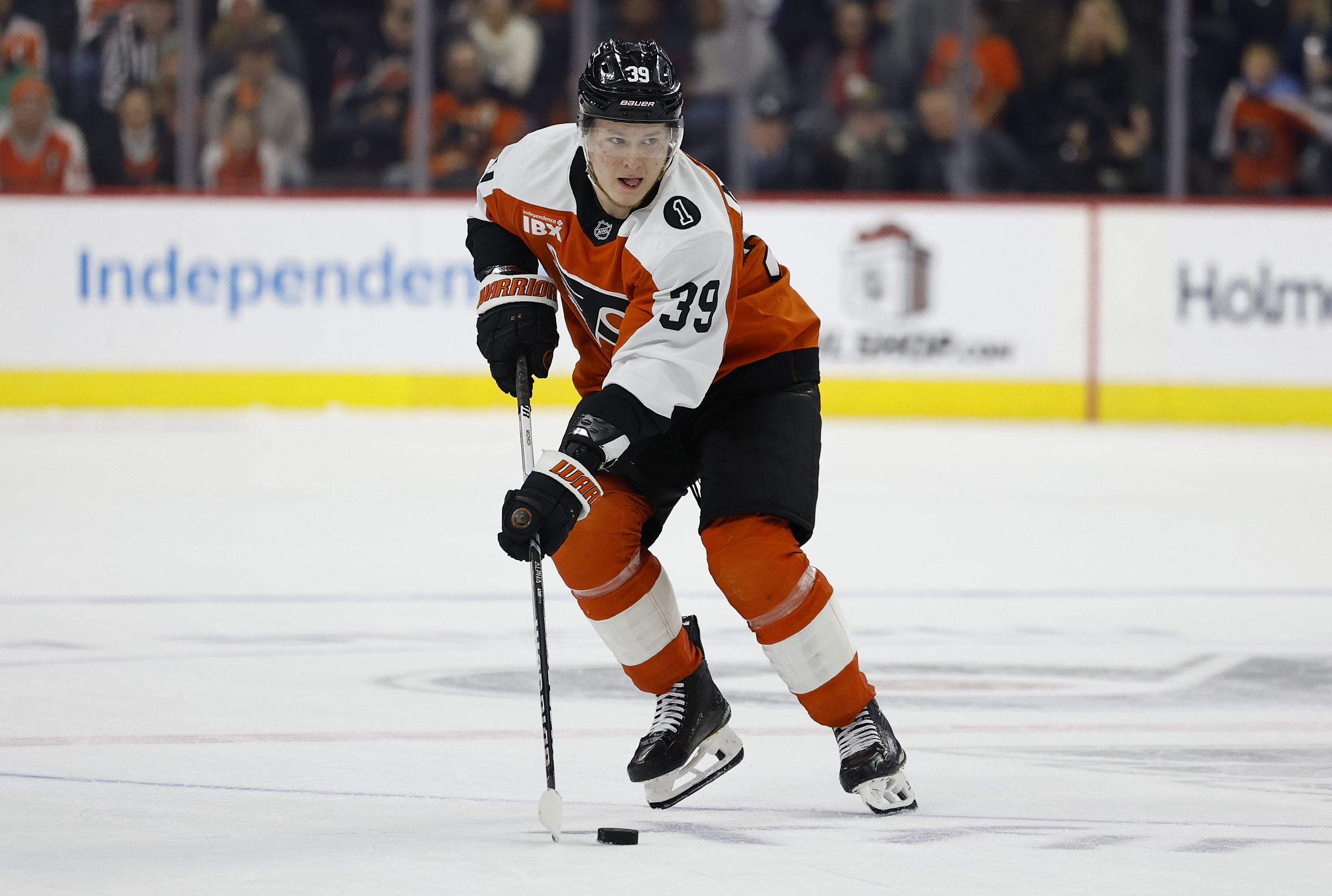
    Flyers winger Matvei Michkov has made recent progress after a tough start to the season.

    Matvei Michkov’s season started slowly, but his game has certainly picked up as the schedule builds. Rick Tocchet said he’s seen an improvement in the young Russian’s game, but fans are angry with Michkov’s lack of ice time, as he ranks ninth among the team’s forwards. Part of that is due to his play, but Michkov is also taking a lot of penalties and short shifts on his own. The Flyers need Michkov to drive play, and thus far, he has looked better as he gets back into shape and builds his game.

    And on Thursday, the Flyers placed defenseman Egor Zamula on waivers. Zamula, who has been with the organization since 2018, has played in 13 games this season and was expendable given Rasmus Ristolainen’s return. If unclaimed, he’ll report to Lehigh Valley.

    The Flyers saw their five-game point streak come to an end with a 5-3 loss at the Buffalo Sabres.

    Making his name known
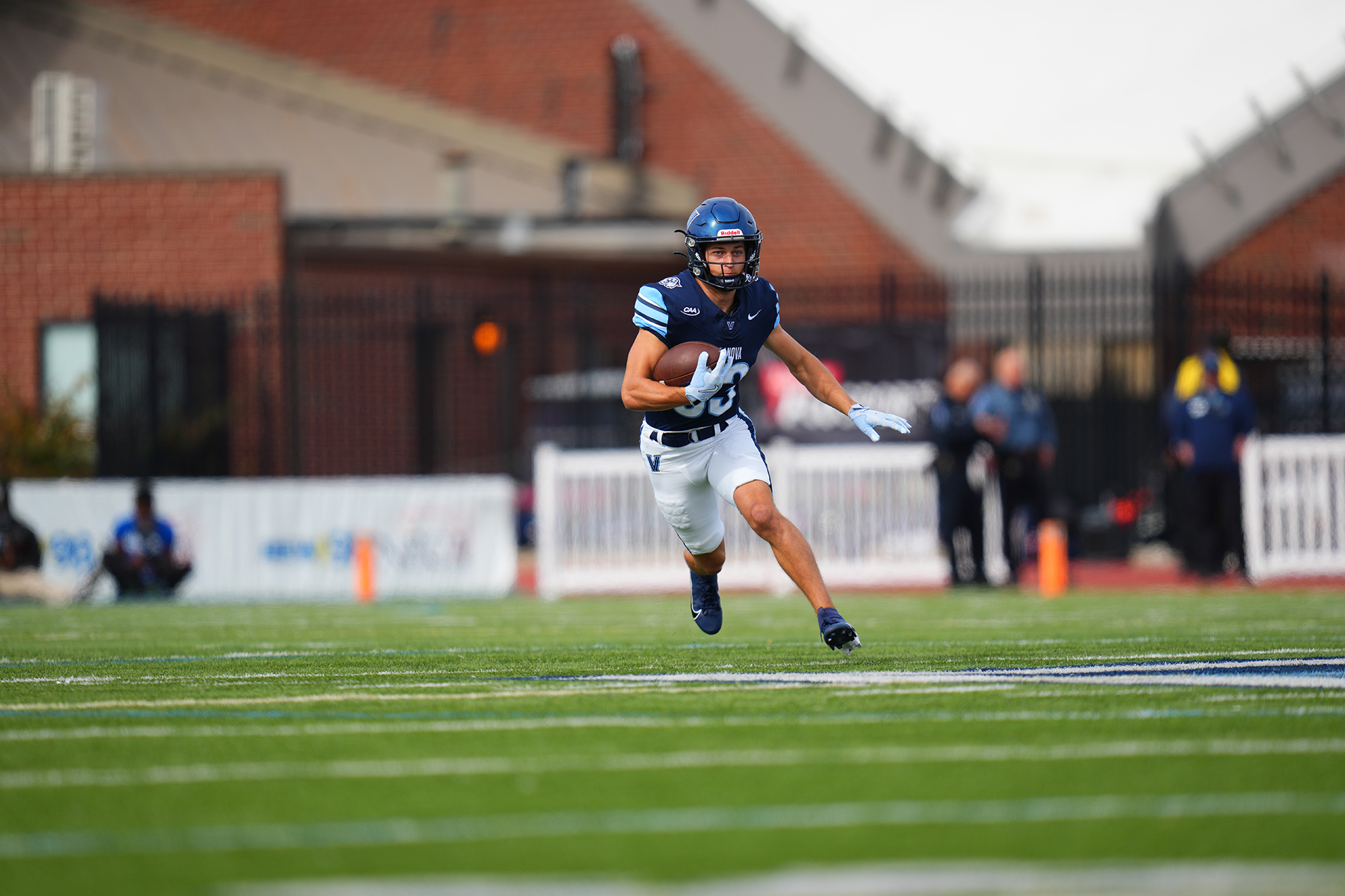
    Freshman Braden Reed is carving out a role for himself in Villanova’s receiver room.

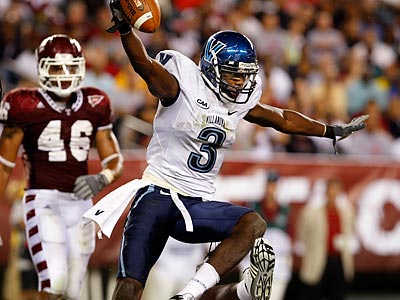
    Villanova freshman receiver Braden Reed has been a standout on special teams and on offense recently. For a majority of the season, he led the FCS in average punt return yards. In the last two games, he has caught game-winning touchdowns against Lehigh and Tarleton State. The Pope John Paul II graduate could play a larger role for Villanova in the FCS semifinals on Saturday against Illinois State.

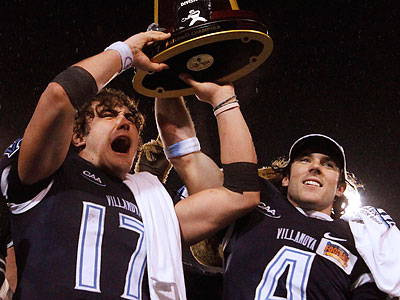
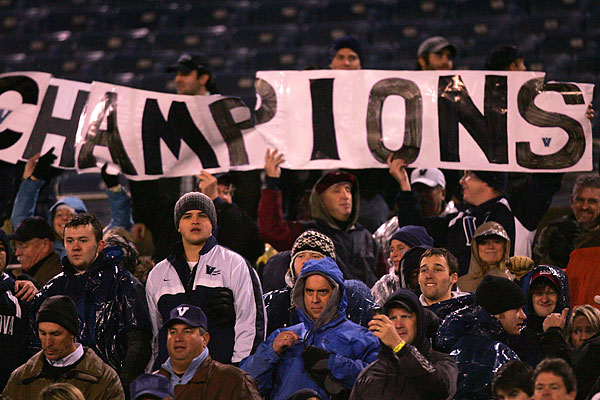
    The Wildcats haven’t played a home game in the semifinals since they won their only FCS championship in 2009. Many former players recall having fond memories from that run, which included a season-opening victory against Temple, and believe this year’s team has the pieces to earn another national title.

    Sports snapshot
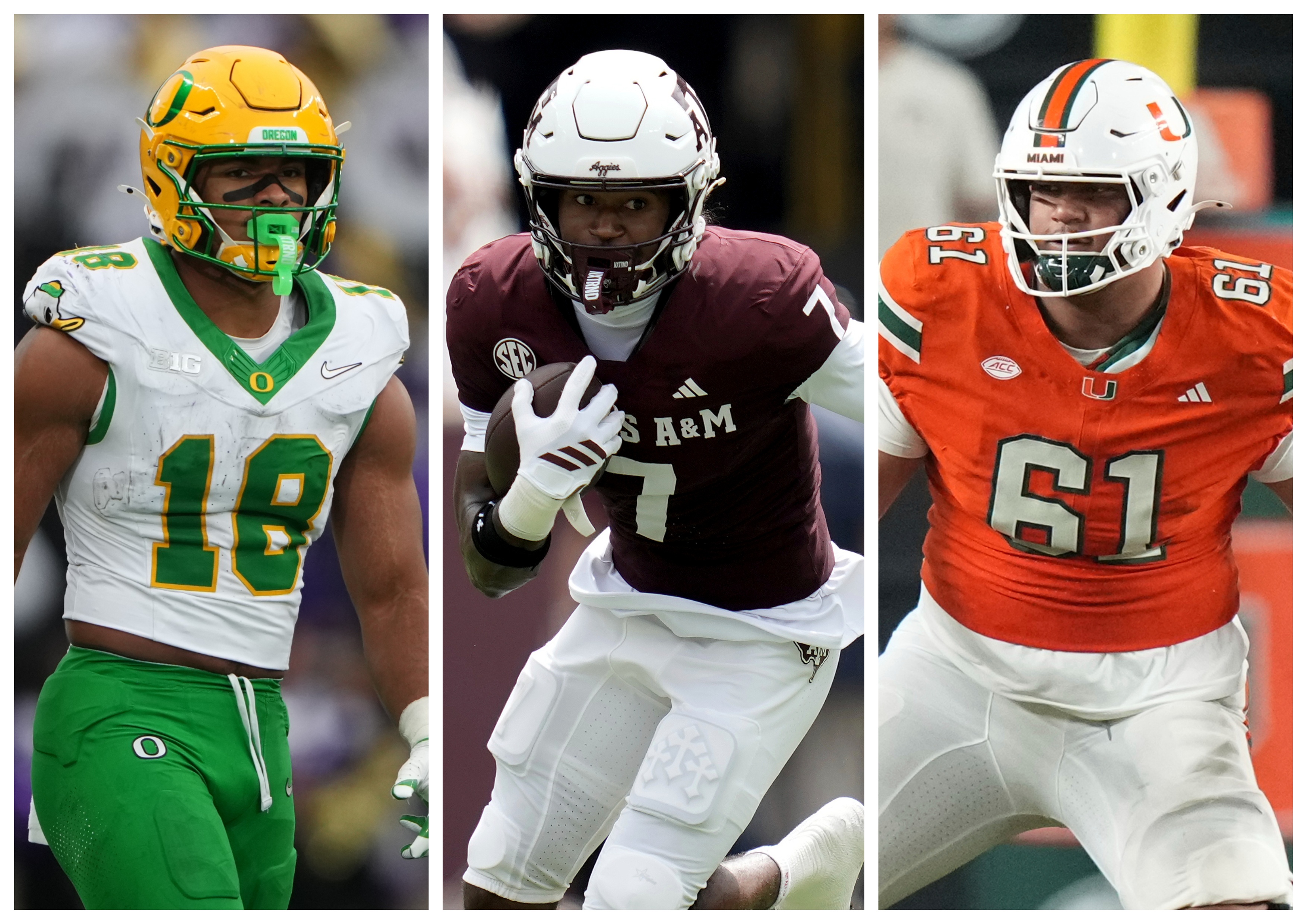
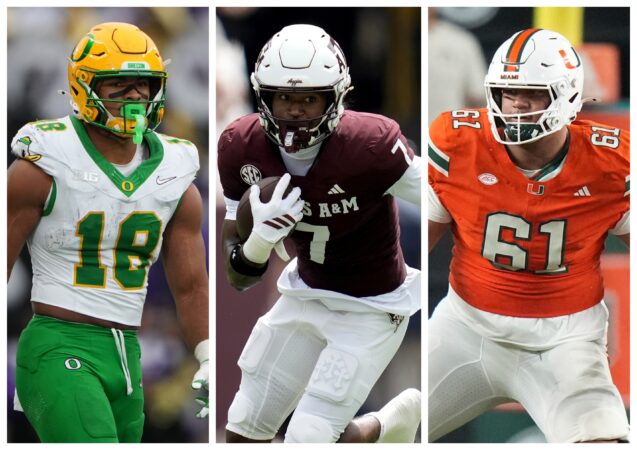
    From left: Oregon tight end Kenyon Sadiq, Texas A&M receiver KC Concepcion, and Miami offensive lineman Francis Mauigoa.
    • Draft targets: We’ve rounded up eight prospects who are playing in the College Football Playoff that the Eagles could target in the draft.
    • What to know: With Illinois State coming to the Main Line, the unseeded Redbirds are making their first semifinal appearance since 2014.
    • New additions: Penn State hired two Iowa State offensive coaches to Matt Campbell’s staff.

    Who said it?
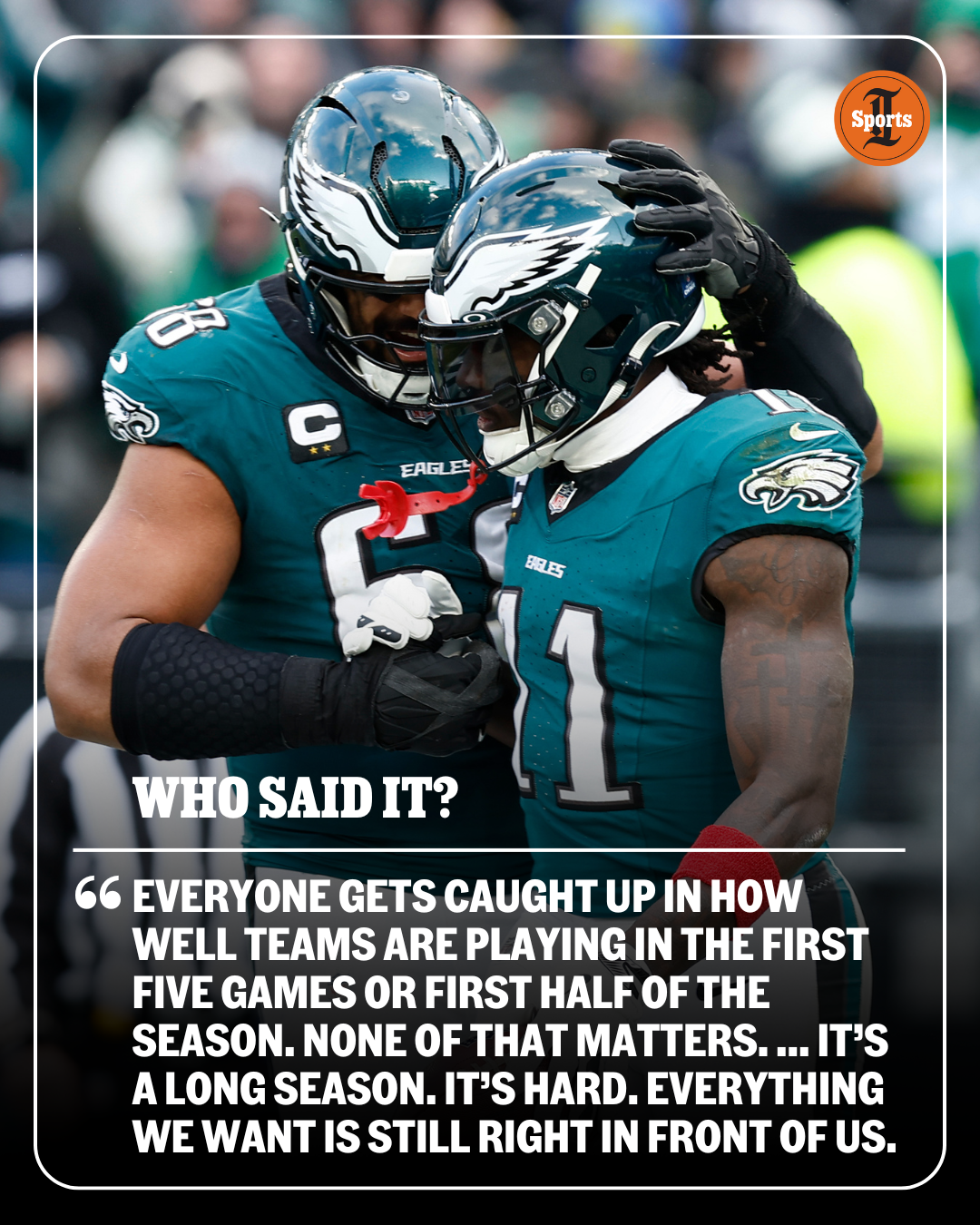
    The Eagles have a chance to clinch the NFC East title on Saturday.

    Who said this as the Eagles get ready for Saturday’s matchup against the Commanders? Think you know? Check your answer here.

    Join us before kickoff

    Gameday Central: Eagles at Commanders:

    Live from Northwest Stadium: Beat writers Jeff McLane and Olivia Reiner will preview the Eagles game against the Washington Commanders at 3:30 p.m. Saturday. Tune in to Gameday Central.

    What you’re saying about Phillies’ bullpen

    We asked: Now that the Phillies are adding Brad Keller, how do you feel about their bullpen? Among your responses:

    On paper the Fightins’ have one of the top 2026 bullpens in both leagues, if not the best. You still can’t play this game without a great centerfielder. For whatever the reason, they’ve lost complete interest in resigning Harrison Bater. Big mistake! — Ronald R.

    We compiled today’s newsletter using reporting from Jeff Neiburg, Olivia Reiner, Ariel Simpson, Jackie Spiegel, Gabriela Carroll, Devin Jackson, Dylan Johnson, Greg Finberg, Katie Lewis, and Ethan Kopelman.

    By submitting your written, visual, and/or audio contributions, you agree to The Inquirer’s Terms of Use, including the grant of rights in Section 10.

    As always thanks for reading. Hope you have a wonderful weekend. Jim will catch back up with you on Monday. — Bella

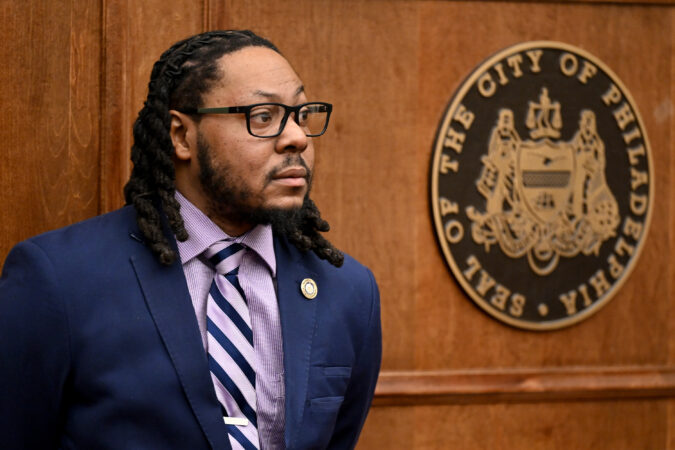
  • Feds pave the way for Big Tech to plug data centers right into power plants in scramble for energy

    Feds pave the way for Big Tech to plug data centers right into power plants in scramble for energy

    HARRISBURG, Pa. — Federal regulators will allow tech companies to effectively plug massive data centers directly into power plants, issuing a long-awaited order Thursday, as the Trump administration urged the Federal Energy Regulatory Commission to help the U.S. lead the world in artificial intelligence and revive domestic manufacturing.

    The commission’s unanimous order is designed to clear up pressing issues around so-called “colocation” agreements in the nation’s largest grid territory, which stretches across Mid-Atlantic states to parts of Illinois and Indiana.

    But it could become a blueprint for how FERC handles an October request from Trump’s energy secretary, Chris Wright, to ensure that data centers and large manufacturers get the power they need as quickly as possible.

    It also comes amid concerns that the Mid-Atlantic territory covering some 65 million people will face electricity shortages in the coming years, as the build-out of data centers outpaces the speed of new power sources coming online.

    Laura Swett, FERC’s chair, told Thursday’s meeting that clearing the way for massive energy users — like data centers — to get electricity straight from power plants was a “critical step to give investors and consumers more certainty on how FERC believes we can solve the problem of meeting historic surging demand and realize our greatest potential as a country.”

    It would, she said, also protect regular ratepayers, even as evidence mounts in various states that regular ratepayers are bearing the cost of new power plants and transmission lines to feed energy-hungry data centers.

    Power plant owners applauded the step, as their share prices rose steeply in Thursday’s trading. Advanced Energy United, whose members provide solar and wind power, said the FERC order should help clarify how big power users can set up their own power sources.

    The Edison Electric Institute, which represents for-profit utilities, said only that it would “continue to work” to support rapid data center connection, protect ratepayers from cost-shifts and strengthen the grid for everyone.

    Jeff Dennis, executive director of the Electricity Customer Alliance, said the order showed that FERC is trying to address looming issues around fast-growing power demand and underscored the urgency to reform grid policy.

    Thursday’s order grew out of a dispute between power plant owners and electric utilities over a proposed colocation deal between Amazon’s cloud-computing subsidiary and the owner of the Susquehanna nuclear power plant in Luzerne County, Pa.

    For tech giants, such arrangements represent a quick fix to get power while avoiding a potentially longer and more expensive process of hooking into a fraying electric grid that serves everyone else.

    But utilities protested that it allows big power users to avoid paying them to maintain the grid. Some consumer advocates maintained that diverting energy from existing power plants to data centers could drive up energy prices without an answer for how rising power demand will be met for regular ratepayers.

    FERC’s Thursday order sets up a couple new regulatory tracks.

    It requires the operator of the Mid-Atlantic grid, PJM Interconnection, to develop rates and conditions for different colocation scenarios involving new power plants or sources.

    That could mean allowing a big power user to pay for only the transmission services they use, considerably less than they might otherwise pay to connect to the grid through a utility.

    The order also could require a big power user that colocates with an existing power plant to pay the cost to replace the energy that it diverts away from the broader electric grid.

  • City Council bill would ban housing from former Hahnemann University Hospital area

    City Council bill would ban housing from former Hahnemann University Hospital area

    Philadelphia Councilmember Jeffery “Jay” Young introduced legislation at the last City Council meeting of 2025 that would ban residential development from the area that once housed Hahnemann University Hospital.

    The bill would create a new zoning overlay — a hyperlocal patch on the code — covering the area “bounded by the north side of Race Street, the east side of North 16th Street, the south side of Callowhill Street, and the west side of North Broad Street.”

    That covers the area where developer Dwight City Group plans to convert two former Hahnemann University Hospital patient towers into 288 apartments, and other related properties including those owned by Drexel University and Iron Stone Real Estate Partners.

    The project does not yet have building or zoning permits. The legislation would make the project impossible unless the developer could convince the Zoning Board of Adjustment to make an exception, if the law is passed.

    Young pitched the bill as an employment-generating measure in the long term.

    “It is for commercial preservation in that part of our district,” Young said last week. “We want to make sure that area keeps producing jobs for our city.”

    Dwight City Group declined to comment on the legislation.

    The developer is known for redeveloping old and underutilized buildings into moderately priced apartments.

    In an interview earlier this year, the company’s CEO Judah Angster said the apartments planned for the Hahnemann University Hospital patient towers would be moderately priced one- to two-bedroom units.

    “We stick with middle-market apartments, not super high-end,” Angster said at the time. “We like to believe that there’s a lot of space for affordable luxury product in the area. That’s the only thing we do.”

    But he also cautioned that the redevelopment would take a while, saying the buildings might not be leased up until 2030.

    City Council returns on Jan. 22. The earliest Young’s bill could be enacted is February. If Young proceeds with the bill, the tradition of “councilmanic prerogative” would likely guarantee its passage because other Council members are usually unlikely to vote against a district member’s bills that only affect their territory.

    Developers, good government groups, and housing advocates frequently decry City Council’s use of zoning overlays to create custom land use tweaks to specific corners of City Council districts, especially when they seem designed to help or hurt a particular project.

    “Choking housing supply isn’t the direction that our city should take,” said Mohamed “Mo” Rushdy, who is managing partner of the Riverwards Group and chair of the Philadelphia Housing Development Corp.

    “Overlays that prohibits housing units is generally a bad idea,” Rushdy said. “Overlays that target a ‘specific’ project is, let me be politically correct here, is simply unwise and not right.”

    Young said his bill is simply meant to preserve the possibility of jobs, especially as a new 20-year tax abatement is considered next year for the redevelopment of old commercial, industrial, and public buildings into housing.

    “Next year, we’re going to be facing, potentially, a bill that will allow abatements for underutilized commercial properties,” Young said. “We want to make sure that those benefits that the property owners can reap, that Philadelphians see those benefits with the creation of jobs in those locations.”

  • Inside the chaotic, magical world of a Philly-area Santa at Christmastime

    Inside the chaotic, magical world of a Philly-area Santa at Christmastime

    “Santa Kringle” is always dashing away somewhere.

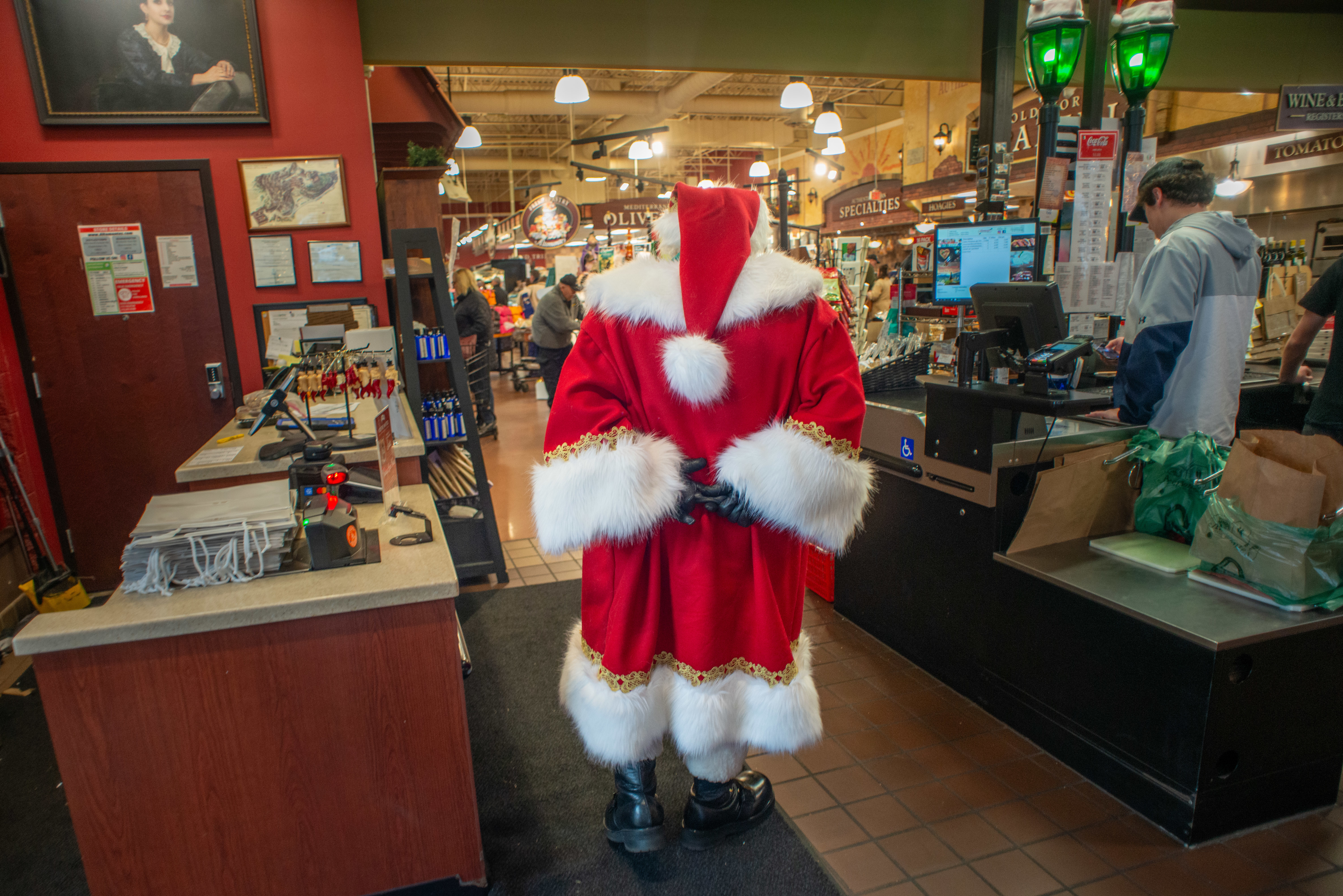
    In the early morning, when creatures are just starting to stir, he is an Uber driver, taking people to the airport or their offices in a red Kia with “ON COMET” emblazoned on the license plate. And during business hours on weekdays, he sits at a desk coordinating ads for Comcast.

    But on nights and weekends, he dons the red suit and transforms.

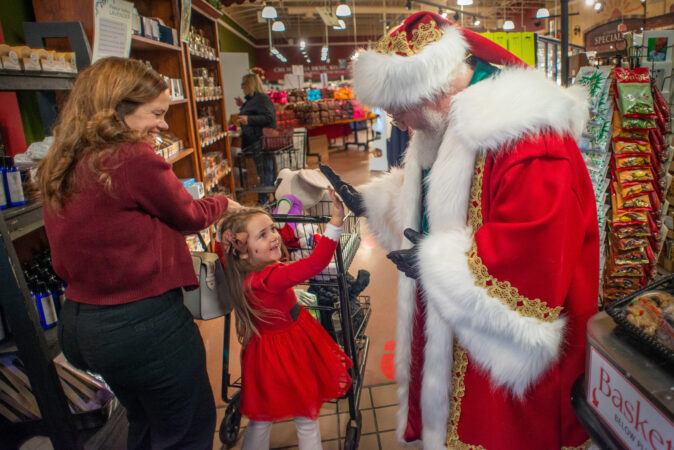
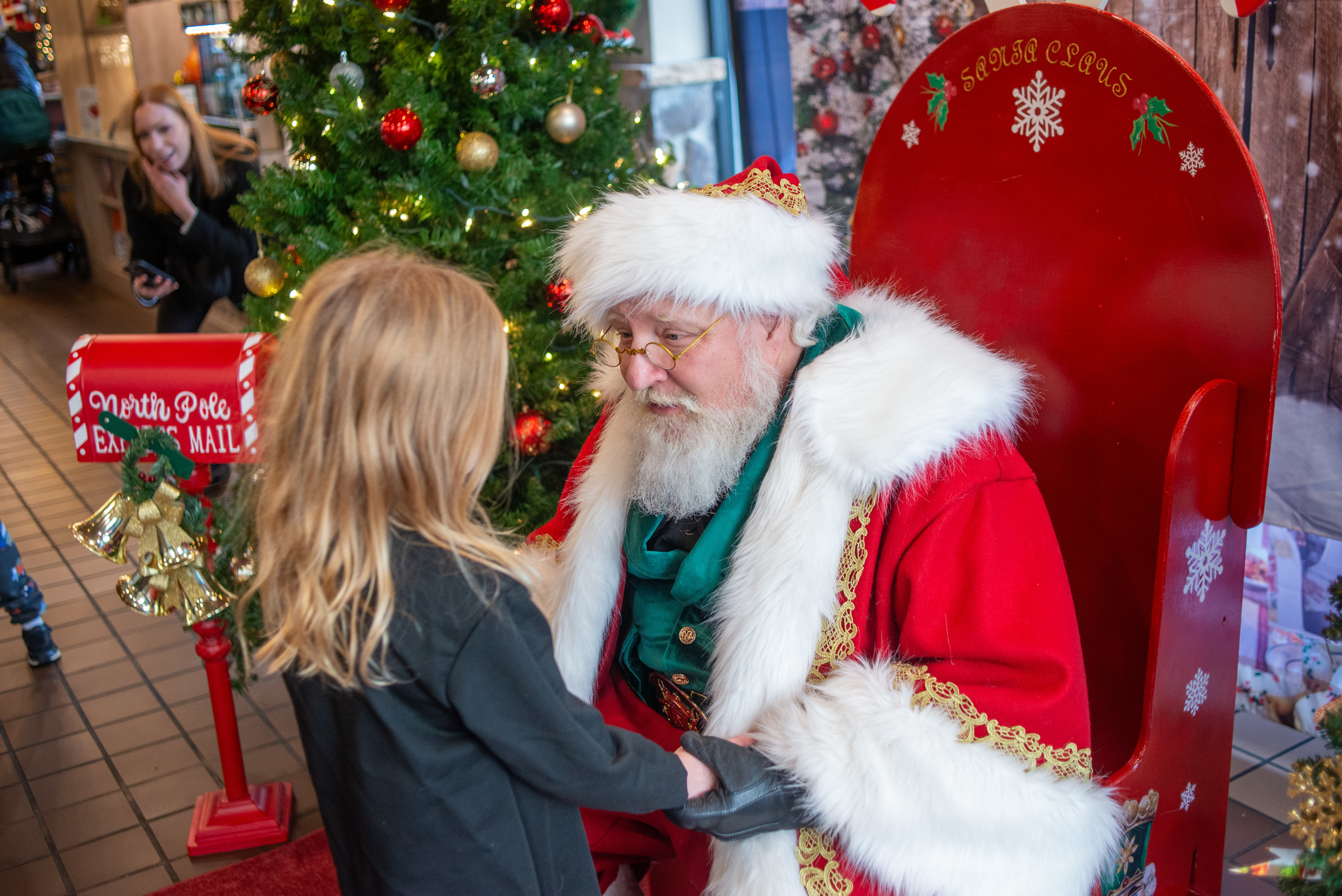
    In November and December, Kringle’s calendar is booked solid with photo sessions, home visits, fundraisers, and appearances. He shows up at tree lightings, breakfasts, weddings, and other events across the region, from Doylestown to Media. Each week, as many as 8,000 children and adults tell him their wishes, he said.

    Frank Naimoli, aka “Santa Kringle,” greets Miranda Patton, 5, of Doylestown during his recent visit to Altomonte’s Market in Doylestown.

    The grueling schedule is worthwhile, he said, but not because of a big payout.

    “I will never run it like a business,” said Kringle, also known as Frank Naimoli, 58, of Glenolden. “I literally have charged as little as two cookies for a visit. I’ll never get rich or buy a car off of being Santa. … It’s just something I love doing.”

    Professional Santas make about $60 an hour on average, according to the employment platform ZipRecruiter.

    The pay can vary by event and by performer. Some charge between $250 and $500 an hour, according to several Philly-area Santas.

    Others often play the role for free.

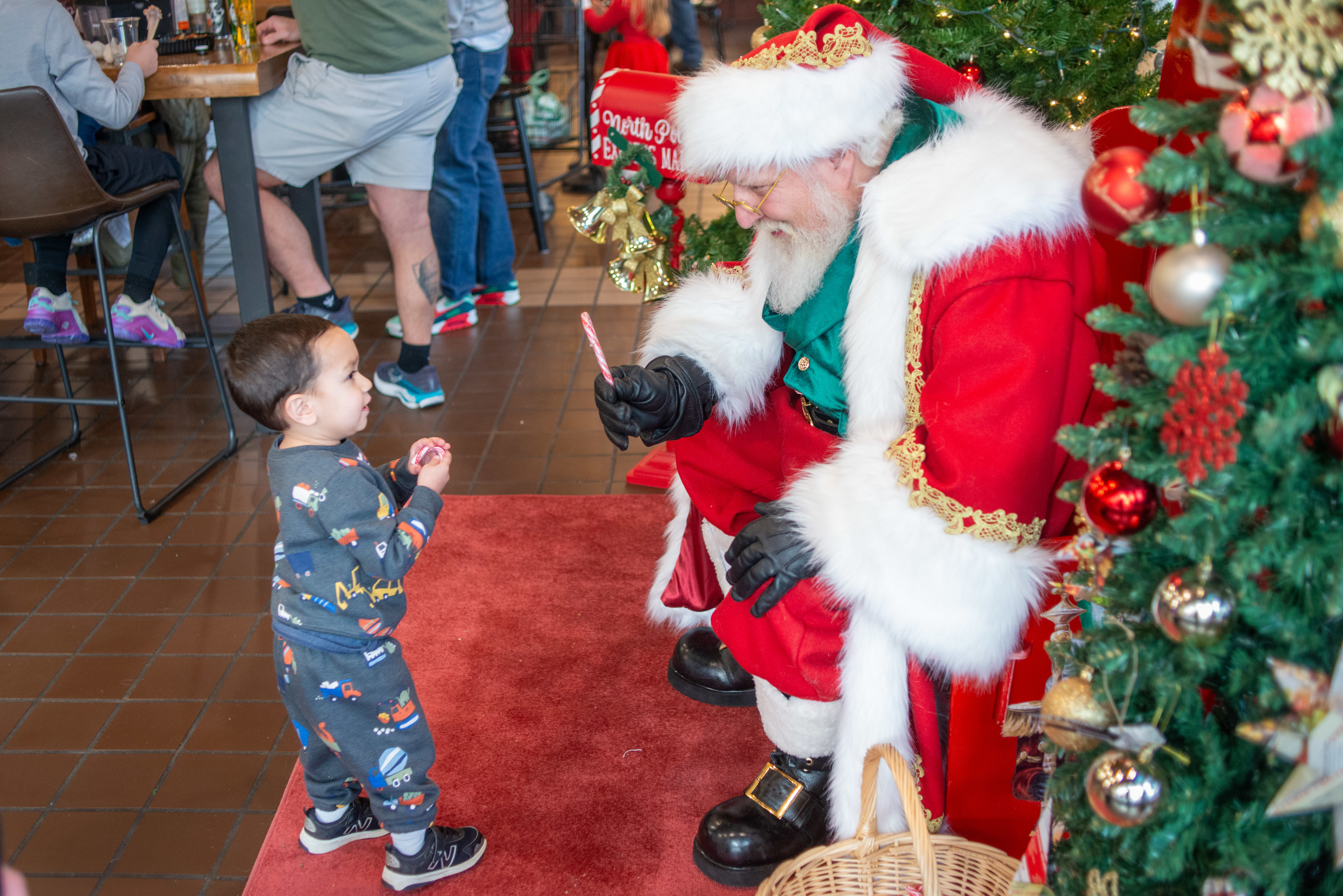
    Kiam Patel, 2, is given a candy cane by Frank Naimoli, aka “Santa Kringle,” at Altomonte’s Market in Doylestown.

    No matter the pay, being Santa is a grind, with perhaps hundreds of visits packed into a short peak season.

    Many Santas schedule all this merriment around full-time careers — Philly Santas work day jobs as corporate professionals, small-business owners, and commercial truck drivers. Their vacation days, much like their natural-grown beards, are carefully kept for the holiday season. And come December, as the Santa grind takes over, they sacrifice time with their own families and operate on little sleep.

    By Christmas Eve, “I am exhausted,” said Naimoli, who’s in his 23rd Santa season. “Nine times out of 10, I fall asleep in the suit.”

    Keeping the holiday magic alive

    Frank Naimoli, aka “Santa Kringle,” greets children and adults during a recent visit to Altomonte’s Market in Doylestown.

    Several local Santas said they’re in the industry for the magic, not the money.

    “There is not that much money there,” said Paul Bradley, or “Santa Paul,” of Mantua, Gloucester County, who retired from a factory job a decade ago.

    “The hugs you get from the little kids, or to have a 5-year-old child run to you and [yell] ‘Santa!’” it melts my heart,” said Bradley, 71. “That’s why I do it.”

    Dennis Daniels as New Age Santa stands outside the Comcast Center on Dec. 12.

    Dennis Daniels, 66, of North Jersey, called being Santa “a very comfortable and lucrative profession.” The former educator, also a ventriloquist, markets his entertainment services under the company name Mr. D & Friends. When he wears the red suit, he’s “New Age Santa.” (Don’t call him by his other name if you see him out in public, he insists.)

    His Santa persona is “simply the traditional Santa,” he said, “but I look a little bit different.”

    “My skin happens to be brown, and I’m also not rocking the belly,” explained Daniels, who has been a Santa for more than 30 years.

    (From left) Amora Williams, Yanae Petty, and Dennis Daniels, aka “New Age Santa,” at the Comcast Center on Dec. 12.

    This year, “New Age Santa” has booked appearances at the Comcast Center and Newark Liberty International Airport, and he usually books several sessions at photo studios. Sometimes he makes up to $800 for two hours of Santa work. Other times, he shows up as Santa for free.

    Daniels wants to keep doing this work as long as he can, he said, to be a Santa for all children. I didn’t see Santas that looked like me when I was a child,” he noted.

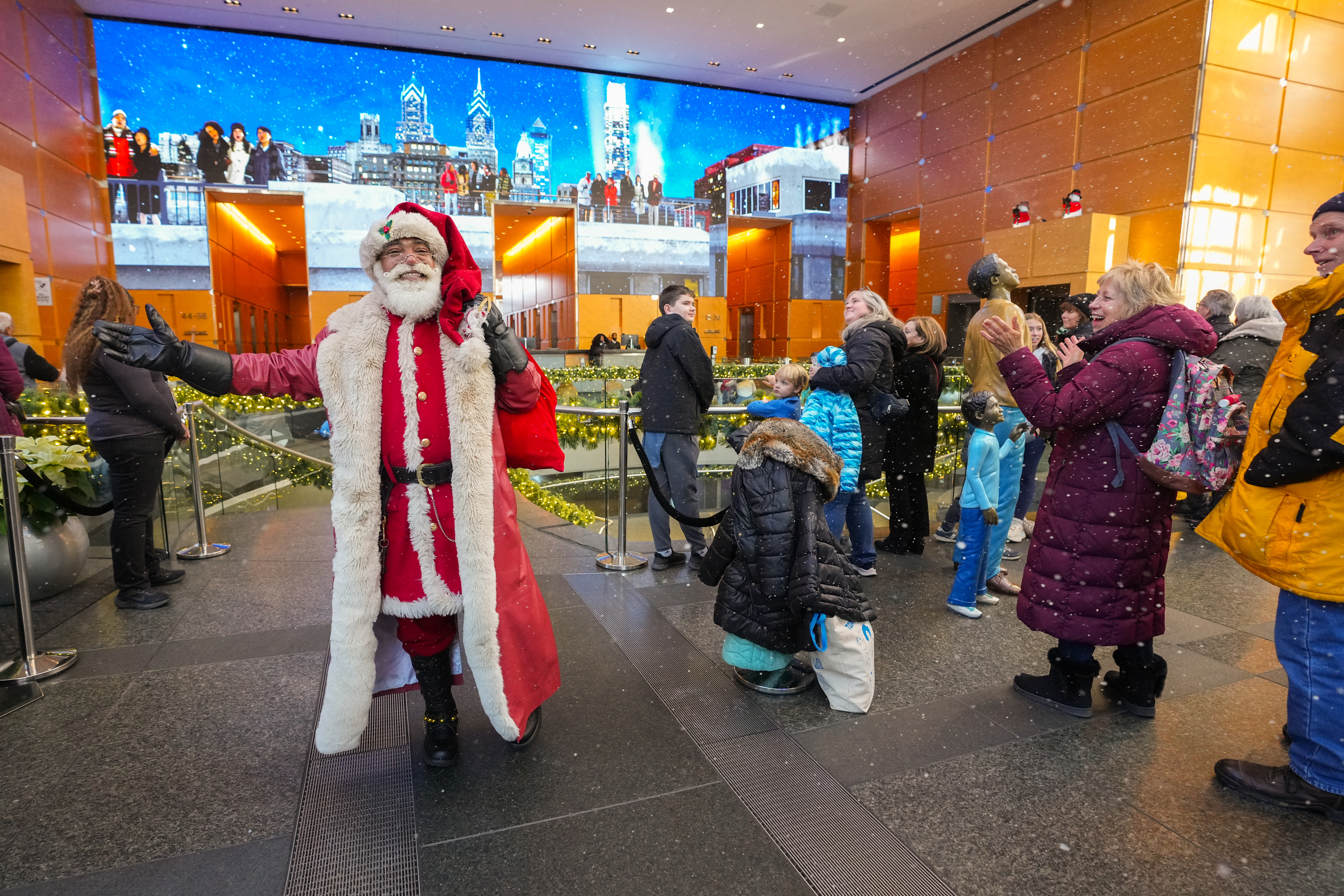
    Dennis Daniels, aka “New Age Santa,” greets smiling people at the Comcast Center on Dec. 12.

    Feeling Christmas joy in return

    After decades of bringing holiday spirit to countless families, one Bucks County Santa recently felt the magic come back to him.

    When Scott Diethorne’s Fairless Hills home burned down in late October, his family lost everything, including his 12 Santa suits, which cost nearly $3,000 apiece.

    Fans of “Santa Scott” quickly came together to help, raising $100,000 through a GoFundMe and finding the family a nearby rental home. Fellow Santas donated four suits, and Diethorne bought two more to get him through the season.

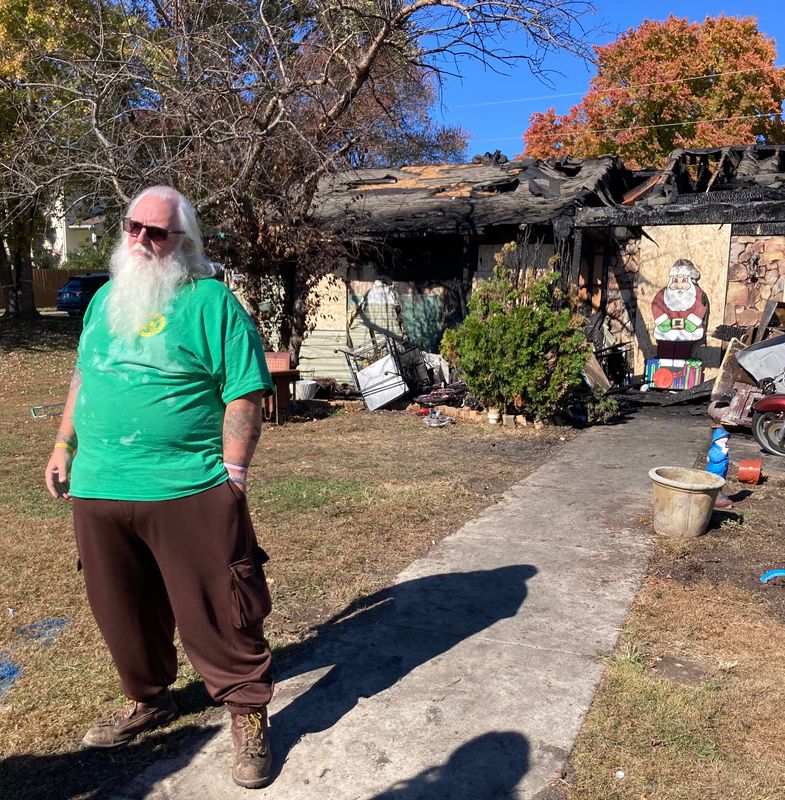
    Scott Diethorne outside the charred remains of his Fairless Hills home in late October.

    “Without the community, I’d be devastated,” said Diethorne, 58, who has been Santa for more than 35 years. “I don’t know what I would have done.”

    Their generosity saved Diethorne’s Santa career this season, allowing him to continue spreading cheer while putting in 50-hour weeks driving a six-wheeler box truck throughout the Northeast and Mid-Atlantic.

    “My wife and kids don’t really see me from the middle of October until January,” said Diethorne, a father of nine grown children. He makes regular Santa appearances at the Fairless Hills Garden Center, as well as schools and daycares.

    Diethorne, a former mall Santa, has been freelance for years, ever since he was instructed to tone it down at the Oxford Valley Mall in 2017. That year, he was told he could no longer flash his signature “Naughty” and “Nice” arm tattoos, welcome all animals in for photos, or strike funny poses as requested by visitors.

    Some malls are strict with the Santa business, Diethorne said, imposing rules and time limits for each visit. The other local Santas said they’ve seen this too.

    Now that he is his own boss, “I don’t care how long the line is,” Diethorne said. “I’m listening to that kid. That’s what it’s about.”

    Why these Santas spread the cheer

    Santa Paul, aka Paul Bradley, poses with his reindeer.

    Every Santa has their own reasons for donning the suit.

    For Diethorne and Bradley, it was a single comment. Upon his retirement, Bradley shared a passing thought aloud: Maybe he’d take up being Santa in his new free time. Diethorne, meanwhile, was told he’d make a good Mr. Claus by a mall Santa he met in passing at a local ShopRite.

    Naimoli, who was inducted into the International Santa Claus Hall of Fame last year, parlayed his performance skills as a professional wrestler into embodying the big guy.

    Frank Naimoli, aka “Santa Kringle,” poses with a smiling child at a recent visit to Altomonte’s Market in Doylestown.

    For Daniels, the New Age Santa, the spirit of Santa came at an unexpected time. While going through a divorce in the early 1990s, he found a Santa suit he’d never seen before among boxes he was moving out of storage. To this day, Daniels isn’t sure how the outfit ended up there, he said, but it was just the right size.

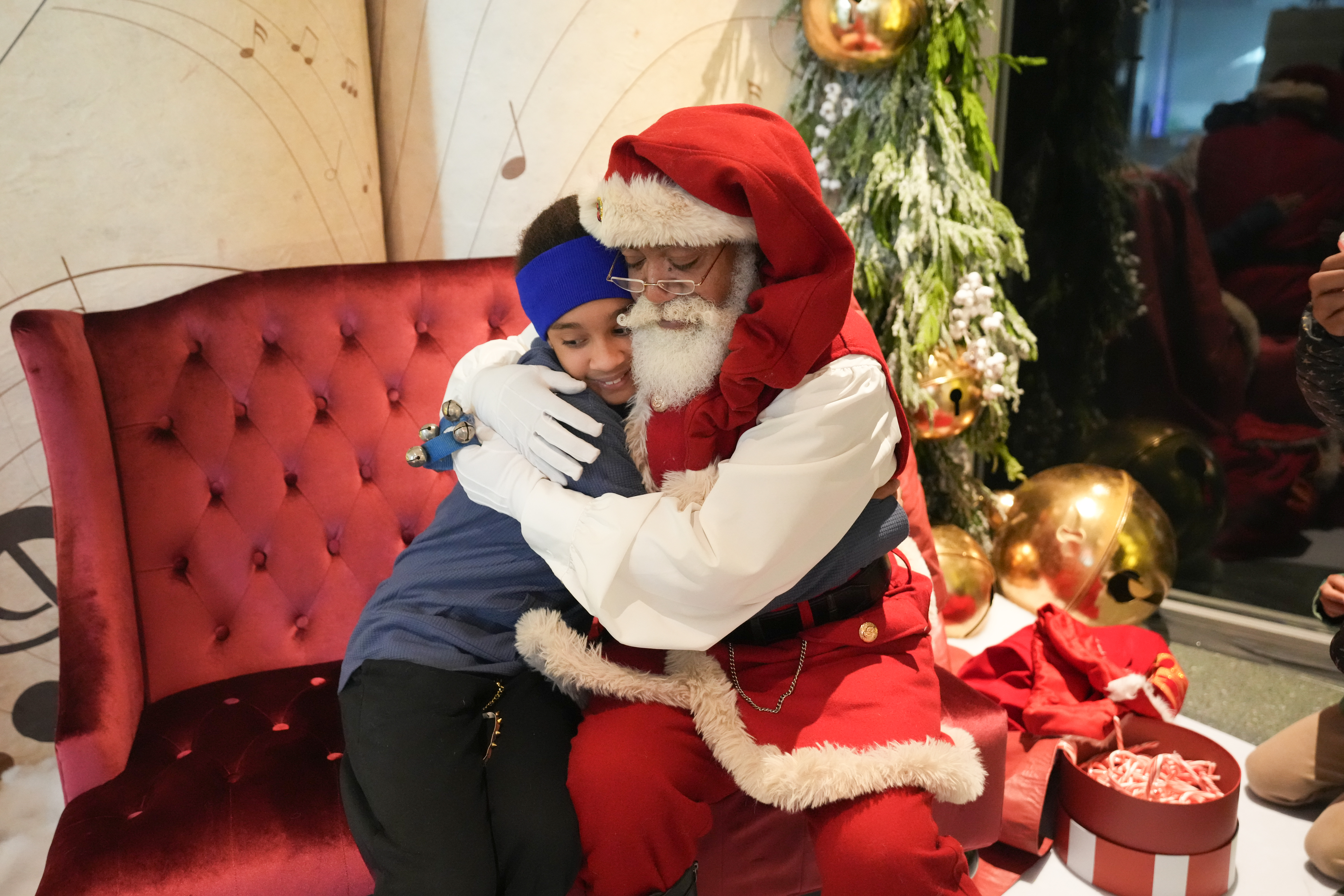
    Lilly Retz hugs Dennis Daniels, or New Age Santa, during a visit to the Comcast Center.

    So in 1994, with his newfound suit in hand, Daniels became Santa at the Elks Lodge in Red Bank, a role from which his uncle had recently retired.

    “I became Santa then,” Daniels said, “and I’ve not looked back.”

    While November and December are the busiest times, some Santas stretch their season for belated holiday parties, or they reappear midsummer for “Christmas in July” events.

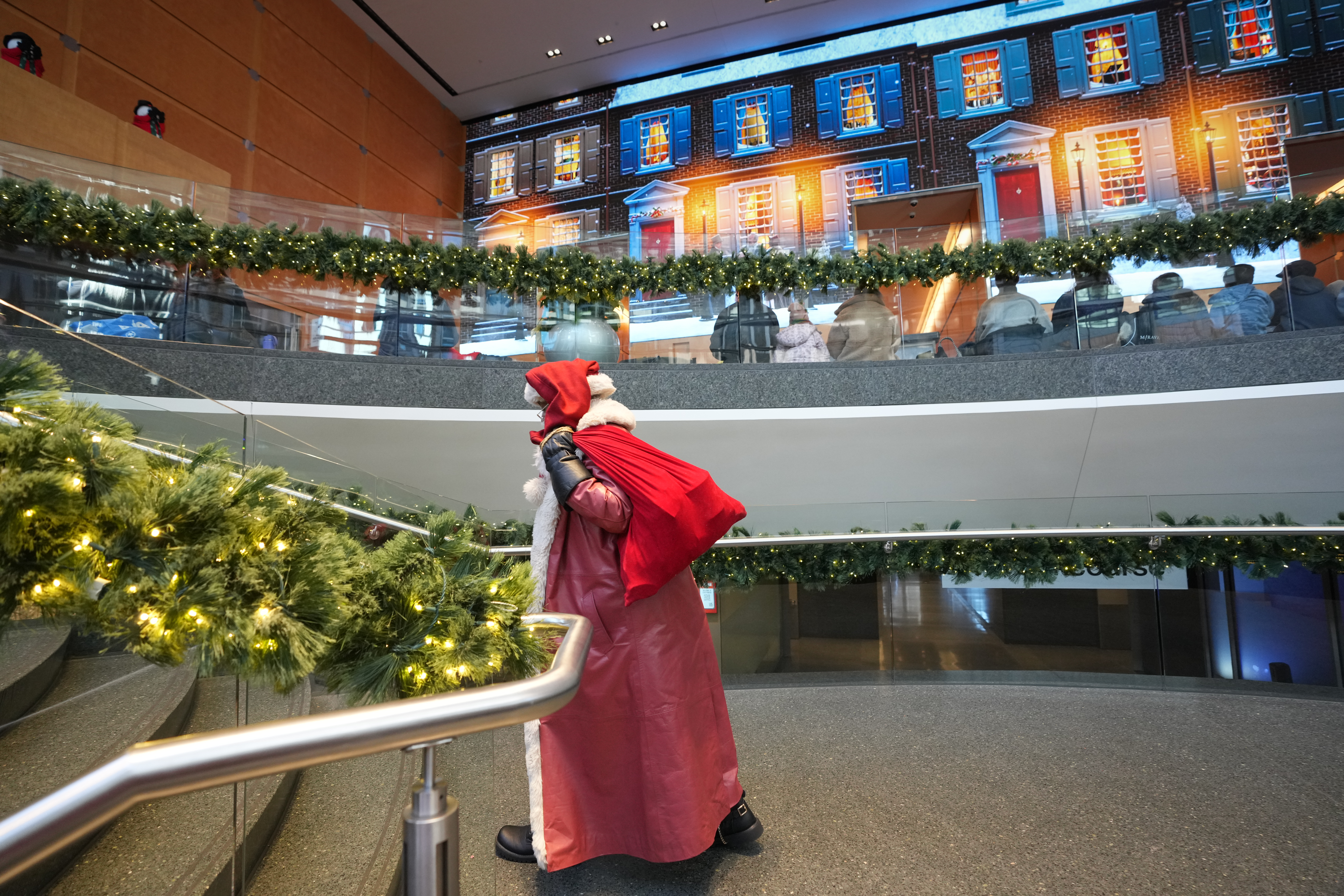
    Dennis Daniels, or “New Age Santa,” departs with his bag from the concourse at the Comcast Center.

    But the season’s end still brings a certain sadness, Daniels said, a “Santa depression,” because “for two months you’ve been a rock star.”

    “Everywhere you go, people yell and scream: ‘Santa!’ They run over. They want to take pictures with you,“ Daniels said. “And then, on Dec. 26, you become yesterday’s news. We’re only human.”

  • The Big Picture: Eagles big shut out, Sixers defend home court, and the week’s best sports photos

    The Big Picture: Eagles big shut out, Sixers defend home court, and the week’s best sports photos

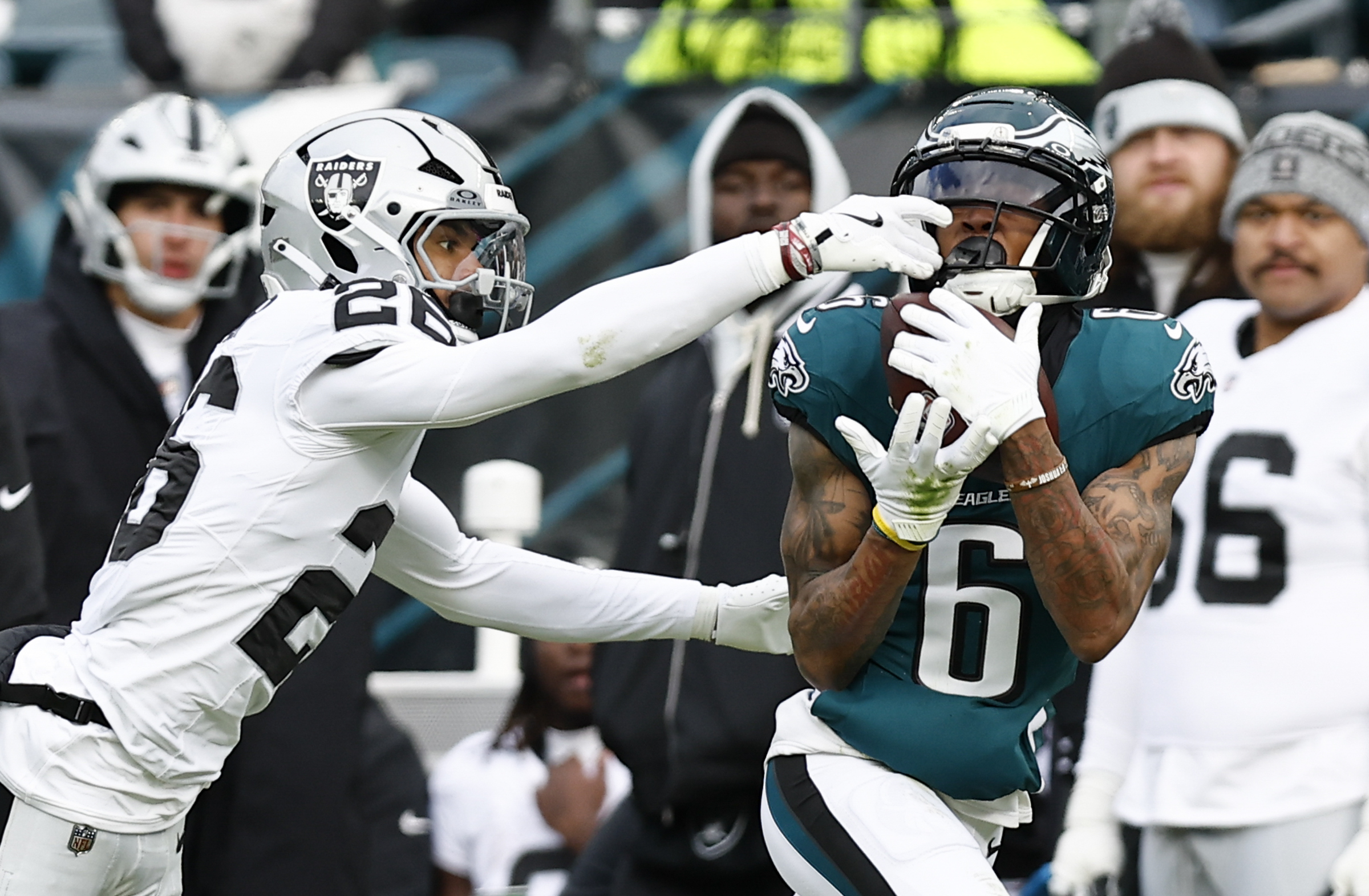
    Each Friday, Inquirer photo editors pick the best Philly sports images from the last seven days. This week, the Eagles dominated the Las Vegas Raiders, 31-0, to end a three-game losing streak and secure their first shut out win since 2018.

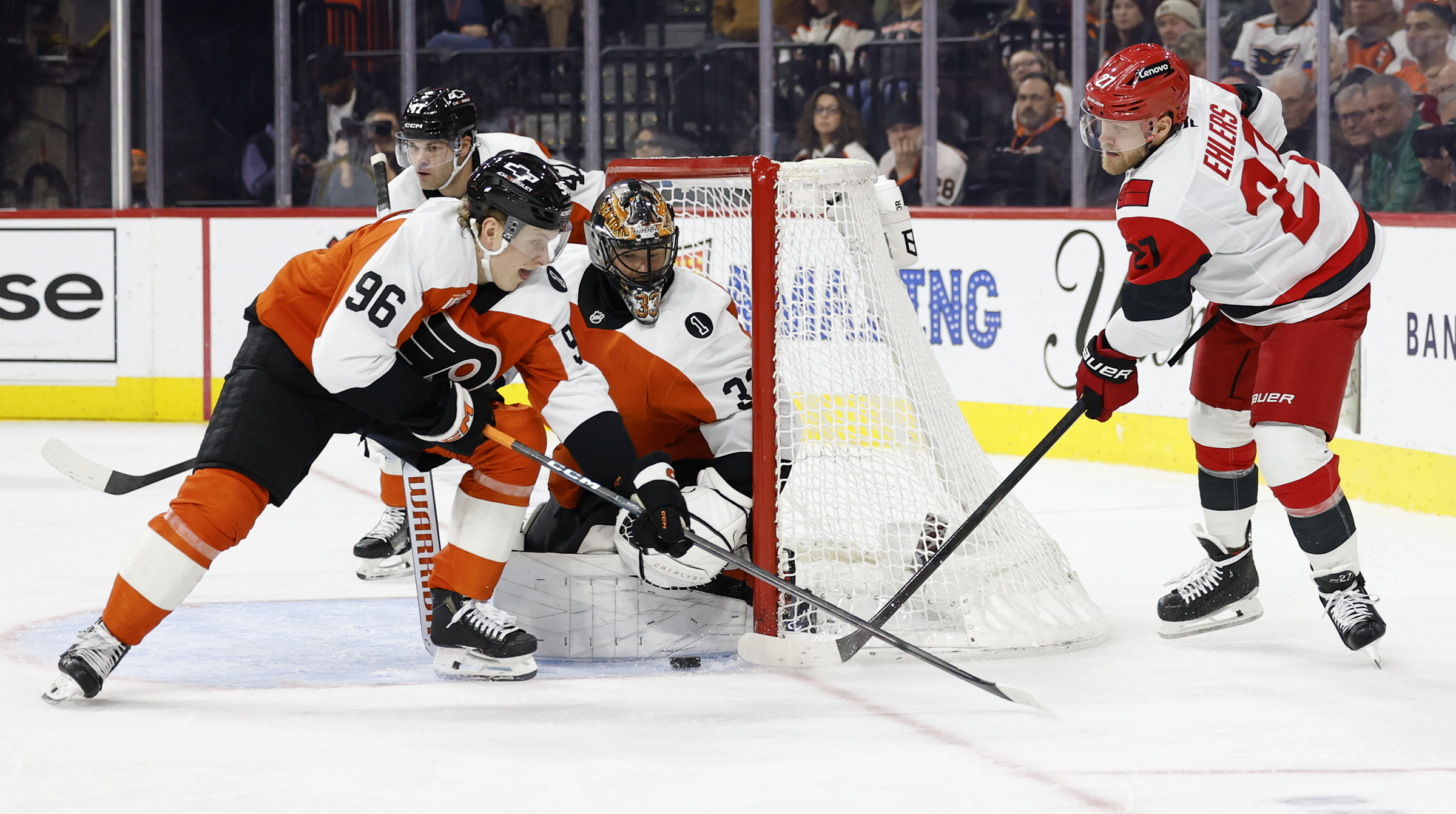
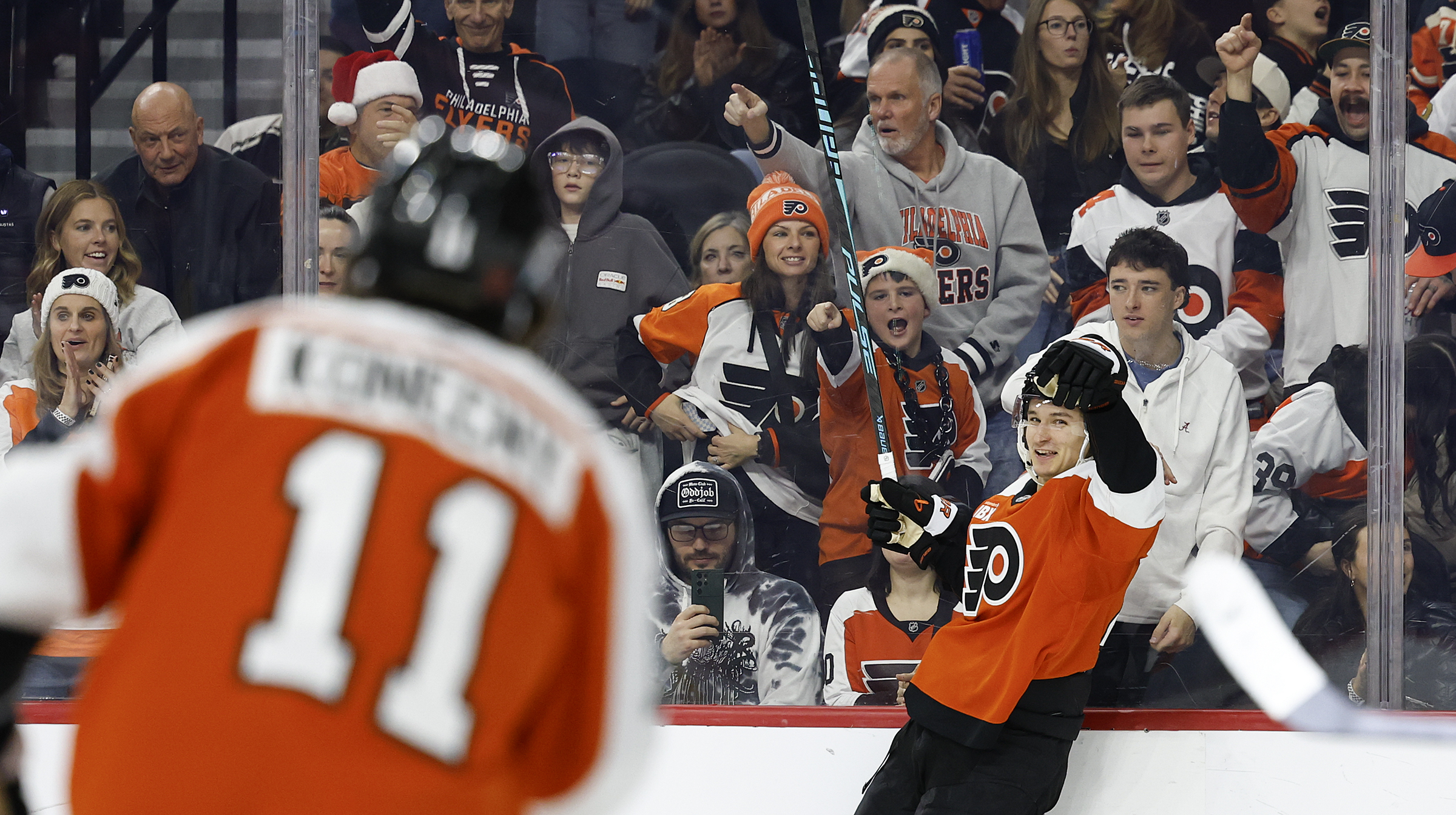
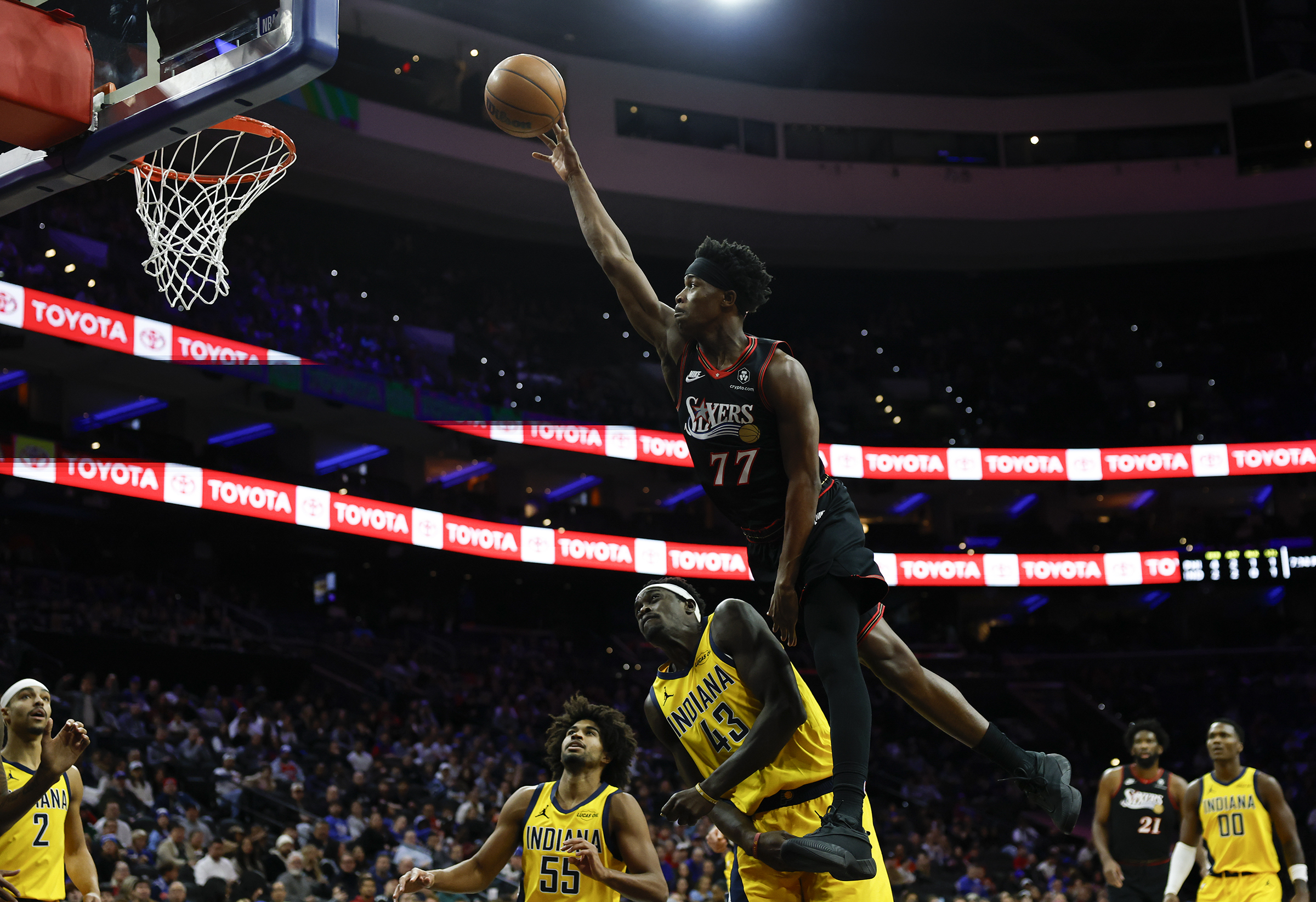
    The Flyers took the Carolina Hurricanes to a shootout last Saturday at Xfinity Mobile Arena, but lost 4-3. The Sixers, though, defended home court with a strong performance by Joel Embiid in last week’s 10-point win over the Indiana Pacers.

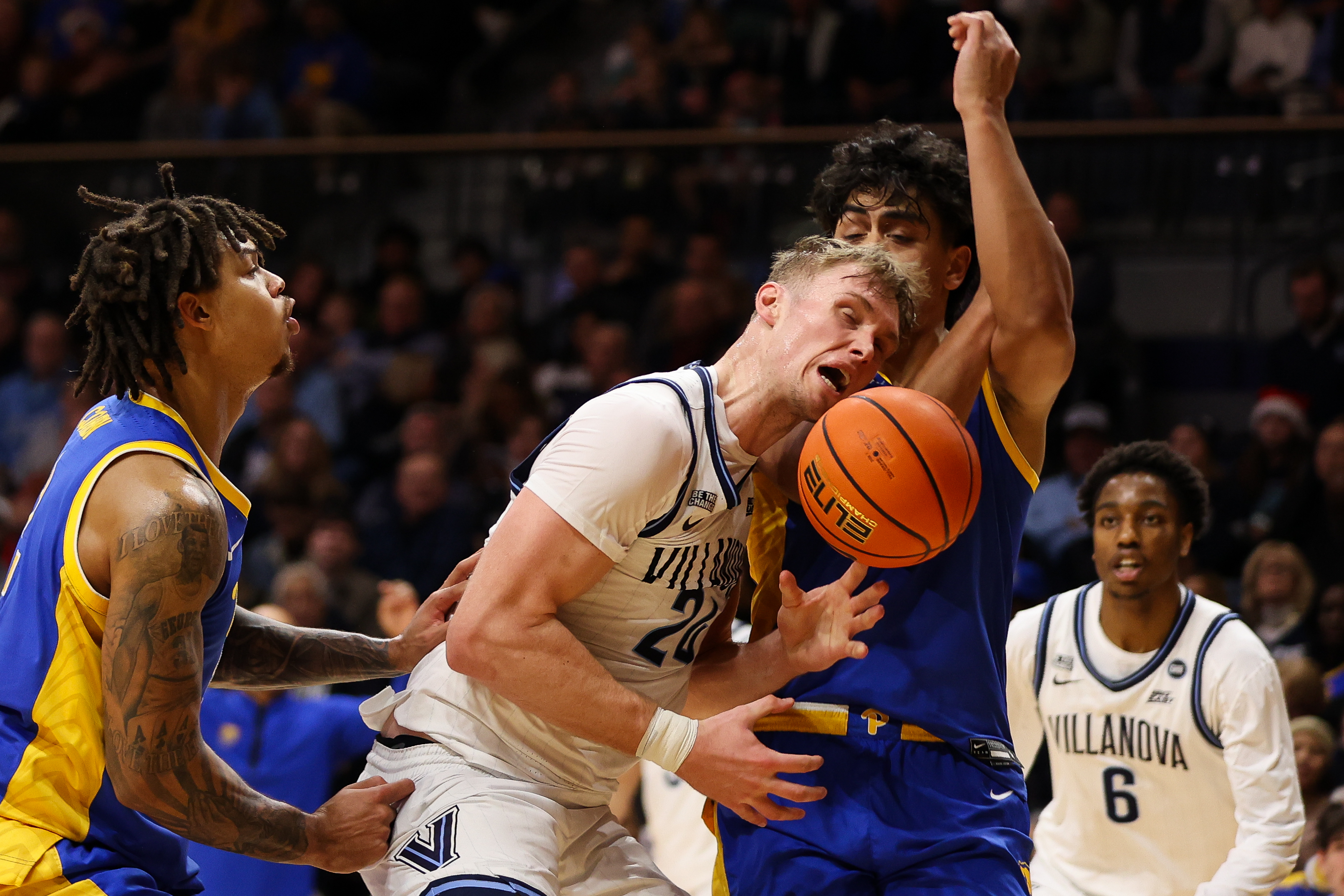
    Meanwhile, Villanova picked up a much-needed nonconference win over Pittsburgh, buoyed by a strong performance from Duke Brennan.

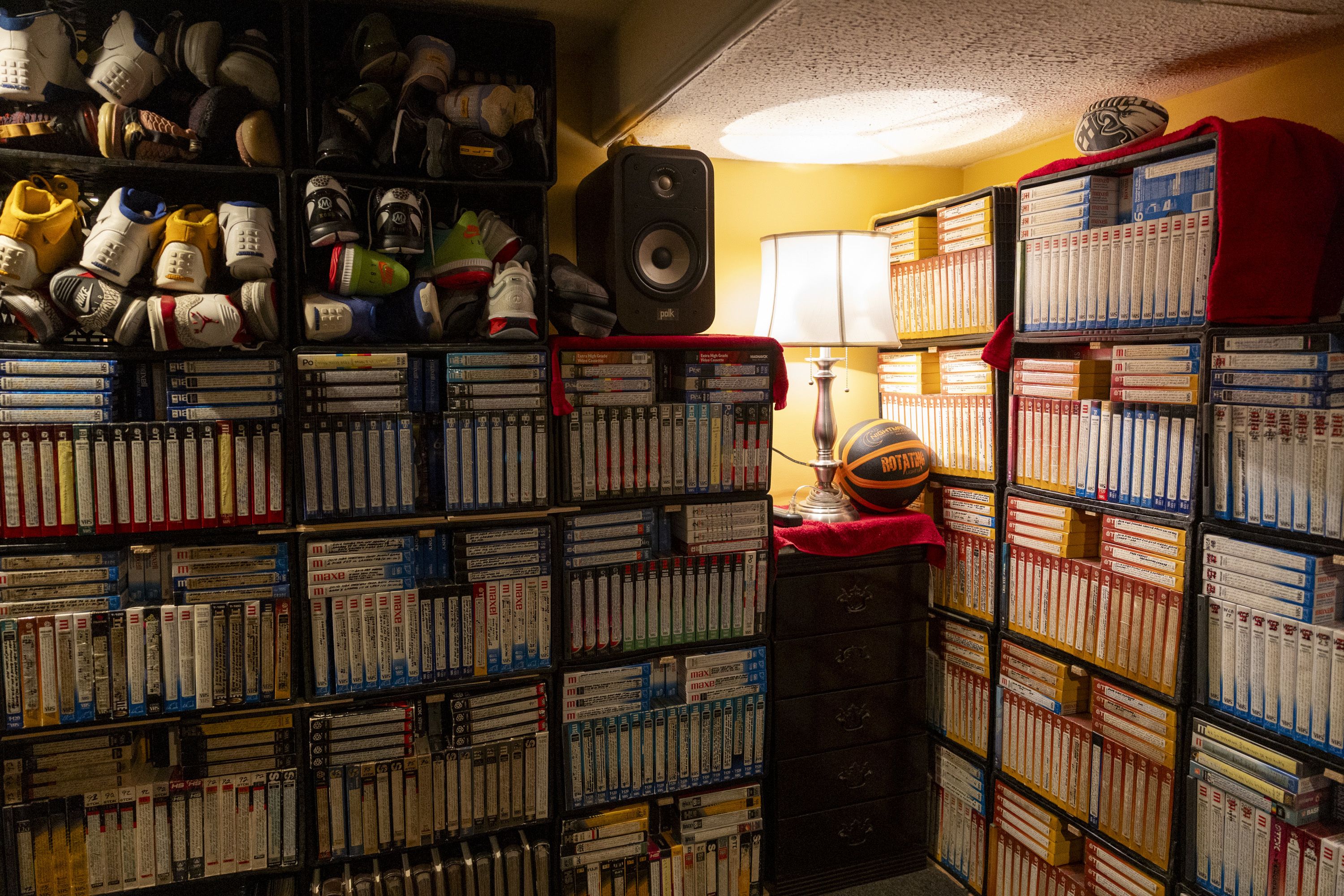
    And finally, our Alex Coffey spoke to Billy Gordon’s family, who still has his VHS collection of basketball games of nearly five decades in Cobbs Creek.

    Our photographers were on hand for it all.

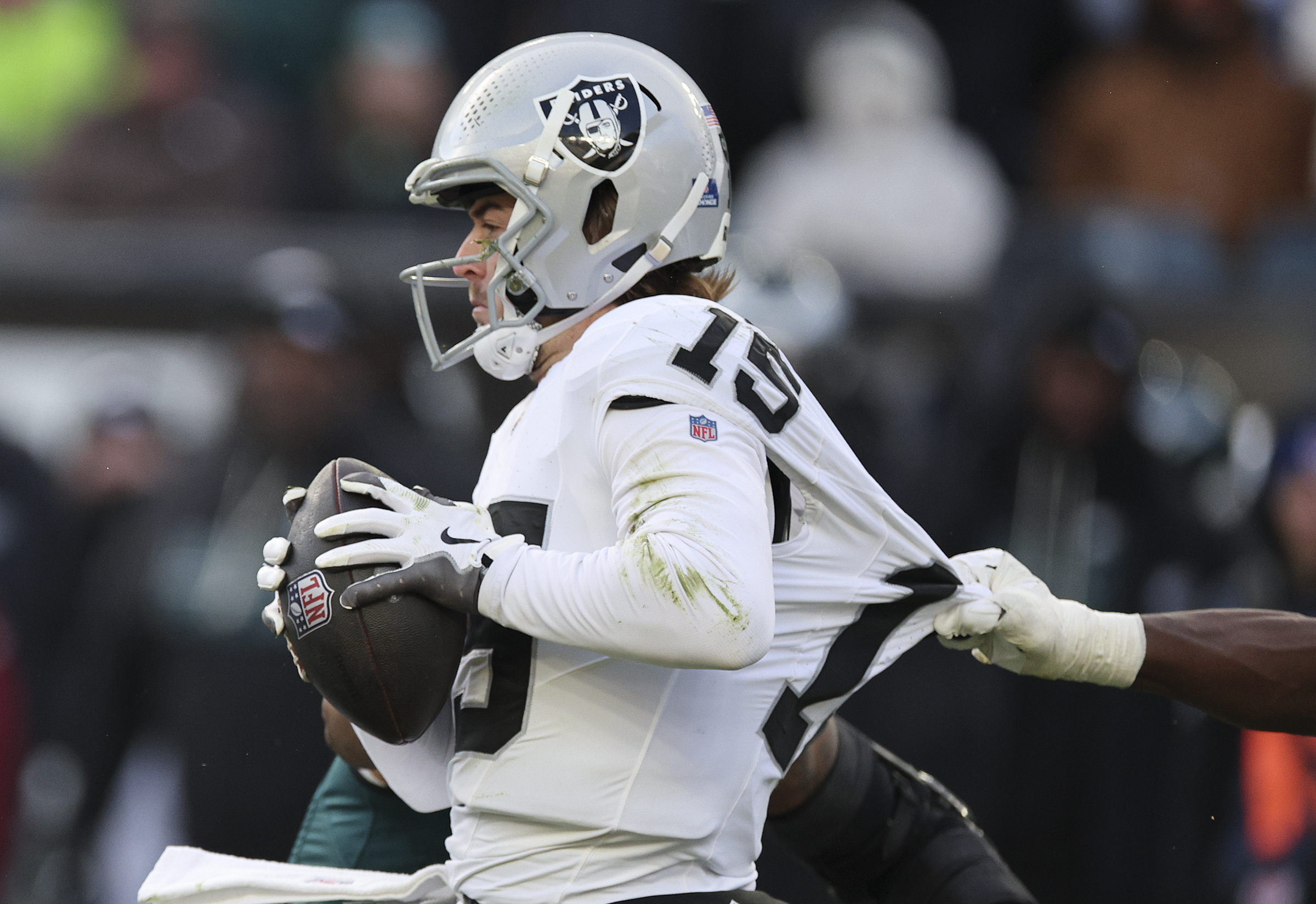
    Las Vegas Raiders quarterback Kenny Pickett gets his jersey grabbed by Eagles linebacker Jalyx Hunt during the third quarter of Sunday’s game.
    Eagles quarterback Jalen Hurts evades Las Vegas Raiders cornerback Darien Porter during a run in Sunday’s game.
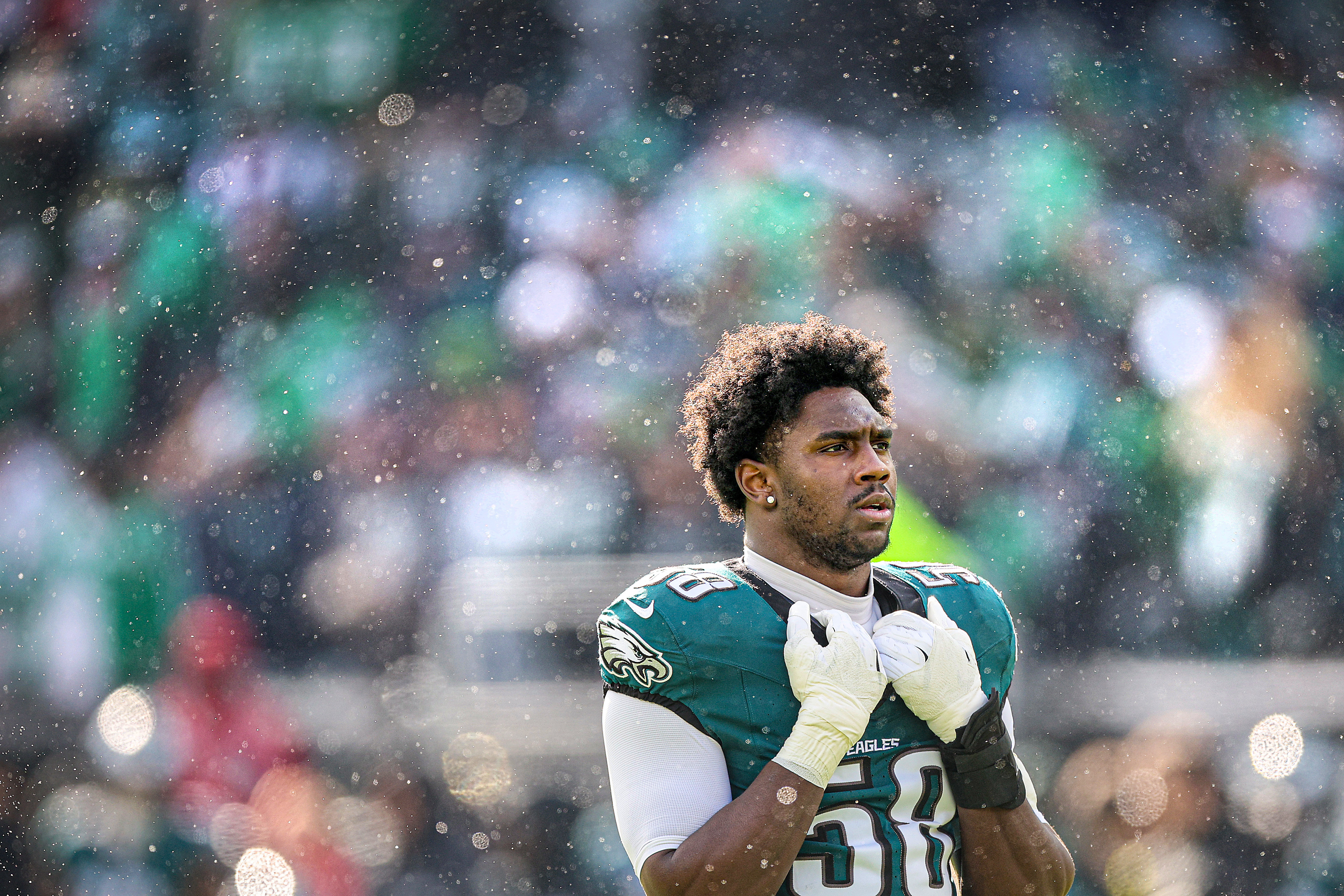
    Eagles linebacker Jalyx Hunt watches the action as snow falls at Lincoln Financial Field on Sunday.
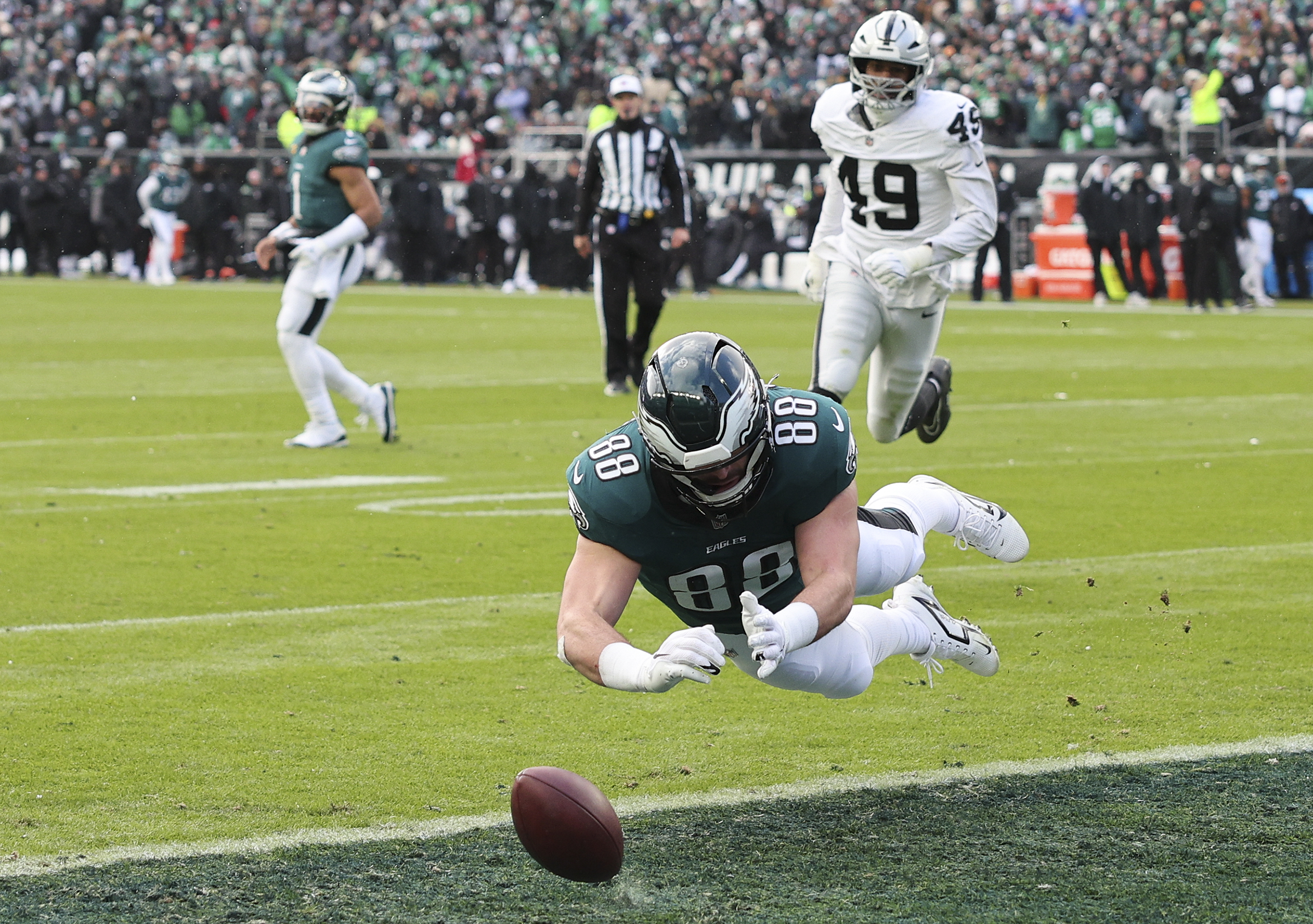
    Eagles tight end Dallas Goedert drops a pass in the end zone against the Raiders on Sunday.
    Eagles wide receiver DeVonta Smith catches the football with Las Vegas Raiders cornerback Darien Porter in coverage during the second quarter of Sunday’s game.
    Flyers goaltender Samuel Ersson (center) stops a shot attempt from Carolina Hurricanes left wing Nikolaj Ehlers (right) with teammate Ty Murchison last Saturday night.
    Flyers center Trevor Zegras celebrates his first period goal against the Hurricanes last Saturday.
    Sixers guard VJ Edgecombe is fouled by Pacers forward Pascal Siakam while attempting a dunk last Friday. The Sixers won 115-105.
    Villanova forward Duke Brennan (center) is defended by Pittsburgh forward Roman Siulepa (right) during the first half at Finneran Pavilion on Saturday. Villanova own 79-61.
    Crates filled with various tapes of NCAA, NBA, and WNBA games from 1986 to 2024 in the room of Billy Gordon in Philadelphia, Pa., on Saturday. Gordon taped and collected men’s and women’s college and professional game broadcasts for 38 years until his death in 2024.
  • Eight Eagles draft targets to watch during the first round of the College Football Playoff

    Eight Eagles draft targets to watch during the first round of the College Football Playoff

    The first round of the College Football Playoff gets underway Friday with Oklahoma taking on Alabama (8 p.m., 6ABC).

    Three more games follow on Saturday: Miami-Texas A&M, Mississippi-Tulane, and Oregon-James Madison. There will be plenty of draft prospects to keep an eye on, especially ones who could end up on the Eagles next season with the team projected to have eight picks in the 2026 draft.

    Here’s a look at the players the Eagles should be keeping a close eye on this weekend.

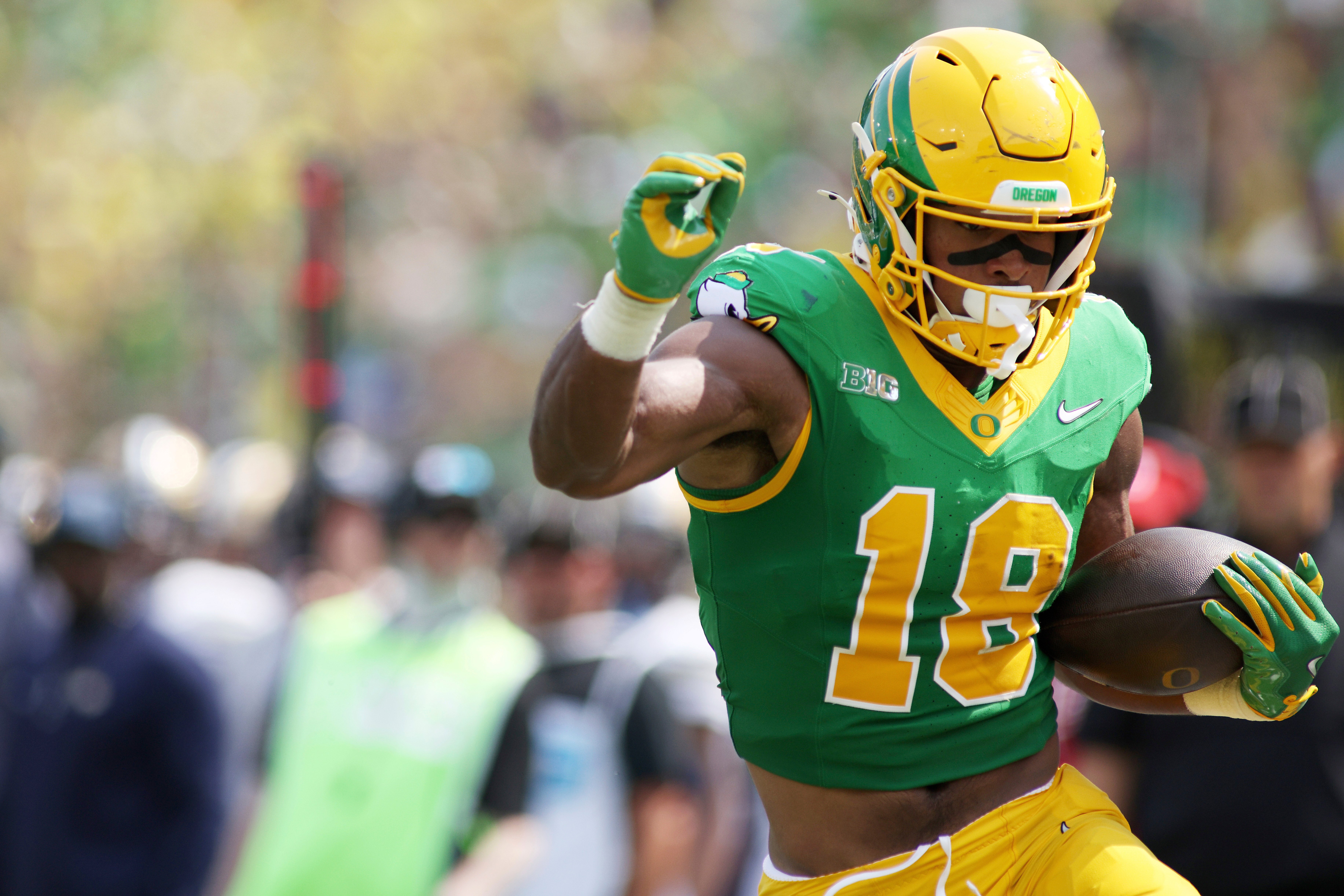
    Tight end Kenyon Sadiq leads Oregon in receptions (40) and touchdowns (eight).

    Kenyon Sadiq, TE, Oregon

    The Oregon offense has plenty of weapons at quarterback Dante Moore’s disposal, but no one may be quite as important as tight end Sadiq, who leads the team in receptions (40) and touchdowns (eight). The 6-foot-3, 245-pound Sadiq is more of a receiving tight end than blocker, but he has tenacious effort in the run game, kicking out edge rushers and driving linebackers and secondary players backward in space.

    Sadiq is an explosive athlete who thrives working the seam and finding soft spots in zone coverage. And his value in the red zone is noteworthy, with his ability to win vertically against secondary players and athleticism to catch passes in congested areas. The Eagles have a long-term need at tight end, despite Dallas Goedert’s strong year, and Sadiq can bring youth and elite athleticism to the room.

    Francis Mauigoa, RT, Miami

    Over the summer, Mauigoa was at Lane Johnson’s OL Masterminds event in Dallas, picking the brain of one of the most consistent tackles in the NFL. That time with Johnson has seemed to pay off for Mauigoa, who is technically refined as a pass protector and a mauler as a run blocker.

    Across 394 pass-blocking snaps, Mauigoa has allowed just two sacks and nine pressures, according to Pro Football Focus. Though the three-year starter has made all of his appearances in college at right tackle, some teams view Mauigoa as a high-level guard with his run-blocking prowess. Whether the Eagles view him as a guard or tackle, the 6-6, 335-pound lineman would be a nice addition at either spot.

    Cashius Howell, DE, Texas A&M

    Howell, who was named SEC Defensive Player of the Year last week, is one of the few edge rushers in this class with first-round worthy film, but his 30¾-inch arms, well below the NFL’s standard of 32-inch arms, may scare some teams off. But his athleticism and fluidity running the arc as a pass rusher makes him hard to ignore.

    Though he needs to work on his run defense, Howell’s pass-rush ability will be coveted. In a class without many top-end edge rushers, he seems like a good bet to go in the back half of Round 1. Edge rusher probably isn’t the most pressing need for the Eagles’ defense, but Howell would bring some additional juice to it.

    Emmanuel Pregnon, G, Oregon

    Playing for his third school in five years, Oregon’s left guard is a road grader in the run game, easily passes off defensive line stunts, and isn’t afraid to clean up a pocket if he isn’t blocking a defensive lineman. Pregnon has a powerful initial punch to redirect pass rushers and climbs to the second-level of a defense on double-team blocks in the run game.

    He has only surrendered three pressures across 351 pass-blocking snaps, according to PFF, and is rarely caught out of position. He has experience at both guard spots and could slot in at right guard if the Eagles feel the need to upgrade with Tyler Steen entering the final year of his contract next season.

    KC Concepcion, WR, Texas A&M

    The Eagles could be looking to upgrade their receiver room with Jahan Dotson set to be a free agent after this season, though drafting a wideout early seems unlikely. Still, Concepcion is a dynamic receiver who has returned to his freshman form this season, consistently winning on a vertical plane and creating explosive plays with the ball in his hands.

    Concepcion transferred from North Carolina State and has become the Aggies’ top receiver, leading the team in receptions (57), receiving yards (886), and touchdowns (nine). He recently won the Paul Hornung Award, which is given to the most versatile player in college football, and would be a welcome addition to the Eagles’ passing attack.

    Will Lee, CB, Texas A&M

    Though Adoree’ Jackson has settled into the corner spot across from Quinyon Mitchell, the Eagles could still look to upgrade the position. Lee is a physical, long defensive back who excels at disrupting routes and breaking on timing routes on an island. An exceptional athlete who is sticky in man coverage, Lee doesn’t have quite the same production as last year when he had two interceptions. But he has seven passes defended this season and has allowed catches on just 54.5% of his targets.

    While he can get overly aggressive and grabby on routes (six penalties in 2025) and must find the ball better in man coverage situations, Lee has the size (6-1, 189 pounds) and competitiveness to excel at the NFL level. A good showing against Miami could be a big stock booster.

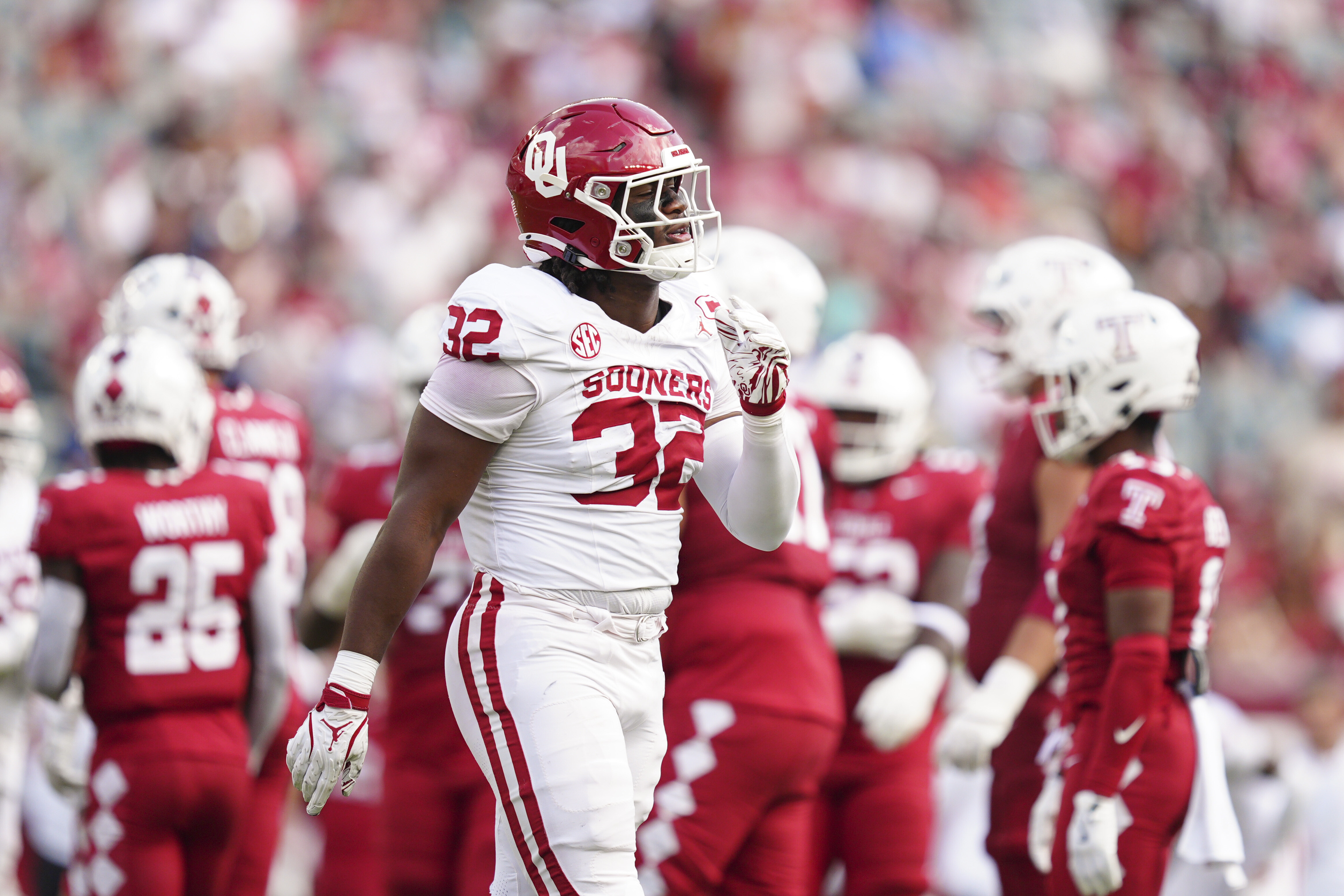
    Oklahoma pass rusher R Mason Thomas was limited by injury this season, but he’s still been productive.

    R Mason Thomas, DL, Oklahoma

    The Oklahoma pass rusher has been limited to just nine games because of injury, but his production hardly decreased with nine tackles for loss and 6.5 sacks for the Sooners. Thomas is an elite rusher with excellent closing speed to run the pass rush arc and has a lethal speed-to-power conversion in his repertoire.

    Like Howell, Thomas is likely to be a pass-rush specialist early in his NFL career, but his value getting after the quarterback should still have him selected within the first two rounds of the 2026 draft.

    Akheem Mesidor, DL, Miami

    All of the attention will be on Miami’s star pass rusher Rueben Bain Jr., an expected early-round pick, but versatile edge rusher Mesidor deserves some love, too. The sixth-year senior has inside-out pass-rush ability, possesses strong, active hands, and a quick first step to turn the corner on offensive linemen.

    He played more of an interior role in 2024, but has a natural fit as a defensive end. Mesidor plays with good leverage and hand usage in the run game, and though he’s an older prospect (24), he can make an immediate impact along a defensive line in need of players who can man multiple spots. Mesidor has a career-high 12 tackles for loss and has matched a career high in sacks with seven in 11 games this season.

  • Saquon Barkley won’t hit 2,000 yards, but he still thinks he can have a big impact on this Eagles season

    Saquon Barkley won’t hit 2,000 yards, but he still thinks he can have a big impact on this Eagles season

    What was Saquon Barkley going to do for an encore?

    That was one of the overarching storylines entering this season after Barkley, in his first year with the Eagles, became the ninth player in NFL history to rush for 2,000 yards in a season.

    No one has ever done it twice, so repeating always was going to be a stretch. But who could have seen this coming? It’s Week 15, and Barkley still is 60 yards shy of reaching 1,000 on the season. The Eagles have three games remaining, and, assuming Barkley stays healthy, he will reach the 1,000-yard mark Saturday against the Washington Commanders or next week in Buffalo. It would be the first time he’s recorded consecutive 1,000-yard seasons since his first two seasons in the NFL.

    Barkley certainly didn’t see this coming. The way he trains and the way he works, he said, and how much time and money he has put into his body, a mostly healthy season in which he plays in every game should yield better results than this. He’s at 3.9 yards per carry, tied for the second-lowest output of his career for a season in which he’s played more than two games.

    “Sometimes that’s how the game goes,” Barkley said Thursday after the Eagles wrapped their final practice of the week before playing at Washington on Saturday. “My mindset is, I still can have the impact on the season I want to. That’s finishing up the season strong and then going to the playoffs. That’s when it really matters the most. All of that is still in front of me, and I’m excited for the opportunity.”

    The running game not being anywhere close to what it was in 2024 has been one of the big issues plaguing an offense that has failed to consistently sustain drives and score points. There are a variety of factors at play. Teams have zeroed in on stopping the Eagles run game. The Eagles offensive line has been banged up and also hasn’t performed to its usual level. The passing game hasn’t been consistent enough to force opponents to adjust.

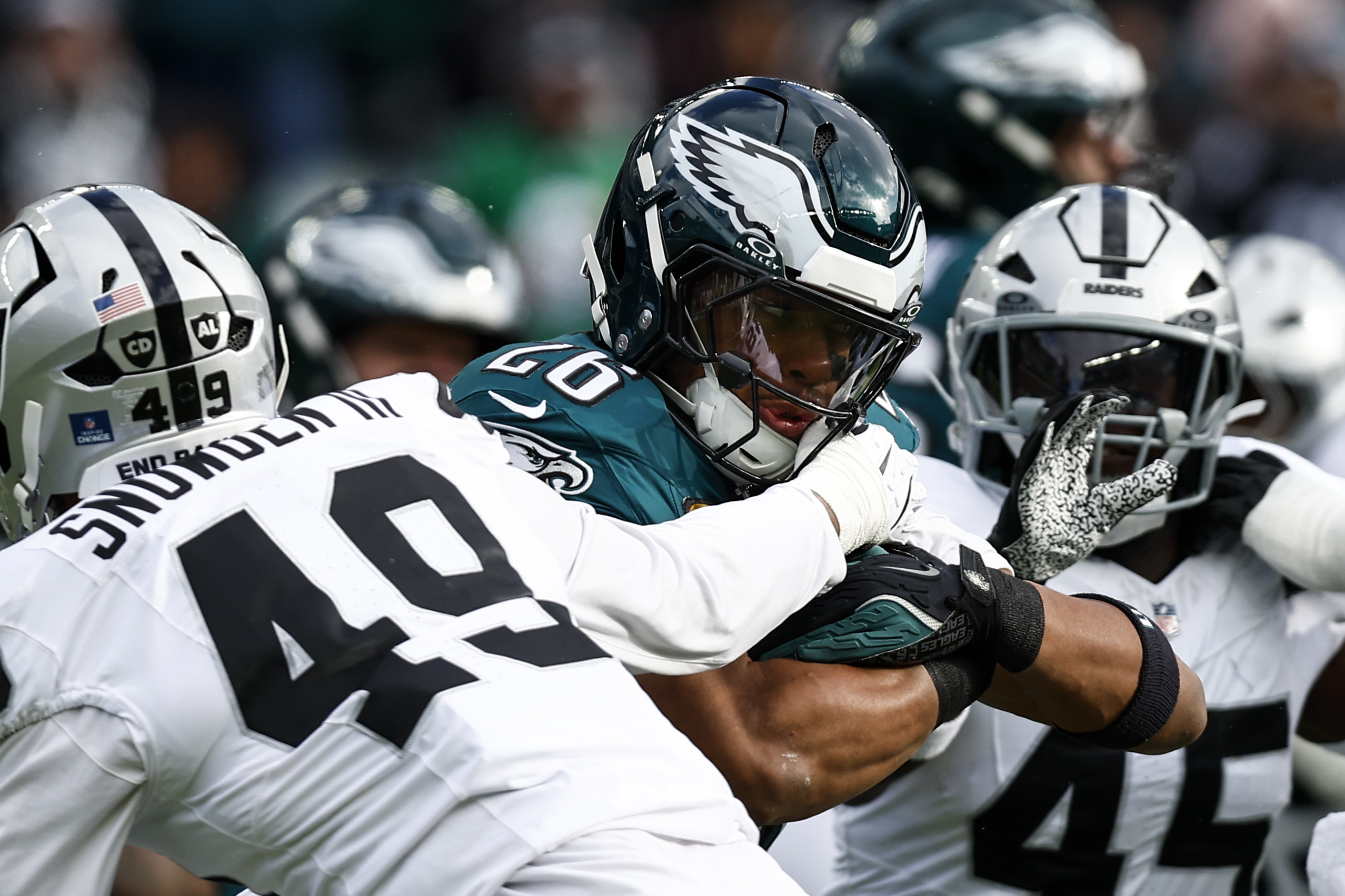
    Saquon Barkley is stopped by Raiders defensive end Charles Snowden during the first half in Week 15.

    But Barkley also shoulders some of the struggles. In a clip on this week’s episode of Hard Knocks, Barkley is seen talking with Nick Sirianni about his role in helping the offense stay ahead of the sticks.

    Barkley has been tackled for a loss on 15.83% of his rushes, according to SumerSports. That’s the third-highest rate in the NFL for running backs with at least 100 carries. Last year, Barkley ranked 24th at 9.57%. That’s on the blocking, of course, but Barkley said he shares some of it, too. It was a knock on him coming out of college, he said, that he tried to score a touchdown every time he touched the ball.

    “Which I am, because I have the ability any time I touch the ball, I could take it 90 [yards],” Barkley said. “I could take it however long it needs to go. But there’s a flow to the game, and it’s helpful when you’re able to get positive runs — get those 3s, get those 4s. That sets up stuff later down the road.”

    Barkley, in the Hard Knocks clip, told Sirianni that he needs to do his part to turn negative runs into smaller positive gains.

    “I have to do my job,” he said Thursday. “The ones that might be a negative-1 or negative-2, if I could make that into [positive] 2 or 3, that’s helpful. It keeps us above the sticks and it makes play calling a lot easier. It makes it a lot easier to be consistent with the play calling and the run game when it’s second-and-6 rather than second-and-9. That’s kind of the mindset, building off that and trusting it and getting the dirty runs. Then, when the opportunity does come, make them pay for it.”

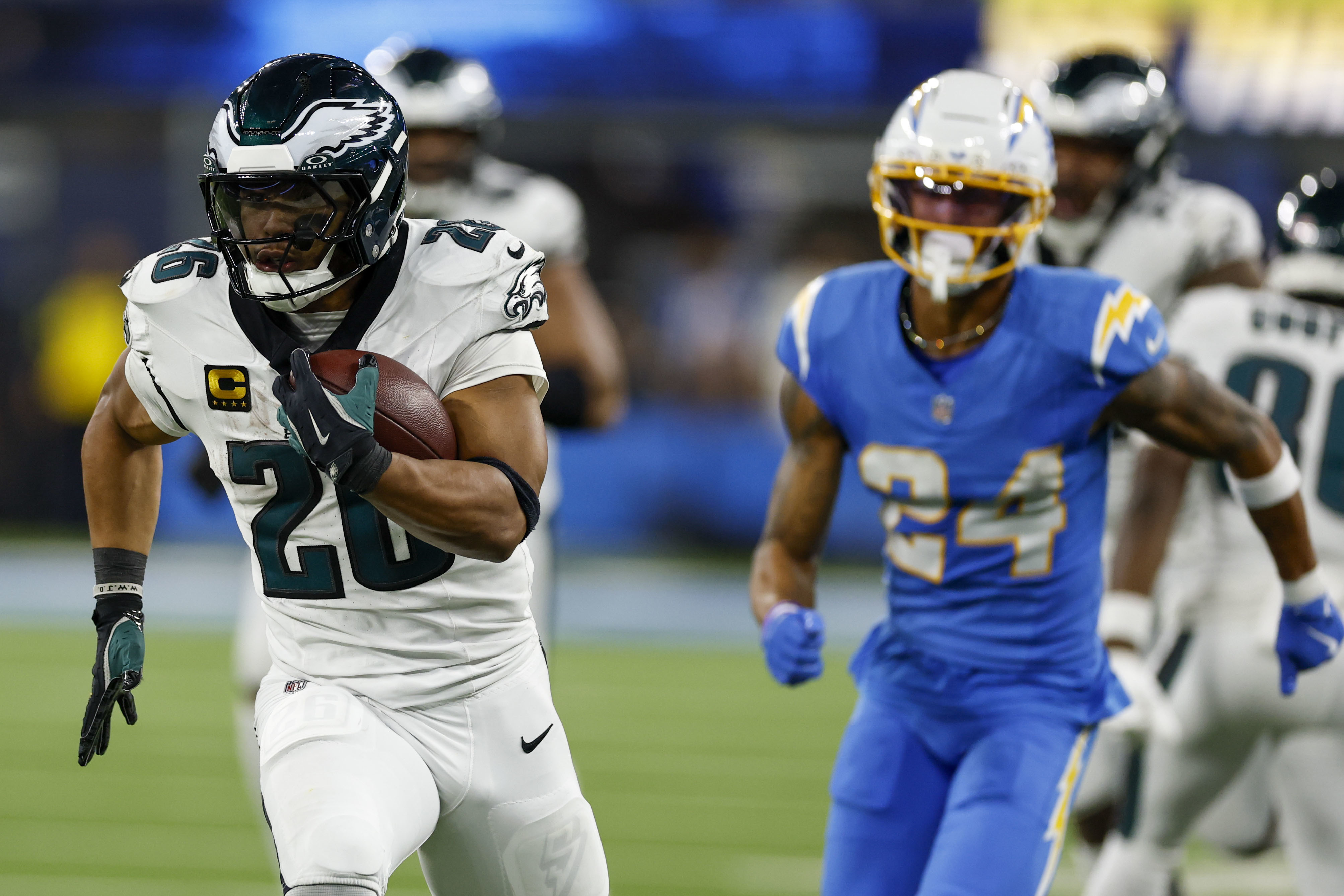
    Saquon Barkley runs for a long fourth quarter touchdown in the Week 14 loss to the Chargers.

    The running game has shown signs of life in recent weeks. Barkley carried 22 times for 78 yards during Sunday’s blowout win over the Raiders. He had 122 yards on 20 carries a game earlier, including a 52-yard touchdown run the Eagles scored off a toss play out of the Tush Push formation.

    The passing game got going Sunday, albeit against a lesser opponent. Jalen Hurts even flashed in the run game, which Barkley said helps open up the offense. The Eagles went under center more than they have all season. There were things to build off of as they head into the final stretch of the season. They’re on the brink of clinching another NFC East title and are gearing up for another playoff run. The protection has improved, and Lane Johnson should be back when the games matter most.

    “I think we’re super close and that’s important,” Barkley said. “Everyone gets caught up in how well teams are playing in the first five games or first half of the season. None of that matters. It does matter, because you got to give yourself a chance to compete for the playoffs, but if you look at some of the guys or the teams … they’re falling off. It’s a long season. It’s hard. Everything we want is still right in front of us.”

  • Villanova shares a resemblance to the 2009 FCS championship team. Just ask its former players.

    Villanova shares a resemblance to the 2009 FCS championship team. Just ask its former players.

    There was no time Aaron Ball enjoyed more than being in victory formation on the football field, and 16 years ago Thursday was particularly special.

    The former Villanova running back, now living just outside of Virginia Beach, Va., still has fond memories of the program’s only FCS championship victory, a 23-21 win over Montana on Dec. 18, 2009.

    “When [it was] the fourth quarter and the time was running out, and we’re in victory formation‚” Ball told The Inquirer, “it was just an incredible feeling. Just thinking about the moments we had, like after the game in the locker room and going crazy, the trophy and everything. That whole experience was incredible.”

    The Wildcats, now led by Mark Ferrante, who was assistant head coach under Andy Talley on that 2009 team, are one game away from being back in the national championship game.

    After a comeback victory in the FCS quarterfinals against Tarleton State, Villanova will host Illinois State in the semifinal (7:30 p.m., ESPN2) on Saturday, the team’s first home game this late in the playoffs since the 2009 team narrowly defeated William & Mary, 14-13.

    Like that 2009 team, this year’s squad suffered an early CAA loss and went on a lengthy winning streak. Former quarterback Chris Whitney, a St. Joseph’s Prep graduate who was the team’s leading rusher in 2009, believes there is an uncanny resemblance between his team and this year’s group.

    “I feel like there’s a lot of similarities. The defense is really good, and they’ve shown that in the last three games in the playoffs, playing against three top teams in the country,” Whitney said. “And then you flip to the offensive side, they have a great three-headed running game. … Even down to the running backs, very similar to our running backs, Angelo Babbaro and Aaron Ball.

    “Then, from a quarterback perspective, [current starter Pat McQuaide] is taking care of the ball.”

    Brandyn Harvey helped Villanova upset Temple at Lincoln Financial Field in 2009.

    ‘We never felt like anybody could beat us’

    Former wide receiver Brandyn Harvey knew something special was afoot when Villanova went to Lincoln Financial Field and beat Temple by three points to open the 2009 season.

    Harvey, the team’s leading receiver that year who is now living in Los Angeles, said that “beating Temple was more fun than beating Montana,” because of the back-and-forth the two schools had that summer leading up to that August matchup.

    “It put us on the right trajectory to just finish and be successful throughout the rest of the season,” Harvey said.

    Former tight end Chris Farmer, a West Catholic graduate, added: “I know we all thought that we could beat Temple, which would have been a [FBS] school at that point. So once we did that, I think our confidence got rolling a little bit more. And we just took it from there.”

    Ball, though, had a different perspective on when he knew Villanova could be a championship team.

    After Villanova lost to New Hampshire on Oct. 10, the former running back, who finished with 794 rushing yards in 2009, third-most on the team, thought the team was “overlooking our opponents.”

    “After that game, it was a big turnaround for us,” Ball said. “[We were] just doing a little bit too much, and needed to settle in. And then the next game, we bounced back [beating James Madison, 27-0]. And I was like, ‘OK, we’re actually a pretty good team.’ When I’m comparing ourselves to other teams and where they’re at and where we’re at. And I was like, ‘Man, you really can kind of do something special with this team.’”

    For Farmer, who started his career at defensive line and switched to tight end as a junior, what stood out most to him was the talent and the “great camaraderie” that 2009 team had. Everyone hung out with each other, Farmer said, and outside of having class, the “locker room was always filled.”

    And the one common trait that Whitney, Harvey, Ball, and Farmer agreed that the team had back then? Perseverance.

    The 2009 college football season was perhaps the most successful in Philadelphia history. Penn won the Ivy League, Villanova won the FCS national championship and Temple reached a bowl game for the first time in 30 years.

    “We always felt like we were supposed to win, especially at that point in the season,” Farmer said. “So in those playoff games when we were down, just leaning back into the camaraderie, everyone kept their energy going. [The] sidelines never got disappointed or [had their] heads down. I think that camaraderie probably carried us through, to be honest.”

    Added Harvey: “We may have been out of a possession, but we never felt like we were out of the game. We never felt like anybody could beat us at the end of the day, like we were just very confident. I wouldn’t say we were cocky, but we were just very confident, just in ourselves, just based off the work that we put in, because we know how hard we work, especially in the summer, and all that just carried over and translated to the season.”

    ‘Coach Ferrante was the president’

    The offensive line and assistant head coach on that 2009 team is the same coach who leads Villanova now: Ferrante, now in his 38th year with the program.

    While Talley led the program during the first 29 years that Ferrante was with the program, it was the latter whom players say was key in getting them to play on the Main Line. Ferrante was the local recruiter for both Whitney and Farmer, as both played in the Catholic League.

    Both worked closely with the offensive line — Farmer at tight end, Whitney at quarterback — and each agreed that Ferrante’s impact on the team was apparent.

    “He served, as I would say, a father figure to a lot of guys on the team,” Farmer said. “Honestly, he was — if coach [Talley] was the chairman or CEO, then coach Ferrante was the president, making sure everything was up to speed and running the way Coach T wanted it.

    “He put a lot of time, a lot of sweat into the program, you know, to be honest, man, so to see him finally have the opportunity to take the reins … and quickly getting the program to be successful, it’s really cool.”

    Added Whitney: “I have a special place in my heart for Coach Ferrante, frankly. … To talk about a guy who is deserving, putting in his time [for 29] years as an assistant, with the same program putting in that time to then get his chance as a head coach and get a chance to to reach the top of the mountain. I would love nothing more than that for him.”

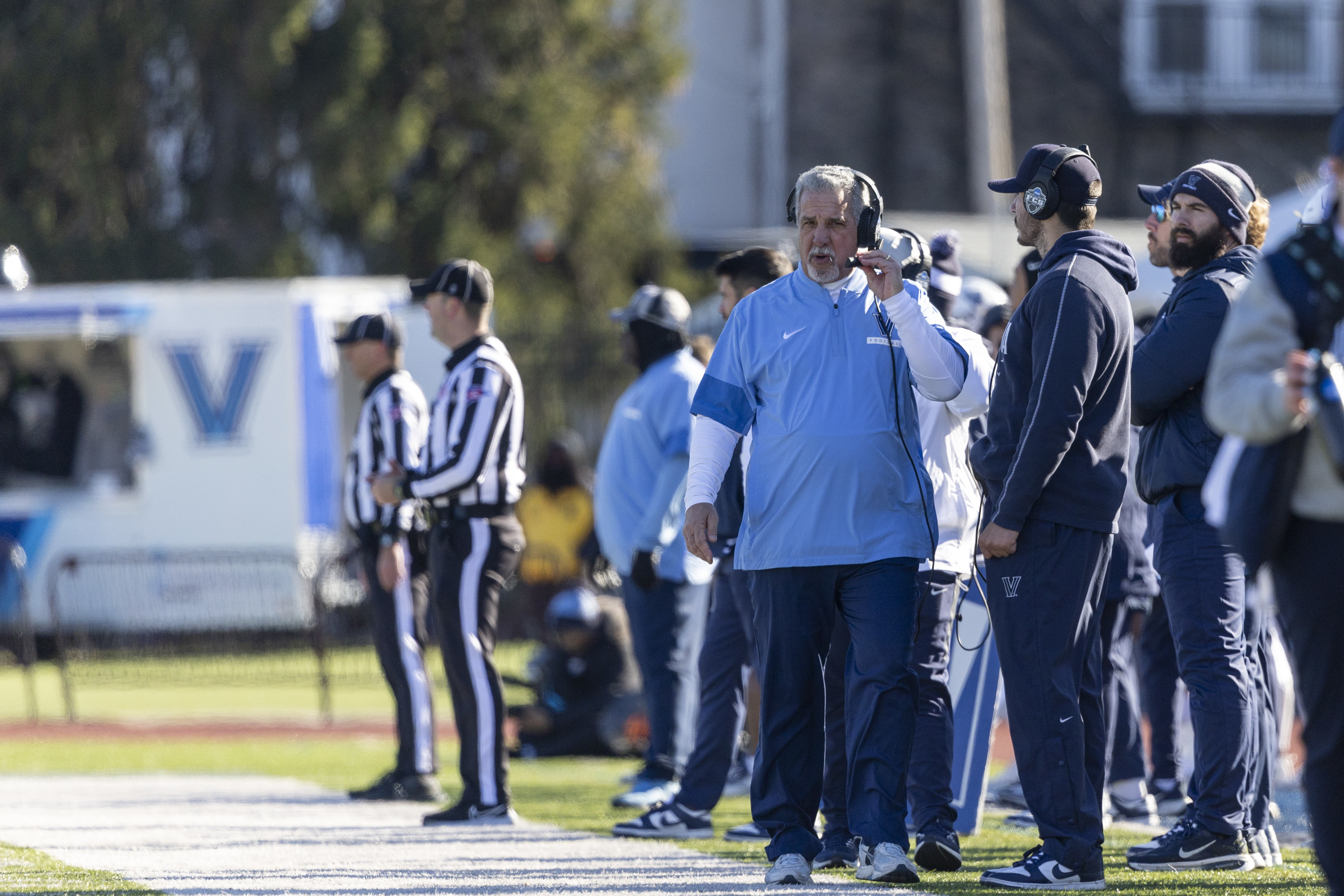
    Villanova coach Mark Ferrante on the sidelines during its game against Harvard on Nov. 29.

    College football has changed plenty in the 16 years since Villanova’s last football title, including the transfer portal and Name, Image, and Likeness to name a few, though the latter doesn’t affect the FCS level as much. But Harvey says his 2009 team only had a handful of transfers, none of whom started on their team, compared to this year’s Villanova team, which starts a transfer quarterback, wide receiver, and has a few other rotational defensive players who transferred in.

    While the culture in college football is different now, Harvey points to the transfer portal as a positive development to the competitiveness of the FCS level.

    “I feel like the portal has really impacted the FCS level. I was thinking about this last week, watching a couple of games and just seeing where some of the players came from. I think when I was playing, I don’t know if it was our culture, but we didn’t really accept transfers,” Harvey recalls. “Players literally come from everywhere, no matter the level. … I know people tend to knock [the] FCS, but it’s also competitive level as well.”

    Added Whitney: “For Pat [McQuaide, a Nicholls State transfer] to come in the spring, and a lot of those guys coming in the spring and meshing as well as they have, it’s a credit to them. It’s also a credit to coach Ferrante. I mean to get these kids to bond so quickly and play together is pretty tough, but it is obviously the new norm in college football.”

    The years in between have looked different for each former player, but the love for their alma mater remains the same. Spread from coast to coast, they still keep in touch with former teammates, tune in to watch Villanova’s football games, and share various memories from that title team with their children.

    They will all be watching this weekend. Harvey and Ball plan on making the trip to the title game if Villanova beats Illinois State.

    And speaking of common threads, here’s one more: the 2009 team won the FCS title game in its final year in Chattanooga, Tenn., and this year’s championship game will played in Nashville, Tenn., after a 16-year stint in Frisco, Texas.

    How about that?

  • Some of Philly’s most vulnerable residents say they lost medical care without notice after millions of Pa. state agency letters went unsent

    Some of Philly’s most vulnerable residents say they lost medical care without notice after millions of Pa. state agency letters went unsent

    “Do you realize you are going to end my life by doing this?”

    Eliana Chernyakhovsky said she asked the question through an interpreter over and over again to the Pennsylvania Department of Human Services last week, after her 24-hour, state-funded care was cut off without warning. Her meal provider was also cut off. How would she feed herself? What if her oxygen tank ran out?

    “Fear had risen in my heart,” Chernyakhovsky said in Russian during an interview through an interpreter on Wednesday. “I was genuinely afraid.”

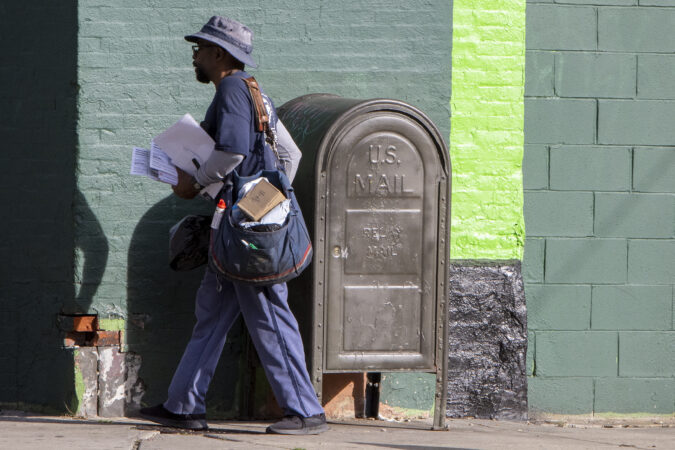
    Chernyakhovsky, 73, of Northeast Philadelphia, was born with spina bifida and has a number of physical disabilities associated with the condition, and uses a wheelchair to get around. She is among the Pennsylvania residents who say they have lost their government-funded services because a state-contracted mail vendor failed to deliver a month’s worth of agency mail.

    That breakdown resulted in 3.4 million letters never getting sent, 1.7 million of which were from the Pennsylvania Department of Human Services — the agency that oversees SNAP food assistance and Medicaid and is tasked with serving the state’s most vulnerable populations.

    Millions of letters from state agencies — including notices of health and SNAP benefit renewal, driver’s license and vehicle registration renewal invitations, vehicle registration cards, and more — were never sent by a mail presort vendor, who was contracted by the state to tray and sort agency mail in order to save money on postage. The failure went undetected for a month until early December, when Gov. Josh Shapiro’s administration fired Harrisburg-based Capitol Presort Services and hired another vendor on a $1 million emergency contract to work through the backlog.

    In Chernyakhovsky’s case, a letter dated Nov. 6 said she had failed to submit a renewal packet to continue receiving in-home care, said her attorney, Louise Hayes of Community Legal Services. Chernyakhovsky had 15 days to appeal to continue receiving services, or else her services would be shut off on Nov. 21.

    But due to the monthlong lapse in state agency mail, Chernyakhovsky did not receive the letter until last week, after funding for her in-home nurses and food services had already been cut off, she said.

    Chernyakhovsky’s home health aides opted to continue her care without pay, and with no assurance they would get paid for the time when her care was restored, because her needs are so great.

    Her services restarted last week thanks to efforts by Community Legal Services while her appeal works its way through the system. As of this week, one of her home health agencies has still not received payment from her insurance company.

    Alexander Aybinder, her day-shift nurse, said Wednesday it was still unclear when he would get paid. But he said he would still come to Chernyakhovsky’s home, no matter what.

    “I will come tomorrow, because she cannot stay without service. I will work,” he said. “She’s absolutely helpless.”

    DHS: Extended deadlines and ‘additional flexibility’

    DHS spokesperson Brandon Cwalina said in a statement Thursday the agency will extend deadlines for appeals and provide “additional flexibility for affected Pennsylvanians.” Residents affected by the mail issue will receive notice of their appeal options and deadline extensions, Cwalina said.

    Medicaid, CHIP, and TANF cash assistance recipients whose benefits were reduced or cut off during the mail delay will have their cases reopened, he added. These cases will be again reviewed to determine if the recipients received the necessary notification of a change in benefits. Renewals for the programs, originally due in December, are now due in January.

    DHS cannot extend renewal deadlines for SNAP benefits due to federal guidelines, but affected SNAP recipients who submit the necessary documentation within 30 days of losing their benefits will be able to have them reopened and backdated, Cwalina said.

    At least two dozen affected so far, with more expected

    At least two dozen Community Legal Services clients have had problems with receiving their benefits because of the mail delay, said Maripat Pileggi, a supervising attorney at CLS. The delay affected state agency letters dated Nov. 3 through Dec. 3, officials have said, and all unsent mail should be received by residents in a few days.

    And as the nonprofit legal agency has tried to help restore critical services to some of its most vulnerable clients, CLS attorney Lydia Gottesfeld said, legal advocates have struggled to reach the departments in DHS that could help them, with phone lines going unanswered or hour-long wait times.

    “It’s been very difficult to get information about these delays,” she added.

    Cwalina said Thursday that any DHS appeal hearings that were missed due to the mail disruption are being reopened and rescheduled, and the agency maintains that its callback system is accessible to recipients.

    Cases like Chernyakhovsky’s are among the first and most urgent that CLS has identified since the state said that a month’s worth of agency mail to residents from DHS and the Pennsylvania Department of Transportation was never sent. Residents like Chernyakhovsky who receive care through the Medicaid-funded home and community-based services program often have the most acute health issues and significant needs, meaning a loss in healthcare services can be catastrophic.

    Gottesfeld expects that more residents will realize in the coming weeks that they lost services — such as food assistance or health insurance — because of missed hearings or deadlines the next time they visit the doctor or grocery store.

    When people lose state-funded services, it is not usually because they suddenly no longer need them, Gottesfeld said. Rather, it is usually due to failing to submit paperwork properly, resulting in a loss of food assistance, healthcare, or other services.

    Questions remain

    It remains unclear how the state agency mail piled up for more than a month before officials noticed, how the backlog was discovered, or where the millions of agency letters were located after the vendor stopped sorting them.

    The reported loss of benefits stemming from the mail delay also comes after several tumultuous months for people who receive public benefits, following a federal government shutdown that cut food assistance, new work requirements to maintain benefits, and future uncertainty under federal cuts passed earlier this year. Shapiro was at the forefront of Democratic opposition to federal cuts to Medicaid and SNAP, and was a vocal critic when the department withheld benefits during the federal shutdown.

    On Thursday, a group of 15 state Senate Republicans, including top legislative leaders, sent a letter to the Pennsylvania Department of General Services citing The Inquirer’s reporting and requesting more information about how the mail delivery failure was discovered, why it took a month to find the backlog, and more.

    “Given the broad scope of this mail delivery failure, it is critical to ensure every effort is made to minimize the impact on our constituents and the disruption it may cause in their lives,” the senators wrote.

    Shapiro’s administration is “exploring all legal options” against the fired vendor, Capitol Presort Services, Cwalina said.

  • After decade of delay, Philadelphia Housing Authority will bring affordable housing to Center City

    After decade of delay, Philadelphia Housing Authority will bring affordable housing to Center City

    Almost 20 years after the Philadelphia Housing Authority (PHA) moved out of its Center City headquarters, a long-promised mixed-income tower will finally begin construction early next year.

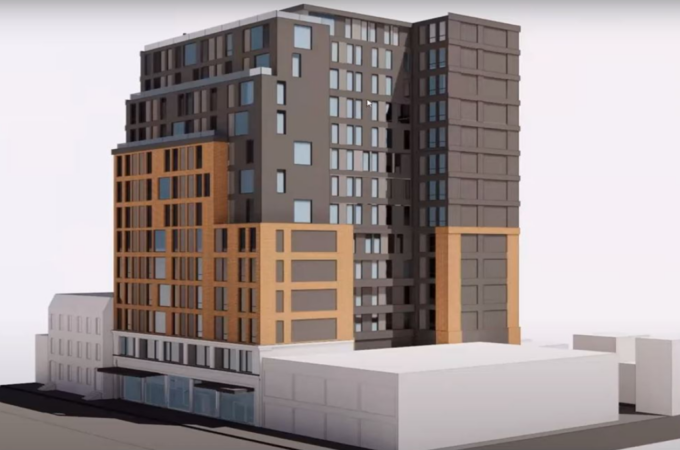
    The 14-story building is being built by Philadelphia developer Alterra Property Group, which may also manage the site after it opens. PHA will hold a 99-year ground lease on the property at 2012 Chestnut St., which will be its only affordable building in Center City.

    “It’s a multifamily, mixed-use, mixed-income building in a high opportunity neighborhood,” said Kelvin Jeremiah, president and CEO of PHA.

    It “would afford residents a huge opportunity to live in an area that has access to transportation, employment opportunities, and a whole host of amenities literally right outside of their building entrance,” he said.

    The tower will have 121 apartments, 40% of which will be rented at market rate with the rest targeted at tenants below 80% of area median income (or almost $83,000 for a three-person household). It will have 28 studios, 63 one-bedroom, and 30 two-bedroom units.

    It also will have 2,000 square feet of commercial space, parking available off-site, and amenities that include a roof deck. The project was designed by JKRP Architects.

    “I’m looking to break ground in Q1 of next year,” said Mark Cartella, Alterra’s senior vice president of development and construction. “It’s been a long time coming, so we’re excited to finally be going vertical here.”

    What took so long?

    PHA moved out of its Chestnut Street headquarters in January 2008, leaving a four-story husk. The agency cycled through numerous plans for the property, including a new headquarters and selling the land to a private developer.

    The partnership with Alterra began in 2016. At that time, the project would have had 200 units, a majority of them market rate, and the developer would have held the 99-year ground lease on the property.

    But neighborhood pushback and the resulting negotiations delayed the proposal until 2020. Then the pandemic caused more chaos, followed by a spike in construction costs and elevated interest rates that killed the original financing plan.

    That led to a new strategy in which PHA issued bonds backed by the future rents of the market-rate units to help pay for the project, along with additional funds from federal housing programs, and a $2 million boost promised by Council President Kenyatta Johnson from funds available through Mayor Cherelle L. Parker’s Housing Opportunities Made Easy (H.O.M.E.) initiative.

    “By adding high-quality, affordable apartments alongside retail space in the area, this project helps ensure that our downtown remains vibrant, diverse, and accessible to working families and individuals,” Johnson said in a statement.

    “The PHA project will also help deliver a more inclusive Center City that reflects the full spectrum and diversity of Philadelphia’s residents,” he said.

    A rendering of the roof deck planned for the new mixed-income building proposed by PHA and Alterra.

    The 95-year-old headquarters was demolished in early 2024, but groundbreaking has been delayed in the current unpredictable national economic and political environment.

    “You can probably sum that all up with it’s just general uncertainty with the change of [presidential] administration, as well as just getting through the design development process with a lot of folks having input,” said Cartella of Alterra.
    “This is a little bit beyond the [usual] design development process with Alterra,” he said. “It’s more stringent than what we typically have to go through.”

    Jeremiah has repeatedly expressed concerns about how long the development process can take in Philadelphia, especially in combination with federal guidelines and requirements.

    But as this process nears its end — 18 years after the move, 10 years since bringing on Alterra, and two since demolition — he is feeling optimistic.

    “It is the first PHA built development in Center City,” said Jeremiah. “That’s going to be a signature project for me, for the city, for affordable housing.”