Blog

  • Bucks County will increase property taxes by 8% in 2026 to close deficit

    Bucks County will increase property taxes by 8% in 2026 to close deficit

    Bucks County residents will see an 8% property tax increase next year.

    The Democratic-led Bucks County Board of Commissioners voted 2-1 Wednesday to raise taxes in response to a $16.4 million deficit in the county’s $516 million operating budget.

    County staff had requested a 7.2% tax increase to fill the budget hole, but Democratic Commissioners Bob Harvie and Diane Ellis-Marseglia voted to increase that hike to 8%, citing inflation and uncertainty in state and federal dollars.

    “It’s leaving us with a very, very small surplus in a very uncertain time,” Harvie, a candidate for Congress, said of the original request.

    Republican Commissioner Gene DiGirolamo voted against the tax increase but did not say why.

    The tax boost will translate to an increase of around $72 annually for the owner of a home assessed at the Bucks County average, county officials said.

    The increase will take effect in January.

    It comes as counties across Pennsylvania move toward higher property taxes. Montgomery County is poised to approve a 4% tax increase on Thursday, and Delaware County voted to raise its taxes 19% last week.

    Chester County’s commissioners voted Wednesday to approve a budget without a tax increase. Bucks County was the only one of Philly’s collar counties not to raise property taxes in 2025.

    In this year’s budget, Bucks County committed additional funds to the local community college and library systems, officials said. And, Ellis-Marseglia said, the cost of providing services to county residents had only increased.

    “It’s reasonable to think that it costs more to take care of the people in our nursing home, the people in our jail,” she said.

    As a result, Ellis-Marseglia and Harvie argued for a slightly larger tax increase this year to provide a cushion for the county to lean on.

    “I see things as getting really dark in the future in terms of money,” Ellis-Marseglia said.

  • Flyers’ Tyson Foerster likely to miss the rest of the season after arm surgery

    Flyers’ Tyson Foerster likely to miss the rest of the season after arm surgery

    After a skid-stopping 4-1 road win Tuesday night in Montreal, the Flyers’ vibes were high.

    But Wednesday brought a gut punch to the Flyers and their playoff hopes, as the team announced that winger Tyson Foerster will miss the next five months after undergoing arm surgery on Monday. Given the team’s recovery timeline, Foerster’s season likely is over.

    “Tyson’s a hockey player. He’s a shooter, he’s intelligent, one of the first PK guys out there,” said coach Rick Tocchet. “He’s obviously really good on the power play; last minute of a game, he’s usually out there. So that’s a big chunk that you’re taking out of the lineup. So it’s a committee thing, and hopefully we get some guys that can step up when he’s out.”

    Foerster, 23, suffered the “upper-body” injury on Dec. 1 against Pittsburgh while attempting a one-timer in the second period. As Foerster followed through on his shot, he immediately dropped to the ice and winced in pain. He then skated off in noticeable pain while holding his right arm.

    The Flyers placed Foerster on injured reserve on Dec. 3 and initially said the winger was expected to miss two to three months, which could have had him returning around the February Olympic break. A team source told The Inquirer then that the Flyers were hopeful that the injury would not require surgery and that it could be treated through rehab. On Wednesday, the Flyers’ statement said the decision for Foerster to undergo surgery came “after further medical consultation and diagnostic testing.”

    The winger had a separate surgery in the offseason after a right elbow injury he suffered during last spring’s World Championships became infected. After some concern, he returned in time for the start of the regular season.

    Before this most recent injury, Foerster was having a career season with a team-high 10 goals and 13 points in 21 games. He was second on the team with a plus-7 rating. Including the last nine games of last season, Foerster had scored 19 goals in his last 30 games, which was tied for 10th in the NHL since March 27.

    “Yeah, it’s tough. He’s a big part of our lineup. He was off to a good start, too, so it’s tough to see that, but it’s next-man-up mentality,” captain Sean Couturier said Wednesday, mentioning Carl Grundström. “I think guys have stepped up in his absence. … That’s what you want to see. You want to talk about depth all the time, and you want to use it at times, so here’s an opportunity for different guys. Yeah, it’s tough news, but we’ve got to find a way to fill out that roster spot.”

    As Tocchet and Couturier noted, with Foerster likely out for the season, the Flyers will need others to step up offensively, including the likes of Owen Tippett and Bobby Brink. The team also could entertain recalling prospect Alex Bump or a veteran winger like Anthony Richard from Lehigh Valley if it needs an offensive boost. Bump, 22, leads the Phantoms with 19 points (six goals, 13 assists), while the 28-year-old Richard, who tallied two goals and six points in 15 games last season for the Flyers, tops the Phantoms’ goal-scoring charts with eight.

    Flyers right wing Tyson Foerster was leading the team with 10 goals before his injury on Dec. 1.

    But for now, the Flyers seem content to roll with what they have, particularly with Grundström playing so well. Grundström, who was recalled from Lehigh Valley when Foerster was placed on injured reserve, was elevated to the Flyers’ top nine on Tuesday and scored his third goal in five games. The Swedish winger, who has impressed Tocchet with his skating ability, played alongside Couturier and Tippett on Tuesday and has been more effective than Nikita Grebenkin in that top-nine role thus far.

    “I try to bring a lot of energy to the team and play physical and be direct. So I think that’s my style,” Grundström said Monday after morning skate, adding that the Flyers’ style of play fits his game well.

    The Flyers will hope Grundström and others can continue to pitch in, as Foerster, one of the team’s top snipers and best defensive forwards, will be a big loss for a team that currently holds a playoff spot as the season approaches the halfway point.

    Staff writer Jackie Spiegel contributed to this article.

  • Millions are pledged to a Syrian Australian man who stopped a gunman and became a national hero

    Millions are pledged to a Syrian Australian man who stopped a gunman and became a national hero

    WELLINGTON, New Zealand — Like many Australians strolling at Bondi Beach on long, warm summer evenings, Ahmed al Ahmed just wanted a cup of coffee with a friend. Around him, a bloody massacre erupted as two gunmen targeted Jews during Hanukkah festivities at a park close to the shore.

    Soon al Ahmed was creeping, bent over, between two parked cars, before barreling directly toward one of the unsuspecting shooters. In footage that has been viewed millions of times around the world, the 44-year-old father can be seen tackling one of the gunmen, wrestling the man’s shotgun from his grip and turning it on the attacker.

    The story of the Syrian-Australian Muslim shop owner who put an end to the rampage of one of the shooters on Sunday has been seized upon by a country desperately seeking comfort after one of its darkest hours: the slaying of 15 people as they celebrated their Jewish faith.

    In this photo released by the Prime Minister office, Australian Prime Minister Anthony Albanese meets Ahmed al Ahmed at St George Hospital in Sydney on Tuesday.

    Millions have been raised for Bondi hero

    “At a moment where we have seen evil perpetrated, he shines out as an example of the strength of humanity,” Prime Minister Anthony Albanese said Tuesday, as he left a Sydney hospital where al Ahmed is being treated for gunshot wounds. “We are a brave country. Ahmed al Ahmed represents the best of our country.”

    A fundraising page established by Australians who had never met al Ahmed had attracted by Tuesday night donations by some 40,000 people, who gave 2.3 million Australian dollars ($1.5 million). Among the supporters was the billionaire hedge fund manager William Ackman, who pledged AU$99,000.

    Father of two faces a long recovery

    Al Ahmed, who is married with two young daughters, faces a long struggle ahead, those who have spoken to him since Sunday’s massacre say. He was shot multiple times in the left arm, apparently by the second gunman in the attack as the man fired indiscriminately from a footbridge.

    He has already undergone surgery and more operations are scheduled, said Lubaba alhmidi Alkahil, a spokesperson for the Australians for Syria Association, who visited al Ahmed in a hospital late Monday. The “quiet and humble” man was conscious but frail and faced at least six months of recovery, Alkahil said.

    A prime minister and a president are fans

    In the days since the attack, a pile of floral tributes and notes of thanks has grown outside the small tobacco store al Ahmed owns opposite a train station in suburban Sydney. Meanwhile, he has received visits at the hospital from Australia’s leaders, apparently telling Chris Minns, the premier of New South Wales state, that he’d take the same action again.

    He has been hailed as a hero by world leaders including U.S. President Donald Trump and Australia’s Governor General, who is the representative of Britain’s King Charles in the country. Minns said al Ahmed saved “countless” lives in what the premier said was “the most unbelievable scene I’ve ever seen.”

    Al Ahmed was once a police officer

    Al Ahmed lived in the town of Nayrab in Syria’s Idlib region before he arrived in Australia, his cousin Mohammad al Ahmed told the Associated Press. He left Syria in 2006 after finishing his studies, before the 2011 mass protests against the government of then-President Bashar Assad that were met with a brutal crackdown and spiraled into a nearly 14-year civil war.

    Nayrab was heavily bombed by Assad’s forces with most of the town’s houses flattened and reduced to rubble. On Tuesday, al Ahmed was the talk of the town.

    “Ahmed did really a heroic job,” his cousin, Mohammad al Ahmed told the Associated Press. “Without any hesitation, he tackled the terrorist and disarmed him just to save innocent people.”

    Ahmed al Ahmed’s parents, who came to Sydney this year to reunite with their son, told Australian Broadcasting Corp. that their son had served with the police and in the central security forces in Syria. Father Mohamed Fateh al Ahmed said his son’s “conscience and soul” compelled him to act on Sunday.

    “I feel pride and honor because my son is a hero of Australia,” the father said.

    Tale of heroism gives hope amid tragedy

    In the aftermath of the mass killing, a country roiling from one of the worst hate-fueled attacks ever on its soil — allegedly committed by an Australian resident who arrived from India in 1998 and his Australian-born son — looked for hope amid their grief. Stories of heroism have started to emerge.

    They included the tale of a married couple, Boris and Sofia Gurman, who were both killed while trying to stop one of the shooters as he climbed from his car and began the massacre, their family has told Australian news outlets.

    Reuven Morrison, 62, was also killed while trying to stop the horror, according to his daughter, Sheina Gutnick. After al Ahmed wrestled the gun from one shooter, a person Gutnick identified as Morrison is seen throwing objects at the gunman — before he was shot by the second man.

    Acts of courage like these were cited by many on social media and in news outlets as examples of what being Australian should mean.

    “When he did what he did, he wasn’t thinking at all about the background of the people he’s saving, the people dying in the street,” Mohamed Fateh al Ahmed said of his son. “He doesn’t discriminate between one nationality and another, especially here in Australia there’s no difference between one citizen and another.”

  • It’s an open secret that some charter schools push out kids with behavioral problems, Philly principals say

    It’s an open secret that some charter schools push out kids with behavioral problems, Philly principals say

    The trickle begins in the fall, some principals say: Students with a history of behavior or disciplinary problems or other issues show up in Philadelphia School District schools, often from city charters.

    Students switch schools after the start of the school year for many reasons — and changing schools is fairly common in Philadelphia.

    But at times, it seems like some students are off-loaded from charters because they’re tough to educate, according to interviews with a dozen district administrators. In district schools, administrators cannot remove students for such issues.

    Advocates at the Education Law Center have noted that trend, as has the head of the district’s principals union — all of whom call it concerning, especially in a school system with large numbers of needy students and not enough resources to educate them.

    “In October, in November, in December, that’s when we see the counseling out, the threats of expulsion that say, ‘We’re going to expel you, but you can go to a district school and then you won’t be expelled,’” said Margie Wakelin, a lawyer with the Philadelphia-based Education Law Center-PA.

    Cassandra St. Vil, chief executive officer of a group that represents a large number of Philadelphia charters, said she is not aware of any data to support those anecdotal claims.

    “For years, opponents of charter schools have tried to use this message and yet there has never been any evidence to back it up,” said St. Vil, of Philadelphia Charters for Excellence. “And conversely, we hear from charter school leaders the exact same thing, that students come to them.”

    District data show that over the last three years, there has been a steady flow of charter students transferring to district schools throughout the school year. In the 2024-25 school year, for instance, 161 students transferred from brick-and-mortar charters to district schools in September. By June, it was 843 students, just a fraction of the total charter sector.

    window.addEventListener(“message”,function(a){if(void 0!==a.data[“datawrapper-height”]){var e=document.querySelectorAll(“iframe”);for(var t in a.data[“datawrapper-height”])for(var r,i=0;r=e[i];i++)if(r.contentWindow===a.source){var d=a.data[“datawrapper-height”][t]+”px”;r.style.height=d}}});

    Charters educate more than 64,000 Philadelphia students; there are about 114,000 in district schools.

    “While this is not an issue across the entire charter sector, the district is looking at the data, and working with the Charter Schools Office,” Christina Clark, a district spokesperson, said in a statement. “The district is working to analyze enrollment trends across all sectors.”

    Robin Cooper, president of Commonwealth Association of School Administrators, Teamsters Local 502, said many district schools get a stream of students beginning in the fall, after district schools’ budgets are locked in on Oct. 1, then another in the spring, just before state testing. (Students’ scores count for the schools they attended on Oct. 1, even if they switch schools after that date.)

    “They’re not sending the kids who get A’s, the good kids, they’re sending you the kids who might have problems,” said Cooper, who was a longtime district principal before assuming the union presidency. “It negatively impacts your climate, and the charter is getting the money for the student.”

    One district principal, who declined to be named for fear of reprisal, said they recently stopped in a hallway to talk to a student who had just transferred to the district school from a charter.

    “She said, ‘They kicked me out for fighting,’” the principal said. “Here, we can’t kick a student out for fighting. I said, ‘Welcome to our school. I’m in the business of growing children.’”

    Students ‘counseled out’ of charters

    Charter schools — which are publicly funded but privately managed, though authorized by local boards of education — have transformed Philadelphia’s educational landscape since they first came to Pennsylvania in 1997.

    Charters are funded by per-student payments from the school district, but are paid only for the number of days enrolled.

    By law, charters are open to all students, and most operate on citywide lotteries — though some are neighborhood schools.

    A 2017 Education Law Center analysis of the enrollment of special education students in Pennsylvania charters found that “while a number of individual charter schools equitably serve all students, the charter school sector taken as a whole generally underserves these vulnerable student populations.”

    Anecdotally, district principals say in some cases, they see students with behavior problems or learning differences accepted to some charters, but then some of them are “counseled out.” That means they are not officially expelled or forced to leave, but strongly encouraged or pressured to do so after a disciplinary issue crops up.

    In district schools, the bar for expulsion is much higher — for incidents such as using a weapon, or threatening mass violence.

    Wakelin, of the Education Law Center, said she recently spoke to a parent whose child has a significant disability. The parent had multiple conversations with the charter school about the child’s needs. She said the school kept telling the family: We’ll help.

    “And then very recently, the charter school said, ‘You know, you might be better served in a district school that has more resources for a student with autism,’” said Wakelin, who declined to name the school in question.

    ‘It’s no secret’

    After the start of the school year, another district principal said, comes a bump in charter transfers.

    “We see an increase every year,” said the principal, who, like other current and former district administrators who spoke to The Inquirer, asked not to be identified for fear of reprisal. “It’s not talked about, but in the schools, it’s no secret.”

    When new students transfer in, an administrator often asks why they left their old school.

    “Most of them say it’s because they were kicked out of whatever charter school they were at — they got into a fight, or whatever,” the principal said. “And most of the times, it’s things that we can’t move students for in the Philadelphia School District.”

    Lawrence Jones, longtime chief executive officer of the Richard Allen Preparatory Charter School in Southwest Philadelphia, said there is “an urban myth” that charters off-load problem students to district schools and then benefit financially for doing so. (There is a common perception that charters get paid for students based on their Oct. 1 enrollment counts, and keep the money if students go elsewhere, but charters actually get paid for the number of days students are enrolled.)

    “The gain that you could potentially get for dropping those kids, financially and other funding, would be less than if you held onto those students,” said Jones.

    But a third district principal called the issue a particular challenge for neighborhood schools, which already typically tend to have higher concentrations of children with complicated needs. Public schools often get needy students midyear, but no additional funding. Their budgets are projected in the spring, but finalized in the fall.

    “It’s just not fair,” said the third principal. “We’re not getting their best kids.”

    That principal is currently experiencing what they call “the season when we get charter kids,” they said. “They send them to us for discipline issues, uniform violations.”

    ‘A sword that cuts both ways’

    The practice engenders deep frustration, principals say.

    “Public schools can’t turn kids away. It’s not like the charter world where you can say, ‘No, I’m full, have a nice day.’ In public school, you take the kid, crowded or not, and figure it out,” a fourth principal said.

    St. Vil, of Philadelphia Charters for Excellence, which represents 64 schools, disputes that characterization. She noted that nearly 80% of the city’s charter students are Black or Latino, and many have special needs or are English learners.

    “These schools are achieving real success stories for students who too often haven’t thrived in one-size-fits-all settings,” St. Vil said.

    Jones, of Richard Allen Preparatory Charter School, said that while there may be some isolated instances where a charter counsels out a student with difficulties, “it’s a sword that cuts both ways.” Students sometimes come to charters from district schools with inadequate special-education plans, he said.

    Parents enrolling their children at Richard Allen have told him that they were told his school “could provide better services,” Jones said. “I asked, ‘By who?’ And they said, ‘By staff at the former school, the district school.’”

  • ‘Phillies Extra’ Q&A: Cole Hamels on Kyle Schwarber’s return, his debut on the Hall of Fame ballot, and more

    ‘Phillies Extra’ Q&A: Cole Hamels on Kyle Schwarber’s return, his debut on the Hall of Fame ballot, and more

    Cole Hamels was among the best pitchers in baseball for 15 seasons. He was the MVP of the World Series in 2008. The history of the Phillies can’t be written without him.

    And for the first time, he’s on the Hall of Fame ballot.

    Hamels was the first guest when The Inquirer launched the Phillies Extra podcast in February. He made a return appearance to chat about a variety of topics, including Kyle Schwarber’s return to the Phillies, what’s next in the team’s offseason, and, oh yeah, the honor of being considered for Cooperstown.

    Watch the full interview below and subscribe to the Phillies Extra podcast on Spotify or Apple Podcasts.

    Q: What did you think of Schwarber coming back for five more years on the largest contract ever for a DH?

    A: I never doubted what Schwarber means to the team and what he means to the organization and the city. I didn’t think he was going to go somewhere else. But it’s the game you have to play. It’s understanding free agency. It’s understanding you not wanting to have to think about it during the year. You have agents. But to be able to see, it was the first of what the Phillies are really trying to do this offseason, and to finally get their guy — I don’t think they were going to let him get away.

    And it’s just a testament to John [Middleton] and Dave [Dombrowski] and Preston [Mattingly]. They know who he is as a player. They’ve had him for a couple of years. I think a lot of organizations who have had him know how special he is, and they didn’t want him to go. And for the Phillies to lock him up, they do know it’s ‘go’ time, and this is a person that they need in the clubhouse, and they need him in the lineup. He produces runs, and he’s so patient, and especially to see his lines on lefty-on-lefty. That was something I always favored. I didn’t mind lefties coming up. I knew I was going to succeed more. But Schwarber comes up, he’s not the type of guy that you want to see in the box in a big moment when you’re facing him because he’s a tough, tough hitter. So it’s good. I think there’s going to be a lot of moves that are going to start to kind of roll, but I think he was first. I’m glad it’s done. He’s a big part of this organization, and it’s good to see for five more years.

    Cole Hamels believes veteran catcher J.T. Realmuto is “in the driver’s seat” with his market in free agency.
    Q: Now the focus shifts now to J.T. Realmuto, and I can’t help thinking back to the 2013-14 offseason when Carlos Ruiz was a free agent. He was 34 going on 35, just like J.T. is now, and, also like J.T., all the pitchers love throwing to him. I know you swore by him. Do you see any similarities with where the Phillies are now with J.T.?

    A: So, the hardest part about a catcher is, most of the time, you just look at what you can try to perceive as some sort of statistical value, and that’s how they hit, how they receive. But there’s something else that’s really difficult to measure, and that’s just his presence and confidence behind the plate in making a pitcher feel good, to want to execute, and to listen to a game plan, and then adjusting on the fly. And that’s something that [Realmuto] has really shown over the last couple of years.

    He’s been a tremendous receiver, but he throws guys out. And you can never count them out with his bat. And you got to see that in the playoffs. He comes through in big moments. He’s an incredible athlete, and I think that’s what is the difference. When you look at age, it’s how athletic he is. He sets a bar that’s a lot different. And then you have to look at what is available, and on the given market, there’s not really much available that are comps to him. So he’s kind of in the driver’s seat.

    But at the same time, when you have a catcher that is really good and instills confidence in a pitching staff — both the starters and the relievers — you don’t want to let those guys get away. And you can see that in all the greatest catchers in the history of the game is you don’t let the good ones get away.

    Cole Hamels had a 3.09 ERA in 13 postseason starts with the Phillies.
    Q: I don’t think we spend enough time celebrating what it means to be on the Hall of Fame ballot. When you think about how few people actually get to the big leagues in the first place, and then you’ve got to play at least 10 years to be eligible for consideration, and then there’s a screening committee that whittles it down even more. It’s like the top 5% all-time of players that actually get on that ballot. What does it mean to you to be on that ballot for the first time?

    A: I think a lot of us, we all kind of say the same thing, to really be recognized, it’s incredibly rewarding for a job that is so humbling. This job is a career that you fail a lot, and you fail more than everybody else. In order to play that sort of period of time, you had big successes, but you probably failed twice as many times as you had successes. And that’s why we were able to create a career out of it [because] we always knew how to get back up, and we always knew how to never doubt ourselves, and to keep trying. That is probably the one thing that happens, is when they do put you on the ballot, they send you a letter, and you get to read, and you see statistics of percentages, and that is the wildest thing. You’re going, ‘Oh my gosh, 13% of drafted players make the big leagues?’ And then you’ll go see a smaller percentage, and we just start to see that. Wow.

    We were so fortunate to be able to play the game of baseball as a career and a job that we loved as a kid, and it never changed. And now getting recognized, it’s a very special moment, and I’m incredibly thankful. I put in a ton of time and effort. My family devoted a ton of time and effort to try to get to have the career that I had, and then for it to actually be somewhat recognized, to be as one of the best ever. … It’s a small percentage, and I look at names that are in the Hall of Fame. I was lucky enough to go there [to Cooperstown, N.Y.] and pitch in the Hall of Fame Game, and we took a tour. And just the nostalgia of baseball and what it means to America’s pastime, I have a part in that history in certain moments. And I’m just lucky to do what I did. I loved every minute of it, and now this is kind of the reward.

    Check out the full episode for Hamels’ thoughts on how Hall of Fame voting for pitchers has changed, the Cooperstown cases for former teammates Jimmy Rollins and Chase Utley, and more.

  • Par Funding salesman Dean Vagnozzi sues, accusing feds of ruining his business

    Par Funding salesman Dean Vagnozzi sues, accusing feds of ruining his business

    Dean J. Vagnozzi, whose King of Prussia insurance and investment business was taken over by a court-ordered receiver in the federal investigation of the Par Funding Ponzi scheme, has sued the U.S. government, accusing federal officials of abuse of process, negligence, and unconstitutional search and seizure.

    In the lawsuit, Vagnozzi says he was a Par victim, his business wrongfully destroyed amid the investigation that led to criminal charges that have sent eight former Par Funding officials, debt collectors, and accountants to prison after they pleaded guilty to ripping off 1,600 people. Those clients included hundreds of Vagnozzi’s customers and members of his family, and the scheme ended up owing them $240 million.

    Vagnozzi attracted customers with radio ads urging investors to consider alternatives to the stock market. He paid civil settlements totaling $5.7 million to the U.S. Securities and Exchange Commission (SEC) and smaller amounts to state securities agencies to settle complaints for selling unregistered securities, including those of Par Funding, a cash-advance lender to businesses that had trouble qualifying for bank loans and others. Vagnozzi blamed the failure to register on bad advice from his longtime lawyer, whose insurers agreed to pay investors, Vagnozzi, and others $47 million to settle their claims.

    In contrast with the Par Funding operators, Vagnozzi has not been charged with crimes.

    The complaint

    Vagnozzi’s lawyer, George Bochetto, argued in the complaint filed Dec. 8 in federal court in Philadelphia that it was “egregious government overreach” for the SEC to allege illegal acts in a petition that convinced U.S. District Judge Rodolfo Ruiz to include Vagnozzi’s former business, A Better Financial Plan, alongside Par-related assets seized in a 2020 court order,

    The complaint contends that the SEC should have known the investment funds it initially accused Vagnozzi of setting up for Par founder Joseph LaForte to evade Pennsylvania investigators were actually started by Vagnozzi on his then-lawyer’s advice when Vagnozzi was unaware of the state’s investigation.

    The suit adds that Vagnozzi could have shown this, if the SEC had asked before acting, by citing correspondence and records, including the SEC’s own documents, which he submitted as case exhibits.

    The court issued a sweeping order based on the SEC petition. So “on Tuesday, July 28, 2020, a court-appointed receiver arrived unannounced at Vagnozzi’s office, ordered him, his son, his sister, his father-in-law, and the rest of his staff into the conference room, and told them to leave immediately. Vagnozzi’s business, ABetterFinancialPlan.com LLC, which he had carefully built over 17 years, was effectively shut down and placed out of business,” according to the lawsuit.

    The seizure of his company and accounts left more than a dozen employees out of a job and Vagnozzi unable to earn a living. His reputation was “irreparably harmed and his assets and businesses ruined,” the suit contends.

    When the company was seized, Vagnozzi’s businesses unrelated to Par Funding were collecting revenues at the rate of $4 million a year and growing, according to Bochetto.

    At that rate, Bochetto estimates Vagnozzi’s lifetime losses as a result of the SEC’s actions at more than $50 million.

    The SEC declined to comment on the litigation.

    Vagnozzi’s suit accuses Amie Berlin, an SEC lawyer who led the case for the agency’s Florida office, and other, unnamed federal agents of “malicious” infringement on Vagnozzi’s constitutional right against unreasonable searches or seizure. Berlin didn’t respond to a request for comment.

    Vagnozzi the victim?

    After losing his company, Vagnozzi ran a Federal Express route for 2½ years and worked in sales for a home-improvement company. He has applied for reinstatement of his Pennsylvania insurance license, which was suspended in 2022 after his company’s seizure.

    According to the lawsuit, the SEC wrongly “assumed without legitimate basis” that Vagnozzi had been a “coconspirator” and a “criminal.” The suit also alleges that the SEC failed to give Vagnozzi “prior notice of the investigation and an opportunity to respond” before his business was shut down and his accounts frozen.

    The suit depicts Vagnozzi as a victim of Par, a firm whose associates included some that “turned out to be members of the Gambino crime family.”

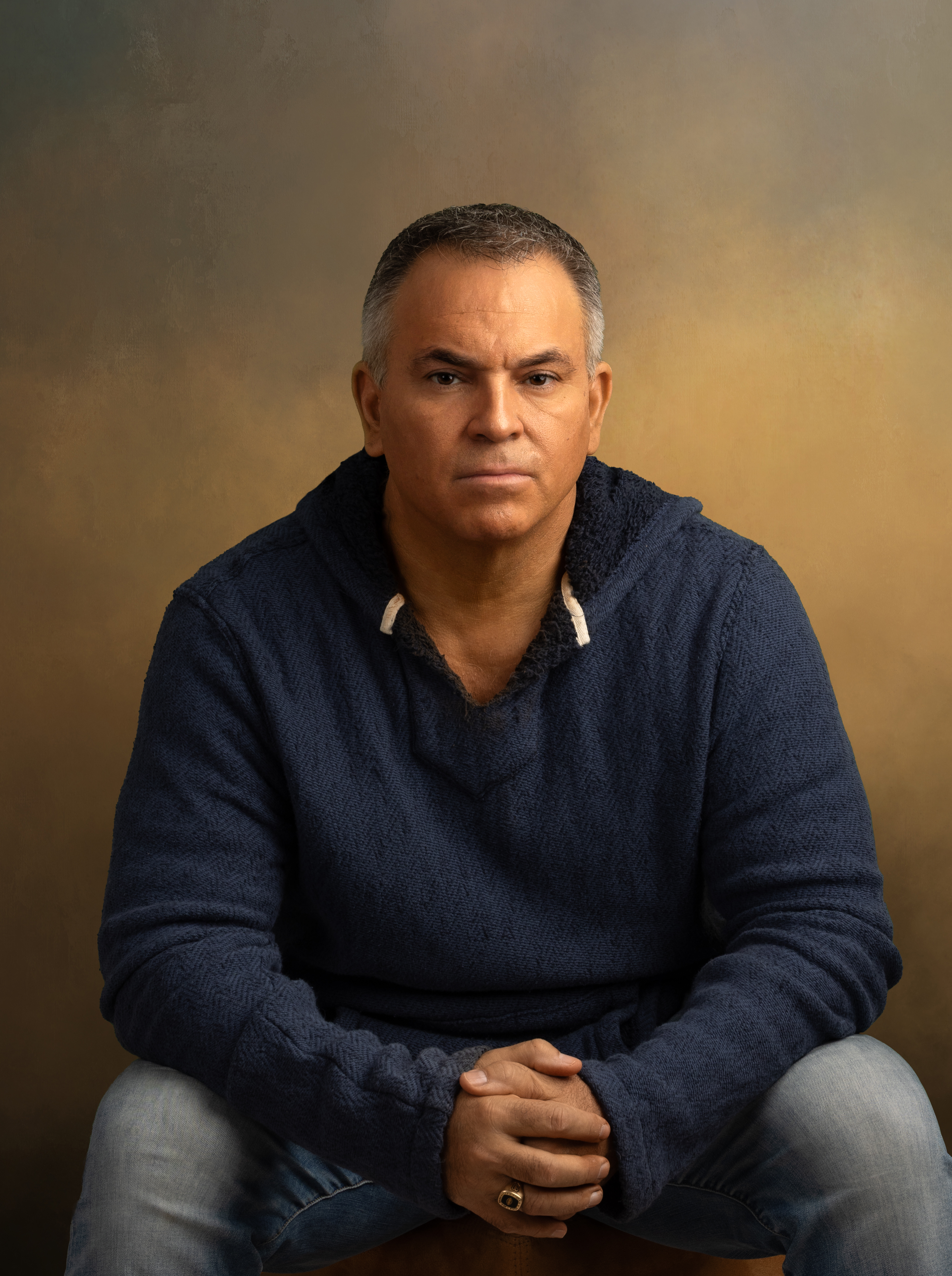
    Dean Vagnozzi had this photo taken in 2025 for use in a book he says he’s writing about his business and its closure by a court-ordered receiver amid a federal investigation of Par Funding, whose investments he sold.

    One of the eight people sentenced in the Par case, former collections head James LaForte, was identified in a separate New York indictment as a member of a Gambino mob crew. James LaForte has denied that allegation. A collector working for James Laforte was also named as a Gambino associate.

    “Vagnozzi, apart from having an Italian surname, had nothing in common with the criminals that ran Par Funding,” who “lied to, manipulated, and duped Dean into raising funds for Par Funding’s criminal enterprise, which he genuinely thought was a legitimate business,“ according to the complaint. He ”was not a fraudster nor [a Par] insider” but “an innocent victim of government overreach,” of his lawyer, and “of Par Funding’s fraud and deceit.”

    Vagnozzi earlier accused his longtime lawyer, John Pauciulo, of giving him bad advice contributing to Vagnozzi’s failure to ensure clients’ Par investments were registered with the SEC.

    Pauciulo has denied wrongdoing. He is the subject of a disciplinary board procedure based on his representation of Vagnozzi that could affect his law license.

    Some 1,600 investors, including hundreds of Vagnozzi’s former clients, have so far received about half their investment principal back from the court-appointed receiver that collected Par assets to repay them. Judge Ruiz last week agreed to release another 40%, bringing total payback to around $210 million. A third, smaller payout is expected as additional money is collected.

    “This case is truly about runaway regulators that well exceed the boundaries of due process and constitutional fairness,” Bochetto said in an interview Tuesday. He said there have not been a lot of successful complaints against the federal government for overreach but was confident the facts in the Vagnozzi case justified a court review.

  • Man who allegedly killed 63-year-old Uber passenger has surrendered to police

    Man who allegedly killed 63-year-old Uber passenger has surrendered to police

    A man who allegedly injured an Uber driver and killed his passenger in North Philadelphia on Monday morning while fleeing sheriff’s deputies has turned himself in to police.

    Joseph Cini, 35, surrendered at police headquarters Tuesday evening, Philadelphia police said.

    Around 7:15 a.m. Monday, deputies from the Philadelphia Sheriff’s Office had attempted to serve him with a warrant on the 900 block of North Watts Street.

    Cini took off in a Nissan Maxima and crashed into a Jeep Patriot at Ninth Street and Girard Avenue, killing Uber passenger Angela Cooper, 63, of the 1100 block of West Thompson Street, police said. The high-speed collision also injured the 51-year-old Uber driver.

    The driver is being treated at Temple University Hospital.

    Cini left the scene of the crash, but turned himself in Tuesday, police said. Charges related to Monday’s events have not yet been filed.

    A spokesperson for the sheriff’s office said in an email Monday that the office was “fully cooperating with all investigative authorities” and that it was providing support services to the deputies involved.

  • Four Republicans, including Pa. Reps. Fitzpatrick, Bresnahan and Mackenzie, defy Speaker Johnson to force House vote on ACA subsidies

    Four Republicans, including Pa. Reps. Fitzpatrick, Bresnahan and Mackenzie, defy Speaker Johnson to force House vote on ACA subsidies

    WASHINGTON — Four centrist Republicans broke with Speaker Mike Johnson on Wednesday and signed onto a Democratic-led petition that will force a House vote on extending for three years an enhanced pandemic-era subsidy that lowers health insurance costs for millions of Americans.

    The stunning move comes after House Republican leaders pushed ahead with a health care bill that does not address the soaring monthly premiums that millions of people will soon endure when the tax credits for those who buy insurance through the Affordable Care Act expire at year’s end.

    Democrats led by Minority Leader Hakeem Jeffries of New York needed 218 signatures to force a floor vote on their bill, which would extend the subsides for three years.

    Republican Reps. Brian Fitzpatrick, Robert Bresnahan and Ryan Mackenzie, all from Pennsylvania, and Mike Lawler of New York signed on Wednesday morning, pushing it to the magic number of 218. A vote on the subsidy bill could come as soon as January under House rules.

    “Unfortunately, it is House leadership themselves that have forced this outcome.” Fitzpatrick said in a statement.

    Johnson told reporters Wednesday that “I have not lost control of the House” and he noted that Republicans have a razor-thin majority that allows a small number of members to employ procedures that would not usually be successful in getting around leadership.

    “These are not normal times,” said Johnson, R-La.

    Origins of a Republican revolt

    The revolt against GOP leadership came after days of talks centered on the health care subsidies.

    Johnson had discussed allowing more politically vulnerable GOP lawmakers a chance to vote on bills that would temporarily extend the subsidies while also adding changes such as income caps for beneficiaries. But after days of discussions, the leadership sided with the more conservative wing of the party’s conference, which has assailed the subsidies as propping up a failed marketplace through the ACA, which is widely known as “Obamacare.”

    House Republicans pushed ahead Wednesday a 100-plus-page health care package without the subsidies, instead focusing on long-sought GOP proposals designed to expand insurance coverage options for small businesses and the self-employed.

    Fitzpatrick and Lawler tried to add a temporary extension of the subsidies to the bill, but were denied.

    “Our only request was a floor vote on this compromise, so that the American People’s voice could be heard on this issue. That request was rejected. Then, at the request of House leadership I, along with my colleagues, filed multiple amendments, and testified at length to those amendments,” Fitzpatrick said. “House leadership then decided to reject every single one of these amendments.

    “As I’ve stated many times before, the only policy that is worse than a clean three-year extension without any reforms, is a policy of complete expiration without any bridge,” Fitzpatrick said.

    Lawler, in a social media post, similarly said that “the failure of leadership” to permit a vote had left him with “no choice” but to sign the petition. He urged Johnson to bring the plan up for an immediate floor vote.

    Jeffries, for several weeks, had called on Republicans to sign his discharge petition. He particularly challenged Republicans in competitive congressional districts to join the effort if they really wanted to prevent premium increases for their constituents.

    “Mike Johnson needs to bring the bill to the floor today,” Jeffries said. “Our position from the very beginning was that we are standing on the right side of the American people who want to see the Affordable Care Act tax credits extended, and we’re appreciative that we now have the bipartisan coalition to get that done.”

    Path ahead is uncertain

    Even if the subsidy bill were to pass the House, which is far from assured, it would face an arduous climb in the Republican-led Senate.

    Republicans last week voted down a three-year extension of the subsidies and proposed an alternative that also failed. But in an encouraging sign for Democrats, four Republican senators crossed party lines to support their proposal.

    Senate Majority Leader John Thune, R-S.D., argued against the Democratic extension as “an attempt to disguise the real impact of Obamacare’s spiraling health care costs.”

  • SS United States set to sink, despite 11th-hour efforts to intervene

    SS United States set to sink, despite 11th-hour efforts to intervene

    The 990-foot SS United States could be making waves as an artificial reef at the bottom of the Florida Panhandle coast as early as March, according to a tentative timeline from its new owners in Florida.

    Even so, hope still springs eternal for the most ardent swath of ship enthusiasts who would rather see it restored to its former glory than swimming with the fishes.

    As tourism officials in Okaloosa County report being about 80% done with the remediation work required to meet state and federal requirements for sinking, the New York Coalition to Save the SS United States has urged the New York City Council to intervene to the best of its abilities: a move that appeared to be gaining some traction in recent weeks, until it wasn’t.

    A resolution introduced by NYC council member Gale A. Brewer last year finally got a committee hearing in late November.

    The symbolic gesture calls on Congress to pass legislation that would allocate funds for restoration and to bring the ship to New York City’s Gowanus Bay Terminal. It also appeals to President Donald Trump, a fellow New Yorker, to sign the legislation.

    Okaloosa County, respectfully, is hearing none of it.

    “We purchased the vessel specifically to become the world’s largest artificial reef,” said county spokesperson Nick Tomecek. “Anybody that thinks otherwise, that’s just pipe dreams.”

    Brewer is aware the odds are against those hoping to reacquire the ship. She acknowledged the resolution was a “Hail Mary” during last month’s committee hearing.

    Though the resolution moved to the full council, it has not been put on the calendar for a vote — the last session of the year was Thursday.

    The SS United States is pulled out into the Delaware River and ready to bid its farewell from Philadelphia as people gather to watch it leave in the Delaware River in Gloucester City, N.J., on Wednesday, Feb. 19, 2025.

    Brewer could not speak to why the resolution did not get a hearing until a year after she introduced it, but she understands how, despite support on the 51-member council, it has not been put to a vote in the full body.

    “Just like in Philly, we got everything under the sun — restaurants, small business, parking, it’s just endless,” Brewer said. “I think there’s lots of support, but it’s not like number one on anybody’s list.”

    Brewer said the priority would be to stop the sinking of the ship. Once the SS United States was in New York City, preservationists, donors, and lawmakers could figure out the best way to redevelop the ship, though she could see it as a restaurant.

    If this figure-it-out-as-we-go approach sounds familiar, it’s because that was the path the SS United States Conservancy, the ship’s previous owner, took when it bought the vessel in 2011. The conservancy aimed to save the ship from the scrapyard and spent years courting potential developers while it sat parked in Philadelphia, even publishing a 2023 feasibility study for a mixed-use development that would cost about $400 million.

    In many ways, the New York City resolution is also a tried-and-tested approach. As the SS United States faced eviction from its berth along the Delaware River, the conservancy launched public campaigns calling on Florida Gov. Ron DeSantis, New York Gov. Kathy Hochul, and Pennsylvania Gov. Josh Shapiro to step in and help the vessel find a new home.

    Passenger ship aficionados take a last look at the SS United States docked at pier 80 in South Philadelphia Wednesday, Feb. 19, 2025 before it is towed away to Alabama

    The conservancy sent its pleas to then-President Joe Biden, as well as members of Congress on both sides of the aisle.

    Much to the chagrin of preservationists, no politico ever came, despite the conservancy’s assurances that whoever championed the ship would be rewarded with all the jobs redevelopment would create.

    Whether Trump, his administration, or this iteration of Congress would intervene at the eleventh hour is anyone’s guess.

    The New York Coalition to Save the SS United States, which launched as a nonprofit in October 2024, wrote to Trump this year asking him to intervene shortly before the ship left Philadelphia, to no avail.

    In a lawsuit filed in U.S. District Court in Pensacola after the ship’s departure, the coalition said it had “no means of knowing whether the Executive Branch of the United States is even aware of the Letter, let alone whether it is being considered.”

    The White House did not immediately respond to questions about whether the ship’s saga had reached Trump’s desk and if the administration would be inclined to step in.

    Either way, time is working against the coalition.

    The suit warned of how some of the prep work in Mobile, Ala., could hinder preservation efforts.

    “… the twin stacks of SSUS will be removed, as will other parts of her superstructure,” read the suit. “Once this is done, any hope of preserving the Ship afloat and intact will be lost forever.”

    Those smokestacks were indeed removed at the end of summer.

    So were all portholes and windows, along with the ship’s radar mast and propeller, according to an Okaloosa County update last week.

    Despite the coalition’s fears laid out in the suit, Dan Sweeney, who cofounded the group, hit a more optimistic note, saying it was not too late to stop a reefing.

    “The Big U remains an important symbol of America,” he said of the SS United States. “It could also prove to be a robust economic development engine. These two reasons are more than enough for us to continue the effort, and many people across the country agree. For us, it’s ‘damn the torpedoes.’”

    Okaloosa County officials, meanwhile, say the months ahead will be used to finish cleaning the ship, removing nonmetal items, cutting holes throughout the ship because the sinking will not be able to be done with explosives, and coordinating with state and local agencies on a sink date.

    Should work continue at its current pace and no delays in inspections, the SS United States could be sunk as early as March.

    Alex Fogg, the natural resources chief for Destin-Fort Walton Beach, said weather delays, of course, are always possible.

    Tomecek reiterated that the county was working with the SS United States’ previous owners to build a land-based museum, which would feature the eye-catching smokestacks and other preserved ship memorabilia and artifacts.

    He understands the renewed interest in “saving” the ship, though it would have been turned into scrap had Okaloosa officials not stepped in. In any case, Tomecek said, these efforts come too little, too late.

    “I think that when [the SS United States] was sold to the county, a lot of folks kind of woke up and realized what was going on, when, in fact, they should have been worried about her the past 30 years, when she was sitting in Philadelphia,” Tomecek said.

  • Middletown Township welcomes first full-service hotel ahead of major tourism events in Delco

    Middletown Township welcomes first full-service hotel ahead of major tourism events in Delco

    On a frigid Tuesday morning, stakeholders from across Delaware County toasted champagne and popped mini pastries under the roof of Middletown Township’s new Hilton Garden Inn.

    “We may be the only Hilton Garden Inn in the world that serves Wawa coffee and drinks it all the time,” quipped hotel owner Patrick J. Burns, standing before a sea of family members, hotel staffers, business associates, and elected officials.

    The 107-room, 67,000-square-foot Hilton, located off Baltimore Pike at the former Franklin Mint site, is open and welcoming guests. It’s the 42nd hotel in Delaware County and first full-service hotel in Middletown Township.

    The hotel features app-to-room device integration, mobile key and contactless check-in, meeting and banquet spaces, an outdoor patio with fire pits, a fitness center, and the Garden Grill, a restaurant serving “American cuisine with local flair” that will be open to the public.

    The hotel is long awaited, borne from a yearslong planning process and delayed by pandemic-era construction slowdowns. On Tuesday, attendees expressed gratitude that what was once an economic dream for the township was finally becoming reality.

    The Hilton marks an important expansion of the collar county’s tourism economy, according to Delaware County’s major economic stakeholders. And as far as tourism in Delco, they say, it’s only up from here.

    The bar area off of the lobby at the new Hilton Garden Inn of Middletown Township on Tuesday, Dec. 16, 2025.

    Delaware County hosted 4.5 million visitors in 2024, according to Steve Bryne, executive director of Visit Delco. Those visitors spent $860 million, generated $1.2 billion in economic impact, and sustained 13,000 jobs. In 2025, the county is on track to sell more than one million hotel room nights for the first time in its history.

    Representatives from the Hilton say it created 200 construction jobs and 40 new hospitality jobs.

    Bryne said tourism to Delaware County is a “combination of everything.” The county doesn’t have one major anchor (like Longwood Gardens in Chester County, for example). Rather, it’s home to 12 colleges and universities, major corporate employers like Wawa, and sports complexes like IceWorks and Subaru Park, home of the Philadelphia Union. That means regular tournaments, business conferences, parents weekends, homecomings, and graduations — events that, collectively, help power the county’s economy.

    Already, Penn State Brandywine, located down the road, has named the Hilton Garden Inn its host hotel.

    Delaware County also gets spillover from visitors to Philadelphia, especially those who want proximity to Philadelphia International Airport.

    The hotel is a property of Metro Philly Management, owned by Burns. Burns’ management company also owns the Courtyard by Marriott in Springfield, the Fairfield Inn & Suites in Broomall, and the Springfield Country Club, as well as numerous grocery stores and restaurants.

    Patrick J. Burns, pictured at Middletown Township’s new Hilton Garden Inn on Tuesday, Dec. 16, 2025. The hotel is owned by Burns’ company, Metro Philly Management.

    Stakeholders lauded the hotel’s location in a central, and rapidly developing, part of Middletown Township.

    The former Franklin Mint complex, now home to the Hilton, has been a hotbed of development in Middletown Township since the mint shuttered in 2004. Two newer housing developments — Pond’s Edge and Franklin Station — have added over 450 units of housing to the site. Middletown Township outpaced its neighbors — Media, Nether Providence, and Upper Providence — in population growth in 2024.

    “Middletown Township is such a vital corridor of Delaware County,” Burns said.

    The hotel’s opening coincides with major events coming to the region in the coming months: semiquincentennial celebrations in Philadelphia and in Delco, the FIFA World Cup, the PGA Championship at Aronimink Golf Club, and the MLB All-Star Game. For the PGA Championship alone, Delaware County is expecting 200,000 visitors and $125 million in economic impact.

    This suburban content is produced with support from the Leslie Miller and Richard Worley Foundation and The Lenfest Institute for Journalism. Editorial content is created independently of the project donors. Gifts to support The Inquirer’s high-impact journalism can be made at inquirer.com/donate. A list of Lenfest Institute donors can be found at lenfestinstitute.org/supporters.