Blog

  • Trump warns he’s considering limited strikes as Iranian diplomat says proposed deal is imminent

    Trump warns he’s considering limited strikes as Iranian diplomat says proposed deal is imminent

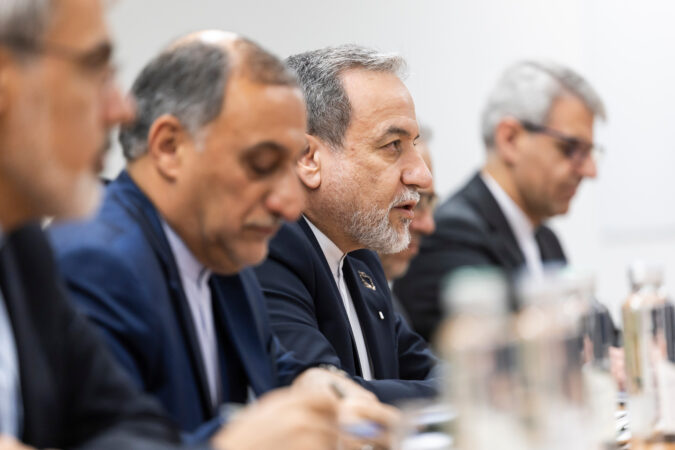
    WASHINGTON — President Donald Trump warned on Friday that limited strikes against Iran are possible even as the country’s top diplomat said Tehran expects to have a proposed deal ready in the next few days following nuclear talks with the United States.

    In response to a reporter’s question on whether the U.S. could take limited military action as the countries negotiate, Trump said, “I guess I can say I am considering that.” A few hours later, he told reporters that Iran “better negotiate a fair deal.”

    Earlier Friday, Iranian Foreign Minister Abbas Araghchi said in a TV interview that his country was planning to finalize a draft deal in “the next two to three days” to send to Washington.

    “I don’t think it takes long, perhaps, in a matter of a week or so, we can start real, serious negotiations on the text and come to a conclusion,” Araghchi said on MS NOW’s “Morning Joe” show.

    The tensions between the longtime adversaries have ramped up as the Trump administration pushes for concessions from Iran and has built up the largest U.S. military presence in the Middle East in decades, with more warships and aircraft on the way.

    On Friday, the USS Gerald R. Ford carrier strike group passed through the Strait of Gibraltar and entered the Mediterranean Sea after being sent by Trump from the Caribbean, according to images of the ship by maritime photographers posted to social media.

    Both Iran and the U.S. have signaled that they are prepared for war if talks on Tehran’s nuclear program fizzle out. “We are prepared for diplomacy, and we are prepared for negotiation as much as we are prepared for war,” Araghchi said Friday.

    Ali Vaez, an Iran expert at the International Crisis Group, said Iran “would treat any kinetic action as an existential threat.”

    Vaez said he doesn’t think Iran’s leaders are bluffing when they say they would retaliate, while they likely believe they could maintain their hold on power despite any U.S. airstrikes.

    What Iran and the U.S. are negotiating

    Trump said a day earlier that he believes 10 to 15 days is “enough time” for Iran to reach a deal following recent rounds of indirect negotiations, including this week in Geneva, that made little visible progress. But the talks have been deadlocked for years after Trump’s decision in 2018 to unilaterally withdraw the U.S. from Iran’s 2015 nuclear deal with world powers. Since then, Iran has refused to discuss wider U.S. and Israeli demands that it scale back its missile program and sever ties to armed groups.

    Araghchi also said Friday that his American counterparts have not asked for zero enrichment of uranium as part of the latest round of talks, which is not what U.S. officials have said publicly.

    “What we are now talking about is how to make sure that Iran’s nuclear program, including enrichment, is peaceful and will remain peaceful forever,” he said.

    He added that in return, Iran will implement some confidence-building measures in exchange for relief on economic sanctions.

    In response to Araghchi’s claim, a White House official said Trump has been clear that Iran cannot have nuclear weapons or the capacity to build them and that it cannot enrich uranium. The official wasn’t authorized to comment publicly and spoke on condition of anonymity.

    Tehran has long insisted that any negotiations should only focus on its nuclear program and that it hasn’t been enriching uranium since U.S. and Israeli strikes last June on Iranian nuclear sites. Trump said at the time that the strikes had “obliterated” Iran’s nuclear sites, but the exact damage is unknown as Tehran has barred international inspectors.

    Although Iran insists its nuclear program is peaceful, the U.S. and others suspect it is aimed at eventually developing weapons.

    What Congress has to say

    Trump’s comments have faced pushback from some lawmakers who say the president should get Congress’ approval before any strike.

    Democratic Sen. Tim Kaine of Virginia said Friday that he has filed a war powers resolution that would require that step. Though it has no chance of becoming law — in part because Trump himself would have to sign it — some bipartisan consensus has arisen recently among senators who forced votes on previous resolutions on military action in Venezuela.

    None of those resolutions passed, but they were successful in showing how lawmakers are troubled by some of Trump’s aggressive foreign policy maneuvers.

    “If some of my colleagues support war, then they should have the guts to vote for the war, and to be held accountable by their constituents, rather than hiding under their desks,” Kaine said in a statement.


  • NASA targets March for first moon mission by Artemis astronauts after fueling test success

    NASA targets March for first moon mission by Artemis astronauts after fueling test success

    CAPE CANAVERAL, Fla. — NASA aims to send astronauts to the moon in March after acing the latest rocket fueling test.

    Officials announced the decision Friday, two weeks ahead of the first targeted launch opportunity on March 6.

    “This is really getting real, and it’s time to get serious and start getting excited,” said Lori Glaze, NASA’s exploration systems development chief.

    Administrator Jared Isaacman noted that launch teams made “major progress” between the first countdown rehearsal, which was disrupted by hydrogen leaks earlier this month, and the second test, which was completed with exceptionally low seepage Thursday night.

    The test was “a big step toward America’s return to the lunar environment,” Isaacman said on the social media platform X. Astronauts last ventured to the moon more than half a century ago.

    While more work remains at the pad, officials expressed confidence in being ready to launch four astronauts on the Artemis II lunar fly-around as soon as March 6 from Florida’s Kennedy Space Center. To keep their options open, the three Americans and one Canadian prepared to go into the mandatory two-week health quarantine Friday night in Houston.

    The space agency has only five days in March to launch the crew aboard the Space Launch System rocket, before standing down until the end of April. February’s opportunities evaporated after dangerous amounts of liquid hydrogen leaked during the first fueling demonstration.

    Technicians replaced two seals, leading to Thursday’s successful rerun. The countdown clocks went all the way down to the desired 29-second mark.

    The removed Teflon seals had some light scratches but nothing else noticeable that could have caused such heavy leakage, officials said.

    A bit of moisture also was found in the area that could have contributed to the problem. The fixes worked, with barely any leakage detected, said launch director Charlie Blackwell-Thompson.

    Commander Reid Wiseman and two of his crew monitored Thursday’s operation alongside launch controllers. The astronauts will be the first to fly to the moon since Apollo 17 closed out NASA’s first chapter in moon exploration in 1972.

    Still ahead is the flight readiness review, scheduled for late next week. If that goes well, the astronauts will fly back to Kennedy around the beginning of March for a real countdown.

    “Every night I look up at the moon and I see it and I get real excited because I can really feel she’s calling us, and we’re ready,” Glaze said.

    The nearly 10-day mission is considered a test flight with astronauts soaring atop the 322-foot SLS rocket for the first time. The only other SLS flight, in 2022, had no one on board.

    The next mission in the series, Artemis III, will attempt to land a pair of astronauts near the moon’s south pole in a few years.

    Given all the details still to be worked out for that mission — including whether Elon Musk’s SpaceX or Jeff Bezos’ Blue Origin will provide the lunar lander — Glaze said it will be months, perhaps even a year, before NASA selects that first moon-landing crew.

  • Where to see Isaiah Zagar’s mosaics around Philly

    Where to see Isaiah Zagar’s mosaics around Philly

    Famed mosaic artist Isaiah Zagar left a legacy shaped by the glimmering murals and large-scale tile works he’s engraved throughout Philadelphia.

    Zagar, who died at age 86 on Thursday due to complications of heart failure and Parkinson’s disease, will be remembered for his striking works and unrelenting mission to beautify the city he called home for more than five decades.

    Zagar’s nearly 200 handcrafted works can be found throughout the country, but the bulk of his famed mosaics are within city lines.

    Here’s some of the largest and boldest works the iconic artist has crafted in Philadelphia.

      (function() {
        var l2 = function() {
          new pym.Parent(‘ZAGARMAP.html’,
                         ‘https://media.inquirer.com/storage/inquirer/projects/innovation/arcgis_iframe/ZAGARMAP.html’);
        };
        if (typeof(pym) === ‘undefined’) {
          var h = document.getElementsByTagName(‘head’)[0],
            s = document.createElement(‘script’);
          s.type = ‘text/javascript’;
          s.src = ‘https://pym.nprapps.org/pym.v1.min.js’;
          s.onload = l2;
          h.appendChild(s);
        } else {
          l2();
        }
      })();

    Philadelphia’s Magic Gardens

    1020 South St.

    Tourists visit Philadelphia’s Magic Gardens, which was built by Isaiah Zagar in the 1960s, in 2017.

    As inescapable as Zagar’s work is in Philadelphia, the Magic Gardens serves as the artist’s most grand, well-known project. Dating back to 1994, it consists of thousands of square feet of entirely mosaicked space stretched across three city lots, showcasing what Zagar once referred to as his “voluminous” output of art.

    Magic Gardens Studio

    1002 Watkins St.

    Philadelphia’s Magic Gardens Executive Director Emily Smith (left) and Preservation and Facilities Manager Stacey Holder (right) in the former studio of mosaic artist Isaiah Zagar in 2024.

    If the Magic Gardens is the heart of Zagar’s output, his Magic Gardens Studio is the brain. Purchased in 2007, this 10,000-square-foot South Philly warehouse stands virtually entirely covered — inside and out — in Zagar’s artful mosaics, and long served as his studio and storage space.

    Home of Isaiah and Julia Zagar

    826 South St.

    Isaiah and Julia Zagar are photographed in front of their home in South Philadelphia in 2024.

    It doesn’t get much more personal than the Zagar’s home, where he and his family lived for about 40 years. Similar to his South Philly studio, the space is mosaicked inside and out in Zagar’s signature style, including a roughly 544-square foot piece covering the building’s façade.

    This Is The Day, Jesus Journey

    1036 South St.

    Just steps away from the Magic Gardens sits the Waters Memorial African Methodist Episcopal Church, its side showcasing Jesus Journey — a 2006 mosaic that features a decidedly religious bent. At more than 400 square feet, it uses excerpts from the Bible detailing the life of Jesus Christ. And across the street, another similarly sized installation titled Bilal From Pakistan was completed in 2012 alongside artist Bilal Khan.

    Rose and the Firefighters

    600 block of Alder Street

    Among Zagar’s most iconic murals, this piece stretches some 6,000 square feet along Alder and Kater Streets, just east of the Magic Gardens. This massive piece, completed in 2004, adorns the former headquarters of Engine Company 11, which once served as one of Philadelphia’s only Black fire companies between 1919 and 1952.

    Jim’s Steaks

    400 South St.

    Ken Silver,owner of Jim’s Steaks, in a room filled with mosaic tile by Philadelphia artist Isaiah Zagar inside former Eye’s Gallery damaged in 2022 fire.

    Blocks from Zagar’s home, Jim’s Steaks showcases the artist’s extensive mosaic work in a space formerly occupied by the Eyes Gallery, which Julia Zagar ran for decades. A 2022 fire damaged both the gallery and the neighboring original Jim’s building, prompting the cheesesteak shop to later expand next door — revealing a treasure trove of interior artwork that had long been covered.

    Schell Street Walls

    600 S. Schell St.

    Vacant lots, rowhouses, and cheesesteak shops weren’t Zagar’s only canvasses — he also covered entire side streets in his mosaics. Completed over nearly 30 years, the 600 block of Schell Street showcases the artist’s work on both sides of the steet. Many pieces were created during community workshops Zagar held there over the years.

    Fitness Works

    714 Reed St.

    There are more well-known murals than the one that occupies the lower façade and parking lot of this South Philly gym, but few are as large. At roughly 1,500 square feet all told, this piece was completed in 2014 as part of a mosaic mural workshop, and has since come to serve as landmark.

    Homage to Mike Mattio, Master Plumber

    700 block of Reese Street

    Occupying the side of a number of row homes, this Zagar mosaic serves as a tribute to its eponymous Mike Mattio, a former plumber of the artist’s — portrait included. It is also something of a high-brow installation, thanks to references calling out artists ranging from William Blake to Duke Ellington.

    Hip Hop Café

    705 Passyunk Ave.

    This building has housed quite a few businesses over the years. At least since 2002, it has showcased Zagar’s Hip Hop Café mosaic mural. The piece covers the structure’s 500-square-foot front, which today is home to Momoka Ramen Skewers’ Queen Village location.

  • Why do Jayden Daniels, Maxx Crosby, and other NFL players keep professing their ‘love’ for Eagles fans?

    Why do Jayden Daniels, Maxx Crosby, and other NFL players keep professing their ‘love’ for Eagles fans?

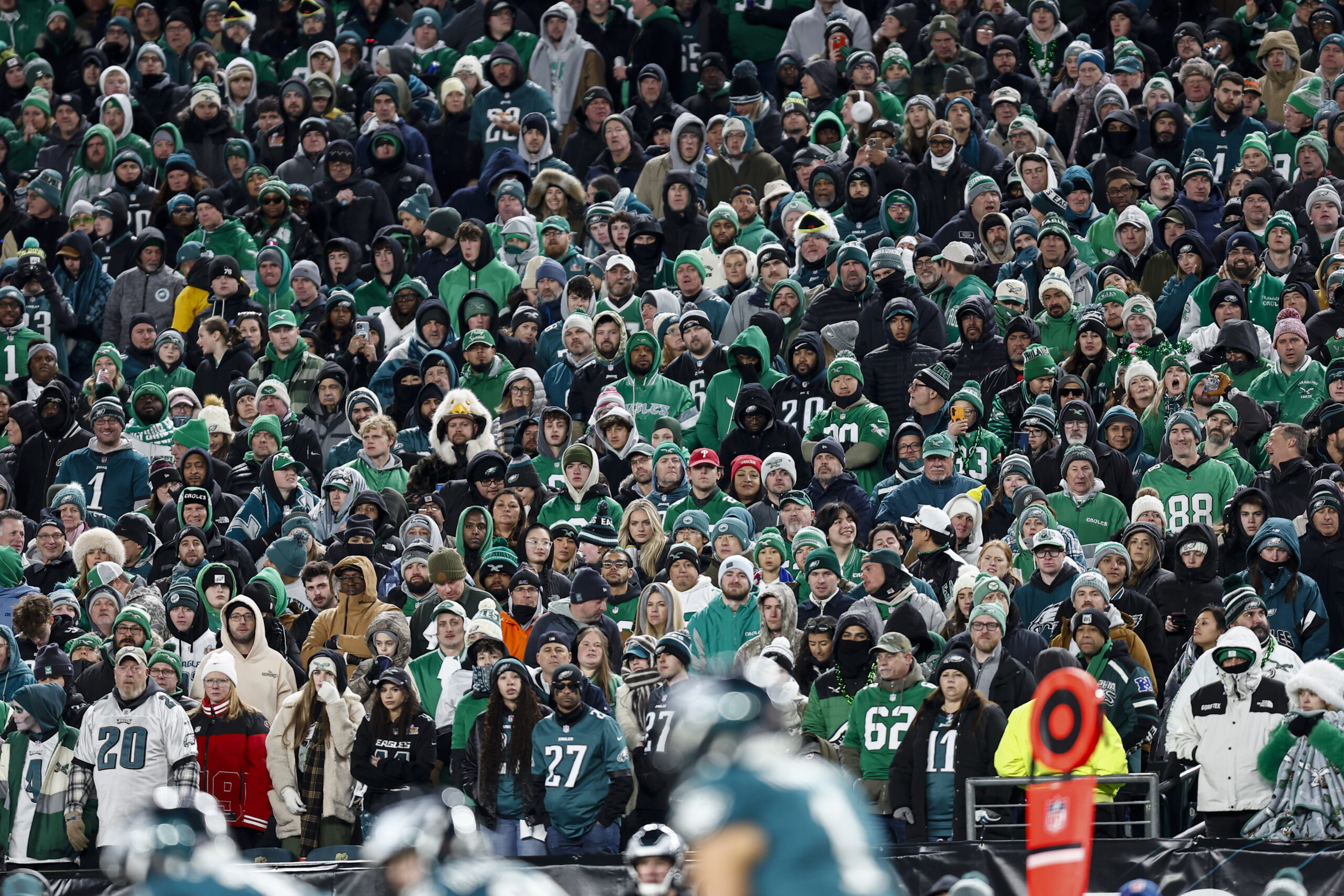
    Ever since Jason Kelce belted out “No one likes us, we don’t care” at the Eagles’ 2018 Super Bowl parade, the chant, with its origins in soccer, has become a staple of Philadelphia sports fandom. Whether they are liked or not, there appears to be a respect for Eagles fans, and recently, opposing players like Maxx Crosby and George Kittle have come out and praised them. The latest? NFC East rival Jayden Daniels.

    In an interview with Sports Illustrated earlier this month, Daniels, the Washington Commanders quarterback, compared games at Lincoln Financial Field to a college football-like atmosphere.

    “I love Eagles fans,” Daniels, an LSU alumnus, told SI. “I mean, they just embody what Philly brings, and to be able to go out there and play against them, it’s kind of just that their environment is the closest thing you can get to a college environment.”

    Daniels has played two seasons in the NFL, and has faced the Eagles twice at the Linc. His first was a 36-33 victory in December 2024, but just over a month later, Daniels and the Commanders were routed by the Eagles, 55-23, in the NFC championship game. He missed this past season’s game at the Linc due to injury, but his backup, Josh Johnson, was also excited to play in front of Eagles fans — even if he suffered some past trauma in South Philly.

    “It’s awesome,” Johnson, who was knocked out of the 2023 NFC championship game against the Eagles with a serious concussion that forced a hospital stay, told reporters before this year’s regular-season finale. “We get to go into the lion’s den. I love it. I wouldn’t change it.”

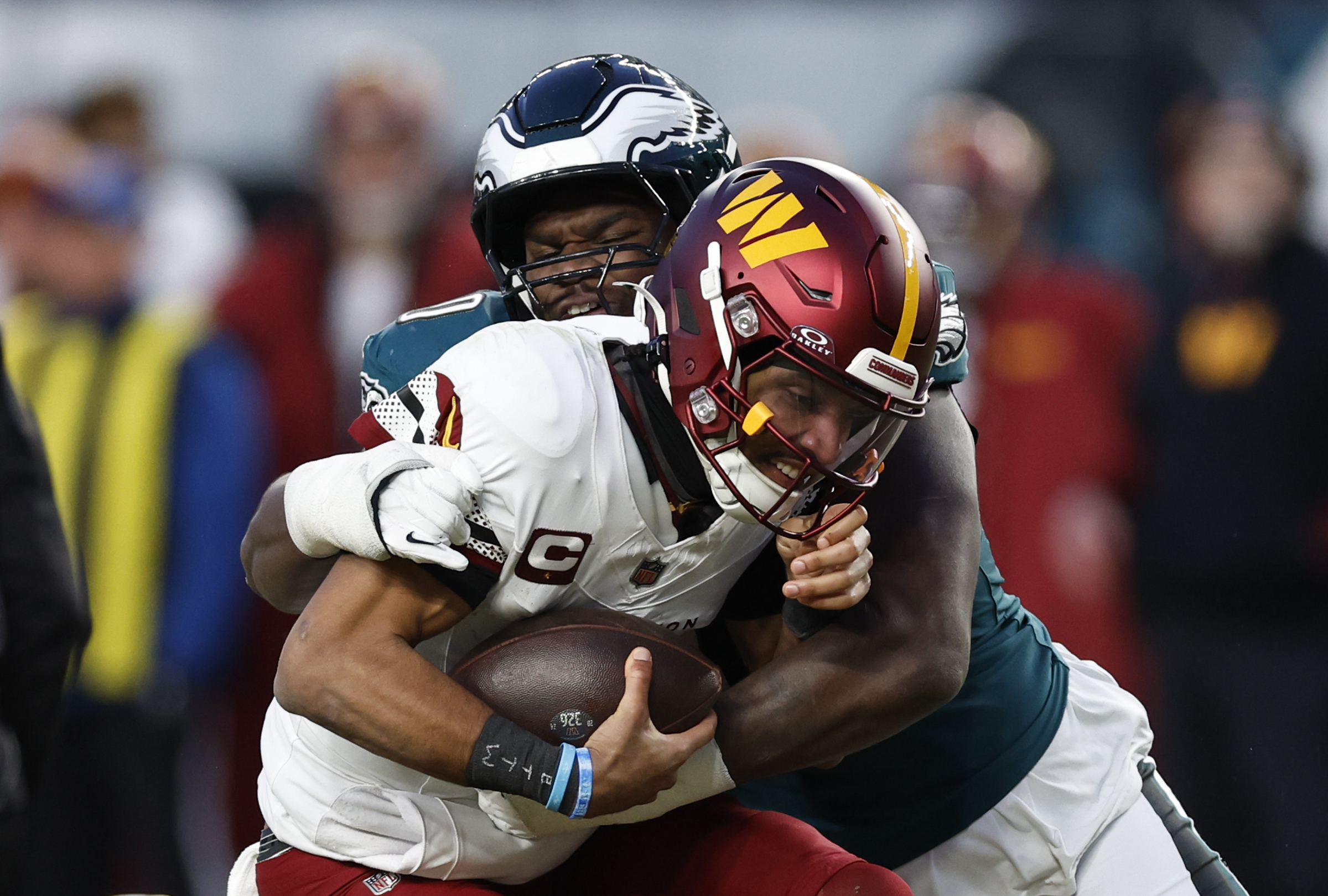
    Jayden Daniels was sacked three times in the Eagles’ NFC championship win over the Commanders.

    Some players don’t just like the environment, they use it for extra motivation. Daniels is one of them.

    “Yeah, for sure,” Daniels said when asked if Eagles fans bring him extra motivation. “If you can go out there and beat Philly in Philly — that is a different type — but their fans bring it, man, especially as we’re rivals with them in the NFC, in the East, so I love playing against them.”

    ‘Exactly what you dream of’

    As trade rumors swirl around Crosby, the Raiders star edge rusher’s past comments about the Eagles and their fans have resurfaced.

    On a December episode of his podcast, “The Rush With Maxx Crosby,” the 28-year-old defensive end spoke about the fan base following the Raiders game against the Eagles, his first at the Linc.

    “Cities that really have substance to them and true fan bases, and love for their city and the game — and going to Philly, you can feel that energy when you go there,” Crosby said on his podcast. “There were people everywhere downtown. We stayed right downtown in the thick of it. You know how Philly is. They’re rowdy, they are crazy, they’re flipping off the [team] buses. They didn’t give a damn about anything.”

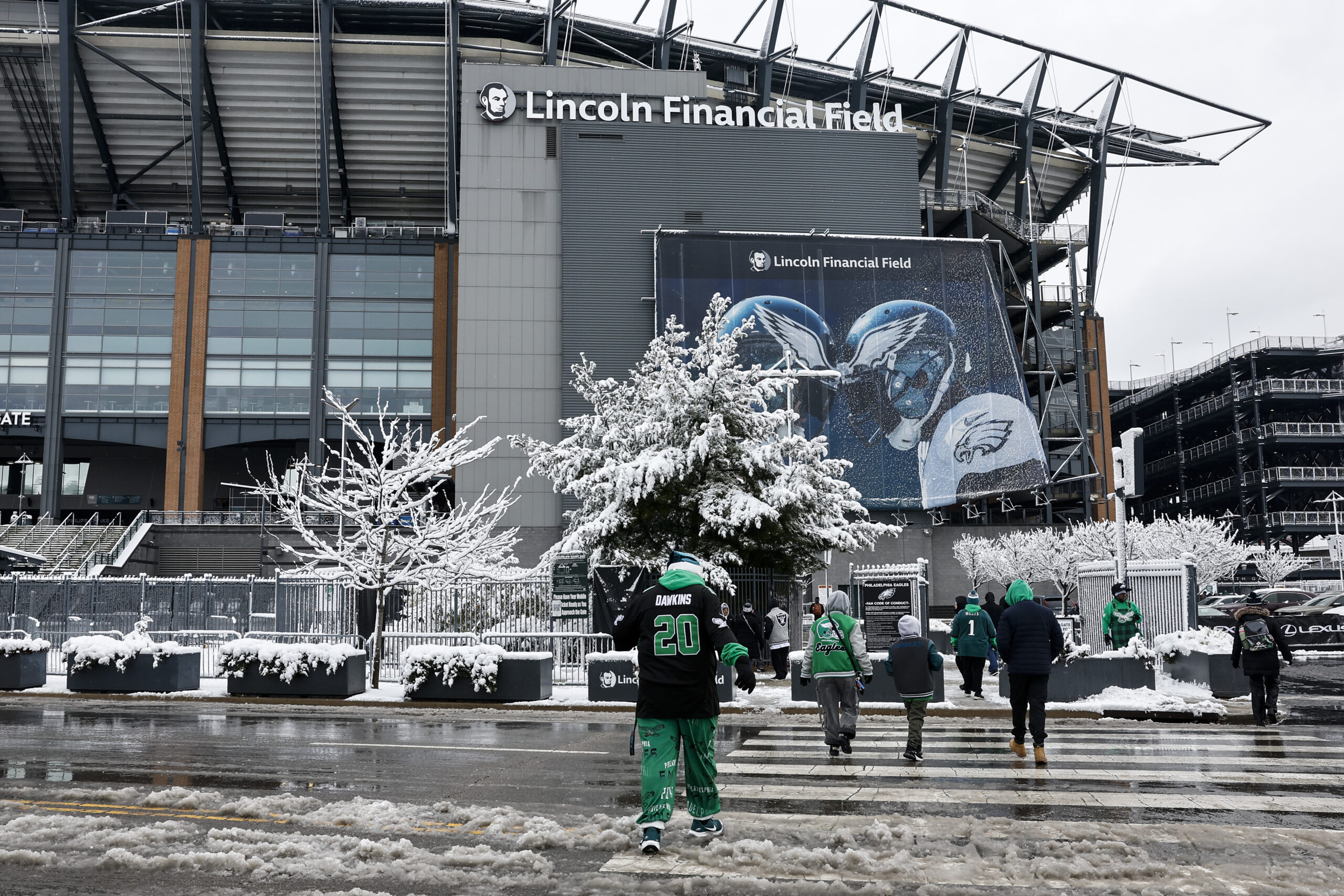
    Maxx Crosby said he remembers the snow-covered trees outside the Linc as fans prepped for the Eagles-Raiders game in December.

    Crosby also got a taste of what the fan base brings not just on game day, but every day.

    “I low-key never do this, but I was driving into Philly, and this is the first time I’ve ever played in Philly, so that’s why I took some pictures,” Crosby said. “[I] was driving in there, trees just all white (snow) and fans everywhere in the tailgate. You can see the stadium behind it. I took a couple dope-ass pictures because this is my first time ever playing there.

    “If you love football, that’s what you dream of as a kid, playing in Philadelphia in December in a grimy-ass environment. That is exactly what you dream of, so I loved it.”

    If Crosby indeed hits the Raiders trading block, could Philly be a potential destination for the five-time Pro Bowler?

    ‘They hate all of us equally’

    Kittle has also embraced the city’s fans after several battles with the Eagles. Ahead of San Francisco’s wild-card playoff game at the Linc, his fifth appearance in Philly, Kittle told reporters about the respect he has for the fan base.

    “The one thing that’s really unique about Philly is that they don’t really — I mean, maybe like a division rival is different, but any other road team that comes in there, they hate all of us equally, and I just appreciate that,” Kittle said. “It’s incredibly loud, they flip you off, they moon you on your bus ride in.

    “But, they do that to everybody. It doesn’t matter if you’re the 49ers, if you’re the Jacksonville Jaguars. It doesn’t matter. They just give you that no matter what, and I appreciate that because you can tell how much they love their team.”

    Eagles fans didn’t get the ending they hoped for last season, with the Birds falling to the Niners in the wild-card round of the playoffs.

    Kittle and Crosby aren’t the only ones to see the positive in Eagles’ fans antics, which can sometimes cross the line, like when fans egged then-offensive coordinator Kevin Patullo’s house after the team’s Black Friday loss to the Chicago Bears.

    Before his team’s game in Philly this season, Detroit Lions head coach Dan Campbell said the city was “probably the most hostile place to play” and recalled a time when he was playing for the Giants and a fan at Veterans Stadium dumped a cup of tobacco spit on Michael Strahan. Despite that, Campbell still loves the Philly faithful.

    “You go on the road and it’s you against everybody else,” Campbell said. “And it’s very clear that it’s you against everybody else there. You go some places and they wave at you like, ‘Man, we’re so happy you’re here to play against us.’ This is not one of those places. It’s as far from that as you can possibly get. I love playing in atmospheres like that.”

    Even players who have had serious beef with Eagles fans have changed their tune.

    “I hate Eagles fans,” Los Angeles Rams edge rusher Jared Verse repeatedly told the L.A. Times before the teams’ divisional round matchup in 2025. “They’re so annoying.”

    The Eagles went on to win that game in the snow, and fans pelted Verse with snowballs on his way out after his quote was displayed on the video board for the crowd to see. But after the game, Verse said he has grown to respect Philly fans.

    “I like that they stand on it,” Verse said. “They don’t shy away from it.”

  • Tired Hands Brewing turned its original Ardmore outpost into a private event space as it navigates the future

    Tired Hands Brewing turned its original Ardmore outpost into a private event space as it navigates the future

    Tired Hands Brewing’s Ardmore Brewing Company brewpub has been turned into a private event space, for now, as its owner navigates the future of the beer company.

    Tired Hands’ Kennett Square taproom and bottle shop is permanently closed, owner Jean Broillet confirmed to The Inquirer on Thursday. Tired Hands’ Beer Park in Newtown Square also will not reopen this summer as the property’s owners are looking to redevelop it, Broillet said.

    Tired Hands’ Ardmore Fermentaria and Fishtown restaurant St. Oner’s remain open for business. The brewing company’s MT. Airy Biergarten is a seasonal operation that will reopen in the spring.

    Broillet said the decision to shift to private events at the Ardmore Brewing Company location was born out of a number of factors: having two Tired Hands locations in Ardmore was confusing for customers; ongoing construction in Ardmore created a “prohibitive environment” for doing business; and the changing landscape of brewing has prompted Tired Hands to begin reimagining parts of its business model.

    The changing face of Ardmore, and of Tired Hands

    When Broillet opened the first Tired Hands location, the BrewCafé, in 2012, he said there was little by way of interesting, high-quality food and drink in Ardmore. At the time, he said, Tired Hands’ craft beer and artisan meats and cheeses stood in stark contrast to the Wawas and Irish pubs the area was accustomed to. Now, that era is a distant memory as Ardmore blossoms as a culinary destination on the Main Line.

    Ardmore “went from zero to 60 really quickly in terms” of dining and entertainment options, said Broillet. He added that Tired Hands was a catalyst for that progress.

    In 2015, Broillet and his business partner and wife Julie Foster opened the Fermentaria at 35 Cricket Terrace, just blocks from Tired Hands’ first location at 16 Ardmore Ave.

    The Fermentaria was a major expansion for Tired Hands. It offered food options that extended beyond the BrewCafé‘s sandwich-and-salad-based menu, like steak frites and baby back ribs. It also quadrupled Tired Hands’ production capacity. At the BrewCafé, Tired Hands’ brewers were able to produce 1,000 barrels of beer annually. At the time of its opening, Broillet anticipated the Fermentaria would increase production to 4,000 barrels per year.

    Tired Hands opened St. Oner’s, a Fishtown restaurant and brewpub, in 2020.

    In the years that followed, Tired Hands opened the seasonal Biergarten in Mount Airy, the Kennett Square taproom, and the Beer Park in Newtown Square.

    In 2021, Broillet stepped down from daily operations after allegations of sexism and racism at Tired Hands proliferated on social media, including claims that women were held to different standards than their male counterparts and employees were berated or publicly humiliated for mistakes. Broillet returned to his post at the helm of Tired Hands a year later.

    Broillet said that “lots of valuable lessons, worldly lessons, were learned during that process” and that Tired Hands is doing everything it can to “prevent that from ever happening again.”

    Ardmore Brewing Co., located at 16 Ardmore Ave. in Ardmore, Pa. Owner Tired Hands Brewing Company has transitioned the brewery into a private events space for the time being.

    Changes in Ardmore, closure in Kennett Square

    While opening a second Ardmore outpost helped grow Tired Hands’ footprint on the Main Line, having “two of the same company” also made things “pretty confusing for people,” Broillet said.

    In efforts to iron out the confusion, Tired Hands rebranded its BrewCafé last spring, renaming it the Ardmore Brewing Company, upgrading its interior, and adding more food and cocktail options while cutting down its beer list.

    “The confusion was still there,” Broillet said.

    Broillet also brought on a culinary team that had extensive experience with private events. They began to host a handful of events at the brewery — retirement parties, birthdays, etc. — which were a success.

    At the same time, major construction had created a “prohibitive environment for us to do business here on Ardmore Avenue,” Broillet said. Construction on the mixed-use Piazza project and Ardmore Avenue Community Center are ongoing, both of which are proximate to Ardmore Avenue and the businesses that operate there.

    The brewery shifted to exclusively hosting private events in the last few months, a decision Broillet said he “couldn’t be happier” with.

    The brewery owner said the Ardmore Avenue location will be open to the public again in the future, but did not specify in what form.

    The taproom and bottle shop in Kennett Square will not reopen.

    Broillet said he opened a Tired Hands outpost in Kennett Square, in part, to have a presence near his family members who lived there. Though it was a “fun” chapter, Broillet said it no longer made sense to operate in Kennett Square, where Tired Hands already has a strong network of distributors that can get their beers into people’s hands without making them trek to the bottle shop.

    What comes next?

    Broillet offered assurances that Ardmore Brewing Company will open up to the public again, but said the specifics aren’t clear yet. Tired Hands also plans on expanding its Mount Airy footprint with a permanent restaurant space.

    For brewers across the country, the specter of people drinking less alcohol looms large. Sales of craft beer fell 4% in 2024, and there were more brewery closings than openings in late 2024 and early 2025, the first time in 20 years such a phenomenon had occurred. Brewerytown’s Crime & Punishment Brewing shuttered last April, with its owners citing a shifting culture around alcohol among the reasons for its closure. Iron Hill Brewery & Restaurant, a Philly-area craft brewing pioneer, abruptly shuttered all of its locations in September.

    Broillet said that while the changing dynamics of the industry remain on his mind, Tired Hands was not “acutely a victim of that downturn.” Sales had been down slightly over the past few years, but Broillet attributes that more to having two locations in Ardmore than to the state of the industry. He’s bullish about Tired Hands’ ability to distinguish itself and sees excitement in the changes.

    “Those sentiments have a way of just propelling you forward,” Broillet said.

    This suburban content is produced with support from the Leslie Miller and Richard Worley Foundation and The Lenfest Institute for Journalism. Editorial content is created independently of the project donors. Gifts to support The Inquirer’s high-impact journalism can be made at inquirer.com/donate. A list of Lenfest Institute donors can be found at lenfestinstitute.org/supporters.

  • Trump banner on Justice Dept. building draws authoritarian comparisons

    Trump banner on Justice Dept. building draws authoritarian comparisons

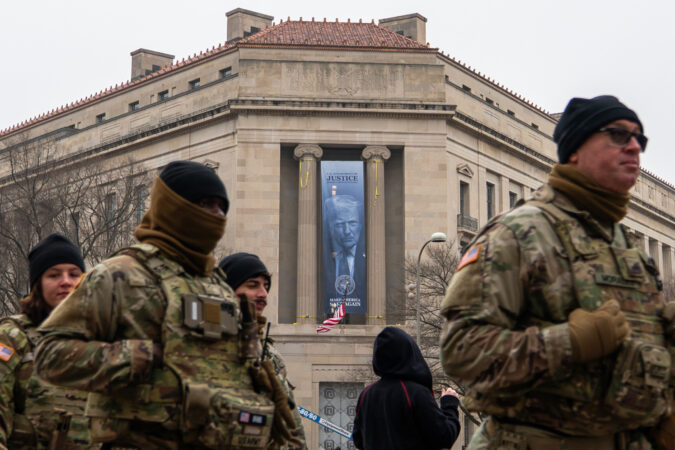
    A new banner hanging along the facade of the Justice Department’s headquarters in Washington is sparking criticism from Democrats and a former FBI director, who suggest that it exemplifies President Donald Trump’s encroachment on the agency, which has long prided itself on being independent from the White House.

    The tall banner displays a portrait of Trump, cast in a dark blue hue, staring down at tourists, commuters and cars along Washington’s bustling Pennsylvania Avenue. “MAKE AMERICA SAFE AGAIN,” reads the banner, which is emblazoned with the Justice Department’s seal.

    A Justice Department spokesperson said the banner was hung in commemoration of the United States’ Semiquincentennial, writing in a statement: “We are proud at this Department of Justice to celebrate 250 years of our great country and our historic work to make America safe again at President Trump’s direction.”

    Similar banners have appeared recently on other government buildings in Washington. But Democrats said that the decision to install one at the Justice Department symbolizes the influence Trump has wielded over the agency during his second term and that the display is comparable to the imagery deployed by authoritarian regimes.

    “The irony of a twice-impeached, convicted felon putting his own picture on the wall of the Department of Justice,” Sen. Ben Ray Luján of New Mexico wrote on X. “President Trump is weaponizing the DOJ as his own personal law firm.”

    Rep. Mike Quigley of Illinois shared an image of the banner online and wrote: “POTUS is putting his face on the Justice Department. … This is not the work of an independent and impartial justice system.”

    “Ok Kim Jong Un,” Rep. Jim McGovern of Massachusetts wrote.

    A pair of similar banners hung at the U.S. Department of Agriculture showed Trump and Abraham Lincoln’s portraits emblazoned with the phrase: “Growing America Since 1862.” (A government purchase order for the pair of banners at USDA showed they cost $16,400.) And banners hung on the Labor Department’s building featured portraits of Trump and Theodore Roosevelt that read, “American workers first.”

    The addition to the Justice Department building follows a pattern of norm-breaking efforts that critics say amount to Trump using the agency as a personal cudgel against his political enemies.

    In a speech delivered inside the building last year, Trump declared himself the nation’s “chief law enforcement officer.” Attorney General Pam Bondi rarely misses an opportunity to praise the president and credit him with the department’s success, including at a contentious congressional oversight hearing last week in which she repeatedly described him “the greatest president in American history.”

    To Trump’s critics, the banner is also striking given his status as a felon. He was found guilty in 2024 in a New York state case on 34 counts of falsifying business records to conceal a hush money payment to an adult-film actress.

    Less than two years ago, Justice Department prosecutors had been pursuing two federal cases against him led by former special counsel Jack Smith. One focused on efforts to overturn the 2020 election, while the other related to Trump’s handling of classified documents.

    Trump is continuing to appeal his state court conviction in New York. A Georgia criminal case against Trump related to efforts to change the 2020 election result was dismissed last year.

    The two federal cases were also dismissed. One ended because of issues with Smith’s appointment. The other Smith withdrew after Trump’s 2024 election victory, in line with long-standing Justice Department policies preventing prosecution of a sitting president.

    Trump and his Justice Department appointees have contended that the prosecutions arose out of a Biden-era weaponization of the justice system to punish political foes.

    Since his return to the White House, Trump has ordered several prosecutions of political rivals on social media. Federal prosecutors brought charges against former FBI Director James B. Comey and New York Attorney General Letitia James last year — both of whom Trump had demanded Bondi move swiftly to prosecute. Those cases were later thrown out over issues with the appointment of the U.S. attorney selected to oversee them.

    Comey, in a social media post Thursday, called the installation of the banner outside the Justice Department headquarters “sickening.”

    “But they forgot to cover the inscription on the Pennsylvania Avenue side: ‘WHERE LAW ENDS TYRANNY BEGINS,’” he wrote.

    The banner is hardly the first time the Trump administration has been accused of adopting aesthetics and deploying imagery typically associated with imperialism or authoritarianism since his return to office last year.

    The administration, for example, roiled the art world when the Department of Homeland Security used images of Americana paintings to bolster support for Trump’s large-scale deportation campaign.

    There was also a massive military parade in Washington last year, which ran against an American tradition of avoiding public displays of martial strength more common in authoritarian regimes. The president is also planning a giant triumphal arch across from the Lincoln Memorial, which could dwarf the size of that and other monuments.

  • Trump administration eases limits on coal plants for emitting mercury, other toxins

    Trump administration eases limits on coal plants for emitting mercury, other toxins

    WASHINGTON — The Environmental Protection Agency on Friday weakened limits on mercury and other toxic emissions from coal-fired power plants, the Trump administration’s latest effort to boost the fossil fuel industry by paring back clean air and water rules.

    Toxic emissions from coal- and oil-fired plants can harm the brain development of young children and contribute to heart attacks and other problems in adults. The plants are also a major source of greenhouse gas emissions that drive climate change. The EPA announced the move at a massive coal plant next to the Ohio River in Louisville, Ky.

    “The Trump EPA’s action follows the rule of law and will reduce of cost of generating baseload power, lowering costs and improving reliability for consumers,” EPA Deputy Administrator David Fotouhi said in a statement. The agency said the change should save hundreds of millions of dollars.

    The final rule reverts the industry to standards first established in 2012 by the Obama administration that have reduced mercury emissions by nearly 90%. The Biden administration had sought to tighten those standards even further after the first Trump administration had moved to undermine them.

    Coal-fired power plants are the largest single human source of mercury pollutants. Power plants release the mercury into the atmosphere, which then falls in rain or simply by gravity, entering the food chain through fish and other items that people consume.

    Environmental groups said the tightened rules have saved lives and made communities that live near coal-fired power plants healthier. But industry groups argued that the tougher standards, along with other rules that limited emissions from coal plants, made operating them too expensive.

    They accused the Biden administration of piling on so many requirements that it would drive a rush of plant retirements.

    “The reliability of the electric grid is in a better place because of the administration’s swift repeal of this rule. As crafted, the rule would have dealt a crippling blow to power plants that are essential to maintaining grid reliability,” said Jim Matheson, CEO of the National Rural Electric Cooperative Association.

    The coal industry’s outlook has changed dramatically in the last year.

    In March, the EPA promoted the “biggest deregulatory action in U.S. history,” announcing their intention to peal back dozens of environmental protections. The Biden administration’s focus on climate change was over — EPA Administrator Lee Zeldin said the actions marked “the death of the ‘green new scam.’” Fossil fuel rules were big targets, including major efforts to reduce carbon emissions from coal plants and mandate greenhouse gas reporting. The Trump administration has also extended deadlines for dozens of coal-fired power plants to comply with certain Clean Air Act rules.

    Beyond fewer environmental protections, the Trump administration has issued emergency orders halting the planned shutdown of several coal plants. Officials say the plants produce consistent power during major storms or at other times when need is high. Removing coal would reduce the grid’s reliability, especially at time when a rush of new data centers is demanding more than ever from the grid, they say. Officials have dismissed concerns about higher customer costs from keeping coal plants operating, their plentiful emissions, and their significant contribution to climate change.

    And earlier this month, the EPA revoked a finding that climate change is a threat to public health, which has long been the basis for U.S. action to regulate greenhouse gas emissions. Recently, President Donald Trump hosted a group of coal miners who honored him as the “Undisputed Champion of Beautiful, Clean Coal.”

    Activists say favoring coal makes little sense at a time when renewables are cleaner, cheaper, and reliable.

    Gina McCarthy, who headed the EPA under former President Barack Obama, said the Trump administration will be remembered for helping the coal industry at the expense of public health.

    “By weakening pollution limits and monitoring for brain-damaging mercury and other pollutants, they are actively spiking any attempt to make America – and our children – healthy,” said McCarthy, who is also the chair of the climate action group America Is All In.

    Associated Press writer Matthew Daly contributed.

  • Mae Laster, longtime French and algebra schoolteacher and noted civic activist, has died at 87

    Mae Laster, longtime French and algebra schoolteacher and noted civic activist, has died at 87

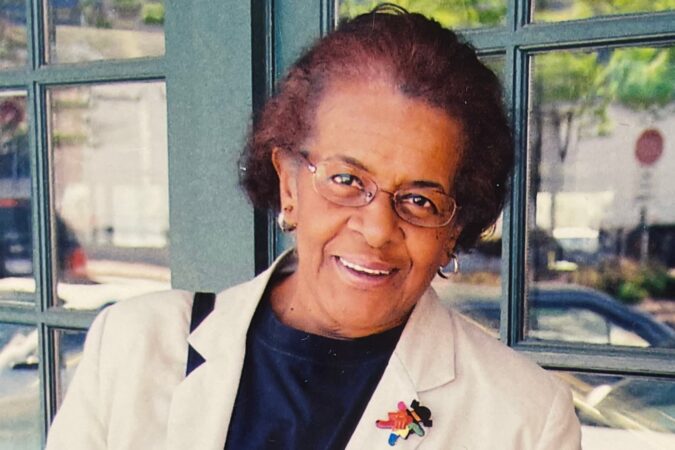
    Mae Laster, 87, of Philadelphia, retired French, algebra, and photography teacher for the School District of Philadelphia, longtime president of Friends of Wynnefield Library, award-winning committee chair for the Philadelphia section of the National Council of Negro Women Inc., community center adviser, church trustee, volunteer, and undisputed Laster family Scrabble champion, died Friday, Jan. 2, of age-associated decline at Lankenau Medical Center.

    Born in Philadelphia, Ms. Laster earned academic degrees at West Philadelphia High School and Temple University. She was a lifelong reader and stellar student, and she tutored her high school classmates in math and later taught elementary and middle school students for 30 years.

    “She was a firm and no-nonsense kind of teacher,” a former student said in an online tribute. “But she was a lot of fun. As an adult, she always offered guidance and advice.”

    Her daughter, Lorna Laster Jackson, said: “She had a passion for learning and sharing with others. She was always an advocate for children.”

    Ms. Laster chaired community service and Founder’s Day committees for the National Council of Negro Women Inc.

    Ms. Laster served as president of Friends of Wynnefield Library for more than 20 years and was active at its many book readings, content discussions, concerts, and fundraisers. She earned several important financial grants for the library, and her personal collection of books at home numbered more than 1,000.

    “She loved reading to our young patrons, especially during our Dr. Seuss birthday celebrations,” library colleagues said in a tribute.

    She chaired community service and Founder’s Day celebration committees for the National Council of Negro Women and earned the local section’s achievement award in 1998. “Mae was a blessing to the Philadelphia section,” colleagues said in a tribute. “We will always remember her feisty way of asking questions and not easily put off.”

    Ms. Laster was an advisory board member at the Leon H. Sullivan Community Development Center and a trustee at Zion Baptist Church. Colleagues at the community center called her “a very thoughtful and talented person.” They said: “She was always forthright and had a strong opinion.”

    Ms. Laster (center) especially enjoyed reading to young people at the Wynnefield Library.

    At church, she was a member of the New Day Bible Class and proofreader for the newsletter. She also volunteered with the Wynnefield Residents Association, the Girl Scouts, and the 4-H Club.

    In a citation, City Council members praised her achievements regarding “education, community service, and all those whose lives were enriched by her wisdom, kindness, and unwavering faith.” In a resolution, members of the state Senate noted “her extraordinary life, her enduring contributions, and her lasting impact on education, community, and faith.”

    Friends said in online tributes that she “had a great sense of humor” and was “the sweetest mom on the planet, who was always like a mom to me.” One friend called her “a community-minded leader who advocated tirelessly to preserve the quality of life in Wynnefield.”

    At home, Ms. Laster studied the dictionary, knew words that nobody else did, and became the undisputed Scrabble champion of her family and friends. She was so good, her daughter said, that nobody volunteered to play against her. “It was humiliating,” her daughter said.

    Ms. Laster was a lifelong advocate for children.

    Mae R. Johnson was born June 5, 1938, in Philadelphia. She grew up in Winston-Salem, N.C., with her grandmother and returned to Philadelphia in the 1950s to live with her mother and begin high school.

    She was an excellent student, especially good with words and numbers, and she graduated from West Philadelphia High in 1956 and earned a bachelor’s degree in early childhood education at Temple.

    She met Francis Laster in the neighborhood, and they married, and had a daughter, Lorna, and sons Francis Jr., Charles, and Ahman. Her husband owned and operated the popular Rainbow Seafood Market, and they lived in West Philadelphia and Wynnefield. They divorced later. He died in 2020.

    Ms. Laster enjoyed bowling, photography, and horticulture. She listened to jazz, classical, and gospel music. She collected butterflies and stamps.

    Ms. Laster was “all about positive change,” her daughter said.

    She shared recipes with friends and kept in touch through memorable phone calls. She helped organize high school reunions and appreciated the educational TV shows on the Public Broadcasting System. She retired from teaching about 20 years ago.

    “She was all about positive change,” her daughter said. “She spoke from compassion and her truth. She did more good than she knew. She was dynamite.”

    In addition to her children, Ms. Laster is survived by six grandchildren, three great-grandchildren, three great-great-grandchildren, a sister, and other relatives. A brother died earlier.

    A celebration of her life was held earlier.

    Donations in her name may be made to Friends of Wynnefield Library, Attn: Terri Jones, 5325 Overbrook Ave., Philadelphia, Pa. 19131.

    Ms. Laster graduated from West Philadelphia High School in 1956 and earned a bachelor’s degree in early childhood education at Temple.
  • Police search Andrew Mountbatten-Windsor’s former home a day after his arrest

    Police search Andrew Mountbatten-Windsor’s former home a day after his arrest

    LONDON — Police searched the former home of Andrew Mountbatten-Windsor again on Friday, a day after he was arrested and held in custody for nearly 11 hours on suspicion of misconduct in having shared confidential trade information with the late convicted sex offender Jeffrey Epstein.

    In another blow for the former Prince Andrew, the British government is considering formally removing him from the line of succession to the crown. Despite losing his status as prince and facing a police investigation, Andrew remains eighth in line to the throne. That can only be changed with new legislation.

    When the king stripped his brother of his titles in the fall, the government said passing a new law would not be a good use of Parliament’s time.

    But that view has changed and the government is now considering legislation once the police investigation is finished. James Murray, the government’s chief secretary to the treasury, said “the government is considering any further steps that might be required, and we’re not ruling anything out.”

    The last time a royal was removed from the line of succession was after the abdication of King Edward VIII in 1936, when the law was changed to strike him and any descendants from the list.

    Removing Andrew would also require agreement from more than a dozen other countries, including Jamaica, Canada, and Australia, that have the British monarch as head of state.

    Following one of the most tumultuous days in the modern history of Britain’s royal family, the former prince was back at his new residence on the Sandringham estate, King Charles III‘s private retreat, around 115 miles northeast of London.

    Police have concluded their search there, but are still searching Royal Lodge, his 30-room former home in the parkland near Windsor Castle, just west of the capital, where the king’s younger brother had lived for decades until his eviction earlier this month. Unmarked vans, believed to be police vehicles, have been entering the grounds Friday morning.

    The search is expected to continue for several days.

    Mountbatten-Windsor, who was pictured slouched in the back of his chauffeur-driven car following his release Thursday evening from a police station near Sandringham, remains under investigation, which means he has neither been charged nor exonerated by Thames Valley Police, the force responsible for areas west of London.

    Arrest was years in the making

    His arrest follows years of allegations over his links with Epstein, who died by suicide in a New York jail in 2019.

    The accusation at the heart of his arrest is that Mountbatten-Windsor — who was known as Prince Andrew until October when his brother stripped him of his titles and honors and banished him from Royal Lodge — shared confidential trade information with the disgraced financier when he was a trade envoy for the U.K.

    Emails released last month by the U.S. Department of Justice appeared to show Mountbatten-Windsor sharing reports of official visits to Hong Kong, Vietnam, and Singapore, and sending Epstein a confidential brief on investment opportunities in Afghanistan.

    Thames Valley Police has previously said it was also reviewing allegations that a woman was trafficked to the U.K. by Epstein to have a sexual encounter with Andrew. Thursday’s arrest had nothing to do with that.

    Other police forces are also conducting their own investigations into Epstein’s links to the U.K., including the assessment of flight logs at airports, large and small. They are coordinating their work within a national group.

    On Friday, London’s Metropolitan Police said it was assessing, with the help of U.S. counterparts, whether the capital’s airports, which include Heathrow, “may have been used to facilitate human trafficking and sexual exploitation.”

    It also said that it’s asking past and present officers who protected Mountbatten-Windsor to “consider carefully” whether they saw or heard anything that may be relevant to the investigations.

    As of now, it said no new criminal allegations have been made regarding sexual offenses within its jurisdiction.

    Mountbatten-Windsor has consistently denied any wrongdoing in his association with Epstein but has not commented on the most recent allegations that have emerged with the release of the so-called Epstein files.

    Arrest was sudden, investigation will take time

    Police swept into the grounds of Mountbatten-Windsor’s home to arrest him at 8 a.m. Thursday — his 66th birthday — before taking him to Aylsham police station for questioning.

    It’s not known what he told them. He may have said nothing, or “no comment,” as is his right.

    Experts said that misconduct in a public office is notoriously difficult to prove.

    “Firstly, it must be determined if Andrew Mountbatten-Windsor was in a role within government that constitutes the title of public officer,” said Sean Caulfield, a criminal defense lawyer at Hodge Jones & Allen. “There is no standard definition to clearly draw on.”

    The Crown Prosecution Service will ultimately make a decision about charging Mountbatten-Windsor.

    Andrew Gilmore, a partner at Grosvenor Law, said that prosecutors will apply the two-stage test known as the “Code for Crown Prosecutors.”

    “That test is to determine whether there is a more realistic prospect of a conviction than not based on the evidence and whether the matter is in the public interest,” he said. “If these two tests are met, then the matter will be charged and proceed to court.”

    Arrest is not just unusual, it’s historic

    Mountbatten-Windsor was the first royal since King Charles I nearly four centuries ago to be placed under arrest. That turned into a seismic moment in British history, leading Charles’ beheading and the temporary abolition of the monarchy.

    Mountbatten-Windsor’s arrest is arguably one of the gravest crises for the House of Windsor since its establishment more than 100 years ago. Arguably, only the abdication of King Edward VIII in 1936, and the death of Diana, Princess of Wales, in 1997, have been as grave for the institution of the British monarchy in modern times.

    In a statement Thursday, the king said the “law must take its course,’’ but that as ”this process continues, it would not be right for me to comment further on this matter.’’

    The allegations are not related to Epstein’s sex trafficking

    The allegations being investigated Thursday are separate from those made by Virginia Giuffre, who claimed she was trafficked to Britain to have sex with the prince in 2001, when she was just 17. Giuffre died by suicide last year.

    Still, Giuffre’s sister-in-law Amanda Roberts said that she was overjoyed when she got a phone call at 3 a.m. telling her the news of the arrest. But those feelings of elation were quickly complicated by the realization that she couldn’t share the feelings of “vindication” with Giuffre.

    “We can’t tell her how much we love her, and that everything that she was doing is not in vain,” Roberts added tearfully.

  • Philly-area lawmakers applaud Supreme Court striking down Trump’s tariffs as area businesses brace for uncertainty on refunds

    Philly-area lawmakers applaud Supreme Court striking down Trump’s tariffs as area businesses brace for uncertainty on refunds

    Pennsylvania lawmakers say Congress should reclaim its power over taxes and tariffs after the U.S. Supreme Court quashed President Donald Trump’s controversial global tariffs.

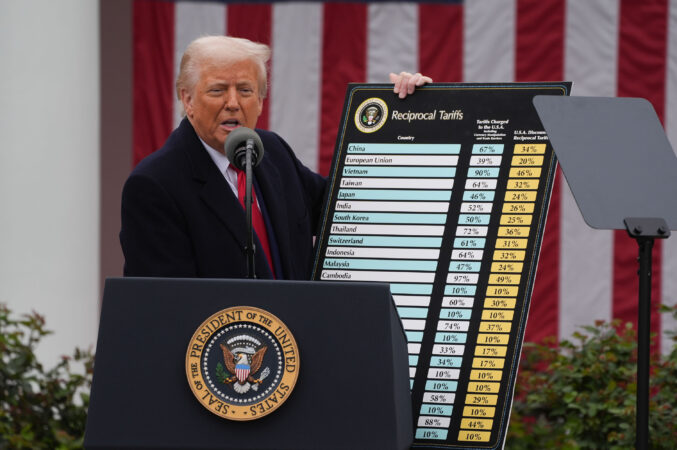
    The nation’s high court ruled 6-3 Friday that Trump overstepped with tariffs imposed under an emergency powers law, dealing a significant blow to the president’s economic agenda and reasserting congressional authority.

    Chief Justice John Roberts and Justices Neil Gorsuch and Amy Coney Barrett — both Trump nominees — joined liberal justices in the majority. Justices Brett Kavanaugh, Clarence Thomas, and Samuel A. Alito Jr. dissented.

    Trump told reporters at the White House Friday that he was “ashamed” of the three Republican-appointed justices for not having “the courage to do what’s right for our country.”

    But local lawmakers celebrated the decision as a step toward alleviating inflation exacerbated by Trump’s tariffs.

    It’s “​​the first piece of good news that American consumers have gotten in a very long time,” said U.S. Rep. Brendan Boyle (D., Philadelphia), the ranking member of the House Budget Committee.

    The decision is unlikely to be the end of the road for Trump’s efforts to impose tariffs. The court struck down the broad authority Trump had claimed to impose sweeping tariffs, but he could still impose additional import and export taxes using powers he employed in his first term.

    Friday’s decision centers on tariffs imposed under an emergency powers law, including the “reciprocal” tariffs he waged on other countries, The Associated Press reported.

    What’s next

    It remains unclear what will happen to tariff revenue that’s already been collected — about $30 billion a month since Trump took office last year, NPR reported. But Pennsylvania lawmakers are pushing for Congress to reassert its power to control the country’s purse strings.

    “As the Supreme Court validated this morning, Congress has the authority to levy taxes and tariffs,” Boyle said. “It’s time now for us to finally reclaim that authority and bring some certainty and rationality to our tariff policy, which under Donald Trump has been all over the map and changes day by day, even hour by hour.”

    Casey-Lee Waldron, a spokesperson for U.S. Rep. Brian Fitzpatrick (R., Bucks), said in a statement Friday that the lawmaker “applauds” the high court’s decision, “which validates the Congressman’s opposition to blanket and indiscriminate tariffs that are not narrowly tailored, and that do not lower costs for the American consumer.”

    Waldron added that Fitzpatrick supports enforcing trade laws, but “this should always be done in a collaborative manner with a bipartisan, bicameral majority in Congress.”

    Pennsylvania Gov. Josh Shapiro and N.J. Gov. Mikie Sherrill, both Democrats, celebrated the decision Friday in statements that noted the challenges the tariffs had caused for local economies.

    Speaking to reporters at the National Governors Association meeting in Washington, Shapiro said tariffs had done real harm to Pennsylvanians, citing rising prices for farmers and for consumer goods.

    “There is a direct line connecting those price increases to the president pushing the tariff button,” Shapiro said. “I think the Supreme Court got it right, and I say that as a former attorney general, and I say that as someone who actually follows the law.”

    U.S. Sen. Dave McCormick (R., Pa.), however, came to the defense of Trump’s tariff policies, saying in a statement that he believes Trump “was using legitimate emergency authorities very effectively to protect our national security and achieve fair trade for U.S. companies and American workers.”

    McCormick, a former Treasury official and former hedge fund executive, said he was disappointed with the court’s ruling and called to find other ways to accomplish Trump’s economic and national security goals, which include preventing “foreign competitors from cheating Pennsylvania workers.”

    Shockwaves in Philly and beyond

    Trump enacted the sweeping tariffs early last year, arguing that the move would incentivize companies to bring operations back to the United States and even trade deficits with other countries.

    The move, however, sent shock waves through the U.S. economy as prices increased and U.S. exports, including Pennsylvania’s lumber sales, suffered.

    Tariffs slowed business at the Port of Philadelphia, which reported cargo volume down across the board.

    Philly is a major gateway for produce, bringing in more fresh fruit than any other U.S. port, largely from Central and South America. The port saw record container volume last year, handling almost 900,000 units, up 6% over 2024. About two-thirds of that cargo was refrigerated — fruit and meat, for example.

    But this year got off to a slow start. “The story is increased competition and tariffs,” Sean Mahoney, marketing director at the Philadelphia Regional Port Authority (PhilaPort), said during the agency’s board meeting on Wednesday.

    Leo Holt, president of the city’s primary terminal operator Holt Logistics, hopes companies that see savings would pass them on to consumers. In practice, he acknowledged many would likely take a conservative approach.

    “I think consumers are going to demand that at least there’s an accounting for what they’re paying,” Holt said Friday.

    U.S. Sen. Chris Coons (D., Del.) said in a statement that he knows many Republican colleagues of his “are privately breathing sighs of relief this morning at the court’s decision.”

    “They should instead be asking themselves why they didn’t use their legislative authority to do more to stop these tariffs when they had the chance — and what they’ll do differently next time when President Trump inevitably tries again,” Coons said.

    ‘Nobody is going to rush to drop their prices’

    The Supreme Court’s ruling will be welcome news for some businesses, but it also sparks uncertainty.

    Not all of Trump’s tariff increases came through the use of the International Emergency Economic Powers Act, and therefore some will remain in place, said Julie Park, a partner at London-based tax and business advisory firm Blick Rothenberg.

    “This decision brings further uncertainty for businesses,” she said in a statement. That’s in part because Trump could seek to reimpose tariffs through other legal tools, leaving “businesses in limbo about if they will get refunded.”

    U.S. exporters will also be closely following what happens next, since the fate of Trump’s tariffs will likely determine whether other countries, like Canada, keep their retaliatory measures in place. Canada is Pennsylvania’s biggest export market, with the state sending more than $14 billion in goods there in 2024. Top exports included machinery, cocoa, iron, and steel.

    Pennsylvania’s dairy industry has also been caught in the middle of the global trade war, as China and Canada imposed extra taxes on those goods in response to U.S. tariffs.

    It’s also unclear whether companies will receive refunds for the tariffs they’ve paid in the past year.

    Tim Avanzato, vice president of international sales at Lanca Sales Inc, said his New Jersey-based import-export company should be eligible for as much as $4 million in tariff refunds.

    “It’s going to create a paperwork nightmare for importers,” he said, noting that he doesn’t expect the Trump administration to make it easy to retrieve this money.

    Avanzato said he is also watching for ways the administration may implement new tariffs. Consumers, he said, shouldn’t expect changes in the immediate term.

    “Companies are not very good at passing on savings,” Avanzato said. “Nobody is going to rush to drop their prices.”

    Sen. Andy Kim (D., N.J.) said Trump cost Americans “a lot of money.”

    “Trump 2.0: You pay for his tariffs, tax breaks for his billionaire donors, & insane corruption for his friends and family,” the South Jersey Democrat added in a social media post.

    The Supreme Court’s decision is “a step” in righting wrongs by the Trump administration, he said, but there’s “so much more to go.”

    Staff Writers Katie Bernard, Max Marin, Aliya Schneider and Rob Tornoe and The Associated Press contributed to this article.