Blog

  • Defying Pope Leo XIV, traditionalists go ahead with bishop consecrations in Switzerland

    Defying Pope Leo XIV, traditionalists go ahead with bishop consecrations in Switzerland

    ECONE, Switzerland — A group of traditionalist Catholics directly defied Pope Leo XIV on Wednesday by consecrating four bishops without his consent, dismissing the resulting excommunications and break with the Holy See by saying it was necessary to defend the Catholic faith.

    The Society of St. Pius X, which opposes modernizing reforms in the Catholic Church, conducted the five-hour ceremony at its seminary in Econe, Switzerland, despite an appeal by Leo to call it off.

    The American pope warned in a letter Tuesday that consecrating bishops without his approval amounted to a “sin of extreme gravity” that will actually harm their faithful.

    The consecrations amounted to a crisis for Leo, who has prioritized church unity and healing tensions with traditionalists that worsened during the Pope Francis pontificate.

    The SSPX, as the society is known, represents a parallel, ultra-Catholic faith to the Holy See. It now has six bishops, 751 priests, 264 seminarians training in five seminaries, 145 religious brothers, 88 oblates, and 250 religious sisters representing 50 nationalities, according to SSPX statistics.

    Bells tolled through the misty Alpine mountain valley as hundreds of priests walked two-by-two to the altar under a tent to start the service and then again at the end. An estimated 16,500 faithful who prefer the traditional Latin Mass over modern liturgies attended, sitting in a field through a downpour alongside their children who were too numerous for organizers to count.

    The Mass, rich in velvet and gold-trimmed vestments, chanting, and incense, was livestreamed on the society’s YouTube channel, with simultaneous explanations in several languages. The highly organized religious extravaganza underscored the society’s international reach, despite its schismatic outsider status, and its appeal to conservative, traditionalist Catholics wary of the modern, secular world.

    At the start of the Mass, a priest read aloud a statement justifying the consecrations as a necessary “sacred duty” and dismissing the resulting penalties. “We consider every punishment and censure brought to bear against this step will have no validity,” he said.

    In the consecration rite, Bishop Alfonso de Galarreta, who himself was excommunicated after being consecrated without papal consent in 1988, placed his hands on the head of each of the four new bishops. The ritual confers the Holy Spirit from one bishop to another and recalls Christ’s gesture to his apostles. After they received their miter hats, gloves, and pastoral staffs, the four made a procession through the crowd, blessing the faithful as bishops.

    According to church law, consecrating a bishop without a papal mandate incurs the harshest penalty in the Catholic Church: automatic excommunication for the four new bishops and the bishop administering the rite. It also amounts to a schismatic act, an intentional rupture of church unity.

    The society was founded in opposition to Vatican II

    French Archbishop Marcel Lefebvre founded the SSPX in opposition to the modernizing reforms of the Second Vatican Council. Among other things, the 1960s meetings known as Vatican II revolutionized the church’s relations with other Christians, Jews, and people of other faiths, and allowed Mass to be celebrated in the vernacular rather than Latin.

    In 1988, Lefebvre consecrated four bishops without papal consent. The Vatican promptly excommunicated him and the four bishops and declared the consecrations a “schismatic act.” Pope Benedict XVI in 2009 lifted the excommunications, but the SSPX today has no legal standing in the church.

    The SSPX has accused the church of being rife with heresies and errors and said that only it is upholding the true faith of Christ. It has justified the consecrations, citing a “state of necessity” to minister to its faithful.

    It identified the new bishops as Pascal Schreiber of Switzerland, Michael Goldade of the United States, Michel Poinsinet de Sivry of France, and Marc Hanappier, also of France.

    Catholic faithful don’t incur penalties for attending SSPX services, but they also can attend Latin Masses celebrated by priests in communion with the Vatican.

    The Vatican didn’t immediately comment on the consecrations and it wasn’t clear how or if it would declare the excommunications or any other penalties. The SSPX acknowledged in a statement late Wednesday that the consecrations did not have papal approval.

    The ritual had a joyous air

    Everything about Wednesday’s ceremony had the air of a joyous celebration. Participants received a baseball cap with the “Econe2026” seal on it.

    And in perhaps the most obvious sign of a celebration, registered participants could buy a souvenir set of wine to commemorate the “historic” event for 75 Swiss francs ($92.50). The “Cuvee des Sacres” gift box featured pinot noir, syrah, Petit Arvine, and Fendant, each bottle with a label depicting a bishop’s miter, his ring, a cross or crozier staff.

    The field, located under giant power lines, was awash in smiling nuns, priests posing for photos, youths handing out bottled water, black-clad security guards with earpieces, and orange-vested volunteers who occasionally cut short journalists’ interviews with the faithful. During the downpour, priests administered Communion under yellow and white umbrellas, the colors of the Holy See.

    Arlina Onglao, a 71-year-old travel agent from the Philippines, said she wanted to be on hand for the “historic event” and didn’t care about the prospect of excommunications of the bishops. She said the Vatican had “lost credibility.”

    “I don’t think it’s going to scare any of us. Me, I’m not scared,” she said. “I feel like I’m on a safer road to heaven.”

    Many Catholics not in Econe, including conservative and traditional ones, opposed the consecrations as an act of severe disobedience that hurts the church.

    “You can’t serve tradition while disobeying the church and her authority,” said the Rev. Robert Gahl, an ethics expert at the Catholic University of America.


  • Historic St. Peter’s Village is going up for auction. It prompts the question: Will it be preserved, or developed?

    Historic St. Peter’s Village is going up for auction. It prompts the question: Will it be preserved, or developed?

    Roughly 83 acres of the historic St. Peter’s Village in Chester County will go up for auction this fall to the highest bidder, opening up potential for massive development of the land. And it already has seen thousands of interested parties.

    The auction, scheduled for Sept. 30 at The Desmond Malvern, will put on offer the entirety of the Warwick Township village, in what auction and preservationist experts call an “unusual” type of sale.

    On the table: 121 homes, which consist of 33 single-family homes, 33 twins, 34 townhomes, and 21 two-acre home sites; a wastewater treatment plant that serves the existing buildings; and 13 historic and commercial village buildings — including The Inn at St. Peter’s — which total about 43,500 square feet.

    The new owner could also clinch iron ore deposits on site, “adding a rare investment dimension,” the auction website notes.

    The 83-acre St. Peter’s Village — a historic destination in Chester County — will be sold at an absolute public auction to the highest bidder in September. The Inn and various shops on the main drag. Wednesday, July 1, 2026

    The property is being sold as one unit. The buyer will have to improve the existing wastewater treatment plant for a full build out. The land is zoned for residential and neighborhood business uses.

    It is definitely an “unusual property” and the auction is unusually large as well, said Doug Clemens, chief executive officer of the Traiman Real Estate Auction Company, which is overseeing the sale. Clemens said the property is owned by one entity. The Piazza family, which runs the Piazza Management Co. and owns multiple Main Line car dealerships, is listed on associated parcels. A spokesperson declined to comment.

    “We’ve sold properties that were thousands of acres, but they weren’t builder properties, so this is a large property for a builder,” Clemens said.

    Its good reputation, long history, and the sheer size of the parcel are why Clemens suspects they’ve seen remarkably high interest. The auctioneers put out a news release about the upcoming sale last week. They’ve received 14,000 responses since, he said.

    St. Peter’s Village sprung up because of its nearby natural assets: the French Creek, timber, good soil – and resources like iron ore, copper and black granite.

    Bidders must register at the auction with $150,000 guaranteed funds, but the bids will start wherever they’re comfortable.

    “At the conclusion, we’ll know what the bidders were willing to pay for it,” Clemens said.

    Following the curves of the French Creek, the village was established in the 1880s during the Gilded Age — a point in history where America was going through “growing pains” of both capital and labor, as well as whether it would be an “industrialized or agrarian nation,” said Jared Frederick, a history professor at Penn State Altoona.

    Like many a small village or hamlet in Pennsylvania, St. Peter’s sprung up because of its nearby natural assets: the French Creek, timber, good soil – and resources like iron ore, copper and black granite.

    Its economy flourished, thanks to those natural resources, which it transported to Philadelphia. It’s a “fascinating little enclave that demonstrates how some places were caught in the middle” of semi-ruralness and proximity to the big city, Frederick said.

    Alongside that growing economic engine was also leisure, though. St. Peter’s Village became a recreational getaway due to its beautiful, scenic vista — something considered a “majestic retreat for commoners,” Frederick said. And while Chester County places high value on its green spaces now, it was even more essential for people living in urban areas to have access to such places in the 1880s through the 1900s, Frederick said.

    St. Peter’s Village is on the National Register of Historic Places, but that may not safeguard it from development after it is auctioned off.

    Its sale has prompted concern about what it could become, with the auction site touting it as “suitable for major builders, venture capitalists, historic preservationists, and entrepreneurs.”

    Places like this are increasingly rare, Frederick said. And while the village is on the National Register of Historic Places, that doesn’t necessarily safeguard it, Frederick said. There’s a “fairly lengthy list” of places that have earned such recognition, but been bulldozed or neglected.

    And while development and other attractions could help revive the village by drawing in tourism, he believes it’s a careful balancing act.

    “Something that I always impart to my students in the classroom when we talk about the power and the need to preserve historical places, is that regret only goes one way,” he said. “When a place is gone, it’s gone forever, and that is something that very much needs to be kept in mind when pondering the fate of places like this.”

    This suburban content is produced with support from the Leslie Miller and Richard Worley Foundation and The Lenfest Institute for Journalism. Editorial content is created independently of the project donors. Gifts to support The Inquirer’s high-impact journalism can be made at inquirer.com/donate. A list of Lenfest Institute donors can be found at lenfestinstitute.org/supporters.

  • ICE’s arrest of nun heading to church fuels bipartisan backlash in South Texas

    ICE’s arrest of nun heading to church fuels bipartisan backlash in South Texas

    SAN ANTONIO, Texas — Sister Leticia “Letty” Ugboaja was walking to Sunday Mass in McAllen, Texas, when federal immigration officers stopped her, confiscated her rosary, and placed her in handcuffs.

    The Catholic nun from Nigeria was released hours later after Democratic and Republican lawmakers intervened. The Department of Homeland Security did not respond to requests for comment about her immigration status, and officials from the Diocese of Brownsville would not give details other than to say she is a nurse who entered the country legally.

    Ugboaja’s arrest was the latest to trigger anger from both sides of the political aisle in South Texas, highlighting how Hispanics in a region that supported President Donald Trump in the 2024 elections are growing wary of his administration’s deportation campaign.

    An unlikely bipartisan consensus has emerged in Texas’s Rio Grande Valley to protest several recent immigration arrests, including those of three teenage mariachi musicians, numerous construction workers, and cases involving children and people who had been granted protection from deportation.

    Rep. Monica De La Cruz, a Republican who flipped her House district that includes the Texas border in 2022, has joined Democrats in the predominantly Mexican American region in calling for the release of immigrants with deep ties to their local communities and no criminal record.

    “As I have repeatedly said, our immigration enforcement should target violent criminals,” she wrote on Facebook. “A Catholic nun on her way to church is not a threat to our community.”

    Trump won 12 of 14 Texas border counties that had long been dominated by Democrats in the last presidential election. The rightward shift was the result of widespread discontent over how the Biden administration handled immigration and inflation.

    Lawmakers and political analysts say border constituents hold nuanced views that the Trump deportation campaign is testing. They support deporting criminals and enhancing border security, but they also say hardworking immigrants with no criminal record should be given a chance. And they are upset by images of people like Ugboaja being detained while going about their daily lives.

    “If the administration said they closed the border and are deporting criminals and stopped there, it would’ve been welcome news,” said Rep. Henry Cuellar (D., Texas). “But they didn’t stop there. They started going after people on the streets, and that part — the overreach by ICE — is turning Hispanics back to other candidates, to Democrats honestly.”

    The diocese said Ugboaja is part of the Daughters of Mary Mother of Mercy congregation headquartered in Nigeria and has worked more than a decade at local Texas hospitals. Ugboaja has not publicly addressed her arrest by Immigration and Customs Enforcement and did not respond to a request for comment.

    ICE did not respond to a request for comment on why she was detained.

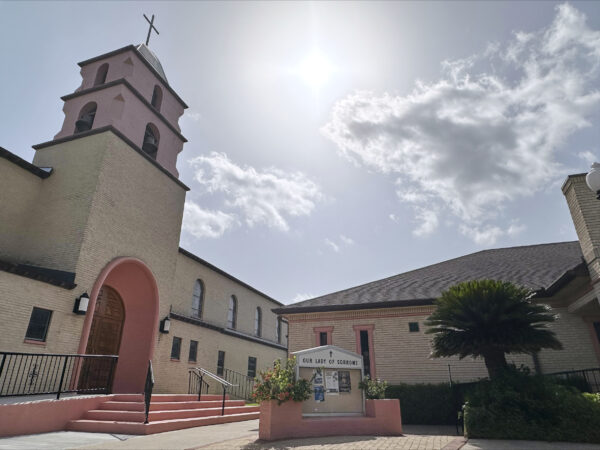
    Richard Cortez, a Democrat who is the elected judge, or administrator, of Hidalgo County, is a parishioner at Our Lady of Sorrows, the church that Ugboaja had been walking to when she was arrested. He said he contacted representatives for De La Cruz and Cuellar after a deacon texted him to let him know that a nun had been arrested. The lawmakers then sent frenzied phone calls and text messages to Homeland Security Secretary Markwayne Mullin and Tom Homan, the administration’s border czar.

    “Where is she?” Cuellar recalled texting officials in Washington, demanding her swift release. The veteran lawmaker, who sits on the House Appropriations Committee, said Mullin and Homan reassured him that Ugboaja would be home by nightfall that same day.

    De La Cruz wrote on Facebook on Sunday that she had “elevated this to the highest levels.”

    The congresswoman is up for reelection and has been walking a careful line in supporting the Trump administration while also advocating for specific immigrants caught up in the deportation campaign. In a statement to the Washington Post, she said there is a “misconception” that Hispanic families want open borders.

    “It simply isn’t true,” she said. “We want a strong, secure border and enforcement that prioritizes violent criminals and real threats to our neighborhoods.”

    Local activists and cultural leaders were also involved in sounding the alarm, including Tejano singer Bobby Pulido, a Democrat challenging De La Cruz in the November general election. “It’s an aggression coming from the top, and they are not targeting bad people,” he said. “Trump voters, friends of mine, are very upset by this.”

    Sister Norma Pimentel, a well-known figure in the region, drove to the El Valle Detention Center in Raymondville, Texas, late Sunday to embrace a tearful Ugboaja as she exited the metal gates.

    De La Cruz ”is arguing for the compassionate release for some but not others,” said political scientist Álvaro Corral of the University of Texas in the Rio Grande Valley. “It puts her in a complicated place. The folks that elected her likely cheered some of this on.”

  • Voters are angry with Washington, and other takeaways from the Colorado primaries

    Voters are angry with Washington, and other takeaways from the Colorado primaries

    WASHINGTON — Democrats in Colorado rode a backlash against Washington to victory Tuesday night, as a surge of primary voters picked candidates without ties to Congress.

    The state’s Democratic primary had been closely watched to see whether the wave of democratic socialist victories in New York last week would travel west from coastal, urban terrain into more politically diverse stretches of the country.

    One key House race proved the theory true: Lawyer and democratic socialist Melat Kiros, 29, ousted Rep. Diana DeGette, a liberal, 30-year incumbent from Denver.

    And in the primary race for governor, ties to D.C. also became too toxic to overcome as Colorado Attorney General Phil Weiser decisively beat U.S. Sen. Michael Bennet, a three-term incumbent who once held a double-digit lead in polling.

    The most prominent Democratic incumbent to fend off a challenger, Sen. John Hickenlooper, won against a challenger who did not air a single television ad. Hickenlooper, a former two-term governor and Denver mayor who was born outside Philadelphia in Narberth and graduated from the Haverford School, posted the narrowest primary victory of his more than 20 years running for public office in Colorado.

    Here are some takeaways from primary night in Colorado, a once-purple state that saw a surge of Democratic ballots this year.

    Democratic primary voters seek a fighter

    In a campaign built on who would best fight President Donald Trump, Bennet’s early advantage evaporated as Weiser argued that the lawsuits he filed against the administration made him a better antagonist than an 18-year creature of Congress.

    During his second term, the president has moved the U.S. Space Command headquarters out of the state and shut down Colorado’s globally recognized climate research center, among other moves that challengers said D.C.-based politicians did not do enough to stop.

    Bennet is the first sitting senator to lose a gubernatorial primary in 15 years, a loss underwritten by a nearly $1 million personal loan to his campaign and almost twice as much spending on TV ads compared to Weiser.

    Weiser tweaked Bennet for voting to confirm eight of Trump’s Cabinet members. Bennet stood by his votes, except for the one to confirm Energy Secretary Chris Wright. He argued that his support was necessary to help the state secure federal resources.

    Colorado primary voters ultimately decided to leave Bennet in D.C., where he has another two years in his Senate term.

    Democratic socialists can topple liberals

    Kiros’s victory fuels nationwide exuberance of democratic socialists trying to pull the Democratic Party closer to their brand of economic populism and opposition to Israel.

    After three candidates endorsed by New York Mayor Zohran Mamdani won their congressional primaries in New York last week, establishment Democrats felt angst. Democratic socialists looked to Colorado, and the money followed.

    “Today, the East Coast, next week the Mountain West,” the Democratic Socialists of America posted on X the night of those NYC victories, along with a photo of Kiros and entreaties to help phone bank and “elect another socialist to Congress.”

    Sen. Bernie Sanders (I., Vt.) had endorsed her a week earlier.

    Kiros, a first-time candidate, beat Colorado’s most veteran member of Congress, a longtime progressive who supports Medicare-for-all and other causes dear to the left.

    On the campaign trail, Kiros argued that DeGette had become part of the party’s out-of-touch establishment and accepted corporate donations but not doing enough to support the working class. A lawyer and Ph.D. student, Kiros moved back to Colorado from New York after she was fired in 2023 for writing an anti-Israel letter and refusing to retract it.

    Buoyed by her savvy social media campaign, national groups flooded the race with cash in the closing weeks, tapping into the electorate’s growing interest in candidates vowing to upend the political system they seek to join. Establishment groups responded with cash to boost DeGette.

    Outside spending for both candidates exceeded $3.1 million.

    Kiros was not born when DeGette, 68, entered Congress in 1997, and her primary victory in a deeply blue district centered in Denver all but assures she’ll join the small caucus of Gen Z members of the House next year.

    In the swingiest district, a progressive moves toward the middle

    In Colorado’s most competitive House district, currently held by a Republican and stretching from the Denver suburbs north through ranches and farmland, the Democratic winner shifted positions away from those endorsed by democratic socialists — even as he remained the most liberal candidate in the field.

    Manny Rutinel, a 31-year-old first-term state lawmaker, moderated his progressive views as he battled through a three-way primary race, finishing well ahead of his closest challenger, Shannon Bird.

    The district, represented by Gabe Evans, is expected to be one of the country’s most expensive general election races this fall.

    Rutinel is among the most progressive members of the state legislature, but he shifted on enough positions during his campaign that the Denver chapter of the democratic socialist party declined to endorse him. An editor’s note on the DSA’s voting guide added: “Many of our members are concerned that even a Neutral vote is too supportive of this candidate.”

    A Yale-educated lawyer who also worked as an economist for the Army Corps of Engineers, Rutinel declined to support Medicare-for-all, proposing a strong public option instead. He also stopped supporting a fracking ban and ending student debt.

    Colorado Democrats lost a redistricting fight, but they may flip seats anyway

    The surge in Colorado’s Democratic turnout fueled the party’s optimism that losing in court over redistricting won’t matter too much in the end.

    Democratic groups in the state had been planning in recent weeks an effort to redraw their maps ahead of the 2028 election in hopes of countering a string of Republican-run states that gerrymandered to favor the GOP in recent months.

    Currently the state’s delegation is split 4-4 under boundaries drawn by an independent redistricting commission. But Colorado has trended blue for years amid a population explosion, and Democrats believed they could add as many as three seats.

    Three ballot measures proposed by a Democratic-aligned group, Coloradans for a Level Playing Field, would have temporarily suspended the independent redistricting commission and adopt new maps for the 2028 elections. The Colorado Supreme Court ruled Monday that they were unconstitutional because of how they were structured.

    But high turnout among Democrats in Tuesday’s primary has Democrats believing they can gain one or more seats in November, two years earlier than they had originally hoped.

  • Flyers sign winger Tyson Foerster to massive eight-year extension

    Flyers sign winger Tyson Foerster to massive eight-year extension

    It’s been a roller coaster start to his career, but Tyson Foerster’s feet are firmly planted in Philly.

    On Wednesday, the 24-year-old winger inked an eight-year extension with an average annual value of $7.1 million. According to league sources, the deal features limited trade protection in years 3-8, but it does not contain a no-move clause. The contract will start in 2027-28, when Foerster was scheduled to become a restricted free agent.

    “We believe he’s a big piece and part of our future,” Flyers general manager Danny Brière said Wednesday when asked why he was extended on the day he was eligible.

    “It’s another great leader, grown inside the organization. The leadership part, the scoring threat that he is, the 200-foot game that he plays, the size. He’s worked really hard to improve his physical condition, to improve his skating.”

    The Flyers now have Foerster, Travis Konecny, Travis Sanheim, Owen Tippett, Sean Couturier, Cam York, and Christian Dvorak inked to long-term deals. Goalie Dan Vladař signed a five-year extension that will begin after next season on Wednesday, and restricted free agents Trevor Zegras and Jamie Drysdale are expected to be locked down in the coming days.

    Foerster has one more year left on a two-year bridge contract he signed last May at a cap hit of $3.75 million. The GM acknowledged he could have signed him at that time for eight years, but it would have meant he’d be with the Flyers for eight years. Now, between the two deals, he’s slated to play in orange and black for 10. Also, if he had waited, the expectation is that the cap hit would have been larger.

    “You probably remember when we drafted him [that] the big knock on him is that he’ll never play in the NHL, [that] this is a fatal flaw, he can’t skate,” Brière said. “He worked really hard at overcoming that, and when you watch him now, it’s not even a question [about] the skating part.

    “So a lot of credit goes to him, and he’s growing into a leadership role that’s very important on our team, very respected by his teammates. We see him as a big part and piece of our future. So, to get those guys at a respectable number … you have to jump on them, and we believe he’s going to be a big-time goal scorer and overall player for us, and if we didn’t do it now, it’s going to cost us a lot more down the road.”

    Drafted by the Flyers with the 23rd overall pick in the 2020 NHL draft, Foerster has solidified himself as a top-six winger but has battled a multitude of injuries.

    Flyers forwards Tyson Foerster and Trevor Zegras are poised to become part of the team’s long-term core.

    This past season, he missed four months with an upper-body injury that required surgery. Injured Dec. 1 during the follow-through of a one-timer against the Pittsburgh Penguins, he underwent surgery in mid-December and missed 49 games.

    Before the injury, Foerster had 10 goals and 13 points in the first 21 games of the season, including a goal in the game against Pittsburgh. He was not expected to return during the season, but recovered to do so on April 2 and marked his return with a goal .

    Foerster had three goals and one assist in his final eight games before adding another goal in the postseason. He also missed time in November with a lower-body injury from a blocked shot.

    “I think right when I came back, we were kind of looking at must-win games. So, the first couple were adrenaline and stuff, and then you kind of get tired or whatnot,” Foerster said at his end-of-season availability. “Everyone’s been playing for so long, and they’re up to speed and stuff. So yeah, it was a little tough,” he said about his lack of production after returning in April.

    “But I got no excuses. I came back, and it was a lot of fun for me to come back. I missed the team, and I missed everybody, and I missed playing in front of the fans.”

    Two seasons ago, Foerster set career highs in goals (25), assists (18), and points (43) in 81 games. He finished the season on a high with nine goals in his final nine games, including notching his first career hat trick on April 9 against the New York Rangers.

    But then his training was impacted in the summer after suffering an elbow injury while playing for Canada at the men’s World Championships last May. He underwent a procedure to remove the infection, and the team said he did not have any structural issues with the elbow. He started training camp in a non-contact jersey, but shed that pretty quickly.

    Flyers right wing Tyson Foerster returned after upper-body surgery in December last season and returned in early April, right before the playoffs.

    In his first full season with the Flyers in 2023-24, Foerster played in 77 games and potted 20 goals and 33 assists. He missed four games in February with an injury to his right foot — also scoring in his return. Foerster also had a few injuries that cost him significant time in the minors, including a shoulder injury that cost him most of the 2021-22 season.

    A reliable two-way forward, coach Rick Tocchet has also long lauded his shot.

    “I’m sure you guys noticed, but I noticed that even in the corner, just a little bit of a play to keep the puck possession, body position, just a little play to our guy, instead of losing the puck. He’s a real smart player,” Tocchet said toward the end of the regular season.

    “Even for a guy like him, even if he doesn’t have his A-game, he contributes. … Sometimes those guys are whatever, might not have their best night in the legs, but somehow they contribute. He’s that type of guy for us. He’s a real glue guy for us.”

  • Retrofitted Qatari jet takes flight as Air Force One for Trump’s trip to North Dakota

    Retrofitted Qatari jet takes flight as Air Force One for Trump’s trip to North Dakota

    WASHINGTON — President Donald Trump on Wednesday took his maiden voyage on a new Air Force One — a retrofitted Boeing 747 worth $400 million gifted by Qatar that embeds his personality more deeply into the institution of the American presidency.

    Gone is the trademark light blue hull that helped Air Force One blend into the sky. The refurbished jet is painted to Trump’s preferred color scheme of a navy blue belly and red and gold stripes.

    It has the luxury features that the president believes a commander-in-chief’s entourage should have — plush carpets, lie-flat seats, wood paneling, and a presidential seal on the seat belts, according to reported tours of the plane.

    Trump told reporters that he was proud of the luxurious plane. “You can do two things: You can low-key it, or you can show it,” he said.

    Reporters are generally not permitted to take photographs on the plane unless Trump is present. But on Wednesday, Trump administration staffers posted images of the plane’s interior on social media.

    White House communications director Steven Cheung posted a photo of aides gathered around a circular table that had off-white place mats and leather captain’s chairs. Monica Crowley, the chief of U.S. protocol, posted a picture of herself perched on a leather couch between a pair of Air Force One throw pillows. Mounted on the wall behind her was a framed photo of the Thomas Jefferson Memorial.

    The jet carried Trump to North Dakota to see the Theodore Roosevelt Presidential Library, the first official visitor ahead of its opening on the nation’s 250th anniversary.

    The jet, a gift from the Middle Eastern power, raised ethical concerns, but Trump saw the plane as a necessary replacement to the 35-year-old planes that had previously ferried him as president.

    “This is a gift from a country that has treated us very well,” Trump said.

    The new jet will only temporarily be in the nation’s service only temporarily, as Boeing is expected to deliver in 2028 long-delayed planes that will permanently serve as Air Force One. Trump, a Republican, has said in the past that the Qatar plane would end up in a presidential library.

    The Air Force has said that it did little to change the cabin layout of the plane and that it spent less than $400 million on security upgrades.

  • Immaculata University’s president will retire next year

    Immaculata University’s president will retire next year

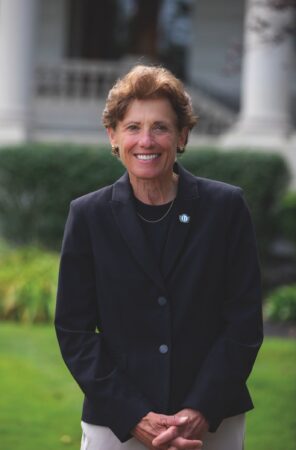
    Longtime Immaculata University president Barbara Lettiere said she will retire next summer, following a decade at the helm of the Catholic school.

    Lettiere, an Immaculata alumna, donor, and former board chair, was named the first lay president of the Chester County university in 2017.

    “The time has come in my life and the life of Immaculata for the next chapter,” Lettiere, 76, said in a statement. “I did not make this decision easily, and it comes with some very mixed emotions.”

    The university, which is affiliated with the congregation Sisters, Servants of the Immaculate Heart of Mary, enrolled nearly 2,800 students last academic year, and plans to do a national search for her replacement.

    “The board accepts her decision with deep gratitude for her outstanding leadership and dedicated service over the past ten years,” Peggy Behm, board chair, and Sister Mary Ellen Tennity, IHM’s general superior, said in a statement. “Her deep dedication to Immaculata, its students, faculty and staff, and her love for the mission of the IHM Congregation have left a lasting and meaningful impact on the University community.”

    Lettiere, a 1972 graduate, had previously served as vice president for finance and administration at Trinity Washington University.

  • Phillies top prospect Gage Wood selected for MLB’s Futures Game

    Phillies top prospect Gage Wood selected for MLB’s Futures Game

    One year after he was drafted by the Phillies, Gage Wood will make his Citizens Bank Park debut in the Futures Game.

    Wood and fellow right-hander Wen-Hui Pan were selected to represent the Phillies in the annual prospect showcase as part of MLB’s All-Star festivities. The seven-inning game takes place July 12 (noon, NBC10).

    The Phillies selected Wood with the 26th overall pick last year. After striking out 38% of the batters he faced over eight starts this season at low-A Clearwater, they promoted him two levels to double-A Reading, where he has a 3.86 ERA and 35 strikeouts in 25⅔ innings over seven starts.

    Wood, 22, achieved notoriety last year with a no-hitter for Arkansas in the College World Series. He’s widely regarded as the Phillies’ top prospect, though not yet among the top 50 in baseball. MLB Pipeline has him 54th in its midseason rankings, while Baseball America lists him 69th.

    Pan, a right-handed reliever, signed with the Phillies as an international amateur from Taiwan in 2023. The 23-year-old missed last season after Tommy John surgery but was promoted to double A roughly two weeks ago.

    In 20 appearances at three levels, Pan has a 3.18 ERA and 29 strikeouts in 22⅔ innings, including a 5.40 ERA mark in five games since moving up to Reading.

    Like everything about All-Star week, the Futures Game will have a Phillies flavor. Shane Victorino will manage the National League roster, while Larry Bowa will manage the American League. Bowa’s staff will include several former Phillies, notably Michael Bourn (first base coach), Juan Samuel (bench coach), Milt Thompson (hitting coach), and Hall of Fame closer Billy Wagner (pitching coach).

    Twelve of the top 13 prospects in Baseball America’s rankings were selected for the Futures Game: infielders Jesús Made (Brewers), Leo De Vries (Athletics), Franklin Arias (Red Sox), George Lombard (Yankees), and Eli Willits (Nationals); outfielders Josue De Paula (Dodgers), Theo Gillen (Rays), and Mike Sirota (Dodgers); pitchers Ryan Sloan (Mariners), Seth Hernandez (Pirates), and Kade Anderson (Mariners); and catcher Ethan Salas (Padres).

  • NBA free agency grades: What the experts are saying about the Sixers signing Dean Wade

    NBA free agency grades: What the experts are saying about the Sixers signing Dean Wade

    NBA free agency opened at 6 p.m. Tuesday, and, within hours, the 76ers had made their first move, agreeing with Dean Wade on a four-year, $39 million deal.

    This was the first free agency move for new Sixers president of basketball operations Mike Gansey, who previously was the general manager of the Cleveland Cavaliers, where Wade spent the first seven seasons of his career.

    Outside of his familiarity with Gansey, Wade’s 6-foot-9 frame and versatility on the court have led many to think he could be a good fit in Philly, but his age (29) and contract terms garnered some criticism.

    Here’s how experts are grading the move:

    ESPN: B+

    Wade’s ability to guard perimeter players and his 36.7% career three-point accuracy make him the type of player the Sixers have been seeking for years, ESPN said.

    “The 76ers have plenty of guards and centers but a dearth of wing connectors between them” Zach Kram wrote. “Other than Paul George — a big swing on a maximum contract at forward — they’ve cycled through various options who haven’t quite panned out.”

    “Philadelphia doesn’t get a full ‘A’ grade here because a four-year contract is a bit rich for a player who will celebrate his 30th birthday in November and already has an extensive injury history. Wade has played between 44 and 59 games in each of the past five seasons — which is a concern, given Philadelphia’s rough injury track record.”

    The Athletic: C+

    The Athletic was a little more critical of the signing, with the same concerns about the four-year commitment and a lot more pause on Wade’s assets.

    “I’ve never fully understood the Wade obsession within the Cavaliers,” Zach Harper wrote. “He’s about a league-average 3-point shooter (36.7 percent). I’m not convinced he’s some great defensive option. He competes on that end but doesn’t have definite matchups you feel great about. He’s never played more than 63 games in a season. He’s never made more than 80 3-pointers in a season. He’s a solid role player, and he could land nicely with Philadelphia. Committing four years is a lot, though.”

    New Sixer Dean Wade will turn 30 early next season.

    Bleacher Report: C

    Wade’s age and consistency again posed a concern, this time for the Bleacher Report NBA staff, which gave the signing one of the lowest grades among all free agency signings so far.

    “Dean Wade has started a lot of games for the Cleveland Cavaliers over the years, but he turns 30 in November, has a career average of 5.3 points and has a barely-above-average three-point percentage,” the Bleacher Report NBA staff wrote. “In theory, a good floor spacer with size can open up a lot of possibilities for a rotation, but Wade’s not consistent enough to really bend defenses. And while he’s generally been a pretty good positional defender, it’s going to be tougher for him to keep up with NBA scorers as he ages into his 30s.”

    The only signing graded lower by Bleacher Report was Zach Collins’ two-year $17 million extension with the Chicago Bulls which received a C-.

  • What to know about the proposed Protect College Sports Act and its impact on NCAA athletics

    What to know about the proposed Protect College Sports Act and its impact on NCAA athletics

    A landmark bipartisan bill aimed at stabilizing college sports and protecting student-athletes cleared the U.S. Senate Commerce Committee on June 18 and is expected to receive a Senate floor vote in July. This marks the first time a major college reform bill has advanced this far in the Senate.

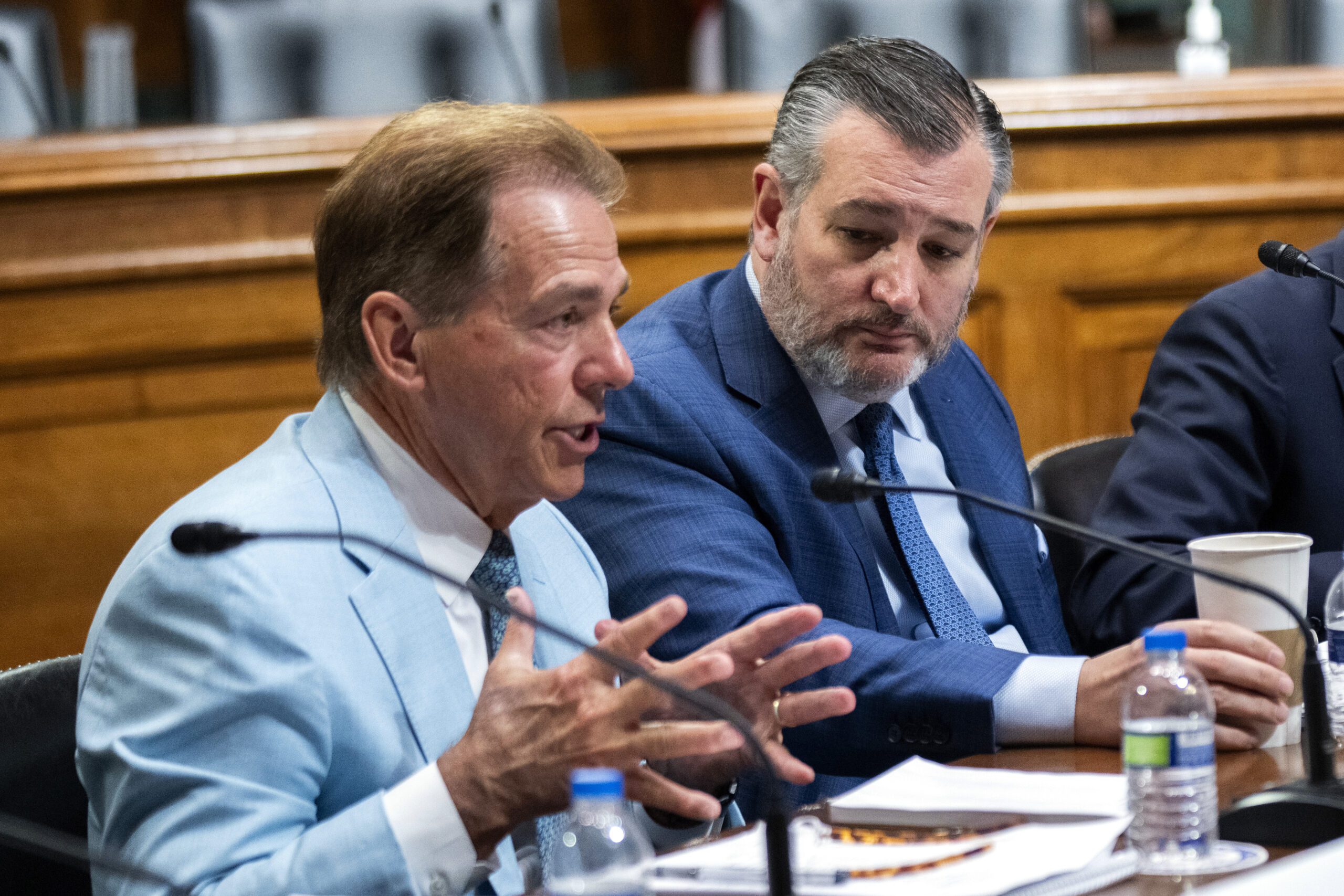
    Spearheaded by Sens. Ted Cruz, R-Texas., and Maria Cantwell, D-Wash., the Protect College Sports Act was introduced last month to regulate college sports and provide antitrust protection to the NCAA.

    “We need order and stability now,” Cantwell said in her opening statement on June 18. “The craziness that is happening in this marketplace with cutting of thousands of roster slots, the taxing students’ fees for education to pay for football, the arms race that is basically taking money away from research and development. Our task here is to win the race in innovation.”

    The bill was voted 19-9 and included support from Sen. John Fetterman, D-Pa. It now must pass the 60-vote threshold in the Senate before advancing to the House of Representatives. If approved by both chambers, it would then be sent to President Donald Trump’s desk. The bill can still be challenged and changed throughout this process.

    The history behind the proposed legislation

    The NCAA has sought congressional intervention for years to help regulate college athletics. College sports officials have asked Congress to help them create a national standard for how athletes are paid and for antitrust protections to avoid continuous legal challenges.

    “There have been dozens of attempts at congressional intervention in college athletics for decades, but it certainly has increased the past 10 years because of justified litigation over a broken college sports model and restricting athletes’ rights,” said David Ridpath, a professor of sports business at Ohio University and an expert on NCAA governance.

    The Protect College Sports Act has been spearheaded by Senators Ted Cruz (right) and Maria Cantwell.

    Last year, the SCORE Act advanced through two major House committees but did not reach the floor for a vote. That proposed bill was focused on creating a national framework for name, image, and likeness compensation and failed because it did not receive bipartisan support.

    What does the bill say?

    The proposed bill would provide an antitrust exemption, allowing the NCAA to regulate athlete transfers and eligibility within certain guidelines. It would also establish limits on athletes’ compensation and prohibit coaches from leaving before the season ends with their current team. Coaches who violate this rule would be ineligible to coach for the following season.

    The legislation also seeks to protect women’s and Olympic sports programs. Major colleges and universities would not be able to cut the number of women’s and Olympic sports programs, roster spots, or scholarship opportunities below current levels. The U.S. Olympic and Paralympic Committee endorsed the bill.

    “The revised version of the Protect College Sports Act ensures that higher-resourced NCAA Division I athletic departments — those with annual revenues exceeding $80 million — will maintain at least the same number of roster spots as in the 2024-2025 academic year,” wrote the U.S. Olympic and Paralympic Committee in a statement. “We welcome that the agreement provides reasonable flexibility, including traditional protections for mid-sized institutions, while preserving overall participation opportunities.”

    Student-athletes would be allowed only one unrestricted transfer during the NCAA designated windows in their career. Any other transfer would cost the athlete a year of eligibility.

    The bill would also allow colleges and conferences to voluntarily pool their media rights under a single entity rather than negotiate deals solely through individual conferences. The NFL voiced its support for the voluntary pooling of media rights, according to ESPN.

    What are the experts saying?

    Ridpath said pooling media rights could generate more revenue and allow colleges and universities to share that revenue across the entire college athletic ecosystem.

    “That could be used to help expand sports offerings and save current sports,” Ridpath said. “College sports is an incubator for Olympic and national teams, and if we start cutting these sports, we’re going to become less competitive.”

    Ridpath said this bill is a “fair effort” to regulate college athletics, but his biggest issue is the lack of direct negotiation with student-athletes.

    “If the NCAA wants real legal and antitrust protection, if they would sit down and negotiate with the athletes as a collective body, that would give you legal cover because everyone has agreed to the rules,” he said. “Until you speak directly with the athletes, I think we are still going to have litigation.”

    What are people saying?

    College sports stakeholders have voiced mixed opinions on the bill.

    More than 20 conferences, including the American, Big East, and Atlantic 10, have expressed support for the bill. The NFL, MLB, and the National Basketball Players Association sent statements to Congress voicing their support as well.

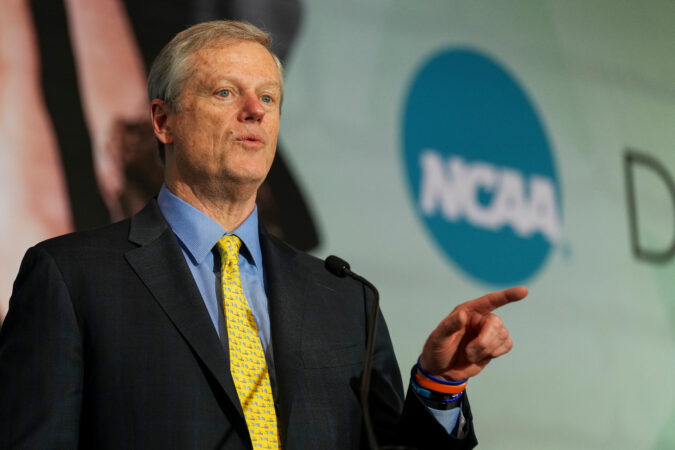
    Charlie Baker, the NCAA president and former governor of Massachusetts, publicly backed the bill on social media.

    “Every sports league needs rules, and there are certain challenges to NCAA rules that only Congress can address,” he wrote. “The bipartisan Protect College Sports Act’s sections bolstering eligibility, transfer and agent policies are needed now to deliver on that obligation. As a former governor, I understand that getting important legislation done requires compromise. While the bill does not address every issue college sports face, the current state of play cannot continue, and we must move the bill forward.”

    However, the Big Ten and SEC, the wealthiest college conferences, oppose the bill as it stands, saying revisions are needed to gain their approval. Part of the bill prevents conferences that declare more than $1 billion in revenue on their 2025 tax returns — the SEC and Big Ten — from forming a “super-league.”

    “From the outset, we identified a set of essential revisions to the PCSA necessary for the long-term sustainability of college athletics,” the two conferences wrote in a joint statement on June 18. “We have worked with both majority and minority staff to advance those revisions, which focus on better supporting student-athletes and stabilizing the college sports environment.”

    Letters obtained by The Inquirer from former Penn State trustee Anthony Lubrano showed Penn State president Neeli Bendapudi writing on June 17 to Sens. Fetterman and David McCormick in opposition to the bill, saying “significant problems remain” in the legislation.

    Lubrano, whose term ended Tuesday, said Bendapudi did not collaborate with the board of trustees on the correspondence with Fetterman and McCormick. He believes it would be in Penn State’s best interest to support the proposed legislation.

    “For Penn State, we’d be best served to embrace the legislation and work to enhance and improve it over time,” Lubrano said. “But in the absence of perfection today, we shouldn’t allow perfection to get in the way of being good, and so we should be behind it.”

    The bill, he said, protects all student-athletes and the non-revenue Olympic sports at Penn State.

    “Listening to the senators on a number of calls I’ve had with them, it’s clear that one of their primary concerns revolves around the Olympic sports,” Lubrano said. “If you do nothing, schools will likely discontinue some of their programs in the non-revenue sports, and a lot of those are Olympic sports. So consequently, you can envision a day where the United States isn’t competitive on a world stage at the Olympics. Is that what we want to see happen?”