Blog

  • What to know about the proposed Protect College Sports Act and its impact on NCAA athletics

    What to know about the proposed Protect College Sports Act and its impact on NCAA athletics

    A landmark bipartisan bill aimed at stabilizing college sports and protecting student-athletes cleared the U.S. Senate Commerce Committee on June 18 and is expected to receive a Senate floor vote in July. This marks the first time a major college reform bill has advanced this far in the Senate.

    Spearheaded by Sens. Ted Cruz, R-Texas., and Maria Cantwell, D-Wash., the Protect College Sports Act was introduced last month to regulate college sports and provide antitrust protection to the NCAA.

    “We need order and stability now,” Cantwell said in her opening statement on June 18. “The craziness that is happening in this marketplace with cutting of thousands of roster slots, the taxing students’ fees for education to pay for football, the arms race that is basically taking money away from research and development. Our task here is to win the race in innovation.”

    The bill was voted 19-9 and included support from Sen. John Fetterman, D-Pa. It now must pass the 60-vote threshold in the Senate before advancing to the House of Representatives. If approved by both chambers, it would then be sent to President Donald Trump’s desk. The bill can still be challenged and changed throughout this process.

    The history behind the proposed legislation

    The NCAA has sought congressional intervention for years to help regulate college athletics. College sports officials have asked Congress to help them create a national standard for how athletes are paid and for antitrust protections to avoid continuous legal challenges.

    “There have been dozens of attempts at congressional intervention in college athletics for decades, but it certainly has increased the past 10 years because of justified litigation over a broken college sports model and restricting athletes’ rights,” said David Ridpath, a professor of sports business at Ohio University and an expert on NCAA governance.
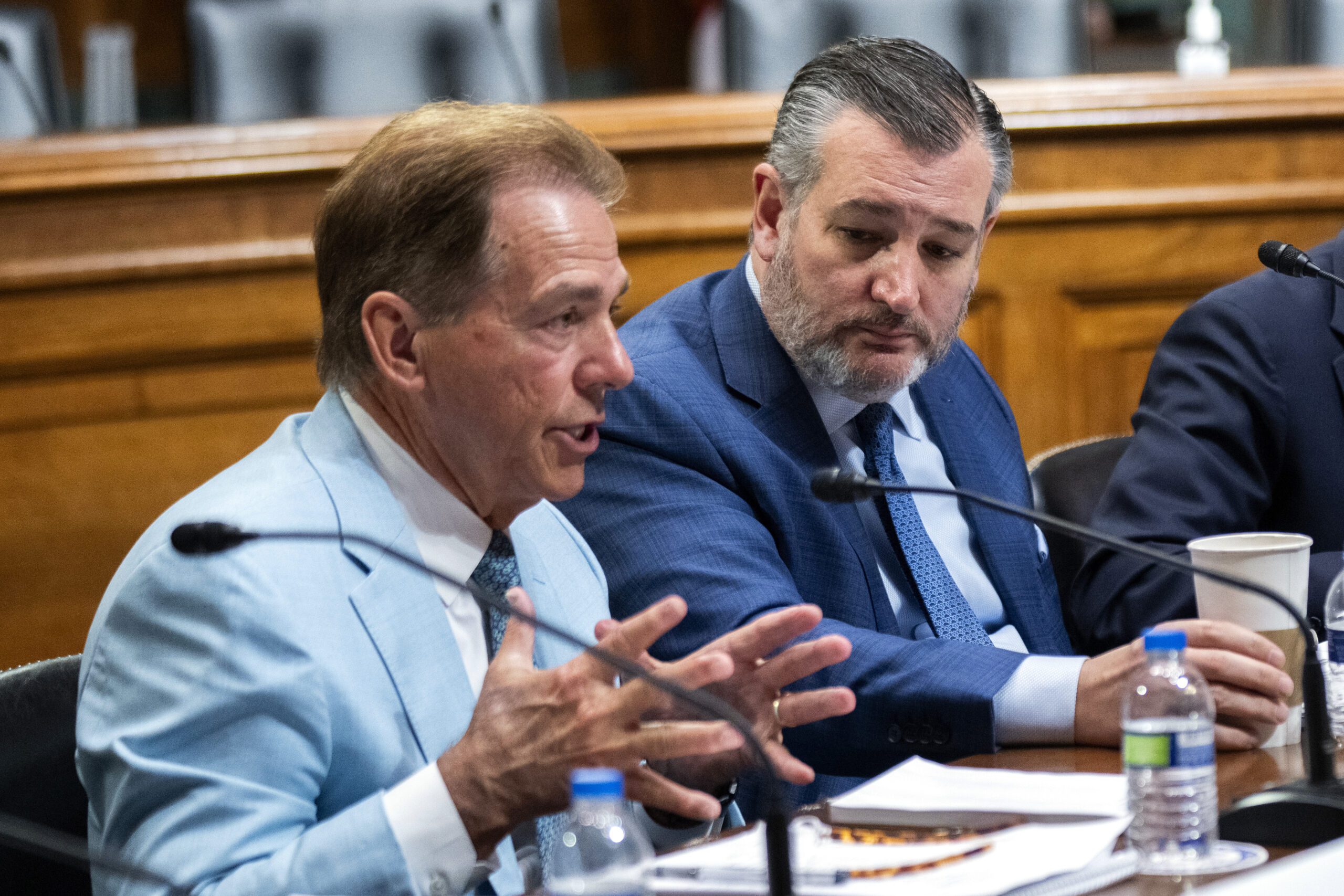
    The Protect College Sports Act has been spearheaded by Senators Ted Cruz (right) and Maria Cantwell.

    Last year, the SCORE Act advanced through two major House committees but did not reach the floor for a vote. That proposed bill was focused on creating a national framework for name, image, and likeness compensation and failed because it did not receive bipartisan support.

    What does the bill say?

    The proposed bill would provide an antitrust exemption, allowing the NCAA to regulate athlete transfers and eligibility within certain guidelines. It would also establish limits on athletes’ compensation and prohibit coaches from leaving before the season ends with their current team. Coaches who violate this rule would be ineligible to coach for the following season.

    The legislation also seeks to protect women’s and Olympic sports programs. Major colleges and universities would not be able to cut the number of women’s and Olympic sports programs, roster spots, or scholarship opportunities below current levels. The U.S. Olympic and Paralympic Committee endorsed the bill.

    “The revised version of the Protect College Sports Act ensures that higher-resourced NCAA Division I athletic departments — those with annual revenues exceeding $80 million — will maintain at least the same number of roster spots as in the 2024-2025 academic year,” wrote the U.S. Olympic and Paralympic Committee in a statement. “We welcome that the agreement provides reasonable flexibility, including traditional protections for mid-sized institutions, while preserving overall participation opportunities.”

    Student-athletes would be allowed only one unrestricted transfer during the NCAA designated windows in their career. Any other transfer would cost the athlete a year of eligibility.

    The bill would also allow colleges and conferences to voluntarily pool their media rights under a single entity rather than negotiate deals solely through individual conferences. The NFL voiced its support for the voluntary pooling of media rights, according to ESPN.

    What are the experts saying?

    Ridpath said pooling media rights could generate more revenue and allow colleges and universities to share that revenue across the entire college athletic ecosystem.

    “That could be used to help expand sports offerings and save current sports,” Ridpath said. “College sports is an incubator for Olympic and national teams, and if we start cutting these sports, we’re going to become less competitive.”

    Ridpath said this bill is a “fair effort” to regulate college athletics, but his biggest issue is the lack of direct negotiation with student-athletes.

    “If the NCAA wants real legal and antitrust protection, if they would sit down and negotiate with the athletes as a collective body, that would give you legal cover because everyone has agreed to the rules,” he said. “Until you speak directly with the athletes, I think we are still going to have litigation.”

    What are people saying?

    College sports stakeholders have voiced mixed opinions on the bill.

    More than 20 conferences, including the American, Big East, and Atlantic 10, have expressed support for the bill. The NFL, MLB, and the National Basketball Players Association sent statements to Congress voicing their support as well.

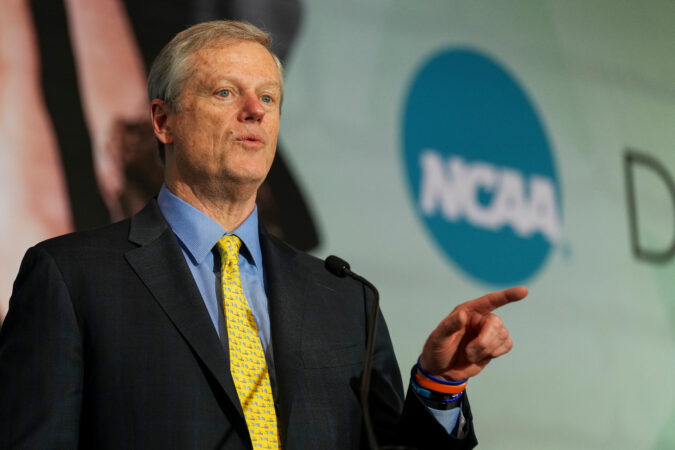
    Charlie Baker, the NCAA president and former governor of Massachusetts, publicly backed the bill on social media.

    “Every sports league needs rules, and there are certain challenges to NCAA rules that only Congress can address,” he wrote. “The bipartisan Protect College Sports Act’s sections bolstering eligibility, transfer and agent policies are needed now to deliver on that obligation. As a former governor, I understand that getting important legislation done requires compromise. While the bill does not address every issue college sports face, the current state of play cannot continue, and we must move the bill forward.”

    However, the Big Ten and SEC, the wealthiest college conferences, oppose the bill as it stands, saying revisions are needed to gain their approval. Part of the bill prevents conferences that declare more than $1 billion in revenue on their 2025 tax returns — the SEC and Big Ten — from forming a “super-league.”

    “From the outset, we identified a set of essential revisions to the PCSA necessary for the long-term sustainability of college athletics,” the two conferences wrote in a joint statement on June 18. “We have worked with both majority and minority staff to advance those revisions, which focus on better supporting student-athletes and stabilizing the college sports environment.”

    Letters obtained by The Inquirer from former Penn State trustee Anthony Lubrano showed Penn State president Neeli Bendapudi writing on June 17 to Sens. Fetterman and David McCormick in opposition to the bill, saying “significant problems remain” in the legislation.

    Lubrano, whose term ended Tuesday, said Bendapudi did not collaborate with the board of trustees on the correspondence with Fetterman and McCormick. He believes it would be in Penn State’s best interest to support the proposed legislation.

    “For Penn State, we’d be best served to embrace the legislation and work to enhance and improve it over time,” Lubrano said. “But in the absence of perfection today, we shouldn’t allow perfection to get in the way of being good, and so we should be behind it.”

    The bill, he said, protects all student-athletes and the non-revenue Olympic sports at Penn State.

    “Listening to the senators on a number of calls I’ve had with them, it’s clear that one of their primary concerns revolves around the Olympic sports,” Lubrano said. “If you do nothing, schools will likely discontinue some of their programs in the non-revenue sports, and a lot of those are Olympic sports. So consequently, you can envision a day where the United States isn’t competitive on a world stage at the Olympics. Is that what we want to see happen?”
  • The University of Valley Forge is warned it could lose accreditation

    The University of Valley Forge is warned it could lose accreditation

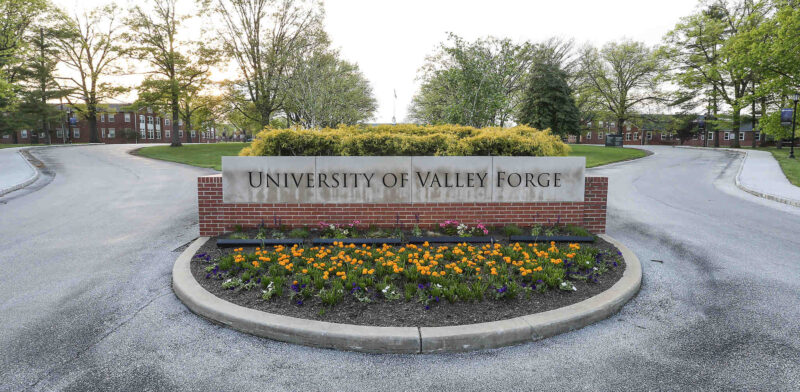
    The University of Valley Forge, a small Christian school that prepares students for leadership in the church and the world, has been given a serious warning that it is in danger of losing its accreditation.

    The Phoenixville-based college has until Sept. 1 to “show cause” to justify why it should not lose accreditation, according to the Middle States Commission on Higher Education, which posted the action on its website this week. Colleges need accreditation to keep their students eligible for federal aid.

    The “show cause” action is the most serious that the commission issues. Others include warning and probation.

    The commission cited “insufficient evidence that the institution is in compliance” with standards involving planning, resources, and institutional improvement, and governance, leadership, and administration.

    The university must document in its show-cause report “financial resources, funding base, and plans for financial development to support its educational purposes and programs and to ensure financial stability,” the commission said. The school also must provide information on long-range financial planning that includes “realistic enrollment projections and the assumptions on which they are based,” the commission said.

    The university did not immediately return a call for comment Wednesday, and when asked for the current enrollment, an employee said she was not permitted to disclose any information and hung up. The school enrolls 589 students, according to the National Center for Education Statistics.

    Under the action, the school is required to immediately notify its community of Middle States’ action.

    The university started in 1939 as the Eastern Bible Institute, which was aimed at training pastors, evangelists, missionaries and Christian educators, and lay workers, according to the school’s website. It became a college in 1975 and the University of Valley Forge in 2014. The university is part of an international network of Assemblies of God colleges and universities and offers more than 60 degree programs, according to its website.

  • Peco strike deadline looms as IBEW 614 and the company return to the bargaining table

    Peco strike deadline looms as IBEW 614 and the company return to the bargaining table

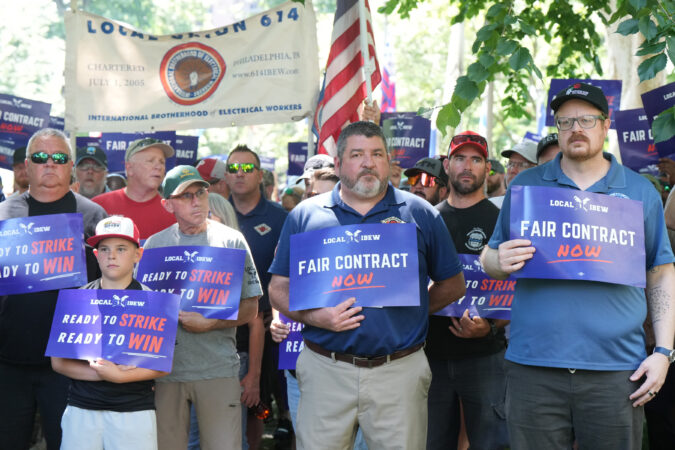
    Peco and its worker union, IBEW Local 614, resumed bargaining for a new contract Wednesday morning, with three days to go before a strike deadline and amid a heat wave that threatens to bring storms over the holiday weekend.

    It’s their first time back at the table since June 19 and since the union announced plans to strike on the Fourth of July if a contract had not been reached by then. They’ve now scheduled back-to-back bargaining sessions Wednesday, Thursday, and Friday, as time runs out.

    Meanwhile, the Philadelphia region is under an extreme heat warning, with possible thunderstorms on Saturday. Many of the union’s members work to repair outages, such as those that can happen during extreme weather.

    “The temperature and the sustained heat generally causes a lot of issues, and the thunderstorms as well,” said IBEW Local 614 president Larry Anastasi, adding that Peco needs “the trained workforce that they have to take care of it, and they’re not going to have that on July 4.”

    Weather conditions are not a factor in the bargaining process, Peco spokesperson Candice Womer said, and the company “continuously monitors weather conditions and prepares to respond to impacts on the electric system as part of normal operations.”

    The union, which represents roughly 1,500 field workers, call center staff, and other Peco employees, is seeking better wages and healthcare benefits, as well as a uniform retirement plan for all members. Their most recent five-year contract expired on March 31. Wages and benefits have become sticking points in negotiations.

    This strike would be a first for Peco.

    “We’ve exhausted every avenue to reach a deal,” Anastasi said in a statement last week. “If Peco won’t invest in the workers who keep the lights on, we’ve got no choice but to stand together and demand the respect we’ve earned.”

    Womer said Tuesday morning that the company’s goal remains “reaching a fair and equitable agreement that supports our employees while maintaining affordability and reliability for customers.”

    Peco has proposed a nearly 20% increase in wages over five years, as well as improvements to retirement and medical benefits, Womer said.

    “We remain committed to bargaining in good faith and hope continued discussions will lead to a successful resolution,” said Womer.

    If union workers do walk off the job, customers should not expect any delays or interruptions in service, Peco has said. “Our customers can be assured that we have comprehensive contingency plans in place to maintain safe and reliable service under any circumstance,” Womer said.

    Gov. Josh Shapiro’s office has been in communication with the union and Peco, spokesperson Rosie Lapowsky said in a statement Wednesday.

    “The Shapiro administration’s focus in these negotiations is a fair outcome for the hardworking women and men of Local 614 and safe, reliable energy infrastructure in Southeastern Pennsylvania over the holiday weekend and throughout the summer,” said Lapowsky.

    Mayor Cherelle L. Parker urged Peco and IBEW Local 614, to work together to reach a deal on Wednesday.

    In a letter addressed to Peco president and CEO Michael Innocenzo, and IBEW local 614 president Anastasi, Parker advised “both parties to remain fully engaged at the bargaining table day and night and to pursue every reasonable avenue toward a mutually acceptable agreement.”

    She cautioned that “any disruption to PECO service and support would pose real risks to public health, safety, and economic activity,” adding that Philadelphia is welcoming visitors for the Fourth of July and in the midst of extreme weather.

  • Quentin Grimes reportedly agrees to $60 million deal with Lakers, ending Sixers contract saga

    Quentin Grimes reportedly agrees to $60 million deal with Lakers, ending Sixers contract saga

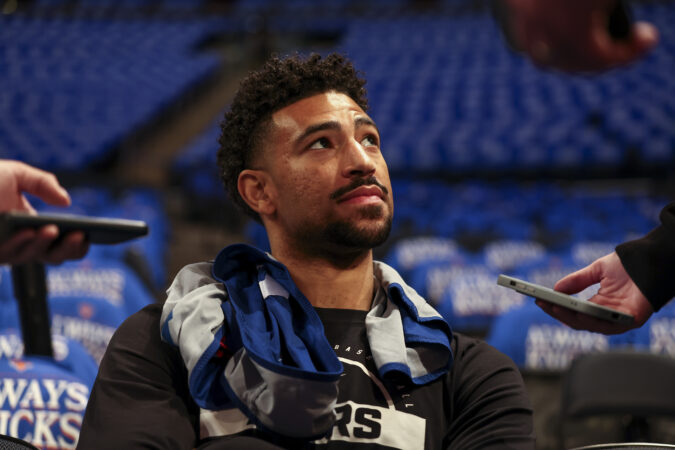
    Quentin Grimes will not return to the 76ers, instead agreeing to a four-year, $60 million contract with the Los Angeles Lakers, ESPN reported Wednesday afternoon.

    Grimes’ departure is not a surprise after the Sixers agreed to sign forward Dean Wade to a four-year, $39 million contract late Tuesday, a league source confirmed to The Inquirer. Reports surfaced earlier Tuesday that the Lakers were targeting signing Grimes, who will reunite with former Dallas Mavericks teammate Luka Doncic. It is also a significant raise for Grimes, who played last season on his $8.7 million qualifying offer after a messy restricted free agency.

    Grimes was primarily the Sixers’ sixth man during a 2025-26 season he described multiple times as “solid.” The 26-year-old was part of a terrific three-guard lineup, and reignited his aggressive scoring ability when All-NBA guard Tyrese Maxey missed three weeks in March with a finger injury.

    But Grimes shot a career-low 33.4% from three-point range, while also averaging 13.4 points, 3.6 rebounds, and 3.3 assists in 29.4 minutes in 75 games. And other than an excellent Game 5 performance on both ends of the Sixers’ first-round upset of the Boston Celtics, he was not good enough during the playoffs for a Sixers second unit that desperately needed scoring production.

    When asked shortly after last month’s season-ending Game 4 loss to the New York Knicks about how he viewed his free agency and ideal basketball setup, Grimes was not exactly forthcoming.

    “I haven’t even really thought about that, honestly,” Grimes said. “… talking to my agents and everything, we’ll kind of figure out what’s the best situation moving forward.”

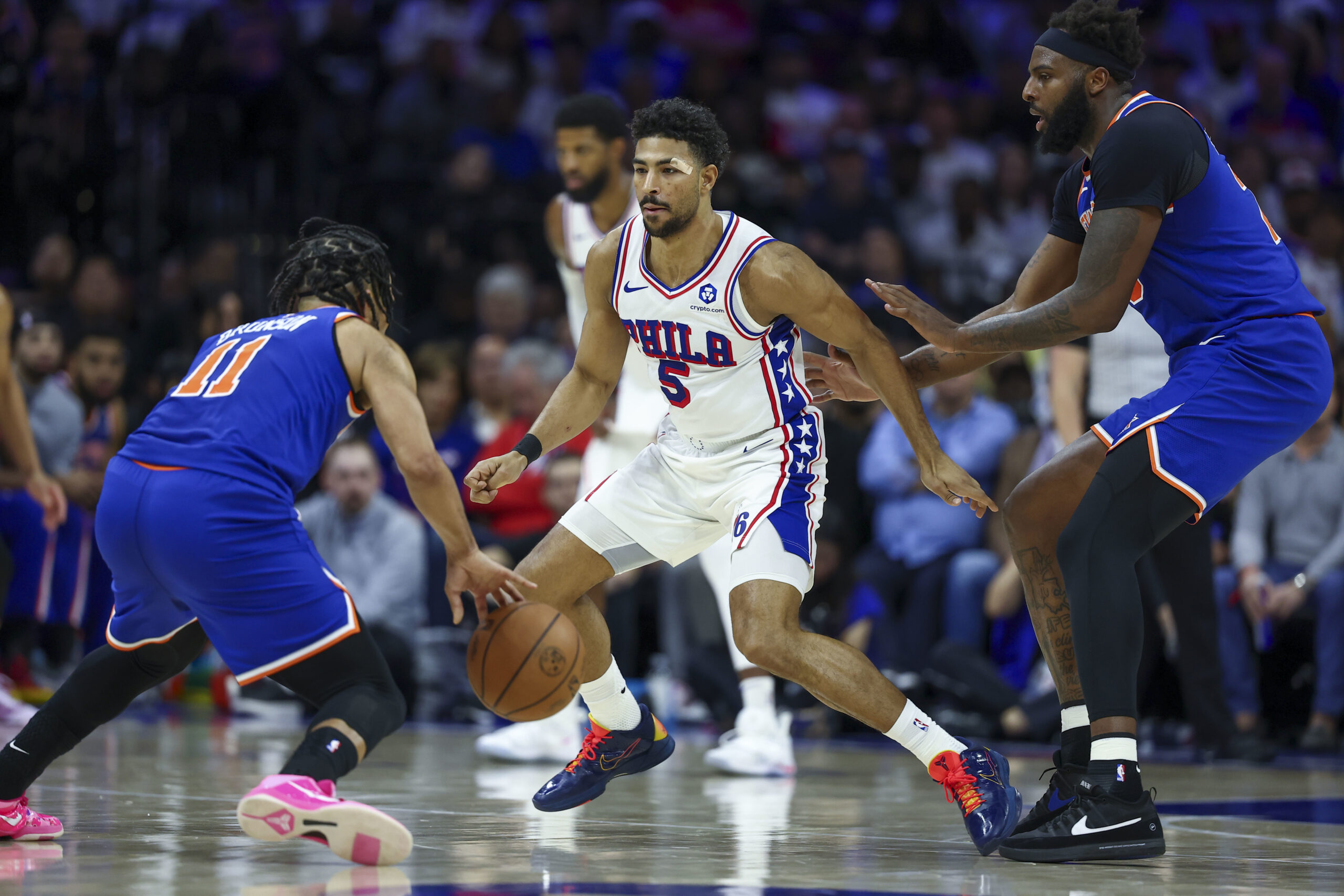
    Quentin Grimes played a large role for the Sixers in the disastrous 2024-25 season but struggled at times last year, especially in the playoffs.

    After joining the Sixers at the 2025 trade deadline, Grimes became a go-to scorer for an injured team that had shifted to “tank” mode to increase odds of landing a high draft pick. He averaged 21.9 points, 5.2 rebounds, 4.5 assists, and 1.5 steals in 28 games with the Sixers that season, including a 46-point outburst at his hometown Houston Rockets.

    Grimes then entered restricted free agency, which turned into a months-long saga. He skipped the Sixers’ training camp and preseason games in Abu Dhabi and eventually signed his one-year qualifying offer to become an unrestricted free agent this summer. Grimes then parted ways with agent David Bauman and is now represented by Creative Arts Agency.

    Grimes’ departure suggests that the Sixers will immediately lean on rookie-to-be Labaron Philon Jr., the Alabama guard they selected 22nd overall in last week’s draft to link with the dynamic Maxey and VJ Edgecombe. The Sixers also lost sharpshooting guard Jared McCain in a controversial trade at the February deadline.

    Fellow Sixers free agent Kelly Oubre Jr., a starting forward for three seasons in Philly, remains uncommitted to return or sign with a new team. He will reportedly meet with at least the Sixers, Lakers, Indiana Pacers, and Portland Trail Blazers. Backup center Andre Drummond, reserve forward Trendon Watford, and veteran guard Kyle Lowry (who is expected to retire) are the Sixers’ other unrestricted free agents.

    The Sixers on Wednesday morning also agreed to sign reserve center Ariel Hukporti to a one-year, $3.4 million contract, The Inquirer confirmed. That means the Sixers have about $2.6 million remaining of that midlevel exception, which can be used to sign an outside player. They also still have the $5.5 million biannual exception. They entered free agency with limited financial flexibility, with Maxey ($40.8 million), former NBA Most Valuable Player Joel Embiid ($57.7 million), and former perennial All-Star Paul George ($54.1 million) all on max contracts that account for the vast majority of the salary cap of nearly $165 million.

    The Sixers finished last season seventh in the Eastern Conference standings (45-37) and, after a stunning rally from down three games to one to beat Boston, were swept by the eventual NBA champion Knicks.

  • Flyers sign goalie Dan Vladař to a five-year, $27.5 million extension

    Flyers sign goalie Dan Vladař to a five-year, $27.5 million extension

    Last July 1, the Flyers surprised many by signing Dan Vladař to a two-year, $6.7 million contract. Vladař then surprised many with his play.

    One year later, and the goalie is sticking around for the foreseeable future. The Flyers announced Wednesday that he is signing a five-year, $27.5 million contract extension with an annual average value of $5.5 million. According to a league source, the contract comes with a no-trade clause for the first two years, followed by a no-movement clause for the remaining three years, with it dwindling from 15 teams to five.

    Vladař’s contract won’t kick in until the 2027-28 season and will take him through his age-34 season. The signing came now, as opposed to next summer or even mid-season, because if he at least meets his numbers this year, “you’re looking at a crazy number that we’re probably not comfortable with,” Flyers general manager Danny Brière said on Wednesday.

    “Dan, I think, exceeded expectations last year, not just on the ice, but also off the ice, too,” the GM added. “Tremendous leader, tremendous human being, the way he interacted in the room with the guys, the way he found a way to get them going, and wanted more.

    “I think you’ve heard Rick Tocchet talk about him coming over to the bench and trying to encourage the guys and get them going; it’s more than just this play on the ice. He was huge in our locker room. I don’t expect that to change. He’s just a good human being. It’s good to have him around.”

    The writing had been on the wall for some time that the goalie was sticking around long-term. Asked about the rumors of an extension, Vladař joked at his end-of-season availability that, while he would accept the phone call for the extension, “If you can ask the same question to Danny Brière, I’m going to be watching. So we’ll see what he says.”

    Two days later, the general manager was quick to respond, saying, “I heard his answer. Maybe we wait, and I’ll talk to you guys [off camera] about that.” The extension could not be signed until July 1.

    The Czech goalie, who previously was a career backup, mainly for the Calgary Flames, is coming off the best season of his career while playing almost twice as many games as his previous career high (30). Across 51 starts, he went 29-14-7 and had the most wins by a Flyers goalie since Steve Mason in 2013-14. He also had one relief appearance, stopping all six shots he faced from the Boston Bruins, to finish the regular season with a 2.42 goals-against average and .906 save percentage.

    In the postseason, despite the Flyers getting swept in four games by the eventual Stanley Cup champion Carolina Hurricanes after beating the rival Pittsburgh Penguins in six, Vladař’s numbers were even better. He posted the ninth-best playoff GAA among Flyers goalies all-time with at least five starts (2.18) and the eighth-best save percentage (.922). Vladař recorded two shutouts in the playoffs, making him the eighth Orange and Black netminder to have a pair in the postseason; the team did not record one in the regular season.

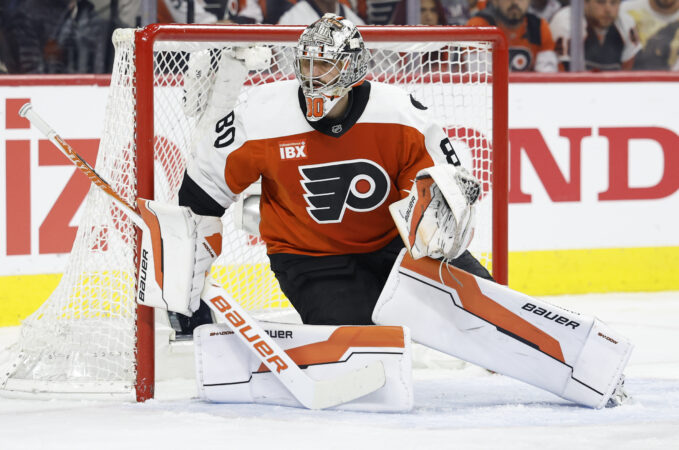
    Flyers goaltender Dan Vladař recorded two shutouts in the playoffs, making him the eighth Orange and Black netminder to have a pair in the postseason.

    “Vladdy, he was a monster in there,” forward Travis Konecny said after the season. “And he wins the games two ways. There’s the — we’re not playing good; he comes and talks to us, pumps us up. We believe in him, so you kind of keep going, you keep pushing, you find a way to win. Or he wins the game by just being Vladdy, and he just takes the game.”

    Vladař revealed after the season that he had sustained an injury in the playoffs when Penguins forward Bryan Rust ran over his arm. Because of it, he wasn’t able to represent Czechia at the men’s World Championships in May.

    There are some questions outside the organization about the long-term contract, especially with this past season being Vladař’s first season as a No. 1. Internally, they do not think it’s an anomaly. He came to Philly to prove he can be a starter, and he showed it.

    “Dan Vladař wanted to be a Flyer,” Brière said. “He was adamant … and look at the end of the day, it’s not everybody who wants to be a Flyer … but when you have your MVP from the previous year who says, I want to be here, this is my team, I want to lead this team, it made it really easy for us to [sign him] — especially at the number that we got [him at].

    “He put it on the line, and he played ball with us. If we wait, that number gets dramatically higher the following year.”

    Bringing in Vladař, who will turn 29 in August, helped solidify a position that has long been a question mark in Philly. The previous year, the Flyers’ three-headed monster of Sam Ersson — who was traded recently for Joseph Woll — Aleksei Kolosov, and Ivan Fedotov — who was traded before last season — combined for a league-worst .879 save percentage. Brière stressed that things needed to be better.

    Under Vladař, they were. And now he has a solid backup in Woll, who was acquired from the Toronto Maple Leafs in mid-June. Woll has a career 63-43-9 record with a 2.94 GAA and .906 save percentage.

    “Now with Woll to help him, it’s not just him; now he’s got a really strong helper right beside him,” Brière said. “So my hope is that with both those guys we can keep them fresh along the way, too. You don’t have to overplay one or the other. I think they’ll support each other really well, and I think that ups the chances that both these guys will be able to stay fresh and play well throughout the year.”

  • Temple Hospital asks public for help identifying patient

    Temple Hospital asks public for help identifying patient

    Editor’s note: The patient has been identified, Temple officials said Wednesday afternoon.

    Temple Health seeks help from the community identifying a patient at its main hospital in North Philadelphia.

    The health system on Wednesday released a photo of the patient, who appears to be in his 50s and was admitted to Temple University Hospital on June 8. It hopes to locate his friends and family.

    Anyone with information can call 215-707-2000.

  • Everything you need to know about Philadelphia’s July Fourth concert and fireworks

    Philadelphia’s celebration of America’s 250th birthday culminates July 4 with a free concert and fireworks on the Benjamin Franklin Parkway.

    The One Philly: Unity Concert for America begins at 5 p.m. in front of the Philadelphia Museum of Art, featuring Christina Aguilera, Jill Scott, Meek Mill, Will Smith, The Roots, DJ Jazzy Jeff, Jordan Davis, Seal, State Property, Kathy Sledge, and more.

    This year’s event is no longer part of the longtime Wawa Welcome America festival. Mayor Cherelle L. Parker’s administration took over production of the annual July Fourth concert, renamed it the One Philly: Unity Concert for America, and hired ESM Productions to produce the show.

    Wanda Sykes will emcee the concert, which concludes with the city’s official fireworks display over the Parkway.

    Here’s everything you need to know before you go.

    Fans react to the music as the Wawa Welcome America Festival concluded on July 4, 2023, with a free concert featuring Ludacris on the Benjamin Franklin Parkway.

    Schedule and entry

    Guests must enter through a secure checkpoint at 20th Street and Logan Circle, where security may search attendees and their bags. Gates open at 3 p.m.

    The concert will start around 5 p.m., followed by the fireworks around 11:30 p.m., according to city officials.

    Who is performing at Philadelphia’s Fourth of July Concert?

    Headliners include Christina Aguilera, Jill Scott, Meek Mill, Will Smith, The Roots, and DJ Jazzy Jeff.

    Other performers include Jordan Davis, Kathy Sledge, State Property, Seal, and several others.

    Fireworks over the Philadelphia Museum of Art along the Benjamin Franklin Parkway on Friday, July 4, 2025.

    Fireworks

    Following the concert, the city’s official July Fourth fireworks display will begin at about 11:30 p.m. The show will be visible from throughout the Parkway and surrounding neighborhoods.

    Looking for more fireworks? Here’s a full list of fireworks shows happening throughout the Philadelphia region.

    The concert and fireworks will also air live on NBC10 and Telemundo62.

    Road closures

    Unless otherwise noted, the following closures will be in effect from approximately 6 a.m. Friday through 6 a.m. Monday:

    • 1900 Race Street
    • 1800-1900 Vine Street
    • I-676 off-ramp at 22nd Street
    • I-676 on-ramp at 22nd Street
    • I-76 eastbound off-ramp at Spring Garden Street
    • Spring Garden Tunnel
    • Park Towne Place between 22nd and 24th Streets
    • 20th Street between Arch Street and Pennsylvania Avenue
    • 19th Street between Callowhill and Cherry Streets
    • Benjamin Franklin Parkway from 17th Street to Eakins Oval
    • Eakins Oval
    • Kelly Drive between Eakins Oval and Fairmount Avenue (inbound traffic closes at Fountain Green Drive beginning about 5 p.m.)
    • 2000-2100 Winter Street
    • Spring Garden Street between Pennsylvania Avenue and 31st Street
    • 23rd Street between Pennsylvania Avenue and Eakins Oval
    • 22nd Street between Winter Street and Pennsylvania Avenue
    • 21st Street between Winter Street and Pennsylvania Avenue
    • All roads from Arch Street to Spring Garden Street between 18th and 22nd Streets (local access maintained for residents)
    • All roads from Arch Street to Fairmount Avenue between 22nd and Corinthian Streets (local access maintained for residents)
    • 16th and 17th Streets between Arch Street and Spring Garden Street will close only if conditions warrant.
    • 1600-1700 Benjamin Franklin Parkway will close only if conditions warrant.

    Beginning at 4 a.m. Saturday, the following roads also will close:

    • Anne d’Harnoncourt Drive behind the Philadelphia Museum of Art
    • Martin Luther King Jr. Drive from Falls Bridge to Eakins Oval

    From 8 p.m. Saturday until approximately 1 a.m. Sunday, Kelly Drive between Fairmount Avenue and Fountain Green Drive and Waterworks Drive also will be closed because of the fireworks display.

    Parking

    Temporary no-parking signs will be posted along streets affected by closures. Vehicles left in those areas will be courtesy towed to another nearby location.

    Public Transportation

    SEPTA

    On July 4, SEPTA Metro, buses and Regional Rail will operate on special schedules with enhanced service.

    Additional trips will run on the L and B lines.

    Most Regional Rail lines will offer additional inbound and outbound service before the fireworks. All Regional Rail lines except the Airport and Cynwyd lines will provide late-night outbound service from Jefferson Station, Suburban Station, and William H. Gray III 30th Street Station after the fireworks.

    Other SEPTA service will operate on a Sunday schedule. Routes without Sunday service will not operate.

    Routes 7, 32, 33, 38, 43, 48, and 49 will be detoured beginning at 5 a.m. Thursday through 5 p.m. Sunday because of road closures.

    SEPTA ambassadors will be stationed at major transit hubs to help direct passengers after the July 4 FIFA World Cup match and the One Philly concert and fireworks.

    Additional information is available on SEPTA’s July 4 service webpage. Riders can also check alerts on the SEPTA mobile app, at septa.org/alerts or by calling 215-580-7800.

    PATCO

    PATCO will operate on a holiday schedule July 4, with trains running every 10 minutes throughout the day. More information is available at ridepatco.org.

    Todd Marcocci (left) and Jeremy Williams work on a float on Monday for this year’s big Fourth of July parade, in Philadelphia.

    Fourth of July celebrations happening elsewhere in the area

    Fourth of July Freedom Festival at Pleasant Hill Park: 💵 Free, 🕒 July4, 5 to 9:30 p.m., 📍Linden Ave., Philadelphia, Pa 19136

    Philadelphia 4th of July Signature Dinner Cruise: 🕙 July 4, 7:30 p.m., 📍401 S. Christopher Columbus Blvd., Philadelphia, Pa. 19106, 🌐 cityexperiences.com

    2026 Freedom Festival at Wiggins Park 💵 Free, 🕒 6 to 11 p.m., 📍2 Riverside Dr., Camden, NJ 08103

  • With a new $400M investor, FMC says it can remain independent and boost pesticide sales

    With a new $400M investor, FMC says it can remain independent and boost pesticide sales

    FMC Corp., the world’s fifth-largest farm pesticide maker, said Wednesday that it has received a $400 million investment from Belgium’s Tessenderlo investment group, ending a “strategic review” and concluding inquiries into the potential sale of the company, based in the FMC high-rise tower on Philadelphia’s Schuylkill riverfront.

    Tessenderlo agreed to pay $13.30 a share for a 20% stake in publicly traded FMC. That’s a modest premium to FMC’s recent trading price but less than the share value as recently as June 1. As if unimpressed with FMC’s prospects even with the new cash, traders drove the share price down almost 5% Wednesday to close at $10.95.

    FMC traded at over $120 a share in early 2022 but has since lost most of its value, with crop-protection sales growth slowing worldwide amid slow progress on regulatory approval and marketing for new products to offset last year’s expiration of patent protection on the company’s best-selling Rynaxypyr insecticide.

    The buyer expressed faith in FMC’s next-generation fungicides, herbicides, and insecticides.

    “FMC offers an attractive opportunity to invest in a business with meaningful long-term potential, driven by a new generation of proprietary molecules that are renewing its portfolio and strengthening its competitive position,” Luc Tack, chief executive of publicly traded Tessenderlo Group, said in a statement.

    That includes products developed at the company’s Stine research labs in Newark, Del., which FMC acquired from DuPont Co. in 2017 as DuPont spun off its farm chemicals and seed business into Corteva.

    FMC “perfectly aligns” with Tessenderlo’s farm businesses, Tack added. Tessenderlo gets a seat on FMC’s board as part of the deal.

    Those businesses include Kerley, an Arizona-based farm fertilizer maker and niche pesticide distributor; sulfur-based fertilizer maker Tiger-Sul, based in Connecticut; and French organic fertilizer developer Violleau.

    Other Tessenderlo investments include plastics, chemicals, industrial machinery, electronics, and animal-byproduct (“bio-valorization”) businesses.

    FMC’s board approved Tessenderlo’s investment after a “comprehensive and deliberate” process, which the company started in February with its investment bankers and lawyers, as the best way forward for the company and its shareholders, said Pierre Brondeau, FMC board chairman and chief executive.

    The $400 million inflow is the last piece in FMC’s efforts to reach Brondeau’s debt-reduction and cash-boosting targets, so the company can more easily remain independent until its new products get to market.

    Other recent steps by FMC included renegotiating its credit agreements; raising $1.2 billion in a junk-rated bond offering; selling its India commercial business for around $250 million; a $200 million deal to supply key products to its larger rival, Corteva, which is moving its headquarters from Wilmington to Indiana; and selling the 250-acre Stine Research Center to a unit of New York-based real estate investor Broadstone Net Lease Inc., while leasing back part of the property for continued research.

    These actions, plus reduced debt and increased cash, put FMC “on a path to growth,” Brondeau said.

    FMC employs around 5,500 worldwide, including around 300 at its headquarters and 330 at the Stine research and development center.

    Editor’s note: This article has been updated with FMC’s closing share price.

  • Source: Ariel Hukporti agrees to sign one-year contract with Sixers

    Source: Ariel Hukporti agrees to sign one-year contract with Sixers

    Ariel Hukporti has agreed to a one-year, $3.4 million contract with the 76ers, The Inquirer confirmed Wednesday morning.

    The move gives the Sixers a new option at backup center behind Joel Embiid, the former NBA MVP who has struggled with numerous health issues in recent seasons.

    Veteran Andre Drummond, now an unrestricted free agent, and Adem Bona, whose $2.3 million salary for 2026-27 becomes fully guaranteed July 7, saw their roles fluctuate last season.

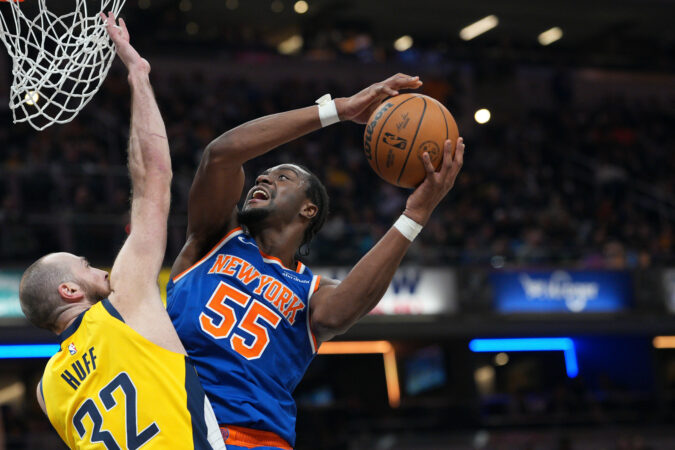
    Hukporti, an athletic 7-footer, played his first two NBA seasons with the New York Knicks. He averaged 2.2 points and 2.9 rebounds in 9.2 minutes across 54 regular-season games in 2025-26, primarily as the third-team center. The 24-year-old only logged spot minutes during the Knicks’ championship run, primarily when big men Karl-Anthony Towns and Mitchell Robinson got in foul trouble.

    Hukporti joins forward Dean Wade as free agents who are set to join the Sixers for the 2026-27 season. Drummond, starting forward Kelly Oubre Jr., sixth man Quentin Grimes, and reserve guard Kyle Lowry (who is expected to retire) remain unsigned by the Sixers or another team with the first full day of free-agency negotiation underway.

    Hukporti’s salary comes out of the nontaxpayer midlevel exception, giving the Sixers $2.6 remaining from that to use on an outside player. They also have the $5.5 biannual exception.

  • Medford Township’s former manager is challenging his firing in state court

    Medford Township’s former manager is challenging his firing in state court

    Medford Township is facing a lawsuit from former Township Manager Daniel Hornickel, who is seeking to nullify his firing and reinstate himself in the role.

    Hornickel, an attorney representing himself in the case, filed a complaint in Burlington County Superior Court on April 30, two days after the five-member council passed a resolution approving his removal as manager, the Courier Post first reported.

    In the lawsuit, Hornickel, who lives in Bordentown Township, alleges that council denied him his employee due-process rights and violated the Open Public Meetings Act during his firing.

    The legal filing comes less than two months after Medford Township formally initiated the process to fire Hornickel on March 13 by sending him a legally mandated notice that his employment was in discussion.

    According to the lawsuit, Hornickel then proposed a separation agreement on March 16 that stipulated that if the offer were rejected, council would hold a public discussion about their intention to seek Hornickel’s removal from the role, which pays between $100,000 and $190,000, according to the salary range approved by council.

    The next morning, Township Solicitor Gregory McGuckin indicated that the settlement likely would not be accepted, to which Hornickel reiterated his ultimatum for public discussion during that night’s council meeting, the lawsuit alleges.

    But that night, council immediately entered closed session after the start of the meeting and upon returning, adopted a resolution to suspend Hornickel and move forward with the firing process. Council did not discuss or deliberate the resolution in public during the March 17 meeting.

    In the resolution, council offered 10 reasons for seeking Hornickel’s dismissal, including that “council has lost confidence” in him, particularly as it relates to both the 2025 and 2026 budgets, the latter of which they said was delivered “late and above the cap legally allowed.”

    They also allege that Hornickel has not implemented council policies and directions, does not communicate with council members, and has failed to properly advise council on various matters during his 18-month tenure as manager.

    On April 28, council held a special hearing where they approved the resolution authorizing Hornickel’s firing.

    During the hearing, Hornickel responded to each of council’s points, noting that three current council members were not on council in 2025 and therefore did not participate in the budget process while the two others voted to approve it.

    “Your statement that ‘the 2026 budget was late and above the cap legally allowed’ is an invalid statement,” he said. “For the record, you introduced a 2026 budget that is substantially similar to the budget I sent you on March 9.”

    In response to many of the other charges outlined in the resolution, Hornickel argued that he couldn’t adequately defend himself because council would not publicly release details.

    “Don’t respond to me just because I’m asking, tell the public,” Hornickel told council. “If I’ve done this, give the public some concrete examples.”

    Hornickel also argued that council was misinterpreting their role as the legislative branch for Medford’s government. The manager runs daily operations as the executive officer, he said, not township council.

    “Your job is to set policy,” Hornickel said. “I looked at every single agenda this year through March 17. So what purported policy or direction did you as a legislative body issue that I failed to implement?”

    “There’s nothing,” he said.

    Hornickel declined to provide any additional comment Wednesday while the township solicitor did not immediately respond to requests for comment.

    Medford’s Fire and EMS Chief Robert Dovi, Jr. is serving as the interim manager with assistance from Southampton Township Administrator Brandon Umba through a shared services agreement.

    Council originally appointed Hornickel manager by resolution on July 16, 2024, an appointment made effective the following September.

    Prior to his time in Medford, Hornickel served as the business administrator of Pemberton Township for more than five years. Before that, Hornickel spent nine years as the human resources director for Burlington County.

    A remote proceeding for the case is scheduled at 9:30 a.m. on Sept. 8 before Superior Court Judge Terrance Cook.