A flier showing the KKK was posted in Southwest Philly. A ward leader, wanting to calm community fears, said he believes this all may be some kind of misunderstanding.
A Southwest Philadelphia woman was sentenced to 10 to 20 years in state prison for the October 2024 killing of a pregnant woman during a fight.
Dismissed Art Museum chief Sasha Suda is arguing for a trial with a jury, rather than settling her dispute with the museum through arbitration, in a new court filing.
Pennsylvania’s political elite will return this weekend for the first time in seven years to where the annual out-of-state glitzy gathering all began: the Waldorf Astoria New York.
After Lincoln University’s homecoming in October ended with seven people shot, including one killed, the surrounding rural Chester County township plans to pass new regulations on large events.
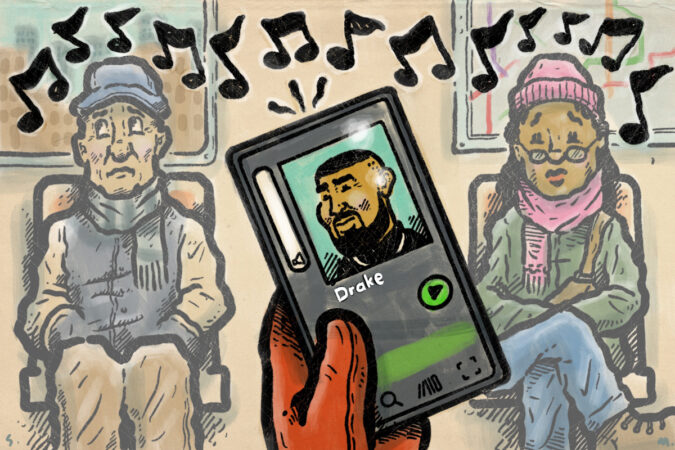
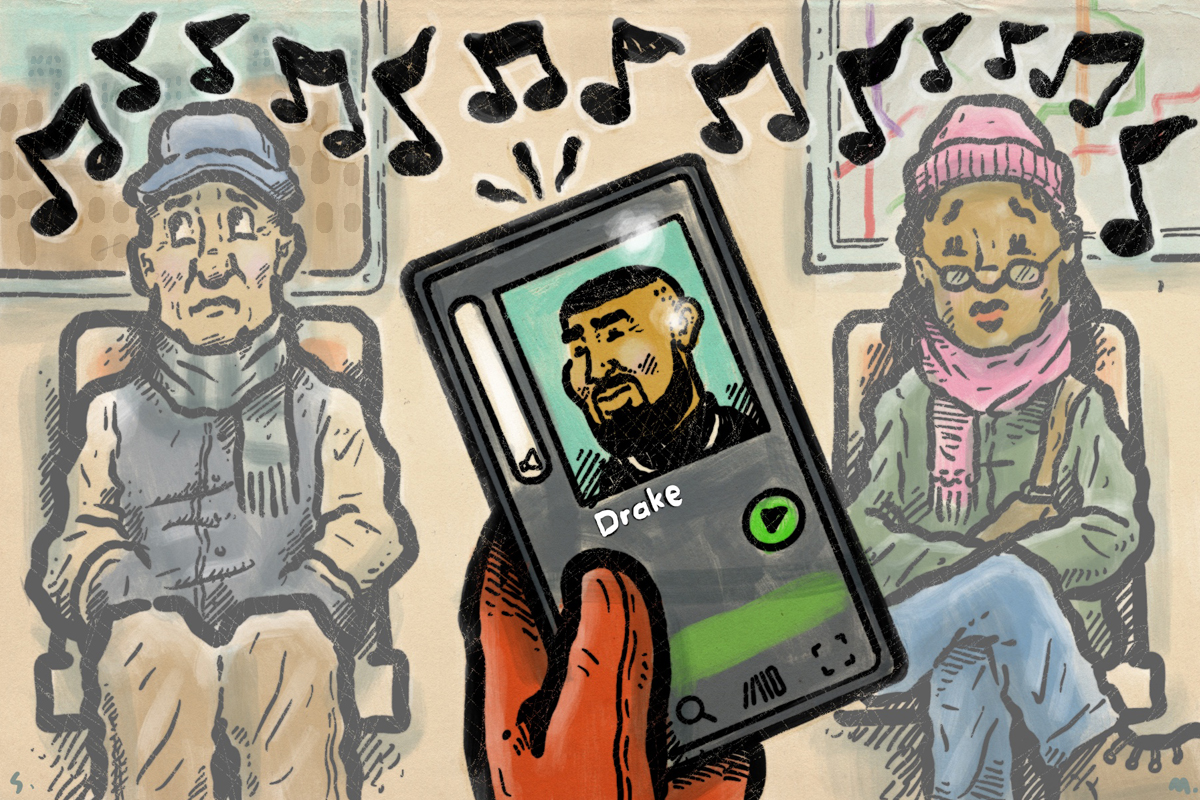
It happens every so often, even in the quiet car: I get on the train, and somebody’s loudspeaker starts blaring music or even TikTok videos. A quick look around, and a shared discomfort is obvious on other riders’ faces. What do you do in this situation? Do you speak up, or suffer on your morning commute?
To answer this reader question, Inquirer editor Evan Weiss recruited reporters Beatrice Forman and Henry Savage. Their chat touched on whether there is a “right way” to ask someone to quit blasting their playlist or other disruptive behaviors like smoking.
Forman shared a solution-oriented anecdote: “I was recently on the BSL home from an assignment in South Philly around the time classes let out, and this kid was blasting Kendrick Lamar loud enough for all the train car to hear, so I ended up politely offering him a pair of corded earbuds to use to see if he’d take the hint.”
Personally, I opt for drowning it out with my own music — in my headphones, of course. But I’ve definitely been stuck on SEPTA without that option because said headphones also run out of battery.
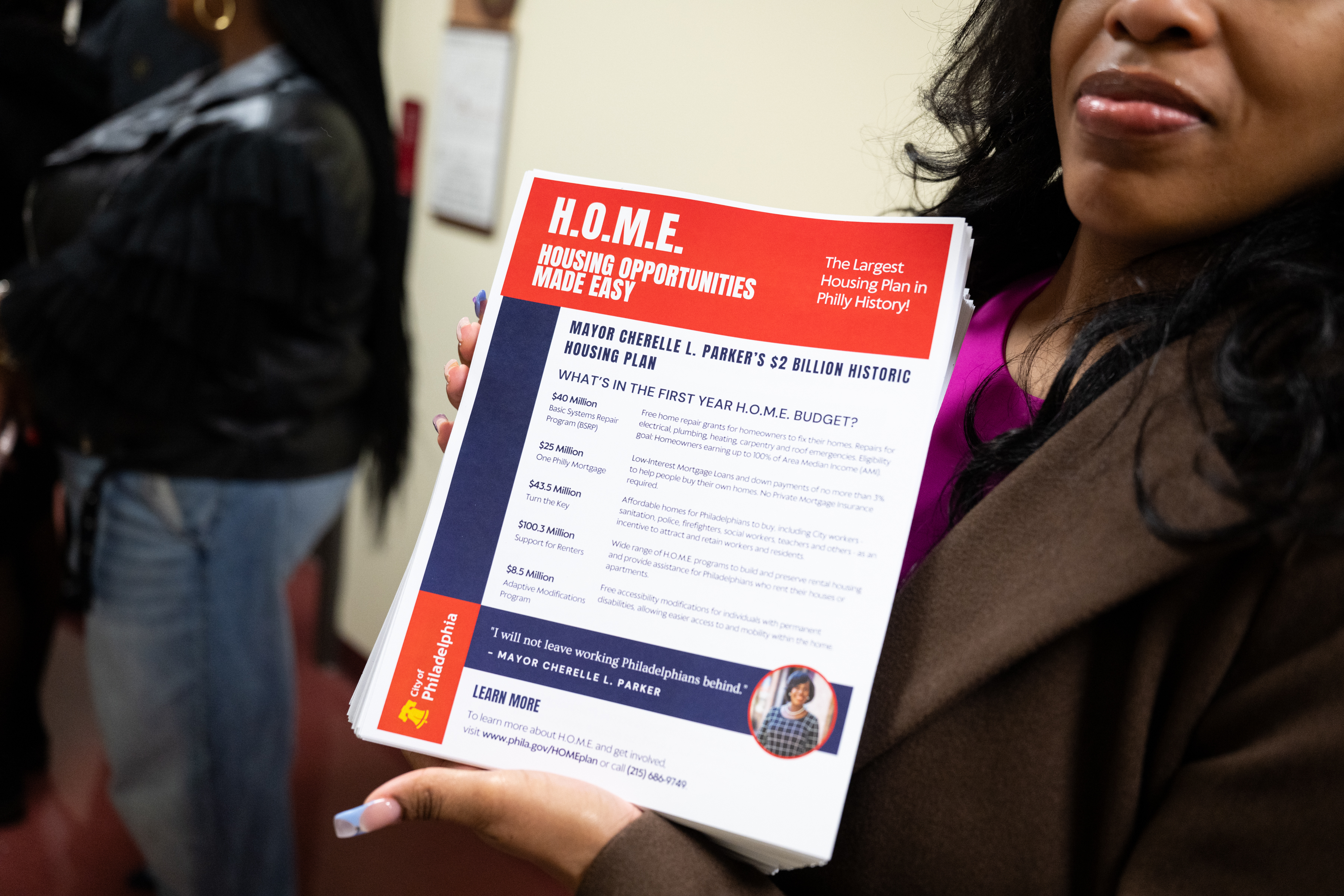
Mayor Cherelle L. Parker’s H.O.M.E. initiative — a $2 billion proposal to build or restore 30,000 homes across the city — has proved to be a sticking point between Parker’s administration and City Hall. On Wednesday, City Council voted against Parker’s vision.
Cheers to Ken Schwartz, who correctly guessed Friday’s answer: Baby KJ. The Philadelphia-area infant, who made international headlines this year after a successful gene-editing treatment at CHOP, has been named by Nature as one of 10 people who helped shape medicine in 2025.
This is Olga Sorzano, owner of Baba’s Brew of Phoenixville, holding a scoby.
Sorzano’s kombucha company generates large amounts of scoby, the mother culture used as a kombucha starter, so she found a new way to use leftover supply: in skincare products.
Jake Beckman, “the Eagles guy” for FanSided and a stand-up comic, shared a video of what appears to be a police officer conducting a wellness check on Monday night. Their exchange says it all: “The Eagles lost.” “I know.” I wonder how Beckman feels about the positivity bunny.
And another passionate Birds fan is keeping the holiday spirit alive by belting out a Jalen Hurts serenade to the tune of “All I Want for Christmas is You” — at 3 in the morning, no less.
👋🏽 That’s it for now. Let’s catch up again tomorrow.
By submitting your written, visual, and/or audio contributions, you agree to The Inquirer’s Terms of Use, including the grant of rights in Section 10.
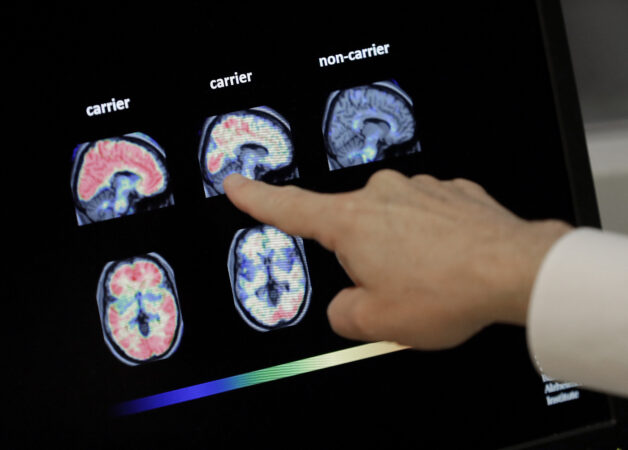
The human brain hasfour distinct turning points where its structure changes, according to a study published in the journal Nature Communications, demonstrating that brain development is not as linear as you might think.
“It’s easy to fall into this belief that there’s a ‘good’ or ‘bad’ way for a brain to be structured,” said lead study author Alexa Mousley at the University of Cambridge. “And that’s not really the case. What this study is emphasizing is the brain is expected to be doing something different at different ages.”
In the new study, Mousley and colleagues looked at around 4,000 scans from healthy people ages 0 to 90 and analyzed their brains. They found four major times when the brain underwent developmental changes, around ages 9, 32, 66, and 83, dividing the life span into five distinct phases.
“It’s yet another very nice example of how the brain and its global interactions change across the life span,” said Seth Grant, a neuroscientist at The University of Edinburgh who wasn’t involved in the new research. “The message is, there is continuous change from birth until old age. It’s not as if you suddenly build a brain and it stays the same and then just drops off at old age. It’s always changing.”
Mousley and her co-authors identified five epochs during which the brain is wired in different ways.
1. Childhood
From infancy to 9 years old, the brain is busy. There is a lot of consolidation of neural connections happening, competitive elimination of synapses, and rapid increases in gray and white matter. But interestingly the brain is becoming less efficient during this time — so it takes longer for information to get from one region of the brain to another. The researchers don’t fully understand why this would be the pattern, but they have some theories.
“We know that in very early life, the brain makes more connections than it needs, and then it prunes them away,” Mousley said. “It’s unclear if that is kind of what’s happening here, but it is potentially what’s happening.”
Whatever the reason for the brain becoming less efficient during childhood, it is a time when a lot of learning happens — language, motor skills, speech — and there is likely a reason that the brain is structured the way that it is during this period.
“It could be that this decreasing efficiency is potentially related to this incredible moment of learning,” Mousley said.
2. Adolescence
There is a dramatic turning point that the researchers saw occurring around the age of 9 on average — a time when many children begin to enter puberty. The brain switches gears and starts rewiring to become more efficient.
The adolescence phase the researchers identified lasts for two decades, into the early 30s on average. This is when people are most vulnerable to developing a mental health disorder, but it’s also a critical time for braindevelopment.
“It is really important to think about adolescence as this protracted window,” said Katie Insel, a psychologist at Northwestern University who studies how the brain changes over the course of adolescence. She said that while in our society we may think of 18- or 21-year-olds as adults, this research adds to a growing body of work suggesting that the brain isn’t fully developed or stable until our late 20s or even early 30s.
“Something that sets us apart as humans from other animals is how slowly we develop,” Mousley said. “A giraffe can stand up very soon after being born, but human babies just take a very long time to learn to walk, to eat.”
Mousley suggested that this slower development might give humans the opportunity to develop more complex brain connections, and could be related to the things that humans can do that other animals can’t.
3. Adulthood
Adulthood is the longest phase — lasting for more than three decades from around 32 years old until around 66 years old.
“It does seem to be this kind of period of relative stability,” Mousley said. “It’s consistent for a very long period of time.”
That doesn’t mean that the brain isn’t changing during this period, but the changes are less dramatic than during other phases. This is also a period of stability in terms of intelligence, behavior, and personality.
“If you just think about what an adult is compared to a teenager, you kind of assume there’s kind of a level of stability there in terms of how people are behaving. And that’s aligning with this three-decade period of consistent brain rewiring from our study,” Mousley said.
4. Early aging
Around 66 years old on average, the researchers saw another turning point. This is a time when the brain seems to become more vulnerable to age-related diseases — but the news isn’t all bad for the aging brain.
“There’s an expected and healthy, typical way for the brain to shift,” Mousley said.
Insel noted that in addition to some of the negative changes people might associate with aging, like memory loss, there are also positive changes. Older adults tend to be wiser and better at emotional regulation.
“There are pros and cons to every developmental stage,” Insel said. “I think with every phase of life, there are trade-offs where some types of cognition and behavior are privileged because of how the brain is responding to the environment.”
5. Late aging
From 83 onward, the researchers identified a “late aging” phase.
“What we’re seeing during that late aging phase is something called ‘increasing centrality,’” Mousley said. Particular regions of the brain become more important than others during this time. There is reduced connectivity, but there seems to be a pattern to that change.
The metaphor Mousley used was that of changing bus routes. If you had a direct bus to work, but one day it stopped running and you had to take two buses, the transfer station would suddenly become very important. She theorized that the brain might be prioritizing important connections if other connections drop off.
What it means
The word “development” is often associated with childhood or the teenage years — but what this new research demonstrates is that the brain develops continually throughout our lives.
“We often ascribe certain brain changes to negative outcomes in adulthood or later life,” Insel said. “But actually there’s certain cognitive features that can be really helpful and useful in aging.” By zooming out and looking at how the brain changes over the course of our lifetimes, Insel hopes that we can have a better understanding of what to expect at these different ages, and why our brains might be more vulnerable to certain disorders in adolescence or older age respectively.
Yaakov Stern, a neuroscientist at Columbia University, noted that a good next step would be to try to understand exactly how these measures of the brain might be related to cognitive processes — essentially connecting the dots between this research and other work that has looked at the way our brains function throughout our lives.
He added that many of the things that affect brain development are within our control — such as diet, exercise and social connection.
“The brain changes with aging. We know that,” Stern said. “What interests me, is there are exposures that seem to be associated with more successful aging.”
AfterLincoln University’s homecoming in October ended with seven people shot, including one killed, the rural Chester County township where the school is located plans to pass new regulations on large events.
Several officials in Lower Oxford Township said there have been ongoing problems with parking, trash on neighbors’ lawns, disturbances and, in some cases, crime when the 1,650-student university hosts events. After the Oct. 25 shooting, when thousands of people gathered for homecoming, emergency personnel had to use all-terrain vehicles to transport patients on stretchers because ambulances could not access the campus, given how many cars were parked around the venue, they said.
“We have had meetings with people at Lincoln,” said township supervisor Noel Roy, who oversees emergency management. “They’ve been somewhat reluctant to do what needs to be done to try and control the situation.”
Lincoln University has declined to answer specific questions from The Inquirer, but President Brenda Allen at a board of trustees meeting last month acknowledged that changes were needed, especially around the school’s large events, and that the school has to do a better job of collaborating with the township.
“Our top priority remains the safety of our students, faculty, staff, alumni, and community,” the school said in a statement to The Inquirer Thursday. “The university continues to refine our safety measures and protocols.”
At a township supervisors meeting this week, university officials pledged to work with the township.
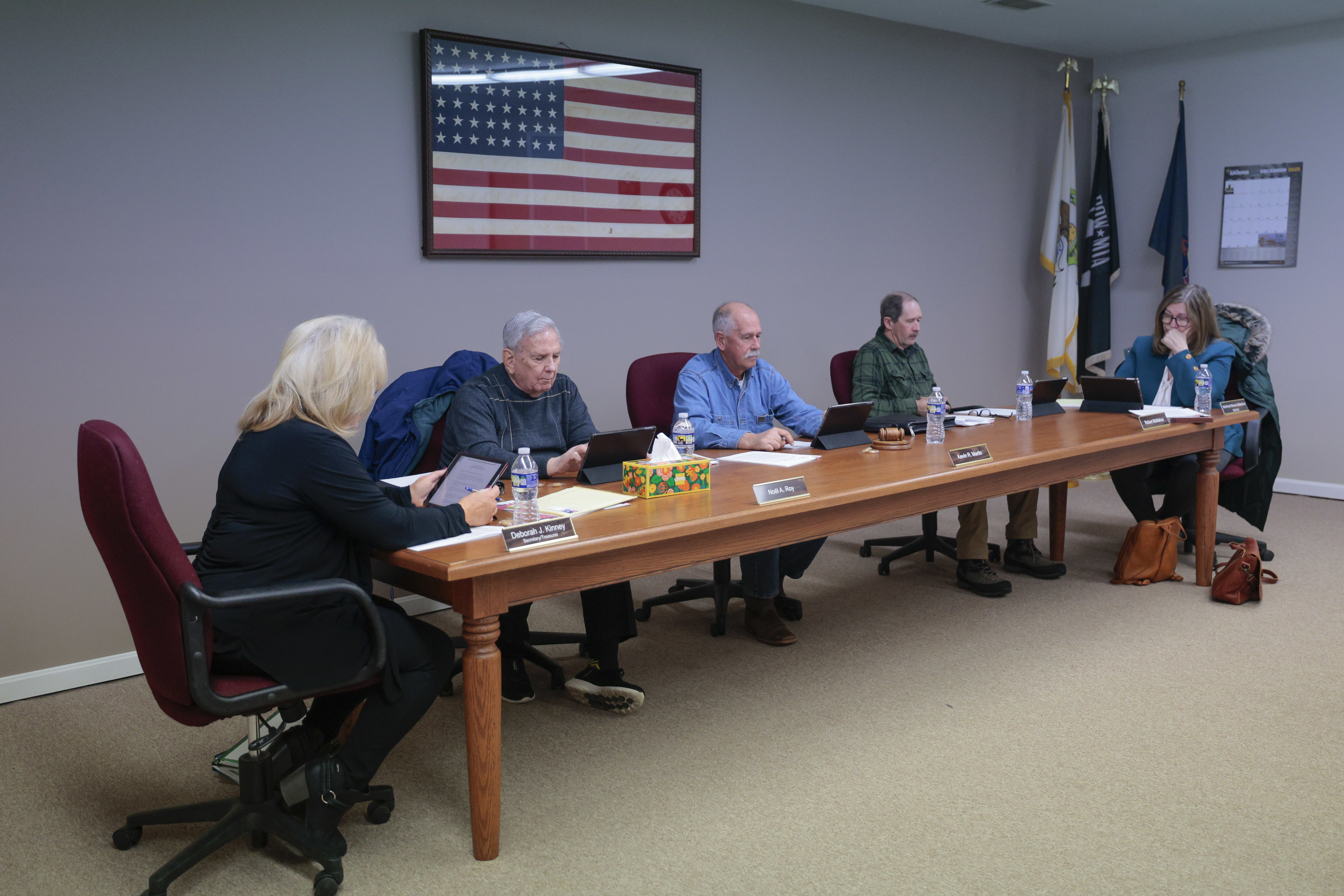
Lower Oxford Township officials meet and discuss a potential large event ordinance following the homecoming shooting at Lincoln University.
“We want to come together because we are a part of this community as well,” said Venus Boston, Lincoln’s general counsel.
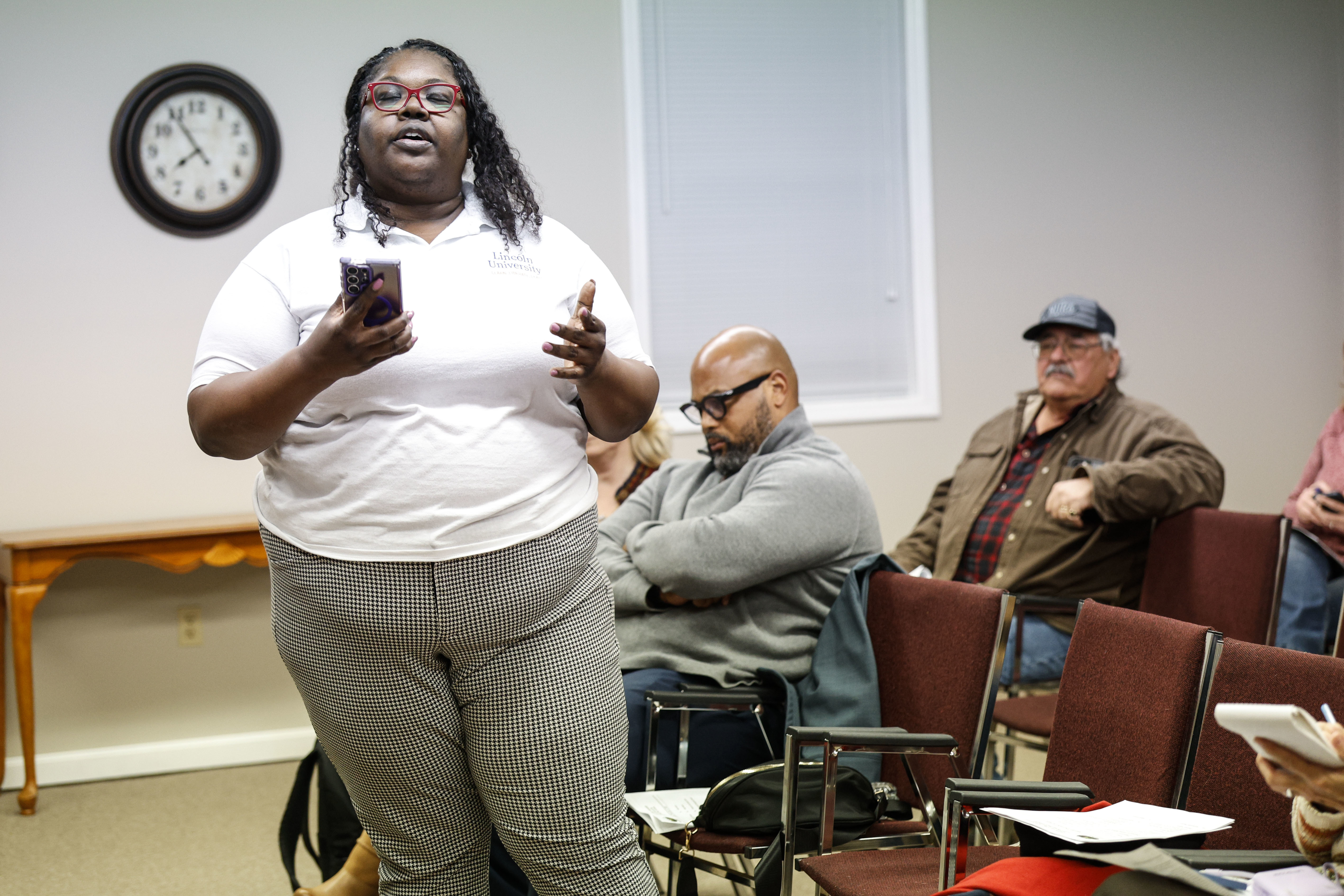
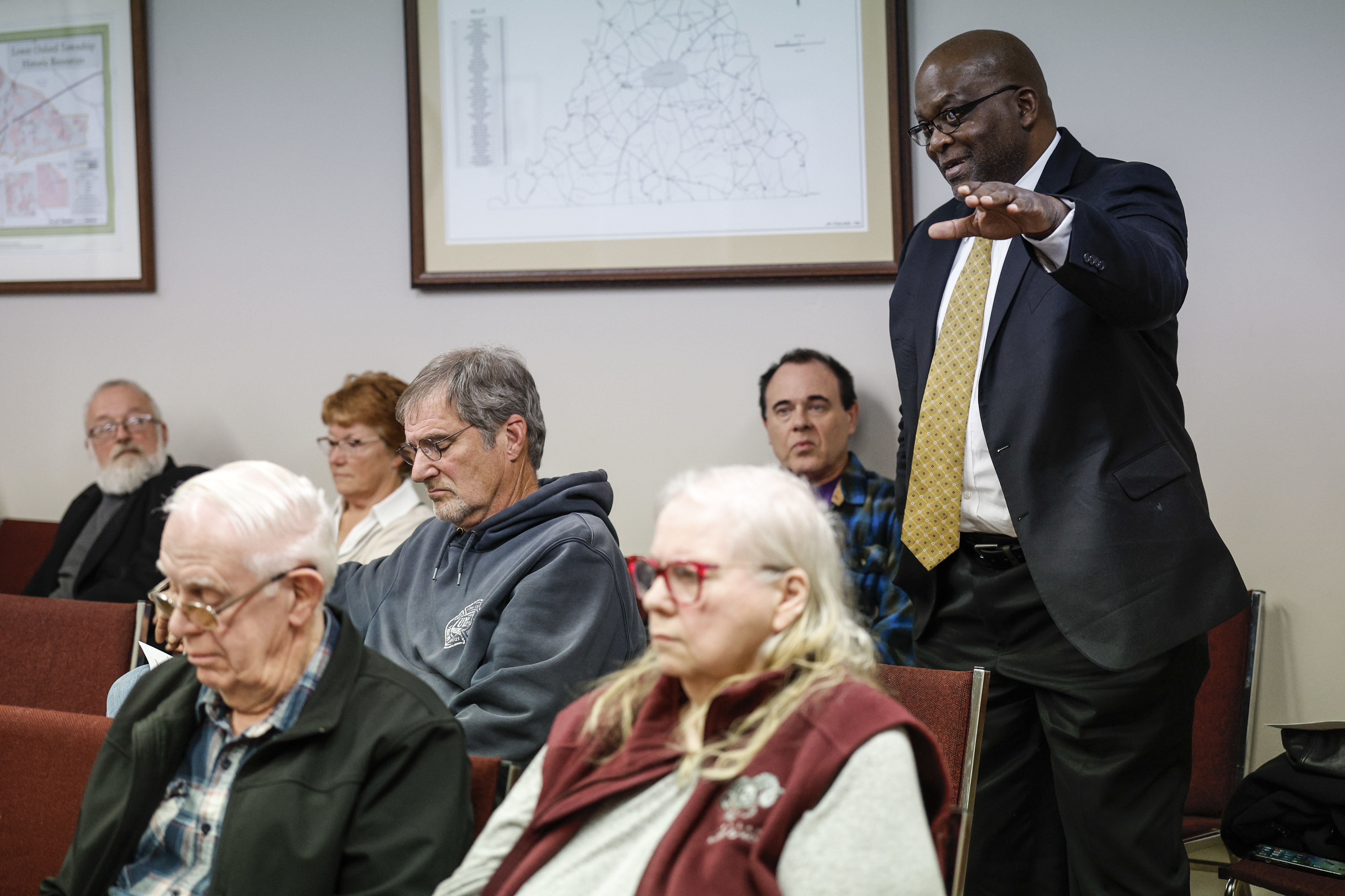
Yeda Arscott, Lincoln’s associate vice president of facilities and program management, told supervisors the university is considering several steps to improve safety, including ending all outside events at dusk, eliminating open invitations, requiring guest registration, and canceling large events such as Spring Fling. The school also is looking at parking and safety protocols, she said.
Yeda Arscott, associate vice president director of facilities and program management at Lincoln, speaks at the Lower Oxford Township meeting and shares actions the university is considering following the homecoming shooting.
“This shows real commitment,” said Arscott, who lives five minutes from Lincoln, “but real safety requires joint planning between the township, Lincoln, other major businesses, our neighbors, and emergency services.”
Township and Lincoln officials said they plan to meet privately to discuss solutions.
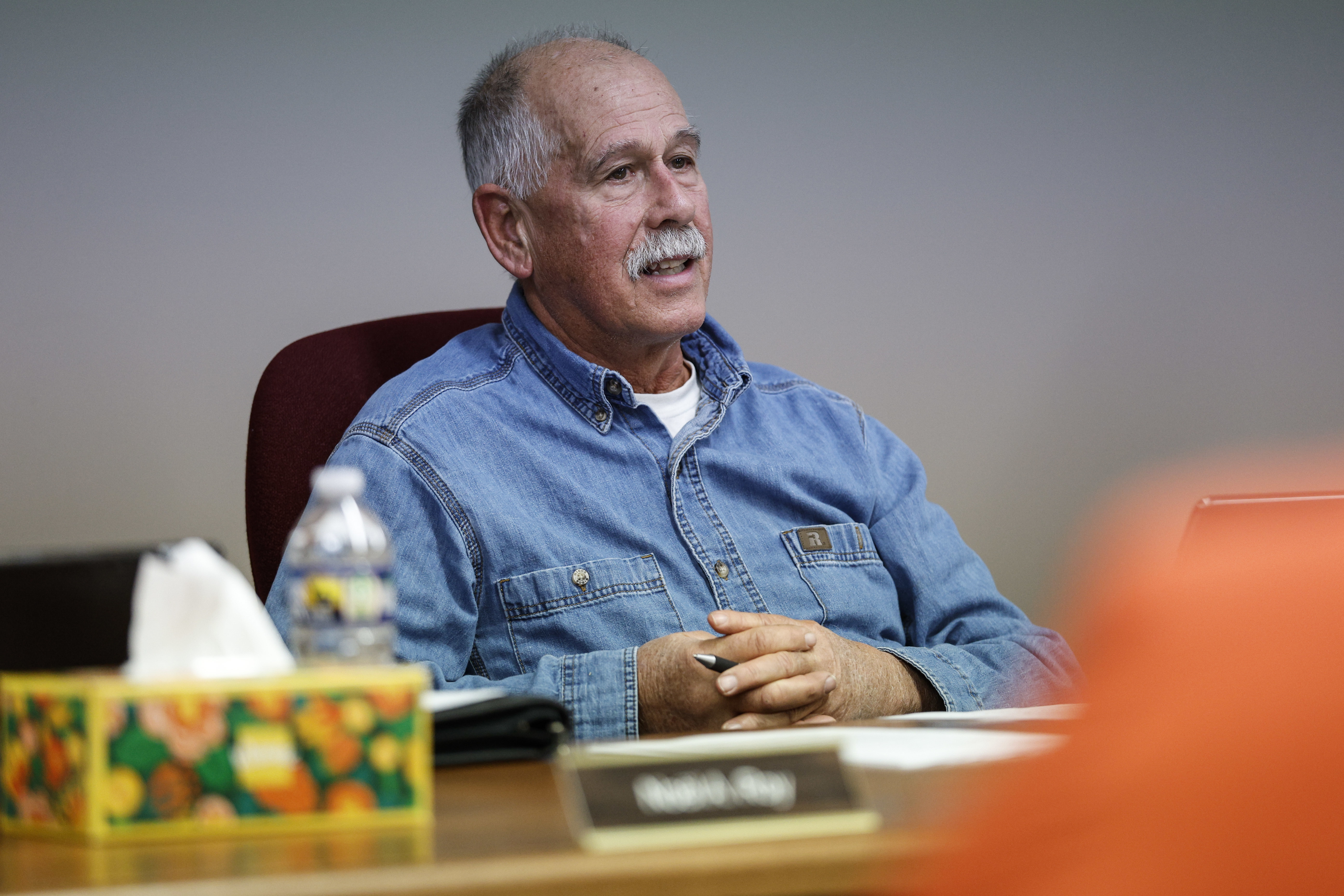
“Our goal is to work with Lincoln to make this better,” said Kevin R. Martin, chairman of the board of supervisors. “We need to think this through, but we also have a sense of urgency because it does affect our community.”
Kevin R Martin, chairman of the township supervisors, said the township wants to work with Lincoln on improvements.
Chester County Commissioner Josh Maxwell said county officialsand the university also will meet in January to discuss best practices for emergency services and student and community safety.
“It’s important that the kids feel safe,” said Maxwell, who also is an adjunct professor at Lincoln. “No one wants this to ever happen again.”
The shooting remains under investigation.Jujuan Jeffers, 20, of Wilmington, was killed, and six others, ages 20 to 25, including a student, were also shot. Zecqueous Morgan-Thompson, 21, of Wilmington, was charged with possessing a concealed firearm without a license. Neither Jeffers nor Morgan-Thompson have any known connection to Lincoln.
Arscott also urged township leaders to “broaden the conversation beyond event permits” and look to address the problem of gun violence.
“We were a victim, too,” Boston said.
“We were a victim, too,” said Venus Boston, Lincoln University’s general counsel.
Tensions with neighbors
The proposed township ordinance would require those seeking to hold special events to apply for a permit 30 days in advance and outline how they will control the number of guests, traffic, alcohol, and security, said township solicitor Winifred Moran-Sebastian. The township couldapprove or reject applications.
Township supervisors last spring passed a parking ordinance to cope with access problems created during past large events at Lincoln, but parking at homecoming still led to issues for emergency responders.
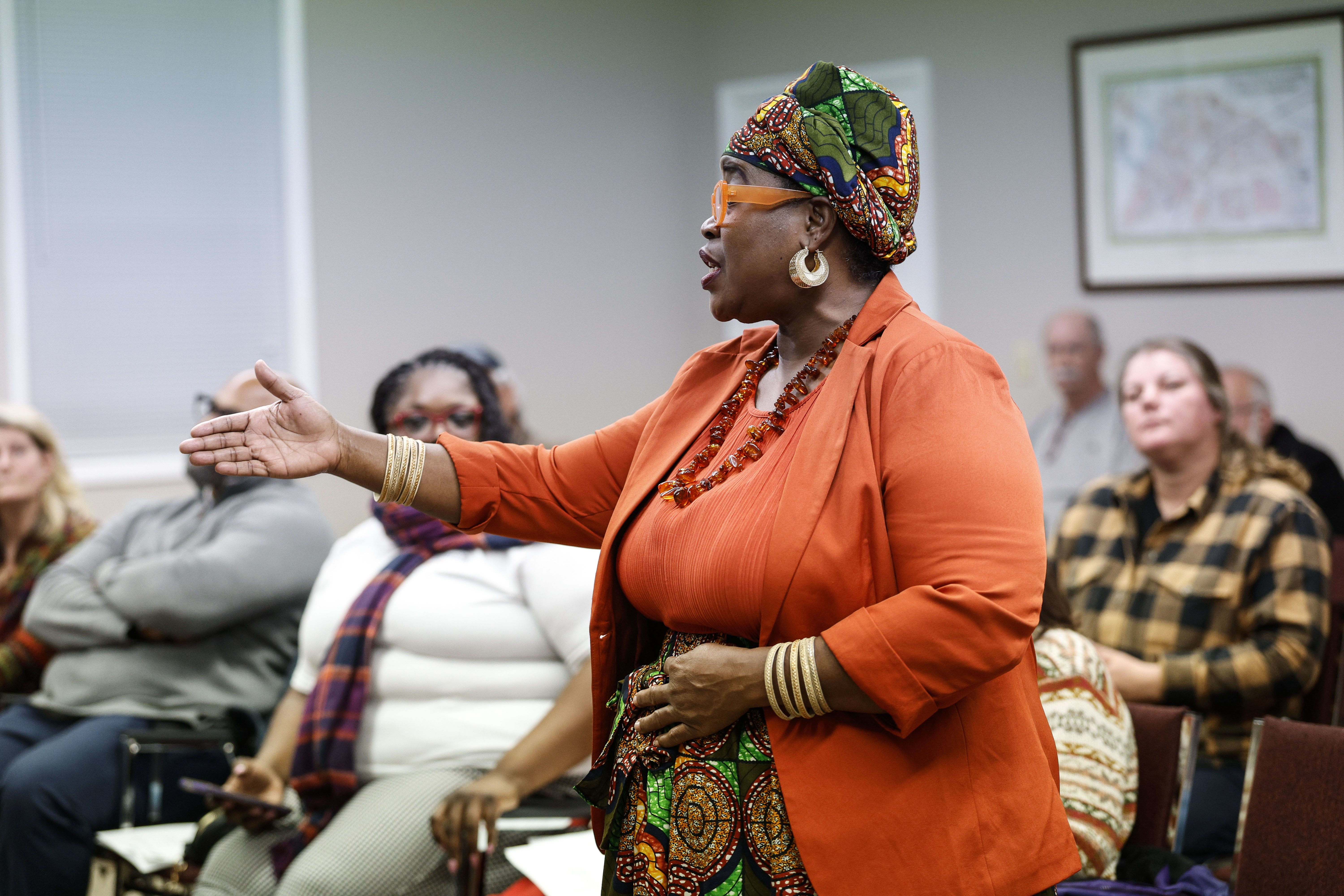
Several residents who attended this week’smeeting were skeptical of Lincoln’s intent to make improvements and called for larger fines than the $1,000 proposed in the ordinance.
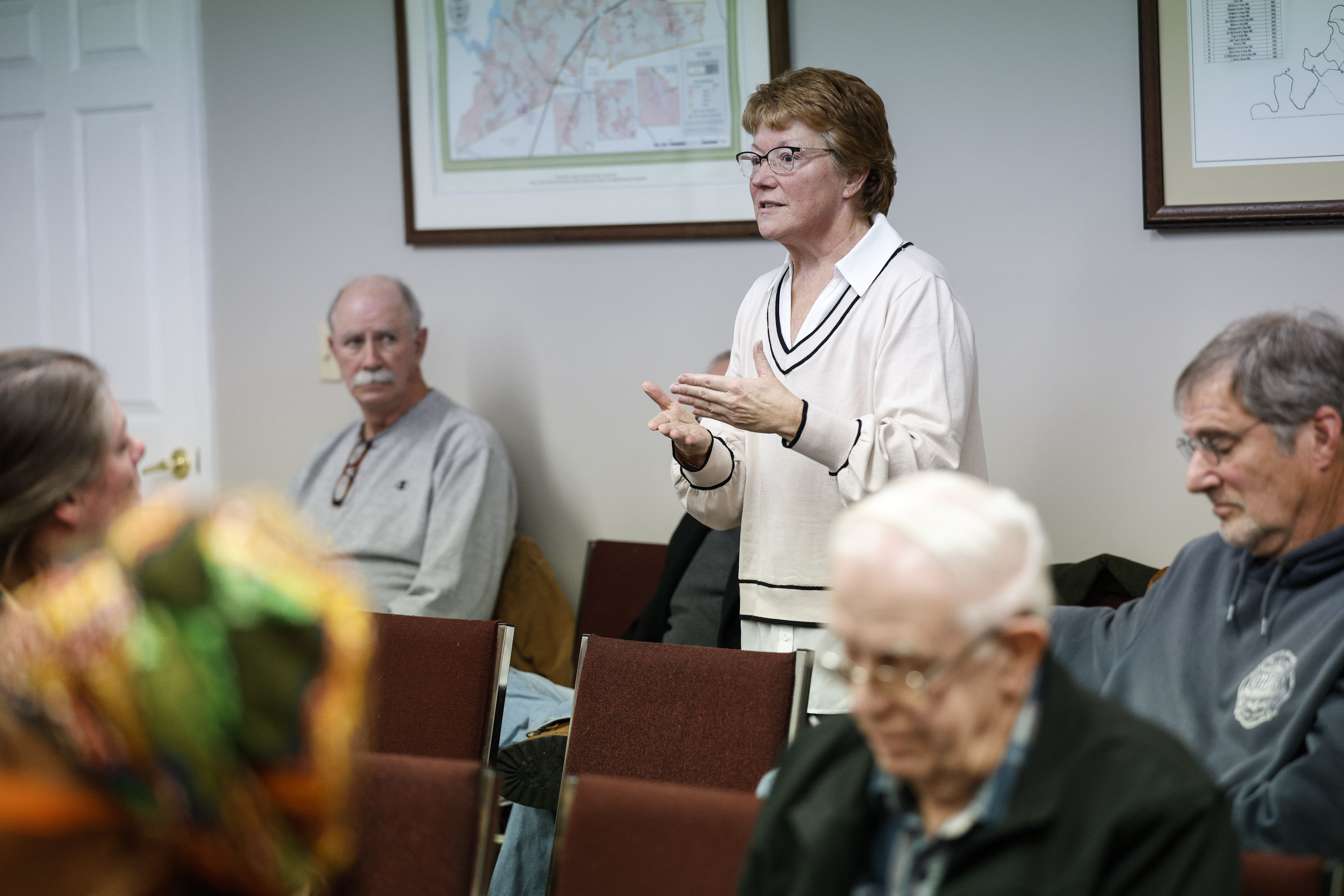
Vanessa Ross lives about a half a mile from campus and said she was afraid for her family the night of the homecoming shooting. She spoke at the Lower Oxford Township supervisors meeting.
“I feel my life is in jeopardy with how things are being currently managed,” said Lincoln neighbor Celestine Getty, fearing what could happen if vehicles were unable to get to her house in the event of an emergency.
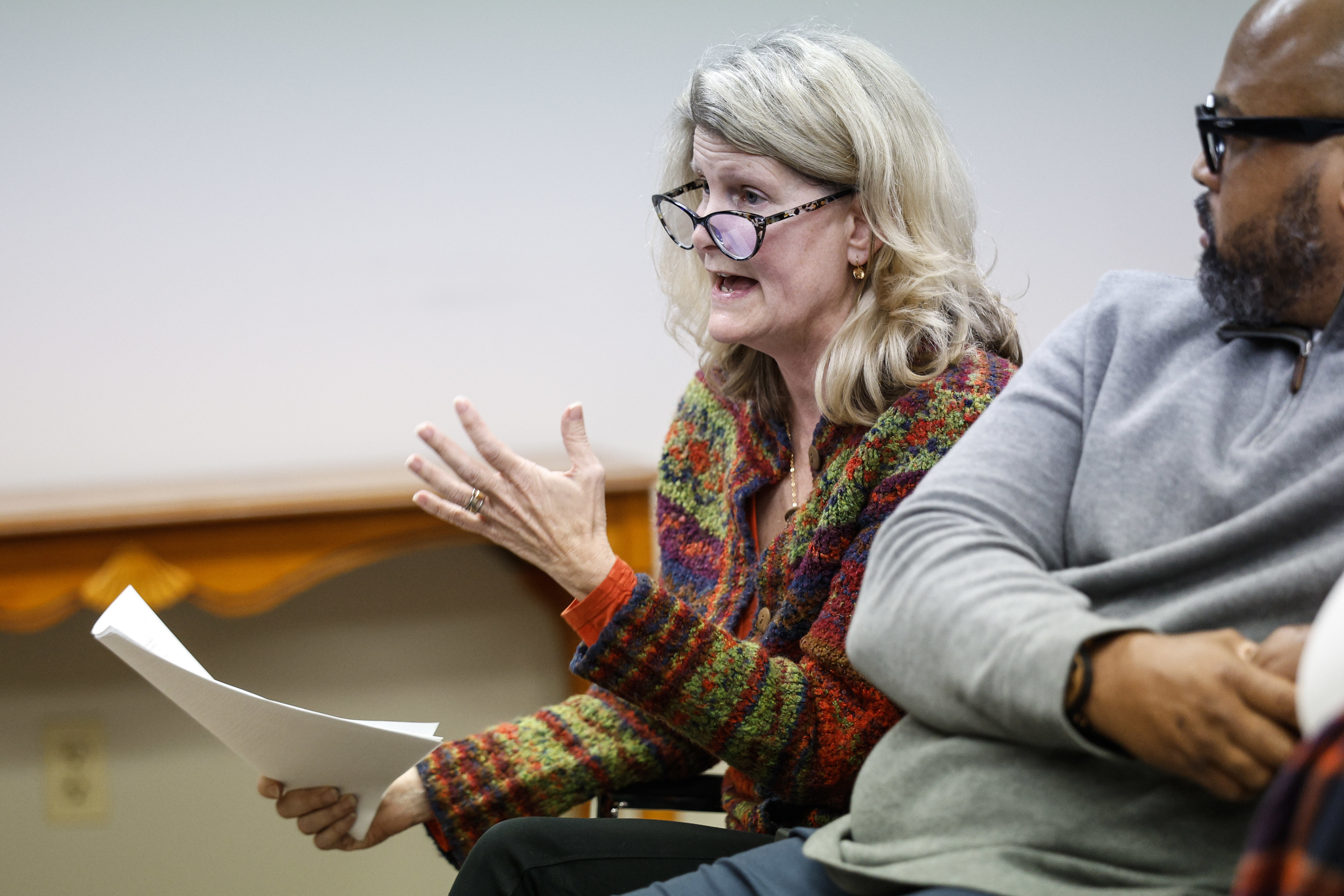
Vanessa Ross, who has lived about a half mile from Lincoln for 14 years, said crime and disruption have happened at large Lincoln events for half those years.
“There is no excuse whatsoever why the college cannot increase their police force and install the metal detectors that are necessary,” she said. “I can’t even go see Barry Manilow in Philadelphia without going through a metal detector.”
Founded in 1854, Lincoln is known as the first degree-granting historically Black university in the nation. Its 429 acres are nestled in a township of farm fields with a little over 5,000 residents, the majority of them white. Racial tensions have come into play over the years, with township residents saying they have been unfairly accused of racism for raising safety issues.
Allen, the Lincoln president, has not pointed to racism as a factor in the conversations about safety, said Boston, the university’s solicitor.
A storied institution with recent safety issues
Lincoln has a storied history. The first presidents of both Nigeria and Ghana are Lincoln graduates, as are Philadelphia Mayor Cherelle L. Parker, former U.S. Supreme Court Justice Thurgood Marshall, and poet Langston Hughes.
The school hasreceived $45 million in gifts fromphilanthropist MacKenzie Scott, ex-wife of Jeff Bezos. And Allen, who in 2020 had survived an internal battle to oust her and had her contract extended to 2030, was named a top historically Black college leader by a national nonprofitin 2021.
But over the last decade, the university has struggled with safety issues.
In spring 2023, two women were shot and injured on Lincoln’s campus during its annual Spring Fling event. In 2022, a student was fatally stabbed during a fight inside a dorm by the sister of a student. During an on-campus dance in 2018, 15 students were taken to the hospital following a brawl in which a security officer was assaulted. In 2016, there was a robbery and shooting on Lincoln’s campus following homecoming. And in 2015, Lincoln tightened security after shots were fired in a dorm.
Some residents said it’s time for the township to put in additional controls.
“We can no longer wait and see or hope the university will simply do the right thing,” said Andrew Cope, who lived near Lincoln for nearly two decades and still owns property there. “The pattern is too long, the consequences too severe, and the community’s trust too damaged.”
Carmina Taylor, former president of Lincoln parents association, addresses the Lower Oxford Township supervisors.
Carmina Taylor, who led Lincoln’s parent association from 2013 to 2016, said she has had longstanding safety concerns.
When a student was killed in the dorm in 2022, Taylor told The Inquirer she had previously sounded the alarm: “I had said, ‘If Lincoln doesn’t do something, we’re going to have a death on campus.’”
The university’s response to the homecoming shooting, said Taylor, who got a master’s degree from Lincoln in 2011 and whose son graduated from Lincoln in 2016, is “beyond fluff.”
“Until someone does something from the outside to bind them,” she said, nothing will change.
Security expert Brian Higgins said measures, including controlled entrances and screening of guests with hand-held wands, metal detectors or bag checks, are typically used for large crowd events. He acknowledged that imposing strict guest screening may not create the welcoming, upbeat environment characteristic of college homecomings.
“But in light of what happened, it’s very prudent to do so,” said Higgins, president of Group 77, a public safety and security consulting firm, based in the New York metro area.
Higgins, whosecompany has colleges among its clients, said drones increasingly are being usedas part of safety monitoring at large events. Traffic control measures and the setting of crowd size limits are other issues the school should consider, he said.
Anthony Floyd, a former police chief at Lincoln and a Philadelphia city police officer for about 20 years, said the university’s police chief and president should attend every township meeting and work more closely with the township on addressing safety issues.
Anthony Floyd Jr., who was police chief at Lincoln in 2013 and also had been a Philadelphia city cop, told the supervisors at the meeting that better coordination is needed between the community and the university. The school’s police chief and president should attend the supervisor meetings every month, give updates on safety and security, and be held accountable, he said.
Lincoln says it’s working on changes
Last month at a Lincoln board of trustees meeting, Allen, the president, said the campus had been focused on restoring a sense of safety for students and making sure they and staff had counseling support. Allen, a 1981 Lincoln graduate who has led the school since 2017, said the university was examining “safety protocols, parking, traffic, registration for guests,” and the process for inviting guests as part of its review process.
Lincoln University President Brenda A. Allen (left) announces plans for an after action review following the homecoming shooting.
Allen said the university is seeking feedback from the student government association and faculty and staff.
Roy, one of the township supervisors, saidparking restrictions put into place earlier this yearwere not heeded, and the township had to tow 60 cars the night of the homecoming shooting.
“Every time they towed a car, another car would pull into that space,” he said.
An event that would draw 10,000 people to a township with half that population and no police force is concerning, said Moran-Sebastian, the township solicitor. Lower Oxford relies on Pennsylvania State Police for law enforcement. For the homecoming event, the university requested state police, but only got two, Arscott, the facilities’ head, said.
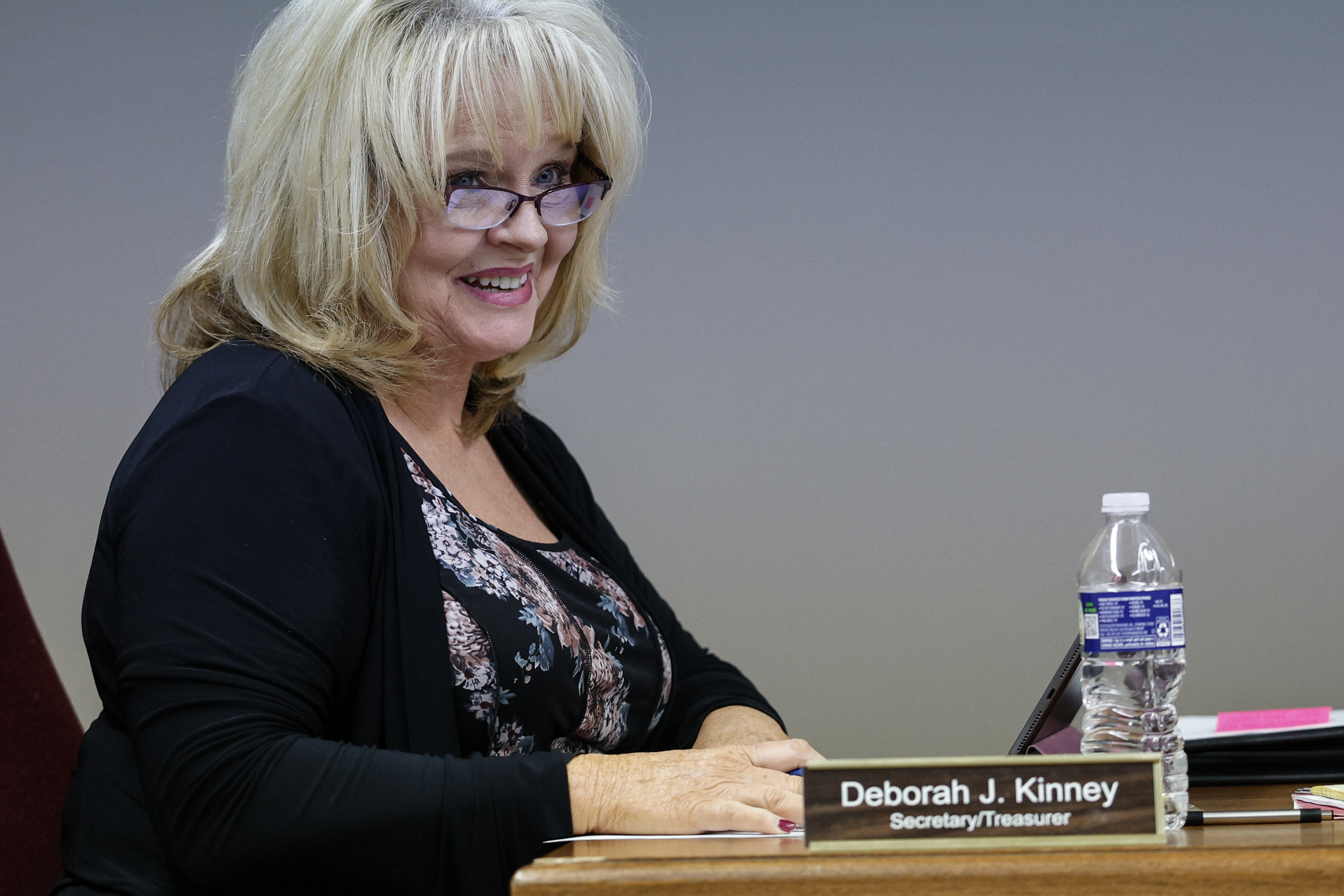
Deborah J Kinney, secretary/treasurer and code enforcement officer, listens during the Lower Oxford Township supervisors meeting.
Township officials have been frustrated with the responses from Lincoln in the past. When a meeting was held in November 2024 to discuss parking-related problems during the previous Spring Fling event, Allen said she didn’t need the township’s help, said Deborah Kinney, township secretary/treasurer and codes enforcement officer. Kinney said she had suggested an event process that would have included a plan for parking.
“So we decided we needed to be proactive on our end, not just for our residents but for their students,” Kinney said. “It’s not the students. It’s the outside influences that are coming in to these events.”
She also said that in 2024, Lincoln accounted for 183, or 26%, of the township’s emergency calls.
Winfred Moran-Sebastian, Lower Oxford Township solicitor, outlines the proposed ordinance to regulate large events in the township. The ordinance is still under draft.
Veronica Carr, a 2016 Lincoln alumna, said she had been concerned about safety when she was a student, and conditions seem to have gotten worse. She did not attend homecoming.
Carr, who works for an African American heritage consulting firm and lives in North Carolina, said she is concerned that two people have been killed on the campus in less than four years.
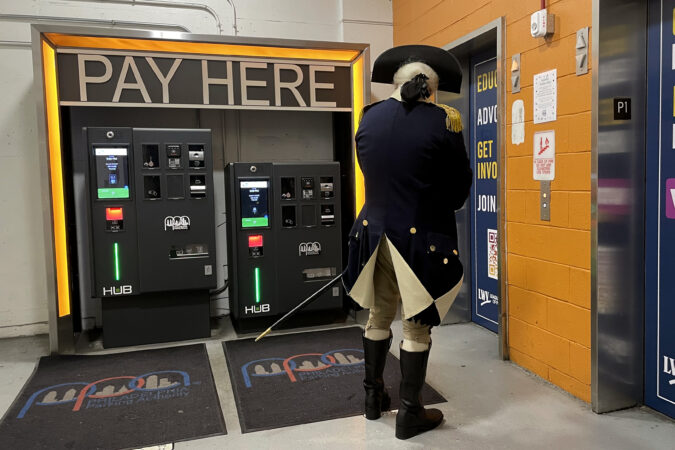
I was so close. If I had made it through one or two more green lights while driving from my last assignment… Or if I had not waited so long for the “right” car to pass in front of the building I was photographing for a real estate story…
Then I might’ve been there seconds earlier when Gen. Washington stood at the back of his SUV placing his sword on the hip of his dress uniform. Or photographed him walking through the empty parking garage.
Instead, I arrived at the elevators seconds after he did.
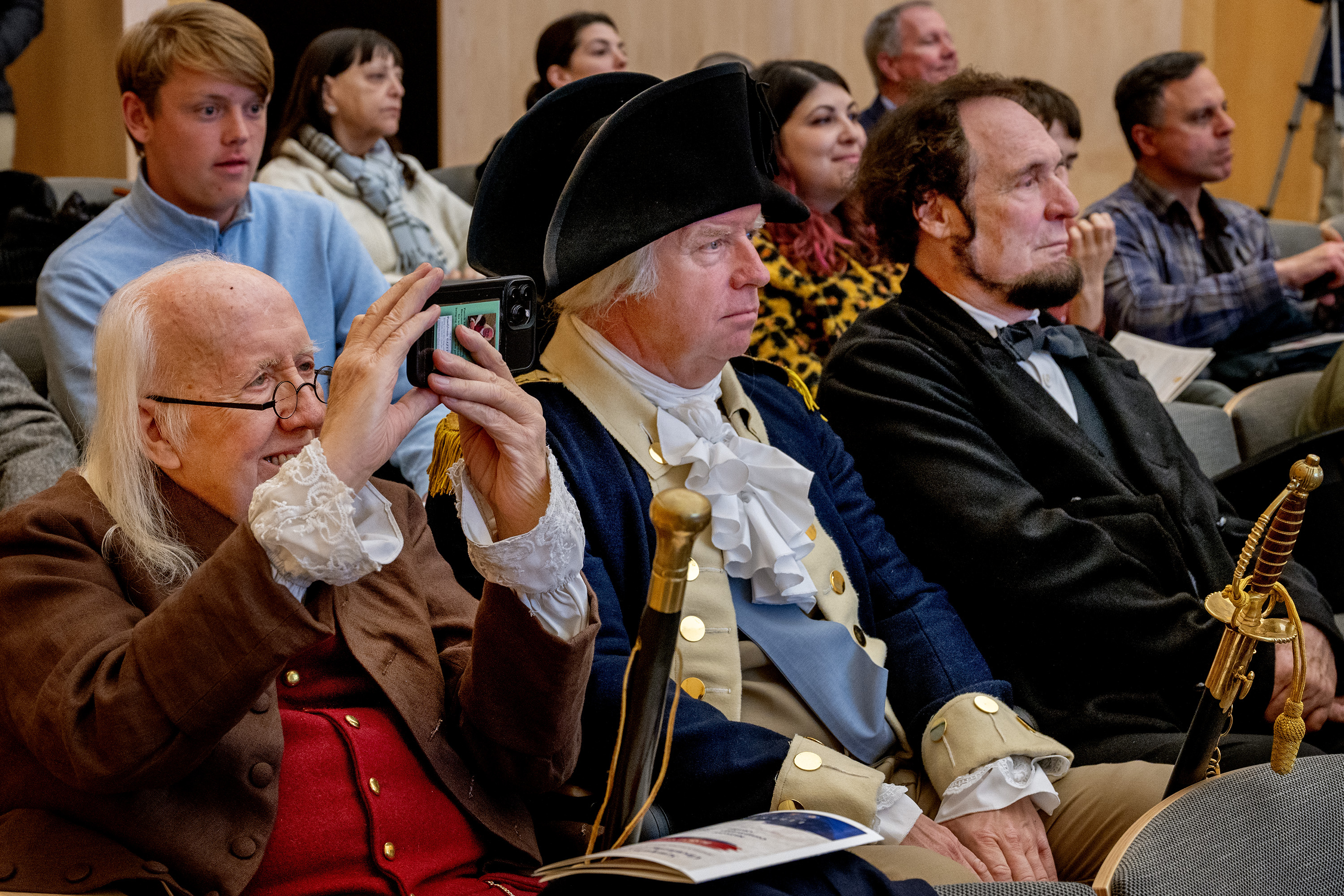
Historical interpreters Benjamin Franklin (from left) Gen. George Washington and President Abraham Lincoln are in the audience as the U.S. Mint unveils new coins for America’s 250th birthday.
There isn’t a day that goes by that I am not reminded how photography is all about the timing. And I don’t mean just the 1/500th of a second your camera shutter is open.
There is an expression “f/8 and be there” often attributed to legendary photographer Arthur “Weegee” Fellig. The “there” has come to mean not fussing over the technical aspects — an f-stop/lens aperture — of taking pictures but instead being “in the moment.”
Weegee, however, meant it literally. He was a New York crime scene photographer in the 1930s and 1940s famous for arriving before the police and made his living getting there and taking a picture before his competition (there were a dozen newspapers and tabloids in Manhattan back then).
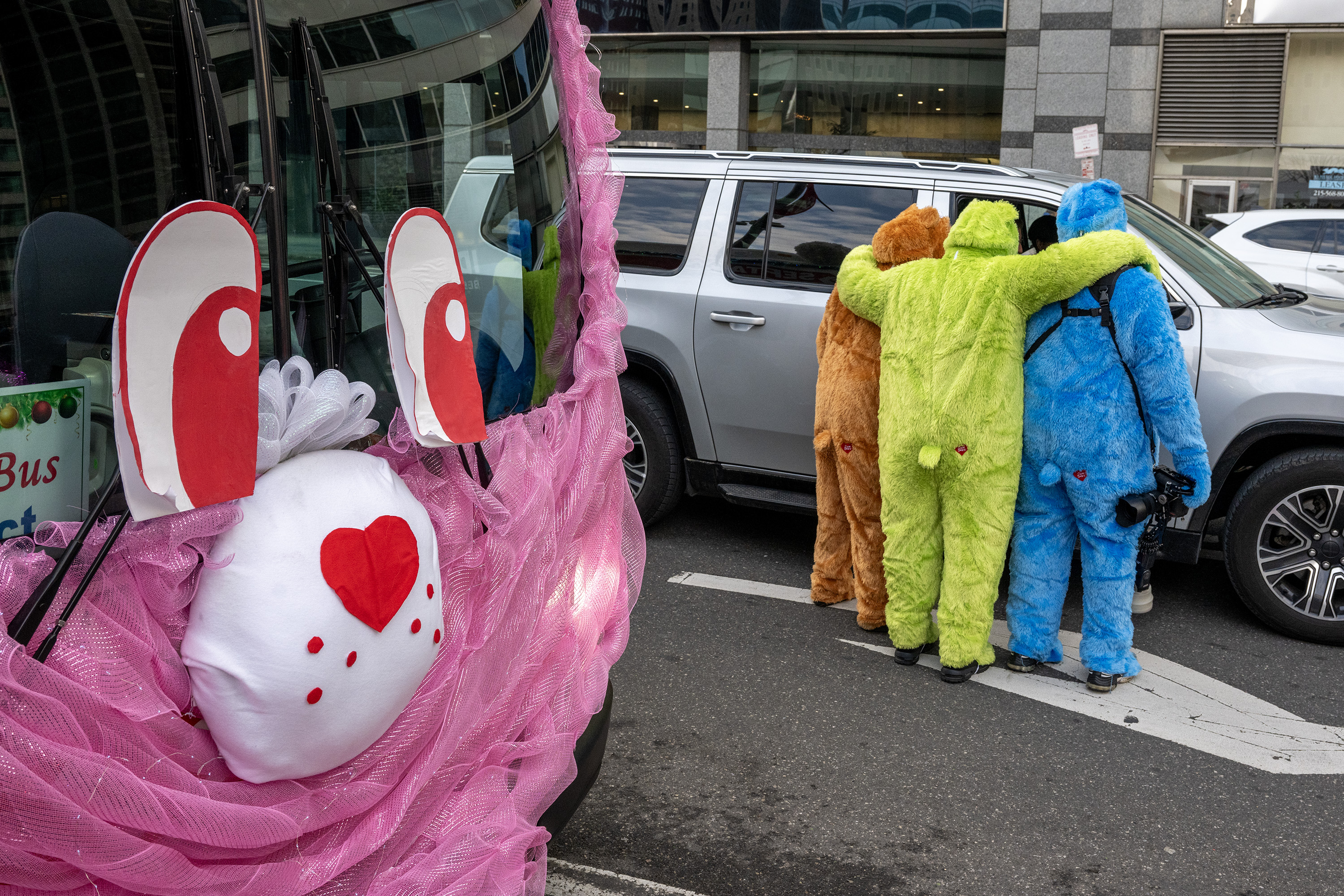
Another “good timing” came for me last Saturday. I was in Center City with my family on my day off. There were so many people in the Christmas Village in LOVE Park we walked along the outskirts, where we found the annual Festibus competition. That’s where SEPTA employees volunteer their time to decorate buses for the holidays and compete for bragging rights. And let riders vote for their favorites among the eight decorated buses parked along JFK Boulevard and 15th Street.
I made a fast photo of SEPTA workers costumed as Care Bears who went over to a passing coworker stopped in traffic. But I couldn’t leave with only a photo of the backsides of mechanic Raymond Borges and operators Jose DeCos and James Smith.
So I stayed behind to document more of their greeting visitors and some of the other buses.
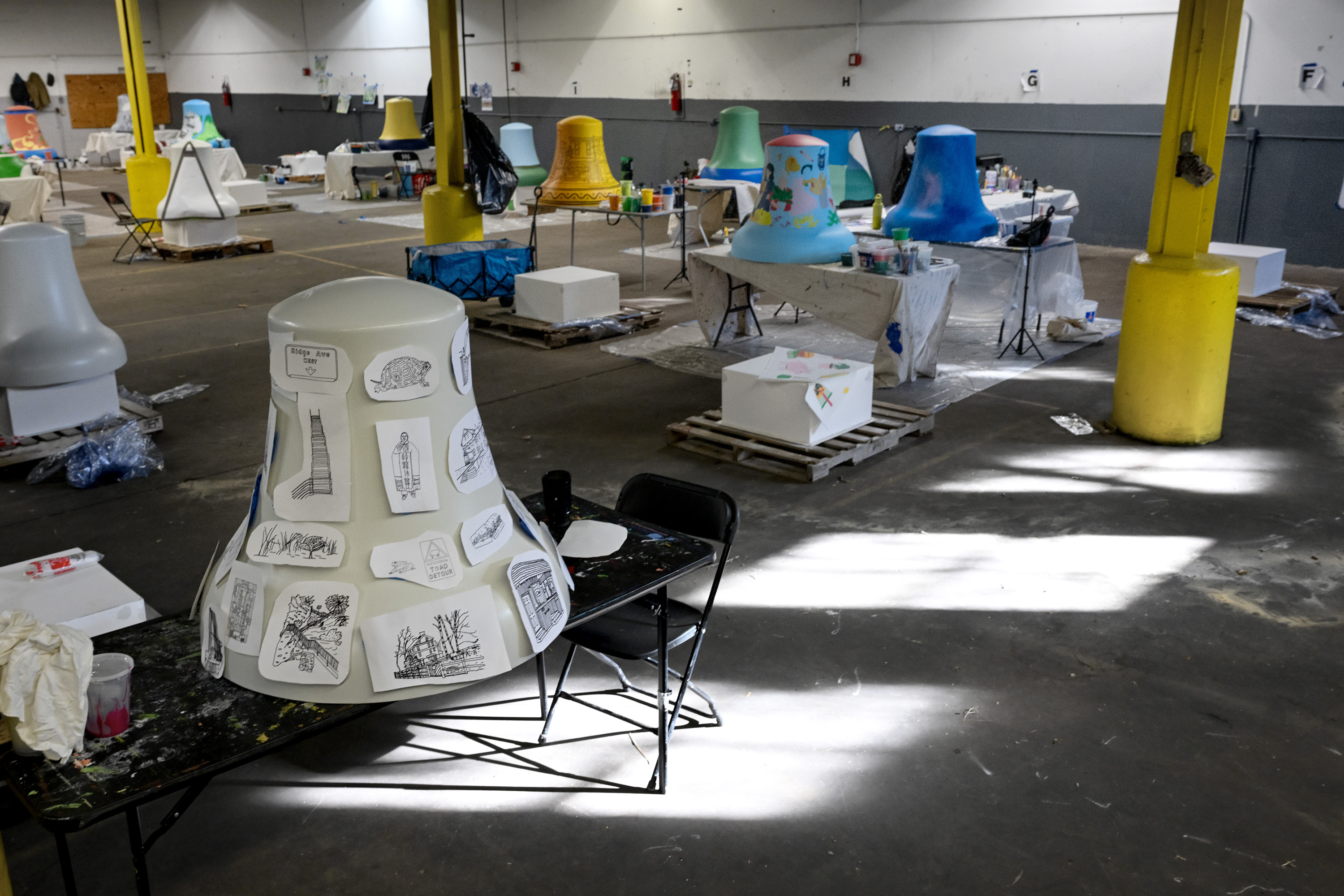
Walking out of the garage where the artists were working, I heard a news helicopter and looked up, then over to see a column of smoke rising to the north.
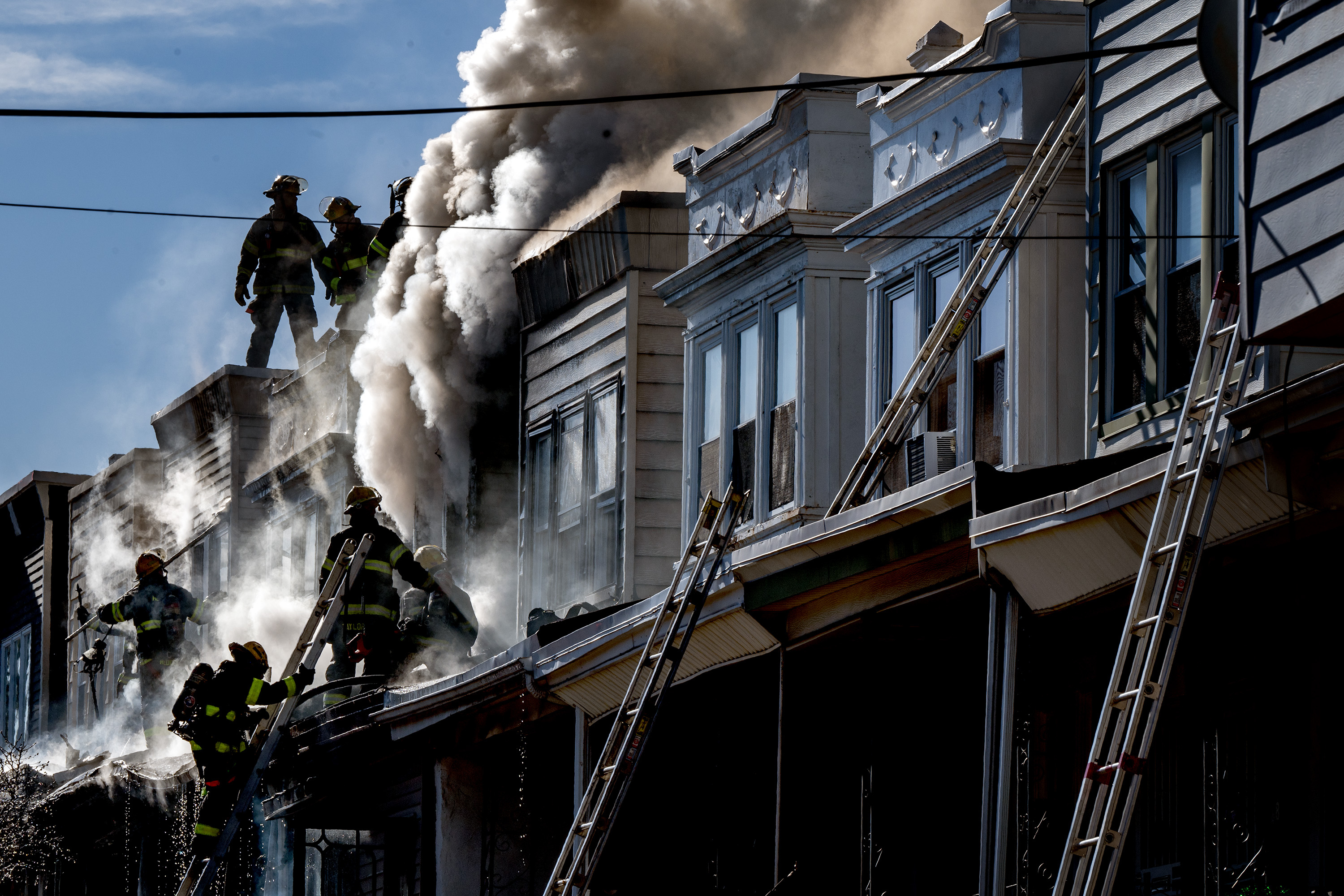
I got there as firefighters were just starting to climb up to the rowhouse roofs on North Lambert Street.
The fire, near La Salle University, was placed under control within an hour. But sadly, a 70-year-old mother of three did not get out in time and died in the blaze.
Since 1998 a black-and-white photo has appeared every Monday in staff photographer Tom Gralish’s “Scene Through the Lens” photo column in the print editions of The Inquirer’s local news section. Here are the most recent, in color:
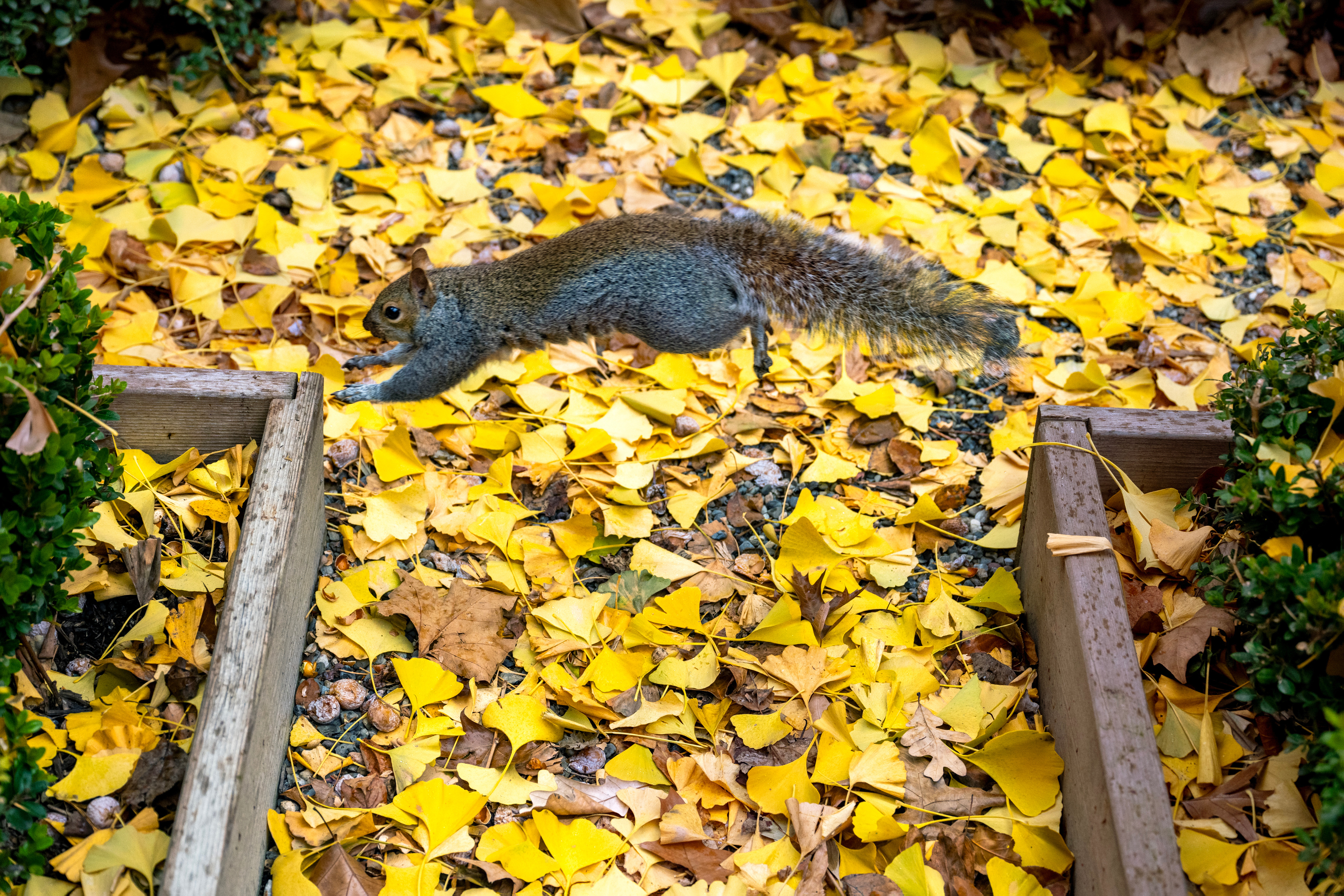
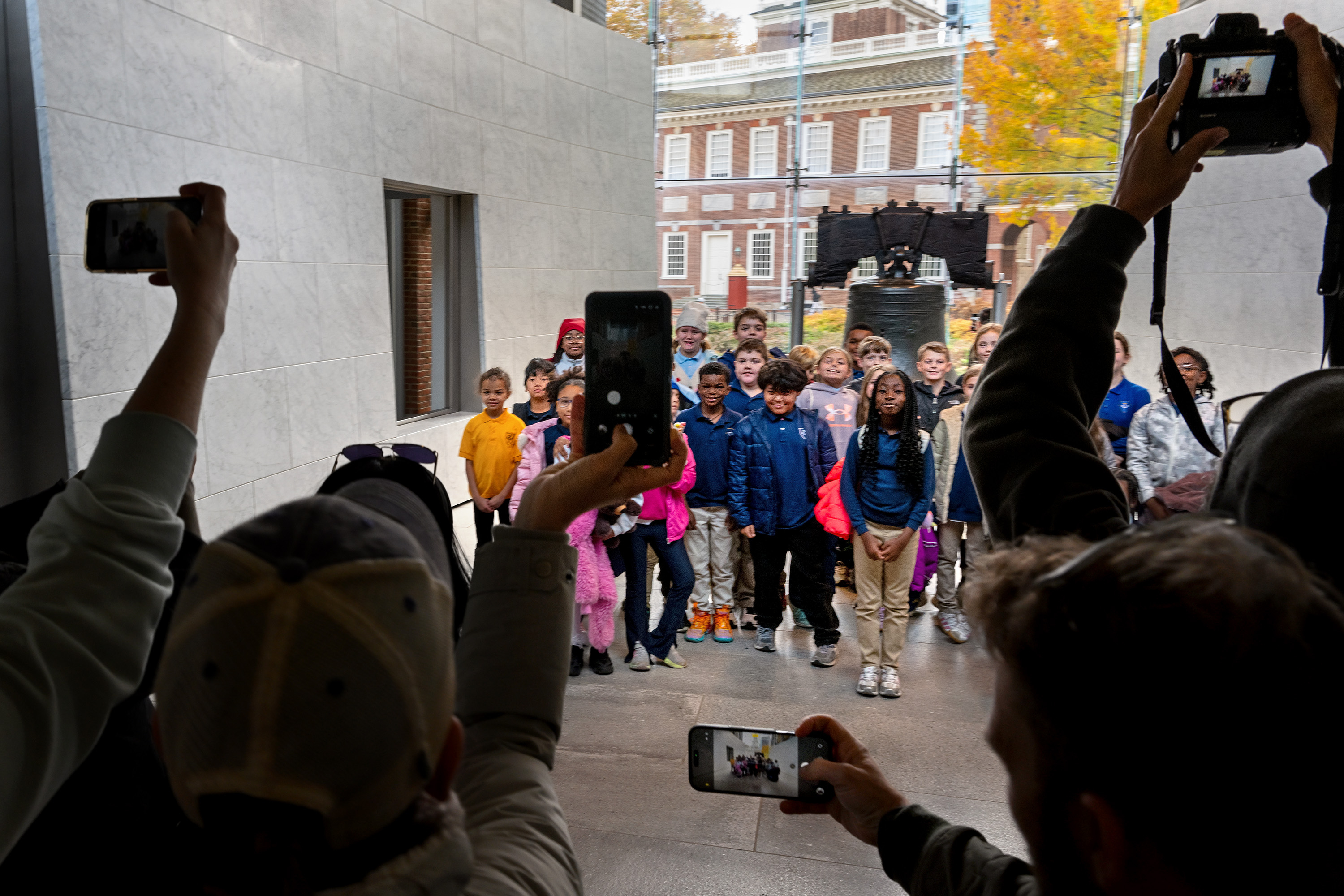
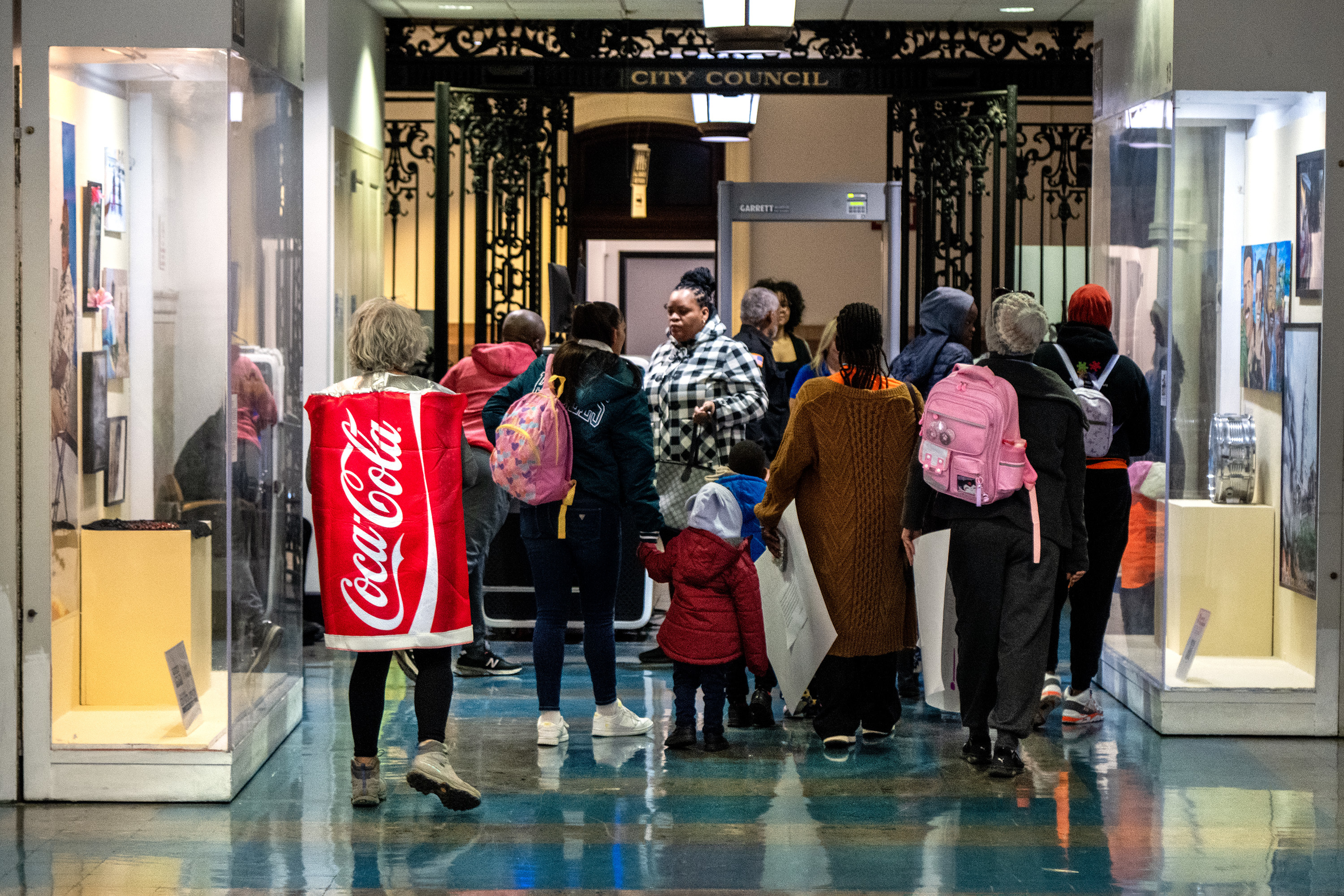
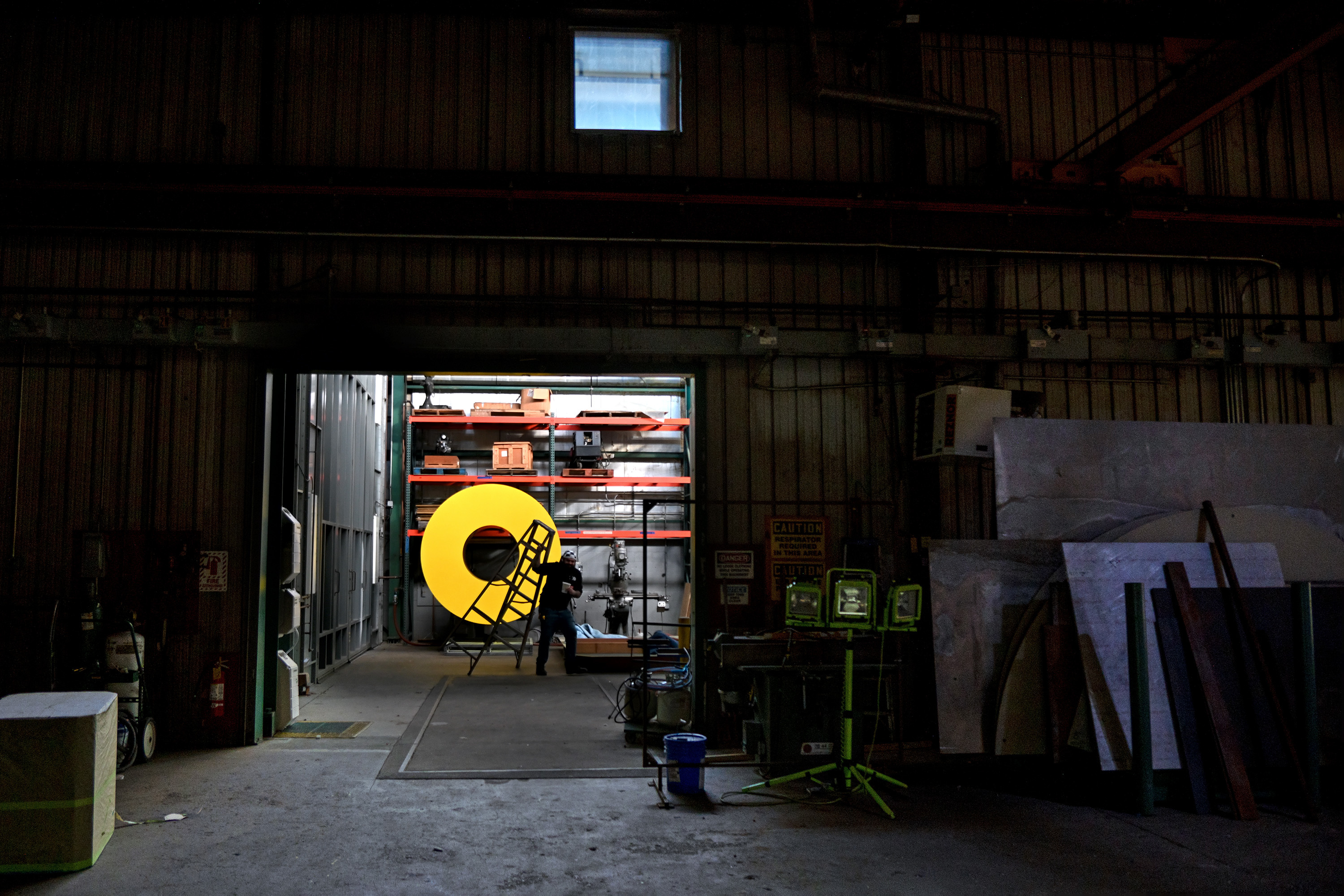
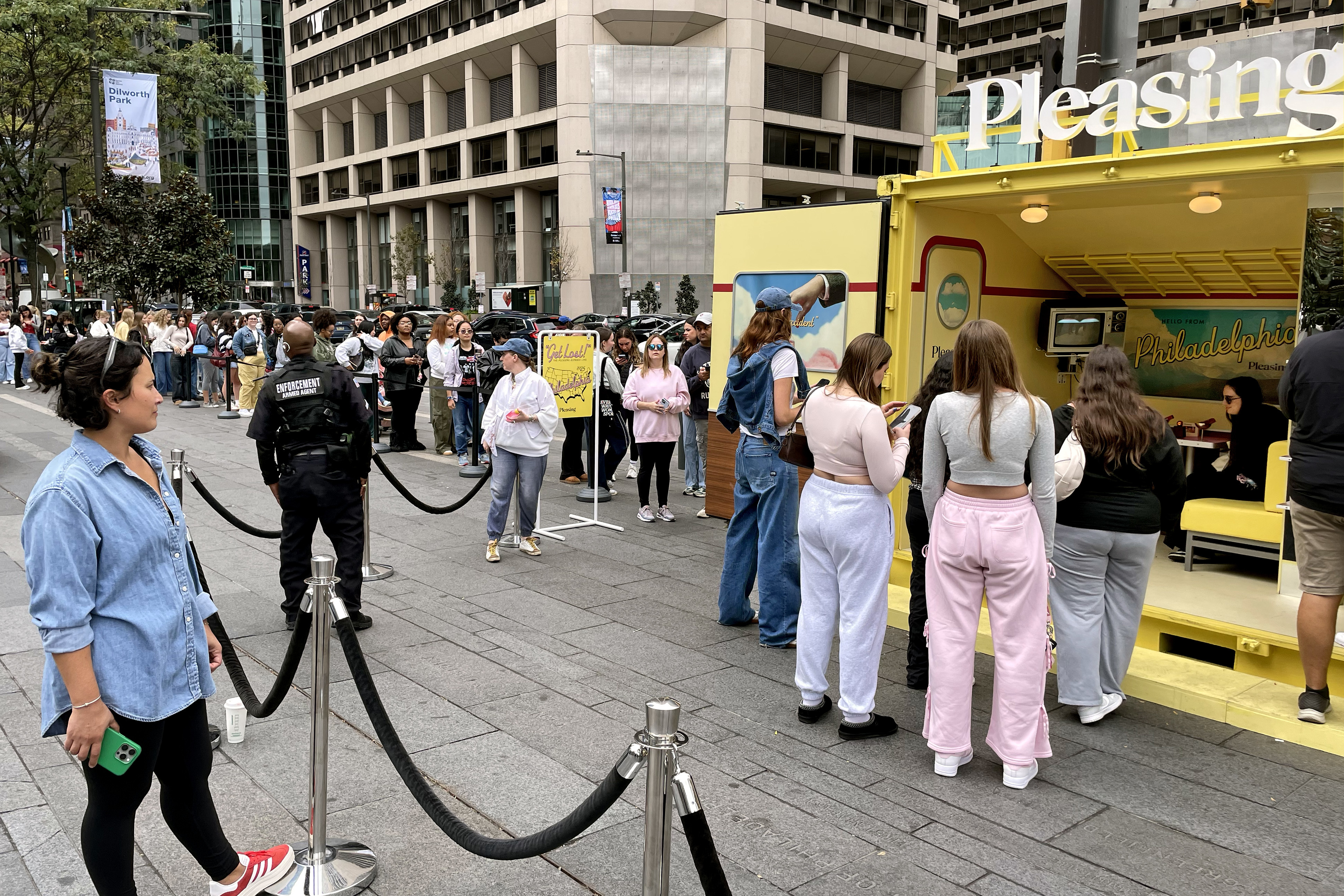
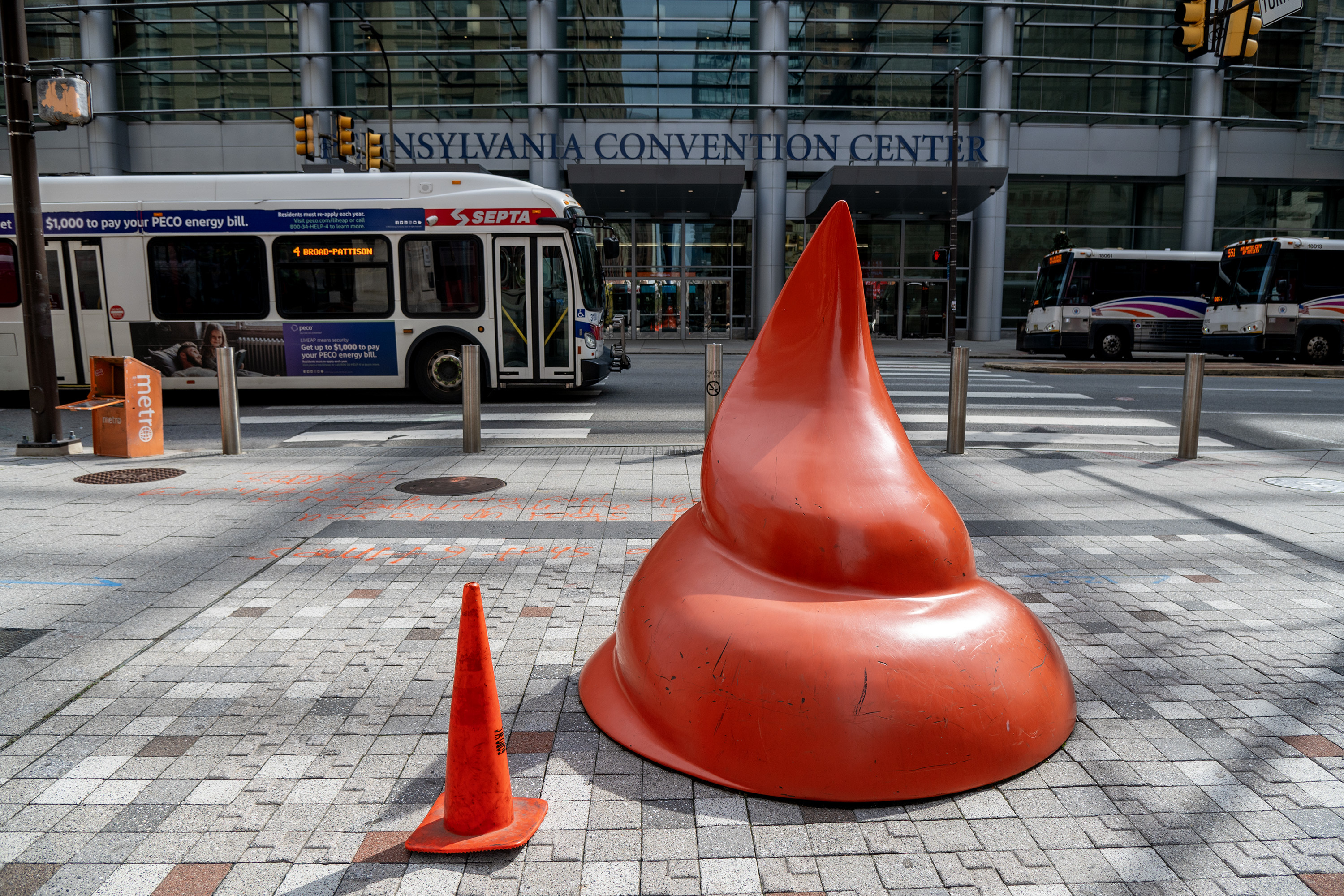
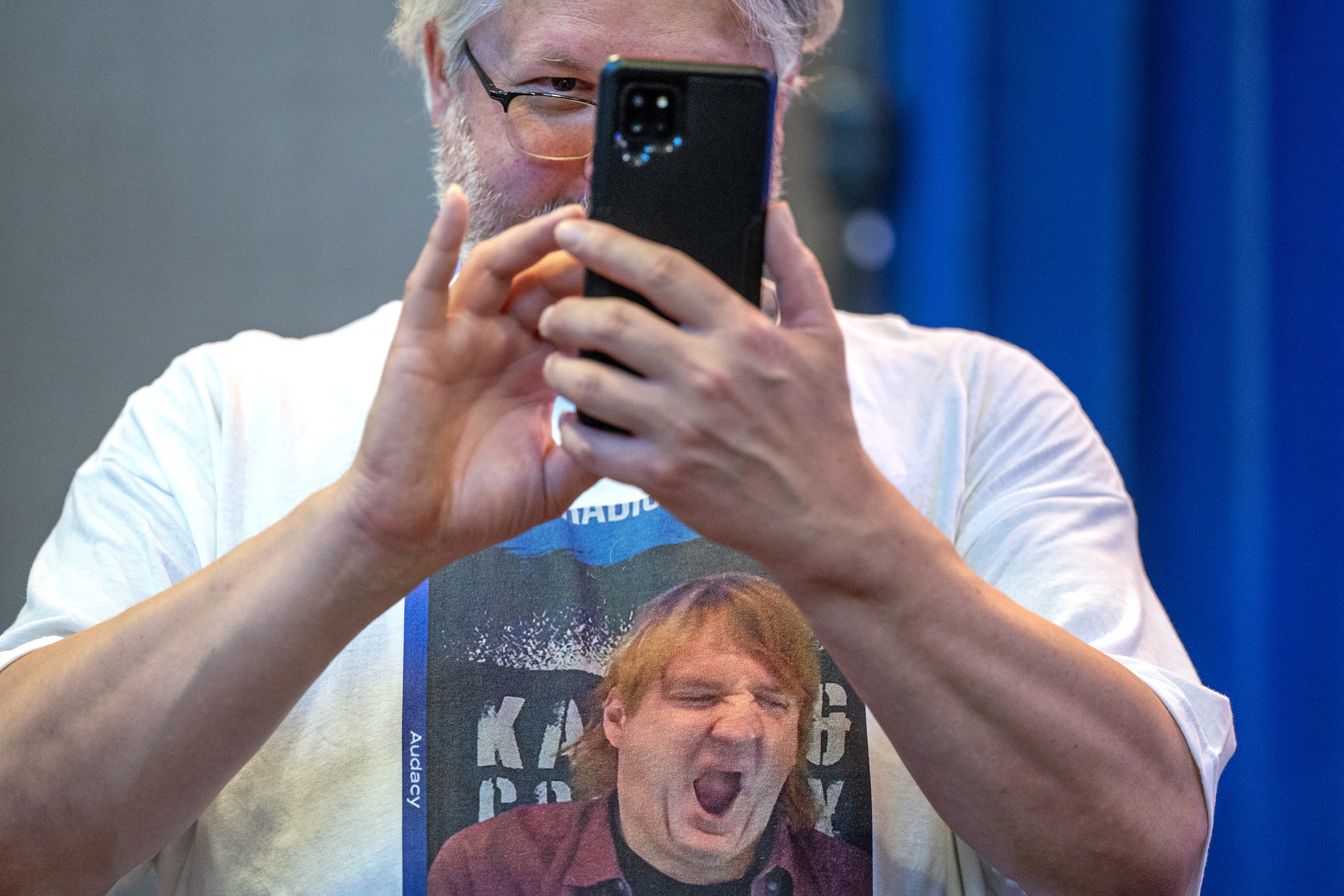
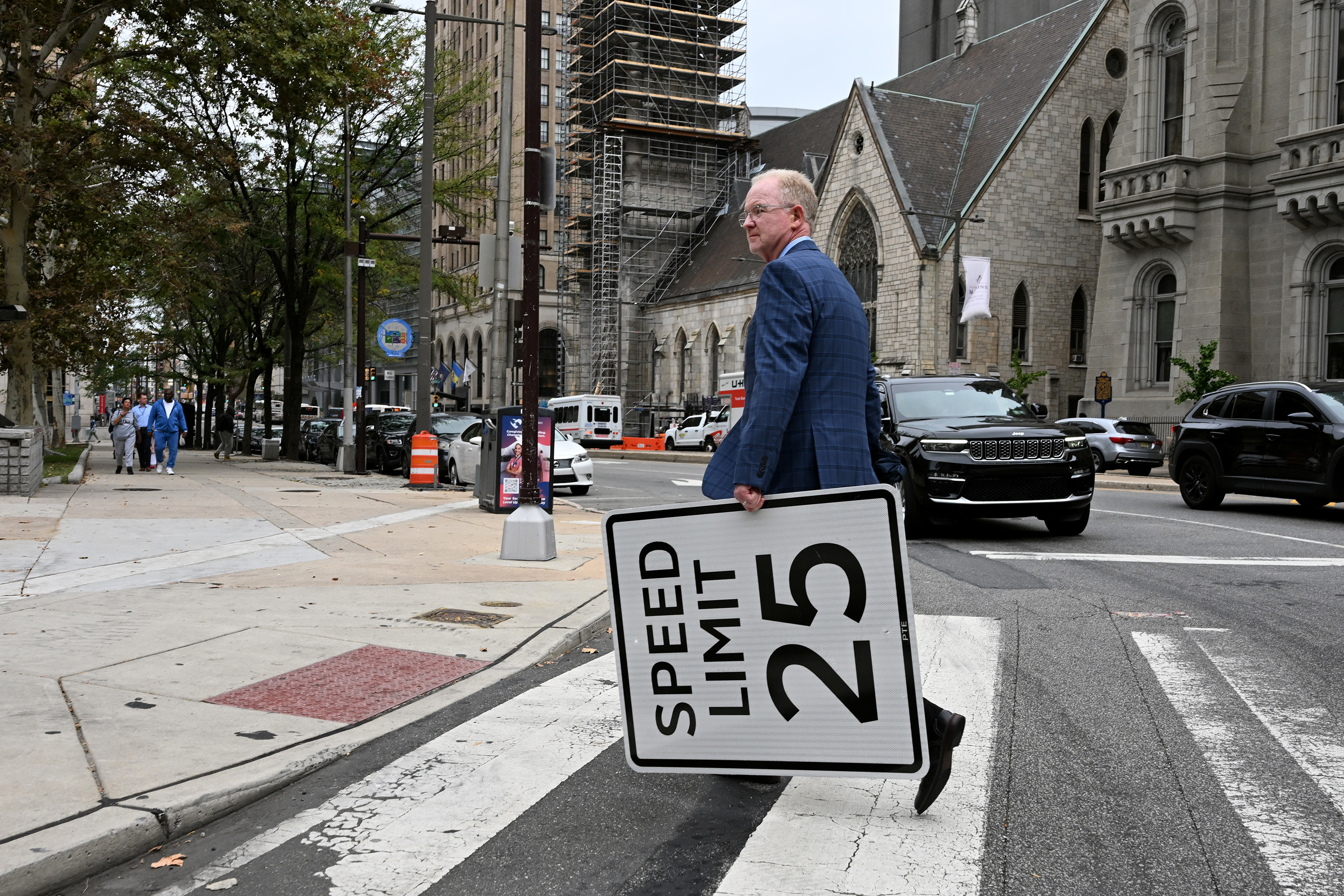
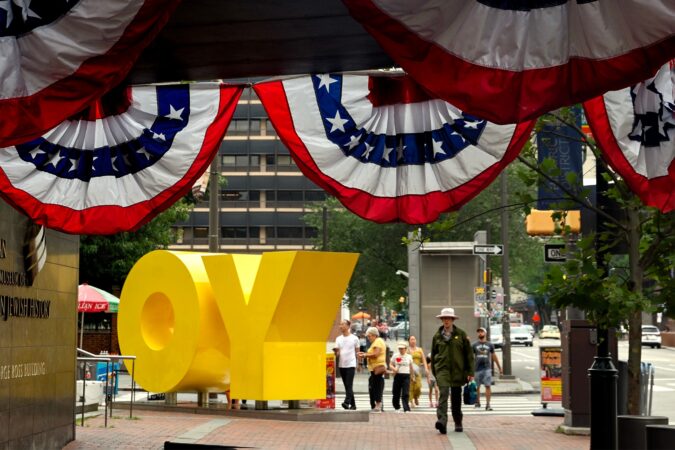
December 8, 2025: The Benjamin Franklin Bridge and pedestrians on the Delaware River Trail are reflected in mirrored spheres of the “Weaver’s Knot: Sheet Bend” public artwork on Columbus Boulevard. The site-specific stainless steel piece located between the Cherry Street and Race Street Piers was commissioned by the City’s Public Art Office and the Delaware River Waterfront Corporation and created and installed in 2022 by the design and fabrication group Ball-Nogues Studio. The name recalls a history that dominated the region for hundreds of years. “Weaver’s knot” derives from use in textile mills and the “Sheet bend” or “sheet knot” was used on sailing vessels for bending ropes to sails. November 29, 2025: t’s ginkgo time in our region again when the distinctive fan-shaped leaves turn yellow and then, on one day, lose all their leaves at the same time laying a carpet on city streets and sidewalks. A squirrel leaps over leaves in the 18th Century Garden in Independence National Historical Park Nov. 25, 2025. The ginkgo (Ginkgo biloba) is considered a living fossil as it’s the only surviving species of a group of trees that existed before dinosaurs. Genetically, it has remained unchanged over the past 200 million years. William Hamilton, owner the Woodlands in SW Phila (no relation to Alexander Hamilton) brought the first ginkgo trees to North America in 1785.November 24, 2025: The old waiting room at 30th Street Station that most people only pass through on their way to the restrooms has been spiffed up with benches – and a Christmas tree. It was placed there this year in front of the 30-foot frieze, “The Spirit of Transportation” while the lobby of Amtrak’s $550 million station restoration is underway. The 1895 relief sculpture by Karl Bitter was originally hung in the Broad Street Station by City Hall, but was moved in 1933. It depicts travel from ancient to modern and even futuristic times. November 17, 2025: Students on a field trip from the Christian Academy in Brookhaven, Delaware County, pose for a group photo in front of the Liberty Bell in Independence National Historical Park on Thursday. The trip was planned weeks earlier, before they knew it would be on the day park buildings were reopening after the government shutdown ended. “We got so lucky,” a teacher said. Then corrected herself. “It’s because we prayed for it.” November 8, 2025: Multitasking during the Festival de Día de Muertos – Day of the Dead – in South Philadelphia.November 1, 2025: Marcy Boroff is at City Hall dressed as a Coke can, along with preschoolers and their caregivers, in support of former Mayor Jim Kenney’s 2017 tax on sweetened beverages. City Council is considering repealing the tax, which funds the city’s pre-K programs. October 25, 2025: Austin Gabauer, paint and production assistant at the Johnson Atelier, in Hamilton Twp, N.J. as the finished “O” letter awaits the return to Philadelphia. The “Y” part of the OY/YO sculpture is inside the painting booth. The well-known sculpture outside the Weitzman National Museum of American Jewish History was removed in May while construction continues on Market Street and has been undergoing refurbishment at the Atelier at the Grounds for Sculpture outside of Trenton.October 20, 2025:The yellow shipping container next to City Hall attracted a line of over 300 people that stretched around a corner of Dilworth Park. Bystanders wondered as they watched devotees reaching the front take their selfies inside a retro Philly diner-esque booth tableau. Followers on social media had been invited to “Climb on to immerse yourself in the worlds of Pleasing Fragrance, Big Lip, and exclusive treasures,” including a spin of the “Freebie Wheel,” for products of the unisex lifestyle brand Pleasing, created by former One Direction singer Harry Styles.October 11, 2025: Can you find the Phillie Phanatic, as he leaves a “Rally for Red October Bus Tour” stop in downtown Westmont, N.J. just before the start of the NLDS? There’s always next year and he’ll be back. The 2026 Spring Training schedule has yet to be announced by Major League Baseball, but Phillies pitchers and catchers generally first report to Clearwater, Florida in mid-February.October 6. 2025: Fluorescent orange safety cone, 28 in, Poly Ethylene. Right: Paint Torch (detail) Claes Oldenburg, 2011, Steel, Fiberglass Reinforced Plastic, Gelcoat and Polyurethane. (Gob of paint, 6 ft. Main sculpture, 51 ft.). Lenfest Plaza at the Pennsylvania Academy of the Fine Arts on North Broad Street, across from the Convention Center.September 29, 2025: A concerned resident who follows Bucks County politics, Kevin Puls records the scene before a campaign rally for State Treasurer Stacy Garrity, the GOP candidate for governor. His T-shirt is “personal clickbait” with a url to direct people to the website for The Travis Manion Foundation created to empower veterans and families of fallen heroes. The image on the shirts is of Greg Stocker, one of the hosts of Kayal and Company, “A fun and entertaining conservative spin on Politics, News, and Sports,” mornings on Talk Radio 1210 WPHT.September 22, 2025: A shadow is cast by “The Cock’s Comb,” created by Alexander “Sandy” Calder in 1960, is the first work seen by visitors arriving at Calder Gardens, the new sanctuary on the Ben Franklin Parkway. The indoor and outdoor spaces feature the mobiles, stabiles, and paintings of Calder, who was born in Philadelphia in 1898, the third generation of the family’s artistic legacy in the city.September 15, 2025: Department of Streets Director of Operations Thomas Buck leaves City Hall following a news conference marking the activation of Automated Speed Enforcement (ASE) cameras on the Broad Street corridor – one the city’s busiest and most dangerous roads. The speed limit on the street, also named PA Route 611, is 25 mph.
For a few moments on Monday night, Saquon Barkley looked as if he had stepped into a time machine and returned to his 2024 offensive player of the year form.
His success on the ground against the Los Angeles Chargers reached its pinnacle early in the fourth quarter. On a Tush Push fake on third-and-1, an under-center Jalen Hurts pitched the ball to Barkley, who hurried to his left and accelerated through a hole opened by Dallas Goedert, Darius Cooper, Fred Johnson, and Jordan Mailata. Flawless blocking — a rare sight in 2025 — ensured that Barkley could run unhindered to the end zone.
The trick play turned into a 52-yard touchdown run, Barkley’s second-longest carry of the season. On an otherwise dismal day underscored by Hurts’ four interceptions in the Eagles’ 22-19 overtime loss to the Chargers, Barkley’s 122 rushing yards and his explosive play offered a glimmer of hope for the offense’s future.
“We just need more of that,” Barkley said after the game.
That has been evading the Eagles for most of the season. The explosive runs that once seemed routine for Barkley have been difficult to attain in his second year with the team. The TD run on Monday was just his third carry of 20 or more yards, a feat he achieved 17 times in the regular season last year.
For select moments, Barkley’s performance on Monday served as a reminder of what’s possible. The Eagles may need more from him going forward. The 28-year-old running back has averaged just 14.3 carries over his last three games (17.5 before the losing streak).
Meanwhile, Hurts has been called upon to pass more frequently at 37.7 attempts per game (26.9 before the losing streak). There have been some encouraging moments, including his third-and-16, middle-of-the-field, 28-yard throw to DeVonta Smith against the Chargers. But in that three-game span, Hurts has thrown three touchdown passes to five interceptions.
Once upon a time, the Eagles’ identity was based in the run game. It fueled their Super Bowl run last season. In 2021, it took the Eagles from 2-5 to the playoffs. With Barkley showing signs of life and the upcoming wintry weather lending itself to the ground game, is it too late for Nick Sirianni and Kevin Patullo to strike a balance between the run and the pass?
At the very least, Barkley’s self-confidence hasn’t wavered.
“I know the type of ability that I have and the energy I can bring,” Barkley said. “Just got to keep my foot on the gas and keep going and hopefully be able to make some more like that. I know it’s going to start breaking off for us, ‘cause I trust, one, my work ethic and my preparation. I have trust in the coaches and most importantly, I have trust in the guys up front.”
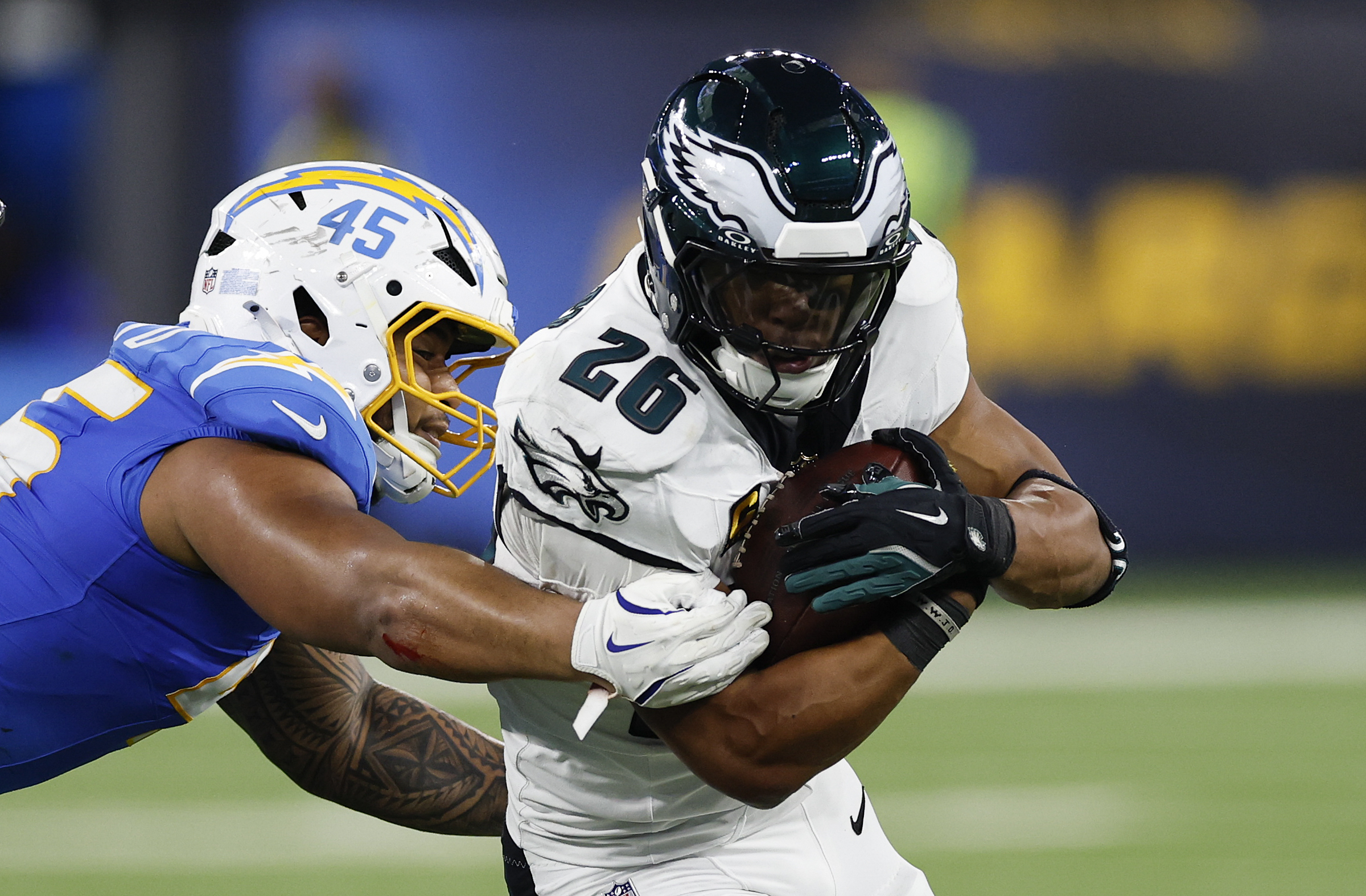
Saquon Barkley showed enticing glimmers of his previous form against the Chargers.
Building off successes
Barkley’s performance on Monday was the second time he eclipsed 100 rushing yards this season. His season-best showing came against his former team in the Week 8 win over the Giants, in which he rushed for 150 yards and a 65-yard touchdown on 14 carries.
Both efforts featured a common thread. Barkley generated most of his output when Hurts was lined up under center — 116 yards and the touchdown on eight carries against the Giants and 102 yards and the touchdown on 10 carries against the Chargers. Explosive touchdown aside, Barkley had three additional runs for double-digit yardage from under-center handoffs on Monday.
Barkley’s success from under center has been a season-long trend. According to Next Gen Stats, he has averaged 4.9 yards per carry on those looks while posting 3.6 yards per carry from the shotgun. He’s had far more shotgun runs this season — 218 to 82 under center.
Still, in the aftermath of Monday’s game, Sirianni emphasized that explosives can be generated from any alignment.
“Many different ways that you can create explosives in the run game; under center, in the gun, there are screens that are like runs, there are shovels that are like runs, so there are many different ways to go about it,” Sirianni said Wednesday. “I think at the end of the day, there were good schemes introduced by the coaches, and then there was good execution by the players with really good fundamentals. On those particular ones, Saquon found some light and was able to get free and that was huge.”
But the Eagles’ success rushing from under center was undeniable on Monday. Barkley averaged 10.2 yards per carry on those runs including the touchdown and 5.6 yards per carry without it, which is more than a 1½-yard increase over his season average.
On his 10 handoffs from the shotgun, Barkley rushed for 20 total yards (2.0 yards per carry).
According to Mailata, some of the under center runs were more effective because of the element of uncertainty that is instilled within the defense on those plays.
“There’s so much more complementary stuff from under center than there is in gun or pistol, in my honest opinion,” Mailata said. “I think that’s why we execute better. I think for us up front, it gets us on our angles, because they truly have to read the defense. The defense truly has to read or play their gap first or play us, whatever their assignment is. It’s like a second delay before they can commit to it. Is it a run? Is it a pass? And that’s why I think our plays under center are a lot better than the guns.”
That second delay helps the run blockers time their combination blocks better, Mailata said. Additionally, one wrinkle that the Eagles added on some of the early under-center runs was keeping the receivers tight to the formation. That opened up the possibility for the Eagles to run a crack toss, adding yet another option that defenses must honor at the snap.
The under-center alignment doesn’t exclusively benefit the blockers, according to Mailata. He surmised that Barkley’s positioning in the backfield allows him to see a more complete picture of the defense, too.
“I think his vision, because he’s coming downhill, especially on outside zone, or even inside zone,” Mailata said. “He can see everything. If there’s leakage, he can bounce out and make a play. When we’re in gun, I feel like he has to come down here, but now his vision is there.”
Throughout the season, Barkley has been asked about the disparity in his output between the two alignments. He continues to downplay that discrepancy. While he acknowledged on Friday what the numbers show, Barkley stressed that he doesn’t have a personal preference between runs from the shotgun vs. under center.
“I feel like for me, personally, it doesn’t make a difference,” Barkley said. “It’s just running the football. Is there a difference? Yes. Outside zone is different. There is a difference of how you set it up, get your shoulders squared, what you’re seeing, what you’re reading. But to me — I’m not trying to brag here — I was drafted very high in this league from Penn State and the last two years in college, I never went under center. Then when you get into the NFL, you have to adapt and learn how to run under center.
“I feel comfortable in either, but I guess the numbers are showing that. Again, the player I want to be, it shouldn’t be that way. It shouldn’t be we’re having more success in one way, because ultimately the run game falls down on me. So, yes, we’re producing underneath, but I’ve got to find ways to help us produce from gun, too. Because it gives us a better balance, too, when you’re going against defenses.”
The shotgun runs aren’t going away. Certain concepts, like zone reads and run-pass options, are executed out of the shotgun. The Eagles must run the ball from the shotgun to set up those other plays throughout the game.
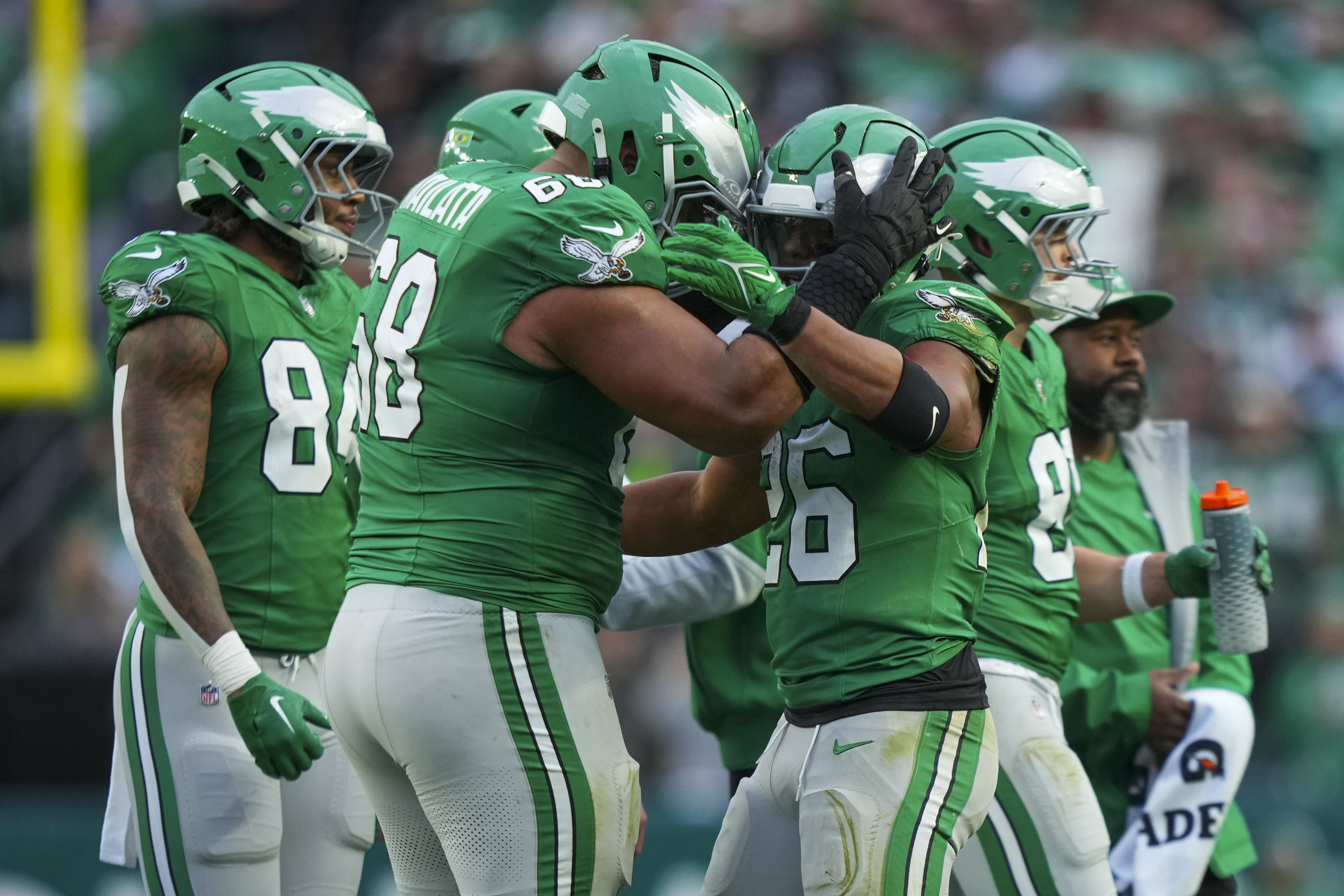
Jordan Mailata (68) has noted that there’s a difference in approach for defenses when Saquon Barkley (26) runs out of shotgun.
But would Mailata advocate for more under-center runs going forward?
“I’ll be honest,” Mailata said. “Depending on the flow of the game, we would advocate for more under center stuff. But in the mode that we’re in right now, just be a player. Let the coaches coach and let the players play.”
Later in the season, longer runs?
Aside from the backward hurdle, no image better defines Barkley’s historic 2024 than his 78-yard touchdown run in the NFC divisional-round win over the Los Angeles Rams in mid-January.
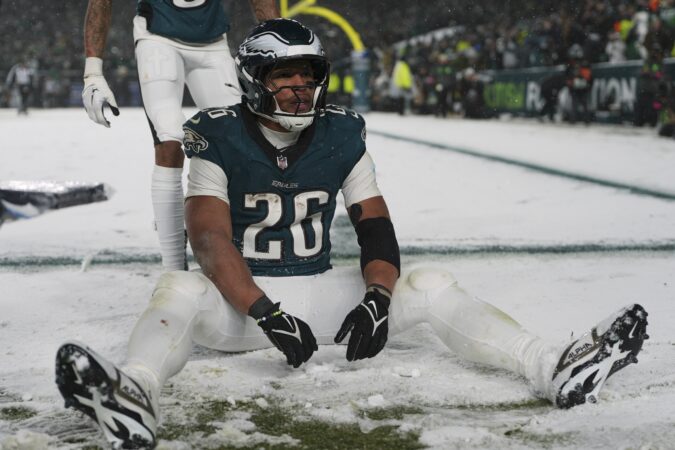
Late in the fourth quarter, Barkley became a human snowplow as he rattled off a touchdown run that tied the longest in his career. In the week leading up to the game, Barkley reminisced fondly about the snow games he played in his youth. The snow-globe-like environment at the Linc lived up to Barkley’s expectations in the aftermath.
“The atmosphere was crazy, man,” Barkley said after the game. “It was insane. Got a smile on my face thinking about it. This is what you dream about. This is why I came to Philly. Wanted to be a part of games like this. I’m just happy to be able to be a part of it.”
Barkley could be a part of more of those games, even before he reaches the playoffs. The Eagles are done playing in domes for the rest of the regular season. While the snow in Sunday’s forecast is limited to the morning, according to AccuWeather, the high in the afternoon is 28 degrees with 16 mph winds making the Real Feel temperature 15 degrees.
When the weather cools off, Barkley tends to thrive. In the months of December and January throughout his eight-year career, he has averaged 4.7 yards per carry in the regular season, which is a slightly better clip than each of the rates he managed in the preceding months.
He also tends to earn more carries in December and January, averaging 17.9 carries per game, which is also a greater rate than September, October, and November.
window.addEventListener(“message”,function(a){if(void 0!==a.data[“datawrapper-height”]){var e=document.querySelectorAll(“iframe”);for(var t in a.data[“datawrapper-height”])for(var r,i=0;r=e[i];i++)if(r.contentWindow===a.source){var d=a.data[“datawrapper-height”][t]+”px”;r.style.height=d}}});
window.addEventListener(“message”,function(a){if(void 0!==a.data[“datawrapper-height”]){var e=document.querySelectorAll(“iframe”);for(var t in a.data[“datawrapper-height”])for(var r,i=0;r=e[i];i++)if(r.contentWindow===a.source){var d=a.data[“datawrapper-height”][t]+”px”;r.style.height=d}}});
window.addEventListener(“message”,function(a){if(void 0!==a.data[“datawrapper-height”]){var e=document.querySelectorAll(“iframe”);for(var t in a.data[“datawrapper-height”])for(var r,i=0;r=e[i];i++)if(r.contentWindow===a.source){var d=a.data[“datawrapper-height”][t]+”px”;r.style.height=d}}});
window.addEventListener(“message”,function(a){if(void 0!==a.data[“datawrapper-height”]){var e=document.querySelectorAll(“iframe”);for(var t in a.data[“datawrapper-height”])for(var r,i=0;r=e[i];i++)if(r.contentWindow===a.source){var d=a.data[“datawrapper-height”][t]+”px”;r.style.height=d}}});
“Real football happens late in the season,” Barkley said in late November. “And that’s when you want to be at your best, especially when you get into that run to go into the playoffs and then getting into the playoffs.”
That trend isn’t limited to Barkley. Among a pool of running backs with at least 300 December carries per month since 2015, December and January is the most productive period compared to earlier in the regular season. Those high-volume backs averaged 4.5 yards per attempt and 14.7 carries per game in December and January.
Can Barkley continue that trend for the rest of the regular season, from Philly, to Landover, Md., to Buffalo, N.Y., and back to Philly? Mailata is optimistic that the Eagles can build off of the wrinkles they implemented in the run game on Monday, even though he said some of the concepts “got a little bit stale” in the second half.
Plus, the Eagles still need to improve at putting themselves in situations to run the ball. Barkley had eight carries for negative yardage or no gain on Monday night, which isn’t exactly a recipe for sticking with the run.
“That doesn’t put us in prime position to continue to get more runs called,” Barkley said. “It’s easier to run the ball when it’s second-and-6 and second-and-5 rather than second-and-11 or second-and-10.”
But Mailata was adamant that Barkley can’t do it alone. If the run game is going to breathe life back into the Eagles offense, it’s going to take the entire unit.
“The guy’s always looking for solutions,” Mailata said. “He’s always going to blame himself, which I hate that, because you can watch the film and we’re one block away up front. As tiring as that is, he’s going to take the blame for that, because he didn’t make a move. And I’m just like, ‘You can’t do everything. You’re not Superman.’”
Three seismic developments occurred over the past three Eagles games, all losses. Seismic, because the developments involved the Eagles’ best current defender, the best receiver in club history, and perhaps the best player in the history of the franchise.
First, in an apparent response to complaints about his role in the offense, the Eagles began force-feeding wide receiver A.J. Brown. He was targeted 35 times in the three games in question. He’d been targeted 37 times in the five previous games.
Second, right tackle Lane Johnson, who might be the greatest Eagle in history, injured his foot. The Eagles win 66% of the time when Johnson plays, while their winning percentage without him is 34%, and falling.
Third, defensive tackle Jalen Carter was either hurting or absent. Carter missed the loss Monday night against the Chargers after undergoing a procedure on his shoulders, which had rendered him virtually useless in the two previous games.
Nothing can be done to remedy the conditions of Johnson or Carter. Johnson issued a cryptic Twitter/X message after Monday night’s game that indicated his return might come sooner than later, and he wasn’t put on injured reserve, but he’s going to miss Sunday’s game against the visiting Raiders. Carter isn’t on IR either, but he’s out, too.
Which leaves A.J.
He was getting fewer and fewer looks. The ball just wasn’t finding him. He wanted the ball more. Hell, I wanted him to get the ball more. After all, with due respect to the golden oldies and one year of Terrell Owens, the Eagles have never had a receiver quite like him.
But getting it to him has spelled disaster.
Me, Me, Me
After the Eagles beat Tampa Bay in Game 4, Brown, who had two catches for 7 yards, posted a passage of scripture that indicated he was being ignored: “If you’re not welcomed, not listened to, quietly withdraw. Don’t make a scene. Shrug your shoulders and be on your way.”
Three games later, after a win at Minnesota, Brown posted, “Using me but not using me.” He had four catches for 121 yards and two touchdowns.
A week later, after a win in Green Bay, Brown was seen on a livestream playing a video game with a friend and saying the offense was a “(bleep)-show” and that he was “struggling” after catching two passes for 13 yards.
Brown might have been indiscrete, but he wasn’t wrong: He needs to be included, if not featured, in order for the Eagles’ offense to function properly. What the past three games proved is that he does not need to be featured in order for the football team to win.
A day after the “(bleep)-show” scandal, very publicly, on the sideline at practice, owner Jeffrey Lurie convinced Brown to stop publicly humiliating the team. Brown has gone silent.
He also has been targeted a whopping 46 times. The first 11 times came against the Lions, a game the Eagles won.
That was also the last time the Eagles had a healthy Lane Johnson and Jalen Carter.
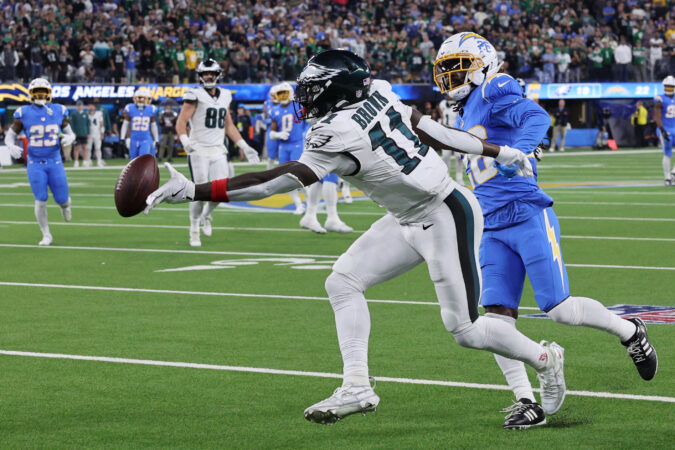
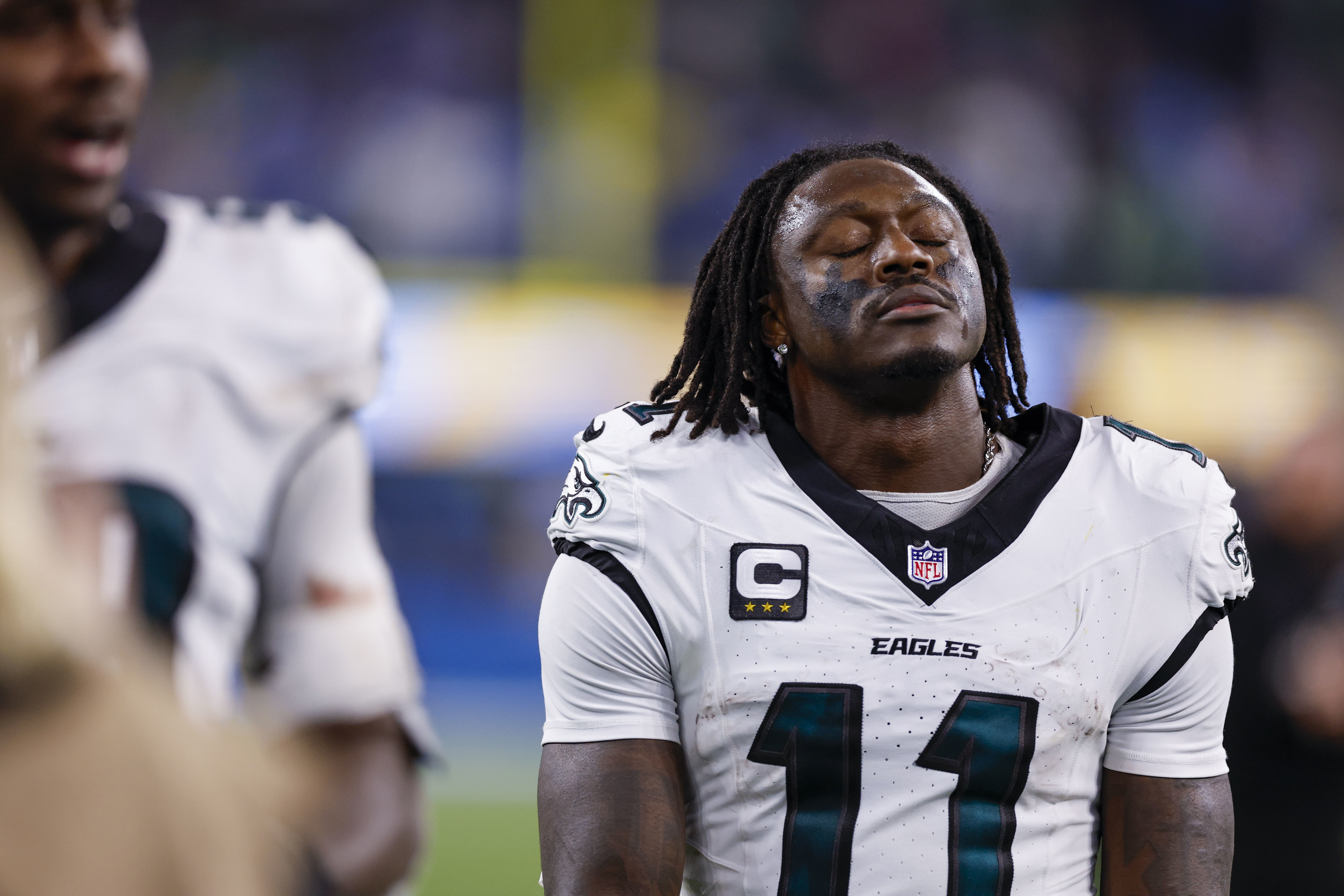
Eagles wide receiver A.J. Brown has been targeted 35 times over the past three games, up from 37 in his previous five.
Correlation equaling causation?
How do the issues fit together?
Well, while the Eagles beat the Lions, they scored only 16 points — not exactly an offensive feast. They won not because Brown was targeted 11 times but because Carter had his second-best game of the season and the defense surrendered just nine points. The Birds scored just 10 in Green Bay the week before, but Carter & Co. limited the Packers to seven.
The offense wasn’t humming, but neither was it hurting the cause, in large part because the offensive line remained viable.
Before Johnson was injured, Hurts had committed three turnovers in 10 games. The team was 8-2.
Since Johnson’s injury, Hurts has seven turnovers in three games. The team is 0-3.
The defense has been pretty good in the past three games, but just before Carter wore down it had again developed into the type of elite unit that led the Eagles to their second Super Bowl win.
The defense has not been good enough to compensate for Hurts, who is playing the worst football of his career.
But is it because he’s trying to force the ball to A.J. Brown?
What about us?
Before Brown’s bellyaching got him more looks, bookend receiver DeVonta Smith was on pace for a career-high 1,241 receiving yards. That pace has been cut in half in the past four games.
Asked Friday why his inclusion and production had slowed, Smith paused, then replied:
“Um … ” five seconds passed as he looked into the distance and mused: ” … I don’t know. I don’t have an answer for that.”
No one can accuse Smith of being indiscrete.
Similarly, tight end Dallas Geodert was on pace for 72 catches, 13 more than his career best, and in a contract year, to boot. His pace has slowed by about 25%.
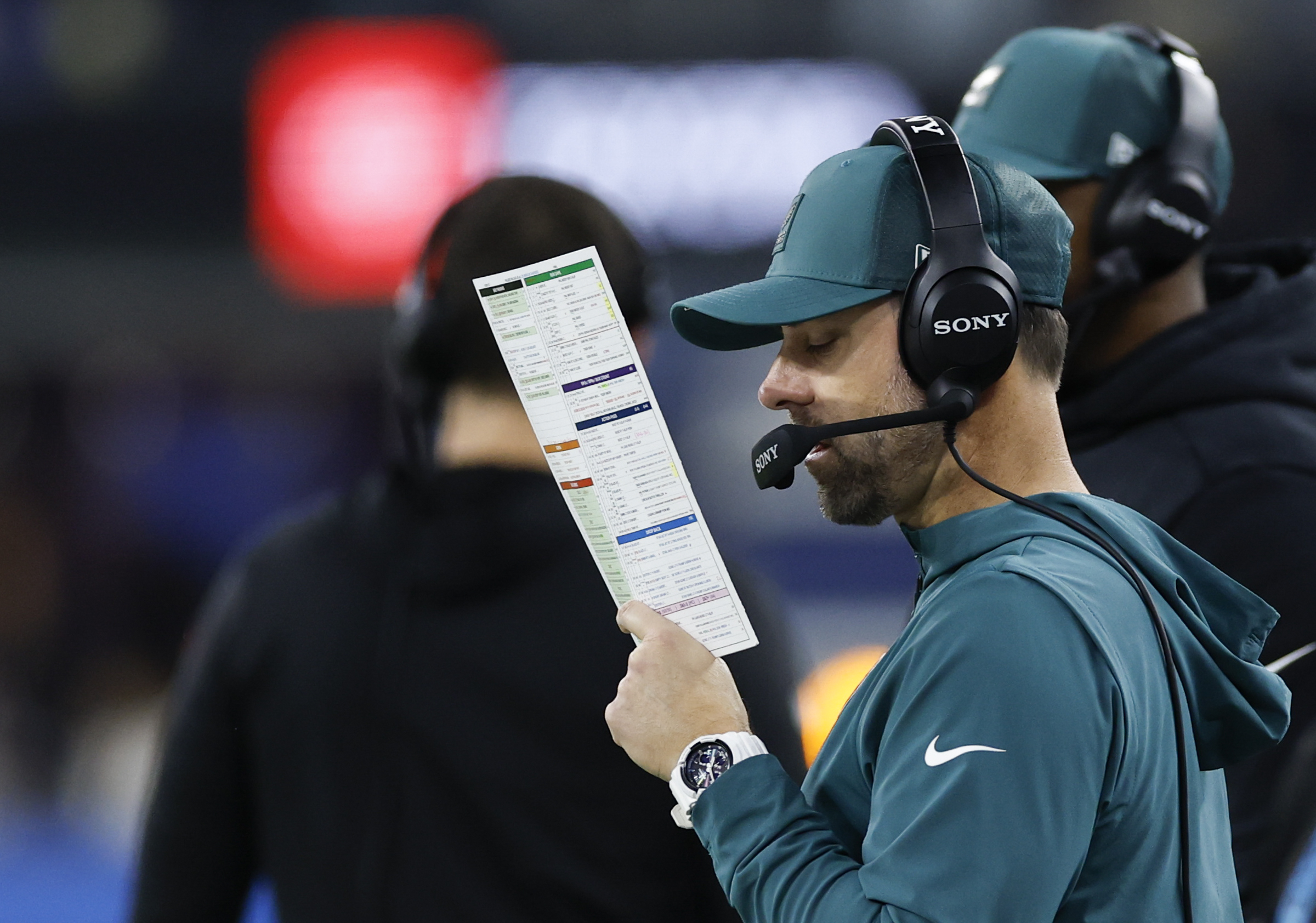
First-time playcaller Kevin Patullo runs an offense that is both predictable and flavorless.
Meanwhile, after projecting to fewer than 900 yards for 2025, Brown now has a chance for a fourth consecutive 1,000-yard season.
There are plenty of issues with the Eagles’ offense.
The biggest problem: The offensive line, due to rampant injury and aggregate fatigue, has declined from being the league’s best to being the league average.
Another problem: First-year offensive coordinator Kevin Patullo, who has never before called plays, runs an offense that is both predictable and flavorless.
The most recent problem: Hurts has become hesitant unless he’s throwing to Brown, usually on the first read.
All three of those problems get diminished the minute Lane Johnson returns. All three of those problems matter less if Jalen Carter is on the field.
But the only thing the Eagles can do Sunday is let the ball find A.J. when the ball finds A.J.
We’ll show you a photo taken in the Philly-area, you drop a pin where you think it was taken. Closer to the location results in a better score. This week’s theme is all about Hanukkah. Good luck!
Round #11
Question 1
Where is this synagogue?
Loading…
ClickTap on map to guess the location in the photo
ClickTap again to change your guess and hit submit when you're happy
You will be scored at the end. The closer to the location the better the score
Levi Jiang / Staff
Pretty good/Not bad/Way off! Your guess was from the location.Spot on! Your guess was exactly at the location. Here's also where a random selection of Inquirer readers guessed.
This is Temple Beth Zion-Beth Israel on South 18th Street. The synagogue was formed through the 1964 merger of Beth Zion (created in 1946) and Beth Israel (created in 1840).
Quiz continues after ad
Question 2
Where can you find this yellow statue?
Loading…
Tom Gralish / Staff Photographer
Pretty good/Not bad/Way off! Your guess was from the location.Spot on! Your guess was exactly at the location. Here's also where a random selection of Inquirer readers guessed.
The OY/YO Statue is located outside the Weitzman National Museum of American Jewish History. According to the museum, “YO” references the greeting, while “OY” is a common Yiddish phrase.
Quiz continues after ad
Question 3
Where is this deli?
Loading…
Michael Klein / Staff
Pretty good/Not bad/Way off! Your guess was from the location.Spot on! Your guess was exactly at the location. Here's also where a random selection of Inquirer readers guessed.
This is Koch's Deli located on Locust Street in West Philly. The deli was created in 1966 by Sidney and Frances Koch and is known for its stacked sandwiches.
Your Score
ARank
Amazing work. You've achieved the miracle of the eight days!
BRank
Good stuff. You've lit most of the candles.
CRank
C is a passing grade, but most candles remain unlit.
DRank
D isn’t great. You just missed all eight nights!
FRank
We don’t want to say you failed, but you didn’t not fail.
You beat % of other Inquirer readers.
We’ll be back next Saturday for another round of Citywide Quest.
As shoppers flood stores across the country during the year’s biggest shopping season, retail workers are bracing for what many describe as the most demanding — and often demoralizing — stretch of the job.
“It magnifies everything,” said Nick Leighton, host of the podcast Were You Raised by Wolves?, which he cohosts with comedian Leah Bonnema. Together, they dissect etiquette and the subtleties of social behavior.
“People are stressed, they’re busy, they’re frazzled,” he said. “When that happens, we tend to forget other people exist.”
Whether it’s gridlocked parking lots or shelves picked clean, the holiday retail environment can become a pressure cooker where manners evaporate quickly.
November and December have long driven retail sales, prompting companies to hire large numbers of seasonal workers to manage the surge. These workers often absorb the brunt of shoppers’ frustration. Some customers treat employees as extensions of a corporation rather than as people.
This year, there might be even fewer employees to handle crowds of holiday shoppers. Companies say they could cut back on seasonal workers because of economic uncertainty, while at the same time, shoppers are expected to spend more than they did last year.
“Yelling at a worker isn’t doing anything,” Leighton noted. “Everyone else is busy, too. … Your shopping isn’t more important than the next person’s.”
Here are some expert suggestions on how customers can be kinder, more polite, and more empathetic toward the people helping to execute all those holiday lists.
Manners apply everywhere
People who behave courteously generally do so everywhere, while those who are rude in stores often have similar issues in their personal lives, etiquette consultants say.
“We do not pay retail workers to be a therapist, a social worker, or a punching bag. It’s not appropriate, and it’s not fair,” said Jodi R.R. Smith, president of Mannersmith Etiquette Consulting in Massachusetts. Long before she advised companies on etiquette, Smith worked several holiday seasons at a Hallmark store.
Plan your shopping trip and leave time
Smith advises shoppers to plan ahead — knowing who is on their list, which stores they need to visit and when they will go. “Set yourself up for success,” she said. “Bring water or a snack. Do not go hungry.”
Timing matters as well. “Ask yourself, ‘When is the best time to go?’” she said. “Weekends are busier, lines are longer, and parking is tighter. If possible, go on a Wednesday morning when the store opens.”
Establish a little rapport
Smith suggests making friendly eye contact with workers, offering a greeting, and using humor to diffuse tense moments. If someone in line becomes irritable, she said, a gentle joke about needing a nap can reset the mood.
“We don’t have control over others’ behavior, but we certainly do over ours,” she said.
Shoppers can help reduce frustration by asking questions — and recognizing that workers may not have all the answers, said Elizabeth Medeiros, 59, who spent more than 35 years in retail in New York and the Boston area.
Some companies are acting preemptively. Delta Air Lines is encouraging kindness between customers and employees with a “Centennial Cheer” program. It says it will recognize “100,000 acts of kindness” with Holiday Medallion cards, which can be redeemed for gifts.
Manage expectations
Customers often assume store employees can control everything from inventory and discounts to restocking speed and even the behavior of other shoppers, she said.
They can’t.
“Customers are focused, especially during the holidays,” said Medeiros, a former district sales manager and longtime store manager. “They’re checking off lists and looking for deals, and anything that interferes with that throws them off.”
Holiday work is already tough for staff under the best of circumstances, she noted. “Everyone is often stretched thin. Breaks get skipped, shifts get extended unexpectedly, and six-day workweeks become common.”
As Smith puts it: “Clerks are not the CEO. Don’t expect someone making hourly wages in December to change a store policy you don’t like.”
Training workers to defuse tension
Adam Lukoskie, executive director of the National Retail Federation Foundation, emphasized that most customer interactions remain positive.
“In the news you might see a couple of incidents, but most experiences are OK,” he said. “We work hard to provide a high-quality environment.”
The foundation’s RISE Up skills-training courses now reach more than 80,000 people annually. “It gives associates the tools to provide customer service and to understand that an angry customer is usually mad at the problem, not at them,” he said.
Above all, he said, shoppers should reframe how they view the person behind the counter.
“Act as if the person helping you is your daughter or son, or your mother or father. Not just someone there to do a task for you.”
This week I have invited two reporters to help answer one of the many SEPTA questions we hear.
Have your own thoughts or other questions? Fill in the box at the end!
.inno-chat__body {
border-radius: 12px;
}
Evan Weiss
Deputy Features Editor
Before we get to the question at hand, can you both describe your backgrounds with taking SEPTA?
Beatrice Forman
Food & Dining Reporter
I've been carless since I moved to Philly seven years ago, and take SEPTA pretty much everywhere unless I'm with my boyfriend, who drives. Then I'm a passenger princess.
Henry Savage
Now Reporter
I ride SEPTA bus and subway every week to The Inquirer offices, plus when I’m going out at night. Cheap, and fairly quick travel!
Beatrice Forman
Food & Dining Reporter
“Fairly quick” is doing a lot of heavy lifting.
Henry Savage
You're not wrong lol.
Evan Weiss
Okay, the question is… What’s the etiquette when someone is blasting music on the El with no headphones — speak up or suffer?
Beatrice Forman
I think it's one of those things where it's well within your rights to speak up about someone blasting music on the El (especially in the morning), but do you really want to be known as the curmudgeon who chastised someone over something like this? I'd be so afraid of getting sniped and posted on TikTok.
Beatrice Forman
Have you ever spoken up about this IRL?
Henry Savage
I’ve seen full-blown phone calls on speaker and people smoking out of glass instruments, but to be honest with you, I haven't said anything.
Henry Savage
What's your go-to solution when this happens to you? I'm partial to blasting my headphones.
Beatrice Forman
I wish I was the type of person who could just turn my AirPods up full volume to drown it out, but I am also a 5-foot-tall woman alone on public transit, so the head has to stay on a swivel. Also, sometimes those things die!
Beatrice Forman
I was recently on the BSL home from an assignment in South Philly around the time classes let out, and this kid was blasting Kendrick Lamar loud enough for all the train car to hear, so I ended up politely offering him a pair of corded earbuds to use to see if he'd take the hint.
Henry Savage
Nice work!
Beatrice Forman
He did not take the hint, but I was proud of myself for trying.
Beatrice Forman
Do you think there's a right way to nudge a person to, perhaps, not smoke on the train? Or blast their playlist?
Henry Savage
I think going the solutions-oriented approach of, "Hey, looks like you could use some headphones?" is a good call.
Henry Savage
In reality, what's the right way? Probably being as polite as possible while knowing the person will likely rebuff you. That being said, sometimes all it takes is for one person to call someone out!
Henry Savage
Or should we just invoke "Think of the children and older riders!" Smoking in front of children is the worst look.
Evan Weiss
Smoking is really the most annoying. I've been on the train with my daughter and we just had to move cars — not worth the possible contention with her there.
Henry Savage
Yeah, if things go dicey with your kid there… good call.
Beatrice Forman
I do think sometimes a very pointed and pissed off "Can you not? There's people around" would probably be soooo cathartic though, and would get the point across. Especially for smoking. No one likes that but the smoker.
Henry Savage
The moments you think about an hour afterward and say, "Dang! I wish I said that back there!"
Beatrice Forman
I think it's tough because so much of the issues with these things on SEPTA can be brushed off as just the side effects of living in a city and can feel kind of elitist to complain about, but also, counterpoint: none of this should be happening enough to warrant an Inquirer column.
Evan Weiss
True! FWIW I do think it's far better on the bus than the train — probably because you have the driver upfront to tell people off.
Henry Savage
Yes, I will say that taking the bus there's more enforcement in my opinion. Some SEPTA bus drivers are known to pull the bus over and not leave until the issue is resolved, like smoking, fare evasion, or loud speakers!
Beatrice Forman
I've also seen this happen on the bus, Evan. Mostly music though, not the smoking.
Evan Weiss
Bea, I'm still impressed you said something! I don't think I've ever seen that happen
Henry Savage
Yeah, that's a true Philly move.
Beatrice Forman
It was like exposure therapy for my anxiety.
Beatrice Forman
I will probably never do it again though. Not the hero we quite need.
Henry Savage
In a perfect world? Every single smoker and to a lesser extent music blaster would be confronted, and realistically fined or reprimanded for the behavior. In this economy? I’m keeping it moving and cranking my music.
Henry Savage
If my headphones die, I suffer in — well, not silence — but the blaring sounds of AI voice over TikTok slop videos.
Evan Weiss
Any last words, Bea?
Beatrice Forman
Be the change you wish to see in the world and don't smoke or make me listen to your bad taste in TikToks on SEPTA.
This conversation has been edited for length.
What other Very Philly Questions should we address?
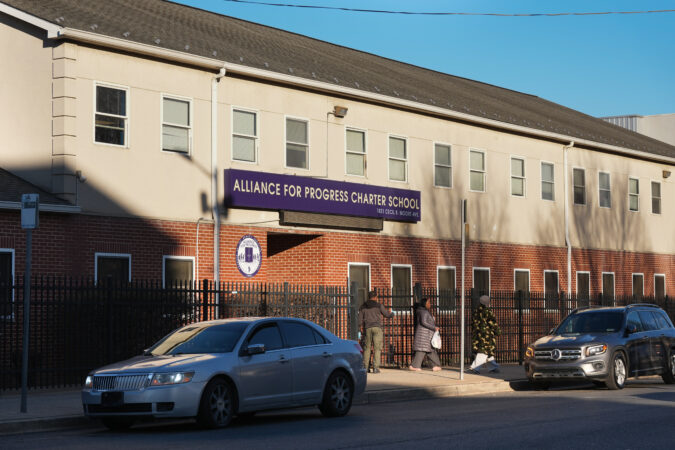
When Raheem Harvey discovered possible improprieties at his new employer, Alliance for Progress Charter School in North Philadelphia, he sounded the alarm.
Harvey, the director of business and compliance, notified officials earlier this year about what he saw as significant issues, he said: violations of state and local bidding requirements, a contract issued without board approval, and board members’ failure to disclose personal relationships with potential vendors.
He flagged a student enrollment problem and skipped payroll taxes.
Alliance for Progress’ leader and its board brushed him off, Harvey said in a recently filed whistleblower lawsuit. Ultimately, they disciplined him and, after threatening to demote him, he resigned.
School officials say Harvey’s story is untrue.
“We categorically deny all the allegations asserted by this disgruntled former employee,” Stacey Scott, CEO of Alliance for Progress, said in a statement.
Officials from the Philadelphia School District’s charter school office had no comment.
What are the allegations?
Harvey started working at Alliance for Progress, on Cecil B. Moore Avenue, in February.
By August, he began raising issues to his bosses, Harvey’s lawyers said in a lawsuit filed in Philadelphia Common Pleas Court.
They included a contract issued to a vendor for services related to a school playground — worth more than $75,000 — that was awarded without competitive bidding.
Alliance for Progress, Harvey said, “directly awarded the contract to a vendor whose principal is a personal friend of one of the AFPCS board members. The board member did not recuse himself from discussions or decisions related to the contract, despite the clear conflict of interest created by his close relationship with the vendor” — a violation of ethics rules, he said.
Harvey also said the school failed to follow state rules around enrollment procedures. Alliance for Progress says it provides enrollment preference for siblings of students. But, Harvey said, the school ignored him “and failed to apply its own sibling-preference policy to the sibling of a currently enrolled student. Instead, AFPCS placed the sibling on a waitlist and later pressured the child’s parents to withdraw the enrollment application.”
Scott, Harvey said, also violated federal privacy laws by providing someone outside the organization access to a student’s educational records — including academic and disciplinary records — without parental consent.
School officials also used Alliance for Progress credit cards to purchase food and other items through their personal accounts, according to the lawsuit complaint,“allowing them to aggregate rewards points and loyalty benefits that they did not return to AFPCS.”
Alliance for Progress also paid a retired employee for work with a paper check instead of going through its payroll system, the complaint alleges.
The school “issued payments in this manner to enable the retired employee to avoid paying taxes on the wages she received,” the lawsuit said.
‘Hostile and retaliatory’
According to Harvey, once he reported the compliance problems, Scott and other officials began targeting him — suggesting he was opening packages addressed to the school without authorization and purchasing office supplies without proper authorization.
Harvey was shut out of leadership meetings, the suit said, then reprimanded for failing to show up to a meeting, entering Scott’s office without permission, and placing an unauthorized order.
“Increasingly hostile and retaliatory conduct” was directed toward him, Harvey said. He was suspended for 10 days, and had his keys to the administrative offices taken away.
In September, a human resources official told Harvey “that he should forget about the compliance issues he had raised because they had been resolved” but provided no evidence. Harvey said she told him Alliance for Progress planned to demote him.
The school’s “wholesale failure to remediate the compliance concerns” and its “refusal to implement safeguards to protect him” from retaliatory treatment ultimately caused Harvey to resign on Sept. 30,according to the lawsuit.
Harvey is demanding reinstatement, plus back pay, benefits, seniority rights, and damages.