Blog

  • Israel says it has killed a top Hamas commander in Gaza

    Israel says it has killed a top Hamas commander in Gaza

    JERUSALEM — Israel on Saturday said it killed a top Hamas commander in Gaza after an explosive device detonated and wounded two soldiers in the territory’s south.

    Hamas in a statement did not confirm the death of Raed Saad. It said a civilian vehicle had been struck outside Gaza City and asserted it was a violation of the ceasefire that took effect on Oct. 10.

    Saad served as the Hamas official in charge of manufacturing and previously led the militant group’s operations division. The Israeli statement described him as one of the architects of the Oct. 7, 2023, attack that sparked the war, and said that he had been “engaged in rebuilding the terrorist organization” in a violation of the ceasefire.

    The Israeli strike west of Gaza City killed four people, according to an Associated Press journalist who saw their bodies arrive at Shifa Hospital. Another three were wounded, according to Al-Awda hospital.

    Israel and Hamas have repeatedly accused each other of truce violations.

    Israeli airstrikes and shootings in Gaza have killed at least 386 Palestinians since the ceasefire took hold, according to Palestinian health officials. Israel has said recent strikes are in retaliation for militant attacks against its soldiers, and that troops have fired on Palestinians who approached the Yellow Line between the Israeli-controlled majority of Gaza and the rest of the territory.

    Israel has demanded that Palestinian militants return the remains of the final hostage, Ran Gvili, from Gaza and called it a condition of moving to the second and more complicated phase of the ceasefire. That lays out a vision for ending Hamas’ rule and seeing the rebuilding of a demilitarized Gaza under international supervision.

    The initial Hamas-led 2023 attack on southern Israel killed around 1,200 people and took 251 hostages. Almost all hostages or their remains have been returned in ceasefires or other deals.

    Israel’s two-year campaign in Gaza has killed more than 70,650 Palestinians, roughly half of them women and children, according to the territory’s Health Ministry, which does not distinguish between militants and civilians in its count. The ministry, which operates under the Hamas-run government, is staffed by medical professionals and maintains detailed records viewed as generally reliable by the international community.

    Much of Gaza has been destroyed and most of the population of over 2 million has been displaced. Humanitarian aid entry into the territory continues to be below the level set by ceasefire terms, and Palestinians who lost limbs in the war face a shortage of prosthetic limbs and long delays in medical evacuations.

  • VA plans to abruptly eliminate tens of thousands of healthcare jobs

    VA plans to abruptly eliminate tens of thousands of healthcare jobs

    The Department of Veterans Affairs plans to abruptly eliminate as many as 35,000 healthcare positions this month, mostly unfilled jobs including doctors, nurses, and support staff, according to an internal memo, VA staffers, and congressional aides.

    The cuts come after a massive reorganization effort already resulted in the loss of almost 30,000 employees this year.

    Agency leaders have instructed managers across the Veterans Health Administration, the agency’s healthcare arm, to identify thousands of openings that can be canceled. Employees warn that the contraction will add pressure to an already stretched system, contributing to longer wait times for care.

    The decision comes after Veterans Affairs Secretary Douglas A. Collins, under political pressure from Congress, backed away from a plan to slash 15% of the agency’s workforce through mass firings. Instead, VA lost almost 30,000 employees this year from buyout offers and attrition.

    The agency hopes that the cuts will reduce the healthcare workforce to as little as 372,000 employees, a 10% reduction from last year, according to a memo shared with regional leaders last month and obtained by the Washington Post. Details of the cuts came into focus in recent days, according to 17 staffers at VA and congressional aides who spoke on the condition of anonymity because they didn’t have permission to share plans.

    VA spokesperson Pete Kasperowicz confirmed the planned cuts for unfilled positions. He said the healthcare system is eliminating about 26,400 of its open jobs, which he described as “mostly COVID-era roles that are no longer necessary.”

    “The vast majority of these positions have not been filled for more than a year, underscoring how they are no longer needed,” he wrote in response to questions. “This move will have no effect on VA operations or the way the department delivers care to Veterans, as we are simply eliminating open and unfilled positions that are no longer needed.”

    The nation’s largest government-run healthcare system has struggled to fill vacancies amid a broader national shortage of healthcare workers and a strained federal workforce. Job applications to the agency have also fallen 57% from last year, according to the agency’s workforce report last month.

    This reorganization comes in advance of an expected announcement next week that Collins plans to also shrink the network of 18 regional offices that administer the nation’s VA hospitals and medical centers, according to four people familiar with the plan. Staff at those regional offices help determine policies and manage staffing. Collins and others have been critical of the agency’s top-heavy administrative offices, arguing that staffing cuts there will free up more resources for healthcare.

    The health system grew by tens of thousands of employees under the Biden administration as more veterans enrolled in VA healthcare after passage of the PACT Act, which expanded benefits for veterans exposed to toxic burn pits. Then-secretary Denis McDonough urged veterans to be seen by VA doctors rather than request referrals to private practitioners outside the system.

    But the Trump administration has said it wants more veterans to seek treatment outside the government system. Political appointees at VA and their allies have also said they favor a leaner healthcare workforce because they think physicians and other healthcare providers could be more productive, said one former appointee who is close to the Trump team.

    Collins stood down from planned mass firings this year after a bipartisan mix of lawmakers expressed concerns about cuts affecting patient care. The agency said mission-critical positions were exempted from the buyouts and retirement offers.

    Since then, lawmakers have sought greater oversight of the agency’s staffing plans. In the agreement to reopen the government last month, lawmakers allocated $133 billion in discretionary funding for the VA with conditions, including that the agency could not reduce staffing for suicide prevention programs, would provide updates on staffing counts, and would maintain the staff necessary to meet certain thresholds for processing benefits and providing healthcare.

    The House also approved a measure Thursday overturning President Donald Trump’s executive order eliminating union rights at federal agencies, including VA, where the union had said it was harder to protect jobs without collective bargaining.

    Thomas Dargon Jr., deputy general counsel of the American Federation of Government Employees, which represents more than 320,000 VA employees, said the union has not been consulted by the agency about the cuts but has heard about concerns from its members.

    “The VA has been chronically understaffed for years, and employees are obviously going to be facing the brunt of any further job cuts or reorganization that results in employees having to do more work with less,” Dargon said.

    Sharda Fornnarino, a VA nurse in Colorado and local head of her nurses’ union, said her facility continues to lack the necessary staff to keep up with demand, and she urged lawmakers to restore collective bargaining so nurses could advocate for safer working conditions. The measure is unlikely to pass the Republican-held Senate.

    “We’re going to continue to do more with less,” Fornnarino said. “We’re going to continue to be overworked.”

    Meanwhile, at the VA’s regional offices, leadership is determining which roles they would need to cancel, and several healthcare workers said they had been warned their hospitals would be affected. Regional leaders were told to ensure their organizational charts are updated by next week, according to the memo reviewed by the Post.

    In Phoenix, 358 openings will be eliminated, including nurses and doctors, according to a nurse who said the losses will hit as they are already behind in scheduling doctors appointments.

    “They specifically said no department would be spared,” she said.

    In another Mountain West hospital, healthcare workers were told at a town hall last week that no current employees would lose their jobs, though if anyone leaves, they would need to determine whether they could keep those jobs, according to a recording of the meeting.

    The bad news arrived last Friday for employees of the VA San Diego healthcare system, in an exclamation mark-filled email from director Frank Pearson.

    He wrote that he’d been expecting this year to fill 734 job vacancies with new nurses, doctors, and other staff, to help care for the almost 90,000 veterans that the San Diego system regularly serves. But sometime this fall, he wrote, higher-ups decided to “do some housekeeping and cleanup of the books” — informing the San Diego system that it only had the budget to retain 4,429 employees going into fiscal year 2026.

    That meant, Pearson wrote in bold, all-caps, underlined letters, that “322 VACANT POSITIONS need to be eliminated.”

    One of the VA employees who received the email said that, in the mental health section alone, there were 78 open positions as of this month — about half of which will now go away. Currently, the employee noted, veterans in the San Diego area are waiting between 60 and 90 days to access VA mental health services.

    Staff are already strained and exhausted after a difficult year, the employee said, and were counting on reinforcements.

    “We are all doing the work of others to compensate,” she said. “The idea that relief isn’t coming is really, really disappointing.”

  • Union finalize trade to send Jakob Glesnes to the Los Angeles Galaxy

    Union finalize trade to send Jakob Glesnes to the Los Angeles Galaxy

    Three days after reports surfaced that the Union received a massive offer for Tai Baribo from Eastern Conference rival D.C. United, the club is trading one of its stars to Los Angeles.

    The Galaxy will send the Union up to $2.2 million in general allocation money for Jakob Glesnes, the Union announced Monday. Los Angeles will also acquire the homegrown rights to Union academy forward Jamir Johnson in the trade, which was first reported by The Athletic on Saturday.

    Half of the general allocation money is guaranteed, while the other half is depends on how Glesnes performs with his new club. The Union are guaranteed $500,000 in 2026 and $600,000 in 2027. The Union did not disclose what metrics Glesnes needs to meet with the Galaxy to send up to $1.1 million in additional money to the Union. The Union will also receive a sell-on percentage for any future transactions the Galaxy make involving Johnson.

    Glesnes was the cornerstone of the Union’s back line this season, pairing with breakout star Olwethu Makhanya to lead the league’s stingiest defense. The Union conceded 35 goals, fewest in MLS, on their way to winning the 2025 Supporters’ Shield. Glesnes signed a contract extension in August, guaranteeing his deal through 2027, with an option for 2028.

    The Norwegian center back joined the Union from Norway’s Strømsgodset in 2020. Glesnes, 31, made 209 starts across all competitions in six seasons with the Union. He has been an MLS All-Star in each of the last three seasons and finished second in the 2025 Defensive Player of the Year vote behind Vancouver’s Tristan Blackmon.

    Union’s Jakob Glesnes defends Inter Miami’s Lionel Messi during a game earlier this season.

    Johnson, 17, logged two goals and an assist in 12 games this season with MLS Next Pro’s Union II. He also played alongside Union teammate Cavan Sullivan for the U.S. under-17 men’s national team at the FIFA U-17 World Cup in Qatar.

    The Union have been active in the transfer market since they were knocked out of the playoffs by New York City FC in the Eastern Conference semifinals. With sporting director Ernst Tanner still on administrative leave while he’s investigated for alleged misconduct by the league, the Union have signed forward Ezekiel Alladoh for a club-record $4.5 million fee. They also are in the process of sending last season’s leading goal scorer, Baribo, to D.C. for $4 million, as reported by The Athletic on Friday.

    The Galaxy finished second-to-last in the Western Conference last season, but are only a season removed from winning the MLS Cup. Glesnes would be a key piece for a team looking to bounce back from a down year. The Union are not scheduled to face the Galaxy in the 2026 regular season.

    The Union will begin their 2026 campaign with a match against Defense Force FC of Trinidad & Tobago in Concacaf Champions Cup play on Feb. 18 in Trinidad, with a return leg set for Feb. 26 in Chester. The club’s MLS season begins on Feb. 21 with a match at D.C. United. It will open its home schedule on March 1 against New York City FC.

  • Affable comedy acting legend Dick Van Dyke turns 100 years old

    Affable comedy acting legend Dick Van Dyke turns 100 years old

    Comedy icon Dick Van Dyke celebrated his 100th birthday on Saturday, hitting the century mark some six decades after he sang and danced with Julie Andrews in Mary Poppins and starred in his self-titled sitcom.

    “The funniest thing is, it’s not enough,” Van Dyke said in an interview with ABC News at his Malibu, Calif., home. “A hundred years is not enough. You want to live more, which I plan to.”

    As part of the celebration of Van Dyke’s birthday this weekend, theaters around the country are showing a new documentary about his life, Dick Van Dyke: 100th Celebration.

    Van Dyke became one of the biggest actors of his era with The Dick Van Dyke Show, which ran from 1961-66 on CBS; appeared with Andrews as a chimney sweep with a Cockney accent in the 1964 Disney classic Mary Poppins; and, in his 70s, played a physician-sleuth on Diagnosis: Murder.

    Also a Broadway star, Van Dyke won a Tony Award for Bye Bye Birdie to go with a Grammy and four Primetime Emmys. In 1963, he starred in the film version of Bye Bye Birdie.

    Just last year, he became the oldest winner of a Daytime Emmy, for a guest role on the soap Days of Our Lives.

    In the 1970s, he found sobriety after battling alcoholism and spoke out about it at a time when that was uncommon to do.

    Now that he has hit triple digits, Van Dyke said he’s gotten some perspective on how he used to play older characters.

    “You know, I played old men a lot, and I always played them as angry and cantankerous,” he told ABC News. “It’s not really that way. I don’t know any other 100-year-olds, but I can speak for myself.”

    He recently imparted wisdom about reaching the century mark in his book, 100 Rules for Living to 100: An Optimist’s Guide to a Happy Life. He credited his wife, 54-year-old makeup artist and producer Arlene Silver, with keeping him young.

    “She gives me energy. She gives me humor, and all kinds of support,” he told ABC News.

    Van Dyke was born in West Plains, Mo., in 1925, and grew up “the class clown” in Danville, Ill., while admiring and imitating the silent film comedians.

    He told ABC News he started acting when he was about 4 or 5 years old in a Christmas pageant. He said he was the baby Jesus.

    “I made some kind of crack, I don’t know what I said, but it broke the congregation up,” he said. ”And I liked the sound of that laughter.”

    And what’s hard about being 100?

    “I miss movement,” he told ABC News. “I’ve got one game leg from I don’t know what.”

    “I still try to dance,” he said with a laugh.

  • 2 U.S. service members, one American civilian killed in ambush in Syria, U.S. Central Command says

    2 U.S. service members, one American civilian killed in ambush in Syria, U.S. Central Command says

    DAMASCUS, Syria — President Donald Trump said Saturday that “there will be very serious retaliation” after two U.S. service members and one American civilian were killed in an attack in Syria that the United States blames on the Islamic State group.

    “This was an ISIS attack against the U.S., and Syria, in a very dangerous part of Syria, that is not fully controlled by them,” he said in a social media post.

    The American president told reporters at the White House that Syria’s president, Ahmed al-Sharaa, was “devastated by what happened” and stressed that Syria was fighting alongside U.S. troops. Trump, in his post, said al-Sharaa was “extremely angry and disturbed by this attack.”

    The two service members killed were members of the Iowa National Guard, according to a person briefed on the situation who was granted anonymity because they did not have permission to speak publicly.

    U.S. Central Command said three service members were also wounded in an ambush Saturday by a lone IS member in central Syria. Trump said the three “seem to be doing pretty well.” The U.S. military said the gunman was killed.

    The attack on U.S. troops in Syria was the first with fatalities since the fall of President Bashar Assad a year ago.

    “There will be very serious retaliation,” Trump said on his Truth Social platform.

    The Pentagon’s chief spokesperson, Sean Parnell, said the civilian killed was a U.S. interpreter. Parnell said the attack targeted soldiers involved in the ongoing counterterrorism operations in the region and is under active investigation.

    The shooting took place near historic Palmyra, according to the state-run SANA news agency, which earlier said two members of Syria’s security force and several U.S. service members had been wounded. The casualties were taken by helicopter to the al-Tanf garrison near the border with Iraq and Jordan.

    The Britain-based Syrian Observatory for Human Rights said the attacker was a member of the Syrian security force.

    Syria’s Interior Ministry spokesperson Nour al-Din al-Baba said a gunman linked to IS opened fire at the gate of a military post. He added that Syrian authorities are looking into whether the gunman was an IS member or only carried its extreme ideology. He denied reports that suggested that the attacker was a security member.

    Later al-Baba clarified that the attacker was a member of the Internal Security force in the desert, adding that he “did not have any command post” within the forces nor was he a bodyguard for the force commander.

    Al-Baba added in an interview with state TV that some 5,000 members have joined Internal Security forces in the desert and they are evaluated on a weekly basis. He added that three days ago, an evaluation was made of the attacker and it turned out that he might have extreme ideology. A decision was expected to be issued regarding him on Sunday but “the attack occurred on a Saturday which is a day off for state institutions.”

    U.S. Defense Secretary Pete Hegseth posted on X: “Let it be known, if you target Americans — anywhere in the world — you will spend the rest of your brief, anxious life knowing the United States will hunt you, find you, and ruthlessly kill you.”

    The U.S. has hundreds of troops deployed in eastern Syria as part of a coalition fighting IS.

    The U.S. had no diplomatic relations with Syria under Assad, but ties have warmed since the fall of the five-decade Assad family rule. Al-Sharaa made a historic visit to Washington last month where he held talks with Trump. It was the first White House visit by a Syrian head of state since the Middle Eastern country gained independence from France in 1946 and came after the U.S. lifted sanctions imposed on Syria during the Assads’ rule.

    Al-Sharaa led the rebel forces that toppled Bashar Assad in December 2024 and was named the country’s interim leader in January. Al-Sharaa once had ties to al-Qaida and had a $10 million U.S. bounty on his head.

    Last month, Syria joined the international coalition fighting against the IS as Damascus improves its relations with Western countries following the ouster of Assad when insurgents captured his seat of power in Damascus.

    IS was defeated on the battlefield in Syria in 2019 but the group’s sleeper cells still carry out deadly attacks in the country. The United Nations says the group still has between 5,000 and 7,000 fighters in Syria and Iraq.

    U.S. troops, which have maintained a presence in different parts of Syria — including Al-Tanf garrison in the central province of Homs — to train other forces as part of a broad campaign against IS, have been targeted in the past. One of the deadliest attacks occurred in 2019 in the northern town of Manbij when a blast killed two U.S. service members and two American civilians as well as others from Syria while conducting a patrol.

  • Belarus frees Nobel Prize laureate Bialiatski, opposition figure Kolesnikova as U.S. lifts sanctions

    Belarus frees Nobel Prize laureate Bialiatski, opposition figure Kolesnikova as U.S. lifts sanctions

    VILNIUS, Lithuania — Belarus freed Nobel Peace Prize laureate Ales Bialiatski, key opposition figure Maria Kolesnikova, and dozens of other prisoners on Saturday, capping two days of talks with Washington aimed at improving ties and getting crippling U.S. sanctions lifted on a key Belarusian agricultural export.

    The U.S. announced earlier Saturday that it was lifting sanctions on Belarus’ potash sector. In exchange, President Alexander Lukashenko pardoned 123 prisoners, Belarus’ state news agency, Belta, reported.

    A close ally of Russia, Minsk has faced Western isolation and sanctions for years. Lukashenko has ruled the nation of 9.5 million with an iron fist for more than three decades, and the country has been repeatedly sanctioned by the West for its crackdown on human rights and for allowing Moscow to use its territory in the 2022 invasion of Ukraine. Belarus has released hundreds of prisoners since July 2024.

    John Coale, the U.S. special envoy for Belarus who met with Lukashenko in Minsk on Friday and Saturday, described the talks to reporters as “very productive” and said normalizing relations between Washington and Minsk was “our goal,” Belta reported.

    “We’re lifting sanctions, releasing prisoners. We’re constantly talking to each other,” Coale said, adding that the relationship between the U.S. and Belarus was moving from “baby steps to more confident steps” as they increased dialogue, according to the Belarusian news agency.

    Among the 123 prisoners were a U.S. citizen, six citizens of U.S. allied countries, and five Ukrainian citizens, a U.S. official told the Associated Press in an email. The official, who spoke on condition of anonymity to discuss private diplomatic negotiations, described the release as “a significant milestone in U.S.-Belarus engagement” and “yet another diplomatic victory” for U.S. President Donald Trump.

    The official said Trump’s engagement so far “has led to the release of over 200 political prisoners in Belarus, including six unjustly detained U.S. citizens and over 60 citizens of U.S. Allies and partners.”

    Bialiatski, Kolesnikova among those freed

    Pavel Sapelka, an advocate with the Viasna rights group, confirmed to the AP that Bialiatski and Kolesnikova were among those released.

    Bialiatski, a human rights advocate who founded Viasna, was in jail when he was awarded the Nobel Peace Prize in 2022 along with the prominent Russian rights group Memorial and Ukraine’s Center for Civil Liberties. He was later convicted of smuggling and financing actions that violated public order — charges that were widely denounced as politically motivated — and sentenced to 10 years in 2023.

    Bialiatski told the AP by phone Saturday that his release after 1,613 days behind bars came as a surprise — in the morning, he was still in an overcrowded prison cell.

    “It feels like I jumped out of icy water into a normal, warm room, so I have to adapt. After isolation, I need to get information about what’s going on,” said Bialiatski, who seemed energetic but pale and emaciated in post-release videos and photos.

    He vowed to continue his work, stressing that “more than a thousand political prisoners in Belarus remain behind bars simply because they chose freedom. And, of course, I am their voice.”

    Kolesnikova, meanwhile, was a key figure in the mass protests that rocked Belarus in 2020, and is a close ally of an opposition leader in exile, Sviatlana Tsikhanouskaya.

    Known for her close-cropped hair and trademark gesture of forming a heart with her hands, Kolesnikova became an even greater symbol of resistance when Belarusian authorities tried to deport her in September 2020. Driven to the Ukrainian border, she briefly broke away from security forces at the frontier, tore up her passport and walked back into Belarus.

    The 43-year-old professional flutist was convicted in 2021 on charges including conspiracy to seize power and sentenced to 11 years in prison.

    Others who were freed

    Among the others who were released, according to Viasna, was Viktar Babaryka — an opposition figure who had sought to challenge Lukashenko in the 2020 presidential election, widely seen as rigged, before being convicted and sentenced to 14 years in prison on charges he rejected as political.

    Viasna reported that the group’s imprisoned advocates, Valiantsin Stefanovic and Uladzimir Labkovich, and prominent opposition figure Maxim Znak were also freed. But it later said it was clarifying its report about Stefanovic’s release, and Bialiatski told the AP that Stefanovic had not been freed, though he hopes he will be soon.

    Most of those released were sent to Ukraine, Franak Viachorka, Tsikhanouskaya’s senior adviser, told the AP.

    “I think Lukashenko decided to deport people to Ukraine to show that he is in control of the situation,” Viachorka said.

    Eight or nine others, including Bialiatski, were being sent to Lithuania on Saturday, and more prisoners will be taken to the Baltic country in the next few days, Viachorka said.

    Ukrainian authorities confirmed that Belarus had handed over 114 civilians. Ukrainian President Volodymyr Zelensky confirmed that five of them are Ukrainian nationals.

    Freed Belarusian nationals “at their request” and “after being given necessary medical treatment” will be taken to Poland and Lithuania, Ukrainian authorities said.

    Lukashenko wants rapprochement with the West

    When U.S. officials last met with Lukashenko in September, Washington said it was easing some of the sanctions on Belarus. Minsk, meanwhile, released more than 50 political prisoners into Lithuania, pushing the number of prisoners it had freed since July 2024 past the 430 mark.

    “The freeing of political prisoners means that Lukashenko understands the pain of Western sanctions and is seeking to ease them,” Tsikhanouskaya, the opposition leader in exile, told the AP on Saturday.

    She added: “But let’s not be naive: Lukashenko hasn’t changed his policies, his crackdown continues and he keeps on supporting Russia’s war against Ukraine. That’s why we need to be extremely cautious with any talk of sanctions relief, so that we don’t reinforce Russia’s war machine and encourage continued repressions.”

    Tsikhanouskaya also described European Union sanctions against Belarusian potash fertilizers as far more painful for Minsk that the U.S. ones, saying that while easing U.S. sanctions could lead to the release of political prisoners, European sanctions should be used to push for long-term, systemic changes in Belarus and the end of the war in Ukraine.

    Sanctions have hit key export hard

    Belarus, which previously accounted for about 20% of global potash fertilizer exports, has faced sharply reduced shipments since Western sanctions targeted state producer Belaruskali and cut off transit through Lithuania’s port in Klaipeda, the country’s main export route.

    “Sanctions by the U.S., EU and their allies have significantly weakened Belarus’ potash industry, depriving the country of a key source of foreign exchange earnings and access to key markets,” Anastasiya Luzgina, an analyst at the Belarusian Economic Research Center BEROC, told the AP.

    “Minsk hopes that lifting U.S. sanctions on potash will pave the way for easing more painful European sanctions; at the very least, U.S. actions will allow discussions to begin,” she said.

    The latest round of U.S.-Belarus talks also touched on Venezuela, as well as Russia’s ongoing invasion of Ukraine, Belta reported.

    Coale told reporters that Lukashenko had given “good advice” on how to address the Russia-Ukraine war, saying that Lukashenko and Russian President Vladimir Putin were “longtime friends” with “the necessary level of relationship to discuss such issues.”

    “Naturally, President Putin may accept some advice and not others,” Coale said.

    The U.S. official told the AP that “continued progress in U.S.-Belarus relations” also requires steps to resolve tensions between Belarus and neighboring Lithuania, which is a member of the EU and NATO.

    The Lithuanian government this week declared a national emergency over security risks posed by meteorological balloons sent from Belarus.

    The balloons forced Lithuania to repeatedly shut down its main airport, stranding thousands of people. Earlier this year, Lithuania temporarily closed its border with Belarus, and Belarusian authorities responded by threatening to seize up to 1,200 Lithuanian trucks they said were stuck in Belarus.

    The U.S. official said improving ties between U.S. and Belarus will require “positive action to stop the release of smuggling balloons from Belarus that affect Lithuanian airspace and resolve the impoundment of Lithuanian trucks.”


  • Philadelphia Orchestra builds up all the color and majesty one could hope for in Handel’s ‘Messiah’

    Philadelphia Orchestra builds up all the color and majesty one could hope for in Handel’s ‘Messiah’

    Making Handel’s Messiah a major occasion — rather than a mere Christmas revisitation — is close to impossible, though not at the Philadelphia Orchestra’s Friday opening of a three-performance Kimmel Center run.

    For years, the orchestra imported one guest conductor after another.

    Now, Messiah is led by artistic director Yannick Nézet-Séguin, who began as a choral conductor in Montreal and happens to have the inside track on excellent solo singers, thanks to that little old opera company where he also works 80 miles up the road.

    It was a highly compelling performance that’s likely to gain more strength on Saturday and Sunday.

    Yannick Nézet-Séguin conducts the Philadelphia Orchestra during a performance of Handel’s “Messiah” at the Kimmel Center for the Performing Arts on Friday.

    Handel’s epic mosaic of 52 arias, recitatives, choruses, and instrumental interludes has changed enormously over the years; shape-shifting from Victorian grandeur to lean, faster performances more in keeping with the 18th century in which this masterpiece was born.

    With the 40-voice Philadelphia Symphonic Choir rather than the cast-of-hundreds Mormon Tabernacle Choir (which recorded the piece with the Philadelphia Orchestra in 1958), Messiah is now relieved of extraneous sound, and reveals more of its once well-hidden essence.

    Nonetheless, well-matched soloists — vocally and stylistically — are too much to hope for in this busy season, though enjoying their differences among them was definitely possible.

    Jakub Józef Orliński (left), countertenor, and Lucy Crowe (right), soprano, sing with the Philadelphia Orchestra during a performance of Handel’s “Messiah” at the Kimmel Center for the Performing Arts on Friday.

    Tone, agility, diction, and meaningful vocal ornaments were all of a piece with the much-honored British soprano Lucy Crowe, the most seasoned Handelian among them, which was also evident in the way she made upward vocal leaps (normally just a technical feat) charged with emotion.

    The least likely Messiah soloist was also one of the biggest names, baritone Quinn Kelsey, whose every Verdi and Puccini role at the Metropolitan Opera is full of new dimensions. Yet Handel’s vastly different skill requirements were also reasonably well in hand. His distinctive theatrical alchemy came alive in recitatives, and ultimately, in his final aria “The Trumpet Shall Sound” (the trumpet itself being capably played by Travis Peterson). Intricate vocal writing once prompted slowed-down tempos to ease vocal discomfort — which is now heard as a sign of defeat.

    Quinn Kelsey, baritone, sings with the Philadelphia Orchestra during a performance of Handel’s “Messiah” at the Kimmel Center for the Performing Arts on Friday.

    Instead, Kelsey lightened his voice and maintained both the tempo and the integrity of the music.

    Similar moments were heard from the popular Polish countertenor Jakub Józef Orliński, who has plenty of Messiah mileage though his voice is evolving toward a deeper, richer sound ― heard especially in “He Was Despised” ― suggesting his future lies in less athletic repertoire. He also has a way of swaying to the music. Whether it’s calculated stagecraft or the inspiration of the moment, his already-strong stage presence doesn’t need it.

    Frédéric Antoun, tenor, sings with the Philadelphia Orchestra during a performance of Handel’s “Messiah” at the Kimmel Center for the Performing Arts on Friday.

    Tenor Frédéric Antoun seemed a bit Messiah-weary (it’s a busy season) suggesting that his pitch will be steadier and vocal ornaments more spontaneous in future, more rested performances.

    Choral sections — the most beloved parts of Messiah — are often sung for their considerable effect but were treated to detailed coloring of the words, underscored by sympathetic treatment of the accompanying instrumental writing. This element, not often heard in quickly assembled Messiahs, played a major part in giving this performance an air of occasion.

    As is sometimes the case in Nézet-Séguin choral outings, his use of light, shade, quietude and force can be puzzling. At such points, the myriad inflections can seem fussy, or more about creating an overall musical contour than making a rhetorical statement.

    The Philadelphia Symphonic Choir sings with the Philadelphia Orchestra during a performance of Handel’s “Messiah” at the Kimmel Center for the Performing Arts on Friday.

    At times, it all becomes clear in the long term.

    Example: The “Hallelujah” chorus was more meaningful than bombastic, perhaps to keep the following music from seeming anticlimactic. Then, the final “Amen” chorus at the end of the piece felt suitably conclusive with all of the color and majesty one could hope for.

    The fact that the Philadelphia Symphonic Choir (Joe Miller, director) was able to execute many minute details — plus projecting superb vocal blends that concluded several choruses — shows how the group has emerged into a first-class ensemble.

    A concertgoer holds a program before the start of the performance of Handel’s “Messiah” by the Philadelphia Orchestra at the Kimmel Center for the Performing Arts on Friday.

    Word to the wise: Even longtime Kimmel Center goers are advised to leave extra time to navigate Philadelphia’s holiday traffic and sometimes-delayed public transportation. I emerged from the City Hall subway stop in such a state of lateness that I attempted to hijack an Uber discharging passengers at the Ritz-Carlton. It didn’t work.

    Other latecomers and I got to Marian Anderson Hall on foot just as concertmaster David Kim arrived onstage. Whew.

    Subsequent performances of Handel’s “Messiah” are Dec. 13, 8 p.m., and Dec. 14, 2 p.m., Marian Anderson Hall, 300 S. Broad St., Philadelphia. Tickets: $29-240. philorch.ensembleartsphilly.org

  • Ocean City Mayor Jay Gillian was slapped with a $600k suit over Wonderland debts

    Ocean City Mayor Jay Gillian was slapped with a $600k suit over Wonderland debts

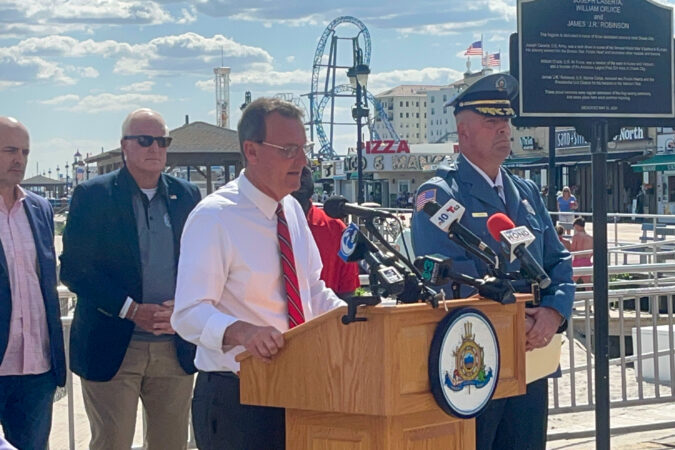
    Ocean City Mayor Jay A. Gillian has been slapped with a civil suit for nearly $600,000 for an unpaid debt.

    Filed in Cape May County Superior Court by the 1st Bank of Sea Isle City and the Patricia Gillian Irrevocable Trust, the suit seeks payment for a 2024 court judgment related to Gillian’s closed Wonderland Pier amusement park.

    “Nothing has been paid on account of the Judgment,” the suit states, according to court records.

    Gillian, who has been mayor since 2010 and is now seeking a fourth term, filed for bankruptcy earlier this month. He could not be reached for comment about the suit.

    The Gillian family had owned Wonderland from 1965 to 2021, when it had defaulted on $8 millions in loans, and sold the amusement park to developer Eustace Mita, of Icona Resorts.

    Mita, who has had plans to transform the site into a $150 million luxury hotel, and eventually townhomes, is also named in the suit. He told the Press of Atlantic City that he is not liable for Gillian’s Wonderland debts from before Mita bought the property.

    After a City Council vote earlier this month, the property remains under review by the Ocean City Planning Board to determine whether it should be rehabilitated or rezoned for new development.

    Patricia Gillian was married to Gillian’s father, Roy Gillian, former mayor and founder of Gillian’s Wonderland Pier, who died in 2024 at 94.

    The complaint argues that the bank and the trust are owed nearly $600,000 that went to Gillian after the sale of the boardwalk property.

    Earlier this month, Gillian described his declaring bankruptcy as an “extraordinarily difficult decision,” due to a combination of business decisions, personal financial obligations, and outside circumstances, which led to “serious financial strain.”

    “Like many individuals and families across our nation who encounter unexpected hardship, I found myself in a position where traditional methods were no longer viable,” Gillian said. “It is my hope that by being transparent and direct, others facing similar hardships will feel empowered to seek help, take responsible action, and work toward rebuilding.”

    Staff writer Henry Savage contributed to this article.

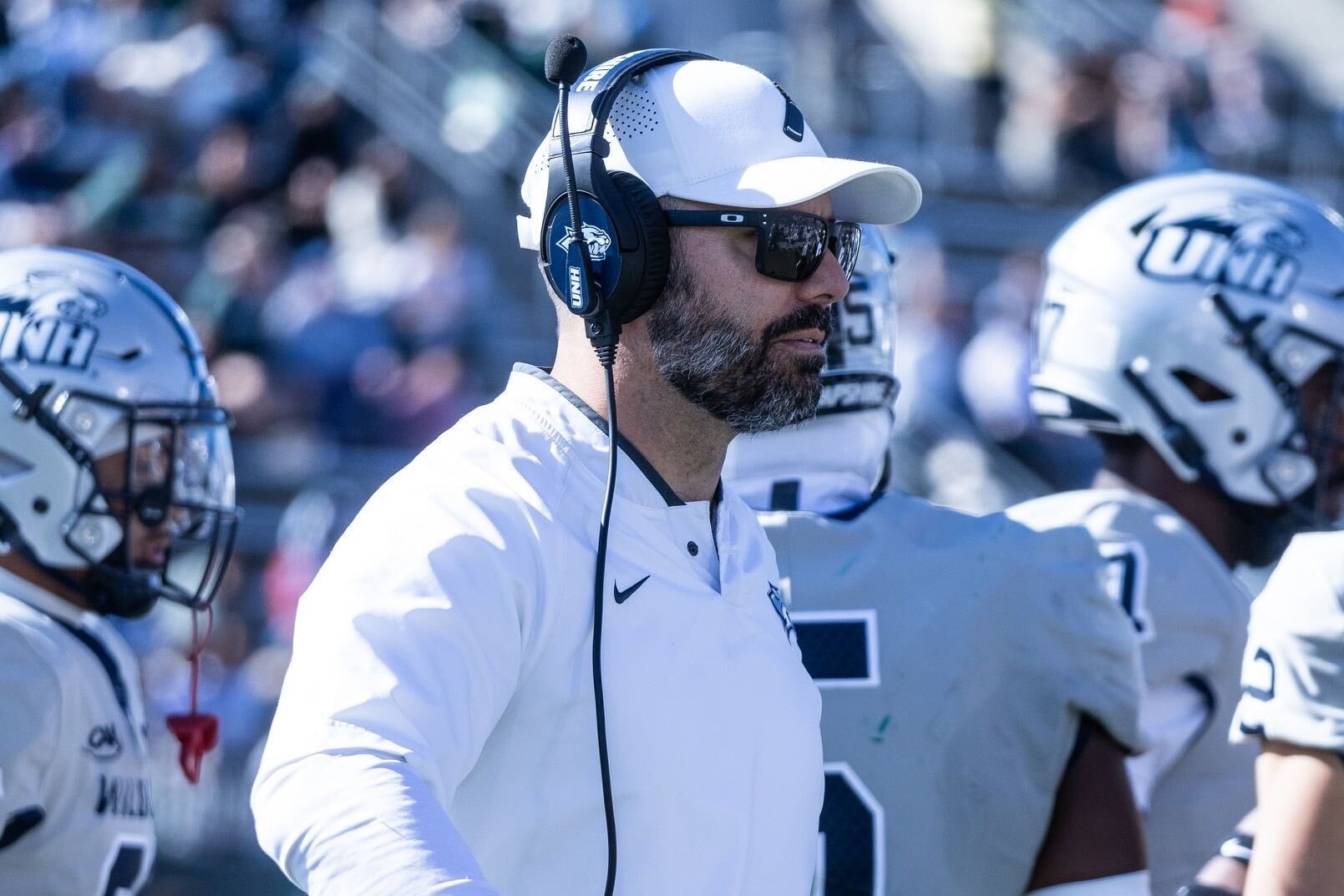
  • Penn names former New Hampshire coach and star QB Rick Santos as its next head coach

    Penn names former New Hampshire coach and star QB Rick Santos as its next head coach

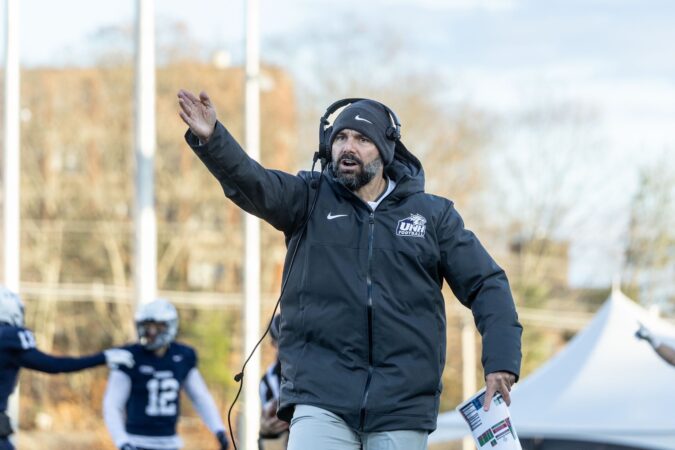
    Former New Hampshire head coach and standout quarterback Rick Santos will serve as the next head coach of Penn football, the university’s athletic department said Saturday in a release.

    Santos will be introduced to the Penn community during a news conference at Franklin field on Tuesday — marking the start of a new era for Quakers football.

    “I am incredibly excited and humbled by the opportunity to lead the football program at the University of Pennsylvania,” Santos said in a statement. “Penn represents excellence at the highest level — academically, athletically, and institutionally — and I am grateful for the trust placed in me to steward such a proud and prestigious program. … I cannot wait to begin this next chapter and fully embrace the Penn football community.”

    Santos takes over for Ray Priore, who announced last month that he would be stepping down after 39 years with the program. Priore led the Quakers for over a decade as head coach, and was an associate head coach for a decade prior. He originally joined the staff in 1987 as the team’s assistant linebacker coach and was a part of 12 Ivy League championships, including two as head coach (2015, 2016).

    In five seasons as head coach at New Hampshire, Santos led the team to a 37-24 overall record, going 28-12 in the Coastal Athletic Association en route to three FCS playoff bids.

    In his first year as a full-time head coach in 2022, the Norwood, Mass., native earned the program a share of the CAA conference title while taking the team to the second round of the FCS playoffs — and earning the CAA Coach of the Year award after finishing the season ranked No. 15 in the nation.

    “We are thrilled to welcome a high-energy, dynamic leader in Rick Santos as the next head coach of Penn Football,” said Alanna Wren, Penn’s Director of Athletics and Recreation. “He is a proven winner, taking New Hampshire to multiple NCAA FCS playoff appearances, and is considered one of the best players in FCS history as a former Walter Payton Award winner. I am confident Rick will have Penn competing for Ivy League championships and postseason appearances in the near future.”

    Penn has hired former New Hampshire coach Rick Santos as the next leader of the Quakers.

    Santos spent the majority of his coaching career at UNH, with the team rising to No. 1 in national rankings when Santos was the wide receivers coach from 2013-2015. From 2016-2018, he had a brief stint with Columbia under former Penn head coach Al Bagnoli before returning to UNH as an associate head coach in 2019.

    “I want to express my deepest gratitude to the University of New Hampshire, a place that has truly been home to me in every sense of the word,” Santos said. “From my time as a student-athlete, to serving as an assistant coach, and ultimately having the honor of leading the program as head coach, UNH has shaped me both professionally and personally.”

    As a player, Santos is “widely regarded as one of the greatest players in FCS history,” according to Penn’s announcement. A four-year starter from 2004-2007, Santos became a three-time all-American, two-time Atlantic 10 offensive player of the year, a CAA co-offensive player of the year, as well as a Walter Payton Award winner in 2006.

    Former New Hampshire quarterback Rick Santos is the new head coach at Penn.

    The former Wildcat led his team to four straight FCS playoff appearances with a 37-14 career record, winning an Atlantic 10 championship and finishing ranked No. 1 nationally in 2005. In 2007, Santos became the fourth ever Wildcat to see his jersey retired, finishing his career leading the program in passing yards (12,189), completions (1,024), and passing attempts (1,498).

    He went undrafted in 2008 and had a short stint with the Kansas City Chiefs before playing in the Canadian Football League.

    “I will forever be grateful to the Wildcat family — our players, staff, alumni, and supporters — for the unwavering support, trust, and belief they showed in me and my family,” Santos added. “The relationships built and the memories created in Durham will always hold a special place in my heart.”

  • Grab a drink and go on a treasure hunt at Fishtown’s new Secondhand Ranch, a thrift store inside a honky-tonk

    Grab a drink and go on a treasure hunt at Fishtown’s new Secondhand Ranch, a thrift store inside a honky-tonk

    Waylon Jennings drawls as customers cradle bottles of Lone Star beer while browsing the racks at Secondhand Ranch — the latest attraction deep in the heart of Fishtown.

    The rough-hewn, outlaw-country theme bar paired with a retail store specializing in secondhand clothing and vintage merchandise opened Dec. 6. It’s set behind saloon-style swinging doors inside the Frank Furness-designed former bank building at Frankford and Girard Avenues, across from Garage, Joe’s Steaks, and Johnny Brenda’s.

    This retail-bar pairing dates to 2020, when founder Josh Sampson opened Garage Sale Vintage in Denver. Sampson describes the idea as “a love letter to the circular economy — with salt on the rim.”

    The three pillars, he said, are sustainability, a focused margarita program, and partnerships with local vendors. He later expanded it to two locations, with a tacos-and-tequilas menu, in Nashville and then to New York.

    Decor items and clothing are shown at the thrift store inside the new Secondhand Ranch in Fishtown.

    Seeking a space in Philadelphia last year, he struck a deal with Alterra Property Group for the Fishtown building. Soon after, he became embroiled in a copyright lawsuit with the operators of Garage, the bar across the street.

    Sampson changed the name and concept for the Philadelphia location. Rather than strictly vintage items, he decided that Secondhand Ranch would be a country bar paired with secondhand retail, with a smattering of vintage items.

    Barn doors separate the bar and retail at Secondhand Ranch in Fishtown.

    The distinction between secondhand and vintage is crucial: “Secondhand is a much broader category,” Sampson said. “With vintage, it’s simple — everything has to be 20 years old or more. Secondhand lets us focus more on sustainability and diverting usable goods from landfills. It also allows for lower price points and a different kind of fun.” Think racks upon racks of T-shirts, sweaters, hats, jeans, button-down shirts, as well as a rodeo’s worth of cowboy boots — all secondhand.

    The retail operation, behind barn doors, is split evenly between in-house curation and a vendor collective, said manager Nikki Gallipoli. Each vendor (such as Zac Cowell, known as VintageZac) manages its own rack in the store — “they come in, sort it, and keep it updated,” she said. Inventory includes vinyl records, books, and knickknacks.

    Decor items and clothing are shown at the thrift store inside the new Secondhand Ranch in Fishtown.

    “Part of the experience is grabbing a drink and going on a treasure hunt,” Gallipoli said.

    A retro-style gift shop within the space focuses on new, non-clothing merchandise such as accessories, novelty items, stickers, matchbooks, and handmade goods. Much of that inventory is sourced from small independent businesses online rather than strictly from Philadelphia suppliers. “The clothing itself isn’t always handmade, but it is always secondhand,” she said.

    Decor and clothing items are shown at the thrift store inside the new Secondhand Ranch in Fishtown.

    Secondhand Ranch leans fully into honky-tonk aesthetics and sound for what Sampson calls “very much the kind of vibe you’d see in Austin or Nashville.”

    The massive bar, set beneath wagon-wheel chandeliers, seats about 30, with an additional 30 to 40 seats spread throughout the room. The former bank vault has been preserved and now functions as cold storage for beer. There are old-fashioned coin-operated games in one corner, and a stage that’s now set up with den-style furniture.

    Jordan Sims tries on a cowboy hat at the thrift shop inside Secondhand Ranch in Fishtown.

    The stage will host live music, scheduled to begin in early February, when the food menu — primarily wild-game sausage, nothing fancy — launches. Right now, hot peanuts are served.

    Lone Star is the beer of choice; it’s part of the citywide special ($10), paired with an infusion shot.

    Customers gather in the lounge at Secondhand Ranch in Fishtown on Dec. 6, 2025.

    “One fun goal we set for ourselves is trying to become the No. 1 Lone Star beer account,” Sampson said. There are 12 beers on tap. Besides Lone Star, the bottle list includes Star and Shiner Bock from Texas, plus elevated local craft options like Tonewood Brewing’s Freshies. “It’s exactly what you’d expect at a honky-tonk,” Sampson said.

    Classic and seasonal margaritas anchor the cocktail program, along with zero-proof options. Programming will include DJ sets, pop-ups, and “Trade-In & Sip” nights, designed to connect the drinking and shopping experiences while emphasizing community engagement. Vendor applications will open online, and a pop-up showcase with margarita specials is planned as part of opening festivities in February.

    Secondhand Ranch, 1148 Frankford Ave., 267-807-13450, is open from noon to midnight Monday, Wednesday, and Thursday, and 11 a.m. to 2 a.m. Friday, Saturday, and Sunday. Closed Tuesdays through December. The retail store closes at 10 p.m. Friday and Saturday, and at 9 p.m. the other days.

    Secondhand Ranch in Fishtown.