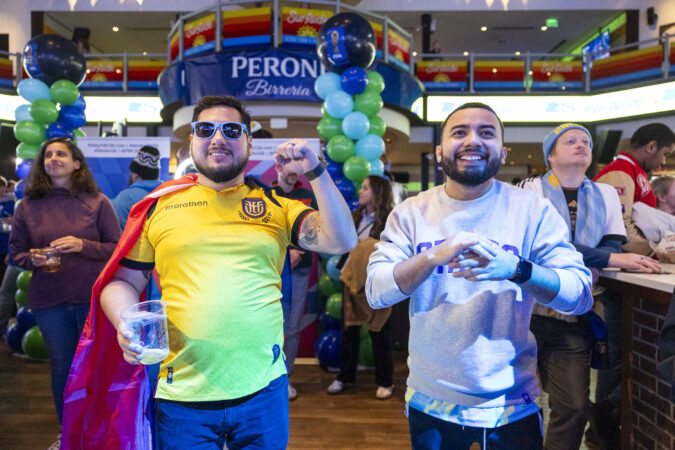
Friday morning at Stateside Live! felt like a fever dream for Philadelphia sports fans.
Pennsylvania governor Josh Shapiro stood above guests on the second floor of the entertainment venue surrounded by Phang, Gritty, Swoop, and the Phanatic as they prepared for the Philadelphia Soccer 2026 World Cup final draw watch party.
“We won this bid to host the FIFA World Cup next year because we’ve got the greatest fans on the face of the earth,” Shapiro said. “The eyes of the world are going to be on Philly next year when we celebrate USA 250. … FIFA World Cup is going to be great. And let’s pray for a USA-Mexico matchup on July 4th right here in Philly.”
Josh Shapiro at the Philadelphia Soccer 2026 World Cup final draw watch party pic.twitter.com/xn7c7ImeCq
“I’ve only been able to see the World Cup one other time and that was when we lived in Orlando and it was amazing,” Gary said. “But again, it’s our hometown now and our hometown team, so it just makes it even more special that it’s going to be here. It’s Philadelphia, it’s the birthplace of our country … and it’s our country’s 250th birthday.”
The final draw was a pivotal moment for fans, as it sets the stage for what is expected to be an unforgettable summer of soccer, with the U.S. joining Canada and Mexico as host nations, and Philly being one of 11 American cities to host games.
To witness history, Jim House, 45, and his son Maxwell, 13, made the trip from Atlantic City.
“We really wanted to check out what’s happening with the World Cup,” Jim said. “It’s a once in a lifetime experience for my son and myself to hang out together and get to see all this.”
Maxwell added: “I’m really excited for the World Cup. I’ll be watching a lot of the games.”
During Friday’s draw, qualified teams — with a few spots left to be decided — were placed into 12 groups of four to make up the 48-team World Cup field. The United States was placed in Group D, alongside Paraguay, Australia, and the winner of a March 2026 UEFA playoff between Turkey, Romania, Slovakia, and Kosovo.
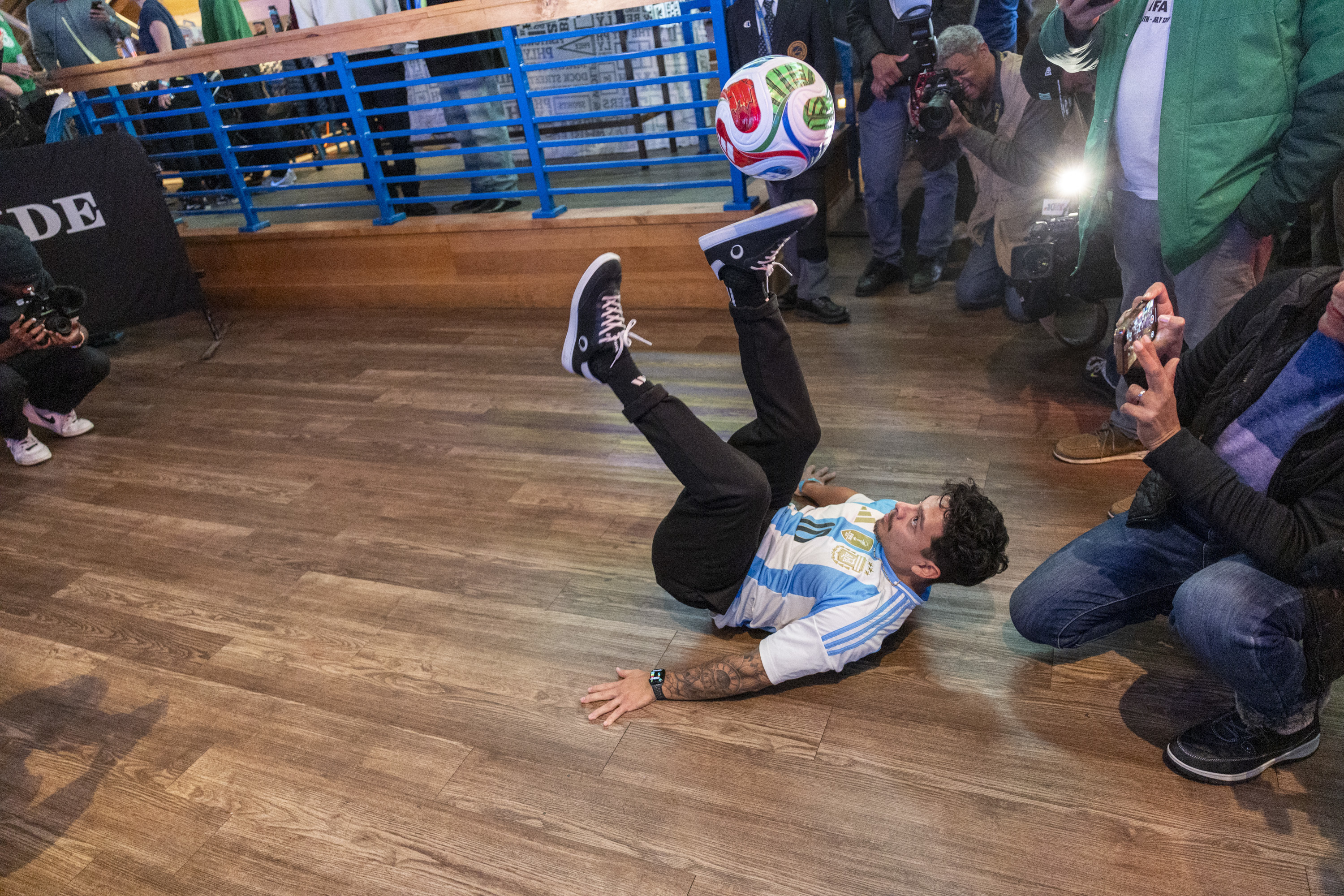
Gabriel Luzbet of Harrison, N.J., juggles a soccer ball during the FIFA World Cup draw watch party at Stateside Live! on Friday.
After seeing their grouping, Chester native Jared Micklos believes the United States has a good chance to advance to the knockout rounds.
“The World Cup is a tricky tournament,” Micklos said. “It’s as much about the teams as it is the order you’re playing in. I think there’s a team we know well. We just played Paraguay and obviously that was a good result for the U.S. The play-in game, if that’s Turkey, I think it gets a lot trickier. That’s a difficult team. So, if they win the playoff, our group probably gets a little bit tougher.”
Philadelphia will host six matches, including five Group Stage games and a round-of-16 match on the Fourth of July. Some fans, like 65-year-old Vorhees native George Flunt, don’t plan on missing a minute. Flunt already has his tickets for all six games, and spent a total of $11,000 to attend.
“It’s a splurge, a little,” Flunt said. “Well worth it. It’s a true world event. We don’t get too many of those here in Philly. To bring in all the different countries together and showcase how good this city is, it really means a lot.”
window.addEventListener(“message”,function(a){if(void 0!==a.data[“datawrapper-height”]){var e=document.querySelectorAll(“iframe”);for(var t in a.data[“datawrapper-height”])for(var r,i=0;r=e[i];i++)if(r.contentWindow===a.source){var d=a.data[“datawrapper-height”][t]+”px”;r.style.height=d}}});
Chris Emmanouilides, 63, of Rutledge, Delaware County, digital media director, award-winning filmmaker, TV executive producer, cameraman, teacher, and mentor, died Saturday, April 26, of a heart attack at his home.
Born in Philadelphia and reared in Los Angeles, Mr. Emmanouilides followed his then-girlfriend back to the city in the 1980s, earned a master’s degree in radio, TV, and film at Temple University, and crafted a 36-year career as an independent filmmaker, vice president of programming for Banyan Productions, cofounder and chief content officer of the VuNeex video marketing platform, and director of digital media at the King of Prussia-based American College of Financial Services.
He specialized in independent documentary films, commercials, and early forms of reality TV, and cofounded Parallax Pictures in the 1990s. His films were screened at the Philadelphia Festival of World Cinema, the Sundance Film Festival, and elsewhere around the world.
His 40-minute film Archive premiered at the Los Angeles Greek Film Festival in 2013 and earned the Audience Choice Orpheus Award. His 1989 film Suelto! earned first prize at the 1990 Sundance Slice of Life Film Festival.
In 1994, Inquirer movie critic Desmond Ryan called Mr. Emmanouilides’ film Remains “especially noteworthy.” In 1997, The Ad and the Egoearned the top prize at the San Francisco International Film Festival.
In 2001, critic Damon C. Williams reviewed TalkFast for the Daily News. Mr. Emmanouilides was the film’s director of photography. Williams said: “It does an incredible job in detailing the desire, dedication and heartbreak that go with pursuing a dream. It also shows that some do indeed find success in chasing their dreams.”
From 1997 to 2014, Mr. Emmanouilides was an executive producer, director of special projects, and vice president of programing at Philadelphia-based Banyan Productions. Working with the Discovery Channel, the Travel Channel, the Food Network, TLC, Lifetime, and other TV outlets, he and his colleagues created thousands of hours of popular award-winning programming. Among his series credits are Travelers, Reunion, Trading Spaces, Deliver Me, Cruises We Love, and A Wedding Story.
“What we pull off in four days — the emotions and the intimacy — is extremely rare on television,” he told The Inquirer in a 1998 story about the Reunion series. “It’s a constant push, trying to make a high-quality show on a limited budget, with limited time. And the question is, will it find an audience?”
He worked with Reader’s Digest and Hope Paige Designs on video marketing projects at VuNeex in 2015, and spent the last 10 years as a senior producer and director of digital media at the American College of Financial Services. “Chris was relentless in the pursuit of quality,” Jared Trexler, senior vice president at American College, said in an online tribute. “He was inquisitive, introspective, and always learning. Most importantly, he was kind, caring, and funny.”
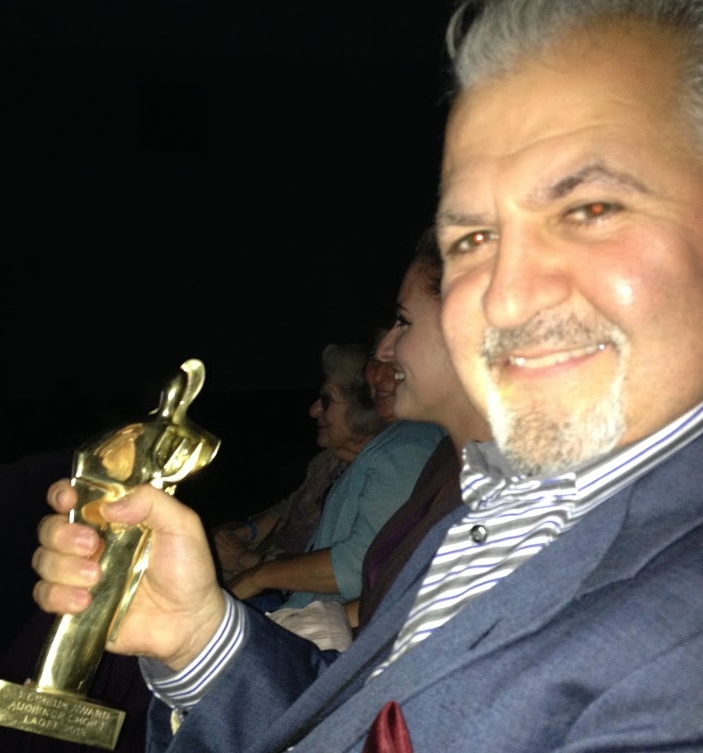
Mr. Emmanouilides won the 2013 Audience Choice Orpheus Award in Los Angeles.
In tributes, colleagues called him “an amazing man and incredible coworker” and “very passionate about our field.” One said: “He always brought genuine fun and energy to whatever we were doing.”
Gregarious and energetic, Mr. Emmanouilides taught film and production courses at Temple, the University of Toledo, the Scribe Video Center, and the old University of the Arts. He lectured at Drexel and Villanova Universities, spoke at conferences and seminars, and taught English-language classes in Greece and Spain.
He was a longtime member and onetime board president of the Philadelphia Independent Film and Video Association, and he mentored production novices at Scribe Video in Center City and elsewhere. “These newcomers don’t respect the conventions of film that much,” he told The Inquirer in 1993. “They’re trying to find their own voice. So they’re finding new ways to tell stories.”
Christopher George Emmanouilides was born Aug. 31, 1961. His family moved from Philadelphia to Los Angeles when he was young, and he earned a bachelor’s degree in philosophy at Colorado College in 1983 and a master’s degree at Temple in 1992.
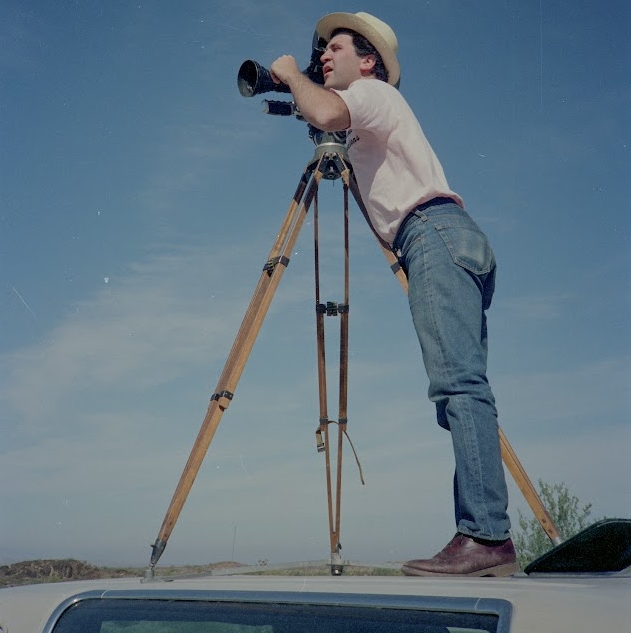
Mr. Emmanouilides was a talented cameraman and photographer.
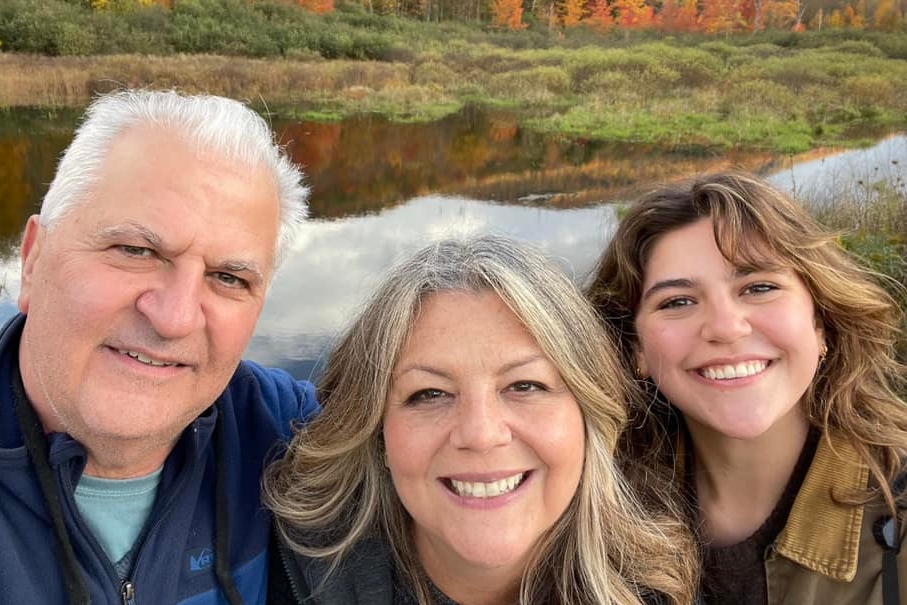
He met Sandra Enck at an independent film event in Philadelphia, and they married in 2004 and had a daughter, Isabella. He doted on his family, and especially enjoyed seeing films with his wife and decorating his daughter’s breakfast pancakes with eyes, nose, and mouth cut from fresh fruit.
“We took their pictures, and we eventually had hundreds of faces from countless mornings together,” his daughter said on her website facethemorning.com. “None were the same, and each seemed to have something to say.”
His wife said: “We’d see a film and then talk about it for three days.”
Mr. Emmanouilides was an avid reader and photographer. He liked to fly-fish, ski, hike, and cook.
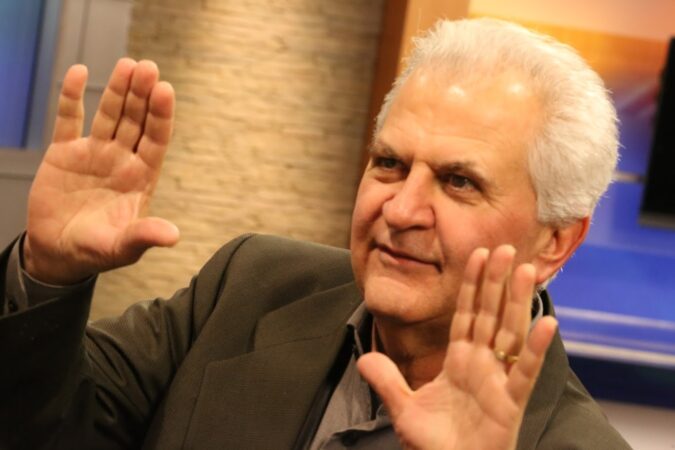
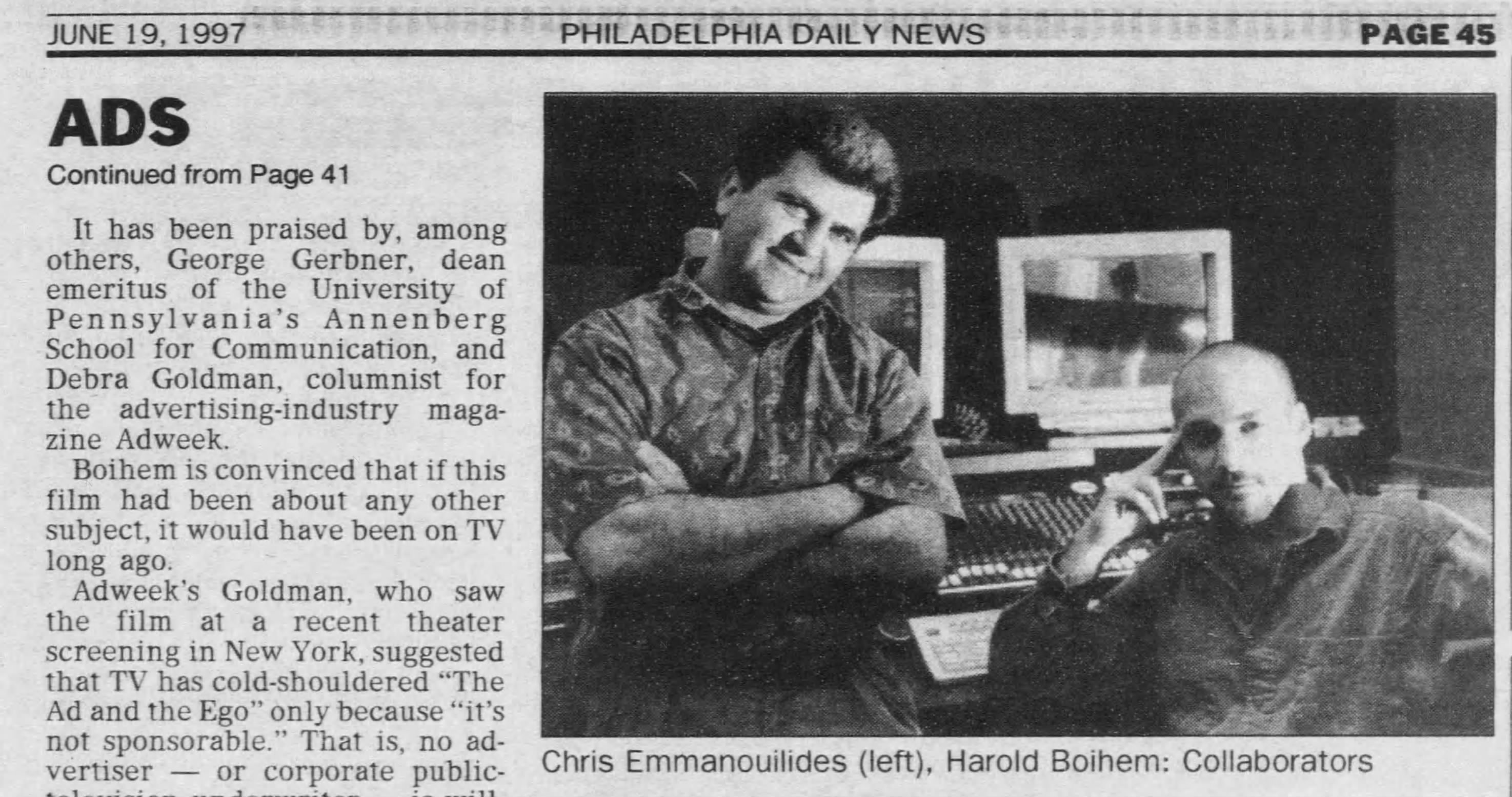
This article about Mr. Emmanouilides (left) appeared in the Daily News in 1997.
He had an infectious laugh, performed magic tricks, listened to the Grateful Dead, and followed the Eagles and Phillies. “He was a big thinker,” his wife said. “He was buoyant and a powerful life force. You never forgot that you met him.”
In addition to his wife and daughter, Mr. Emmanouilides is survived by three sisters, a brother, and other relatives.
Celebrations of his life were held earlier.
Donations in his name may be made to the Bryn Mawr Film Institute, 824 W. Lancaster Ave., Bryn Mawr, Pa. 19010.
Philly’s first competitive congressional primary in more than a decade is officially underway.
On Thursday night in a standing-room-only auditorium in Mount Airy, State Sen. Sharif Street, State Reps. Morgan Cephas and Chris Rabb, and doctors Ala Stanford and David Oxman made their opening pitches to voters for why they should represent the 3rdCongressional District, which stretches from Northwest Philadelphia to parts of South Philly.
The candidates are vying to replace retiring U.S. Rep. Dwight Evans in a district that is among the most Democratic in the nation. Thursday’s packed forum, hosted by the 9th Ward Democratic Committee, was largely an opportunity for candidates to introduce themselves to a heavily engaged community more than five months before the May primary.
The five candidates represent only a fraction of nearly a dozen declared in the race. They were invited based on fundraising and endorsements, wardchair Jeff Duncan said in opening remarks.
Here are some takeaways from the evening.
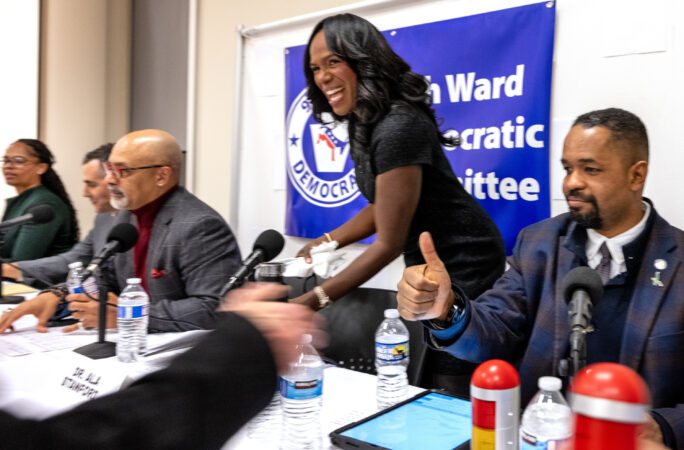
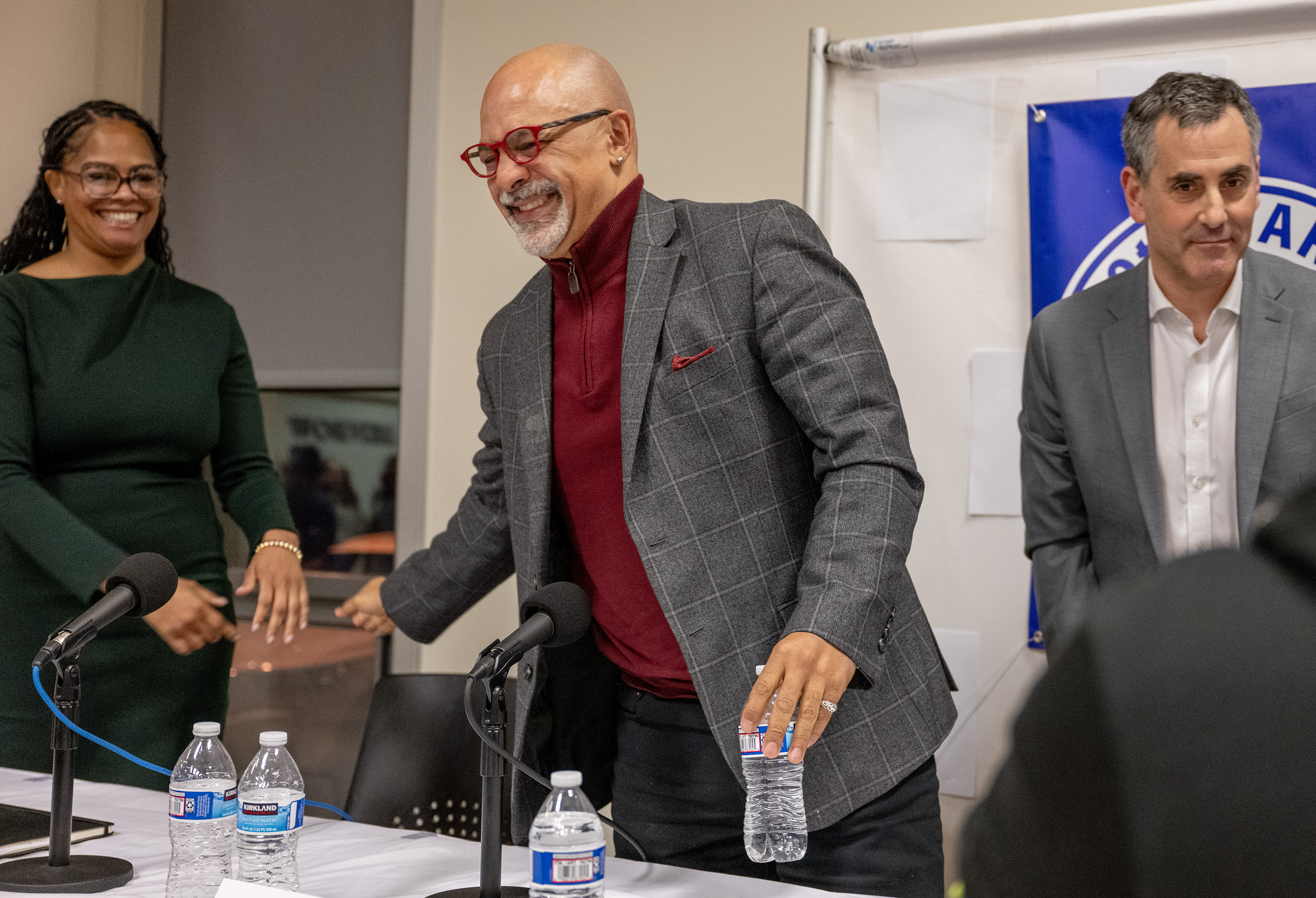
Candidates (from left) State Reps. Morgan Cephas, and Chris Rabb; and physician David Oxman appear at a forum hosted by the 9th Ward Democratic Committee in Mt. Airy Thursday, Dec. 4, 2025.
Why are they running for Congress?
It’s tough to run for office without a compelling “why,” and each candidate made a personal pitch to the crowd.
Cephastalked about being a toddler in a stroller while her mom picketed with American Federation of State, County, and Municipal Employees District Council 47, the union representing many of Philly’s city workers, back in 1986. She said she wants to bring a family history of activism andher experience in Harrisburg, where she has championed maternal health, to Washington.
Oxman, a medical professor and intensive-care doctor, said Philadelphians are in the midst of a health crisis — not just because of deteriorating physical wellness, but also from mental and financial strain. He talked about building trust with patients and colleagues and taking an outsider approach in Congress, where there are only a handful of doctors serving.
Rabb, on friendly turf in Mount Airy, an area he represents in the state House, separated himself from the Democrats sitting beside him by arguing he is the only true progressive in the race who would bring needed energy to Washington, “not another establishment ally.” Throughout the forum, he called out Democrats who take money from corporations and who he argued have been unwilling to fight for progressive causes.
Stanford gave a compelling rundown of her personal backstory: born to a young mother in poverty and going on to be the first Black female pediatric surgeon trained in the United States. Stanford played a key role in responding to the COVID-19 outbreak in Black and brown communities in Philadelphia and now operates a health center in North Philadelphia. “I’m running because I lived it and I understand it, and I won’t wait for permission in Washington,” she said.
On the topic of immigration, candidates were unanimous that U.S. Immigration and Customs Enforcement needs to be reined in, if not totally abolished.
Street called the agency “corrupt to its core” and one that recruits “racists and neo-Nazis,” a reference to scrutiny over the imagery used in ICE’s recent campaign.
Cephas said there needs to be better oversight of immigrant detention centers. Democratic lawmakers have been turned away from facilities in recent months when they have attempted to review conditions.
Rabb thinks those centers should be dismantled altogether and took the opportunity to contrast the moment with Trump’s first administration. “Yes, ‘abolish ICE’ is popular these days,” he said. “But when I was leading families into sanctuary in 2017, people weren’t talking then. We have a bigger villain now.”
Oxman said he didn’t know if ICE was “salvageable.”
“If you have to wear a mask at work to hide your identity, maybe you should be asking a few questions,” he said.
Rabb and Oxman vow not to take pharmaceutical, insurance PAC money
Only Rabb and Oxman said they would commit to refusing corporate donations from pharmaceutical or insurance firms.
Rabb said he has never, since his first election in 2015, taken corporate PAC money.
Oxman told a story about colleagues at the hospital getting wined and dined by pharmaceutical companies and insisting they were unaffected by the gifts. “I asked them, ‘Why do you think they do it?’” Oxman said. “Because it works.” He added he’s a “hell, no” on taking pharma and insurance PAC money.
Cephas, Street, and Stanford all promised to work to hold those industries accountable without committing to forgo their money on the trail.
Rabb comes out strongly against sending arms to Israel
Candidates were given one minute to say whether they would support a bill that would prohibit sending more weapons to Israel, two years after the start of its war in Gaza following the Oct. 7, 2023, attack. Street said it was an insufficient amount of time to cover an exceedingly complex topic.
He said violence is correlated with poverty — noting the disproportionately high homicide rate in his neighborhood, where people are struggling to afford groceries — and stressed the need to get humanitarian aid flowing in Gaza.
Cephas said she would want to have conversations about the proposal. Oxman said that the enemy is “extremism on both sides” and that any country receiving arms from the United States has to live up to certain standards.
Stanford said that as a mother and a surgeon who cares for children, she believes there is “no justifiable reason for a child to lose her life,” but did not weigh in on the bill.
Only Rabb answered definitively, saying he would support the bill to block weaponry to Israel. “There are no two sides in this when we see the devastation,” he said of Gaza, where the death toll has surpassed 70,000 since Israel launched its military campaign.
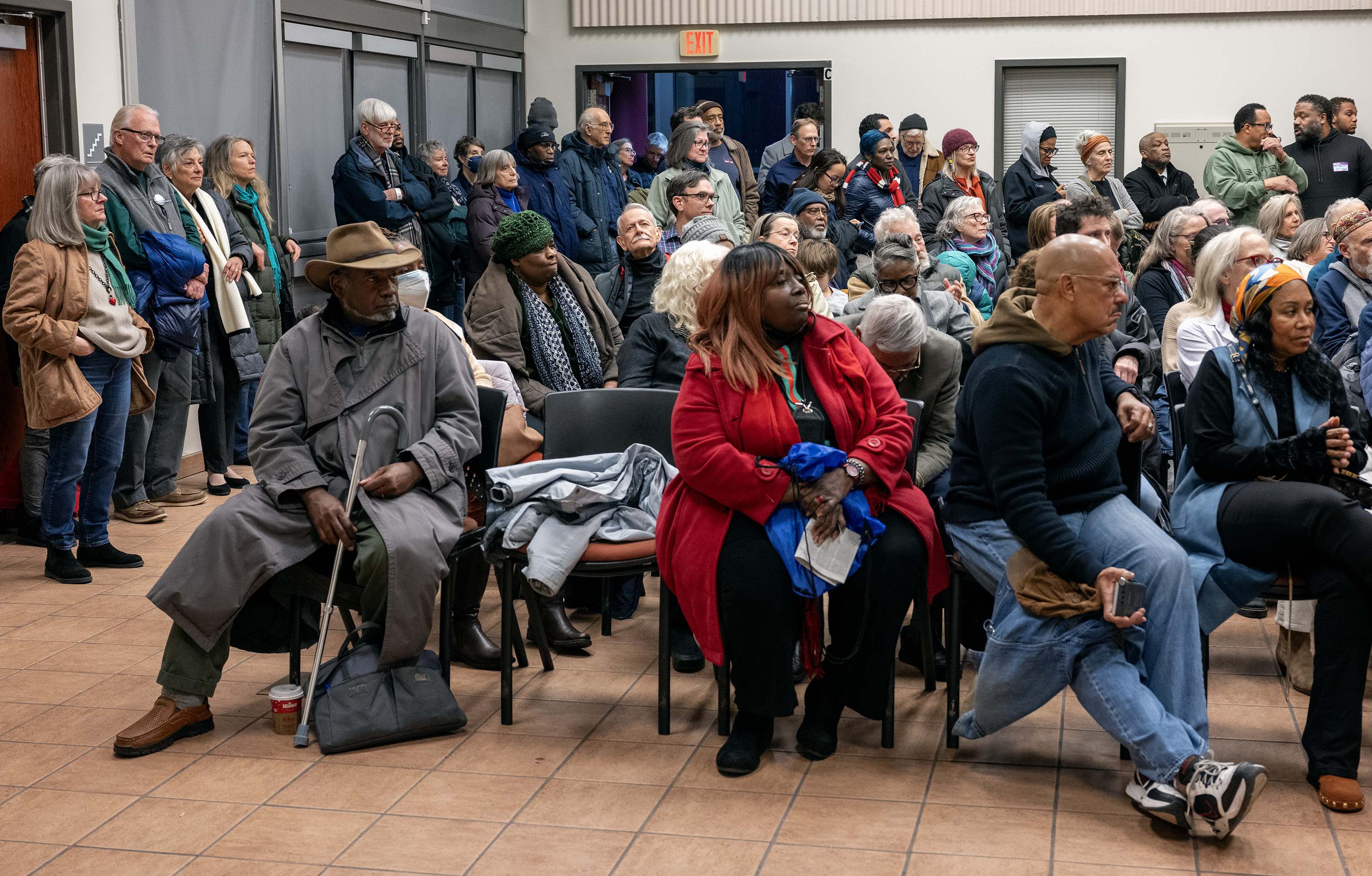
It was standing room-only at the United Lutheran Seminary in Mt. Airy when the 9th Ward Democratic Committee hosted a candidates forum five months before the Democratic primary.
Abortion question prompts some personal stories
Asked how they would protect women’s reproductive rights, several candidates shared personal stories of grief or hardship.
Stanford said there is a need for more doctors in Congress with lived experience and talked about having had a miscarriage.
“Unfortunately, I am one of those Black women who was treated with racism and bias, and it impacted the livelihood of a child I did not carry to term,” she said. “I will fight for reproductive rights, and that also includes the right to choose.”
She noted she had worked closely with Vice President Kamala Harris on postpartum-care initiatives for women.
Street said reproductive rights have to extend to expanded in vitro fertilization protections and access. He said that he and his wife, who had children from previous marriages but wanted to have another, went through IVF.
“It didn’t work, but we did try it, and everyone should have that option,” he said, adding there is power in people telling their stories.
Boosting their party beyond Philadelphia
May’s Democratic primary winner in the extremely blue district is all but guaranteed to become Philadelphia’s newest congressperson next fall. All five candidates vowed to help Democrats win in congressional races around the state following the May election.
Cephas said it’s not “enough to be safe here in Philadelphia” without a Democratic majority in the House.
Street made a case for his experience campaigning as a past state party chair.
Rabb argued a progressive voice is the way to motivate voters around the state. “Are we gonna have a status quo person or a transformational leader?” he asked. “And if that person’s a transformational leader, they can help reach beyond the traditional base around the state. The Democratic Party has been sleeping on folks.”
Ultimately, the direction the 3rd District goes will likely get national attention for what it says about the preferences of Democratic voters in urban areas like Philadelphia. Oxman argued that means selecting the right messenger.
“Whoever represents it has to think about how their message is heard around Pennsylvania. We need a message that can rally the whole state. What happens here has national import.”
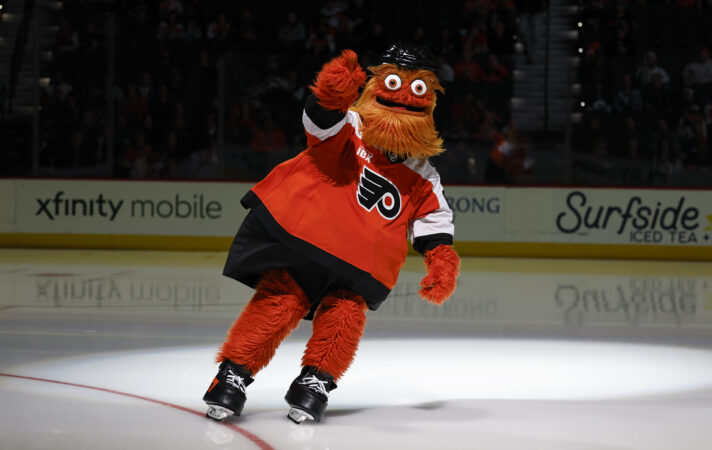
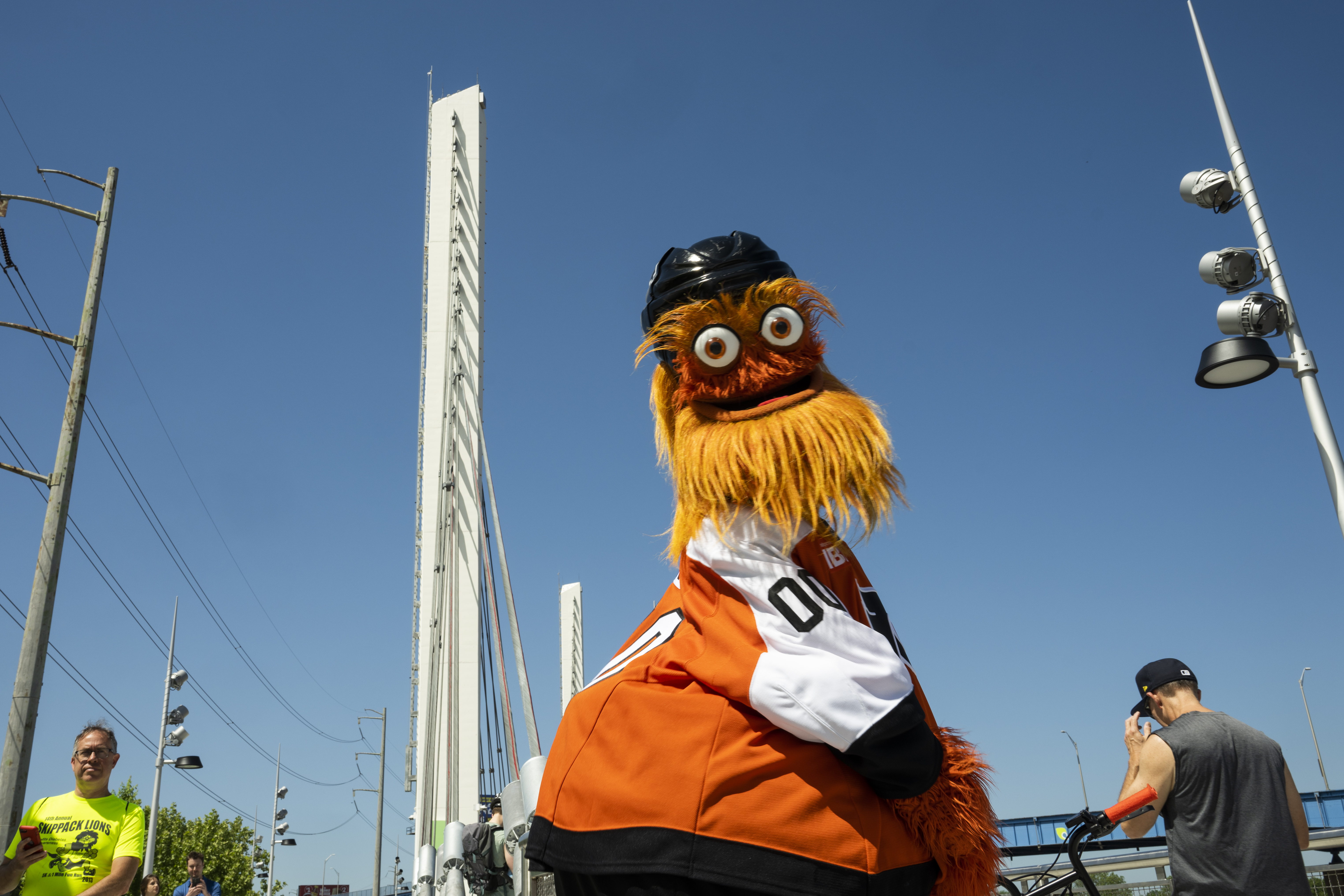
Ever since he emerged from the rubble of the Wells Fargo arena construction site in 2018, the Philadelphia Flyers mascot, Gritty, has been busy wreaking havoc across Philadelphia. One moment he’s dumping popcorn on Flyers fans in the Chaos Corner, the next he’s mooning the goalkeeper for the Boston Bruins. More often than not, he’s behaving recklessly with a T-shirt cannon.
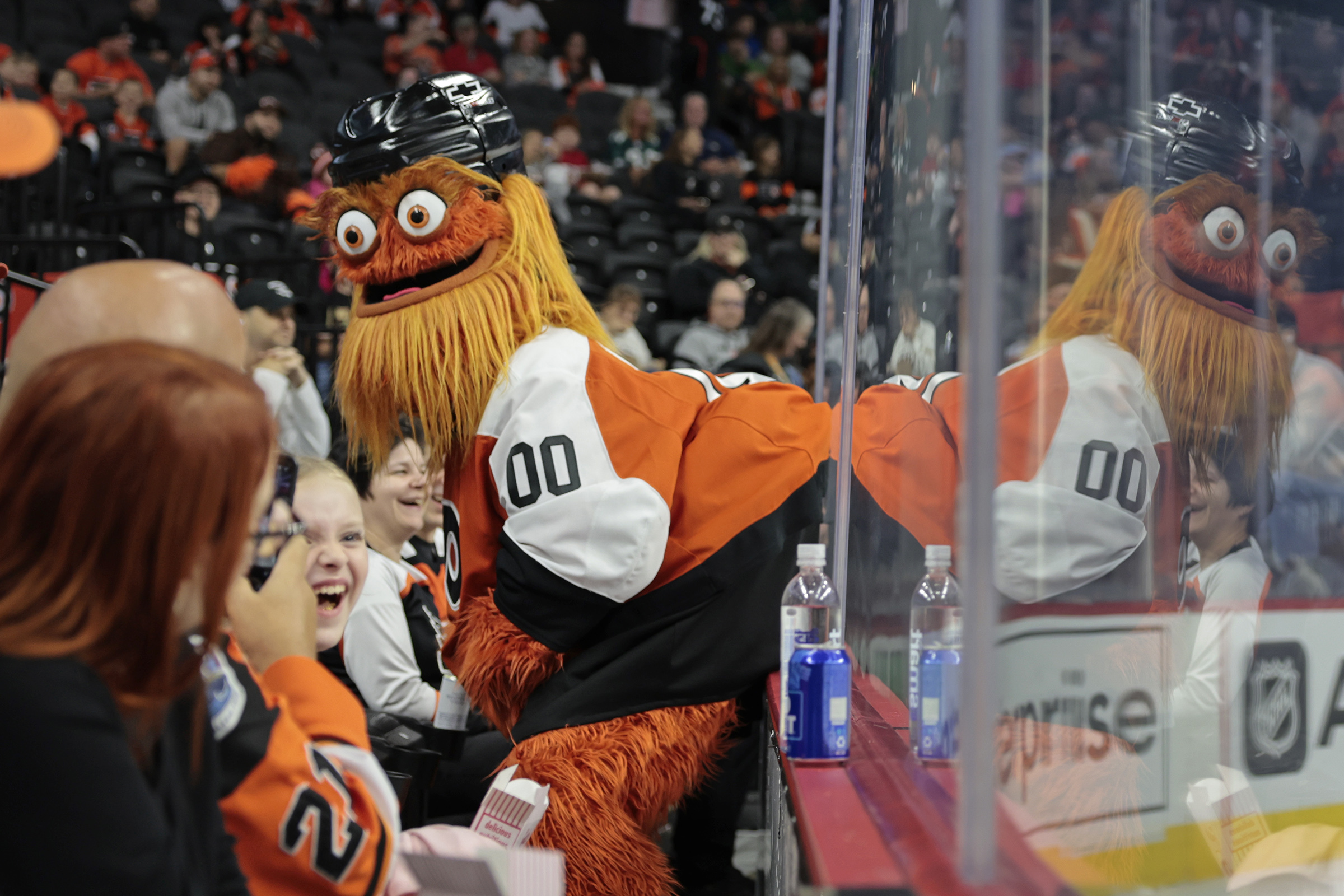
Gritty shows his rear end to the Boston goal keeper during the Boston Bruins at Philadelphia Flyers NHL pre-season game at xfinity mobile ARENA in Philadelphia on Sept. 27, 2025.
Despite being famous for his game day antics, Gritty arguably gets into even more mischief off the ice. Who can forget his infamous Kim Kardashian impression?
Or that time he crashed Stephen Colbert’s Super Bowl party. Or how about when he tore through the streets of Philadelphia on a motorcycle to celebrate his third birthday. What did he do on his fourth birthday? Get divorced and start smoking Marlboro Reds?
Does Gritty like being so busy? If he could spend his day doing anything he wanted, would he really spend it throwing sheet cake at people and making celebrity appearances everywhere? To find out, we asked the bright orange, googly-eyed mascot to walk us through his perfect Philly day, and he responded in his perfect Gritty way.
4:55 a.m.
I roll out of bed just so I can tell people that I get up before them. I’m no hero, so I go back to bed. I sleep naked on a concrete floor, no covers, with a memory foam pillow.
8:30 a.m.
By this point in the morning, I’ve hit snooze a fistful of times. Time to start my lil day. First things first, coffee. I like my coffee like I like myself: gritty. I make it with no filter because I like the pulp. I drink it outside so I can bask in the sweet sounds of I-95 rush hour traffic.
10 a.m.
I’m a pretty busy Gritty. I make appearances at events all over the city. I’m also incredibly photogenic, as you know. I reserve my midmornings for events and photoshoots. My favorite thing to do is the 2026 Gritty calendar. It’s for charity, NBD. I’ll do anything for the perfect shot, like squeezing my nude body into one of those skinny rowboats at Boathouse Row and laboring my way down the Schuylkill.
Gritty likes to spend the afternoon bouncing around Philadelphia, posing for photos and popping up at special events.
Noon
I’ll do a little lunch at one of my favorite Philly spots. There’s a dumpster on Broad Street that serves the most delicious half-eaten burritos. I’m gatekeeping the location because I don’t want to see my favorite burrito spot overrun with tourists. But trust me, they’re decent.
2 p.m.
I usually eat until I feel sick, so I like to take a nap after lunch. I’ll sneak onto one of those ships at the Navy Yard and go down for about an hour. Hopefully my upset tum tum settles.
I’ve got people to see and places to be. But instead I do neither. The afternoon is my moment of zen. Maybe a quiet walk, maybe a light jog, maybe a full sprint after a group of strangers just to keep them on edge. There’s not a bad place in the city to chase strangers. Head on a swivel, Philly.
6 p.m.
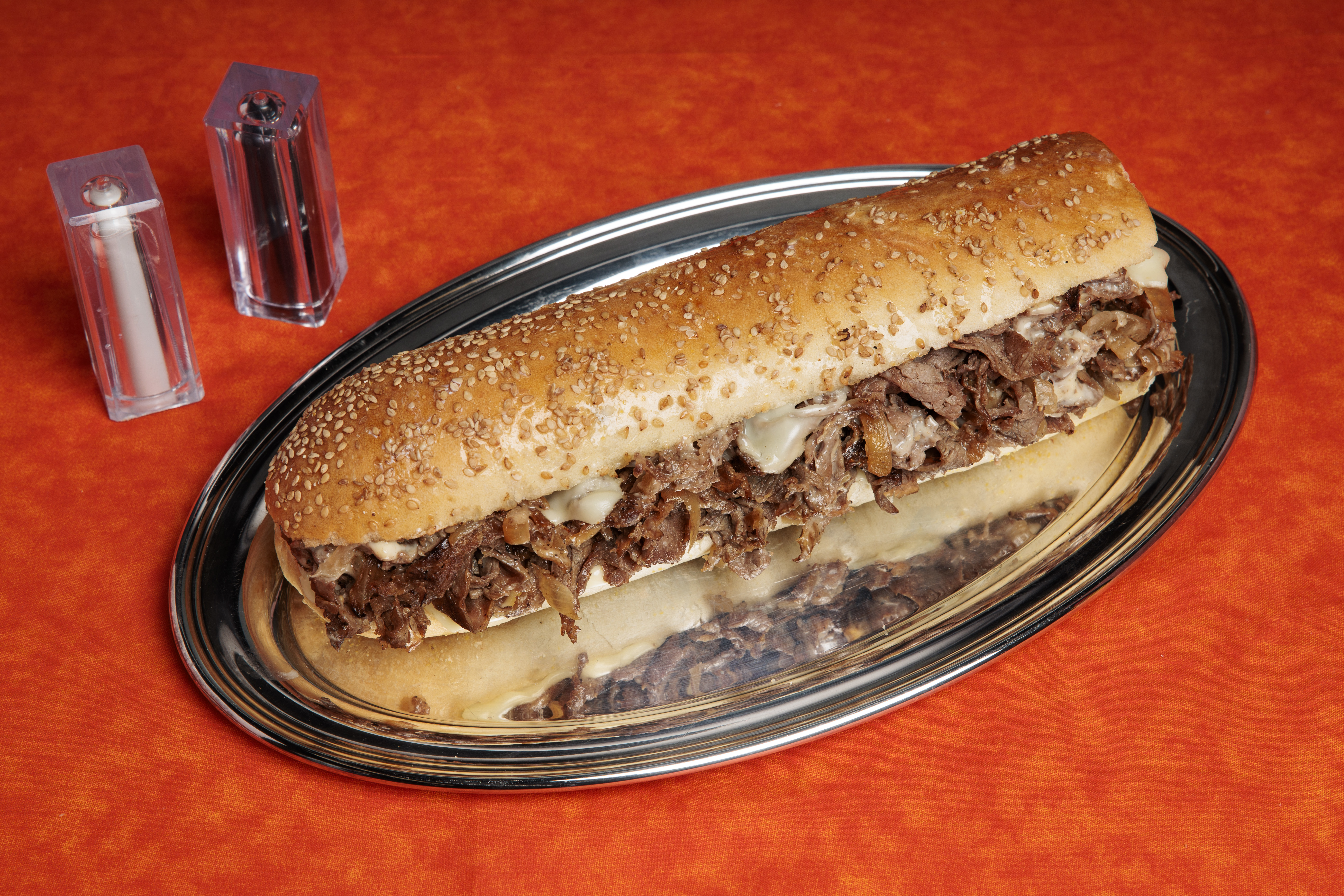
Time for dinner. I’m a bit of a health nut, so I’m having a salad with a steak on the side. Maybe my steak is slathered in cheese. Maybe I eat it on a roll. OK, maybe it’s a cheesesteak. It could be from anywhere. I don’t judge a cheesesteak on taste. Only on girth. Maybe I don’t stop at just one. Maybe I didn’t want to talk about it because I thought you’d judge me. Maybe get off my case about it. Maybe cheesesteaks are the state fruit of Philadelphia, and I’m a supportive citizen.
Maybe you wouldn’t be so quick to judge if you relaxed a little bit and had a cheesesteak for yourself. Maybe I’m just built different and my body craves protein, and this is the only way to maintain my perfect fazeek. Maybe you’re just jealous that you’re counting calories while I’m counting empty wrappers. Anyway, yeah cheesesteak dinner.
Maybe Gritty eats a cheesesteak from John’s Roast Pork.
7 p.m.
It’s game time. I’m spending the next few hours at Xfinity Mobile Arena getting the people going! My favorite place, my home. I like to keep it out of pocket at Flyers games. Make some people laugh, throw some cake at people. No perfect day of mine would be complete without hurling a sheet cake through the air at a stranger’s face. Highly recommend if you’ve never tried. I live for chaos and chaos lives for me.
11 p.m.
Time to sleep. Naked. Airing out the follicles is a very important part of my fur care routine.
On Monday night, the Eagles will face the Los Angeles Chargers with hopes of snapping a two-game losing streak.. The last time the Birds held a three-game losing streak was in early December of 2023, a campaign marked by early success and a late-season collapse.
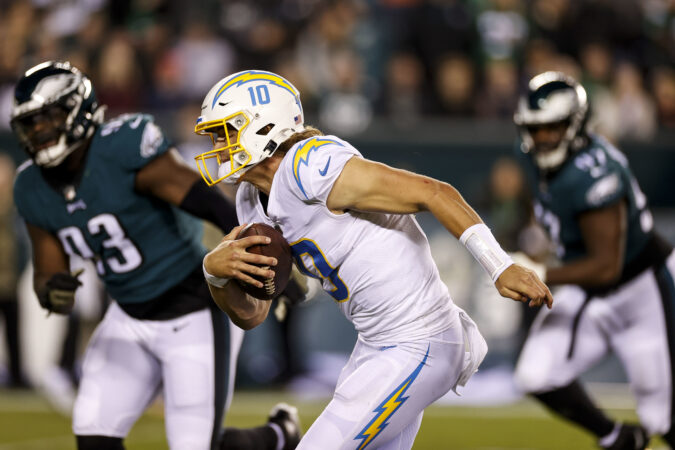
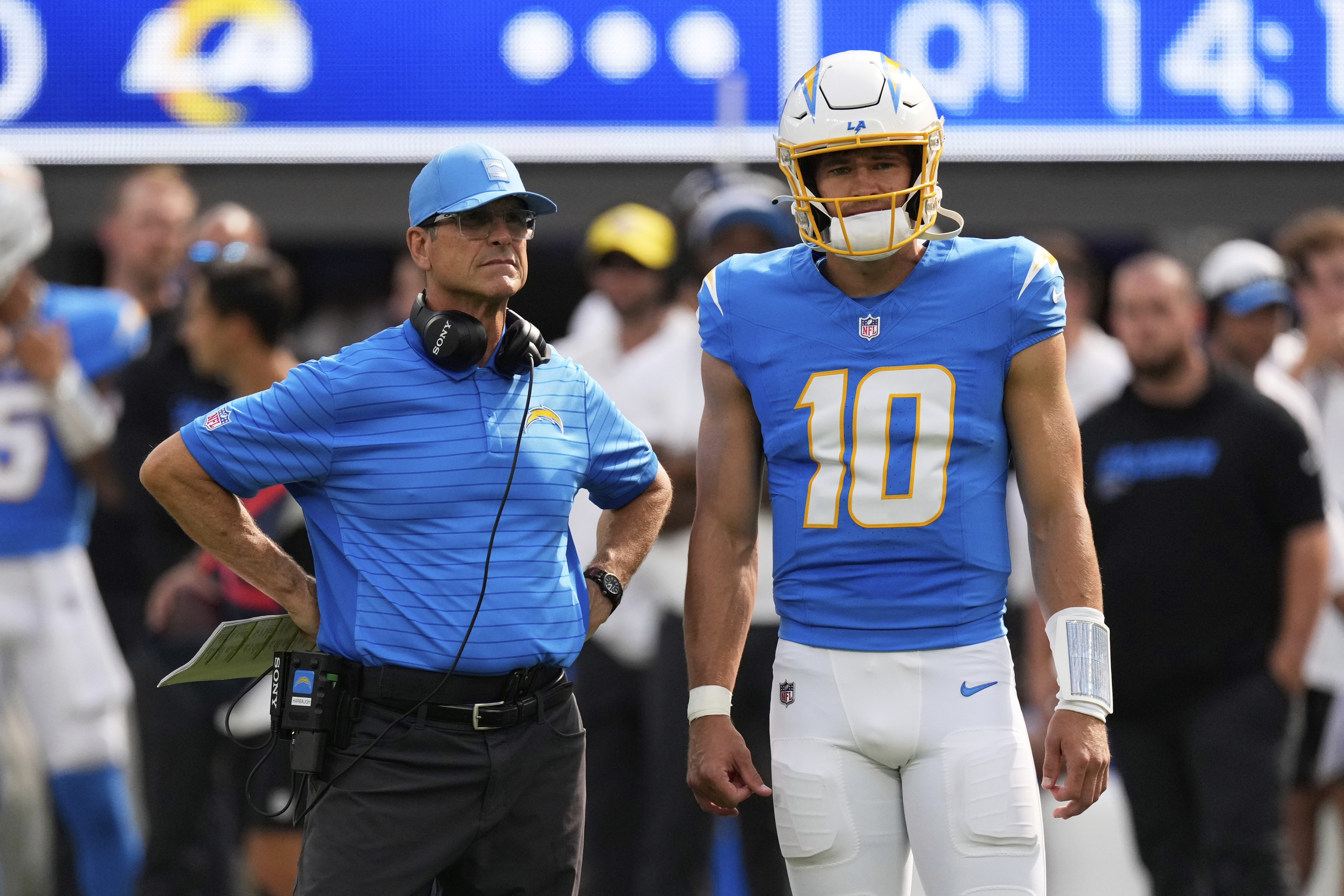
Fresh off a deflating loss to the NFC-leading Chicago Bears on Black Friday, the Eagles are only three-point favorites against John Harbaugh’s Bolts. The Chargers, who are also 8-4, may be without star quarterback Justin Herbert, who suffered a broken left hand in his team’s 31-14 victory over the Las Vegas Raiders.
Will fans get deja vu of 2023, when the Eagles collapsed after a Super Bowl appearance the previous year? Or will the team finally get back on track? Here’s what the Chargers are saying about the birds.
‘We know how good their defense is’
Herbert was unable to take snaps under center against the Raiders due to his off-hand injury, significantly impacting the team’s offensive game plan as Harbaugh and offensive coordinator Greg Roman transitioned to more snaps in pistol and shotgun.
With uncertainty in the air regarding both Herbert’s ability to execute the offense, the former Oregon quarterback believes Harbaugh’s familiarity with Vic Fangio will play a major role in the Chargers’ game planning.
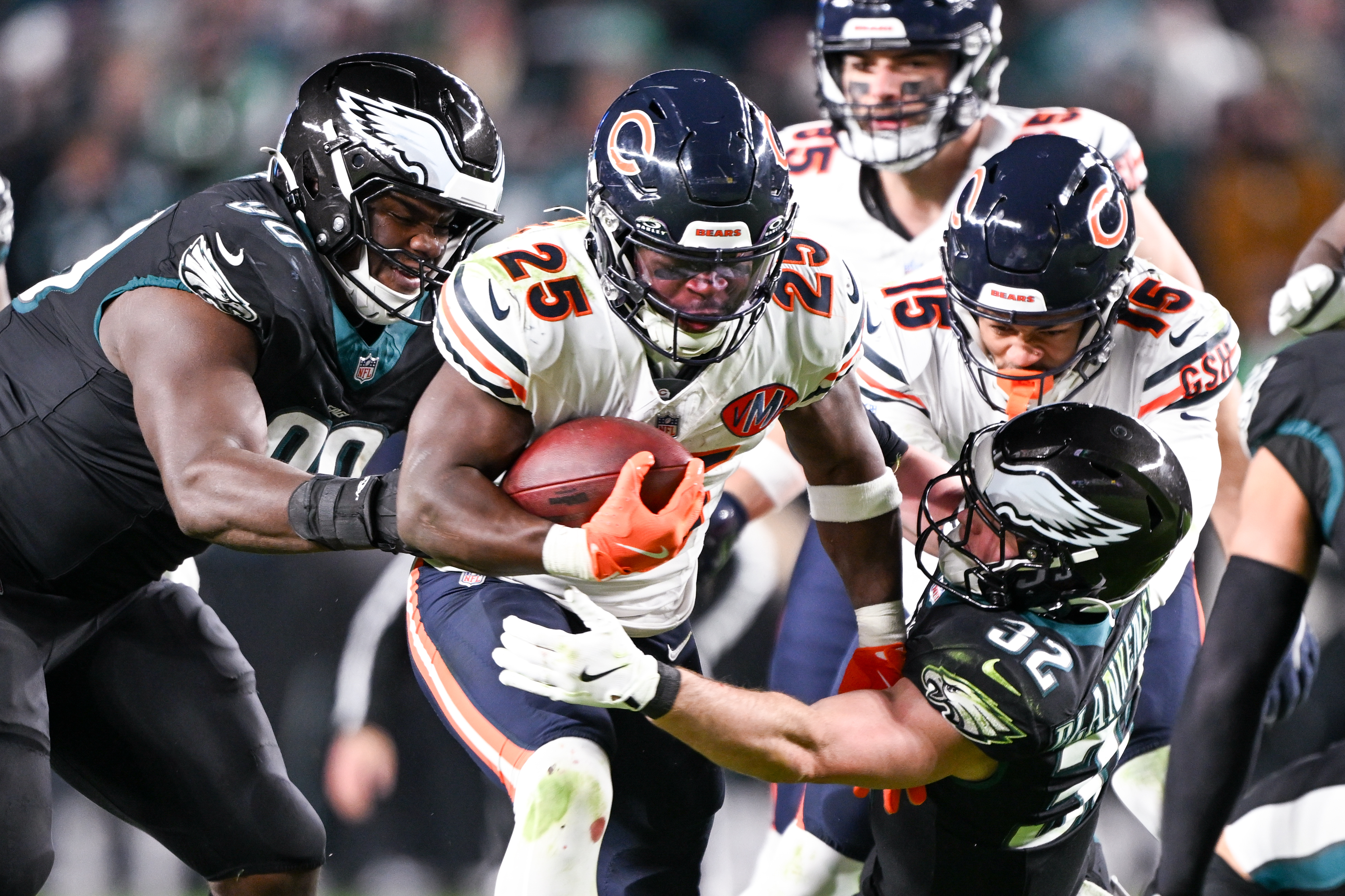
Bears running back Kyle Monangai runs for yards during the third quarter Friday, Nov. 28, 2025, in Philadelphia.
Fangio coached under Harbaugh in previous stops with the San Francisco 49ers and Stanford, and also coached against the Chargers two times a year as head coach of the Broncos from 2019-2021.
“He’s had a ton of success in this league,” Herbert said of Fangio. “Back at his time with the Broncos, we saw him twice a year and we had a lot of respect for him then. … The guys that they have on that side of the ball are game-wreckers and you have to be aware of those guys, and at the same time they are really well coached, and it makes for a dangerous combination for a defense.”
Meanwhile, Roman also expressed confidence in wide receiver Ladd McConkey’s ability to break Fangio ’s schemes.
“I was born at night, but not last night,” Roman said. “Vic’s going to have different ways to leverage coverage to where it’s not one-on-one at all times … But as far as the matchup, I like Ladd against anybody.”
‘I forgot he was dealing with something’
Herbert’s chances of playing all comes down to his next days in practice.
“As long as [the doctors] felt like it’s repaired and fixed, I think it comes down to getting that swelling down and being able to play with it,” Herbert said. “You got to catch a snap, you got to be able to hold on to the ball… it’s just see how it goes this week and doing everything to be out there.”
Herbert’s teammates seem more confident in his return, describing mixtures of shock and awe in response to how well he has played in practice despite the injury.
“I forgot he was dealing with something the way he’s playing,” wide receiver Quentin Johnston said. “But that’s just the type of guy he is. Very, very tough guy. He was still at practice, throwing very accurate, so he honestly looked like he hasn’t lost his touch. So right now, just getting him through practice and getting him through the week and prepared for Sunday.”
‘Some love to our offensive line’
Herbert has been pressured more than any other quarterback in the NFL this season, and no matter if it’s him or Trey Lance under center, the offense will be focusing on containing the Eagles’ front seven in pass protection.
“Their D-Line, a lot of people say it’s probably the strength of their defense,” Roman said. “And it’s hard to argue with that, but I think they are good at all three levels.”
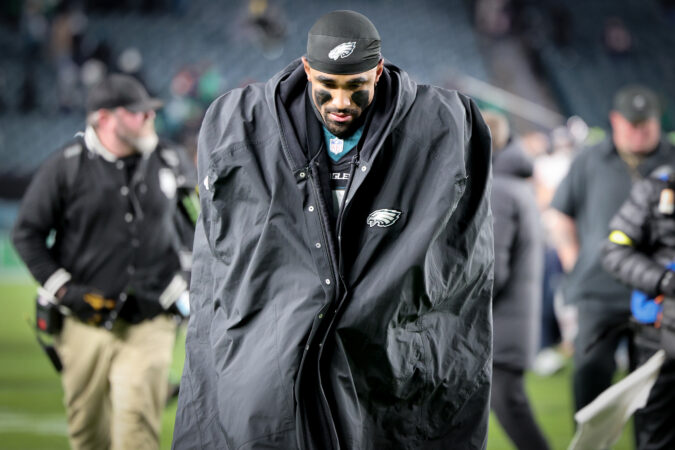
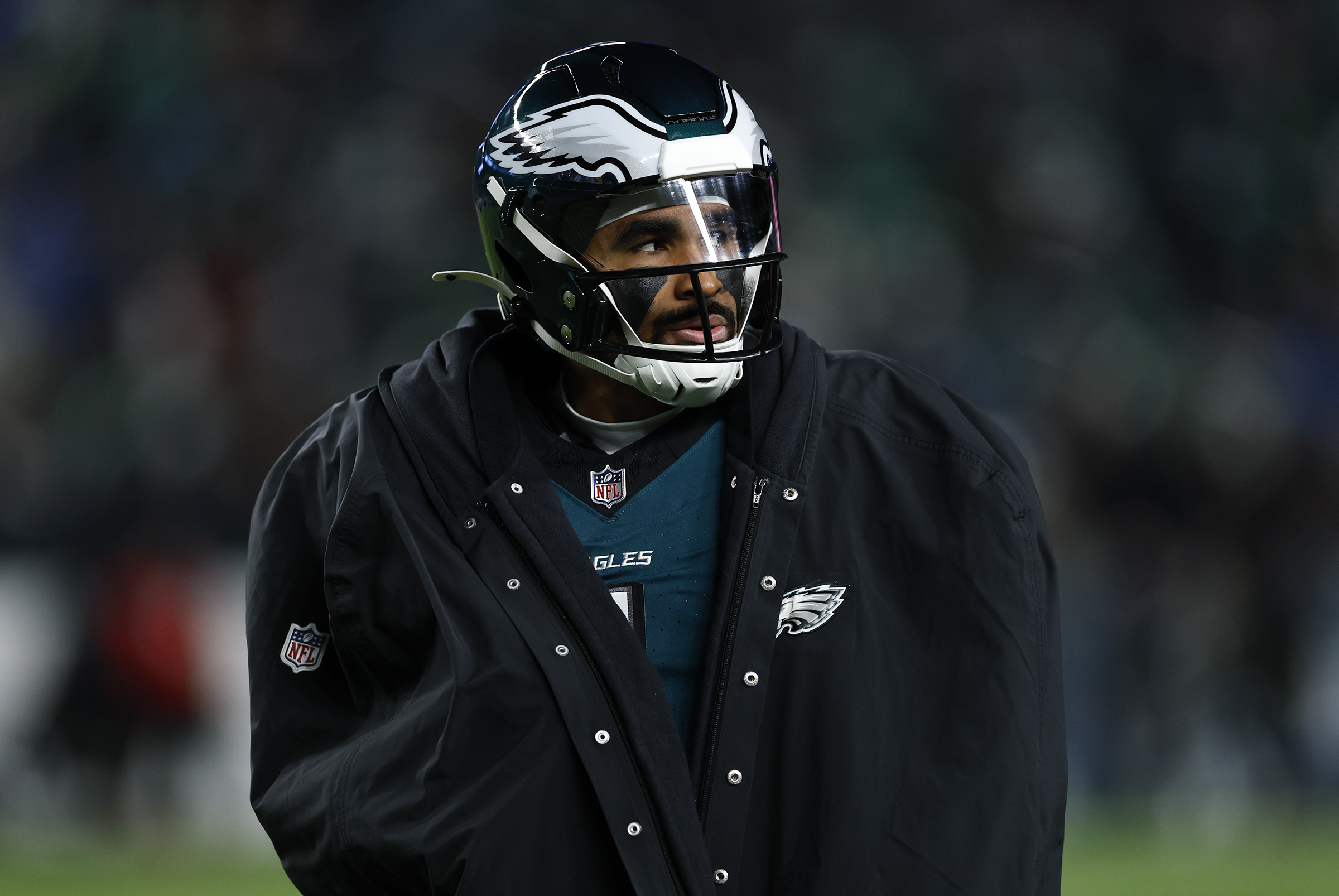
Philadelphia Eagles defensive tackle Jalen Carter will miss his team’s MNF meeting with the Los Angeles Chargers.
The Chargers have seen both their starting tackles, Rashawn Slater and Joe Alt, injured this season — resulting in a carousel throughout their offensive line. Following last week’s benching of left tackle Trevor Penning, Roman believes the offensive line is on the up, with the unit performing admirably against Maxx Crosby and the Raiders. The Eagles will be without Jalen Carter after he had a procedure for his to treat both of his shoulders. That could also work in the Chargers’ favor.
“I want to throw out some love to our offensive line,” Roman said. “I really feel like they did an amazing job last week, not only handling Maxx Crosby, but really just handling the game plan and adjusting accordingly.”
‘Hell of a challenge’
The Chargers are well aware of the Eagles’ offensive line difficulties this year, including the potential absence of All-Pro tackle Lane Johnson. Despite this, star defensive end Khalil Mack knows not to underestimate the Eagles’ pass protection.
“Nameless, faceless objects,” Mack said. “You understand who they are and what they’ve been able to accomplish and the level of football they play at, so it’s going to be a hell of a challenge.”
When asked what problems the tandem of Jalen Hurts and Saquon Barkley pose to the Chargers defense on the ground, Mack was quick to express a similar respect despite the team’s recent struggles to run the ball.
“All the problems,” Mack said regarding Hurts’ ability to run. “You can talk about his strength and his ability to withstand tackles in the pocket; it’s going to be a hell of a challenge, and I am looking forward to it.”
“Saquon one of the best in the league,” Mack said. “At any moment, he could pop a big run, so you gotta be on your P’s and Q’s throughout the whole game, just understanding the intangibles they have, and the offensive line they have accumulated with him in the backfield and Jalen in the backfield. His ability to run the QB runs, just their scheme in general, it’s going to be a challenge for us.”
This week after completing two different portrait assignments I was was looking around as I walked back to my parked car.
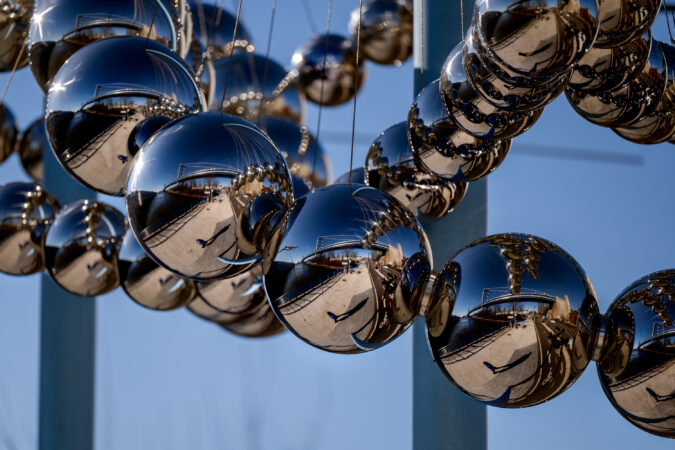
I’d seen it in Old City before, but on a really clear, cold morning when the sky’s color perfectly matched that of the Ben Franklin Bridge towering over the public artwork on Columbus Boulevard, I looked more carefully at the giant knot of stainless steel spheres.
Sometimes you go looking for pictures but “found” pictures are most often located just where you happen to be.
I studied the shiny surface, looking through my viewfinder, varying the focal length on the two zoom lenses I had (a 24-70mm and 70-200mm) and switching between different apertures to achieve either more or less depth-of-focus on the orbs and the reflections they mirrored.
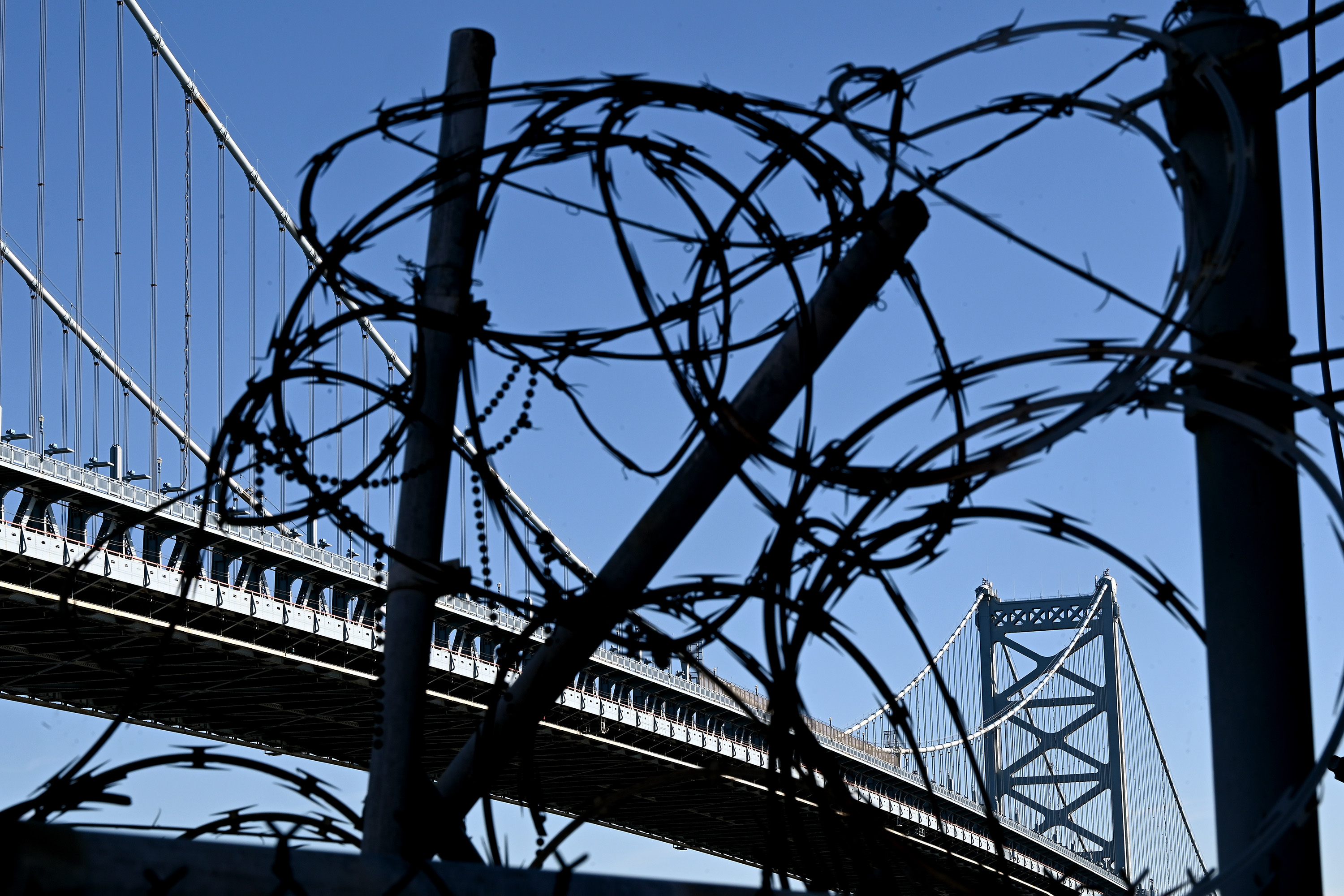
I also made a slightly “harsher” version of the blue sky and bridge.
Razor wire beside a pier on Columbus Boulevard frames the Benjamin Franklin Bridge Dec. 3, 2025.
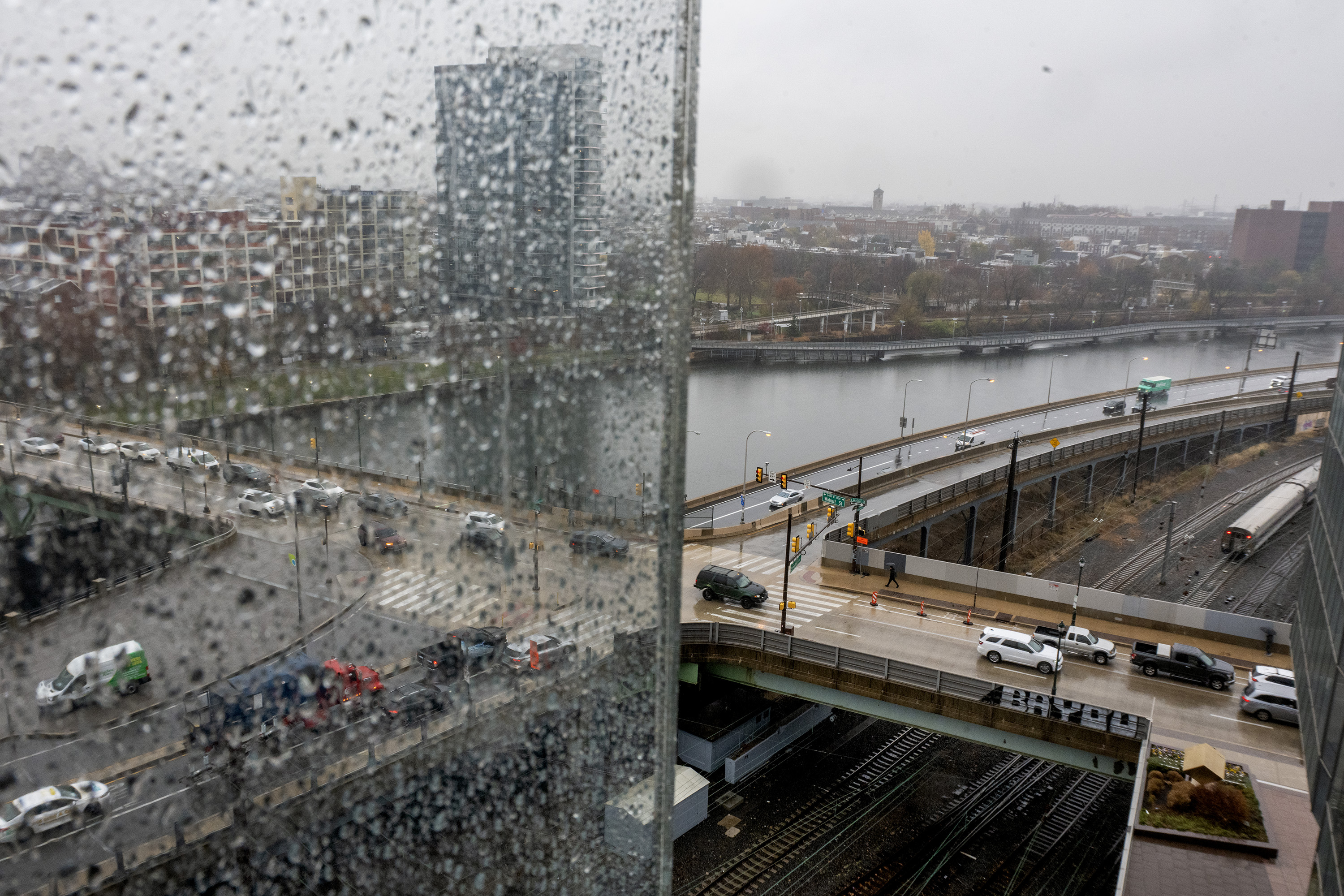
Weather the day before was in sharp contrast — literally, with winds blowing rain almost knife-like horizontally at me as I fought with my umbrella to make a picture outside following another indoor portrait assignment.
I ended up moving to the roof of the garage where I parked my car.
Conditions were more wet than white as an early winter storm hit the region Tuesday, Dec. 3, 2025. This was a view of the Schuylkill, I-76, Walnut Street and the Amtrak and SEPTA tracks leading into 30th Street Station.
A note in support of copy editors: You know how seeing writers (mostly on social media) confusing a possessive pronoun with a contraction or thinking an apostrophe always indicates possession can be mildly distfacting or jarringly annoying to readers? (it’s vs. its and your vs. you’re.)
Well as a long-time photo caption reader (and writer) there are two common errors that exasperate me. Those would be the names of a common migratory water fowl and one of Philadelphia’s three major waterways.
Addam Schwartz, The Inquirer’s senior multiplatform editor, wrote the rain caption for the print version of the photo. He correctly changed my “Schuylkill River” to just plain “Schuylkill.” He knows the word means “hidden river,” so “River” is redundant. (It was named by Dutch settlers in the early 1600s. Prior to that time, the river was called Manayunk, meaning “where we go to drink” or Ganoshowanna, meaning “falling water” by the Lenape.)
In my defense I also know all that. Decades ago Suzanne Weston, the copy editor at Inquirer Magazine when I was on staff there educated me. But I do make mistakes, especially when typing captions on my laptop in my car.
And, it’s Canada goose, not Canadian. As a Consulate General in Minneapolis pointed out to me decades ago, while Canada would be proud to claim Branta canadensis as its own, they belong to ALL of the continent.
(By the way, Schuylkill Expressway IS okay.)
Since 1998 a black-and-white photo has appeared every Monday in staff photographer Tom Gralish’s “Scene Through the Lens” photo column in the print editions of The Inquirer’s local news section. Here are the most recent, in color:
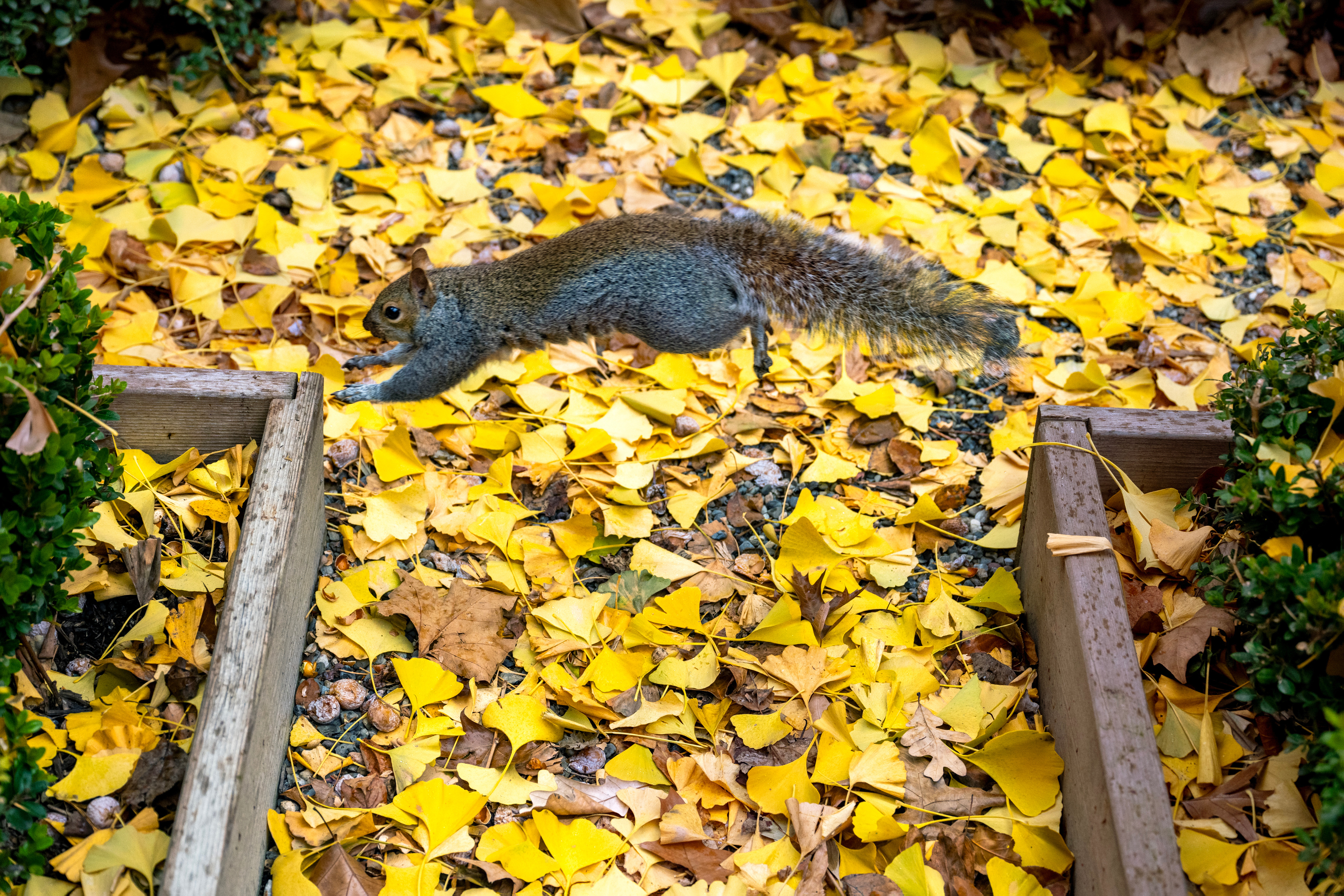
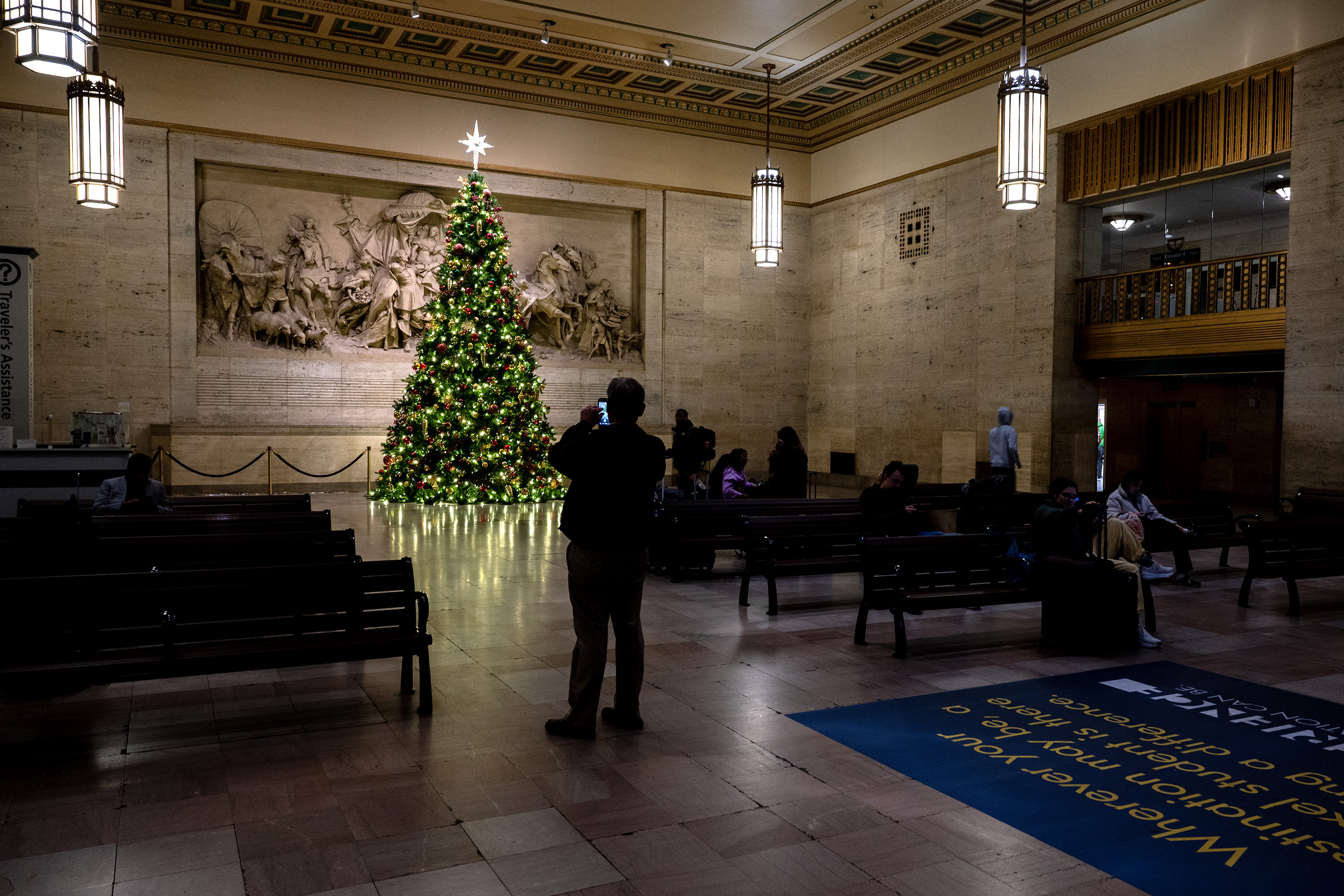
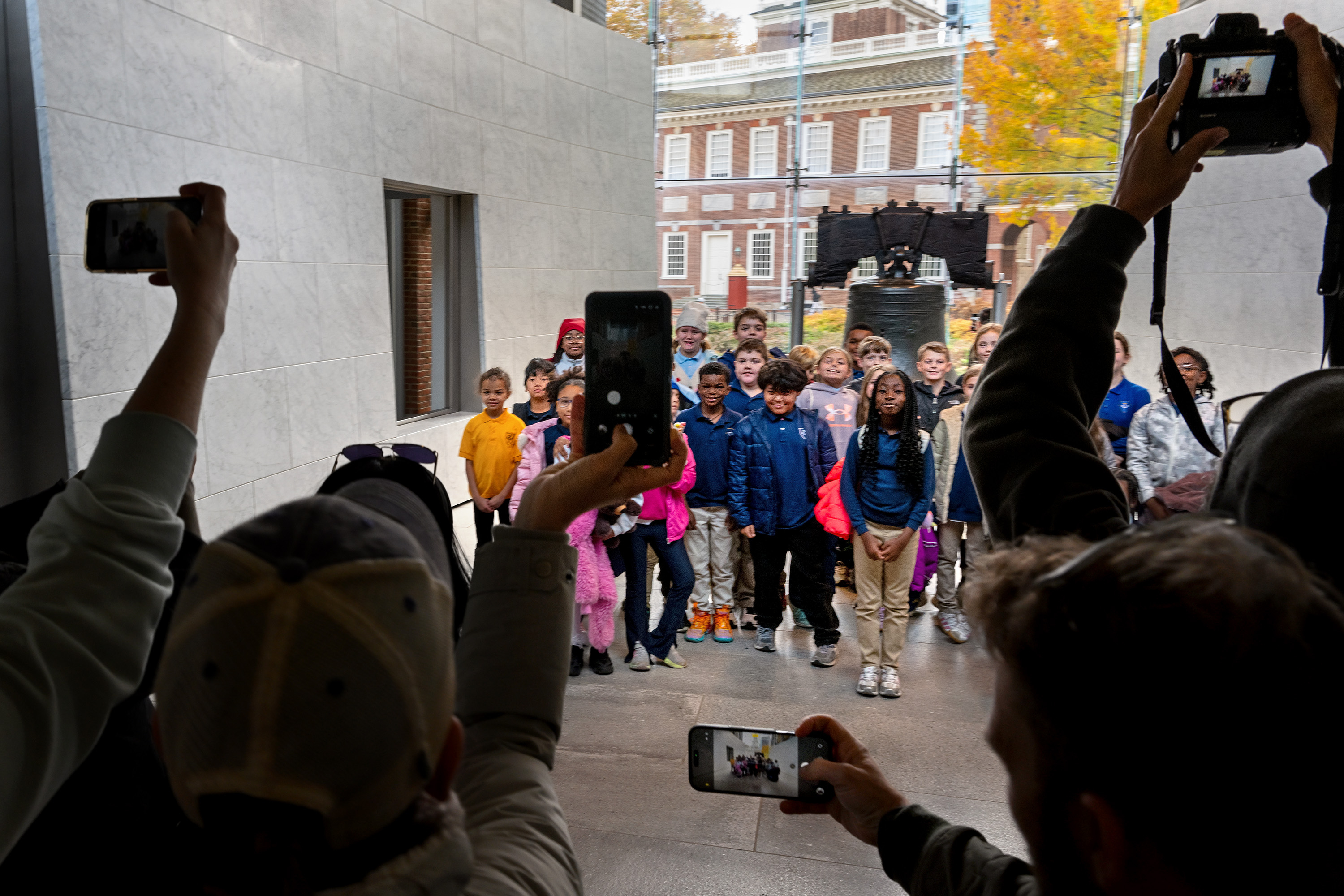
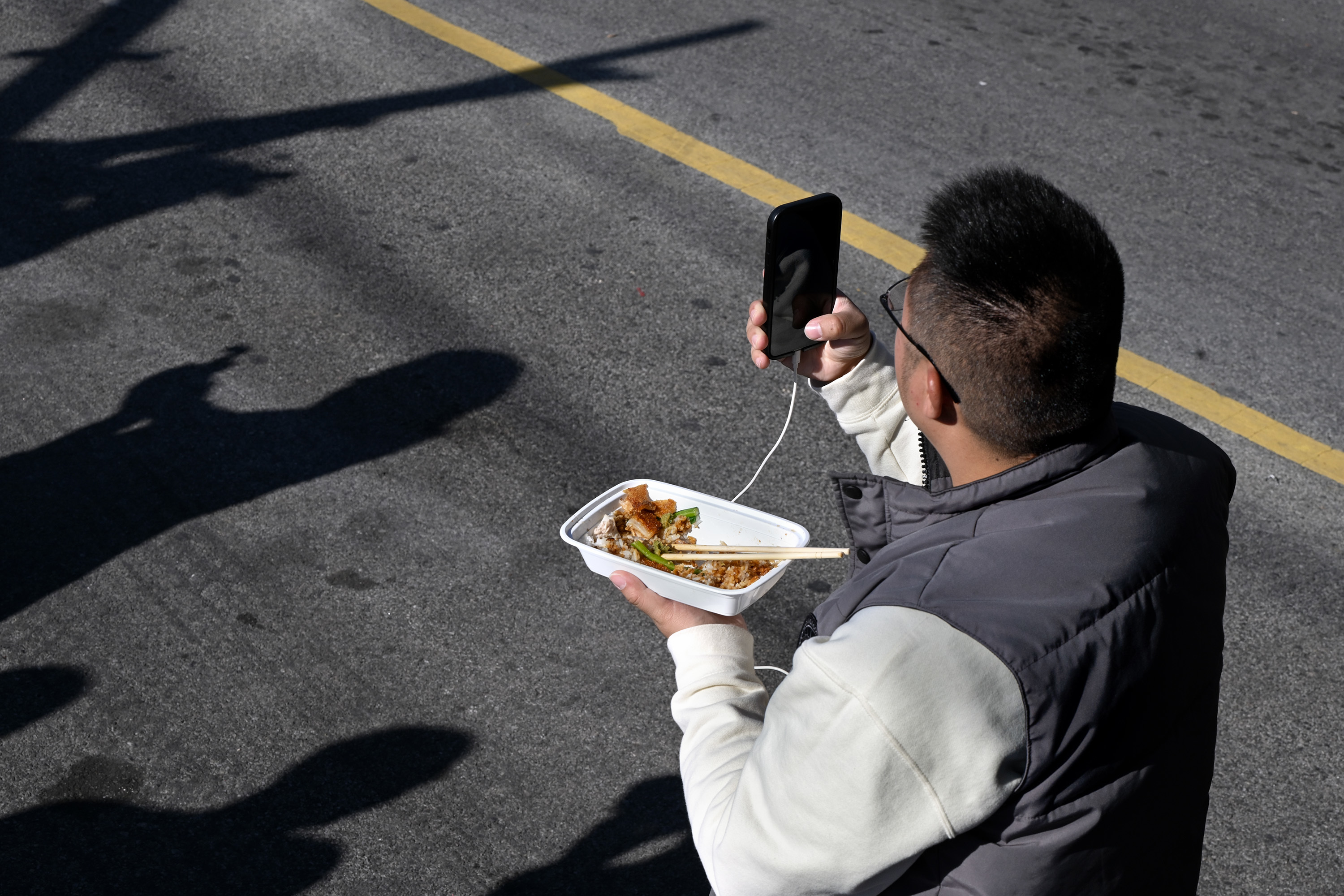
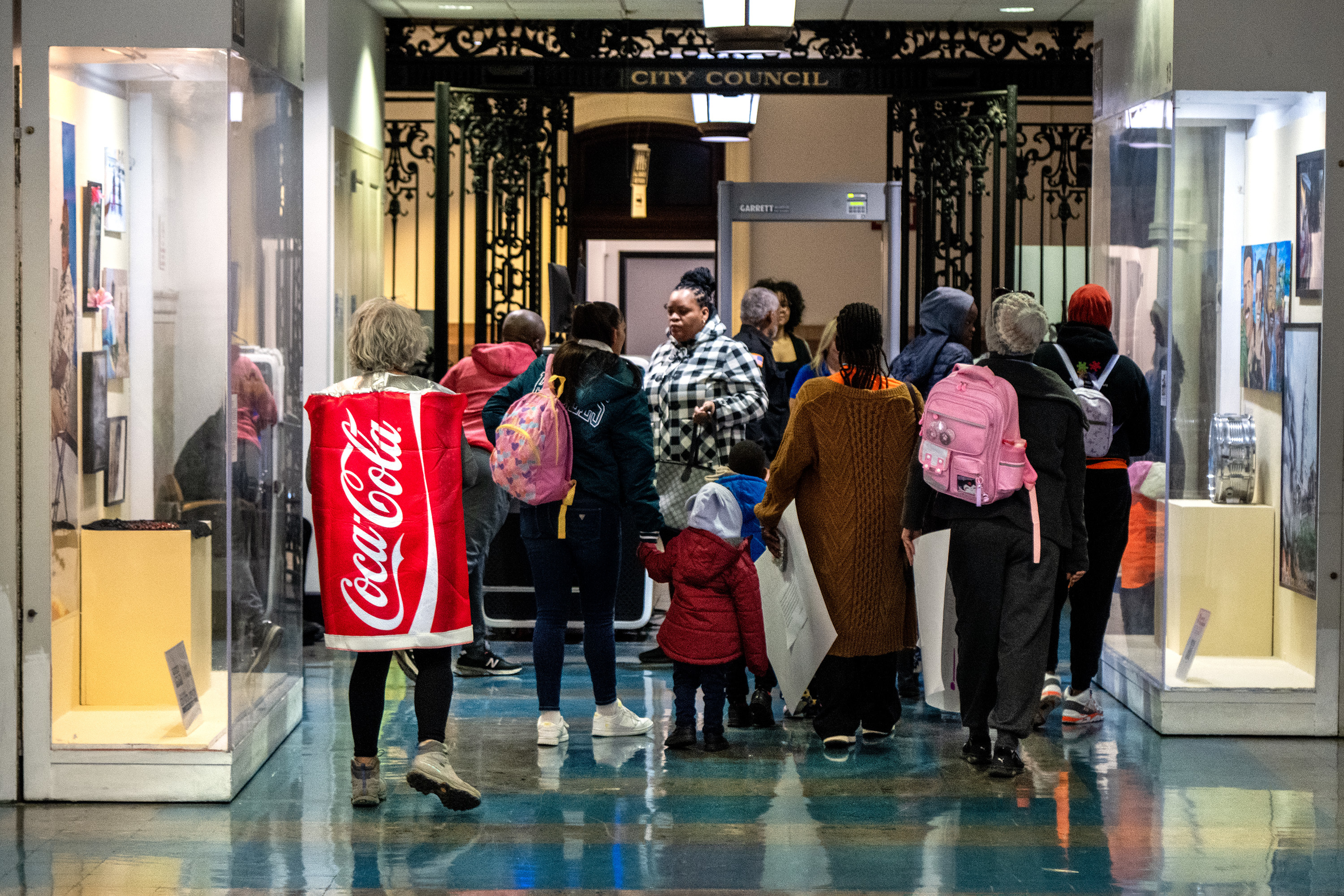
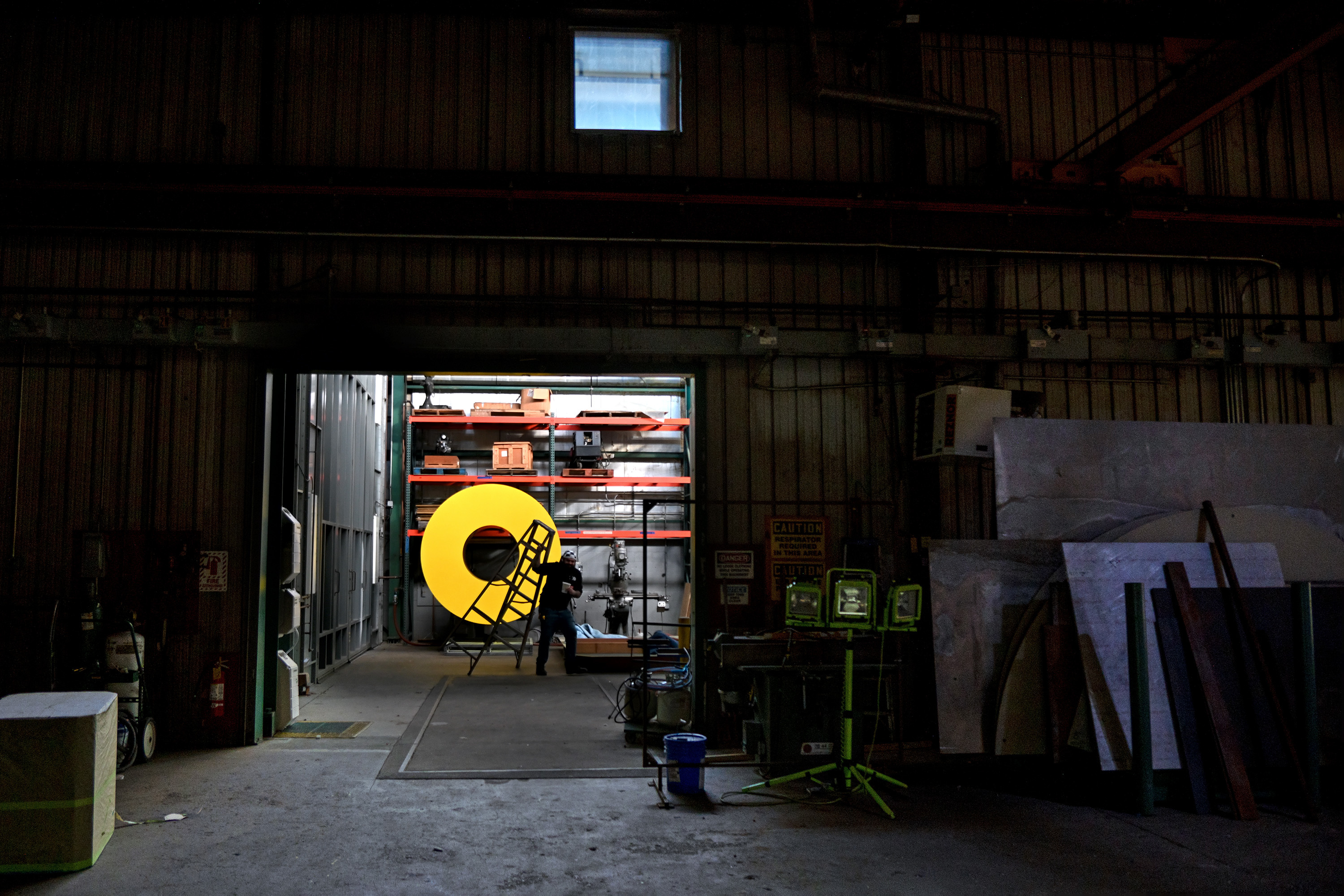
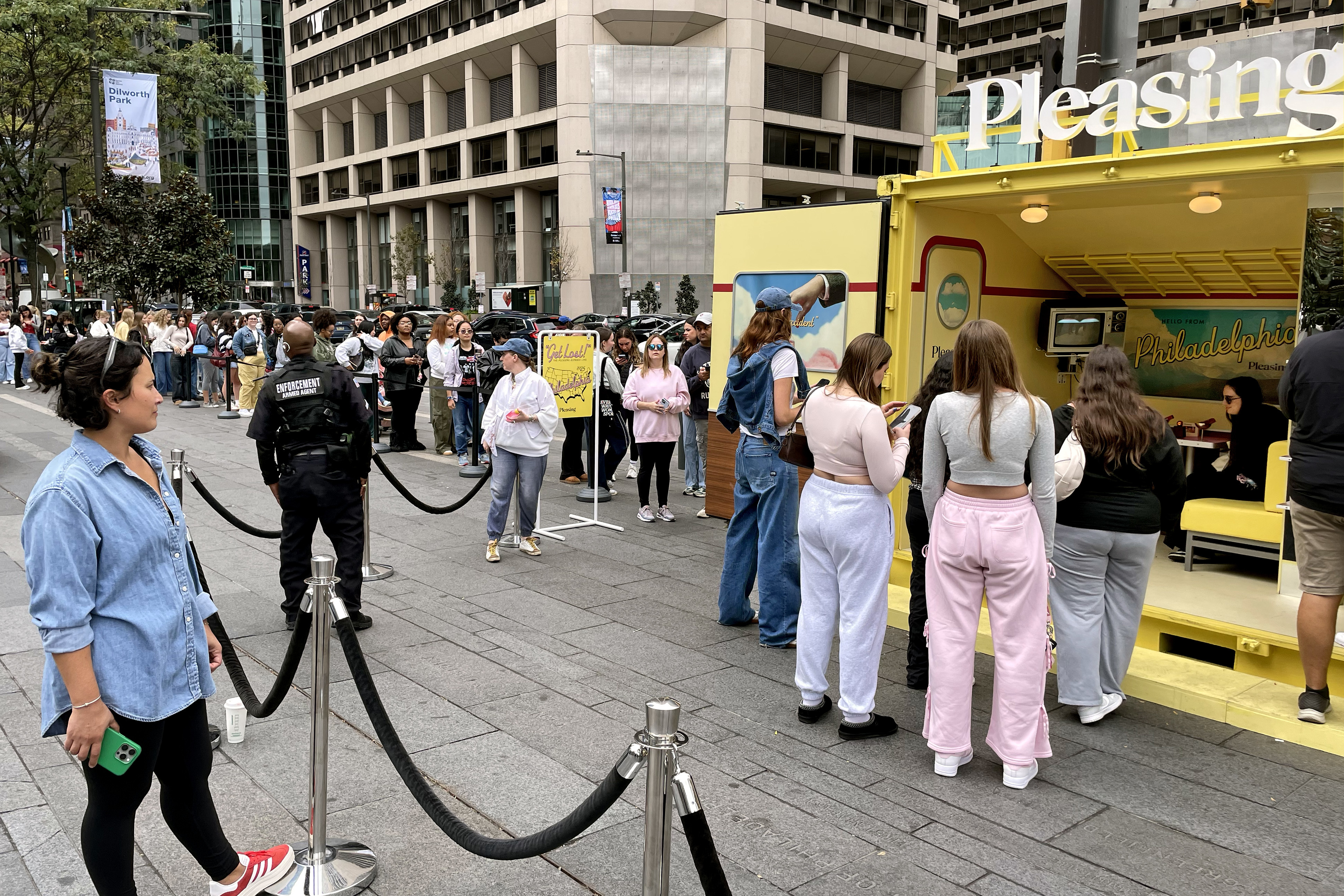
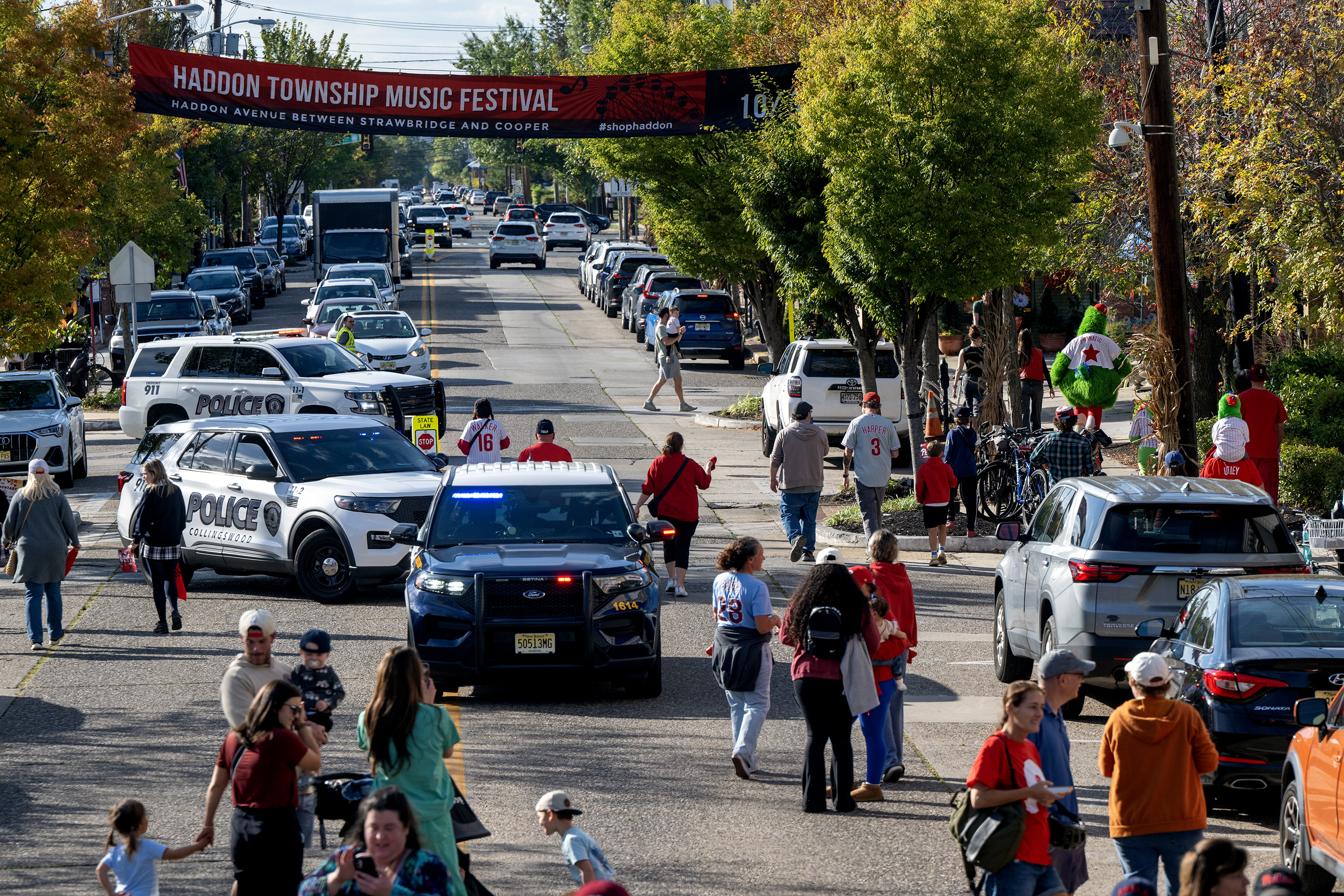
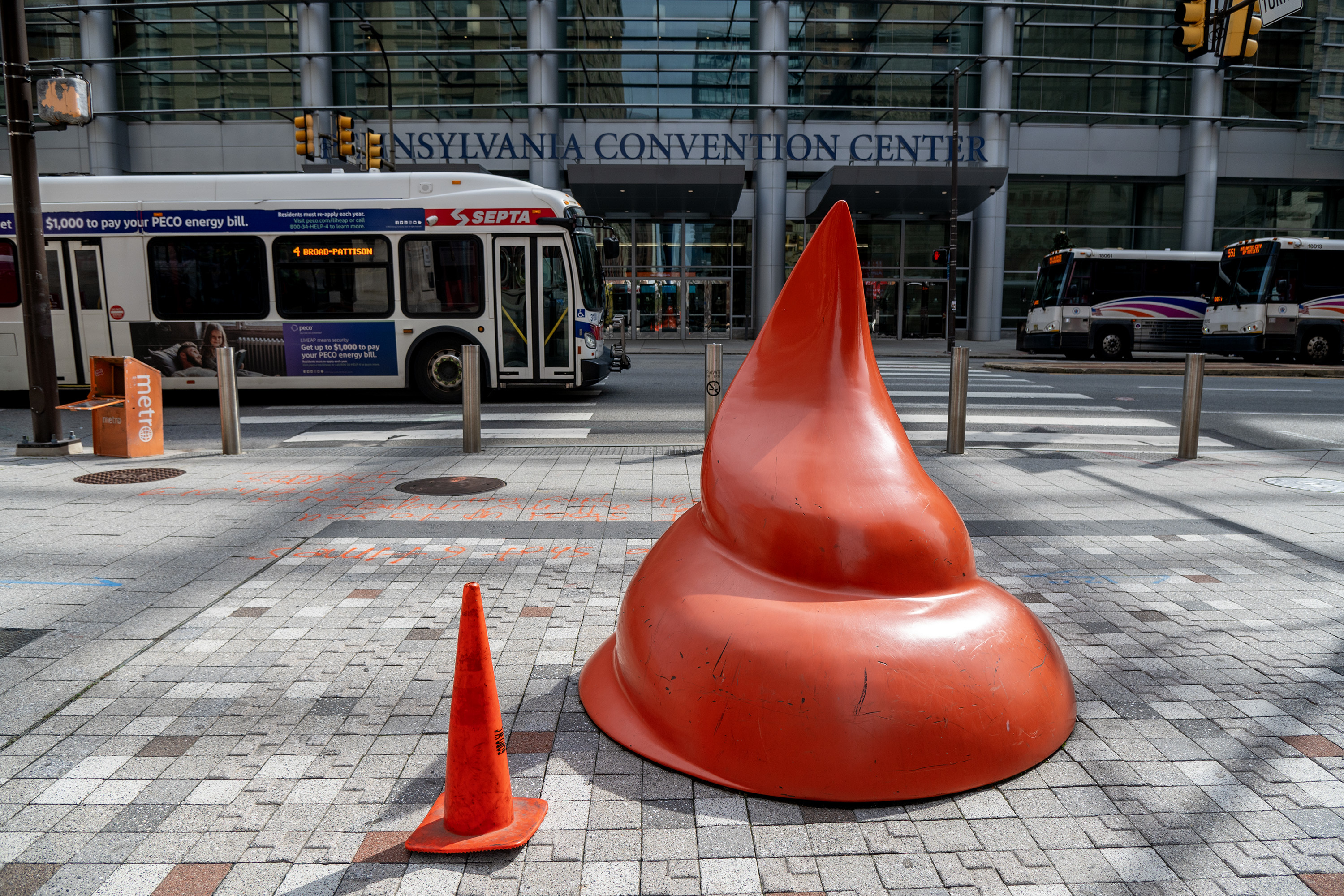
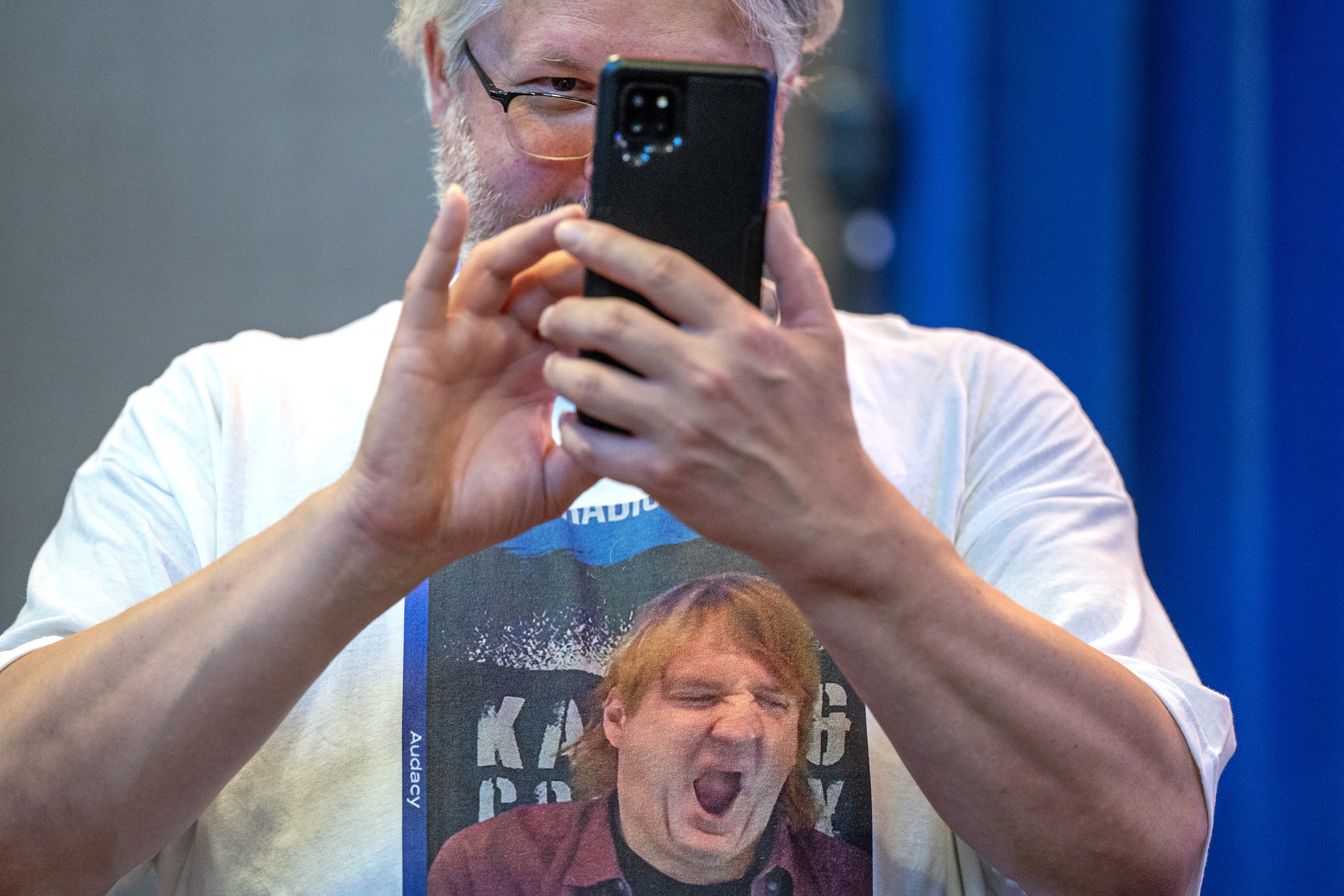
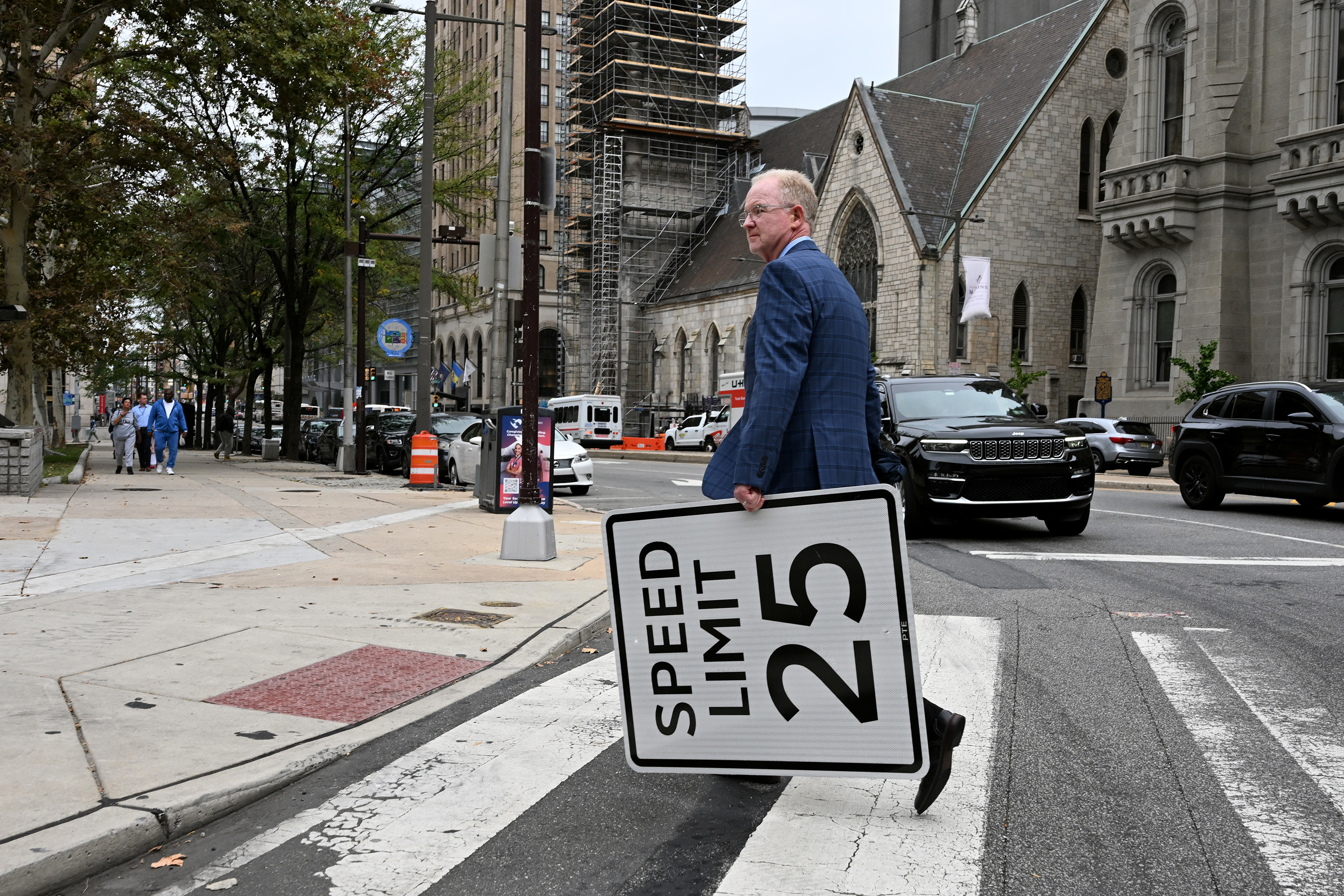
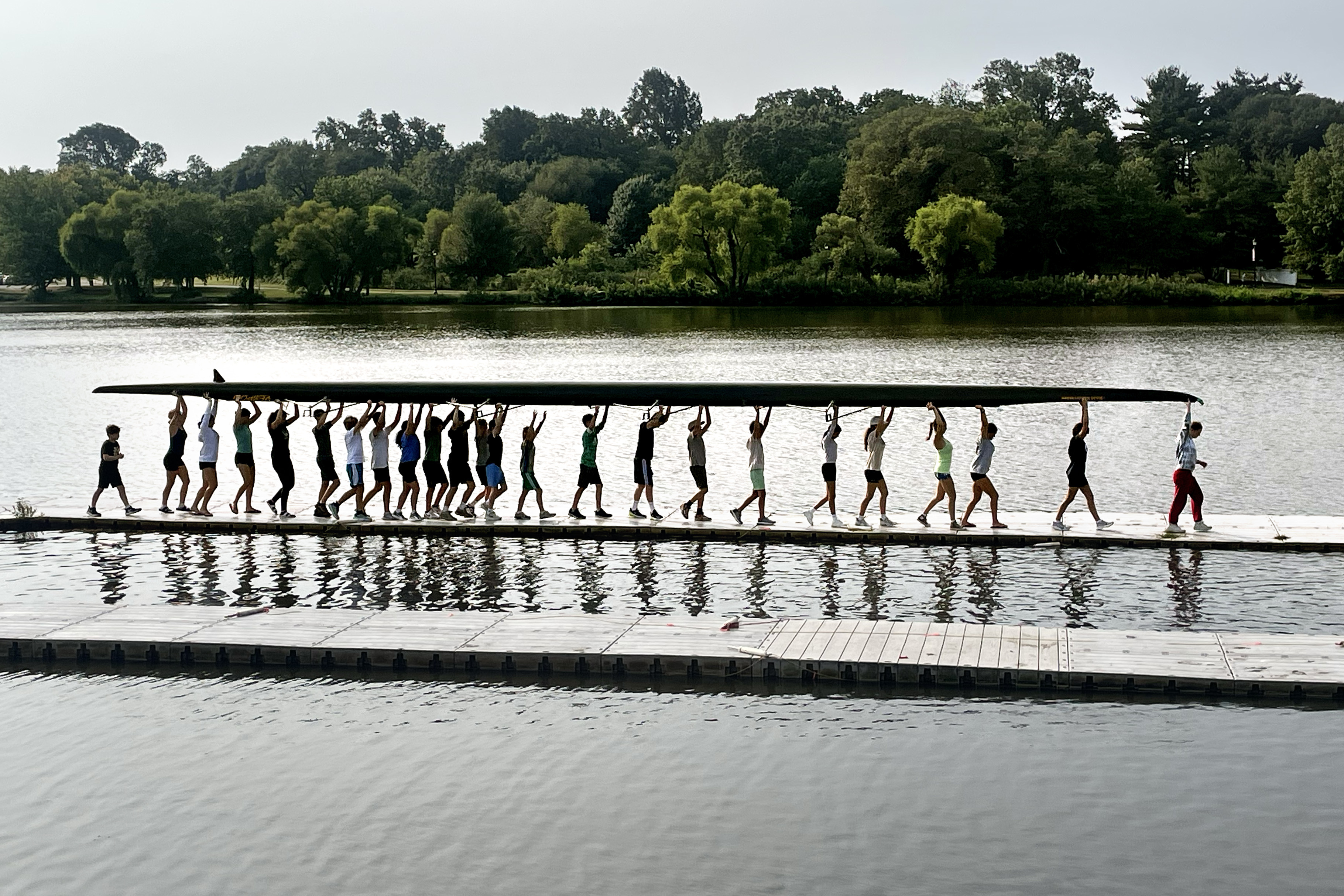
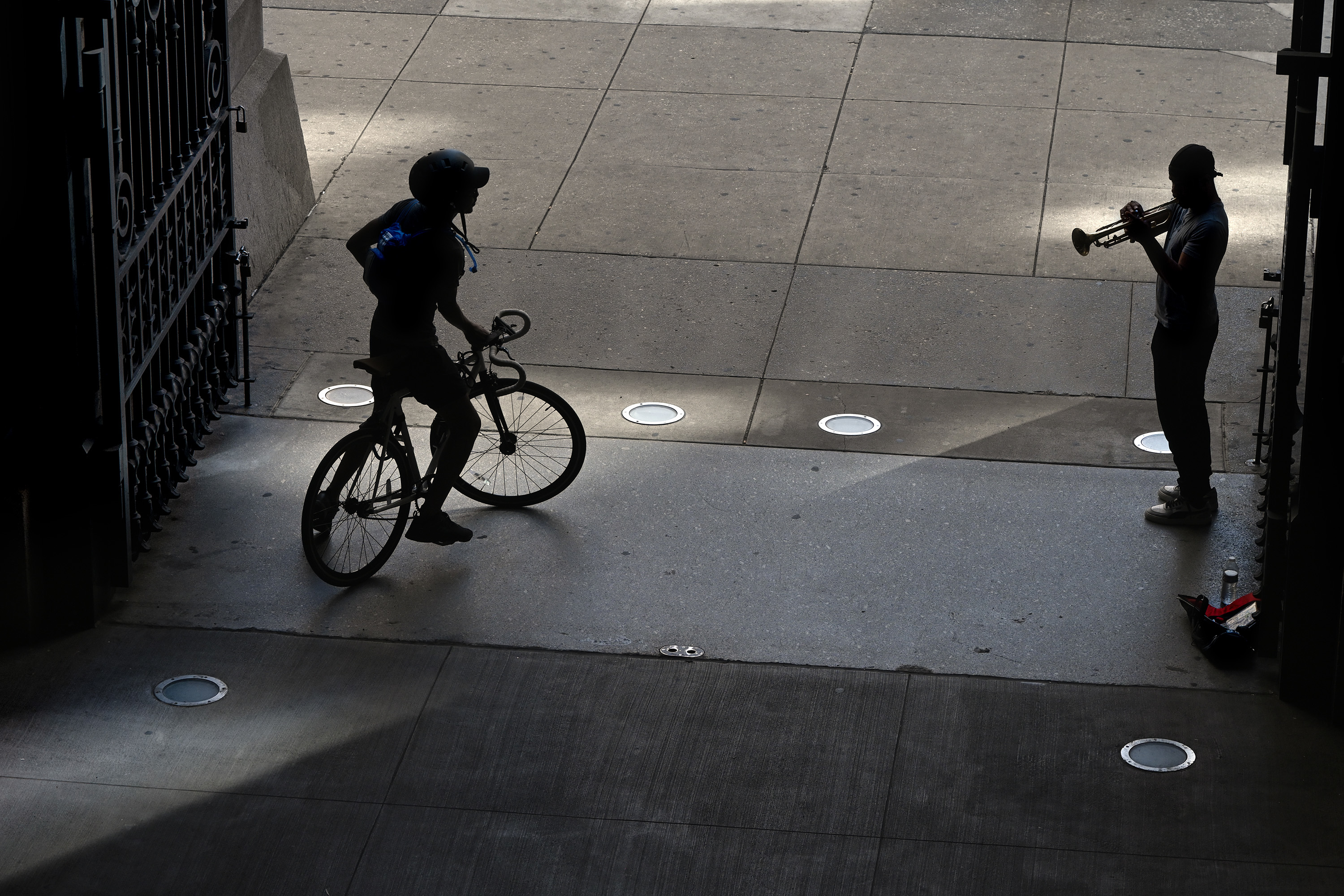
November 29, 2025: t’s ginkgo time in our region again when the distinctive fan-shaped leaves turn yellow and then, on one day, lose all their leaves at the same time laying a carpet on city streets and sidewalks. A squirrel leaps over leaves in the 18th Century Garden in Independence National Historical Park Nov. 25, 2025. The ginkgo (Ginkgo biloba) is considered a living fossil as it’s the only surviving species of a group of trees that existed before dinosaurs. Genetically, it has remained unchanged over the past 200 million years. William Hamilton, owner the Woodlands in SW Phila (no relation to Alexander Hamilton) brought the first ginkgo trees to North America in 1785.November 24, 2025: The old waiting room at 30th Street Station that most people only pass through on their way to the restrooms has been spiffed up with benches – and a Christmas tree. It was placed there this year in front of the 30-foot frieze, “The Spirit of Transportation” while the lobby of Amtrak’s $550 million station restoration is underway. The 1895 relief sculpture by Karl Bitter was originally hung in the Broad Street Station by City Hall, but was moved in 1933. It depicts travel from ancient to modern and even futuristic times. November 17, 2025: Students on a field trip from the Christian Academy in Brookhaven, Delaware County, pose for a group photo in front of the Liberty Bell in Independence National Historical Park on Thursday. The trip was planned weeks earlier, before they knew it would be on the day park buildings were reopening after the government shutdown ended. “We got so lucky,” a teacher said. Then corrected herself. “It’s because we prayed for it.” November 8, 2025: Multitasking during the Festival de Día de Muertos – Day of the Dead – in South Philadelphia.November 1, 2025: Marcy Boroff is at City Hall dressed as a Coke can, along with preschoolers and their caregivers, in support of former Mayor Jim Kenney’s 2017 tax on sweetened beverages. City Council is considering repealing the tax, which funds the city’s pre-K programs. October 25, 2025: Austin Gabauer, paint and production assistant at the Johnson Atelier, in Hamilton Twp, N.J. as the finished “O” letter awaits the return to Philadelphia. The “Y” part of the OY/YO sculpture is inside the painting booth. The well-known sculpture outside the Weitzman National Museum of American Jewish History was removed in May while construction continues on Market Street and has been undergoing refurbishment at the Atelier at the Grounds for Sculpture outside of Trenton.October 20, 2025:The yellow shipping container next to City Hall attracted a line of over 300 people that stretched around a corner of Dilworth Park. Bystanders wondered as they watched devotees reaching the front take their selfies inside a retro Philly diner-esque booth tableau. Followers on social media had been invited to “Climb on to immerse yourself in the worlds of Pleasing Fragrance, Big Lip, and exclusive treasures,” including a spin of the “Freebie Wheel,” for products of the unisex lifestyle brand Pleasing, created by former One Direction singer Harry Styles.October 11, 2025: Can you find the Phillie Phanatic, as he leaves a “Rally for Red October Bus Tour” stop in downtown Westmont, N.J. just before the start of the NLDS? There’s always next year and he’ll be back. The 2026 Spring Training schedule has yet to be announced by Major League Baseball, but Phillies pitchers and catchers generally first report to Clearwater, Florida in mid-February.October 6. 2025: Fluorescent orange safety cone, 28 in, Poly Ethylene. Right: Paint Torch (detail) Claes Oldenburg, 2011, Steel, Fiberglass Reinforced Plastic, Gelcoat and Polyurethane. (Gob of paint, 6 ft. Main sculpture, 51 ft.). Lenfest Plaza at the Pennsylvania Academy of the Fine Arts on North Broad Street, across from the Convention Center.September 29, 2025: A concerned resident who follows Bucks County politics, Kevin Puls records the scene before a campaign rally for State Treasurer Stacy Garrity, the GOP candidate for governor. His T-shirt is “personal clickbait” with a url to direct people to the website for The Travis Manion Foundation created to empower veterans and families of fallen heroes. The image on the shirts is of Greg Stocker, one of the hosts of Kayal and Company, “A fun and entertaining conservative spin on Politics, News, and Sports,” mornings on Talk Radio 1210 WPHT.September 22, 2025: A shadow is cast by “The Cock’s Comb,” created by Alexander “Sandy” Calder in 1960, is the first work seen by visitors arriving at Calder Gardens, the new sanctuary on the Ben Franklin Parkway. The indoor and outdoor spaces feature the mobiles, stabiles, and paintings of Calder, who was born in Philadelphia in 1898, the third generation of the family’s artistic legacy in the city.September 15, 2025: Department of Streets Director of Operations Thomas Buck leaves City Hall following a news conference marking the activation of Automated Speed Enforcement (ASE) cameras on the Broad Street corridor – one the city’s busiest and most dangerous roads. The speed limit on the street, also named PA Route 611, is 25 mph.September 8, 2025: Middle schoolers carry a boat to the water during their first outing in a learn-to-row program with the Cooper Junior Rowing Club, at the Camden County Boathouse on the Cooper River in Pennsauken. September 1, 2025: Trumpet player Rome Leone busks at City Hall’s Easr Portal. The Philadelphia native plays many instruments, including violin and piano, which he started playing when he was 3 years old. He tells those who stop to talk that his grandfather played with Billie Holiday, Duke Ellington, Nina Simone, and Dizzy Gillespie. August 25, 2025: Bicycling along on East Market Street.
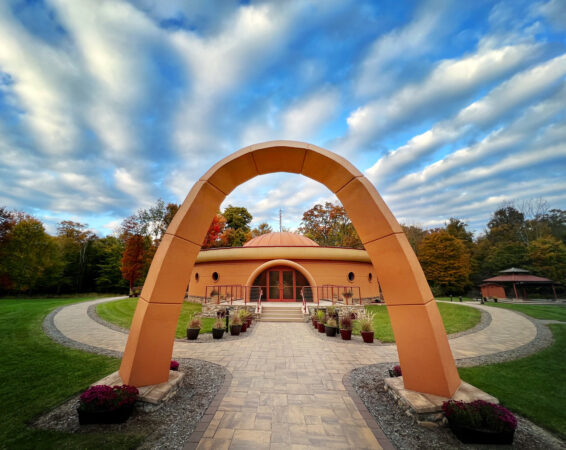
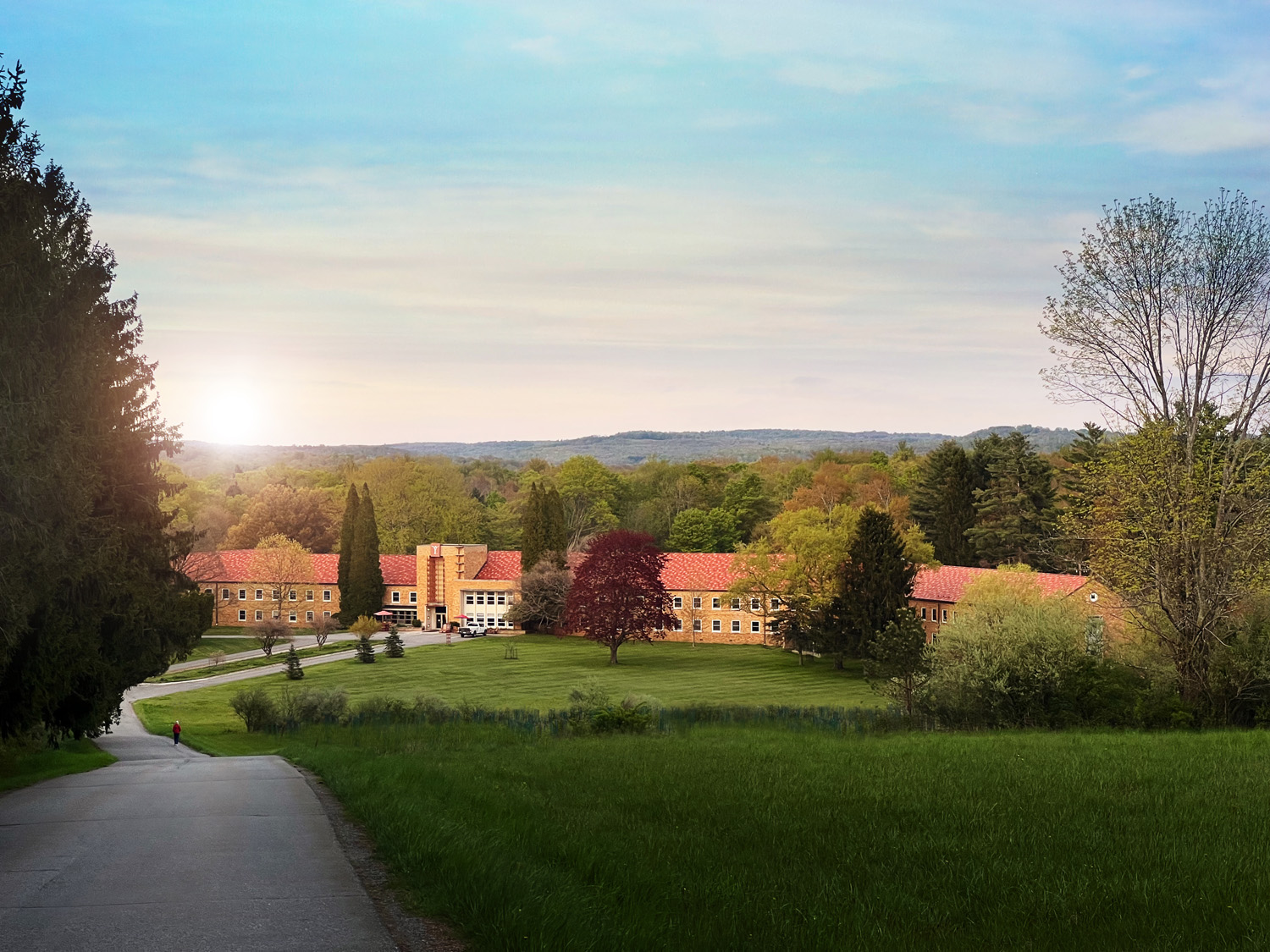
The silence in the Himalayan Institute’s shrine redefines silence, quiet enough to hear your heartbeat, to pick up a whisper from across the room, and, perhaps most importantly, to feel every breath, in and out, while you meditate.
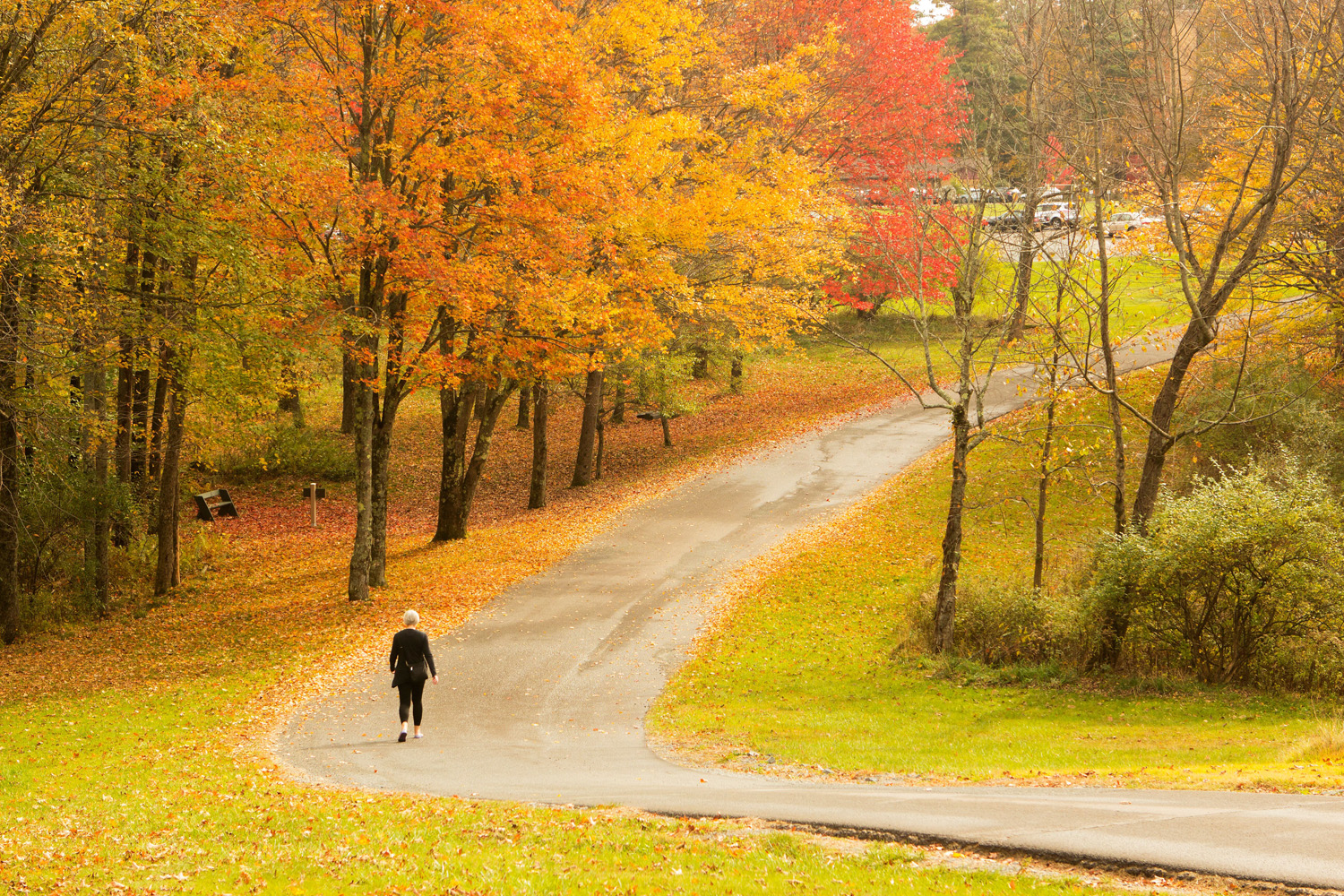
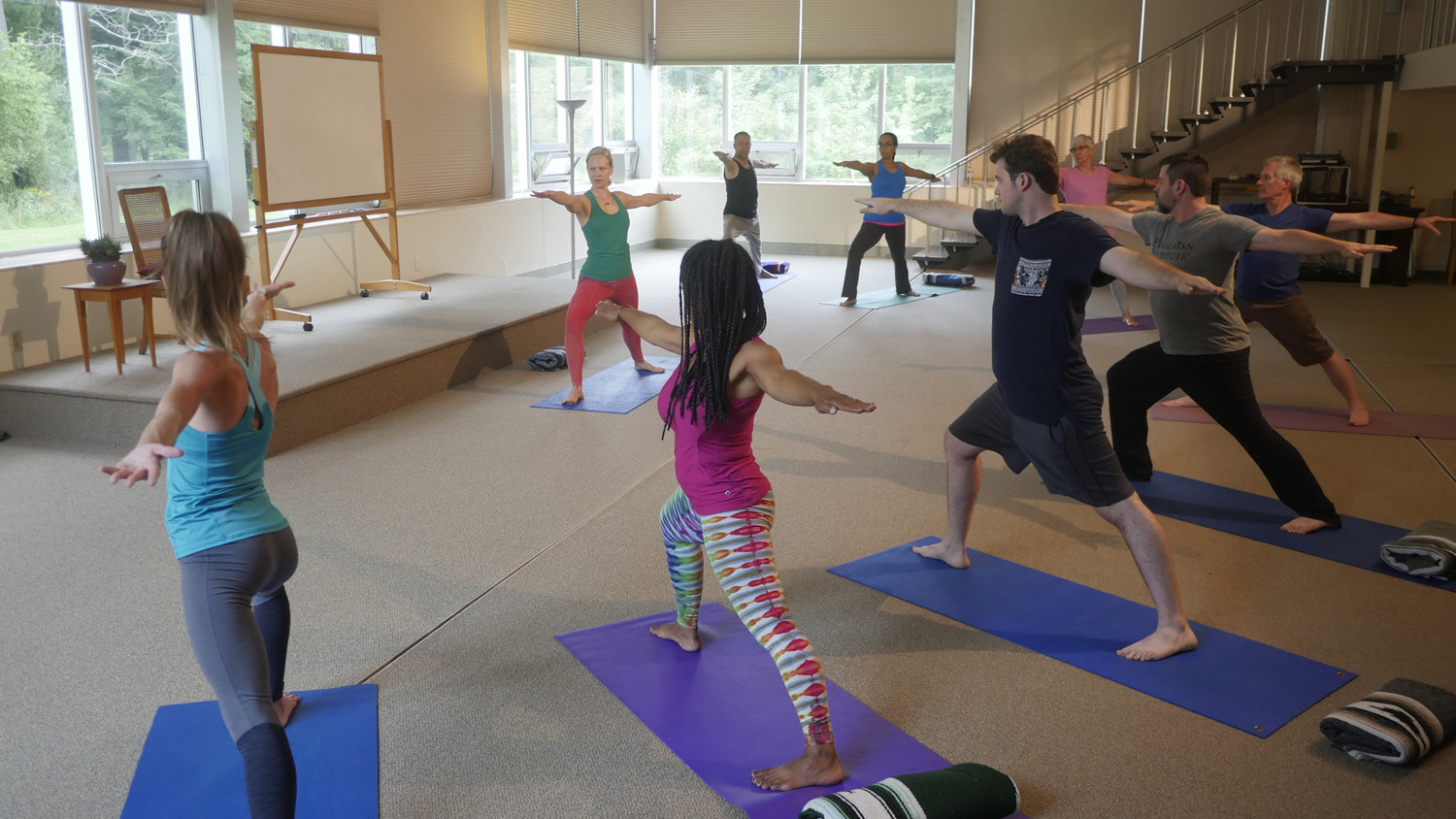
The institute, founded in 1972, moved into the massive, former seminary on 400 hilly, forested acres in Honesdale, Wayne County, in 1977, a time when yoga was still a niche practice. For more than 50 years, the institute has been offering yoga training, spirituality, meditation, and holistic health practices, along with getaways and retreats.
“It’s for anyone, for any creed, religion, sex, or gender,” said Greg Capitolo, a California native who became the institute’s president after attending retreats there. “There’s really no religious affiliation at all.”
As yoga exploded in popularity and modern meditation apps abound, the Himalayan Institute has seen growing interest worldwide. It hasn’t hurt that downtown Honesdale has seen its own popularity grow over the last decade as Philadelphia and New York City residents look for properties and business opportunities outside of traditional urban escapes, like upstate New York.
“I like to sat this is the best-kept secret in Wayne County,” Capitolo said. “I hope we become less of a secret to the people here. ”
The Inquirer went to Honesdale during a frigid weekend last December and confirmed it: even in single-digit temps, the town’s gift shops, bakeries, buzz-worthy restaurants, art galleries, and book stores were alive with tourists and locals up and down Main Street.
Afterward, several readers mention the Himalayan Institute as a “must-visit.”
The Himalayan Institute, In Honesdale, Pa.
On a Monday in late November, the main, dormlike building was abuzz with “residents” who were doing volunteer work in the kitchen for access to classes, yoga training, and other programs the institute offers. Capitolo said the institute can house up to 80 residents, who commit to staying for a year as part of the $800 per month “Residential Service Program.”
Meals are vegetarian, and on this afternoon, lunch was beet subzi and kimchari. The Himalayan Institute follows Ayurvedic principles, which discuss balance and digestion, among other things.
“The Ayurvedic system says you should eat your biggest meal around lunchtime, when the sun’s at its highest, point, because your digestion will be optimally ready to break down food,” Capitolo said.
There’s also a gift shop and a trail network at the Institute, along with a popular Wellness Center that offers several types of massage, including hot stone. One of the Wellness Center’s most popular offerings is an Ayurvedic therapy known as Shirodhara Treatment, which includes “streaming warm oil onto the forehead to clear and calm the mind.”
The Himalayan Institute, In Honesdale, Pa.
The simplest structure and offering at the Himalayan Institute may be the Sri Vidya Shrine, a simple, domed building that sits behind the former seminary on the campus. The shrine is the twin of the Sri Vidya Shrine at the Himalayan Institute’s Khajuraho campus in central India, and its meditation hall is not so simple: that unique silence was part of the design.
The shrine’s meditation hall is referred to as the mandapa, literally “the canopy for seekers to gather.”
Capitolo sat silently in the hall for several minutes, hands folded, focusing on his breath. He, too, was a seeker, leaving a lucrative job in Silicon Valley to head east to Honesdale, before it was hip.
“I was happy and seemingly had everything I needed,” he said outside the shrine. “But something was missing. This place satisfied what was missing.”
Now that the truth is known, it falls to Jalen No. 1 to compensate for the absence of Jalen No. 2.
Now that the drop-off in Jalen Carter’s play in 2025 compared with 2024 has been explained by his deteriorating shoulders, the responsibility for a late-season surge falls more squarely on the shoulders of embattled quarterback Jalen Hurts.
He’s got to throw better passes. He’s got to run the offense more efficiently. He’s got to start using his legs as a weapon, because the main weapon on defense is gone.
Carter as an NFL sophomore last season fueled the best defense in the league. That defense allowed an average of 19.3 points to the No. 5, No. 7, No. 15, and No. 17 offenses in four playoff games. Zack Baun, Milton Williams, and Josh Sweat made $231 million in new contracts after that Super Bowl run. They owe about 25% to Carter.
Now, though, Carter is taking time off to heal his aching shoulders. According to Dr. David Chao, Carter likely received PRP injections — platelet-rich plasma — a procedure that is minimally invasive and intended to have the patient’s own plasma speed healing at the injection site.
In the best-case scenario for the team, Carter will miss no more than two games. In the best-case scenario for Carter, he will miss the last five games before the playoffs begin. He needs to be pain-free, fit, and strong if the Eagles hope to defend their title.
Reports indicate Jalen Carter underwent procedures on both shoulders, but it was likely PRP injections rather than surgery. He will miss a couple of weeks. The Eagles could keep him off IR if they need him back, but if not, he may sit out the remainder of the regular season. pic.twitter.com/2kMtIuCBdq
— David J. Chao – ProFootballDoc (@ProFootballDoc) December 4, 2025
To his credit, Carter tried to play through the injury all season. He reported the injury in the offseason and missed time during training camp, but as the games got colder the dam finally broke.
Carter was bad in the second half at Dallas two weeks ago, when the Cowboys came back and won. He was even worse last Friday, when the visiting Bears rushed for 281 yards. Still, Dallas and Chicago scored just 24 points apiece. Carter is that effective at half-strength.
That’s about the level at which Jalen Hurts has been playing … for quite a while, to be honest.
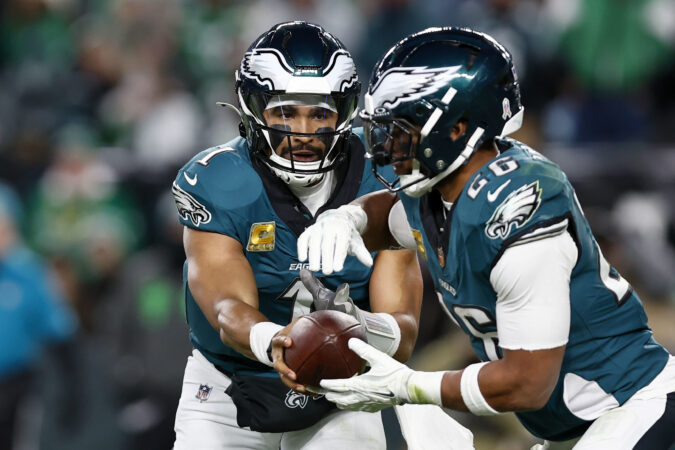
Jalen Hurts’ steely resolve will be tested during a stretch when the Eagles are at less than full strength.
The Challenge
As well as Carter played last season he wasn’t the Eagles’ best player, because Saquon Barkley had the best year any running back ever had. This season, however, defenses have sold out to stop Saquon, and it’s working.
It’s working, in part, because Hurts and his coaches have decided to reduce his designed quarterback runs. Hurts is on pace for only 119 runs, about 47 fewer than his average over the past four seasons.
Exacerbating the matter: The poor health, inconsistent play, and key absences on the offensive line, usually an unstoppable force, have diminished that unit’s effectiveness.
The biggest blow: Right tackle Lane Johnson, one of the best players in franchise history, hurt his foot against the Lions. He missed both the loss at Dallas and Friday’s loss, and he won’t be back for at least two more games, more likely four. Without Johnson, the Eagles wouldn’t have won Super Bowl LII or LIX. Hurts and Barkley wouldn’t be under contracts worth more than $300 million. He’s just that good.
So, yes, as they enter the homestretch of the season, the 8-4 Eagles will play without their best defensive lineman and their best offensive lineman. With Carter and Johnson either limited or absent, they’ve lost their last two games.
Still, things aren’t all that bad.
The Road to the Top
They hold the No. 3 overall seed in the NFC. They again hold a 2½-game lead in the NFC East over the Cowboys, who lost Thursday night in Detroit. They’ve given themselves a buffer, and they have a runway — as long as Hurts starts playing to his $51 million average annual value.
First, the Chargers, in Los Angeles, on Monday Night. Right-handed Chargers quarterback Justin Herbert will be playing with a surgically repaired left hand, so the balanced attack might be less balanced, and the offense should run exclusively out of shotgun or pistol sets, and adversity along the Chargers’ line has mirrored that of the Eagles’.
However, the Chargers have the No. 2 passing defense and 11 interceptions, which is tied for eighth. The Eagles have the 24th-ranked offense and the 23rd-ranked passing offense, despite weapons like A.J. Brown and DeVonta Smith. They’re getting open, and they’re running the plays called by first-year coordinator Kevin Patullo.
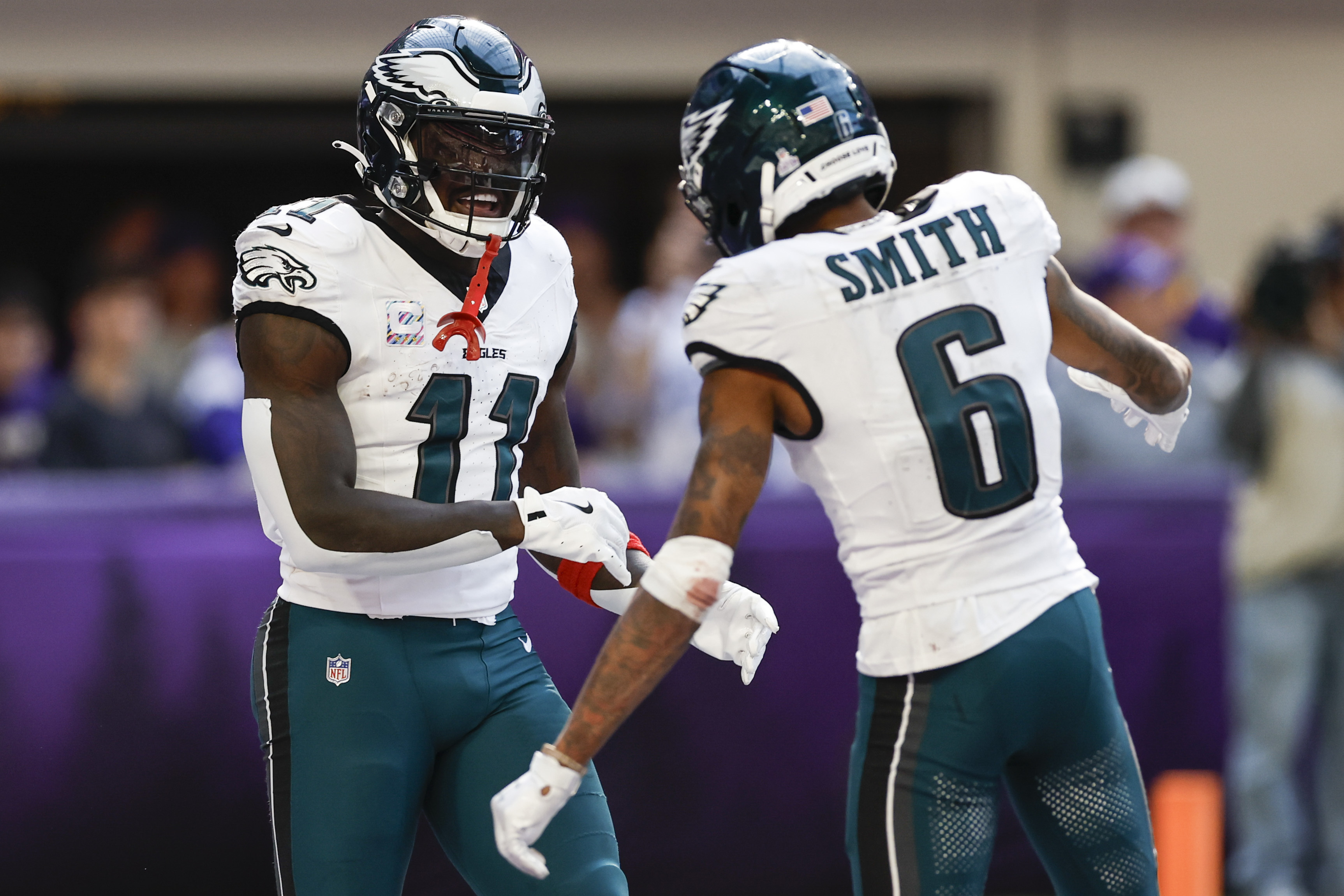
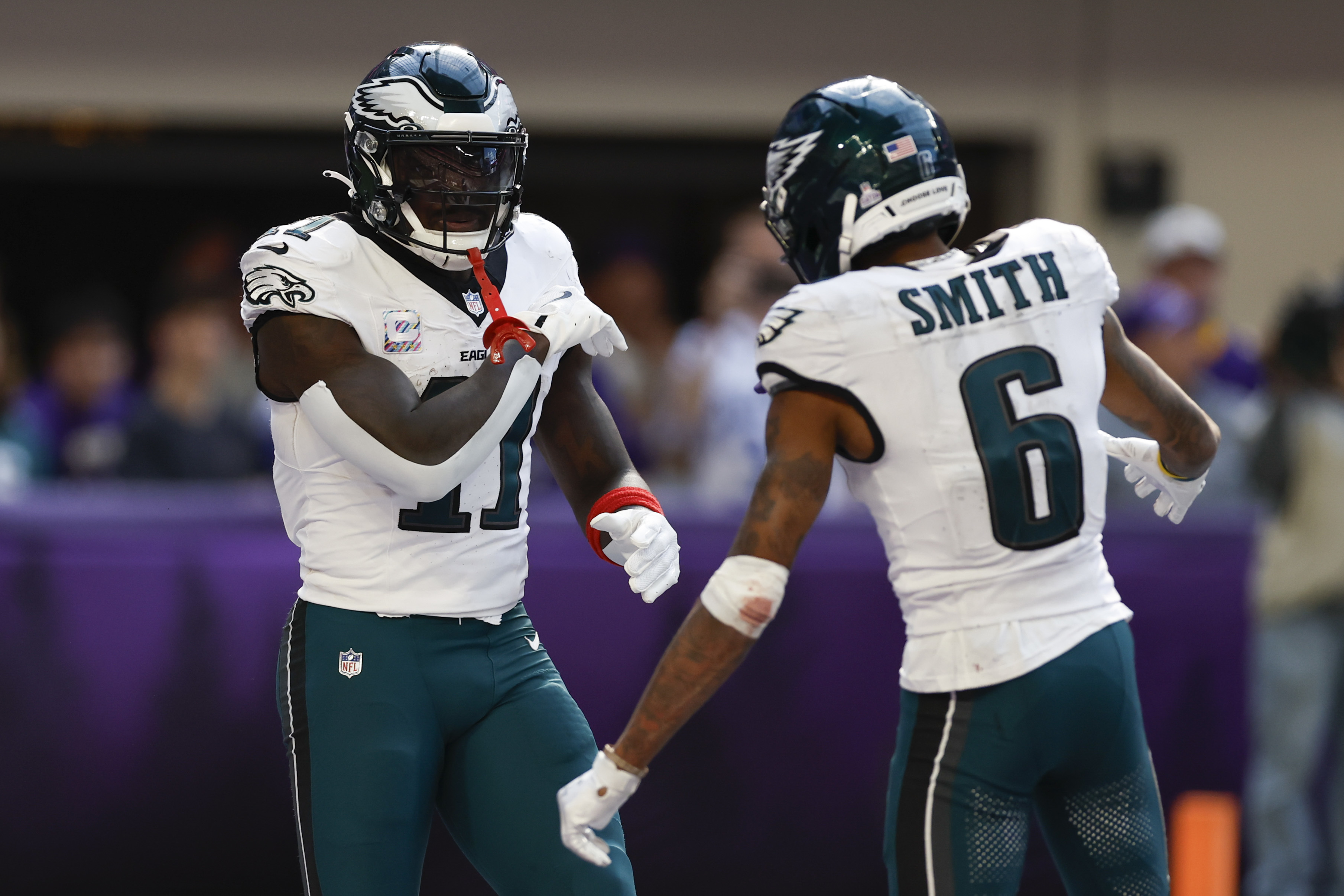
Will receivers A.J. Brown and Devonta Smith, with the necessary assistance of their quarterback, have a big Monday night in L.A.?
Hurts has been a problem all season. Hurts can turn that narrative around Monday night, and beyond.
The two-win Raiders visit the next week, and the season ends with home-and-home games against the three-win Commanders, who have the second-worst defense in the league, sandwiching what likely will be a brutal trip to Buffalo.
The Eagles can win three of their remaining games, four if they win Monday night. That would give them 12 wins and a chance at the No. 1 seed in the NFC, since they’ve beaten the Rams and Lions, and since the Bears have a much more challenging schedule left to play.
But no longer can the Eagles expect their defense to win games for them, as Hurts squeezes the football and stares, mystified, into opposing secondaries.
He’s averaging just 209.5 passing yards. That’s fewer than Geno Smith, Mac Jones, and Jacoby Brissett.
In the spring of 1972, an elegant woman wearing a white Halston jumpsuit and carrying a silver fox coat asked her driver to stop at the corner of Chestnut and Bank Streets in Old City.
A line of people extended around the corner and all the way up to the front door of the city’s hottest new nightclub. When they spotted her, they erupted into applause and started chanting her name.
With the kind of theatrical instincts only a former model and onetime drag queen could have, she sashayed down the alley dragging her fur coat behind her, past all the cheering would-be patrons and into the club that bore her name: Harlow’s.
It’s a name that has been spelled out in lights, emblazoned in headlines, and even plastered on billboards, announcing, and in some cases, denouncing the woman who danced with Sharon Tate at the Cannes Film Festival, dazzled Truman Capote (who named her one of the most beautiful women of the 20th century in Answered Prayers), acted with Jack Nicholson, and turned down Warhol.
Harlow was a transgender woman and a glamour bomb the likes of which Philadelphia had never seen — but the city always understood her as one of our own; “Marlene Dietrich by way of Broad and Tasker,” as one Inquirer profile put it in 1972.
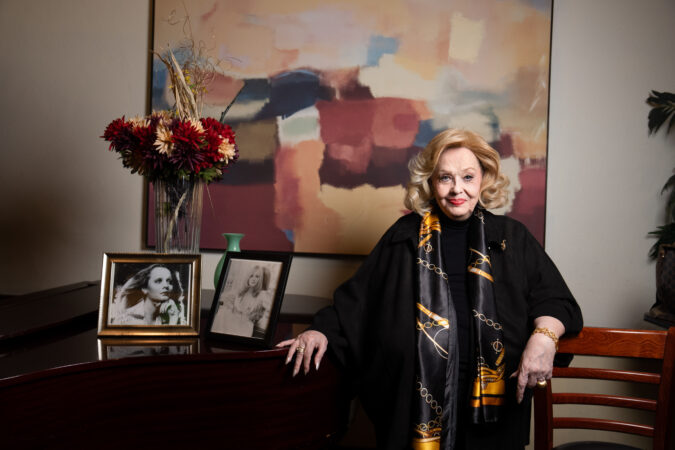
Now, after living in privacy for years, Rachel Billebault, once known around the world as Harlow, is finally ready to tell her story.
“I always said ‘no,’ whenever someone contacted me,” she says. But when we reached out to her two years ago, asking if we could work with her to write her memoirs, she changed her mind.
“Time was running out,” she says. “There were too many things left unsaid. If not me, then who else?”
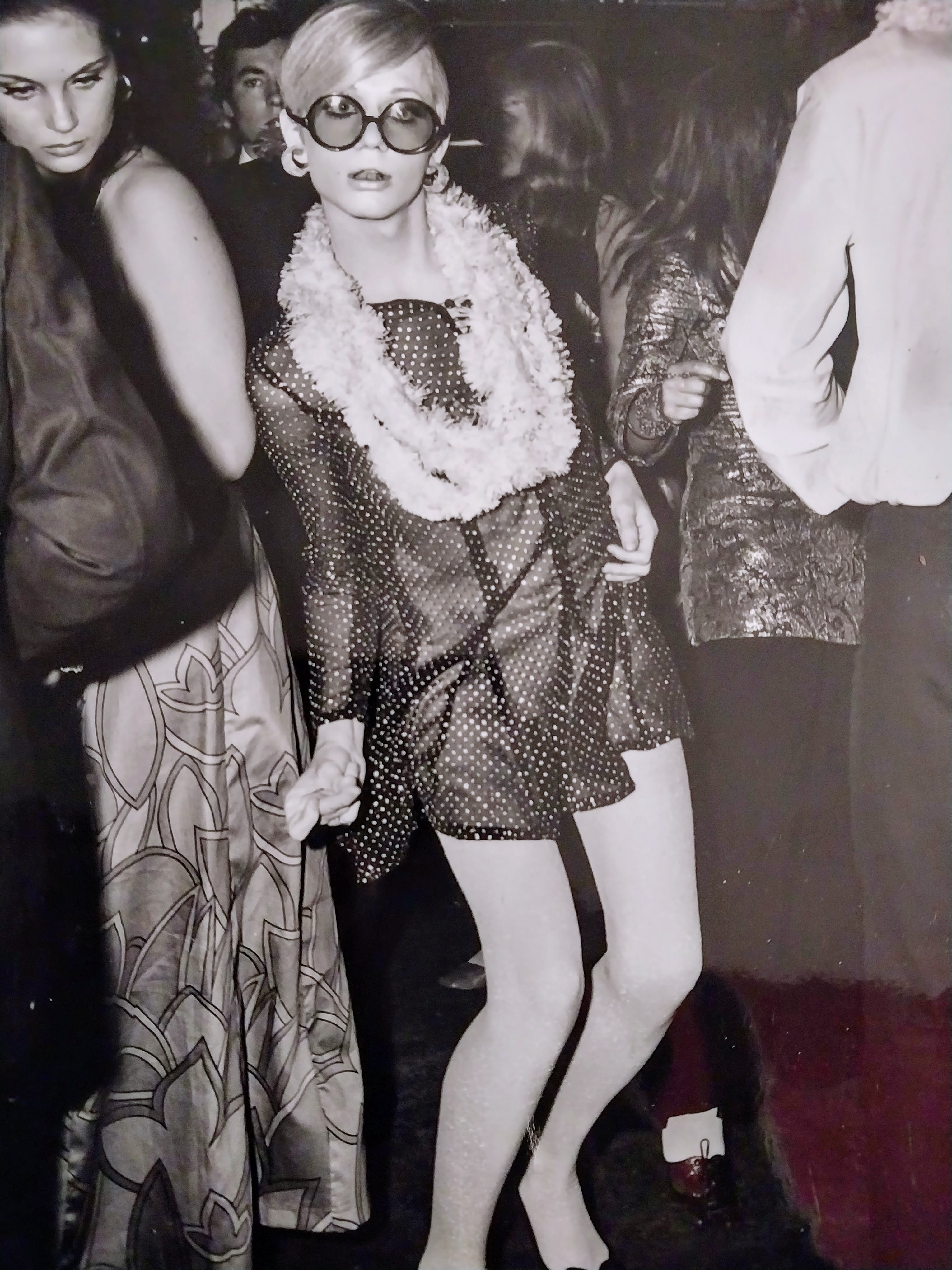
Rachel Harlow at Cannes in 1967.
From the streets of South Philly, an icon is born
These days, the former queen of nightlife is known by her neighbors in the Greater Northeast as a sweet — and still quite beautiful — senior lady who mostly keeps to herself.
The only thing to indicate her former high-style life is her insistence on maintaining it.
“I’m always the best-dressed woman at the Acme,” she says.
As a teenager growing up on Juniper Street between Tasker and Morris in South Philadelphia, however, she would slip out the back door with just a light touch of lipstick on her face, love beads around her neck, her platinum blond hair lightly teased and coiffed. Walking down the alley behind her house, she’d make her way to the Broad Street Line to travel “into town” to meet her friends in Rittenhouse Square.
It was better that way. The neighbors sitting on their front steps wouldn’t see her leave and her parents, Joe and Rose Finocchio, wouldn’t have to explain her appearance. To everyone in the neighborhood, she was known by the male name she was given at birth, recognized by the boy clothes she’d been forced to wear her whole life, even if they whispered about her high voice and winsome mannerisms.
“A South Philly unicorn,” is how she remembers herself then. “A little fawn on two legs, just trying to get my feet under me.”
Her parents were remarkably accepting, although they constantly worried what the neighbors would think. There was the occasional slur, which always instantly got slapped down by her family or some protective wiseguys, but for the most part, the close-knit Italian American community left her alone.
To hear her tell it, half the families on the block had someone who was “a little bit that way.”
Rittenhouse Square had been a late-night gathering spot for discreet gay men going back to at least the 1930s, but by the early ‘60s, it had also become a haven for LGBTQ+ kids and the counterculture, who were each decidedly less discreet. She made lifelong friends there.
“They were the first people in my life who never asked me why my voice was so high or why my eyelashes were so long,” she recalled years later, her voice cracking in gratitude.
She was 18 on Halloween night 1966 when her cousin Billy all but forced her into entering her first drag pageant at the L&M Ballroom at 69th and Market. She won, and Harlow (named after the ’30s screen siren) was born.
Soon, she was entering — and winning — every drag contest in the city. Eventually, she made her way to New York, where she won the Miss Camp All America pageant in 1967, and was sent to Cannes to promote Frank Simon’s groundbreaking documentary about the pageant, The Queen. There, she dined with Capote and Orson Welles and danced with Tate in matching silver minidresses.
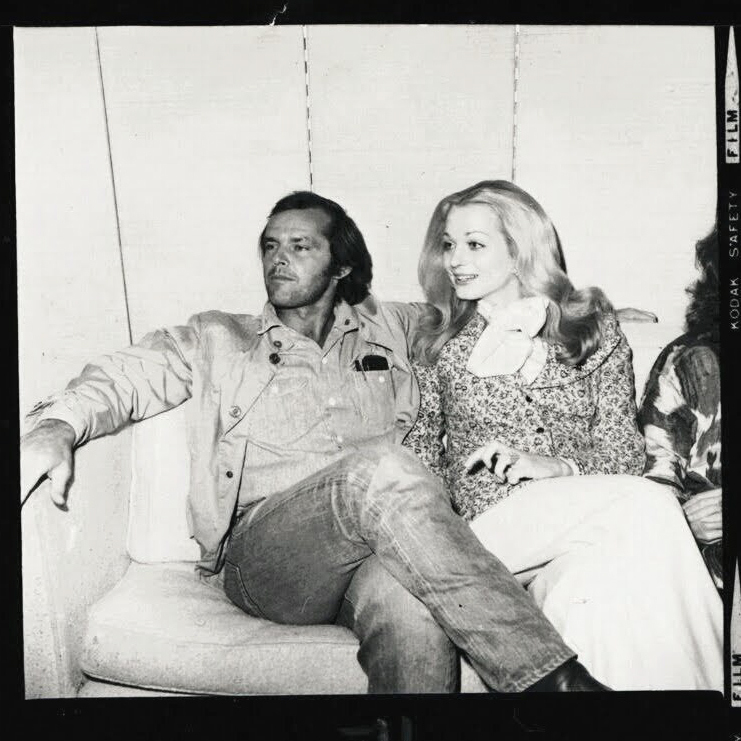
She spent a year in Hollywood. Director Henry Jaglom cast her in his 1971 film A Safe Place, starring Nicholson and Welles, which would make Harlow one of the earliest out transgender women to play a cisgender woman on film.
But when her onetime dance partner Tate was murdered, Harlow knew it was time to go.
“If they were killing girls like her, imagine what they’d do to a girl like me,” she says now.
Jack Nicholson and Rachel Harlow at “A Safe Place” movie premier.
A hometown hero returns
In 1971, she returned to Philadelphia, a city that loves nothing more than a hometown hero who comes back after conquering the world. That year,Philadelphia magazine ran a piece on her titled “Local Boy Makes Good,” detailing her exploits in Hollywood and glamorous run-ins with celebrities, along with a seven-page spread of Harlow modeling the latest women’s fashions around town.
To be transgender in the 1970s for most was to be invisible or under constant threat, although attitudes were generally less aggressive about it than the politicized atmosphere of today.
Coverage of trans people tended to skew toward a smirking sense of wonder or fear at the marvels of modern medicine.
Harlow had two tools at her disposal that she discovered early in her life and utilized for the rest of it.
“I was beautiful, if you don’t mind my saying, and no one could argue that I wasn’t a woman.”
Rachel Harlow on Aug. 22, 1973, promoting a television appearance. “I always wore that gold bracelet around my wrist. I still have it to this day,” she says now. “It’s an 18 karat gold bracelet with diamond and ruby clasp. It’s like a horse bit. It was a gift and I’ve always loved it.”
She was thin, white, blond, and blue-eyed, which means she more or less embodied the beauty ideal of the early ‘70s, as seen in everything from Vogue covers to The Brady Bunch. And to be a trans woman perceived as naturally feminine in the traditional mode, to be able to live as a woman effortlessly without the fear of others’ reactions, lent her a privilege that made her path an easier one than many trans women were facing at the time.
“I could have gone anywhere and lived my life without anyone knowing my story,” she says. “But I stayed in Philadelphia and told it to anyone who would listen.”
That meant she suffered from being misgendered and deadnamed in the press, and being the target of headlines (some recounted in this article) that would seem jarring and offensive today — but it also meant she was elevated as a leading light of the city rather than as a curiosity or worse, a freak. For the rest of her time in the public eye, she would model for fashion spreads in local media like The Inquirer, alongside Main Line socialites, anchorwomen, and politicians’ wives.
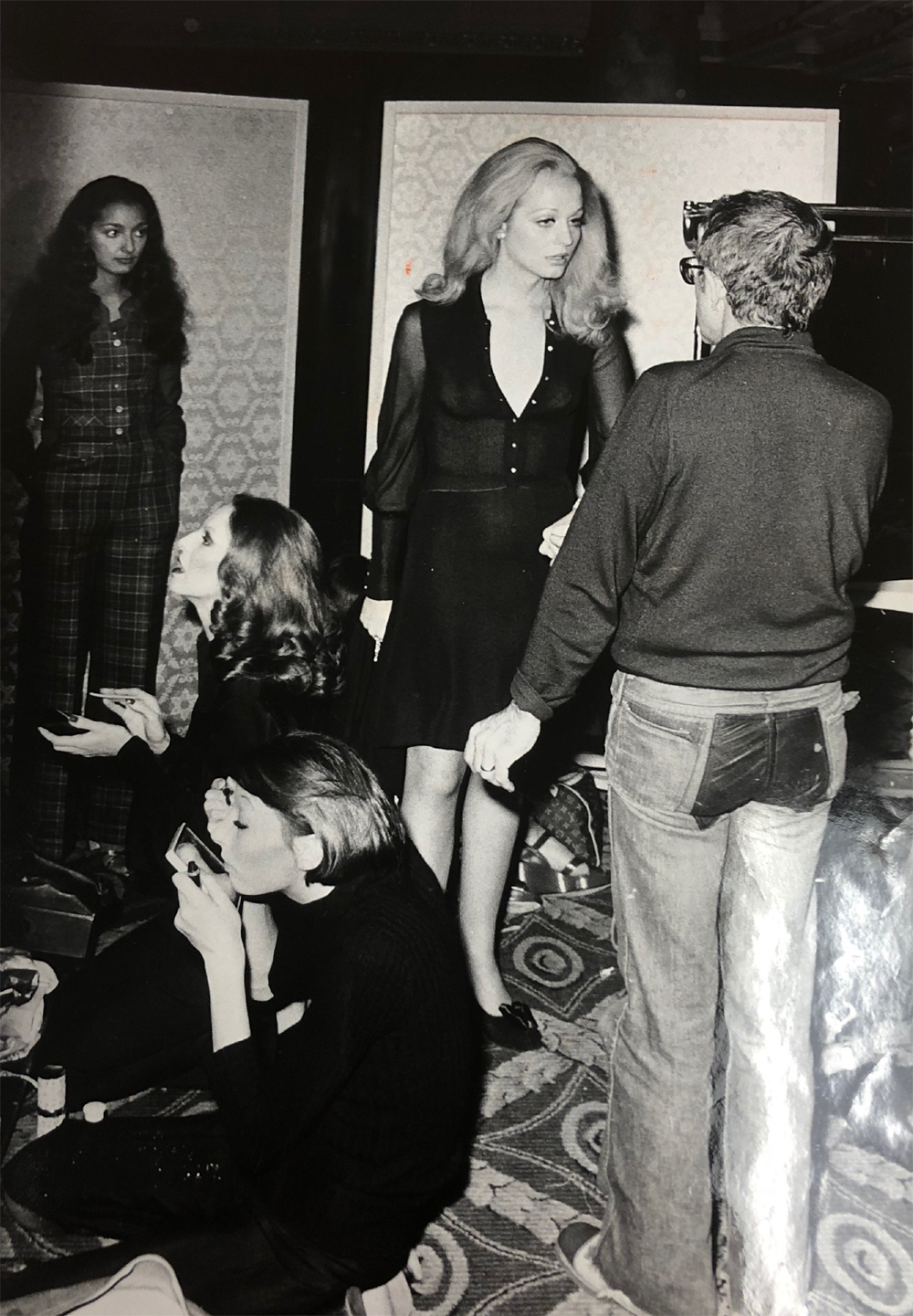
Rachel Harlow at the Halston fashion show at the Belleview Stratford Hotel.
At only 21, she became a fixture in the early ‘70s nightlife scene, bouncing back and forth between the bars and clubs of Center City and the inns and lounges of New Hope, causing a commotion everywhere she went.
“I can’t emphasize what it did for business, because when she would walk through that restaurant, conversations stopped,” said Ron Dubree, a friend from her Rittenhouse Square days, who owned the Mountainside Inn in New Hope. “I mean, people would turn and look. She was that stunning.”
Was it common for trans women to go out to mainstream establishments at the time?
“It wasn’t common for transsexuals to go anywhere at the time,” she asserts. “But I went into those places because I had no fear about being accepted.”
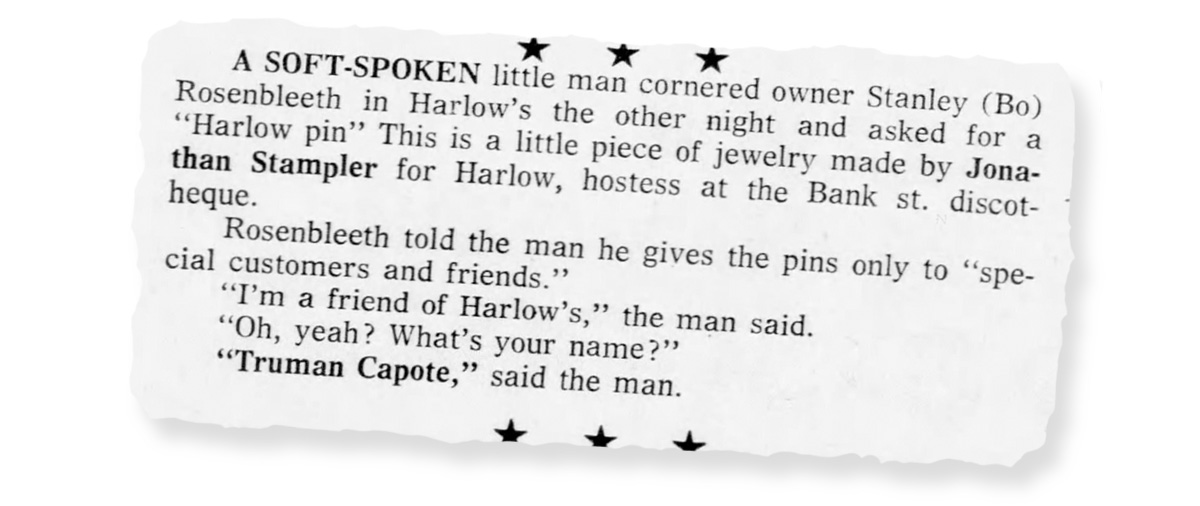
One night while standing in line with several girlfriends outside a club in Center City, she was approached by the club’s owner, a man named Stanley “Bo” Rosenbleeth.
“The first thing Bo said was, ‘You should never wait in line in your life,’” she recalls. When she left a couple of hours later, Rosenbleeth pressed his card into her hand: “Your name should be in lights,” she remembers him saying.
Rosenbleeth, who died in 2017, had opened a string of successful restaurants and clubs throughout Center City: everything from a banjo bar to a 1920s gangster-themed restaurant that staged fake shootouts. Sensing the coming trends, he was looking to open the best discotheque Philadelphia had ever seen.
He knew he could build a nightlife brand entirely around Harlow.
As he put it to The Inquirer in 1972, “I saw her as a person other people respond to.”
Harlow’s Nightclub in 1972.
The birth of Harlow’s
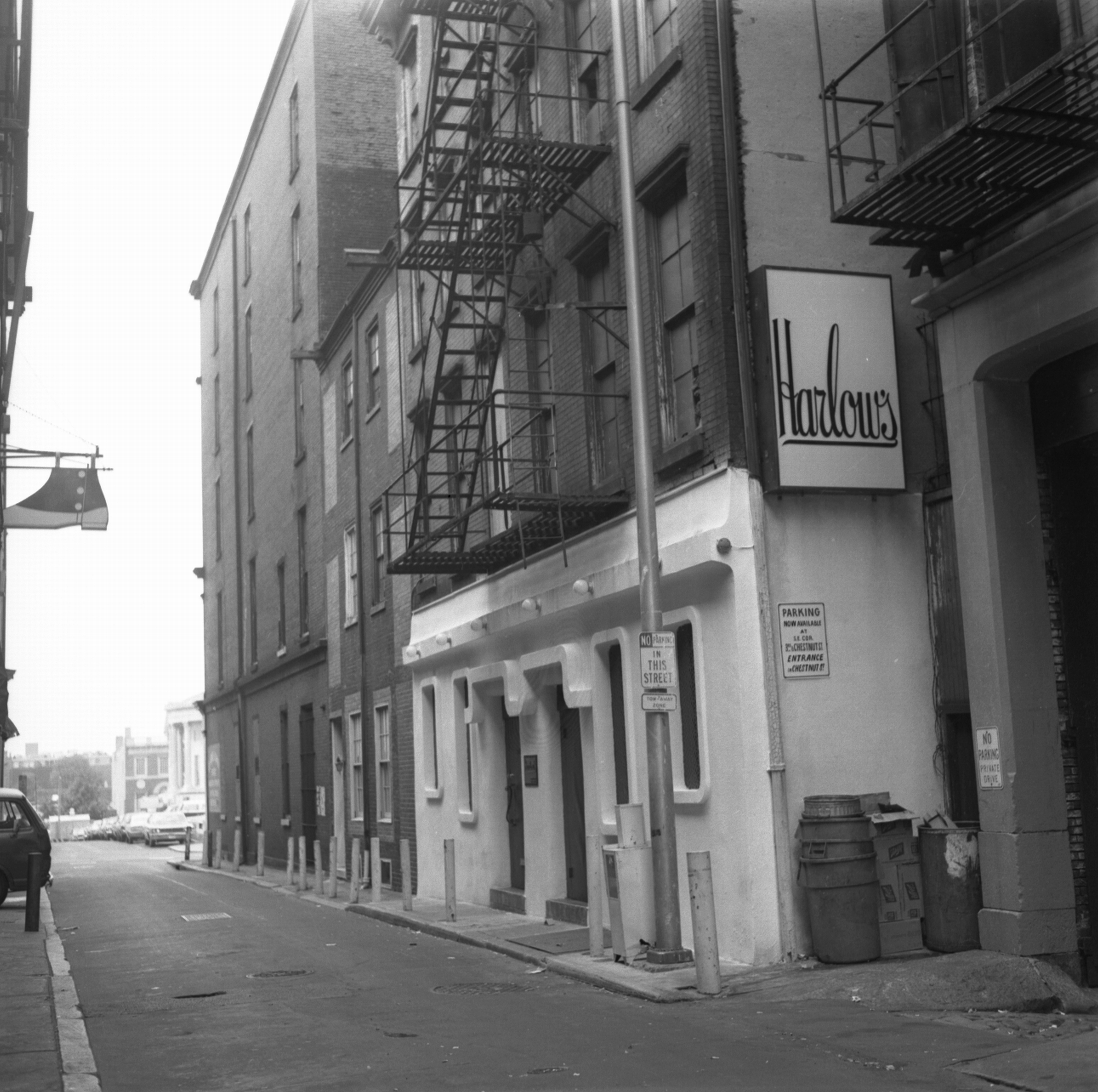
Rosenbleeth picked a spot on Bank Street in Old City, in the block between Second and Third and Market and Chestnut. It was a savvy choice for a lot of reasons, not least being the nascent restaurant renaissance that would come to define Philadelphia in the 1970s. The Middle East, La Truffe, H.A. Winston, and other highly popular restaurants had opened in the previous few years in the neighborhood.
It would also turn out to be a smart choice because of its proximity to what was then the KYW-TV studios at Fifth and Market Streets, where Mike Douglas was hosting a constant string of world-class celebrities five days a week.
“Harlow the Hollywood He-She is Coming!” is how The Inquirer first reported plans for the soon-to-be-opened club in January 1972. When Harlow’s opened in March, it was an instant hit, prompting breathless coverage in the city’s society and scene columns, at a time when Philadelphia had enough daily and weekly newspapers to support over a dozen full-time columnists, documenting the movements and drama of the city’s celebrity circuit.
Harlow’s suddenly became the place to be seen by all of the people most interested in being seen.
“We had city councilmen, news anchors, socialites, drag queens, and mafiosos all on the same dance floor and they were all there, goofing on me,” she remembers, using a ’60s slang term to convey that she was the center of attention.
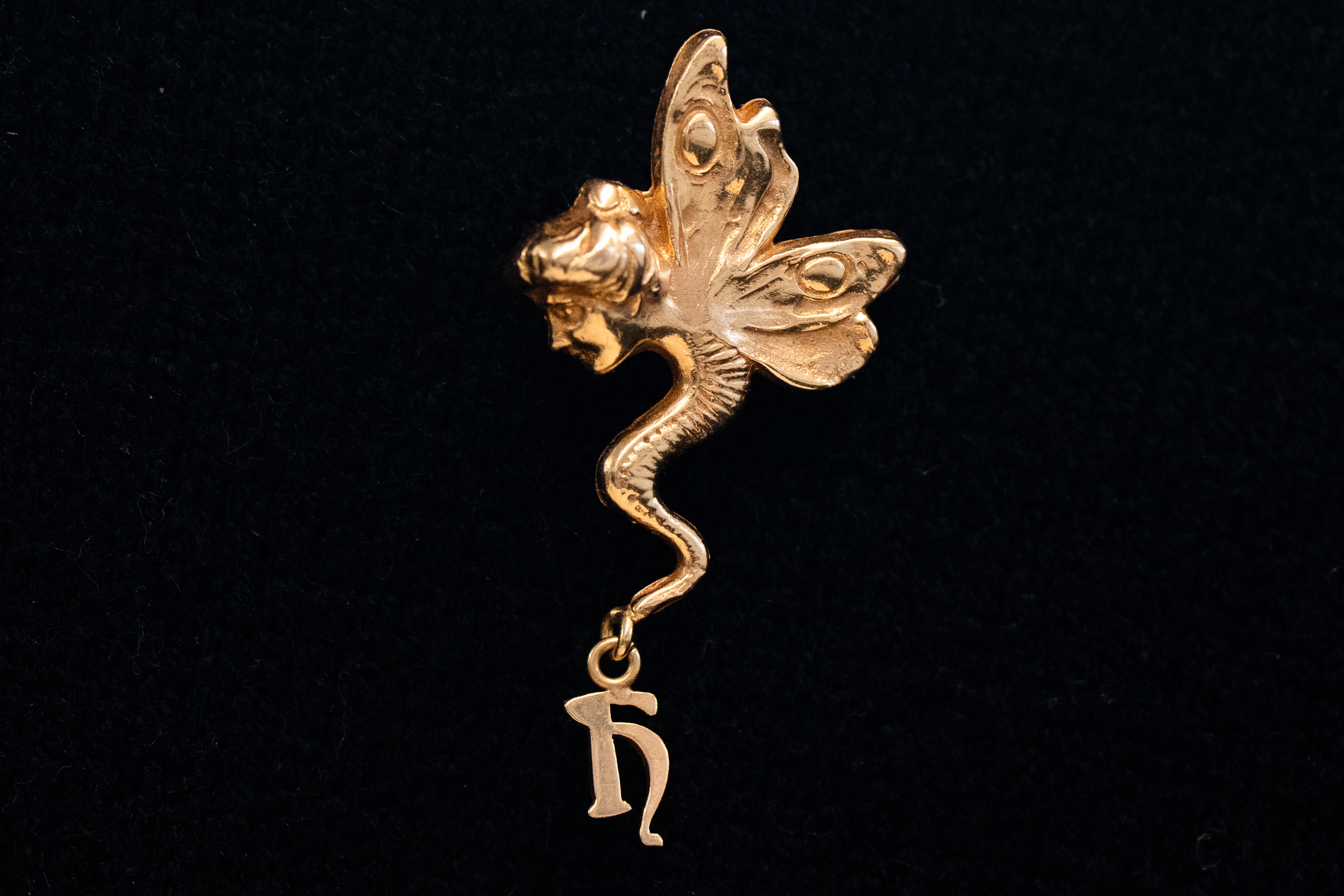
The pin for the Rachel Harlow Club.
The pin was used to designated VIPs at the club. It features Harlow’s face, butterfly wings, and a dangling “H” at the bottom.
The club was three stories of dancing, drinking, and mingling spaces done up in a mid-century futuristic style that took its inspiration from A Clockwork Orange, all mirrors and modular furniture.
The Sunday Bulletin made it sound deliciously like Sodom and Gomorrah with a cover charge. “The orange ceiling lights barely cut through the smoke. In their hot mists, the bodies twist and writhe as if on an invisible griddle. And the music — The Rolling Stones are blasting their ‘Sympathy for the Devil’ — crashes into your ears at 110 decibels.
“And there’s no doubt who’s the high priestess of this orgiastic bell-bottom cult. Harlow. A head like Queen Nefertiti, ashen mane tossing in the lights … half-mannequin and half-deer.”
Every night, Rachel would ascend the spiral staircase in front of the entire club, usually in her signature white, which stood out like a beacon in the club’s lighting.
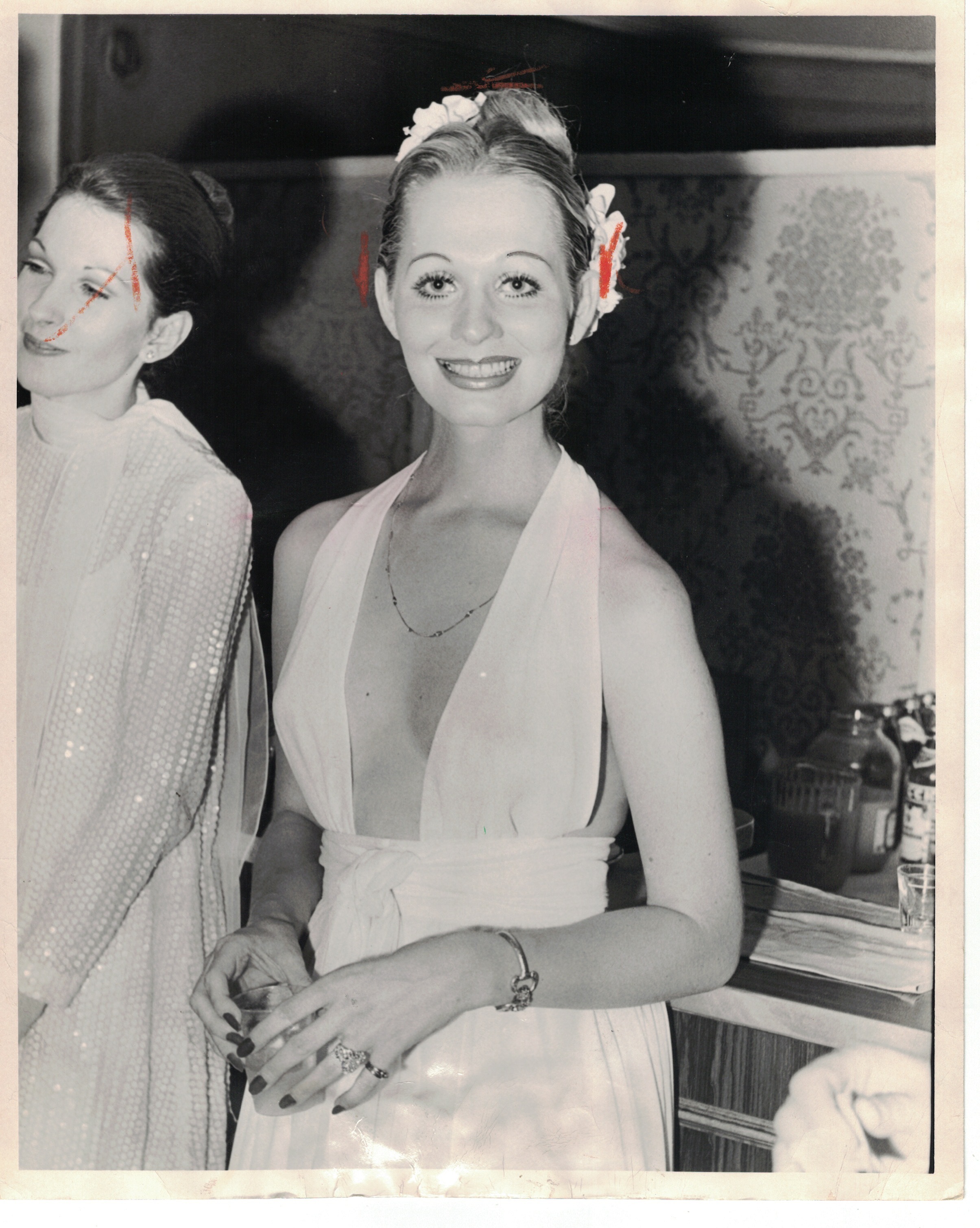
“In those days I wore my hair of my face a lot because my mother loved it,” Harlow says now. She suspects the photo was taken at a party at Carpenter Bacheholder’s Delancey Street home.
“Everybody wanted to have a drink with me. Everybody wanted to talk with me. Everybody wanted to dance with me. It was fabulous, but it was exhausting,” she remembers.
Philadelphia was going through a cultural renaissance in the 1970s. The Bicentennial was on the horizon and the city had star-spangled itself from one end to the next in preparation. Super producers Kenny Gamble and Leon Huff were defining R&B music through their Philadelphia International Records label, in the period between the dominance of Motown and the explosion of the disco era. Entertainment venues like the Latin Casino in Cherry Hill or the Valley Forge Music Fair brought a steady string of world-class celebrities through town, and Mike Douglas was more than happy to host them and any other superstars he could book.
Elton John would have a hit singing about “Philadelphia Freedom” and an obscure actor named Sylvester Stallone was about to make the steps of the Art Museum as iconic as the Eiffel Tower.
And every celebrity who ever spent a night in Philadelphia in the early ‘70s partied at Harlow’s.
“Truman [Capote] came to the club at least a half-dozen times. He and Halston would come in from New York just to see me and cause a little trouble,” she says now. “God only knows what they got up to after hours.”
Her duties as the hostess of the club that bore her name were only vaguely defined, but they all amounted to “Just be Harlow in the most public way possible.”
“Part of what Bo wanted me to do was be a woman around town. He believed in spreading the wealth, so people might see me at La Panetière or Jeanine et Janine having dinner and it made everybody want to go to Harlow’s. So I was out and about a lot. And then after leaving Harlow’s I would go to one of the after-hour gay bars. What can I say? I was living a life.”
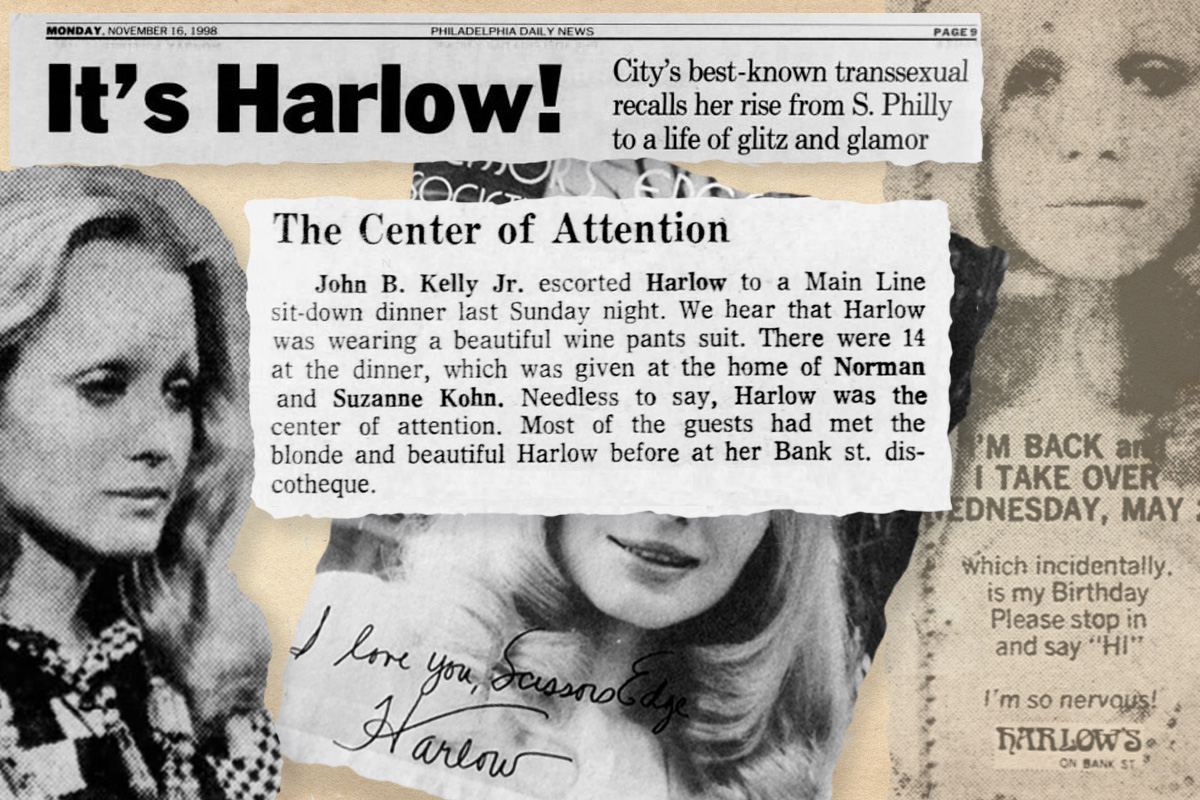
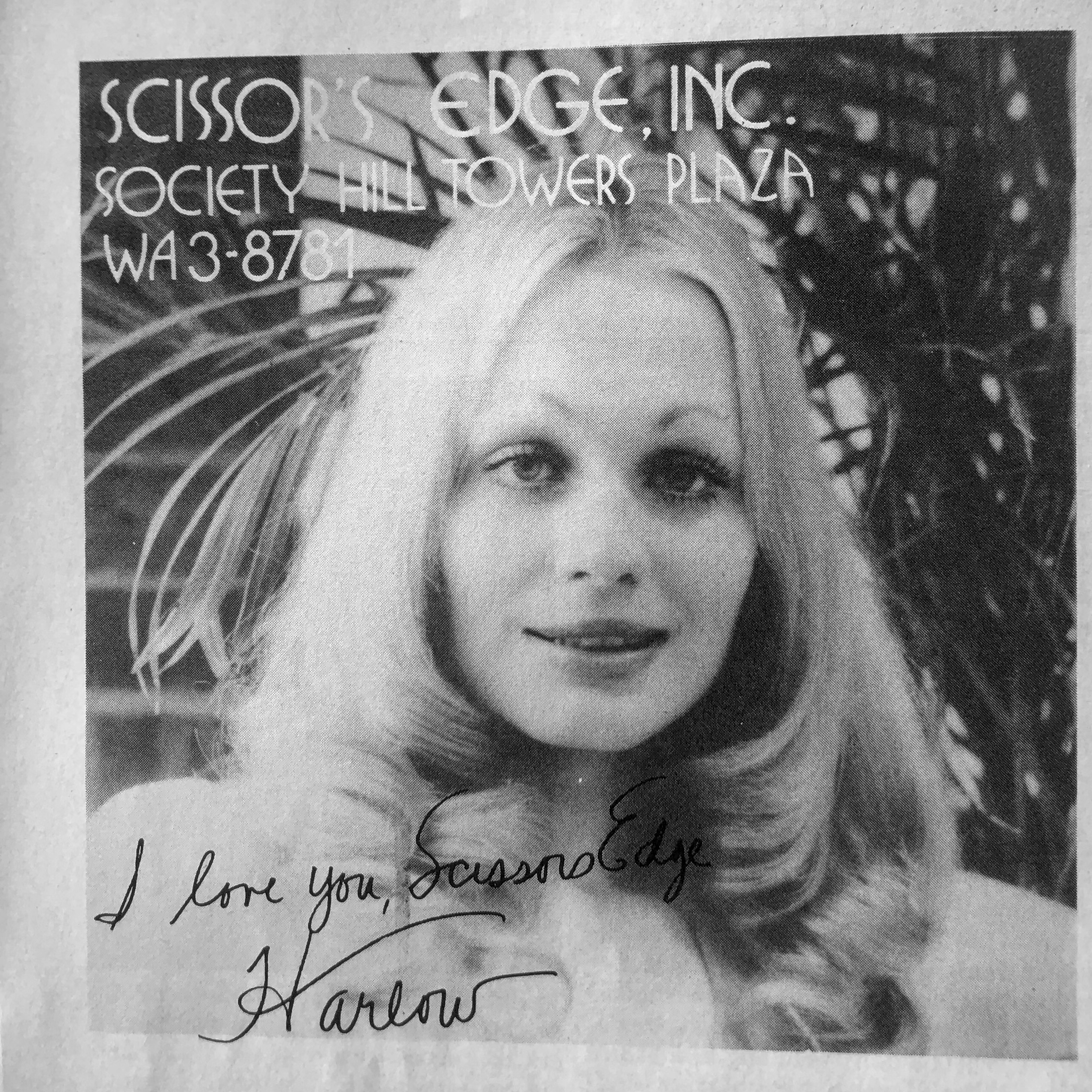
A Rachel Harlow hair ad in Philadelphia Magazine for Scissor’s Edge salon.
“These ran in Philadelphia Magazine once a month for a year and a half,” she remembers.
Joe Greco was an old Rittenhouse Square pal who featured her in ads for his Society Hill salon Scissors Edge. “Whenever she walked into my salon,” he recalled, “The whole place would go dead silent. Whenever she walked out, half the women asked for her cut.”
Her stylish wardrobe was supplied through an allowance from Rosenbleeth and old Rittenhouse Square connections with a phalanx of gay men who ran the city’s many chic boutiques and department stores. She modeled clothes on the main floor of Wanamakers, an influencer 40 years before the word was coined.
“I couldn’t even go into Bonwit Teller without lines forming in those days!” she says of the fervor. “People would wait outside to get a look at me in the light, wondering, ‘Could it be possible?’ Well it was — and I was.”
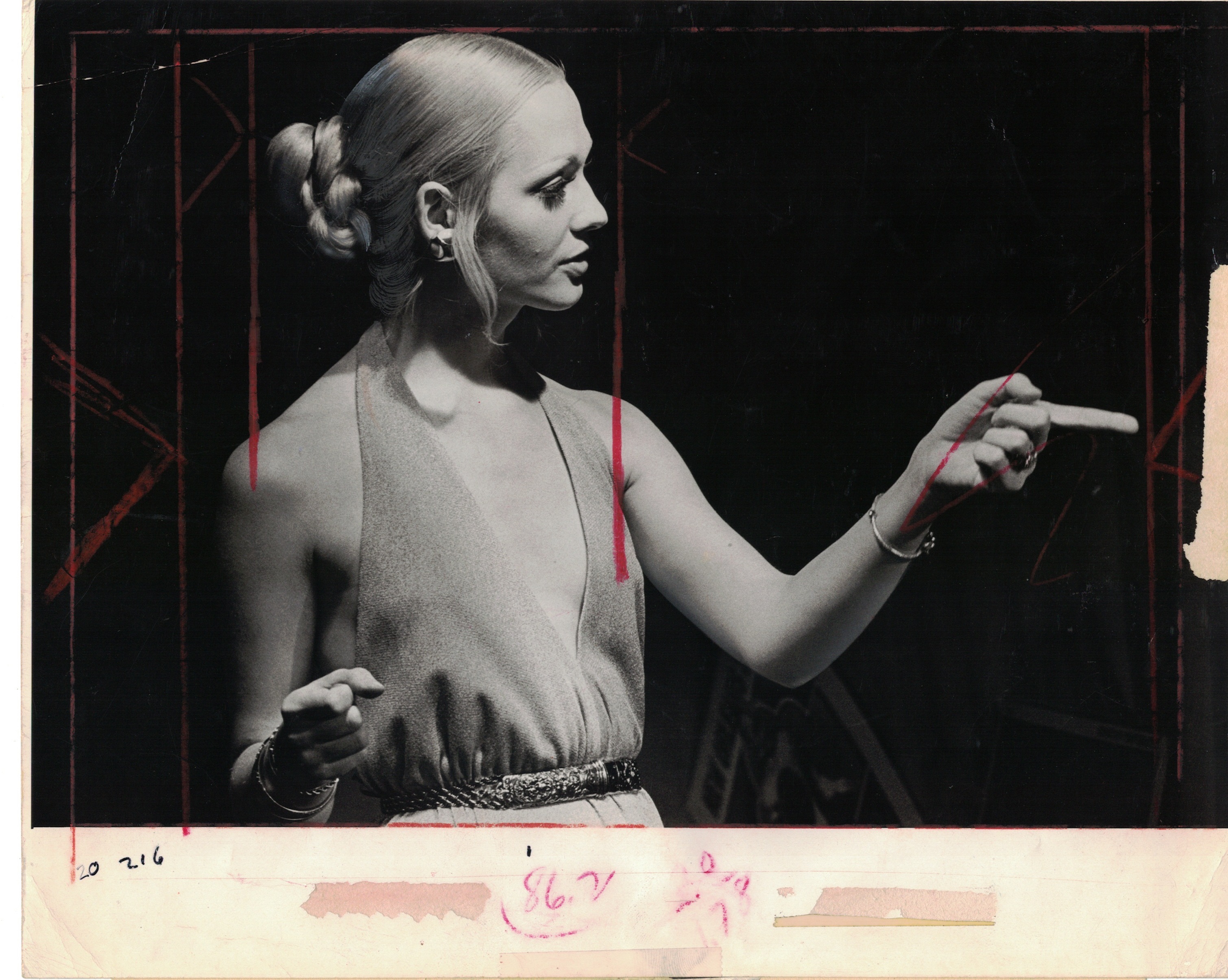
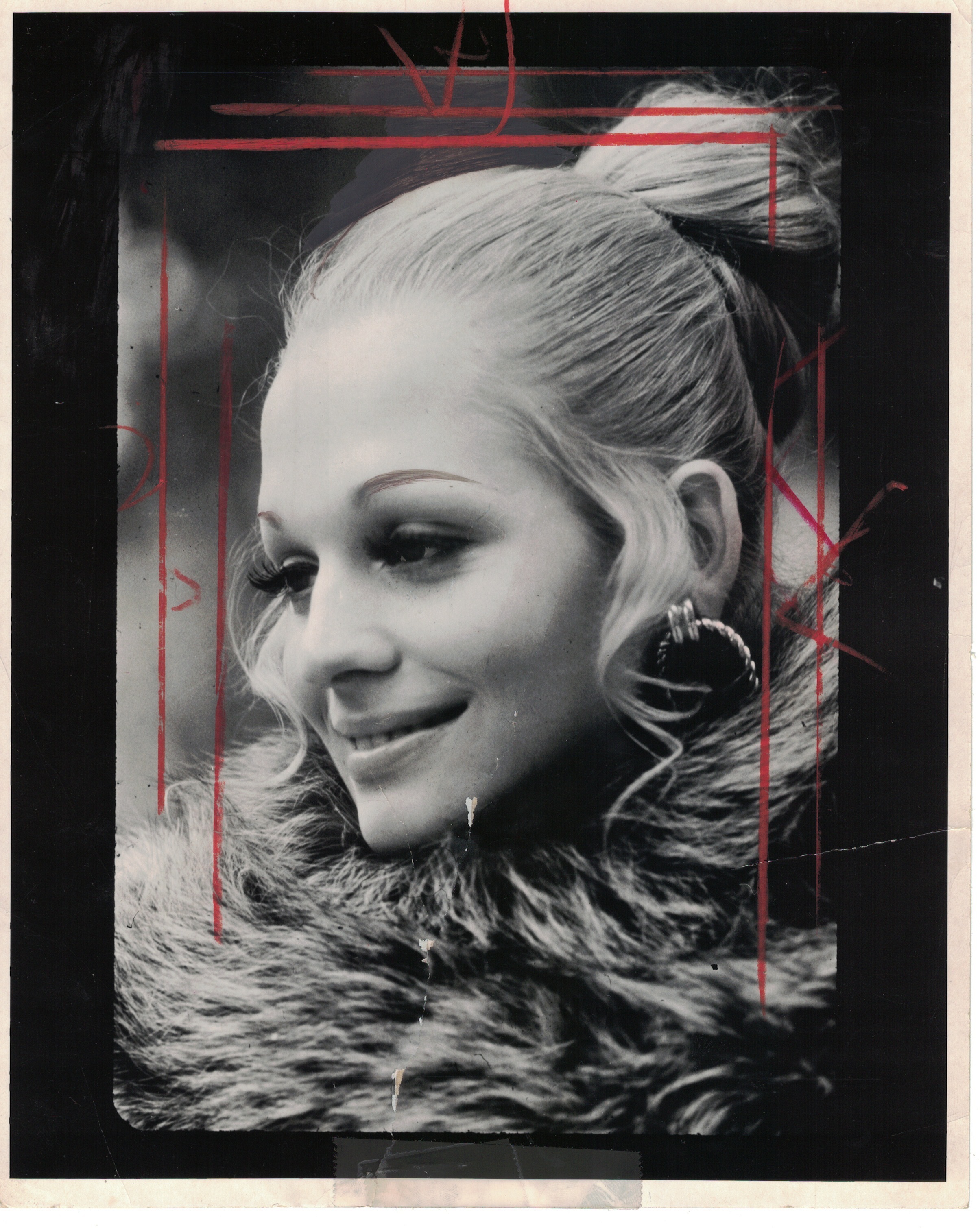
Rachel Harlow in this October 29, 1972 Inquirer photo.
“This was taken by one of your photographers — this wasn’t a planned thing,” Harlow remembers. “It was a winter day, and as you see I look the worse for wear because I probably had a long night before, it was very early in the morning, and it was blustery. It’s one of my favorite pictures. It’s so feminine, so beautiful and early morning — I was probably going to Day’s Deli on 18 and Spruce to have my coffee and croissant.”
A highly publicized procedure
One day, when they were still in the planning stages of the club, Rosenbleeth picked her up in his car and presented Harlow with a silver fox coat, a briefcase with $10,000 in cash inside, and a card with a stork on the front that read “Congratulations! It’s a girl!”
She finally had the money to complete her transition, something she’d been dreaming of since the day she was 16 and standing in her parents’ living room, clutching a copy of a magazine featuring 1950s transgender pioneer Christine Jorgensen and telling them “This is me.”
Harlow threw her arms around Bo and wept.
At a time when most transgender women were being forced into the margins of society, considered unemployable, and often had difficulty finding places to live, Harlow’s gender confirmation surgery was announced in the papers; not as something freakish but as the latest news about one of the city’s most prominent people.
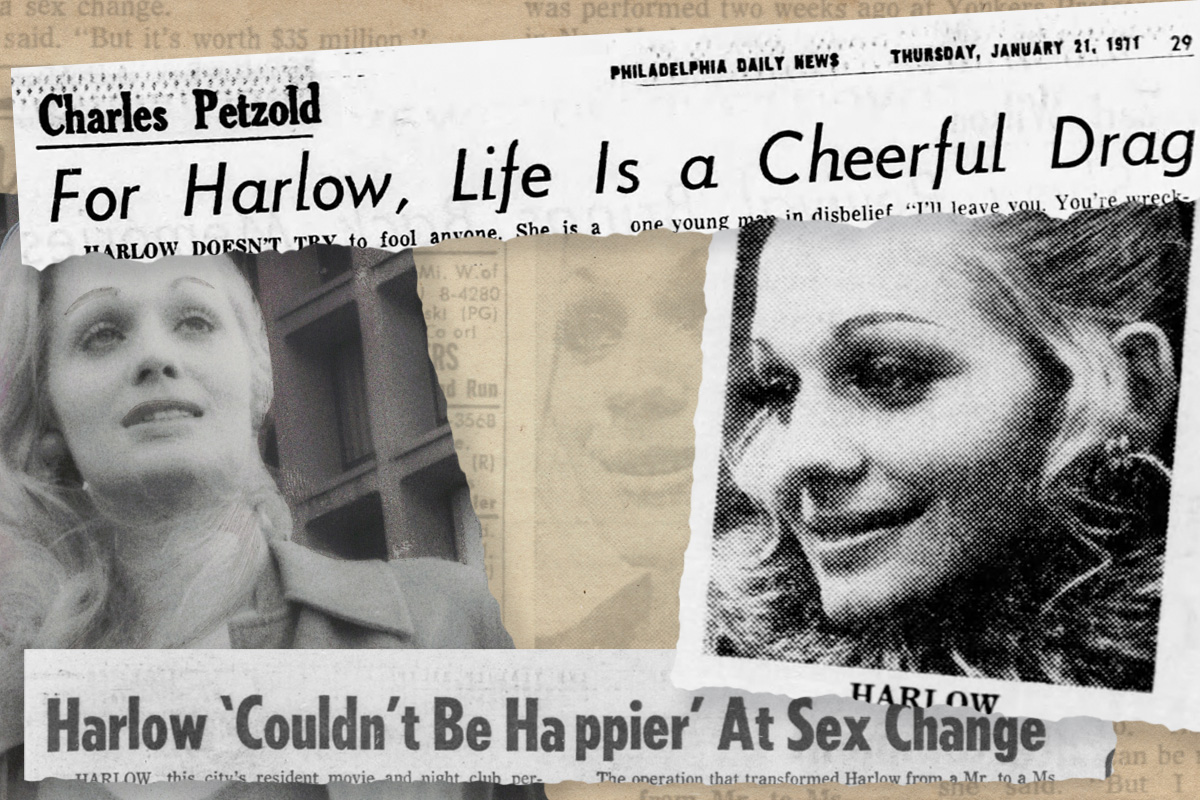
“Harlow, this city’s resident movie and nightclub personality, has undergone a sex change,” the Philadelphia Daily News reported in June of 1972. The article, titled “Harlow ‘Couldn’t Be Happier’ At Sex Change,” goes on.
“‘It costs $3500,’ she said, ‘But it’s worth $35 million.’ The operation that transformed Harlow from a Mr. to a Ms. was performed two weeks ago at Yonkers Professional Hospital in New York. ‘I went in on a Monday and they operated on Tuesday,’ said Harlow, who was in the hospital eight days. ‘I was a little frightened,” she admitted, ‘But it really wasn’t that painful. All I had was discomfort. I’m still a little sore,’ she said, ‘But I feel fine now. I’m just a little weak.’”
She was still legally known by her given name and put her South Philly connections to work. “My family had a friend in the neighborhood who was a judge and he took care of my name change and getting my birth certificate changed to reflect my gender,” she recalls.
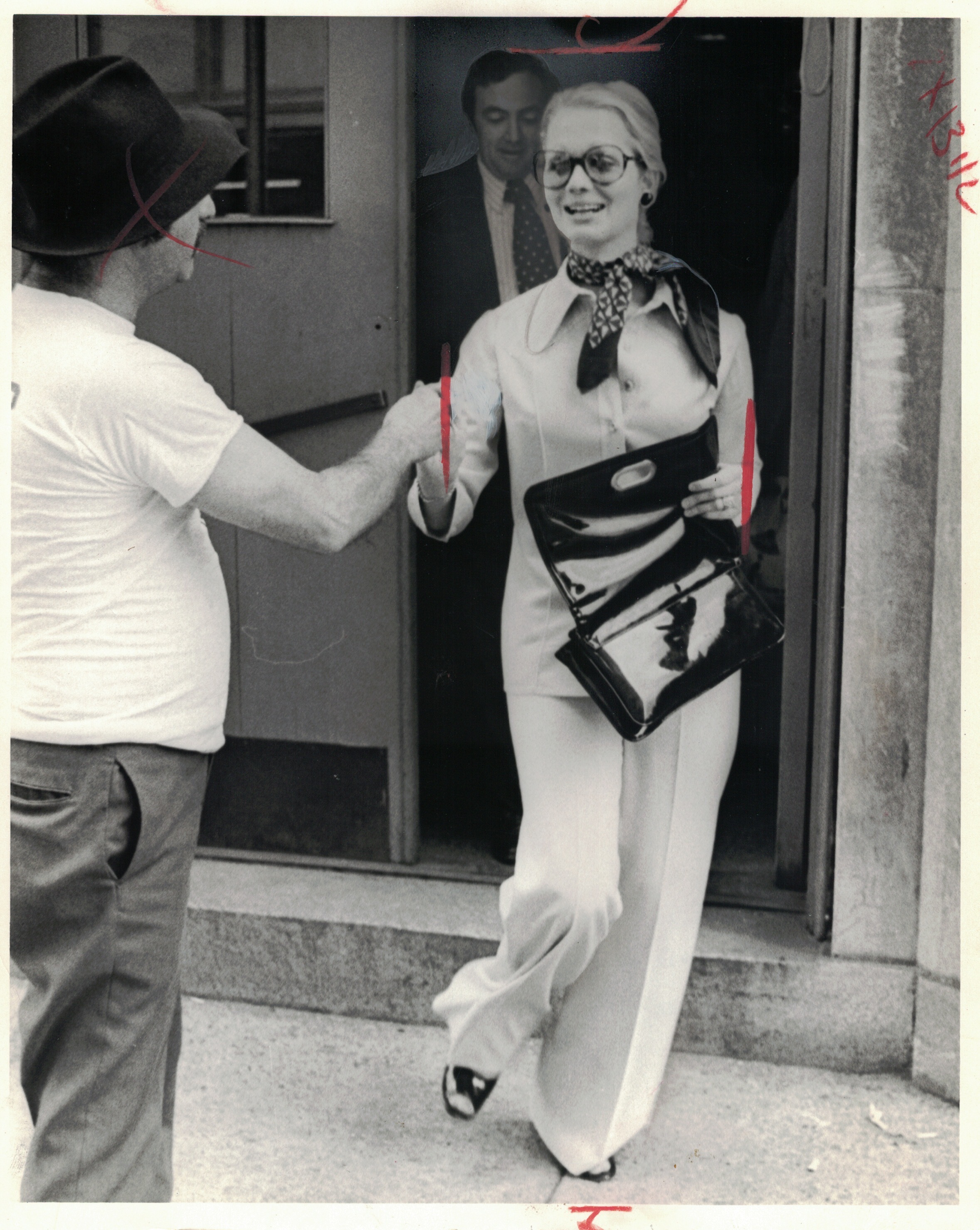
To her friends, family, and the Commonwealth of Pennsylvania, she was now Rachel Finocchio. But the press never stopped referring to her as Harlow, and for two decades, Rachel said yes to any talk show, from national to local, that invited her on to explain her existence.
Within a city that prizes authenticity, she says, her frankness was rewarded.
“Never an unkind word. Never a problem. Never had anybody confronting me in my club or saying, ‘How dare you?’ or ‘You’re an abomination.’ Nothing,” she says now.
Still, she was frequently asked intrusive questions about her anatomy or dumb ones about whether her surgery hurt. In the club, she tried to avoid slow dances with patrons because it was obvious some of them were trying to determine whether they “believed” her.
She recalls that one of the club’s vendors demanded a dance on opening night and held her so tightly “he was practically behind me.” Afterward, he sat down and said loudly to his wife, “There’s no [expletive] way that’s a guy.”
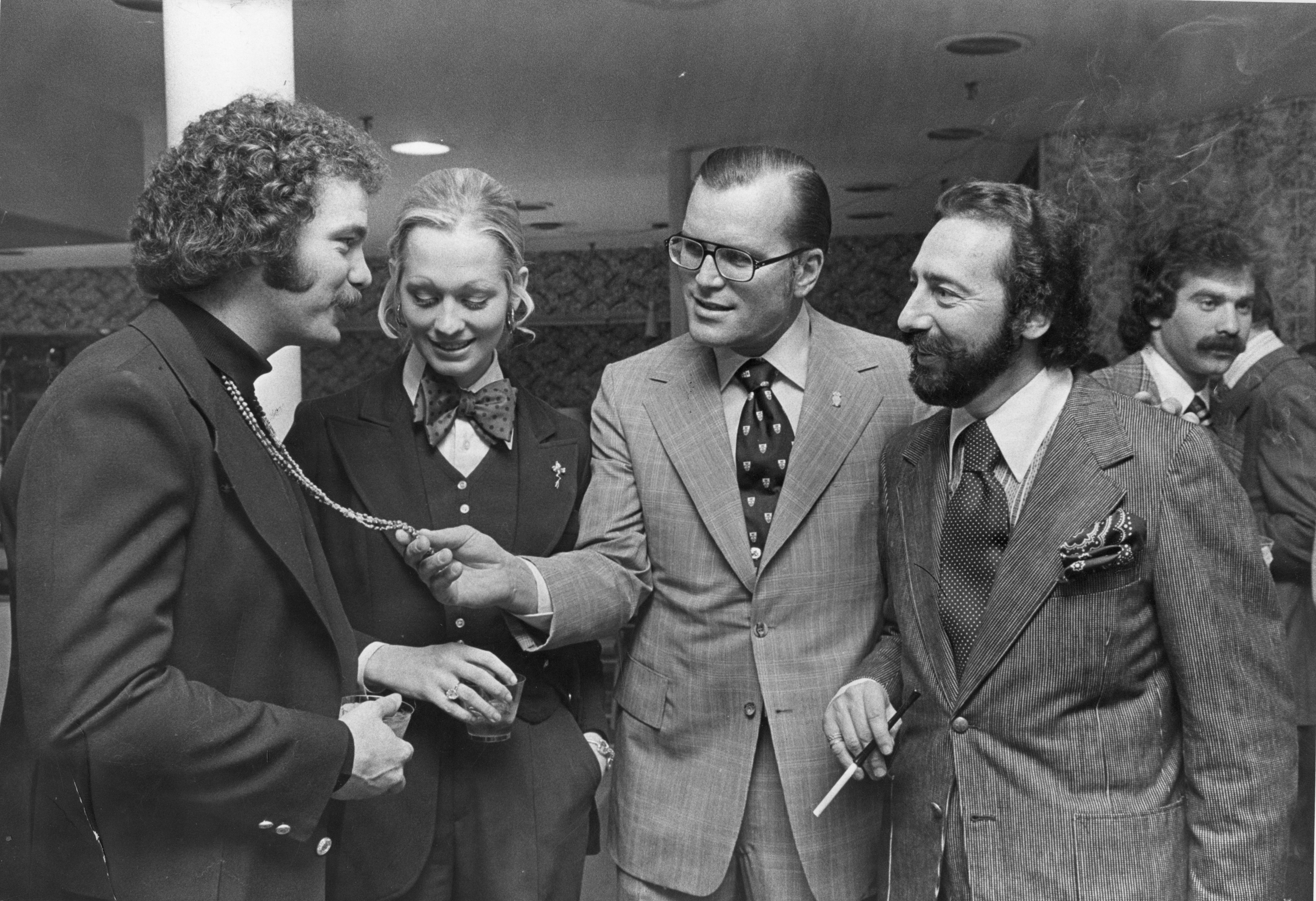
Rachel Harlow and Jack Kelly (second from right) at a charity event to benefit Cystic Fibrosis research on April 2, 1973.
“I think this was at Saks Fifth Avenue on the Main Line. All the football players were there. I loved the fact that I had a three piece suit on — I happen to like women in suits and ties. And Jack was always very well put together.”
When Harlow met Jack
One night, when Harlow was wearing a backless Halston gown, she felt someone touch the small of her back. It was Councilman-at-Large John B. Kelly Jr.
Jack Kelly was the city’s golden boy; the handsome scion of the Kelly family, an Olympic bronze medalist whose father was a gold medalist and the founder of Kelly For Brickwork, and whose sister Grace was a movie star and a bona fide princess. Kelly frequented Harlow’s semiregularly.
“I would see him there, but we never spoke to each other, just nodded from across the room. Believe me, I noticed him every time. Oh, God. That jawline?”
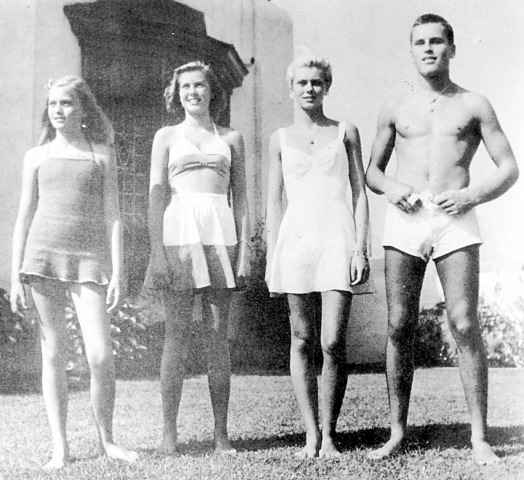
The Kelly family at home in Ocean City, NJ. From left, Lizanne, Grace, Margaret (Peggy) and Jack (John). Photo dates from the late 1940’s when Lizanne was in her early teens.
Their meeting remains vivid in her memory:
“Hello, Rachel,” she remembers Kelly saying. “Hello, Jack,” she responded, in the manner of two well-known people who don’t actually know each other. When he asked her to dance, she said, “Oh, no, Jack. I don’t think that’s a good idea at all. What will all these people think?”
But to hear Harlow tell it, Kelly didn’t care. He whisked her off to the dance floor in front of hundreds of people as an upbeat song played. “I never would have gone out there if it had been a slow song,” she recalls.
Rosenbleeth, looking out over a room full of attention-seekers, gossips, and media personalities, knew a good story when he saw one and immediately signaled to the DJ to play a slower song: “Me and Mrs. Jones” by Billy Paul. As the opening notes of the latest from the Gamble and Huff studio pealed out over the crowd, Rachel panicked, but Kelly took charge.
“He pulled me closer, and he was a very strong man, let me say. He held the small of my back. So firmly, not tight, not like a grasp, but … I had never felt anything like that in my life,” she says now, her breath catching.
“I can also tell you that when we slow-danced to that song, the dance floor cleared out. We had it all to ourselves. It was spectacular.”
She grows wistful when she speaks of him, sometimes unable to finish the thought because the emotions overwhelm. “His breath, on my neck … Unbelievable.”
They bonded over their identity struggles, hers as a trans woman and his as the son of a prominent father and the brother of the ultimate overachieving sister. For their first date, he took her to a popular restaurant in Narberth called Gatsby’s, where he had recently been crowned “Lord Chamberlain of the Gatsby Redcoats,” a sort of Main Line version of the Shriners. He made the rounds, eagerly introducing her to friends and colleagues while he worked the room.
“After we sat down, he held my hand, and said to me ‘Rachel, look how everyone loves you. Look at all you’ve done. Everybody respects you.’ And then he said something that told me everything about him: ‘I, on the other hand, have always been Grace Kelly’s brother or John Kelly’s son.’ He loved that I was a success in my own life; that I had done what I wanted instead of what people expected,” she says.
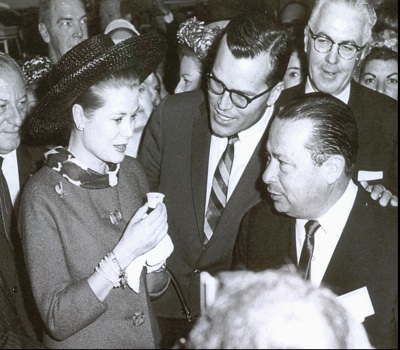
John M. Taxin, far right, greets actress Grace Kelly, left, and her brother Jack, center, at the Old Original Bookbinder’s restaurant in Philadelphia, Pa., in this undated photo.
Rachel had avoided sex for as long as she could, but she knew she’d finally met the man who was going to help her cross that threshold. She was only six months post surgery and had frantic visions of her hard-fought body reacting to the stress of sex like a windup clock in a cartoon. “It sounds silly, but I kept picturing springs and screws popping out!” She laughs now, but it was a genuine fear for the young woman; an unfounded one, as it turns out.
She recounts that Kelly was patient and so tender, she still cries softly talking about it decades later. “You can’t imagine what it meant to me,” she says through tears.
He squired her all over the city to fundraisers at the Union League, Eagles games at the Vet, and dinner parties with the city’s leading citizens. Her nervousness each time was met with the realization that they were all excited to meet her. “It was hard to escape the impression that he loved showing me off.”
On her 24th birthday, The Inquirer reported on a party at the club in her honor.
“Many came bearing gifts, but Harlow said her favorite present was a diamond ring from a guy whose identity she concealed.“
Today she reveals, “Everyone knew it was from Jack, but I didn’t think it was a good idea to brag about it.”
“When he gave me the ring, I said, ‘Jack … a ring box? What is this? I’m afraid to open it.’ And I opened it and, I mean, come on, the man’s giving you a diamond ring. I said, ‘Oh Jack, is this a brother and sister competition? She marries the prince and you want to marry a queen?’ And the smile that came on his face. He just hugged me, and I said, ‘Thank you very much for the gift’ and that was that.”
Harlow and Kelly were happy, and to hear her tell it, in love, but beauty, charm, and influence were shields for her for only so long. There were limits to how much certain people could accept.
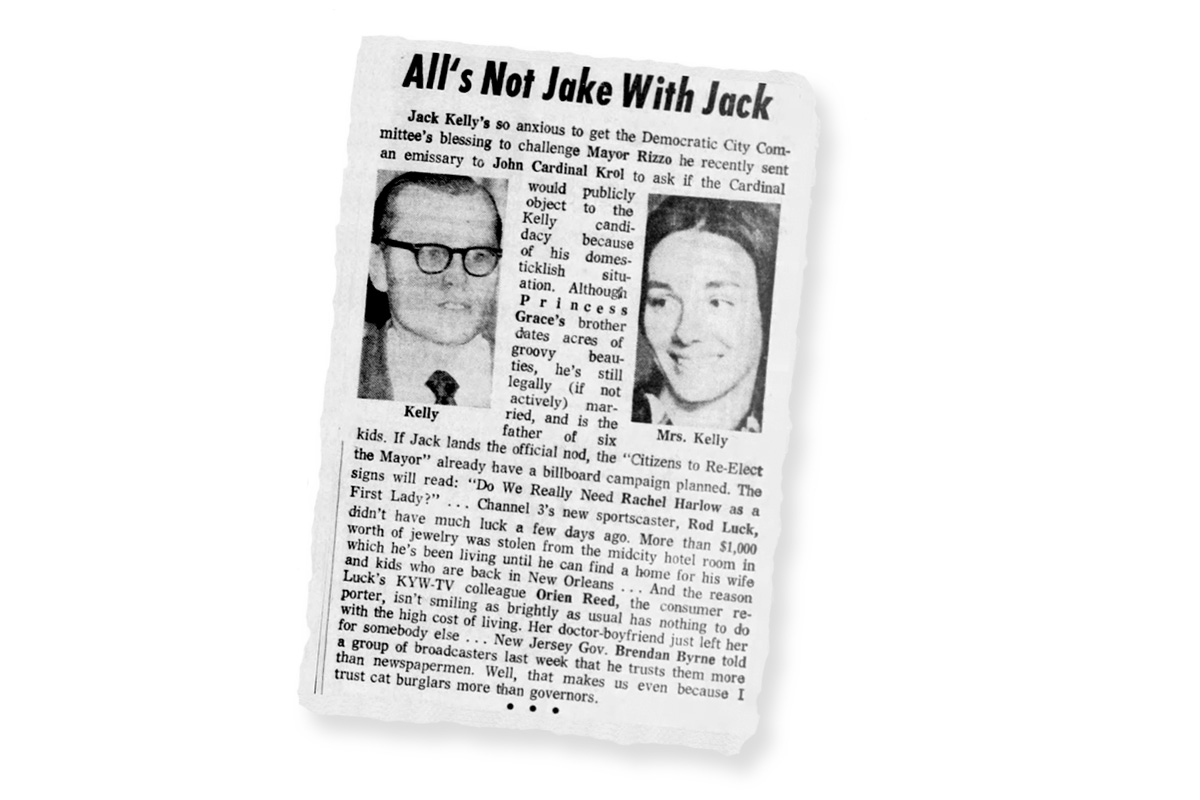
Kelly had plans to challenge Mayor Frank Rizzo in the forthcoming election, and Rizzo wasn’t going down without a fight. “If Jack lands the official nod, the “Citizens to Re-Elect the Mayor” already have a billboard campaign planned. The signs will read: “Do We Really Need Rachel Harlow as a First Lady?” said the Philadelphia Daily News on Jan. 27, 1975.
At the same time, The Inquirer reported that Jack’s mother Margaret Kelly made inquiries about Rachel to friends and threatened to permanently withhold donations to the party if Democratic leaders showed her son any support. There were rumors that she threatened to disinherit her son if he continued on his present course.
“Jack called it the ultimate betrayal,” Rachel remembers.
Amid all that stress, the relationship ended. “It was lovely and then we just went our separate ways,” she sums up simply, even as she acknowledges him as one of her great loves.
When pressed, she simply says: “Listen, in this life, you have to learn to let go of things.”
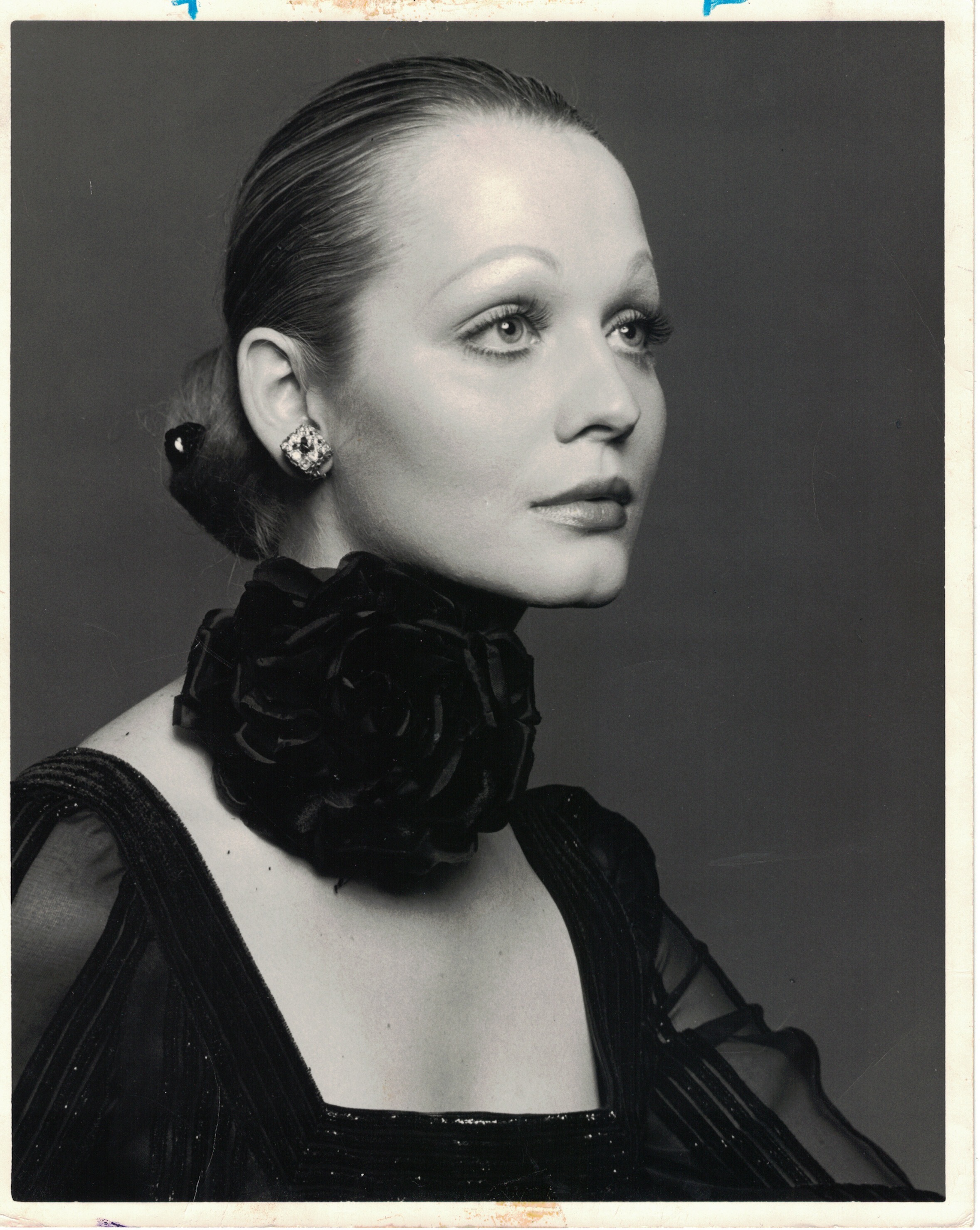
Rachel Harlow in a promotional photo for the opening of Harlow’s Nighclub in 1972 in an Oscar de la Renta velvet and chiffon dress.
Out of the spotlight
In 1975, tired of all the feverish scrutiny, she walked out of Harlow’s for good. “There always comes a time with me where I have to retreat to my solitude, draw the curtains and just be with myself,” is how she explains it.
“Transsexuality is a solitary life. You have to come to the truth of who you are on your own, you have to stand up on your own and say it out loud, you have to go through that physical process, and you have to withstand the judgment of others. If you’re not right with yourself, you’ll never survive.”
There were other nightclubs that bore her name after that and there were other love stories, many of which continued to make the papers. She preferred to date men from the area because she never had to have an uncomfortable conversation with anyone about her story. “They all dated me knowing exactly who I was.”
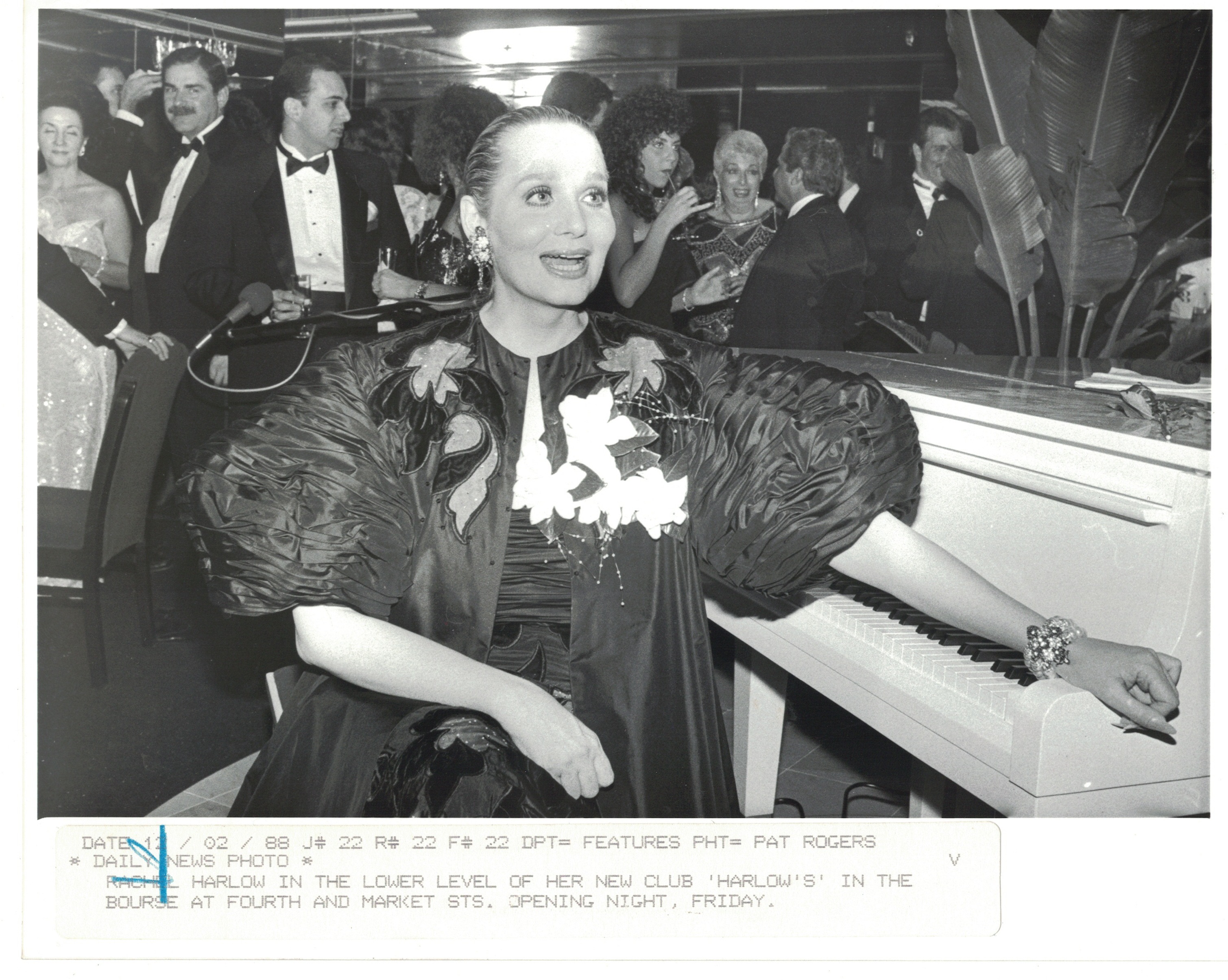
In 1980, she met a courtly French pastry chef named Gerard Billebault; they married in 1981. For a decade she enjoyed a quiet home life hosting their friends and being a stepmother. She returned to the spotlight when she and her husband opened a million-dollar supper club, Harlow’s at The Bourse, in 1989.
That was the opening at Harlow’s at the Bourse Building,” Rachel says of this Dec. 1988 photo. “I invited 180 people. 1400 people came.”
But running it proved prohibitively expensive and the strain of a public life caused them to eventually separate. She withdrew from the spotlight permanently in the early ‘90s and returned to the Juniper Street house to take care of her ailing mother after a stroke.
“I got tired of answering the same questions over and over again,” she says now. “I don’t think anyone should be in the public eye forever.”
Rachel Harlow in this April 14, 1989 Inquirer photo.
Happily ever Harlow
Rachel now lives in a little house on a quiet street in Northeast Philadelphia, where she’s mostly kept to herself.
There is little left to indicate the dazzling life she once led. The Halston gowns, the silver fox fur, the hundreds of pairs of shoes, even the drag pageant crowns, they’ve all been given away. She gave the ring back to Kelly before they parted, despite his insistence that she keep it. Her old club is now a youth hostel, which delights her.
At 77, she is still beautiful and stylish; never stepping out without a fully made-up face and perfectly coiffed hair. She still gets dressed to the nines and goes out every now and then to Knock, the Gayborhood piano bar, owned by her dear friend Bill Wood and run by an attentive staff who dote on her. A Francesco Scavullo portrait of her remains permanently ensconced on the piano.
“Look, I have my friends, I see my remaining family members when I can, and I go out for a good time frequently. I enjoy the company of people when I want, on my terms,” she says. “I’m living exactly the life I want for myself at this time.”
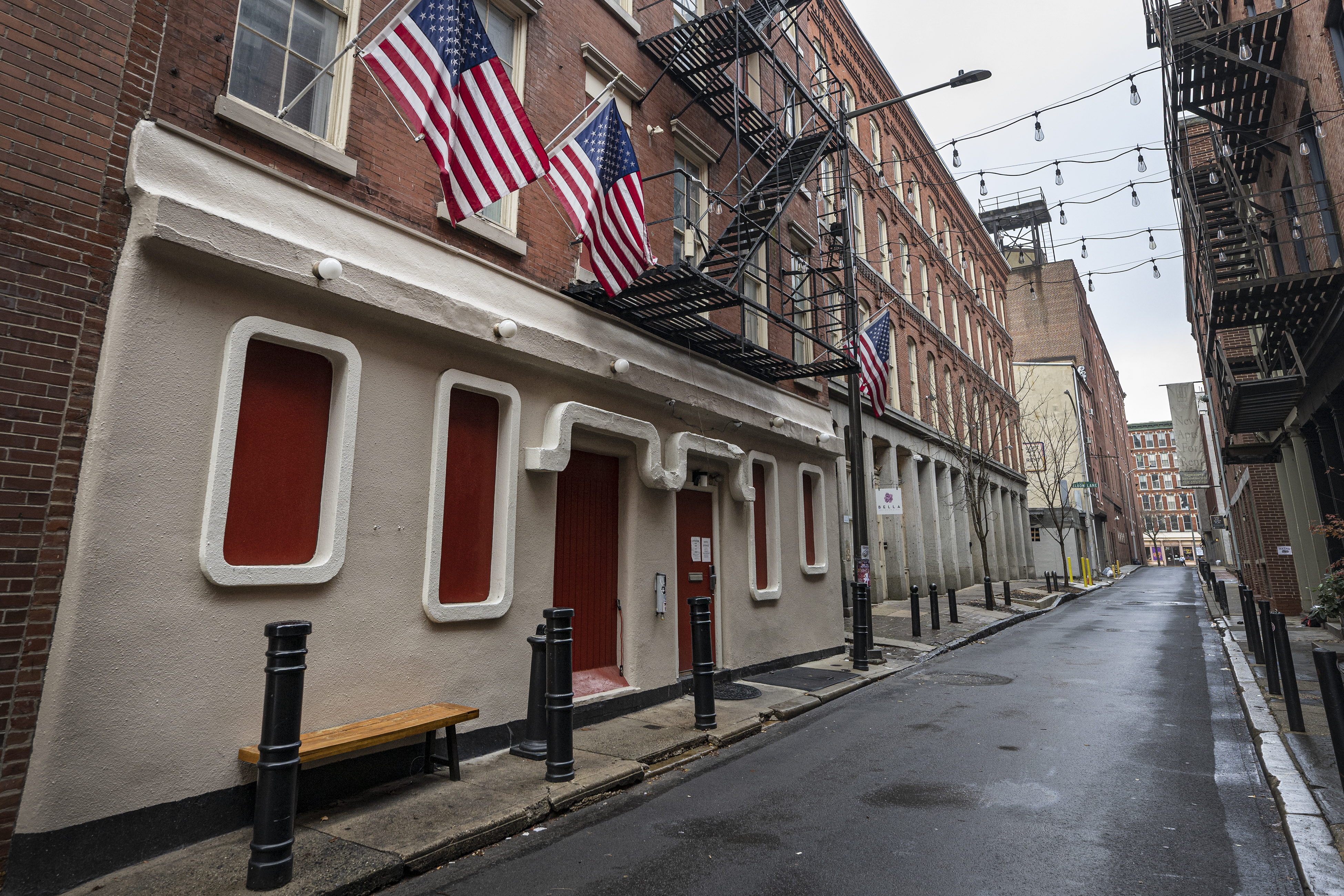
Exterior of her former club at 32 S Bank street in Philadelphia on Nov. 26, 2025.
She loves to tell a story that gets to the heart of just how she’s survived for so long, from the period just before she went to Cannes and lived in New York. “I went to Max’s Kansas City one night, very much not my scene I should add, and I was told that Andy Warhol was in the back room and wanted me to join him,” she says.
Warhol had been one of the judges of the pageant in The Queen and had become intrigued by her. When she approached his table, she noted that most of his entourage seemed pretty strung out. “Candy Darling was face down, practically in her soup! I said, ‘No, thank you,’ and got out of there.” To this day, she’s proud to tell people that she’s “the girl who said no to Warhol.”
It’s that quality, that quintessentially Philly attitude of “Leave me out of this mess” that has kept her in good stead all these years.
She credits simple advice imparted to her in her mother’s South Philly kitchen. “She sat me down just as everything started happening for me and said, ‘OK, then. If you’re going to do this, do it right.’” She emphasizes the last three words with a vehemence that underlines their importance to her.
“‘Don’t spit in the air,’ she told me. ‘It will only wind up landing on you.’”
Harlow is eager to have her story told now, compiling her memoirs and working with Oscar-nominated executive producer Christine Vachon — who produced Carol and Boys Don’t Cry — along with producers Liz Levine and Adrian Salpeter, on a planned movie based on her relationship with Kelly.
Rachel Harlow in this June 26, 1974 Daily News photo. Harlow is presented with a flower by an admirer. “Philadelphia is a big part of my story,” Rachel says now. “This picture sort of encapsulates that for me. Had I been the pariah, that picture wouldn’t have taken place. There would be no smiles. I was so well accepted. That was Philadelphia! Penns Woods, Quaker Philadelphia! They saw me, they decided to listen to me because I wasn’t an affront to them, and then when they heard the story they understood it.”
“I’m drawn to stories of people who rewrite the rules of survival. Rachel did that with style and defiance,” says director Aitch Alberto, who is also attached to the project. “She proved that identity can be a weapon and a crown at the same time.”
She’s motivated to speak by a large and well-funded conservative movement that has currently placed the rights of transgender people under greater threat than they’ve been for well over half a century. “It’s so important now — more important than ever — to tell my story,” she says.
“My God, look where we are now, where this … regime keeps attacking us! Fifty years ago, people didn’t care! We need to remind them.”
Every time she goes out, a crowd of admirers eventually surrounds her, kissing her ring and serenading her — both quite literally. Sitting by her side at Knock like a couple of royal scribes while she held court, we’ve met fashion, jewelry, and costume designers, cabaret artists, playwrights, figure skaters, gallery owners, retired surgeons, and elderly socialites, all of whom vie for a moment of her attention.
“Sixty years later, to be remembered when everything in this world is a seven-day wonder, and they forget you and throw you out like so much trash,” she says with emotion and gratitude.
Harlow chose to put the glare of the spotlight behind her over 30 years ago, but her city never forgot her, and whenever she steps out, Philadelphians still line up just to tell her.
“People have always been so kind to me,” she marvels, adding with a pleased smile, “But then, one always is, to a unicorn.”
Tom Fitzgerald and Lorenzo Marquez are the authors of “Legendary Children: The First Decade of RuPaul’s Drag Race & The Last Century of Queer Life.” They are currently working with Rachel “Harlow” Billebault on her memoirs.
The Eagles travel to the Los Angeles Chargers for a Week 14 matchup at SoFi Stadium on Monday at 8:15 p.m. Here’s what you need to know about the game:
When the Eagles have the ball: It’s December and it’s unlikely the Eagles will suddenly have a high-powered offense at this late stage. At the least, they could look more like the outfit that did enough to win most of the first 11 weeks by not turning the ball over and being effective in the red zone. But there is conceivable room for improvement and I think one way to address that is having Jalen Hurts run more. Kevin Patullo suggested as much earlier this week, and the guess here is that the offensive coordinator and coach Nick Sirianni had a “come-to-Jesus” conversation with the quarterback about having more designed runs.
At the risk of sounding like a broken record, this could be the game to get Saquon Barkley and the run game back on track. Chargers defensive coordinator Jesse Minter has used light boxes 48.2% of the time — which ranks third in the NFL — to induce good passing offenses into running more. But he may break that trend considering how effective defenses have been when concentrating their efforts on stopping Barkley. The Chargers use their base five-man front only 20% of the time, but when nose tackle Teair Tart is on the field, he eats up the “A” gaps. Patullo can keep L.A. in nickel on run downs simply by favoring three-receiver sets. This matchup screams for less of second tight end Grant Calcaterra as a run blocker, despite the Eagles’ perplexingly high use of “12” personnel.
A.J. Brown and DeVonta Smith could be contending with a defense that puts seven defensive backs on the field Monday.
Minter’s philosophy mirrors that of Eagles defensive coordinator Vic Fangio. He’ll sacrifice some yards on the ground if it means aiding the secondary and limiting explosive plays through the air. The Chargers lean on two-high safety shells and zone coverage 82% of the time. Minter uses dime personnel — and sometimes will have as many as seven defensive backs on the field — more than most coordinators. He favors Cover 4 when he has two safeties — typically RJ Mickens and Elijah Molden — deep. Derwin James is the linchpin in the secondary and rotates between the slot, box, and post. The Eagles will see some single-high safety looks, but rarely vs. man coverage. Patullo needs to open the playbook with more crossing routes for receivers A.J. Brown and DeVonta Smith. Hurts can throw intermediate-length passes, he just needs to pick his spots.
Fred Johnson’s ability to protect Jalen Hurts against the Chargers pass rush will be critical on Monday night.
The Eagles’ pass protection has been relatively sound, but pressure has been an issue in recent weeks. Minter blitzes only 19% of the time — 31st in the league. He likes to simulate blitzes with exchange pressures. The Eagles have struggled to pick those up this season. Hurts needs to find his answers … not that they’ve always been there. Outside linebacker Tuli Tuipulotu leads the Chargers in pressures, but Khalil Mack is healthy and the most dangerous. Both edges line up predominantly over the right tackle, which will be Fred Johnson in this case. He’s starting for a third straight game with Lane Johnson (foot) still out. Patullo has increasingly helped his tackles with chip blocks. Hurts isn’t getting sacked as much, but he’s completed only 59% of his passes in the last four games vs. 70% before the bye.
When the Chargers have the ball: Justin Herbert is expected to play despite surgery on the quarterback’s left non-throwing hand earlier in the week. If he can’t go, it’ll be backup Trey Lance, which would be a considerable drop-off. Assuming Herbert is active, he may not be able to go under center. The Chargers don’t have a heavy volume under-center offense, but they do it 29% of the time and throw play-action out of that formation 33% of the time. That’s one less variable coach and play-caller Jim Harbaugh will have at his disposal. And that could help an Eagles defensive line vs. a patchwork offensive line.
The Chargers offense is down both starting tackles. Rashawn Slater was lost for the season in training camp. Joe Alt followed him to injured reserve last month. In the three games since his injury, the offense ranks 28th in expected points added (EPA) per drop back. After some shuffling, Harbaugh has settled on Jamaree Salyer at left tackle and Trey Pipkins at right tackle. Both have previous starting experience, but are backups for good reason. With the Eagles down their best defensive lineman, Jalen Carter, the edge rushing group — led by Jaelan Phillips, Jalyx Hunt, and Nolan Smith — will need to exploit their advantage.
Herbert has four solid receivers to sprinkle around his throws. Ladd McConkey, Keenan Allen, Oronde Gadsden, and Quentin Johnston each have more than 500 yards receiving. Eagles cornerback Quinyon Mitchell is unlikely to follow one guy as a result. Adoree’ Jackson should expect a lot of attention, as should a safety corps that has underperformed. Sydney Brown may be back to the bench if Marcus Epps is ready after a stint on IR. If not, Herbert or Lance will likely find ways to attack him in coverage.
Even without Carter, the Eagles’ interior D-line shouldn’t be overmatched. Center Bradley Bozeman can be a liability. Right guard Mekhi Becton has regressed playing on a weaker line than he did in Philly. He was benched in Week 11 but is expected to start. Harbaugh will want to establish the run, especially after the Eagles got chewed up on the ground by the Bears. Running back Omarion Hampton could be active after having his 21-day practice window opened last week. The first-round rookie averaged 4.8 yards a carry in five games before suffering an ankle fracture. A remarkable 4.1 of those yards came after contact. Hampton is tough to bring down, as is Kimani Vidal, who averages 3.4 yards after contact. The Chargers use a fair amount of two-back personnel. The Eagles, who missed eight run tackle attempts vs. the Bears, will need to be more sure-handed on Monday night.
If Jim Harbaugh has quarterback Justin Herbert (10) on the field, the Chargers’ chances of moving to 9-4 increase exponentially.
Extra point: I’m not 100% convinced Herbert is active. Neither are the Eagles. They prepared for both Chargers quarterbacks. Herbert is the one to worry about, obviously. He’s done a remarkable job considering the O-line woes. He can make almost any throw and can fit it into tight windows. Herbert also been excellent out of structure, which has happened a fair amount due to poor pass pro. But he’s forced some passes, which has resulted in interceptions. And now he has the issue with his off hand.
I’ve been terrible at picking Eagles games, as usual. Come for the analysis above — I hope — and leave by the time you get to the prediction. I’m sure fans hate whenever I pick the Eagles. I get the joke. But I like their chances against a limited quarterback, and definitely if Lance starts. I don’t think the offense will rise from the near-dead, but I anticipate noticeable changes off the mini-bye that will aid their chances. I also like Hurts indoors.