Blog

  • Supreme Court lets Texas use congressional map favored by Trump

    Supreme Court lets Texas use congressional map favored by Trump

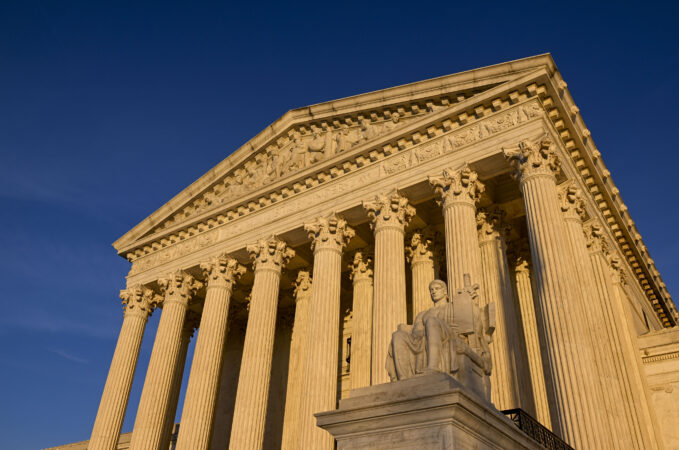
    WASHINGTON – Texas can use a congressional map drawn to give President Donald Trump and Republicans an advantage in the 2026 midterm elections, the Supreme Court said Dec. 4 in a decision that may help the GOP keep control of the U.S. House.

    An ideologically divided court paused a lower court’s ruling that the map likely discriminates against racial minorities by diluting the voting power of Hispanic and Black Texans.

    That opinion, which replaces a temporary freeze on the ruling issued by Justice Samuel Alito on Nov. 21, keeps the map in place for the midterm elections as litigation over the boundaries continues.

    The court said the order blocking the map from being used next year was improper because it came too close to the election.

    “The District Court improperly inserted itself into an active primary campaign, causing much confusion and upsetting the delicate federal-state balance in elections,” the majority wrote in a brief, unsigned opinion.

    The court’s three liberal justices dissented.

    Texas started redistricting push

    At the urging of the Trump administration, the GOP-controlled Texas legislature drew new district lines midway through the usual 10-year redistricting cycle, setting off a race among states to get in the game. Some of those other efforts are also being challenged in court.

    Despite the uncertainty about what the playing field will look like, Democrats remain favored to flip the House next year, according to nonpartisan handicappers at the University of Virginia’s Center for Politics.

    That could change, however, if the Supreme Court issues a ruling in a pending case from Louisiana that could open the door to more redistricting attempts in southern states. Depending on what the court says and how quickly the justices rule, Republicans could create multiple districts they’d be expected to win, analyst Kyle Kondik estimates.

    The new Texas map was designed to help Republicans win five more seats, although that’s not a sure thing.

    Republicans currently hold 25 of the state’s 38 seats in the U.S. House, where they have a slim majority. If Democrats seize control, they can block Trump’s legislative agenda and launch investigations into his administration.

    Racial gerrymandering?

    In redistricting battles, the Supreme Court has said federal courts can review whether race was improperly used to draw new lines, but not whether partisan politics was a factor.

    Civil rights groups and others challenging Texas’ new map argue it has fewer districts where Hispanic and Black voters together make up the majority, diminishing their voting power.

    “This is as stark a case of racial gerrymandering as one can imagine,” lawyers for some of the challengers said in a filing.

    A three-judge panel in Texas that reviewed the map ruled 2-1 that Texas Republican Gov. Greg Abbott directed the legislature to use race to redraw the lines following a demand from the Trump administration that discussed the racial makeup of some districts.

    “The public perception of this case is that it’s about politics. To be sure, politics played a role in drawing the 2025 Map. But it was much more than just politics,” Judge Jeffrey Brown, who was appointed to the federal bench by Trump in 2019, wrote. “Substantial evidence shows that Texas racially gerrymandered the 2025 Map.”

    In an irate and unusually personal dissent, Judge Jerry Smith – who was appointed by former President Ronald Reagan – called the decision “the most blatant exercise of judicial activism that I have ever witnessed.”

    Texas says race wasn’t main factor

    Texas’ attorneys told the Supreme Court that partisanship – not race – drove the redistricting. And the lower court’s ruling has caused chaos because candidates have already gathered signatures and filed applications to run in the new districts, they argued.

    Weighing in on behalf of Texas, the Justice Department told the Supreme Court that the lower court “misconstrued” the direction the administration gave the state.

    “Indeed, the record here affirmatively shows that the 2025 map was drawn in a race-blind manner,” the Justice Department wrote in a filing.

    The civil rights groups and voters challenging the map said the lower court’s decision was based on a nine-day hearing that included dozens of witnesses and hours of footage of legislators and Abbott discussing their motives.

    The challengers also said the impending December 8 filing deadline for Texas candidates running in the spring primary is not a reason to allow the new map to be used.

    Texas created its own emergency by unnecessarily choosing to create new maps, they told the Supreme Court, and “can’t insulate unconstitutional conduct from judicial review by deliberately timing that conduct close to an election.”

  • Flyers’ Matvei Michkov ‘feels better’ after slow start and vows to train harder going forward

    Flyers’ Matvei Michkov ‘feels better’ after slow start and vows to train harder going forward

    When did things start getting better for Matvei Michkov?

    “When I start scoring,” he said with a smile through a team translator on Thursday.

    “When you score, when you make a play, when you make an assist, that’s when you feel more confident.”

    Across the first 19 games of the season, the winger had four goals and nine points, and a plus-minus of minus-4. In the last seven games, he leads the team with seven points (four goals, three assists) and is plus-2.

    “A little bit better than the beginning,” Michkov said about his game. “Feels better, feels faster. Every game, [I] have to make a little bit better. It’s not my maximum.”

    Five of Michkov’s last seven points have come at even strength. On Wednesday night, he made a slick pass to Owen Tippett for his goal, peering over his shoulder seconds before Buffalo Sabres defenseman Mattias Samuelsson, the son of former Flyers defenseman Kjell Samuelsson, converged on him.

    But his power-play points are still finding their way. Last season, when Michkov led all NHL rookies in goals and tied for second in points, eight of his 26 goals and 17 of his 63 points were on the power play.

    He’s still learning and adapting to his new position on the power play. On a unit with Trevor Zegras, Travis Konecny, Travis Sanheim, and Tippett, Michkov’s role is now focused on being a net-front presence and screening the goalie.

    “Try to be a universal player, [and] if it will help the team, I’m willing to work on it and get better at it,” said Michkov, who was the one cutting across the crease when Zegras’ pass attempt went off a skate and past Sabres goalie Colten Ellis.

    Since Nov. 8, Michkov has also primarily played as a left winger. The shift started amid a three-game goal streak. He says there’s no difference in his game by playing the left side, but coach Rick Tocchet disagrees.

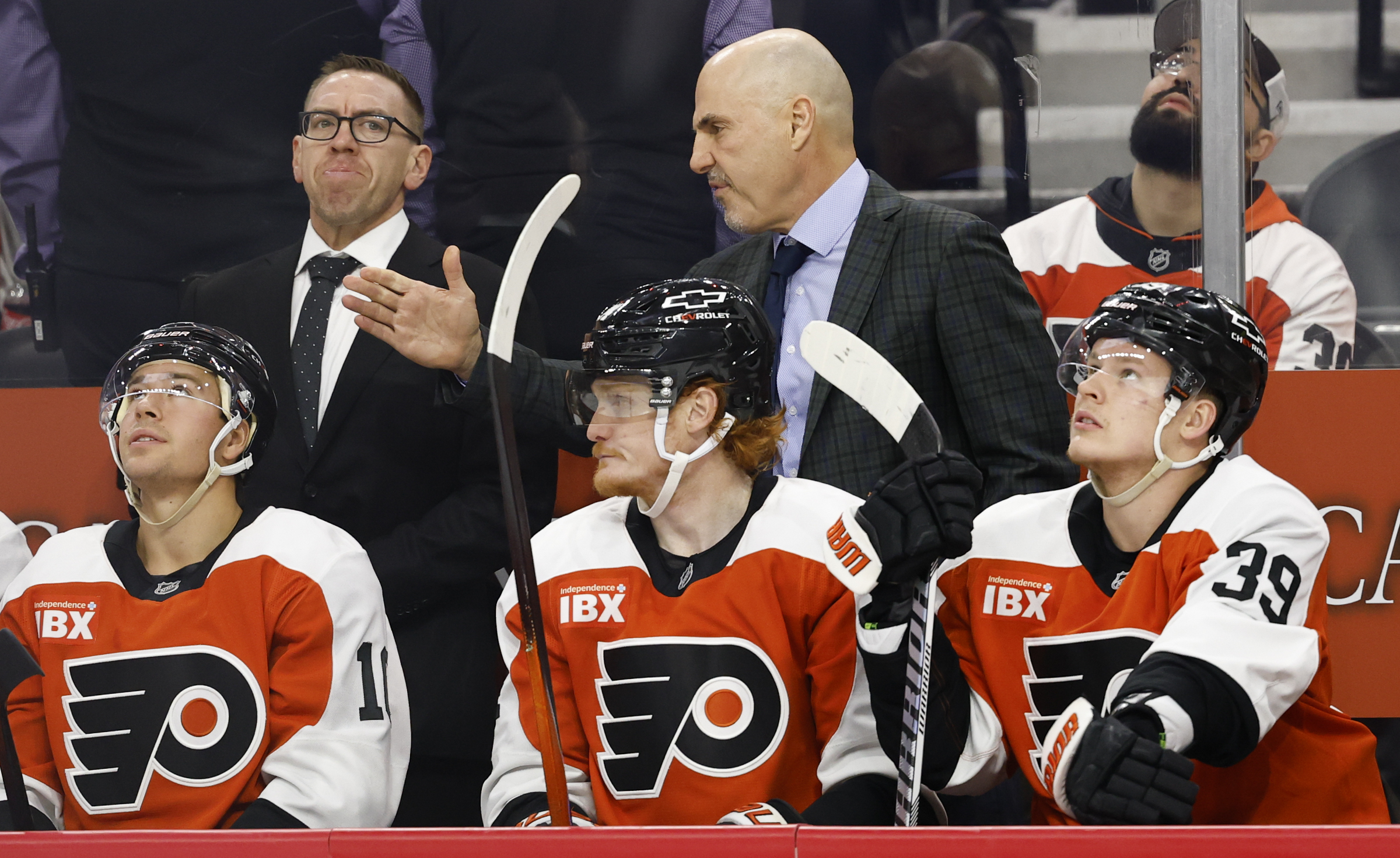
    Flyers head coach Rick Tocchet and winger Matvei Michkov (left) are working hard to improve their communication.

    “I think playing him on the left side has made him go more north,” Tocchet said. “He’s not backward skating as much through the neutral zone. I’m trying to explain to him, the faster he can go north with [the puck] you get more rush plays.

    “When you take it back, and you’re opening up, playing backwards, you’ve just got to beat structure again. If we’ve just beat structure, why do we want to go back so we have to beat structure again. … But the more north he can play, the faster he looks, too.”

    Michkov tried not to think too much about his early struggles. When you have a heavy head and start overthinking, and therefore not creating or getting points, he hates it.

    But a big part of his slow start can be attributed to the fact that he did not train well this offseason and, because of it, as he noted in November, he “lost concentration” at the beginning of the season. Michkov, who turns 21 on Dec. 9, knows he is talented and that he just needs to keep working and building his craft.

    He’s also learned from his past summer mistakes.

    “I think I will start training here [in Voorhees]. Maybe will go home for [short time],” he said. “What’s happening right now is I’m not feeling good about it. I’m not happy about my points. I’m sure I can do much better and make a lot more and make better for my team and, of course, score.

    “You cannot score in every game, but physically, I need to be ready for it. And in February [during the Olympic break], I need to spend the time to be ready for the rest of the season. If you’re going to have good physical form, everything else will come along.”

    “If that’s his choice, we can help him,” Tocchet said when told of Michkov’s summer plans.

    “As for his play, I don’t want him to worry about points. He was focused on goals and assists. He’s got to be careful. Those things will come by doing the right things, and I think he’s tried to do the right things. Where to go in certain areas, he’s getting better at definitely.”

    Although he may not be ready to be interviewed without Slava Kuznetsov, the Flyers interpreter, Michkov’s English is progressing. It is noticeable that he is understanding and responding more when speaking with teammates and the media.

    Matvei Michkov says he plans to train next summer in Voorhees.

    And the coach and player are still learning how to work together.

    “I think in real time, it’s harder. I can bark at someone, ‘Hey, on a D dive, you’ve got to remember, this is your quad,’” Tocchet said. “With Matvei, you’ve got to take your time, and you’ve got to get a [white]board. Or intermission time, I’ve done it a few times, called him in to show video.”

    “I think earlier on, we were giving him so much information, I think we could frustrate him a little bit,” Tocchet added. “I think the last three weeks, we’ve really dialed in how we do it. OK, one coach has him for today. Hey, let’s give him a break today. Let’s not talk even systems; let’s talk to him about something else.

    “I think we just, collectively, [figured out] how to manage how we give him information, because he seems to be grasping it more these last three weeks than he did the first three weeks.”

    And it’s showing on the ice.

    It also helps that he has his mother, Maria, and his brother, Prokhor, in the area because if he were to be by himself, “I would go nuts,“ he said.

    But there is one rule.

    “I like to talk about everything,” he said, “but when I’m mad, she knows not to talk about hockey.”

  • Protesters decry ICE arrests at Philly courthouse as sheriff’s backers say she’s been unfairly blamed

    Protesters decry ICE arrests at Philly courthouse as sheriff’s backers say she’s been unfairly blamed

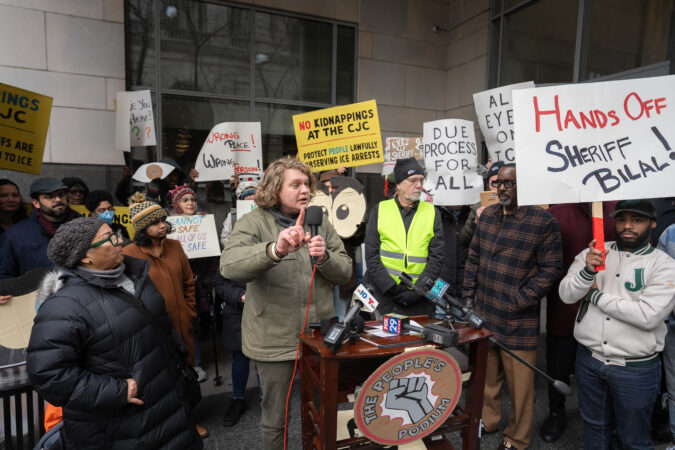
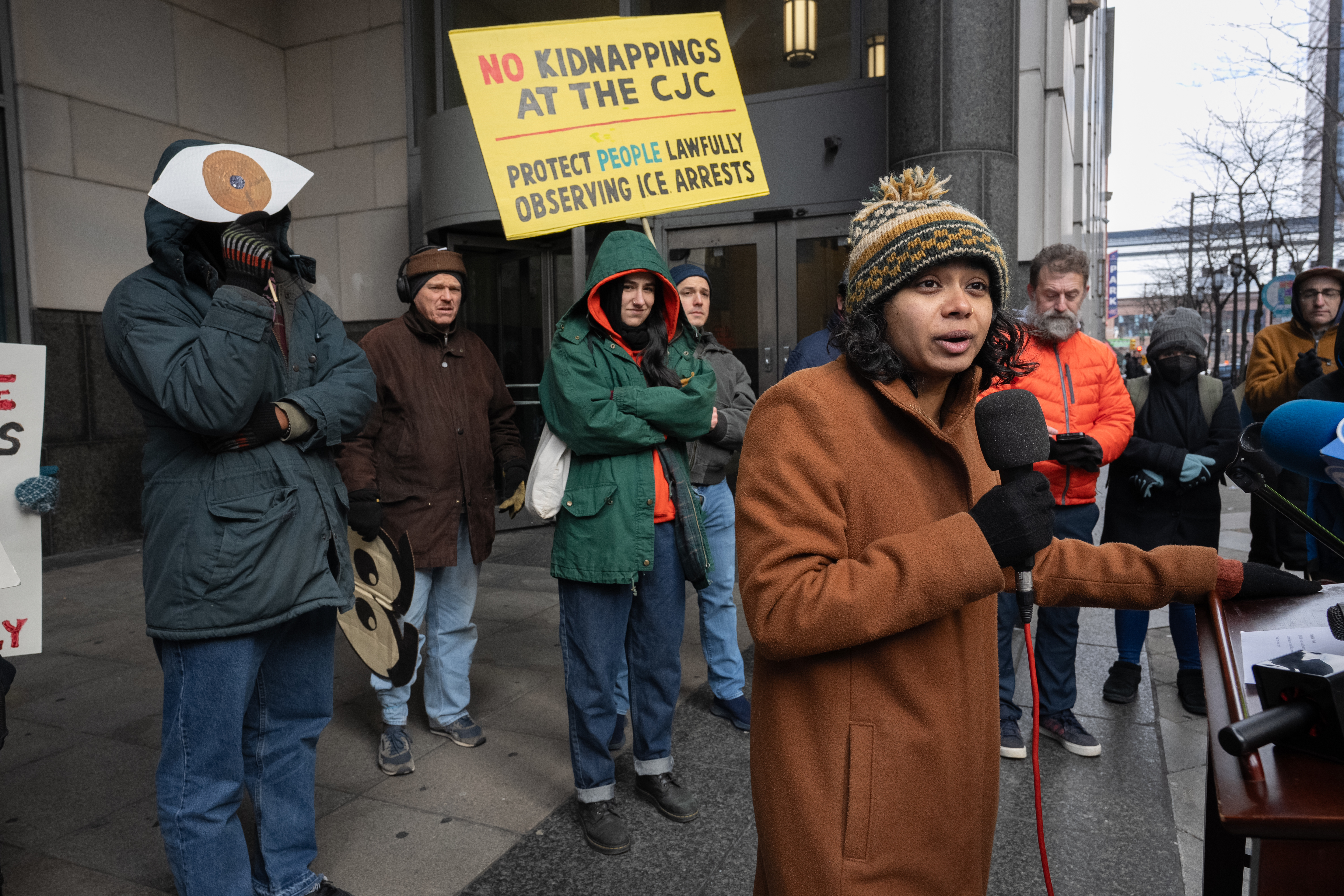
    Immigration activists carried a worn wooden lectern to the Criminal Justice Center on Thursday, demanding that Sheriff Rochelle Bilal step up and explain why she allows ICE agents in the courthouse.

    She didn’t appear, and after a few minutes lead protest speaker Aniqa Raihan stepped away from the microphone, highlighting the sheriff’s absence by leaving the podium empty, save for the recorded chirps of crickets.

    The quiet didn’t last.

    As Raihan resumed speaking, she was quickly interrupted by counterdemonstrators, supporters of the sheriff who said No ICE Philly had unfairly maligned her. Her supporters said the sheriff could bar ICE from the courthouse only upon a judge’s order ― initiating a testy debate.

    “It’s the judges that have to actually give the order,” said Andy Pierre, CEO of Fox & Lion Communication, who said he helped run the sheriff’s campaign for office. ”Her coming down here, and taking time away from managing her office, to come down here for this show …”

    Other Bilal backers, at least one wearing a campaign shirt, also accused the immigration advocates of targeting the wrong person, holding up signs that said, “Hands off Sheriff Bilal!”

    Aniqa Raihan, an organizers with No ICE Philly, speaks at a protest Thursday at the Criminal Justice Center.

    The No ICE Philly demonstrators responded that the sheriff is in charge of courthouse security. And that she does not report to Philadelphia judges.

    No ICE Philly has castigated Bilal, saying that by not barring U.S. Immigration and Customs Enforcement from the property — as judges and lawmakers in some other jurisdictions have done — she has helped enable the arrest of at least 90 immigrants who were trailed from the courthouse and arrested on the sidewalk outside.

    Three more people were arrested this week, activists said.

    “Sheriff Bilal, we are watching,” Raihan said.

    Conflicting views at Philly courthouse

    In response to a request for comment ahead of the protest, the sheriff’s office said in a statement that Bilal had already made her position clear:

    “The Sheriff’s Office does not cooperate with ICE, does not assist in ICE operations, and does not share information with ICE. That policy has not changed and will not change.”

    The statement reiterated that deputies are prohibited from assisting ICE in courthouse arrests. The department’s priority is the safety of immigrants, residents, observers, and everyone entering the court system, it said.

    Meanwhile, the statement said, the office would continue to protect the public, enforce its policies, and ensure that “no one is targeted or harmed because of their immigration status.”

    Protesters say that is exactly what has been happening, that the sheriff has allowed ICE to turn the Criminal Justice Center into “a hunting ground.”

    The issue has spurred contention between activists and lawyers who say the courthouse must be a place to seek and render justice ― not to target immigrants ― and federal authorities who insist that making arrests there is legal, safe, and logical.

    No ICE Philly says agents have been allowed to essentially hang out at the Center City courthouse, waiting in the lobby or scouring the hallways, then making arrests outside, a pattern they say has been repeated dozens of times since President Donald Trump took office in January.

    Asked for comment, an ICE spokesperson in Philadelphia said: “ICE respects the rights of individuals to peacefully protest.”

    Contention over courthouses

    Activists noted that many people who go to the courthouse are not criminal defendants ― they are witnesses, crime victims, family members, and others who are already in diversionary programs.

    Other jurisdictions have acted to bar or restrict ICE activity at their courthouses.

    In Connecticut last month, state lawmakers passed a bill to bar most civil immigration arrests at courthouses. In Chicago, the top Cook County judge barred ICE from arresting people at courthouses. And in New York, a federal judge dismissed a Trump administration challenge to a law that barred the immigration arrests of people going into and out of courthouses.

    Nearly 11 months into Trump‘s second presidency, courthouses have become disputed territory as his administration pursues ever-more-aggressive arrest and deportation policies.

    Under President Joe Biden, ICE agents were allowed to take action at or near a courthouse only if the situation involved a threat to national security, an imminent risk of death or violence, the pursuit of someone who threatened the public safety, or a risk of destruction of evidence.

    The Biden restrictions on ICE were nullified the day after Trump took office. New guidance said agents could conduct enforcement actions in or near courthouses ― period.

    The only conditions were that agents must have credible information that their target would be present and that the local jurisdiction had not passed laws barring such enforcement.

    ‘We want to keep our city’

    On Thursday, about 60 demonstrators gathered outside the Center City courthouse, where they said Bilal must do more to protect immigrants.

    The demand comes as ICE has dramatically expanded its presence and visibility in the Philadelphia region and across the United States. More than 65,000 immigrants are now being held in federal detention, up dramatically since Trump took office.

    “We want to keep our city, not a city of fear, but a city of love,” said Elena Emelchin Brunner, immigrant rights organizer with Asian Americans United.

    Imam Salaam Muhsin, a community leader, stepped up to speak as No ICE Philly opened the lectern to all. He said the climate around ICE had become “terrorizing” and must be addressed.

    “What we’re doing right here, we’re doing it in a kind of ugly way,” he said. “And I say ugly because we haven’t come together. We still are stigmatizing one person, and that’s the sheriff. That’s unfair to her.”

  • Eagles still favorites for ‘Monday Night Football’ vs. Chargers; plus, Week 14 odds for Jalen Hurts, more

    Eagles still favorites for ‘Monday Night Football’ vs. Chargers; plus, Week 14 odds for Jalen Hurts, more

    Following consecutive losses, the Eagles will travel to Los Angeles to take on the Chargers on Monday night. The matchup will mark Philadelphia’s fourth nationally broadcast game over its last five. Both teams sit at 8-4.

    Although the Eagles defense still ranks in the top 10 in points allowed, Vic Fangio’s unit will be looking to get back on track on Monday Night Football. Two weeks ago, Philadelphia allowed the Cowboys to score 24 unanswered points, en route to the Birds’ biggest blown lead since 1999. And on Black Friday against the Bears, the Eagles allowed 281 rushing yards, the ninth-most total they’ve allowed in team history.

    While Los Angeles has won four of its last five games, the win-loss record doesn’t tell the whole story. None of the Chargers’ recent wins have come against teams with winning records, and two of them were against the Las Vegas Raiders (2-10) and Tennessee Titans (1-11). Additionally, quarterback Justin Herbert recently underwent surgery for a hand injury he suffered during last week’s game, though he is likely to suit up on Monday.

    Here’s a look at the updated player props and game lines for the Eagles’ Week 14 matchup against the Chargers …

    Eagles vs. Chargers odds

    The Eagles opened as 3-point favorites, and the lines have only slightly shifted since, even with encouraging news regarding Herbert’s injury status and with Jalen Carter missing Monday’s game for Philly.

    FanDuel

    • Spread: Chargers +2.5 (-102); Eagles -2.5 (-120)
    • Moneyline: Chargers (+130); Eagles (-154)
    • Total: Over 41.5 (-105); Under 41.5 (-115)

    DraftKings

    • Spread: Chargers +3 (-115); Eagles 3 (-105)
    • Moneyline: Chargers (+130); Eagles (-155)
    • Total: Over 40.5 (-115; Under 40.5 (-105)
    Jalen Hurts has thrown for 519 combined yards over his last two games, but the Eagles have lost both.

    Passing yard props

    Jalen Hurts has thrown for 230 and 289 yards, respectively, in the Eagles’ last two games but did not reach 200 in the three games prior. Season-long, Hurts ranks 16th in the NFL in passing yards per game (209.5 yards).

    Herbert ranks eighth in passing yards. The former Pro-Bowler managed just 151 passing yards last week, in a game where Los Angeles’s ground attack led the way. And against Jacksonville a week earlier, Herbert threw for a career-low 81 passing yards, with none in the second half. Since Herbert’s status has not been confirmed for Monday, DraftKings has not posted odds for the sixth-year quarterback.

    FanDuel

    DraftKings

    Passing touchdowns

    Hurts and Herbert have both thrown for three touchdowns in their teams’ last three games, with two of the scores occurring last week. Season long, Hurts has thrown for 19 touchdowns, while Herbert has thrown for 21.

    FanDuel

    DraftKings

    Running back Saquon Barkley hasn’t found the end zone since the Eagles’ Oct. 26 win over the Giants.

    Rushing yards

    Saquon Barkley has reached 70 rushing yards in just one of his last four games and is at just under 62 rushing yards per game this season, less than half the 125 yards the Penn State alum averaged last season. While his stats have declined, Barkley has continued to get the lion’s share of Eagles rushing attempts. The three-time Pro-Bowler has 198 carries; next up is Tank Bigsby with only 18. Barkley was notably the only back to receive carries against Chicago last week.

    Los Angeles’s running back situation is a bit more of a mystery. The Chargers’ primary running back, Omarion Hampton, has been sidelined since Week 5. Kimani Vidal has filled in as the team’s main back and registered his third 100-yard game of the season last week. But Hampton has a chance to return off injured reserve this week, muddying the waters for active prop bettors.

    As a result, FanDuel has not yet opened markets for rushing props, while DraftKings has only opened ones for Barkley and Hurts.

    DraftKings

    Receiving yards

    A.J. Brown has come alive over the past two weeks. The 28-year-old receiver is averaging 121 yards and has caught three touchdowns in that span. DeVonta Smith averaged just under 70 yards per game against Dallas and Chicago across 11 combined receptions.

    The Chargers’ passing game has been more spread out. Ladd McConkey, Keenan Allen, Oronde Gadsden II, and Quentin Johnston have all recorded between 500 and 700 receiving yards this season. However, Los Angeles’s aerial offense has been extremely quiet the past two games, with only 278 total passing yards.

    Due to Hampton’s unknown status for Monday, FanDuel has yet to post receiving props.

    DraftKings

    Eagles wide receiver A.J. Brown has three touchdowns in the last two games.

    Touchdown scorers

    Across the last three games, the Eagles have had two touchdown scorers: Hurts and Brown. All of Philadelphia’s other offensive weapons have not seen the end zone in nearly a month. Smith last scored against the Packers on Nov. 10, while Barkley and Goedert last saw the end zone on October 26th.

    The Chargers, meanwhile, had four touchdown scorers in their last game alone. Herbert found both McConkey and Johnston in the end zone Sunday, while Vidal and Jaret Patterson both had rushing scores. If Hampton is to return on Monday, both other running backs’ opportunities would likely decline. Hampton scored in two of his five games this season.

    FanDuel

    DraftKings

  • Speaker Johnson pleads with Republicans to keep concerns private after tumultuous week

    Speaker Johnson pleads with Republicans to keep concerns private after tumultuous week

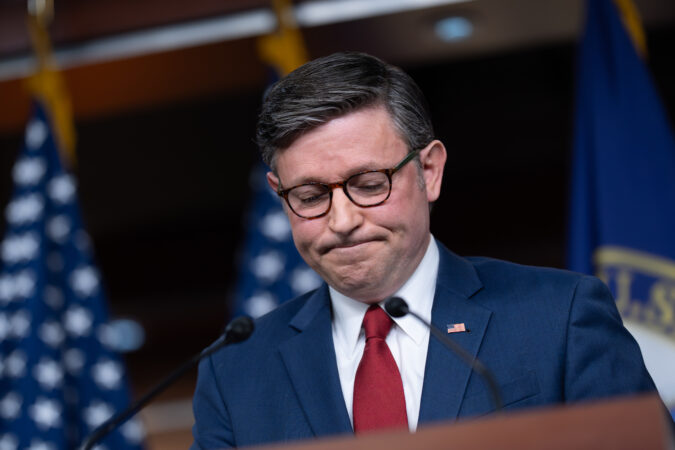
    WASHINGTON — House Speaker Mike Johnson is imploring his fellow Republicans to stop venting their frustrations in public and bring their complaints to him directly.

    “They’re going to get upset about things. That’s part of the process,” Johnson told reporters Thursday. “It doesn’t bother me. But when there is a conflict or concern, I always ask all members to come to me, don’t go to social media.”

    Increasingly, they’re ignoring him.

    Cracks inside the GOP conference were stark this week as a member of Johnson’s own leadership team openly accused him of lying, rank-and-file Republicans acted unilaterally to force votes and a leadership-backed bill faltered. It’s all underscored by growing worries that the party is on a path towards losing the majority next year.

    “I certainly think that the current leadership and specifically the speaker needs to change the way that he approaches the job,” GOP Rep. Kevin Kiley of California said on Thursday.

    Kiley, who has grown vocally critical of Johnson after the GOP’s nationwide redistricting campaign backfired in California, said that the speaker has been critical of rank-and-file Republicans, so “he needs to be prepared to accept any criticism that comes with the job.”

    “And I think, unfortunately, there’s been ample reason for criticism,” he added.

    ‘Why do we have to legislate by discharge petitions?’

    For the first part of 2025, Johnson held together his slim Republican majority in the House to pass a number of President Donald Trump’s priorities, including his massive spending and tax cut plan.

    But after Johnson kept members out of session for nearly two months during the government shutdown, they returned anxious to work on priorities that had been backlogged for months — and with the reality that their time in the majority may be running out.

    First was a high-profile discharge petition to force the vote on releasing the Jeffrey Epstein files, which succeeded after it reached the 218-signature threshold. Other lawmakers are launching more petitions, a step that used to be considered a major affront to party leadership.

    “The discharge petition, I think, always shows a bit of frustration,” said GOP Rep. Dusty Johnson.

    Another discharge petition on a bill that would repeal Trump’s executive order to end collective bargaining with federal labor unions reached the signature threshold last month, with support from seven Republicans.

    And this week, GOP Rep. Anna Paulina Luna of Florida brought a long-anticipated discharge petition for a bill to bar members of Congress from trading stock. A number of Republicans have already signed on, in addition to Democrats.

    “Anxious is what happens when you get nervous. I’m not nervous. I’m pissed,” Luna wrote on social media late Thursday, responding to leadership comments that she was overly anxious.

    GOP Rep. Nancy Mace of South Carolina signed both Luna’s petition and the one to release the Epstein files. She told reporters Thursday that she expressed her frustrations directly to Johnson in a phone call, and also in what she described as “a deeply personal, deeply passionate letter, that we are legislating by discharge petition.”

    “We have a very slim majority, but I want President Trump’s executive orders codified,” Mace said. “I want to see his agenda implemented. Why do we have to legislate by discharge petitions?”

    Johnson’s own leadership team going after him

    At the center of Johnson’s pleas for members to bring concerns to him privately instead of on social media is the chairwoman of House Republican leadership, New York Rep. Elise Stefanik.

    Angered that a provision she championed wasn’t included in a defense authorization bill, Stefanik blasted Johnson’s claims that he wasn’t aware of the provision as “more lies from the Speaker.” She conducted a series of media interviews criticizing Johnson, including one with The Wall Street Journal in which she said he was a “political novice” who wouldn’t be re-elected speaker if the vote were held today.

    Johnson told reporters Thursday that he had a “great talk” with Stefanik the night before.

    “I called her and I said, ‘why wouldn’t you just come to me, you know?’” Johnson said. “So we had some intense fellowship about that.”

    Asked if she had apologized for calling him a liar, Johnson said: “Um, you ask Elise about that.”

    Illinois GOP Rep. Mary Miller released a statement Thursday providing support for Johnson, saying that while there are differences among members “our mission is bigger than any one individual or headline.”

    Democrats, who have had leadership criticisms of their own, have reveled in the GOP’s disarray. House Republican leaders attempted to muscle through an NCAA-backed bill to regulate college sports after the White House endorsed it, before support within Republican ranks crumbled. Some GOP lawmakers pointedly said they had bigger priorities before the end of the year.

    “It’s not that Congress can’t legislate, it’s House Republicans that can’t legislate. It’s the gang that can’t legislate straight. They continue to take the ‘my way or the highway’ approach,” said House Democratic Leader Hakeem Jeffries.

    Underlying GOP unease about 2026

    All eyes in the U.S. House were on a special election Tuesday night in a Tennessee district that a Republican had won in 2024 by nearly 21 percentage points, with Trump carrying the area by a similar margin.

    Republicans hoped the contest would help them regain momentum after losing several marquee races across the country in November. Democrats, meanwhile, argued that keeping the race close would signal strong political winds at their backs ahead of next year’s midterms, which will determine control of both chambers.

    Republican Matt Van Epps ultimately won by nearly 9 percentage points.

    “I do think to have that district that went by over 20 points a year ago be down to nine, it should be a wake up call,” said GOP Rep. Don Bacon of Nebraska.

    He argued that Republicans need “to get some economic progress, like immediately,” adding that “the president and his team have got to come to grips” that tariffs are not driving the economic growth Americans are feeling.

    “I just feel like they’re going to have to get out of their bubble,” Bacon said of the White House. “Get out of your bubble. The economy needs improving. Fix Ukraine and we do need a temporary health care fix.”

    Bacon is among a growing number of House Republicans who have announced they will retire after this term. Republican Rep. Marjorie Taylor Greene abruptly declared last month that she would resign in January, citing multiple reasons, including that “the legislature has been mostly sidelined” this year.

    Those retirements add to the GOP’s challenge in holding the House, as the party must now defend more open seats. Republicans have also seen a redistricting battle — sparked by Trump’s pressure on Texas Republicans and then more states — backfire in part. In November, California voters handed Democrats a victory by approving a new congressional map.

    “That’s living in a fantasy world if you think that this redistricting war is what’s going to save the majority,” said Kiley, now at risk of losing his seat after redistricting in California.

    He added: “I think what would make a lot bigger impact is if the House played a proactive role in actually putting forward legislation that matters.”

  • National Guard can stay in D.C. for now, appeals court says

    National Guard can stay in D.C. for now, appeals court says

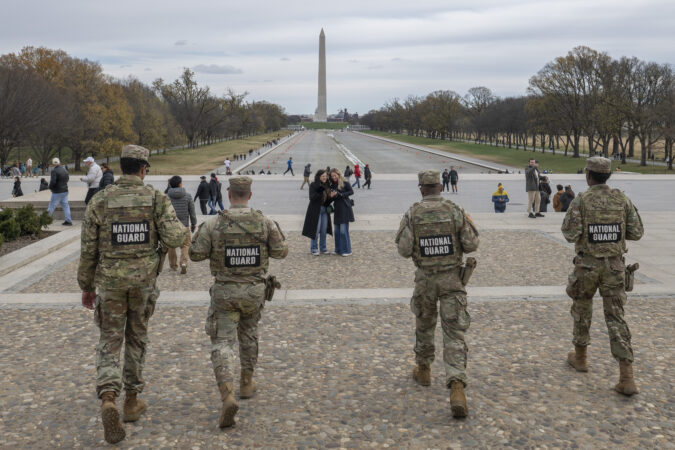
    The Trump administration will be allowed to continue its National Guard deployment in D.C. at least temporarily, pending another appeals court decision, a panel of U.S. Court of Appeals judges said Thursday.

    The ruling means the deployment of troops to the nation’s capital could persist beyond Dec. 11, the date a lower-court judge had previously set as a deadline for the administration to halt the mission.

    Judges with the D.C. Circuit of the U.S. Court of Appeals granted an administrative stay in the case, meaning the drawdown of troops in the capital will be delayed at least until the appeals court makes an additional ruling. The court emphasized that Thursday’s decision had nothing to do with the merits of the Trump administration’s arguments in the case.

    “The purpose of this administrative stay is to give the court sufficient opportunity to consider the motion for stay pending appeal and should not be construed in any way as a ruling on the merits of that motion,” the judges wrote.

    The appeals court ruling comes the week after an attack in which prosecutors say a man targeted National Guard members, killing one and critically injuring another in a busy downtown area of D.C. blocks from the White House. For Trump administration officials, the attack – allegedly carried out by a lone gunman who was resettled in the United States from his native Afghanistan after work for a CIA-backed counterterrorism squad – only deepened their resolve to keep the troops in the capital city.

    Trump called for an additional 500 troops; South Carolina’s governor said this week he would send up to 300 members of his state’s National Guard in response.

    “Our warriors are strong and we will not back down until our capital and our cities are secure,” Pentagon press secretary Kingsley Wilson said at a news briefing Tuesday.

    For D.C. Attorney General Brian Schwalb, who sued the Trump administration in September over the National Guard deployment, the shooting and its aftermath offered further proof that the deployment of troops was ill-advised and unsafe. D.C. police officers have since paired up with National Guard troops for the troops’ safety, potentially diverting officers from other public safety tasks, he said in a court filing this week.

    “The deployment impinges on the District’s home rule, requires the diversion of scarce police resources, and exposes both the public and Guard members to substantial public safety risks, as Defendants themselves acknowledged at the outset of the deployment, and as the horrific attack on two National Guard members last week tragically underscored,” Schwalb wrote.

    President Donald Trump deployed the D.C. National Guard to city streets on Aug. 11 as part of a broader crime crackdown he initiated in the city. He also took temporary control of the D.C. police department and launched a surge of federal law enforcement into D.C. neighborhoods. Multiple Republican governors heeded Trump’s call for reinforcements and sent troops from their National Guards to the District. As of Wednesday, about 2,300 National Guard members were stationed in the city – about 100 more than the previous day.

    The National Guard members have stood watch at Metro stations and picked up trash at national parks. They also carry weapons and have been instructed to use them only as a last resort.

    Unlike in states, where governors control their National Guards, the president is commander in chief of the D.C. National Guard – a role the administration argues gives Trump vast power over the deployment and legally authorizes his actions in the District. But Schwalb, in his lawsuit, has argued that the president’s power over the Guard has limits. Schwalb also has alleged that the troops in D.C. have been illegally engaged in law enforcement, in violation of a federal law that prohibits military troops from engaging in domestic policing.

    In November, U.S. District Judge Jia M. Cobb sided with D.C. in a preliminary ruling, writing that the National Guard deployment was illegal and that Trump lacked the authority to activate the Guard for the mission. Cobb ordered the Trump administration to halt the deployment in D.C. while litigation continued over whether the troops should be permanently withdrawn. However, she delayed her order from going into effect until Dec. 11 to give the Trump administration time to appeal.

    In response, the administration asked an appeals court for an emergency ruling to allow the deployment to continue while litigation continues, arguing in court documents that Cobb’s order “impinges on the President’s express statutory authority as Commander-in-Chief of the D.C. National Guard and impermissibly second-guesses his successful efforts to address intolerably high crime rates in the Nation’s capital.” The appeals court on Thursday did not rule on that request; the administrative stay means the deployment can continue while the appeals court considers it.

    The Trump administration has argued that the troops have not been engaged in city law enforcement and merely deter crime through their presence, freeing up police for other tasks.

    Questions of the mission’s safety implications have taken on new weight in the aftermath of last week’s attack, but each party in the lawsuit has argued that the city would be safer if the court sided with them.

    A group of retired senior military officers and the Vet Voice Foundation, a nonpartisan, nonprofit organization representing veterans and their supporters, filed a brief in the appeals court that they said was “in support of neither party.” They argued that the use of the National Guard in D.C. “threatens to undermine the apolitical reputation of the military as an institution, places service members in situations for which they are not specifically trained, and pulls the Guard away from its critical missions.”

    But attorneys general from 24 Republican-led states – including some that sent their troops to D.C. – argued that crime is high in D.C. and while the mission “has already produced strong results,” there is more to be done. Violent crime is down 28 percent in D.C. compared to last year, although crime in the city began to fall steeply well over a year before Trump surged federal law enforcement in August.

    “Danger still lingers,” the states’ attorneys general wrote in their brief, filed in support of the Trump administration. “Just last week, an Afghani national committed a heinous terror attack, shooting two National Guardsmen at close range and murdering one.”

    In arguing that the Guard troops should stay, they also cited a few actions that Guard members had taken to keep the city safe.

    “National Guard troops have stopped at least one fight near the metro,” they wrote, “helped provide first aid to elderly residents of the district, and aided in the successful search for a missing child.”

  • Library Company shareholders have voted for its merger with Temple University

    Library Company shareholders have voted for its merger with Temple University

    The proposed merger of Temple University and the Library Company of Philadelphia moved closer to reality this week with a nod from the library’s shareholders.

    Shareholders voted Tuesday 174 to 33 in favor of the deal, and the action was followed Thursday with approval by the executive committee and finance and investment committees of Temple’s board of trustees.

    Its new name will be the Library Company of Philadelphia at Temple University, a division of Temple Libraries.

    But for that to happen, they must get approval for the merger from the Pennsylvania attorney general’s office and Philadelphia Orphans’ Court.

    “We are delighted to help preserve one of Philadelphia’s most important educational and historical institutions through this partnership,” Temple President John Fry said in a statement. “This will help bring stability to the Library Company while also ensuring that its legacy does not just live on but also thrives. For Temple, this is also an opportunity to further enrich our academic and research resources.”

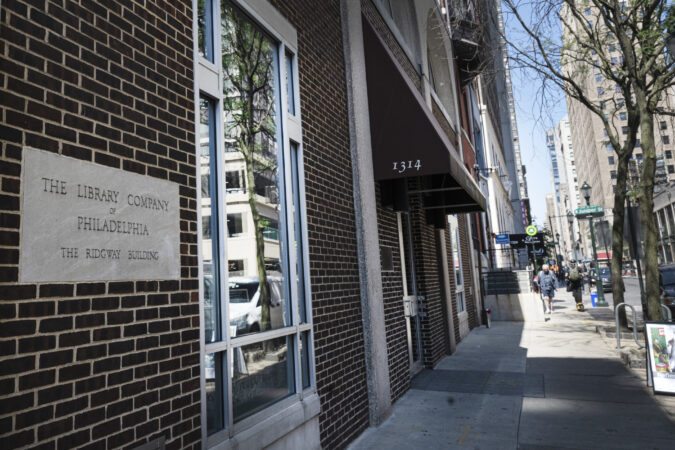
    Not much will change for the Library Company’s day-to-day operations, at least immediately. It will remain at its 1314 Locust Street location in Center City and keep its collections, staff, identity, mission and programming, Temple said. It will operate as its own division within Temple Libraries and maintain its own board of visitors.

    The Library Company will gain access to Temple’s research arm, grant-writing help, facilities and administrative functions, the university said.

    “The Library Company has been an important resource for Philadelphians for nearly 300 years, ever since Benjamin Franklin first envisioned a shared library as a tool for advancing the self-education of his circle of artisans and tradesmen,” John Van Horne, Library Company director, said in a statement. “I am certain that Franklin would heartily approve of our expanded education mission over the last few centuries, and I have no doubt that he would also approve of this partnership with a university dedicated to serving his city and beyond.”

    The move comes after the Library Company, faced with a string of operating deficits, began exploring merger possibilities with a number of other institutions. Financial data given to shareholders showed substantial operating deficits for most years since 2017, as well as projections for deficits continuing into 2030.

    Officials estimated that in order to remain independent, the company would need to raise $23 million to add to existing endowment.

    Van Horne previously said that raising that kind of money would be “an incredibly steep hill to climb, and probably unrealistic.”

    The library houses more than 500,000 rare books, manuscripts, prints, photographs, works of art, ephemera, and other objects. It boasts items once owned by Benjamin Franklin and William Penn, and has a concentration in African American and women’s history.

    Some shareholders strongly preferred that the library ― founded in 1731 as the first subscription library in the U.S. ― would have remained independent, even as they recognized the current financial bind.

    Shareholder Joel Gardner was philosophical about the merger.

    “I think it’s the only solution the Library Company could find. We all have to keep our fingers crossed that it works out,” he said while declining to add how he voted.

    It didn’t seem likely that the Library Company would be able to raise the money required to remain independent, he said, “in a city that is not notable for having a large number of philanthropists and depends on just a few of them.”

    Michelle Flamer, a shareholder who in an Inquirer opinion piece mourned the impending loss of the company’s “historical identity,” said Thursday that the deal “seemed like it was a fait accompli, and there was not very much we could do about it.”

    The Library Company also will be incorporated into the university’s fundraising plans, Temple said, though the merger agreement made no promises. It calls for including the Library Company in Temple’s upcoming capital campaign, “with the goal of raising $25 million in new endowed funds to permanently and exclusively support the LCP Division.”

    “This is especially significant as the Library Company will soon celebrate its 300th anniversary in 2031, which presents a major opportunity for fundraising,” the university said in its announcement.

  • Immigration crackdown in New Orleans has a target of 5,000 arrests. Is that possible?

    Immigration crackdown in New Orleans has a target of 5,000 arrests. Is that possible?

    NEW ORLEANS — Trump administration officials overseeing the immigration crackdown launched this week in New Orleans are aiming to make 5,000 arrests with a focus on violent offenders, a target that some city leaders say is not realistic.

    It’s an ambitious goal that would surpass the number of arrests during a two-month enforcement blitz this fall around Chicago, a region with a much bigger immigrant population than New Orleans.

    In Los Angeles — the first major battleground in President Donald Trump’s aggressive immigration plan — roughly 5,000 people were arrested over the summer in an area where 10 million LA county residents are foreign-born.

    “There is no rational basis that a sweep of New Orleans, or the surrounding parishes, would ever yield anywhere near 5,000 criminals, let alone ones that are considered ‘violent’ by any definition,” New Orleans City Council President J.P. Morrell said Thursday.

    Census Bureau figures show the New Orleans metro area had a foreign-born population of almost 100,000 residents last year, and that just under 60% were not U.S. citizens.

    “The amount of violent crime attributed to illegal immigrants is negligible,” Morrell said, pointing out that crime in New Orleans is at historic lows.

    Violent crimes, including murders, rapes, and robberies, have fallen by 12% through October compared to a year ago, from a total of 2,167 violent crimes to 1,897 this year, according to New Orleans police statistics.

    A flood of messages about arrests

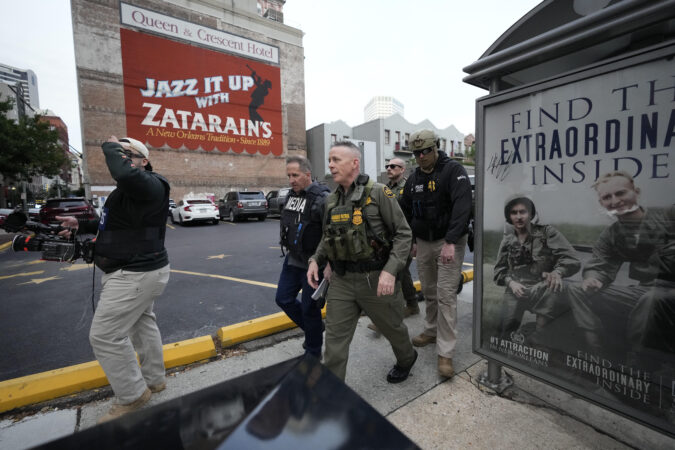
    Federal agents in marked and unmarked vehicles began spreading out across New Orleans and its suburbs Wednesday, making arrests in home improvement store parking lots and patrolling neighborhoods with large immigrant populations.

    Alejandra Vasquez, who runs a social media page in New Orleans that reports the whereabouts of federal agents, said she has received a flood of messages, photos and video since the operations began.

    “My heart is so broken,” Vasquez said. “They came here to take criminals and they are taking our working people. They are not here doing what they are supposed to do. They are taking families.”

    Several hundred agents from Customs and Border Protection and U.S. Immigration and Customs Enforcement are participating in the two-month operation dubbed “Catahoula Crunch.”

    House Speaker Mike Johnson, who is from Louisiana, is among the state’s Republicans supporting the crackdown. “Democrats’ sanctuary city policies have failed — making our American communities dangerous. The people of our GREAT city deserve better, and help is now on the ground,” Johnson posted on social media.

    Operation is being met with resistance

    About two dozen protesters were removed from a New Orleans City Council meeting Thursday after chants of “Shame” broke out. Police officers ordered protesters to leave the building, with some pushed or physically carried out by officers.

    Planning documents obtained last month by The Associated Press show the crackdown is intended to cover southeast Louisiana and into Mississippi.

    Homeland Security Department spokesperson Tricia McLaughlin said agents are going after immigrants who were released after arrests for violent crimes.

    “In just 24 hours on the ground, our law enforcement officers have arrested violent criminals with rap sheets that include homicide, kidnapping, child abuse, robbery, theft, and assault,” McLaughlin said Thursday in a statement. Border Patrol and immigration officials have not responded to requests for details, including how many have been arrested so far.

    She told CNN on Wednesday that “we will continue whether that will be 5,000 arrests or beyond.”

    Immigration arrests go beyond violent criminals

    To come close to reaching their target numbers in New Orleans, immigrant rights group fear federal agents will set their sights on a much broader group.

    New Orleans City Councilmember Lesli Harris said “there are nowhere near 5,000 violent offenders in our region” whom Border Patrol could arrest.

    “What we’re seeing instead are mothers, teenagers, and workers being detained during routine check-ins, from their homes and places of work,” Harris said. “Immigration violations are civil matters, not criminal offenses, and sweeping up thousands of residents who pose no threat will destabilize families, harm our economy.”

    During the “Operation Midway Blitz” crackdown in Chicago that began in September, federal immigration agents arrested more than 4,000 people across the city and its many suburbs, dipping into Indiana.

    Homeland Security officials heralded efforts to nab violent criminals, posting dozens of pictures on social media of people appearing to have criminal histories and lacking legal permission to be in the U.S. But public records tracking the first weeks of the Chicago push show most arrestees didn’t have a criminal record.

    Of roughly 1,900 people arrested in the Chicago area from early September through the middle of October — the latest data available — nearly 300 or about 15% had criminal convictions on their records, according to ICE arrest data from the University of California Berkeley Deportation Data Project analyzed by The Associated Press.

    The vast majority of those convictions were for traffic offenses, misdemeanors or nonviolent felonies, the data showed.

    New Orleans, whose international flavor comes from its long history of French, Spanish, African, and Native American cultures, has seen a new wave of immigrants from places in Central and South America and Asia.

    Across all of Louisiana, there were more than 145,000 foreign-born noncitizens, according to the Census Bureau. While those numbers don’t break down how many residents of the state were in the country illegally, the Pew Research Center estimated the number at 110,000 people in 2023.

  • Philly lawmakers approved $800M for Mayor Parker’s housing plan in June. Now they have to redo it. | City Council roundup

    Philly lawmakers approved $800M for Mayor Parker’s housing plan in June. Now they have to redo it. | City Council roundup

    Call it a H.O.M.E. repair.

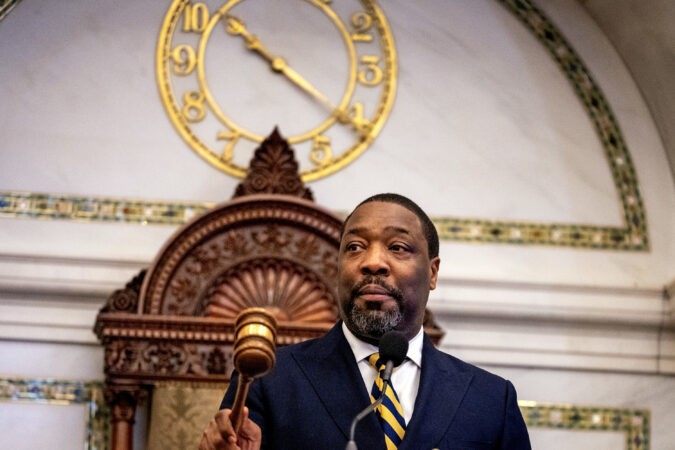
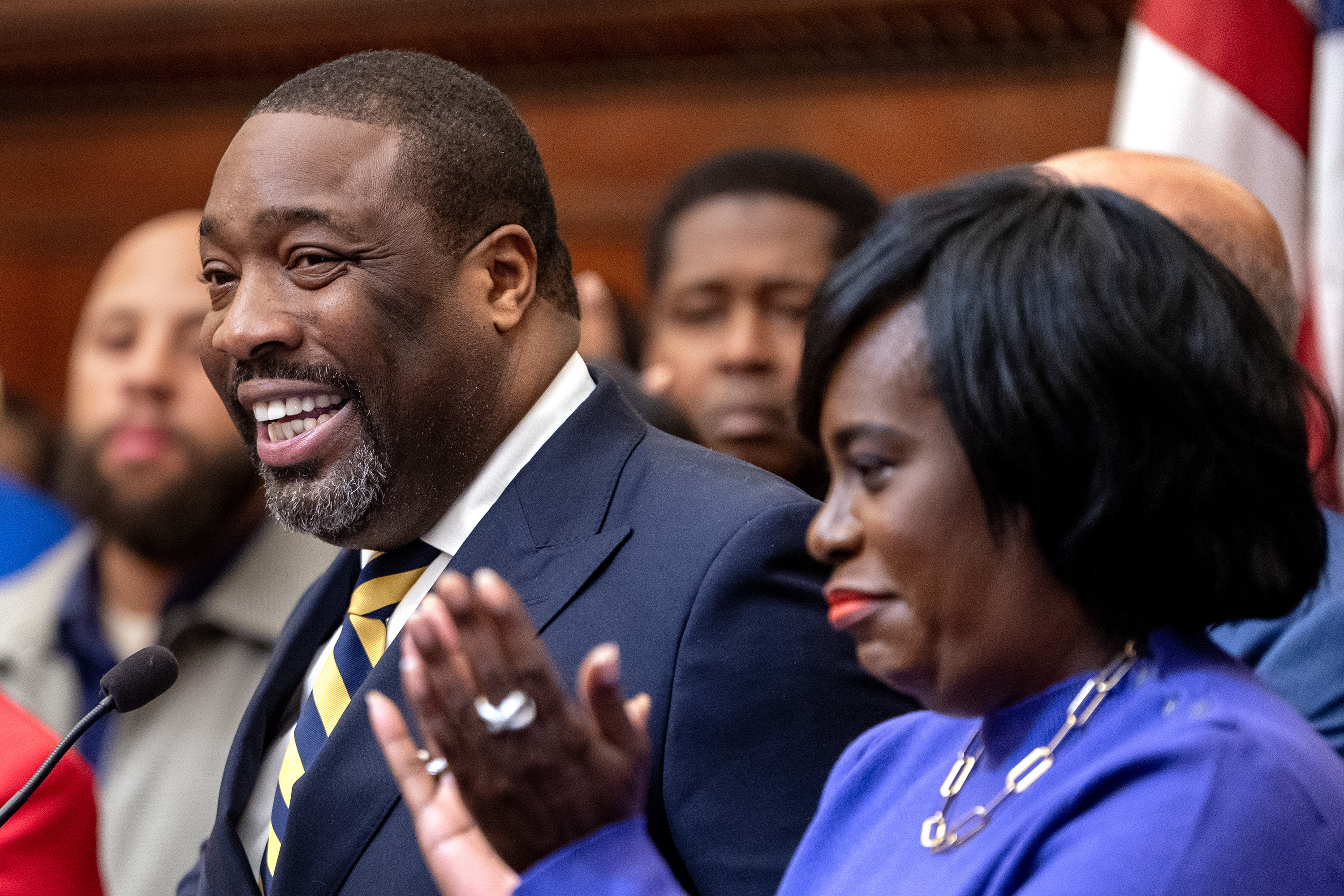
    City Council President Kenyatta Johnson on Thursday introduced legislation that will amend a bill lawmakers approved in June that authorized the city to take out $800 million in debt to fund Mayor Cherelle L. Parker’s Housing Opportunities Made Easy, or H.O.M.E., initiative.

    It’s the latest development in a saga that has seen several procedural squabbles, the most significant public dustup between Johnson and Parker to date, and a monthslong delay in the administration’s plan to issue city bonds to launch the housing initiative.

    The fix was needed because Council earlier this week amended a separate but related piece of legislation — called the H.O.M.E. budget resolution — that sets the first-year spending levels for the housing programs funded or created by the initiative.

    Council’s changes, which Parker largely opposed, were significant enough that the budget resolution no longer aligns with the bond authorization bill Council approved in June, meaning the administration cannot rely on the original legislation as its legal basis for taking out city debt.

    The new bond bill introduced Thursday reflects Council’s changes, which include increasing the first-year H.O.M.E. budget from $194.6 million to $277.2 million and changing eligibility requirements for some programs to make sure the lowest-income Philadelphia households were prioritized.

    “We want to make sure that this is a H.O.M.E. plan that supports everyone, but obviously members of Council had an issue and concern about making sure those most in need are supported throughout this process,” Johnson said.

    The bill now heads to committee, and Johnson said negotiations could lead to further changes. Next week is Council’s final meeting of the year, and Johnson on Thursday ruled out adding an extra session, meaning the bill likely will not pass until January at the earliest.

    Parker originally had hoped to issue the first of two planned $400 million tranches of H.O.M.E. bonds this fall. She said Tuesday that the legislative delays mean they might not go to market until March or later.

    “Working with Council President Johnson and the Members of City Council, we are laser-focused on building, repairing and restoring 30,000 units of housing and making H.O.M.E. a reality for the people of Philadelphia,” Parker said in a statement Thursday.

    ‘That’s my sister’: Johnson says relationship with Parker still strong

    Parker-Johnson pact intact: The Council president on Thursday downplayed his spat with Parker that saw both issue pointed statements Tuesday night blaming the other for delays in issuing the bonds.

    The exchange was notable because the two city leaders, who meet in person weekly, have forged an unusually close working relationship since both took office in January 2024.

    But Johnson said Thursday their relationship remains the same and has always involved disagreements — just not ones that have spilled out into public view.

    City Council President Kenyatta Johnson and Mayor Cherelle L. Parker have maintained a close working relationship.

    “That’s my sister,” Johnson said. “Most of the time, when we do have disagreements, y’all just don’t see it. We meet every week, so you don’t get a chance to see the back-and-forth. But at the end of the day, the mission is to move the city of Philadelphia forward together.”

    Council makes it harder to open convenience stores and pharmacies in Kensington

    No new nuisances: Members passed legislation Thursday that aims to make it significantly harder for convenience stores and pharmacies to open in Kensington and sections of North Philadelphia.

    The bill, authored by Councilmember Quetcy Lozada, forces any new “sundries, pharmaceuticals, and convenience sales” businesses in her 7th District — which covers much of Kensington and parts of North and Northeast Philadelphia — to get approval from the Philadelphia Zoning Board of Adjustment. That process is notoriously long and can be expensive for applicants.

    Lozada has said that the bill is targeted at corner stores and smoke shops, not chain businesses like CVS and 7-Eleven.

    The legislation is part of the body’s broader war on so-called nuisance businesses, which lawmakers say attract crime and disrupt neighborhoods. And it comes in addition to a controversial 11 p.m. business curfew in Lozada’s district that took effect earlier this year.

    City Councilmember Quetcy Lozada represents Kensington.

    It’s one of several legislative remedies lawmakers have undertaken to curb small businesses like smoke shops and convenience stores that have unregulated slot machine-like “skill games,” sell marijuana-like products, and peddle drug paraphernalia without a license to do so.

    Seriously … no nuisances, please: Lozada was not the only lawmaker taking aim at “nuisance” businesses Thursday, when Council approved two bills by Majority Leader Katherine Gilmore Richardson on the same topic.

    One measure makes it easier for the Philadelphia Department of Licenses and Inspections to issue stop-work and cease-operations orders to businesses violating city regulations. The other is aimed at closing loopholes that “let nuisance business owners avoid enforcement by changing their name or ownership, ensuring those with similar ownership or operations remain accountable for past violations,” Gilmore Richardson’s office said.

    The measures, which were both approved 16-0, were aimed at stopping “the spread of dangerous and destructive businesses and the need for further action to address their impact on our communities,” Gilmore Richardson said.

    “While I am encouraged by the steps we are taking today, I am also working on additional legislation to more aggressively crack down on these businesses and the bad actors behind them,” she said.

    Quote of the week

    Councilmember Jim Harrity in December 2023.

    Fond farewell: City Councilmember Jimmy Harrity gave an emotional speech in Council lamenting the loss of his friend Paul Staico, who died suddenly Sunday and was the owner of Big Charlie’s Saloon in South Philadelphia.

    Staico stood by Harrity when the future lawmaker was struggling with addiction, Harrity said.

    “Anybody that knew Paul will tell you he really was that guy, that guy who would give you the shirt off his back,” Harrity said. “He’s the only person I truly knew never lost faith in me, even when I was at my lowest 10 years deep in my addiction.”

    Councilmember Curtis Jones Jr. thanked Harrity, who often gives impassioned speeches, for his heartfelt tribute to Staico.

    “I want to shout out Jimmy Harrity for making crying in Council cool,” Jones said. “Nobody does it better, brother.”

    Staff writer Jake Blumgart contributed to this article.

  • Amazon is testing out 30-minute delivery in Philadelphia

    Amazon is testing out 30-minute delivery in Philadelphia

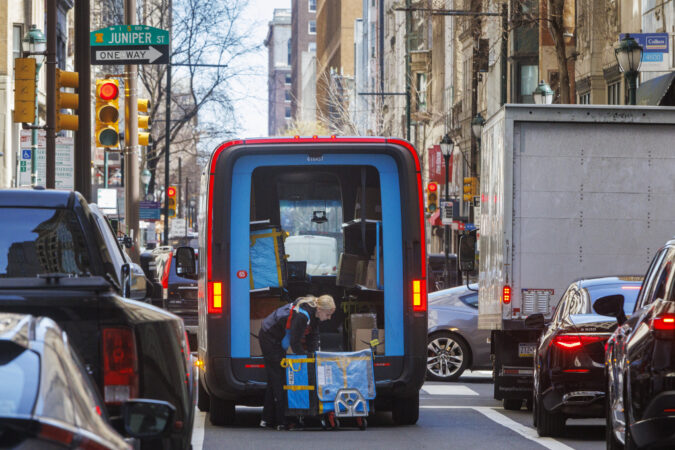
    Amazon delivery is getting faster in Philadelphia.

    The online retailer is testing out a new delivery model that aims to get items to customers in 30 minutes or less. The service, which is being called Amazon Now, was announced on Dec. 1 and will be available only in areas of Philadelphia and Seattle.

    “Building on our decades of delivery innovation, we’re now testing an ultrafast delivery offering of the items customers want and need most urgently in parts of Seattle and Philadelphia,” the company said in a news release.

    The service seems comparable to those offered by DoorDash and Gopuff, which allow consumers to purchase food and retail items to be delivered to their homes same-day.

    Customers in areas where the new program is offered will see an option in their Amazon app or webpage navigation bar for “30-Minute Delivery.”

    Thousands of items are eligible for the service, according to the company, including produce, milk, eggs, diapers, and over-the-counter medicine.

    Prime members will pay at least $3.99 for quick delivery, while the fee for nonmembers starts at $13.99. Customers will also incur an additional fee of $1.99 if their order is worth less than $15.

    “Amazon is utilizing specialized smaller facilities designed for efficient order fulfillment, strategically placed close to where Seattle- and Philadelphia-area customers live and work,” notes the news release.

    “This approach prioritizes the safety of employees picking and packing orders, reduces the distance delivery partners need to travel, and enables faster delivery times,” the company said.

    Amazon’s quick delivery model has changed how consumers shop, in part setting the expectation of a quick shopping process and fast delivery — and Philadelphians are no exception.

    When Amazon launched same-day delivery in 2009, Philadelphia was among the first cities elected to roll out the service. At the time, the company already offered two-day delivery on orders, which was available to Prime members for no extra cost after their $79 annual subscription. The same-day delivery service, when it was announced, cost an additional $6 per item.

    Prime members today pay $14.99 a month or $139 for a year and get access to free delivery. Amazon saw an increase in Prime membership during the pandemic and has said this year that it offers over 300 million items eligible for delivery with the program compared to 1 million in 2005 when the model first got its start.

    The company also continues to expand its network. In April, Amazon announced that it was investing more than $4 billion to broaden delivery in more rural parts of the country.