Delaware Avenue used to be Philadelphia’s party district. During the 1990s, when nightclub culture was in full swing, people flocked to riverfront venues like Egypt and Maui. While patrons enjoyed the riverfront’s dance era, many of the people living nearby did not.
With the assistance of their district councilperson, Frank DiCicco, neighbors in Northern Liberties and Fishtown instituted restrictions in 2002 on what kind of businesses could operate in the area. This meant new bars and restaurants adjacent to the nightclub zone would have to go to the city’s zoning board for approval.
These days, club culture has faded. Young people are staying home, drinking less, and dancing is done on TikTok. Yet, the restrictive zoning rules remain — out of step with the neighborhood’s current needs and realities.
Take the new bar and restaurant proposed by the Slider Co. for a building at 2043 Frankford Ave. in Fishtown. Since the restriction affects any establishment that serves food or drinks, the business has been mired in red tape that has so far cost owners more than $40,000 in fees and six months in delays, according to reporting by The Inquirer’s Jake Blumgart.
Even after prevailing recently at the Zoning Board of Adjustment, the eatery could still face further delays — and more legal fees — if an appeal is filed.
These obstacles are a self-imposed limit on prosperity for Philadelphia.
The city’s onerous wage and business taxes are often cited as a reason for the lack of economic growth, paucity of businesses, and stagnant job market. Having these zoning restrictions on the books contributes to these problems — without even the benefit of helping to fund city services. Instead, the tens of thousands in legal fees and rent payments go directly to local law firms and landlords.
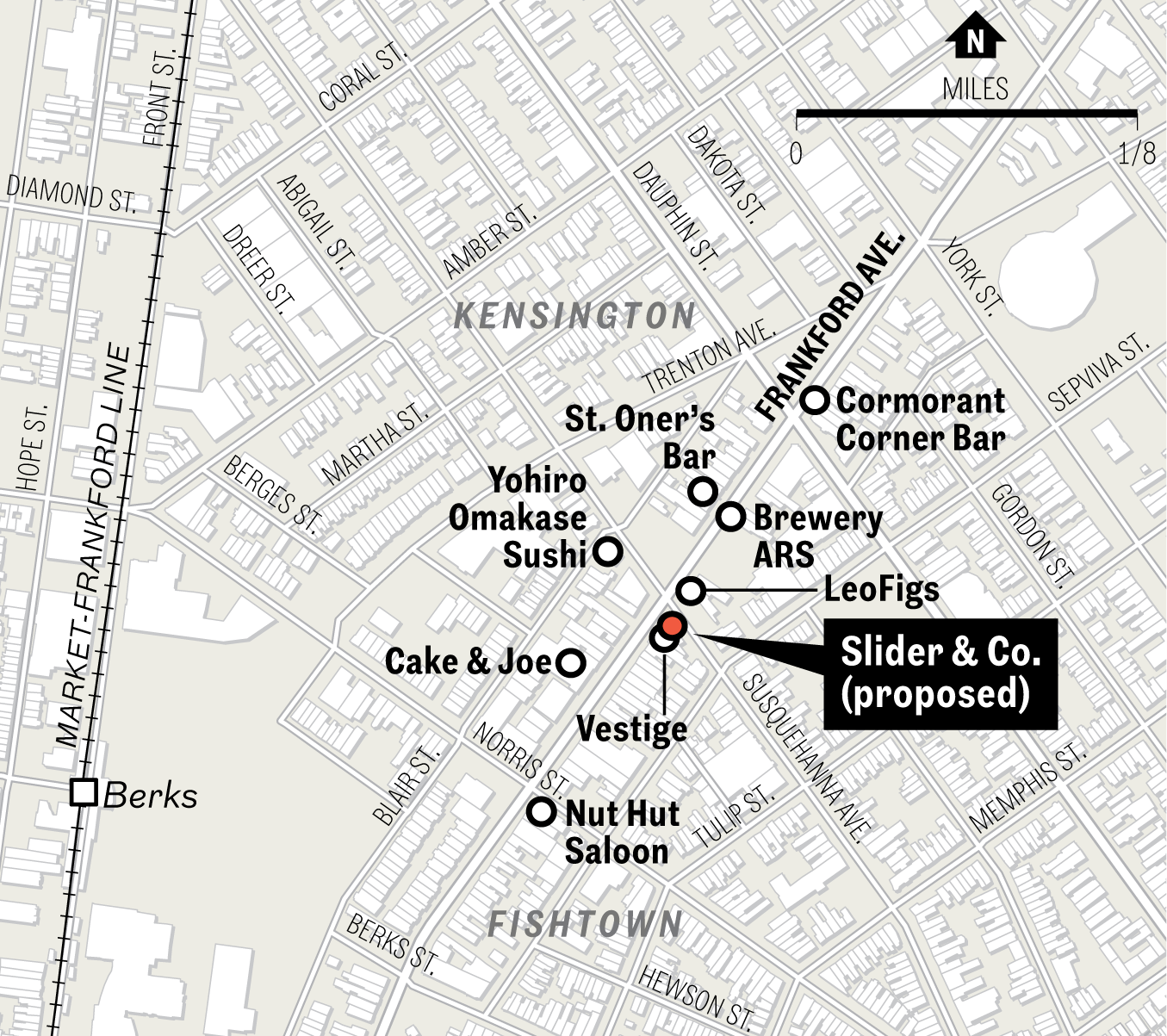
It is also inherently unfair. With no objective standards, entrepreneurs are forced to defend themselves against vague arguments. A potential neighbor of the Slider Co. argued to the zoning board that a bar and restaurant would be out of character for the corridor. Never mind that the area is already home to LeoFigs, a winery and restaurant, St. Oner’s restaurant, and Brewery ARS. This incongruity led some neighbors to allege that opposition may be based on race. The Slider Co.’s owners are Black, and most of Fishtown is not.
Locator map of bars and restaurants along Frankford Avenue in Fishtown and Kensington.
Over time, maintaining these kinds of zoning restrictions incentivizes the growth of the kind of national franchises that can afford to go through the process, as opposed to the scrappy local options that lack the resources needed to wait out the delays. This board has long opposed the proliferation of these types of limits, as well as the tradition of councilmanic prerogative that makes them possible.
Given City Council is unlikely to give up prerogative — the tradition of allowing district Council members to control land use in their districts — or to stop adopting zoning restrictions anytime soon, one way they can mitigate some of the resulting bureaucratic entanglement for future Philadelphians is to enact a sunset provision.
Attaching an expiration date to zoning restrictions would change the conversation.
Instead of asking why a zoning overlay should be repealed, policymakers would ask why it should be extended. In some cases, antiquated restrictions may simply disappear. After all, the nightclub restriction along Delaware Avenue is not the only one that could use a refresh.
In much of South Philadelphia, residents are prohibited from adding a third story to their homes without including an 8-foot setback. Beyond making for some truly ugly streetscapes, the requirement also makes the high cost of adding a floor futile by eliminating a sizable chunk of the new square footage. This restriction was passed with the aim of preventing gentrification, but instead, it just makes it harder for families to rightsize their homes for the remote work era.
Creating a sunset clause doesn’t stop Council members from protecting their communities from unwanted changes; it just allows Philadelphia the chance to evolve with the times.
As a Pennsylvanian who works with immigrants on the U.S.-Mexico border, I urge people of goodwill in the Keystone State and beyond to stand up for immigrants in our country. Our democracy depends on it.
I am a Sister of Mercy of the Americas, a Catholic order that has accompanied immigrants in Pennsylvania, across the United States, and internationally since 1843. We take seriously the Gospel command to “welcome the stranger.”
On the border, I am a community worker. Part of my ministry is to help immigrants in the United States apply for citizenship or renew their legal permanent residence and DACA (Deferred Action for Childhood Arrivals) status.
Migrants are arrested at the Texas-Mexico border in 2024. Migrants’ lives have become a nightmare, writes Sister Patricia Mulderick.
Most are doing everything they can to follow the rules, to attain or hold on to legal status. But their lives have become a living nightmare, and their plight fills me with anguish.
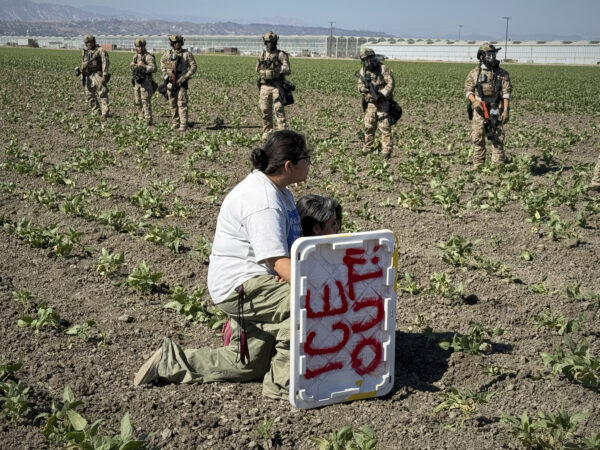
Migrant workers in Texas are terrified of being picked up in the fields, where they toil 12 hours a day under the hot sun to pick melons, onions, carrots, and other fresh produce destined for grocery stores and our kitchen tables around the country, anonymous but vital to our economy and way of life.
The migrants left in Mexico are in limbo, denied hearings by U.S. immigration officials and often unable to return to their home countries.
“You could send me a limousine with a marching band, and I could not return,” one man said to me. “I would be dead within 24 hours.” And a woman I know sold everything she owned to make the journey north — she has nothing to go back to.
On the U.S. side of the border, people are being terrorized by masked U.S. Immigration and Customs Enforcement agents stalking our neighborhoods. One elderly woman who has worked in the fields for four decades hid in her bedroom as they pounded on her front door. Neighbors alerted a women’s group I am part of, and members asked to see the agents’ warrant. It turned out ICE was looking for someone else. I shudder to think what would have happened if those brave advocates had not stepped up.
I first learned about the bonds between democracy and our nation of immigrants at my public school in the coal regions. The brutality and terror inflicted by security forces all around our country are un-American.
When Pennsylvanians helped unite 13 colonies into one country by inviting new Americans to Philadelphia’s Independence Hall to debate and sign the Declaration of Independence and the U.S. Constitution, they knew their “experiment” in self-governance wasn’t guaranteed. Ben Franklin famously said that Americans had “a republic, if you can keep it.” We must again help lead the way.
Pennsylvanians take pride in being standard-bearers for liberty. We also value the vital contributions newcomers make in our state, in industries ranging from construction and hospitality to high-tech.
More than ever, we must stand up for immigrants and democracy together. We must hold our nation to the ideals inscribed on the Statue of Liberty: “Give me your tired, your poor, your huddled masses yearning to breathe free.”
Pope Leo and I met in the 1980s, when he was the young priest Father Robert Prevost, and we both were serving in Peru. His humility and concern for people living in poverty moved me deeply.
In Mexico recently, I held hands with a woman who wept after her immigration hearing — scheduled for the day after President Donald Trump’s inauguration — was canceled by the president on his first day in office. This woman had lived in a tent for eight months, waiting to cross legally.
“Your president says we are criminals, but I have never broken a law in my life,” she told me. “They seem to hate us, but I will not hate back. I will not let hate win.”
Will we?
Sister Patricia Mulderick is a member of the Sisters of Mercy of the Americas, the largest order of Catholic religious women in the United States. She serves in both Pennsylvania and Texas.
In January, Philadelphia announced it would join a national initiative to accept plastic cups made of polypropylene and paper to-go cups in the curbside collection program. These to-go cups now join dozens of other household items that make up an estimated 1.5 million pounds of recyclables collected per year, according to the Department of Sanitation.
Once a week, you and many other Philadelphians fill blue bins with paper, plastic, glass, and other recyclables, hoping to rescue them from landfills, but do you really know what should go in the bin and what shouldn’t? Philadelphia uses a single-stream system, meaning you don’t have to separate different types of recycling, but the rules can still be tricky. We are here to help walk you through what should go in your recycling bin and what should be thrown in the trash.
Let’s check your knowledge on some typical household items and see if you can place the item in the right bin.
story continues after advertisement
Paper
Let’s start with a newspaper. You’ve finished reading your Philadelphia Inquirer. Where do you put it?
Drag the paper to the bin or select a button
That’s right!
Not quite.
Newspapers and magazines can be recycled. Paper in most forms should go in your recycling bin. This includes things like junk mail, envelopes, scrap paper, and paper bags.
There are some exceptions to this. You might be surprised to learn that shredded paper should go in the trash.
Recycling
Newspapers
Magazines
Brochures
Catalogs
Junk mail
Envelopes
Writing paper
Scrap paper
Paper bags
Trash
Food-soiled paper
Tissues
Paper towels
Napkins
Plastics
Plastics can be a bit trickier because only certain kinds of plastics can be recycled. You’ve probably seen the stamped number codes before (they range from 1 to 7) and they represent the type of plastic used in the item. In this case, where would you put a lotion bottle with a No. 2 recycling symbol on the bottom?
That’s right!
Not quite.
Plastics with the codes 1, 2 and 5 can be recycled in Philadelphia. These codes can be found stamped somewhere on the container. If there is no stamp, assume it cannot be recycled. Non-transparent plastic bottles like the one above are generally labeled with No. 2. You can also leave the lid or pump on. If you live outside of Philadelphia, check your local municipality, not every recycling program accepts the same codes. More information about the types of plastics can be found here.
Recycling
No. 1: Easy to recycle plastic found in food and drink containers like water and soda bottles
No. 2: Non-transparent plastic found in things like shampoo bottles and laundry detergent containers
No. 5: a type of plastic found in some food containers
Trash
No. 3: More difficult plastic to recycle and can also include shampoo and laundry detergent bottles
No. 4: Used to make plastic bags
No. 6: also known as Styrofoam
Cardboard
You’ve just finished a delicious pizza from Del Rossi's. Where do you put the box?
That’s right!
Not quite.
While cardboard is a recyclable material, it must be dry and free of food waste. So, a food-soiled pizza box should go in the trash. Also, it might be enticing to use a cardboard box as your recycling bin, but the city does not recommend this since wet paper and cardboard is not recyclable and can fall apart, leaving trash on the street. Instead they encourage using a hard sided container with a free lid that can be found at one of six Sanitation Convenience Centers.
Recycling
Shipping boxes
Clean pizza boxes
Paper towel and toilet paper rolls
Egg cartons
Trash
Shredded cardboard
Greasy or food-soiled cardboard
Recycling bags
You’re cleaning up and throw some empty bottles and cans in a bag. Where does it go?
That’s right!
Not quite.
No plastic bag is acceptable in single-stream curbside bin recycling in Philadelphia, even those marketed as recycling bags. According to the city’s recycling guide, plastic bags can “tear and wrap around the moving parts in recycling processing machines, leading to higher maintenance costs, equipment damage, and even worker-safety issues.” Another common mistake, according to the city, is leaving packing plastic and peanuts inside of shipping boxes. Make sure those are thrown in the trash instead. And for dog walkers, be sure to put waste bags in the trash!
Metals
You’ve got some cleaned-out aluminum cans, where do they go?
That’s right!
Not quite.
Aluminum cans can be recycled! These should be emptied, rinsed, and dry. You can keep lids and caps on. While some leftover liquid is OK “do not discard a bottle with enough liquid to swallow,” says Kyle Lewis, recycling director. That’s so that leftover liquid doesn’t contaminate any paper and cardboard around it after it’s compacted in the truck.
Recycling
Aluminum and tin cans
Empty paint cans
Empty aerosol cans
Trash
Pots and pans
Food-soiled cans
Miscellaneous
That’s right!
Not quite.
Batteries cannot be recycled and should be placed in the trash. In addition, the city says that batteries should be wrapped in tape around both ends for disposal. There are other disposal options for things like electronics, hazardous waste, bulk items, and lithium or rechargeable batteries. Find more information on disposal options here.
Your Results
You have skipped .
You scored XX out of 6.
When in doubt, throw it out!
You’re almost a recycling pro.
You are a recycling pro! Thanks for playing.
What else you should know
In addition to the above, glass and cartons are also recyclable. Like cans, glass and cartons should be emptied, rinsed, and dry.
story continues after advertisement
Some additional things to avoid putting in your recycling are Styrofoam, packing peanuts, clothing hangers, wood, and ceramics. You can find a complete list from the city here.
If you don’t have a recycling bin, the city will provide one for you. You can also use any household container as long as it is no larger than 32 gallons and no more than 40 pounds. There are also no limits to the amount of recycling you can put curbside, as long as it is contained correctly.
“We encourage Philadelphians to recycle for our communal benefit. Reduce, reuse, recycle, repeat!,” said Lewis.
Staff Contributors
Design, development, and reporting: Garland Fordice
Editing and additional development: Sam Morris
Photography: Monica Herndon
Copy Editing: Brian Leighton
Subscribe to The Philadelphia Inquirer
Our reporting is directly supported by reader subscriptions. If you want more journalism like this story, please subscribe today
In 1773 Dinah Nevil, an Indigenous, Black, and European multiracial woman and her four children arrived in Philadelphia from Flemington, N.J, under orders from a slave trader who intended to eventually sell Nevil to the Deep South, or perhaps the Caribbean.
Nevil protested.
Philadelphia authorities sympathetic to her plight, kept her in a work house for two years while figuring out the next steps to her freedom. The conditions were so horrid two of her children died.
An image of Dinah Nevil imagined by the 1838 Black Metropolis.
Enter Israel Pemberton Jr. and Thomas Harrison, Quakers who, like most Quakers in colonial Philadelphia, actively fought slavery. Keeping people in bondage was considered immoral in their religion.
Pemberton and Harrison filed a lawsuit against Nevil’s enslaver because they sought to set a precedent by making it unlawful to sell Black people into slavery on free soil, not just in Pennsylvania, but in all of the colonies.
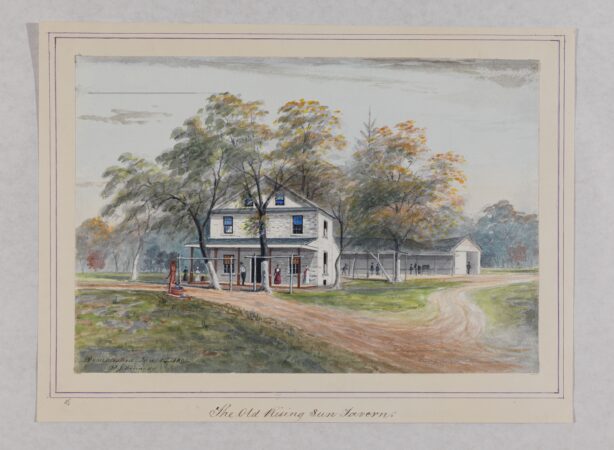
So, on April 14, 1775, Quaker leaders and educators Anthony Benezet and John Woolman gathered 24 men — 17 of whom were Quakers — at the Rising Sun Tavern to discuss legal strategies on how to make that happen.
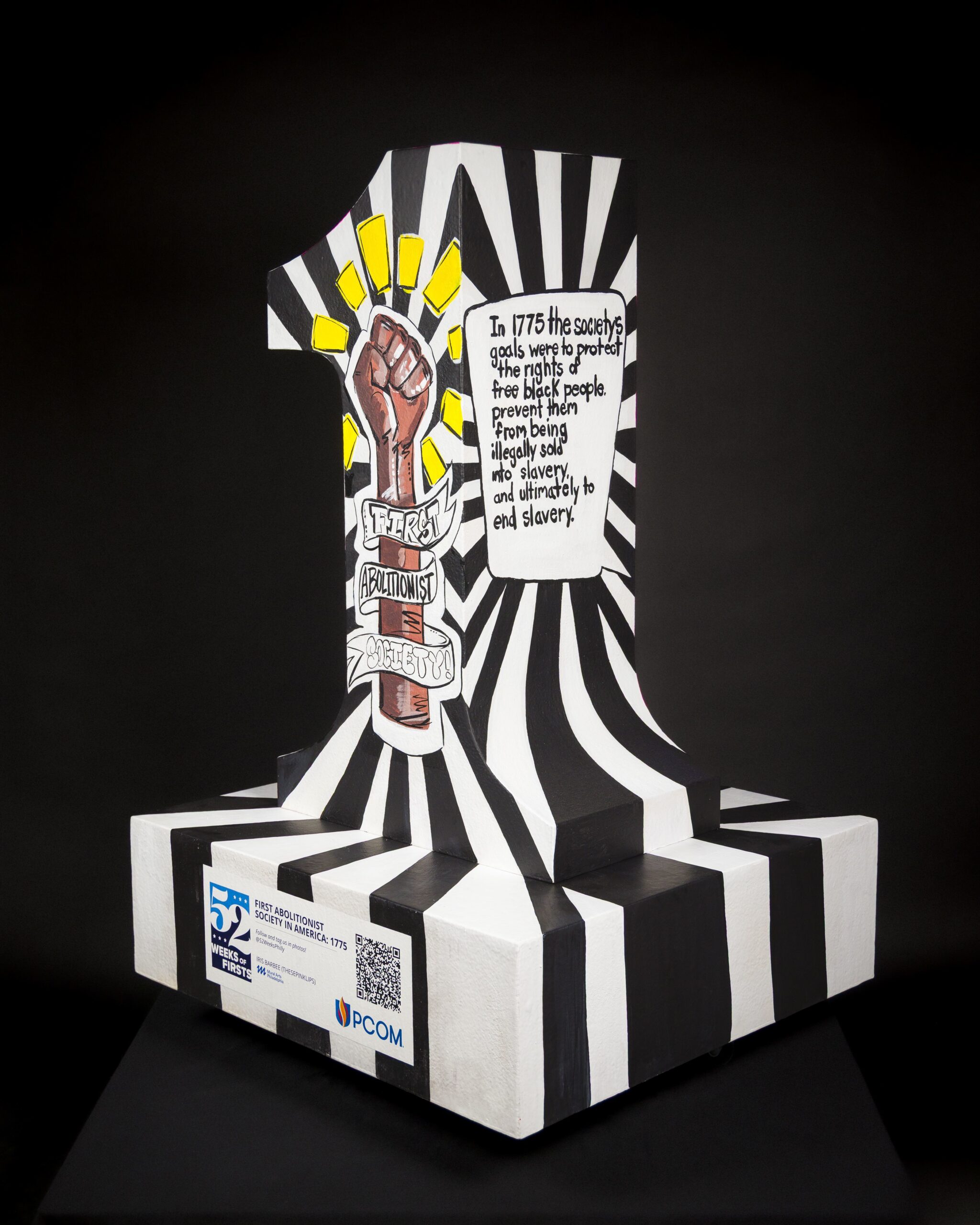
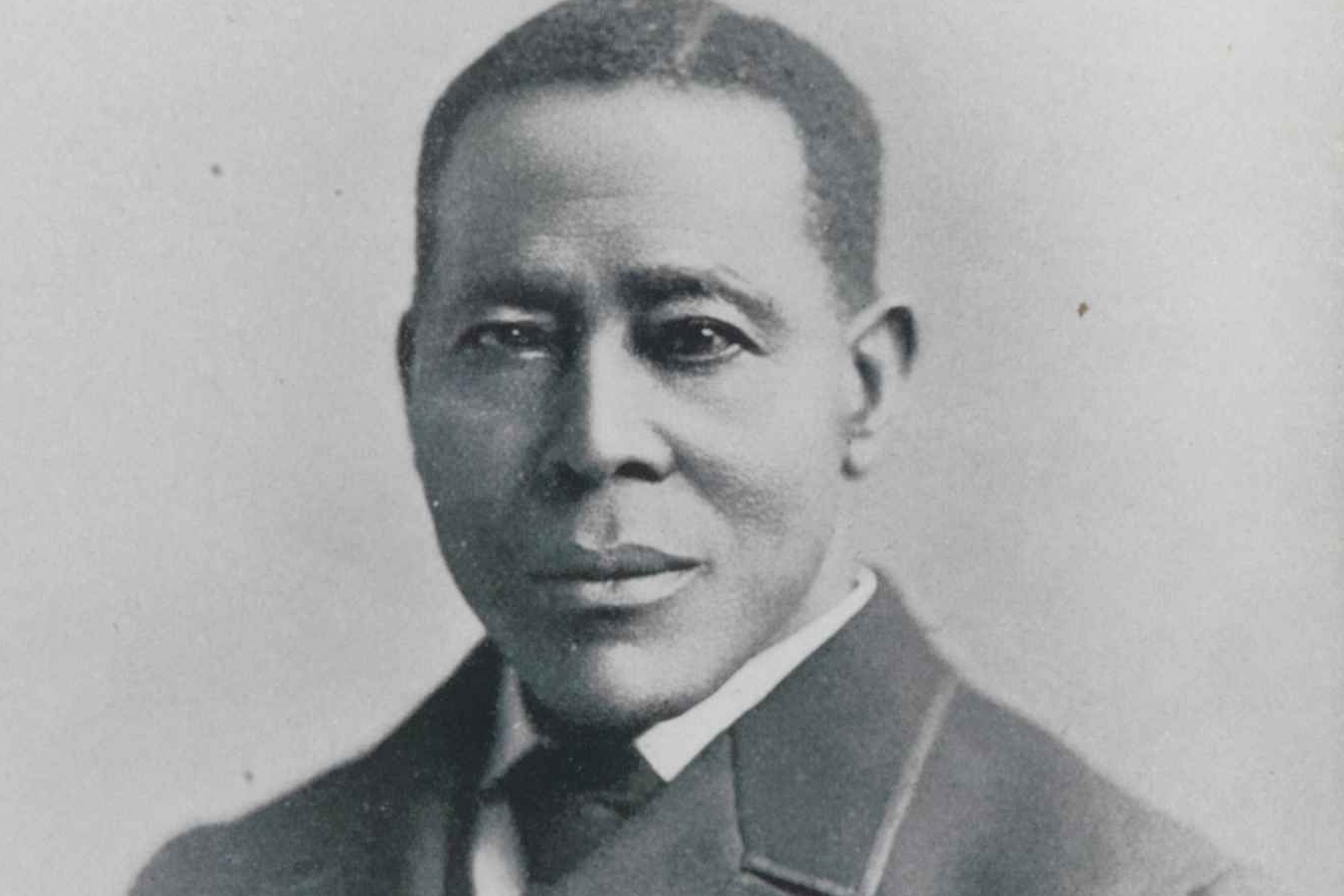
Artist Iris Barbee Bonner’s No. 1 statue pays homage to William Still, an Underground Railroad conductor and key member of the Pennsylvania Abolitionist Society.
That was the first gathering of an antislavery society in America and it will be celebrated Saturday at the African American Museum, part of the Philadelphia Historic District’s weekly firstival day party. Firstivals are a yearlong celebration of America’s 250th birthday marking events that happened in Philadelphia before anywhere else in America and often the world.
The group led by Benezet and Woolman named themselves the Society for Relief of Free Negroes Unlawfully Held in Bondage. In addition to Nevil’s case, they advocated for four other people of color who were in the midst of being sold away from their families. Nevil was ultimately freed when Harrison bought her and within days, signed manumission papers.
In 1776, 18 years after Quakers told their members they could no longer participate in the slave trade, Quakers were forbidden from enslaving people. Thanks to the Quakers’ advocacy, Pennsylvania enacted the 1780 Gradual Abolition of Slavery Act, America’s first law to end slavery.
Four years later, 18 Philadelphians resurrected the Society for Relief of Free Negroes and renamed it Pennsylvania Abolitionist Society, or PAS. Their goal was to stop Black and brown people from being indiscriminately picked up and sold into slavery in what was now a free state, but also to end slavery all together.
“They knew they couldn’t do it overnight,” said Emma Lapsansky-Werner, an American history professor at Haverford College. “What they did was organize so that one-by-one Black people would find freedom.”
Within two years, the PAS grew to 82 members and inspired other cities like New York and Boston to establish branches of their own. In 1787 — the same year the delegates voted that Black people were three-fifths of a person — Ben Franklin became the society’s president and under his leadership, the society petitioned the legislature to amend the act of 1780. This included preventing enslavers from taking pregnant enslaved women to the South so their children would remain property.
William Still was a member of the Pennsylvania Abolitionist Society and chair of the Vigilance Committee of the Pennsylvania Anti-Slavery Society.
The PAS still exists today and advocates for equal rights and opportunities for all Americans.
This week’s Firstival is Saturday, Feb. 14, 11 a.m.-1 p.m., The African American Museum Philadelphia, 701 Arch St. The Inquirer will highlight a “first” from Philadelphia Historic District’s 52 Weeks of Firsts program every week. A “52 Weeks of Firsts” podcast, produced by All That’s Good Productions, drops every Tuesday.
Each night, Louis-Hunter Kean spiked a fever as high as 104.5. He would sweat through bedsheets and shiver uncontrollably. By morning, his fever wouldease but his body stillached; even his jaw hurt.
He had been sick like this for months. Doctors near his South Jersey home couldn’t figure out why a previously healthy 34-year-old was suffering high fevers plus a swollen liver and spleen. In early 2023, they referred Kean to Penn Medicine.
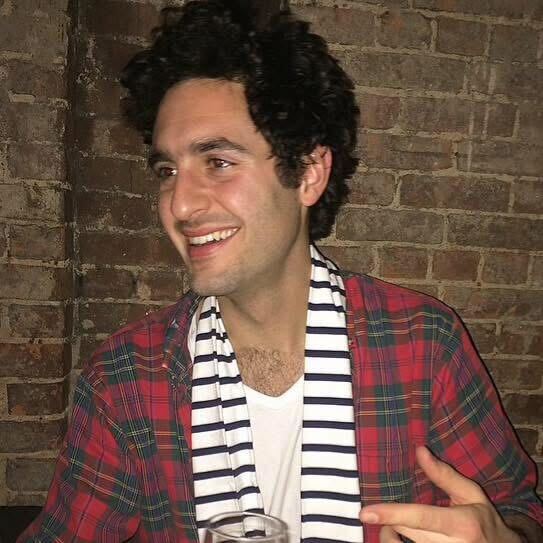
Louis-Hunter Kean visiting a winery in the Tuscany region of Italy in September 2021. He first spiked a mysterious and persistent fever about a year later in August 2022.
“These doctors are very sharp, and there are a lot of teams working on it,” Kean texted a friend after being admitted to the Hospital of the University of Pennsylvania (HUP) in West Philadelphia.
Was it an infection? An autoimmune disease? A blood cancer? Over the next six months, at least 34 HUP doctors — rheumatologists, hematologist-oncologists, gastroenterologists, infectious disease and internal medicine specialists — searched for an answer.
Kean was hospitalized at HUP five times during a six-month period in 2023. His electronic medical chart grew to thousands of pages.
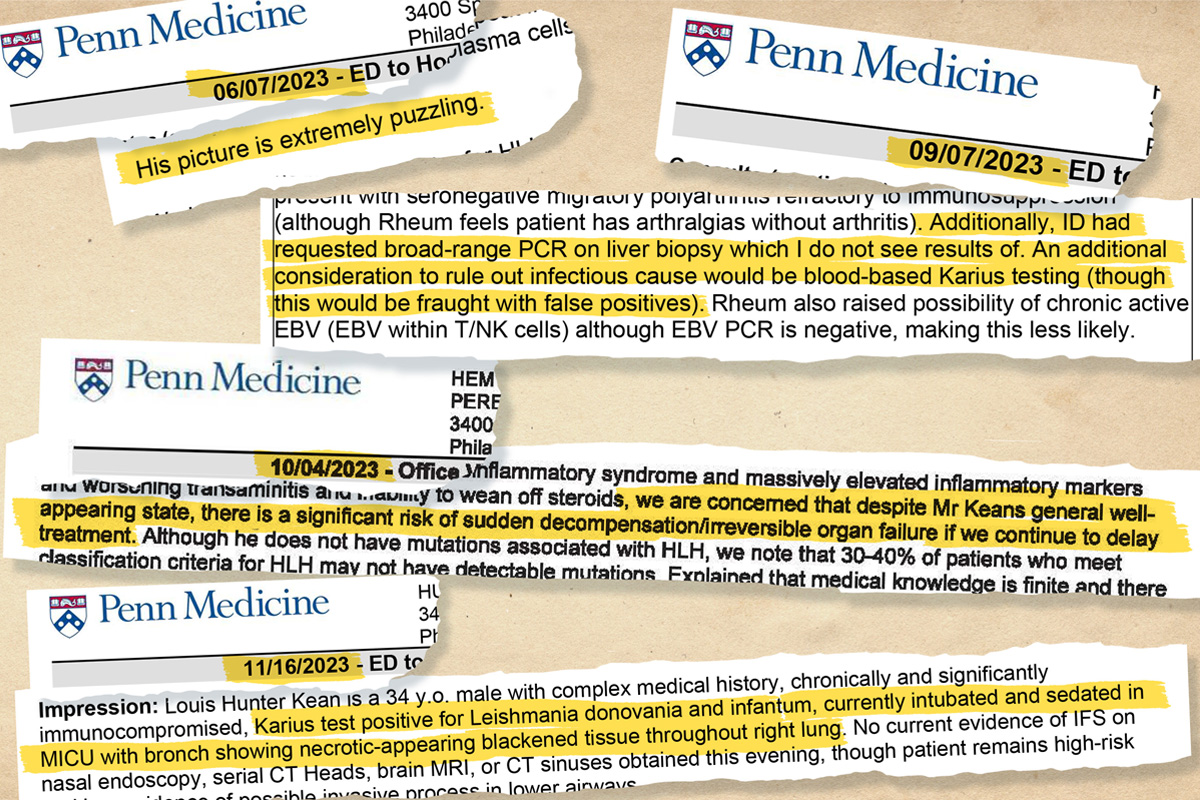
Along the way, doctors missed critical clues, such as failing to obtain Kean’s complete travel history. They recommended a pair of key tests, but didn’t follow up to make sure they got done, medical records provided to The Inquirer by his family show.
Doctors involved in Kean’s care, including at Penn, prescribed treatments that made him sicker, said four infectious disease experts not involved in his care during interviews with a reporter, who shared details about his treatment. Penn doctors continued to do so even as his condition worsened.
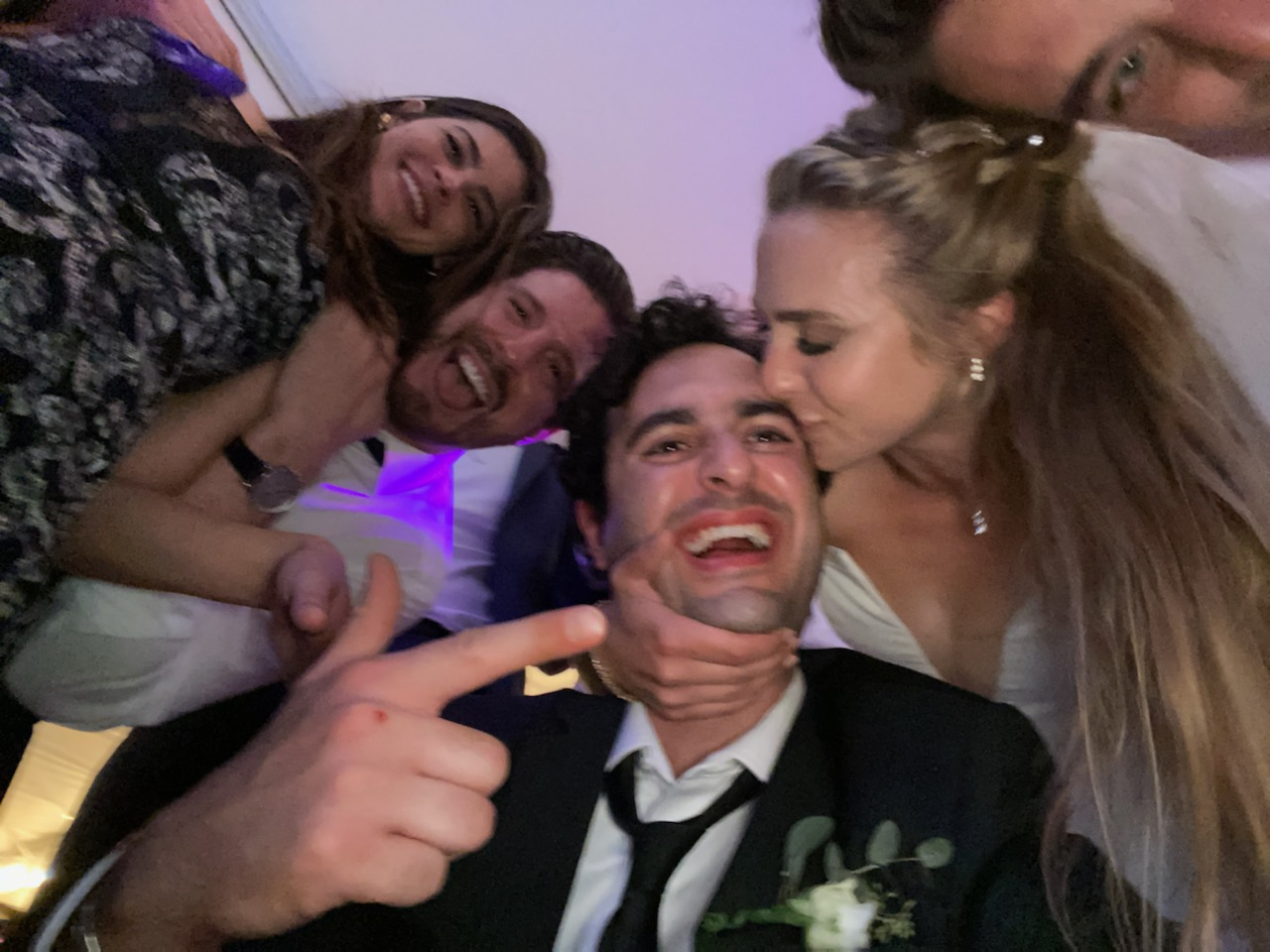
Louis-Hunter Kean receives a kiss from bride Ashley Greyson at the October 2021 wedding of his close friend, Joshua Green. Green and Kean graduated from Haddonfield High School in 2007.
“No one was paying attention to what the doctor before them did or said,” Kean’s mother, Lois Kean, said.
“They did not put all the pieces together,” she said. “It was helter-skelter.”
Kean’s family is now suing Penn’s health system for medical malpractice in Common Pleas Court in Philadelphia. The complaint identifies nearly three dozen Penn doctors, accusing them of misdiagnoses and harmful treatments. These physicians are not individually named as defendants.
In court filings, Penn says its doctors did not act recklessly or with disregard for Kean’s well-being, and his case is not indicative of any systemic failures within its flagship hospital. A Penn spokesperson declined further comment on behalf of both the hospital and the individual doctors involved in Kean’s care, citing the pending lawsuit.
The puzzle of Kean’s diagnosis finally came together in November 2023 after a Penn doctor, early in his career, sought help from the National Institutes of Health (NIH).
An NIH doctor recommended a test that identified the cause: a parasite prevalent in countries bordering the Mediterranean Sea. Kean likely got infected while vacationing in Italy, four parasitic disease experts told The Inquirer.
The infection, which is treatable when caught early, is so rare in the U.S. that most doctors here have never seen a case, the experts said.
By the time Penn doctors figured it out, Kean’s organs were failing.
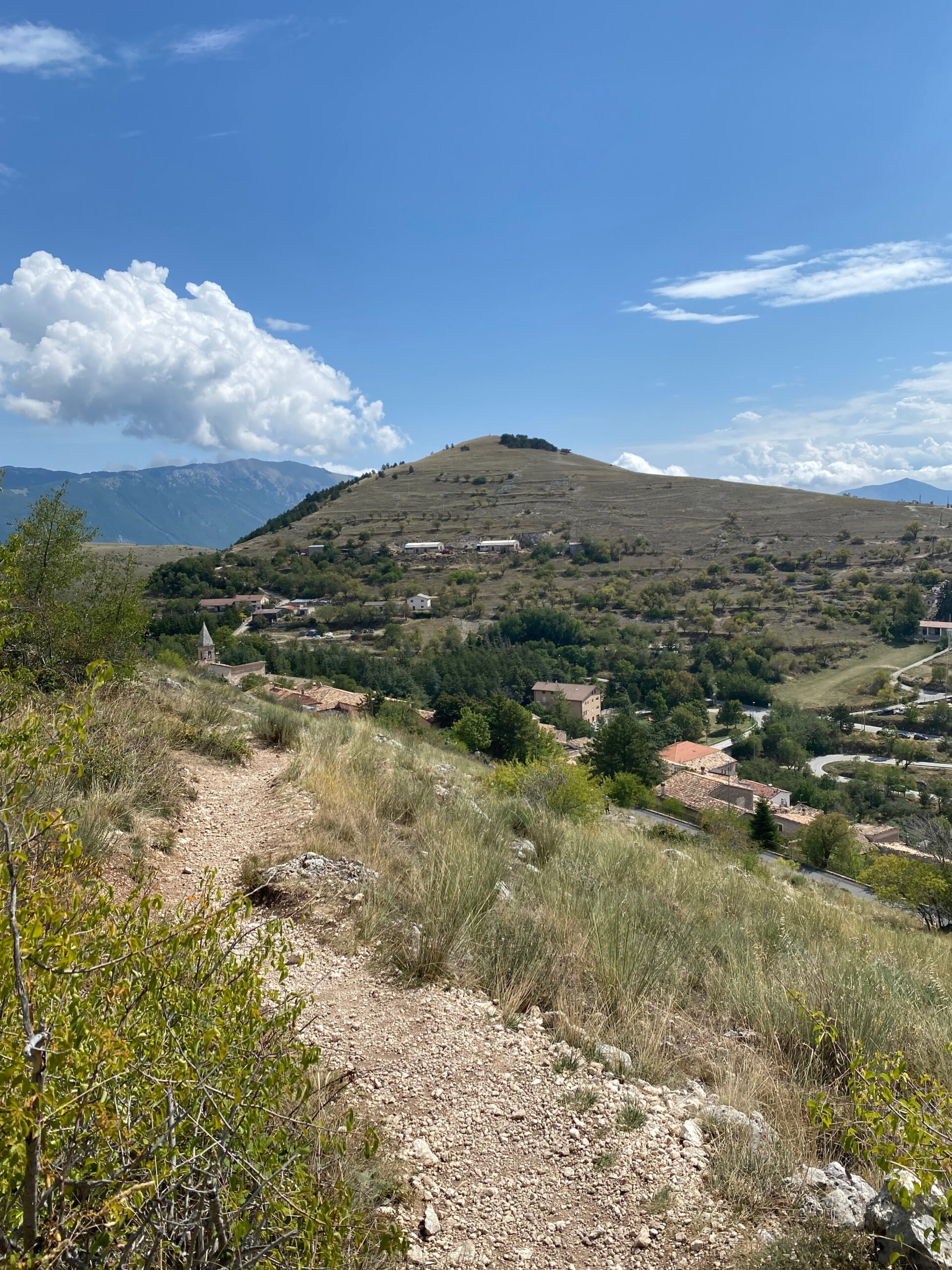
Louis-Hunter Kean and his then-girlfriend Zara Gaudioso at a friend’s wedding in Tuscany in September 2021. Kean and Gaudioso got engaged in early 2023. Gaudioso was smitten by Kean’s good looks and sense of humor.While vacationing in Italy in September 2021, Louis-Hunter Kean and his friends hiked in the foothills of the Apennine Mountains and visited Gran Sasso and Monti della Laga National Park.
A missed clue
When a patient has an ongoing and unexplained fever, an infectious disease doctor will routinely start by takinga thorough travel history to screen for possible illnesses picked up abroad.
A medical student took Kean’s travel history during his initial workup at HUP in June 2023. An infectious disease specialist reviewed the student’s notes and added a Cooper University Hospital doctor’s earlier notes into Kean’s electronic medical chart at Penn.
Those records show Kean had traveled to Turks and Caicos with his fiancée in May 2022. The next month, he took a work trip out West, including to California, where he visited farms, but didn’t interact with livestock.
This was not unusual for Kean, who worked with fruits and vegetables imported from around the world at his family’s produce distribution center on Essington Avenue in Southwest Philadelphia.
Kean’s fiancée, Zara Gaudioso, said she repeatedly told doctors about another trip: In September 2021, about a year before his fevers began, they traveled to Italy for a friend’s wedding in Tuscany.
The couple hiked remote foothills, danced all night in a courtyard, dined by candlelight surrounded by a sunflower farm, and slept in rustic villas with the windows flung open.
“We told everybody,” Gaudioso said. “A lot of Americans go to Italy — it’s not like a third-world country, so I could see how it could just go in one ear and out the other.”
But notes in Kean’s medical record from the Penn infectious disease specialist don’t mention Italy. Neither do the ones the specialist copied over from Kean’s infectious disease doctor at Cooper.
Kean “does not have known risk factors” for exposure to pathogens, the Penn specialist concluded, except possibly from farm animals or bird and bat droppings.
Still, the specialist listed various diseases that cause unexplained fever: Tick-borne diseases. Fungal infections. Tuberculosis. Bacteria from drinking unpasteurized milk.
The possible culprits included a parasitic disease, called visceral leishmaniasis, transmitted by a bite from an infected sandfly. It can lie dormant for a lifetime — or, in rare cases, activate long after exposure, so it’s important for doctors to take extensive past travel histories, parasitic experts say.
The parasite is widely circulating in Southern European countries, including Spain, Greece, Portugal, and Italy.
“Mostly, people living there are the ones who get it. But it’s just a lottery sandwich, and there’s no reason that travelers can’t get it,” said Michael Libman, a top parasitic disease expert and former director of a tropical medicine center at McGill University in Canada.
But few cases become severe. Hospitals in Italy reported only 2,509 cases of active infection between 2011 and 2016, affecting fewer than one in 100,000 people. Infections requiring hospital care in Italy began to decline after 2012, according a 2023 European study by the Public Library of Science (PLOS) journal Neglected Tropical Diseases.
Caught early, visceral leishmaniasis is treatable. Without treatment, more than 90% of patients will die.
In addition to fever, other telltale symptoms are swelling of the liver and spleen and low blood cell counts. Kean had all of those.
A missed test
The infectious disease specialist requested a test to examine tissue biopsied from Kean’s liver, which was damaged and enlarged. Lab results showed that immune cells there had formed unusual clusters — another sign that his body might be fighting off an infection.
In her notes, the specialist identified “visceral leish” as a possible diagnosis, which repeated — via copy and paste — seven times in his medical record. Her request to “please send biopsy for broad-range PCR” repeated five times.
That is a diagnostic (polymerase chain reaction) test that looks for the genetic fingerprint of a range of pathogens.
The test comes in different versions: One looks broadly for bacteria. The other is for fungi. The broad fungal test candetect leishmania, even though it’s not a fungus. However, it’s not always sensitive enough to identify the parasite and can produce a false negative, experts said.
The specialist’s chart note doesn’t specify which type she wanted done.
It’s not clear if anyone asked. The test wasn’t done.
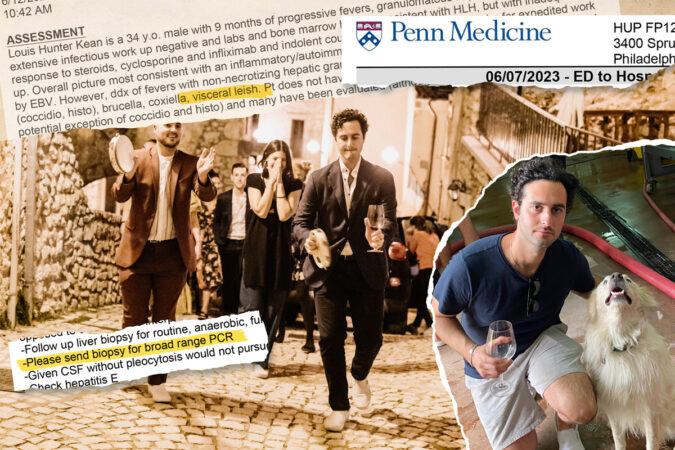
Louis-Hunter Kean (right, with wine glass and tambourine) leads a wedding procession through the small stone village of Santo Stefano di Sessanio in Italy’s Abruzzo region in September 2021.
She did not order a low-cost rapid blood test that screens specifically for leishmaniasis by detecting antibodies made by the immune system after fighting it. She also didn’t order a leishmania-PCR, which is highly targeted to detect the exact species of the parasite.
Nor did the medical record show that the specialist followed up on the results of the broader test she requested, even though she saw Kean on nine of the 13 days of his first hospitalization at HUP in June 2023.
Penn has a policy that a lead doctor on the patient’s case is responsible for making sure that recommended tests get done. The specialist was called in as a consultant on Kean’s case. During that June hospitalization alone, his medical chart grew to 997 pages.
Patient safety experts have warned for years that electronic medical record systems — designed for billing and not for care — can become so unwieldy that doctors miss important details, especially with multiple specialists involved, or repeat initial errors.
A seemingly innocuous step in charting — copying and pasting previous entries and layering on new ones— can add to the danger, patient safety experts say.
That’s how the specialist’s mention of “visceral leish” and her test recommendation got repeated in Kean’s chart.
Marcus Schabacker, president of ECRI, a nonprofit patient-safety organization based in Plymouth Meeting, said “copy and paste” in electronic medical records puts patients at risk of harm.
“The reality is if you are reading something over and over again, which seems to be the same, you’re just not reading it anymore. You say, ‘Oh, yeah, I read that, let’s go on,’” said Schabacker, speaking generally about electronic medical record systems and not specifically about Kean’s case.
Louis-Hunter Kean plays guitar in his younger years. He loved music and shared eclectic playlists with his friends.
When treatments harm
Penn doctors believed Kean had a rare,life-threatening disorder, known as hemophagocytic lymphohistiocytosis (HLH), in which the immune system attacks the body. Instead of fighting infections, defective immune cells start to destroy healthy blood cells.
In most adults, the constellation of symptoms diagnosed as HLH gets triggered when an underlying disease sends the body’s immune system into overdrive. Triggers include a blood cancer like lymphoma, an autoimmune disease like lupus, or an infection.
Penn doctors across three specialties — hematology-oncology, rheumatology, and infectious disease — were searching for the cause within their specialties.
“His picture is extremely puzzling,” one doctor wrote in Kean’s chart. “We are awaiting liver biopsy results. I remain concerned about a possible infectious cause.”
As HUP doctors awaited test results, they treated Kean’s HLH symptoms with high doses of steroids and immunosuppressants to calm his immune system and reduce inflammation.
The treatments, however, made Kean highly vulnerable to further infection.And defenseless against another possible trigger of HLH: visceral leishmaniasis.
At the time, a Penn rheumatologist involved in Kean’s care before his first hospitalization warned about steroids “causing harm” to Kean if it turned out he had an infection. He wrote, “please ensure all studies requested by” infectious disease are done, medical records show.
Steroid treatments would allow the parasites to proliferate unchecked, experts said.
“It’s unfortunately exactly the wrong treatment for parasitic disease,” said Libman, the leishmania disease expert at McGill University.
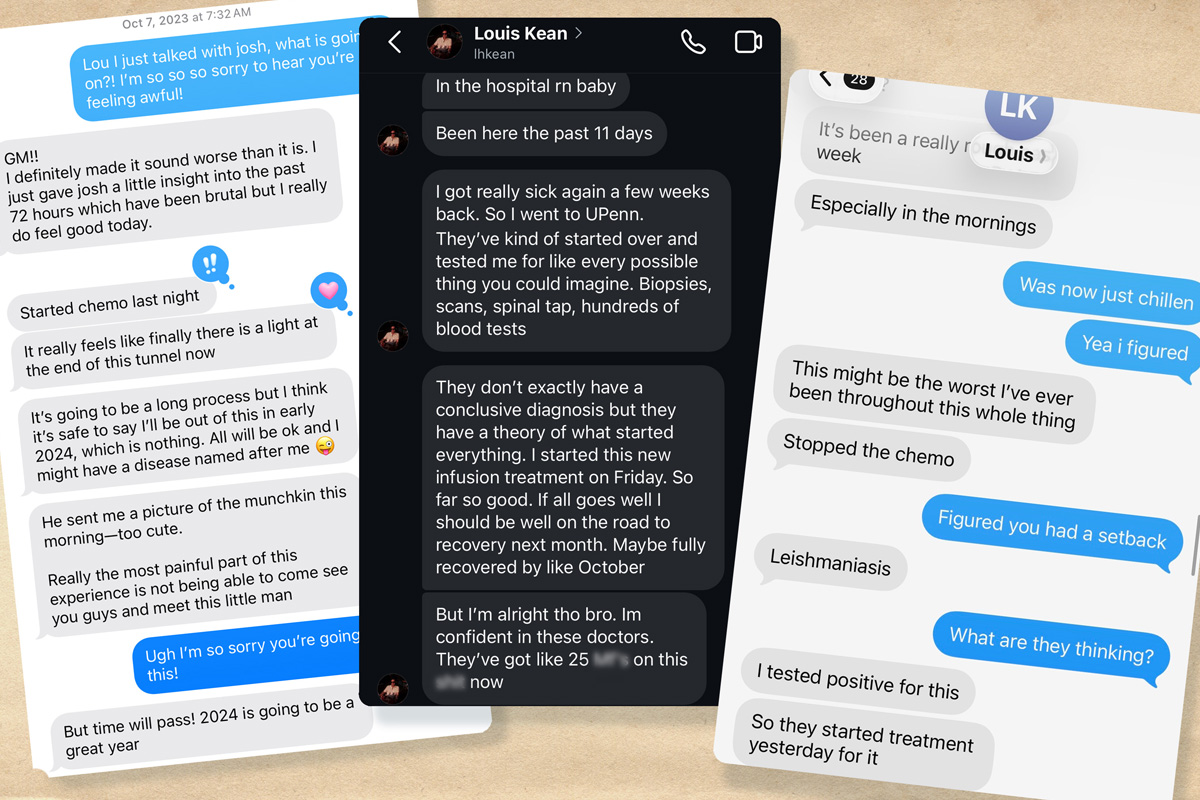
As Kean grew sicker, he was readmitted to HUP for a third time in September 2023. He texted a friend: “I’m on more medications than I’ve ever been on and my condition is worse than it’s ever been.”
A sampling of Louis-Hunter Kean’s electronic medical records, which ballooned to thousands of pages over five HUP hospitalizations within six months in 2023.
Handoffs between doctors
No single doctor seemed to be in charge of Kean’s care, his family said. And the number of specialists involved worried them.
“Everyone just kept being like, ‘We don’t know. Go see this specialist. Go see that specialist,’” Kean’s sister, Priscilla Zinsky, said.
By fall 2023, rheumatologists hadn’t found a trigger of Kean’s symptoms within their specialty. They turned to doctors specializing in blood cancer.
During the handoff, three doctors noted that they didn’t see the results of the test requested by the infectious disease specialist back in June. They still thought it was possible that Kean had an infection, records show.
“An additional consideration to rule out infectious cause would be blood-based Karius testing (though this would be fraught with false positives),” wrote that doctor, who was still training as a hematologist-oncologist.
A supervising physician reviewed the Sept. 8, 2023, note and signed off on it. The medical records don’t show any follow-up with infectious disease doctors, and the test wasn’t done at the time.
In the coming days, blood cancer specialists struggled to find a link between Kean’s symptoms and an underlying disease.
They thought he might have a rare form of leukemia, but tests weren’t definitive, Kean texted friends.
Untreated HLH symptoms can lead to rapid organ failure, so doctors often start patients on treatment while trying to figure out the underlying cause, said Gaurav Goyal, a leading national expert on HLH, noting that it can take days to get test results.
“You have to walk and chew the gum. You have to calm the inflammation so the patient doesn’t die immediately, and at the same time, try to figure out what’s causing it by sending tests and biopsies,” said Goyal, a hematologist-oncologist at the University of Alabama at Birmingham.
Medical records show that Penn doctors feared Kean was at “significant risk” of “irreversible organ failure.”
They suggested a more aggressive treatment: a type of chemotherapy used to treat HLH that would destroy Kean’s malfunctioning immune cells.
In his medical record, a doctor noted that beginning treatment without a clear diagnosis was “not ideal,” but doctors thought it was his best option.
Four parasitic disease experts told The Inquirer that chemotherapy, along with steroids and immunosuppressants, can be fatal to patients with visceral leishmaniasis.
“If that goes on long enough, then they kill the patient because the parasite goes out of control,” Libman said, explaining that ramping up the HLH treatments weakens the immune system. “The parasite has a holiday.”
A sample of text messages from Louis-Hunter Kean to friends during separate HUP hospitalizations over a six-month period in 2023.
Chemo as last resort
Kean banked his sperm, because chemo infusions can cause infertility. He told friends he trusted his Penn team and hoped to make a full recovery.
“Started chemo last night. It really feels like finally there is a light at the end of the tunnel,” he texted a friend on Oct. 7, 2023.
“I’m gonna get to marry my best friend, and I think I’m going to be able to have children,” Kean wrote in another text to a different friend.
Kean spent nearly all of October at HUP getting chemo infusions. He rated his pain as a nine out of 10. His joints throbbed. He couldn’t get out of bed. He started blacking out.
Doctors added a full dose of steroids on top of the IV chemo infusion. By the end of the month, Kean told a friend he feared he was dying.
A year had passed since Kean first spiked a fever. He no longer could see himself returning to his former life — one filled with daily exercise, helping run his family’s produce store, nights out with friends at concerts and bars, and vacations overseas.
Lethargic and weak, he could barely feed himself. His sister tried to spoon-feed him yogurt in his hospital bed.
He started texting reflections on his life to friends and family, saying his illness had given him a “polished lens” through which he could see clearly. He wrote that their love felt “like a physical thing, like it’s a weighted blanket.”
“I’ve lived an extremely privileged life. I don’t think it’s possible for me to feel bad for myself,” he said in a text. “And I don’t want anyone else to either.”
Louis-Hunter Kean enjoying dinner out with his sister, Jessica Kean, in Manhattan in 2014. Friends and family described him as a “foodie” and health food advocate prior to the onset of his illness in August 2022.
Puzzle solved
One doctor involved in Kean’s care had seen him at Penn’s rheumatology clinic in early June 2023, just before his first HUP hospitalization. The doctor, a rheumatology fellow,urged him to go to HUP’s emergency department, so he could be admitted for a medical workup.
The fellowremained closely involved in Kean’s care, medical records show. Also in his 30s, this doctor shared Kean’s interests in music, fashion, and the city’s restaurant scene, according to Kean’s family.
“They had a rapport,” Kean’s father, Ted Kean, said. “Louis thought a lot of him, and he seemed to think a lot of my son.”
By early November 2023, the rheumatology fellow was extremely concerned, medical records show.
The chemo infusions weren’t helping. Kean still was running a fever of 103. The fellow wrote in his chart that he was worried Kean needed a bone-marrow transplant to replace his failing immune system.
And doctors still didn’t know the root of his symptoms.
The fellowcontacted the NIH, medical notes show.
An NIH doctor recommended a test to check for rare pathogens, including parasites that cause visceral leishmaniasis,according to family members present when the testing was discussed.
The NIH-recommended Karius test was the same one suggested two months earlier by the Penn hematologist-oncologist in training, but with no follow-up.
File of sign on front of Hospital of the University of Pennsylvania (HUP) taken on Tuesday, March 19, 2024.
On Nov. 16, the fellow got the results. He went to Kean’s bedside.
After five HUP hospitalizations over six months, a single test had revealed the cause of his illness: visceral leishmaniasis.
Kean cried with relief and hugged the fellow, joined by his mother and sister.
“‘You saved my life,’” Kean’s sister, Jessica Kean, recalled her brother telling the doctor. “‘Finally, we know what this is, and we can treat it.’”
Kean’s medical chart was updated to note that he traveled to “Italy in the past,” also noting he had visited Nicaragua and Mexico. A HUP infectious disease doctor consulted with the Centers for Disease Control and Prevention on antiparasitic medications.
Meanwhile, Kean’s nose wouldn’t stop bleeding. He felt light-headed and dizzy, with high fever. Even on morphine for his pain, his joints ached.
“I’ve been struggling, buddy,” he texted a friend on Nov. 20. “This might be the worst I’ve ever been.”
By Nov. 22, he stopped responding to text messages. He began hallucinating and babbling incoherently, family members recalled. “Things went downhill very, very quickly, like shockingly quickly,” his sister, Priscilla Zinsky, said.
When she returned on Thanksgiving morning, he was convulsing, thrashing his head and arms. “It was horrifying to see,” Zinsky said.
Her brother had suffered brain bleeds that caused a stroke. His organs were failing. He had a fungal infection with black mold growing throughout his right lung, medical records show.
Kean was put on life support, with a doctor noting the still-preliminary diagnosis: “Very medically ill with leishmaniasis.”
“Prognosis is poor,” read the note in his Nov. 29, 2023, medical records.
A few hours later, Kean’s family took him off life support. He died that day.
“All of his organs were destroyed,” said Kean’s mother, Lois Kean. “Even if he had lived, he had zero quality of life.”
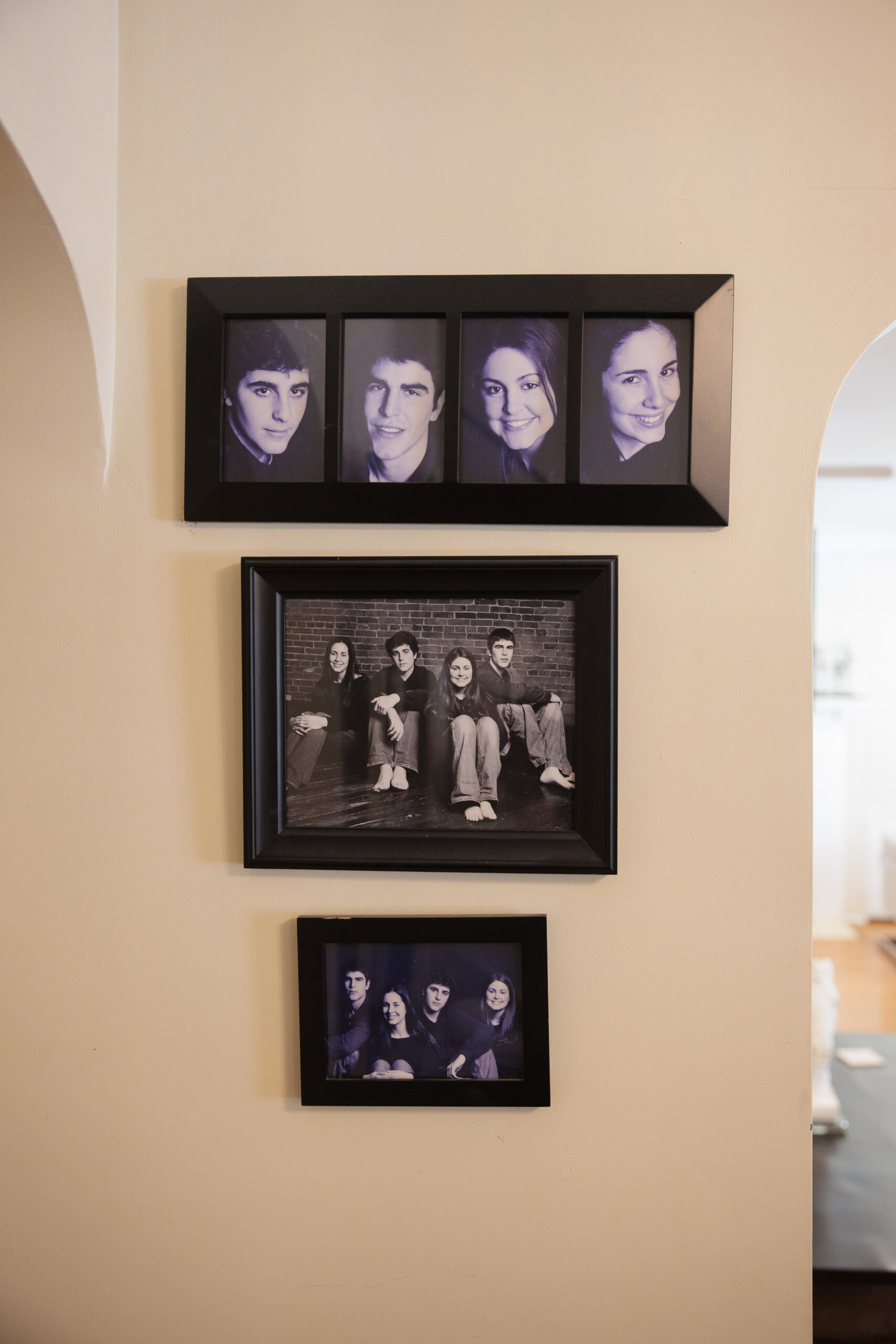
Portraits of Lois and Ted Kean’s four children decorate a wall at their home in Haddonfield. Their son, Louis-Hunter, died after contracting visceral leishmaniasis, a parasitic infection he likely picked up in Italy. When caught early, it’s treatable with medication. It’s deadly without treatment.
It’s not clear why the parasites began to attack Kean a year after his return from Italy. Healthy people rarely develop severe disease from exposure to the deadly form of the parasite circulating outside the U.S., experts said.
Most people infected by a sandfly “are probably harboring small amounts of the parasite” in their organs, according to Naomi E. Aronson, a leishmania expert and director of infectious diseases at the Uniformed Services University of the Health Sciences in Bethesda, Md.
“Most of the time, you don’t have any problem from it,” Aronson said.
Children under age 5, seniors, and people who are malnourished or immunodeficient are most susceptible to visceral leishmaniasis. Aronson said she worries about people who might harbor the parasite without problems for years, and then become immunocompromised.
Libman, the parasitic expert from McGill, said he’s seen six to 10 patients die from visceral leishmaniasis because doctors unfamiliar with the disease mistakenly increased immunosuppressants to treat HLH during his 40 years specializing in parasite disease.
“That’s a classic error,” he said.
Kean’s case “should be a real clarion call” for infectious disease specialists and other doctors in the U.S., said Joshua A. Lieberman, an infectious disease pathologist and clinical microbiologist who pioneered the leishmania-PCR test at the Washington state lab.
“If you’re worried about an unexplained [fever], you have to take a travel history that goes back pretty far and think about Southern Europe, Iraq, Afghanistan, India, and maybe even Brazil,” Lieberman said.
In the wake of Kean’s death, his family was told that Penn doctors held a meeting to analyze his case so they could learn from it.
An infectious disease doctor called Zinsky, Kean’s sister, to let her know about the postmortem review and shared that doctors discussed that Kean had likely picked up the parasite in Tuscany.
“Why didn’t you guys have this meeting,” she asked, ”while he was alive?”
Editor’s note: This story has been updated to clarify that ECRI President Marcus Schabacker was not speaking specifically on Kean’s case.
Twin brothers Larry and Kelly Ganges grew up outside of Trenton with people constantly mispronouncing their last name. “Grange, Grain, Ganger,” they’ve heard it all.
So they developed a standard reply: “It’s Ganges like the river [in India].”
Decades on, they’d find out the deep Philadelphia story behind it.
When the brothers, now 72, got older and traveled, they’d grab the phone book in whatever town they were in to see if anybody with their last name was listed. Then they’d call and ask if they knew anybody in their family; they often did.
“So we all thought, no matter where we were,” said Larry, “we were connected with somebody,”
But they were also connected with something — a ship, a travesty, and a providence.
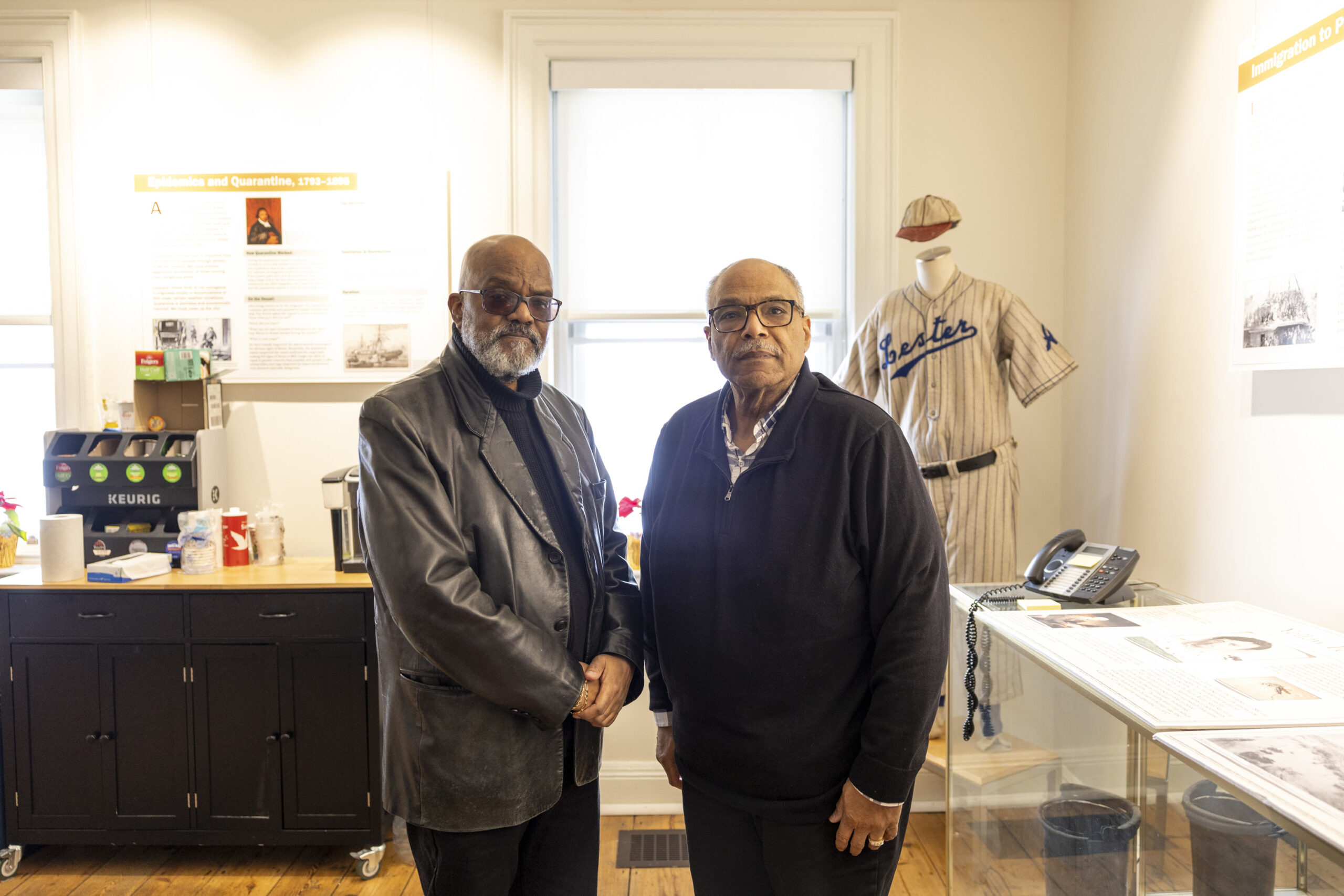
(From left to right) Twin brothers Larry Ganges, and Kelly Ganges, pose for a portrait at the Lazaretto in Tinicum, Pa., on Friday, Feb. 6, 2026. “It allows us to view and experience Black history,” Kelly said. “Pride in knowing our family was in this journey.”
The brothers’ first clue of their extended heritage arrived in 1975, when Kelly, was a student at Trenton State College. His journalism teacher, familiar with Bucks County cemeteries, asked if Kelly knew about the gravestones of two soldiers buried there.
Torbert and William Ganges had fought in the Civil War’s colored regiment, but Kelly couldn’t be sure if they were his relatives.
Nearly 30 years later, the brothers still don’t know if they are related to the soldiers, but they have discovered that their heritage is, as Kelly describes, “bigger than us, [it] extends beyond the continental United States and involves potentially the world.”
That information came in a phone call.
In the early aughts, Larry was working as the New Jersey Department of Health’s assistant commissioner for the HIV/AIDS division. His secretary told him that David Barnes, a University of Pennsylvania professor of history and the sociology of science, was on the line to talk about a different epidemic.
72-year-old twin brothers Kelly Ganges (left) and Larry Ganges, pose at the Lazaretto in Tinicum, Pa., on Friday, Feb. 6, 2026.
Barnes, who was seeking anyone with the Ganges name, had found Larry by chance in a New Jersey state employees directory. He wanted to discuss the 135 Africans who arrived in Philadelphia in 1800 and were detained at the old Lazaretto along the Delaware River.
At the time, every vessel arriving in Philadelphia was required to stop and be inspected at the Lazaretto — a hospital and quarantine station — where patients with yellow fever were treated.
Later, a brick facility replaced the old Lazaretto. Downriver from the original, the “new” Lazaretto, operational from 1801-1895, stands near present day Tinicum. It is the oldest surviving quarantine station in the Western Hemisphere and one of the 10 oldest in the world.
By the call’s end, Larry had learned not just the origin of his name but how his ancestors arrived in America.
“Wow, we had never heard about it. We just didn’t know,” he said.
The story goes: In 1800, the United States naval ship Ganges intercepted two schooners (the Phoebe and the Prudence) off the coast of Florida, near Cuba. Despite a new federal law banning the carrying of human beings for enslavement, the schooners, which experts believe disembarked from near Sierra Leone, contained 135 people from Africa, imprisoned as slaves, bound for the New World.
Ganges’ naval officers boarded the schooners — the Phoebe on July 19, 1800, and the Prudence on July 21, 1800 — took the enslaved into custody, and delivered them to the Ganges’ home port: Philadelphia.
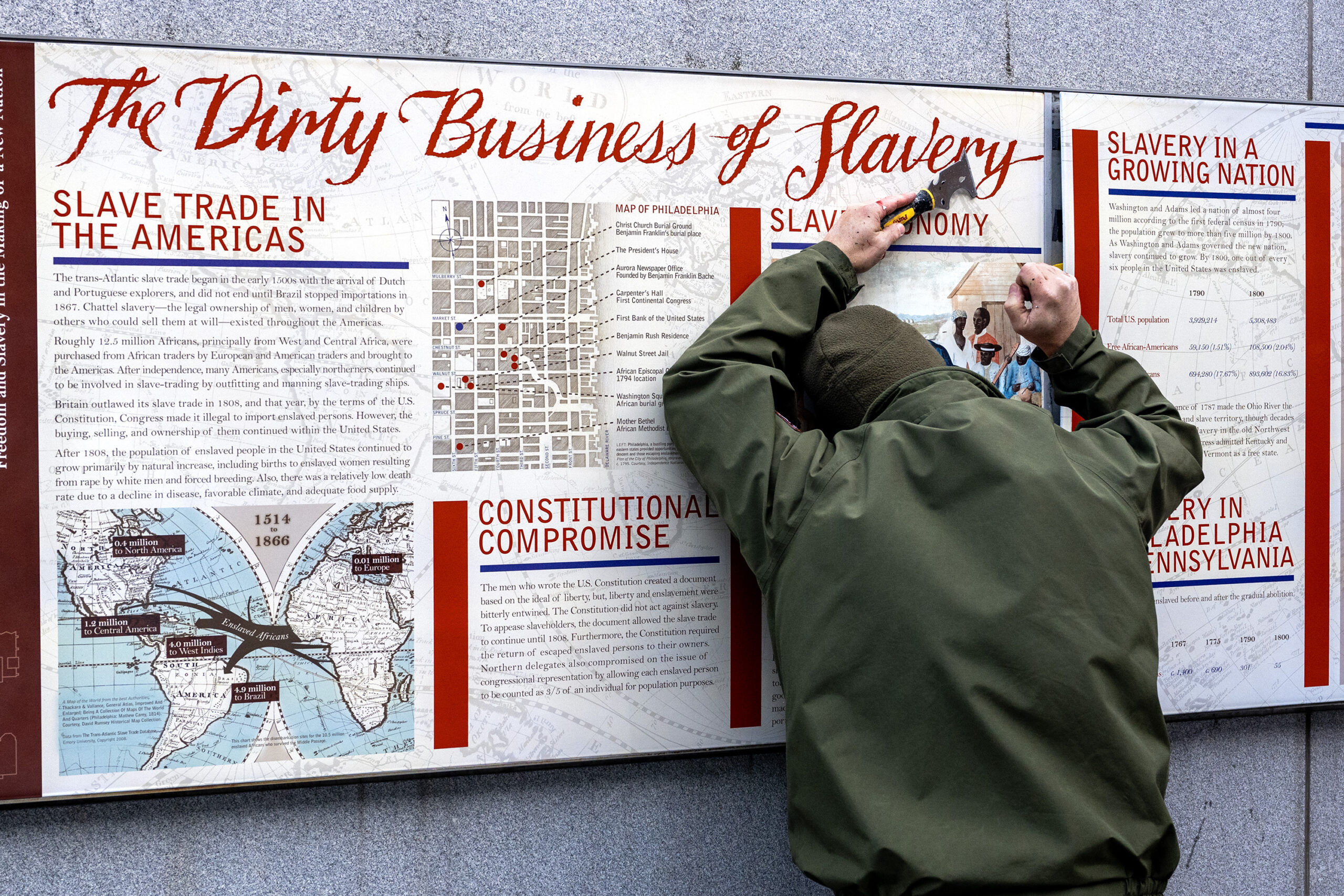
A NPS worker removes an interpretive panels – “The Dirty Business of Slavery” – at the President’s House site in Independence National Historical Park Thursday, Jan. 22, 2026.
When the schooners’ owners sued to reclaim their “property,” a Philadelphia judge ruled that the 135 aboard were people (not property) and ordered them freed. The Africans were remanded to the old Lazaretto for quarantine where they remained for up to three months.
Subsequently Sambo, Milnor, Yelle, and Culico Ganges and the rest of the 123 survivors were indentured to Pennsylvania Abolition Society members and others.
After Barnes’ phone call, the twins and their (late) older brother, Tendaji Ganges, visited the Lazaretto. At that time, the dilapidated building was locked. But Kelly returned with Barnes and gained access inside.
“I saw all of the little rooms … it was interesting to touch a piece of history, and know that that’s the genesis of how our family came to the United States,” he said.
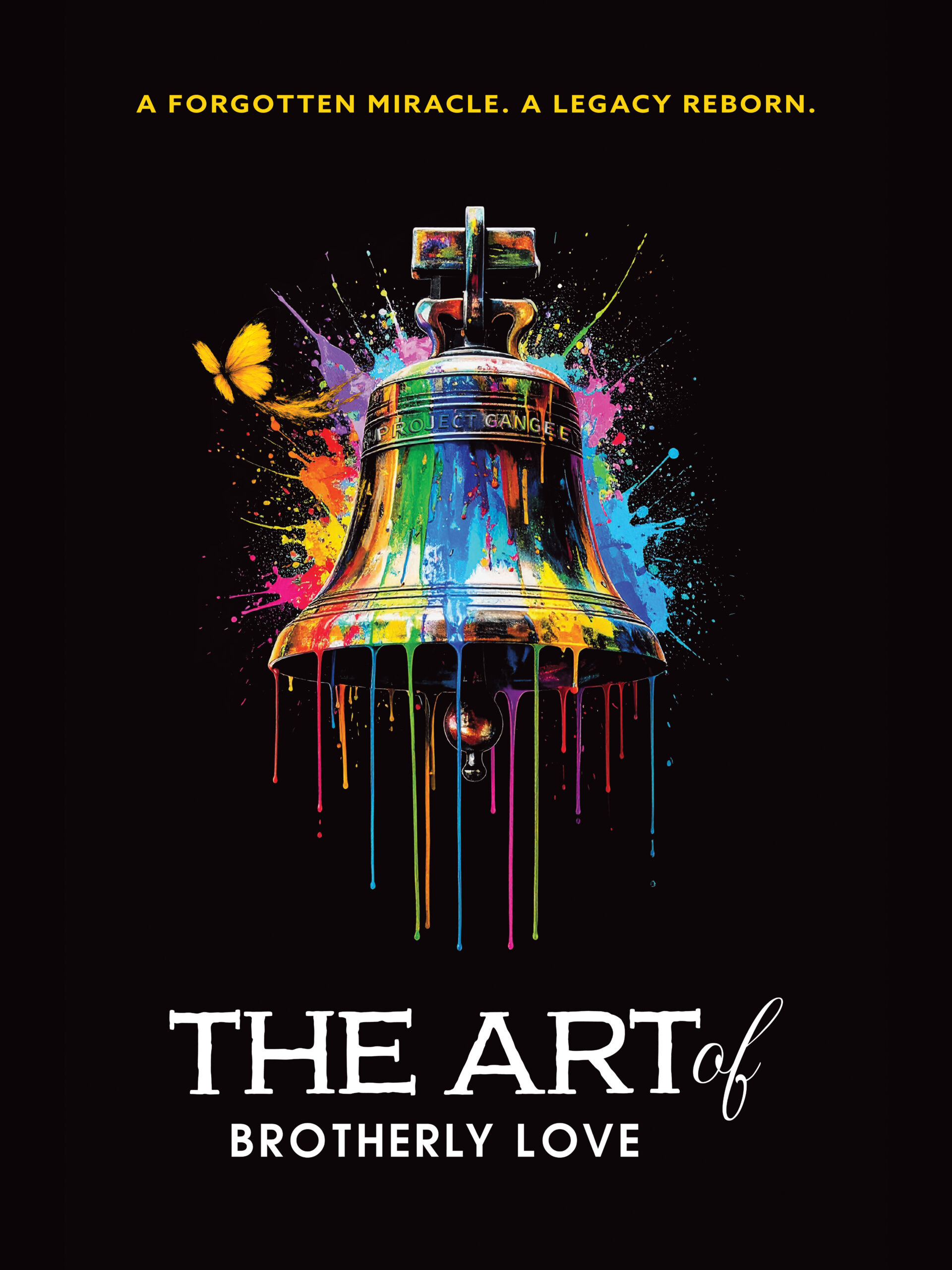
“These modern-day heirs carry the legacy of resistance and survival into today’s conversations around justice, identity, and belonging,” said filmmaker Rah Crawford, whose documentary The Art of Brotherly Love focuses on the Ganges’ story.
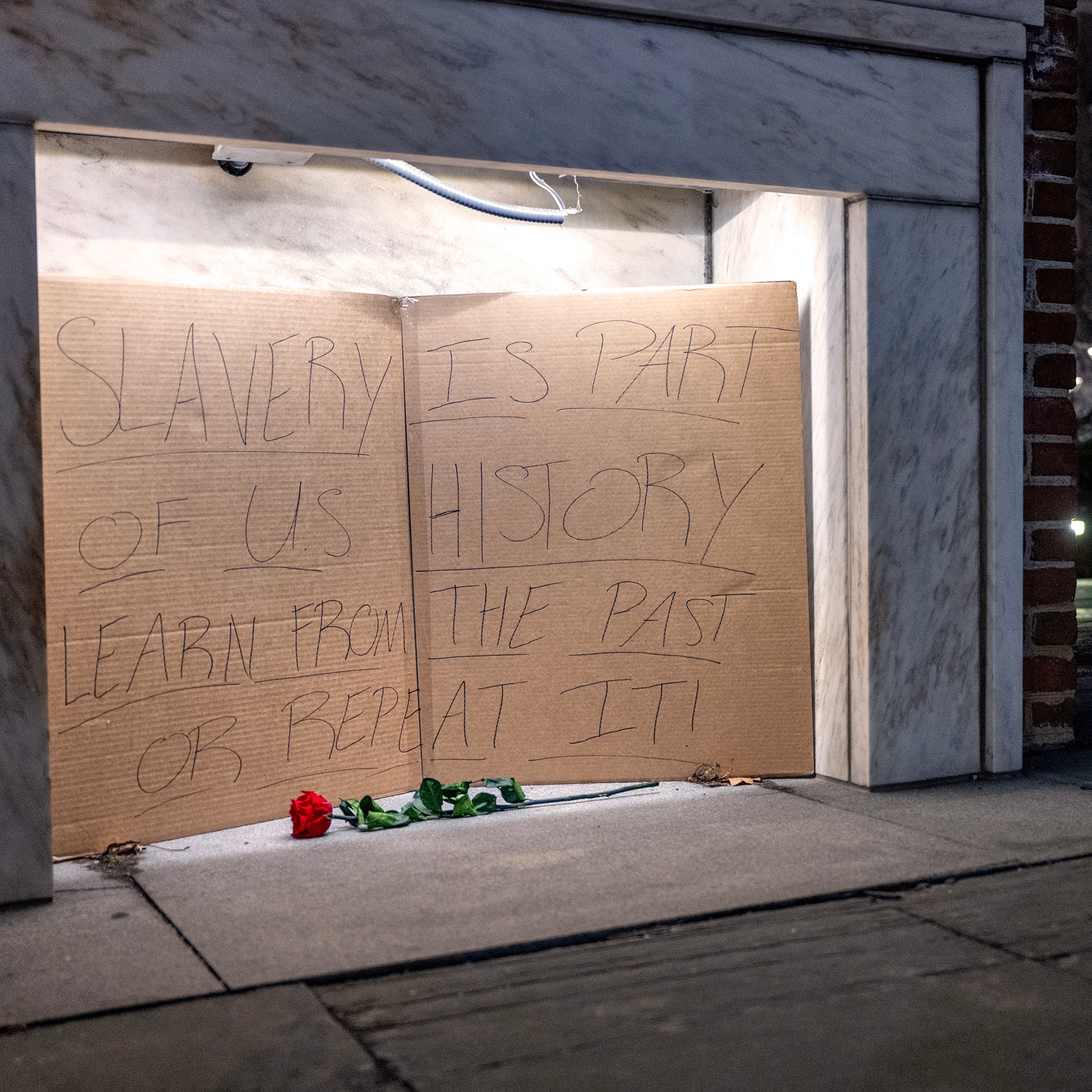
A single rose and a handwritten cardboard sign (“Slavery is part of U.S. history learn from the past or repeat it”) are inside an empty hearth at the President’s House site in Independence National Historical Park late Thursday, Jan. 22, 2026 after workers removed display panels about slavery.
When the film premiered in Brooklyn last year, Larry said that as he sat in the audience watching, he was shaking, almost in tears. His wife asked, “Are you OK? Are you cold?”
He was overcome with emotions: “I was sad, I was happy, I was mad.”
Although, as the brothers say, “we’ve got the generic connection to the name,” they don’t have a connection to identify individual family members that came through the old Lazaretto; they can’t yet determine how their bloodline was carried to them.
But thanks to the efforts of family historian Michael Kearney, who is tracking descendants of the Ganges’ survivors, Larry is confident that “my children and my children’s children [are going] to know what the story is, and to know how to access it, and know who the players are …. And hopefully this movie is not the last of what’s going to occur.”
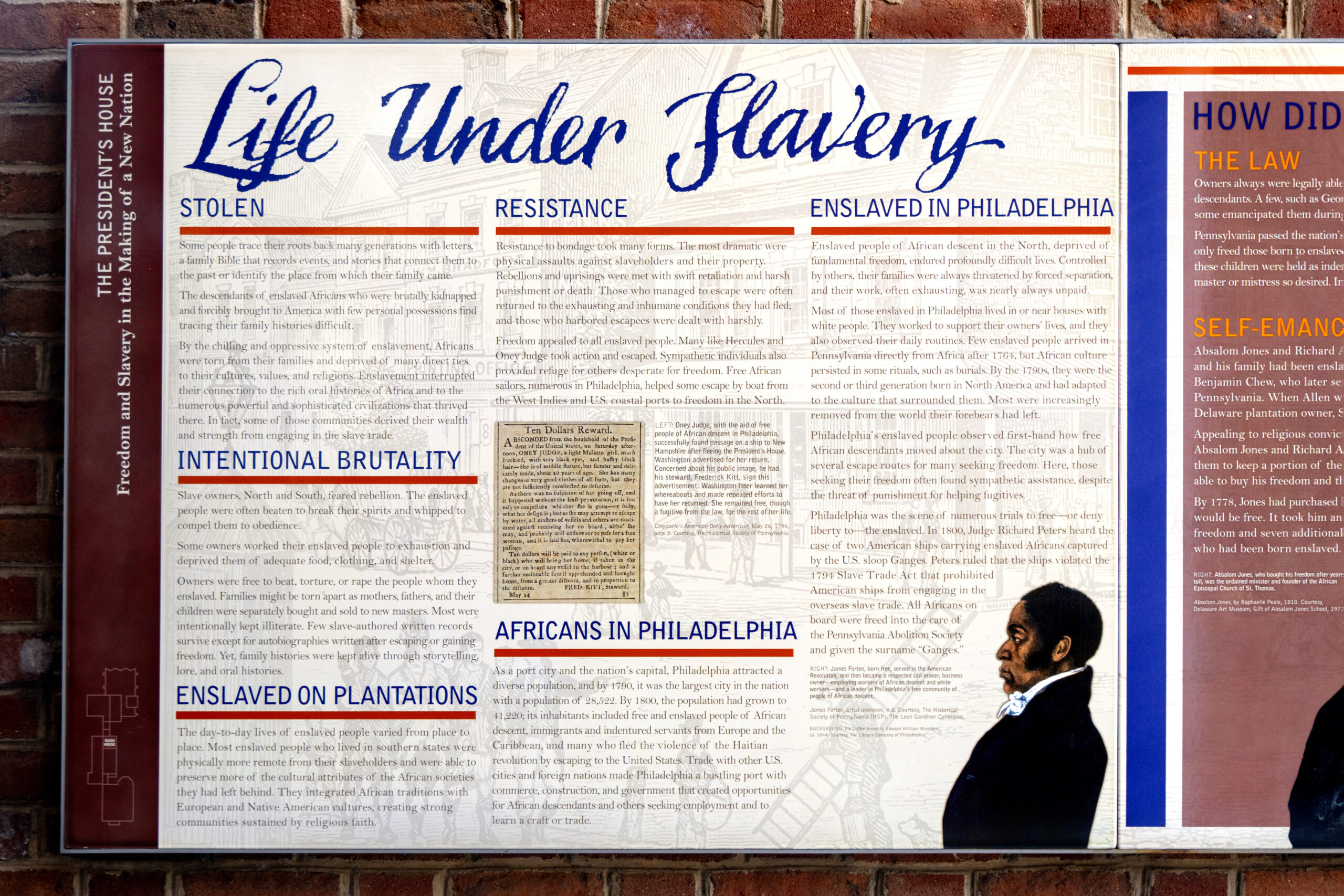
The “Life Under Slavery” sign at the President’s House in the Independence National Historical Park. The sign has since been removed. Photo from Sunday, Aug. 3, 2025.
“People made it through the troubled journey, the Middle Passage, and landed on American soil and contributed to make America a great nation,” said Kelly, “And nobody can ever deny that, and people can try and whitewash it and try to erase it, but it’s not going to work, because it’s real. Our contribution is documented.”
Prior to the opening of the President’s House in 2010, filmmaker Crawford was commissioned to create storyboards for a video installation at the site. Through his research, he first learned of the Ganges’ story, launching a 15-plus-year journey to produce the documentary.
Filmmaker Rah Crawford’s documentary “The Art of Brotherly Love” documents the story of the long-forgotten rescue of 135 enslaved Africans by the “Ganges” in the 1800s,
The Art of Brotherly Love, presented in partnership with Creative Philadelphia, is both a documentary and a trailer for a forthcoming animated feature. The Philadelphia premiere is slated for Feb. 14 at Ritz Five.
After the documentary screens, Kelly Ganges hopes that, “it just continues to cascade out — to inspire more genealogists and historians, and to reach more descendants and the next generation.”
“The Art of Brotherly Love,” Feb. 14, 11:30 a.m., Landmark’s Ritz Five, 214 Walnut St., eventbrite.com
2026 BMW iX xDrive45 vs. 2026 Cadillac Vistiq Platinum: A lot for a lot?
This week: 2026 Cadillac Vistiq
Price: $99,915 as tested. Red paint was the only upgrade.
What others are saying: “Highs: Cabin teeming with luxury details, smooth ride, nimbler than its size suggests. Lows: Uncommunicative steering, pricey top trims, shoddy main display control dial,” says Car and Driver.
What Cadillac is saying: “Luxury for your life.”
Reality: I guess if I had $100K I could pay someone to lie on the front seat trying to find the features I need.
What’s new: The whole thing. Here’s a three-row Cadillac SUV powered by the plug.
Competition: In addition to the iX, there are the Genesis Electrified GV70, Lexus RZ, Mercedes-Benz EQE, Tesla Model X, and Volvo EX90.
Up to speed: The Vistiq is in the class of premium EVs that really roars ahead when you press the accelerator.
The dual-motor SUV creates 615 horsepower, and gets to 60 mph in 3.6 seconds, according to Car and Driver.
You will have no issues pulling into traffic or passing in this SUV.
You’ll also save a lot over the iX, which requires an upgrade to match that acceleration. The price-matched iX took a full second more to get to 60.
Shiftless: The shift lever is on the steering column, where General Motors is putting most of them these days. Pull and lift to back up and pull and lower to move ahead.
On the road: The all-wheel-drive Vistiq handles quite well for a large SUV. It’s wide and it took me a minute to get used to that, but once I did, I could tell where the vehicle was in the lane, or in the parking space — which I find is often the hardest piece to figure out.
The vehicle modes are handled through the touchscreen; swipe to the right, choose drive modes, and pick what you like. Sport mode is best for performance, and Snow and Ice did a nice job during a heavy snowstorm and subsequent frigid days.
One big complaint — if you’re not going to put the controls on an easily grabbed dial, have them keep the previous setting, rather than default to Touring (which I never wanted). So many times I was tooling along on questionable road surfaces and then realized, “Dang! I’m not in snow mode.”
The interior of the 2026 Cadillac Vistiq has the look and feel of a Cadillac, but diminishes with each row.
Driver’s Seat: The command center is comfortable and Cadillacky. The seats are a little on the firm side, and I can’t say I spent enough time to see how long trips go, but they weren’t bad. (Some seats can be so firm as to make me angry in an instant.)
Friends and stuff: Sadly, the seats offer noticeably diminishing returns as you head farther back. The middle row is smallish and awkward and feels like some minivan seats from 1998. The rear row offers scant legroom, although there is some room for feet under the seats and good headroom. But the vehicle is kind of short for three rows, especially for a Cadillac.
Cargo space is 15.2 cubic feet in the back, 43 with the third row folded, and 80.2 cubic feet with both rows folded.
Play some tunes: Cadillac wants to dazzle with its 33-inch screen, but it appears the company has become hyperfocused on it, to the detriment of other features.
It took a couple searches and finally lying on the Driver’s Seat and peering into the recesses behind the console to find the USB-C outlets. I know I should be cool and get a phone I can lay on a charger, but why put these in here at all? This just seems snotty. Like they’re saying, “Haha, loser! Get a real phone!”
The connection ports never seemed to want to turn on the music system, either. Bluetooth is usually fine, except that the connection just randomly cut out on about half my trips. The only way to restore it was to shut down the Vistiq and restart it.
Sound from the 23-speaker AKG system with Dolby is less than you’d expect, about an A-.
General Motors would have done well to keep Apple CarPlay access. There’s no dedicated map program, just Google Maps and Waze, and neither looks as refined as a Cadillac screen should.
There’s a dial control with buttons as well, but the system is so bare-bones that I don’t see how that would help.
Night shift: The first time I drove the Vistiq I had to keep the maps turned off. Both programs feature bright white backgrounds, and they did not automatically adjust for the darkness outside and prevented me from seeing the road.
After another few minutes spent on my stomach trying to find controls, I noticed the old-fashioned light dimmer roller switch to the left of the steering wheel. That dimmed the whole dashboard, but not so badly that I couldn’t see. Still, you’d think this would adjust without me having to do anything, like it does in the Lovely Mrs. Passenger Seat’s Kia Soul, for about one-fourth the price.
Keeping warm and cool: HVAC controls get a separate touchscreen. They’re pretty but a little fussy and hard to adjust at a glance.
Range: The Vistiq advertises a 300-mile range, a match for most of the iX models available. It charges up to 80 miles in 20 minutes, which is no match for some of the best out there (Genesis, Hyundai, and Kia.)
Where it’s built: Spring Hill, Tenn. 43% of parts come from the U.S. and Canada; 18% from China; and 17% South Korea.
How it’s built: Consumer Reports predicts the Vistiq reliability to be a 2 out of 5.
In the end: It feels like Cadillac is giving up. No snazzy map program — when they used to have one of the most attractive options. No CarPlay. No drive mode switch, just use the touchscreen, which has a home screen that looks nice in photos but in person screams Windows 95. Critical items hidden like Easter eggs in a Jeep. It’s a shame, because there’s a nice vehicle here.
The iX is far from perfect, but I’d pick it over this. But among all the competitors, it’s GV70 all the way, even despite 10% less range.
On Wednesday, an Inquirer investigation detailed how a local anti-violence group had to terminate a housing program, displace tenants, and stave off financial collapse, despite receiving millions of dollars in city, state and federal funds over several years.
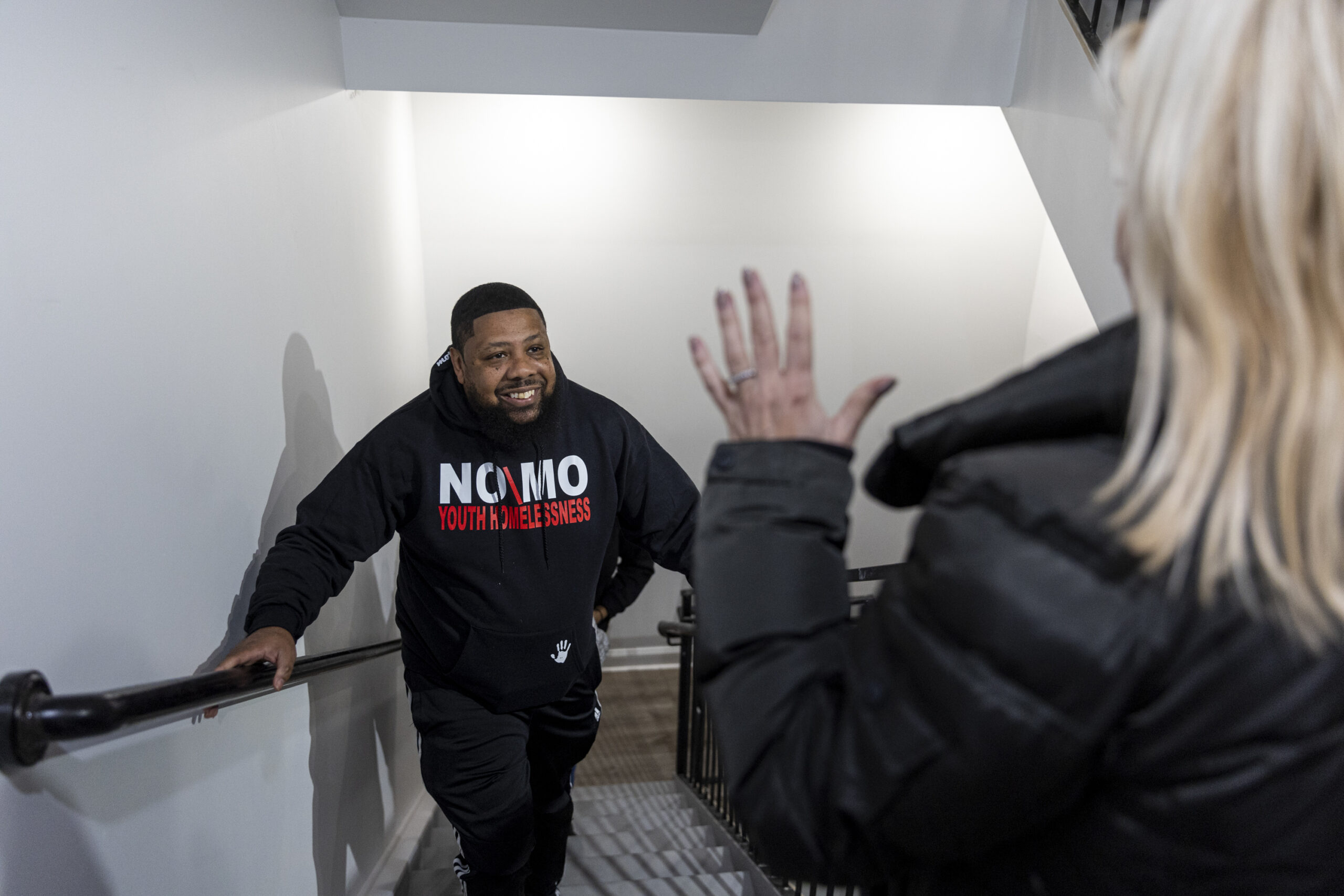
City bureaucrats had raised questions about the stability of NOMO, which is short for New Options, More Opportunities Foundation, for years. But elected officials publicly promoted the group and funds kept flowing, which initially provided youth afterschool programs before taking on significant expenses to launch an affordable housing initiative.
The nonprofit became one of the city’s signature efforts to support anti-violence work. But records show earlier concerns about NOMO turned into reality as a financial crisis hit the organization in late 2024.
NOMO subsequently faced an IRS lien and five lawsuits over the last two years concerning hundreds of thousands of dollars in unpaid rent.
Although the group’s director says the nonprofit is now financially stable, it ended the housing program, laid off staff and curtailed its afterschool programming. And NOMO’s problems raise further questions about the city’s management of its anti-violence grants, meant to stabilize and grow similar grassroots groups.
Grant administrators noticed red flags early on — but kept funding the group
After NOMO received its first $1 million city grant in 2021, grant managers almost immediately flagged issues at the organization, records obtained by The Inquirer under the Pennsylvania Right to Know Law revealed.
One administrator warned the city about “significant weaknesses” with its financial controls, including the absence of audited financial statements and balance sheets. The administrator warned of a lack of oversight for spending decisions.
Yet the city kept pushing funding through.
Four years later, city officials still did not know who serves on NOMO’s board. Nevertheless, since 2020 the group has been awarded $2.4 million in city grants, another $2.9 million in grants funded by federal Temporary Assistance for Needy Families (TANF) money, and another $1.1 million in state public-safety grants.
NOMO’s Rickey Duncan surprises a woman with a new apartment in a 2022 file photo.
Tenants were displaced after NOMO’s housing program failed
NOMO was initially a small nonprofit focused on anti-violence programming. But when it sought a city Community Expansion Grant, its application included one sentence proposing a housing program — which soon became the group’s largest budget item.
Its annual lease obligations totaled $750,000, which included renting an entire newly constructed apartment complex near Drexel University’s campus at a cost of more than a half-million dollars annually. Records do not show any sign that city officials questioned the wisdom of the housing program or examined how it supported the organization’s core anti-violence mission.
NOMO launched the housing effort with an apartment giveaway, in which tenants were surprised with new homes and treated to shopping sprees. It earned positive media attention, and NOMO’s executive director said the program supported 23 young women, many of them single mothers.
Just a few years later, a landlord filed to evict NOMO from the building over $418,000 in back rent.
The city sought to direct $700,000 in federal rapid rehousing funds to NOMO to save the program, but the money came with restrictions that NOMO was unable to meet. NOMO gave up the apartments, and its tenants relocated to the homes of relatives or were placed into transitional housing services.
NOMO made other questionable spending decisions
NOMO executive director Rickey Duncan tripled his own salary shortly after receiving the city grant and signed leases for new locations with large ballrooms. Duncan has said he envisioned that NOMO’s three youth centers in North, West, and South Philadelphia would become revenue generators for the nonprofit, serving as venues for baby showers, weddings, Eagles watch parties and other events.
Meanwhile, city grant administrators raised concerns as spending on NOMO’s core programming declined. Last year, as the group faced legal action over unpaid rent, Duncan sought reimbursement for a pair of Sixers season tickets. The city denied this request.
Students bounce a basketball in the ballroom at NOMO’s South Broad location in a file photograph.
NOMO laid off staff and curtailed operations last year
During the peak of NOMO’s financial crisis last spring, the city froze its funding after discovering a four-month-old federal tax lien. At the same time, the TANF funds ended. NOMO had to cut most of its staff and end its housing program.
Duncan says the group’s finances have stabilized since renegotiating its leases and cutting costs, and the lien was the result of an accounting error.
But the organization now serves about 140 children a year across its three youth centers — roughly the same as when it was operating in just one location and before the city spent millions of taxpayer dollars to expand NOMO’s reach.
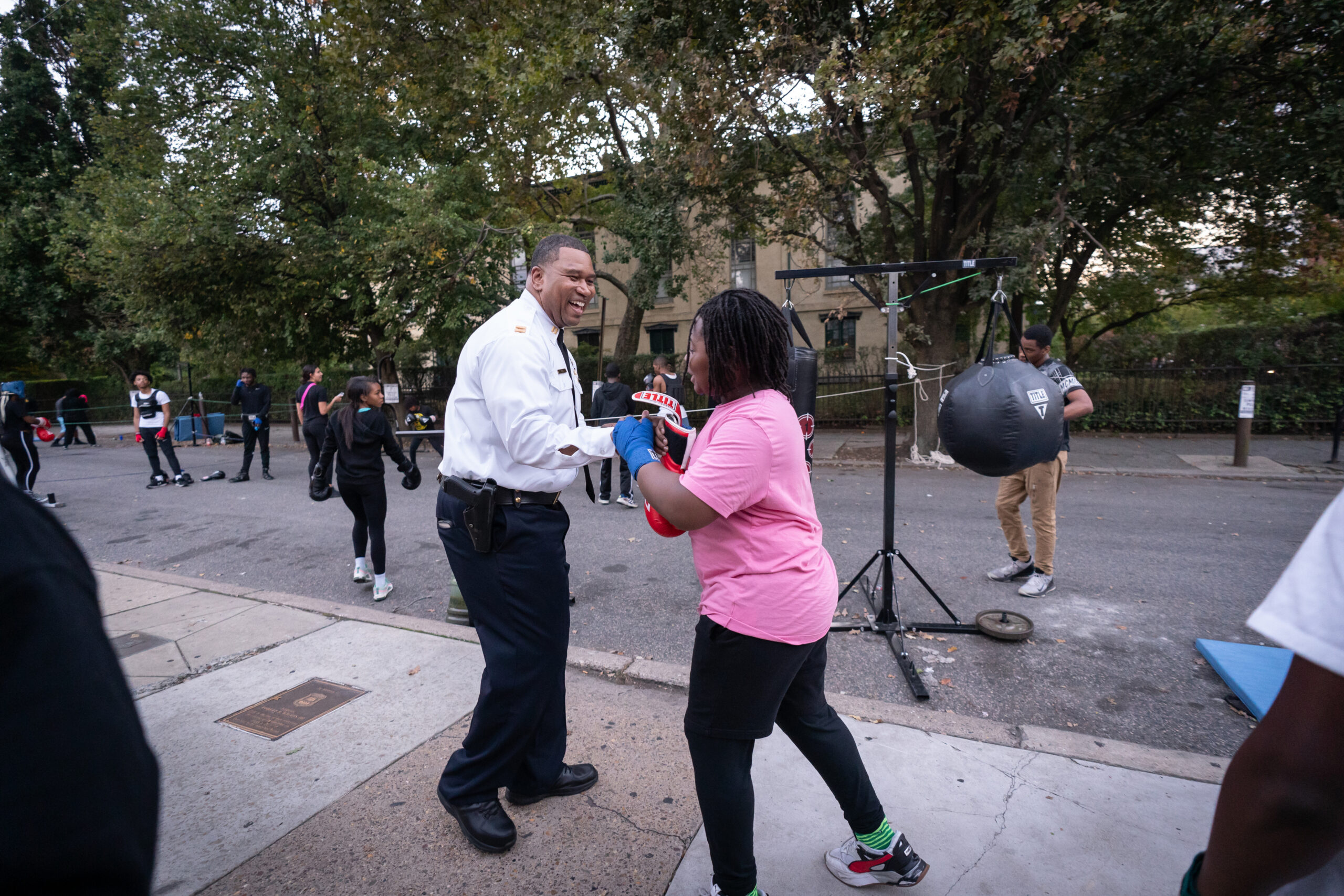
Former Philadelphia Police Captain Nashid Akil, who ran a boxing program, Guns Down Gloves Up, in a 2022 Inquirer file photograph. Following an Inquirer investigation, Akil was fired and nine police were criminal charged with theft of city grant funds.
Problems dog Philly’s anti-violence grant program
NOMO’s main city funding source, the Community Expansion Grants, has had other high profile problems.
A 2023 Inquirer report found some of the groups that had been selected for funding were poorly equipped to manage the sudden cash infusions. A city controller report the following year corroborated many of these findings.
Mayor Cherelle L. Parker referred questions about NOMO to the city’s Office of Public Safety, which praised the group’s efforts.
Council President Kenyatta Johnson also praised NOMO in a statement responding to The Inquirer’s findings. He added that he expects the Office of Public Safety to “review these matters thoroughly, fairly, and professionally.”
“It is crucial that any concerns are taken seriously and examined through the proper channels, with facts guiding the outcome,” Johnson’s statement said.
ACKNOWLEDGMENT
The Inquirer’s journalism is supported in part by The Lenfest Institute for Journalism and readers like you. News and Editorial content is created independently of The Inquirer’s donors. Gifts to support The Inquirer’s high-impact journalism can be made at inquirer.com/donate. A list of Lenfest Institute donors can be found at lenfestinstitute.org/supporters.
Pennsylvania is home to almost 86,000 miles of rivers and streams, more than any state except Alaska. The Shapiro administration understands the responsibility that comes with maintaining our waterways and remains committed to protecting them to keep Pennsylvania beautiful.
Over the last three years, the Pennsylvania Department of Environmental Protection has increased our assessments and evaluated more than 10,000 miles of streams, which has led to us identifying a higher number of impaired waterways. That is why we have accelerated our work to protect and restore our rivers, lakes, and streams and reduce pollution flowing through them, all while supporting our farmers, growing our economy, and strengthening communities across the commonwealth — meeting these challenges and delivering for the people of Pennsylvania, but we know there is more work to be done.
DEP takes a “whole watershed” approach to protecting the water quality of Pennsylvania’s waterways. We look at rural and urban conservation opportunities that keep stormwater runoff from pulling pollutants into our waters. We work with landowners, watershed organizations, local governments, and conservation districts to identify the best ways to protect rivers and streams — and we have grant programs like Growing Greener, which invest in local communities to restore waterways.
Restoring the remaining miles of impaired waterways will take a lot of effort, but with strong partnerships, we can continue to restore our rivers, lakes, and streams for all to enjoy.
Jessica Shirley,secretary, Pennsylvania Department of Environmental Protection
More data, please
I am a teacher at Parkway Northwest High School for Peace and Social Justice. I teach English, history, and journalism. I also serve as the elected Philadelphia Federation of Teachers building representative. In response to your editorial headlined, “Philadelphia school closure proposal is not perfect, but it is necessary,” The “recommendation” of Superintendent Tony B. Watlington Sr. to the Board of Education reeks of machine politics at its worst. It is clear to everyone directly involved that the district is not really concerned about improving outcomes for students; if it had produced real data that supported its conclusions, it would have already shared it with the public. There are scant details provided for these bright neighborhood community hubs upon the hill because, according to the district’s own briefing, this will all be figured out after the plan has been approved. Understandably, it can’t say what this is really about, but it doesn’t have to worry about transparency as long as the institutions meant to hold government accountable, like this one, are so obviously complicit in the “dirty work” of city politics. Instead of holding the district accountable for its shoddy process and threadbare arguments, you are helping sell the general public on the benefits of getting on board a plane that is only 10% built. You should be ashamed of yourselves, and it should come as no surprise when our students leave a school or political system that has failed the basic tests of democratic process and transparency.
Brian Nevins, Philadelphia
Dumb down AI
With all the talk these days of artificial intelligence, I recently came across an interesting and uncanny quote from an 18th-century essayist and scholar, Joseph Addison, in which he said, “Artificial intelligence will never be a match for natural stupidity.”
Addison surely had nothing in mind relating to current interpretations of artificial intelligence, but maybe he had a point in that snags should be expected in our adoption and use of AI. This would not be unusual for a new technology.
B. W. Witty, Mount Laurel
Join the conversation: Send letters to letters@inquirer.com. Limit length to 150 words and include home address and day and evening phone number. Letters run in The Inquirer six days a week on the editorial pages and online.
ARIES (March 21-April 19). Maintenance is a kind of listening. Tighten the loose screw, clear the small pile, straighten the edge. These modest gestures calm the nervous system, signaling that it’s all in order, and when it’s not, it’s OK. Falling apart is the first sign of coming together.
TAURUS (April 20-May 20). There’s strong psychological evidence that willpower is a limited resource. Willpower gets scarce when you’re already using so much to get through a tense situation or a demanding day. Self-discipline is made easier in an otherwise stress-free day.
GEMINI (May 21-June 21). Every relationship has a story, and today you’ll be making it a more interesting one with your sense of play. Of course it means tapping into your creativity and daring. It’s better to be messy and silly than too regimented, literal or serious.
CANCER (June 22-July 22). You’re avoiding mistakes for a reason. The consequences are real. Just “valuing effort” doesn’t pay bills or fix problems. Because you’re serious about doing a good job, you’ll put safeguards in place that make it impossible not to.
LEO (July 23-Aug. 22). Being a “driven” person is easy when you simply accept your drives. It’s when you ignore or disapprove of them that motivation wanes. What’s standing between you and what you naturally want to do? A judgment? A fear? Grapple with and dismantle it.
VIRGO (Aug. 23-Sept. 22). You’re open-minded, flexible, amenable … and you still should try to get your way. Sometimes your way is just better. Today is one of those times when all will benefit when you politely advocate for it.
LIBRA (Sept. 23-Oct. 23). If people were stars, there’s one who is your North Star right now and you keep moving toward the light, constant and bright. Yes, there is still a distance between you, but what’s a few light-years among friends?
SCORPIO (Oct. 24-Nov. 21). A bit of envy in the mix will be lucky for you because you’re naturally competitive, so the idea that someone else is winning the very thing you’re interested in will give you the energy to think smarter and move faster to make things happen for yourself.
SAGITTARIUS (Nov. 22-Dec. 21). You want people to be comfortable around you, but not so relaxed that they are also complacent, inconsiderate or greedy. There’s a balance to be struck between warmth and power, and it can be addressed sartorially.
CAPRICORN (Dec. 22-Jan. 19). The temptation of making a “bad” choice isn’t really about morality or a failure of discipline, so much as needs. Comfort, relief, connection, excitement, rest, reassurance — all are valid reasons to act. Understand the need and behaviors are easier to manage.
AQUARIUS (Jan. 20-Feb. 18). The focus you choose is the picture. What you don’t focus on may as well be absent entirely. Your world features the people, things and ideas you flow your attention to. As you witness the world, you also make it.
PISCES (Feb. 19-March 20). Only say yes when you’re genuinely excited about the offering or see a definite benefit to responding like you are. Keep focusing on the upside of extra responsibility and it will stop feeling like a chore and start feeling like choice, and maybe even a little fun.
TODAY’S BIRTHDAY (Feb. 12). Welcome to your Year of Uncanny Social Intelligence, when you make moves that outperform the finest diplomats and strategists. Your solar year brings numerous opportunities to play these cards, parlay yourself into a sweeter position and round up the resources and ideas to leave your mark on the world. More highlights: Rivals become allies, higher learning and three financial bonuses. Cancer and Sagittarius adore you. Your lucky numbers are: 26, 10, 1, 3, and 7.