Blog

  • FBI makes arrest in investigation into pipe bombs placed in D.C. on eve of Jan. 6 riot, AP source says

    FBI makes arrest in investigation into pipe bombs placed in D.C. on eve of Jan. 6 riot, AP source says

    The FBI on Thursday arrested a man accused of placing two pipe bombs outside the headquarters of the Republican and Democratic national parties in Washington on the eve of the U.S. Capitol attack, an abrupt breakthrough in an investigation that for years flummoxed law enforcement and spawned conspiracy theories about Jan. 6, 2021.

    The arrest marks the first time investigators have publicly identified a suspect in an act that has been an enduring mystery for nearly five years in the shadow of the violent Capitol insurrection.

    The suspect was identified as Brian J. Cole Jr., 30, of Woodbridge, Va., but key questions remain unanswered after his arrest on explosives charges, including a possible motive and what connection if any the act had to the assault on the Capitol the following day by supporters of President Donald Trump.

    Law enforcement officials used credit purchases of bomb-making materials, cellphone tower data and a license plate reader to zero in on Cole, according to an FBI affidavit filed in the case. The FBI and Justice Department declined to elaborate on what led them to the suspect, but characterized his arrest as the result of a reinvigorated investigation and a fresh analysis of already collected evidence and data.

    “Let me be clear: There was no new tip. There was no new witness. Just good, diligent police work and prosecutorial work,” Attorney General Pam Bondi said at a news conference.

    Calls to relatives of Cole listed in public records were not immediately returned Thursday. Hours after Cole was taken into custody, unmarked law enforcement vehicles lined the cul-de-sac where Cole’s home is while FBI agents helped shoo away onlookers. Authorities were seen entering the house and examining the trunk of a car nearby.

    FBI says the bombs could have killed people

    The pipe bombs were placed on the evening of Jan. 5, 2021, near the offices of the Democratic and Republican national committees. Nobody was hurt before the bombs were rendered safe, but the FBI has said both devices could have been lethal.

    In the years since, investigators have sought the public’s help in identifying a shadowy subject seen on surveillance camera even as they struggled to determine answers to basic questions, including the person’s gender and motive and whether the act had a clear connection to the riot at the Capitol a day later, when supporters of Trump stormed the building in a bid to halt the certification of the Republican’s 2020 election loss to Democrat Joe Biden.

    Seeking a breakthrough, the FBI last January publicized additional information about the investigation, including an estimate that the suspect was about 5 feet, 7 inches tall, as well as previously unreleased video of the suspect placing one of the bombs.

    The bureau had for years struggled to pinpoint a suspect despite hundreds of tips, a review of tens of thousands of video files and a significant number of interviews.

    Investigative clues

    An FBI affidavit filed in connection with Cole’s arrest lays out a series of circumstantial clues that investigators pieced together.

    Using information from his bank account and credit cards, authorities discovered he purchased materials in 2019 and 2020 consistent with those used to make the pipe bombs, according to court papers. That included galvanized pipes and white kitchen-style timers, according to the affidavit. The purchases continued even after the devices were placed.

    Cole owns a 2017 Nissan Sentra with a Virginia license plate, the affidavit says. About 7:10 p.m. on Jan. 5, 2021, Cole’s vehicle drove past a license plate reader less than a half mile from where the person who placed the devices was first spotted on foot at 7:34 p.m. that night, the document says.

    Lack of evidence spawns conspiracy theories

    In the absence of harder evidence, Republican lawmakers and right-wing media outlets promoted conspiracy theories about the pipe bombs. House Republicans also criticized security lapses, questioning how law enforcement failed to detect the bombs for 17 hours. Dan Bongino, the current FBI deputy director, floated the possibility last year — before being tapped for his job — that the act was an “inside job” and involved a “massive cover-up.”

    The FBI’s top two leaders, Bongino and Director Kash Patel, sought to breathe new life into the investigation despite having openly disparaged the bureau’s broader approach to the Jan. 6 siege and despite Trump’s pardons on his first day back in office of the rioters who stormed the Capitol, including those who violently attacked police with poles and other makeshift weapons.

    In a long Nov. 13 post on X, Bongino wrote that the FBI had brought in new personnel to examine the case and “dramatically increased investigative resources” along with the public reward for information “to utilize crowd-sourcing leads.” He said in the same post, addressed to Rep. Thomas Massie, R-Ky., that “a week of near 24-hour work on RECENT open source leads in the case has yet to produce a break through.”

    Investigators hunt for clues

    Public attention over the years had centered in part on surveillance video, taken the night before the riot, showing the suspect spending close to an hour moving through the surrounding blocks, pausing on a park bench, cutting through an alley and stopping again as a dog walker passed.

    The person wore a light sweatshirt, dark pants and sneakers, with a dark backpack slung over one shoulder. Investigators have long said the gait suggested the person was a man, but a surgical mask and hood rendered the face all but impossible to see.

    Agents paired their video review with a broad sweep of digital records. They gathered cell tower data showing which phones were active in the neighborhood at the time and issued subpoenas to several tech companies, including Google, for location information.

    Investigators also analyzed credit card transactions from hobby shops and major retailers to identify customers who had purchased components resembling those used in the two explosive devices — each roughly 1 foot long and packed with gunpowder and metal, according to two law enforcement officials familiar with the investigation.

    Another avenue of the investigation centered on the suspect’s shoes, believed to be Nike Air Max Speed Turfs. After learning from Nike that thousands of pairs had been distributed through more than two dozen retailers, agents filed subpoenas for credit card records from Foot Locker and other chains as they worked to narrow down potential buyers. Still, for years, they had no solid breakthroughs.

  • The days are getting darker. Pour a luxe white wine to cope.

    The days are getting darker. Pour a luxe white wine to cope.

    As the shortest day of the year grows near and night begins falling well before we pour dinnertime wine, the perfect season for savoring rich winter whites like this luxurious Sonoma chardonnay has arrived.

    The white wines we crave in warmer weather — pinot grigio, albariño, or sauvignon blanc — are almost always light in body, brisk in acidity, and typically fermented in inert steel tanks. This method is chosen to economize, of course, but has the added benefit of preserving the fresh-picked vibrancy of fruit that defines summer-weight styles.

    When it gets colder out in winter, our preferences move away from pure refreshment toward richness and the warmth that higher alcohol levels can provide, a seasonal shift that holds true even among those wine styles we serve chilled. Few wine grapes can do this gracefully, with chardonnay being the unrivaled queen of the winter whites.

    The time-honored method for enriching white wines is to ferment in barrels made of oak and to then allow the wine to continue resting there for months in contact with its yeast sediment. Not only does this process produce a plush and silky mouthfeel, but both the oak and the yeast sediments boost the wine’s flavor in complementary ways. The oak taste is most noticeable, evoking the toasted pecan and baking spice flavors we associate with cognac or bourbon, while yeast adds more subtle accents of buttered toast. When added to Chardonnay’s base flavors of golden apples and ripe pears, the effect is much like transforming fresh apples into a decadent spiced and caramelized apple cake.

    Ferrari-Carano has specialized in this rich style of chardonnay for decades and executes it brilliantly here, with an interesting twist. Where almost all of their competitors use 100% chardonnay grapes, their winemaker adds a tiny splash of fragrantly floral gewürztraminer to add flavor complexity, just as a mixologist might add a dash of orange bitters to round out their signature Manhattan.

    Ferrari-Carano Chardonnay

    Ferrari-Carano chardonnay

    Sonoma County, Calif., 14.5% ABV

    PLCB item #8704, on sale $22.09 through Jan. 4 (regularly $29.09)

    Also available at: Total Wine & More in Wilmington and Claymont, Del. ($17.99; totalwine.com), Moorestown Super Buy Rite in Moorestown ($17.99, moorestownbuyrite.com), and WineWorks in Marlton ($18.98; wineworksonline.com).

  • White is the 2026 Pantone Color of the Year. They say the choice isn’t political.

    White is the 2026 Pantone Color of the Year. They say the choice isn’t political.

    In a colorless move that, Pantone says, speaks to our collective longing for calmness, a clean slate, serenity, and focus, the New Jersey-based global color authority named Cloud Dancer — a billowy, balanced white — as its 2026 color of the year.

    The blank hue’s uncluttered vibe, Pantone says, plucks us out of the day-to-day crazy of our newsfeeds, AI-generated madness, and hustle culture.

    White, says Pantone Color Institute’s vice president Laurie Pressman, offers relief and respite. White noise silences the cacophony of worry rattling around in our overstimulated brains. The color gives us permission to think, refocus, and chart a new future.

    The pause between the doing, white is the be-ing.

    “White speaks to the value of measured consideration and quiet reflection,” Pressman said. “It represents a future free of toxicity and excess … contentment and peace, unity, and cohesiveness. It’s ethereal. White embraces the clouds.”

    Sweet dollops of whipped cream are white, meringue is white. Fluffy mashed potatoes are white, too.

    A fresh pair of Air Force 1s, patent leather go-go boots, a clean tee, a crisp button-up. A voluminous bridal gown. We ski in winter white.

    Mikado crop top with organza ball-gown skirt, limited edition ($1,150) at David’s Bridal, with pearl-drop earrings ($1,300) at Rosnov Jewelers. (Michael Bryant/Staff Photographer)

    White is fly.

    “In fashion and interior design, white is in our comfort zone,” said Leatrice Eiseman, executive director of the Pantone Color Institute. “It’s natural and organic. It’s about sustainability.”

    White is ethereal. She’s dreamy. She represents new beginnings. I’m overwhelmed, too. I would love to drop my precepts and jump into a world of my own making. Architectural white shirts and black pants are my grown woman fashion go-to.

    I get it.

    But y’all, white is the color of the year in 2026.

    As a Black woman living in Trump’s America, I can’t help but wonder if Pantone’s choice of Cloud Dancer was much more of a nefarious harbinger than they perhaps realized.

    No, I don’t think Pantone is low key promoting whiteness or advocating for a white savior.

    Cloud Dancer, the 2026 Color of the Year, is billowy like this curtain blowing in the wind.

    Rather, to me, Cloud Dancer is a subliminal acknowledgment of the power structure emerging in America, especially her politics. The Trump administration’s attacks on diversity, equity, and inclusion programs in universities and the federal government; its attempts to whitewash American history; its deportation of undocumented (and documented) brown immigrants; its adoption of white supremacist values: It all points to an America that values white lives more than others.

    Fashion and style always gives us clues to the future. So, I asked Pantone if they were tapping into something that perhaps they weren’t even aware of?

    “Absolutely not,” Pressman said, her tone pleading with me to stop with the correlation. “Pantone is not political.”

    Pantone is not political, true. But its trend forecasters keep their manicured fingers on the pulse. And in this moment I’m unable to ignore Ku Klux Klan robes are white, too.

    COY is always right

    Pantone’s Color of the Year is rooted in fashion. Its early picks – oceanic Cerulean in 2000; orange Tiger Lilly in 2004; and golden Mimosa in 2009 – influenced clothing, accessories, and makeup. As we moved deeper into the millennium, COY was the trendy choice for Kitchen Aids, accent walls, and Post-it notes.

    In the last decade, however, color of the year has come to define our collective moods more than just our fashion aspirations.

    It’s the aura hovering over the world, indicative not just of the life we have, but the one we want. The colors have become a peek into the energy of the feelings driving tomorrow’s zeitgeist.

    That became crystal clear in 2016, the first year Pantone chose two colors — a pink Rose Quartz and a baby blue Serenity. The dual hues were a nod to the emerging blurring of gender lines.

    In 2021, Pantone chose two colors again: Ultimate Gray and Illuminating Yellow.

    A year into the pandemic, we were emerging from a 2020 into a hopeful 2021, Pressman explained.

    The 2023 color, Viva Magenta, spoke to the vibrant post-pandemic life we craved.

    The Pantone Color of the Year is Cloud Dancer. The soft white represents a clean palette, a fresh start, shift and change.

    And its 2025 pick was Mocha Mousse, the color of espresso martinis, expensive wood, and me. It made such good sense in a year Black girl magic was at its peak.

    Things took a quick turn after. According to a New York Times study, 319,000 Black women have left both public and private sector jobs in 2025, the result of the Trump administration’s cost-cutting and DEI Initiatives.

    A clean slate

    A key reason why Pantone chose white is because, Pressman said, people are craving blank slates.

    “People have gotten to a point where they see what’s happening isn’t working for them anymore,” Pressman said. “They want something different, new, authentic.”

    Cloud Dancer hit that nail on the head.

    The Trump administration is dismantling the Department of Education, killing funding for the arts, scrubbing civil rights departments in federal agencies, and decimating medical research, replacing vaccine recommendations with unsubstantiated claims about Tylenol.

    Debris is seen at a largely demolished part of the East Wing of the White House, Thursday, Oct. 23, 2025, in Washington, before construction of a new ballroom. (AP Photo/Jacquelyn Martin)

    The violent crimes of Jan. 6 protesters have been pardoned. The president has ripped out the East Wing of the White House.

    All clean slates and new beginnings. But for who?

    Cloud Dancer, Eiseman said, is a throwback to classic fashion, citing Coco Chanel and Audrey Hepburn. Sure, fashion of the “Golden Era” was glamorous. These women were undeniably well-dressed, but it was also a time when white gloves and girdles were the norm, and equally glamorous Black women like 1940 Academy Award winner Hattie McDaniel was forced to sit in a segregated section during the Oscar ceremony because her white colleagues didn’t want to sit next to her.

    When the conversation turned to the yin (black) and yang (white) of fashion, I wondered aloud if, maybe this could have been a year when Pantone chose two colors: black and white. Perhaps this could signify harmony.

    Crickets.

    Pantone’s Color of the Year image of the Cloud Dancer.

    Later, I realized Pantone didn’t pick the cooperative vibe up, because it just wasn’t there.

    I’m not ready to wave the white flag yet. In the midst of all this, white remains a shade of hope, purity, and freedom. It’s the color of the Suffragist movement. Pantone’s is simply yet another canary in the coal mine which means I have a lot of work to do.

    I can’t afford to have my head in the clouds.

  • Chargers preparing as if QB Justin Herbert will play vs. Eagles

    Chargers preparing as if QB Justin Herbert will play vs. Eagles

    EL SEGUNDO, Calif. — Los Angeles Chargers quarterback Justin Herbert did not practice Wednesday, two days after undergoing surgery to repair a broken bone in his nonthrowing hand.

    Coach Jim Harbaugh said the Chargers (8-4) are preparing as if Herbert will start against the Eagles on Monday, though he repeatedly stressed a formal determination on Herbert’s status would be made later in the week.

    “Not gonna practice, but he hasn’t missed a beat,” Harbaugh said. “Already back today in meetings and out on the field for walk-through.”

    Herbert said he had a plate and screws placed in his left hand Monday afternoon. He kept his hand out of sight in the pocket of his sweatshirt during a news conference Wednesday afternoon.

    “The doctors were happy with how they performed, so I guess that’s always a good thing,” Herbert said. “It’s just the next couple days of seeing how the swelling handles and what goes on from there.”

    Herbert, who was injured in the first quarter of a 31-14 win over the Las Vegas Raiders on Sunday, is treating this week as if he will play. He has only missed four games because of injury in six seasons with the Chargers, having been sidelined for the last four games in 2023 because of a broken finger on his right hand.

    “It’s obviously a situation where you’ll see how it goes throughout the week, and you’d love as much time as possible,” Herbert said. “I think having an extra day doesn’t hurt, so see how it goes and adjust from there, I guess.”

    Backup Trey Lance worked with the starting offense in practice. Harbaugh had previously said Lance, who was drafted third overall by the San Francisco 49ers in 2021, would see additional snaps in case he needed to play in situations where the Chargers might need to operate from under center, such as at the goal line or in short yardage.

    “Better to be prepared and not have your opportunity come than have your opportunity come and not be prepared,” Harbaugh said.

    The Chargers played exclusively out of the shotgun and pistol for the final three quarters after Herbert returned to the game with his hand in a hard cast and wearing a glove for additional protection.

    “We’ll be preparing the same exact game plan for both quarterbacks,” Harbaugh said.

    Herbert does expect to be able to try taking snaps from under center later this week. Herbert also believes he would be able to start even if he cannot practice, while admitting it would not be an ideal situation.

    “It’s definitely difficult in this league, but if that’s the case and Coach (Harbaugh) feels like I’ll give the best shot for the team, you know that I trust his decision,” Herbert said.

  • How Palantir shifted course to play key role in ICE deportations

    How Palantir shifted course to play key role in ICE deportations

    For years, Alex Karp, Palantir’s CEO, had declared the data-management company to be “involved in supporting progressive values,” saying he has repeatedly “walked away” from contracts that targeted minorities or that he found otherwise unethical. Even as Palantir took on extensive data-management contracts for the federal government, the company said it was not willing to allow its powerful tools to broadly track immigrants across America.

    That commitment no longer holds. Palantir’s software is helping U.S. Immigration and Customs Enforcement track undocumented immigrants and deport them faster, according to federal procurement filings and interviews with people who have knowledge of the project and who spoke on the condition of anonymity to discuss sensitive details. The software, Immigration OS, plays a key role in supporting the Trump administration’s mass deportation agenda.

    Karp, formerly an outspoken Democrat who a decade ago said that he respected “nothing” about Donald Trump and that a deportation drive made “no sense,” has staunchly defended the president’s immigration policies. Declaring Palantir to be “completely anti-woke,” he has repeatedly praised Trump’s ongoing crackdown on immigrants, thrusting the company into one of the country’s most contentious issues.

    That shift in political alliances in no way signals a change in his core beliefs, Karp said in a statement to The Washington Post, portraying his commitment to controlling immigration as of a piece with his long-standing devotion to social justice.

    “For over two decades, I have implored our political elite to take seriously the truly progressive position on immigration: one of extreme skepticism. To no avail,” Karp said. “Unfettered immigration in Europe, where I lived for well over a decade, has been a disaster — depressing wages for the working class and resulting in mass social dislocation. I remain an economic progressive, isolated among self-proclaimed progressives that are anything but.”

    The changes at Palantir have been driven by multiple factors, according to five of the people familiar with the company’s project. Palantir executives saw Trump’s election to a second term as a mandate from voters for stricter border control, the people said, and, like many other companies, Palantir has changed some policies in response to executive orders targeting diversity in hiring and other issues. They added that Karp’s support of Israel after the Oct. 7, 2023, Hamas attack has drawn him closer to Republican national security hawks.

    Palantir’s federal contracting business has bloomed during the Trump administration. Its September tally of new federal contracts was $128 million, its largest monthly sum on record, according to USASpending.gov. The company’s stock price is up more than 120 percent this year, as it rides its contracting wave and the boom in companies that, like Palantir, are centered on the development and use of AI.

    Palantir has long defied simple political characterization. For years, it has worked with administrations of both parties on projects other Silicon Valley firms shunned, such as the Pentagon’s Project Maven AI target identification system. But its support for ICE on a deportation crackdown punctuated by violent clashes and stiff court challenges has sparked debate among current and former employees over whether it runs afoul of the company’s values and endangers its bipartisan profile.

    Seven months into the project, which was renewed in late September, some Palantir employees still harbor concerns about Immigration OS, according to two of the people familiar with the matter. They say some Palantir staff members have been discussing whether the contract should be discontinued if ICE’s use of the technology veers into extrajudicial actions or violate the company’s civil liberties principles. It couldn’t be determined whether the company’s senior executives are involved in those discussions. A Palantir spokeswoman declined to comment.

    ICE and its parent department, the Department of Homeland Security, declined to answer questions about Immigration OS. DHS said in a statement that Palantir has been a contractor for 14 years, providing “solutions for investigative case management and enforcement operations” to ICE. “DHS looks holistically at technology and data solutions that can meet operational and mission demands,” it said.

    ICE awarded Palantir a $30 million contract on April 11 to build an “Immigration Lifecycle Operating System,” or Immigration OS for short. Its aim, according to procurement filings by the agency, is to facilitate the “selection and apprehension operations of illegal aliens” based on ICE priorities, minimize “time and resource expenditure” in deportations, and track in “near real-time” which individuals leave the country voluntarily. Palantir won the contract without a competitive bidding process, with ICE citing an “urgent and compelling need” and stating that “Palantir is the only source that can provide the required capabilities … without causing unacceptable delays.” ICE renewed the contract on Sept. 25, bringing its total value to about $60 million — a relatively small amount in the context of Palantir’s$2.87 billion revenue in 2024.

    In an internal communication to employees in the spring, Palantir presented the project as a “prototype” and said “longer-term engagements” were “TBD,” according to a copy obtained by 404 Media. The company said it was “pursuing this effort because we believe it is critical to national security and that our software can make a meaningful difference in the safety of all involved in enforcement actions.”

    ICE and Palantir have declined to disclose how many people the system tracks, which agencies it pulls data from, and whether there are safeguards against mistaken identity or overcollection of surveillance data. Shyam Sankar, Palantir’s chief technology officer, told the New York Times in a recent interview that Immigration OS tracked encounters at the border, asylum applications and applications for benefits. Immigration OS does not track information of U.S. citizens who are relatives of undocumented immigrants, Palantir said in a statement.

    ICE adopted Immigration OS this year as it rolled out a campaign to identify and detain what it calls the “Worst of the Worst.” The agency has cited cases of undocumented immigrants committing serious crimes as justification for broad deportation sweeps through Chicago, Charlotte and Portland, Oregon, and other cities. ICE and Palantir declined to say whether Immigration OS played a role in helping compile ICE’s “Worst of the Worst” lists.

    Trump said on Thanksgiving Day that he would “permanently pause” migration from “Third World Countries,” broadly deport undocumented immigrants, and end all federal benefits and subsidies to noncitizens. That would mark an escalation of a campaign that federal judges have repeatedly ruled exceeds the administration’s legal authority, with one Chicago judge saying last month that the use of force involved “shocks the conscience.” The Department of Homeland Security has decried the rulings as coming from “activist judges” and said its actions have been lawful.

    In an interview with Wired published in November, Karp said he had previously “pulled things” that he believed were being deployed in violation of the company’s code of conduct, while rejecting contentions that its immigration software is. Asked whether he needed to take a closer look at how Palantir’s products were being used in the United States, he called it “exactly the right question,” adding: “I’m telling you that I have done this, and I will continue to do it.”

    Wendy R. Anderson, who was Palantir’s senior vice president for national security until May, said Karp has never wavered in his conviction that tech companies working in defense have a duty to the country, not to politics.

    “Alex starts from a single, nonnegotiable premise: America has to win,” she said, speaking generally and not in reference to Immigration OS. “Not in a partisan sense, but in the enduring one — the survival of the United States and the Western institutions that make free societies possible.”

    Palantir, founded by Karp and PayPal co-founder Peter Thiel in 2003 in the wake of 9/11, has long drawn criticism from civil rights activists over the powerful data-management tools it sold to the likes of the Pentagon, CIA and ICE.

    Karp is the son of a Jewish father and African American mother, who brought him along to civil rights protests as a child. He grew up in Philadelphia, graduated from Central High School in 1985 and earned a bachelor’s degree in philosophy from Haverford College. Karp has long been outspoken in his self-identification as a Democrat and his beliefs in privacy protections. “We as a company, and I as an individual, always have been deeply involved in supporting progressive values and causes,” Karp said in 2011.

    In summer 2015, shortly after Trump announced his first major presidential run, Karp told his staff that he had turned down an opportunity to meet Trump, as “it would be hard to make up someone I find less appealing,” according to a leaked video published by BuzzFeed. Karp said he opposed Trump’s broad deportation platform, saying it made “no sense” to throw out hardworking people. He said blaming immigrants for the nation’s ills would bring up “the worst that a society can bring up.”

    During Trump’s first presidency, Palantir said it would not work directly with ICE’s Enforcement and Removal Operations arm on deportations, citing the risk of human rights violations. The company limited its contracts to the agency’s Homeland Security Investigations division, which worked on issues such as terrorism, sex trafficking and drug smuggling, though in practice there was at least some crossover with raids on undocumented immigrants.

    Palantir had made that distinction, Courtney Bowman, the company’s director of privacy and civil liberties, wrote in a 2020 letter to Amnesty International, “because we share your organization’s concern with the potential serious human rights violations against migrants, refugees, and asylum seekers at the U.S.-Mexico border and risks of disproportionate immigration enforcement inside the U.S.”

    Critics say Immigration OS represents a breach of those principles. The project has drawn public backlash, including from Y Combinator co-founder Paul Graham, who wrote on X that Palantir was “building the infrastructure of the police state.” In a public letter, 13 of the company’s former employees accused Palantir’s leadership of being “complicit” in “normalizing authoritarianism” in America.

    Within Palantir, executives defended the project by citing changing voter sentiment on the border issue and changes to ICE’s structure. In one of his first executive orders in January, Trump had ordered ICE’s Homeland Security Investigations to prioritize immigration enforcement instead of national security.

    “The national conversation around immigration enforcement, both at the border and in the interior of the United States has shifted,” the company wrote in an internal communication to employees, according to a copy obtained by 404 Media. Palantir said it had realized that “to really support the agency’s immigration enforcement mission, we must expand our aperture … this means supporting workflows that are substantially distinct from our historical scope and into Enforcement and Removal Operations (ERO).”

    The policy reversal prompted some employee resignations. Brianna Katherine Martin, who had been a U.S. government strategist for the company for almost three years, left in May, citing the recent expansion of the company’s work with ICE.

    “For most of my time here, I found the way that Palantir grappled with the weight of our capabilities to be refreshing, transparent, and conscionable,” Martin wrote on LinkedIn. “This has changed for me over the past few months.” She did not respond to requests for comment.

    The deepened partnership with ICE has come amid other changes at the company.

    Palantir revised its employee code of conduct in March, removing pledges to avoid biased decision-making and eschew unfair action based on race or national origin. The “Protect the Vulnerable” section of the code previously said: “We will not create or perpetuate the unfair treatment and/or stigmatization of individuals or groups, particularly when such unfair action is based on race, color, national origin, religion, sex, gender identity, disability, age, ancestry, marital status, citizenship, or sexual orientation.” The new version pledges more generally to avoid unfair action “based on any characteristic protected by federal, state, or local laws.”

    Palantir also deleted a section that said employees should strive to overcome conscious and unconscious biases in their decision-making. The section now says employees should engage with one another with respect.

    The code-of-conduct changes were made in response to Trump executive orders unrelated to the company’s ICE business, according to a person familiar with the matter, who spoke on the condition of anonymity to discuss the shift. Trump had forbidden federal contractors from “illegal” diversity practices in January.

    Karp biographer Michael Steinberger, whose book “The Philosopher in the Valley” was published last month, said his interviews revealed Karp’s increasing exasperation with what he saw as the Democratic Party’s unwillingness to control the border and preoccupation with identity politics.

    “He has definitely moved to the right,” Steinberger said. “Though I suspect he would be more inclined to say that he thinks the left left him.”

    An important factor in Karp’s rightward shift has been the Oct. 7 attack on Israel two years ago, Steinberger wrote in his book. “I’m now very willing to overlook my disagreements with Republicans on other issues because of the position they have taken on this one,” he quotes Karp there as saying.

    In a letter in July to Amnesty International, responding to questions about its ICE contracts, Palantir said that while it took the human rights risks of its work with governments seriously, its role was to serve as a responsible federal contractor and uphold the law, not to set U.S. government policy.

    “Palantir is not an oversight authority entrusted with scrutinizing or questioning executive branch actors,” the company wrote.


  • A classic South Philadelphia restaurant gets new life as an old-time nightclub

    A classic South Philadelphia restaurant gets new life as an old-time nightclub

    “Heaven … I’m in heaven … and my heart beats so that I can hardly speak.”

    Harry Barlo, in a crisply tailored black suit, bronze tie, and matching pocket square, bopped jauntily to the Fred Astaire standard, his quartet swinging effortlessly behind him, the crowd nodding and foot-tapping.

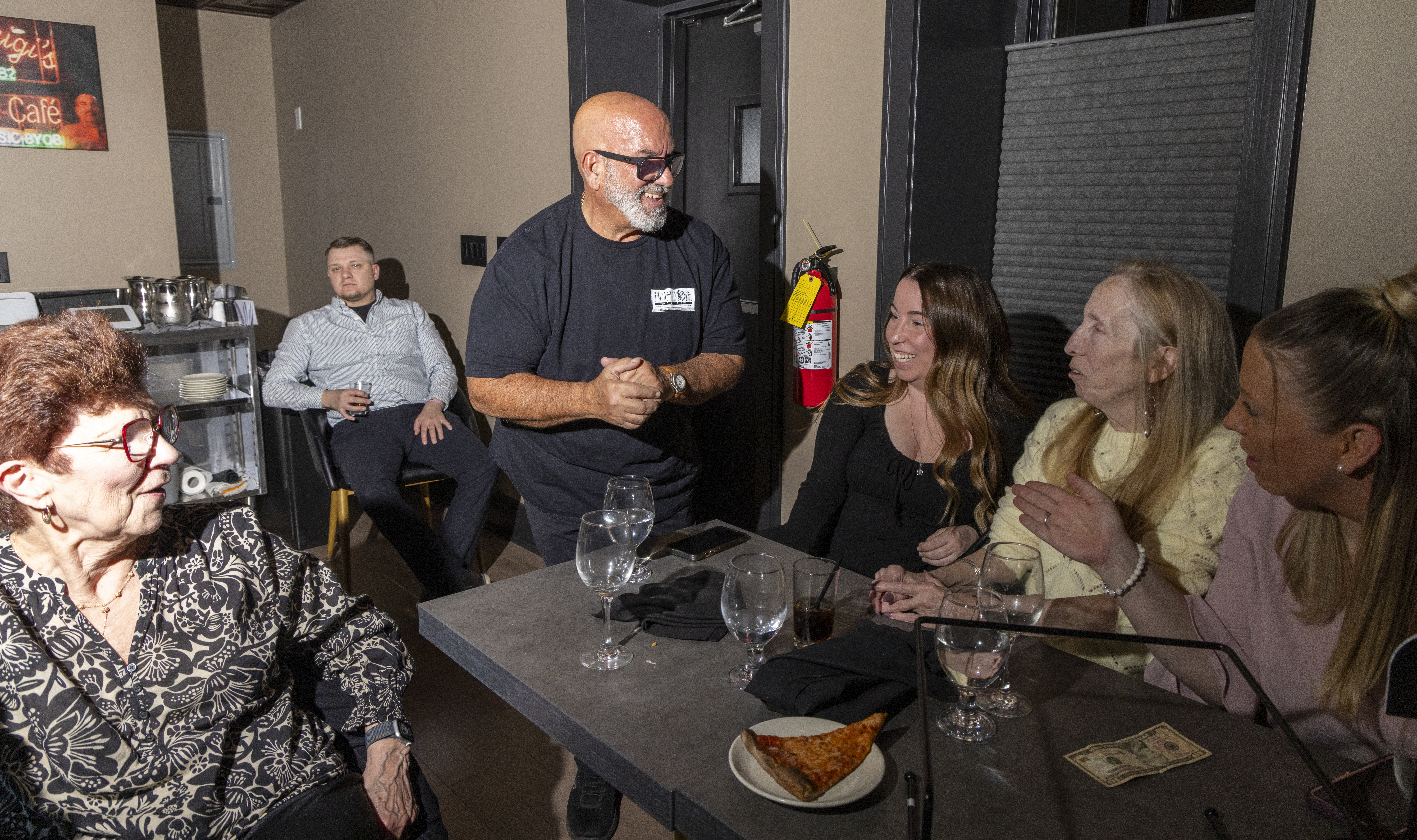
    High Note Caffe owner Franco Borda works the room during the Nov. 8 show.

    At that moment — for a moment, anyway — Franco Borda’s right knee quit acting up. Beaming from the back of his revived High Note Caffe in South Philadelphia, Borda took it all in: 64 people dressed up for a Saturday night out, sitting in his restaurant, eating his eggplant rollatini and his son Anthony’s pizza, enjoying live music.

    “You see this?” he said in amazement.

    Borda, 64, wants to create the sort of supper club that barely exists anymore — intimate, aimed at a boomer audience, with drinks and an informal menu.

    Harry Barlo hits a note at High Note Caffe.

    It’s an all-new act for the High Note — an update on Borda’s previous restaurants at 13th and Tasker over the last 35 years.

    Borda, who grew up three blocks away, has been singing opera all his life. In the days he ran Francoluigi’s with his former business partner, he would pop out from the stove to sing an aria, and he’d bring in other amateur singers. Sometimes, Phil Mancuso, who owned Mancuso’s cheese shop, and Frank Munafo, a nearby butcher, would show up, and they’d bill themselves as the Butcher, the Baker & the Cheesemaker.

    Over the years, however, Borda found that younger diners were less interested in opera overtaking their meals. He switched gears at High Note Caffe. Jazz stayed, but opera became occasional.

    In March 2020, when the pandemic shut down the High Note and other restaurants at the outset of the pandemic, Borda stepped back altogether. He hired an engineer and an architect, removed a wall, expanded the room, slid the kitchen back, and secured assembly and entertainment licenses.

    Franco Borda embraces his wife, Teresa, to sing to her after the Harry Barlo show.

    His wife, Teresa, said she thought he was crazy. “You need knee surgery,” she reminded him.

    Borda countered: “I got 10 more years in the kitchen, you know, and I love it.”

    In 2022, Borda’s son Anthony — who started making pizzas with his pop while in kindergarten — opened Borda’s Italian Eats, a walk-up shop on the Tasker Street side of the property (now closed). That was a temporary setup until the rest of the place could be finished.

    Anthony Borda, son of High Note Caffe owner Franco Borda, with a pepperoni pizza and a white “Pavarotti” pizza (sliced tomato, broccoli rabe, and sharp provolone).

    “I really wanted to focus on the entertainment,” Franco Borda said. “We want to give people a place in South Philly where you can sit down and enjoy some jazz and eat a little bit and not get banged over.”

    Ticket prices vary but are reasonable. It’s $25 for the Dec. 12 show by the Jack Saint Clair Quartet. All told, you’re looking at a date night for just over $100, with a pizza ($20 or $25), a plate of mussels red ($18.95), $15 cocktails (White Russians! Sloe Gin Fizzes!), and a $7 tiramisu you should not miss.

    “I’m not doing this as a business,” Borda said.

    Franco Borda (right) and his son, Anthony, outside High Note Caffe.

    That much is clear. For now, he is booking only about two shows a month, with tickets sold online and no walk-ins. After the Jack Saint Clair show, vibraphonist Tony Micelli will perform on Dec. 13. On Jan. 30, George Martorano — who served 32 years in federal prison for a drug conviction before his release in 2015 — will do a one-man show to talk about his time in custody.

    Borda said the idea is to not run a conventional restaurant again, rather to provide a venue to musicians who rarely get a platform.

    Eventually, when Borda’s knee gets straightened out, he said he wants to get himself back into vocal shape, get up on stage, and do some opera.

    For now, he said, “I want to find some tenors and sopranos who want to be exposed and come out and sing their [hearts out].”

    People like Harry Barlo.

    Owner Franco Borda decoarated his new High Note Caffe with music photos and album covers.

    Barlo — born Harry Schmitt — spent 21 years on the Philadelphia police force before retiring in 1992. All the while, he sang in clubs. “I balanced show business and my other jobs because I had to eat,” he said.

    Twenty years ago, in his early 50s, he chased his dream and moved to Las Vegas, where he sang in a doo-wop group in casino lounges before switching to the Great American Songbook under the nom de croon Golden Voice Harry.

    “Las Vegas — that was the dream of a lifetime,” he said. ”Show business is a tough business. It only fed me for a while.” After returning to Philadelphia, he got into recording and, later, streaming, he said.

    Barlo said he had gigs lined up before COVID-19 dried up live music. Now a casino compliance representative with the Pennsylvania Gaming Control Commission, he said he thought his performing days were over. Then he heard from Benny Marcella, a friend of Borda’s.

    Part of the audience at Harry Barlo’s performance at High Note Caffe on Nov. 8.

    Barlo said he was initially unsure about playing at High Note. “Benny said, ‘Go down and look at the place.’ So I met Franco, we talked, and Franco said, ‘Why don’t you stand on the stage and see what you think.’ When I stood on that stage, he had me. That’s the perfect room for me. I like working in an intimate setting.” Marcella helped round up the musicians, and it was showtime.

    “Are the stars out tonight? I don’t know if it’s cloudy or bright. I only have eyes for you, dear…”

    Ken Moyer nailed his sax solo, backed by Bill Tesser on drums, Marty Mellinger on piano, and Steve Varner on bass. Barlo’s eyes swept the room. His kids were there, watching with their friends. “I first saw him perform when he sang to me for my 16th birthday,” said his stepdaughter Danielle DeAngelis. “And all these years later, it never gets old. He’s still amazing.” He dedicated “I’ve Gotta Be Me” to her.

    Harry Barlo’s stepdaughter Danielle DeAngelis smiles as Barlo dedicates “I’ve Gotta Be Me” to her at the High Note Caffe.

    Barlo, who is booked at the High Note for Valentine’s Day, said High Note reminded him of the rooms at the Sahara and the Stardust. “They were intimate lounges,” he said. “I’m an old-style guy — you get a lot of feedback from the audience when you’re close to them. A friend of mine who was there that night said, ‘Harry, you finally found your niche.’ He’s right. Franco’s got a great idea, and I hope it works.”

  • New debates over preservation in Philly | Real Estate Newsletter

    New debates over preservation in Philly | Real Estate Newsletter

    Fights over historic preservation have been brewing and bubbling over in Philadelphia for decades. Now, a City Council member is provoking more debate.

    His bill gives property owners additional notice before the city considers whether to designate their properties as historic — a designation that prevents owners from demolishing buildings or significantly altering their exteriors.

    Preservationists say an extra heads-up would give developers more time to tear down potentially significant properties.

    Even some people who oppose preservation aren’t happy with the bill.

    Keep scrolling for that story and more in this week’s edition:

    — Michaelle Bond

    If someone forwarded you this email, sign up for free here.

    Too far or not far enough?

    City Councilmember Mark Squilla’s latest historic preservation bill comes during a time of heightened debate around preservation in the city.

    Preservationists are pushing back against demolitions. Some homeowner groups and organizations that advocate for more development are pushing back against an increase in historically protected properties and neighborhoods.

    Squilla’s bill addresses some common frustrations that I hear from property owners.

    In Philadelphia, people can nominate properties for historic designation without the permission of the owners. This is a frequent point of friction when the city’s historical commission considers nominations.

    Supporters of Squilla’s bill call it a good-government fix that gives more notice and power to property owners. But some opponents of preservation say it doesn’t go far enough to help homeowners.

    Learn what else is in the legislation and how it could change Philadelphia’s preservation ordinance.

    What a professional home appraiser wants you to know

    If you’re buying a home, refinancing a mortgage, or just want to know what your home is worth, you’ll probably want a home appraisal.

    Last week, I talked to a professional home appraiser about what exactly an appraisal is and what goes into evaluating a property. He said a lot of people don’t understand the process.

    At its most basic, an appraisal is “an opinion of value for a home,” he said.

    Banks want them before they let you take out a mortgage or borrow against a home. Families get them when they want to figure out the value of property in a divorce or after a loved one’s death.

    In my Q&A with Matthew Sestito, who’s been a licensed appraiser in the Philly area since 2009, we talk about:

    • factors that go into an appraisal
    • what homeowners should expect during an inspection
    • the home design features that matter
    • how a homeowner can prepare for an appraisal
    • what to do if you disagree with a valuation

    Keep reading to learn what Sestito thinks you should know about appraisals.

    📮Who else in the real estate industry would you like to answer some questions? Email me and tell me what you want to know.

    The latest news to pay attention to

    Home tour: Historical but updated in Fishtown

    Nicala La Reau bought her 105-year-old home in Fishtown for the neighborhood and the house’s “incredible bones.”

    But the home needed a lot of work. She immediately started renovations after her purchase in October 2024.

    The home was dated throughout, so she had to update mechanical systems as well as finishes and the floor plan.

    She started with five bedrooms and 1½ bathrooms but turned one of the bedrooms into an additional full bathroom. And she expanded the primary bathroom.

    La Reau uses one of the bedrooms as a walk-in closet.

    Off the third floor, she has a rooftop deck, where she drinks morning coffee and entertains. Her backyard is a “rare luxury for city living,” she said, and fits lots of seating, plants, and a garden.

    Peek inside La Reau’s property and find out where she gets her design inspiration.

    📷 Photo quiz

    Do you know the location this photo shows?

    📮 If you think you do, email me back.

    The quiz from two weeks ago featured a photo of a fountain, benches, and trees that was taken at Fitler Square between 23rd and 24th and Panama and Pine Streets.

    Shout-out to Francis K. and Cheryl B. for being among the readers who knew the park.

    Are you looking for something to do this weekend? You could check out a unique estate sale at a Delancey Street townhouse.

    The house near Rittenhouse Square has made headlines because it’s filled with thousands and thousands of books. Hundreds of the most valuable are now on auction.

    And at 2 p.m. today, the house on the 1800 block of Delancey Street will open for the estate sale, which runs through Sunday. Besides books, shoppers can snag artwork, rugs, and other household items.

    I’m curious what it’ll be like. Let me know if you go.

    Enjoy the rest of your week.

    By submitting your written, visual, and/or audio contributions, you agree to The Inquirer’s Terms of Use, including the grant of rights in Section 10.

  • Black Panther leader Fred Hampton was assassinated by police 56 years ago today. I found my life’s purpose during the search for his killers.

    Black Panther leader Fred Hampton was assassinated by police 56 years ago today. I found my life’s purpose during the search for his killers.

    On this date 56 years ago, I awoke in my tiny apartment on the South Side of Chicago and heard the news that changed the course of my life: Fred Hampton was dead.

    Hampton, chairman of the Illinois Black Panther Party, had been killed that morning in what the Chicago police described as a “shootout” between them and members of the party at the group’s West Side headquarters.

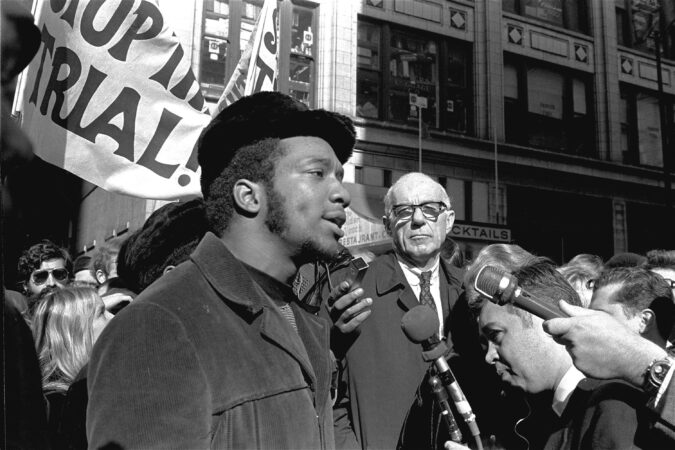
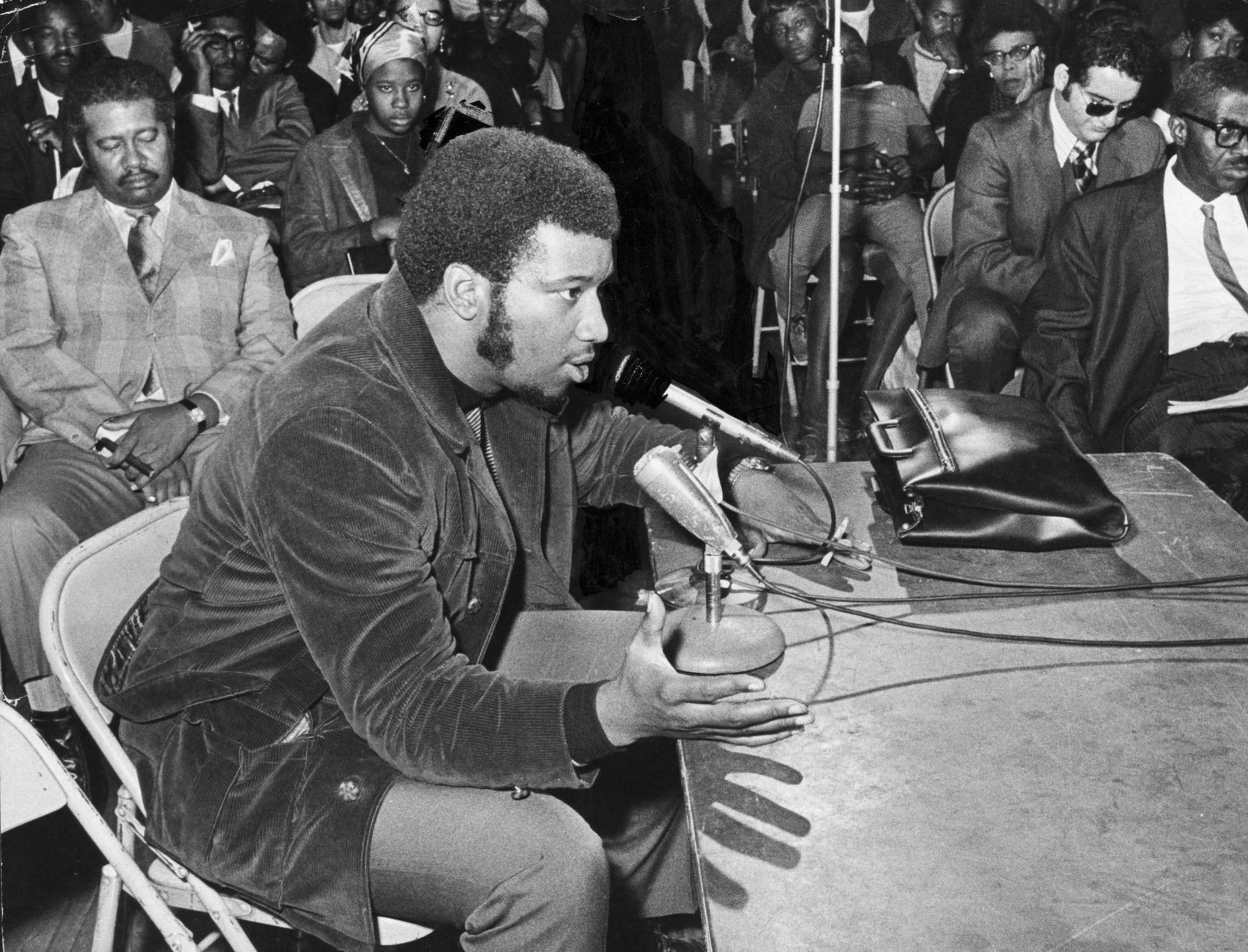
    Hampton was 21, a year younger than I was then. But he already was a magnetic, charismatic figure on the left, clearly destined for leadership beyond the Panthers and Illinois.

    Precisely for that reason, Hampton had become a target of J. Edgar Hoover’s FBI in its effort to control and wipe out the Panthers, a group that he labeled “the greatest threat to the internal security of the country.”

    I was a graduate student at the University of Chicago, looking for a purpose in life that academia was not providing. Suddenly, the death of Hampton — actually, the assassination of Hampton — gave me that purpose.

    Just as many young Americans watched the events of Sept. 11, 2001, and felt compelled to join the military, I watched the aftermath of Hampton’s death and was moved to become a journalist.

    At 21, Fred Hampton was already a magnetic, charismatic figure on the left, clearly destined for leadership beyond the Black Panthers, Don Wycliff writes.

    I had been habituated to the importance of news since I was a child in rural East Texas, listening with my maternal grandfather to Gabriel Heatter’s quavering delivery of the news each evening on the radio.

    In high school, I read and watched in terror as the Cuban missile crisis unfolded. And the year before my high school graduation, I watched faithfully as CBS’s Roger Mudd delivered daily reports on the progress through Congress of the Civil Rights Act of 1964.

    But even as I progressed through college at the University of Notre Dame, it never occurred to me that a Black kid like me could become a journalist. And then came Dec. 4, 1969.

    The Chicago media were all over the Hampton story, and I was into every news story and broadcast about the case.

    One station broadcast a police reenactment of the raid and shootout.

    Five daily newspapers — including the legendary Black publication the Chicago Daily Defender (which, a few years prior, had been led by an editor named Chuck Stone) — published editions virtually around the clock, constantly trying to advance the story.

    On Dec. 4, 1969, police gathered at 2337 W. Monroe St. on Chicago’s West Side, where Fred Hampton and another member of the Black Panthers were killed.

    Eventually, it became clear that there had been no “shootout” at all, but a shoot-in by the police. The clincher was a front-page photo in the Dec. 12 editions of the Chicago Sun-Times under a headline that read, “Those ‘bullet holes’ aren’t.”

    The police had put out a similar photo earlier, claiming to show holes in a door caused by bullets fired from within the Panther apartment. The Sun-Times photo showed they were actually rusted nail heads.

    What all of this demonstrated to me was the power of journalism to expose truth, to lay bare hidden facts for examination by citizens of a democracy. And after seeing it done, I knew I wanted to do it, too.

    The Hampton case was the catalyst for my desire to do journalism, but there have been others.

    Bob Woodward and Carl Bernstein inspired a whole generation of journalists with their coverage of Richard Nixon’s Watergate scandal.

    And in cities and towns and hamlets all across the country, journalists have unearthed inconvenient truths that people in power would have preferred remained buried — and that undoubtedly inspired others who wanted to do the same.

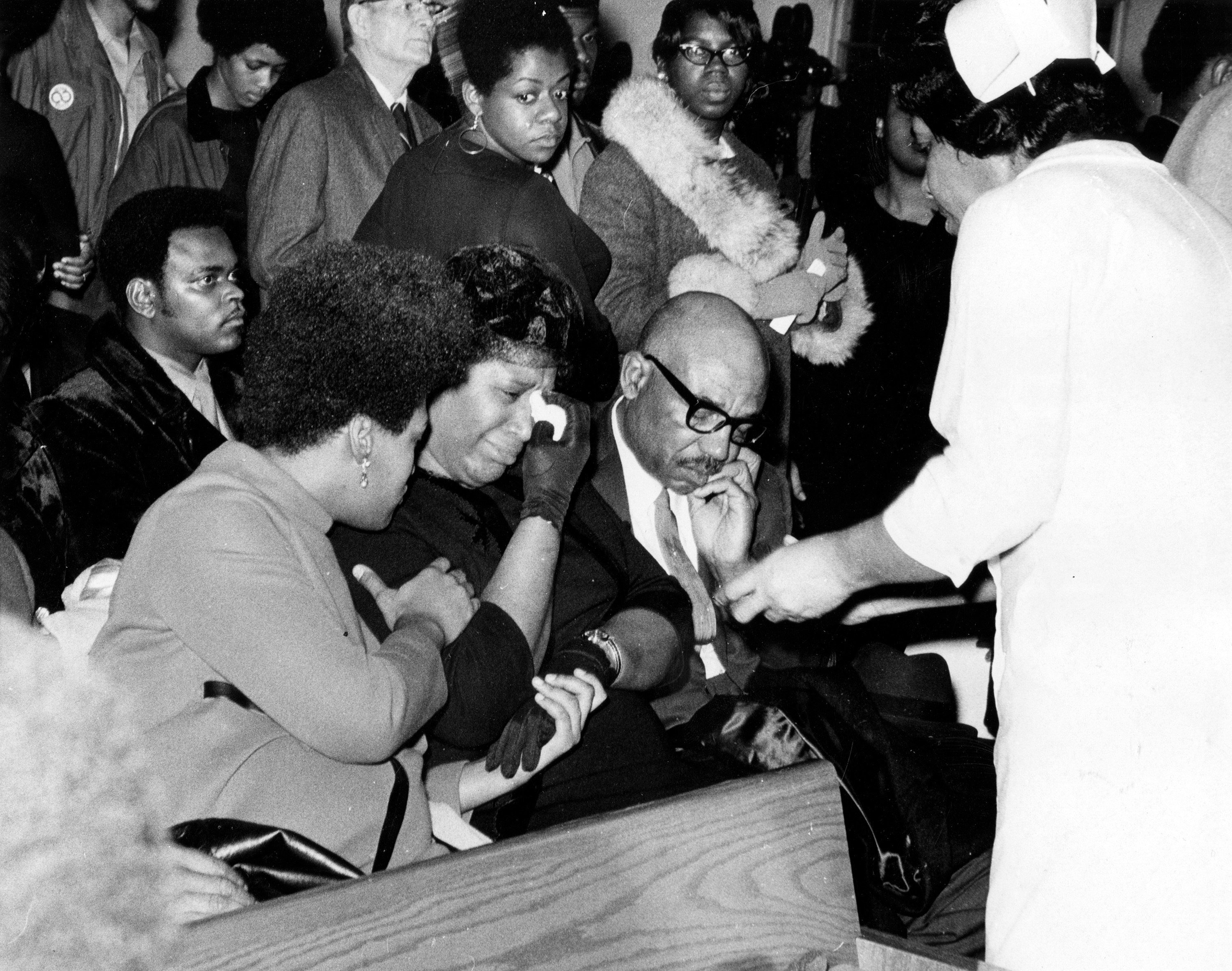
    The parents of Fred Hampton, Mr. and Mrs. Francis Hampton (center with tissue-second and third from left), weep during a memorial service for their son on Dec. 9, 1969, in Melrose Park, Ill.

    Our current politics provide what some might call a “target-rich environment” for aggressive, probing journalism. The undeclared war against alleged Venezuelan drug runners on the high seas of the Caribbean is but the most obvious example.

    But there are plenty of abuses short of lethal ones that cry out for investigation and exposure. In a world where those in power see disagreement as disloyalty, protest as terrorism, and constitutional mandates like due process as dispensable annoyances, the need for passionate, implacable, even clamorous, journalism endures. And will, I suspect, for at least another 56 years.

    Don Wycliff, a former editorial page editor at the Chicago Tribune, is the author of “Black Domers: African-American Students at Notre Dame in Their Own Words” and the recently released memoir, “Before the Byline: A Journalist’s Roots.”

  • 🔵 A progressive blueprint for 2026 | Morning Newsletter

    🔵 A progressive blueprint for 2026 | Morning Newsletter

    Good morning, Philly. We’re in for some clouds today.

    The political operatives who powered the successful Mamdani and Fetterman campaigns are trying to win House seats for Democrats in Pennsylvania.

    And Northeast Philly’s Franklin Mall — aka Franklin Mills — is for sale after years of plummeting valuation, occupancy, and visitor numbers.

    — Julie Zeglen (morningnewsletter@inquirer.com)

    If someone forwarded you this email, sign up for free here.

    ‘A new road map’ for Pa. political campaigns

    A Pennsylvania-based consulting firm that has worked with the likes of New York City Mayor-elect Zohran Mamdani is setting its sights on 2026, and the Keystone State.

    🔵 Led by longtime Democratic political operatives, FIGHT has found success in helping progressive candidates win high-profile races such as Mamdani’s, and flipping Republican-held seats such as the one Sen. John Fetterman took in 2022.

    🔵 They’re now focused on two swingy congressional seats — one in Northeast Pennsylvania, one in the Lehigh Valley — with an aim to craft buzzy campaigns that reflect the communities they’re running in.

    🔵 “New York isn’t Pennsylvania and Pennsylvania isn’t New York,” cofounder Rebecca Katz, a Central High graduate, said of lessons learned from Mamdani’s win. “But there’s a universal desire for authentic candidates laser-focused on the affordability crisis.”

    Politics reporter Julia Terruso has the story on FIGHT’s hyperlocal tactics.

    In other political news: Gov. Josh Shapiro lashed out over former Vice President Kamala Harris’ portrayal of his interview to become her 2024 running mate, calling Harris’ retellings “complete and utter bulls—” intended to sell books.

    Mills madness

    Another regional shopping destination is facing change.

    A real estate listing suggests the sprawling, 36-year-old Franklin Mills in the Far Northeast could be redeveloped for industrial and office uses. Experts say it could become warehouse or residential space, too, as is the plan for other area malls.

    The building could also remain an outlet mall, though foot traffic, sales, and occupancy have been dropping for years. And demolition is on the table: “Ultimately, it may just be a piece of land” for sale, one expert told The Inquirer.

    Commercial reporter Jake Blumgart has more on the once-bustling mall’s possible fates.

    What you should know today

    • More than 65,000 immigrants are being held in federal detention, a two-thirds increase from when President Donald Trump took office, new data show.
    • The Trump administration has threatened to cut food aid funds for Democrat-run states if they don’t release recipient data, prompting outrage in New Jersey and Pennsylvania.
    • A Philadelphia man was sentenced to 33 months in federal prison for making violent and racist threats to two Black women.
    • Gov. Phil Murphy has asked the Indian government to extradite an accused killer to South Jersey to face criminal charges in the 2017 death of a woman and her son.
    • A former Montgomery County executive says in a lawsuit that he was fired because of mental health accommodation requests, and because he was whistleblowing on wrongdoing.
    • The Philadelphia Parking Authority would renovate and run the abandoned Greyhound bus terminal on Filbert Street under legislation approved Wednesday by a key City Council committee. And a Philly tax loophole allows refunds for people who steal homes, but a new Council bill would direct that money to victims.
    • Philly-based restaurateur Stephen Starr is facing union-busting charges brought by the National Labor Relations Board over activity at his Washington, D.C., steakhouse.
    • Nearly a year after local Whole Foods workers voted to form a union, their union’s ability to move forward and negotiate a contract is locked in a procedural standstill.
    • A majority of Chinatown’s new gains in population and business have resulted in a decline in the share of Asian residents amid concerns over gentrification and displacement, a new report found.

    Quote of the day

    Kevin Patullo’s Moorestown home was vandalized with eggs early Saturday, just hours after the Eagles lost to the Chicago Bears and fell to 8-4. The coach on Monday expressed a desire to move forward from the incident and ongoing fan criticism and direct his attention to the next game.

    🧠 Trivia time

    Which of these young Philadelphians is not included on the 2026 Forbes 30 Under 30 list?

    A) Textile artist Qualeasha Wood

    B) ChompSaw cofounder Kausi Raman

    C) Social media influencer Brandon Edelman

    D) Eagles running back Saquon Barkley

    Think you know? Check your answer.

    What we’re …

    🥄 Excited about: December’s Philly-area restaurant forecast, which includes a honky-tonk and a Michelin star-winner’s third venture.

    🏥 Debunking: Five autism myths with a CHOP expert.

    🩰 Seeing: Four exciting Nutcracker versions staged in Philadelphia this season.

    🌲 Ordering: A fresh-cut Christmas tree for delivery.

    📓 Considering: Whether a humanities degree is a smart investment, actually.

    🧩 Unscramble the anagram

    Hint: A local performer will compete in its 18th season

    CAPSULAR GUARDER

    Email us if you know the answer. We’ll select a reader at random to shout out here.

    Cheers to Amber Ovens, who solved Wednesday’s anagram: Neshaminy. A graduate of the Bucks County community’s eponymous high school cofounded Shwego, a start-up that tracks trucks and tradespeople.

    Photo of the day

    Conductor Geoffrey McDonald leads the Opera Philadelphia orchestra in the Wanamaker Grand Court during a “Pipe Up!” event on Tuesday.

    🎄 One last joyous thing: The former Macy’s space has come back to life with the return of the holiday lights show, Opera Philadelphia’s Pipe Up! series, and other festive events scheduled through December. I’m looking forward to visiting with my own family soon.

    P.S. Looking for a fantastical lights display in the suburbs? Check out the 50th annual Festival of Lights, returning to Media this week.

    Have a good one. Paola has you covered tomorrow through the weekend.

    By submitting your written, visual, and/or audio contributions, you agree to The Inquirer’s Terms of Use, including the grant of rights in Section 10.

  • Seeking answers on autism: A CHOP expert debunks the top 5 myths | Expert Opinion

    Seeking answers on autism: A CHOP expert debunks the top 5 myths | Expert Opinion

    Several parents asked for my opinion when the Food and Drug Administration recently announced a warning label on acetaminophen for its alleged link to autism, and when the agency supported the use of leucovorin as an autism treatment despite a lack of scientific evidence. And I am sure I will get questions about the Centers for Disease Control and Prevention’s new claim on its website that the link between vaccines and autism cannot be “ruled out.”

    As a developmental and behavioral pediatrician who cares for many children on the autism spectrum, I love to talk with families about what they’re hearing.

    Families with children on the spectrum can feel whiplashed by online “influencers” hawking different theories, products, and alternative treatments. These families want to do everything they can to support their children, and so they seek out information everywhere they can find it.

    Families look for alternatives because many of our current treatments are not effective for all children, and even those that work well can require intensive effort from teachers, therapists, and caregivers. As a clinician, I try to share the available evidence with families so they can make informed decisions.

    Hype for particular treatments and theories about autism’s rise are not new. But when the highest officials in government shout about autism from the rooftops and the internet is awash in “information” untethered from scientific proof, it is more important than ever for clinicians and public health officials to approach parents with compassion, honesty, and evidence.

    At Children’s Hospital of Philadelphia (CHOP), Pediatric Health Chat is tracking medical myths and rumors, including those about autism. Based on that data and conversations with parents, here are the top five things I wish my families knew:

    1. Autism is not an epidemic

    While it is true the number of children with autism spectrum disorder continues to rise across all sociodemographic groups, there is no evidence a single environmental toxin or other factor is the cause. In fact, the strongest studies show that most of the rise in autism over the past 20 years is due to increased recognition of the condition that has meant earlier, incorrect diagnoses can be set aside; and the fact that more characteristics and behaviors are known to be signs of autism. So, while autism diagnoses are rising, there is no evidence of an epidemic — autism is growing, but it’s not a sudden outbreak like COVID .

    2. Vaccines do not cause autism

    The myth that vaccines cause autism originated in a British study back in the 1990s on just 12 children that was so fraudulent, the journal that published it wound up retracting it. Some people continue to insist that because autism has continued to increase — and new vaccines have been developed — there must be some kind of a link. But just because two things occur at the same time does not mean that one causes the other. (A classic example is that both ice cream purchases and drownings increase in the summer, but no one is claiming that ice cream causes drowning!)

    As CHOP’s Vaccine Education Center lays out, there have been numerous, well done studies that have not found a link between vaccines and autism. Vaccines save lives, and the evidence in favor of vaccine safety with respect to autism is overwhelming. I encourage all of my patients’ families to vaccinate their children. I am proud to say that I vaccinate my own children following recommended schedules — to protect them from preventable infections.

    3. Acetaminophen does not cause autism

    While a few small studies have found an association between prenatal acetaminophen use and autism, the largest and strongest studies have found no association. Studies that do not include factors like why the pregnant person is taking acetaminophen or whether siblings are on the autism spectrum may inaccurately conclude that acetaminophen is a cause when it is not. The truth is that high fevers during pregnancy are known to be dangerous, and acetaminophen, the active ingredient in Tylenol, is the safest medication we have for treating fever. I would have no hesitation recommending acetaminophen during pregnancy as needed.

    4. Leucovorin is not a proven treatment for autism

    Last spring, a news story appeared about a child who became more verbal after taking leucovorin (also known as folinic acid, a medication that is used for cancer patients undergoing chemotherapy). Since that time, requests from families in the autism community to begin leucovorin have skyrocketed. Yet the evidence for leucovorin’s effectiveness is incredibly limited. For example, children in placebo groups — those that didn’t get any leucovorin — showed similar gains as those that got it. Some families dropped out of the trials because their children became more aggressive while receiving leucovorin. We need larger, well designed, randomized control trials before I would feel comfortable recommending leucovorin to my patients.

    5. So-called facilitated communication does not help children with autism

    Several decades ago, facilitated communication (in which a facilitator touches a patient to “help them spell” on a keyboard or letter board) was thoroughly debunked by studies proving the facilitator was guiding responses, not helping the person to truly communicate their own thoughts.

    Yet facilitated communication (FC) has made a comeback in the form of other “therapies” like supported typing and through the “Telepathy Tapes” podcast. However, these are just FC by another name and are also unsupported by evidence.

    On the other hand, augmentative or alternative communication, through which individuals themselves use alternative strategies or “talker” devices to express themselves (instead of having a facilitator physically help them), is strongly supported by evidence. While I understand why families want to give their children every opportunity to express themselves, I strongly urge them to go with the methods that are proven to help them achieve their goals.

    Most troubling to me is that woven through all these myths and misinformation is the implicit belief that individuals with autism lack value, or that they cannot lead happy, successful lives. While some individuals on the autism spectrum struggle to live independently and may have some challenging behaviors, all these people are worthy of dignity and respect. Continuing to find ways to best support people with autism and their families, to allow them to reach their highest potential, needs to be the focus.

    Editor’s note: Pediatric Health Chat is an online initiative at Children’s Hospital of Philadelphia taking aim at the latest myths and misconceptions about children’s health. Kate E. Wallis, MD, MPH, is a developmental behavioral pediatrician with the Division of Developmental and Behavioral Pediatrics at Children’s Hospital of Philadelphia.