Flying without a REAL ID is about to get expensive.
The Transportation Security Administration announced a new $45 fee for travelers going through security checkpoints without a valid REAL ID or other acceptable form of identification, such as a valid passport or passport card.
It’s part of the agency’s next phase of its long-winded rollout of REAL IDs as the federal identification standard.
Here’s what you need to know.
What is a REAL ID?
REAL IDs were created following the Sept. 11, 2001, attacks to enhance security measures. They’re treated as a universal form of federally accepted identification and are used for boarding domestic flights and entering certain federal buildings.
Enforcement for using them was delayed because of the COVID-19 pandemic, but ramped back up this year.
The agency says about 94% of travelers already use a REAL ID or another acceptable form of identification.
What can I do with a REAL ID?
✅ Board domestic flights
✅ Enter federal buildings that require ID
✅ Access military bases
How much does a REAL ID cost?
A REAL ID in Pennsylvania costs a $30 onetime fee in addition to the standard renewal fee for your license or state ID ($39.50 in Pennsylvania).
This means it’s cheaper than TSA’s new $45 fee.
When does TSA implement the $45 fee?
Starting Feb. 1, 2026, travelers without a REAL ID or passport will be required to pay $45.
What will the $45 fee cover?
The $45 will cover travelers going through a biometric or biographic security checkpoint.
The agency said the fee covers administrative and IT costs associated with the ID verification program. It added that the purpose of the fee is to make sure the expense is covered by the specific traveler, not taxpayers.
The fee will also apply to travelers who arrive at the airport having lost or reported stolen their REAL ID or passport.
The fees cover access through the TSA checkpoint for up to 10 days. After that, if the person is traveling without a REAL ID or passport again, they’ll have to pay the fee again.
Can I pay the fee ahead of time?
Yes. And it’s recommended whenever possible.
Individuals traveling without a REAL ID or passport can visit TSA.gov and follow prompts to verify their identity and pay the $45 fee. From there, they’ll be emailed a confirmation to show TSA at the checkpoint.
The agency warns that travelers in the checkpoint line without a proper form of ID will be sent out of line to complete the online form.
How can I avoid the fee?
The most direct way to avoid the $45 fee starting next year is by ensuring that anyone traveling has either a REAL ID or valid passport before their next domestic flight.
For Pennsylvania readers, PennDot‘s website has additional details about applying, requirements, making an appointment, and more for a REAL ID. In New Jersey, information is available at the Motor Vehicle Commission website.
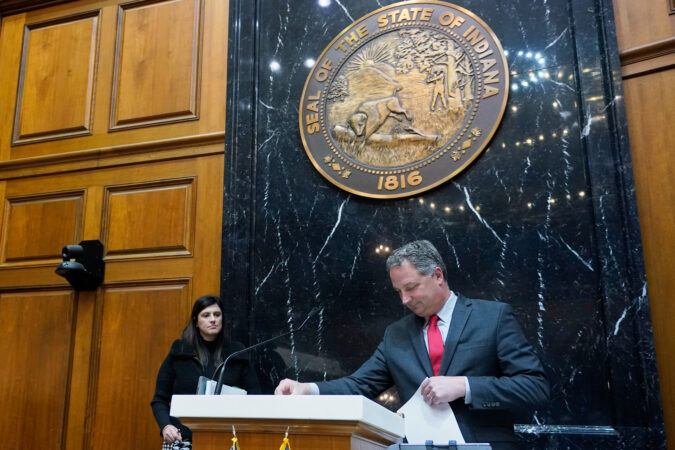
Indiana House members are expected to press forward Monday with redrawing the state’s congressional districts in Republicans’ favor, increasing pressure on their defiant counterparts in the GOP-led Senate to meet President Donald Trump’s demands.
Republicans who control the House have said there’s no doubt that redistricting will pass that chamber. But the fate of any proposal remains uncertain in the Senate. Republicans control that chamber, but caucus members have resisted pressure to redistrict for months.
Senate leadership recently backed off its previous intentions not to meet at all, agreeing to convene next Monday. However, it’s still unclear whether enough senators will support a new map.
Republicans hold seven of Indiana’s nine U.S. House seats. Trump and other Republicans want to make the map 9-0 in the GOP’s favor, seeking to give the party two extra seats in the 2026 elections that will determine control of the U.S. House. Democrats only need to flip a handful of seats to overcome the Republicans’ current margin.
Indiana House Republicans published a draft of a map Monday morning still featuring nine congressional districts, but with new boundaries designed to oust the state’s two Democratic U.S. House members.
The city of Indianapolis would be split among four congressional districts, a major change to the current map where the city makes up the entirety of the 7th District, which reliably backs Democrats.
“It’s clear these orders are coming from Washington, and they clearly don’t know the first thing about our community,” longtime U.S. Rep. André Carson, a Democrat who represents Indianapolis, said in a statement.
Indiana’s other current Democratic district is in the state’s northwest corner near Chicago. The new map would instead group a large portion of Republican counties in northern Indiana with the cities of East Chicago and Gary to make a new 1st Congressional District.
The state House will meet Monday afternoon to begin the legislative process to advance the new map.
Indiana lawmakers have been under mounting pressure from the White House to redistrict, as Republicans in Texas, Missouri, Ohio, and North Carolina have done. To offset the GOP gains, Democrats in California and Virginia have moved to do the same.
But some Indiana Republicans have been far more resistant. Republicans in the state Senate rebelled against Republican Gov. Mike Braun in November and said they would not attend a special session he ordered on redistricting.
The chamber’s top Republican, President Pro Tem Rodric Bray, at the time said the Senate did not have the votes. A spokesperson for Bray’s office did not respond Friday when asked if that is still the case.
Meanwhile, Trump attacked Indiana senators on social media, particularly Bray. He swore to endorse primary opponents of defecting senators. A spree of threats and swatting attempts were subsequently made against lawmakers who either said they do not support redistricting or have not taken a stance. At least one lawmaker in favor of redistricting and Braun were also threatened.
Last week, the House announced plans to convene in Indianapolis on Monday.
“All legislative business will be considered beginning next week, including redrawing the state’s congressional map,” House Speaker Todd Huston said in a statement last week.
The Indiana Senate, where several lawmakers objected to leadership’s refusal to hold a vote, then said members would reconvene Dec. 8.
“The issue of redrawing Indiana’s congressional maps mid-cycle has received a lot of attention and is causing strife here in our state,” Bray said in a statement Tuesday. He said the Senate will finally decide the matter this month.
Mid-cycle redistricting so far has resulted in nine more congressional seats that Republicans believe they can win and six more congressional seats that Democrats think they can win, putting the GOP up by three. However, redistricting is being litigated in several states, and there’s no guarantee that the parties will win the seats they’ve redrawn.
A federal appeals court in Philadelphia ruled Monday that President Donald Trump’s attempts to keep his former personal lawyer Alina Habba as New Jersey’s U.S. attorney have been illegal.
The decision was unanimous from a Third Circuit Court of Appealspanel of three judges, including two appointed by former Republican President George W. Bush and one appointed by former Democratic President Barack Obama.
It supports a federal district court judge’s ruling in August that determined the Trump administration kept Habba in her powerful role unlawfully since her temporary term expired in July. The top federallaw enforcement role in the state is charged with enforcingU.S.criminal and civil law.
The Monday ruling is the first federal appeals court decision on Trump’s efforts to sidestep the Senate confirmation process for U.S. attorneys.
That makes it “critically important,” saidCarl Tobias, a professor at theUniversity of Richmond School ofLaw who specializes in federal judicial selection.
The Trump administration can either bring the case to the Supreme Court or petition for all the appeal court’s judges to hold a rehearing through a rare process, he said.
“I assume the Justice Department will … go to the Supreme Court, ask for a stay and continue to litigate it,” Tobias said. “Whether the justices will take it is not clear.”
Trump nominated Habba to the role in March through an interim appointment that was supposed to last no more than 120 days.
Wanting to instill his loyalist for a full four-year term, the president sent Habba’s name to the Senate over the summer for confirmation. But U.S. Sens. Andy Kim and Cory Booker, both New Jersey Democrats, said they opposed Habba in the position in part because she lacked experience and politicized the office.
The Senate traditionally defers to the home state senators for these nominations, putting that path out of the picture.
The two Democratic senators said in a joint statement Monday afternoon that the appeals court decision “vindicates concerns we have long raised about the extraordinary and unlawful steps taken by the Trump Administration to keep Habba in office without Senate confirmation.”
Kim and Booker urged Trump’s administration to “follow the long-established process” to “restore public trust” in the position.
My joint statement with @SenBooker on today's unanimous court ruling that affirmed Alina Habba has been unlawfully serving as U.S. Attorney for the District of New Jersey. pic.twitter.com/ck7t94Jqut
Judge D. Michael Fisher, a Bush appointee, acknowledged that “the current administration has been frustrated by some of the legal and political barriers to getting its appointees in place” in the panel’s Monday opinion.
“Where a vacancy exists, Congress has shown a strong preference that an acting officer be someone with a breadth of experience to properly lead the office,” he also stated in the roughly 30-page appellate court opinion.
New Jerseyans and U.S. attorney employees “deserve some clarity and stability,” the opinion also said.
Some criminal cases have slowed down and some grand jury proceedings have been halted in New Jersey’s federal courts due to Habba’s unclear status, the New York Times reported.
Habba had no prosecutorial experience prior to her appointment and most of her experience was in state courts, not federal. She represented Trump in personal cases before his second term and was involved in both his campaign and administration prior to her appointment. She previously worked as a partner in a small law firm near his Bedminster golf course.
She said after her appointment that she wanted to help “turn New Jersey red” in her role, which is supposed to be apolitical.
In the role, Habba brought a trespassing charge against Newark Mayor Ras Baraka, a gubernatorial candidate at the time, who was arrested outside an ICE facility. Those charges were quickly dropped, drawing a scolding from a federal judge who called the situation “worrisome” and “embarrassing” for Habba.
Habba later charged Democratic U.S. Rep. Monica McIver with assault stemming from the same scuffle with ICE officers, a rare federal criminal case against a sitting member of Congress other than for corruption. McIver denied the charges, which she has called political. She pleaded not guilty and the case is pending.
New Jersey Gov.-elect Mikie Sherrill said in a statement that the judges’ decision “makes clear that the rule of law applies to everyone, regardless of who they are.”
“The Trump administration should not be playing political games with the U.S. Attorney’s Office,” she said. “We need a new candidate in that post as soon as possible, so the office can focus on serving the people of New Jersey, not the president.”
Trump and Habba took another blow in an Atlanta-based appeals court last week when it upheld penalties nearing $1 million against them for making “frivolous” legal arguments against his political enemies.
Trump is running into similar roadblocks elsewhere in his pursuit of instilling loyalists into prosecutorial positions and sidestepping Senate approval.
Last week, a federal judge dismissed criminal cases against former FBI Director James Comey and New York Attorney General Letitia James after determining that the U.S. attorney for the Eastern District of Virginia, who brought the charges in both cases at Trump’s urging, was unlawfully appointed by his administration.
The U.S. Justice Department has not yet publicly commented on that matter.
In September in Nevada, the Trump administration was found to have kept the acting U.S. attorney in her position for too long. In October, a federal judge ruled the same for the pick in Los Angeles.
Mars Co-Op, the Philadelphia rapper known for the standout verse he contributed to The Roots’ song “Clones” from 1996, has died.
His death last week was confirmed on Sunday by Dice Raw, the Philly rapper who is a long-standing member of the extended Roots family, and was first reported on AllHipHop.com.
Mars Co-Op, who was born Phillip Blenman, was raised in the East Logan section of Philadelphia. He brought a toughness and street-wise energy to The Roots’ third album, Illadelph Halflife.
He is featured on the recording for “Clones,” a single from Illadelph in which he trades verses about urban violence with principal Roots rapper Tariq “Black Thought” Trotter and Dice Raw.
“I try to tell ya,” he rapped. “Don’t let these street … fail ya / The way [people] by gettin’ clapped, [will] scare ya!”
The video for “Clones” was shot in Brooklyn’s Greenpoint neighborhood and features a young Trotter and Roots drummer Ahmir “Questlove” Thompson, as well as other band members including the late bassist Leonard “Hub” Hubbard.
“I grew up in the streets. … I ran away from home, got out on the streets, shooting [people], doing all types of [stuff]. Luckily, at some point in my life, I did have a father. The music saved my life,” Mars Co-Op, who also went by Black Caesar, told AllHipHop.com in 2012.
“We brought the streets to The Roots. Early on, they was doing street festivals and stuff, and then me and Malik [B] was doing stuff that our peoples liked. Me and Dice was from Logan, so our style was different. We was that street stuff,” he told the website.
After Illadelph Halflife, Mars and Malik B left The Roots and formed the label Tali Up Boyz Records. Malik B died in July 2020 at age 47.
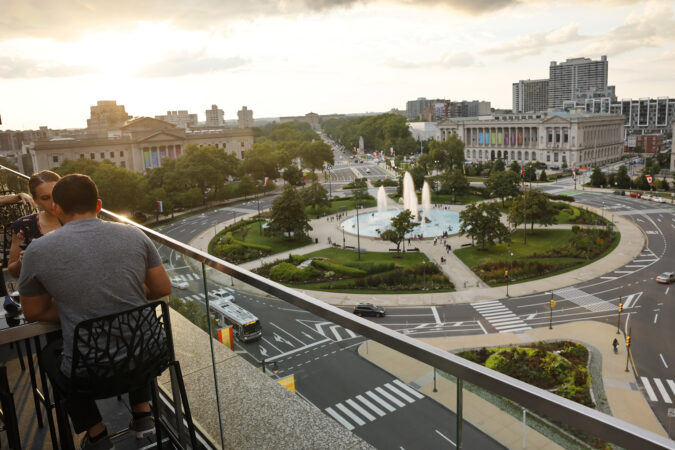
Drivers in Philadelphia’s Logan Square neighborhood should expect new delays as the city continues to prepare for America’s 250th birthday next summer.
Construction is set to cause lane closures in both directions on weekdays from Dec. 1 until May 19, Pennsylvania Department of Transportation officials said in a statement.
“This project will improve the safety and accessibility for Logan Square residents and the increased number of visitors during 2026 events,” city officials said Saturday.
Drivers won’t be able to use the interior lane around Logan Circle, the left inbound lane on the Benjamin Franklin Parkway, and the left lane on 19th Street north of the circle, according to the city.
The work is set to occur between 7 a.m. and 3:30 p.m. on weekdays, according to PennDot, and will be weather dependent.
“Motorists are advised to allow extra time when traveling through the work area because backups and delays will occur,” PennDot officials said.
During construction, pedestrians will also be unable to use the sidewalk around the circle or access Swann Memorial Fountain at its center, according to the city.
The beloved 101-year-old fountain hasn’t been fully operational since 2023 due to vandalism. Philadelphia Parks and Recreation Commissioner Susan Slawson said in September that the city is making repairs, with plans to have the fountain completely restored by May 2026.
NEW YORK — Luigi Mangione appeared in court Monday seeking to bar evidence from his state trial over the killing of UnitedHealthcare CEO Brian Thompson, including the gun that authorities say matches the one used in the brazen New York City attack.
Among the evidence Mangione’s lawyers want to prevent the Manhattan District Attorney’s Office from presenting to jurors are a 9 mm handgun that prosecutors say matches the one used in the Dec. 4, 2024, killing and a handwritten notebook in which they say Mangione described his intent to “wack” a health insurance executive.
After getting state terrorism charges thrown out in September, the defense lawyers are zeroing in on what they say was unconstitutional conduct that tainted his arrest and threatens his right to a fair trial.
They contend that the gun and other items should be excluded because police lacked a warrant to search the backpack in which they were found. They also want to suppress some of Mangione’s statements to police, such as allegedly giving a false name, because officers started asking questions before telling him he had a right to remain silent.
Eliminating the gun and notebook would be critical wins for Mangione’s defense and a major setback for prosecutors, depriving them a possible murder weapon and evidence they say points to motive. Prosecutors have quoted extensively from Mangione’s diary in court filings, including his praise for Unabomber Ted Kaczynski.
In it, prosecutors say, Mangione mused about rebelling against “the deadly, greed fueled health insurance cartel” and said killing an industry executive “conveys a greedy bastard that had it coming.”
Court officials say the hearings could last more than a week, meaning they would extend through Thursday’s anniversary of the attack.
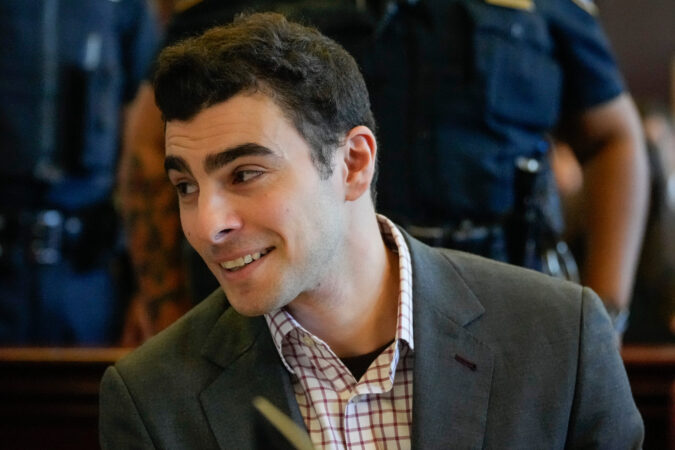
Mangione was allowed to wear normal clothing to the hearings instead of a jail uniform. He entered the courtroom Monday in a gray suit and a button-down shirt with a checkered or tattersall pattern. Court officers removed his handcuffs to allow him to take notes.
The prosecution’s first witness, Sgt. Chris McLaughlin of the New York City Police Department’s public affairs office, testified about efforts to disseminate surveillance images of the suspect to the news media and on social media in the hours and days after the shooting.
To illustrate the breadth of news coverage during the five-day search for the shooter, prosecutors played a surveillance video of the shooting that aired on Fox News Digital, footage from the network of police divers searching a pond in Central Park and clips from the network that included images of the suspected shooter that were distributed by police.
Mangione looked up at a courtroom monitor as video of the shooting played, but he didn’t appear to have any reaction.
A few dozen Mangione supporters watched the hearing from the back of the courtroom. One wore a green T-shirt that said: “Without a warrant, it’s not a search, it’s a violation.” Another woman held a doll of the Luigi video game character and had a smaller figurine of him clipped to her purse.
Mangione, 27, has pleaded not guilty to state and federal murder charges. The state charges carry the possibility of life in prison, while federal prosecutors are seeking the death penalty. Neither trial has been scheduled yet.
Mangione’s lawyers want to bar evidence from both cases, but this week’s hearings pertain only to the state case. The next hearing in the federal case is scheduled for Jan. 9.
Defense lawyer Marc Agnifilo told a judge in an unrelated matter last week that Manhattan prosecutors could call more than two dozen witnesses.
Thompson was killed as he walked to a Manhattan hotel for his company’s annual investor conference. Surveillance video showed a masked gunman shooting him from behind. Police say “delay,” “deny,” and “depose” were written on the ammunition, mimicking a phrase used to describe how insurers avoid paying claims.
Mangione, the Ivy League-educated scion of a wealthy Maryland family, was arrested five days later at a McDonald’s in Altoona, Pa., about 230 miles west of Manhattan.
Prosecutors in the state case have not responded to the defense’s written arguments.
An officer searching a backpack found with Mangione was heard on a body camera recording saying she was checking to make sure there “wasn’t a bomb” in the bag. His lawyers argue that was an excuse “designed to cover up an illegal warrantless search of the backpack.”
Federal prosecutors, fighting similar claims in their case, have said in court filings that police were justified in searching the backpack to make sure there were no dangerous items. His statements to officers, federal prosecutors said, were made voluntarily and before he was taken into police custody.
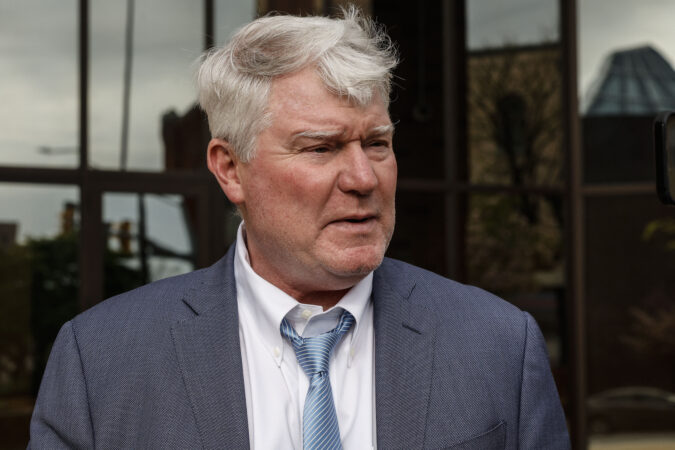
Convicted former labor leader John J. Dougherty is again asking a federal judge to cut short his six-year prison term, this time because he says the recent death of his father-in-law has left his gravely ill wife without a caregiver.
Dougherty made the request in a brief filed last month with U.S. District Judge Jeffrey L. Schmehl, writing that his wife, Cecilia — who for years has suffered from a debilitating brain injury — has been left “entirely alone and without any capable caregiver” since her father died from pancreatic cancer on Nov. 10.
Dougherty has previously argued that he should be granted compassionate release and allowed to serve the remainder of his sentence on house arrest to oversee his wife’s care — a request federal prosecutors have opposed.
In the latest request, Dougherty’s attorney, George Bochetto, wrote that Dougherty’s father-in-law, Joseph Conroy, had been serving as Cecilia Dougherty’s primary caregiver despite his own poor health and that Conroy’s death is “precisely the type of development” that warrants a change to Dougherty’s sentence.
Dougherty, Bochetto wrote, “remains the only person able and willing to provide his wife’s necessary care. No one besides Mr. Dougherty can fill the detrimental need that Mrs. Dougherty requires for survival.”
Federal prosecutors, however, said that Dougherty had previously asserted that Conroy was incapable of serving as Cecilia’s primary caretaker and that his newest motion for relief “directly contradicts” the representations he made in the last one.
“In short, the unfortunate passing of Mr. Conroy has no bearing at all on the circumstances,” prosecutors wrote in a reply brief filed last week.
Dougherty, 65, was once one of the state’s most powerful political figures, serving as the charismatic leader of Local 98 of the International Brotherhood of Electrical Workers with a wide range of connections in City Hall and Harrisburg.
Dougherty’s latest request for relief came several months after he first asked Schmehl for compassionate release.
In August, Bochetto filed an emergency brief saying that a trust fund established to pay for Cecilia Dougherty’s care was about to run out of money and that the couple’s adult daughters were not equipped to serve as permanent caregivers.
It also said Conroy, “once a limited source of support, is now medically incapacitated and permanently unable to contribute to her care in any way.”
Beyond detailing issues around the health of Dougherty’s wife, that filing said that Dougherty had also effectively run out of money and assets since he began serving his sentence at a federal penitentiary in Lewisburg and that he’d suffered from several new health issues while behind bars, including a chronic foot infection that made it hard for him to walk.
Prosecutors at the time wrote that they were sympathetic to the plight of Dougherty’s wife but that his absence from her life “does not distinguish this case from that of countless defendants whose loved ones suffer as a result of their crimes.”
It was not immediately clear when Schmehl might rule on Dougherty’s requested relief, or if he might take any additional action — such as scheduling a hearing — before doing so.
Talk about a great kick off to the holiday shopping season.
“I’m honored, proud, and excited,” Ellen Shepp said Monday morning. “I mean … I’m really over the moon.”z
Walking into a great clothing store, New York Times cultural trend reporter Steven Kurutz said, is like being “transported to a different world.” It “will make you think about who you are — and may change that perspective in real time.”
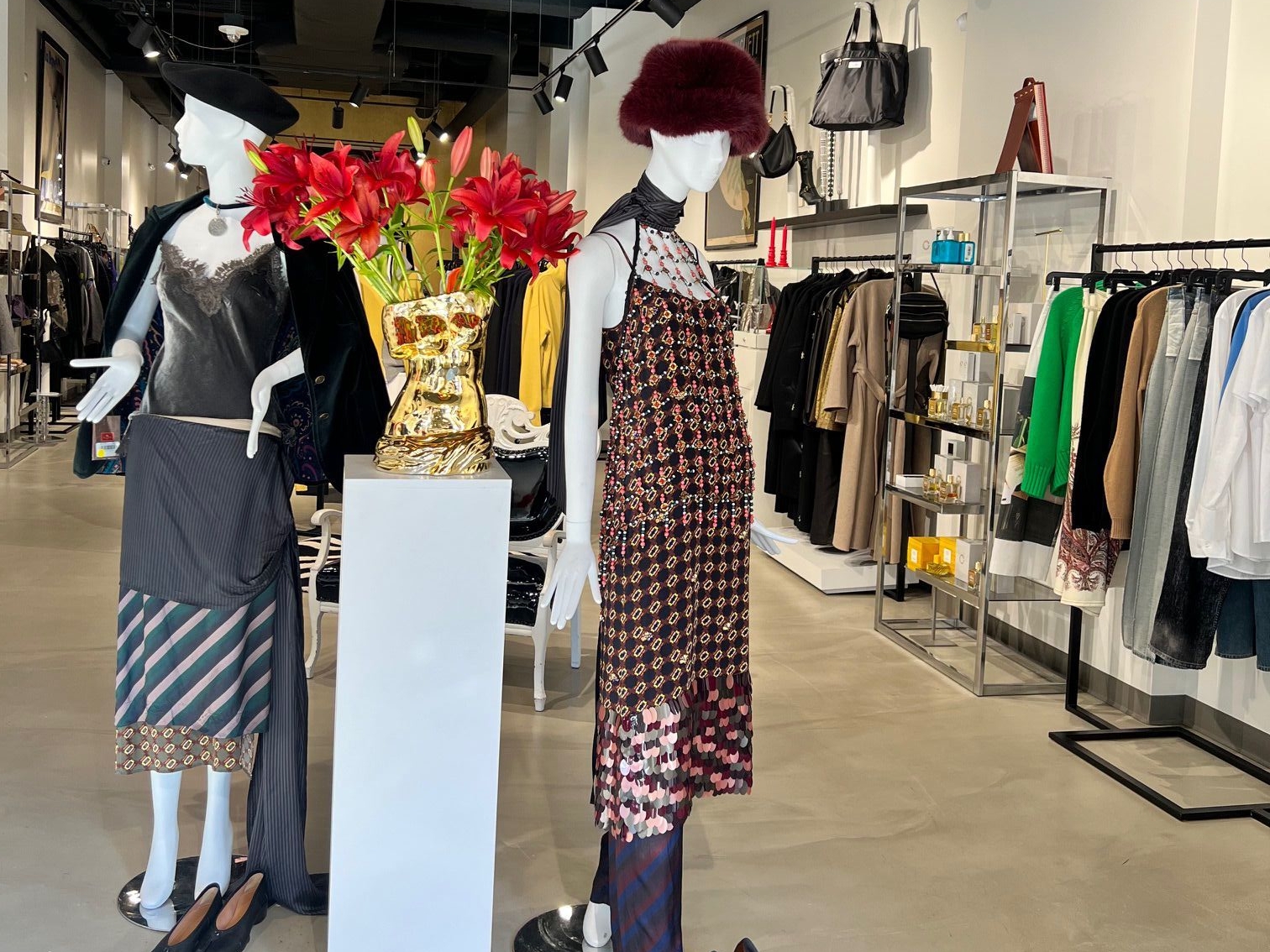
The interior of Joan Shepp at 1905 Walnut St. The 53-year-old store made the New York Times’ list of “50 Best Clothing Stores in America.”
And yes, walking into Rittenhouse Square’s Joan Shepp does feel like stepping into a sartorial fairytale, which you can leave holding a Yohji Yamamoto hoodie that doubles as a dress, or a perfectly tailored asymmetrical shirt dress from Sacai New York.
Everything is dreamy, but nothing comes cheap.
Back in the 1970s, Shepp opened her store to challenge the way the suburban career woman dressed in Philly and introduced her to designer wear, from Yohji Yamamoto to Maison Margiela. One of the earliest entrepreneurs to embrace the store-within-a-store approach to retail, Shepp made space for collections like Yamamoto’s Y-3 and Donna Karan’s Urban Zen.
The clothing sold alongside furniture, bedding, and candles, making Joan Shepp one of the region’s earliest concept boutiques.
Joan Shepp founded the store in 1971. She was a 30-year-old single mother of two young children in need of a flexible work schedule that allowed her time for school pickup and drops, to help her daughters with homework, and make them dinner.
Joan Shepp and her daughter Ellen Shepp, shown here in their Center City store.
“I have so much fun finding things that are new,” she said to The Inquirer in 2022. “I listen to everyone who comes into my store. I watch them go through the racks. And whether/if they are a customer or a person who wants to open a store down the street, I can pick up on it.”
Hers is the only store on the Times list from the Philly region.
The closest is 7017 Reign in Fort Lee, N.J., described by the Times as an “under the radar, street and high fashion” specialty store. There are a handful of stores from downtown New York, but most are in the Midwest and California.
To produce the list, the Times team selected 120 stores, and then sent reporters, editors, and contributors to visit each of them, sometimes more than once.
A videographer visited Joan Shepp in early fall, shortly after the store moved to its new home at 1905 Walnut St.
Noting that Joan Shepp has been in business for more than 50 years — the specialty boutique is in the midst of celebrating its 53rd year — Kurutz wrote “Shepp has flavors of Barneys New York in its heyday.”
The Barney comparison wowed Ellen Shepp. Christmas had no doubt arrived early for the boutique owner and her team.
“The whole time they were like, ‘Listen we don’t know whether/if you made this list,’” she said. “They kept it a mystery until right this second.”
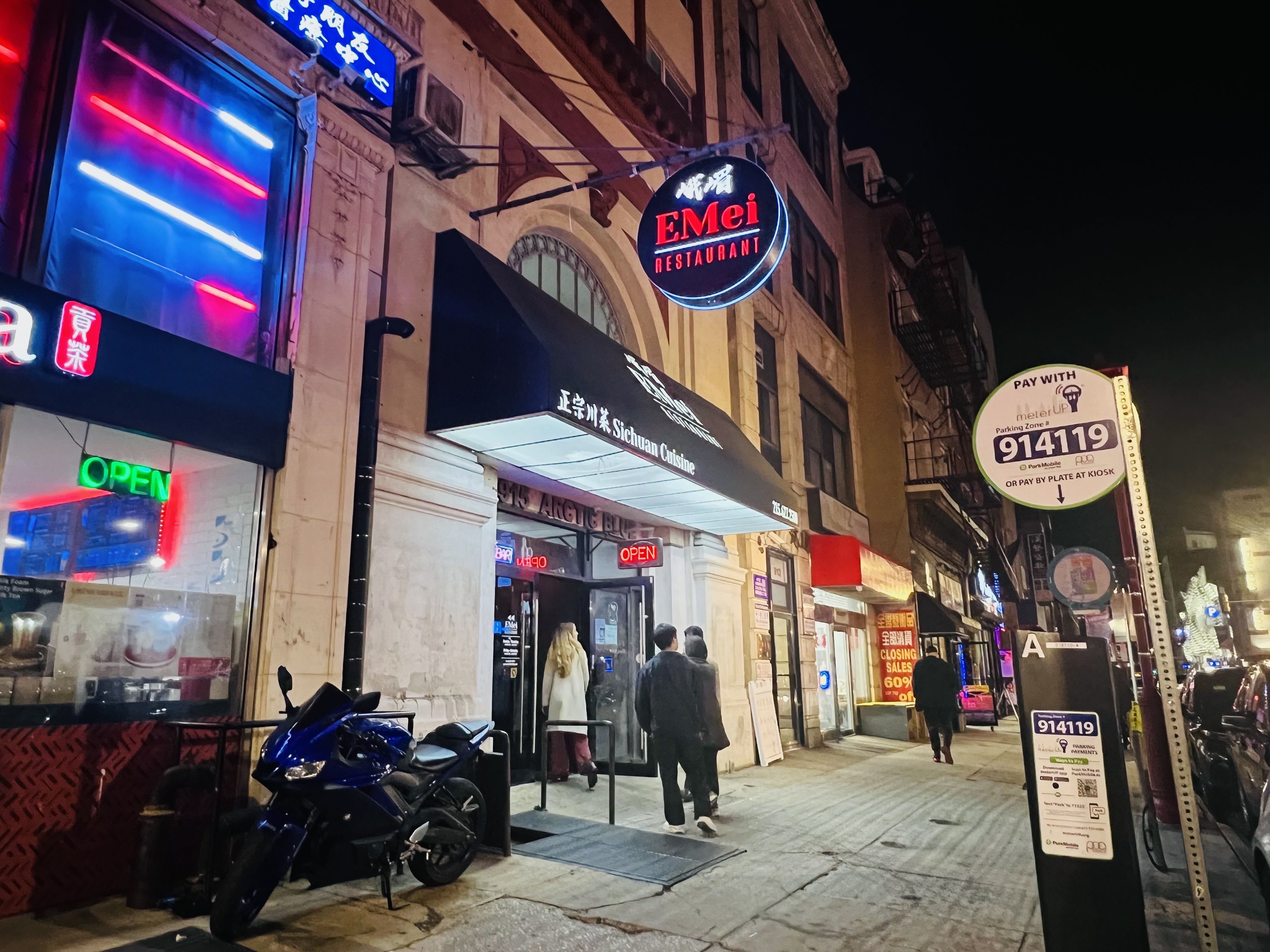
Dan Tsao’s restaurant EMei at 915 Arch St. in Chinatown on Nov. 8, 2025.
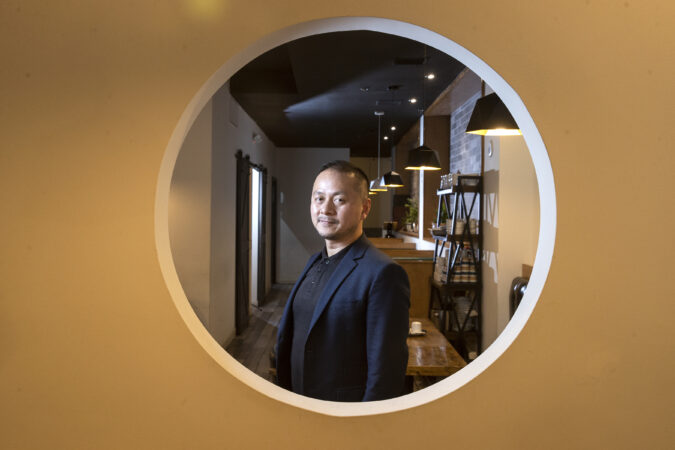
Tsao said the East Passyunk EMei would roll out in phases, with takeout and delivery launching in February during renovations and full dine-in service targeted for summer 2026. He said he wants to become part of the Passyunk Avenue community for decades to come.
Real estate broker Greg Bianchi, who represents the family that owned the Marra’s building at 1734 E. Passyunk Ave., called the deal “a win-win for everybody. [Tsao is] going to bring more people and business to the other businesses. People don’t realize what a force he is in the Chinatown community.”
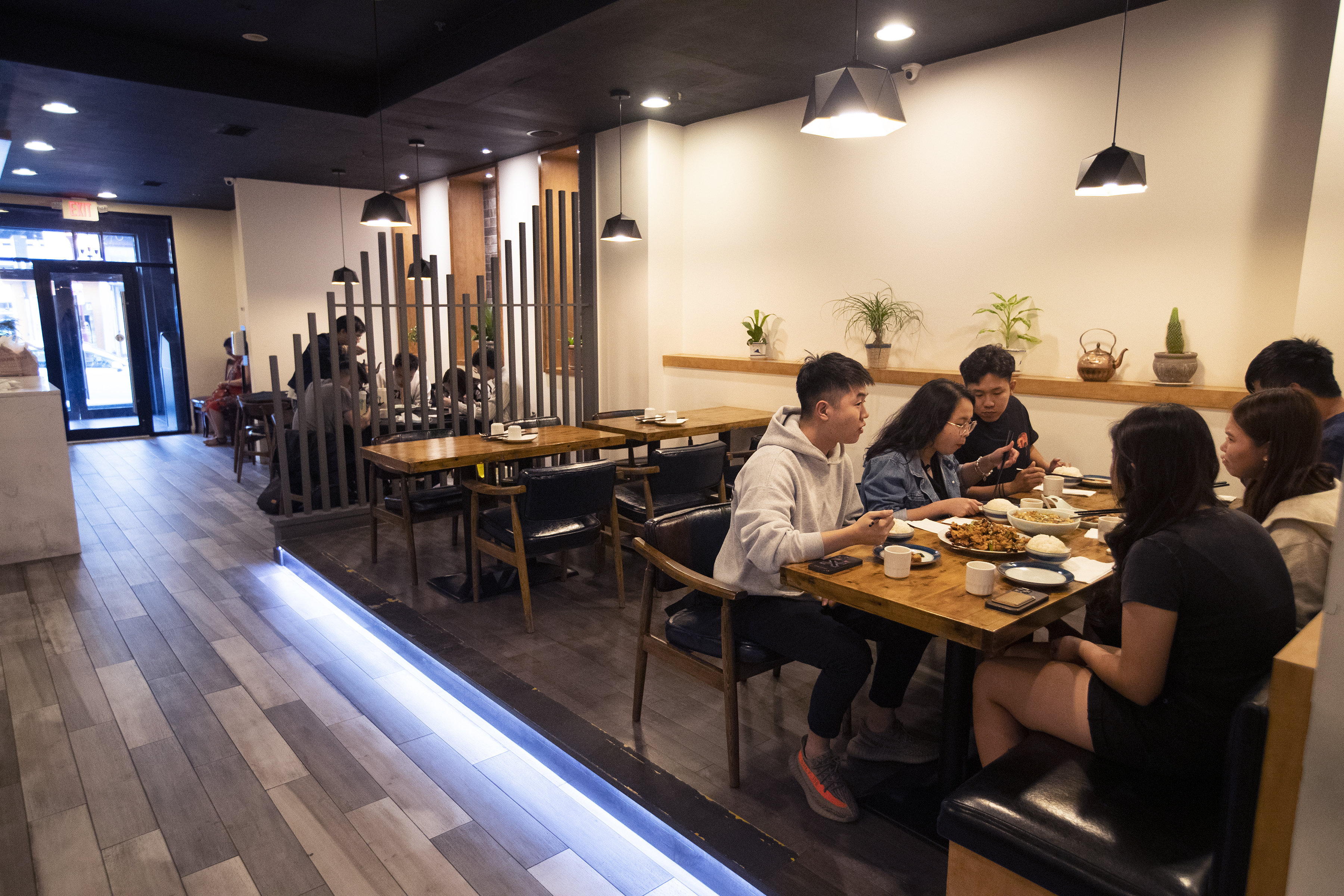
Dishes served family style at EMei, 915 Arch St.
Besides operating EMei, Tsao — who immigrated from China after high school and graduated from Penn State in 1999 — has been a newspaper publisher for 18 years. His New Mainstream Press operates Metro Chinese Weekly and Metro Viet News, offering deeper news coverage than the typically ad-heavy publications that had dominated the local Asian-language media.
The kitchen at 915 Arch St., entirely in the basement, is now at capacity. Even after recent upgrades, including six new wok stations, 18 new kitchen staffers, and robots delivering foods to the tables, “growth requires new space,” Tsao said.
Tsao analyzed sales data and found that many customers hail from Lower Merion, where he lives with his family — hence the opening in Ardmore. He also noticed that EMei is especially popular in South Philadelphia, whose four ZIP codes account for more than 20% of delivery volume.
This made East Passyunk a natural site for expansion. He said he was immediately drawn to the Marra’s building and was surprised that it had been on the market for more than four years.
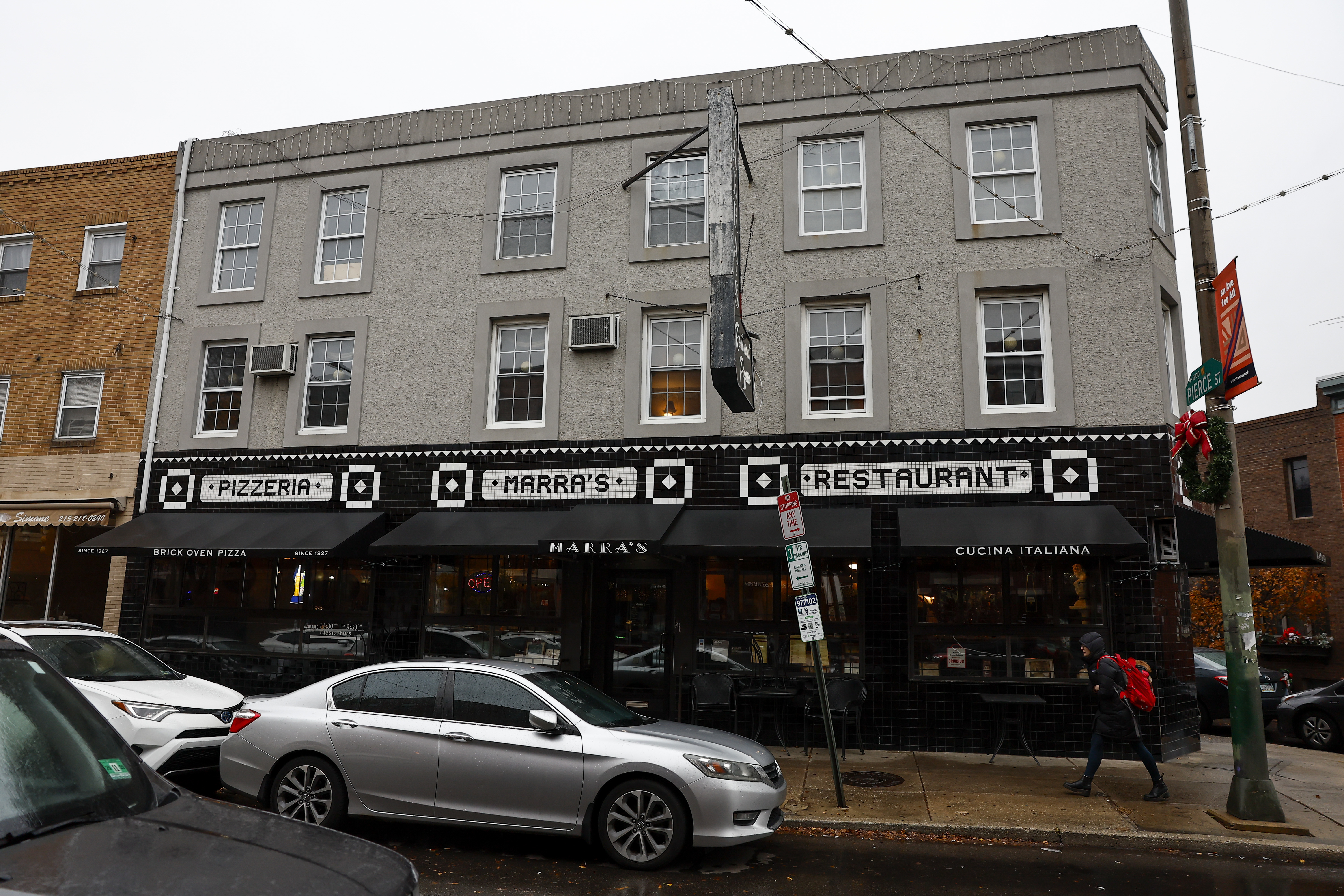
Marra’s restaurant, as seen on Nov. 30, 2025, its last day.
When Tsao learned that co-owner Robert D’Adamo — a grandson of Marra’s founder Salvatore Marra — was preparing to retire, Tsao saw parallels in his own experience: Before the pandemic in 2020, his mother-in-law, Jinwen Yu, and her business partner, chef Yongcheng Zhao, were looking to step aside; Tsao became an unlikely restaurateur, buying out partners and taking on responsibilities he had not expected.
“My father spent his entire career as an executive at a food enterprise in our hometown in Zhejiang, and in college I worked every position in a Chinese takeout restaurant,” Tsao said. “Through my newspaper and digital platforms, I’ve also worked with more than 200 restaurant clients. I always knew this was a hard business. But I didn’t fully understand the challenges until I took over EMei.”
He recalls fixing sewage backups until 2 a.m., working overnight with contractors to maneuver a 1,200-pound wok station into the basement, and spending hours after service refining the menu with chefs. “The industry is brutal,” he said. “If you stay mediocre, or stay in the comfort zone of only serving a niche customer base, you will struggle — even if the restaurant doesn’t close. I knew we had to evolve EMei into something much bigger.”
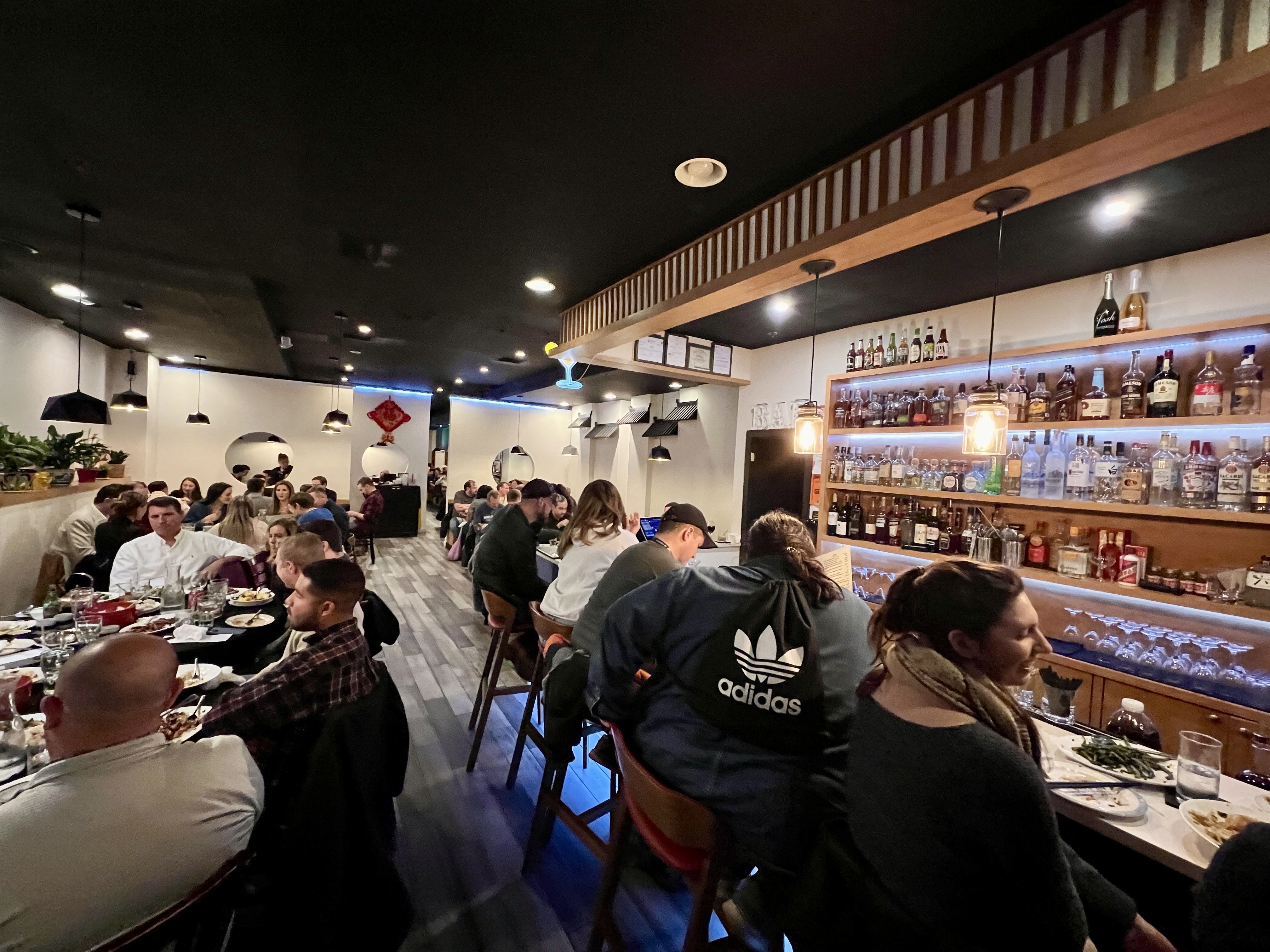
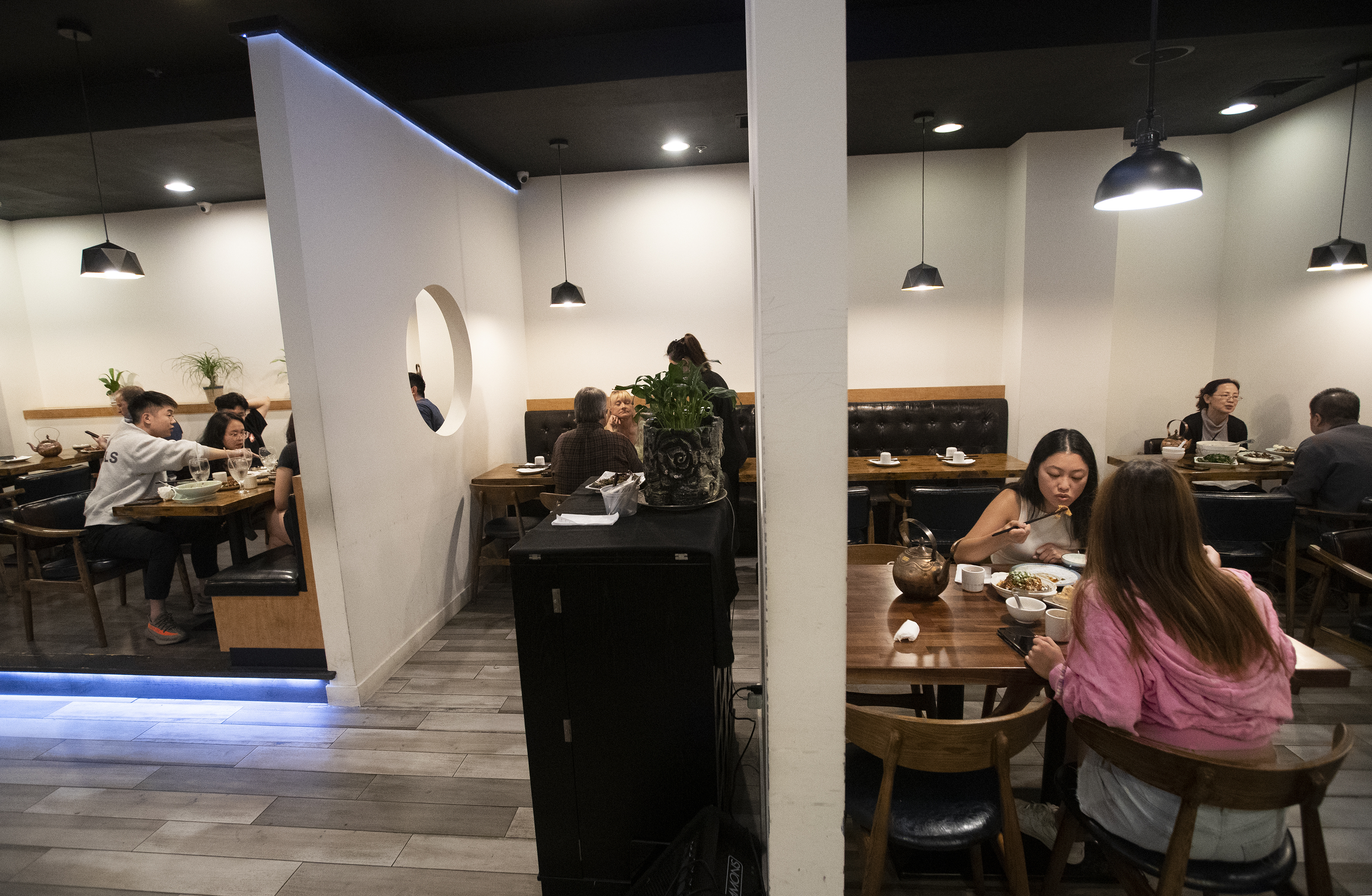
The dining room of EMei at 915 Arch St.
In 2019, he and his wife, Ting Ting Wan, closed the restaurant for two months to renovate. During the first two years of the pandemic, when sales dropped 50%, the entire family worked more than 60 hours a week to keep the business alive.
Tsao also pulled two assistants from his media company to build formal back-office systems that later enabled EMei to scale. During the pandemic, Tsao launched RiceVan, a delivery and distribution service that transported Chinatown meals to suburban households and provided jobs for refugees and new immigrants.
EMei restaurant at 915 Arch St., which opened in 2011.
EMei has since grown from 11 full-time employees to 37, and sales have increased more than 300% compared with pre-pandemic levels, Tsao said.
Tsao credits the restaurant’s founders — Yu and Zhao — for staying involved. “They still come in every day, even now,” he said. “Part of it is that retirement can be boring. But it’s also because once we took responsibility for operations and finances, they were able to relax, work fewer hours, and focus purely on the culinary side.”
The dining room of EMei, 915 Arch St.
A historic building reimagined
The Marra’s building will undergo substantial structural and mechanical upgrades, Tsao said. Plans include a first-floor restroom to resolve long-standing ADA issues; full replacement of HVAC and electrical systems; and removal of window units in favor of central air.
The vintage booths will be reupholstered. The bar will shift to the Pierce Street corner to improve flow. The second-floor private dining room will get new lighting and finishes; the third floor may be converted into a multipurpose or staff area. Tsao said he intends to address minor structural concerns while preserving the historic masonry and architectural character.
One open question is the fate of Marra’s nearly century-old brick pizza oven, which Marra’s family member Mario D’Adamo said was failing. EMei will test whether it can be used. If removal becomes necessary, Tsao said the bricks, sourced from Mount Vesuvius, would be saved and possibly given to the D’Adamo family, the East Passyunk Business Improvement District, or incorporated into the renovation.
“Our model has evolved — instead of putting over half a million dollars into leasehold improvements that don’t belong to us, we’d rather put that money into a building that becomes part of the company’s foundation,” Tsao said. “Restaurants come and go, but great restaurant buildings with stories — like this one — can last generations. We want to be the next chapter in that story, not just a tenant passing through.”
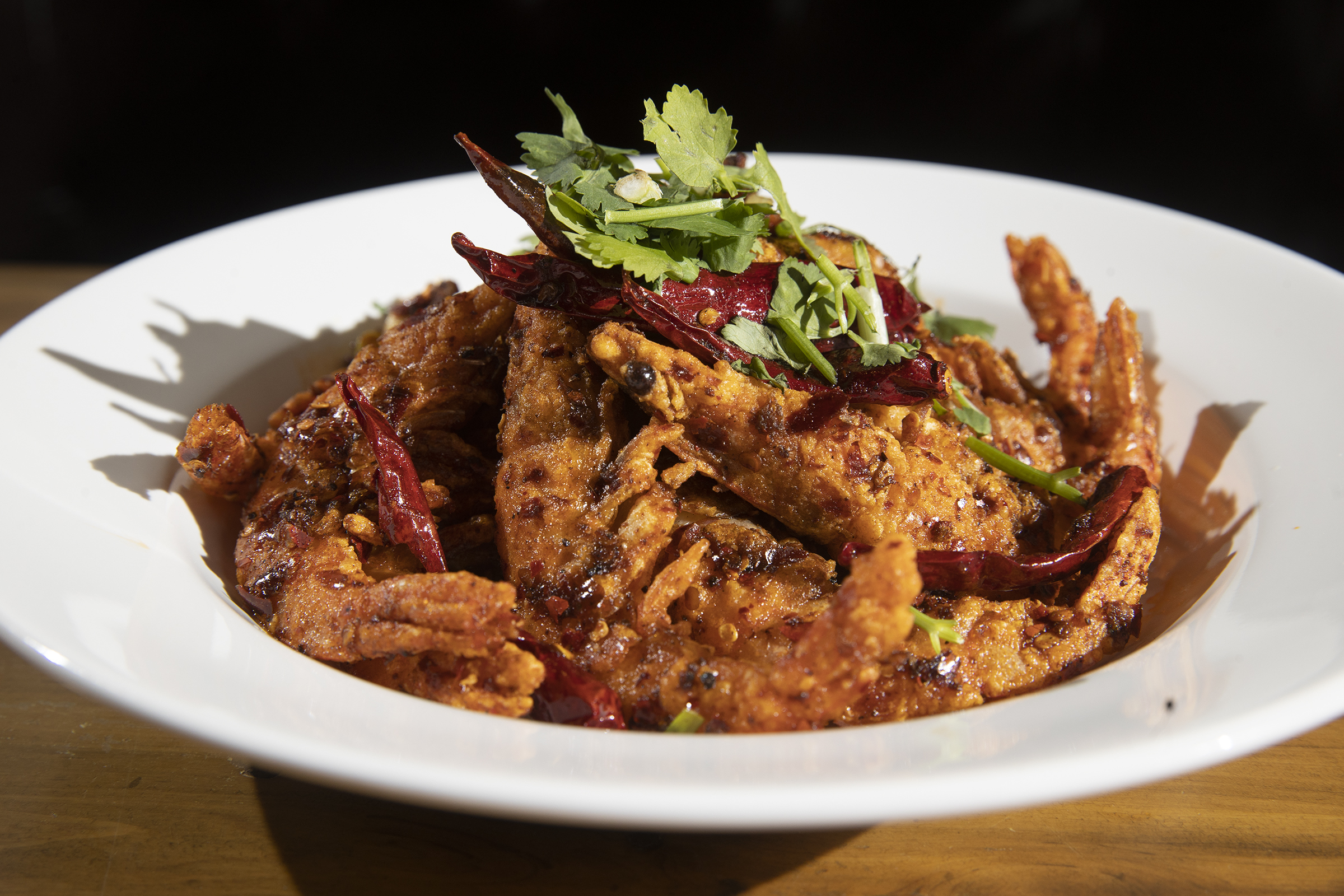
The jumbo shrimp in hot peppers at EMei at 915 Arch St. on Sept. 15, 2022.
What to expect on EMei’s menu
The East Passyunk menu will reflect the Chinatown original while serving as a testing ground for contemporary Sichuan cooking – “lighter, seasonal, more ingredient-driven interpretations that show how Sichuan cuisine continues to evolve,” Tsao said.
Roast duck and possibly Shanghai soup dumplings are under consideration, filling a void left by the closure of Bing Bing Dim Sum nearby. Some heritage dishes removed from the Chinatown menu will return there, helping differentiate the three locations while keeping them unified. EMei’s gluten-free program, including a separate fryer, will continue.
Tsao said the neighborhood feels like home to his family. “I took my three kids — ages 6, 14, and 17 — to the East Passyunk Fall Fest again this year, and they instantly connected with the neighborhood’s energy,” he said. “They spent nearly 30 minutes exploring Latchkey Records, each leaving with something they picked out themselves. Watching them fall in love with the street the same way we did really made it feel like home.”
Things aren’t getting better; they’re getting worse. The theme doesn’t just apply to the Eagles’ Black Friday loss to the Chicago Bears. It fits the narrative of the entire 2025 season. With five games to go, there’s little reason to hope or expect significant change to take place, particularly on the offensive side of the ball – unless…
The Philadelphia Inquirer’s Jeff McLane and Olivia Reiner take a look at what the Eagles’ seemingly inherent flaws mean for the homestretch of the season, and how they could affect the fate of offensive coordinator Kevin Patullo.
unCovering the Birds is a production of The Philadelphia Inquirer and KYW Newsradio Original Podcasts. Look for new episodes throughout the season, including day-after-game reactions.