The lack of hand-wringing about the Phillies bullpen this offseason isn’t too surprising. By the time everyone finishes worrying about the offense, their palms are raw. Nearly half of the starting lineup from Game 1 of the NLDS is no longer under contract. They need to re-sign or replace their catcher, left fielder, center fielder, and designated hitter. The guy who was their longtime right fielder is a $20 million sunk cost. Other than that, the bats are looking great.
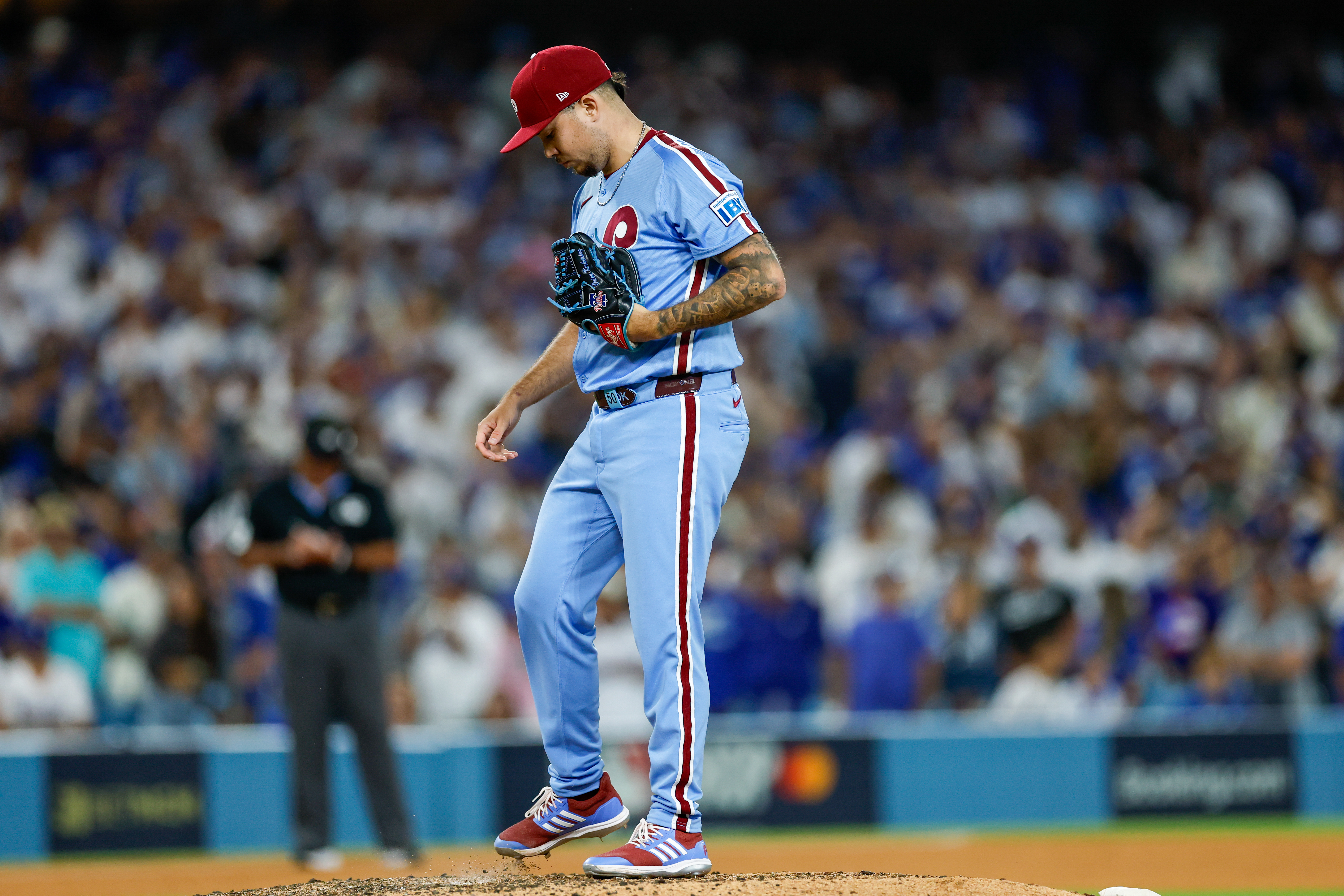
But, hey, save some angst for the later innings. Dave Dombrowski has 99 problems and a pitcher is one … namely, a pitcher who is capable of locking down high-leverage situations. Even if Jhoan Duran is the guy he has been throughout his career, and if Matt Strahm is the guy he has been during the last three regular seasons, if Jose Alvarado is the guy he was in 2022-23, the Phillies will still need a fourth guy who is better than Orion Kerkering was even before he short-circuited in Game 4 of the NLDS loss to the Dodgers.
Phillies pitcher Orion Kerkering posted a 3.30 ERA in 2025.
That’s true whether Dombrowski realizes it or not. You’d think he would by this point in time. But, then, you’d be thinking. Everyone knows the cliche. Doing the same thing over and over is the definition of Dombrowski’s bullpen plan. As the nation at large celebrates the 250th anniversary of the signing of the Declaration of Independence, there’s a very good chance that the Phillies will be celebrating the 250th anniversary of realizing they need another reliever six days after the season starts. The Masters isn’t the month of April’s only tradition unlike any other.
It’s getting to the point of mathematical certainty. If ’n’ is the number of high-leverage arms the Phillies need in order to win a postseason series, then ’n-1’ is the number of such arms the Phillies actually have. Feel free to alert the Fields Medal committee.
Look at the list of relievers who have pitched make-or-break innings for the Phillies over the last several postseasons.
Craig Kimbrel? The Phillies probably win a World Series if they have an elite shutdown arm to pitch the ninth inning of Game 3 and/or the eighth inning of Game 4 in the 2023 NLCS.
David Robertson? He faced three batters last postseason, all in Game 1 of the NLDS, two of whom scored.
Jordan Romano? Nope. Just kidding. He didn’t pitch a make-or-break inning in the postseason. Actually, he didn’t pitch any innings.
Jesús Luzardo? He was exactly what the Phillies needed out of the bullpen in the 10th and 11th innings of Game 4 against the Dodgers. There was only one problem. He was their No. 2 starter. And he will be again.
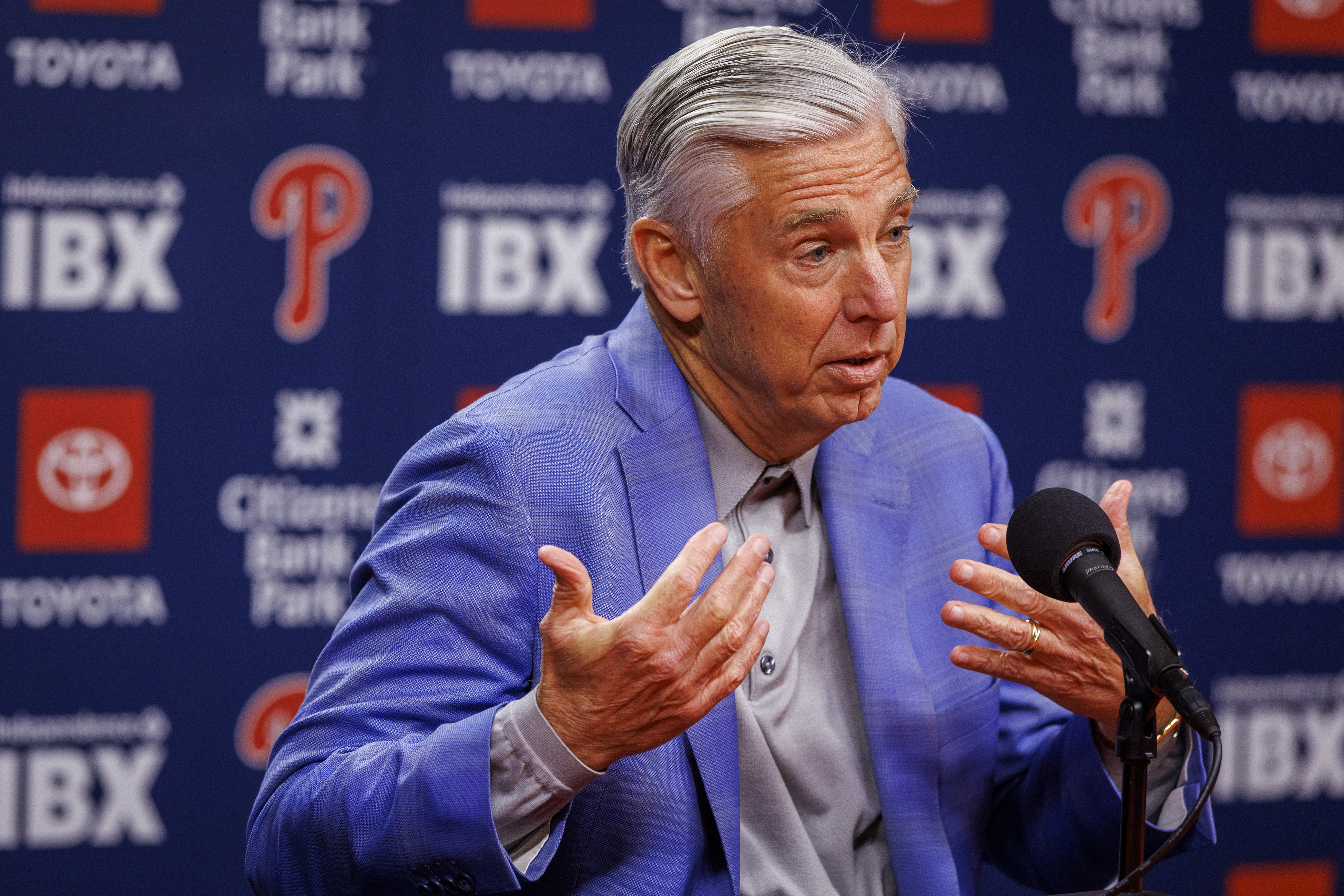
Phillies president of baseball operations David Dombrowski is tasked with building the Phillies’ bullpen.
Nobody wants to admit this, but the best way to fix the Phillies offense is to build a roster where the offense doesn’t need to matter so much. It’s easy to forget that the Phillies took a 1-0 lead over the Mets into the eighth inning of Game 1 of the 2024 NLDS before Jeff Hoffman and Strahm combined to allow five runs in the eighth. As lopsided as that series felt in hindsight, the Phillies were two shutdown innings away from potentially heading to New York with a 2-0 series lead. They also blew a 1-0 lead when the bullpen allowed four runs in the bottom of the sixth in Game 4.
Bryce Harper and Trea Turner are fast approaching the points of their careers where the next season probably won’t be as good as the previous one. Same goes for Kyle Schwarber, assuming the Phillies re-sign him. J.T. Realmuto is already there, and re-signing him is still their best option at catcher. At some point, building an elite bullpen becomes a more feasible option than counting on a Max Kepler bounce back season.
Unless we assume that John Middleton is going to bump up his spending to the level of the Dodgers, then we’re wasting our breath arguing that what the Phillies really need is Kyle Tucker or Alex Bregman or Pete Alonso. It would be a silly thing to assume. If you are worth $2 billion, then a $100 million contract is 5% of your net worth. Even us common folk aren’t lighting our cigars with $1,000 dollar bills.
Which brings us to the real issue with the Phillies’ bullpen. You have to squint a lot harder to see a fiscally sound path to improvement. The Orioles just signed closer Ryan Helsley to a two-year, $28 million deal after a lackluster campaign. Braves closer Raisel Iglesias took a big step backward last season and will be 36 years old next year. He just re-signed for one year and $16 million.
Chances are, both of those deals will look awful a year from now. Look at last year’s market. Of the 12 relievers who signed for an AAV of $8.5-plus million, seven finished with an ERA north of 4.30, five of whom had an ERA over 5.00. That group doesn’t include the Mets’ A.J. Minter, who pitched only nine innings after signing for two years and $22 million.
Essentially, the success rate on big-ticket bullpen signings was 33%. Even that is overstating things. The Dodgers spent a combined $39.9 million in AAV on Tanner Scott, Kirby Yates and Blake Teinen. The odds said that one of them should have panned out. But none of them did.
Unless the Phillies are willing to shell out $20-plus million for Edwin Diaz, they’ll be fishing in treacherous waters. There are a lot more Jordan Romanos than Josh Haders, at pretty much every price point. Dombrowski has found value before with Strahm, Hoffman and Alvarado. He’ll need to do it again in order to win this offseason.
The Post’s opinion section recently asked nine writers to name their top contenders for America’s top sports town. But Philly wasn’t one of them. So we asked nine of our own writers to make the case why Philadelphia is the best sports city in the nation — and they didn’t disappoint.
The Eagles have the highest 3-and-out rate in the NFL.
It would be unfair to pin the Eagles’ 24-15 loss to the Chicago Bears on Jalen Hurts, even if his two turnovers and ineffectiveness as a passer were contributing factors.
Nick Sirianni and Kevin Patullo’s inability to scheme to the quarterback’s strengths, while also covering for his weaknesses, again was the primary reason for another inept showing from the offense. The same could be said for their game plan in the run game.
Jeff McLane examines why you can blame the listless Eagles offense on a number of causes. Just be sure not to forget the quarterback in your diagnosis.
Nick Foles’ diagnosis is for Patullo to move from the sidelines to the box, where he’s spent his time on gameday since 2021 before becoming offensive coordinator. Here’s what the national media is saying about the Birds following their loss to the Bears.
Next: The Eagles (8-4) will travel to Los Angeles for a Monday night showdown against Justin Herbert and the Chargers (8-4) at SoFi Stadium. (8:15 p.m. ET, ESPN/ABC)
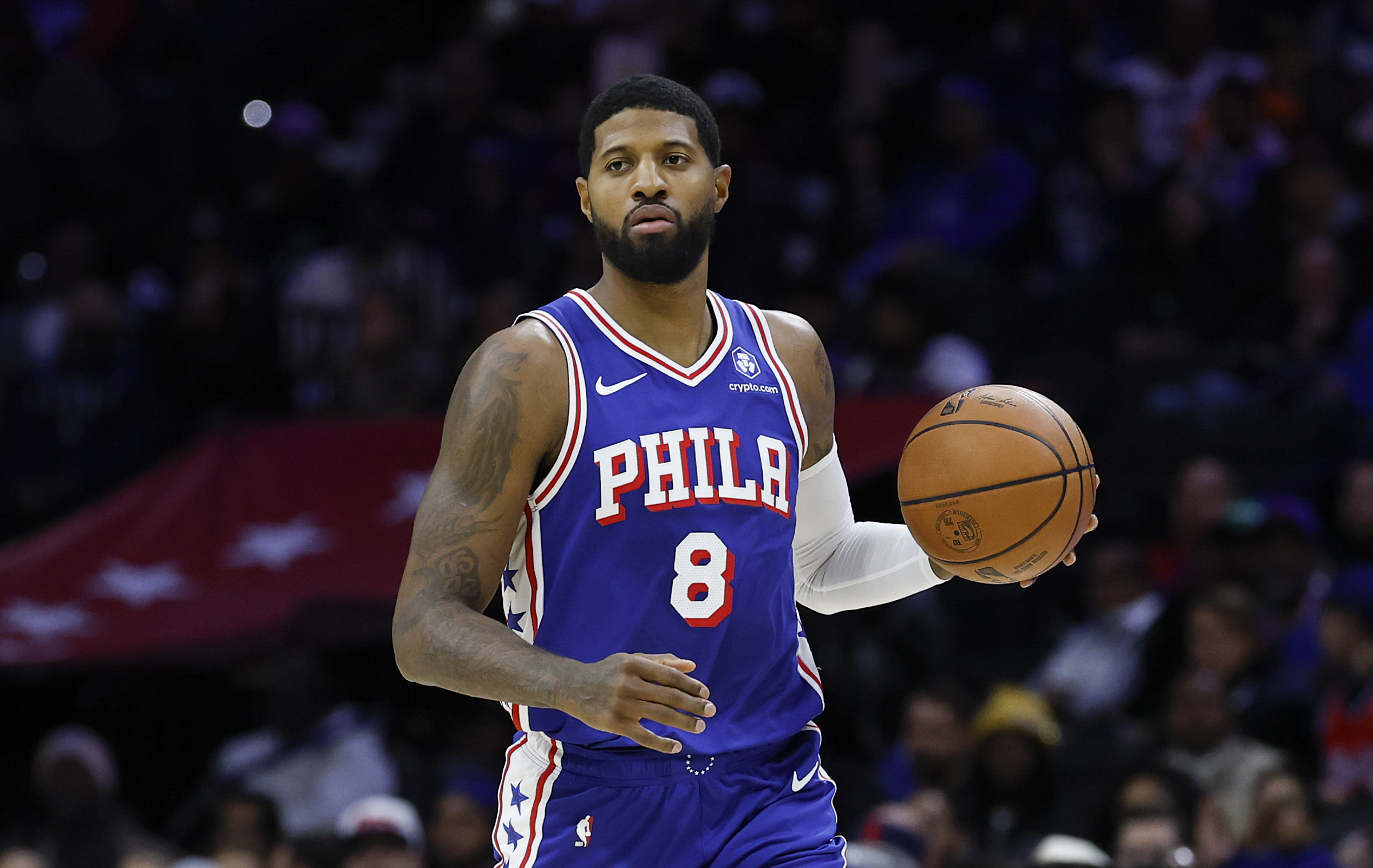
Paul George scored 16 points against the Hawks on Sunday.
The Paul George experience has not gone the way the Sixers thought when they signed him to a four-year, $212 million deal in the summer of 2024. Should the team try to move him ahead of the trade deadline?
Meanwhile, the Sixers lost the Hawks in double overtime, 142-134, on Sunday. Tyrese Maxey led the way for the Sixers with 44 points, while Joel Embiid returned after missing nine games and scored 18 points.
Next: The Sixers (10-9) will next hit the court on Tuesday to host the last-place Wizards (2-16) at Xfinity Mobile Arena. (7 p.m., NBC Sports Philadelphia)
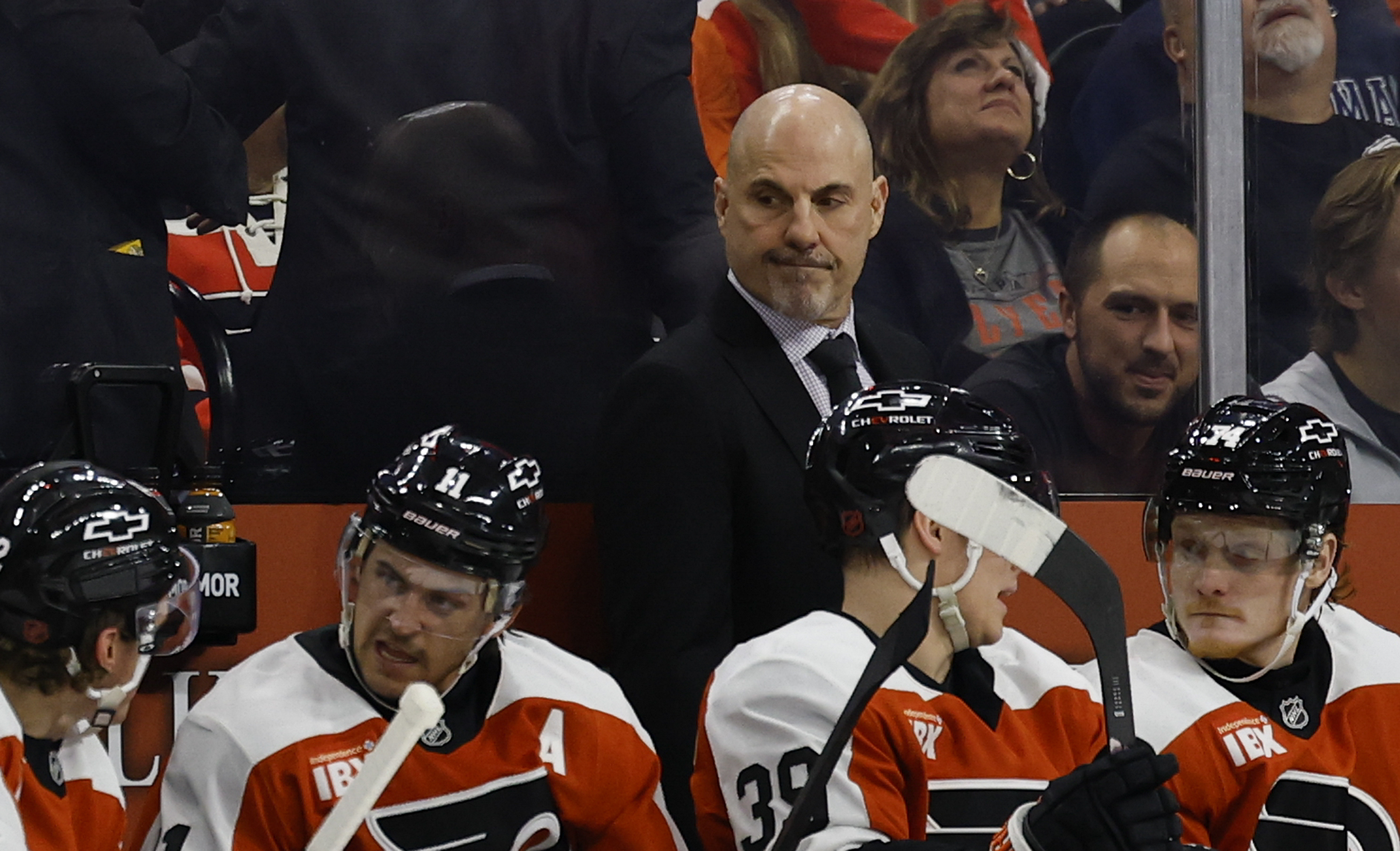
The Flyers are currently third in the Metropolitan Division.
There are different ways of coaching. Some coaches are fiery and use that to spark their team. Other coaches, like Rick Tocchet, appear to maintain a cool, calming presence.
Now the owner of 300 wins in the NHL after Saturday night, he knows the Flyers are just 24 games into the season, and there’s a long road ahead. And although every moment is important, he doesn’t get too wrapped up in the ups and downs and momentum shifts of every game.
Next: The Flyers (14-7-3) host the rival Penguins (12-7-5) at Xfinity Mobile Arena. The Flyers won their first meeting, 3-2, back on Oct. 28. (7 p.m., NBC Sports Philadelphia)
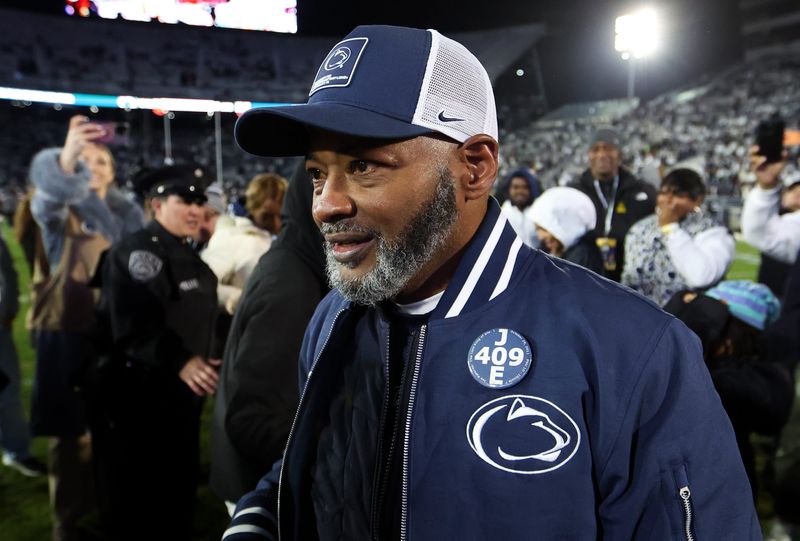
Penn State players and fans have lobbied for Terry Smith to take over as coach after he turned around the team and ended the season on a three-game win streak. But will the university remove Smith’s interim title?
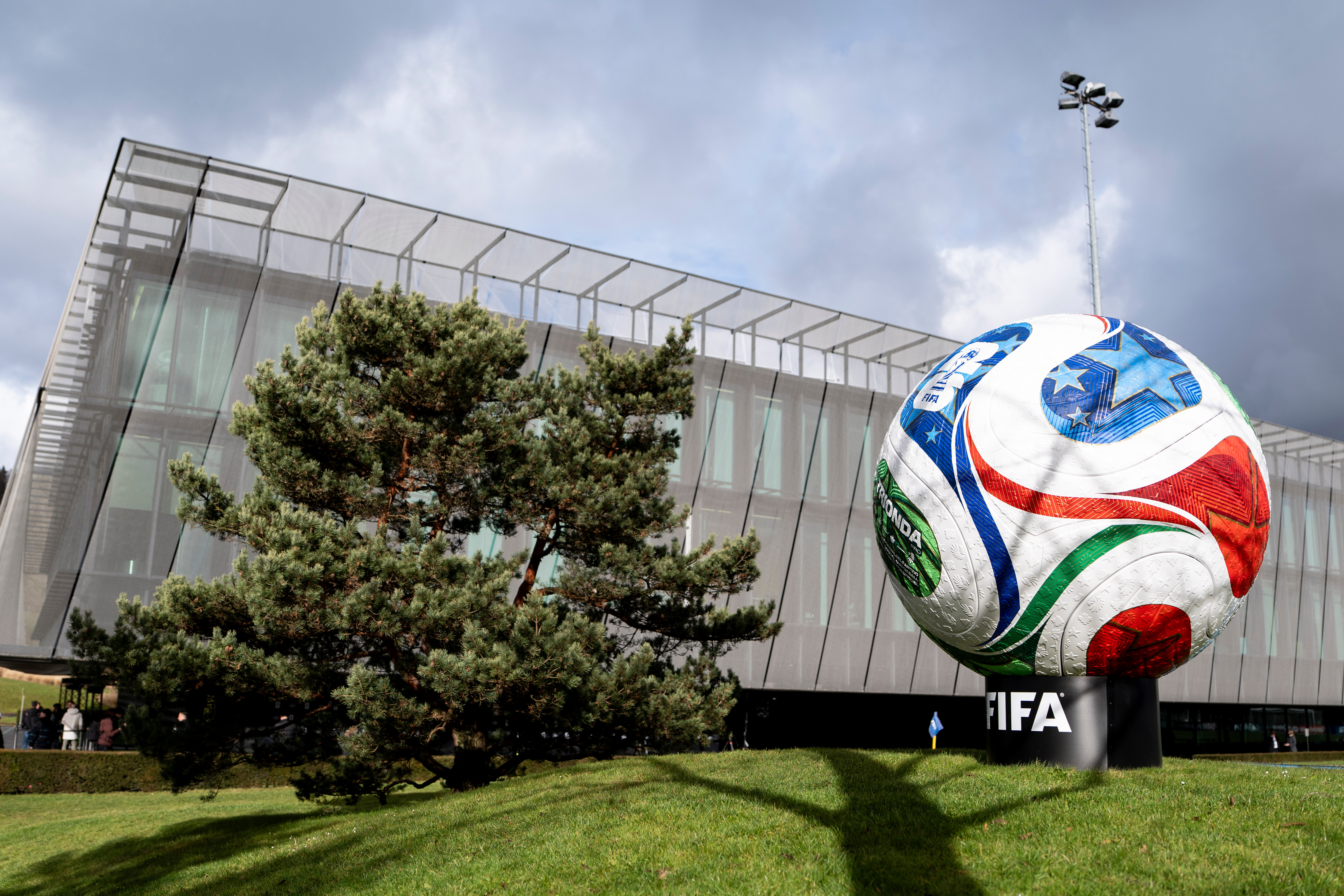
Trionda, a giant replica of the official ball for the FIFA Wold Cup 2026 is displayed in Zurich, Switzerland.
FIFA World Cup draw: FIFA’s World Cup draw is this week. Here’s what to know before, during, and after Friday’s event.
La Salle’s state title quest: The Explorers have not played for a state title in 15 years and last won the crown in 2009. They’ll have a shot in the PIAA Class 6A title game this Saturday.
A Palestra classic: Penn and La Salle played a regular-season nonconference game that didn’t count toward the Big 5 standings. But the Quakers’ win felt like the real thing.
Want to know where the Eagles stand in the NFC playoff picture after Week 13? Here’s a place to access your favorite Philadelphia teams’ statistics, schedules, and standings in real time.
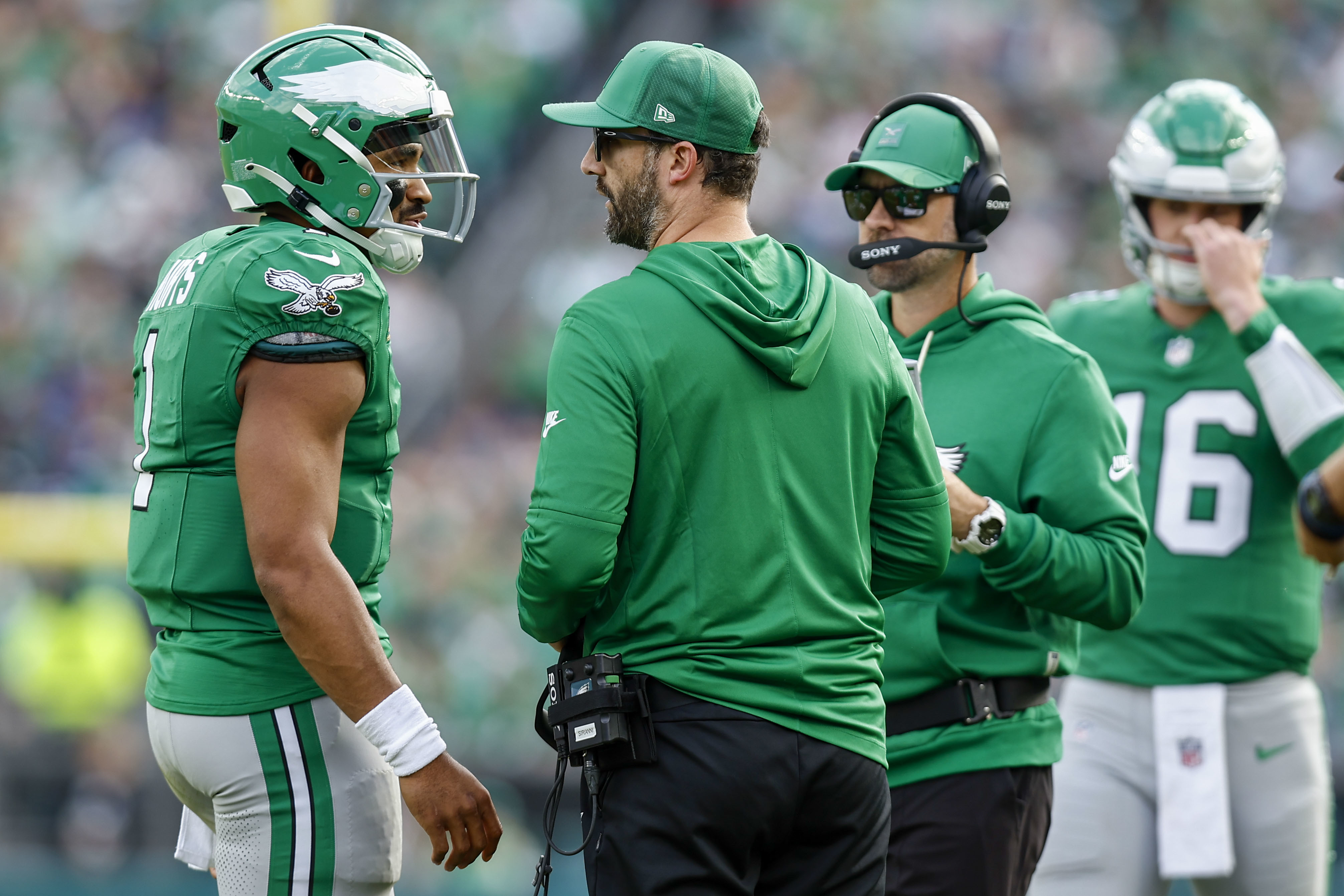
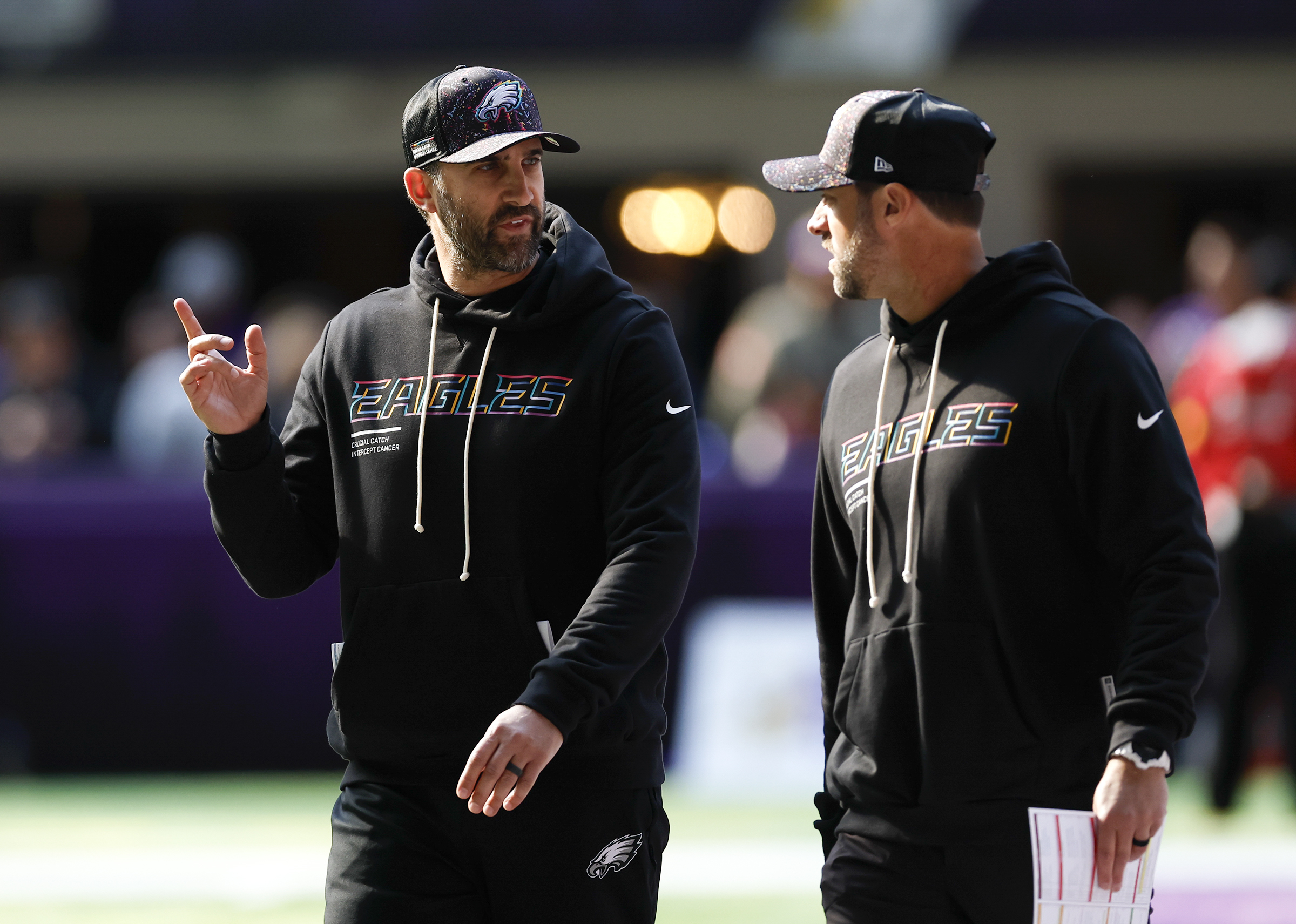
Head coach Nick Sirianni talks with offensive coordinator Kevin Patullo before the Eagles played the Minnesota Vikings in October.
After another rough outing for the Eagles offense, Sirianni defended Patullo, his first-year offensive coordinator. But as Mike Sielski wrote following the loss to Chicago, it may not matter if Jeffrey Lurie decides changes must be made to save a season that is on the brink of spiraling out of control.
We compiled today’s newsletter using reporting from Dave Caldwell, Gabriela Carroll, Greg Finberg, Owen Hewitt, Jeff McLane, Keith Pompey Mike Sielski, Jackie Spiegel, and Jonathan Tannenwald.
Hope you all had a happy holiday weekend! Thanks for reading and be on the lookout for us again tomorrow! — Vaughn
By submitting your written, visual, and/or audio contributions, you agree to The Inquirer’s Terms of Use, including the grant of rights in Section 10.
La Salle senior quarterback Gavin Sidwar has many admirers, including a fan who asked him to autograph a $5 bill on Saturday. But Sidwar also likes to consider himself just one of the guys, as he enjoys going out to eat all the time with those big lugs on the Explorers’ offensive line.
“He could call a handoff to me, and I would be confident in him,” said Grayson McKeogh, the mighty left tackle.
McKeogh, a 6-foot-7, 275-pound senior, will throw blocks next year at Notre Dame, but Sidwar, the offensive line and all of his La Salle teammates have one more week to play football together, culminating in the PIAA Class 6A state championship game this Saturday.
Sidwar, a 6-3, 190-pound senior with remarkable composure and impeccable touch, plans to play football at the University of Missouri next year. But that can wait. The Explorers (12-1) have not played for a state title in 15 years and have not won one since 2009.
Explorers quarterback Gavin Sidwar (7) throws the ball against North Penn on Nov. 29.
With frightening ease, they powered to a five-touchdown halftime lead this past Saturday against District 1 champion North Penn (12-3) and rolled to a 49-14 victory in a state semifinal before an overflow crowd at Central Bucks South. Central Catholic (13-1) of Pittsburgh awaits La Salle in the state championship.
The Explorers opened the season by beating the Vikings in a nonleague game outside Pittsburgh, 23-6. La Salle’s season has included just one setback: a 39-36 Catholic League loss Sept. 26 to Roman Catholic (11-3), which plays Bishop McDevitt for the 5A state title on Friday.
Since the PIAA expanded to six classes in 2016, the Catholic League champ is 8-0 in the 6A state semis against the best team in the Philly suburbs. But all seven of those previous victories were by St. Joseph’s Prep, La Salle’s archrival. The Hawks won seven state titles.
But it is, finally, someone else’s turn. La Salle, whose 2024 season ended with a 21-14 loss to the Prep in the District 12 title game — the Explorers’ only loss — has rebounded this fall to beat the Prep twice: by 31-20 on Oct. 4, then by 24-14 on Nov. 1 for the district title.
Sidwar played only the first half against North Penn, completing 14 of 19 passes for 246 yards and four touchdowns, including a 40-yarder and a 72-yarder. He spent the rest of the afternoon on the sidelines, helmet off, his shaggy black hair tousled, cheering on the reserves.
“We’re going to play teams that are good, but we’re a good football team, too,” he said. “At the end of the day, we’ve just got to go out and play fast, play physical and play disciplined. Be us. Don’t press. It’s just a football game that we’ve been playing since we were kids. So play the game, not the occasion. Just go out and play football.”
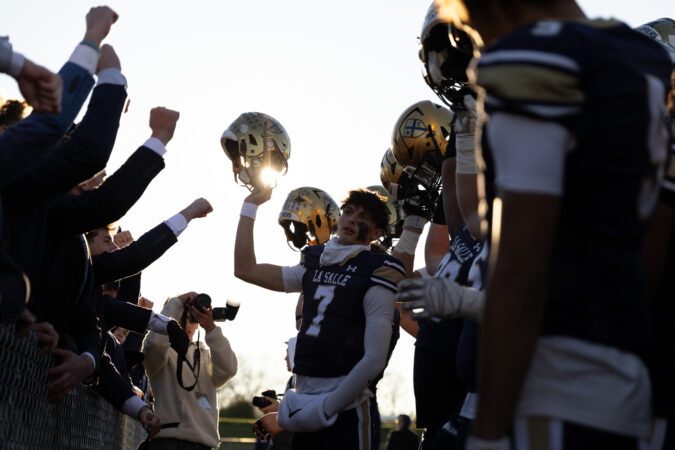
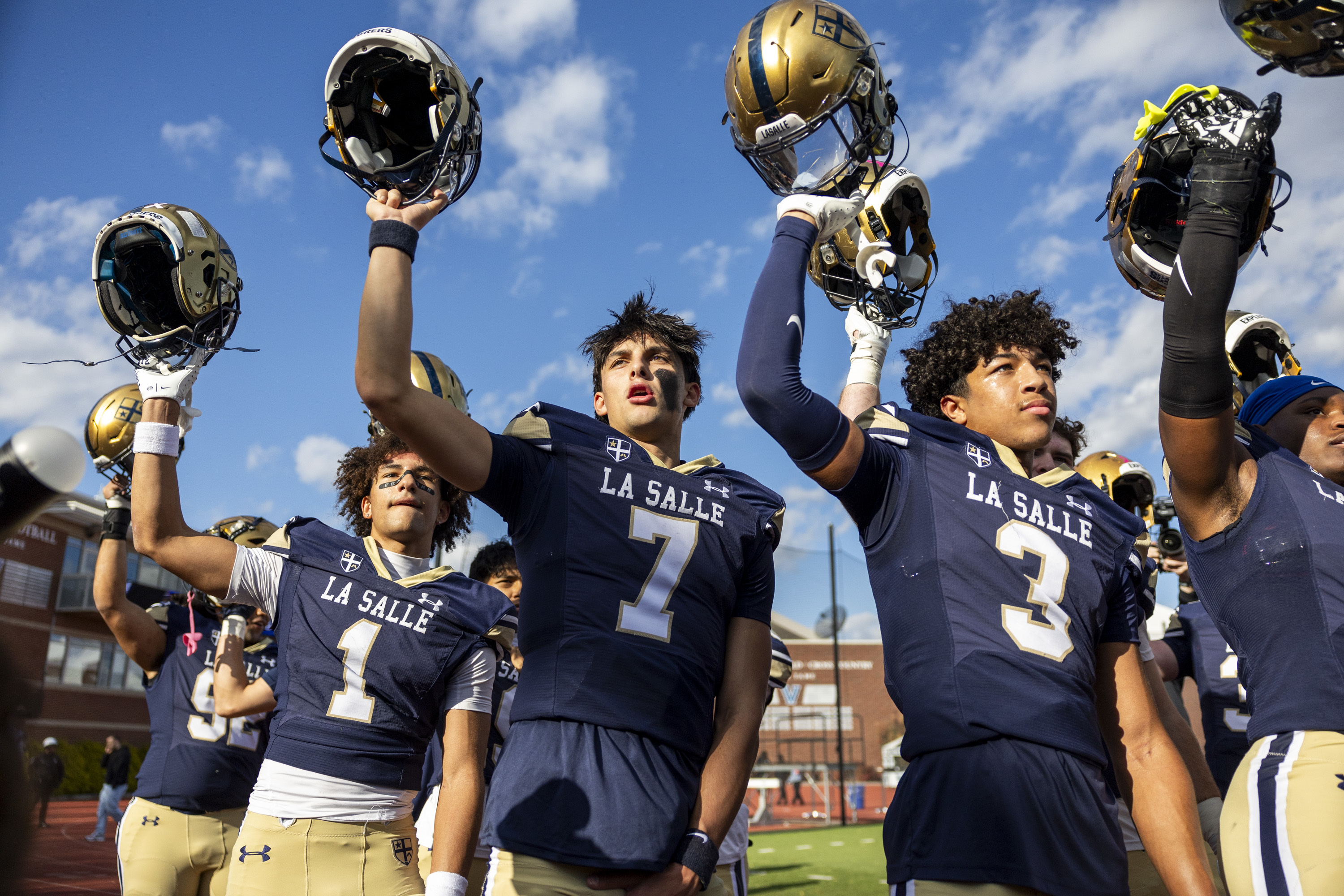
Gavin Sidwar (7) raises his helmet with his fellow teammates in celebration for beating St. Joe’s Prep on Nov. 1.
La Salle is not quite unstoppable. Much to the displeasure of second-year coach Brett Gordon, the Explorers lost two fumbles against North Penn and were penalized eight times. He told his huddled team at midfield afterward, “I’m counting on you all to fix it.”
Sidwar threw a couple of passes Saturday that he’d like to have back. But Gordon said later that Sidwar has become even better after the Roman loss. In three state playoff games, he has completed 71% of his passes for 802 yards and nine touchdowns — and no interceptions. La Salle won those three games by a combined score of 129-35.
“Just when we think he’s got it all figured out, he figures out a way to continue to improve,” Gordon said. “He’s built for this, and he’s put in the work.”
It does help that Sidwar has a mountainous line and astonishingly talented receivers, including Joey O’Brien, the 6-3 senior who is also bound for Notre Dame. O’Brien, who is projected as a college safety, made two brilliant leaping catches on Saturday.
“He’s one of the best quarterbacks in the country, and he proves it every day,” O’Brien said. “You always get a clean spiral, every time. And he doesn’t get too high or too low. He knows there’s more to be done. If we play our game, there’s nobody beating us.”
Sidwar spreads it around. His 72-yard touchdown pass Saturday was to Jimmy Mahoney, a 5-8 speedster who missed the previous two games with an injury. Sidwar flipped a short pass to Mahoney, who scored with the help of a couple of downfield blocks.
“They make it really easy,” Mahoney said of his teammates.
Mahoney said of Sidwar: “He’s making big-time plays — especially at big times. Every single game, he’s getting better.”
Explorers quarterback Gavin Sidwar (7) looks on during the PIAA Class 6A football semifinal game between La Salle College High and North Penn.
Sidwar has clearly benefited from working with Gordon, 46, who led La Salle to two Catholic League championships as a quarterback before playing at Villanova and serving as a La Salle assistant. La Salle has won 22 of 24 games with Gordon as its head coach.
As he told his team after Saturday’s game, “We set out two years ago on this mission, to get right here, right now.”
This team won’t get a chance to avenge its loss to Roman, which also has a terrific senior quarterback, the Akron-bound Semaj Beals. La Salle and Roman, and Sidwar and Beals, are generally considered to be interchangeable, No. 1 and No. 2 in the state.
Gordon smiled when he said of his senior quarterback, “He has set his expectations so high.”
Before he posed for photos after the game on the field Saturday with a stream of friends, family, and fans, Sidwar said, “We’re not going to leave anything unturned at this time of the year. It’s all or nothing at this point.”
He said of North Penn, “We knew they were good. We knew they had a good coach over there,” in Dick Beck. “But if we executed our game plan, we weren’t going to get stopped.”
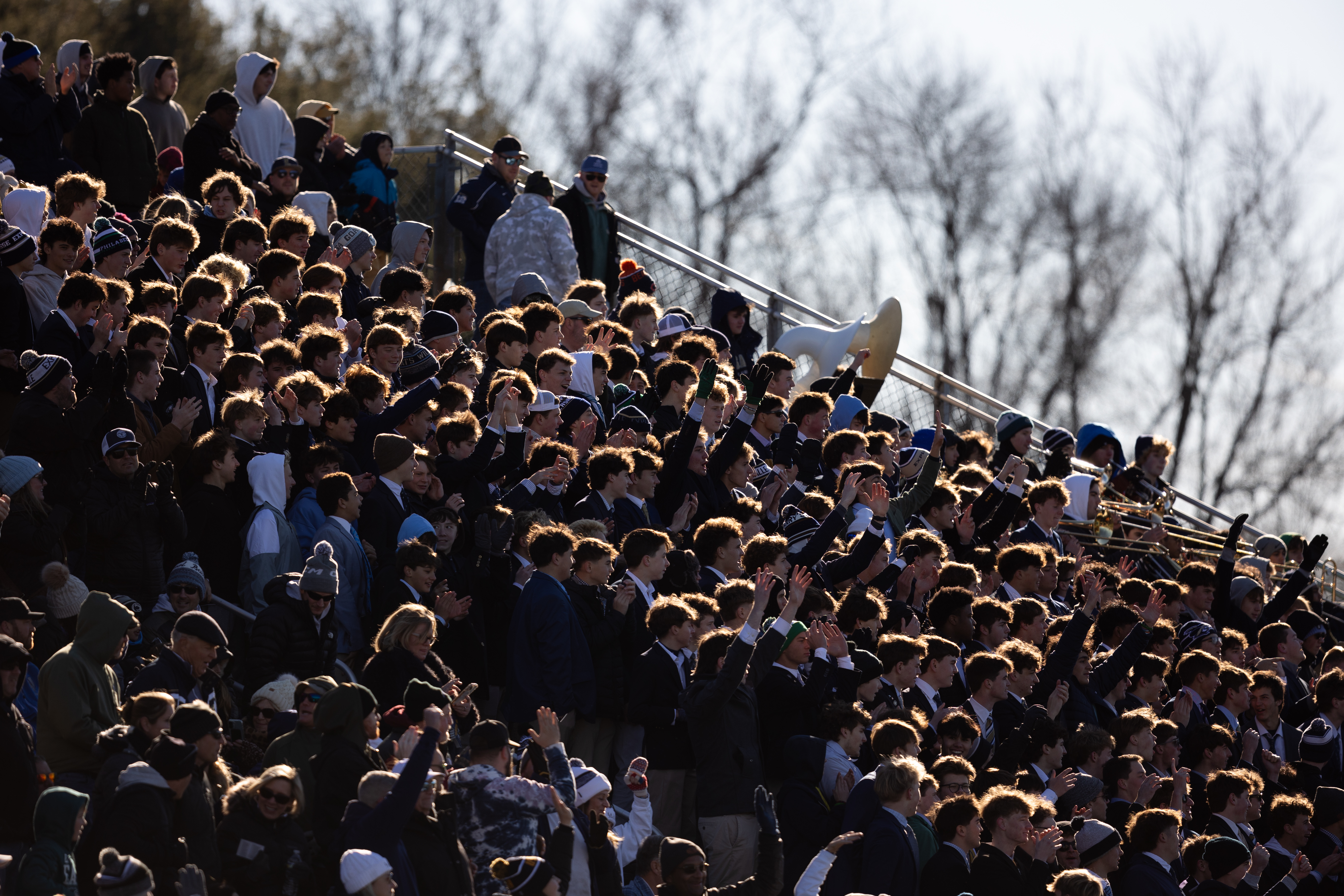
Fans cheer during the PIAA Class 6A semifinal game between La Salle College High and North Penn at Central Bucks South High School in Warrington on Saturday.
The Washington Post’s opinion section enlisted nine writers to share which American city they think deserves the title of the nation’s best sports city.
Los Angeles, Seattle, New York, Boston — even the likes of Kansas City and Cleveland got a mention. Which city was snubbed? Philadelphia.
Taking a look through the comments of their recent Instagram post promoting the list, not to mention the nearly 800 comments on the column itself, we’re not the only ones who raised an eyebrow at the exclusion of Philly from the list.
So we got nine of our own writers to argue why Philadelphia is the nation’s best sports city. Enjoy.
It means more to us
Mike Sielski, sports columnist
Philadelphia is America’s best sports city because sports — not national sports, not the Olympics, but the teams and athletes here — is the lingua franca of the town and the great connector of the city and its surrounding suburbs and communities. Do you flinch when someone says the name Chico Ruiz or Joe Carter? Do you smile at a random mention of Matt Stairs or Corey Clement? Then you know and love Philadelphia sports.
It’s America’s best sports city because Philadelphia is a provincial, parochial region where the love of and devotion to the teams’ histories and traditions are passed down from one generation to the next — a succession of unbroken bonds over a century or more. Did you sit out on your front stoop on a summer night and listen to Harry and Whitey call a Phillies game over the radio? Do you still sync Merrill and Mike’s broadcast to the TV telecast? Do you know who J.J. Daigneault is? Then you know and love Philadelphia sports.
It is America’s best sports city because you can walk down the street here after an Eagles loss or a Phillies loss or a Sixers loss and know that those teams lost just from the vacant looks on the faces of the passersby. Do you turn up the talk-radio station on those terrible Monday mornings? Do you remember where you were when Kawhi’s fourth bounce fell through the net? Then you know and you live and you die with Philadelphia sports.
Most of all, Philadelphia is America’s best sports city because people here care more and sports here matters more than it does anywhere else. If you don’t believe me, go ahead. Tell a Philadelphia sports fan that your city, your teams, your traditions are better. Go ahead. Dare ya.
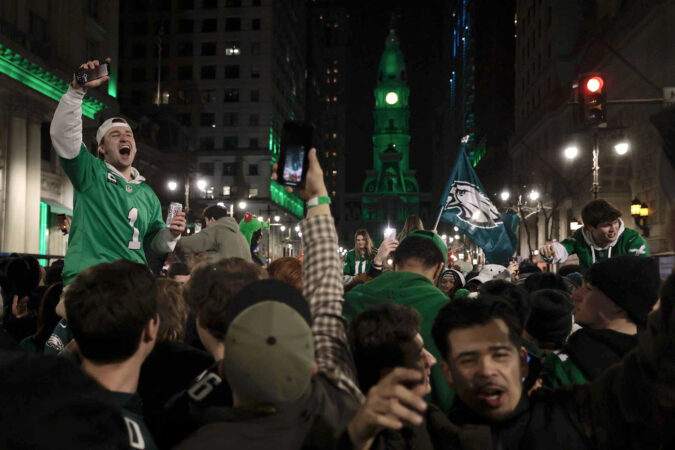
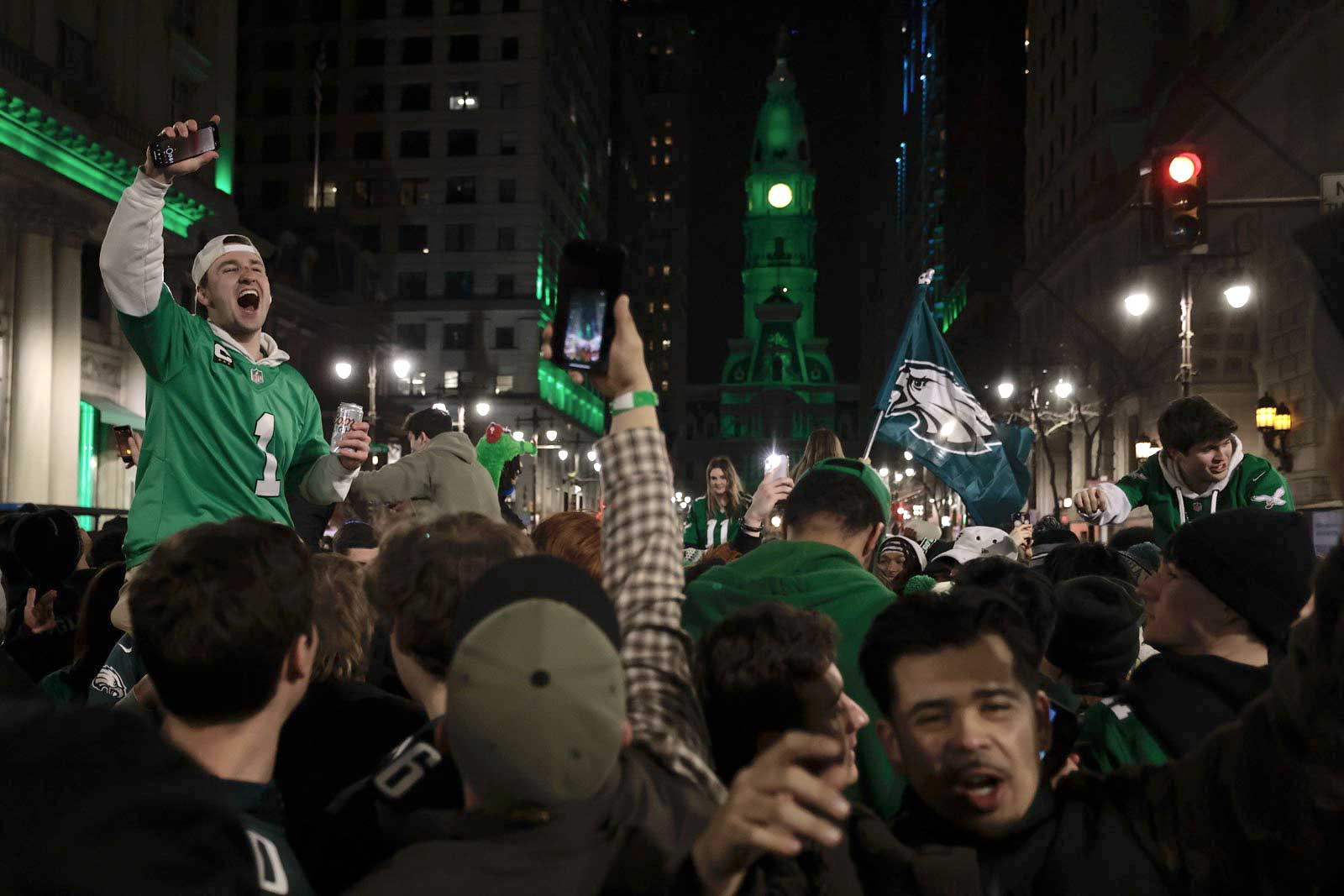
Philly fans celebrate the Eagles’ Super Bowl LIX win in near City Hall.
Nobody parties like us
Stephanie Farr, features columnist
Philadelphia is undoubtedly the best sports city in the United States and it has everything to do with our fans, who are as passionate and dedicated as they come. Here “Go Birds” is a greeting, talking trash is an art form, and being a part of it all is totally intoxicating, even if you’re completely sober (which, to be fair, most of us aren’t).
Nobody celebrates a major win like Philly — by partying in the street with Gritty and Ben Franklin impersonators, dancing with Philly Elmo and his drum line, and climbing greased poles. When the Phillies won the NLCS in 2022, I watched Sean “Shrimp” Hagan climb a pole and shotgun seven cans of Twisted Tea thrown to him by the crowd. To his credit, at some point Hagan realized he was too drunk to get down safely and waited for firefighters to bring a ladder.
“It couldn’t have happened without the crowd being so [expletive] Philly,” he told me. “What other city’s first thought when they see a guy on a pole would be to throw him a beer?”
Do our Bacchanalian celebrations border on absolute lawless anarchy? Yes, but if you want to live safe and know how something will end, go watch a Hallmark movie. This is Philly, where we are fueled by the raging fire of a thousand losses — even when we win — and we thrive off the unpredictability of life.
In my early 20s, I lived in Tampa for a brief stint. The downtown area is small enough that all of its neighborhoods are in proximity to each other. My apartment was in a section popular among locals for its dining and nightlife scene. But it was close enough to the hotel district to be in the eye of the storm when the Eagles came to town.
One Saturday evening in late October, we were sitting at a popular outside bar when the place was suddenly overcome by a wave of midnight green. Everywhere you looked, there were packs of Eagles fans who looked like they hadn’t seen the sun in two months. They swaggered through the place in their Brian Dawkins jerseys with zero regard for humanity. They ordered their Bud Lights in multiples of two and yelled Eagles chants at each other as horrified young women clung desperately to each other and wiped errant sloshes of domestic Pilsner off each other’s going-out clothes. A friend of mine stepped off the patio to have a cigarette. He returned with a stunned expression on his face. “An Eagles fan just peed on my foot,” he said with a mixture of anger and respect.
Tampa got the last laugh the next day when Matt Bryant kicked a walk-off field goal from 62 yards out. But I always think of that weekend when people ask me if Philly sports fans are as crazy as their reputation.
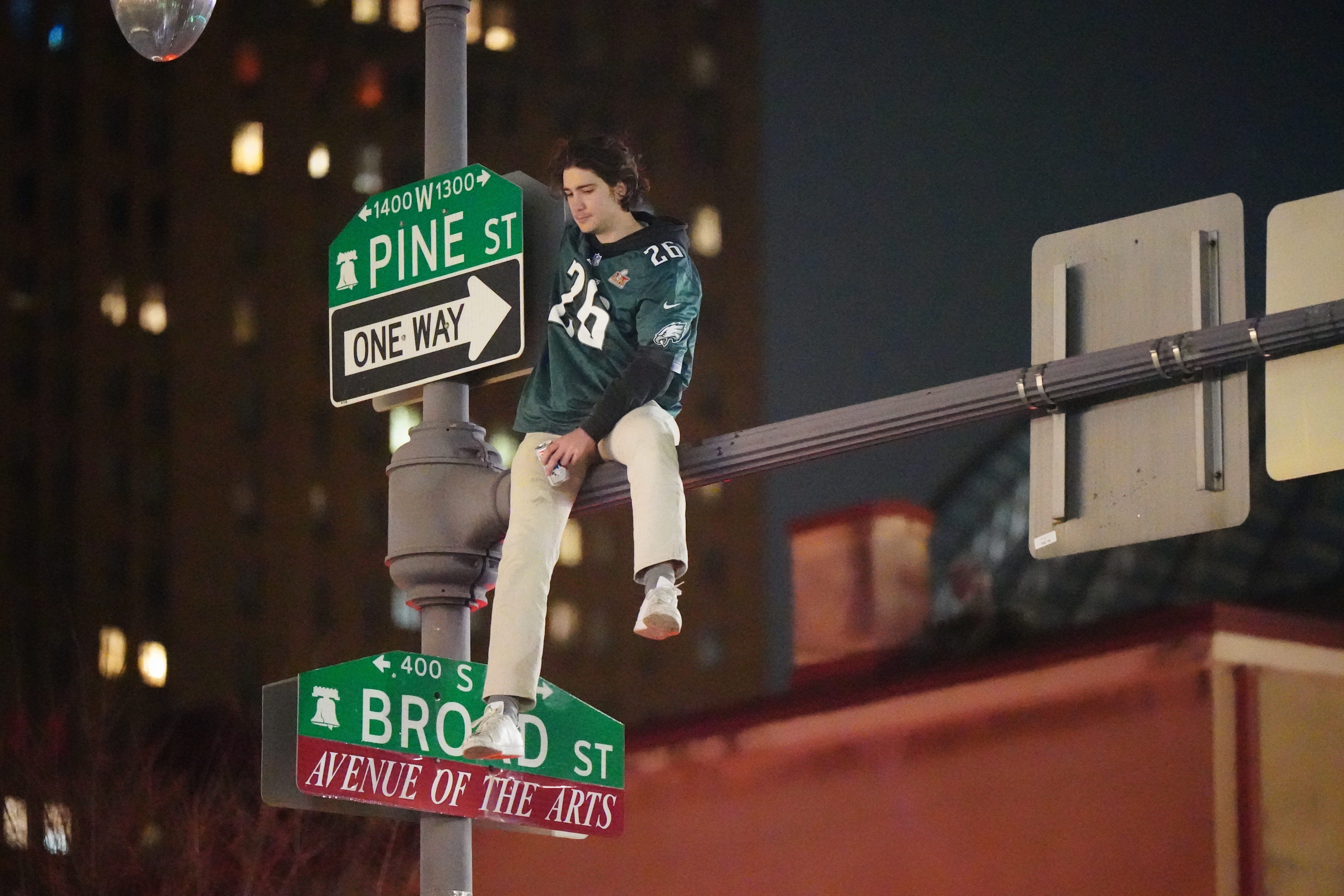
An Eagles fan sits on top of the traffic light post at the intersection of Broad and Pine Streets after the team won Super Bowl LIX in February.
There are a lot of different prerequisites that a city needs in order to consider itself a great sports town. For instance, it must be an actual city, one with history and character that stands on its own even without sports. Furthermore, a great sports town requires a certain level of market penetration. Sports must sit atop the pedestal in a way that it doesn’t in places like New York and L.A. There must be a critical mass of folks who are born and raised, which eliminates pretty much any city south of the Mason-Dixon and west of the Mississippi. The list is a short one. Boston, Chicago, Buffalo, Pittsburgh, Detroit, maybe Milwaukee.
From there, the thing that sets Philly apart is the people. They are a strange lot, prone to overexcitement and, every now and then, over-indulgence. But, man, do they care. You see it any time one of their teams hits the road. You hear it, too. There is an energy that is difficult to define but impossible not to feel. It’s the secret sauce of this place. And, yeah, it’s the best.
A veteran Eagles reporter wrote recently that last Sunday’s Eagles-Cowboys game was the Birds’ worst ever loss to their rival. They blew a 21-point lead, exposed some glaring flaws, and lost on a walk-off field goal. Fair point. But it was pushed back immediately on social media. You think this loss was bad? That’s what makes Philadelphia a great — maybe the greatest — sports city. We celebrate our wins like no other but we also wear our losses forever. This was a brutal loss but we still remember that botched chip shot on Monday Night Football in 1997. And that blowout loss in the playoffs while we were stuck inside during the Blizzard of ‘96. Oh yeah, remember what happened in 2010?
I don’t know if any city in the U.S. holds onto losses more than Philly. We do that because we care. We lose sleep when the Phillies blow a save, have a bad week if the Eagles lose, still can’t believe they didn’t call the Islanders offside, and are still waiting for Ben Simmons to dunk it. So yeah, that’s why it means more here when the teams do win. Because we care so much when they lose. You can have L.A., Seattle, and Kansas City. I’ll stay in Philly.
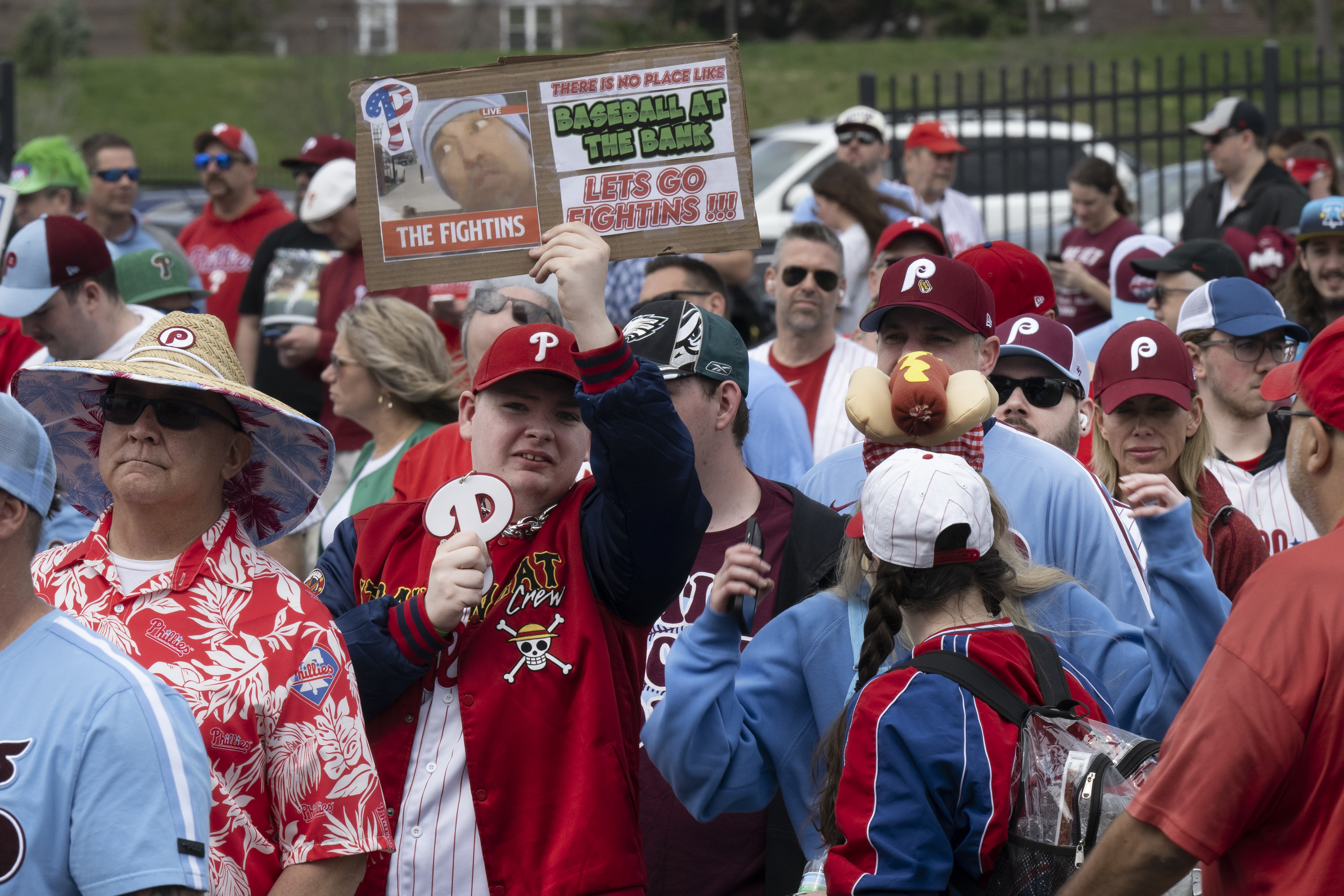
A Phillies fan holds up a sign paying tribute to another viral Phillies fan before the team’s 2025 home opener.
We feed off being underdogs
Julia Terruso, politics reporter
Look, I’m not pretending to be neutral here. I went to spring training in Clearwater in pigtails as a child. I fell in love at an Eagles tailgate and flew to London to watch the Phillies play the Mets on my honeymoon. But even non-Philadelphians would be out of their minds not to put us in the top three — let alone the top nine.
Rooting for the Phillies, Sixers, Eagles, and Flyers is a cross-class, cross-generation rite. We’re one of only eight U.S. cities with all four major teams, and our stadiums are actually accessible — yes, Los Angeles, I’m looking at you. Tickets are (mostly) affordable, the crowds are electric, and the fervor is real. We boo because we care. And unlike other cities, we don’t sneer at bandwagoners. The citywide greeting is “Go Birds,” and the uniform is fair game for the lifer who knows about pickle juice and The Process, along with the new Fishtown transplant who couldn’t diagram a wheel play but looks fantastic in kelly green — because everyone looks fantastic in Kelly green.
But the thing that really makes Philly a great sports town is our shared history of heartbreak and near-misses that drives us forward. We’re used to being underestimated. So go ahead, leave us off your list, WaPo. Underdogs run on disrespect, and we’ve got miles to go.
Stand on the South Street bridge at 7 a.m. and you’ll know the time of year, and that says it all. The rivers of medical professionals walking and biking back from their night shifts, and those heading to their morning duties, give it away in unison. Red caps? It must be October. Kelly and midnight green beanies? The NFL playoffs are coming. Blue or black starred jackets? The NBA playoffs are underway and our hearts will soon be broken, again.
I am a Philly transplant who comes from the tradition of European soccer, where rivalry between teams from the same city is the driver of passion. I always thought that there is nothing more electric than winning a derby game, and having your team crowned as the city’s best. But Philadelphia taught me that I was wrong. There is something more electric: a city united, together, declaring love to its teams in every nook and corner.
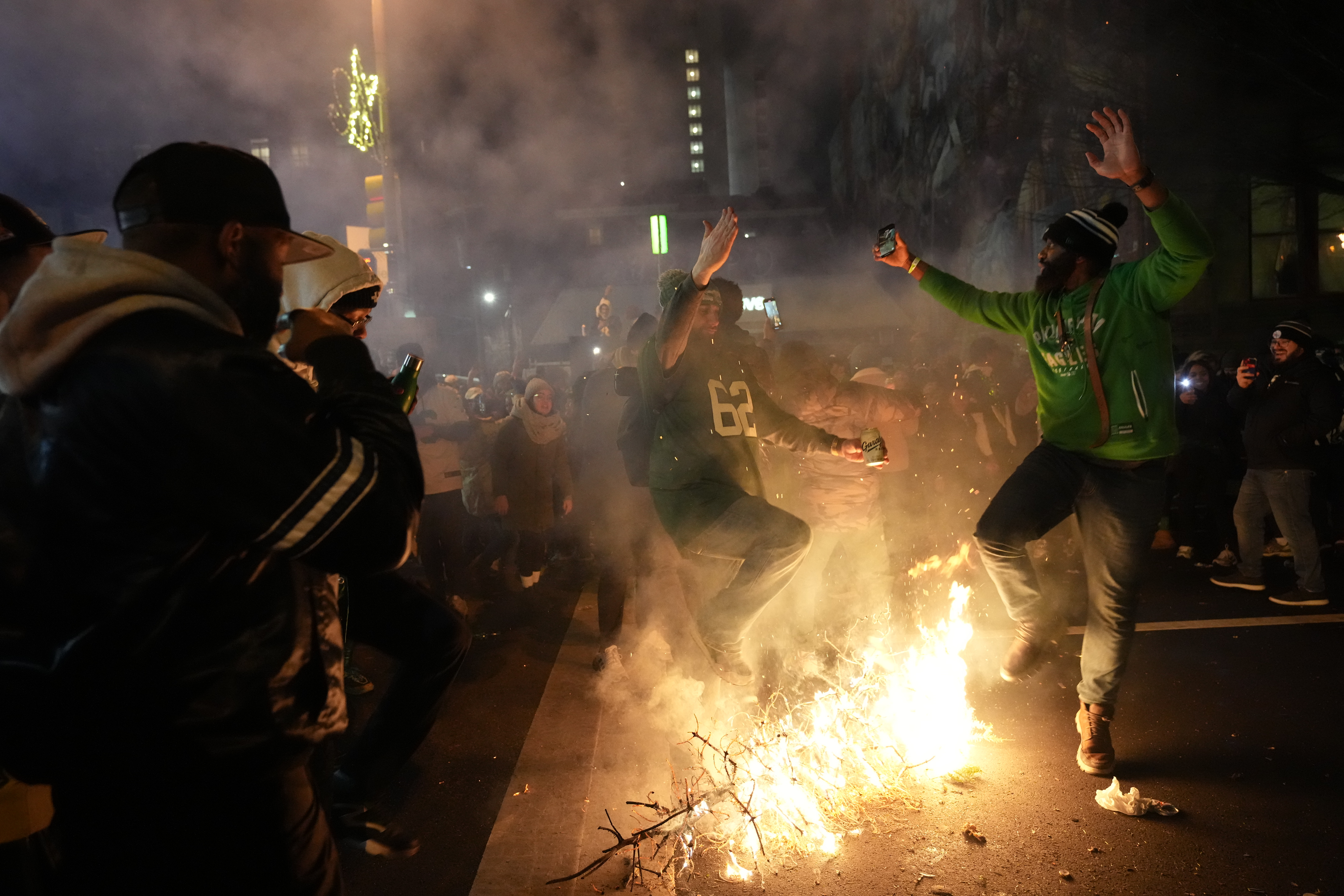
Jubilant Eagles fans dance around a fire on Broad Street after the Birds beat the Chiefs in Super Bowl LIX.
Philadelphia isn’t just the best sports city in America (“next year on Broad?”), it’s an organism that breathes sports fandom unlike any other place.
The days of throwing snowballs at Santa or batteries on a hated player are far gone. This is the city that gave a struggling shortstop who just arrived in town a standing ovation, that travels in droves so E-A-G-L-E-S chants come through the broadcast of every away game, and has a community of sickos who rode with its Sixers through one of the weirdest experiments in NBA history.
The electric energy isn’t confined to the city lines. It’s a moment that every Philadelphian cherishes. Don an Eagles hat in any other city in America, or even abroad, and you are more likely than not to lock eyes with a stranger passing by.
“Go Birds,” they inevitably say.
“Go Birds!” you respond.
Nothing beats that. And if you don’t like it. All good. We don’t care.
The Washington Post’s opinion section has been having a rough go of it. Which makes me wonder if this list, too, had to be cleared by the Amazon overlord, and maybe Jeff Bezos just hates Philadelphia?
I mean … Cleveland?
The size and scale of the two recent Eagles parades speak for themselves. The fact that there used to be a jail in the bowels of Veterans Stadium speaks for itself. Attending one Phillies playoff game at Citizens Bank Park would speak for itself. “Go Birds,” is a passing “hello” to a fellow Philadelphian in another town, a phrase of familial camaraderie. Due respect to Los Angeles, a city I love to be and eat in. But the sheer number of sports that happen in a place doesn’t make it a good sports city. That’s not human. People and passion make a place.
The Penn Relays at Franklin Field are one of just a few annual sports traditions in Philadelphia.
We have much more than pro sports
Tommy Rowan, cheesesteak/Philly history expert
A criteria would have helped, but really, any discernible or coherent formula would have really pulled that Washington Post list together. Here, instead, are three reasons why Philadelphia is one of the cornerstone cities in American sports …
History: The fabric of American sport was woven here. The Heisman Trophy is named after John Heisman, who played at Penn. The Phillies are one of the key reasons fans are allowed to keep foul balls that land in the stands. All because an 11-year-old Phillies fan didn’t blink when the team had him thrown in jail for larceny.
Tradition: We’re more than pro sports. We’ve hosted the annual Army-Navy game, and the Dad Vail Regatta, and the Penn Relays. Tennis found an American foothold at the Philadelphia Cricket Club.
Passion: Support is an undergarment. This city has passion. Fandom here is passed down from generation to generation, just like their houses. And sure they’re loud, and they generally take it the worst of any fanbafan base. But they’re vocal, they’re informed, and they care. These teams mean something to these people.
Sports fans start young in Philly, as fandom gets passed down from generation to generation.
We know our stuff
Ariel Simpson, sports trending writer
Oct. 9 was a tragic day for Philly sports fans. The Phillies season ended with a heartbreaking loss to the Los Angeles Dodgers, the Eagles suffered a devastating 34-17 loss to the New York Giants, and the Flyers dropped their season opener to the Florida Panthers.
That very next day, I wandered the streets of Philadelphia in what felt like a walk of shame. The heartbreak could be seen on each fan’s face as they still sported their favorite team’s colors. And when asked about the losses, each fan gave me a full breakdown of what needs to be done in order for the teams to be more successful.
That’s what makes Philly such a great sports city. Not only are the fans passionate, but they are knowledgeable when it comes to their sports teams. Sure, sometimes they may rush to call for a head coach to be fired or boo their own teams, but that’s only because they care so much.
They wear their heart on their sleeves and they expect more from each team. And when they do succeed, they show up and celebrate like no other. If you need an example, look no further than the city greasing its light poles in an attempt to stop fans from climbing them in celebration.
Even after more than two decades of operating a financial advisory in the Philadelphia region, Joel Steele is inspired when clients tell him they want to donate money to charity.
“But the problem is that it’s gotten much more difficult to know if your donations are going to the people you are directly trying to help,” said Steele, co-owner and financial adviser with Steele Financial Solutions in Cherry Hill. “Charity scammers are running rampant.”
Solicitors are on the phone, at your door, in your email, and in your mailbox.
“We’re constantly inundated with people looking to take our money and put it in their pockets for the wrong reasons,” Steele said. “This has led many people to back off — in part or in full from — donating to charities.”
One way to reduce the chance of misappropriation is to contact the charity directly, Steele said. “Yes, it’s easier to put cash in a tin can or buy things from a stranger, but these are more likely to end up in that person’s pocket.”
Also, he recommends, when you donate directly to charities, get a receipt and check with your income tax preparer or review deduction guidelines to understand potential tax benefits.
Evaluating Giving Tuesday solicitations
Everyone knows about Black Friday shopping, and recent years have seen the additions of Small Business Saturday and Cyber Monday in the days after Thanksgiving.
In 2012, Giving Tuesday joined the lineup, promoted by the 92nd Street Y in New York and the United Nations Foundation. It caught on quickly, as more organizations joined in on the opportunity to fundraise.
Giving Tuesday encourages generosity, but it’s also a time for scammers to ramp up fraud tactics. Scammers may use fake charities or misuse real ones to take advantage of donors.
If you get direct mail or a call, text, email, or social media message asking you to donate to a nonprofit, pause for a moment to dig deeper.
Your heart immediately wants to say “yes,” said Katherina ‘Kat’ Rosqueta, founding executive director of the Center for High Impact Philanthropy at the University of Pennsylvania. But unless you have personally been helped by that nonprofit or know someone who was, it’s hard to know whether the nonprofit is actually making a difference.
“That’s where your head comes in,” Rosqueta said. Consider running a quick Internet search for the charity’s name, along with “scam” or “complaints” to see if there have been any negative feedback or investigations, she said.
Katherina Rosqueta is the founding executive director of the Center for High Impact Philanthropy at the University of Pennsylvania.
Of course, most donors want to do more than just avoid fraud.
“They want their donation to make a real difference,” Rosqueta said.
Her center at Penn created a “High Impact Giving Toolkit,” updated each year and available for free. It highlights vetted nonprofits and provides links to organizations like Candid, Charity Navigator, and BBB Wise Giving Alliance, where potential donors can learn about organizations’ programs, team, and finances.
“Once you feel confident about a nonprofit’s work, consider donating online through an official, secure nonprofit website that uses HTTPS encryption,” Rosqueta said.
“Avoid links in unsolicited emails or social media posts. Credit cards and checks offer better fraud protection than debit cards or wire transfers,” Rosqueta said.
How to make online donations safer
The key to understanding fraud is that most scammers prey on your emotions.
“Fear, urgency, and promise of a quick win are some elements that exist in so many scam scenarios,” said Christopher Blackmore of TD Bank in Mount Laurel, who works in customer education in financial crimes prevention.
Blackmore said most “bad actors” will reach out and provide a number to call, link to click, or instructions for payment. “The goal is to make scenarios seem so real that you feel you must reply or something will happen.”
Financial industries should never ask for login credentials, passwords, or one-time pass codes, Blackmore said. “Technology is making it very difficult to identify what is real vs. fake.”
A text, email, or phone call is a very quick and easy way to contact a lot of people quickly and ask for a donation.
“These tactics are known as phishing, vishing, and smishing,” Blackmore said. A newer tactic, known as “Quishing,” utilizes QR codes.
When a donation ask includes a request for payments using gift cards, wires, and cryptocurrency, that should immediately raise caution, Blackmore said.
Donors might want to consider a third-party platform like PayPal, which safeguards sensitive financial information.
“Donors should stay mindful online and keep an eye out for the warning signs of common scams, including being wary of unexpected messages from strangers,” said Nick Aldridge, Global CEO of PayPal Giving Fund.
“We always encourage supporting causes you care about through trusted channels like PayPal Giving Fund, the PayPal Cause Hub, and Venmo Charity Profiles,” Aldridge said.
Philadelphia didn’t take home any Nobel Prizes this year, but work illuminating how babies respond togarlic-flavored breast milk at Monell Chemical Senses Center did get recognized by its satirical counterpart, the Ig Nobel Prize.
Julie Mennella, a longtime scientist at the center in West Philadelphia, and Gary Beauchamp, Monell’s former director, won the prize earlier this fall for their 1991 study published in the academic journalPediatrics that disproved popular folklore around breastfeeding.
Their study examined whether eating garlic would flavor a mother’s breast milk and, if so, how a nursing baby would react to it.
At the time, breastfeedingwomen were often told to eat bland foods, for fear their babies would reject strong flavors. However, the study’s results showed the opposite: Babies savored the garlic-flavored breast milk.
“That simple, elegant study really showed how one of the first ways we learn about foods is through what our mothers eat,” Mennella said.
These early life experiences shape food preferences and influence cultural food practices around the world, she emphasized. Babies whose mothers come from cultures in which garlic is a defining flavor would have experienced garlic long before their first meal.
Mennella spoke with The Inquirer about the implications of her Ig Nobel Prize-winning work and her decades of research on flavor sciences and early nutritional programming.
The following conversation has been lightly edited for length and clarity.
What did you discover in your Ig Nobel Prize-winning study?
We found in this study that not only did the milk get flavored with garlic, but contrary to a lot of the folklore, the babies actually liked it. They nursed longer when the milk was garlic-flavored than when it was bland and devoid of garlic.
We went on to show that when women eat garlic, the flavor of amniotic fluid also gets altered.
Through these first exposures, babies are learning about what mom is eating, what mom has access to, and what mom likes before their own first taste of solid food.
What is the takeaway for breastfeeding mothers?
Eat the healthy foods that you enjoy because your baby’s going to learn about the food. Food is much more than a source of calories. In many cases, it defines who we are as a people.
What other flavors have you studied?
A wide variety of flavors, from vanilla to even alcohol if a woman drinks it, get transmitted and flavors the milk. If women smoke, the tobacco flavor does, too. So it’s not only what you eat, but what you breathe.
Why is it important for babies to learn about food this way?
There’s a great story about the European rabbit (an animal that nurses), where they tagged the mother’s diet with juniper berry. What they were able to show is that in a group where the mothers ate juniper berry during either pregnancy or lactation, once those young rabbit pups left the nest, they were more likely to forage on juniper berry.
So, she’s telling them, ‘These are the foods that are out there. I’m eating them. They’re safe.’ It’s really a very elegant, sustainable behavior, how moms transmit this information about the foods in the environment. She’s teaching her young and giving them an advantage early on.
How long do these flavors last in the milk?
Depending on the size of the chemical, some will get in fast. Garlic gets in a couple hours after the mom eats it, and then if she stops eating, it’s out of the milk like four or five hours later. The sensory experience of that baby is changing throughout the course of the day, day to day, depending on what she eats.
What research have you been up to since?
I’ve gone into so many different directions of looking at not only early flavor learning, but also nutritional programming. I also looked at the taste of medicine in children, looking at individual differences because taste is the primary reason for noncompliance. Children have a harder time because they can’t encapsulate the bad taste in a pill or tablet, so liquid medicines are particularly difficult.
One study where we looked at variation in the taste of pediatric Motrin (among adult participants) was really interesting. Some people experience a tingle when they taste it. Others don’t. It makes you think that how one child tastes Motrin isn’t like how another does. If you don’t experience the tingle, or this burning sensation, all you taste is a sweet liquid, and those are the children that may be at risk of over-ingestion.
What is your favorite project that you have worked on since the garlic study?
I serendipitously found that another flavor that gets transmitted is alcohol, and that became a whole new area of research.
We found that when women just have the equivalent of one or two glasses of wine or beer, not only did the alcohol get transmitted, but it flavored the milk. That became a lead article in theNew England Journal of Medicine.
At that time, there was talk about a folklore that women should drink when they’re breastfeeding, so they would make more milk. And contrary to that folklore, they actually made less milk.
How did it feel to win an Ig Nobel?
It was so nice to celebrate science. That’s really what that award does: It uses humor to teach about science.
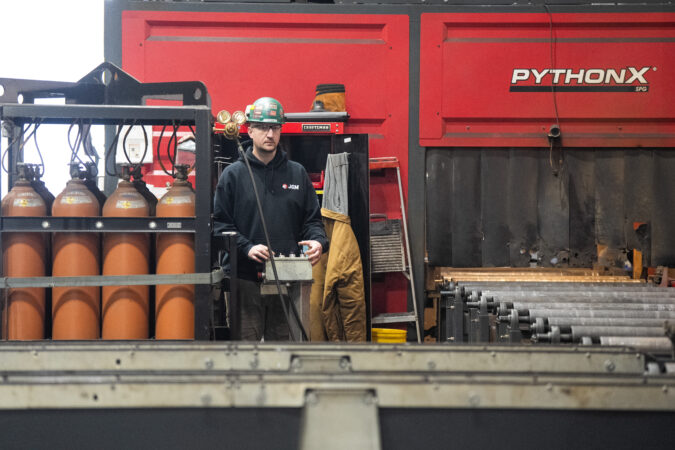
Tyler Ramaley wakes up every morning grateful that he’s able to do “respectable work in a hardhat” as he clocks in for his shift at JGM, a steel fabrication plant in Coatesville.
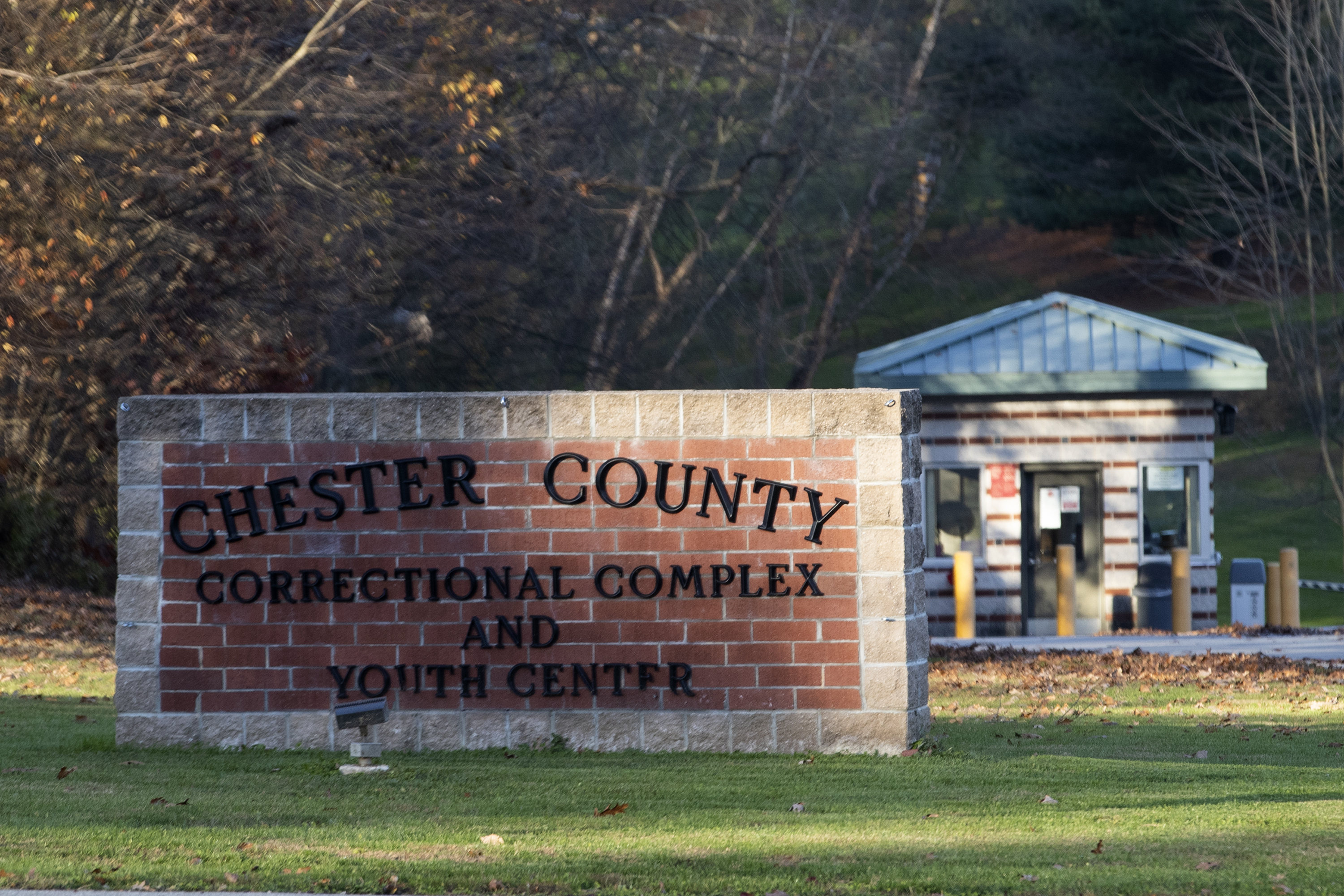
Nineteen months ago, that would have been impossible: He was struggling with an opioid addiction and waking up to a monotonous routine in a Chester County Prison cell.
A new program offered at the jail, Exit, Enter, Employ, gave him an opportunity to move on from his past mistakes. He had help building his resume, getting certified in his chosen field, and, crucially, landing an interview for a job that was waiting for him after his release.
“I was in there, and I just didn’t like who I was and I just knew I needed to change,” Ramaley, 37, said in an interview during a break from running a plasma cutter on a recent day. “It gave me a purpose to wake up every day, and it makes me not want to waste the opportunity I’ve been given.”
Ramaley’s experience, county officials say, is just one of many success stories to come out of the E3 program since its inception in January 2023 through a partnership between the jail and the Chester County Intermediate Unit.
More than 100 people have graduated from the course, with a recidivism rate of 2%, according to Jill Stoltzfus, the program’s career-readiness coordinator and a CCIU employee.
“Everybody needs a second chance,” she said. “And I’m very candid with people when I interview them. Like, we’ve all made mistakes, I’m sure I’ve made mistakes that I could be in the same situation.”
More than 100 inmates at the Chester County Prison have graduate from the E3 program since its inception in January 2023.
Job-readiness programs are nothing new for county jails — they’re offered almost universally across the region. But Stoltzfus said E3 is different because it provides a direct path, with job openings already lined up for graduating inmates from multiple companies that partner with the county.
And in the first few months in those jobs, coordinators from the program follow up with former inmates, checking in to see how they are faring.
“I don’t like the judgment we often hear of ‘Why should we fund this?’ or the idea that some people deserve a chance over others,” Stoltzfus said. “I think it’s crucial that we at least put that opportunity out to them.”
E3 is available only to inmates who have been sentenced to county jail, meaning their crimes were not serious enough to warrant state prison time. And county officials carefully screen those who apply to the program to make sure they are ready.
Besides workforce skills like OSHA certification and courses in customer service, E3 offers financial-planning advice, as well as cognitive behavioral therapy and anger management.
Current partner employers, besides JGM, include J.P. Mascaro & Sons, FASTSIGNS, and MacKissic. Stoltzfus is hoping to expand the offerings to include agricultural and culinary posts.
Howard Holland, the warden of Chester County Prison, views the program as a way to help incarcerated people prepare to reenter society in a productive way.
“We’re engaging them in a way other than just ‘Here’s your cot, stay behind the bars,’” he said. “You just have that same cycle over and over and over again because that’s the way our institutions are run.
“At the end of the day, we’re humans, right?” he added. “They’re here, and it’s our responsibility to, while they’re here, try to do the best we can for them.”
Tyler Ramaley said he never thought he would be able to go to work, after years of addiction. The E3 program helped him connect with a job he loves.
Ramaley, who was named JGM’s employee of the month in June, said the opportunity was an important step toward reversing years of bad decisions.
His drug abuse, he said, began in 2020, when he was injured on the job while running a hammer drill at a concrete mill. The drill skipped and jerked his arm hard, shredding multiple tendons. After several surgeries, he said, he was prescribed Tramadol in bottles of 150 pills at a time. He became reliant on the pills, using them to deal with the pain.
And when his workers’ comp ran out, he said, his doctor cut him off cold turkey and he turned to other ways to support his opioid habit and purchase drugs, racking up convictions for theft and forgery and landing in county jail.
His moment of clarity came this spring, he said, and he graduated from E3 in April, weeks before his jail sentence ended and he was released.
“When I was in my active addiction, I never thought I would be able to go to work and not be on something,” he said, “and there’s times I’ll stand out there and just kind of think about how happy I am here, actually doing hard work and respectable work and doing it the right way.
“And that’s a better feeling than anything I had when I was in my addiction.”
The FIFA World Cup is rapidly approaching, but before the world’s premier international tournament hits U.S. soil this summer, FIFA will assign qualifying nations into groups for the tournament during its highly anticipated final draw.
Here’s everything you need to know about Friday’s event.
When and where is the tournament draw, and how can I watch?
The World Cup draw, which will determine the groups for the round-robin stage of the tournament, will take place on Friday at noon. The event will be hosted by the Kennedy Center in Washington and broadcast live on Fox. Its coverage of the draw will begin at 11:30 a.m. and conclude at 3 p.m. FIFA’s event, which begins at noon, is expected to last about an hour and a half, with the draw itself accounting for about 45 minutes of that time.
Medford native Brenden Aaronson (right) and the U.S. will find out their pairings as one of three host nations on Friday.
What teams are in the draw?
Forty-two national teams, including cohosts Canada, Mexico, and the U.S., have already qualified for the World Cup and will be included in the draw.
Six spots remain available for the World Cup, which will feature 48 teams for the first time in its history. Four of the remaining six qualifying spots will be awarded to the top four teams in the European Federation’s 16-team playoff, which will conclude in March. The other two spots will be awarded to the top two finishers at the FIFA Playoff Tournament, also in March.
At Friday’s draw, the six qualifiers yet to be determined will be represented by placeholder slips, four for Europe and two for the intercontinental FIFA playoff.
Here’s a full list of the qualified teams by confederation, plus a look at participants in the European playoff and the FIFA Playoff Tournament:
Cohosts: Canada, Mexico, United States
Asian Football Confederation (AFC): Australia, Iran, Japan, Jordan, South Korea, Qatar, Saudi Arabia, Uzbekistan
Confederation of African Football (CAF): Algeria, Cape Verde, Ivory Coast, Egypt, Ghana, Morocco, Senegal, South Africa, Tunisia
Confederation of North, Central American and Caribbean Association Football (Concacaf): Curaçao, Haiti, Panama
South American Football Confederation (CONMEBOL): Argentina, Brazil, Colombia, Ecuador, Paraguay, Uruguay
Oceania Football Confederation (OFC): New Zealand
Lionel Messi will most likely play in his final FIFA World Cup with Argentina this summer.
Union of European Football Associations (UEFA): Austria, Belgium, Croatia, England, France, Germany, Netherlands, Norway, Portugal, Scotland, Spain, Switzerland
UEFA 16-team playoff (four qualifiers): Albania, Bosnia and Herzegovina, Czechia, Denmark, Italy, Kosovo, Northern Ireland, North Macedonia, Poland, Ireland, Romania, Slovakia, Sweden, Turkey, Ukraine, and Wales
FIFA World Cup 26 Playoff Tournament (two qualifiers): Bolivia (CONMEBOL), Democratic Republic of the Congo (CAF), Iraq (AFC), Jamaica (Concacaf), New Caledonia (OFC), and Suriname (Concacaf)
Qualified nations will be divided into four pots based on their FIFA World Rankings positions. Pot 1 will contain the nine best-qualified teams in the rankings, as well as the three cohosts. The host nations have already been assigned to groups — Mexico will be in Group A, Canada will be in Group B, and the U.S. will be in Group D. The remaining teams will be assigned to the other nine groups, one team per group.
After all the teams in Pot 1 have been drawn, the draw will move to Pot 2, selecting one team for each of the 12 groups. The process will repeat with Pot 3 and Pot 4, resulting in 12 groups of four teams. During the tournament, the top two teams in each group will advance to the knockout rounds. The top eight third-place finishers in the 12 groups will also advance, completing the Round of 32.
Though the draw determines tournament groups, FIFA is also looking ahead to the knockout rounds. FIFA will structure the knockout bracket so that the top four teams in its rankings — Spain, Argentina, France, and England — will not meet before the tournament semifinal, provided that they each finish first in their respective groups. It is the first time the World Cup will use a tennis-style bracket for knockouts.
Here’s a complete look at the pots that will be used on Friday:
Pot 1: Canada (B1), Mexico (A1), U.S. (D1), Spain, Argentina, France, England, Brazil, Portugal, Netherlands, Belgium, Germany
Pot 2: Croatia, Morocco, Colombia, Uruguay, Switzerland, Japan, Senegal, Iran, South Korea, Ecuador, Austria, Australia
Pot 3: Norway, Panama, Egypt, Algeria, Scotland, Paraguay, Tunisia, Ivory Coast, Uzbekistan, Qatar, Saudi Arabia, South Africa
Pot 4: Jordan, Cape Verde, Ghana, Curaçao, Haiti, New Zealand, European playoff winner 1, European playoff winner 2, European playoff winner 3, European playoff winner 4, Intercontinental playoff winner 1, Intercontinental playoff winner 2.
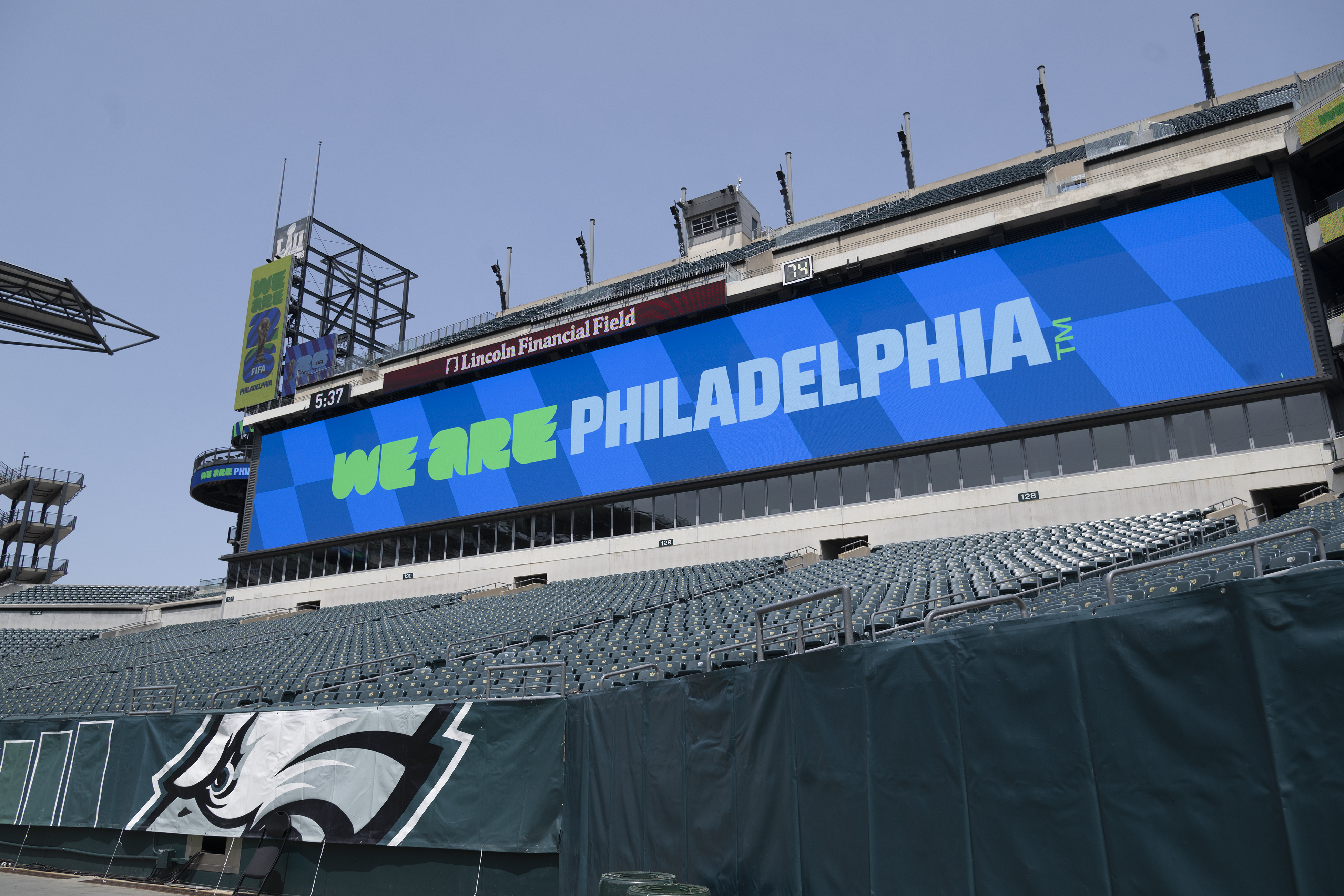
Lincoln Financial Field is one of 11 venues in the United States that will host next summer’s World Cup.
Which teams are coming to Philly?
The draw should help determine which international sides will play in Philadelphia this summer. FIFA’s tournament schedule shows that Philly will host group stage games for Groups C, I, and L, and two for Group E, alongside a Round of 16 match. Fans will not be able to track which teams are coming to Philly during the draw, as the current tournament schedule does not give specific placeholders for the group stage matchups.
The World Cup schedule will be updated on Saturday after the draw, with the paired teams assigned to venues along with kickoff times. The updated schedule will include which teams will play group stage matches in Philly from Groups C, E, I, and L, as well as the time for the Round of 16 match on July 4.
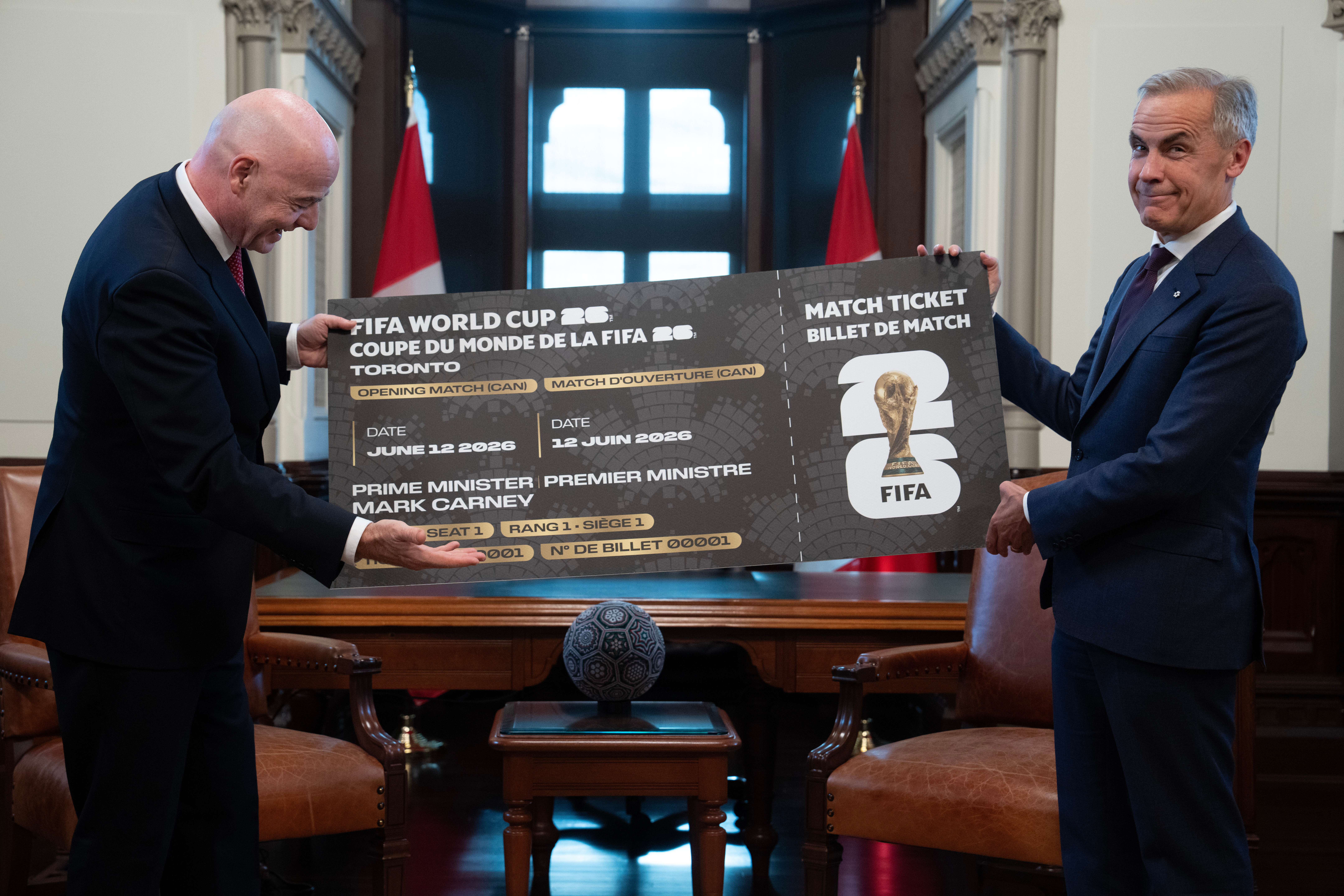
Canadian Prime Minister Mark Carney (right) is presented with a novelty World Cup ticket by FIFA president Gianni Infantino on Oct. 10.
Can I still buy tickets after the draw?
Yes. Fans interested in buying tickets for World Cup matches at Lincoln Financial Field can enter ticket lotteries for individual group-stage games via FIFA’s random selection draw.
The lotteries will begin accepting entries on Dec. 11 at 11 a.m. and close at the same time on Jan. 13.
After the random selection draw phase of ticket sales has finished, any remaining inventory will be released on a first-come, first-served basis closer to the beginning of the tournament. Single-match and multimatch hospitality packages are also available through FIFA.
FIFA’s first-come, first-served phase will be the last opportunity for fans to buy tickets directly through FIFA. After that, tickets will be available only through resale on the secondary market.
It’s suddenly December, and the Thanksgiving leftovers are mostly eaten. That means it’s once again time to make the big decision: Is this the year to finally stop sending holiday cards?
When I graduated from college, I promptly embraced the trappings of adult life, from getting a job to buying a car to moving into my own apartment. But the step that made me feel most adultlike was sending out my own holiday cards. A holiday card from a separate address says: “This is my household. Not my parents’ household, mine.”
Not cheap
Sending holiday cards isn’t cheap.
There are the cards themselves, which go up in price if you’re sending a photo card or selecting fancy lined envelopes. Stamps are currently 78 cents apiece, which doesn’t sound like much, unless you’re sending out 50 cards or more.
And then there’s the issue of time: You have to decide on the cards and purchase them, write a little note in each card, address the envelopes, then make your way to the post office.
Yet, despite the costs in money and time, I’ve always sent out cards, even in my younger, poorer years. There has always been a satisfaction in reaching out to people I don’t see regularly, but who nevertheless have a place in my heart and my history.
A customer at Paper Source in Chicago on Dec. 18, 2018. The greeting cards retailer filed for bankruptcy the next week.
Then, about 10 years ago, I realized we were receiving fewer cards each year.
The clogged mailbox became progressively emptier over a span of years, like a dying mall. This shift shows up in statistics from the U.S. Postal Service, which notes that mail bearing postage stamps, including cards, letters, and bill payments, dropped from 16.5 billion pieces of mail in 2019 to 10.7 billion last year.
For the first few years, I worried the non-senders were going through challenging times. A person doesn’t feel very merry if they’ve gotten divorced or been laid off or had a death in the family. But it turned out that — fortunately — very few had faced hardship. They just weren’t sending cards anymore.
“It’s a lot of trouble,” said one. “I don’t have the time,” said another.
People who used to send holiday cards can now share photos online of their family and their travels. Because they’re regularly connecting with those far-flung cousins and high school friends on social media, mailing out cards has become redundant and maybe even pointless to them.
The young adults in my life, including my own grown children, who are now in their 30s, haven’t just decided against sending cards; the idea never occurred to them in the first place.
So once again, at this time of year, I consider whether to keep the tradition going. But there are several relatives who are not on social media, and there are a few longtime friends I’m in touch with only through holiday cards.
It’s a poignant yearly ritual to go over the list of recipients, noting who has moved, who has married, who has had a baby, and who has passed away. People come and people go, and nothing underscores this quite like the holiday card list.
Better to let them know they’re loved, right now.
So I will get to the task, laying cards and envelopes neatly on the kitchen table. My husband will look at me blankly.
“Are we still doing that?” he’ll ask.
Elizabeth Luciano writes essays and fiction and teaches composition at Bucks County Community College.
WASHINGTON — Ahead of a morning Budget Committee meeting, U.S. Rep. Brendan Boyle gathered his senior advisers in a brightly lit conference room just off the Capitol to settle on a simple strategy.
“Let’s keep the main thing the main thing,” he said. “Fifteen million Americans are gonna lose their healthcare because Republicans care more about tax breaks for billionaires. It’s accurate. You can describe it in a sentence.”
Boyle, a six-term lawmaker, is the most veteran of Pennsylvania’s eight Democrats in Washington. He has been the ranking member of the House Budget Committee since 2023, meaning he is the top Democrat playing defense as the Republican-controlled Congress ushers through GOP spending priorities. It can be a futile exercise in shouting into a void — until the yelling starts to echo outside.
“He’s one of our best messengers who appropriately comes across as both strong and authentic at the same period of time,” House Minority Leader Hakeem Jeffries (D., N.Y.) said in an interview late last month.
Jeffries credited Boyle with homing inon a key statistic: Taken together, Trump’s reconciliation bill andthe expiration ofAffordable Care Act tax credits represent the largest cut to Medicaid in American history.
“That one observation became core to our arguments in pushing back against that toxic piece of legislation, and it’s also one of the reasons I believe that the law is so deeply unpopular amongst the American people,” Jeffries said.
Democrats have been recently on a roller coaster — securing big wins in the November election and then splitting over how long to withstand the government shutdown, with eight senators ultimately crossing the aisle to end the impasse. But Boyle’s messaging war is ongoing, and he thinks it is his party’s best bet for winning key midterm races in his home state, where Democrats are targeting four Republican-held seats in swing areas.
If Democrats reclaim Congress in next year’s election, Boyle would shift from ranking member to chair of the powerful Budget Committee — becoming the first Pennsylvanian to lead it since Philadelphian Bill Gray, a Democratwho chaired it from 1985 to 1989. It would be another resumé builder for the 48-year-old lawmaker whose role in Washington keeps growing and who has not ruled out a potential Senate run in 2028, when Democratic Sen. John Fetterman’s seat would be up.
“I get asked a lot: How do you keep this message going for the next year?” Boyle said in an interview in his Washington office. “Well, we started this five months ago, and actually more people know about it today than over the summer. Every single day, continuing to talk about healthcare, continuing a broader conversation about affordability, is absolutely what we have to do.”
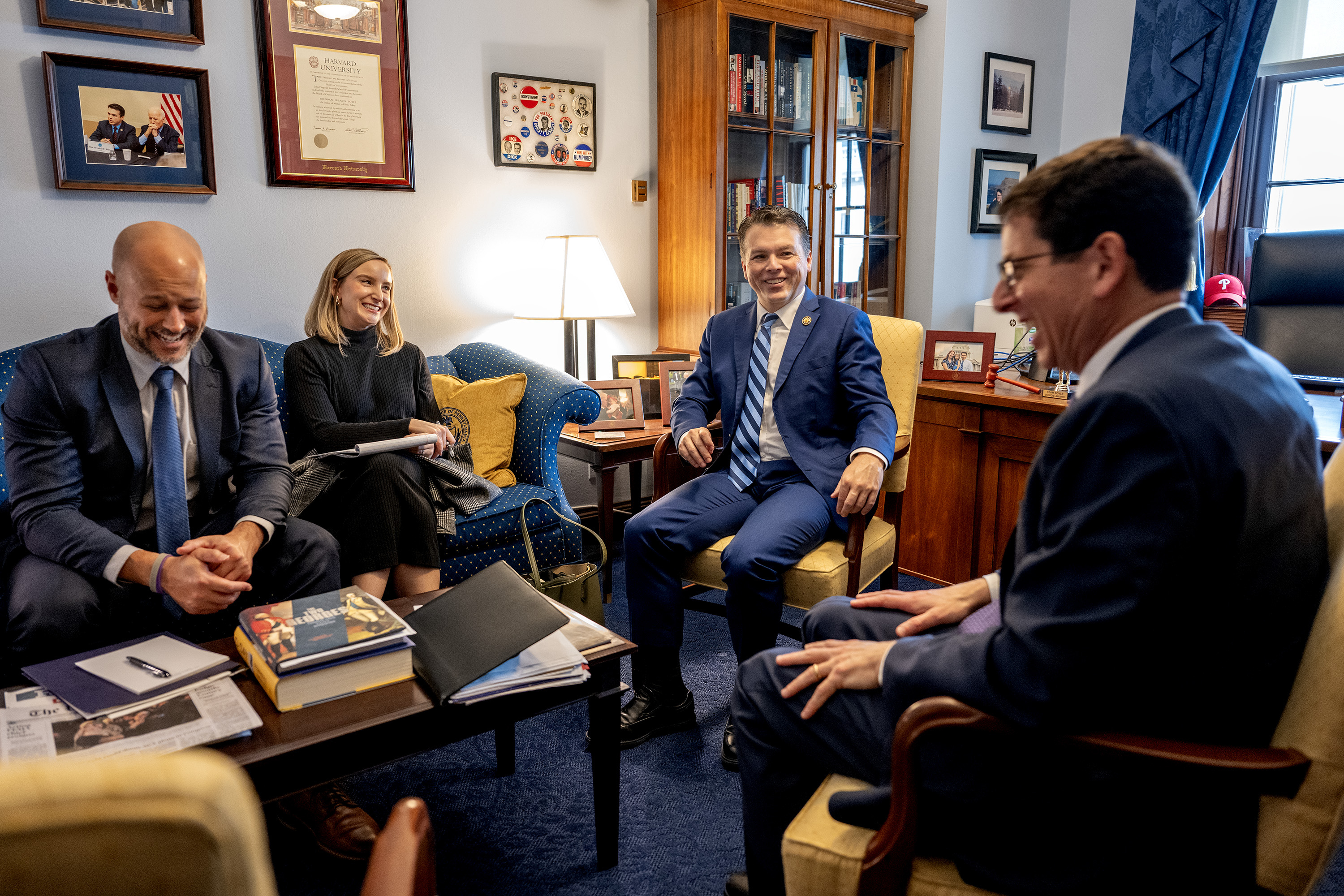
U.S. Rep. Brendan Boyle (center) meets in his Capitol Hill office with Phillip Swagel (right), director of the Congressional Budget Office, following Swagel’s testimony before House Committee on the Budget last month. As Budget’s ranking member, Boyle has been central in shaping Democratic messaging around Republican policies.
‘Scrappy Irish Catholic boys from Olney’
Boyle, who lives in Somerton with his wife and 11-year-old daughter, is an affable, earnest lawmaker in a role that is unapologetically wonky — and high-profile, especially lately.
From Oct. 1 through the end of November — a period including the shutdown — Boyle popped up on TV news more than two dozen times, by his office’s count.
His political beginnings were far less polished. In 2014, Boyle shocked Philadelphia’s political establishment by winning the Democratic primary over a field that included former U.S. Rep. Marjorie Margolies, scion of a powerful political family. Then a 37-year-old state representative, Boyle ran as a blue-collar, antiestablishment pragmatist from Northeast Philly. His ads cast his opponents as out of touch, and he leaned hard on his family’s story: his father, an Irish immigrant, worked at an Acme warehouse and later as a SEPTA janitor; his mother was a school crossing guard. Boyle still keeps his dad’s SEPTA cap on a bookshelf in his Washington office.
That same year, his brother Kevin won a seat in the state House, prompting Philadelphia Magazine to profile the “scrappy Irish Catholic boys from Olney” who were reshaping the party.
A decade later, Democrats are still striving to win back blue-collar voters. Boyle, meanwhile, has traded some of his insurgent edge for the stature of a Hill veteran.As Philadelphia elects a replacement for retiring U.S. Rep. Dwight Evans next year, Boyle will be a key ally for the new lawmaker, and a coveted endorsement during the election, though he has said he does not plan to weigh in. He has been in the thick of some of the year’s biggest fights — leading Democrats through a 12-hour reconciliation markup, testifying at a 1 a.m. Rules Committee hearing, and grinding through an overnight Ways and Means marathon.
His younger brother has had a far more tumultuous path. Kevin lost his state House seatlast year amid long-running mental health struggles.
Boyle declined to discuss the situation beyond saying: “The last five years — almost exactly five years — have been very challenging. And I’ll just leave it at that.”
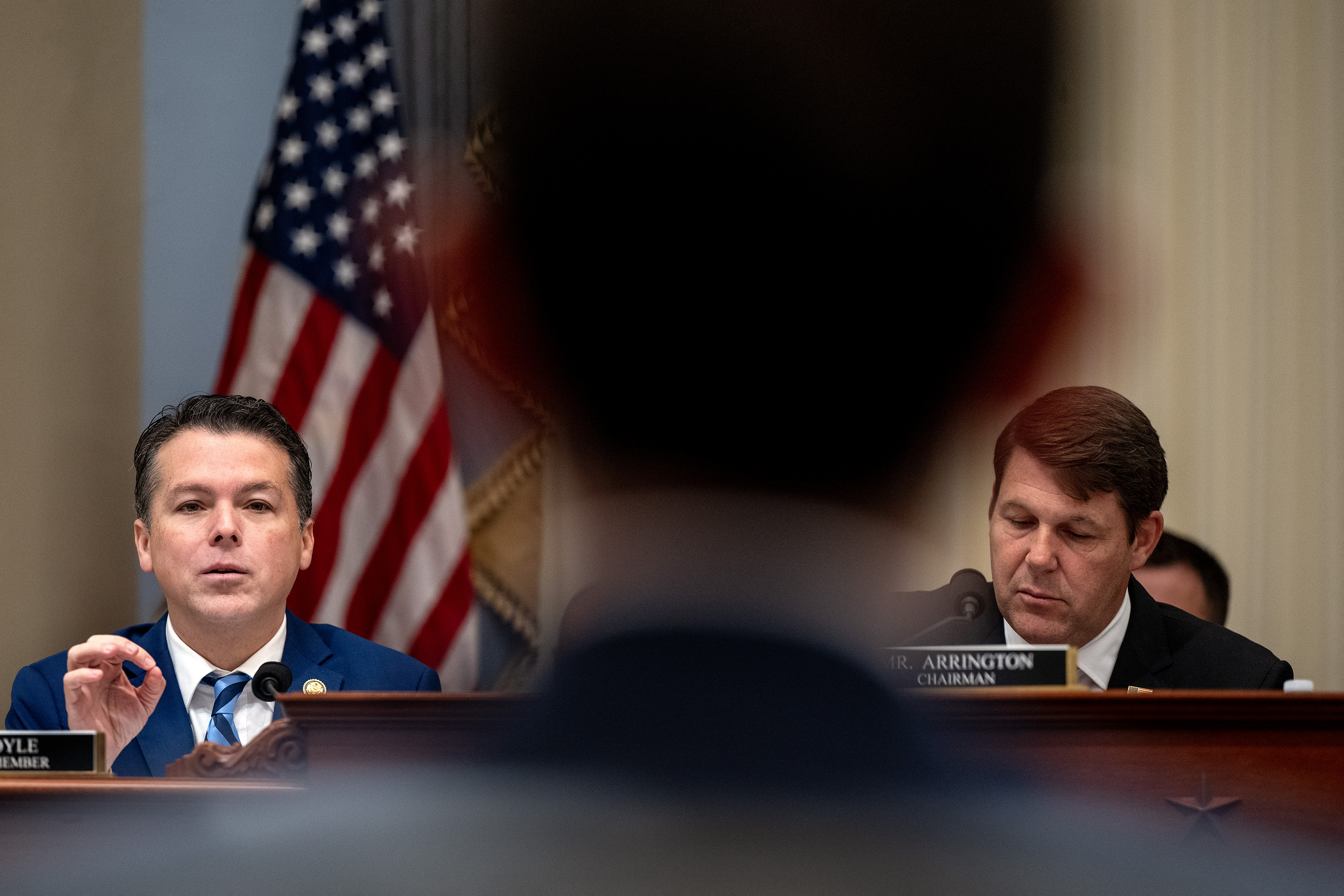
U.S. Reps. Brendan Boyle (left) (D., Philadelphia) and Jodey Arrington (right) (R., Texas) question Phillip Swagel (back to camera), director of the nonpartisan Congressional Budget Office, during a hearing on Capitol Hill in Washington, D.C. Tuesday, Nov. 18, 2025. Arrington chairs the House Budget Committee, while Boyle is the panel’s top Democrat.
In line for the gavel
Before that late November hearing, Boyle had already reached out to fellow Democrats on the committee: Talk about healthcare, he urged them. Talk about affordability. Talk about it ad nauseam.
He sat at the dais across from a portrait of Gray in an ornate hearing room, surrounded by paintings of former budget chairs, and delivered his opening remarks.
“The president has stopped calling it the ‘Big, Beautiful Bill.’ He’s stopped talking about the bill altogether,” Boyle said. “… Because it’s not just that healthcare’s become unaffordable in America. It is beef, it is coffee, it’s electricity, almost every staple in the average consumer basket.”
The director of theCongressional Budget Office, Phillip Swagel, was called before the committee that day and fielded questions from both sides. Democrats wanted to know Swagel’s projections on how Trump’s policies would affect everything from the national debt to the price of Thanksgiving dinners, eager for sound bites to send to constituents back home and to pressure Republicans on the healthcare debate.
Republicans were pushing Swagel for an audit, seekingmore transparency on how the nonpartisan agency comes to its projections.
“We need to be able to cut through the politics and the partisanship and figure out where you and your team can do a better job,” said U.S. Rep. Jodey Arrington,the Texas Republican who chairs the committee.
Boyle, whose office uses CBO projections to compile and distribute national and district-level data to Democrats, said he is open to an audit, if performed responsibly and not as a means to “discredit” the agency over numbers Republicans don’t like.
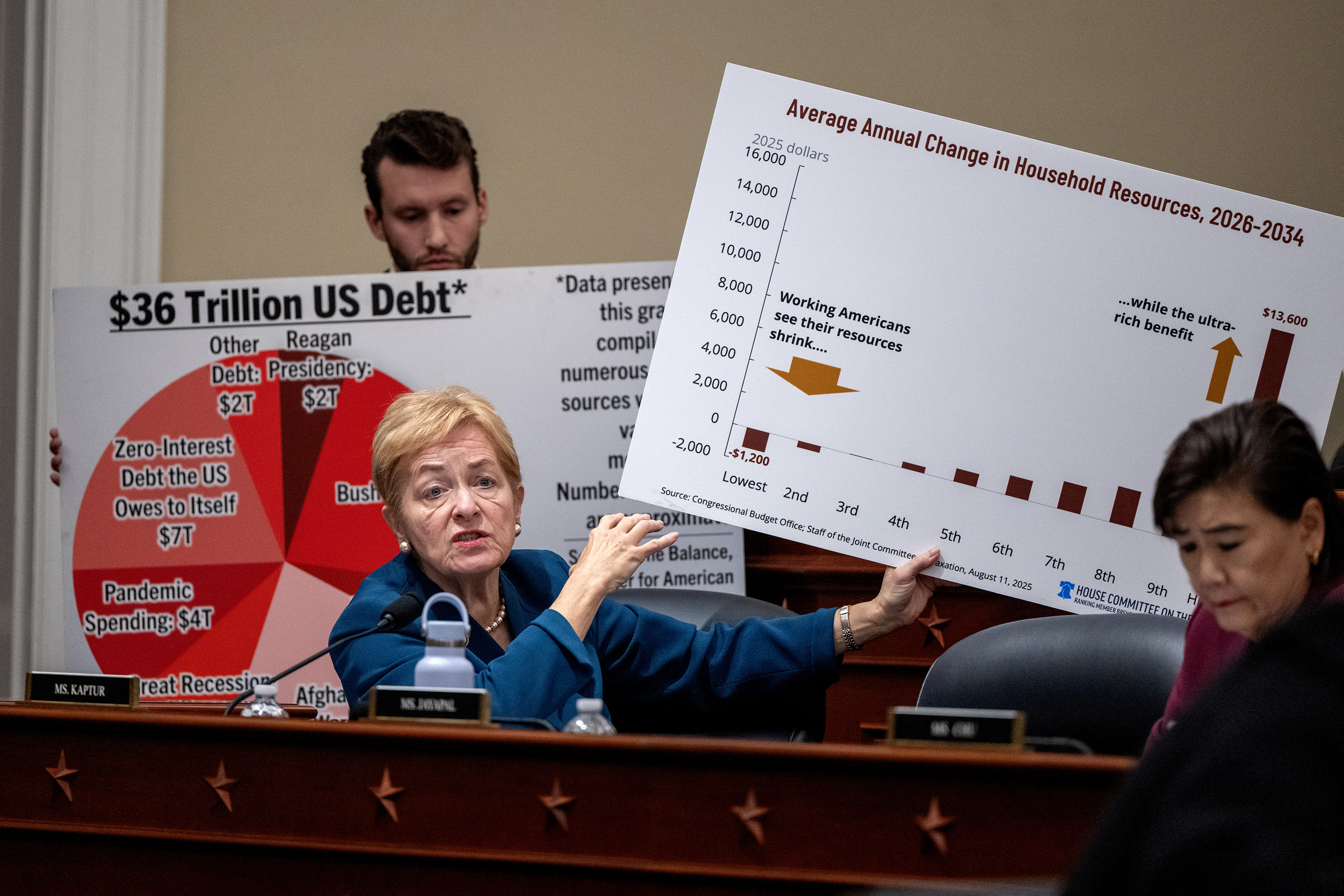
U.S. Rep. Marcy Kaptur, a Democrat from Ohio, brings visual aids to a hearing of the House Committee on the Budget on Capitol Hill in Washington, D.C. Tuesday, Nov. 18, 2025.
Throughout the three-hour hearing, Boyle would sidebar with Arrington, who is retiring next year. The Philly Democrat and the West Texas conservative make an unlikely pair, but the two have bonded across many late-night sessions over having younger children and their college football fanaticism — Boyle for his alma mater, Notre Dame, Arrington for Texas Tech.
“He’s a very good communicator because he’s a really smart and thoughtful guy,” Arrington said. “I always can appreciate, whether I agree or not, with a good communicator. He’s authentic in what he believes and he’ll even say, ‘I grant you it’s not perfect,’ or ‘You make a good point.’”
The midterms will dictate not just the party that controls Congress but also which ideological track the Budget Committee takes. If Democrats win, and Boyle takes the gavel, he plans to put more scrutiny on the administration and aim to regain some of Congress’ control over purse strings that Republicans have ceded to Trump.
Another Pennsylvanian, U.S. Rep. Lloyd Smucker, a Republican who represents Lancaster, has announced he is running to be the top Republican on the committee following Arrington’s retirement. That means regardless of party control, two Pennsylvanians will likely be at the helm of one of the most powerful committees in Congress. Smucker, a fiscal conservative running with Arrington’s backing, said in an interview he would focus on rising national debt and getting a budget resolution adopted. He was a key negotiator for Republicans during reconciliation, helping to get conservative House Freedom Caucus members on board.
Smucker called Boyle someone who is “serious about the budget process, and wants to make sure that it functions.”
“He genuinely cares about strengthening Congress as an institution,” Smucker added.
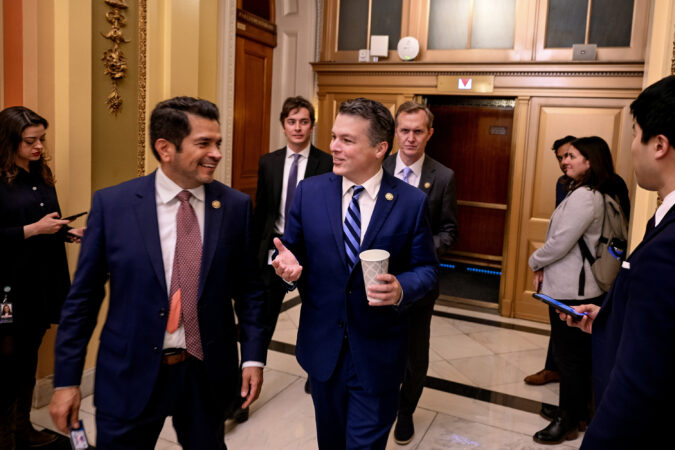
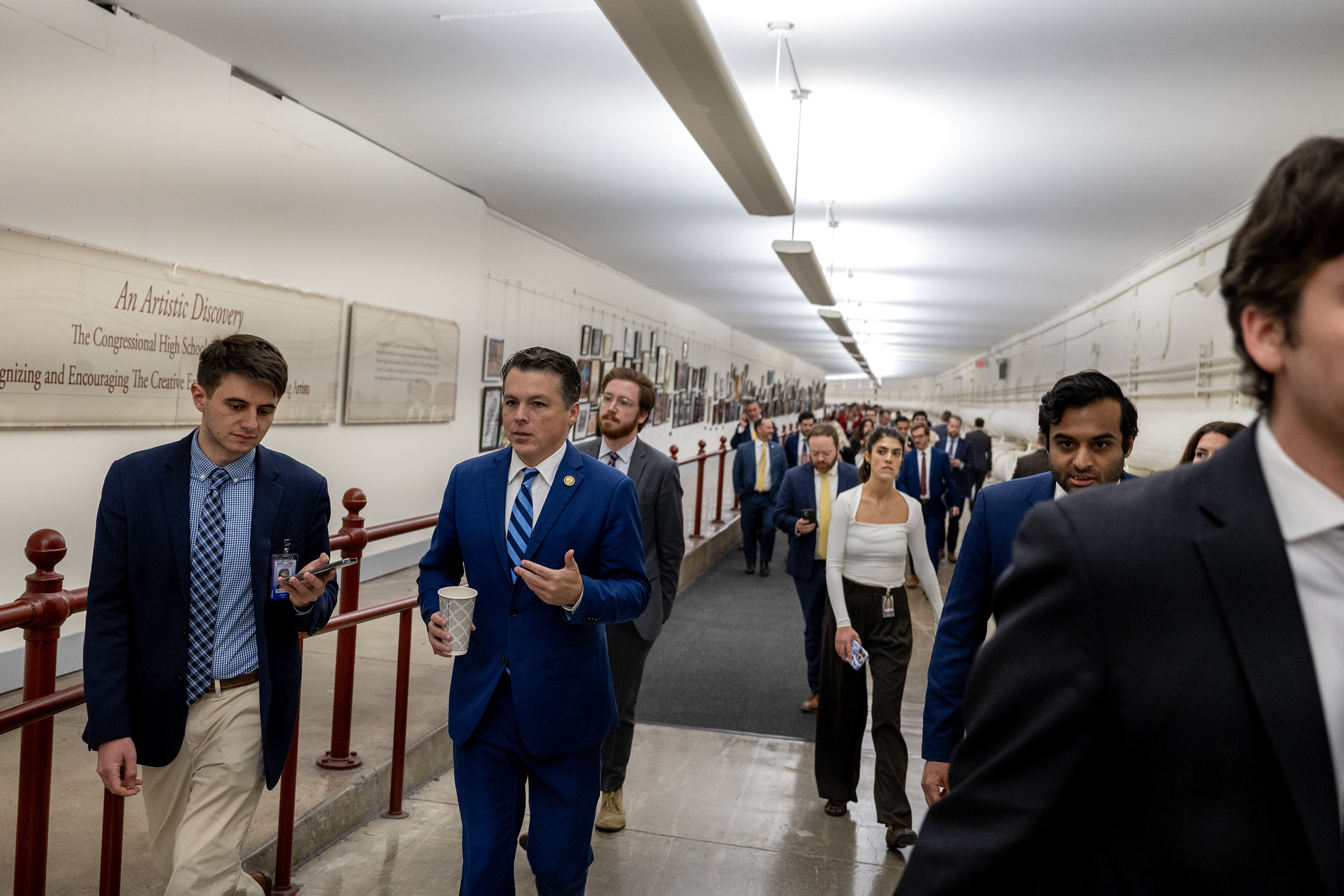
U.S. Rep. Brendan Boyle is interviewed by Charles Hilu (left), a reporter with the Dispatch, as he moves between office buildings on Capitol Hill in Washington, D.C. Tuesday, Nov. 18, 2025.
The road ahead
The longer Boyle stays in the House, in a safe Democratic seat, the harder it is to think about walking away.
In September, Jeffries appointed him the lead Democrat for the congressional delegation to the NATO Parliamentary Assembly. For Boyle, a history lover who has biographies of George Washington on his office coffee table, it’s an exciting opportunity to represent the country internationally as Trump continues to criticize the historic alliance. Boyle would become the leader of the parliamentary assembly delegation if Democrats take control of the House, just as he would take the gavel in the Budget Committee. Past committee chairs include former House Speaker Paul Ryan (R., Wis.), former Defense Secretary Leon Panetta, and former Ohio Gov. John Kasich.
“Some really high-quality, high-caliber people have done that over the last 40 years. So that’s what I’m looking forward to in the near term,” Boyle said. “After that, come 2028, and beyond, we’ll deal with that then. But it is interesting, like the longer you’re here, and if you move up the ranks, then actually it does make it more difficult to leave.”
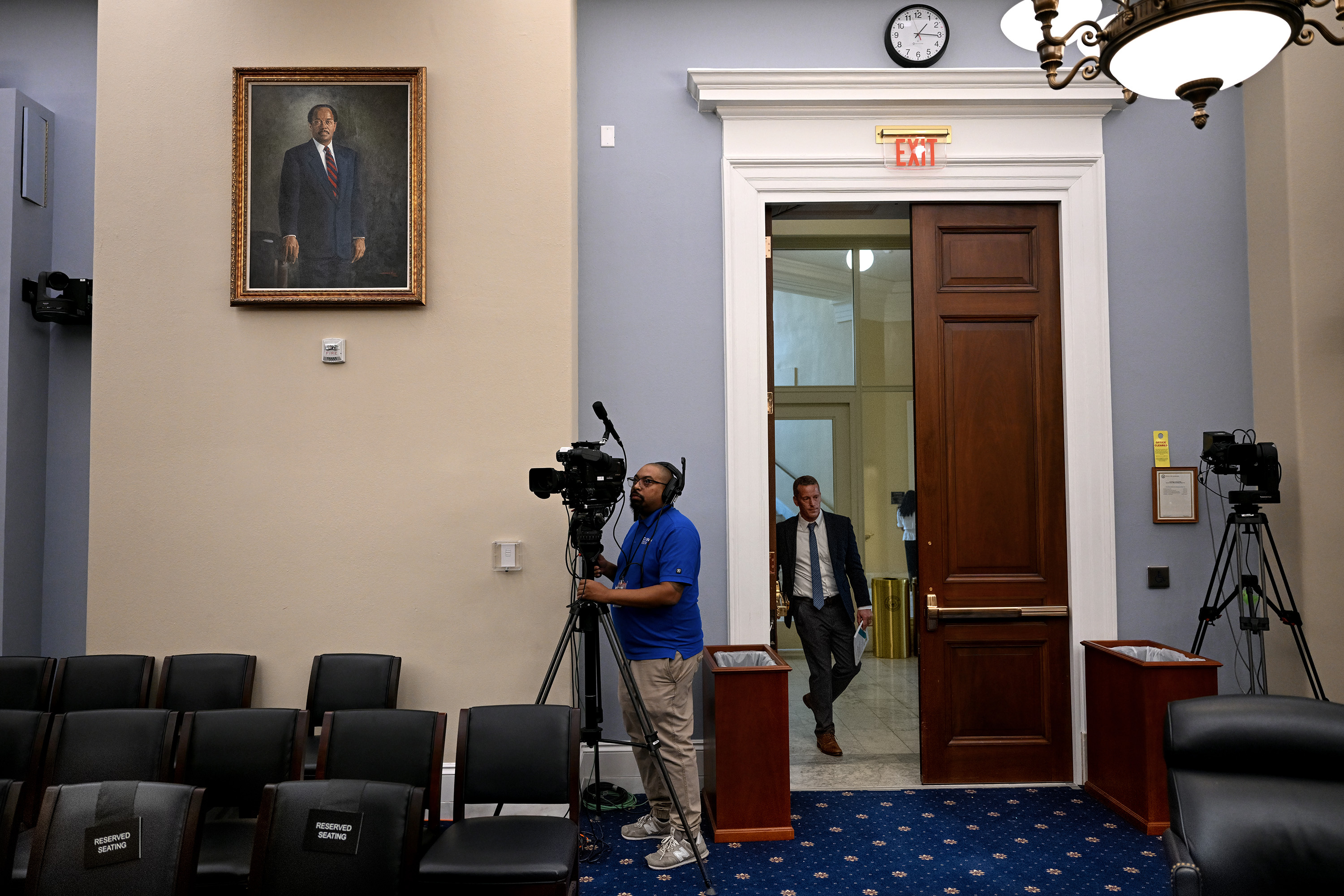
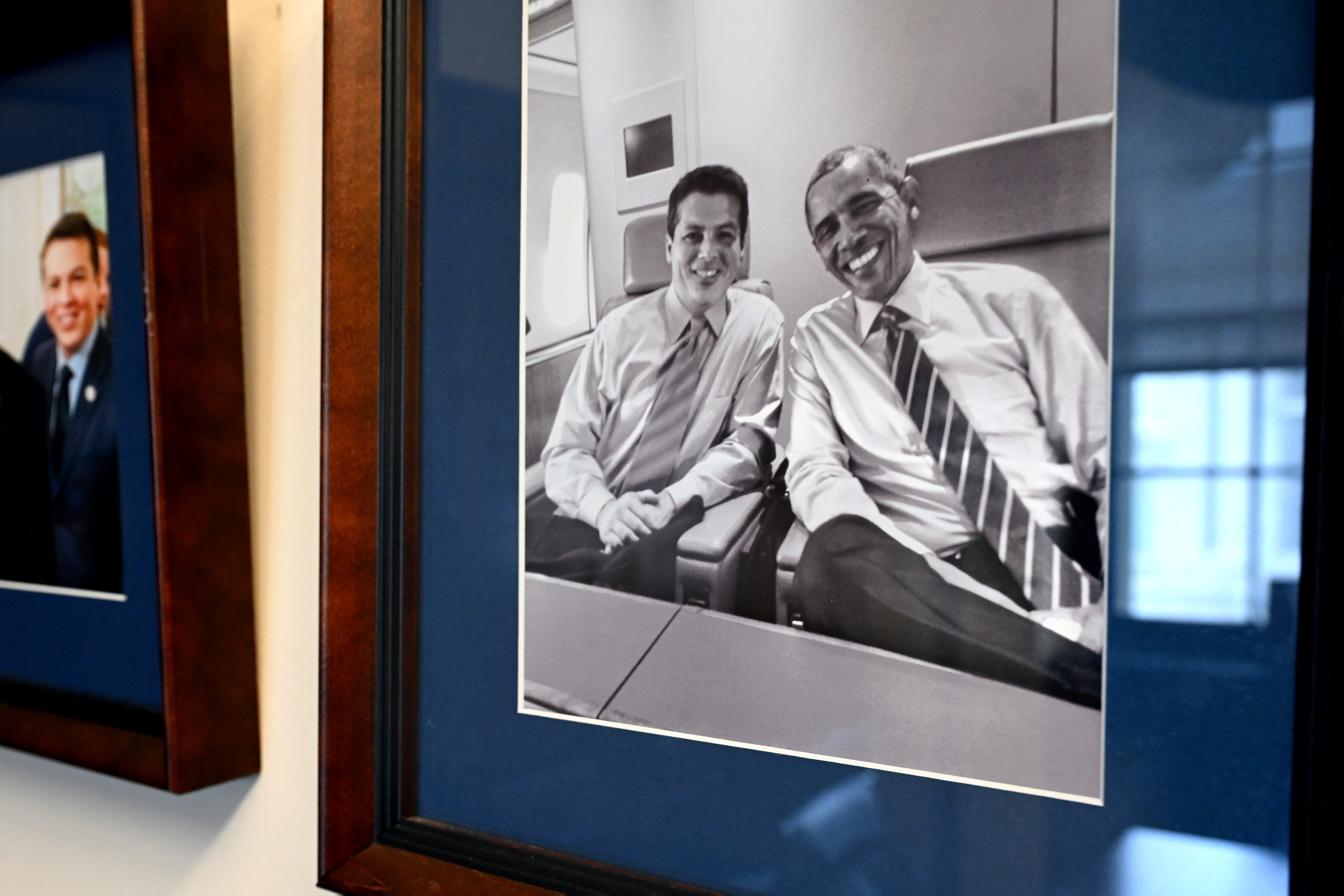
A painting of former U.S. Rep. William H. Gray III hangs in the hearing room of the House Committee on the Budget on Capitol Hill. It’s been 40 years since a Philadelphia lawmaker led a House committee. A photo of U.S. Rep. Brendan Boyle with former President Barack Obama on Air Force One hangs in his office on Capitol Hill in Washington, D.C.
But Boyle has not been shy about airing frustrations with Fetterman, whose term is up in 2028, sparking speculation Boyle could have an interest in a run against him.
Boyle said he avoided criticizing Fetterman until this spring, when the senator’s positions started to directly conflict with the party messaging he was pushing out.
“As I was doing TV opportunity after TV opportunity, what I increasingly found was that the clip they would show before I would be asked the question wouldn’t be a clip of what Donald Trump had said; it would be a clip of what my state’s Democratic senator had said,” Boyle said. “And I obviously would have to combat it.”
Fetterman has embraced an independent streak as a purple-state senator, often willing to work with the GOP. While pleasing to voters eager to see compromise and bipartisanship in a tenuous moment in Washington, it has also alienated some progressives.
Boyle said when it comes to the Senate, “I don’t rule anything in and I don’t rule anything out.”
If he were to run, a challenge could be building his statewide profile. He is still relatively unknown outside Philadelphia, though he has proven to be a prolific fundraiser. Today’s politics also tend to elevate showmen and outsiders, while Boyle has the more traditional cadence of an establishment politician — disciplined, polished, and most compelling when he speaks off-script.
Some local Philadelphia Democrats have criticized Boyle’s voting record on immigration, arguing it has not reflected the interests of the Latino community he represents in his majority-minority district. Boyle voted for the bipartisan Laken Riley Act, which requires the Department of Homeland Security to detain noncitizens who are arrested or charged with certain crimes, often forgoing due process. He was one of 46Democrats in the House along with 12 in the Senate, including Fetterman, to support the GOP-led bill.
“I have the same criticism as I do of Josh Shapiro: I wish he would take a stronger stance on immigration,” said State Rep. Danilo Burgos, who represents North Philadelphia. At the same time, Burgos credited Boyle as being a “good partner in our community” who always returns phone calls and texts.
For now, Boyle keeps an extremely busy schedule. The day of the budget hearing, his schedule stretched over 15 hours. He hustled from a meeting with Social Security and Medicaid experts to a floor vote to release the Jeffrey Epstein files.
Back in his office, where Eagles throw blankets, Phillies pennants, and a painting of Donegal, Ireland, his father’s home county, decorate the space, he sat down for his final meeting of the day.
Gwen Mills, the international president of UNITE HERE,a labor union that represents hospitality workers, wanted advice on how to translate Democrats’ work in Washington to members frustrated with both parties.
“Talk about affordability and how Republicans are making it worse — with the so-called beautiful bill,” Boyle suggested, running through some numbers and data before offering up a simpler sound bite:
“It boils down to life in America is just too damn expensive right now.”
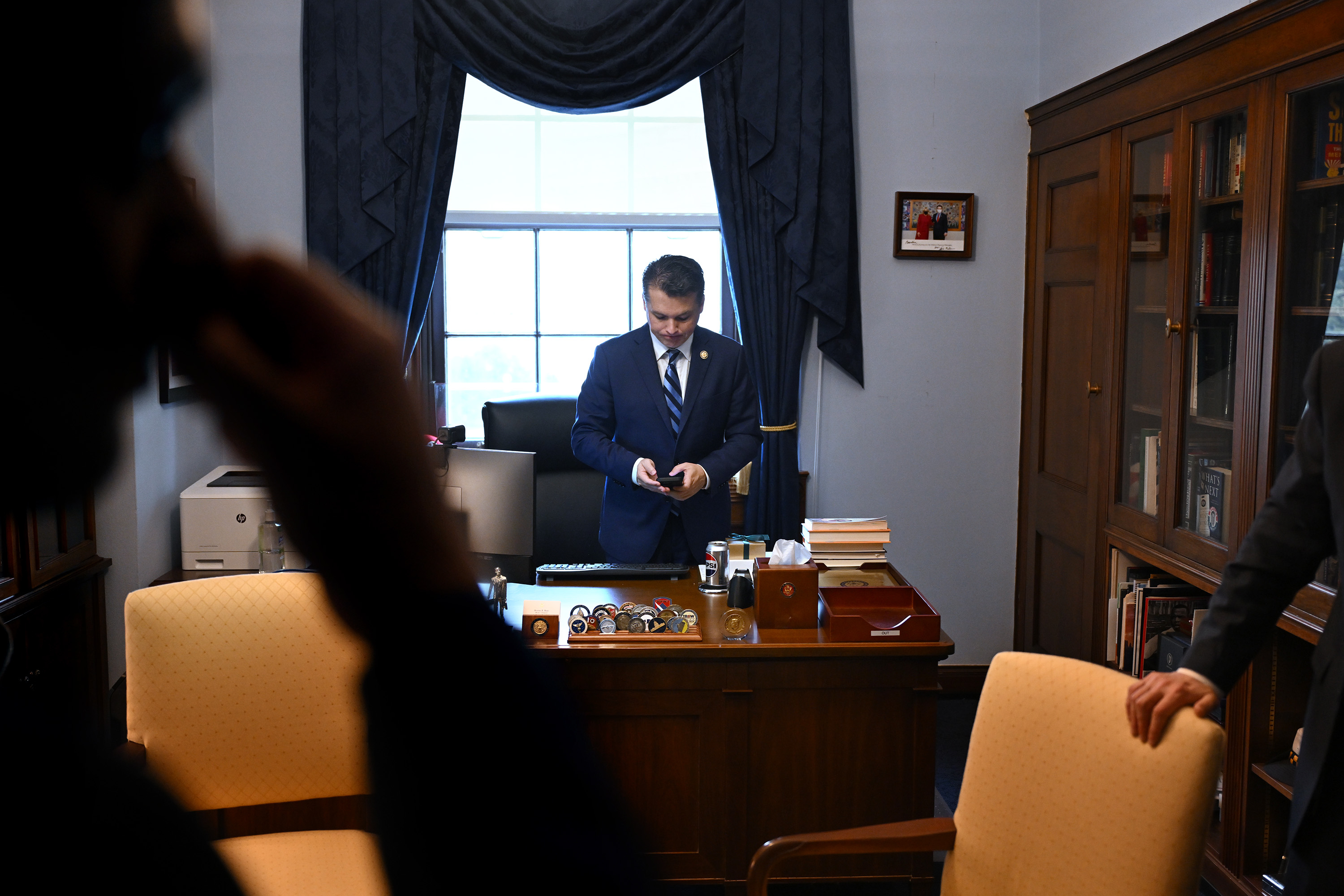
U.S. Rep. Brendan Boyle checks his phone before leaving his office on Capitol Hill in Washington, D.C. Tuesday, Nov. 18, 2025.