Blog

  • What to know about symptoms and treatment for dehydration and heat exhaustion

    What to know about symptoms and treatment for dehydration and heat exhaustion

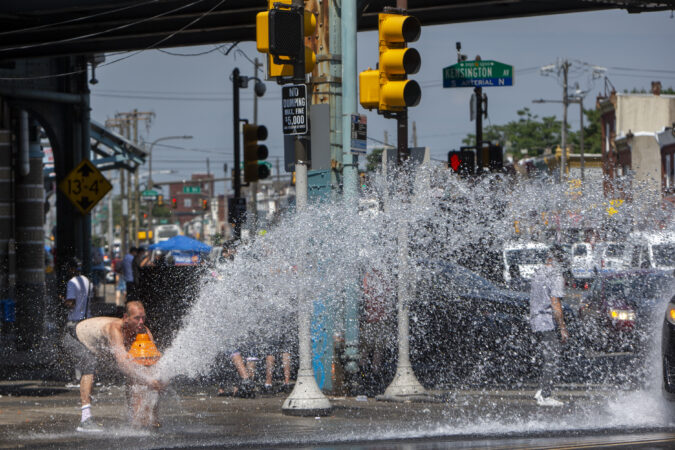
    Brace yourselves, Philadelphians. It’s going to be a hot one out there.

    Staying healthy during the heat wave comes down to two basic things: drinking water and cooling down as much as possible.

    Here is what you need to know about heat-related illnesses:

    What are the signs of dehydration?

    Water serves critical functions in the body, including cooling it down, maintaining blood volume, and balancing electrolytes.

    Dehydration happens when individuals lose more water than they are taking in. Even though it could happen to anyone, dehydration poses a specific risk to children, elderly, and people with chronic illnesses.

    The signs of dehydration are dark-colored urine, less frequent urination, fatigue, confusion, and dizziness. With babies, parents should monitor diapers to ensure that they are continuing to provide urine.

    Untreated dehydration can contribute to heat exhaustion or heatstroke, reduced blood pressure, fainting, and seizures.

    What are the symptoms of heat exhaustion?

    As the body remains overheated, it will continue to sweat and further lose liquids. If individuals’ skin becomes cold and pale, they complain of dizziness and headaches, and seem tired or weak, these are all signs they might be suffering from heat exhaustion.

    At this stage, consider calling 911 if a person is vomiting, the symptoms get worse, or last longer than one hour.

    What are the symptoms of heatstroke?

    Heatstroke is when the body can no longer regulate its temperature. People may stop sweating and spike a fever. The cold, pale skin could turn hot and red. In addition to the fever, people may be confused, pass out, and vomit.

    If someone is vomiting, unable to drink, or losing consciousness, medical attention is likely needed in an emergency department. Medical staff there can cool the person down and provide intravenous fluids. If you suspect that someone is suffering heatstroke, call 911.

    How to prevent and treat dehydration, heat exhaustion, and heatstroke

    Water is your best friend during the heat wave. As much as possible, keep hydrated. Adequate water intake for adults is about 11 to 15 cups a day. While water is not the only hydrating drink, avoid caffeinated and alcoholic drinks, which can contribute to dehydration.

    Cooling down is also critical. Look for shade, avoid the sun, and when possible, stay inside air-conditioned buildings. This will help the body regulate heat and preserve liquid, especially during the hottest hours of the day in the afternoon.

    There are open splash parks and pools throughout the city where people can go to cool down, though if you spend time in the sun, be sure to put on sunscreen to avoid sunburns.

    For people who are dehydrated, get them to a shaded and cooler area and have them drink water. If at any point they lose consciousness, vomit, or are unable to drink, seek medical attention immediately.

    How to treat heat rash and cramps

    Two other potential unpleasant outcomes of heat are rashes and cramps.

    When sweat is trapped in the skin, a potentially itchy heat rash can appear. It can be in the form of small blisters to larger lumps. Heat rashes usually resolve without treatment when the body cools down. The CDC recommends keeping the rash dry and using baby powder to soothe itchiness. Go see a healthcare provider if the rash doesn’t go away within a few days, gets worse, or if you develop additional symptoms or are concerned that other health issues are involved.

    Heat cramps are involuntary muscle spasms that can occur due to fluid and electrolyte loss, which is common when exercising on a hot day. If you have heat cramps, stop any physical activity, move to a cool place, and drink water. A sports drink with electrolytes can also help.

    Seek medical attention if the heat cramps last longer than an hour or if you have a heart condition.

  • Why the true death toll of Venezuela’s quakes is so hard to know

    Why the true death toll of Venezuela’s quakes is so hard to know

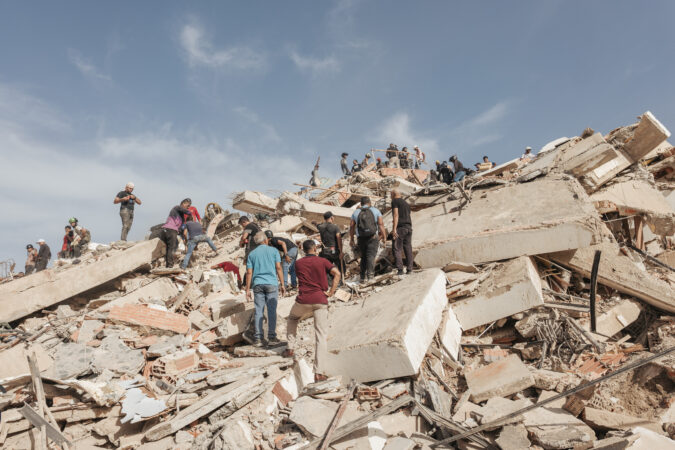
    It has been six days since devastating twin earthquakes flattened entire residential neighborhoods in Venezuela, and dozens of newly found bodies are still being hauled out of the rubble.

    On Monday, rescuers piled up coffins inside an improvised morgue at the sun-scorched port in the town of La Guaira, one of the hardest-hit areas. Small trucks arrived with more bodies, leaving them arranged in a long row by a concrete dock.

    “Every day the number of victims keeps going up,” said Jennifer Moreno Canizales, a spokesperson for the United Nations Office for the Coordination of Humanitarian Affairs in Caracas. “And we expect it to keep rising.”

    The official death toll after Venezuela’s earthquakes rose Monday to 1,719 people, an increase of nearly 300 since Sunday. It is based on the number of bodies recovered during the search operations, Moreno Canizales said.

    But sobering as it is, that figure could be a substantial undercount. Many more Venezuelans remain missing, with chances of finding them alive shrinking every day.

    The uncertainty of the number is not just a matter for the journalistic or historic record. For many Venezuelans, it signifies their anguished limbo as they search for friends with bleeding hands, trapped between uncertainty and a desperate refusal to accept the worst.

    There is no official or reliable toll for the missing. And with so much debris from tall residential buildings pressed tightly together, and a shortage of heavy machinery to remove the rubble, estimates of how many people might still be trapped inside vary widely.

    Two forensic doctors at the main morgue in the capital, Caracas, estimated a death toll of about 4,000, basing that on the number of bodies that had been arriving at a morgue in La Guaira every day.

    In anticipation of the toll increasing, the United Nations has been procuring 10,000 body bags in coordination with Venezuela’s government, said Gianluca Rampolla del Tindaro, the organization’s resident coordinator for Venezuela. “That is the applying assumption; it’s very sad,” he said.

    According to an unofficial website where Venezuelans can report the missing, more than 46,000 people were still unaccounted for. The New York Times could not independently verify the figure, which can include people who survived but became separated from relatives.

    To veteran rescue workers, the high number of reported missing may be ominous.

    “Contact is difficult, but not that difficult that you wouldn’t have gotten in contact,” said Linda Hornisberger, the president of REDOG, a nonprofit Swiss search-and-rescue association that has deployed eight dogs and 88 emergency responders to Venezuela since Friday. “We must assume most to be dead.”

    Hornisberger said that despite working eight- to 12-hour shifts for days, “we have not been able to rescue anybody.”

    Disaster response experts say that it often takes several weeks for a full picture to emerge after disasters of this magnitude.

    When Hurricane Maria hit Puerto Rico in 2017, the official government death toll was 64 people. Nearly a year later, they updated it to 2,975, nearly 50 times as high. After the Indian Ocean tsunami of 2004, when entire coastal villages were completely erased, it took the authorities more than a year to settle on the final estimate of 230,000 victims.

    Several signs out of Venezuela indicate that there might also be a delay before a final death toll is reached.

    The area of the quakes

    The day the earthquake struck was a holiday in Venezuela, when it was more likely that families would have been home, or had traveled to the seaside area of La Guaira. Many buildings there were built during an economic boom in the 1970s and 1980s, when developers erected tall towers, many 10 stories or more. A mountain range limited building space, which led developers to choose to build vertically, said Josué Araque, a Venezuelan geographer.

    Now, many of those buildings have been pancaked into a dense tangle of debris.

    “They are mountains of rubble from buildings of many, many levels, made of concrete, which basically turns them into tombs,” Araque said. It is difficult to search the lowest floors of the buildings, he said, “because there are 10 floors that fell on top of them.”

    Araque said he believed that there were probably many more missing people whom “they probably will not be able to recover.”

    There is 1.2 million tons of debris in the hardest-hit areas of La Guaira, the U.N. Development Program said Monday.

    Moreno Canizales, from the U.N., said 700 buildings had collapsed. Despite the rescue teams’ best efforts, she said, “it is hard to reach them all in time” to rescue those who might still be trapped alive.

    Del Tindaro, the U.N. humanitarian coordinator in Venezuela, also said in an interview that the high number of collapsed buildings indicated that the official toll was an undercount.

    Ilan Kelman, a professor of disasters and health at University College London, said a full accounting of the number of deaths might never be known. But a preliminary projection that the final toll could exceed 10,000 — shared by the U.S. Geological Survey based on factors including the magnitude of the earthquake, the population density, and local infrastructure — remains grimly feasible, he said.

    A difficult search

    The work of recovering bodies is painstakingly slow, and it’s not a priority for most response teams that are trying to save those who may be still alive. On Sunday, 49 rescue teams coordinated by the U.N. rescued seven survivors, Moreno Canizales said. Sometimes, she said, the teams are responding to families telling them that they can hear a relative crying from the rubble.

    When the disaster response shifts, more bodies are likely to be found, experts said.

    “The focus of the search-and-rescue teams is to look for those who might be alive” based on reports of sound and motion, said Phil Gelman, a Latin America coordinator with GOAL, an international humanitarian response agency. “When the search-and-rescue phase is ended, and heavy machinery is moved in to move rubble, the casualty count will rise.”

    Even in well-organized response efforts, many survivors end up being rescued by untrained friends, family, and neighbors, said Emily So, a professor of architectural engineering at the University of Cambridge.

    One Caracas resident, Rosmaria Herrera, 30, said she had lost at least three relatives. Family members and other civilians pulled the bodies of her father, her cousin, and her grandmother out of the rubble. But they couldn’t find her uncle.

    “It’s strange, because there is practically nothing left of the building,” she said.

    Witnesses and aid workers described a shortage of heavy machinery as one of the biggest obstacles to rescue efforts, saying volunteers often lacked the equipment needed to move concrete slabs and reach survivors trapped beneath collapsed buildings.

    In videos widely shared on social media, residents pleaded for excavators and other heavy equipment. In one, a man says neighbors pooled their own money to hire machinery after waiting days for government assistance to arrive.

    “If we keep waiting for our wonderful authorities, another week will go by with our relatives still buried there,” he says. “We had to start doing this ourselves.”

    Some victims will likely die from their injuries, in part because of Venezuela’s already overstretched health system, Kelman said.

    So said the final toll would likely be determined by the number of people reported missing, the extent of visible damage to buildings, and impeded access to the worst hit areas, which has stymied some responses.

    “Tragically, until they recover the bodies from underneath the rubble,” So said. “The count will be low.”

    This article originally appeared in the New York Times.

  • Norristown man charged with running Ponzi scheme that bilked more than $3.8 million

    Norristown man charged with running Ponzi scheme that bilked more than $3.8 million

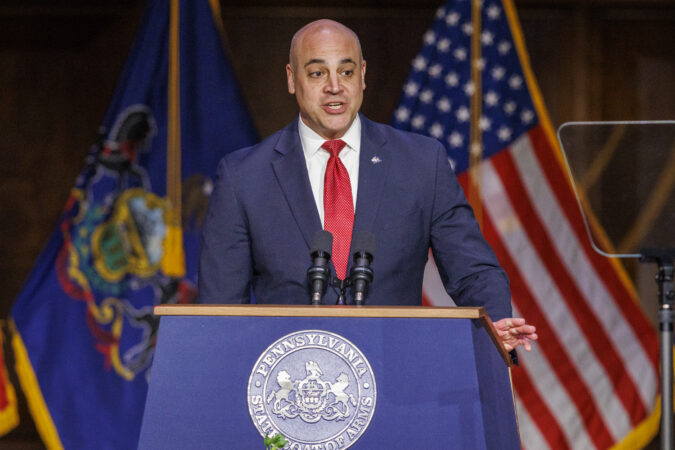
    A 59-year-old Norristown man has been charged with allegedly running a Ponzi scheme that cheated investors of more than $3.8 million, Pennsylvania Attorney General Dave Sunday said.

    Richard L. McNeil was charged Friday by the Pennsylvania State Police with felony theft by deception, dealing in proceeds of unlawful activity, violations of the Pennsylvania Securities Act, and related offenses.

    McNeil allegedly solicited funds from investors by promising he would invest their money in various opportunities that would generate steady returns, Sunday said. He turned himself in Monday and was released on a $250,00 unsecured bond after arraignment.

    The investors allegedly were told by McNeil that they would receive monthly interest payments and the eventual return of their full principal investment. However, he did not actually invest the victims’ money, according to Sunday.

    More than $1.8 million remains owed to 50 investors, Sunday said. Some investors did receive payouts, but others allegedly sustained six-figure losses, Sunday said.

    McNeil’s preliminary hearing is scheduled for Aug. 3. Court records did not list a lawyer representing McNeil.

    “This defendant duped dozens of people into investing substantial funds — victims who believed they were to see monthly gains, but instead were left with depleted bank accounts and unanswered pleas for their money,” Sunday said in a statement.

    “Investment fraud is obviously devastating to victims, and we will work hard to recover restitution as part of this prosecution,” Sunday said.

  • The Olney man being investigated for his connections to missing women will be held in federal custody

    The Olney man being investigated for his connections to missing women will be held in federal custody

    The Olney man at the center of a sprawling investigation into the disappearance of at least two women in recent years was taken into federal custody Tuesday and will be detained until trial.

    Eugene Albert Horsch, 44, was arraigned Tuesday on a federal firearms charge — a case that relates to his alleged actions on June 19, when a U.S. Park Police officer near Independence Hall reported seeing a black BMW parked in a restricted zone and next to a fire hydrant.

    The officer reported hearing a woman in the vehicle express fear of being injured and then seeing pairs of scissors in the front seat area. A search of the vehicle, in part based on Horsch’s actions, led to the discovery of a switchblade and a glass pipe in Horsch’s pants and two firearms under the car’s front seat.

    Horsch — who was not allowed to possess guns because of felony convictions — had been charged for that same conduct last week by the Philadelphia District Attorney’s Office and he was being held in a city jail on $500,000 bail. City prosecutors also charged him with having cocaine, heroin, and marijuana in his car.

    But the federal gun charge — and the decision by U.S. Magistrate Judge Pamela A. Carlos to detain him until trial — effectively ensures that Horsch will not be able to post bail or secure his release as his case proceeds. And that will give authorities time to continue investigating him in connection with questions potentially far more serious than illegally possessing guns.

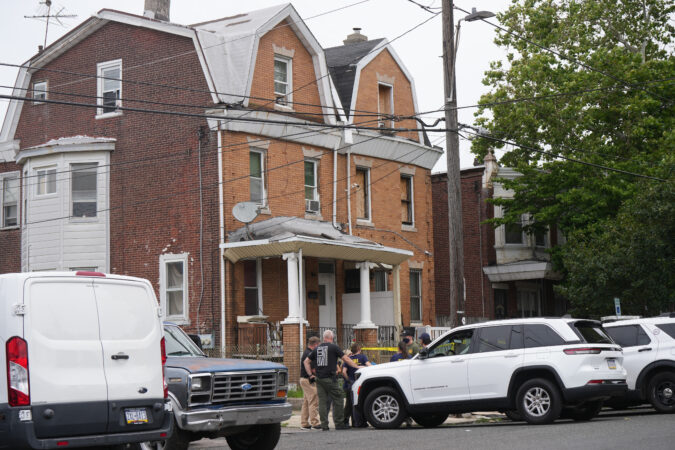
    In the days after Horsch was arrested with the firearms in Center City, investigators who searched his decrepit rowhouse in Olney found another gun and materials to grow marijuana.

    But more concerning, they also discovered a variety of more unusual materials — including barrels of chemicals in the basement, urns holding the cremated remains of at least one of his relatives, documents tied to at least two women who have been missing for years, and a handwritten letter that described hurting people and mentioned the serial killer Ted Bundy.

    Officials have said police have not discovered any human remains in the house. But investigators did find a significant amount of blood inside, sources told The Inquirer this week, although it was not clear whether it was human blood. And authorities have been testing a variety of materials they’ve recovered from the house, such as the chemicals in vats stored in his basement.

    The probe is also seeking to learn more about potential connections between Horsch and at least two missing women with ties to his home.

    One is Blair Tonzelli, who might have worked there as a home health aide and who was reported missing in Kensington in 2023. Some of Tonzelli’s friends told police after she disappeared that they worried that something bad had happened to her and that they had told police that Horsch was a “sociopath,” according to police documents obtained by The Inquirer.

    In addition, when Horsch was arrested in Center City earlier this month, a woman who was with him falsely identified herself as Tonzelli and later told police that she did so because Horsch had given her a fake identification with Tonzelli’s name.

    The other missing woman is Amy McHale, the ex-wife of Horsch’s father, who was last heard from at the Olney property in 2016. Horsch’s father, Raymond “R.C.” Horsch — now deceased — was an erotic photographer and drug manufacturer who had published several works of fiction, including one described as an “autobiographical memoir of a caring, empathetic serial killer.”

    Eugene Horsch, during his brief appearance in federal court Tuesday, said little beyond responding to routine legal questions. He will likely be held at Philadelphia’s Federal Detention Center as his case proceeds toward trial.

    His attorney, Jerome Brown, said afterward that he didn’t believe Horsch had harmed any of the women at the center of the investigation.

    “As far as I know, I’d be shocked if [police] found any harm related to those missing persons at that location,” Brown said.

  • How to stay cool without air conditioning in Philly

    How to stay cool without air conditioning in Philly

    Summer in Philly is always hot.

    There are lots of air conditioned spaces you can go to for relief. Organizations like the Pennsylvania Department of Health have always recommended going to air-conditioned spaces — like a mall or library — to protect yourself from heat-related problems.

    “With extreme heat, it is always important to remain cool, possibly in air-conditioned atmospheres,” state health department of health press secretary Maggi Mumma said in 2020.

    There are, however, some things you can do at home to keep a little cooler if you are AC-less this summer. Here is what you need to know:

    How to cool your body down

    Let’s start with the basics: One key way to fight heat-related discomfort is to drink lots of cool water, which can both keep you hydrated and help cool you down. Sugary or alcoholic beverages can cause you to lose more body fluids. Dr. Joseph Teel, an associate professor of family medicine and community health at Penn Medicine, says you should drink water frequently.

    How much? There is no one-size-fits-all answer. How much you need to drink can vary if you have health conditions such as congestive heart failure, Teel says, or be exacerbated by your environment, level of exercise, and overall health. One tip: Don’t wait until you are thirsty to drink, the state health department says.

    When someone suffers heat exhaustion on a sports field, Teel says an ice bath can help bring down their temperature. You can take the same approach. A cold bath or shower, he says, can help but is not a permanent solution because “you can’t stay in the shower all summer.”

    You can use cool compresses, Mumma says, to help cool down. Making one is simple: Just wet a washcloth or towel in cold water, and put it on your body. Where should you put it? Some of the most effective areas, Teel says, are around your neck and on your groin, and if you’re at home, you can try using them with minimal clothing on to hit a few areas at once.

    You can step up that technique by using fans to make it an “evaporative process,” Teel says. “If we have water on our skin and it evaporates, it takes with it some heat,” he says. Put on your cold compress and use a fan to blow air across your skin, which Teel says can “cool you down a little faster than just a cold cloth itself.”

    Beating the heat in Love Park fountain, during a hot summer day in Philadelphia.

    How to cool down your house

    Use fans wisely. Fans can be one of the best ways to keep cool — but there are right and wrong ways to use them. The city, for example, says you should never use a fan with your windows closed, which can create an “oven effect” by circulating hot air inside your home.

    Fans can be more effective when the heat of the day is over, and you can open your windows to allow the cool night air in, Teel says. One of the best ways to create airflow is to put a box fan in an open window at one end of your space blowing air in, and another fan in a window blowing air out at the other end.

    And if your home has ceiling fans, make sure the blades are rotating counterclockwise during hot weather. That way, the fan will push air down into your space to create a breeze. (Many ceiling fans have a directional switch on their motor that controls the direction in which they spin.)

    There are more ways to keep your home cool.

    Think about when you use your appliances. The Pennsylvania Utility Commission, for example, says that you should wait to use any appliances that generate heat — such as dryers, dishwashers, and ovens — until after 7 p.m. to avoid heating up your home unnecessarily. Turning off other nonessential appliances and lights is also a good idea.

    Keep your blinds closed during the day. The sun, Teel says, can heat up your home faster, like a greenhouse. The PUC recommends spending time in rooms that are not hit with direct sunlight during the day.

    City pools were closed in 2020, but will reopen for the 2021 summer.

    If you’re going to buy an AC

    Window air conditioners are much cheaper and more convenient to install than central air, and if you can afford one, it may be a good time. However, there are some things to consider when buying a window unit.

    As Consumer Reports points out, you will want to get an AC that is appropriately sized for the room you are trying to cool. If it’s too small, it will have trouble cooling the room; if it’s too big, it will cool the room quickly but leave too much moisture behind. A good rule of thumb is for the unit to have 20 BTUs (British Thermal Units) of cooling power for every square foot of space in the room.

    And if you need help with utility costs this summer, funding from the Low Income Home Energy Assistance Program is available for qualified residents, a city spokesperson says.

    Think about when you go out

    The health department recommends staying indoors as much as possible and limiting exercise during the hottest parts of the day, Mumma says. However, if you have to go out, stay in the shade as much as possible and wear sunscreen, a ventilated hat, and sunglasses.

    If you need to go shopping, Teel says, “look ahead in the week, and pick a cooler day. Avoid the time when you will be subjected to midday heat.”

    At home, Teel says, wear as little clothing as possible. When out and about, consider using light-colored, loose-fitting clothes made of breathable, light materials like cotton that let air to circulate around you.

  • Trump’s July 4 fireworks to start much later and last much longer

    Trump’s July 4 fireworks to start much later and last much longer

    The July Fourth fireworks show on the National Mall will start later, last longer, and have far more pyrotechnics than any held previously on Independence Day, according to officials in charge of producing the event.

    Typically, the Fourth of July fireworks at the core of the nation’s capital begin a little before 9:30 p.m. and last 17 to 25 minutes. This year, the show won’t begin until after 10:30 p.m. and may not start until 11 p.m., a spokesperson for Freedom 250, the public-private partnership aligned with President Donald Trump that has taken over much of the programming for America’s semiquincentennial, said in an email.

    The show is expected to last approximately 40 minutes.

    No reason has been publicly provided for why the fireworks will start so late, but Trump has described the event as a “rally” and said he will begin speaking at 9 p.m. The duration of the fireworks is longer — about twice the average length — because of the administration’s goal of setting a record for the world’s largest fireworks display.

    Danielle Alvarez, an adviser to Freedom 250, did not specifically address the late time but called the July 4 event a “once-in-a-generation milestone.”

    “This isn’t just another Independence Day. It’s America’s 250th,” Alvarez said in a statement. “And history only comes around once.”

    The late start, as well as rules prohibiting attendees from bringing coolers, lawn chairs, bags, and more than one bottle of water, drew criticism on social media and elsewhere, particularly because organizers have recommended people arrive early Saturday, when temperatures could surpass 100 degrees.

    A Freedom250 spokesperson said there will be four free hydration stations on the Mall.

    “We’re closely monitoring conditions and will keep adjusting as needed to make sure everyone stays safe and has a great time,” the spokesperson said in a statement.

    D.C. Mayor Muriel E. Bowser (D) urged anyone attending the fireworks show on the Mall to stay hydrated and be cautious.

    “The thing to remember, especially with this heat, is that’s a long, long day,” Bowser said at a news conference Monday to discuss safety measures for Independence Day. “I’m expecting … that families with small children are going to decide that the children should watch on TV or watch at a neighborhood event.”

    The current record for a single display is about 810,000 fireworks, launched at a New Year’s event in the Philippines in 2016, according to Guinness World Records. That display lasted a little over an hour and took place in a driving rain.

    Pyrotecnico, the Pennsylvania-based company putting on this year’s show, plans to set off more than 850,000 fireworks from 10 locations including West Potomac Park, the Reflecting Pool, and barges in the Potomac River, Pyrotecnico CEO Stephen Vitale said in an interview Monday.

    Vitale said he hopes the weather will cooperate and that there will be a slight breeze to clear the smoke and keep all of the fireworks visible.

    A typical July Fourth fireworks show on the Mall in D.C. features about 20,000 fireworks, Vitale said. While this year’s show is about 10 times bigger than any previous show his company has produced, he hopes viewers will remember the show for more than just setting a record.

    “Size always helps, but it’s about the beauty and the memories that people will have for generations,” Vitale said. “Fireworks are magical to people, and we help people walk away believing that’s the best fireworks display that they have seen or ever will see.”

  • International Paper is closing its Barrington facility, laying off 126 workers

    International Paper is closing its Barrington facility, laying off 126 workers

    A Tennessee-based packaging company is closing its plant in Barrington, Camden County, laying off 126 employees amid the business’ larger restructuring plan.

    Workers at International Paper’s Barrington facility, who convert containerboard into boxes, are expected to be laid off on Sept. 24. The site is expected to close at the end of August, company spokesperson Jessica Seidner said.

    The closure follows “a strategic assessment” of the Barrington facility, and International Paper’s larger regional footprint, according to a layoff notice filed with the New Jersey Department of Labor and Workforce Development.

    “Based on the results of that assessment, and in order to operate our packaging business effectively to support our customer needs now, and in the future, we made the difficult decision to cease operations at our Barrington location,” the notice reads.

    International Paper, headquartered in Memphis, was incorporated in 1941. As of December, the company had 62,602 employees — nearly half of which are based in the United States — and roughly 190 packaging mills, as well as converting and packaging plants, and recycling facilities across the country.

    The company has several locations in Pennsylvania and New Jersey, including in Kennett Square, Lancaster, Reading, Bellmawr, Thorofare, and Vineland, according to a recent U.S. Securities and Exchange Commission filing.

    As part of its restructuring, the company announced this month the closure of four facilities, including the Barrington site, to “focus investments on the highest-value opportunities.” The company announced several more facility closures last year.

    “These are difficult but necessary decisions that strengthen our network, focus investments where they create the greatest value and position International Paper to better serve customers and compete for the long term,” Tom Hamic, president for packaging solutions in North America, said in a statement.

    In an April earnings call company leaders said the business had recently been facing financial pressure from inflation, the conflict in the Middle-East, and weather disruptions. The business brought in $23.63 billion in net sales last year.

    International Paper announced in 2025 that it had acquired DS Smith, a U.K. packaging business, in a deal that was valued at $7.1 billion. Earlier this year, the company announced it would split into two separate businesses: one dedicated to the North American market and another for Europe, Africa, and the Middle East. The process is expected to be complete by the end of 2026 or early 2027, according to a U.S. Securities and Exchange Commission filing.

  • Olney man charged with unlawful sexual contact with Cheltenham teen inside high school

    Olney man charged with unlawful sexual contact with Cheltenham teen inside high school

    An Olney man posing as a teenager groomed an underage student into a relationship, police said Tuesday, and persuaded her to enter Cheltenham High School after hours and have sexual contact.

    Jamaal Raheem, 21, has been charged with unlawful sexual contact with a minor, corruption of minors, and related crimes for the incident, which came to light late last week after Raheem’s preliminary hearing when administrators at Cheltenham School District sent a letter to parents about the case.

    Raheem was released on $100,000 unsecured bail. His attorney, Kenneth Carlton Edelin Jr., did not immediately return a request for comment.

    The letter to parents about the incident came days after Abington School District announced a review of its security protocols following the arrest of a man who, in a nearly identical case, repeatedly gained unauthorized access to the district’s high school from a female student.

    Cheltenham investigators say Raheem and a female Cheltenham High student were found inside the school on April 29. The two gained access to the building and walked throughout it until stopping at a stairwell, where the girl performed oral sex on him, according to the affidavit of probable cause for Raheem’s arrest

    District officials found them and asked them to leave, according to a letter from Cheltenham Superintendent Dr. Brian W. Scriven. The district filed a report with the state Department of Human Services ChildLine system and contacted local police as well as the girl’s parents.

    “While it’s unfortunate that this incident occurred, we are reassured that our recently updated building safety protocol prompted administration to respond in a timely manner,” Scriven said in his letter.

    Two days later, the girl’s parents met with Cheltenham Police, the affidavit said. In an interview with detectives, the girl said that she met Raheem through Snapchat and that he told her he was 17. He had sent her explicit images and asked her to send some of herself, which she declined to do.

    The two continued to talk through social media and eventually agreed to meet. Police found that Raheem also attempted to get a job at the restaurant where the girl worked but that his application was denied.

    After they were caught in the school, the girl tried to arrange a meeting between Raheem and her parents, according to the affidavit. He asked her whether they knew the two were dating.

    Later, when the girl’s mother texted Raheem using her daughter’s cell phone, telling him she was contacting the police, he lied and said he was 18, “is also a child,” and is still in high school.

    In the Abington case reported last week, Raeem Grange-Allen, 25, met a female Abington Senior High School student online and later asked the girl to let him into the school “and requested she perform oral sex on him behind a stairwell,” according to the affidavit of probable cause for his arrest.

    The girl told police that she “saw him or let him into the school approximately three to four times.”

    Grange-Allen later tried to rape the girl inside her home, according to police. His criminal trial on attempted rape by force and attempted statutory sexual assault is pending.

  • Trump begins construction of unannounced White House helipad

    Trump begins construction of unannounced White House helipad

    President Donald Trump has begun construction on a new White House helipad, his latest change to the historic grounds, according to three people who spoke on the condition of anonymity because they were not authorized to discuss the project publicly.

    Construction crews worked into the night Monday on the White House’s South Lawn, with the project blocked off by a large fence. The helipad will be located near the South Portico, the traditional landing site for Marine One, the call sign for whichever helicopter is transporting the president, the people said.

    The new helipad, which the White House has yet to announce, is intended to address a long-running problem: The new generation of Marine One helicopters runs the risk of burning the lawn. The VH-92A Patriot, manufactured by Sikorsky Aircraft, has exhaust vents that aim heat down, making grass-scorching likely.

    Lockheed Martin, which owns Sikorsky Aircraft and has spent years trying to develop a solution to the scorching problem, will donate $5 million to help cover the cost of the helipad, according to a company official familiar with the project.

    The Washington Post reported last month that a helipad was under consideration and reported earlier this month that the administration was moving forward with the project and would rely on a $5 million donation to help fund it.

    The White House and the Marine Corps, which operates the presidential helicopter program, did not immediately respond to questions about the project, its timing or total cost.

    Trump has faced criticism for his recent alterations to the White House, such as his plan to build an expansive ballroom, add gilding to the Oval Office, and create a “Presidential Walk of Fame” that mocked past Democratic presidents. Current and former officials characterized the helipad as a different type of project, driven by security and operational priorities.

    Past administrations had also considered building a permanent helipad on the White House grounds, but the idea had been dismissed for several reasons, including that it would alter an iconic image — the U.S. president boarding a helicopter on the White House’s grassy lawn — that has persisted across administrations for nearly seven decades.

    That was not a concern for Trump, who has made significant changes to the White House in his second term, including demolishing the building’s East Wing and paving over the Rose Garden. Trump also has been an avid helicopter user for much of his professional life, dating back to his time as a real estate magnate when he relied on a Trump-branded helicopter.

    Ray L’Heureux, a retired Marine Corps colonel who previously oversaw the Marine Helicopter Squadron One, said it appears the installation of the White House helipad was determined to be operationally necessary.

    “The new [Marine One] program is a costly one and not using the capability is bad optics all around for many reasons,” he said, adding that having helicopters to ferry the U.S. president to and from the White House is “paramount for seamless operations and security concerns.”

    L’Heureux added that while he believes changing the aesthetics of the White House’s South Lawn is a negative, he hopes the impact of the helipad can be mitigated — perhaps by using green concrete, he suggested — to help it better blend in.

    The VH-92A has been envisioned for more than a decade as the full-time presidential helicopter. The Marine Corps received the final VH-92A in its 23-aircraft presidential fleet nearly two years ago at a cost of about $4.95 billion, or about $215 million each, according to a 2019 report by the independent Government Accountability Office. But the helicopters have yet to ferry a president to and from the South Lawn.

    Trump has used the new VH-92A Patriot for other travel, such as his recent trip to New York City for the NBA Finals, with the new helicopter ferrying the president to a helipad in Manhattan. Trump has continued to rely on older Marine One models when landing in grassy fields, including during his trip to the Group of Seven summit in France earlier this month.

  • New Jersey’s Tom Kean ends his months-long absence from Congress, saying he was being treated for depression

    New Jersey’s Tom Kean ends his months-long absence from Congress, saying he was being treated for depression

    U.S. Rep. Tom Kean Jr., who had not been seen since March in Congress or in his competitive New Jersey district, said Tuesday that he had been hospitalized to treat depression.

    “I believe I owe an explanation to the people of New Jersey’s 7th District,” Kean, a Union County Republican, said in a five-minute speech in the House chamber on his first appearance on Capitol Hill in more than 100 days.

    “I was given the diagnosis of depression. … It is physical, it is emotional, and until you experience it yourself, it’s difficult to fully understand how powerful this illness can be.”

    Kean’s district could determine control of the U.S. House next year. The two-term Republican and son of a former governor is widely seen as New Jersey’s most vulnerable incumbent as he faces Democratic nominee Rebecca Bennett.

    Addressing his nearly four-month absence from public life, Kean said he hadn’t believed treatment would result in a long-term hospital stay. But, he added, “there is no timeline for recovery, only the work of getting better one day at a time.”

    He said that during his treatment, he began to understand how long “depression had been affecting my life.” Kean added that when he initially told people, he had hoped to return in a matter of weeks, “I believed it.”

    Kean, 57, has not voted on a bill since March 5. Throughout that time, his office cited vague health issues without any specificity, even though Kean was facing a tough election in a swing district that includes parts of North and Central Jersey.

    Kean flipped his district in 2022, ousting then-Democratic Rep. Tom Malinowski by roughly 3 points after redistricting pushed the seat toward the GOP. Kean won reelection by roughly 5 points in 2024 in a strong year for Republicans.

    But now, with President Donald Trump polling poorly in the wake of high gas prices and an unpopular war, Republicans realize that keeping their majority in the midterm elections will be a challenging fight and that Kean’s absence had become a campaign trail issue.

    In attacks during Kean’s long absence, his Democratic challenger, Bennett, called him a “coward” for missing votes while accepting his House salary. “You are failing us, and you do not deserve to represent us in Washington,” she said.

    Bennett said in a statement she was “relieved” that Kean is well and wished him good health. But, she added, Kean was “failing our community long before this absence,” citing his support for Trump’s One Big Beautiful Bill Act, which made cuts to Medicaid.

    In a statement congratulating Kean for his “courage” while excoriating Bennett for her “reprehensible” remarks during Kean’s absence, New Jersey GOP state committee chair Christine Giordano Hanlon said Tuesday that Kean’s “strength is measured by the willingness to face adversity.”

    Kean, who previously served 19 years in the state Senate, including 14 as the Republican Party’s leader, returned home last week.

    Kean is not the first lawmaker to seek treatment for depression. In a very similar personal battle, Sen. John Fetterman (D., Pa.) was absent from the Capitol after a six-week hospitalization for clinical depression in 2023 — though unlike Kean, Fetterman’s office at the time disclosed the reason for his hospitalization.

    Fetterman, whose treatment for depression followed a 2022 stroke, details the experience in his memoir, Unfettered, which was released last year. In the book, Fetterman says he should have quit the Senate race he won that year.

    “Because of the way the brain works in depression — you are always searching for a way to hate yourself — I began to wonder if some of my opponents’ insults were true,” Fetterman wrote in the memoir.

    Staff writer Aliya Schneider contributed to this article