Blog

  • Another Jan. 6 coup? Trump is screaming it out loud. | Will Bunch Newsletter

    What amazes me about the fact that America turns 250 on Saturday is that I’ve been alive now for 27% of U.S. history. When I was 17 and watched the Bicentennial parade of tall ships down the Hudson River from my dad’s conveniently located Manhattan skyscraper office on July 4, 1976, I thought I was celebrating ancient history. I was wrong. In a big, diverse world, the United States remains a young adult among nations. Like most young adults, we have a lot of issues.

    If someone forwarded you this email, sign up for free here.

    Trump thinks anything besides stealing the election is ‘a big yawn’
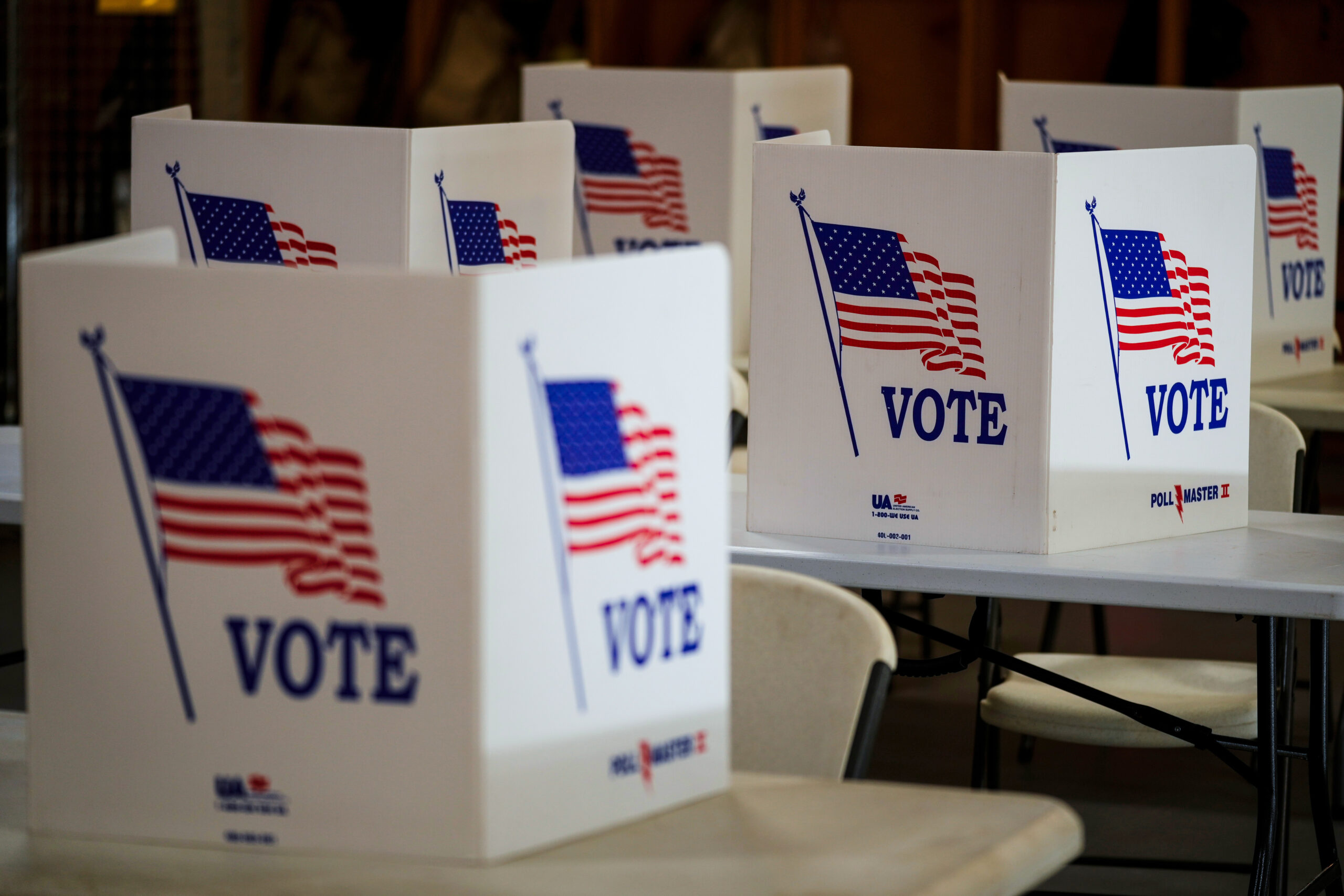
    Voting booths are set up at a polling place in Newtown in 2024.

    Donald Trump gets a lot of flak, and deservedly so, for telling so many lies. On Monday, he held an Oval Office press availability, and much of what he said — false claims that other nations don’t have birthright citizenship or mail-in voting — was flat-out untrue.

    But nothing is scarier than when the 47th president speaks the truth about what’s really on his mind. Because the only thing that’s in Trump’s brain right now is stealing the November midterm election by changing the rules in his favor … or worse. If Trump’s vocal cords were not so weak and diminished, he’d have been screaming the quiet part out loud.

    A reporter asked the president about last week’s abrupt cancellation of a ceremony to sign a popular and surprisingly bipartisan bill to lower the cost of housing. Trump tied that move to an extortionary threat that Congress must pass his bill, which is called the SAVE America Act, but which could ruin democracy by suppressing votes.

    “Here’s what I would like to say,” Trump said of the still-unsigned housing bill, which passed in the House by a 396-13 vote. “It’s a yawn. Some people say it’s wonderful. To me, compared to the SAVE America Act, just about everything is a big yawn.”

    In quainter times, Trump’s disrespect for the housing bill — a grab bag of measures all geared toward encouraging contractors to build more units, which would lower both purchase prices and rents — might be the political gaffe of the year. Currently, only 29% of Americans think it’s a good time to buy a house, and nearly two-thirds are more likely to vote for a Congress member who helped lower prices. Republicans who voted for the bill are desperate for a win.

    Trump doesn’t care. He’s forgotten his “forgotten Americans” who think the rent is too damn high, not to mention the GOP members of Congress who’ve followed him off the cliff. But that’s not even close to the most alarming thing about Trump’s Oval Office moment of truth.

    The president says the only thing he cares about — even with his conflict in Iran becoming another “forever war,” and with the economy down the toilet for everyone who’s not a tech trillionaire — is a bill that critics say would be a disaster for free and fair U.S. elections. One report found that some 12 million people who fairly and successfully voted in the 2020 presidential election don’t have the documentation — such as a birth certificate or passport — that the bill requires.

    We don’t know how such a massive drop in turnout would change the election results, or whether a weakened Trump can pressure the GOP to find a way to pass a bill with zero Democratic support. But we do know this: The president’s maneuvers are not even the worst thing Trump has done this month on the steal-this-election front. Not by a long shot.

    The Trump regime has been signaling for months that it sees the U.S. intelligence community — spy agencies like the CIA — not as a tool for finding out what comes next in the Persian Gulf, or if or when China is invading Taiwan, or when Vladimir Putin’s Russian empire will fall. No, Trump wants secret agents who can creatively invent theories of foreign-born election fraud that would demand a strongman response.

    We saw this coming back in January, when the regime dispatched Trump 47’s first director of national intelligence, Tulsi Gabbard, to Fulton County, Ga., to oversee an FBI raid of voting materials from the 2020 election that Trump, with no evidence, continues to dispute. That link made it clear the regime is looking to create links to foreign actors.

    When Gabbard left the administration this spring, Trump named a temporary replacement who can serve through the November election: Bill Pulte, who also continues to lead the Federal Housing Finance Agency. Pulte lacks a key prerequisite for his new job — any experience in intelligence whatsoever — but has the only quality that matters to Trump: undying loyalty. Pulte’s main focus in the housing job has been combing through the mortgage records of the president’s political enemies, looking for undotted i’s and uncrossed t’s that could be used to manufacture criminal charges from nothing.

    In just a few days at intelligence, Pulte has not disappointed his boss. He showed up Monday and immediately began firing current staffers, with a rumored list of hundreds. The steep reduction in eyeballs on the world’s trouble spots is disturbing, but what’s even more alarming is the one person Pulte has hired.

    The newsletter SpyTalk described Pulte’s new chief of staff, Christina Norton, as “a party-loving MAGA activist with no background in national security issues but who last year boasted of running ‘the largest election integrity operation the Republican Party has ever seen’ …”

    The pairing of Pulte and Norton is an alarm bell that the national intelligence team under Trump will have one job: investigating fantastical “foreign election plots” that will be cited to justify radical measures like sending troops to polling places, seizing voting machines, or worse.

    SpyTalk noted that Norton, in her active Instagram feed, “talks about supervising more than 200,000 Republican poll watchers ‘standing guard’ at polling booths and vote-counting stations across the country” during her 2024 stint at the Republican National Committee.

    Yet, intelligence is just one of many tools in the federal government that the obsessive Trump is working to activate ahead of a November election that polls suggest will be a “blue wave” for Democrats hoping to retake Capitol Hill. Trump has issued several executive orders seeking to assert federal control over voting, which has been a state and local function throughout 250 years of American history.

    That effort suffered a bit of a setback Monday, when the U.S. Supreme Court ruled that states can continue to count mail-in ballots that are postmarked before Election Day but arrive after the polls have closed. But that will not stop the Trump regime from politicizing the U.S. Postal Service ahead of November.

    Last week, Postmaster General David Steiner told Congress that USPS plans not to deliver mail-in ballots in states that don’t turn their voter rolls over to the Trump regime, a demand many governors have resisted so far. “President Trump does not believe that elections he loses are valid,” Democratic Michigan Sen. Elisa Slotkin said after the hearing. “It’s all part of his authoritarian playbook.”

    This all feels very familiar. In the lame-duck days after Trump’s 2020 election loss to Joe Biden, the 45th president — instead of packing up to return to Mar-a-Lago — got busy putting in a new team at the Pentagon, ordering the U.S. Department of Justice to probe alleged voter fraud, challenging vote count certifications in court, and urging state lawmakers to seat rival slates of electors. Most pundits laughed this off, but I wrote a column — “So, is President Trump staging a coup, or what?” — that ran on Nov. 10, 2020, nearly two months before the actual attempted coup on Jan. 6, 2021.

    Now Trump is not only staging another coup, but he is yelling about it, in your face. There is nothing he won’t try over the next five months to prevent a Democratic Congress from investigating how he and his family have made billions of dollars off the American presidency.

    When Trump says anything that’s not election meddling is a “big yawn,” this should be our wake-up call. The time for a full-court press — lawsuits, public hearings, and investigative journalism — can’t wait until after the election. The new putsch has already begun.

    Yo, do this!

    • If you didn’t think I raced to download the new audiobook of Zayd Ayers Dohrn’s tale of growing up in the radical Weather Underground in the 1970s and ’80s — Dangerous, Dirty, Violent, and Young: A Fugitive Family in the Revolutionary Underground — then you must be new around these parts. Dohrn had already used his unique access to his parents — Bernardine Dohrn and Bill Ayers, revolutionary royalty — and their friends to tell a history of that era’s far left in 2022’s award-winning podcast, Mother Country Radicals. His new book aims to go deeper into the psychology of what it was like to be raised as a toddler on the run from the FBI, or whether bombings and bank robberies can change the world. That’s a question — also explored in this viral essay — with new resonance in the Trump era.
    • A few weeks ago, I suggested that folks see the new movie The Sheep Detectives. The film is already streaming on Amazon Prime (which produced it), and Sunday’s rare night off for the World Cup offered the excuse to finally watch. I can now highly recommend it. The movie — with an adapted script by the acclaimed showrunner of HBO’s Chernobyl, Craig Mazin — manages to merge police procedural cliches with moving thoughts about prejudice, existentialism, and what it means to belong to a flock. Even a flock of talking sheep.

    Ask me anything

    Question: Is Markwayne [Mullin, the Homeland Security secretary and former Oklahoma senator] the least qualified cabinet level official in American history? — Richard McGovern (@richardmcgovern.bsky.social) via Bluesky

    Answer: Good question from Richard, a fellow long-suffering Philadelphia Union fan. Not because I know the answer, when there are rivals for the title like Donald Trump’s war-losing “Secretary of War” Pete Hegseth, to name just one. But Mullin is now behind a move so outlandish that it showed me I haven’t lost my capacity for shock after all. This weekend, Trump nominated a previously unknown former Oklahoma state trooper named Lance Schroyer to run U.S. Immigration and Customs Enforcement, a powerful agency with 22,000 agents and a budget of around $30 billion a year. It turns out that just recently, Schroyer was heading a security detail for Mullin in Washington, D.C., and has become a close enough friend that he is an occasional dinner guest. Yes, he hired his bodyguard to run the equivalent of a large corporation. Stay tuned for all of this to unravel.

    What you’re saying about …

    I guess we’re not as close as we thought, as very few of you were eager to share your July Fourth plans with me or discuss what America’s 250th birthday means at such a dark moment. The ones who did reply are looking forward to spending time with family and friends, but all that patriotic jazz, not so much. “Probably, we will have our usual picnic and take the grandkids to see the local fireworks, but I have no intention to watch any special programming or parades, etc.” Marianne Zollers wrote. “It will just make me sad. Such a different feeling compared with the Bicentennial which was such a joyous and happy occasion for my entire family.”

    📮 This week’s question: One of the big stories of 2026 that’s finally getting a lot of attention is the success of more progressive Democrats, including democratic socialists, in key primary races against party moderates. Is this a good thing, lifting up candidates who’ll fight against Trump and for the working class? Or do you worry Republicans will capitalize against their opponents with more left-wing views? Please email me your answer and put the exact phrase “2026 progressive Democrats” in the subject line.

    Backstory on crossing the World Cup off my bucket list

    The Ivory Coast team celebrates their win in the middle of the field against Curaçao with a score of 2-0 for the FIFA World Cup at the Lincoln Financial Field in Philadelphia on Thursday.

    I can’t say exactly when, but at some point during my first-ever in-person World Cup match between Côte d’Ivoire and Curaçao, watching from the thin air of the top deck of the temporarily renamed Philadelphia Stadium, it struck me: My decades-long dream of being there for the world’s greatest sporting event was not like what I’d imagined.

    And yet, in some weird, quasi-religious acid test kind of way, it was even better.

    I’ve been to countless sporting events going back to 1968, but never one where the vibe was basically: So happy to be here. I’ve certainly never been to a game where the PA announcer uttered something before the match about giving a big hand to both teams — and the sold-out crowd obliged. Fans would have burned down Section 220, Row 27, where I was sitting, if this had happened during an Eagles-Cowboys game. During a tense match with a place in the Round of 32 on the line, the gathering repeatedly did the wave and threw their vocal cords more behind the halftime singalong of the Bruce Channel 1961 oldie “Hey! Baby” than either of the two decisive goals by Côte d’Ivoire’s Les Éléphants.

    Up in nosebleed country, many of the fans repped soccer jerseys, but they were for club teams like Liverpool or Christian Pulisic’s USA No. 10, joined by me in my Philadelphia Union T-shirt. We were Philly’s soccer aficionados, desperate to be a part of maybe the only time in our lives the World Cup would take place in the City of Brotherly Love. A match pitting the smallest nation to ever qualify for the FIFA tourney (Curaçao, population 158,000) and an African underdog was pretty much the only way to crash the party without a bank loan. (Full disclosure: I paid about $280 apiece for two seats on StubHub — much like buying a stock, it could have been more or less, depending on how one timed it.)

    No, this wasn’t much like the Eagles games played here, where excitement merges with pins and needles of anxiety. On a picture-perfect late afternoon in June, bookended by the Philadelphia skyline and a lazy Delaware River, it felt more like a rock concert. It wouldn’t have seemed out of place if folks had started batting a beachball around at this soccer Woodstock. There was a mind-meld of the faithful, who saw FIFA and its commercialization as the devil, with the loudest boos for the TV-ad-laden “hydration breaks,” but with — I swear to God — a loud roar for the announcement of the attendance: 68,324. In a city where a 1976 Bicentennial match of some of the world’s best players took place in a mostly empty stadium, soccer is indisputably here to stay.

    Fans walked out of Philadelphia Stadium beaming less over the final score and more about the instant karma of the afternoon. After years of tavern taunts and ridicule from sports-talk radio, local soccer die-hards lived long enough to see America’s founding city become the world’s co-capital of the sport that, for its true believers, passes all understanding. It was all too beautiful. If I can somehow make it to Spain or Portugal or Morocco in 2030 (because, hey, I need a new bucket list now), I will be sure to wear some flowers in my hair. Soccer time will be a love-in there.

    What I wrote on this date in 2019

    I’ve been writing about the topic of journalism reform since the mid-2000s, or around the time it became clear to me and a lot of other folks that newsrooms needed to change or die. My fear, circa 2006 or so, was that we’d start seeing entire communities without newspapers or the accountability journalism that flows from that — which is exactly what happened in Youngstown, Ohio, when its paper closed seven years ago. I wrote: “The loss of the Youngstown Vindicator every morning doesn’t mean that the region’s 200,000 people will no longer be getting information. It just increases the likelihood they’ll be getting bad information — intentionally manipulated, and sometimes out-and-out fakery.”

    Read the rest: “How the first U.S. city with no daily newspaper will help Trump in 2020.”

    Recommended Inquirer reading

    • Only one column this week, as I took a well-deserved day off to attend the World Cup. In that piece, I looked at the sorry state of justice in America on the eve of its 250th birthday, with an emphasis on the outrageous sentences — ranging from 30 to 100 years — handed down to left-wing anti-ICE protesters convicted of rioting in North Texas. The U.S. Department of Justice that pushed these virtual life sentences is also pardoning the right-wing rioters of Jan. 6, 2021, as well as billionaire fraudsters who donate money to MAGA players and causes. They’ve made a mockery of liberty and justice for all.
    • Let’s be honest: People — not to mention sheep (see above) — can’t get enough of a murder mystery, especially a real-life true crime. It’s been a while since a crime saga has riveted Philadelphia readers as much as the stench of possible foul play that is growing at a home on West Chew Avenue in the city’s Olney section that police have branded a crime scene as they search for clues in the disappearance of two local women. Since the case broke open last week, nearly a dozen Inquirer reporters have produced riveting articles about the discovery of drugs, chemicals, and “a significant amount of blood” at the Horsch family residence, profiles of the two missing women — Amy McHale and Blair Tonzelli — and interviews with neighbors who talked about living next door to “a house from a scary movie.” The backstory here is that — whatever you may have heard about AI — it still takes a lot of human shoe-leather to get to the bottom of a story like this. Subscribing to The Inquirer is a twofer: You get to hurdle the paywall to read compelling journalism and feel good about being a supporter.

    By submitting your written, visual, and/or audio contributions, you agree to The Inquirer’s Terms of Use, including the grant of rights in Section 10.

  • The retirement loophole that just won’t die | Editorial

    The retirement loophole that just won’t die | Editorial

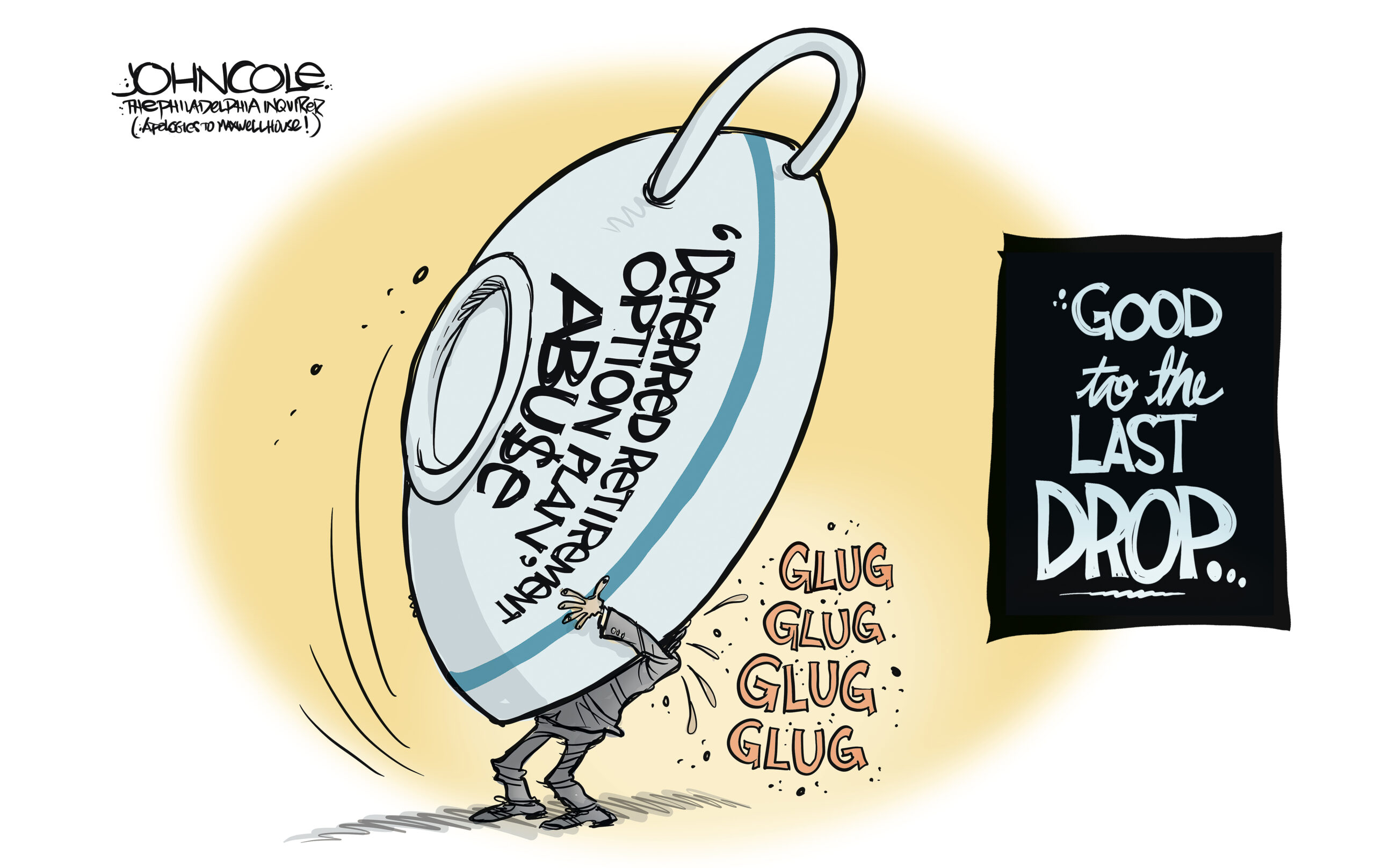
    City Hall just can’t quit abusing a retirement perk known as the Deferred Retirement Option Plan, or DROP, that was supposed to be self-sustaining but costs Philadelphians millions of dollars a year.

    Now, along comes City Councilmember Curtis Jones Jr. and his wife, City Representative Jazelle Jones, to take it up a notch.

    The power couple plans to collect up to $752,000 in combined retirement payouts. But rather than ride off into the sunset, they both plan to keep their respective six-figure jobs.

    The scheme raises a question that has long plagued DROP: What is the point of a retirement incentive if the person doesn’t retire?

    The problem goes back to 1999, when former Mayor Ed Rendell pitched it as a good government idea when it was really nothing more than a sweetheart enrichment program for city workers at taxpayer expense.

    At the time, Rendell said DROP would not cost the city any additional revenue. But one study found that in its first 11 years, DROP cost the city $258 million, which is almost enough to cover the school district’s $300 million budget deficit this year.

    For those unfamiliar with DROP, it is a program that allows eligible municipal employees to select a mandatory retirement date up to four years in advance. While they continue to get paid to do their job, the city makes pension payments into a special interest-bearing account that results in a lump-sum payout upon retirement.

    After retiring, they receive their standard monthly pension. City workers contribute to the pension fund, but that does not cover all the pension fund liabilities, let alone the added costs of DROP, which are ultimately borne by taxpayers.

    The added costs prompted several cities to eliminate or heavily restrict their DROP programs, including San Diego, San Francisco, Houston, and Baltimore.

    In Philadelphia, more than 12,000 municipal employees collected DROP payments totaling $1.5 billion from 1999 to 2018. The payments have since topped $2 billion, according to one recent report by former Inquirer reporter Ralph Cipriano, who has long followed the program as an independent journalist.

    Bottom line: DROP is not revenue-neutral.

    Rendell’s other claim was that by entering DROP, the city would have four years to find or train a replacement for the retiring worker.

    It was always ludicrous that it would take years to find or train a replacement when most places of employment manage to survive when a person gives two weeks’ notice. But that was the story, and the city stuck with it.

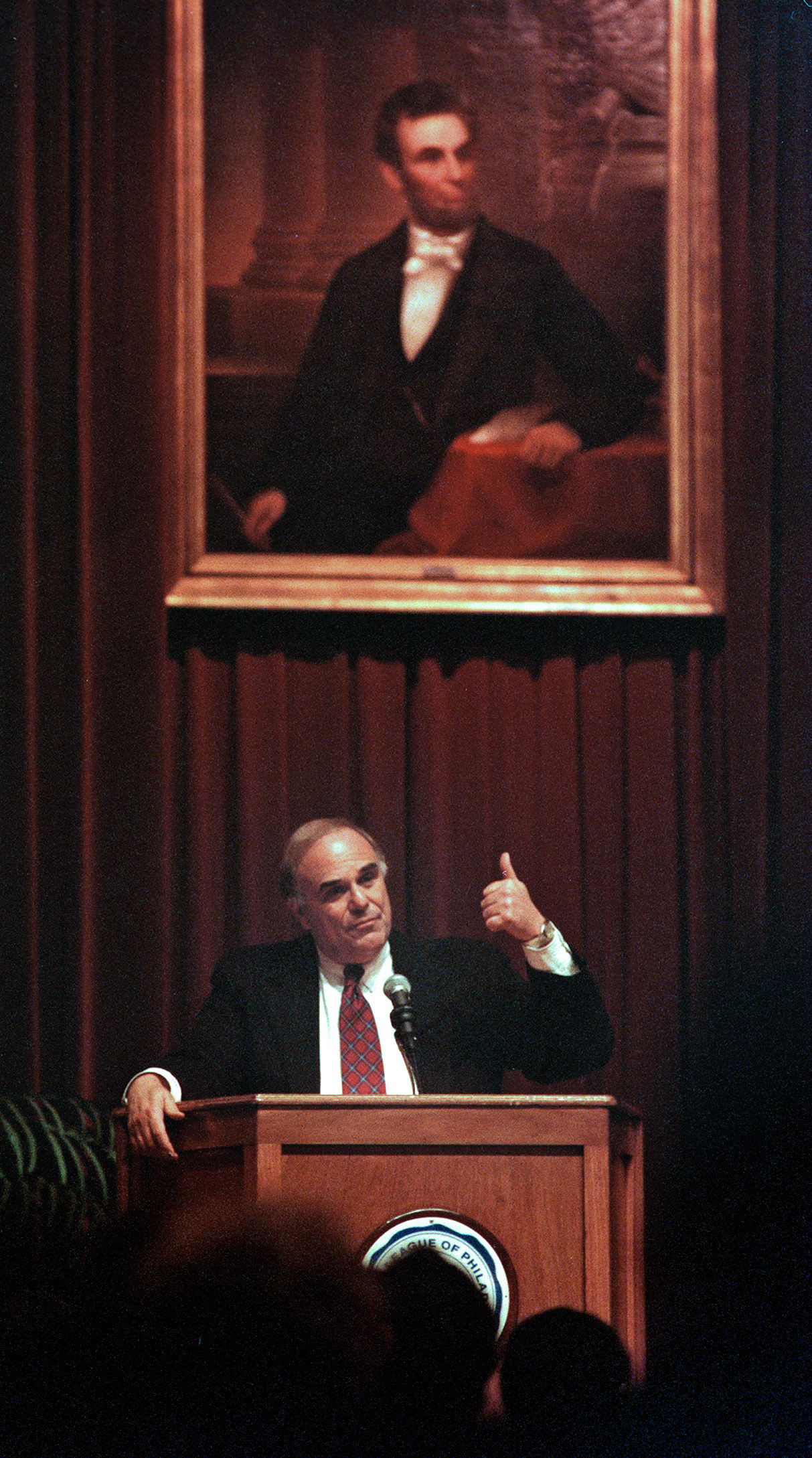
    Mayor Ed Rendell delivers his State of the City address in Lincoln Hall at the Union League in February 1999. Rendell claimed the Deferred Retirement Option Plan would not cost the city any additional revenue. Instead, around $2 billion has been spent since 1999.

    In the case of Jazelle Jones, four years’ notice was apparently not enough.

    She was set to retire in September 2024, but Mayor Cherelle L. Parker asked her to stay on the job and issued a special exception so she could be rehired.

    Following a one-day retirement, Jones, 70, received a $97,000 payout for unused sick and vacation time, in addition to a DROP payment of nearly $320,000. She was then rehired with a $4,000 pay bump.

    Jones, whose annual salary is $199,000, serves as the city’s chief ambassador and director of special events, such as parades, concerts, festivals, and athletic events.

    Parker defended the move because of Jones’ experience overseeing major events like the current World Cup games.

    But there is no defending her Council member husband’s plan to collect his DROP payment and continue serving in office.

    DROP was never intended for elected officials, since voters determine whether they get to keep their seats.

    Controversy erupted in the early 2000s after several elected officials collected large DROP payments, retired for a day, and returned to office. City Councilmember Frank Rizzo Jr. lost his election bid in 2011 after he accepted a DROP payment.

    In 2010, Council barred future elected officials from participating in the program — but grandfathered anyone already in office. That included Curtis Jones Jr., 68, who was first elected in November 2007.

    He enrolled in DROP in August 2024 but plans to run for a sixth term next year. If Jones is reelected, he could then retire for a day in 2028, collect his $432,221 DROP payment, and then serve another four-year term. The Council member told The Inquirer he instead plans to retire in December 2027, collecting a reduced DROP payment closer to $350,000.

    What a mensch.

    Jones has publicly discussed delaying bridge repairs in his district to avoid traffic jams that may rankle voters during his reelection campaign.

    Perhaps voters should beat a path to finding candidates who put the public’s interest before their personal gain.

    Even better, the city should put an end to DROP.

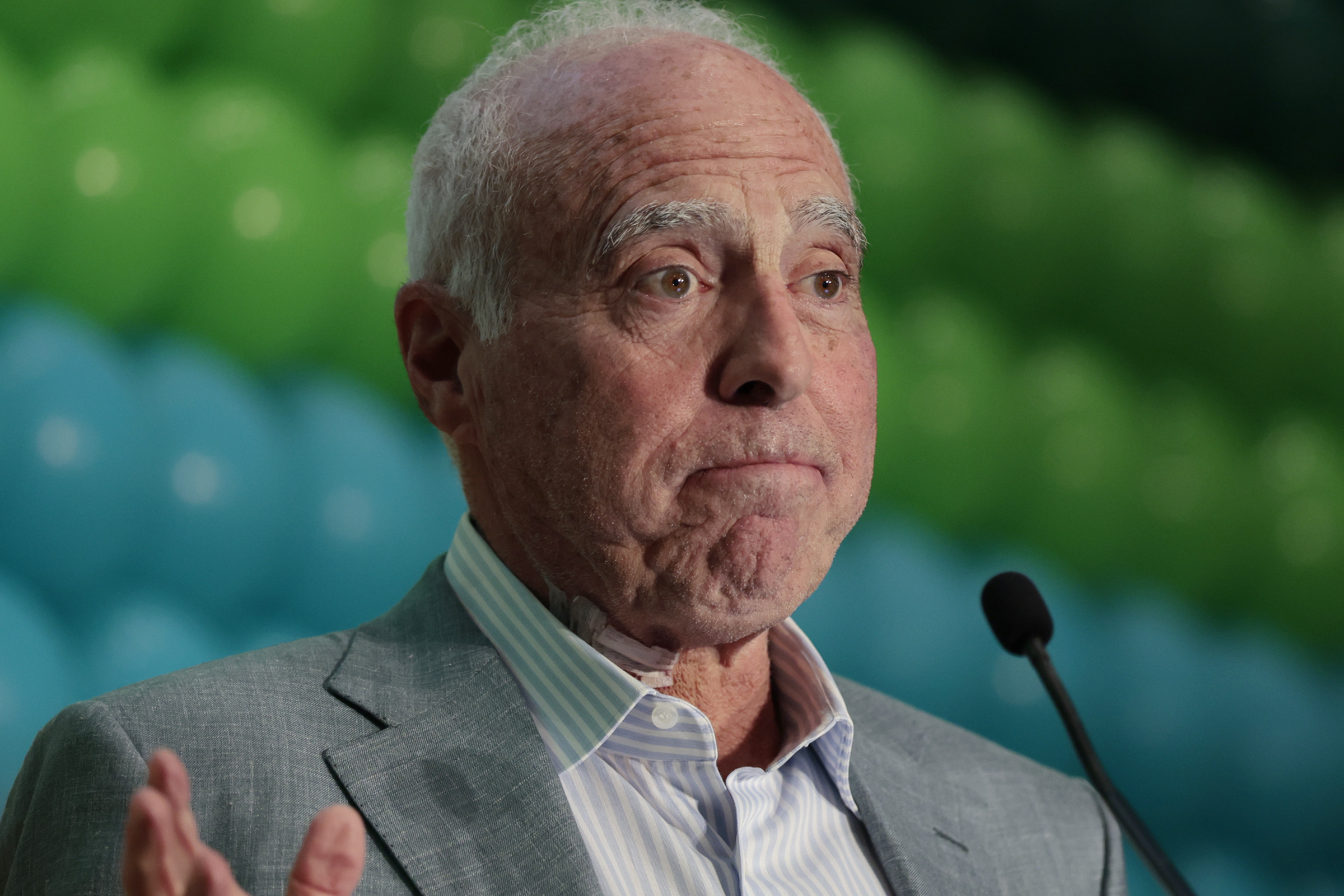
  • Eagles owner Jeffrey Lurie to be honored at ESPYs with Stuart Scott Award for commitment to autism awareness

    Eagles owner Jeffrey Lurie to be honored at ESPYs with Stuart Scott Award for commitment to autism awareness

    Eight years ago, at the inaugural Eagles Autism Challenge, team owner Jeffrey Lurie called the family-friendly bike ride that raised money for autism research and programs “a call to action” and “one giant step.”

    The event had more than 3,000 participants and raised more than $2.5 million. Eight years later, the combined efforts of the Lurie Autism Institute — launched last year with a $50 million donation from the Lurie family — and the Eagles Autism Foundation have collectively contributed to more than $100 million toward research and clinical care programs around the world.

    This year’s Eagles Autism Challenge raised more than $16 million through nearly 40,000 donations and more than 6,500 participants, according to the team.

    Lurie, 74, bought the Eagles in 1994. He has lifted the Lombardi Trophy twice after two Super Bowl victories, but his efforts to support autism research and care may be the larger lasting legacy of his tenure.

    On Tuesday, ESPN announced that Lurie will be honored with the Stuart Scott ENSPIRE Award as part of this year’s Sports Humanitarian Awards during ESPYs award week. The award, named after the late SportsCenter anchor, is given to someone that uses the power of sports to help disadvantaged groups or people.

    Eagles owner Jeffrey Lurie is one of the world’s leading fundraisers for autism research.

    “This honor exemplifies the transformative power of sport and the life-changing impact it can have on people,” Lurie said in a press release. “Stuart was a trailblazer whose legacy was built on integrity, professionalism, and bravery. His authentic character and fearlessness in the face of adversity will live on forever through this distinguished award.

    “I have always envisioned that the impact of owning a professional sports franchise could extend beyond the field and into the global health community. The Eagles Autism Foundation and Lurie Autism Institute have been created to support individuals with autism and their families by funding innovative and potentially groundbreaking research rooted in science and data, in addition to providing programming and services to those in need. Autism is a global condition that is not only underfunded and under-researched, but just in the United States alone affects one in 31 children.”

    The Sports Humanitarian Awards will take place on Tuesday, July 14 in New York. The show will be featured during ESPN programming and during the ESPYS, which air July 15 at 8 p.m. on ABC.

    Lurie is the lone representative of Philadelphia’s sports teams this year in both the humanitarian awards and the main ESPYs program. The full list of humanitarian award winners can be found here. Nominees for the ESPYs can be found here. South Jersey’s Hannah Hidalgo, a guard at Notre Dame, is nominated for best single-game performance for her record-breaking 16-steal game against Akron.

  • Philly’s Bud Wilson set a record with his five-day run across Pennsylvania. A run across the entire country might be next.

    Philly’s Bud Wilson set a record with his five-day run across Pennsylvania. A run across the entire country might be next.

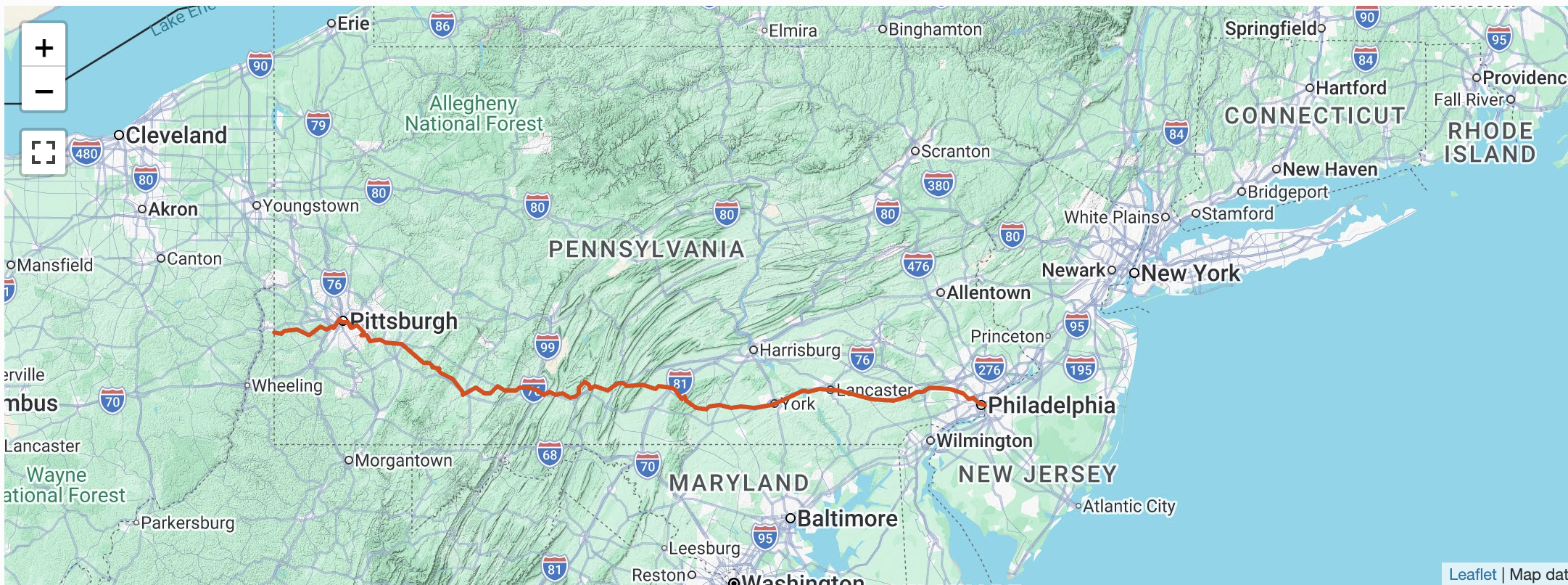
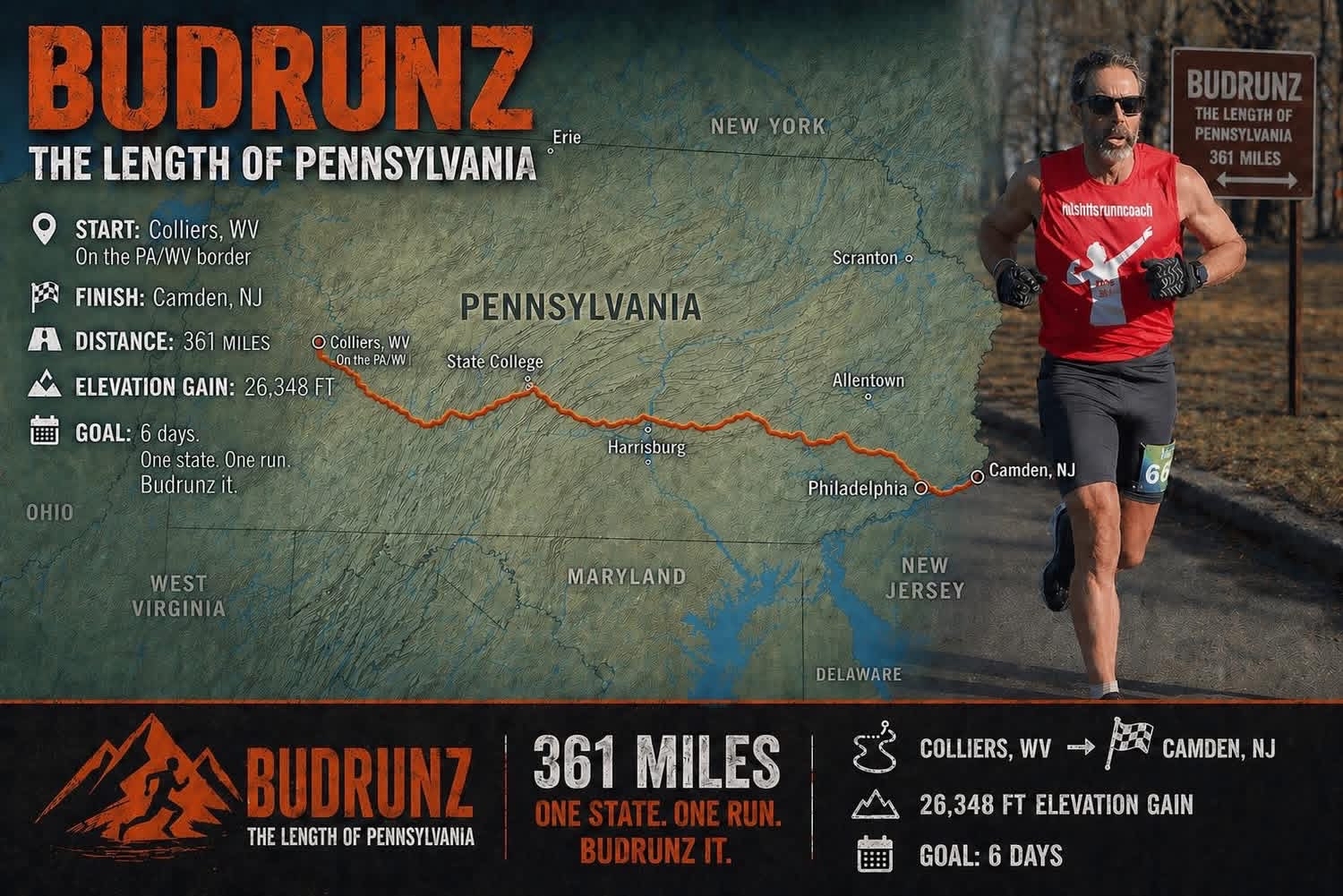
    A record the size of Pennsylvania has been crushed. Philadelphian Bud Wilson, 58, finished a 361-mile run across the length of the state in just five days, 13 hours, 57 minutes and 50 seconds.

    The time to beat was nine days, 23 hours, a record set in 2022 by Cain Leathers, who became the first to run the route from Colliers, West Virginia, to the middle of the Benjamin Franklin Bridge. Wilson began his journey in the early morning hours of Sunday, June 14, and was met by friends and family as he crossed the Ben Franklin on Friday evening, June 19.

    A look at Bud Wilson’s route across PA.

    Wilson is no stranger to the niche world of ultramarathons. He completed a first record-setting run across the length of New Jersey in 2025, a 196-mile run completed in two days, nine hours and 27 minutes. Even as he sped through the Garden State, he was thinking about his next big race, deciding on the cross-PA route weeks later.

    “There are a lot of cool things that come out of doing something that’s really difficult,” Wilson said. “Plus, I grew as a runner and as a person. So after I finished it, I was like, wow, that was awesome. What’s next?”

    “I came across [the Pennsylvania] route and I thought to myself, based on what I did for the length of New Jersey, I felt like I could do it in six days,” Wilson said.

    To accomplish that goal, Wilson ran an average of 65 miles per day. That’s more than two marathons a day for six straight days.

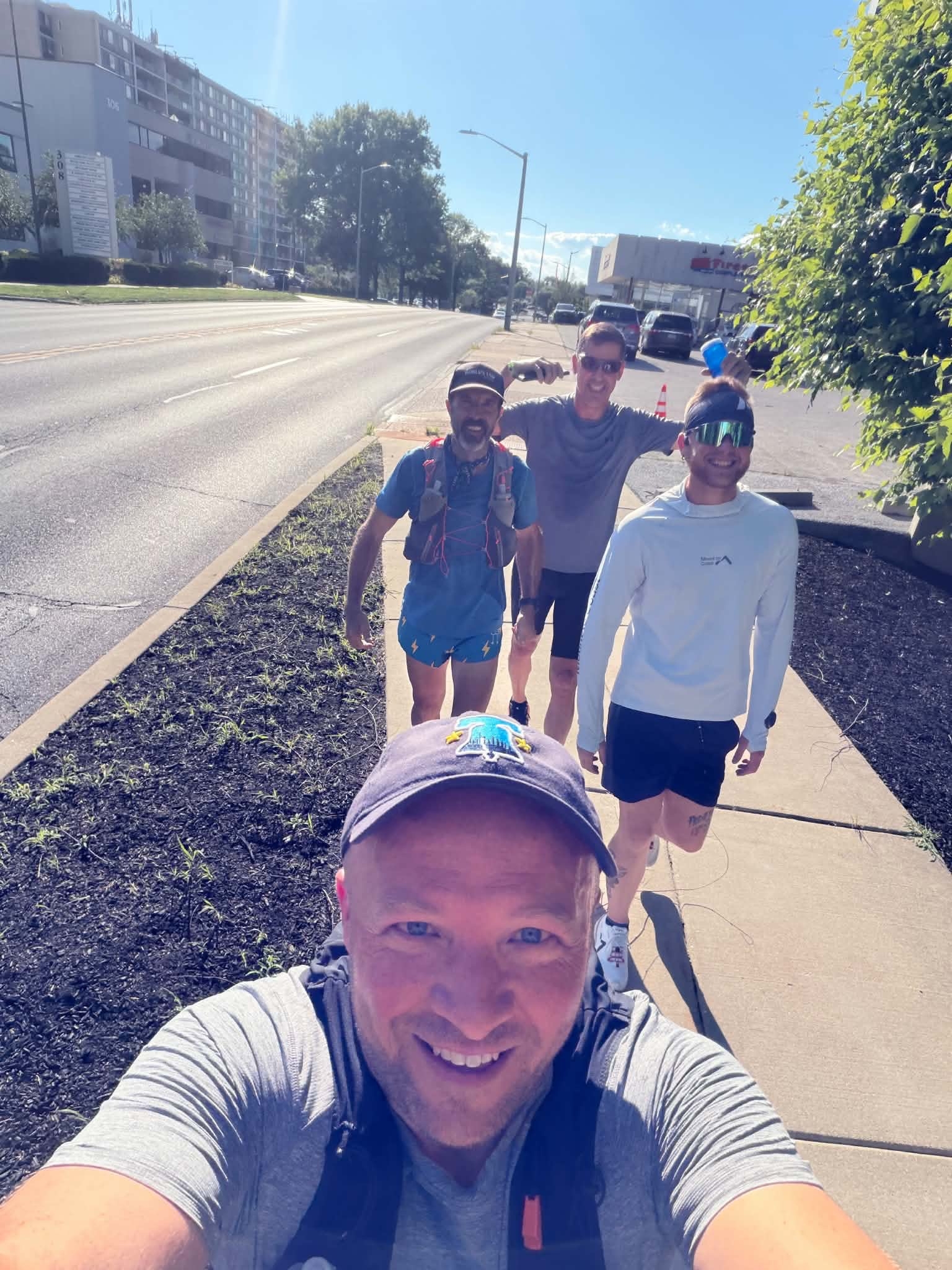
    Bud Wilson’s team trailed him in a van throughout the journey across the state.

    It took a team to help Wilson cross the finish line: people to replenish the thousands of calories Wilson was burning, runners in the community to pace him along the route, and trainers who would wake him up after a few coveted hours of sleep and bring him back to the point where he exited the trail.

    “There was one time where I was getting so tired I couldn’t make it to the next checkpoint,” Wilson said. “I was looking at the grass on the side of the road, and it literally looked like a 12-inch memory foam mattress. I laid down on the ground, and before the guy who was pacing me could utter the words, ‘How long do you want to nap for?’ I was snoring already.”

    For the ultramarathoner and personal trainer, the support of the community was one of the most rewarding parts of the experience. Another was the cause.

    Wilson’s past two cross-state runs have also supported fundraising for St. Jude Children’s Research Hospital. He has raised $1,180 so far from this past endeavor and $2,500 from his run across New Jersey. As a father of three, the organization is an important motivator for Wilson as he runs.

    “When I’m running, I’m thinking about why I’m doing it,” Wilson said. “I think that, more so than anything else in this world, kids really need support and need people to teach them how to grow into healthy, happy, productive members of society. So when I got ready to do New Jersey, I said to myself, this needs to be more than just about Bud Wilson running the length of New Jersey. … St. Jude’s was a cause that really, really resonated with me.”

    Bud Wilson’s running path took him clear across Pennsylvania.

    Wilson has not been taking it easy since the ultramarathon. With races on the horizon, including the notorious Barkley Fall Classic in September, Wilson is following a strict regimen of eating well, staying in the gym and cross training.

    “I’m no spring chicken.” Wilson said. “
I didn’t start running marathons until I was 46 years old … so I listen to my body and know I’m capable of pushing it hard.

    The training is necessary in part becasue he has his eye on an even bigger prize. The Pennsylvania route was, in part, an experiment to see if Wilson has what it takes to begin training for a transcontinental race across America.

    “I thought to myself, well, if I can pick something this close to the equivalent of running the first seven days of a transcontinental run, at least that will give me some sort of feel of what that would be like,” Wilson said. “If I’m gonna run from one coast to the other coast, obviously I’m gonna take a stab at beating what the standing record is.”

  • Rep. Tom Kean Jr. said he was treated for depression during absence

    Rep. Tom Kean Jr. said he was treated for depression during absence

    WASHINGTON — New Jersey Republican Rep. Tom Kean Jr. revealed Tuesday that he spent months away from Congress being treated for depression.

    “It is physical, it is emotional, and until you experience it yourself, it is difficult to fully understand how powerful this illness can be,” he said on the House floor.

    Kean’s reappearance comes after he won an uncontested primary on June 2 and months since he last voted in the House.

    “Today I stand before you healthier, stronger and excited to return to the work that I love,” Kean said.

    A second-term lawmaker and scion of a New Jersey political family, Kean represents a battleground district that includes President Donald Trump’s Bedminster golf club. He’s missed more than 100 votes in Congress this year and hadn’t been seen publicly in Washington or his district despite winning the Republican nomination to serve another term.

    The mystery over Kean’s absence carries potential political implications, given the competitive district he represents and the Republican Party’s narrow control of the House. His office has said he is still running for reelection and is set to face Democratic nominee Rebecca Bennett, a former Navy helicopter pilot, in New Jersey’s most high-profile contest in November.

    Democrats have targeted the district as a prime pick-up opportunity, given that the seat has changed hands in the last two midterm elections. Kean won in 2022 by defeating Democrat Tom Malinowski, who had defeated Republican Leonard Lance in 2018.

    Kean’s last vote was months ago

    Kean last voted in the House on March 5, but his absence wasn’t explained.

    In April, his social media account said he had been dealing with a personal medical issue and his doctors expected him to recover.

    Kean’s absence has also complicated matters for House Republican leaders, who are struggling every day to pass bills with their razor-thin majority, 218-212. Speaker Mike Johnson and other GOP leaders repeatedly told reporters they were in touch with Kean, but said he would have to address the circumstances himself.

    Trump has endorsed Kean’s reelection, without mentioning his absence.

    Kean comes from a long line of public servants, stretching 250 years to the country’s founding when one of his ancestors became New Jersey’s first leader since independence.

    His great-grandfather was a senator, his grandfather was a congressman and his father is the former two-term governor, Tom Kean Sr.

  • The first Jewish American to serve the government was a Philadelphian. A letter he carried to Paris for Thomas Jefferson just sold for $108,000.

    The first Jewish American to serve the government was a Philadelphian. A letter he carried to Paris for Thomas Jefferson just sold for $108,000.

    In the early 1780s, Revolutionary War era Jewish patriot and Philadelphian Lt. Col. David S. Franks had a desperate work situation in hand.

    He had served as one of Benedict Arnold’s high-ranking personal assistants, and after Continental militiamen discovered Arnold’s intentions to sell America out to the British in 1780, it became nearly impossible for Franks to find a job with the United States government.

    Franks was cleared of wrongdoing. But working with Arnold made the Founders wary of employing Franks.

    But not Thomas Jefferson, who hired Franks as his secretary. By the time the Treaty of Paris ending the Revolution was ratified in January 1784 in Annapolis, Md., then America’s capital, Franks had been Jefferson’s secretary for almost a year.

    It was Franks who carried at least one official copy of the finalized treaty to Benjamin Franklin — who was in Paris at the time — and other officials in Britain and France.

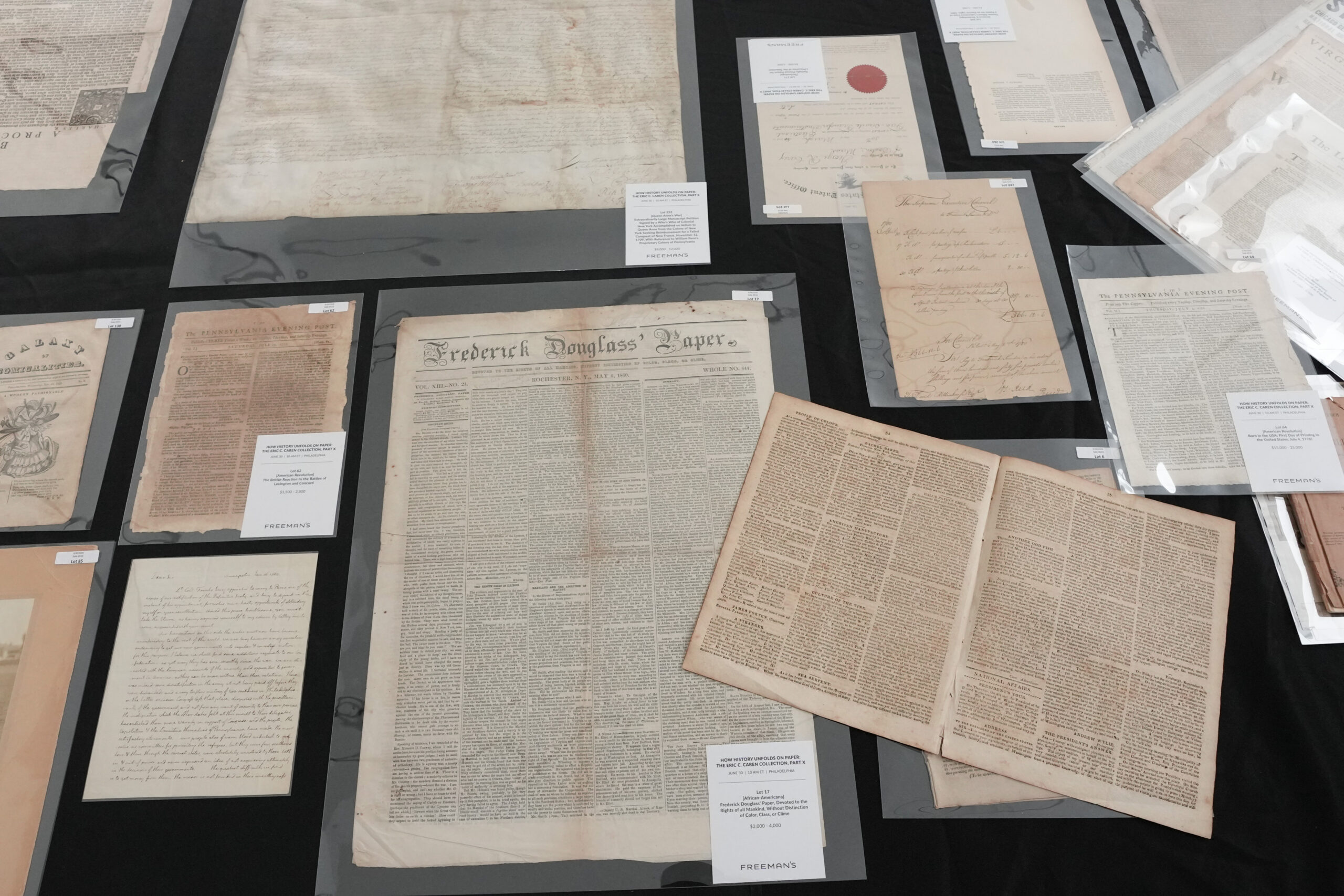
    Frederick Douglass’ Paper (front center) and other documents, part of the collection “How History Unfolds on Paper: Important Americana from the Eric C. Caren Collection,” which boasts more than 320 rare newspapers, books, pamphlets, and ephemera tracing the development of printing and publishing in America, an enterprise that started in Philadelphia in1690 with the first paper mill.

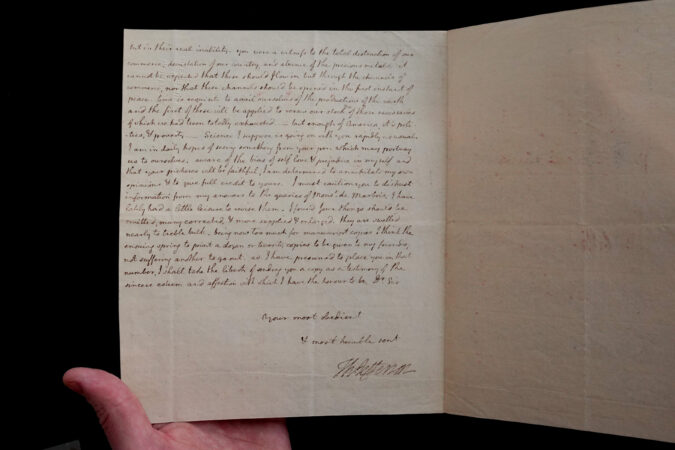
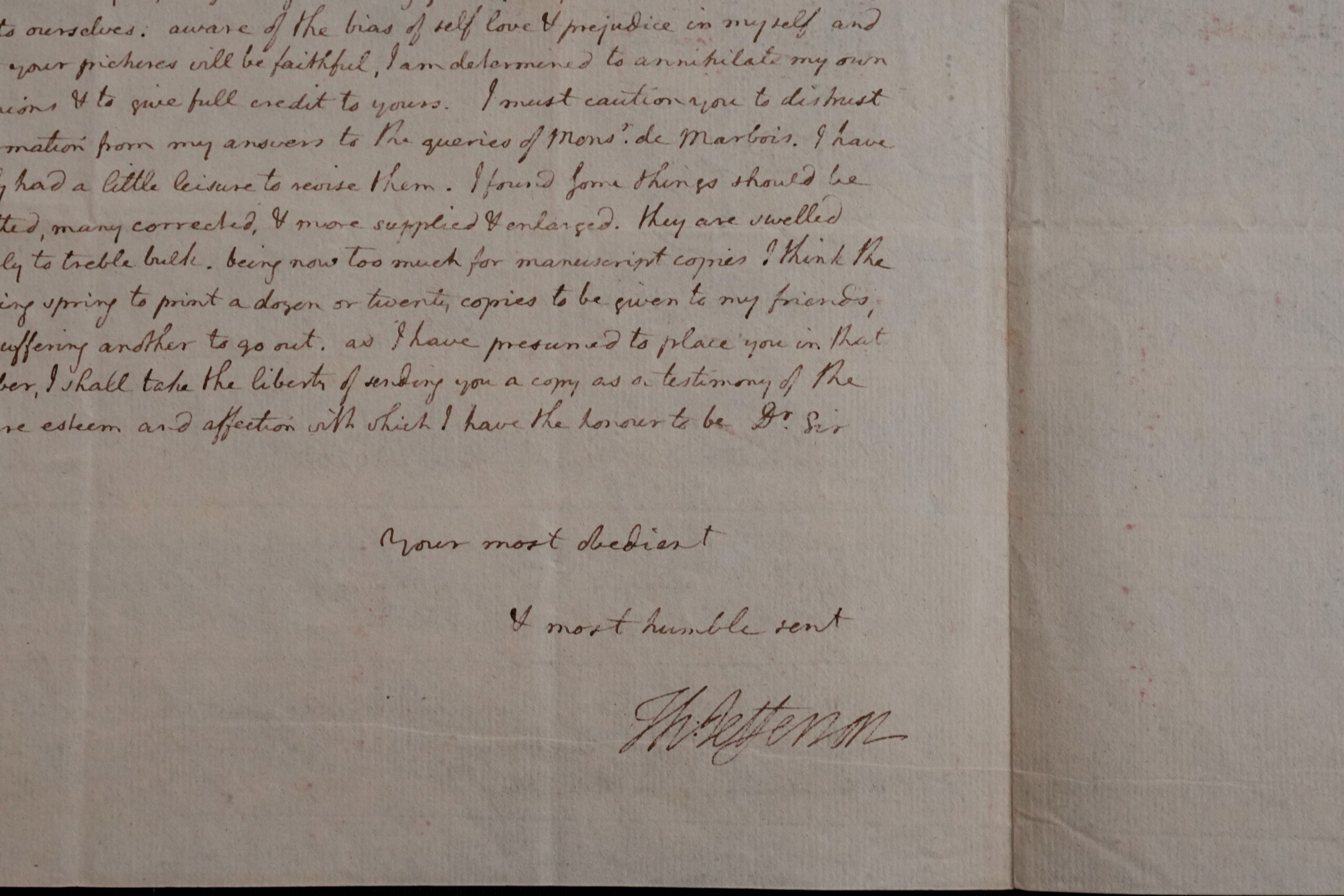
    Franks also carried a two-page letter written in Jefferson’s customary neat hand for Francois Jean de Beauvoir, Chevalier de Chastellux. It was a friendly message between the longtime acquaintances, in which Jefferson wrote to the French noble about how America was progressing as a sovereign nation and about his forthcoming book Notes on The State of Virginia.

    That letter sold for $108,000 Tuesday as part of an online and in-person auction presented by Philadelphia’s Freeman’s auction house.

    “How History Unfolds on Paper: Important Americana from the Eric C. Caren Collection, Part X” boasted more than 320 rare newspapers, books, pamphlets, and ephemera tracing the development of printing and publishing in America, an enterprise that started in Philadelphia in 1690 with the first paper mill.

    Books from the collection “How History Unfolds on Paper: Important Americana from the Eric C. Caren Collection,” which boasts more than 320 rare newspapers, books, pamphlets, and ephemera tracing the development of printing and publishing in America.

    “Caren goes where the history leads him. His collection reflects that,” said Darren Winston, Freeman’s senior vice president and head of the books and manuscripts department. “When he asked us to host a sale in honor of the 250th, we immediately said yes.”

    18th century news treasures

    The vast sepia-hued collection of aged newspapers and bound volumes was heaven sent for primary-source junkies who can afford to plop down a few hundred or several thousand dollars for the kinds of historical gems usually found only on microfilm. It’s also a gold mine for those who think hundred-year-old newspapers in near mint condition are frame-worthy.

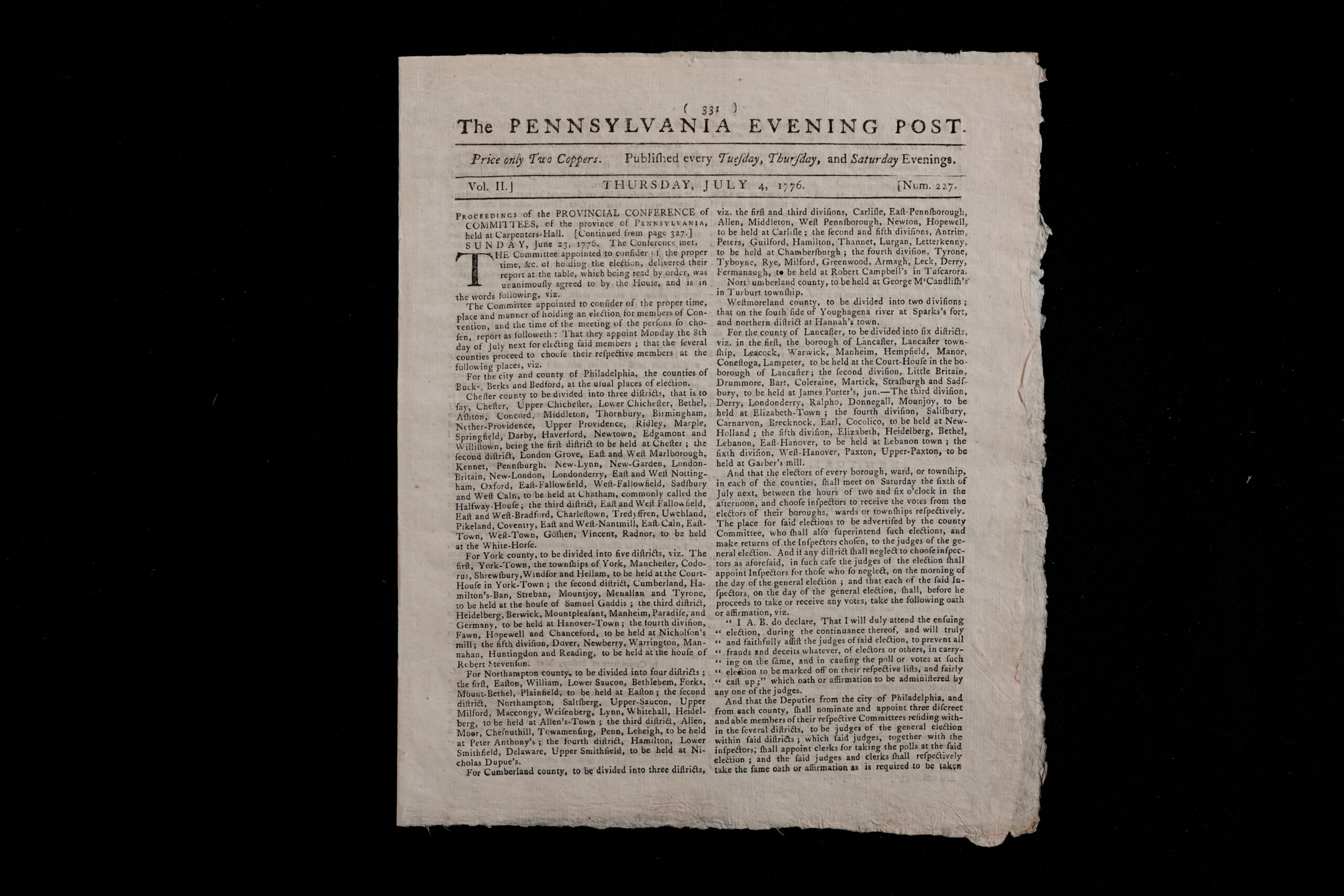
    One such memento was a four-page Pennsylvania Evening Post printed on July 4, 1776, believed to be the first daily newspaper printed on North American soil just declared free of the monarchy.

    A four-page Pennsylvania Evening Post printed on July 4, 1776, believed to be the first daily newspaper printed on North American soil just declared free of the monarchy.

    The Evening Post, founded by printer Benjamin Towne in 1775, was published just a few blocks from the Pennsylvania State House on Tuesday, Thursday, and Saturday evenings.

    The July 4 edition contains a short mention that the Continental Congress declared the United Colonies free and Independent States earlier in the day. And “the day before, we had a King in charge,” Winston said.“How History Unfolds on Paper” included five 18th century newspaper editions, including one printed in Scotland, that published the Declaration of Independence in full.

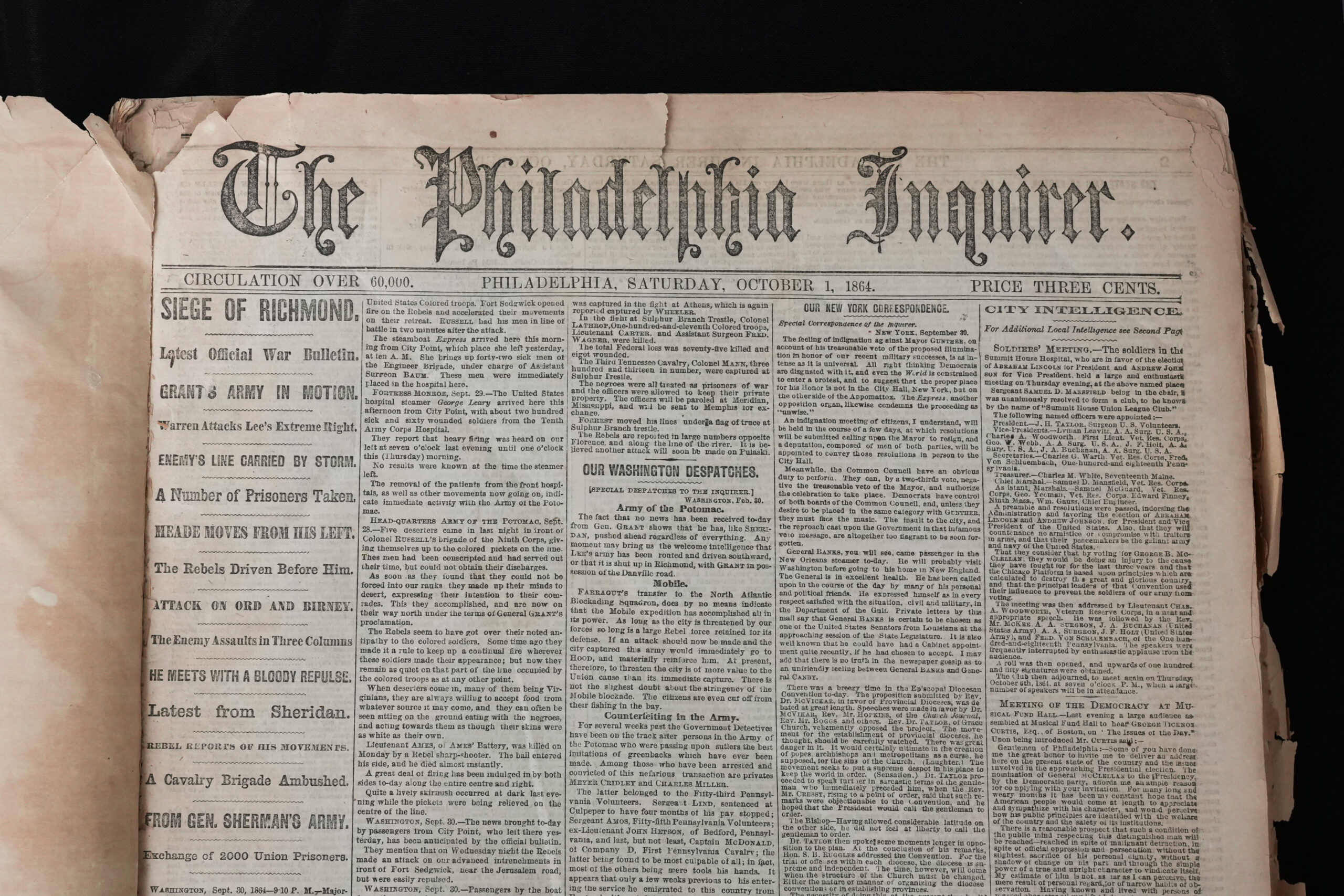
    Other archival gems included a copy of the Frederick Douglass Paper from 1860; copies of the Emancipation Proclamation as they appeared in the Daily Globe, the New York Tribune, the Evening Journal Almanac, and The Philadelphia Inquirer; Abraham Lincoln’s second inaugural address as printed in the New York Times in 1865; and more than 70 issues of Civil War-era Philadelphia Inquirers.

    A copy of the Philadelphia Inquirer, part of the collection “How History Unfolds on Paper: Important Americana from the Eric C. Caren Collection,” which boasts more than 320 rare newspapers, books, pamphlets, and ephemera tracing the development of printing and publishing in America, an enterprise that started in Philadelphia in 1690 with the first paper mill.

    But Caren’s collection is more than weathered newspapers.

    The auctioned collection bubbled with relics, collectibles, and keepsakes that speak to the economy, such as a note signed by first director of the U.S. Mint, David Rittenhouse — for whom Rittenhouse Square is named — ordering payment of 350 pounds to a doorkeeper employed at the Pennsylvania State House. (That’s about $107,000 in today’s money.)

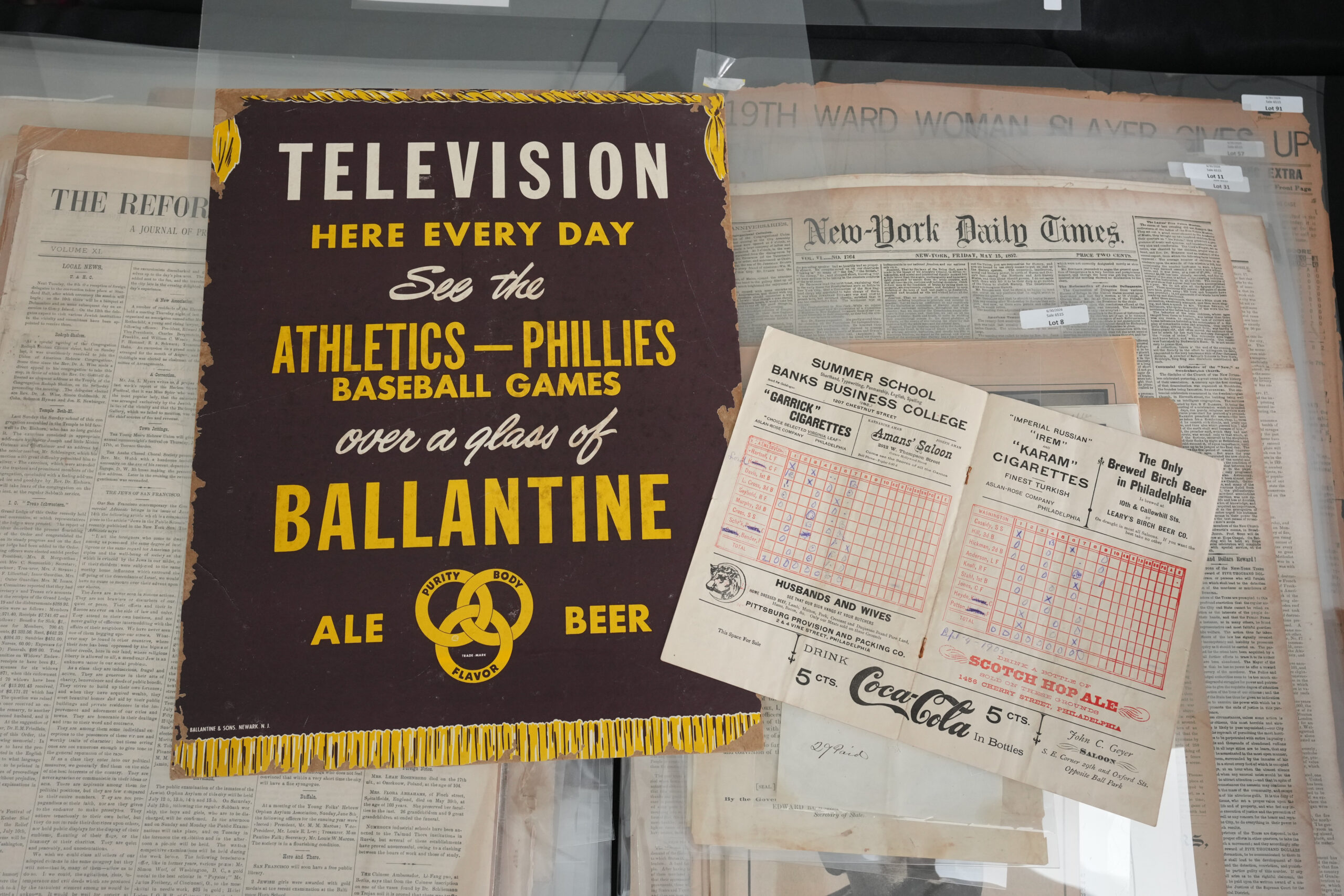
    An 1874 advertisement for Levi Strauss & Co. that appeared in a Montana newspaper was among the cool finds, as was a 1905 Phillies Athletics score card. An 1869 letter signed by Susan B. Anthony and a 1772 volume of poetry including works from Phillis Wheatley are priceless, but their bidding started at $900 and $400 respectively.

    “Freeman’s is America’s oldest auction house, and Philadelphia is the birthplace of the United States,” Caren said. “So for the 250th anniversary [of America], I thought this sale would be quite fitting.”

    Some of the sports memorabilia featured in “How History Unfolds on Paper: Important Americana from the Eric C. Caren Collection”

    50 years of collecting

    Caren, 66, is a New Yorker and said he came out of his mother’s womb collecting — starting with comic books, stamps, coins, and baseball cards.

    In 1970, he learned that a few of his friends were going rummaging through an abandoned house in Rockland County and that they had found newspapers from the turn of the 20th century.

    “I asked them to try and find me a sports page with Babe Ruth, and they brought me one from 1913 and I was mesmerized,” Caren said.

    After some cajoling, Caren convinced his friends to reveal their secret treasure trove. There, he discovered periodicals going back to the 1890s and was hooked.

    Caren spent the next 50-plus years collecting the printed and written word. He has traveled the world to estate sales, garage sales, rare book shops, and antique shows. He’s one of the founders of the Ephemera Society of America and a member of the American Antiquarian Society and the Grolier Club.

    He owns hundreds of thousands of paper items, and pieces of his collection have been sold at the auction houses Christie’s and Sotheby’s. “How History Unfolds on Paper” was his 10th auction and first in Philadelphia.

    “If ever there was a Philadelphia item, this is it”

    In his travels, Caren has come across many of Jefferson’s letters. The one written to Chastellux, he says, is particularly noteworthy because Jefferson wrote it himself, as opposed to dictating it to a secretary, like Franks.

    Long-time ephemera collector Eric C. Caren, his collection “How History Unfolds on Paper: Important Americana from the Eric C. Caren Collection, Part X” went to auction at Freeman’s in Philadelphia.

    The letter had been in the Chastellux family for centuries before landing at an auction a few years ago. Caren passed it over a few times before recognizing Frank’s name in the first paragraph.

    “It was a great example of how even great things can slip by,” Caren said.

    The Treaty of Paris was signed in September 1783. The following January, legislators ratified it in Annapolis.

    Dated Jan. 16, 1784, Jefferson’s letter reads like a chatty blog of late 18th century American happenings. In the five months since the war’s end, news traveled to Europe that Americans were behaving badly. One of the reasons Jefferson penned this missive, Caren said, was to “dispel [this] fake news.”

    “There was indeed some dissatisfaction in the army at not being paid off before they were disbanded and a very trifling mutiny of 200 souldiers in Philadelphia,” Jefferson wrote, playing down the Pennsylvania Mutiny of 1783, during which a few Continental Army soldiers rioted in Philadelphia streets when they weren’t paid.

    Thomas Jefferson’s signature on a letter to Francois Jean de Beauvoir, Chevalier de Chastellux, a part of the auction at Freeman’s.

    He also mentions his yet-to-be published book Notes on The State of Virginia and encouraged Chastellux to write one of his own. He did.

    Voyages de M. le Marquis de Chastellux dans l’Amerique septentrionale, published at the turn of the 20th century, is what rare book dealer Wright Howes described as “the first trustworthy record of life in the United States.”

    Franks, the first Jewish American to serve in the early American diplomatic corps, did not fare as well as Jefferson or Chastellux. Lingering rumors from his association with Arnold continued to follow him, and in 1786, he was fired from the government.

    He spent years trying to restore his name. During his first term, President George Washington helped Franks secure a job as an assistant cashier at the Bank of the United States of America, but Franks was no longer accepted in the Founding Father’s circle.

    He died in 1793 during Philadelphia’s yellow fever epidemic.

    “If ever there was a Philadelphia item, this is it,” Caren said. “This letter is the intersection between the history of Philadelphia and the history of our nation.”

    The headline and article have been updated to include the winning bid at the auction on Tuesday morning.

  • Supreme Court upholds state laws banning transgender girls and women from school athletic teams

    Supreme Court upholds state laws banning transgender girls and women from school athletic teams

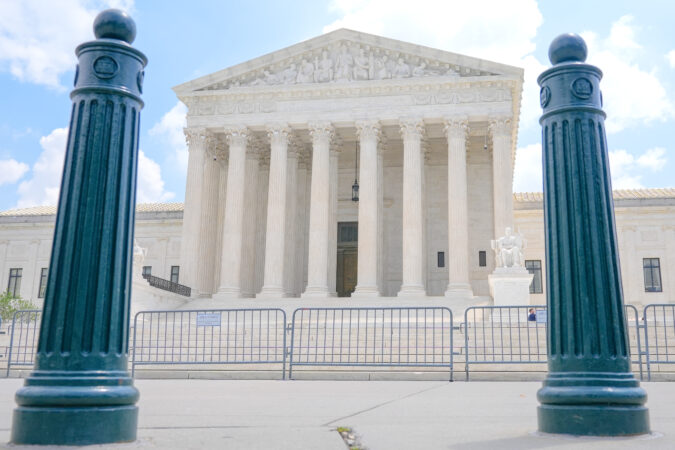
    The Supreme Court on Tuesday upheld bans in Idaho and West Virginia on transgender athletes playing on girls’ and women’s sports teams, the latest in a string of legal setbacks for the LGBTQ+ community before the high court.

    In a decision led by the court’s six conservatives — but joined in parts by its three liberals — the justices found that states can separate teams based on “biological sex” without offending the Constitution’s guarantee of equal protection and Title IX, a landmark 1972 antidiscrimination law involving education.

    “Separate sports teams for biological males and biological females are reasonable: Given the inherent physical differences between the sexes, allowing only biological females to play on women’s and girls’ teams can reduce the risk of physical injury and ensure fair competition,” Justice Brett M. Kavanaugh, who coached his daughter’s youth basketball team, wrote for the majority.

    The court’s three liberals, led by Justice Sonia Sotomayor, agreed that West Virginia’s ban did not violate Title IX. But they disagreed with the majority on several fronts, especially the conclusion that the West Virginia law withstands scrutiny under the Constitution’s guarantee of equal protection for all.

    Sotomayor wrote that a lower court should have the chance to sort out a question central to the case of the teenage plaintiff from West Virginia, Becky Pepper-Jackson: whether trans girls who have not undergone male puberty have physical advantages in sports.

    “Because of the Court’s decision today, West Virginia, and any other state actor, can deny B.P.J. and others like her these experiences simply because it thinks they have an inherent athletic advantage, even if the facts show that they do not,” Sotomayor wrote.

    The court did not address what is arguably the flip side of its ruling — whether schools and states can adopt policies allowing transgender athletes to compete on girls’ and women’s teams, as some liberal states and communities do.

    “That question is currently the subject of litigation in some lower courts,” Kavanaugh wrote in a footnote. “Nothing in this opinion is intended to decide that question.”

    The ruling is among several in recent terms that are consequential for the LGBTQ+ movement. The Supreme Court in March ruled a Colorado law banning “conversion therapy” for gay and transgender youths probably violated the free-speech rights of a religious counselor who wants to counsel such young people according to biblical teachings.

    Earlier that month, the court sided with Christian parents in blocking, for now, California policies that discourage schools from informing parents of a student’s sexual orientation or gender identity without the student’s consent. Last year, the court upheld bans on gender transition treatment for minors.

    Questions over whether transgender girls and women should play on girls’ and women’s sports teams has been a particular flash point in a broader conversation about transgender rights. Dozens of states have bans amid intense public debate about fairness at all levels of competition.

    The debate over the allowance of transgender women in collegiate athletics gained national attention in 2022 after Penn swimmer Lia Thomas won the national title in the women’s 500-yard freestyle. Thomas, who is a transgender woman, competed for the Quakers men’s team during the 2018-19 season before medically transitioning.

    In July 2025, Penn struck a deal with the Trump administration regarding Thomas’ participation. According to the deal, Penn agreed to ban transgender athletes, vacate Thomas’ records, release a statement in support of Title IX “as interpreted by the Department of Education,” and send personalized letters of apology to Thomas’ former women’s teammates. The deal came after the White House had paused $175 million in federal funding to Penn because of Thomas’ participation on the Quakers’ women’s team in 2021-22. The federal funding was restored following the agreement.

    The issue came to the high court in a pair of cases, brought separately by Pepper-Jackson, a teen from West Virginia, and Lindsay Hecox, a Boise State University student in Idaho. Both argued that the bans in their states discriminated on basis of sex and violated the Constitution’s equal protection clause. In January, the justices appeared sympathetic to arguments for keeping the bans in place as the cases were argued back-to-back.

    LGBTQ+ activists said the decision would be devastating for some young people.

    “This is a heartbreaking ruling for our clients and transgender girls like them who’ve asked for nothing more than the same opportunities afforded to their peers,” said Joshua Block, senior counsel for the American Civil Liberties Union’s LGBTQ & HIV Rights Project, who argued the case for Pepper-Jackson.

    Sasha Buchert, director of nonbinary and transgender rights at Lambda Legal, said the decision was upsetting but also narrow.

    The ruling is “a serious loss — we’re not minimizing that,” she said. But noting that the court did not impose a national ban on transgender athletes in female sports, Buchert added, “This ruling says, sure, a state may discriminate, not that they must discriminate.”

    Twenty-seven states have passed laws banning transgender student-athletes from competing on women’s or girls’ sports teams. Supporters of the bans say they are necessary to ensure fairness and safety because of inherent physical differences between males and females. Opponents say the laws discriminate against trans people and should be struck down.

    President Donald Trump early last year signed an executive order aimed at keeping transgender women out of women’s sports. The administration has argued that there are only two sexes — male and female — and that they “are not changeable.”

    Soon after the executive order on sports, the NCAA and the U.S. Olympic and Paralympic Committee updated their policies to bar trans women from playing on women’s sports teams. Since then, the administration has aggressively investigated schools that allow trans girls to participate in girls’ and women’s sports.

    Education Secretary Linda McMahon welcomed the court’s decision Tuesday.

    “For years, ideologues distorted Title IX to advance a radical transgender agenda, subjecting women to immeasurable harm,” she said in a statement.

    Nicole Neily, founder and president of Defending Education, a conservative advocacy group, called the decision an “exercise in judicial humility” and noted that it may be disappointing to conservatives in liberal states that allow transgender athletes to participate.

    “Although it’s certainly not as sweeping as parent activists would have liked, it means that the action shifts to the states and is now a persuasion game,” she said in a statement.

    Views among Americans on transgender issues are nuanced. A Pew Research Center survey published in February 2025 showed 56% of adults support policies aimed at protecting transgender people from discrimination in jobs, housing, and public spaces.

    But over the past few years, Americans also have become more supportive of restrictions for transgender people, according to the Pew survey. Fifty-six percent of Americans supported bans on providing gender transition care for minors, up 10 percentage points from 2022, the study found.

    But athletics have always stood out.

    The Pew survey found that 66% favored laws that require trans athletes to compete on teams that match their sex assigned at birth, up eight points from 2022. Even before the general shift in public opinion, a majority of Americans opposed allowing trans women to compete against other women at all levels of sports, according to a Washington Post-University of Maryland poll.

    The science concerning biological advantages of transgender girls and women in sports is evolving and remains hotly debated. The case featured competing evidence about whether transgender girls are inherently better at sports. The transgender plaintiffs presented evidence that transitioning before puberty prevents them from building enough body mass to have an advantage in high school and college sports.

    Lawyers for the states countered with studies that showed that nontransgender boys and men perform better at all ages. The study found that boys between the ages of 7 and 12 ran about 4% faster and jumped about 7% farther than girls in the same age group.

    “The legislatures and the schools are better equipped — and under the Constitution, are the more appropriate entities — to assess the competing medical and scientific considerations and draw appropriate lines,” Kavanaugh wrote in the majority opinion. “Of course, no line that the States draw will satisfy everyone.”

    While there’s no comprehensive tally of trans athletes nationally, an estimated 300,100 transgender youths between the ages of 13 and 17 live in the United States, according to the Williams Institute at the UCLA School of Law. The Human Rights Campaign, an LGBTQ+ advocacy group, has estimated that 14% of trans boys and 12% of trans girls play on a sports team.

    Inquirer Staff Writer Conor Smith contributed to this article.

  • Good to the last DROP | Editorial Cartoon

    John Cole spent 18 years as editorial cartoonist for The (Scranton) Times-Tribune, and now draws for various statesnewsroom.com sites.

  • Google Workspace can save small-biz owners time and money. Here’s how. | Expert opinion

    Google Workspace can save small-biz owners time and money. Here’s how. | Expert opinion

    When it comes to office software, people generally think first of Microsoft. But the reality is that Google Workspace is used by over 11 million paying organizations and boasts more than 3 billion monthly active users globally.

    Many of my small-business clients use Google Workspace to send emails, create documents and spreadsheets, host meetings, and store files. And yet most are only scratching the surface. It’s often frustrating to witness so many businesses not taking advantage of all the capabilities of Google Workspace, even though they’re paying for it. That’s a waste of money.

    If used the right way, Google Workspace can scale right along with the growth of your business, provide excellent collaboration features, and can be cost-effectively managed and secured without requiring expensive IT firms.

    For starters, centralize everything.

    If you’re going to use an office platform like Google Workspace, it’s best to lean into it fully. Mollie Plotkin, who runs a successful talent and speaker agency in Philadelphia, says Google Workspace is the “shared backbone” of her company. She uses Google Meet, Calendar, Chat, and Drive to “create an ecosystem” so that everything is in one place.

    “Work is much more manageable when everyone had equal access to the same systems regardless of where they were working,” she said. “Instead of relying on multiple versions of files being e-mailed around, our teams work from one live document at a time, which dramatically reduces confusion and duplication.”

    Plotkin also says that her internal team saves time on searching and improves efficiencies by consolidating all files and data in one place.

    “Important information lives in shared spaces instead of individual inboxes, which makes collaboration faster and prevents bottlenecks,” she said. “We use shared templates, collaborative planning documents, and centralized project tracking so our team can move quickly without reinventing processes each time.”

    Cheryl Friedenberg, a founder of High Key Impact, a digital marketing firm in Blue Bell, says that sharing calendars has significantly reduced “all the back and forth” for scheduling client calls and managing deadlines.

    “Google Drive and Docs make sharing files simple, without endless email chains,” she said. “There’s no confusion about versions or missing attachments.”

    Friedenberg always tells her clients to go the extra yard and make sure to also use Gmail within their own website domain and not as just a Gmail address.

    “Using a generic @gmail.com address on proposals, invoices, or your website can make your business look less professional,” she said.

    Automate everywhere

    Once your team is using Google Workspace as a primary office management tool, it’s important to start automating tasks wherever possible.

    Milan Baria, who runs Blueclone Networks, an IT services firm in Princeton, says that with Google Workspace you don’t need a developer to automate repetitive tasks. “We use simple scripts to bridge the gap between Google Sheets and Gmail to automate client follow-ups.”

    Andy Williamson, one of the founders of Wilmington-based training firm ONLC, says that Google Workspace Studio, with Apps Script, lets a non-technical user describe a workflow in plain English and have it built.

    “The new agents can read the email that came in, decide what kind of request it is, draft the reply, pull the right doc, and only come back to you when something actually needs a person,” he said.

    Williamson says that it’s not difficult to create automation so that a company’s data power dashboards or other applications.

    “Apps Script used to be just for programmers, but this has been changing recently,” he said. “Everyone in the business is becoming an agent builder, not just the developers.”

    Leverage AI

    Even if you’re not ready to automate with agents, Google Workspace comes with many AI features right out of the box.

    Friedenberg says that by leveraging AI, a user can turn a simple prompt into a fully designed presentation in minutes.

    “You’re starting with something polished instead of a blank page,” she said.

    In addition, and instead of hiring a videographer, Friedenberg encourages her clients to use Google Workspace to make short professional-looking video.

    “You can make a spokesperson-style video without being on camera,” she said. “The voice-overs sound natural enough that most viewers wouldn’t know they were AI-generated. Many small-business owners don’t realize it’s already included in a tool they’re probably already paying for.”

    Joe Henderson, a Philadelphia-based expert with Google premier partner Promevo, says that another underused application is Google’s Notebook LM, a premium feature with many paid Google Workspace plans.

    “Notebook LM is an AI research assistant that analyzes your documents, then generates summaries, answers questions, creates study guides, timelines, podcasts, and other content based solely on your uploaded sources,” he said. “Our clients use it to input raw documents, industry articles, vendor videos, and automatically turn that chaotic information into easy-to-understand explainer videos, short audio podcasts, quizzes, and custom study guides. It’s like a proactive operational brain sitting within Google Workspace.”

    Finally, lean into Workspace’s IT management tools

    Baria says that most owners don’t realize that they easily can restrict Workspace access based on the user’s location or device security status like any experienced IT professional.

    “High-level security isn’t just for enterprises,” he said. “Small businesses can set up simple rules that prevent employees from accidentally emailing out sensitive information, and use Workspace’s license and user management tools to eliminate unnecessary applications and archive user accounts to save hundreds, even thousands, of dollars a year.”

    Plotkin agrees.

    “You don’t need a massive IT department or expensive infrastructure,” she said. “Workspace allowed us to add team members, improve collaboration, and manage more clients without drastically changing our operational structure.”

  • Five wacky things I saw on the Nic Cage bar crawl

    Five wacky things I saw on the Nic Cage bar crawl

    Like many, I’m big fan of Nicolas Cage’s work. How big? On my bachelorette party to New Orleans a few years ago I requested we tour St. Louis Cemetery No. 1 so I could get a pic of me and my girls with Cage’s nine-foot pyramid tomb.

    Not only can the man seriously act, he can also seriously overact. As a writer who loves puns ( especially bad ones), I appreciate someone who has fun with their art form to the point it causes eye rolls.

    And so, when I learned about Uncaged in Jenkintown: A Nic Cage cocktail crawl that happened on Sunday, I wanted to check it out. In some ways, it turned out to be like a lot of Cage movies — not a blockbuster, but still quirky and fun.

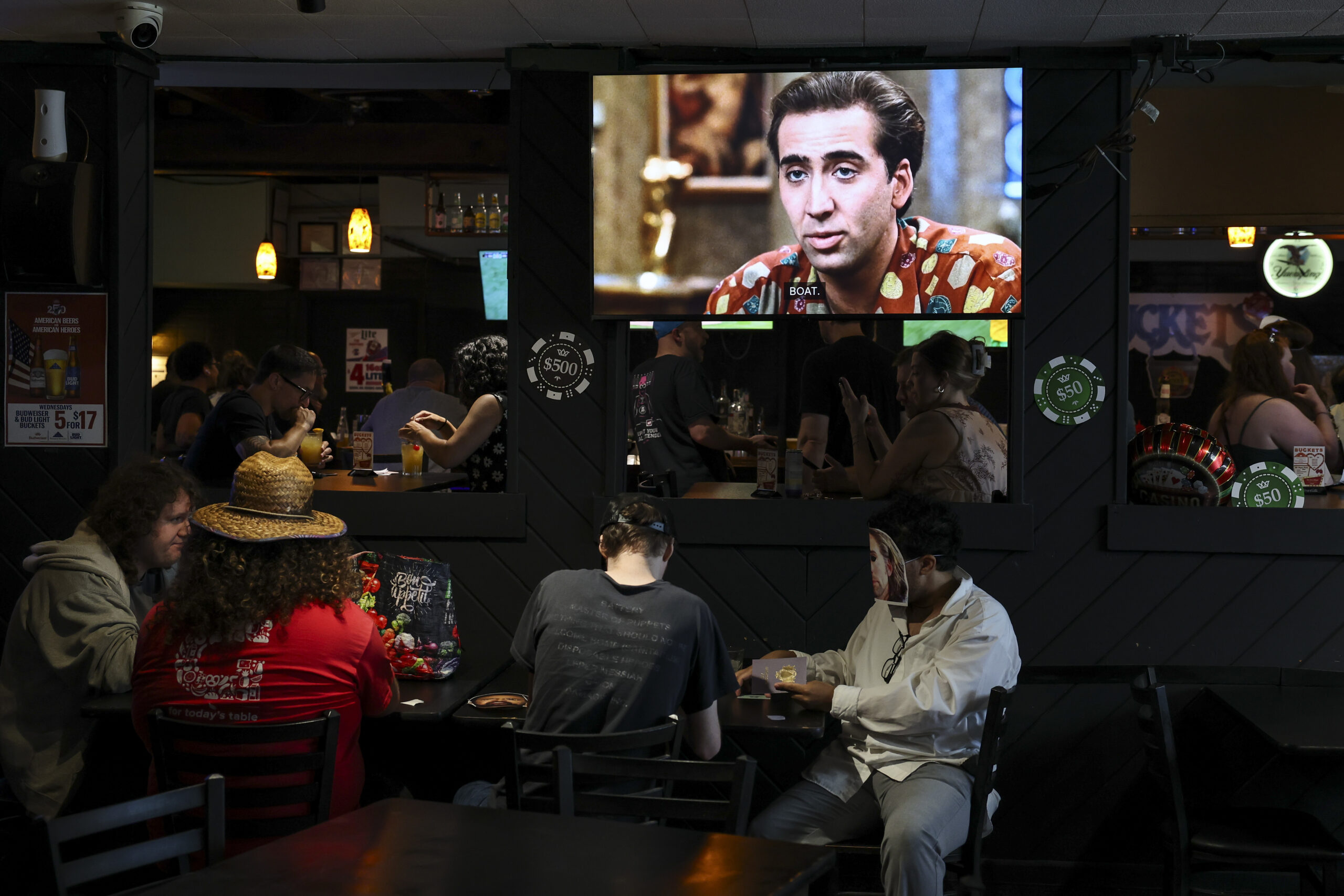
    “Honeymoon in Vegas” plays at Buckets Bar during the Nic Cage cocktail crawl on Sunday in Jenkintown.

    The crawl was spread across four Jenkintown bars — the Keep Easy, the Drake Tavern, Buckets Bar, and King’s Corner. Each one featured Cage-themed cocktails and hosted a “Cage match,” where participants went head-to-head in challenges based on Cage films.

    Organizer Mel Hager, an owner of the Keep Easy, said she sold out of the 50 Uncaged kits she’d prepared for $15 a pop. While the crawl was free to attend, those who bought a kit — including yours truly — received a passport book, which got you a free Cage match at each establishment (otherwise they were $2 to play); a piece of Cage cash, which was good for one shot at any of the bars (it’s a tiny dollar bill with Nic Cage’s face on it, I’m never spending that); and one of a variety of Cage masks (I felt like I won the lottery when I got the Con-Air Cage).

    While I didn’t drink, I hopped around to the bars, tried my hand at the Cage matches, and talked with fellow Cage fans about what brought them out to the event. Here are five of the wackiest things I saw at the Nic Cage bar crawl.

    1. H.I. fashion

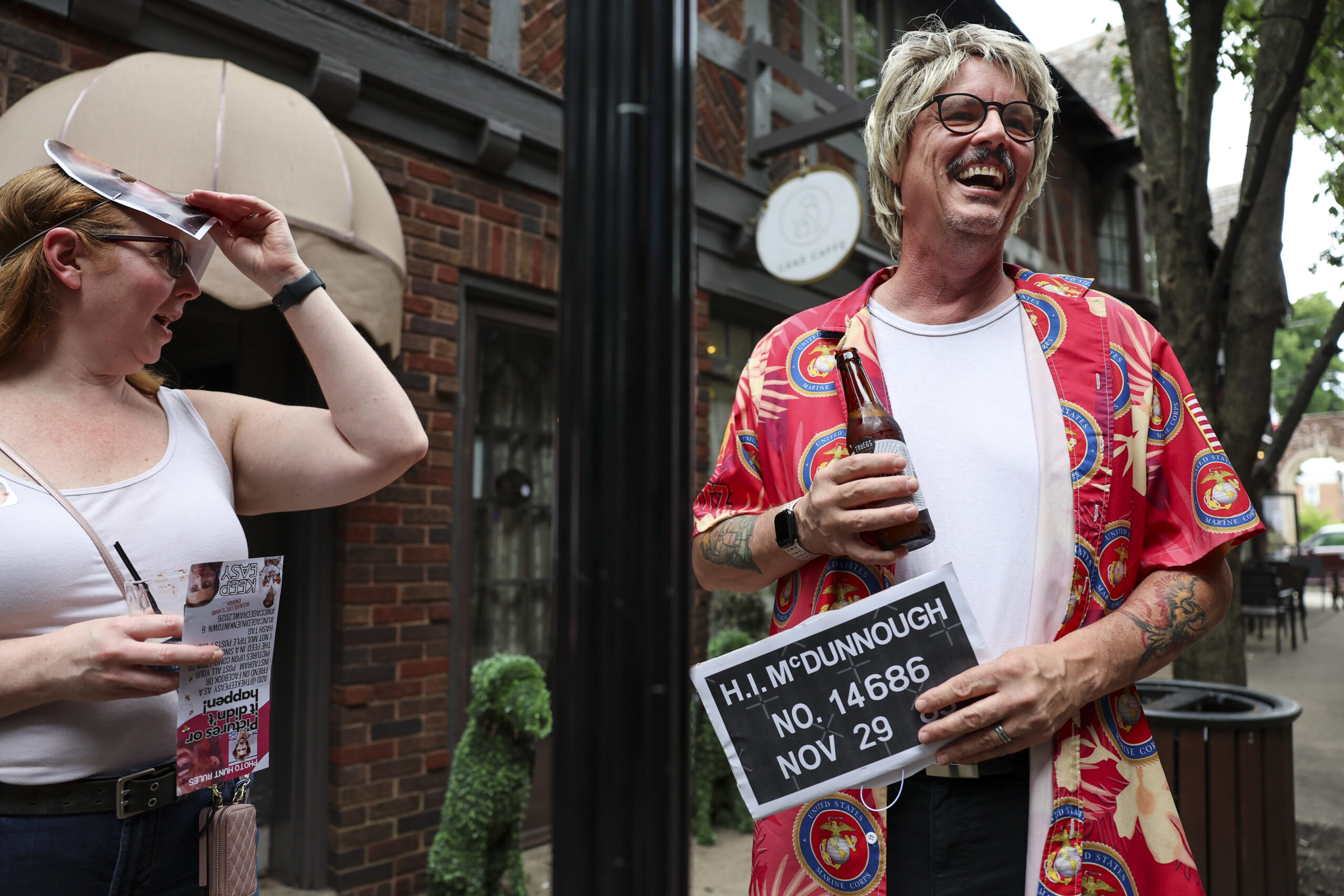
    Vicky and Mike Hutz, of Huntington Valley, at the Keep Easy during the Nic Cage cocktail crawl on Sunday in Jenkintown. Mike Hutz is dressed as Cage’s character from “Raising Arizona,” H.I. McDunnough.

    When H.I. McDunnough kidnaps one of the Arizona quintuplet babies in the 1987 Cohen Brothers classic, Raising Arizona, he proclaims to his wife: “I think I got the best one.”

    Of the few Cage character costumes I saw Sunday — which included Ronny from Moonstruck, Cameron Poe from Con Air, and someone portraying Cage’s first role as an unnamed burger shop worker in Fast Times at Ridgemont High — Mike Hutz’s H.I. McDunnough costume was undoubtedly the best one. Hutz, of Huntingdon Valley, had the open Hawaiian shirt, a wig, and McDunnough’s mugshot board.

    “What else are you going to do on a Sunday afternoon when you have a Nicolas Cage crawl option?” he said. “There’s nothing he can’t do and he does it with maximum cheesiness, which is just perfect for people who love cheesy.”

    2. The faces

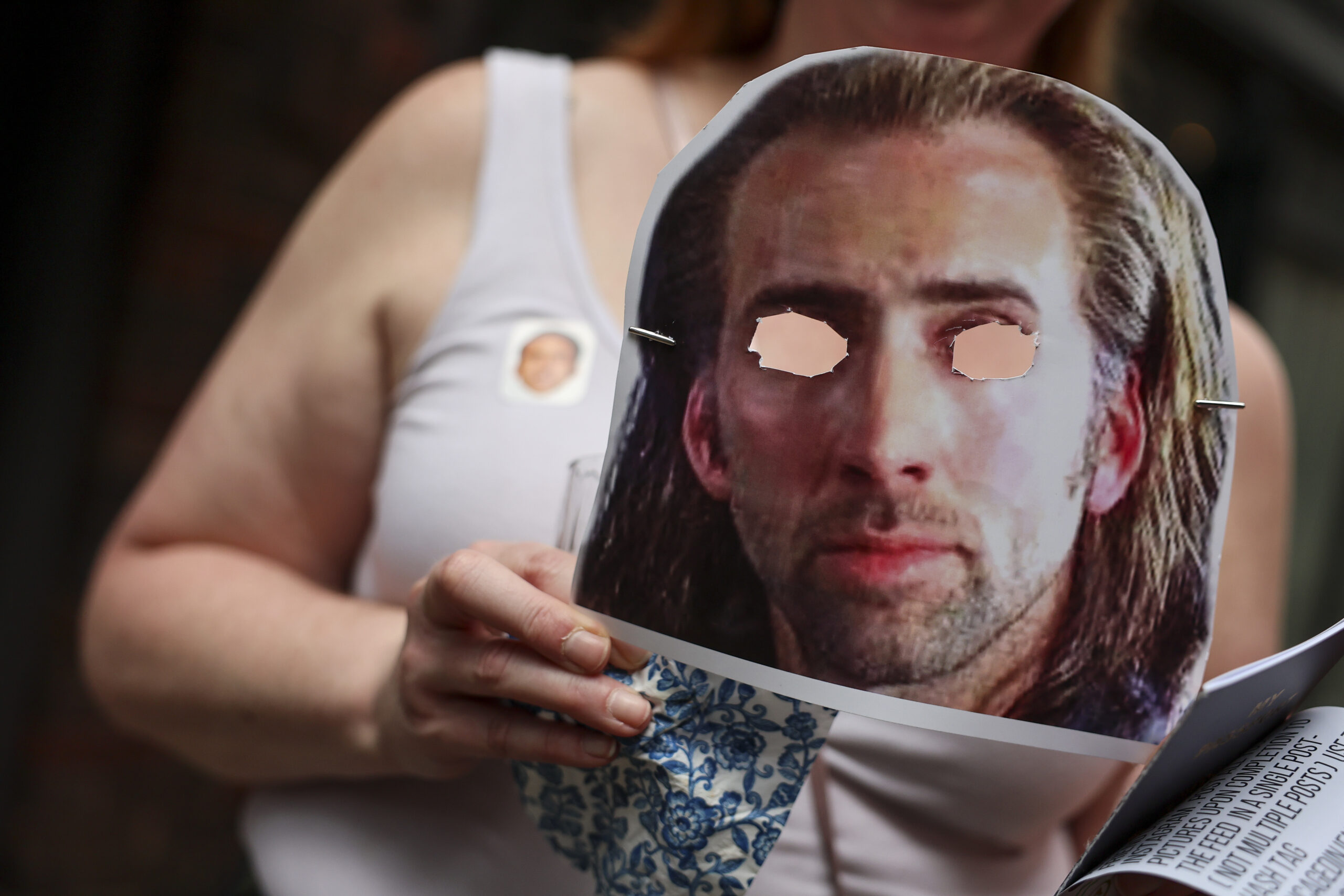
    Seeing people at bars and walking the streets of Jenkintown wearing Cage face masks was both highly amusing and mildly unsettling, mainly because the eye holes were cut out wonkily, giving them a ragged, creepy edge.

    Masks included Face/Off Cage, Con Air Cage, red carpet Cage, and Dracula Cage (from the movie Renfield).

    Vicky Hutz, of Huntington Valley, holds a “Con-Air” Nic Cage mask at the Keep Easy during the Nic Cage cocktail crawl on Sunday.

    Julia Sousa and Josh Douglas traveled to the crawl from Roxborough because they love Cage and Jenkintown. Douglas walked from bar to bar with his Cage face mask on, which seemed to startle some passing motorists.

    “I’m pretty sure they thought I was Michael Myers,” he said.

    3. The Cage matches

    The games based on Cage films, while homespun, were clever and fun. At Buckets, the game was inspired by the scene in Honeymoon in Vegas where Cage skydives with a bunch of Elvis impersonators. Contestants had to throw toy parachute soldiers that were painted to look like Elvis onto particular spots of a mock-up of the Vegas strip for points.

    Julia Sousa and Josh Douglas, both of Roxborough, compete in the “Flying Elvis Cage Match,” at Buckets Bar during the Nic Cage cocktail crawl on Sunday in Jenkintown.

    At King’s Corner, where the challenge was based on the movie National Treasure, participants had to solve little metal mind-bender puzzles.

    For the Spider-Noir Cage match at the Drake, you had to keep a balloon bouncing in the air while putting on a cape, mask, and fedora.

    I failed spectacularly at all three of those challenges — and I was completely sober! The only one I did succeed at was called Ghost Glider. Based on the film Ghost Rider, the challenge was to to roll a penny down an inclined surface made to look like a road and into the tongs of a fork at the other end.

    The “Ghost Glider” Cage match at the Keep Easy during the Nic Cage cocktail crawl on Sunday in Jenkintown.

    4. Stickers and sage

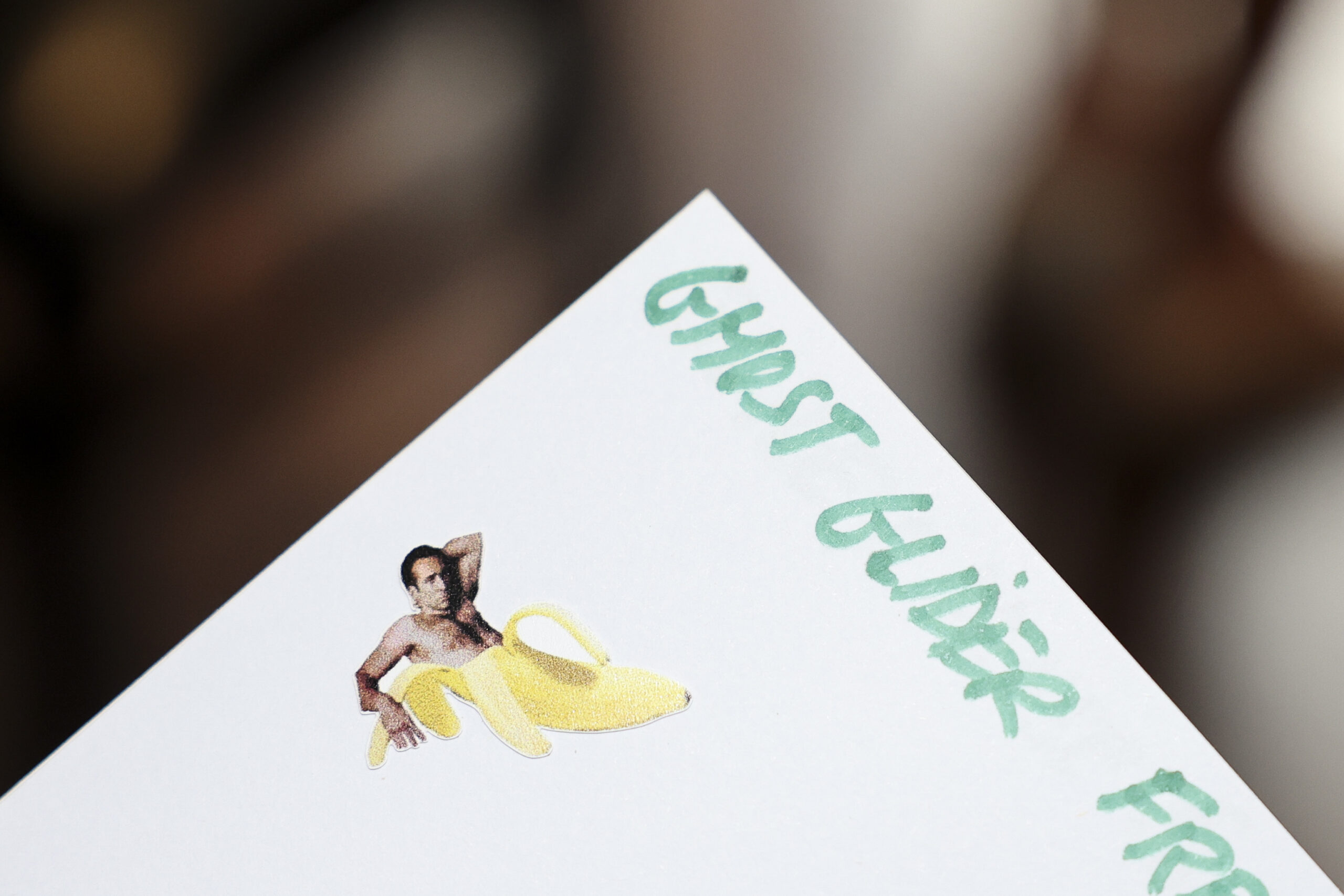
    For winning the Ghost Glider challenge, I received a bundle of sage and a sticker for my passport book of a shirtless, reclining Cage coming out of a banana.

    Let’s address the sage first: Nobody could tell me why this was my prize for winning the challenge, which somehow makes it even better. I have two theories — it could be because sage rhymes with Cage, or maybe it’s because you light sage and in Ghost Rider, Cage lights on fire.

    Whatever the reason, I’m gonna smudge some stuff up this weekend.

    An a-peeling sticker columnist Stephanie Farr received for winning a Cage match challenge at the Keep Easy during the Nic Cage bar crawl in Jenkintown Sunday.

    Now onto this banana sticker — I don’t know why it exists, but I am so happy it does. Each bar gave a different sticker if you won a challenge, but this banana-Cage split one was, by far, the most a-peeling.

    Later at the Drake, I met Erica Adams of Bensalem and “her only friend of whimsy,” Amanda Knop, who’d driven from Baltimore to attend the Cage crawl with her. Adams had her own stickers of Cage’s head she was handing out like friendship bracelets at a Taylor Swift concert.

    “I just love his movies and doing silly, fun things,” Adams said. “Nicolas Cage himself is very unserious. He’s lived a million different lives in a short span already.”

    5. Picolas Cage

    Justin Walsh poses for a photo with “Picolas Cage” as Jessica Lopez takes the photo at the Keep Easy during the Nic Cage cocktail crawl on Sunday in Jenkintown.

    A giant cut-out of Cage as a pickle, aka Picolas Cage, was stationed outside of the Keep Easy during the crawl. As someone who likes Cage and cucumbers — but hates pickles — it was a jarring experience. But I saw others relishing the photo op so I didn’t make a big dill out of it.