Blog

  • Eagles-Cowboys: Playoff scenarios, Cris Collinsworth’s surprising Philly connection, and more

    Eagles-Cowboys: Playoff scenarios, Cris Collinsworth’s surprising Philly connection, and more

    The Eagles (8-2) can’t quite clinch the NFC East yet, but will get a lot closer with a win against the Dallas Cowboys (4-5-1) Sunday afternoon in Arlington, Texas.

    Philly’s magic number remains four to clinch the NFC East. That will drop to two if the Birds defeat the Cowboys Sunday, meaning the Eagles have a chance to lock up the division on Black Friday against the Chicago Bears.

    That should make HBO’s in-season Hard Knocks about the NFC East, which debuts on Dec. 2, really compelling.

    NFC East standings

    !function(){“use strict”;window.addEventListener(“message”,function(a){if(void 0!==a.data[“datawrapper-height”]){var e=document.querySelectorAll(“iframe”);for(var t in a.data[“datawrapper-height”])for(var r,i=0;r=e[i];i++)if(r.contentWindow===a.source){var d=a.data[“datawrapper-height”][t]+”px”;r.style.height=d}}})}();

    No team has won the NFC East in back-to-back years since 2004, when Donovan McNabb and the Eagles claimed their fourth-straight division title on the way to Super Bowl XXXIX.

    On the other side of the coin are the New York Giants, who could become the first team officially eliminated from the playoffs. A Giants loss paired with a win by either the Cowboys, Minnesota Vikings, or Seattle Seahawks would officially snuff out the Giants’ playoff hopes.

    If that were to happen, it would be the earliest playoff exit for the Giants since 1976 and the soonest a team has been eliminated since the New York Jets in 2020, according to NFL playoffs analyst Joe Ferreira. The Giants would also become the 11th team since 1990 to be eliminated from playoff contention before their bye week.

    While the Cowboys can’t be eliminated yet, they need a win to keep their playoff hopes alive. Entering Week 12, they are three back in the hunt for the NFC’s final wild card spot, and their odds of sneaking into the playoffs drop to just 4% with a loss to the Birds on Sunday, according to the New York Times playoff simulator.

    Eagles (8-2) at Cowboys (4-5-1)

    • Where: AT&T Stadium, Arlington, Texas
    • When: 4:25 p.m., Sunday
    • TV: Fox (Kevin Burkhardt, Tom Brady, Erin Andrews, Tom Rinaldi)
    • Radio: 94.1 WIP (Merrill Reese, Mike Quick, Devan Kaney)
    • Streaming: Fox One

    Cris Collinsworth’s milestone has a surprising Philly connection

    NBCs Cris Collinsworth will call his 500th NFL game Sunday.

    Tonight’s Sunday Night Football matchup between the Tampa Bay Buccaneers and Los Angeles Rams is a milestone for veteran color analyst Cris Collinsworth, who will be calling his 500th NFL game.

    Collinsworth, who spent eight seasons as a wide receiver for the Cincinnati Bengals, debuted way back in 1990 on NBC alongside the late Jim Donovan. During his 36-year broadcasting career, Collinsworth has called games alongside many all-time greats, including Troy Aikman, Al Michaels, Frank Gifford, and Philadelphia native Dick Stockton.

    What may surprise Eagles fans is Collinsworth has called 32 games at Lincoln Financial Field, the most of any stadium in his long broadcasting career. And he’s called Eagles-Cowboys 17 times, including this season’s NFL kickoff game alongside Mike Tirico.

    Despite all that, some Eagles fans still hold a grudge against Collinsworth for his call of Super Bowl LII because he thought two touchdown catches — one by running back Corey Clement and one by tight end Zach Ertz — should have been overturned by officials. He later said Ertz’s game-winning touchdown grab late in the fourth quarter was the correct call, telling The Inquirer, “I wish I’d never said that.”

    “I’ve listened to talk radio in Philadelphia,” Collinsworth, a former sports talker himself, told The Inquirer back in January. “It’s OK for them to criticize their team, but don’t come in and criticize my family from outside.”

    While the Eagles have no more Sunday Night Football games on their schedule, and a flex is highly unlikely, Collinsworth and NBC could end up with a Birds game in the playoffs — the Super Bowl, which the network is broadcasting.

    Other games airing in Philly Sunday

    • Steelers at Bears: 1 p.m., CBS (Ian Eagle, J.J. Watt)
    • Giants at Lions: 1 p.m., Fox (Kenny Albert, Jonathan Vilma, Megan Olivi)
    • Buccaneers at Rams: 8:15 p.m., NBC (Mike Tirico, Cris Collinsworth, Melissa Stark)

    NFC standings

    The Eagles remain in first place in the NFC entering Week 12, thanks to their win against the Los Angeles Rams back in Week 3.

    The Birds hold tiebreakers against four of the top teams in the NFC — the Rams, Buccaneers, Packers, and Detroit Lions. They can add a fifth next week if they defeat the Bears on Black Friday.

    While the Eagles could clinch the NFC East as soon as next week, their magic number to land the top playoff seen (and a first round bye) is seven.

    window.addEventListener(“message”,function(a){if(void 0!==a.data[“datawrapper-height”]){var e=document.querySelectorAll(“iframe”);for(var t in a.data[“datawrapper-height”])for(var r,i=0;r=e[i];i++)if(r.contentWindow===a.source){var d=a.data[“datawrapper-height”][t]+”px”;r.style.height=d}}});

    Eagles-Cowboys live updates

    Staff writers Jeff McLane, Olivia Reiner, and Jeff Neiburg will be covering the action live on Inquirer.com.

    Notes and observations about the game can be found at Inquirer.com/Eagles. Don’t forget to subscribe to our free Sports Daily newsletter.

    Eagles news
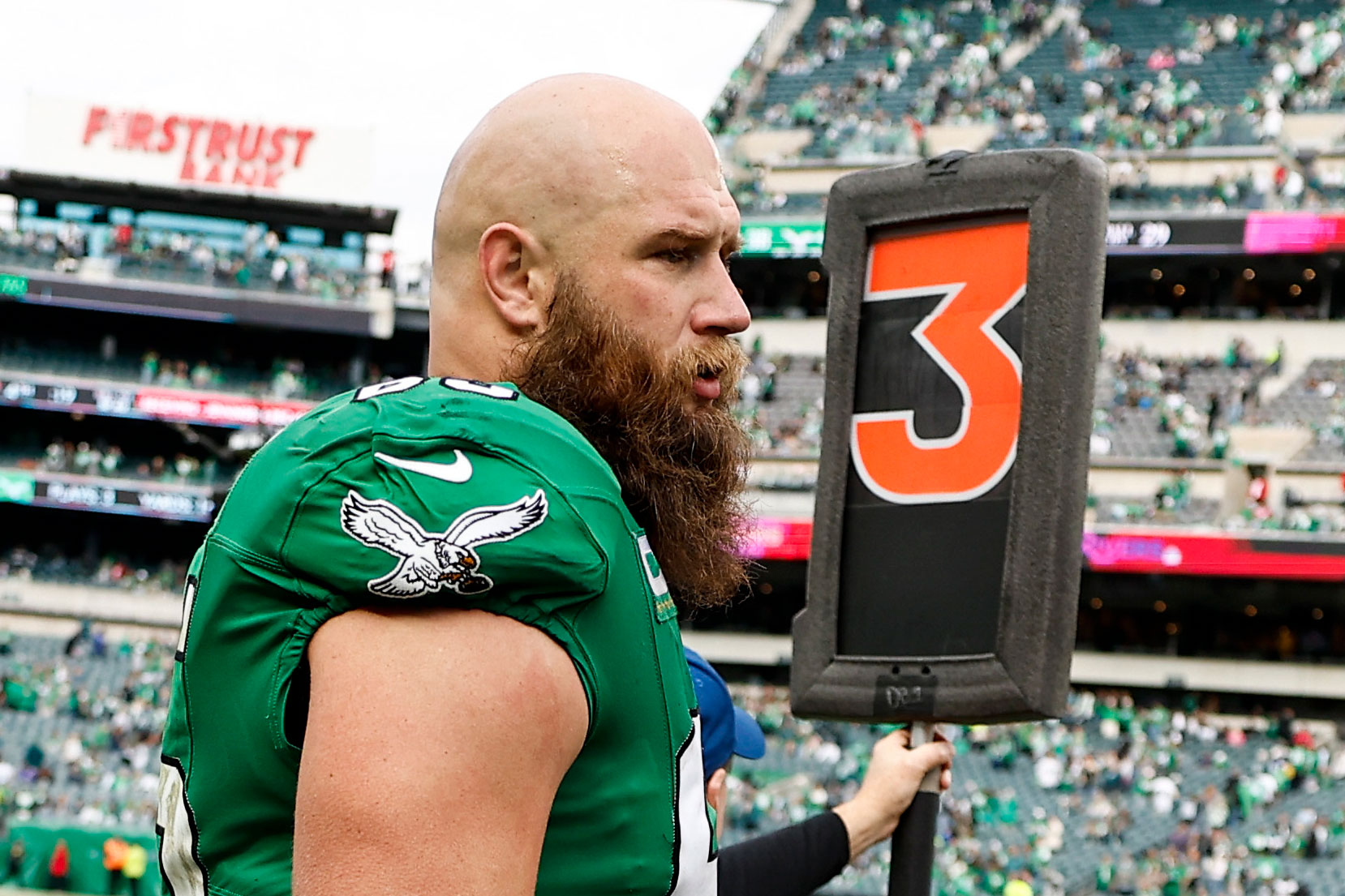
    Eagles offensive tackle Lane Johnson may be back earlier than expected.

    Eagles 2025 schedule

  • As free as a bird? | Editorial Cartoon

    John Cole spent 18 years as editorial cartoonist for The (Scranton) Times-Tribune, and now draws for various statesnewsroom.com sites.

  • 👶 A tiny beanie with big promise | Morning Newsletter

    👶 A tiny beanie with big promise | Morning Newsletter

    Welcome to Sunday. What a lovely day for a run — mostly sunny, with a high near 53. Good luck, marathoners!

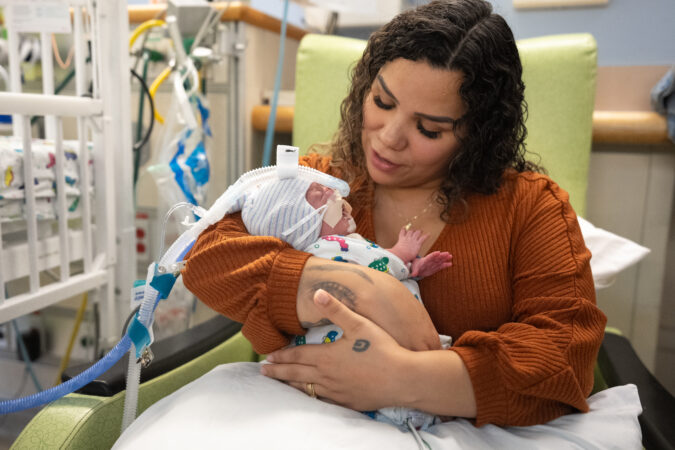
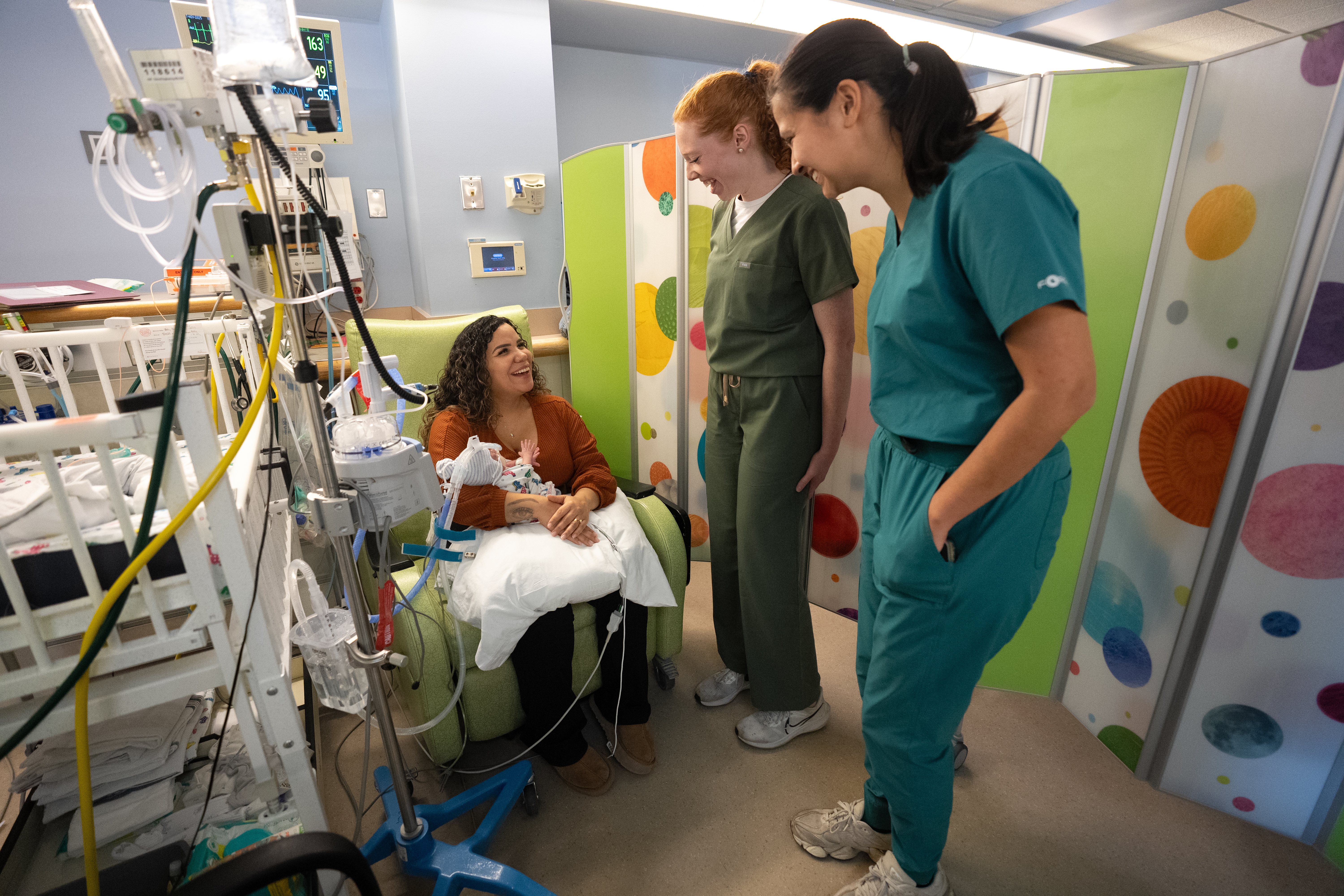
    Penn is testing a high-tech hat that aims to connect NICU babies with their parents and block out harmful noises in the hospital environment.

    Plus, AI data center proposals are worrying Philly-area communities. Three human reporters unpack the buzz.

    — Erin Reynolds (morningnewsletter@inquirer.com)

    If someone forwarded you this email, sign up for free here.

    👂 Hear the love

    The NICU has a noise problem. All those beeping machines and alarms can stress infants. In the short term, they struggle to eat or sleep. In the long term, they’re at a higher risk for language delays.

    But Penn graduates Gabby Daltoso and Sophie Ishiwari are working on a solution.

    They’ve developed a high-tech beanie that mimics the womb. It filters out high-frequency sounds and lets human voices at low frequencies in. The device also delivers audio messages recorded by parents for their babies.

    For Pamela Collins, whose son spent months in HUP’s intensive care nursery, the beanie was a game changer. “I know my baby can listen more than he can see,” she said, “and I’m excited to know he’s listening to our voices.”

    Reporter Kayla Yup shares what’s next for the Sonura Beanie team.

    🔌 Debating the data center

    More than 150 data centers already exist in Pennsylvania and New Jersey, and demand for them is only increasing.

    ✅ Data center proponents say the buildings generate significant tax revenue, create jobs, and attract other businesses to the region.

    ❌ Opponents worry about pollution, noise, water use, and their electric bills.

    What kinds of jobs do data centers actually create? How much water do they use? What’s proposed for the Philly region? Reporters Erin McCarthy, Frank Kummer, and Chris A. Williams answer some FAQs.

    What you should know today

    ❓Pop quiz

    SEPTA’s trolley tunnel has been shut down as crews complete repairs to the overhead catenary power system. The transit agency says the tunnel will remain closed through:

    A) Nov. 30

    B) Dec. 15

    C) Jan. 1

    D) Nov. 25

    Think you know? Check your answer.

    🧩 Unscramble the anagram

    Hint: Albert C. Barnes built a large collection of works by this self-taught French artist

    HEARSE RUINOUS

    Email us if you know the answer. We’ll select a reader at random to shout out here.

    Cheers to Allyn Zygmund-Felt, who correctly guessed Saturday’s answer: King of Prussia. Add some slime (the fun kind) to your holiday shopping experience this year.

    Photo of the day

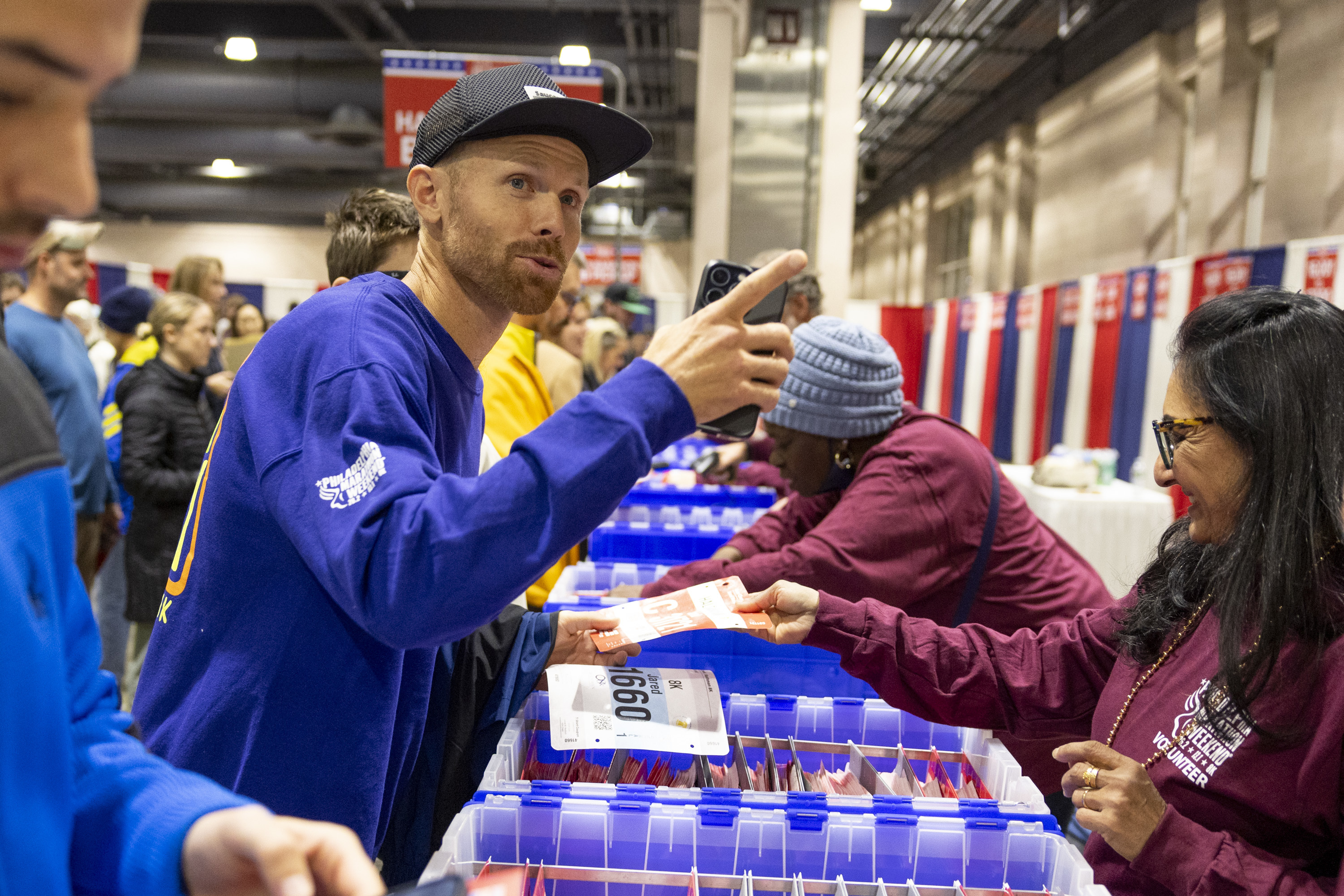
    Jared Ward, 37, of Mapleton, Utah, picks up his bib before the Philadelphia Marathon. This is Ward’s third race in Philly. He is an Olympic runner and has been an ambassador for the races for a long time.

    👋 Thanks for reading! Julie will be back in your inbox tomorrow.

  • ‘2000 Meters to Andriivka’ captures the horror and the hope of Ukraine’s battle against Russia

    ‘2000 Meters to Andriivka’ captures the horror and the hope of Ukraine’s battle against Russia

    How do Ukrainians fight on when the front line is so painful, the Russian bombing of civilians so brutal, and pro-Putin President Donald Trump so eager to stab Kyiv in the back?

    I put that question to Associated Press journalist and filmmaker Mstyslav Chernov, whose 20 Days in Mariupol won the Academy Award for best documentary in 2024. His new masterpiece, 2000 Meters to Andriivka, will premiere on PBS’s Frontline and also begin streaming on Tuesday, Nov. 25.

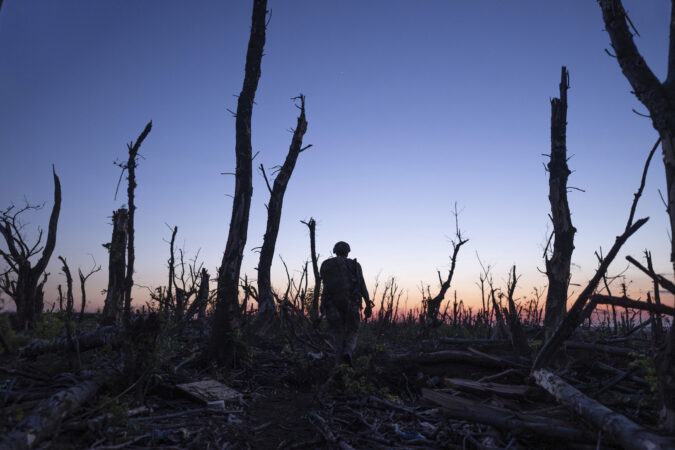
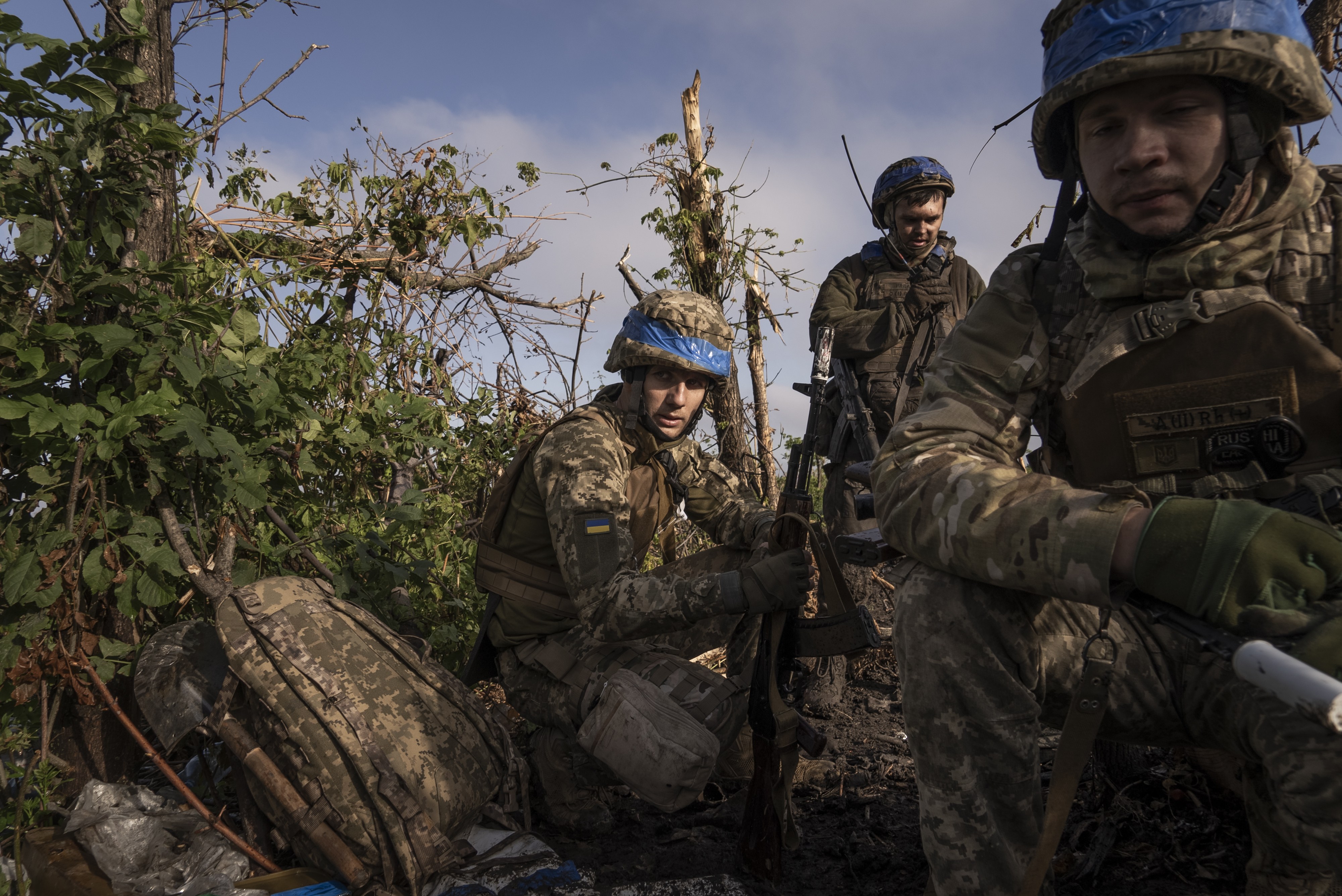
    The film follows a unit of military volunteers in Ukraine’s fabled 3rd Assault Brigade who come from all walks of life, from young to middle-aged. They are trying to advance a little more than a mile along a narrow, mostly destroyed tree line between heavily mined fields,in order to liberate a small village in eastern Ukraine and help cut a Russian supply line to the then-besieged city of Bakhmut.

    This is a raw film, shot from the soldiers’ point of view, not only by Chernov and his AP colleague, videographer Alex Babenko, but by the video cameras many fighters wear on their helmets.

    “I wanted to be as realistic as possible,” Chernov told me. “Showing courage and sacrifice, but also how horrifying and disgusting war is at the core. We try to keep this paradox in the film.”

    What Chernov also achieves, through his voice-over and brief interviews during downtime, is a portrait of why these men won’t stop fighting, no matter the odds, until the Russian aggressor is forced to recognize the sovereignty of the Ukrainian state.

    Mstyslav Chernov speaks at the premiere of “2000 Meters to Andriivka” during the Sundance Film Festival at the Ray Theatre in Park City, Utah, in January.

    When he started this film in 2023, Chernov said, he wanted to make a documentary “about fighting back.” That was a hopeful year, in which Ukrainians were mounting a large counteroffensive against Russia.

    “I searched for hope as much as any Ukrainian,” he recounted. “Raising the flag as a symbol of victory.” He also sought to honor the sacrifice of 3rd Assault Brigade fighters who were liberating the area surrounding his hometown of Kharkiv.

    By the time the film was completed, though, the counteroffensive had failed. Bakhmut had fallen, and Ukrainian forces were weary and undermanned.

    Today, technology has shifted the battlefront into a war of attrition dominated by drones, which can inflict terrible casualties on anything that moves. The Russians are making small advances, and Ukrainian leader Volodymyr Zelensky is fending off a corruption scandal.

    Yet, says Chernov, what you see in 2023 is similar to now.

    The reason Ukrainians keep fighting remains the same, even though many Americans don’t grasp it. “It is a fight for survival, not for a piece of land, but a fight for your life,” he told me. “Stop and you are dead, or fight and you have a chance to survive as a country and with your family.”

    These are the basic truths President Trump and real estate mogul-turned-peace negotiator Steve Witkoff are far too blinkered to grasp.

    President Donald Trump’s special envoy Steve Witkoff (foreground), Russian President Vladimir Putin’s investment envoy Kirill Dmitriev (second left), and Russian Presidential Aide Yuri Ushakov (left) arrive to attend the talks with Putin at the Kremlin in Moscow in April.

    Russia’s war is not about real estate deals or land swaps. Vladimir Putin has insisted publicly for years that Ukraine has no right to exist as a state, and that it must be returned to the Russian empire as a subordinate province.

    Any peace plan that hands territory to Russia and fails to provide ironclad military guarantees to Ukraine will only encourage Putin to restart the war. Yet, Witkoff secretly devised a 28-point draft plan with Putin pal Kirill Dmitriev, without consulting Kyiv or our European allies — a plan that leaves Ukraine virtually defenseless.

    This capitulation plan would hand Russia parts of Ukraine that aren’t occupied, while shrinking and largely disarming Kyiv’s forces — and banning the purchase of new Western weapons. It would also ban Ukraine’s future membership in NATO or any peacekeeping troops from NATO members.

    Of course, Putin has endorsed Trump’s plan, which could have and may indeed have been, written in the Kremlin. This shameful document virtually invites the Russian dictator to rebuild his depleted forces and try to end Ukrainian sovereignty for good.

    We already know what has happened in Ukrainian territory that Russia has occupied: the Ukrainian language is banned in schools and from official use, and Ukrainian books are burned. The Ukrainian Orthodox Church is banned, and its priests arrested.

    Ukrainian children in areas under Russian rule are taught that Kyiv is the enemy. They are sent to military camps in Crimea or Russia, and then drafted to fight against fellow Ukrainians. Many younger children have been kidnapped and adopted by Russian families.

    Kobzar, a Ukrainian serviceman, practices shooting in preparation for the next military operation of the 3rd Assault Brigade. Five months later, he would be killed.

    “If Ukrainians lose,” said Chernov, “not only will Ukraine cease to exist, but it means millions of Ukrainian children will be taken, their Ukrainian identities stolen, and they will be trained to fight for Russia against Europeans. It creates the opportunities for Russia to get more people to fight.”

    “Many people in the U.S. don’t grasp how destructive the Russian narrative is,” the filmmaker added, “how they say the U.S. is the archenemy. Reality can be seen in the Russian media. They laugh at the United States and love the idea of civil war in your country.

    “Russian existence [under Putin] is based on an anti-American narrative. What you see is that they are already at war with the United States and Europe.”

    Indeed, if Ukraine ultimately falls to Russian control — with Trump’s help — the Russian border will move westward, and many NATO countries will be in danger.

    Trump doesn’t care.

    Wooed by visions of U.S.-Russian business deals that have been dangled by Dmitriev, Trump and Witkoff are focused on dollar signs. Like a mafia don, Trump is blackmailing Zelensky to sign this surrender by Thanksgiving, or lose all U.S. support for the war.

    Yet, unlike Trump, Ukrainian soldiers on the front don’t have the luxury of denying the harsh realities they face if Russia isn’t pushed back by force.

    Every soldier I’ve met knows full well that if Russia wins, they and their families have no future. The Kremlin calls brave Ukrainian fighters “Nazis,” and regularly tortures and murders POWs. Under Kremlin rule, any veteran or army member would almost certainly be targeted for prison or death.

    Ukrainian servicemen from the 3rd Assault Brigade at frontline positions near Andriivka, Donetsk region, Ukraine, in 2023.

    So, as Chernov explained, the question of future international aid for Ukraine’s defense “is rarely discussed on the battlefield, because there were so many words of support but so little action. They know they have to fight for survival.”

    After the first meeting of Zelensky and Trump, when the president scolded the Ukrainian leader before the cameras, all illusions were gone, said the filmmaker. “We know the truth of our situation. The only person you can rely on is right next to you or with your unit.”

    The changing nature of the war means the future depends on which country — Ukraine or Russia — can beat the other in the race for technological advantage. “Until Russia feels it can lose they will not want peace, Chernov stated. ”We are bracing for a very long winter.”

    And yet, despite his depiction of the brutality of an unending war in a film that left me in tears, Chernov retains a core of optimism. Drawing strength from the men whose steadfastness he captures with his camera.

    “Seeing those guys, fellow students, policemen, workers being there, making that choice to fight back against all odds. When I watch them …” He paused. “Whenever I lose hope, I go to the front, and I get my hope back.”

  • Tyrese Maxey’s impact extends far beyond basketball. Philly is blessed to have him.

    Tyrese Maxey’s impact extends far beyond basketball. Philly is blessed to have him.

    Philly is blessed to have Tyrese Maxey.

    His value to the city is greater than his stellar play as a 76er. That’s just the basketball version of Maxey. As a person, the 25-year-old continues to build a legacy of giving back to this proud city of roughly 1.57 million people.

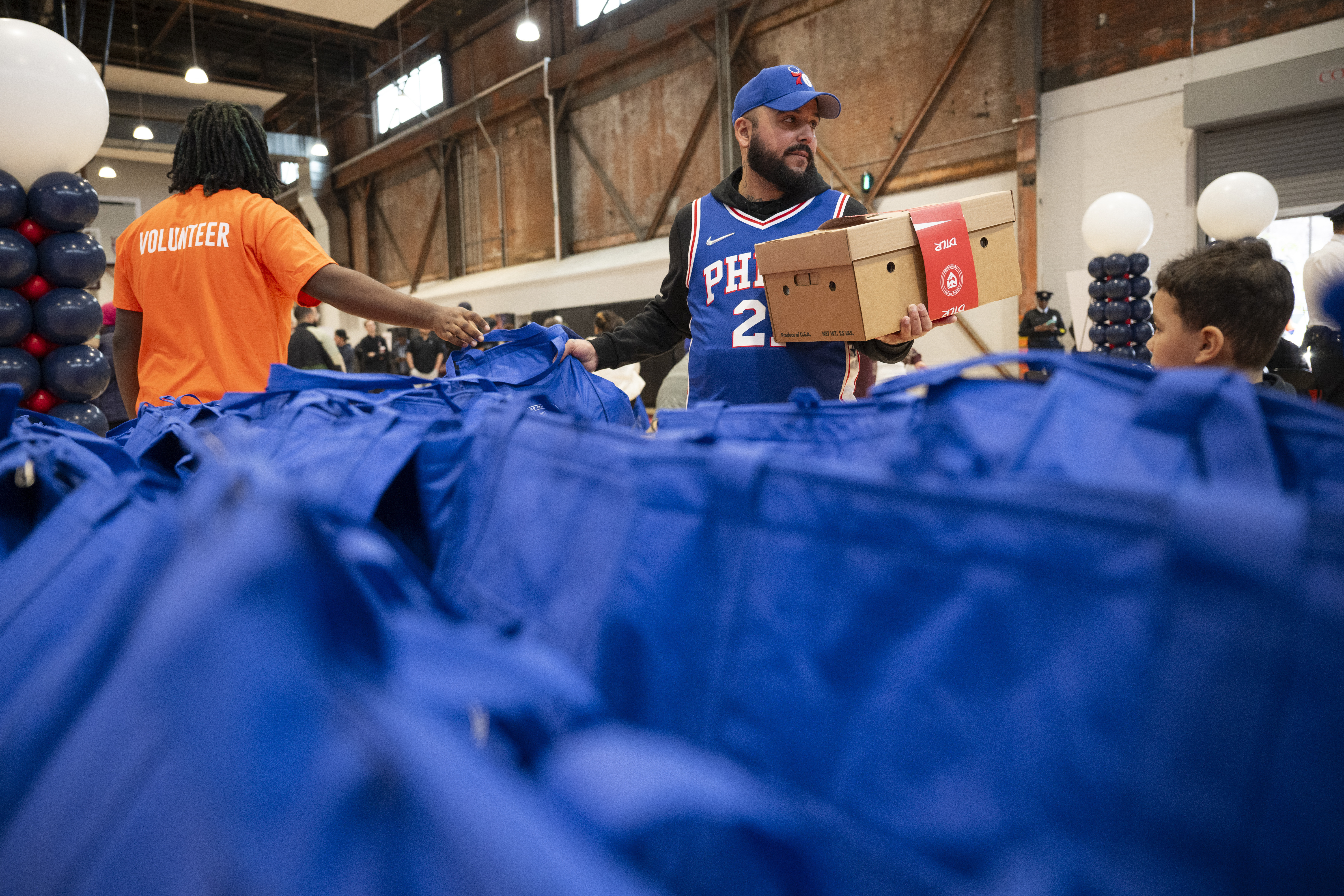
    So it wasn’t surprising that before participating in Saturday morning’s practice in Camden, Maxey and his Tyrese Maxey Foundation hosted their largest turkey giveaway at the Alan Horwitz Sixth Man Center in Nicetown. They provided 3,000 Thanksgiving meals to families in need this holiday season.

    His event has gradually grown over the years.

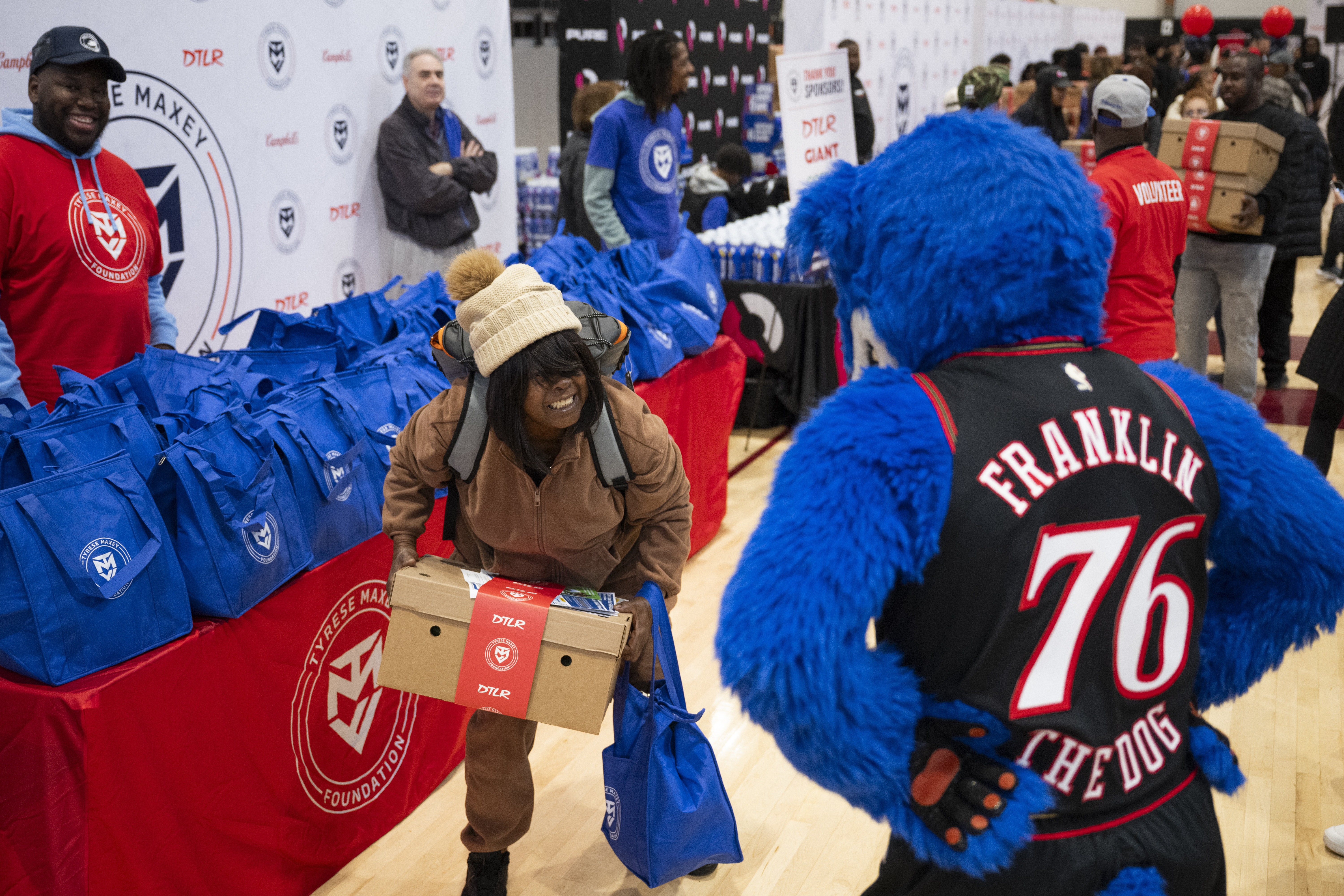
    Kathleen Pointer is greeted by Sixers mascot Franklin at the Tyrese Maxey Foundation turkey giveaway.

    This annual tradition highlights Maxey’s continued commitment to giving back. But it’s bigger than that, as this event brings together local partners, volunteers, and families to ensure more Philadelphians can enjoy a happy holiday and a Thanksgiving meal.

    “The foundation, my uncle [Brandon McKey], my mama, everybody that is a part of it is doing an amazing job,” Maxey said. “I remember when I first came to it, like I said, it was a small idea that I wanted to do, and it’s turned grand. And that’s a really good feeling.”

    All this comes after Maxey hosted some of his other annual events this summer.

    He held his Night of Giving dinner at the Fitler Club, located at 2400 Market St., on July 31.

    The next day, Maxey hosted a celebrity golf tournament at the Union League Golf Club at Torresdale to raise money for the foundation. And on Aug. 1, he held the Tyrese Maxey 1% Skills Camp at Penn Charter. The free basketball camp was for ages 7 to 12.

    “I think we are blessed to have somebody like Tyrese,” said Eric Worley, the vice president of basketball operations for Philly Youth Basketball. “From the time that [Maxey’s family] came here to the city, you just kind of saw how authentic and genuine they were in regards to giving back and him wanting to really kind of engage in the community.”

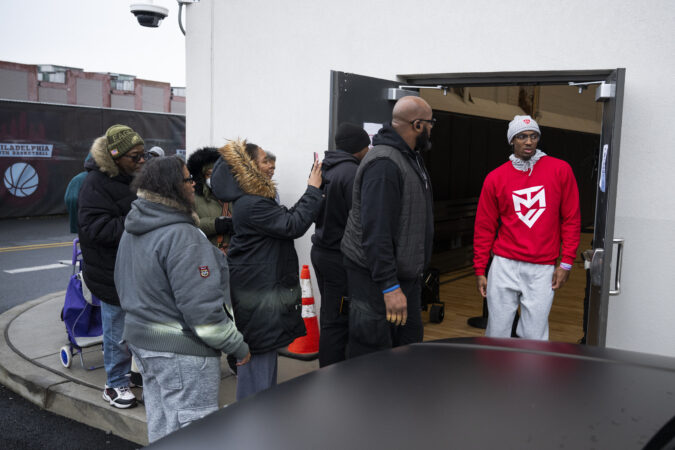
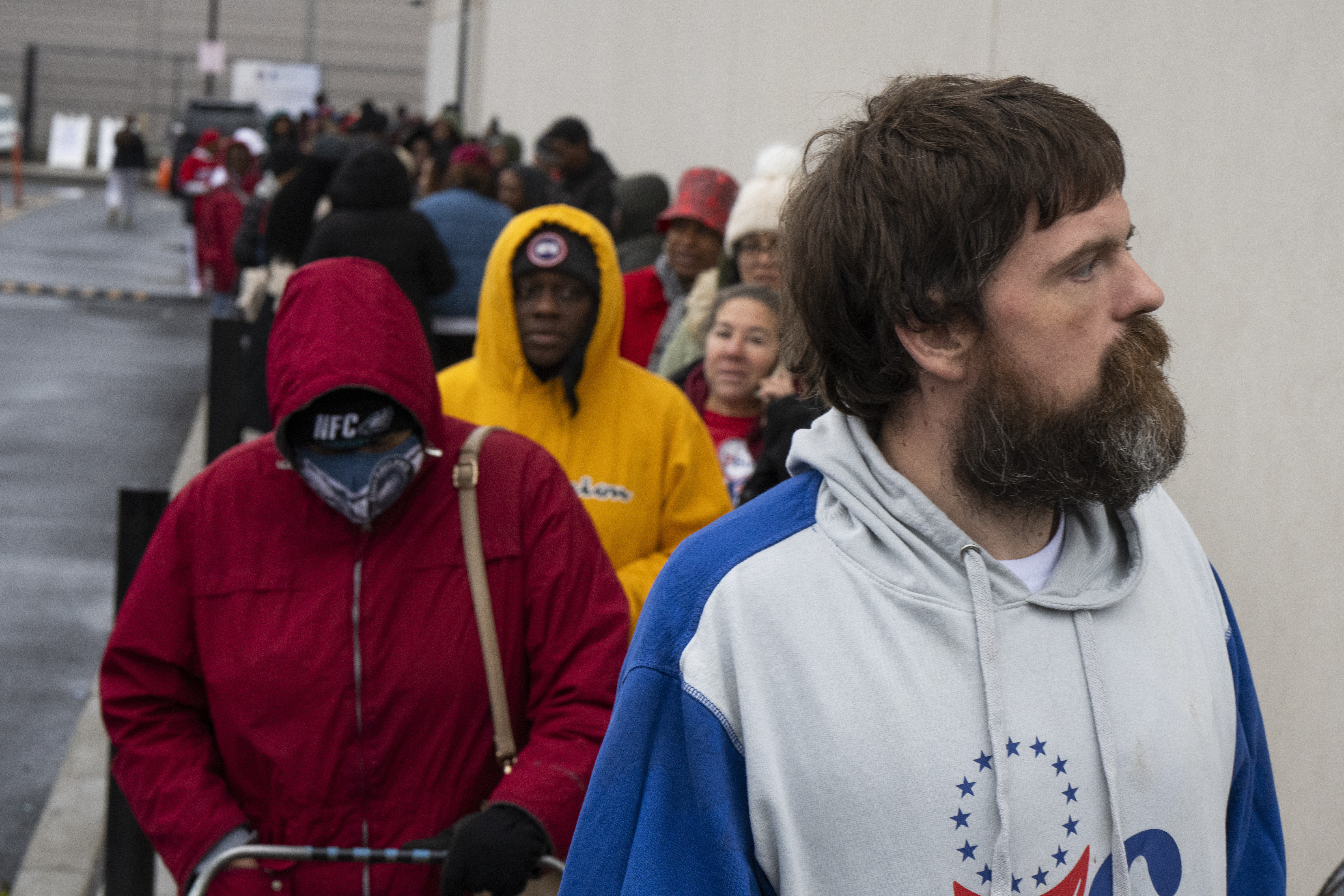
    People wait in line as Sixers star Tyrese Maxey’s foundation provides 3,000 turkeys to families on Saturday.

    Several years ago, Maxey reached out to the founders of Philly Youth Basketball to help identify the location for his first camp. Worley was impressed by how thorough Maxey’s parents and his uncle, Brandon McKay, were when he first met them.

    “And it has continued to carry on six or seven years later,” he said. “They’ve been consistent in regards to what their objective and what their mission has been.”

    On Saturday, Maxey arrived early before the giveaways to greet the volunteers and business partners, and even posed for countless pictures. He also went around each station with the first person in line, personally putting a turkey and other items in her cart.

    And he had to be proud to know that his charitable work was about to help the long line of people waiting to enter the building to pick up their items.

    People leave with Thanksgiving meals, courtesy of Tyrese Maxey’s foundation.

    Meanwhile, several folks in attendance were overjoyed to meet one of the NBA’s best players. The point guard is second in the league in scoring with an average of 33.4 points per game. He finished with a career-high 54 points along with nine assists, five rebounds, three steals, and three blocks Thursday in Milwaukee to lead the Sixers to a 123-114 overtime victory over the Bucks. But to Maxey, this isn’t about a star player giving back to the community. He intended to help regardless of his status in the league.

    “It had nothing to do with basketball to give back,” he said. “I think my biggest thing was what my grandmother told me at a young age: If I was able and blessed to make it, this is the one thing that she wanted me to do. So I was able to do that as soon as I got into the league. Of course, not my first year because it was COVID.

    “But the next year, as soon as we were capable to do it and come up with a plan, we brought it the first year.”

    Sixers star Tyrese Maxey’s foundation provided 3,000 Thanksgiving meals to families on Saturday.

    And none of this is surprising to Sixers coach Nick Nurse.

    Nurse was moved last October when the team was in Des Moines, Iowa, for a preseason game against the Minnesota Timberwolves. As players exited the bus, a little guy around 5 years old was standing in a Maxey jersey. With no one saying a thing, Maxey got off the bus, saw the jersey, walked right over, and autographed it for the kid.

    And the Dallas-area native has done similar things in Philly and other cities.

    Maxey is aware of his popularity and embraces the responsibility that comes with it.

    “As good a player as he is, he’s a better person,” Nurse said. “I said that when they did the thing to sign him to his big contract. You just don’t say that because he’s a nice guy and he’s nice to people, and he works hard and he’s got good character and all that stuff.

    “He also proves it in his actions. [Saturday morning] is just another example.”

  • Tyrese Maxey ‘spreads joy’ during his fourth annual holiday turkey giveaway

    Tyrese Maxey ‘spreads joy’ during his fourth annual holiday turkey giveaway

    Tyrese Maxey’s breakout season continued on Thursday night when the 25-year-old guard scored a career-high 54 points in the Sixers123-114 win over the Milwaukee Bucks. The All-Star continues to grow as a veteran leader in his sixth season with the Sixers — but his personality and impact off the court often steal the show.

    That was on display Saturday morning as a line steadily formed out front of the Alan Horwitz “Sixth Man” Center as Maxey hosted the Tyrese Maxey Foundation’s fourth annual holiday turkey giveaway. And this year the foundation gave away 3,000 Thanksgiving meals to Philadelphia families in need.

    “It’s growing,” Maxey said. “The foundation, my uncle, my mama, everybody that’s part of it, is doing an amazing job. I remember when I first came to it, like I said, it was just a small idea that I wanted to do and it turned grand, and that’s a really good feeling.”

    With each passing year since it started in 2022, the event continues to make massive leaps.

    In its first year the foundation gave away 400 meals. The following year, that number increased to 1,000 meals, and in 2024 the foundation gave out 2,000 meals.

    “It shows my connection with the city,” Maxey said. “I try to do whatever I can to give back, honestly. It’s just one of the many things I try to do. But for me, my family, and my foundation, I really do appreciate them for helping me bring a plan like this to fruition.

    “I want people to see that I’m not just a basketball player. I’m a person as well. I grew up in places where I wanted to give back there too. And so now I’m blessed to be able to have that impact in Philadelphia.”

    Tyrese Maxey poses with fans before his foundation provides 3,000 turkeys to families on Saturday.

    Each Thanksgiving meal included a turkey, sides, fresh produce, and sweets. Philadelphia native Ceriene M. Lofton, 71, was grateful to have the help from the Sixers guard ahead of the holiday season.

    “He is humble,” Lofton said. “You have a lot of basketball players and you have a lot of stars, they wouldn’t even give you a dime. But him doing this is a great help for the community, especially for senior citizens who can’t get out or don’t have the means to have any type of dinner. So, you know what, I really honor him and I respect him for that because he doesn’t have to do that, but he does it out of his heart.”

    Saturday’s event was just one way the Tyrese Maxey Foundation plans to strengthen the community. During the day, Franklin the Dog made an appearance and Maxey met with children, first responders, and Bare Knuckle Fighting Championship founder David Feldman.

    Wearing his bright red Tyrese Maxey Foundation T-shirt, Maxey couldn’t help but reminisce on a past interaction from his 2022 turkey drive, a day after he broke his foot.

    “I was able to go, and I still walked people around and was there the entire time,” Maxey said. “I remember this one lady came up to me just crying, happy that I was there. She just didn’t think I would be here because I broke my foot the day before. … Those are the moments that we live for. That’s why I do it.”

    Tyrese Maxey’s foundation provided 3,000 Thanksgiving meals to families on Saturday.

    As the event continues to grow, Maxey has big plans for the future.

    “It’s the holiday season, I just try to spread joy,” Maxey said. “Just keep making people happy. Right now, it’s a hard time in the world. … A lot of stuff has been changing, but the more families we can feed, the more smiles we can put on people’s faces, I’m happy.”

  • Penn Museum unveils a new gallery that examines the struggles and resilience of Indigenous nations

    Penn Museum unveils a new gallery that examines the struggles and resilience of Indigenous nations

    For more than a decade, the Penn Museum has offered visitors an encyclopedic history and perspective on Native American history, with artifacts spanning from Alaska tribes to communities in the southernmost part of the continental United States.

    On Saturday, the museum unveiled a new gallery showcasing the artistic, linguistic, spiritual, and revolutionary traditions of Native Americans across the country.

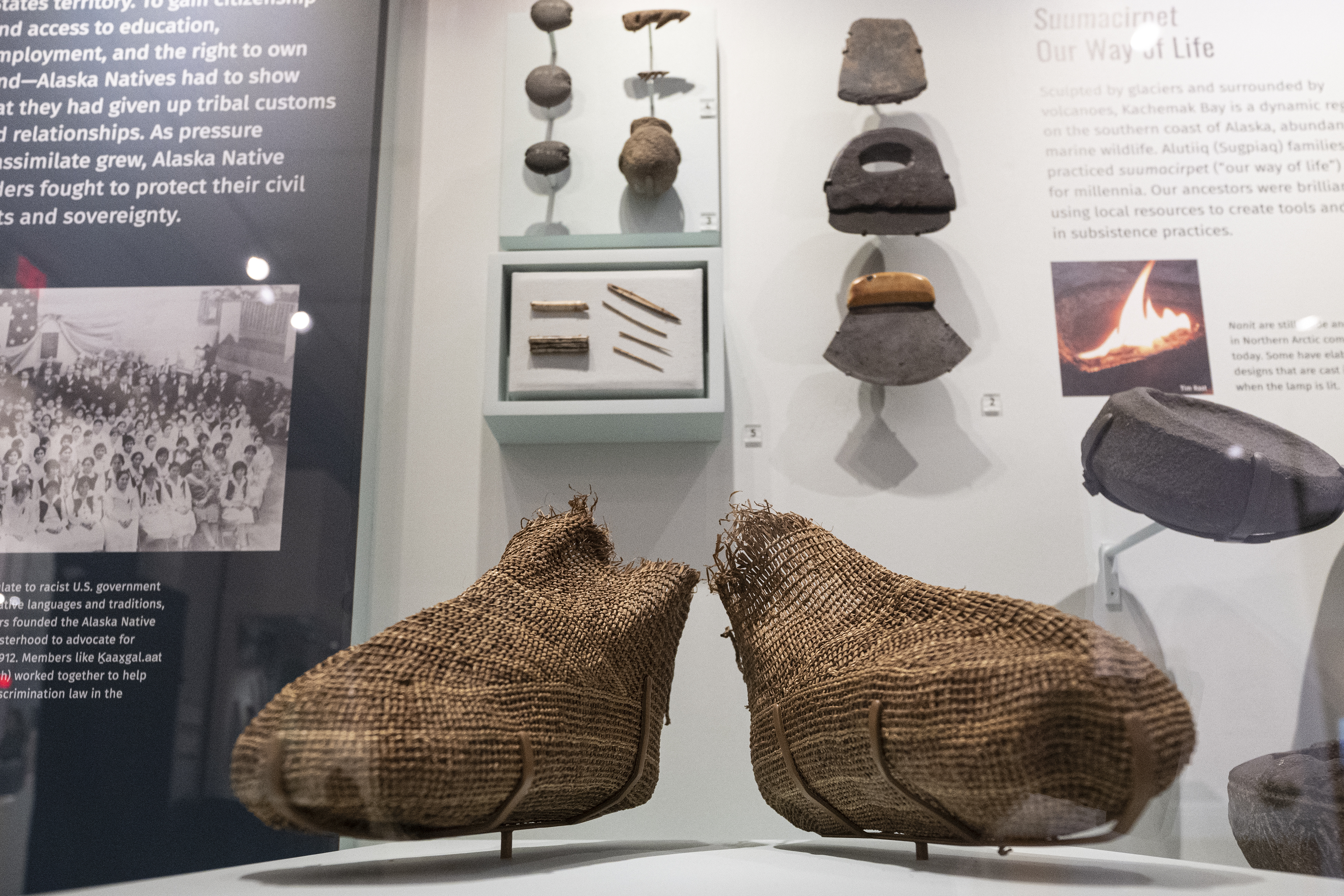
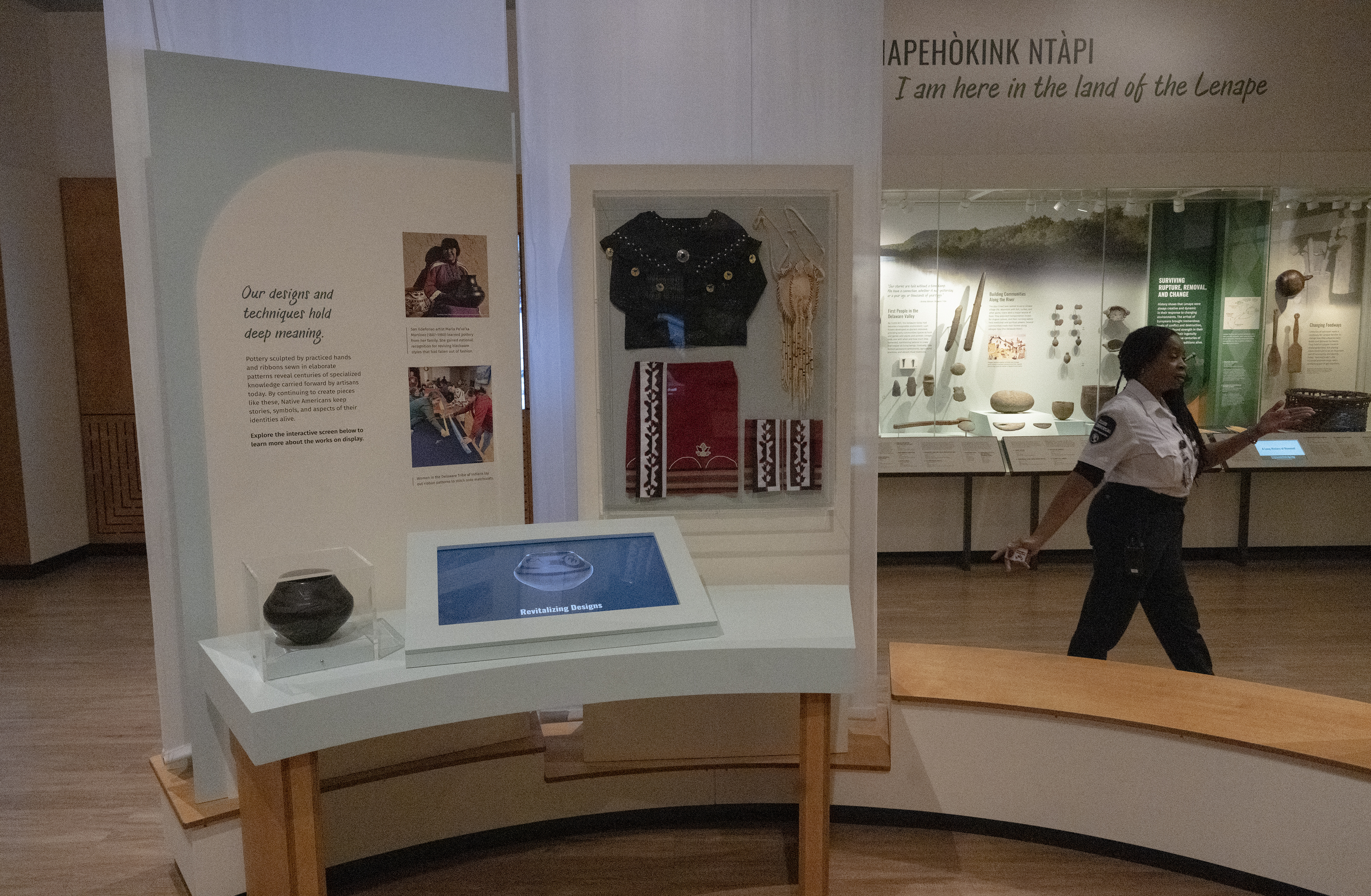
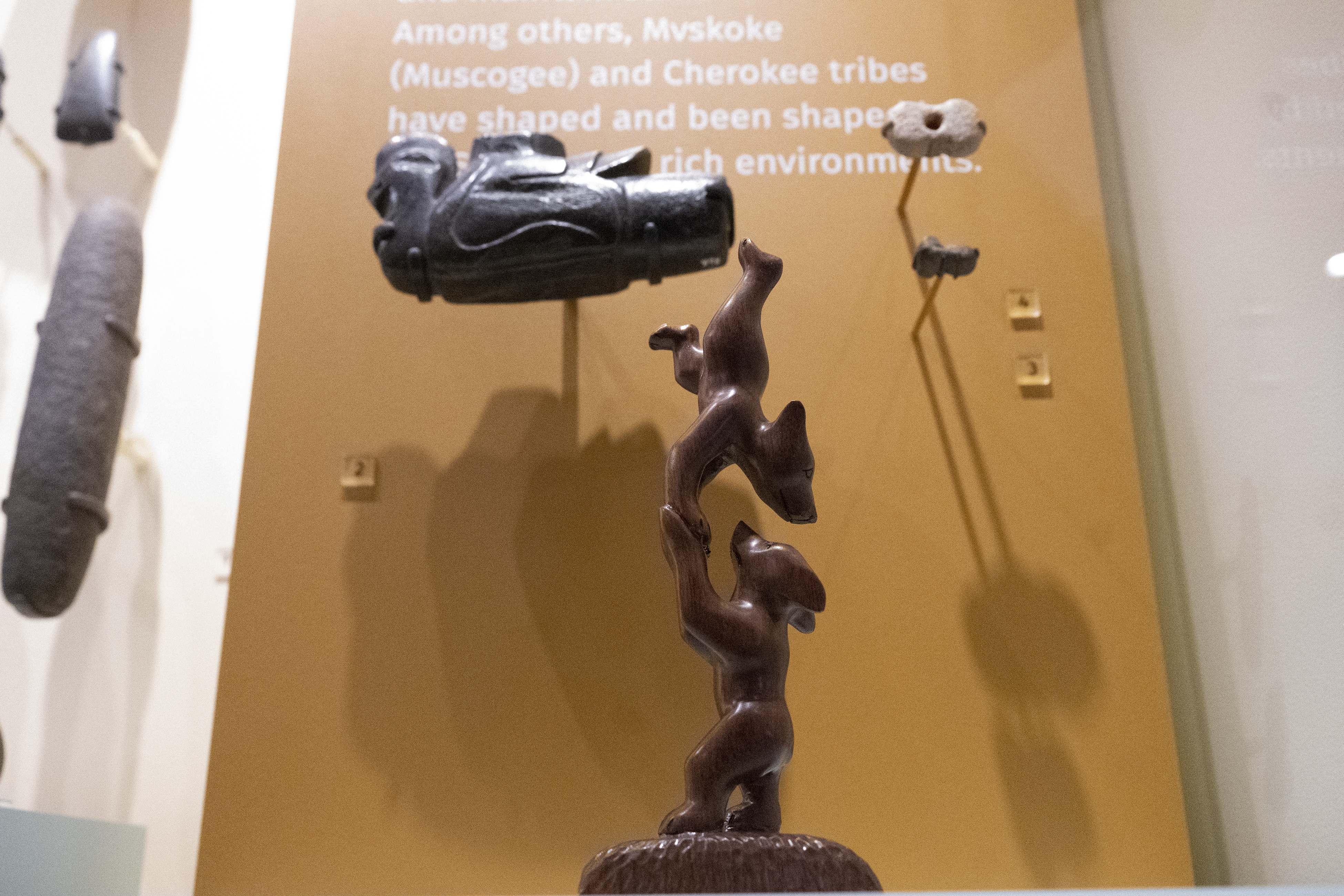
    The Penn Museum’s “Native North America Gallery: Rooted in Resilience. Resisting Erasure” exhibit features more than 250 cultural items and art pieces.

    A gallery of Native American art is displayed at the Penn Museum on Friday, Nov. 21, 2025, in Philadelphia. As celebrations of Native American culture and precolonial Philadelphia plants grow, museums across the city prepare for America’s 250th birthday.

    Christopher Woods, Williams director of Penn Museum, said the new gallery builds on the institution’s expansive Native American collection while offering insights into the lives of Indigenous Americans today. It builds on a former gallery, which similarly focused on first-person narratives and consulted with Indigenous curators.

    “We’re an archaeology museum, but this is really about Native American people today, and drawing on the connection between the past and the contemporary world. It’s important to show people that these are vibrant communities,” Woods said during a press preview. “Showing how strong they are, the nature of their resilience, the historical and cultural erasure, and having them speak in their own words is important.”

    These works, which build on the previous exhibition, “Native American Voices: The People – Here and Now,” that closed in July, offer a reframing of Native American history from four regions of the United States, including the Lenape Natives of the Delaware.

    A gallery of Native American art is displayed at the Penn Museum on Friday, Nov. 21, 2025, in Philadelphia. As celebrations of Native American culture and precolonial Philadelphia plants grow, museums across the city prepare for America’s 250th birthday.

    The immersive, multisensory exhibit includes a floral beadwork collar from the Northeast Lenape, a single-weave square basket from the Eastern Band Cherokee in the Southeast, a centuries-old clay ancestral mug from the Pueblo people of the Southwest, and a fringed ceremonial robe, known as a Chilkat blanket, from the Tlingit people of the Northwest.

    Among the oldest items on view are chipped stone tools historically used by Native Americans, which were pulled from the Penn Museum’s collections. The newest items include a woven piece that was commissioned from Cherokee mixed media sculptor Brenda Mallory.

    The gallery also includes images of regions the tribal nations have inhabited, interactive displays offering insight into the formation of their cultural items, tools, and regalia, and varying stories about their traditions, challenges, and resilience before and after European contact.

    A gallery of Native American art is displayed at the Penn Museum on Friday, Nov. 21, 2025, in Philadelphia. As celebrations of Native American culture and precolonial Philadelphia plants grow, museums across the city prepare for America’s 250th birthday.

    Alongside co-curators Lucy Fowler Williams and Megan Kassabaum, this comprehensive gallery was developed by cultural educators, archaeologists, and historians who are direct descendants and members of the tribal nations featured in the exhibit.

    Among the eight Indigenous consultant curators, who served as narrative guides, were Jeremy Johnson, cultural education director of the Delaware Tribe of Indians, RaeLynn Butler, secretary of culture and humanities of the Muscogee (Creek) Nation, and Christopher Lewis, cultural specialist of the Zuni Pueblo.

    The consulting curators assisted in creating the narrative flow of the gallery and worked with the Penn Museum to recover lost history and study their ancestors’ practices. They also contributed their own art and cultural items to the gallery.

    Upon seeing the exhibition for the first time on Thursday, Johnson said it was an “emotional moment.”

    “It was overwhelming,” he said. “It’s not just a room with a bunch of paintings or drawings. These are actual people I lived with, know, and are related to. I can tell you about every person here. Being able to give our tribal citizens, considering everyone is a relative, a voice was really emotional. We’ve always been seen as relics of the past.”

    A gallery of Native American art is displayed at the Penn Museum on Friday, Nov. 21, 2025, in Philadelphia. As celebrations of Native American culture and precolonial Philadelphia plants grow, museums across the city prepare for America’s 250th birthday.

    Kassabaum said the concept of the exhibit began four years ago, but many of the gallery’s elements were shaped by the consulting curators, who willingly shared their stories and welcomed Kassabaum and others into their communities.

    Kassabaum and other Penn Museum consultants traveled to Oklahoma to spend a week with members of the Delaware Tribe. They brought back four items, including the floral beaded collar, and let their protectors relay how they were made.

    Those kinds of connections can’t be made without the help of the consulting curators, Kassabaum said.

    “These aren’t my stories and they’re not my experiences,” he said. “I have not experienced any of the trauma of these communities. I have not experienced the joy of these communities, and everything people have been willing to share with us has been incredible. … No matter how giddy or passionate I am about anthropology and archaeology, I can’t bring the same thing to the gallery. It was totally essential.”

    Unlike other exhibitions sprawled throughout the country, Johnson said Penn’s inclusion of him and his Native “relatives” was based in good faith rather than historical or cultural exploitation.

    “We know certain art museums have been problematic in the past, and are still doing that work,” Johnson said. “But I feel this is the first time we were asked in the right way. It was in the spirit of an actual collaboration, instead of asking for items to display, and that’s it. This was a good process, and we hope it stands as a model for future exhibits.”

    A gallery of Native American art is displayed at the Penn Museum on Friday, Nov. 21, 2025, in Philadelphia. As celebrations of Native American culture and precolonial Philadelphia plants grow, museums across the city prepare for America’s 250th birthday.

    The opening ceremony of the Native North America Gallery kicked off with remarks from Johnson and the other Indigenous consulting curators.

    Their remarks were followed by traditional dance, songs, and storytelling by New Mexico’s Tewa Dancers. There was also an artist talk by Holly Wilson of the Delaware Nation, curatorial presentations led by Johnson and Joseph Aguilar of the San Ildefonso Pueblo, and a series of family workshops.

    The gallery, which is now on display, is available for online and in-person viewing.

    Visitors can reserve guided, in-person tours on select days. Tickets are priced at $26 for members and $30 for general admission. For more information, visit penn.museum.

    A gallery of Native American art is displayed at the Penn Museum on Friday, Nov. 21, 2025, in Philadelphia. As celebrations of Native American culture and precolonial Philadelphia plants grow, museums across the city prepare for America’s 250th birthday.
  • A Fishtown-based nonprofit works to address the roots of trauma in children before crisis hits | Philly Gives

    A Fishtown-based nonprofit works to address the roots of trauma in children before crisis hits | Philly Gives

    Mellisa Wilson had been working hard — so, so hard — to change the trajectory of violence that marked her life and the lives of her five children when she saw something that broke her heart.

    Her youngest daughter was putting her baby doll to bed, “and she was hitting it,” Wilson said, choking back tears. “That’s when I knew it was really bad. That’s when I knew that wasn’t what I wanted them to take from me,” as a parent.

    And so, Wilson did what she had done many times before.

    She turned to the Children’s Crisis Treatment Center (CCTC) for help.

    In schools, homes, and community centers in Philadelphia, Montgomery County, and Camden, CCTC provides trauma-informed care annually to over 3,500 children, up to age 18, suffering from behavioral issues, depression, and trauma, helping their families in the process.

    “I knew I had to do something different,” Wilson said.

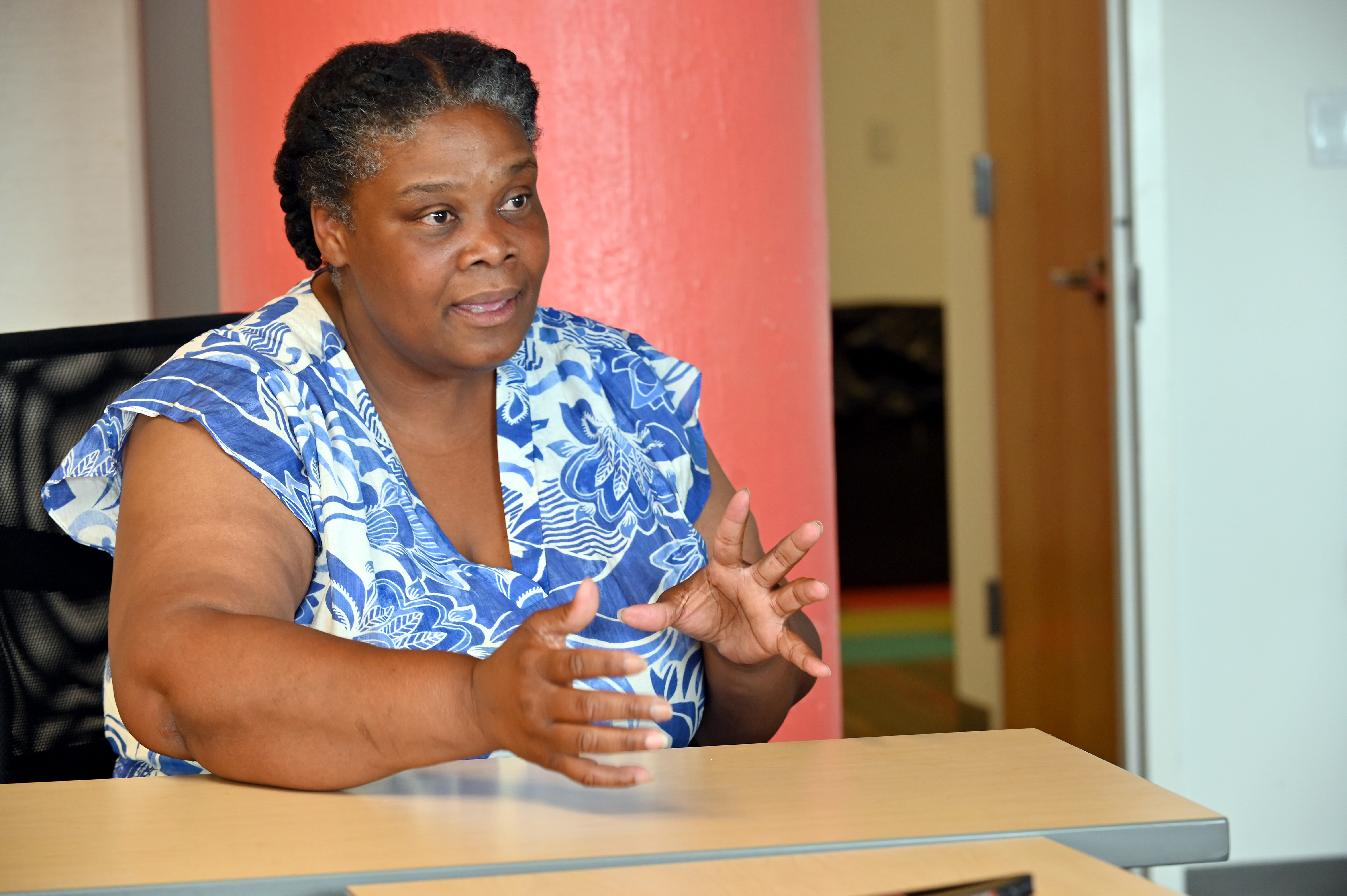
    Wilson, a CCTC volunteer and a member of the center’s parent advisory council, had been bringing her children to CCTC, a nonprofit children’s mental health agency, for 20 years.

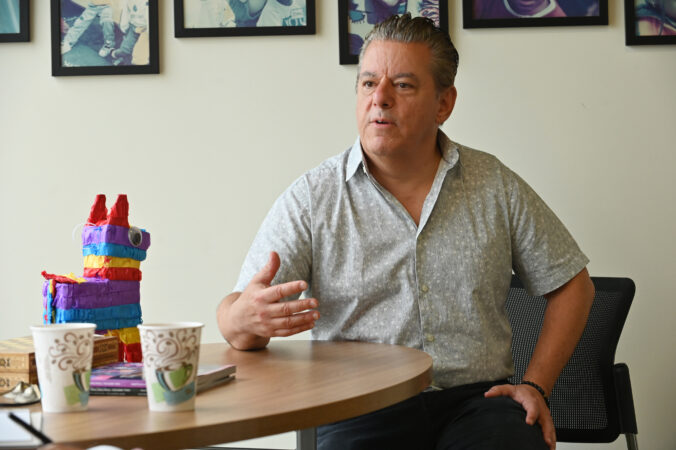
    With all the counseling she and her children have received, she could easily give the same talking points as CCTC’s chief executive officer, Antonio Valdés.

    And she did.

    It may take years, she said, but when a child experiences trauma, at some point, sooner or later, there will likely be a behavioral issue.

    Wilson said she grew up in a home where she was regularly beaten with a broom handle or an extension cord. “Those were my grandmother’s favorites.” The trauma repeated itself across the generations when she became a mother.

    Mellisa Wilson, who now volunteers at the Children’s Crisis Treatment Center, said the group helped her realize she needed to end a generational legacy of corporal punishment as a parent.

    Always angry, she yelled at her children and spanked them, but only with her hands — at least she could give them that safety.

    But all of it had to end — for her own good, and for theirs. So she turned to CCTC for help.

    It’s a typical pattern, said Valdés.

    CCTC treats children who have experienced every kind of trauma and adversity — death of a parent, witnessing a parent be killed or beaten, attacks from dogs, sexual abuse, neighborhood violence.

    “We treat kids no matter what trauma they have,” he said. “For the vast majority, we’re talking about domestic violence, toward them or a family member, or maybe shootings they have witnessed.”

    But what’s just as significant, he said, is how CCTC treats everyone in its care. “It’s the lens we use,” he said, describing trauma-informed care. “We don’t ask what’s wrong with a child. We asked what happened.”

    For example, Valdés said, a young boy, maybe 5, sees his mother regularly beaten by her drunken boyfriend. “The kid may even try to intervene, but he’s only 5. What can he do?”

    Eventually, the mother gets rid of the drunken boyfriend. All seems normal until months or even years later, when she gets calls from school. Her child is fighting, destroying school property.

    “He’s still reacting to what he witnessed, and the behavior he developed at that time,” when he understood, as only a little child can, that his mother, the person who was supposed to be protecting him, couldn’t keep him, or herself, safe, Valdés said.

    Says Antonio Valdés, chief executive officer of the Children’s Crisis Treatment Center: “We don’t ask what’s wrong with a child. We asked what happened.”

    “Any moment he might feel even a little threatened evokes that response,” he said.

    “There’s a mistaken belief that young children, when they experience trauma, they’ll get over it,” Valdés said. “When trauma and adversity happen, there are normal consequences. It’s not normal for the kid to be OK.”

    Some parents bring their children to CCTC for counseling, or they get referrals from schools. More help, including a summer camp, is available at satellite community centers.

    At its headquarters on Delaware Avenue in Fishtown, CCTC runs a day treatment program for preschool-age children who have been kicked out of their preschools. There are day programs for children who have been discharged from psychiatric hospitals to help them reacclimate before returning to their schools.

    CCTC also provides behavioral health help at over 40 middle and elementary schools, where CCTC staffers work with teachers and students.

    Valdés remembered one little boy, about 10 or 11, who had been an average student — no trouble in school. His mother worked two jobs to make ends meet, and his grandfather took care of him, fed him dinner, helped with homework, and even put him to bed when his mom worked late.

    One Monday, the boy didn’t come to school — and it was so unusual that counselors reached out. On Tuesday, he did show up and, within hours, was fighting with kids and teachers. “They had already written up detention slips,” and it was so bad that harsher punishments were on the table.

    But then a counselor who had been trained by CCTC recalled what she had learned and asked the boy what happened. His grandfather had passed away on Saturday, and his mother had to go to work so she could pay the rent, leaving him to fend for himself.

    “In five minutes, they tore up the detention slips and had a different kind of conversation. It could have turned into something really bad for that boy. It’s those little moments that are critical,” Valdés said.

    In Philadelphia, he said, children in Kensington are suffering from the opioid crisis. When children leave the house, they see people shooting up and have to step carefully to avoid human feces or used needles. It’s not safe to play on the sidewalks or in the parks.

    “All of these things add up to a stressful environment,” he said. “There’s an impact of trauma and adversity on the way people start treating each other. It’s a behavior that’s adaptive to the trauma, the crisis, the ugliness,” but may not show up until later.

    “It’s highly contagious. Certain kinds of maladaptive behaviors may find themselves in families, in communities, in workplaces, or the way you might treat your girlfriend or wife,” Valdés said. “These behaviors were critical in surviving the moment,” but aren’t useful or appropriate in other situations.

    Healing comes from reframing — acknowledging realities but assuring the children that what happened was not normal and not their fault, then giving them techniques to cope positively when disturbing feelings arise, he said.

    “We’re treating kids and families, and we’re helping them heal,” he said. “Then they start to support their siblings or neighbors who have been through trauma. We see this as the counter to adversity and trauma.”

    Parenting skills Wilson learned at CCTC helped her help her children and regain control of her family, even as she was struggling to manage five youngsters under 5, including a set of twins.

    One child was inappropriately touched. Another child pushed Wilson against a wall and accused her of driving their father away. Another child, always her father’s favorite, said her father hated her. Another child hit a kitten.

    Tears filled Wilson’s eyes. “That was the trauma I put on them by hitting them and yelling at them.”

    Chaos and fatigue were constant, as was anger, yelling, and spanking. At CCTC, her kids got help, and so did she, learning new parenting techniques that led to a peaceful home with five children, now in their 20s and heading into professions to help others.

    Valdés said people should support CCTC because that healing is contagious, mending families and neighborhoods.

    Wilson agrees. “What I’ve learned, I’ve put into practice,” she said.

    Her story is so compelling, she said, that people at her overnight warehouse packing job turn to her for help. And she’s always ready to give it.

    “My favorite place is on the bus,” she said, where she’ll say hello and ask her fellow passengers about their day. “People will start talking to me. People are very honest when they think they are never going to see you again.”

    When Wilson wears her CCTC T-shirt as she often does, she wants to serve as a walking billboard for a nonprofit that has made a real difference in herself and her family. She vows to support the organization and its mission for the rest of her life.

    “We shouldn’t keep good things to ourselves.”

    This article is part of a series about Philly Gives — a community fund to support nonprofits through end-of-year giving. To learn more about Philly Gives, including how to donate, visit phillygives.org.

    For more information about Philly Gives, including how to donate, visit phillygives.org.

    About Children’s Crisis Treatment Center

    Mission: To support children and families by helping them heal from abuse, violence, and trauma by bringing mental health services to them where they are — at home, in schools, and in their communities.

    Children served: 3,500

    Point of pride: Started as a demonstration project in the basement of the Franklin Institute and is now in over 40 schools, up from 14 last year.

    Annual spending: Over $31 million in fiscal year 2024.

    You can help: Volunteers are needed to help with special events, the Holiday Toy Drive, or group day-of-service activities.

    Support: phillygives.org

    What your Children’s Crisis Treatment Center donation can do

    • $25 provides art supplies for an activity in one Therapeutic Nursery classroom (preschool-age children).
    • $40 purchases a gift for one child through our annual Holiday Toy Drive.
    • $100 provides one child attending our Summer Therapeutic Enrichment Program with educational program supplies.
    • $250 provides music therapy to one child attending our Cornerstone program (acute partial hospitalization for children ages 5 to 13).
    • $500 supplies a therapeutic counseling room with toys for play therapy.
    • $1,000 provides program activities, including field trips, for one child attending our Summer Therapeutic Enrichment Program.
  • How did The Inquirer review Michelin’s top Philadelphia picks in the past?

    How did The Inquirer review Michelin’s top Philadelphia picks in the past?

    On Tuesday night, Philadelphia won big with three Michelin stars, 10 Bib Gourmands, and 21 Recommended winners.

    One of the world’s most prestigious restaurant awards, Michelin deploys anonymous inspectors to assess restaurants and designate the honorees. Not too much is known about these inspectors — decision-making is made by a globally diverse group, not an individual, and most have several years’ experience in the restaurant or hospitality industry, according to Gwendal Poullennec, international director of the Michelin Guide. They use changing names and phone numbers and visit a restaurant multiple times to evaluate its full merit.

    While the 34 Michelin-recognized restaurants were presumably all-new to the guide’s inspectors, The Inquirer has written about all of them before — in a few cases, not entirely favorably. Here’s how the food desk has covered Philly’s Michelin-starred and Bibbed restaurants in the past. (For a breakdown of Michelin Guide hierarchy, read more here.)

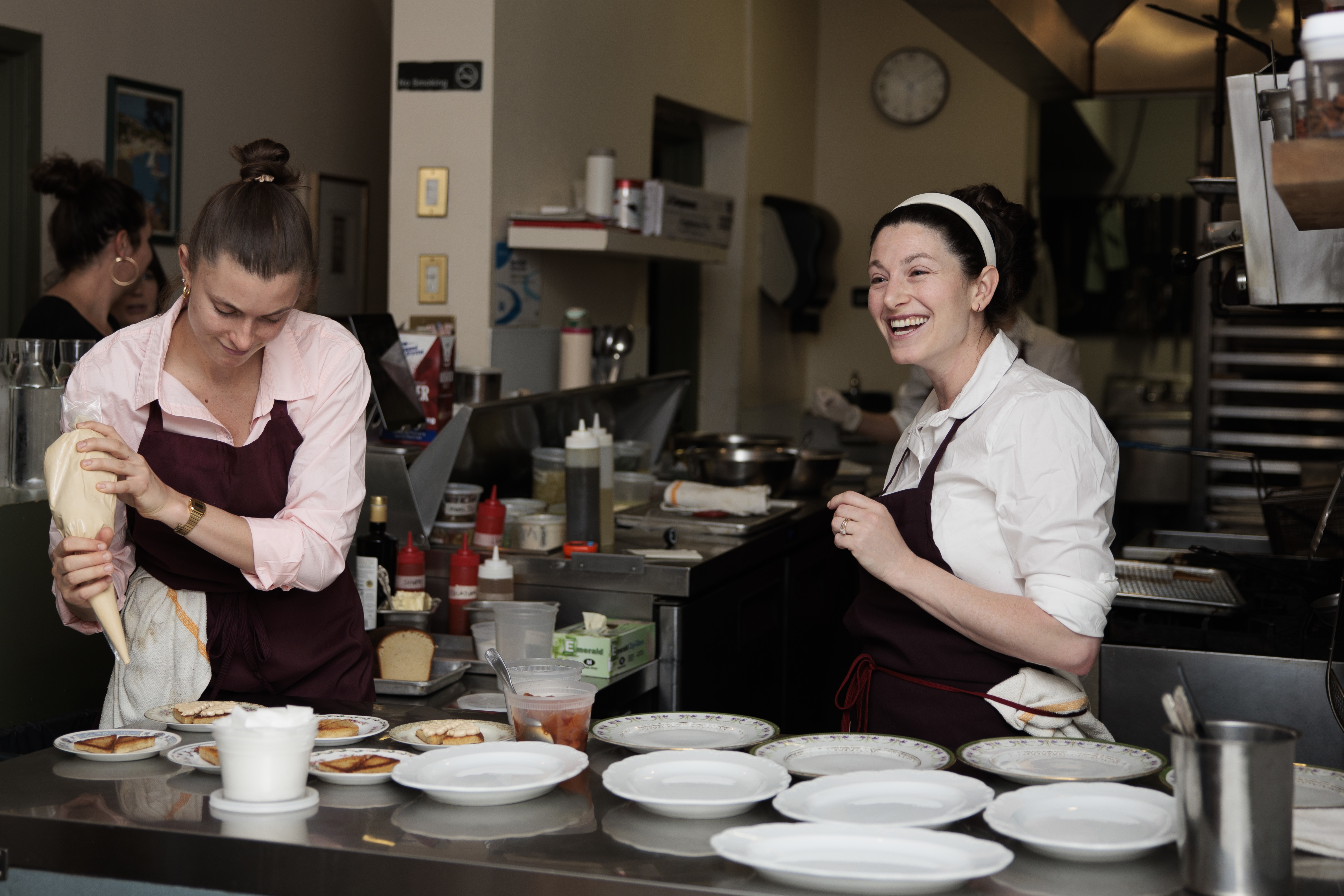
    Chef Amanda Shulman (right) greets attendees at Her Place Supper Club on May 12.

    Philly’s Michelin-starred restaurants

    • Her Place Supper Club: Amanda Shulman’s dinner party-as-a-restaurant was born out out of her cooking on Penn’s campus, transitioned to a residency in a former Slice pizza shop in Rittenhouse, and has bloomed into a full-on restaurant — now Michelin-starred — that still manages to be endearingly idiosyncratic. When Inquirer critic Craig LaBan first reviewed Her Place, the cooking was so good, “I needed to do yet another double-take to remind myself that Shulman was producing this feast for two dozen diners nearly single-handedly,” he wrote in 2021. These days, the kitchen is led by chef de cuisine Ana Caballero and sous-chef Santina Renzi, whose skill and energy landed Her Place in LaBan’s Top 10 last year and this year’s edition of The 76.
    • Friday Saturday Sunday: Another 76 pick, Chad and Hanna Williams’ “townhouse oasis off Rittenhouse Square, already the most exciting fine dining experience in Philly, has only gotten better,” LaBan wrote after its Outstanding Restaurant James Beard win in 2023. When the couple first opened the restaurant in 2016 — using the same name as the building’s 42-year predecessor — they created some ripples. “At last … the most normal thing on the menu!” LaBan overheard during one of his earliest review dinners there. His reaction was very different: The restaurant has routinely appeared in his annual Top 10 lists in the years since.
    Chef Nicholas Bazik of Provenance is making the golden ossetra with squash and tofu at Provenance on Nov. 7.
    • Provenance: While Michelin awarded chef Nicholas Bazik and his finely tuned team a coveted star, LaBan found flaw in Philly’s recent most ambitious French fine-dining project, which he reviewed last October: “When you’re paying $225 to sit down for a 2½-hour dinner (figure between $700 or $800 for two all-in with tip and tax, depending on what you drink), there isn’t much room for error. And there are still too many menu missteps at Provenance, where only about half of the 47 compositions I tasted over two meals were a complete success.” (Ed. note: I sense a followup review in the future…)

    Green star

    • Pietramala: Chef Ian Graye also scored a Green star for Pietramala, his sustainability-minded vegan restaurant. In his 2023 review — which the NoLibs restaurant shared with Primary Plant Based (now closed) and Miss Rachel’s Pantry — LaBan found lots of bright spots and a disappointment or two, concluding of Graye’s cooking: “I’d rather someone swung big than timidly struck out.“ The swings are connecting even more these days: Pietramala was in LaBan’s Top 10 last year.

    Bib Gourmand

  • Her path to ‘having it all?’ Be gay and move to Philly, a Wharton economist says.

    Her path to ‘having it all?’ Be gay and move to Philly, a Wharton economist says.

    Corinne Low, a Wharton economist, didn’t have to search far for an example of how women’s familial and professional choices are shaped by an uneven playing field.

    In 2017, Low gave birth to her son while building a tenure-track career. Her life soon began to feel unmanageable. She was commuting up to six hours a day from Manhattan to Wharton while also taking care of the household tasks that kept her family functioning: groceries, laundry, cooking, childcare.

    The situation reached a crisis point when Low found herself pumping in an Amtrak bathroom while crying; she had been in transit for hours and realized she wouldn’t make it home to see her son before bed.

    Low, 41, was not a single parent. But her husband had recently left his job to start his own business, a choice that did not reduce his working hours, but did reduce his salary — to zero.

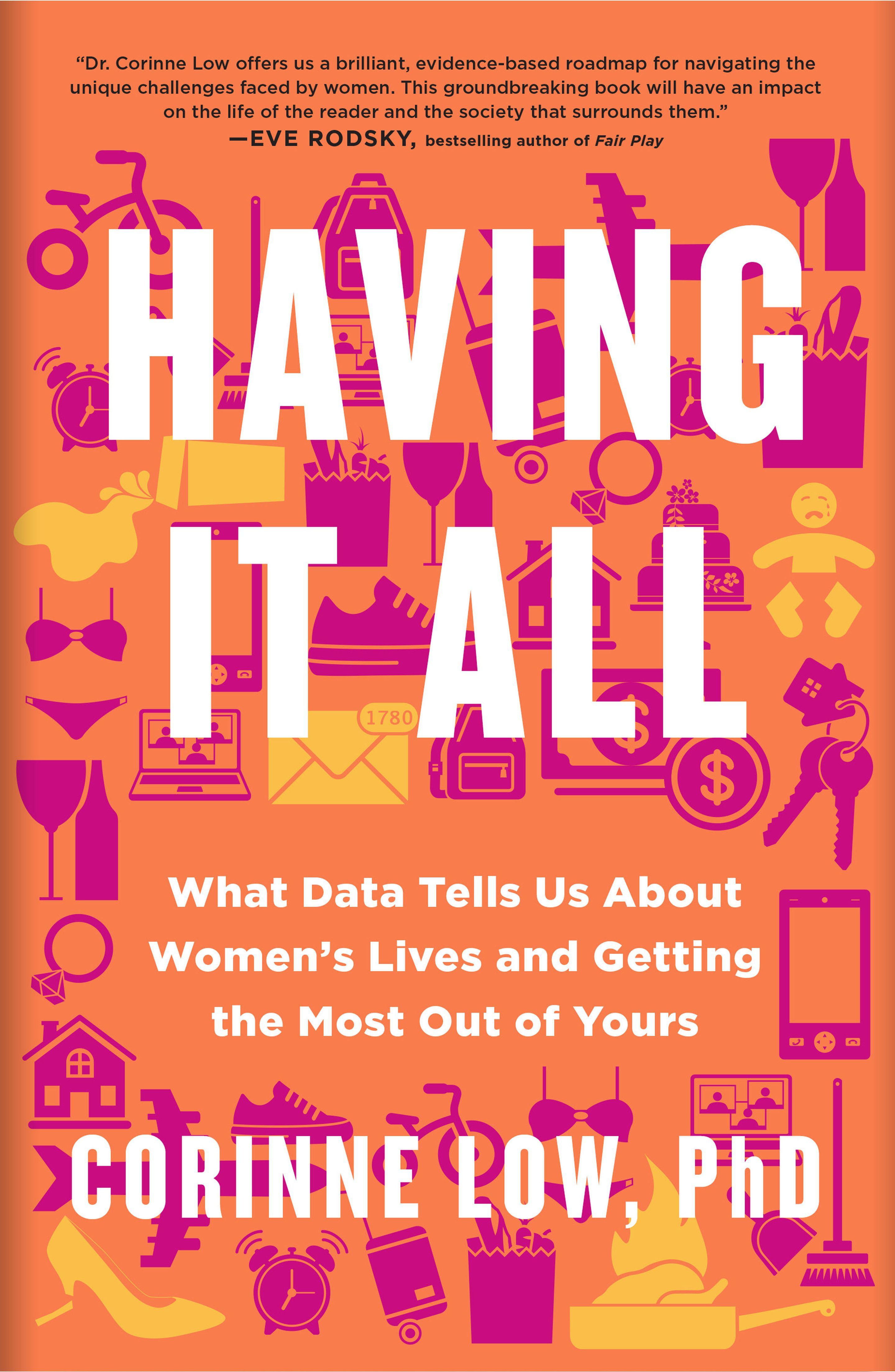
    Low’s personal story is the entry point to her new book, Having it All: What Data Tells Us About Women’s Lives and Getting The Most Out of Yours, part self-help manifesto and part economic tract.

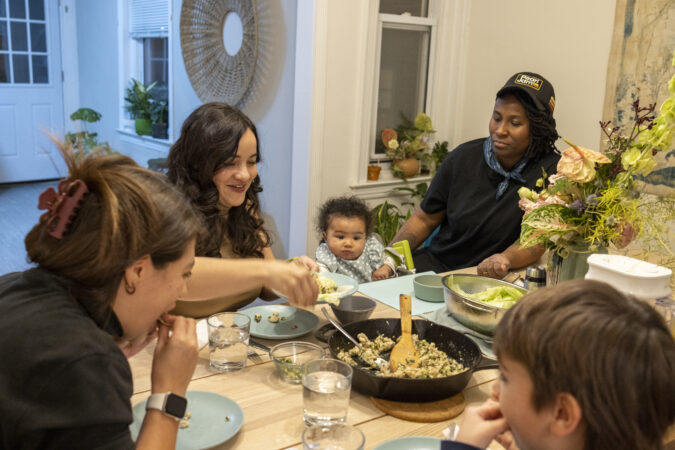
    Wharton professor Corinne Low (right) and her, wife Sondra Woodruff, spend time after dinner playing and reading with their kids.

    When Low examined her own life, she made two major changes that freed her time and altered her circumstances. First, she divorced her husband and decided to exclusively date women. (A summer article in the Cut about Low, headlined “This Economist Crunched the Numbers and Stopped Dating Men,” went viral.) She is now married to a woman.

    The less viral but equally meaningful shift was that she left New York City — and embraced Philly.

    “The underplayed hero of my story, of the changes that I made, was moving to Philadelphia,” she said recently in an interview. “That was actually the more important upgrade.”

    When she was living in Manhattan and struggling to keep up, friends had recommended that she hire a live-in au pair, which they said was a more affordable, less transactional form of childcare. But of course, like most New Yorkers, Low had no spare room.

    In Philadelphia, she was able to afford a bigger house with more space, which meant she could have an au pair. And her commute went from over two hours to seven minutes by bike, freeing her to build a life “filled with friends, community, time outdoors.”

    It all added up. In Philadelphia, Low writes, “I rediscovered myself. I found who I had been before I became a stressed-out, angry, rapidly aging person. I was fun! I was creative! I could relax.“ (She adds the disclaimer that she is “not advocating that everyone who reads this book should leave their marriage and move to a new city,” although, perhaps they should, assuming they move to the right city.)

    The book analyzes economic data to show women how to get a “better deal” for themselves.

    She wanted to show that the feeling many working women experience — of being under siege from all sides, unable to figure out how to gloriously “have it all” — was not some symptom of being hysterical, but was instead rooted in data.

    “I want people to figure out how to claw back some of their time from these structural forces that are squeezing us,” Low said. “Knowing the data, it gives you permission to make some of those choices.”

    She found that even in families where women were the primary breadwinners, they still overwhelmingly had to put in a “second shift” at home. Some statistics in the book are startling: For example, men who earn only 20% of the household income in a heterosexual family do the same amount of housework as those who earn 80% of the family’s income, which Low found by analyzing the American Time Use Survey, a massive dataset of how individuals spend their time.

    That means even when a woman earns more than twice what her partner earns, she also does twice as much cooking and cleaning.

    “That bothers me, because it’s inefficient,” Low said. “Because you’re using the ‘more expensive’ person’s time on these home production tasks.”

    In the book, Low aims to advise women on how to get a “better deal” for themselves, by employing the stark logic of her field.

    She writes about how women might improve their “personal utility function,” which she describes as a “personal video game score at the end of your life,” grounded in one’s priorities and values. She urges women to think about dating as a job interview for a co-executive in a multipronged, multiyear enterprise, and to think of a job as a “technology for converting time into money.”

    She also encourages readers to throw away their houseplants if they are not increasing personal utility function.

    “You need to be ruthless in protecting your time from things that are not investments in your future and do not bring you joy,” she writes.

    Corinne Low and her wife, Sondra Woodruff pictured here with their kids at Clark Park. ,

    One of her most interesting arguments is that women today effectively “hire themselves” for too many jobs within the home. It has become normalized to outsource “male-coded” tasks, like changing a car’s oil or fixing an electrical outlet, by hiring a specialist to do it, Low said.

    But women have not updated their mindsets about the market value of their time, and so there remains stigma to outsourcing “female-coded” tasks, like laundry, cooking, or home childcare.

    Low sees Having It All as a rejoinder to Sheryl Sandberg’s Lean In: While “leaning in is doing more of what’s not working,” as Low put it, she wants readers of her book to “level up” by removing whatever constraints they’re able to.

    Of course, many of the problems facing working women remain systemic, and she writes in the book’s afterword about the necessity of societal changes, including parental leave underwritten by the federal government and creative thinking by employers about how to allow female employees to meet both their professional and domestic obligations during peak child-rearing eras.

    After a book tour, Low is now back in Philly with her two young children and her wife and still reveling in the charms of her city.

    “When I was busy and on book tour,” she said, “neighbors walked my son to school.”

    Readers told Low that they are making changes to their personal lives based on the book. No one has told her they’re moving to Philadelphia — yet.