Blog

  • Human reporters explain why AI data centers are so controversial in the Philly suburbs and beyond

    Human reporters explain why AI data centers are so controversial in the Philly suburbs and beyond

    Every day, millions of people across the U.S. turn to ChatGPT and other AI tools, searching for answers.

    Some of their questions are mundane: What should they make for dinner with these four ingredients? What other movies was this actor in? Where could they go on a weekend getaway for under $1,000?

    Others use AI in life-saving research and for society-changing innovations.

    How these tools work — and at what cost — is at the heart of the ongoing debate over the rapid construction of data centers.

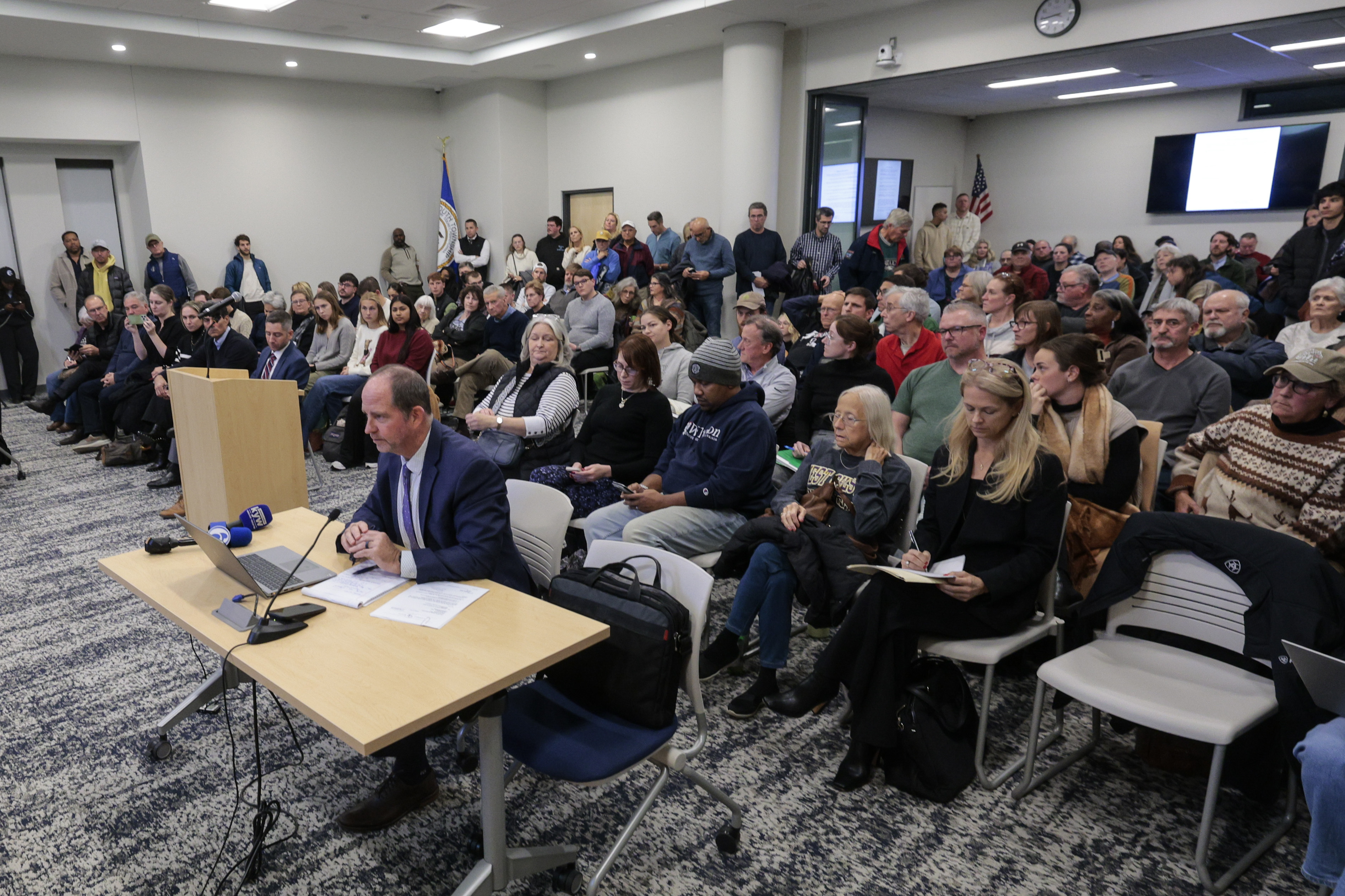
    At some proposed sites in the Philadelphia region, neighbors are rallying in opposition, saying the community’s health, safety, and quality of life are at stake. Meanwhile, developers, elected officials, and other proponents tout economic benefits.

    If you’re trying to make sense of all the buzz about AI data centers, here’s what three human reporters think you should know.

    What is a data center?

    A data center is a building or campus that handles cloud-storage and computing needs of Amazon, Google, Microsoft, Meta, and the like. People, hospitals, banks, businesses, and governments rely on the cloud to store and retrieve vast troves of records, videos, and pictures.

    Generative artificial intelligence (AI) has exponentially increased demand for specialized data centers powerful enough to execute ever more complex requests in the form of text, code, images, audio, or video.

    A single AI query consumes multiple times the power of an ordinary search engine query, resulting in the need for additional servers to handle the load when multiplied across millions of queries.

    window.addEventListener(“message”,function(a){if(void 0!==a.data[“datawrapper-height”]){var e=document.querySelectorAll(“iframe”);for(var t in a.data[“datawrapper-height”])for(var r,i=0;r=e[i];i++)if(r.contentWindow===a.source){var d=a.data[“datawrapper-height”][t]+”px”;r.style.height=d}}});

    Newer hyperscale data centers can reach 1 million square feet or larger. For comparison, the Cherry Hall Mall is 1.3 million square feet.

    Where are data centers in Pennsylvania and New Jersey?

    More than 150 data centers already exist in Pennsylvania and New Jersey, according to Data Center Map, a private company that tracks the facilities nationwide. The Philadelphia area has dozens of data centers, operated by an array of companies from telecom giants like Comcast to digital-services companies like Lumen and DāSTOR.

    window.addEventListener(“message”,function(a){if(void 0!==a.data[“datawrapper-height”]){var e=document.querySelectorAll(“iframe”);for(var t in a.data[“datawrapper-height”])for(var r,i=0;r=e[i];i++)if(r.contentWindow===a.source){var d=a.data[“datawrapper-height”][t]+”px”;r.style.height=d}}});

    Not all of these properties are AI data centers: Comcast’s facilities, for example, connect thousands of local customers to internet, cable, and phone services, and have been doing so for decades.

    Where are new data centers being built in Pa. and N.J.?

    Hot spots for new AI data centers include North Jersey and the Scranton and Pittsburgh areas in Pennsylvania.

    Three recent proposals in the Philadelphia suburbs have made headlines:

    Edmund J. Campbell, attorney for Main Line developer Brian O’Neill, speaks to the Plymouth Township zoning hearing board on Monday Nov. 17 before abruptly withdrawing his client’s application over legal issues.

    Why do some communities want a data center?

    A data center can bring in significant tax revenue, create jobs, attract other businesses to the region, and put the area on the cutting edge of a rapidly growing industry, proponents and developers say.

    In Loudoun County, Va., data centers accounted for nearly half of the property tax revenue in 2024, according to the county’s website, with the county getting $26 for every $1 spent on data center services. Nearby Prince William County reported that its 44 data centers generated more than $293 million in total tax revenue (though some industry stakeholders debate whether tax breaks offset these gains).

    Unlike residential redevelopment, data centers don’t increase demands on local schools or EMS services, data center proponents say. Nor do they bring in added traffic like fulfillment warehouses or other industrial uses.

    Data centers are seen by some as a good reuse of formerly industrial land, such as proposals in Bucks County on a former U.S. Steel site; in Chester County on a remediated Superfund site; and in Montgomery County on the former Cleveland-Cliffs steel mill.

    Why are some communities opposing data centers?

    Opponents of data centers worry about pollution, noise, power and water use, and the impact another data center could have on their electric bills. In some areas, they decry the loss of open space and express broader concerns about whether the AI boom is a bubble that could burst before all this data-center investment pays off.

    How are data centers impacting my electric bill?

    Generative AI tools like ChatGPT and DALL-E are major drivers behind the dramatic increase in energy demand. Every ChatGPT query, for example, is estimated to use five times more electricity than a simple web search.

    An average query uses about the power that an oven would use in a little over one second or a high-efficiency light bulb would use in a couple of minutes, according to Sam Altman, CEO of OpenAI, the company behind ChatGPT.

    In 2023, U.S. data centers consumed about 4.4% of total U.S. electricity, compared to 15% for all residential use. Data center demand is expected to rise, potentially consuming 6% to 12% of total U.S. electricity by 2028, according to a 2024 report by Lawrence Berkeley National Laboratory.

    window.addEventListener(“message”,function(a){if(void 0!==a.data[“datawrapper-height”]){var e=document.querySelectorAll(“iframe”);for(var t in a.data[“datawrapper-height”])for(var r,i=0;r=e[i];i++)if(r.contentWindow===a.source){var d=a.data[“datawrapper-height”][t]+”px”;r.style.height=d}}});

    When energy demand rises without a proportional increase in supply and capacity, experts say, consumers see higher bills. Although it’s possible prices would lower with increased demand as long as there is sufficient existing capacity in place, say some experts.

    “There’s a variety of factors, but it isn’t really transparent when you look at your electricity bill,” said John Quigley, senior fellow at the University of Pennsylvania’s Kleinman Center for Energy Policy.

    Several recent reports have tried to quantify the impact data centers are having on consumer bills. According to a recent Bloomberg News analysis, the monthly electric bills of customers who lived near significant data center activity have increased 267% in the past five years.

    What are some environmental concerns regarding data centers?

    Water: Data centers require significant amounts of water to cool servers and IT equipment. Some cooling systems are more efficient than others.

    A Virginia legislative audit report said 11 data center buildings each used over 50 million gallons, including one building that used 243 million gallons in 2023. While some data centers use substantial amounts of water, most use similar or less than other large commercial and industrial water users, Virginia found.

    Based on available data, most data centers use about 6.7 million gallons of water a year, about the same as an average large office building.

    Land use: Some proposals would require substantial clearing for forested or unused land, as in a 1,000-acre proposal in Covington and Clifton Townships in the Poconos. Residents in East Vincent Township in Chester County have mobilized to save the rolling hills, farms, and rural character near the proposed Pennhurst site.

    Air pollution: The electricity that powers data centers comes from a grid powered by plants that run on natural gas, a fossil fuel that emits pollutants such as nitrogen oxides, fine particulate matter, and a precursor to smog. The plants also release carbon dioxide, a greenhouse gas. Backup generators are often fired by diesel. Amazon and Microsoft have plans to tap nuclear power, which does not produce air pollutants, though it does produce toxic waste.

    Noise: Data centers sometimes emit hums and vibrations produced by servers, whirring fans, HVAC systems, and other sources.

    What kinds of jobs do data centers create?

    Construction of a data center requires hundreds of temporary tradespeople, such as masons, electricians, plumbers, and HVAC technicians.

    Once open, data centers typically need very few full-time employees. Even the largest usually employ fewer than 150 people, sometimes as few as 25. Permanent positions can include IT specialists, data analysts, electricians, maintenance workers, and security personnel. Sometimes certain employees can work remotely.

    Developers of some data centers currently proposed in Pennsylvania estimate hiring between 30 and 70 permanent workers. Data center technician jobs at Amazon’s Salem Township facility come with starting salaries between $50,000 and $152,000 a year, according to job listings on Indeed.com.


  • Penn is testing beanies for NICU babies that block harmful noise and play parents’ messages

    Penn is testing beanies for NICU babies that block harmful noise and play parents’ messages

    When Pamela Collins was pregnant, she would talk and sing to her son through her belly, telling him he was loved.

    He was the “miracle” that the 32-year-old mother had been waiting for, after four miscarriages and an ectopic pregnancy.

    She never expected that her son, John, would arrive early at 29 weeks in September and have to spend his first months in the intensive care nursery at the Hospital of the University of Pennsylvania.

    Her family has relocated from Mount Pocono to stay at the nearby Ronald McDonald House, a charity, so they can visit John every day. Even still, she wishes she could be with him all the time, to sing to him and tell him that he is strong and loved — just as she did when he was in her womb.

    A new medical device being tested at HUP could help her do just that.

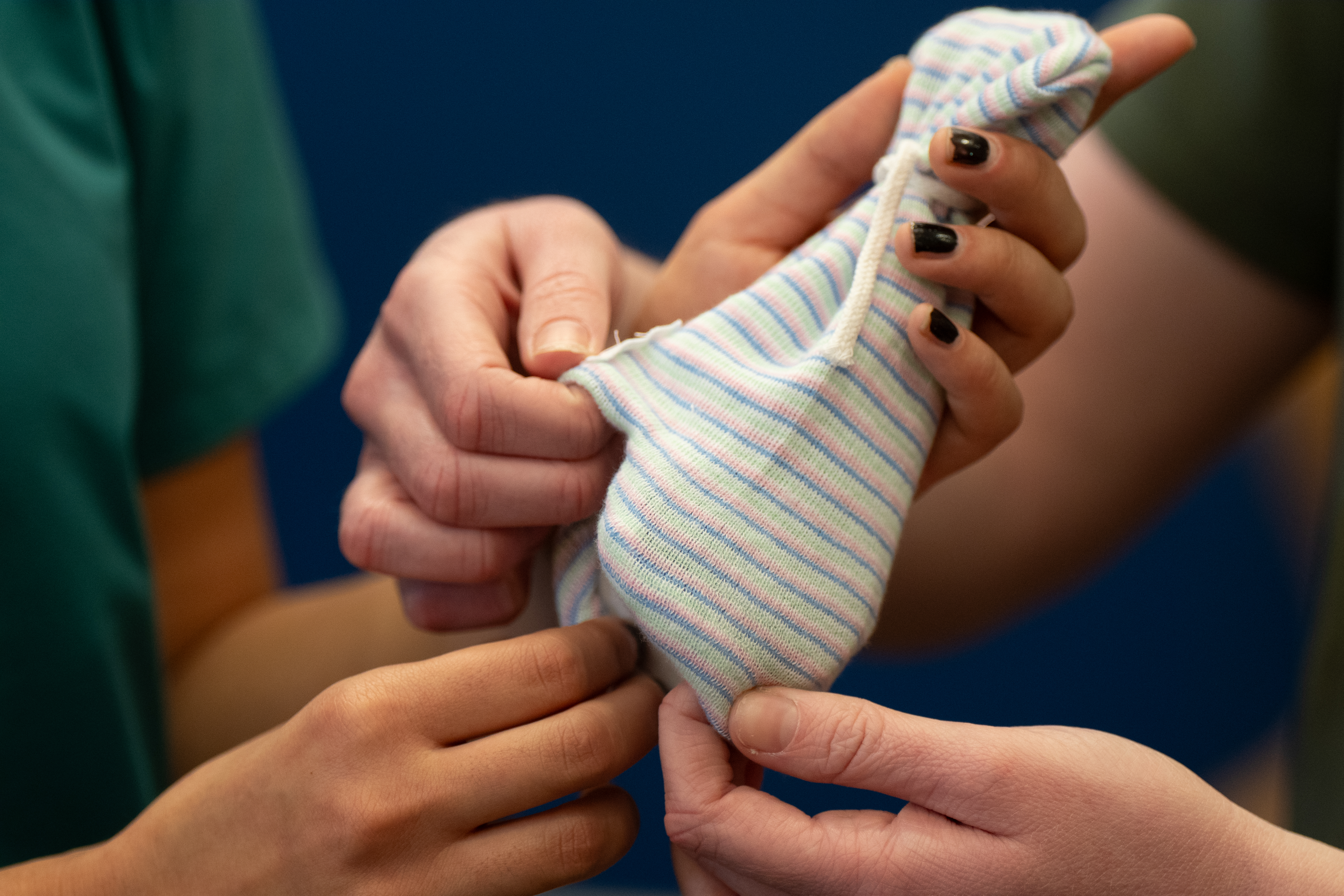
    Collins’ son is one of five babies so far to try out the Sonura Beanie, a device that aims to connect NICU babies with their parents and block out harmful noises in the hospital environment.

    Invented by five undergraduates at the University of Pennsylvania, the beanie is designed to mimic the womb, by filtering out high-frequency sounds like alarms — which frequently plague the NICU — while allowing human voices at low frequencies to be heard.

    The device can also deliver audio messages recorded by parents for their babies.

    “It’s as if they were laying on your chest [or] as if they were in the womb,” said Sophie Ishiwari, one of the founders.

    Their idea won Penn’s 2023 President’s Innovation Prize, which provided a $100,000 cash award and living stipends for the team to pursue their commercial project after graduation. Three of the original members went onto medical school, leaving two — Gabby Daltoso and Ishiwari — to continue working on the product full-time.

    In the two years since graduating, they’ve tested the device in the lab and pitched it to hospitals around the country, earning accolades along the way. Now, they’re putting the beanie on infants in the hospital for the first time.

    Over the next several months, Ishiwari and Daltoso will be testing the beanie on 30 infants in HUP’s intensive care nursery. They’ll be looking to see whether the beanie can reduce stress, based on changes in heart rate, respiratory rate, and oxygen saturation.

    They will also evaluate how easy it is for nurses to use, and how parents feel about the experience.

    Collins joined the study hoping the beanie could help her son feel calmer by hearing her voice, as well as that of his father and teenage sister.

    “I know my baby can listen more than he can see, and I’m excited to know he’s listening to our voices instead of this beeping,” she said, gesturing to the noisy NICU machines.

    Pamela Collins suffered four miscarriages and an ectopic pregnancy before giving birth to John.

    The origin

    The first thing Daltoso and Ishiwari noticed when shadowing in the NICU was how loud it was. Between beeping from machines to hospital alarms going off, it felt overwhelming even for adults.

    “They can’t turn the alarms off because it’s their job to keep patients alive,” Daltoso said.

    In the womb, a fetus would primarily be exposed to low frequency sounds under 500 Hertz. Alarms in the NICU can hit 2,000 Hertz and higher, Daltoso said. Imagine having to hear a fire alarm go off continuously throughout the day.

    A 2014 study found that babies in a NICU in Massachusetts were exposed to frequencies over 500 Hertz 57% of the time.

    Some medical equipment also emit high frequencies of sounds. Babies on a ventilator, for example, are exposed to sounds in the 8,000 Hertz range of frequencies, Daltoso said.

    “They’re in a room of 20, so if one baby’s on it, they’re all exposed,” she added.

    In the short term, this noise can stress babies out to the point of not being able to sleep or eat, Daltoso said. Babies may experience trouble gaining weight as a result and show unstable signs such as heart rates that are faster than normal.

    Babies in the NICU could also suffer long-term impacts from what is known as “language deprivation,” Ishiwari said.

    Normally, an infant would be exposed to language early in life, which is important for the infant’s neurodevelopment. But a baby in the NICU has less exposure to their parents’ speech.

    Studies have shown that preterm babies are generally at higher risk of language delays and deficits.

    Daltoso and Ishiwari, alongside those three other seniors majoring in bioengineering at Penn, were inspired to create the beanie for their senior capstone project in 2023.

    Through a sound-engineering class and interviews with hundreds of clinicians and parents, they devised the technology inside the beanie to cancel out high-frequency noises, particularly above the 2,000 Hertz range, while allowing lower frequencies through.

    A mobile app connects to the hat to enable parents to send songs, stories, audio messages, and recordings of their heartbeat to the baby remotely through a speaker in the hat.

    The babies wear the beanies during feeding so that it mimics a real-life interaction, where the baby would normally be lying against their mother’s chest.

    Ishiwari said she has teared up listening to some of the messages parents were leaving for their babies. They’ve so far included bedtime stories, songs, and shorter messages like “I love you” and “good night.”

    “A lot of them don’t know where to put that love and joy and excitement,” Daltoso said. “This is a place that they can.”

    Gabby Daltoso and Sophie Ishiwari are testing the beanie at the Hospital of the University of Pennsylvania.

    Sending love from afar

    When Collins and her husband, Franqlin, prepared to record messages for John, they turned off the lights in the room and prayed.

    Then they started recording.

    Collins, who is originally from Brazil, sang a Brazilian song to tell him that he is perfect the way he is. Her husband made up a story about John, and her 15-year-old daughter narrated another with the message that he is enough.

    A nurse told Collins that John was laughing when he wore the beanie.

    “I can tell he loved that,” Collins recalled the nurse telling her.

    Babies in the study wear the beanies for three 45-minute sessions a day, but Collins wishes her son could wear his the whole day.

    “I feel babies can be more calm now and [won’t] be crying all the time,” she said.

    The beanie designed by Gabby Daltoso and Sophie Ishiwari cancels out high-frequency sounds while allowing low-frequency sounds through.

    Michelle Ferrant, a clinical nurse specialist in HUP’s intensive care nursery, was excited that its NICU was chosen as a pilot site.

    Her team has done projects to try to reduce noise levels in the NICU, including putting signs up to remind people to use hushed voices, and closing doors and trash can lids as softly as possible.

    “There are a lot of things that might not seem very loud to us, but [if] you’re a small baby and it’s so close to [you], it sounds much louder,” Ferrant said.

    However, until the beanie study came along, they didn’t have a way of filtering which noises babies heard.

    The Sonura Beanie team is next looking to launch a multi-center trial that will evaluate whether wearing the beanie could help promote weight gain.

    Exposure to their mother’s voice and reduced noise levels can help preterm infants with weight gain and feeding, studies have shown.

    “We will be looking to prove that our hat is able to soothe the babies to the point where they are taking in more food, gaining more calories, growing faster, and hopefully going home faster,” Daltoso said.

    They also plan to launch in other hospitals, including Stanford Medicine Children’s Health, affiliated with Stanford Medicine and Stanford University in California, so that clinicians can test out the product and see how it fits into their workflow. These pilots would function like “a trial for a pre-purchase,” Daltoso said.

    They are currently working on submitting their medical device for clearance by the Food and Drug Administration so they can begin selling it.

    Because the product is deemed low-risk in terms of safety, they are eligible for fast-track approval, which they expect to get within the next year, Daltoso said.

    The team is still working on setting a price and declined to disclose details.

    They would eventually hope to get the product covered by insurance as a sensory-integrative technique. For that, they would need their larger clinical study to show that the beanie has functional outcomes.

    ‘Holding the miracle’

    John weighed only one pound and 14 ounces at birth.

    John doesn’t have a specific release date from the NICU. The timeline will depend on when he is able to breathe on his own and put on weight.

    At birth, he weighed only 1 pound, 14 ounces. Today, he weighs more than 4 pounds and no longer requires a feeding tube.

    Collins was 20 weeks pregnant when she found out that John had a heart defect that doctors said may one day require surgery. A few weeks after that, doctors found an issue with the placenta that ultimately led to his preterm birth.

    Now, when she holds her son in her arms, she feels like “I am holding the miracle,” she said.

  • Letters to the Editor | Nov. 23, 2025

    Letters to the Editor | Nov. 23, 2025

    Public option

    The recent government shutdown was initiated by a Democratic Party trying to protect the 22 million Affordable Care Act participants from the financial impact of ending government subsidies that would more than double insurance premiums. Conversely, Republicans are intent on sunsetting COVID-era ACA subsidies that cost $30 billion per year. What both parties will acknowledge is that the cost of healthcare coverage continues to accelerate at a rate that is unsustainable.

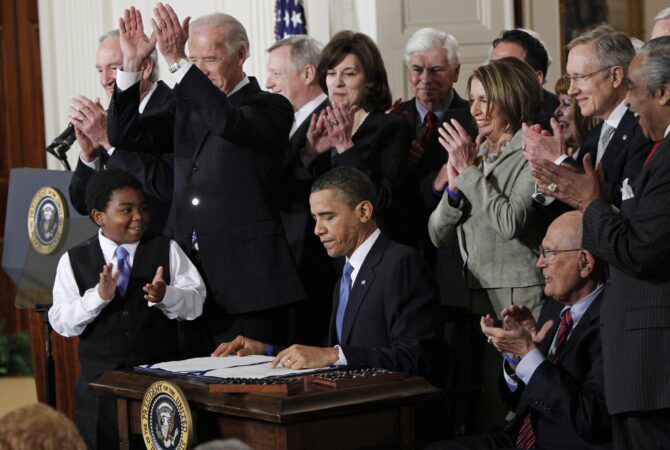
    When President Barack Obama crafted the ACA, he envisioned a public option. A public option is healthcare provided by the government. That means government hospitals, clinics, doctors, nurses, technicians, and administrators. During the incubation of the ACA, the Obama administration realized a public option was far too controversial to be passed by Congress. So it birthed an insurance-based ACA that would use the existing U.S. healthcare structure. The problem is that medical costs and insurance premiums have far outstripped inflation since the passage of the ACA. The ACA has little control over these costs, and therefore, government subsidies are the only option to mitigate the impact on those among us who are most vulnerable to price increases. We cannot depend on the private sector to control the costs of healthcare. ACA government subsidies are a short-term solution. Donald Trump’s direct payments will do nothing to mitigate healthcare’s accelerating costs. Like it or not, the United States will have to implement a public option to control costs and provide a healthcare safety net. The current course and speed are simply unaffordable and will contribute to bankrupting the country.

    Here’s the good news: We can use the U.S. Department of Veterans Affairs healthcare infrastructure as the base on which we can make the public option a reality. The VA currently provides service to over nine million vets at a cost of $68 billion a year. There are over 170 VA medical centers, 1,300 outpatient clinics, and other sites. This is a start. Compare that with ACA subsidies of $138 billion in 2025 before factoring in the average individual annual cost of $7,428 (in 2025). Yes, this is a national health system where the government can control healthcare costs. Yes, this will reduce one’s healthcare choices. Yes, this will be an affordable healthcare safety net alternative to the current unsustainable and unaffordable healthcare system.

    William F. Spang Jr., Philadelphia

    Art of deflection

    After the horrific attacks of Sept. 11, 2001, the Bush administration announced that Saddam Hussein, president of Iraq, had weapons of mass destruction and needed to be removed. Thus, the ensuing Iraq War, the removal of Hussein, the loss of over 100,000 civilian lives, and 4,400 American troops, only to discover there were no such weapons of mass destruction. Further investigation determined George W. Bush had plans to attack Iraq even before the terrorist attacks of 9/11. Why? Iraq contained massive reserves of oil.

    Fast-forward to 2025, and the Trump administration is beating the war drums against Nicolás Maduro and Venezuela. Claiming it is responsible for the flow of fentanyl, the president has launched dozens of airstrikes against supposed drug boat smugglers without evidence or with congressional input. New measures are being planned for possible attacks within Venezuela and perhaps boots on the ground. “I have not ruled out using troops,” Donald Trump recently asserted. Our largest aircraft carrier has been stationed just off the Venezuelan coast. Venezuela happens to have the largest oil reserves in South America. There is scant evidence that Venezuela is involved in drug smuggling, unlike neighboring Colombia and its infamous drug cartels. Why no military actions against it? As the Epstein files near release and flagging poll approval numbers, Trump desperately needs a diversion. Venezuela could be just the ticket. Fool me once, shame on you; fool me twice, shame on me. Let’s not be fooled again.

    Angus Love, Narberth

    Join the conversation: Send letters to letters@inquirer.com. Limit length to 150 words and include home address and day and evening phone number. Letters run in The Inquirer six days a week on the editorial pages and online.

  • Horoscopes: Sunday, Nov. 23, 2025

    ARIES (March 21-April 19). You’ll present answers. As informed and relevant as you are, it’s your humanity that shines through. That you care enough to not only think deeply into a problem but also bring your creativity and warmth to the solution — that’s what reads.

    TAURUS (April 20-May 20). Truth can be medicine. Truth can be ammunition. The difference today will be about timing. Gradual, graceful, patient and aware — that’s the timing of medicine. Shot from a cannon in a moment of defense — that’s the weaponized version.

    GEMINI (May 21-June 21). You’ll witness why context matters, especially in regard to relationships. You’ll choose people for how they jibe with a certain version of you. They may fit your need perfectly for this chapter, and later you can reassess.

    CANCER (June 22-July 22). All work and no play may make “Jack a dull boy,” but why is there this pressure on “Jack” to be exciting? What’s “dull” can also be the push that gives an advantage or a breakthrough. Follow your ambition.

    LEO (July 23-Aug. 22). Like your body, your heart is vulnerable to occasional bumps and bruises. When it hurts, it’s OK to say so. And if you don’t, you might hurt more. The attempt to conceal pain makes it more acute. So just let it out.

    VIRGO (Aug. 23-Sept. 22). You understand that your truth isn’t the only truth, and you respect the rights of others, including their right to disagree. Respecting another’s truth doesn’t shrink your own; it deepens it. You grow larger each time you make space for difference.

    LIBRA (Sept. 23-Oct. 23). There is art in a concept, but until the plan is executed, the concept is not the art. You can’t build it all in a day, but you can take a few steps. Tonight, you’ll notice what people need. You’ll handle an issue before it’s a problem.

    SCORPIO (Oct. 24-Nov. 21). Your heart is as full, generous and sensitive as the other more demonstrative people in your midst, but you don’t always show it. You have your reasons for this. Just be sure to express yourself when you feel safe to.

    SAGITTARIUS (Nov. 22-Dec. 21) Mothers do it. Spouses do it. Teachers, mentors and lovers do it. they deflate the moment not because they dislike you, but because your sparkle rearranges the power dynamic. You become the sun; they need sunglasses. Make the joke anyway. Do it for you.

    CAPRICORN (Dec. 22-Jan. 19). The tension between family members is just a normal part of being human. You will always share something with parents and siblings, for better or worse. They are a part of you. Accepting them for who they are is accepting yourself.

    AQUARIUS (Jan. 20-Feb. 18). You’re a kind commenter both in the digital and actual world, and that will be highlighted today. Not only are you an astute observer with a knack for relevant contributions, but you also make people think. They’ll be pondering what you’ve said.

    PISCES (Feb. 19-March 20). You will consciously invest in a relationship. It’s mostly about giving a certain quality of attention. You’ll communicate with the aim of understanding where a person is coming from and what they need, and in this you will succeed brilliantly.

    TODAY’S BIRTHDAY (Nov. 23). Welcome to your Double Dollar Year. You’re rewarded in many meaningful ways, yet it’s the financial piece that keeps everything else possible. Money funds the space, time and freedom where happiness lives and seamlessly weaves comfort into your experiences. More highlights: the end of a trial; winning at games; group fun that produces very special one-on-one relationships. Pisces and Aries adore you. Your lucky numbers are: 6, 13, 2, 10 and 40.

  • Dear Abby | Chided boyfriend has nursed a grudge for six years

    DEAR ABBY: My daughter is asking me to apologize to her boyfriend, “Harry,” for yelling at him when I was helping them move six years ago. (I had traveled 250 miles to help.) The day of the move, Harry didn’t take the day off work, so he wasn’t there to help. (They had a second-floor unit with no elevator.) When he finally did show up, he proceeded to slow-walk taking out the recycling stuff.

    At the new place, Harry helped somewhat, but when the food was delivered, rather than continue to help, he decided to sit down and eat while the other two helpers and I continued moving stuff in. (This was 10 hours into the move.) That’s when I lost it. I yelled at him for not helping more. All he had done in his relationship with my daughter was go to work, come home and play video games. He didn’t help around the house or show any interest in helping with their son.

    Over the last few years, Harry has changed somewhat in helping with his son, but my daughter now feels stuck in the middle and wants me to apologize to him for yelling. I have made no disparaging remarks about him since. I even liked some of his posts on Facebook.

    I have gotten over it, but it seems Harry hasn’t. I told my daughter he needs professional help. The last time I visited, he stayed in a hotel for the weekend. My son says it should be an apology going both ways and should come from Harry first. What do you think?

    — FAMILY DILEMMA IN CANADA

    DEAR FAMILY DILEMMA: Face it. Your daughter’s boyfriend is an overgrown child. Count your blessings that she isn’t married to him. Someone has to be an adult, and I am voting for you to fill that role by taking the first step. Hold your nose and apologize to Harry, if only for your daughter’s sake.

    ** ** **

    DEAR ABBY: Should parents be allowed to send birthday invitations to school if only select students are the recipients of the invitation? I’m the parent of a (very) special needs pre-K child. Daily, I feel the heartache of her challenges and her desire for connection with others. On the parent FB group, someone recently posted about their daughter’s birthday. It said those who received an invite should text the cell phone number listed for a change of plans. We never received an invite.

    Were we the only ones excluded? If I’m honest, my emotions may be particularly fragile when it comes to my daughter and inclusion. I do think people should be able to invite only their friends. However, it seems to me that discretion on the part of the parent who is hosting would be more polite and kind. Parents should make a point to know their child’s friends’ parents’ contact information. Do you have an opinion?

    — UNINVITED IN THE EAST

    DEAR UNINVITED: I’m with you 100%, speaking for myself as an adult who was once a child who was excluded. For many reasons, parents should make a point of having their child’s friends’ parents’ contact information. That information could be crucial in case of an emergency.

  • Kaytron Allen becomes Penn State’s career rushing leader as Nittany Lions pound Cornhuskers 37-10

    Kaytron Allen becomes Penn State’s career rushing leader as Nittany Lions pound Cornhuskers 37-10

    STATE COLLEGE — Kaytron Allen ran for 160 yards and two touchdowns, and Penn State’s defense played its best game of the season to keep the Nittany Lions’ bowl hopes alive with a 37-10 win over Nebraska on Saturday night.

    Allen, who racked up 181 yards rushing in last week’s win against Michigan State, became Penn State’s career rushing leader with 3,954 yards, passing Evan Royster’s 3,932 set in 2010.

    The senior back plowed through and zipped around the Huskers all night. Allen passed Saquon Barkley on the school’s career rushing list in the first half before eclipsing Royster with a 3-yard run in the fourth quarter.

    By then the Nittany Lions (5-6, 2-6 Big Ten) had put the game out of reach, scoring on five-straight possessions while their defense stymied the Cornhuskers.

    Allen ripped off a 50-yard run around Nebraska’s left flank on the Nittany Lion’s opening drive to help setup a short touchdown toss from Ethan Grunkemeyer to tight end Andrew Rappleyea.

    Ryan Barker booted a 26-yard field goal, then Nicholas Singleton capped Penn State’s next two drives with 4- and 10-yard rushing touchdowns to make it 23-3 at halftime.

    Emmett Johnson had 19 carries for 103 yards and eight catches for 48 for yards for the Cornhuskers (7-4, 4-4), who have lost three of their last five.

    They didn’t give themselves much of chance in head coach and State College native Matt Rhule’s return to Beaver Stadium.

    Nebraska mustered just 140 yards in the first half, turned the ball over on downs twice and punted twice more. Penn State forced three more turnovers on downs in the second half.

    Kyle Cunanan kicked a 31-yard field goal in the second quarter, but the Cornhuskers didn’t find the end zone until quarterback TJ Lateef scrambled 11 yards through a broken play to cut Penn State’s lead to 30-10 with 0:55 left in the third.

    Allen scored on a 3-yard run to open the second half. He added a 13-yard rushing touchdown early in the fourth, which prompted bundled-up Penn State fans to chant “Terry, Terry, Terry!” as interim coach Terry Smith wiped tears from his eyes on the sideline.

    The takeaway

    Nebraska: The Huskers struggled to move the line of scrimmage on both sides of the ball and as a result, may have cost themselves a shot at a top-tier bowl game.

    Penn State: The Nittany Lions won back-to-back games for the first time under Smith, but will need to win a third to extend their season and avoid their first losing full-season record since 2004.

    Up next

    Nebraska: Hosts Iowa on Friday.

    Penn State: Visits Rutgers on Saturday.

  • Flyers put on offensive clinic, defeating Devils 6-3 on night the franchise honors Bernie Parent

    Flyers put on offensive clinic, defeating Devils 6-3 on night the franchise honors Bernie Parent

    Bernie Parent surely liked an easy night or two between the pipes. He probably also liked it when his team staked him to a big lead.

    On Saturday night, as the Flyers honored the Hall of Fame goalie, who backstopped the Orange and Black to consecutive Stanley Cup championships in 1974 and 1975 and died on Sept. 21 at the age of 80, the Flyers put on an offensive show.

    In front of an announced sellout, they defeated the New Jersey Devils 6-3, giving them two straight wins and three in the past four.

    It’s funny how Bruce Springsteen once sang: “If I should fall behind, wait for me.” Fans should heed that because despite trailing — once again — the Flyers came back.

    This time with authority.

    First, they trailed 1-0 on a Timo Meier power-play goal that saw Sean Couturier’s clearing attempt go off the leg of Nico Hischier and stay in the zone. It led to sustained pressure by the Devils, with Meier just missing at the right post, before the Swiss forward grabbed a puck out of midair, got a shot on goal, and buried the rebound.

    For the record, it is the Flyers’ 11th win of the season and ninth comeback win. But this may have been the flashiest one.

    The Flyers scored five straight goals beginning with Noah Cates 83 seconds after Meier’s goal. Devils goalie Jake Allen knocked away the centering attempt by Cates, but defenseman Egor Zamula, skating in his first game since Nov. 2, hopped on it and put a shot on goal. Allen made the save and then swatted the puck away again, but this time right to Cates for his fifth goal of the season and first since Nov. 6.

    Then from 12:06 to 12:32, the Flyers set a franchise record with three goals in 26 seconds.

    Matvei Michkov gave the Flyers a 2-1 lead with his fifth of the season and fourth in seven games. Couturier tipped a cross-ice pass by Meier inside the Flyers’ blue line, forcing Hischier to skate past the puck. Couturier then sent the puck to Michkov as the Russian winger, skating in his 100th NHL game, split through the defense and outskated three Devils before beating Allen stick-side.

    In the blink of an eye, technically nine seconds later, it was 3-1 Flyers. Off the faceoff, won by Cates, they transitioned the puck up the ice with Travis Konecny sending the pass across to a flying Cates. He dipped the shoulder on Juho Lammikko and sent the puck from the right face-off circle to Tyson Foerster in the left circle for the one-timer.

    Foerster scored again, 17 seconds later, this time from the right circle. Defenseman Nick Seeler poked the puck away in the neutral zone, and Cates scooped up the puck, creating a three-on-two for the Flyers. Cates dished the puck over to Foerster, and he sent a blistering wrister past Allen. He now has seven goals on the season.

    In the second period, Bobby Brink added to the goal total with his sixth of the season. Along the boards in front of the Flyers’ bench, Couturier protected the puck from Devils defenseman Dougie Hamilton and then forward Connor Brown before finding Brink as he looped in the neutral zone. The Minnesotan skated in and appeared to use Devils defenseman Jonas Siegenthaler as a screen to beat Allen and give the Flyers a 5-1 lead.

    Hischier did score in the middle frame to make it 5-2, taking a pass from defenseman Luke Hughes. And he scored again with 6:33 left in regulation when he deflected in a Šimon Nemec point shot.

    But goalie Dan Vladař also came up big in his own right. In the third period, he stopped Meier off a cross-crease pass on a two-on-one and robbed Hischier between his pair of goals when the Devils captain had two big chances while shorthanded. And he got some help on a weird carom, with Jamie Dyrsdale and Cates keeping a loose puck in the crease out of the net.

    Trevor Zegras then put the game away when he roofed his shot on a breakaway. In the Flyers’ end, Christian Dvorak knocked the puck away from Brown, and Owen Tippett tracked it down to feed Zegras. It was the seventh goal of the season for Zegras, who scored just 12 times last season and bested his high from 2023-24 when he was held to 31 games due to injury.

    Breakaways

    Zamula and Seeler each had a plus-minus of plus-5. … Flyers defenseman Travis Sanheim skated in his 599th NHL game.

    Up next

    The Flyers begin a four-game road trip on Monday against the Tampa Bay Lightning (7 p.m., NBCSP).

  • Temple falls to Tulane, 37-13, placing its bowl eligibility in jeopardy

    Temple falls to Tulane, 37-13, placing its bowl eligibility in jeopardy

    One month ago, the Temple Owls seemed like a sure thing to make their first bowl game since 2019. The Owls were 5-3 and riding a two-game win streak.

    Now Temple’s hopes are on life support.

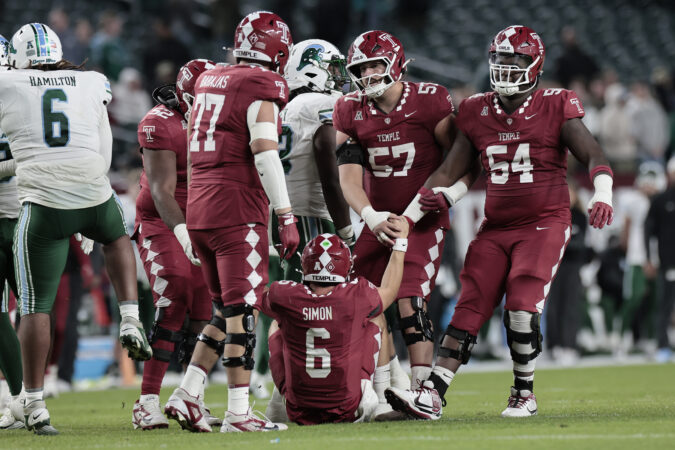
    The Owls dropped their third straight game in a 37-13 loss to No. 24 Tulane on senior day at Lincoln Financial Field. The loss placed the Owls’ record below .500 for the first time all season.

    Temple (5-6, 3-4 American Conference) recorded just 204 yards of offense and quarterback Evan Simon went 21-for-32 for 168 yards and two touchdowns. Tulane (9-2, 6-1) racked up 406 yards of offense.

    “Tulane is a really good football team,” Temple coach K.C. Keeler said. “Our execution level versus their execution level, it was not the same. So disappointing and we have one more shot at this thing.”

    The Owls’ last gasp of making bowl eligibility lies in their ability to beat a North Texas team that is tied for first in the American.

    Stagnant offense

    Temple’s offense hit a snag against Army and East Carolina in its last two games before the bye week. The Owls offense looked to get back on track against a Tulane defense that ranked last in the American in passing defense.

    Instead, Temple’s offense continued to struggle.

    The Owls recorded just 21 yards on their first two drives as Tulane jumped in front, 7-0. Temple seemingly unlocked the Green Wave defense with a methodical 75-yard drive to tie the game late in the first quarter.

    Then, it disappeared again. The Owls’ lack of offense allowed the Green Wave to open up a three-possession halftime lead.

    Temple quarterback struggled to produce offense as he faced increased pressure.

    “I think they started getting a little more pressure and Evan didn’t have the time [in the pocket],” Keeler said. “Typically, in the past, when he has pulled the ball down, he’s been able to get some positive yards. [Tulane] is pretty athletic and pretty talented. They’re the 24th-ranked team in the country for a reason.”

    The Owls offense finally got back on the board with a 2-yard touchdown pass from Simon to wide receiver Colin Chase. But it was not a factor in the final outcome.

    The running game was especially stagnant for Temple. The Owls had just 20 rushing yards on 20 carries in the game, with their leading rusher Jay Ducker picking up only 17 yards on seven carries.

    Secondary struggles

    The Owls secondary has been a point of concern all season, and it took just two plays for Tulane to exploit that weakness.

    Quarterback Jake Retzlaff delivered a 69-yard strike to wide receiver Shazz Preston, who beat Temple corner Jaylen Castleberry on Tulane’s second offensive snap to take a 7-0 lead. Retzlaff routinely found open receivers. He finished 17-for-28 for 231 passing yards and two touchdowns.

    “We thought they would lull us to sleep a little bit, then take their shots downfield,” Keeler said. “The first drive of the game, I guess the second play of the game [is a shot downfield]. We’re there, we just don’t make a play.”

    Temple’s secondary was also undisciplined. Castleberry and safety Jamere Jones were flagged for pass interference and holding, respectively, on passes downfield. The penalties helped the Green Wave get in position to score another touchdown and take a two-possession lead.

    Mixed results stopping the run

    Retzlaff’s calling card is his rushing ability from the quarterback spot. He entered the game as Tulane’s leading rusher with 557 yards and 11 rushing touchdowns. The Owls have struggled to stop dual-threat quarterbacks.

    Temple successfully contained Retzlaff on the ground, holding him to 8 rushing yards on five carries, and one rushing touchdown.

    However, it failed to stop the rest of the Green Wave’s rushing attack.

    Running back Jamauri McClure gashed the Owls for 122 yards on 17 carries. Javin Gordon added 27 yards on eight carries as Tulane finished with 175 total yards on the ground.

    Up next

    Temple will hit the road for its final game of the regular season against North Texas (10-1, 6-1) on Friday at 3:30 p.m. (ESPN).

  • Lane Johnson does not need surgery and may be back sooner than expected

    Lane Johnson does not need surgery and may be back sooner than expected

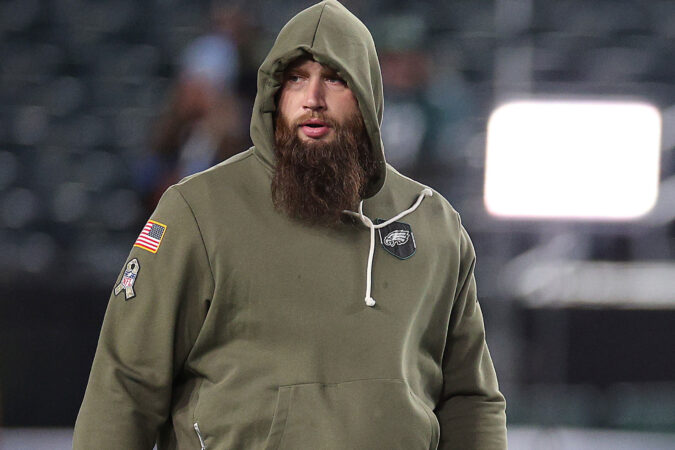
    FORT WORTH, Texas — The Eagles didn’t place right tackle Lane Johnson on injured reserve on Saturday after they learned he wouldn’t need foot surgery and may be back earlier than original estimates, NFL sources told The Inquirer.

    Johnson suffered a Lisfranc injury in the first quarter against the Lions last Sunday and didn’t return. Initial tests indicated he would miss four to six weeks, which would have likely sent him to IR until the postseason.

    The inflammation in Johnson’s right foot needed to go down before he could have X-rays. The results may be the best-case scenario for the 13-year veteran and the Eagles.

    If Johnson were to miss just three games, the perennial Pro Bowl offensive lineman would be back in time for the Raiders game on Dec. 14. The Eagles’ next three games are at the Cowboys on Sunday, home vs. the Bears on Black Friday, and at the Chargers on Dec. 8.

    Fred Johnson, who has jumped in at right tackle several times this season, will be at the position at AT&T Stadium in Arlington, Texas. The Eagles are 120-62-1 in games Lane Johnson has played and 15-24 in games he has not, including the playoffs, over his career.

    He played in each of the first 10 games of this season, but has missed parts of four with various dings. Johnson has endured his share of injuries in his career, playing through many. In 2022, he delayed surgery to a torn adductor tendon in his groin until after the Eagles played in the Super Bowl.

  • Penn caps its football season with a win over Princeton

    Penn caps its football season with a win over Princeton

    For the first time since 2017, Penn defeated Princeton, 17-6, at home on Saturday.

    A dominant defensive showing from the Quakers left Princeton (3-7, 2-5 Ivy), which entered the matchup on a four-game losing streak, unable to move the ball. Penn (6-4, 4-3 Ivy) kept Princeton scoreless in the second half, which included a game-sealing interception from safety Ty Cortez.

    Penn’s offense needed just three scores to put the game away, fueled by quarterback Liam O’Brien, who threw for 243 yards and two touchdowns.

    “There is no love lost about beating Princeton,” said coach Ray Priore. “Penn football, basketball, Penn-anything vs. Princeton. I don’t know what it is … it’s a great rivalry.”

    Uncertainty ahead

    Penn will graduate 27 seniors, including major contributors in O’Brien, receiver Jared Richardson, team-leading tackler linebacker John Lista, and star defensive tackle Carter Janki, among others.

    With 10 of those players being starters on offense, the roster will see a major overhaul heading into 2026 — which isn’t a worry for Priore.

    “It’s always sad to see kids graduate,” Priore said. “Did we know Liam O’Brien was going to be Liam O’Brien? … We have really good young players.”

    Failing to win an Ivy League championship for the ninth consecutive season, Priore says the Quakers need to get back to work.

    “It never stops,” he said. “I have my phone blowing up, we have kids that are going to get accepted early decision here. The process is ongoing, but it’s something you love to do.”

    Hello to history

    Richardson became the first Penn receiver to eclipse 1,000 receiving yards in a single season since Justin Watson in 2017. Richardson hit the mark with a 9-yard reception in the third quarter.

    An earlier 9-yard catch in the second quarter gave the Monroe County native 2,445 career receiving yards, good for third all-time in in program history.

    “It’s special knowing that Penn was the only Division I school that gave me an offer,” Richardson said. “It was a blessing. Thank you, Coach P, I appreciate the opportunity.”

    Richardson had 97 yards on 12 receptions Saturday to finish the season with 1,035 receiving yards and 2,507 all-time.

    Saying goodbye

    Senior Davis Ellis recorded his first collegiate touchdown on a 2-yard screen pass to cap Penn’s first offensive drive.

    On defense, Janki tied his career high in tackles with nine — while also receiving two snaps in the backfield on offense. Adding to the trickery, Penn’s final meaningful offensive snap was a failed pass attempt from Richardson to O’Brien.

    Despite the disappointing season, Richardson, O’Brien, and Janki all had smiles on their faces leaving the post-game news conference.

    “We all came in freshman year, we were all hungry,” O’Brien said. “We all had that same desire of loving football and wanting to be on the field. We all had our own journeys, it’s unique on how we got there. The one thing that was consistent was that we all knew how to work.”