Blog

  • Comcast plans to split into two public companies by spinning off NBCUniversal and Sky

    Comcast plans to split into two public companies by spinning off NBCUniversal and Sky

    NEW YORK — Communications giant Comcast is planning to split itself into two: one media-centered business that would include brands like NBCUniversal and Sky and a separate company focused on broadband and wireless services.

    In a Monday announcement, Comcast said the breakup will put both of these operations in a better position to pursue their own priorities and growth. The move arrives as communications companies continue to wrestle with years of cord-cutting, and shifting habits in how consumers now buy subscriptions for anything from their phone plans to streaming budgets more broadly.

    “The world is changing faster than ever,” Comcast Chairman and co-CEO Brian Roberts said on a Monday call — adding that it “has become clear” the company’s technology and media businesses each “have compelling opportunities in front of them that are distinct in nature and best pursued with dedicated focus.”

    Brian L. Roberts: “The world is changing faster than ever.”

    Upon the spinoff’s completion, both businesses would become their own publicly-traded companies. Comcast said it expects to complete the process in about a year, pending regulatory approvals and a final greenlight from its board.

    That means consumers shouldn’t feel immediate impacts. But a host of major brands currently sit under Comcast’s umbrella — from internet and wireless provider Xfinity to streaming platform Peacock, NBC News, and Universal Studios. And analysts are eyeing what those businesses could look like further down the road.

    What could be in store for NBCUniversal and Comcast

    “In the short term, bundles, pricing, and distribution will likely hold,” said Mike Proulx, a vice president and research director at market research firm Forrester. For NBCUniversal — set to head the media-centered company Comcast is spinning off — the split in itself carries little effect on its current business, he noted, and is “more to do with what it becomes longer term.”

    Proulx is bracing for future acquisitions in this space, adding that “Comcast is following a playbook we have already seen.” He pointed to Warner Bros. Discovery, which announced its own intention to split just last June — before becoming a takeover target that erupted into a messy tug-of-war between Netflix and Skydance-owned Paramount. Paramount eventually became victorious, and is now edging closer to closing its $81 billion buyout of Warner’s entire company.

    Comcast executives have appeared to so far dismiss the possibility of heading toward a similar fate. When asked on Monday’s call whether investors should view the separation as a step toward “potential strategic transactions” for either business, Roberts said: “Absolutely not.”

    Mike Cavanaghis co-CEO of Comcast and set to become chief executive of the NBC Universal spinoff in the split. (Comcast Corp./TNS)

    His co-CEO Mike Cavanagh — who is set to become the chief executive of the NBCUniversal spinoff — echoed that sentiment. Cavanagh reiterated plans to “build and invest for growth” with more freedom as a standalone business.

    Still, analysts like Proulx speculate that even if NBCUniversal doesn’t become a takeover target, “it’ll likely be the company doing the acquiring.”

    “As it stands, traditional TV is dying, and Peacock alone isn’t enough to compete at scale against the biggest streaming services,” Proulx said via email. “One way or the other, NBCU’s entertainment business will look different within the next couple of years.”

    This isn’t the first spinoff for Comcast

    Like other companies, Comcast in recent years has shifted its business emphasis away from traditional cable toward streaming and other sources of revenue, such as its movie studio, theme parks, and home wireless and internet services.

    NBCUniversal includes that theme parks division, Universal film and television studios, NBC and Telemundo networks, Peacock, and Bravo — and with the spinoff, European media business Sky will also be part of that portfolio led by Cavanagh.

    Meanwhile, Philadelphia-based Comcast will continue providing internet services to residential and business customers. Comcast’s former Chief Financial Officer Michael Angelakis will become the CEO of that company following its separation.

    Comcast has split off assets before. Monday’s move arrives just months after the company officially completed its separation of Versant Media Group — which, as first announced in November 2024, is the new home of networks like USA, Oxygen, E!, SYFY, and Golf Channel, as well as CNBC and MSNBC (now MS NOW). Movie ticketing platform Fandango and the Rotten Tomatoes movie rating site were also included.

    Once the latest split is complete, Comcast shareholders will own shares in both Comcast and NBCUniversal. Comcast expects to keep a stake of up to 19.9% ownership position in NBCUniversal for up to one year after the spinoff is complete.

    Comcast shares jumped more than 6% as of midday trading following Monday’s announcement. Shares still are down over 10% since the start of 2026.
  • Float builders are transforming history into colorful, sequin-filled displays for the Semiquincentennial parade

    Float builders are transforming history into colorful, sequin-filled displays for the Semiquincentennial parade

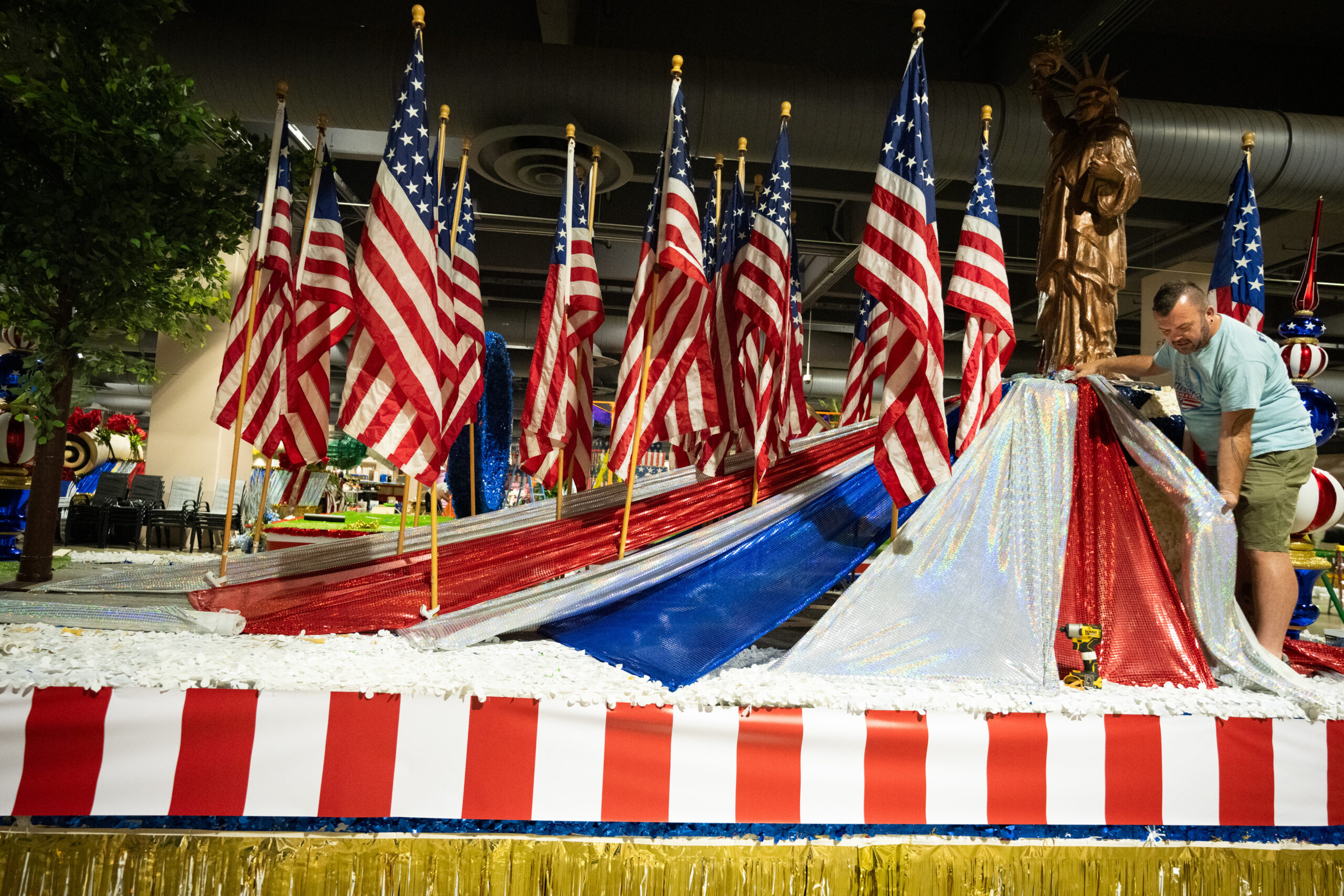
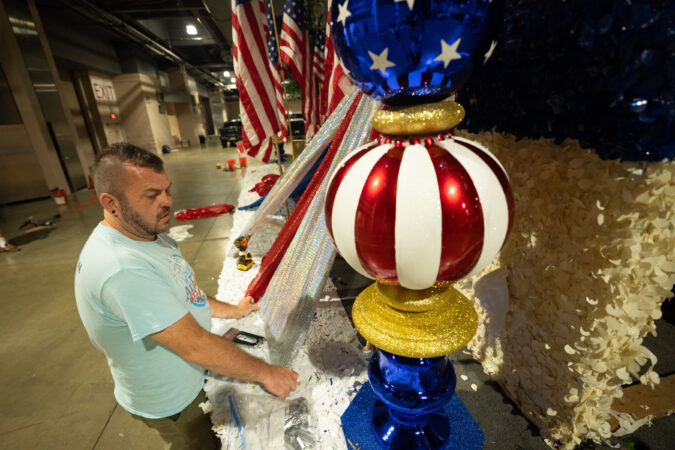
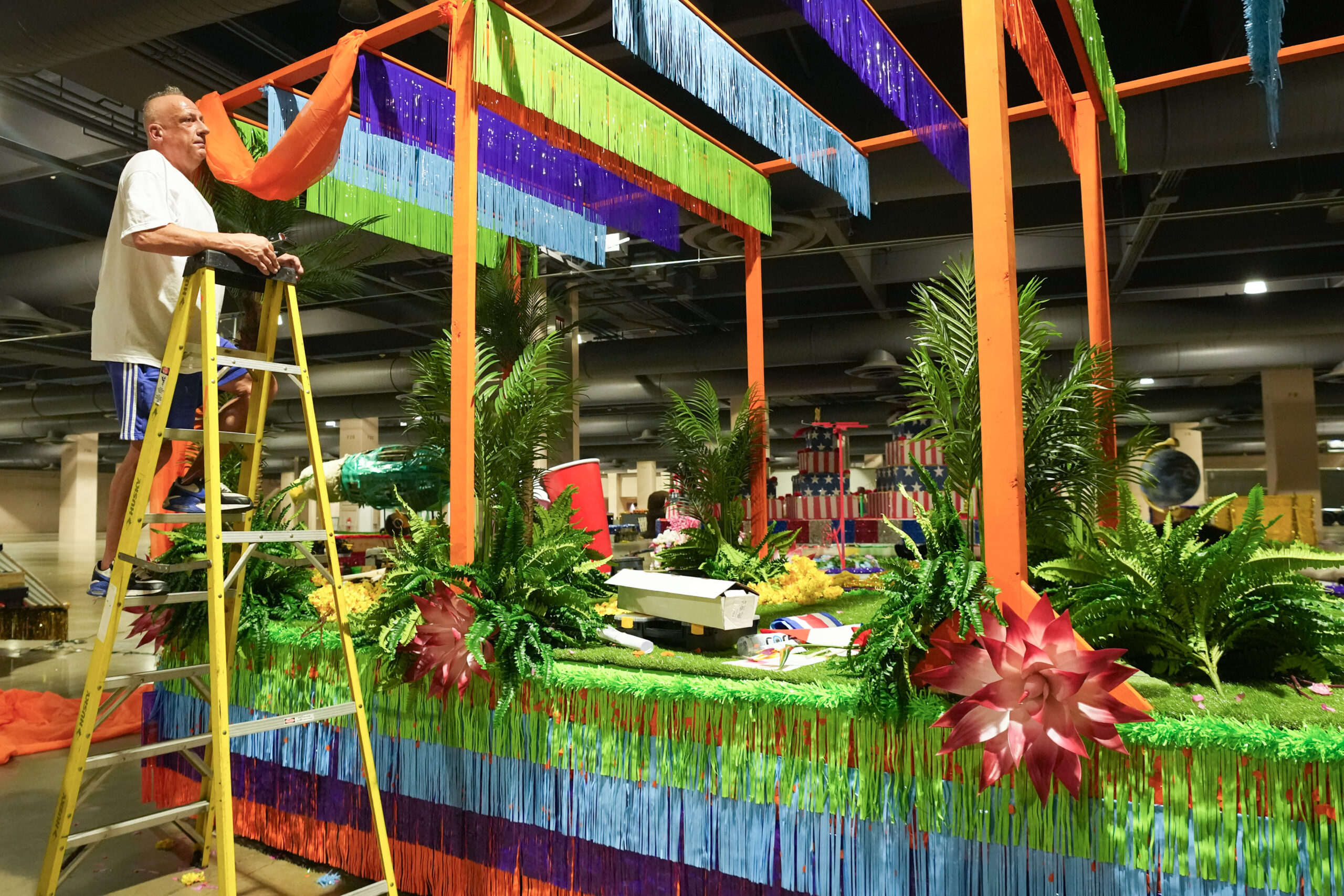
    In the dull glow of the overhead Convention Center lights, Todd Marcocci and a band of craftspeople stood next to large wheeled platforms, some housing floral gazebos, others a recreation of a Pennsylvania farm. Sweat dripping from his brow, Marcocci intently drilled palm tree crowns into the base of a platform dedicated to Central and South America.

    With just days until Philadelphia’s Semiquincentennial parade, Marcocci, alongside his crew and John Shaw of Shaw Parades, is assembling 19 parade floats to commemorate the United States’ 250th birthday.

    Todd Marcocci works on a float back stage with the crews of Friday’s parade and festival.

    The “Salute to Independence” Semiquincentennial Parade is scheduled to begin at noon Friday nearwhere the Declaration of Independence was signed in 1776, which Marcocci reminded himself of while he designed a historical parade.

    “I told all the groups who signed on for the parade that we’ll be lining up in the footsteps of the Founding Fathers,” Marcocci said. “We’ll walk through history.”

    In the halls of the Pennsylvania Convention Center, where float builders worked on Monday, larger-than-life recreations of Martin Luther King Jr. and Harriet Tubman awaited placement on a platform celebrating the Civil Rights movement.

    Mike Oyer works backstage on the floats.

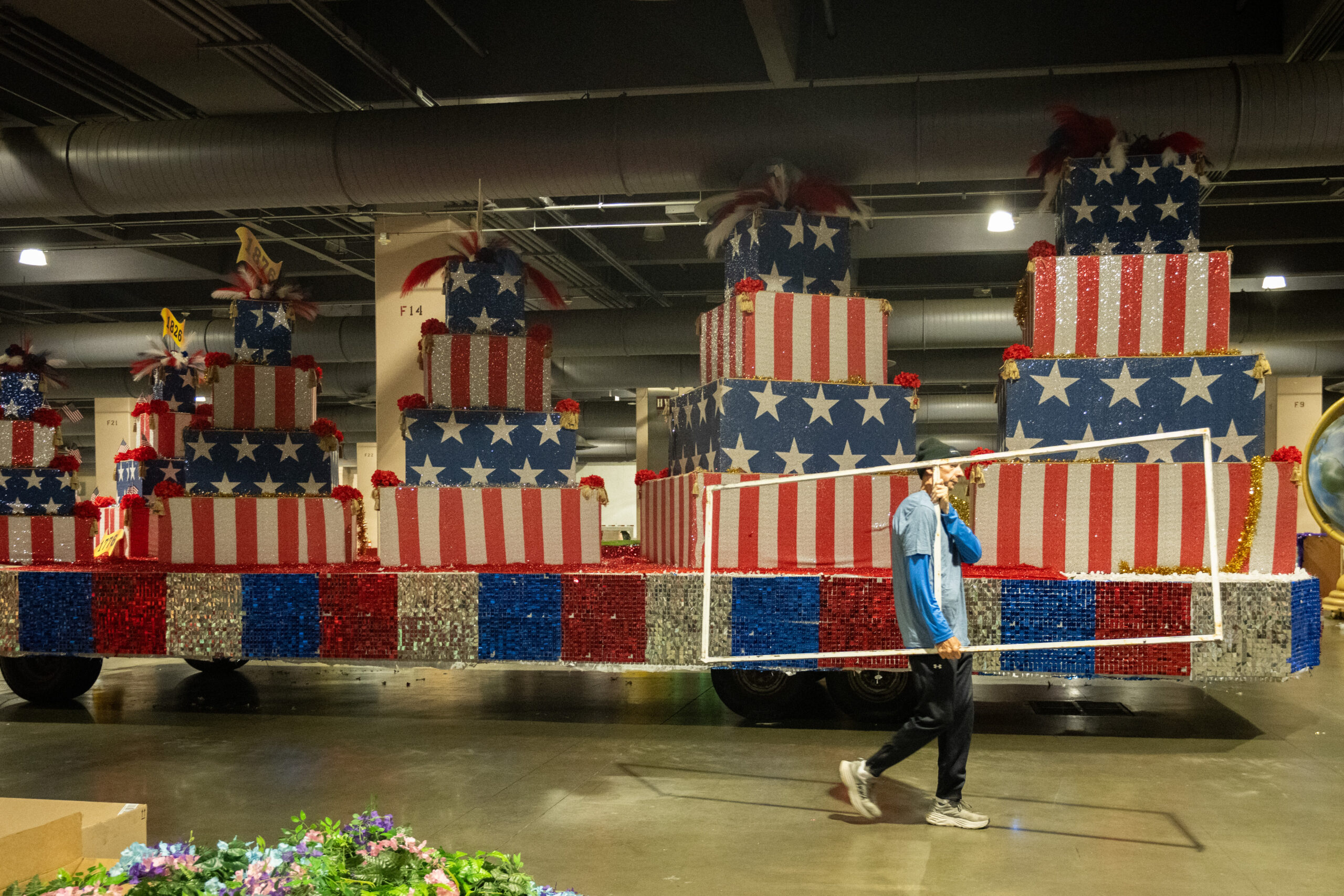
    The next float over was bathed in white sequins, where a giant “peace dove” sculpture accompanied by a globe would rest. A few paces over sat a 6-foot-tall Wawa smoothie and coffee cups, and right by that were multiple United States-themed layered birthday cakes marking the various anniversaries of the country.

    Shaw worked a blade saw, slicing through two-by-fours to construct the float frames that Marcocci and Co. were painstakingly deciding the minutiae of, such as how many American flags or sequins can be threaded through a float.

    Annie Woods (left) and Johanna Gelber working on the floats.

    Shaw, whose parade float company has passed down through four generations, said Philly Fourth of July parades usually average seven floats. “This year it’s almost tripled,” he said. “Todd designs everything in his head, and then we collaborate back and forth to come up with the plan to actually make these ideas work.”

    Mayor Cherelle L. Parker will be on board the “One Philly — A United City” float, which features a large sculpture in the shape of the number 1 and a butterfly-and-floral gazebo symbolizing the city’s commitment to a clean and green city, Marcocci said.

    Jeremy Williams, works on a float back stage.

    A Liberty Bell float will commemorate some of the Founding Fathers and Betsy Ross with an Independence Hall backdrop. Another celebrates Philadelphia Pride with prominent LGBTQ figures and pride flags atop a vibrant rainbow platform.

    “The most important thing for me is that people, whether they’re watching on TV at home across the nation or here in person, is that they see themselves in our parade,” Marcocci said of representing the diversity of America’s history.

    Philadelphia’s Semiquincentennial Parade on Friday starts at noon at Fifth and Chestnut Streets, passing such historical landmarks as Independence Hall before heading to Sixth and Market Streets and then west on Market to circle City Hall before ending at Broad and Chestnut Streets after a heat emergency was declared, cutting short the route that was to continue to Logan Circle and loop around before heading back to City Hall.

    Fan zones are at Sixth and Market Streets , 11th and Market, and the northeast side of City Hall, where a bar is available for those 21 and over.

    Television coverage is on NBC10.

  • Supreme Court rules mail-in ballots arriving after Election Day can be counted

    Supreme Court rules mail-in ballots arriving after Election Day can be counted

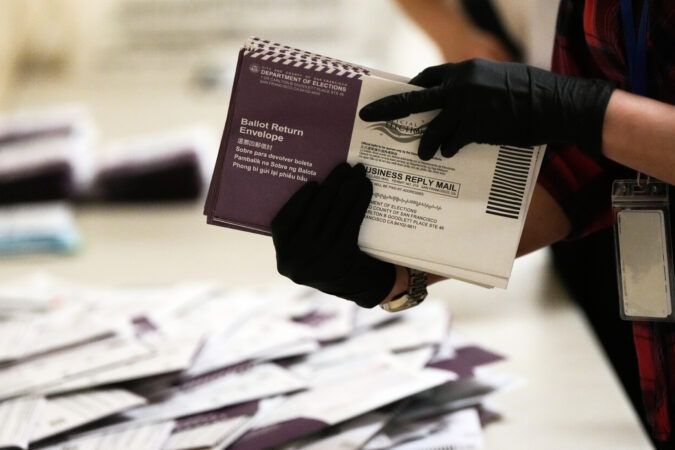
    The Supreme Court on Monday upheld a Mississippi law that allows officials to tally mail-in ballots postmarked by Election Day that arrive later, a decision that keeps voting procedures in place in several states as the midterm elections loom.

    In an ideologically mixed 5-4 ruling, the justices turned aside a challenge by Republicans and Libertarians, who argued federal law preempts a Mississippi statute that allows the counting of such ballots that arrive up to five days after polls close.

    The decision could make less likely similar legal challenges in 14 states that allow the counting of ballots that arrive days or weeks after polls close, and others that allow military members to return ballots later. Most states require mail-in ballots to be received by Election Day.

    Justice Amy Coney Barrett delivered the opinion for the majority, which included Chief Justice John G. Roberts Jr. and the court’s three liberals. Barrett said federal election law did not address when ballots should be received.

    “The election-day statutes say nothing about ballot receipt, and we cannot add to the words Congress chose,” Barrett wrote.

    The ruling came over the objections of four of the court’s conservatives. Justice Samuel A. Alito Jr. wrote the opinion for the group, which included Justices Clarence Thomas, Neil M. Gorsuch, and Brett M. Kavanaugh.

    “Not only is today’s decision inconsistent with statutory text, legal context, historical practice, and precedent; it also threatens to produce lamentable consequences,” Alito wrote. “The majority’s holding spawns a slurry of troubling election-law questions and risks further undermining Americans’ confidence in election integrity.”

    President Donald Trump and some Republican allies have falsely argued that voter fraud is rampant in mail-in balloting. Trump partly blamed his loss in the 2020 presidential election on mail-in votes and unsuccessfully called on states to stop tallying them during the contest.

    Trump called the ruling a “tremendous loss” in a post on Truth Social. He called on Congress to pass the Save America Act, which tightens voter identification laws.

    Republicans in a number of states have launched legal challenges to mail-in voting, which has grown in popularity since the onset of the coronavirus pandemic. One study found about 1 in 3 voters voted by mail in 2024, but the practice is more widespread in Democratic-leaning states.

    Conservatives in Congress also have introduced legislation to limit mail-in voting.

    In March, Trump issued an executive order telling the Postal Service to send ballots only to voters who appear on lists of citizens created by states in conjunction with the federal government. A federal judge in Massachusetts blocked that provision of the executive order last week, saying states — not the president — are responsible for setting election rules.

    Despite his criticism of mail-in voting, Trump voted by mail in a special election in Florida earlier this year.

    In the case decided by the high court, the Republican National Committee, the Mississippi Republican Party, a state voter, and a county election commissioner had sued Mississippi in 2024, claiming it was illegal to count mail-in ballots that arrive after polls close because federal law sets elections for a specific day. The Libertarian Party later filed a similar suit.

    The cases were consolidated by a federal judge, who allowed groups of veterans and retirees to intervene in the suit on behalf of Mississippi. The judge dismissed the case, but the U.S. Court of Appeals for the 5th Circuit reversed that ruling. Mississippi then appealed to the Supreme Court.

    During arguments in March, Paul D. Clement, an attorney for the conservatives, told the justices that casting and counting ballots at the same time has long been “intertwined.” He said allowing mail-in ballots to be counted after Election Day could increase fraud and undermine faith in elections, particularly if the winning candidate was not the one ahead when polls closed.

    “The losers are going to doubt the result, full stop,” Clement said. “That is bad for our system.”

    Mississippi Solicitor General Scott G. Stewart countered that existing law required only that voters fill out their ballots by Election Day. He said mail-in voting has a long history in the United States, pointing to field voting that occurred during the Civil War.

    “States have allowed it for over a century, and Congress has respected it,” Stewart said.

    This term has been an active one for the justices on voting and election issues. In January, the court allowed a Republican congressman from Illinois to challenge the state’s mail-in balloting laws, finding candidates have inherent standing to sue over election rules.

    The case brought by Rep. Mike Bost (R., Ill.) also argues that federal law prohibits ballots from being counted after Election Day. The case was sent back to the lower courts.

    The justices also severely limited a key section of the Voting Rights Act, which has cleared the way for a number of Republican-controlled states in the South to carve up districts held mostly by Black Democrats ahead of the midterm elections. Hundreds of other minority officeholders could be redistricted out of their seats in state and local boards.

    The court has yet to rule in a case challenging limits on spending coordinated between political parties and candidates that is being pushed by the Republican Party. Striking down the spending limits could give Republicans a big money boost in November.

    Fourteen states provide grace periods for all mail ballots, and another 16 provide them for military and overseas voters. Republican-led states have been steering away from ballot grace periods recently, with Kansas, North Dakota, Ohio, and Utah eliminating them last year, according to Voting Rights Lab.

    RNC Chairperson Joe Gruters said Republicans would push Congress to pass legislation requiring ballots in all states to be returned by Election Day.

    “Democrats are inviting chaos at the ballot box by allowing elections to drag on for days and weeks after voters cast their ballots,” he said in a statement.

    Voting rights advocates praised the decision, saying they feared the court could reverse long-standing policies on when ballots are due.

    “Good news rarely comes out of this Supreme Court, but today’s ruling is a win for our democracy,” NAACP President Derrick Johnson said. Virginia Kase Solomón, president of Common Cause, said the decision was correct because voters “shouldn’t lose their voice because of mail delays outside their control.”

  • Joe Frazier statue moves to the base of the Philadelphia Museum of Art

    Joe Frazier statue moves to the base of the Philadelphia Museum of Art

    “Smokin’” Joe Frazier is finally in his new home, just in time for the 250th birthday of the United States.

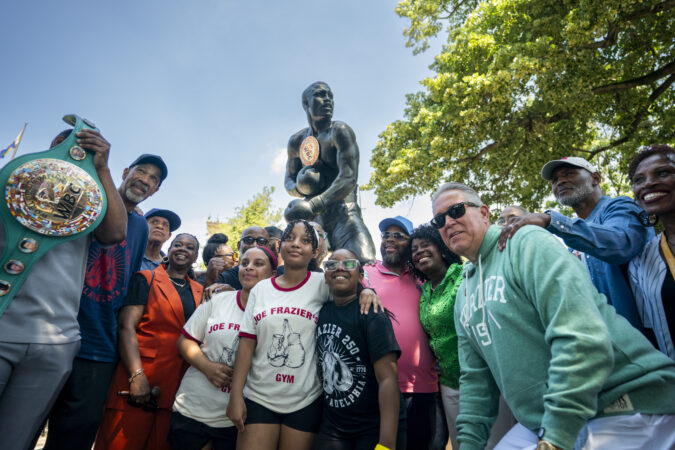
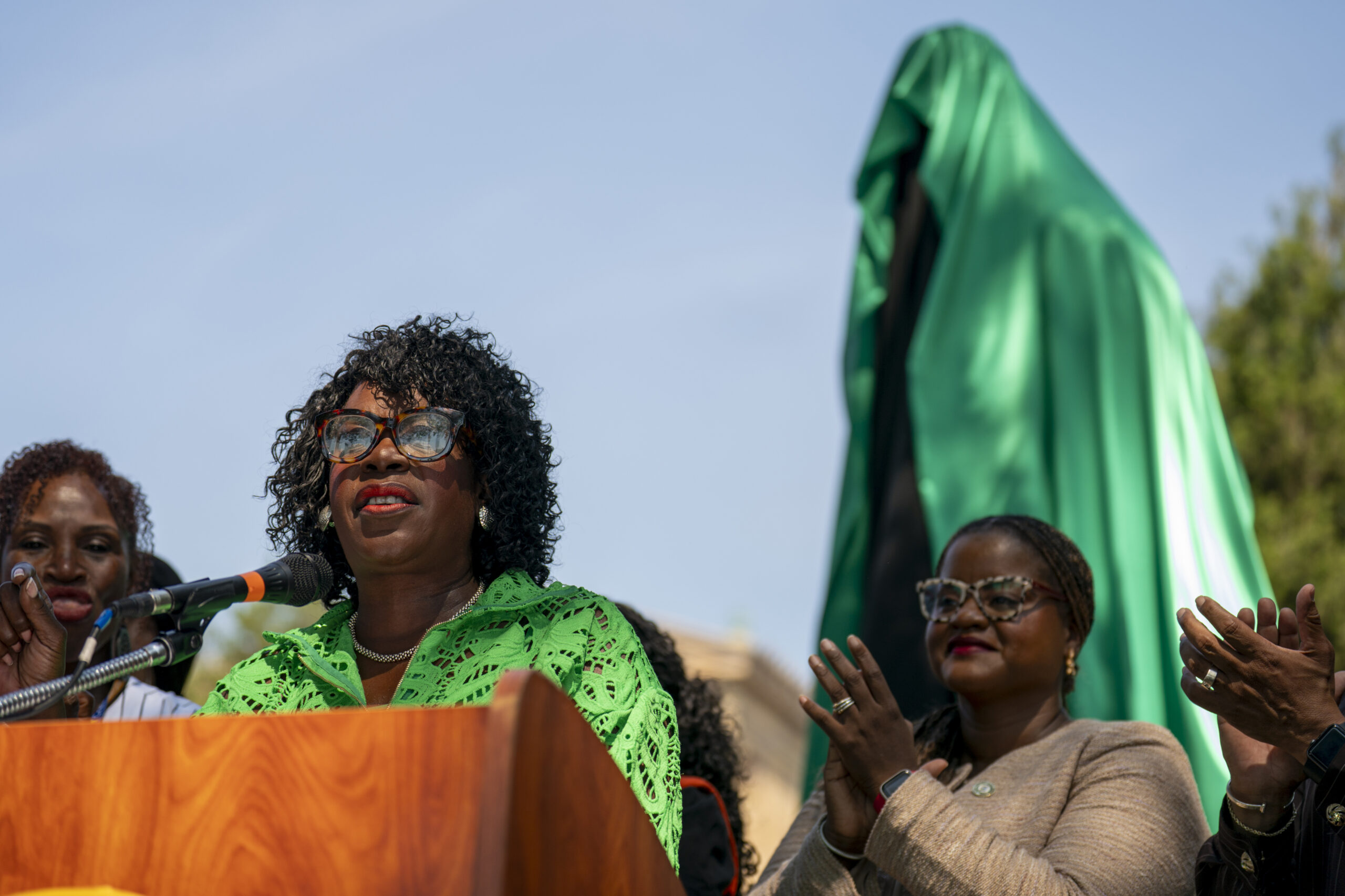
    City officials, alongside Frazier’s family, friends, and fans, on Monday unveiled the real-life heavyweight boxing champion’s statue at the base of the Philadelphia Museum of Art. Intended to be the statue’s new location in perpetuity, the spot was occupied by a monument to fictional boxer Rocky Balboa for two decades.

    “During this 250th celebration in the birthplace of democracy, we will forever remember that the city got right what it had gotten wrong for a long, long time,” Mayor Cherelle L. Parker said. “Now, Joe Frazier is attached, and connected to, and will permanently be here at our Philadelphia Museum of Art.”

    Monday’s unveiling was the culmination of months of planning. The Philadelphia Art commission in February approved a plan to move the statue from by Creative Philadelphia, the city’s office for the creative sector. Chief cultural officer Valerie V. Gay said Monday’s event was something of a “soft launch” for the statue’s new home, as a granite base will be installed in the future, along with more formal interpretive panels.

    Mayor Cherelle L. Parker speaks at the unveiling of the statue of former heavyweight boxing champion Joe Frazier at its new home outside the Art Museum.

    “Today, we did not want to wait,” Gay said.

    Frazier’s statue, after all, lived at the South Philadelphia sports complex for more than 10 years. Created by sculptor Stephen Layne, the statue was unveiled outside what is now Stateside Live! in 2015, four years after Frazier’s death in 2011 following a battle with liver cancer. Frazier, the undisputed heavyweight champion in 1970-1973, is probably best remembered for his three battles against Muhammad Ali in the 1970s.

    The city’s statue of Rocky had called the base of the Art Museum’s famed steps home since 2006. The monuments’ moves are part of a larger shuffling of statues at the Art Museum that began in March, when the Rocky statue was moved inside the museum for the first time as part of the ongoing exhibition Rising Up: Rocky and the Making of Monuments.

    That Rocky statue will be installed at the top of the Art Museum steps in the fall, when the statue of the Italian Stallion currently there will be returned to actor Sylvester Stallone’s private collection. Stallone, Parker said, was supportive of the Frazier statue’s new location.

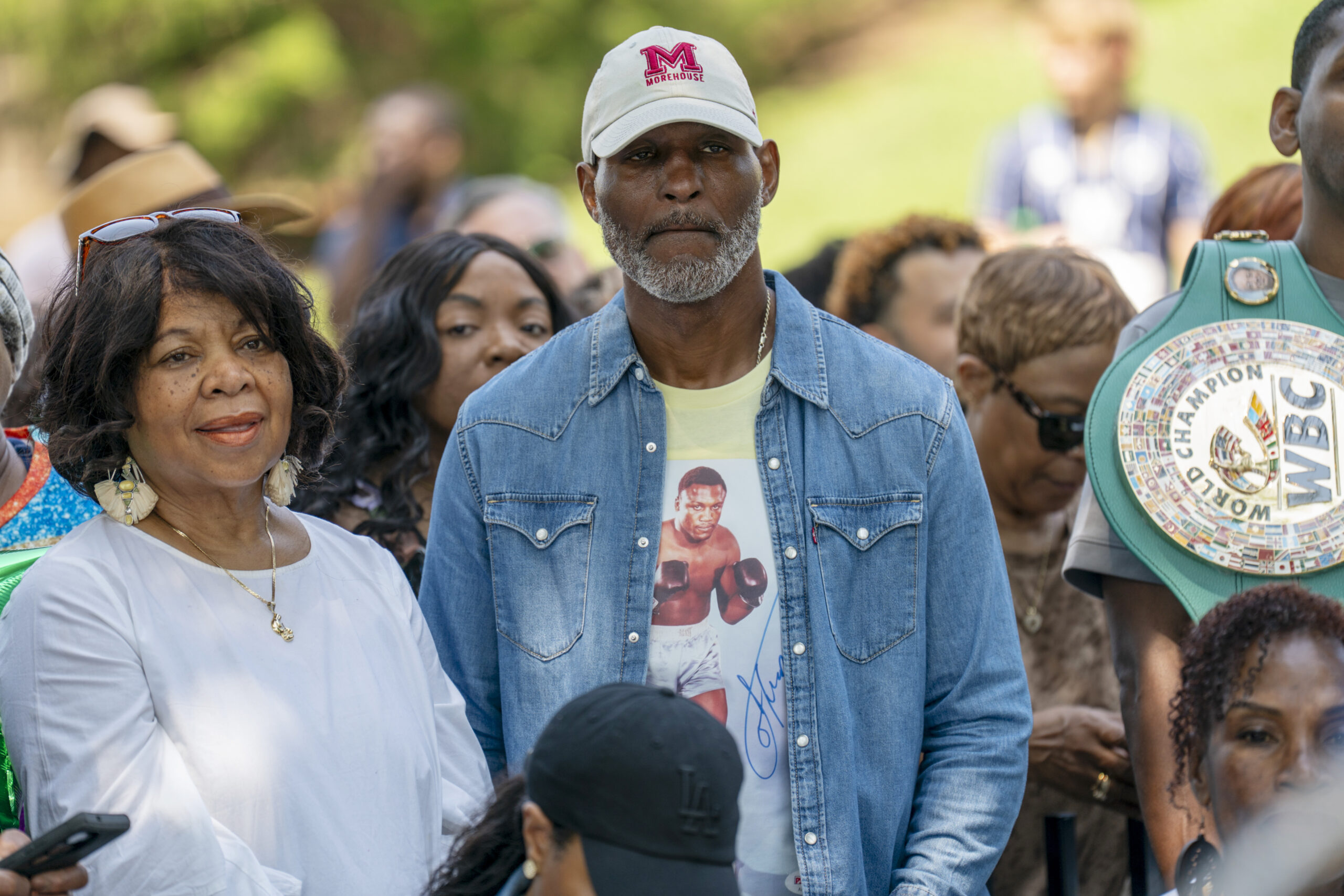
    Dozens of the boxer’s supporters attended on Monday, including Philadelphia boxer Bernard Hopkins who held world championships in two weight classes, promoter Joe Hand Jr., and Frazier’s daughter Jacqueline Frazier-Lyde. Frazier-Lyde, a retired boxer and current Municipal Court judge, said the the color of the shroud covering her father’s statue — green —was fitting.

    “My mother’s favorite color was green, because we’re from the South and we love green, because it represents life,” she said. “My father, Joe Frazier, liked it because it was the color of money.”

    Boxing legend Bernard Hopkins at the unveiling of the new home for the statue of heavyweight boxing champion Joe Frazier.

    To the end, the statue’s new location wasn’t the end of efforts in the boxer’s memory. Parker also announced plans for a capital campaign to restore the former Joe Frazier’s Gym on Broad Street above Glenwood Avenue in North Philadelphia. Now a discount furniture store, the building is a legendary location in Philadelphia boxing history, having served as a training location for not just Frazier but other famed fighters and community members.

    Parker said plans were underway to establish a way to accept donations for that effort via the Philadelphia City Fund. The amount of funds targeted be raised was not immediately clear.

    “It’s important to show the world who we are,” Gay said. “Joe Frazier was a humble underdog whose determination and grit inspires us all. What could be more [a] more Philadelphia story than that?”

  • Trump’s Reflecting Pool debacle mirrors what’s ailing America

    Trump’s Reflecting Pool debacle mirrors what’s ailing America

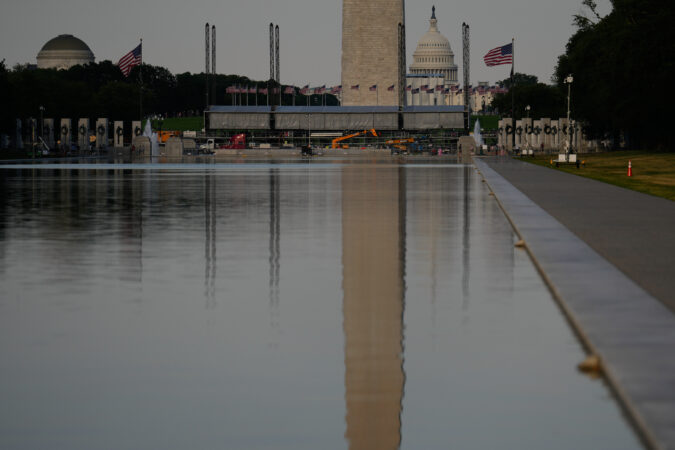
    WASHINGTON — I arrived in Washington, D.C., on Wednesday and headed straight to the Reflecting Pool on the National Mall to see for myself what it looked like.

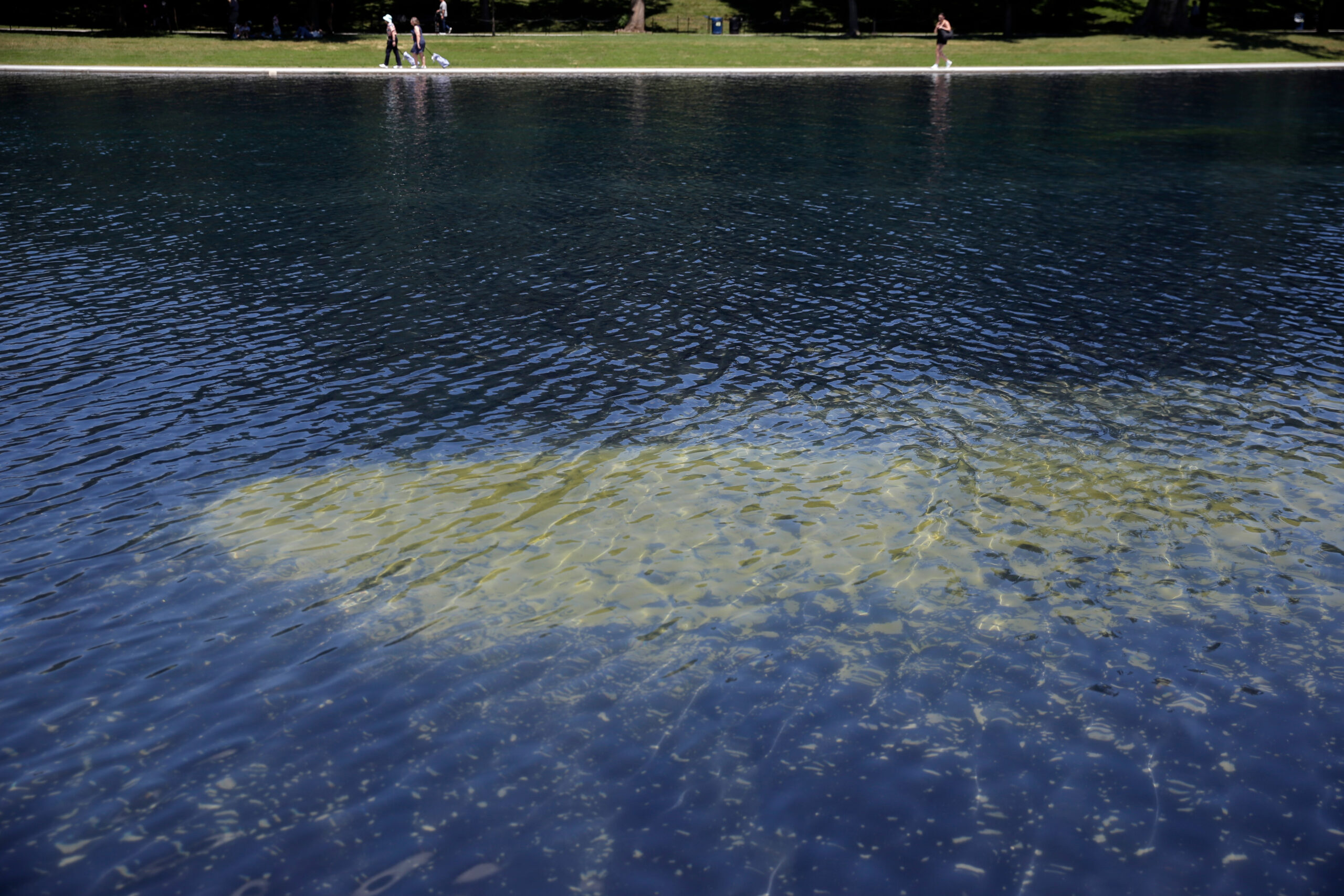
    At first glance, it appeared as if sand had been tossed into the newly renovated water basin located between the Lincoln Memorial and the Washington Monument. But my eyes were mistaken. “The sand” was actually the underlying surface showing through as the coating at the bottom started peeling off.

    Peeling is seen in the blue coating on the bottom of the Lincoln Memorial Reflecting Pool, Wednesday, June 24.

    As I bent down to get a closer look, I made a point to keep my hands close to my body. I knew better than to touch so much as a drop of that water, since people have allegedly been arrested for vandalism after touching the floating detritus.

    President Donald Trump blames “radical lunatics” for defacing his latest renovation project. “This isn’t random mischief — it’s targeted sabotage by anti-American crackpots who despise a strong, proud, and beautiful country. They cannot build; they can only destroy. They cannot celebrate our heritage; they can only deface it,” reads a statement released by the White House.

    I walked around the pool’s entire perimeter. I didn’t notice any stench, not even a whiff. But the reports are true, and Trump’s $14 million no-bid boondoggle to renovate the Reflecting Pool in advance of the nation’s 250th anniversary has faced one stumbling block after another.

    Depending on the angle of the sun and where you’re standing, the combination of the newly added dark paint that’s already chipping away and the algae blooms gives the illusion that the pool is a beautiful aquamarine color. I didn’t expect that.

    But it’s not what the president ordered.

    Nor is it what the American people want or need right now. We want the war with Iran to be over, but Trump is more concerned with putting a Mar-a-Lago-esque stamp on the nation’s capital. He has barely acknowledged that Americans are most concerned about how to pay for gas, food, and healthcare insurance premiums.

    The Lincoln Memorial Reflecting Pool was fine the way it was. Trump should have followed President Joe Biden’s lead and just left it alone. Same thing with the White House East Wing that Trump ordered torn down for a $600 million ballroom project. Same thing with the Kennedy Center for the Performing Arts before Trump made himself chair and slapped his name on the living memorial built to honor the late President John F. Kennedy.

    Trump’s gonna trump, though.

    Back in April, he announced plans to install an industrial-grade surface on the Reflecting Pool. He originally wanted it to be turquoise, but took the contractor’s advice and went with a darker color that he calls “American Flag Blue.” In typical Trump fashion, he claimed it would only take a week to rehab and cost about $1.5 million, only for the project to take months to complete and the cost to balloon to $14 million.

    Workers refilled the pool on June 9. The water quickly turned green, which the U.S. Department of the Interior blamed on “residual algae from the supply lines.” It has since been treated with hydrogen peroxide and ozone nanobubbles. And the blue material coating the bottom has started coming off.

    The century-old Reflecting Pool has had issues for years. But it’s still a beautiful thing to behold.

    Civil rights activists famously flanked it while listening to the Rev. Dr. Martin Luther King Jr. deliver his famous “I Have a Dream” speech in 1963. Same thing when Marian Anderson performed on the steps of the Lincoln Memorial in 1939, after the Daughters of the American Revolution refused to let the African American contralto sing in their concert hall because of her race.

    Under Trump, the Reflecting Pool has become a Rorschach test of where we are right now as a nation. Some only see its beauty, while for others, the bumbling rehab symbolizes yet another Trump failure.

    “I came to see for myself. I wanted to see what all the hoopla was about,” said Cedric Jackson, an Atlanta resident whom I spotted taking photos. “It’s not as green as I thought it was going to be. So they’ve obviously been doing some kind of work.”

    But then he added, “I think this is probably something that could have been avoided.”

    I couldn’t agree more. Like so much damage and harm the Trump administration has inflicted during this second term, it didn’t have to be this way.

  • Supreme Court rejects Trump’s push to toss $5 million verdict in E. Jean Carroll sexual abuse case

    Supreme Court rejects Trump’s push to toss $5 million verdict in E. Jean Carroll sexual abuse case

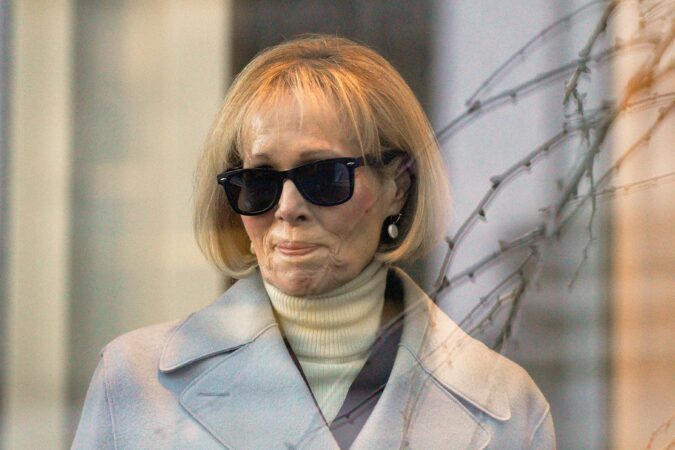
    WASHINGTON — The Supreme Court on Monday rejected a push by President Donald Trump to throw out a jury’s $5 million finding that he sexually abused the writer E. Jean Carroll at a New York City department store in the mid-1990s and later defamed her.

    The high court declined to take up the case in a brief, unexplained order, as is typical. There were no noted dissents. Trump also plans to appeal another $83.3 million verdict awarded to Carroll by a different jury after a second defamation trial, his lawyers have said.

    The decision comes as the court hands down its biggest opinions, including a ruling that expands Trump’s firing power over the federal bureaucracy with the exception of the Federal Reserve.

    Trump called the decision to pass on the Carroll case “surprising” in a social media post, and he said he would continue to fight the defamation claims. “This Case is really against the United States of America, and all it stands for,” he wrote.

    Trump’s lawyers had argued that allegations leading to the verdict were propped up by “highly inflammatory” evidentiary rulings, including those that allowed the testimony of two other women who accused Trump of sexual abuse decades ago. Trump has denied all three women’s allegations.

    Trump’s attorneys argued the judge broke federal evidence rules in the case. They framed it as a distraction from Trump’s unique duties as president, though the verdict came before his return to the White House.

    “This mistreatment of a President cannot be allowed to stand,” Attorney Justin D. Smith wrote in court documents. Trump, a Republican, has since nominated Smith to be an appeals court judge. His lawyers called the case “Liberal Lawfare” in a statement on Monday.

    Carroll’s lawyers had urged the justices to pass on the case. They argued that the women’s testimony was relevant because the allegations were similar and that Judge Lewis Kaplan’s decisions were in line with others around the country. “This question is not worthy of review,” wrote attorney Roberta Kaplan, who is not related to the judge.

    Monday’s decision affirms the jury’s verdict will stand, she said in a statement Monday. “His multiple efforts to appeal that verdict have all failed and today’s ruling ends his quest to avoid accountability for his actions,” she said.

    Carroll, a longtime advice columnist and former TV talk show host, testified at a 2023 trial that Trump turned a friendly encounter in spring 1996 into a violent attack in the dressing room at Bergdorf Goodman, a luxury retailer across the street from Trump Tower in Manhattan. The jury also found Trump liable for defaming Carroll when he denied her allegation in 2022.

    The Associated Press does not identify people who say they have been sexually assaulted unless they come forward publicly, as Carroll has done.

    Trump has successfully fended off other hefty court judgments, including a New York civil fraud penalty of over $500 million thrown out by a New York appeals court. The Supreme Court also granted him broad immunity from criminal prosecution in 2024, though it later narrowly rejected his bid to halt sentencing in his New York hush money case.

  • Flyers draft grades roundup: Philly’s haul doesn’t get anything higher than a C+ from national experts

    Flyers draft grades roundup: Philly’s haul doesn’t get anything higher than a C+ from national experts

    The Flyers selected six players during the 2026 NHL draft, — three defensemen, two goaltenders, and one forward.

    After trading down from No. 21 to No. 27, the Flyers selected Maksim Sokolovskii, a 6-foot-7, 240-pound defenseman from the Ontario Hockey League, with their first-round pick.

    The 17-year-old is not expected to play anytime soon in the NHL — he’s returning to the London Knights for the 2026-27 season before playing for the University of Maine the following year.

    In the second round, the Flyers selected Western Hockey League defenseman Brek Liske with the 53rd overall pick. The team also added goalies Martin Psohlavec (62nd overall pick) and Marek Sklenička (120th overall pick).

    And with their last two picks in the draft, the team selected Minnesota high school standout Kent Sauer (136th overall pick), a 6-foot-3, 202-pound center, and 17-year-old defenseman Max Laatikainen (213th overall pick), the youngest player in this year’s draft class.

    Here’s how experts are grading the Flyers’ 2026 NHL draft class …

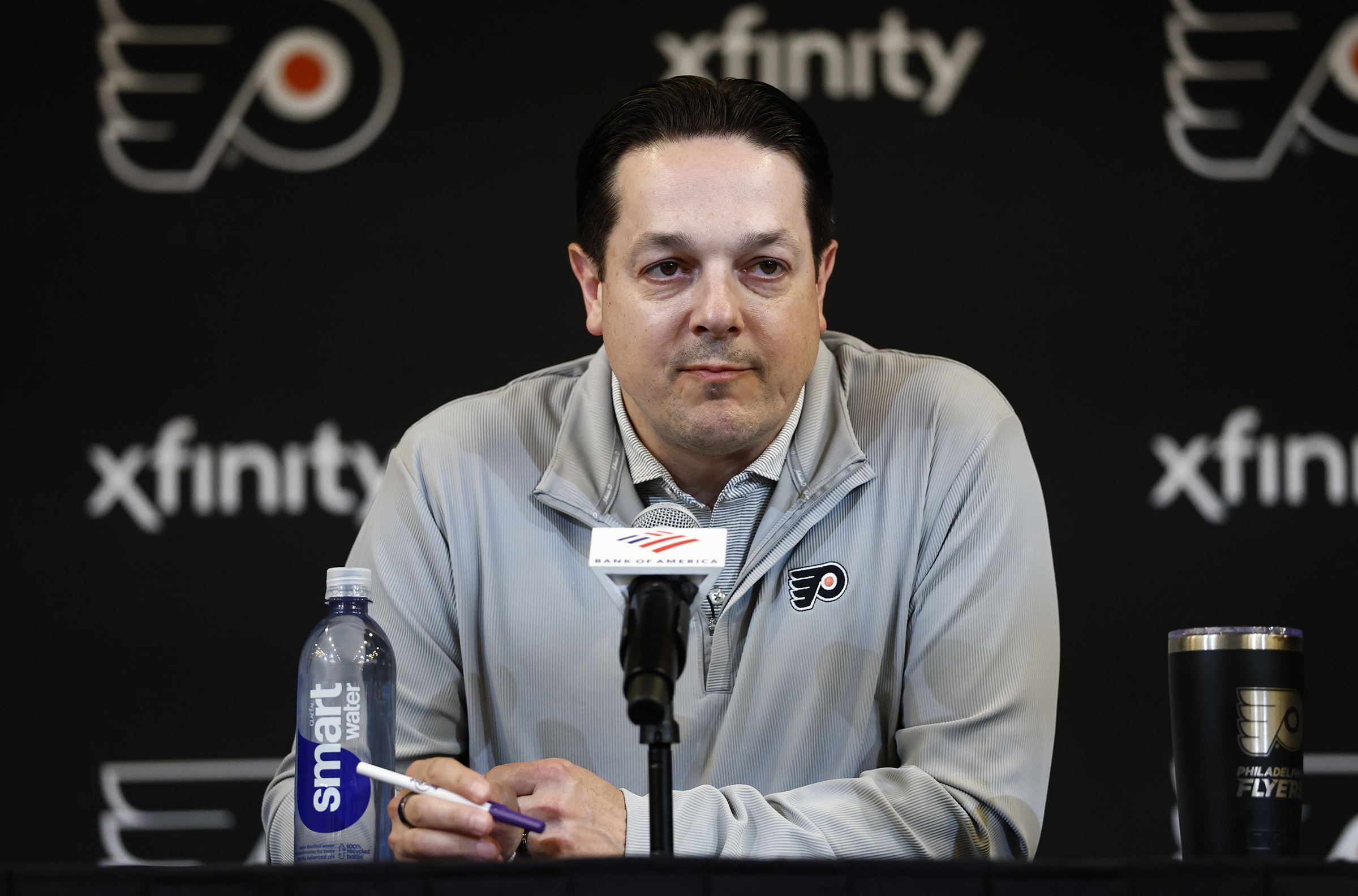
    Flyers general manager Daniel Brière meets with the media after picking defenseman Maksim Sokolovskii with the 27th overall pick in the 2026 NHL draft.

    Inquirer: B

    We start with our own Flyers writer Jackie Spiegel, who gave the team the highest grade among the outlets listed, although her grade was reflective of only the team’s first-round pick and not the team’s draft as a whole.

    “Sokolovskii, who was born in Kazakhstan and grew up in Russia, brings meanness and physicality, and considers himself a shut-down defenseman who likes to hit,” Spiegel wrote. “Daily Faceoff’s Jeff Marek called him the hardest hitter in the draft class. Some have even compared his physicality and nastiness to that of fellow 6-7 blueliner Nikita Zadorov of the Boston Bruins.

    “There’s definitely some boom-or-bust volatility with Sokolovskii, but the Flyers hope they have added a massive defenseman who plays playoff-style hockey, can kill plays defensively, and strike fear into opponents with his physicality.”

    Maksim Sokolovskii, right, stands with NHL commissioner Gary Bettman, left, after being drafted by the Flyers with the 27th pick in the draft.

    ESPN: C+

    ESPN made its grades based on “what the teams did with their selections, how they maneuvered the draft board and how much value they gained or left on the board where they picked.”

    The Flyers were among six teams to get a C+, ranking alongside the Boston Bruins, Edmonton Oilers, New York Rangers, Ottawa Senators, and Washington Capitals.

    “Kudos to the Flyers for trading back, understanding they could be patient and accumulate pick value,” Rachel Kryshak wrote. “They left some value on the board in favor of drafting for organizational fit, but got decent value with the Brek Liske pick. Max Laatikainen is an excellent bet in the seventh round as the youngest player in the draft and a prospect with potential.

    “At the end of the day, you need to draft high-end talent to compete. The Flyers passing on upside for players who fit the style their coach wants to play is risky business and certainly costs them some grading points.”

    The outlet gave the San Jose Sharks the best grade (an A++), saying they had one of the best first rounds in draft history.

    Brek Liske (42) was the Flyers’ second-round choice.

    The Athletic: C

    The Athletic handed out Cs to 14 different teams, including the Flyers.

    “The Flyers went with big, toolsy defenseman Maksim Sokolovskii at 27, who moves incredibly well for his size and plays very hard, although he has no offence,” Corey Pronman wrote. “Defenseman Brek Liske and goalie Martin Psohlavec have chances to play in the NHL. I would guess one regular comes from this class for Philadelphia.”

    The lowest grade handed out was a C-, and only five teams received a grade lower than the Flyers: the Vegas Golden Knights, the Tampa Bay Lightning, the Capitals, the Oilers, and the Dallas Stars. The Toronto Maple Leafs topped the list with the only A+ grading.

    Bleacher Report: C

    Bleacher Report gave the Flyers a C for the team’s selection in the 2026 NHL draft grades.

    “Maksim Sokolovskii (27th overall) is a 6′7″ defenseman who moves well. The appeal should already be obvious,” Adam Herman wrote. “And he does play as big as he appears. He’s probably the most physical defenseman in the draft. He knocks players over with the ease of a house of cards, and he has the mobility to do it consistently. If he makes it, and that seems fairly likely, there will be few players in the NHL like him.

    “I just don’t see too much upside. He isn’t very good with the puck, and while his skating is good for his size, it’s not an active plus. I think the best-case scenario is a No. 4 defenseman who can’t be used in any offensive situations. The Flyers need upside, and Sokolovskii doesn’t provide it. I would have liked this a lot better if it had been 37th overall.”

    The Lightning received the worst grade of the draft, getting the only D ranking. Meanwhile, the Sharks received the only A+ grade from the outlet.

    Maksim Sokolovskii (No. 17) tied forward Brooks Rogowski for the tallest players measured at this year’s combine.

    Yahoo! Sports: C

    Yahoo! Sports also gave the Flyers a C, saying that Sokolovskii may not have neither been the best available player at the time nor the best organizational fit.

    “Standing at 6-foot-8, weighing 240 pounds, Sokolovskii has drawn comparisons to Nikita Zadorov as a physical, shutdown, defensive defenseman,” Eric Cruikshank wrote. “There’s definitely value in that, but with little upside, it would be a much more justifiable selection in the second round rather than the first. Adding a two-way blueliner in Brek Liske and one of the top goaltending prospects in Martin Psohlavec helps elevate their class, but it was certainly a rough start.”

    The Sharks, Maple Leafs, and Vancouver Canucks top the list with an A+ grade.

    Sporting News: C-

    The Sporting News gave the Flyers the lowest grade on the list when it came to the team’s first-round pick.

    “Maksim Sokolovskii is a giant, standing 6-foot-7. He’s a shut-down defender who understands how to use his size to separate his opponents from the puck,” Julian Gaudio wrote. “It does fill a need for the Philadelphia Flyers, as they need size on their blueline, but Sokolovskii is a project and is like five years away from becoming an NHL player.”

    The Maple Leafs, Sharks, and Seattle Kraken top the Sporting News’ list with an A+ grade.

  • U.S. and Iran pause strikes but disagree over next steps on talks

    U.S. and Iran pause strikes but disagree over next steps on talks

    DUBAI, United Arab Emirates — The United States and Iran on Monday separately announced they will send delegations to Qatar this week, though Tehran insisted it has not agreed to meet with the U.S. “at any level” after attacks across the Persian Gulf over the weekend challenged negotiations to end the war.

    U.S. President Donald Trump said the Islamic Republic had requested a meeting with U.S. counterparts and that they planned to convene Tuesday in Doha, Qatar.

    But one of Iran’s senior negotiators denied talks had been scheduled. And the spokesperson for Iran’s Foreign Ministry said Tehran was sending its delegation to Qatar, a key mediator in the negotiations, to discuss terms of the interim deal without involving the U.S.

    The U.S. president has tried to preserve a fragile interim deal, but hostilities mounted in recent days in the Strait of Hormuz, through which a fifth of the world’s oil had been shipped before war began. After four days of trading strikes, both sides appeared to pause their attacks Monday.

    The U.S. and Iran agreed to an interim deal earlier this month that calls for Tehran to dilute its stockpile of enriched uranium. It also waives U.S.-backed sanctions on the country, opens the Strait of Hormuz, and gives each side 60 days to hammer out broader agreements.

    Confusion mounts over next round of Iran-U.S. talks

    After Trump said Monday morning on social media that the U.S. and Iran planned to meet, White House press secretary Karoline Leavitt told Fox News’ Fox & Friends that special envoy Steve Witkoff and Jared Kushner, the president’s son-in-law, were flying to Qatar.

    Pakistan, also a key mediator, had said talks between Iran and the U.S. would resume Tuesday.

    But Kazem Gharibabadi, a senior negotiator for Iran, said in comments published by Iranian state media that no talks had been confirmed. And Esmail Baghaei, spokesperson for Iran’s Foreign Ministry, said that its delegation was traveling to Qatar this week to discuss the planned release of frozen Iranian assets and other issues related to the deal.

    “There are no negotiation meetings with the U.S. side at any level scheduled in the coming days,” Baghaei said. “The fact that U.S. representatives are traveling to Qatar has no connection with the visit of the Iranian delegation.”

    Increased tension in waterway

    During the war that began Feb. 28, Iran’s attacks and threats stopped cargo ships and tankers from moving through the Strait of Hormuz, creating a global energy crisis.

    In recent days, Iran has twice attacked vessels in the strait — including a tanker filled with Qatari crude — following efforts to open Oman’s territorial waters to both inbound and outbound traffic from the Persian Gulf.

    The attacks drew retaliatory American airstrikes and raised concerns that negotiations to reach a formal end to the war could be disrupted. Iran launched drone and missile attacks targeting Bahrain and Kuwait on Sunday.

    The strait has long been considered an international waterway despite its location in Iran and Oman’s territorial waters.

    The Trump administration was operating Monday on the understanding that the U.S. and Iran are standing down after the recent back-and-forth strikes and that vessels can move freely through the Strait of Hormuz, said a U.S. official who requested anonymity to discuss the sensitive negotiations.

    Iran’s president, U.S. official say $6 billion coming to Iran

    The U.S. official also said that Qatar planned to release $6 billion in frozen Iranian assets that would be used to purchase U.S. food products for the Iranian people.

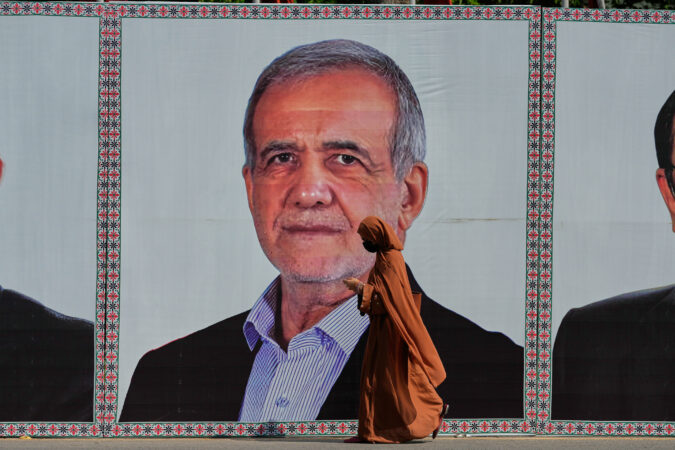
    Iranian President Masoud Pezeshkian had announced the expected release of funds earlier Monday in comments published by the state-run IRNA news agency. He called it “a great victory for the Iranian people.”

    Pezeshkian, a reformist within Iran’s theocracy, is the highest-ranking official within Iran to reference the release of the funds held by Qatar, a key mediator along with Pakistan in the negotiations.

    Oman, Iran discuss possible fees for transiting the strait

    Oman’s foreign minister, Badr Albusaidi, said Monday that Oman and Iran are considering charging service-related fees for commercial ships transiting the Strait of Hormuz.

    Albusaidi said services could include water safety measures, pollution prevention, navigational assistance, and preparedness for incidents such as fires. He told Radio Monte Carlo while visiting France that there are “successful examples” of similar services being provided in compliance with maritime law.

    Albusaidi said Oman does not support imposing transit fees on ships.

    “This is internationally forbidden,” he said, “and we are abiding by these rules.”

    Iran, France clash over clearing mines from strait

    An Iranian official warned France against “provocations” Monday after French President Emmanuel Macron posted on X that France and others were coordinating efforts to clear mines from the Strait of Hormuz.

    Kazem Gharibabadi, an Iranian deputy foreign minister, said on X that under the interim deal “demining is carried out solely by Iran and by no other country.”

    Macron’s post came after he greeted Sultan Haitham bin Tariq of Oman ahead of high-level diplomatic talks in Paris.

    Oman and France called for “free, unconditional, and unrestricted navigation” in the Strait of Hormuz, in a joint statement issued Monday after the Paris meeting. Both parties said they “agreed to work collaboratively with all stakeholders to support freedom of navigation going forward and conduct joint demining operations.”

    Lebanon’s president says it will deploy troops

    Lebanese President Joseph Aoun said Monday that Lebanon is determined to deploy troops along its entire southern border as part of a framework agreement with Israel signed Friday. He made the remark while meeting with Adm. Brad Cooper, the top U.S. military commander in the Middle East.

    The deal was rejected by the Iran-backed Hezbollah militant group, which triggered the latest war with Israel on March 2 when it fired rockets across Lebanon’s southern border and into northern Israel.

    The Israel-Lebanon deal calls for Hezbollah to be disarmed before Israel will withdraw its troops from southern Lebanon. Israel agreed to withdraw initially from a couple of “pilot zones” where the Lebanese army would then deploy, but no details have been shared about how that will work in practice.

    Hezbollah officials have warned that attempts to implement the plan could lead to civil war.

  • America 250 celebrations bring extraordinary security challenge to Washington

    America 250 celebrations bring extraordinary security challenge to Washington

    WASHINGTON — Federal law enforcement authorities in Washington, D.C., are preparing for one of their largest and most complex security operations as the nation’s capital gears up to celebrate the 250th anniversary of the nation’s freedom.

    With rising political violence, including recent incidents near the White House, and a president who enjoys being at the center of public pomp yet has repeatedly faced attempts on his life, a major security challenge awaits.

    “It comes as no surprise to you that D.C. on a normal day is a target-rich environment,” said Darren B. Cox assistant director in charge of the FBI’s Washington Field Office at a recent news conference detailing the security preparations. “We are prepared for any threats.”

    Hundreds of thousands of people are expected to visit Washington in the coming weeks for the festivities.

    The throngs will be joined by thousands of law enforcement officers and agents and 5,000 National Guard troops, along with military-style vehicles and other hardware they don’t often see on the streets of America.

    Authorities are preparing for a major security operation

    The largest crowds are expected July 4, with multiple events happening simultaneously, including the Great American State Fair, a showcase for each state and a signature attraction of the celebrations that stretches across the National Mall.

    The annual fireworks display that night is designated a National Security Special Event for the first time by the Department of Homeland Security, granting it the highest classification for federal security coordination.

    For visitors, that means strict ID requirements, long lines, and magnetometers, similar to air travel security. Snipers are also expected to be deployed at some events.

    Flights at Ronald Reagan Washington National Airport, which is across the Potomac River from Washington, will be suspended longer than in other years because of the scope of the celebrations — from noon on July 4 until the next day. Other America 250 events that include flyovers or parachute jumps could prompt more flight disruptions.

    The FBI, Secret Service, U.S. Capitol Police, U.S. Park Police, and D.C. National Guard have all been involved in security coordination for the events. At the news conference earlier this month, equipment that could be deployed to guard the city was on display, including BearCat armored SWAT vehicles, Mine-Resistant Ambush Protected, known as MRAPs, as well as communication vans and FBI diving boats.

    “Our protective model is meant to adjust to any type of direct or indirect threats that we come across,” said Tara McLeese, special agent in charge of the Secret Service Washington Field Office. “I can assure you that we have no lack of imagination as to the potential threats out there.”

    Brig. Gen. Leland Blanchard II, interim commander of the D.C. National Guard, said the planning had been underway for months and included rehearsals.

    Blanchard said the guard members would continue the roles they have served the last 10 months as part of a deployment to the city President Donald Trump says is meant to fight crime. Blanchard highlighted that guard members, including military police officers, would be helping with duties like traffic and crowd control as well as responding to emergencies around the events.

    Trump, who has already attended several events leading up to July 4, including the kickoff rally last week launching the Great American State Fair, has said on Truth Social that he would hold a rally on the National Mall.

    Speaking at a news conference Monday updating the upcoming security preparations, Cox reiterated that “at this time we are not tracking any credible threats related to the July 4th event, but we always remain vigilant.”

    Recent violence has shaped the threat picture

    The festivities come at a fraught moment, with recent political violence creating a complex threat environment for authorities. One man, Cole Tomas Allen, has been charged with attempting to assassinate the president after he sprinted past security at the White House Correspondents’ Association dinner in April. Allen has pleaded not guilty.

    In the following weeks, two men on two separate occasions opened fired at Secret Service officers, the service said. Each incident happened in the vicinity of the White House.

    More recently, the FBI announced it had thwarted a planned attack targeting Trump’s UFC cage-fighting show at the White House. Several suspects have been arrested in that case.

    Security was already enhanced on the National Mall ahead of the launch of festivities, as Trump claimed without providing evidence that vandals had damaged the Reflecting Pool that he had recently renovated.

    Matt Dallek, a political scientist at George Washington University who studies extremism, said Trump posed a unique security challenge because he is “both an accelerant and a target of political violence.”

    The nation’s bicentennial offers a historical parallel

    Observers draw some parallels to the 1976 bicentennial. The nation was coming off Watergate and Vietnam, and 10 months before the celebration there were two assassination attempts against then-President Gerald Ford.

    “There was a lot of sourness in the country in ’76, a lot of cynicism about the direction of the country,” Dallek said. But both Ford and his democratic opponent Jimmy Carter understood the threat political divisions posed and “were looking to bring down the level of vitriol.”

    Angelyn Spaulding Flowers, professor of homeland security and administration of justice at the University of the District of Columbia, said the amount of security was unparalleled for the city, citing the ongoing and open-ended National Guard presence that has flooded Washington with additional security patrols for months.

  • Uber driver pleads no contest in the rape of a Villanova student inside her dorm room

    Uber driver pleads no contest in the rape of a Villanova student inside her dorm room

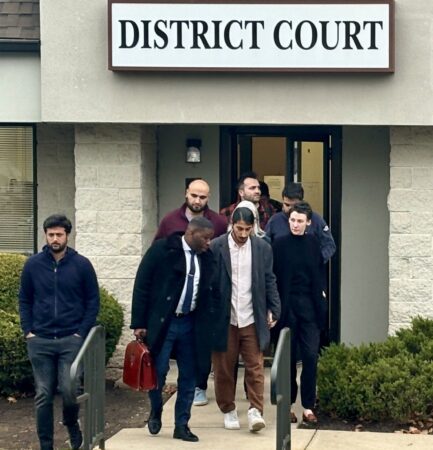
    An Uber driver pleaded no contest Monday in the rape of a Villanova University student inside her dorm room in 2024.

    Mirvan Dinler, 27, was set to begin his trial before Delaware County Court Judge Mary Alice Brennan when he instead entered the no-contest plea to rape of an unconscious victim. Prosecutors said Dinler attacked the woman after driving her home from a bar in North Philadelphia and walking her to her dorm room as she drifted in and out of consciousness.

    Semen found on a comforter and towel inside the dorm room were found to be a match to Dinler’s DNA, according to Assistant District Attorney Danielle Gallaher. And surveillance footage taken from cameras outside of the dorm building showed Dinler escorting her inside, arm-in-arm, because she was too intoxicated to walk on her own, the prosecutor said.

    In agreeing to plead no-contest, Dinler did not admit guilt but did not dispute the prosecution’s statement of the facts in the case.

    Gallaher said she would seek a prison term of three to six years at sentencing in October.

    Dinler’s attorney, Shaka Johnson, did not return a request for comment Monday. Previously, Johnson said there were “glaring, glaring cracks” in the woman’s account of what happened that night.

    The woman, who was a senior at Villanova at the time, testified at a preliminary hearing that she woke up, drunk and disoriented, as Dinler raped her in September 2024. She said she was too terrified to fight back or call out for help.

    Earlier that evening, she said, she had been drinking with friends on campus before the group headed to Warehouse on Watts, a bar in North Philadelphia.

    The woman said she did not drink regularly, but on that night had three glasses of wine and two shots of liquor. After arriving at the bar in the city, she said she felt dizzy and ill, and decided to return home.

    “I knew I wasn’t feeling good, and I didn’t want my friends to have to babysit me,” she said.

    The woman ordered an Uber, and Dinler arrived in his Toyota Prius to pick her up, she said.

    Her memory was spotty, she said, until waking up to find that Dinler was raping her.

    After the assault, she said, Dinler returned to the dorm and loudly banged on her door, demanding that she pay a cleaning fee because she had vomited in his car during the ride.

    Gallaher, the prosecutor, said there was evidence that Dinler, using the victim’s phone with her permission, sent a $150 payment to a friend of his through Venmo. That person then transferred the money to Dinler’s bank account.