Blog

  • The new PGA store lets you hit at world-renowned links | Inquirer Cherry Hill

    The new PGA store lets you hit at world-renowned links | Inquirer Cherry Hill

    Hello, Cherry Hill! 👋

    The 40,000-square-foot PGA Tour Superstore is opening along Route 70 this weekend. We got a first look inside, including at its globe-trotting virtual hitting bays. Also, Jefferson announced layoffs last week impacting its Cherry Hill hospital, the community is mourning the recent passing of two entrenched residents, including the longtime co-owner of a coffee shop, plus Mission BBQ is opening next week in Garden State Park.

    If someone forwarded you this email, sign up for free here.

    The new PGA Tour Superstore lets golfers virtually visit world-famous courses

    Golfers can test their skills on a putting green at the new PGA Tour Superstore.

    Golfers don’t need to hop on a plane to tee off on the sunlit fairway of California’s Titleist Performance Institute. They just have to venture to the 40,000-square-foot PGA Tour Superstore at 2232 Route 70, where the shop will open this Saturday at 9 a.m.

    A major highlight is the golf simulation bay, where customers can cycle through a list of world-famous golf courses projected onto a screen and receive analytics on their swings, The Inquirer’s Henry Savage reports.

    The sprawling store also sells gear, offers club fittings, and will have $30,000 in giveaways during its grand opening.

    Take a first look inside the new store.

    💡 Community News

    • Last week, Thomas Jefferson University in Philadelphia laid off about 1%, or 600 to 700, of its employees as it contends with financial pressures. Over 100 South Jersey workers, including at Jefferson Cherry Hill Hospital, will be impacted come January. (Philadelphia Business Journal)
    • Cherry Hill police are warning residents about a calling and texting scam in which someone is claiming to be from the police department. Residents should not engage with the scammer and are encouraged to report incidents to the non-emergency line.
    • A local bakery helped a Cherry Hill doodle named Zeus celebrate a “bark mitzvah” last month by creating a bone-shaped cake dotted with bite-sized Stars of David. Zeus’ cake and the bakery behind it are part of a growing trend of upscale pet bakeries catering to pooches.
    • Temple University’s field hockey team has soared to new heights in recent years thanks to Cherry Hill native Michelle Vittese. She’s been coaching the team since 2021, turning it into a premier program and a regular contender in the Big East. Read more about how Vittese tapped into her own collegiate experience to lead the Owls.
    • Two township residents entrenched in the community died late last month. Chung Soon Hwang, longtime co-owner of Chung’s Coffee Shop in Philadelphia, died Sept. 24 at the age of 89. She and her husband, Oe Tok, arrived in South Jersey from South Korea in 1973. And on Sept. 23, Dorothy Womble-Wyatt died at the age of 84. She was an innovative teacher and celebrated school principal for the Camden City School District.
    • Longtime Cherry Hill contractor Craig Taylor tapped his friends and family to help grow a grassroots event to bring people together against hate. Known as “Kiss Hate Goodbye,” the event is slated to take place in Berlin on Nov. 20 and will include dinner, dancing, and throwback tunes. (6abc)
    • The township is hosting a free rabies clinic on Saturday from noon to 2 p.m. at Challenge Grove Park. Pet owners can bring their licensed cat or dog to get vaccinated. And on Sunday, there’s a free drive-up shredding and recycling event where residents can drop off up to four boxes of papers for shredding, as well as single-stream recyclables, tires, car batteries, rechargeable batteries, and CFL light bulbs. Read more about the event here.

    đŸ« Schools Briefing

    đŸœïž On our Plate

    • Mission BBQ is opening its latest location at Market Place at Garden State Park next week. The eatery, known for its array of barbecue dishes and a daily playing of the national anthem, will open Oct. 28 at noon. It is situated adjacent to Wonder food hall, which opened there this spring.
    • Lamberti’s Tutti Toscani is celebrating its 40th anniversary through the end of November with a menu that includes items from the past four decades. The Brace Road BYOB’s anniversary menu includes clams casino, manicotti, chicken cacciatore, and veal casalinga.
    • The recently opened Barclay Pies on Marlton Pike is serving up pizzas that meet certain dietary restrictions, like those with Celiac disease, something the families of owners TJ Hunton and Daniel Romero face. Not only can pizzas be made gluten-free, but so can the salads, chicken fingers, and wings. (Patch)

    🎳 Things to Do

    🔍 Killer Night Out: The library’s 21-and-over murder mystery event will transport participants back to the Roaring ‘20s where they must solve a murder. ⏰ Friday, Oct. 24, 6-9 p.m. đŸ’” $30 📍 Cherry Hill Library

    đŸŒœ Cherry Hill Harvest Fest: This fall-themed festival includes food vendors, a trunk-or-treat, games, and music. Costumes are encouraged. ⏰ Saturday, Oct. 25, 3-6 p.m. đŸ’” Pay as you go 📍 The Church of the Good Shepherd

    🎃 Pumpkin Picking Hayrides: It’s your last chance to take a hayride and go pumpkin picking at Springdale Farms for the season. ⏰ Saturday, Oct. 25-Sunday, Oct. 26, 10 a.m.-4 p.m. đŸ’” $7.50 for hayrides, pumpkins are priced by the pound 📍 Springdale Farms

    💗 Party in Pink: This breast cancer awareness event includes a discussion with a survivor, a 90-minute session with dancing and music, and access to other health and wellness resources. ⏰ Sunday, Oct. 26, 10 a.m.-12:30 p.m. đŸ’” $20-$25 📍 Katz JCC

    đŸ›Œ Mickey & Minnie Halloween Skatetacular: The beloved duo will be visiting for this skate party that includes trick-or-treating, a costume contest, face painting, and ICEEs. ⏰ Sunday, Oct. 26, 12:30-3:30 p.m. and 4:30-7:30 p.m. đŸ’” $14 admission plus $6 skate rental 📍 Hot Wheelz

    🎃 No-Carve Pumpkin Decorating: Kids in sixth through 12th grade can create a one-of-a-kind artificial mini pumpkin. ⏰ Wednesday, Oct. 29, 7-8 p.m. đŸ’” Free 📍 Cherry Hill Library

    🏡 On the Market

    A four-bedroom home in Kingston Estates
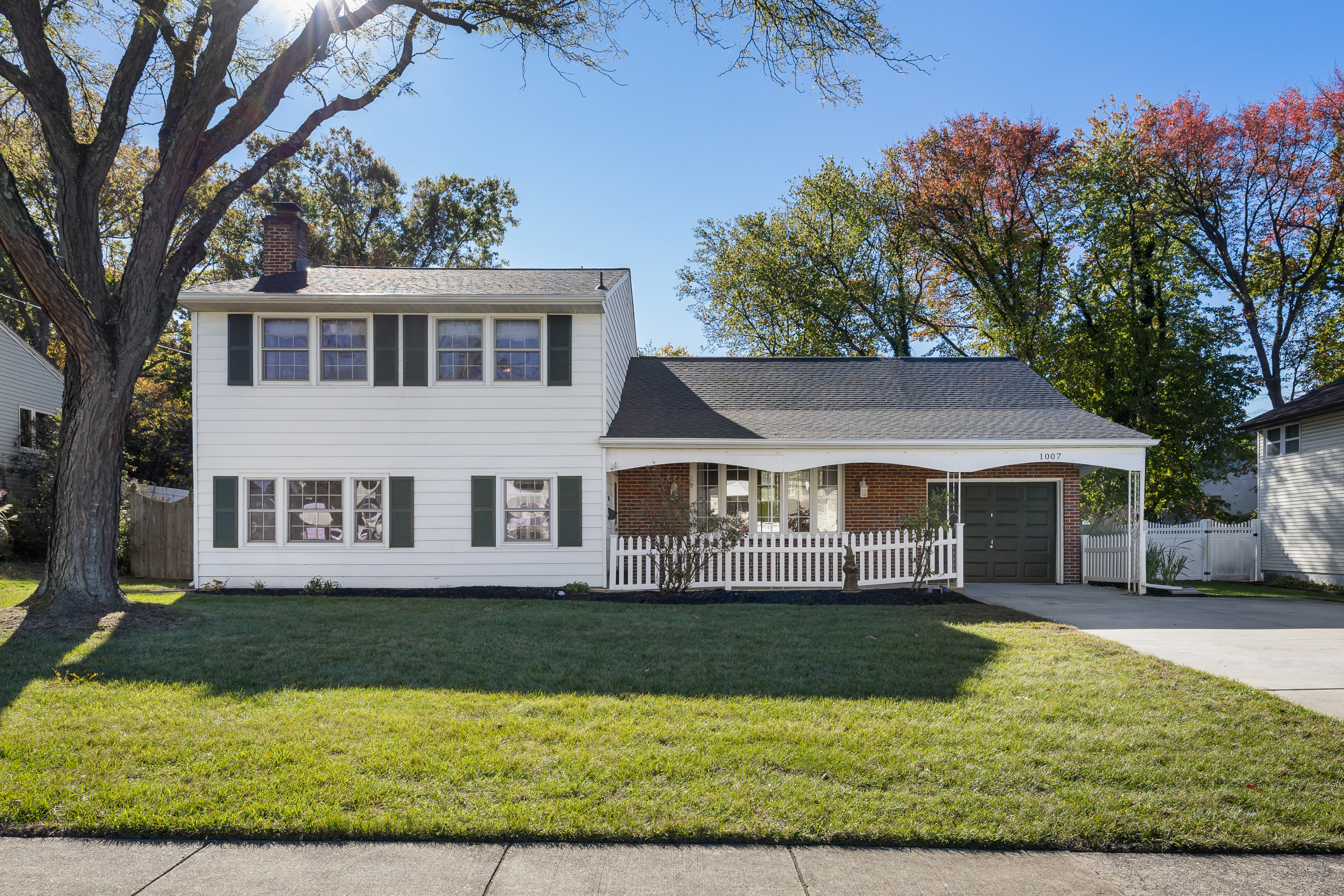
    The front of the home features white siding, red brick, and a white picket fence.

    Built in 1957, this white-siding and red-brick home has four bedrooms, including a primary suite with its own bathroom, all located on the upper level. On the home’s main level, there’s a family room with original hardwood flooring, a dining room, and an eat-in kitchen. It has updated appliances, floral wallpaper, and a white tile backsplash with fruits interspersed throughout. The home also has a living room off its entryway, complete with a wood-burning fireplace and log storage. Outside, there’s a covered front porch offset by a white picket fence, while out back there’s a fenced yard with a storage shed. The home has a newly installed roof, as well. There’s an open house Sunday from 11 a.m. to 1 p.m.

    See more photos of the property here.

    Price: $435,000 | Size: 2,056 SF | Acreage: 0.23

    đŸ—žïž What other Cherry Hill residents are reading this week:

    By submitting your written, visual, and/or audio contributions, you agree to The Inquirer’s Terms of Use, including the grant of rights in Section 10.

    This suburban content is produced with support from the Leslie Miller and Richard Worley Foundation and The Lenfest Institute for Journalism. Editorial content is created independently of the project donors. Gifts to support The Inquirer’s high-impact journalism can be made at inquirer.com/donate. A list of Lenfest Institute donors can be found at lenfestinstitute.org/supporters.

  • In the 1990s mob wars, John Stanfa didn’t have a nickname. The Daily News tried to change that.

    In the 1990s mob wars, John Stanfa didn’t have a nickname. The Daily News tried to change that.

    Convicted former Philadelphia mob boss John Stanfa made headlines as part of a bloody mafia power struggle in the 1990s, which is now being chronicled in the newly released Netflix docuseries, Mob War: Philadelphia vs. The Mafia.

    He was missing one thing that many of his contemporaries had — at least in the papers.

    A nickname.

    Don of the Philadelphia La Cosa Nostra from 1990 to 1995, when he was convicted on racketeering, murder, and conspiracy charges that netted him five life sentences, Stanfa went without an official street name during his time at the top. In September 1993, the Daily News set out to change that with a “Name the Don” contest encouraging readers to send in their best handles for Stanfa.

    “Philadelphia mobsters have had nicknames since there’s been a Philadelphia mob,” the People Paper wrote in a contest announcement. “But poor John Stanfa, the acknowledged leader of the local Cosa Nostra, has suffered long enough. Our godfather needs a nickname — and fast.”

    03 Sep 1993, Fri Philadelphia Daily News (Philadelphia, Pennsylvania) Newspapers.com

    A classic Daily News stunt, yes — but its timing was somewhat, well, insensitive. Just days before the contest was announced, Stanfa was the target in a brazen morning rush-hour shooting on the Schuylkill Expressway in Grays Ferry. His then-23-year-old son, Joseph, was seriously injured with a gunshot wound to the face.

    That shooting, the Daily News reported, signaled an “all-out war” for control of the local mafia, escalating the then-ongoing feud between Stanfa’s crew and a group of young upstarts referred to by the press as the “Young Turks,” purportedly led by Joseph “Skinny Joey” Merlino. The month before, Merlino was injured in a shooting on the 600 block of Catharine Street, and his friend Michael “Mikey Chang” Ciancaglini was killed.

    (Merlino, who opened Skinny Joey’s Cheesesteaks on South Broad this year, has long denied having been behind a faction of the city’s mob.)

    Stanfa was uninjured in the expressway shooting. His son survived and was never implicated in Stanfa’s underworld dealings.

    Still, some of the Daily News’ audience was game to participate in the contest, though the total number of submissions was not reported. Some of the potential monikers were directly inspired by the attempt on his life, including “Nine Lives,” “The Dodger,” and “Johnny Wheels.”

    Others poked fun at his appearance, like “Sourpuss,” “Stoneface,” and “Big Baldy.” And some — such as “Johnny Meatballs,” “The Grocer,” and “Sticky Buns” — focused on Stanfa’s work in the food business, thanks to his involvement in a South Philly-based Italian food importer.

    01 Sep 1993, Wed Philadelphia Daily News (Philadelphia, Pennsylvania) Newspapers.com

    The contest, however, was not without its detractors. It was, after all, a controversial move — this was a mob boss being roasted, and one who was nearly killed only days before the Daily News began soliciting jokes at his expense. And it didn’t help that the paper went directly to some law enforcement officials to ask for their suggestions.

    “I don’t think I should be in the business of characterizing Mr. Stanfa,” said Joel Friedman, then-head of the U.S. Organized Crime Strike Force in Philly. ”I am in the business of investigating criminal activity, and prosecuting it.”

    Regular folks were upset, too — largely over the perception that the contest mocked Italian Americans at large. One reader, retired high school principal Richard Capozzola, took particular umbrage, postulating that the Daily News “wouldn’t have done it if [Stanfa] weren’t Italian.”

    “How much more insulting can your paper be to the Italian-American community of Philadelphia?” said Arthur Gajarsa, of the National Italian-American Foundation. “Would you dare run a contest involving any other ethnic criminal element?”

    The outcry became so significant that after almost two weeks, the Daily News’ editor at the time, Zachary Stalberg, addressed it in a note to readers. The message: Relax.

    “I think people understand that nothing in our handling of the contest mocked those of Italian descent,” Stalberg wrote. “And I think people know it’s OK to be intrigued by the mob, even if you hate their business.”

    13 Sep 1993, Mon Philadelphia Daily News (Philadelphia, Pennsylvania) Newspapers.com

    By mid-September, the Daily News had a winner with John “Tightlips” Stanfa. That entry came from South Philadelphia resident Brian Baratta, who won, of course, a videotape box set of The Godfather I, II, and III for his effort.

    “‘Tightlips’ certainly is descriptive of this strong and silent guy,” the Daily News wrote of the winning entry. “John Stanfa doesn’t talk to the cops, the feds, or the press.”

    With that, the contest was over — but it wasn’t so quickly forgotten, and not just in Philadelphia.

    In 1995, ahead of Stanfa’s trial, the Daily News sent reporter Kitty Caparella to Italy to investigate the mob boss’ family tree. While in Caccamo, on Sicily’s Tyrrhenian coast, Caparella was approached by a police officer, editor Stalberg wrote in a note that year.

    The officer, Stalberg said, pulled out the 1993 Daily News issue advertising the “Name the Don” contest.

    “What do you know about this?” he asked.

  • What to know about John Veasey, the hit man-turned-informant in Netflix’s ‘Mob War’

    What to know about John Veasey, the hit man-turned-informant in Netflix’s ‘Mob War’

    Hit man-turned-government informant John Veasey, whose testimony helped bring down mob boss John Stanfa and a dozen of his top associates in the 1990s, says he’s on the road to redemption.

    The new Netflix docuseries Mob War: Philadelphia vs. The Mafia, now streaming, chronicles a violent 1990s power struggle in the local La Cosa Nostra through the eyes of investigators and former crime family members who were there.

    Veasey, a South Philly native, was a central figure in the ’90s Philly mob, having admitted to participating in two high-profile murders. He went on to serve nearly 11 years in prison after becoming a government witness against Stanfa and other top mob associates in a federal racketeering trial, and was released in 2005. He has since denounced the mob life, and, in the Netflix series, calls joining the mafia the “worst decision” he ever made.

    While he became a feared killer, Veasey was also something of a folk hero after Stanfa’s 1995 trial. The jury, according to Inquirer and Daily News reports from the time, was enamored with his frank and sometimes graphic testimony, which was a key component of federal prosecutors’ case against Stanfa and others.

    Here is what you need to know, based on Inquirer and Daily News coverage from the time:

    13 Jun 1994, Mon Philadelphia Daily News (Philadelphia, Pennsylvania) Newspapers.com

    An admitted hit man

    Veasey agreed to become an FBI informant in January 1994 after his brother, William “Billy” Veasey, told him Stanfa had taken a contract out on his life, reports from the time indicate. In agreeing to work with federal authorities, Veasey admitted to being one of the shooters behind two then-recent mob killings: Michael “Mikey Chang” Ciancaglini and Frank Baldino Sr.

    Ciancaglini was killed in August 1993 in a shooting that also wounded Joseph “Skinny Joey” Merlino. The pair were the purported leaders of the so-called “Young Turks” faction who opposed the rule of Stanfa, reports indicated. Merlino has long denied having been behind a faction of the city’s mob and has never been convicted of mob violence.

    Ahead of that shooting, Veasey testified, Stanfa had given orders to “kill anybody aligned with Merlino” and circulated a list of about a dozen people who were to be killed. Veasey undertook the hit with fellow mob enforcer Philip Colletti in a white Ford Taurus that, shockingly, was leased in Colletti’s name.

    Veasey also admitted to burning the vehicle, badly burning his hand in the process. Knowing he needed an explanation to have his injury treated, Veasey returned to his house and poured lighter fluid into a barbecue grill, and intentionally lit his injured hand on fire.

    “I screamed and told the neighbors I had burned it trying to light the grill,” he told jurors during the Stanfa trial. The cover, he says in the Netflix docuseries, wasn’t a great one — the grill he used was electric, arousing the suspicion of police.

    15 Oct 1995, Sun The Philadelphia Inquirer (Philadelphia, Pennsylvania) Newspapers.com

    The Melrose Diner killing

    Likewise, Veasey was the triggerman in the killing of Frank Baldino Sr., a then-suspected low-level mob associate who was killed outside the Melrose Diner in September 1993.

    Baldino was shot multiple times in his car in the diner’s parking lot, and died en route to Thomas Jefferson University Hospital. Veasey later tipped off authorities to the location of the murder weapons, which divers found in a pond at FDR Park in April 1994, reports from the time indicate.

    The attempted murder of John Veasey

    In January 1994, police found Veasey grievously injured near Sixth and Sigel Streets, having somehow survived a brutal assassination attempt in which he was shot four times and stabbed seven. The attempted murder, he later testified, was undertaken by Stanfa associates Frank Martines and Vincent “Al Pajamas” Pagano in an apartment above a meat store near where Veasey was found.

    “One bullet fragmented in the back of my head. One went in the back and out through my forehead,” Veasey later said of the shooting. ”One hit the back of my head and bounced into my neck. And one is still in my chest, in my rib cage.”

    His assailants, Veasey said, had targeted him because they believed he was working with the FBI — which he had been for a few days by the time the attack happened.

    11 Feb 1994, Fri The Philadelphia Inquirer (Philadelphia, Pennsylvania) Newspapers.com

    The shots failed to kill Veasey, who in the struggle wrestled a knife away from Pagano and used it to stab Martines near the eye. The ordeal lasted about 18 minutes, according to a Daily News report, and ended with Martines and Pagano letting Veasey go in exchange for their lives.

    After he escaped, Veasey attempted to stop a car for help. But because of the way he looked, he said, no one would help him.

    Eventually, police arrived but believed Veasey would die.

    “I could hear them talking, saying I was DOA,” Veasey said. “I’m saying, ‘I’m alive, I’m alive. Everyone is giving up on me tonight.’”

    Veasey later said he left the mob that night, putting his time in the mafia at just over five months, the Daily News reported. He had been recruited in August 1993, days before the Ciancaglini murder, after landing a job at a construction company owned by Stanfa’s brother-in-law.

    “I wouldn’t recommend this life to an enemy,” he later said of the mob.

    06 Oct 1995, Fri The Philadelphia Inquirer (Philadelphia, Pennsylvania) Newspapers.com

    A fallen brother

    Hours before Veasey was set to take the stand for Stanfa’s trial in October 1995, his brother, Billy, was shot and killed on the 1700 block of Oregon Avenue. The killing, authorities speculated, could have been ordered by Stanfa as a way to silence Veasey, or by suspected Young Turks leader Merlino as revenge for the Ciancaglini and Baldino murders.

    Ultimately, it only delayed Veasey’s testimony by five days.

    From the stand, Veasey referred to himself as a triggerman and divulged his involvement with the murders of Ciancaglini and Baldino.

    Veasey’s testimony at trial

    In total, Veasey testified for about two and a half days, which he wrapped up with two pieces of information: That he refused to kill kids, and he did not like gambling. He also mocked Sergio Battaglia, a would-be Stanfa hit man who, despite going on a number of hits, never actually killed anyone, according to an Inquirer report.

    Battaglia “went on a hundred hits and didn’t shoot nobody,” Veasey said.

    He quickly became well-liked by the jury, who seemed to hang on his every word, The Inquirer reported. Among his more graphic accounts from the witness stand was the “drilling” of Joseph “Joe Fudge” DeSimone, a mob associate who had wanted to kill Veasey, to which Veasey took less-than-kindly.

    12 Oct 1995, Thu Philadelphia Daily News (Philadelphia, Pennsylvania) Newspapers.com

    Veasey testified that he had warned Stanfa of a coming altercation with DeSimone, and at one point persuaded another mob associate to bring DeSimone over to Veasey’s house to settle their dispute. Veasey was on house arrest at the time.

    DeSimone arrived, kicking off a violent encounter with an electric drill.

    “I smacked him in the face with the drill. I stuck the drill in his chest and in his legs. I stuck it in his head, and from the rotation of the drill, clumps of hair was going out,” Veasey testified. “Then I hit him in the knee with a baseball bat. I chambered the gun 
 gave it to him and asked, ‘Do you still want to kill me?’”

    Veasey said that DeSimone declined.

    The testimony was not only well received by jurors, but it was considered a success by prosecutors. Though violent, Veasey appeared relatable to the jury and seemed to have a secret weapon against the defense.

    Former mob hit man John Veasey’s biography details his work for one of the city’s mob organizations, the hits he carried out, the attempt on his life, and more.

    The reformed hit man

    Stanfa was ultimately found guilty and sentenced to five consecutive life terms. Veasey, meanwhile, spent almost 11 years in prison, and was released in 2005. By 2012, he was back in the news, this time for a detailed account of his story in The Hit Man: A True Story of Murder, Redemption and the Melrose Diner, a book by former Inquirer reporter Ralph Cipriano.

    By then, Veasey was working as a car salesman in the Midwest, and claimed to have turned over a new leaf.

    “I never respected the Mafia or what it stood for,” Veasey said in an interview with The Inquirer in 2012. “My only regret was being dumb enough to join 
 I always said they either rat or kill each other.”

  • How the Inquirer and Daily News covered the 1990s mafia power struggle seen in Netflix’s ‘Mob War’

    How the Inquirer and Daily News covered the 1990s mafia power struggle seen in Netflix’s ‘Mob War’

    More than 30 years ago, Philadelphia was the battleground in a brutal mob war as a group of young mafia upstarts challenged the rule of the established La Cosa Nostra leadership.

    Known as the Young Turks, that group consisted mostly of younger men who were the sons, brothers, and nephews of former crime family members who were dead or in prison, and was purportedly led by Joseph “Skinny Joey” Merlino and Michael “Mikey Chang” Ciancaglini. They believed that mob boss John Stanfa, a Sicilian immigrant who preferred to keep a low profile, was an outsider who was not fit to lead. Instead, their bloodlines and connections gave them the right to rule their hometown neighborhoods.

    Now, a new docuseries from Netflix, Mob War: Philadelphia vs. The Mafia, examines that conflict, complete with interviews from the law enforcement agents and former mobsters who were there, vintage 1990s Philly TV news footage, and the perspective of a hitman-turned-informant who made headlines. The goal, said director RaĂŻssa Botterman, is to show the human element behind the violence.

    “They’ve committed crimes, but they’re still humans, and understanding who they were and having their versions of events” is important, she said. “Whether it’s fighting against crime or it’s committing crimes, [we’re] trying to get a more holistic picture of what’s going on.”

    Notably missing from the series is Merlino, who Botterman said declined to participate. Merlino has long denied having been behind a faction of the city’s mob and has never been convicted of mob-related violence.

    Likewise, Merlino declined through a representative to comment about Mob Wars.

    Throughout the ’90s, mob violence regularly dominated Inquirer and Daily News headlines, and resulted in several high-profile deaths and criminal trials, and a new mob leader in the city.

    Here is how we covered it:

    30 Jan 1992, Thu Philadelphia Daily News (Philadelphia, Pennsylvania) Newspapers.com

    The war begins

    By most accounts, the first strike in the brewing mob war happened in January 1992 with the killing of Felix “Tom Mix” Bocchino, a Stanfa loyalist, on the 1200 block of Mifflin Street. Bocchino, 73, was shot four times in his 1977 Buick, and authorities believed he was targeted by members of the Young Turks faction, according to an Inquirer report from the time.

    Retaliation was swift. Two months later, gunmen attempted to assassinate Michael Ciancaglini at his home near 12th and McKean Streets — just steps south of where Bocchino was killed. In that incident, the Daily News reported, Ciancaglini was returning home from a basketball game when two men carrying shotguns began chasing him. He made it inside, and the gunmen fired shotgun blasts through the front door and window.

    Ciancaglini was not injured, and neither were his wife and two children, who were inside the house. Law enforcement sources told the People Paper that Ciancaglini “had something to do with Bocchino’s death,” but Ciancaglini’s attorney maintained his client was in the dark about the attempt on his life.

    “He don’t know why. He don’t know who. And he don’t know what,” attorney Joseph C. Santaguida told The Inquirer following the shooting.

    06 Aug 1993, Fri The Philadelphia Inquirer (Philadelphia, Pennsylvania) Newspapers.com

    All-out war

    In March 1993, almost exactly a year after the attempt on Michael Ciancaglini’s life, older brother Joseph Ciancaglini, 35, was shot at the Warfield Breakfast and Lunch Express in Grays Ferry. The attempted hit on Stanfa’s underboss was captured on FBI surveillance video.

    Though he survived, Joseph Ciancaglini became permanently paralyzed.

    On Aug. 5, 1993, the warfare arrived on the 600 block of Catharine Street with an afternoon shooting that injured Merlino and killed Michael Ciancaglini. The pair were walking down the block when two gunmen began firing, striking Merlino in the leg and buttocks, and Ciancaglini in the heart, reports from the time indicate. Ciancaglini died at Thomas Jefferson University Hospital, while Merlino was placed in stable condition at the Hospital of the University of Pennsylvania.

    window.addEventListener(“message”,function(a){if(void 0!==a.data[“datawrapper-height”]){var e=document.querySelectorAll(“iframe”);for(var t in a.data[“datawrapper-height”])for(var r,i=0;r=e[i];i++)if(r.contentWindow===a.source){var d=a.data[“datawrapper-height”][t]+”px”;r.style.height=d}}});

    The car used in the shooting, meanwhile, was found some 35 blocks away, burned to a crisp. It had been leased to Philip Colletti, a mob associate who later admitted his role in the crime.

    Hundreds attended Ciancaglini’s viewing at the Carto Funeral Home at Broad and Jackson days later; some neighborhood residents were not surprised by his killing, The Inquirer reported.

    “Why’d he get killed? The same reason the rest of these hoods in South Philly do,” said one South Philly hairdresser. “Most Italians are good, hard-working people, and these people give us a bad name.”

    01 Sep 1993, Wed Philadelphia Daily News (Philadelphia, Pennsylvania) Newspapers.com

    An attempt on Stanfa

    By the end of August 1993, the Young Turks struck back — this time with a botched assassination attempt on Stanfa himself that ended up wounding the mob boss’ son, Joseph, who was 23 and not involved with mafia activities.

    That attempt took place during the morning rush hour as Stanfa and his son traveled from their home in Medford to their food importing business in South Philadelphia. As they drove toward the Vare Avenue off-ramp on the Schuylkill Expressway, gunmen ambushed them from a van that had been modified with makeshift gunports, allowing the assailants to fire from concealment.

    The attackers, police later learned, had not cut eye holes in the van, and fired on the Stanfas wildly, missing their intended target. The younger Stanfa, however, was struck in the face, leaving a bullet lodged in his neck though he survived.

    The van was found near 29th and Mifflin Streets as police attempted to reconstruct possible escape routes. It was littered with spent cartridges, and had “a number of punctures in it,” leading police to believe that a shooter lost control of his weapon, tearing bullet holes into the vehicle.

    Stanfa’s vehicle, meanwhile, was heavily damaged, with at least 10 bullet holes running from the front hood to the right rear fender. A tire was shredded, and a window panel in the rear-passenger side — where Joseph had been sitting — was shattered. Stanfa, The Inquirer reported at the time, had his driver hide the car in the garage of the restaurant where Joseph Ciancaglini had been shot, requiring police to obtain a warrant to examine it.

    “You’ve got to understand: This is an all-out mob war,” said Col. Justin J. Dintino, superintendent of the New Jersey State Police. ”They’re going to take their shot whenever the opportunity presents itself.”

    18 Sep 1993, Sat Philadelphia Daily News (Philadelphia, Pennsylvania) Newspapers.com

    Murder at the Melrose

    In September 1993, the opportunity presented itself at the Melrose Diner, where Frank Baldino Sr., a reportedly low-level associate of the Young Turks, was shot to death in his car. His last meal was a $6.95 chopped steak dinner, the Daily News reported.

    Gunmen approached Baldino’s vehicle, investigators said, and “pumped several bullets” through its closed window, striking him in the head and torso. The assailants fled west on Passyunk Avenue in a rainstorm, and Baldino died while en route to the hospital.

    Baldino was not considered to be a major player in the local mob. His killing, friends and investigators said, was something of a shock — even former mobster Nicholas “Nicky Crow” Caramandi, who was in hiding at the time, denounced it.

    “This guy was not a gangster,” Caramandi told The Inquirer. “He wouldn’t hurt anybody. He was not a threat. It should never have happened.”

    19 Jan 1994, Wed Philadelphia Daily News (Philadelphia, Pennsylvania) Newspapers.com

    A mafia hitman turns informant

    Though mob violence cooled as 1993 wore on, it didn’t fully stop, and late one Friday in January 1994, police found John Veasey near Sixth and Sigel Streets, grievously injured.

    He had three bullet wounds to his head, one to his chest, and seven stab wounds, having fought off his attackers in an assassination attempt in the apartment above a nearby meat store. Somehow Veasey, then 28, had survived, and was placed in critical but stable condition at Jefferson Hospital.

    “He’s a tough kid,” one underworld source told The Inquirer. “He knows a lot, and what he knows can hurt a lot of people.”

    Veasey, it turned out, had gone to the FBI days before and copped to the Ciancaglini and Baldino killings at the behest of his brother, William “Billy” Veasey, who had told him there was a contract out on John Veasey’s life.

    His assailants, Veasey told police, were Stanfa loyalists Frank Martines and Vincent “Al Pajamas” Pagano, both of which later surrendered.

    The pair, John Veasey said, had lured him to a mob-run “numbers house” under the guise of protecting him. But once inside, Martines pulled a gun and shot him in the head and chest, telling him, “Bye, John-John.” When that failed to kill Veasey, a battle ensued in which Veasey wrestled a knife away from Pagano, and used it to slash Martines in the eye.

    “I have a real powerful neck, real, real big,” Veasey later said of his survival, according to a Daily News report. “I was not knocked out. It wasn’t sending any messages to the brain.”

    06 Oct 1995, Fri The Philadelphia Inquirer (Philadelphia, Pennsylvania) Newspapers.com

    The killing of Billy Veasey

    Following the attack on Veasey, Stanfa and 23 associates were indicted on federal racketeering charges and imprisoned by March 1994. As the legal proceedings wore on, mob violence in the city trickled almost to a stop — with one notable exception.

    On Oct. 5, 1995, just hours before Veasey was set to take the witness stand against Stanfa and his codefendants, his brother Billy was shot and killed on the 1700 block of Oregon Avenue.

    Veasey was distraught, but his resolve to testify was hardened by the killing, law enforcement sources said. Five days later, he did just that.

    Delivering his testimony in what The Inquirer called “South Philadelphia tough-guy jargon,” Veasey made the federal government’s case clear — in some cases, graphically so — for jurors. Calling himself a triggerman for Stanfa, he testified that the mob boss had given orders in 1993 to kill anyone who was aligned with Merlino and the Young Turks faction, and that a hit list with more than a dozen names had been circulated to mob members.

    “A couple of [defense] lawyers tried to catch him up in semantics,” one federal source told The Inquirer of Veasey. “John doesn’t even know what semantics means.”

    22 Nov 1995, Wed The Philadelphia Inquirer (Philadelphia, Pennsylvania) Newspapers.com

    The war’s end

    By November 1995, Stanfa and his associates were convicted on all counts, including murder, extortion, gambling, and kidnapping. Stanfa received five life sentences, and, at 84, remains in prison.

    With that, the Young Turks had officially won the war. According to Inquirer and Daily News reports from the time, Ralph Natale had been installed as the head of the Philadelphia mob but focused his efforts on South Jersey, allegedly leaving Merlino and his cohorts to run South Philadelphia.

    Following Natale’s arrest on a parole violation in 1998, Daily News and Inquirer reports from the time indicate, Merlino purportedly took over as acting mob boss, and later cut out Natale completely. Merlino himself was arrested on drug conspiracy charges in 1999, and Natale served as a government witness against him.

    Ultimately, Merlino received a 14-year sentence after being convicted of racketeering. He was acquitted of drug trafficking and murder charges, the latter for which prosecutors initially considered pursuing the death penalty. With credit for two and a half years served, he was to spend nine more years in prison.

    “It ain’t bad,” Merlino said of the verdict, according to an Inquirer report. “Nine’s better than a death penalty.”

    “Mob Wars” is a three-part series on Netflix. Its release date is Wednesday, Oct. 22.

  • Councilmember Gauthier pursues more red tape for university land sales in West Philly

    Councilmember Gauthier pursues more red tape for university land sales in West Philly

    Philadelphia Councilmember Jamie Gauthier has made it clear that she is unhappy with St. Joseph’s University.

    The school sold much of its West Philadelphia campus to Belmont Neighborhood Educational Alliance, a nonprofit led by Michael Karp, a developer of student housing.

    In City Council on Tuesday, St. Joe’s confirmed that the sale has closed.

    In reaction, Gauthier had authored legislation that sought to require more community oversight when large institutions make significant land sales in University City, which is part of her district. She thinks this sale might not be the last, given the turbulent state of higher education.

    Her original legislation was deemed legally dubious by the city’s law department and by most zoning attorneys consulted by The Inquirer.

    Gauthier amended the bill and got the new version passed by City Council’s Rules Committee on Tuesday.

    “It is an indisputable fact that college campuses significantly impact the communities that surround them,” Gauthier said at the hearing.

    “As higher education undergoes its most significant change in our lifetime,” she continued, “we must ensure that land-use decisions are made with their communities in mind, and recent actions by multiple universities prove this will not happen without legislative action.”

    The original bill sought to regulate how higher education institutions use their land, which is illegal. Zoning concerns land use generally, not only land use of specific actors.

    Gauthier amended the bill so it is triggered not by a change in ownership from a university to a non-higher education buyer, but by a proposed change away from educational use on lots over 5,000 square feet.

    So if a university sold land to a housing developer, the law would be triggered. It is not clear it would be triggered by what St. Joe’s did, which was selling land used for university purposes to another educational provider that claims to want to start a teaching college.

    The amendments also removed clauses that would have required neighborhood residents to join the Philadelphia City Planning Commission when it reviews land-transfer proposals, as is required by this bill.

    Gauthier pushed back against arguments that her bill is an overreach by noting that it simply requires a meeting with neighborhood groups, a review by the planning commission, and a demolition moratorium if there are no permits for new construction.

    “This bill doesn’t cripple anyone’s property values,” Gauthier said. “It doesn’t restrict anyone’s use or density rights. It adds more eyes and more transparency to land-use decisions for major properties that change entire neighborhoods. The idea that this could ever be wrong is simply preposterous.”

    The IPEX building at St. Joseph’s University in Philadelphia on Sept. 12.

    Representatives from a host of West Philadelphia neighborhood groups testified in support of Gauthier’s bill. They detailed their anxieties about living in the shadow of large institutions with expensive real estate portfolios and their frustrations with what they felt had been duplicity by St. Joe’s during a public engagement campaign about the sale.

    During neighborhood meetings earlier this year, attendees detailed their desire for a community college, health clinic, parking, or affordable housing on a post-sale St. Joe’s campus.

    They said they felt that the university ignored their feedback.

    “This thing about community engagement, we feel as though it was false,” said Jacquelyn Owns, a committeeperson in the 27th Ward. “It was just something to keep the community quiet while they did exactly what they wanted to do.”

    St. Joe’s representatives argued that Karp’s plans for the site are in keeping with the neighborhood’s broad desires, given that his Belmont organization runs charter schools.

    St. Joe’s also noted that it will still retain some property in the area affected by Gauthier’s bill and contended that the legislation would have deleterious effects on higher education institutions in University City.

    “It probably would devalue our real estate holdings, which, in turn, would then devalue our balance sheet, which would then restrict our ability to offer financial aid,” said Joseph Kender, senior vice president at St. Joe’s. “It would restrict our ability to start new construction projects. It would restrict our ability to offer new academic programs.”

    A lawyer for St. Joe’s, Ballard Spahr zoning attorney Matthew McClure, said that even the amended bill might still be illegal.

    Despite the protests by St. Joe’s, Council’s Rules Committee passed the amended bill.

    That may be the last movement on the controversial legislation for a while. At its October meeting, the planning commission requested a 45-day hold on the bill to consider its ramifications more thoroughly. That means the full City Council will not be able to consider it until late November.

  • Alex Morgan looks back at her history in Chester — and forward to the USWNT’s bright future

    Alex Morgan looks back at her history in Chester — and forward to the USWNT’s bright future

    In the mind’s eye, October 2010 might still feel recent. But there are a few ways to measure how long it has really been since Alex Morgan scored her first U.S. women’s soccer team goal.

    One is that back then, the future superstar was in college at the University of California. She was a senior set to graduate a semester early, but she still wasn’t a pro yet when she took the field at what then was called PPL Park.

    The other is that her historic night in Chester had just 2,505 witnesses in the stands.

    That was partially because the Phillies had a home playoff game that evening, one that turned out to be Roy Halladay’s no-hitter. But it was also nine months before the moment that sparked a new boom of interest in women’s soccer that has carried into the present: Megan Rapinoe’s legendary cross for Abby Wambach’s goal in the 2011 World Cup quarterfinals.

    Before all that — before two World Cup titles, an Olympic gold, two U.S. league titles, a Champions League title in Europe, and so much more — there was this moment.

    And before Morgan grew her girl-next-door personality into a hammer that pounded soccer’s old guard, a 21-year-old entered a game as a substitute with her team down, 1-0.

    “It was a really tense night before that goal,” Morgan told The Inquirer ahead of her national team retirement ceremony Thursday at the U.S.-Portugal game at Subaru Park (7 p.m., TNT, Peacock). “We had a really long unbeaten streak on home soil, and so coming in in that moment and being called upon, it was like, ‘OK, are you sure you’re calling upon me?’”

    Just over 10 minutes after Morgan took the field, Heather Mitts hit a long ball forward from the midfield line. Wambach was first to it, knocked it down, and, two bounces later, Morgan thumped it in the net.

    “It was a big sigh of relief,” Morgan said, “and it was a great moment that I’ll always remember.”

    She also remembered the small crowd. That was a fairly common sight back then, with the glow of the 1999 era long faded. The U.S.’s 2008 Olympic gold, led by Carli Lloyd, briefly rekindled the flame, but there was no top-level domestic league in this country from 2004 to 2008.

    In June 2011, Morgan, Lloyd, and company played their World Cup send-off game at the former Red Bull Arena (now Sports Illustrated Stadium) in North Jersey before a crowd of 5,852. Six weeks later, their world changed forever.

    “We come back [after] we lose in the final, and all of a sudden, everyone’s paying attention more,” Morgan said. “We gain momentum, we win an Olympics in 2012, and in that final in 2012, we have 80,000 people watching at Wembley [Stadium] in London. 
 Everything kind of turned, all in that moment.”


    For over a decade, Morgan was the star of stars. But time comes for every athlete, and after the Olympics in 2021, it started to for her. Then-U.S. manager Vlatko Andonovski started to bring in the next generation, and Morgan did not play for the national team from that October until June 2022.

    She was recalled for Concacaf’s World Cup and Olympic qualifying tournament, as the national team faced many injuries and she was on a tear in the NWSL. But she insisted on taking nothing for granted.

    On the eve of the tournament, she spoke with The Inquirer in an interview that remains memorable to this day.

    “I’m here to continue to make a name for myself on this team, get back into the squad definitively, and help this team,” she said at one point.

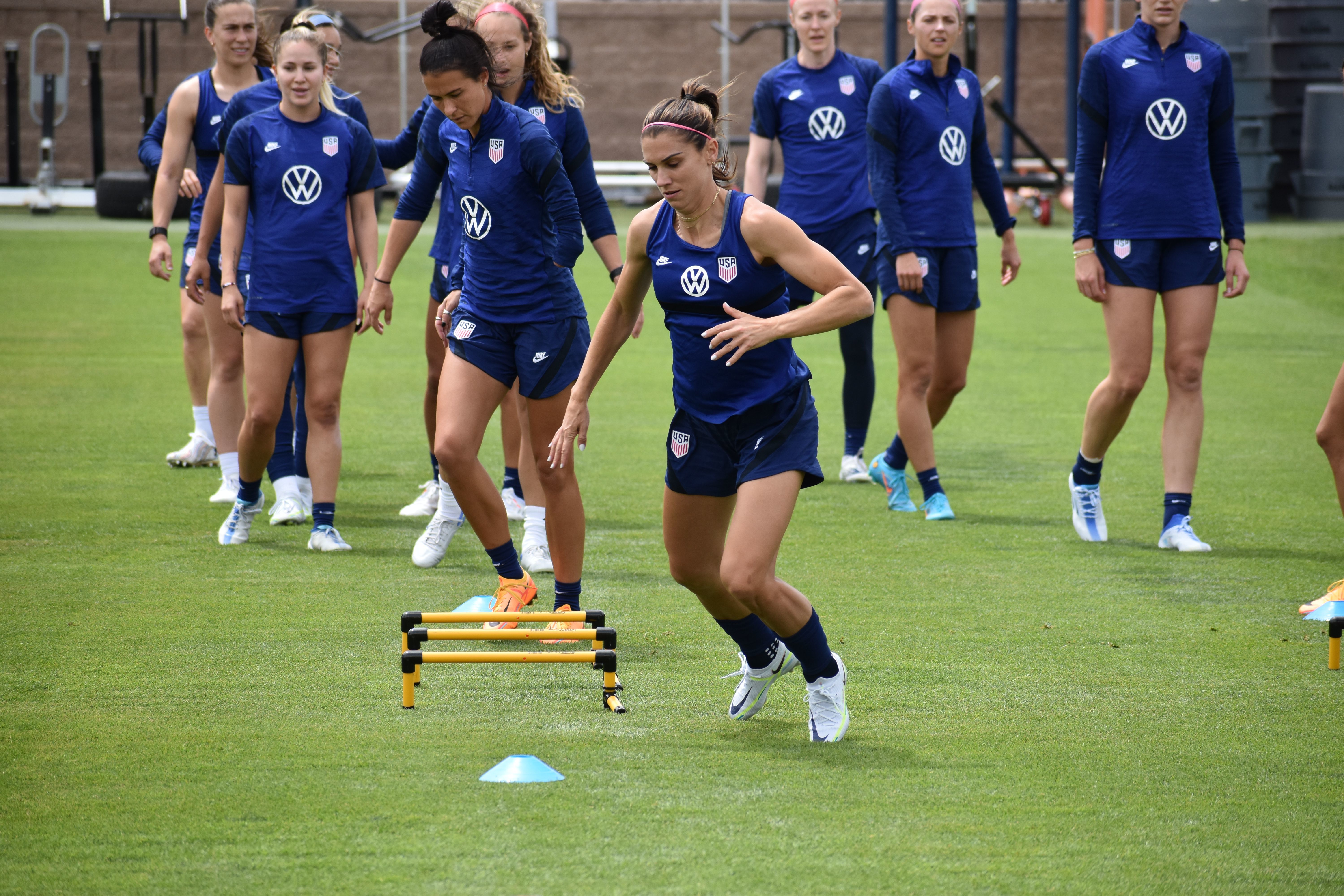
    Alex Morgan (center) works out at the United States women’s national soccer team’s practice in Centennial, Colo., near Denver, on June 21, 2022.

    At another point, she said: “Not being here in the last eight months, I have to bring it back to the basics.”

    Why would a player of her talent and pedigree believe that? The answer was obvious. When that’s how the superstar acts, everyone else follows.

    And whenever a national team player is seen as not fully bringing it — whether on the women’s or men’s side — those words return.

    If Alex Morgan was that way, they should be, too.

    As she spoke now, she again summoned the weight of the crest she wore 224 times.

    “I never took playing for the national team for granted,” she said. “I knew that one day you could be there, and the next day you won’t, if you don’t continue to make a case for yourself. I think that was really the mentality that the previous generation — Abby, Shannon Boxx, Christie Rampone — set in stone for this team, and maybe it was the previous generation that also instilled that in them.”

    Morgan knew she was perceived — and still is — as the golden girl, attractive to marketers for more reasons than just her skills. But people in the soccer world who know her well knew she put in the work.

    “For me it was like, you don’t walk into this team and wear this jersey with the assumption that you deserve to be there day in and day out without working for it, sunup to sundown,” she said. “A lot of people think with me it was an easy ride, and I was a real shoo-in on the team for 13, 14, 15 years, and that’s just not the case. I fought to be there every single day.”

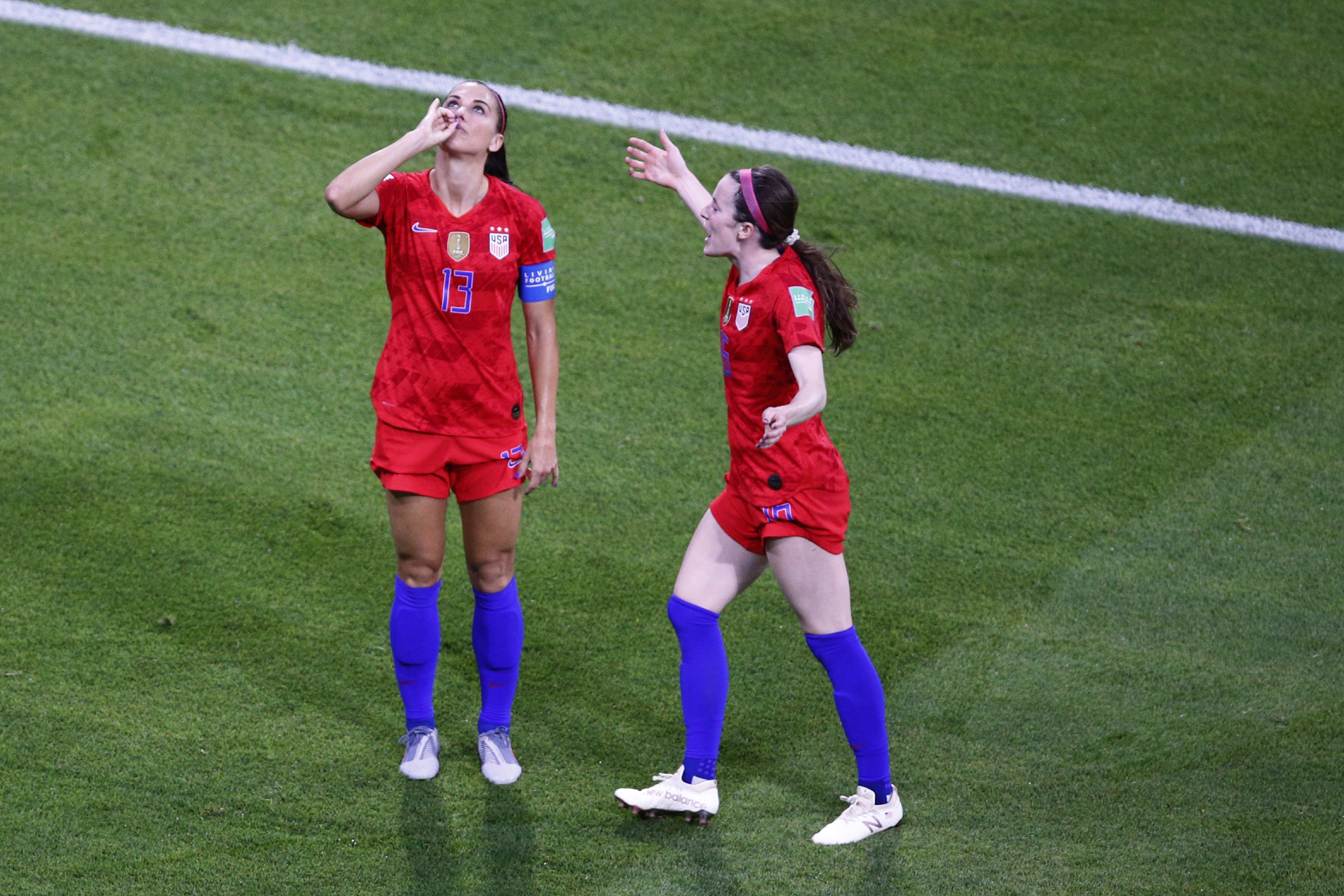
    The most famous of Alex Morgan’s many goal celebrations: drinking tea after flattening England in the 2019 World Cup semifinals, on her birthday no less.

    And though she has given countless interviews in her career, she had not forgotten that one from 2022 and the circumstances that surrounded it.

    “I had injuries, and I was out on maternity leave, and I needed a break after grinding and having my daughter, and this is exactly when we talked,” she said. “[I] was being omitted from the team for a certain amount of months because I needed a little bit of an extra break because I hadn’t stopped since having my daughter.”

    When Andonovski expressed his displeasure, Morgan was ready.

    “I said, ‘This is how you’re going to get the best out of me, is if I take this break,’” she said. “I’m glad I’d made that decision at the time, but I had to grind to get back into it.”

    Vlatko Andonovski (left) dropped Alex Morgan from the U.S. squad after the 2021 Olympics but brought her back in 2022 and kept her involved through the 2023 World Cup.

    She was ready for that, too.

    “That mentality is not one that I created on my own,” Morgan said. “It’s one that this team had from the very start, from the very first time that I entered into the team: one of not making assumptions, and one of working for everything that we earned, and knowing that we can never take anything for granted. I hope that players now continue to live by that — certainly, certainly I did.”

    And so, on cue, to the present generation of players whom Morgan will watch from the stands on Thursday. Some of Morgan’s teammates are still going, surrounded by a fleet of young risers aiming for the 2027 World Cup.

    “To be there and to be able to see the players and kind of be in that environment for a little bit is really fun and nostalgic,” Morgan said. “But I think that this team is in a really good place. You want to be in this place where you’re giving players chances a couple of years before you kind of narrow in on that core group when it comes to the World Cup year.”

    They likely will be on display at Subaru Park: 18-year-old Lily Yohannes, 19-year-old Claire Hutton, 20-year-olds Olivia Moultrie, Jaedyn Shaw, and Alyssa Thompson — the last two of whom already have major tournament experience.

    “There’s a lot of young players that already have incredibly valuable experience, with either the previous World Cup or Olympics,” Morgan said. “There’s also a lot of opportunity to become leaders on this team. 
 I feel like all these younger players are making names for themselves, and, yeah, I’m really excited to see [them].”

    Just as they will be excited to see her, the one who set the bar they all want to reach.

  • What to expect from Brandon Graham? Here’s how other NFL players who unretired fared.

    What to expect from Brandon Graham? Here’s how other NFL players who unretired fared.

    Tom Brady was 44 when he retired for 40 days before he changed his mind and went back to the playoffs one more time with Tampa Bay in 2022.

    In 1974, former Eagles linebacker Maxie Baughan left his defensive coordinator gig at his alma mater, Georgia Tech, to go back to the NFL as a player-coach with Washington. He was a backup and played in two games.

    Brett Favre was 40 when he decided to come out of retirement for the second time and join the Minnesota Vikings in 2009. He stuck it twice to his old team, Green Bay, won the NFC North, then led the Vikings all the way to the NFC title game.

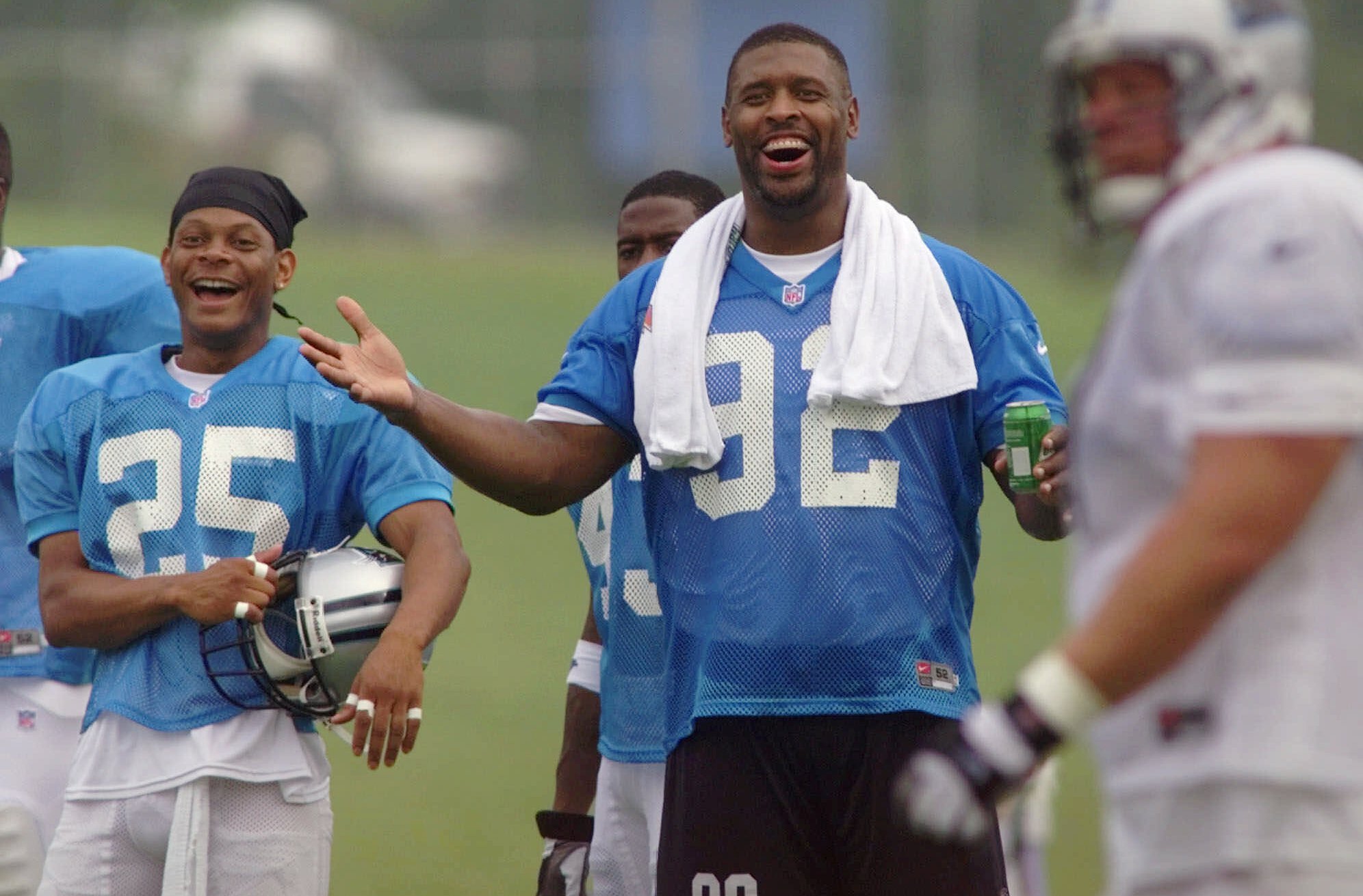
    Reggie White returned from retirement at 38 with the Carolina Panthers in 2000. He played in all 16 games but recorded his lowest single-season sack total (5œ) in a Hall of Fame career.

    Then there’s Bronko Nagurski, who, in 1943, came out of retirement to play with the Chicago Bears, who needed players because many of theirs were fighting in World War II.

    All of this is to say not all unretirements are created equal.

    What does the historical data mean for Brandon Graham, who is back with the Eagles after retiring from football seven months ago? Maybe nothing — human bodies aren’t created equal, either. Or maybe something, as there may be relevant context.

    Former Eagle and Packer Reggie White (92) came out of retirement to sign with the Panthers in 2000.

    Is Reggie White’s case similar?

    White was 38 when he decided to end his one-season retirement to join the Panthers, and Graham turned 37 a few weeks after retiring in mid-March.

    But White, one of the best defensive ends of all time, was coming off a 16-sack, first-team All-Pro, Defensive Player of the Year 1998 season when he retired. Graham was playing well with the Eagles last year, but his season was cut short by injury, and his sack numbers dropped off a cliff one year earlier in 2023.

    White still was disruptive to opponents, but he wasn’t his normal high-production self in a more limited role in Carolina. It is a physical and demanding position, not that Graham needs any reminder of that.

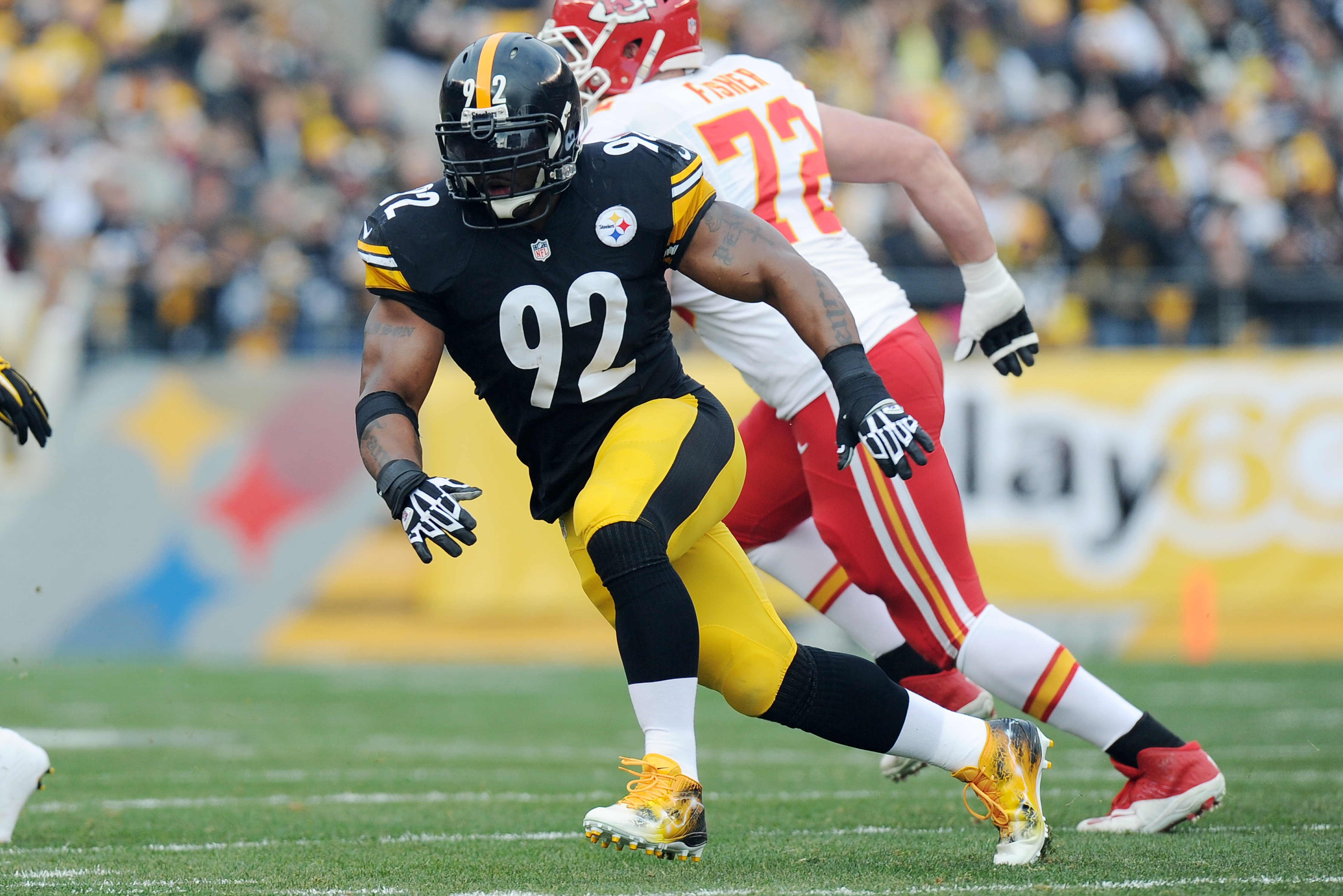
    James Harrison went back to the Steelers for a second stint at age 36 in 2014.

    The Harrison comparison

    James Harrison officially retired in August 2014, but his retirement essentially lasted a similar length as Graham’s. Harrison played the 2013 season with Cincinnati and wasn’t in a training camp in the summer of 2014.

    But after the Steelers suffered some injuries early in the 2014 season, the linebacker was back with his former team at the age of 36. He was still productive, too, with 45 tackles and 5œ sacks in 11 games.

    Harrison then signed a two-year contract with the Steelers and ended up playing three more seasons after returning in 2014. Don’t expect the same from Graham, but Harrison’s effectiveness as a pass rusher might be a good comparison for him.

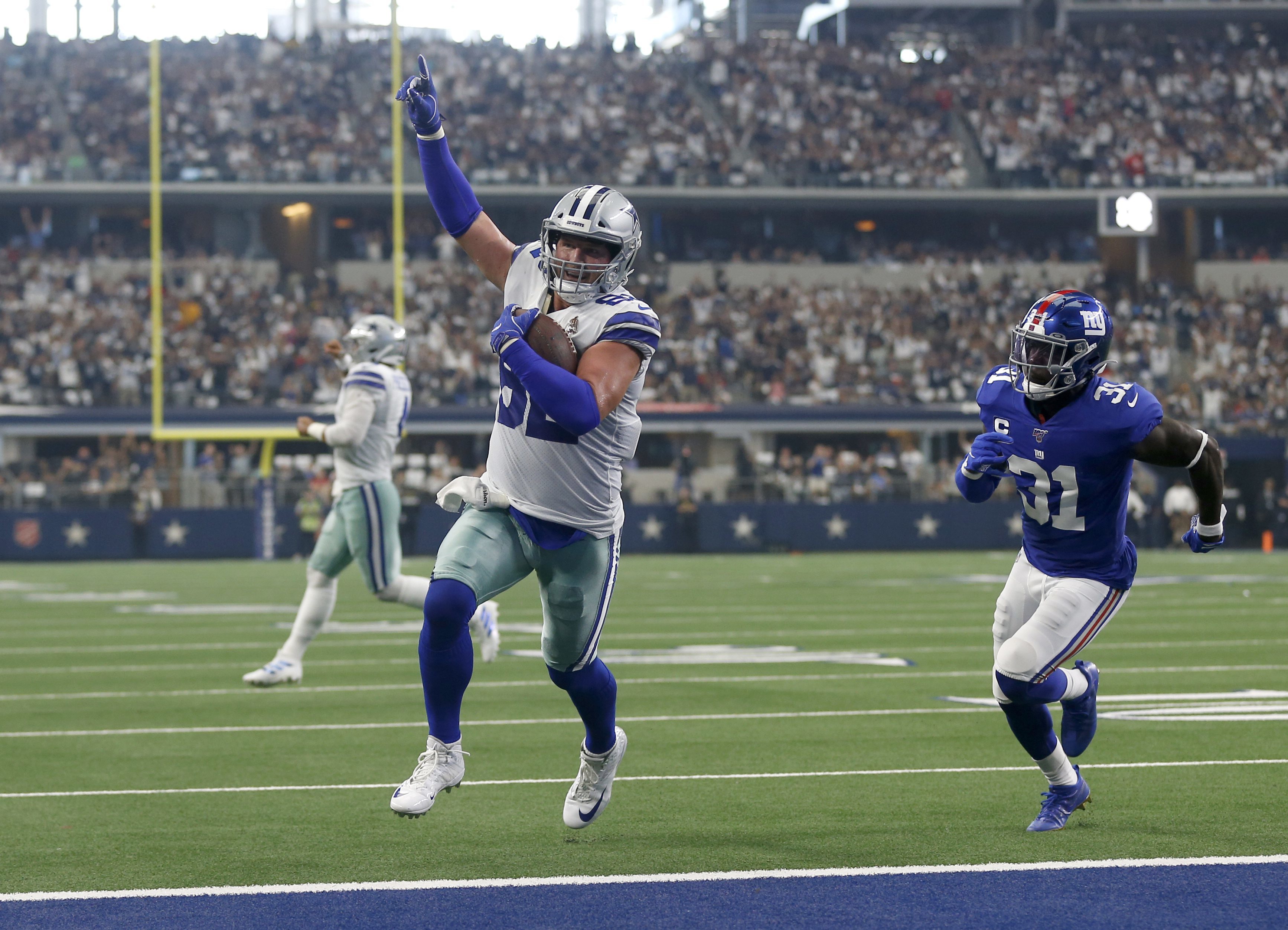
    Tight end Jason Witten left the “Monday Night Football” broadcast booth to play for the Cowboys again in 2019.

    Witten still had a little in the tank

    Graham will go from the podcast studio to the locker room, similar to how Jason Witten went from the broadcast booth back to football.

    Witten, like Graham, was 37 years old when he rejoined the Dallas Cowboys in 2019 after one year of retirement. The tight end still had it. He caught 63 passes, four of them for touchdowns, and accumulated 529 yards in 16 games. His 2017 season line: 63 catches, 560 yards, five touchdowns.

    37 is popular

    Lucky No. 37? Deion Sanders was also 37, and he chose that number for the back of his jersey when he came out of retirement to play with Baltimore in 2004 after three seasons away from the game.

    Sanders played nine games in 2004, mostly as a nickel cornerback, and still had a knack for the football. He had three interceptions and returned one of them for a touchdown. He played all 16 games in 2005 and registered registering two interceptions and 30 tackles. He was fine, but he wasn’t Prime Time.

    Graham may be fine

    All of this is mostly a fun trip down memory lane. It’s unclear what kind of shape Graham is in or whether he has lost a step after being away for a short time. Every body is different.

    But Graham’s 2024 season can, at least, be a little instructive. He was an energy booster on the field, a veteran presence off it, and a really capable edge setter who helped the Eagles vs. the run.

    They could use that right now, and it’s not hard to imagine him being like Witten or Harrison in that he still can do what a team asks him to do.

    Graham is the biggest of the edge rushers at 265 pounds, and he could be useful helping a defense that is allowing 4.6 yards per carry, the ninth-highest average in the NFL.

    The Eagles also could use some more volume from their pass rushers, and Graham was making an impact there before a torn triceps ended his regular season in Week 12 vs. Los Angeles. He sacked Rams quarterback Matthew Stafford before the injury, his fourth time getting home in 11 games (3œ sacks). Graham still could make an impact there, even if the Eagles aren’t asking for a large snap count out of him.

    The Eagles needed Graham, and it seems like he needed them, too. Time will tell if the play matches up to the presence.

  • Lily Yohannes and Alyssa Thompson have arrived at their star turns with the USWNT

    Lily Yohannes and Alyssa Thompson have arrived at their star turns with the USWNT

    There are a few ways to measure who the players of the moment are for the U.S. women’s soccer team.

    One is in the box score, as usual: goals, assists, saves, and so on. Another is measured before kickoff, and with a decibel meter.

    Most of the time, the winner of that contest is a veteran, and that might happen again when the Americans play Portugal on Thursday at Subaru Park (7 p.m., TNT, Peacock). Sam Coffey is an obvious favorite, as is electric playmaker Rose Lavelle.

    But keep an eye — or an ear, in this case — out for two of the U.S. squad’s younger players who are quickly becoming fan favorites. Midfielder Lily Yohannes and winger Alyssa Thompson have all the skills and charisma to be national team mainstays, and their bandwagons are filling up fast.

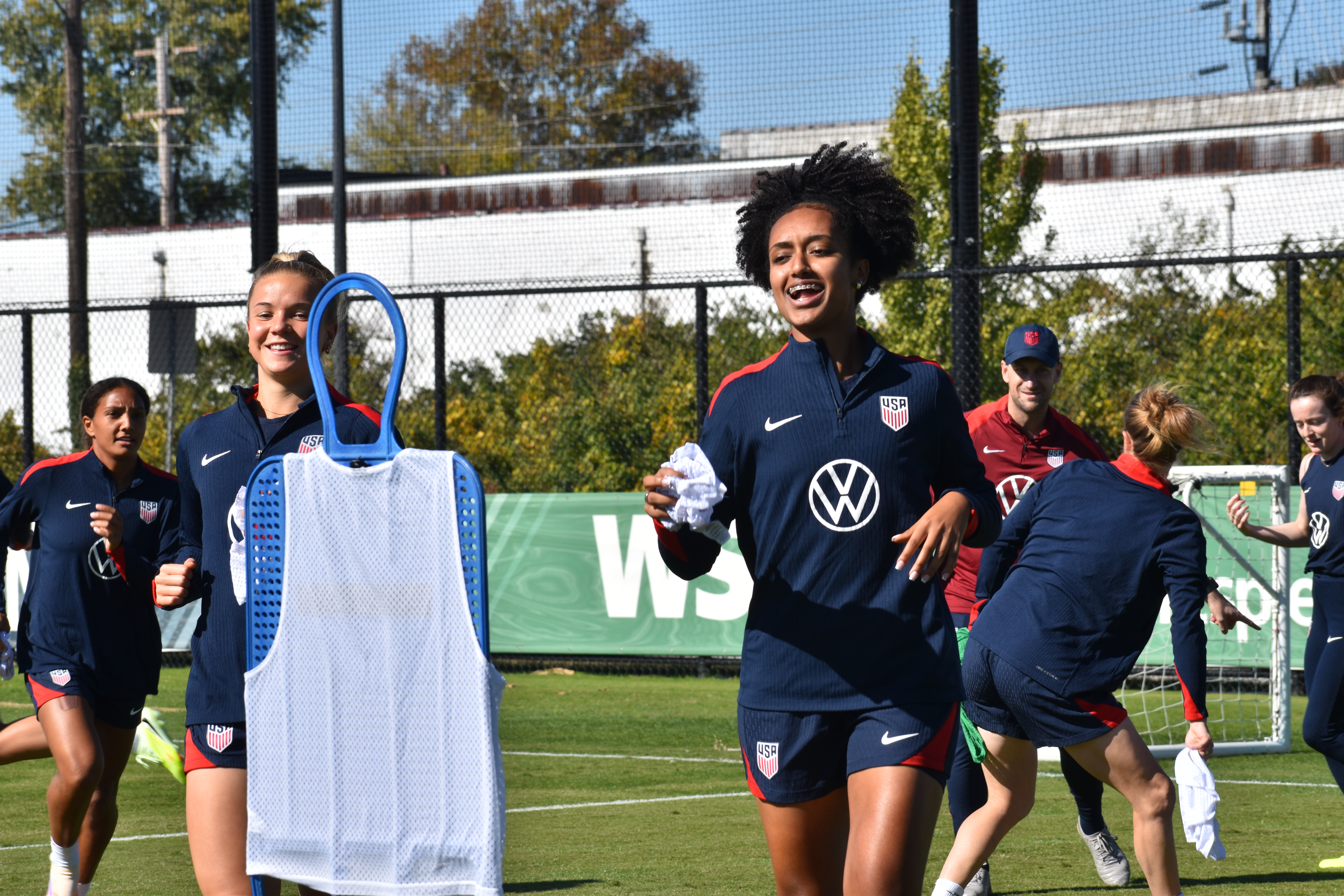
    Lily Yohannes (center) working out during the U.S. women’s soccer team’s practice Tuesday morning at the Union’s facilities.

    Yohannes plays club soccer for Europe’s most decorated team, France’s OL Lyonnes (formerly known as Lyon). The 19-year-old from D.C.’s Virginia suburbs joined in July, as OL retooled its squad to seek a record-furthering ninth Champions League title.

    She hasn’t needed long to settle in. Last Wednesday, she scored a stunning goal from nearly 45 yards out in her team’s European season opener, a 3-0 win over Austria’s St. Pölten. The play went viral instantly, heightening the anticipation of her first U.S. appearance since June.

    “So many world class players and such a high standard, high level every day in training,” Yohannes said. “Every day is super-intentional, and you just have to, like, stay switched on every day. And I think that’s something that’s super good for me and for my development to have.”

    She has two American teammates at the club, midfielders Lindsey Heaps — the national team’s longtime captain — and Korbin Shrader. Heaps had already taken Yohannes under her wing in U.S. camps, and has done so more now.

    “I think she’s just such a quality player and such a footballer,” Heaps said. “And to have her in Lyon, to now be there and learn from all the players that are there, is such a an incredible experience for her. But I think she just fits in our team so well, as she started out.”

    Heaps blazed the trail 11 years ago for American teens who skip college to turn pro in Europe, and Yohannes is one of many who’ve followed her. But even the veteran had to rave about that long-range goal, calling it “absurd when you think about an 18-year-old taking a chance like that.”

    From L.A. to London

    Thompson joined Chelsea, England’s biggest team, this summer from the NWSL’s Angel City. The Blues have never won the women’s Champions League, and have never been shy about craving it.

    So it turned heads when they not only brought Thompson to London, but did so for a $1.3 million transfer fee — not small by women’s soccer standards, but well below expectations for a 20-year-old.

    She has also started quickly. At the same hour as Yohannes’ goal, Thompson notched a goal and an assist in Chelsea’s 4-0 rout of France’s Paris FC.

    “I really wasn’t thinking about leaving Angel City, and then when I got the offer, like, a week before the transfer window, I felt like immediately that I wanted to go,” Thompson said. “I’ve always wanted to play in Europe, and I felt like this opportunity, I don’t know when it would come again, and Chelsea is such an amazing club, known all over the world.”

    She could see a big picture beyond soccer, too.

    “I was like, I really want to go and experience a different place — I’ve lived in L.A. my whole life,” she said. “I feel like this should be just so good for me, like, as a player, obviously, but as a person too, just developing things that I’ve never had to think about before.”

    There have also been moments of levity. A reporter from The Athletic got the best answer out of Thompson on the day, asking about off-the-field adjustment.

    “They have less AC 
 I really like it cold when I’m sleeping, so that’s annoying sometimes,” Thompson said, joining a long tradition of Americans lamenting England’s lack of air-conditioning. “And I haven’t tried any of the English food. I don’t like beans in general, so I just wouldn’t try it.”

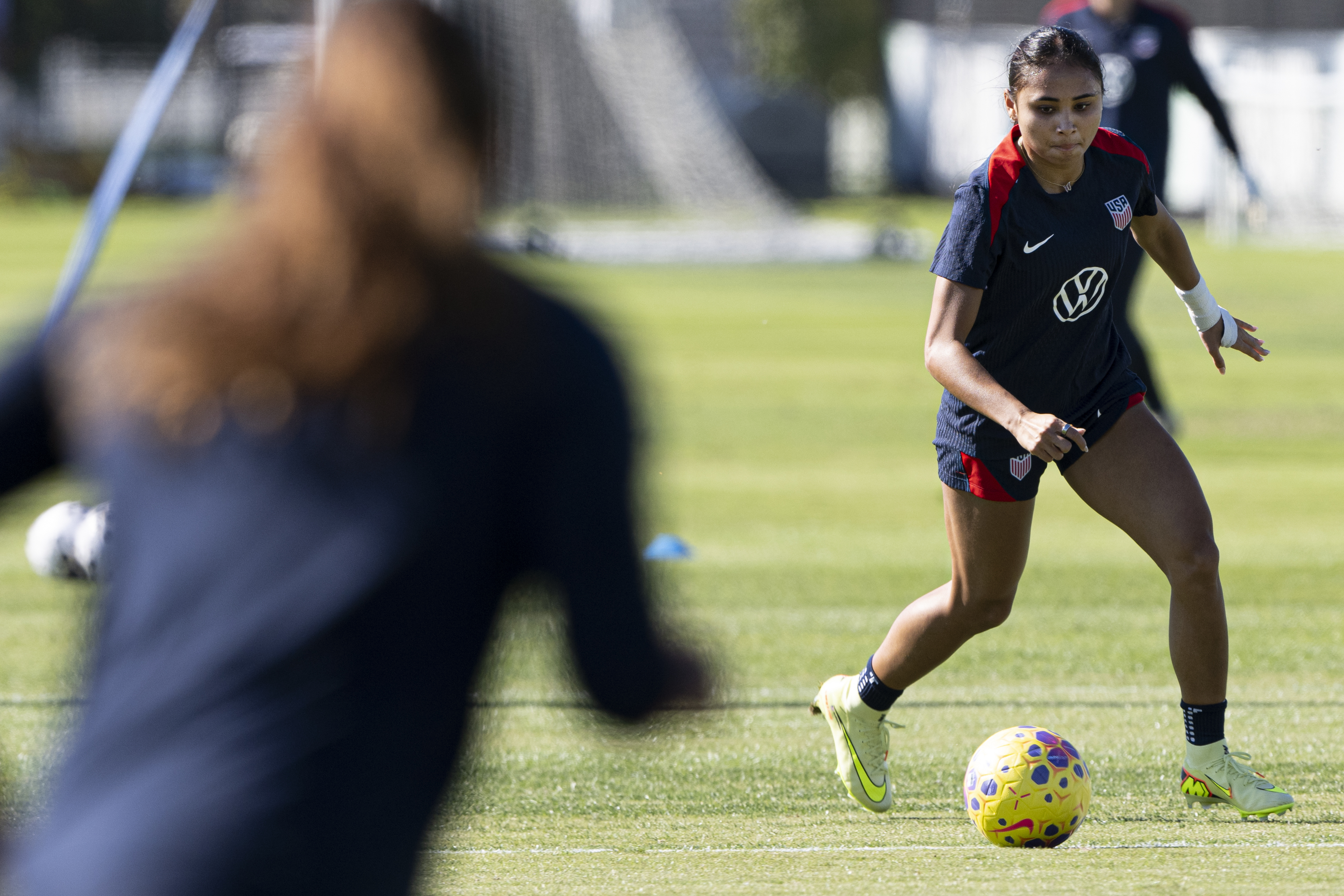
    Alyssa Thompson (right) working out in a drill during Tuesday’s practice.

    Neither player is new to the national team at this point, or to its devoted fan base. Yohannes debuted in June of last year (and scored that night too) and has played seven games; Thompson has 22 caps, three goals, and three assists, and was on the 2023 World Cup team.

    Thompson narrowly missed making last year’s Olympic squad, but that was always likely to be just a short setback. Now she’s in form, and will likely see a lot of playing time in this month’s games.

    “Alyssa, she fits in seamlessly to to Chelsea’s game,” Heaps said. “She just got her first goal, and I think that’s something that she’s wanted since she’s set foot there in Chelsea. So, very happy for her.”

    A historic day in Chester

    Tuesday marked the return of the U.S. women to the area for the first time in 3œ years, and also something never seen around here.

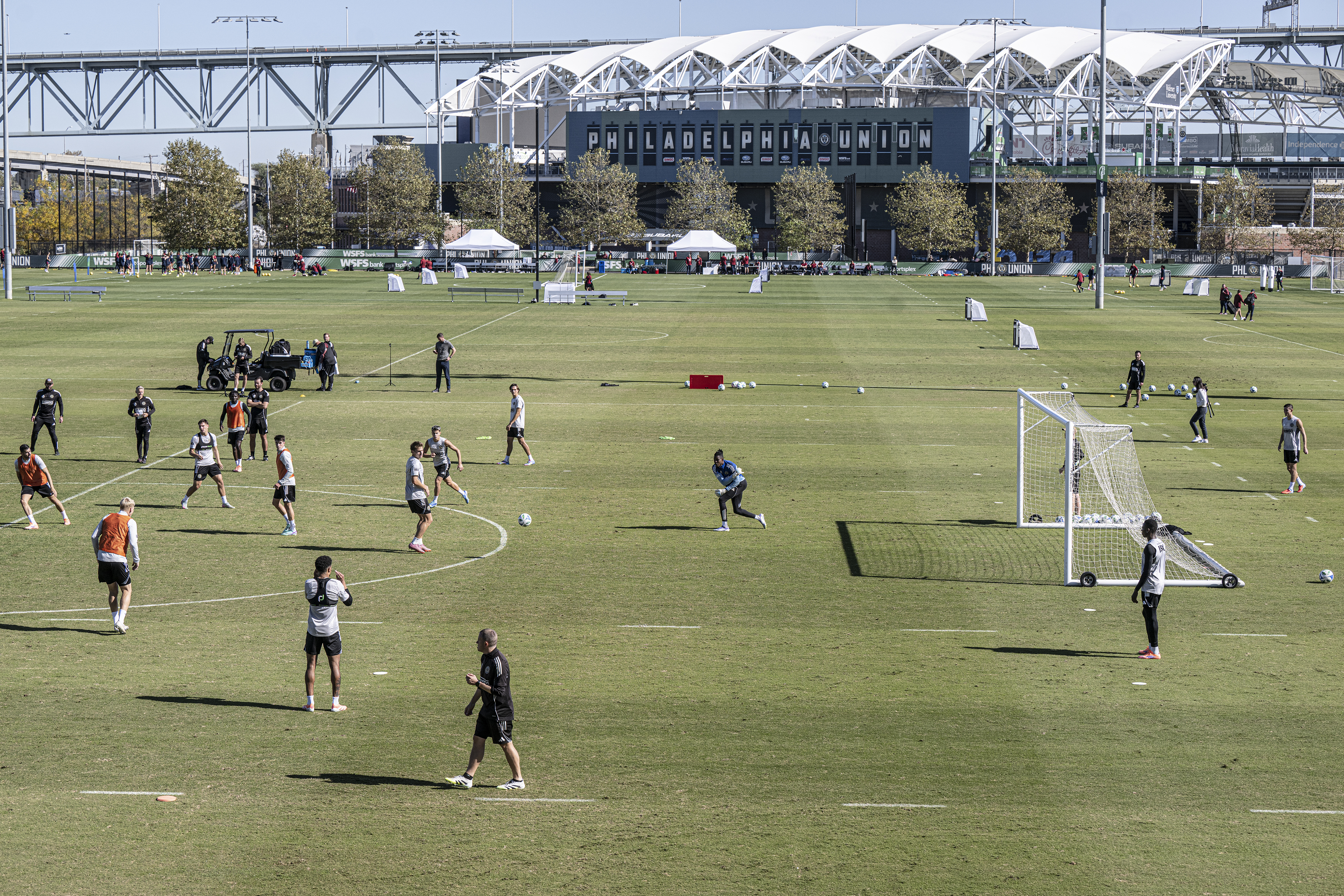
    For a few minutes in the late morning, the national team and the Union were practicing in the club’s training complex at the same time, with one squad at each end of the three grass fields along Seaport Drive.

    It was the first time the Union shared the space simultaneously with another professional squad, and it likely won’t be the last.

    A view from above the fields on Tuesday morning, with the Union in the foreground and the U.S. women in the background.

    “The appetite for soccer here is incredible,” said longtime Union captain Alejandro Bedoya, who will attend Thursday night’s game with his daughter. “There’s so much talent when you look at the men’s national team, for the women’s national team, for the Union academy, the players that have come through here. 
 It’s amazing. And what this sportsplex means, it was a great initiative to get this built.”

    The closest previous occasion was earlier this summer, when Chelsea borrowed some of the Union’s fields but did most of their work inside Subaru Park. The nearest thing to an overlap was when the English club invited a few Union reserve squad players to come over from their practice to fill out a scrimmage.

    Next year, the complex will be a base camp for one of the teams in the World Cup. But it will be mostly reserved for that, with MLS planning to shut down its schedule during the tournament.

  • What should you expect out of the Sixers this season? Nothing and everything all at once.

    What should you expect out of the Sixers this season? Nothing and everything all at once.

    The Sixers have figured out the key to a stress-free life.

    You can’t let anybody down if they don’t have any expectations.

    It would be a fitting twist if this was the year the Sixers finally lived up to the hype of the last decade. They spent eight years as a Snapchat-filter contender, entering each season with the unsubstantiated energy of a team that desperately wants to speak its self-image into existence but at the same time understands that the teams that win NBA titles usually aren’t the ones trying to channel Ben Affleck in Boiler Room. The problem with the whole “act as if” mindset is that you need to stop acting at some point or else you just become an act.

    The tricky thing about the Sixers is that it is tough to pinpoint when, exactly, they became that act, given the preponderance of options. I would argue that it was when James Harden held a birthday party at which women held signs that said, “Daryl Morey is a liar.” But you could just as easily argue that it happened a year earlier, when the Sixers traded a guy who was too scared to throw down an open dunk in a decisive playoff game for a guy who showed up to a playoff press conference wearing a designer coat that looked like it was constructed from the pelt of a Teletubby.

    Morey has taken the brunt of the blame for the last couple of seasons, mostly because it was his name on the marquee. If you don’t like the circus, you either blame Barnum or you blame Bailey. In selling Harden and then Paul George, Morey’s message was the classic “Don’t believe your eyes.” The scariest part of Dave Dombrowski’s press conference last week was when he channeled Morey and suggested that older players don’t get old the same way they used to. Whatever truth there is to it — and I could lay out a very strong case that there isn’t much — the marvels of modern sport science still haven’t managed to solve a conundrum that each of us encounters at some physiological age. Once you get old, there is no getting un-old. The only question is whether you can slow down the decay.

    Funny thing about Morey, though. While his more vocal critics have written him off as little more than a salesman, they are giving his sales proficiency way too much credit. He has been much better at his actual job, which, let’s not forget, began five years ago with inheriting a roster that was assembled on the premise that Al Horford and Josh Richardson could be the missing pieces that would enable Joel Embiid, Ben Simmons, and Tobias Harris to win a title. Back then, people felt a lot like they did by the end of last season. The Sixers’ best chance had already passed them by.

    Sixers president Daryl Morey is entering his sixth season with the franchise.

    What the interim has wrought is in the eye of the beholder. It has been easiest to focus on Morey’s yearly quest to push the Sixers over the top, his annual reshuffling of the deck, from Simmons to Harden to George, each one falling short of even reaching the conference finals. The Sixers have not come close to achieving the ultimate goal, but they have made a sport of it, taking the Celtics to Game 7 in 2023 and the Knicks to Game 6 in 2024 before landing George as part of a free-agent bonanza last summer. Yet even as they have tried and failed — and flailed — they somehow manage to enter 2025-26 with a roster that actually looks like the one the Sixers thought they had in those first post-Process years, long before Morey arrived. Morey drafted Tyrese Maxey and then Jared McCain and just five months ago VJ Edgecombe, who may have the most potential of them all.

    You watched the Sixers this preseason and you saw the makings of the team they never actually had. The first quarter of their 126-110 win over the Timberwolves on Friday was eye-opening. Early in the quarter, Edgecombe crashed the weak-side glass and corralled a Kelly Oubre miss for an easy putback. Edgecombe and Maxey spent the period running the court like it was crumbling behind them, pushing the pace after makes as well as misses, displaying an uncanny connection for teammates whose partnership can be measured in months.

    After going hard to the basket and finishing his textbook footwork with a contested layup off a fastbreak pass from Maxey, Edgecombe stole the ball from Johnny Juzang at the other end of the court, sparking another break that resulted in a free-throw trip for Quentin Grimes. But the most instructive play might have been one that failed: a cross-court, alley-oop pass from Maxey near the hash to Edgecombe on the weak-side block. They did not convert, but they came close enough to project that they will finish plenty of them.

    Even without McCain, who quickly worked his way to the top of the rotation last season and who will be there again soon, the Sixers looked a lot like the kind of team people always wished they would be instead of steadily growing older, slower, and more difficult to watch.

    For the first time in a long time, the Sixers have the makings of a team that is, at the very least, a fun team to root for. It remains to be seen how well it will translate into wins. It will translate into more than people think if Embiid can consistently be the guy he was in his preseason debut. Healthy. Light on his feet. Knocking down elbow jumpers and charging to the rim. Whatever they get from George will be a bonus.

    And, who knows, maybe that will be enough in a wide-open Eastern Conference where two top contenders are taking gap years. Injuries to the Celtics’ Jayson Tatum and the Pacers’ Tyrese Haliburton have created a power vacuum. You can’t completely discount the Sixers’ chances of filling it.

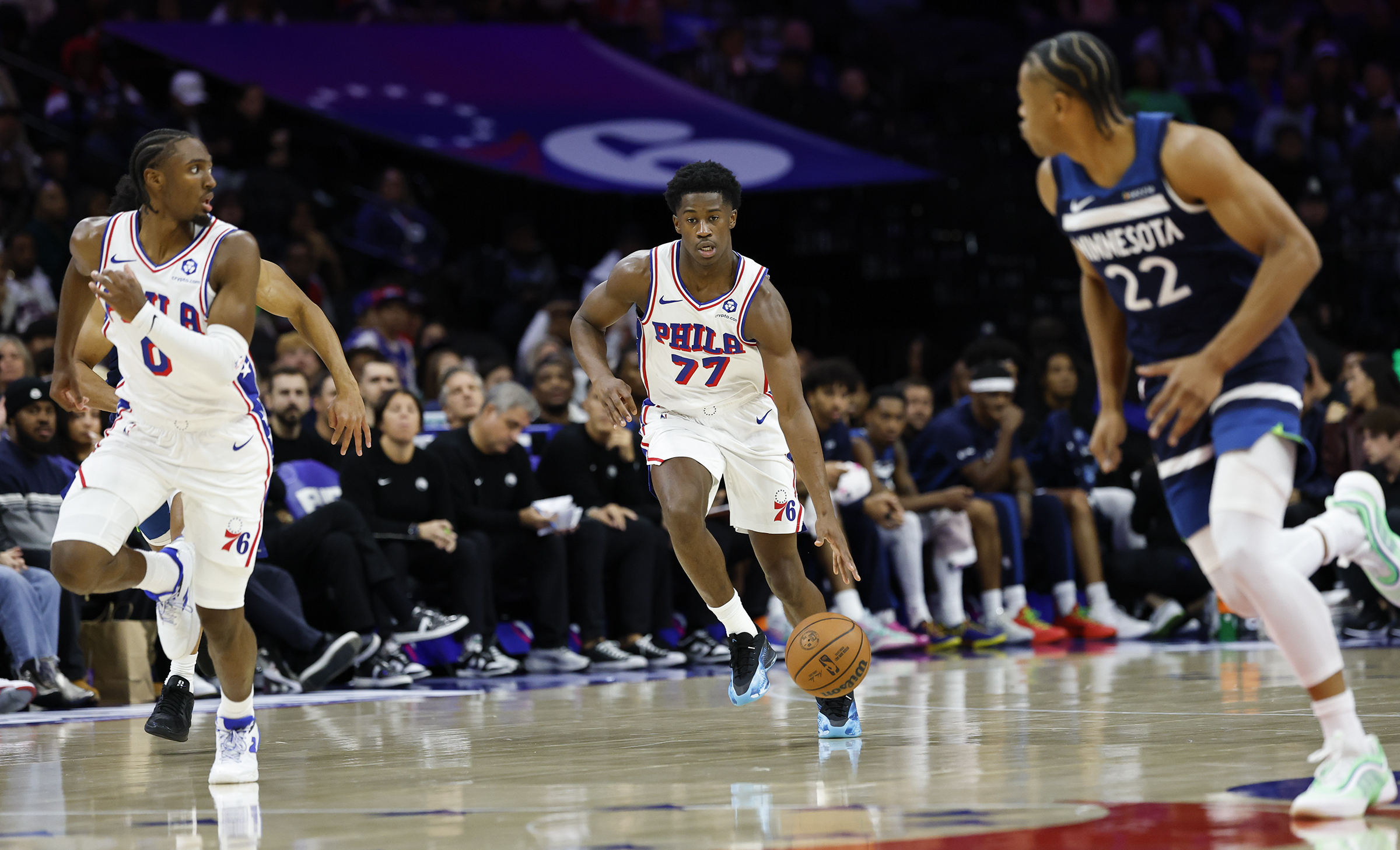
    Sixers guard VJ Edgecombe brings the ball upcourt alongside Tyrese Maxey during Friday’s preseason game against the Timberwolves.

    For now, the reason to watch this team is for an early look at what the future will look like. Edgecombe has a chance to become the Sixers’ most electric star since Allen Iverson. Maxey is Maxey, and McCain is almost as fun to watch. It is a fascinating dynamic, one that complicates the more cynical narratives about the Sixers’ trajectory over the last five years.

    The safe play is to not expect much out of the Sixers. But you can expect them to be fun.

  • Tipping off 🏀 | Sports Daily Newsletter

    Tipping off 🏀 | Sports Daily Newsletter

    The 76ers want to leave last season, when they finished with fifth-worst record in the NBA, behind them.

    Tonight, the start of a new chapter begins, as they’ll tip off the 2025-26 season against the Boston Celtics at TD Garden, and for the first time since February, Joel Embiid will play.

    It’s hard to know whether these Sixers will continue to be the product they fielded a season ago, when Embiid and Paul George spent more time in street clothes than jerseys and Tyrese Maxey struggled to score enough points to produce wins without a consistent costar.

    However, there’s been a mandate for change and a new identity. Maxey has felt responsible for setting that standard. To do that, the 24-year-old point guard has made an effort to connect with his teammates outside the facilities. And to play freely. And to speak up.

    “My spirits have to be high for this team and for this organization and for my game as well,” Maxey said. “I think that’s what I’ll do this year, and we’ll be better.”

    And in case you missed it, Gina Mizell broke down seven questions for the Sixers this season, which include VJ Edgecombe’s impact and Embiid and George’s health status.

    — Isabella DiAmore, @phillysport, sports.daily@inquirer.com.

    If someone forwarded you this email, sign up for free here.

    ❓Can the Sixers be successful without Embiid and/or George playing every game? Email us back for a chance to be featured in the newsletter.

    Didn’t want to retire

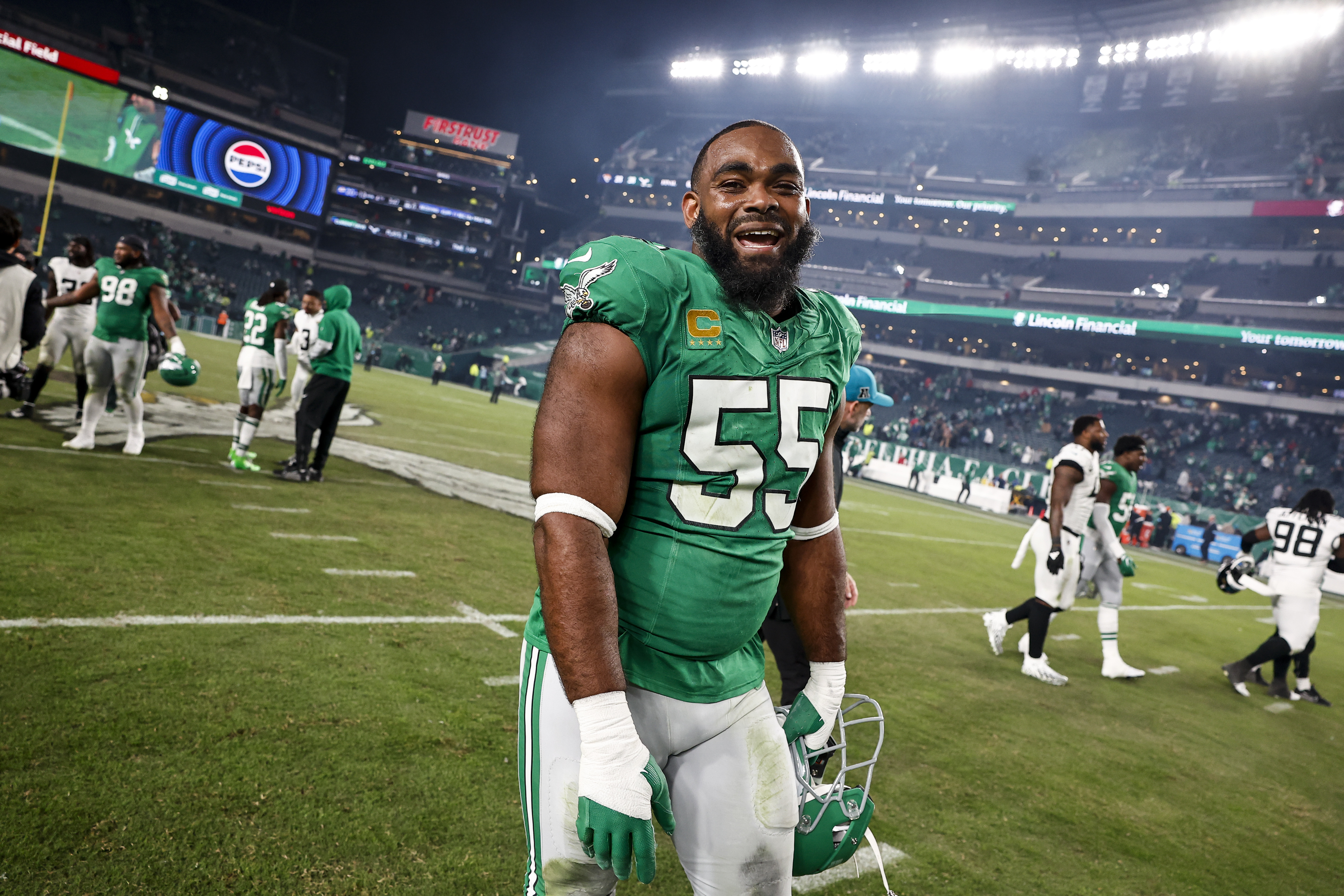
    Defensive end Brandon Graham retired earlier this year, but he’s coming back to help bolster the Eagles’ depleted pass rush.

    Brandon Graham is eyeing Week 10 against the Packers as his first game back after the 37-year-old defensive end announced Tuesday that he’s coming out of retirement to rejoin the Eagles. Howie Roseman reached out to Graham’s agent about returning to the team earlier in the season, but Graham wasn’t ready. Then came the news that Za’Darius Smith, whom Roseman signed to help bolster the edge rusher corps, was retiring. It led Graham to reconsider how he would respond if he was approached with another opportunity. Plus, the veteran feels like he has some “juice left.”

    What do you expect from Graham? We’ve seen in the past — from Reggie White to James Harrison to Tom Brady — that not all unretirements are created equally, and rejoining the NFL doesn’t always mean you pick up where you left off.

    Catching up with Schmidt

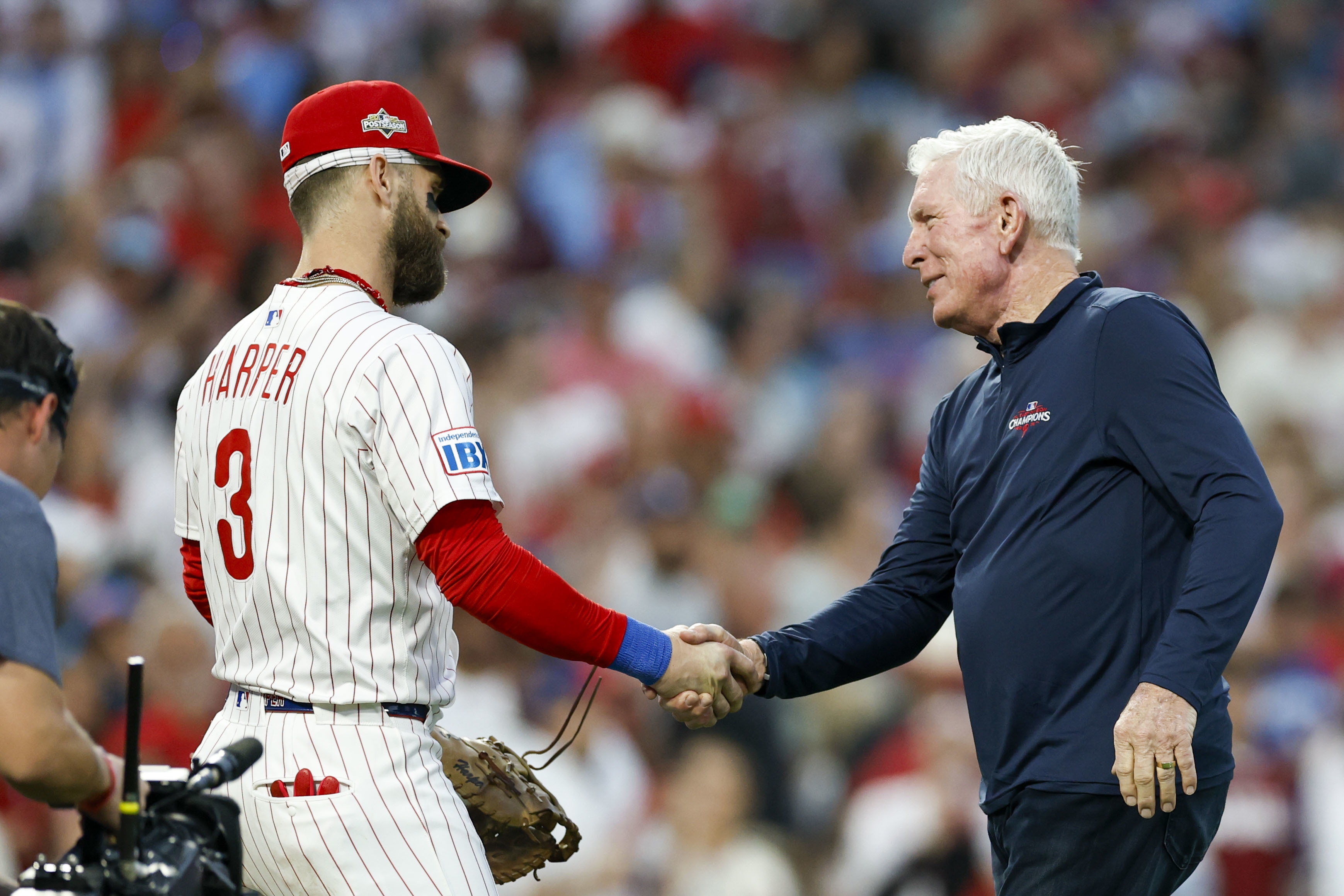
    Mike Schmidt (right) respects how Bryce Harper has managed to connect with Phillies fans.

    Forty-five years ago this week, the Phillies won their first World Series.

    At the center of it all, Michael Jack Schmidt.

    Schmidt went 8-for-21 with two homers and seven RBIs against the Royals and was named World Series MVP, a crowning achievement in his Hall of Fame career. But he badly needed that performance to change the narrative after several years’ worth of playoff disappointment, individually and for the team.

    On a recent edition of Phillies Extra, The Inquirer’s baseball show, Schmidt discussed how the 1980 Phillies finally got over the October hump. He also shared some thoughts on Bryce Harper, Kyle Schwarber, and Pete Rose’s potential Hall of Fame candidacy.

    ‘Snakebit’ no more

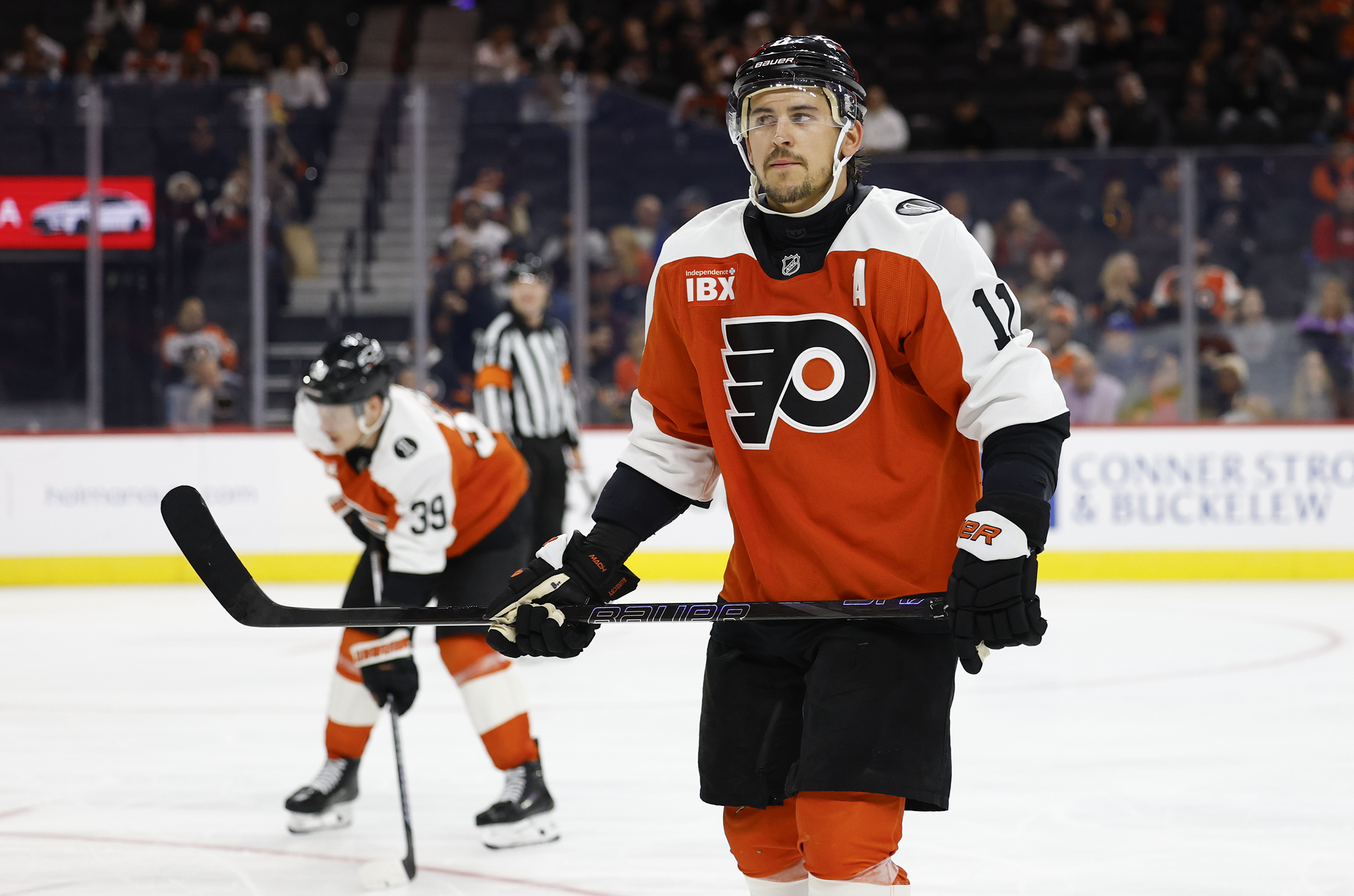
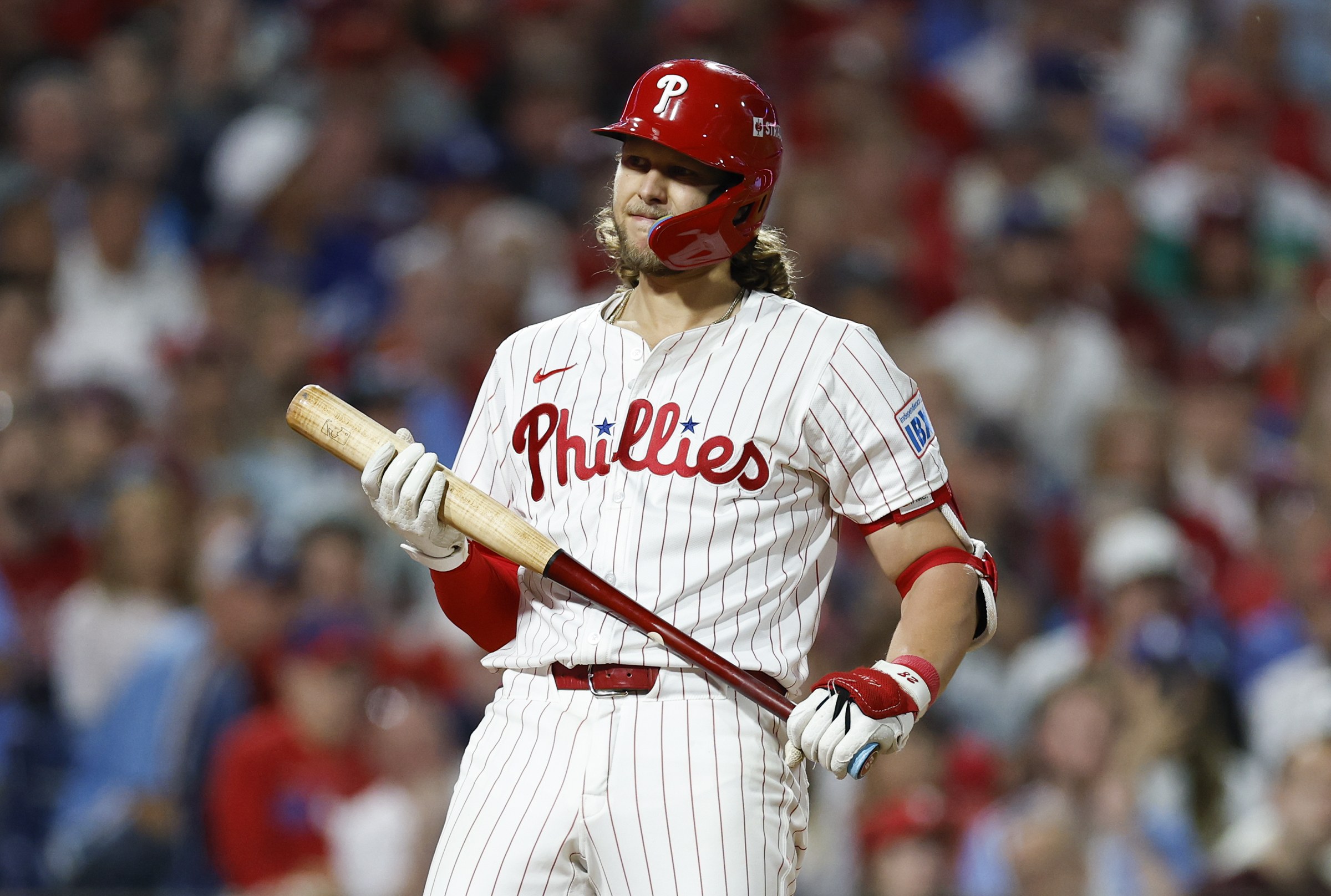
    Flyers right wing Travis Konecny has scored 30 goals in two of the last three years.

    Travis Konecny had heard enough of the questions about being “snakebit” and the fact that he had no goals through five games.

    So what did he do? He ended them by scoring his first goal of the season Monday night in the Flyers’ 5-2 win over the Seattle Kraken. But while he hadn’t scored until Monday, Konecny’s presence has been felt in other ways, as Jackie Spiegel writes.

    Speaking of that 5-2 win, the power play wasn’t the only positive for Rick Tocchet’s men. Here are our full takeaways, including a nod to a surprising combatant.

    Sports snapshot

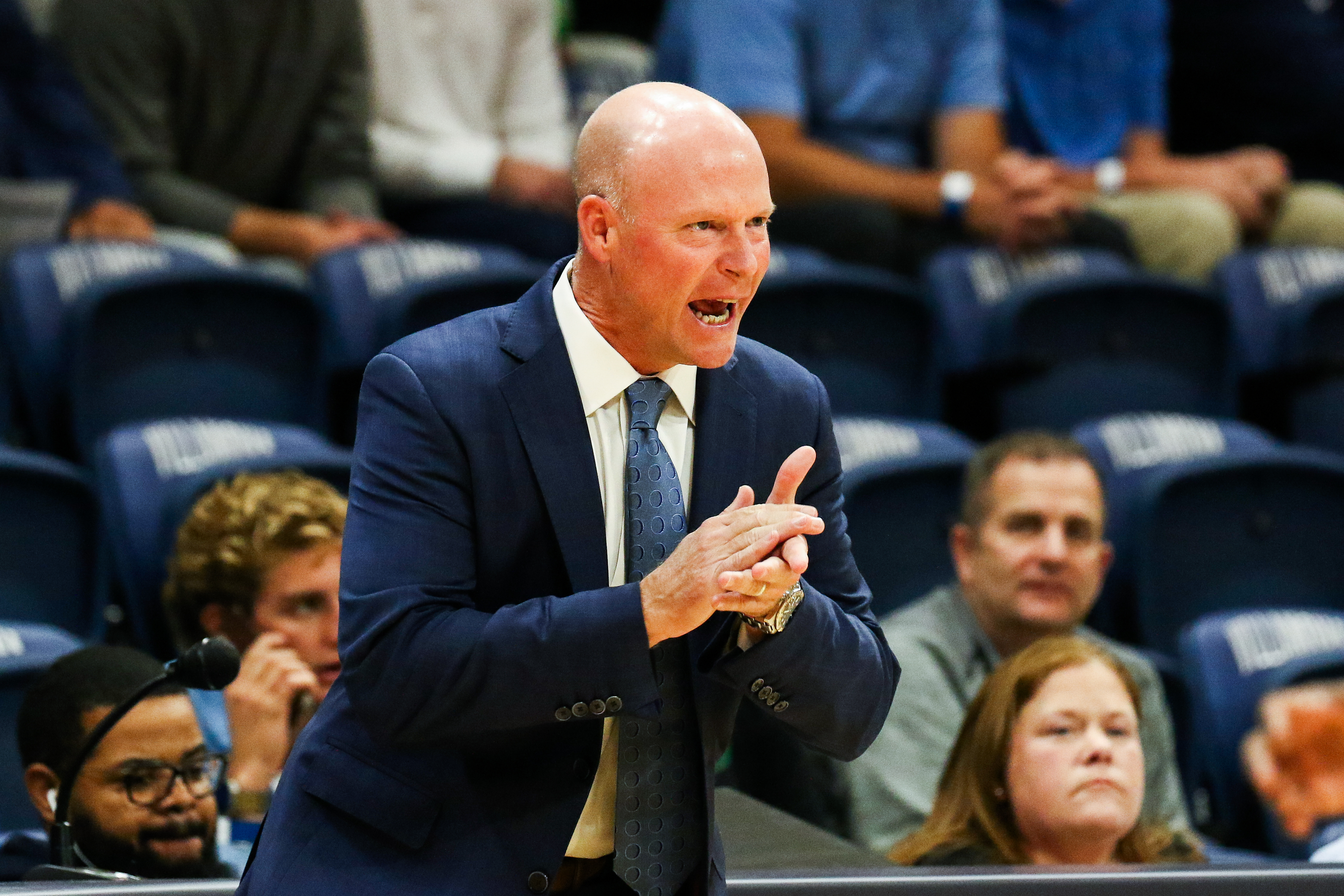
    “It feels good to be back home, especially back in the Garden,” said Villanova’s Kevin Willard, who coached 12 seasons at Seton Hall.
    • New stage: Kevin Willard felt back at home during the Big East media day in New York, where his Villanova Wildcats were picked to finish seventh in a preseason poll.
    • The bid is in: Philadelphia is one of 30 U.S. cities interested in hosting games for the 2031 women’s World Cup.

    David Murphy’s take

    Sixers coach Nick Nurse during a preseason game against the Minnesota Timberwolves on Oct. 17.

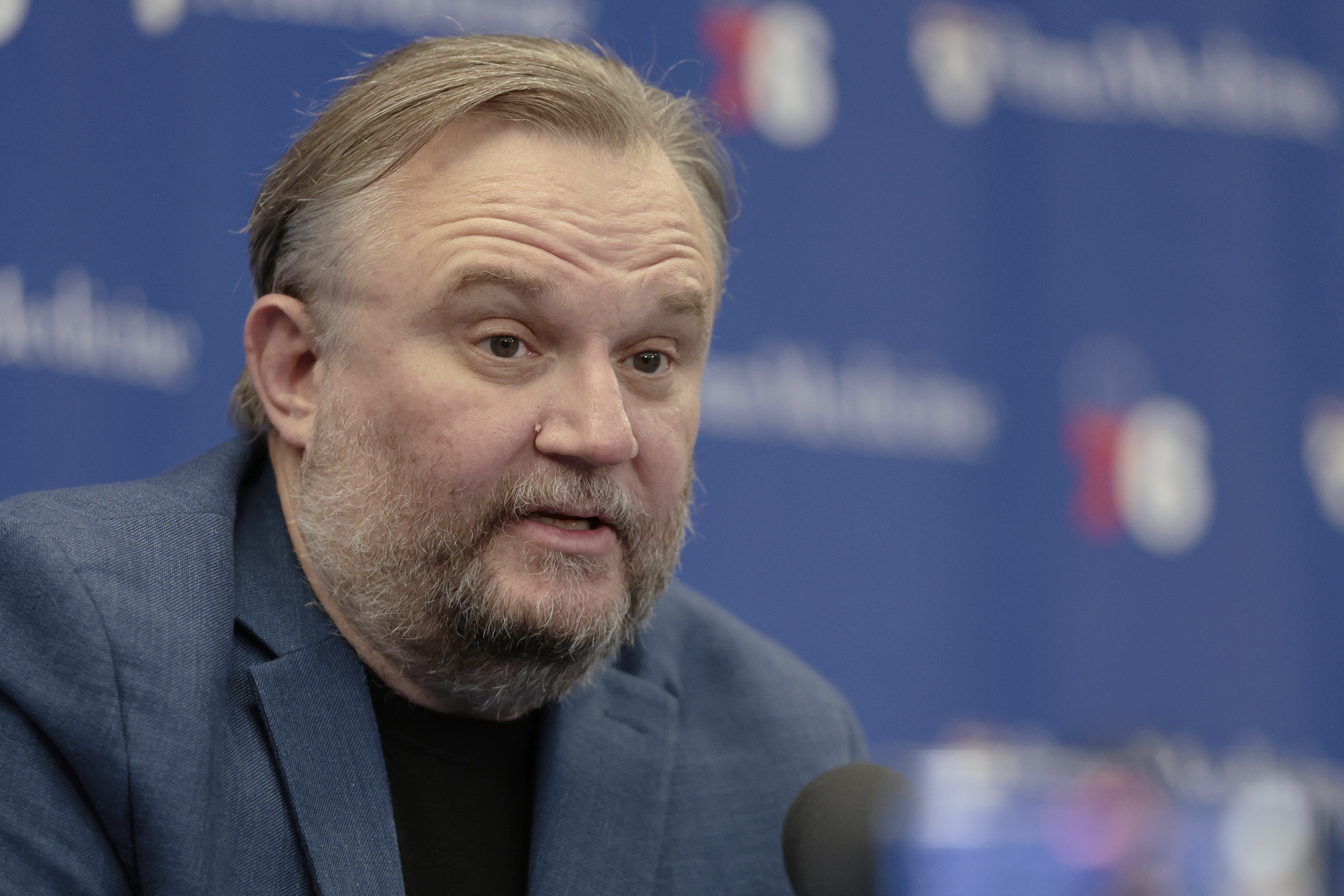
    It would be a fitting twist if this was the year the Sixers finally lived up to the hype of the last decade. Daryl Morey has taken the brunt of the blame for the last couple of seasons, mostly because it was his name on the marquee. But for the first time, in a long time, the Sixers have the makings of a team that is, at the very least, a fun team to root for. How well that translate into wins is a different story, writes columnist David Murphy.

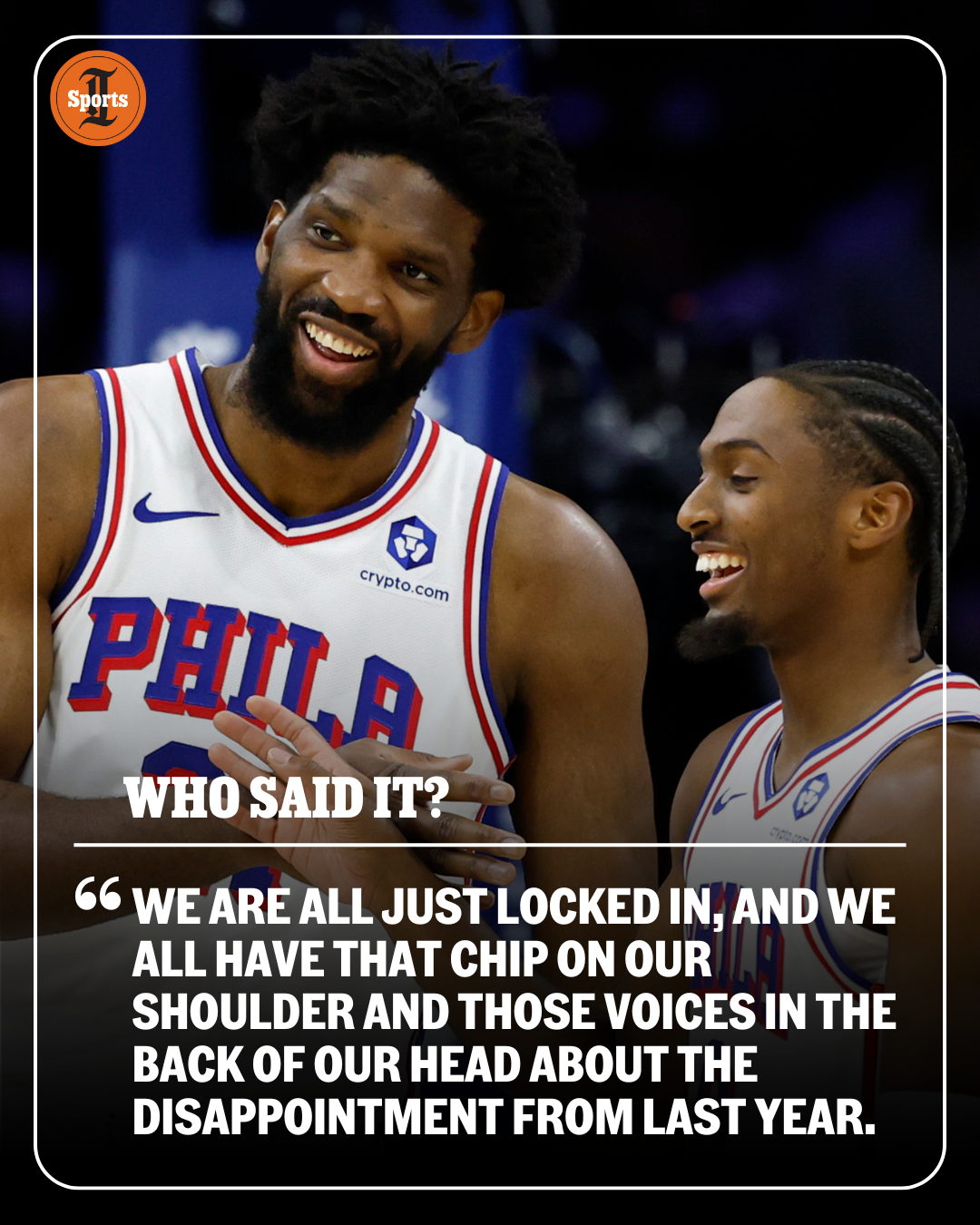
    Who said it?

    Joel Embiid and Tyrese Maxey get ready to open the Sixers’ 2025-26 season on Wednesday.

    The Sixers are entering this season with confidence behind a younger roster. Which player said this about their mindset?

    🧠 Trivia time answer

    Who is the Phillies’ career leader in postseason RBIs with 33?

    B) Ryan Howard — Steven A. was first with the correct answer.

    What you’re saying about Alec Bohm

    We asked: Should the Phillies follow through on an Alec Bohm trade this offseason? Among your responses:

    For whatever reason why would you want to trade Alec? He hits, he runs, he fields and he’s a great locker room guy. There are way too many others that should get their walking papers. Kepler, Castellanos,half of the bull pen just to mention a few. We have a good team but just not good enough to beat the Dodgers. Money buys talent and no team will ever outspend them. — Ronald R.

    I don’t think so, he is still young and once he came back from injury he was great. He should stay, get rid of Castellanos. — Stephanie M.

    Moving on from the best hitter we have seen in years. We should go all in on him for what he has done. Sucks we will probably lose hm, as money is going to be an issue going into this offseason. — Nicholas C.

    No. He’s a solid .280-.290, 90 rbi, 15 home run guy who plays a decent third base. Not that easy to replace. — Richard V.

    The biggest downside of trading Alec Bohm is that it’s questionable if the Phillies would improve themselves with any player in return. I say we stick with Bohm and my hunch is he’ll pay a higher dividend than expected next year. — Peter S.

    Absolutely not! What is with this obsession with trading Bohm? He’s still young, is a clutch hitter and nowadays .287 hitters don’t grow on trees. With everyone wanting to hit homeruns in today’s game a good contact hitter who can hit for average is somehow considered to be under-performing. The Phillies need to let him know he’s not going anywhere so he can 100% focus on continuing to improve his game instead of worrying about where he’ll be playing it. They also need to re-sign Ranger. The old axiom is true that good pitching beats good hitting and Ranger was one of the best this year. The Phillies are expecting him to get very high offers in the free agent market. There’s a reason for that. He’s a consistent proven winner. Pay him like he deserves and stop bringing in re-treads like Romano. — Bob A.

    The Phillies’ Alec Bohm reacts after striking out during NLDS Game 2 against the Los Angeles Dodgers on Oct. 6.

    Trading Bohm would be a huge mistake. For his performance on the field and at the plate, he is perhaps the best value on the team. And unlike the big three at the top of the lineup, he didn’t completely choke in the postseason. While he might be extra sensitive when he doesn’t play well, at least he seems to care! No complaining that the game is a grind and he’d rather at be home! Bohm has been – and will be again – an all star. — Beth B.

    I do not understand why they would even consider trading Bohm. He plays solid defense at third and is a consistent contact hitter. They certainly have issues to address with other players where an upgrade would make sense. — Kathy T.

    I really like Alec Bohm and think he has greatly improved his fielding over the years as well as becoming a good clutch hitter, but yes I would trade him in any attempt to bring in a power hitting right handed player. Matt Snell and others have shown time after time how vulnerable we are to good left handed pitching. Bohm only played 120 games and had 11 home runs and 59 rbi’s. This team definitely needs more than that from their right handed hitters. — Everett S.
    We compiled today’s newsletter using reporting from Gina Mizell, Keith Pompey, Scott Lauber, Olivia Reiner, David Murphy, Jackie Spiegel, Jeff Neiburg, and Jonathan Tannenwald.

    By submitting your written, visual, and/or audio contributions, you agree to The Inquirer’s Terms of Use, including the grant of rights in Section 10.

    As always, thanks for reading! Happy Wednesday and have a wonderful day. Kerith will be in your inbox tomorrow. — Bella