“Anomalia” might be a mouthful. But so are the pizzas in the display case at Anomalia Pizza, the New York-style slice shop that opened last month across from the Fort Washington SEPTA rail station, in what had been Little Italy for two decades.
The thin-crusted, 18-inch rounds are generously topped, though the crispy, sturdy bottoms can stand up to all the blistered cherry tomatoes, mozzarella, and olive oil layered atop the bruschetta pie, for example. Red pepper pesto gives sweet balance to the rib-eye, Cooper Sharp, and caramelized onions on the Italian Stallion. Close your eyes and take a bite of the plain red-sauce pizza, and you could almost believe you’re in Brooklyn and not a mile off of Route 309 and the Pennsylvania Turnpike.
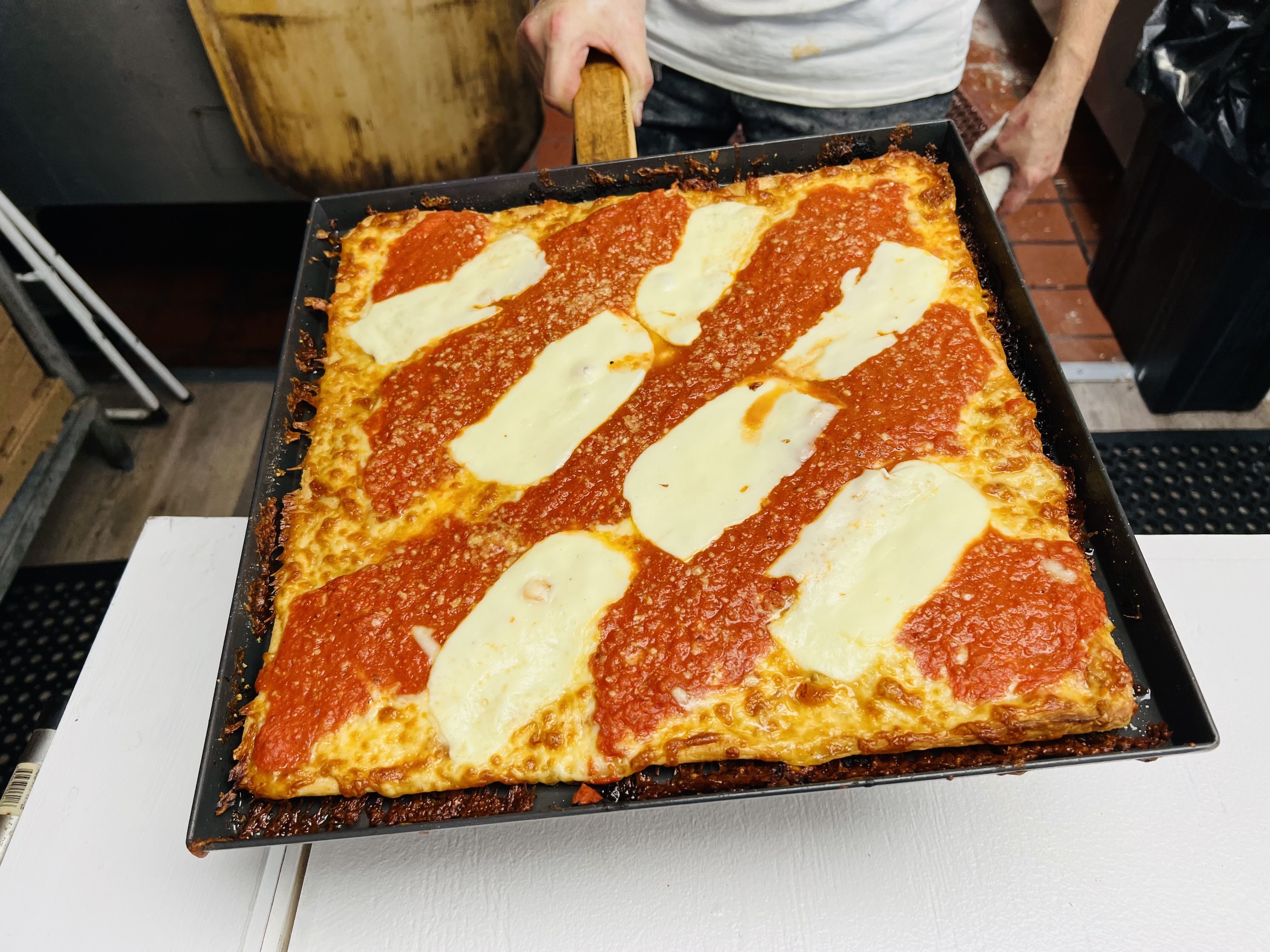
The drunken grandma pizza at Anomalia Pizza, 414 S. Bethlehem Pike, Fort Washington.
The world needs to know about Anomalia’s drunken grandma, a crispy, almost buttery-bottomed square topped with fresh mozzarella and ribboned with a thick, creamy vodka sauce amped with pancetta. Other hits include the stromboli and the uncommon mozzarella in carrozza — basically, a mozzarella stick in sandwich form (cheese tucked inside bread, crusted with bread crumbs, and fried).
There are no actual sandwiches for now.
The owners, Long Island native Deena Fink and Florida-born Frank Innusa, had a classic meet-cute: An opera singer, she went to New York University to study musical theater, and he moved to Manhattan to become an actor. They met while working at the Hard Rock Cafe in Times Square, she tending bar and he waiting tables.
“Oh, you’re an actor?” Innusa said, parroting a joke that probably dates to vaudeville. “What restaurant?”
“Most actors get out of the business when they land a TV show,” said Innusa, 40, as he topped a plain pie last week while a gaggle of kids from nearby Germantown Academy awaited their orders. “I kind of fell out of love with acting — and fell in love with restaurants.”
Frank Innusa and Deena Fink at their pizza shop Anomalia in Fort Washington.
He and Fink were married in 2018 and a year later moved to Florida for a change of pace. Innusa enrolled in a motorcycle-mechanics program, but COVID-19 made hands-on training impossible. “I still had to pay full tuition,” he said. “So I stopped — and that’s when I really started cooking.”
Cooking, he said, became an obsession. “I’d wake up thinking about it and go to sleep thinking about it,” he said. “I hadn’t felt that since acting.”
Innusa’s father had made pizzas and calzones at home, but with social-distancing restrictions in place, the fascination stuck. “He was reading the books, watching the videos, testing dough,” Fink said. “So much dough testing.”
Stromboli await the lunch rush at Anomalia Pizza.
Innusa filled a notebook with flavor combinations and textures, she said. That experimentation now shows up as Anomalia’s “pizza of the week.”
Back in New York after the pandemic, Innusa got his first pizzeria jobs at King Umberto and West End Pizza on Long Island, while Fink, now 33, managed and performed at the Duplex, the West Village cabaret where she performed years before.
Rather than add to the roster of New York pizzerias, they looked toward Philadelphia, which had long appealed to them as “a smaller city with a big food scene,” Fink said. “Fifteen minutes outside the city, there are trees and deer. That balance really drew us.” They moved to Chestnut Hill, and Fink took a job nearby at Chestnut Hill Brewery at the Market at the Fareway.
A mozzarella in carrozza at Anomalia Pizza in Fort Washington.
Their original 10-year plan for Anomalia was a food truck, but they learned that the owners of Chicko Tako, the market’s Korean-fusion stand, were selling their other business, Little Italy.
Innusa said he wanted to name the shop Anomalisa, after the 2015 movie. “But Deena said, ‘It doesn’t mean anything,’’’ Innusa said. She suggested anomalia, Italian for “anomaly” and pronounced “a-nom-a-leah.”
“We want to be different from the norm, not the usual,” Innusa said.
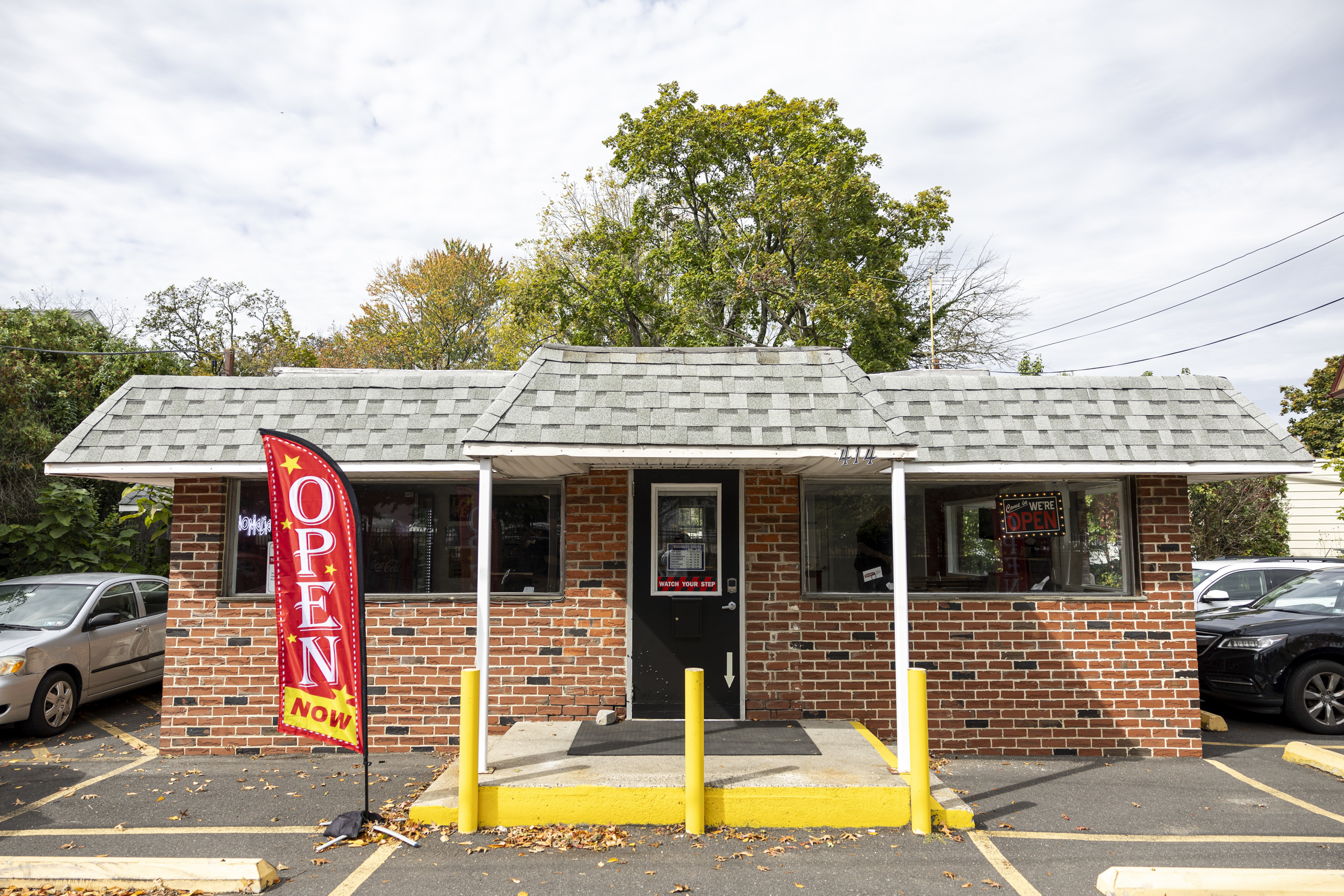
Anomalia Pizza, 414 S. Bethlehem Pike, Fort Washington, 215-628-3845, anomaliapizza.com. Hours: 11 a.m. to 8 p.m. Tuesday to Sunday.
When it opened in 1973, Ada H.H. Lewis Middle School was a source of deep pride for East Germantown, the kind of state-of-the-art educational facility that only suburban kids had at the time.
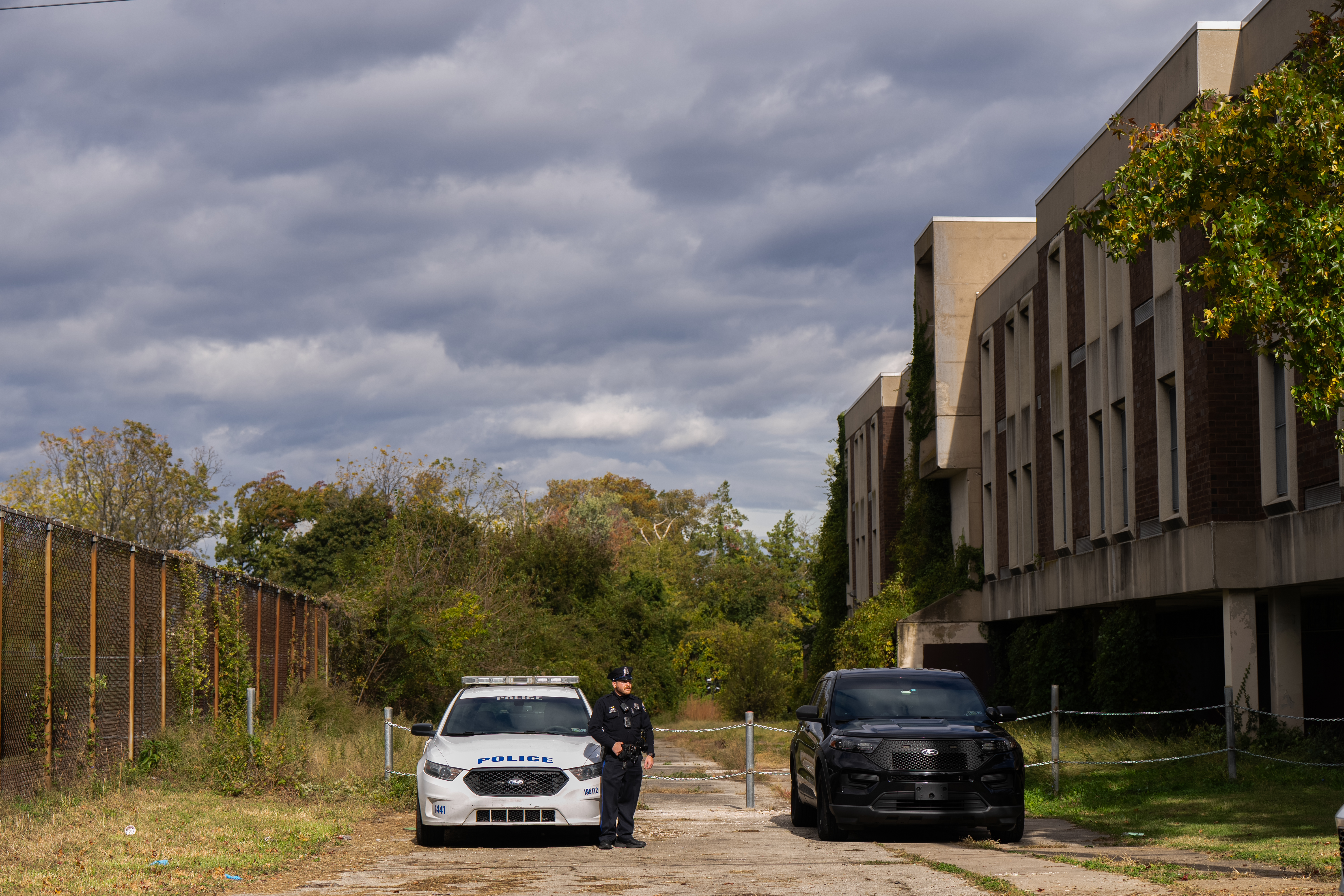
But on Saturday, when police found Kada Scott’s corpse buried in a shallow grave in the woods of the long-ago vacated school grounds, ending a two-week search for the missing23-year-old Mount Airy woman, the Rev.Chester H. Williams saw only decades of failure.
“It’s a disgrace,” said Williams, a pastorwho runs a neighborhood civic group. “We were very hurt to hear that this happened.”
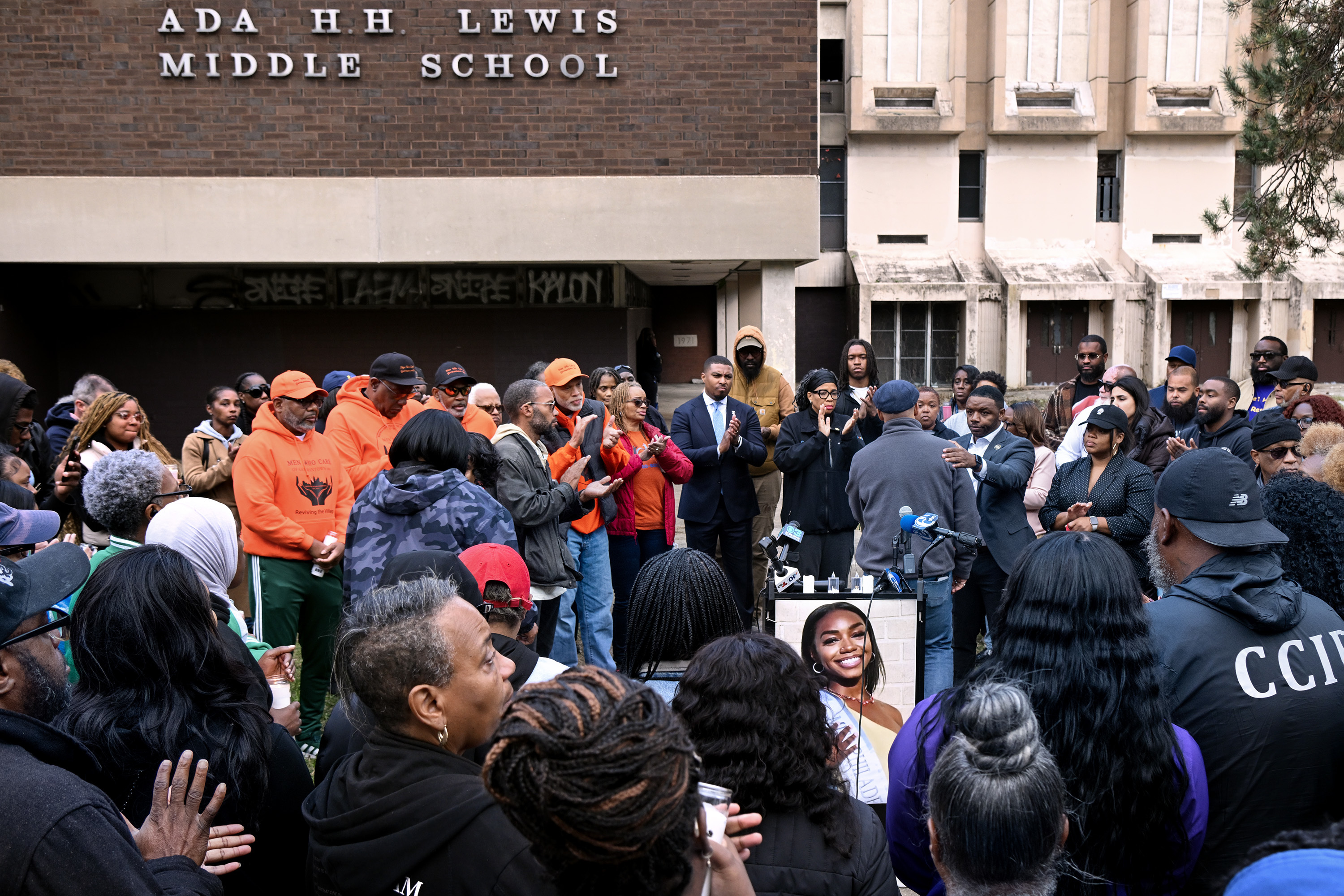
Community members gather for a candlelight vigil in memory of Kada Scott on Monday at Ada H.H. Lewis Middle School.
On top of the shock, Scott’s kidnapping and murder has renewed animus in some quarters aboutthe Philadelphia School District‘s failure to repurpose the blighted property, one of dozens of schools shuttered by the district over the last 20 years.
Since Lewis closed in 2008, local officials and civic leaders said the sprawling seven-acre campus has become a magnet for squatting, illegal dumping, and other criminal activity. City officials have cited the school district 10 times since 2020 for overgrown weeds, graffiti, and piles of trash that blanketed the property, public records show. And four years ago, the district passed on an opportunity to reverse course on the blight.
A proposal to redevelop the land into new homes, championed by neighborhood leaders like Williams, sat before the school board for approval. But the district abandoned the plan at the eleventh hour without public explanation, which the developer alleged was due to meddling byCity Councilmember Cindy Bass — a contention Bass denies.
“The school district, for some reason, we don’t know why, they put a block on anything being built there,” Williams said.
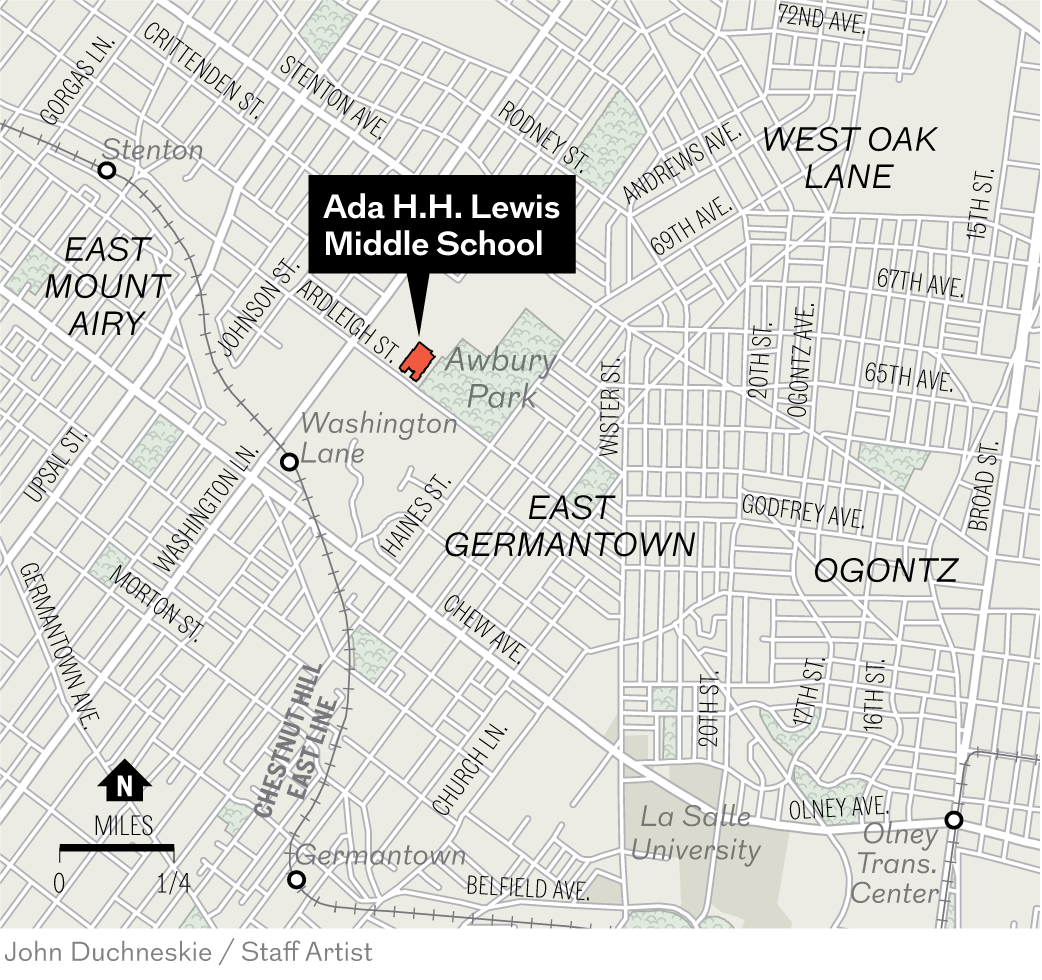
Map of the former Ada H.H. Lewis Middle School in East Germantown
Philadelphia Superintendent Tony B. Watlington Sr. extended “deepest sympathies” to Scott’s family and friends in a statement, and said the district’s operations and safety departments will review the vacant-property portfolio “to create and maintain safe and healthy spaces in every neighborhood.”
While some call Lewis “abandoned,” the district is careful to call the building “vacant,” one of 20 such properties in the district’s portfolio. It says maintenance and inspection logs are kept about work on vacant properties; details were not immediately available.
The debate over Lewis comes at a crucial time for the district: It is preparing to release recommendations about its stock of 300-plus buildings — and likely add to the list of decommissioned schools-turned-vacant public buildings. The district’s master planning process will contain recommendations for school closures and combining schools under one roof, officials have warned.
Butkovitz, in a report released that year, said district inaction around such structures was dangerous and noted that the schools were magnets for criminal activity.
Just before the pandemic hit in 2020, after years of pushback over Ada Lewis, the school district began accepting applications to redevelop the crumbling middle school. Germantown developer Ken Weinstein was one of three developers to place bids. He sought to buy the property for $1.4 million and build 76 new twin homes, at a density that neighbors felt complemented the surrounding area and resolved concerns about density brought by apartment buildings.
Weinstein said he gathered letters of support from 60 neighborhood residents and elected officials, including U.S. Rep. Dwight Evans and then-State Rep. Stephen Kinsey. The school board seemed eager to move ahead and set a final vote for the proposal in May 2021.
The vote never happened. The only explanation given that day was that “the Board had concern” about “what the long-term plan is for developing schools for the 21st century,” according to a district spokesperson.
According to Weinstein, some school board members received calls from Bass asking them to table the vote. Bass has faced criticism for interfering in development projects, including other proposals made by Weinstein, as vacant properties languished for years in her district. Her district includes the Lewis property andparts of North and Northwest Philadelphia, where Weinstein has focused his development work.
Bass, in an interview Monday, denied meddling in the vote. She acknowledged that she did not support Weinstein’s proposal because of the price of the homes — averaging around $415,000 — which she said would have triggered “immediate gentrification in the neighborhood.” But she said she had no involvement in the board’s reversal.
“That was up to the school district,” Bass said. “I don’t sit on the school board.”
While community groups in her district supported Weinstein’s project in 2021, Bass said she objected to market-rate housing as the sole alternative for East Germantown, arguing that it amounted to the district and developers saying “you should just take any old thing just so it’s not vacant.”
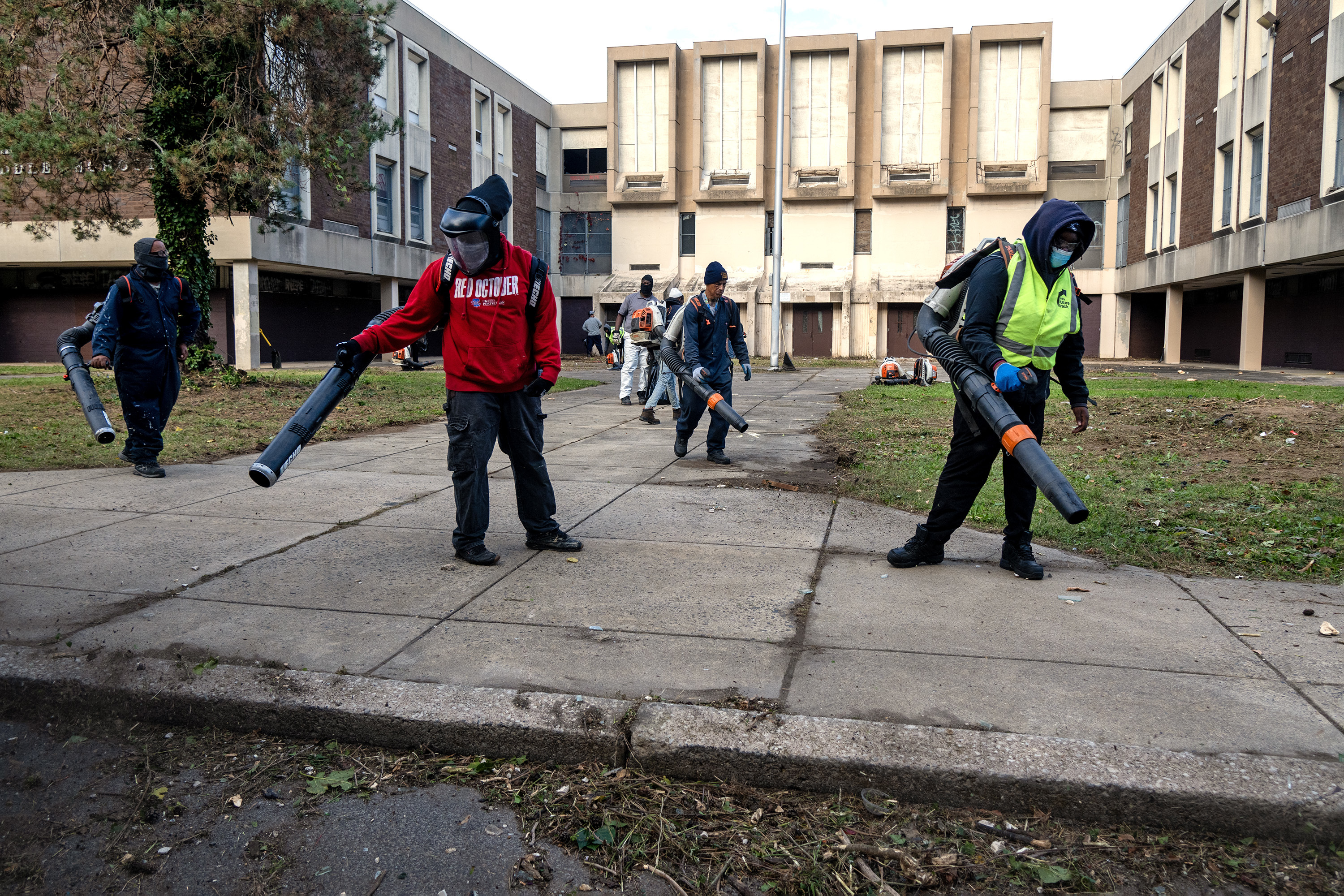
City workers clean up in front of the vacant Ada H.H. Lewis Middle School Monday, just minutes before the start of a community candlelight vigil in memory of Kada Scott.
A tragic turn for the property
In a letter dated Friday, Bass called on the school district to demolish the vacant school, saying she was troubled by the evidence that led investigators to the property during the search for Scott.
“The continued presence of this unsecured and deteriorating structure is simply unacceptable,” the Council member wrote in a statement, noting the site is now associated with “tragic violence.”
Cell phone records and tips from the public first led police to the former Ada Lewis school last week, where they found Scott’s pink phone case and debit card, but nothing else. Then, late Friday, police received a new tip saying that they had missed something on their first search of the grounds, and that they should look along the wooden fence that divides the school from the neighboring Awbury Recreation Center. Officers returned to the property Saturday and found Scott’s body, buried in a shallow grave in a wooded area behind the school.
Prosecutors expect to charge Keon King, 21, with the murder, though police continue searching for others who they believe may have helped dispose of evidence.
Bass took office in 2012,when the school wasalready vacant. She said she pushed the school district for several years to take action, as nuisances piled up at the property. She said shestill hopes that another “institution” could replace Lewis.
“I think that having something that the community wants is not hard to figure out,” Bass said. “This is what the community’s interested in — they’re interested in another institution.”
She said a proposal for a charter school is now in the works, though she said she was unable to provide details.
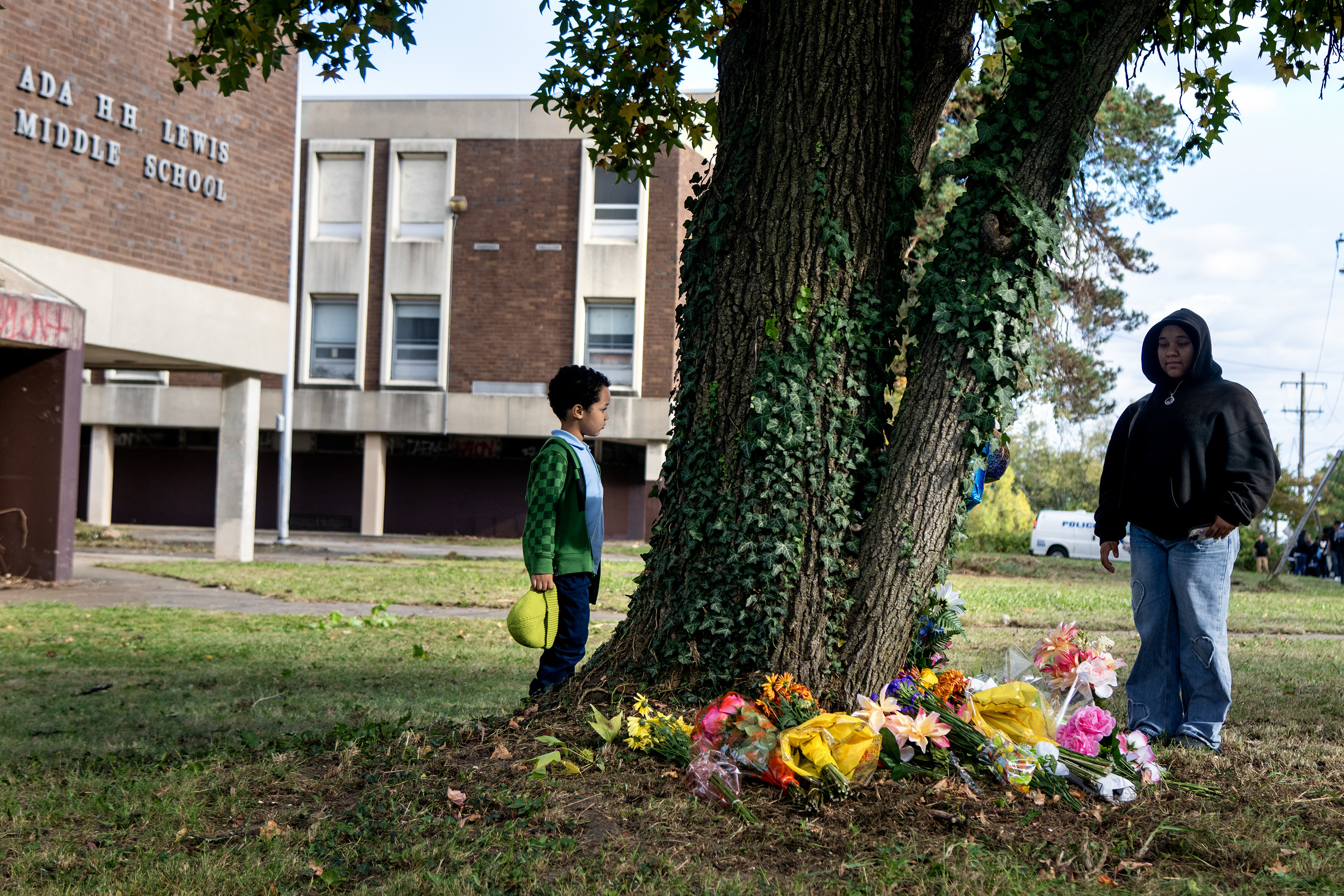
Julius Peden, 5, and Jaihanna Williams Peden (right), 14, pause at a memorial for Kada Scott on Monday.
A glut of vacant schools
The school district still views Lewis as a potential “swing space” — a building that could be used to house students if another district building is closed due to environmental problems.
There is precedent: The district has used other school buildings for such purposes, like Anna B. Pratt in North Philadelphia, which was also closed in 2013, to house early-childhood programs, and then students from other North Philadelphia schools whose buildings were undergoing renovation.
Still, it remains unclear how much it would cost to bring the Lewis building back to an inhabitable state.
The school system currently has about 70,000 more seats throughout the city than students enrolled. Though officials have said their first preference is to have closed schools reused for community benefit, it’s unlikely that all will be able to serve that purpose. And the timetable will surely be slow.
City officials at times have expressed frustration with the pace at which the district is making decisions about how to manage its buildings. School leaders have said the wait is necessary given the district’s capacity and the need to make correct choices and not rush the process.
Weinstein said the tragedy that culminated at Lewis reflected the conventional wisdom that blight breeds crime.
“There’s always consequences to shutting down a proposal that the community supports,” Weinstein said. “In most cases, nothing bad happens. In this case, something very bad happened.”
Staff writer Ellie Rushing contributed to this article.
After the Eagles won Super Bowl LIX, Jeffrey Lurie told some NFL folks close to him that his greatest concern for the upcoming season had little to do with the talent level that would return, even with personnel losses looming. He didn’t worry about the salary cap, though it presented gnarly challenges, nor did he worry about the draft, though their title meant they were scheduled to pick last in every round.
He worried about a void in leadership. He worried about life after defensive end Brandon Graham.
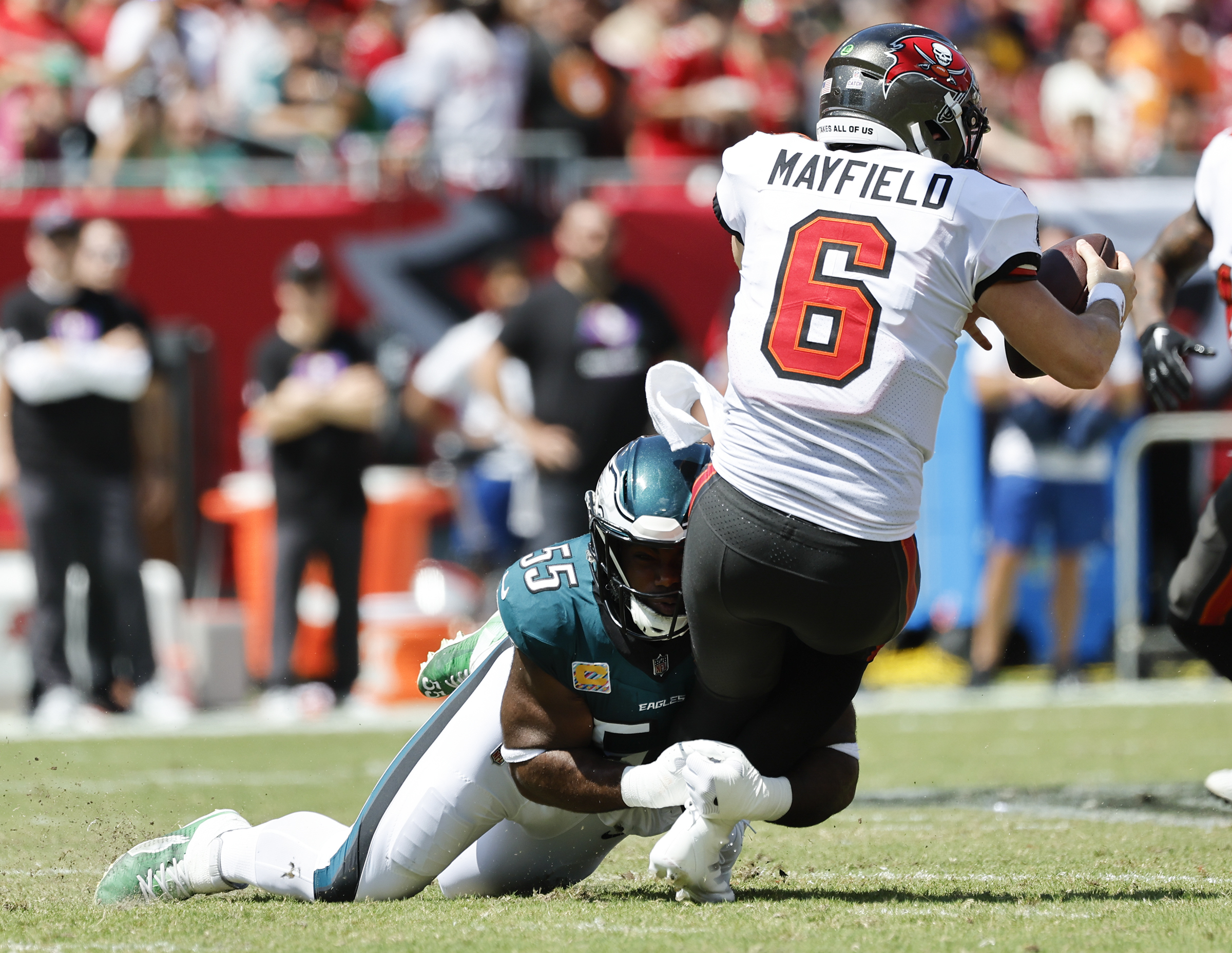
He’s coming back because the Birds don’t have enough good defensive ends and edge rushers. Nolan Smith and Ogbo Okoronkwo are hurt, Za’Darius Smith retired, and rookie Jihaad Campbell isn’t ready. Only four teams have fewer than the Eagles’ 11 sacks — only 3½ have come from edge rushers — and they rank 22nd against the run.
Worse, though, the defense often plays without focus, discipline, and physicality. That’s where leadership comes in. That’s where Brandon Graham comes in.
“I think they got everything they need,” he said during his comeback announcement on his podcast.
He knows that’s not true. He knows the Birds lack playmakers and professionalism. He hopes to deliver both.
Will he be enough?
Through seven games this season, no one has stepped into the roles vacated by Graham, the hero of the franchise’s first Super Bowl win, and cornerback Darius Slay.
Slay, a bubbly personality and a master of his craft, spent the last five of his 12 full seasons in Philadelphia, starring and mentoring and bringing in banana pudding before the Eagles cut him in the offseason for salary-cap purposes. He’s in Pittsburgh now.
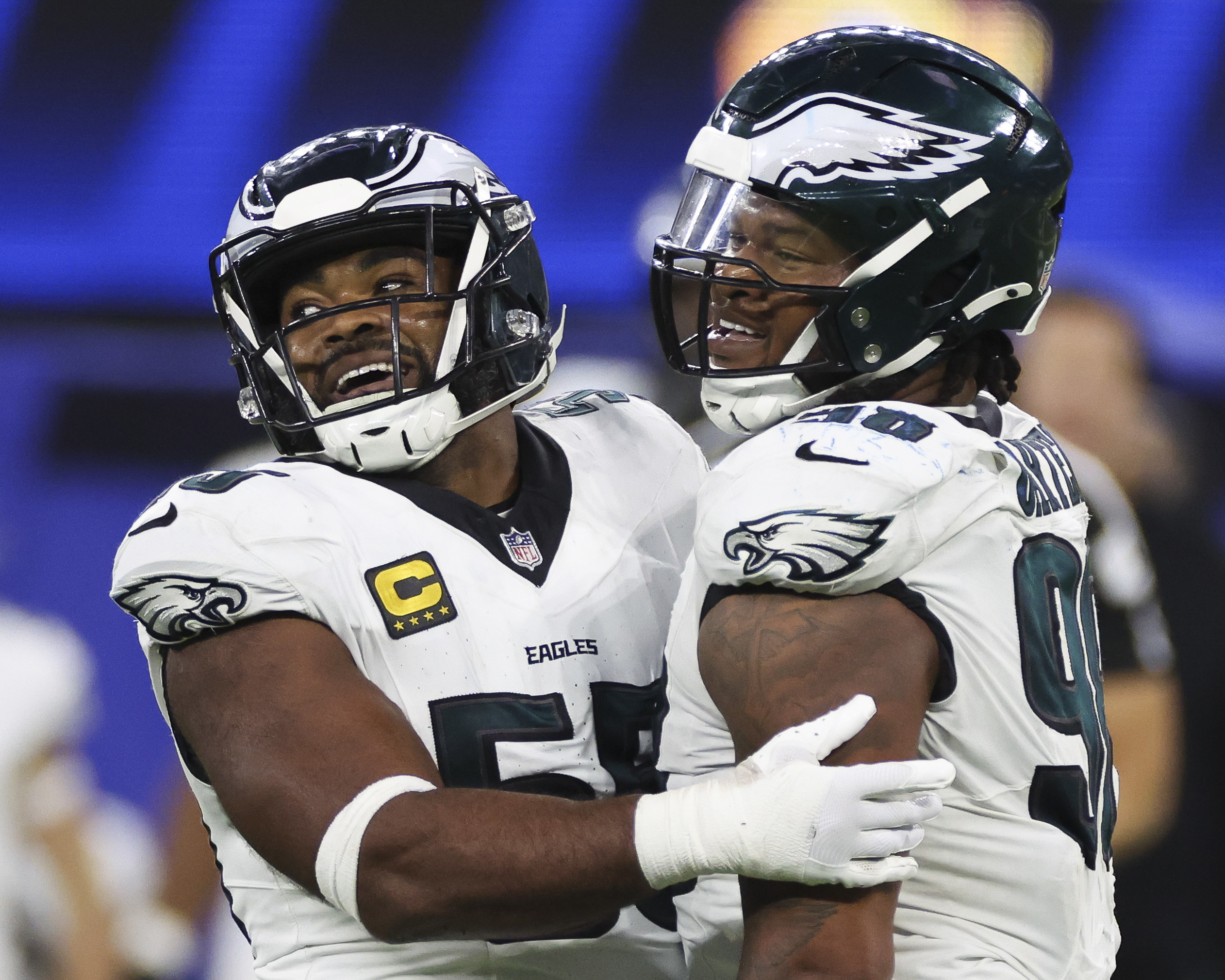
Eagles defensive end Brandon Graham was playing some good football last season before his injury.
Graham played more games than any other player over his 15 years in Philadelphia. He endured injuries; he endured comparisons to Earl Thomas and Jason Pierre-Paul, a star safety and a star defensive end drafted immediately after him in 2010; he endured lining up too far from the quarterback in Jim Washburn’s “wide-9” configuration, then endured lining up too far from the line of scrimmage in Bill Davis’ 3-4 scheme.
He hated most of it, but he did it all at 100%, and did it all with a smile, and he went all-out every practice and every game and every play. Moreover, he encouraged his teammates to buy in, too. He dragged them through the mud.
Why? Because he knew that anything less would lead to losing, and even when the team lost, BG was a winner.
— broad street sufferer (EXTEND SCHWARBER) (@bstreetsufferer) August 2, 2024
Graham was a playmaker who loved to play, loved the game, and loved Philly. That guy does not exist today in the Eagles locker room. That guy will exist tomorrow in the Eagles locker room, in his cubicle stuffed with shoes and bobbleheads and an outrageous number of colognes.
For the next 12 weeks and beyond, he will fill the void he left.
It’s not like they completely lack leaders.
Quarterback Jalen Hurts has a steady hand and a matchless work ethic, but he has deficiencies in his game and he will forever be a chilly teammate; it is his nature. Jordan Mailata, who took over Graham’s weekly radio show, is every bit the person and player Graham is, but he’s an offensive lineman. So is Lane Johnson, a strong, silent type, Mailata’s bookend at tackle and his polar opposite in personality.
The issue, of course, is that all three of those high-character, high-output players play offense.
Where are the defensive leaders?
Leadership was supposed to start coming from third-year defensive tackle Jalen Carter, but between a shoulder injury, a heel injury, poor conditioning, and an ejection for yet another foolish act, Carter clearly is not ready for the responsibility. He spat on Dak Prescott on national TV before the first snap of the first game, which earned him the expulsion and lost him the trust of his coaches. He then committed a penalty in each of the next four games and leads defensive linemen with five penalties.
How about fourth-year DT Jordan Davis? Well, it’s tough to present leadership when it takes you three years to lose the weight you should have lost in the first year, and it’s tough to carry clout in the locker room when you’ve forced one fumble and managed just 5½ sacks in your first 3½ seasons.
Both of those players have the capacity to be leaders. They just aren’t there yet.
Who is? Reed Blankenship, an undrafted, undecorated safety on the last year of his deal? Nakobe Dean, who’s missed half the Eagles’ last 44 games at linebacker because of injury? Zack Baun, who’s been a full-time starter for just 1½ of his six seasons?
No.
Not yet, anyway.
Maybe Graham’s return will speed their development.
The Eagles hope some of Brandon Graham’s leadership and professionalism will rub off on star DT Jalen Carter.
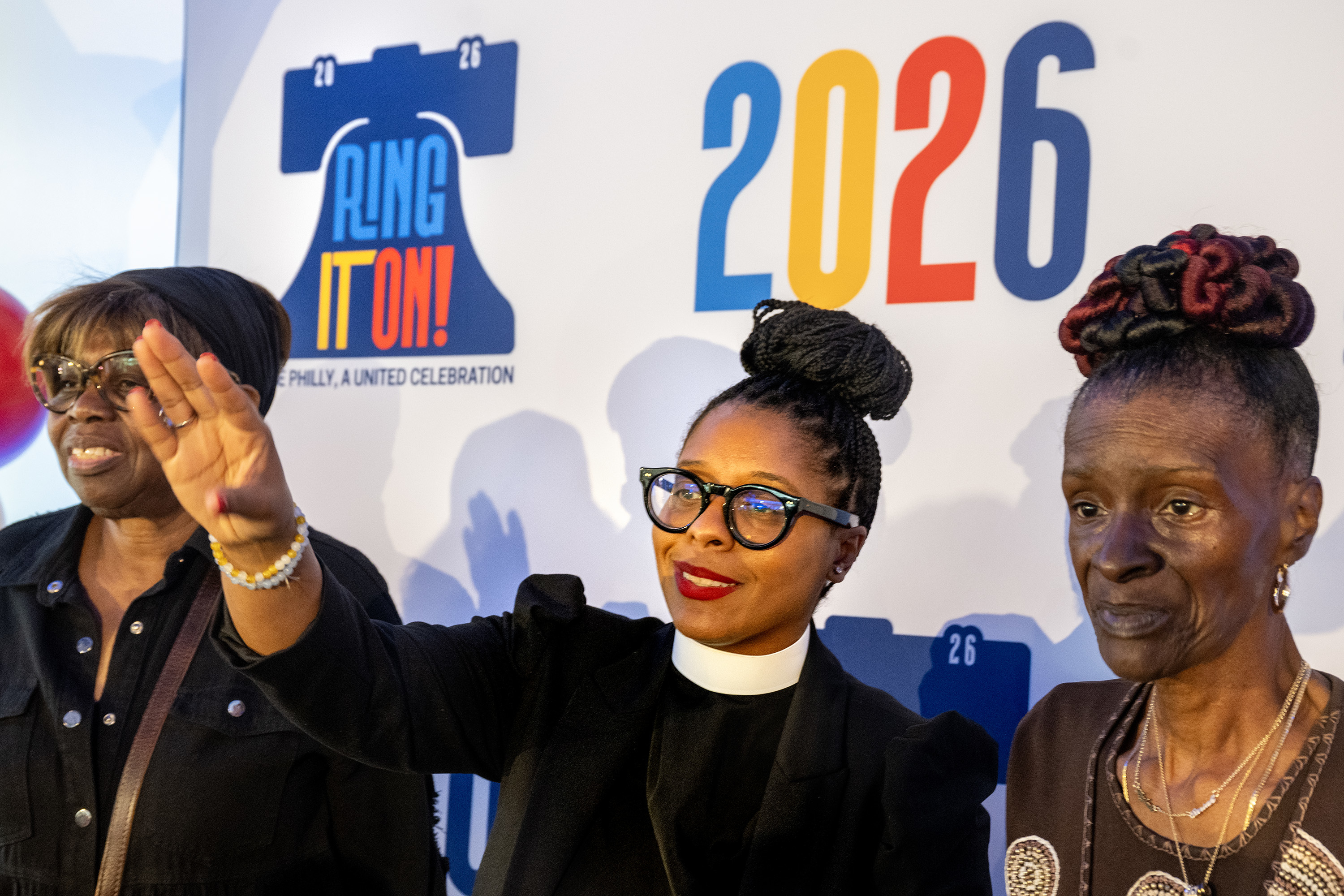
The Rev. Carolyn Cavaness is adjusting to her new life as a celebrity.
Any pastor of the historic Mother Bethel A.M.E. Church might get stopped and asked for a picture while walking down the street, as she sometimes does. The church is a national historic landmark, long celebrated for its role as a hub for Black activism and the oldest church property in the United States to be owned continuously by Black people.
But in November, Cavaness, 42, was appointed as the first femalepastor in the church’s 238-year history. She is a fourth-generation A.M.E. preacher from Newark, N.J., and previously led the Bethel A.M.E. Church of Ardmore for 10 years, also serving as its first woman pastor. Cavaness took over for the Rev. Mark Kelly Tyler, who had left Mother Bethel after 16 years.
“Some days I have this moment where I say, ‘Wow, Carolyn, you are the pastor of Mother Bethel. You’re in the big chair. What if somebody else was in this spot? What would they be doing in this moment?’” she said.
While Cavaness brings a new perspective, she is also focused on honoring the legacy of the 52 pastors and their congregations who came before. She said that the church’s first members knew immediately that they were “a big deal” who would matter greatly to the Black community. Two centuries later, that is still the case.
“Here I am in this 21st century and having to be the caretaker, but also being called to action,” Cavaness said.
“So what becomes our contribution?”
Cavaness spoke with The Inquirer about her first year at Mother Bethel, what it has meant to take on her trailblazing role, and how the church’s tradition of resilience inspires her and the congregation.
This conversation has been edited for clarity.
Your first sermon at Mother Bethel was an emotional one, about your family’s deep Philly roots and great achievements born out of the Black struggle, even though you were only notified about your appointment just the day before. What do you remember about that day? What have you learned about what Mother Bethel means to people over the past year?
It was surreal. I mean I literally found out less than 24 hours before. But that is being an itinerant preacher [of] Methodist tradition. You’re here to serve.
I had very much the sentiment of “I wish my dad and my grandmothers were here to see this.”
I think about when I walked into the pulpit for the first time, how the congregation stood up. I think about the smiles, the hugs. I think about the flowers they gave me. And the sacred trust that I’ve been given.
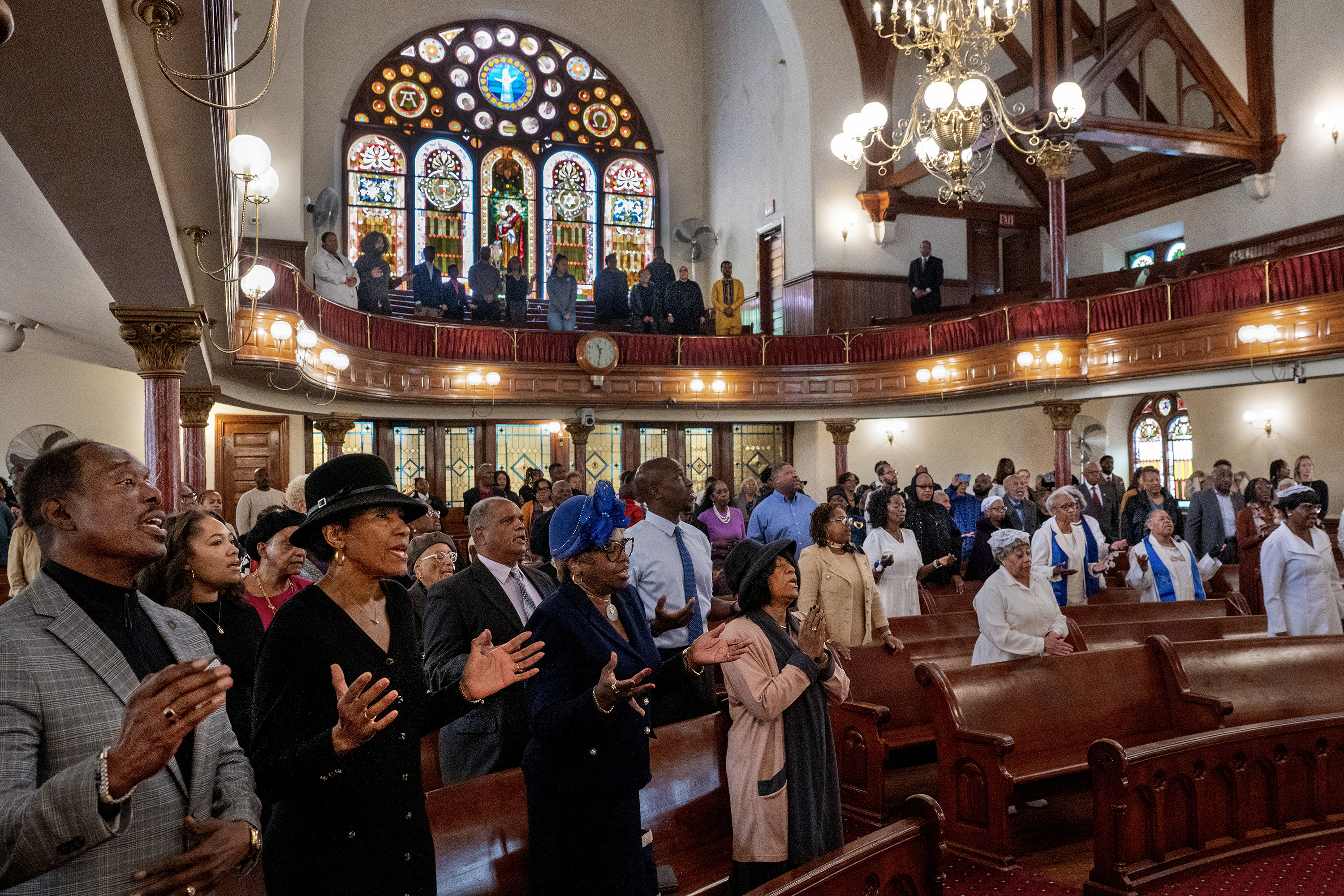
The congregation sings as Rev. Carolyn Cavaness (not shown) celebrates her first worship service on Nov. 10, 2024.
It’s been an amazing first year, definitely life-transforming, being entrusted with this national, this international treasure. I have just been captivated by the testament and the hope that she bears.
There’s this connection, this affinity for her. We’ve gotta be intentional about being the light, about being a place of love, sanctuary, refuge, that people feel safe. That’s a real thing for me.
The people I’ve come to know, the smiles, their new sense of hope — it is possible, you know? People have a sense of joy, and you can feel that and see that. Sometimes when you’re a leader, you’re in a vacuum. And so to hear and to see people smiling more, that does something. As a pastor, that’s a gift. You feel that you’re making a difference.
You are the first woman pastor at Mother Bethel A.M.E. How has it felt to hold that distinction, and how have people received you?
People have been very supportive. It’s about building trust and relationships. All I knew, I could only be Carolyn. I can’t be anybody I’m not. I like to laugh, I like to joke. I think I have surprised people by being accessible.
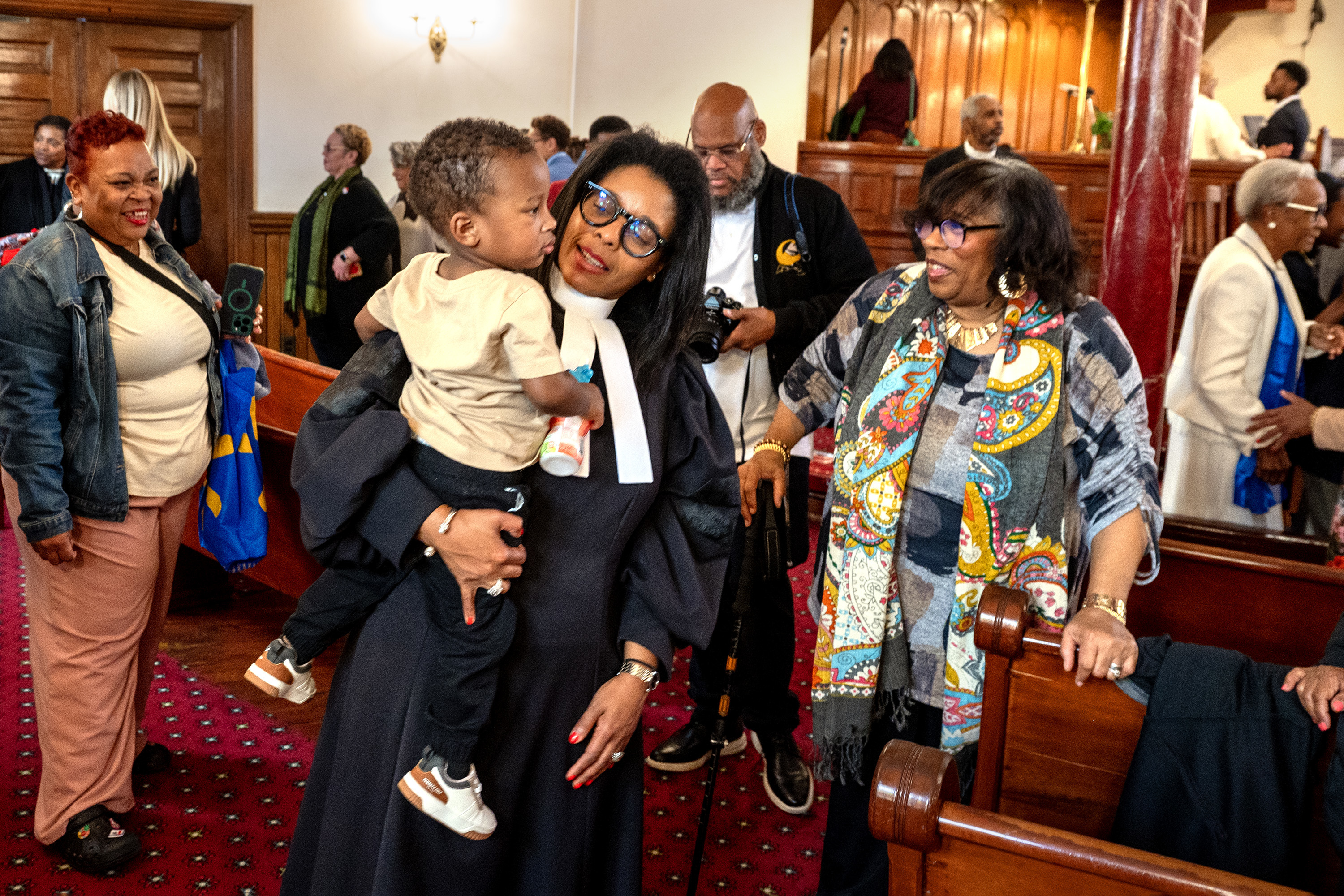
Rev. Carolyn Cavaness holds 2-year-old Kylo Banks as she greets members of the congregation after her first service.
Many people have reminded me, “You know, reverend, you’re a historical figure. Amongst the 53, there’s gonna be that picture of you.” It’s very humbling.
I went to New Orleans and an older gentleman walked up and he said, “Hello, good to meet you. You’re pastor of Mother Bethel.” Fifty years ago, that would have been a different conversation.
I have two twin nephews. They had a women’s history project, and they wrote about me being the pastor of Mother Bethel. My 5-year-old nephews are esteeming me. That was special.
When you were appointed last year, Donald Trump had just won the election, and many of your congregation were fearful of what was to come. What is Mother Bethel’s role during this time?
We are resilient people. This is not the first time that we have had pharaohs and tyrants and dictators.
Here is an institution providing, a way in which government ought to, esteem and affirm and care for [people]. Democracy has ideals, but here, this place, Mother Bethel, is where it’s realized. Where you’re a safe haven and a sanctuary. The principles and the ideals of the Free African Society. We come from that legacy, from that line where we have always taken care. We have always filled a gap. We’ve always been out front.
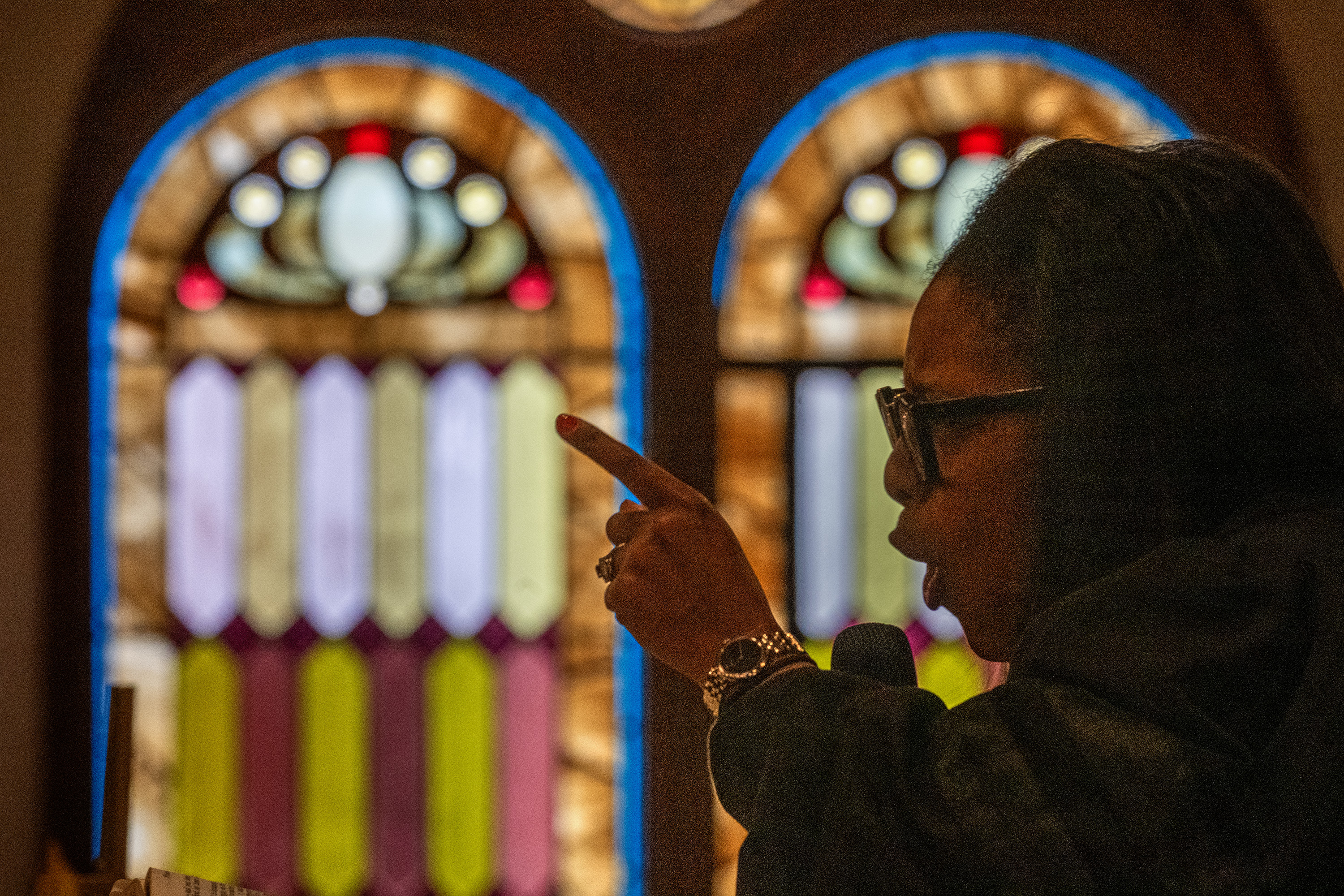
The Rev. Carolyn Cavaness celebrates her first worship service.
Another has definitely been around how we honor our history and legacy. I was honored to give the eulogy for Ruby Boyd — she was the first African American librarian in the city of Philadelphia. She lived to be 105, and she’s one noted for putting into a book, On This Rock, of Mother Bethel, the history of many of the stained glass window collection, pictures and little vignettes about the pastors. And so in my eulogy, I talked about that we have a responsibility to tell the story and to make it accessible.
This regime of erasure has really amplified my efforts as the spiritual leader and also just how important Mother Bethel is.
What are you looking forward to in year two?
I’m looking forward to the [Semiquincentennial], the 250th. Definitely the larger preservation plan, there are some conversations that we as a congregation are gonna be having about her preservation and how accessible [it is]. And to continue to tell this story.
I think also around community engagement. Just seeing people becoming more strengthened in their sense of witness.
The Rev. Carolyn Cavaness (center) at the Independence Visitor Center during a September Semiquincentennial event.
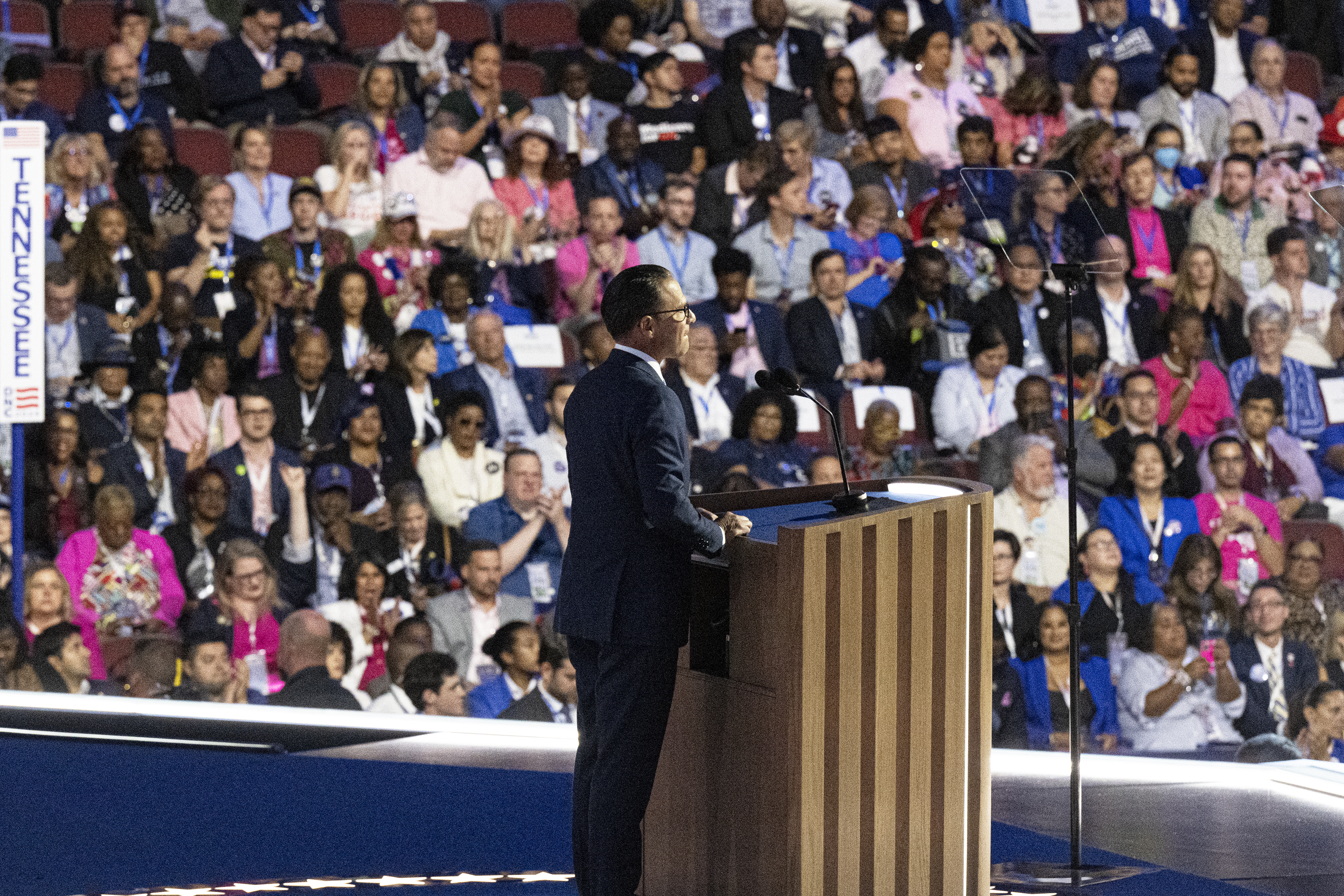
On Tuesday, Harper — an imprint of HarperCollins Publishing — announced the release of Shapiro’s forthcoming memoir, Where We Keep the Light: Stories From a Life of Service, which will hit shelves on Jan. 27, 2026.
Shapiro, 52, has worked in some level of government for his entire career: on Capitol Hill as a staffer, in Montgomery County as a commissioner, and in Harrisburg as a state representative, attorney general, and now governor. He has noted that he has never lost an election, going back to his election as student body president his freshman year at the University of Rochester. Along the way, elected officials have whispered about his talents as a politician, orator, and rumored presidential ambitions.
The Montgomery County native has become a key player in the national Democratic Party, touting a brand as a governor of a split legislature in the most sought-after swing state. His administration’s motto is “Get Stuff Done,” which he defines as bringing Democrats and Republicans together to accomplish long-delayed reforms, or restarting residents’ trust by improving their interactions with state government. (Pennsylvania still has not finished its state budget, which was due July 1, as legislators from the Democratic-controlled House and GOP-controlled Senate cannot agree on how much they should spend this fiscal year and causing school districts, counties, and nonprofits to take out significant loans to continue offering services during the 113-day budget impasse.)
Shapiro’s rise through the Democratic Party ranks skyrocketed last year, when he became a front-runner for vice president during Harris’ whirlwind, 107-day presidential campaign, in which she ultimately chose Minnesota Gov. Tim Walz as her running mate. Harris also released a book this year, which includes stories from her interview with Shapiro for the role.
Shapiro, who was born in Kansas City, Mo., before moving to Montgomery County, has credited his upbringing by his parents — his father a pediatrician, and his mother an educator — as laying the foundation for his life in public service. Shapiro has four children and is married to his high school sweetheart, Lori. He and his family still live in Abington Township and split their time between their family home and the governor’s mansion in Harrisburg.
The sense of loss that has permeated 2025 struck again this weekend when we learned of the sudden death of a Philly journalism legend, Michael Days, who guided the Philadelphia Daily News during most of its last dozen freewheeling and Pulitzer-winning years before we merged with The Inquirer in 2017. He was just 72, far too young. The top-line of Mike’s obituary was how, as the first African American to lead a newsroom in America’s founding city, he paid it forward by mentoring the next generation of rising Black journalists. But people like me who worked for him remember him more simply as the wisest and mostempathetic human being we ever had as a boss. He leaves right when the nation’s newsrooms need decent souls like Mike Days more than they ever did.
What a $10M bribe rumor says about Trump, Middle East peace, and America’s fall
President Donald Trump talks with Egypt’s President Abdel-Fattah el-Sissi during a summit to support ending the more than two-year Israel-Hamas war in Gaza after a breakthrough ceasefire deal, Oct. 13 in Sharm El Sheikh, Egypt.
The thing about being a 79-year-old president is that sometimes you just blurt stuff out, with no filter as to whether your words might be embarrassing, undiplomatic — or potentially incriminating.
Consider the case of Donald John Trump, the 47th U.S. president and the oldest one on the day of his election. Last week, in what may prove to be a fleeting moment of triumph as Trump celebrated a Gaza peace deal that included the release of 20 Israeli hostages, POTUS arrived at an Egyptian resort town for a Middle East summit. He kicked off the day with a one-on-one sit-down with Egypt’s strongman ruler, Abdel-Fattah el-Sissi.
“There was a reason we chose Egypt [for the summit] because you were very helpful,” Trump said as a gaggle of reporters and photojournalists entered their meeting room.
Really? Helpful in what way?
“I want to thank you,” the American president told Sissi, who seized power in a 2013 coup. “He’s been my friend right from the beginning during the campaign against Crooked Hillary Clinton. Have you heard of her?”
Here Trump was pushing, ever so absurdly, for the Nobel Peace Prize, and then he had to spoil it all by saying somethin’ stupid like, you bribed me. Well, he almost spoiled it, if more journalists — aside from MSNBC’s brilliant Rachel Maddow, who seized on the remark hours later — had grasped the potential import of this presidential prattle.
It’s certainly legal, if gross, for Trump to be close pals with Sissi, even if Human Rights Watch reports that the Egyptian dictator is “continuing wholesale repression, systematically detaining and punishing peaceful critics and activists and effectively criminalizing peaceful dissent.” What would not be legal is the Middle Eastern nation interfering in the 2016 election, in which Trump narrowly defeated Clinton in the handful of swing states that tipped the Electoral College.
What made Trump’s comments last week so jaw-dropping is that U.S. federal investigators worked for several years trying to prove exactly that scenario. In August 2024, days after Trump was nominated by the GOP for his second reelection bid, the Washington Post reported that the Justice Department investigated a tip that Sissi’s Egypt provided Trump with $10 million the candidate desperately needed in the 2016 homestretch to defeat Clinton. That happened right before Trump, as 45th president, reopened the spigot of foreign aid that had been halted because of Sissi’s human rights abuses.
It’s known that Trump did put $10 million into the campaign, which he listed as a loan. The Post in 2024 offered a tantalizing, if circumstantial, piece of evidence — that the Cairo bank had received a note from an agency believed to be Egyptian intelligence to “kindly withdraw” nearly $10 million in two, 100-pound bags full of U.S. $100 bills, five days before Trump took the oath of office.
But the investigative trail ran cold. In 2019, then-special counsel Robert Mueller turned the matter over to Trump’s appointees in the Justice Department, who of course didn’t pursue the president’s bank records. Neither — inexplicably — did Joe Biden’s attorney general, Merrick Garland, as the statute of limitations expired in January 2022. That’s where things stood last week before Trump started blathering in Sharm El Sheikh.
One reason I’m writing about this is the sheer frustration that Trump — yes, allegedly, possibly — might have gotten away with bribery to the point where he’s almost bragging about it in public. But I also think the mysterious case of the Egyptian bags of cash speaks to the present, dire American moment in a couple of ways.
For one thing, it casts a light on what’s really behind what Trump hopes will be viewed as the signature achievement of his second presidency. That would be the fragile peace deal that aims to end the last two years of bloodshed in Gaza that started with the Hamas terror attack of Oct. 7, 2023 and has resulted in at least 67,000 dead Palestinians and the utter destruction of their seaside homeland.
How did Trump get a deal that had eluded his predecessor Biden, in a region that has vexed every American president from both parties? It certainly helped that most of the power brokers with the clout and the cash to help end the fighting in Gaza are repressive strongmen — or, as Trump might call them, role models. And they all seem to speak the same language of corrupt back-scratching.
If those bags with $10 million in greenbacks did make their way to Trump in 2017, it looks like small change in today’s cross-Atlantic wheeling-and-dealing. After all, a key go-between in the negotiations — Qatar, which has good relations with Hamas and has hosted its exiled leaders — gifted America a $400 million jet that Trump plans to use not just as Air Force One but in his post presidency, while his regime has promised to protect the Qatari dictators if they are ever attacked.
Another key supporter of the plan is the United Arab Emirates, which also backs the UAE firm that recently purchased a whopping $2 billion in cryptocurrency from a firm owned by Trump’s family as well as the family of Steve Witkoff, the regime’s lead Middle East negotiator. At the same time, Trump’s U.S. government allowed UAE to import highly sensitive microchips used in artificial intelligence.
Witkoff’s negotiation end–game brought in Trump’s son-in-law, Jared Kushner, who forged close ties during his father-in-law’s first term with Saudi Arabia’s murderous de facto ruler Prince Mohammed bin Salman, who pulled the levers for a $2 billion investment in a hedge fund created by Kushner despite no prior expertise.
Those Saudi ties could prove critical to future stability in the region, and in a joint interview with CBS’ 60 Minutes Sunday night, Kushner and Witkoff made no apologies for mixing billion-dollar deals with the pursuit of world peace. “What people call conflicts of interest,” Kushner said, “Steve and I call experience and trusted relationships.”
OK, but those “trusted relationships” are built on a flimsy mountain of cash that could collapse at any minute. Look, I’m thrilled like everyone else that 20 Israeli hostages are finally reunited with their loved ones, and to the extent Trump and his regime deserve any credit, I credit them. But the art of the deal that the president is bragging about is all about the Benjamins — more worthy of applause on the floor of the New York Stock Exchange than a Nobel Peace Prize.
Real peace is based on hard work and trust, not Bitcoin — so is it any wonder that the ceasefire is already collapsing with two dead Israeli soldiers and fresh, lethal airstrikes in Gaza? The only thing with any currency among a rogues’ gallery of world dictators is currency, and that transactional stench has fouled everything from Cairo to K Street.
Is it any surprise that a regime whose origin story allegedly includes bags of Egyptian cash would do absolutely nothing when it was told that its future border czar, Tom Homan, was captured on an audiotape accepting $50,000 in a fast-food bag from undercover FBI agents who said they wanted government contracts?
In hindsight, the failure to pursue that report of the $10 million Egyptian bribe opened up a floodgate of putrid corruption, wider than the Nile. It signaled a sick society where everything is for sale — even world peace — but nothing is guaranteed.
Yo, do this!
The 1970s and ‘80s are having a cultural moment right now, and this boomer is here for it! On Apple TV (they’ve dropped the “+,” probably after paying some consultant $1 million for that pearl of wisdom) comes the long-awaited five part docuseries about the life and times of filmmaker Martin Scorsese, the savior who rose from NYC’s mean streets to give us Goodfellas, Raging Bull, Taxi Driver, and so much more. Watching Mr. Scorsese is going to make the eventual death of the baseball season so much easier to take.
The earthy, urban musical equivalent of Scorsese would have to be Bruce Springsteen, who has been marking the 50th anniversary of his breakthrough Born to Run LP with all kinds of cool stuff, capped with Friday’s long-awaited release of the first-ever biopic about “The Boss,” Deliver Me from Nowhere. Staring The Bear’s Jeremy Allen White as Springsteen, the film’s unlikely narrative — focusing on the making of 1982’s highly personal and acoustic Nebraska as the rock star seeks release from a bout of depression — sounds like exactly the uplift that America needs right now.
Ask me anything
Question: As someone living in Ireland and looking across the ocean. Trump won’t be in power forever, but how is anyone going to deal with the MAGA crowd that helped elect him? That level of stupidity, hatred and racism cannot be fixed. How is [t]he USA ever going to heal? — Stephen (@bannside@bsky.social) via Bluesky
Answer: That’s a great question, Stephen, and like most great questions there’s no easy answer. Although I’m optimistic that the 2026 midterms and the 2028 presidential election will happen and that the anti-Trump coalition that we witnessed at “No Kings” will prevail, I agree with you that it’s only a partial and temporary fix. I’d fear an Iraq-level resistance could rise up in the regions we call “Trump country.” My long-term solution would be along the lines of what I proposed in my 2022 bookAfter the Ivory Tower Falls: Fix higher education — broadly defined as from the Ivy League to good trade schools — to made it a public good that reduces inequality instead of driving it. And promote a universal gap year of national service for 18-year-olds, to get young people out of their isolated silos. There are ways to prevent the next generation from becoming as stupid or hateful or racist as the Americans who came before them, but it will take time and patience that we seem to lack right now.
What you’re saying about…
Remember the Philadelphia Phillies? When I last saw you here two weeks ago, their annual postseason collapse and the fate of manager Rob Thomson was a hot topic. As expected, there was minimal response from you political junkies, and opinions were split — even before the team defied the conventional wisdom and announced he’ll be returning in 2026. Thomson’s supporters were more likely to blame the Phillies’ inconsistent sluggers, with John Braun asking “who could you hire who could guarantee clutch hits?” Personally, I’m with Kim Root: “I follow the Philly Union, who just won the Supporters Shield — that is all.”
📮 This week’s question: Back to the issue at hand: I’m curious if newsletter readers attended the “No Kings” protest last Saturday, and what you see as the future of the anti-Trump movement. Are more aggressive measures like a nationwide general strike needed, or is the continued visibility of nonviolent resisters enough? Please email me your answer and put the exact phrase “No Kings future” in the subject line.
Backstory on who the “No Kings” protesters really were
Demonstrators gather for a ’No Kings’ rally in Philadelphia on Saturday.
They clogged city plazas and small-town main streets from San Diego to Bangor on Saturday, yet the more than 7 million Americans who took part in the massive “No Kings” protest — the second-largest one day demonstration in U.S. history, behind only the first Earth Day in 1970 — seemed to mystify much of the befuddled mainstream media. Just who were these people protesting the Donald Trump presidency, and why are they here?
Instead of a journalist, it took a sociologist to get some answers. Dana Fisher — the Philadelphia-area native who teaches at American University and is the leading expert on contemporary protest movements — was out in the field Saturday at the large “No Kings” march in Washington, D.C., collecting data with a team of researchers. She’s shared her early top-line results with me, aiming to both give a demographic and ideological snapshot and also compare Saturday’s crowd with her findings at other recent rallies.
If you were among the 7 million on Saturday, some of this data won’t surprise you. The protesters were, on the whole, older than the average American, with a median age of 44 (compared to 38 for the nation as a whole.) Once again, the “No Kings” participants were overwhelmingly white (87%) with women (57%) in the majority. But it’s also worth noting that men (39%) were more likely to take part than earlier protests tracked by Fisher, and the 8% who identified as Latino is double the rate of Hispanic participation in the 2017 Women’s March.
That last finding may reflect the passions of the “No Kings” protesters, who listed immigration as a key motivation at a rate of 74%, second only to their general opposition to Trump (80%, kind of a no brainer). That certainly jibed with the demonstrators at the rally I attended in suburban Havertown, who again and again mentioned the sight of masked federal agents grabbing migrants off the street as what compelled them to come out.
Fisher’s most telling findings may have been these: The people out in the streets are mad about what they see happening to America, with 80% listing “anger” as an emotion they are feeling, trailed closely by “anxiety” at 76%. Yet few of those who spoke with her team believed that will translate into violence. The number of demonstrators who agreed with the statement that “because things have gotten so off track, Americans may have to resort to violence in order to save our country” was only 23% — lower than other protests her team has surveyed. It seems like the larger the public show of resistance to Trump’s authoritarianism, the more optimism that the path back to democracy can be nonviolent.
What I wrote on this date in 2021
I hate to say I told you so but… On this date four years ago, Joe Biden was still clinging to dreams of a presidential honeymoon after ousting Donald Trump in the 2020 election, but there were dark clouds on the horizon. On Oct. 21, 2021 I warned that sluggish action on key issues was starting to hurt his standing with under-30 voters. I wrote that “while the clock hasn’t fully run out on federal action around issues like student debt or a bolder approach on climate — the disillusionment of increasingly jaded young voters could change the course of American history for the next generation, or even beyond.” How’d that turn out? Read the rest: “From college to climate, Democrats are sealing their doom by selling out young voters.”
Recommended Inquirer reading
I returned from a much-needed staycation this weekend by leaving the sofa and spending a glorious fall morning at the boisterous “No Kings” protest closest to home in Delaware County, which lined a busy street in Havertown. I wrote about how the protests are winning back America by getting under the skin of Donald Trump and the GOP, who can no longer pretend to ignore the widespread unpopularity of their authoritarian project.
Every election matters, even the ones that are dismissed as “off-year” contests. In today’s heated and divisive climate, even what used to be a fairly routine affair — the retention of sitting judges on the state and local level — has taken on greater importance. Here in Pennsylvania, the state’s richest billionaire, Jeff Yass, is spending a sliver of his vast wealth to convince voters to end the tenure of three Democrats on the state Supreme Court. The Inquirer’s Editorial Board is here to explain why that’s a very bad idea. On the other hand, some judges up for retention in the city of Philadelphia — where jurists haven’t always lived up to the promise of America’s cradle of democracy — deserve closer scrutiny. The newsroom’s Samantha Melamed revealed a leaked, secret survey detailing what Philadelphia attorneys think of some of the judges on the November ballot, and it is not pretty. The bottom line is that you need to vote this year, and subscribing to The Inquirer is the best way to stay informed. Sign up today!
By submitting your written, visual, and/or audio contributions, you agree to The Inquirer‘s Terms of Use, including the grant of rights in Section 10.
Philadelphia lawmakers are for the third time trying to pass legislation requiring that stores charge customers a fee for paper bags. And for the third time, it’s facing opposition from the mayor.
A City Council committee on Monday advanced legislation requiring all grocery stores, convenience shops, and other retailers in the city charge 10 cents per nonreusable bag. The goal is to update the city’s already existing ban on the plastic variety and encourage shoppers to bring their own bags.
The full Council could vote on the new legislation in the coming weeks. It is cosponsored by a majority of Council members, meaning it is likely to pass the chamber.
City Councilmember Mark Squilla, the architect of the plastic bag ban that first passed in 2019, said during the hearing Monday that he’s aiming to “change behavior.” The city says the use of paper bags has skyrocketed since the plastic bag ban took effect — studies show that while they are recyclable, unlike plastic, paper bags are still less energy efficient than reusable ones.
Squilla’s original plastic bag ban legislation included a required 15-cent fee on paper bags, but he stripped it from the bill after opposition from former Mayor Jim Kenney’s administration. In 2023, Council passed legislation to institute it, but Kenney issued a pocket veto, meaning he left office without taking action on the legislation, effectively killing it.
It wasn’t clear at the time if Mayor Cherelle L. Parker, who was the incoming mayor, would support the legislation if it were reintroduced. She made cleaning and greening the city a top campaign promise, and environmental advocates hoped she’d support efforts to reduce single-use bag reliance.
But one of Parker’s top officials testified in opposition to the legislation Monday.
Carlton Williams, the director of Parker’s Office of Clean and Green Initiatives, called Squilla’s effort well-intentioned. But he said charging bag fees could disproportionately impact low-income Philadelphians experiencing high grocery costs, “especially given the current economy.” He also said the fees could push shoppers out of the city and harm mom-and-pop businesses that already operate with low margins.
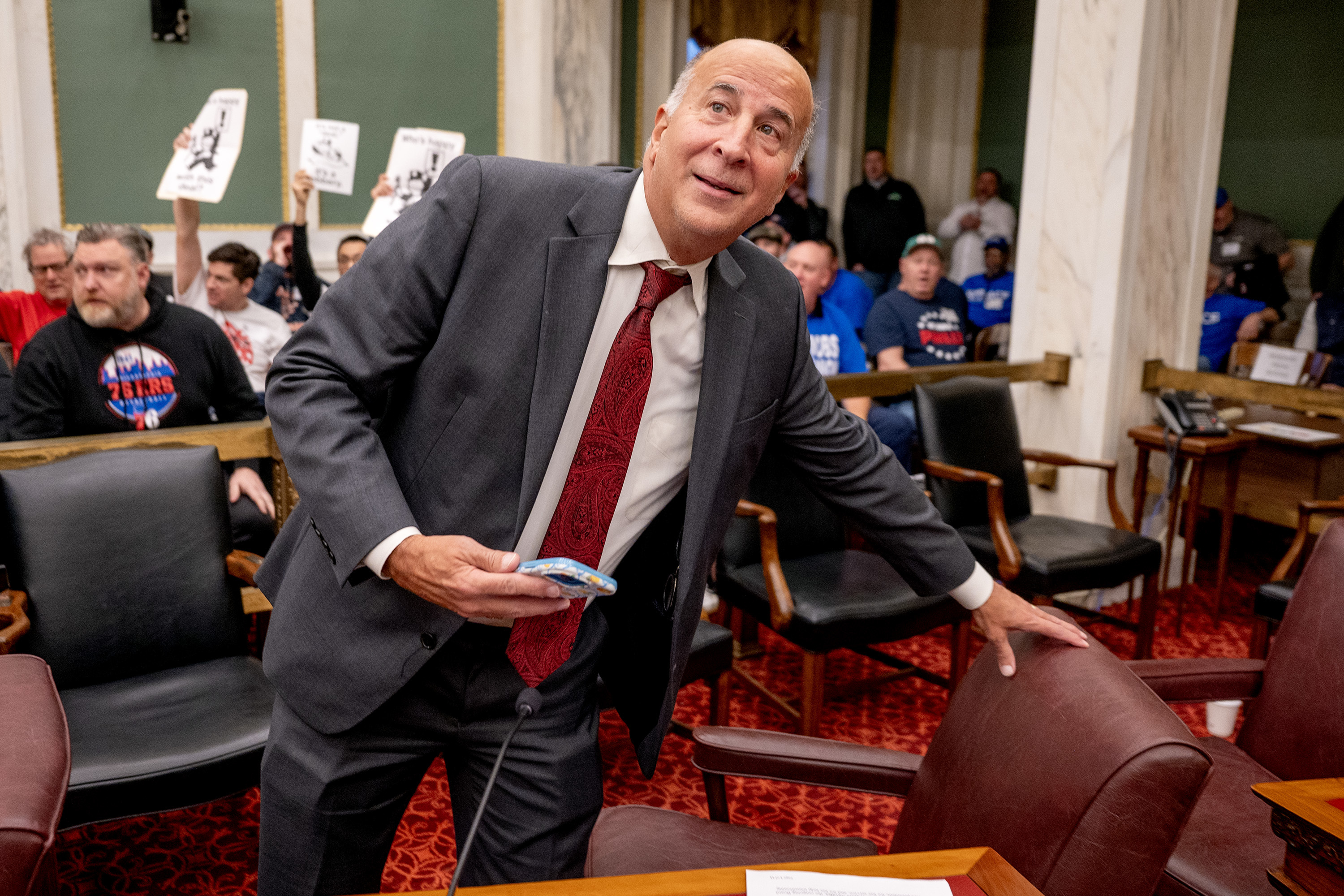
Councilmember Mark Squilla takes his seat in Council chambers on Wednesday, Dec. 11, 2024, before a scheduled committee vote. Squilla authored legislation requiring stores charge a fee for paper bags.
If the legislation passes Council, Parker could sign or veto it. She could also let it lapse into law without her signature. If she vetoed the legislation — it would be her first since taking office last year — Council could override her veto with 12 votes out of the 17-member chamber.
When the paper bag bill was introduced in 2019, members of Kenney’s administration also said at the time that they were concerned that fees on paper bags would hurt the poorest Philadelphians. Former City Councilmember Maria Quiñones Sánchez similarly described it as akin to a regressive tax.
However, proponents of the legislation said Monday that they don’t think the argument holds up.
Maurice Sampson, the eastern Pennsylvania director of the environmental group Clean Water Action, said prices on essentials such as food could rise for everyone if stores absorb the costs of paper bags.
“There is no foundation or basis,” he said, ”in the idea that fees on bags will hurt low-income people.”
WASHINGTON — The White House on Monday started tearing down part of the East Wing, the traditional base of operations for the first lady, to build President Donald Trump’s $250 million ballroom despite lacking approval for construction from the federal agency that oversees such projects.
Dramatic photos of the demolition work showed construction equipment tearing into the East Wing façade and windows and other building parts in tatters on the ground. Some reporters watched from a park near the Treasury Department, which is next to the East Wing.
Trump announced the start of construction in a social media post and referenced the work while hosting 2025 college baseball champs Louisiana State University and LSU-Shreveport in the East Room. He noted the work was happening “right behind us.”
“We have a lot of construction going on, which you might hear periodically,” he said, adding, “It just started today.”
Its chairman, Will Scharf, who is also the White House staff secretary and one of Trump’s top aides, said at the commission’s September meeting that agency does not have jurisdiction over demolition or site preparation work for buildings on federal property.
“What we deal with is essentially construction, vertical build,” Scharf said last month.
It was unclear whether the White House had submitted the ballroom plans for the agency’s review and approval. The White House did not respond to a request for comment and the commission’s offices are closed because of the government shutdown.
The Republican president had said in July when the project was announced that the ballroom would not interfere with the mansion itself.
“It’ll be near it but not touching it and pays total respect to the existing building, which I’m the biggest fan of,” he said of the White House.
The East Wing houses several offices, including those of the first lady. It was built in 1902 and and has been renovated over the years, with a second story added in 1942, according to the White House.
Karoline Leavitt, the White House press secretary, said those East Wing offices will be temporarily relocated during construction and that wing of the building will be modernized and renovated.
“Nothing will be torn down,” Leavitt said when she announced the project in July.
Trump insists that presidents have desired such a ballroom for 150 years and that he’s adding the massive 90,000-square-foot, glass-walled space because the East Room, which is the largest room in the White House with an approximately 200-person capacity, is too small. He also has said he does not like the idea of hosting kings, queens, presidents and prime ministers in pavilions on the South Lawn.
Trump said in the social media announcement that the project would be completed “with zero cost to the American Taxpayer! The White House Ballroom is being privately funded by many generous Patriots, Great American Companies, and, yours truly.”
The ballroom will be the biggest structural change to the Executive Mansion since the addition in 1948 of the Truman Balcony overlooking the South Lawn, even dwarfing the residence itself.
At a dinner he hosted last week for some of the wealthy business executives who are donating money toward the $250 million construction cost, Trump said the project had grown in size and now will accommodate 999 people. The capacity was 650 seated people at the July announcement.
The White House has said it will disclose information on who has contributed money to build the ballroom, but has yet to do so.
Trump also said at last week’s event that the head of Carrier Global Corp., a leading manufacturer of heating, ventilation and air conditioning systems, had offered to donate the air conditioning system for the ballroom.
Carrier confirmed to The Associated Press on Monday that it had done so. A cost estimate was not immediately available.
“Carrier is honored to provide the new iconic ballroom at the White House with a world-class, energy-efficient HVAC system, bringing comfort to distinguished guests and dignitaries in this historic setting for years to come,” the company said in an emailed statement.
The clearing of trees on the south grounds and other site preparation work for the construction started in September. Plans call for the ballroom to be ready before Trump’s term ends in January 2029.
In one of their most complete games of the young season, the Flyers closed out a four-game homestand Monday with a 5-2 win against a Seattle Kraken team that had yet to lose in regulation this season.
It upped the Orange and Black’s record to 3-2-1. Here are three things that keyed the victory:
Entering Monday night, the Flyers’ power play was in a familiar spot — last in the NHL at 6.7%. But after going 2-for-4 against the Kraken, it is now up to 15.8% and tied for 21st with the New York Islanders, who visit Xfinity Mobile Arena on Saturday (12:30 p.m., NBCSP).
Tyson Foerster scored the first one after he and Bobby Brink got to work on the boards, transferring the connectivity that they have at five-on-five over to the power play. The play saw Foerster track down an errant pass in the corner and find a supporting Brink, who drew two Kraken defenders in before slipping it back to his linemate. The nifty give-and-go gave Foerster a ton of space in the left faceoff circle to pick the top corner.
“Yeah, a little surprised ’cause I thought [Trevor] Zegras was open, too,” Foerster said of all the time he had to shoot. “So it was either pick Zegras or shoot, so I decided to shoot.”
Foerster, whose goal came with 7 seconds left on the power play, also gave props to his goalie, Dan Vladař, who stopped a two-on-one and a breakaway right before the Flyers got on the board.
“Well, we wanted to give them a couple of breakaways and a two-on-one to loosen them up and then we started to go,” coach Rick Tocchet said sarcastically when asked if there was a change in strategy for Monday or just better execution.
“No, obviously, it was a little hairy there. We weren’t too happy with it early.”
Tocchet liked the movement of the power play overall, but he wanted to see more. According to Cam York, who got the primary assist on the Noah Cates tip-in goal 19 seconds into a second-period power play, the credit goes to the coaches.
“I should have done it in the first period, too, on Tyson’s first goal,” he said of putting the point shot on goal with traffic in front.
“Didn’t [and] we watched it on video, and in the second period was able to capitalize on it. I’ve said it from the start, coaches have done a great job of making us look good out there, and I’ll give the credit to them on that one.”
But Tocchet credited Zegras for paying attention to the pre-scout and using the information to set up York by drawing Kraken penalty killer Tye Kartye to him in the right faceoff circle.
“That’s high-level play, is making a back pass through the top down,” said Tocchet, noting how the Kraken structure their penalty kill. “That’s a hard play and if you beat that play, you’re going to get that guy in the middle with all day for a shot. So, that’s the skill of Trevor, he can make that backhand pass to the middle guy.”
Zegras has an assist in five straight games.
Supporting Matvei
There have been a lot of questions about Matvei Michkov’s reads as of late, but on Monday, not only did he read and react properly, it led to Travis Konecny’s first goal of the season.
Owen Tippett, who remained red-hot with a pair of goals, skated a hard 34 seconds and got off the ice. It allowed Michkov to be out there with Konecny and Sean Couturier, until Couturier changed as the puck went back into the Flyers zone.
What was not shown on the broadcast is that Michkov clearly processed that the center was changing and went back to the defensive zone to provide puck support. He swung low and turned up the right wing as two Kraken players went to play the defenseman, who flipped the puck up in the air. It dropped and died in the neutral zone, allowing Michkov, who was skating north — another thing Tocchet has stressed to him — to pick up the puck.
From there Michkov got to work, finding a trailing Egor Zamula before the defenseman, who used his patience to outwait a Kraken defender, found Konecny at the back post.
Flyers right wing Matvei Michkov had his best game of the young season on Monday.
“Listen, he’s chipping away in his game, and that’s all we can ask for. We’re looking at inches for players, that’s another inch for him,” Tocchet said of Michkov. “So, yeah, he made some nice plays. He started to skate a little bit more north and stuff like that. But he makes a high-level play to Zamula. … You skate, you make everyone drive [to you], and then you make the play. It’s when you don’t move the structure that he throws it in the middle and I think there’s a difference, and I think he’s starting to learn the difference.”
‘We are a family’
It’s been 23 years since Tocchet last played for the Flyers and his name is still atop the team’s all-time list for most career penalty minutes. And despite being a guy with 172 career NHL fights (regular season and playoffs), according to hockeyhights.com, Tocchet swears, “We’re not preaching fighting.”
What he is doing is “trying to create a culture and sticking together.”
They definitely do that because after Nic Deslauriers dropped the gloves against Minnesota; and Michkov got a minor for going at Carolina Hurricanes forward William Carrier, who nailed Konecny; and before Konecny got his own fighting major Monday after Kraken defenseman Ryan Lindgren cross-checked Couturier from behind, Nikita Grebenkin entered the chat.
“It was awesome. Didn’t see it coming,” York said, summing it up perfectly. “But, he’s a feisty guy, I think, and any time one of our guys gets hit like that, you want to stick up for him. It’s who we are here, we’re a family, and just part of what we do.”
Playing in just his fourth game as a Flyer, Grebenkin made his presence known. After Garnet Hathaway was hit awkwardly, he instigated a fight with Cale Fleury and body-slammed him to the ice.
Grebenkin played just 7 minutes, 38 seconds — he earned 17 minutes’ worth of penalty time for his fight — but got his money’s worth as he endeared himself to his teammates and also made several nice plays, especially in the third period.
Not only was Jalen Hurts called upon to step up, he got a phone call in the middle of his post-game press conference in Minnesota. “When you win, everyone wants to call you,” he joked. In the Eagles’ 28-22 victory over the Vikings, the star quarterback was certainly a winner, delivering one of the most statistically-impressive performances of his career. The 326 passing yards and three touchdowns were much needed, as Hurts, along with the dynamic receiving duo of A.J. Brown and DeVonta Smith, led the way in getting the Eagles back on track after a two-game slide. What changed on offense, where plenty of criticism has been directed this year? How did a couple of welcomed faces help the defense clamp down? The Philadelphia Inquirer’s Jeff McLane and Marcus Hayes give their takes on the Eagles’ success in Week 7.
00:00 Jalen Hurts: perfection marks major progress
21:25 Concerns about the edge and…Brandon Graham?!?!
unCovering the Birds is a production of The Philadelphia Inquirer and KYW Newsradio Original Podcasts. Look for new episodes throughout the season, including day-after-game reactions.