Blog

  • A Chester County lake is planned for draining as a dam is decommissioned. Residents are worried about what it’ll become.

    A Chester County lake is planned for draining as a dam is decommissioned. Residents are worried about what it’ll become.

    Dorothy Verdon had a history of moving around every few years. But when she found her lakefront — or, technically, lake-back — home in the Arbours of West Goshen in Chester County 12 years ago, she just really liked it.

    Her loudest neighbors are the geese, who live at the banks of Fernhill Lake, a 64-acre impoundment formed from Aqua’s Township Line Dam. But under a plan from the public water company to partially decommission the dam and draw down the reservoir, returning the natural flow of Chester Creek, Verdon and her neighbors’ backyards would be subject to great ecological change in the coming years.

    It’s a change environmentalists generally support, as dams greatly affect the ecosystem around them: increasing water temperature, generating algae growth, and fragmenting habitats. But residents, some of whom paid up to $20,000 for their lake-facing yards, worry what their backyards, and the developed habitat, could become.

    “My immediate concern, and that of several residents and the township, is what’s going to happen to the ecosystem, because it is a water-based ecosystem,” Verdon said. “There’s that. It’s really financial. And it’s aesthetic. What are we going to have behind us as the lake gets drained?”
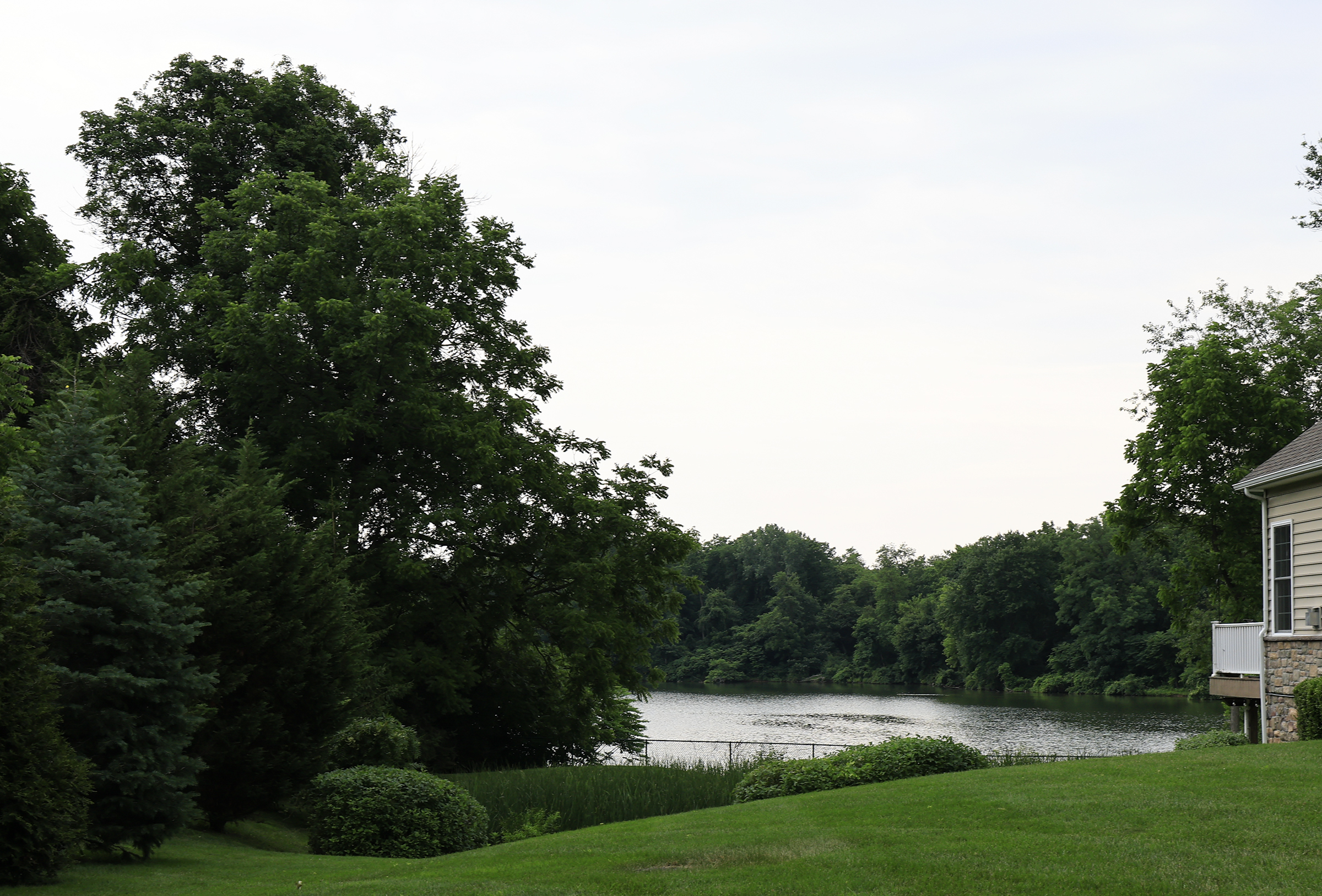
    A view of Fernhill Lake from the Arbours at West Goshen in West Goshen, Pa., on Monday, June 22, 2026.

    The planned decommissioning

    Built in 1935, Township Line Dam once supplied drinking water for surrounding customers. But, as with a number of dams before it, that has not been the case for decades. Aqua acquired the dam in 1998 and does not use it for daily operations.

    Township Line requires “extensive investment” to satisfy requirements from the Pennsylvania Department of Environmental Protection, which outweighs the benefits of a dam that no longer serves its purpose, Michael Fili, the company’s vice president of planning, design, and construction, wrote in a letter to the township’s board of supervisors in May.

    Under its plan, the company will begin drawing down the water in the reservoir by eight to 10 feet, leaving the water at that reduced level until it begins construction for partial dam removal in early 2028 through 2029, Fili wrote. At that time, the entire lake would be drained. (The company originally planned to begin the process in July, but pushed the timeline back to fall following concerns from residents.)

    A view of the Township Line Dam along Airport Road in West Goshen, Pa., on Monday, June 22, 2026.

    Following decommissioning, Aqua proposed transferring ownership of the 114 acres to West Goshen Township, making the municipality “stewards of the land” that could “utilize the land for the benefit of its residents,” Fili wrote.

    “We understand the reservoir and surrounding area is enjoyed by the community, and we do not take this action lightly,” Fili wrote.

    The announcement drew concerns during a May board meeting from residents, who questioned why it had to be drawn down so quickly, and worried about what would become of the land — fearing further development, or lack of adequate care to keep it from becoming an eyesore. Some wondered if there might be a path to maintaining the lake.

    “With all due respect to my fellow supervisors’ opinion, I don’t think we have an option here,” said Shaun Walsh, chairman of the township’s board. “If you keep it as a dam, you need to spend millions of dollars to fix it.”

    Walsh said the township would keep it as an open space, possibly turning it into a mixture of wetlands, meadow, woodlands with walking trails — an “ultimately real beautiful amenity for people in the area to use,” he said.

    “I think there are so many advantages in it becoming a publicly owned asset, given that the township is so built out,” he added. “I personally believe in 10 years’ time we should have an attractive amenity there for the community.”

    (“When we’re all dead,” someone in the meeting responded.)

    West Chester appears to have a right of first refusal to purchase the property at low cost, based on old agreements, officials for the borough said. West Goshen Township Manager Chris Bashore said that town was waiting to see what West Chester decides.

    In a message, Aqua said it is communicating with both municipalities and “no determination has yet been made as to whether the 114 acres of property will be conveyed and to whom.”

    Birds rest on the Township Line Dam along Airport Road in West Goshen, Pa., on Monday, June 22, 2026.

    Dams and wildlife

    Residents also worry about what will become of the waterfowl, turtles, fish, and a bald eagle who have begun to call it home over nearly a century.

    Largely, environmental activists believe that “the positives of dam removal outweigh any kind of negatives” said Faith Zerbe, advocacy and science community action coordinator with the Delaware Riverkeeper Network, which has sought the decommissioning of multiple dams over the last two decades.

    The Chester Creek, a tributary of the Delaware River, is steeped with “impairments” — situations when a waterway does not meet environmental or regulatory quality — along much of its length. Removing the dam would help chip away at some of those larger issues.

    “Removing a dam, allowing the natural stream to find its pattern over time as that dam removal takes place, and then restoring the stream banks with natural native indigenous species is kind of a critical piece to getting ecology back to the river,” she said.

    Aqua said it is coordinating with the Pennsylvania Fish and Boat Commission and Department of Conservation and Natural Resources, and the federal Fish and Wildlife Services, as it prepares for its drawdown.

    It is essential for the dam decommissioning to be done right, environmentalists said. But when done “thoughtfully and with the proper permissions, dam removal can have remarkable benefits for local ecosystems, allowing these areas to return to their original landscape,” said Carly Lare, executive director of Chester Ridley Crum Watersheds Association.

    Her organization has been communicating with Aqua to better understand the project’s goals and timelines, she said.

    “Since colonization of the area, this landscape has greatly changed, which in turn alters which native species can survive throughout our region,” Lare said. “When habitats are fragmented, our creeks experience diminished migration of native fish populations, which in turn influences the health and diversity of other native organisms, ranging from freshwater mussels to river otters.”

    This suburban content is produced with support from the Leslie Miller and Richard Worley Foundation and The Lenfest Institute for Journalism. Editorial content is created independently of the project donors. Gifts to support The Inquirer’s high-impact journalism can be made at inquirer.com/donate. A list of Lenfest Institute donors can be found at lenfestinstitute.org/supporters.
  • 📵 HOA group chat drama | Morning Newsletter

    Good morning, Philly. Saturday showers may turn our World Cup game soggy, and it appears a heat wave is on the way.

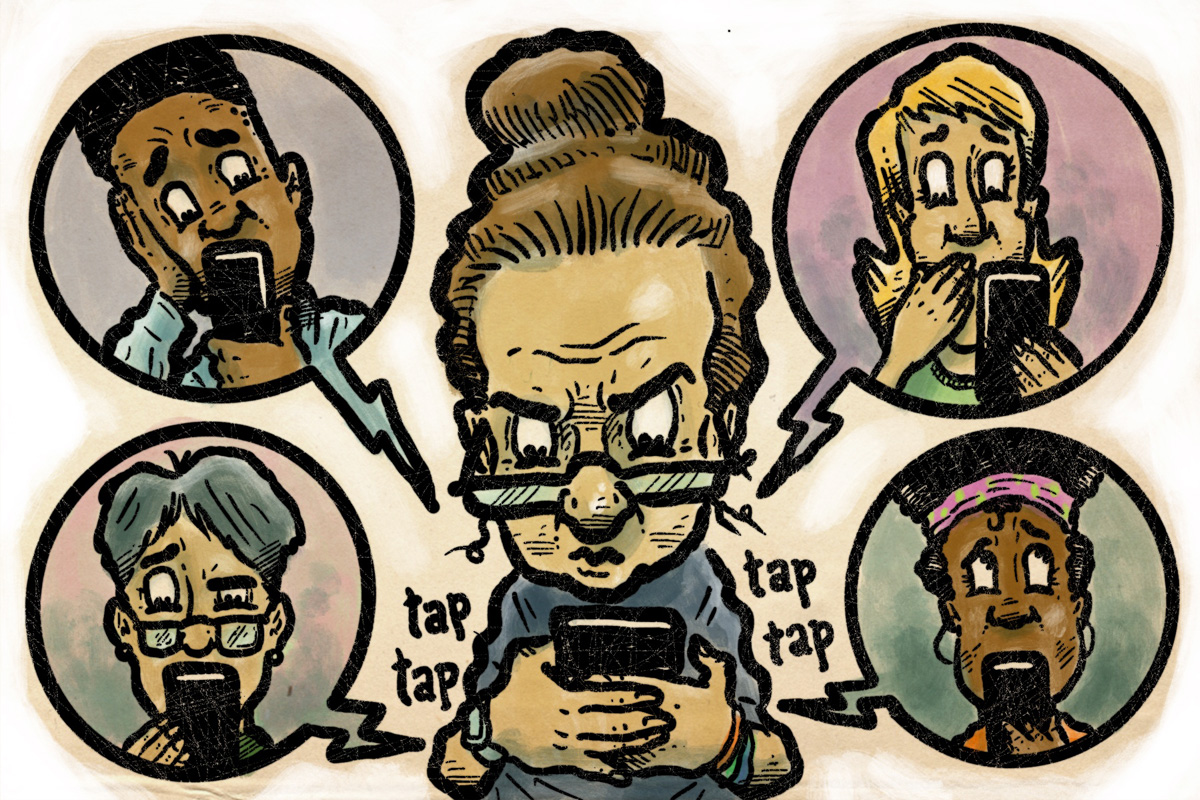
    Trouble is brewing in an homeowner association’s group chat. Members are tired of one neighbor treating it like the complaint department. A reader asked: Should they get the boot? Inquirer staffers share their thoughts.

    Plus, we’re talking about a $2.5 million revamp of Market Street, why an East Passyunk bar raised the price of its iconic burger, and our report card for this week in Philly news.

    — Paola Pérez (morningnewsletter@inquirer.com)

    If someone forwarded you this email, sign up for free here.

    What you should know today

    HOA chat tensions

    This week’s question is: I am in an HOA. We are all in one group chat and are friendly to one another. One of the women in our chat, who is very nice in person, uses the chat to complain, almost weekly.

    She thinks the kids are too loud playing outside on a Saturday afternoon. She says one of us put our trash out 20 minutes before we’re technically allowed to. She says one of us closes our front door so hard that it shakes the whole building. She constantly asks for us to get her Amazon packages and if we say we’re not home she says, “ANYONE ELSE?” Yes, in caps.

    So yeah, we don’t like her. We’ve tried! So there are some ideas floating around, the main one being: Do we mute that group chat and start a new one without her? Or do we just tell her what the deal is?

    Cue “Complaint Department” by Lykke Li.

    Inquirer writers Kiki Aranita and Elizabeth Wellington jumped into a group chat of their own for a conversation on this situation. They agreed on the need for ground rules, and established a few for folks to live by. To start, no complaints. “Complaints are for friend group chats, not neighbor group chats,” Aranita said.

    The act of keeping it real with the source of the annoyance, however, requires great delicacy. “People need to know when they are getting on your last nerves,” Wellington said, suggesting a gentle approach to confrontation.

    Read their full verdict here. And if you need advice, or just want to share your thoughts, we want to hear it. Email us here.

    One viewpoint

    This week 149 years ago, 10 Irish Catholic miners were hanged in Pennsylvania following murder convictions in a long-running labor war. It was the biggest mass execution in the state’s long history.

    In a column for The Inquirer, Mark Bulik, a retired senior editor for the New York Times and author of a book on the Irish roots of America’s first labor war, explores a hidden link between the notorious labor rebels known as “Molly Maguires” and Philadelphia mummers.

    “The connection explains many of the mysteries about the Mollies — where the name came from, why the Mollies wore odd disguises, why they did their killing around high points of the calendar, and why they were revived in Pennsylvania amid resistance to the Civil War draft,” Bulik writes.

    Get Bulik’s perspective on why the key to understanding who the Irishmen really were lies in the longtime holiday tradition.

    📍 Find the location

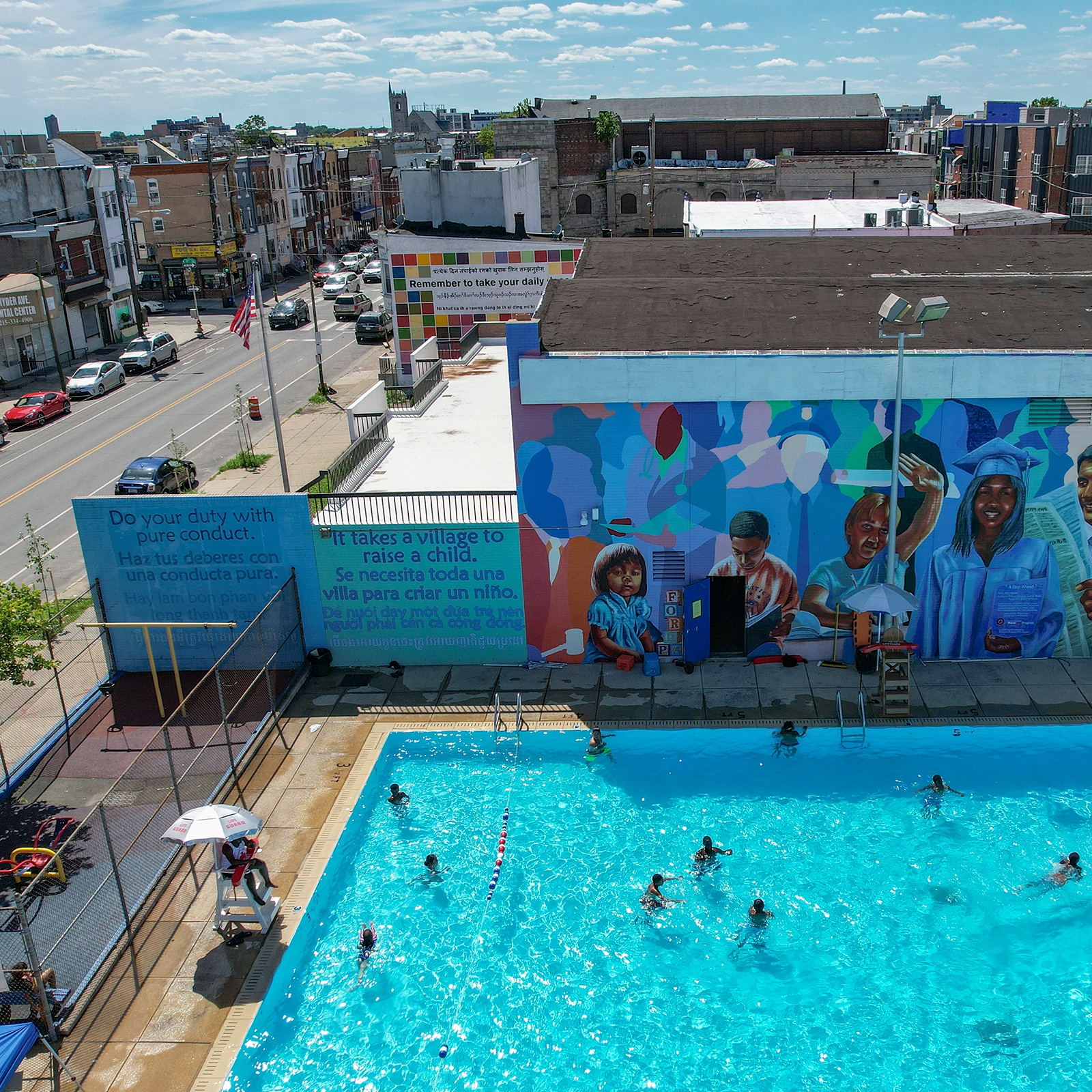
    Summer is here, and there’s no better way to cool off than at Philly’s water features. We’ll show you a photo of a pool or splash park, you drop a pin where you think it was taken. Closer to the location results in a better score. Good luck!

    Think you know where to find this pool? Our weekly game puts your knowledge of Philly’s places and streets to the test. Check your answer.

    🧩 Unscramble the anagram

    Hint: The site of America’s first paper mill (one word)

    INTENSE THROWOUT

    Email us if you know the answer. We’ll select a reader at random to shout out here.

    Cheers to Susan Walton who correctly guessed Friday’s answer: Fourth of July. We rounded up a list of where to watch fireworks for America’s 250th in Philly, the suburbs, South Jersey, and the Shore.

    We were there

    Ivory Coast team celebrates their 2-0 win at Philadelphia Stadium on Thursday.

    Thursday’s Group E finale at Philadelphia Stadium saw Ivory Coast take charge with a 2-0 victory over Curaçao for the FIFA World Cup.

    For 19-year-old Yan Diomande, Philly will be remembered as the place the rising striker launched his star in America.

    Check out the full gallery from staff photographers Jose F. Moreno and Tyger Williams.

    One more read to go: FIFA has already set an all-time World Cup attendance record, and Philadelphia has been a major part of that.

    Somewhere on the internet in Philly

    📸 I’m loving Philly-based photographer Oreste Mercado’s ethereal captures of the city.

    📰 The paper gets props for this headline presentation in print.

    ⚾ Owners of Nihonbashi Philly, Tokyo’s shrine to Philly culture, are calling on fellow Japanese netizens to vote for Kyle Schwarber — “NOT SHOHEI OHTANI‼️” — for the MLB All-Star Game. The Phillies’ Instagram page replied: “We are the Philadelphia Phillies and we support this message.”

    🇭🇷 A wedding coinciding with a Croatian rally makes for a wholesome moment of celebration.

    👋🏽 Thanks for spending time here this morning. I’ll bring you the latest news again tomorrow.

    By submitting your written, visual, and/or audio contributions, you agree to The Inquirer’s Terms of Use, including the grant of rights in Section 10.

  • Haverford parents are worried about chatbots in classrooms after a vote to buy AI tools

    Haverford parents are worried about chatbots in classrooms after a vote to buy AI tools

    A move by the Haverford Township School District to buy artificial intelligence tools for students and teachers has been met with protest from parents who fear the technology will erode learning.

    At a meeting last week, the Haverford school board voted 5-3 to approve contracts with School AI, which features AI “tutors,” and Brisk, which automates tasks for teachers, like developing quizzes and giving students feedback.

    While administrators said the tools wouldn’t supplant teaching and learning, critics said it was inevitable that AI would be used inappropriately — making it easier for kids to avoid work.

    “The idea of putting chatbots on computers — I don’t even care what age. I’m pretty disgusted by that,” said Christine Seewagen, a district parent of rising 12th and 7th graders.

    The district already struggles to manage technology in the classroom, said Seewagen, who said her older child has observed students run math questions through an AI tool on their phones. Her younger child, meanwhile, had a teacher who directed students to upload essays to an AI tool to get feedback, Seewagen said.

    “They’re just using AI, and not really being instructed on how to do it,” Seewagen said in an interview.

    Administrators said they were recommending buying AI tools in part because teachers are already using freely available versions, and they want to “eliminate free roaming around platforms,” Robert Anderson, the district’s technology director, said at the June 18 board meeting.

    Haverford’s superintendent, Matthew Hayes, said the School AI contract would “allow us to have a resource so that as we go through the process of the strategic plan and looking at all the implications down the line,” the district could begin teaching AI “thoughtfully, responsibly, ethically.”

    He added: “And also reducing screen time,” without providing further details.

    The controversy around AI in Haverford is the latest example of area parents pushing back on what they see as excessive and unchecked technology use in schools.

    In Lower Merion, parents have pushed to opt their kids out of district-assigned laptops or tablets; the district is planning changes to reduce usage for younger students, but has told parents they cannot opt out entirely. Parents in other districts are also raising concerns about too much Chromebook use.

    In Haverford, some parents said they were caught off guard by the proposal to adopt technology they felt posed risks to their kids.

    Patrick Burland, the parent of an incoming 10th grader and 6th grader, noted he’d had to sign numerous permission slips for his younger child to participate in end-of-year celebrations.

    “Apparently, sugar requires a signature, but cognitively rewiring her brain does not,” Burland told the board.

    Anderson said Haverford had been considering how to incorporate AI for years. He said the district sought feedback from teachers, including through an AI working group, before proposing the contracts.

    Board members who voted for the AI tools, meanwhile, said kids needed to learn how to use the technology responsibly.

    “Not acknowledging that it’s here … we don’t gain anything, right? We actually lose and we put ourselves farther behind because it’s not going anywhere,” said board member LaTonia Lee.

    But some raised questions about what the district was planning to do with the tools.

    Dave Schwartz, another board member, said he would support teaching kids about AI. But the district hasn’t said how it plans to do that, he said.

    “We’ve been talking very much in vague terms, and I can’t vote for something that I don’t understand,” Schwartz said.

    A district spokesperson did not respond to a question this week about examples of how School AI might be used.

    Board member Chris Shelton asked Anderson about criticism that the tool’s “historical figure” chatbots were giving students inaccurate information. (Last year, School AI acknowledged that responses from an Anne Frank character “didn’t provide critical historical details about the Nazis’ role in the Holocaust.”)

    Anderson called it “unfortunate” that the company had promoted the historical figures feature, but said the district “would have the option to potentially not use something like that.”

    John Flagler, a board member and English teacher, said he understood the burdens placed on teachers, “but I also believe there are lines that should not be crossed.”

    The suggestion that grading papers is a “menial task” that could be offloaded to AI “is an insult to both the teacher and the student,” Flagler said, calling grading essential to teachers learning about students.

    Administrators said Brisk wouldn’t be used for grading, but would provide “first-level feedback” — informing students they’re missing a topic sentence, for instance, said Meridith Herne, the district’s technology integration coordinator.

    “We insist that our teachers read it over and modify it so it’s in their own voice,” Herne said of Brisk’s feedback. Hayes said that 97 district teachers already use a free version of the tool.

    He said the tool was not meant to replace teachers.

    “That’s not my intent at all,” Hayes said, describing Brisk as “an option for individuals who want exposure to it.”

    He noted that the contracts with Brisk, for $22,260, and School AI, for $12,999, were each limited to one year.

    Teachers will be trained on the School AI platform, Anderson said; it will be up to them to decide whether they want to use it. He said the district envisions the platform being used in high school and “potentially” middle school, but isn’t planning for it to be used in elementary schools.

    Parents like Burland and Seewagen, who said like-minded parents have been organizing on social media, weren’t persuaded.

    “It does not feel like to me they have put any guardrails on,” Burland said in an interview. He questioned whether the district would have considered turning off School AI chatbots, for instance, had it not been asked at the board meeting.

    Seewagen said many parents who have learned about the AI plans aren’t happy.

    “It did not go under the radar,” she said.

  • The historic Conkling-Armstrong House in North Philly is poised for affordable redevelopment

    The historic Conkling-Armstrong House in North Philly is poised for affordable redevelopment

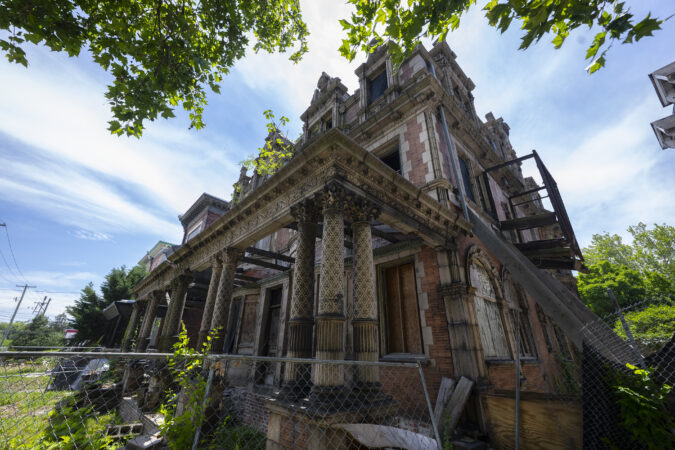
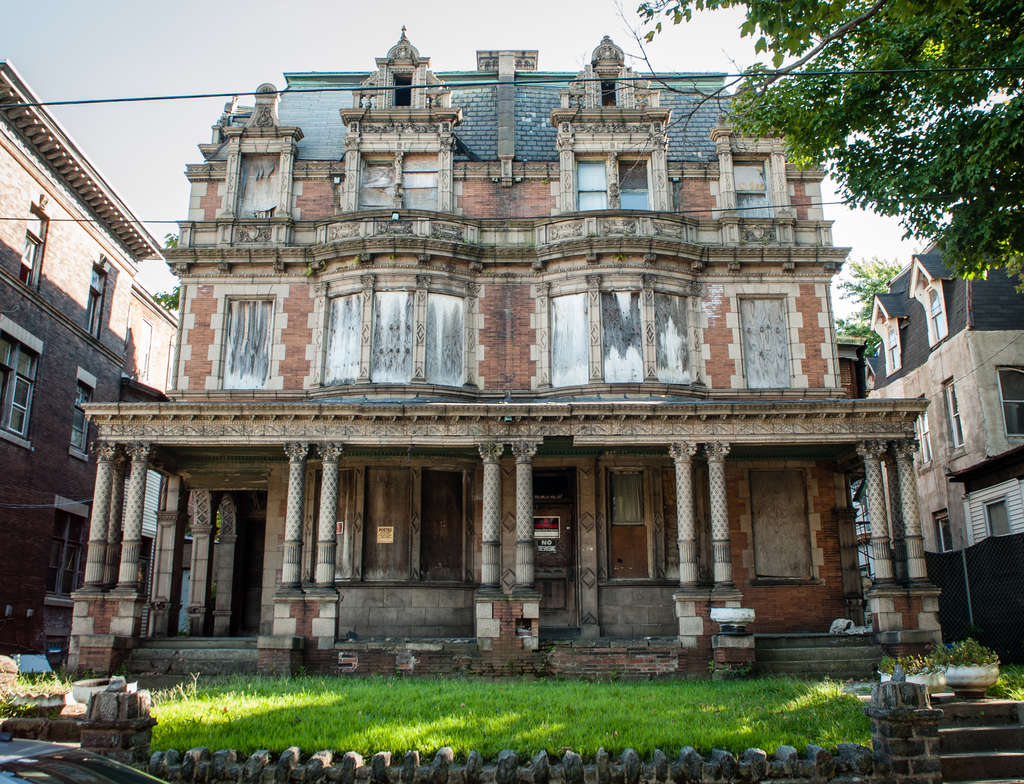
    They don’t make them like the Conkling-Armstrong House anymore. They never really did — except this once.

    Located at 2224-26 W. Tioga St., each of the two roughly 5,000-square-foot houses in this twin mansion are encrusted with terra-cotta flourishes that set them apart from their neighbors and from pretty much any other building in the city.

    That’s because this almost 130-year-old mansion in North Philadelphia was built as a towering advertisement for what the Conkling-Armstrong Terra Cotta Co. could offer late-19th-century developers and architects.

    They studded it with beautiful decorations and elaborate details to demonstrate what their products could look like on future buildings.

    When this one-of-a-kind house was built in 1898, the company’s factory stood mere blocks away. Now it is gone, demolished in 2011, and the house itself hasn’t been occupied in even longer.

    That period of vacancy will end soon, if local affordable housing developer Brian Wise gets his way. He’s already invested almost $1 million in bringing the Conkling-Armstrong house back from the brink of demolition.

    “When we first had the property, we could not even walk through it,” said Wise, managing partner of Wise Holding Group LLC. “There was so much deterioration from the roof all the way down to the basement.”

    Wise plans to build 12 apartments in the twin buildings and another 12 in two additions behind the twins, each over 4,000 square feet. They will extend into the vacant lot behind the Conkling-Armstrong house, fronting on Estaugh Street.

    The plan is to lease most of the units to tenants who use rent vouchers from the Philadelphia Housing Authority.

    “It’s a pretty ambitious job to do and something that will be a challenge, but sometimes we like challenges,” Wise said. “We’ll do everything we can to keep the building stabilized and bring it back to its original form, especially the exterior.”

    Earlier this month, the city’s Zoning Board of Adjustment gave Wise the go-ahead to begin the project.

    “This is one of these projects that you’ll remember over the course of your career,” Wise’s attorney, Alan Nochumson, said in his pitch to board members to preserve the building.

    Wise needed permission to build beyond the allowable density on the site, arguing that the rents from additional units were the only way to make the project economically feasible.

    The Conkling-Armstrong house on the 2200 block of West Tioga Street in 2018.

    His case was supported by two local community groups, the Allegheny West Civic Association and the Swampoodle Neighborhood Parcels Association.

    Wise anticipates an 18-month to two-year timeline, given the final Historical Commission approvals he needs.

    Wise originally came to this block of West Tioga Street to try to buy one of the other venerable, if less ornamented, stone twin houses on the block.

    He decided against that purchase, but while he was in the neighborhood, he noticed the intricate design and decoration of the Conkling-Armstrong House, as well as its dilapidated state.

    After acquiring the building, Wise considered demolishing it. But the Conkling-Armstrong House is on the Philadelphia Register of Historic Places, which makes razing it a challenge. Instead, the developer decided to embark on his first adaptive reuse proposal. He needs a final Historical Commission approval to begin construction.

    “My first impression, obviously, was that the architectural nature of the property was unique,” Wise said. “It was something that we weren’t used to seeing … so instead of knocking it down, we said let’s try to bring this building back to life.”

    At the zoning board, Wise faced questions from commissioners who wanted him to add a porch to the new addition facing Estaugh Street, which he promised to do.

    The new buildings behind the Conkling-Armstrong house will be more modest, with a design that echoes other houses in the neighborhood.

    “We decided that trying to match all of these ornate features of the front building is not a tenable solution,” said Matt Masterpasqua of the Mass Architecture Studio, which is designing the project.

    “So we tried to take context from the rear street, as well as some of the more modest neighboring buildings to inspire our new design,” Masterpasqua said. “It’s a little more feasible for us to construct.”

    He anticipates the redevelopment of the Conkling-Armstrong Terra Cotta Co.’s house-and-showroom will cost at least $3 million, but he could be aided by federal Historic Preservation Tax Credits.

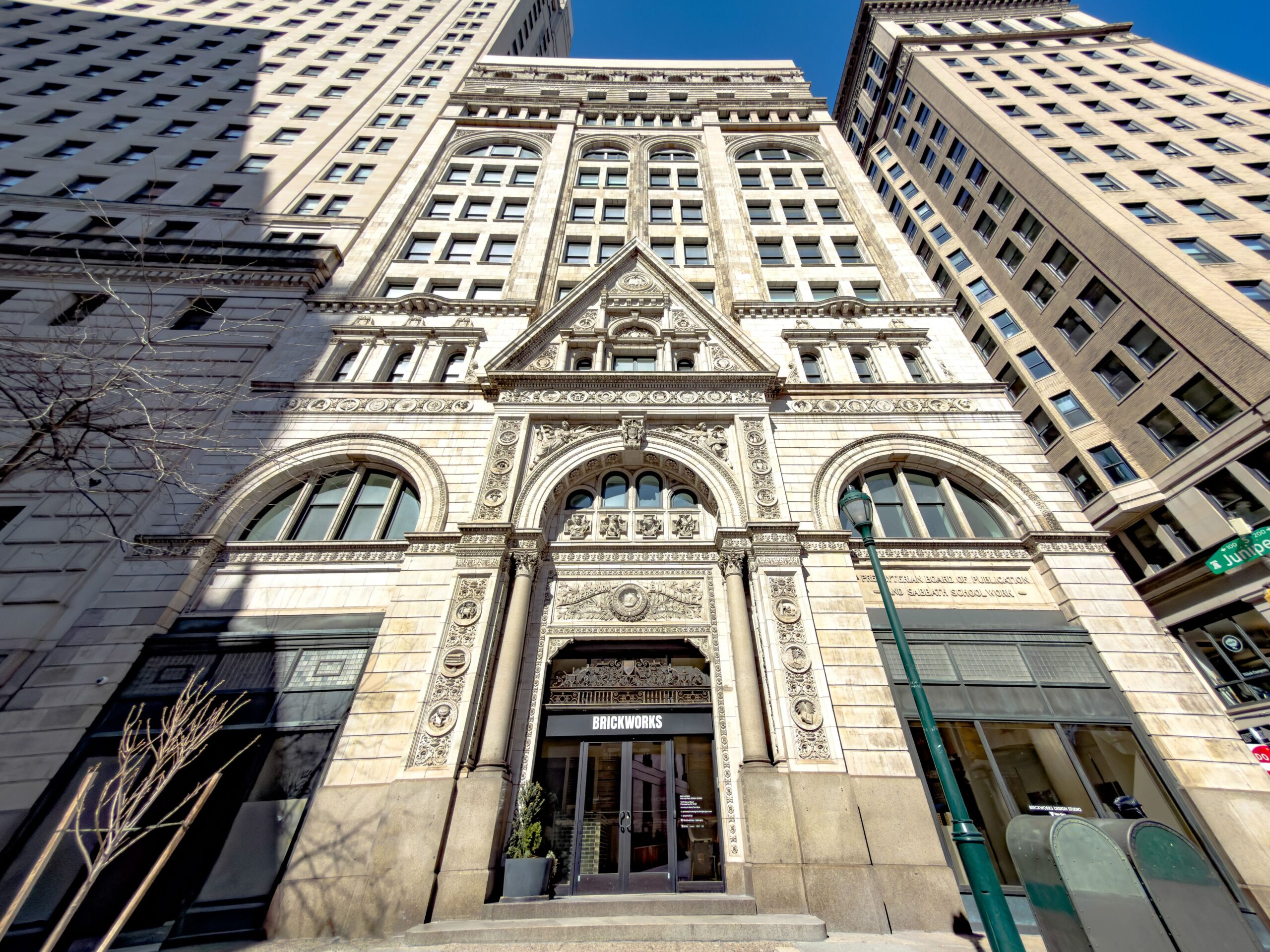
    The Witherspoon building, ornamented by the Conkling-Armstrong Terra Cotta Co.

    The company’s historical legacy in Philadelphia includes ornamenting such structures as the Witherspoon building and the former Curtis publishing house. Like many historically protected gems, those buildings are in Center City, not residential North Philadelphia.

    “It was a showcase for the capabilities of their company, but it’s also just really an incredible building,” Masterpasqua said. “It’s really great to be part of something that’s going to be able to salvage the neighborhood and this piece of architecture.”

  • Boston thinks its Revolutionary history might be better than Philly’s. We think that’s pretty cute.

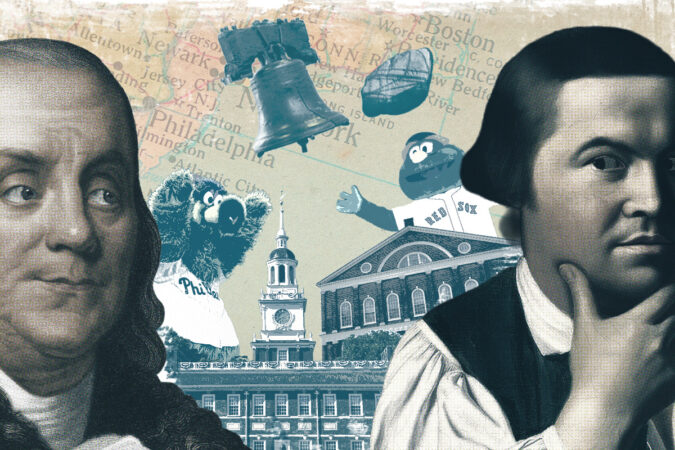
    Boston thinks its Revolutionary history might be better than Philly’s. We think that’s pretty cute.

    BOSTON — Not long ago, the folks over at the Boston Globe turned their spotlight on, of all places, Philadelphia. With the nation’s 250th birthday fast approaching, the newspaper dispatched a reporter to our fair city to determine how it stacks up, historically speaking, to Boston.

    The story revealed that — despite being primarily known for bad weather and baked beans — Boston apparently fancies itself a city with a robust and impressive history. In fact, some seemed to be of the opinion that Boston’s Revolutionary history might even be better than Philadelphia’s.

    “As the old saw goes,” one Massachusetts historian told the paper, “Boston did the hard work of making the Revolution, while Philadelphia did the paperwork.”

    Admittedly, this came as a bit of a surprise to us here at The Inquirer. What we had assumed is that when your city lays claim to the Liberty Bell, the Declaration of Independence, the U.S. Constitution, and a starring role in the 2004 Nicolas Cage film National Treasure, any debate over historical prominence is bound to be a little one-sided.

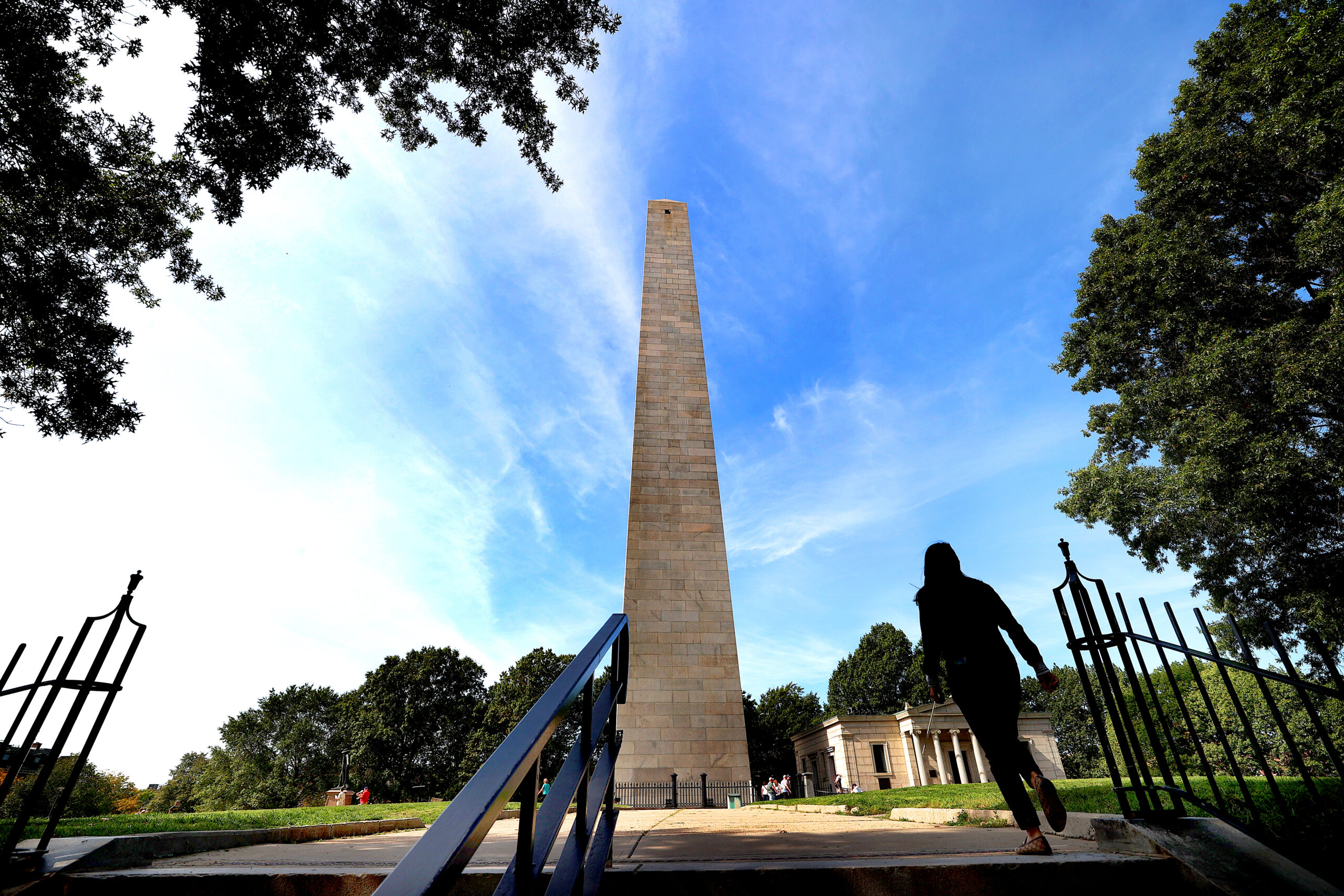
    The 221-foot Bunker Hill Monument – which actually sits atop Breed’s Hill – seen here on Sept. 30, 2025.

    Having myself once lived in Boston, I, too, was a bit miffed, as it had always been my understanding that the city’s history amounted to little more than drunken shenanigans and historical fan-fiction — a bizarre collection of half-truths and falsehoods.

    But like the Founding Fathers themselves (at least five of whom are buried at Philadelphia’s Christ Church, though who’s counting?), I remain open to new ideas.

    And so I set off recently for that little New England burg to the north, eager to experience firsthand the rich and vibrant history that we Philadelphians had apparently been missing out on.

    A trail of freedom and fabrication

    It was mid-June when I arrived in Boston, which meant that winter would be wrapping up in just a few short weeks, and the city was abuzz.

    Hollywood might have you believe that Boston is a grim, gray place where residents spend all their time robbing banks and inquiring about one another’s fondness for fruit, but in truth, the city is a lively hub of art, education, technology, and — as I’d recently learned — history.

    And how better to delve into that history than by joining a walking tour of Boston’s famed Freedom Trail, a 2.5-mile path featuring several of the city’s most significant historical landmarks?

    As a dozen or so of us set off with our guide, Kenneth — a friendly fellow dressed in authentic Revolutionary garb consisting of a polo shirt that said “Boston History Company” — it was hard not to feel a swell of patriotic pride.

    What quickly became apparent, however, is that — when it comes to its history — Boston has spent the past 250 years playing a little loose and fast with the facts.

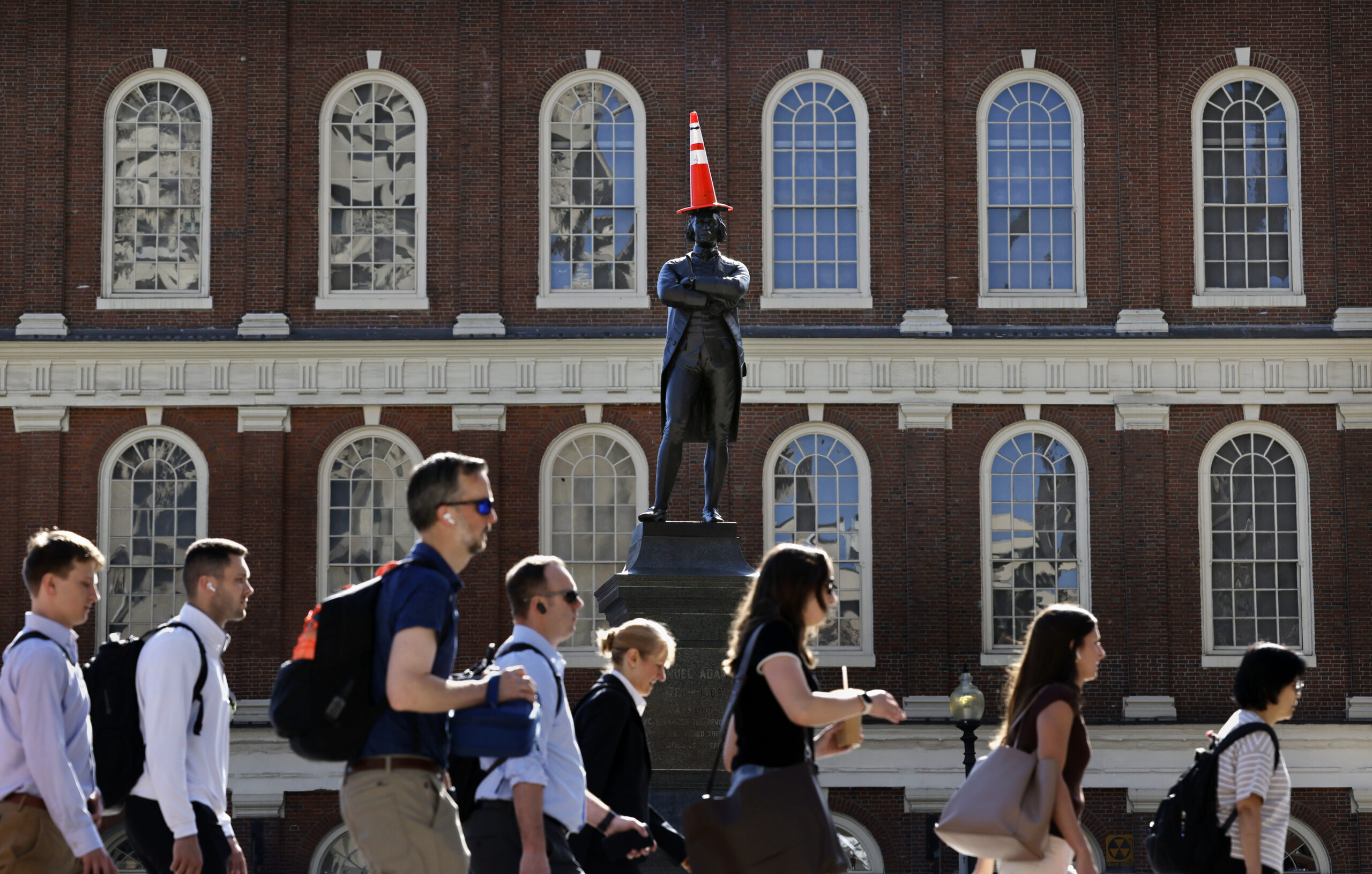
    A traffic cone sits atop the statue of Samuel Adams as morning commuters pass Faneuil Hall in Boston on June 17, 2026.

    Take Paul Revere, arguably the city’s best-known historical figure.

    You might recall Revere from his famous “midnight ride,” detailed in Henry Wadsworth Longfellow’s iconic poem, during which Revere successfully alerts fellow colonists of a coming British invasion.

    In reality, Kenneth explained, Revere had pulled on his boots, set off on horseback into the New England night — and been promptly captured by British soldiers.

    In fact, of the three riders sent out that night, our guide said, Revere was the only one who’d failed to complete the mission.

    There was also the matter of the city’s most famous Revolutionary battle, the Battle of Bunker Hill — namely, that it was fought not on Bunker Hill but at a completely different location, called Breed’s Hill.

    Rather than correct the record, Boston in 1843 built a massive 221-foot monument atop Breed’s Hill, labeled it “The Bunker Hill Monument,” and marketed it as a major civic attraction — though, luckily, there was a perfectly reasonable explanation for this bit of misdirection:

    “[Bunker Hill’s] got the better name,” Kenneth explained. “So that’s what we went with.”

    But a city’s history, of course, is about more than just names and dates and stories — it’s about monetizing those stories through a carefully curated local tourism industry.

    The tourist experience

    Proponents will tell you that, much like Philadelphia, Boston has done a terrific job preserving the city’s historical aesthetic, and this certainly seemed to be the case.

    For instance, if you ignored the Chipotle, the CVS, the Walgreens, the Sweetgreen, the TJ Maxx, the Shake Shack, the cell phone repair shop, the Falafel King, and the 47 or so Dunkin’ locations lining the Freedom Trail, it was pretty much impossible not to feel like you’d been transported right back to the 1700s.

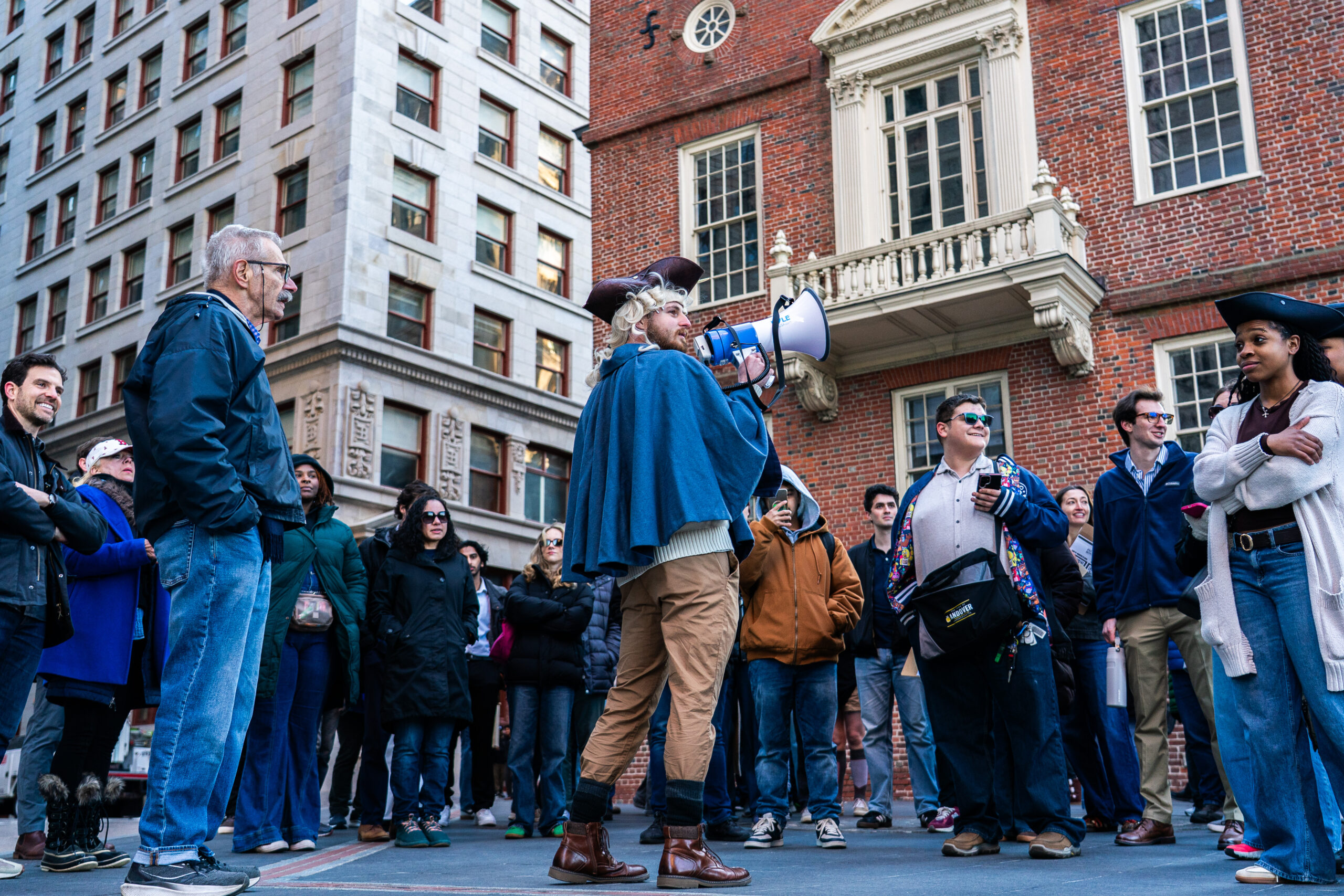
    Trey Fuccillo, 23, of Boston leads attendees during a “Democracy Walk” with David Hogg, co-founder of Leaders We Deserve, and Patrick Roath, candidate for Congress, outside of the Old State House in Boston on Wednesday, April 8, 2026.

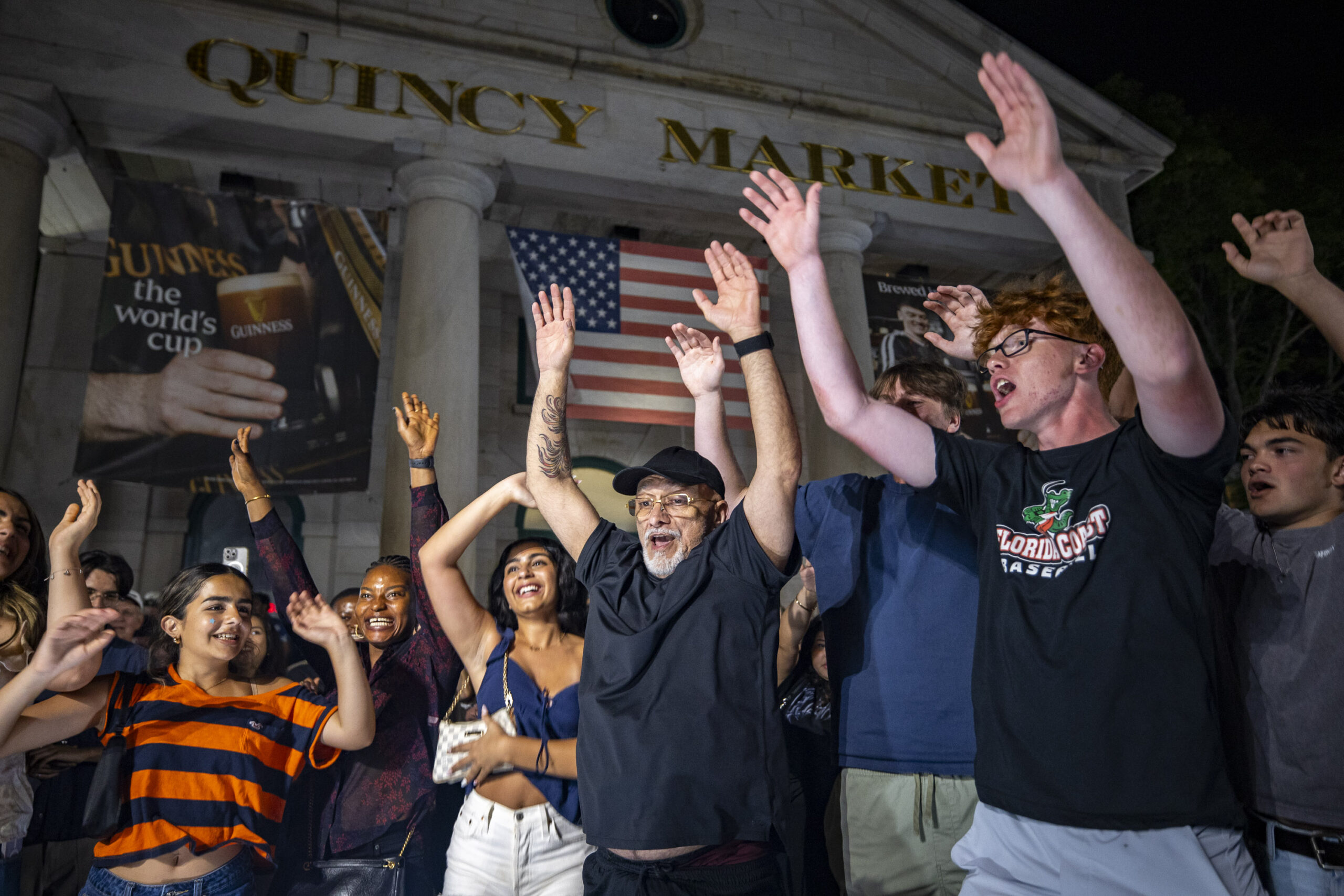
    The crown jewel of the city’s historical district is the bustling Faneuil Hall Markeplace — which once served as a prominent meetinghouse for the Sons of Liberty and today is a very good place to get, say, a $23 bowl of chowder and a key chain with a shamrock on it.

    Like Philadelphia’s Independence Hall, which remains a meticulously maintained ode to Philadelphia’s Revolutionary history, Boston’s Faneuil Hall — and nearby Quincy Market — is also a site that shows great reverence to the city’s past.

    For instance, when you walk past the Sephora and take a left at Jimmy Buffett’s Margaritaville — if you reach the Sunglass Hut, you’ve gone too far — you will eventually arrive at a small shop selling tasteful tributes to the city’s storied history, such as:

    • A T-shirt featuring three cartoon men in wigs, chugging beers below the words, “The ‘Pounding’ Fathers.”
    • A T-shirt featuring an image of Benjamin Franklin wearing sunglasses and holding a red Solo cup, along with the words, “Ben Dranklin.”

    Despite such thoughtful offerings, it turns out that Boston’s quest to attract history-focused tourists in the lead-up to America’s 250th birthday hasn’t always been easy.

    “Philadelphia’s been cleaning our clock in terms of getting people to come to Philadelphia to see history,” says Robert Allison, president of the Colonial Society of Massachusetts and co-chair of Revolution 250, a consortium of New England organizations dedicated to honoring the nation’s Semiquincentennial.

    But back to Ben Dranklin for a moment…

    Rambod Hashemi, center, leads dances as Cory Allen Staats performs outside Faneuil Hall in Boston on Saturday, June 20, 2026.

    The Franklin conundrum

    One issue that tends to get a little sticky between Boston and Philly is which city possesses a stronger claim to Benjamin Franklin, the wacky, kite-flying Founding Father.

    Franklin’s story is a tale as old as time: Child is born in a small town (Boston), longs for something more, and, as a teen, eventually works up the courage to set off for the big city (Philadelphia), whereby, suddenly surrounded by other brilliant minds, he blossoms.

    Despite this, Bostonians have struggled to relinquish their ties to Franklin, whose name and likeness are plastered across the city.

    One afternoon, for instance, I found myself at the Mount Auburn Cemetery in nearby Cambridge, staring up at an enormous monument marking Franklin’s burial spot.

    This was notable only in the sense that Franklin is very much buried 300 miles away, at the Christ Church Burial Ground in Philadelphia.

    During our tour, Kenneth, the guide, had shared an improbable story. Apparently, an eccentric rich man named Thomas Dowse — in an effort to get more people to visit Dowse’s own grave site — had arranged to have a false burial monument to Franklin constructed nearby.

    “A psych-out,” Kenneth called it.

    Certain Kenneth must be mistaken — that not even in Massachusetts could someone be so arrogant and status-obsessed as to erect a fake burial monument — I called the cemetery in question and sheepishly recounted the story I’d heard.

    “That’s absolutely true,” replied Meg Winslow, the senior curator of historical collections and archives at Mount Auburn — and a Philly native.

    “It’s pretty big,” she added of the monument. “In the cemetery world, we call it a ‘cenotaph’ — which is a memorial without a body.”

    As my first day in Boston drew to a close, I tried to take stock of what I’d learned. In truth, after 24 hours in the city, I’d yet to uncover the kind of historical magic I’d hoped to find.

    But maybe, I realized, I’d been setting my sights too narrow.

    To fully appreciate the local history, maybe I needed to go a bit further back in time.

    Plymouth Crock

    The next morning, I awoke early and — with a renewed sense of optimism — headed south on I-93, toward the one historical landmark that was guaranteed to impress: Plymouth Rock.

    Like every American child, I’d grown up learning about this vaunted slab of stone — the very rock where the Mayflower Pilgrims had made landfall back in 1620.

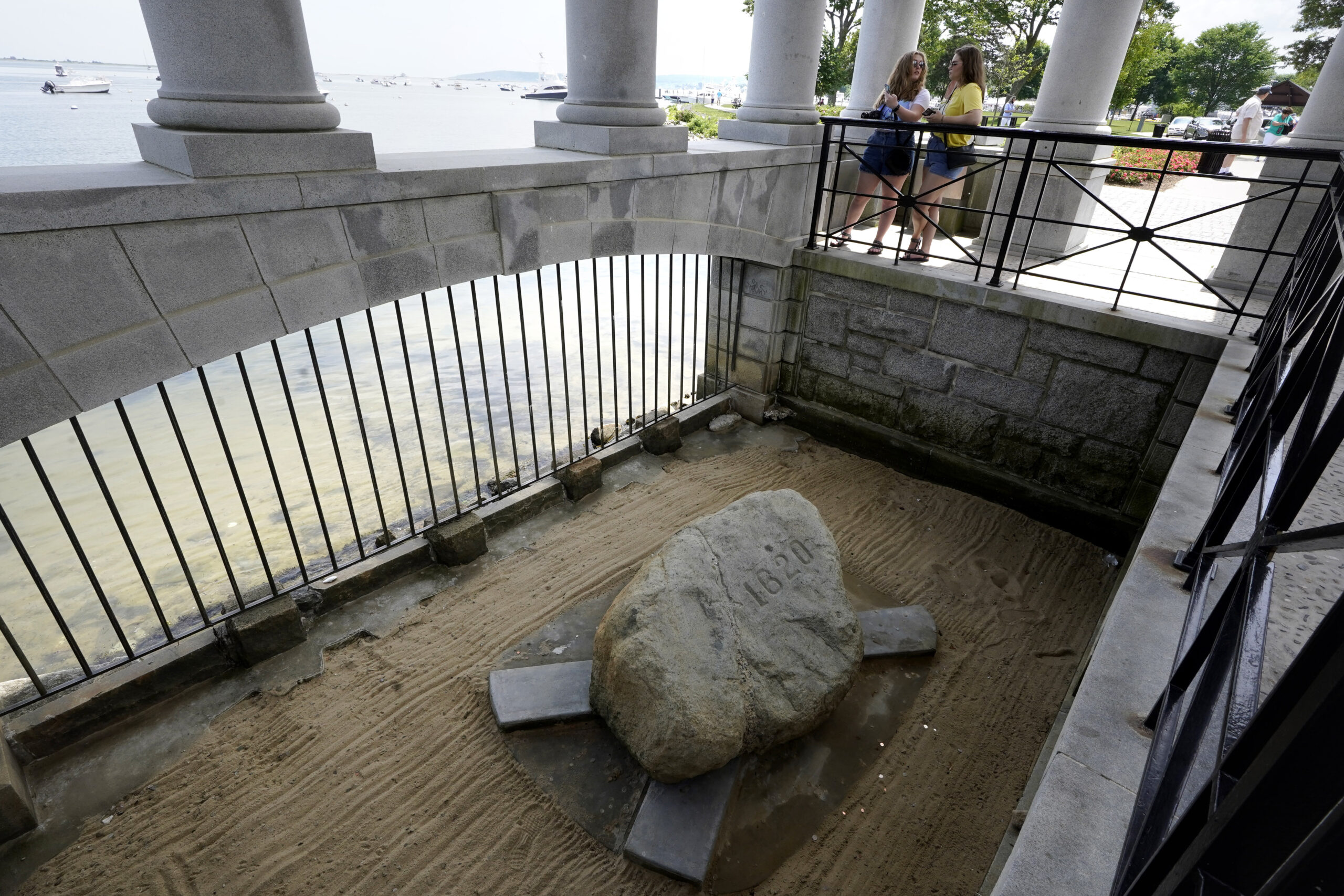
    Today, the rock is featured in a prominent seaside park 30 miles outside of Boston, and though some Yelp reviews have been lukewarm — “This rock is smaller than my dog’s bed.” … “How can a rock be so famous and [yet] such a let down at the same time?” … “I am so glad I am dying of a terminal disease so I don’t have to ever visit here again.” — I was not going to let a few naysayers dampen my spirit.

    Visitors stand in a pavilion that shelters Plymouth Rock, below, in Plymouth, Mass., in June 2021. (AP Photo/Steven Senne)

    While it’s true that the rock is on the smaller side, and that the vast majority of tourists who’d made the pilgrimage did not immediately appear blown away (“Corny-ass rock,” grumbled one teenager in headphones), none of that took away from the rock’s significance — or the sense of awe I felt while gazing upon it.

    This — right here in front of me — was the actual rock that the Pilgrims first set foot upon when they disembarked from the Mayflower more than 400 years ago.

    “Actually, that’s a little bit of a myth,” explained a nearby park ranger, a skinny fellow with a wily white beard. “They arrived in winter, so there was snow and ice. No one’s stepping onto rocks with snow and ice.”

    OK. But still: This — right here in front of me — was the very spot where the Mayflower had come ashore…

    “The Mayflower didn’t come in,” corrected the ranger. “It was anchored a mile and a half out. A smaller vessel came in.”

    Fine. But what was indisputable was that the town of Plymouth — the town in which I now stood, the town that has staked its entire identity to Plymouth Rock — was absolutely, positively the very first place the Mayflower Pilgrims landed when they arrived…

    I looked at the ranger.

    “They stopped first at the tip of [Cape Cod],” he said, “in a place called Provincetown.”

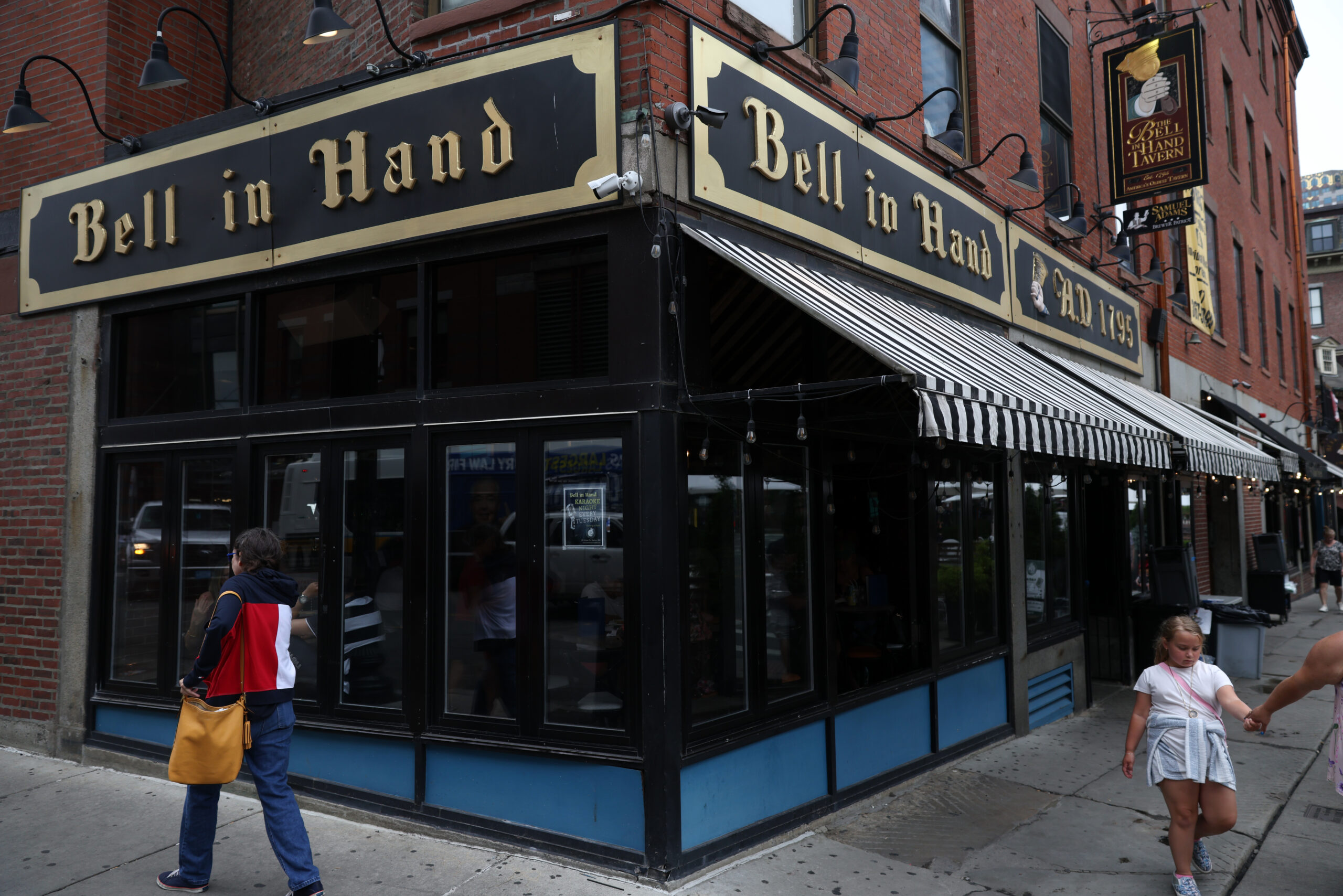
    The Bell in Hand Tavern on Tuesday, July 9, 2025.

    The verdict

    Back in Boston later that day, it was hard not to feel a bit dejected.

    I’d arrived in the city two days earlier with high hopes and an open mind, ready to immerse myself in its history; now, it seemed I’d be leaving with little more than some blisters and moderate-to-severe sun damage.

    On my last afternoon in town, I was wandering glumly through the city’s streets, wondering if the trip had been for naught, when I stumbled upon an old business.

    The Bell In Hand Tavern, a sign out front read. Oldest Tavern in America.

    I walked in and took a seat at the bar.

    Maybe it was the cool breeze flowing in from the open windows. Maybe it was the middle-aged finance guys flirting unsuccessfully with their server at a nearby table.

    But sitting there, in the oldest tavern in America — trying to decide, like so many great patriots before me, between the loaded nachos and the steak-and-cheese spring rolls — I suddenly realized that I’d been looking at things all wrong.

    In the end, history isn’t some gaudy competition. We all play a role in this great nation. Sometimes, as in the case of Philadelphia, that role includes having the Liberty Bell, the U.S. Constitution, the Declaration of Independence, and being the literal birthplace of democracy. And sometimes, as in the case of Boston, it means erecting fake burial monuments and celebrating small rocks of dubious historical significance.

    Does that make one city “better” than the other?

    Yes.

    Obviously.

    But the point is, it all matters.
    For the first time since my arrival, I felt a pang of appreciation for this scrappy New England city, with its cute little history tours and incorrectly placed monuments.

    And though my train back to Philadelphia would soon be departing, I was overcome by the urge to mark this moment in the only way that seemed right.

    “Excuse me,” I called to the bartender, brimming with a newfound sense of patriotism. “I’ll have a Samuel Adams lager.”

    “Unfortunately,” came the reply, “we’re out.”

  • Philly’s queen of Gay Bingo hangs up her heels after 30 years and $5 million raised for AIDS research

    Philly’s queen of Gay Bingo hangs up her heels after 30 years and $5 million raised for AIDS research

    The legendary redheaded drag queen Carlota Ttendant donned a baby-blue Eva Gabor-inspired gown — its plunging neckline revealing tasteful chest hair — and sensible black heels.

    At 65, arthritis stifles her strut in stilettos.

    “Drag is a young girl’s game,” she said.

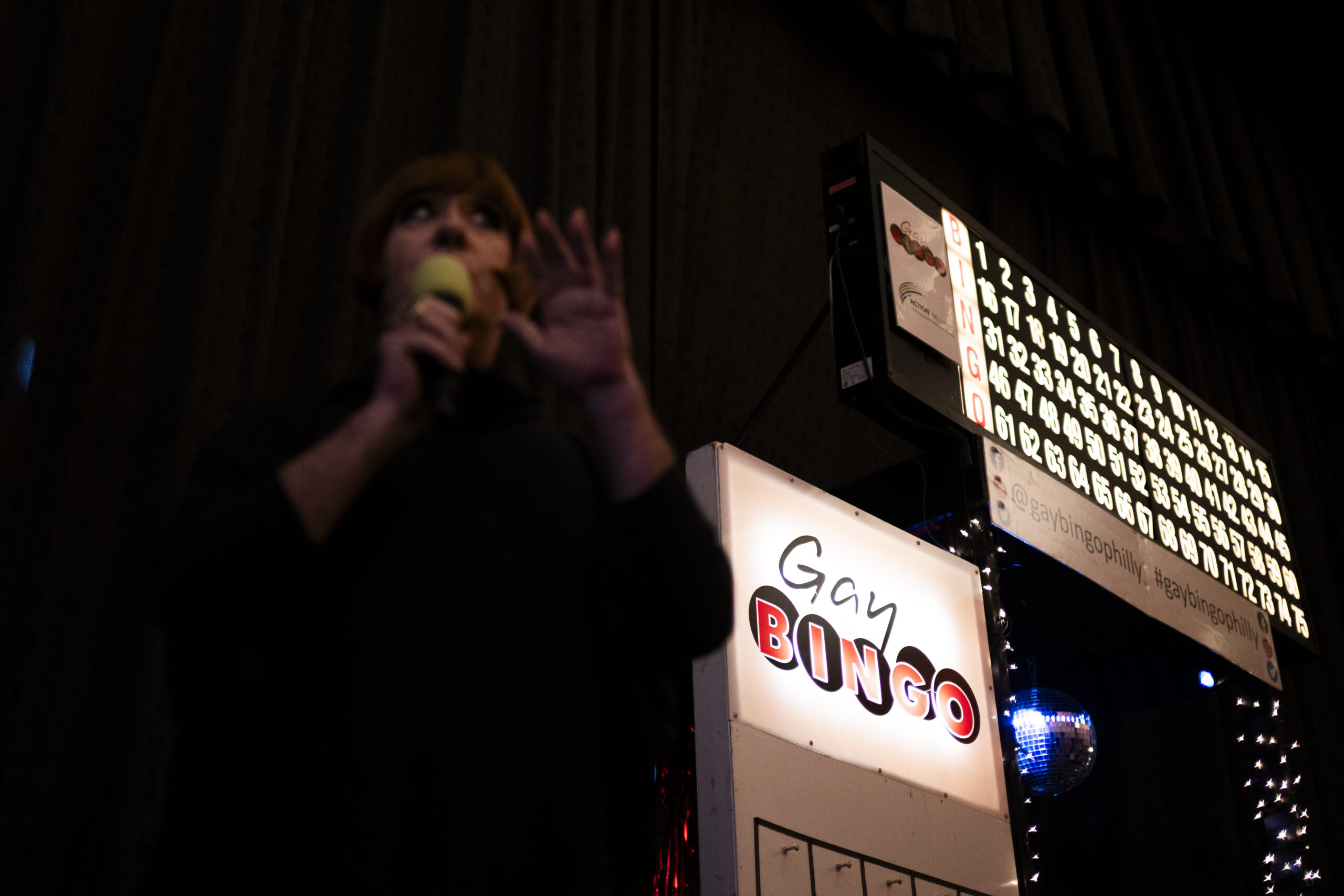
    This was her swan song. At the close of its 30th season this Pride Month, the man behind the makeup, Michael Byrne, hung up his heels and bid adieu to his drag persona and his longtime gig hosting Gay Bingo, the camp, irreverent, slightly profane, and undoubtedly silly monthly HIV/AIDS fundraiser.

    “I know it’s time,” Byrne said. And, “I’m excited to never wear Spanx ever again.”

    Across three decades, Carlota Ttendant has called hundreds of games and elicited endless laughs, all while raising millions for people living with HIV/AIDS across the Delaware Valley. She helped steer a community through crisis, providing a respite to those experiencing immense loss and stigma. Even as medicine has advanced and HIV/AIDS has become manageable, she’s crafted a safe space for queer Philadelphians. For one night each month, she’s been an entertainer and an equalizer, responsible for uniting people — gay and straight, from Haddonfield to Phoenixville — around a common goal.

    And since Carlota came into Byrne’s life, she’s taught him to lead with courage, practice gratitude, and be unabashedly unafraid. He’s gone from being the “worst waiter ever” and selling cosmetics, to being a performer, licensed clinical social worker counseling older LGBTQ+ folks through their own next phases of life, and president of Philly AIDS Thrift’s board.

    “None of it would have been possible without all of you,” Carlota told the 400-person crowd — the biggest turnout in years — at her last Gay Bingo on June 13 in the basement ballroom at Congregation Rodeph Shalom. “In the ’90s there was horror happening, and today there is horror happening.

    “But please, let’s do some laughing,” Carlota said.

    “Let’s play bingo!”

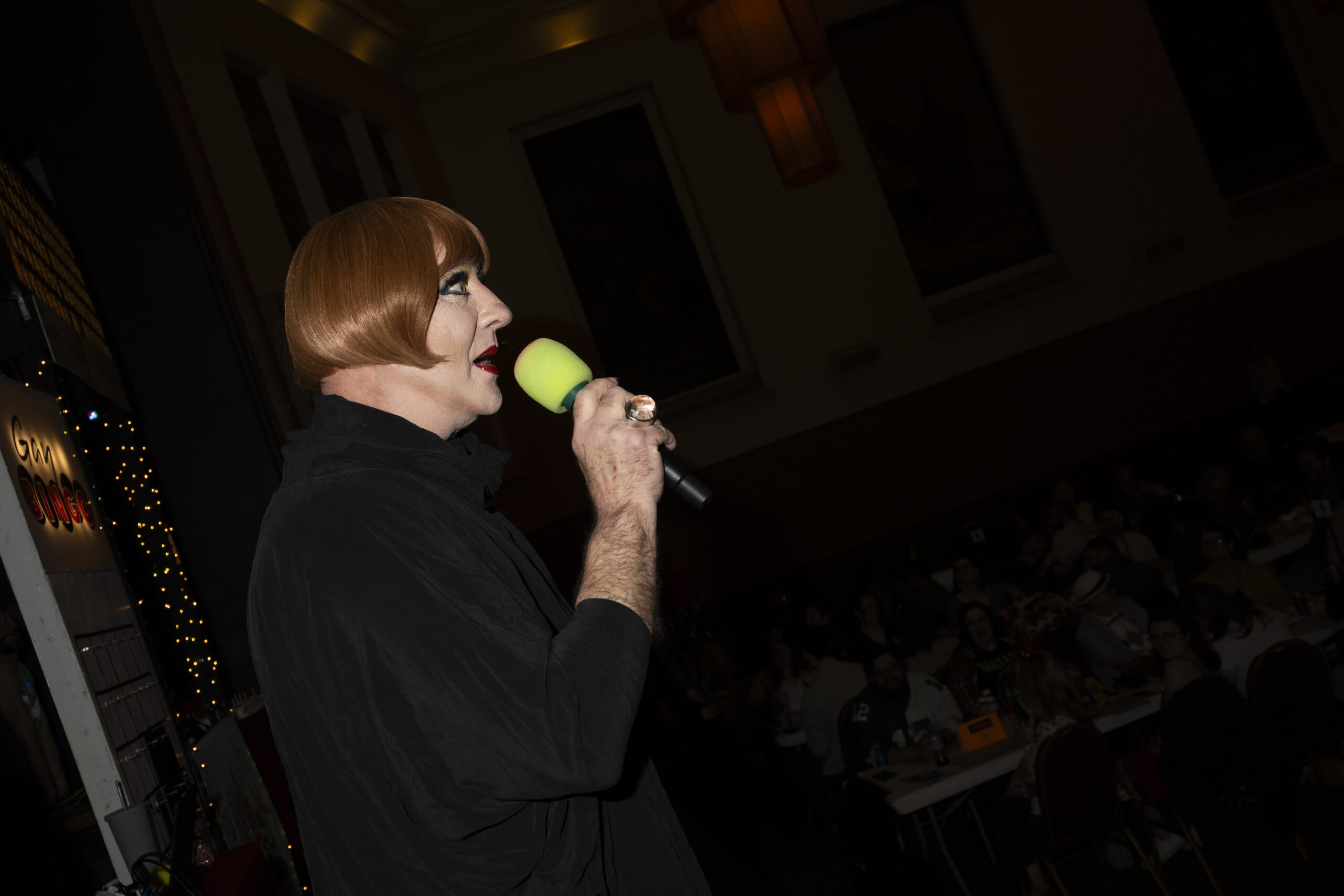
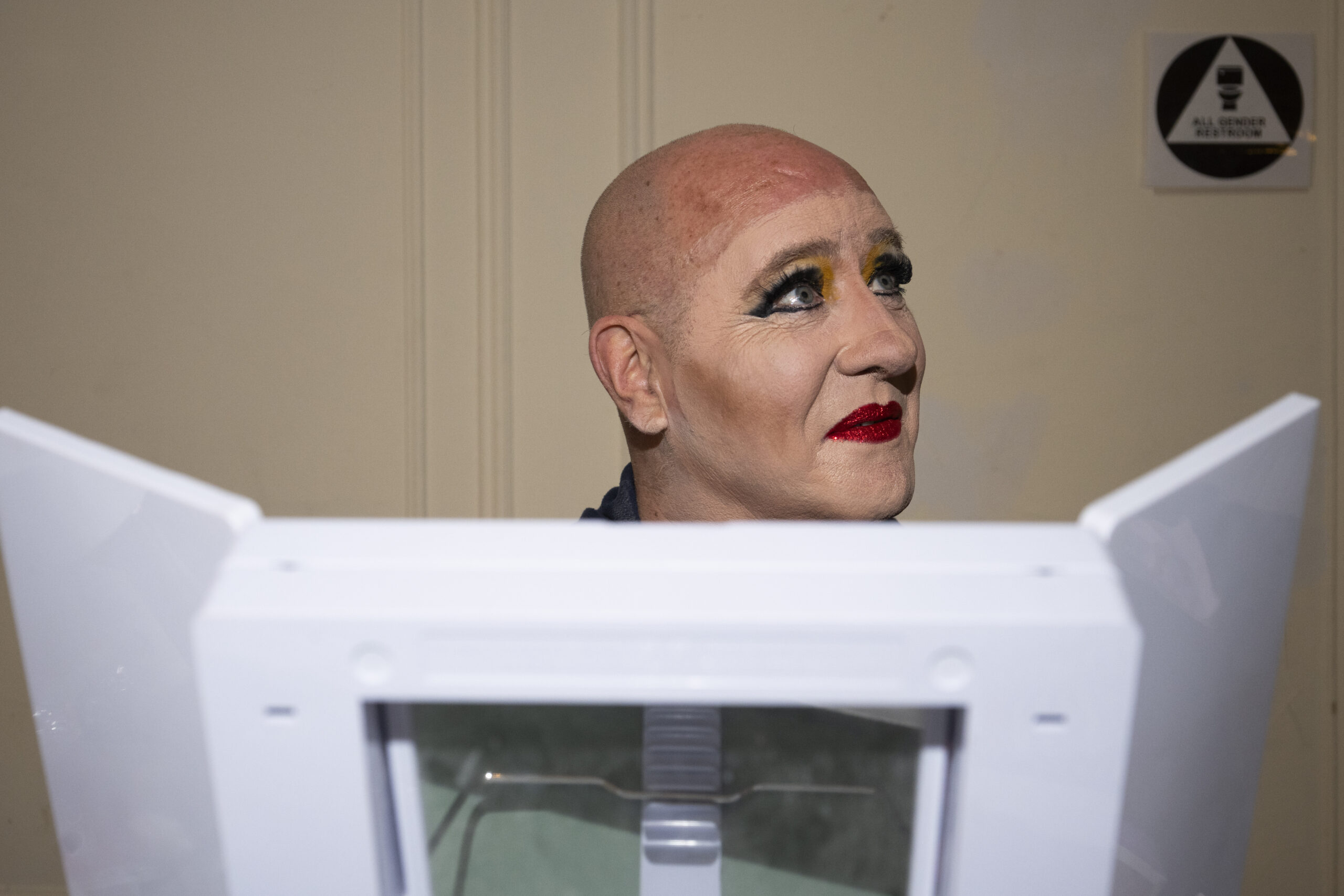
    Michael Byrne, as his drag persona Carlota Ttendant, during Gay Bingo on Saturday, May 9, 2026, at Congregation Rodeph Shalom in Philadelphia.

    Act I

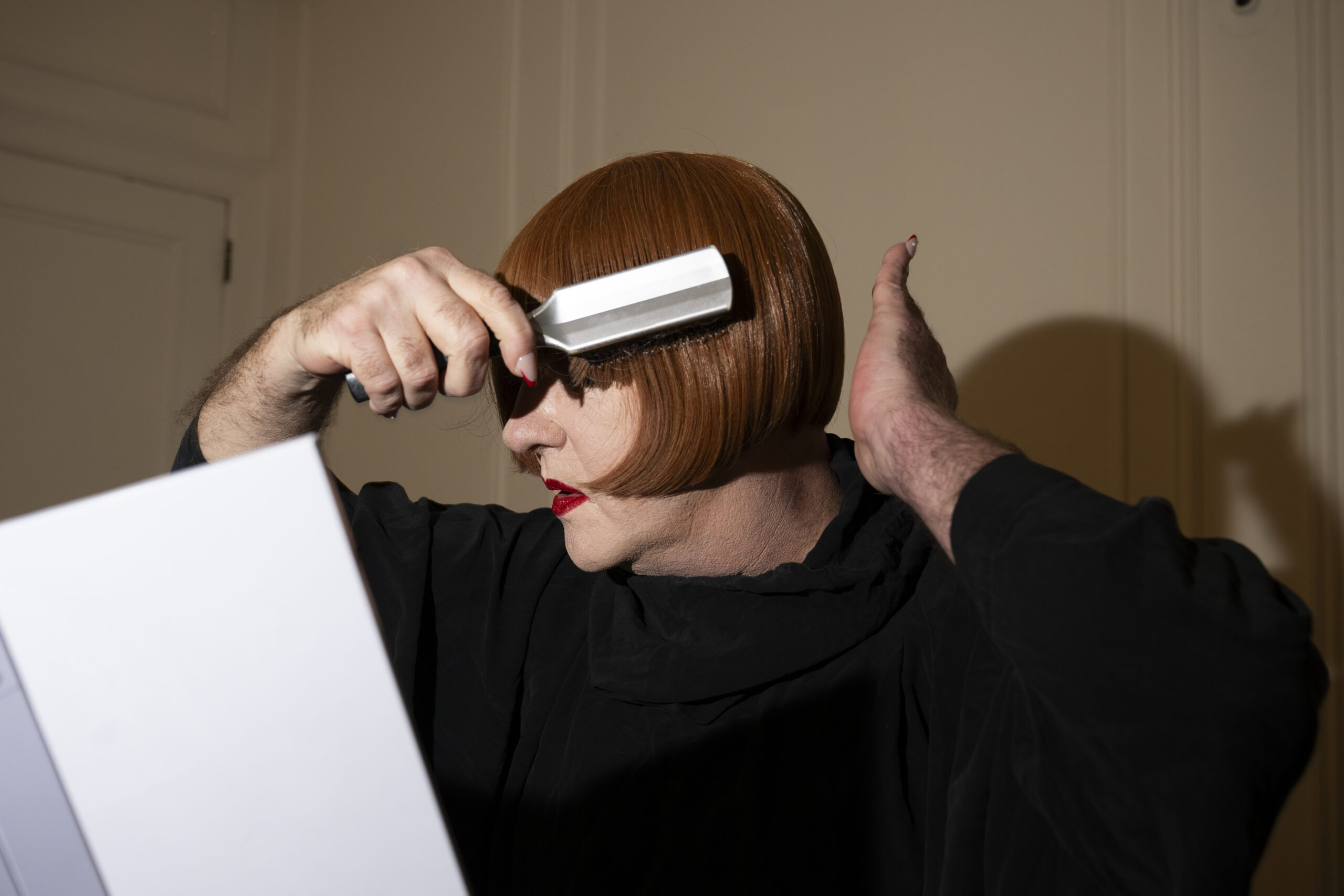
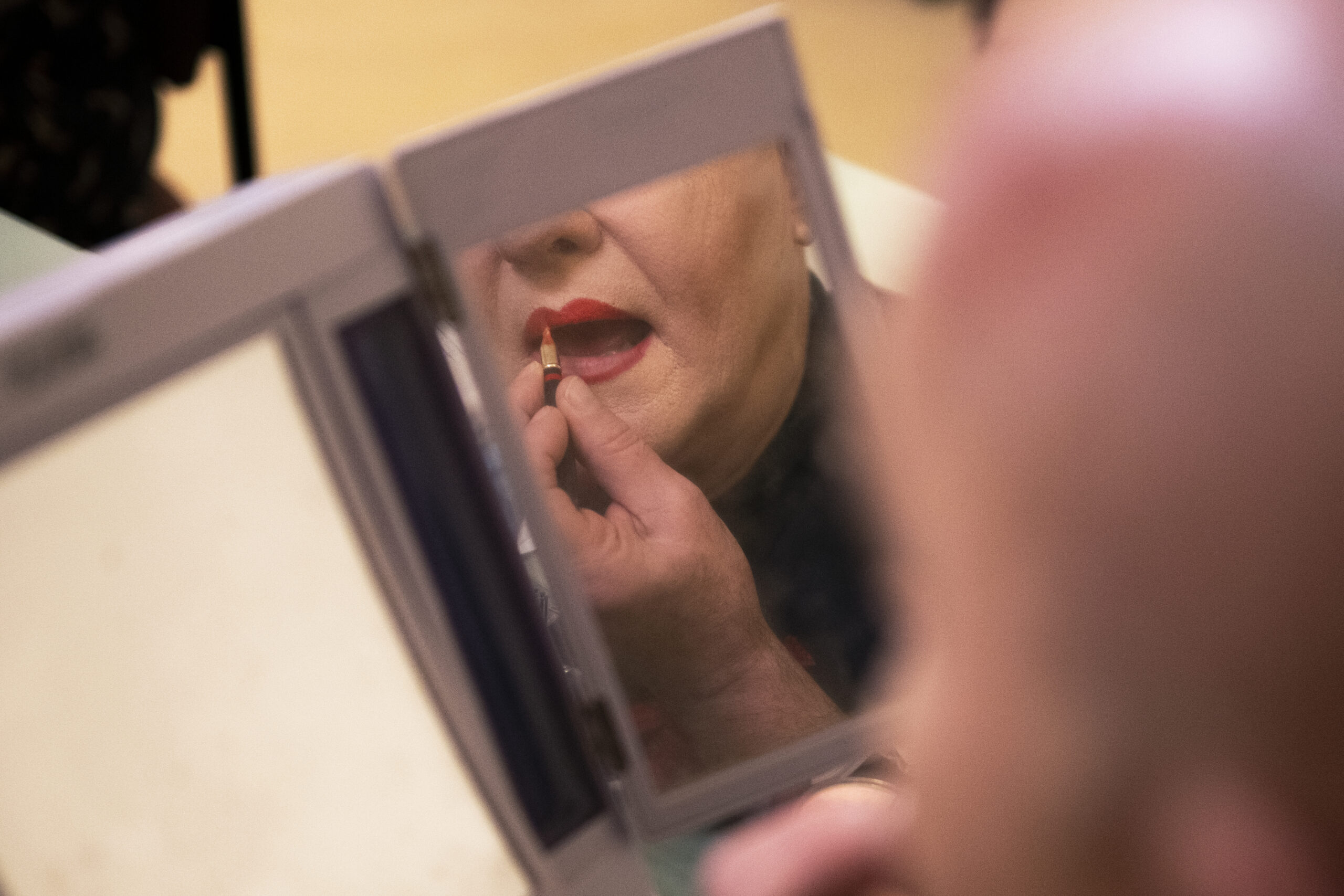
    Like so many Saturdays before, Byrne, on June 13, slathered his face with foundation, carved out his cheeks, deepened his eyes, and painted on his red lip. There was haze — from the dusting of loose setting powder, bronzer, and blush — and musk — from sweat and heat and hairspray — in a Rodeph Shalom classroom, which moonlights as a bridal suite and a boudoir for the Bingo Verifying Divas or BVDs. At 10 minutes till curtain, he futzed with his press-on nails, shimmied into a mod swing dress, straightened the back seams of his tights, and dabbed on some glitter. With each gender-bending step, he transformed into his “twin sister,” Carlota.

    Michael Byrne transforms into his drag persona Carlota Tendant ahead of Gay Bingo on May 9 at Congregation Rodeph Shalom in Philadelphia.

    Like all classy ladies, Carlota’s exact age is lost to time. In the 1990s, Byrne was organizing a fundraiser for Big Mess Theatre, an avant-garde troupe that he helped establish as the spinning axis of Philadelphia’s alternative performance scene, complete with vaudeville acts, an oompah orchestra, and live auction with a striptease routine. Byrne was to host and make his drag debut, and Carlota Ttendant (read as car lot attendant) was conjured up over bourbon and blackjack. (He learned, years later, that there was a ’60s stripper at the famed Trocadero Theatre with the same name.)

    Byrne never aimed to create a perfect, feminine illusion with Carlota. He left his chest unshaven and unstuffed, but short, thrifted dresses showed off his long and feminine legs. Carlota’s makeup was an extension of the exaggerated theater paint Byrne, who has been on stages since he was 10, knew; cheap wigs hid his sideburns. Nothing could mask his deep, raspy, anything-but-ladylike voice.

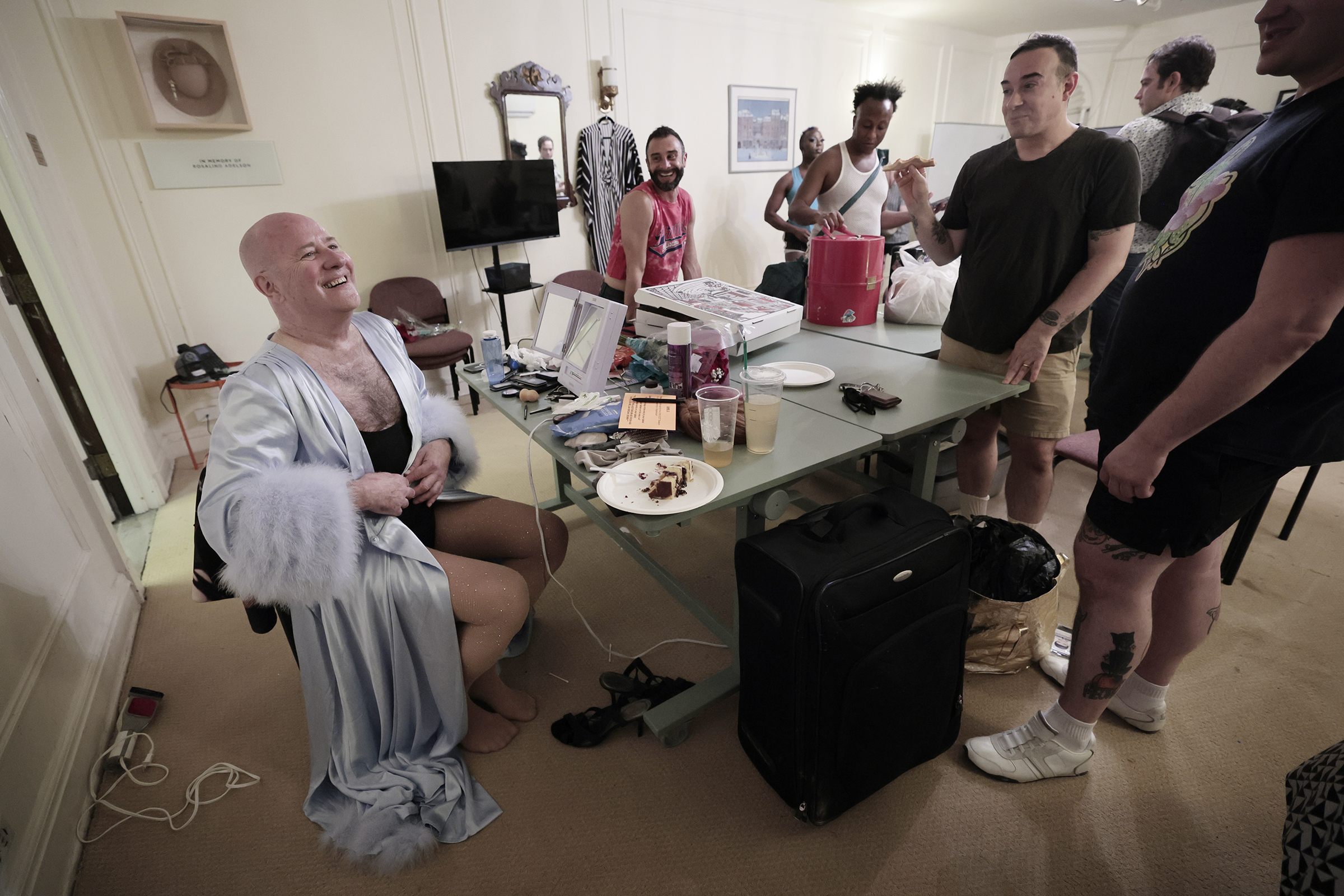
    Carlota Ttendant (Michael Byrne) (at left) laughs with friends and fellow performers after Carlota’s final evening cohosting Gay Bingo at Congregation Rodeph Shalom in Philadelphia on June 13.
    Michael Byrne transforms into his drag persona Carlota Ttendant ahead of Gay Bingo on May 9 at Congregation Rodeph Shalom in Philadelphia.

    Carlota could be bossy and profane but never vulgar; she could poke fun at audiences without being cruel. She became the “drag queen you could bring your grandma to,” Byrne said.

    Around the time Carlota came to be, the number of new AIDS diagnoses and deaths peaked in Philadelphia. In 1992, new AIDS cases surpassed 1,500; in 1994, AIDS deaths topped 900, according to city data.

    (function(){function e(){window.addEventListener(`message`,function(e){if(e.data[`datawrapper-height`]!==void 0){var t=document.querySelectorAll(`iframe`);for(var n in e.data[`datawrapper-height`])for(var r=0,i;i=t[r];r++)if(i.contentWindow===e.source){var a=e.data[`datawrapper-height`][n]+`px`;i.style.height=a}}})}e()})();

    Misinformation about the disease, which strips the body of its natural defenses and leaves it vulnerable to life-threatening infections and ailments, was rampant. People alienated gay men, wrongly fearing HIV/AIDS could be transmitted through a handshake, a hug, or across a dinner table, The Inquirer and Philadelphia Daily News wrote. Diagnostic testing took weeks; what rudimentary treatments were available sometimes made people sicker; and HIV often progressed to AIDS within a few years.

    “It was not unusual to have people dying every month,” said Kevin Burns, who as a case manager with the nonprofit ActionAIDS (now called Action Wellness) connected clients to hospice care. Burns later served as Action Wellness’ executive director.

    The need for resources was rife, and in 1996, Philly’s nonprofit AIDS Fund set out to supplement the money it made from its annual AIDS Walk, according to Sandra Thompson, former chair of its board of directors. An article in City Paper about an irreverent bingo-drag night sweeping Seattle — which, by one report in the Seattle Times, raised $10,000 a night — caught the attention of Mark “Chumley” Singer, then a fledgling events producer, who pitched the idea to the AIDS Fund. (The fund folded in 2024 due to the decrease in new AIDS cases, and turned ownership of Gay Bingo over to Action Wellness.)

    Singer recalled thinking at the time: “I’ve been doing sad, mopey, candlelight vigil fundraisers. … Why can’t we raise money and have fun?”
    Singer and Byrne had never met before the latter was tapped to host Gay Bingo, but their chemistry was kismet.

    “There was never a show where we weren’t having more fun than everybody,” said Singer, who cohosted until the early aughts. Byrne and Singer left Gay Bingo around that time, but Byrne later returned.

    Byrne remembers the magic of those early years of Gay Bingo. He remembers when 600 seats would sell out in 10 minutes, and he remembers doing his glittered red lip from the floor of the Gershman Y’s mirrored dance studio. He remembers two-show Saturdays and how six hours in heels would make him catatonic on Sunday. He remembers riffing with and ribbing Singer and the laughs their off-color jokes and mild profanity elicited. He remembers the constant movement of the bold and bawdy BVDs, on Rollerblades, or the electricity when O-69 was called and hundreds stood up, shaking and shouting with the fervor of their libidos.

    But Byrne also remembers the solemn moments: the steelworker who told a documentarian about watching his bodybuilder son become emaciated; the families who sponsored games on the anniversary of their loved one’s death; the pharmacist who learned all he could about HIV drugs; Byrne’s own friends who were infected.

    “Our community was in crisis,” Byrne said, “while we focused on it, we also focused on being fun and laughing.

    “And we all needed that at that point.”

    Act II

    The “Rainbow Bombshell” Gay Bingo on June 13 doubled as a Pride extravaganza and an homage to all things Carlota. Her first outfit of the night was crafted from a promotional banner from her years hosting the Philadelphia Orchestra’s Halloween Concert. Alongside her, the BVDs dressed as Big Mess-era Carlota, Norma Kamali-inspired Carlota, Phillies Carlota, and fuzzy caftan-wearing Carlota. Attendees, ushers, volunteers, and even the American Sign Language interpreter wore that signature red bob — wigs that Action Wellness bought in bulk. One wore a T-shirt that read, “Dibs on the ginger.”

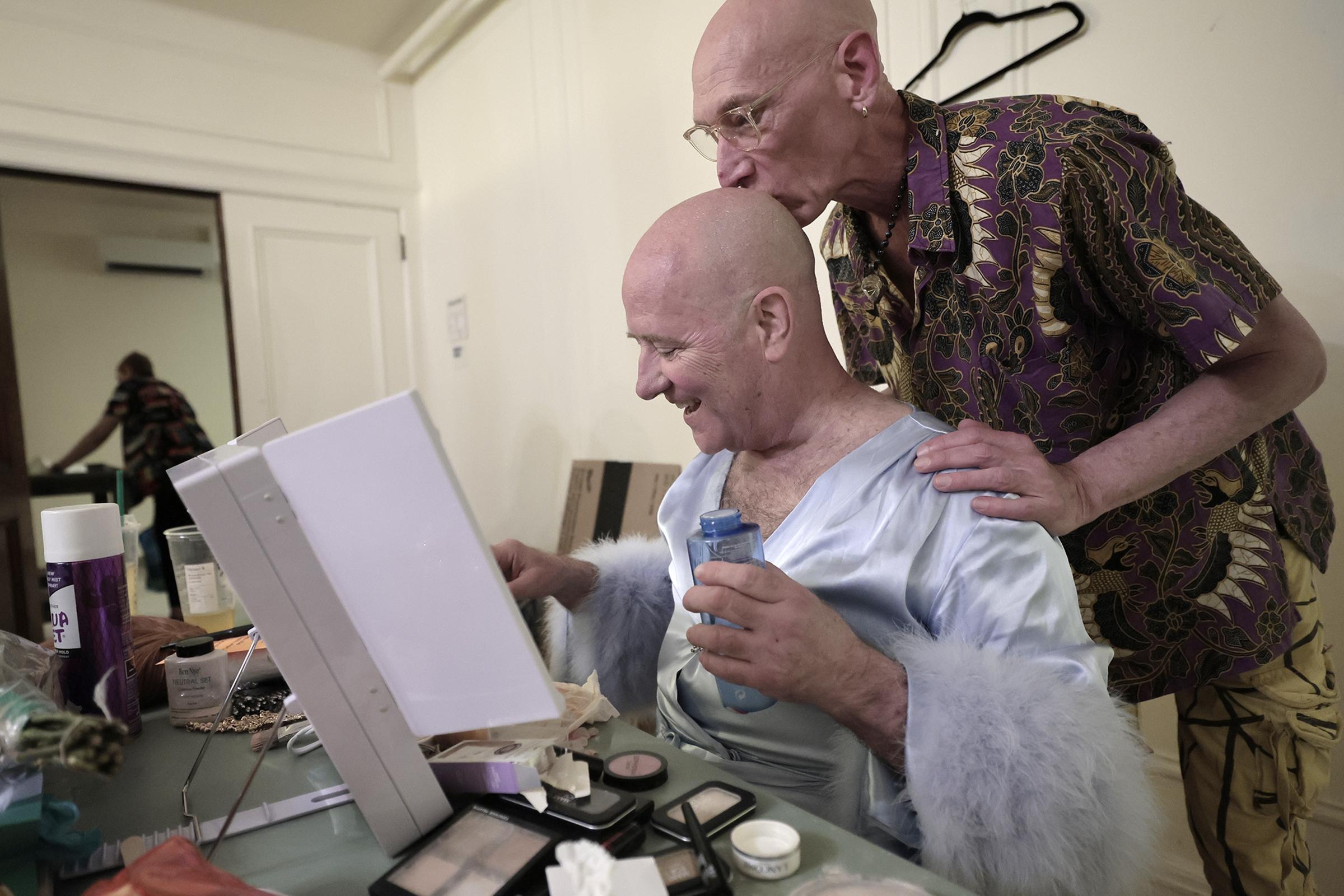
    In the dressing room, Tess Tickle (Paul Struck) kisses Carlota Ttendant (Michael Byrne) on the head after Rainbow Bombshell Gay Bingo at Congregation Rodeph Shalom in Philadelphia on Saturday, June 13, 2026. “I love him” said Struck as he walked out of the dressing room.
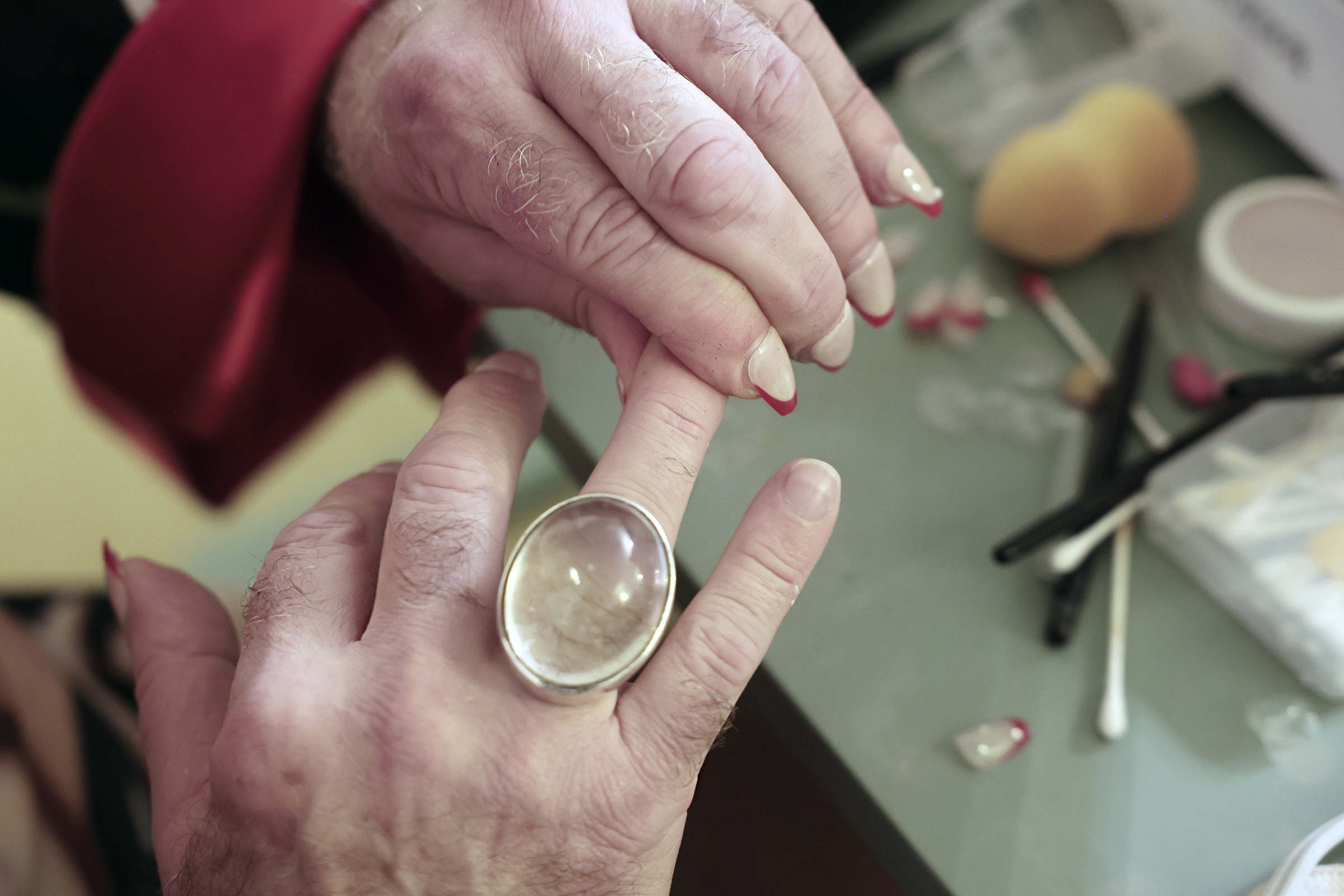
    Carlota Ttendant (Michael Byrne) puts on a favorite crystal ring and fake nails before cohosting Rainbow Bombshell Gay Bingo on June 13.

    “Are we ready to win some money?” Carlota said, hyping up the crowd before the first of 12 rounds of bingo. Councilmember Rue Landau, the Philadelphia City Council’s first openly LGBTQ+ member, called the first game:

    I-28.

    I-26.

    G-52.

    B-14.

    O-63.

    B-3.

    “Bingo!” someone cried out, as the audience let out an audible wave of disappointment, exasperation, and defeat, and the BVDs rushed over to authenticate.

    “Did you just get bingo, girl?” Carlota wisecracked.

    For 30 years, these Gay Bingo players have pledged each month to “keep on playing Gay Bingo until this crisis is over.” And today, HIV/AIDS deaths and new diagnoses have stagnated, according to the most recently available health department data, and drug cocktails have made it so people with HIV can live long, healthy lives and may never pass the disease onto others or have their illness advance to AIDS. Preventative medications, like PrEP, can also dramatically decrease the risk of becoming infected.

    Michael Byrne, as his drag persona Carlota Ttendant, on May 9 at Congregation Rodeph Shalom in Philadelphia.

    But there are still obstacles to ending the epidemic. HIV/AIDS disproportionately affects Black and brown communities and low-income people who experience barriers to healthcare, according to Action Wellness executive director Mary Evelyn Torres. The geographic disparities are also stark: Current drug regimens may be readily available in well-resourced countries, like the United States, but access is scarce in the world’s vulnerable pockets. These problems have only been exacerbated by President Donald Trump’s proposed cuts to domestic and foreign HIV/AIDS programs. The withdrawal of American dollars overseas, United Nations officials warned, could lead to more than 4 million AIDS-related deaths and 6 million more HIV infections by 2029.

    (function(){function e(){window.addEventListener(`message`,function(e){if(e.data[`datawrapper-height`]!==void 0){var t=document.querySelectorAll(`iframe`);for(var n in e.data[`datawrapper-height`])for(var r=0,i;i=t[r];r++)if(i.contentWindow===e.source){var a=e.data[`datawrapper-height`][n]+`px`;i.style.height=a}}})}e()})();

    Meanwhile, the Trump administration and state legislatures are attempting to roll back protections for LGBTQ+ people. In Philadelphia, Pride celebrations this month in the Gayborhood were disrupted after Philadelphia police pushed and confronted revelers using what some have called outsized and aggressive crowd-control tactics, although Police Commissioner Kevin Bethel said his department’s actions had nothing to do with Pride. City Council has since announced it will hold public hearings to examine the police response.

    “We’ve come a long way, but there’s still work to be done,” Torres said, “and that work is being threatened by this administration.”

    As the epidemic has changed, so has Gay Bingo: The money raised — more than $5 million since its inception — now goes toward Action Wellness’ social services and programming. The BVDs ditched their roller skates at the Gershman Y (because of the new, carpeted venue). Tickets cost $50-$60, compared to $10-$12 in May 1996, and these days, attendance averages between 150 and 200 a month.

    Drag has evolved, too. Spending centuries on the periphery as proto-punk-beatniks and after-midnight acts, queens disrupted and challenged the mainstream with wit and wonder. Then, the exploding popularity of RuPaul’s Drag Race, a drag reality-TV competition, seismically changed the culture, snubbing scrappiness for silicon and kitsch for couture. The show ushered drag into the zeitgeist: Its lingo became commonplace and its contestants turned into social media stars, with businesses, makeup brands, books, and podcasts, as the art form continues to face political bans and threats nationwide.

    The show “has taken everything to a whole other planet,” Byrne said, “and that’s amazing and that’s really great.

    “That’s also not what I do.”

    Carlota was never concerned with “affecting female mannerisms” or “trying to be this woman or this drag queen,” Singer said. To Byrne, she’s come to embody the fiercest, most unafraid, and righteous versions of himself. But “Michael was never far from Carlota,” Singer said.

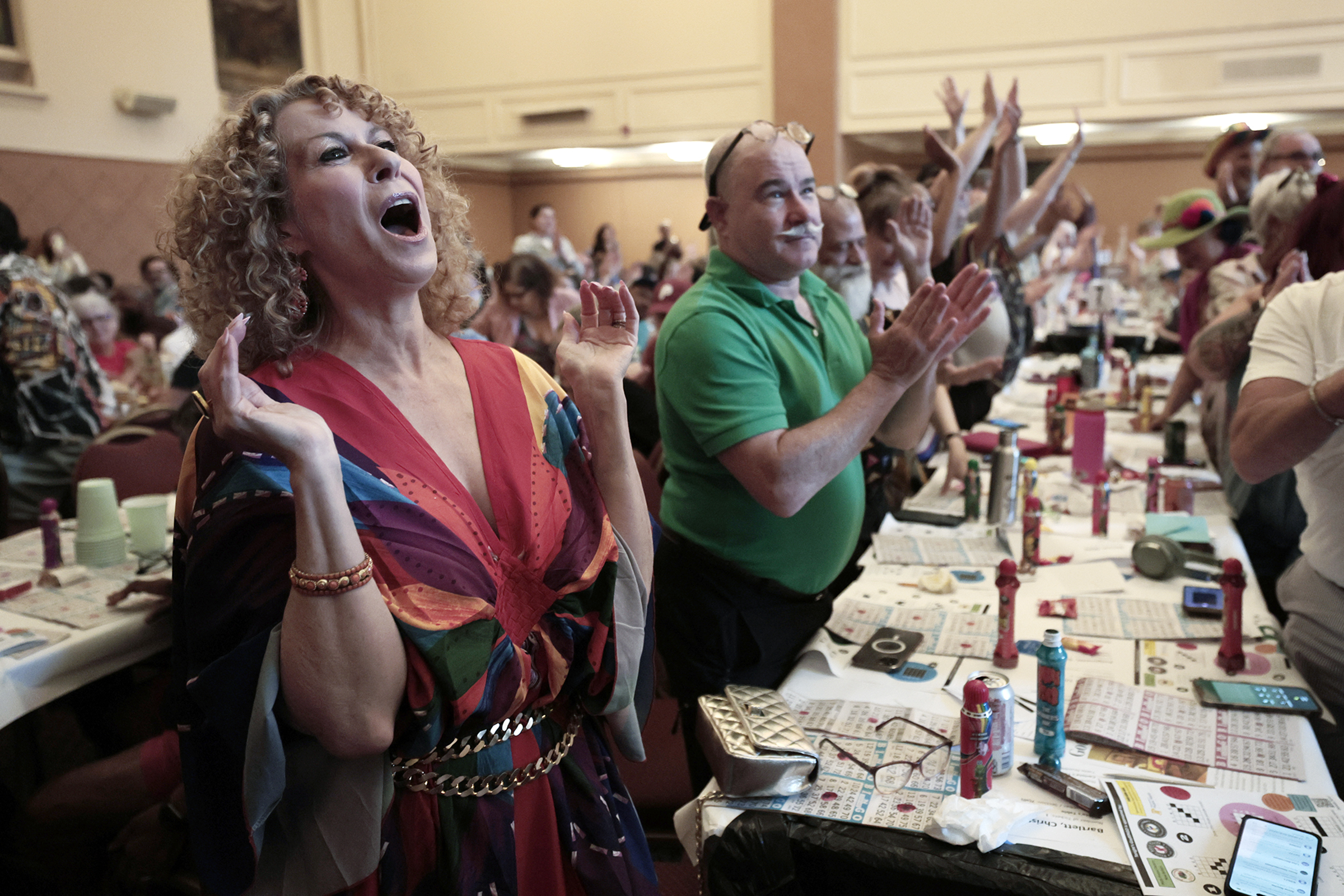
    Janie Lopez of Philadelphia cheers for her friend Carlota Ttendant during Gay Bingo at Congregation Rodeph Shalom.

    To those who know Byrne, Carlota’s come to represent someone purer and more singular, a testament to what joyful resistance and defiant resilience can achieve amid tragedy. Her ingenuity and authenticity have made her synonymous with Gay Bingo, according to Action Wellness event planner and cohost Tim Johnson (otherwise known as Stella D’Oro); her playfulness is what’s engaging, Burns said; the safe space she’s cultivated for the queer community is what keeps people coming back season after season, said regulars Cat Johnson, 47, and Katie Dickerson, 38, of Roxborough.

    “It’s going to be really different without Carlota,” Johnson said. “No one’s going to fill her shoes, but I think that the vibe and the energy is going to live on.”

    “It’s a lot easier to raise money when everyone is having fun,” said Amber Schlesman, 38, of Point Breeze, who’s been coming to Gay Bingo since its Gershman Y days. “And for the shoes, I’m guessing it’s a size 12.”

    All those shoes will be donated to Philly AIDS Thrift soon enough, Byrne said.

    Epilogue

    Byrne’s voice cracked as he thought of the people who made Carlota’s run possible: the AIDS Fund organizers, Singer, the original cast of BVDs, the volunteers, those who came back monthly, the victims, their families. Many sent her off June 13 with a trove of well wishes, notes that read, “thanks for the memories,” and “so proud of all you’ve done.” They told her, “I love you,” and “hang up those high heels, baby.”

    At the end of the night, Byrne’s best friend gifted him a throw pillow.

    “Don’t be a lady,” it said. “Be a legend.”

    Michael Byrne transforms into his drag persona Carlota Ttendant ahead of Gay Bingo on Saturday, May 9, 2026, at Congregation Rodeph Shalom in Philadelphia.
  • NHL draft: Best remaining fits for the Flyers entering Day 2

    NHL draft: Best remaining fits for the Flyers entering Day 2

    ATLANTIC CITY — Now that the first round is over, it’s time to turn the page to Rounds 2-7.

    After selecting towering defenseman Maksim Sokolovskii in Round 1, the Flyers have picks Nos. 53 and 62 in the second round, 120 in the fourth, 136 in the fifth, and 213 in the seventh.

    Here are 14 names to keep an eye on for Day 2 (which begins at 11 a.m. on NHL Network and ESPN+) in alphabetical order.

    Niklas Aaram-Olsen’s teammate with Örebro HK U20, Alexander Command, said he is “hard-working” and “enjoyed playing with him, [a] talented guy.”

    Niklas Aaram-Olsen, LW, Örebro (Sweden)

    A power forward, the Norwegian just put up 20 goals and 40 points in 29 regular-season games in Sweden’s junior league before adding another eight points in 13 playoff games. He spent some time in the SHL, Sweden’s top men’s league, this season, and put up points on the international stage. He’s not a playmaker, but according to Karl Kling, his coach with the junior team, he’s explosive and has a great shot; however, he has to play more to his strengths, work on driving to the net, and be more direct in his game. He is a boom-or-bust kind of player.

    Ryder Cali, C, North Bay (Ontario Hockey League)

    Off to Providence College in the fall, his coach, Nate Leaman, told The Inquirer he is “quick out of the gate, good hockey IQ, really competitive, good shot. He does a lot of things well.” Cali is a 200-foot center — says “it’s fun” to take care of his own end — has a great motor, says it’s satisfying to steal pucks, and won’t be 18 until early September.

    Adam Goljer, RHD, Trenčín (Slovakia)

    Named the tournament’s best defender at the U18s this spring, Slovakia’s captain recently turned 18. He’s a bit of a project, but has already proven he can be a workhorse by averaging more than 20 minutes for Slovakia on the top pair, including ice time on the power play and penalty kill.

    Ben Macbeath, LHD, Calgary (Western Hockey League)

    This past season, Macbeath notched 51 points (seven goals, 44 assists) in 67 regular-season games and added another two assists in seven playoff games. He killed penalties, got power-play time, and described himself as “a two-way defenseman. I think I got good feet, which allow me to impact both sides of the game.” According to Elite Prospects, he needs to work on his reads and killing plays quicker. He can work on building his aggressiveness and urgency at the University of Denver in the fall.

    Pierce Mbuyi, LW, Owen Sound (OHL)

    The Penn State 2027 commit is a skilled winger who notched 75 points in 68 games this past season as an OHL rookie. The son of a mom from Prince Edward Island and a dad from Russia, he found his love of the game from his brother. “I think something I pride myself on is how I see the ice, my vision,” he told The Inquirer. “I think I make my teammates around me better. Another thing I pride myself on is my compete, my work ethic.”

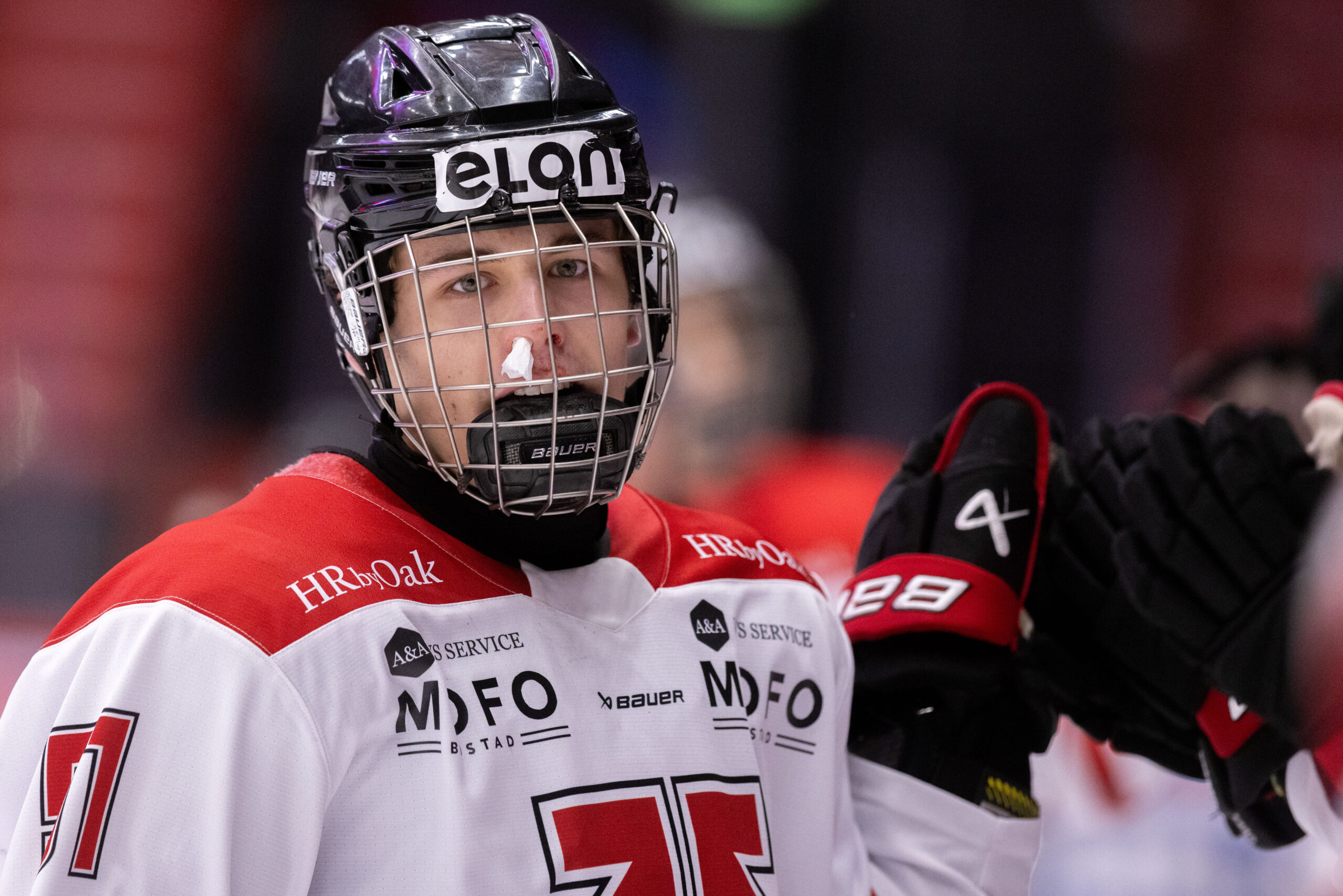
    Charlie Morrison (27) lays a booming hit during a game against the Charlottetown Islanders.
    Charlie Morrison, LHD, Québec (Quebec Maritimes Junior Hockey League)

    Morrison was our second-round pick for the Flyers in Friday’s final mock draft. His GM, Simon Gagné, has the scouting report: “A big, strong defenseman. Likes to hit. Likes to [catch] guys [with their] head down, middle of the ice type of defenseman that you don’t see too often in the league anymore. They’re seeing, sure, that Charlie needs to improve — he’s only played two years in our league — but he’s getting better and stronger, and that’s definitely a guy that could be a good pick for the Flyers.”

    Brooks Rogowski, C, Oshawa (OHL)

    Although he initially was a baseball player — his father, Casey, was drafted by the Chicago White Sox and reached triple A, and the Los Angeles Dodgers selected his uncle Ryan — Rogowski is a 6-7, 236-pound center who is committed to Michigan State. Nick Fohr, who coached him at the U.S. National Team Development Program, describes him as a big, dependable centerman with a strong work ethic who has a big personality and was a vocal leader on the bench.

    Filip Růžička, G, Brandon (WHL)

    A 6-8 behemoth in net who spent this season playing for the same team the Flyers snagged Carson Bjarnason from in 2023, the Czechia native tied for the seventh-best save percentage (.906) in the WHL in the regular season. In the playoffs, he started all four games, upping his save percentage to .936 while dropping his GAA to 2.47. Wheat Kings coach and former Flyer Marty Murray said in a text with The Inquirer, “He made tremendous strides throughout the season. I think he was really raw when he arrived, and worked hard on his game with our goalie coach, Tyler Plante. I think there is still room to grow, but I believe his ceiling is very high.”

    Egor Shilov, C, Victoriaville (QMJHL)

    A Penn State commit, the Russian spent the past year playing in the QMJHL for Victoriaville, where he centered the top line. He won 54.8% of his faceoffs and put up 82 points (31 on the power play) in 63 games on the way to being named the league’s offensive rookie of the year despite not turning 18 until the end of April.

    Alexandre Taillefer had 17 points in a 28-game injury-shortened season.

    Alexandre Taillefer, LHD, Québec (QMJHL)

    Another guy that Gagné is pushing for the Flyers, here’s a scouting report from Flyers prospect and teammate Nathan Quinn on the UMass 2027 commit: “I think he’s a really, really good offensive defenseman. He has a lot of skills with the puck. Obviously, it was a hard season for him — he had a bad injury — [and] he’s a really good kid too, but his strength is with the puck. He’s a really good guy on the power play. His skill set is pretty impressive.”

    Tobias Trejbal, G, Youngstown (USHL)

    “If we’re in a position to draft a top-end goalie, we’ll look at that,” Danny Brière said Friday. Many expect the Czechia native, who is off to UMass in September, to be the first goalie off the board. A right catch goalie, he went 30-9-3 with a .916 save percentage for the Phantoms (apropos, no?). “Nothing that rattles him, very athletic, tracks pucks really well. His hands are really good, he’s never out of a save, he’s got like the next puck mentality, like if he gets scored on, he’s stopping the next puck,” Youngstown coach Ryan Ward said.

    Xavier Villeneuve, LHD, Blainville-Boisbriand (QMJHL)

    Size is probably what cost Villeneuve a first-round slot; that and the 5-10¾, 164-pound blueliner needs to work on his defense and gain strength to accommodate his small stature. He’s dynamic — and that’s the word assistant GM Brent Flahr said a small guy would need to be. “Offensively, he’s seeing things, and he’s able to create things that not too many players are able to do,” his coach with the Armada, Alexandre Jacques, told The Inquirer. “At the offensive blue line, he is really, really, really deceptive, so he’s able to create something out of nothing with his edge [work]. Skating sideways is probably one of his greatest attributes, and he’s good at using [his edge work] to create shooting lanes or to create offensive situations.” Villeneuve is following in the footsteps of his comparable, Lane Hutson, and will play for Boston University this season.

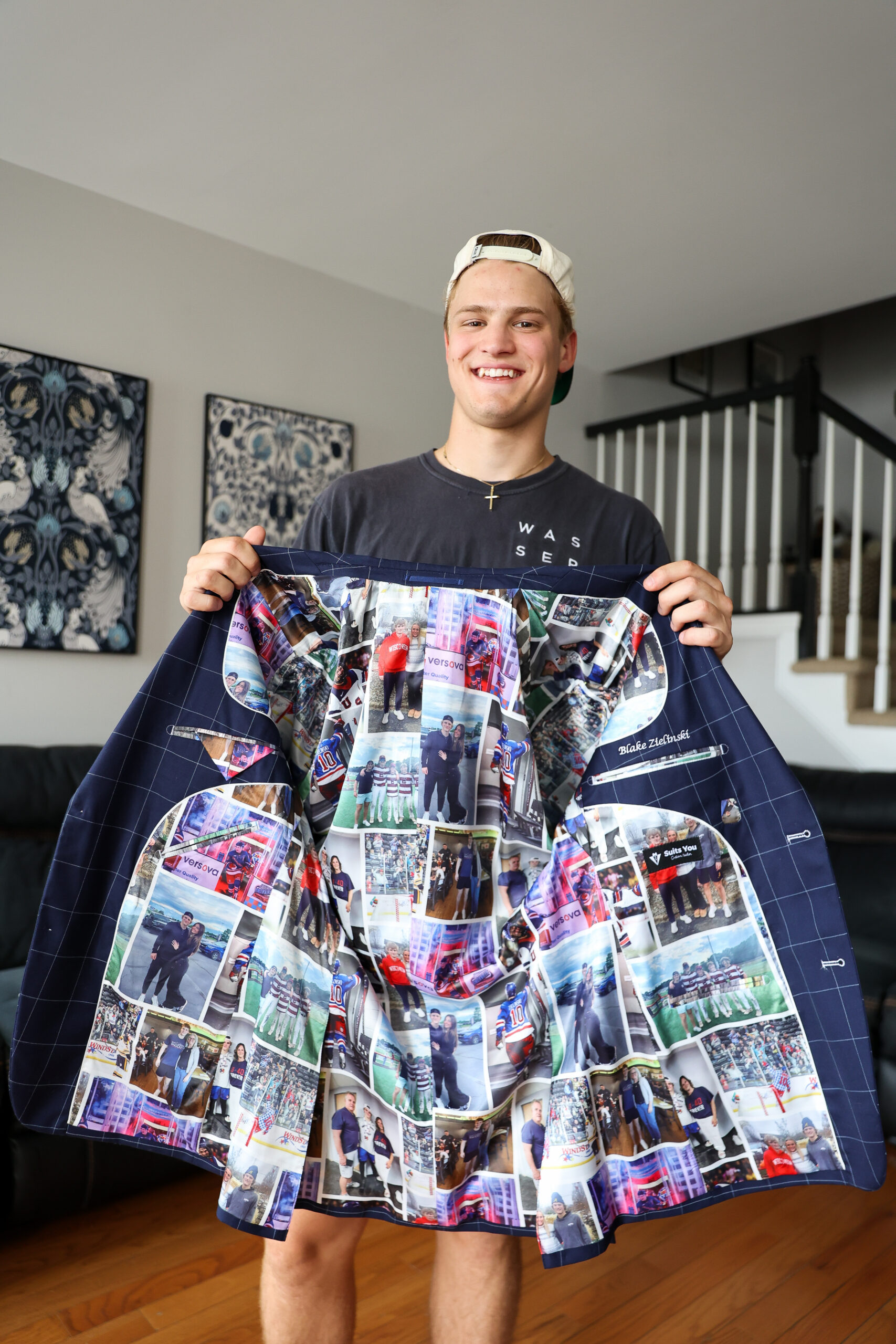
    Blake Zielinski holds his NHL draft day jacket at his family home on Monday, June 22, 2026, in Berlin. Zielinski’s jacket features different moments throughout his hockey career.

    Blake Zielinski, F, Des Moines Buccaneers (USHL)

    There is mutual interest here, but it all depends on whether he is there. Zielinski grew up in Berlin, Camden County, and played for Flyers Elite before heading to North Jersey to suit up for the Avalanche. As he said, he knows what it takes to be a Flyer, and at the combine, Brière asked him if it felt like home. His name started rising after his play at the Hlinka Gretzky Cup, and the kid who loves to score will head to Providence in the fall, with Leaman calling him “really crafty around the net.”

    Cole Zurawski, RW, Owen Sound (OHL)

    A later-round option, there are two reasons he is on this list. One is that he is off to Notre Dame, where highly regarded Flyers prospect Cole Knuble just turned pro from. And two, he finished in the top 25 of 13 fitness tests at the scouting combine. There are only 15 tests. It was noted during his draft year how well Jett Luchanko did in the testing, and he only finished in the top 25 in seven tests.
  • The hidden link between mummers and Pennsylvania’s most notorious labor rebels

    The hidden link between mummers and Pennsylvania’s most notorious labor rebels

    The biggest mass execution in Pennsylvania’s long history took place 149 years ago this week.

    Ten Irish Catholics from the hard coal region went to the gallows, convicted of murder in a long-running labor war against the all-powerful coal companies. Another 10 would be hanged over the next few years, for a total of 20. Their trials made a mockery of justice, with a coal company president as prosecutor, a Pinkerton detective hired by the company as the star witness, and Irish Catholics excluded from the jury.

    The hanged men were called Molly Maguires, a name straight out of Ireland, where a secret society using that moniker battled the landlords on behalf of starving peasants during the horror of the 1840s potato famine. These Mollies disguised themselves in women’s clothing, or straw clothing, or whiteface or blackface. And they timed their killings around major holidays.

    That’s because the Molly Maguires were merely the flip side of a group quite familiar to Philadelphians — the mummers. The connection explains many of the mysteries about the Mollies — where the name came from, why the Mollies wore odd disguises, why they did their killing around high points of the calendar, and why they were revived in Pennsylvania amid resistance to the Civil War draft.

    In Ireland, mummers were more actors than musicians. They visited every home in a district around New Year’s and collected money by putting on a skit that always featured a killing. The money paid for a party for the whole community. Groups like the mummers performed this kind of trick or treat around other big holidays — St. Brigid’s Day on Feb. 1, Easter, the summer solstice and Halloween.

    During the potato famine, small bands of men — dressed in the women’s clothes or the straw of the mummers — began going from house to house, collecting money for the hungry. But these men weren’t mummers. They were Molly Maguires. And when they didn’t get what they wanted, or when landlords evicted tenant farmers, the mock killing of the mummers became the very real violence of the Molly Maguires.

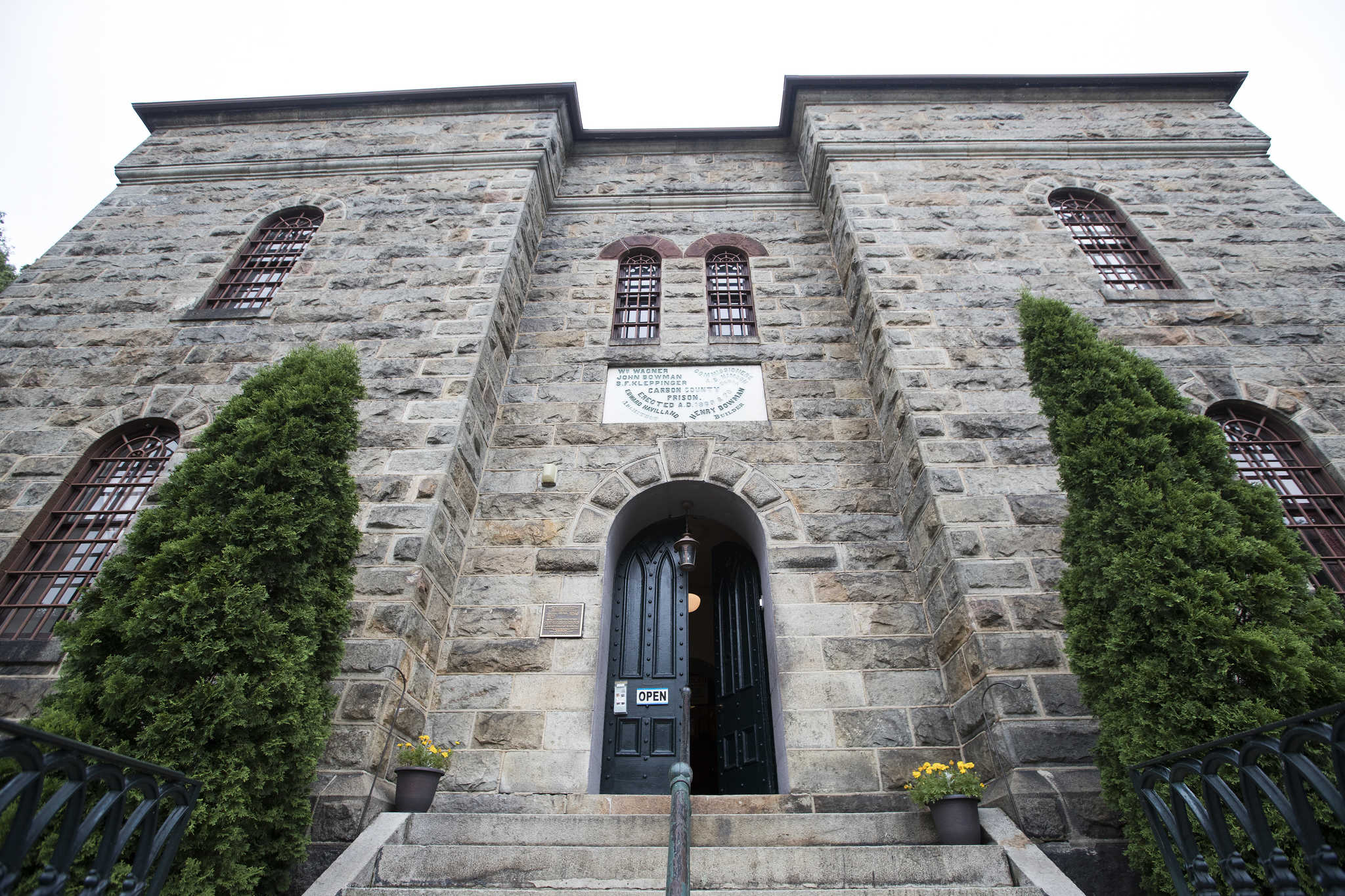
    The entrance to the former Carbon County Jail in Jim Thorpe, Pa., where seven Irish coal miners were hanged in 1877.

    The killings often took place around the days that the mummers celebrated, to signal that the Mollies were acting on behalf of the community. The three most celebrated Molly murders in Ireland came within a day or two of St. Brigid’s Day, the summer solstice, and Halloween.

    The name itself sounds like something from the mummers’ play. A female character often had names that began with the letter M — Molly Masket or Mary Ann McMonagle. And, curiously, Molly Maguire wasn’t always Molly — a number of death threats were signed “Mary Ann Maguire.” The similarity between “Mary Ann McMonagle” and “Mary Anne Maguire” underlined the links between the mummers and the Mollies.

    Famine emigration led many from the Molly Maguire heartland to the booming anthracite industry in Northeastern Pennsylvania. It was one of the few rural places in the United States where famine immigrants settled in such concentrated numbers that the folkways of the Irish countryside were transplanted wholesale, including mummery — and its associated pattern of violence. In 1848, a man acquitted of killing an Irishman was murdered in Schuylkill County, on Dec. 30. The killer, an Irishman, had whitened his face like a mime or a mummer.

    Mummery had long been established in Philadelphia, but a peculiar offshoot, called the fantasticals, emerged in Northern Liberties before the Civil War, as a protest against mandatory militia service. At the time, able-bodied men between ages 21 and 45 were regularly required to muster for militia drill. This meant a day without pay — and the fantasticals protested by making a mockery of it.

    They showed up for drill in ridiculous costumes, with giant wooden swords, or in some cases the leg of a deer. This mockery widened from muster day to mummers parades around Christmas and the Fourth of July and Halloween, and spread beyond Philadelphia.

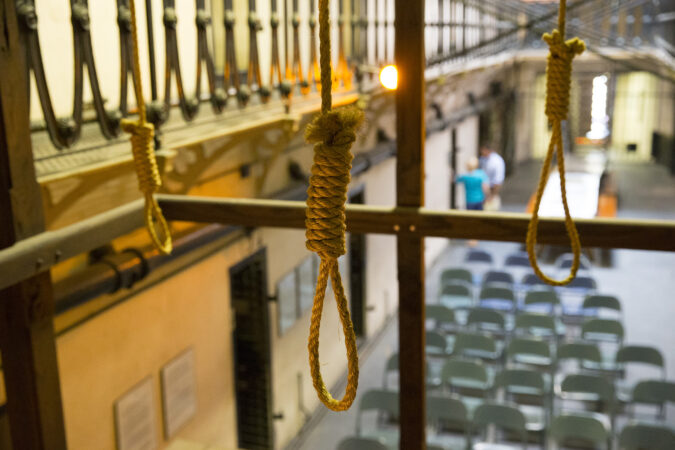
    Before one of the Molly Maguires was hanged, he put his hand on the dirty floor of his cell in the former Carbon County Jail and then placed it firmly on the wall proclaiming, “This handprint will remain as proof of my innocence.”

    In 1855, the Pottsville militia was called out after a mine boss was beaten in Branchdale, Schuylkill County. Though just four men attacked him, the militia rounded up 28 Irish Catholics. Adding insult to arrest, the militia then played a Protestant anthem from Ulster, “The Boyne Water,” which celebrated the defeat of Catholic Ireland.

    It just so happened that the fantasticals made their first appearance in Schuylkill County that very year, marching in Pottsville on Christmas Day. The whole performance mocked the Pottsville militia and its music. The captain wielded a giant wooden sword, the rest were dressed in “every imaginable burlesque costume,” and the band was drunk — and played that way. In 1857, when the militia was used to break a strike by largely Irish mine workers in Cass Township, the fantasticals appeared in Schuylkill Haven on the Fourth of July and in Cressona on Dec. 26.

    A few short years after those anti-militia mummers parades, opposition to compulsory militia service in the Civil War led to the revival of the Molly Maguires. The man who administered the 1862 militia draft in Schuylkill County was a nativist Republican who saw conscription as a way to sweep large numbers of Irish Catholic Democrats into the maw of a bloody war. He set unfairly high conscription quotas for heavily Irish Cass Township, then urged that the draftees be shipped out before a crucial election.

    A cell in the former Carbon County Jail in Jim Thorpe, Pa.

    In response, Irish mine workers went out on strike, marching under arms with a fife and drum from mine to mine. Two months later, they went out on strike again, calling themselves Molly Maguires. When a government crackdown appeared imminent, the Mollies targeted residents who had shown government sympathies by volunteering for the military.

    On Jan. 2, 1863, five men fatally shot an Irish mine worker home wounded from the Union Army, then cheered for the Confederate president. Over the next nine days, two former militia men were attacked in Cass Township. A few days after Halloween, gunmen with false whiskers and blackened faces killed a mine owner who had been helping to enforce conscription.

    Note the progression. In the last half of the 1850s, some Schuylkill County residents were making fun of the militia, but by 1862, they were on strike to oppose the militia draft, and as 1862 edged into 1863, they were shooting former militia members around New Year’s. As in Ireland, what started as mummer revelry ended as Molly Maguire rebellion.

    The Molly troubles raged for another 15 years, ending only when a Pinkerton infiltrated the organization. The ensuing executions showed that the Mollies were no match for the coal companies and the state of Pennsylvania when it came to dealing death at high points of the calendar. The biggest killing — the hanging of 10 men on June 21, 1877 — came on the summer solstice.

    Mark Bulik is the author of “The Sons of Molly Maguire: The Irish Roots of America’s First Labor War.” A retired senior editor for The New York Times, he grew up in Ridley Park, Delaware County.

  • George Washington on a laptop

    George Washington on a laptop

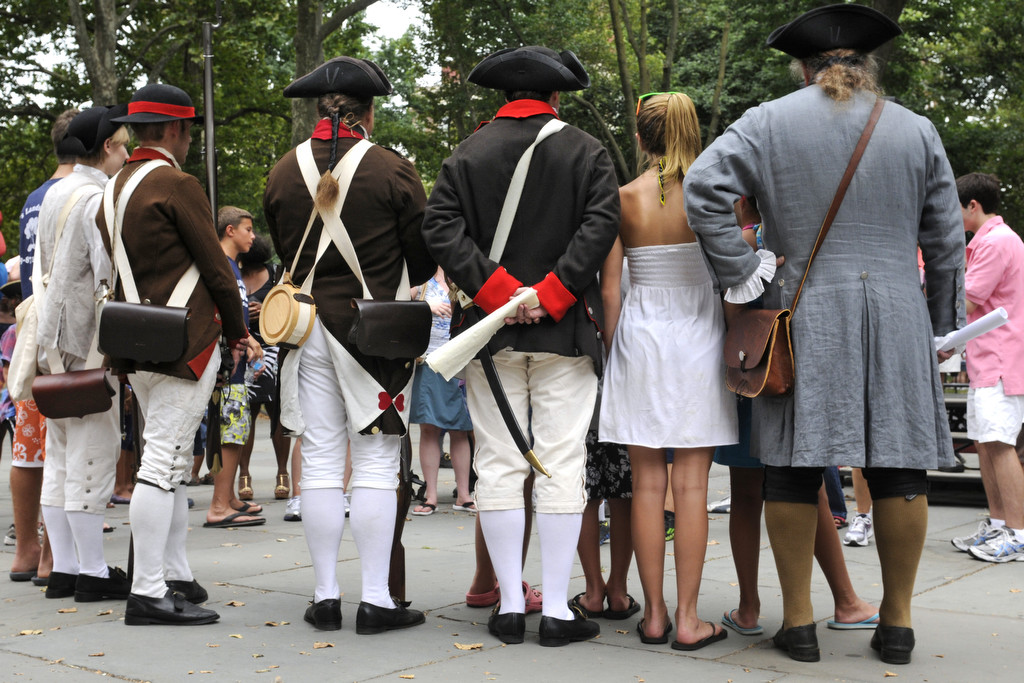
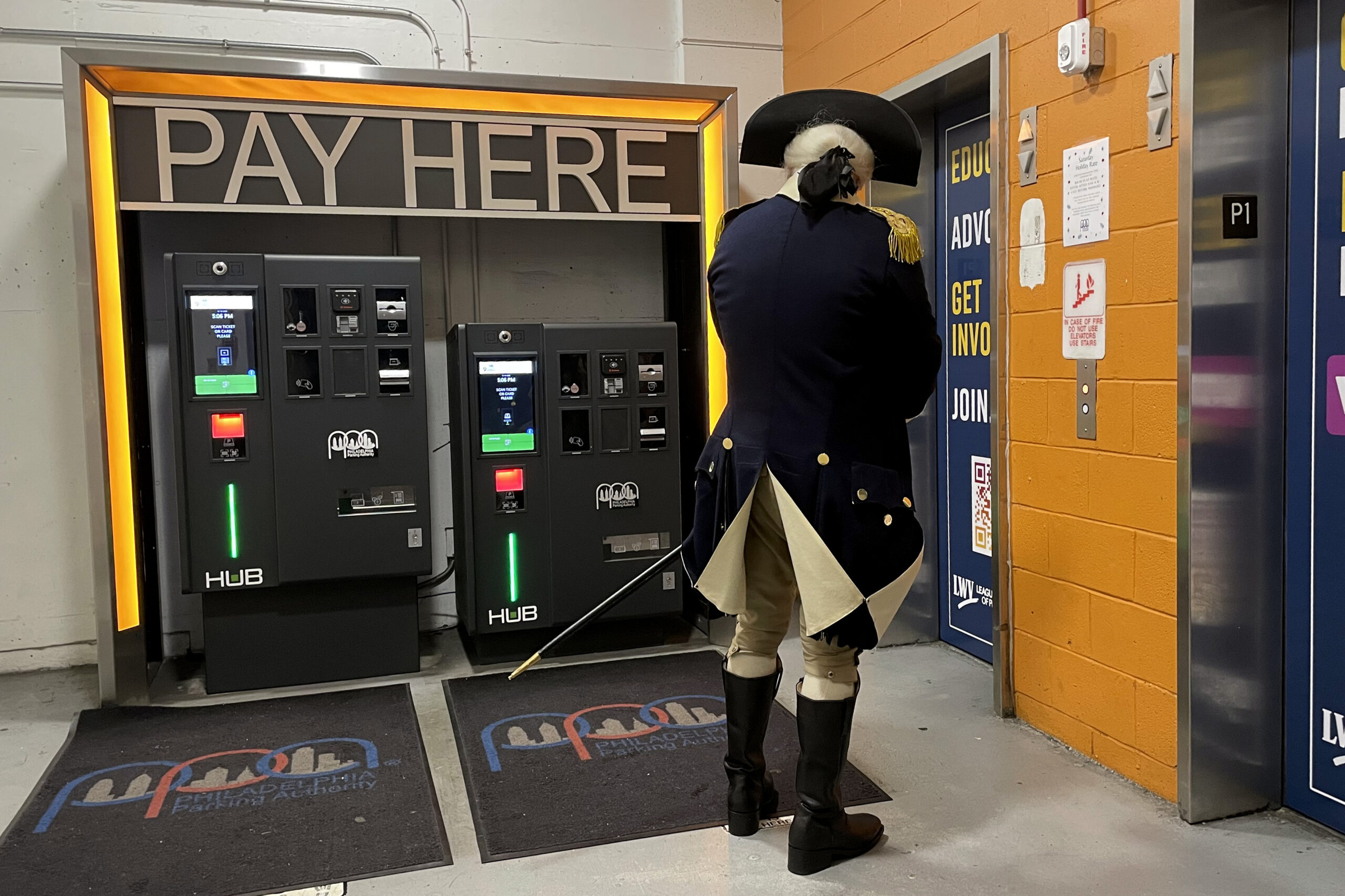
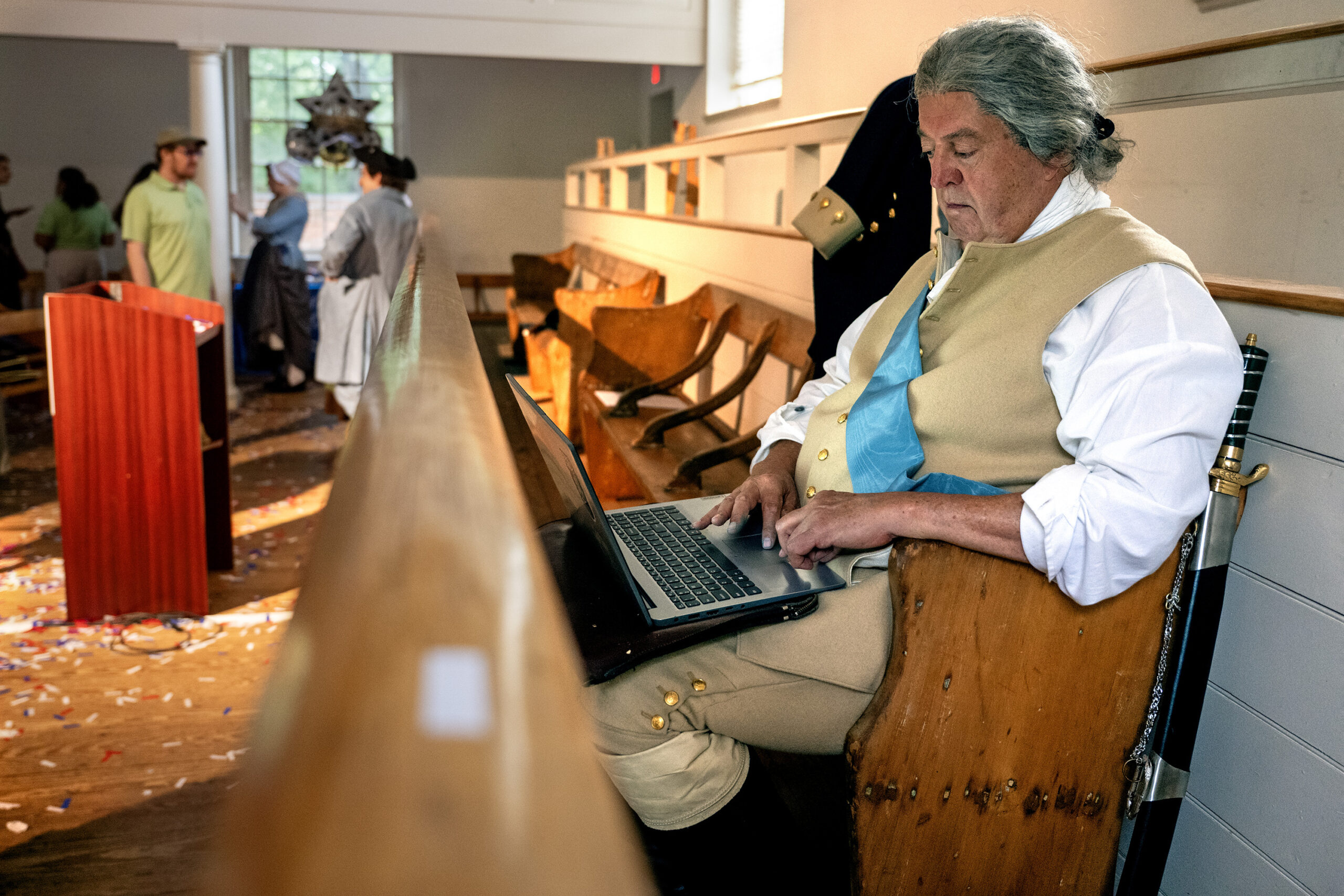
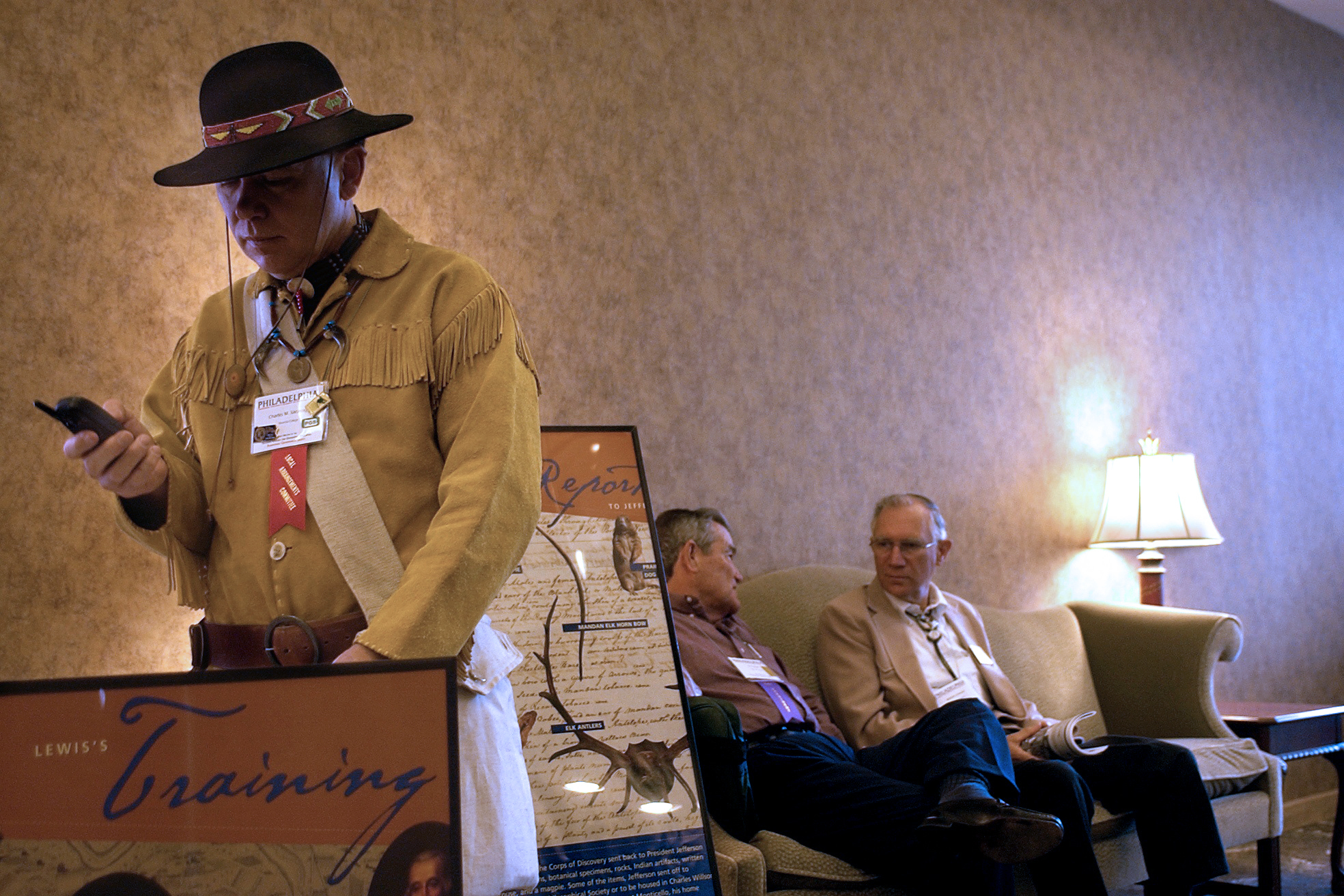
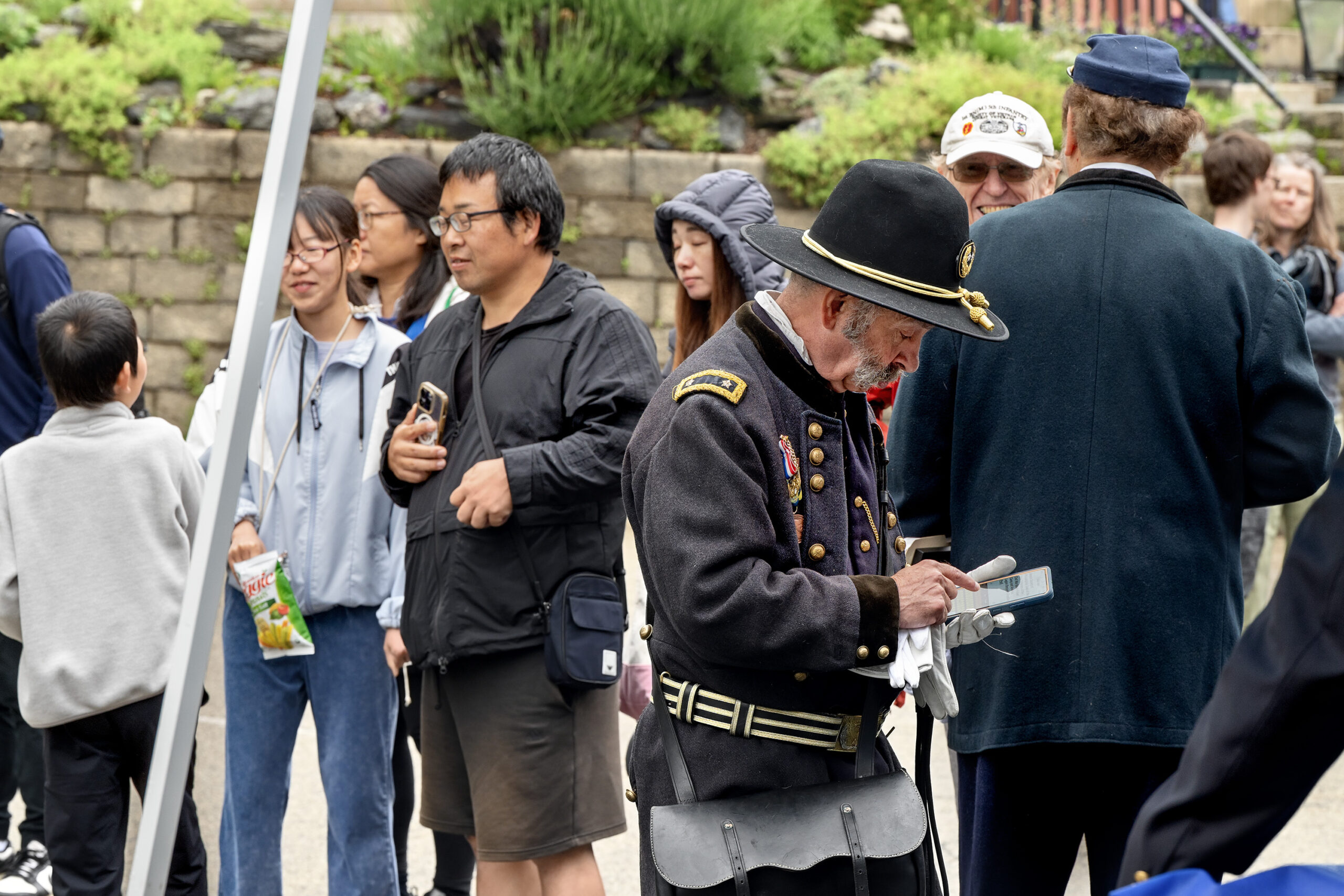
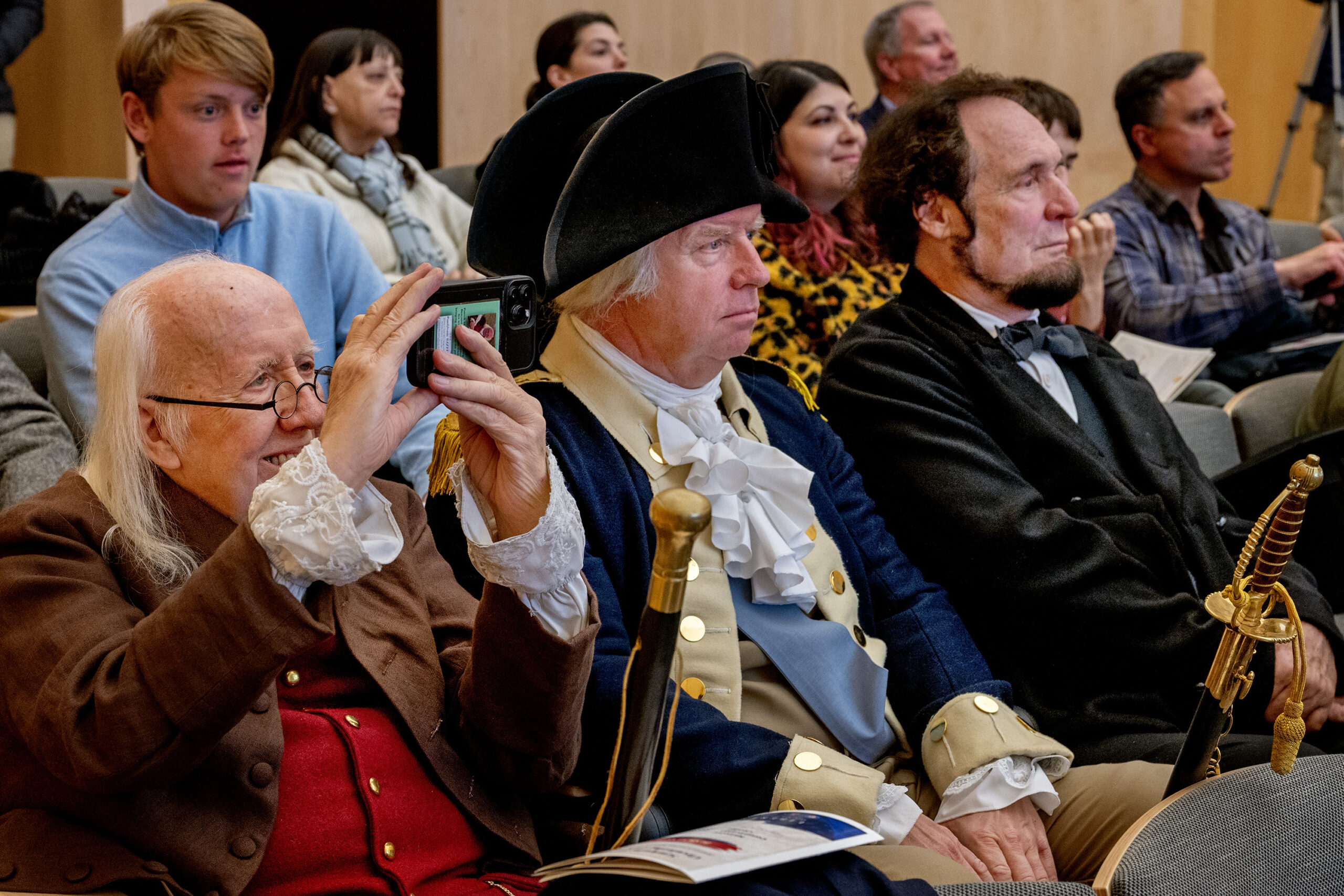
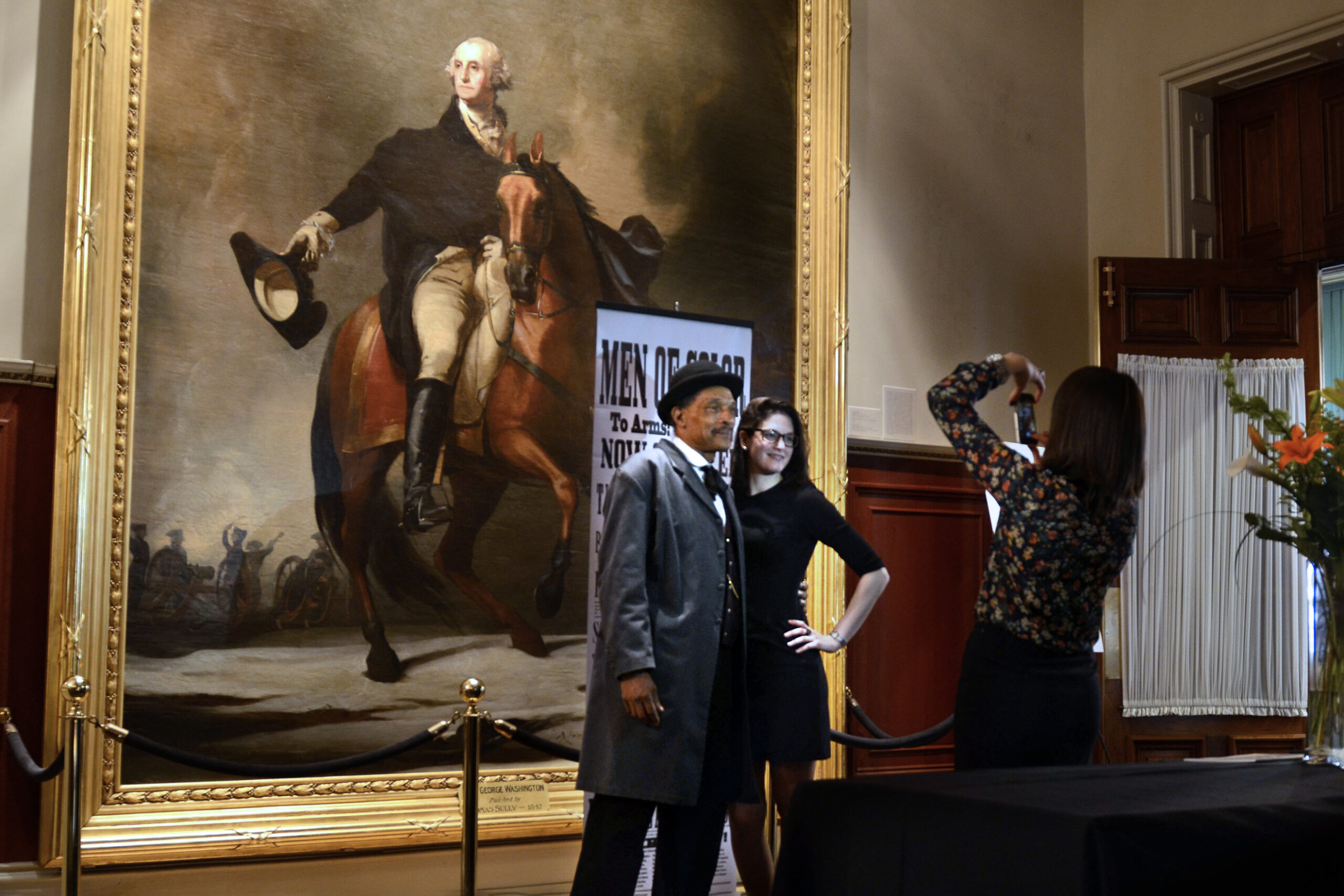
    Besides shadows, reflections, silhouettes, pigeons, umbrellas, or hats one of my favorite photo gimmick-clichés is finding juxtapositions. Like catching historic reenactors in moments of chronological inconsistency.

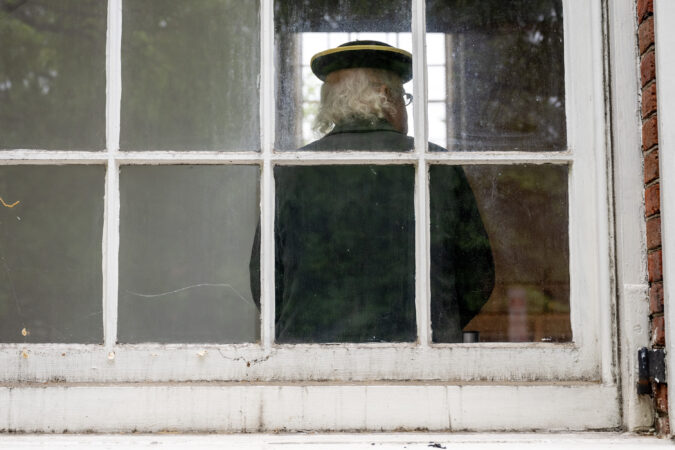
    The image of Ben above and George below was made on assignment for an upcoming story on the 21st season of Historic Philadelphia’s Once Upon a Nation program — where costumed actors perform first-person interpretations of real 18th-century Philadelphians in the Historic District and at Valley Forge National Historical Park.

    May 21, 2026: Jim Fryer as George Washington.

    The photo of the actor portraying Franklin was made from outside the Free Quaker Meeting House at 5th and Arch Streets. It was established during the Revolution when a rift occurred among the Society of Friends. As pacifists they would not take up arms, pay war taxes, or take an oath of allegiance. A group calling themselves “Free” Quakers supported the American cause and were expelled or “read out of meeting” by the mainstream Friends.

    Among those Free Quakers was Timothy Matlack, a clerk in the Pennsylvania Statehouse known for his excellent penmanship. He was chosen by the Continental Congress to produce the handwritten copy of the Declaration of Independence — the engrossed parchment version that we all recognize as the “original” — that was signed by the 56 delegates in August 1776. (Matlack, who was born in Haddonfield, N.J. was also one of the earliest opponents of slavery in America, and he felt that the Quakers were not moving quickly enough to abolish it.)

    I only mention the Declaration as, along with many other stories, I have been photographing for in the Historic District and at the President’s House, I’ve been working on a photo essay on some of the direct descendants of the men who were in the room in Independence Hall (then the Pennsylvania State House) as America was born. Their photos, along with interesting and little known facts about the 17 local Signers from Pennsylvania, New Jersey, and Delaware will be published later this week as part of The Inquirer’s coverage of the 250th.

    As promised in a previous column, I’ve collected a bunch of my Philly photo-anachronisms from over the years.

    October 17, 2002: Charles Sacavage as Meriwether Lewis (of the Lewis & Clark Expedition).
    May 24, 2026: Mike Gabriele as Civil War General Ambrose E. Burnside.
    December 10, 2025: Benjamin Franklin (from left) Gen. George Washington and President Abraham Lincoln.
    January 15, 2014: Robert Branch (left) as 19th Century educator, intellectual, and civil rights activist Octavius V. Catto.
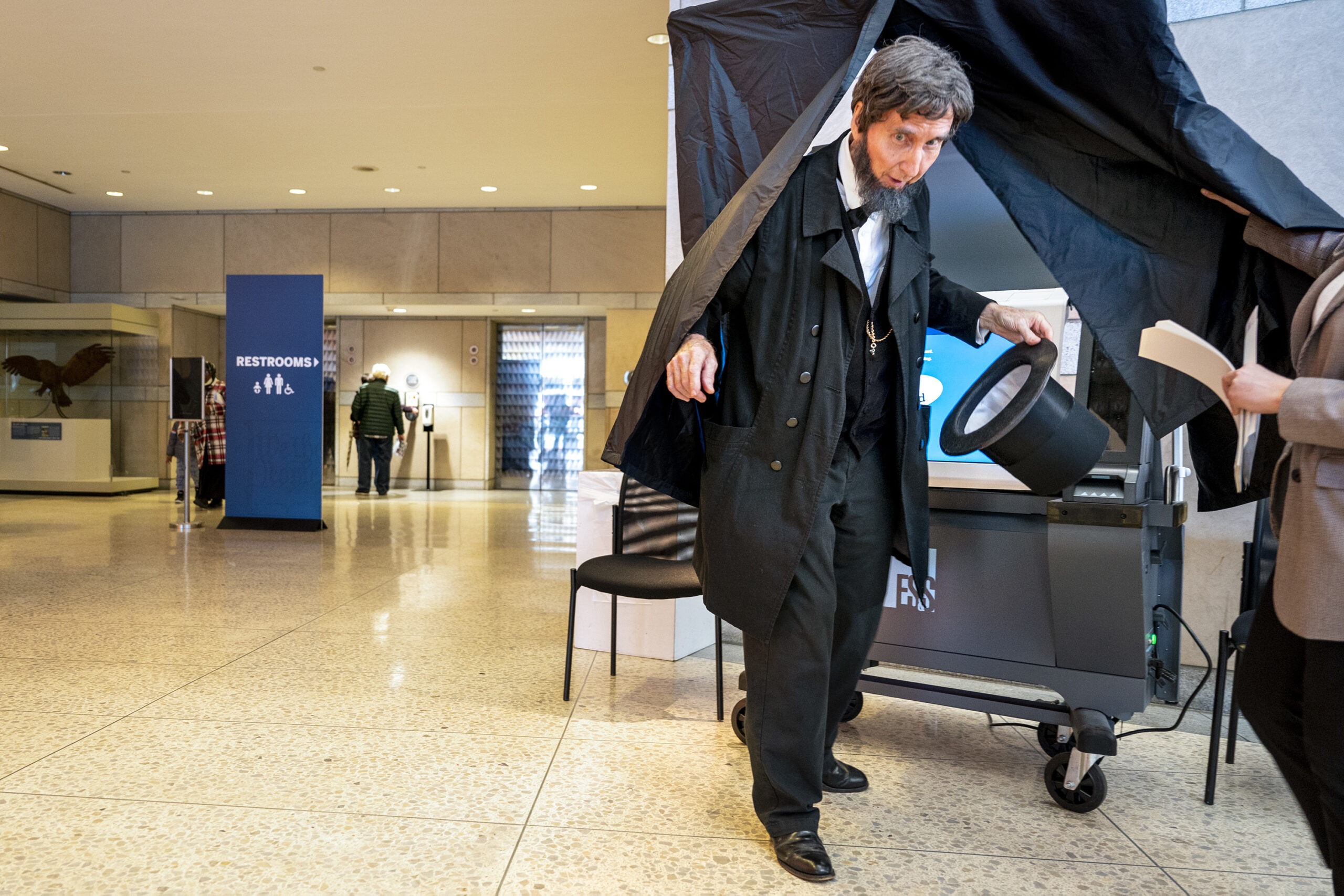
    February. 20, 2023: President Abraham Lincoln votes.
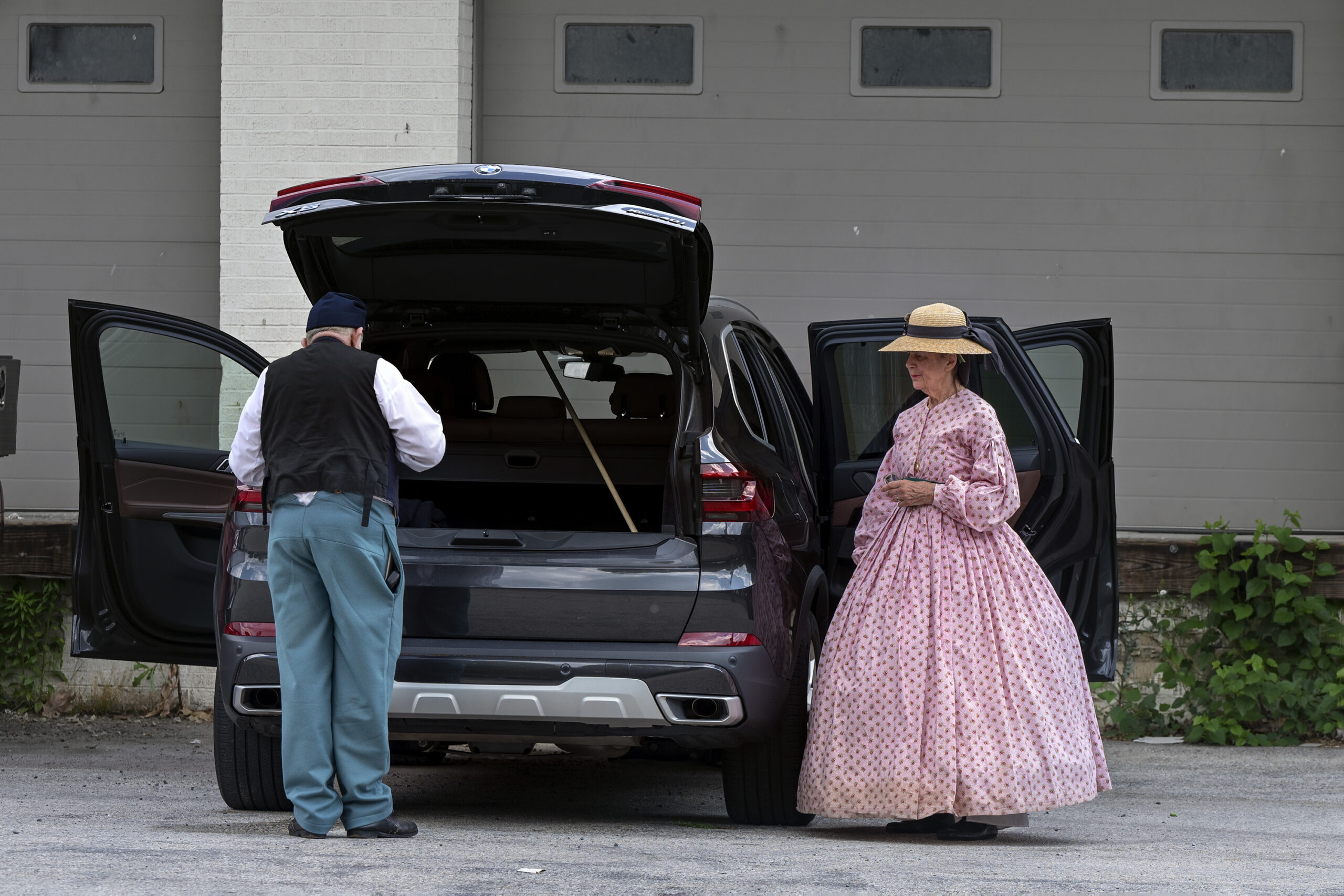
    May 26, 2024: Civil War reenactors Kathy and Ed Berna.
    July 8, 2012: After the annual reenactment of the first public reading of the Declaration of Independence.
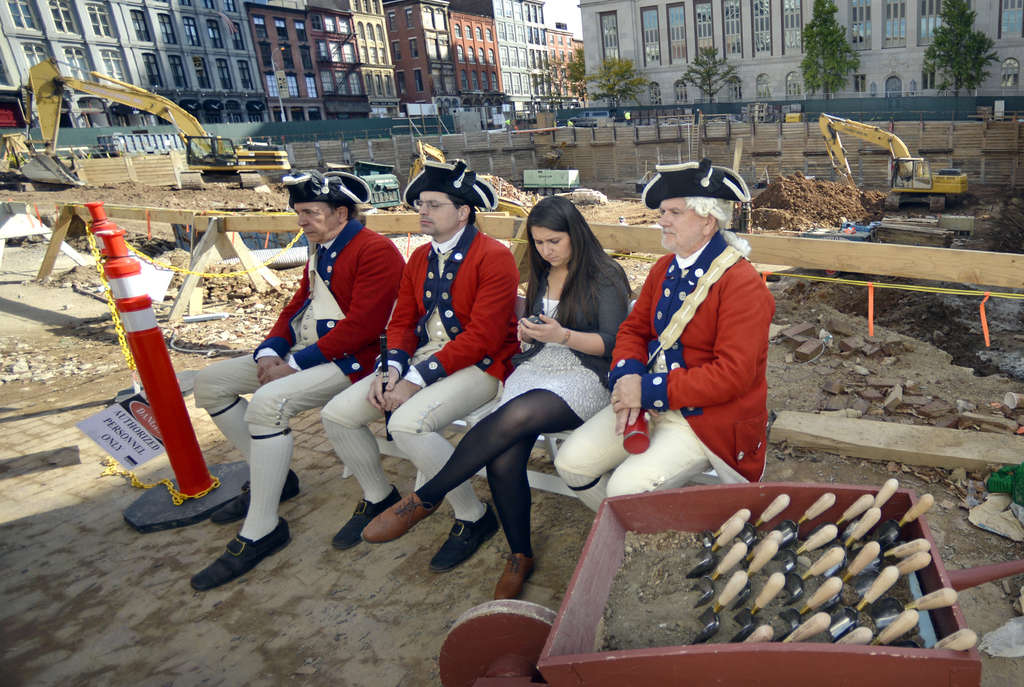
    October 9, 2014: Ceremonial groundbreaking for the Museum of the American Revolution.
    December 10, 2025: George Washington.

    Since 1998 a black-and-white photo has appeared every Monday in staff photographer Tom Gralish’s “Scene Through the Lens” photo column in the print editions of The Inquirer’s local news section. Here are the most recent, in color:

    » SEE MORE: Archived columns and Twenty years of a photo column.

  • The Paris of America, a Phanatic apartment, and Nic Cage | Weekly Report Card

    The Paris of America, a Phanatic apartment, and Nic Cage | Weekly Report Card

    Being called the Paris of America: A

    Philadelphians have spent decades developing an inferiority complex about New York.

    Maybe we’ve been comparing ourselves to the wrong city.

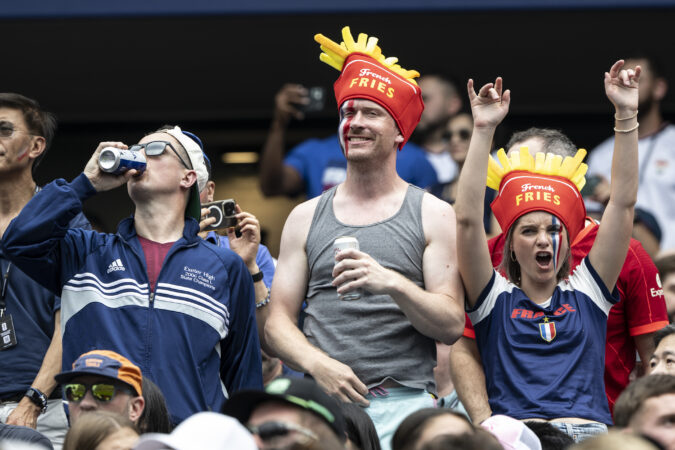
    French soccer fans visiting for the World Cup spent this week looking around Center City and noticing something many locals overlook: Philadelphia is surprisingly French. The Parkway was modeled after the Champs-Élysées. City Hall looks like it belongs in Paris. Even Michelin once called Philadelphia the “Frenchest city” in America.

    We’ll take it.

    Most American cities get compared to other American cities: Philadelphia gets compared to one of the most beautiful and romantic cities in the world.

    Sure, Paris has the Eiffel Tower. But Paris doesn’t have roast pork sandwiches, Gritty, or people arguing over parking permits at 7 a.m.

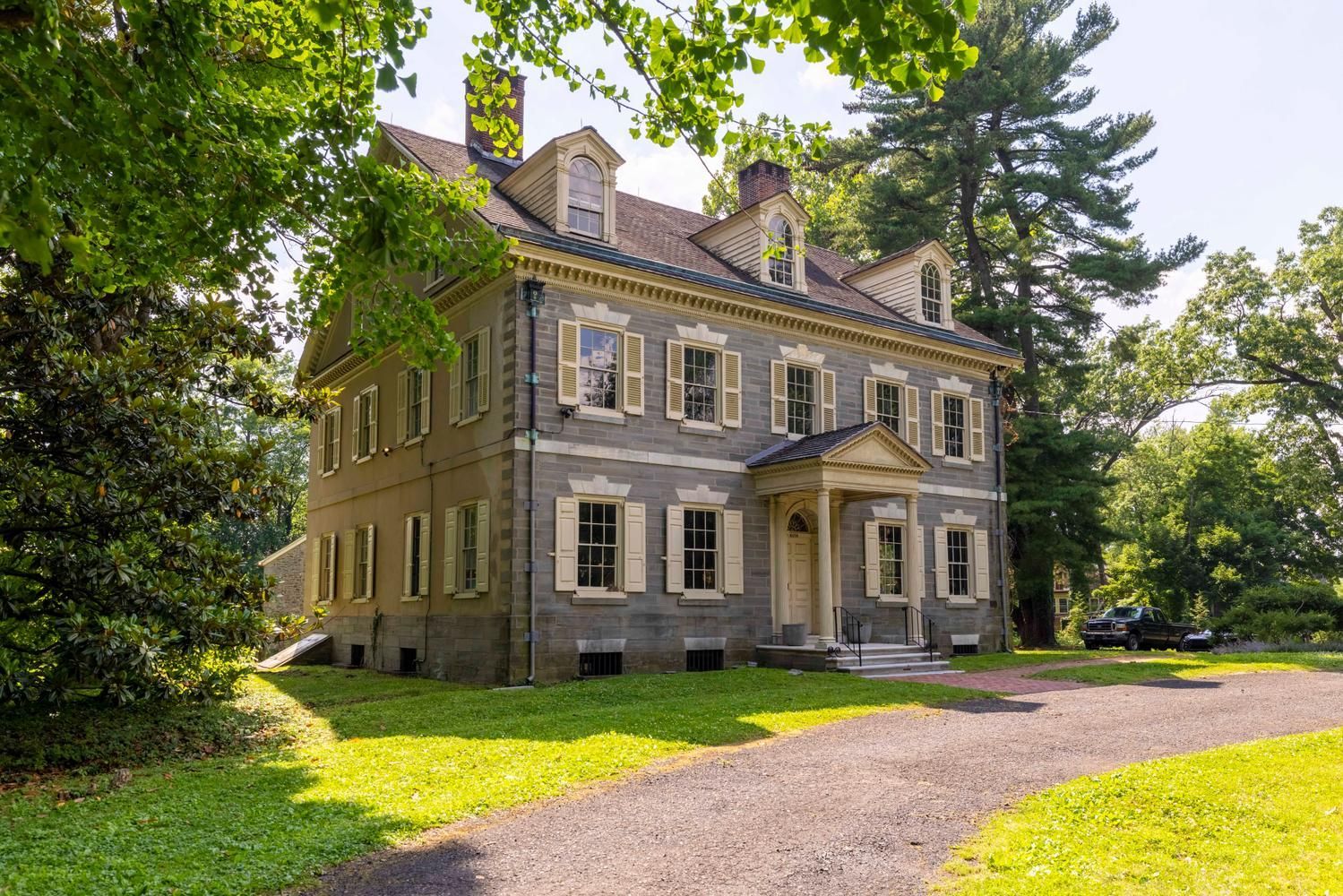
    Upsala mansion on the 6400 block of Germantown Avenue was built in 1798 and is currently up for sale.

    A house that comes with Revolutionary War reenactments: A

    Philadelphia real estate listings can get weird.

    You might get a rowhouse with a hidden speakeasy, a church converted into condos, maybe even a former firehouse.

    But a Germantown mansion that comes with a legally protected Revolutionary War battle reenactment on the front lawn is a different level.

    The owner of Upsala, a historic estate now listed for sale, revealed this week that the property’s easement requires future owners to allow reenactments of the Battle of Germantown. The reenactments haven’t happened since 2019, but the obligation remains, preserved in a 70-page legal document waiting for some future homeowner.

    For a city preparing to celebrate America’s 250th birthday, this is a nice reminder that in Philadelphia, history isn’t always tucked away in museums. Sometimes it’s written into the paperwork.

    A Phanatic-themed apartment: A+

    There are plenty of ways Major League Baseball could have celebrated the All-Star Game coming to Philadelphia.

    A logo, banners, a commemorative beer.

    Instead, someone decided to create an apartment that appears to have been designed by the Phillie Phanatic after consuming several energy drinks, Philly Voice reported.

    The result is a two-bedroom rental covered in green fur, baseball memorabilia, Phillies decor, and what can only be described as mascot maximalism. Two lucky fans can stay there for $19.78 a night and get tickets to All-Star festivities.

    The obvious question is why this exists. The Philly answer is why wouldn’t it?

    There’s a baseball glove chair, fuzzy green barstools, and a photo op with the Phanatic.

    Every detail sounds made up, but they’re not! Which is amazing.

    A Chicagoan discovers Philadelphia: A

    Philadelphians spend an awful lot of time explaining themselves. We feel underrated, maybe overlooked. And we’re not New York, D.C., or Boston.

    A Chicago man posted a lengthy love letter to Philadelphia recently after a trip that included cheesesteaks, hoagies, roast pork, dive bars, the Barnes Foundation, Reading Terminal Market, Magic Gardens, and City Hall, which he declared his favorite building in America.

    The review was so thorough that it started to feel like Visit Philadelphia had hired him.

    But the most revealing part was that he kept comparing Philadelphia to Chicago.

    Another city full of neighborhood pride, old bars, great sandwiches, beautiful architecture, and residents who spend half their time insisting everyone else overlooks them.

    The commenters understood immediately. One called Philadelphia a mini New York. Another argued Chicago and Philadelphia people have more in common with each other than either would like to admit. They’re probably right.

    But there’s no compliment Philadelphians love more than hearing someone came here expecting very little and left wondering why nobody told them how great it is.

    Ronnie Gunter, a lacrosse athlete and Drexel grad known for looking a lot like Eagles QB Jalen Hurts, is the latest bombshell on “Love Island USA.”

    The Jalen Hurts look-alike on Love Island: B+

    Philadelphia has reached a level of cultural dominance where even our quarterback’s doppelgänger is getting reality TV opportunities.

    A Drexel graduate entered the Love Island villa this week, and his main claim to fame isn’t being a former lacrosse player or nonprofit worker. It’s looking enough like Jalen Hurts that people have been stopping him for photos for years.

    Honestly, that feels very Philadelphia. We don’t just have celebrities, we also have backup celebrities.

    The funniest part is that nobody on the show seems to have noticed yet. Viewers back home immediately saw Jalen Hurts. The contestants on a tropical island in Fiji just saw a handsome guy in swim trunks. Give it time.

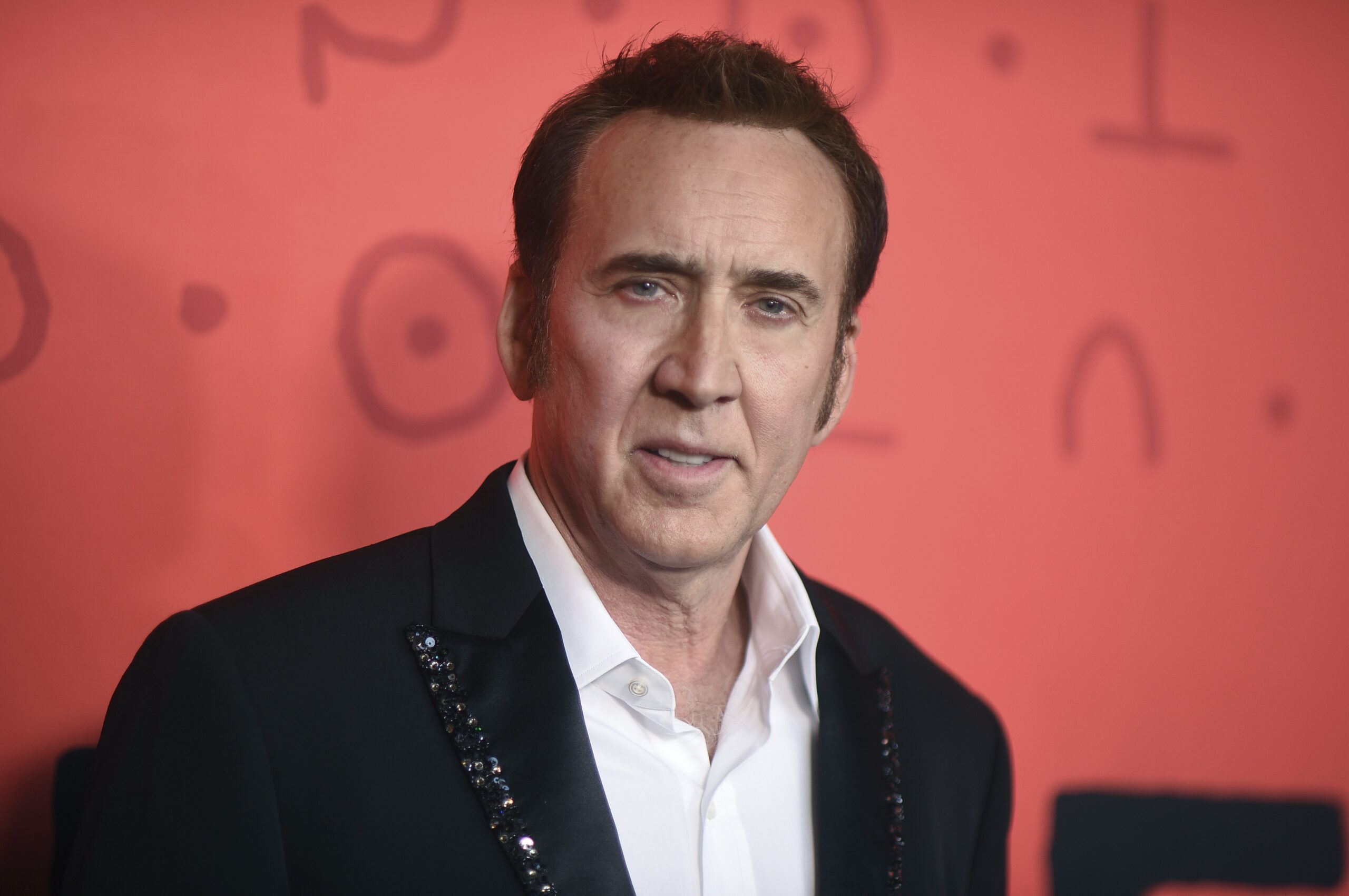
    Nicolas Cage arrives at the premiere of “Longlegs” at the Egyptian Theatre on Monday, July 8, 2024, in Los Angeles. (Photo by Richard Shotwell/Invision/AP)

    A Nicolas Cage bar crawl: A+

    Philadelphia spent years planning America’s 250th birthday celebration. And somehow nobody thought to include the man who stole the Declaration of Independence.

    Fortunately, Jenkintown stepped in.

    This weekend’s Nicolas Cage-themed bar crawl features Cage cocktails, Cage trivia, Cage competitions, Cage masks, Cage movies, and what appears to be a community-wide commitment to a bit that has gotten completely out of hand.

    The genius of Nicolas Cage is that nobody can quite agree whether he’s a great actor, a bizarre actor, or some third category that exists only for Nicolas Cage.

    The same could be said for this event.

    Jenkintown is hosting an evening built around a man whose filmography includes stealing national treasures, fighting John Travolta while wearing John Travolta’s face, and getting punched repeatedly in a wicker bear costume.

    Frankly, if we’re celebrating America this year, Nicolas Cage probably deserves a seat at the table.