Tag: 52 Weeks of Firsts

  • A group of Philadelphia men decided to get fit and started a ballclub in 1833. Here’s how they paved the way for the Phillies.

    A group of Philadelphia men decided to get fit and started a ballclub in 1833. Here’s how they paved the way for the Phillies.

    During the early 19th century, gentleman did not play games, at least not outdoors.

    Outdoor frolicking was for children.

    But the yellow fever epidemic of 1822 and the cholera epidemic a decade later started Philly’s men of means on a health kick. It became cool for grown men to play outside, breathe fresh air, stretch limbs, and build their muscles.

    In 1833, a few of them formed a social club to play a fairly new outdoor game called Townball in which a player goes to bat at “home,” and gets three tries to hit a ball. If he manages to hit it, he runs a course, stopping at three bases along the way before returning home, safely.

    Every time a player returned home, his team scored a point.
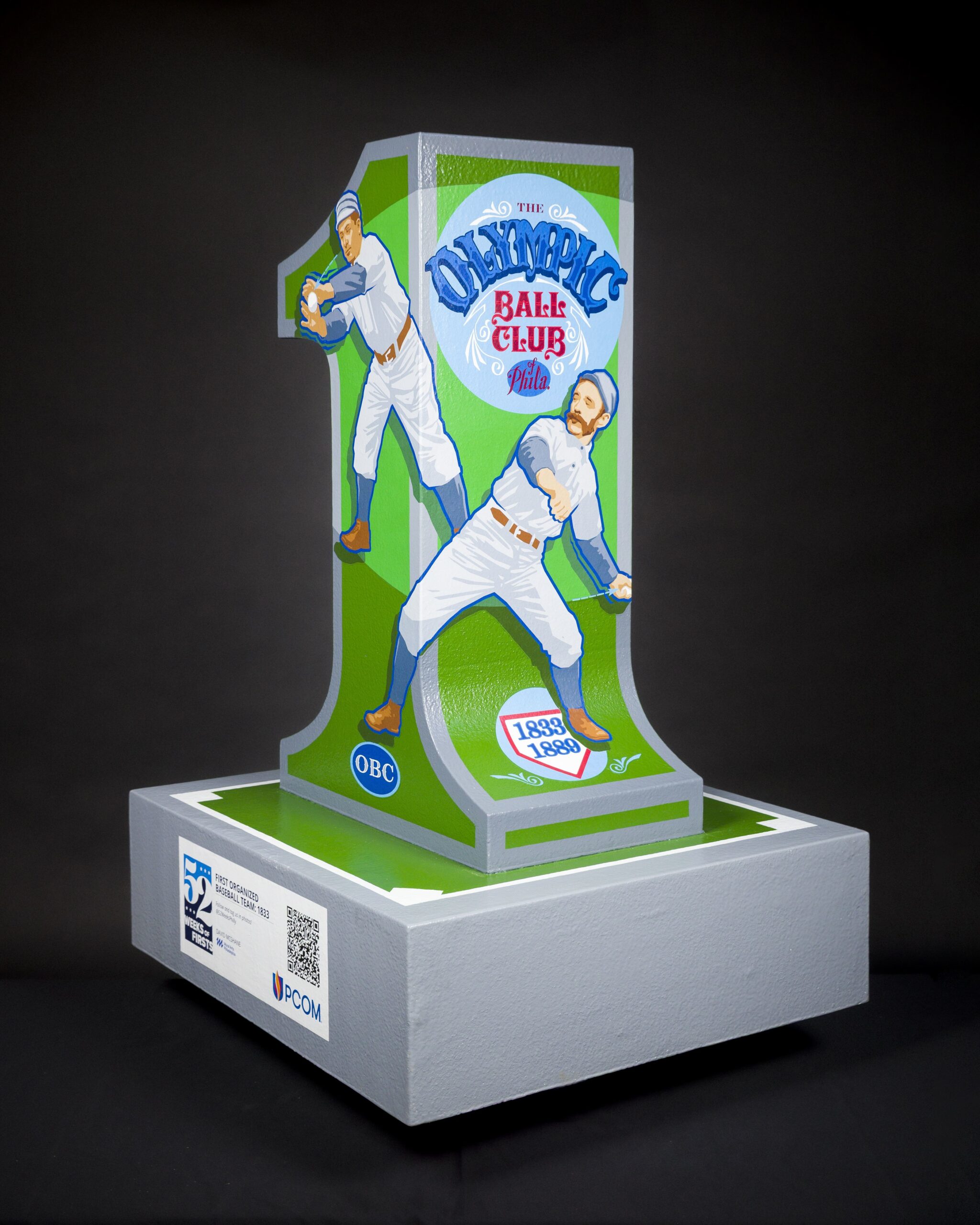
    Artist David McShane illustrated three three ball players from the early- and mid-1800s to represent the Olympic Ball Club.

    Sounds familiar? John Thorn, the official historian for MLB Baseball agrees.

    Townball, Thorn said, caught on because it was a different kind of sport. “It wasn’t not gymnastic. It wasn’t pugilistic. It wasn’t mere combat…It was more than exercise. It was camaraderie. That was nice.”

    The recreational athletes referred to themselves as the Olympic Ball Club and are considered America’s first baseball team. As MLB All-Star Week 2026 gets underway in Philly this weekend at Citizens Bank Park, that first ballclub will be feted at the park for the Philadelphia Historic District’s 28th firstival.

    Firstivals are weekly day parties honoring events that happened in Philadelphia before anywhere else in the world, part of the city’s yearlong celebration of America’s 250th birthday.
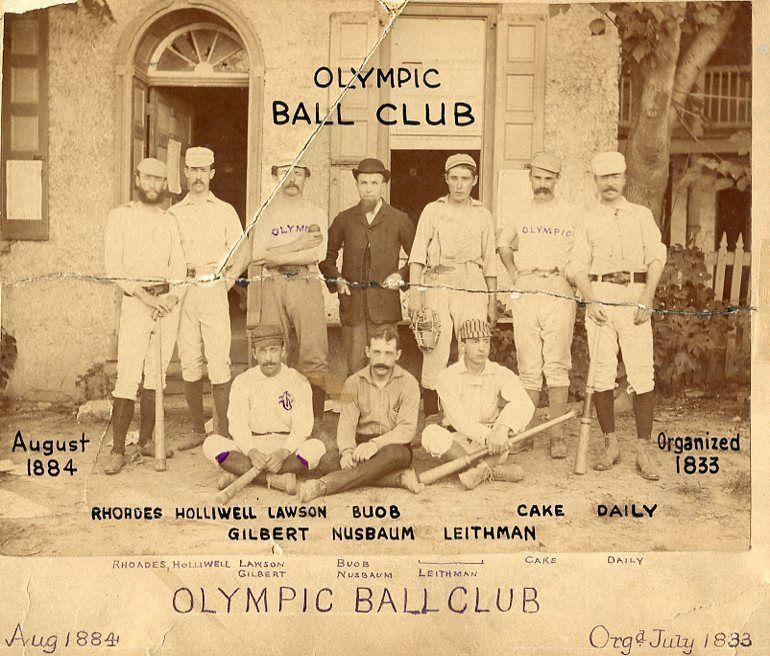
    The Olympic Ball clup pictured in 1883, 50 years after the organization was founded.

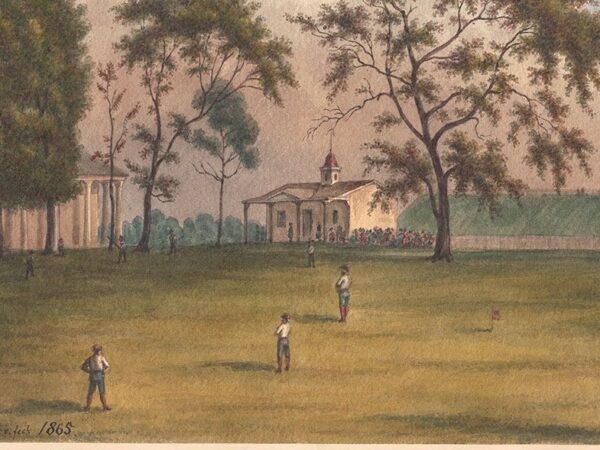
    The Olympic Ball Club played early games in Camden. In those days the club split themselves into two teams and played against each other. There was no foul territory, the ball was smaller, yet softer. And sometimes they even swung the bat with one arm.

    “Runners would be declared out if the ball was thrown at them between the bases,” Thorn said. In other words, you didn’t have to tag people out.

    In the 1860s, the Olympic Ball Club adopted the same rules as the New York Knickerbockers. In the same decade, they also moved the club’s home to North Philadelphia, a field between Master and 27th Streets. Back then, this area was known as Camac’s Woods, an estate and public park owned by 19th century Philadelphia gentleman Turner Camac.

    The first professional base ball team — it was originally spelled with two words — the Cincinnati Red Stockings, were formed in 1869. Their salaries were paid by an organization of local businessmen.

    By 1876 — the year the National League was founded — Philadelphia had a second base ball team, the Athletics. On April 22 of that year, the Athletics played the Boston Red Caps in America’s first professional league baseball game. That game was played in North Philadelphia at 25th and Jefferson, and Boston beat Philadelphia 6 to 5.
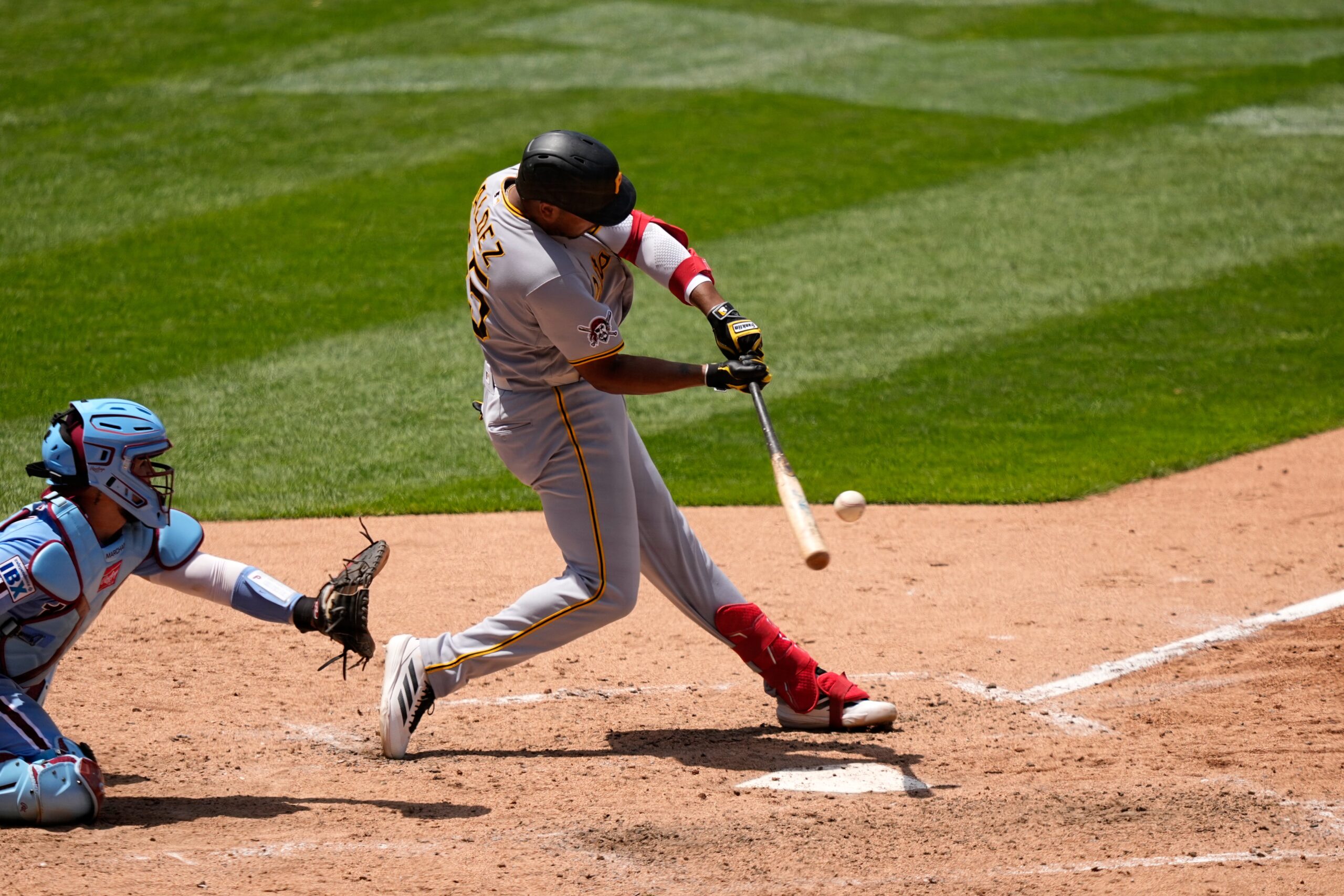
    Pittsburgh Pirates’ Esmerlyn Valdez hits a run-scoring single against Philadelphia Phillies pitcher Tim Mayza during the fifth inning of a baseball game Thursday, July 2, 2026, in Philadelphia. (AP Photo/Matt Slocum)

    In the early 20th century, baseball started to be spelled as one word, Thorn said. And its play mirrors that of today. The Philadelphia Phillies, originally called the Quakers, were founded in 1883, making them the oldest, one name, one-city, franchise of professional sports.

    Why are there so many baseball firsts in Philadelphia?

    “Philadelphia was the home to organization and structure,” Thorn said. “This was the seat of government, the place where American politics and innovation started. Philadelphia is a town of invention.”

    This week’s Firstival is Saturday, June 11, 11 a.m.-1 p.m., at Citizens Bank Park, 1 Citizens Bank Way, Philadelphia, PA

    The Inquirer is highlighting a “first” from the Philadelphia Historic District’s 52 Weeks of Firsts program each week. A “52 Weeks of Firsts” podcast, produced by All That’s Good Productions, drops every Tuesday.
  • Alexander Hamilton believed in Philadelphia’s prosperity and insisted the Federal Bank be headquartered in the city

    Alexander Hamilton believed in Philadelphia’s prosperity and insisted the Federal Bank be headquartered in the city

    The Revolutionary War ended in 1783, but when the 1790s rolled in, America was in an economic spiral. Citizens were broke. Businesses were going under. The government had little money.

    So the first United States Treasurer Alexander Hamilton came up with a plan to create a national bank to serve as the primary fiscal agent for the federal government. It would issue paper money, pay America’s bills, provide loans to private citizens, and collect taxes so the country could fund itself.

    “Hamilton had been studying the British banking system for decades,” said Lynn Nash, a park ranger at Philadelphia’s First National Bank that is managed by the U.S. National Park Service. “He did a deep dive and decided America needed a similar system to build more fiscal authority.”

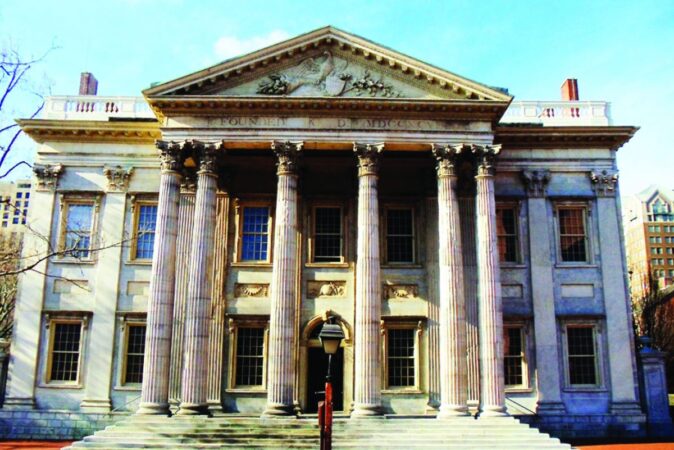
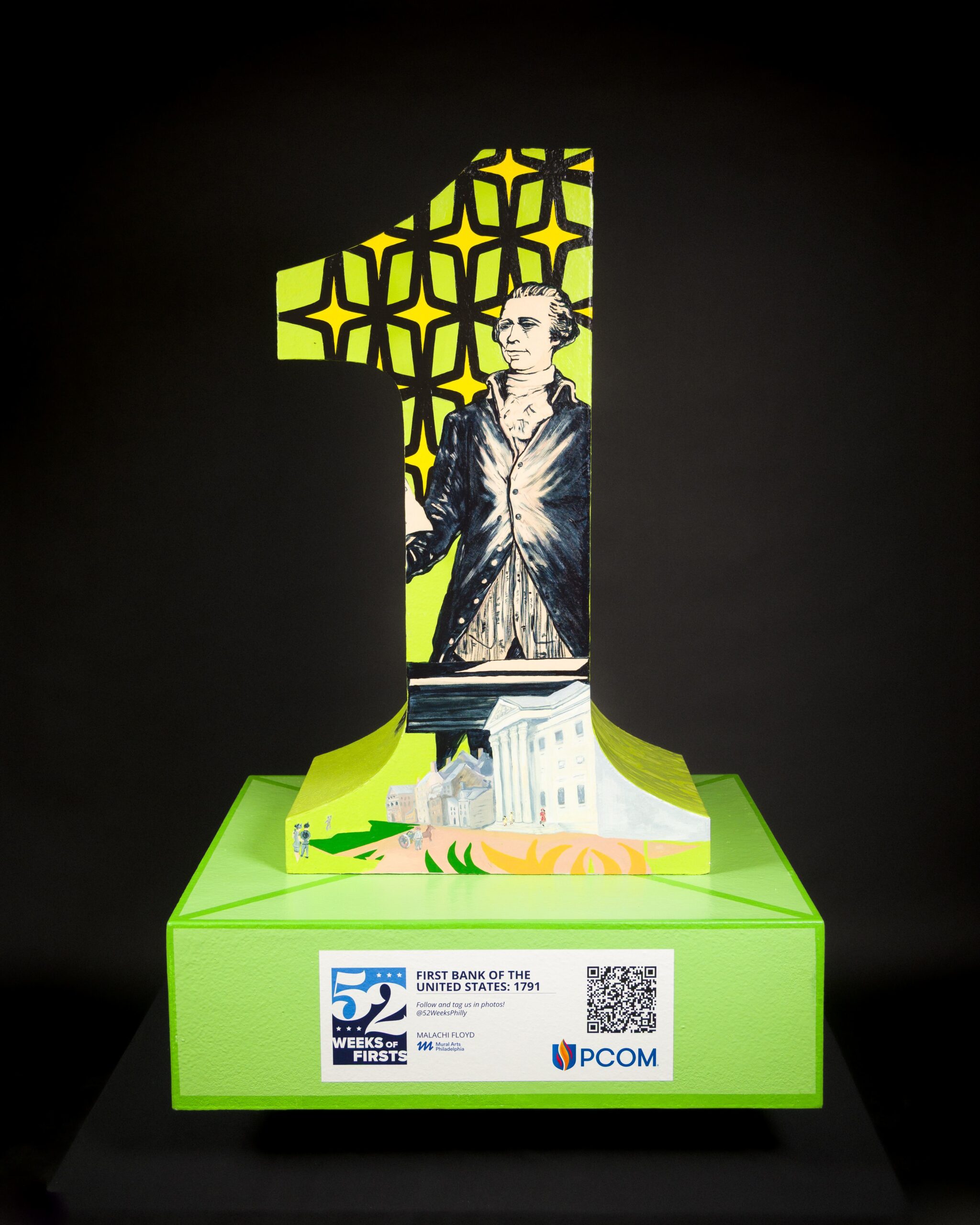
    Malachi Floyd’s image of Alexander Hamilton, stacks of money, and the original First Bank of the United States’ building honors Philadelphia’s history as the seat of the federal banking system.

    On Feb. 8, 1791, Congress passed a law establishing America’s first federally backed bank, which was located inside Philadelphia’s Carpenter’s Hall.

    The city will celebrate America’s First National Bank Saturday, July 4, at the First Bank of the United States, 120 S. 3rd St., where it moved in 1797. The Independence Day fete is part of the Philadelphia Historic District’s 52 Weeks of Firsts program.

    In honor of the Semiquincentennial, the National Park Service will reopen the First Bank to the public on July 1, following a multiyear $43 million rehabilitation. The gleaming Greek Revival-style building will feature exhibits centering on the history of American banking.

    America’s first commercial bank, the Bank of North America, was charted by the Continental Congress in 1781 to provide loans to colonists and fund the Revolutionary War. And some lawmakers, especially Thomas Jefferson, thought that was sufficient and that the Federal Bank overstepped the Constitution.

    While lawmakers settled into their capital digs in Washington, D.C., in 1800, Hamilton argued that the Federal Bank should be kept in Philadelphia through the end of its charter.

    “He writes a letter to George Washington telling him how the bank needs to be housed in a large commercial seat,” Nash said. ”And that he knows Philadelphia will remain prosperous.”

    The First Bank of the United States’ charter ended in 1811. Hamilton had died by then and President James Madison did not renew the charter. The next year, the building was purchased by Stephen Girard, who opened a private bank in the space.

    “But the War of 1812 was hard on the economy again,” Nash said. On April 10, 1816, Madison signed legislation establishing the Second Bank of the United States at 420 Chestnut St., Nash said.

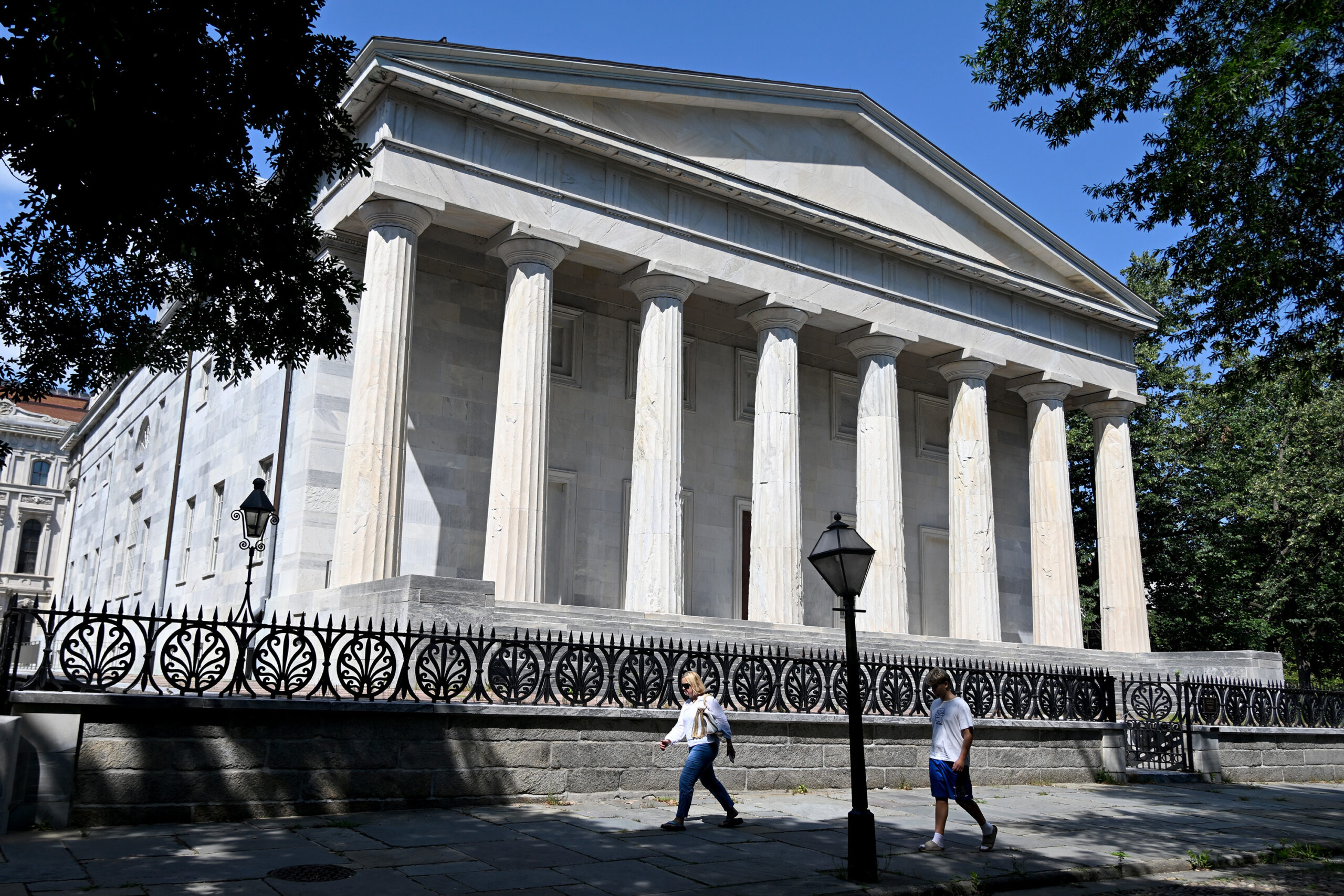
    (Today that building is the Second Bank of the United States Portrait Gallery.)

    Second Bank of the United States at 420 Chestnut Street. Today it is the Second Bank of the United States Portrait Gallery.

    Its charter expired in 1832; Andrew Jackson was president, and he, too, opposed the idea of a federal bank. The charter was not renewed and America didn’t have a federal banking system for 77 years.

    In 1907, New York financier J.P. Morgan and a consortium of bankers stopped the American banking system from collapsing by extending a line of credit to banking institutions. Without a federal banking system, the government could not bail these institutions out, so government officials began discussing the establishment of yet another national bank.

    Finally, President Woodrow Wilson signed the Federal Reserve Act in 1913, setting up the federal banking system we know today.

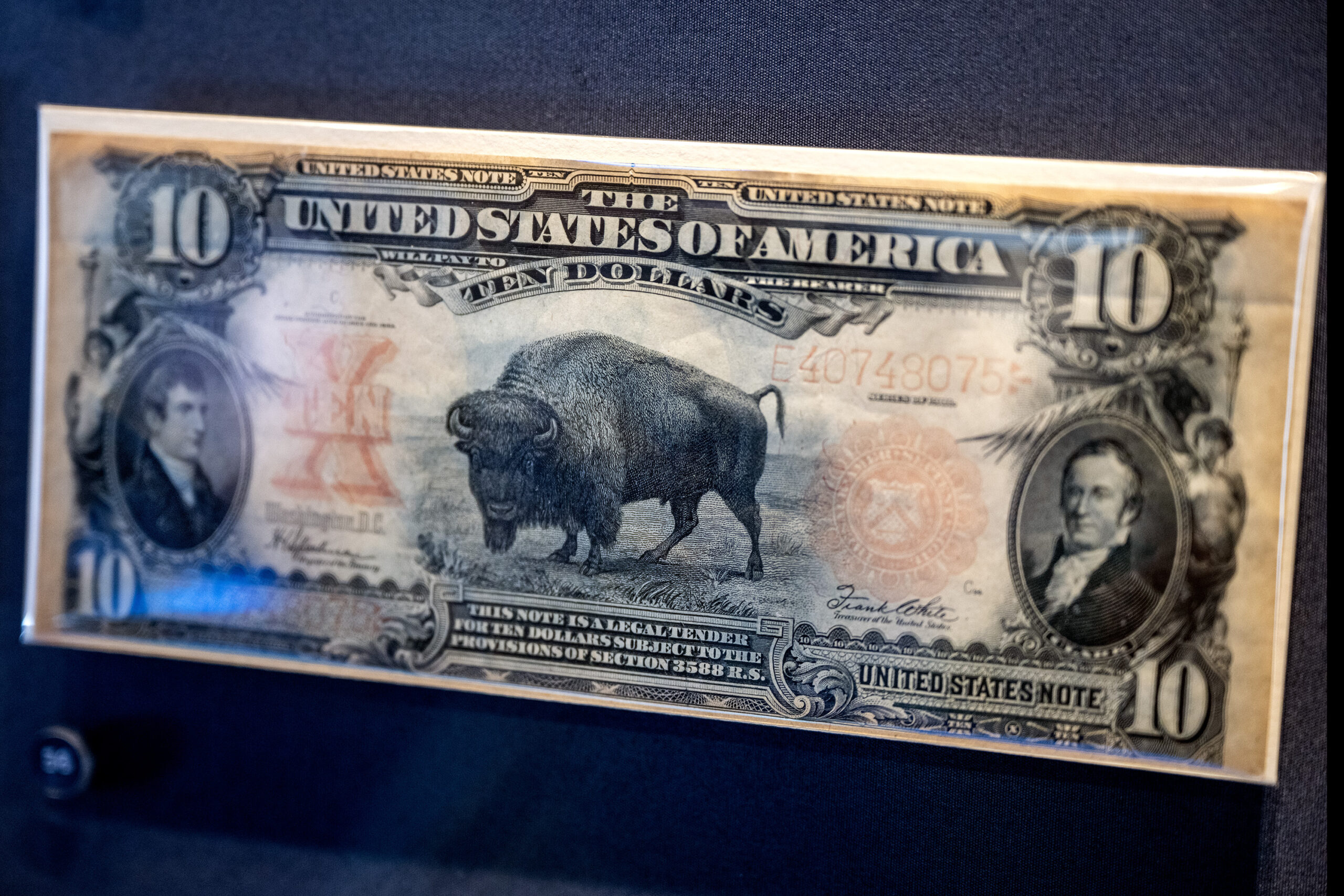
    A 1901 $10 Bison Note on display at the Federal Reserve Bank of Philadelphia’s newly redesigned “Money in Motion” exhibit Thursday, May 7, 2026. The bill was issued during the 100 year anniversary of the Lewis and Clark expedition. The exhibit features nearly 400 historic artifacts and interactive installations that explore currency and the Federal Reserve’s mission.

    The Federal Reserve is headquartered in D.C., but there are 12 branches across the country; Philadelphia is home to one of them.

    Today, the Federal Reserve acts as a fiscal agent for the U.S. Treasury, which issues paper money, collects taxes, and pays America’s bills. It does not offer private loans to businesses or individuals.

    Like the national banks, the Federal Reserve also began with a 20-year-charter. But in 1927, Congress passed the McFadden Act, granting the Federal Reserve Bank perpetual succession.

    “The government finally agreed that a federal banking system was something America needed,” Nash said. “It just took them more than 100 years to agree.”

    America’s First National Bank Firstival will be celebrated on Saturday, July 4, from 11 a.m. to 1 p.m., the First Bank of the United States, 120 S. Third St.

    The Inquirer is highlighting a “first” from the Philadelphia Historic District’s 52 Weeks of Firsts program each week. A “52 Weeks of Firsts” podcast, produced by All That’s Good Productions, drops every Tuesday.
  • Parts of Fairmount Park were not only the site of America’s first paper mill, but also the country’s first company town

    Parts of Fairmount Park were not only the site of America’s first paper mill, but also the country’s first company town

    We take paper for granted now. But in the late 1600s, when Pennsylvania’s founder William Penn recruited German papermaker and preacher William Rittenhouse to manufacture the writing parchment in the New World, paper was a luxury.

    England’s King William III made it difficult for his subjects — at home and in the Americas — to have it. Like many monarchs of his day, he believed it was the Crown’s duty to record history.

    The English imported paper from other European countries. So, to make matters worse, colonists who managed to appeal to the king for paper were double and triple taxed. They got fed up and went about securing their own paper to document the goings on in the government, inform citizens, record history, and ultimately plan a revolution.

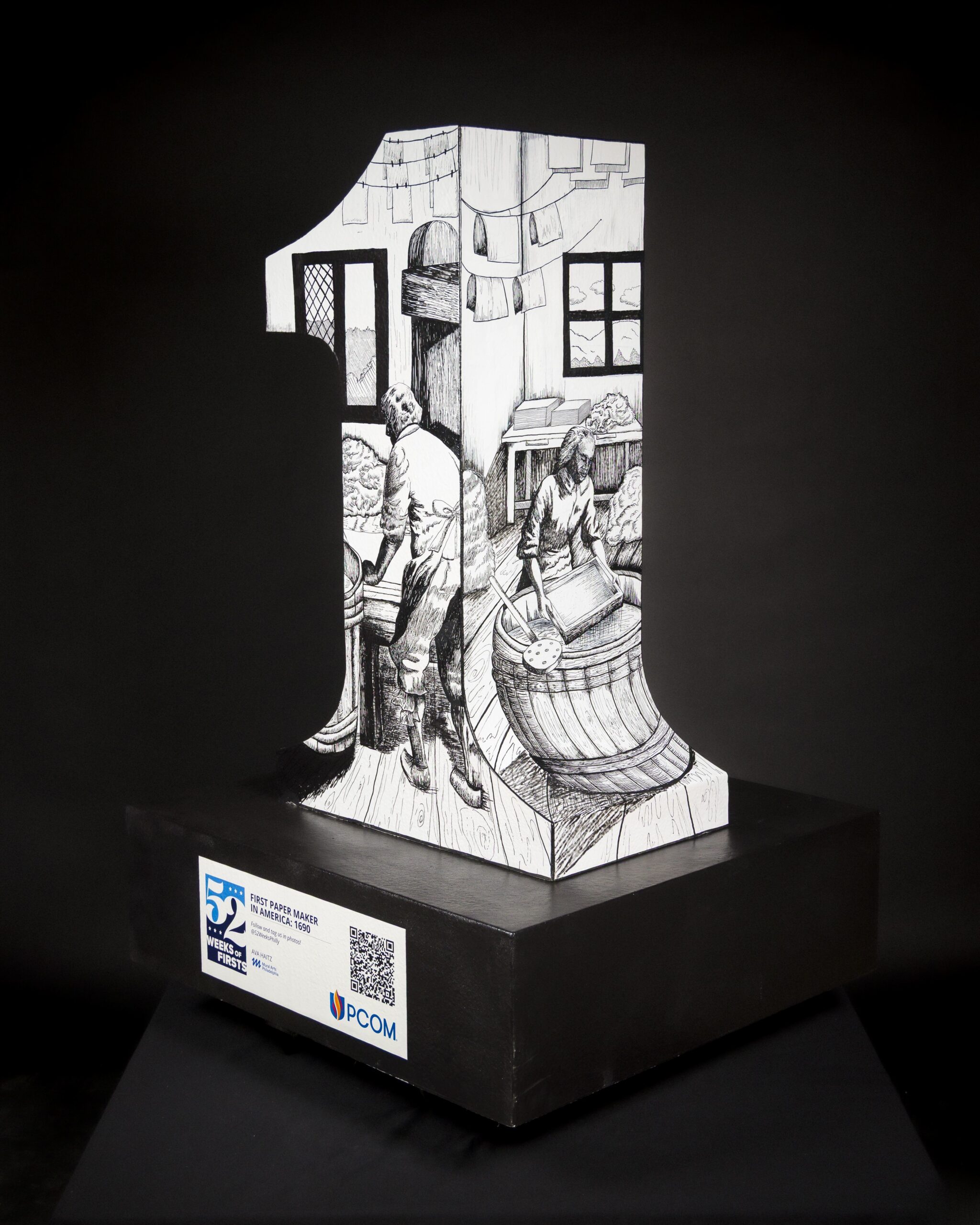
    Artist Ava Haitz’s No. 1 honors the country’s first paper mill, celebrating the invention and craftsmanship that made widespread written communication possible.

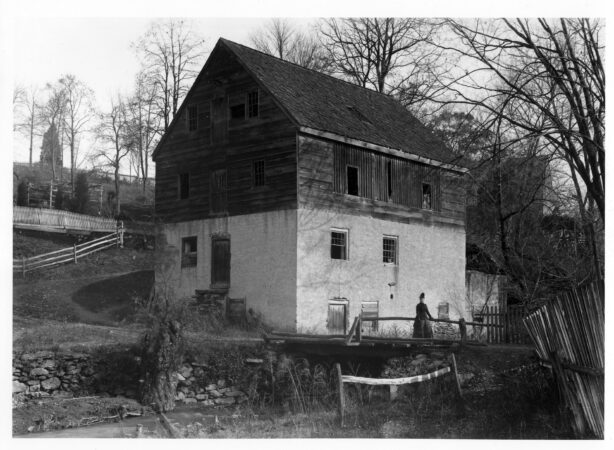
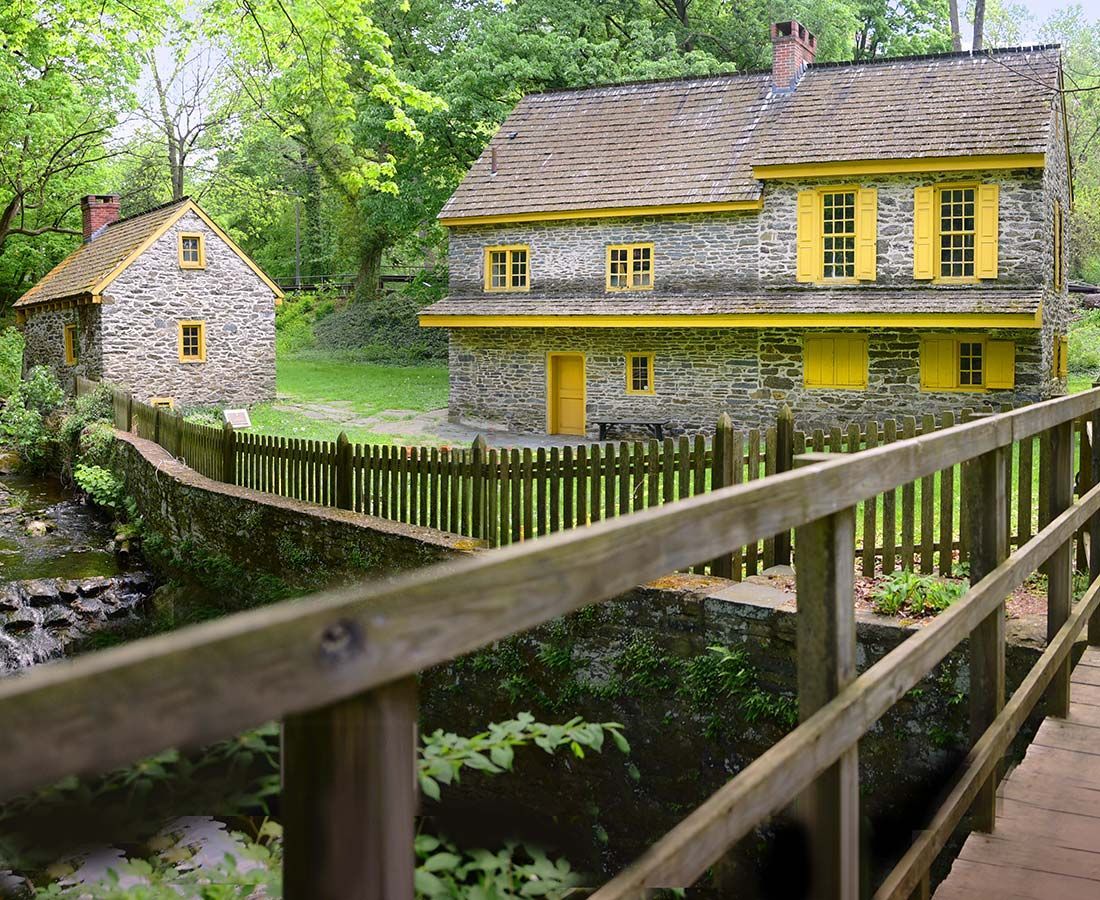
    In 1690, Rittenhouse partnered with Philadelphia’s first printer, William Bradford, to build America’s first paper mill, situated in northwest Philadelphia and powered by the Monoshone Creek, a tributary of the Schuylkill.

    The paper mill will be celebrated this Saturday at Historic RittenhouseTown, part of a series of weekly “Firstival” celebrations. Firstivals are the Philadelphia Historic District’s yearlong birthday nod to places and events with Philadelphia roots. The day parties are a hallmark of this year’s Semiquincentennial fetes.

    At the Rittenhouse mill, paper was made from linen rags fashioned from flax grown in Germantown, that were broken down and shaped into sheets. The mill grew quickly as Rittenhouse, America’s first Mennonite bishop, provided paper for Bibles and Quaker and Mennonite texts in German.

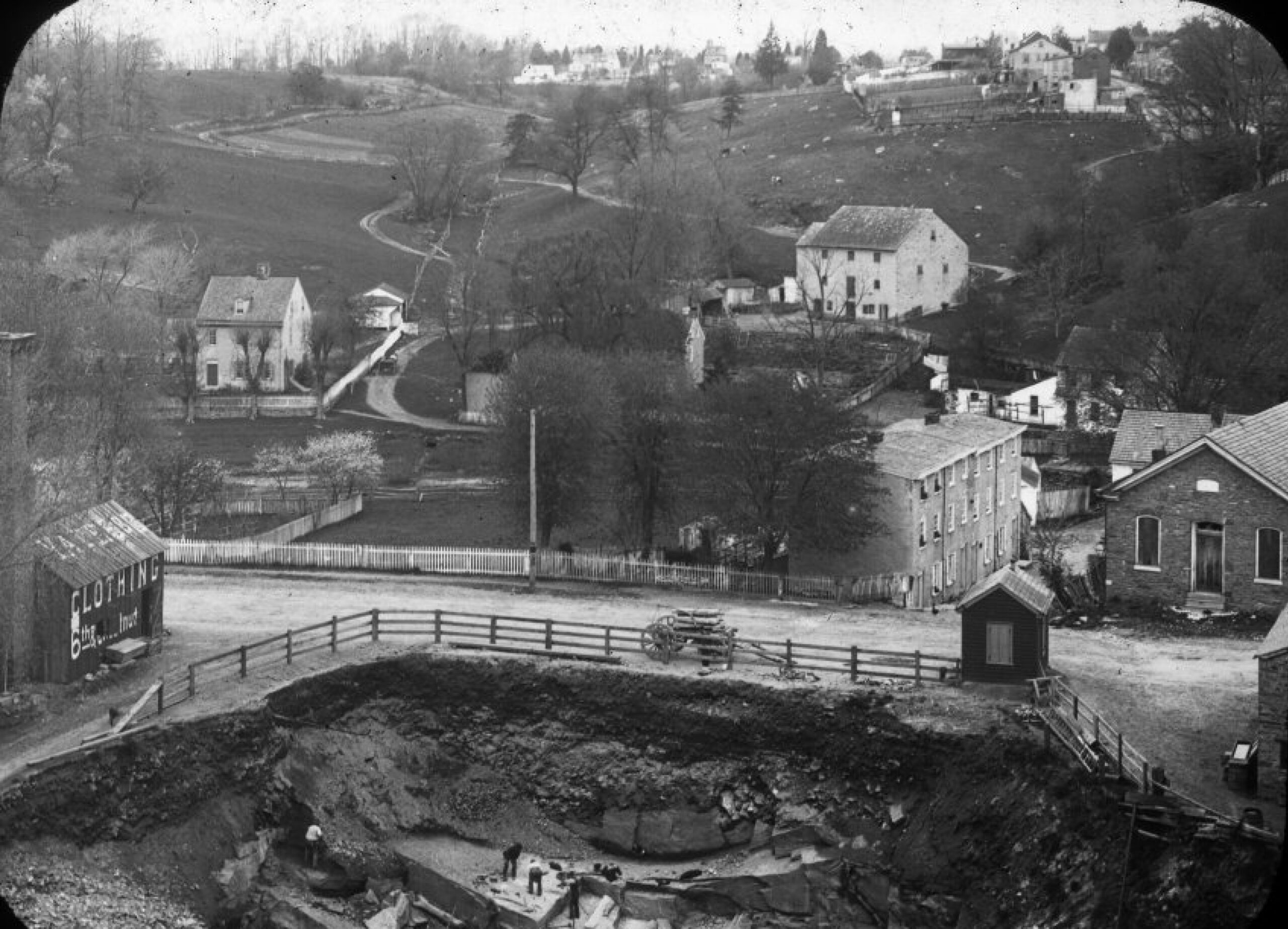
    An aerial view of RittenhouseTown circa 1840-1860. The site eventually grew to more than 200 acres.

    Rittenhouse’s first paper mill was destroyed by a flood, said Alexander Jones, preservation and education manager at Historic RittenhouseTown.

    Then “Rittenhouse rebuilds and he buys out his partner,” Jones said. “The paper mill becomes his sole enterprise. Instead of hiring workers, he recruits his family and it becomes a giant company town. There is a church, a blacksmith, stone houses, a bake house, and more than 40 buildings with five or six of them under what is now Lincoln Drive.”

    RittenhouseTown’s paper mill was the only source of paper in America for more than 40 years, Jones said. It would grow to more than 200 acres.

    David Rittenhouse — Rittenhouse’s great-grandson and the astrologer, clockmaker, and first director of the U.S. Mint after whom Rittenhouse Square is named — was born in his family’s RittenhouseTown homestead in 1732.

    The town thrived for more than a century.

    By the mid-1800s, the paper mill began to slow down as dyes from textile and carpet manufacturers and chemicals from blacksmithing started to pollute the Schuylkill. The filthy water made it nearly impossible to produce good quality paper at the mill.

    The Fairmount Park Commission began acquiring parts of RittenhouseTown through a series of purchases and donations from 1890 to 1917. The city demolished many of the town’s buildings, including a barn that, Jones said, was razed and rebuilt within a year.

    RittenhouseTown’s homestead and bakehouse. The first permanent home for the Rittenhouse family and birthplace of David Rittenhouse, great-grandson of William Rittenhouse for whom Center City’s Rittenhouse Square is named.

    By that time, however, the Rittenhouse family had spread throughout the Philadelphia region from Center City to Blue Bell, Jones said.

    Today, RittenhouseTown spans 20 acres nestled in Fairmount Park right behind Lincoln Drive. Six of the original buildings remain, serving as a reminder that RittenhouseTown was the first building block of American industry.

    “The paper mill really got the ball rolling for Philadelphia,” Jones said. “And from that first came so many other American firsts in Philadelphia: the first Mennonite bishop, the first company town, and America’s first director of the U.S. Mint.”

    This week’s Firstival is Saturday, June 27, 11 a.m.-1 p.m., at Historic RittenhouseTown, 208 Lincoln Drive.

    The Inquirer is highlighting a “first” from the Philadelphia Historic District’s 52 Weeks of Firsts program each week. A “52 Weeks of Firsts” podcast, produced by All That’s Good Productions, drops every Tuesday.
  • 1969’s Stonewall Riots became a watershed moment in the fight for queer rights. Four years earlier, LGBTQ activists gathered at Independence Hall for the first Remembrance March.

    1969’s Stonewall Riots became a watershed moment in the fight for queer rights. Four years earlier, LGBTQ activists gathered at Independence Hall for the first Remembrance March.

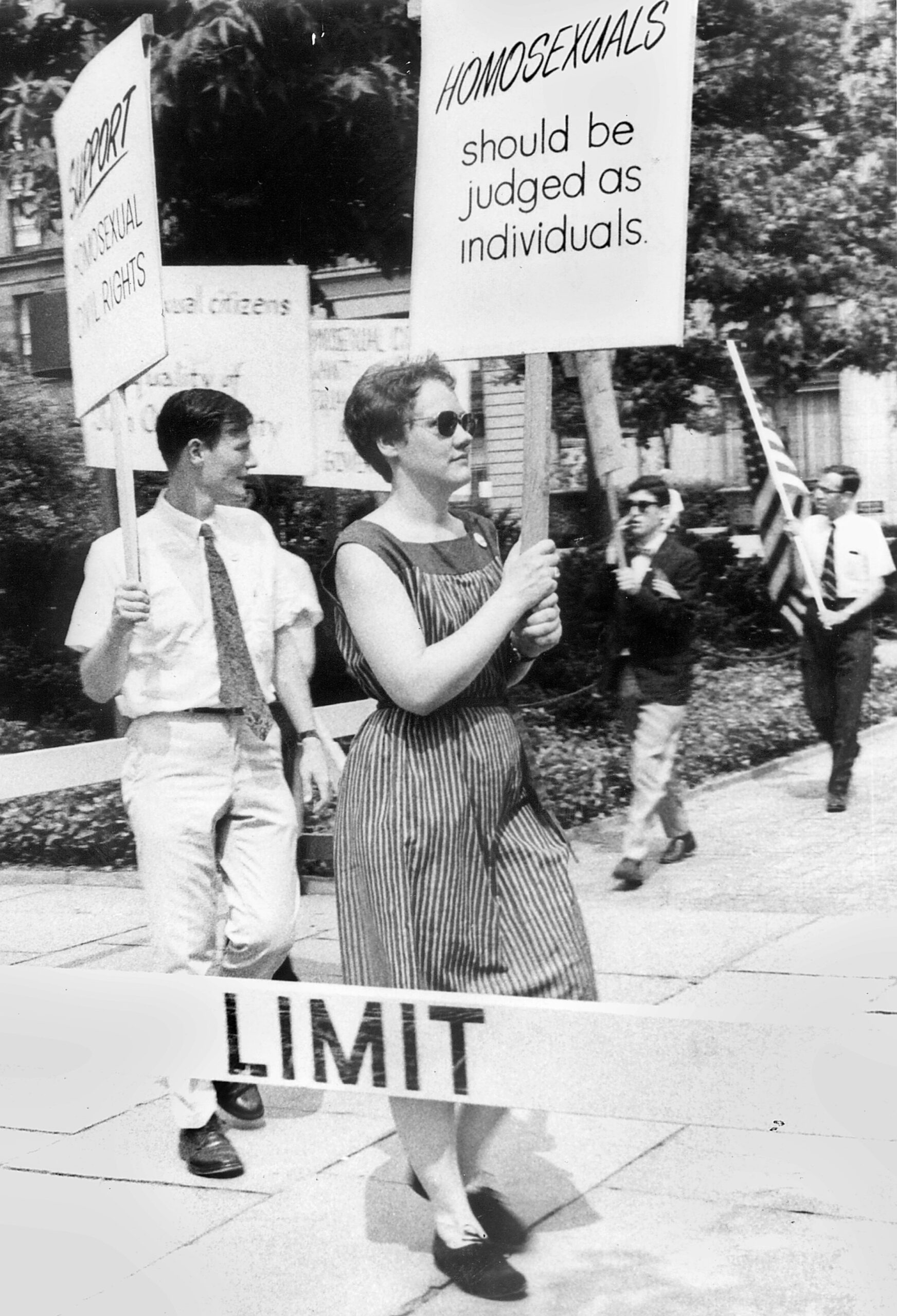
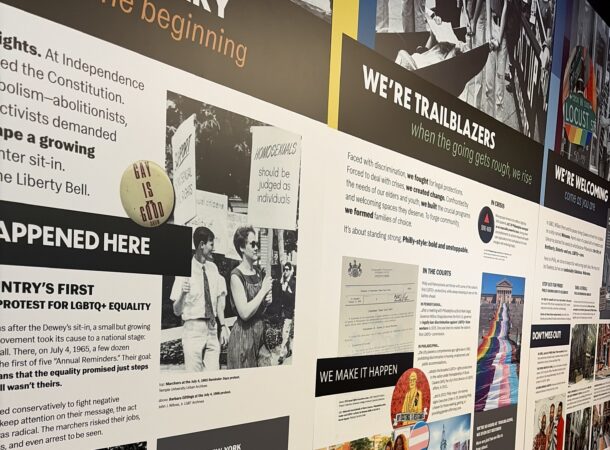
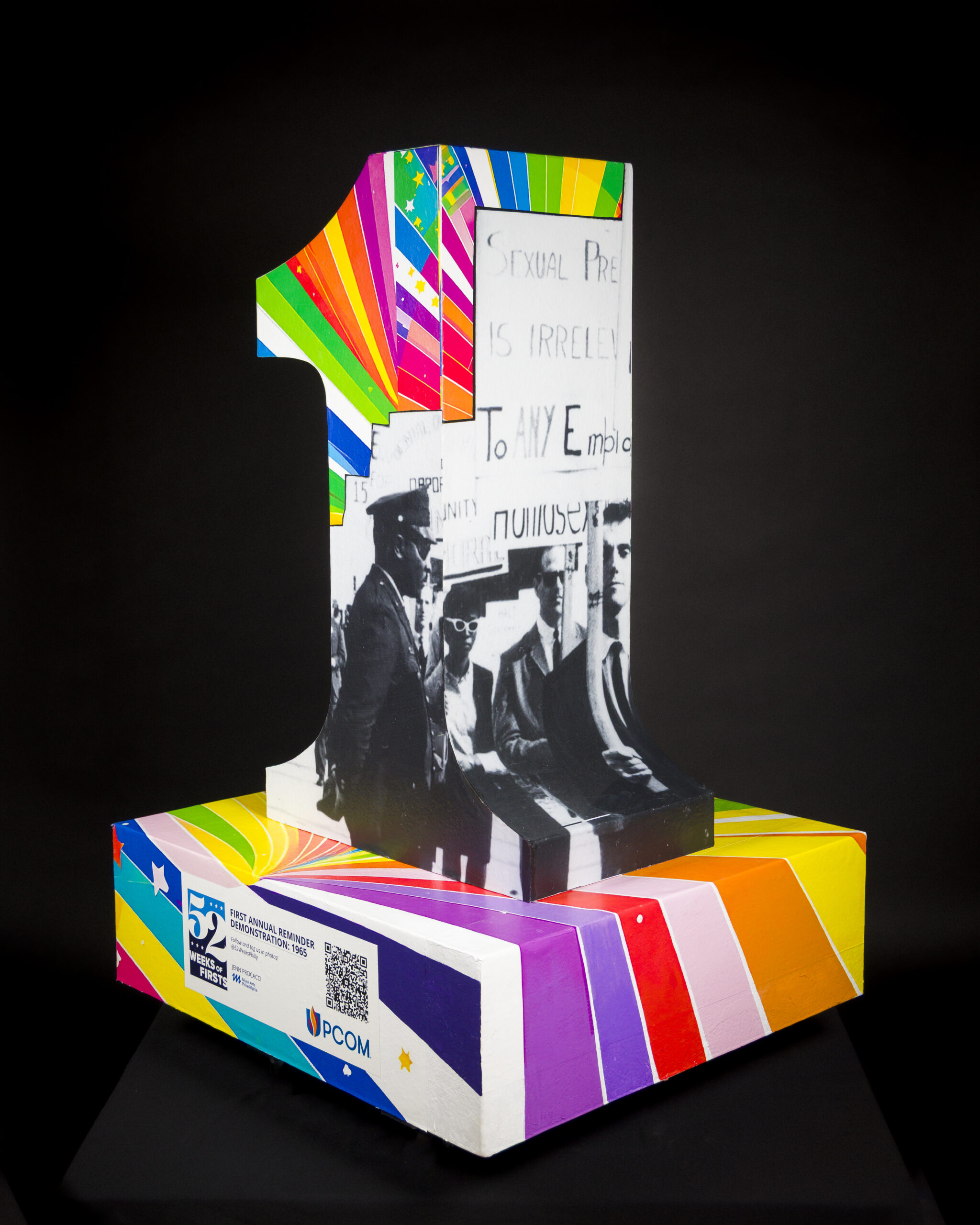
    On July 4, 1965, gay activists Frank Kameny of Washington, D.C., Craig Rodwell of New York, and Barbara Gittings of Philadelphia gathered 40 of their LGBTQ brethren in front of Independence Hall to demand equality.

    Dressed in three-piece suits, dresses, pumps, and spit-shined tie-ups, the marchers protested discriminatory policies that allowed gay people to be fired from government jobs and to be denied entry into military service.

    Their slogan: “We don’t dodge the draft … the draft dodges us.”

    Artist Jen Proacci’s sculpture features . historic photographs of a Remberance Day event rendered as a high-resolution print, paired with a vibrant rainbow sky that symbolizes the LGBTQ+ community’s ongoing pursuit of equality, protection and freedom.

    Held four years before the Stonewall Uprising in 1969, the march made history as the country’s first gay rights demonstration. That 1965 march became an annual protest, now known as the Remembrance March.

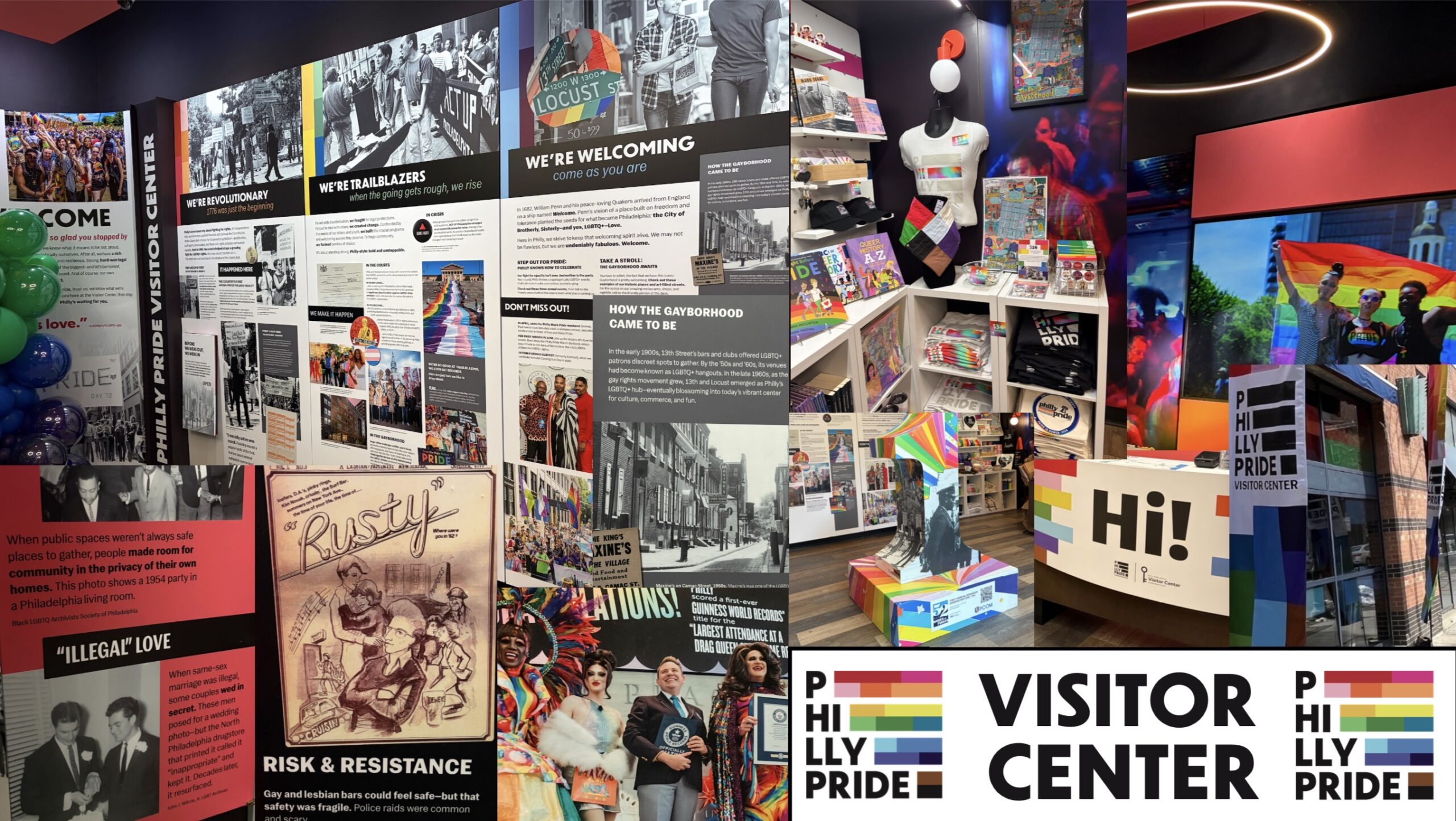
    The first gathering in 1965 will be celebrated at Philly Pride Visitor Center on Saturday, one of Philadelphia Historic District’s weekly firstival celebrations. Each week in 2026, the Historic District is throwing a day party honoring important events that happened in Philadelphia before anywhere else in the nation and often the world.

    “They were the only 40 to 100 people willing to get on the picket line for gay rights for those five years for the entire nation,” said Mark Segal, editor of the Philadelphia Gay News, who was a teenager in 1965.

    Picket at Independence Hall, Philadelphia. July 4, 1965. Randy Wicker (L), Barbara Gittings (R)

    “It was the one and only march of its kind, and it was national,” he said. “People came from Chicago, Los Angeles, San Francisco. If you were someone involved in getting equality for homosexuals at the time, then you were there.”

    Remembrance Marches predated Stonewall but they didn’t lead to Stonewall, Segal added.

    The Philadelphia demonstrators in the late 1960s were out of the closet but were still very conservative.

    “We were fighting for federal employment,” Kay Tobin Lahusen, the first openly gay American photojournalist, and Gittings’ partner, told The Inquirer in 2007 after Gittings’ death. “We wanted to look employable.”

    That conservative energy largely excluded young people at that time, including Segal.

    “I wasn’t allowed to march in the Remembrance Marches because I was too young. I didn’t want to wear a suit and tie. I wanted to protest in my jeans and my T-shirts. As a Philadelphian, I loved my city. I appreciated the marches and respect these brave people. But we were ready to smash invisibility.”

    Early photos of Philadelphia-based Gay Pride marches part of a collage in the Philly Pride Visitor Center.

    That sentiment bubbled across the nation.

    Early in the morning of June 28, 1969, LGBTQ protesters led a series of demonstrations against police raids at the now historic gay bar, Stonewall Inn, in New York City’s Greenwich Village.

    As a contrast to the more conservative Remembrance Marches, the Stonewall Riots, which Rodwell also participated in, were more disruptive and intersectional. Trans women of color, like Sylvia Rivera and Marsha P. Johnson, would eventually go on to become key figures in the uprisings.

    Philadelphia’s last Remembrance March took place the following week.

    The following June, East Coast Regional Conference of Homophile Organizations, also known as ERCHO, adopted a resolution in Philadelphia ending Remembrance March.

    That same month, on June 28, 1970, America’s first Gay Pride Liberation March in Greenwich Village was held in commemoration of the Stonewall Uprising.

    “We went from 40 to 100 people in Philadelphia to more than 15,000 in New York,” Segal said.

    “The Remembrance Days are important,” echoed Kristopher Lawrence, Philly Pride Visitor Center’s supervisor. “We were all trying to get to the same place, but we had different views on how we thought it should be done.”

    This week’s Firstival is Saturday, June 20, 11 a.m.-1 p.m., at the Philly Pride Visitor Center, 1139 Locust St.

    The Inquirer is highlighting a “first” from the Philadelphia Historic District’s 52 Weeks of Firsts program each week. A “52 Weeks of Firsts” podcast, produced by All That’s Good Productions, drops every Tuesday.
  • Do you buy a poinsettia to celebrate the holiday season? There is a very Philly history to that.

    Do you buy a poinsettia to celebrate the holiday season? There is a very Philly history to that.

    On Nov. 24, 1827, a group of gentleman who wanted to carry on the tradition of 18th-century area botanists John Bartram and James Logan held the first meeting of the Pennsylvania Horticultural Society.

    Like Bartram and Logan, these men were eager to showcase Philadelphia’s fertile ground for native plants and exotic imports. So, they would often bring along plants to their meetings.

    And it wasn’t just the men at these meetings. According to a history of the Pennsylvania Horticultural Society, published in 1927, members brought “more than 40 specimens of plants and flowers, 15 varieties of pears and apples, American grape wine, cauliflower, and broccoli,” to a Nov. 3, 1828, meeting.

    Less than a year later, the inaugural Horticultural Society members decided to take their admiration of plants and flowers to the city at large.

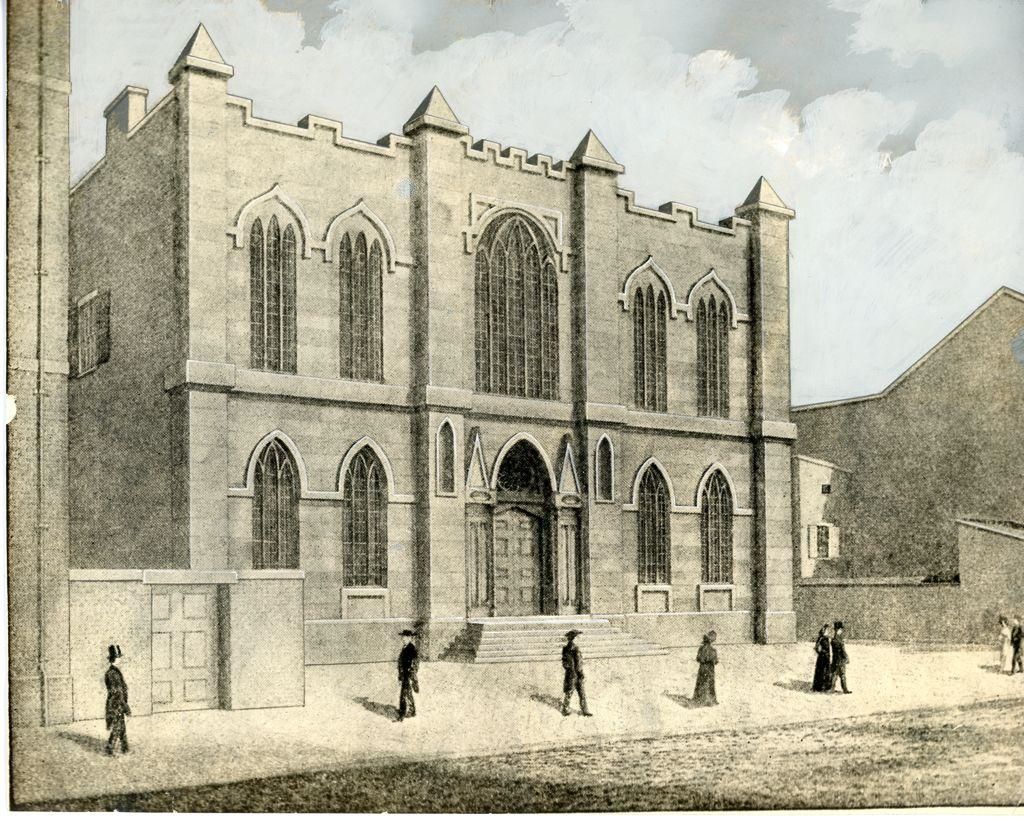
    The first Philadelphia Flower Show was held on June 6, 1829, at the Masonic Hall on Chestnut Street between Seventh and Eighth Streets.

    On June 6, 1829, the Horticultural Society held its first semiannual exhibition of fruits, flowers, and plants at the Masonic Hall on the 700 block of Chestnut Street. That was America’s first public flower show.

    The first flower show will be marked Saturday at the Philadelphia Downtown Marriott, just steps from the Pennsylvania Convention Center where the 197th Philadelphia Flower Show’s final weekend will be underway.

    The celebration is one of this year’s weekly Firstivals. Each Saturday in 2026, the Philadelphia Historic District is throwing a day party marking events that happened in Philadelphia before anywhere else in America and often the world as part of America’s 250th birthday.

    Philadelphia’s first Flower Show, said Janet Evans, librarian for the Pennsylvania Horticultural Society, was a one-day affair.

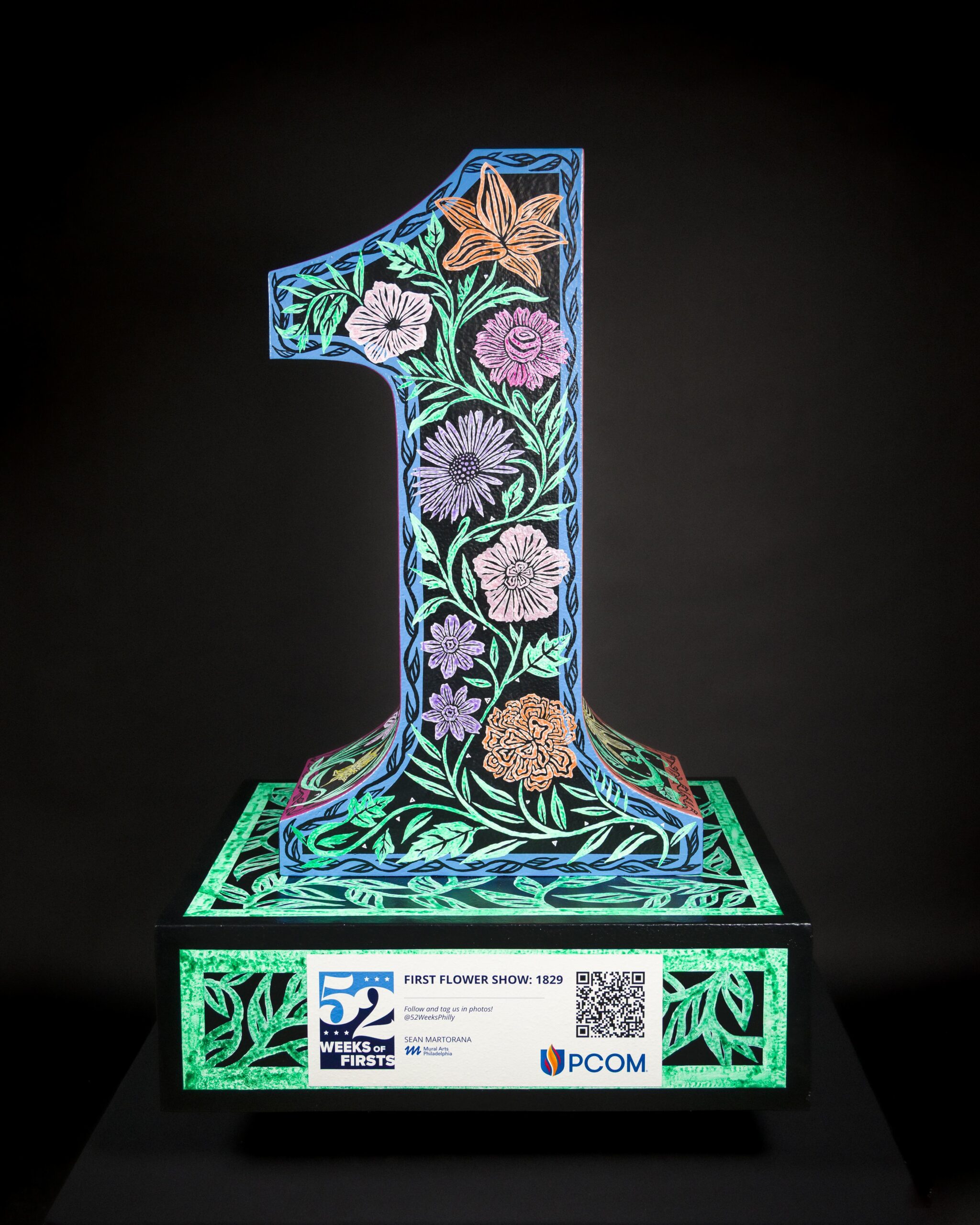
    Sean Martorana’s No. 1 honors the role of art and nature in bringing communities together.

    On display were the bigleaf Magnolia, geraniums, carnations, lilies, and pomegranate, Evans said. It was also the first time the poinsettia — now a symbol of the holiday season — was exhibited in North America.

    “So many plants we take for granted in our gardens today were introduced to the Philadelphia public at the Flower Show,” she said, adding that at later exhibitions, more exotic plants from birds of paradise to dahlias made appearances.

    The show was held in June until the 1830s when it was moved to September to mark the fall harvest. The present-day multiday spring flower shows started in the mid-1920s, to debut Easter blooms.

    The Flower Show was held in venues in West Philly before making the Convention Center its permanent home in 1996. (Although it was held in FDR Park in 2021 and 2022 during the pandemic.)

    There were no shows during World War I (1917-1918) and World War II (1943-1946) because resources were being diverted to war efforts. During those years, Evans said, the Horticultural Society organized Victory Garden Harvest Shows, set up to encourage people to grow vegetable gardens at home and their communities to compensate for wartime shortages.

    There were similar shows during the Great Depression, Evans said. “People flocked to those shows,” she added.

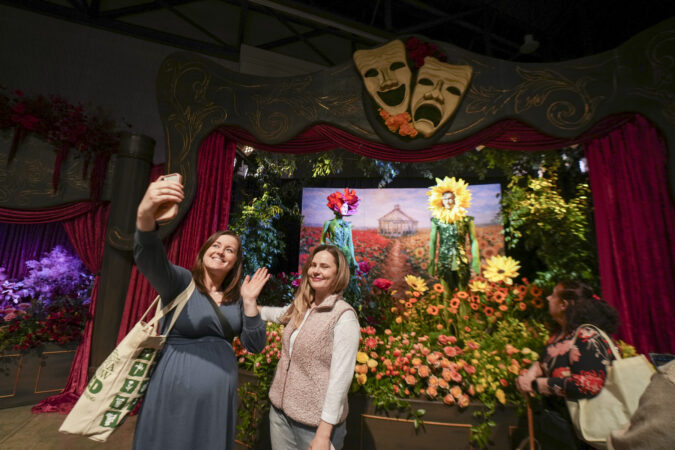
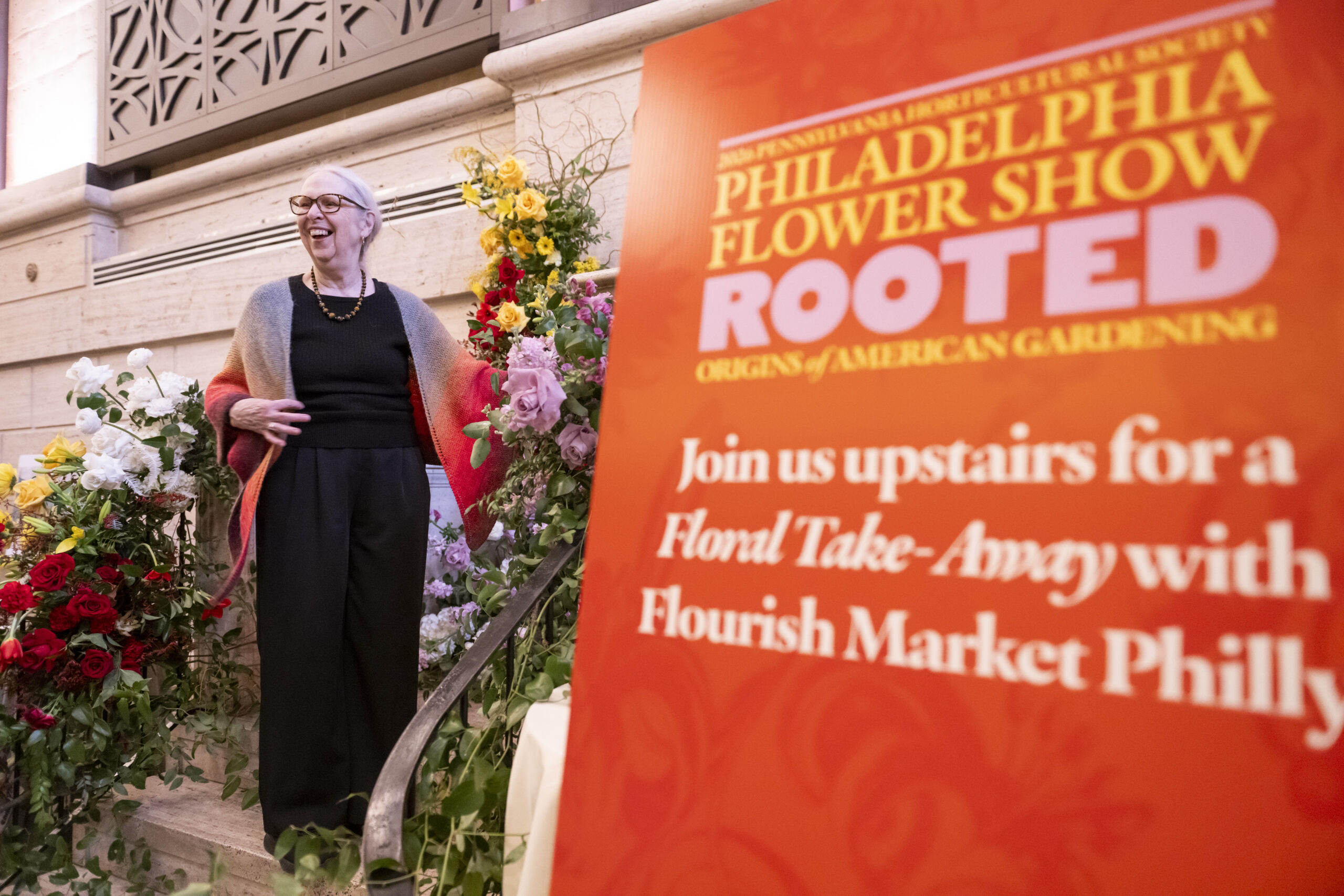
    Laura Blanchard, member and volunteer with the Philadelphia Flower Show, poses for a photo by a flower display at a news conference for a first-look unveiling of the 2026 Philadelphia Flower Show, “Rooted: Origins of American Gardening,” at Union Trust on Wednesday, Jan. 14, 2026.

    Today the Philadelphia Flower Show is a major city attraction. Last year, more than 235,000 people attended, said Lauren Scully, public relations and communications manager for the Pennsylvania Horticultural Society.

    This year’s Flower Show, “Rooted: Origins of American Gardening‚” celebrates America’s 250th birthday, honoring the people, places, and traditions that have shaped gardening.

    “It all started from men whose whole idea was to get together, admire, and share their love of plants,” Evans said.

    This week’s Firstival is Saturday, March 7, 11 a.m.-1 p.m., Philadelphia Marriott Downtown, 1201 Market St. The Inquirer will highlight a “first” from the Philadelphia Historic District’s 52 Weeks of Firsts program every week. A “52 Weeks of Firsts” podcast, produced by All That’s Good Productions, drops every Tuesday.
  • How Germantown became the building block of the abolitionist movement

    How Germantown became the building block of the abolitionist movement

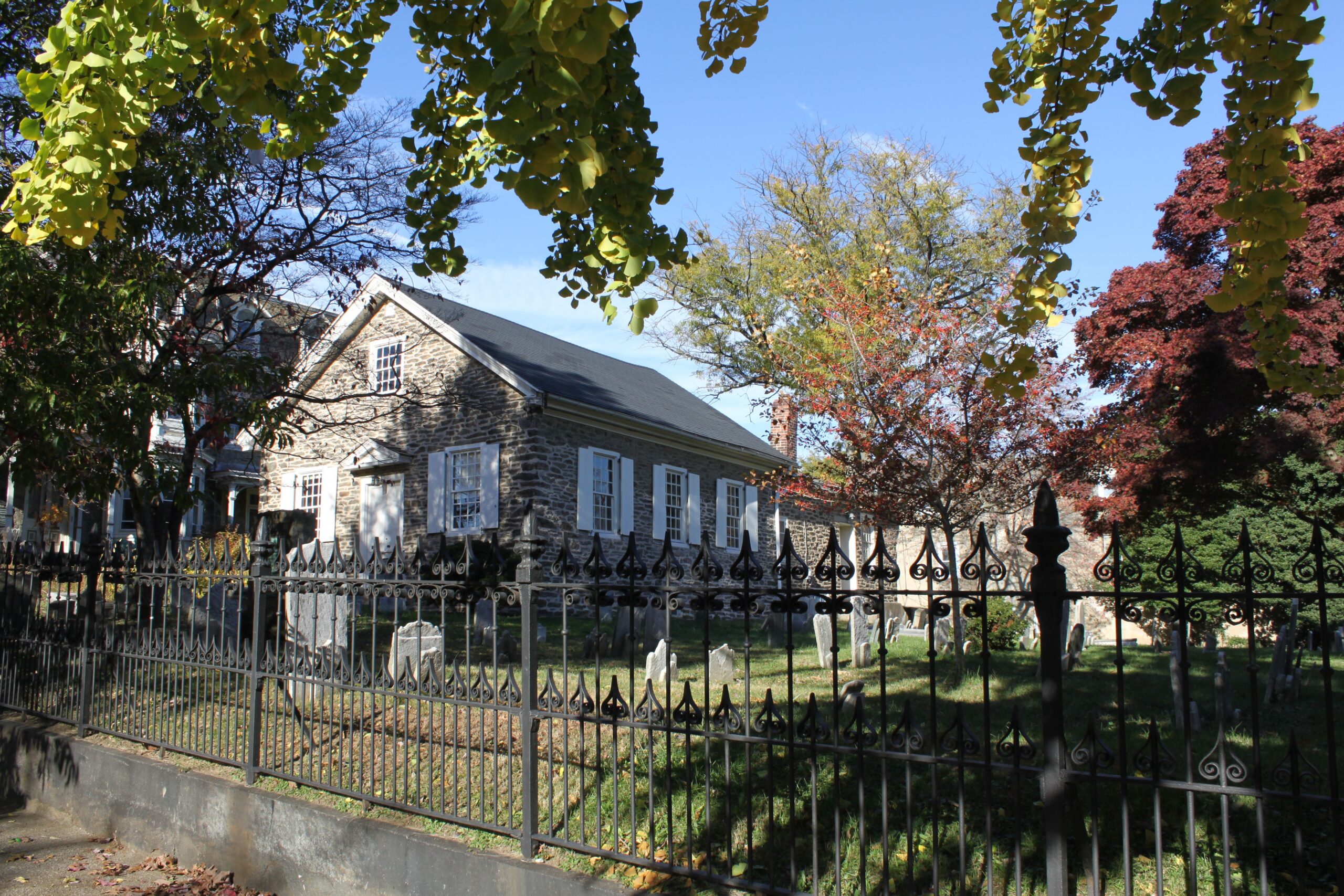
    In 1683, the Concord arrived in Old City from Krefeld, an artisan community in Germany, with 33 people aboard, many of whom practiced the Mennonite and Quaker faiths.

    America’s newest arrivals took the windy, wooded trail uptown, settling along the Lenape Great Road, what today is called Germantown Avenue, the Northwest’s main thoroughfare.

    Mennonites are Anabaptists, Christians who are baptized as adults. And although Quakers aren’t, the two groups worshipped together in the home of settler Thönes Kunders at 5109 Germantown Avenue. Their shared belief in Christian pacificism and non-violence united them.

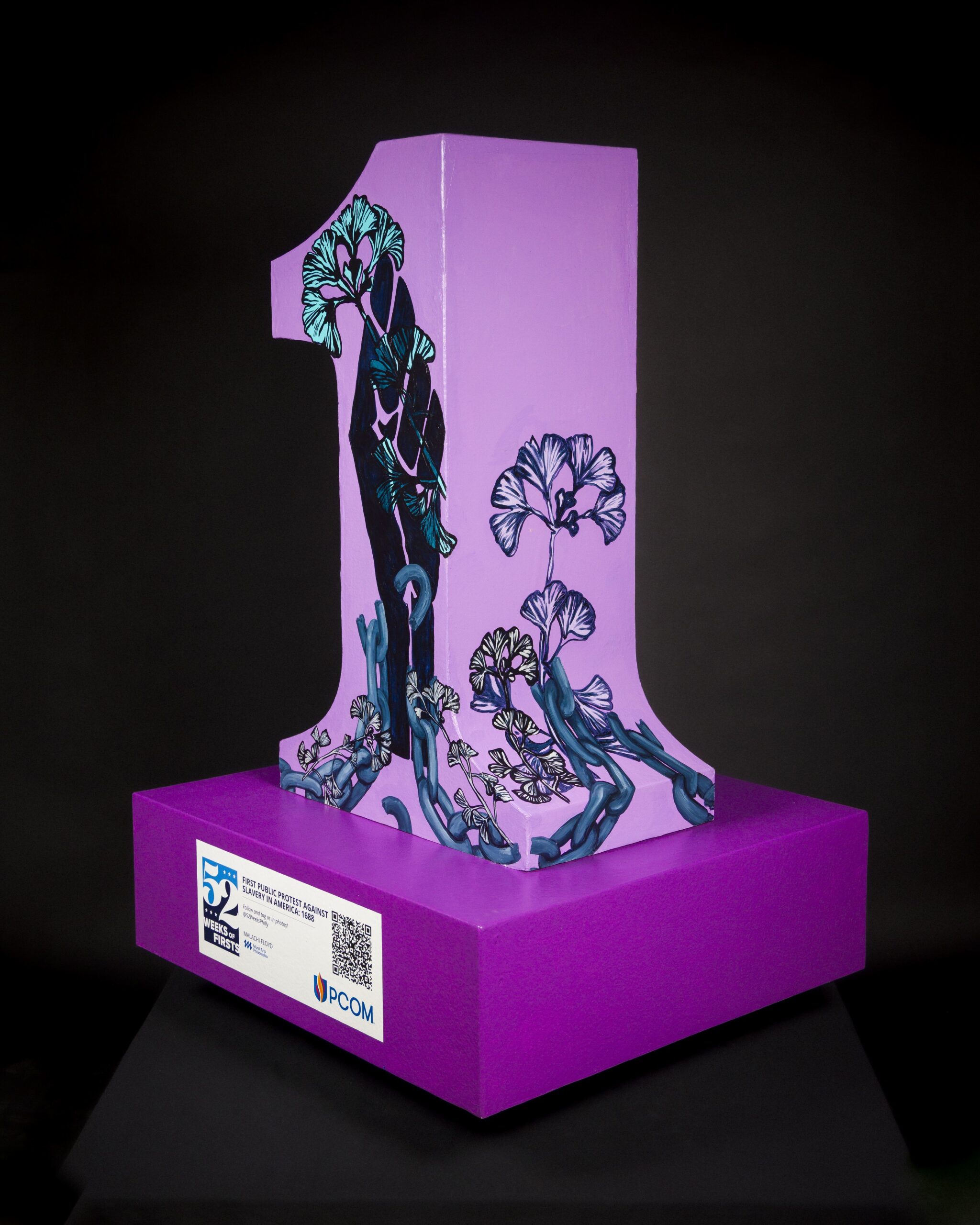
    Here they drafted a petition that would become the public protest against slavery in British Colonial North America. Germantown’s history is rooted in this incident.

    This historic protest will be remembered at Saturday’s firstival at the Historic Germantown Mennonite Meetinghouse. Each weekend in 2026, the Philadelphia Historic District is throwing a party in honor of America’s 250th birthday. The bashes mark events that happened in Philadelphia before anywhere else in America and often the world.

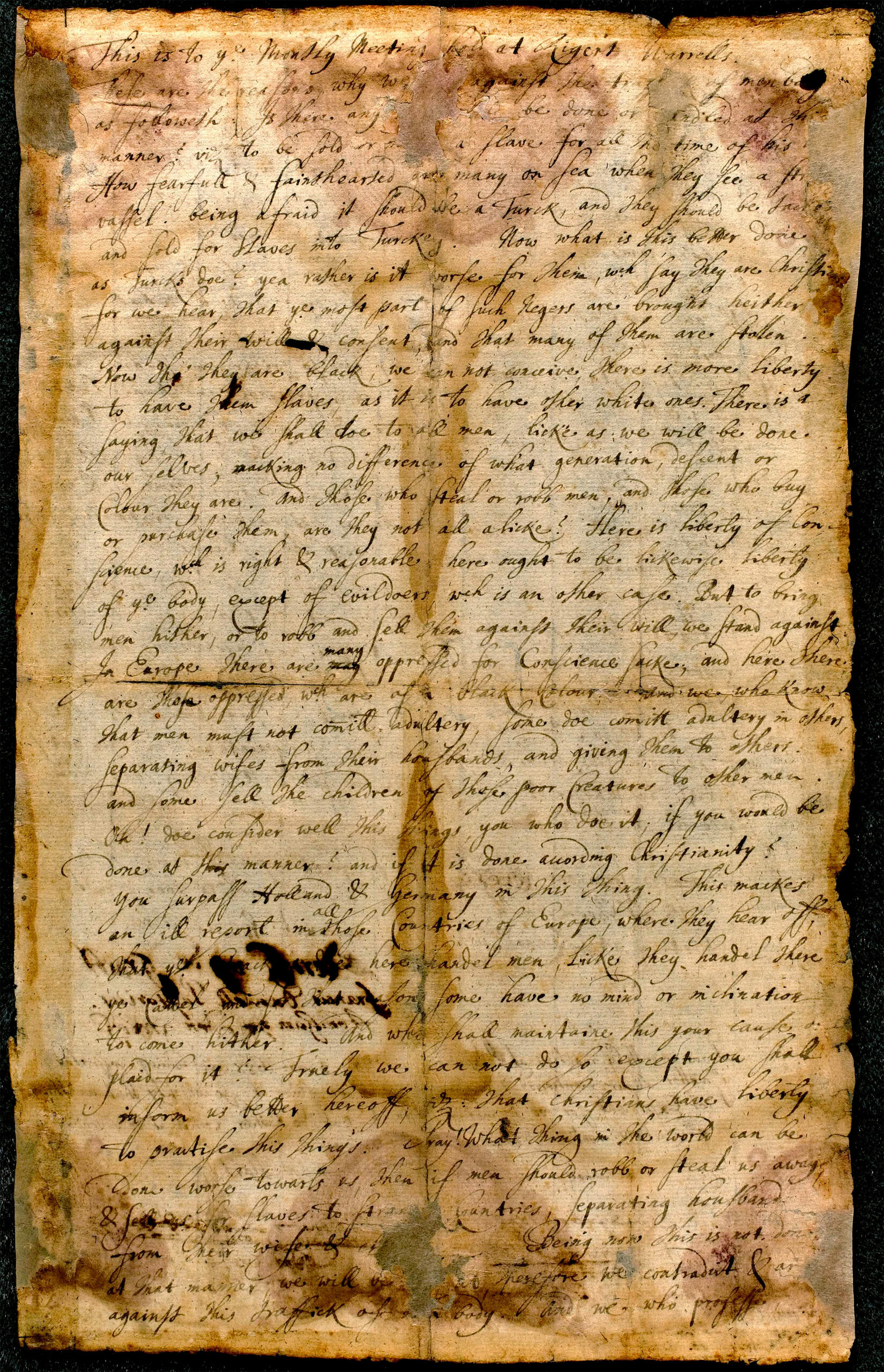
    That is the original, restored 1688 Germantown protest against slavery. It’s on deposit at Haverford Colleges library’s Quaker collection. It had been missing for decades until discovered in a vault at Arch Street meetinghouse

    Early Germantown settlers were familiar with European slavery. However, America’s version of chattel slavery, with its backbreaking labor, cruelty, and separation of families, went against Quaker and Mennonite religious beliefs, said Craig Stutman, a history professor at Delaware Valley University in Doylestown.

    Historians believe this inspired Quaker friends and Mennonites — Garret Henderich, brothers Abraham and Dirck op den Graeff, and Germantown’s founder Francis Daniel Pastorious — to draft a petition‚ stating good Quakers must had to reject the brutal human trafficking. On April 18, 1688, the men signed the protest in Kunder’s home.

    Artist Malachi Floyd said, “This piece commemorates the first public protest against slavery in America, recognizing the early courage to challenge injustice and advocate for human dignity. “

    Pastorious, Hendricks, and the op den Graeff brothers took their petition to local Quaker meetings in Dublin, today’s Abington Friends; the Philadelphia Quarterly Meeting; and the annual meeting in Burlington, NJ. They wanted the Quaker hierarchy to acknowledge slavery was an evil practice that needed to stop.

    Their pleas were swept under the rug because even in these early American Quaker circles, enslaved people were the backbone of the economy.

    “Even people like Pennsylvania’s founder William Penn owned slaves and didn’t want to touch the political lightening rod,” Stutman said.

    The rejection of the protest petition didn’t stop the fight.

    In 1758, Quakers George Keith, Benjamin Lay, and Anthony Benezet, convinced Quakers to enact a law saying slaveholders could not be members of the Society of Friends.

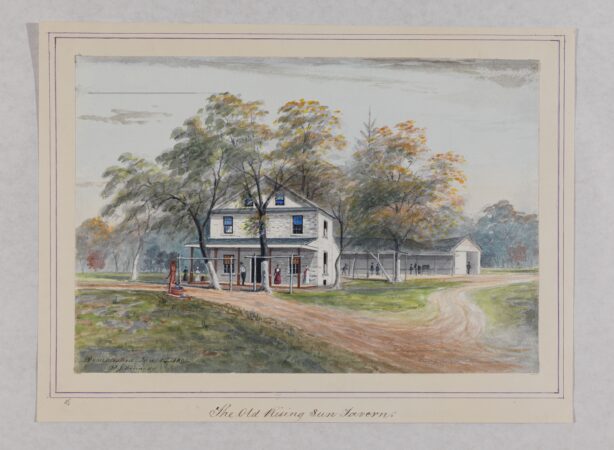
    Seventeen years later, America’s first antislavery meeting was held at the Rising Sun Tavern.

    “This was a first step in the direction of allyship with free and enslaved Black people who had long been fighting for freedom through slave revolts and cobbling together abolitionist societies,” Stutman said.

    “And it was the foundation. So ultimately by the late 18th and early 19th century, Philadelphia would be a place where Black and white people worked together and fought against the institution of slavery, and where the enslaved came for freedom.”

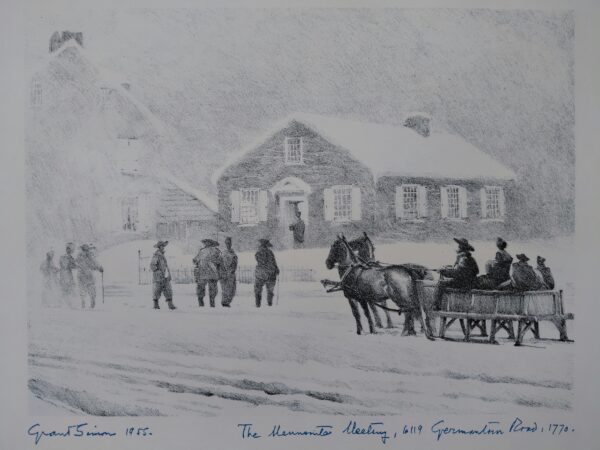
    A recent people of the Mennonite Meetinghouse in Germantown, 6119 Germantown Avenue.

    The protest petition was lost in the Quaker archives sometime in the 1700s. It was rediscovered in 1844, when it was used by abolitionists to inspire a new generation of freedom fighters.

    It currently resides at the Haverford Library Quaker and Special Collections.

    This week’s Firstival is Saturday, Feb. 28, 11 a.m.-1 p.m., Historic Germantown Mennonite Meetinghouse, 6119 Germantown Avenue. The Inquirer will highlight a “first” from the Philadelphia Historic District’s 52 Weeks of Firsts program every week. A “52 Weeks of Firsts” podcast, produced by All That’s Good Productions, drops every Tuesday.
  • Yes, there are older Chinatown gates in the country. But Philadelphia’s is the real deal.

    Yes, there are older Chinatown gates in the country. But Philadelphia’s is the real deal.

    By the early 1980s, Philadelphia’s Chinatown was more than 100 years old and struggling to survive.

    Boxed in by the Vine Street Expressway, Market Street, the old Metropolitan Hospital, and the Convention Center, the neighborhood had no space to grow and no way to shine.

    In 1982, executive director of the Philadelphia Chinatown Development Corp. Cecilia Moy Yep — well-known for stopping the razing of Holy Redeemer Chinese Catholic Church — and architect James Guo went to China and formalized a Sister City agreement between Philadelphia and the northern Chinese city of Tianjin.

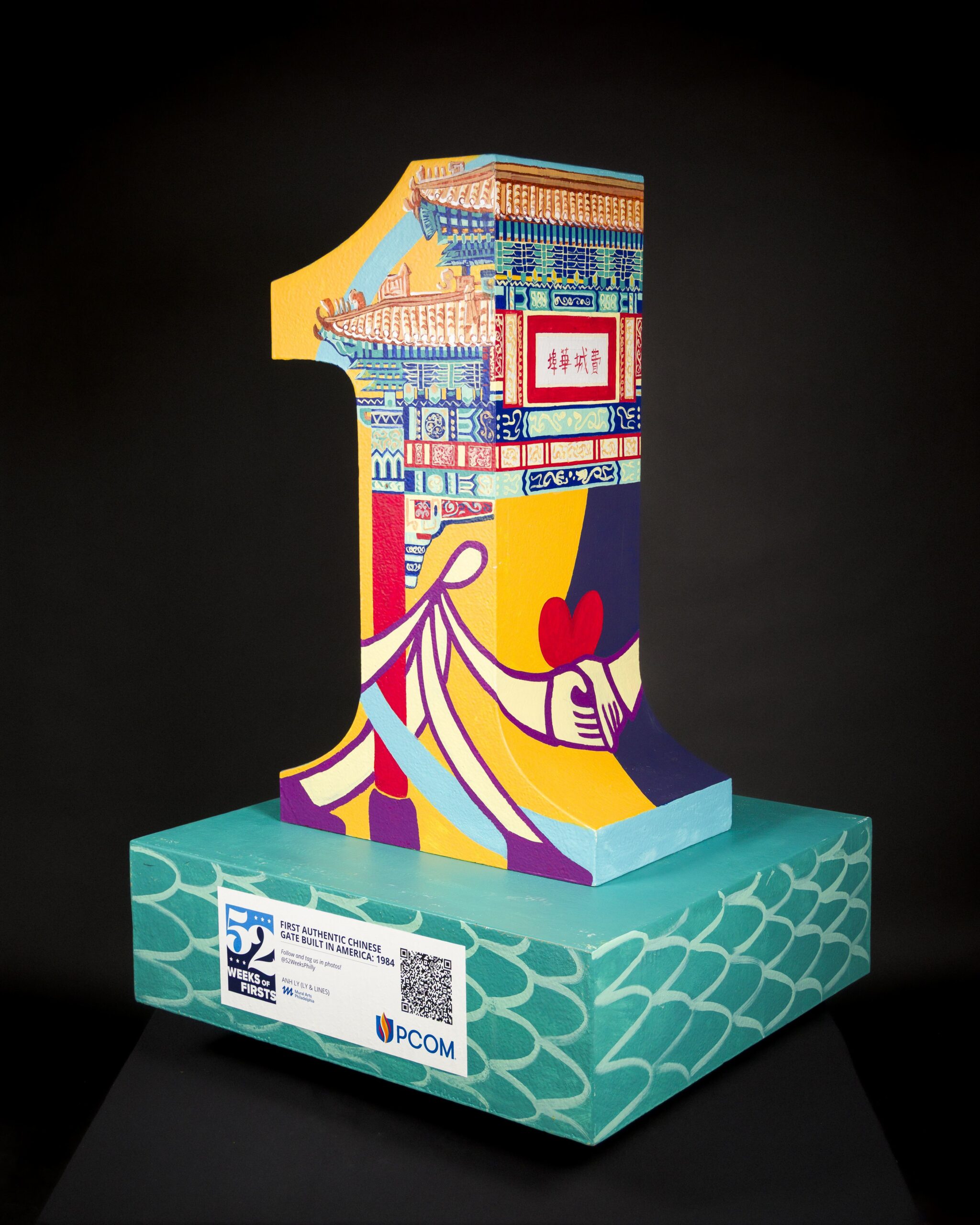
    Anh Ly’s “One” sculpture unites Philly’s Friendship Gate and Tianjin’s Ferris wheel bridge. The supporting legs resemble two people holding hands across culture and distance. The Chinese dragon’s spirit reinforces this connection with resilience and reverence.

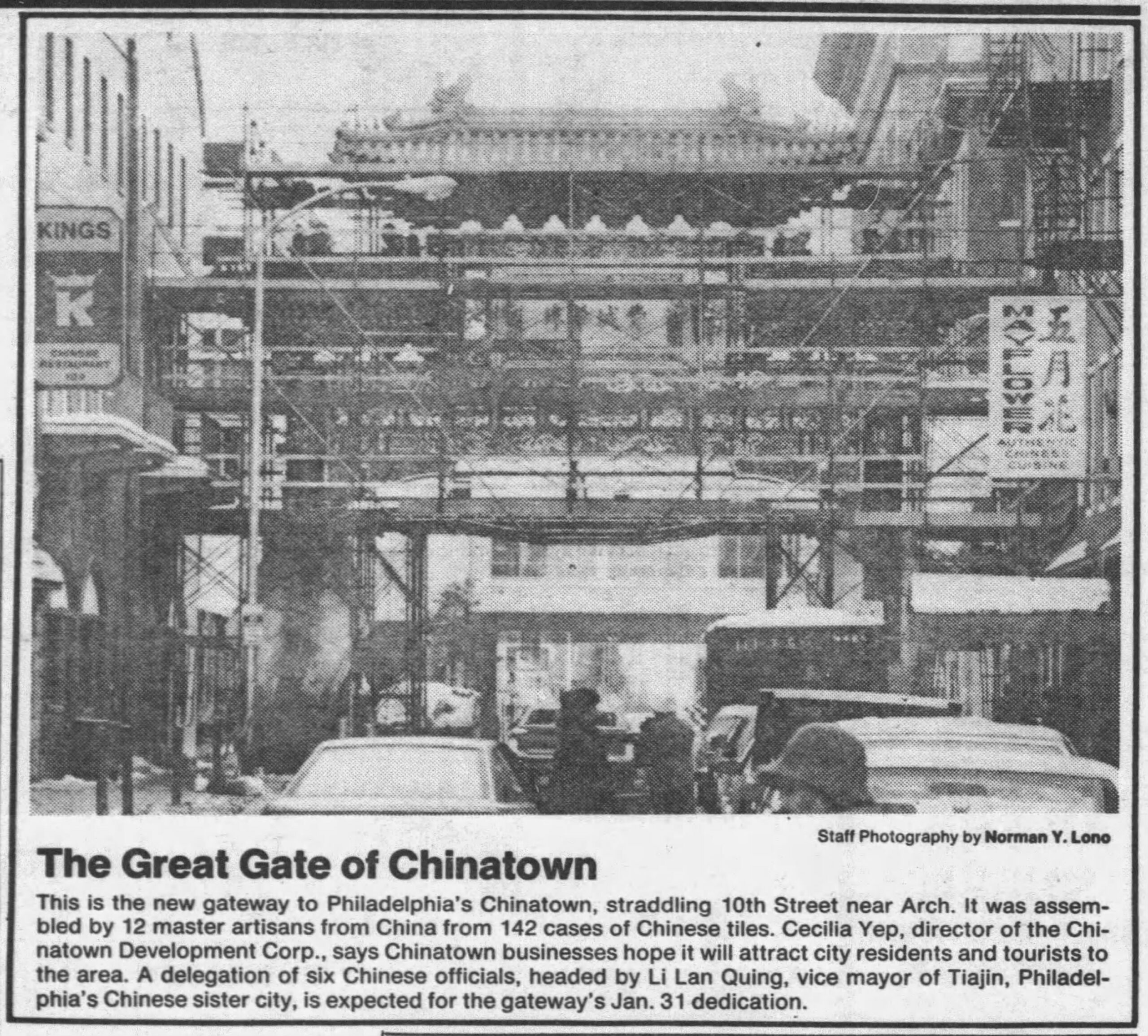
    Plans for an ornate Chinatown entryway followed. In October 1983, 12 artisans from Tianjin and Beijing arrived in Philadelphia and spent three months building a 88-ton, 40-foot-tall gate with wood, tiles, stone bases, and a special material that incorporates pig’s blood that’s painted over the wood to stop it from fading and shipped from China.

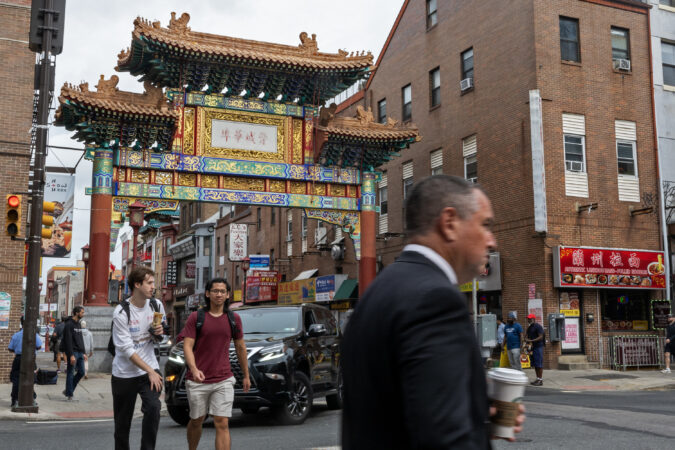
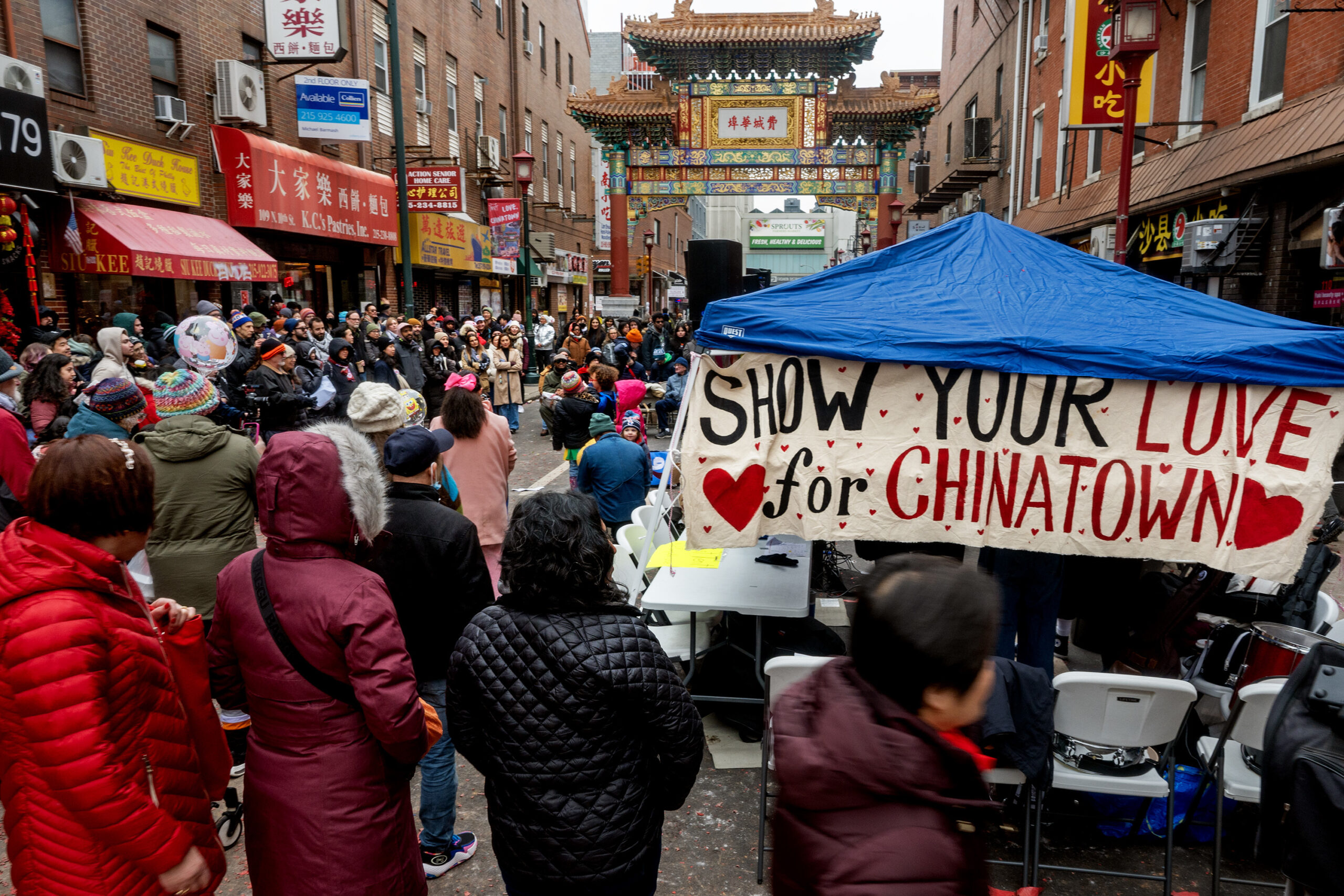
    The San Francisco Chinatown Gate had been built in the 1970s and Boston’s was finished in 1982. But Philly’s Friendship Gate, erected at the intersection of 10th and Arch Streets, is the first Chinese American archway built with materials from Asia, making Philly’s gate the “authentic” deal.

    That first authentic Chinese gate built in America will be feted Saturday in Chinatown at the Crane Community Center, this week’s Philadelphia Historic District’s Firstival celebration. Firstivals are a year’s worth of parties marking America’s 250th birthday, noting events that happened in Philadelphia before anywhere else in America and often the world.

    The Friendship Gate, built in traditional Qing Dynasty style, cost more than $200,000 in city funds to construct. The ribbon-cutting ceremony in January 1984 featured the ceremonial dance of the Chinese lion known as Wushi, performed for good luck and to chase away evil spirits, and speeches from city officials in both Mandarin and English.

    “We needed something to attract people into Chinatown,” Yep told The Inquirer, shortly after its Jan. 31, 1984, unveiling.

    Its mud brown roof, square beams, dazzling green and gold patterns, and birds and dragons outlining the sky, mark the point where Center City meets the Chinese community.

    A Daily News clipping from Jan. 23, 1984, shows Chinatown’s Friendship Gate during construction.

    Five months after the Friendship Gate was completed, a fire — then the biggest in Center City history — raced north from 10th and Filbert Streets and stopped, almost magically, at the Friendship Gate.

    “I am so glad the gate was not damaged,” T.T. Chang, then president of the Chinese Cultural Society — and unofficial mayor of Chinatown — told The Inquirer.

    In September 1984, the Philadelphia Chinatown Development Corporation introduced the first official postcard with the Friendship Gate’s image, marking it as a bona fide tourist attraction. (Although its real goal was to raise $55,000 to pay for the portion of the gate the city refused to pay for.)

    In 2008, in its 24th year as a recognized Philadelphia monument, the gate was rededicated after a yearlong, $200,000 renovation project.

    Community organizers hold a “No Arena” block party near the Friendship Gate in Chinatown on Feb. 2, 2025, as the neighborhood celebrates the Lunar New Year with a parade, lion dancers, and fireworks.

    Chinatown has had its challenges over the last decades, but it continues to thrive. For 41 years, the Friendship Gate has stood proudly, a welcoming archway rooted in resistance.

    This week’s Firstival is Saturday, Feb. 21, 11 a.m.-1 p.m., Crane Community Center, 1001 Vine St. The Inquirer will highlight a “first” from the Philadelphia Historic District’s 52 Weeks of Firsts program every week. A “52 Weeks of Firsts” podcast, produced by All That’s Good Productions, drops every Tuesday.
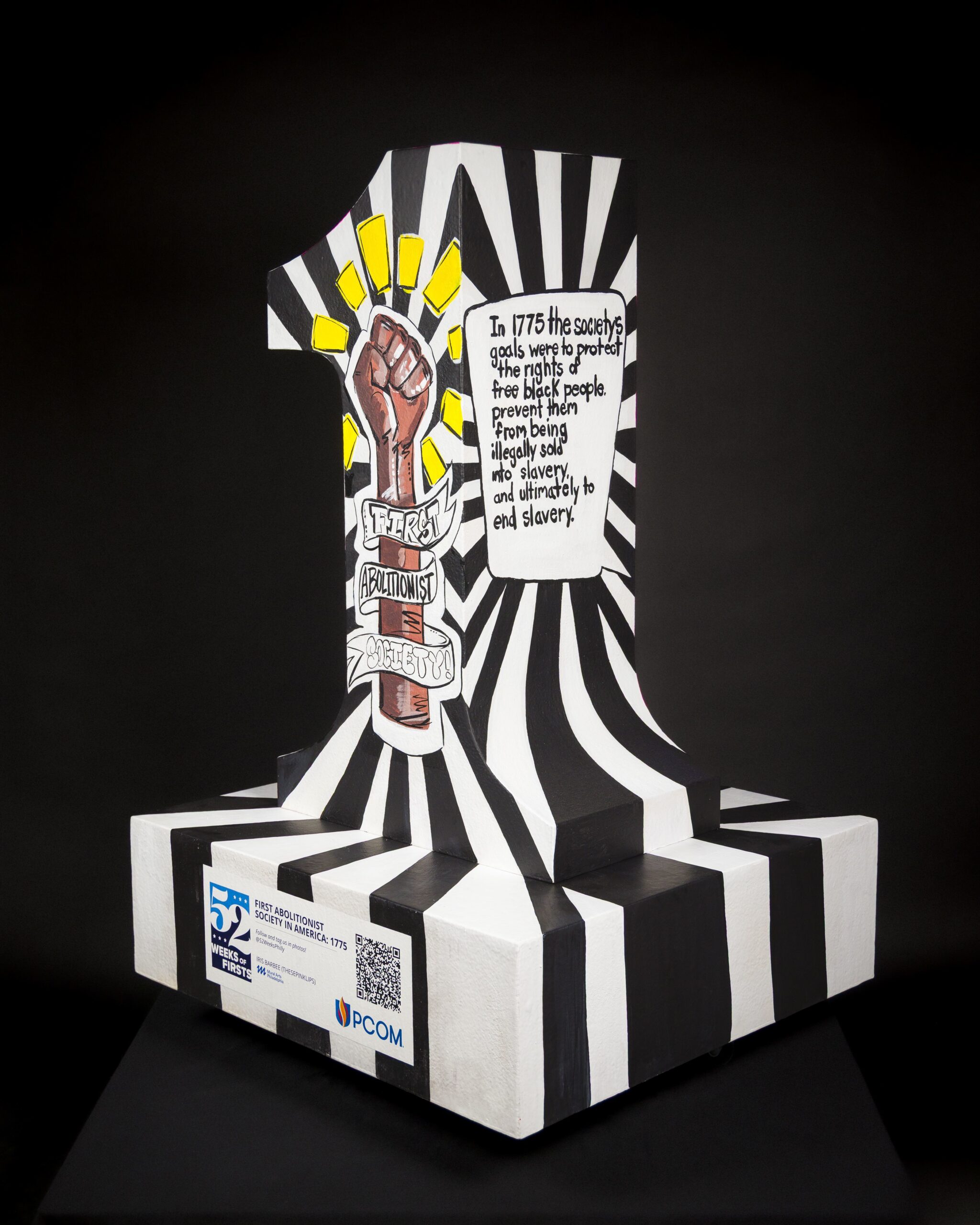
  • In 1775, 24 men met in a Philadelphia tavern. That meeting led to ending slavery in America.

    In 1775, 24 men met in a Philadelphia tavern. That meeting led to ending slavery in America.

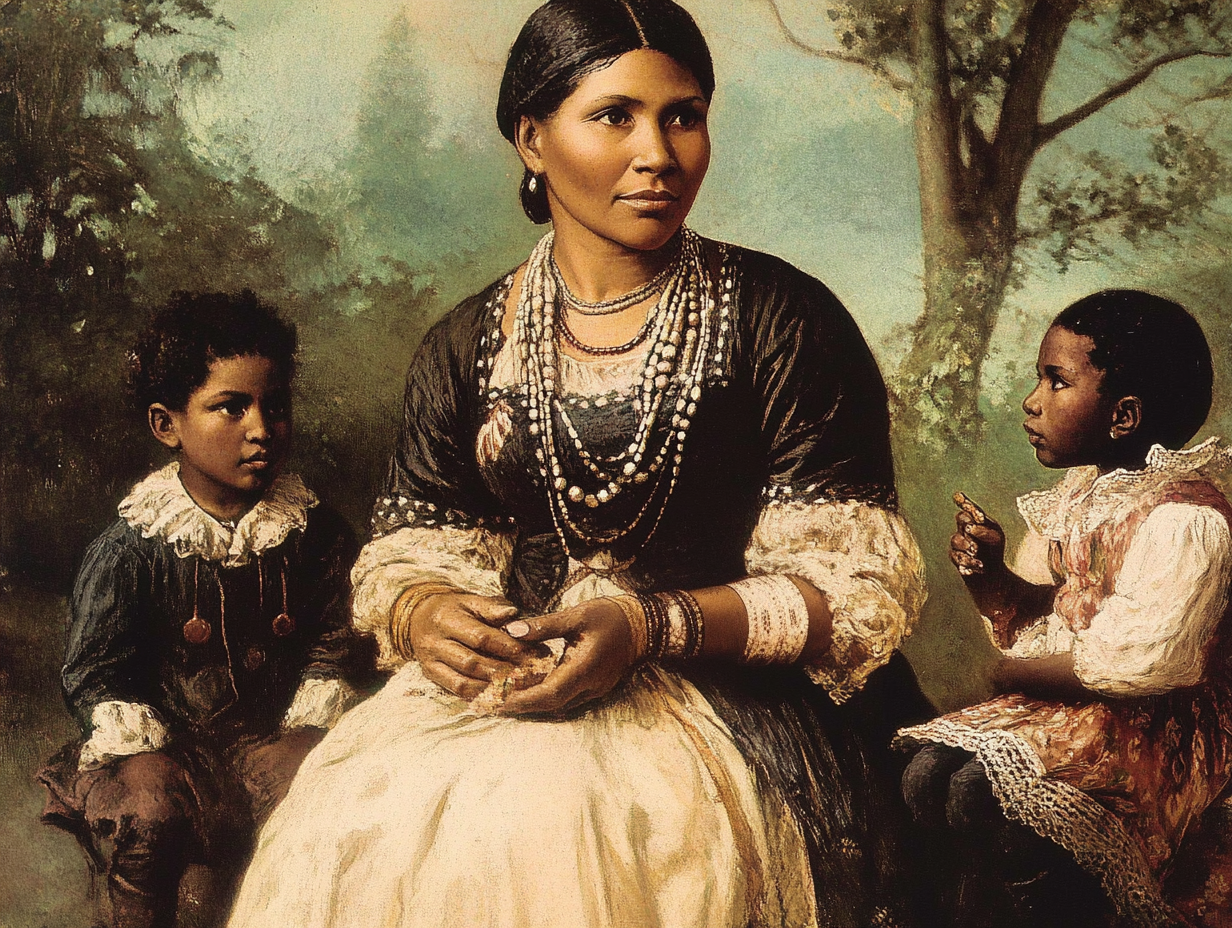
    In 1773 Dinah Nevil, an Indigenous, Black, and European multiracial woman and her four children arrived in Philadelphia from Flemington, N.J, under orders from a slave trader who intended to eventually sell Nevil to the Deep South, or perhaps the Caribbean.

    Nevil protested.

    Philadelphia authorities sympathetic to her plight, kept her in a work house for two years while figuring out the next steps to her freedom. The conditions were so horrid two of her children died.

    An image of Dinah Nevil imagined by the 1838 Black Metropolis.

    Enter Israel Pemberton Jr. and Thomas Harrison, Quakers who, like most Quakers in colonial Philadelphia, actively fought slavery. Keeping people in bondage was considered immoral in their religion.

    Pemberton and Harrison filed a lawsuit against Nevil’s enslaver because they sought to set a precedent by making it unlawful to sell Black people into slavery on free soil, not just in Pennsylvania, but in all of the colonies.

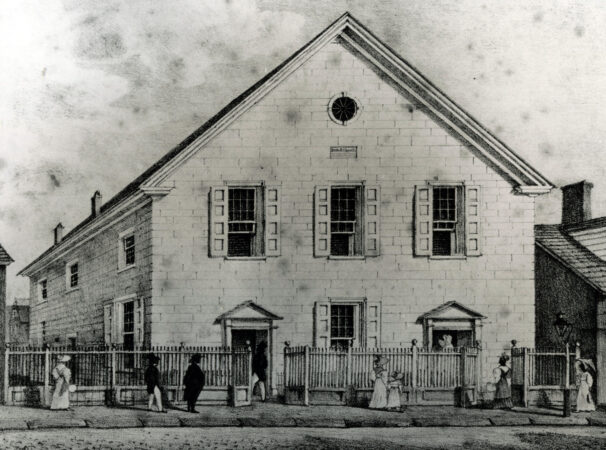
    So, on April 14, 1775, Quaker leaders and educators Anthony Benezet and John Woolman gathered 24 men — 17 of whom were Quakers — at the Rising Sun Tavern to discuss legal strategies on how to make that happen.

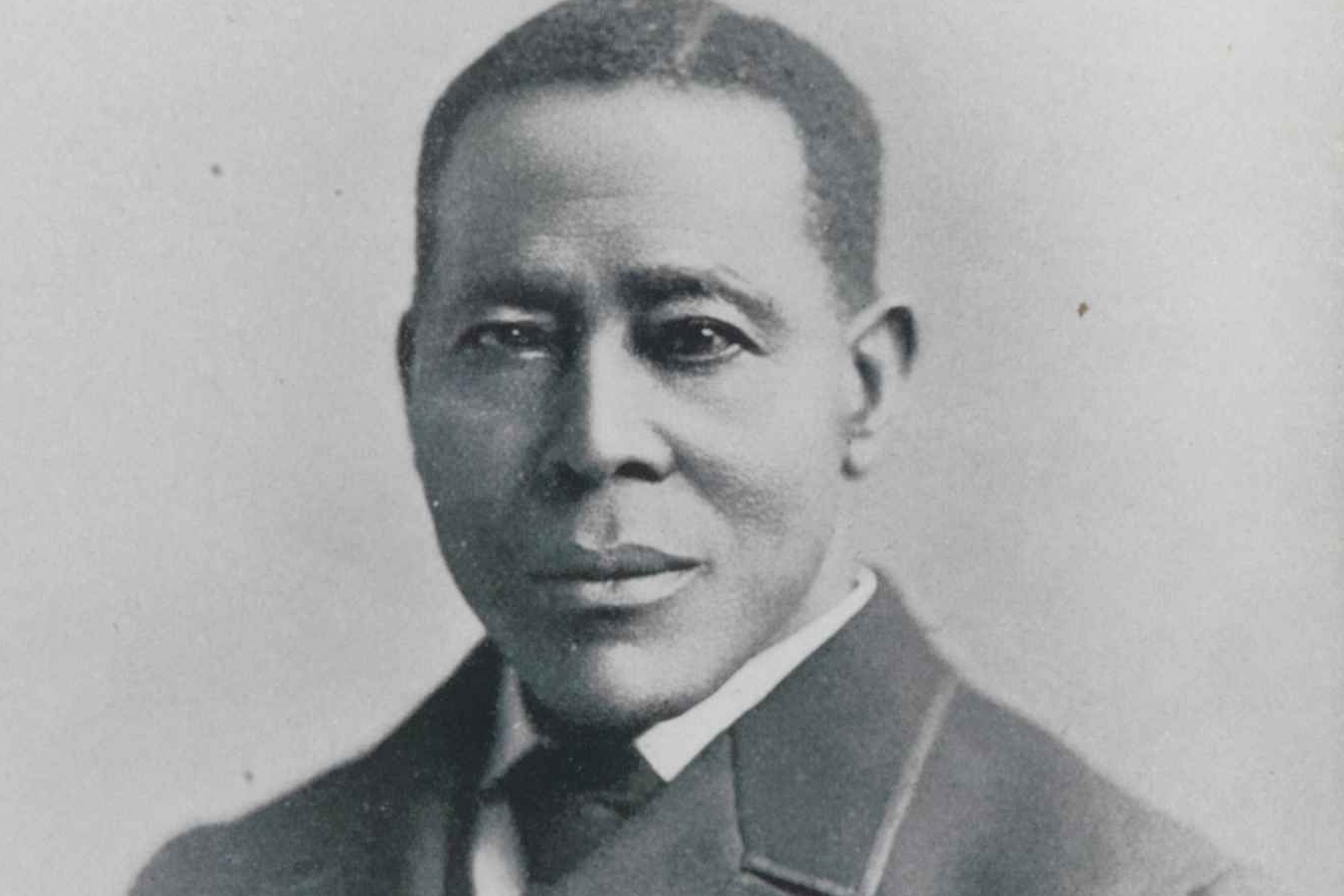
    Artist Iris Barbee Bonner’s No. 1 statue pays homage to William Still, an Underground Railroad conductor and key member of the Pennsylvania Abolitionist Society.

    That was the first gathering of an antislavery society in America and it will be celebrated Saturday at the African American Museum, part of the Philadelphia Historic District’s weekly firstival day party. Firstivals are a yearlong celebration of America’s 250th birthday marking events that happened in Philadelphia before anywhere else in America and often the world.

    The group led by Benezet and Woolman named themselves the Society for Relief of Free Negroes Unlawfully Held in Bondage. In addition to Nevil’s case, they advocated for four other people of color who were in the midst of being sold away from their families. Nevil was ultimately freed when Harrison bought her and within days, signed manumission papers.

    In 1776, 18 years after Quakers told their members they could no longer participate in the slave trade, Quakers were forbidden from enslaving people. Thanks to the Quakers’ advocacy, Pennsylvania enacted the 1780 Gradual Abolition of Slavery Act, America’s first law to end slavery.

    Four years later, 18 Philadelphians resurrected the Society for Relief of Free Negroes and renamed it Pennsylvania Abolitionist Society, or PAS. Their goal was to stop Black and brown people from being indiscriminately picked up and sold into slavery in what was now a free state, but also to end slavery all together.

    “They knew they couldn’t do it overnight,” said Emma Lapsansky-Werner, an American history professor at Haverford College. “What they did was organize so that one-by-one Black people would find freedom.”

    Within two years, the PAS grew to 82 members and inspired other cities like New York and Boston to establish branches of their own. In 1787 — the same year the delegates voted that Black people were three-fifths of a person — Ben Franklin became the society’s president and under his leadership, the society petitioned the legislature to amend the act of 1780. This included preventing enslavers from taking pregnant enslaved women to the South so their children would remain property.

    William Still was a member of the Pennsylvania Abolitionist Society and chair of the Vigilance Committee of the Pennsylvania Anti-Slavery Society.

    The PAS wasn’t without its prejudices. It wasn’t until 1842 — 67 years after its founding — that Robert Purvis, a Black man, was allowed to join. William Still joined in 1847. Through Still’s work at the PAS and the Pennsylvania Anti-Slavery Society, he served as an Underground Railroad conductor helping more than 1,000 enslaved people find freedom.

    The PAS still exists today and advocates for equal rights and opportunities for all Americans.


    This week’s Firstival is Saturday, Feb. 14, 11 a.m.-1 p.m., The African American Museum Philadelphia, 701 Arch St. The Inquirer will highlight a “first” from Philadelphia Historic District’s 52 Weeks of Firsts program every week. A “52 Weeks of Firsts” podcast, produced by All That’s Good Productions, drops every Tuesday.
  • A formerly enslaved man was thrown out of an Old City church. He then founded America’s first African Methodist Episcopal church.

    A formerly enslaved man was thrown out of an Old City church. He then founded America’s first African Methodist Episcopal church.

    Mark Tyler, historiographer and executive director of research and scholarship of the African Methodist Episcopal Church, often wonders: What if Christians stood up in the 1780s and challenged the articles of the U.S. Constitution that said Black people were not whole human beings?

    What if the American branch of the Methodist church followed the teachings of its founder, John Wesley, who taught that slavery was a violation of Christian mercy? What if the ushers of Old City’s St. George’s Methodist Church didn’t kick formerly enslaved congregants Richard Allen and Absalom Jones out of the general congregation and force them to worship in segregated pews?

    “We would have avoided the Civil War,” Tyler said. “We would have avoided Jim Crow. We would have avoided the moment in history we are in now.”

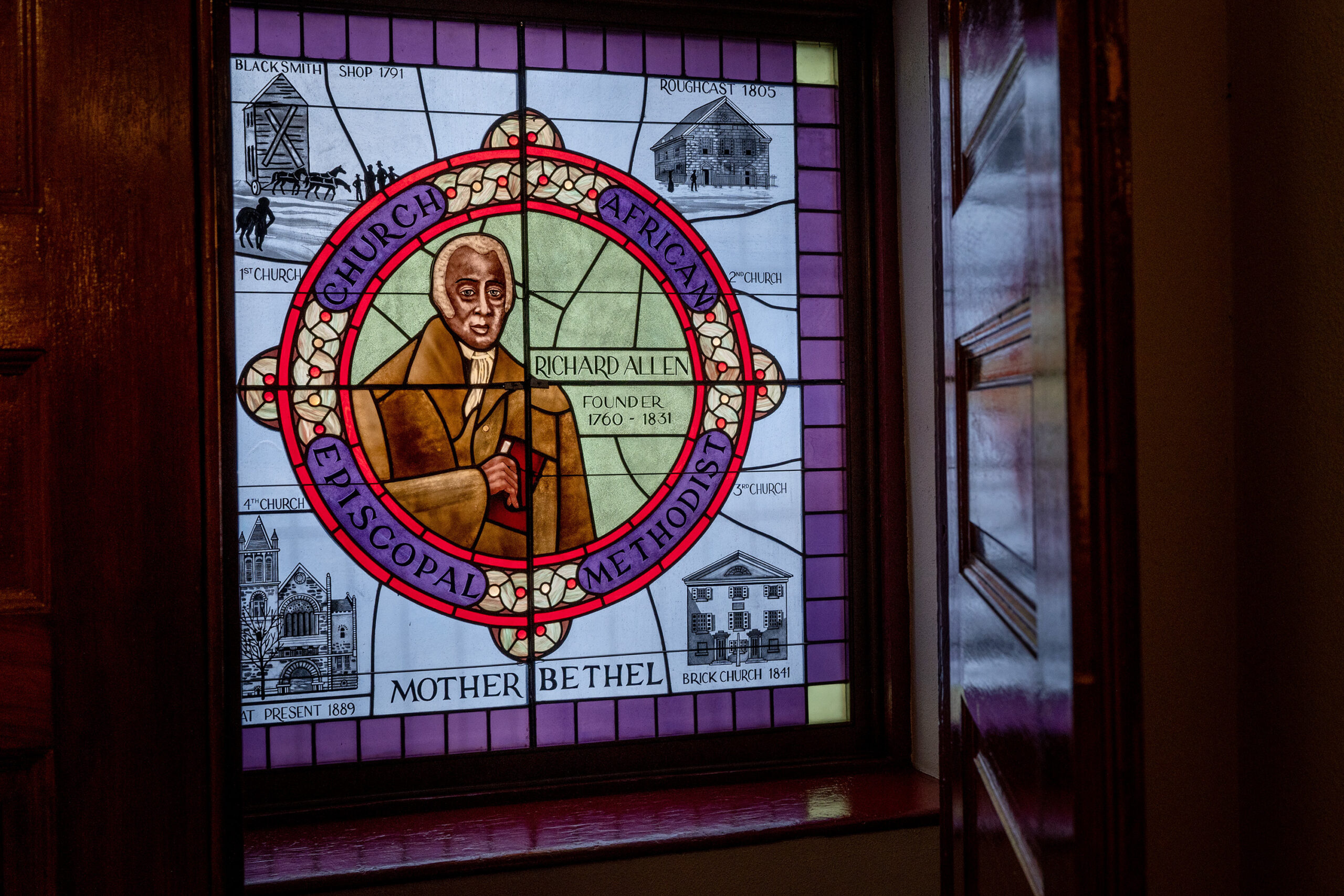
    A stained glass window of founder Richard Allen and Mother Bethel AME Church’s previous homes is at entrance of the church.

    Instead, American Methodists sided with southern landholders who relied on cost-free Black labor to build their empires. Evangelical churches, Tyler said, were among the first institutions to practice segregation.

    Allen and Jones went on to start their own churches.

    Jones founded the African Episcopal Church of St. Thomas at 5th and Adelphi Streets. (Today the church is at 6361 Lancaster Ave. in West Philly.)

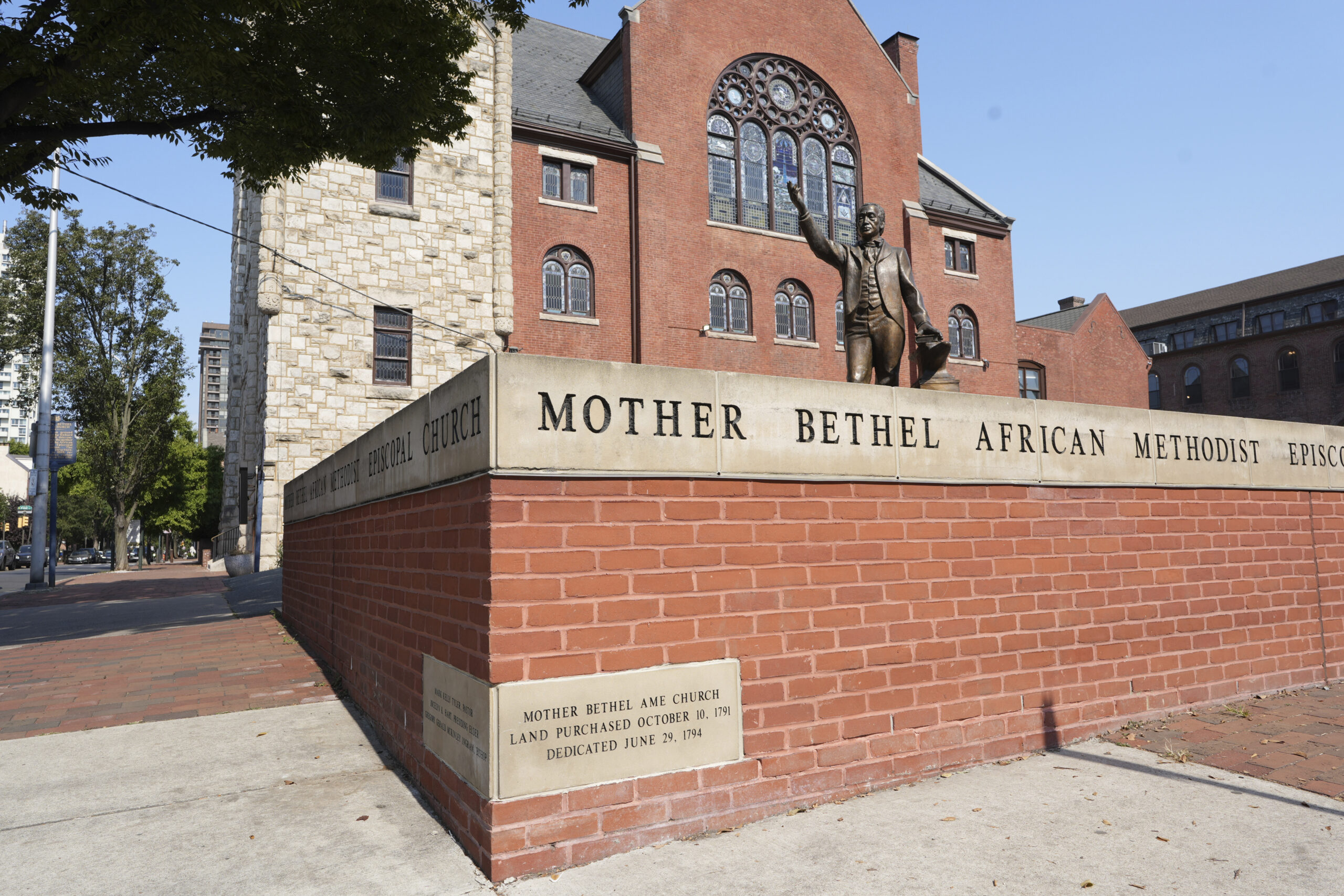
    Allen established Mother Bethel African Methodist Episcopal Church, regarded as America’s — and the world’s — first AME congregation.

    Mother Bethel will celebrate this history at the Philadelphia Historical District’s weekly “firstival,” part of a yearlong celebration of America’s 250th birthday. Each Saturday in 2026, the historic district is hosting a daytime shindig honoring an event that happened in Philadelphia before anywhere else in America and often the world.

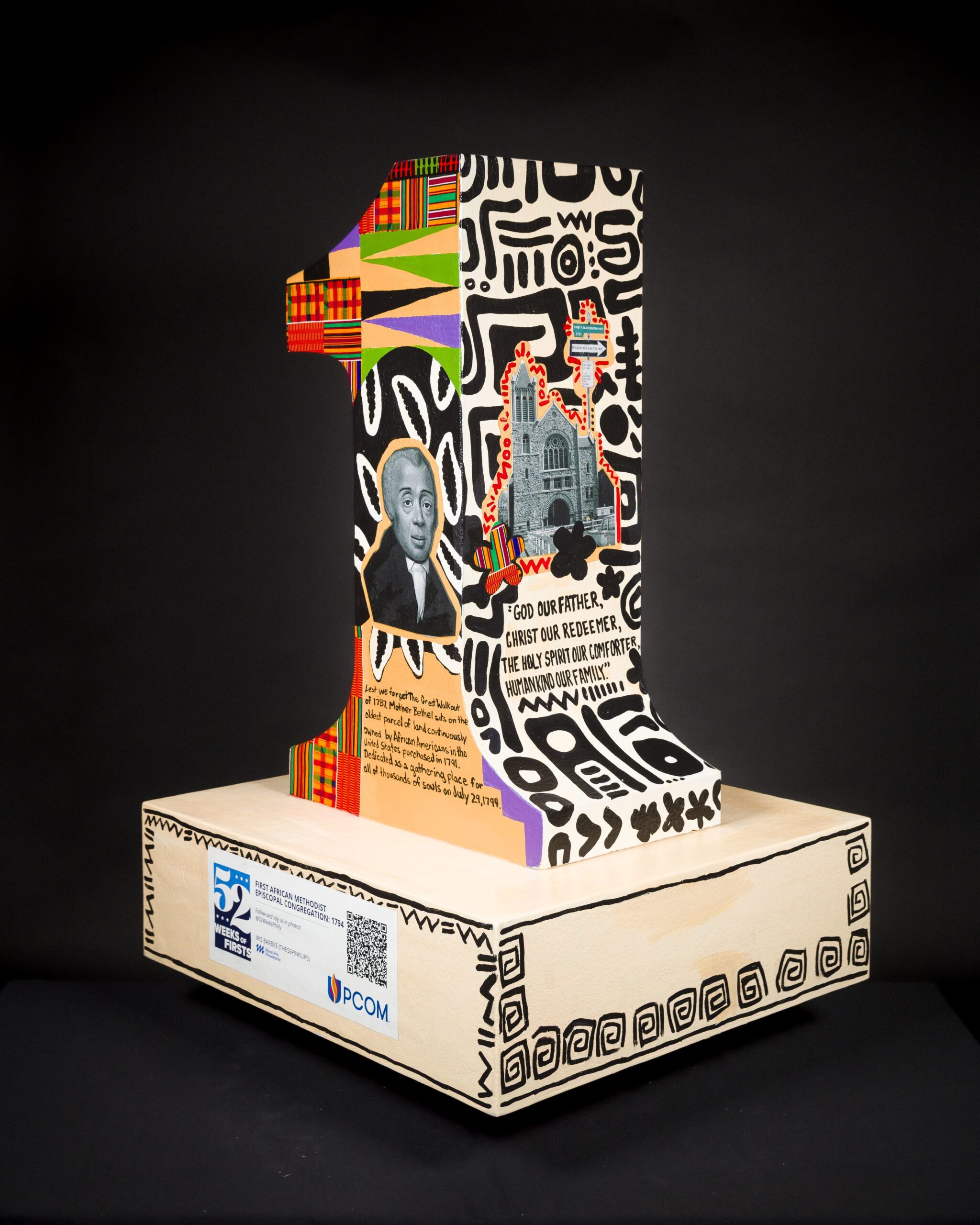
    Iris Barbee Bonner is a fashion designer and graphic artist who brought her experience growing up in the AME Church to this 52 Weeks of Firsts No. 1

    Allen was born into slavery in Philadelphia in 1760. He bought his freedom from his enslaver, a devout Methodist who converted many of the people he enslaved, in 1783. Allen answered the call to preach and traveled the mid-Atlantic for a few years evangelizing freed and enslaved people.

    In 1786, he returned to Philadelphia, joined St. George’s, and started a 5 a.m. worship service. He led the service for a year-and-a-half before walking out in November of 1787.

    “Certainly there had been moments of resistance in colonial Black communities,” Tyler said. “But this walkout was significant because it led to the emergence of the first American institutions by and for Black people,” Tyler said.

    Allen bought land at Sixth and Lombard Streets — where Mother Bethel sits now — on Oct. 10, 1791. Mother Bethel’s first building, a repurposed blacksmith shop, was dedicated on July 29, 1794, by Bishop Francis Asbury.

    A second building was erected in 1805, a third in 1841, and the current building was completed in 1890.

    “We are the oldest independent denomination founded by people of color in the United States,” said the Rev. Carolyn C. Cavaness, pastor of Mother Bethel. “Our church sits on the oldest parcel of land continuously owned by African Americans.”

    In 1816, 30 years after Allen established Mother Bethel, he invited delegates of Black Methodist churches in Pennsylvania, Baltimore, Maryland, Delaware, and New Jersey to a conference, establishing the AME Church as its own denomination.

    A statue of Mother Bethel AME Church founder Richard Allen stands on the oldest parcel of land continuously owned by Black Americans in Philadelphia on Oct 13, 2024. (AP Photo/Luis Andres Henao)

    Mother Bethel has stood at the center of civil rights for centuries, from serving as a station on the Underground Railroad to uniting interfaith clergy who questioned $50 million of community benefits slated to go to the Sixers arena in 2024.

    “We are the Mother Church,” Cavaness said. “ … the foundation of so much Philadelphia history, so much American history. It’s an honor to be the sacred caretaker of this history.”

    This week’s Firstival is Saturday, Feb. 7, 11 a.m.-1 p.m., at Mother Bethel, 419 S. Sixth St. The Inquirer will highlight a “first” from Philadelphia Historic District’s 52 Weeks of Firsts program every week. A “52 Weeks of Firsts” podcast, produced by All That’s Good Productions, drops every Tuesday.
  • The first public Girl Scout cookie sale took place at the intersection of Broad and Arch Streets

    The first public Girl Scout cookie sale took place at the intersection of Broad and Arch Streets

    The Girl Scouts, founded in Savannah, Ga., in 1912 by philanthropist Juliette Gordon Low, held its first bake sale in 1917 to raise money for troop activities.

    The booming direct cookie sales business, however, was born in Philadelphia on Nov. 12, 1932, at the Philadelphia Gas Co., then located at the intersection of Broad and Arch Streets.

    That inaugural public Girl Scout cookie sale will be remembered Saturday at Center City’s PECO building, part of the Philadelphia Historic District’s weekly celebration of America’s 250th birthday. The historic district pays homage to events that happened in Philadelphia before anywhere else in America — and often the world — with a weekly day party called a Firstival.
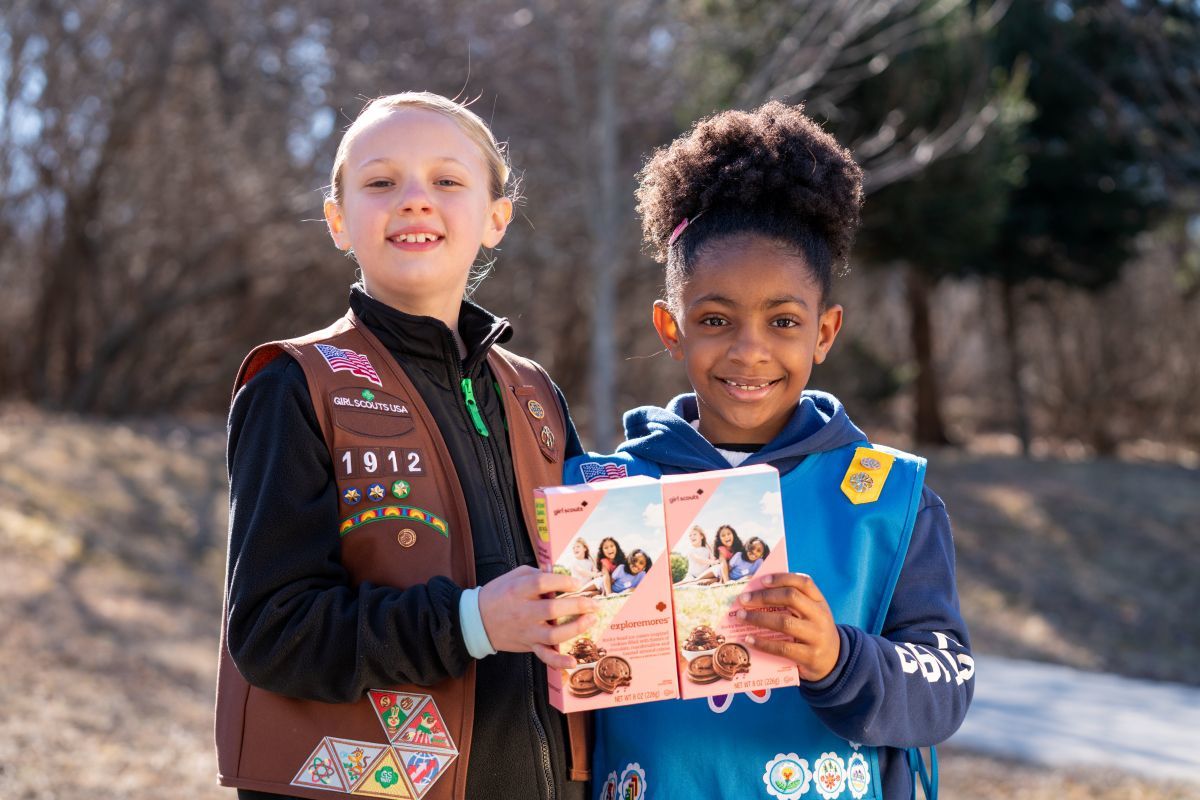
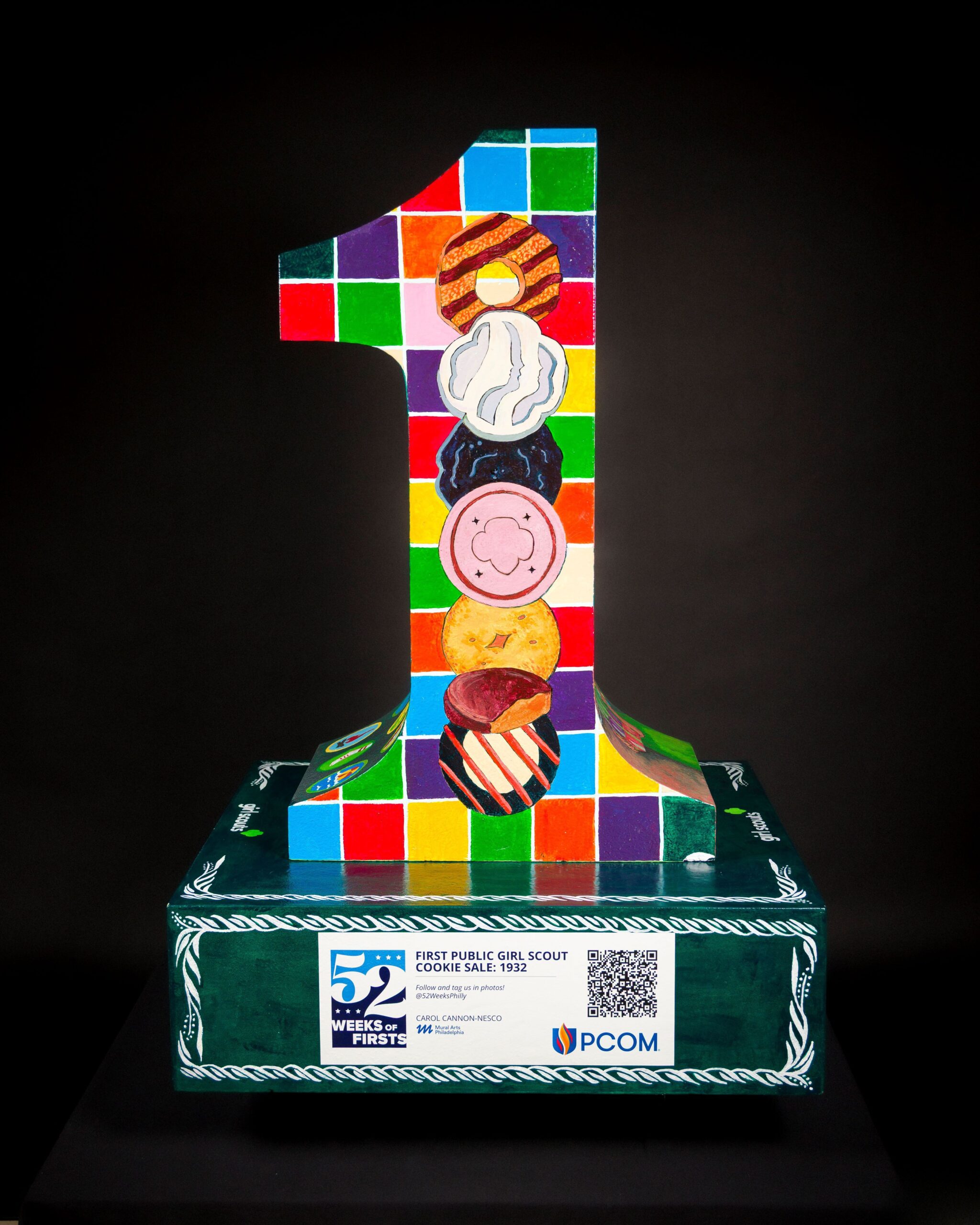
    Artist Carol Cannon-Nesco, a top Girl Scout cookie seller as a child, celebrates the legacy of the Girl Scouts with pictures of the individual cookies.

    “It was the first time the Girl Scouts sold their cookies to people outside of their immediate community,” said Amanda Harrity, director of product programs for the Girl Scouts of Eastern Pennsylvania.

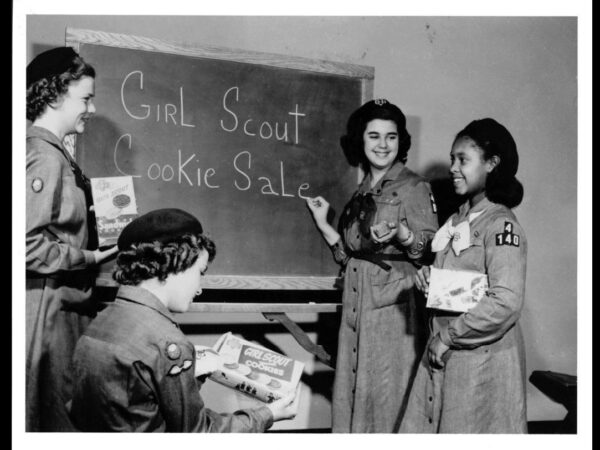
    In 1932, a Philadelphia Girl Scout told her parents that her troop needed a place to bake cookies in order to raise money for nurseries, Depression-era organizations that cared for children of working parents. The little girl’s parents, who worked at the Philadelphia Gas Co., got permission for the Scouts to bake cookies on the shiny new gas ranges in the gas company’s street-level windows.

    On the afternoon of Nov. 12, the Girl Scouts baked batch upon batch of their shamrock-shaped signature shortbread cookie, the Trefoil. The sweet, buttery aroma wafted through Center City streets and passersby asked if they could buy the cookies, hot out of the test kitchen’s ovens.

    The Girl Scouts agreed.

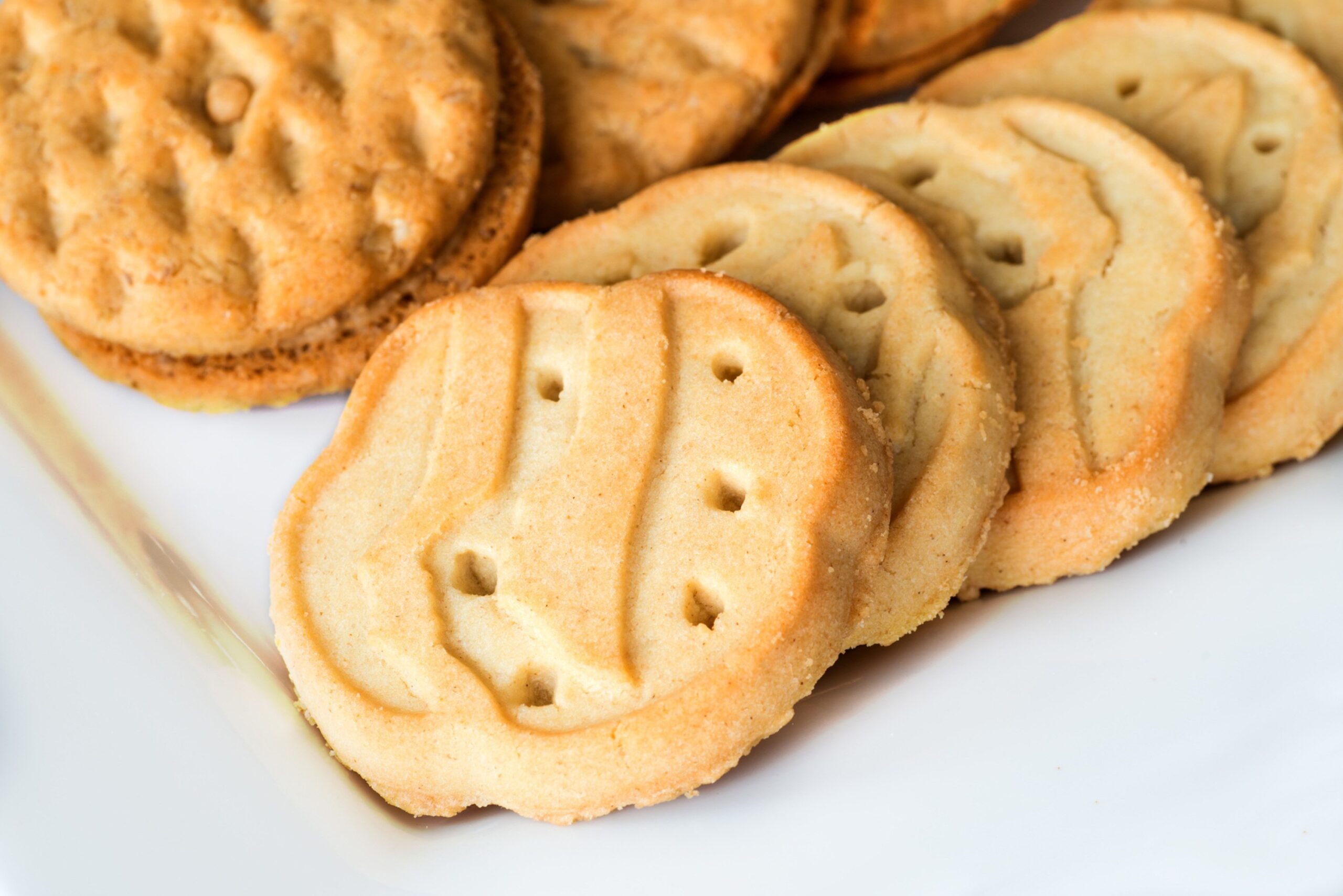
    Trefoils (shortbread) and peanut butter sandwiches, also known as Do-si-dos. (Dreamstime/TNS)

    “I don’t remember how many cookies we baked that day,” then 80-year-old Girl Scout Midge Mason told The Inquirer in 2001 when the state erected a historic marker at Broad and Arch, marking the sale. “I do know we baked a lot of cookies.”

    The next year, the Girl Scouts were back at the Philadelphia Gas Company to raise the money needed to pay off the mortgage of its facility at Camp Indian Run in Glenmoore, Chester County. (That facility closed in the early 2000s.)

    In 1934, the Philadelphia Girl Scouts hired Keebler — now Little Brownie Bakers — to bake Trefoils, selling them at 23 cents a box, making them the first Girl Scouts to sell commercially baked cookies.

    Two years later, Girl Scouts all around the country began using commercial bakeries to bake cookies for their yearly fundraiser.

    Today, more than 200 million boxes of cookies are sold in America at an average price of $6 a box; 3.5 million of those boxes are sold in Eastern Pennsylvania, Harrity said.

    Girl Scout cookies are baked in two bakeries in the country: ABC Bakers in North Sioux City, S.D., and Little Brownie Bakers in Louisville, Ky. There are 12 varieties of cookies including this year’s newest Exploremores, inspired by Rocky Road ice cream.

    Exploremores are the new flavor of Girl Scout cookie for the 2026 sales campaign.

    Seventy-five cents of every dollar from Girl Scout cookie sales are reinvested back into girl scouting, Harrity explained. In Eastern Pennsylvania, that includes maintaining 1,500 acres of property and underwriting Scouts’ camp experiences.

    This week’s Firstival is Saturday, Jan. 31, 11 a.m. — 1 p.m., at the PECO Building at 2300 Market Street. The Inquirer will highlight a “first” from Philadelphia Historic District’s 52 Weeks of Firsts program every week.