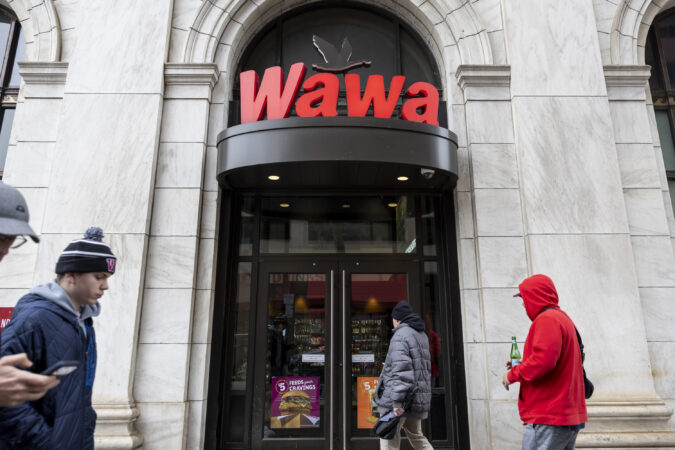
Wawa customers have been able to order roasted chicken on sandwiches, salads, burritos, and more since summer 2024. Hoagie-loving Philadelphians may scroll past the high-protein option on Wawa’s trademarked built-to-order screens, while others tap its icon instinctively in their rush to order lunch.
Wawa CEO Chris Gheysens said he sees the chicken breast differently.
From idea to inception, “that was a labor of love for quite a long time,” Gheysens said in a recent interview. “It’s 37 grams of protein, something consumers are really looking for today.”
And, he added, “it’s still highly customizable, which our customers love doing at Wawa.”
To Gheysens, the menu addition shows how the Delaware County-based company responds to consumer demand. Just as it did decades ago when Philly-area store managers began brewing coffee for customers on the go, and in 1996, when Wawa executives decided to start selling gasoline.
Even now, with nearly 1,200 stores in 13 states and Washington, D.C., Wawa is still listening to consumer feedback, Gheysens said. And despite expanding as far away as Florida and Kentucky, the CEO said, the convenience-store giant remains especially in tune with its hometown fans.
“For a lot of people, it’s their daily routine,” said Gheysens, a South Jersey native. “It becomes a part of their neighborhood. It’s a relationship that’s built on consistency, on trust” — and on getting customers out the door in five minutes or less, depending on the time of day.
(function() { var l = function() { new pym.Parent( ‘wawa-stats__graphic’, ‘https://media.inquirer.com/storage/inquirer/ai2html/wawa-stats/index.html’); }; if(typeof(pym) === ‘undefined’) { var h = document.getElementsByTagName(‘head’)[0], s = document.createElement(‘script’); s.type = ‘text/javascript’; s.src = ‘https://pym.nprapps.org/pym.v1.min.js’; s.onload = l; h.appendChild(s); } else { l(); } })();
Customers say they are drawn to the homegrown chain for its convenience, consistency, quality, and wide-ranging menu of grab-and-go and made-to-order items (even though some miss the old Wawa delis where lunch meat was sliced on the spot).
In Runnemede, 78-year-old Barbara MacCahery said she goes to her local Wawa at least a couple of times a week — “sometimes for breakfast, sometimes for a sandwich, a lot of times for coffee.”
In MacCahery’s mind, she said, the chain has proven itself time and time again for decades: “It’s very rare that you’ll have a bad experience.”
Wawa’s ‘secret sauce’ for success
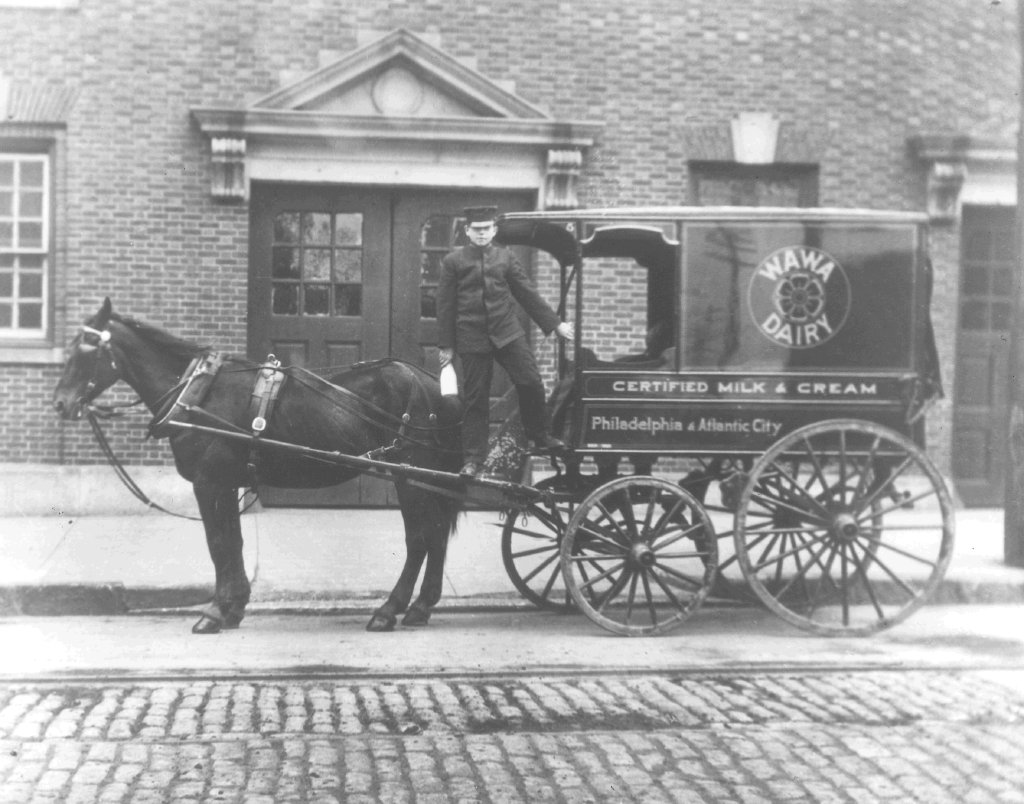
More than 100 years ago, Wawa started out as a dairy, delivering milk to Philadelphia-area households.
Wawa has set a national standard for success in the convenience-store industry, said Z. John Zhang, a marketing professor at the Wharton School of the University of Pennsylvania.
“It really is some kind of a secret sauce,” said Zhang, who studies retail management. “For many people, Wawa has become a destination store,” one that combines “speed, customization, and perceived high quality” with near-constant availability — many Wawa stores are open 24/7.
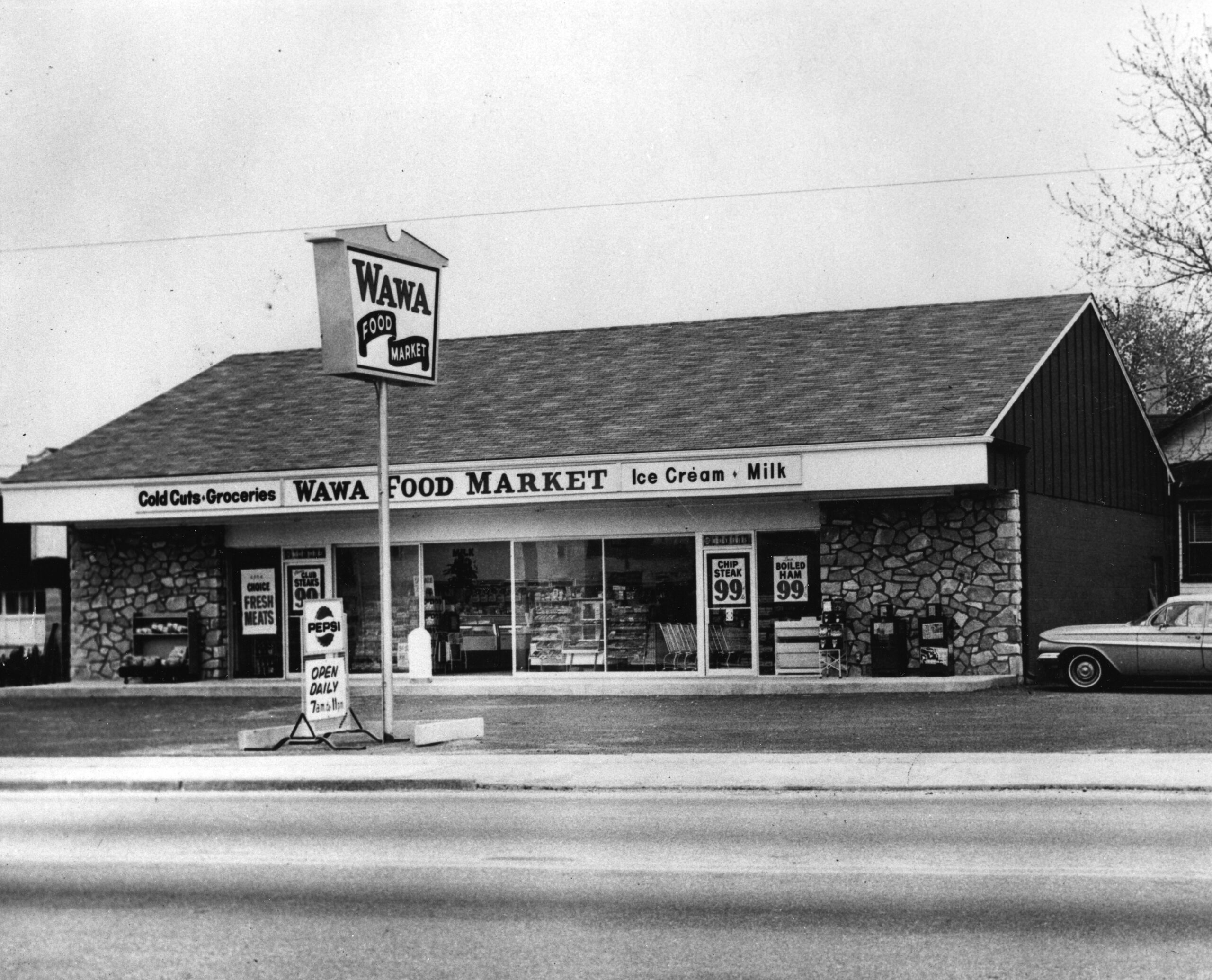
The company got its start as a dairy, delivering milk to Philly-area households. In 1964, it opened its first store in Folsom. Soon, the family-owned company expanded into New Jersey and Delaware, and established a reputation for quality and speed, with slogans like “People on the Go — Go to Wawa Food Markets.”
Wawa’s first convenience store opened in Folsom, Delaware County in 1964.
Wawa is privately held, owned in part by workers who get a percentage of their earnings contributed to an employee stock-ownership plan. Zhang said this program likely leads to more-invested employees who provide better customer service.
Because Wawa is not public, it is not required to disclose its finances, and company executives declined to discuss them.
But by many appearances, Wawa seems to be doing well: Over the last decade, the company has increased its store count by about 65% and doubled its workforce to about 50,000 associates.
Philly-area Wawas are often crowded, too, which is key to making money in the convenience-store industry.
A gas attendant fills up a customer’s tank at a Wawa in Pennsauken in 2020.
“We think it’s high-impulse, but 80% of all people who walk into a convenience store pretty much know what they want,” said Zelinski, who consults with retailers. (He declined to discuss specific companies and said he has never worked for Wawa.)
Successful operators have encouraged customers to spend more by adding seating and improving their food service, Zelinski said. And stores with better food see higher profit margins.
“Once you have somebody that’s addicted to your food service program, they’re more likely to come back to your store vs. a competing store,” he said.
In 2020, Wawa debuted new menu offerings, including hamburgers, pot roast, rotisserie chicken, pasta alfredo, and kids meals, at a tasting in Media.
Wawa has certainly gotten people hooked on their coffee, hoagies, and ever-expanding menu, Zhang said. Options added in recent years include pizza, wraps, protein-packed “power meals,” limited-edition coffee flavors, and smoothies “boosted” with protein, vitamins, and minerals.
This older Wawa in Cherry Hill closed in 2024. The township has six remaining Wawas.
Despite Wawa’s best efforts, not all stores thrive, Gheysens said. But “luckily for us, we’re still in growth mode, and don’t have to worry about closures in a broad way.”
Gheysens said he sees room for more Wawas in the Philadelphia market — even as convenience-store competitors like Maryland-based Royal Farms and Altoona-based Sheetz have opened new stores in the region.
Wawa executives want “to make sure that we are the number-one convenience store in the area, that’s important to us,” Gheysens said. “These are our hometown counties.”
What keeps Philly-area consumers going to Wawa
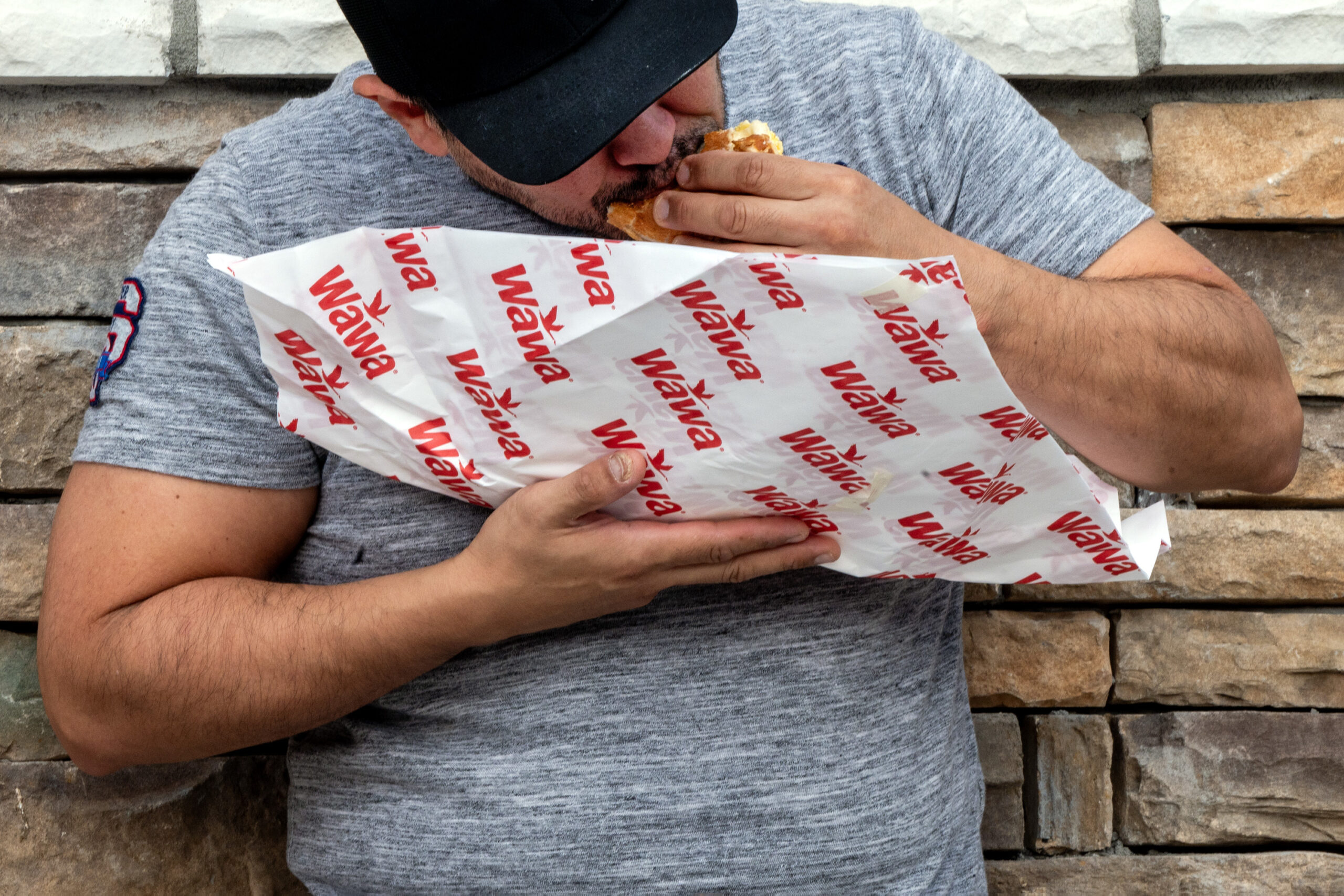
A Wawa customer eats a breakfast Sizzli during the 2024 grand opening of the company’s first central Pennsylvania store.
Many Philly-area consumers grew up alongside Wawa.
In interviews with nearly a dozen of them, some were quick to reminisce about early memories of their local stores, such as the distinct smell of coffee and deli meat or the excitement of a Wawa run with high school friends. Others bemoan what has changed with the company’s expansion, including more congested parking lots.
Most have a quick answer when asked what their Wawa order is.
Rick Gunter, 45, of Royersford, misses the Wawa of his youth. Back in the day, he said, the Wawa hoagies “hit different,” with lunch meat fresh off the slicer.
Contrary to some customers’ beliefs, most stores still bake Amoroso rolls — a custom recipe made exclusively for Wawa — fresh in store multiple times a day, Gheysens said. As for the deli meat, the CEO said that was another decision rooted in customer preference.
When customers have participated in blind tests of the pre-sliced meat Wawa uses today against a fresh-sliced alternative, “they can’t tell the difference,” Gheysens said. “They would choose our pre-sliced meats, because of what we’ve done in terms of quality and the supply chain and the ability to deliver them at such a pace.”
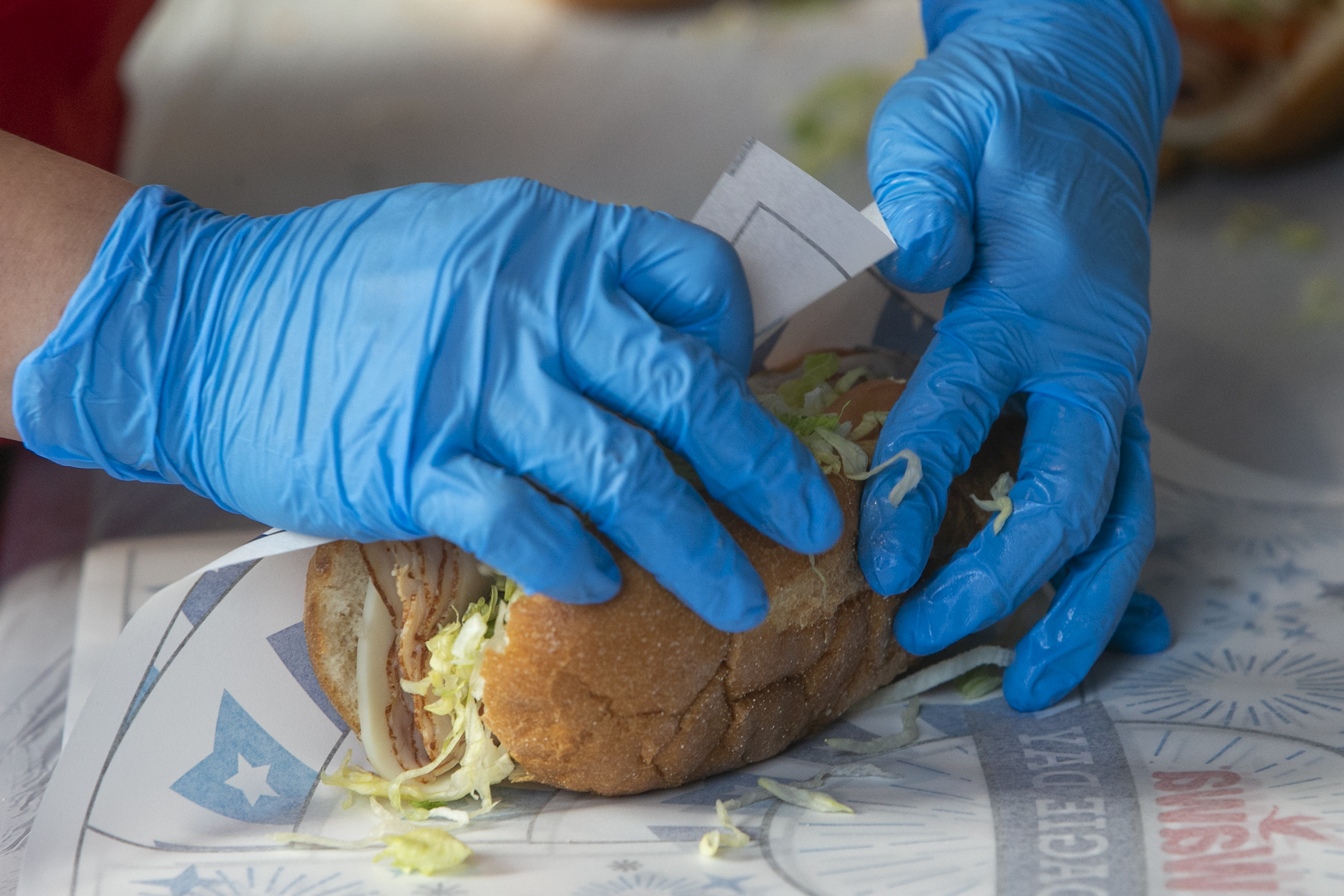
A sandwich maker at Wawa wraps a hoagie with turkey, provolone, tomato, and lettuce in this 2020 file photo.
Some customers disagree.
“It was way better when it was kind of also a deli. Now they try to make everything for everybody,” said Bill Morgan, 79, of East Coventry Township. “I’m within five miles of three Wawas, but I rarely eat their food. Only under extreme duress.”
Morgan acknowledged he must be in the minority, given how crowded Wawas are at lunchtime. And despite his distaste for much of their food, he said he still gets gas there and loves their coffee. And he can’t help but admire their business model.
In 1976, when Bill Loughery was a rookie bartender at Cherry Street Tavern, the old-world saloon seemed as abandoned as the neighborhood around it. Back then, the streets around 22nd and Cherry in Logan Square were littered with abandoned warehouses, rusting textile mills, and crumbling body shops.
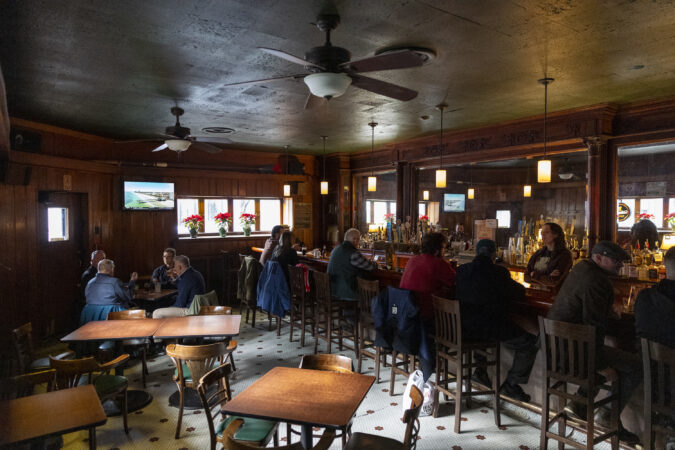
First operated as a bar around 1902 and surviving Prohibition as a barbershop — at least one where regulars swilled hooch in the back room — the tavern had retained much of its bygone charms into the ’70s. It had an elaborately carved mahogany backbar, vast beveled bar mirrors, pearly white tiled floors, and an old-timey phone booth. Even the tiled water trough running the length of the floor under the bar — a no longer operational relic from the barroom’s pre-World War II days designated for fedora-sporting patrons to spit tobacco juice and relieve themselves — had survived the decades.
But like the neighborhood, business had faded.
Bill Loughery, then 24, and his younger brother, Bob, had scored the bartending gigs from their former coach and mentor, legendary La Salle High School football coach John “Tex” Flannery, who purchased the bar in the early 1970s. Serving 25-cent Schaefers, rocking their favorite Grateful Dead tunes, and warmly greeting the newbies filling the barstools, the Lougherys brought life to Cherry Street Tavern, eventually buying it from Flannery in 1990.
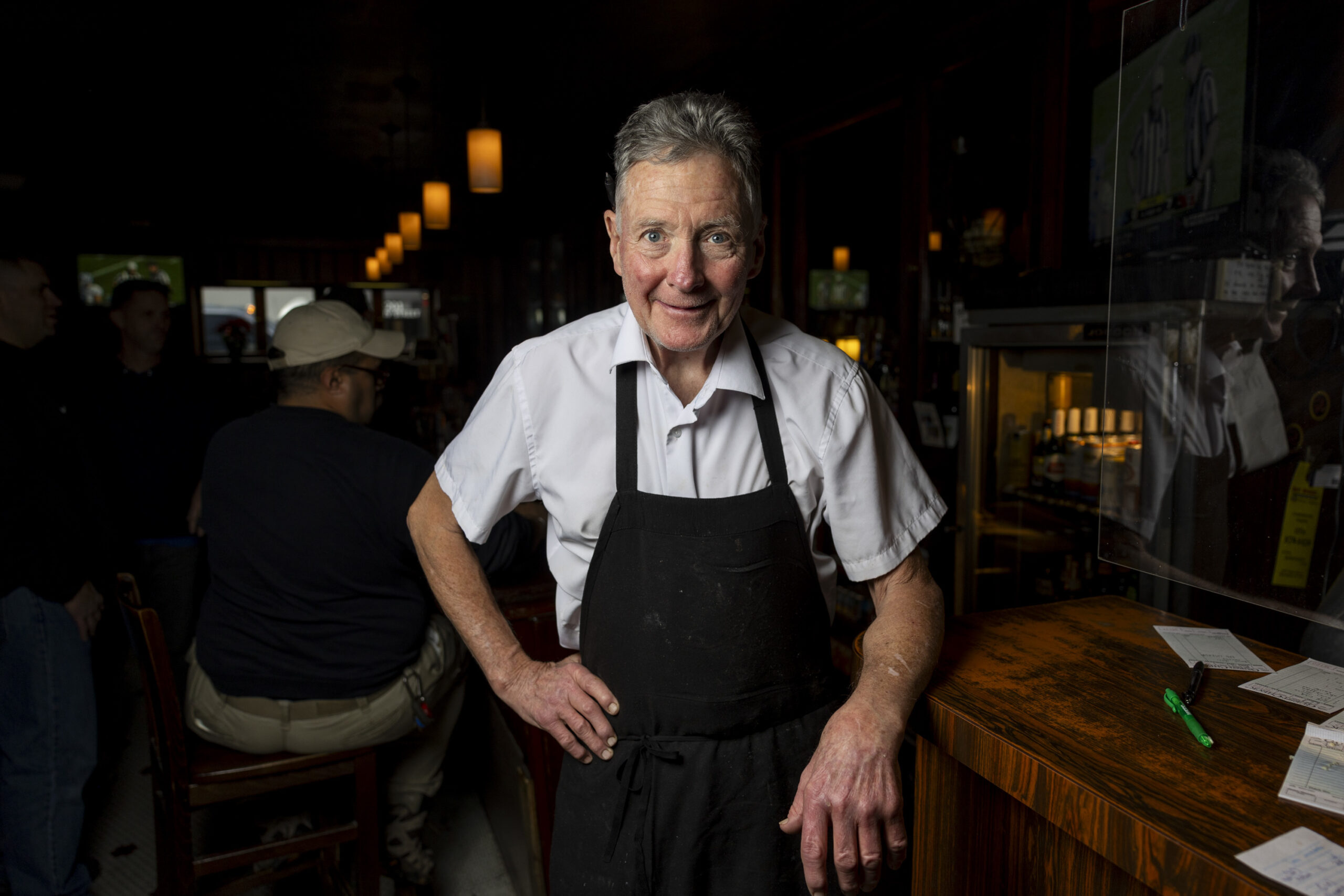
Bill Loughery, co-owner of Cherry Street Tavern, inside his bar in Philadelphia on Friday, Dec. 19, 2025.
While burnishing its old-world grace, they had transformed the timeworn taproom into a thriving, in-the-know spot for eating and drinking, with a diverse, dedicated, and colorful cast of regulars from all over. Everyone from construction workers and electricians to lawyers and bankers to art students and professors came to the bar — even rock icons like Jimi Hendrix, who, as the legend goes, knocked on the side door wearing a cape in 1968 after playing a show at the original Electric Factory, just blocks away; he palmed the bartender $100 for a case of Bud and a bottle of Jack Daniels. There were also visiting sports legends like Larry Bird, who would drink at Cherry Street with his staff when he came through town as a coach in the 1990s and 2000s.
“He’d say, ‘Billy, let me know when you’re closing that kitchen,’” Bill Loughery remembers. “And then he would go back to the Four Seasons with bags of roast beef and roast pork.”
And always, there were Bill and Bob Loughery, either toiling in the tavern’s tiny kitchen before dawn to prepare steaming cauldrons of Irish potato soup and huge slabs of beef for the bar’s signature sandwiches, or working the wood until closing.
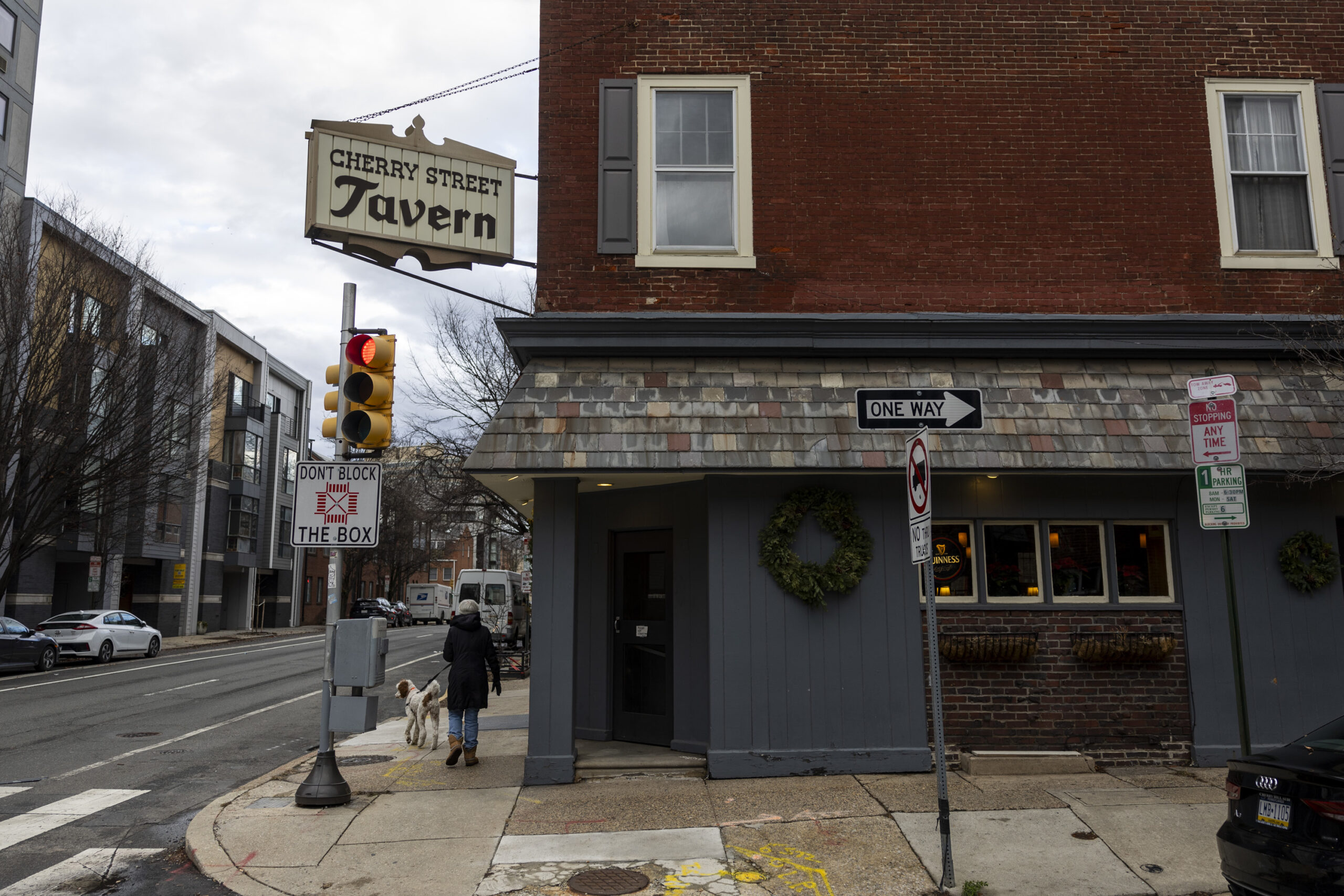
The outside of Cherry Street Tavern in Philadelphia on Friday, Dec. 19, 2025.
After 50 years devoted to a tavern that always felt more like a labor of love — and bearing witness to the change all around it — Bill and Bob Loughery have decided it’s time.
“Time to take off the apron,” said Bill Loughery, taking a quick break on a recent afternoon to sit in the soft sunlight slipping through Cherry Street’s bottle-height barroom windows. “It’s just time.”
History, for sale
It’s been time for a few years, but the Lougherys— wanting to preserve the understated elegance and identity of the shot-and-a-beer saloon, especially after revitalizing the bar once again as a popular meeting spot for locals after COVID-era restrictions dried up lunchtime and commuter crowds — have never officially listed the tavern and its upstairs apartment for sale. They began whispering to friends and regulars about selling around 2024.
“People were always asking us to let them know when we were ready,” Bill Loughery said.
After months of talks with prospective purchasers, the Lougherys are now in talks with a buyer who theysay is interested in expanding the bar’s kitchen and making other renovations.
The Lougherys’ efforts to find a buyer committed to keeping the spirit of the bar alive have eased the worries of regulars old and new, and loyal staff.
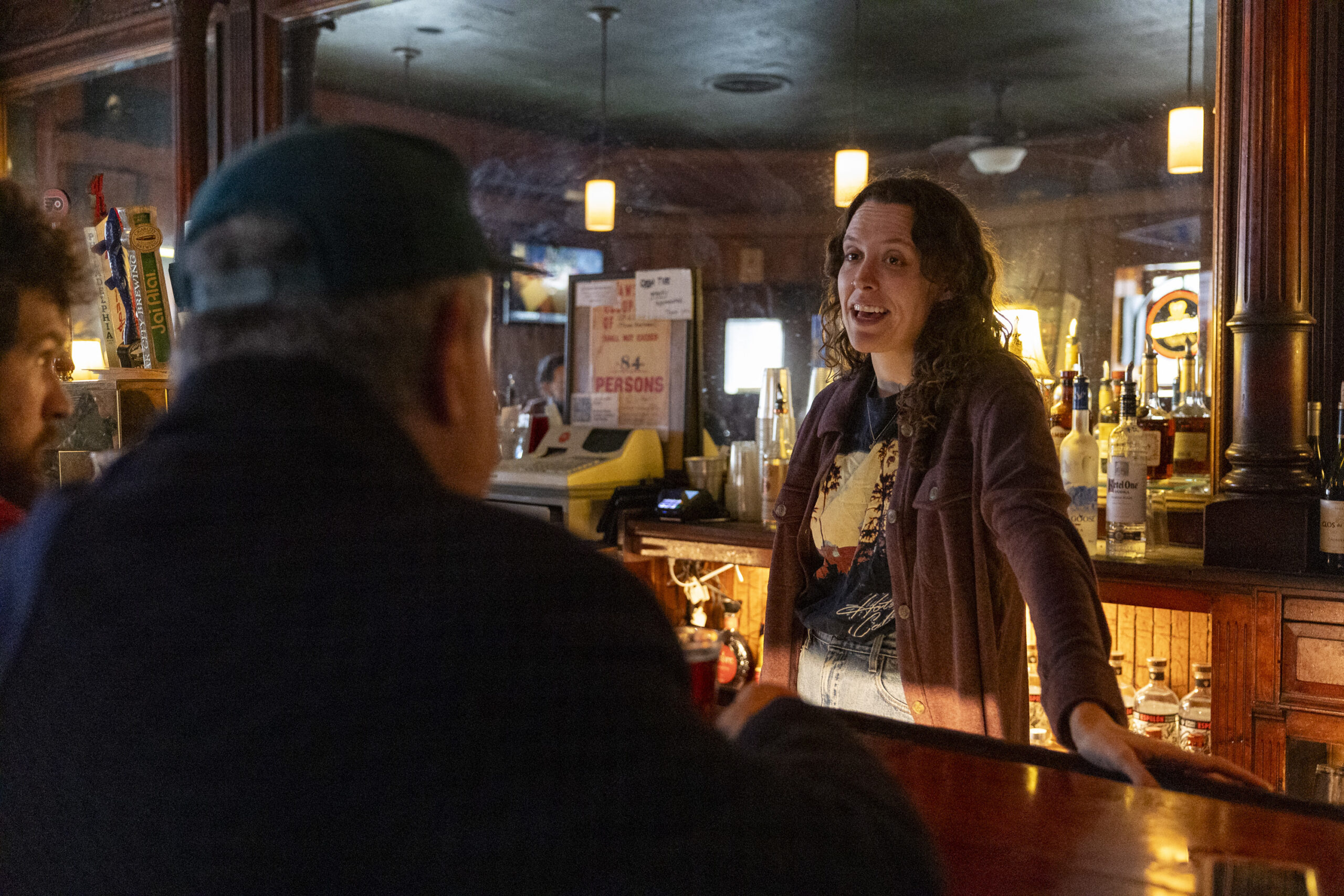
Kira Baldwin, 27, chats and makes drinks for folks at Cherry Street Tavern.
“There’s just something sacred about the place,” said Kira Baldwin, 27, of Ardmore, who tends bar at Cherry Street Tavern, along with her brother, Jack, 24, and her mother, Juanita Santoni, with whom she sometimes shares a shift.
For Baldwin, it’s personal. As a child, she cherished special occasions when her mother allowed her to visit the bar. (Santoni has worked nights and weekends at Cherry Street Tavern since 1991, when she was a part-time child life therapist at CHOP.) On those nights, Baldwin would do her homework in the quiet of the ancient phone booth and swing from the brass dining rails. At the annual Christmas parties, when Bill Loughery hired Moore College of Art & Design students to paint the windows for the holidays, she and her brother received gifts from a regular dressed up as Santa.
Now, she watches new regulars fall in love with a bar she’s been coming to since “the womb.”
“People treat it with reverence,” she said. “When they come in, they understand it completely. They have a deep and profound respect for the place.”
Prohibition, the food, and the regulars
Little is known about Cherry Street’s earliest days, but by Prohibition, it was known as Dever’s, operated by John “Jack” Dever, a dapper barman who lived above the tavern with his wife and two children, and whose father, Joseph, had run it before him. (Like Flannery and the Lougherys after him, Dever happened to be a La Salle High alum.)
The barbershop speakeasy had been Jack Dever’s idea, said his grandson, Michael Dever.
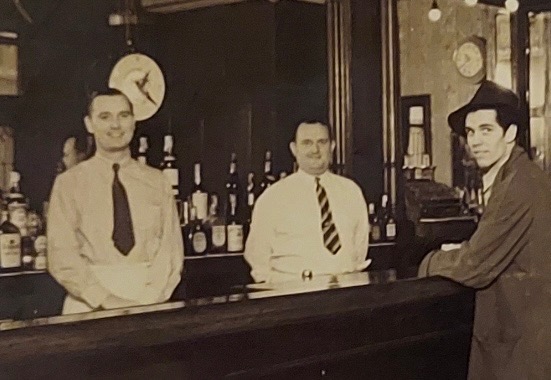
Before it became Cherry Street Tavern, John “Jack Dever (left) operated the tavern for years, living upstairs with his family, and eventually dying behind the bar.
“The story always went that, when Prohibition came about, he closed the front door and opened the back door,” said Dever. “It became dangerous. The story was that you were either buying from the mob or dirty politicians.”
Dever reopened the bar after Prohibition, sponsoring a bar baseball team. But dangers persisted. In 1940, two robbers broke into the bar while Dever and his family slept upstairs, briefly making off with 25 quarts of high-quality whiskey before their bulging bag of booze crashed to the pavement. Nearby patrolmen ran to the scene, “their noses guiding them unerringly as the liquor spilled into the gutter,” The Inquirer reported.
Dever, who soon moved his family out of the upstairs apartment, ran Cherry Street until 1967, when he died of a heart attack behind the bar, according to granddaughter Maureen Ginley. At first, customers assumed her grandfather had just stepped down a hatch behind the bar, leading to a liquor cellar.
“But he didn’t,” she said.
After keeping the bar afloat for five years, Dever’s widow, Mary, sold the bar to Flannery. A local high school football legend who coached at La Salle for nearly 30 years, Flannery operated a no-frills, old-school establishment, refusing to allow a jukebox. Under Tex, the tavern’s old-world grace peeked out from behind a dusty veneer and faded Venetian blinds.
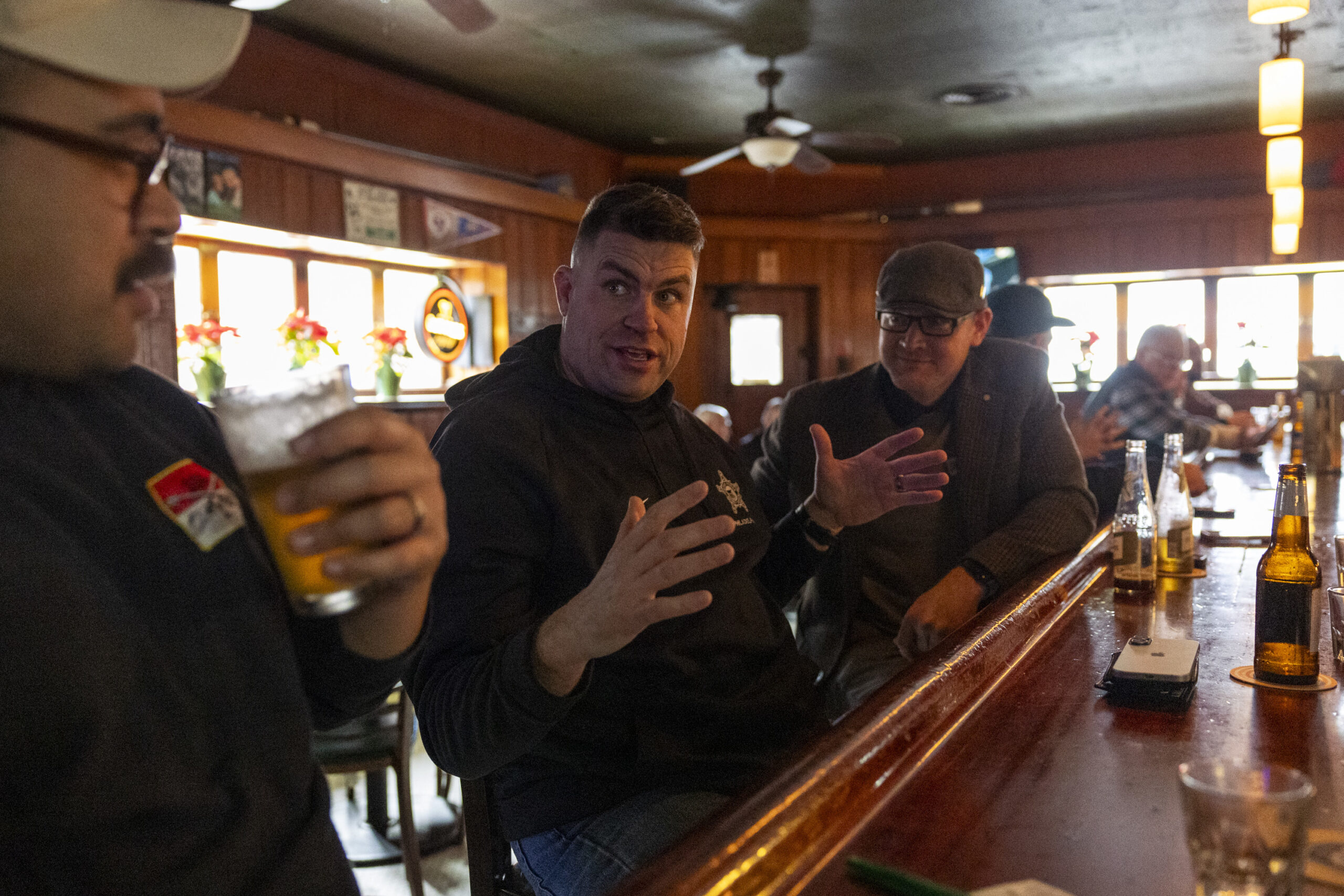
Kevin Sanders, of Quakertown, Pa., first time at the bar, sharing a story with friends as they enjoy drinks at Cherry Street Tavern in Philadelphia on Friday, Dec. 19, 2025.
A 1981 Daily News article described the bar “as cave-dark, cave-cool, cave-quiet.”
“Let’s face it, a guy comes in here, he wants to drink,” the article quoted Flannery.
For a while, it was just the old-timers, said Bill Loughery.
“We had the senior citizens from the neighborhood who started drinking right in the morning and went home before lunchtime,” he remembered.
One Friday during Lent in 1977, Flannery summoned the brothers to a sit-down fish cake dinner and laid it out straight. “He said, ‘Listen, the future of the bar business isn’t 25-cent beers,’” remembers Bill Loughery. “‘You got to come up with a food angle.’”
With the help of a regular, Bill and Bob Loughery introduced the tavern’s signature hot roast beef and roast pork sandwiches, chili, and daily soups.
A roast beef sandwich at Cherry Street Tavern in Philadelphia on Friday, Dec. 19, 2025.
By the 1980s, when condos and townhomes and office buildings and new life began to fill the neighborhood, the Lougherys were ready.
Soon, the expanded back room was packed at lunch and the stools were filled with regulars who Bill Loughery blessed with nicknames: Happy Bob and Sleeping Charlie, Big Tom and Buddy Bud, Catfish and Canadian John (who eventually became American John). Joe Watson — a beloved old-timer who lived upstairs, and became a “patron saint” to the bar, said Bill Loughery — took a busload of regulars to a Phillies game for his 89th birthday. There were St. Patrick’s parties and fishing trips and softball teams and marriages and births and deaths. It was their “Cheers,” one regular said.
“What’s Cheers?” Bill Loughery would ask, unironically.
It was Bill and Bob who brought everyone back, said Frank Oldt, 81, who has been a Cherry Street regular since the days of Tex.
“They just made it such an easy place to be,” he said.
It’s bittersweet, said Santoni, who remembers how the bar regulars threw her not one — but two — baby showers when she was pregnant with Kira. She has been trying to get Bill and Bob Loughery to slow down for years. But she understands the special pull of the place.
“It gets in your bones,” she said.
Last call
It all took a toll on Bill Loughery’s bones, who still works 12-hour shifts, splitting days and nights with his brother. Bill’s back is hunched from those endless hours in the kitchen. He doesn’t want to become the second person to die behind the bar at Cherry Street. Sitting down, he flipped through photo albums from the bar’s heyday. They’ll be the last things he takes with him when he leaves, he said.
“It’s like the Old and New Testament,” Bill Loughery said, opening a near-to-bursting photo album.
For a few minutes, he allowed himself to recall the faces and the nicknames and the good times.
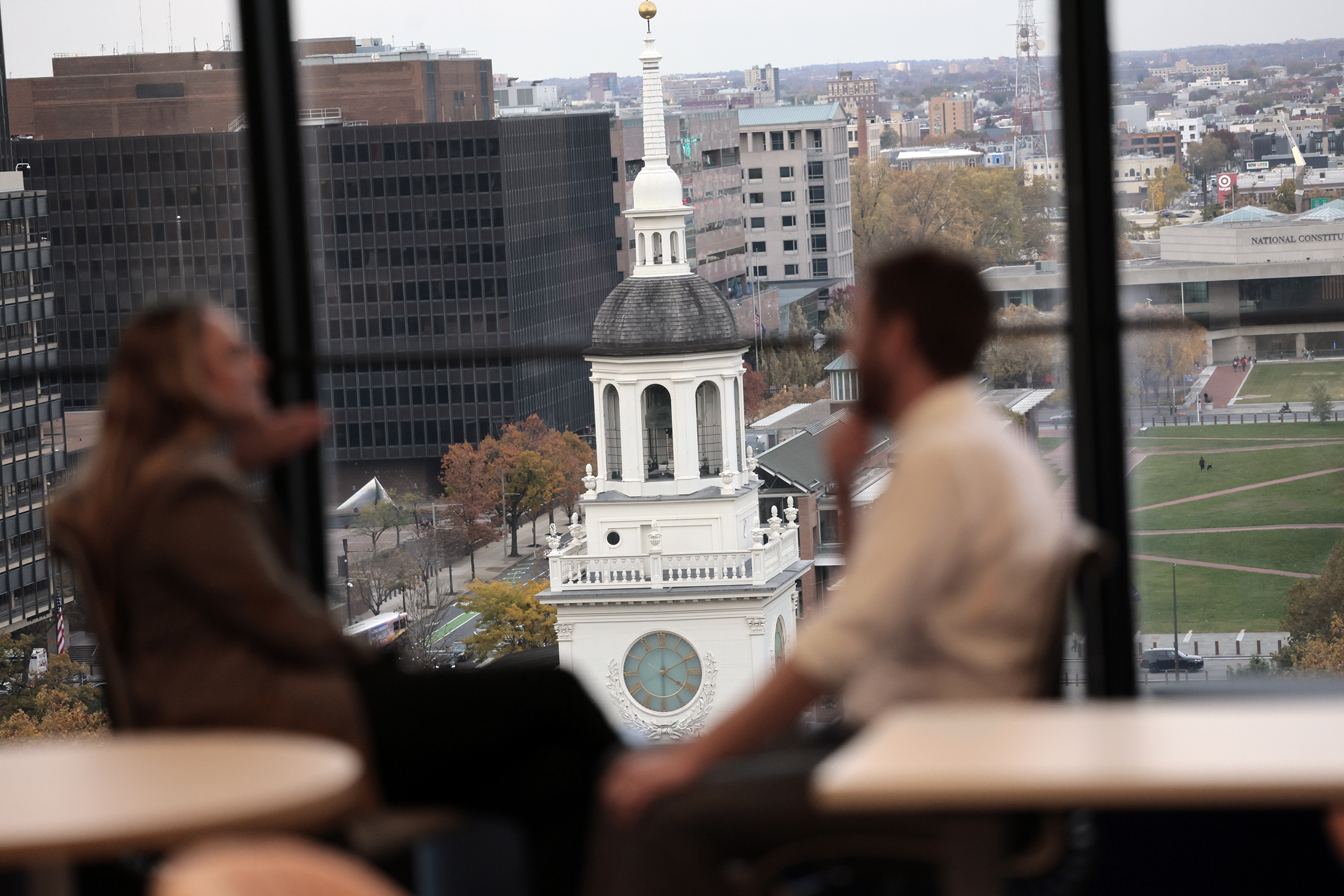
The sleek, modern offices of the Foundation for Individual Rights and Expression, or FIRE, sit on the southernmost edge of Independence Square. The enormous glass windows of a conference room called the Marketplace — a nod to the “marketplace of ideas” — perfectly frame Independence Hall.
The view is no coincidence. The free-speech organization, founded in 1999 and long known for decrying illiberalism and so-called cancel culture on American college campuses, is deliberate in the stories it tells.
In addition to the thousands of case submissions FIRE receives each year, staffers scour social media and news reports for compelling free-speech violations, partly looking, as legal director Will Creeley explained, for “cases you can tell a story with.”
For years, FIRE warned about threats to free speech, primarily on college campuses. Now the crisis it was preparing for has arrived.
The issue today is no longer one of cultural differences — students protesting controversial speakers or agitating for more diverse curricula.
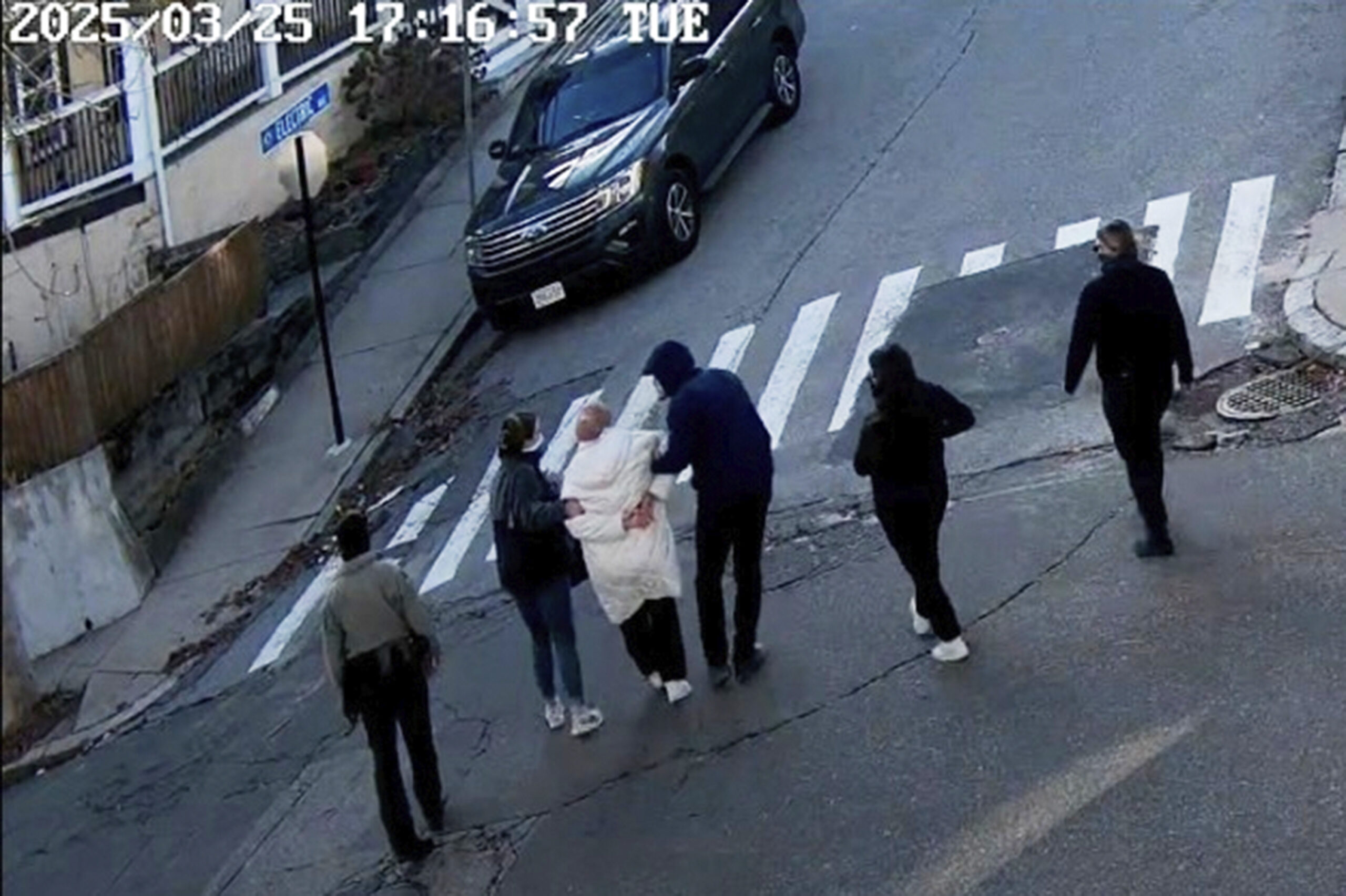
Rumeysa Ozturk, a 30-year-old doctoral student at Tufts University, was detained by Department of Homeland Security agents in March, an arrest captured by security camera footage.
Instead, the full power of the federal government is trained on universities and individual students who disagree with it. The stakes have grown exponentially, as became clear early on when federal agents detained Rumeysa Ozturk, a Tufts University Ph.D. student on a visa, after she cowrote an op-ed in a student newspaper. She then spent 45 days in Immigration and Customs Enforcement detention in Louisiana. (FIRE submitted an amicus brief in Ozturk’s ongoing federal case, in which a federal judge ruled last month that the administration had no grounds to deport her.)
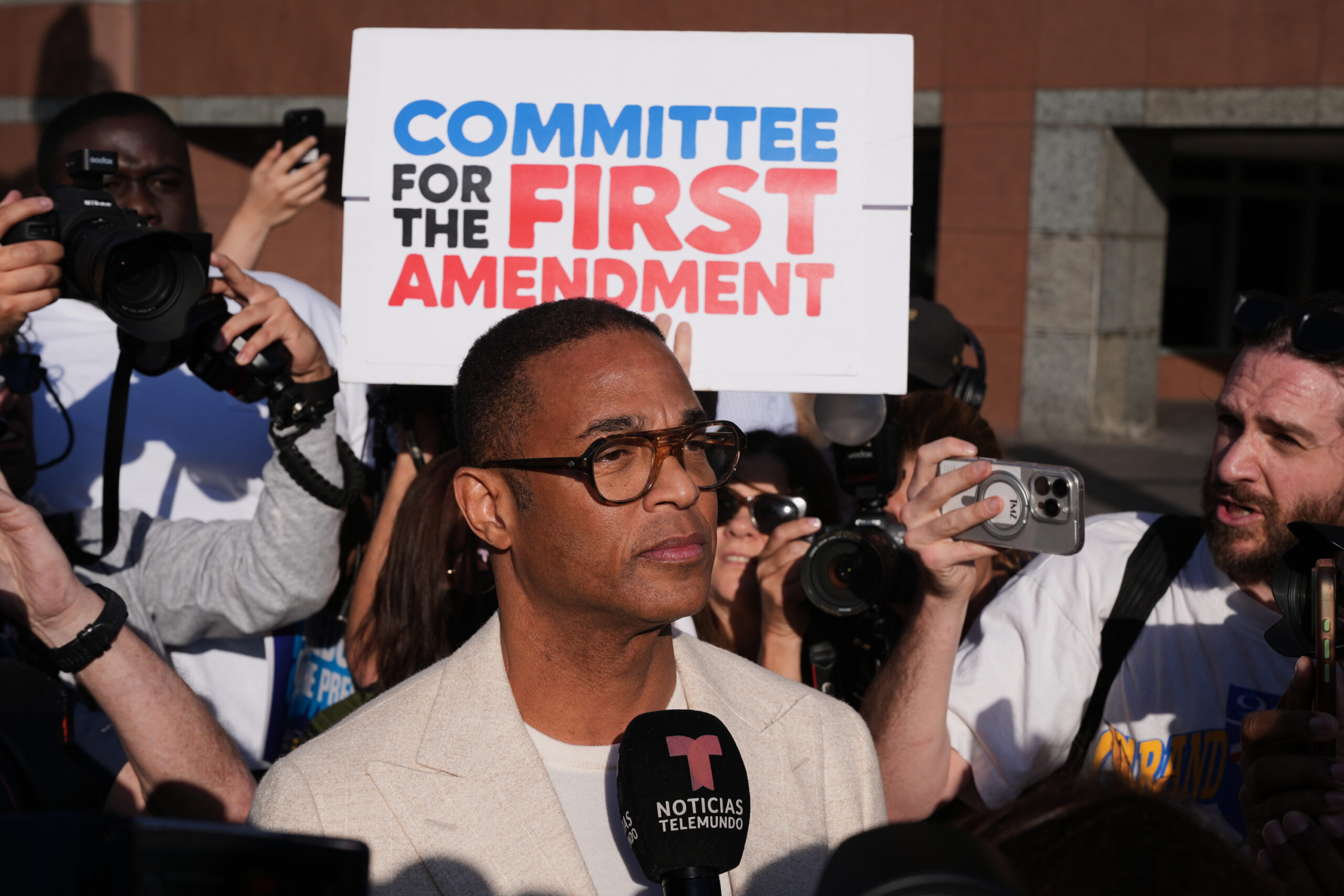
More recently, federal agents arrested and charged journalist and former CNN anchor Don Lemon with federal civil rights crimes for his coverage of an anti-ICE protest inside a Minnesota church. Of his arrest, the organization wrote, “FIRE will be watching closely.”
Journalist and former CNN anchor Don Lemon talked to the media after being detained for covering a protest inside a Minnesota church.
The question FIRE faces today is whether it can effectively meet the moment, and overcome skepticism from the left and from other free-speech advocates, some of whom argue the group helped lay the groundwork for an authoritarian crackdown.
Those critics say the present free-speech crisis is partly the predictable result of FIRE stoking a conservative panic over campus politics, effectively handing the federal government a well-crafted rationale for suppressing progressive voices.
FIRE’s leaders say they were not wrong before about cancel culture. Things were bad, they argue. But this is far worse.
“The threats we’re seeing right now, to me, often feel damn near existential,” Creeley, 45, said in a recent interview. “The incredibly important distinction is that what we’re seeing now from the right is backed by the power of the federal government.”
FIRE described the federal government’s demands on Harvard as “wielding the threat of crippling financial consequences like a mobster gripping a baseball bat.”
When the government becomes the censor
It can sometimes feel as if FIRE has been involved in nearly every major free-speech flash point of the last year — part of an intentional strategy to build the organization’s profile and raise awareness about speech violations, said Alisha Glennon, 41, the group’s chief operating officer.
Among dozens of ongoing cases, FIRE is suing Secretary of State Marco Rubio in federal court over the administration’s targeting of international students who reported on or participated in pro-Palestinian campus activism.
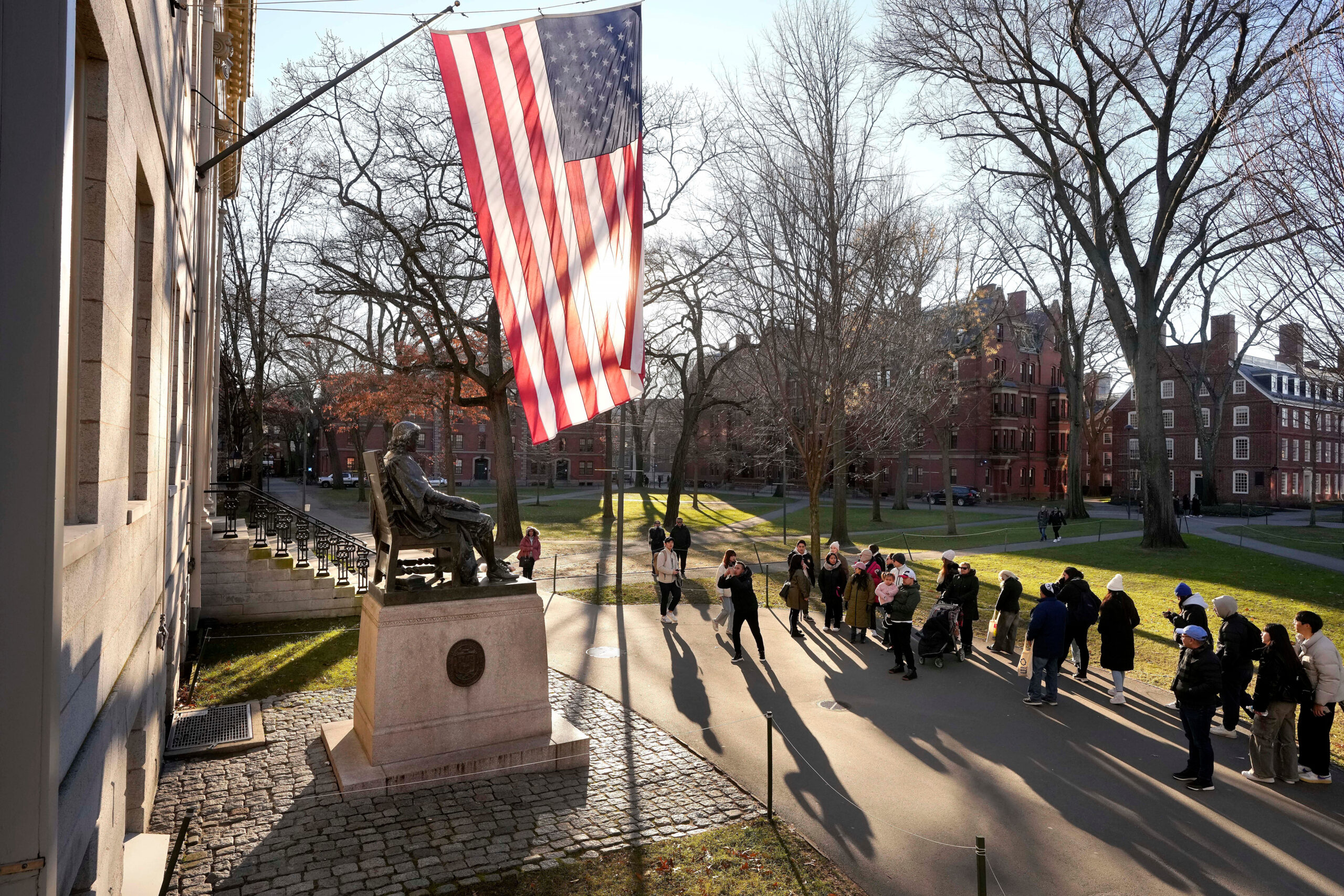
FIRE has also been outspoken in its defense of Harvard University. After the Trump administration sent Harvard a list of demands this spring — including banning some international students based on their views, appointing an outside overseer approved by the federal government to ensure “viewpoint diversity,” and submitting yearly reports to the government — the university refused to comply. Trump then sought to cut off billions of dollars of federal funding in response.
Harvard sued, and FIRE submitted an amicus brief supporting the university, noting that because of its own “longstanding role as a leading critic” of Harvard as a center of cancel culture, it was not less but more alarmed by the government’s “wielding the threat of crippling financial consequences like a mobster gripping a baseball bat.”
FIRE is also preparing to potentially sue Texas A&M University after the university instructed a philosophy professor in January to remove some teachings of Plato from an introductory philosophy course, citing new rules barring public universities in the state from offering classes that “advocate race or gender ideology.” FIRE wrote to the university, calling the move “unconstitutional political interference.”
Removing Plato from an intro philosophy class is the type of absurd, taken-to-the-extreme free-speech dispute that has long been FIRE’s bread and butter, and Creeley was particularly agitated about it.
Will Creeley, FIRE’s legal director, pictured here at the FIRE offices in Philadelphia. He was drawn to First Amendment work partly because his father was a poet.
“What the hell is ‘race and gender ideology’?” he said. “That’s a term so vague you could drive a truck through it.”
He had seen commentary about how 2,400 years ago, Socrates was put to death for corrupting the youth of Athens — and now administrators were, in effect, trying to run Socrates’ student out of College Station, Texas, too.
Creeley was almost laughing, but he was also feeling apocalyptic.
He has been half-joking with his staff that FIRE’s entire litigation program could be dedicated just to Texas. Yet he was also stewing over a decision by the University of Alabama in December to suspend two student publications, one focused on fashion and the other on Black culture and student life.
The university said both violated the Justice Department’s guidance on diversity, equity, and inclusion by narrowly appealing to female students and Black students. FIRE sent an outraged letter to the school, often a precursor to litigation.
“It’s one thing to say, ‘Hey, administratively, we’re not going to have an office of DEI,’” Creeley said. But to say, “‘And students can’t talk about these things.’ … That just drives me nuts.”
Off campus, FIRE is suing Perry County, Tenn., on behalf of Larry Bushart, a retired police officer who spent 37 days in jail after reposting a meme following the assassination of right-wing political activist Charlie Kirk. The meme depicted then-presidential candidate Donald Trump urging people to “get over” a separate shooting the year before.
Defending free speech is notoriously unpopular, and FIRE has leaned hard into a narrative of itself as a pure, principled defender of free speech, regardless of the consequences.
“We always say we just call balls and strikes, no matter what team is up to bat,” Glennon said. “If you are being criticized by both sides and praised by both sides every single day — well, then, that’s something that I wear as a point of pride.”
“Sometimes, if everybody’s criticizing you, you are screwing up,” Creeley acknowledged, and they both laughed. “But here I would say we’re doing it right.”
In 2022, FIRE expanded its purview beyond college campuses, including through a massive media campaign. One of its billboards is pictured here, visible heading north on I-95, in 2023.
From scrappy watchdog to national player
FIRE is insistently nonpartisan; staffers acknowledge the organization’s erstwhile conservative reputation but say it was never accurate.
And under the second Trump administration, it has become one of the most outspoken voices in the country for free expression. The nonprofit has a $32 million budget, about 130 staffers, and roughly 12,000 members paying a $25 annual fee.
Both Creeley and Glennon have been with the organization for nearly two decades, helping it grow from a small advocacy group into one garnering increasing mainstream attention. They said FIRE based itself in Philadelphia, not Washington, so that it would remain free from political interference. (One of the cofounders of the organization, Alan Charles Kors, an emeritus history professor at the University of Pennsylvania, is also based in Philly.)
At the Philly office, copies of the Wall Street Journal and the Chronicle of Philanthropy greet visitors. The conference rooms are named after free-speech references. (“It’s a little kitschy, but it’s cute,” Glennon said of the “Crowded Theater” room.)
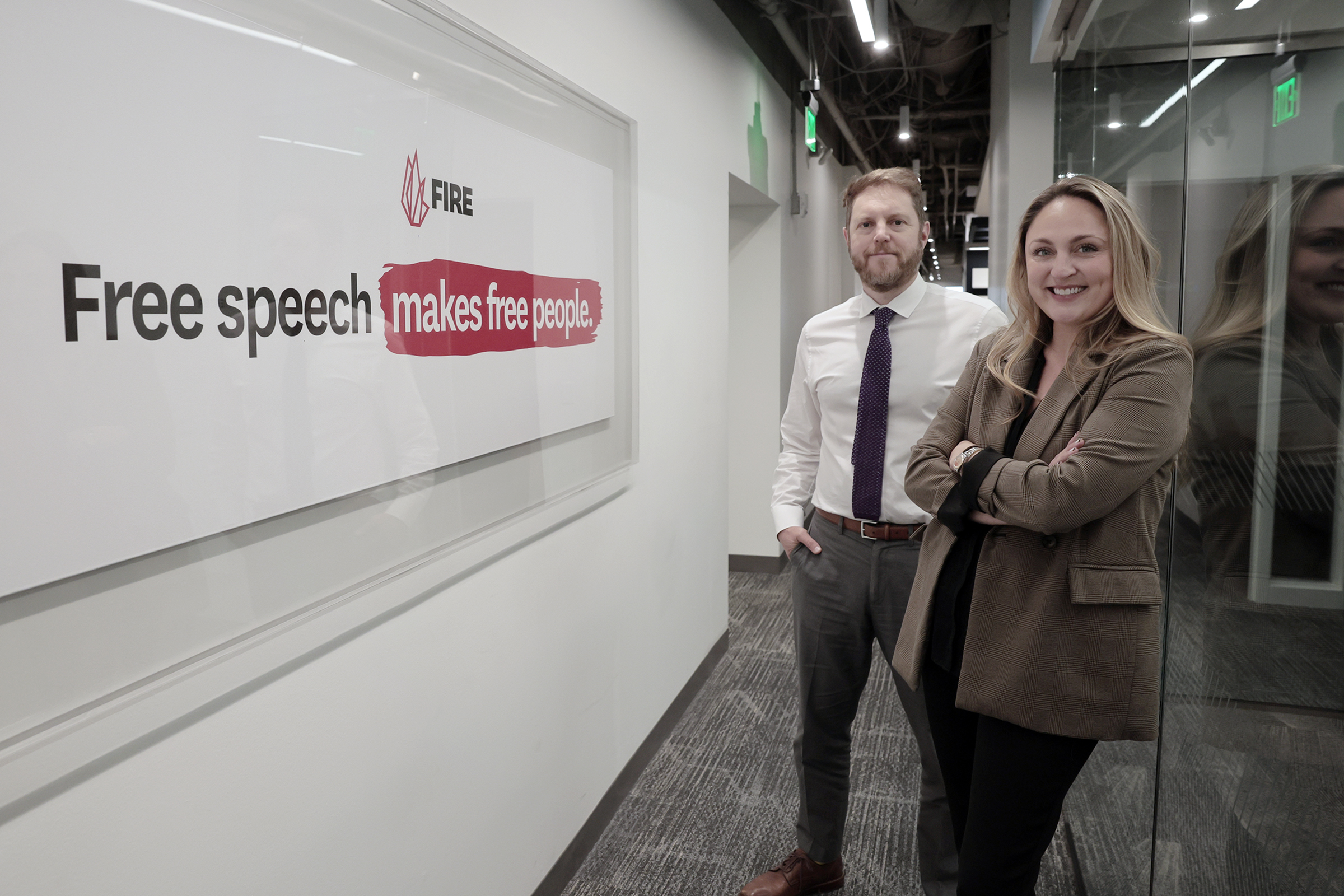
One afternoon this fall, Glennon, in an oversized tan blazer, black pants, and stilettos, her blond hair loose, and Creeley, in a white button-down and purple tie, his auburn beard neatly cropped, were quick to laugh, prone to peppering famous quotes about free speech throughout the conversation.
They appeared to be true believers — in free expression, in their work, in America.
Glennon said she fears “that people will become accustomed to a society that is less free, and that with every generation, we’re losing a little bit of that love for American exceptionalism and what free speech is.”
Creeley nodded.
“What’s the Kors quote? ‘A nation that does not educate in liberty will not long enjoy it, and won’t even know when it’s lost,’” he said, paraphrasing a quote from FIRE’s cofounder.
“‘Won’t even know when it’s lost,’” Glennon echoed. “Gave me chills.”
FIRE’s legal director Will Creeley and FIRE’s chief operating officer Alisha Glennon, pictured here at the Philly offices in November, have both been at the organization for nearly two decades.
From pressure campaigns to the courtroom
FIRE was founded by two civil libertarians who wrote one of the defining campus-panic books of the 1990s, The Shadow University: The Betrayal of Liberty on America’s Campuses, which Publishers Weekly at the time described as a polemic about how “the ‘political and cultural left’ is today the worst abuser of the principles of open, equal free speech.”
Creeley joined FIRE as a law school intern before becoming a full-time staffer in 2006. He comes from a long line of pacifist Quakers and was involved in the campus Green Party as an undergrad at New York University. He said he was drawn to First Amendment work because his father was a poet; words were important.
“I remember the first couple years, I was like, ‘Boy, I’m doing this free-speech work, I’m defending an awful lot of evangelical conservative Christians who I really don’t have much in common with,’” Creeley said. But that was the principle of the thing.
FIRE’s chief operating officer Alisha Glennon in “The Marketplace” conference room overlooking Independence Hall. All the conference rooms are named after free speech references.
Glennon, who was born and raised in Mayfair, joined FIRE around the same time. She had recently graduated from the College of William and Mary and was waitressing while applying for development jobs. “I was like, ‘Free speech! Everybody likes free speech!’” she said, laughing.
For more than a decade, FIRE focused exclusively on advocacy, aiming to “make rights violations so painful for a school that they just would abandon it,” Creeley said. Litigation was plodding and costly, and the awareness campaigns seemed to have an impact.
In 2008, for example, a student-janitor at Indiana University-Purdue University Indianapolis was accused of racial harassment after a coworker saw him reading Notre Dame vs. the Klan: How the Fighting Irish Defeated the Ku Klux Klan, a nonfiction book that depicted robed Klansman and burning crosses on the cover. FIRE took up the cause, and the university eventually apologized to the janitor.
Other early advocacy cases included defending a professor at a New Jersey community college over a photo he posted of his daughter wearing a Game of Thrones T-shirt, and intervening on behalf of a University of Alaska Fairbanks student newspaper accused of sexual harassment for publishing a satirical article about a new building shaped like a vagina.
Then in 2014, FIRE began suing schools. The effort launched with four cases, including one about an unconstitutional “free speech zone” at a college in California and one on behalf of students at Iowa State University who were told they could not use the university’s name while wearing T-shirts representing their chapter of the National Organization for the Reform of Marijuana Laws.
FIRE eventually won all four.
These days, staffers at the ACLU of Pennsylvania and FIRE work closely together, talking weekly and sometimes daily.
“I honestly don’t remember a time where we had a disagreement about how to analyze the case,” said Witold Walczak, the ACLU of Pennsylvania’s legal director.
Despite its ideologically broad legal work, FIRE perhaps became most famous in the mainstream for its conservative-leaning culture work. In 2015, executive director Greg Lukianoff cowrote an Atlantic article — and later a book — titled The Coddling of the American Mind, arguing that efforts to create “safe spaces” on campuses had gone awry. Cowritten with social psychologist Jonathan Haidt, the book portrayed campus identity politics as bordering on the surreal.
That was also the year Lukianoff helped to disseminate one of the defining “cancel culture” artifacts of the decade. He filmed a Yale student, who came to be known online as “shrieking girl,” screaming at a professor in the middle of a simmering debate on campus over what constituted racially sensitive Halloween costumes. The video made national news, eventually racking up nearly 2 million views on FIRE’s YouTube page.
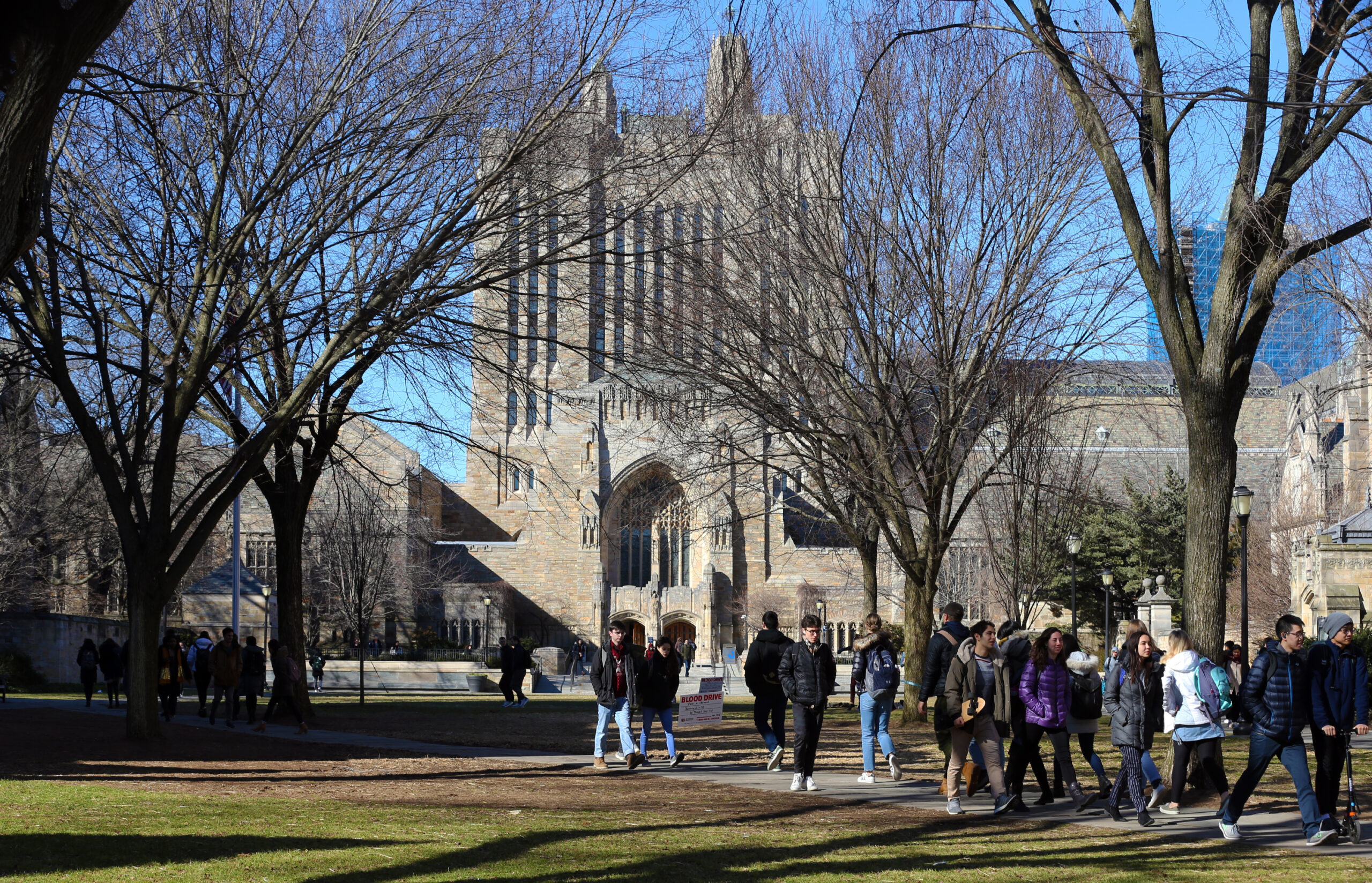
The campus of Yale University in New Haven, Conn.
The rankings — and the reckoning
These days, the organization tracks speaker disinvitations and scholars and students “under fire” through its public databases. Since 2020, it has also published annual “free-speech rankings” based on the databases and student surveys — rankings that have repeatedly placed Harvard at or near the bottom for free speech.
Those efforts underpin one of the central critiques of FIRE: that it has focused not only on government restrictions but also on the actions of private actors, including students.
“The rankings are based on those ideas of ‘cancel culture’ and shaming others and so on. And they’re not based on the First Amendment,” said Charles Walker, a retired attorney based in Maryland who published multiple critiques of FIRE’s rankings last year. “First Amendment law restricts what the government can do with regard to individual speech. It doesn’t address individuals speaking to each other.”
Bradford Vivian, a professor at Pennsylvania State University and the author of Campus Misinformation: The Real Threat to Free Speech in American Higher Education, described FIRE’s databases as “totally subjective, arbitrary, politically motivated tools.”
He argued that FIRE cherry-picks sensational incidents that do not necessarily have anything to do with true First Amendment violations, and prioritizes rankings that will make headlines over those that would be more accurate.
“FIRE has produced misinformation that others can easily use for nefarious purposes,” Vivian said.
FIRE for years whipped up a frenzy over liberal excess on elite college campuses, Vivian and other critics say. The Trump administration seized on that frenzy to slash federal funding and even imprison its detractors. Yet FIRE staffers do not see themselves as part of that story.
Even as FIRE insists it merely “calls balls and strikes,” critics note that state legislatures and the Trump administration have cited FIRE’s rankings as justification for punitive actions against universities.
Adding insult to injury, FIRE staffers have not always expressed much sympathy for the universities that now find themselves in the administration’s crosshairs.
“Administrators, colleges, universities have in some ways done plenty to bring this on themselves,” Sean Stevens, FIRE’s chief research adviser, told The Inquirer. “There was a lot of downplaying or ignoring of the concerns about the homogeneity of politics among the professorate or some of the curriculums.”
Still, Stevens, who oversees the annual rankings, said he disagrees with the Trump administration using his work to cut funding or shut down certain speech or academic departments. “That’s not anything we would advocate for,” he said.
In December, Lukianoff doubled down, publishing what amounted to an “I told you so” essay, arguing that universities now face a “worst of both worlds” scenario, in which government pressure combined with lingering cancel-culture dynamics are producing the “bleakest speech landscape imaginable.”
Creeley and Glennon said they never anticipated their work being used to justify repression.
“It’s galling to me to see our work invoked to justify that kind of illiberal crackdown,” Creeley said, pointing specifically to U.S. Rep. Elise Stefanik (R., N.Y.), who previously said she was a free-speech ally, using FIRE’s rankings in her anti-higher education campaigns.
If onetime allies now seem to have never cared much about free speech to begin with, that’s not on FIRE, they said.
“What we had been saying over the years was true‚” Glennon said. “We’re to blame now for the government overreach? I don’t think it’s a fair assessment.”
“I mean, that’s all we can do: Call out the abuses as we see them,” Creeley said. “If somebody wants to use our work for bad ends, we’ll fight you on it.”
FIRE was based in Philadelphia to avoid the political interference of Washington, D.C.
Can a referee still matter when the rules change?
At FIRE’s daily morning meetings to discuss pressing free-speech problems across the country, the agenda has grown longer. The scope, severity, volume, and nature of the cases they are seeing have changed, Creeley said. (He noted — twice — that an Alexandria Ocasio-Cortez presidency would likely keep FIRE busy as well.)
“In some places, the law is just getting flat-out ignored,” he said.
After two decades defending the First Amendment, Creeley has begun to reflect on whether placing his faith in the collective commitment to the law and the Constitution was the right choice. Still, he remains an optimist. He believes that such a commitment will prevail. That’s the whole promise of the country.
FIRE continues to see itself as a principled referee. Whether a referee still matters when the most powerful player insists the rules no longer apply — that remains an open question.
Bad Bunny vows to protest with love. Bruce Springsteen has opted for a more confrontational approach.
Both are part of a growing wave of pop-music dissent aimed at what critics see as overreach by the Trump administration’s Department of Homeland Security — actions in Minneapolis that have been linked to the deaths of two American citizens during encounters with U.S. Immigration and Customs Enforcement agents.
Bad Bunny, the Puerto Rican superstar known as the King of Latin Trap, was the world’s most-streamed pop music maker in 2025. The rapper-singer-producer, whose full name is Benito Antonio Martínez Ocasio, has a massive platform to air his grievances if he chooses, serving as the half-time show headliner at Super Bowl LX on Sunday.
This year’s half-time show is likely to surpass Kendrick Lamar’s 2025 performance, which drew 113.5 million viewers as the most-watched in history.
Those critics include President Donald Trump. “I’m anti-them. I think it’s a terrible choice. All it does is sow hatred. Terrible,” he said last month, referring to Bad Bunny and Green Day, who will play a pregame concert during NBC’s broadcast. The clash between the Seattle Seahawks and New England Patriots will also stream on Peacock.
Bad Bunny haters have an alternative: Kid Rock, whose 5 million monthly Spotify listeners is dwarfed by Bad Bunny’s 87 million, will top the bill on Turning Point USA’s All-American Halftime Show, shown on TPUSA’s YouTube page and conservative media outlets. Country singers Brantley Gilbert, Lee Brice, and Gabby Barrett will also perform.
Will Bad Bunny’s performance be a virulent attack on the Trump administration’s immigration policy?
That remains to be seen. But the speech he gave at the Grammys last weekend, after winning best música urbana album for Debí Tirar Más Foto — which also became the first Spanish-language album of the year winner — suggests a more subtle expression of Puerto Rican pride that emphasizes the humanity of demonized brown-skinned immigrants.
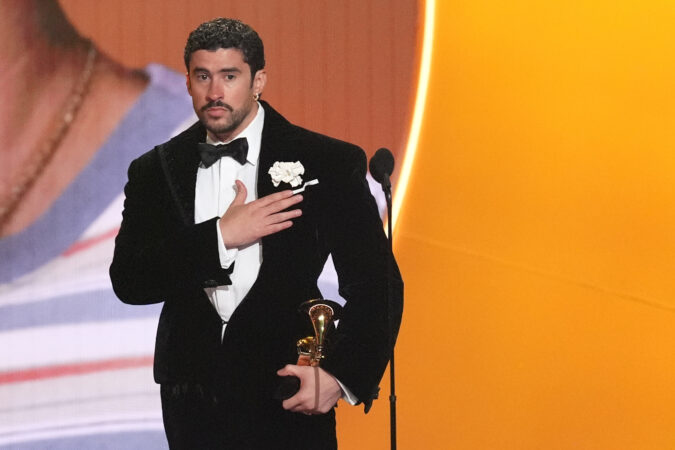
Speaking in English, Bad Bunny thanked God, said “ICE Out,” then continued: “We’re not savages, we’re not animals, we’re not aliens. We are humans and we are Americans.” (As a Puerto Rican native, Bad Bunny is an American citizen unlike recent MAGA convert Nicki Minaj, who was born in Trinidad and Tobago.)
“Hate gets more powerful with more hate. The only thing that is more powerful than hate is love. We need to be different. If we want to fight, we have to do it with love.”
Bad Bunny’s speech was one of many gestures opposing ICE at the Grammys, from Bon Iver’s Justin Vernon wearing a whistle on his lapel to Billie Eilish criticizing anti-immigrant voices with a terse line: “Nobody is illegal on stolen land.”
Olivia Dean, the British singer who won best new artist, said: “I’m up here as a granddaughter of an immigrant. I’m a product of bravery, and I think those people deserve to be celebrated.”
But the Grammys didn’t include any overtly political new music. A rumor that Springsteen would open the show with “Streets of Minneapolis” proved unfounded. Springsteen wrote the new anti-ICE broadside the day protester Alex Pretti was killed by federal agents.
But Springsteen’s protest song leads the way in a trend toward musicians opposing the Trump administration in song, in many cases consciously connecting with a tradition that reaches back to Woody Guthrie, Peter Seeger, Bob Dylan, and the Civil Rights protest of the 1960s.
In “Street of Minneapolis,” Springsteen meets the moment by expressing outrage at the deaths of Renee Good and Pretti, specifically the administration’s initial pronouncements that placed blame on the dead rather than the federal agents.
Bruce Springsteen performs Oct. 28, 2024, during a Democratic concert rally at the Liacouras Center at Temple University.
“Their claim was self-defense sir, just don’t believe your eyes,” the Boss sings. “It’s these whistles and phones against Miller and Noem’s dirty lies.”
The song builds to a rousing “ICE out” chorus that’s so unsubtle it even gave the Boss pause.
Performing in Minneapolis last month with rabble-rousing former E Street Band member Tom Morello, Springsteen said he asked the guitarist whether “Streets” was too “soap boxy.” Morello, of Rage Against the Machine, replied: “Nuance is wonderful, but sometimes you have to kick them in the teeth.”
Springsteen, of course, can afford to be aggressively provocative. Not only is he a revered superrich artist at the tail end of his career whose loyal audience is not going anywhere. He’s also a white man whose fans who look like him are not in danger of being detained and deported.
And he has a history of sparring with Trump, whose administration he repeatedly labeled “corrupt, incompetent, and treasonous” on stage in Europe last spring. At the time, Trump responded by calling the Jersey rocker “not a talented guy — Just a pushy, obnoxious JERK.” The president hasn’t responded to “Streets of Minneapolis” as of yet, but loyalist Steve Bannon called Springsteen “fake and gay, as the kids say.”
Springsteen’s singing out will also surely lead to others joining the chorus. And plenty of broadsides have been in the works already.
Low Cut Connie at Concerts Under The Stars in King of Prussia on Friday August 1, 2025. Left to right: Rich Stanley, Nick Perri, Adam Weiner, Jarae Lewis (on drums, partially hidden), Amanda “Rocky” Bullwinkel, Kelsey Cork.
Philadelphia’s Adam Weiner of Low Cut Connie has been an outspoken Trump critic, among the first to pull out of a Kennedy Center performance last year.
He’s announced an entire protest album called Livin’ in the U.S.A. Weiner said he made the album “because I am disgusted to see our country descend into an authoritarian hell, a place where art does not lead the cultural conversation.” It arrives timed to the Semiquincentennial on July 3.
The same day that Springsteen released “Streets of Minneapolis,” British folk-punk singer Billy Bragg dropped “City of Heroes,” also written to commemorate Pretti’s death.
Veteran punk rockers are joining in, too, sometimes by rewriting lyrics to old protest songs like Boston band Dropkick Murphys’ “Citizen I.C.E.” — a new version of “Citizen C.I.A.”
The protest isn’t manifest only in topical song writing. In Philly, local events in the indie music scene are aiming to assist immigrants. Juntos, the organization that aids Philadelphia communities affected by ICE, will be the beneficiary of “A Jam Without Borders” at Ortlieb’s on Wednesday, with local musicians Arnetta Johnson, Nazir Ebo, and others.
New generation protest singers include Liberian-born Afro Appalachian singer Mon Rovia, whose buoyant 2025 song “Heavy Foot” remains upbeat as he sings “the government staying on heavy foot / No, they never gonna keep us all down.”
Most prominent in branding himself as a modern folk troubadour is Jesse Welles, whose “No Kings” duet with Joan Baez came out in December.
Welles’ “Join ICE” uses humor as a weapon, with an early Dylan persona. “There’s a hole in my soul that just rages,” he sings. “All the ladies turned me down and I felt like a clown / But will you look at me now, I’m putting people in cages!”
Serious songwriters are likely to continue to pen protest songs as long as scenes of turmoil continue to show up on TV and social media screens.
But high-profile artists worried about alienating their audience aren’t likely to start flooding the zone with anti-ICE screeds if they’re concerned about backlash.
A case in point would be formerly Philadelphian country superstar Zach Bryan. Last October, he released a song snippet of “Bad News” that included the lyrics “ICE is gonna come, bust down your door” and cited “the fading of the red, white and blue.”
The song was met with disdain by the White House. Spokesperson Abigail Jackson said, “Zach Bryan wants to open the gates to criminal illegal aliens and has condemned heroic ICE officers.” DHS secretary Kristi Noem was “extremely disheartened and disappointed.”
Bryan did include the song on his album With Heaven on Top in January, but not before taking great care to explain he wasn’t on one political side or the other.
“Left wing or right wing, we’re all one bird and American,” the Eagles fan said. “To be clear I’m not on either of these radical sides.”
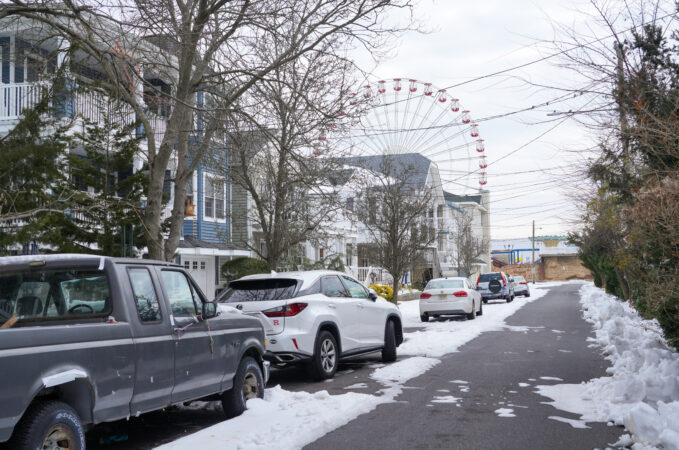
OCEAN CITY, N.J. — Marie Crawford was immediately charmed in 2021 when she and her soon-to-be-surfer husband Rich moved into their historic house in the literal shadow of Gillian’s Wonderland Pier.
They’d come from Blue Bell, Pa., to live year-round by the ocean, and landed with an amusement park right up the street.
“The ball drop, that was what we heard from my house,” she said, referring to the 130-foot-high Drop Tower ride. “It was, ‘Ah, ah, ahhhhhhhh,‘” she said, imitating the screams she would sometimes hear.
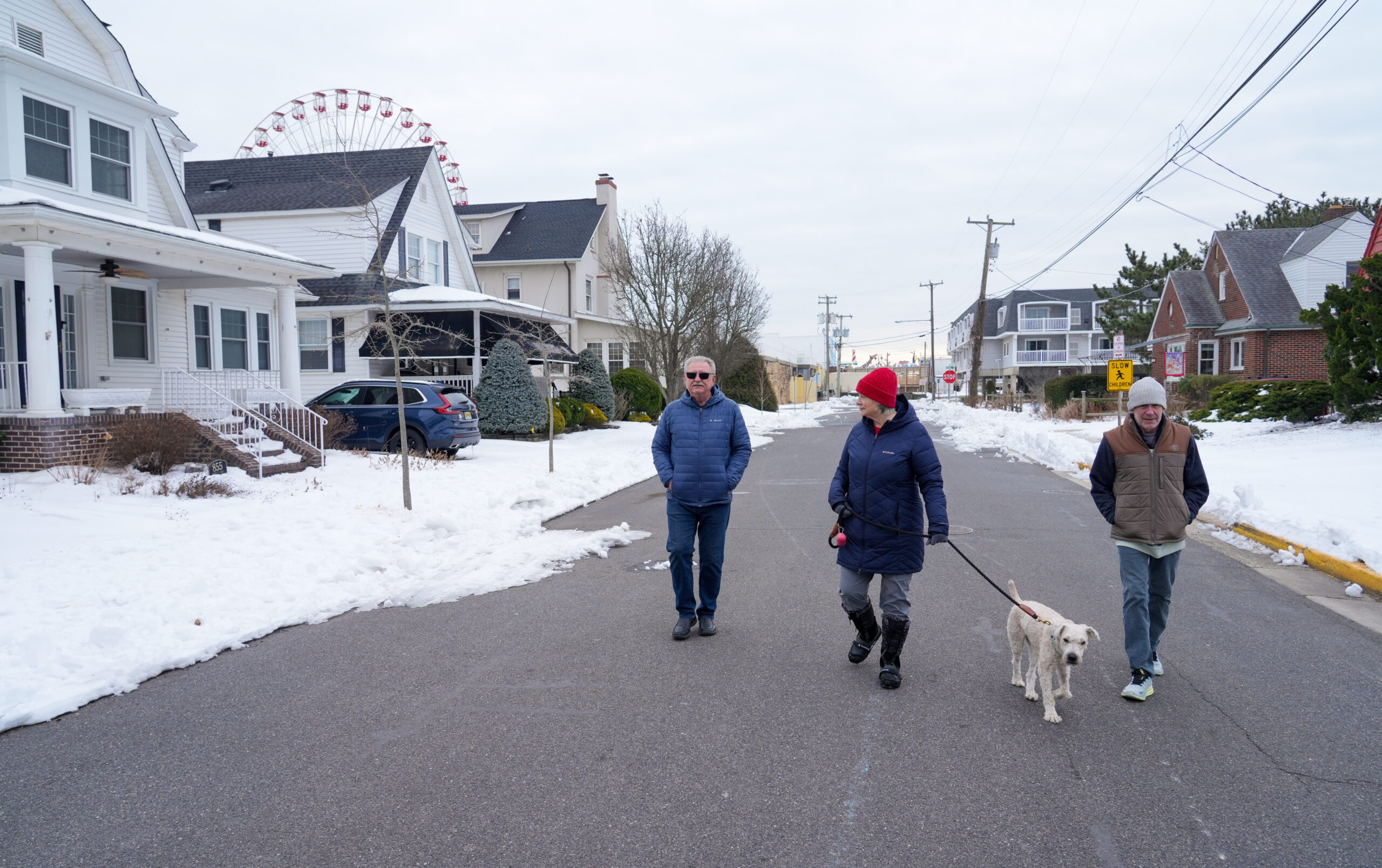
Jack Gutenkunst, left, Marie Crawford and her husband Richard with Shiloh, a 9-year-old soft coated wheaten terrier, walk along Plaza Place, in Ocean City, Tuesday, Feb. 3, 2026.
“It was so beautiful and romantic. On our porches, we would hear the ocean, not the amusement park. There were families, babies in strollers, coming up the street, flowing up to Wonderland. We were kind of ambassadors.”
Now, more than a year after the closing of Gillian’s, the residents are faced with the possibility of a seven-story hotel they fear will block their sun, bring traffic to their streets, and threaten the small-town charm they found in their little pocket of Ocean City.
“It’s just another example of maximizing, pushing,” said Rich Crawford, Marie’s husband, who programs music for his family’s Christian radio station, WDAC, located in Lancaster, Pa. In his 60s, Rich fell in with Ocean City’s surfing crowd and unexpectedly grew to love his little community.
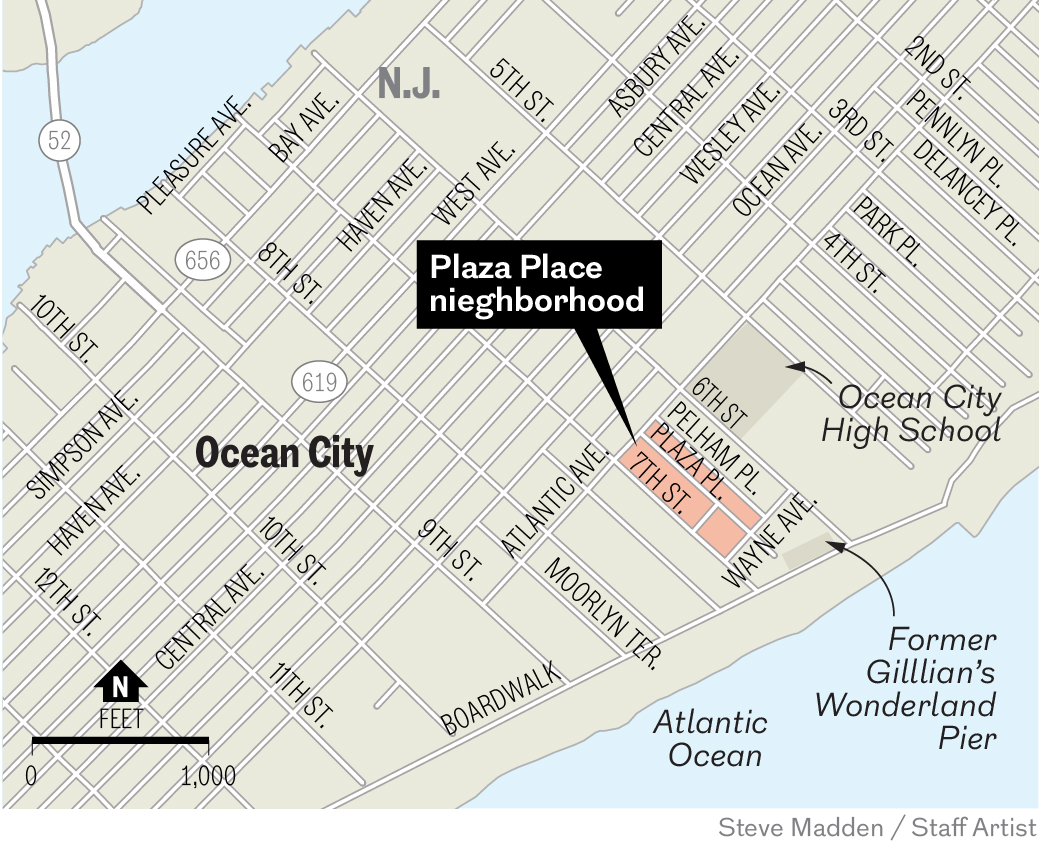
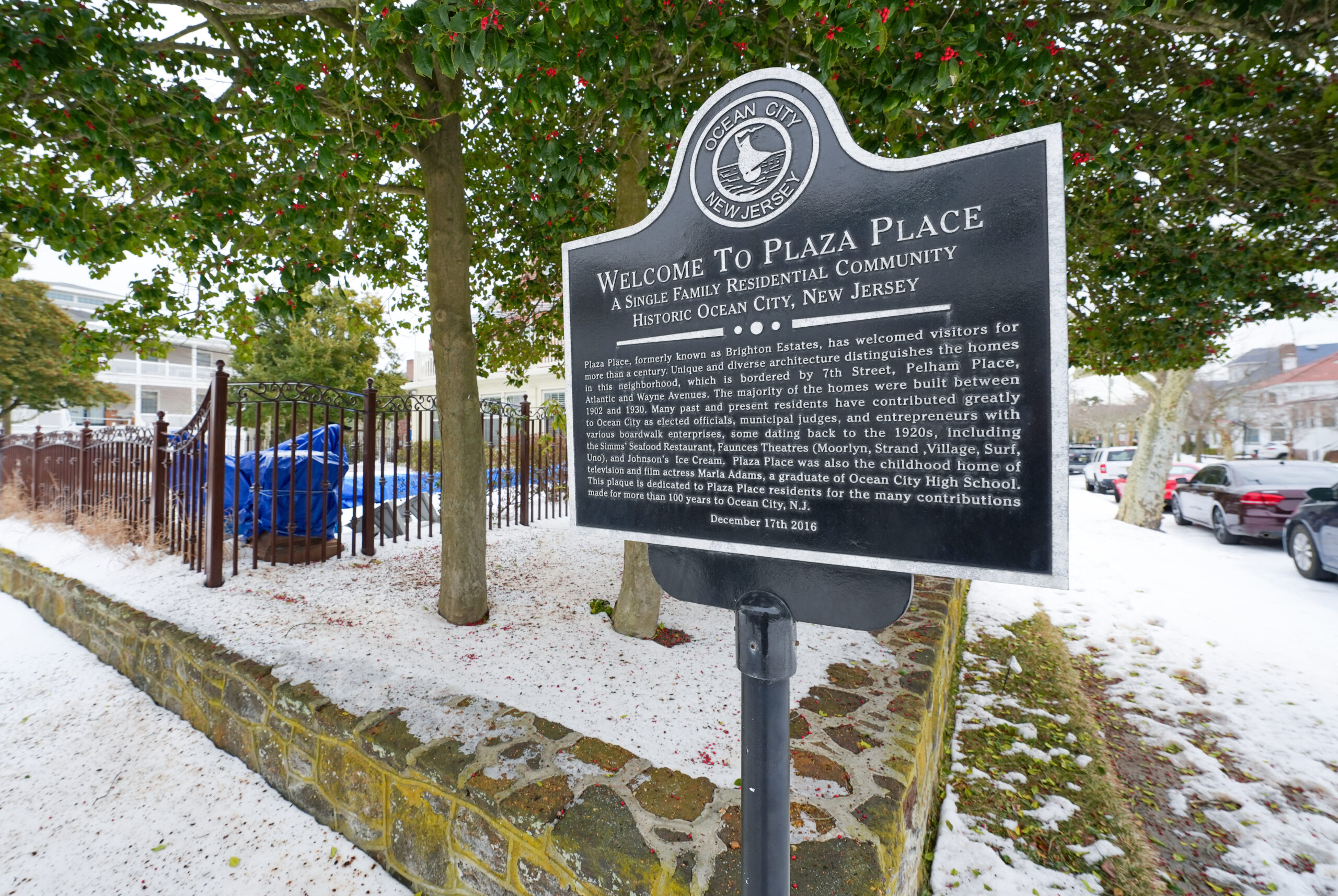
The Crawfords’ neighborhood of 100-year-old homes and 153 trees is called Plaza Place, which is one block each of Pelham Place, Plaza Place, and the north side of Seventh Street, between Wayne Avenue and Atlantic.
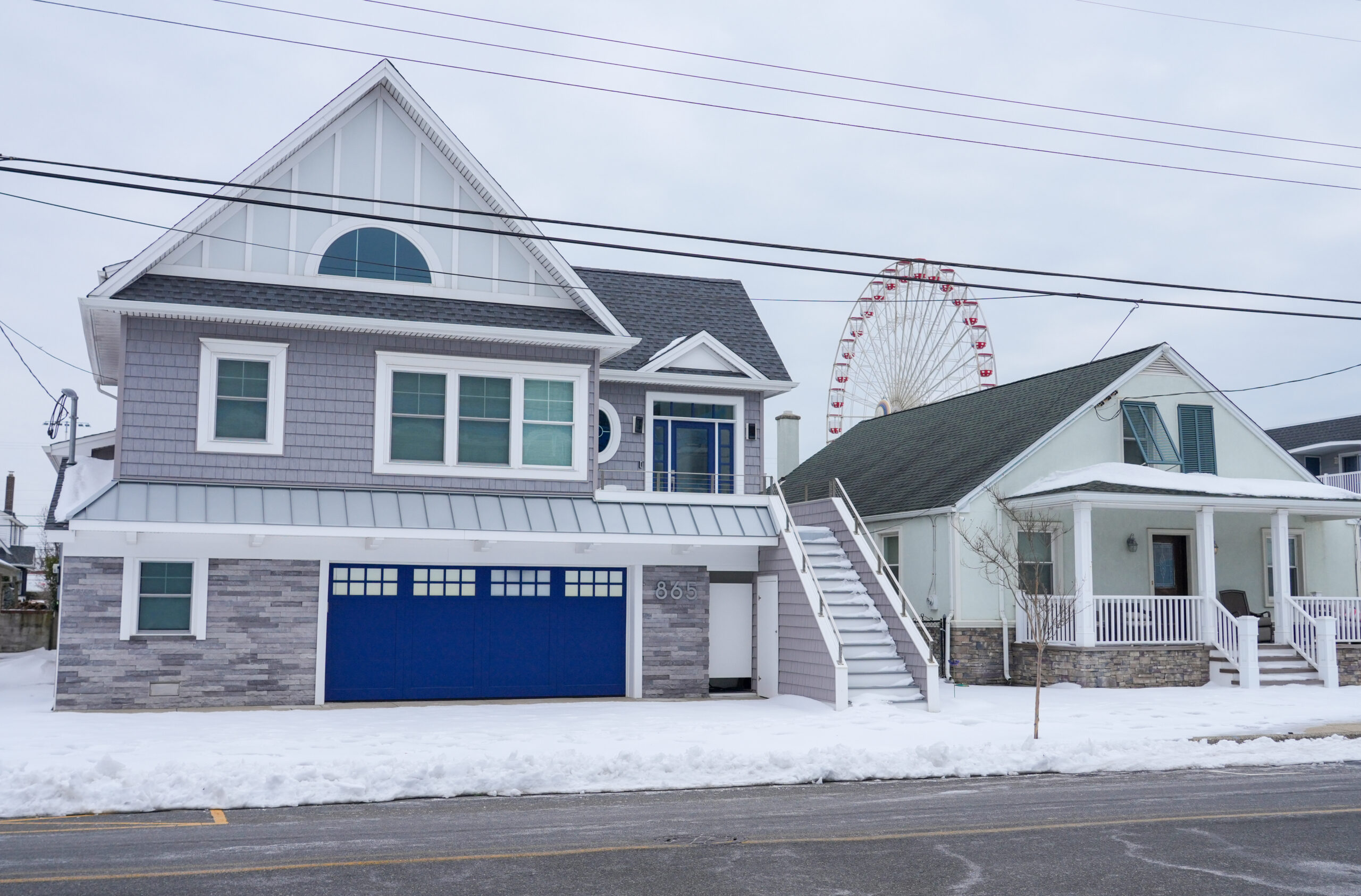
Across Wayne Avenue, toward the ocean, was Wonderland. On a clear day, a red ball of sun creeps up above the boardwalk and peeks into their little neighborhood.
On Pelham Place, residents each also own a two-foot- wide stretch of land across the street from their houses, a quirk of their deeds originally designed to prevent the rooming houses on Plaza Place that backed up against Pelham Place from using Pelham as an alleyway for their trash. There are dedicated gardeners on the streets who turn those strips into showpieces.
The sun sets behind the Ferris wheel on the final day for the beloved Wonderland Pier in Ocean City Sunday, Oct. 13, 2024.
Neighbor Barb Doctorman, whose family owns the Islander store on the boardwalk, said she used to take her children up on the Ferris wheel and peer down at their neighborhood. So lush, it looked like a forest, she said.
“I looked up the impact of a high-rise,” said Doctorman. “We’re going to lose some sun. The airflow is going to be totally changed from what it was. There’s a heat radiant that comes off it.”
Her husband, Doc, said: “We want something up there, but we know there could be more of a draw to that boardwalk than just the hotel.”
Marie Crawford (left) holds the leash of Shiloh, a 9-year-old soft-coated wheaten terrier, while standing with her husband Richard (center) and neighbor Jack Gutenkunst at the end of Pelham Place in Ocean City.
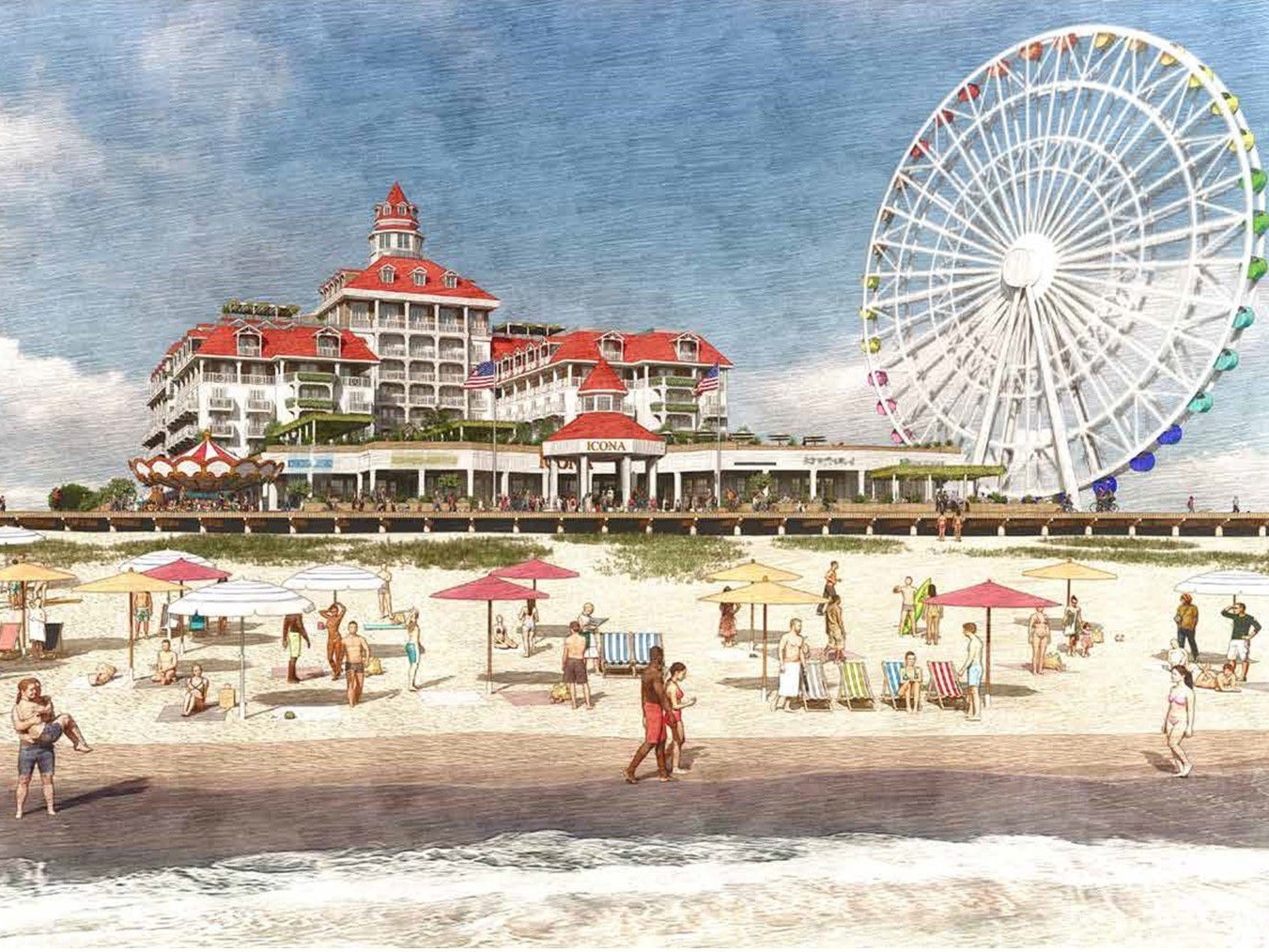
The land is owned by developer Eustace Mita, who has proposed Icona in Wonderland, a 252-room hotel that would preserve the Ferris wheel, carousel, and some kiddie rides.
So far, the city has not declared the site in need of rehabilitation, as Mita has requested, or otherwise moved to rezone the area to allow a hotel.
Merchants have begged the city to allow the hotel, and described how their businesses have suffered since the closure of Wonderland. Some residents have clung to the idea that an amusement park can return, though those numbers are dwindling.
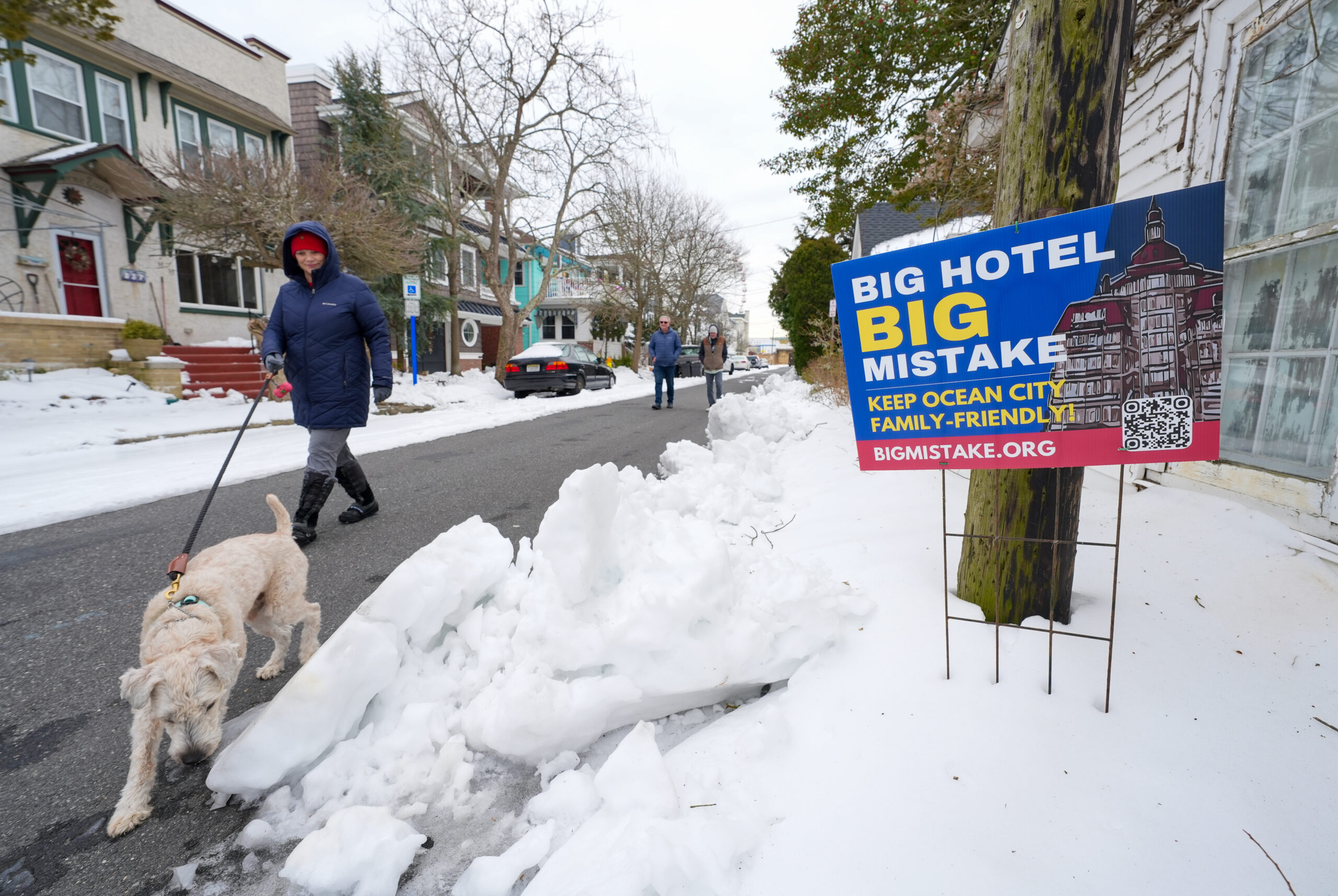
Marie Crawford, her husband Richard, right, along with Shiloh, a 9-year-old soft coated wheaten terrier, and their neighbor Jack Gutenkunst, walk past a sign against the development of a hotel at the site of the old Wonderland Pier on the boardwalk in Ocean City, Tuesday, Feb. 3, 2026.
In Plaza Place, the opposition is less sentimental, more practical. They fear traffic, and the shadow from a neighboring seven-story hotel. Like residents in other towns who fought dunes, they fear the loss of the ocean breeze, or a shift in wind patterns that will affect surfing at the popular Seventh Street Beach.
“It’s got that old feel to it, and everybody’s house is different,” said Marie Crawford, who bought her Craftsman Colonial on the north side of Pelham for $905,000 in 2021. She estimates it’s worth $2.5 million now. There are about 60 homes in the Plaza Place civic association.
The association is one of several groups that are prepared to go to court if the city tries to change the zoning to allow a hotel, without going through a thorough master plan process, said Jack Gutenkunst, the Plaza Place Association president.
While Wonderland brought thousands of people on a summer night, the pier itself had no parking. So people parked elsewhere and excitedly walked through their neighborhood on their way to the rides. People on their porches called out, “Have a blessed evening,” and chatted the night away, said Crawford. The hotel proposal calls for parking underneath the structure.
A sign stands near the historic neighborhood behind the old site of the Wonderland Pier in Ocean City, Tuesday, Feb. 3, 2026. Residents are against the development of a hotel at the boardwalk site.
Crawford stressed that it’s not a case of selfish NIMBY, Not In My Backyard. Despite Ocean City’s decades-old pattern of replacing single-family homes with duplexes, there are nearly 1,400 homes over 100 years old still left in Ocean City, said Bill Merritt, president of Friends of OCNJ History & Culture.
Being a block from the boardwalk, and living in a beach town, does not mean the neighborhood’s purpose is primarily hospitality, said Crawford. Its distinct, increasingly rare Jersey Shore character deserves to be valued, she said.
“It’s height. It’s chaos. It’s the change in culture,” she said, when asked what specifically worries her about the hotel. “It’s a transient population coming through here for three nights at a time. That’s in the hospitality district. We are not the hospitality district.”
The neighborhood behind the old Wonderland Pier site on the boardwalk in Ocean City, Tuesday, Feb. 3, 2026. Residents are against the development of a hotel at the boardwalk site.
The demolish-and-rebuild mania that took over a lot of the rest of the island has mostly left Plaza Place alone, though residents acknowledge that is also a threat to their way of life. They also fear a hotel will prompt Plaza Placeans to sell.
“It’s a Norman Rockwell painting, it just is,” Councilman Keith Hartzell says in the documentaryPlaza Place: The Enigmatic Street, a locally made short film about the neighborhood. “It’s right here in Ocean City, and you kind of don’t expect it, when there’s two streets away a bunch of duplexes.”
Hartzell, who is running for mayor against incumbent Jay Gillian, the former owner of Wonderland who sold to Mita, says he hopes to negotiate with Mita over height, parking, and other issues before considering any kind of zoning allowance or rehabilitation designation. A city council-appointed subcommittee tasked with assessing the boardwalk’s usage as a whole is holding a public meeting at 10 a.m. on Feb. 7 at the city’s library.
The residents of Plaza Place worry about the survival of the hidden little neighborhood by the beach they fell in love with. “The neighborhood is so beautiful and so old,” said Marie Crawford. “If the hotel goes in, the dramatic change that will be for all of us with the traffic, the tone of the neighborhood — you’re going to see people sell. That threatens the neighborhood. The people won’t want to stay.”
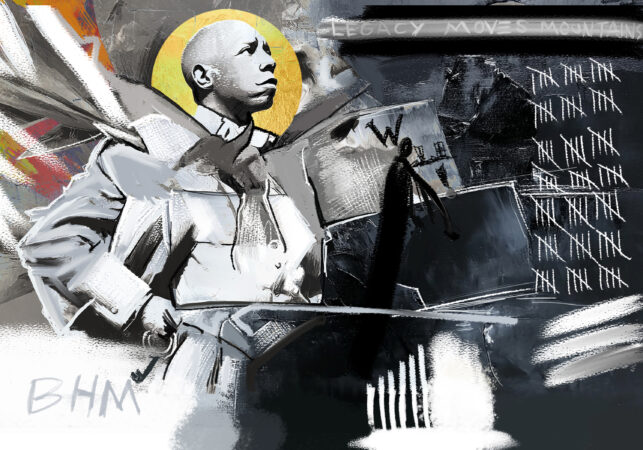
I am not a huge fan of comic books and superheroes, but I appreciate the storytelling. In comics, the origin story is just as important as the hero saving the day. The same is true for Black History Month, which originated as Negro History Week.
Negro History Week was created by Carter G. Woodson, the child of two formerly enslaved parents. According to Harvard historian Jarvis R. Givens, Woodson was taught by his two uncles, John and James Riddle, his mother Anne Riddle’s brothers, who had also been enslaved. Both had been educated in a Freedmen School toward the end of Reconstruction, and they became Woodson’s first teachers.
“As a student, [Woodson] witnessed the shared vulnerability of Black people through the story of his teachers and family,” writes Givens. “These first encounters taught Woodson more than just reading, writing, and arithmetic. He also inherited a political orientation to schooling informed by the lived history of the teachers standing before him … Here, Woodson encountered the project of Black education.”
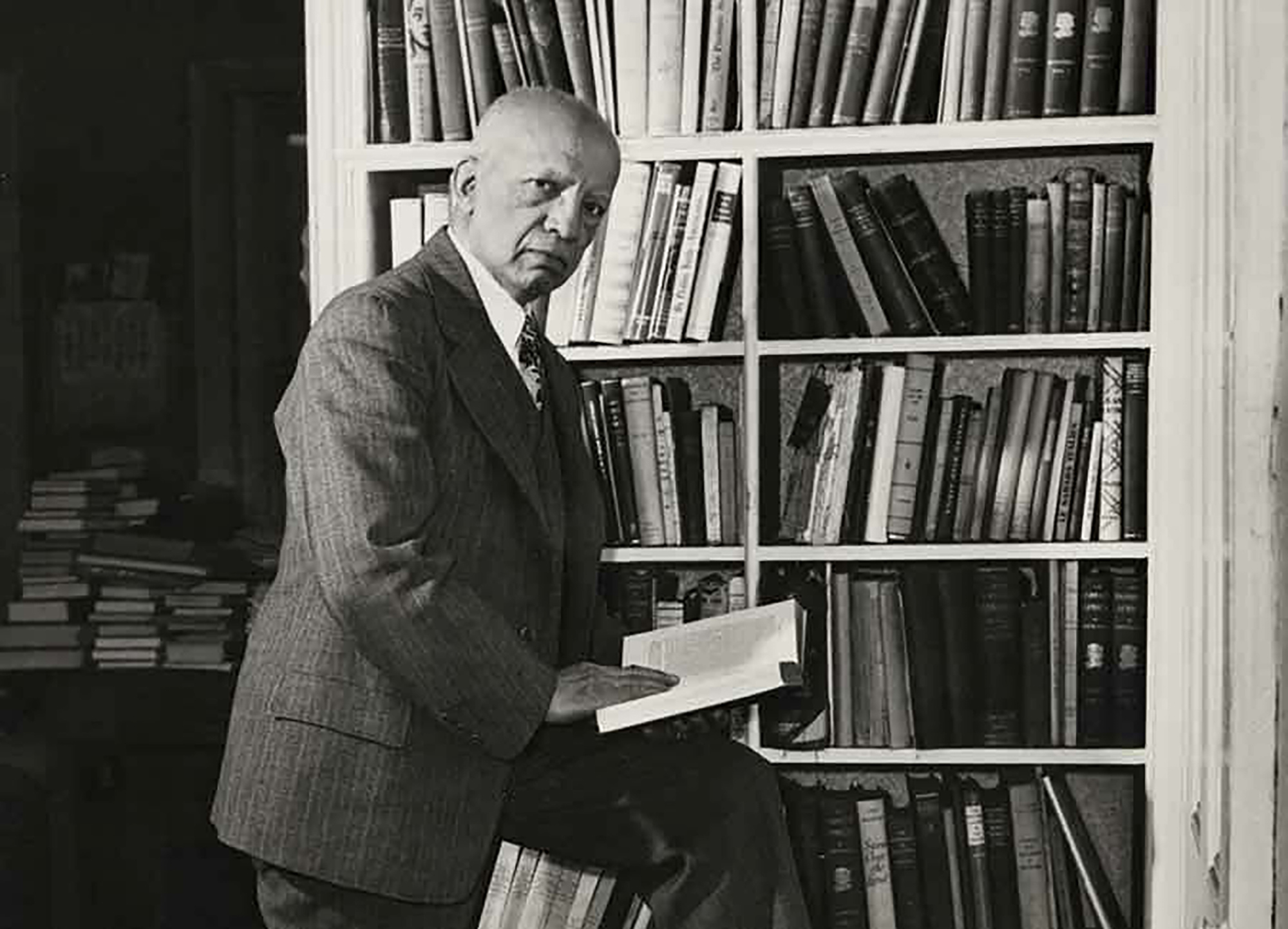
The historian and author Carter G. Woodson is widely regarded as the father of what has become Black History Month. Much of the observance’s origin can be traced to Philadelphia, writes Rann Miller.
That project, which continues to this day, was the equipping of Black people with the practical knowledge to do a thing, and the historical memory to understand why they do it. This was the basis with which Woodson founded the Association for the Study of Negro Life and History (ASNLH) in 1915 and created Negro History Week in 1926, as a time for Black people to not only learn about Black history, but to take the time to reflect on it.
In Woodson’s words: “It is evident from the numerous calls for orators during Negro History Week that schools and their administrators do not take the study of the Negro seriously enough to use Negro History Week as a short period for demonstrating what the students have learned in their study of the Negro during the whole school year.”
A mural honoring W.E.B. Du Bois on a firehouse at Sixth and South Streets in Philadelphia. He was an early advocate of Black history events.
The first Negro History Week took place from Feb. 7 to 13, 1926. The Philadelphia Tribune, in an article published Feb. 6, 1926, said: “It is essential to the future growth of the Negro race that we become acquainted with our past … We have passed the point in our advancement where we can afford to disregard our history.” That sentiment remains true today.
In April 1928, the Germantown YMCA hosted an event called Negro Achievement Week for the Germantown community, featuring such prominent African Americans as Alain Locke, W.E.B. Du Bois, and James Weldon Johnson. The week’s events received little media attention but were robust, including a mass community meeting, a music night, an art night, and a history lecture, held in both Germantown and Center City, according to David Young, director of the Historical Society of Montgomery County.
The events were aimed at educating white people, as well, with Du Bois’ pointedly noting that “he reminded the whites too often of their injustice to the Negro.”
Planning for Negro Achievement Week in Philadelphia began in 1923 at the “Black Branch” of the Germantown YMCA, known as the “Colored Y,” under the guidance of Olivia Yancey Taylor and Eva del Vakia Bowles.
Members of the Colored Y formed an interracial committee to plan the week’s activities, including a variety of African American heritage events.
The first Negro Achievement Week, which became Negro History Week, happened in 1925, influenced by a partnership between Woodson and members of the Black fraternity Omega Psi Phi, who created Negro History and Literature Week, first celebrated in April of 1921.
“Celebrations took the form of public programs in churches, schools, and events partnering with literary societies,” according to Givens. “Given the success of the program, a committee was established in 1923 to outline a strategic plan: to develop plans for fostering the study of Negro History in the schools and colleges of the country.”
The week subsequently became a shared project between Woodson and Black schoolteachers.
While Negro Achievement Week in Philadelphia didn’t take place after 1928, Negro History Week continued nationwide because Black people understood that they were past “the point in our advancement where we can afford to disregard our history.”
Although President Gerald Ford officially expanded Negro History Week to become Black History Month in 1976, Black communities had already done so on their own, believing one week was not sufficient to contain their history.
Philadelphia stands proudly in that tradition — from the Colored Y to educator Nellie Bright. Thanks to Carter G. Woodson and countless Black educators, their vision endures a century later.
Rann Miller is an educator and freelance writer based in southern New Jersey. His “Urban Education Mixtape” blog supports urban educators and parents of children attending urban schools. urbanedmixtape.com@RealRannMiller
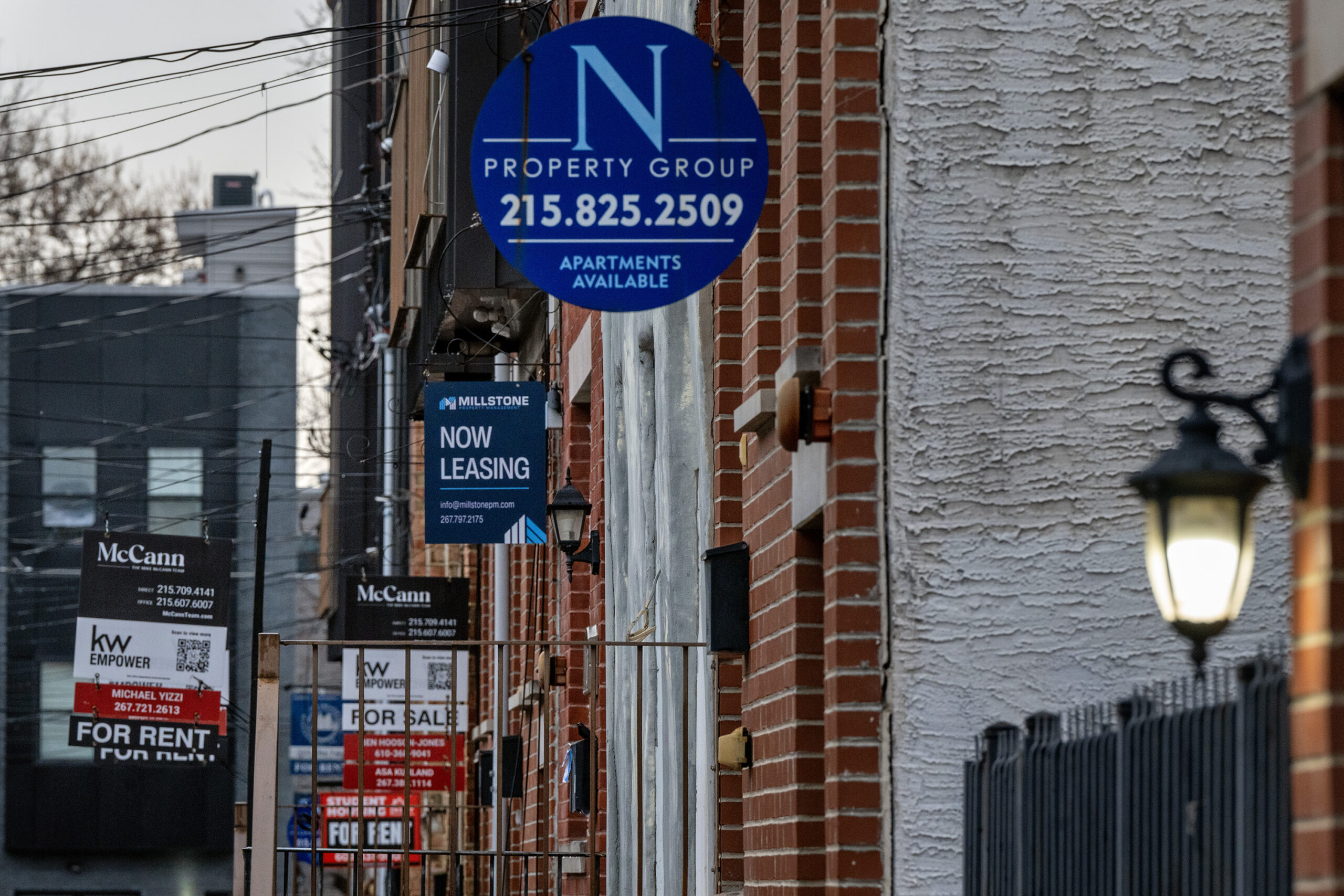
More than two dozen Philadelphia-area real estate professionals helped arrange $45 million worth of questionable deals around Temple University in which student rentals that had sat on the market for months abruptly sold for about double their asking prices, an Inquirer investigation has found.
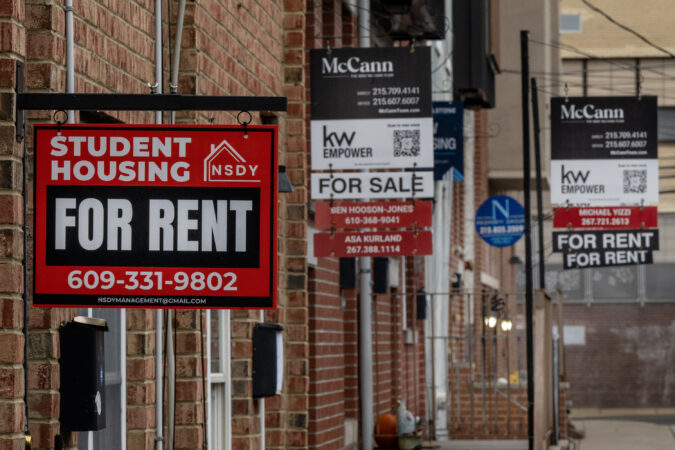
In 52 settled or still-pending sales over roughly the last year, apartment buildings were listed for sale at an average price of $450,000, but found no takers. Within days of being re-listed for a higher price, the same properties sold for as much as $905,000 — at least on paper — to buyers who took out mortgages that far exceeded the original asking price.
Eight sellers or their agents now say they entered into the deals with the understanding that they would actually receive close to the original asking price — not the much higher amount that was officially listed on deeds and other public records. And an appraiser said that real estate agents on both sides of a proposed deal tried to pressure him to raise the valuation of a property.
The sales have raised concerns about possible mortgage fraud in the area around Temple, which could lead to a spate of foreclosures and affect property assessments, tax bills, and student rentals. At least one such property has gone into foreclosure over an unpaid mortgage, according to court records.
Solomon Wisenberg, a former assistant U.S. attorney in North Carolina and Texas who specialized in white-collar crime and bank fraud, said the people involved in the deals could face scrutiny from criminal investigators.
“I don’t know any fraud prosecutor who wouldn’t be interested in looking at that,” Wisenberg said. “Settlement statements have to reflect reality. If you don’t present an accurate picture to the financial institution that is financing the loan, you’ve got problems.”
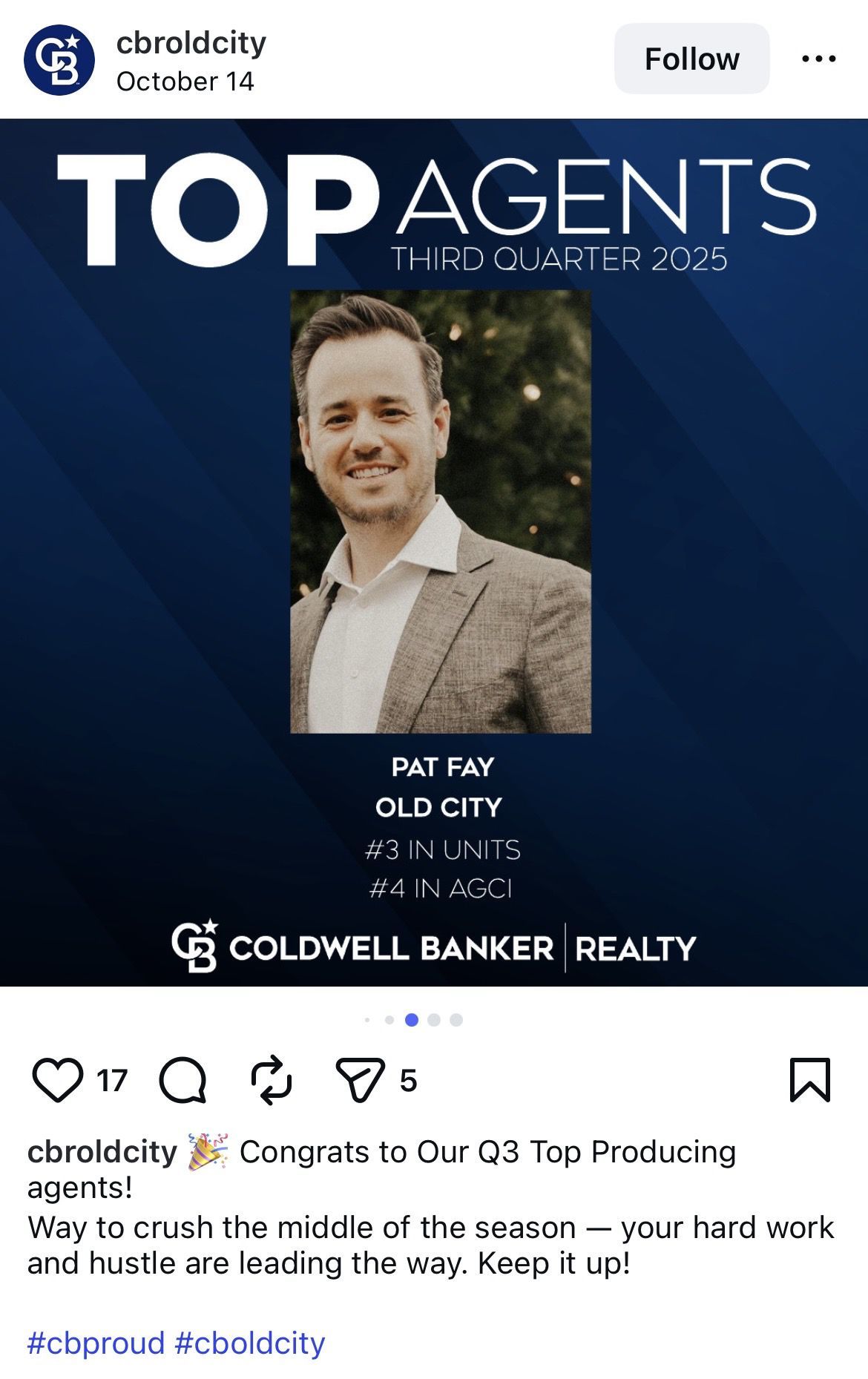
Patrick C. Fay, a real estate agent in Coldwell Banker’s Old City office, was involved in every deal, representing at least seven buyers who purchased the properties through limited liability companies. One of those buyers had been convicted of an earlier mortgage fraud scheme.
Pat Fay had been one of the top real estate agents last in Coldwell Banker’s Old City office. His clients have purchased properties around Temple University — at twice the listing price.
Coldwell Banker cut ties with Fay in December, hours after The Inquirer published a story concerning 33 of his deals around Temple.
But Fay had a counterpart on the other side of every transaction. They included agents at major brokerages such as Keller Williams, Long & Foster, and eXp — as well as three agents who worked in the same Coldwell office as Fay and helped him close 13 sales.
Coldwell Banker’s national office said this month that it has launched an internal investigation into the matter.
Fay, who was one of the top agents in his Coldwell office, has denied wrongdoing. He declined to discuss specific sales.
“In my over 20 years in real estate, I have maintained an unblemished record with no ethical violations or complaints filed against me,” Fay wrote in a text message last week. “These claims are without merit.”
(function() {
var l2 = function() {
new pym.Parent(‘patfay’,
‘https://media.inquirer.com/storage/inquirer/projects/innovation/arcgis_iframe/patfay.html’);
};
if (typeof(pym) === ‘undefined’) {
var h = document.getElementsByTagName(‘head’)[0],
s = document.createElement(‘script’);
s.type = ‘text/javascript’;
s.src = ‘https://pym.nprapps.org/pym.v1.min.js’;
s.onload = l2;
h.appendChild(s);
} else {
l2();
}
})();
Steve Orbanek, a spokesperson for Temple University, said the university learned about the situation from The Inquirer’s previous report and is now investigating possible impacts on its student renters.
“It goes without saying that the university condemns any unlawful behavior, and we find these allegations deeply concerning, both for our students and neighbors who reside in the community,” he said.
‘Fat Pay’
Fay, of Moorestown, Burlington County, started arranging deals in December 2024 to purchase apartment buildings around Temple University that owners had been struggling to sell.
The value of those properties, which are largely marketed as student rentals, has fallen in recent years. A local landlords association said vacancy rates are up and rents down amid declining enrollment at the university, which has shed 10,000 students in under a decade.
Fay, who has used the handle “Fat Pay” on social media, had buyers willing to make a deal. However, in multiple cases identified by The Inquirer, that was true only after the sellers and their real estate agents agreed to sign a deed showing that the property had sold for much more than the original asking price.
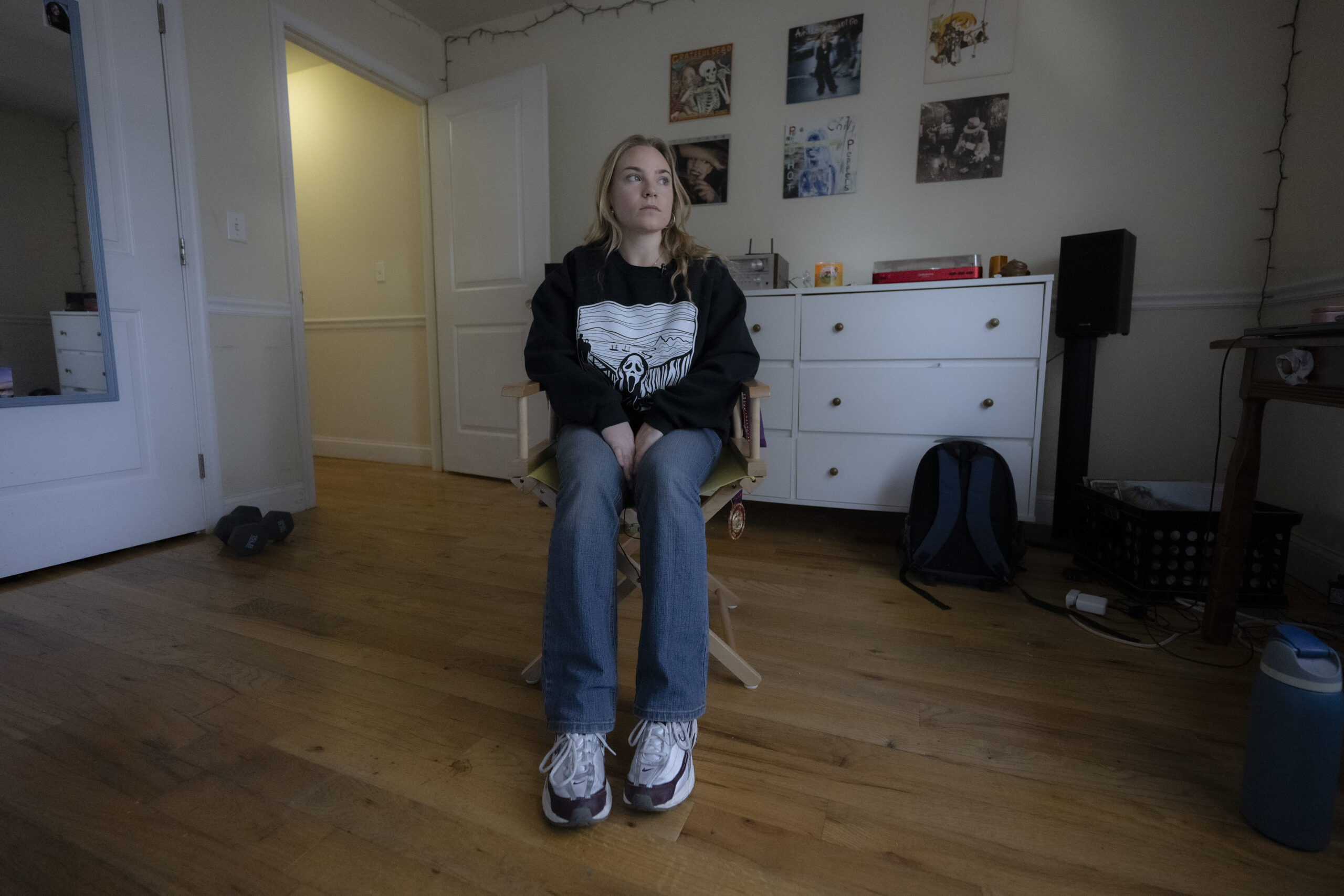
Joelle Delprete, a former Temple grad student who works for the university, lives in an apartment unit that Fay helped purchase. Soon, unpaid water and trash collection bills started piling up.
Shaina Levin, a Coldwell agent who worked with Fay in his Old City office, represented a seller in one such deal on 15th Street. The property was initially listed for sale last July at $375,000. Records show Fay’s client bought it for $842,000 in September 2025 after securing a $673,600 mortgage.
“It’s a bonus when we can keep it in the Coldwell Banker family,” Levin posted on Facebook, referring to the sale. “Thanks Pat Fay for teaming up on this one. Congratulations to your buyer!”
In an interview, Levin said her client received an amount closer to the original listing price, not the $842,0000 sales price recorded on the deed.
She saidthe buyer contended that thehigher sales price was tied to a planned renovation. City permit records show no evidence of construction or renovation work on the building.
Levin said that Fay’s proposal was “totally unconventional,” but that her office manager at Coldwell Banker ran it by the company’s legal department, which signed off.
“Legal said, ‘Yep, all good,’” Levin said. She referred additional questions about the sale to her manager, who declined to comment.
Fay’s buyer in that deal was UrbanNest Acquisitions, a limited liability company created the same month as the sale by Tanjania Powell-Avery, a former real estate agent from Pottstown, Montgomery County. Federal prosecutors with the Eastern District of Pennsylvania indicted Powell-Avery and two others in 2010 for participating in a mortgage fraud ring in the Philadelphia area. She pleaded guilty and was sentenced to five years’ probation and nine months’ house arrest.
Powell-Avery declined to comment.
Two other colleagues of Fay’s at his former Old City office also brokered sales with him, according to data from the Multiple Listing Service, a shared database that real estate professionals use to track and arrange deals.
Karl Klotzbach represented sellers in eight deals with Fay over five months last year — more than any other seller’s agent, records show. The eight properties had originally been listed for a total of $3.4 million before they were each re-listed and sold for a combined $7 million.
Klotzbach did not respond to requests for comment.
Matthew Greene, another Coldwell agent, brokered four sales with Fay on North 12th Street. The properties were each listed for $450,000 last April, then re-listed at $879,000 the following month. In July, each property sold at the higher amount within days of one another, with all four sales backed by a separate $703,200 mortgage.
Greene would not discuss the sales.
“I’m happy to direct you to our legal team for any comment,” he said. Greene hung up the phone without providing any contact information.
Daryl Turner, the branch vice president at Coldwell Banker’s Old City office, referred questions to the company’s legal department. Andrea Gillespie, a national spokesperson for Coldwell Banker, which operates in 49 countries and territories, would not comment on the sales.
“We immediately disaffiliated Pat Fay and are continuing to investigate the matter internally,” Gillespie said in an email. “Coldwell Banker stands for trust and integrity, and we hold our agents to the highest ethical standards.”
‘This is my livelihood’
While sellers were eager to offload their toxic real estate investments, not every deal went smoothly.
John Sexton, an independent licensed appraiser with twenty years’ experience in the Philadelphia market, said in an interview that an appraisal company working for a lender contracted him last year to evaluate a property on North Park Avenue, near Temple’s campus. The sale was being brokered by Fay and Peter Lien, an eXp real estate agent representing the seller.
It was the kind of property common around Temple: a Victorian-era rowhouse that had been converted into a three-unit, nine-bedroom student rental. And, like similar properties in the area, it sat on the market unsold for more than two months, with no takers, at its $408,000 asking price.
The property was taken off the market in October, but then reappeared as a pending sale at $879,000, according to MLS data. Fay had found another buyer ready to pay more than double.
Sexton said he quizzed Lien about why a property that had not undergone recent renovations would suddenly jump in price. Sexton said Lien responded that an earlier broker simply “hadn’t been familiar with the real estate market” around Temple.
Sexton said the implication of these conversations was that Lien “had a person who would pay $879,000, so I should just do my job and mark it at $879,000.”
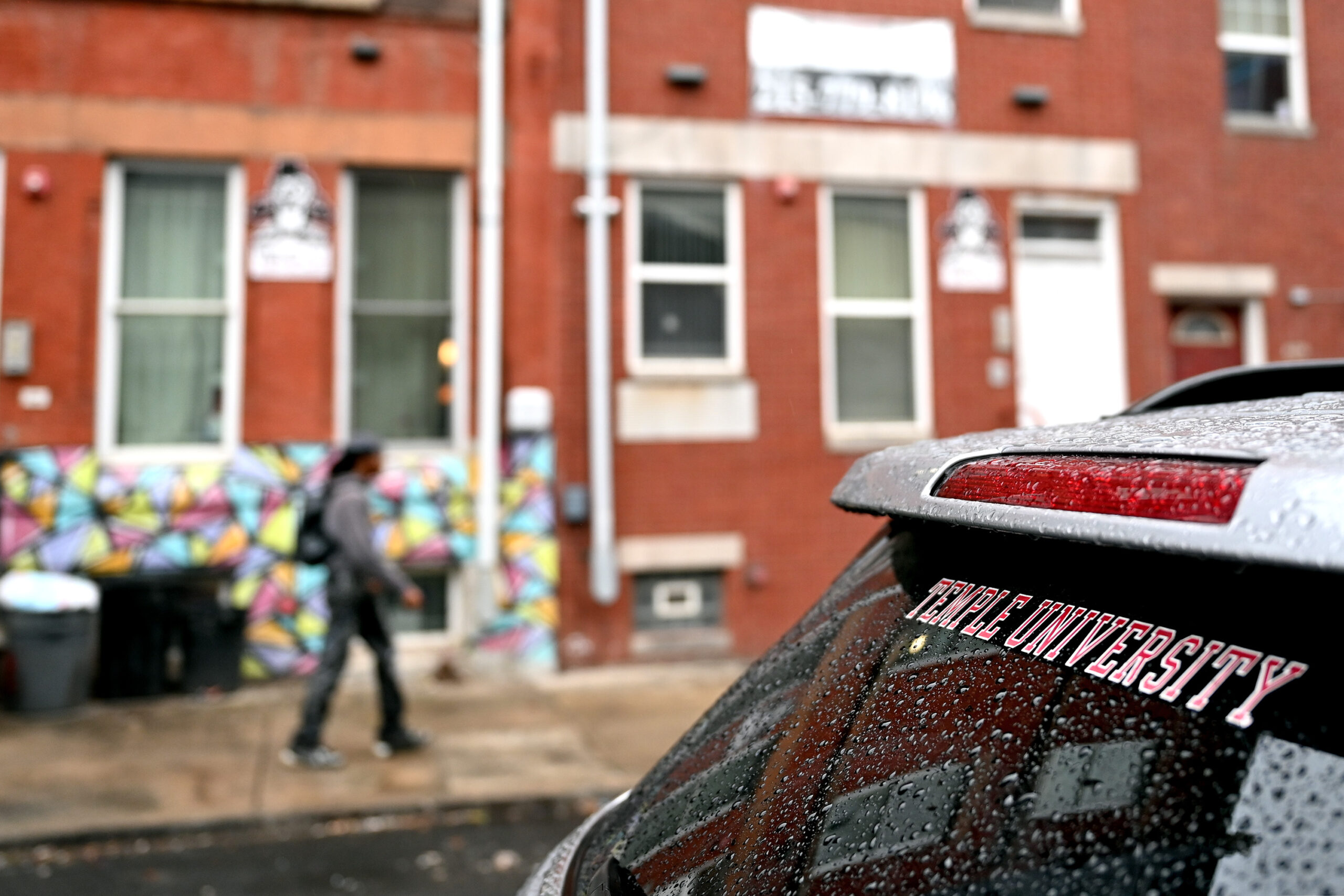
The 1700 block of Arlington St. in North Philadelphia Wednesday, Dec. 10, 2025. Buyers have snapped up $48 million in student housing around Temple University, often paying more than twice what properties were originally listed for even though rents are down and vacancies are up for student housing.
Sexton said he then received an unusual email from an individual named “Jay Jay,” who indicated he was working with Fay. The email included a list of nearby properties that had all sold in the $800,000 range, establishing that the sales price was reasonable.
Sexton looked into the comparable sales and found that they had all been brokered by Fay. “Jay Jay” also sent Sexton copies of leases for apartments in the same building, purporting to show units leasing for $2,500 a month. But when Sexton dug up sales listings for the same building from a few weeks earlier, they advertised that the units had been leased for closer to half that amount.
“Jay Jay” did not respond to an e-mailed request for comment.
Sexton said he called Fay to discuss the discrepancies, and the real estate agent accused him of being inexperienced and pushed him to approve the higher value.
“It’s a tough situation,” Sexton said. “You have two brokers pressuring you and sending you signed documents saying the sale price is valid.”
Sexton said after he told Fay he would need to further substantiate the higher asking price, Fay stopped responding.
The property never sold and is now off the market.Sexton never heard from Fay again.
“It’s infuriating to me, because he’s putting my license in jeopardy,” Sexton said. “This is my livelihood.”
In a text message, Fay denied “any claim that I have ever manipulated or influenced an appraisal in any fashion.” He did not respond to questions about the sale.
Lien said he could not comment on the failed deal.
“I was instructed by my brokerage that any press would have to go through our office, and we’re not allowed to speak on it,” said Lien, who works out of eXp’s King of Prussia office.
The manager of that eXP office did not return a request for comment.
‘Really bad stuff’
Daniel Perlman, a former prosecutor in the Maryland State’s Attorney’s Office who now practices white-collar criminal defense, said anyone who signed documents they knew to be false could potentially face legal problems.
“If there are documents that have incorrect information for a mortgage, then yeah, somebody has criminal liability,” Perlman said. “You’re under penalty of perjury for signing these documents.”
A spokesperson for the U.S. Attorney’s Office in the Eastern District of Pennsylvania said the office does not confirm or deny the existence of investigations, as did a spokesperson for the Pennsylvania State Real Estate Commission, which licenses agents.
Nick Pizzola, vice president of the Temple Area Property Association, which represents local landlords, said the COVID-19 pandemic has had a lasting negative impact on the off-campus real estate market, leaving landlords struggling to sign leases and pay their own mortgages.
Still, he said, the seller’s agents had to have known something was amiss when a buyer was offering double the asking price.
“Anyone who knows anything about real estate would have run away from those deals,” Pizzola said. “Some really bad stuff was happening.”
Most participants in Fay’s deals were reluctant to discuss their roles when contacted by The Inquirer this month. Some seller’s agents said their brokerages had instructed them to remain silent. Others claimed ignorance when it came to the details of the deals they had helped arrange.
The 1900 block of N. 18th St in North Philadelphia Wednesday, Dec. 10, 2025. Buyers have snapped up $48 million in student housing around Temple University, often paying more than twice what properties were originally listed for even though rents are down and vacancies are up for student housing.
In the March 2025 sale of an apartment building on the 2200 block of North Sydenham Street, for example, both the seller and his agent said they could not explain why the sales price did not match the amount listed on the deed.
The property initially went up for sale for $324,900 in December 2024 but was then re-listed and sold to Fay’s client in March 2025 for $789,000. The seller, Alvjod Dedaj, said he did not actually receive that higher amount. He referred further questions to his real estate agent at Long & Foster.
“I have no clue what’s going on,” Dedaj said. “I just cashed out a certain amount of money.”
Dedaj’s agent, Bob Kiziroglou, who works out of Long & Foster’s Devon office, said he, too, could not recall why the asking price suddenly jumped. He referred questions to Fay.
“Reach out to him, man, he’ll give you all the details,” Kiziroglou said.
A message left at Long & Foster’s Devon office was not returned.
The Broad Street office of Keller Williams Realty was another hub for deals involving Fay, with five of its agents representing sellers in eightsales. An office manager did not respond to requests for comment.
Wisenberg, who was a prosecutor in the Whitewater/Madison Guaranty Savings & Loan investigation, said he found it particularly suspicious that Fay arranged deals with mortgages that far exceeded the initial asking price, and with sellers receiving less than the stated purchase price.
“What’s he doing with the rest of the money?” Wisenberg asked.
Trouble brewing
Already, there are signs of trouble in the neighborhood around Temple.
In November, one lender, Easy Street Capital, filed to foreclose on a Park Avenue property that sold in late 2024 for $850,000 — more than double its value just two years prior.
While no buyer’s agent is listed in MLS data for the sale, Lien, the eXp agent, is listed as representing the seller. The buyer, Park Ave Enterprise LLC, is registered to an associate of Fay’s who participated in at least four other sales around Temple that he brokered.
According to court filings, the LLC defaulted on an $807,000 mortgage about four months after purchase.
The lenders that financed Fay’s purchases now bear the most risk of the overvalued and under-occupied rentals lapsing into foreclosure. A private lenders association in Novemberwarned its members of a “fraud scheme” operating around Temple University, and cities like Baltimore have seen hundreds of properties fall into foreclosure as a result of suspected mortgage fraud rings.
A spokesperson for City Councilmember Jeffery “Jay” Young, whose district encompasses the affected properties, said he was “not familiar with the situation.” He called mortgage fraud “a common and unscrupulous real estate practice that happens too often in our city.”
Orbanek, the Temple spokesperson, said the university is working to identify students who may be impacted by potential foreclosures and asked themto contact the university’s Essential Needs Hub, which connects student renters with supportive resources.
Joelle DelPrete, a former Temple grad student who works for the university, lives in an apartment unit that Fay helped purchase. He brokered a sale of the rental property to “18th Estates LLC” in December 2024 for $868,000. It had previously been listed for $385,000.
A few months later, DelPrete said, Fay texted her that he was the property manager, and he wanted her to sign a new lease so he could begin collecting rent.
“We assumed it was a totally legit company,” DelPrete said.
Soon, DelPrete said, unpaid water and trash collection bills started piling up, and maintenance issues went unanswered. In October, she found a document known as an Act 91 notice that was posted on an adjacent property in advance of foreclosure proceedings. It showed the owners — who had been represented in the purchase by Fay — had stopped paying its mortgage and owed roughly $25,000.
DelPrete and her three roommates are hoping to move out before her building goes into foreclosure.
“Especially living around Temple, you just gotta be careful and make sure everything is aboveboard,” she said. “If something feels off, it is off.”
When Mayor Cherelle L. Parker unveiled her much-anticipated plan to address Philadelphia’s housing crisis last year, there was predictable criticism from the political left. Activists said the proposal drafted by the moderate Democrat would not do enough for the city’s poorest residents.
Less predictable was that a majority of City Council stood with them.
Even the Council president, a centrist ally of the mayor, sided with a progressive faction that just two years ago had been soundly defeated in the mayor’s race — but whose new de facto leader in City Hall has proven adept at building alliances across the ideological spectrum.
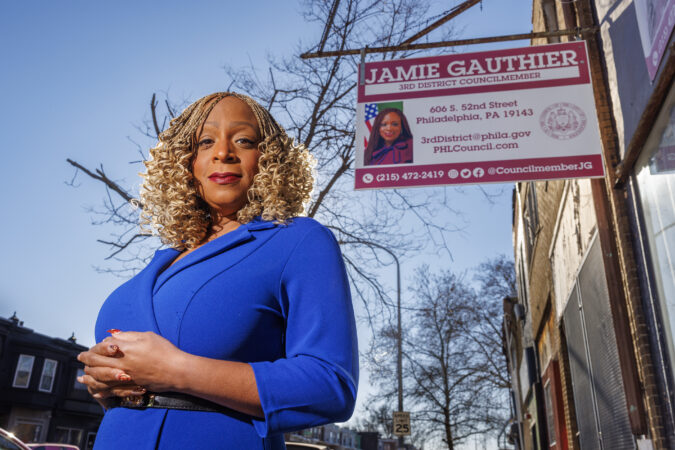
At the center of that shift was Jamie Gauthier.
The second-term Democratic lawmaker from West Philadelphiahas solidified herself over the last year as a leading voice on Council and a counterweight to Parker. She has worked within the system as opposed to trying to break it, maintaining relationships with power players who disagree with her on policy.
She counts Ryan N. Boyer — the labor leader who is Parker’s closest political ally — among those who consider her a “thought leader.”
“Over the last year, what you saw,” Boyer said, “is her modulate her positions to become more practical.”
Gauthier has generally voted with progressives, including last year when she opposed the controversial Center City 76ers arena proposal. But she has also endeavored to be a team player, at times compromising on ideological battles to focus on priorities in her district.
Last year, she voted for Parker’s plan to cut taxes for businesses and corporations when other progressives opposed it, because her main priority was securing housing funding. She has not opposed some tough-on-crime efforts in the Kensington drug market, instead allowing her colleagues who represent that area to dictate the policy there.
She says she is trying to use her political capital where it matters.
“Why would I take a protest vote and tank a relationship with a colleague when I’m going to need them later?” she said. “I want to win.”
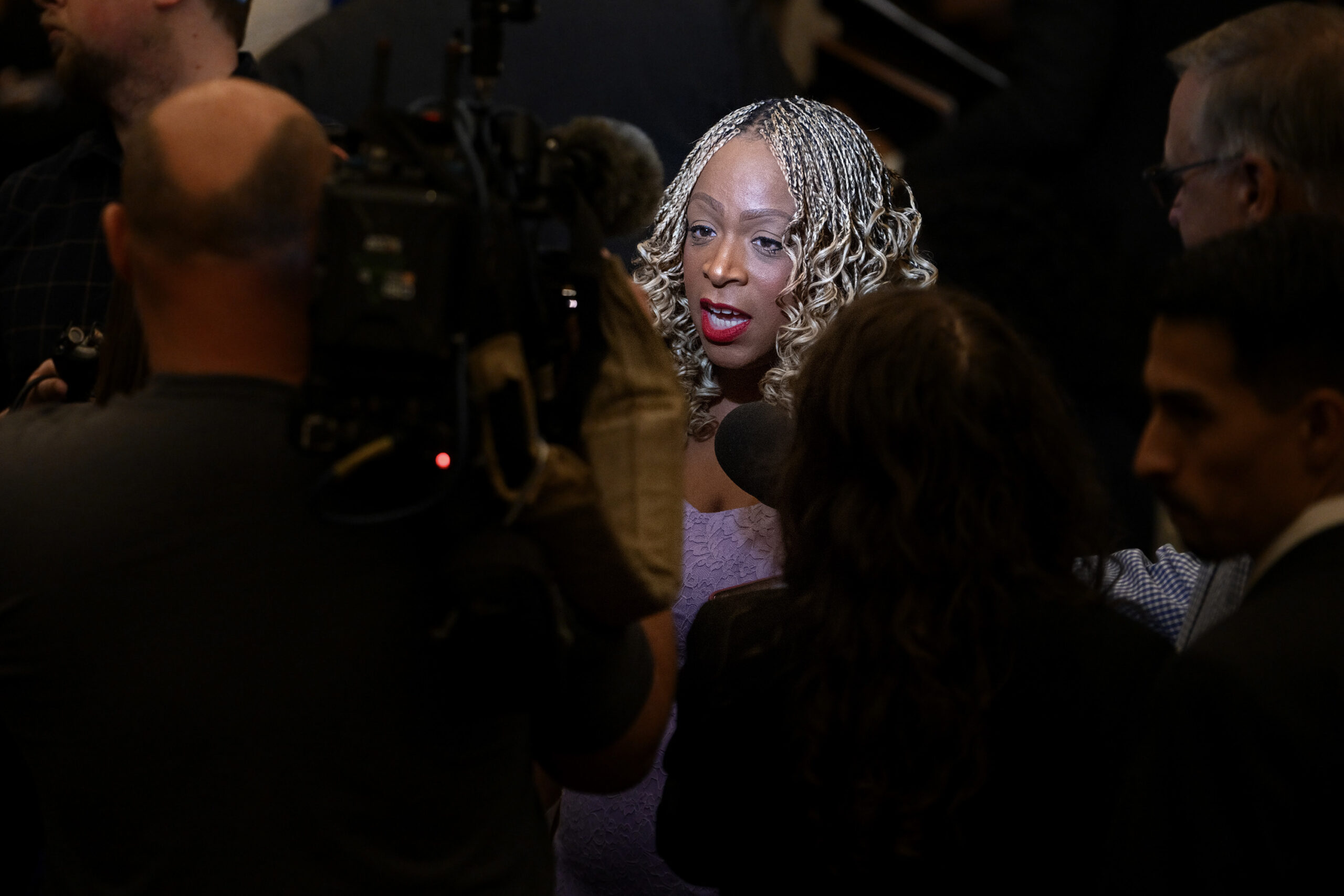
Councilmember Jamie Gauthier talks with news media following a special session of City Council on March 24, 2025.
The fact that Gauthier is a district Council member who represents a large swath of the city west of the Schuylkill also gives her cachet with colleagues. Council has a long tradition of honoring how members want their own neighborhoods to be governed.
Gauthier, who leads Council’s housing committee, has used the influence to make West Philadelphia something of a testing ground for left-of-center policy. Plenty oppose what they see as draconian restrictions on real estate development in her district.
Others see a progressive champion, and some political observers think Gauthier could amass enough support to run for mayor one day. She doesn’t deny that she has thought about it.
But for whatever politics Gauthier can navigate in City Hall, she knows she can rise only if she is successful at home.
‘Not just a lone actor’
When Parker took office, Council was in a moment of upheaval. Council President Kenyatta Johnson was the new leader of the chamber, and several prominent voices were gone after they had resigned to run for mayor themselves.
One was Helen Gym, who was seen as the leader of Council’s left flank. There were questions about who would fill the void once Gym was gone.
Gauthier, 47, an urban planner by trade, did not come up through an activist movement in the same way Gym did, and was a bit more reserved in her style.
But she carries the mantle for the same theory of governance: that lawmakers should prioritize the vulnerable, and that what is good for business is not necessarily good for everyone else.
That set Gauthier on an ideological collision course with Parker, a former Council member who ran for office on a promise to uplift the middle class, a group the mayor believes has been too often ignored.
It came to a head in the fight over Parker’s Housing Opportunities Made Easy, or H.O.M.E., initiative.
Parker wanted to set unusually high income eligibility thresholds for some of the programs so that middle-class families could unlock government subsidies they may not otherwise qualify for. A significant portion of Council, meanwhile, wanted the money to go initially to Philadelphians most vulnerable to displacement.
Parker was clear-eyed about who was leading the charge.
“Councilmember Jamie Gauthier, she may be comfortable and OK with telling Philadelphia homeowners, working-class Philadelphians, that they have to wait and there is no sense of urgency for them,” Parker said in a December interview on WHYY. “But that is not a sentiment that I support or agree with.”
Gauthier is quick to point out that she did not work alone, and that one member of a 17-member body cannot accomplish much. Alongside Councilmember Rue Landau, a fellow Democrat and a housing attorney by trade, Gauthier worked for months to win over her colleagues.
Gauthier didn’t think Parker helped her own cause. A “line was crossed,” she said, when Parker took the fight outside City Hall and to the pulpit. Amid negotiations with Council, the mayor went to 10 churches on one Sunday in December to lobby for support, saying her vision was to not “pit the ‘have-nots’ against those who have just a little bit.”
Mayor Cherelle L. Parker speaks to the crowd at The Church of Christian Compassion in the Cobbs Creek neighborhood of West Philadelphia on Sunday, Dec. 7, 2025. Parker visited 10 churches in Philadelphia on Sunday to share details about her HOME housing plan.
To Gauthier, the divisiveness was coming from the mayor’s office.
“I wish the mayor and her administration were more open to other people’s ideas, were more OK with disagreement on policy issues, and more aware of Council as a completely separate chamber of government,” Gauthier said, “as opposed to a body that works for her.”
That is a candid assessment of the relationship between Parker and City Council from Gauthier. Few lawmakers from the mayor’s own party have criticized her publicly.
Philadelphia Mayor Cherelle Parker holds a press conference regarding her first budget flanked by members of city council in her reception room, Philadelphia City Hall on Thursday, June 6, 2024. Council members from left are Kendra Brooks, Jamie Gauthier, council president Kenyatta Johnson, and Quetcy Lozada.
State Rep. Rick Krajewski, a West Philadelphia Democrat and a progressive who has worked closely with Gauthier, said the fight over H.O.M.E. showed that Gauthier has learned “the diplomacy required to be an effective legislator.”
“It was a good example of not being afraid of a conflict that felt important to stand up for,” he said, “but then to not just be a lone actor, but organize with other colleagues and allies.”
Gauthier’s most important ally was Johnson, who negotiated directly with Parker through the process and controls the flow of legislation in the chamber.
The two go back years. Before Johnson was Council president, he made a point of welcoming new members, a gesture that has always stuck with Gauthier. They worked closely to secure funding for gun violence prevention. And Gauthier said that since Johnson took the gavel, he has been more open to working with progressives than his predecessor was.
He does not talk about that publicly. What he will say is that he works in partnership with Gauthier because she understands “the bigger picture in terms of how we move forward as the institution.”
“I consider her to be a pragmatic idealist,” Johnson said. “She wears her heart on her sleeve, and she really believes in actually doing the work.”
She was also supported by real estate interests, some of whom now have buyer’s remorse.
After Gauthier pulled off a shock win, she arrived in Council and quickly aligned with the progressive bloc. Through her first two terms, she has used councilmanic prerogative often, and has voted with her district Council colleagues so that they can do the same.
She admits that it is an effective tool for accomplishing her goals quickly.
Carol Jenkins, a Democratic ward leader in West Philadelphia, said Gauthier’s use of councilmanic prerogative is “part of her maturation.”
“That’s the power you have,” Jenkins said.
City Councilmember Jamie Gauthier in her district near 52nd Street and Cedar Avenue in Philadelphia on Monday, Dec. 22, 2025.
However, her most notable use of councilmanic prerogative has been in housing policy, and some developers say her district is now the most hostile to growth in the city.
In Gauthier’s first term, she championed legislation to create what is known as a Mixed Income Neighborhood overlay. In essence, it requires that developers building projects with 10 or more units in certain parts of her district make at least 20% of their units affordable. That is defined as accessible for rental households earning up to 40% of the area median income.
For Gauthier, it’s a tool to slow the rapid gentrification of her majority-Black district.
But developers say that growth has slowed significantly in the areas covered by the overlay since it took effect in 2022. Some have said they avoid seeking to build in the 3rd District entirely. The only major project currently in the works in the area is a parking garage.
Ryan Spak, an affordable housing developer who said he considers Gauthier a friend, has been among the most outspoken critics of the overlay. He said while Gauthier’s “moral compass is pointed in the right direction, her policies don’t math.”
“You would never ask a restaurant to give away its ninth and 10th meal for 40 cents on the dollar, with no additional discounts or benefits,” he said, “and expect that restaurant to survive.”
Councilmember Jamie Gauthier reads out a citation honoring Rapper Mont Brown during a street naming ceremony for the Southwest Philadelphia native at the 13th Annual Stop the Violence Kickback Block Party at 55th Street and Chester Avenue, in Southwest Philadelphia on August 17, 2024.
Gauthier said she has made adjustments, and she championed legislation to accelerate permitting and zoning approvals. The mandate, she said, is necessary because the market won’t build enough affordable housing on its own.
“As untenable as it is to them that they can’t make the numbers work, it’s untenable to me that people can’t afford to live here,” Gauthier said. “So we can come together and we can fix that. But I’m not going to move from my position that we have to demand affordability.”
Mayoral buzz, but no ‘stupid campaigns’
Gauthier is one of several names that have been floated in political circles as potential candidates for mayor in 2031, which would be Parker’s final year in office if she runs for and wins a second term. Several of her Council colleagues, including Johnson, are seen as potential contenders.
“I’d be lying if I didn’t say that mayor could be interesting one day,” Gauthier said. “I also don’t believe in stupid campaigns. So I would never do that if I didn’t think I had a path.”
Boyer said he has counseled Gauthier to pursue moderate policy and avoid being “label-cast” as far left. He said Philadelphia is not Chicago or New York, and he doesn’t see the city electing an uber-progressive to be the mayor any time soon.
“Philadelphia has always been a real center-left community,” Boyer said, “and just because you’re the loudest isn’t the most popular.”
The left may have other plans. Robert Saleem Holbrook, a progressive activist, said that Gauthier would be an “ideal candidate” for higher office and that the city’s leftists would back her.
Probably.
“So long as she stays true and supportive of progressive ideals,” Holbrook said. “You can’t compromise on your way up.”
TOKYO — I’ve never gone out of my way to eat a cheesesteak far outside of Philadelphia.For one thing, I can devour a great one anytime I want when I’m home. I’d rather experience the flavors of different cultures when I travel. The cheesesteak is also one of those iconic foods that almost inevitably tastes wrong outside its home regions: The farther away you roam from its birthplace, the more chance that a false detail — the wrong roll, ingredient combo, precooked shortcut, or even menu description (the sandwich is not called a “Philly”)— is likely to result in something as soulless as a Subway replica.
Of course, I needed to travel all the way to Japan to be proven wrong. At Nihonbashi Philly, a restaurant in one of Tokyo’s business districts, a “Go Birds!” sign glowing kelly green out front is just a tease of the Brotherly Love vibes being conjured inside. There, I found Tomomi Chujo in a Penn sweatshirt hand-shaping dough for rolls in her tiny basement prep kitchen, coating them in sesame seeds, and proofing them to be baked fresh for our sandwiches to come.
Kosuke Chujo and his wife, Tomomi, with cheesesteaks at Nihonbashi Philly in Tokyo, Japan.
Tomomi and her husband, chef Kosuke Chujo, are pretty much international Philly celebrities by now. Their efforts to create a faithful cheesesteak on the other side of the globe were brought to the world’s attention by Philly expat social media in 2023 and profiled a year later in The Inquirer by my colleague Jenn Ladd. They drew more than 1,000 hungry Philadelphians who lined up in hopes of tasting their cheesesteaks at a Kensington-Fishtown pop-up at Liberty Kitchen in May, when they were also honored by Philadelphia City Council for their efforts to rep Philadelphia abroad.
Considering I’m reluctant to wait in long lines for a cheesesteak even at Angelo’s, it’s no surprise I didn’t attend the Chujos’ Fishtown pop-up. But, like so many Philadelphians I know who’ve recently made the cheesesteak pilgrimage while visiting Japan, I was not going to waste a good trip to Tokyo without finally checking out Nihonbashi Philly. We waited until the final night of our trip. After nine days of consuming my weight in sushi, ramen, 7-Eleven onigiri, katsu, and yakitori skewers, I was ready for a little taste of home before actually boarding a plane back.
A collection of Philadelphia soul music, bobbleheads, and Philly-themed paraphernalia grows every time an expat visits the Chujos’ restaurant.Handwritten messages decorate the walls at Nihonbashi Philly.
Inside the Chujos’ snug two-story restaurant and bar, I found a space bursting with so much Philly-themed memorabilia, it was almost like passing through the Portal in LOVE Park (at least before it was removed due to vandalism). There are empty Bird Gang whiskey bottles that have been converted into lamps, Kosuke’s extensive CD collection of favorite Philly singers (hello, Patti LaBelle), copious Wawa swag, Gritty art, SEPTA shot glasses, customer-scrawled walls etched with “Dallas Sucks” flair, and a bobblehead shrine of Philly sports figures that’s been transported here from the Elkins Park childhood bedroom of now-Tokyo-based sports journalist Dan Orlowitz, one of the Chujos’ earliest local cheerleaders: “That’s authentic Philly dust!” he says, nudging Donovan McNabb’s spring-loaded noggin into an enthusiastic wobble. “I don’t even have to go home anymore.”
Orlowitz, in fact, was mostly talking about the food. And I was impressed with Kosuke’s work at the griddle, as he rough-chopped good American rib eye and onions without overcooking them, using chopsticks to taste for proper seasoning, melting in cheese, and then scooping it all into Tomomi’s roll for a juicy sandwich that was hearty enough to share. It was a satisfying cheesesteak, even if the cheese was not quite right — slices of American cheese that lacked the creamy flow and piquant savor of the now-standard Cooper Sharp, currently unavailable in Japan. (The Chujos also make their own version of whiz, but, considering I’ve always been a whiz hater, the finishing yellow drizzle on our sandwiches didn’t help. Next time, I’ll go for provolone.)
Kosuke Chujo makes a cheesesteak at Nihonbashi Philly on Sunday, Nov. 9, 2025 in Tokyo, Japan.Kosuke Chujo holds a seeded roll baked fresh by his wife and partner, Tomomi Chujo, before preparing a cheesesteak at their restaurant.
Tomomi’s fresh rolls are the outstanding X factor. The Chujos have been vacationing in Philadelphia since 2021, and in between reconnaissance visits to at least 100 different cheesesteak places, she has studied the art of the long roll at old-school Sarcone’s Bakery as well as modern outfits such as Lost Bread Co. and Ursa Bakery.
The bread here is softer than typically crusty Philly rolls because more finely ground Japanese flour (ideal for tender shokupan milk bread) doesn’t have as much gluten as its American counterpart. Tomomi compensates for the texture by fully encrusting her rolls in Japanese sesame, which has rounder and more flavorful seeds that add their own distinctive, toasty crunch. It’s so noticeable, in fact, one friend said the sesame conjured for him unexpected tahini backnotes.
Fresh rolls are prepped for cheesesteaks in the basement of the restaurant called Philly in the Nihonbashi district of Tokyo. Once shaped by hand, their bottoms are dusted in corn meal before they get encrusted in sesame seeds and then baked.Tomomi Chujo’s fresh-from-the-oven salt-speckled soft pretzels.
Cheesesteak obsessives (myself included) will dwell on such minutiae, but I consider such natural variations part of the sandwich’s essential evolution as a living tradition, both in its many thrilling international interpretations among Philadelphia’s immigrant communities, and in the recent boom of house-baked rolls that distinguish some of Philly’s next-gen best.
So much artisanal craft goes into what the Chujos make that, with better cheese, their version would easily land among the upper tier in Philadelphia itself. (Tomomi’s soft pretzels — fresh from the oven and salt-speckled — meanwhile, are already elite.)
But what makes a visit to Tokyo’s Philly so special is not really even the cheesesteaks. (Though the sandwich has seen a recent boost in interest among Japanese customers since Shohei Ohtani praised it during the Dodgers-Phillies playoff series.) It is the Chujos’ genuine embrace of Philadelphia’s culture and people, from the music to the Eagles watch parties they regularly host, culminating in full-throated “E-A-G-L-E-S Eagles!” victory chants outside that occasionally startle their quiet-loving Tokyo neighbors.
Eagles fans outside Nihonbashi Philly, in Tokyo, during a recent Eagles game.The Chujos regularly host Eagles watch parties at the restaurant.
“We want to be part of the community,” says Tomomi. The Chujos are planning another Philly visit this summer during America’s Semiquincentennial to celebrate their 15th anniversary with wedding photos on the Rocky Steps and in front of City Hall.
For the proud residents of a city with a long tradition of embracing scorn from the wider world — a city whose unofficial anthem is “No one likes us and we don’t care!” — it is touching to see ourselves reflected with so much love and effort in a sandwich created by friends abroad who regard us with nothing but admiration.
This wasn’t merely the rarity of a good cheesesteak far afield, it was a cheesesteak of affirmation: When someone likes us enough to cook our birthright sandwich properly, we actually do care! Deeply.
“The bread on that cheesesteak and those pretzels were so good,” agreed chef Jesse Ito of Royal Sushi & Izakaya, who also came along to Nihonbashi for the meal. “But just to see another culture pay so much respect to something so Philly, if you love where you come from, you almost have to go.”
OCEAN CITY, N.J. — Along the commercial stretch of Ocean City’s boardwalk, from Sixth to 14th Streets, there are 167 storefronts, including four Kohr Bros. Frozen Custards, three Johnson’s Popcorns, three Manco & Manco Pizzas, and eight Jilly’s stores of one type or another.
There are eight mini-golfs, nine candy shops, 18 ice cream places, 10 pizza shops, 18 arcades or other types of amusements, five jewelry stores, three surf shops, five T-shirt shops, and 47 clothing or other retail shops. There is one palm reader.
Even without Gillian’s Wonderland Pier, the iconic amusement park at Sixth Street that famously closed in October 2024, it still adds up to a classically specific, if repetitive, Jersey Shore boardwalk experience. Many of the shops are owned by the same Ocean City families, some into their third generation.
But now these very shop owners are sounding the alarm.
“This is a group that’s been hanging on for a long time,” Jamie Ford, owner of Barefoot Trading Co., at 1070 Boardwalk, said in an interview last week. “These places are hanging in there. They’re not going anywhere, but we’re nervous.”
Chuck Bangle, owner of the storied Manco & Manco Pizza, warned planning officials he might close one of his three locations if business did not pick up. Other boardwalk property owners said longtime tenants were not returning.
“It’s the 70th year of our family business, the 34th year on the boardwalk,” Bangle told the planning board Jan. 7, before it eventually deadlocked 4-4 on whether the Wonderland site should be declared in need of rehabilitation. “I wrestled with closing the Eighth Street location. I don’t want to close. The impact of Wonderland’s closing on all the merchants has been substantial.”
Business along Boardwalk near 7th Street, Ocean City, NJ., Thursday, Jan. 15, 2026.
Into blustery January, the debate has raged about whether a luxury hotel, even one that would save the Ferris wheel, would bolster or undermine the essential character of this dry town and its beloved boardwalk.
At this point, even the most ardent members of the Save Wonderland faction seem resigned to the reality that, as Will Morey of Morey’s Piers himself came up from Wildwood to say to the planning board, the odds of Wonderland coming to life again as an amusement park are slim to none.
A rendering of the proposed new Icona in Wonderland Resort, to be built on the site of the old Wonderland Pier. The proposal for a 252-room resort includes saving the iconic Ferris wheel and carousel.
It’s the rest of the boardwalk that now wants to be heard: merchants with the voice of their ancestors ringing in their ears.
“This is an incredible opportunity,” said Ocean City Councilman Jody Levchuk, a member of the family that owns the Jilly’s stores on the boardwalk. He is also a member of a boardwalk subcommittee that will report its findings on Feb. 7. “My grandfather — who’s a big boardwalk guy — he’d walk up and he’d say this man wants to spend $170 million and you’re ignoring him.”
Plummeting parking revenue
A season without Wonderland took its toll. Parking figures from municipal lots tell the story.
The 249-spot lot at Fifth and the boardwalk across from Wonderland brought in $483,921 in parking fees in 2024 (people paid an average of $21 to park there during the summer season), but dropped to $290,895 in 2025, a 40% decrease. Overall, parking revenue dropped by about a half-million dollars, from $2.46 million in 2024 to $1.95 million in 2025.
At the end of 2025, there were a half-dozen empty storefronts, according to boardwalk merchants who keep track, mostly in the 600 block adjacent to Wonderland, though there is inevitable churn during the offseason.
Becky Friedel, owner of 7th Street Surf Shop, said in an interview that the shop is planning to expand and take over two of the vacant boardwalk storefronts for a new breakfast and lunch spot and a clothing boutique.
She said that while businesses have seen the loss of some of the younger clientele who used to fill Ocean City rooming houses and group Shore houses, the newer second-home owners come “with a fair amount of money.” The boardwalk also has a handful of higher-end boutiques, including the Islander. The downtown saw the opening of a Lululemon last year. Some envision a boardwalk that might include more boutiques in the mix, and fewer repeating sequences of ice cream-french fries-pizza-beachwear.
“We’re optimistic,” Friedel said. “Obviously [Wonderland closing] hurt us a little bit, especially in the evening. Our night business isn’t as strong as it was. We’re taking over the french fry place to focus on breakfast and lunch.”
Taking on the boardwalk
Also optimistic are the partners behind Alex’s Pizza, the Roxborough stalwart dating to 1961 that is opening up this summer at 1214 Boardwalk, next to Candyland. Coming in hot with a tomato sauce swirl atop the pizza not unlike the Manco’s staple, Alex’s partner Rich Ennis said, “We’re more of a thin-crust pizza.”
The enthusiasm of Ennis and partner Dylan Bear to take on the boardwalk also raises the question of whether the center of gravity will continue to shift southward, away from the no-longer-Wonderland end.
Dylan Bear, owner of Alex’s Pizza, 1214 Boardwalk, Ocean City, NJ., Thursday, Jan. 15, 2026.
“If you don’t have an anchor down there, people are not going to walk down there,” said Mark Benevento, owner of Congo Falls golf at 1132 Boardwalk, among other properties he rents out. “They will turn around at the music pier.”
Rather than seeing the hotel proposal as a threat to the character of the town, the merchants have united to stress that they view it as essential to Ocean City’s preservation. In other Shore towns, it has been the push of residential development that has eaten away at commercial zones. The parcel is currently zoned for amusements.
In places like Seaside Heights, Long Beach Island, and Avalon, condo and new residential construction has chipped away at the essential character of the places, replacing some of their most distinctive destinations, from restaurants to motels to bars and nightclubs.
Mark Raab, a local pediatric dentist whose family owns five boardwalk properties in Ocean City, called the closing of Wonderland “devastating” in remarks to the planning board.
“People don’t know what’s going on,” he said. “This year we had three businesses that closed, longtime tenants that did not renew their leases. Six years ago we had a waiting list for these properties.
“The boardwalk is not thriving,” he said. “The boardwalk is slowly going down. It’s going down piece by piece. It is rapidly becoming a snowball effect.”
‘Now they have galvanized us’
Ford, of Barefoot Trading, thinks the time has come for the view of the merchants to be heeded. The 4-4 tie at the planning board is being seen not as an outright rejection of a rehabilitation designation, which would expedite zoning allowances and possible tax abatements, but as a pass back to the city council.
The families, he said, are “the backbone of it. What we’re speaking in favor of should carry a little bit of weight.”
In a usually sleepy Jersey Shore January, there has been an awful lot of intrigue, and packed meetings, with the latest talk of perhaps a limited zoning change that would allow a hotel, though perhaps one not as grand (252 rooms, seven stories) as Mita is seeking.
There is also talk of allowing residential units above boardwalk storefronts. And many believe the city council will essentially give the tie to the nonvoting planner, Randall E. Scheule, who told his deadlocked board he believed the Wonderland site did meet two needed criteria — significant deterioration and a pattern of underutilization — and to go ahead and approve the rehabilitation zone.
Mita has said that time is of the essence. He said he has been shocked at the way the town has stymied his plan twice.
Councilman Keith Hartzell, who twice voted against advancing Mita’s development plan, said he still wants to negotiate with Mita over height, parking, and other issues. One possibility, in conjunction with the boardwalk subcommittee, is rezoning just the 600 block of the boardwalk to allow a hotel. Hartzell has also been trying to bring a playground to that end in the meantime.
“I’m not anti-hotel at all,” Hartzell said. “Our job is to come up with something [Mita] can do that he can make money with and be happy with.”
For Ocean City’s merchants, the Wonderland saga, and Mita’s difficulty in getting his hotel off the ground, has prompted them to step out from behind the counter or out of the ticket booths and speak up.
Said Benevento, the Congo Falls owner: “Maybe we have never gotten political. Now they have galvanized us.”