To be a privy digger in Philadelphia is to be part excavator, part flea market authority, and part pirate. First, you must be able to dig — sometimes 30-plus feet in rocky soil — to get to the bottom of a centuries-old outhouse. Whatever you find buried in the organic waste there, you must research. And much of this digging and discovery takes place in secret in the middle of the night, on open construction sites across the city where you’re not exactly supposed to be.
“Obviously, it’s sketchy. We would have the police come,” said Matt Waholek,39, a longtime Philadelphia privy digger who now lives on Long Island. “They would be like, ‘Alright, you’re not burying bodies, right?’”
Privy diggers are not burying bodies. Instead, Waholek and his fellow diggers are hobbyistsprobing for a certain kind of treasure — ceramic cups and bowls, clay pipes, glass bottles — that long-ago Philadelphians threw into their outhouses before the existence of citywide trash collection.
Most of the diggers are only interested in land that was developed before 1880, when the rise of factory production led to fewer handmade objects. One digger described finding half a dozen handblown glass devices from the mid-19th century that turned out to be early breast pumps.
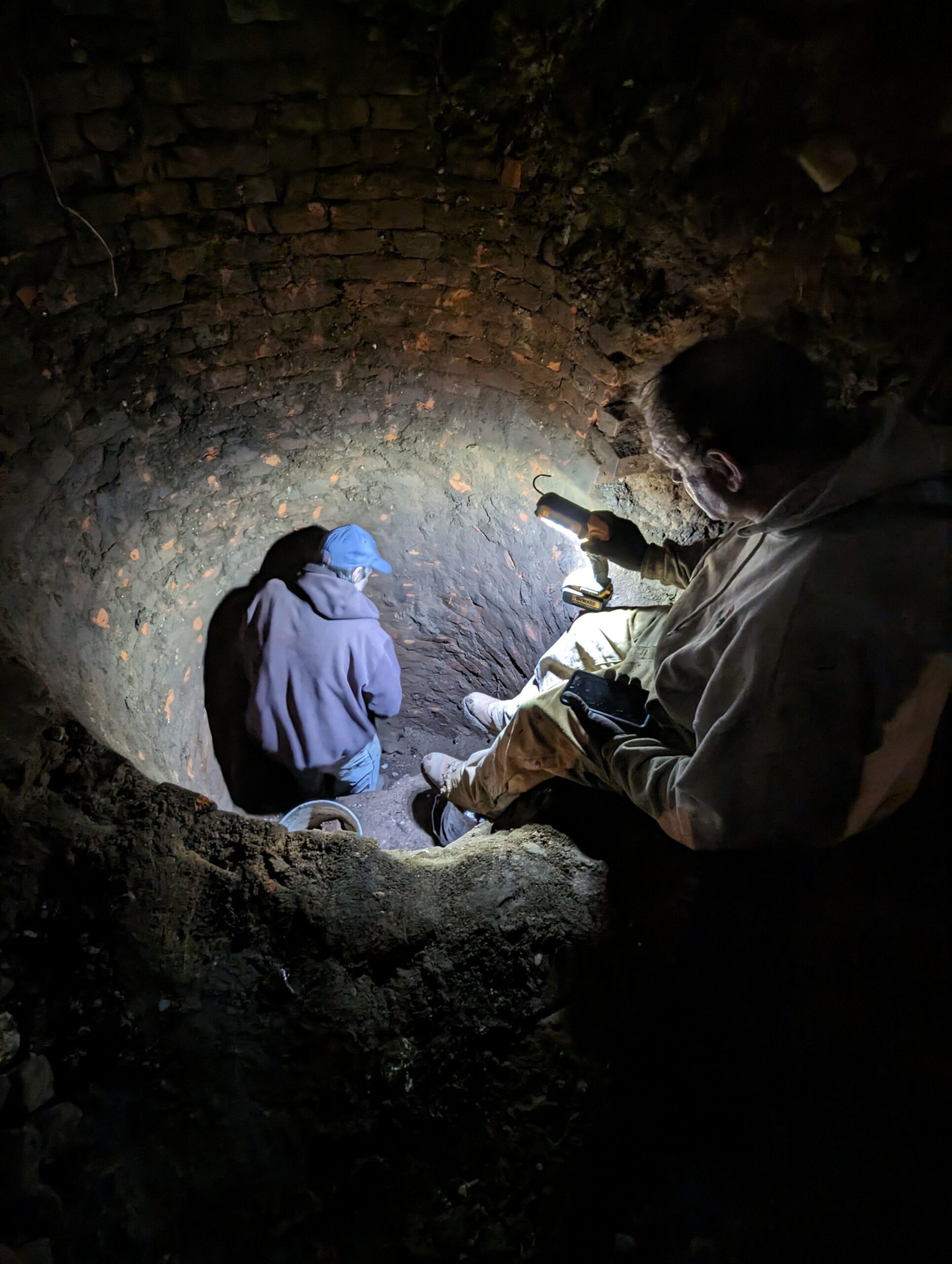
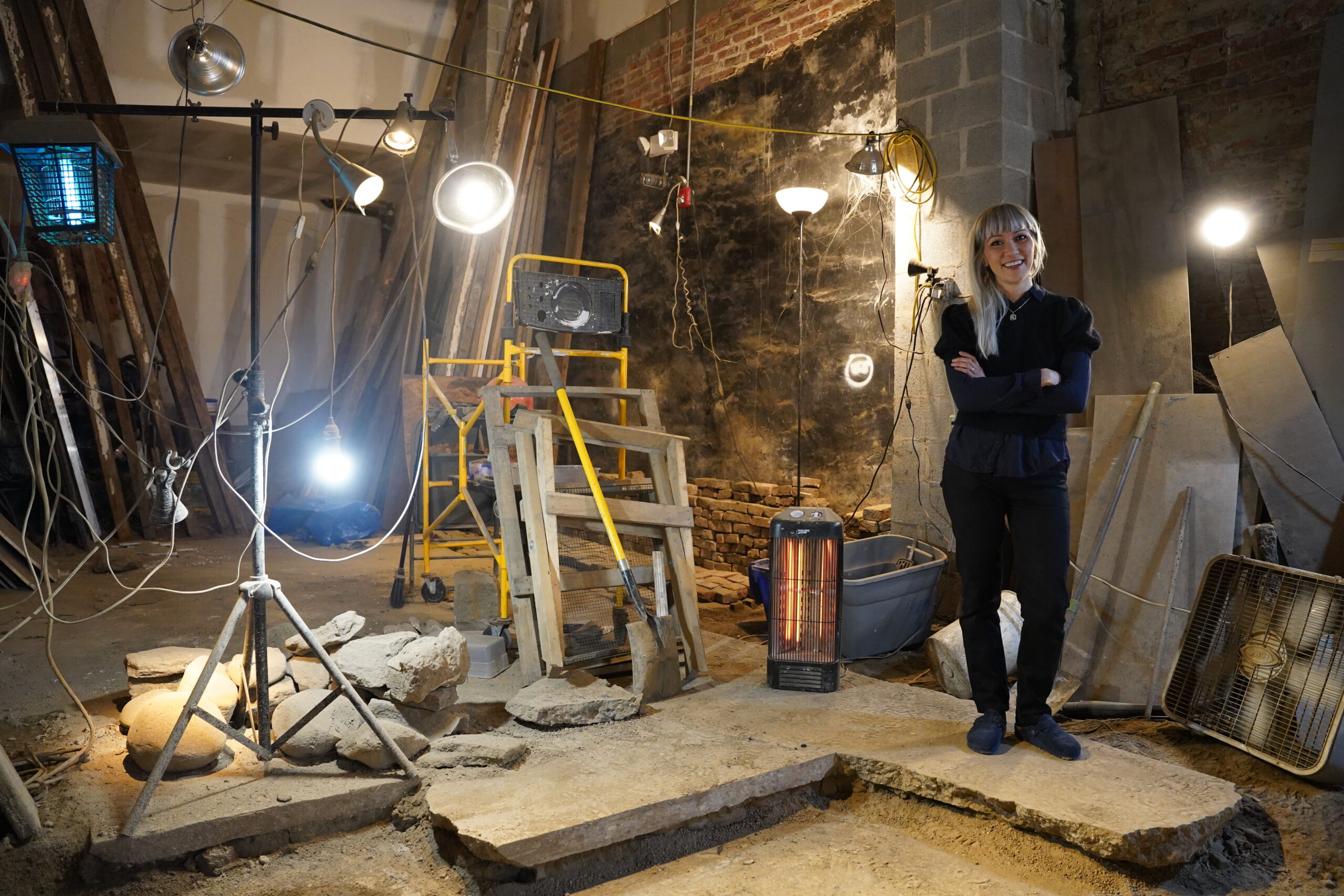
Privy digging is often done at night, when construction workers are not on-site, and diggers often work in pairs or teams because the digging itself can be dangerous. This photo was taken during a dig in Old City in November 2023.
It’s a largely male, macho subculture, rife with big characters and rumors of those who are not to be trusted because they absconded with their fellow diggers’ treasure.
“One guy was checking his car for pipe bombs ‘cause he thought I was gonna blow his car up,” said George Mathes, owner of the thrift store Thunderbird Salvage in Kensington, who has dug about 1,000 privies over the years. (He said he did not blow up anyone’s car.) He estimated there are about 15 privy diggers excavating today in the city.
As America’s 250th birthday approaches, Philadelphia is in the national spotlight, being counted on to reflect the country’s history back to itself. The question of how to preserve and tell that history has become more pressing than ever.
With its 300-year-old neighborhoods and relatively lax oversight, Philly is alsoa center of clandestine digging. People are legally allowed to keep almost anything they find under the ground on their own properties; privy diggers describe legally digging on someone else’s property as being “on a permission.”
A collection of bottles from the 1850s, dug out by Matt Waholek and other diggers from a privy in Queen Village in 2015. The collection includes pontil soda and beer bottles, as well as stoneware beer bottles. The clay used to make the bottles was sourced in Philadelphia, and most of the glass was probably produced here.
But there’s also a fair amount of trespassing, and some of the privy diggers sell what they find. (Prosecution is rare, though Mathes was arrested and sentenced to 24 hours community service for digging on someone else’s property in Old City in 2010, he said.)
All of this has frustrated professional archaeologists, whose job is not just to remove particularly interesting relics from the earth, but to document exactly where they were found and what relation they had to one another, in an attempt to tell a whole, contextualized story about the past.
They say Philadelphia has done little to protect its buried history. Unlike other historic cities, such as Boston or Alexandria, Va., Philadelphia does not have a city archaeologist, who would be responsible for guiding the city’s historical commission and offering insight to residents.
Into that breach, some see the amateurs — “whether you want to call them looters or private collectors,” as Doug Mooney, president of the nonprofit Philadelphia Archaeological Forum, put it — as taking and selling collective artifacts while recklessly destroying historical sites in the process.
Much of what professional archaeologists are interested in is not glamorous, said Jed Levin, an archaeologist for more than 50 years and the vice president of the forum. They are just as compelled by the preserved remains of human intestinal parasites and hundreds-year-old pollen grains as they are by whole glass bottles. Such microscopic information can reveal what Philadelphians were eating and growing hundreds of years ago.
Yet that kind of detail is lost to amateur diggers, who are far more interested in removing intact artifacts, some of which might net them hundreds or thousands of dollars.
“They dig indiscriminately through soil layers,” said Levin. “Once you dig through a site, you’ve destroyed it. It’s gone.”
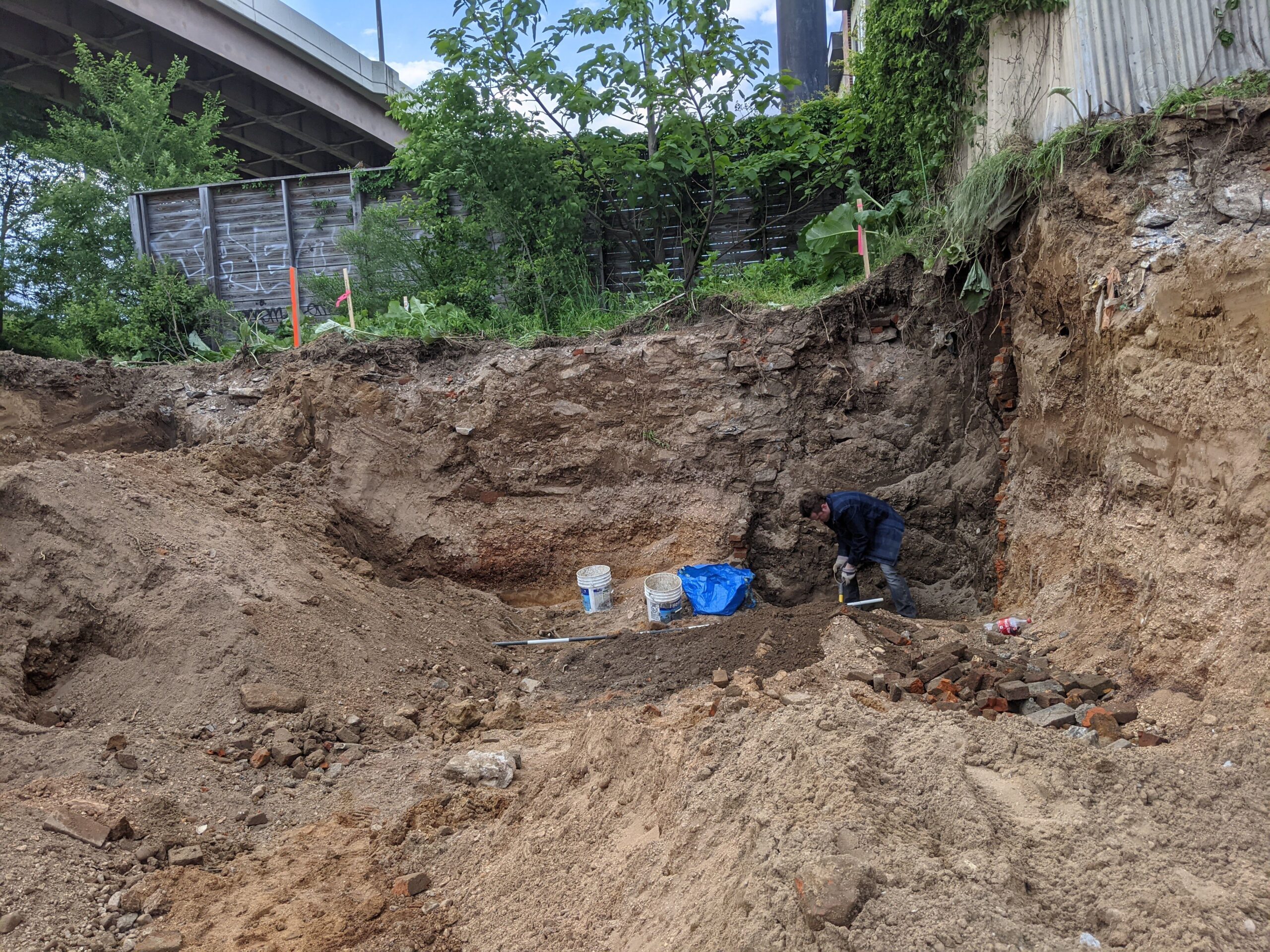
Matt Dunphy digs a privy pit near his home in Old City in May 2021. The dark column of soil in the right corner is indicative of the nitrogen-rich soil (also called “night soil”) found in a privy pit. This particular pit was 7 feet wide and 20 feet deep, likely dating to the 1740s.
The code of the privy pirates
Privy digging as a hobby surged in Philadelphia in the late 1960s, when the construction of Interstate 95 uprooted miles of soil across the city.
Over the decades, it became a passionate pursuit and then an underground industry. It’s driven largely by obsession: Diggers might find treasure, but they also might find nothing at all. Some end up with hundreds or thousands of broken pottery pieces. When I asked Waholek what he did with all the things he found over two decades, he replied, “Do you want some of it?”
Both the city’s amateur diggers and the professional archaeologists contend that they’re the ones working in the public interest, aiming to make their findings available to the most people.
“I don’t like the word ‘amateur.’ I probably know a lot more than some archaeologists. They focus mainly on one topic,” said Waholek, who calls himself an “avocational archaeologist.”
Some privy diggers say they are particularly moved to preserve objects that otherwise might be forgotten. Mathes, of Thunderbird Salvage, said he had found spearheads and Native American artifacts in his digs, objects which he does not sell. (Repatriation laws don’t apply to private property owners).
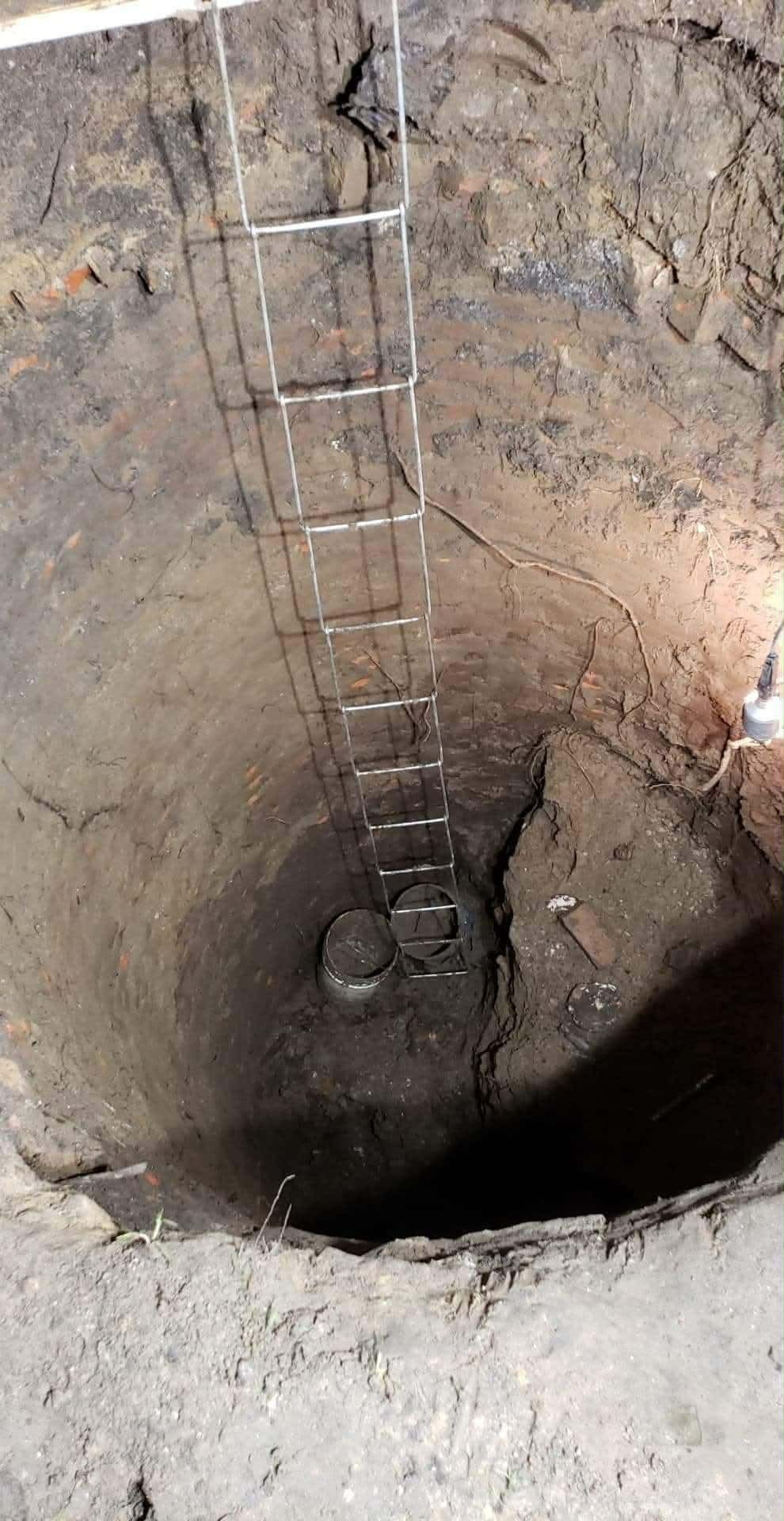
A brick-lined privy in North Philadelphia, pictured here in 2015. The ladder is an antique fire escape salvaged from a demolition on Frankford Avenue.
“To me, they’re more spiritual. I display those with the greatest of respect. I show them off to people, I like to hold them,” he said. “To donate them to a museum, most of the time they’re going to get put in a drawer and not displayed because there’s limited space.”
Over the years, some diggers have formed relationships with construction workers and police. One local developer described learning about the hobby when he encountered a group of men trespassing on his construction site carrying what he believed to be spears. (They were actually handmade metal probes, which the diggers use alongside shovels, clam rakes, pickaxes, and tripods and pulleys.) The developer was disturbed until he, too, became fascinated.
As with any subculture, there are rules about how to dig with integrity, said Michael Frechette, 60, an artist and veteran privy digger who lives in Kensington. Among them: Always ask permission; never dig on federal land where archaeologists are already working; fill in the hole you make; respect other diggers’ claims; and maintain honor within your own group — equal work should lead to equal bounty.
But, of course, as Mathes put it: “There’s pirates that work with you and there’s pirates that’ll work against you.”
Melissa Dunphy, pictured here in 2022, stands in the ground level of her Old City property. It was here that Dunphy and her husband, Matt, discovered two privies filled with 18th century artifacts.
Who gets to call themselves an archaeologist
The non-sketchy, wholesome representatives of the privy digging community in Philadelphia are Melissa and Matt Dunphy, who call themselves “citizen archaeologists.” She’s a composer with a doctorate in music; he’s an e-commerce engineer.
They fell down the rabbit hole of privy digging about a decade ago after they bought a shuttered magic theater in Old City with a deed dating back to 1745 and began to renovate.
The construction workers uncovered two privies on their property, one of which the Dunphys excavated right away. Since then, they’ve dug six more privies in the vicinity and launched a podcast, The Boghouse, about their discoveries.
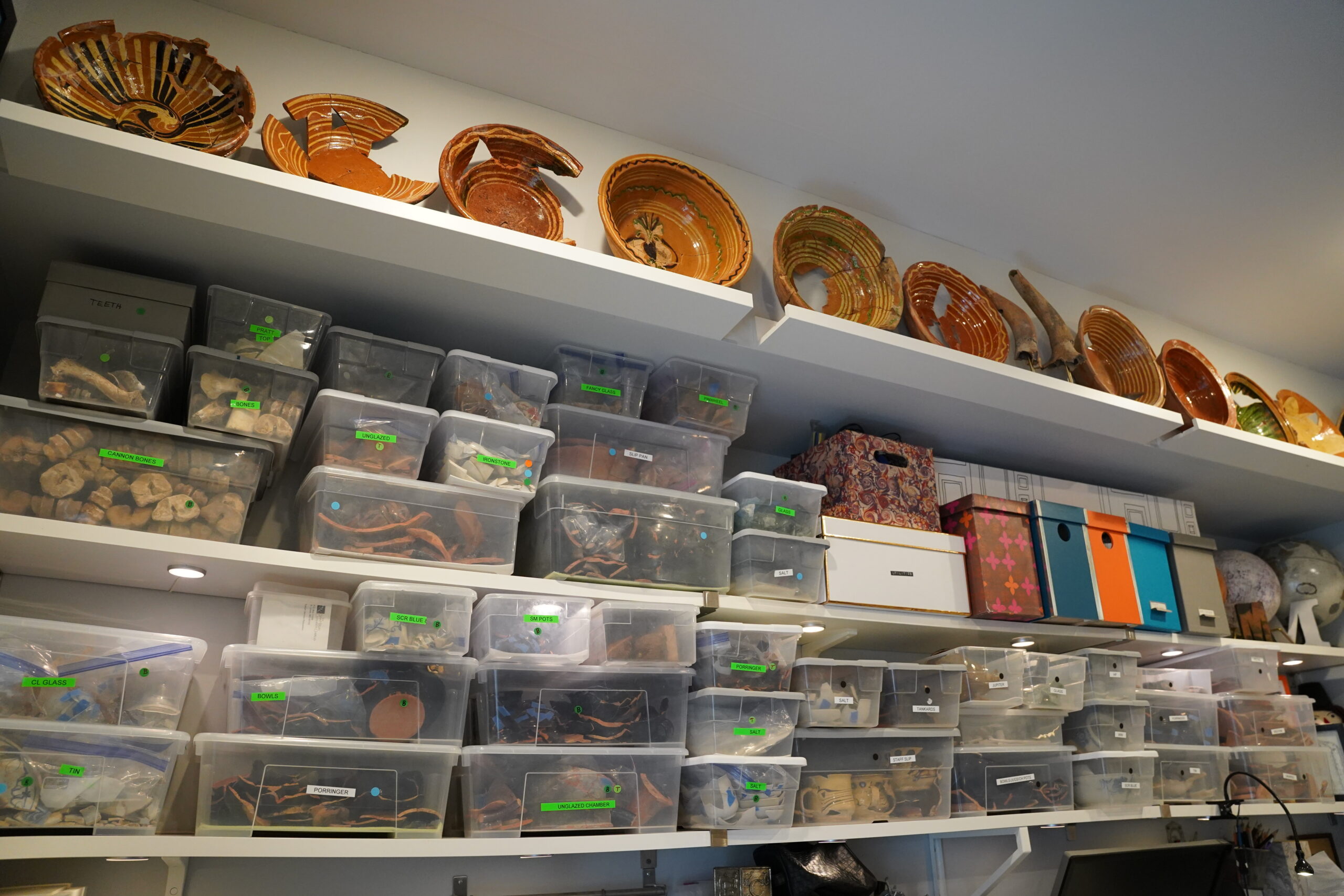
Every inch of the Dunphys’ walls are taken up by artifacts they’ve dug up in privies near their home in Old City.
The two have become “obsessed at the level that now we give talks at Colonial Williamsburg,” Matt Dunphy said.
Their apartment, on the third floor of the former magic theater, is packed floor to ceiling with thousands upon thousands of shards of pottery and other artifacts. The bathroom has relics displayed on every wall, and the glass cabinets in the kitchen are filled not with matching plates but with broken teapots, chamber pots, punch bowls, and cups, each with their own carefully researched backstory.
The Dunphys are amateurs whohave not formally studied archaeology, but they are brimming with intellectual curiosity and knowledge about what they’ve found.
They mostlydon’t sell their discoveries (Melissa Dunphy has sold some found teeth) and are instead working to build a museum on the ground floor of the theater, which they hope to open by July. They want to call it “The Necessary Museum,” because privies were often called necessaries.
“These objects — even something as simple as a bowl — tell you something about the people who used them, the people who made them, the journey that that object took,” Melissa Dunphy said. “This is like a passing of stewardship of this little postage stamp-sized corner of the world.”
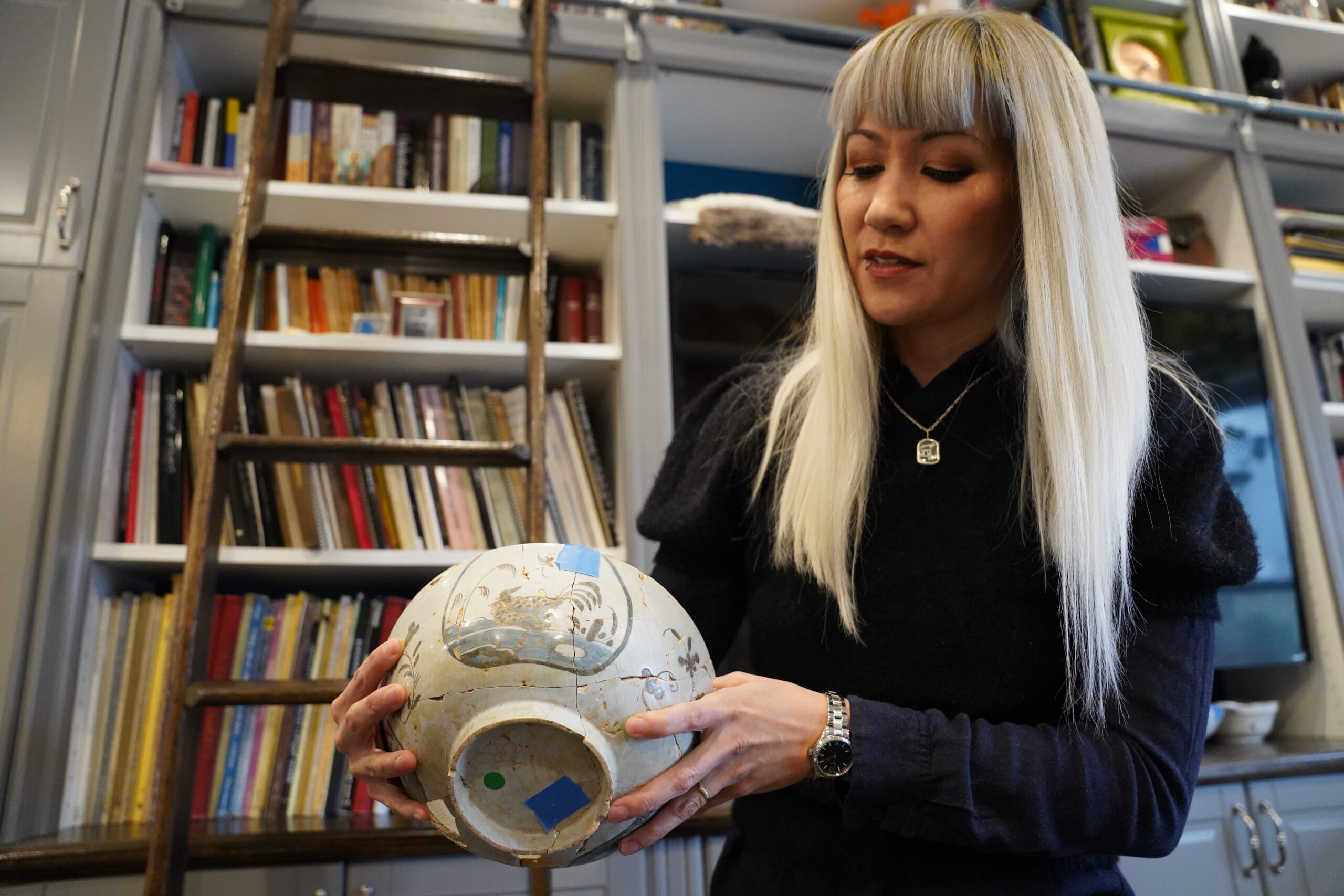
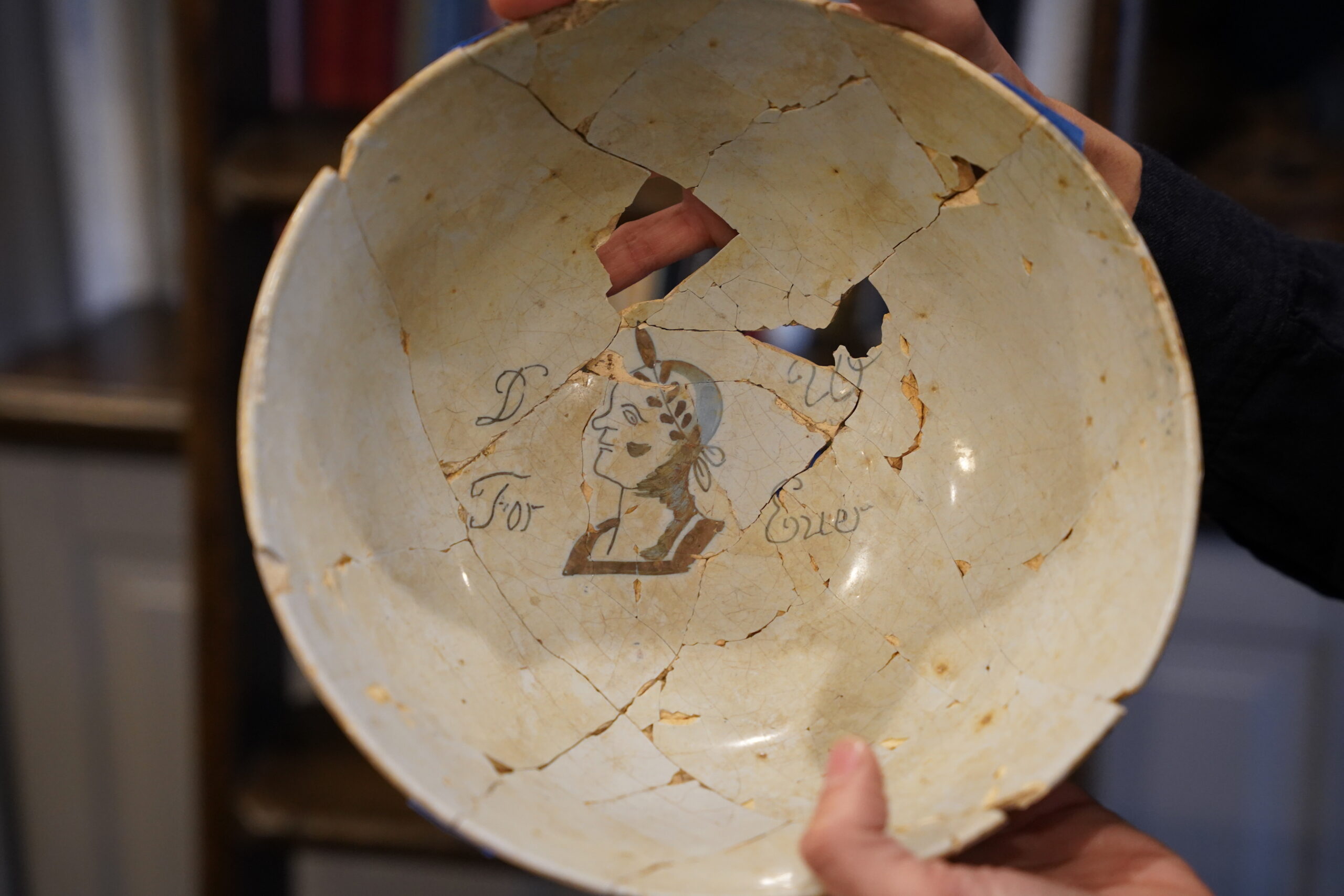
Melissa Dunphy, pictured here in 2022, holds a delft punch bowl which she pieced together from pieces found in the privies below her house. The bowl commemorates Britain’s victory over the Scottish Jacobite Army at The Battle of Culloden in 1746.
“What an anti-Jacobite bowl is doing in my privy is such an exciting question to me,” Dunphy said.
Melissa Dunphy, pictured here in 2022, holds a bowl at the Dunphy’s home.
Unlike those who work in secret, the Dunphys are in close touch with archaeologists at the National Park Service and local museums, speak at archaeology conferences, and regularly text with the editor of the academic journal Ceramics in America, whom they consider a mentor.
When they first found glass bottles in the privy in their backyard back in 2016, they tried reaching out to various archaeologists and museums in the city asking how they should proceed, they said. But no one was particularly helpful, and they only had a week before the hole would be filled in.
So they set about trying to “rescue” as much as they could themselves.
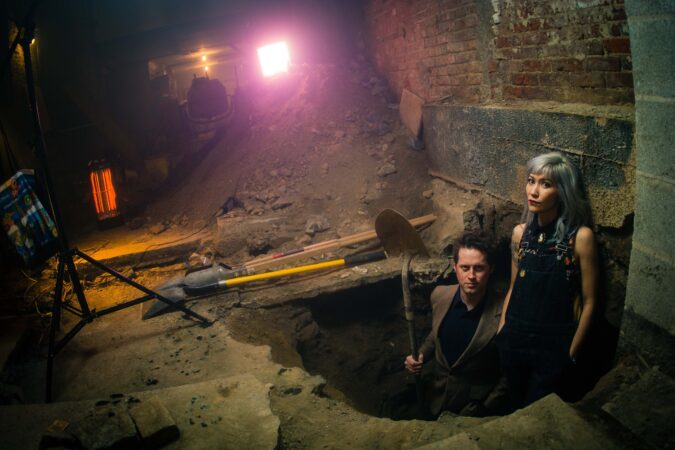
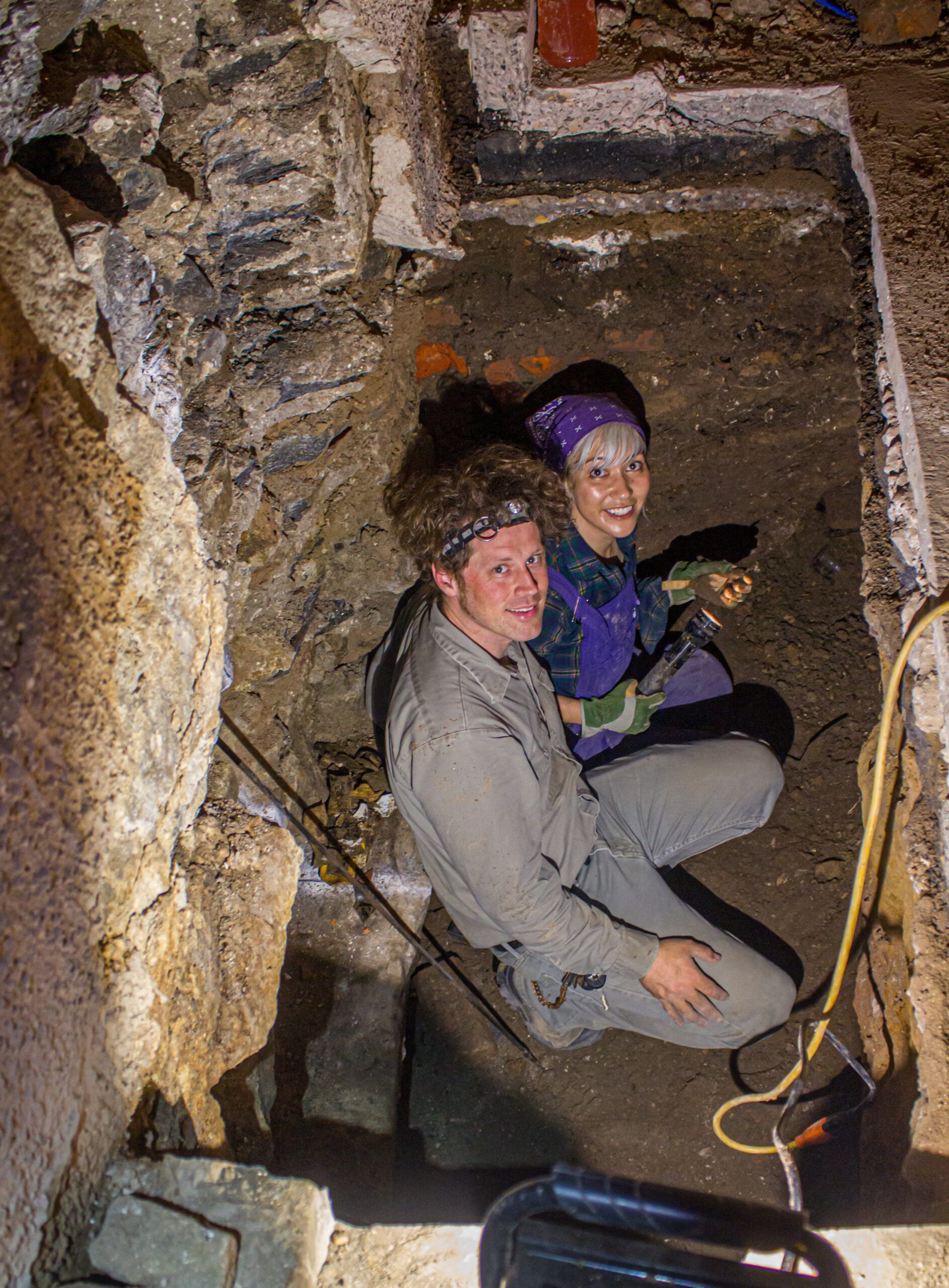
Matt and Melissa Dunphy pose in their first privy dig, in this photo from July 2016. While foundation work was being done on the shuttered magic theater they had just bought, workers unearthed two colonial-era privy pits. The Dunphys excavated them, fueling a decade-long obsession.
“My assumption then was that this archaeology is probably everywhere in Philly, and it’s probably not that important. So I don’t have to feel academically guilty about doing it myself, without any real expertise,” Melissa Dunphy said. She descended the privy hole in a cobbled-together archaeological outfit: Duluth Trading Co. coveralls, a “Rosie the Riveter” scarf, a camping headlamp.
The couple fashioned screens from chicken wire they bought at Home Depot to sift pottery from dirt, and Matt Dunphy photoshopped a picture of a ruler he saw at the Museum of the American Revolution to measure the objects they uncovered.
Scott Stephenson, president of that museum, who in the years since has gotten to know the Dunphys well, said he supports people doing “citizen archaeology” alongside professionals.
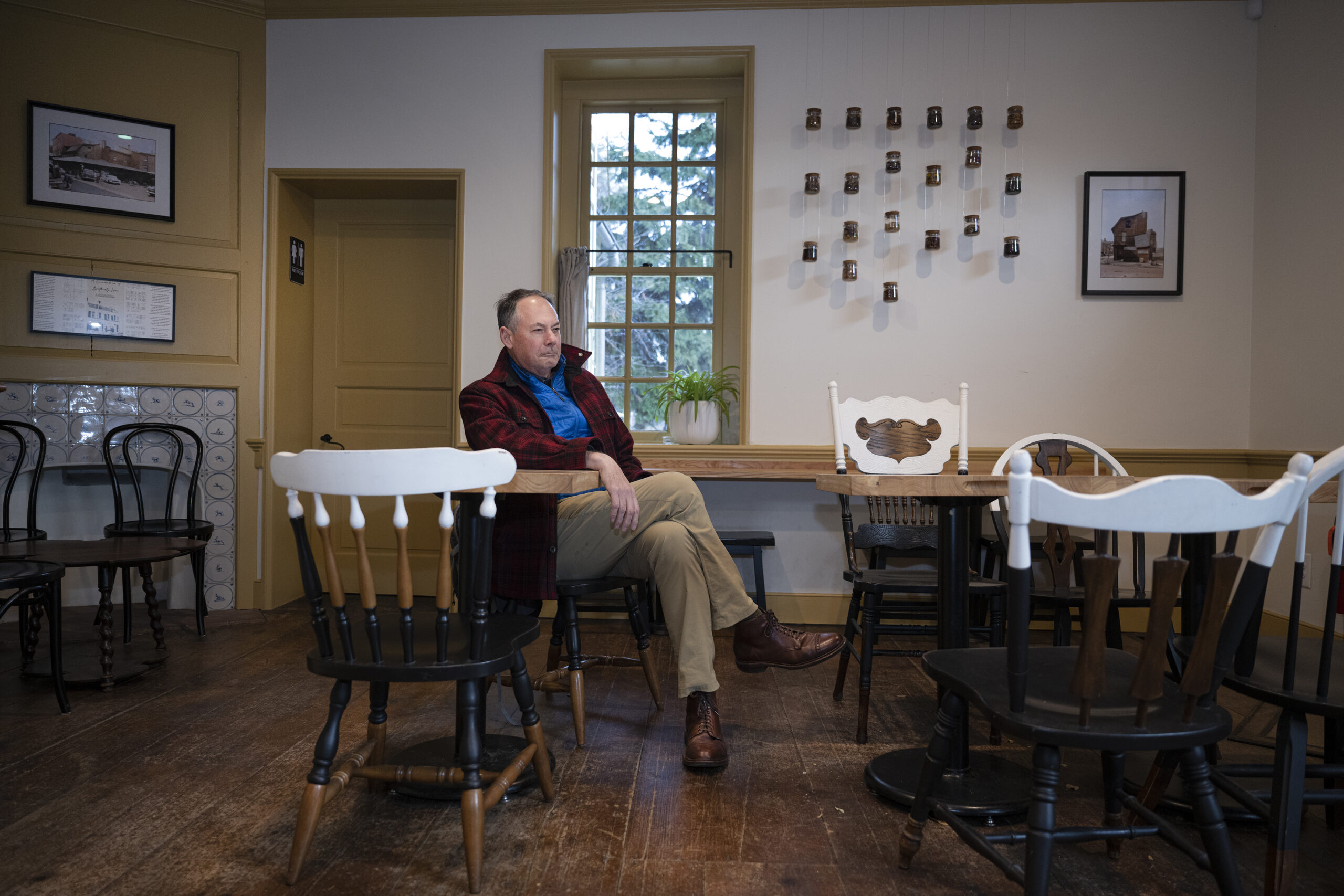
Museum of the American Revolution head Scott Stephenson, pictured here at Philly’s Revolutionary-era tavern, A Man Full of Trouble, likens each archeological site to a diary that can only be read once.
But he likens each archaeological site to a diary that you can only read once, because the story is as much about the objects that are buried as it is about the relationship between them. When amateurs “read the diary,” it’s like they’re “only recording three words off of an entire page,” he said.
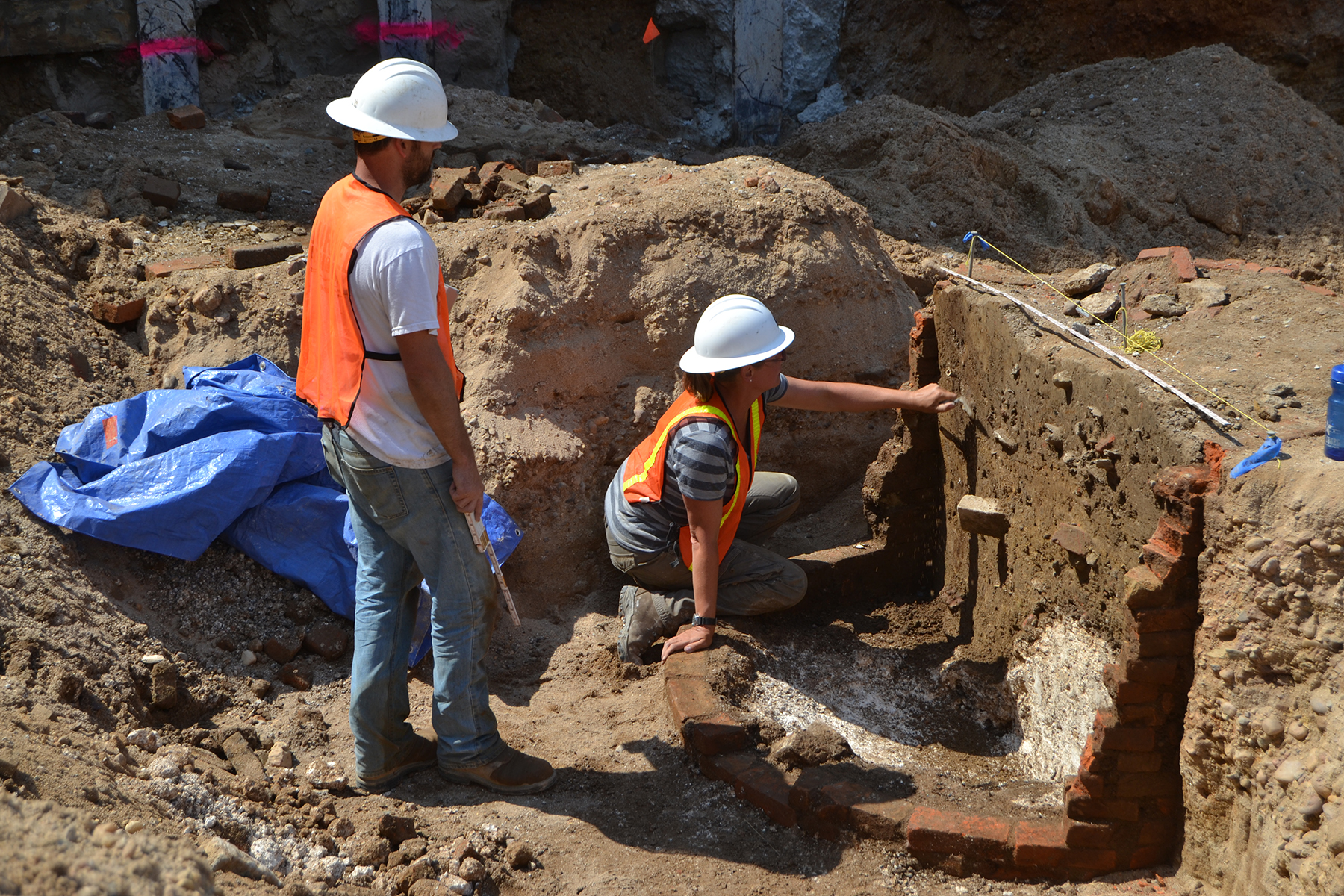
Before the Museum of the American Revolution opened, it conducted a massive archaeological dig on its site that included multiple privies. The recovered artifacts are part of a display at the museum called “Trash Tells the Truth.”
Before opening, the Museum of the American Revolution conducted its own privy dig with professional archeologists.
The Dunphys acknowledge that they don’t document the stratigraphy, or the exact chronological layering, of the privies they have dug. But they also see themselves as democratizing an important effort, saving bits of the past that would otherwise be wholly lost. It’s not as if the city’s professional archaeologists have the time or ability to carefully dig every backyard under construction across Philadelphia.
“We have watched with our own eyes archaeological features being crushed up and destroyed during construction in our neighborhood,” Melissa Dunphy said.
Some archaeologists are frustrated by the very notion of “citizen archaeology.”
“Would we talk about an ‘amateur doctor?’ No. Medicine takes training and following a set of techniques and ethics. Archaeology, the same thing,” said Levin of the Archaeological Forum. Of privy diggers, he said, “They are not amateur archaeologists. They are no stripe of archaeologist.”
Pieces of artifacts at the Dunphys’ home, pictured here in 2022.
Piecing the past back together
On a recent afternoon, Matt Dunphy donned black rubber gloves, filled an Ikea strainer with sudsy water in the sink, and began to scrub pottery shards with a small denture brush. Centuries-old dirt trickled down the drain.
Next to him, pieces of clean pottery lay on a towel to dry. Many privy diggers don’t take the time to piece together the hundreds of broken pieces they find, because it can seem like a nearly impossible task. But Melissa Dunphy sees it as puzzle-making “boss level.” To repair a single ceramic bowl might take a week of 16-hour days, she said.
She uses painters tape to keep related pieces together, and when they seem to fit, she uses archival-grade museum glue diluted with a syringe full of acetone to seal them back together.
The thrill of bringing something back to life — it’s like nothing else.
“This is the first time that someone has seen this bowl,” she said, “the way that it’s supposed to be, in hundreds of years.”
HONESDALE, Pa. — In waiting rooms all over America, millions of children found something to stave off the impending needles and drills, a magical world of puzzles, games, and stories written just for them.
For many kids, Highlights was the first magazine they ever read, and, perhaps, the one that mattered most when they look back on their childhoods, decades later.
Books published by Highlights on a shelf at the magazine’s editorial offices in Honesdale.
In an era when print circulation — magazines, newspapers, and even the phone book — steadily declines, it’s easy to look back on Highlights, which was first published in 1946, with a glowing nostalgia. Every issue was full of intricately illustrated hidden-picture puzzles, the beloved duo of Goofus and Gallant making disparate decisions, and child-authored “Dear Highlights” questions that were often silly, serious, and tender.
“I let my friends borrow one of my stuffed animals. She’s going to give it back next time we meet, but I’m afraid she’s going to lose it,” a girl named Ramona, from California, wrote to Highlights.
The magazine may get some Generation Xers feeling wistful, but Highlights and its handful of offshoots are alive and well and, perhaps, more crucial than ever in an era where children’s attention spans are pulled in every direction. Highlights turns 80 this year, and its editorial offices remain in a cozy pre-Civil War, Italianate house in downtown Honesdale, Wayne County.
“We are as relevant as we were 80 years ago,” said Marlo Scrimizzi, senior editorial director for Highlights for Children. “Our future is expansion. We want to bring Highlights to more homes and families.”
Front porch of the Highlights magazine editorial offices in Honesdale Jan. 14, 2026.
Today, Highlights for Children publishes six magazines, with a combined circulation of one million a month, all while remaining family-owned. It’s still full of old favorites, like Goofus and Gallant, plus dinosaurs, outer space themes, animals, and unicorns, the mythical beast that’s made a big comeback in recent years.
“Dinosaurs will always be in,” Scrimizzi said.
Outside of the flagship magazine, which targets children 6 to 12, the company publishes Hello (ages 0-2), Highlights CoComelon (ages 1-4), High Five (ages 2-6), High Five Bilingüe (ages 2-6), and brainPLAY (ages 7 and up).
On a recent January afternoon in Honesdale, the editorial crew was laying out its latest issue, which featured a Japanese artist who practices kintsugi, the art of repairing broken objects by filling cracks with lacquer mixed with powdered gold, silver, or platinum.
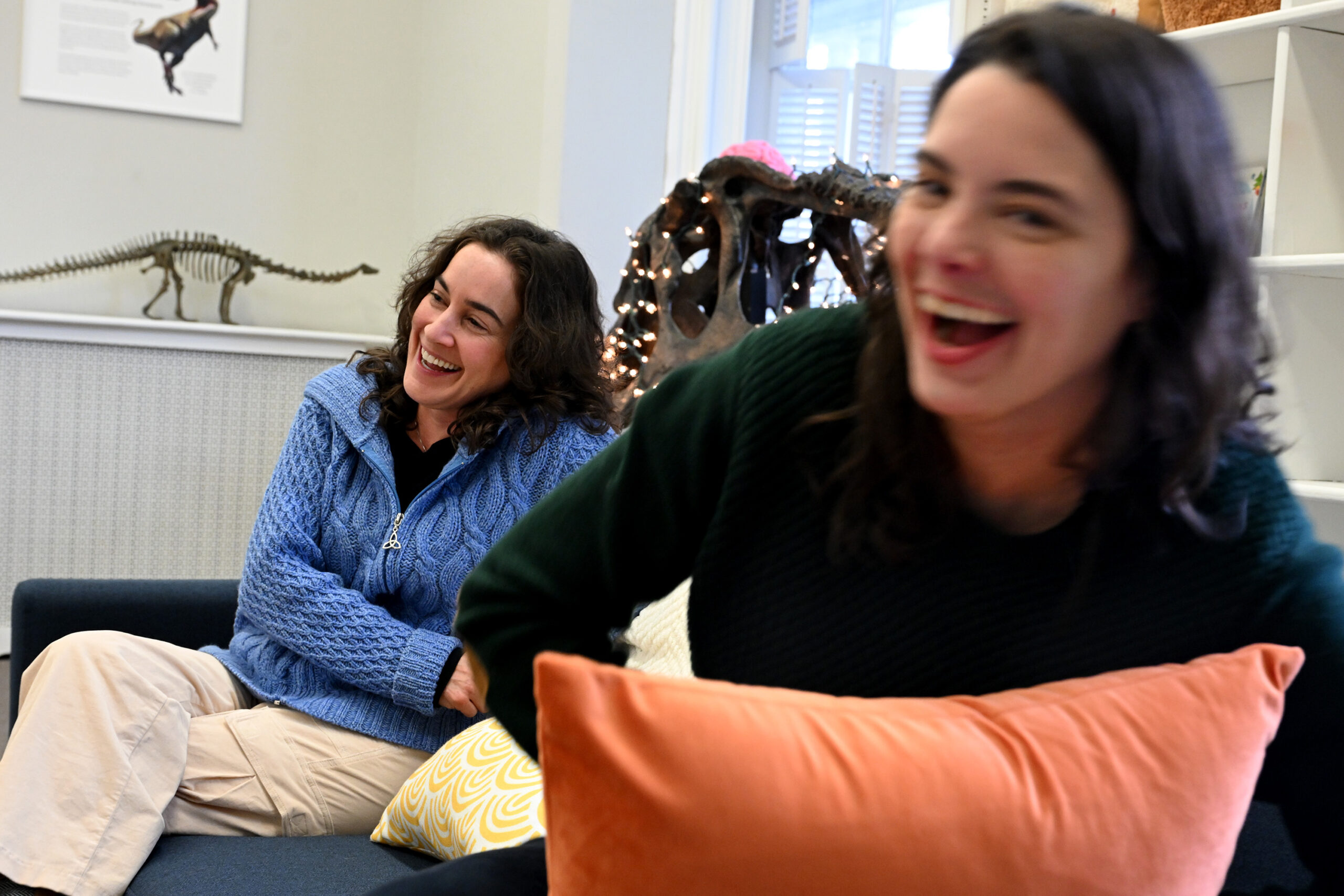
Highlights magazine editor Judy Burke (left) and editorial director Marlo Scrimizzi at the magazine’s editorial offices in Honesdale.
In the 1940s, a husband and wife duo from Pennsylvania, Garry Cleveland Myers and Caroline Clark Myers, made an unlikely decision to create a magazine focused on and for children, with the motto “Fun with a purpose.” Garry Cleveland Myers had a Ph.D. in psychology from Columbia, and Caroline Clark Myers was a schoolteacher in Wayne County.
“They really wanted kids to know that they had it in themselves to be creative, to think through problems, to be empowered and have the confidence to really come up with the creative solutions and think through answers to questions,” said Judy Burke, the magazine’s editor.
The Myerses, who had worked for another children’s magazine before starting their own, had a groundswell of support from parents and built a clientele base through old-fashioned door-knocking. By 1950, however, the business model was lagging.
“They were editors, not business people, really. They were educators,” Burke said. “They were in really dire straits, financially, and almost had to close, so they kind of rallied some troops.”
The business didn’t fully take off, however, until their son Garry Myers Jr. quit his job as an aeronautical engineer and took a look at the books. It was Garry Myers Jr. who decided to send the magazine to doctors’ and dentists’ offices, which sparked a rush of subscriptions from parents.
By 1960, Highlights had a half-million subscribers, and the relationship between the magazine and the waiting room was forever sealed.
“Parents would see their kids amusing themselves with this magazine in the waiting room and think, ‘What is this product?’” Burke said. “There wasn’t a ton of magazines for kids back then.”
Dipesh Navsaria, a professor of pediatrics at the University of Wisconsin, said the competition for children’s attention extends to the waiting room in 2026. Some have arcade games. Others have televisions. Every parent has a phone, he said, which is an easy salve for a sick child.
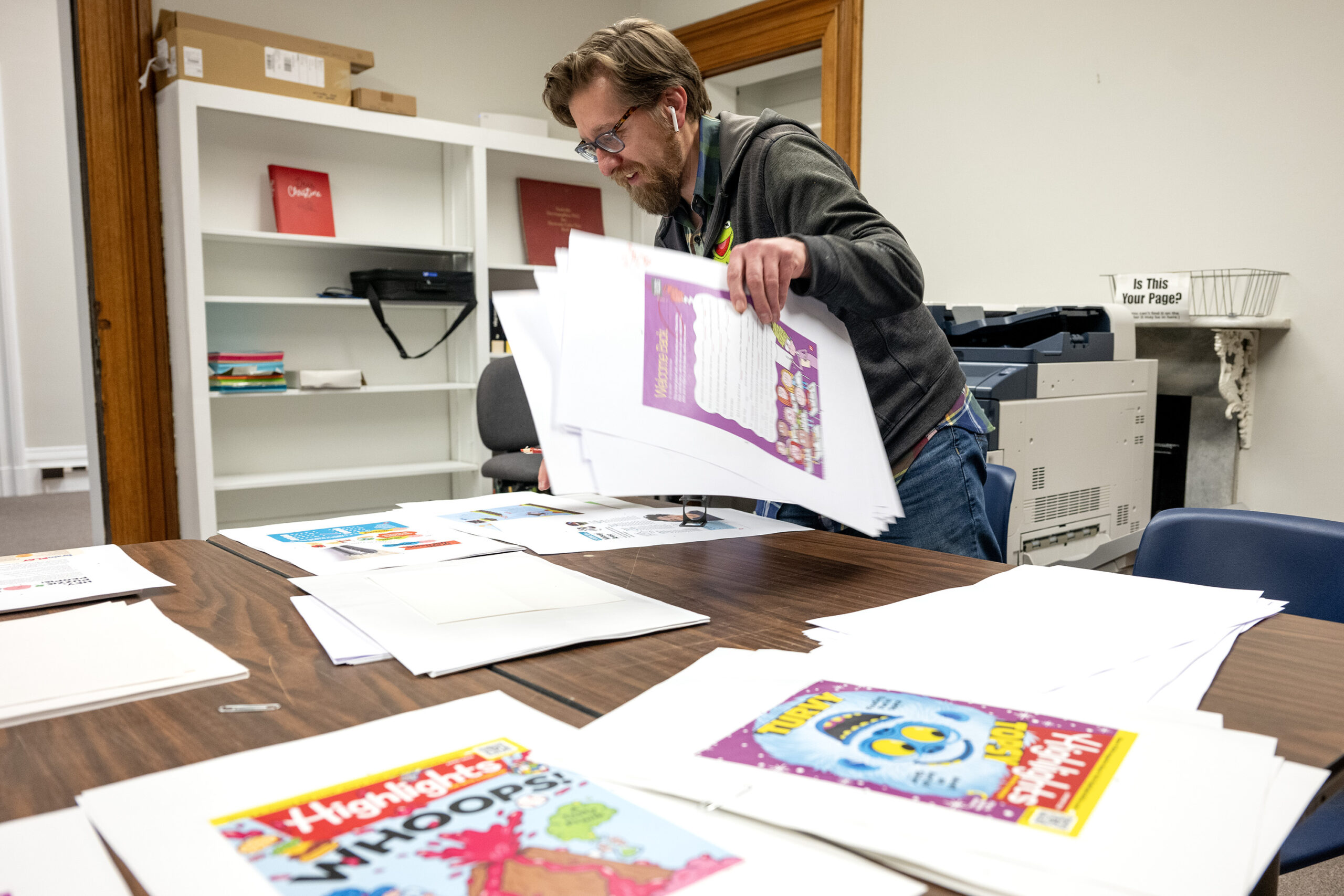
Senior production artist Dave Justice looks through proofs of forthcoming Highlights magazines in the editorial offices in Honesdale.
Still, as a supporter of Highlights, he believes the timeless magazine still matters there.
“Families should expect and perceive that the most important thing we care about is that child’s health and well-being. That extends to what’s on the walls, in the exam rooms, and the waiting room,” he said. “With Highlights, there’s a long history of trust. Highlights doesn’t have advertising, and parents can know their kids aren’t going to be marketed to.”
Burke was one of those kids in the waiting room, reading Highlights at a doctor’s appointment 20 miles west of Honesdale.
“I’d see how much of the magazine I could read before they called me in,” she said. “I didn’t want to miss a page.”
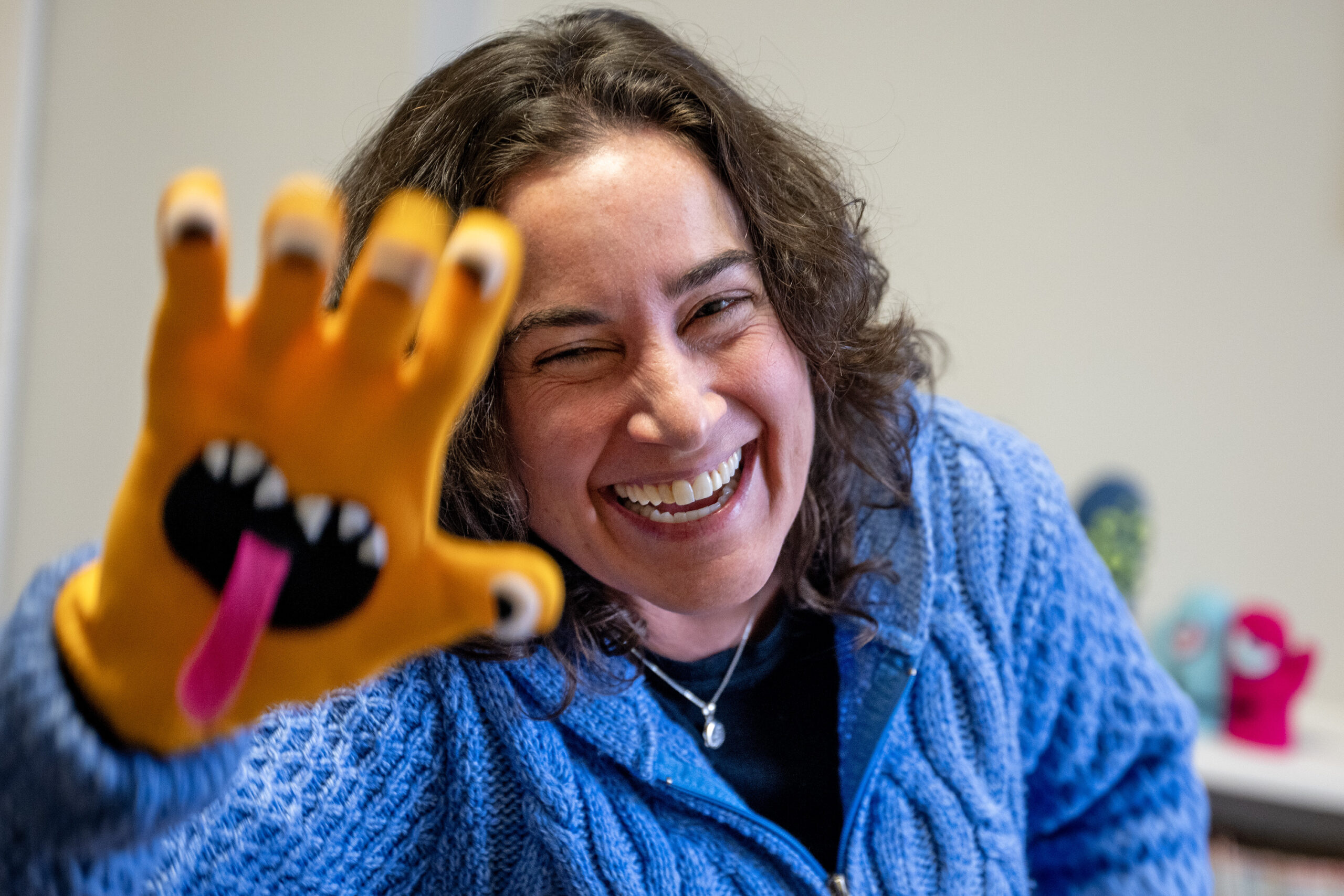
Highlights magazine editor Judy Burke with a hand puppet at the magazine’s editorial offices in Honesdale on Jan. 14, 2026.
Decades later, Burke was in a Pennsylvania dentist’s office during a break from college and picked up Highlights again. That inspired her to reach out to the company, and she’s now been there for 31 years.
“A girl wrote in recently and said, ‘I love your magazine so much, I just feel like I could curl up with it,’” Burke said. “Those words warm my heart.”
Honesdale has seen an uptick in population and tourism, along with more breweries, artists, restaurants, and short-term rentals moving into the once sleepy Poconos town. Burke, Scrimizzi, and a small crew who anchor the Honesdale editorial offices are in the middle of it all, downtown. Other editorial staff members work remotely, and the company’s business offices are in Ohio.
A “Can You Find Steve?” duck, the subject of a new book published by Highlights on a shelf at the magazine’s editorial offices in Honesdale Jan. 14, 2026.
The Honesdale offices aren’t the location of an amusement park, but there’s a large dinosaur head in a meeting area and vintage children’s books that the Myerses wrote for, along with other children’s memorabilia.
Burke’s office is filled with monster puppets, and just outside it, on a wall, is a large wooden motif of the magazine built by a fan, a testament to how beloved it is.
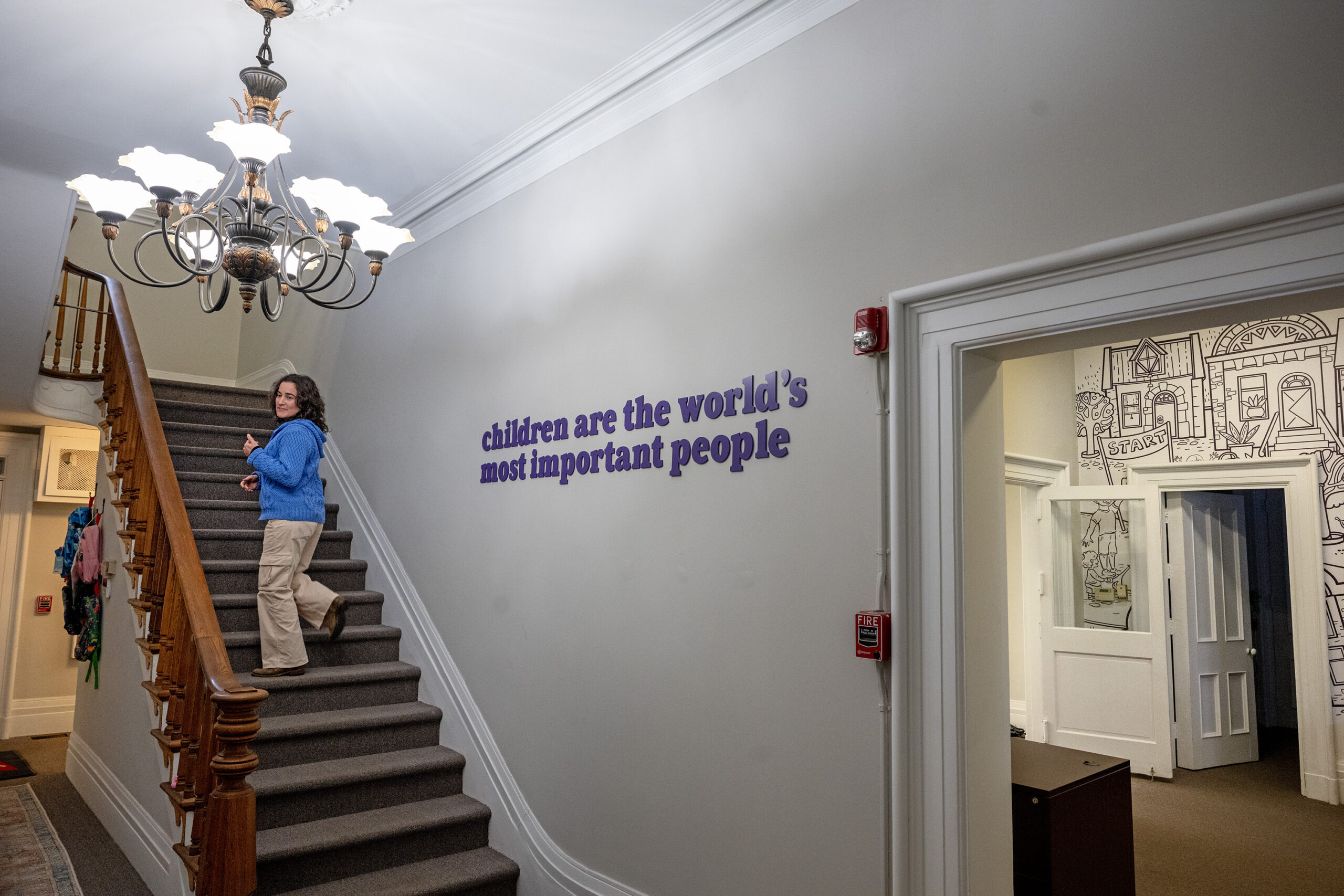
Along the staircase, Highlights’ guiding principle is affixed to the wall: “Children are the world’s most important people.”
Highlights magazine editor Judy Burke in the former mansion that is the magazine’s editorial offices in Honesdale Jan. 14, 2026. The beloved children’s publication began as a small operation in the town in 1946 and the editorial offices are still there, even as it has grown into one of America’s most respected educational magazines for kids.
TOKYO — You have to wake up early in the morning to catch the world’s largest fish market at its peak. You also need to keep your head on a swivel.
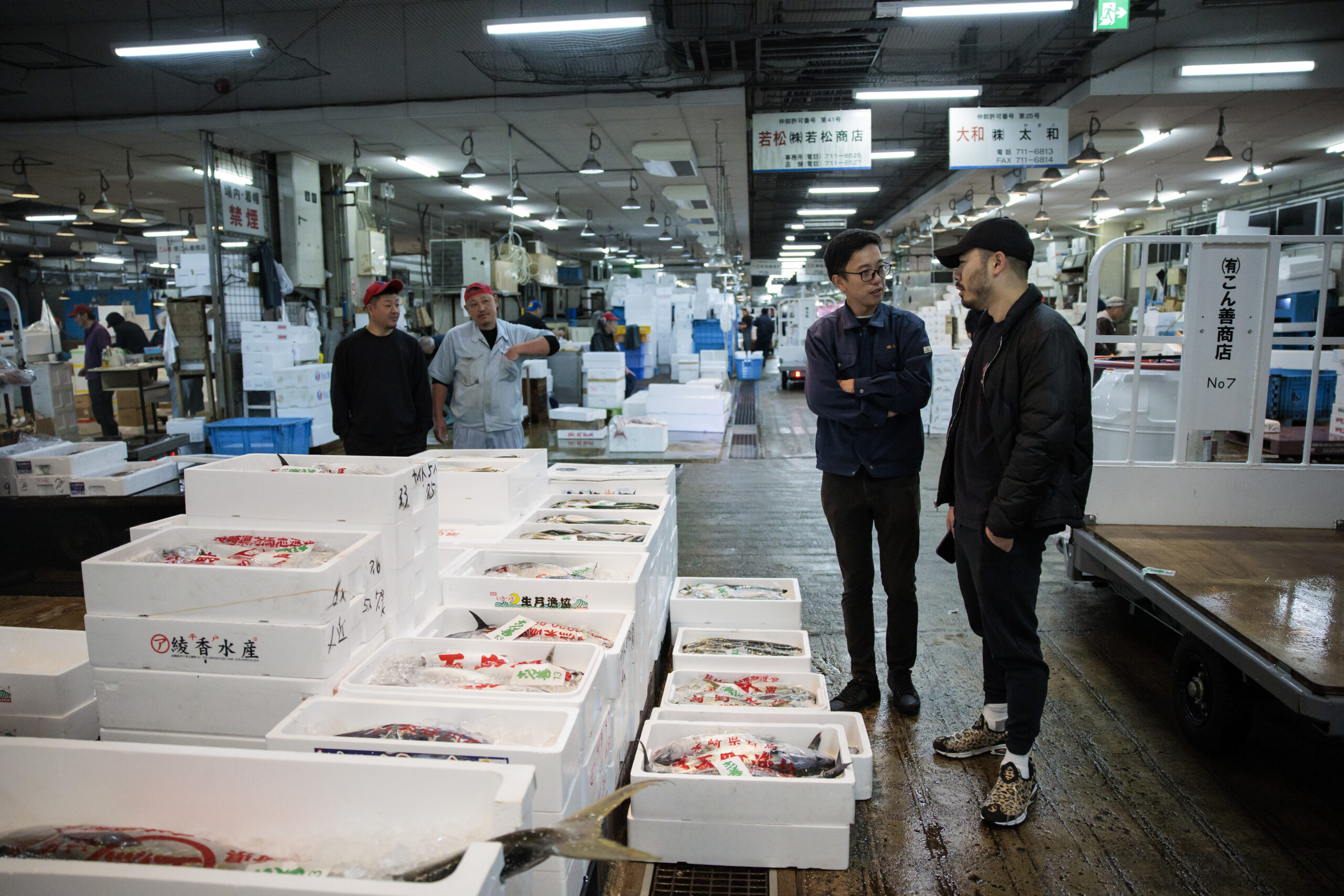
“Careful here! These drivers can be crazy!” said our market escort, yanking me back from a warehouse lane wet with fish blood and water as several electric forklifts zoomed past. Piled high with styrofoam boxes bearing some of the most coveted seafood on the planet, these silent-but-speedy carts were designed for Toyosu Fish Market, a state-of-the-art facility built in 2018 on reclaimed land in Tokyo Bay.
The massive refrigerated halls were already humming with activity before dawn on a November morning as Philadelphia chefs Jesse Ito and his father, Masaharu “Matt” Ito, walked through vast aisles of whole fish on ice toward the live-seafood hall, where an acre of ocean creatures bobbed in gurgling tanks flanked by an ike jime station. Thrashing madai red snappers there were deftly dispatched with two strokes of a knife and a wire spike to the brain — a swift death considered both humane and, from a culinary perspective, optimal.
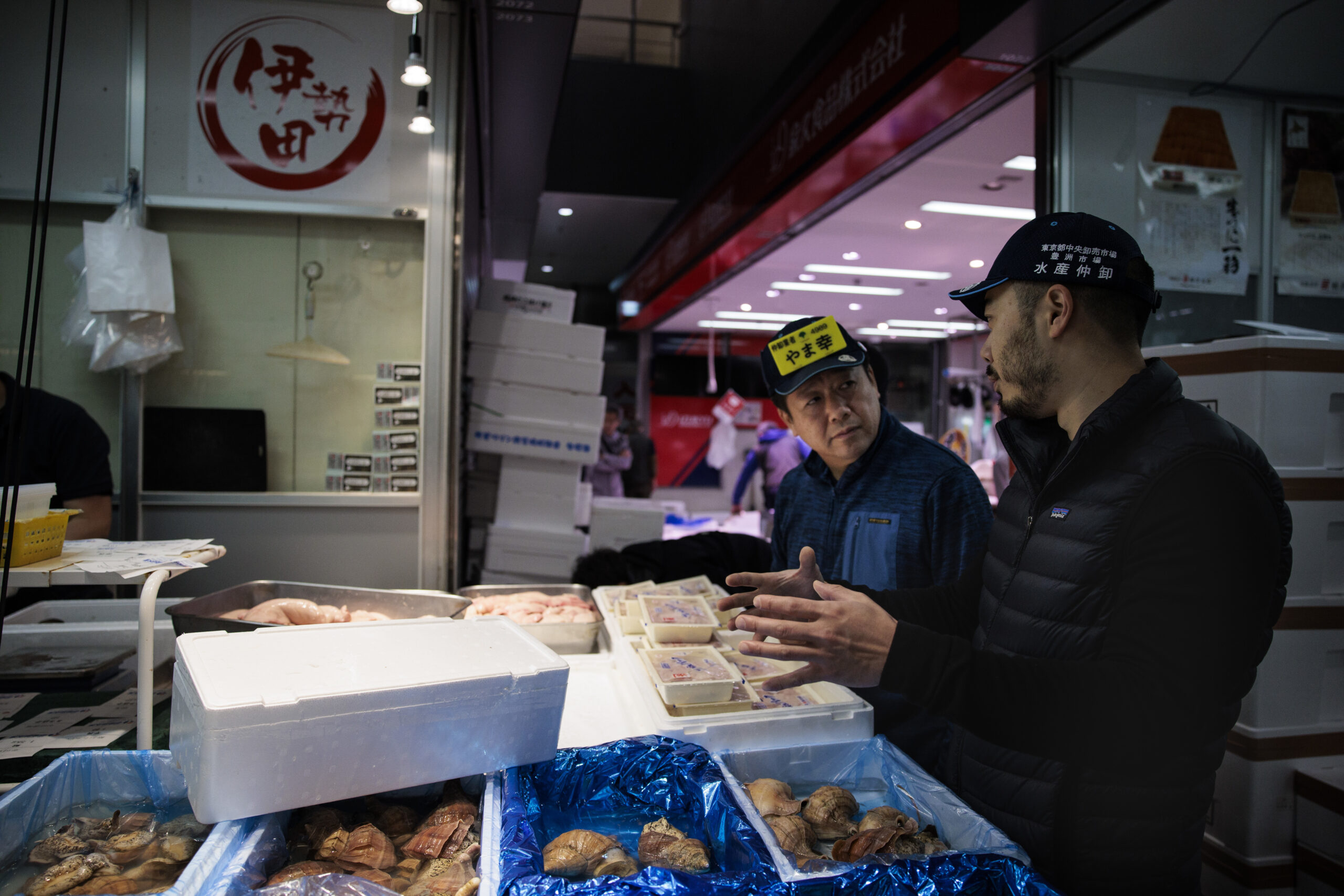
Hirokatsu Takeda talks with Jesse Ito in a stall at Toyosu Market on Tuesday, Nov. 4, 2025, in Tokyo, Japan.
“It instantly disables the nervous system from producing chemicals that degrade the fish and keeps the meat fresh,” said Jesse, of Royal Sushi & Izakaya, whose industry contacts had lent us official hats and white rubber boots to accompany them to areas of this seafood paradise where tourists are not permitted.
At 5:30 a.m. sharp, the hand bells began to chime: Tokyo’s famous tuna auction was underway! We turned into a frigid hall where hundreds of tunas, some as big as couches, were laid atop the jade-green floor. Prospective buyers pried their bellies open with pikes to inspect the fatty pink flesh inside. Auctioneers from five different houses simultaneously launched into a rapid-fire sing-song pattermet with the cries of replying bidders, the chaotic burst of noise transforminginto a haunting, rhythmic chant that resonated in our chests.
“It sounds almost tribal — and you feel it,” said Jesse, 36, who buzzed with excitement from the auction floor. “Japan is so futuristic, and there’s probably a much more efficient way to do this. But this is about culture and preserving tradition. This is part of what it means to be Japanese.”
One of the most respected sushi chefs in the U.S., Jesse was not buying tuna on this day in November, but taking in this time-honored ritual alongside his father.
“I’m so glad we got a chance to experience that together,” Jesse said.
Matt, 72 and Japanese-born, taught a teenage Jesse the fundamentals of making sushi at Fuji, the family’s long-running restaurant in South Jersey. He and Jesse sold it before opening Royal Sushi & Izakaya in Queen Village together with partners in 2016, when Jesse was 26.
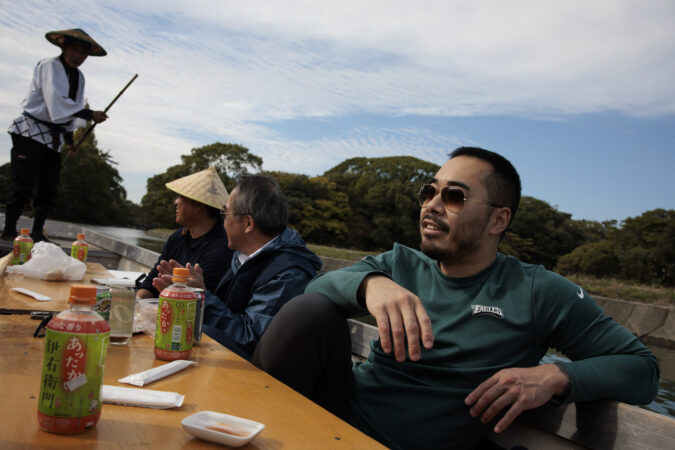
Jesse grew up in Cherry Hill and worked at Fuji from childhood. Before age 27, he’d never flown on an airplane, let alone travelled to Japan — a curiosity for a talent who’s risen to national acclaim as an eight-time finalist for the James Beard award, aMichelin-recognized chef, andthe face of the 32nd best restaurant in North America as ranked by World’s 50 Best. He finally made it to Japan in 2024 on a research trip for his new restaurant, dancerobot, with business partner and chef Justin Bacharach. This secondvisit, in late 2025,would also be full of nonstop eating in search of inspiration, found at street stalls, yakitori grills, sushi counters, and world-renowned kaisekis.
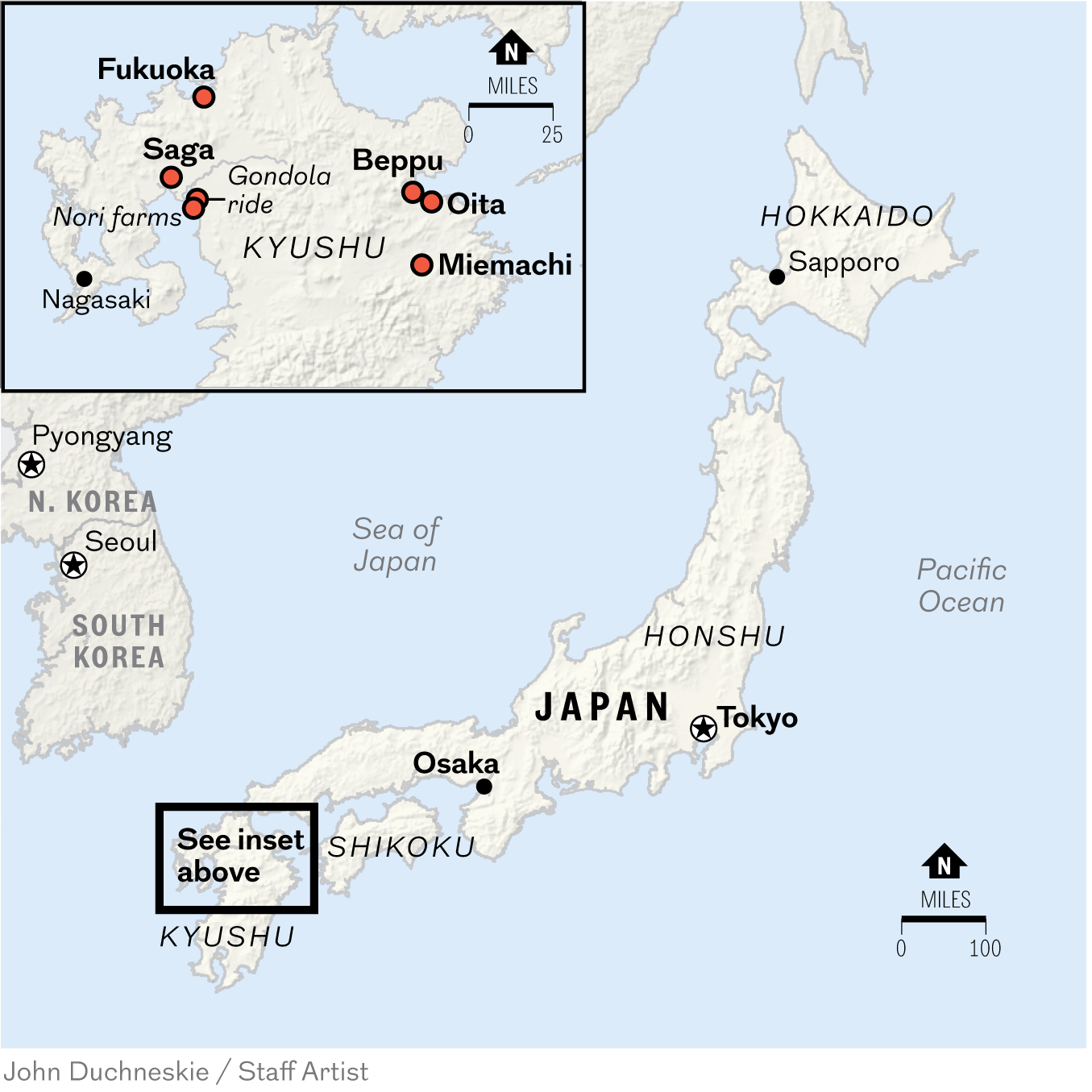
But this journey was especially personal: We were boarding a plane later that morning to the southernmost Japanese island of Kyushu, to visit the village where Matt was born.
Map of Craig LaBan’s travels in Japan with Philadelphia chef Jesse Ito and his father, Matt.
Matt, who lives alone in Pennsauken with his two macaws, Sakura and Ichiro, had not been back to Japan in 25 years and, before last year, had no imminent plans to return. Jesse thought it important for his father to go while he was still physically able, and paid Matt’s way.
“I never thought I’d get a chance to go to Japan with him,” Jesse said.
The prospect of a father-son jaunt was hardly a given. The last time they took a family vacation? “Jesse was 3 years old,” said Matt, recalling a trip to Florida before his world got “caught up in work, work, work … I regret that.”
There were other complications. Matt’s visa needed to be updated. Jesse had also been reluctant in previous years to relinquish two weeks of revenue from his omakase, an expensive experience for 16 diners each night (almost entirely regulars) that’s one of the toughest reservations in America.
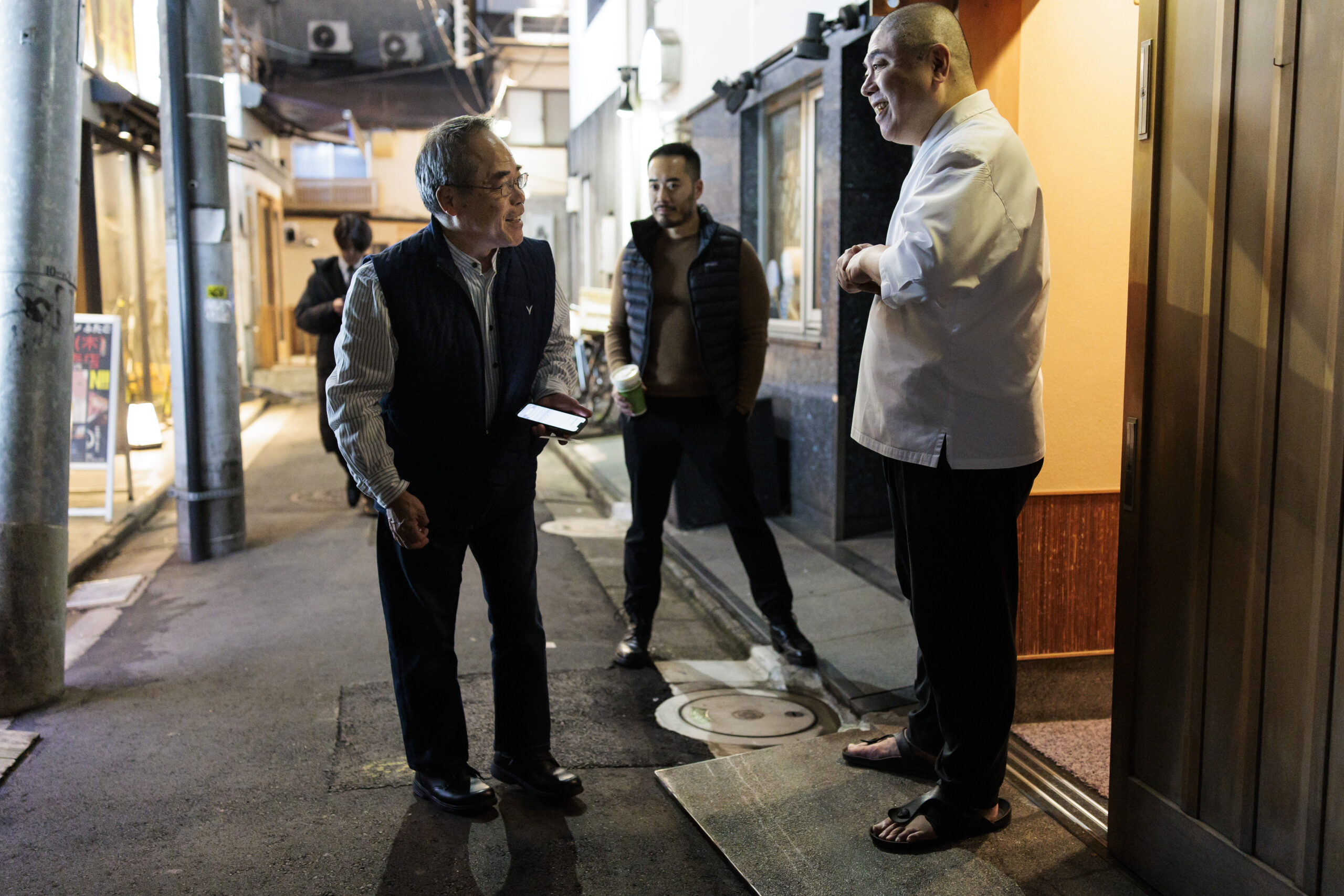
Matt Ito and Jesse Ito talk with Chef Kunihiro Shimizu outside of his restaurant, Shimbashi Shimizu, on Sunday, Nov. 2, 2025, in Tokyo, Japan. No photos or video are allowed during the omakase at Shimbashi Shimizu, and international visitors are only permitted when accompanied by someone who understands Japanese.
Even more daunting was the prospect of so much time together. Despite working in the same restaurants every day for the past 22 years, the two rarely interact. There’s been challenging history between them: Jesse watching his parents’ divorce as a teen, financial struggles at Fuji, and a shifting power dynamic in the kitchen at Royal as Jesse took the lead and became a star — all while publicly grappling with alcoholism.
With Jesse now five years sober, the air between them has been cleared. “I had a sit-down with my dad and there were a lot of raw emotions,” Jesse said. “I apologized, and he spoke, too. We’ve made amends. We’re on good terms now.”
Jesse Ito and Matt Ito eat Tonkotsu ramen at a shop across from the Nagahama Fish Market on Thursday, Nov. 6, 2025, in Fukuoka, Japan.
For Matt, the chance to journey to his homeland for the first time in a quarter-century with his son was an unexpected gift: “This is the first time I’ve spent this much time alone with Jesse since he was in junior high.”
After leaving the tuna auction, Jesse hustled to introduce himself to several suppliers that handle prime ingredients he wanted to bolster his menus.
“Next time I order,” he said as we walked to lunch, “they’ll know who I am and give me the good stuff. ‘That’s Jesse-san, send him the best!’”
Matt trailed behind, reveling in the beauty of all that gorgeous seafood, including live snapping turtles that gave him flashbacks to his teenage years as a fish-market butcher: “Be careful or you’ll lose one of these!” he said, wiggling his fingers.
We were famished by the time we arrived at Iwasa, a small restaurant in the market serving sushi for breakfast. We devoured the freshest pink toro, tender abalone, blood clams carved into snappy pompoms, and the sweetest shrimp over nubs of warm rice. It was just 6 a.m. We still had a late-morning plane to catch. The longest day of Matt and Jesse Ito’s big adventure had only begun.
An inauspicious beginning
Matt Ito arrived in Philadelphia almost exactly 50 years ago, just as an epic snowstorm in February 1976 froze the Schuylkill River solid. The 21-year-old chef was having regrets. The sandwich on the plane — roast beef on dry rye bread — was shocking. “I’d never seen such terrible food,” he said. When the owners of Sagami picked him up at JFK airport, he gazed out the windows of their Datsun with dismay as the wintry New Jersey Turnpike rolled by with “no mountains, just flat land, ice, and snow.”
He’d been recruited through a friend in Kyushu to this still-fledgling restaurant in Collingswood, where he lived upstairs for the first two weeks. He was in charge of making sushi at a moment in American culture when tuna rolls, raw salmon, and even tempura-fried shrimp were still novelties. “A lot of people had never seen this before. I had to teach people how to eat it,” Matt said.
But owners Chizuko and Shigeru Fukuyoshi were wonderful, he said, and Sagami was a fortuitous landing spot. That’s where he met Jesse’s mother, Korean-born Yeonghui Choi, who was a server. When he decided to open Fuji in 1979, she joined him there, building the business while his English was still limited.
Despite its out-of-the-way location in a Cinnaminson strip mall, Fuji became a cult favorite of gourmet societies like La Chaîne de Rotisseurs thanks to Matt’s lyrical kaiseki. By the time I first encountered it in 1999 — writing a rave review about the tuna-wrapped foie gras, curry-spiced squab, and bundles of lobster crisped inside translucent tempura crusts — I could not fathom how such a talent had remained largely unknown to Philadelphia’s wider public for nearly two decades. When the Itos were forced through eminent domain to move their restaurant to Haddonfield in 2007, Matt’s cooking was better than ever. But the restaurant remained under the radar.
Jesse worked his way up from dishwasher to head sushi chef at Fuji by 2008, getting more involved in the business.He graduated Rutgers-Camden with a business marketing degree in 2011. The decision to sell the restaurant after 37 years in 2016 came down to the unforgiving limitations of a family-run BYOB. “It’s not like we were failing. But we worked so hard for so little return, and there was no way for my parents to stop working,” Jesse said.
Jesse Ito (left) and his father, Matt Ito work at the raw bar at Fuji, Haddonfield, June 9, 2011.
They leveraged the sale of Fuji to allow his mother to retire, and to build something bigger. He and Matt partnered with restaurateurs Stephen Simons and David Frank — who own Royal Tavern and Cantina Los Caballitos, among severalothers — to open Royal Sushi & Izakaya.
“I wanted to take care of my parents financially and also do something for myself,” Jesse said. “It’s a classic immigrant story: The first generation works hard and lays the groundwork, the second generation either takes it to the next level or goes a different route to become a doctor or go into finance. I grew up in that struggle, and as a teenager, life was not always nice.”
Jesse has clearly taken it to the next level. Half a century after Matt helped usher in the dawn of sushi for Philadelphians, his son is now redefining the genre’s boundaries with his ever-evolving omakase. Bridging and building that legacy is no small feat considering there are now over 17,000 sushi restaurants in America, according to Nobu Yamanashi, of Yama Seafood in Jersey City, which distributes fish to over 800 restaurants around the country, including Royal Sushi.
“All the iconic Japanese chefs with global reach are in their 70s,” says Yamanashi. “The next Nobu [Matsuhisa] or Morimoto doesn’t exist yet. It’s up for grabs. But there are a handful of Japanese chefs right now that have a chance to lay that claim. Jesse has the ability.”
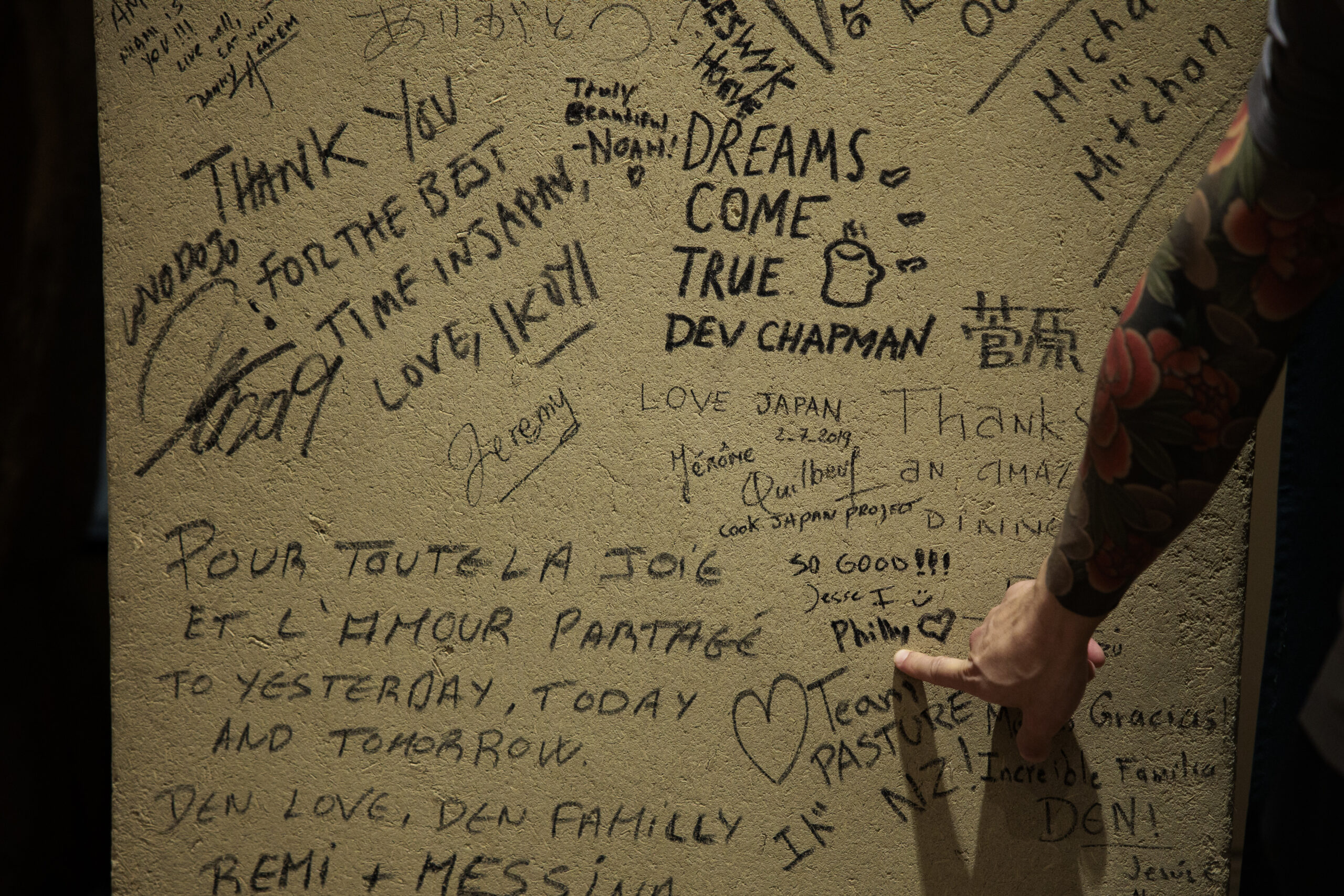
The potential for such recognition was already evident on Matt and Jesse’s trip. In Tokyo, atDen, a renowned kaiseki destination (No. 32 on World’s 50 Best Restaurants), Jesse took pride in signing the wall at the restaurant’s invitation, joining the names of famous chefs who’d visited from around the world. Jesse was also caught completely off-guard at Yohaku in Osaka when chef Yoji Arakawa asked him for a picture after our meal. “I was nervous when you walked in because I follow you on Instagram,” Arakawa told him.
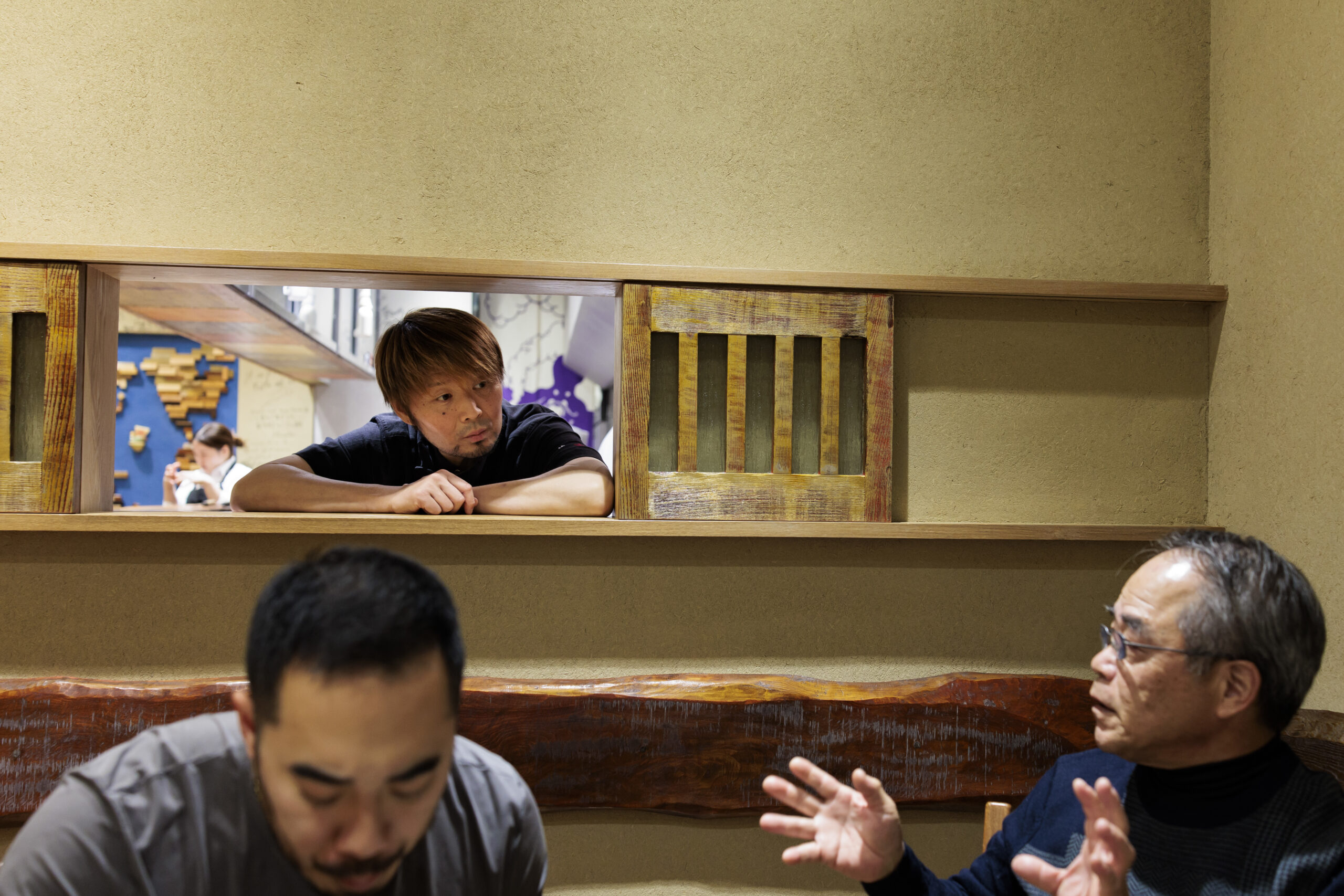
Chef Zaiyu Hasegawa talks with Matt Ito during dinner service at Den on Monday, Nov. 3, 2025, in Tokyo, Japan. Den has two Michelin stars.Jesse Ito points out his message on the wall at Den on Monday, Nov. 3, 2025, in Tokyo, Japan.
That his growing social media profile had somehow reached halfway around the world both stunned and delighted Jesse: “That was super-validating,” he admitted.
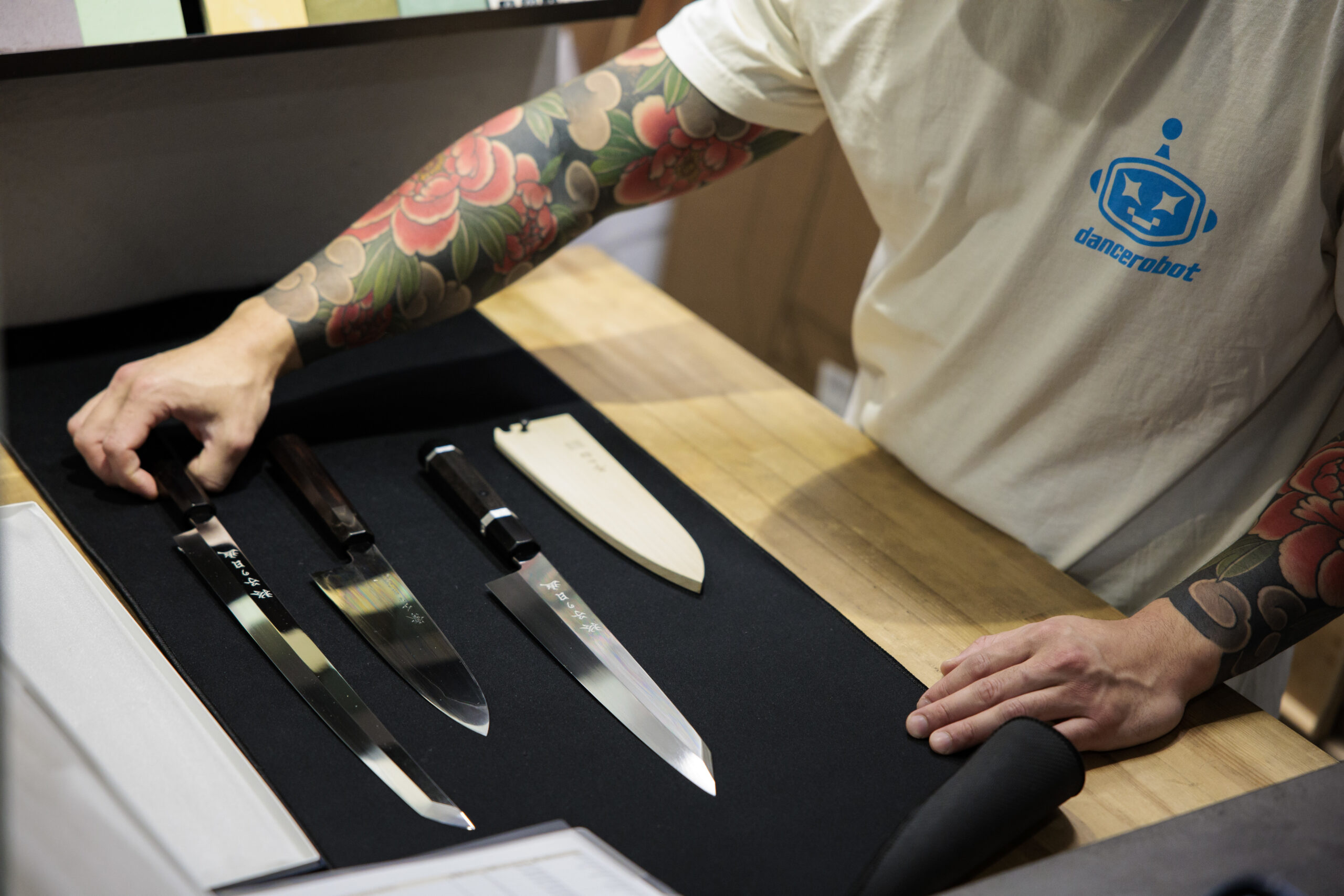
Jesse denies he has ambitions of global renown. But he’s certainly embraced the trappings of superstar chefdom. He has flown to London half a dozen times over the past few years to tattoo his arms with sleeves of colorful peonies and jetted to Los Angeles to tattoo his chest with a coiling dragon. On our field trip to Tokyo’s Kappabashi kitchen-supply district (“It’s Toys ‘R’ Us for chefs!”), he splurged on $1,000 worth of hand-blown sakeware for Royal’s omakase. A visit to the famed Nenohi knife store in Tsukiji Market bolstered his collection of high-end knives, including a gleaming broad blade with an emerald-lacquered scabbard that ran him a cool $2,700.
Jesse Ito checks out the knives at Nenohi Cutlery Co. at the Tsukiji Market on Monday, Nov. 3, 2025 in Tokyo, Japan.
“The omakase is a performance, so it’s nice to have a great knife,” he said as lights danced across his face from the sword-like curve of another sujihiki slicer he was considering.
His father was quietly shaking his head in the corner. Matt, who’s so thrifty he brought his own onigiri rice balls from South Jersey to snack on while in Japan, said he could not relate his son’s knife obsession.
“If a knife cuts well, that’s all I need,” he said. “And don’t tell his mother he spent so much on a knife. She hates this.”
The sun sets during a drive on Wednesday, Nov. 5, 2025 in Japan.
A detour, and then a discovery
We arrived at Oita Hello Kitty Airport around 1 p.m., and when we stepped outside, Matt took a deep breath of the ocean air hugging the rocky coast of Kyushu Island.
“It’s a homecoming!” he said. “I can smell it!”
We’d come to visit Miemachi, Matt’s hometown on the outskirts of Oita. And Jesse was visibly concerned. He’s accustomed to being in control of every logistical detail, both at his restaurants and for the itinerary of this trip, and our time in Kyushu was the only leg of the journey he’d delegated to his father. But he grimaced when he saw his father’s gameplan for transit between the airport and Miemachi. Matt’slegal pad was scrawled with a series of connecting trains and buses that would get us there in three hours if all went smoothly.
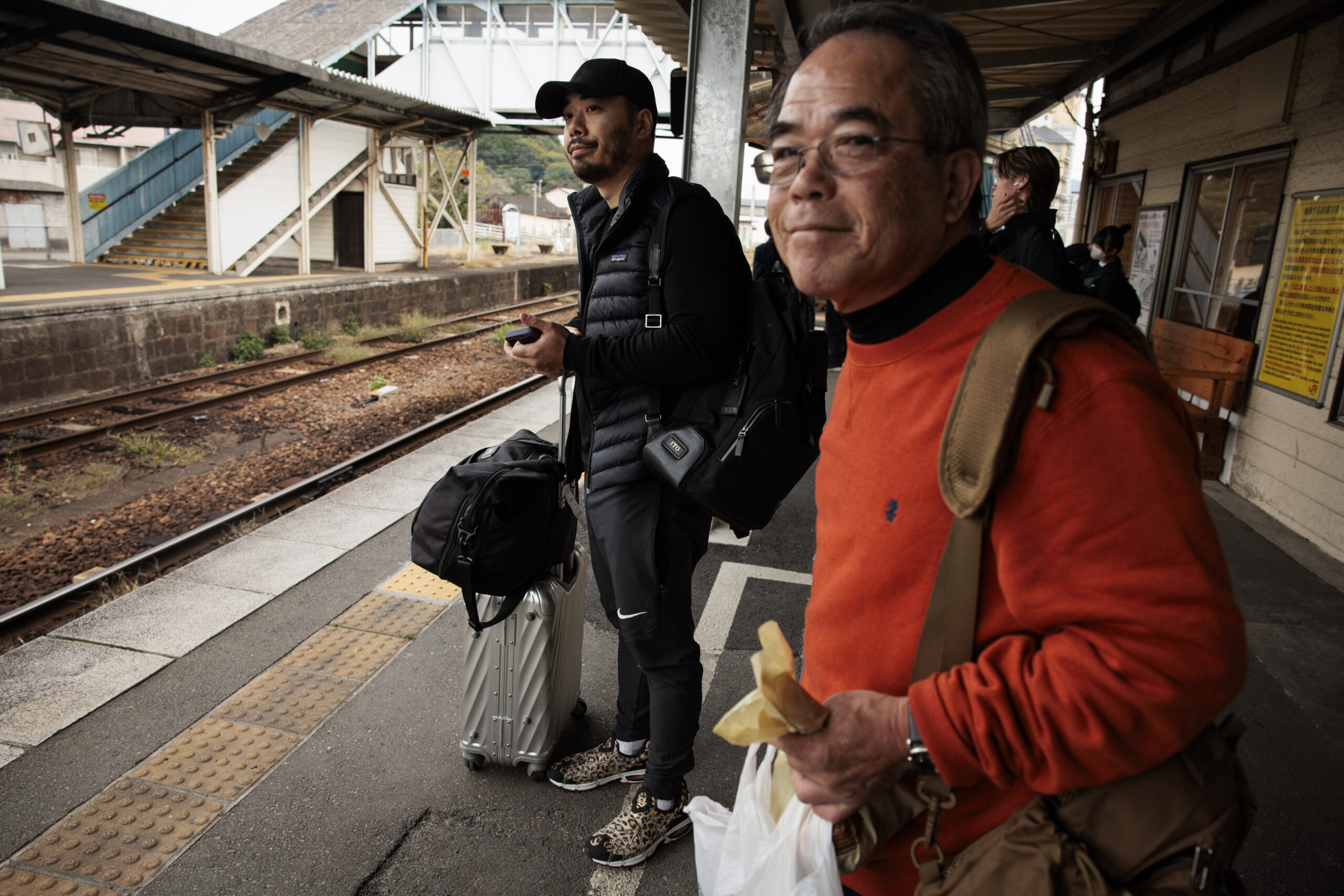
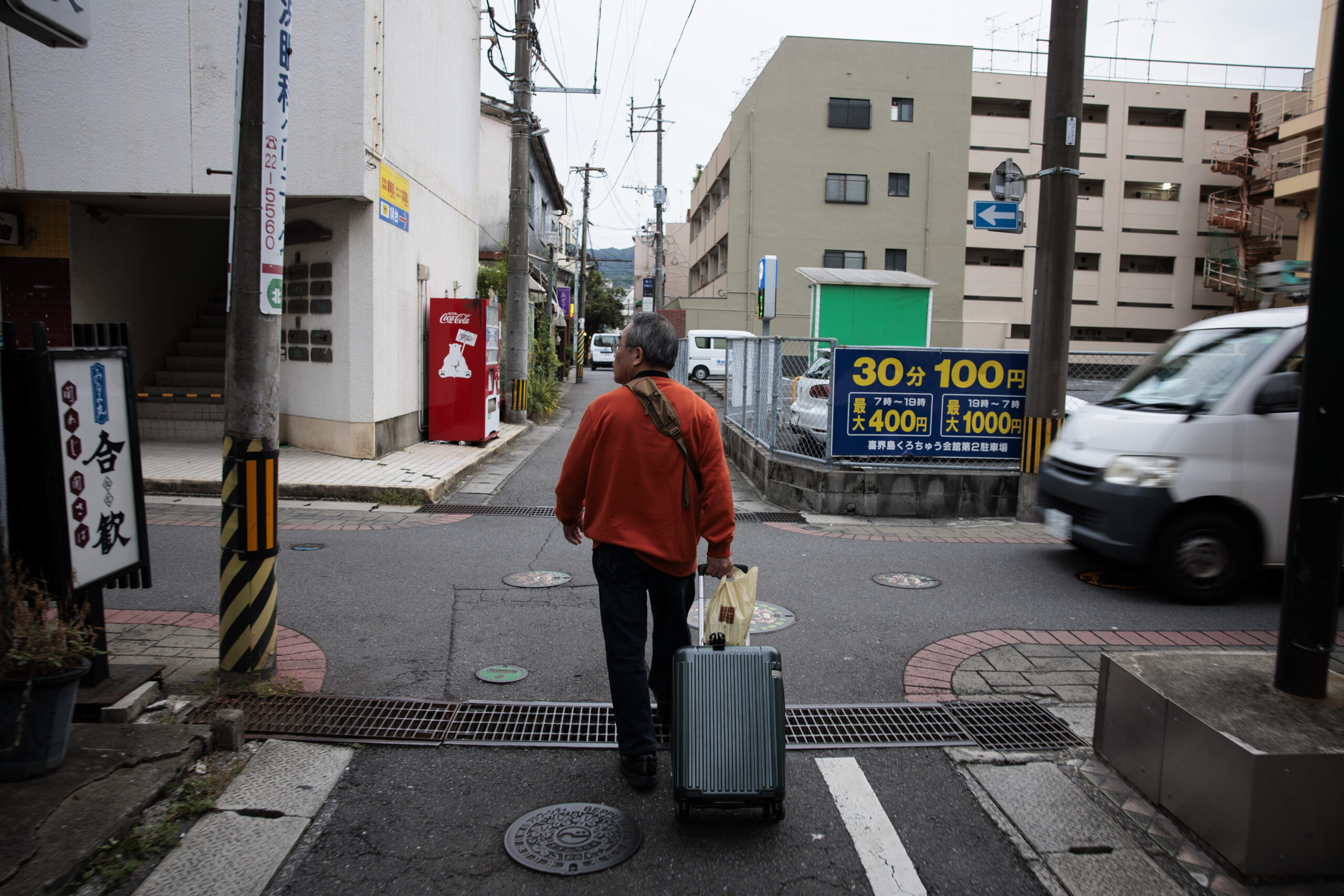
Jesse Ito and Matt Ito wait on the train platform at Miemachi Station on Tuesday, Nov. 4, 2025, in Miemachi, Japan.
“Do we really need to go there?” asked Jesse, clearly drained after waking at 3:30 a.m. for our tour of Toyosu and then rushing to board a flight. “Nothing’s going to be open. What are we even going to see?”
I insisted we follow through: This was one of the main goals of our trip! Matt, sensing Jesse’s unease, surprised his son by hiring a cab to take us there directly.
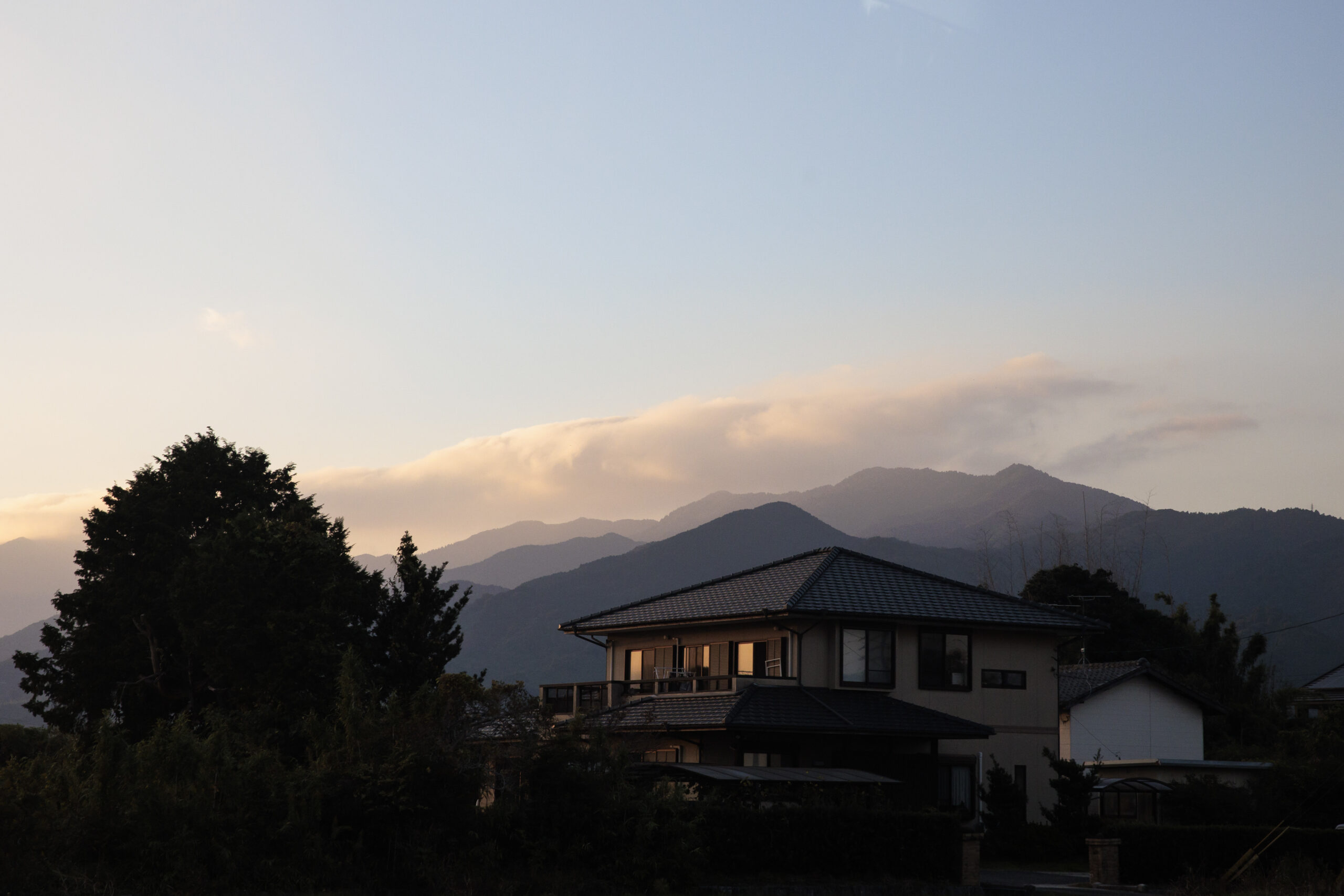
Ninety minutes later, we rolled through the small town of Bungo-Ōno and up into the sparsely populated hills of Miemachi, an agricultural patchwork of rice paddies framed by the jagged triple peaks of Mount Katamuki. The cab moved slowly toward a cluster of houses, then drifted to a stop on Matt’s cue. Jesse was certain we were lost.
“Dad, what’s the plan to get back? They don’t have Uber here.”
Matt did not reply. Instead, he exited the car and walked down the road until he disappeared around the bend. The cab driver got out and smoked a cigarette against the car hood. Minutes ticked by and Jesse began to panic.
“This is why I can’t let my dad plan things. Let’s be proactive, rally my dad and get out of here!” he said, suddenly shaking his phone. “I can’t get a signal. There’s no internet. I can’t use Google Translate to communicate with the driver!”
At that moment, Inquirer photographer Monica Herndon, who had followed Matt, came jogging back to the cab: “He found it!”
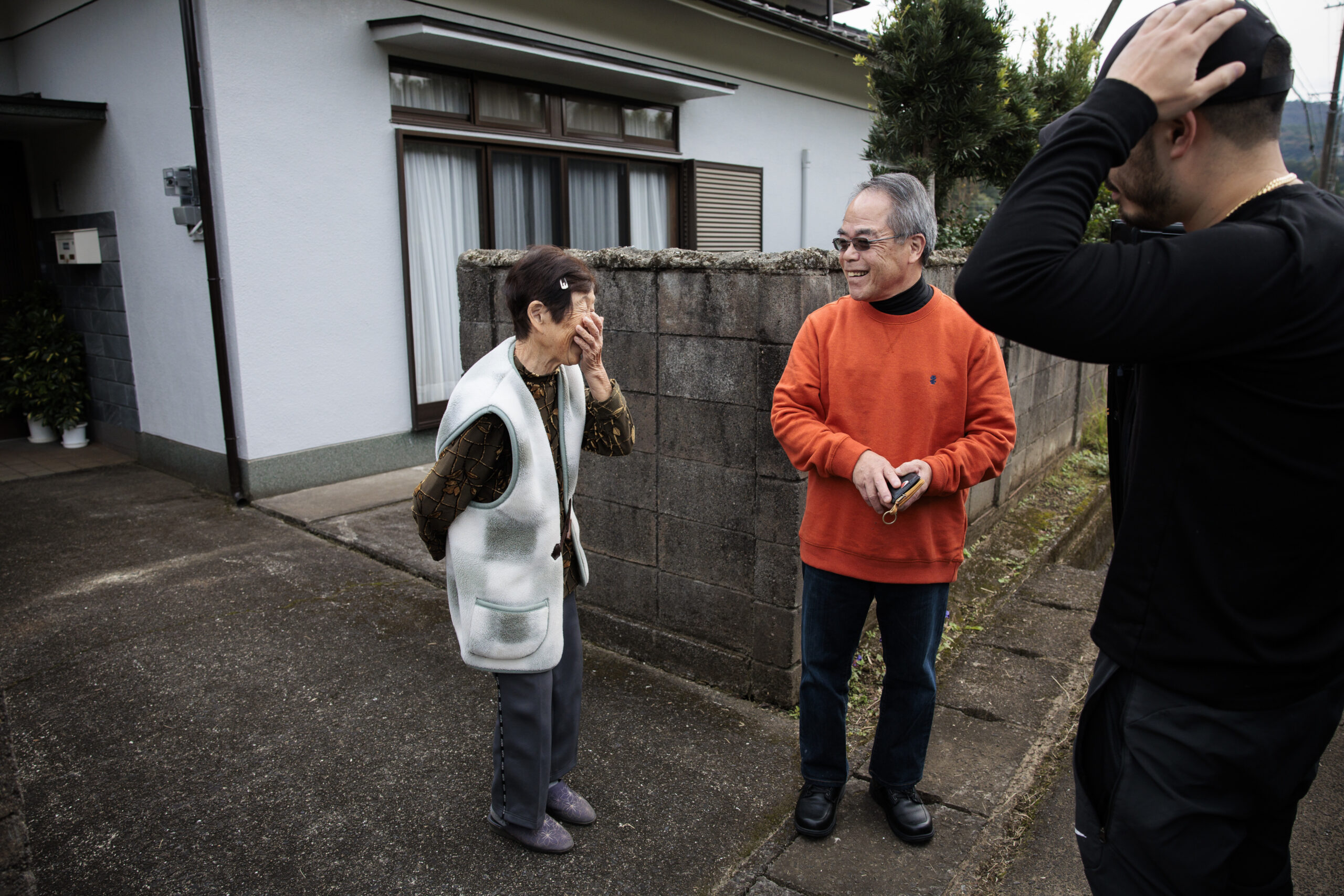
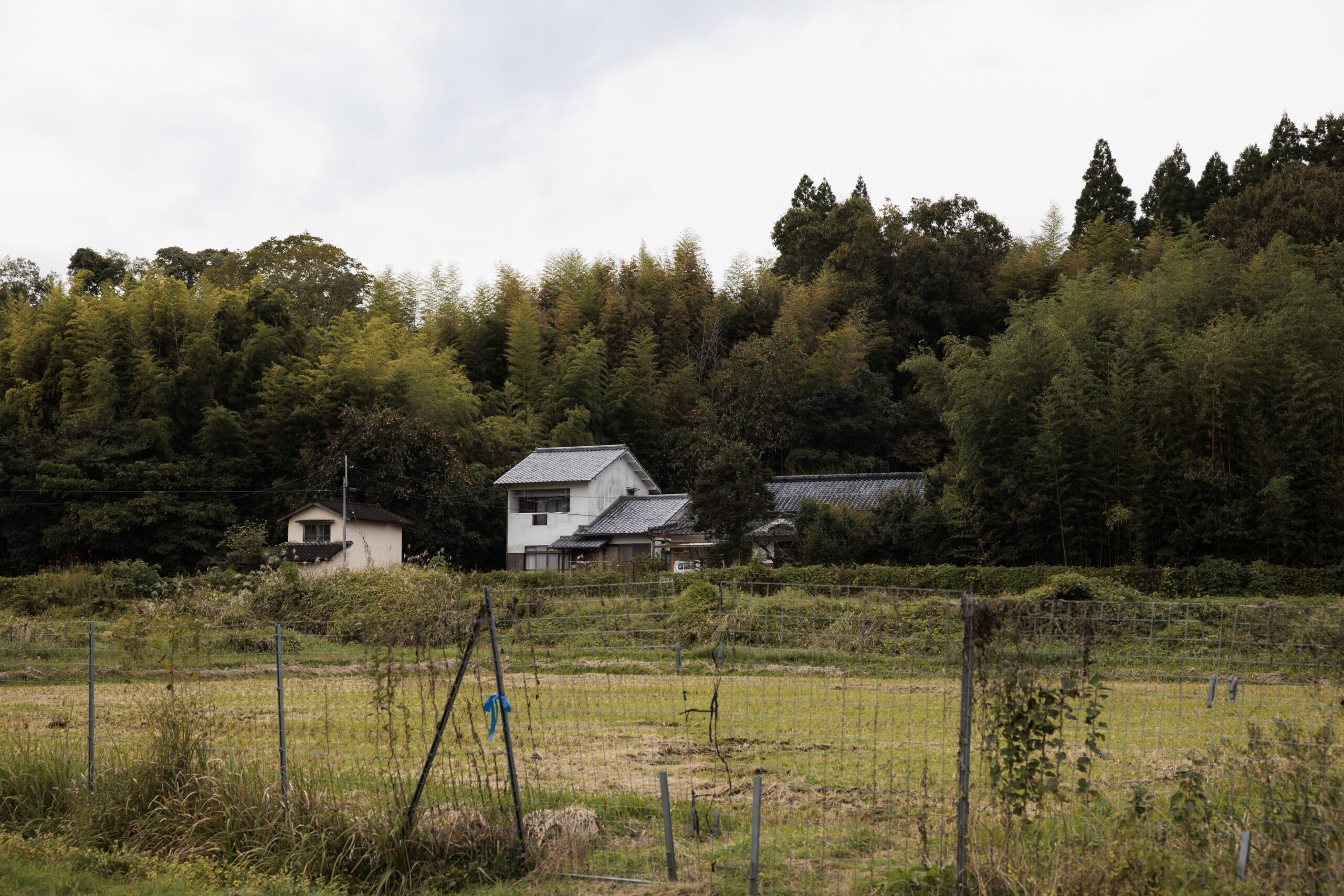
Fukiko Ito talks with Matt Ito and Jesse Ito, outside of her home on Tuesday, Nov. 4, 2025, in Miemachi, Japan.The area where Matt Ito used to live on Tuesday, Nov. 4, 2025, in Miemachi, Japan. The home he used to live in is no longer standing.
Just over the rise, we found Matt at a low-slung house happily chatting with Fukiko Ito, 84, a cousin he’d not seen in decades who answered the door by pure luck. She was living in the house Matt’s father, Hideo, had built for his grandfather in 1967.
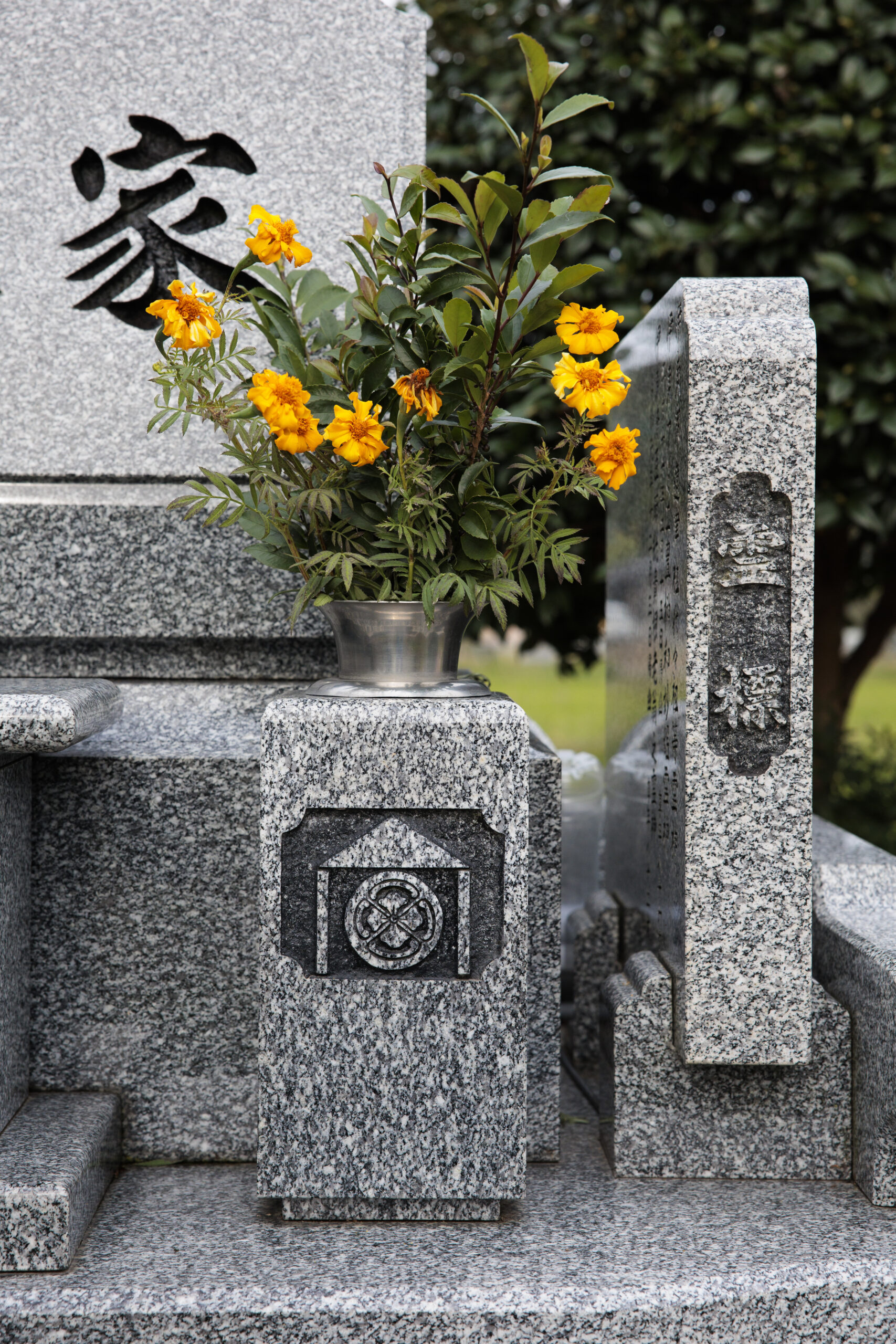
“Wow! Wow! Wow!” Matt said, proudly introducing Fukiko to his son. We followed her into the backyard and discovered another surprise: a granite altar with blooming yellow flowers that marked the family grave.
“My mother and father are buried here,” Matt told Jesse, whose anxious edge had instantly softened into one of quiet awe. “Your great-grandparents are buried here.”
As a falcon circled overhead, Jesse quietly gazed at the monument and spotted his family crest etched into granite. It was the same patterned quince flower, descended from a branch of the Ito samurai clan, that he’d used for Royal’s logo. He now realized that he’d transcribed it incompletely.
The Ito family crest is seen on the family grave in the backyard of Fukiko Ito’s home on Tuesday, Nov. 4, 2025, in Miemachi, Japan. Jesse Ito uses the family crest as the logo for his Royal Sushi omakase in Philadelphia.
“I’m missing the house that goes around the outside of the flower,” he said, noting it for correction.
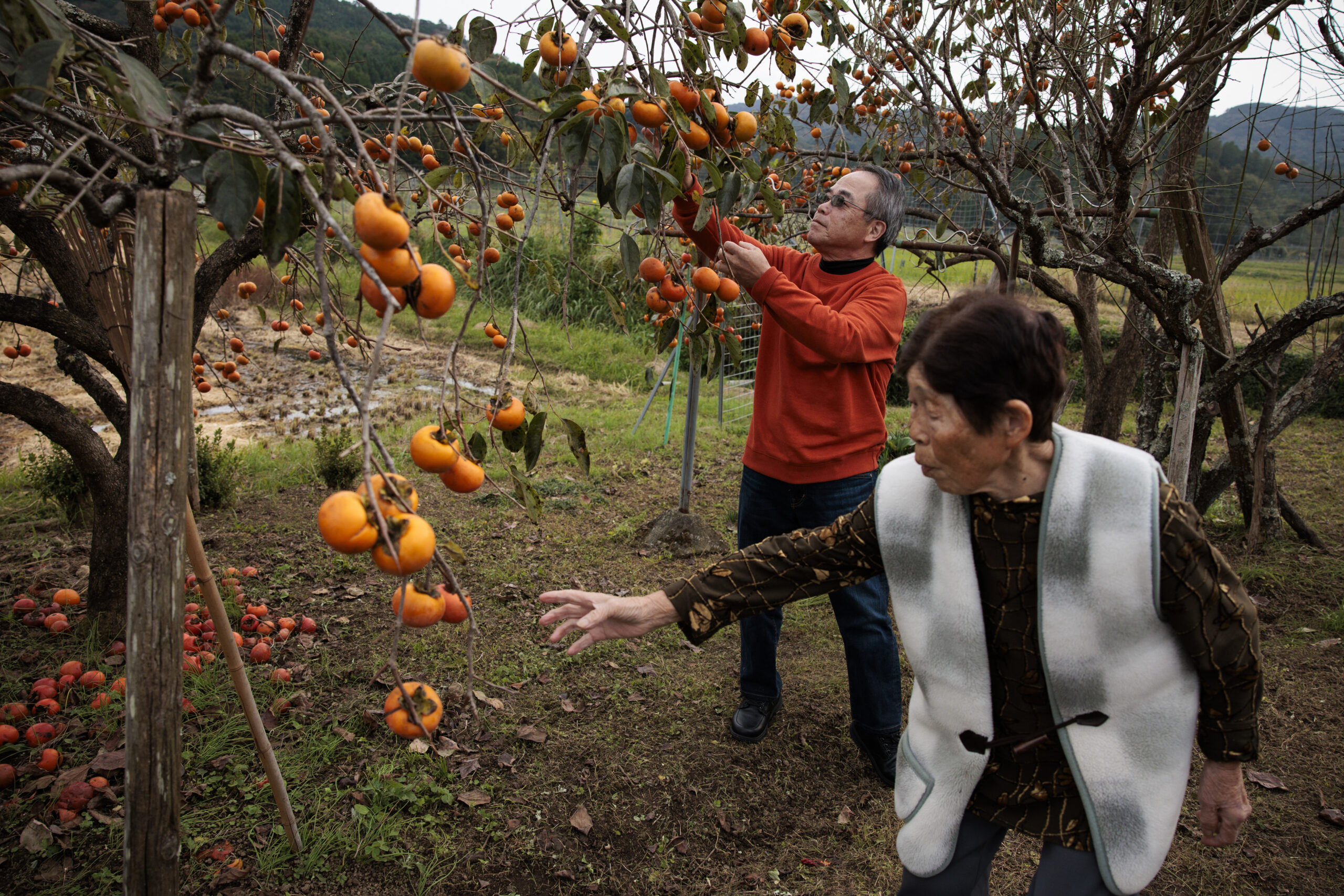
Matt had been giddily wandering the yard’s garden, picking fragrant sudachi citrus and orange persimmons off the trees. He caught Jesse’s eye and then — “here, catch!” — tossed him a piece of the family fruit.
Days later, Jesse would regard this as one of most powerful episodes of the trip, a direct connection to a heritage that rooted him to ancestral land that, since he was young, had felt like a distant concept not only as an American who’d never traveled, but as the product of a mixed-culture marriage who wasconstantly confronting impostor syndrome.
“For most of my life I felt that way, like a misfit — an American-Japanese-Korean kid who was not accepted by either group,” Jesse said.
He took heart in the pure delight that bloomed across his father’s face, an unfamiliar expression: “I’ve never seen him so happy — maybe ever.”
In the moment, though, Jesse later said, when he saw that persimmon arc across the yard, he thought of his childhood in Cherry Hill, a lonely latchkey-kid existence with his parents always at the restaurant. He’d microwave himself a dinner of buttered rice and seaweed. His dad was never around to actually play catch.
Matt Ito and his cousin Fukiko Ito pick persimmons in the backyard of her home on Tuesday, Nov. 4, 2025, in Miemachi, Japan.
Letting Jesse run the show
A flood of parallel emotions was soon to overwhelm Matt, too.
As he and I sat alone togetheron the commuter train to the nearby spa town of Beppu following the unplanned family reunion, he recalled his own childhood. He was an indifferent student who spent time farming at age 14 to help care for the family when his father, a Japanese calligraphy teacher and former Army cook, fell ill. His father only gave Matt his blessing to become a chef on his deathbed one year later: “Under one condition: Just be the best.”
Fifteen-year-old Matt started his careerin a fish market, butchering the local delicacy of fugu blowfish, learning to massage the deadly poison out of its liver underwater. His mother found him a kitchen job at the New Tsaruta Hotel, a resort where, in fact, we were staying that night. It was there Matt learned the art of kaiseki, a multi-course tribute to the seasons that employs different cooking techniques with every course. Matt also befriended a mentor there who gave him words to live by: “You have to make your own life. There are opportunities floating by you in the air. You just have to grab them!”
After two more years training in Osaka, the same mentor presented him with his big shot: the position at Sagami.
“I figured I’d go to America for two years,” Matt said. But he kept grasping at the opportunities. A wife. Their own restaurant. Two children — Jesse and his older sister, Naomi. Devoted customers and a lifetime of work. Too much work.
“I had a plan until I was 45, but then I messed up after that,” Matt said as the train rattled towards Oita. “I should have been a better father. I should have been a better man at the house. Instead I was always working, and as a result I lost my wife. I still feel bad about it, but we’re still friends and I talk to her every day. And every day before this trip, she’s so worried and tells me: ‘Don’t let Jesse eat fugu!’”
Matt’s still a partner at Royal Sushi & Izakaya, but he’s content to watch Jesse run the show, admiring his son’s creativity (“sometimes I think he’s a genius”). He comes in for a couple hours early each day to make the tamagoyaki, the delicate, lightly sweetened rolled omelet customers often order to finish their meal.
“[The cooks] just know me as the grumpy old man there making rolls. I’m Ito-san, that’s all. A funny old man.”
Matt Ito walks towards the New Tsaruta Hotel on Tuesday, Nov. 4, 2025, in Beppu, Japan. Matt once worked in the kitchen at the New Tsaruta Hotel in Beppu.
But he’s also observed closely as Jesse pours himself into the restaurant with a determination and focus he recognizes all too well.
“He works too hard, and I worry about him. I want him to have a life, too. I hope he finds someone to get married to, like any parent would.”
Is he worried his own story is repeating itself with his son?
Matt nods as the train pulls into Beppu station. Finally, 16 hours after rising to watch the morning tuna auction in Tokyo, we shuffled like zombies into the lobby of the New Tsaruta Hotel.
The aging tower overlooking Beppu Bay — known for sixth-floor open-air baths fed by the town’s famous hot springs — had lost some of its grandeur over the past half-century, Matt conceded. But when an exhausted Jesse opened the door to his room, he was not prepared for the culture shock of the spare traditional Japanese accommodations, with little more than a tatami mat visible. “There’s no bed!” he thought to himself, unaware of the futon in the closet. He turned around and, not wanting to offend his father, quietly left New Tsaruta and checked himself into a cushy new hotel nearby.
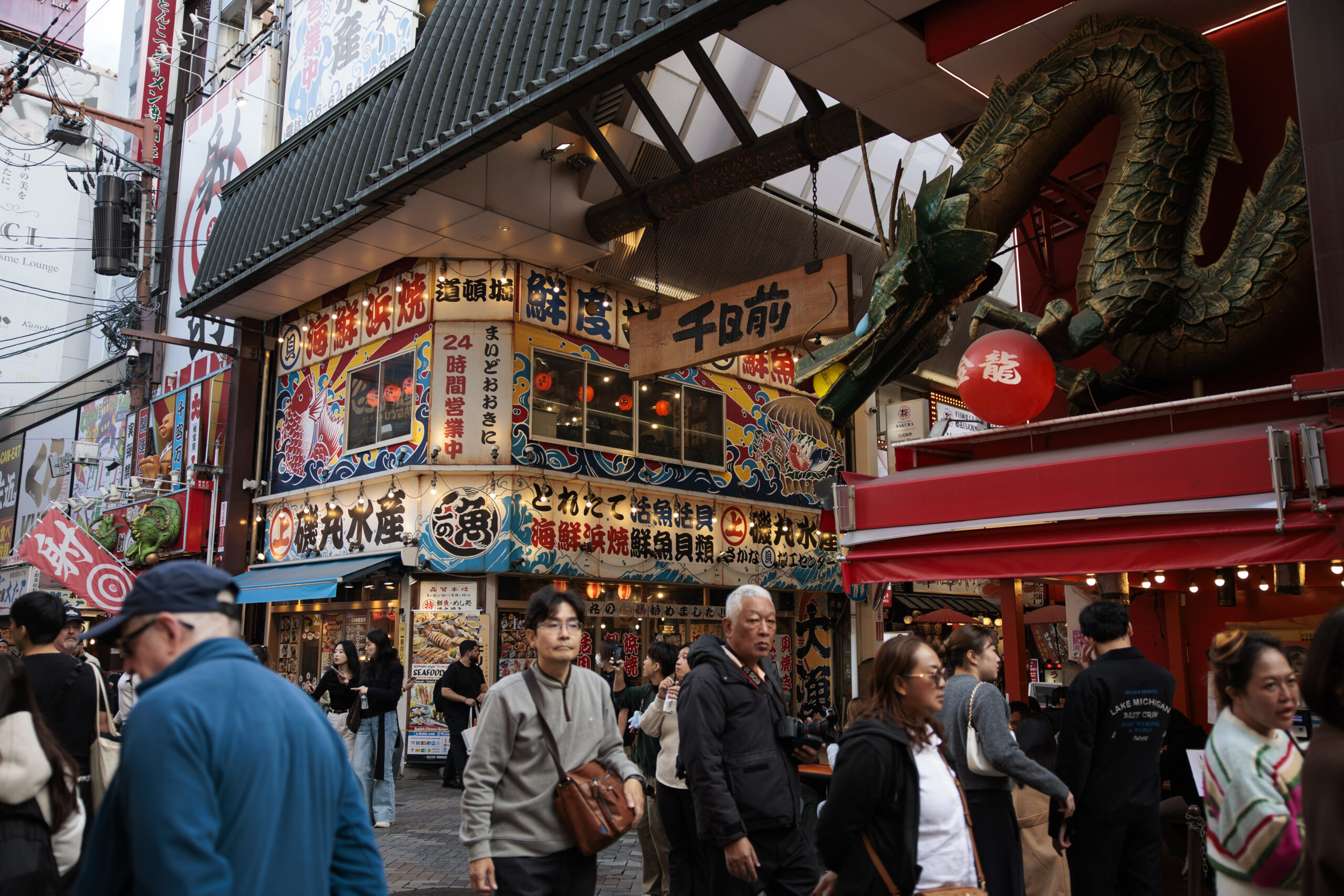
Colorful shops line the street in Dotonbori on Thursday, Nov. 6, 2025, in Osaka, Japan.
Small improvements every day
“I’m sorry if I was cranky last night,” apologized Jesse the next morning as we boarded an early train to Fukuoka. A soft mattress had helped him recover his good spirits. Our previous day had been special. “I saw how happy my dad was and I felt like I’d done my duty as his son,” he said.
But today brought another adventure on Kyushu that we’d all been looking forward to: nori day!
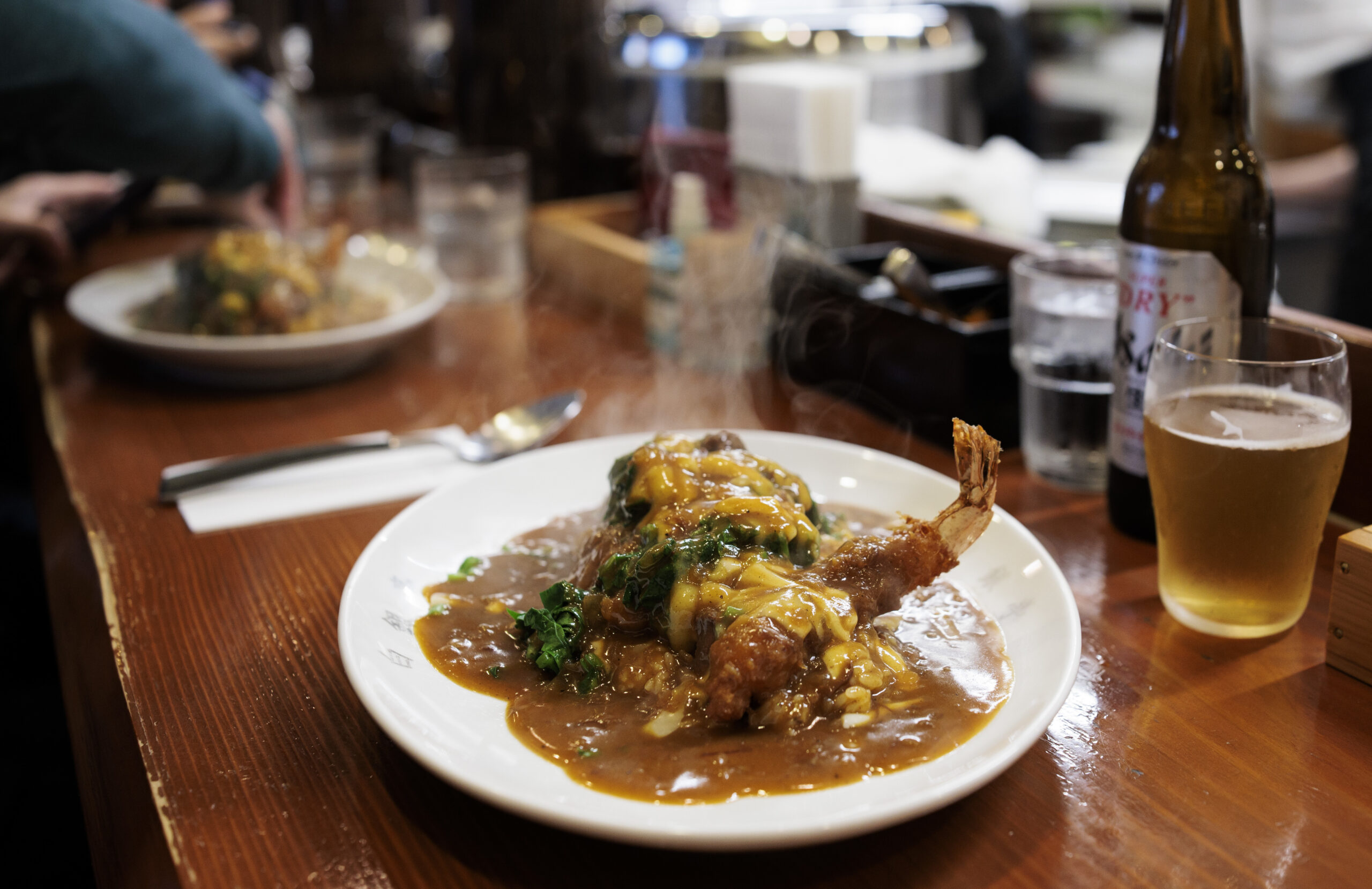
We had come to Japan to eat, of course, and our nine days were filled with extraordinary flavors. We devoured luscious king crab legs for breakfast at Tsukiji Market, soulful curry-drenched pork katsu worth the 90-minute wait in Osaka, and the legendary Pizza Y topped with bluefin tuna and wasabi at Savoy Tomato & Cheese in Tokyo. We marveled at the poetic wonders of the modern kaiseki at Den, where chef Zaiyu Hasegawa’s food married culinary mastery with a sense of humor that resonated with Jesse as a model for his own restaurants.
Curry with shrimp, spinach, and cheese at Hakugintei on Friday, Nov. 7, 2025, in Osaka, Japan.
But Jesse had also come to Japan on a quest to further his pursuit of kaizen, the Japanese philosophy of making small improvements every day. And our field trip for day two in Kyushu — a visit to an artisan nori producer — had the potential to tangibly elevate his food. Quality fish takes center stage at any great sushi restaurant. But the difference between “good” and “extraordinary” can often come down to unsung supporting ingredients like nori and vinegar, whose varying qualities dramatically impact the final bite.
That’s why we found ourselves standing atop the seawall in Yanagawa, peering out at the breezy Ariake Sea, where 50% of Japan’s nori is farmed. The seaweed grows in-season there likemoss-green netting between poles that punctuate the water all the way to Nagasaki across the bay, whose tidal rhythms undulate between the wash of ocean water and the warmth of drying sun, fostering a coveted flavor that’s deep and complex.
Maruho — the manufacturer that hosted our tour — arguably makes the best, according to Nobu Yamanashi, the Jersey City seafood distributor. Jesse was clearly impressed as we tasted myriad varieties, crunching through piles of crispy seaweed snacks speckled with spicy pollock roe (mentaiko), then nibbling through ascending grades of plain nori — the kind commonly used to wrap maki, temaki hand rolls, and onigiri — until he finally landed on the coveted No. 1.
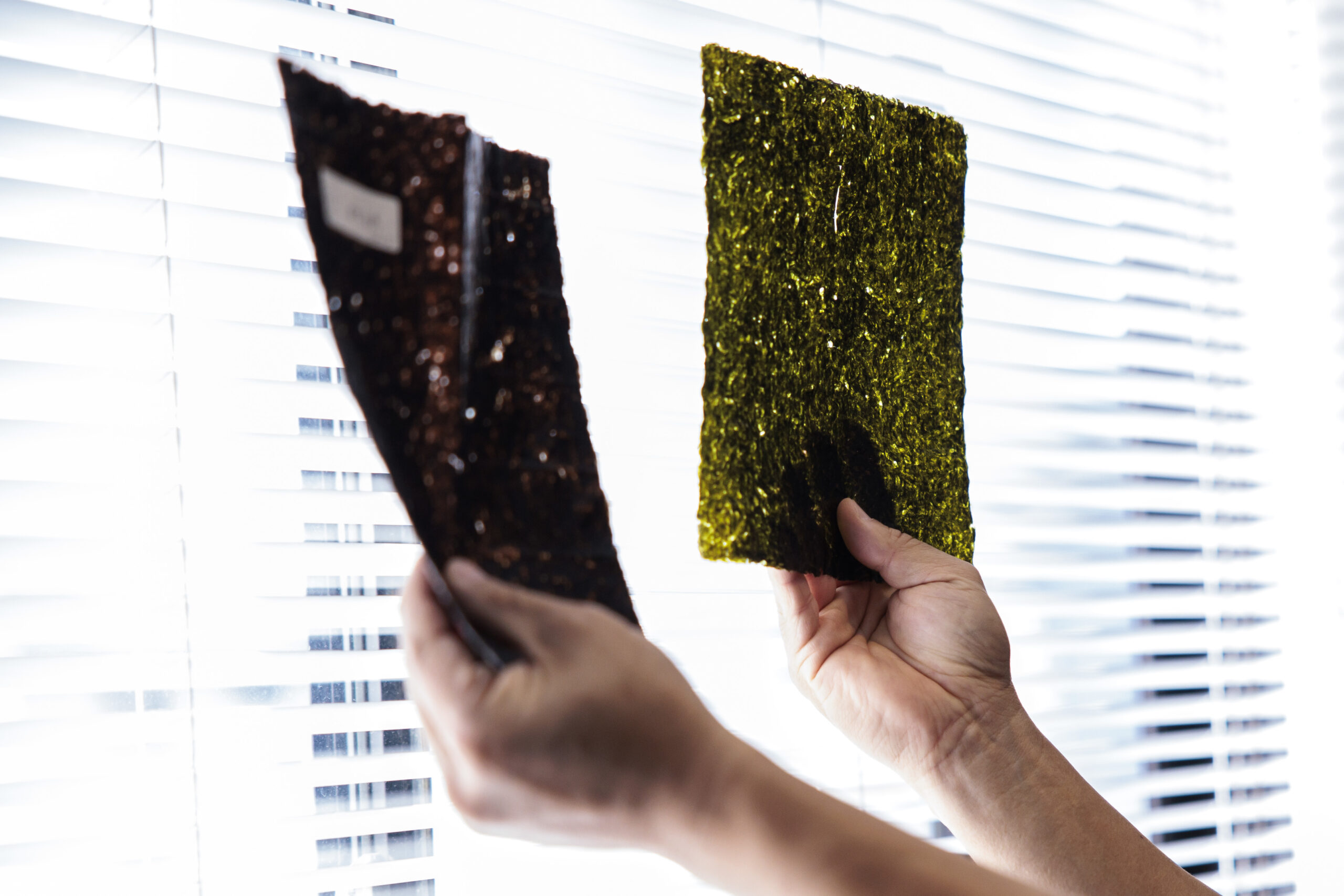
“This is so good!” said Jesse, holding a deep green sheet to the light, its denser weave pressed with flecks of aonori, another seaweed variety known for its color and fragrance. Its flavor was deeply oceanic. Its texture so crisp, it snapped cleanly when Jesse folded it in half, already imagining its effect wrapped around a fatty tuna handroll or a morsel of mackerel pressed over cubes of warm rice back in Philadelphia. “It’s like a cracker … I just hope I can afford it.”
Nori is shown untoasted, left, and after toasting, right, at Maruho on Wednesday, Nov. 5, 2025, in Yanagawa City, Japan.
This is the most expensive nori on the market. At $3.50 per sheet wholesale, it was twice the cost of the already top-market seaweed Jesse was currently using, and exponentially more than common sushi-bar nori. If Yamanashi had his way as Maruho’s exclusive importer, Jesse was about to become the first sushi chef in America to use it — “He’s a top-10 customer and he pays his bills.”
Jesse Ito listens during a tour about the vinegar making process at Saga Vinegar on Wednesday, Nov. 5, 2025, in Saga City, Japan.
Success becomes a balancing act
Indeed, Jesse’s omakase — already one of the priciest dining experiences in Philly at $300 per person as of last October — had been scheduled to rise to $355 by the time we returned home in November, to accommodate all the new treasures he’d found. The top-shelf uni he’d begun buying from Toyosu was $350 a tray. The creamy lobes of plump monkfish liver from Hokkaido he planned to marinate in shoyu before gently steaming them into a silky pâté cost 10 times more than the ankimo he’d previously used. The Maruho nori, he’d later report, “has been a real game-changer. That stuff is amazing.”
As we walked briskly through Fukuoka’s Nagahama Market, a calmer scene than Toyosu but still the second-largest fish market Japan, Jesse gave his Kyushu-based fish buyer, Takahiro Hirota, a wish list. Luminous pink madai sea breams. Silvery shima aji jacks. Translucent yare ika, or spear-tipped squid.
“This is hard to find, can I get one for next week?” he said, gesturing at the squid, which becomes silky-soft and sweet when sliced just right.
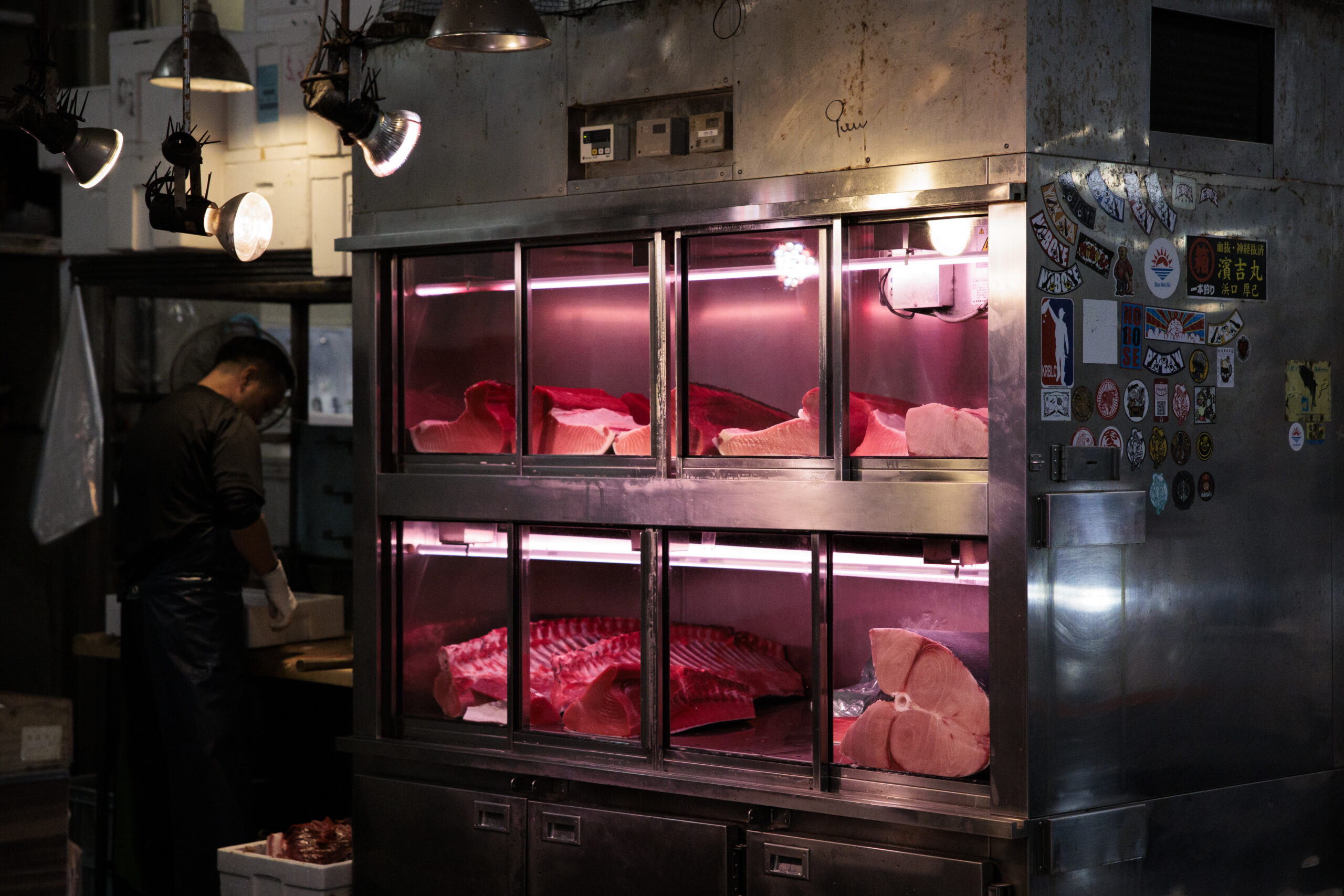
Takahiro Hirota talks with Jesse Ito at Nagahama Market on Thursday, Nov. 6, 2025, in Fukuoka, Japan.A kinmedai or golden eye snapper, at Nagahama Market on Thursday, Nov. 6, 2025, in Fukuoka, Japan.Large cuts of tuna in a refrigerator at Nagahama Market on Thursday, Nov. 6, 2025, in Fukuoka, Japan.
The omakase — and Jesse himself — have come a long way since Royal Sushi & Izakaya first earned four bells from The Inquirer in 2018, when Jesse’s tasting menu was (just!) $130.
The omakase’s ingredients, place settings, and techniques have continuously leveled up. And the storytelling its 18 courses now convey — including the extraordinary bibimbap with uni and toro that’s inspired by Jesse’s Seoul-born mother and composed over buttered seaweed rice (a childhood throwback, albeit now truffled)— has transformed the meal into something deeper than just a luxury splurge. Even as its fee rises, it remains hundreds of dollars less than similar experiences in New York and beyond.
“After eating at multiple sushi omakases in Tokyo and Kyoto, from multiple Michelin stars to none, the best sushi omakase I have ever eaten is from Jesse Ito right here in Philadelphia,” says Marc Vetri, the Spruce Street pasta maestro who also owns a restaurant in Kyoto.
Much of Jesse’s restaurant world is, in fact, accessible and relatively affordable to the wider public, both at dancerobot, where live jazz and karaoke nights keep it lively, as well as the izakaya portion of Royal, a walk-in experience Michelin noted with a Bib Gourmand as a “good value.” But it’s little wonder regulars guard their standing reservations to the omakase like courtside tickets for a Sixers game, ahead ofa 1,000-person Resy waitlist that occasionally shakes a couple seats loose for newcomers. The seemingly impossible scrum shows no signs of abating.
Jesse sympathizes with the notion of trying to make the omakase more accessible, but he simply doesn’t know how to achieve that without sacrificing the valuable personal relationships he’s forged over a decade to the murky forces of the anonymous internet, where valued seats risk becoming little more than a resale-market commodity.
“If I was dumb enough to get rid of all my regulars, people with access to bots would just buy up everything and resell them,” he said.
As with so much in Jesse’s life, hiskeen sense of how to navigate the challenges of success has been shaped by periods of struggle, alongside his parents and on his own.
The pandemic presented an existential threat to Royal’s business and halted the omakase for over a year while the izakaya kept the lights on with takeout and a la carte. On the brink of losing his house, Jesse was also compelled by the crisis to finally confront his relationship with alcohol, which he’d long relied on to numb his anxieties and fears.
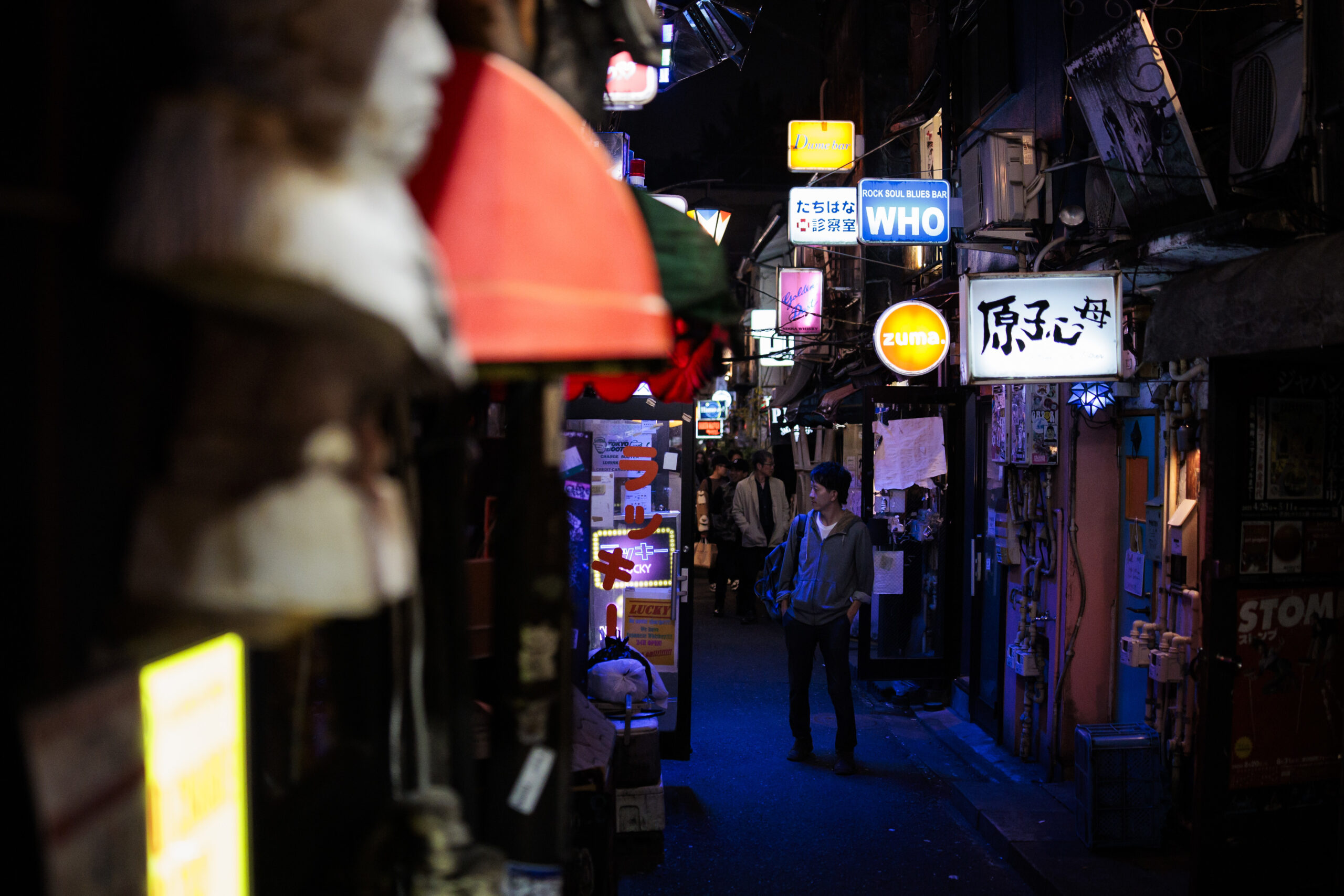
Tiny bars fill the narrow streets in Shinjuku Golden Gai on Saturday, Nov. 8, 2025, in Tokyo, Japan.
He became sober on Dec. 1, 2020, a status he’s maintained since, regularly attending support groups and talking publicly about his recovery. The shift reshaped his workplace, paring Royal’s hours back to five nights a week, closing at 11 p.m. for a more sustainable environment. Sobriety has helped him cope with setbacks. (“Part of losing the Beard award eight times … you come away with the ability to enjoy the moment,” he said.) It has also given him the clarity to build healthier relationships, “to be a better partner, a better friend, and a better son.”
Jesse still gets a rush from the performance of slicing pristine fish and the intimacy of entertaining a handful of customers from behind his counter.
“I’m going to keep it this way for as long as I can because it’s a moment in time when I get to do this,” he said. “It’s like a show every night.”
Over the course of our time in Japan, however, Jesse succeeded in making his biggest impression on an audience of one: his father.
“This was the best trip I’ve ever had and I’m really appreciative,” said Matt, who’s now planning a return trip on his own to travel to Miemachi with his Tokyo-based sister.
Matt could typically be found lingering several paces behind us on our fast-paced visit, soaking in the sights, sounds, and flavors of the land he’d left 50 years ago. But he was also looking forward, enjoying the rare opportunity to observe his son out in the world as he forged new business relationships and soaked in inspiration at every turn: “I’m so proud of the mature person he’s become. He’s made his own life.”
Matt also relished this opportunity to simply be with Jesse, even if conversation between the two was often sparse.
“It’s funny because I don’t have to say more than one word,” Matt said. “I know he understands.”
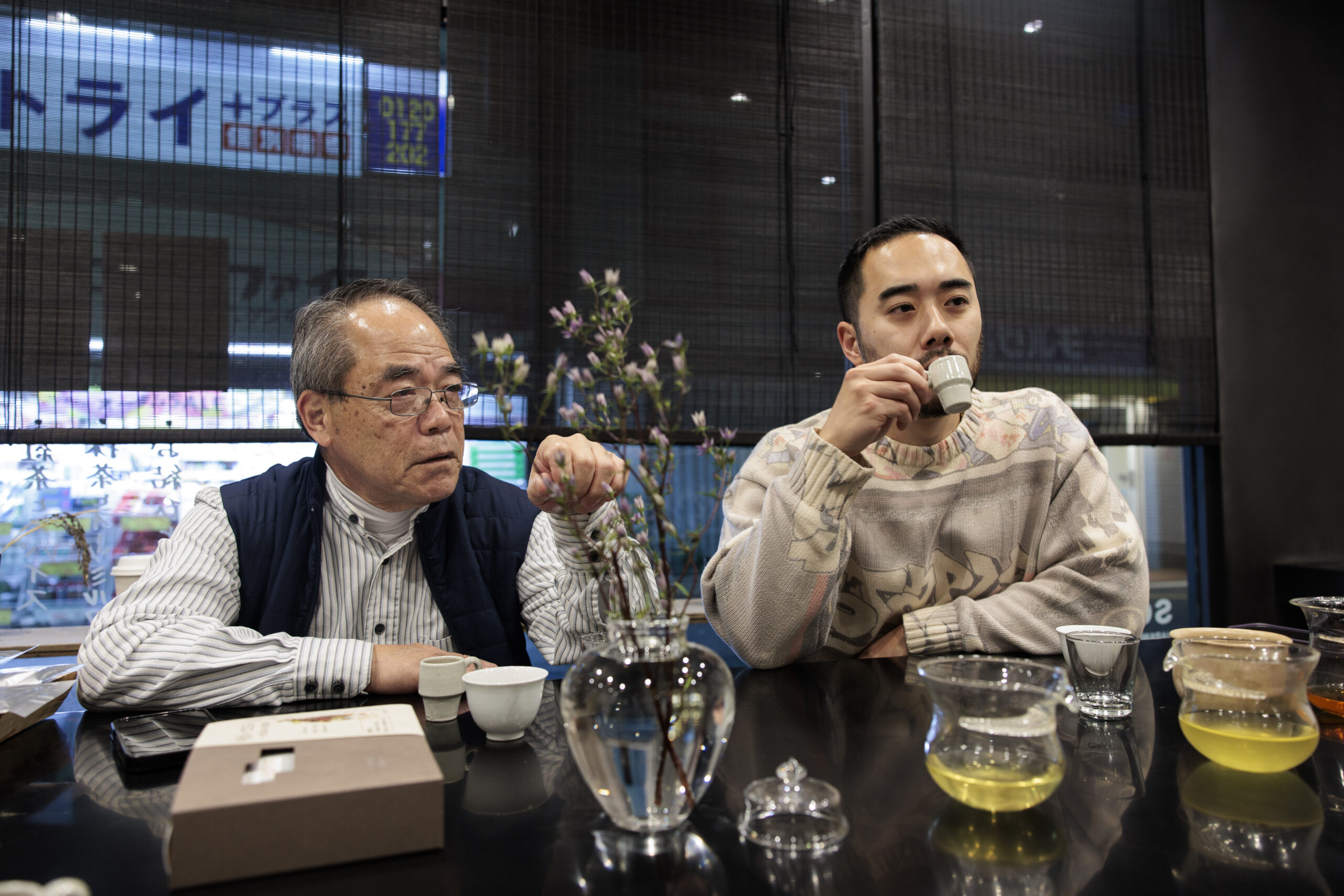
Matt Ito and Jesse Ito enjoy a tea tasting at Souen on Saturday, Nov. 8, 2025, in Tokyo, Japan.
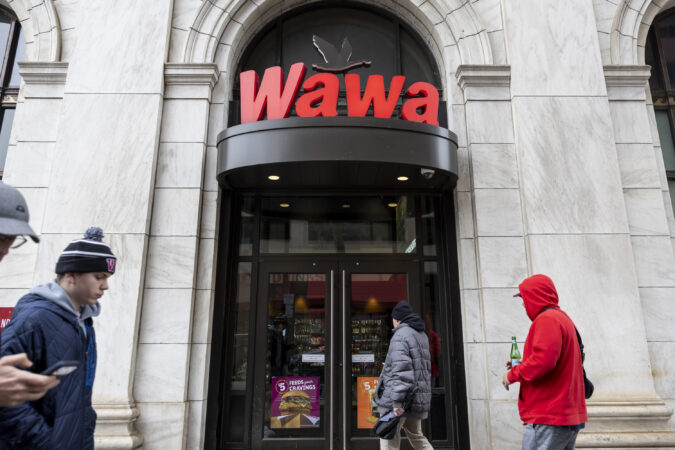
Wawa customers have been able to order roasted chicken on sandwiches, salads, burritos, and more since summer 2024. Hoagie-loving Philadelphians may scroll past the high-protein option on Wawa’s trademarked built-to-order screens, while others tap its icon instinctively in their rush to order lunch.
Wawa CEO Chris Gheysens said he sees the chicken breast differently.
From idea to inception, “that was a labor of love for quite a long time,” Gheysens said in a recent interview. “It’s 37 grams of protein, something consumers are really looking for today.”
And, he added, “it’s still highly customizable, which our customers love doing at Wawa.”
To Gheysens, the menu addition shows how the Delaware County-based company responds to consumer demand. Just as it did decades ago when Philly-area store managers began brewing coffee for customers on the go, and in 1996, when Wawa executives decided to start selling gasoline.
Even now, with nearly 1,200 stores in 13 states and Washington, D.C., Wawa is still listening to consumer feedback, Gheysens said. And despite expanding as far away as Florida and Kentucky, the CEO said, the convenience-store giant remains especially in tune with its hometown fans.
“For a lot of people, it’s their daily routine,” said Gheysens, a South Jersey native. “It becomes a part of their neighborhood. It’s a relationship that’s built on consistency, on trust” — and on getting customers out the door in five minutes or less, depending on the time of day.
(function() { var l = function() { new pym.Parent( ‘wawa-stats__graphic’, ‘https://media.inquirer.com/storage/inquirer/ai2html/wawa-stats/index.html’); }; if(typeof(pym) === ‘undefined’) { var h = document.getElementsByTagName(‘head’)[0], s = document.createElement(‘script’); s.type = ‘text/javascript’; s.src = ‘https://pym.nprapps.org/pym.v1.min.js’; s.onload = l; h.appendChild(s); } else { l(); } })();
Customers say they are drawn to the homegrown chain for its convenience, consistency, quality, and wide-ranging menu of grab-and-go and made-to-order items (even though some miss the old Wawa delis where lunch meat was sliced on the spot).
In Runnemede, 78-year-old Barbara MacCahery said she goes to her local Wawa at least a couple of times a week — “sometimes for breakfast, sometimes for a sandwich, a lot of times for coffee.”
In MacCahery’s mind, she said, the chain has proven itself time and time again for decades: “It’s very rare that you’ll have a bad experience.”
Wawa’s ‘secret sauce’ for success
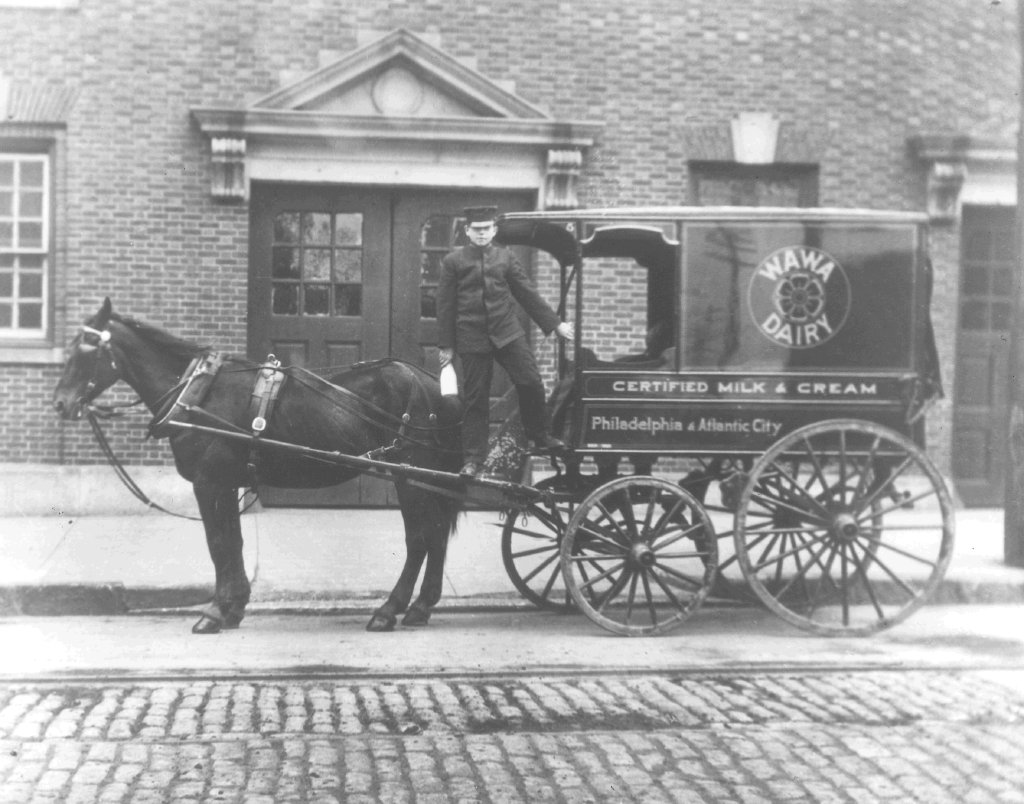
More than 100 years ago, Wawa started out as a dairy, delivering milk to Philadelphia-area households.
Wawa has set a national standard for success in the convenience-store industry, said Z. John Zhang, a marketing professor at the Wharton School of the University of Pennsylvania.
“It really is some kind of a secret sauce,” said Zhang, who studies retail management. “For many people, Wawa has become a destination store,” one that combines “speed, customization, and perceived high quality” with near-constant availability — many Wawa stores are open 24/7.
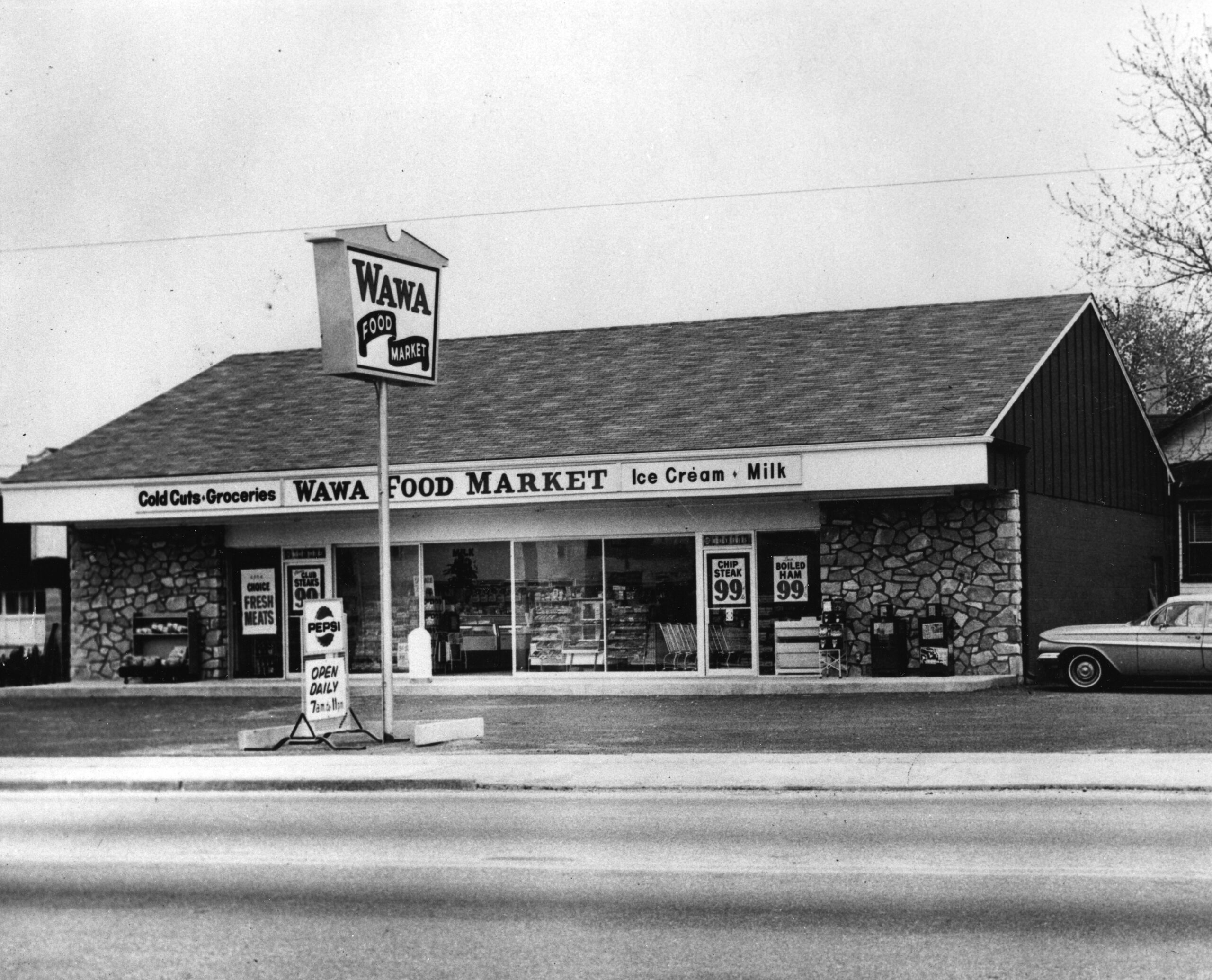
The company got its start as a dairy, delivering milk to Philly-area households. In 1964, it opened its first store in Folsom. Soon, the family-owned company expanded into New Jersey and Delaware, and established a reputation for quality and speed, with slogans like “People on the Go — Go to Wawa Food Markets.”
Wawa’s first convenience store opened in Folsom, Delaware County in 1964.
Wawa is privately held, owned in part by workers who get a percentage of their earnings contributed to an employee stock-ownership plan. Zhang said this program likely leads to more-invested employees who provide better customer service.
Because Wawa is not public, it is not required to disclose its finances, and company executives declined to discuss them.
But by many appearances, Wawa seems to be doing well: Over the last decade, the company has increased its store count by about 65% and doubled its workforce to about 50,000 associates.
Philly-area Wawas are often crowded, too, which is key to making money in the convenience-store industry.
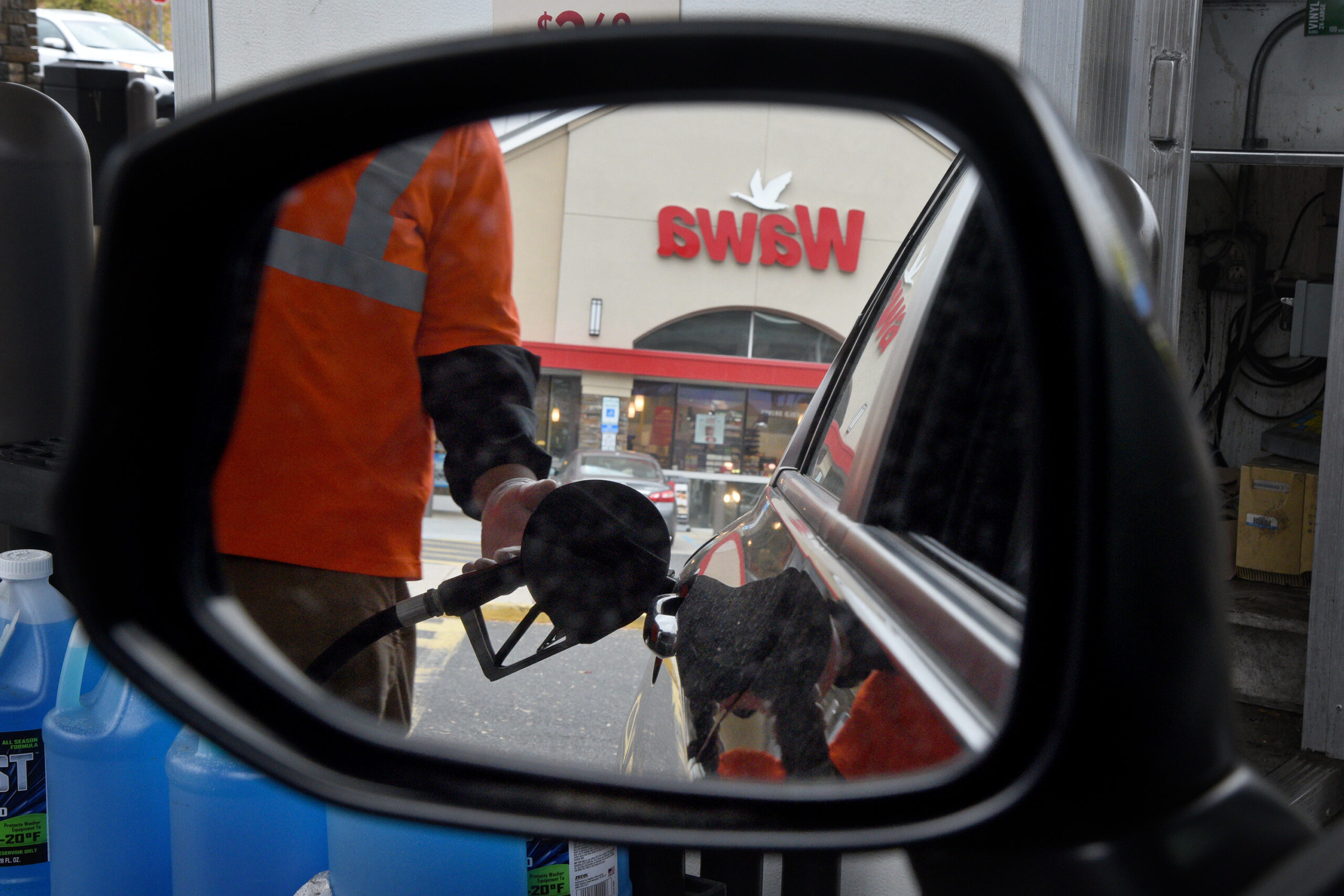
A gas attendant fills up a customer’s tank at a Wawa in Pennsauken in 2020.
“We think it’s high-impulse, but 80% of all people who walk into a convenience store pretty much know what they want,” said Zelinski, who consults with retailers. (He declined to discuss specific companies and said he has never worked for Wawa.)
Successful operators have encouraged customers to spend more by adding seating and improving their food service, Zelinski said. And stores with better food see higher profit margins.
“Once you have somebody that’s addicted to your food service program, they’re more likely to come back to your store vs. a competing store,” he said.
In 2020, Wawa debuted new menu offerings, including hamburgers, pot roast, rotisserie chicken, pasta alfredo, and kids meals, at a tasting in Media.
Wawa has certainly gotten people hooked on their coffee, hoagies, and ever-expanding menu, Zhang said. Options added in recent years include pizza, wraps, protein-packed “power meals,” limited-edition coffee flavors, and smoothies “boosted” with protein, vitamins, and minerals.
This older Wawa in Cherry Hill closed in 2024. The township has six remaining Wawas.
Despite Wawa’s best efforts, not all stores thrive, Gheysens said. But “luckily for us, we’re still in growth mode, and don’t have to worry about closures in a broad way.”
Gheysens said he sees room for more Wawas in the Philadelphia market — even as convenience-store competitors like Maryland-based Royal Farms and Altoona-based Sheetz have opened new stores in the region.
Wawa executives want “to make sure that we are the number-one convenience store in the area, that’s important to us,” Gheysens said. “These are our hometown counties.”
What keeps Philly-area consumers going to Wawa
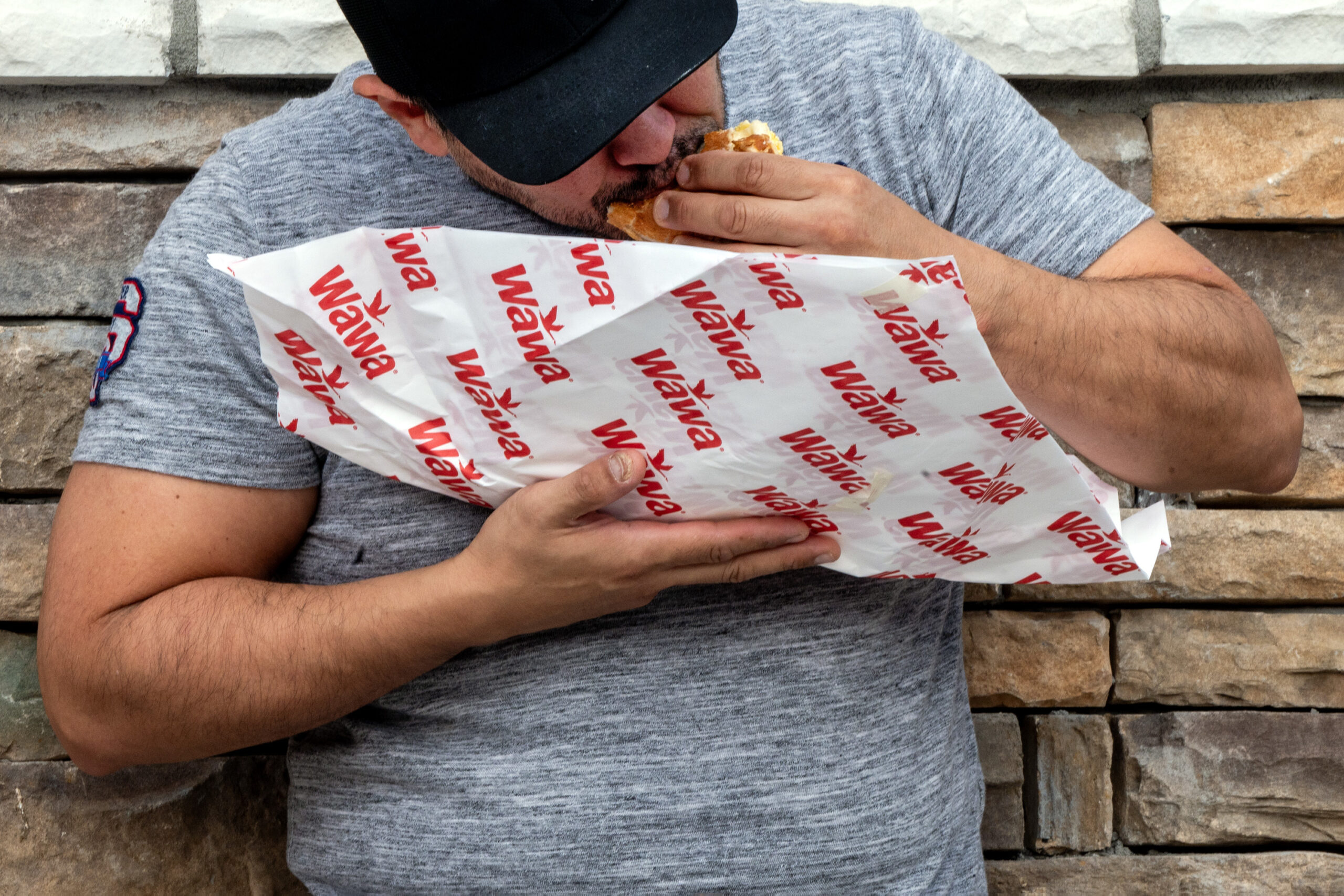
A Wawa customer eats a breakfast Sizzli during the 2024 grand opening of the company’s first central Pennsylvania store.
Many Philly-area consumers grew up alongside Wawa.
In interviews with nearly a dozen of them, some were quick to reminisce about early memories of their local stores, such as the distinct smell of coffee and deli meat or the excitement of a Wawa run with high school friends. Others bemoan what has changed with the company’s expansion, including more congested parking lots.
Most have a quick answer when asked what their Wawa order is.
Rick Gunter, 45, of Royersford, misses the Wawa of his youth. Back in the day, he said, the Wawa hoagies “hit different,” with lunch meat fresh off the slicer.
Contrary to some customers’ beliefs, most stores still bake Amoroso rolls — a custom recipe made exclusively for Wawa — fresh in store multiple times a day, Gheysens said. As for the deli meat, the CEO said that was another decision rooted in customer preference.
When customers have participated in blind tests of the pre-sliced meat Wawa uses today against a fresh-sliced alternative, “they can’t tell the difference,” Gheysens said. “They would choose our pre-sliced meats, because of what we’ve done in terms of quality and the supply chain and the ability to deliver them at such a pace.”
A sandwich maker at Wawa wraps a hoagie with turkey, provolone, tomato, and lettuce in this 2020 file photo.
Some customers disagree.
“It was way better when it was kind of also a deli. Now they try to make everything for everybody,” said Bill Morgan, 79, of East Coventry Township. “I’m within five miles of three Wawas, but I rarely eat their food. Only under extreme duress.”
Morgan acknowledged he must be in the minority, given how crowded Wawas are at lunchtime. And despite his distaste for much of their food, he said he still gets gas there and loves their coffee. And he can’t help but admire their business model.
In 1976, when Bill Loughery was a rookie bartender at Cherry Street Tavern, the old-world saloon seemed as abandoned as the neighborhood around it. Back then, the streets around 22nd and Cherry in Logan Square were littered with abandoned warehouses, rusting textile mills, and crumbling body shops.
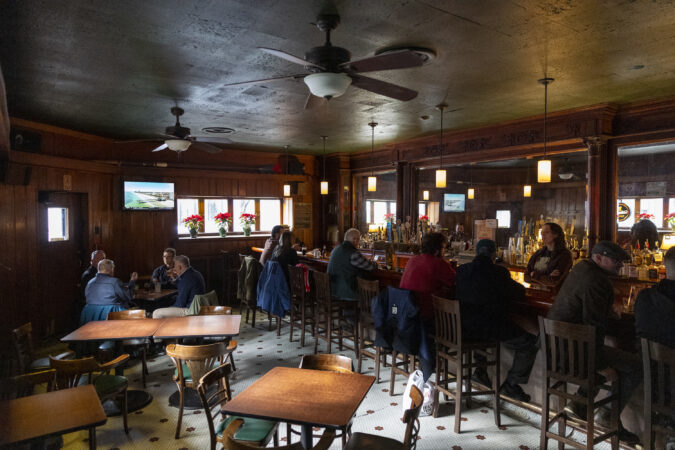
First operated as a bar around 1902 and surviving Prohibition as a barbershop — at least one where regulars swilled hooch in the back room — the tavern had retained much of its bygone charms into the ’70s. It had an elaborately carved mahogany backbar, vast beveled bar mirrors, pearly white tiled floors, and an old-timey phone booth. Even the tiled water trough running the length of the floor under the bar — a no longer operational relic from the barroom’s pre-World War II days designated for fedora-sporting patrons to spit tobacco juice and relieve themselves — had survived the decades.
But like the neighborhood, business had faded.
Bill Loughery, then 24, and his younger brother, Bob, had scored the bartending gigs from their former coach and mentor, legendary La Salle High School football coach John “Tex” Flannery, who purchased the bar in the early 1970s. Serving 25-cent Schaefers, rocking their favorite Grateful Dead tunes, and warmly greeting the newbies filling the barstools, the Lougherys brought life to Cherry Street Tavern, eventually buying it from Flannery in 1990.
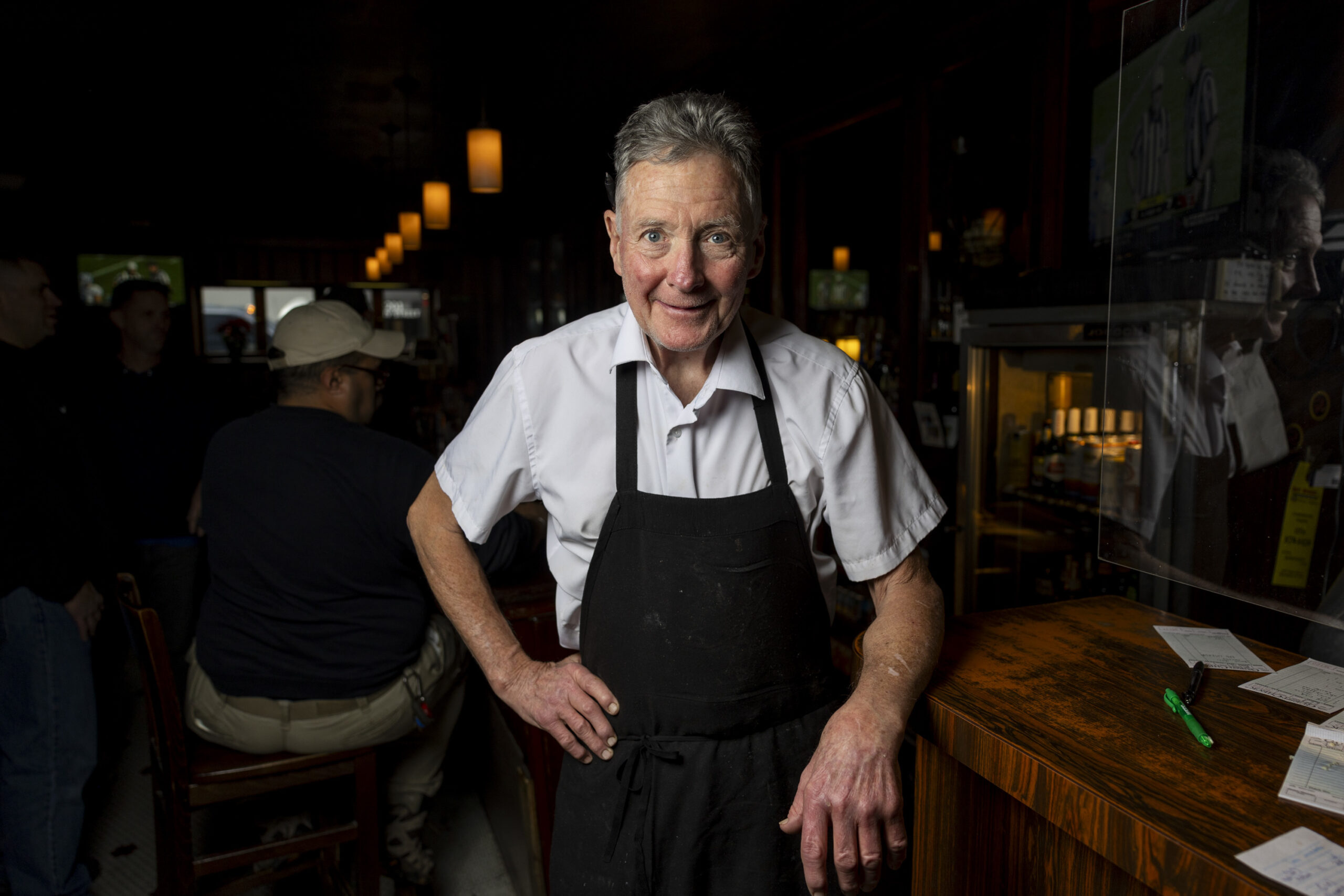
Bill Loughery, co-owner of Cherry Street Tavern, inside his bar in Philadelphia on Friday, Dec. 19, 2025.
While burnishing its old-world grace, they had transformed the timeworn taproom into a thriving, in-the-know spot for eating and drinking, with a diverse, dedicated, and colorful cast of regulars from all over. Everyone from construction workers and electricians to lawyers and bankers to art students and professors came to the bar — even rock icons like Jimi Hendrix, who, as the legend goes, knocked on the side door wearing a cape in 1968 after playing a show at the original Electric Factory, just blocks away; he palmed the bartender $100 for a case of Bud and a bottle of Jack Daniels. There were also visiting sports legends like Larry Bird, who would drink at Cherry Street with his staff when he came through town as a coach in the 1990s and 2000s.
“He’d say, ‘Billy, let me know when you’re closing that kitchen,’” Bill Loughery remembers. “And then he would go back to the Four Seasons with bags of roast beef and roast pork.”
And always, there were Bill and Bob Loughery, either toiling in the tavern’s tiny kitchen before dawn to prepare steaming cauldrons of Irish potato soup and huge slabs of beef for the bar’s signature sandwiches, or working the wood until closing.
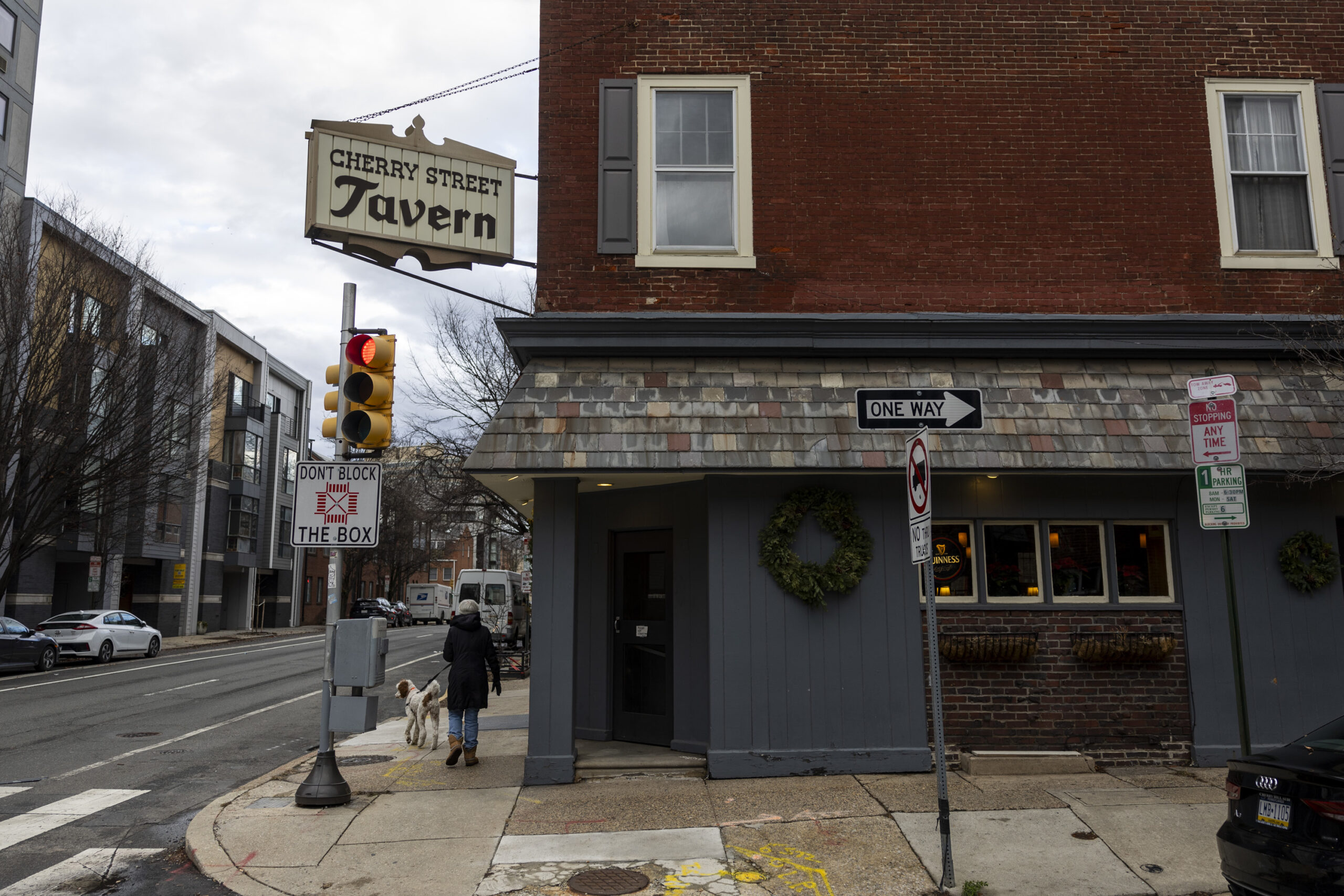
The outside of Cherry Street Tavern in Philadelphia on Friday, Dec. 19, 2025.
After 50 years devoted to a tavern that always felt more like a labor of love — and bearing witness to the change all around it — Bill and Bob Loughery have decided it’s time.
“Time to take off the apron,” said Bill Loughery, taking a quick break on a recent afternoon to sit in the soft sunlight slipping through Cherry Street’s bottle-height barroom windows. “It’s just time.”
History, for sale
It’s been time for a few years, but the Lougherys— wanting to preserve the understated elegance and identity of the shot-and-a-beer saloon, especially after revitalizing the bar once again as a popular meeting spot for locals after COVID-era restrictions dried up lunchtime and commuter crowds — have never officially listed the tavern and its upstairs apartment for sale. They began whispering to friends and regulars about selling around 2024.
“People were always asking us to let them know when we were ready,” Bill Loughery said.
After months of talks with prospective purchasers, the Lougherys are now in talks with a buyer who theysay is interested in expanding the bar’s kitchen and making other renovations.
The Lougherys’ efforts to find a buyer committed to keeping the spirit of the bar alive have eased the worries of regulars old and new, and loyal staff.
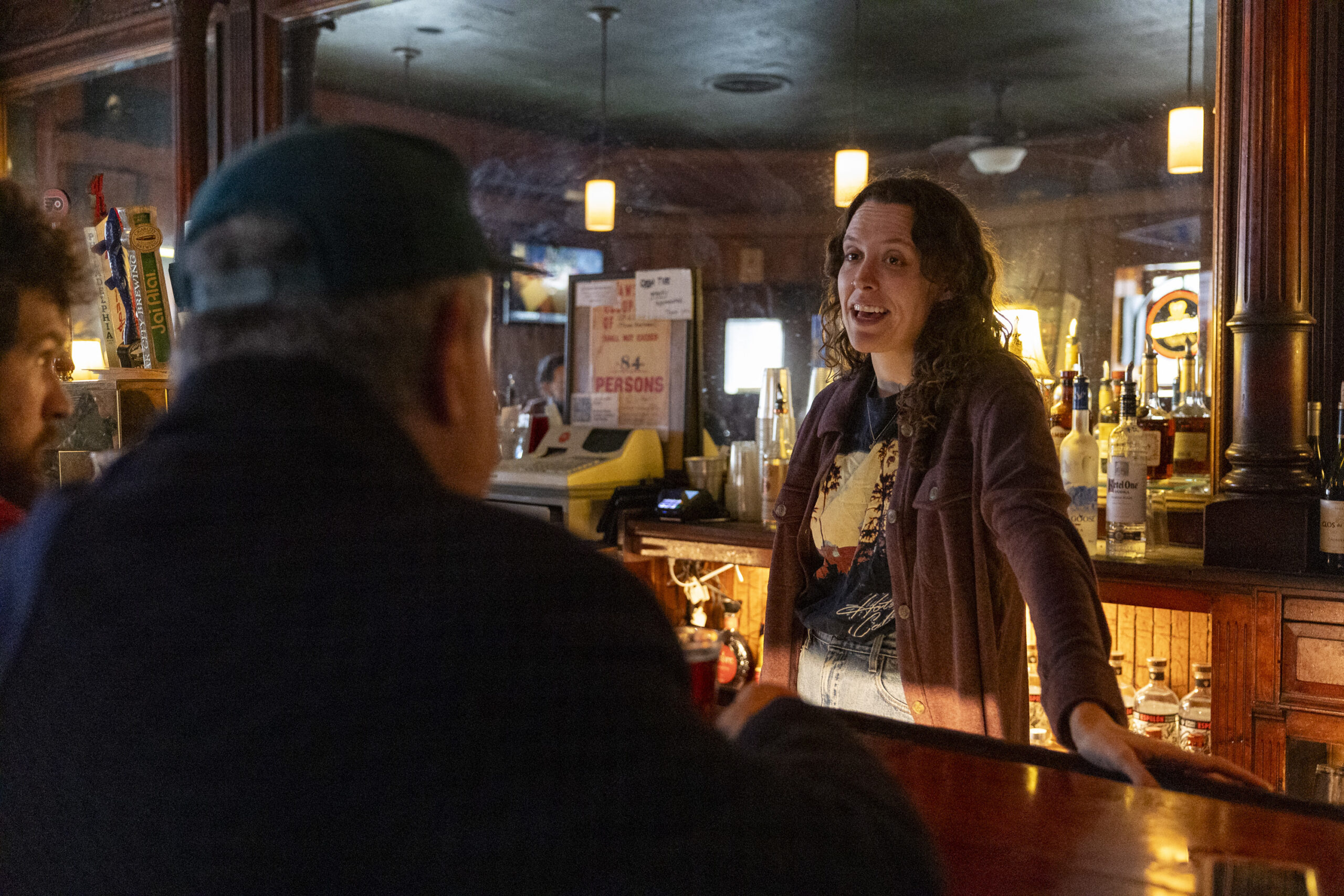
Kira Baldwin, 27, chats and makes drinks for folks at Cherry Street Tavern.
“There’s just something sacred about the place,” said Kira Baldwin, 27, of Ardmore, who tends bar at Cherry Street Tavern, along with her brother, Jack, 24, and her mother, Juanita Santoni, with whom she sometimes shares a shift.
For Baldwin, it’s personal. As a child, she cherished special occasions when her mother allowed her to visit the bar. (Santoni has worked nights and weekends at Cherry Street Tavern since 1991, when she was a part-time child life therapist at CHOP.) On those nights, Baldwin would do her homework in the quiet of the ancient phone booth and swing from the brass dining rails. At the annual Christmas parties, when Bill Loughery hired Moore College of Art & Design students to paint the windows for the holidays, she and her brother received gifts from a regular dressed up as Santa.
Now, she watches new regulars fall in love with a bar she’s been coming to since “the womb.”
“People treat it with reverence,” she said. “When they come in, they understand it completely. They have a deep and profound respect for the place.”
Prohibition, the food, and the regulars
Little is known about Cherry Street’s earliest days, but by Prohibition, it was known as Dever’s, operated by John “Jack” Dever, a dapper barman who lived above the tavern with his wife and two children, and whose father, Joseph, had run it before him. (Like Flannery and the Lougherys after him, Dever happened to be a La Salle High alum.)
The barbershop speakeasy had been Jack Dever’s idea, said his grandson, Michael Dever.
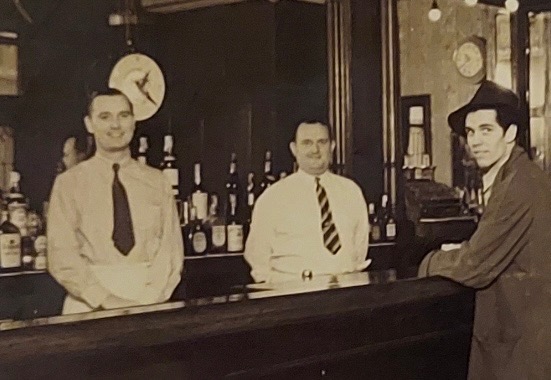
Before it became Cherry Street Tavern, John “Jack Dever (left) operated the tavern for years, living upstairs with his family, and eventually dying behind the bar.
“The story always went that, when Prohibition came about, he closed the front door and opened the back door,” said Dever. “It became dangerous. The story was that you were either buying from the mob or dirty politicians.”
Dever reopened the bar after Prohibition, sponsoring a bar baseball team. But dangers persisted. In 1940, two robbers broke into the bar while Dever and his family slept upstairs, briefly making off with 25 quarts of high-quality whiskey before their bulging bag of booze crashed to the pavement. Nearby patrolmen ran to the scene, “their noses guiding them unerringly as the liquor spilled into the gutter,” The Inquirer reported.
Dever, who soon moved his family out of the upstairs apartment, ran Cherry Street until 1967, when he died of a heart attack behind the bar, according to granddaughter Maureen Ginley. At first, customers assumed her grandfather had just stepped down a hatch behind the bar, leading to a liquor cellar.
“But he didn’t,” she said.
After keeping the bar afloat for five years, Dever’s widow, Mary, sold the bar to Flannery. A local high school football legend who coached at La Salle for nearly 30 years, Flannery operated a no-frills, old-school establishment, refusing to allow a jukebox. Under Tex, the tavern’s old-world grace peeked out from behind a dusty veneer and faded Venetian blinds.
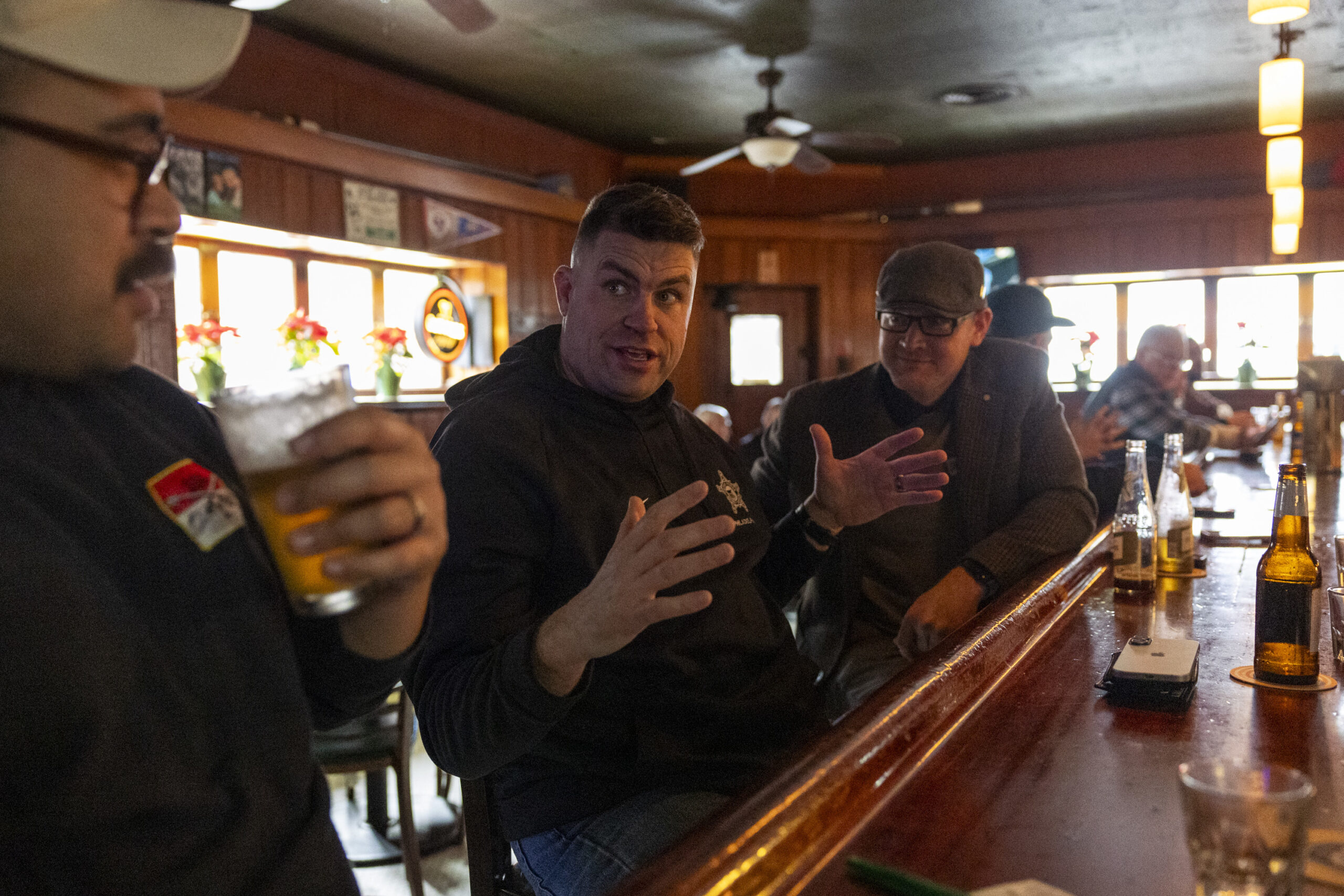
Kevin Sanders, of Quakertown, Pa., first time at the bar, sharing a story with friends as they enjoy drinks at Cherry Street Tavern in Philadelphia on Friday, Dec. 19, 2025.
A 1981 Daily News article described the bar “as cave-dark, cave-cool, cave-quiet.”
“Let’s face it, a guy comes in here, he wants to drink,” the article quoted Flannery.
For a while, it was just the old-timers, said Bill Loughery.
“We had the senior citizens from the neighborhood who started drinking right in the morning and went home before lunchtime,” he remembered.
One Friday during Lent in 1977, Flannery summoned the brothers to a sit-down fish cake dinner and laid it out straight. “He said, ‘Listen, the future of the bar business isn’t 25-cent beers,’” remembers Bill Loughery. “‘You got to come up with a food angle.’”
With the help of a regular, Bill and Bob Loughery introduced the tavern’s signature hot roast beef and roast pork sandwiches, chili, and daily soups.
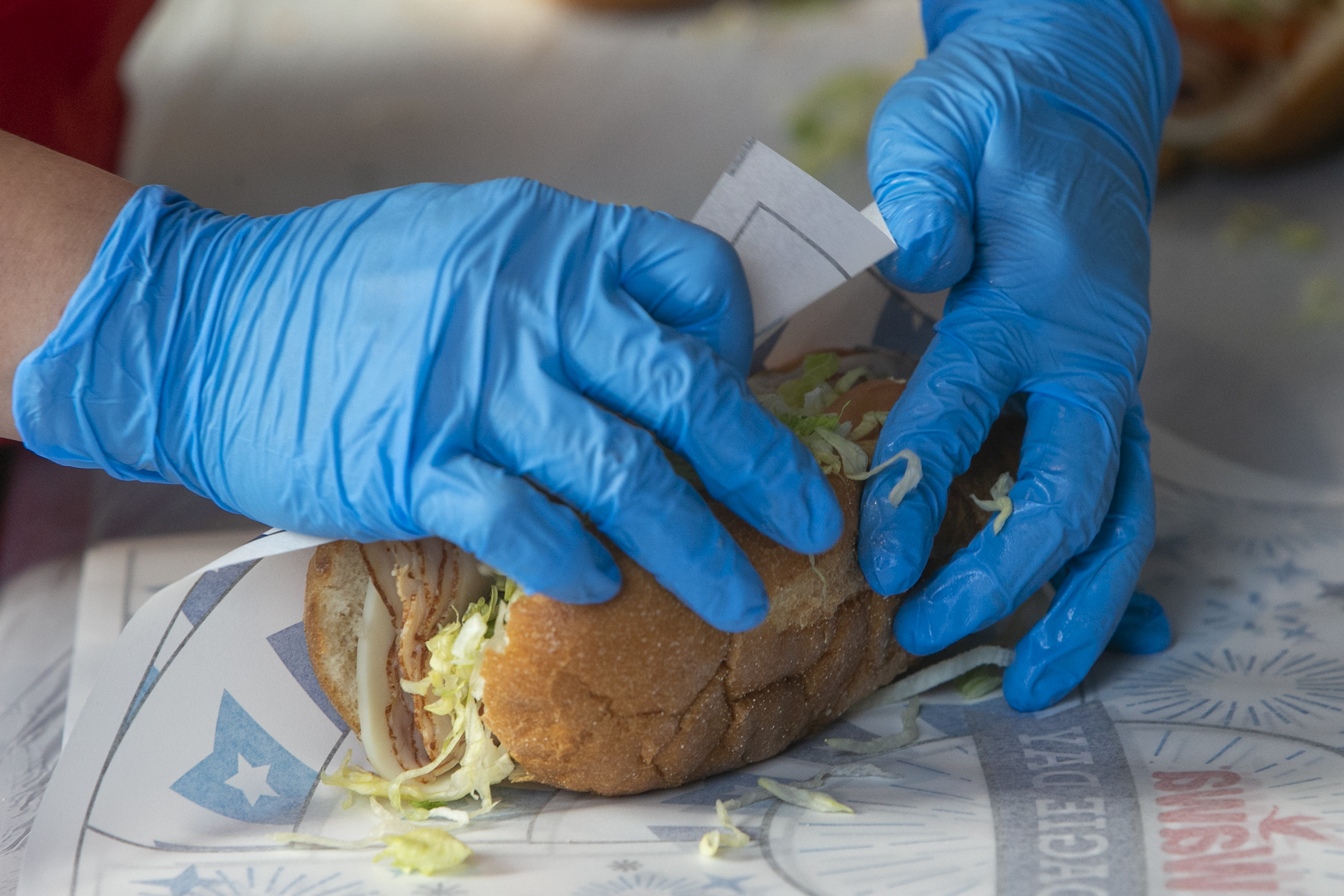
A roast beef sandwich at Cherry Street Tavern in Philadelphia on Friday, Dec. 19, 2025.
By the 1980s, when condos and townhomes and office buildings and new life began to fill the neighborhood, the Lougherys were ready.
Soon, the expanded back room was packed at lunch and the stools were filled with regulars who Bill Loughery blessed with nicknames: Happy Bob and Sleeping Charlie, Big Tom and Buddy Bud, Catfish and Canadian John (who eventually became American John). Joe Watson — a beloved old-timer who lived upstairs, and became a “patron saint” to the bar, said Bill Loughery — took a busload of regulars to a Phillies game for his 89th birthday. There were St. Patrick’s parties and fishing trips and softball teams and marriages and births and deaths. It was their “Cheers,” one regular said.
“What’s Cheers?” Bill Loughery would ask, unironically.
It was Bill and Bob who brought everyone back, said Frank Oldt, 81, who has been a Cherry Street regular since the days of Tex.
“They just made it such an easy place to be,” he said.
It’s bittersweet, said Santoni, who remembers how the bar regulars threw her not one — but two — baby showers when she was pregnant with Kira. She has been trying to get Bill and Bob Loughery to slow down for years. But she understands the special pull of the place.
“It gets in your bones,” she said.
Last call
It all took a toll on Bill Loughery’s bones, who still works 12-hour shifts, splitting days and nights with his brother. Bill’s back is hunched from those endless hours in the kitchen. He doesn’t want to become the second person to die behind the bar at Cherry Street. Sitting down, he flipped through photo albums from the bar’s heyday. They’ll be the last things he takes with him when he leaves, he said.
“It’s like the Old and New Testament,” Bill Loughery said, opening a near-to-bursting photo album.
For a few minutes, he allowed himself to recall the faces and the nicknames and the good times.
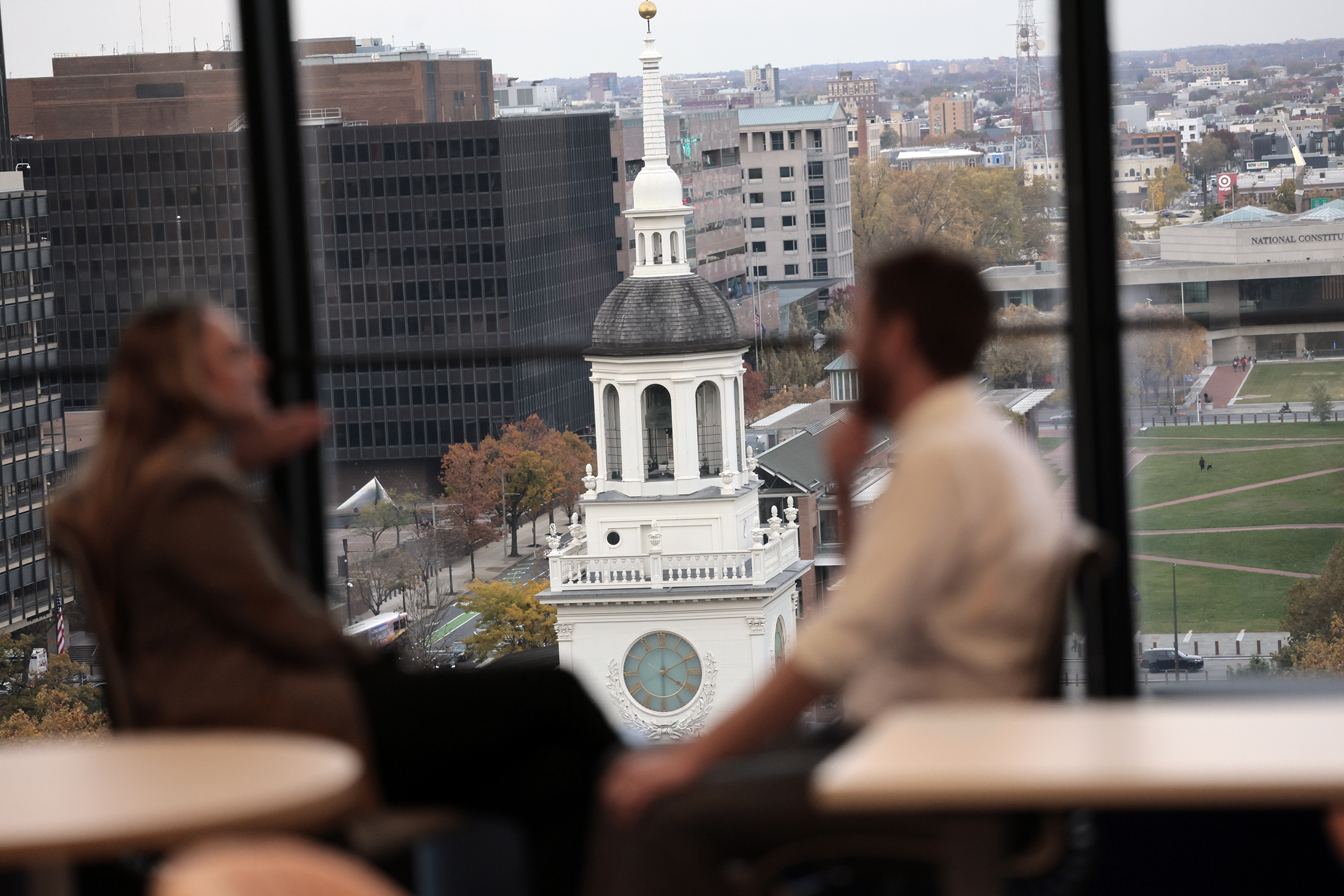
The sleek, modern offices of the Foundation for Individual Rights and Expression, or FIRE, sit on the southernmost edge of Independence Square. The enormous glass windows of a conference room called the Marketplace — a nod to the “marketplace of ideas” — perfectly frame Independence Hall.
The view is no coincidence. The free-speech organization, founded in 1999 and long known for decrying illiberalism and so-called cancel culture on American college campuses, is deliberate in the stories it tells.
In addition to the thousands of case submissions FIRE receives each year, staffers scour social media and news reports for compelling free-speech violations, partly looking, as legal director Will Creeley explained, for “cases you can tell a story with.”
For years, FIRE warned about threats to free speech, primarily on college campuses. Now the crisis it was preparing for has arrived.
The issue today is no longer one of cultural differences — students protesting controversial speakers or agitating for more diverse curricula.
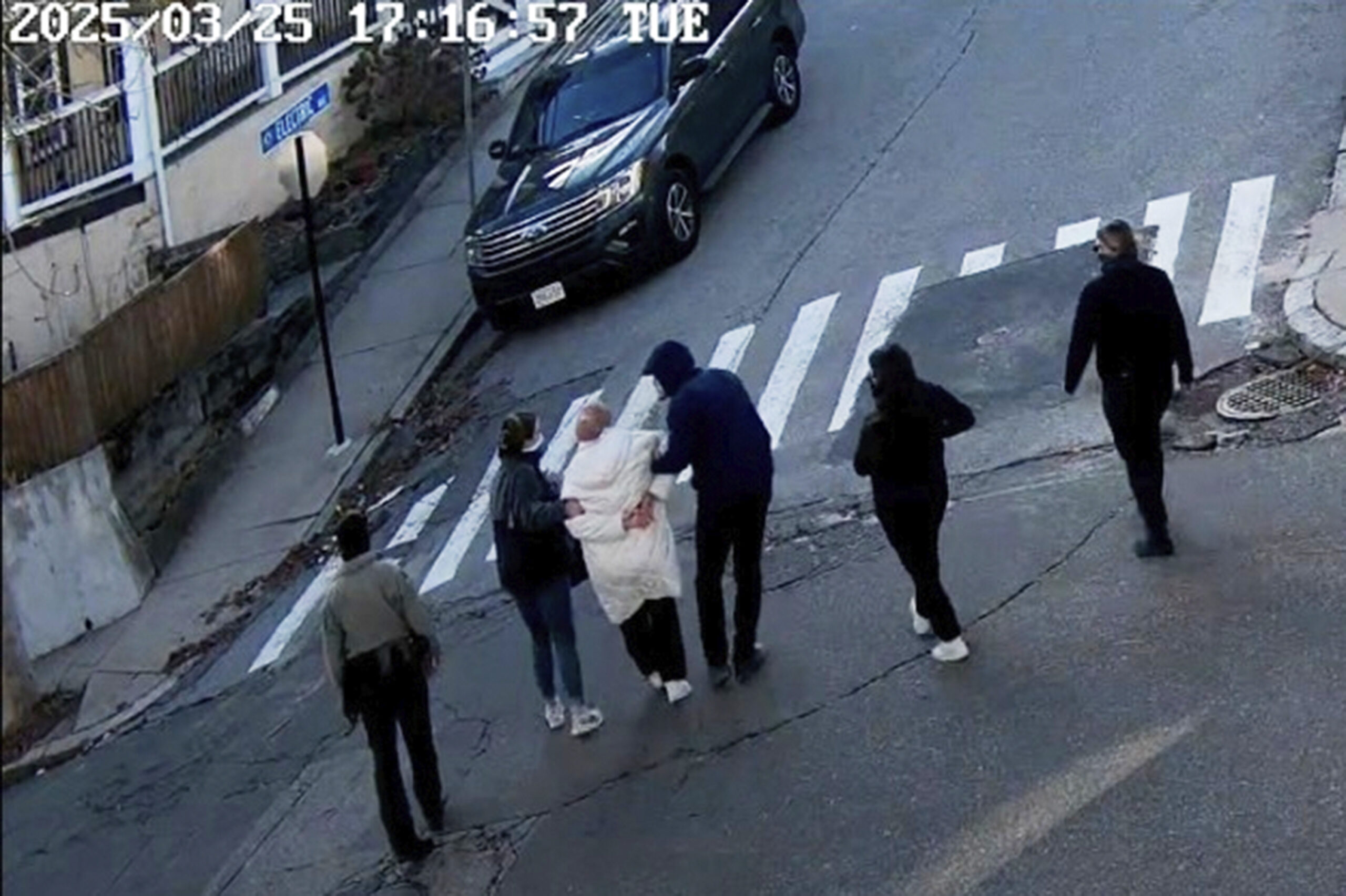
Rumeysa Ozturk, a 30-year-old doctoral student at Tufts University, was detained by Department of Homeland Security agents in March, an arrest captured by security camera footage.
Instead, the full power of the federal government is trained on universities and individual students who disagree with it. The stakes have grown exponentially, as became clear early on when federal agents detained Rumeysa Ozturk, a Tufts University Ph.D. student on a visa, after she cowrote an op-ed in a student newspaper. She then spent 45 days in Immigration and Customs Enforcement detention in Louisiana. (FIRE submitted an amicus brief in Ozturk’s ongoing federal case, in which a federal judge ruled last month that the administration had no grounds to deport her.)
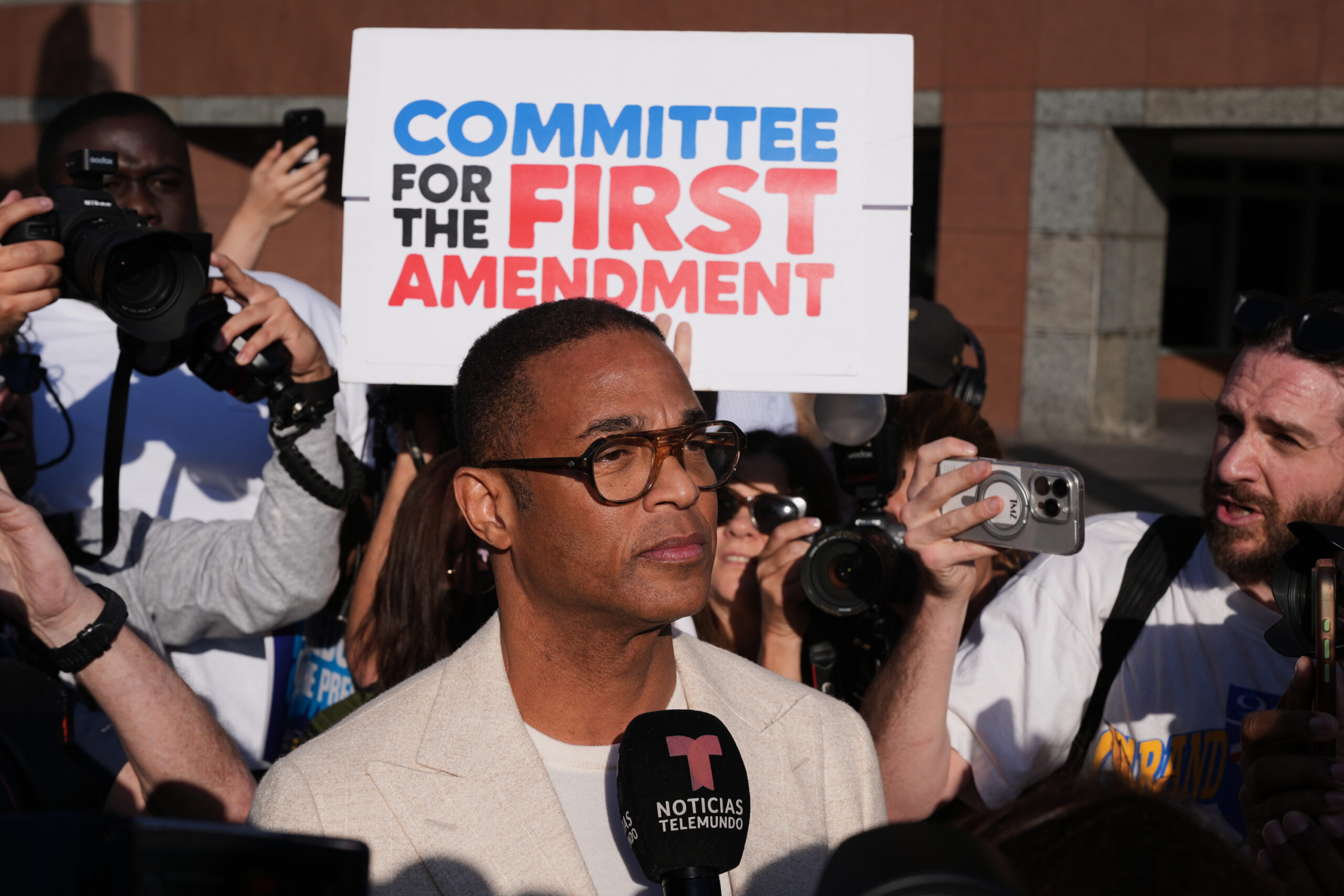
More recently, federal agents arrested and charged journalist and former CNN anchor Don Lemon with federal civil rights crimes for his coverage of an anti-ICE protest inside a Minnesota church. Of his arrest, the organization wrote, “FIRE will be watching closely.”
Journalist and former CNN anchor Don Lemon talked to the media after being detained for covering a protest inside a Minnesota church.
The question FIRE faces today is whether it can effectively meet the moment, and overcome skepticism from the left and from other free-speech advocates, some of whom argue the group helped lay the groundwork for an authoritarian crackdown.
Those critics say the present free-speech crisis is partly the predictable result of FIRE stoking a conservative panic over campus politics, effectively handing the federal government a well-crafted rationale for suppressing progressive voices.
FIRE’s leaders say they were not wrong before about cancel culture. Things were bad, they argue. But this is far worse.
“The threats we’re seeing right now, to me, often feel damn near existential,” Creeley, 45, said in a recent interview. “The incredibly important distinction is that what we’re seeing now from the right is backed by the power of the federal government.”
FIRE described the federal government’s demands on Harvard as “wielding the threat of crippling financial consequences like a mobster gripping a baseball bat.”
When the government becomes the censor
It can sometimes feel as if FIRE has been involved in nearly every major free-speech flash point of the last year — part of an intentional strategy to build the organization’s profile and raise awareness about speech violations, said Alisha Glennon, 41, the group’s chief operating officer.
Among dozens of ongoing cases, FIRE is suing Secretary of State Marco Rubio in federal court over the administration’s targeting of international students who reported on or participated in pro-Palestinian campus activism.
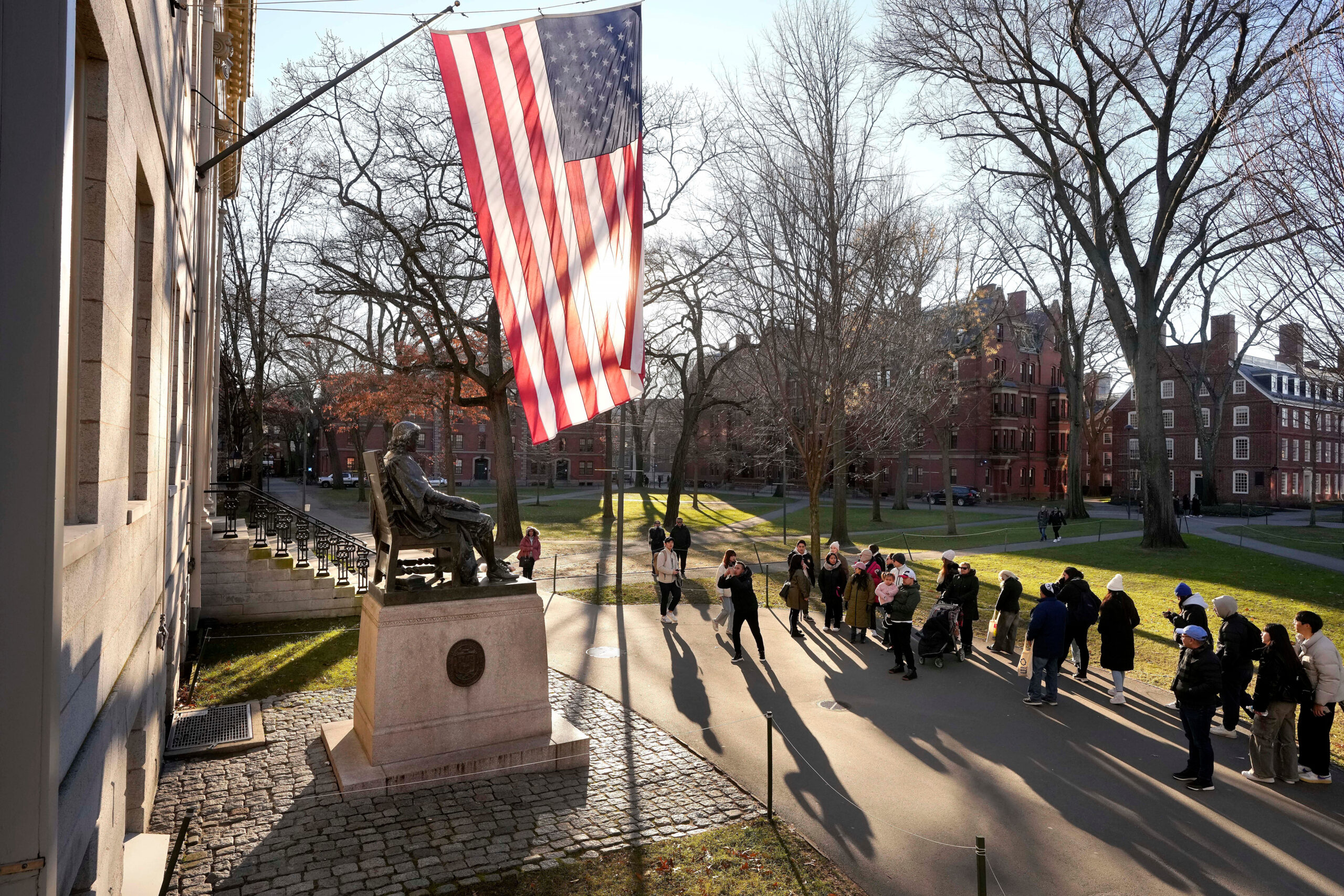
FIRE has also been outspoken in its defense of Harvard University. After the Trump administration sent Harvard a list of demands this spring — including banning some international students based on their views, appointing an outside overseer approved by the federal government to ensure “viewpoint diversity,” and submitting yearly reports to the government — the university refused to comply. Trump then sought to cut off billions of dollars of federal funding in response.
Harvard sued, and FIRE submitted an amicus brief supporting the university, noting that because of its own “longstanding role as a leading critic” of Harvard as a center of cancel culture, it was not less but more alarmed by the government’s “wielding the threat of crippling financial consequences like a mobster gripping a baseball bat.”
FIRE is also preparing to potentially sue Texas A&M University after the university instructed a philosophy professor in January to remove some teachings of Plato from an introductory philosophy course, citing new rules barring public universities in the state from offering classes that “advocate race or gender ideology.” FIRE wrote to the university, calling the move “unconstitutional political interference.”
Removing Plato from an intro philosophy class is the type of absurd, taken-to-the-extreme free-speech dispute that has long been FIRE’s bread and butter, and Creeley was particularly agitated about it.
Will Creeley, FIRE’s legal director, pictured here at the FIRE offices in Philadelphia. He was drawn to First Amendment work partly because his father was a poet.
“What the hell is ‘race and gender ideology’?” he said. “That’s a term so vague you could drive a truck through it.”
He had seen commentary about how 2,400 years ago, Socrates was put to death for corrupting the youth of Athens — and now administrators were, in effect, trying to run Socrates’ student out of College Station, Texas, too.
Creeley was almost laughing, but he was also feeling apocalyptic.
He has been half-joking with his staff that FIRE’s entire litigation program could be dedicated just to Texas. Yet he was also stewing over a decision by the University of Alabama in December to suspend two student publications, one focused on fashion and the other on Black culture and student life.
The university said both violated the Justice Department’s guidance on diversity, equity, and inclusion by narrowly appealing to female students and Black students. FIRE sent an outraged letter to the school, often a precursor to litigation.
“It’s one thing to say, ‘Hey, administratively, we’re not going to have an office of DEI,’” Creeley said. But to say, “‘And students can’t talk about these things.’ … That just drives me nuts.”
Off campus, FIRE is suing Perry County, Tenn., on behalf of Larry Bushart, a retired police officer who spent 37 days in jail after reposting a meme following the assassination of right-wing political activist Charlie Kirk. The meme depicted then-presidential candidate Donald Trump urging people to “get over” a separate shooting the year before.
Defending free speech is notoriously unpopular, and FIRE has leaned hard into a narrative of itself as a pure, principled defender of free speech, regardless of the consequences.
“We always say we just call balls and strikes, no matter what team is up to bat,” Glennon said. “If you are being criticized by both sides and praised by both sides every single day — well, then, that’s something that I wear as a point of pride.”
“Sometimes, if everybody’s criticizing you, you are screwing up,” Creeley acknowledged, and they both laughed. “But here I would say we’re doing it right.”
In 2022, FIRE expanded its purview beyond college campuses, including through a massive media campaign. One of its billboards is pictured here, visible heading north on I-95, in 2023.
From scrappy watchdog to national player
FIRE is insistently nonpartisan; staffers acknowledge the organization’s erstwhile conservative reputation but say it was never accurate.
And under the second Trump administration, it has become one of the most outspoken voices in the country for free expression. The nonprofit has a $32 million budget, about 130 staffers, and roughly 12,000 members paying a $25 annual fee.
Both Creeley and Glennon have been with the organization for nearly two decades, helping it grow from a small advocacy group into one garnering increasing mainstream attention. They said FIRE based itself in Philadelphia, not Washington, so that it would remain free from political interference. (One of the cofounders of the organization, Alan Charles Kors, an emeritus history professor at the University of Pennsylvania, is also based in Philly.)
At the Philly office, copies of the Wall Street Journal and the Chronicle of Philanthropy greet visitors. The conference rooms are named after free-speech references. (“It’s a little kitschy, but it’s cute,” Glennon said of the “Crowded Theater” room.)
One afternoon this fall, Glennon, in an oversized tan blazer, black pants, and stilettos, her blond hair loose, and Creeley, in a white button-down and purple tie, his auburn beard neatly cropped, were quick to laugh, prone to peppering famous quotes about free speech throughout the conversation.
They appeared to be true believers — in free expression, in their work, in America.
Glennon said she fears “that people will become accustomed to a society that is less free, and that with every generation, we’re losing a little bit of that love for American exceptionalism and what free speech is.”
Creeley nodded.
“What’s the Kors quote? ‘A nation that does not educate in liberty will not long enjoy it, and won’t even know when it’s lost,’” he said, paraphrasing a quote from FIRE’s cofounder.
“‘Won’t even know when it’s lost,’” Glennon echoed. “Gave me chills.”
FIRE’s legal director Will Creeley and FIRE’s chief operating officer Alisha Glennon, pictured here at the Philly offices in November, have both been at the organization for nearly two decades.
From pressure campaigns to the courtroom
FIRE was founded by two civil libertarians who wrote one of the defining campus-panic books of the 1990s, The Shadow University: The Betrayal of Liberty on America’s Campuses, which Publishers Weekly at the time described as a polemic about how “the ‘political and cultural left’ is today the worst abuser of the principles of open, equal free speech.”
Creeley joined FIRE as a law school intern before becoming a full-time staffer in 2006. He comes from a long line of pacifist Quakers and was involved in the campus Green Party as an undergrad at New York University. He said he was drawn to First Amendment work because his father was a poet; words were important.
“I remember the first couple years, I was like, ‘Boy, I’m doing this free-speech work, I’m defending an awful lot of evangelical conservative Christians who I really don’t have much in common with,’” Creeley said. But that was the principle of the thing.
FIRE’s chief operating officer Alisha Glennon in “The Marketplace” conference room overlooking Independence Hall. All the conference rooms are named after free speech references.
Glennon, who was born and raised in Mayfair, joined FIRE around the same time. She had recently graduated from the College of William and Mary and was waitressing while applying for development jobs. “I was like, ‘Free speech! Everybody likes free speech!’” she said, laughing.
For more than a decade, FIRE focused exclusively on advocacy, aiming to “make rights violations so painful for a school that they just would abandon it,” Creeley said. Litigation was plodding and costly, and the awareness campaigns seemed to have an impact.
In 2008, for example, a student-janitor at Indiana University-Purdue University Indianapolis was accused of racial harassment after a coworker saw him reading Notre Dame vs. the Klan: How the Fighting Irish Defeated the Ku Klux Klan, a nonfiction book that depicted robed Klansman and burning crosses on the cover. FIRE took up the cause, and the university eventually apologized to the janitor.
Other early advocacy cases included defending a professor at a New Jersey community college over a photo he posted of his daughter wearing a Game of Thrones T-shirt, and intervening on behalf of a University of Alaska Fairbanks student newspaper accused of sexual harassment for publishing a satirical article about a new building shaped like a vagina.
Then in 2014, FIRE began suing schools. The effort launched with four cases, including one about an unconstitutional “free speech zone” at a college in California and one on behalf of students at Iowa State University who were told they could not use the university’s name while wearing T-shirts representing their chapter of the National Organization for the Reform of Marijuana Laws.
FIRE eventually won all four.
These days, staffers at the ACLU of Pennsylvania and FIRE work closely together, talking weekly and sometimes daily.
“I honestly don’t remember a time where we had a disagreement about how to analyze the case,” said Witold Walczak, the ACLU of Pennsylvania’s legal director.
Despite its ideologically broad legal work, FIRE perhaps became most famous in the mainstream for its conservative-leaning culture work. In 2015, executive director Greg Lukianoff cowrote an Atlantic article — and later a book — titled The Coddling of the American Mind, arguing that efforts to create “safe spaces” on campuses had gone awry. Cowritten with social psychologist Jonathan Haidt, the book portrayed campus identity politics as bordering on the surreal.
That was also the year Lukianoff helped to disseminate one of the defining “cancel culture” artifacts of the decade. He filmed a Yale student, who came to be known online as “shrieking girl,” screaming at a professor in the middle of a simmering debate on campus over what constituted racially sensitive Halloween costumes. The video made national news, eventually racking up nearly 2 million views on FIRE’s YouTube page.
The campus of Yale University in New Haven, Conn.
The rankings — and the reckoning
These days, the organization tracks speaker disinvitations and scholars and students “under fire” through its public databases. Since 2020, it has also published annual “free-speech rankings” based on the databases and student surveys — rankings that have repeatedly placed Harvard at or near the bottom for free speech.
Those efforts underpin one of the central critiques of FIRE: that it has focused not only on government restrictions but also on the actions of private actors, including students.
“The rankings are based on those ideas of ‘cancel culture’ and shaming others and so on. And they’re not based on the First Amendment,” said Charles Walker, a retired attorney based in Maryland who published multiple critiques of FIRE’s rankings last year. “First Amendment law restricts what the government can do with regard to individual speech. It doesn’t address individuals speaking to each other.”
Bradford Vivian, a professor at Pennsylvania State University and the author of Campus Misinformation: The Real Threat to Free Speech in American Higher Education, described FIRE’s databases as “totally subjective, arbitrary, politically motivated tools.”
He argued that FIRE cherry-picks sensational incidents that do not necessarily have anything to do with true First Amendment violations, and prioritizes rankings that will make headlines over those that would be more accurate.
“FIRE has produced misinformation that others can easily use for nefarious purposes,” Vivian said.
FIRE for years whipped up a frenzy over liberal excess on elite college campuses, Vivian and other critics say. The Trump administration seized on that frenzy to slash federal funding and even imprison its detractors. Yet FIRE staffers do not see themselves as part of that story.
Even as FIRE insists it merely “calls balls and strikes,” critics note that state legislatures and the Trump administration have cited FIRE’s rankings as justification for punitive actions against universities.
Adding insult to injury, FIRE staffers have not always expressed much sympathy for the universities that now find themselves in the administration’s crosshairs.
“Administrators, colleges, universities have in some ways done plenty to bring this on themselves,” Sean Stevens, FIRE’s chief research adviser, told The Inquirer. “There was a lot of downplaying or ignoring of the concerns about the homogeneity of politics among the professorate or some of the curriculums.”
Still, Stevens, who oversees the annual rankings, said he disagrees with the Trump administration using his work to cut funding or shut down certain speech or academic departments. “That’s not anything we would advocate for,” he said.
In December, Lukianoff doubled down, publishing what amounted to an “I told you so” essay, arguing that universities now face a “worst of both worlds” scenario, in which government pressure combined with lingering cancel-culture dynamics are producing the “bleakest speech landscape imaginable.”
Creeley and Glennon said they never anticipated their work being used to justify repression.
“It’s galling to me to see our work invoked to justify that kind of illiberal crackdown,” Creeley said, pointing specifically to U.S. Rep. Elise Stefanik (R., N.Y.), who previously said she was a free-speech ally, using FIRE’s rankings in her anti-higher education campaigns.
If onetime allies now seem to have never cared much about free speech to begin with, that’s not on FIRE, they said.
“What we had been saying over the years was true‚” Glennon said. “We’re to blame now for the government overreach? I don’t think it’s a fair assessment.”
“I mean, that’s all we can do: Call out the abuses as we see them,” Creeley said. “If somebody wants to use our work for bad ends, we’ll fight you on it.”
FIRE was based in Philadelphia to avoid the political interference of Washington, D.C.
Can a referee still matter when the rules change?
At FIRE’s daily morning meetings to discuss pressing free-speech problems across the country, the agenda has grown longer. The scope, severity, volume, and nature of the cases they are seeing have changed, Creeley said. (He noted — twice — that an Alexandria Ocasio-Cortez presidency would likely keep FIRE busy as well.)
“In some places, the law is just getting flat-out ignored,” he said.
After two decades defending the First Amendment, Creeley has begun to reflect on whether placing his faith in the collective commitment to the law and the Constitution was the right choice. Still, he remains an optimist. He believes that such a commitment will prevail. That’s the whole promise of the country.
FIRE continues to see itself as a principled referee. Whether a referee still matters when the most powerful player insists the rules no longer apply — that remains an open question.
Bad Bunny vows to protest with love. Bruce Springsteen has opted for a more confrontational approach.
Both are part of a growing wave of pop-music dissent aimed at what critics see as overreach by the Trump administration’s Department of Homeland Security — actions in Minneapolis that have been linked to the deaths of two American citizens during encounters with U.S. Immigration and Customs Enforcement agents.
Bad Bunny, the Puerto Rican superstar known as the King of Latin Trap, was the world’s most-streamed pop music maker in 2025. The rapper-singer-producer, whose full name is Benito Antonio Martínez Ocasio, has a massive platform to air his grievances if he chooses, serving as the half-time show headliner at Super Bowl LX on Sunday.
This year’s half-time show is likely to surpass Kendrick Lamar’s 2025 performance, which drew 113.5 million viewers as the most-watched in history.
Those critics include President Donald Trump. “I’m anti-them. I think it’s a terrible choice. All it does is sow hatred. Terrible,” he said last month, referring to Bad Bunny and Green Day, who will play a pregame concert during NBC’s broadcast. The clash between the Seattle Seahawks and New England Patriots will also stream on Peacock.
Bad Bunny haters have an alternative: Kid Rock, whose 5 million monthly Spotify listeners is dwarfed by Bad Bunny’s 87 million, will top the bill on Turning Point USA’s All-American Halftime Show, shown on TPUSA’s YouTube page and conservative media outlets. Country singers Brantley Gilbert, Lee Brice, and Gabby Barrett will also perform.
Will Bad Bunny’s performance be a virulent attack on the Trump administration’s immigration policy?
That remains to be seen. But the speech he gave at the Grammys last weekend, after winning best música urbana album for Debí Tirar Más Foto — which also became the first Spanish-language album of the year winner — suggests a more subtle expression of Puerto Rican pride that emphasizes the humanity of demonized brown-skinned immigrants.
Speaking in English, Bad Bunny thanked God, said “ICE Out,” then continued: “We’re not savages, we’re not animals, we’re not aliens. We are humans and we are Americans.” (As a Puerto Rican native, Bad Bunny is an American citizen unlike recent MAGA convert Nicki Minaj, who was born in Trinidad and Tobago.)
“Hate gets more powerful with more hate. The only thing that is more powerful than hate is love. We need to be different. If we want to fight, we have to do it with love.”
Bad Bunny’s speech was one of many gestures opposing ICE at the Grammys, from Bon Iver’s Justin Vernon wearing a whistle on his lapel to Billie Eilish criticizing anti-immigrant voices with a terse line: “Nobody is illegal on stolen land.”
Olivia Dean, the British singer who won best new artist, said: “I’m up here as a granddaughter of an immigrant. I’m a product of bravery, and I think those people deserve to be celebrated.”
But the Grammys didn’t include any overtly political new music. A rumor that Springsteen would open the show with “Streets of Minneapolis” proved unfounded. Springsteen wrote the new anti-ICE broadside the day protester Alex Pretti was killed by federal agents.
But Springsteen’s protest song leads the way in a trend toward musicians opposing the Trump administration in song, in many cases consciously connecting with a tradition that reaches back to Woody Guthrie, Peter Seeger, Bob Dylan, and the Civil Rights protest of the 1960s.
In “Street of Minneapolis,” Springsteen meets the moment by expressing outrage at the deaths of Renee Good and Pretti, specifically the administration’s initial pronouncements that placed blame on the dead rather than the federal agents.
Bruce Springsteen performs Oct. 28, 2024, during a Democratic concert rally at the Liacouras Center at Temple University.
“Their claim was self-defense sir, just don’t believe your eyes,” the Boss sings. “It’s these whistles and phones against Miller and Noem’s dirty lies.”
The song builds to a rousing “ICE out” chorus that’s so unsubtle it even gave the Boss pause.
Performing in Minneapolis last month with rabble-rousing former E Street Band member Tom Morello, Springsteen said he asked the guitarist whether “Streets” was too “soap boxy.” Morello, of Rage Against the Machine, replied: “Nuance is wonderful, but sometimes you have to kick them in the teeth.”
Springsteen, of course, can afford to be aggressively provocative. Not only is he a revered superrich artist at the tail end of his career whose loyal audience is not going anywhere. He’s also a white man whose fans who look like him are not in danger of being detained and deported.
And he has a history of sparring with Trump, whose administration he repeatedly labeled “corrupt, incompetent, and treasonous” on stage in Europe last spring. At the time, Trump responded by calling the Jersey rocker “not a talented guy — Just a pushy, obnoxious JERK.” The president hasn’t responded to “Streets of Minneapolis” as of yet, but loyalist Steve Bannon called Springsteen “fake and gay, as the kids say.”
Springsteen’s singing out will also surely lead to others joining the chorus. And plenty of broadsides have been in the works already.
Low Cut Connie at Concerts Under The Stars in King of Prussia on Friday August 1, 2025. Left to right: Rich Stanley, Nick Perri, Adam Weiner, Jarae Lewis (on drums, partially hidden), Amanda “Rocky” Bullwinkel, Kelsey Cork.
Philadelphia’s Adam Weiner of Low Cut Connie has been an outspoken Trump critic, among the first to pull out of a Kennedy Center performance last year.
He’s announced an entire protest album called Livin’ in the U.S.A. Weiner said he made the album “because I am disgusted to see our country descend into an authoritarian hell, a place where art does not lead the cultural conversation.” It arrives timed to the Semiquincentennial on July 3.
The same day that Springsteen released “Streets of Minneapolis,” British folk-punk singer Billy Bragg dropped “City of Heroes,” also written to commemorate Pretti’s death.
Veteran punk rockers are joining in, too, sometimes by rewriting lyrics to old protest songs like Boston band Dropkick Murphys’ “Citizen I.C.E.” — a new version of “Citizen C.I.A.”
The protest isn’t manifest only in topical song writing. In Philly, local events in the indie music scene are aiming to assist immigrants. Juntos, the organization that aids Philadelphia communities affected by ICE, will be the beneficiary of “A Jam Without Borders” at Ortlieb’s on Wednesday, with local musicians Arnetta Johnson, Nazir Ebo, and others.
New generation protest singers include Liberian-born Afro Appalachian singer Mon Rovia, whose buoyant 2025 song “Heavy Foot” remains upbeat as he sings “the government staying on heavy foot / No, they never gonna keep us all down.”
Most prominent in branding himself as a modern folk troubadour is Jesse Welles, whose “No Kings” duet with Joan Baez came out in December.
Welles’ “Join ICE” uses humor as a weapon, with an early Dylan persona. “There’s a hole in my soul that just rages,” he sings. “All the ladies turned me down and I felt like a clown / But will you look at me now, I’m putting people in cages!”
Serious songwriters are likely to continue to pen protest songs as long as scenes of turmoil continue to show up on TV and social media screens.
But high-profile artists worried about alienating their audience aren’t likely to start flooding the zone with anti-ICE screeds if they’re concerned about backlash.
A case in point would be formerly Philadelphian country superstar Zach Bryan. Last October, he released a song snippet of “Bad News” that included the lyrics “ICE is gonna come, bust down your door” and cited “the fading of the red, white and blue.”
The song was met with disdain by the White House. Spokesperson Abigail Jackson said, “Zach Bryan wants to open the gates to criminal illegal aliens and has condemned heroic ICE officers.” DHS secretary Kristi Noem was “extremely disheartened and disappointed.”
Bryan did include the song on his album With Heaven on Top in January, but not before taking great care to explain he wasn’t on one political side or the other.
“Left wing or right wing, we’re all one bird and American,” the Eagles fan said. “To be clear I’m not on either of these radical sides.”
OCEAN CITY, N.J. — Marie Crawford was immediately charmed in 2021 when she and her soon-to-be-surfer husband Rich moved into their historic house in the literal shadow of Gillian’s Wonderland Pier.
They’d come from Blue Bell, Pa., to live year-round by the ocean, and landed with an amusement park right up the street.
“The ball drop, that was what we heard from my house,” she said, referring to the 130-foot-high Drop Tower ride. “It was, ‘Ah, ah, ahhhhhhhh,‘” she said, imitating the screams she would sometimes hear.
Jack Gutenkunst, left, Marie Crawford and her husband Richard with Shiloh, a 9-year-old soft coated wheaten terrier, walk along Plaza Place, in Ocean City, Tuesday, Feb. 3, 2026.
“It was so beautiful and romantic. On our porches, we would hear the ocean, not the amusement park. There were families, babies in strollers, coming up the street, flowing up to Wonderland. We were kind of ambassadors.”
Now, more than a year after the closing of Gillian’s, the residents are faced with the possibility of a seven-story hotel they fear will block their sun, bring traffic to their streets, and threaten the small-town charm they found in their little pocket of Ocean City.
“It’s just another example of maximizing, pushing,” said Rich Crawford, Marie’s husband, who programs music for his family’s Christian radio station, WDAC, located in Lancaster, Pa. In his 60s, Rich fell in with Ocean City’s surfing crowd and unexpectedly grew to love his little community.
The Crawfords’ neighborhood of 100-year-old homes and 153 trees is called Plaza Place, which is one block each of Pelham Place, Plaza Place, and the north side of Seventh Street, between Wayne Avenue and Atlantic.
Across Wayne Avenue, toward the ocean, was Wonderland. On a clear day, a red ball of sun creeps up above the boardwalk and peeks into their little neighborhood.
On Pelham Place, residents each also own a two-foot- wide stretch of land across the street from their houses, a quirk of their deeds originally designed to prevent the rooming houses on Plaza Place that backed up against Pelham Place from using Pelham as an alleyway for their trash. There are dedicated gardeners on the streets who turn those strips into showpieces.
The sun sets behind the Ferris wheel on the final day for the beloved Wonderland Pier in Ocean City Sunday, Oct. 13, 2024.
Neighbor Barb Doctorman, whose family owns the Islander store on the boardwalk, said she used to take her children up on the Ferris wheel and peer down at their neighborhood. So lush, it looked like a forest, she said.
“I looked up the impact of a high-rise,” said Doctorman. “We’re going to lose some sun. The airflow is going to be totally changed from what it was. There’s a heat radiant that comes off it.”
Her husband, Doc, said: “We want something up there, but we know there could be more of a draw to that boardwalk than just the hotel.”
Marie Crawford (left) holds the leash of Shiloh, a 9-year-old soft-coated wheaten terrier, while standing with her husband Richard (center) and neighbor Jack Gutenkunst at the end of Pelham Place in Ocean City.
The land is owned by developer Eustace Mita, who has proposed Icona in Wonderland, a 252-room hotel that would preserve the Ferris wheel, carousel, and some kiddie rides.
So far, the city has not declared the site in need of rehabilitation, as Mita has requested, or otherwise moved to rezone the area to allow a hotel.
Merchants have begged the city to allow the hotel, and described how their businesses have suffered since the closure of Wonderland. Some residents have clung to the idea that an amusement park can return, though those numbers are dwindling.
Marie Crawford, her husband Richard, right, along with Shiloh, a 9-year-old soft coated wheaten terrier, and their neighbor Jack Gutenkunst, walk past a sign against the development of a hotel at the site of the old Wonderland Pier on the boardwalk in Ocean City, Tuesday, Feb. 3, 2026.
In Plaza Place, the opposition is less sentimental, more practical. They fear traffic, and the shadow from a neighboring seven-story hotel. Like residents in other towns who fought dunes, they fear the loss of the ocean breeze, or a shift in wind patterns that will affect surfing at the popular Seventh Street Beach.
“It’s got that old feel to it, and everybody’s house is different,” said Marie Crawford, who bought her Craftsman Colonial on the north side of Pelham for $905,000 in 2021. She estimates it’s worth $2.5 million now. There are about 60 homes in the Plaza Place civic association.
The association is one of several groups that are prepared to go to court if the city tries to change the zoning to allow a hotel, without going through a thorough master plan process, said Jack Gutenkunst, the Plaza Place Association president.
While Wonderland brought thousands of people on a summer night, the pier itself had no parking. So people parked elsewhere and excitedly walked through their neighborhood on their way to the rides. People on their porches called out, “Have a blessed evening,” and chatted the night away, said Crawford. The hotel proposal calls for parking underneath the structure.
A sign stands near the historic neighborhood behind the old site of the Wonderland Pier in Ocean City, Tuesday, Feb. 3, 2026. Residents are against the development of a hotel at the boardwalk site.
Crawford stressed that it’s not a case of selfish NIMBY, Not In My Backyard. Despite Ocean City’s decades-old pattern of replacing single-family homes with duplexes, there are nearly 1,400 homes over 100 years old still left in Ocean City, said Bill Merritt, president of Friends of OCNJ History & Culture.
Being a block from the boardwalk, and living in a beach town, does not mean the neighborhood’s purpose is primarily hospitality, said Crawford. Its distinct, increasingly rare Jersey Shore character deserves to be valued, she said.
“It’s height. It’s chaos. It’s the change in culture,” she said, when asked what specifically worries her about the hotel. “It’s a transient population coming through here for three nights at a time. That’s in the hospitality district. We are not the hospitality district.”
The neighborhood behind the old Wonderland Pier site on the boardwalk in Ocean City, Tuesday, Feb. 3, 2026. Residents are against the development of a hotel at the boardwalk site.
The demolish-and-rebuild mania that took over a lot of the rest of the island has mostly left Plaza Place alone, though residents acknowledge that is also a threat to their way of life. They also fear a hotel will prompt Plaza Placeans to sell.
“It’s a Norman Rockwell painting, it just is,” Councilman Keith Hartzell says in the documentaryPlaza Place: The Enigmatic Street, a locally made short film about the neighborhood. “It’s right here in Ocean City, and you kind of don’t expect it, when there’s two streets away a bunch of duplexes.”
Hartzell, who is running for mayor against incumbent Jay Gillian, the former owner of Wonderland who sold to Mita, says he hopes to negotiate with Mita over height, parking, and other issues before considering any kind of zoning allowance or rehabilitation designation. A city council-appointed subcommittee tasked with assessing the boardwalk’s usage as a whole is holding a public meeting at 10 a.m. on Feb. 7 at the city’s library.
The residents of Plaza Place worry about the survival of the hidden little neighborhood by the beach they fell in love with. “The neighborhood is so beautiful and so old,” said Marie Crawford. “If the hotel goes in, the dramatic change that will be for all of us with the traffic, the tone of the neighborhood — you’re going to see people sell. That threatens the neighborhood. The people won’t want to stay.”
I am not a huge fan of comic books and superheroes, but I appreciate the storytelling. In comics, the origin story is just as important as the hero saving the day. The same is true for Black History Month, which originated as Negro History Week.
Negro History Week was created by Carter G. Woodson, the child of two formerly enslaved parents. According to Harvard historian Jarvis R. Givens, Woodson was taught by his two uncles, John and James Riddle, his mother Anne Riddle’s brothers, who had also been enslaved. Both had been educated in a Freedmen School toward the end of Reconstruction, and they became Woodson’s first teachers.
“As a student, [Woodson] witnessed the shared vulnerability of Black people through the story of his teachers and family,” writes Givens. “These first encounters taught Woodson more than just reading, writing, and arithmetic. He also inherited a political orientation to schooling informed by the lived history of the teachers standing before him … Here, Woodson encountered the project of Black education.”
The historian and author Carter G. Woodson is widely regarded as the father of what has become Black History Month. Much of the observance’s origin can be traced to Philadelphia, writes Rann Miller.
That project, which continues to this day, was the equipping of Black people with the practical knowledge to do a thing, and the historical memory to understand why they do it. This was the basis with which Woodson founded the Association for the Study of Negro Life and History (ASNLH) in 1915 and created Negro History Week in 1926, as a time for Black people to not only learn about Black history, but to take the time to reflect on it.
In Woodson’s words: “It is evident from the numerous calls for orators during Negro History Week that schools and their administrators do not take the study of the Negro seriously enough to use Negro History Week as a short period for demonstrating what the students have learned in their study of the Negro during the whole school year.”
A mural honoring W.E.B. Du Bois on a firehouse at Sixth and South Streets in Philadelphia. He was an early advocate of Black history events.
The first Negro History Week took place from Feb. 7 to 13, 1926. The Philadelphia Tribune, in an article published Feb. 6, 1926, said: “It is essential to the future growth of the Negro race that we become acquainted with our past … We have passed the point in our advancement where we can afford to disregard our history.” That sentiment remains true today.
In April 1928, the Germantown YMCA hosted an event called Negro Achievement Week for the Germantown community, featuring such prominent African Americans as Alain Locke, W.E.B. Du Bois, and James Weldon Johnson. The week’s events received little media attention but were robust, including a mass community meeting, a music night, an art night, and a history lecture, held in both Germantown and Center City, according to David Young, director of the Historical Society of Montgomery County.
The events were aimed at educating white people, as well, with Du Bois’ pointedly noting that “he reminded the whites too often of their injustice to the Negro.”
Planning for Negro Achievement Week in Philadelphia began in 1923 at the “Black Branch” of the Germantown YMCA, known as the “Colored Y,” under the guidance of Olivia Yancey Taylor and Eva del Vakia Bowles.
Members of the Colored Y formed an interracial committee to plan the week’s activities, including a variety of African American heritage events.
The first Negro Achievement Week, which became Negro History Week, happened in 1925, influenced by a partnership between Woodson and members of the Black fraternity Omega Psi Phi, who created Negro History and Literature Week, first celebrated in April of 1921.
“Celebrations took the form of public programs in churches, schools, and events partnering with literary societies,” according to Givens. “Given the success of the program, a committee was established in 1923 to outline a strategic plan: to develop plans for fostering the study of Negro History in the schools and colleges of the country.”
The week subsequently became a shared project between Woodson and Black schoolteachers.
While Negro Achievement Week in Philadelphia didn’t take place after 1928, Negro History Week continued nationwide because Black people understood that they were past “the point in our advancement where we can afford to disregard our history.”
Although President Gerald Ford officially expanded Negro History Week to become Black History Month in 1976, Black communities had already done so on their own, believing one week was not sufficient to contain their history.
Philadelphia stands proudly in that tradition — from the Colored Y to educator Nellie Bright. Thanks to Carter G. Woodson and countless Black educators, their vision endures a century later.
Rann Miller is an educator and freelance writer based in southern New Jersey. His “Urban Education Mixtape” blog supports urban educators and parents of children attending urban schools. urbanedmixtape.com@RealRannMiller
More than two dozen Philadelphia-area real estate professionals helped arrange $45 million worth of questionable deals around Temple University in which student rentals that had sat on the market for months abruptly sold for about double their asking prices, an Inquirer investigation has found.
In 52 settled or still-pending sales over roughly the last year, apartment buildings were listed for sale at an average price of $450,000, but found no takers. Within days of being re-listed for a higher price, the same properties sold for as much as $905,000 — at least on paper — to buyers who took out mortgages that far exceeded the original asking price.
Eight sellers or their agents now say they entered into the deals with the understanding that they would actually receive close to the original asking price — not the much higher amount that was officially listed on deeds and other public records. And an appraiser said that real estate agents on both sides of a proposed deal tried to pressure him to raise the valuation of a property.
The sales have raised concerns about possible mortgage fraud in the area around Temple, which could lead to a spate of foreclosures and affect property assessments, tax bills, and student rentals. At least one such property has gone into foreclosure over an unpaid mortgage, according to court records.
Solomon Wisenberg, a former assistant U.S. attorney in North Carolina and Texas who specialized in white-collar crime and bank fraud, said the people involved in the deals could face scrutiny from criminal investigators.
“I don’t know any fraud prosecutor who wouldn’t be interested in looking at that,” Wisenberg said. “Settlement statements have to reflect reality. If you don’t present an accurate picture to the financial institution that is financing the loan, you’ve got problems.”
Patrick C. Fay, a real estate agent in Coldwell Banker’s Old City office, was involved in every deal, representing at least seven buyers who purchased the properties through limited liability companies. One of those buyers had been convicted of an earlier mortgage fraud scheme.
Pat Fay had been one of the top real estate agents last in Coldwell Banker’s Old City office. His clients have purchased properties around Temple University — at twice the listing price.
Coldwell Banker cut ties with Fay in December, hours after The Inquirer published a story concerning 33 of his deals around Temple.
But Fay had a counterpart on the other side of every transaction. They included agents at major brokerages such as Keller Williams, Long & Foster, and eXp — as well as three agents who worked in the same Coldwell office as Fay and helped him close 13 sales.
Coldwell Banker’s national office said this month that it has launched an internal investigation into the matter.
Fay, who was one of the top agents in his Coldwell office, has denied wrongdoing. He declined to discuss specific sales.
“In my over 20 years in real estate, I have maintained an unblemished record with no ethical violations or complaints filed against me,” Fay wrote in a text message last week. “These claims are without merit.”
(function() {
var l2 = function() {
new pym.Parent(‘patfay’,
‘https://media.inquirer.com/storage/inquirer/projects/innovation/arcgis_iframe/patfay.html’);
};
if (typeof(pym) === ‘undefined’) {
var h = document.getElementsByTagName(‘head’)[0],
s = document.createElement(‘script’);
s.type = ‘text/javascript’;
s.src = ‘https://pym.nprapps.org/pym.v1.min.js’;
s.onload = l2;
h.appendChild(s);
} else {
l2();
}
})();
Steve Orbanek, a spokesperson for Temple University, said the university learned about the situation from The Inquirer’s previous report and is now investigating possible impacts on its student renters.
“It goes without saying that the university condemns any unlawful behavior, and we find these allegations deeply concerning, both for our students and neighbors who reside in the community,” he said.
‘Fat Pay’
Fay, of Moorestown, Burlington County, started arranging deals in December 2024 to purchase apartment buildings around Temple University that owners had been struggling to sell.
The value of those properties, which are largely marketed as student rentals, has fallen in recent years. A local landlords association said vacancy rates are up and rents down amid declining enrollment at the university, which has shed 10,000 students in under a decade.
Fay, who has used the handle “Fat Pay” on social media, had buyers willing to make a deal. However, in multiple cases identified by The Inquirer, that was true only after the sellers and their real estate agents agreed to sign a deed showing that the property had sold for much more than the original asking price.
Joelle Delprete, a former Temple grad student who works for the university, lives in an apartment unit that Fay helped purchase. Soon, unpaid water and trash collection bills started piling up.
Shaina Levin, a Coldwell agent who worked with Fay in his Old City office, represented a seller in one such deal on 15th Street. The property was initially listed for sale last July at $375,000. Records show Fay’s client bought it for $842,000 in September 2025 after securing a $673,600 mortgage.
“It’s a bonus when we can keep it in the Coldwell Banker family,” Levin posted on Facebook, referring to the sale. “Thanks Pat Fay for teaming up on this one. Congratulations to your buyer!”
In an interview, Levin said her client received an amount closer to the original listing price, not the $842,0000 sales price recorded on the deed.
She saidthe buyer contended that thehigher sales price was tied to a planned renovation. City permit records show no evidence of construction or renovation work on the building.
Levin said that Fay’s proposal was “totally unconventional,” but that her office manager at Coldwell Banker ran it by the company’s legal department, which signed off.
“Legal said, ‘Yep, all good,’” Levin said. She referred additional questions about the sale to her manager, who declined to comment.
Fay’s buyer in that deal was UrbanNest Acquisitions, a limited liability company created the same month as the sale by Tanjania Powell-Avery, a former real estate agent from Pottstown, Montgomery County. Federal prosecutors with the Eastern District of Pennsylvania indicted Powell-Avery and two others in 2010 for participating in a mortgage fraud ring in the Philadelphia area. She pleaded guilty and was sentenced to five years’ probation and nine months’ house arrest.
Powell-Avery declined to comment.
Two other colleagues of Fay’s at his former Old City office also brokered sales with him, according to data from the Multiple Listing Service, a shared database that real estate professionals use to track and arrange deals.
Karl Klotzbach represented sellers in eight deals with Fay over five months last year — more than any other seller’s agent, records show. The eight properties had originally been listed for a total of $3.4 million before they were each re-listed and sold for a combined $7 million.
Klotzbach did not respond to requests for comment.
Matthew Greene, another Coldwell agent, brokered four sales with Fay on North 12th Street. The properties were each listed for $450,000 last April, then re-listed at $879,000 the following month. In July, each property sold at the higher amount within days of one another, with all four sales backed by a separate $703,200 mortgage.
Greene would not discuss the sales.
“I’m happy to direct you to our legal team for any comment,” he said. Greene hung up the phone without providing any contact information.
Daryl Turner, the branch vice president at Coldwell Banker’s Old City office, referred questions to the company’s legal department. Andrea Gillespie, a national spokesperson for Coldwell Banker, which operates in 49 countries and territories, would not comment on the sales.
“We immediately disaffiliated Pat Fay and are continuing to investigate the matter internally,” Gillespie said in an email. “Coldwell Banker stands for trust and integrity, and we hold our agents to the highest ethical standards.”
‘This is my livelihood’
While sellers were eager to offload their toxic real estate investments, not every deal went smoothly.
John Sexton, an independent licensed appraiser with twenty years’ experience in the Philadelphia market, said in an interview that an appraisal company working for a lender contracted him last year to evaluate a property on North Park Avenue, near Temple’s campus. The sale was being brokered by Fay and Peter Lien, an eXp real estate agent representing the seller.
It was the kind of property common around Temple: a Victorian-era rowhouse that had been converted into a three-unit, nine-bedroom student rental. And, like similar properties in the area, it sat on the market unsold for more than two months, with no takers, at its $408,000 asking price.
The property was taken off the market in October, but then reappeared as a pending sale at $879,000, according to MLS data. Fay had found another buyer ready to pay more than double.
Sexton said he quizzed Lien about why a property that had not undergone recent renovations would suddenly jump in price. Sexton said Lien responded that an earlier broker simply “hadn’t been familiar with the real estate market” around Temple.
Sexton said the implication of these conversations was that Lien “had a person who would pay $879,000, so I should just do my job and mark it at $879,000.”
The 1700 block of Arlington St. in North Philadelphia Wednesday, Dec. 10, 2025. Buyers have snapped up $48 million in student housing around Temple University, often paying more than twice what properties were originally listed for even though rents are down and vacancies are up for student housing.
Sexton said he then received an unusual email from an individual named “Jay Jay,” who indicated he was working with Fay. The email included a list of nearby properties that had all sold in the $800,000 range, establishing that the sales price was reasonable.
Sexton looked into the comparable sales and found that they had all been brokered by Fay. “Jay Jay” also sent Sexton copies of leases for apartments in the same building, purporting to show units leasing for $2,500 a month. But when Sexton dug up sales listings for the same building from a few weeks earlier, they advertised that the units had been leased for closer to half that amount.
“Jay Jay” did not respond to an e-mailed request for comment.
Sexton said he called Fay to discuss the discrepancies, and the real estate agent accused him of being inexperienced and pushed him to approve the higher value.
“It’s a tough situation,” Sexton said. “You have two brokers pressuring you and sending you signed documents saying the sale price is valid.”
Sexton said after he told Fay he would need to further substantiate the higher asking price, Fay stopped responding.
The property never sold and is now off the market.Sexton never heard from Fay again.
“It’s infuriating to me, because he’s putting my license in jeopardy,” Sexton said. “This is my livelihood.”
In a text message, Fay denied “any claim that I have ever manipulated or influenced an appraisal in any fashion.” He did not respond to questions about the sale.
Lien said he could not comment on the failed deal.
“I was instructed by my brokerage that any press would have to go through our office, and we’re not allowed to speak on it,” said Lien, who works out of eXp’s King of Prussia office.
The manager of that eXP office did not return a request for comment.
‘Really bad stuff’
Daniel Perlman, a former prosecutor in the Maryland State’s Attorney’s Office who now practices white-collar criminal defense, said anyone who signed documents they knew to be false could potentially face legal problems.
“If there are documents that have incorrect information for a mortgage, then yeah, somebody has criminal liability,” Perlman said. “You’re under penalty of perjury for signing these documents.”
A spokesperson for the U.S. Attorney’s Office in the Eastern District of Pennsylvania said the office does not confirm or deny the existence of investigations, as did a spokesperson for the Pennsylvania State Real Estate Commission, which licenses agents.
Nick Pizzola, vice president of the Temple Area Property Association, which represents local landlords, said the COVID-19 pandemic has had a lasting negative impact on the off-campus real estate market, leaving landlords struggling to sign leases and pay their own mortgages.
Still, he said, the seller’s agents had to have known something was amiss when a buyer was offering double the asking price.
“Anyone who knows anything about real estate would have run away from those deals,” Pizzola said. “Some really bad stuff was happening.”
Most participants in Fay’s deals were reluctant to discuss their roles when contacted by The Inquirer this month. Some seller’s agents said their brokerages had instructed them to remain silent. Others claimed ignorance when it came to the details of the deals they had helped arrange.
The 1900 block of N. 18th St in North Philadelphia Wednesday, Dec. 10, 2025. Buyers have snapped up $48 million in student housing around Temple University, often paying more than twice what properties were originally listed for even though rents are down and vacancies are up for student housing.
In the March 2025 sale of an apartment building on the 2200 block of North Sydenham Street, for example, both the seller and his agent said they could not explain why the sales price did not match the amount listed on the deed.
The property initially went up for sale for $324,900 in December 2024 but was then re-listed and sold to Fay’s client in March 2025 for $789,000. The seller, Alvjod Dedaj, said he did not actually receive that higher amount. He referred further questions to his real estate agent at Long & Foster.
“I have no clue what’s going on,” Dedaj said. “I just cashed out a certain amount of money.”
Dedaj’s agent, Bob Kiziroglou, who works out of Long & Foster’s Devon office, said he, too, could not recall why the asking price suddenly jumped. He referred questions to Fay.
“Reach out to him, man, he’ll give you all the details,” Kiziroglou said.
A message left at Long & Foster’s Devon office was not returned.
The Broad Street office of Keller Williams Realty was another hub for deals involving Fay, with five of its agents representing sellers in eightsales. An office manager did not respond to requests for comment.
Wisenberg, who was a prosecutor in the Whitewater/Madison Guaranty Savings & Loan investigation, said he found it particularly suspicious that Fay arranged deals with mortgages that far exceeded the initial asking price, and with sellers receiving less than the stated purchase price.
“What’s he doing with the rest of the money?” Wisenberg asked.
Trouble brewing
Already, there are signs of trouble in the neighborhood around Temple.
In November, one lender, Easy Street Capital, filed to foreclose on a Park Avenue property that sold in late 2024 for $850,000 — more than double its value just two years prior.
While no buyer’s agent is listed in MLS data for the sale, Lien, the eXp agent, is listed as representing the seller. The buyer, Park Ave Enterprise LLC, is registered to an associate of Fay’s who participated in at least four other sales around Temple that he brokered.
According to court filings, the LLC defaulted on an $807,000 mortgage about four months after purchase.
The lenders that financed Fay’s purchases now bear the most risk of the overvalued and under-occupied rentals lapsing into foreclosure. A private lenders association in Novemberwarned its members of a “fraud scheme” operating around Temple University, and cities like Baltimore have seen hundreds of properties fall into foreclosure as a result of suspected mortgage fraud rings.
A spokesperson for City Councilmember Jeffery “Jay” Young, whose district encompasses the affected properties, said he was “not familiar with the situation.” He called mortgage fraud “a common and unscrupulous real estate practice that happens too often in our city.”
Orbanek, the Temple spokesperson, said the university is working to identify students who may be impacted by potential foreclosures and asked themto contact the university’s Essential Needs Hub, which connects student renters with supportive resources.
Joelle DelPrete, a former Temple grad student who works for the university, lives in an apartment unit that Fay helped purchase. He brokered a sale of the rental property to “18th Estates LLC” in December 2024 for $868,000. It had previously been listed for $385,000.
A few months later, DelPrete said, Fay texted her that he was the property manager, and he wanted her to sign a new lease so he could begin collecting rent.
“We assumed it was a totally legit company,” DelPrete said.
Soon, DelPrete said, unpaid water and trash collection bills started piling up, and maintenance issues went unanswered. In October, she found a document known as an Act 91 notice that was posted on an adjacent property in advance of foreclosure proceedings. It showed the owners — who had been represented in the purchase by Fay — had stopped paying its mortgage and owed roughly $25,000.
DelPrete and her three roommates are hoping to move out before her building goes into foreclosure.
“Especially living around Temple, you just gotta be careful and make sure everything is aboveboard,” she said. “If something feels off, it is off.”