Tag: Big Read

  • Where to eat at the Jersey Shore this year, from LBI to Margate

    Where to eat at the Jersey Shore this year, from LBI to Margate

    If you’re a regular visitor to the Jersey Shore, catching up with your longtime favorite foods, chefs, and restaurants can often tell a wider story about what’s been happening in your favorite beach towns. The economic pressure of rising real estate prices has made the arrival of a sweet little BYOB like Joy & Salt on Long Beach Island a test case for the future of the small operator. The saga of ongoing attempts to revitalize Atlantic City’s Tennessee Avenue development? It just got a fresh boost from the comeback of a talented local chef. A new gem for stellar soul food, a growing audience for deep-crusted pizza, the rise of fancy iced coffee (with everything but the taste of coffee), and sage advice on how to choose the right pasta shape all added a tasty helping of color to this week’s fresh batch of restaurant reports from LBI to Margate.
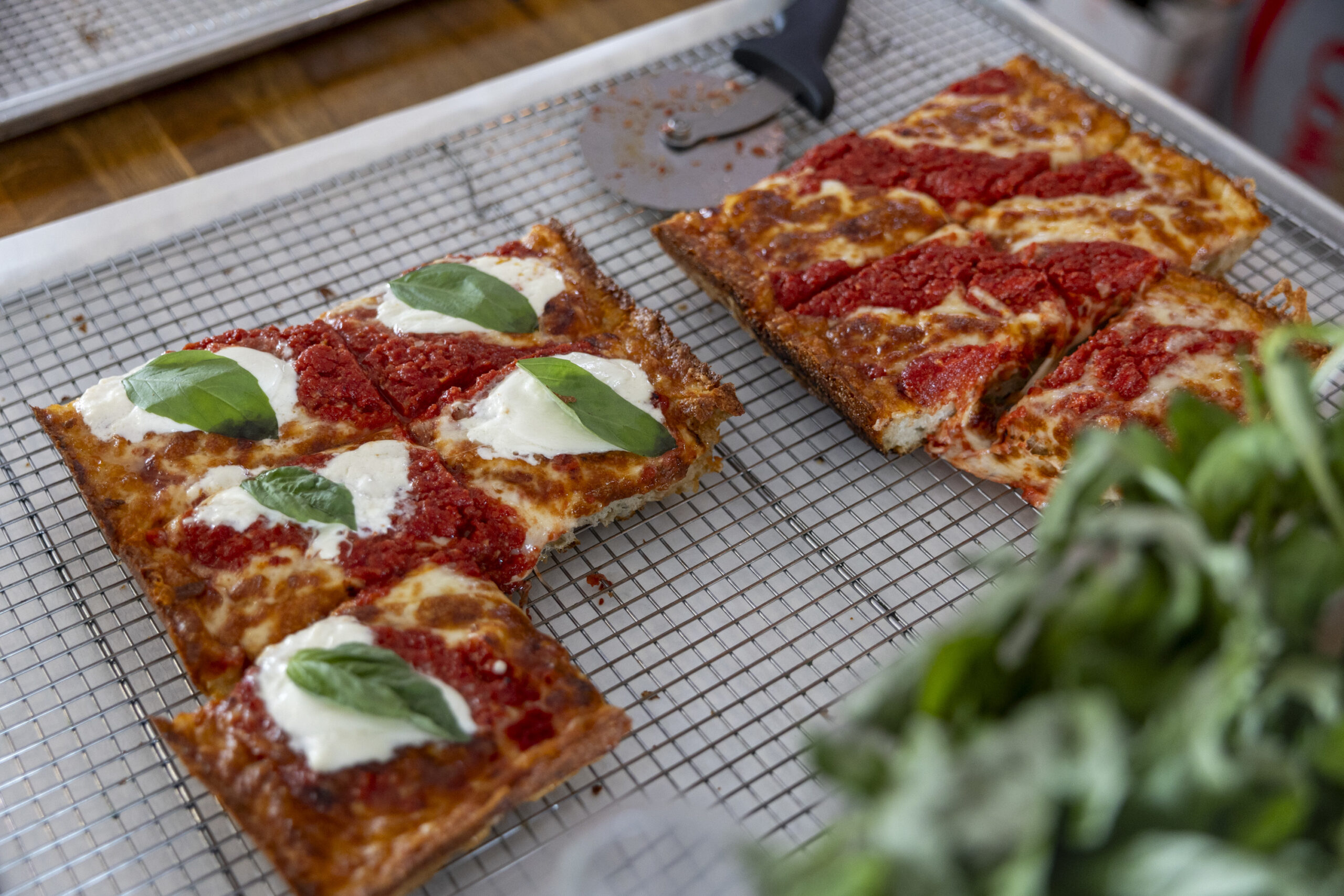
    The burrata with fresh basil and plain cheese pie at Queen City Crust in Beach Haven, N.J., on Thursday, June 18, 2026.

    I also delve into the Ventnorian controversy over a classic sub shop that’s been remade into an artisan sourdough bakery and touched a nerve with locals who fear their community is becoming too bourgeois. Then again, when something is as good as Florida Cuts is, perhaps it’s not simply change for the sake of trends but actual progress.

    Next week: new options from Cape May to Ocean City.
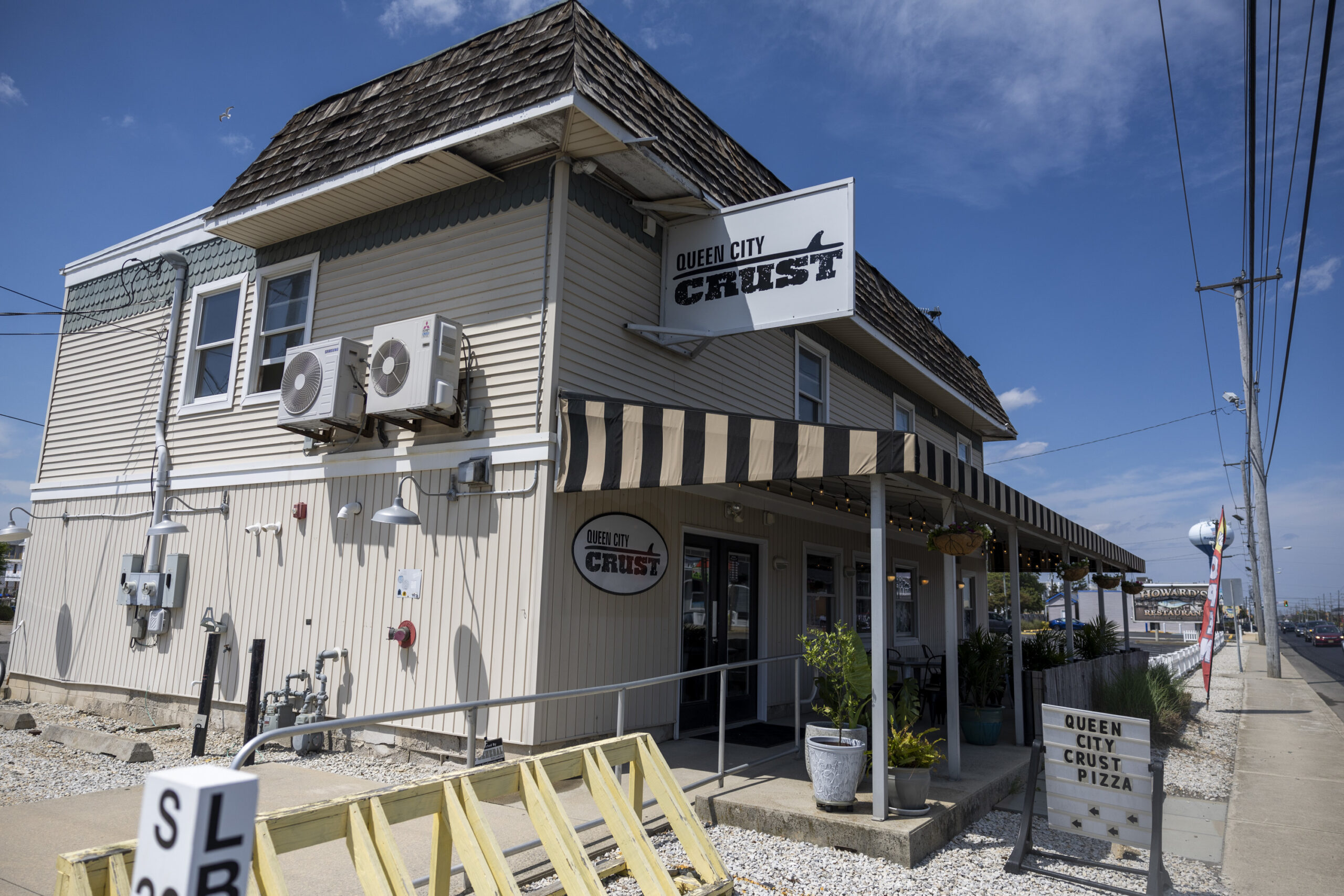
    The outside of Queen City Crust in Beach Haven, N.J., on Thursday, June 18, 2026.

    LONG BEACH ISLAND

    Joy & Salt Cafe

    With a temporary sign, and an understated location at an intersection near the ocean where drivers slingshot on and off the causeway to Long Beach Island, you could easily miss Joy & Salt Cafe. But it’s worth a stop at this low-key newcomer to Ship Bottom, a collaboration between two veteran chefs hoping to claim one of the few remaining corners of the island and make what partner Jordan Miller says is “a last-ditch effort for the charm of an old-school BYOB.”

    Miller and his business partner and co-chef, Jimi Savianeso, make up for the understated location with genuine hospitality and hands-on scratch cooking. The duo met cooking on the line years ago at local favorite Black-Eyed Susans. With years of fine dining experience behind them, they are opting for a more casual approach to this diner-space and channeling good local ingredients into food they simply like to eat.
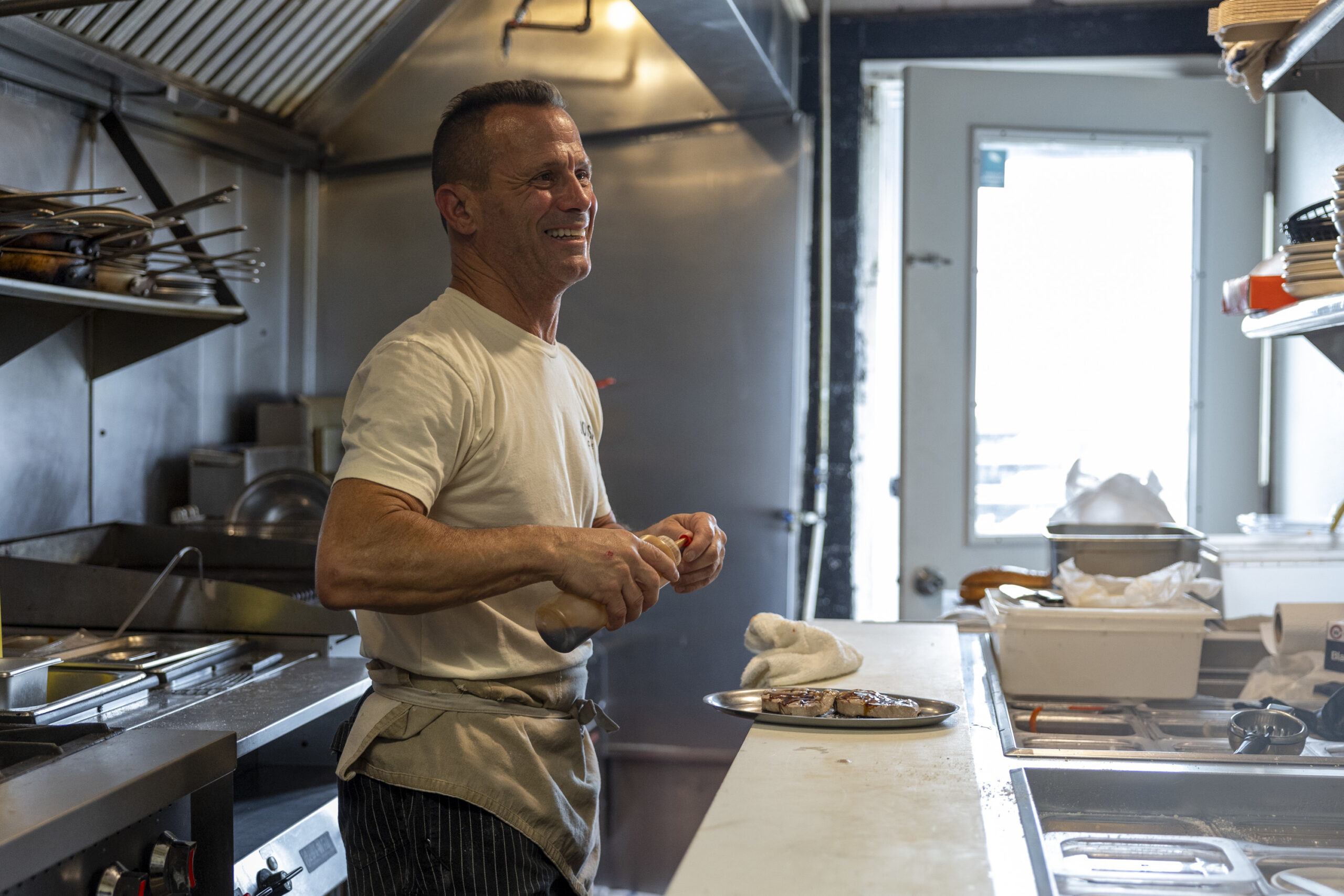
    James Savianeso, chef and co-owner of Joy & Salt Cafe, working in the kitchen in Ship Bottom, N.J., on Thursday, June 18, 2026.
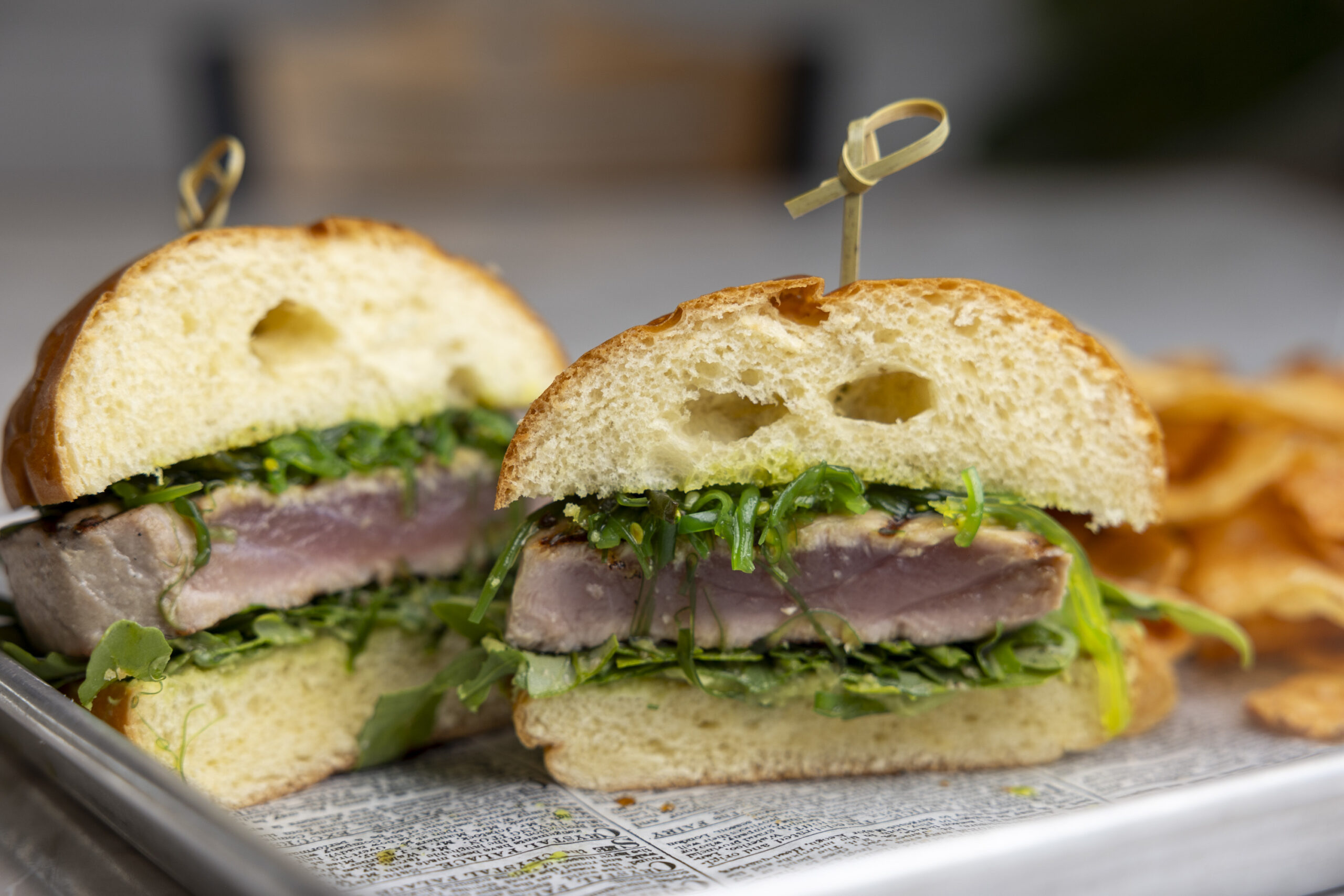
    The grilled ahi tuna sandwich at Joy & Salt Cafe in Ship Bottom, N.J., on June 18, 2026.

    That could mean a flavorful chowder made from just-dug whole clams, a slice of locally fished grilled tuna on brioche glossed in house-made Japanese barbecue sauce, or a bountiful chilled shrimp cocktail tossed in a saucy Mexican-style marinade (the secret? fresh tomato juice and orange soda). The duo routinely cook fresh-off-the-boat seafood specials for dinner sourced from the nearby docks, but the menu’s default is a homey Italian touch that comes natural to Savianeso, whose North Jersey upbringing imbues his red sauce and sausage and peppers with a nonna-esque magic. That is especially evident at lunch, where Savianeso’s chicken cutlet parm drenched in super-creamy vodka sauce may well become LBI’s sandwich of the summer.

    Joy & Salt Cafe, 816 Long Beach Blvd., Ship Bottom, N.J. 08008; 609-342-0794; joysaltkitchen.com

    Ellis’ Chicken & Crab Cakes

    Takeout can be tricky when determined diners are waiting in lines up to two hours for a seat at one of the Tide Table Group’s roster of popular restaurants on Long Beach Island (Parker’s Garage, Bird & Betty’s, Black Whale, Ship Bottom Shellfish) and in Manahawkin (Mud City Crab House, the Old Causeway Steak & Oyster House). They’ve addressed that conundrum with the creation of Ellis’ Chicken & Crab Cakes, a convenient destination for some of their greatest hits, collected in the fast-casual confines of a crisply rehabbed former antiques shop in Beach Haven that doubles as a boardinghouse for many of the company’s summer workers.

    The name offers a good clue as to the specialties: the fried chicken is the same crackle-crusted, buttermilk fried bird from Parker’s Garage. The crab cakes comes in two styles, the somewhat bready OG cakes from Mud City or the baked variation from Parker’s which I far preferred, not only because they’re gluten-free, with tapioca starch for binding, but because they’re made from sweet lump crab bound with a béarnaise sauce flavored with tarragon and Old Bay. The super-plump peel-and-eat shrimp offer a worthy, non-fried option. But this kitchen’s best assets are all about the crisp. Don’t leave without a side of deep-fried green tomato tots covered in creamy drizzles of zesty pimento cheese.

    Ellis’ Chicken & Crab Cakes, 208 N. Bay Ave., Beach Haven, N.J. 08008; 609-342-1100; ellislbi.com

    Queen City Crust

    Jersey Shore pizza has been trending toward thicker crusts in recent years, rising from the cardboard-thin rounds that have long been the boardwalk prototype to heartier, pan-baked pies with flavorful slow-fermented doughs and borders that snap with crispy cheese edges. Bakeria 1010 and Squares & Fare are two outstanding examples I’ve enjoyed in Ocean City and Somers Point, respectively. Long Beach Island has also gotten into the Detroit-style pie action with Queen City Crust, a former pop-up sensation that is now in its third year as a standalone storefront in Beach Haven.
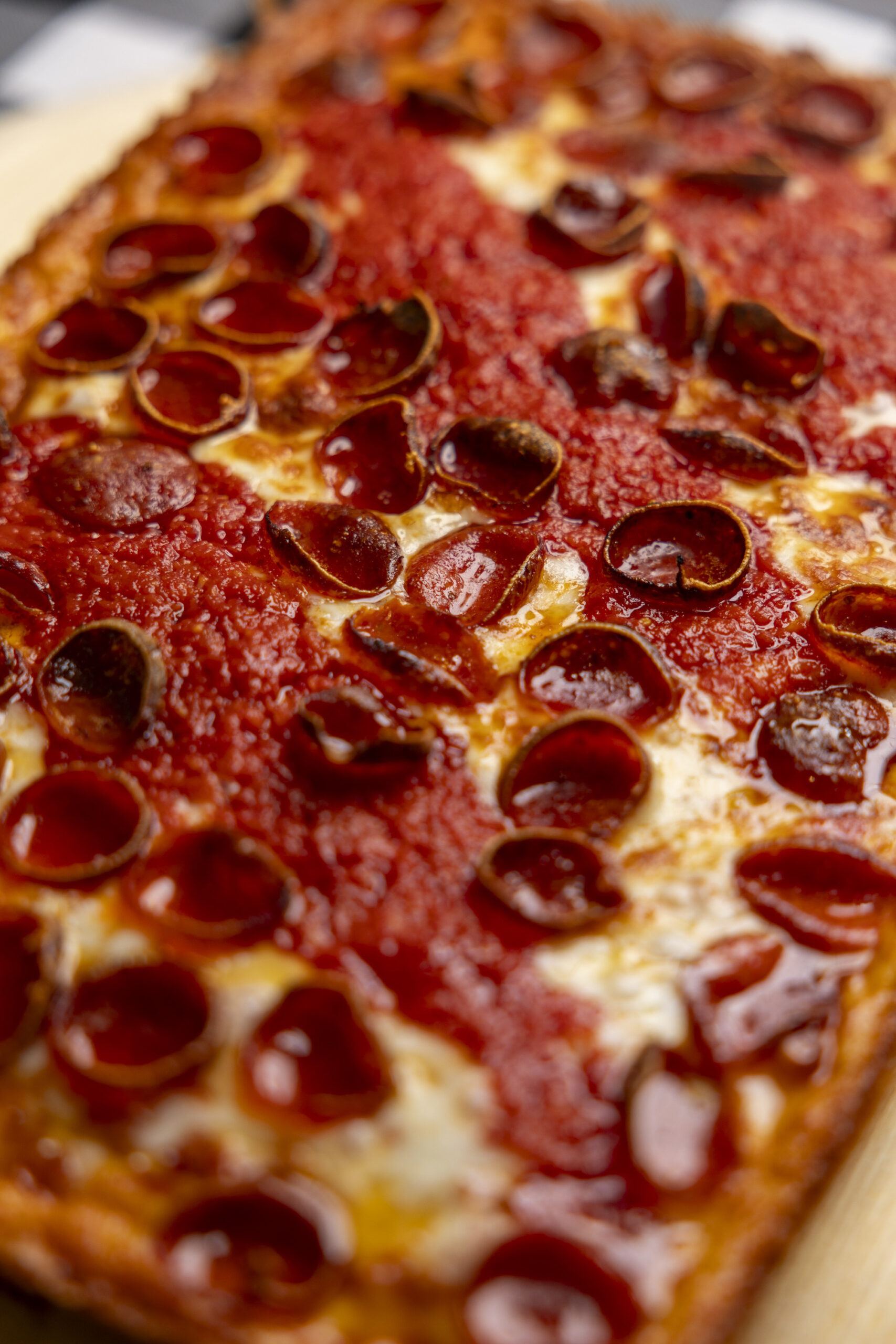
    Hot honey pepperoni pie Queen City Crust in Beach Haven, N.J., on Thursday, June 18, 2026.

    Owner Troy Sambalino, who spends his offseason running the service pass at Jean-Georges in Manhattan, says the Detroit style, which involves a slower, lower-temp prebake followed by a hot flash to finish pies to order, is ideal for beach locations with the technical limitations of a standard oven. But he still manages to crank out 200 pies on a busy Friday night, good enough to earn him the No. 1 spot in a 2025 ranking of 55 Shore pizzerias by NJ.com.

    Sambalino has a patient approach to his dough, which, after a two-day cold ferment, has both an impressively airy interior and a bottom that forms a delicate crisp against the olive oil-lined pan. Mozzarella and tangy cheddar are his cheese combo of choice, with the cheddar tucked near the edges forming a toasty crisp. One 10-by-13-inch pan can easily feed two to four people, but I appreciate that Queen City also sells its pies by the slice so you can taste a variety of toppings. From the cup-and-char pepperoni drizzled with hot honey to sausage with crunchy banana peppers, basil-topped puddles of milky burrata laced with bright tomato sauce, or a fusion pie of breaded chicken bits streaked with spicy Asian barbecue sauce, these pies offer hearty satisfaction when your teeth sink into their crusts.

    Queen City Crust, 13504 Long Beach Blvd., Beach Haven, N.J. 08008; 609-661-7769; queencitycrust.com

    Guapo’s Coffee House

    As I steadily caffeinated during my restaurant research missions up-and-down the Jersey Shore, my encounters with confectionary-sounding coffee drinks that included “dulce de leche, “dot cake,” and “banana bread” in the titles made it clear that running a cafe in 2026 is as much about thinking like a pastry chef as a barista.
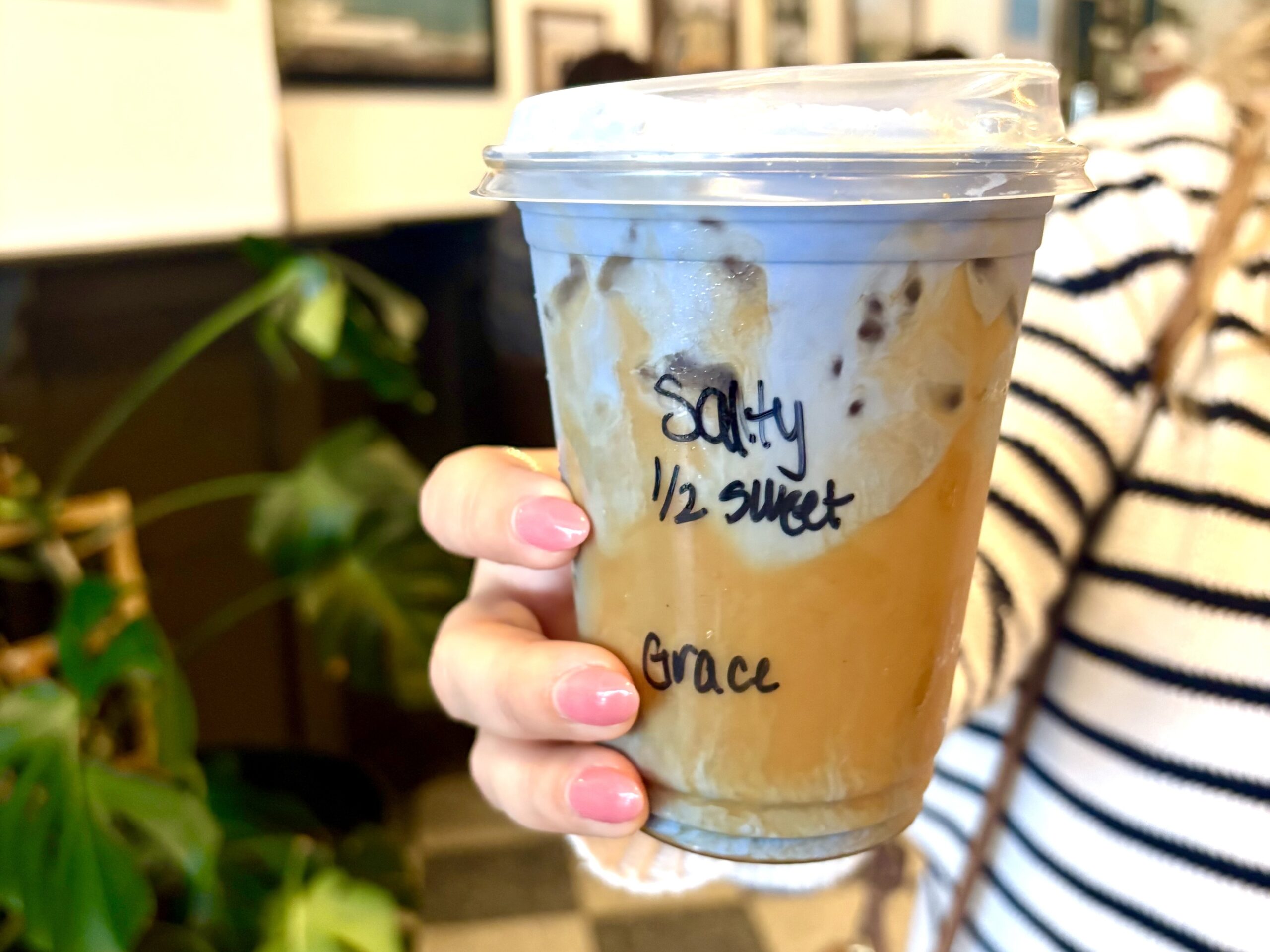
    The Salty Dog iced coffee at Guapo’s Coffee House in Beach Haven blends salted caramel-sweetend espresso with whipped cream turned blue with spirulina. It’s become a viral hit.

    In general, I’m not a dessert coffee fan. But the reason I returned multiple times to Guapo’s in Long Beach Island is because their specialty drinks still taste like they also actually include coffee. Even owner Sammy Jo Alvarez’s most viral and colorful drink, the Salty Dog (named for her pup Guapo), still delivers a toasty undertow of the house blend of Ethiopian and Colombian beans, roasted to a medium hue by Yellow Dog Roasters in nearby Manahawkin. The secret to making creatively flavored drinks that still have coffee integrity, says Alvarez, a longtime local bartender before launching her roof deck-topped cafe in Beach Haven four years ago, is balance and focusing on natural ingredients. All the add-in ingredients here are made in-house, from the sea salted caramel syrup to the top layer of fresh whipped cream (aka “cold foam”) that she turns sky blue with organic spirulina. “Basically, it looks like a day at the beach inside a cup — and people love it.”

    Guapo’s Coffee House, 106 N. Bay Ave., Beach Haven, N.J. 08008, 609-661-3504; guaposcoffee.com
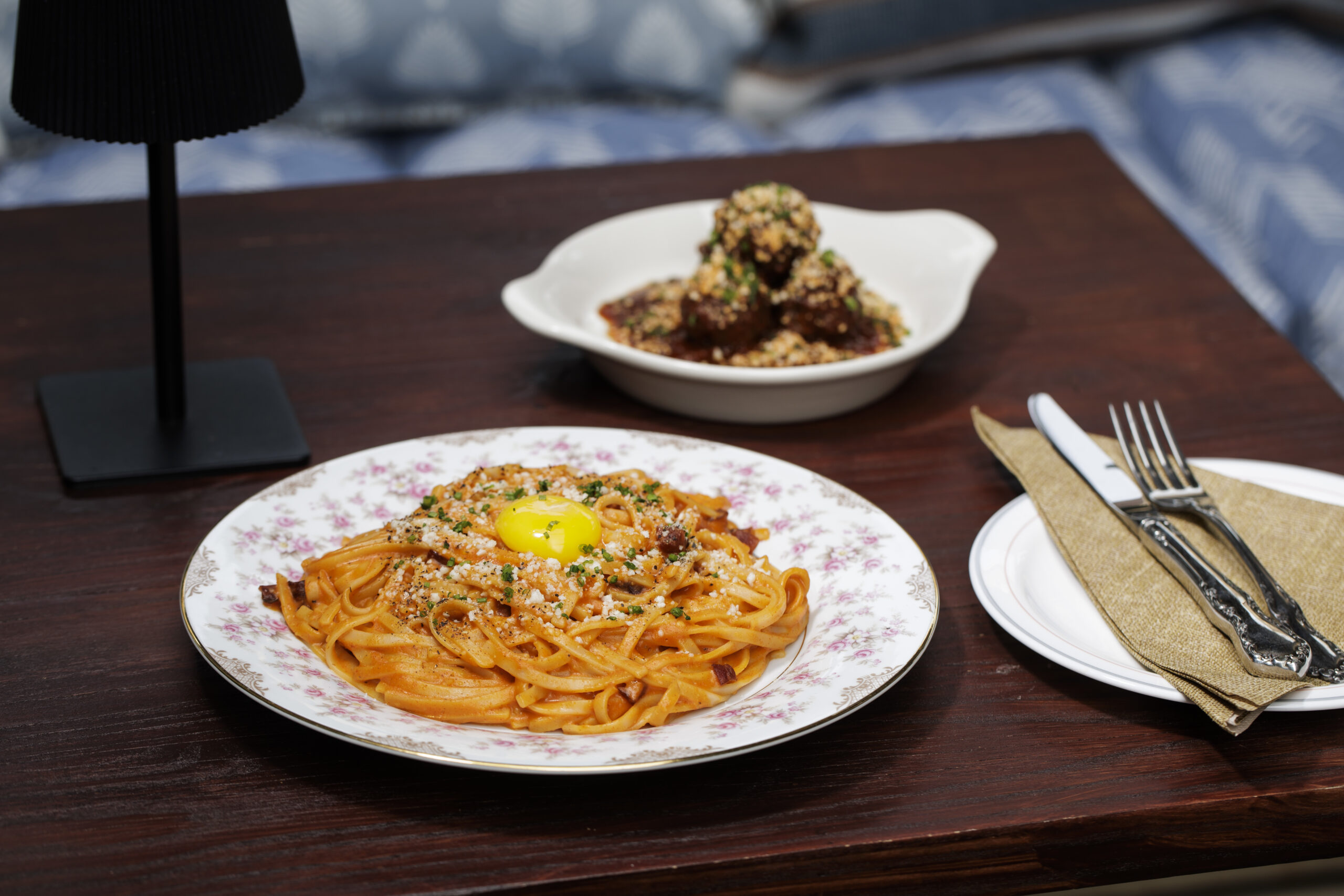
    The gochujang carbonara and Oaxacan meatballs at the Iron Room in Atlantic City, N.J. The Iron Room is hidden behind a door at Bar 32.

    ATLANTIC CITY

    Nana’s Good Eats

    If there’s a 20 minute-plus wait for your food at Nana’s Good Eats, it’s for a good reason: nothing hits the fryer before you order from this cheerful soul food hub, located on the pedestrian pavilion of Atlantic City’s Tanger Outlet mall. The wait is absolutely worth it, because Nana’s serves up some of the most delicious fried whiting I’ve had in recent memory, a huge portion of plump and lemon-scented fresh fillets sealed inside a delicate cornmeal crust, just as owner Samantha Prescott’s grandpa Dennis McDowell, a professional chef, taught her as a little girl. (“Most parents lead with how to tie your shoe, but my grandpa started by teaching me how to stir a pot of grits so it doesn’t stick to the bottom.”) Prescott’s cooking chops are also evident in her succulent fried jumbo shrimp, as well as every side I sampled. The mac and cheese retained the almost fluffy texture of perfectly cooked cavatappi while a balanced five-cheese sauce remained creamy, not broken or greasy. The tender braised collards were infused with the whiff of smoked turkey wings and a perky finishing tang.
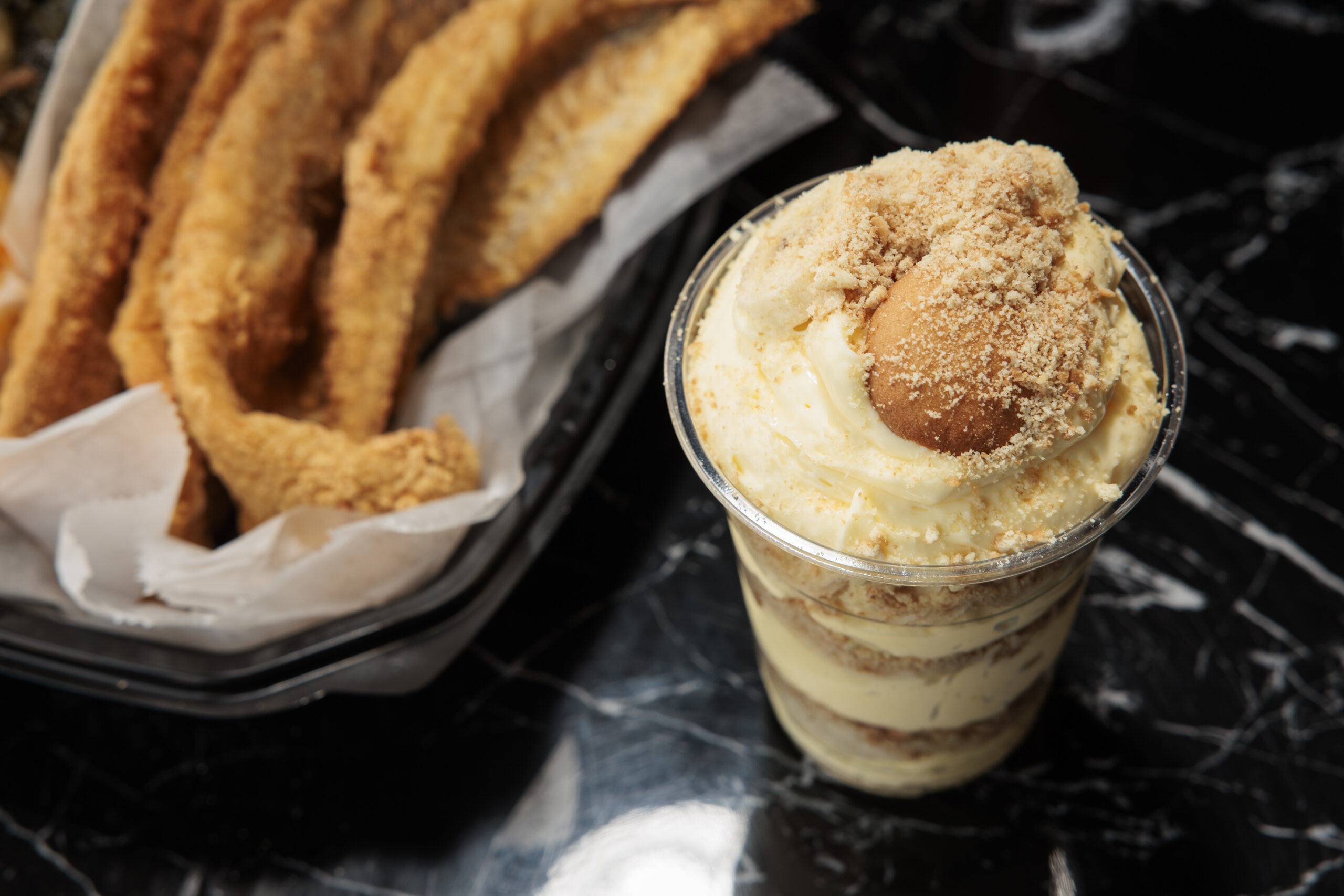
    The OG banana pudding at Nana’s Good Eats in Atlantic City, N.J.
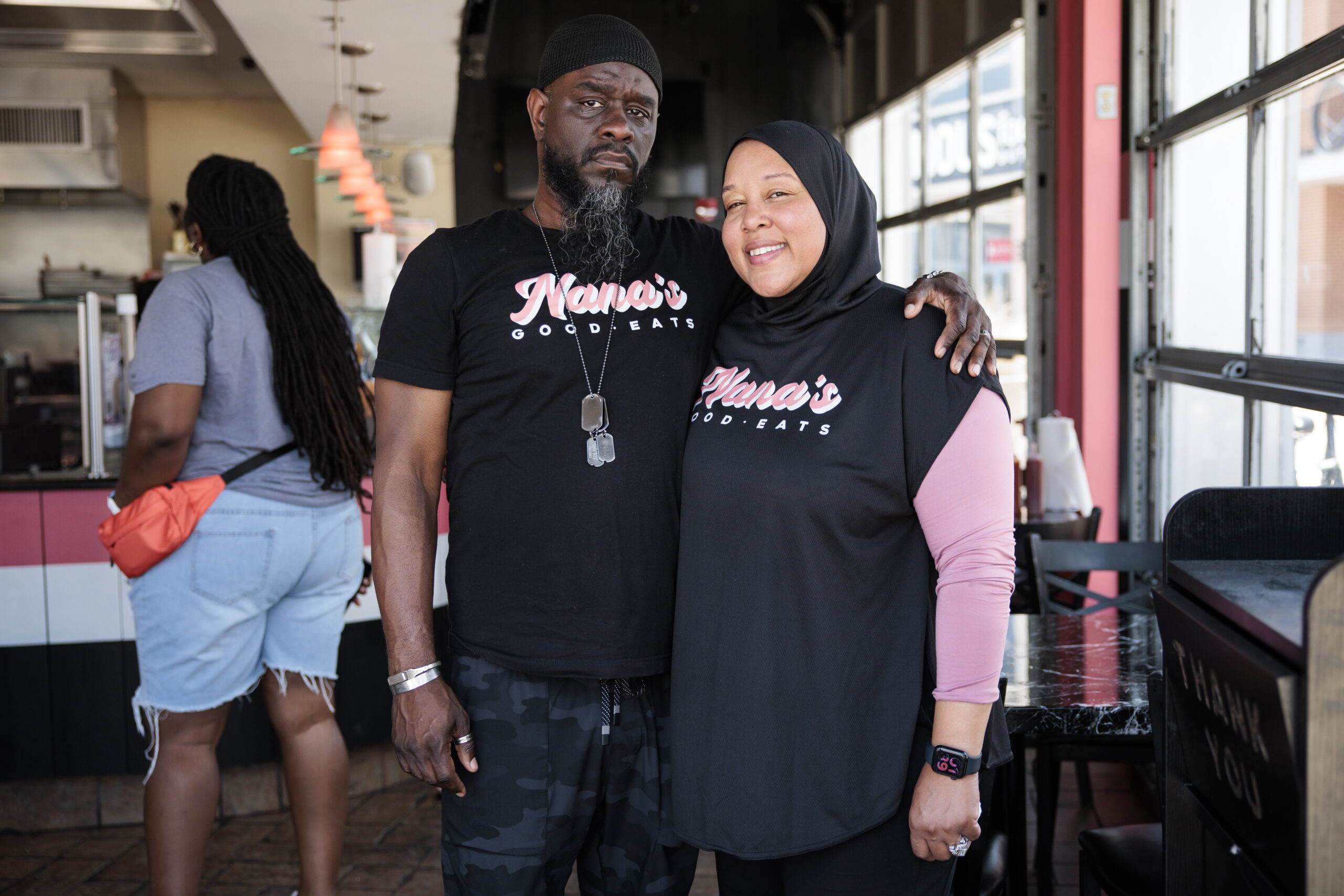
    Owners Rahman and Samantha Prescott at Nana’s Good Eats in Atlantic City, N.J.

    Prescott’s talent as an entrepreneur, meanwhile, answers all that savory goodness with the sweet indulgence of her first endeavor, Nana’s Good Puddin’. Prescott brought the customization concept of Cold Stone ice cream to the world of pudding in a popular dessert business she opened in 2020 in the Hamilton Mall, which she has since closed and merged into the Atlantic City Good Eats location. The build-your-own options here are vast, with 30 different base puddings (from classic flavors to white chocolate, pistachio, or Oreo cream), crunchy cookie add-ins and various different crumbles. I chose the OG banana pudding and was impressed by its banana-flavored intensity, but also by the meticulous manner in which it was constructed to order, with multiple layers of creamy pudding, crunch and vanilla wafer cookies being patiently added until, at last, it was finally handed over and I dove in spoon first.

    Nana’s Good Eats, 122 N. Michigan Ave., Atlantic City, N.J. 08401; on Facebook

    The Iron Room

    Do you believe in do-overs? The reboot of chef Kevin Cronin’s Iron Room, Atlantic City’s favorite hidden gastropub — now in its third incarnation and second location — might be the spark that finally gives the Tennessee Avenue development some momentum. First, you have to find it. True to its speakeasy roots (the original Iron Room was located behind a liquor store) this restaurant is tucked into an enclosed back alley patio accessed through the rear door of another establishment, Bar 32 Chocolate & Cocktails. A tall green wall on one side of the 50-seat al fresco space faces an awning-covered bar where some of the best cocktails I sipped this summer — a smooth but potent Manhattan; the mezcal-washed Storm Queen — are served in antique crystal coupes inherited from Cronin’s grandmother while a retro acoustic soundtrack sets a mellow mood.
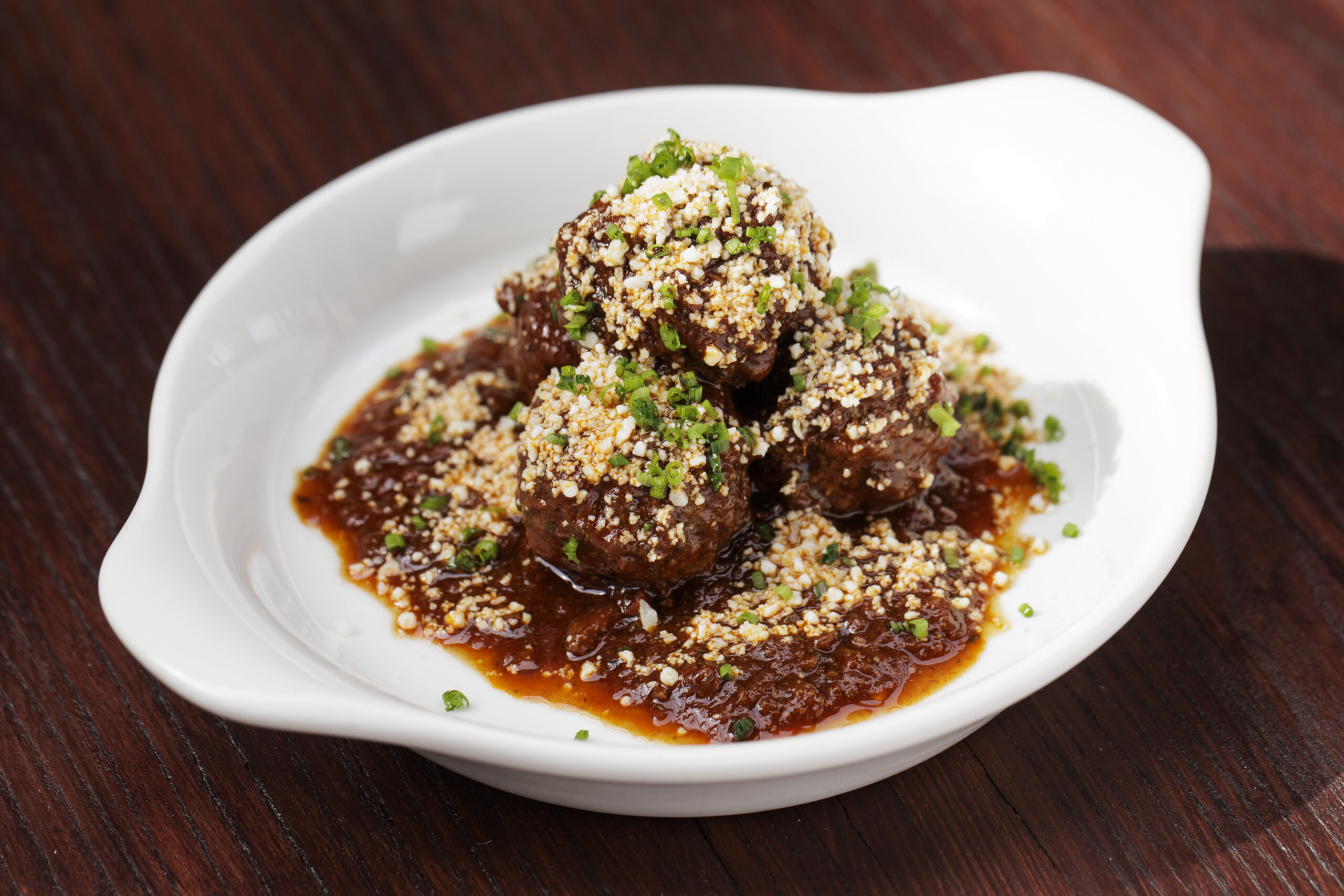
    The Oaxacan meatballs at the Iron Room on Thursday, June 11, 2026 in Atlantic City, NJ. The Iron Room is hidden behind a door at Bar 32.

    The small plates emerging from the shipping container kitchen are pure fusion fun, with bold flavors that resurrect some established Iron Room hits, including a thick-cut hunk of candied Nueski’s bacon, truffled udon mac and cheese, and a tamari-charred hanger steak fanned over brussels sprouts. Cronin’s new creations are equally bold. The spicy Oaxacan chorizo meatballs glazed in red salsa and shavings of Bar 32 chocolate were a favorite, along with the barbecue sauced boneless Korean-fried chicken and a rich pasta carbonara blushing with Korean gochujang spice. I would have loved the shrimp toast had the top layer of crustacean paste not been turned an unappetizing gray by the addition of black garlic. Next time, I’d consider preordering one of the menu’s large-format specials: a spatchcocked whole barbecue chicken with sides; a “big ass whole snapper” with tostones, or the Ron Swanson special (a rib eye, deviled eggs, and a flight of Lagavulin) that was also an old Iron Room “iykyk” draw. Hopefully, this time it will take.

    The Iron Room, 121 S. Tennessee Ave., Atlantic City (enter through Bar32 Chocolate, and head to back alley through back door); instagram.com/ironroom_ac

    Bar 32 Chocolate & Cocktails

    There’s no dessert served at the Iron Room by design. The separate and independent bar that fronts it has that course covered. Nicole Callazzo’s revamp of the project formerly known as Made Atlantic City Chocolate Bar has kept the original concept’s ambitious bean-to-bar chocolate production in place as the anchor for the chocolate-themed sweets menu. While there are more sophisticated chocolatiers in the region, the quality of Callazzo’s small batch chocolates made from ethically sourced cacao, which can take up to five days to make, is satisfying in a straightforward way. You can sample a little bit of several specialties on a tiered platter, which brings multiple shades of chocolate bars, double fudge brownies, chocolate mousse, and various bonbons. Try it while sipping a martini infused with the bar’s own 60% cocoa chocolate. The baked-to-order brown butter cookie skillet is also a popular choice here, if you have an extra 15 minutes to wait. But I’d return especially for one of the Bar 32 whiskey flights, which pair three different pours of Michter’s (or Whistle Pig) whiskey with different chocolates for $40. Considering the quality of the spirits, it’s a fair deal.

    Bar 32 Chocolate & Cocktails, 121 S. Tennessee Ave., Atlantic City, N.J. 08401, 609-248-6960; bar32chocolate.com
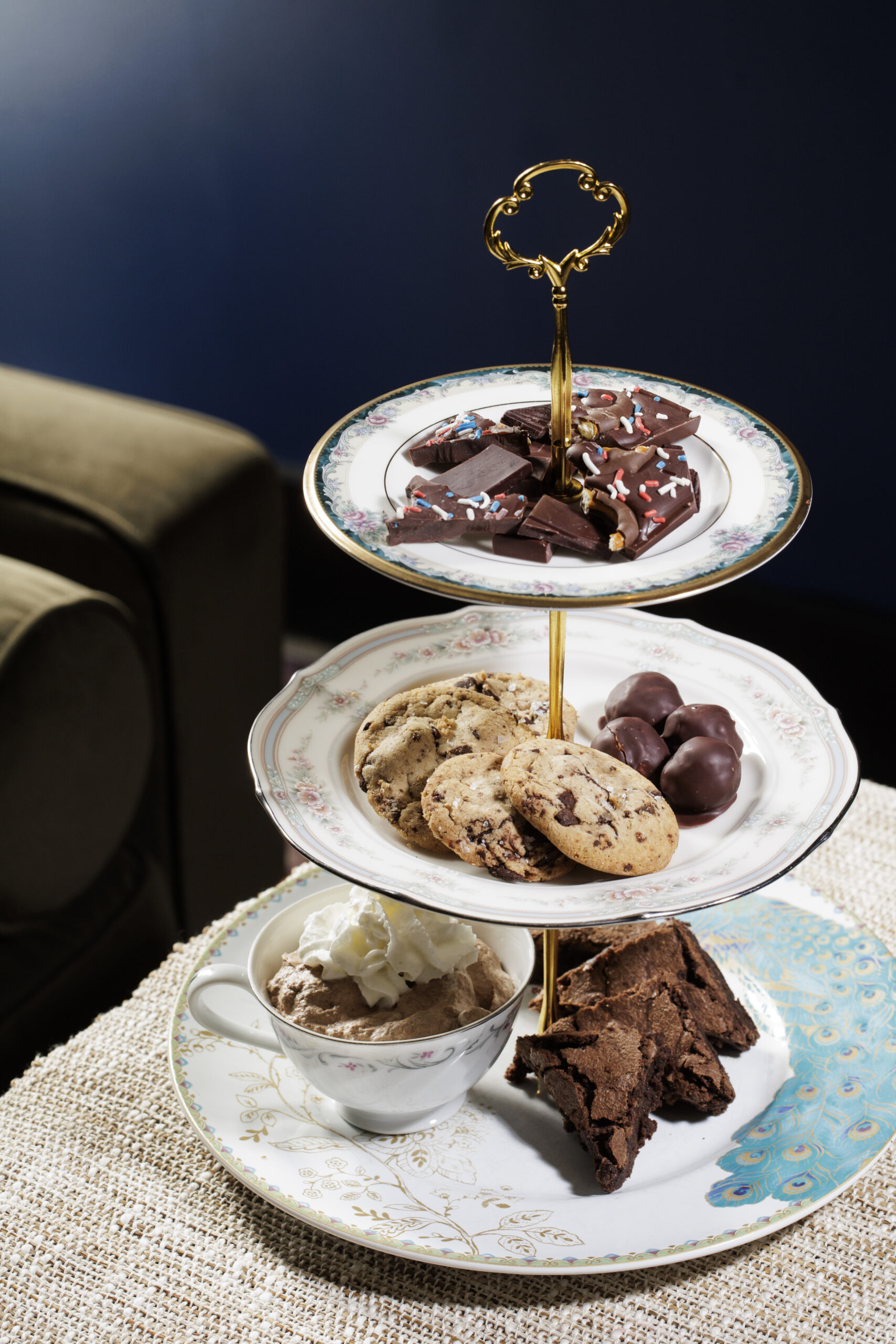
    “A little bit of everything” at Bar 32 on Thursday, June 11, 2026 in Atlantic City, NJ. Bar 32 offers bean-to-bar chocolate, handmade desserts, and craft cocktails.

    Moments at Scannicchio’s

    Some places are all about the food. Others revel in quirky ambiance. You can get a bit of both at this Atlantic City sibling to Scannicchio’s, one of my favorite old-school Italian haunts in South Philly. The AC experience offers the split personality of two adjoined spaces: the charming intimacy of a dark corner barroom lit with Christmas lights, and a bright sports bar lounge next door where a DJ spins retro hits for a handful of dancers while spillover dinner crowds sup at high-tops in the glow of large TVs.
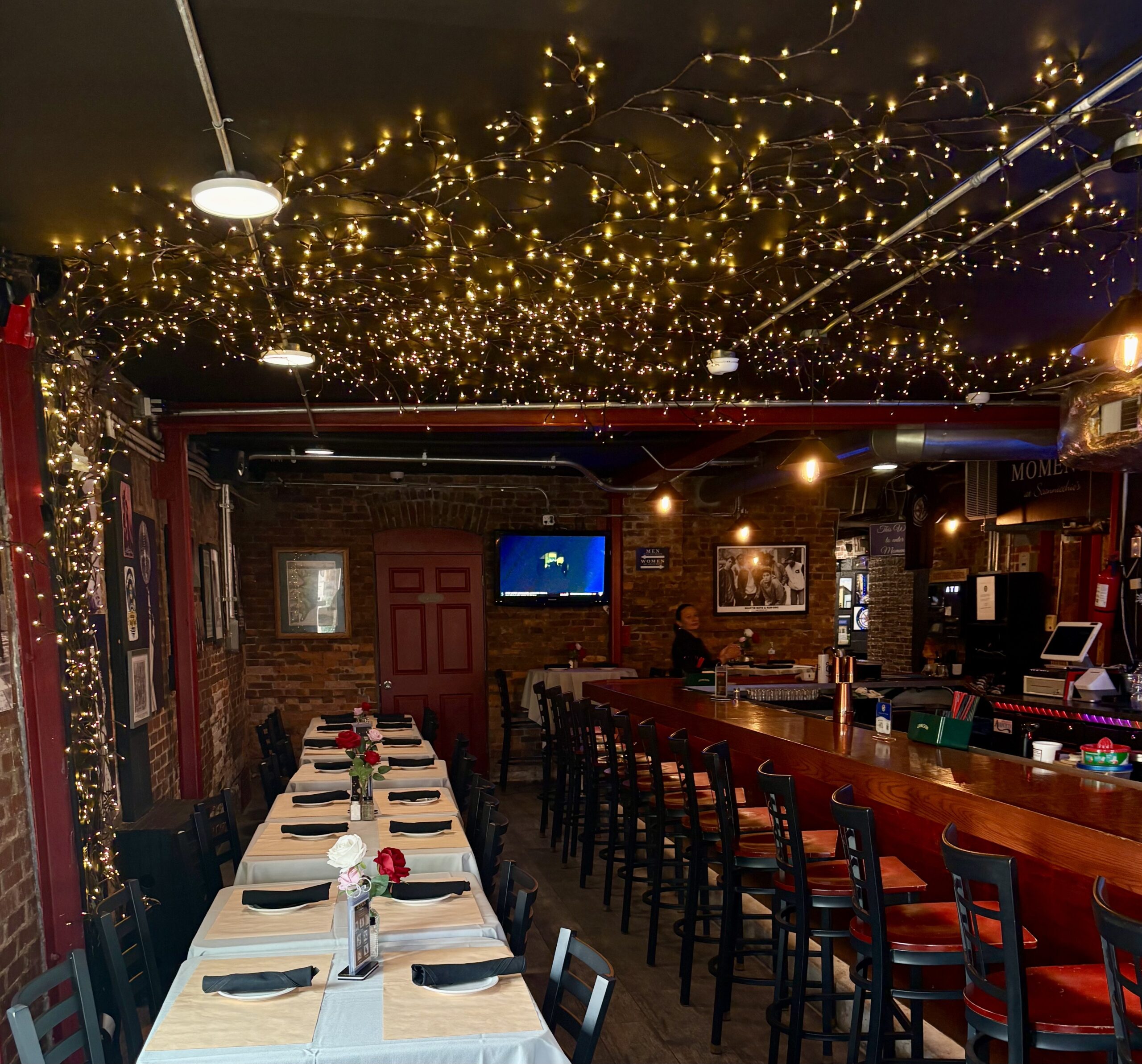
    The corner dining room of Moments at Scanniccho’s in Atlantic City is darker and more intimate than the neighboring lounge.

    A tender and massive double-cut pork chop Siciliana buried beneath a zesty gravy of cherry peppers, onions, olives, and mushrooms was the hands-down highlight of our meal. The big menu also showcases several familiar favorites from the South Philly original (clams casino, a stuffed artichoke, the sausage and figs app), although it was not cooked with the same consistency and finesse. Even so, we enjoyed the experience. And I’ll especially treasure the moment our larger-than-life server (who had a bear hug for every one of the restaurant’s many regulars) offered a memorable logic for his general preference of pasta shape with entrees: “Why should I waste calories twirling spaghetti when I can just get straight to it with penne? Stab and eat! Stab and eat!” Such wisdom alone is worth the visit.

    Moments at Scannicchio’s, 2647 Fairmount Ave., Atlantic City, N.J. 08401, 609-344-5338; momentsatscannicchios.com
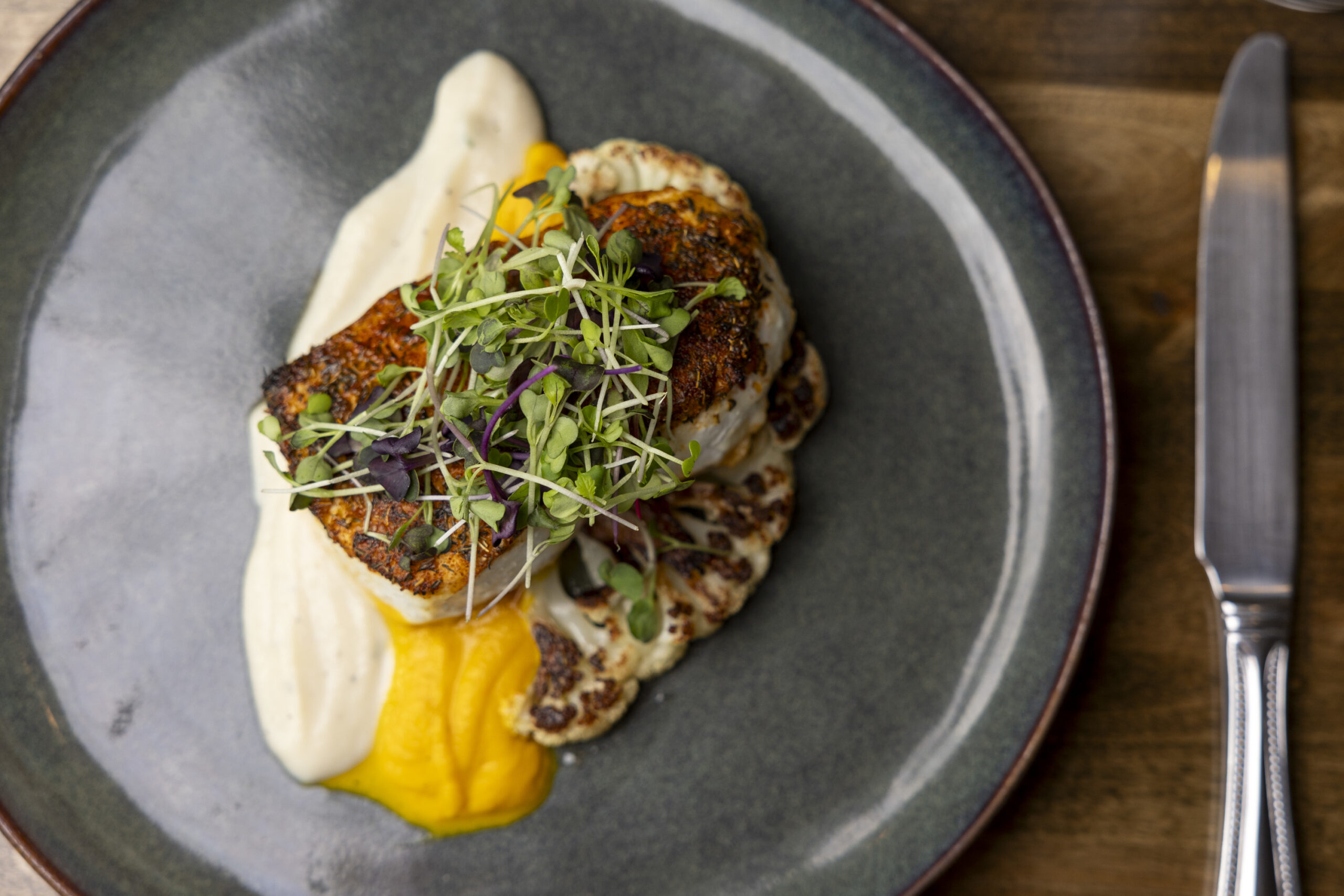
    The halibut entree at Rustico in Ventnor City, N.J., on Wednesday, June 10, 2026.

    VENTNOR

    Rustico

    Few restaurant couples have been able to create evocative dining experiences in small BYOB spaces through DIY design as deftly as Tanya and Petar Petrov. A veritable lemon grove on the ceiling of their debut Italian hit last year, Martina’s, conjured a glimpse of the Amalfi Coast on Atlantic Avenue. This year, they’ve turned to a closer source of marine inspiration — the bay beside their Ventnor home — for the makeover of Petar’s former Cafe Velo into Rustico, a naturalistic dinner cove that wraps diners in plastered wall montages of foraged driftwood, sea moss, and rocks. The menu is still decidedly Italian. While some Ventnorians have complained to me about menu overlap between the two restaurants, the fact that waiting lists can exceed 300 names for those hoping to get into 48-seat Martina’s means there is a legitimate demand for 80 more seats at Rustico (plus 28 more outside), where devotees can order the tried-and-true arancini, linguine with vongole, and chicken Parm.
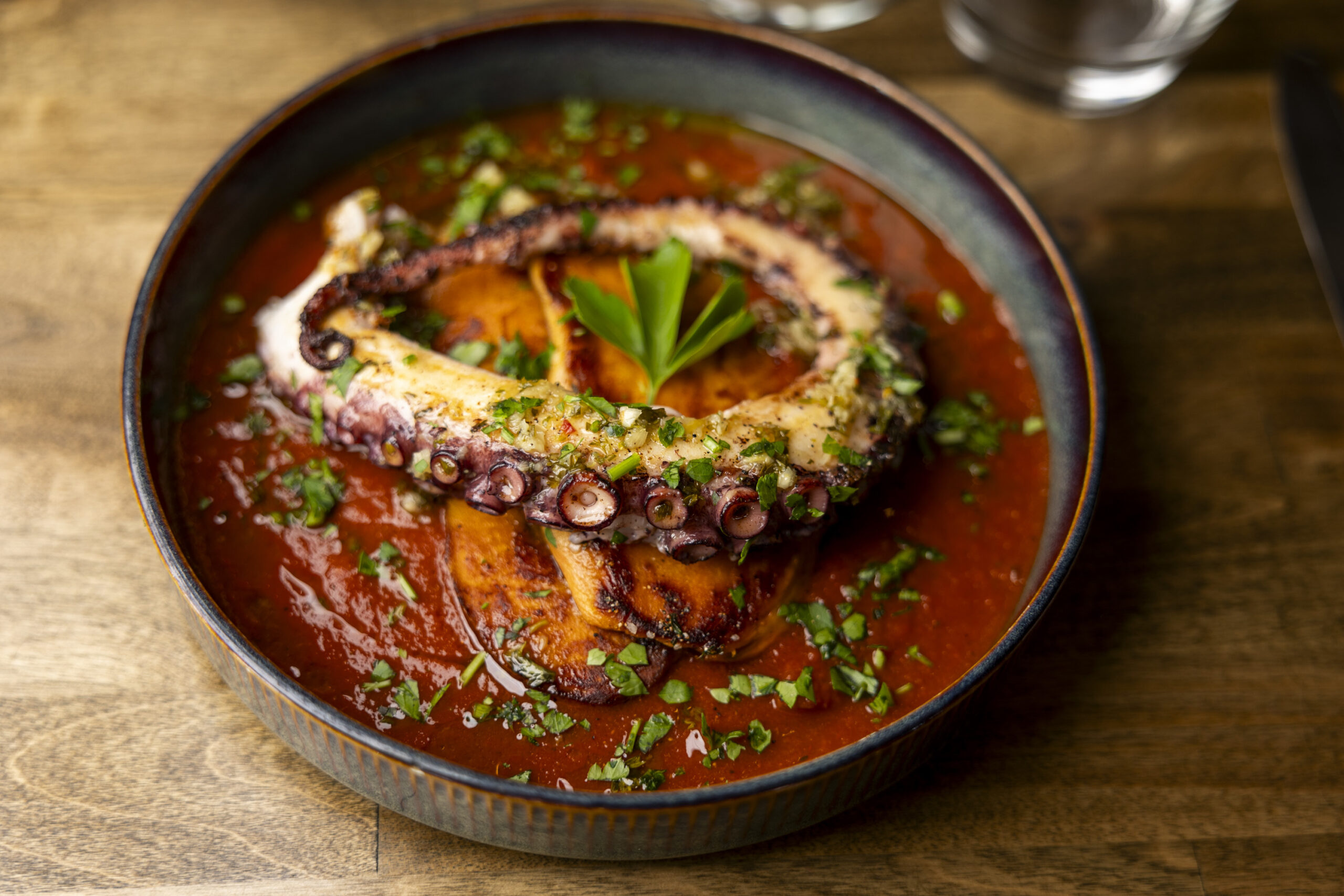
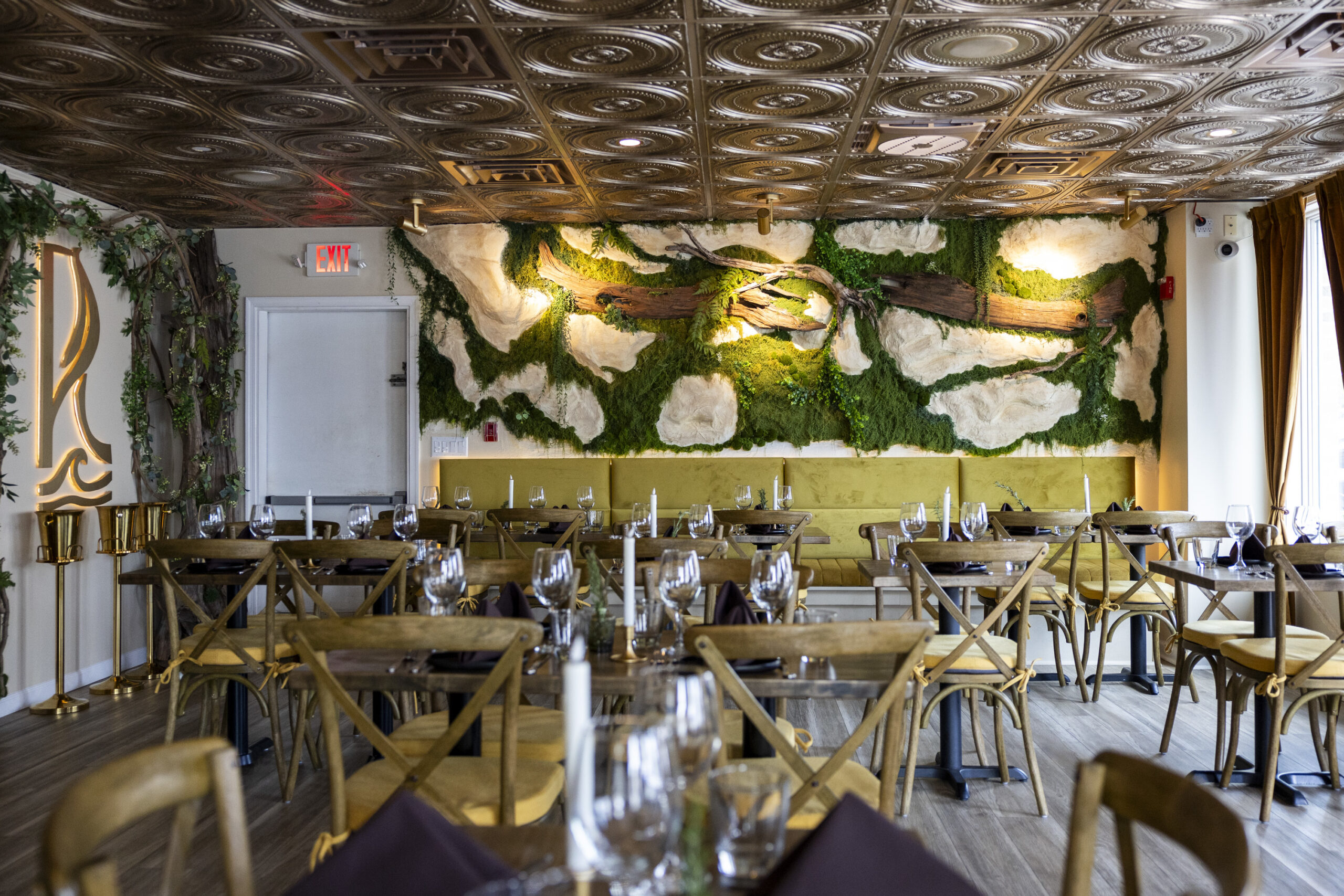
    The octopus dish at Rustico in Ventnor City, N.J., on Wednesday, June 10, 2026.
    The inside of Rustico in Ventnor City, N.J., on Wednesday, June 10, 2026.

    The chicken Parm was the least compelling thing we ate at Rustico. An unconventional starter of grilled octopus curled over a platform of sweet potato turned out to be delicious, the potato’s soft sweetness contrasting the texture of the meat while balancing the savory tomato sauce. That dish is a legacy of Cafe Velo’s early days, when the tiny kitchen would cross-utilize ingredients between the popular breakfast and dinner menus. Rustico, which expanded both its dining rooms and kitchen, has capacity now to undertake ambitious specials like broiled lobster and linguine feasts for two (very limited nightly). A soulful short rib and shiitake ragù was a hearty winner over fresh pappardelle made by Haddon Township’s Severino, whose owner is the Petrovs’ neighbor.

    Fresh seafood also remains a strength, with entrees like blackened ahi tuna with red bliss potato hash and hollandaise. A moist and meaty halibut set over two-toned purees of cauliflower and carrot was also fantastic, a special-turned-standby from chef de cuisine Lorenzo Hernandez. Of course, I ordered at the very moment this kitchen ran out of halibut. Luckily, Petar had a spare portion in the fridge at nearby Martina’s, and he retrieved it just in time for this busy kitchen not to miss a beat: “That’s the beauty of having two restaurants so close,” says Petar. “Stuff happens!”

    Rustico, 6525 Ventnor Ave., Ventnor City, N.J. 08406, 609-727-0499; rusticoventnor.com
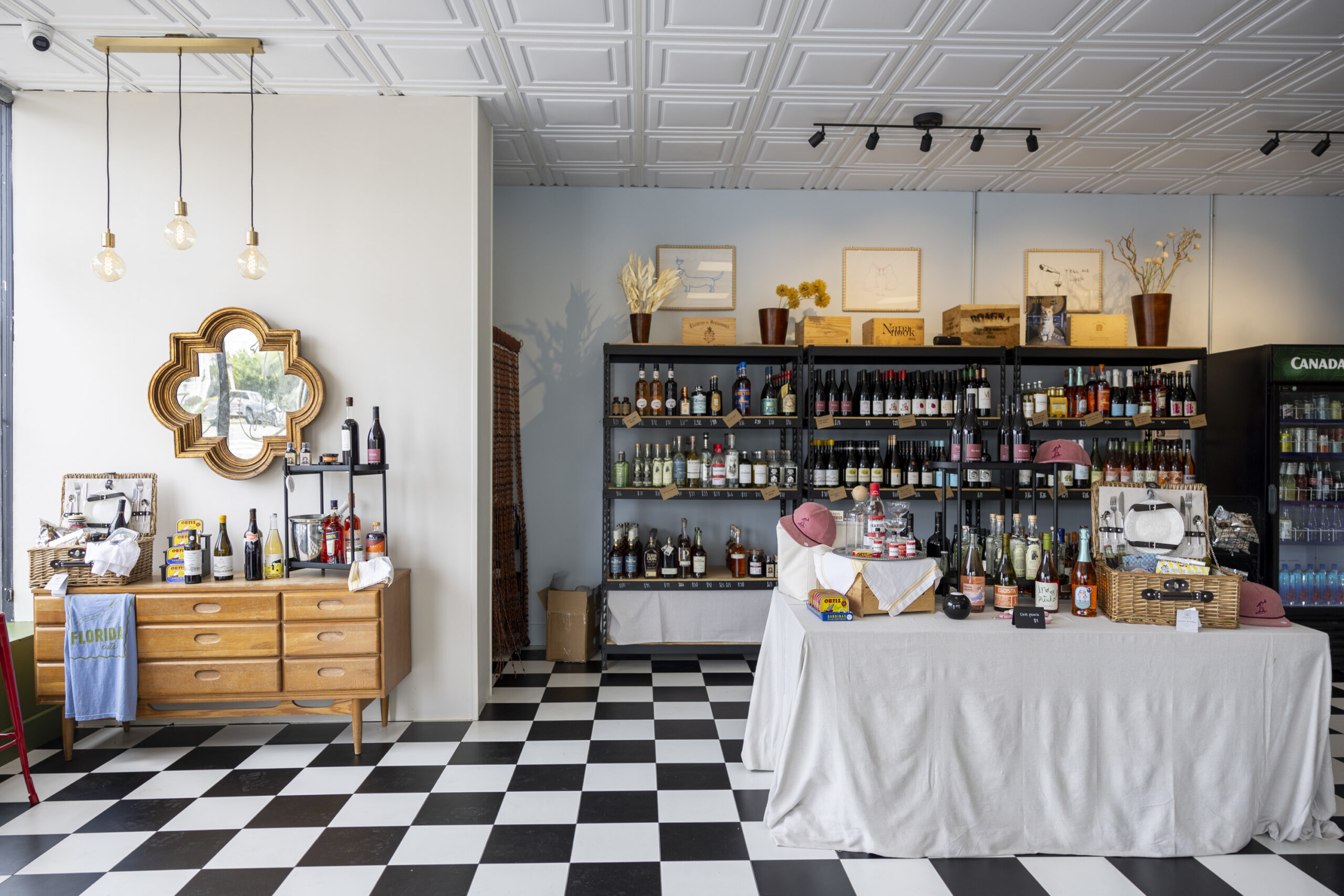
    The inside of Florida Cuts in Ventnor City, N.J., on Wednesday, June 10, 2026.

    Florida Cuts

    Cookie Till of Steve & Cookie’s bought the half-century-old Florida Cold Cuts & Liquors deli in 2022 and began to reshape it to her vision. What was a gradual makeover the first few years, most notably upgrading the sandwiches and bottle selection, became a wholesale change this spring when Till removed “cold” from the name and replaced the classic sub shop format with an artisan sourdough bakery turning out a lineup of grab-and-go sandwiches built on two kinds of focaccia and sesame-speckled semolina baguettes. The longtime tuna salad and Italian hoagie crowd is not pleased: “Cookie really took a good thing … and turned it into something nobody needed,” a reader wrote me in a direct message on social media.
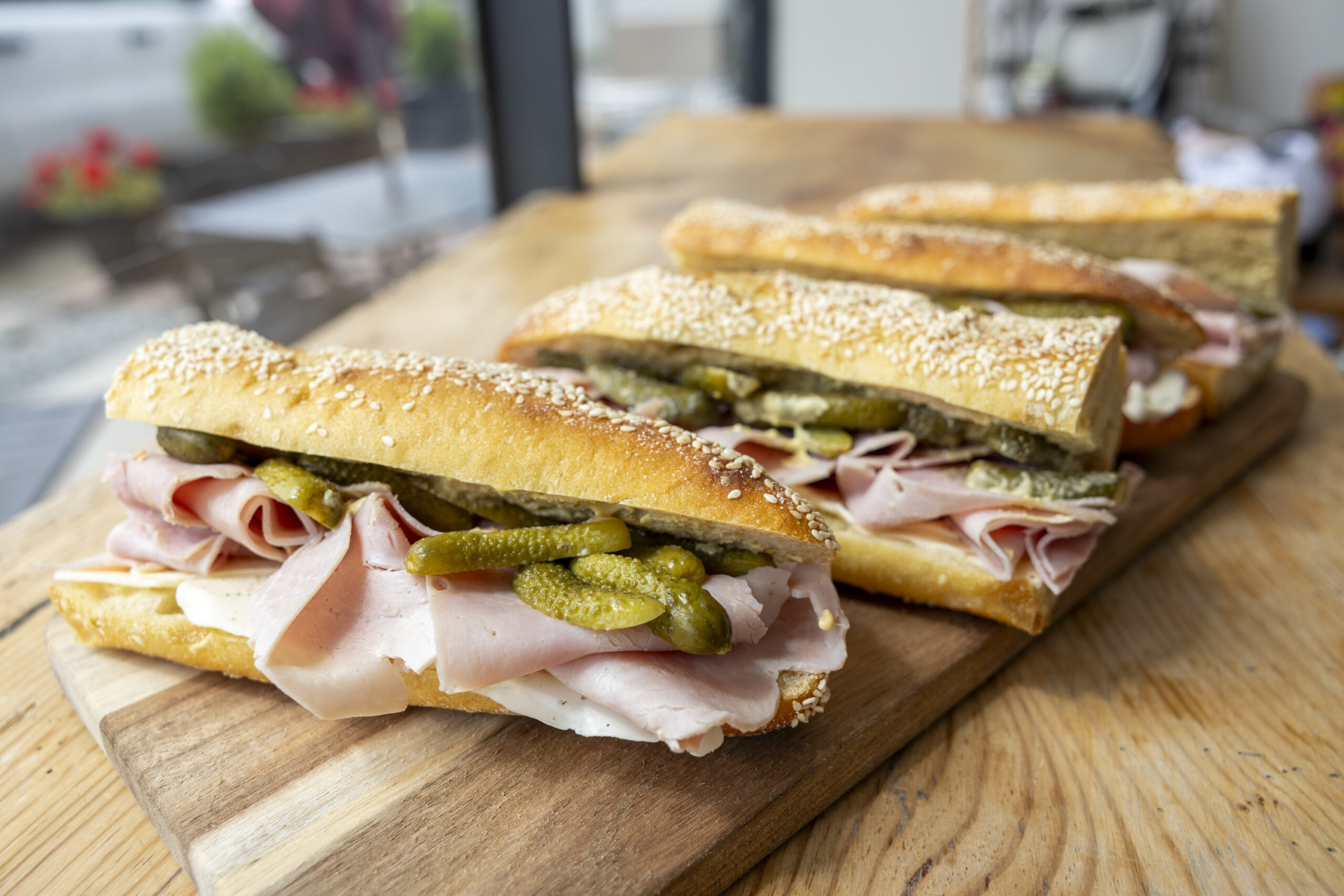
    The ham and butter baguette at Florida Cuts in Ventnor City, N.J., on Wednesday, June 10, 2026.

    I loved the old corner shop’s house-baked tavern ham sandwiches as much as anyone, but I disagree. What makes a smart restaurateur like Till so invaluable is her willingness and wherewithal to take risks to do things differently. Till has a track record of creating top-notch progressive concepts people simply didn’t realize they needed until she made it happen, from a craft coffee shop in Ventnor No. 7311 to an interactive organic farm with a philanthropic mission at Reed’s Farm. There are plenty of places to get a classic sub on Absecon Island, but there is nothing like the new Florida Cuts, where lead baker Santina Renzi (a longtime key contributor at Her Place Supper Club), consultant Jon Taus, and sourdough specialist Victoria McHugh are working with Till’s partner Kim Richmond to create stellar loaves made from flour milled from local grains that result in bread with integrity and flavor. They’re used for original sandwiches that are largely outstanding, from the minimalist focaccia laced with mortadella, ricotta, and pistachios (all crackly crust and lush stuffing richness), to the freshly house-roasted turkey layered with Steve & Cookie’s signature “ugly tomato salad,” Gorgonzola, and crispy shallots. The tuna salad fragrant with lemon zest and crunchy peperoncini rings is a sleeper hit, while the ham and butter on a sesame semolina loaf can compete with Philly’s best.
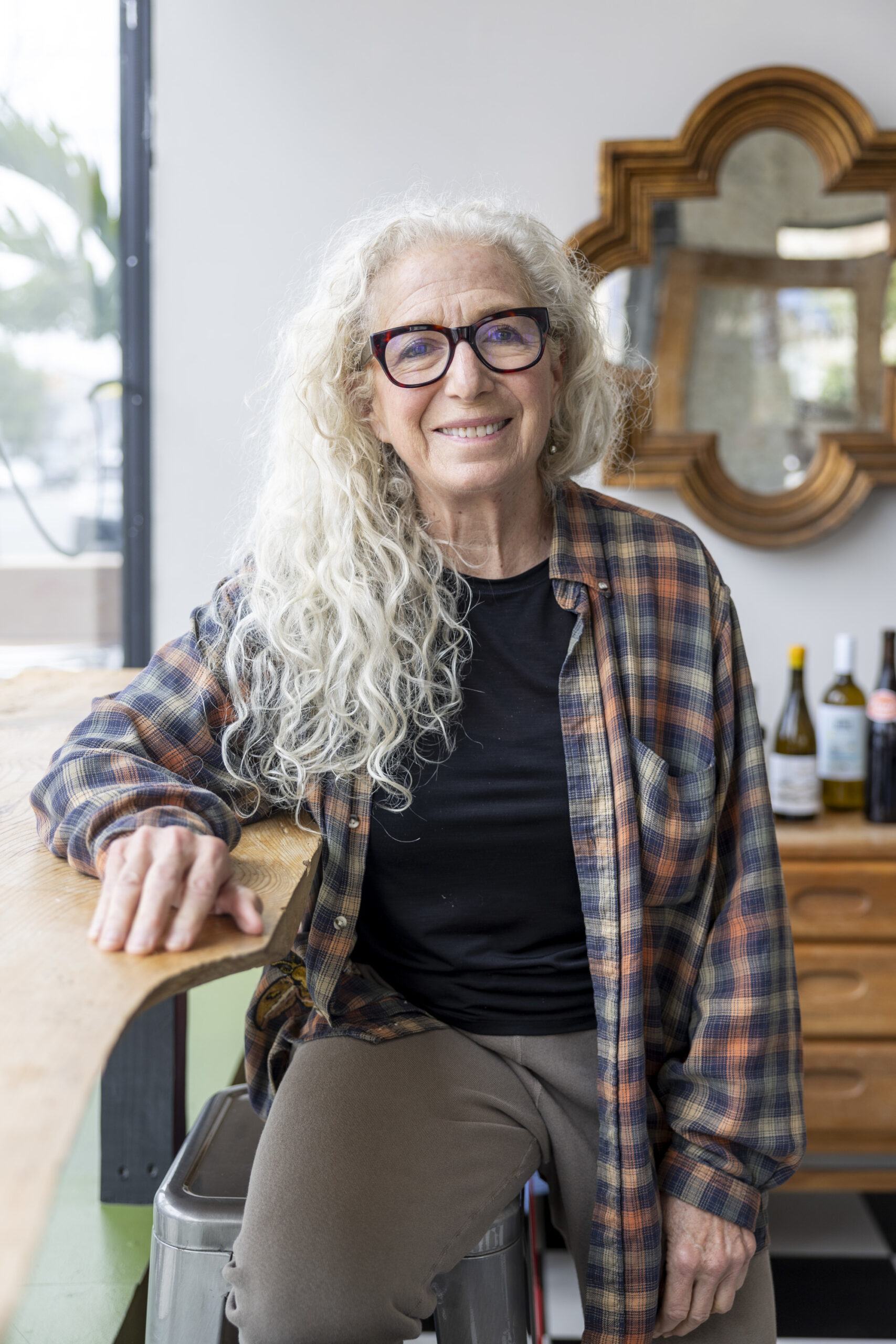
    Owner Cookie Till at Florida Cuts in Ventnor City, N.J., on Wednesday, June 10, 2026.
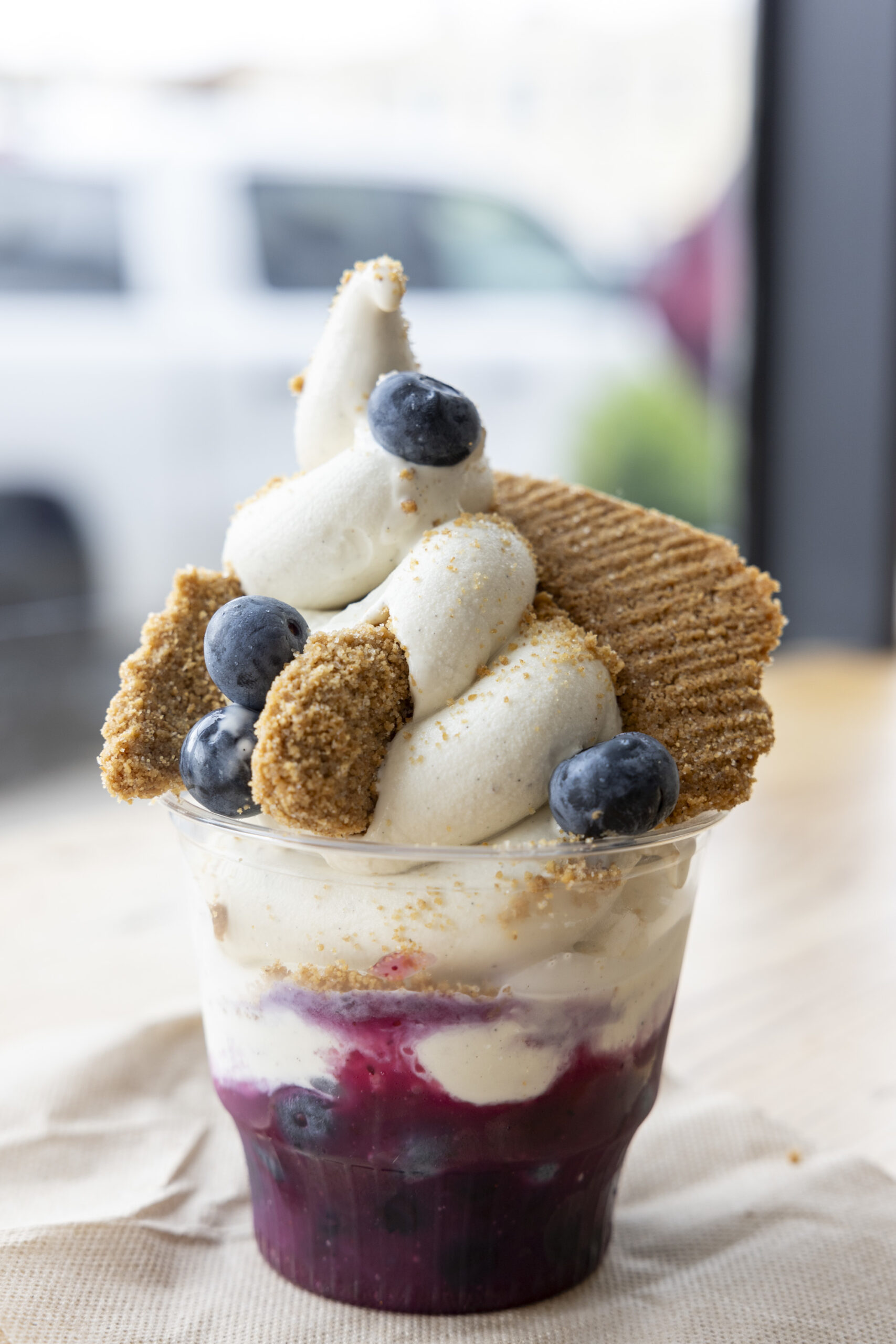
    The soft-serve sundae with Steve& Cookie’s blueberry pie at Florida Cuts in Ventnor City, N.J., on Wednesday, June 10, 2026.

    My one disappointment was the cutlet sandwich, which didn’t have nearly enough Caesar salad inside. But there were so many consolations: a fridge case stuffed with local farmstead cheeses; focaccia flatbread topped with butter-poached clams; warm rounds of fresh-baked sesame tahini cookies; shelves stocked with quality spirits and affordable natural wines. There’s also soft-serve now, offered as a sundae layered with Cookie’s famous blueberry pie. Now I definitely need that, even if I didn’t know it before I walked in the door.

    Florida Cuts, 7301 Ventnor Ave., Ventnor City, N.J. 08406; floridacuts.com

    MARGATE

    Tideline

    The scene at Tideline on the bay behind Margate City, where full restaurant service is offered on deck to 30 moored boats and 12 Jet Skis at a time, could make anyone have yacht envy. But this splashy yearling from the family behind Tomatoes — an unabashed gesture to the city’s ever more ritzy denizens — has room on its multifloor 240-seat bar complex for everyone else to linger, nibble, imbibe, and observe. One of the area’s most spectacular bay perches for sunset views is an undeniable bonus. Given the swanky setting, the food from chef Carlo Marsini’s kitchen is a notch better than it has to be, from the generously stuffed truffled cheesesteaks and chicken Italiano cutlet sandwiches to the shot glasses stuffed with fried soft-shell crab halves dunked into an avocado green crema sparked with poblanos.
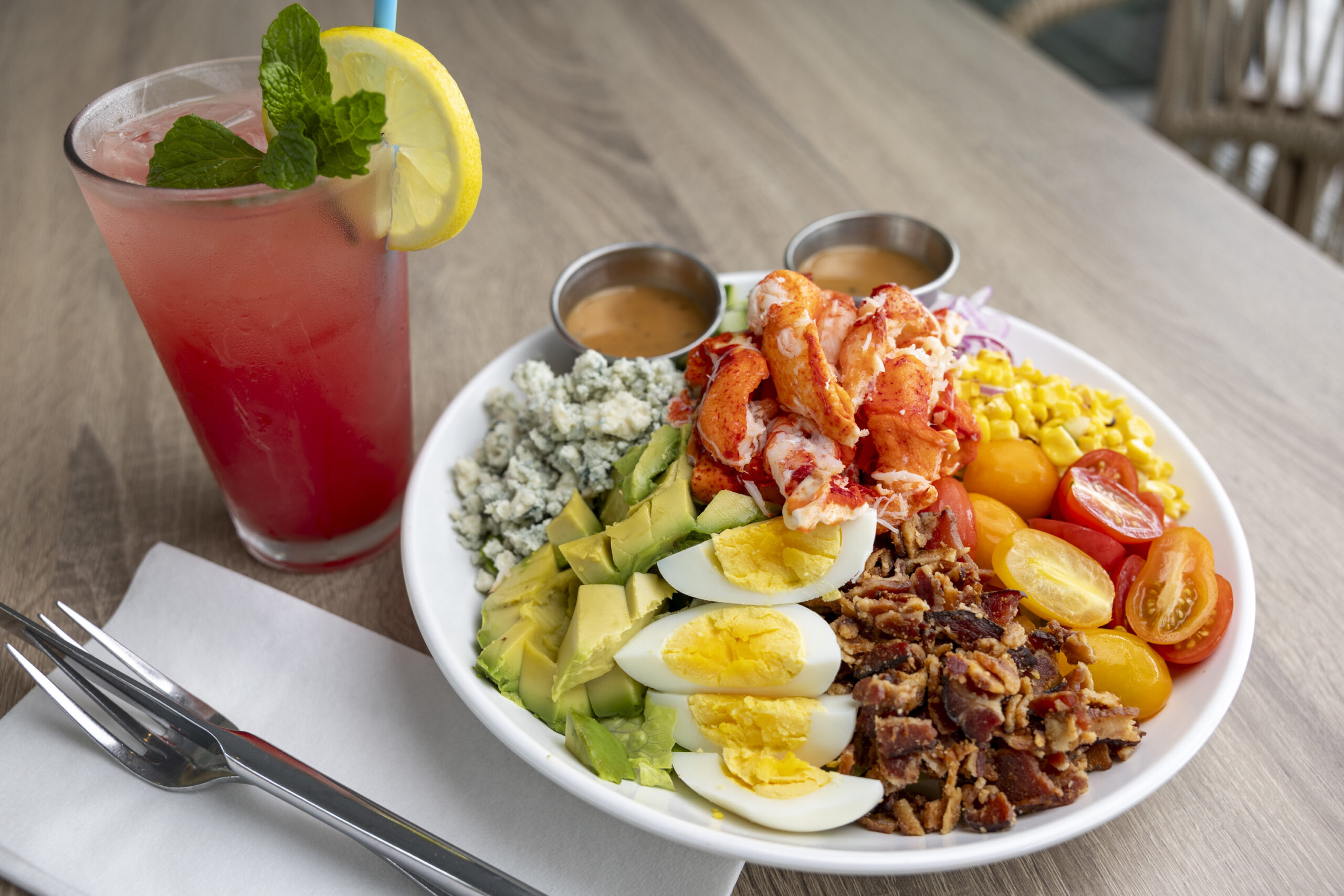
    The lobster Cobb salad at Tideline in Margate City, N.J., on Wednesday, June 10, 2026.

    I’d definitely return for the generous lobster Cobb salad and a Dockside cocktail of watermelon juice spiked with Tito’s. But don’t get too ambitious. The items we ordered from the large plate section, chicken kebabs and a $32 coffee-rubbed pork chop, were incinerated by the grill chef. The drink menu has a danger zone, too, with a cocktail called Liquid Art. It’s made with trendy Clase Azul Gold tequila and a chile pepper but what’s spicy is the price tag of $1.1 million. That’s because this drink comes with a 39-foot speed boat. That may be the stuff yacht club dreams are made of for some, even if there’ve been no takers yet. But unsurprisingly, this land-loving mezcal fan wasn’t even tempted.

    Tideline, 9317 Amherst Ave., Margate City, N.J. 08402; 609-350-6717; tidelinemargate.com
  • On July 4, 1776, a world-changing Declaration rings out from Philadelphia

    On July 4, 1776, a world-changing Declaration rings out from Philadelphia

    Philadelphia. July 4, 1776.

    Independence is real. Philadelphia rejoices.

    And a printer awaits a declaration.

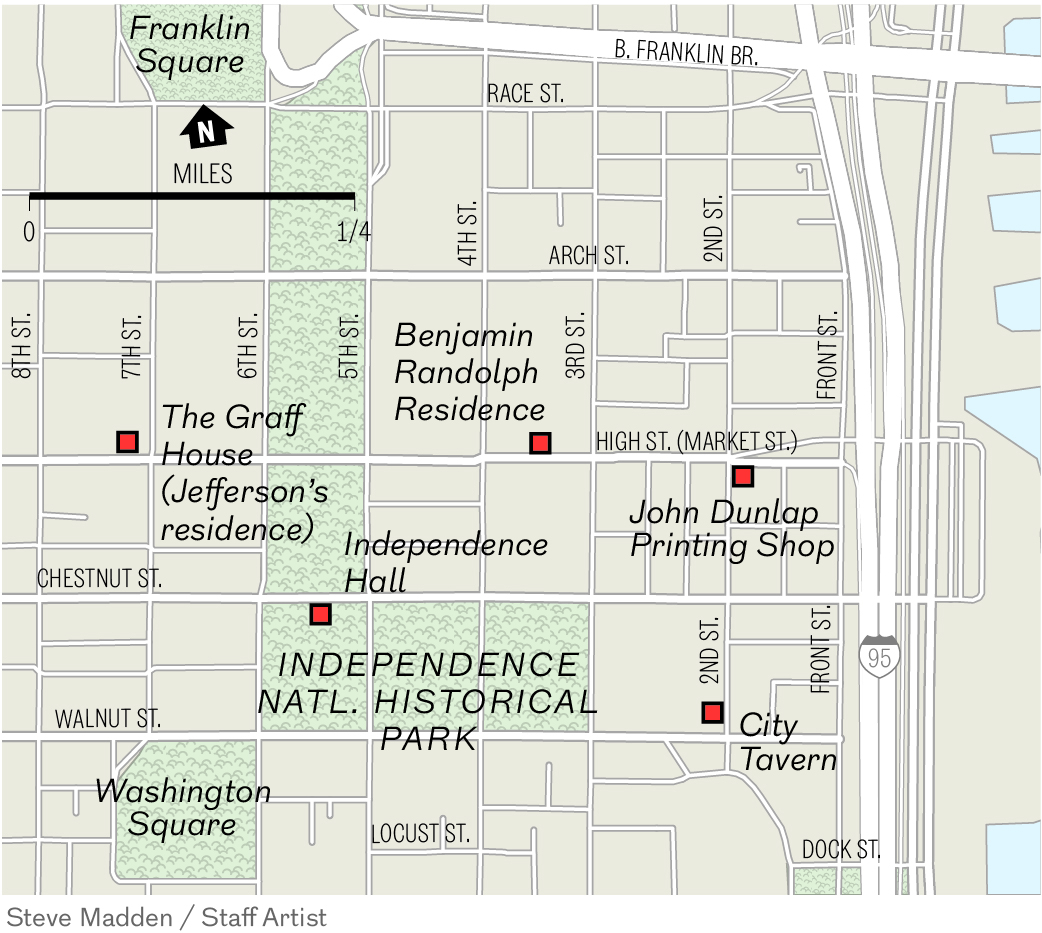
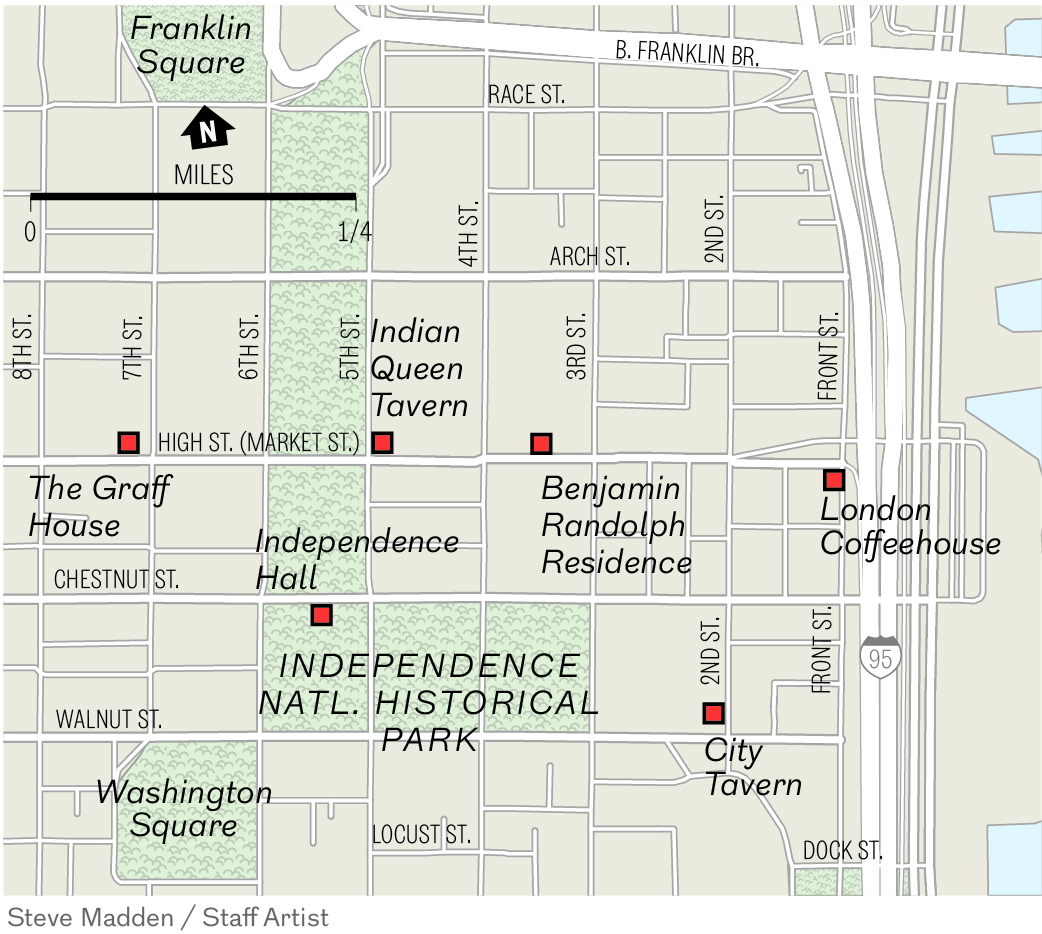
    John Dunlap, 29, an immigrant from Northern Ireland who operates a printing shop at Second and High Streets, a short stroll from the Pennsylvania State House, where the rebels conspire, has watched with keen attention the epochal events of the preceding days.

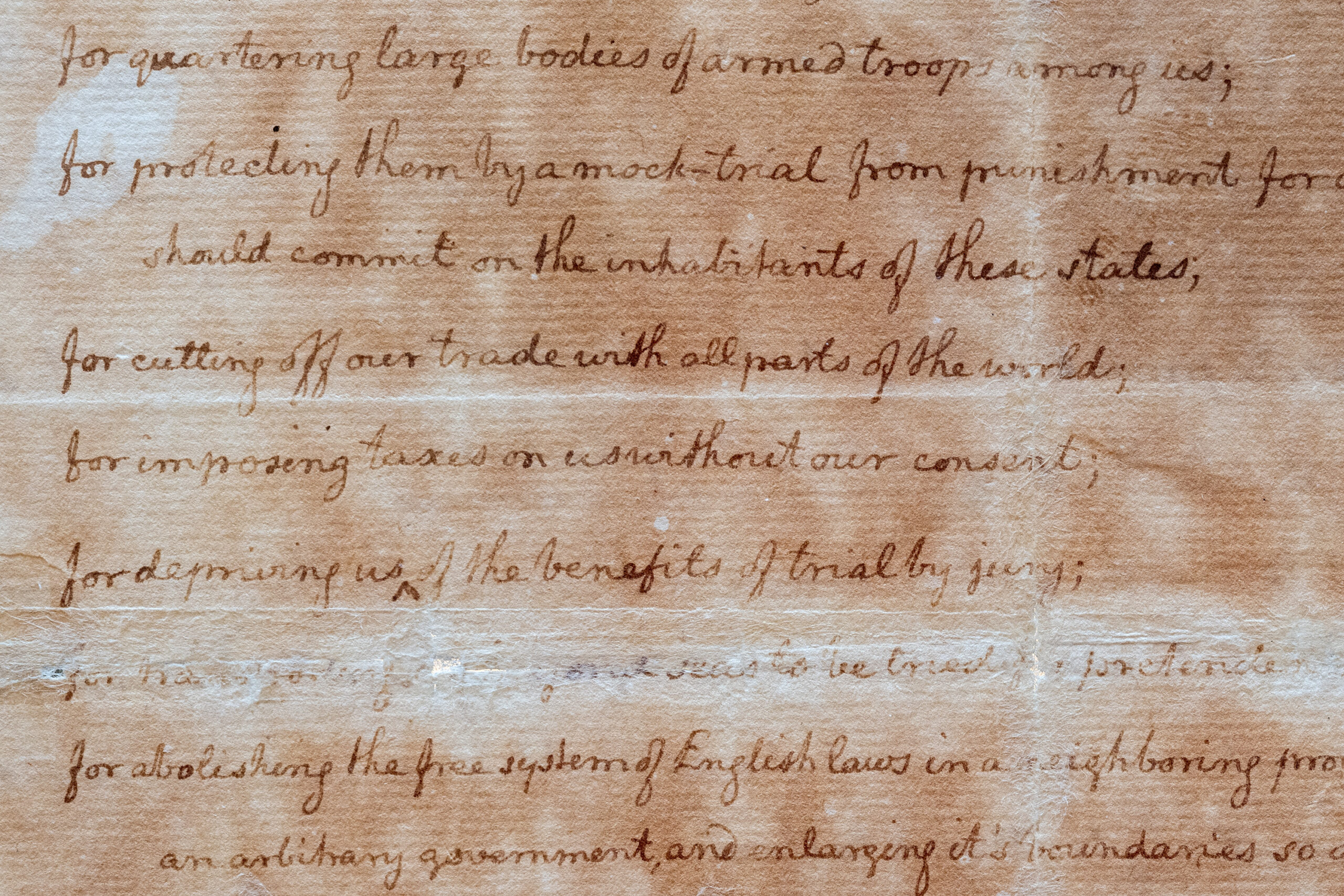
    A faded copy of a draft of the Declaration of Independence handwritten by Thomas Jefferson.

    The exultant patriots and curiosity seekers who braved suffocating summer heat to stand watch outside the State House on July 1, when the 56 delegates of the Second Continental Congress finally commence their locked-door debate on independence. The rapture that seems to ring out from every Philly tavern and tippling joint, coffee house, and street corner on July 2, when word that Congress voted to sever ties with King George III spreads through America’s largest and wealthiest city, like a bolt from one of Dr. Franklin’s electricity experiments. The joy. Hope.

    And now, as an unusually mild morning gives way to rain-laden clouds, Philadelphia holds its breath upon the brink of a mighty happening.

    Cloistered inside their chambers, the delegates fiercely debate and painstakingly parse Thomas Jefferson’s draft of America’s founding creed. Its passage will formalize independence.

    Dunlap, who will eventually serve Washington as an officer in the First Troop Philadelphia City Cavalry, is a patriot. But nobody’s fool. Months earlier, Dunlap had secured a lucrative $654 printing contract with the Congress, and the handsome commission it brings.

    The ink-stained Irishman with the whipcord build of a jockey prepares the shop for the Herculean task he knows is coming. The delegates will desire to thunder out the news of American independence before the iron gall ink even dries on the Dutch paper. John Hancock, 40, charismatic president of the Congress, will want as many broadsides as Dunlap can muster by dawn. Printing broadsides by hand in sweltering, trembling candlelight — meticulously setting the type, carefully rolling the ink, and pulling the heavy presses — is messy, demanding work, the hardened printer knows. He’ll plan to toil until morning’s light.

    Outside, citizens collect in High Street. Soon, the print shop door pushes open. A man, his face obscured by the sun, darkens the doorway. He holds something close. A rag paper manuscript written in fine hand, still wet from fresh changes, and borne by delicate hand to the expectant printer. Words upon which a nation now rests. A declaration.

    July 1, 1776: Three days earlier

    At the Second Street boarding house of Mrs. Sarah Yard, John Adams, 40, awakes before dawn. The unyielding lawyer and farmer from Massachusetts has become accustomed to the city’s morning clarion cry of crowing roosters, ringing bells, clanking ships, and cursing sailors. But not its heat.

    Behold this atlas of independence at his breaking point. Exhausted. Homesick. Hot. Beyond cantankerous that any rational being could yet flinch at the surety and necessity of American independence. For weeks, Adams answers angry letters from citizens demanding to know why Congress stalls.

    “The only question is concerning the proper time for making a specific declaration in words,” Adams writes, barely concealing his own impatience. “But remember you can’t make thirteen clocks strike precisely alike at the same second.”

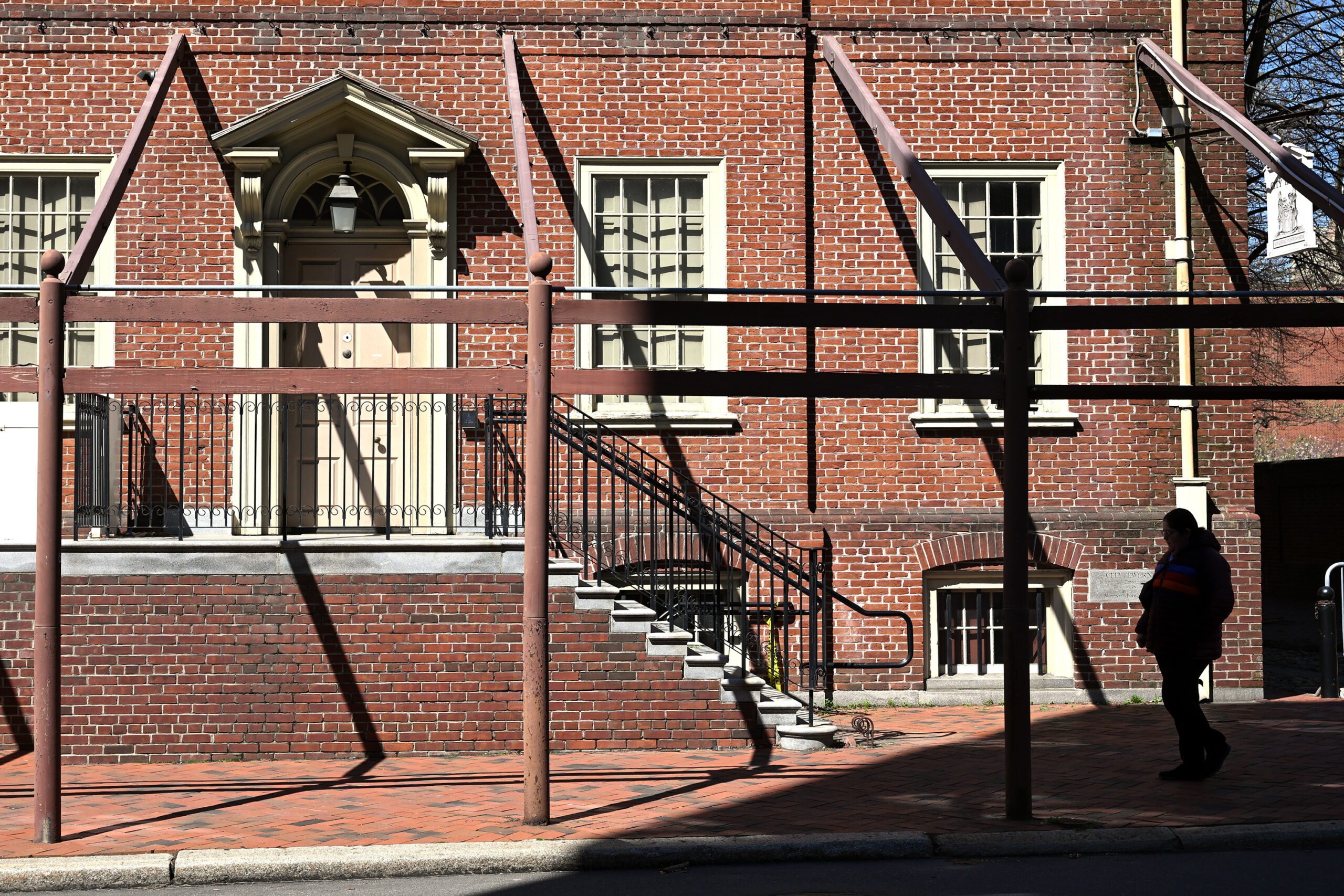
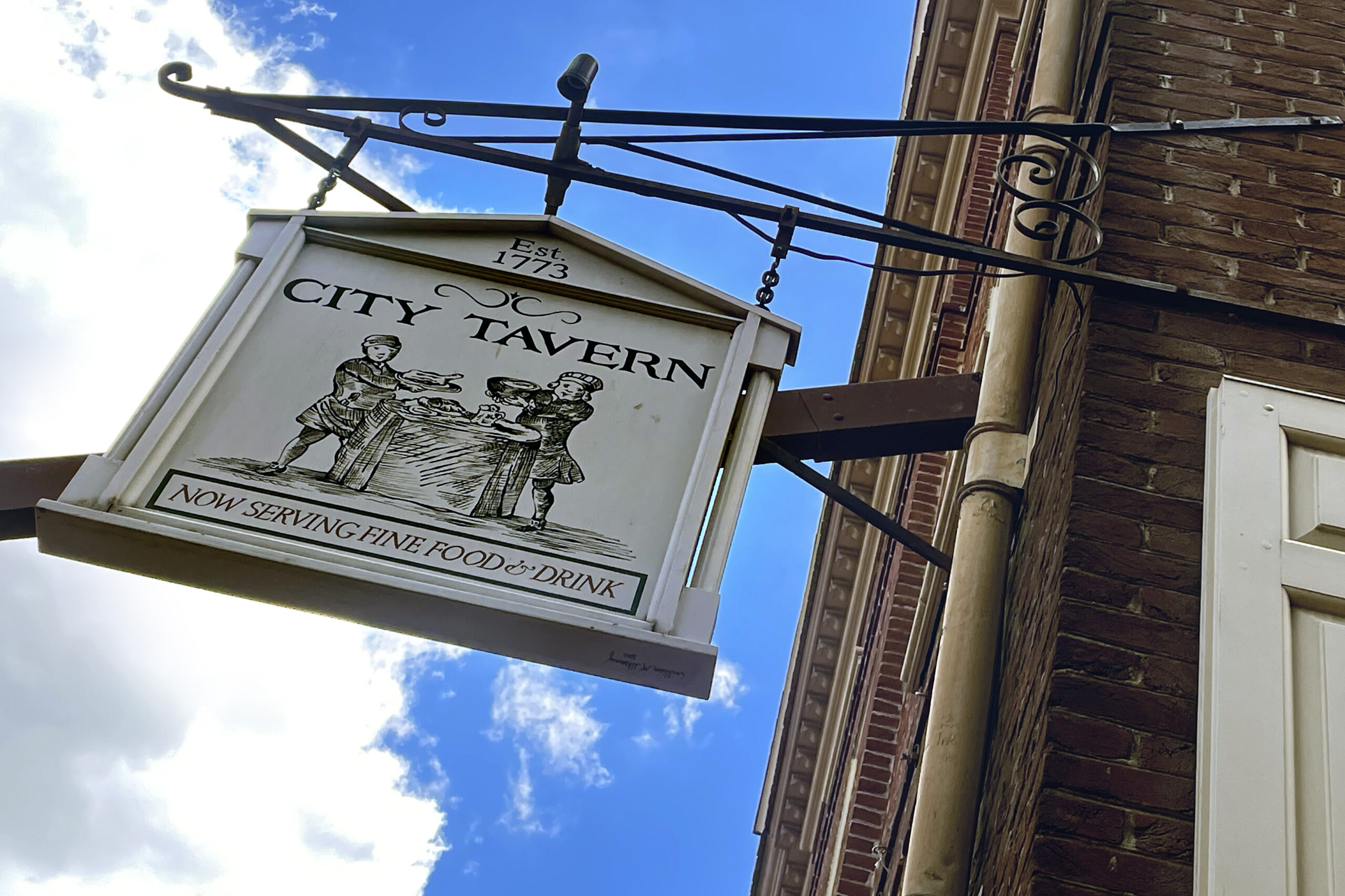
    John Adams and his cousin, Samuel, shared a boarding house near the City Tavern in July 1776. This reconstruction of the original tavern was built in 1975.

    For nearly two years, John Adams has fought for liberty like a bruising prizefighter, while his less refined older cousin, Samuel, 53, conducts a campaign of persuasion in the shadows. No one has done more than John Adams for independence. On this morning, John Adams dresses in the twilight, wishing that he had been blessed with the graces and gifts of ancient orators.

    “This morning is assigned the greatest debate of all,” Adams writes before leaving for the State House. “A declaration, that these colonies are free and independent states, has been reported by a committee some weeks ago for that purpose, and this day or tomorrow is to determine its fate. May heaven prosper this newborn republic.”

    At 9 a.m. on July 1, 1776, Andrew McNair, old and gray bellman of the State House, pulls shut the chamber’s heavy doors. Hancock gavels history to order.

    In the silence, rises Pennsylvania’s reluctant rebel, John Dickinson. His writings once rallied American farmers against British taxes. Now, ghostly and gaunt from illness, he remains a dogged dissenter against independence. Summoning his strength, he abides his conscience, arguing America is not yet ready.

    To proceed with a declaration during an uncertain struggle would be “to brave the storm in a skiff made of paper,” he tells his colleagues, before sitting.

    Outside, the heat breaks. Rain beats against the chamber’s tall windows. Thunder booms. Lightning flashes.

    Adams stands. He speaks over the stormy din. His precise words are lost to posterity. He speaks for two hours. John Adams moves men.

    Adams speaks “with a power of thought and expression that moves us from our seats,” Jefferson, remaining characteristically mum at his table, will later recall.

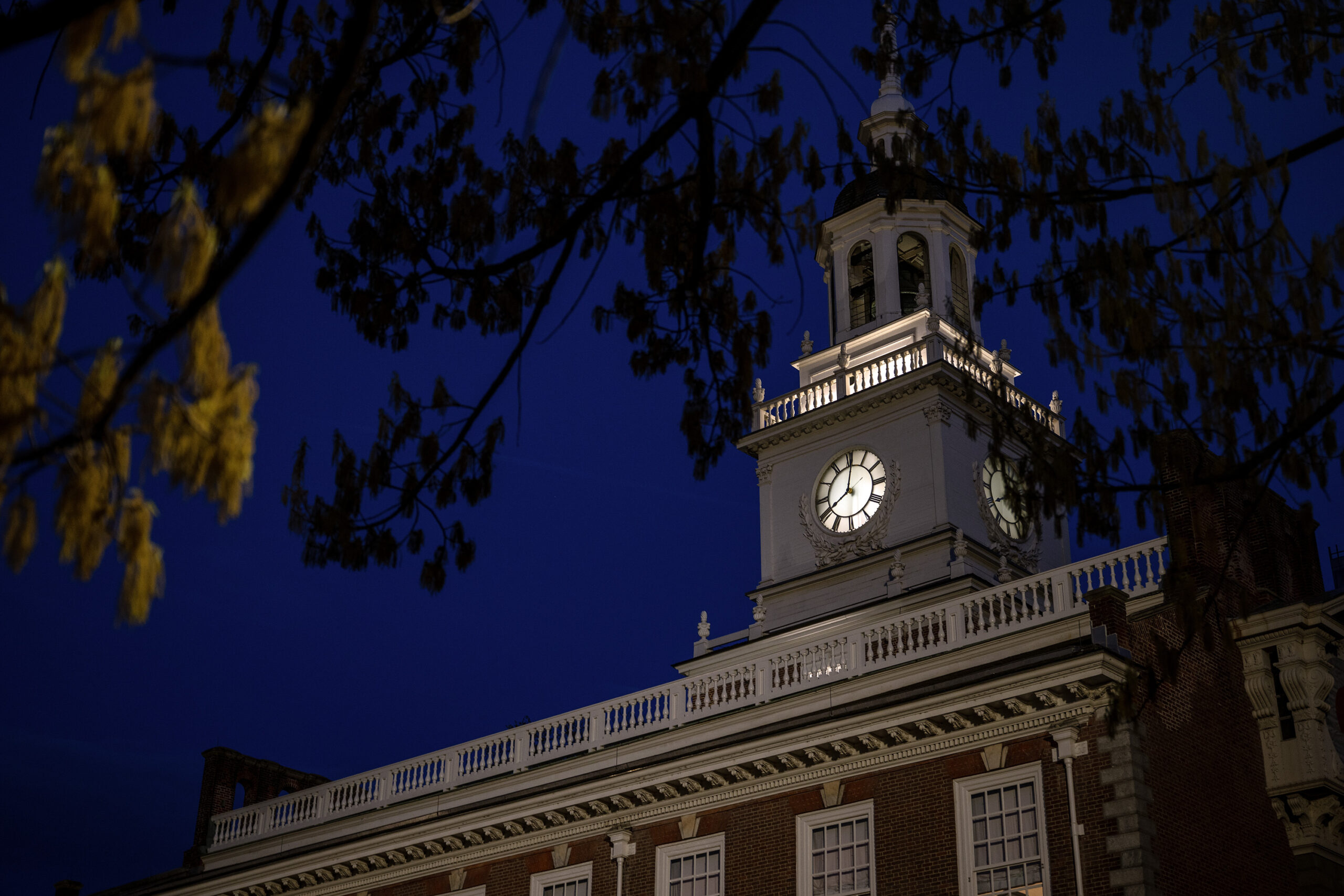
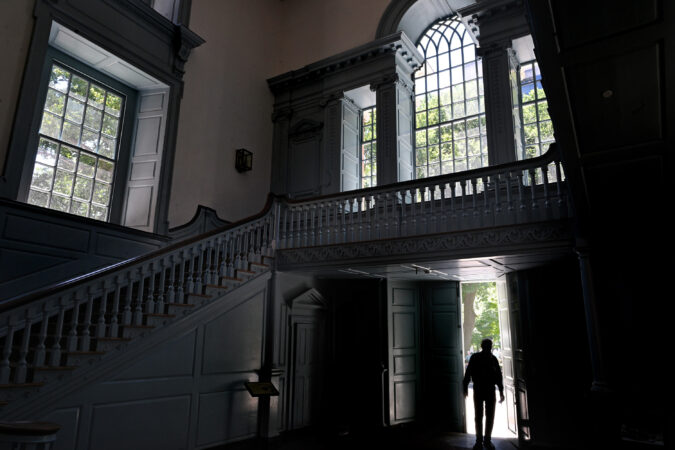
    Recreating the daily hub of the Revolutionary City in 1776. You can hear the cannons from the bell tower of the Pennsylvania State House at Sixth and Chestnut Streets, where the rebels conspire. Now, it’s Independence Hall, photographed April 14, 2026.

    A preliminary vote is taken by candlelight. Despite popular opinion, four colonies — including four members of Pennsylvania’s critical seven-man delegation — vote no.

    Late into the night, at the City Tavern, the delegates drink upon tenterhooks.

    July 2, 1776

    The second day of debate begins with a prosperous portent. Caesar Rodney, of Delaware, mud-splattered boots and spurs, arms akimbo, bursts in before the doors to Congress close. The gravely ill delegate rode 80 miles through the tempest to cast his vote for independence.

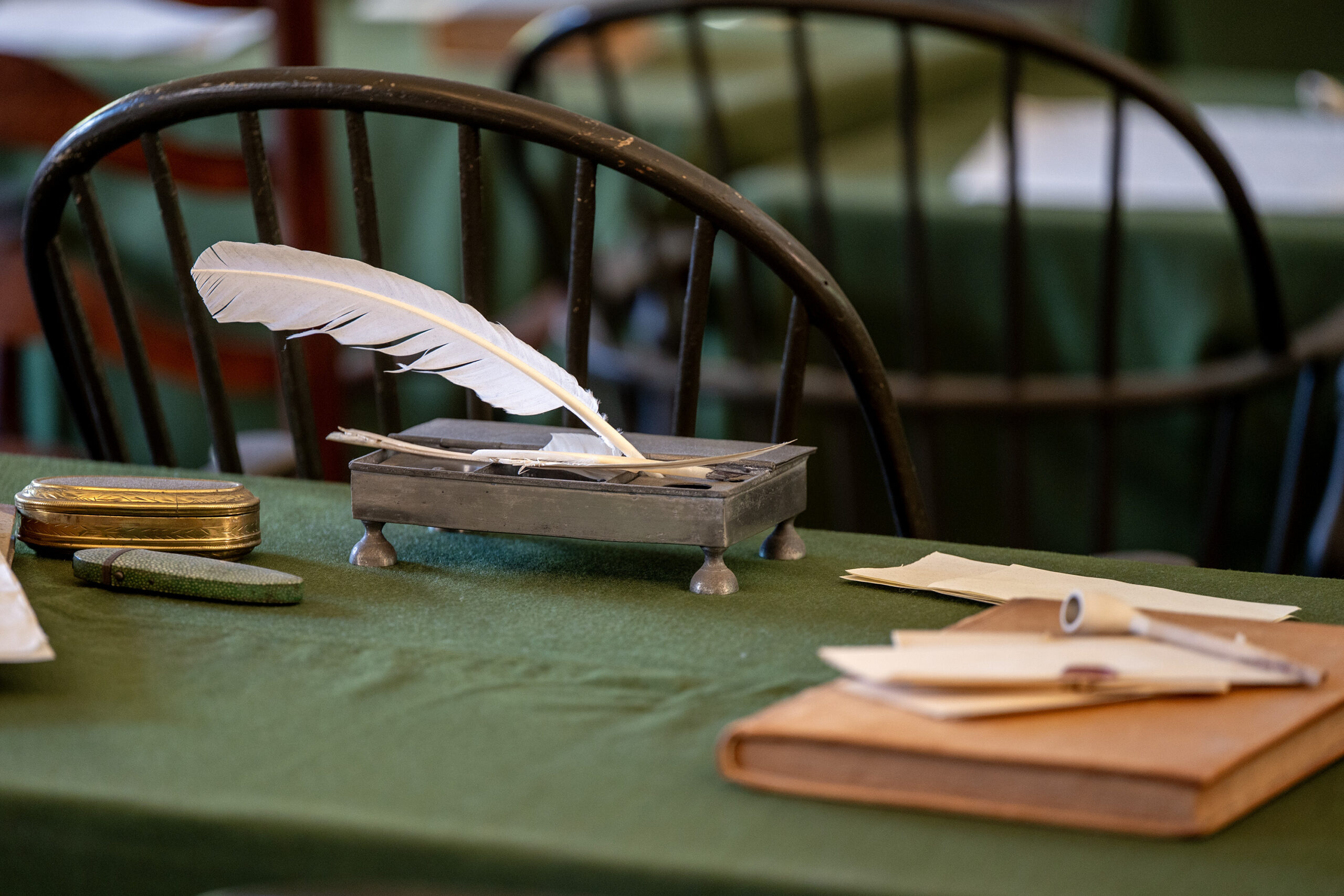
    Replica desks in the Assembly Room in Independence Hall, known as the Pennsylvania State House in 1776. This is the exact space where the Second Continental Congress met and the Declaration of Independence was adopted.

    Better still are the two conspicuously empty chairs at the Pennsylvania table. Unable to vote for independence, but unwilling to thwart unanimity, Dickinson and fellow delegate, Robert Morris, voluntarily abstain. Despite his feelings, Dickinson will soon join the rebel militia — to fight for his country.

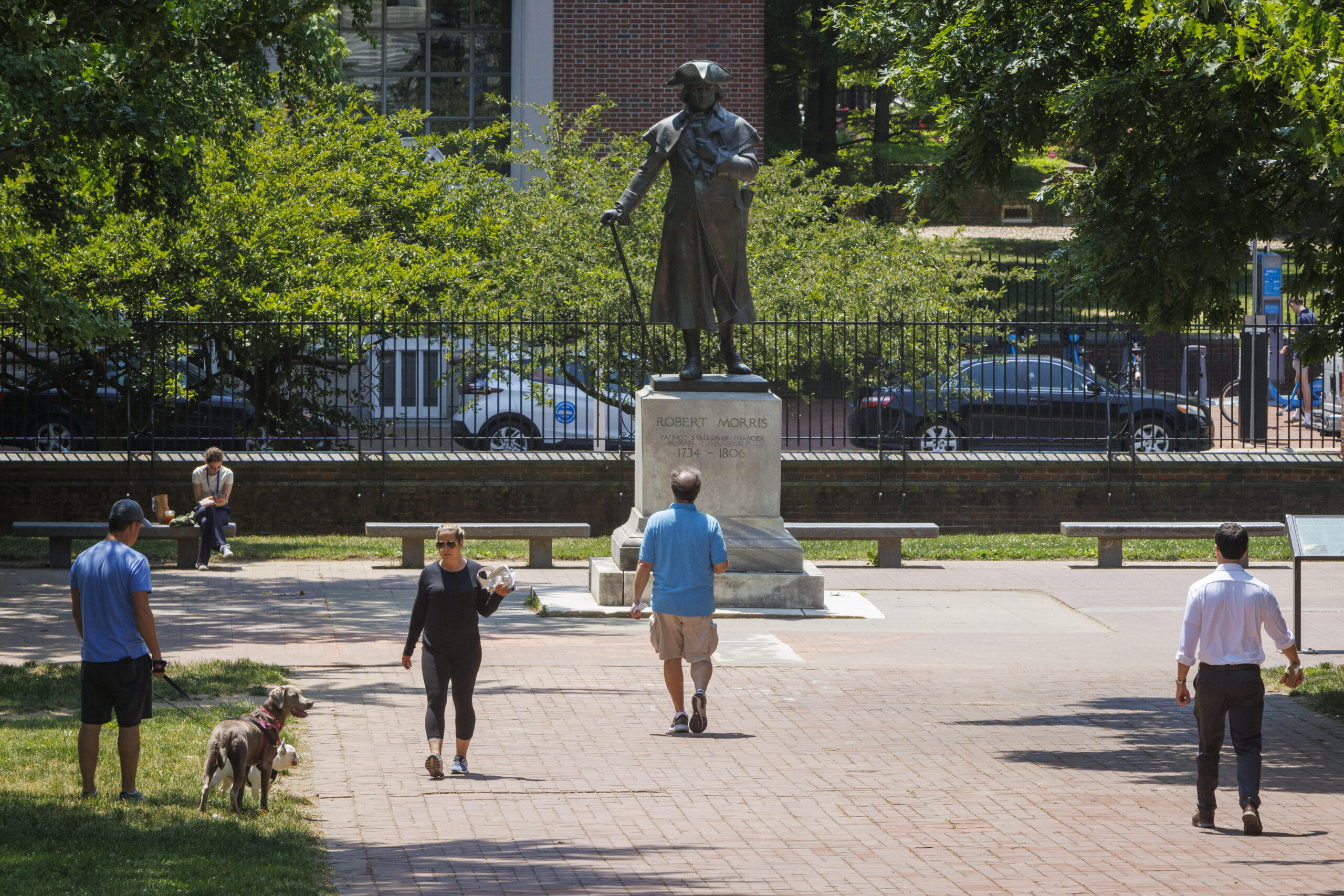
    The statue of Robert Morris in Independence National Historical Park on May 31, 2023.

    Again, the skies open up, raindrops drumming upon the glass.

    With New York abstaining — and Pennsylvania swinging toward independence — the vote goes quick.

    It is done.

    Independence.

    July 3, 1776

    The Congress continues without a break.

    Days earlier, before handing in his draft of the Declaration of Independence, Thomas Jefferson turned to Benjamin Franklin for one last look.

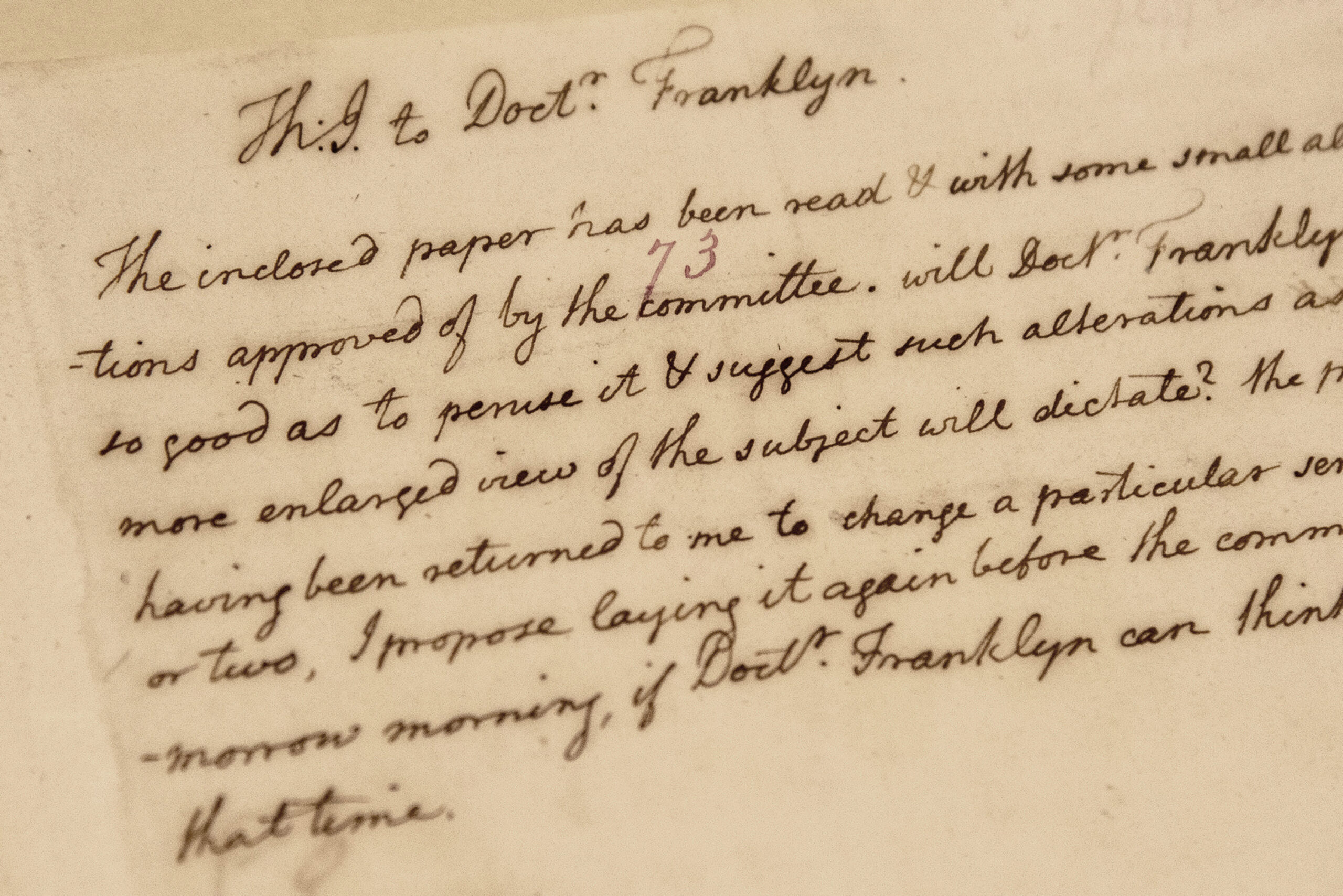
    A letter from Thomas Jefferson to “Doct. Franklyn” (Benjamin Franklin) in June 1776 asking for suggestions on the Declaration of Independence.

    “Will Doctr. Franklyn be so good as to peruse it and suggest such alterations as his more enlarged view of the subject will dictate?” Jefferson inquires, in a note delivered to the silver-haired statesman’s High Street home.

    It’s Franklin, sly satirist, homespun philosopher — grand auteur of America’s self-made aura — who possibly suggests, the inspiring “self-evident” phrasing, replacing Jefferson’s initial “sacred and undeniable truths.”

    And it is Franklin, 70, spectacled lion of liberty, sage of Philadelphia, tamer of lightning, dean of American charm and wit, wooer of women, broad of bow and frame, portly of paunch and plain of coat, a winsome spark dancing across his gray-blue eyes, who comforts the young writer as delegates slash away at his declaration. The winking newspaperman unspools a tale about an enterprising hatmaker who wishes to advertise his wares. By the time the hatter’s friends finish their edits, all that remains is the man’s name, and a photo of a hat, Franklin jokes.

    The delegates trim Jefferson’s harsher language about King George. They excise completely his evisceration of the slave trade. Jefferson does not publicly protest.

    July 4, 1776

    At 11 a.m., debate is closed.

    The moment will eventually be memorialized in painting. The towering trio — Adams, Jefferson, Franklin — presenting America’s credo for approval. Imagine them, these Founding Fathers. These imperfect men for the ages who hazard everything to chance a republic, and change a world.

    There is little ceremony. Horseflies from a nearby stable buzz. One after another, a chorus of “Ayes.”

    Delegates break the tension with gallows humor about whose necks will snap the swiftest.

    History does not record the face of the man who darkens the doorway of John Dunlap’s print shop. Perhaps it was Adams, unable to yield his obsession even in its ultimate realization. Perhaps, it was Franklin, delivering the declaration with a deliciously wry aphorism. Or Jefferson, solemn and silent with the weight of his words.

    Dunlap works all night to the thumping groan of the presses. By morning, roughly 200 broadsides start to spread America’s newly minted founding document far beyond Philadelphia. Breathless riders herald the news in town squares.

    In the trenches in New York, Washington orders the declaration read aloud. Bells ring. Troops parade. Bonfires alight. Candles burn. Prayers are whispered, for those sons and fathers who will die in the bloody conflict ahead.

    By July 6, the Pennsylvania Evening Post, a paper published near Dunlap’s shop, prints the declaration word for word. Its previous issue had been put to press too early to capture the momentous events.

    Instead, the July 4, 1776 edition included usual fare.

    “To be sold,” read one back-page ad. “A NEGRO BOY, about four or five years of age.”

    Crowds pack the State House yard, where the rebels had long conspired. A military officer reads the manifesto to the hushed masses.

    Words that birth the American experiment on an ideal — and the sin of slavery. Words that will endure Civil War and oppression. Words that beckon centuries of American promise and possibility, triumph and failure. Words that inspire new revolutions, new freedoms, new fights. Words that transform. Words that twist. Words that promise a pursuit of happiness — but withhold so much from so many. Words that stand tested still.

    Words written in Philadelphia.

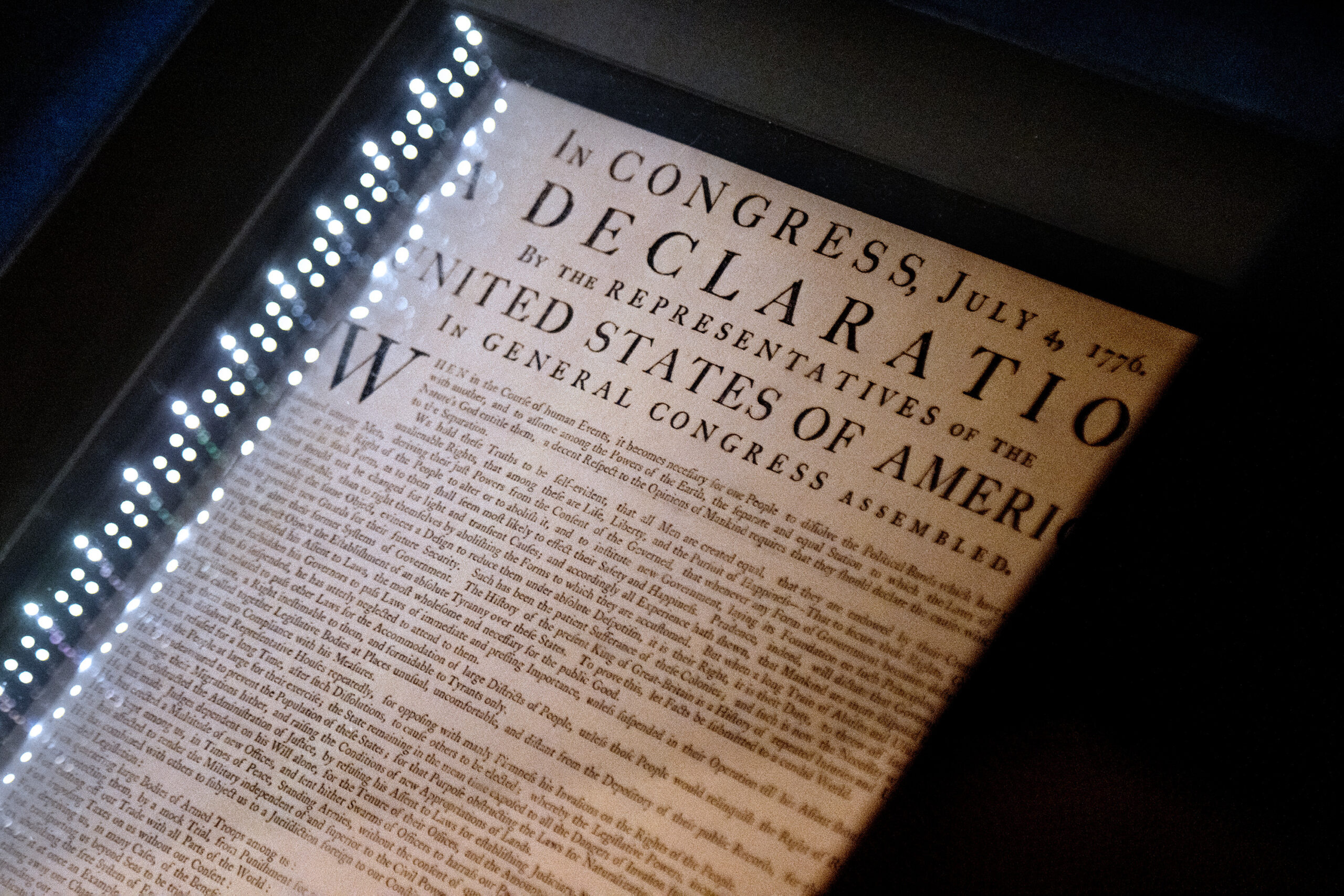
    An original broadside copy of the Declaration of Independence printed by John Dunlap on display in the “Great Essentials” exhibit in the West Wing of Independence Hall on July 29, 2025.
  • In the weeks before independence, the man from Monticello drafts a declaration

    In the weeks before independence, the man from Monticello drafts a declaration

    Philadelphia. June 1776.

    America stands on the brink. The ultimate question of independence hangs over Philadelphia.

    And Thomas Jefferson has a declaration to draft.

    His heart is in Virginia. His “country,” as he calls it. But here he is at Seventh and High Streets, 33 years old, living in two sweltering rooms, with his chance to make his mark on history.

    Unlike his fellow delegates, lodged in rooms along Philadelphia’s booming riverfront, Jefferson takes quarters along the city’s rural western edge, two blocks from the Pennsylvania State House, where the rebels conspire. The orchards and pastures bordering the downtown of British America’s largest and wealthiest city offer an escape from Philadelphia’s stifling summer heat and foul smells. Its stinking creeks, rotting trash, and unchoked illness. The verdant outpost, elsewise occupied by a bricklayer and his family, provides “the Squire,” as his friends back home call him, some small semblance of his mountaintop mansion, Monticello.

    Thomas Jefferson’s Philadelphia in 1776.

    He is living out of leather-bound trunks. Fresh air and sunlight stream through a window overlooking High Street — Philadelphia’s main thoroughfare, busy even on the outskirts. Hinterland farmers’ wagons clatter over cobbles, headed for the market. The sweet scent of fresh loaves drifts from a shopfront bakery. Jefferson’s thoroughbred — Caractacus, perhaps, his favored bay stallion, whose regal appellation derives from a first-century British chieftain — nickers in a nearby stable.

    Robert “Bob” Hemmings, Jefferson’s 14-year-old enslaved valet — and half brother of Jefferson’s future paramour, Sally — attends his every need in Philadelphia, sleeping in a garret off the writing parlor.

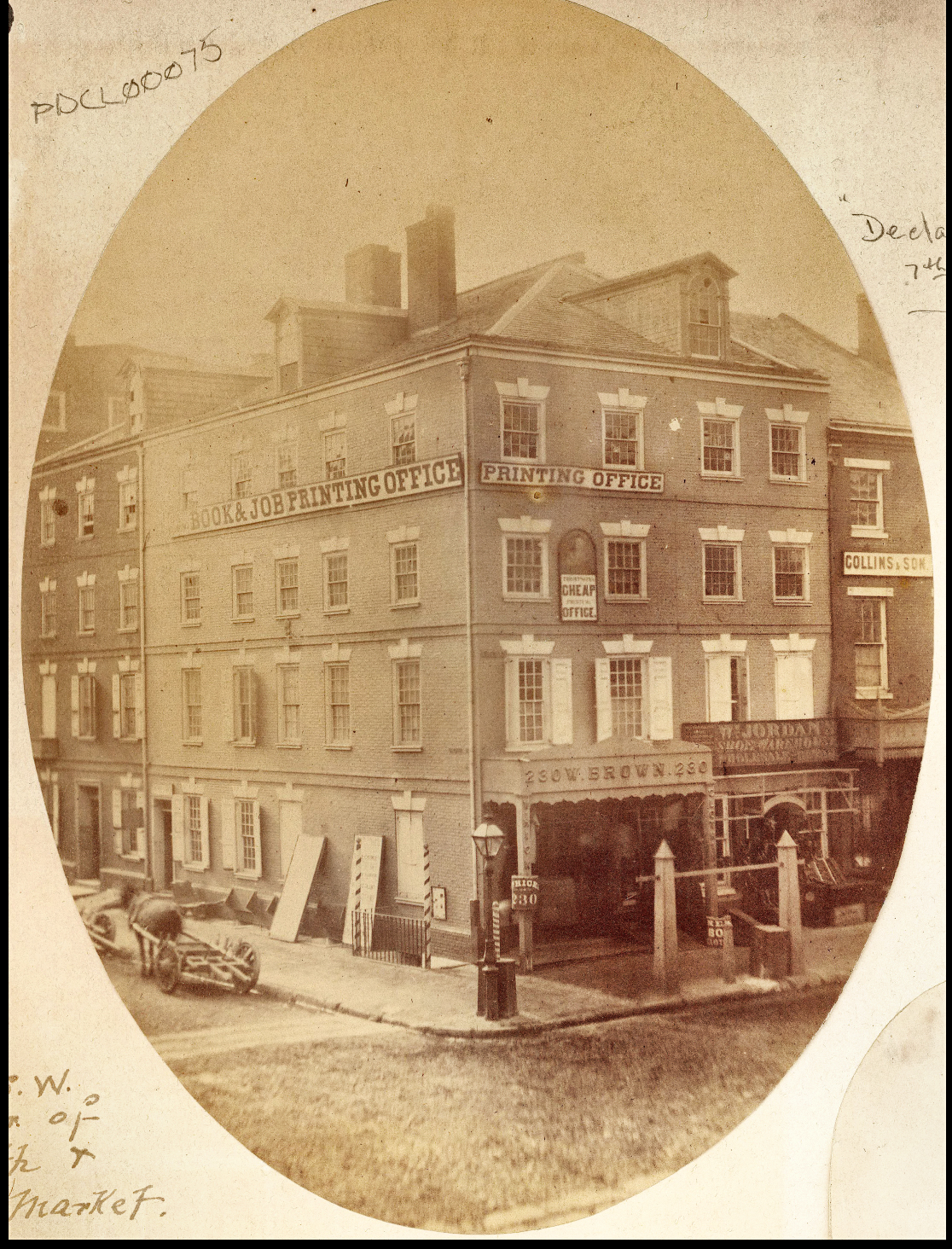
    The Declaration House, 7th and Market Streets, in 1856.

    The rag paper resting on Jefferson’s mahogany travel desk — a small, portable lap device of his own design that the inveterate tinkerer had commissioned from a Chestnut Street cabinetmaker upon his arrival in Philadelphia a month earlier — remains blank. His quill is still. In the shadows, a grandfather clock ticks a stately rhythm.

    Tick … tock … tick … tock.

    The master of Monticello is working on a deadline.

    A momentum for independence

    Tarrying at the threshold of independence for months, the roar of rebellion echoes throughout Philadelphia by late spring.

    Just weeks earlier, more than four thousand Philly patriots braved driving rains to gather in the brick-walled yard of the State House. Celebrating the Second Continental Congress’ decree to form new governments apart from King George III — the masterstroke of John Adams, 40 — the drenched Philly masses thunder for independence.

    City Tavern Monday, June 15, 2026. The original building was demolished in 1854 and reconstructed in 1975.

    George Washington himself takes brief leave of his embattled army, digging in for an expected British assault on New York, to update the 56 congressional delegates in Philadelphia. The general’s tidings are lost to the centuries. But hear the lusty huzzahs that greet the stoic warrior at the representatives’ nightly repast at City Tavern, their unofficial headquarters.

    “George Washington, and victory to the American arms!” goes the toast.

    Inside the locked chamber, radicals like Adams and his older cousin, and backroom operator, Samuel, 53, lead the fight for liberty. Jefferson, whose resolve for popular government in America is unquestioned, but who detests public speaking, rarely rises.

    In early June, it is Jefferson’s fellow Virginian, the passionate patriot Henry Lee, who delivers a decisive stroke, boldly uttering words hitherto unsaid in Congress: “That these United Colonies are, and of right ought to be, free and independent.”

    The thunderclap is met by delay. Delegates from powerful colonies, including Pennsylvania’s own reluctant son of liberty, John Dickinson, are hesitant to cut the cord. Radicals work furiously to build unanimity.

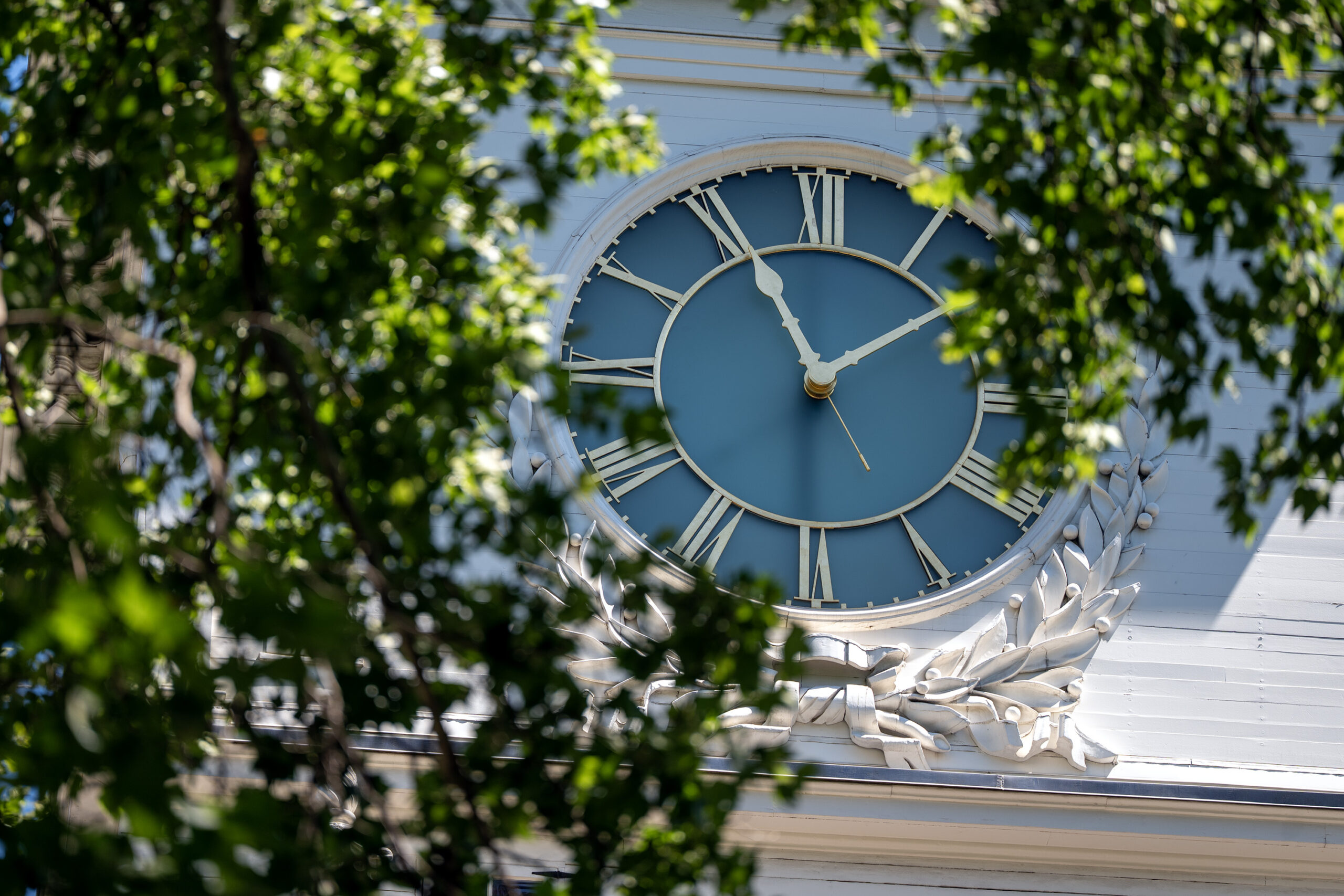
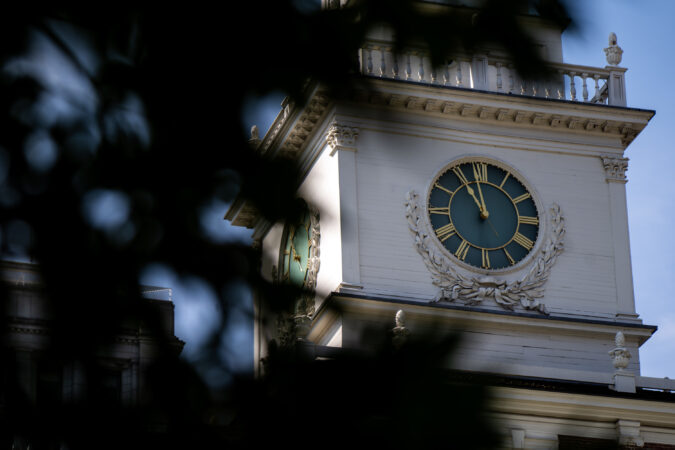
    Clock tower at Independence Hall (Pennsylvania State House) Monday, June 15, 2026.

    Philly headlines — in the same papers publishing fugitive slave ads and notices for the sale of Black children far younger than Bob Hemmings — decry “our mortal enemy the King of Great Britain.”

    “The people wait for us to lead the way,” Jefferson will note.

    During the delegates’ fiery, closed-door debates, his long legs folded underneath his desk, Jefferson stays mum.

    But now the poet-philosopher and slaveholder, whose bright brilliance and dark contradictions mirror perfectly the promise and sins of the nation he seeks to author, must find all the words.

    A renaissance figure among the rebels

    It is John Adams, in characteristically gruff fashion, who appoints Jefferson first quill. The good gentleman from Virginia is but one of five men appointed to draft America’s creed — including Adams and Franklin, home sick with gout and other ailments — but Adams argues it is Jefferson, with his “peculiar felicity for expression,” who should do the writing.

    “Reason first, you are a Virginian, and a Virginian ought to appear at the head of this business,” Adams recalls telling Jefferson in the committee’s first convocation. “Reason second, I am obnoxious, suspected, and unpopular. You are very much otherwise. Reason third, you can write 10 times better than I can.”

    Adams is right.

    Replica desks in the Assembly Room in Independence Hall (Pennsylvania State House) Monday, June 15, 2026.

    Both drawn to the flame of American independence — the noblest cause of their age, and any other, they believe — the freedom fighters cut an odd coupling.

    Adams, short, plump, balding, cantankerous. Jefferson, tall, lean, formidable, a shock of copper hair, freckled in the Philly heat, his illusive eyes described as blue or hazel or light gray. The Southern planter and legislator who matriculated at the College of William & Mary is soft-spoken and painfully gracious and polite, charming, flirtatious. He abhors confrontation.

    Behold this true renaissance figure among the rebels.

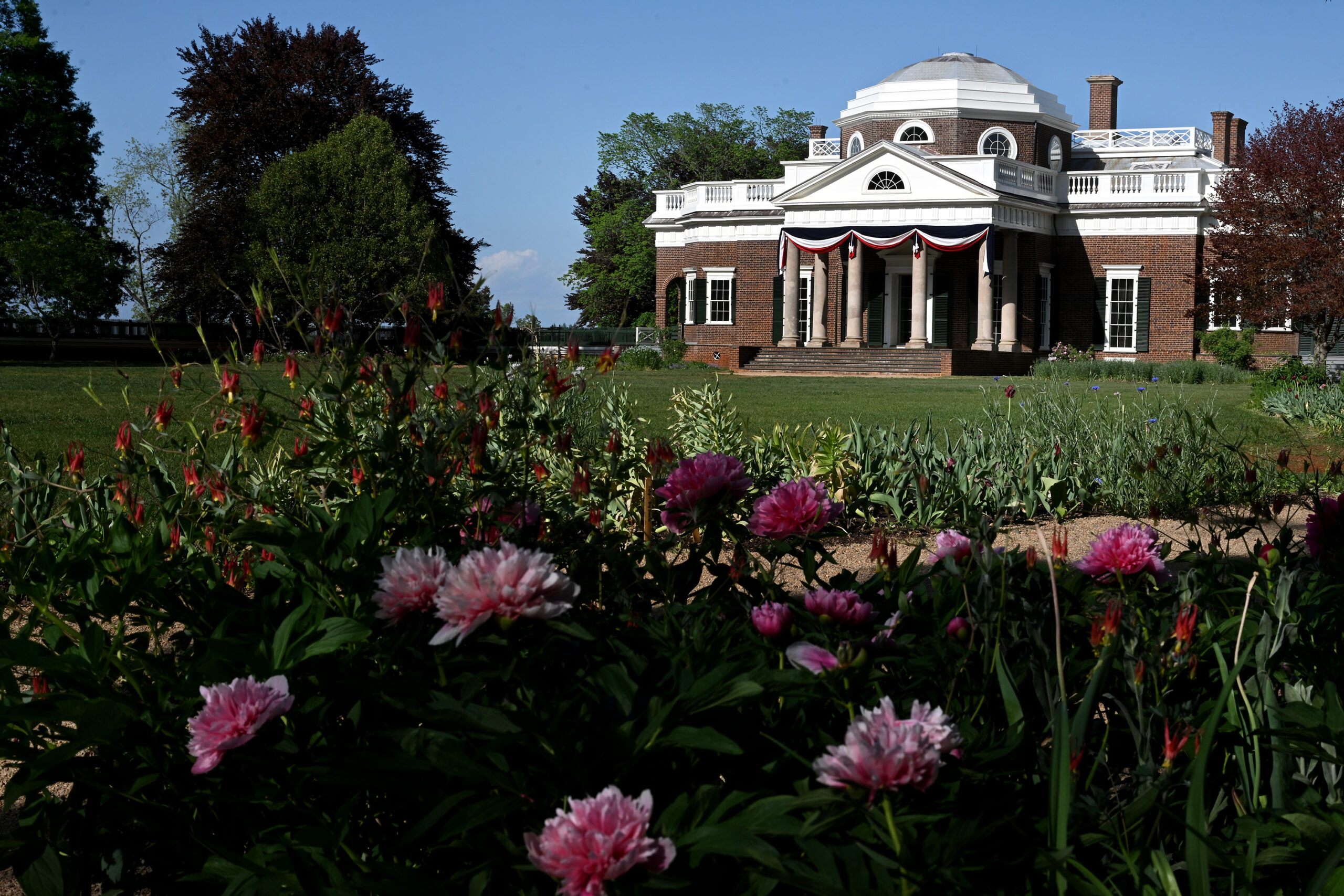
    Monticello, the primary residence and plantation of Thomas Jefferson in Charlottesville, Virginia, April 22, 2026.

    A lover of food and wine and fine things, he studies art and history, philosophy and mathematics, science, botany, astronomy. He speaks four languages and can aptly read ancient Greek. He has been building his Palladian plantation house — situated on land more than five times bigger than the core of Philadelphia, the makeshift colonial capital city, and toiled by more than 100 chained souls — since the age of 14.

    Adams, obsessive even in his sightseeing, catalogs and compares the marvels of Philadelphia — its spacious thoroughfares, leafy green spaces, commanding skyline, including Christ Church’s heaven-kissing steeple, the tallest structure Washington had ever laid eyes on, its booming ports, gleaming institutions, exotic foods, and bottomless wine, porter, and punch.

    During his few hours free from the rigors of revolution, Jefferson shops.

    With Bob touting bulging bundles, the Squire strolls Philadelphia’s abundant artisanal shops, buying maps and books across all his tastes — so many volumes, he commissions his favorite Philly cabinetmaker to make a specialized bookcase to ship them home — and tools for Monticello. He buys fine fabrics for his wife, Martha, whom he is heartsick for. An elegant doll for his 4-year-old daughter, Patsy. He buys a straw hat for himself, and shoes and socks for Bob. At a market stall, he pays a shilling to gaze upon a merchant’s exotic monkey.

    Along with his compatriots, he sups at the City Tavern most nights, enjoying as many as three glasses of wine, but also favors the regal rusticity — and punch — of the Sign of the Conestoga Wagon Tavern on High Street.

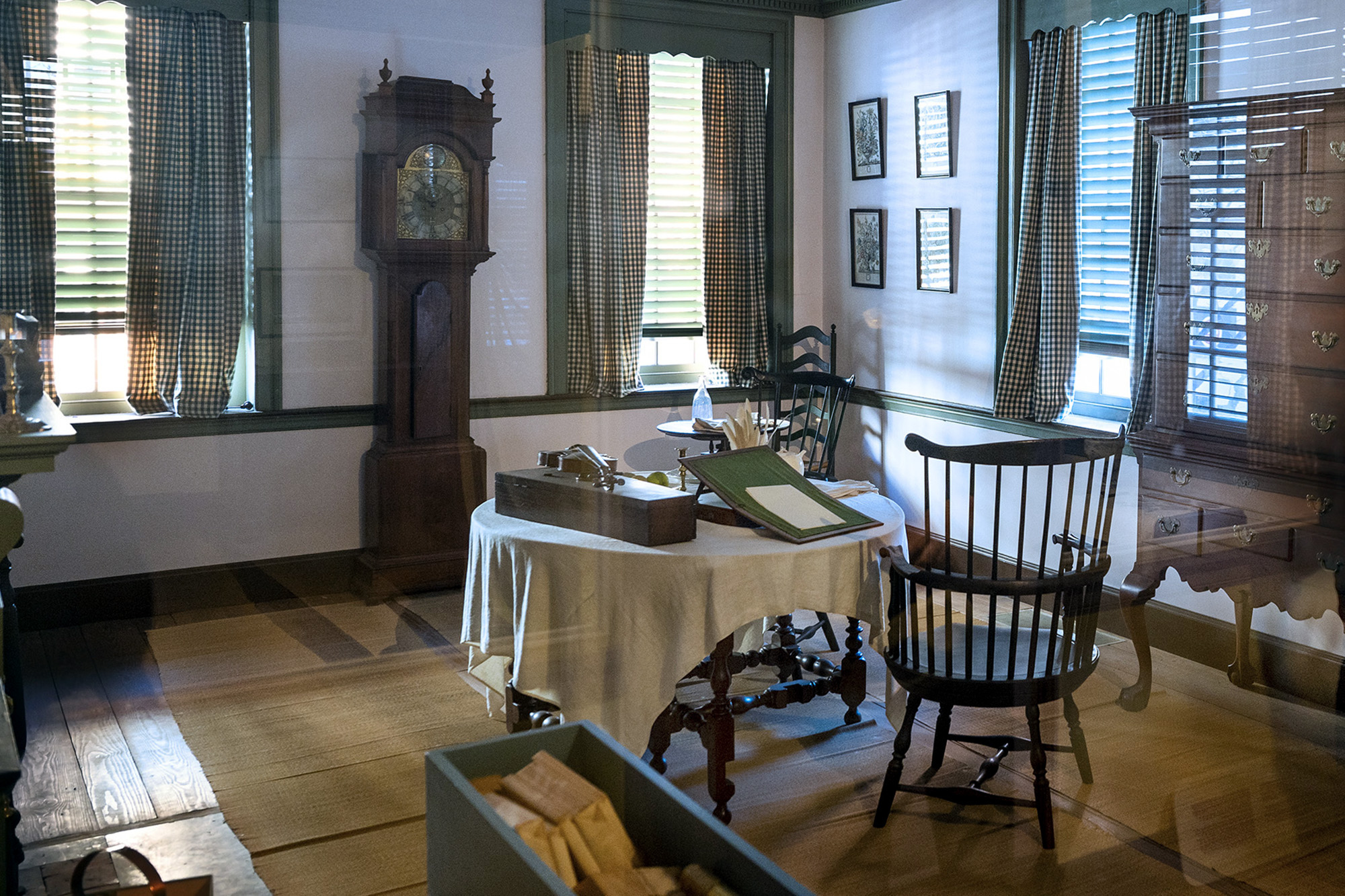
    A replica of the room where Thomas Jefferson wrote the Declaration of Independence, inside Declaration House (home of Jacob Graff, Jr.) Dec. 20, 2023.

    Envision him, this sun-freckled Moses of American history, in flesh and bone, a living, breathing man, donning a sun hat, whose first memory is being held on a pillow by an enslaved worker, and who will within days pen the most revolutionary, if fatally flawed, manifesto ever put to parchment, walking among, but set apart from, the working classes of Philadelphia. The laboring, the indentured, and the enslaved — all those he would conversely see lifted to the altar of democracy or sold at the auction block.

    See this man. And understand America.

    An expression of the American mind

    He envisions his task to “place before mankind the common sense of the subject.” A justification for revolution, yes. A litany of proof that King George was a tyrant — and among other things, in an epic, and ultimately unsuccessful, act of blame-shifting, responsible for the entirety of the slave trade. But not a wholly original document. Rather, a soaring summation of the American revolutionary zeitgeist.

    “Neither aiming at originality of principle or sentiment, nor yet copied from any particular and precious writing, it was intended to be an expression of the American mind, and to give to that expression the proper tone and spirit called for by the occasion,” he will later explain.

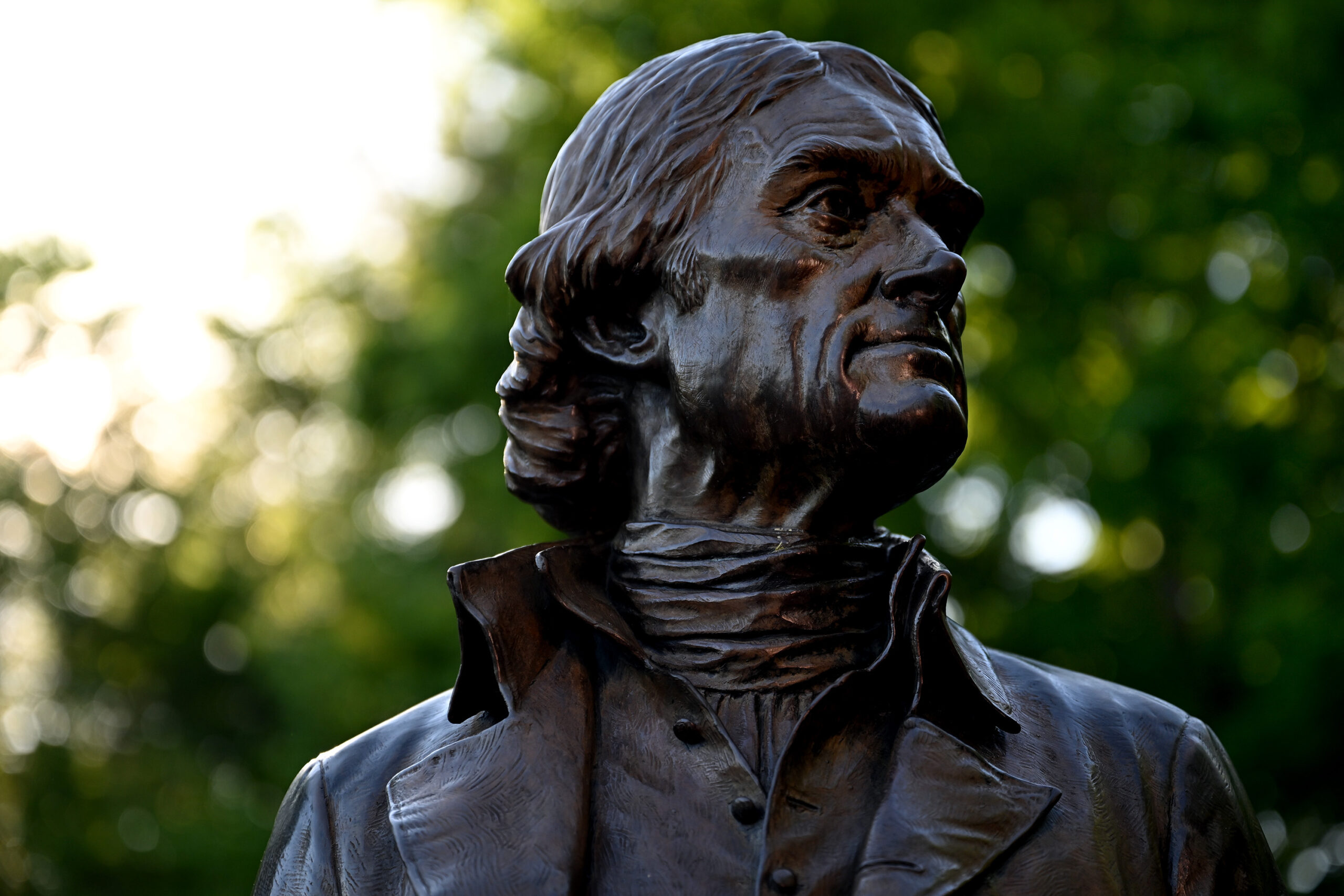
    Statue of Thomas Jefferson at Monticello, his primary residence and plantation of in Charlottesville, Virginia, April 22, 2026.

    In his parlor, with the tall clock ticking and Bob tending to tea, Jefferson works fast, pulling from his own writing — including his recent draft for a new Virginia constitution — and also from a declaration of rights for Virginia, penned by pal George Mason. From the whirling stream of his intellect, he plucks at will the inspirations and ideals of the seminal works of enlightened thinkers like John Locke and David Hume, whose writings on natural rights and freedom (“Life, liberty, and property,” Locke wrote, before Jefferson amends it for the better) provide the bedrock for the revolution.

    Quickly, he begins to find his words. The rag paper fills.

    “We hold these truths to be self-evident,” writes the man from Monticello.

    A faded copy of a draft of the Declaration of Independence handwritten by Thomas Jefferson, known as the “Fair Copy,” on display at the American Philosophical Society Monday, June 15, 2026.

    Dispatches from 1776, Part III will be published online on July Fourth. Read Part I here.

    This historical sketch is based on interviews with Tyler Putman, manager of gallery interpretation at the Museum of the American Revolution, and Michael Idriss, manager of the African American interpretive program at the Museum of the American Revolution, as well as J.M. Duffin, assistant archivist at Penn Libraries, historian and author Michelle Craig McDonald, and Stephen Nepa, history professor at Pennsylvania State University’s Abington campus. The author also based this series on historical newspaper accounts and research from “John Adams,” by David McCullough (Simon & Schuster, 2001), “Declaration: The Nine Tumultuous Weeks When America Became Independent, May 1-July 4, 1776,” by William Hogeland (Simon & Schuster, 2010), “American Scripture: Making of the Declaration of Independence,” by Pauline Maier (Random House, 1997), “The Revolutionary: Samuel Adams,” by Stacy Schiff (Little, Brown & Co., 2022), “Cocked and Boozy: An Intoxicating History of the American Revolution,” by Brooke Barbier (Chicago Review Press, 2026), “Thomas Jefferson: The Art of Power,” by Jon Meacham (Random House, 2012), “Rum Punch and Revolution: Taverngoing and Public Life in Eighteenth Century Philadelphia,” by Peter Thompson (University of Pennsylvania Press, 1999), “The Thomas Paine Reader” (Penguin Books, 1987), and “1776,” by David McCullough (Simon & Schuster, 2005).

  • For this summer’s biggest Jersey Shore restaurant openings, head to the mainland

    For this summer’s biggest Jersey Shore restaurant openings, head to the mainland

    The fire pits are ablaze by dusk at Hollow Pines, a sprawling compound with an outdoor bar, bocce courts, and a massive A-frame lodge where craft cocktails, duckpin bowling, and updated comfort food with a Jersey twist have been drawing guests by the hundreds to West Creek.

    The vibe at this ambitious newcomer off Route 9 from the Tide Table Group, which opened in February, conjures a funhouse in the woods more than a beachside resort, even if it’s only half a mile from the bay just south of Manahawkin. It’s also part of a larger trend: the biggest new restaurant openings at the Jersey Shore this year are on the mainland rather than the barrier islands, where real estate prices have skyrocketed.

    Veronica Smith of Barnegat (left) and Makayla Williams of Absecon enjoy drinks at Hollow Pines in West Creek, N.J., on Thursday, June 18, 2026.

    “There’s only so much land on the islands, and the property value there is higher if you subdivide and put residential on it,” says Hollow Pines co-owner Billy Mehl. “Plus, the short season [on the islands] makes it harder to recoup the cost.”

    The logic is similar farther south in Somers Point, where two mega-openings — the 400-seat Pablo and 250-seat Webster’s Tavern — aim to draw the growing year-round population as well as thirsty summer tourists pouring across the bridge from the dry island of Ocean City.

    “You should see our after-church crowd! We sell a lot of Bloody Marys and it’s terrific,” says Webster’s owner Chris Webb, noting the construction of hundreds of new homes nearby as a reason for optimism beyond the summer season. “Somers Point is on fire right now.”

    Of course, bigger is not necessarily better. New menus up and down the Shore have trended more conservative this summer, toward the safe bets of American tavern classics (wings, chicken Caesar wraps, and burgers), hedging for mainstream tastes at even a taco-themed fusion concept like Pablo. So, while I was sure to check out these large new players — results were mixed — I also explored some flavorful highlights from the international communities that have also settled on the mainland across from Atlantic City, from a stellar new chilaquiles specialist to the kebab combo platter of my dreams.

    If you prefer to eat closer to the beach, do not fret. This is just the first part of my annual shore guide. I still have exciting dining dispatches from the barrier island towns coming the following weeks, with reports from more than 20 places from Cape May to LBI. But first, here’s a look at some of the rapidly growing options for food and fun before you even cross a bridge.

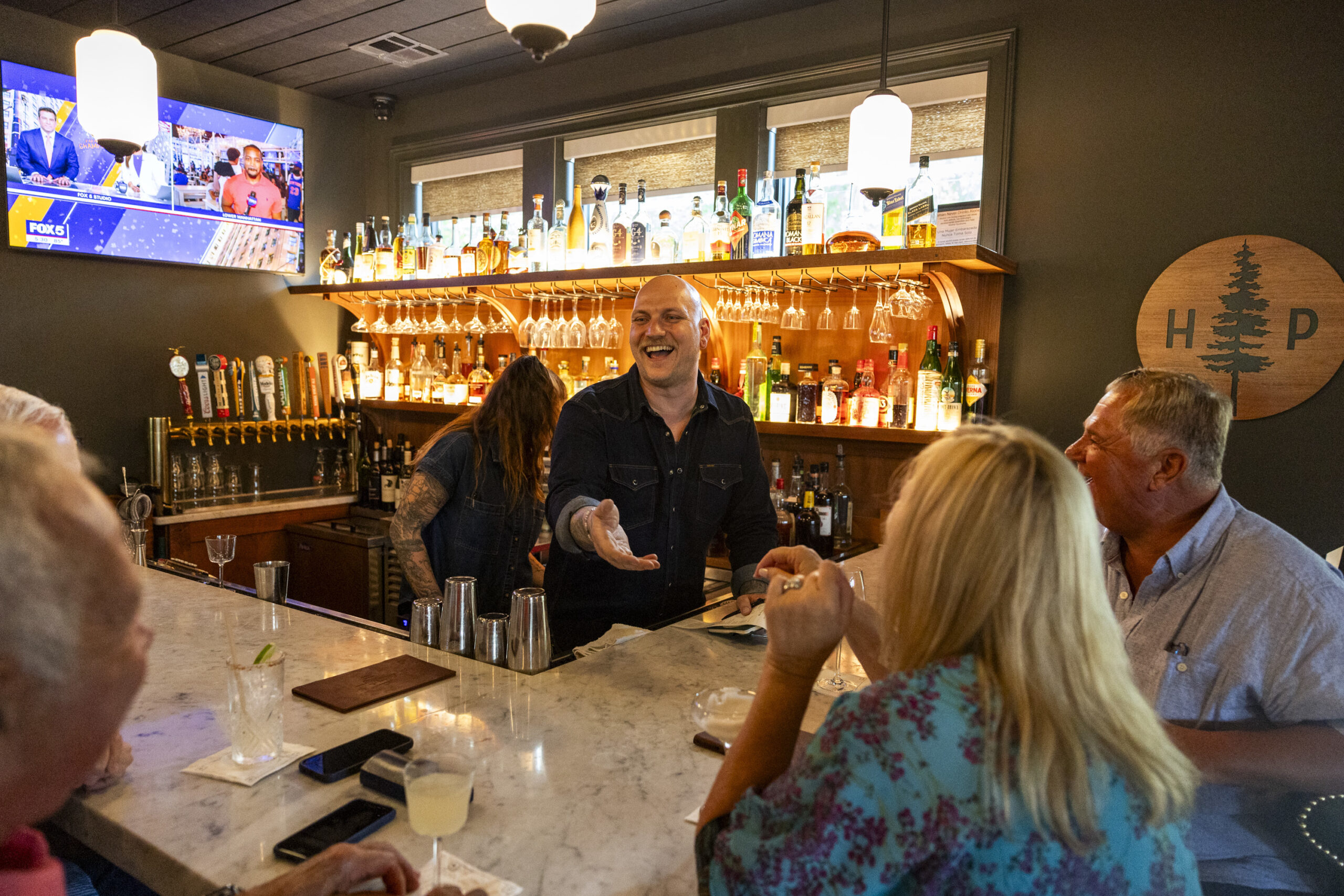
    Nicholas Bisbee of Tuckerton, lead bartender and head trainer, chats with customers at the upstairs bar at Hollow Pines in West Creek, N.J., on Thursday, June 18, 2026.

    PINELANDS

    Hollow Pines

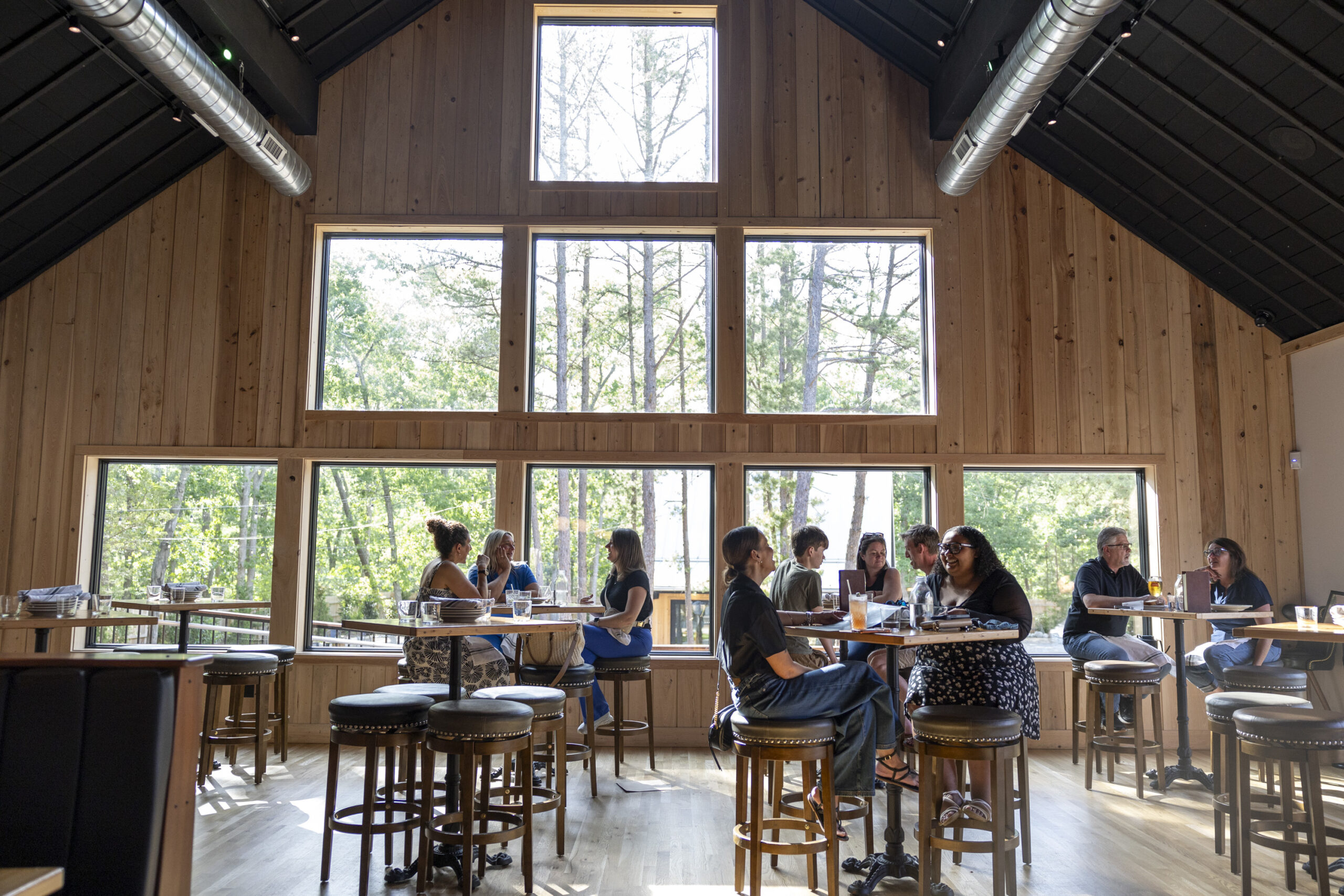
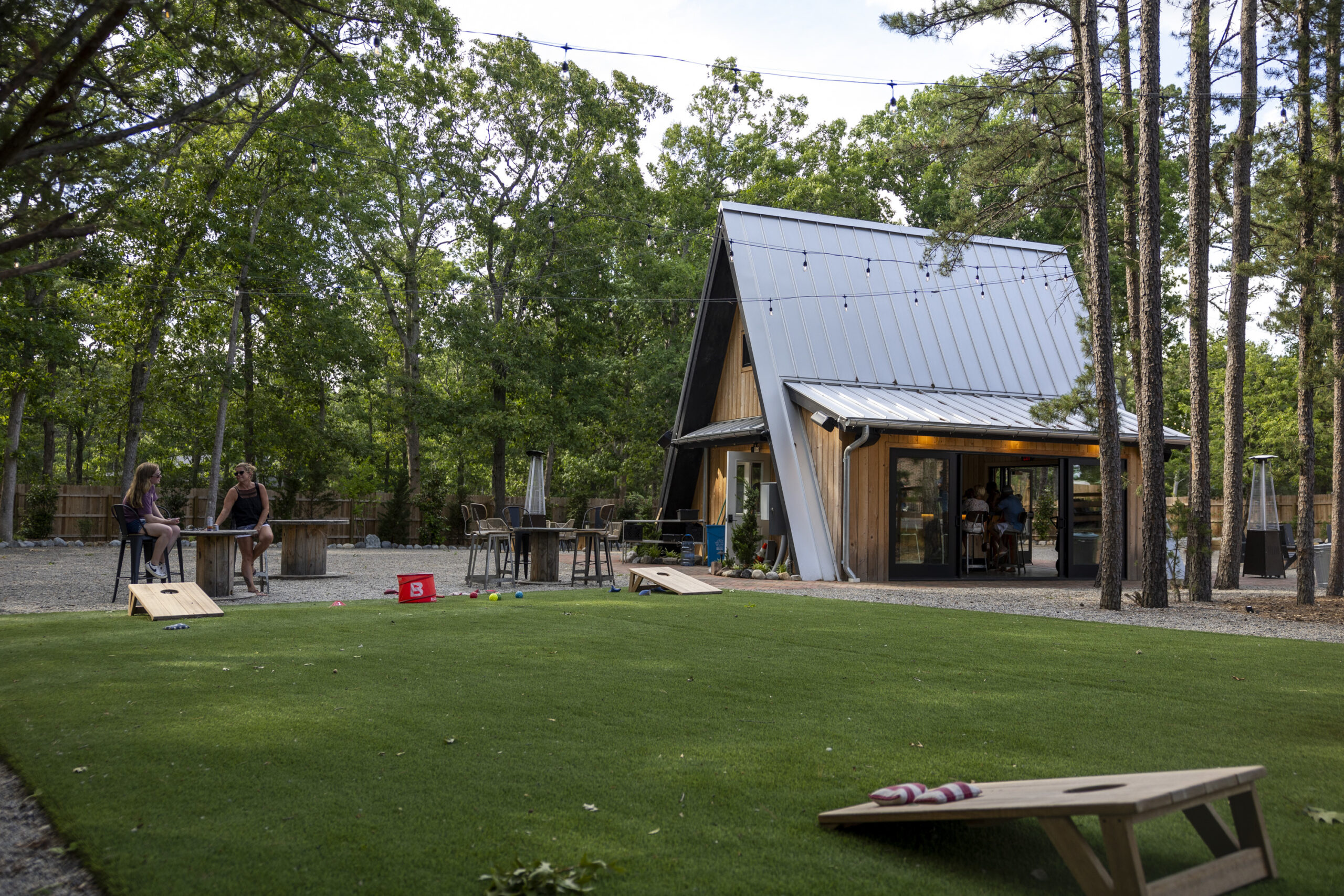
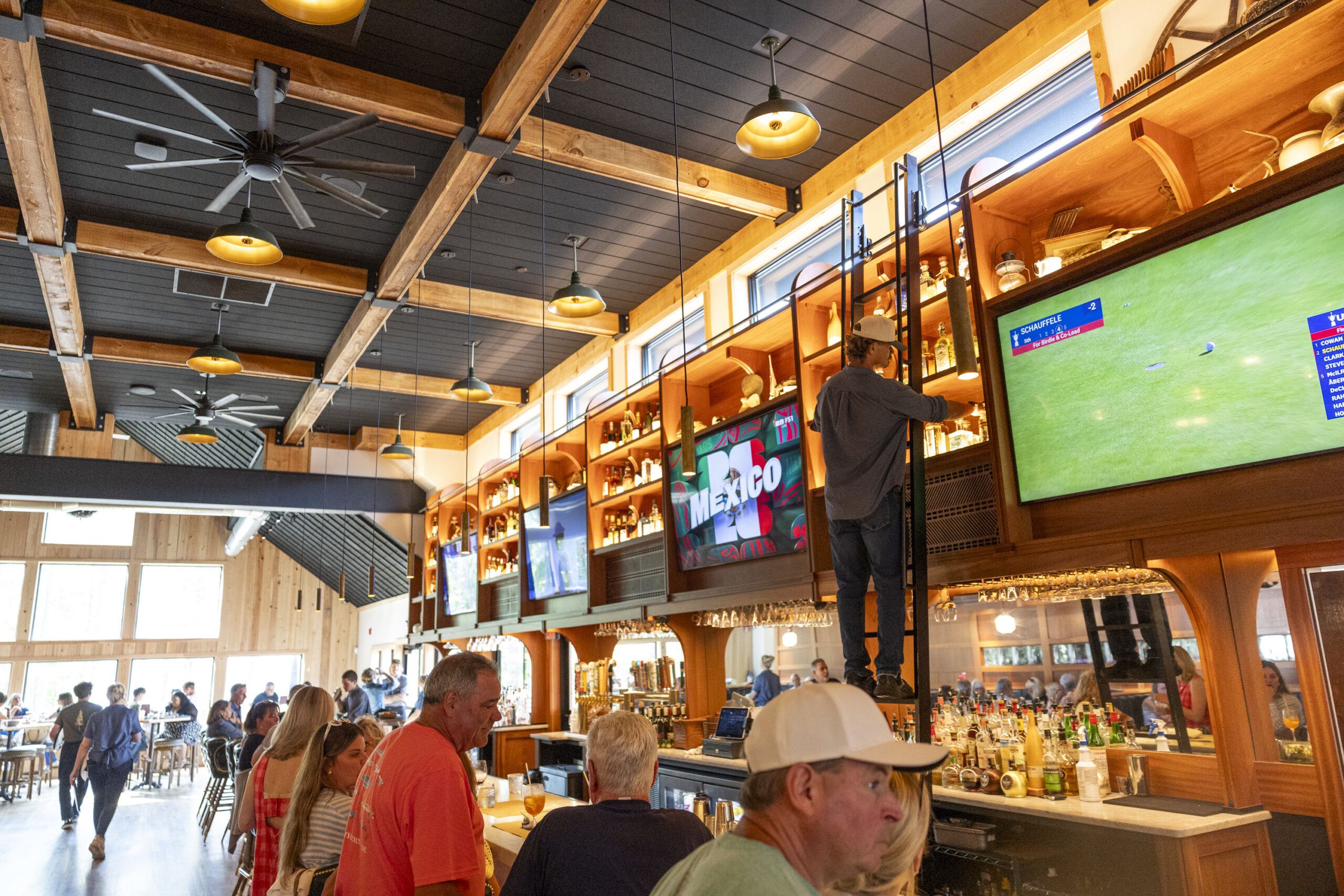
    It took eight years and nearly $8 million for the Tide Table Group to finally complete Hollow Pines, a multipurpose destination built on five acres of marshland just beyond the edge of the Pinelands National Reserve. The owners envisioned a place for big groups to linger and play, not just eat and run. And its indoor-outdoor spaces offer a variety of activities to that effect, from cornhole beside a separate outdoor bar serving Spaghett beer cocktails, composed shots, and other drinks, to a lively four-lane duckpin bowling alley on the ground floor of a roomy split-level tavern hall lined with TVs and a more intimate mezzanine dining room tucked upstairs.

    The outside bar and outdoor entertainment give patrons a reason to linger and play at Hollow Pines in West Creek, N.J., on Thursday, June 18, 2026.
    The inside main seating and bar area at Hollow Pines in West Creek, N.J., on Thursday, June 18, 2026.

    With Tide Table’s track record for good dining experiences at restaurants such as Mud City Crab House in Manahawkin and Parker’s Garage in Beach Haven, it’s no surprise the food and drink programs here are thoughtfully crafted. There’s a wide selection of upscale comfort foods from chef Al Cuff, from a pull-apart hot dog wrapped in a horseshoe of puff pastry to rich crab chowder and tomato bisque and a homey, double-crusted pot pie filled with an herbal chicken velouté.

    Some ideas were a bit too cute, like the salad heavily dressed with sour cream-and-onion dressing topped with potato chips. But the pasta is homemade in the pappardelle tossed with a hearty ragù of braised short rib. There’s plenty of lobster bits in the risotto to add some glamour to the salmon, and the oysters broiled in zesty Calabrian chili butter are decidedly local Briny Pinys. Jersey duck for the cassoulet and venison for the lasagna are appealing nods to the state’s sportsman traditions.

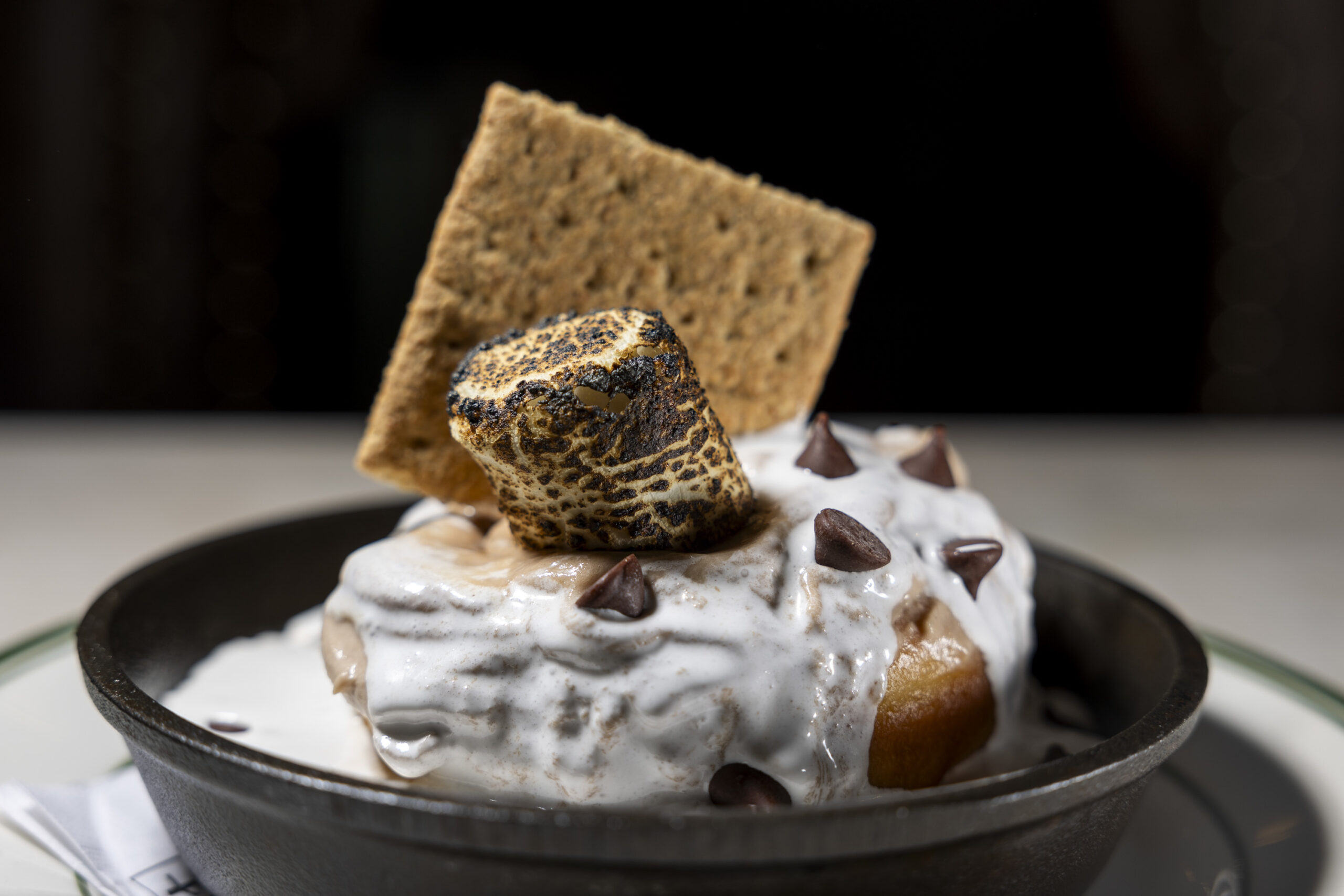
    The S’more’s doughnut dessert at Hollow Pines in West Creek, N.J., on Thursday, June 18, 2026.

    All this is fueled by a drink program that bubbles with local beers and whimsical cocktails, from an ice-cold tomato water martini (Nona’s Freezer Door) to the smoke bubble-topped rosemary gin drink (the Controlled Burn) appropriately named for a sipper at the edge of a national preserve. For dessert, I’m all about channeling the summer campfire vibe with the S’mores doughnut, a freshly fried fritter topped with molten marshmallow fluff that flows into a chocolate sauce studded with chips. It was both delicious and still on theme. Hollow Pines offers a nice reminder that New Jersey summers can be just as tasty in the forest as at the beach. Hollow Pines, 475 Main St, West Creek, N.J. 08092; 609-891-2558; hollowpinesnj.com
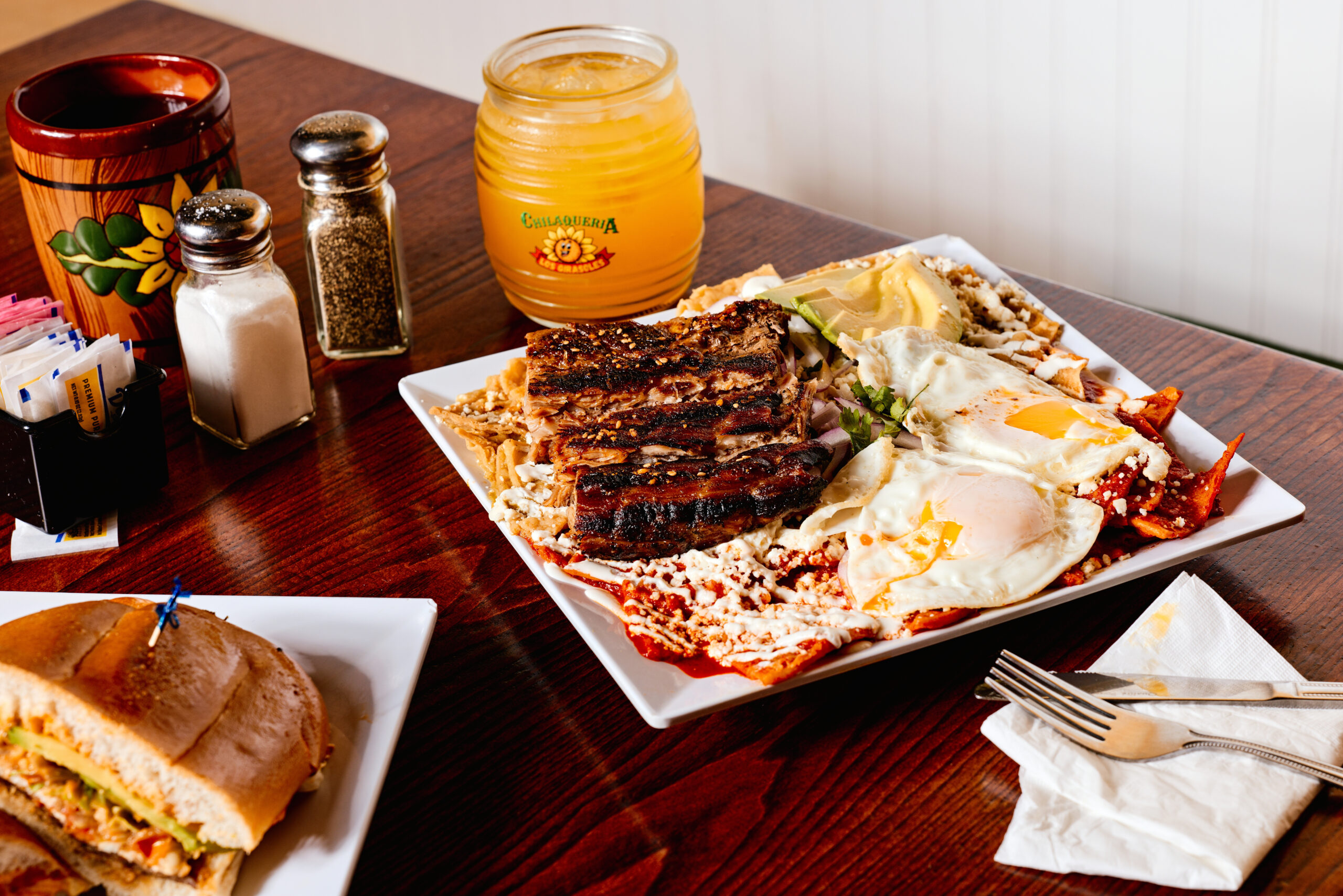
    The chilaquiles divorciados dish, paired with a passionfruit drink, rests on a table at Chilaqueria Los Girasoles in Pleasantville, N.J. on Friday, June 19, 2026.

    PLEASANTVILLE

    Chilaqueria Los Girasoles

    While the Shore has no shortage of Americanized Mexican food, you can find more traditional flavors just six miles north of Somers Point in Pleasantville, which has become a vibrant hub for multiple Latin American communities. At least a dozen Mexican restaurants operate within its city limits, and one of the newest, Chilaqueria Los Girasoles, is already one of my favorites. As the name suggests, chilaquiles is the focal point, with nine varieties of salsa combos used to sauté tortilla chips until they achieve the perfect balance of crunch and softness (they’ll even ask your preference). The traditional choices of salsa roja and salsa verde are so good, I’d recommend Los Girasoles’ unique pairing of the two for side-by-side fields of tangy green and earthy red on one plate, to be topped with protein of your choice. Try a hearty helping of eggs and steak, or salted cecina beef, then plan for a good nap when you’re done. The sweet and spicy mole poblano variation, made from a mole base shipped from Puebla, is also fantastic.

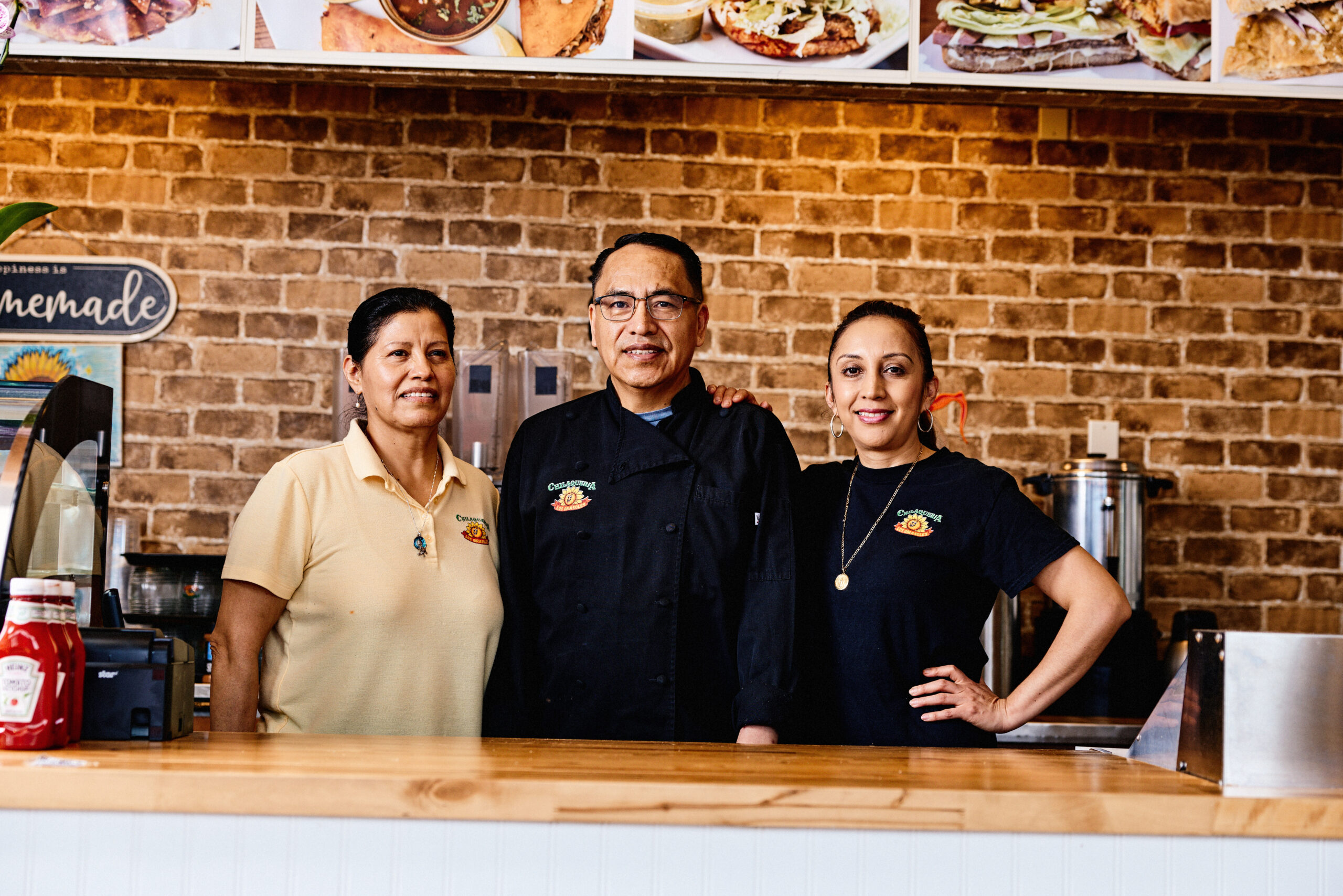
    Raquel Soto, Miguel Cerón, and Sandra Aguilar at Chilaqueria Los Girasoles in.Pleasantville, N.J., on Friday, June 19, 2026.

    As unique as this concept is (even in Mexico such a focus on chilaquiles is rare), this year-old project in a brightly rehabbed former Subway, owned by Sandra Aguilar, her husband, chef Miguel Cerón, and his cousin, co-chef Raquel Soto, is also an evocative tribute to their home state of Hidalgo. Their occasional weekend special of lamb barbacoa is outstanding, and I cannot stop thinking about their Hidalgo-style torta. A soft roll is stuffed with a thin slice of breaded top round beef, tender from its zesty marinade, then layered with stretchy quesillo cheese, creamy avocado slices, and a warm salsa of lightly cooked tomatoes and onions that gives this sandwich the perfect moistness. For dessert, don’t miss the fresh and delicate crêpes Cerón perfected while working in a previous job at a breakfast diner. Chilaqueria Los Girasoles, 310 S New Rd, Pleasantville, N.J. 08232, 609-241-0269; chilaquerialosgirasoles.com
    Pollos Asados PLV

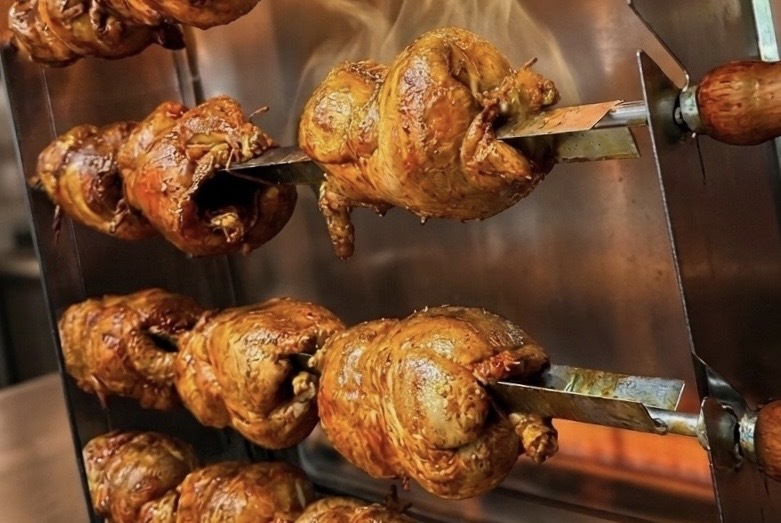
    Since fire-roasted chicken is in the name, it’s no surprise that the juicy birds turning on a rotisserie spit, seasoned with a Chiapas-style marinade, are the big draw to Pedro Rincon’s restaurant in downtown Pleasantville. It’s been so popular that he’s moving July 1 from his current location (114 N. Main St.) to a larger space next door at 104 N. Main St. Few meals I’ve eaten at the Shore were more satisfying than a whole bird here served simply cut up into pieces in a Styrofoam box with a bundle of fresh-pressed tortillas, two squeeze bottles of vibrant salsas, and belly-filling sides of refried black beans and rice.
    Chiapas-style chickens roast on the spit at Pollos Asados PLV in Pleasantville.

    But Rincon’s kitchen has other worthy gems you absolutely should not miss, from the platters of extra-large seven-inch-wide tacos (I loved the juicy al pastor) to the paddle-sized bundles of Chiapanecas quesadillas, whose pliant tortillas are made with a blend of corn and flour. The long envelopes are big enough to share and come stuffed with quesillo cheese and a variety of fillings, from nopales to chicken. But the real quesadilla star here is the deshebrada de res, a stew of tender shredded beef so full of flavor, I just about ate the whole darn thing. Pollos Asados PLV, 104 N. Main St. (after July 1), Pleasantville, N.J. 08232, 609-640-6347; pollosasadosplv.com

    Staff serve guests at Ruhani Kitchen in Egg Harbor Township on Friday, June 19, 2026.

    EGG HARBOR TOWNSHIP

    Ruhani Kitchen

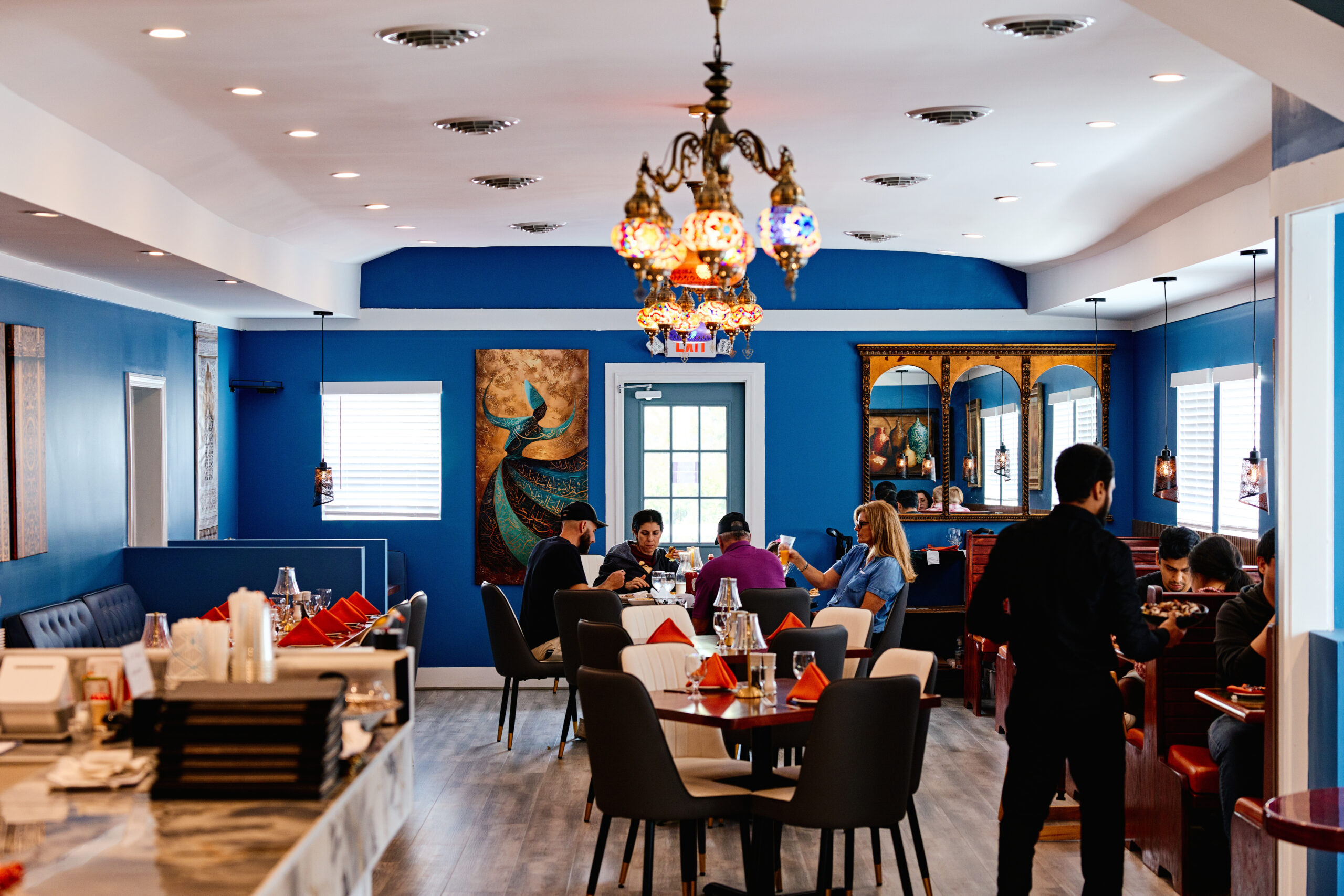
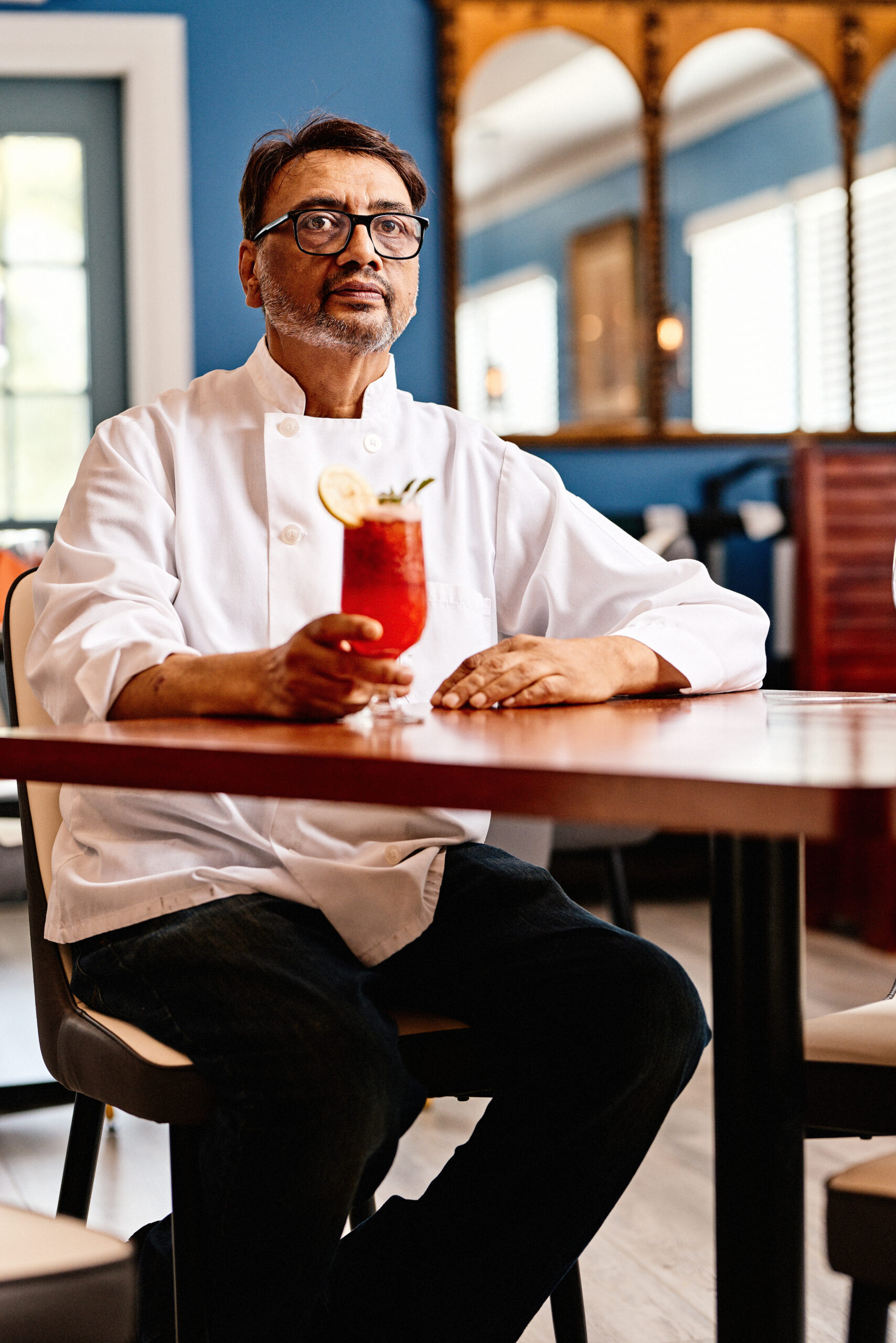
    Chef Syed Abbas is best known for The Nizam’s, the well-regarded Indian restaurant in Egg Harbor Township that he owned for 15 years before selling it in 2022. The New Delhi-born chef says he needed a break for health reasons, and over the next three years traveled extensively through the Middle East. He worked for free in several kitchens in Dubai, shadowing chefs in Turkey, and gathering inspiration for a new concept back in New Jersey that would draw on dishes from across the region while also reflecting his family’s Persian roots. Ruhani Kitchen, which opened in December in the same narrow white roadhouse where he’d launched the first version of Nizam’s, is the result — and it is a delight.

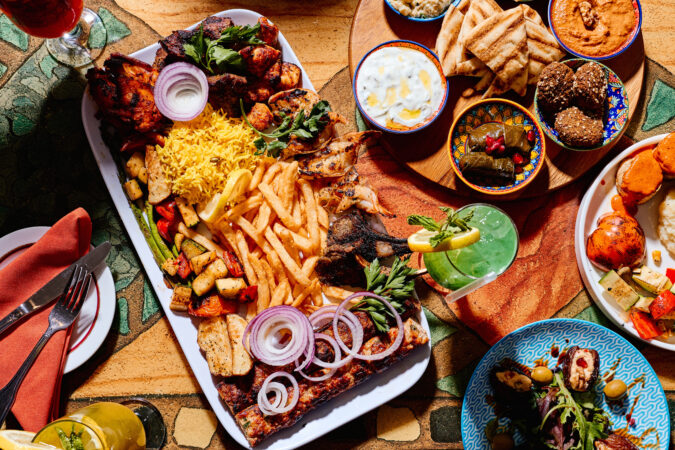
    The space has been completely rehabbed with vibrant blue walls, imported rugs, and comfortable furniture. The menu offers a greatest-hits list of Mediterranean and Middle Eastern dishes from Lebanon to Afghanistan, and though the range is so broad that some nuances may not always be in perfect register, Abbas’ skill as a chef always shines through in the quality halal ingredients and satisfying flavors. The mixed app platter is a perfect place to start, from smoky baba ghanoush to tangy-sweet muhammara and vibrant green falafel made with fava beans.

    Chef Syed Abbas at his restaurant, Ruhani Kitchen, in Egg Harbor Township on Friday, June 19, 2026.
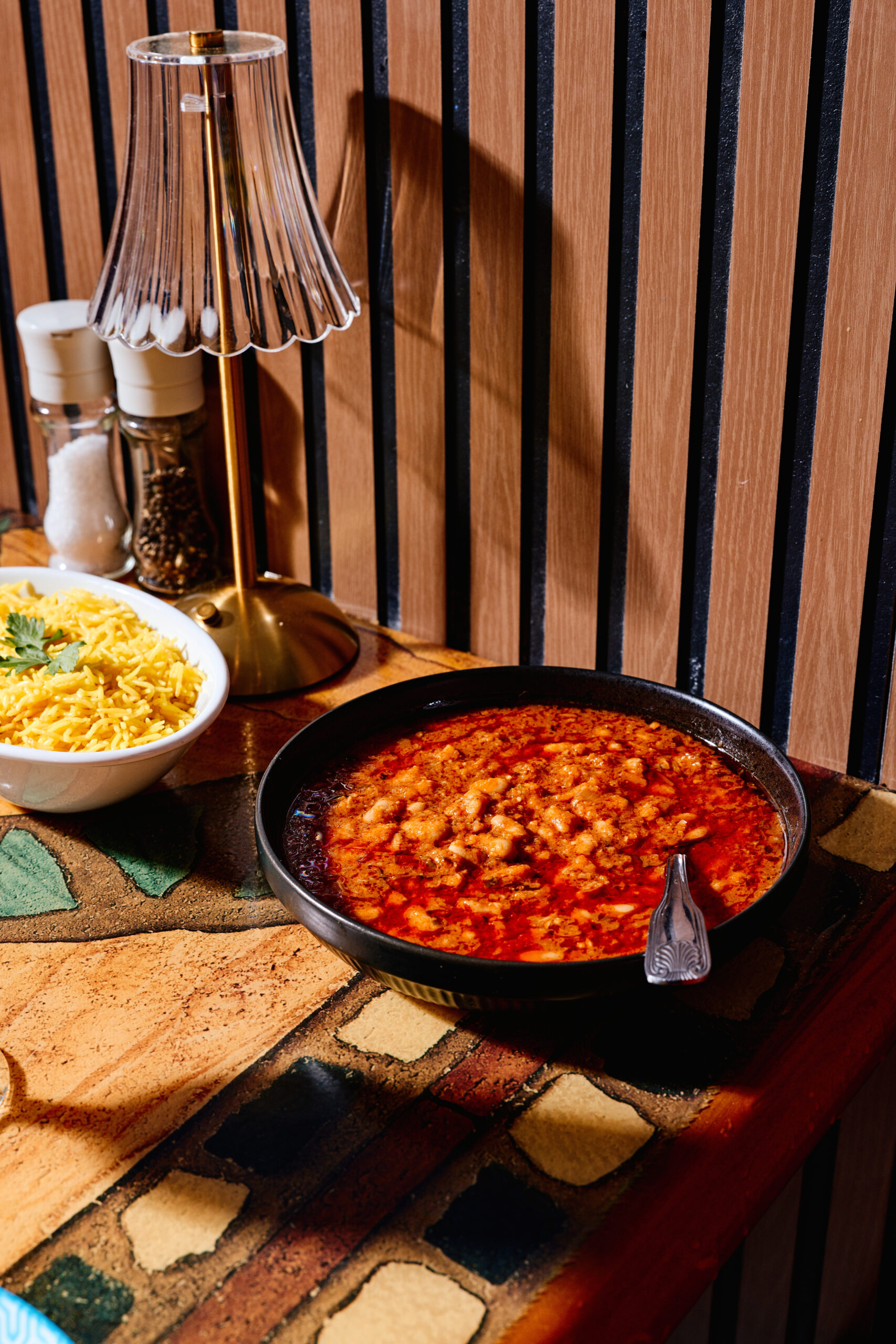
    The fasooli baida spicy white bean soup with a side of rice rests on a table Ruhani Kitchen in Egg Harbor Township on Friday, June 19, 2026.

    But the main courses are where Ruhani most impresses, especially with the Sultan’s platter, a generous medley of grilled meats — lamb and chicken kebabs tenderized with yogurt and fragrant seven spice; succulent shell-on shrimp; adana kebabs of both ground chicken and lamb scented with cumin and sumac — that can easily feed a crowd. Abbas’ talent with lamb shanks is also worth noting, served either Afghan-style plain over a pilaf enriched with lamb juices and sweet carrot laces, or Persian-style in creamy saffron sauce. I also couldn’t stop eating Ruhani’s take on the spicy white bean and tomato stew known as fasooli baida. The only thing off-key at Ruhani were the desserts, including a non-traditional knafeh that was strangely soupy. But even the ever-confident Abbas knows his limitations with sweets: “I cannot be good at everything.” Ruhani Kitchen, 6666 Black Horse Pike, Egg Harbor Township, N.J. 08234, 609-855-9719; ruhanikitchen.com

    General Tso’s chicken is made gluten-free at China Sea of Absecon.

    ABSECON

    China Sea of Absecon

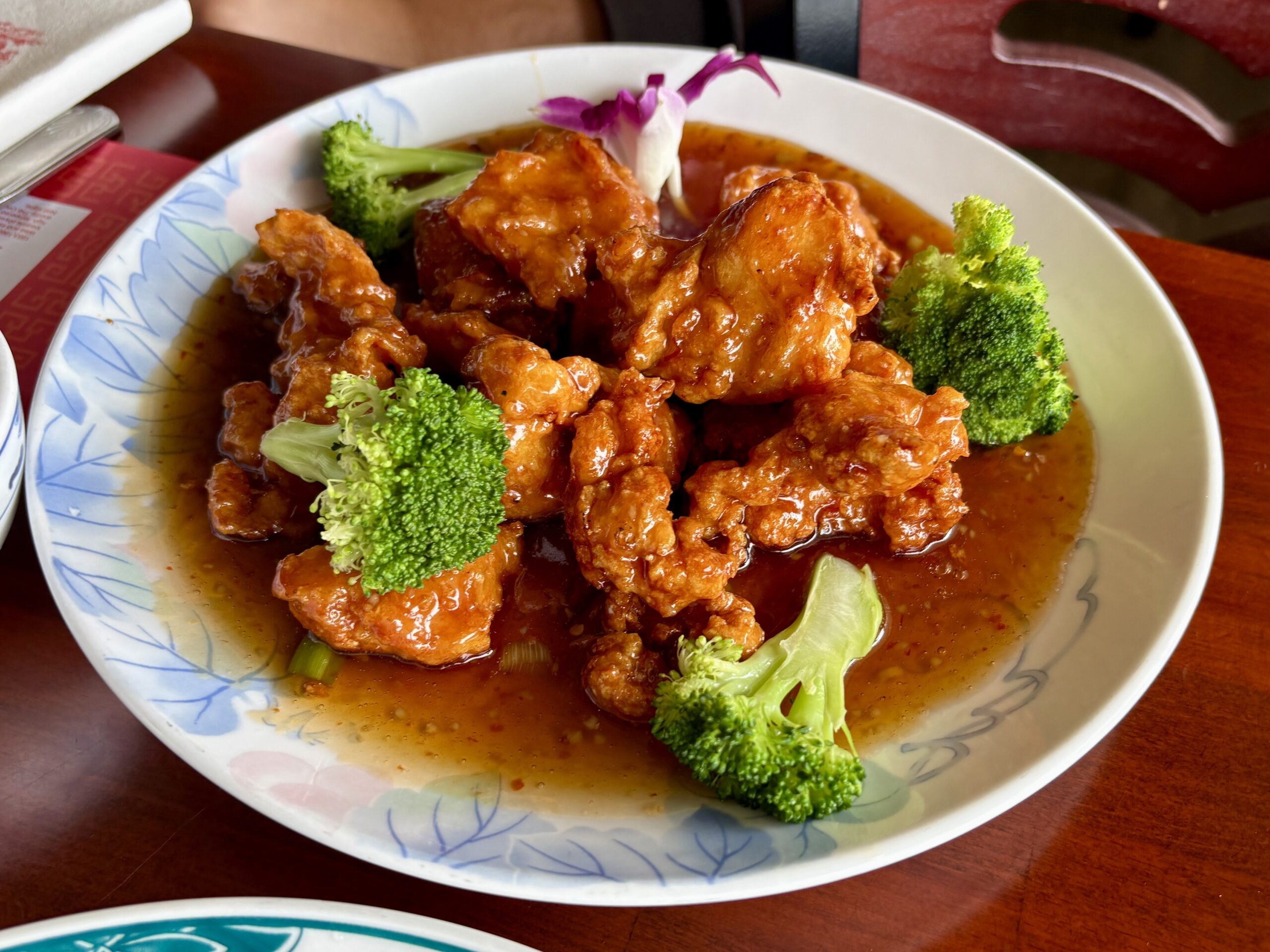
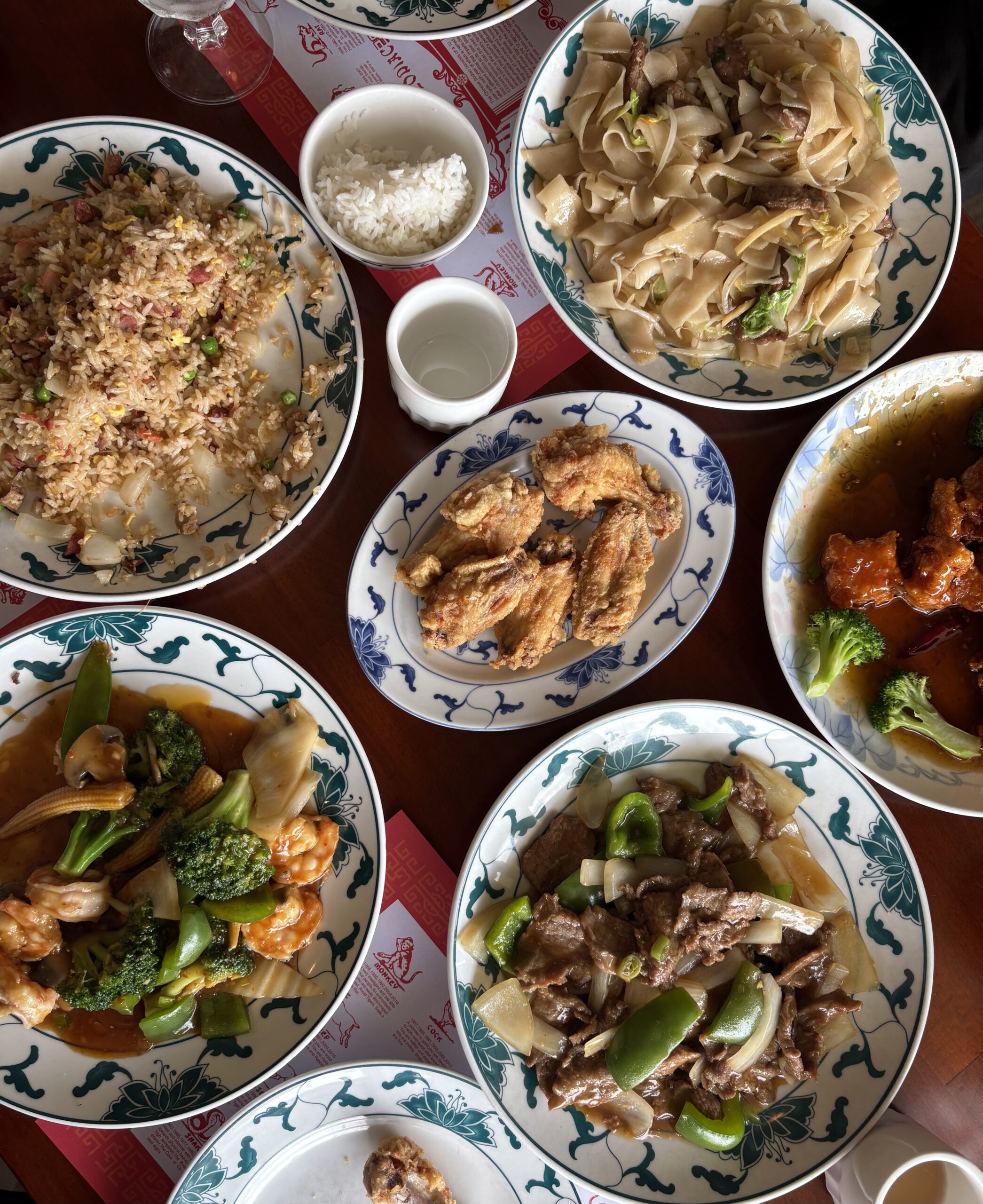
    China Sea is a survivor on the Shore’s dining scene, an unassuming standby that has thrived for 31 years in an Absecon strip mall. Founders Lily Lin and her husband, chef Chei Lin, delivered consistently good Cantonese food with a special distinction: an expansive selection of gluten-free options. Chinese food can be tricky for diners with gluten intolerance because of the heavy use of soy sauce and fryers that are commonly contaminated by wheat flour. But once chef Lin discovered his own restrictions with gluten, he developed an entire repertoire of modified dishes that are rarely seen elsewhere, including what my daughter Alice, who has celiac disease, declared as the best gluten-free General Tso’s chicken she’s ever tasted. Tender nuggets of meat are encased in delicate crusts crisped in a dedicated wok and tossed in a vivid orange sauce with a hint of heat that was flavorful without being cloyingly sweet. I consider it one of the best General Tso’s of any sort that I’ve tasted. But that wasn’t all. There were excellent gluten-free versions of plump shrimp in peppery Hunan sauce, perfectly deep-fried chicken “wing dings” in a crackly salt-baked crust, and impressively tender beef with peppers that hummed with a mellow savory balance.

    An entirely gluten-free Cantonese feast is served at China Sea of Absecon, including, clockwise from top left, fried rice, beef chow fun, General Tso’s chicken, pepper steak and Hunan shrimp.

    Such consistently good flavors bode well for continuity at China Sea, which has been in a gentle transition since the Lins retired in September and sold to Lily’s niece, Melissa Xie, and her husband, chef Billy Zheng. The couple, who both previously worked as poker dealers in Atlantic City’s nearby casinos, have plans to introduce more traditional seafood dishes from Zheng’s home province of Fujian, where the former pro chef mastered lobster in ginger-scallion sauce, a spicier rendition of Singapore noodles than what the standard menu currently serves, and whole fish. Xie promises that China Sea’s classics will remain, but I’d definitely return to explore some of this kitchen’s new moves: “My husband [Billy] is very famous for his cooking within our [local Chinese] community,” she says, “but we have to be careful to keep everything else the same because we have customers who come from all over.” China Sea of Absecon, 662 White Horse Pike, Absecon, N.J. 08201; 609-569-1995; chinaseaofabsecon.com

    Jersey Cow Ice Cream

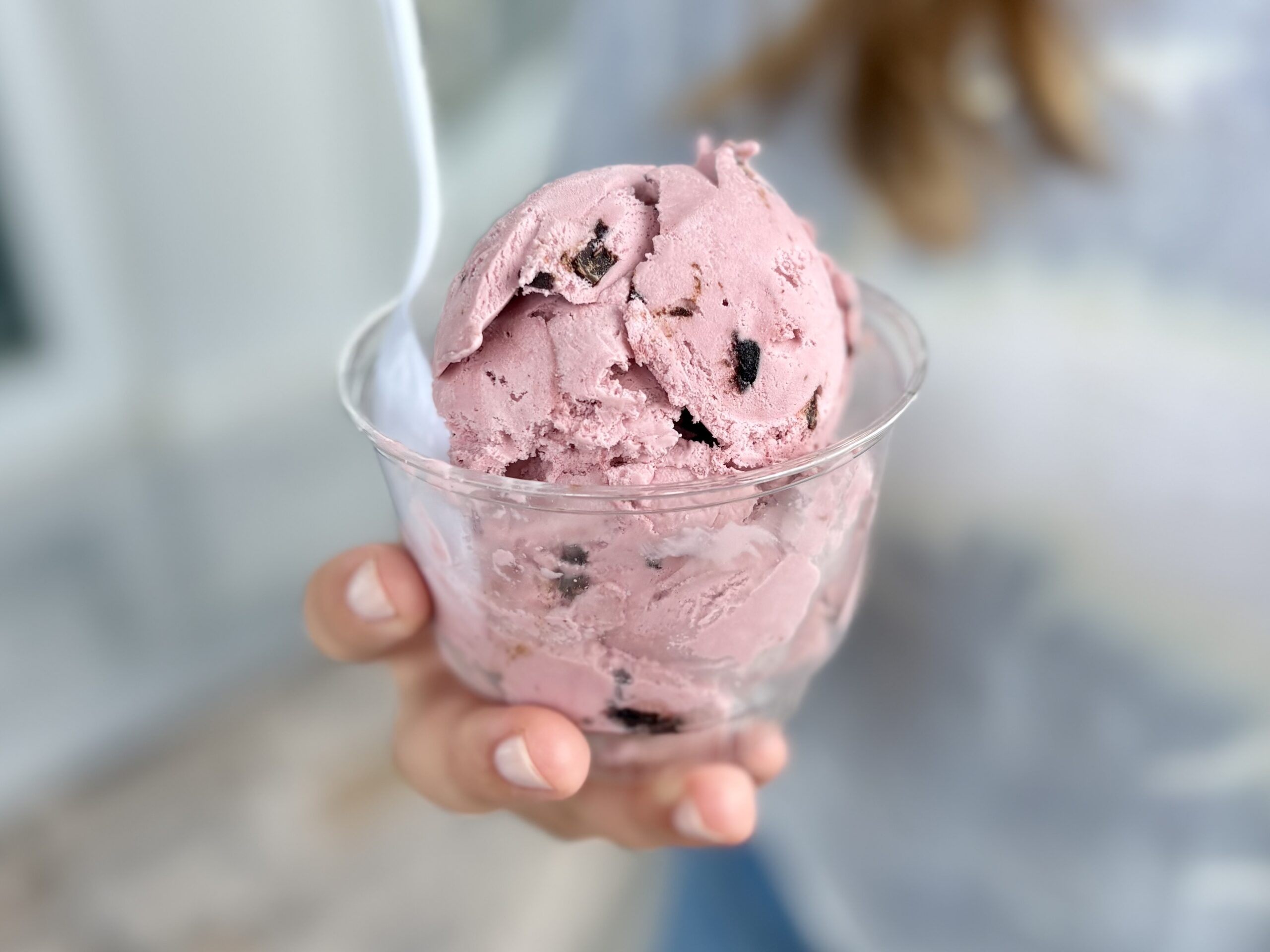
    Bordeaux cherry chip ice cream is one of the highlight flavors at the Jersey Cow Ice Cream chain.

    The Jersey Shore has plenty of options for your daily scoop. But here comes Jersey Cow, a fast-growing mini-chain of retro-style takeout windows with modern touch-screen menus that’s expanded over four years from the original location in Northfield, to Absecon, Brigantine, and now Margate, where the frozen treat competition is already fierce. If my visit to the Absecon storefront is any indication, Jersey Cow has come to play, especially in the hand-dipped category, where the ice cream is made from high-fat milk that allows them to achieve more vivid flavors with less sugar. The Chocolate Therapy is fudgy and intense, while the Bordeaux Cherry Chip (so named for the premium variety of dark cherries) has a more fruit-forward punch than the typical maraschino version. I wasn’t a fan of the icy vegan salted caramel, and Jersey Cow is still outsourcing its soft-serve base. But I’ll go back for any of their originals, especially some of the unique Asian flavors featured on the rotating specials — ube, black sesame, mango sticky rice, or red bean served atop a pandan green waffle — inspired by co-owner Maureen Gaw’s upbringing in Myanmar. Jersey Cow Ice Cream, 610 Mill Rd., Absecon, N.J. 08201, 609-796-2525; details on Northfield, Brigantine, and Margate locations noted on website, jerseycow-icecream.com

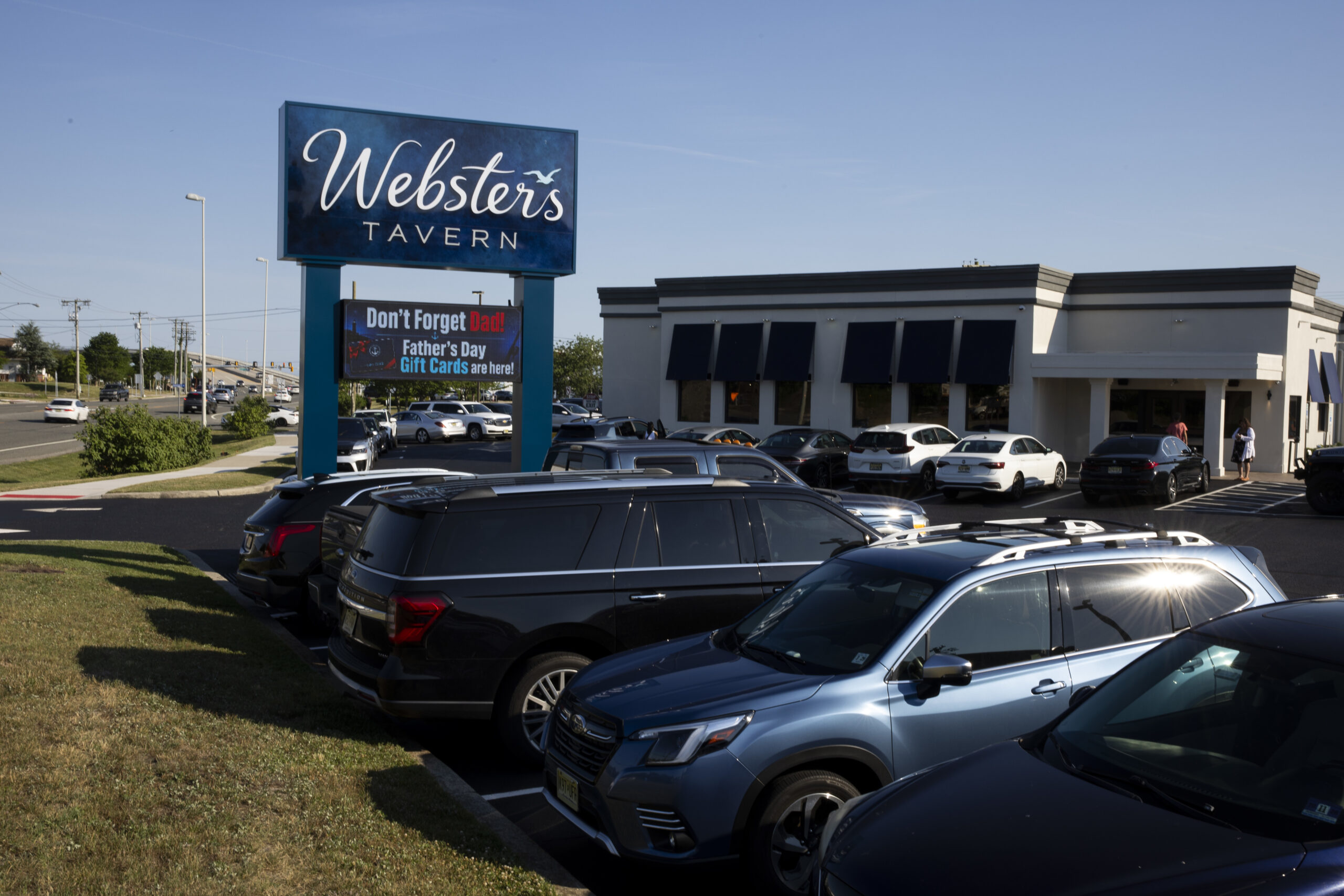
    The exterior of Webster’s on Wednesday, June 17, 2026, in Somers Point.

    SOMER’S POINT

    Webster’s Tavern

    Some people come to the Shore to relax on the beach, dig holes in the sand, body surf, and read. For those suffering from screen-time withdrawal, Webster’s Tavern is there for you. “An elite TV program,” as I’ve heard it described, has helped pack the big parking lot of the former Windjammer turned giant sports bar in Somer’s Point. So many customers are willing to wait up to an hour for a chicken wing feast bathed in the pulsing glow of 38 TVs that owner Chris Webb has concluded “we’re going to add more [TVs], including one on the kitchen wall.”

    The early days of Webster’s operations have exhibited some predictable hiccups as the tavern’s traffic rocketed to 750 customers a day within a couple weeks of opening in early June. The rushed pacing resulted in a multi-course meal that lasted barely as long as our 45-minute wait. The margarita was oversalted and sloppily mixed. (The pineapple-tinis, crushes, espresso martinis, and mud slides are apparently the safer move here). I appreciated the inclusion of local beers from Slack Tide and Somers Point Brewing on a list otherwise heavy with national brands and hard seltzers.

    The something-for-everyone menu typical of the corporate restaurant world Webb comes from (he was a vice president at P.J. Whelihan’s) was uneven to say the least. The French onion soup and sheet pan nachos were solid, as was the classic tavern burger, which landed with a perfect medium rare on a branded brioche bun (a fair quality value for $17). But the house-breaded chicken wings were dry and chewy. The seafood mac ’n’ cheese was skimpy on the seafood. The chicken lettuce wraps were tepid and drowned in too much sweet soy marinade. The fried shrimp were oddly mealy. I take heart in hearing that Webb has already made some smart early corrections, switching to house-breaded shrimp since my visit. It’s a good sign to know that this personable and veteran restaurant executive is ever-present on the ground of his first solo project and that he is paying as much attention to the food as he is the number of TVs. Webster’s Tavern, 18 MacArthur Blvd., Somers Point, N.J. 08244, 609-657-3470; websterstavernsp.com

    Pablo

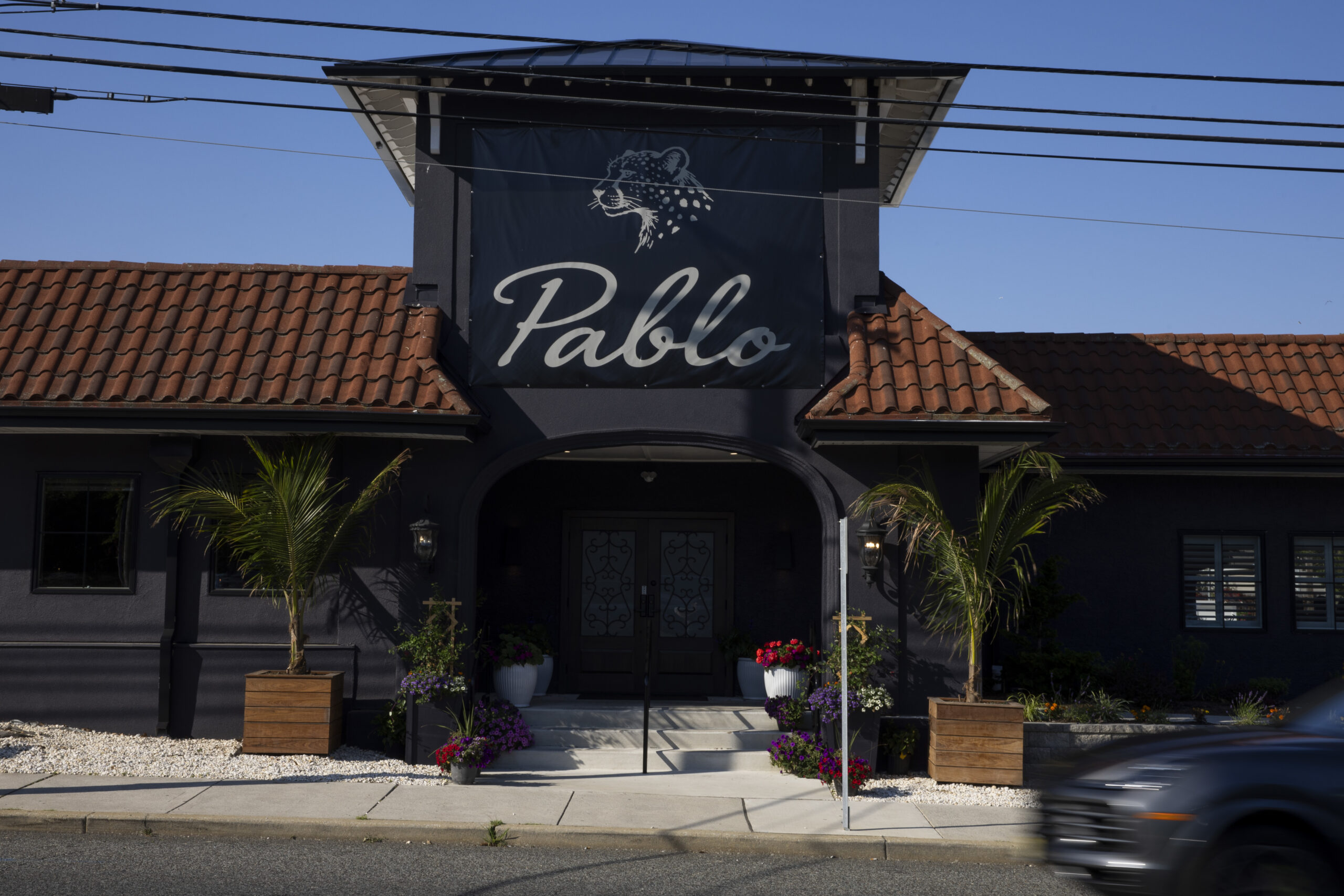
    Who is Pablo? That name was atop the list of every local I surveyed before my visit to the beach. It’s easy to see the curiosity factor at play: cars are often spilling out of the lot and parked on both sides of East Maryland Avenue beside the massive black hacienda of a restaurant and night spot called Pablo in Somers Point. The Zest Restaurant Group opened Pablo this summer after pouring $2 million into a renovation of the short-lived former Mexiquila. The Zest group, known for its stylish Cape May restaurants Port, Fish House, and Tacos Caballito Tequileria, has similarly transformed this rambling property (originally Clancy’s By the Bay) into a multi-room, four-bar, 400-seat extravaganza. There’s a moody lounge at the rear anchored by a DJ spinning house music, boosted by live musicians and pyrotechnics, an airy greenhouse dining room on the other side with skylights and garage doors that roll-up to a patio bar where they’ve re-created a beach. Fresh-juice cocktails fuel this fiesta, accounting for about 75% of the sales from the 1,200 or so guests that come through on a busy evening, says co-owner Ross Hammer, who concedes Pablo is a made-up name for the restaurant’s cheetah logo. (“Sorry, I’m Miguel,” said a passing server when I asked him for Pablo’s whereabouts.)

    The exterior of Pablo on Wednesday, June 17, 2026, in Somers Point.

    Pablo’s menu is a more affordable than its upscale-yet-underwhelming predecessor and conscientious to accommodate dietary restrictions. I only wish the kitchen put as much energy into making better-tasting food. Our meal was full of tepid overcooked meats, dry rice, stadium-grade nachos welded together with cheap cheese, and a parade of fusion tacos so disappointing that it was an all-out Taco-pocolypse, whose brightest bite was a tortilla topped with a cheeseburger. By that point, I realized that the wait — Hammer says it averages two to three hours for a seat in this no reservations dining room — is not worth it. Go to Pleasantville (see above) or pretty much anywhere else for your tacos, then return to Pablo for a tequila-spiked espresso martini, if you’re so determined, and boogie the night away on its ersatz beach. Pablo, 101 E. Maryland Ave., Somers Point, N.J. 08244, 609-469-6991; pablosomerspoint.com

  • New Jersey’s new e-bike law is causing confusion down the Shore. Pennsylvanians are exempt.

    New Jersey’s new e-bike law is causing confusion down the Shore. Pennsylvanians are exempt.

    VENTNOR, N.J. — The e-bike revolution will not be coming to Ventnor’s famously chaotic boardwalk. The city banned motorized bicycles decades ago, and raised the penalties in 2023, citing dangers from the speeds and heavier bicycles.

    Ocean City tried doing the same in 2024, but reversed course on the lowest speed e-bikes after an outcry, particularly from seniors who have grown to cherish the electric bikes that take them farther and faster, and against the wind without breaking a sweat.

    Wildwood allows them but has a 10 mph speed limit for any vehicle. Atlantic City prohibits them.

    But while boardwalk rules vary, the state’s e-bike law, passed in January with a grace period through July 19, requires New Jerseyans with e-bikes to register them and, in some cases, purchase insurance.

    The law was adopted amid a sense of urgency after a 13-year-old Scotch Plains boy on an electric bike was killed in a collision with a landscaping truck. Earlier this month, Chase Sudano, 16, a rising wrestling star at St. Augustine Prep, was killed after he collided with a UPS delivery truck in Southhampton, Burlington County.

    The law defines two classes of e-bikes: low-speed, where the motor assists only while pedaling and shuts off when the bicycles reaches 20 miles per hour, and a motorized bicycle that is throttle-capable of assisted speeds up to 28 miles per hour.

    All users of both categories must have a permit or driver’s license and wear helmets. Nobody under 15 can ride one at all.

    ‘It’s a mess’

    So far, there is no way to actually comply. The state’s own Motor Vehicle Commission website has no way to register an e-bike. The state now says it will begin taking appointments only after the grace period ends.

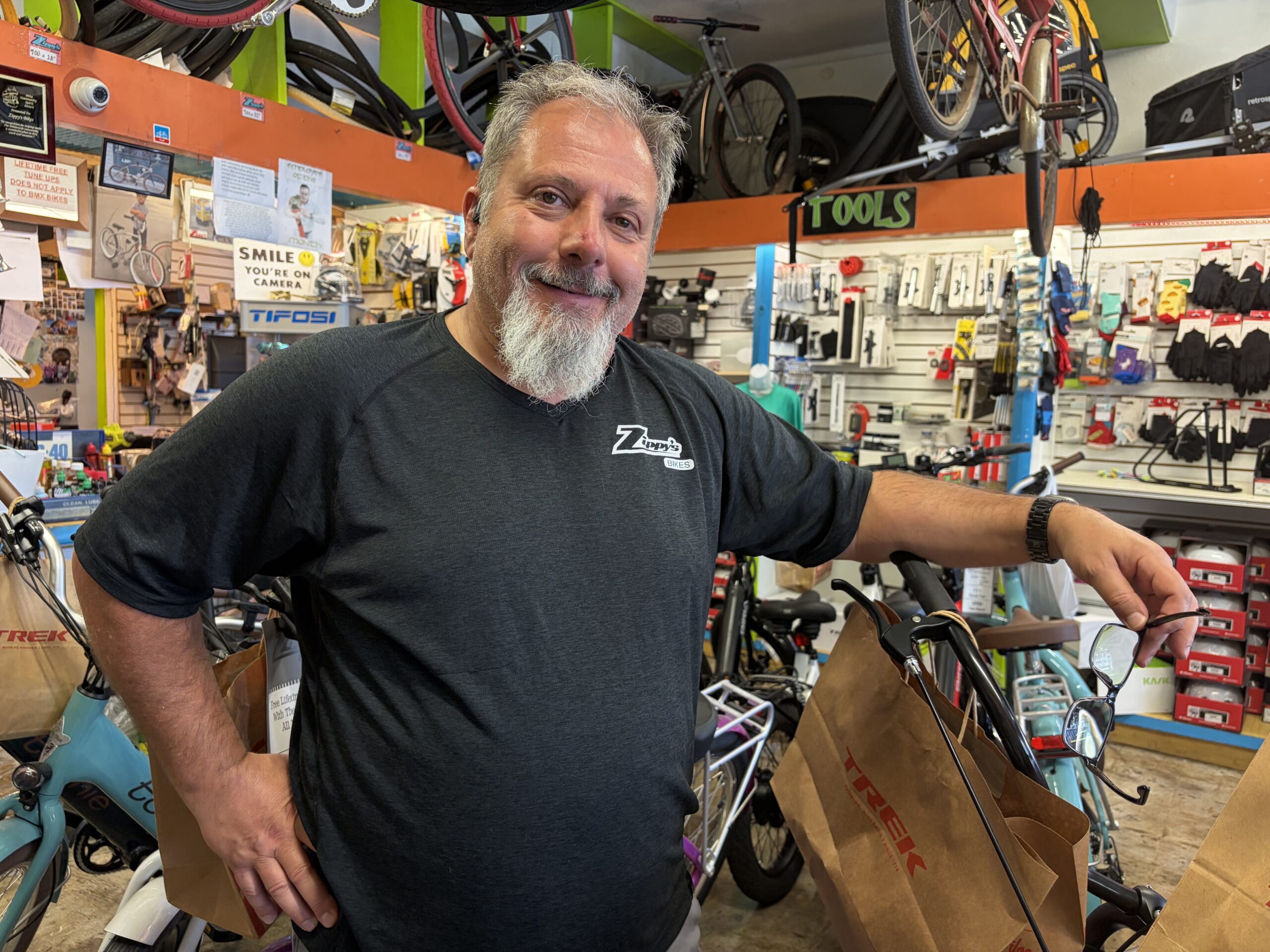
    Scott Chambers, owner of Zippy’s Bikes in Wildwood, says the new e-bike law in New Jersey “is a mess,” with no way for people to comply with registration requirements, and confusion over other issues.

    “It’s a mess,” said Scott Chambers, owner of Zippy’s Bikes in Wildwood. “It’s so overwhelming because they created this law, I don’t want to say haphazardly, but they rushed it.”

    Crawford said his customers are reluctant to buy an e-bike until they know they can ride it in compliance with the law.

    He says the law doesn’t mention e-tricycles, so it’s not clear where those might fall. (The state now says the law does not apply to e-tricycles.)

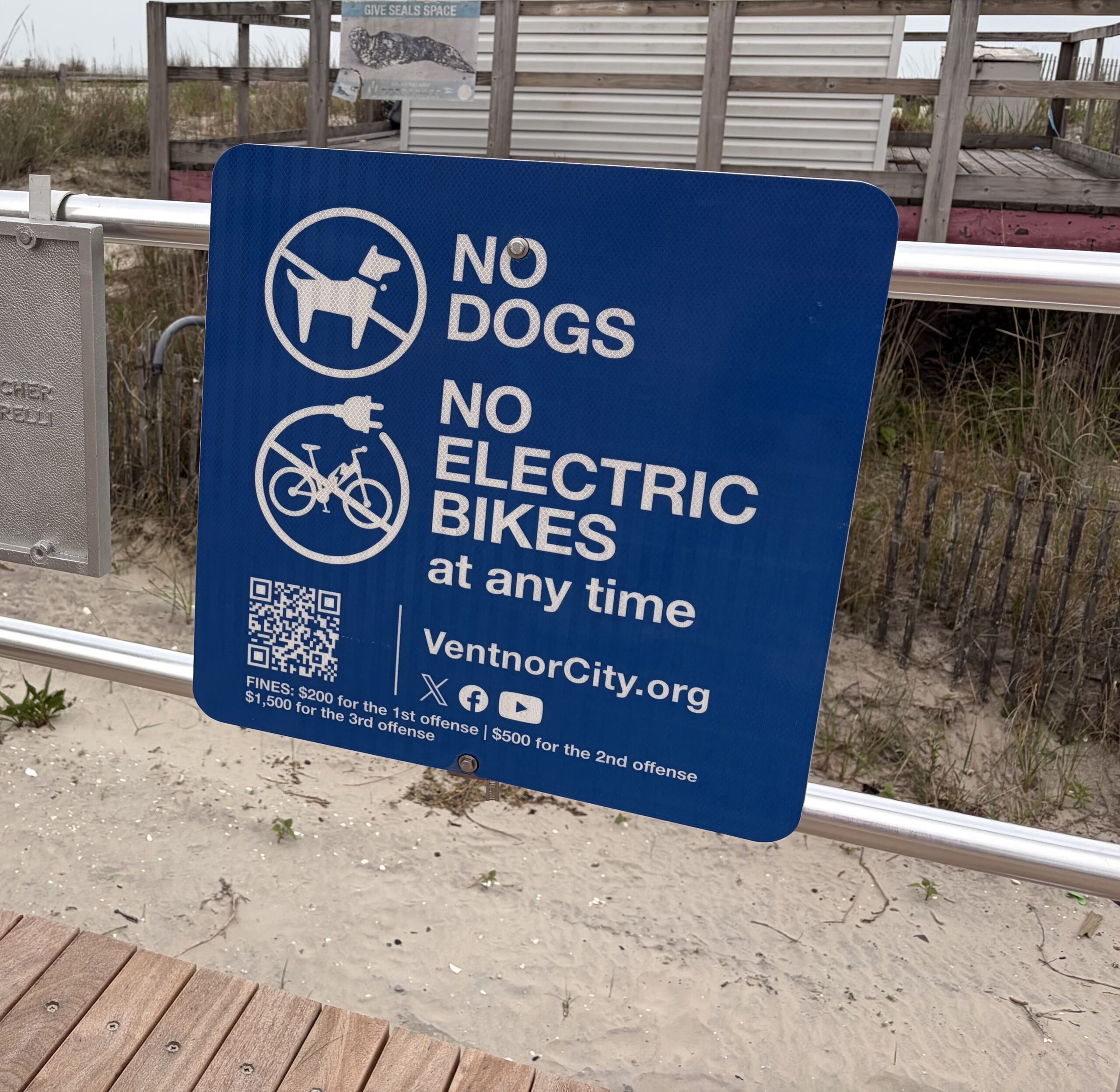
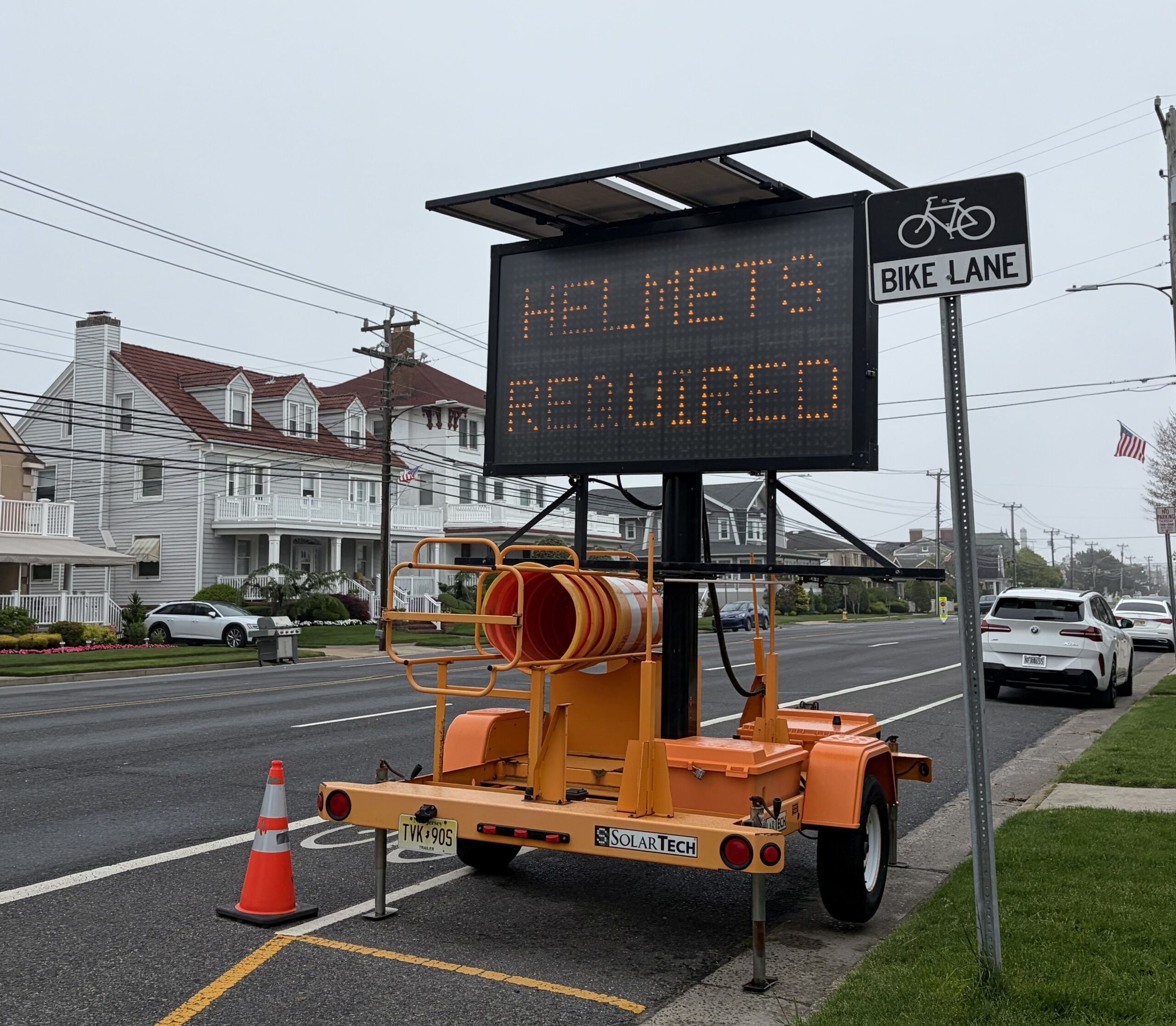
    In Ventnor, there’s a big electronic sign on Atlantic Avenue alerting people to the new law’s helmet, insurance, and registration requirements. A new sign was added to the Boardwalk itself, highlighting two prohibited categories: e-bikes and dogs.

    Ventnor police Lt. Bryan Gaviria says the department will have its hands full, educating and, at some point, enforcing the new e-bike law.

    But first, he said, they need some answers themselves.

    “We’re absolutely waiting for clarity all around,” he said, adding that the city’s bicycle officers are choosing to ride on non-electric bikes because they don’t want to be out of compliance themselves, and they don’t want to be on e-bikes while enforcing an e-bike ban.

    Ventnor installed this sign on the Boardwalk warning that electric bikes were prohibited (as well as dogs). The state’s new e-bike law goes into effect July 19, but Pennsylvanians will not be required to register their e-bikes while in New Jersey, the state says.

    Waiting on the state

    The state recently clarified some of the issues that were causing confusion.

    William Connolly, the press secretary for the N.J. Motor Vehicle Commission, says the MVC will begin offering appointments for e-bike licensing and registration in July. The law’s grace period ends July 19.

    “We will be making an announcement later this month about when appointments will become available, along with offering newly updated resources and step-by-step guidance for e-bike licensing and registration,” he said.

    He said the delay was due to the “extensive IT upgrades” required for new licensing and registration systems, educational resources and testing procedures, not to mention buying new materials such as “specialized license plate stickers,” that will have to be displayed on the registered bikes.

    “We are establishing a first-of-its-kind, comprehensive process for e-bikes,” he said.

    Ventnor installed this electronic sign on Atlantic Avenue to educate people about the state’s new e-bike law. Pennsylvanians will not be required to register their e-bikes while in New Jersey, the state says.

    Connolly said there is one category of e-bikes that will not require insurance, though they will still require registration: the lowest speed e-bikes.

    “These are the low-speed e-bikes with a motor that provide pedal assist only when the rider is pedaling and cease to provide assistance when the e-bike reaches 20 mph,” he said.

    So what if you’re visiting the Shore and bring an e-bike?

    Connolly said: “E-bike registration through the New Jersey MVC is only available to New Jersey residents.” Meaning, Pennsylvanians can bring their bikes and use them without registering them.

    But bicycle advocates say the law is confusing, because it also states that any bike must display a sticker showing that it is registered.

    While the law was prompted by a series of crashes, and particularly by the ubiquitous use by teenagers, it has been seniors that have taken to the e-bikes and urged towns to let them ride on their boardwalks.

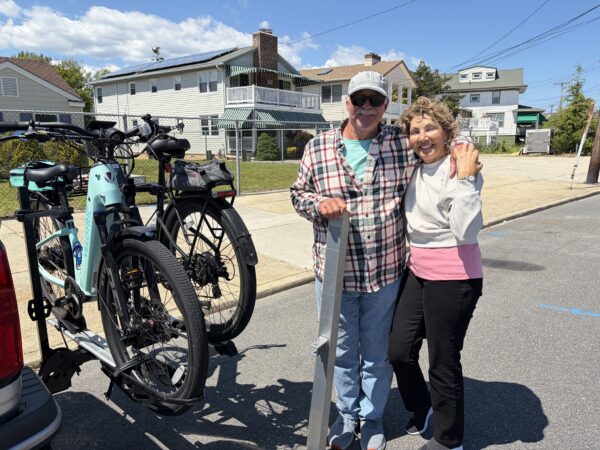
    Annamarie, 70, and Mike Carr, 71, of Ventnor are best known for the Jagielky’s candy shops they own, but it’s e-bikes that have become their passion.

    Loading their bikes back onto their truck in Ocean City, where they began and ended a bike ride around various bridges, Mike Carr said he’d be sure to wear a helmet, because he believes that will be the thing that officers will focus in on in the beginning.

    Annamarie said, “Sure we’re upset,” about not being able to ride on Ventnor’s boardwalk, but they recognize the risks from people going too fast, particularly on electric scooters.

    E-bikes have allowed the couple to go on numerous bike rides a week, for upward of 30 or more miles. They’d never do that on a regular bike.

    “We parked here, we went the whole length of the boardwalk, we went down to 29th Street, we went back to Haven Avenue, came back and went over the bridge to go see the birds,” Mike said, describing the couple’s route that day.

    With the e-bikes, they don’t have to worry about the wind, he said. The couple will typically go 13 miles an hour.

    They are hooked on the freedom, distance, and exhilaration that e-bikes have given them, even as they passed 70. They ride all over the bridges of the barrier islands.

    Mike’s got some of his regular routes timed so that he can get over the bridge without getting a red light and without automobile traffic catching him from behind. “When we’re going into Longport, you turn around, you look at the light. When it’s red, you have four minutes to get over. You hit the throttle and you go as fast as you can.”

    He said they’ll try to register the bicycles and comply with the law, once they’re able to:

    “I’ll have to wear a helmet because I’m guessing they’ll look for the guys with no helmet, pull them over.”


    E-bike riders can sign up for direct updates from MVC here.

  • 76 neighborhood gems that make Philadelphia Philly

    76 neighborhood gems that make Philadelphia Philly

    html,body{margin:0}.inno :where(*:not(svg,svg *,.inno-no-reset,.inno-no-reset *),use){all:revert;margin:0;padding:0;border:0;list-style:none}@font-face{font-family:”Inquirer Headline”;font-weight:100;src:url(“https://media.inquirer.com/fonts/InquirerHeadline-ThinWEB.woff2”) format(“woff2”),url(“https://media.inquirer.com/fonts/InquirerHeadline-ThinWEB.woff”) format(“woff”)}@font-face{font-family:”Inquirer Headline”;font-weight:100;font-style:italic;src:url(“https://media.inquirer.com/fonts/InquirerHeadline-ThinItalicWEB.woff2”) format(“woff2”),url(“https://media.inquirer.com/fonts/InquirerHeadline-ThinItalicWEB.woff”) format(“woff”)}@font-face{font-family:”Inquirer Headline”;font-weight:300;src:url(“https://media.inquirer.com/fonts/InquirerHeadline-LightWEB.woff2”) format(“woff2”),url(“https://media.inquirer.com/fonts/InquirerHeadline-LightWEB.woff”) format(“woff”)}@font-face{font-family:”Inquirer Headline”;font-weight:300;font-style:italic;src:url(“https://media.inquirer.com/fonts/InquirerHeadline-LightItalicWEB.woff2”) format(“woff2”),url(“https://media.inquirer.com/fonts/InquirerHeadline-LightItalicWEB.woff”) format(“woff”)}@font-face{font-family:”Inquirer Headline”;font-weight:normal;src:url(“https://media.inquirer.com/fonts/InquirerHeadline-RegularWEB.woff2”) format(“woff2”),url(“https://media.inquirer.com/fonts/InquirerHeadline-RegularWEB.woff”) format(“woff”)}@font-face{font-family:”Inquirer Headline”;font-weight:normal;font-style:italic;src:url(“https://media.inquirer.com/fonts/InquirerHeadline-RegularItalicWEB.woff2”) format(“woff2”),url(“https://media.inquirer.com/fonts/InquirerHeadline-RegularItalicWEB.woff”) format(“woff”)}@font-face{font-family:”Inquirer Headline”;font-weight:500;src:url(“https://media.inquirer.com/fonts/InquirerHeadline-MediumWEB.woff2”) format(“woff2”),url(“https://media.inquirer.com/fonts/InquirerHeadline-MediumWEB.woff”) format(“woff”)}@font-face{font-family:”Inquirer Headline”;font-weight:500;font-style:italic;src:url(“https://media.inquirer.com/fonts/InquirerHeadline-MediumItalicWEB.woff2”) format(“woff2”),url(“https://media.inquirer.com/fonts/InquirerHeadline-MediumItalicWEB.woff”) format(“woff”)}@font-face{font-family:”Inquirer Headline”;font-weight:600;src:url(“https://media.inquirer.com/fonts/InquirerHeadline-SemiBoldWEB.woff2”) format(“woff2”),url(“https://media.inquirer.com/fonts/InquirerHeadline-SemiBoldWEB.woff”) format(“woff”)}@font-face{font-family:”Inquirer Headline”;font-weight:600;font-style:italic;src:url(“https://media.inquirer.com/fonts/InquirerHeadline-SemiBoldItalicWEB.woff2”) format(“woff2”),url(“https://media.inquirer.com/fonts/InquirerHeadline-SemiBoldItalicWEB.woff”) format(“woff”)}@font-face{font-family:”Inquirer Headline”;font-weight:700;src:url(“https://media.inquirer.com/fonts/InquirerHeadline-BoldWEB.woff2”) format(“woff2”),url(“https://media.inquirer.com/fonts/InquirerHeadline-BoldWEB.woff”) format(“woff”)}@font-face{font-family:”Inquirer Headline”;font-weight:700;font-style:italic;src:url(“https://media.inquirer.com/fonts/InquirerHeadline-BoldItalicWEB.woff2”) format(“woff2”),url(“https://media.inquirer.com/fonts/InquirerHeadline-BoldItalicWEB.woff”) format(“woff”)}@font-face{font-family:”Inquirer Headline”;font-weight:900;src:url(“https://media.inquirer.com/fonts/InquirerHeadline-BlackWEB.woff2”) format(“woff2”),url(“https://media.inquirer.com/fonts/InquirerHeadline-BlackWEB.woff”) format(“woff”)}@font-face{font-family:”Inquirer Headline”;font-weight:900;font-style:italic;src:url(“https://media.inquirer.com/fonts/InquirerHeadline-BlackItalicWEB.woff2”) format(“woff2”),url(“https://media.inquirer.com/fonts/InquirerHeadline-BlackItalicWEB.woff”) format(“woff”)}@font-face{font-family:”Inquirer Text”;font-weight:normal;src:url(“https://media.inquirer.com/fonts/InquirerTextWEB-RegularWEB.woff2”) format(“woff2”),url(“https://media.inquirer.com/fonts/InquirerTextWEB-RegularWEB.woff”) format(“woff”)}@font-face{font-family:”Inquirer Text”;font-weight:normal;font-style:italic;src:url(“https://media.inquirer.com/fonts/InquirerTextWEB-RegularItalicWEB.woff2”) format(“woff2”),url(“https://media.inquirer.com/fonts/InquirerTextWEB-RegularItalicWEB.woff”) format(“woff”)}@font-face{font-family:”Inquirer Text”;font-weight:bold;src:url(“https://media.inquirer.com/fonts/InquirerTextWEB-BoldWEB.woff2”) format(“woff2”),url(“https://media.inquirer.com/fonts/InquirerTextWEB-BoldWEB.woff”) format(“woff”)}@font-face{font-family:”Inquirer Text”;font-weight:bold;font-style:italic;src:url(“https://media.inquirer.com/fonts/InquirerTextWEB-BoldItalicWEB.woff2”) format(“woff2”),url(“https://media.inquirer.com/fonts/InquirerTextWEB-BoldItalicWEB.woff”) format(“woff”)}@font-face{font-family:”Grot 10″;font-weight:normal;src:url(“https://media.inquirer.com/fonts/Grot10-RegularWEB.woff2”) format(“woff2”),url(“https://media.inquirer.com/fonts/Grot10-RegularWEB.woff”) format(“woff”)}@font-face{font-family:”Grot 10″;font-weight:500;src:url(“https://media.inquirer.com/fonts/Grot10-MediumWEB.woff2”) format(“woff2”),url(“https://media.inquirer.com/fonts/Grot10-MediumWEB.woff”) format(“woff”)}@font-face{font-family:”Grot 10″;font-weight:bold;src:url(“https://media.inquirer.com/fonts/Grot10-ExtraboldWEB.woff2”) format(“woff2”),url(“https://media.inquirer.com/fonts/Grot10-ExtraboldWEB.woff”) format(“woff”)}@font-face{font-family:”Grot12″;font-weight:300;src:url(“https://media.inquirer.com/fonts/Grot12Condensed-LightWEB.woff2”) format(“woff2”),url(“https://media.inquirer.com/fonts/Grot12Condensed-LightWEB.woff”) format(“woff”)}@font-face{font-family:”Grot12″;font-weight:600;src:url(“https://media.inquirer.com/fonts/Grot12Condensed-SemiboldWEB.woff2”) format(“woff2”),url(“https://media.inquirer.com/fonts/Grot12Condensed-SemiboldWEB.woff”) format(“woff”)}body.is-scroll-locked{overflow:hidden;height:100%}.inno{–color-background: #d5e8fc;–color-background-secondary: #fff7e0;–color-accent: #1935b2;–color-over-accent: #ffffff;–color-text-primary: #1935b2;–color-text-link: #1a6aff;–color-text-secondary: #595760;–color-text-tertiary: #808284;–color-text-accent: #e10116;–color-faint: #dcdcdc;–color-mask: rgba(34, 34, 34, 0.8);-webkit-font-smoothing:antialiased;-moz-osx-font-smoothing:grayscale;font-family:”Grot 10″,sans-serif;background:var(–color-background);color:var(–color-text-primary);padding-block-end:64px;overflow:clip;font-size:14px;line-height:1}.inno-mode–dark{–color-background: #222222;–color-background-secondary: #595760;–color-accent: #d5e8fc;–color-over-accent: #222222;–color-text-primary: #ffffff;–color-text-secondary: #dcdcdc;–color-text-tertiary: #808284;–color-text-link: #1a6aff;–color-faint: #595760;–color-mask: rgba(255, 255, 255, 0.8)}.inno–lite.inno-color–purple{–color-accent: #7b2589;–color-over-accent: #ffffff;–color-text-accent: #7b2589}.inno–lite.inno-color–pink{–color-accent: #cd0785;–color-over-accent: #ffffff;–color-text-accent: #cd0785}.inno–lite.inno-color–red{–color-accent: #e10116;–color-over-accent: #ffffff;–color-text-accent: #e10116}.inno–lite.inno-color–orange{–color-accent: #e66a1f;–color-over-accent: #222222;–color-text-accent: #e66a1f}.inno–lite.inno-color–yellow{–color-accent: #f0af13;–color-over-accent: #222222;–color-text-accent: #f0af13}.inno–lite.inno-color–green{–color-accent: #00a253;–color-over-accent: #ffffff;–color-text-accent: #00a253}.inno–lite.inno-color–teal{–color-accent: #00a69e;–color-over-accent: #ffffff;–color-text-accent: #00a69e}.inno–lite.inno-color–light-gray{–color-accent: #dcdcdc;–color-over-accent: #222222;–color-text-accent: #dcdcdc}.inno–lite.inno-color–light-blue{–color-accent: #d5e8fc;–color-over-accent: #222222;–color-text-accent: #d5e8fc}.inno–lite.inno-color–blue{–color-accent: #1935b2;–color-over-accent: #ffffff;–color-text-accent: #1935b2}.inno–lite.inno-color–black{–color-accent: #222222;–color-over-accent: #ffffff;–color-text-accent: #222222}.inno–lite.inno-color–white{–color-accent: #ffffff;–color-over-accent: #222222;–color-text-accent: #ffffff}.inno–lite.inno-color–white,.inno–lite.inno-color–black{–color-accent: #1935b2;–color-over-accent: #ffffff;–color-text-accent: #222222}.inno–lite.inno-color–white.inno-mode–dark,.inno–lite.inno-color–black.inno-mode–dark{–color-accent: #d5e8fc;–color-over-accent: #222222;–color-text-accent: #ffffff}.inno–widget,.inno–embed{overflow:hidden;padding-block-end:0}.inno–widget .inno-layout–content>*,.inno–embed .inno-layout–content>*{max-width:none}.inno-anchorable:before{content:””;display:block;height:calc(var(–nav-height, 0) + 10px);margin:calc(0px – (var(–nav-height, 0) + 10px)) 0 0}.inno-spanner{background-color:#dcdcdc;box-shadow:4px 0 0 #dcdcdc,-4px 0 0 #dcdcdc;color:#fff;padding:1px 0;margin:0 5px;box-decoration-break:clone;-webkit-box-decoration-break:clone;color:#222}.inno-spanner–error,.inno-spanner–error-invalid-symbol{background-color:#fff;border:3px dashed #e10116;box-shadow:none;padding-left:4px;padding-right:4px}body:has(.inno-chrome–chromeless){overflow:hidden;width:100vw;height:100vh}@supports(width: 100dvw){body:has(.inno-chrome–chromeless){width:100dvw}}@supports(height: 100dvh){body:has(.inno-chrome–chromeless){height:100dvh}}body:has(.inno-chrome–chromeless) .global-app-bar,body:has(.inno-chrome–chromeless) .footer,body:has(.inno-chrome–chromeless) .footer-wrapper{display:none}body:has(.inno-chrome–chromeless) #inq-article-completion{height:0px}.inno{–gutter: calc(50vw – 325px)}.inno *{box-sizing:border-box}.inno-layout–content>*{max-width:min(650px,100vw – 32px);margin-inline:auto}.inno-layout–align-full{max-width:100%}.inno-layout–align-wide{max-width:min(1250px,100vw – 32px);margin-inline:auto}.inno-layout–align-default{max-width:min(650px,100vw – 32px);margin-inline:auto}@media(min-width: 768px){.inno-layout–align-left{float:left;margin-inline-start:var(–gutter);margin-inline-end:24px;width:301px;margin-block-end:16px;padding-top:6px}}@media(min-width: 960px){.inno-layout–align-left{margin-inline-start:calc(var(–gutter) – clamp(0px,var(–gutter) – 100px,160px))}}@media(min-width: 768px){.inno-layout–align-right{float:right;width:301px;margin-inline-start:24px;margin-inline-end:var(–gutter);margin-block-end:16px;padding-top:5px}}@media(min-width: 960px){.inno-layout–align-right{margin-inline-end:calc(var(–gutter) – clamp(0px,var(–gutter) – 100px,160px))}}.inno-layout–stack>*+*{margin-block-start:24px}.inno-layout–stack-tight>*+*{margin-block-start:10px}.inno-layout–stack-loose>*+*{margin-block-start:30px}*+.inno-layout–isolate{margin-block-start:48px}.inno-layout–isolate+*{margin-block-start:48px}.inno-gemshero{margin-block-start:0;position:relative}.inno-gemshero–has-media .inno-gemshero__content{padding-bottom:72px}@media(min-width: 960px){.inno-gemshero–has-media .inno-gemshero__content{padding-bottom:128px}}.inno-color–white .inno-gemshero,.inno-mode–light .inno-gemshero–style-transparent{–color-accent: #ffffff;–color-over-accent: #222222}.inno-color–black .inno-gemshero,.inno-mode–dark .inno-gemshero–style-transparent{–color-accent: #222222;–color-over-accent: #ffffff}.inno-gemshero–style-transparent .inno-gemshero__content{background:rgba(0,0,0,0)}.inno-gemshero–layout-above{display:flex;flex-direction:column-reverse;background:var(–color-accent)}.inno-gemshero–layout-above .inno-gemshero__content{padding:24px 0}.inno-gemshero–layout-above .inno-gemshero__media{max-width:80%;margin:0 auto;padding-top:24px}.inno-gemshero–layout-above .inno-gemshero__media>*{max-width:350px}.inno-gemshero–layout-above .inno-gemshero__media .inno-caption-text{display:none}.inno-gemshero__content{width:100%;height:100%;padding-block-start:70px;text-align:center;background:var(–color-accent);color:var(–color-over-accent)}@media(min-width: 960px){.inno-gemshero__content{padding-block:70px}}.inno-gemshero__eyebrow{font-family:”Grot12″,sans-serif;font-weight:bold;text-transform:uppercase;font-size:16px;font-weight:bold;padding:5px 8px;background:var(–color-over-accent);color:var(–color-accent);width:max-content;text-decoration:none;line-height:2}@media(min-width: 768px){.inno-gemshero__eyebrow{font-size:18px}}.inno-gemshero__letter-img{position:absolute}.inno-gemshero__letter-img–lightbluestar{top:-15%;left:-50%;width:100%;opacity:0;animation:dropIn 1s ease-in-out forwards}.inno-gemshero__letter-img–lightbluestar2{bottom:-10%;right:-60%;width:100%;opacity:0;animation:dropIn 1s ease-in-out forwards;animation-delay:1.1s}.inno-gemshero__letter-img–bell{display:none;top:8%;left:10%;width:20%}.inno-gemshero__letter-img–redstar{display:none;top:14%;right:10%;width:15%;transform:rotate(8deg)}.inno-gemshero__letter-img–pretzel{display:none;top:18%;right:13%;width:10%;transform:rotate(8deg);animation:dropIn 1s ease-in-out forwards}.inno-gemshero__letter-img–bluestar{display:none;bottom:12%;left:0%;width:15%;transform:rotate(-8deg)}.inno-gemshero__letter-img–citywide{display:none;bottom:12%;left:2%;width:12%;transform:rotate(-8deg);animation:dropIn 1s ease-in-out forwards}.inno-gemshero__letter-img–billypenn{display:none;bottom:0%;right:-6%;width:30%}.inno-gemshero__headline{font-family:”Inquirer Headline”,”Times New Roman”,serif;font-size:40px;font-weight:700;line-height:1;text-wrap:balance;display:grid;grid-template-rows:repeat(5, auto);grid-template-columns:auto;row-gap:4px;text-transform:uppercase}.inno-gemshero__headline-line{position:relative;display:flex;flex-direction:row;align-items:center;justify-content:center;height:fit-content;transition:all .3s ease-in-out;opacity:1;color:#e10116}.inno-gemshero__headline-line–2,.inno-gemshero__headline-line–4,.inno-gemshero__headline-line–5{font-family:”Grot12″,sans-serif}.inno-gemshero__headline-line–1{font-size:30vw}@media(width >= 768px){.inno-gemshero__headline-line–1{font-size:180px}}.inno-gemshero__headline-line–2{top:5%;font-size:8vw}@media(width >= 768px){.inno-gemshero__headline-line–2{font-size:60px}}.inno-gemshero__headline-line–3{top:-5%;font-size:30vw}@media(width >= 768px){.inno-gemshero__headline-line–3{font-size:180px}}.inno-gemshero__headline-line–4{top:30%;font-size:14px}@media(width >= 768px){.inno-gemshero__headline-line–4{font-size:24px}}.inno-gemshero__headline-line–5{font-size:8vw}@media(width >= 768px){.inno-gemshero__headline-line–5{font-size:60px}}.inno-gemshero__letter{position:relative;opacity:0;animation:dropIn 1s ease-in-out forwards}.inno-gemshero__letter–g{top:16px;animation-delay:.3s}.inno-gemshero__letter–e{animation-delay:.5s}.inno-gemshero__letter–m{top:16px;animation-delay:.7s}.inno-gemshero__letter–s{animation-delay:.9s}.inno-gemshero__line-text{border-bottom:10px solid #e10116;width:65%;position:relative}@media(max-width: 600px){.inno-gemshero__line-text{border-bottom:7px solid #e10116}}.inno-gemshero__star-img{position:absolute;width:100%;opacity:0;animation:fadeIn 1s ease-in-out forwards}.inno-gemshero__star-img–lightbluestartop1{bottom:10%;left:10%;width:7%;animation-delay:1s}.inno-gemshero__star-img–lightbluestartop2{bottom:49%;left:12%;width:7%;animation-delay:1.3s}.inno-gemshero__star-img–lightbluestartop3{bottom:83%;left:23%;width:7%;animation-delay:1.6s}.inno-gemshero__star-img–lightbluestartop4{bottom:97%;left:46%;width:7%;animation-delay:1.9s}.inno-gemshero__star-img–lightbluestartop5{bottom:83%;left:68%;width:7%;animation-delay:2.1s}.inno-gemshero__star-img–lightbluestartop6{bottom:49%;left:79%;width:7%;animation-delay:2.4s}.inno-gemshero__star-img–lightbluestartop7{bottom:10%;left:80%;width:7%;animation-delay:2.7s}@keyframes fadeIn{0%{opacity:0;transform:scale(1)}50%{transform:scale(1.5)}100%{opacity:1;transform:scale(1)}}@keyframes dropIn{from{opacity:0;scale:2}to{opacity:1;scale:1}}@keyframes fadeInAndUp{from{opacity:0;transform:translateY(20%)}to{opacity:.9;transform:translateY(0)}}.inno-gemshero__headline-stars{display:flex;flex-direction:row;gap:24px}.inno-gemshero__headline-stars:first-of-type{flex-direction:row-reverse}.inno-gemshero__subheadline{font-family:”Inquirer Headline”,”Times New Roman”,serif;font-size:20px;line-height:1.3;text-wrap:balance}@media(min-width: 768px){.inno-gemshero__subheadline{font-size:24px}}.inno-gemshero__media{position:relative;z-index:2;margin-top:-48px}@media(min-width: 960px){.inno-gemshero__media{margin-top:-96px}}@media(max-width: 600px){.inno-gemshero__media{margin-bottom:-24px}}.inno-adbox{max-height:400px;transition:max-height .4s ease-in-out,padding .4s ease-in-out,margin .4s ease-in-out;overflow:hidden}.inno-adbox.is-hidden{max-height:0;margin:0;padding:0}.inno-adbox__label{display:block;margin:0 auto 8px;text-align:center;font-size:12px;color:#808284;text-transform:uppercase}.inno-ad__ad{margin-inline:auto;background-color:#fff7e0;display:flex;align-items:center;justify-content:center;overflow:hidden;width:300px;height:250px}@media(min-width: 768px)and (max-width: 1022px){.inno-ad__ad{width:728px;height:90px}}@media(min-width: 1023px){.inno-ad__ad{height:auto;width:fit-content;min-width:728px;min-height:90px;max-width:970px;max-height:250px}}.inno-ad__ad–small{width:300px;height:250px;min-height:auto;min-width:auto}.inno-ad__ad iframe{position:unset !important}.inno-ad__ad .cnx-content-wrapper{position:relative !important}.inno-ad__ad .celtra-ad-inline-host,.inno-ad__ad .celtra-ad-inline-host *{position:relative !important;overflow:hidden !important}.inno-ad__placeholder{text-align:center;text-transform:uppercase;font-weight:bold;font-size:16px;color:#222}@media(min-width: 1200px){.inno-ad__placeholder{padding:120px 0}}.inno-body__error{color:var(–color-text-primary);padding:24px;border:3px dashed #e10116;font-family:monospace;white-space:pre-wrap;font-size:16px}.inno-body__error-head{display:block;font-weight:bold}.inno-button{position:relative;display:flex;flex-direction:row;justify-content:center;align-items:center;gap:8px;box-sizing:border-box;text-decoration:none;border-radius:4px;cursor:pointer;pointer-events:auto;transition:background-color .4s ease-in-out,border-color .4s ease-in-out,color .4s ease-in-out;background-color:var(–color-accent);color:var(–color-over-accent)}.inno-button:focus{outline:solid 4px var(–color-text-tertiary)}.inno-button:disabled{pointer-events:none}.inno-button–primary:hover{background-color:var(–color-text-primary);color:var(–color-background)}.inno-button–primary:disabled{background-color:var(–color-text-secondary);color:var(–color-text-tertiary);pointer-events:none}.inno-button–secondary{background-color:var(–color-background);color:var(–color-text-primary);border:solid 1px var(–color-accent)}.inno-button–secondary:hover{background-color:var(–color-accent);color:var(–color-over-accent);border:solid 1px var(–color-accent)}.inno-button–secondary:disabled{border-color:var(–color-text-tertiary);color:var(–color-text-tertiary)}.inno-button–minimal{background-color:rgba(0,0,0,0);color:var(–color-text-primary);padding:8px}.inno-button–minimal:hover{background-color:var(–color-accent);color:var(–color-over-accent)}.inno-button–minimal:disabled{background-color:var(–color-text-secondary);color:var(–color-text-tertiary);pointer-events:none}.inno-button–large{padding:16px 40px}.inno-button–medium{padding:10px 24px}.inno-button–small{padding:8px 16px}.inno-button–round{border-radius:99px}.inno-button–round.inno-button–small{padding:8px}.inno-button–round.inno-button–medium{padding:10px}.inno-button–round.inno-button–large{padding:16px}.inno-button__label{font-family:”Grot 10″,sans-serif;font-weight:700;line-height:1.2em;flex-grow:0;z-index:1}.inno-button–large .inno-button__label{font-size:20px}.inno-button–medium .inno-button__label{font-size:18px}.inno-button–small .inno-button__label{font-size:16px}.inno-button–has-image .inno-button__label{text-align:center}.inno-button__image{margin:0 auto;object-fit:contain}.inno-callout__content{background-color:var(–color-background-secondary);padding:20px 15px}.inno-callout:has(.inno-callout__cta) .inno-callout__content{padding-bottom:50px}.inno-callout__tag{font-family:”Grot 10″,sans-serif;font-size:16px;color:var(–color-text-primary)}@media(min-width: 768px){.inno-callout__tag{font-size:18px}}.inno-callout__title{font-family:”Grot12″,sans-serif;font-size:32px;font-weight:bold;text-transform:uppercase;color:var(–color-text-primary);text-wrap:balance}*+.inno-callout__title{margin-block-start:5px}.inno-callout__body{font-family:”Grot 10″,sans-serif;font-size:16px;color:var(–color-text-primary);line-height:1.65em}@media(min-width: 768px){.inno-callout__body{font-size:18px}}*+.inno-callout__body{margin-block-start:10px}.inno-callout__body .inno-p{font-family:inherit;font-size:inherit;color:inherit;line-height:inherit}.inno-callout__cta{display:flex;width:calc(100% – 30px);margin:-30px 15px 0 15px}.inno-callout__cta .inno-button{box-shadow:0 1px 4px rgba(89,87,96,.1),0 3px 6px rgba(89,87,96,.1);padding:20px 20px}.inno-callout__form-policy{font-size:15.2px;margin-top:20px;color:#808284;line-height:1.65}.inno-callout__form-policy a{color:#808284;transition:color .3s ease-in-out}.inno-callout__form-policy a:hover{color:var(–color-text-primary)}.inno-caption{color:var(–color-text-secondary);font-family:”Grot 10″,sans-serif;font-size:14px;line-height:1.5}.inno-caption a{color:inherit;box-shadow:inset 0 -1px 0 0 var(–color-text-secondary);transition:color .25s ease,box-shadow .25s ease;text-decoration:none}.inno-caption a:hover{color:var(–color-text-link);box-shadow:inset 0 -1px 0 0 var(–color-text-link)}.inno-caption__caption-text{display:block;text-wrap:pretty}.inno-caption__credit{color:var(–color-text-tertiary);display:block}.inno-card{position:relative;background-color:#fff7e0;border:3px solid #1935b2;padding:20px}.inno-card.is-hidden{display:none}.inno-card__detail{display:block;color:var(–color-text-accent);font-size:96px;font-family:”Inquirer Headline”,”Times New Roman”,serif;font-weight:700;opacity:55%}.inno-card__title{display:block;color:var(–color-text-primary);font-family:”Inquirer Headline”,”Times New Roman”,serif;font-size:36px;font-weight:700;line-height:1;scroll-margin-top:calc(var(–sticky-height) + 16px + 48px);text-wrap:pretty;margin-top:-25px;opacity:75%;text-transform:uppercase}.inno-card__title .inno-card__star{display:block;width:100%;margin:0;padding:0;height:20px;background:url(“/assets/star.svg”) no-repeat center;background-size:contain}@media(min-width: 768px){.inno-card__title{font-size:52px}}.inno-card__body{overflow:hidden;transition:max-height .4s ease-in-out}*+.inno-card__body{margin-block-start:14px}.inno-card.is-collapsed .inno-card__body{max-height:350px}.inno-card__body .inno-caption{margin-left:0}.inno-card__show-more{position:absolute;bottom:20px;left:0;right:0;padding:12px 0;background-image:linear-gradient(rgba(255, 255, 255, 0), white);pointer-events:none;opacity:0;transition:opacity .4s ease-in-out}.inno-mode–dark .inno-card__show-more{background-image:linear-gradient(rgba(34, 34, 34, 0), #222222)}.inno-card.is-collapsed .inno-card__show-more{opacity:1;pointer-events:all}.inno-card__show-more-button{margin:0 auto;transform:translateY(50%)}.inno-card .inno-p{font-family:”Grot 10″,sans-serif;color:#1935b2;font-size:18px}@media(min-width: 768px){.inno-card{font-size:16px}}.inno-card__title-banner{width:100%;height:2.5vw;display:flex;justify-content:space-between;margin-top:4px;contain:content}@media(max-width: 600px){.inno-card__title-banner{height:4vw}}.inno-card__title-item{width:auto;height:auto}.inno-credits{font-family:”Grot 10″,sans-serif}.inno-credits__header{color:var(–color-text-primary);font-size:16px;font-family:”Grot 10″,sans-serif;font-weight:normal;line-height:1.2;border-bottom:1px solid var(–color-faint);padding-bottom:4px;margin-bottom:8px}.inno-credits__roles{display:grid;gap:8px;color:var(–color-text-secondary);font-size:14px;line-height:1.5;text-align:pretty}@media(min-width: 768px){.inno-credits__roles{grid-template-columns:50% 50%}}.inno-graphic__iframe,.inno-graphic__datawrapper{width:100%}.inno-hover{position:relative;cursor:pointer;border:1px var(–color-accent) solid;padding:3px 4px;transition:border .4s ease-in-out;box-sizing:border-box}@media(min-width: 768px){.inno-hover{cursor:help}}.inno-hover:hover{border:1px var(–color-accent) solid}.inno-hover__box{position:fixed;bottom:0;left:0;right:0;z-index:20;background-color:var(–color-background);pointer-events:none;transform:translateY(100%);transition:transform .4s ease-in-out;padding:16px;border-top:1px solid var(–color-accent);white-space:normal;font-family:”Grot 10″,sans-serif;font-size:14px;line-height:1.5}@media(min-width: 768px){.inno-hover__box{position:absolute;top:100%;width:200px;left:-1px;right:0;bottom:auto;margin:auto;max-width:250px;padding:6px;opacity:0;transition:opacity .4s ease-in-out;transform:none;border:1px solid var(–color-accent)}}.inno-hover.is-visible .inno-hover__box{opacity:1;transform:translateY(0)}.inno-image__img{width:100%;display:block}.inno-looping-video__video{width:100%}.inno-p{-webkit-font-smoothing:subpixel-antialiased;-mox-osx-font-smoothing:grayscale;color:#222;color:#222222;font-family:”Inquirer Text”,”Times New Roman”,serif;font-size:18px;line-height:1.666666;white-space:pre-line;text-wrap:pretty}@media(min-width: 600px){.inno-p{font-size:20px;line-height:1.6}}.inno-p–has-dropcap:first-letter{margin-top:1px;margin-right:12px;margin-bottom:0;margin-left:0;font-family:”Inquirer Headline”,”Times New Roman”,serif;font-size:3.2em;float:left;font-weight:bold;line-height:1;color:var(–color-text-accent);opacity:80%}@-moz-document url-prefix(){.inno-p–has-dropcap:first-letter{margin-top:10px;margin-bottom:0px}}@media(min-width: 600px){.inno-p–has-dropcap:first-letter{font-size:5.3em;margin-top:-3px;margin-bottom:-10px}@-moz-document url-prefix(){.inno-p–has-dropcap:first-letter{margin-top:12px;margin-bottom:0px}}}.inno-p a{transition:box-shadow .25s ease;color:var(–color-text-link);text-decoration:none}.inno-p a:hover{box-shadow:inset 0 -1px 0 0 var(–color-text-link)}.inno-p__endmark{display:inline-block;height:1.1em;width:1.1em;margin-left:5px;vertical-align:text-bottom;margin-bottom:2px;fill:var(–color-text-accent)}.inno-subscribe{display:none;position:relative}.inno-subscribe.is-unsubscribed{display:block}.inno-subscribe.is-preview{display:block}.inno-subscribe.is-dev{display:block}.inno-subscribe.is-dev::before{content:”Non-subscribers only”;display:block;position:absolute;left:-20px;border:1px dashed red;font-size:8px;text-transform:uppercase;padding:5px;font-weight:bold;writing-mode:vertical-lr}.inno-tags{border-top:1px solid var(–color-faint);padding-block:12px}.inno-tags__title{font-family:”Grot 10″,sans-serif;font-size:14px;font-weight:normal}.inno-tags__buttons{display:flex;flex-wrap:wrap;gap:8px}.inno-tags__buttons .inno-button{flex:0 0 auto}.inno-video{width:auto}.inno-video__video{width:100%}

    76
    neighborhood
    gems
    that make philadelphia
    Philadelphia

    Some are hidden gems. Some are hiding in plain sight. Together, these places tell the story of the city Philadelphians know and love.

    Philadelphia is a city of favorites.

    Ask someone for the best cheesesteak, neighborhood bar, park, bookstore, view, or place to spend a Saturday afternoon, and you’ll get an answer — often delivered with the confidence of someone who believes every other answer is objectively wrong.

    That’s what made this list so difficult to assemble.

    Together, they tell the story of a city that rewards curiosity, where a quiet garden, a neighborhood dive bar, a train-watching bridge, a community garden, or a bench with a view can become someone's favorite place.

    This is not a ranking. No. 1 isn't better than No. 76, and No. 76 isn't lesser than No. 1. It’s also not an exhaustive list — we could have done 176, or 1,760, and still not captured everything that’s great about Philadelphia’s neighborhoods.

    So think of this less as a ranked, definitive list and more as a collection of recommendations from people who spend their days exploring Philadelphia.

    You may discover a new favorite. You may wonder how we left yours off. Honestly, we hope both happen. — Sam Ruland

    story continues after advertisement

    1

    The USS Arlington on Pier 4 at the Navy Yard in Philadelphia, Pa., on Oct. 11, 2025.
    The USS Arlington on Pier 4 at the Navy Yard in Philadelphia, Pa., on Oct. 11, 2025.Tyger Williams / Staff Photographer

    What first brought me to the Navy Yard was the bench in the rickety ferry terminal — the wobbly old shack at the tip of the yard, the very southern terminus of Broad Street and South Philadelphia. It became a staple of my daily runs, the objective. “Make it to the shack.” What kept me coming back was the beauty of the place. The oldness. The newness (and there’s a lot more newness these days). The wide-open spaces. The feeling of being set apart, even with the skyline looming. I’ve done the math and I think my old Australian cattle dog, Sadie, who died last year at 14, must have walked close to 10,000 miles through the Navy Yard. On her last day, we took her to her favorite bench — one not so rickety — to put her face in the sun one last time. I swear she smiled. — Mike Newall

    4747 S. Broad St.

    2

    Shofuso Japanese Cultural Center

    Visitors walk around the Shofuso Japanese Cultural Center gardens on April 9, 2025, in Philadelphia.
    Visitors walk around the Shofuso Japanese Cultural Center gardens on April 9, 2025, in Philadelphia.Jose F. Moreno / Staff Photographer

    Peace and quiet are hard to come by in a city as big as Philadelphia, but the Shofuso Japanese Cultural Center in Fairmount Park tries to offer both in a manicured environment, in a way that feels otherworldly. Shofuso is a 17th-century-style Japanese house surrounded by gardens and ponds filled with orange-and-white koi. It was built in Japan and shipped to New York City’s Museum of Modern Art for a show, where it became a hit. After its run, cities put in bids to house it, and its builders chose Fairmount Park. It’s listed as a potential urban quiet park on Quiet Parks International, and you can spend hours there, staring off into the landscape with only the occasional car horn or leaf blower. — Jason Nark

    Horticultural and Lansdowne Drives, in the western section of Fairmount Park

    3

    Singing Fountain

    The Singing Fountain is located at the triangle formed by Passyunk Avenue, Tasker Street, and 11th Street.
    The Singing Fountain is located at the triangle formed by Passyunk Avenue, Tasker Street, and 11th Street.Tom Gralish / Staff Photographer

    To me, the Singing Fountain is the heart of my East Passyunk neighborhood. An enchanting, transporting intersection of neighborhood gems like Urban Jungle plant shop, Dutch, Stateside, and Superette. All the old charms and new energy that define East Passyunk are on display daily at the Singing Fountain. Old men play chess and chew on cigars. Young coffee-fueled parents frolic with toddlers. Lovers swoon to the trickling rhythms of the fountain. Bands play. There’s a tiny free library. All in a space smaller than a baseball diamond. Everybody stops by the Singing Fountain. Eventually, you probably will, too. — Mike Newall

    Cultural landmark, South 11th Street and East Passyunk Avenue

    4

    Magic Gardens

    The Magic Gardens, created by award-winning mosaic mural artist Isaiah Zager, on April 27, 2022.
    The Magic Gardens, created by award-winning mosaic mural artist Isaiah Zager, on April 27, 2022.Tyger Williams / Staff Photographer

    With Isaiah Zagar’s death in February, we lost a monumental artist and champion for the city. His murals live on walls throughout the city, a fixture in the city’s visual identity, particularly South Philly, where his work lives in public view, on commutes, across from parks, and down random alleys — his art is among us, not cloistered away in white-walled galleries and magazine-ready estates. Magic Gardens is his masterpiece. A labyrinth of tile and glass created by a visionary who saw a different future for South Street. The place is no secret, even to tourists, but its programming is what keeps locals returning — activities for kids, outdoor concerts, and workshops. We’re lucky to have it. — Evan Weiss

    1020 South St.

    5

    Boathouse Row at night

    Boathouse Row is relit with a new programmable system containing 6,400 LED lights that allow for 16 million color combinations during a public ceremony at the fish ladder in Philadelphia on March 7, 2024.
    Boathouse Row is relit with a new programmable system containing 6,400 LED lights that allow for 16 million color combinations during a public ceremony at the fish ladder in Philadelphia on March 7, 2024.Monica Herndon / Staff Photographer

    Some Philadelphia views never lose their ability to stop you in your tracks, and Boathouse Row glowing at night is one of them. The lights ripple across the Schuylkill while runners, cyclists, and late-night walkers move along Kelly Drive with Center City glowing in the background. There’s something about the contrast that makes it special: grand historic rowing houses sitting beside one of the busiest roads in the city, rowers still cutting through the water after dark, planes occasionally passing overhead. It’s the kind of view that makes people slow down mid-run, pull over on Kelly Drive, or sit by the water a few extra minutes to take it in. — Sam Ruland

    Kelly Drive, Fairmount Park

    6

    Pennypack Trail

    People in the community are out walking and biking at Pennypacker Park on March 21, 2020.
    People in the community are out walking and biking at Pennypacker Park on March 21, 2020.Tyger Williams / Staff Photographer

    People love to stereotype Northeast Philly as rows of identical houses and strip malls, but Pennypack Trail proves it all wrong. Stretching through some of the city’s least “trendy” neighborhoods, the sprawling trail cuts through creeks, wooded paths, fishing spots, and long scenic stretches perfect for biking or walking for miles. Parts of it feel surprisingly remote, like you’ve accidentally wandered out of the city altogether. It’s one of Philadelphia’s best outdoor spaces, but because it sits largely in the Northeast — far from the cafes and boutiques that define “cool Philly” to some people — it still feels oddly overlooked. Which honestly makes discovering it even better. — Sam Ruland

    Multiple addresses, 8750 Pine Rd.

    7

    Halloween

    I had barely moved to the U.S. when I first visited Philadelphia in 2016 to see a friend. She had defended her Ph.D. thesis and I wanted to buy her “something nice.” She said she knew just the place and took me to Halloween. If you have to get to Henri David’s jewelry store in a converted rowhouse on Pine Street, you do have to know just where it is; there are no signs outside. But inside, there is a cave of endless baubles and curiosities. Earrings, rings, necklaces, pendants hanging on walls, pillars, cases built like painting frames, and glass-topped tables. And all of it is handmade, either by staff or collected from all over the world. Then there are statues, antique busts, chandeliers, patterned wallpaper, showcases, and more showcases. We went in wanting to buy “something nice quickly” while it was still light out and emerged God-knows-how-many hours later with a little bag of jewelry we still wear. Every time we wear them, someone has something to say (usually nice) about the pieces. And we always have a story when people ask where we got them. Halloween will always remain my favorite place in Philly. It’s advised you call before you go. Don’t worry, if you’re nice to the person on the phone, they’ll be nice right back. — Bedatri D. Choudhury

    1329 Pine St.

    8

    Strolling Delancey Street

    Delancey Street in Philadelphia's Society Hill neighborhood  has brick-lined sidewalks and rowhouses with low-set windows.
    Delancey Street in Philadelphia's Society Hill neighborhood has brick-lined sidewalks and rowhouses with low-set windows.Courtesy of Donkin Media

    The closest we can get to walking in our founding heroes’ shoes is to walk where they walked. I can't say for certain whether Ben Franklin hobbled down the silver cobblestones lining the 300 block of Delancey Street, but it's the closest I feel I can get. Maybe it's the rowhouses, with the low-set windows so colonial-era residents could peek inside and see if the candles were on and their friends were home. Maybe it's the brick-lined sidewalks, or how well the current inhabitants pay homage to the past with blooming window boxes and colorful shutters. Maybe it's the air of quiet sophistication. Whatever it is, you feel as though you are walking in a different time, one step closer to the past. — Tommy Rowan

    100-300 blocks of Delancey Street, Society Hill

    9

    The Dream Garden

    The century-old Dream Garden mural, a 15-by-49-foot mosaic, sits in the lobby of the Curtis Center. The work was commissioned by Cyrus Curtis, of the Curtis Publishing Co., and is now owned by the Pennsylvania Academy of the Fine Arts.
    The century-old Dream Garden mural, a 15-by-49-foot mosaic, sits in the lobby of the Curtis Center. The work was commissioned by Cyrus Curtis, of the Curtis Publishing Co., and is now owned by the Pennsylvania Academy of the Fine Arts.Jessica Griffin / Staff Photographer

    On a nice day, Independence National Historic Park can be the busiest part of the city — teeming with tourists and office workers (including our very own Inquirer staff). To escape the (relative) madness, you can sneak into the Curtis Center, sit on a bench, and stare at a splendor of Tiffany glass tiles. The work of Maxfield Parrish was almost taken away from Philadelphia in the late ’90s, but we kept it and it is always surprising to me that people aren’t lined up to view the vibrant wonder. So sit there and take it in. Sometimes the player piano is going. Move closer to see the detail and then sit again. Then head back out into the world. — Evan Weiss

    601 Walnut St.

    10

    Museum of the American Revolution

    “The March to Valley Forge, December 19, 1777.” The oil on canvas work was painted by Philadelphia painter William Brooke Thomas Trego In Philadelphia in 1883. It is conserved with funds provided by the Society of the Descendants of Washington's Army at Valley Forge.
    “The March to Valley Forge, December 19, 1777.” The oil on canvas work was painted by Philadelphia painter William Brooke Thomas Trego In Philadelphia in 1883. It is conserved with funds provided by the Society of the Descendants of Washington's Army at Valley Forge.Courtesy of Museum of the American Revolution

    The Museum of the American Revolution isn’t just a Philly neighborhood gem. It’s a national gem. Its grand 250th exhibit, “The Declaration’s Journey,” is a must-see for anyone in town serious about the Semiquincentennial — or who just has a passing interest in understanding the ongoing experiment that is modern democracy. We’ve become regulars and have our own favorite little spots inside the thriving museum that opened in 2017. My son, who is almost 6, is a total sucker for Revolution Place, the museum’s family-friendly discovery center. Every single time, he runs to the center’s digital screen to enlist in the Continental Army with the swipe of a quill pen, before donning the child-size colonial garb and hats (the home screen image on my phone is a photo of him wearing … a pint-size replica British military redcoat uniform! Call me Benedict Arnold, but it’s just too cute). When he’s fully reenacted his heart out, we bring him upstairs to the final section of the museum’s core exhibition. The haunting display includes photos of Revolutionary figures who lived long enough into the 19th century to sit for portraits (the last known Revolutionary War vet died shortly after the Civil War). Looking into the eyes of the aged Revolutionary generation — I am pretty sure one dude is actually dead in his photo — is where I can most easily conjure the ghosts of America’s beginnings. There may be no more powerful reminder of America’s painful contradictions than staring into the dignified portrait of Isaac Jefferson, a man born into slavery on Thomas Jefferson’s plantation in 1775. — Mike Newall

    101 S. Third St.

    11

    Bartram’s Garden Community Boathouse and Dock

    Brenda Nguyen and Marlaine Erhart (right) drink local brews from Weyerbacher Brewing Company on the dock at the Bartram’s Garden Community Boathouse on the Schuylkill during Philly Beer Week in 2016.
    Brenda Nguyen and Marlaine Erhart (right) drink local brews from Weyerbacher Brewing Company on the dock at the Bartram’s Garden Community Boathouse on the Schuylkill during Philly Beer Week in 2016.Tom Gralish / Staff Photographer

    Bartram’s Garden has a way of making Philadelphia feel very far away. Tucked along the Schuylkill, the historic garden and boathouse area feel almost suspended in time, with quiet trails, shimmering creeks, towering trees, and stretches of water where birds glide past the shoreline. On warm days, people launch kayaks from the dock, wander through the gardens, or sit near the river listening to little more than rustling leaves. You can spend hours there without feeling the need to do much of anything at all. — Sam Ruland

    5400 Lindbergh Rd.

    12

    For Pete’s Sake on Phillies game days

    Anyone can tailgate in a parking lot, and Eagles games demand it. But sometimes, particularly for a Phillies day game, the corner of Front and Christian also beckons. Sit outside on game day at For Pete's Sake, underneath the faded Phillies flag, and fire up the beers and bloodies and roasted potato and chorizo hash. Is it always sunny at Front and Christian? Then it's just a quick drive down Columbus Boulevard and around Pattison to snag some free parking on Lawrence or Darien Streets. — Amy S. Rosenberg

    900 S. Front St.

    13

    Ray’s Happy Birthday Bar

    Patrons stand outside of Ray’s Happy Birthday Bar, in South Philadelphia on April 4, 2026. Ray’s Happy Birthday Bar and its patrons celebrate the late owner Lou Capozzoli’s life and birthday with tributes and performances by the Rage Band.
    Patrons stand outside of Ray’s Happy Birthday Bar, in South Philadelphia on April 4, 2026. Ray’s Happy Birthday Bar and its patrons celebrate the late owner Lou Capozzoli’s life and birthday with tributes and performances by the Rage Band.Allie Ippolito / For The Inquirer

    Ray’s Happy Birthday Bar feels like the kind of place Philadelphia doesn’t make enough of anymore. The tiny South Philly dive, wedged near Pat’s and Geno’s, has sticky floors, cake-flavored birthday shots, bad karaoke, old regulars at the bar, and a room full of people who somehow all end up talking to one another by the end of the night. If it’s your birthday, expect strangers to sing to you. If it’s not your birthday, there’s a decent chance they’ll sing to you anyway. Longtime owner Lou Capozzoli — a musician, jokester, and South Philly character who died earlier this year — helped make the bar feel less like a business and more like one long-running neighborhood bit everyone was invited into. — Sam Ruland

    1200 E. Passyunk Ave.

    14

    Masonic Temple

    Oriental Hall at the Masonic Temple on April 9, 2025 in Philadelphia. It is the headquarters of the Grand Lodge of Pennsylvania, Free and Accepted Masons. Visitors can purchase tickets for a guided tour of the Masonic Temple Wednesday through Saturday.
    Oriental Hall at the Masonic Temple on April 9, 2025 in Philadelphia. It is the headquarters of the Grand Lodge of Pennsylvania, Free and Accepted Masons. Visitors can purchase tickets for a guided tour of the Masonic Temple Wednesday through Saturday.Monica Herndon / Staff Photographer

    Despite its imposing, cathedral-like structure and prominent location across from City Hall, the headquarters of Pennsylvania’s Freemasons remains an enigma to many and a hidden-in-plain-sight gem. Guided tours offer an inside look at the stunningly ornate interior, which features rooms inspired by Greek, Egyptian, and other cultures. But it’s the symbolic details — from the fossils embedded in the floor to a towering statue of Freemason Benjamin Franklin — that truly stir the imagination. Stepping inside this secret society’s headquarters feels like being transported into an Indiana Jones movie while standing right in the center of Philadelphia. For tour information and reservations, visit pamasonictemple.org. — Stephanie Farr

    1 N. Broad St.

    15

    Burholme Park on a snow day

    Sledders of all ages take to Burholme Park’s popular hill following a February snowstorm.
    Sledders of all ages take to Burholme Park’s popular hill following a February snowstorm.Courtesy of G. Emil Reutter

    A real snow day in Philadelphia feels rare now, but Burholme Park still brings back that old feeling. As soon as enough snow sticks, the sledding hill fills with kids, teenagers, parents, and adults pretending they’re just there to supervise. The massive hill, with the historic Ryerss Mansion rising behind it, becomes one of Northeast Philly’s great winter scenes: people flying downhill on sleds, wiping out, laughing, trudging back up to do it all over again. And somehow it keeps going after dark, when the white snow lights up the whole park and the cold sends everyone toward the local pizza shops afterward. Spending a few hours there reminds you what snow days used to feel like as a kid: exciting, chaotic, and like the entire neighborhood was in on the same tradition. — Sam Ruland

    401 Cottman Ave.

    16

    Edgewood Lake at FDR Park

    Jared Griffin, a Philadelphia birder, at FDR Park in South Philadelphia.
    Jared Griffin, a Philadelphia birder, at FDR Park in South Philadelphia.Alejandro A. Alvarez / Staff Photographer

    We always look forward to a stroll around Edgewood Lake in FDR Park. And not just because our city dog Buttercup revels in the lush wild smells of the marsh grasses that fringe this man-made lake, one of the key features the famed Olmsted brothers designed in 1913, when it was originally called League Island Park.

    This nearly one-mile loop also offers one of the most joyful snapshots of the widest array of Philadelphians at play you’re likely to find in one place. On any given weekend, we can inhale the aromas of lemongrass-stuffed chicken wings and pungent papaya salads at the bustling Southeast Asian Market, or fragrant al pastor tacos being carved from turning trompo spits at pop-up food stands erected beside the fields near where Mexican soccer league teams play. There may also be a Little League baseball game underway, or skateboarders zooming the ramps of the skatepark tucked into the shadows under I-95. And on calm days, the families peacefully fishing crappies (and sometimes even snakeheads!) from the floating dock bobbing gently in front of the boathouse are having luck, too. By the time we usually arrive there, our lake loop stroll is almost done. But not before stopping for a treat at the chiming Mister Softee truck that parks beside the boisterous new playground, where the fun never really ends. — Craig LaBan

    FDR Park at 1500 Pattison Ave.

    17

    The hideaway bench at historic Gloria Dei Old Swedes Episcopal Church cemetery

    Gloria Dei (Old Swedes') Church at 916 South Swanson St. in Philadelphia on April 24, 2019.
    Gloria Dei (Old Swedes') Church at 916 South Swanson St. in Philadelphia on April 24, 2019.Jessica Griffin / Staff Photographer

    The creaky centuries-old church, tilted tombstones, and lovely green space are reasons alone to make Old Swedes a Philly favorite. Not to mention the rock and roll shows and mainstay musicals the Sextons run all year to make money for the landmark church. But what brings me back to the church at the hardest times, is the bench tucked between some tall trees in the back of the cemetery. It’s a memorial tied to a story I won't get into here — but has a peacefulness to it. You're hidden away from the bustle of the world a stone’s throw from Delaware Avenue. I’ve lost myself there for hours, writing or reading, or thinking through a thing. You’re alone with the ghosts and the greenery and yourself. And we all need that from time to time. — Mike Newall

    916 Swanson St.

    18

    Ontario Street Comics

    The shy shop with a faded blue-and-white facade is set on a throwaway stretch of Port Richmond, and a tree blocks the marquee sign. You have to be looking for Ontario Street Comics. Inside, the warehouse is not exactly disorganized, but it’s not quite tidy, either. It’s where you can spend an entire afternoon stumbling through side rooms and tripping through aisles formed from stacks of action figures. Getting lost is the point. Director M. Night Shyamalan was so enthralled with the shop’s authenticity that he filmed scenes there for his 2000 thriller Unbreakable. It’s best to poke around its sea of slim white boxes of back-issue comics and pull out a title you weren’t looking for and follow the thread until you can’t help but search for more. Consider it the beginning of a new adventure. — Tommy Rowan

    2235 E. Ontario St.

    19

    Rizzo Rink

    Tatiana Suuta works on skating technique during a Halloween-themed skating event at Rizzo Rink on Oct. 20, 2022.
    Tatiana Suuta works on skating technique during a Halloween-themed skating event at Rizzo Rink on Oct. 20, 2022.Elizabeth Robertson / Staff Photographer

    Rizzo Rink is the charming youth hockey arena located under I-95 in South Philadelphia. The traffic zooming by overhead sounds like rolling thunder and shakes the concrete pillars over the single set of bleachers. Pigeons coo in the rafters. It’s a lovely place to play hockey. Since 1979, boys and girls between the ages of 5 and 13 have skated in the instructional leagues running between November and March. In the heyday, fans jammed the cramped arena and toted homemade Stanley Cups. But the rink still thrives. And that’s because what really makes Rizzo Rink so special is the people. The dedicated volunteer coaches and administrators at the Ralph R. Rizzo Rink, named after the former mayor’s father, have more than made do at the tiny city rink. They've made it a neighborhood institution. When my boy is old enough to be on skates, I’ll bring him to Rizzo Rink. — Mike Newall

    1001 S. Front St.

    20

    “We the Youth” by Keith Haring

    "We the Youth," a Keith Haring mural from 1987, has been restored to its original vibrancy and will be maintained by the Philadelphia Mural Arts Program.
    "We the Youth," a Keith Haring mural from 1987, has been restored to its original vibrancy and will be maintained by the Philadelphia Mural Arts Program.Michael S. Wirtz/ Staff Photographer

    When I used to walk home from the Inquirer offices near the Liberty Bell to Point Breeze, the Keith Haring mural on the corner of Ellsworth and 22nd Streets was how I knew I was in the home stretch. We the Youth is the only collaborative Haring mural that remains intact on its original site with Haring’s signature primary-colored characters brightening an otherwise drab stretch of brown rowhouses and former warehouses. That’s kind of the point: After the city rejected Haring’s initial proposal to graffiti a roving trash truck with Philadelphia high school students, he settled on this wall in Point Breeze (and the vacant lot next to it) to call attention to the neighborhood’s potential. Whether it succeeded is debatable, but I am certain that the mural served as a constant reminder to allow color — and spontaneity — into my life as I settled into the doldrums of my first post-grad job. — Beatrice Forman

    2147 Ellsworth St.

    21

    Café Lutécia

    Café Lutecia is a longtime breakfast and lunch cafe at 23rd and Lombard.
    Café Lutecia is a longtime breakfast and lunch cafe at 23rd and Lombard.Charles Fox / Staff Photographer

    Valérie Blum will tell you the magic trick that transforms her corner cafe near Fitler Square into a genuine slice of France is the red wine vinegar she ferments from a “mother” starter handed down through three generations of women in her family. Indeed, that vinegar shines like a burst of bright Biarritz sunshine over the simple composed salads topped with olives, goat cheese, Southern French salami, or anchovies that have anchored the home-style menu of this mainstay at 23rd and Lombard for 36 years. But that sells Blum’s underrated skills as a chef too short. Her talent with soups like tomato bisque and coconut-curried lentil is legendary. Her pâté and brie-stuffed baguettes and croque monsieur are unparalleled. And she was baking super creamy Basque cheesecakes from her homeland long before they were trendy. But the true magic here is the tight-knit family hospitality that keeps it humming. Blum’s husband John is a fixture at the register and the espresso machine, and their daughter Jordane — just a baby when Café Lutécia opened — now cheerfully takes orders in front while her own young children prop up server’s trays in the corner to pass the time doodling colorful pictures of life growing up in one of Philly’s most beloved neighborhood cafes. — Craig LaBan

    2301 Lombard St.

    22

    Avril 50

    Admittedly, this was the spot where all the coolest University of Pennsylvania students would buy cigarettes between classes. But Avril 50 is also a portal into the bygone era of newsstands. An Iranian immigrant who came to Philly for college, owner John Shahidi opened the store on the 3400 block of Sansom Street in 1984 when it became clear he would not be able to return home after graduating. After that, the shop’s collection of international magazines, tobacco products, and imported snacks kept growing year after year. Avril 50 is known for its array of international coffees (which Shahidi will gladly brew samples of on the spot) but also its owner’s uncanny memory. He holds on to everything about his customers — their routines, their coffee orders, their preferred cigarette brand, the class you told him you hated — and is able to pick up right where you left off, even if there’s been a graduation and several years since your last purchase. — Beatrice Forman

    3406 Sansom St.

    23

    Borski Park

    A group  exercises at Borski Park in the Bridesburg section of Philadelphia.
    A group exercises at Borski Park in the Bridesburg section of Philadelphia.Frank Wiese / Staff Photographer

    Bridesburg tends to be defined by its factories, and, depending on the day, the chemical smell that drifts through from nearby industrial plants. For generations, the neighborhood’s waterfront belonged more to industry than to the people who lived there. That’s why Borski Park feels so special. Tucked along the Delaware River, the relatively new green space offers something Bridesburg long deserved: a place to simply sit outside and breathe in peace. There are benches overlooking the water, quiet walking trails, native plants, and surprising moments where the industrial backdrop fades just enough for you to think, Wow, this is beautiful. It’s not flashy, but that’s part of the charm — a reclaimed piece of calm in one of the city’s most overlooked corners. — Sam Ruland

    Bridesburg waterfront, 3150 Orthodox St.

    24

    “Playing Angels” sculpture

    Boathouse Row might be the star of the Schuylkill River Trail (and not without reason), but don't sleep on the public art. Keep heading north and you'll eventually run into an impressive assortment of statues, sculptures, and monuments — among them, a trio of frolicking bronze angels by the Swedish-born artist Carl Milles. Installed in 1972, the three slender figures ended up in the city's hands after a serendipitous series of events several decades ago. Now, they hover above the river atop slim pedestals. Time your stroll for after dark and treat yourself to an especially majestic view: the angels, lit, with the glow of the city's skyline as a backdrop. — Dugan Arnett

    25 Schuylkill River Trail

    25

    Knock Restaurant and Bar

    Trevor Powell serves drinks and smiles with patrons at Knock Restaurant and Bar.
    Trevor Powell serves drinks and smiles with patrons at Knock Restaurant and Bar.Anton Klusener / Staff

    Knock's welcoming vibe hits you the moment you walk in. And you might think, as I did, “this feels like Cheers.” Regulars pack a rhomboid-shaped bar mostly in small groups; denizens of every age, every stripe, all mirth, and whiskey sours. Out-of-towners and newbies are soon drawn in and the warmth spreads like gossip. Since soon after Knock’s opening 19 years ago, a beaming Trevor Powell has presided over the bar. It’s the multigenerational aspect of the clientele that he loves most about Knock. And the history: “You hear fascinating stories about the AIDS era,” Powell says. “Great retellings of Philly history happen here.”

    “Knock is really like the Cheers of the Gayborhood. I know all their names … or at least what they’re drinking.” — Anton Klusener

    225 S. 12th St.

    26

    Chestnut Hill Skyscape, "Greet the Light"

    Blue light from the art installation by James Turrell radiates from the windows of Chestnut Hill Friends Meeting.
    Blue light from the art installation by James Turrell radiates from the windows of Chestnut Hill Friends Meeting.Ron Tarver / Staff Photographer

    A feat of astonishing magic sits quietly in Chestnut Hill. Contemporary Quaker artist James Turrell has built his career using light as a medium of creative expression. His enchanting series of skyscapes — enclosed spaces with cutouts in the ceiling and a lighting design that changes the color of the incoming sunlight — make site-specific performance art out of every sunrise and sunset. It’s a meditative and calming immersive installation that can only be experienced in some 90 locations worldwide. One of those just happens to be in Philadelphia, at the Chestnut Hill Friends Meeting Room. The work earned the title “Greet the Light” in reference to Turrell’s grandmother, who once brought him to a Quaker meetinghouse and encouraged him to “go inside and greet the light.” The 83-year-old artist recently said in an interview that his fixation on light is part of his attempt to call attention to the truth through creative illumination: “I’m interested in the thingness of light — not that light is revealing something about an object or another thing, but that light becomes a revelation itself.” Visitors can see Turrell’s artwork every Sunday at sunset (except during winter months), with select dates offering sunrise programs and accompaniments like harmonic music. — Rosa Cartagena

    20 E. Mermaid Lane

    27

    Woodmere Art Museum

    The Larry Day gallery at the Woodmere Art Museum in Philadelphia on Jan. 12, 2022. Larry Day was known as the dean of Philadelphia painting.
    The Larry Day gallery at the Woodmere Art Museum in Philadelphia on Jan. 12, 2022. Larry Day was known as the dean of Philadelphia painting.Thomas Hengge / Staff Photographer

    Housed in two historic houses a little more than a block apart, Woodmere’s Smith and Maguire Halls offer a diverse range of Philly-centric art that is both historic and contemporary. Some pieces at Woodmere, like George Beck’s Romantic Landscape, Schuylkill River, date to the Revolutionary War era. While others like that of mixed media artist Barbara Bullock speak to Woodmere’s dedication to representing the work of Philadelphia’s diverse community. The Victorian mansion and former convent that is now Maguire Hall houses Woodmere’s permanent collection, the most definitive group of paintings, sculptures, and prints by Philadelphia artists in the region, if not the world. — Elizabeth Wellington

    Smith Hall, 9201 Germantown Ave.; Maguire Hall, 9001 Germantown Ave.

    28

    John Heinz National Wildlife Refuge

    Christy Hyman' is shown birding at John Heinz National Wildlife Refuge.
    Christy Hyman' is shown birding at John Heinz National Wildlife Refuge.Jessica Griffin / Staff Photographer

    A delicate coexistence seems to hang in the balance when you’re at this 1,000-acre wildlife refuge nestled in an urban setting. The dozens of species of birds feel no less present than the planes alighting nearby at Philadelphia International Airport. For anglers, it’s snakehead heaven, though you probably don’t want to eat anything you catch. Visitors who just want to get in their steps often find themselves bumping up against the encroachment of civilization, but there are enough pockets of thick flora and vistas across the marshy water that a few hours here — a 20-minute drive from Center City — make you feel like you’ve gotten away from it all. — Peter Dobrin

    8601 Lindbergh Blvd., Tinicum

    29

    Darien Street on game day

    There are flashier ways to tailgate in South Philly, but Darien Street has its own magic on Phillies and Eagles game days. A few blocks from the stadiums, it becomes a gathering place where people line up lawn chairs, crack open coolers, and settle in before heading toward the crowds. Walking up the street, you pass waves of jerseys, smoke from portable grills, and vendors weaving through with bootleg playoff shirts and ice-cold water. You can hear the energy from the lots nearby, but it feels less frantic and more like a ritual. It’s one of those game-day traditions that’s just as memorable as whatever happens inside the stadium. — Sam Ruland

    Darien Street, near the South Philadelphia stadium complex

    30

    “ContraFuerte”

    "Contrafuerte" by sculptor Miguel Antonio Horn in the 1200 block of Cuthbert. The eight human-like figures made of aluminum plates float 20 feet above the ground on both ends of the bridge/ramp.
    "Contrafuerte" by sculptor Miguel Antonio Horn in the 1200 block of Cuthbert. The eight human-like figures made of aluminum plates float 20 feet above the ground on both ends of the bridge/ramp.Tom Gralish / Staff Photographer

    Halfway down a dark, narrow alley across from Reading Terminal Market, one of the city’s most impressive pieces of public art, ContraFuerte, hides in plain sight. A group of eight 15-foot-tall human figures made from thousands of aluminum plates grapple to hold up a bridge between two buildings while suspended 20 feet in the air. The musculature of the sculptures is stunning, particularly given the medium, and the subject matter is haunting. Are these people working together to hoist the bridge up or to keep it from falling? Are they working together at all or are the groups on either side of the bridge at odds? What does the bridge represent? Artist Miguel Antonio Horn, who completed the piece in 2021, won’t say. “My job is to inspire curiosity that never goes away,” he told The Inquirer. Tip: To check out the sculpture up close, head into the Parkway parking garage to which it’s attached. — Stephanie Farr

    Cuthbert Street between 12th and 13th Streets

    31

    The Rosenbach Museum and Library

    A selection of books by Maurice Sendak on display in the shop window of the Rosenbach Museum.
    A selection of books by Maurice Sendak on display in the shop window of the Rosenbach Museum.David M Warren / Staff Photographer

    The Rosenbach is more of a cultural safe-deposit box than a museum. The 1860s townhouse and garden, nestled between Rittenhouse and Fitler Squares, wears its age well, as does its array of priceless and rare pieces of Americana. The collection was the brainchild of colorful book dealer A.S.W. Rosenbach, who founded the library and museum with his brother Philip in the mid-20th century. What has survived them is an entity that shares its small but rich collection of rare books, paintings, sculptures, and manuscripts with the city and the Free Library. Among their treasures is the only surviving copy of Benjamin Franklin’s first Poor Richard’s Almanack, James Joyce's manuscript of Ulysses, Bram Stoker's notes for Dracula, Thomas Jefferson's inventory of slaves, portraits by Thomas Sully and Gilbert Stuart, and more than 100 of George Washington’s letters. It’s more diamond than gem. — Tommy Rowan

    2008-2010 Delancey St., between Rittenhouse and Fitler Squares

    32

    Smith Playground Giant Slide

    Three-year-old Maria Molina-Ramirez, left, and Johanna Rusinque, right, a child and family educator with the Health Federation of Philadelphia - Early Head Start Program, on the slide at Smith Memorial Playground,.
    Three-year-old Maria Molina-Ramirez, left, and Johanna Rusinque, right, a child and family educator with the Health Federation of Philadelphia – Early Head Start Program, on the slide at Smith Memorial Playground,.Jessica Griffin / Staff Photographer

    How can an institution be a hidden gem? In 2024, we had a story about how Abbott Elementary recreated the slide for its show. The comments were filled with love and nostalgia for a place people fondly remembered as kids or as a place they brought their own kids, and grandkids. Many, though, had never heard of it. The slide is older than the Ben Franklin Bridge and looks like it was made from vintage bowling alleys. And you don’t have to be a kid for it to make you smile. Show up and just watch as kids from all over the city gleefully slide. Close your eyes and you can hear them squeal. It is pure joy — free and simple. — Evan Weiss

    3500 Reservoir Dr.

    33

    Stone Spiral Arch Bridge

    The Stone Spiral Arch Bridge.
    The Stone Spiral Arch Bridge.Tyger Williams / Staff Photographer

    Tucked into a quieter corner of Fairmount Park, the Stone Spiral Arch Bridge feels like one of Philadelphia’s best hidden discoveries. The winding paths leading to it pass the Chamounix Equestrian Center — where horses often peek over fences as people head down toward the trails — before opening up to the bridge’s striking stonework tucked among the trees. It’s peaceful in a way that’s hard to find in the city, with long stretches where all you hear are birds, rustling leaves, and the occasional dog collar jingling on the trail. The bridge itself feels almost transportive, the kind of place that makes you stop for a minute just to admire how much beauty can hide in plain sight. — Sam Ruland

    50 Chamounix Dr., West Fairmount Park

    34

    Clark Park Farmers Market

    Joani Walsh, a USDA undersecretary, looks over vegetables at Clark Park Farmers Market in West Philadelphia.credit: Ron Tarver / Staff Photographer
    Joani Walsh, a USDA undersecretary, looks over vegetables at Clark Park Farmers Market in West Philadelphia.
    credit: Ron Tarver / Staff Photographer
    Ron Tarver / Staff Photographer

    Every Saturday, the Food Trust transforms Clark Park into a community hub that feels less like a farmers market and more like a giant picnic with great party favors. Yes, the market has many of the same vendors as Philly’s other excellent farmers markets: Fresh produce from Hands on the Earth Orchards, artisan pastries from Lost Bread Company and Manna Bakery, brews from Triple Bottom, fancy pasta, and so much local honey. But what Clark Park has that those other markets don’t is spirit, a real sense that it could only exist in West Philly. Neighbors are known to set up informal tables next to the Food Trust’s official vendors, and the real magic is found in the hodgepodge of wares that shift from week to week. I’ve left with custom jewelry, vintage clothes, cheesecake, and even handmade ceramic tchotchkes (and sometimes all that and more in one trip). The best part is unpacking your haul with friends on a blanket near the dog bowl. — Beatrice Forman

    4300-4398 Baltimore Ave.

    35

    Fairmount Hardware

    You might walk in looking for just the right size screw to reinforce your loose fireplace andiron, and walk out with the cactus-specific soil you never knew you needed. Plus a box of chocolate-covered pretzels. Old-timey in the best sense, Fairmount Hardware manages that great clown-car trick of the retail subgenre: the illusion that almost no matter what you’re looking for, it’s waiting for you somewhere on the shelves. — Peter Dobrin

    2011 Fairmount Ave.

    36

    Skyline view at Bok Bar

    View of Center City Philadelphia from the BoK Bar atop the Bok building in South Philadelphia.
    View of Center City Philadelphia from the BoK Bar atop the Bok building in South Philadelphia.Yong Kim / Staff Photographer

    It's very Philly that the most sweeping and panoramic views of the city’s skyline are found at a rooftop bar on a shuttered public high school. And what seals its elite status isn't just the view, but the journey to reach the view. Uber drivers dropping riders off at the front doors of a hulking old school building is a peculiar though oddly familiar sight, as is walking past an old gymnasium and an auditorium to wait in an orderly line for the elevator. The doors open to a scene out of a Batman cartoon, and you start questioning the decision to attend this $14-a-cocktail party. And then you take your final walk out onto the deck, and the city's splendor spreads out before you, and the wind catches you off guard, and you need a minute to take it all in. — Tommy Rowan

    800 Mifflin St.

    37

    “Freedom”

    Artist Zenos Frudakis’ Freedom sculpture. The work shows four human figures emerging from a 20-foot-long bronze wall, as a way to explore humanity’s struggle to break from that which binds us. The sculpture is along heavily trafficked Vine Street.
    Artist Zenos Frudakis’ Freedom sculpture. The work shows four human figures emerging from a 20-foot-long bronze wall, as a way to explore humanity’s struggle to break from that which binds us. The sculpture is along heavily trafficked Vine Street.Courtesy of Frudakis Studio

    Four human figures emerge from a 20-foot-long bronze wall in artist Zenos Frudakis’ Freedom, a powerful monument exploring humanity’s struggle to break from that which binds us, whatever it may be. All of the figures represent the same person in various stages — captive, writhing, and reaching — with the final figure placed on the sidewalk, his arms outstretched and face lifted toward the sun. Behind that last figure is an empty space in the wall, indicating where he broke free. The emotionally stirring sculpture is along heavily trafficked Vine Street, but the small details Frudakis included within it can be easily overlooked without a careful eye. The model he used to conceptualize the sculpture, which is just a few inches high, was cast in the lower left corner; in the lower right corner is a cast of Frudakis’ hands holding a sculpting tool; and the faces of the artist, his mother, father, and cat are all sculpted into the wall as well. Inside of the empty space from which the final figure appears to have broken free, Frudakis wrote the words, “stand here,” inviting the viewer to become a part of his art. — Stephanie Farr

    1600 Vine St.

    38

    Prime Halal Meat Market

    Exterior of Prime Halal Meat Market.
    Exterior of Prime Halal Meat Market.Alejandro A. Alvarez / Staff Photographer

    For years, Prime Halal Meat Market has sold a wide selection of beef, poultry, lamb, goat, seafood, dairy, and deli items on South 23rd. But the long-standing establishment is not just a butcher and market. It was founded in 1975 by Vietnam veteran Wali Scott, who saw the need for a halal meat supplier in the Philadelphia area. Today, Prime Halal is a mainstay for the Muslim community and anyone looking for the religiously halal meat options — including local restaurants looking to convert their menus. — Hira Qureshi

    500 S. 23rd St.

    39

    Schuylkill River Trail

    Schuylkill River Development Corp. donors and other guests tour the new Christian to Crescent segment of the Schuylkill Banks trail.
    Schuylkill River Development Corp. donors and other guests tour the new Christian to Crescent segment of the Schuylkill Banks trail.Monica Herndon / Staff Photographer

    It’s become Philadelphia’s great civic space, a half-sylvan, half-industrial winding path carved out along the river. The stretch from the Art Museum through Center City and down south near Bartram’s Garden has a particularly utopian feel, whether you’re a runner, stroller, fisher, or student of the human condition. — Peter Dobrin

    On the banks of the Schuylkill

    40

    Material Culture

    If you're looking for an interesting and eclectic retail experience in the city, visiting this 60,000-square-foot emporium of antiques and artwork is a must. Located in a former radio manufacturing plant in East Falls, this purveyor of all things pretty and peculiar is filled with objects from around the world including furniture, sculptures, and an endless variety of beautiful rugs. On my last visit, they had a life-size standing bear statue decked out in sequins and a fez. There was also a large replica of the Eiffel Tower made of sprockets and various other mechanical parts. The high ceilings, vast inventory, and expansive layout make exploring this space feel more like an anthropological adventure than a trip to the store. — Stephanie Farr

    4700 Wissahickon Ave.

    41

    Morning Glory Diner

    The exterior of Morning Glory Diner.
    The exterior of Morning Glory Diner.Heather Khalifa / Staff Photographer

    They might not be for everyone, but the daily specials menus at Morning Glory Diner at 10th and Fitzwater are a bracing celebration of free speech, strong opinions, and left-wing politics. After you've walked past the "Donny is a pooper head!" and "We the people will never forget the cowards in congress who kept quiet" signs, you can order your "Krasner ‘f Around and Find out’" chorizo burrito or your "Dr. Stanford eats free triple 'shroom frittata" (an election day special) or the "draft Fetterman then eat choconana cakes" glory cakes. The lovingly made food, signature metal coffee mugs, and homemade and bottled ketchup, jam, and hot sauce complete the experience. — Amy S. Rosenberg

    735 S. 10th St.

    42

    You & Me

    You & Me is Chinatown's newest Asian grocery store. Drexel students shop in the basement of EnJoy Market.
    You & Me is Chinatown's newest Asian grocery store. Drexel students shop in the basement of EnJoy Market.Hira Qureshi / Staff

    On its surface, You & Me is a fun Chinatown toy store. Walk in and you’ll see shelves of mystery collectibles, plushies, model build kits, and a row of neon blue claw machines that look like they came from an arcade in Tron: Legacy. But it’s what’s below the surface here that’s the real treat. In the back of the shop is a set of rainbow steps leading down to an expansive Asian grocery store called EnJoy Market that’s stocked with imported food, beverages, condiments, cosmetics, and gifts. Here, you can find snacks you won’t find anywhere else in Philly, like coriander-flavored Doritos, cucumber-flavored Lay’s, and peach-flavored Oreos, or you can buy a knock-off Lego kit of a sushi restaurant (which I did). I’ve never spent less than an hour in this store and when I took my friend’s 12-year-old there recently she proclaimed she’d “Died and gone to heaven,” so plan your time accordingly. — Stephanie Farr

    143 N. 11th St.

    43

    The Oval Movie Nights

    There’s something about watching a movie outside on the Benjamin Franklin Parkway that feels like peak Philadelphia summer. Maybe it’s spreading out on a blanket with snacks and a cooler as the sun goes down behind the Art Museum. Maybe it’s seeing families, friend groups, and couples all settling in together for a free screening of favorites like The Goonies or A League of Their Own. Or maybe it’s the way the Oval manages to feel both timeless and distinctly Philly — the kind of summer tradition that makes you nostalgic for an era you might not have even lived through. Either way, it’s one of the city’s simplest and best warm-weather rituals. — Sam Ruland

    Benjamin Franklin Parkway

    44

    Drexel Park

    Natalia Bastida, a senior at Drexel, rests in a hammock at Drexel Park in Philadelphia on March 20, 2020.
    Natalia Bastida, a senior at Drexel, rests in a hammock at Drexel Park in Philadelphia on March 20, 2020.Heather Khalifa / Staff Photographer

    A little pocket of land on the west side of the Schuylkill has a crystalline view of the city skyline and, if you’re in the right spot, the bonus of watching trains rumble slowly by on the nearby trestle bridge. It’s also a great perch for watching the Parkway’s Independence Day fireworks. — Peter Dobrin

    32nd Street and Baring Street, Powelton Village

    45

    The Woodlands

    Maggie Danna, 26, takes a selfie near a tree in bloom on the grounds of The Woodlands.
    Maggie Danna, 26, takes a selfie near a tree in bloom on the grounds of The Woodlands.David Maialetti / Staff Photographer

    The Woodlands feels less like a cemetery and more like a hidden pocket of calm tucked inside West Philadelphia. On warm spring days, people read beneath blooming magnolias and forsythia while runners weave through winding paths lined with centuries-old mausoleums and gravestones. Trains rumble past in the distance — SEPTA and Amtrak cars cutting through the landscape above the Schuylkill — while people walk and bike along the nearby Grays Ferry Crescent Trail below. The whole place somehow feels both peaceful and deeply alive. It’s one of the rare spots in the city where history, nature, transit, and neighborhood life all seem to overlap at once. — Sam Ruland

    4000 Woodland Ave.

    46

    Boxers’ Trail

    In front, from left, Khalilah Boyd, Shauna Johnson, and Nya Mercer join other participants in the Black Girl Joy Bike Ride in Fairmount Park along the legendary Boxers’ Trail in North Philly on Aug. 11, 2024.
    In front, from left, Khalilah Boyd, Shauna Johnson, and Nya Mercer join other participants in the Black Girl Joy Bike Ride in Fairmount Park along the legendary Boxers’ Trail in North Philly on Aug. 11, 2024.Tom Gralish / Staff Photographer

    Philly boxers Joe Frazier, Mathew Saad Muhammad, and Benny Briscoe are among the pugilists honored at the start of the Boxers’ Trail, which gets going at the corner of 33rd Street and Reservoir Drive in Strawberry Mansion. Then it heads into East Fairmount Park, through old growth forest of ivy-covered ash, elm, and maple trees, winding its way by 18th-century mansions Mount Pleasant and Ouriston, before becoming a secluded dirt track as it moves to a ridge high above Kelly Drive and the Schuylkill. Fighters still train here, and there’s a Boxers’ Trail 5K every September, but every time my dog and I have walked here, we have pretty much had the trail to ourselves. — Dan DeLuca

    33rd Street and Reservoir Drive

    47

    Sue’s Produce Market

    Sue’s is a throwback to the days when independent merchants anchored nearly every neighborhood in Philadelphia specializing in produce, seafood, or butchery before the rise of supermarkets and online delivery services put them nearly all out of business. Sue’s staying power over the past 50 years in its cozy storefront near Rittenhouse Square has been the story of one family’s tireless hard work, making early morning stops to the wholesale produce market to procure the ripest berries, romaine, and tomatoes ever since Soo Yang Chang founded it in 1976. It’s currently co-owned by Chang’s grandnephew, James Shin, who not only has expanded the business to another location with a deli in Society Hill Towers (275 St. James Place, Philadelphia, 215- 982-1678) where he makes bulgogi cheesesteaks to supplement the produce sales, but has also continued to evolve 18th Street into a destination for all-natural smoothies and homey Korean specialties, from kimbap to kimchi and mini-seafood pancakes, made early each morning by his mother, Mi Ja Shin. “People don’t cook as much as they used to,” Chang laments. But for those who do, Sue’s still has some of the best fresh herb prices in town. — Craig LaBan

    114 S. 18th St.

    48

    Tildie’s Toy Box

    Michelle Gillen-Doobrajh works in her Tildie's Toy Box shop in downtown Haddonfield on Oct. 15, 2025.
    Michelle Gillen-Doobrajh works in her Tildie's Toy Box shop in downtown Haddonfield on Oct. 15, 2025.Tom Gralish / Staff Photographer

    There’s something comforting about an old-school toy store, especially now when so much shopping happens with a few taps online. Tildie’s Toy Box, tucked along East Passyunk Avenue, feels like the kind of place people worry doesn’t exist anymore. Inside, you’ll find shelves packed with games, stuffed animals, puzzles, and gifts that kids actually get excited to pick out in person. It’s the type of shop that turns a quick errand for a birthday present into wandering around for 20 extra minutes saying, “Oh wow, I had one of these.” It captures a little bit of the magic toy stores used to have before everything came in a cardboard box on your porch. — Sam Ruland

    1829 E. Passyunk Ave.

    49

    Wooden Shoe Books

    This volunteer-run anarchist bookstore has stood on South Street since 1976 and has some of the most unique after-hours events offered by a bookseller, from stick-fighting and lockpicking classes to monthly Know Your Rights and de-escalation trainings. The book selection at Wooden Shoe leans esoteric (so no Emily Henry, sorry!), but it’s a great place to let your curiosity guide you while perusing rows of books that, taken together, form a syllabus about how to be civically engaged. Think titles about how to start a mutual aid group, organize a union, or learn about systemic inequities. An added bonus: there are steep discounts. The Wooden Shoe offers year-round markdowns on hardcovers and children’s books, plus 20% off for book club orders. — Beatrice Forman

    704 South St.

    50

    Brave New Worlds

    Casey Crawford, assistant manager, at Brave New Worlds. She is in the back issues section of the store.
    Casey Crawford, assistant manager, at Brave New Worlds. She is in the back issues section of the store.Alejandro A. Alvarez / Staff Photographer

    Brave New Worlds is the kind of comic shop you won’t be embarrassed to bring your boyfriend or girlfriend to. The Old City mainstay — it opened in 2007 — is art-gallery pretty, with elegant showcases of statuettes, toys, games, and carefully curated back issues. The back wall — beautifully arranged with rare gems from the Golden and Silver Age of comics — is a heartstopper. But what makes Brave New Worlds truly special is the staff: Rob, Cacey, and Brian, all gems themselves, and fully welcoming to newbies and old heads alike. It’s the type of place that makes you fall in love with comics again, and nostalgic for the time when you first did. — Mike Newall

    55 N. Second St.

    51

    Yamatorium

    In his Yamatorium, Steven Erdman is an artist, illustrator, and musician.
    In his Yamatorium, Steven Erdman is an artist, illustrator, and musician.Steven M. Falk / Staff Photographer

    Philly’s most absurd immersive art experience isn’t found in a museum, but in the basement of artist Steven Erdman’s West Philly home. Created during the pandemic, this two-room imaginarium is a weird and wonderful world in which yams reign supreme. Here, there are yamophones, yamlights, a yamtrain, and even yam people, all of which Erdman created himself. Partially inspired by Pee-wee’s Playhouse, the Yamatorium is a panoply of the peculiar and a totally tubular time. As your host and tour guide, Erdman who introduces himself to visitors as an alien who came from Planet Belopio aboard his Dreamotron machine is along for the ride (and he often breaks out in song). Magician Teller (of Penn & Teller fame) stopped into the Yamatorium when he was in town last year to get his yam on. Visits are by appointment only and can be scheduled on Erdman’s website at yam-on.com. — Stephanie Farr

    501 S. 47th St.

    52

    The Universal Sphere

    Audience members  enter the Universal Sphere in the second floor lobby of the Comcast Technology Center.
    Audience members enter the Universal Sphere in the second floor lobby of the Comcast Technology Center.Tom Gralish / Staff Photographer

    Tucked inside the second-floor lobby of Philadelphia’s tallest skyscraper is a free, cinematic attraction within a 34-by-39-foot gleaming-white orb. Born out of collaboration among several companies owned by Comcast including Universal Destinations & Experiences and DreamWorks the sphere is an immersive theatrical experience with a rotating platform, vibrating seats, and short films custom-made for its curved screen. A new 15-minute movie, How to Train Your Dragon: Flight Academy, is running now through Nov. 20. The film is available in English, American Sign Language, French, German, Hindi, Mandarin, Portuguese, and Spanish. Reservations are recommended but can be made on-site on your phone. For more information visit comcastcentercampus.com/universal-sphere. — Stephanie Farr

    1800 Arch St., Comcast Technology Center

    53

    Richmond Street Flea

    This flea is analog. The street-wide market along the 3100 block of Richmond Street, between Allegheny Avenue and Clearfield Street, is a personal experience as much as a business transaction. The soul of the event is vintage clothing and local art and collectible records, but the event runners wisely open up their stalls to vendors and traders of all kinds and from every neighborhood. It's more of a block party than a pop-up mall, but it still offers a wonderfully tactile experience. It transports attendees back to a time when a stroll through the market was a chance to connect with their community, and find something they didn't realize they needed. — Tommy Rowan

    3100 block of Richmond Street

    54

    Philly Typewriter

    Bill Rhoda types on a vintage typewriter at his shop, Philly Typewriter, on Jan. 9, 2026, in Philadelphia. A recent customer had a typewriter privately flown to the city for an extensive repair.
    Bill Rhoda types on a vintage typewriter at his shop, Philly Typewriter, on Jan. 9, 2026, in Philadelphia. A recent customer had a typewriter privately flown to the city for an extensive repair.Jose F. Moreno / Staff Photographer

    In an age where most of us can barely remember a phone number, Philly Typewriter feels like a portal to a slower, more deliberate world. Inside the East Passyunk shop, rows of lovingly restored machines clack and ding while mechanics and apprentices keep alive a craft that has all but disappeared. Writers, collectors, passersby, and even Tom Hanks — who gifted the shop a typewriter from his personal collection — have fallen for its charm. Recently, a North Carolina pilot even flew his late mother’s IBM Selectric to Northeast Philadelphia so the shop could restore it. But beyond the celebrity stories and rare machines, what makes Philly Typewriter special is the feeling that history is still alive here — and that you’re encouraged to touch it, type on it, and maybe even leave with a page of your own. — Sam Ruland

    1735 E. Passyunk Ave.

    55

    The Tioga Ballfield

    In a world of cookie-cutter youth sports complexes, Kenderton Field — or “The Tioga ballfield,” as it’s better known — is a young ballplayer’s daydream. Thirty years ago, a man named David Fisher realized his beloved childhood baseball field had fallen into disarray and set out to do something about it. “It wasn’t always easy,” says Fisher, a retired Philadelphia Police detective – but the result is a baseball oasis. Home to the Tioga United Baseball Program, which Fisher oversees, the field features a perfectly cut grass infield, crisp chalk lines, brightly-colored wooden flower boxes filled with joyful summer blooms, and bleachers in a shady spot that also offers the perfect vantage point to watch a beaming 10-year-old who just ripped a triple celebrate with their third-base coach. The field is nestled between a lovely community garden and an elevated section of SEPTA’s regional rail, so the soothing sounds of the train complements the crack of the bats as silver rail cars glide past the outfield. Though owned by the city, it is maintained by a collection of volunteers and aided by donations, serving as a source of pride for the neighborhood and as a kind of holy grail for youth baseball teams throughout the city. — Dugan Arnett

    North 20th and West Tioga streets

    56

    Forbidden Drive

    Children feeding the Canada geese in the Wissahickon Creek near Valley Green Restaurant off Forbidden Drive.
    Children feeding the Canada geese in the Wissahickon Creek near Valley Green Restaurant off Forbidden Drive.Alejandro A. Alvarez / Staff Photographer

    For a city trail, Forbidden Drive somehow never feels like just a trail. Stretching through the Wissahickon, the wide gravel path winds past creeks, stone bridges, dense trees, and pockets of quiet that make it easy to forget you’re still in Philadelphia. But part of what makes it special is the people, too: runners weaving past families with strollers, cyclists ringing their bells, friends walking dogs, horseback riders trotting through the park, and couples moving slowly hand in hand beneath the trees. In every season, it feels alive in a calming way — one of those rare places where the city collectively seems to exhale for a minute. — Sam Ruland

    Valley Green Rd., Wissahickon Valley Park

    57

    Fountain Porter

    Drinks on the bar at Fountain Porter.
    Drinks on the bar at Fountain Porter.Charles Fox / Staff Photographer

    The only hint at what goes on behind the double black doors and timeless brick facade at the corner of 10th and Tasker Streets are the iconic red-and-yellow neon signs glowing in its picture windows. Inside, Fountain Porter delivers ideal servings of the things that get working people through the day: 20 drafts on tap, affordable wine, and a life-affirming $6 cheeseburger. Just about every night of the week it provides its diverse crowds with a taste of the neighborhood, and a confined dark space to take a breath. It opened in 2012, but it feels like a place that has always been there to provide the basics: a burger and a beer. Nothing snooty. — Tommy Rowan

    1601 S. 10th St.

    58

    Uncle Bobbie's Coffee & Books

    Uncle Bobbie's Coffee & Books.
    Uncle Bobbie's Coffee & Books.Alejandro A. Alvarez / Staff Photographer

    For eight years, Uncle Bobbie's Coffee & Books has been an institution in Germantown. It’s one place where you can settle into plush couches, sip delicious lattes, read James Baldwin or bell hooks, and catch an event with the country’s most sought-after authors at sold-out appearances, from scholar Ta-Nehisi Coates to Supreme Court justice Ketanji Brown Jackson. The bookstore, owned by college professor and political pundit Marc Lamont Hill, is moving to a new location — a 3,000-square-feet space on the ground floor of a 47-unit apartment building with a rooftop terrace — this fall. — Hira Qureshi

    5445 Germantown Ave.

    59

    Sally and the nearby birdhouses

    Birdhouses installed on the exterior walls of a house on 23rd Street near Spruce Street.
    Birdhouses installed on the exterior walls of a house on 23rd Street near Spruce Street.Jessica Griffin / Staff Photographer

    Sally, the bar at 23rd and Spruce Streets, is a much-loved happy hour spot. After many a hard day at work, I have met up with colleagues, comrades, and friends there; chomping on some excellent small plates which come with one of the best sourdoughs in the city. A post-Sally ritual for me is to walk two blocks up to the corner of 23rd and Rittenhouse Square and stand in front of what I call the “birdhouse” house, for a few minutes. It’s the wall of someone’s home (I don't know them!) — decked with about 20 birdhouses of different sizes that peep out amid growing creepers on the facade. Sometimes the sun falls in a slant, sometimes I catch some birds hovering around, sometimes there’s a slow breeze, and sometimes there is the thick heat of the summer. But there is always a moment of stillness, a moment of quiet satisfaction before someone blares a horn close by. It’s whimsical, it’s beautiful, and it’s one of my favorite corners in the city. — Bedatri Choudhury

    2229 Spruce St.

    60

    Independence Seaport Museum

    The Cruiser Olympia on the Delaware River near the Independence Seaport Museum.
    The Cruiser Olympia on the Delaware River near the Independence Seaport Museum.Monica Herndon / Staff Photographer

    It’s not inconspicuous or even out of the way, but it feels like Penn’s Landing’s Independence Seaport Museum floats just below the radar for most people in the Philadelphia area. You can never go wrong spending time at Penn’s Landing, but the Seaport Museum can surprise you. Founded in 1961, the museum documents the maritime history of the Delaware River, the reason Philadelphia exists. Outside, you can board the Olympia, “the oldest steel warship afloat in the world,” and the Becuna, a World War II submarine. There are also swan paddleboats and kayaking available on the river. Inside exhibits include “Patriots & Pirates” and a working boat shop where students and craftsmen make their own boats. — Jason Nark

    211 S. Christopher Columbus Blvd.

    61

    Green space by Society Hill Towers

    Flowers in flower bed are in full bloom, Welton’s Walk, Society Hill Towers.
    Flowers in flower bed are in full bloom, Welton’s Walk, Society Hill Towers.Alejandro A. Alvarez / Staff Photographer

    Tucked away under a canopy of trees, the green space surrounding the Society Hill Towers offers a blink-and-you'll-miss-it oasis in the heart of the city. There's green grass, sprawling shrubbery, and oh-so-much shade (the three, 30-story towers help with that). A sizable fountain helps drown out the sound of traffic on nearby Dock and Spruce Streets. A short asphalt walking path is a nice touch, and the small collection of benches provide a perfect place for a private phone call or lazy lunch. If you need a (brief) break from the hustle and bustle of the city, stop here. — Dugan Arnett

    285 St. James Place

    62

    Bocce court at Bardascino Park

    Patrice Maro Forcine plays bocce at Bardascino Park.
    Patrice Maro Forcine plays bocce at Bardascino Park.Jessica Griffin / Staff Photographer

    There are beautiful pocket parks all across the city where neighbors meet, eat, relax. Some have playgrounds, some have spraygrounds, some are lined by benches, some a city oasis filled with flowers. A block from the heart of the Italian Market, across from a coffee shop, you’ll see the expected: people eating hoagies on benches, sharing pizzas at tables, but also … a well-kept bocce court. If it’s after 5, there will probably be kids running around, neighbors drinking a few glasses of wine, and generally serious players rolling for points. The court is well kept and has a few basic rules but is open for all to play when there is no league play. — Evan Weiss

    1000 S. 10th St.

    63

    Fountain of the Sea Horses

    Popular Philly lifestyle influencer Cass Matthews, 31, walks with her 3-month-old child, Wilde Matthews (inside the baby stroller), past the Fountain of the Sea Horses at the Azalea Garden near the Philadelphia Museum of Art.
    Popular Philly lifestyle influencer Cass Matthews, 31, walks with her 3-month-old child, Wilde Matthews (inside the baby stroller), past the Fountain of the Sea Horses at the Azalea Garden near the Philadelphia Museum of Art.Yong Kim / Staff Photographer

    Four horses with fish tails sit in the center of a traffic circle on one end of a parking lot behind the Philadelphia Museum of Art. They were a gift from the fascist regime of Italian Prime Minister Benito Mussolini for the American sesquincentennial in 1926, though they didn't arrive in time for the celebration. Modeled after Cristoforo Unterberger’s 1791 neoclassical original in the Villa Borghese in Rome, over the years the Mussolini fountain fell into disrepair, got back in working order for the bicentennial in 1976, then got a major makeover in 2012-13. It’s a reassuring sign of spring every year when the waters start flowing, and the benches that surround it are a prime rest stop on a bike ride down Kelly Drive on the way to Schuylkill Banks. — Dan DeLuca

    Aquarium Drive west of Azalea Garden, behind Philadelphia Museum of Art

    64

    Academy of Music Art Museum

    The room feels like a secret and holds just a handful of paintings, but the tiny gallery at the stage entrance to the Academy of Music is well worth seeking out. The theme? Music, of course. Among the residents is a Violet Oakley portrait of Albert Spalding, known as soloist in the world premiere of Barber’s Violin Concerto with the Philadelphia Orchestra right there on the Academy stage. — Peter Dobrin

    240 S. Broad St.

    65

    Spruce Hill Bird Sanctuary

    Jasmin Rees at the Spruce Hill Bird Sanctuary, in West Philadelphia.
    Jasmin Rees at the Spruce Hill Bird Sanctuary, in West Philadelphia.Jessica Griffin / Staff Photographer

    Established in 2011 by two landscape architects with a community grant, this volunteer-run bird sanctuary is surrounded by rowhouses on a quiet block of West Philly. Yet when you step inside the pop-up park thick with trees and bird feeders, everything somehow manages to get more serene. Bucolic even. Roughly 16 different bird species have called this sanctuary home at one point or another — from blue jays and doves to, yes, mostly pigeons — but the true magic is in the stillness the space invites. Make a ruckus and the birds fly to hide on the nearest branch, but if you sit patiently (and maybe pretend not to be watching), a chubby chickadee or purple finch might emerge for a snack. And when they do, it’s such a worthwhile reward for attempting to touch grass. — Beatrice Forman

    233 S. Melville St.

    66

    John B. Kelly Pool

    Cadence Moon swims at the Kelly Pool.
    Cadence Moon swims at the Kelly Pool.Jose F. Moreno / Staff Photographer

    In the 2,000-acre sprawl of Fairmount Park — where the long list of attractions includes everything from zip-lining to zoo — it's inevitable that some things are going to get lost in the shuffle. But you'd be wise not to miss this summertime gem. Even in a city boasting 60-odd public pools, the Kelly Pool stands out. Anchored in the shadow of the Please Touch Museum, this summer staple boasts an eight-lane, Olympic-size pool that serves as a haven for serious lap swimmers, while also accommodating the countless kids and families that flock to the facility on summer afternoons. After a dip, stroll over to the vast expanse of green space that surrounds the pool for a post-swim picnic. Best of all, it's free. — Dugan Arnett

    4231 Lansdowne Dr.

    67

    Sixth Sense Street

    Crews tape outside a mansion at 21st and Delancey. The block has been in such films as "The Sixth Sense" and "Trading Places."
    Crews tape outside a mansion at 21st and Delancey. The block has been in such films as "The Sixth Sense" and "Trading Places."Michael S. Wirtz / Staff Photographer

    The brick-lined pedestrian street is packed tight between two rows of classic Second Empire-style townhomes. So close it seems the front doors glare at each other with resting Shyamalan-twist face. There's no asphalt between them, only a narrow yet carefully cultivated strip of garden. It feels like a block out of place in Devil’s Pocket. Walking beside marble steps you'll come across wrought-iron and wood benches, reminiscent of the perch from which Bruce Willis' character sat and studied the boy who saw dead people in M. Night Shyamalan's 1999 horror hit Sixth Sense. The benches will be an inviting sight, waving you over to sit and relish in all of the absurd novelty. But right before you commit, you'll sense you're being watched. And you'll swing your head around, and you'll meet the judging gaze of the door across the garden. — Tommy Rowan

    2300 block of St. Albans Place, Devil’s Pocket

    68

    The train bridge at Schuylkill River Park

    Pedestrians stand on the Schuylkill River Parks Connector Bridge to watch dogs run at the Schuylkill River Dog Park.
    Pedestrians stand on the Schuylkill River Parks Connector Bridge to watch dogs run at the Schuylkill River Dog Park.Yong Kim / Staff Photographer

    It's not really a bridge. Just an elevated walkway that connects the dog park to the river trail. But it’s the perfect place to watch the big trains zoom by. I used to take my son as a toddler. The rumbling freight cars and roaring locomotives put him to sleep. Now, a few years later, he likes to go on weekends and look down and call out passing trains. I used to think it was a city thing. But it’s not, of course. It’s one of the places in the city that could be anywhere in America. And there’s a connective comfort to that. If it's fun for him, it's fun for me. And it always reminds me of the Ginsberg line, “Boxcars Boxcars Boxcars.” — Mike Newall

    300 S. 25th St.

    69

    Whispering benches

    The curved whispering benches at Smith Memorial Arch.
    The curved whispering benches at Smith Memorial Arch.Heather Khalifa / Staff Photographer

    In West Fairmount Park, a monument to Civil War heroes holds a quiet secret. Completed in 1912, Smith Memorial Arch — which is more of a concave gateway than an overhead arch — is a bronze-and-limestone monument featuring 14 sculptures. While many people drive through it on their way into the park or the Please Touch Museum, take time to explore the memorial with a friend to experience a little bit of everyday magic. Behind the monument are two curved benches. If you and your friend sit on opposite benches and whisper into the wall behind you, you’ll be able to hear each other clearly, even from 50 feet away. This is due to the parabola effect, a phenomenon in which sound waves become more focused around a curved surface. Philadelphians have been sitting at these benches for generations whispering secrets to each other, including Rob Mac (formerly McElhenney) whose dad whispered to him on the benches when he was a kid and his parents were going through a divorce. “He said, ‘I love you, and I always will, and so will your mom. You belong here and you belong with us and you belong with both of us. And I thought it was magic, I truly thought it was magic,” McElhenney recalled in 2023. — Stephanie Farr

    Avenue of the Republic and Lansdowne Drive

    70

    Village of Arts and Humanities

    Starr Granger (left) and Tamika Bell-Harlem (right) take photos May 12, 2021, by the installation, ”On the Day They Come Home,” a sculpture by Courtney Bowles and Mark Strandquist in the exhibition “Staying Power.” The two are featured in the piece with large photographs. Monument Lab, a public art initiative, worked with artists and the North Philadelphia community around the Village of Arts and Humanities to create monuments in the outdoor art exhibition and program series.
    Starr Granger (left) and Tamika Bell-Harlem (right) take photos May 12, 2021, by the installation, ”On the Day They Come Home,” a sculpture by Courtney Bowles and Mark Strandquist in the exhibition “Staying Power.” The two are featured in the piece with large photographs. Monument Lab, a public art initiative, worked with artists and the North Philadelphia community around the Village of Arts and Humanities to create monuments in the outdoor art exhibition and program series.Tom Gralish / Staff Photographer

    While out reporting a few years ago, I stumbled upon the Village of Arts and Humanities’ stunning public art in North Philly and it felt like one of those magic moments this city gives you sometimes, if you’re open to them. The village’s brightly colored mosaics, murals, and statues span several noncontiguous blocks and can be found adorning 15 art parks and 10 buildings in the city’s Fairhill-Hartranft neighborhood. The imagery is fantastical and inspiring, the colors are bold and brilliant, and it feels like art is just waiting to be discovered around every corner (and it’s even embedded in the sidewalks too!). Founded in 1986, the village is a nonprofit organization that promotes artistic expression and community revitalization. A good place to start exploring their public art is at Ile Ife Park, next to the village’s headquarters at 2544 Germantown Ave. — Stephanie Farr

    2544 Germantown Ave.

    71

    Upstairs Bar at Saloon Restaurant

    The Saloon at 750 S. Seventh St.
    The Saloon at 750 S. Seventh St.Elizabeth Robertson / Staff Photographer

    Stepping into the upstairs bar at the Saloon in South Philly is transporting. By the time your cocktail hits the wood, you feel firmly planted in the 19th century. By the time you’ve sipped your second Fool’s Gold (a perfect blend of bourbon, Fernet-Branca, lemon, and honey) you feel perfectly muggleheaded. The dark wood, brick, old-time decor, and sepia-toned light slipping in from Seventh Street all bleeds authenticity. My wife and I first supped at the Saloon 18 years ago on one of our first dates (I of course spent a bunch of money I didn’t have; but hey it worked!). It’s never lost its allure. — Mike Newall

    750 S. Seventh St.

    72

    The Book Trader

    Dr. Horatio Pickles, the live-in cat at the Book Trader.
    Dr. Horatio Pickles, the live-in cat at the Book Trader.Charles Fox / Staff Photographer

    The shop cat inside this overflowing Old City bookstore is a local celebrity — he even has his own postcards. Dr. Abraham Horatio Pickles has lived inside the Book Trader since 2019 under the care of manager Miro Bullo, drawing in even the most casual readers for pets and games of hide-and-seek. This bookstore is so much more than its live-in tabby, though, with a collection of used books that spans two floors. Its name is also very literal. Trade in a stack of books and get up to 20% of the original sale price in store credit. I strongly suggest capping off your visit with at least 15 minutes of reading in one of the second floor’s cozy chairs. Dr. Pickles might just come by to keep you company. — Beatrice Forman

    7 N. Second St.

    73

    LeSouk Market

    In Northeast Philly, there’s a market filled with North African and Arab sweets, nuts, spices, and gifts. Bishara Kuttab and Zohra Saibi opened a space to share their home countries’ delicacies for the local Middle Eastern community. Bottles of Palestinian olive oil and jars of Algerian green olives line the shelves; and dried fruits, aromatic spices, and fresh coffee beans are up for grabs, too. While you’re there, visit the counter serving bubble waffles, sweet crepes, Turkish coffee, and a menu full of Dubai chocolate treats. — Hira Qureshi

    7952 Oxford Ave.

    74

    Pine Street, from river to river

    Homes along Pine Street in Society Hill.
    Homes along Pine Street in Society Hill.Tyger Williams / Staff Photographer

    Pine Street flows like a canal through Center City. It starts at a small park off the Schuylkill and dead-ends at Front Street, which if not for I-95 would lead directly into the Delaware River. The stretch between the rivers is a roughly 1.7-mile runway that covers nearly 30 blocks, crossing through some of the city's bougiest zip codes and past some of its most exquisite public spaces. On a Saturday morning, sipping from a hot drink, the mostly residential strip dazzles with its tree-shaded calmness and buttoned-up townhomes and welcoming green spaces. You don't walk down Pine Street as much as you glide among the dog walkers who make way for the runners who yield to the strollers. It's like a cruise with a full-access backstage pass to watch Philly put its best foot forward. — Tommy Rowan

    75

    SEAMAAC Growing Home Community Garden

    Growing Home Community Garden in South Philly, a garden where immigrants grow foods that taste like home.
    Growing Home Community Garden in South Philly, a garden where immigrants grow foods that taste like home.Steven M. Falk / Staff Photographer

    In the middle of South Philadelphia rowhouses and city blocks, the SEAMAAC Growing Home Community Garden offers something slower and deeply human. Gardeners tend plots overflowing with vegetables, herbs, and fruits from all over the world while conversations drift through the air in different languages. People swap growing tips, recipes, stories about home, and ideas for what they’ll cook once harvest season arrives. It’s a shared space where neighbors connect through food, culture, and the simple ritual of taking care of something together. — Sam Ruland

    728-42 Emily St.

    76

    The exterior of Ubuntu Fine Art Gallery. Steven CW Taylor founded the gallery.
    The exterior of Ubuntu Fine Art Gallery. Steven CW Taylor founded the gallery.Monica Herndon / Staff Photographer

    Photographer Steven CW Taylor has a gift for telling universal stories of discovery, joy, and sadness in a black and white photo of a little girl standing on a street corner in Germantown. He shares this gift on the stark white walls of 1,300-square-foot Ubuntu Fine Art Gallery. Taylor’s photography is bold. Some are simple black and white. Others are in dazzling technicolor. They all transmit an array of feeling, from immense joy to immense pain. Taylor’s photographic eye is nonjudgmental, but his vision of shared humanity is clear in every print and portrait. Taylor’s art often serves as a backdrop to Germantown community events from book signings, to bookmark making. Here locals have a chance to see, be seen, and enjoy art on their own terms. — Elizabeth Wellington

    5423 Germantown Ave.

    story continues after advertisement

    Staff Contributors

    • Design: Julia Duarte
    • Development: Julia Duarte and Charmaine Runes
    • Reporting: Sam Ruland, Tommy Rowan, Stephanie Farr, Mike Newall, Beatrice Forman, Peter Dobrin, Amy Rosenberg, Anton Klusener, Bedatri D. Choudhury, Craig LaBan, Dan DeLuca, Dugan Arnett, Elizabeth Wellington, Evan Weiss, Hira Qureshi, Jason Nark, Rosa Cartagena
    • Editing: Sam Ruland and Kate Dailey
    • Photo Editing: Jasmine Goldband

    Subscribe to The Philadelphia Inquirer

    Our reporting is directly supported by reader subscriptions. If you want more journalism like this story, please subscribe today

    Topics mentioned in this story

    (()=>{var O=(e,t)=>()=>(t||e((t={exports:{}}).exports,t),t.exports);var x=O(i=>{var R={0:”Jan.”,1:”Feb.”,2:”March”,3:”April”,4:”May”,5:”June”,6:”July”,7:”Aug.”,8:”Sept.”,9:”Oct.”,10:”Nov.”,11:”Dec.”};function g(e){return e===void 0&&(e=new Date),R[e.getMonth()]}var V={0:”Jan”,1:”Feb”,2:”Mar”,3:”Apr”,4:”May”,5:”Jun”,6:”Jul”,7:”Aug”,8:”Sep”,9:”Oct”,10:”Nov”,11:”Dec”};function v(e){return e===void 0&&(e=new Date),V[e.getMonth()]}function s(e){return e==null}function b(e){return typeof e==”number”&&isFinite(e)}function d(e){return b(e)&&Math.floor(e)===e}var W=[“one”,”two”,”three”,”four”,”five”,”six”,”seven”,”eight”,”nine”],Y=[“million”,”billion”,”trillion”,”quadrillion”,”quintillion”,”sextillion”,”septillion”,”octillion”,”nonillion”,”decillion”],y=[“th”,”st”,”nd”,”rd”,”th”,”th”,”th”,”th”,”th”,”th”],_=[11,12,13];function w(e){if(s(e))return””;var t=+e;return d(t)?_.indexOf(t%100)>-1?y[0]:y[t%10]:””}var U=[“first”,”second”,”third”,”fourth”,”fifth”,”sixth”,”seventh”,”eighth”,”ninth”],G=new RegExp(/s+([^s]*)s*$/);i.apdate=function(e){return e===void 0&&(e=new Date),g(e)+” “+e.getDate()+”, “+e.getFullYear()},i.apdatetab=function(e){return e===void 0&&(e=new Date),v(e)+” “+e.getDate()+”, “+e.getFullYear()},i.apmonth=g,i.apmonthtab=v,i.apnumber=function(e){if(s(e))return””;var t=+e;return d(t)?t=10?e.toString():W[t-1]:e.toString()},i.aptime=function(e){e===void 0&&(e=new Date);var t,n,o=e.getHours(),r=e.getMinutes(),c=r===0;if(c){if(o===0)return”midnight”;if(o===12)return”noon”}return o0?o:12):(t=”p.m.”,n=o===12?o:o-12),c?n+” “+t:n+”:”+(r<10?"0"+r:r)+" "+t},i.capfirst=function(e){if(s(e))return"";var t=String(e);return""+t.charAt(0).toUpperCase()+t.slice(1)},i.intcomma=function(e){if(s(e))return"";var t,n=+e;return b(n)?((t=n.toString().split("."))[0]=t[0].replace(/B(?=(d{3})+(?!d))/g,","),t.join(".")):e.toString()},i.intword=function(e){if(s(e))return"";var t=+e;if(!d(t))return e.toString();var n=Math.abs(t);if(n<1e6)return e.toString();var o=Math.ceil(Math.log(n+1)/Math.LN10)-1,r=o-o%3,c=t/Math.pow(10,r);return(c=Math.round(10*c)/10)+" "+Y[Math.floor(r/3)-2]},i.ordinal=function(e,t){if(t===void 0&&(t=!1),s(e))return"";var n=+e;return d(n)?t&&n{},m={init:()=>{J()}};var ge=x();var S=()=>/Android|webOS|iPhone|iPad|iPod|BlackBerry|IEMobile|Opera Mini/i.test(navigator.userAgent);var p=(e,t=null,n=null)=>{n||(n=document.querySelector(“head”));let o=document.createElement(“script”);o.type=”text/javascript”,o.src=e,t&&(o.onload=t),n.appendChild(o)},A=()=>(window.PMNdataLayer?.[0]!==void 0&&window.PMNdataLayer[0])?.analytics?.user?.state===”Subscribed”,L=()=>{let t=(window.PMNdataLayer?.[0]!==void 0&&window.PMNdataLayer[0])?.analytics?.user?.state;return window.location.host.includes(“zzz-systest”)||window.location.host.includes(“pmn.arcpublishing.com”)||window.location.host.includes(“stage.fusion.inquirer.com”)||typeof t>”u”},M=()=>{let t=(window.PMNdataLayer?.[0]!==void 0&&window.PMNdataLayer[0])?.analytics?.user?.hasAdsFreeReading;return!!(t&&t==1)},E=()=>window.location.host.includes(“localhost”);var Z=()=>{M()&&document.querySelectorAll(“.js-adbox”).forEach(t=>{t.classList.add(“is-hidden”)})},q={init:()=>{Z()}};var u,K=(e,t)=>{u=u||window.PMNdataLayer,u?u.push({event:”misc_event”,eventAction:e,eventLabel:t}):window.location.hostname.includes(“localhost”)?console.log(“Analytics event:”,e,t,”(not actually being sent due to localhost)”):console.log(“Failed to push analytics event”,e,t)},j={event:(e,t)=>{K(e,t)}};var Q=()=>{document.querySelectorAll(“.js-card-show-more”).forEach(e=>{e.addEventListener(“click”,()=>{X(e)})})},X=e=>{let t=e.closest(“.js-card”),n=t.querySelector(“.js-card-body”),r=n.querySelector(“.js-card-body-content”).getBoundingClientRect().height;t.classList.remove(“is-collapsed”),n.style.maxHeight=r+”px”,setTimeout(()=>{n.style.maxHeight=”none”},1e3),j.event(“expand_card”,`${t.dataset.id}`)},P={init:()=>{Q()}};var ee=()=>{window.addEventListener(“message”,e=>{if(e.data[“datawrapper-height”]){let t=e.data[“datawrapper-height”];for(let n in t)document.querySelector(`#datawrapper-chart-${n}`).setAttribute(“height”,t[n])}})},te=()=>{document.querySelectorAll(“.js-datawrapper-graphic”).forEach(e=>{p(`https://datawrapper.dwcdn.net/${e.dataset.id}/embed.js`,null,e)})},ne=()=>{window.addEventListener(“message”,e=>{let t=e.data;document.querySelectorAll(`iframe[src*=”${t.id}”]`).forEach(o=>{o.style.height=`${t.height}px`})},!1)},oe=()=>{document.querySelectorAll(“.js-pym-graphic”).forEach(e=>{if(typeof window{new window.pym.Parent(e.id,e.dataset.iframe)};typeof window.pym>”u”?p(“https://pym.nprapps.org/pym.v1.min.js”,t):t()}})},N={init:()=>{ee(),te(),oe(),ne()}};var l,re=()=>{document.querySelectorAll(“.js-hover”).forEach(e=>{e.addEventListener(“click”,()=>{D(e)}),e.addEventListener(“mouseenter”,()=>{D(e)}),e.addEventListener(“mouseout”,()=>{T(e)})}),window.addEventListener(“scroll”,()=>{l!==null&&ie()})},ie=()=>{(l>window.scrollY+100||l{T(e)})},D=e=>{e.classList.add(“is-visible”),l=window.scrollY},T=e=>{e.classList.remove(“is-visible”),l=null},H={init:()=>{re()}};var se=(e,t,n)=>{document.querySelectorAll(“.js-subscribe”).forEach(o=>{o.classList.toggle(“is-unsubscribed”,!e),o.classList.toggle(“is-preview”,t),o.classList.toggle(“is-dev”,n)})},$={init:()=>{se(A(),L(),E())}};var ae=()=>{},k={init:()=>{ae()}};var a,f,h=!0,ce=()=>{a=document.querySelectorAll(“.js-video-autoplay”)},le=()=>{window.addEventListener(“resize”,()=>{F()}),window.addEventListener(“scroll”,()=>{F()}),a.forEach(e=>{e.addEventListener(“volumechange”,t=>{e.muted!==h&&!S()&&(h=e.muted,de())})})},F=()=>{let e;a.forEach((t,n)=>{let o=t.getBoundingClientRect(),r=o.height/2;o.y-r&&(e=t)}),e!==f&&(f=e,a.forEach(t=>{t.pause()}),e?e.play():f=null)},de=()=>{a.forEach(e=>{e.muted=h})},I={init:()=>{ce(),a&&le()}};var B={init:()=>{m.init?.(),q.init?.(),P.init?.(),N.init?.(),H.init?.(),$.init?.(),k.init?.(),I.init?.()}};var ue=()=>{},C={init:()=>{ue()}};var pe=document.querySelector(“.js-inno”),z=()=>{B.init(),C.init()};pe?z():new MutationObserver((t,n)=>{if(document.querySelector(“.js-inno”)){n.disconnect(),z();return}}).observe(document,{attributes:!0,childList:!0,subtree:!0});})();

  • Teaching an old don new tricks: How ‘Skinny Joey’ Merlino went from wiseguy to influencer

    Teaching an old don new tricks: How ‘Skinny Joey’ Merlino went from wiseguy to influencer

    At noon on a bright June Tuesday, the scene at Skinny Joey’s Cheesesteaks & Pizza on the Wildwood boardwalk felt more like a South Philly block party than a soft opening.

    Joseph “Skinny Joey” Merlino worked the crowd at his new shop — hugging, shaking hands, posing for photos — moving easily among his friends and admirers. At 64, five years removed from the criminal justice system, the onetime alleged head of Philadelphia’s underworld is enjoying a second act that few could have predicted: cheesesteak entrepreneur, podcaster, and social-media personality.

    Joseph “Skinny Joey” Merlino (left) and Joe “Lil Snuff” Perri Jr. (right) posing with a customer outside the Skinny Joey’s Cheesesteaks & Pizza shop in Wildwood.

    Orbiting him with a phone and a grin was Joe “Lil Snuff” Perri Jr. — 30 years his junior — Skinny Joey’s collaborator and the man who helped set him up with a new career. While customers lined up out front for steaks, slices, photos, $35 hats, and $25 T-shirts, Perri was shooting clips for social media.

    Their partnership has transformed Merlino from a flashy, polarizing tabloid fixture into a flashy, polarizing Instagram-age brand. Merlino provides the mythology, while Perri supplies the algorithm.

    Symbiotically, they are building an unlikely enterprise. Merlino gives Perri access, credibility, and a bigger stage. Perri gives Merlino comic relief, social-media fluency, and a way to be seen as entrepreneurial rather than simply infamous as a reputed former mob boss.

    “Without me, there’s no him,” Perri said. “Without him, there’s no me. It’s just a good mix.”

    Joseph “Skinny Joey” Merlino joining customers at Skinny Joey’s in Wildwood during its soft opening on June 2. They call themselves “the Schuylkill Girls” (from left): Julie Shelton, Cindy McCullough, and Terry Landy, all of whom now live in Wildwood.

    A ‘mob media’ moment

    George Anastasia, who covered organized crime for more than 30 years at The Inquirer and now teaches an organized-crime course at Rowan University, said Merlino’s new career fits a broader moment in mob media.

    Former wiseguys, associates, historians, and fans now gather in a true-crime subculture known online as “MobTube,” where the lore is packaged into YouTube shows, Patreon feeds, podcasts, clips, and merch.

    Merlino has lived the story that fuels the genre. One of Philadelphia’s most recognizable organized-crime figures, Merlino was convicted in 1990 for his role in a $352,000 armored truck robbery in 1987.

    In 2001, he and six co-defendants were tried on federal racketeering charges, including three counts of murder and two of attempted murder. Merlino was acquitted on those counts, but served about 12 years on other charges, including gambling and extortion. A supervised-release violation briefly returned him to prison in 2014, and a second major racketeering case ended in 2018 with a guilty plea to a single illegal-gambling charge after a mistrial. In a separate trial in 2004, he was acquitted of the 1996 killing of Joseph Sodano, an underling in North Jersey. Merlino completed federal supervision in 2021, but he’s been banned from New Jersey casinos since 1988 and from Pennsylvania casinos since a 2016 incident at the former SugarHouse Casino.

    And Merlino has made it no secret that he is different from many of the former figures who populate the MobTube genre. Unlike Sammy “The Bull” Gravano, John Alito, and Jimmy Calandra, Merlino never cooperated with prosecutors.

    “He saw guys who cooperated come back and become media sensations,” Anastasia said. “And I think he got [annoyed] that these are all guys who, in his view, violated the code, and now they’re making money on that old life. He did his time as a stand-up guy. ‘So [to heck with that] — I’m going to make money, too.’ And he created this brand.”

    Joseph “Skinny Joey” Merlino (left) and Joe Perri Jr. on the set of “The Skinny” podcast.

    Perri helped make that legible to a younger audience.

    “Lil Snuff is part sycophant and part guide,” Anastasia said. “He’s the one who, in a lot of ways, sets the flow. Joey is going to be Joey, but somebody has to keep bringing him back to the point.”

    The rise of Lil Snuff

    Before he was Merlino’s co-host, Perri was Lil Snuff.

    The nickname came from his father: As a 10-year-old, Joe Sr. turned around when a cousin was calling for a dog named Snuffy. Boom. He was Snuff. When his son was born at Methodist Hospital in 1992, Snuff became Big Snuff.

    As a teenager, Lil Snuff bussed tables at Stogie Joe’s, the Saloon, and Fitzwater Cafe. At 18, he joined the stagehands union. At 21, he got a job at Mall Chevrolet in Cherry Hill. The older salesmen had relationships and repeat customers. Perri’s mentor told him that he needed a lane.

    It was 2013, and social media was beginning to reshape promotion. Perri started making his own brassy, unscripted commercials. “Selling Chevys for less” became his tagline.

    He also made videos about gambling and food, his two passions. He was not famous, but he was visible in the South Philly-to-South Jersey social media corridor where restaurants, sports, betting, family, and neighborhood identity blur into one feed.

    At the same time, Perri said, he was abusing pills. In 2014, at 22, his parents found him a rehab center in South Florida. To make sure he got there safely, they called a family friend whose Italian restaurant in Boca Raton had recently opened:

    Joey Merlino.

    “My father grew up with his grandfather,” Merlino said, explaining the bond. “I grew up with his father. I’ve known him since he was born.”

    Joseph “Skinny Joey” Merlino in 2014 at the Boca Raton restaurant bearing his name.

    Perri said it took several attempts before recovery stuck. He has been sober since Sept. 11, 2016. “I’m big with recovery,” he said. “That’s the main thing in my life. I put sobriety first and then everything after that.”

    Merlino’s — where Merlino was maitre d’ because his legal situation then precluded ownership — closed in 2016, just before the feds arrested Merlino at his home in Boca in the lead-up to his second racketeering case. “If I didn’t have this trouble, it would still be open,” Merlino said earlier this month.

    After Merlino attained freedom in July 2021, producers called with movie, television, and book deals. Merlino turned them all down. “Nothing seemed right,” Merlino said. Someone brought up the idea of a podcast.

    “I didn’t even know what that was,” Merlino said.

    Joseph “Skinny Joey” Merlino leaving the federal courthouse in Manhattan after being sentenced on Oct. 17, 2018.

    His friend Raymond “Wags” Wagner explained the concept and suggested a loose format built around food and sports betting. Actor Kevin Connolly of Entourage fame, who was involved early as a producer, told Merlino that he needed a co-host.

    “They said, ‘Who would you want?’” Perri said. “They were sending him people, and he was like, ‘I’m not doing nothing with these people.’”

    Then Ray Wags suggested Perri.

    “Joey was like, ‘100 percent. Get him on the phone,’” Perri said. “Kevin Connolly said, ‘Send me your videos.’ I sent him my videos, and he said, ‘You’re the guy.’ The rest was history.”

    The world of ‘MobTube’

    Merlino and Perri launched the video podcast in 2023. Viewers are not just watching Merlino talk about the old life. They see him bust Perri’s chops about eating too much and mock his parlays. They get gambling tips, watch them interview athletes and celebrities — all part of a South Philly generational comedy.

    Perri describes it in family terms. “My dad’s my dad, but he’s also my best friend, too,” Perri said. “We gamble together. We go out together. We have fun together. So they see me and Joey as that, and they can’t figure out how we mix so good.”

    “He’s good,” Merlino said. “I’m old, he’s young. He talks good, he’s funny. He’s a pain in the balls, but it’s a good fit.”

    They began The Skinny podcast on YouTube, but now focus more on Patreon, where the content is unfiltered. And better monetized. Perri says The Skinny has 1,600 Patreon subscribers paying $15.95 a month. He said their social-media pages combined average 30 million views a month.

    Perri’s wife, Danielle, handles bookings and schedules. “I produce,” Perri said. “I cut the clips. I do everything. It’s me and Joey. Two-man show.”

    A wider audience

    When they started, Perri was still selling cars at Mall Chevrolet. But the now-shuttered dealership got tired of people showing up hoping to see Merlino instead of test-driving a Suburban.

    Perri quit. The show grew. Merlino’s reinvention has coincided with a broader shift in the gambling world. Legal sportsbooks, now ubiquitous on television and online, have largely supplanted the corner bookmaker, turning an activity once associated with organized crime into a mainstream consumer business. Guests span sports, hip-hop, gambling, and entertainment, including Wallo267, Fat Joe, Ric Flair, and Bernard Hopkins.

    Each booking widened his audience, and Merlino was being absorbed into a broader celebrity ecosystem.

    Last October, Netflix released Mob War: Philadelphia vs. The Mafia, a docuseries revisiting the violent 1990s power struggle between John Stanfa and Merlino’s younger faction. It steered even more viewers to Merlino and Perri’s world.

    ‘Skinny Joey,’ wit’

    Then came the cheesesteaks.

    One night, Perri, Merlino, and friends were playing poker. Merlino wanted cheesesteaks. Perri said he’d make them.

    “He’s like, ‘You can’t make cheesesteaks,’” Perri said. “I said, ‘Are you nuts? I’ve been making them my whole life.’”

    Perri cooked some. “He was like, ‘This is the best f— cheesesteak ever,’” Perri said. “He said, ‘Let’s open up a cheesesteak place.’ I said, ‘All right. Call it Skinny Joey’s Cheesesteaks.’ And that was it.”

    The first shop opened in March 2025 at 3020 S. Broad St., near the sports complex. From the start, Skinny Joey’s was more than a sandwich shop. It was a set. The shop leaned into Merlino’s notoriety; the sandwiches are wrapped in a collage of newspaper articles about his past.

    Joseph “Skinny Joey” Merlino (left) working the grill beside Joe “Lil Snuff” Perri Jr. at the Skinny Joey’s Cheesesteaks in Philadelphia at its opening in March 2025.

    Celebrities showed up: Jason Kelce, Landon Dickerson, Mack Wilson. A customer eating a cheesesteak was good content. A recognizable person eating one on camera was better.

    The restaurant also became a magnet for the kind of drama that fuels digital engagement: online beef. Podcaster Gene Borrello, a former Bonnano crime family associate and Merlino antagonist, weighed in last year on an apparent feud between Skinny Joey’s camp and Frank Olivieri of Pat’s King of Steaks. Merlino and Perri had taken issue with a video posted by Olivieri — whose great-uncle invented the steak sandwich — in which he chided shops that chop the meat on the grill. Like most online food feuds, this seems to have subsided.

    Then came the deal for Wildwood, where Skinny Joey’s replaced Joe’s Pizzeria, which had been on the boardwalk at Magnolia Avenue for 15 years. There, Skinny Joey’s added pizza and stromboli, which are not sold at the South Philadelphia location.

    Reflections in the pizza display case on the boardwalk at Skinny Joey’s Cheesesteaks & Pizza in Wildwood.

    The pizza recipe comes from Vito’s on Haddonfield Berlin Road in Cherry Hill, and the stromboli from Pizza Shack at 15th and Oregon in South Philadelphia, both owned by Skinny Joey’s business partners Stephen Casasanto and John Fioravanti, whom Merlino also described as longtime friends.

    More locations are planned. Perri said a Boothwyn shop is expected around Sept. 1, and several others are in the pipeline.

    Bypassing the gatekeepers

    Merlino is an extreme case of a recent phenomenon. People with complicated histories — criminal, scandalous, controversial, or simply overexposed — no longer need traditional gatekeepers to reintroduce themselves. They can speak directly to followers and monetize the attention.

    Perri is not a journalist, of course, or a publicist, exactly. He is not merely a manager, producer, or sidekick. He is something in between — a new kind of local media operator.

    He knows the scene, and how to make content feel unscripted even when the business behind it is deliberate. He is close enough to Merlino to bust his chops and deferential enough to preserve the hierarchy. He can translate Merlino to younger audiences without making him seem managed.

    Perri softens Merlino without sanding him down. Merlino still curses, rants, and mocks rivals. Anyone they disagree with is a “bedbug.”

    Joseph “Skinny Joey” Merlino greets a table of customers at Skinny Joey’s Cheesesteaks & Pizza in Wildwood.

    “At the end of the day, Joey isn’t going to change who he is for anybody,” Perri said. “If he can’t talk the way he wants to talk, what’s the point?”

    That is part of the appeal and part of the discomfort. The audience knows Merlino’s history. They may see him as funny, defiant, loyal, misunderstood, or simply entertaining.

    “There’s a segment of the American population that has always been fascinated with the outlaw: Billy the Kid, Jesse James, Don Corleone, Al Capone,” Anastasia said. “What the internet has provided is: Here are these guys in their own words. Are they being genuine? I don’t know. You can say that about any personality. But here’s a look at them without any filter.”

    The filter used to be people like Anastasia.

    “I was, in a lot of ways, the middleman between the people who were interested in this and the guys who were doing it,” he said. “And people who are interested in this don’t need the middleman anymore. They just go online and listen to whoever they want to listen to.”

  • Is it cheaper to vacation at the Outer Banks, the Jersey Shore, Dublin, or Mexico? We investigated.

    Is it cheaper to vacation at the Outer Banks, the Jersey Shore, Dublin, or Mexico? We investigated.

    People have been bragging about their trips to the Outer Banks since I moved to the Shore three decades ago. Quieter, cheaper, more laid back, more of a relaxing vacation than anything you’ll find in, say, Sea Isle.

    Last summer, with an increasingly unaffordable Jersey Shore spawning a subculture of people swearing by other places, we looked at the cost of vacationing in Hawaii and Paris, along with Margate. Deals could be had.

    This summer, as gas prices are on the rise, the appeal of an eight-hour drive to North Carolina might give even a priced-out Margatian pause.

    Is it worth the drive to get to Duck, N.C.? What about flying to Dublin? Has the “We’re going to Europe instead” crowd thinned out?

    We priced options for a family of four and targeted a week in July, the 11th to the 18th.

    Rental inventory at the Jersey Shore is rapidly depleting, said Duane Watlington, the CEO and founder of Vacation Rentals Jersey Shore LLC. As of April 1, Long Beach Island is 83% booked for the eight summer weeks, June 27-Aug. 22, he said.

    But Watlington said rental prices were looking better, with “Most listings … the same price or up to 10% lower for weekly rentals due to the soft market we had in 2025.”

    Everything is relative, of course. Available rentals for that week on LBI can range from a four-bedroom Harvey Cedars charmer at $11,000 to a cozy two-bedroom Beach Haven duplex available Friday to Friday for just $3,000.

    The real value, Watlington advised, is in September, with rentals as much as half the price of peak summer weeks, a warm ocean, and the joys of “locals summer.”

    Data from HomeToGo showed that Sea Isle City rentals ranged from $6,745 to a whopping $18,828, with an average of $9,389.10 for available properties during that peak July week.

    Bethany Beach, Del., ($5,537.59) and Duck, N.C., ($5,361.90) had similar average weekly rentals. Ocean City averaged $6,321.53 for that week, according to Berger Realty data.

    Watlington said the median price on LBI for a July or August rental is $7,000 per week, with a range of $1,000 to (yikes) $55,000 week.

    The sun peeks out from under the clouds as it sets in Mazatlan, Mexico (AP Photo/Marco Ugarte)

    Looking abroad

    Paul Ferdinand of Rainbow Voyages in Philadelphia found little available in Dublin during July, “regardless of price.”

    He advised switching to early August, and came up with a very competitive trip, detailed below.

    Mezgaron James of YouBeEverywhere Travel suggested Mazatlán, Mexico, which she said combines the charm of a Jersey Shore boardwalk with the luxury of a hotel on Mexico’s Pacific coast.

    In the end, results were undeniable: The total cost of the more adventurous destinations like Ireland or Mexico was comparable, or even less, than a typical weekly rental at the Shore.

    Here are the details.

    In this Tuesday, Sept. 14, 2010 photo, wild horses are seen in Corolla, N.C. A boom in vacation homes in the last 25 years in this remote place has seen the descendants of colonial Spanish mustangs confined to a 7,500-acre sanctuary on the northern tip of North Carolina’s Outer Banks, and now the herd itself may shrink along with its habitat. (AP Photo/Gerry Broome)

    Outer Banks: Linens included

    Outer Banks rentals trend toward the larger side, so the trick might be to vacation with that other family whose kids like your kids.

    Here’s one property, known as the Beached Buffalo, five houses from the beach in the town of Corolla (accent on the first syllable, not like the car), that rents for a prime week in July for $5,597.

    Myles Wood, of Shoreline OBX, said his company includes a friendly $250 credit for beach gear rental during your stay.

    Jersey Shore veteran renters, used to having to (literally) bring their own sheets, find this extremely attractive.

    “One of the things we aim to do if someone comes down, everything’s taken care of,” Wood said.

    Rental prices have crept up a bit, he notes, but said those priced out of buying a beach house in New Jersey will be pleasantly surprised to see a lower bar of entry, like this Duck beach cottage listed at $650,000.

    Sample food: At Aqua, $34 gets you Chef Cory Bryant’s Shrimp and Grits, with smoked pork belly lardons, sun-dried tomatoes, and a creamy lobster sauce.

    Vibe: Personal space-y. Says Wood: “Our beaches are wide enough and plentiful enough. You get a slice of personal heaven.”

    What’s free? Beaches and parking, oh my.

    Drawbacks: No true boardwalk scene. Long, and increasingly expensive, drive for a week’s vacation.

    Drinkers and tourists visit the Temple Bar pub in the Temple Bar area of Dublin on September 15, 2024.

    Dublin: Emerald green mountains

    Paul Ferdinand of Philly’s Rainbow Voyages, who sent us on a glorious, if theoretical, trip to Hawaii last year as a Jersey Shore alternative, recommended Dublin in August..

    He said Americans will find Ireland “wallet-friendly,” and Dublin a perfect home base for, among other things, art, boutiques, pubs, and day trips.

    He found a “stylish one-bedroom apartment” for four at the Dublin City Center location of the Staycity chain that will rent for a week for $1,996. If it’s just for two, he recommends the Hoxton Hotel for its “tasteful decor and fawning service,” which will run about $2,029 mid-August, “a steal for that hotel group,” he said.

    Airfare round-trip from Philly on Aer Lingus Irish Airlines will run you around $929 per person, including a seat assignment, checked bag, and in-flight meal.

    Vibe: Sea Isle meets James Joyce. Cliffs!

    Sample food: Three-course menu at Vintage Kitchen in Dublin for 72 euros features the Skeaghanore duck with miso, sprouting broccoli, sweet potato, and samphire (sea beans).

    What’s free? At the Guinness Storehouse, take the basic tour where mom and dad get a free stout.

    Drawbacks: Peak Dublin Bay temps are about 59 degrees.

    Boardwalk near 6th Street, Ocean City, NJ.

    Ocean City: Nostalgia — for a price

    Brian Logue, of the Anchor Group in Ocean City, notes that Ocean City has had some record sale prices. But that hasn’t affected rental prices, he said. “The upside for tenants is that rental prices have not kept up with value.”

    He’s not sold on the North Carolina alternative.

    “From experience, I have clients who love the Outer Banks,” he said. “But unless you have your own plane, it’s eight hours in the car each way.”

    He thinks people may think they want an alternative to their ancestral Shore destinations, but in the end, they really don’t.

    “There’s not a boardwalk,” he said of the Outer Banks. “The things that make Ocean City ‘America’s Greatest Family Resort,’ it doesn’t exist there. It doesn’t have that nostalgic Jersey feel.”

    In Ocean City, five grand will get you a week in July at this three-bedroom, three-and-a-half bath Ocean City townhouse on Wesley Avenue.

    Vibe: America’s greatest family resort, not as many rides as there used to be, nostalgia.

    Sample food: Manco’s, Alex’s, Bakeria1010, Preps, Kohr Brothers.

    What’s free? Walk the boardwalk to your heart’s content, but each person will need a $35 seasonal beach tag ($30 before June 1).

    Drawbacks: You’ll have a lot of company everywhere you go.

    The island community of Brigantine features plenty of water activities.

    Brigantine: Linens extra

    Maria Sacco Handle, of the Shore House Team, said the snowy winter has spurred interest in Jersey Shore rentals. She said prices have stayed “fairly steady,” with some early booking incentives that will disappear as the season approaches.

    “Believe it or not, we love a snowy winter at the Jersey Shore — it reminds everyone how amazing a week at the beach will feel,“ she said. “My advice to anyone thinking about renting this summer: Don’t sit on the fence — the best weeks always go first.”

    A typical week in Brigantine in July comes out as about the same as the Outer Banks, minus the cost of driving and plus the cost of a beach tag ($15 per week per person).

    In a time-honored Jersey Shore tradition, you’ll have to bring your own bed linens or rent them (no Outer Banks-y credit included).

    A four-bedroom, two-bath charming blue rental house in Brigantine’s “A zone,” in the middle of the island, is listed for $5305, a bargain by current Jersey Shore standards.

    Sample food: Spicy tuna with Caribbean jerk seasoning at La Scala Beach House will run you $25.

    Vibe: With one way on and off, Brigantine is its own insular vibe. All-terrain vehicle holders can go tailgate at the cove.

    What’s free? Hmm. An early morning around the island bike ride, as always.

    What’s not? Linens! BYO.

    Perks: The Borgata is just a short hop over the bridge, and you can visit some stranded marine mammals at the Marine Mammal Stranding Center. Also, golf.

    Frolicking in a beachside seawater pool in Mazatlán, Mexico.

    Mazatlán, Mexico: 13-mile boardwalk

    “This was the first thing that popped in my mind,” said Philadelphia travel agent Mezgaron James.

    She’s referring to Mazlatán, Mexico, a resort town on Mexico’s Pacific coast. “A lot of people don’t know they have the longest boardwalk in the world, a 13-mile boardwalk. It’s a place that’s untouched.”

    James priced out seven nights in our target week, July 11 to 18, at Costa de Oro Beach Hotel, including round-trip tickets on American Airlines from Philadelphia for … $4,000.

    “It’s family-friendly,” James said. “There’s a lot of things to do. It’s still lively like the Jersey Shore, but you’ll see a nice mix of people, fishermen hauling the morning’s catch, people bicycling and jogging, catch a coffee and pastry. There’s zip-lining. There’s open air taxis.”

    The hotel provides direct access to the beach at no extra cost.

    “It’s actually a four-star hotel with a pool right by the beach,” she said.

    Sample food: I’m ordering the Zarandeado fish, a whole grilled fish available at multiple places.

    Vibe: The 13-mile boardwalk will meet all your Jersey needs.

    What’s free? Beaches.

    Drawbacks: Check with the U.S. Department of State’s travel advisory to see about impacts from any nearby (but not in tourist areas, typically) cartel violence.

    Inquirer staff writer Chris A. Williams contributed to this article.

  • Will this Salem County town love its last dairy farm to death?

    Will this Salem County town love its last dairy farm to death?

    The future of a family farm in rural Salem County was at stake, and after multiple meetings and hours of presentations, questions, pleas, and complaints, a local planning board was set to vote.

    Before the vote, one longtime resident of Mannington Township came to the podium with a warning. In preparation for this crowded, mid-March meeting, Alice Waddington, 98, said she’d made a list of dairy farms she remembered from her decades in the little town.

    At one time, she said, there were close to a dozen.

    “There’s only one farm left milking cows,” Waddington told the board, “and that’s the Cadwalladers.”

    The Cadwalladers were struggling in the volatile dairy industry, though, and believed a large solar project could be a lifeline, a way to avoid shuttering and selling to developers eager to build warehouses, data centers, and housing in the nation’s most densely populated state.

    Farmer David Cadwallader at Waldac Farms in Salem, N.J., on Jan. 29.

    This was the fourth Mannington Township planning board meeting for the Cadwalladers, who were seeking a variance to install 300 acres of solar panels on Waldac Farm that would, eventually, generate enough energy to power 19,000 homes annually.

    Some board members and locals questioned the environmental impacts, whether it would affect the soil, injure the abundant wildlife in the area, or taint the nearby Delaware River watershed. Representatives from AES Corp., a Virginia company that would build the solar project and pay a lease to the Cadwalladers, had answers for all of them.

    “Whether we all, in this room, agree with it or not, it is the state’s policy to advance these types of solar energy uses to meet the energy demands that we need,” Keith Davis, an attorney representing AES, told the planning board.

    What they couldn’t seem to quell, however, were the repeating concerns about how a solar farm would look in New Jersey’s most rural county. Those concerns raised open-ended, philosophical questions: What’s a working farm supposed to look like? What exactly does rural mean?

    “It will destroy property values and will be an eyesore for our township,” a neighbor of the Cadwalladers commented on a 2025 Facebook post about the project.

    Similar situations have played out nationwide. A recent Associated Press story from Ohio highlighted a struggling farmer’s solar project that also faced community pushback and was ultimately blocked.

    In Salem County, Mannington planning board member Joanne Wright was the most vocal at the meeting. She mentioned, often, that Mannington’s master plan called for maintaining “scenic vistas” and its rural, agricultural characteristics.

    The Cadwalladers said they would plant pollinator habitats and plants on the solar farm, and introduce roughly 300 sheep to graze around and under the panels. The combination of solar and agriculture — “agrovoltaics” — is supported by the New Jersey Farm Bureau, Andrew Cadwallader pointed out.

    Wright, however, thought solar panels would break up the township’s “contiguous farmland.”

    “I’m just wondering how you see that the positive outweighs the negative,” Wright asked representatives from AES.

    Farmer Andrew Cadwallader at Waldac Farms in Salem, N.J., on Jan. 29.

    A picturesque farm

    The Cadwallader family has been farming since the 1860s, and Waldac Farms certainly looks the part: There’s a circa-1790 farmhouse down a long dirt road, a slew of silos dotting the flat landscape, and big red barns, faded by time, that are full of cows and cats. It was mostly silent there, too, aside from the winter wind.

    The only thing that seems out of place on the family farm on a frigid afternoon is Andrew Cadwallader. The college senior looks younger than 22, and his sneakers and pants were impeccably clean.

    Andrew’s been milking cows since before his baby teeth fell out, though.

    In 2007, a South Jersey newspaper visited the Cadwalladers to discuss the dismal state of dairy farming at the time. The newspaper took a picture of Andrew, then 3, surrounded by cows in a pen. His father, David, told the newspaper he’d love to pass the farm down to his son.

    “If he wants it,” David Cadwallader said.

    From the Press of Atlantic City on March 12, 2007: The state is trying to revitalize its dairy farm industry. With his 3-year-old son Andrew, David Cadwallader prepares his cows for their 3 p.m. milking at Waldac, his Woodstown dairy farm.

    Andrew is set to graduate from Haverford College with a degree in political science. He’s merged his life history — agriculture and geology — with his interests in politics and government, and recently began an internship for CNN’s Michael Smerconish, a Bucks County native.

    Andrew’s an only child, and, yes, he wants to farm, bucking a trend that’s seen the average age of farmers, 58.1, rise steadily, according to the 2022 U.S. Census of Agriculture Data.

    “I’m coming back here after I graduate,” he said.

    Nationwide, small dairy farms like Waldac have continued to shutter at a rapid rate since Andrew was in the local newspaper.

    Overall, milk production is up in the United States. That’s because modern genetics has produced cows that make more milk than their ancestors. Those big production numbers are coming from massive farms with large herds, too.

    The Cadwalladers milk about 130 dairy cows on approximately 500 acres, and small farms like theirs have been decimated. In 2005, according to the USDA, there were 78,295 dairy farms in the United States. In 2025, that number was 23,609, a 70% decrease in just 20 years.

    Farmers Andrew Cadwallader and his father David Cadwallader (front) at Waldac Farms in Salem, N.J., on Jan. 29.

    Andrew Cadwallader declined to go into exact figures but said the family would be “paid well” by the AES lease. Waldac Farms would pivot to sheep and the sale of their lambs, while possibly still milking cows on a smaller scale.

    “We have been losing money for the last 10 years,” Andrew said of the dairy operation.

    AES approached the family about “solar grazing” during the pandemic, Andrew said, and as they sought a use variance from the Mannington planning board to move forward, he became the project’s public face. Andrew made numerous, lengthy Facebook posts in local groups about the project to be transparent.

    “Will we continue to hope that the price of milk goes up and risk failure, or will we pivot and change?” Andrew wrote in the Salem County Advocates group in November.

    Many comments were supportive or neutral, in a libertarian “it’s your land” way. There was plenty of pushback, though, and Andrew said it was disheartening to see how many comments focused on visual impact.

    “I’m glad people can worry about the look of the farm,” he said in late January. “We have to worry about making a living.”

    Cadwallader said flat farmland is not a natural part of landscapes in South Jersey. People have just gotten used to seeing it. His farmland was likely cleared of trees by the native Lenni-Lenape centuries ago, he said. Barns and tractors are industrial buildings and commercial machinery, he said, not quaint antiques.

    “They are prioritizing the look, and it’s not reality,” he said. “It’s not a natural feature.”

    Still, Cadwallader felt confident, on a late January afternoon on his farm, that the planning board might approve the project.

    Jennifer Kugler, founder of the nonprofit South Jersey Preservation, visited Andrew’s farm shortly before the planning board meeting with her children and wrote a lengthy Facebook post in support of his plan that received 573 likes.

    “The Cadwalladers want to evolve,” Kugler wrote. “This means new solutions are necessary to ensure the continued viability of the farming operation. For farmers, this can be incredibly scary.”

    Kugler, 42, lives in Pilesgrove, Salem County, home to America’s oldest continuously-operating rodeo. She was raised on a dairy farm in Lackawanna County. That farm closed in the 1990s and never reopened, and part of her goal with South Jersey Preservations, she said, is to prevent more small farms from folding.

    “We support farmers continuing to farm,” she told The Inquirer.

    Farmers Andrew Cadwallader and his father David Cadwallader (left) at Waldac Farms in Salem, N.J., on Jan. 29.

    To preserve or not to preserve

    While the Cadwalladers would prefer the solar project, there are other options to keep farms afloat in New Jersey. The state’s Farmland Preservation Program is a common way to ensure that housing and warehouse developers don’t buy up farms. It’s a relatively simple process.

    The program uses a combination of federal, state, county, municipal, and nonprofit funds to buy a farm’s development rights. The purchase price, according to the program’s website, is “based on the difference between what a developer would pay for the land and what it is worth for agriculture.”

    A cow at a farm along Route 49 in Salem County, N.J., on May 6, 2024.

    In turn, farmers get a much-needed payout while keeping their agricultural operation running. If those farmers choose to sell their land someday, deed restrictions require the property to be used for agricultural purposes or otherwise remain undeveloped.

    “You can’t do additional residential or commercial improvements. You can’t turn it into a housing development or a Walmart,” said Charles Roohr, executive director of the New Jersey State Agriculture Development Committee.

    Since the program began in 1984, Roohr said New Jersey has preserved 250,000-plus acres, with a goal of 500,000 acres. Salem County leads the way among counties, with more than 43,000 preserved acres.

    The family has not ruled out farmland preservation if the solar project is rejected, but they were concerned about some of the potential restrictions and complications.

    “It’d be like a bailout, but we have 500 acres,” Andrew said on the farm in late January. “We need to figure out what the heck we’re going to do with the 500 acres that’s going to actually make us some money.”

    Cowtown Rodeo in Pilesgrove, N.J.

    A complicated farmland preservation issue played out right in Mannington in recent years, when Mannington Deputy Mayor Robert DiGregorio filed a civil rights lawsuit against local and county officials in 2021. According to the lawsuit and Transparency NJ,, DiGregorio was holding weddings, private parties, and nonprofit functions on his preserved, 78-acre farm, but was told by officials that he would need variances and site plan approvals or waivers to continue. The back-and-forth between those officials and DiGregorio, according to Transparency NJ, almost grew physical.

    Farmers Andrew Cadwallader and his father David Cadwallader (left) with plans at Waldac Farms in Salem, N.J., on Jan. 29.

    In April, Mannington agreed to pay DiGregorio $55,000 to end the lawsuit, according to an article in NJ.com. Neither DiGregorio, who is on the planning board, nor his attorney returned requests for comment. It’s unclear if he will continue to host events on his farm.

    Roohr, commenting on farmland preservation restrictions in general, said events are allowed if “the purpose of the event is to sell the things that you’re producing on your farm.”

    A tomato festival on a tomato farm would be fine, for example. A folk festival on a tomato farm would probably require a special-use permit.

    “If the main purpose of the event is some other focus and your stuff ‘might’ get sold as a side benefit, then we consider that a non-agricultural use. And so the greatest example of that would be a wedding.”

    Roohr said the preservation program is more important than ever, as data centers look to build in rural areas nationwide.

    “We have over 200 applications [for farmland preservation] in our office right now,” he said.

    The Cadwalladers said they have no plans to sell to a developer.

    Farmers Andrew Cadwallader and his father David Cadwallader (right) at Waldac Farms in Salem, N.J., on Jan. 29.

    The vote

    Along with Alice Waddington, numerous others spoke at the March planning board meeting. Union officials said the solar project would bring jobs (AES put the number between 75 and 100). Some spoke in support of Andrew Cadwallader and his love for the ecosystem. Still, others talked about protecting Mannington’s “rural identity” and fears that the project could affect property values.

    Andrew Cadwallader was the last member of the public to speak.

    “As a family, we’re at a crossroads,” he said. “We can’t risk volatility anymore as a family and as a farm.”

    When he was finished, Davis gave a final summation on behalf of AES and the Cadwalladers. Minutes later, the planning board made a resounding 6-1 vote, shooting down the project.

    Cadwallader hung his head and gave a half-smile and some quiet “thank yous” to the attendees who patted his shoulder and shook his hand.

    Laura Kellogg, a development manager for AES, said the team was disappointed but would continue to “evaluate next steps for the project.”

    A week later, Andrew Cadwallader said he and the family were still dealing with the disappointment and contemplating their next move.

    “People like this area so much, but we love it. No one loves this land more than my family,” he said. “People have to understand that a working farm is not a museum.”

    Cadwallader’s life was getting busier at Haverford, too. He was taking geology classes and working on a senior thesis about preserving “the agricultural viability of mid-sized farming operations in the United States.”

    Andrew drives the 38 miles south from college, back to Salem County, every weekend. A week or so after the meeting, though, Alice Waddington’s warning to the planning board, and the people of Mannington, proved prophetic.

    Waldac still looked like a farm to neighbors and motorists passing by, but the Cadwalladers had stopped milking cows.

    Correction: This article has been corrected to reflect that AES Corp. is based out of Virginia.

    Waldac Farms in Salem, N.J., on Jan. 29.
  • Even Philly’s crosswalks have hoagiemouth. We found out why for youse.

    Even Philly’s crosswalks have hoagiemouth. We found out why for youse.

    html,body{margin:0}.inno :where(*:not(svg,svg *,.inno-no-reset,.inno-no-reset *),use){all:revert;margin:0;padding:0;border:0;list-style:none}@font-face{font-family:”Inquirer Headline”;font-weight:100;src:url(“https://media.inquirer.com/fonts/InquirerHeadline-ThinWEB.woff2”) format(“woff2”),url(“https://media.inquirer.com/fonts/InquirerHeadline-ThinWEB.woff”) format(“woff”)}@font-face{font-family:”Inquirer Headline”;font-weight:100;font-style:italic;src:url(“https://media.inquirer.com/fonts/InquirerHeadline-ThinItalicWEB.woff2”) format(“woff2”),url(“https://media.inquirer.com/fonts/InquirerHeadline-ThinItalicWEB.woff”) format(“woff”)}@font-face{font-family:”Inquirer Headline”;font-weight:300;src:url(“https://media.inquirer.com/fonts/InquirerHeadline-LightWEB.woff2”) format(“woff2”),url(“https://media.inquirer.com/fonts/InquirerHeadline-LightWEB.woff”) format(“woff”)}@font-face{font-family:”Inquirer Headline”;font-weight:300;font-style:italic;src:url(“https://media.inquirer.com/fonts/InquirerHeadline-LightItalicWEB.woff2”) format(“woff2”),url(“https://media.inquirer.com/fonts/InquirerHeadline-LightItalicWEB.woff”) format(“woff”)}@font-face{font-family:”Inquirer Headline”;font-weight:normal;src:url(“https://media.inquirer.com/fonts/InquirerHeadline-RegularWEB.woff2”) format(“woff2”),url(“https://media.inquirer.com/fonts/InquirerHeadline-RegularWEB.woff”) format(“woff”)}@font-face{font-family:”Inquirer Headline”;font-weight:normal;font-style:italic;src:url(“https://media.inquirer.com/fonts/InquirerHeadline-RegularItalicWEB.woff2”) format(“woff2”),url(“https://media.inquirer.com/fonts/InquirerHeadline-RegularItalicWEB.woff”) format(“woff”)}@font-face{font-family:”Inquirer Headline”;font-weight:500;src:url(“https://media.inquirer.com/fonts/InquirerHeadline-MediumWEB.woff2”) format(“woff2”),url(“https://media.inquirer.com/fonts/InquirerHeadline-MediumWEB.woff”) format(“woff”)}@font-face{font-family:”Inquirer Headline”;font-weight:500;font-style:italic;src:url(“https://media.inquirer.com/fonts/InquirerHeadline-MediumItalicWEB.woff2”) format(“woff2”),url(“https://media.inquirer.com/fonts/InquirerHeadline-MediumItalicWEB.woff”) format(“woff”)}@font-face{font-family:”Inquirer Headline”;font-weight:600;src:url(“https://media.inquirer.com/fonts/InquirerHeadline-SemiBoldWEB.woff2”) format(“woff2”),url(“https://media.inquirer.com/fonts/InquirerHeadline-SemiBoldWEB.woff”) format(“woff”)}@font-face{font-family:”Inquirer Headline”;font-weight:600;font-style:italic;src:url(“https://media.inquirer.com/fonts/InquirerHeadline-SemiBoldItalicWEB.woff2”) format(“woff2”),url(“https://media.inquirer.com/fonts/InquirerHeadline-SemiBoldItalicWEB.woff”) format(“woff”)}@font-face{font-family:”Inquirer Headline”;font-weight:700;src:url(“https://media.inquirer.com/fonts/InquirerHeadline-BoldWEB.woff2”) format(“woff2”),url(“https://media.inquirer.com/fonts/InquirerHeadline-BoldWEB.woff”) format(“woff”)}@font-face{font-family:”Inquirer Headline”;font-weight:700;font-style:italic;src:url(“https://media.inquirer.com/fonts/InquirerHeadline-BoldItalicWEB.woff2”) format(“woff2”),url(“https://media.inquirer.com/fonts/InquirerHeadline-BoldItalicWEB.woff”) format(“woff”)}@font-face{font-family:”Inquirer Headline”;font-weight:900;src:url(“https://media.inquirer.com/fonts/InquirerHeadline-BlackWEB.woff2”) format(“woff2”),url(“https://media.inquirer.com/fonts/InquirerHeadline-BlackWEB.woff”) format(“woff”)}@font-face{font-family:”Inquirer Headline”;font-weight:900;font-style:italic;src:url(“https://media.inquirer.com/fonts/InquirerHeadline-BlackItalicWEB.woff2”) format(“woff2”),url(“https://media.inquirer.com/fonts/InquirerHeadline-BlackItalicWEB.woff”) format(“woff”)}@font-face{font-family:”Inquirer Text”;font-weight:normal;src:url(“https://media.inquirer.com/fonts/InquirerTextWEB-RegularWEB.woff2”) format(“woff2”),url(“https://media.inquirer.com/fonts/InquirerTextWEB-RegularWEB.woff”) format(“woff”)}@font-face{font-family:”Inquirer Text”;font-weight:normal;font-style:italic;src:url(“https://media.inquirer.com/fonts/InquirerTextWEB-RegularItalicWEB.woff2”) format(“woff2”),url(“https://media.inquirer.com/fonts/InquirerTextWEB-RegularItalicWEB.woff”) format(“woff”)}@font-face{font-family:”Inquirer Text”;font-weight:bold;src:url(“https://media.inquirer.com/fonts/InquirerTextWEB-BoldWEB.woff2”) format(“woff2”),url(“https://media.inquirer.com/fonts/InquirerTextWEB-BoldWEB.woff”) format(“woff”)}@font-face{font-family:”Inquirer Text”;font-weight:bold;font-style:italic;src:url(“https://media.inquirer.com/fonts/InquirerTextWEB-BoldItalicWEB.woff2”) format(“woff2”),url(“https://media.inquirer.com/fonts/InquirerTextWEB-BoldItalicWEB.woff”) format(“woff”)}@font-face{font-family:”Grot 10″;font-weight:normal;src:url(“https://media.inquirer.com/fonts/Grot10-RegularWEB.woff2”) format(“woff2”),url(“https://media.inquirer.com/fonts/Grot10-RegularWEB.woff”) format(“woff”)}@font-face{font-family:”Grot 10″;font-weight:500;src:url(“https://media.inquirer.com/fonts/Grot10-MediumWEB.woff2”) format(“woff2”),url(“https://media.inquirer.com/fonts/Grot10-MediumWEB.woff”) format(“woff”)}@font-face{font-family:”Grot 10″;font-weight:bold;src:url(“https://media.inquirer.com/fonts/Grot10-ExtraboldWEB.woff2”) format(“woff2”),url(“https://media.inquirer.com/fonts/Grot10-ExtraboldWEB.woff”) format(“woff”)}@font-face{font-family:”Grot12″;font-weight:300;src:url(“https://media.inquirer.com/fonts/Grot12Condensed-LightWEB.woff2”) format(“woff2”),url(“https://media.inquirer.com/fonts/Grot12Condensed-LightWEB.woff”) format(“woff”)}@font-face{font-family:”Grot12″;font-weight:600;src:url(“https://media.inquirer.com/fonts/Grot12Condensed-SemiboldWEB.woff2”) format(“woff2”),url(“https://media.inquirer.com/fonts/Grot12Condensed-SemiboldWEB.woff”) format(“woff”)}body.is-scroll-locked{overflow:hidden;height:100%}.inno{–color-background: #ffffff;–color-background-secondary: #f4f1eb;–color-accent: #004e96;–color-over-accent: #ffffff;–color-text-primary: #222222;–color-text-link: #1a6aff;–color-text-secondary: #595760;–color-text-tertiary: #808284;–color-text-accent: #004e96;–color-faint: #dcdcdc;–color-mask: rgba(34, 34, 34, 0.8);-webkit-font-smoothing:antialiased;-moz-osx-font-smoothing:grayscale;font-family:”Grot 10″,sans-serif;background:var(–color-background);color:var(–color-text-primary);padding-block-end:64px;overflow:clip;font-size:14px;line-height:1}.inno-mode–dark{–color-background: #222222;–color-background-secondary: #595760;–color-accent: #8dd7f7;–color-over-accent: #222222;–color-text-primary: #ffffff;–color-text-secondary: #dcdcdc;–color-text-tertiary: #808284;–color-text-link: #1a6aff;–color-faint: #595760;–color-mask: rgba(255, 255, 255, 0.8)}.inno–lite.inno-color–purple{–color-accent: #7b2589;–color-over-accent: #ffffff;–color-text-accent: #7b2589}.inno–lite.inno-color–pink{–color-accent: #cd0785;–color-over-accent: #ffffff;–color-text-accent: #cd0785}.inno–lite.inno-color–red{–color-accent: #e11b22;–color-over-accent: #ffffff;–color-text-accent: #e11b22}.inno–lite.inno-color–orange{–color-accent: #e66a1f;–color-over-accent: #222222;–color-text-accent: #e66a1f}.inno–lite.inno-color–yellow{–color-accent: #f0af13;–color-over-accent: #222222;–color-text-accent: #f0af13}.inno–lite.inno-color–green{–color-accent: #00a253;–color-over-accent: #ffffff;–color-text-accent: #00a253}.inno–lite.inno-color–teal{–color-accent: #00a69e;–color-over-accent: #ffffff;–color-text-accent: #00a69e}.inno–lite.inno-color–light-gray{–color-accent: #dcdcdc;–color-over-accent: #222222;–color-text-accent: #dcdcdc}.inno–lite.inno-color–light-blue{–color-accent: #8dd7f7;–color-over-accent: #222222;–color-text-accent: #8dd7f7}.inno–lite.inno-color–blue{–color-accent: #004e96;–color-over-accent: #ffffff;–color-text-accent: #004e96}.inno–lite.inno-color–black{–color-accent: #222222;–color-over-accent: #ffffff;–color-text-accent: #222222}.inno–lite.inno-color–white{–color-accent: #ffffff;–color-over-accent: #222222;–color-text-accent: #ffffff}.inno–lite.inno-color–white,.inno–lite.inno-color–black{–color-accent: #004e96;–color-over-accent: #ffffff;–color-text-accent: #222222}.inno–lite.inno-color–white.inno-mode–dark,.inno–lite.inno-color–black.inno-mode–dark{–color-accent: #8dd7f7;–color-over-accent: #222222;–color-text-accent: #ffffff}.inno–widget,.inno–embed{overflow:hidden;padding-block-end:0}.inno–widget .inno-layout–content>*,.inno–embed .inno-layout–content>*{max-width:none}.inno-anchorable:before{content:””;display:block;height:calc(var(–nav-height, 0) + 10px);margin:calc(0px – (var(–nav-height, 0) + 10px)) 0 0}.inno-spanner{background-color:#dcdcdc;box-shadow:4px 0 0 #dcdcdc,-4px 0 0 #dcdcdc;color:#fff;padding:1px 0;margin:0 5px;box-decoration-break:clone;-webkit-box-decoration-break:clone;color:#222}.inno-spanner–error,.inno-spanner–error-invalid-symbol{background-color:#fff;border:3px dashed #e11b22;box-shadow:none;padding-left:4px;padding-right:4px}body:has(.inno-chrome–chromeless){overflow:hidden;width:100vw;height:100vh}@supports(width: 100dvw){body:has(.inno-chrome–chromeless){width:100dvw}}@supports(height: 100dvh){body:has(.inno-chrome–chromeless){height:100dvh}}body:has(.inno-chrome–chromeless) .global-app-bar,body:has(.inno-chrome–chromeless) .footer,body:has(.inno-chrome–chromeless) .footer-wrapper{display:none}body:has(.inno-chrome–chromeless) #inq-article-completion{height:0px}.inno{–gutter: calc(50vw – 325px)}.inno *{box-sizing:border-box}.inno-layout–content>*{max-width:min(650px,100vw – 32px);margin-inline:auto}.inno-layout–align-full{max-width:100%}.inno-layout–align-wide{max-width:min(1250px,100vw – 32px);margin-inline:auto}.inno-layout–align-default{max-width:min(650px,100vw – 32px);margin-inline:auto}@media(min-width: 768px){.inno-layout–align-left{float:left;margin-inline-start:var(–gutter);margin-inline-end:24px;width:301px;margin-block-end:16px;padding-top:6px}}@media(min-width: 960px){.inno-layout–align-left{margin-inline-start:calc(var(–gutter) – clamp(0px,var(–gutter) – 100px,160px))}}@media(min-width: 768px){.inno-layout–align-right{float:right;width:301px;margin-inline-start:24px;margin-inline-end:var(–gutter);margin-block-end:16px;padding-top:5px}}@media(min-width: 960px){.inno-layout–align-right{margin-inline-end:calc(var(–gutter) – clamp(0px,var(–gutter) – 100px,160px))}}.inno-layout–stack>*+*{margin-block-start:24px}.inno-layout–stack-tight>*+*{margin-block-start:10px}.inno-layout–stack-loose>*+*{margin-block-start:30px}*+.inno-layout–isolate{margin-block-start:48px}.inno-layout–isolate+*{margin-block-start:48px}.inno-audio{border-top:1px solid var(–color-faint);border-bottom:1px solid var(–color-faint);padding:40px 0px;display:flex;color:var(–color-text-primary)}.inno-audio__playpause{width:60px;height:60px;fill:var(–color-over-accent);transition:fill .2s;position:relative}.inno-audio__playpause:hover{fill:var(–color-background)}.inno-audio__playpause .inno-icon{position:absolute;top:50%;left:50%;opacity:0}.inno-audio__playpause .inno-icon–play{width:60px;height:60px;transform:translate(calc(-50% + 3px), -50%)}.inno-audio__playpause .inno-icon–pause{width:30px;height:30px;transform:translate(-50%, -50%)}.inno-audio__playpause .inno-audio__playpause–pause{width:30px;height:30px}.inno-audio__playpause.is-paused .inno-icon–play{opacity:1}.inno-audio__playpause.is-playing .inno-icon–pause{opacity:1}.inno-audio__waveform{background-image:url(“data:image/svg+xml;base64,PD94bWwgdmVyc2lvbj0iMS4wIiBlbmNvZGluZz0iVVRGLTgiIHN0YW5kYWxvbmU9Im5vIj8+CjwhRE9DVFlQRSBzdmcgUFVCTElDICItLy9XM0MvL0RURCBTVkcgMS4xLy9FTiIgImh0dHA6Ly93d3cudzMub3JnL0dyYXBoaWNzL1NWRy8xLjEvRFREL3N2ZzExLmR0ZCI+Cjxzdmcgd2lkdGg9IjEwMCUiIGhlaWdodD0iMTAwJSIgdmlld0JveD0iMCAwIDY5IDQ4IiB2ZXJzaW9uPSIxLjEiIHhtbG5zPSJodHRwOi8vd3d3LnczLm9yZy8yMDAwL3N2ZyIgeG1sbnM6eGxpbms9Imh0dHA6Ly93d3cudzMub3JnLzE5OTkveGxpbmsiIHhtbDpzcGFjZT0icHJlc2VydmUiIHhtbG5zOnNlcmlmPSJodHRwOi8vd3d3LnNlcmlmLmNvbS8iIHN0eWxlPSJmaWxsLXJ1bGU6ZXZlbm9kZDtjbGlwLXJ1bGU6ZXZlbm9kZDtzdHJva2UtbGluZWpvaW46cm91bmQ7c3Ryb2tlLW1pdGVybGltaXQ6MjsiPgogICAgPGcgaWQ9IkFydGJvYXJkMSIgdHJhbnNmb3JtPSJtYXRyaXgoMS4wOTIwOSwwLDAsMSwtNDAyLjgyNywtMjc2LjQ0OSkiPgogICAgICAgIDxyZWN0IHg9IjM2OC44NTkiIHk9IjI3Ni40NDkiIHdpZHRoPSI2Mi4yODIiIGhlaWdodD0iNDcuMTAyIiBzdHlsZT0iZmlsbDpub25lOyIvPgogICAgICAgIDxjbGlwUGF0aCBpZD0iX2NsaXAxIj4KICAgICAgICAgICAgPHJlY3QgeD0iMzY4Ljg1OSIgeT0iMjc2LjQ0OSIgd2lkdGg9IjYyLjI4MiIgaGVpZ2h0PSI0Ny4xMDIiLz4KICAgICAgICA8L2NsaXBQYXRoPgogICAgICAgIDxnIGNsaXAtcGF0aD0idXJsKCNfY2xpcDEpIj4KICAgICAgICAgICAgPGcgdHJhbnNmb3JtPSJtYXRyaXgoMC45MTU2NzYsMCwwLDEsMzUxLjcyLDI1MC40NDkpIj4KICAgICAgICAgICAgICAgIDxwYXRoIGQ9Ik0yMC4zNTksNDAuMjg5QzE5LjUzMSw0MC4yODkgMTguODU5LDQwLjk2MSAxOC44NTksNDEuNzg5TDE4Ljg1OSw1OC4yMTFDMTguODU5LDU5LjAzOSAxOS41MzEsNTkuNzExIDIwLjM1OSw1OS43MTFDMjEuMTg3LDU5LjcxMSAyMS44NTksNTkuMDM5IDIxLjg1OSw1OC4yMTFMMjEuODU5LDQxLjc4OUMyMS44NTksNDAuOTYxIDIxLjE4Nyw0MC4yODkgMjAuMzU5LDQwLjI4OVoiIHN0eWxlPSJmaWxsLXJ1bGU6bm9uemVybzsiLz4KICAgICAgICAgICAgICAgIDxwYXRoIGQ9Ik03OS42NDEsNDUuNTEyQzc4LjgxMyw0NS41MTIgNzguMTQxLDQ2LjE4IDc4LjE0MSw0Ny4wMTJMNzguMTQxLDUzLjAxMkM3OC4xNDEsNTMuODQgNzguODEzLDU0LjUxMiA3OS42NDEsNTQuNTEyQzgwLjQ2OSw1NC41MTIgODEuMTQxLDUzLjg0IDgxLjE0MSw1My4wMTJMODEuMTQxLDQ3QzgxLjEzMyw0Ni4xNzYgODAuNDY1LDQ1LjUxMiA3OS42NDEsNDUuNTEyWiIgc3R5bGU9ImZpbGwtcnVsZTpub256ZXJvOyIvPgogICAgICAgICAgICAgICAgPHBhdGggZD0iTTI3Ljc3LDQzLjc4OUMyNi45NDIsNDMuNzg5IDI2LjI3LDQ0LjQ2MSAyNi4yNyw0NS4yODlMMjYuMjcsNTQuNzExQzI2LjI3LDU1LjUzOSAyNi45NDIsNTYuMjExIDI3Ljc3LDU2LjIxMUMyOC41OTgsNTYuMjExIDI5LjI3LDU1LjUzOSAyOS4yNyw1NC43MTFMMjkuMjcsNDUuMjg5QzI5LjI3LDQ0LjQ2MSAyOC41OTgsNDMuNzg5IDI3Ljc3LDQzLjc4OVoiIHN0eWxlPSJmaWxsLXJ1bGU6bm9uemVybzsiLz4KICAgICAgICAgICAgICAgIDxwYXRoIGQ9Ik0zNS4xOCwzNS4wNzhDMzQuMzUyLDM1LjA3OCAzMy42OCwzNS43NSAzMy42OCwzNi41NzhMMzMuNjgsNjMuNDIyQzMzLjY4LDY0LjI1IDM0LjM1Miw2NC45MjIgMzUuMTgsNjQuOTIyQzM2LjAwOCw2NC45MjIgMzYuNjgsNjQuMjUgMzYuNjgsNjMuNDIyTDM2LjY4LDM2LjU3OEMzNi42OCwzNS43NSAzNi4wMDgsMzUuMDc4IDM1LjE4LDM1LjA3OFoiIHN0eWxlPSJmaWxsLXJ1bGU6bm9uemVybzsiLz4KICAgICAgICAgICAgICAgIDxwYXRoIGQ9Ik00Mi41OSwyNi40NDlDNDEuNzYyLDI2LjQ0OSA0MS4wOSwyNy4xMjEgNDEuMDksMjcuOTQ5TDQxLjA5LDcyLjA1MUM0MS4wOSw3Mi44NzkgNDEuNzYyLDczLjU1MSA0Mi41OSw3My41NTFDNDMuNDE4LDczLjU1MSA0NC4wOSw3Mi44NzkgNDQuMDksNzIuMDUxTDQ0LjA5LDI4QzQ0LjEwNiwyNy41OTQgNDMuOTUzLDI3LjE5OSA0My42NjgsMjYuOTA2QzQzLjM4NywyNi42MTMgNDIuOTk2LDI2LjQ0OSA0Mi41OSwyNi40NDlMNDIuNTksMjYuNDQ5WiIgc3R5bGU9ImZpbGwtcnVsZTpub256ZXJvOyIvPgogICAgICAgICAgICAgICAgPHBhdGggZD0iTTUwLDM1LjA3OEM0OS4xNzIsMzUuMDc4IDQ4LjUsMzUuNzUgNDguNSwzNi41NzhMNDguNSw2My40MjJDNDguNSw2NC4yNSA0OS4xNzIsNjQuOTIyIDUwLDY0LjkyMkM1MC44MjgsNjQuOTIyIDUxLjUsNjQuMjUgNTEuNSw2My40MjJMNTEuNSwzNi41NzhDNTEuNSwzNS43NSA1MC44MjgsMzUuMDc4IDUwLDM1LjA3OFoiIHN0eWxlPSJmaWxsLXJ1bGU6bm9uemVybzsiLz4KICAgICAgICAgICAgICAgIDxwYXRoIGQ9Ik01Ny40MSwzMC4yMTlDNTYuNTgyLDMwLjIxOSA1NS45MSwzMC44OTEgNTUuOTEsMzEuNzE5TDU1LjkxLDY4LjI4MUM1NS45MSw2OS4xMDkgNTYuNTgyLDY5Ljc4MSA1Ny40MSw2OS43ODFDNTguMjM4LDY5Ljc4MSA1OC45MSw2OS4xMDkgNTguOTEsNjguMjgxTDU4LjkxLDMxLjcxOUM1OC45MSwzMC44OTEgNTguMjM4LDMwLjIxOSA1Ny40MSwzMC4yMTlaIiBzdHlsZT0iZmlsbC1ydWxlOm5vbnplcm87Ii8+CiAgICAgICAgICAgICAgICA8cGF0aCBkPSJNNjQuODIsNDAuMjg5QzYzLjk5Miw0MC4yODkgNjMuMzIsNDAuOTYxIDYzLjMyLDQxLjc4OUw2My4zMiw1OC4yMTFDNjMuMzIsNTkuMDM5IDYzLjk5Miw1OS43MTEgNjQuODIsNTkuNzExQzY1LjY0OCw1OS43MTEgNjYuMzIsNTkuMDM5IDY2LjMyLDU4LjIxMUw2Ni4zMiw0MS43ODlDNjYuMzIsNDAuOTYxIDY1LjY0OCw0MC4yODkgNjQuODIsNDAuMjg5WiIgc3R5bGU9ImZpbGwtcnVsZTpub256ZXJvOyIvPgogICAgICAgICAgICAgICAgPHBhdGggZD0iTTcyLjIzLDM2LjY2QzcxLjQwMiwzNi42NiA3MC43MywzNy4zMzIgNzAuNzMsMzguMTZMNzAuNzMsNjEuODRDNzAuNzMsNjIuNjY4IDcxLjQwMiw2My4zNCA3Mi4yMyw2My4zNEM3My4wNTgsNjMuMzQgNzMuNzMsNjIuNjY4IDczLjczLDYxLjg0TDczLjczLDM4LjE2QzczLjczLDM3LjMzMiA3My4wNTgsMzYuNjYgNzIuMjMsMzYuNjZaIiBzdHlsZT0iZmlsbC1ydWxlOm5vbnplcm87Ii8+CiAgICAgICAgICAgIDwvZz4KICAgICAgICA8L2c+CiAgICA8L2c+Cjwvc3ZnPgo=”);background-repeat:repeat-x;background-size:30px 30px;height:30px;width:100%;opacity:.5}.inno-audio__waveform.is-hidden{display:none}.inno-audio__main{display:flex;flex-direction:column;justify-content:center;width:100%;padding-left:10px;margin-bottom:-7px}.inno-audio__player{display:flex;align-items:center}.inno-audio__player.is-hidden{display:none}.inno-audio__title{font-size:16px;margin-bottom:4px}.inno-audio__title.is-loading .inno-audio__msg{display:none}.inno-audio__duration{font-size:14px;color:var(–color-text-secondary)}.inno-audio__track{background:var(–color-faint);border-radius:2px;height:4px;width:100%;position:relative}.inno-audio__track-wrapper{width:100%;height:30px;cursor:pointer;display:flex;flex-direction:column;justify-content:space-around}.inno-audio__track-wrapper:hover .inno-audio__track-bar{background:#004e96}.inno-audio__track-bar{background:var(–color, #222222);border-radius:3px;position:absolute;top:0px;left:0px;height:100%;transition:width .1s,background-color .2s}.inno-audio__time{font-size:14px;padding-left:10px;width:7%;text-align:right}.inno-mode–dark .inno-audio__waveform{filter:invert(1)}.inno-body__error{color:var(–color-text-primary);padding:24px;border:3px dashed #e11b22;font-family:monospace;white-space:pre-wrap;font-size:16px}.inno-body__error-head{display:block;font-weight:bold}.inno-button{position:relative;display:flex;flex-direction:row;justify-content:center;align-items:center;gap:8px;box-sizing:border-box;text-decoration:none;border-radius:4px;cursor:pointer;pointer-events:auto;transition:background-color .4s ease-in-out,border-color .4s ease-in-out,color .4s ease-in-out;background-color:var(–color-accent);color:var(–color-over-accent)}.inno-button:focus{outline:solid 4px var(–color-text-tertiary)}.inno-button:disabled{pointer-events:none}.inno-button–primary:hover{background-color:var(–color-text-primary);color:var(–color-background)}.inno-button–primary:disabled{background-color:var(–color-text-secondary);color:var(–color-text-tertiary);pointer-events:none}.inno-button–secondary{background-color:var(–color-background);color:var(–color-text-primary);border:solid 1px var(–color-accent)}.inno-button–secondary:hover{background-color:var(–color-accent);color:var(–color-over-accent);border:solid 1px var(–color-accent)}.inno-button–secondary:disabled{border-color:var(–color-text-tertiary);color:var(–color-text-tertiary)}.inno-button–minimal{background-color:rgba(0,0,0,0);color:var(–color-text-primary);padding:8px}.inno-button–minimal:hover{background-color:var(–color-accent);color:var(–color-over-accent)}.inno-button–minimal:disabled{background-color:var(–color-text-secondary);color:var(–color-text-tertiary);pointer-events:none}.inno-button–large{padding:16px 40px}.inno-button–medium{padding:10px 24px}.inno-button–small{padding:8px 16px}.inno-button–round{border-radius:99px}.inno-button–round.inno-button–small{padding:8px}.inno-button–round.inno-button–medium{padding:10px}.inno-button–round.inno-button–large{padding:16px}.inno-button__label{font-family:”Grot 10″,sans-serif;font-weight:700;line-height:1.2em;flex-grow:0;z-index:1}.inno-button–large .inno-button__label{font-size:20px}.inno-button–medium .inno-button__label{font-size:18px}.inno-button–small .inno-button__label{font-size:16px}.inno-button–has-image .inno-button__label{text-align:center}.inno-button__image{margin:0 auto;object-fit:contain}.inno-byline{border-block:1px solid var(–color-faint);padding-block:16px;font-family:”Grot 10″,sans-serif;font-size:14px;line-height:1.5}.inno-byline–center{border-block:none;padding-block:0}@media(min-width: 768px){.inno-byline{font-size:16px}}.inno-byline__content{display:flex;justify-content:space-between;align-items:center;gap:12px}.inno-byline–center .inno-byline__content{flex-direction:column;text-align:center}.inno-byline__text{flex:1 1 auto}.inno-byline .inno-gift{flex:0 0 auto}.inno-byline__timestamp-date{color:var(–color-text-primary)}.inno-byline__timestamp-label{color:var(–color-text-secondary)}.inno-byline__authors{color:var(–color-text-primary, #222222);line-height:1.5em;text-wrap-style:balance}.inno-byline__author{display:inline}.inno-byline__author-link,.inno-byline__authors a{color:var(–color-text-primary, #222222);text-decoration:none;transition:color .4s ease-in-out}.inno-byline__author-link:hover,.inno-byline__authors a:hover{color:var(–color-text-link, #004e96)}.inno-callout__content{background-color:var(–color-background-secondary);padding:20px 15px}.inno-callout:has(.inno-callout__cta) .inno-callout__content{padding-bottom:50px}.inno-callout__tag{font-family:”Grot 10″,sans-serif;font-size:16px;color:var(–color-text-primary)}@media(min-width: 768px){.inno-callout__tag{font-size:18px}}.inno-callout__title{font-family:”Grot12″,sans-serif;font-size:32px;font-weight:bold;text-transform:uppercase;color:var(–color-text-primary);text-wrap:balance}*+.inno-callout__title{margin-block-start:5px}.inno-callout__body{font-family:”Grot 10″,sans-serif;font-size:16px;color:var(–color-text-primary);line-height:1.65em}@media(min-width: 768px){.inno-callout__body{font-size:18px}}*+.inno-callout__body{margin-block-start:10px}.inno-callout__body .inno-p{font-family:inherit;font-size:inherit;color:inherit;line-height:inherit}.inno-callout__cta{display:flex;width:calc(100% – 30px);margin:-30px 15px 0 15px}.inno-callout__cta .inno-button{box-shadow:0 1px 4px rgba(89,87,96,.1),0 3px 6px rgba(89,87,96,.1);padding:20px 20px}.inno-callout__form-policy{font-size:15.2px;margin-top:20px;color:#808284;line-height:1.65}.inno-callout__form-policy a{color:#808284;transition:color .3s ease-in-out}.inno-callout__form-policy a:hover{color:var(–color-text-primary)}.inno-caption{color:var(–color-text-secondary);font-family:”Grot 10″,sans-serif;font-size:14px;line-height:1.5}.inno-caption a{color:inherit;box-shadow:inset 0 -1px 0 0 var(–color-text-secondary);transition:color .25s ease,box-shadow .25s ease;text-decoration:none}.inno-caption a:hover{color:var(–color-text-link);box-shadow:inset 0 -1px 0 0 var(–color-text-link)}.inno-caption__caption-text{display:block;text-wrap:pretty}.inno-caption__credit{color:var(–color-text-tertiary);display:block}.inno-gift{display:none}.inno-gift–default{justify-content:center}.inno-gift–default.is-available{display:flex}.inno-gift–default .inno-button{font-size:24px;padding:8px;min-width:200px;margin:0px auto}.inno-gift–minimal.is-available{display:inline-block}.inno-gift–minimal .inno-button{display:flex;align-items:center;font-size:16px;line-height:16px}.inno-gift–minimal .inno-button__label{font-size:14px;font-weight:normal;color:currentColor;display:none}@media(min-width: 600px){.inno-gift–minimal .inno-button__label{display:inline-block}}.inno-gift–minimal .inno-icon{display:inline-block}.inno-gift.is-available{display:block}.is-app .inno-gift{display:none}.inno-gift .inno-icon–loading{animation:spin 1s linear forwards infinite}.inno-gift .inno-icon{display:none}.inno-gift [data-state=ready] .inno-icon–gift{display:initial}.inno-gift [data-state=loading] .inno-icon–loading{display:initial}.inno-gift [data-state=complete] .inno-icon–tickmark{display:initial}.inno-gift [data-state=error] .inno-icon–cross{display:initial}.inno-gift-toast-receiver{display:none}@keyframes spin{0%{rotate:0deg}100%{rotate:360deg}}.inno-graphic__iframe,.inno-graphic__datawrapper{width:100%}.inno-html{width:auto}.inno-heading{font-family:”Inquirer Headline”,”Times New Roman”,serif;font-size:24px;font-weight:600;line-height:1.2;color:var(–color-text-primary);scroll-margin-top:calc(var(–sticky-height) + 16px);text-wrap:balance}@media(min-width: 768px){.inno-heading{font-size:36px}}.inno-heading–chapter{font-weight:300;border-bottom:1px solid var(–color-text-primary);text-transform:uppercase}.inno-layout–stack>*+.inno-heading{margin-block-start:48px}.inno-layout–stack>.inno-heading:has(+*){margin-block-end:-12px}.inno-layout–stack-tight>*+.inno-heading{margin-block-start:20px}.inno-layout–stack-tight>.inno-heading:has(+*){margin-block-end:-5px}.inno-layout–stack-loose>*+.inno-heading{margin-block-start:60px}.inno-layout–stack-loose>.inno-heading:has(+*){margin-block-end:-15px}.inno-hero{margin-block-start:0}.inno-hero–has-media .inno-hero__content{padding-bottom:72px}@media(min-width: 960px){.inno-hero–has-media .inno-hero__content{padding-bottom:128px}}.inno-color–white .inno-hero,.inno-mode–light .inno-hero–style-transparent{–color-accent: #ffffff;–color-over-accent: #222222}.inno-color–black .inno-hero,.inno-mode–dark .inno-hero–style-transparent{–color-accent: #222222;–color-over-accent: #ffffff}.inno-hero–style-transparent .inno-hero__content{background:rgba(0,0,0,0)}.inno-hero–layout-above{display:flex;flex-direction:column-reverse;background:var(–color-accent)}.inno-hero–layout-above .inno-hero__content{padding:24px 0}.inno-hero–layout-above .inno-hero__media{max-width:80%;margin:0 auto;padding-top:24px}.inno-hero–layout-above .inno-hero__media>*{max-width:350px}.inno-hero–layout-above .inno-hero__media .inno-caption-text{display:none}.inno-hero__content{padding-block:24px;text-align:center;background:var(–color-accent);color:var(–color-over-accent)}@media(min-width: 960px){.inno-hero__content{padding-block:32px}}.inno-hero__eyebrow{font-family:”Grot12″,sans-serif;font-weight:bold;text-transform:uppercase;font-size:16px;font-weight:bold;padding:5px 8px;background:var(–color-over-accent);color:var(–color-accent);width:max-content;text-decoration:none;line-height:2}@media(min-width: 768px){.inno-hero__eyebrow{font-size:18px}}.inno-hero__headline{font-family:”Inquirer Headline”,”Times New Roman”,serif;font-size:40px;font-weight:600;line-height:1;text-wrap:balance}@media(min-width: 768px){.inno-hero__headline{font-size:52px}}.inno-hero__subheadline{font-family:”Inquirer Headline”,”Times New Roman”,serif;font-size:20px;line-height:1.3;text-wrap:balance}@media(min-width: 768px){.inno-hero__subheadline{font-size:24px}}.inno-hero__media{position:relative;z-index:2;margin-top:-48px}@media(min-width: 960px){.inno-hero__media{margin-top:-96px}}.inno-hover{position:relative;cursor:pointer;border:1px var(–color-accent) solid;padding:3px 4px;transition:border .4s ease-in-out;box-sizing:border-box}@media(min-width: 768px){.inno-hover{cursor:help}}.inno-hover:hover{border:1px var(–color-accent) solid}.inno-hover__box{position:fixed;bottom:0;left:0;right:0;z-index:20;background-color:var(–color-background);pointer-events:none;transform:translateY(100%);transition:transform .4s ease-in-out;padding:16px;border-top:1px solid var(–color-accent);white-space:normal;font-family:”Grot 10″,sans-serif;font-size:14px;line-height:1.5}@media(min-width: 768px){.inno-hover__box{position:absolute;top:100%;width:200px;left:-1px;right:0;bottom:auto;margin:auto;max-width:250px;padding:6px;opacity:0;transition:opacity .4s ease-in-out;transform:none;border:1px solid var(–color-accent)}}.inno-hover.is-visible .inno-hover__box{opacity:1;transform:translateY(0)}.inno-icon{display:inline-block;width:1.2em;height:1.2em;fill:currentColor}.inno-icon–white{fill:#fff}.inno-icon–black{fill:#222}.inno-icon–accent{fill:var(–color-accent)}.inno-icon–over-accent{fill:var(–color-over-accent)}.inno-icon__stroke{fill:rgba(0,0,0,0);stroke:currentColor;stroke-width:2px;vector-effect:non-scaling-stroke}.inno-icon–white .inno-icon__stroke{stroke:#fff}.inno-icon–black .inno-icon__stroke{stroke:#222}.inno-icon–accent .inno-icon__stroke{stroke:var(–color-accent)}.inno-icon–over-accent .inno-icon__stroke{stroke:var(–color-over-accent)}.inno-image__img{width:100%;display:block}.inno-looping-video__video{width:100%}.inno-p{-webkit-font-smoothing:subpixel-antialiased;-mox-osx-font-smoothing:grayscale;color:#222;color:var(–color-text-primary);font-family:”Inquirer Text”,”Times New Roman”,serif;font-size:18px;line-height:1.666666;white-space:pre-line;text-wrap:pretty}@media(min-width: 600px){.inno-p{font-size:20px;line-height:1.6}}.inno-p–has-dropcap:first-letter{margin-top:1px;margin-right:12px;margin-bottom:0;margin-left:0;font-family:”Inquirer Headline”,”Times New Roman”,serif;font-size:3.2em;float:left;font-weight:bold;line-height:1;color:var(–color-text-accent)}@-moz-document url-prefix(){.inno-p–has-dropcap:first-letter{margin-top:10px;margin-bottom:0px}}@media(min-width: 600px){.inno-p–has-dropcap:first-letter{font-size:5.3em;margin-top:-3px;margin-bottom:-10px}@-moz-document url-prefix(){.inno-p–has-dropcap:first-letter{margin-top:12px;margin-bottom:0px}}}.inno-p a{transition:box-shadow .25s ease;color:var(–color-text-link);text-decoration:none}.inno-p a:hover{box-shadow:inset 0 -1px 0 0 var(–color-text-link)}.inno-p__endmark{display:inline-block;height:1.1em;width:1.1em;margin-left:5px;vertical-align:text-bottom;margin-bottom:2px;fill:var(–color-text-accent)}.inno-premium{padding:19px 26px 22px 8px;color:var(–color-text-primary);font-family:”Grot 10″,sans-serif;font-size:18px;line-height:1;font-weight:normal;background-color:var(–color-background-secondary)}.inno-premium .inno-icon{fill:#f0af13;width:24px;margin-right:7px}.inno-premium__header{display:flex}.inno-premium__hed{font-weight:bold;line-height:22px;font-size:16px;color:var(–color-text-primary);padding:3px 0 4px;font-family:”Grot 10″,sans-serif;text-wrap:pretty}.inno-mode–dark .inno-premium__hed{color:#fff}.inno-premium__message{font-weight:500;line-height:22px;font-size:16px;color:var(–color-text-secondary);font-family:”Grot 10″,sans-serif;margin-left:32px;text-wrap:pretty}.inno-subscribe{display:none;position:relative}.inno-subscribe.is-unsubscribed{display:block}.inno-subscribe.is-preview{display:block}.inno-subscribe.is-dev{display:block}.inno-subscribe.is-dev::before{content:”Non-subscribers only”;display:block;position:absolute;left:-20px;border:1px dashed red;font-size:8px;text-transform:uppercase;padding:5px;font-weight:bold;writing-mode:vertical-lr}.inno-tags{border-top:1px solid var(–color-faint);padding-block:12px}.inno-tags__title{font-family:”Grot 10″,sans-serif;font-size:14px;font-weight:normal}.inno-tags__buttons{display:flex;flex-wrap:wrap;gap:8px}.inno-tags__buttons .inno-button{flex:0 0 auto}.inno-video{width:auto}.inno-video__video{width:100%}.inno-toast{position:fixed;bottom:16px;left:0;right:0;width:max-content;margin:0px auto;z-index:120;display:flex;align-content:center;justify-content:center;text-align:center;font-size:20px;border-radius:5px;background-color:var(–color-text-primary);color:var(–color-background);padding:24px 48px;box-shadow:0 1px 4px rgba(89,87,96,.1),0 3px 6px rgba(89,87,96,.1);translate:0% calc(100% + 18px);transition:translate .4s;opacity:0}.inno-toast b,.inno-toast strong{font-weight:normal}.inno-toast.is-active{translate:0 0;opacity:1}

    WAWK SIGN IS AWN

    “Of course even our crosswalks have a thick Philly accent.”

    Illustration by Steve Madden
    Illustration by Steve Madden

    John Schaeffer was at a crosswalk on Main Street in Manayunk a few years ago when the walk sign illuminated and a prerecorded audio announcement told him it was safe to cross the street.

    But what he heard, instead, stopped him dead in his tracks.

    “All of a sudden it just goes, ‘Main. Wawk sign is awn ta crawss Main,’” Schaeffer said. “I was like, ‘Does this crosswalk have a Philly accent? Did I hit my head? Am I losing my mind?’”

    Audible Pedestrian Signals on Philly crosswalk signs, in Philadelphia, PA, March 2, 2026.
    Audible Pedestrian Signals on Philly crosswalk signs, in Philadelphia, PA, March 2, 2026.Jessica Griffin / Staff Photographer

    He pulled out his phone, took a video, and sent it to a friend in Canada, who confirmed Schaeffer’s suspicions that the crosswalk indeed had hoagiemouth.

    “It feels like one of those many only-in-Philly things, of course even our crosswalks have a thick Philly accent,” Schaeffer said. “It’s mind-blowing and insanely cool. Obviously cool enough that I’ve been holding onto it for years and when you came along I thought I needed someone to get on the case and get to the bottom of this.”

    Mawrket, wawk sign is awn ta crawss Mawrket.

    I met Schaeffer while covering the opening of the Philly Phlush standalone public bathroom in Clark Park last year. He was the inaugural user and after my story published he reached out with some kind words (I’m flushed with honor that his partner got him a framed copy of the story that now hangs in his own bathroom) and with the tip about the crosswalks.

    Somehow, my ears hadn’t registered the Philly accent at our crosswalks before, but that’s not a surprise. Just last weekend I asked my husband to push a button on a crosswalk sign on the Parkway only to have him tell me that it was not a button, but rather, a well-placed googly eyed sticker.

    Once Schaeffer brought the accent to my attention though, I couldn’t stop myself from hitting the crosswalk buttons at every intersection to hear it more, like a kid on an elevator lighting up every floor.

    Sampson, wawk sign is awn ta crawss Sampson.

    Of course, there is no ‘p’ in Sansom Street (unless drunken revelers are celebrating an Eagles Super Bowl win), but that doesn’t stop the Philly accent from adding one because just like the people who speak it, it does whatever it wants.

    I can differentiate at least two different male voices narrating these announcements, possibly three, but the enthusiasm level of all of them is like “some guy shows up at 5 a.m. with a Wawa coffee, plugs the mic in, and is like ‘Keep it moving,’” as Schaeffer so aptly put it.

    No auditions

    The purpose of the announcements, which are part of the city’s Audible Pedestrian Signal (APS) systems, is to let people with visual impairments know when it’s safe to cross the street.

    The APS systems are administered by the Philadelphia Streets Department, whose director of operations, Thomas Buck, answered questions for me via email through a spokesperson.

    Chestnut, wawk sign is awn ta crawss Chestnut.

    Citywide there are 135 APS systems, but questions about exact intersections or the neighborhoods where they are located were not answered. According to Buck, intersections are chosen to receive APS systems based on upgrades, reconstruction, or “a need for enhanced pedestrian safety.”

    I’m sad to report there are no tryouts to be the voice of Philadelphia’s crosswalks. The dulcet, Philly-accented audio announcements are voiced either by Streets Department employees or by staffers with the department’s equipment suppliers who are responsible for programming and assembling the APS units.

    Stephanie Farr

    “The individuals providing the messaging are either Philadelphia residents or in the case of the equipment suppliers, may be residents in the surrounding areas,” Buck said.

    The announcements are either recorded in the traffic engineering division’s signal and sign shop in Juniata Park or in the assembly shops of the Streets Department’s respective suppliers, according to Buck.

    Audible Pedestrian Signals on Philly crosswalk signs, in Philadelphia, PA, March 2, 2026.
    Audible Pedestrian Signals on Philly crosswalk signs, in Philadelphia, PA, March 2, 2026.Jessica Griffin / Staff Photographer

    While the intent of the message is clear, “The Philly accent was completely unintentional,” he said.

    Isn’t it always.

    Wooder the odds

    I’ll never forget when I first heard myself say “wooder” a few years after moving here. I was so shocked I turned around to see who said it. Now, I don’t even notice when the accent comes out of me.

    I was interviewed for a documentary last year and my husband’s proudest moment was when I said “mewvement” instead of “movement.” I didn’t even catch it until he pointed it out.

    “You’re one of us now!” he said.

    To be honest, I was proud too. The Philadelphia accent is one of the many things that gives this city such a wonderful sense of place. I never set out to procure one, it just happened through sheer osmosis of the culture over time, like becoming a Philly sports fan or bringing pretzel nugget trays to parties.

    Stephanie Farr

    University of Pennsylvania researchers even found that the Philadelphia accent appears in American Sign Language , with different signs for words like ice cream, squirrel, and river being used in this region than in standard ASL.

    Interestingly enough, the voice of the first APS system in the city had no Philly accent at all. In 1997, a recorded announcement telling people it was safe to cross Broad Street at Montgomery Avenue in North Philly was voiced by former Secretary of State Colin Powell. Over the years, Philly APS systems have also used automated voices and “chirping” sounds.

    Earned addytood

    I asked users on Bluesky and Threads whose voice they’d want to convey messages to the people of Philadelphia. The clear favorite was retired 6ABC anchor Jim Gardner (no surprise there), followed closely by Eagles broadcaster Merrill Reese. Other nominees included Patti LaBelle, Terry Gross, Tariq “Black Thought” Trotter, Quinta Brunson, Jason Kelce, Gillie da King, Tina Fey, Leslie Odom Jr., Patti Jackson, Ukee Washington, Lady B, and John Kruk.

    While any of them would be great, the regular Fulladulfya guys they have voicing the systems now possess a perfect mixture of Philly apathy and annoyance that I’m not sure any celebrity could duplicate — and one that certainly could never be duplicated by AI. Such an addytood can only be earned by dealing with jabronis on the streets of Philly every day.

    Thurd, wawk sign is awn ta crawss Thurd.

    But if the Streets Department wants to make the announcements even more beeyoodeeful, which they should, I suggest they have those who voice them start the messages off with “Gah-head” and end them with “havagudwun.”

    Gah-head awn Sampson. Wawk sign is awn ta crawss Sampson. Havagudwun.

    Audible Pedestrian Signals on Philly crosswalk signs, in Philadelphia, PA, March 2, 2026.
    Audible Pedestrian Signals on Philly crosswalk signs, in Philadelphia, PA, March 2, 2026.Jessica Griffin / Staff Photographer

    Today, looking for the Philly-accented APS systems has become “like a treasure hunt” for Schaeffer when he walks the city’s streets and he takes joy in pointing the accent out to others, all of whom think “it’s absolutely wild.”

    “There’s not been a single person I’ve talked to that’s like ‘Oh yeah, that makes complete sense,’” he said.

    Subscribe to The Philadelphia Inquirer

    Our reporting is directly supported by reader subscriptions. If you want more journalism like this story, please subscribe today

    Topics mentioned in this story

    (()=>{var oe=(e,t)=>()=>(t||e((t={exports:{}}).exports,t),t.exports);var I=oe(r=>{var le={0:”Jan.”,1:”Feb.”,2:”March”,3:”April”,4:”May”,5:”June”,6:”July”,7:”Aug.”,8:”Sept.”,9:”Oct.”,10:”Nov.”,11:”Dec.”};function k(e){return e===void 0&&(e=new Date),le[e.getMonth()]}var de={0:”Jan”,1:”Feb”,2:”Mar”,3:”Apr”,4:”May”,5:”Jun”,6:”Jul”,7:”Aug”,8:”Sep”,9:”Oct”,10:”Nov”,11:”Dec”};function P(e){return e===void 0&&(e=new Date),de[e.getMonth()]}function a(e){return e==null}function N(e){return typeof e==”number”&&isFinite(e)}function v(e){return N(e)&&Math.floor(e)===e}var ue=[“one”,”two”,”three”,”four”,”five”,”six”,”seven”,”eight”,”nine”],pe=[“million”,”billion”,”trillion”,”quadrillion”,”quintillion”,”sextillion”,”septillion”,”octillion”,”nonillion”,”decillion”],H=[“th”,”st”,”nd”,”rd”,”th”,”th”,”th”,”th”,”th”,”th”],fe=[11,12,13];function D(e){if(a(e))return””;var t=+e;return v(t)?fe.indexOf(t%100)>-1?H[0]:H[t%10]:””}var me=[“first”,”second”,”third”,”fourth”,”fifth”,”sixth”,”seventh”,”eighth”,”ninth”],he=new RegExp(/s+([^s]*)s*$/);r.apdate=function(e){return e===void 0&&(e=new Date),k(e)+” “+e.getDate()+”, “+e.getFullYear()},r.apdatetab=function(e){return e===void 0&&(e=new Date),P(e)+” “+e.getDate()+”, “+e.getFullYear()},r.apmonth=k,r.apmonthtab=P,r.apnumber=function(e){if(a(e))return””;var t=+e;return v(t)?t=10?e.toString():ue[t-1]:e.toString()},r.aptime=function(e){e===void 0&&(e=new Date);var t,n,o=e.getHours(),i=e.getMinutes(),s=i===0;if(s){if(o===0)return”midnight”;if(o===12)return”noon”}return o0?o:12):(t=”p.m.”,n=o===12?o:o-12),s?n+” “+t:n+”:”+(i<10?"0"+i:i)+" "+t},r.capfirst=function(e){if(a(e))return"";var t=String(e);return""+t.charAt(0).toUpperCase()+t.slice(1)},r.intcomma=function(e){if(a(e))return"";var t,n=+e;return N(n)?((t=n.toString().split("."))[0]=t[0].replace(/B(?=(d{3})+(?!d))/g,","),t.join(".")):e.toString()},r.intword=function(e){if(a(e))return"";var t=+e;if(!v(t))return e.toString();var n=Math.abs(t);if(n<1e6)return e.toString();var o=Math.ceil(Math.log(n+1)/Math.LN10)-1,i=o-o%3,s=t/Math.pow(10,i);return(s=Math.round(10*s)/10)+" "+pe[Math.floor(i/3)-2]},r.ordinal=function(e,t){if(t===void 0&&(t=!1),a(e))return"";var n=+e;return v(n)?t&&n{h=h||window.PMNdataLayer,h?h.push({event:”misc_event”,eventAction:e,eventLabel:t}):window.location.hostname.includes(“localhost”)?console.log(“Analytics event:”,e,t,”(not actually being sent due to localhost)”):console.log(“Failed to push analytics event”,e,t)},L={event:(e,t)=>{ie(e,t)}};var E={PLAYED:”audio_play”,COMPLETION:”audio_completion”},b=function(e){let t=Math.floor(e/3600),n=Math.floor((e-t*3600)/60),o=Math.floor(e-t*3600-n*60),i=`${t}`.padStart(2,”0″),s=`${n}`.padStart(2,”0″),m=`${o}`.padStart(2,”0″);return i==”00″?s+”:”+m:i+”:”+s+”:”+m},re=()=>{let e=document.getElementsByClassName(“js-audio”);for(let t=0;t{Z.innerHTML=`(${b(o.duration)})`,T.innerHTML=b(o.duration)});let x=()=>{i.classList.remove(“is-playing”),i.classList.remove(“is-paused”),i.classList.add(o.paused?”is-paused”:”is-playing”)};o.addEventListener(“play”,x),o.addEventListener(“pause”,x),s.addEventListener(“click”,ee=>{let te=ee.offsetX/s.clientWidth,ne=Math.floor(te*o.duration);o.currentTime=ne});let A=!1;i.addEventListener(“click”,()=>{A||(L.event(E.PLAYED,n.dataset.name),A=!0),K.classList.add(“is-hidden”),Q.classList.remove(“is-hidden”),o.paused?o.play():o.pause(),i.blur()}),o.addEventListener(“timeupdate”,()=>{m.style.width=100*(o.currentTime/o.duration)+”%”,T.innerHTML=b(o.duration-o.currentTime)}),o.addEventListener(“ended”,()=>{L.event(E.COMPLETION,n.dataset.name)})}},q={init:()=>{re()}};var c,j,se=()=>{c=document.getElementById(“js-inno-toast”)},ae=e=>{if(!c)return;c.innerHTML=e,c.classList.add(“is-active”);let t=()=>{c.addEventListener(“transitionend”,ce,{once:!0}),c.classList.remove(“is-active”)};clearTimeout(j),j=setTimeout(t,5e3)},ce=()=>{c.innerHTML=””},l={init:()=>{se()},showToast:ae};var Je=I();var C=()=>/Android|webOS|iPhone|iPad|iPod|BlackBerry|IEMobile|Opera Mini/i.test(navigator.userAgent);var u=(e,t=null,n=null)=>{n||(n=document.querySelector(“head”));let o=document.createElement(“script”);o.type=”text/javascript”,o.src=e,t&&(o.onload=t),n.appendChild(o)},g=()=>(window.PMNdataLayer?.[0]!==void 0&&window.PMNdataLayer[0])?.analytics?.user?.state===”Subscribed”,y=()=>{let t=(window.PMNdataLayer?.[0]!==void 0&&window.PMNdataLayer[0])?.analytics?.user?.state;return window.location.host.includes(“zzz-systest”)||window.location.host.includes(“pmn.arcpublishing.com”)||window.location.host.includes(“stage.fusion.inquirer.com”)||typeof t>”u”};var p=()=>window.location.host.includes(“localhost”);var w,$=!1,ve=async()=>new Promise(e=>{setTimeout(()=>{console.log(“simulating createShareLink for localhost”),e(“https://inquirer.com/interactives”),ge()},100)}),ge=()=>{let e=document.querySelector(“.js-gift-toast-receiver”);!e||!(e instanceof HTMLElement)||setTimeout(()=>{let t=e?.querySelector(“span”);t&&(t.innerHTML=”Gift link copied to clipboard“)},20)},ye=()=>{let e=window.services?.createShareLink;e&&(w=e),p()&&(w=ve),w&&Le()},we=async e=>{let t=”text/plain”,n=async()=>{try{return await w(window.location.pathname)}catch{e.dataset.state=”error”,l.showToast(“Hmm, we couldn’t generate a gift link…”)}},o=new ClipboardItem({[t]:n()});await navigator.clipboard.write([o]).catch(i=>{console.log(i),l.showToast(“Couldn’t copy to clipboard, try again?”),e.dataset.state=”error”}),l.showToast(“Gift link copied to clipboard!”),e.dataset.state=”complete”},Le=()=>{document.querySelectorAll(“.js-gift”).forEach(t=>{(g()||p()||y())&&t.classList.add(“is-available”)}),document.querySelectorAll(“.js-gift-button”).forEach(t=>{t instanceof HTMLButtonElement&&t.addEventListener(“click”,()=>{t.classList.contains(“disabled”)||(t.dataset.state=”loading”,$=!0,we(t),setTimeout(()=>{t.dataset.state=”ready”},2e3))})});let e=document.querySelector(“.js-gift-toast-receiver”);!e||!(e instanceof HTMLElement)||be(e)},be=e=>{new MutationObserver(n=>{for(let o of n){let i=[…o.addedNodes].at(0);if(!(i instanceof HTMLElement))return;$&&l.showToast(i.outerHTML)}}).observe(e,{subtree:!0,childList:!0})},B={init:()=>{ye()}};var Se=()=>{window.addEventListener(“message”,e=>{if(e.data[“datawrapper-height”]){let t=e.data[“datawrapper-height”];for(let n in t)document.querySelector(`#datawrapper-chart-${n}`).setAttribute(“height”,t[n])}})},Me=()=>{document.querySelectorAll(“.js-datawrapper-graphic”).forEach(e=>{u(`https://datawrapper.dwcdn.net/${e.dataset.id}/embed.js`,null,e)})},Te=()=>{window.addEventListener(“message”,e=>{let t=e.data;document.querySelectorAll(`iframe[src*=”${t.id}”]`).forEach(o=>{o.style.height=`${t.height}px`})},!1)},xe=()=>{document.querySelectorAll(“.js-pym-graphic”).forEach(e=>{if(typeof window{new window.pym.Parent(e.id,e.dataset.iframe)};typeof window.pym>”u”?u(“https://pym.nprapps.org/pym.v1.min.js”,t):t()}})},O={init:()=>{Se(),Me(),xe(),Te()}};var Ae=()=>{document.querySelectorAll(“.js-html script”).forEach(e=>{if(e?.src)u(e.src);else{let t=e.innerHTML,n=document.createElement(“script”);n.textContent=t,document.body.appendChild(n)}})},F={init:()=>{Ae()}};var f,Ee=()=>{document.querySelectorAll(“.js-hover”).forEach(e=>{e.addEventListener(“click”,()=>{z(e)}),e.addEventListener(“mouseenter”,()=>{z(e)}),e.addEventListener(“mouseout”,()=>{J(e)})}),window.addEventListener(“scroll”,()=>{f!==null&&qe()})},qe=()=>{(f>window.scrollY+100||f{J(e)})},z=e=>{e.classList.add(“is-visible”),f=window.scrollY},J=e=>{e.classList.remove(“is-visible”),f=null},Y={init:()=>{Ee()}};var je=(e,t,n)=>{document.querySelectorAll(“.js-subscribe”).forEach(o=>{o.classList.toggle(“is-unsubscribed”,!e),o.classList.toggle(“is-preview”,t),o.classList.toggle(“is-dev”,n)})},R={init:()=>{je(g(),y(),p())}};var ke=()=>{},V={init:()=>{ke()}};var d,S,M=!0,Pe=()=>{d=document.querySelectorAll(“.js-video-autoplay”)},He=()=>{window.addEventListener(“resize”,()=>{W()}),window.addEventListener(“scroll”,()=>{W()}),d.forEach(e=>{e.addEventListener(“volumechange”,t=>{e.muted!==M&&!C()&&(M=e.muted,De())})})},W=()=>{let e;d.forEach((t,n)=>{let o=t.getBoundingClientRect(),i=o.height/2;o.y-i&&(e=t)}),e!==S&&(S=e,d.forEach(t=>{t.pause()}),e?e.play():S=null)},De=()=>{d.forEach(e=>{e.muted=M})},G={init:()=>{Pe(),d&&He()}};var U={init:()=>{q.init?.(),B.init?.(),O.init?.(),F.init?.(),Y.init?.(),R.init?.(),V.init?.(),G.init?.(),l.init?.()}};var Ne=()=>{},_={init:()=>{Ne()}};var Ie=document.querySelector(“.js-inno”),X=()=>{U.init(),_.init()};Ie?X():new MutationObserver((t,n)=>{if(document.querySelector(“.js-inno”)){n.disconnect(),X();return}}).observe(document,{attributes:!0,childList:!0,subtree:!0});})();