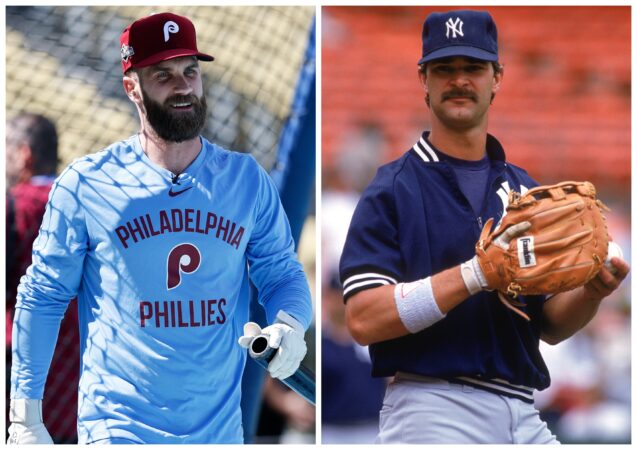
Tag: Bryce Harper

  • How can Don Mattingly help Bryce Harper? It starts with his star power.

    How can Don Mattingly help Bryce Harper? It starts with his star power.

    A.J. Preller grew up in New York — Long Island, to be specific — in the ’80s.

    Guess which baseball player was his favorite.

    “Don Mattingly,” the San Diego Padres president of baseball operations said, never hesitating, a few years ago over the phone. “That was the guy. ‘Hitman’ poster on the wall. I was at the last game of the [1984] season, when he won the batting title over [Dave] Winfield. ’85 MVP; ’84-’85-’86-’87, those were my formative baseball years.

    “And he was the guy I grew up with.”

    Preller went on and on, and a generation of fans might as well have nodded in agreement. Because for most of a decade, when baseball could still reasonably call itself America’s pastime, Mattingly was the face of the sport — with a nickname to match.

    “Donnie Baseball” captained the most storied franchise in the biggest city and ranked among the best players in the majors. But he also penetrated into pop culture, guesting with David Letterman and getting booted from Mr. Burns’ power-plant softball team on The Simpsons.
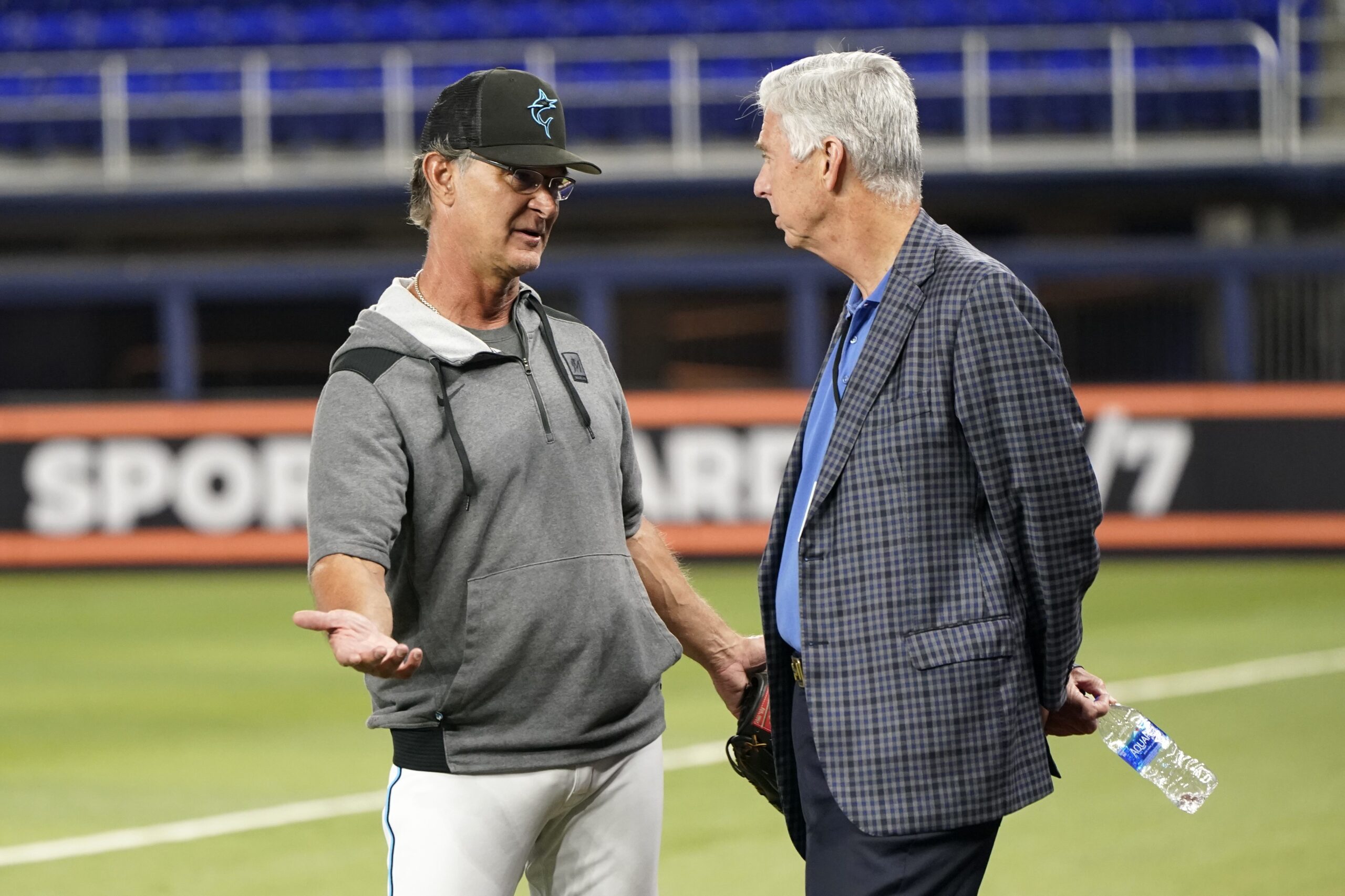
    Don Mattingly (left) is the Phillies’ new bench coach after being hired this week by president of baseball operations Dave Dombrowski.

    And while none of that may mean much to many millennials, it surely does to Bryce Harper, never mind that he was eight days shy of turning 3 in 1995 when Mattingly played his final game.

    “Players that came before, we usually don’t think that this generation of players knows as much about us as they should,” Mike Schmidt said recently on Phillies Extra, The Inquirer’s baseball podcast. “Not with Bryce. He’s very informed about the alumni like myself.”

    Indeed, Harper is a baseball obsessive with a respect for the game’s past. He talks with familiarity about the ’70s Reds, his father’s favorite team. He picked No. 7 in youth baseball after hearing about Mickey Mantle. As Dusty Baker once said when he managed Harper in Washington, “He’s as knowledgeable of baseball history as anybody that I’ve had.”

    So, although Harper met Mattingly only briefly at the 2017 All-Star Game in Miami and may not be able to recite all the pertinent numbers — .307 average, 222 homers, nine Gold Gloves, six All-Star appearances — it’s a safe bet he appreciates his nearly Hall of Fame-level place in the sport.

    And it has been years since Harper played for anyone with those credentials as a player.

    That wasn’t the primary reason the Phillies this week finalized a two-year contract with Mattingly to be the bench coach. They wanted another voice in the dugout alongside manager Rob Thomson. Mattingly managed for 12 seasons with the Dodgers and Marlins; at 64, he insists he doesn’t want to do it again.

    But Thomson also conceded that Mattingly’s distinguished playing career sets him apart among the Phillies’ coaches. Because Thomson didn’t play in the majors. Caleb Cotham (pitching), Kevin Long (hitting), Bobby Dickerson (infield), and others are well-regarded across the majors, but they played in the big leagues only briefly or not at all.

    Mattingly’s career gives him instant credibility among players, especially star players. His impact on Harper could be profound.
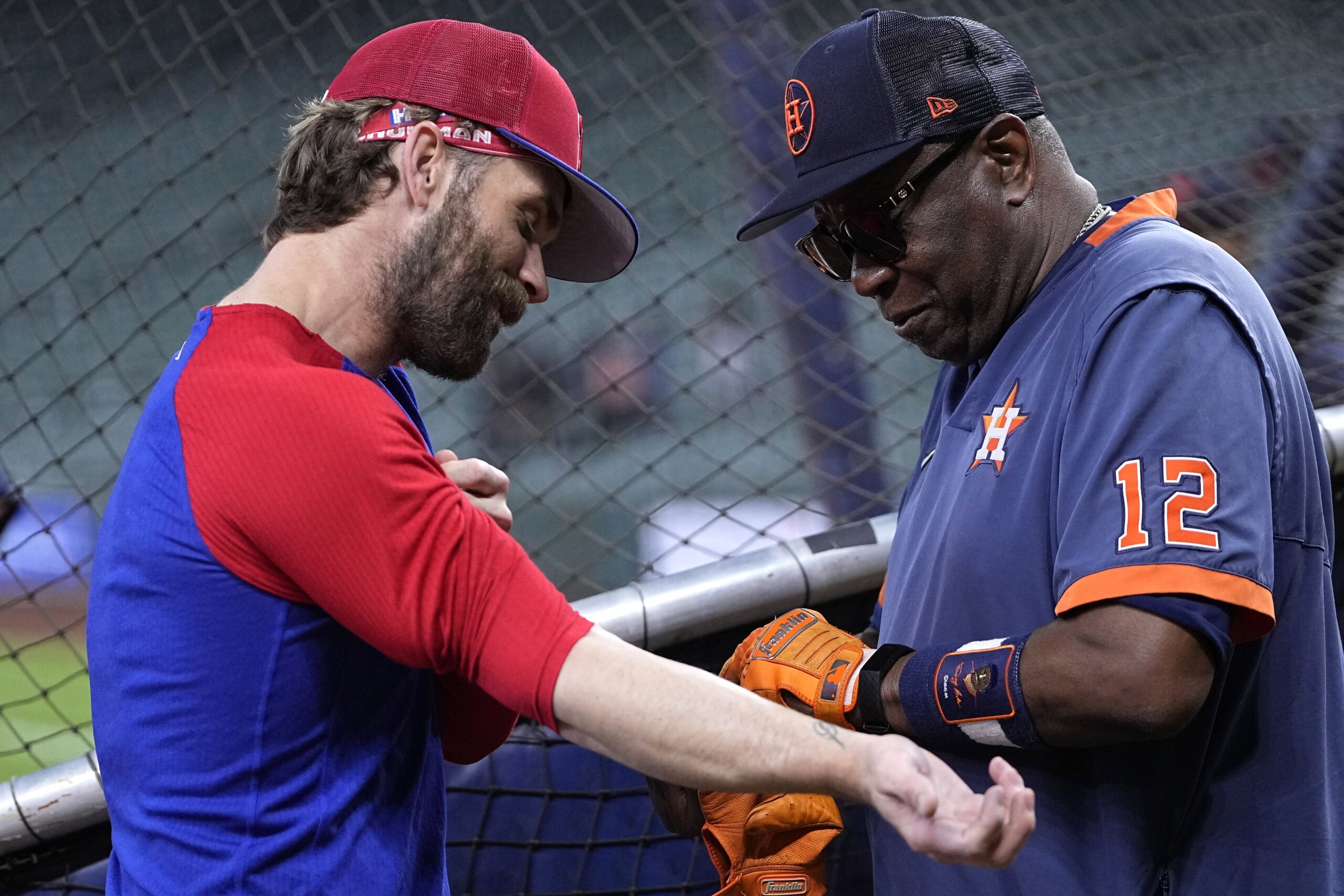
    Bryce Harper (left) played for manager Dusty Baker with the Nationals.

    By all accounts, Harper is coachable. He confides in Long, with whom he worked in Washington before Philadelphia. He took a crash course at first base from Dickerson in 2023 and learned the position on the fly.

    But for a two-time MVP who’s likely headed to the Hall of Fame, the conversations with someone like Mattingly must resonate differently.

    Harper’s first two Phillies managers — Gabe Kapler and Joe Girardi — had long playing careers. But he hasn’t played for a manager or coach with Mattingly’s name or stature since Baker with the Nationals in 2017.

    Add the fact that Mattingly became an icon at first base, and it would appear that he’s uniquely suited to relate to Harper on multiple levels.

    “If there’s things he wants to talk about from a first-base standpoint, then we can talk about it,” Mattingly said in a video news conference this week. “If there’s things he thinks about at the plate, hitting the lefty or hitting the righty, or a certain style of pitcher, I’m going to be like, ‘Hey, what are you trying to do with this guy? What are you thinking?’ I want to learn, too.”

    Mattingly recalled fondly a conversation with Harper and former Reds star Joey Votto at the 2017 All-Star Game. He also marveled, like most baseball observers, at how good Harper already was upon making his major league debut at age 19.

    “Watching his development over the years, this cat can go,” Mattingly said. “This is a first-ballot Hall of Famer, hands down.”

    (Mattingly and Harper did get into a spring-training rock fight through the media in 2018 over Harper’s criticism of the Marlins’ offseason moves, though eight years is a long time for water to flow under a bridge.)

    In Washington, Harper hit it off with Baker, whose long, successful managerial tenure was preceded by 19 major league seasons in which he got nearly 2,000 hits and slugged 242 homers. It was reciprocal. Baker once called Harper “a pretty cool little dude” and said he’s “pretty hip on a lot of fronts.” Harper batted .319 with a 1.008 OPS for Baker in 2017.

    Nearly a decade later, as one of this generation’s biggest baseball stars, Harper figures to find “Donnie Baseball” to be relatable and potentially helpful.

    “Well, I think we’ll find out, right?” Mattingly said. “You’ve got to build a relationship first. I’ve seen him from afar; I’ve not seen him from the inside. Listen to him, watch him, and just talk.”

    The conversations will begin next month at first base on the spring-training half-field in Clearwater.
  • The advantage to the Eagles’ resting their starters, Bryce Harper’s inspiration, and other thoughts

    The advantage to the Eagles’ resting their starters, Bryce Harper’s inspiration, and other thoughts

    First and final thoughts …

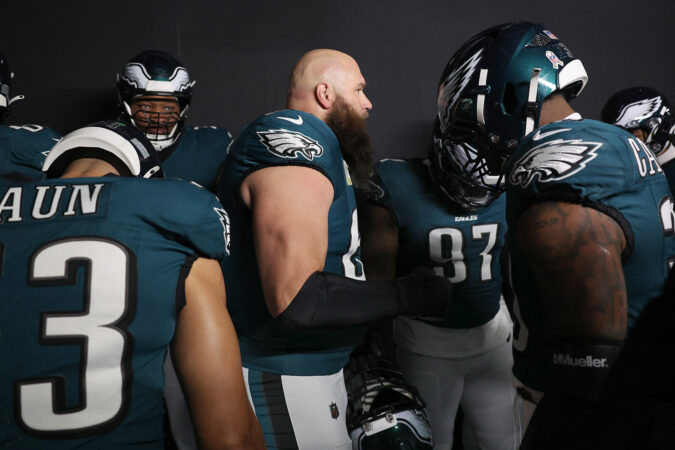
    The stakes for the Eagles on Sunday are clear: If they beat the Washington Commanders and if the Detroit Lions beat the Chicago Bears, then the Eagles would secure the No. 2 seed in the NFC playoffs.

    It would likely make for an easier road back to the Super Bowl (easier on paper, anyway), because they’d be assured of having home-field advantage in at least the wild-card and divisional rounds, and the matchups they’d face in those games might be more favorable.

    So the Eagles had a choice: They could play their starters against the Commanders, giving their most important players no rest ahead of the postseason, with no guarantee that, even if they beat Washington, that they’d end up with the second seed anyway.

    Or they could sit their starters, banking that a well-rested team would be better off no matter who or where it plays. Nick Sirianni and his staff, as we now know, opted to rest the starters.

    It was the right decision, for this reason: Given that Washington is 4-12 and will have third-stringer Josh Johnson at quarterback Sunday, there’s a decent chance that the Eagles will secure the best of all outcomes for themselves.

    They can give their starters a week off, still win the game, and have the Bears lose to the Lions. After a regular season that raised some questions about the Eagles’ ability to repeat, that scenario would be a timely reassertion of strength from the defending champs.

    Too hot for pucks

    The entire premise and most of the appeal of the NHL’s Winter Classic, when it began in 2008, were based around the notion that hockey in its best and purest form was a cold-weather sport.

    A pond or stream or lake froze over. Kids bundled up, grabbed their skates and sticks and a couple of rickety little goal nets, and just played. The sport was a natural and seamless part of life in Canada and in certain regions of the United States.

    But not in Miami. Which is where this year’s Winter Classic, between the Florida Panthers and the New York Rangers, was held Friday. How do you know a gimmick has gotten stale? When you’re playing an outdoor hockey game in early January in a place where it’s 70 degrees in the shade.

    Quarterback Fernando Mendoza (right) and Indiana routed Alabama on the way to the College Football Playoff semifinals.

    Hoosier daddy?

    The benefit of the 12-team College Football Playoff is that it is a great revealer. Most of the sport’s regular season is marred by “expert analysis” that is based on little more than arrogance and presumptuousness: The SEC is obviously a better and more challenging league than the Big Ten, which is better and more challenging than the Big 12, which is way ahead of the ACC, and so on. It’s regional bias and figure-skating-style judging all the way down.

    Then they actually play the games. And we learn that Alabama has no business being on the same field as Indiana, that Texas Tech is a long way from the days of Kliff Kingsbury and Patrick Mahomes, that Ohio State’s lopsided intraconference victories aren’t a true indication of how good the Buckeyes really are.

    Dave Dombrowski apparently provided Bryce Harper with some extra motivation this offseason.

    An elite idea

    Bryce Harper recently posted a video of himself taking batting-cage swings while wearing a T-shirt with “NOT ELITE” across the front, a reference to Phillies president Dave Dombrowski’s description of Harper’s 2025 season.

    You’ve got to love that defiant, near-vindictive energy from Harper, and it was a brilliant idea to take Dombrowski’s words and strip them across a shirt. Imagine an entire apparel line, marketed to individual athletes, made up of critical yet potentially inspiring phrases. The possibilities are endless.

    Jalen Hurts: CAN’T PASS

    A.J. Brown: READS BOOKS

    Joel Embiid: GAME-TIME DECISION

    Aaron Nola: TWO-STRIKE BOMBS

    Alec Bohm: TEMPER TANTRUM

    Ben Simmons: GONE FISHIN’

    Carson Wentz: INTENTIONAL GROUNDING

    LeBron James: U R NO MJ

    VJ’s biggest jump

    In his 33 games during his only year of college basketball at Baylor, VJ Edgecombe took 4.6 three-pointers a game and made 34% of them. In his 28 games so far with the 76ers, he is taking 5.8 a game and making 38% of them. That improvement might be the most pleasant surprise of his terrific rookie season.

    One last one-liner

    Congratulations to former Eagles great Frank Gore for being a Pro Football Hall of Fame finalist.

  • ‘Not elite’ Bryce Harper could use better lineup protection. Here are the Phillies’ options.

    ‘Not elite’ Bryce Harper could use better lineup protection. Here are the Phillies’ options.

    Maybe Bryce Harper is still ticked off. Maybe, even after his air-clearing with Dave Dombrowski, he implanted a chip on his shoulder. Maybe he’s just trying to sell T-shirts.

    Either way, he got our attention.

    As usual.

    In case you missed it, because the holidays can be hectic, the Face of the Phillies posted a 101-second TikTok video in which he took seven swings while wearing a long-sleeve black shirt with two words — NOT ELITE — printed in all caps across the chest.

    Cue the social media buzz.

    Whatever the motivation, Harper’s choice in workout wear was as intentional as his “Rivalry Pack” cleats or his color-coordinated arm sleeves. He rarely does or says anything without thinking it through.

    And if Dombrowski’s candid assessment of Harper’s 2025 — “He didn’t have an elite season like he has had in the past,” the Phillies’ president of baseball operations said in October — rang in Harper’s ears as he rang in the New Year, well, would it be so bad? The last time someone publicly slighted him, Harper homered twice and stared a hole through Braves shortstop Orlando Arcia in Game 3 of the divisional series in 2023.

    Besides, Dombrowski wasn’t wrong. Although he omitted the inflamed right wrist that sidelined Harper for a month and ate into his counting stats (e.g., homers, RBIs, walks), Harper lagged in other areas.

    To wit: Harper swung at 35.6% of pitches out of the strike zone, 129th among 144 qualified hitters, according to Statcast, and worse than the league average (28.4%) and his career mark (29.3%). If you’re wondering why he faced a lower rate of strikes (43%) than any hitter in baseball last year, that’s the biggest reason.

    “He expanded a little bit more than we’re accustomed to,” hitting coach Kevin Long told Phillies Extra, The Inquirer’s baseball podcast. “I don’t know what his actual chase rate ended up being, but it was probably 35%. That’s high. If he gets that number down to 32, just drop it 3%, now he’s swinging at better pitches [and] he’s going to do more damage.”

    But while Harper must revert to better plate discipline, the Phillies could also stand to better protect him in the batting order. Manager Rob Thomson is already scribbling possible lineups, crossing them out, and making new ones.

    “I’ve got some ideas, but I haven’t talked to the players yet,” he said last month. “I don’t want to talk much more about that. But, yeah, I’ve thought long and hard about it.”

    Two-thirds of the way through the offseason, it’s fair to wonder if Dombrowski has provided Thomson with better alternatives than he had last season. With five weeks until spring training, let’s look at the options:

    Kyle Schwarber (right) batted in front of Bryce Harper for most of the 2025 season en route to finishing second in the NL MVP race.

    Kyle Schwarber

    Two weeks into last season, after Harper drew 10 walks in 12 games, Thomson moved Schwarber down in the order to bat third or fourth behind Harper.

    It stayed that way for 45 games.

    But Harper injured his wrist, and upon returning, Schwarber was firmly in the midst of a 56-homer season that resulted in a runner-up finish in the NL MVP race. Thomson left him in the No. 2 hole, one spot ahead of Harper.

    “Schwarber is having, at that point, a career year, and I just didn’t want to mess with it,” Thomson said. “And the fact that Harper was protecting Schwarber, too.”

    Fair enough. And then there was this: Although Schwarber would seem to represent Secret Service-level protection, Harper saw even a lower rate of strikes (41.7%) while batting behind him.

    “It’s actually gotten worse,” Harper noted in May, “which is crazy.”

    Long’s theory: When it comes to superstar hitters, lineup protection doesn’t matter much. In Harper’s case, the numbers support that idea. He has seen only 42.7% of pitches in the zone in seven seasons with the Phillies and 42.1% since he arrived in the majors.

    Former Cubs manager Joe Maddon once walked Harper 13 times (four intentional) in 19 plate appearances over four games at Wrigley Field in 2016.

    “I don’t care where you hit [Shohei] Ohtani, I think they’re going to pitch him the exact same way,” Long said. “They’re scared to death of him. I think Harper’s in that category. You can kind of put him wherever you want, but I do not think pitchers are going to give in to him. I just don’t. I think they’re going to try to be very careful.

    “Can we maybe help him out and put somebody [else] behind him? That may be part of the equation as well. But in Bryce’s case, I think it’s more, if this is where it’s been the last six years since he’s been here, then the onus falls on me to make sure that he’s swinging at the right pitches and him to make sure that he’s not expanding. No matter what, he has to control his at-bats.”

    The path of least resistance is to put Schwarber back behind Harper, an alignment that Thomson is considering. Thomson prefers to alternate left- and right-handed hitters through the order. But Schwarber’s success against lefties (.300 average in 2024; major-league-record 23 left-on-left homers in 2025) leaves Thomson comfortable with Harper and Schwarber back-to-back.

    It might be easier to protect Schwarber. He tends to be more disciplined than Harper (21.5% out-of-the-zone swing rate last season; 22.8% for his career). He strikes out more often than Harper but is less likely to get himself out in front of the Phillies’ middle-of-the-order righty options, such as …

    Adolis García is poised to be the Phillies’ right fielder after signing a one-year, $10 million contract.

    Alec Bohm and Adolis García

    In 2022, the Phillies threw $100 million at Nick Castellanos to supply sock from the right side. Among 179 hitters with at least 1,500 plate appearances in the last four seasons, he ranked 87th in slugging (.426) and 172nd in wins above replacement (1.3).

    And now, he’s about to disappear.

    Castellanos clashed with Thomson and lost his everyday job last season. All parties agree that a change of scenery is best. The Phillies will trade or release him, likely before spring training. Either way, they will pay all or most of his $20 million salary in the final year of his contract.

    The Phillies already replaced Castellanos with free-agent right fielder Adolis García, a candidate to bat behind Harper if he hits like he did earlier in his career. From 2021 to ‘23, García slugged .472 with 97 homers, tied for sixth among all right-handed hitters.

    But García was available because of the last two seasons. He slugged .397 and hit 44 homers, tied for 28th among all right-handed hitters. His swing-and-miss rate soared. And he got non-tendered by the Rangers.

    Maybe García can provide at least a $10 million value at a position that will cost the Phillies roughly $30 million. If so, he’d be viable as right-handed protection for Harper in a batting order that would look something like this:

    Bohm emerged in 2023 as the Phillies’ best protection for Harper. He excelled with runners in scoring position, often making teams pay for pitching around Harper, and drove in 97 runs in back-to-back seasons in 2023 and ‘24. He started the All-Star Game in 2024.

    The Phillies balked at trade offers for Bohm last offseason, with rival teams suggesting they overvalued a player who hasn’t hit more than 20 homers in a season. Then he got off to a brutally slow start, prompting a move down in the order and the Harper/Schwarber arrangement. Bohm dealt with injuries through the middle of the season and finished as a league-average hitter (102 OPS-plus).

    Is he primed to bounce back? Or is he who he is?

    “I think he’s much closer to that type of [97-RBI] hitter than he was last year,” Dombrowski said. “All of a sudden you put him, that same guy, fourth or fifth in your lineup, and I think that’s a pretty good addition in itself.”

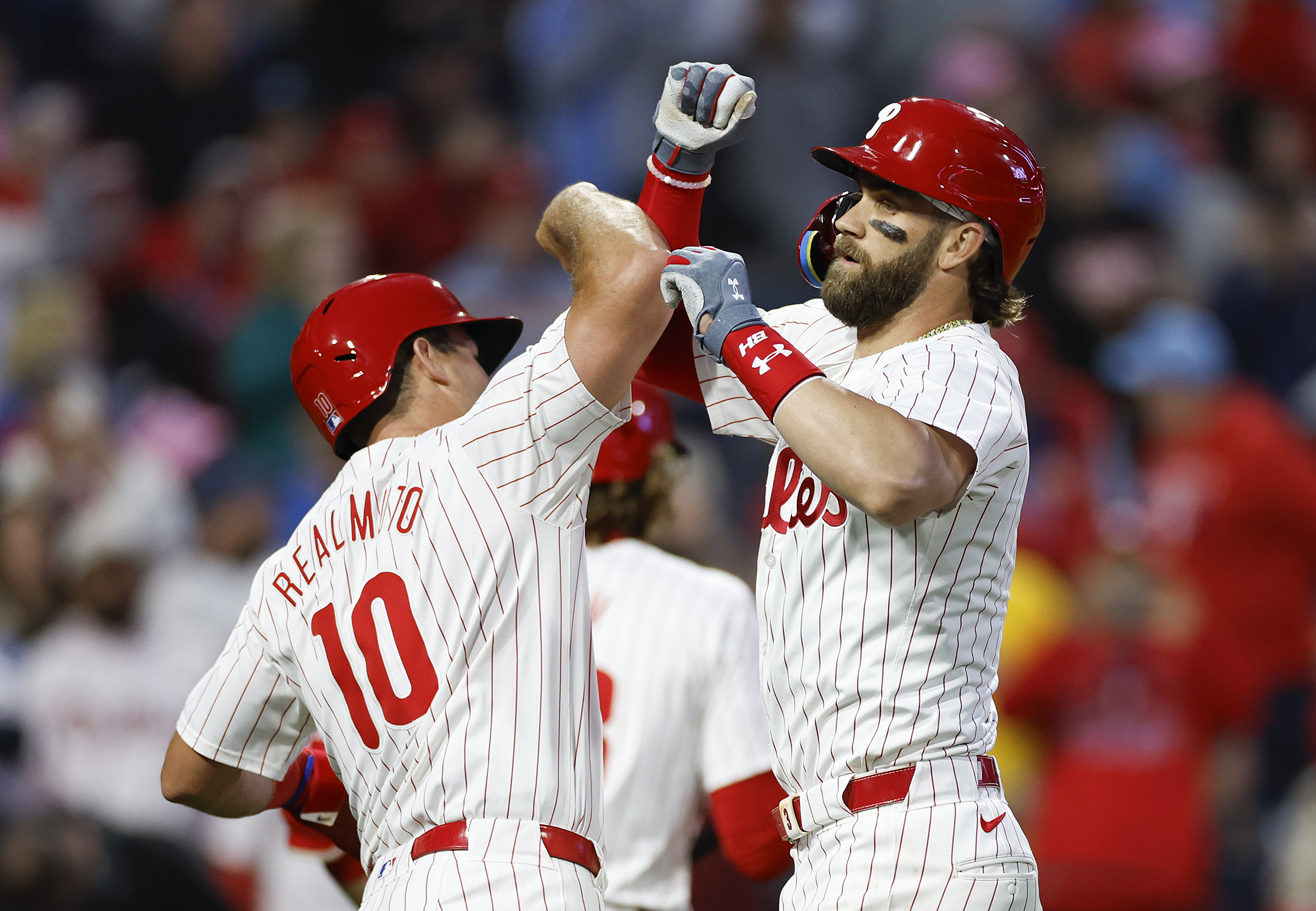
    J.T. Realmuto (left) has batted behind Bryce Harper at times over the last several seasons.

    Getting creative

    After the All-Star break, nobody took more at-bats behind Harper than J.T. Realmuto, mostly a function of Bohm’s injuries and Castellanos’ reduced role. But at times over the years, the iron-man catcher reliably protected Harper.

    Now, Realmuto and the Phillies are having a staring contest over variations of a multiyear contract, the free-agent catcher seeking a better combination of years and salary. There’s still mutual interest in an agreement, according to major league sources. It remains likelier than not that they will come together.

    But what if they don’t?

    The Phillies’ contingency plan could set in motion several dominoes. First, they would pivot to a catcher, in free agency or a trade, to pair with Rafael Marchán or Garrett Stubbs. The new catcher would be a downgrade from Realmuto but also cost less than his catcher-record $23.1 million annual salary.

    The savings could then be applied to another area of the roster. Maybe an addition to the rotation — Ranger Suárez is still available — or the bullpen?

    Or, if Bohm had to be packaged for a catcher, the Phillies could take a run at a free agent, such as Alex Bregman or Bo Bichette, right-handed hitters with power who could slot in behind Harper.

    Maybe it will help restore Harper’s elite status.

    It can’t hurt. Take it from Maddon.

    “I am about [lineup] protection, and I’ll argue that with anybody,” Maddon said. “Regardless of what the stats indicate, if the number of balls out of the zone are the same, I still would put somebody back there [behind him] because I still believe it causes pause with how you’re pitching.

    “Maybe you say, ‘If we walk him, we walk him.’ There’s that attitude, also. But if there’s a guy behind him, I’m telling you, you’re not going to want to do it if there’s a real guy.”

  • Stories that could shake Philly sports in 2026, from Lane Johnson and A.J. Brown to Bryce Harper and Shane Steichen

    Stories that could shake Philly sports in 2026, from Lane Johnson and A.J. Brown to Bryce Harper and Shane Steichen

    You never see the biggest stories coming. That’s kind of by definition, isn’t it?

    The year 2025 was relatively quiet one as far as seismic activity goes. The Sixers’ arena switcheroo probably was the biggest pure news story next to the Eagles’ Super Bowl win. Compare that to 2024, in which Saquon Barkley and Paul George signed, Jason Kelce retired, Matvei Michikov arrived, and the Sixers went belly-up. That, in addition to Carter Hart being arrested, Cutter Gauthier forcing a trade, and Haason Reddick being traded.

    It’s impossible to say whether the earth will shake in 2026. But if it does, here is how it could happen:

    1. Lane Johnson announces his retirement after 13 NFL seasons and leaves the Eagles scrambling.

    At this point, nothing suggests that Johnson will seriously consider retiring after the season. The contract extension he signed last year tacked on $40 million in guarantees in 2025 and 2026. That’s a pretty good reason for Eagles fans to take comfort, especially if Johnson returns to the field for the postseason, as is expected. He’d be walking away from some serious money if he retired this offseason.

    At the same time, we’d be foolish not to at least acknowledge the possibility, given the dramatic implications it would have on the Eagles’ roster. Johnson has been the single biggest reason the Eagles have seamlessly bridged their competitive teams through a rotating cast of quarterbacks and head coaches. There will be no replacing him, at least not immediately.

    Johnson has been open about the punishment that the NFL has inflicted upon his body over the years. That’s worth noting after a regular season in which he missed seven games because of injury for the first time since 2020 and just the second time in his career.

    At 35 years and 239 days, Johnson is the second-oldest offensive lineman to play at least 300 snaps this season. Only Kelvin Beachum has him beat at 36 years, 207 days. Since 2015, only seven offensive linemen have a season of 12-plus starts at age 36 or older.

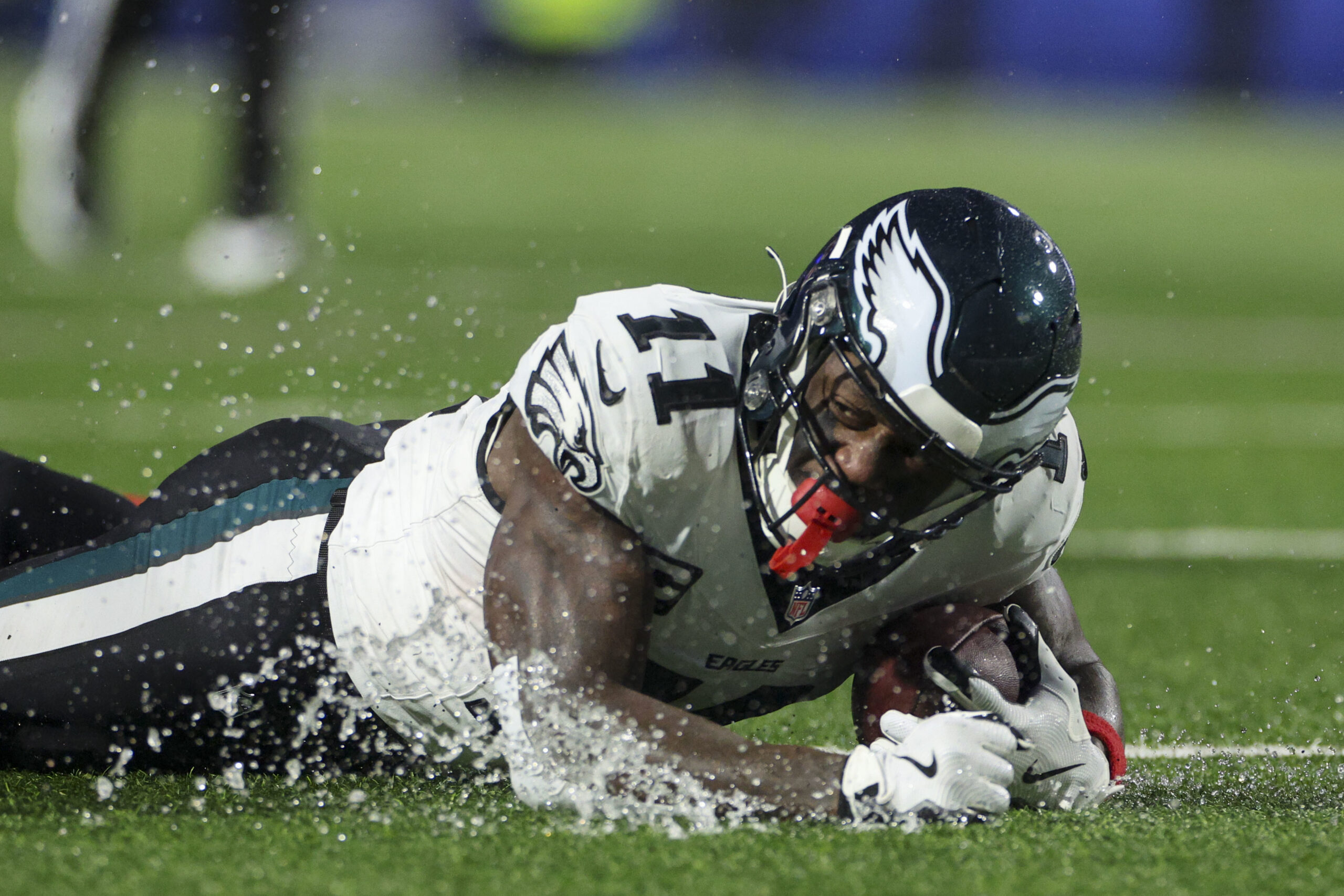
    Eagles wide receiver A.J. Brown shown after making a catch against the Bills on Sunday in Buffalo.

    2. A.J. Brown gets traded for a conditional 2027 second round pick that can become a first; Eagles immediately invest in a replacement.

    Forget about Brown’s public grumbling for a moment. Consider instead this fact: In the 10 games in which Brown has seen eight or more targets, the Eagles are 5-5. In the five games in which he has seen fewer than eight targets, the Eagles are 5-0. Kind of strange, isn’t it?

    Correlation doesn’t equal causation, but Brown’s on-field performance clearly has dipped this season. In his first three years with the Eagles, he looked like a receiver who belonged in the conversation for best in the sport. That hasn’t been the case this season. The explosiveness, the burst, the strength at the point of attack and in the air appear to be diminished. The numbers reflect it. His 8.3 yards-per-target is down nearly 20% from 2022 to 2024 (10.3), as is his yards per reception (12.9, down from 15.4) and his catch percentage (52.1, down from 56.3).

    Brown is at an age at which decline can come fast at the wide receiver position. Cooper Kupp hasn’t broken 850 yards in a season since turning 29. Same goes for Brandin Cooks and Odell Beckham Jr.

    DeAndre Hopkins averaged 1,380 yards per season from 25-28 years old and 644 yards at 29-30 years old. Adam Thielen averaged 6.4 catches and 82.8 yards per game at 27-28 and 4.2 catches and 53.7 yards at 29-30.

    Alshon Jeffery, Allen Robinson, Michael Thomas, Tyreek Hill … the list goes on. For Antonio Brown, Julio Jones, Amari Cooper, Stefon Diggs, and Antonio Brown, the drop-off came at 30 or 31.

    There are exceptions: Davante Adams, Keenan Allen, Mike Evans. But they are very much exceptions.

    To justify trading Brown, the Eagles almost certainly would have to have a replacement lined up. Jahan Dotson clearly isn’t a suitable second option. In the four regular-season games Brown has missed over the last two seasons, Dotson has a total of five catches for 25 yards. In those four games, the Eagles’ total wide receiver production outside of DeVonta Smith was 20 catches for 94 yards.

    The Eagles would save about $7 million against the cap if they traded Brown after June 1. They might be able to accommodate a free-agent offer to somebody like Alec Pierce, the Colts deep threat whose all-around game took an intriguing step forward this season. But there are a lot of teams that will be in the free-agent market this season, with the Patriots and dream quarterback Drake Maye at the top of the list.

    Even if Brown isn’t the player at 29 years old that he was at 27, he would still be difficult to replace. Combined with the limited financial upside of moving him, we’ll have to see this story to believe it.

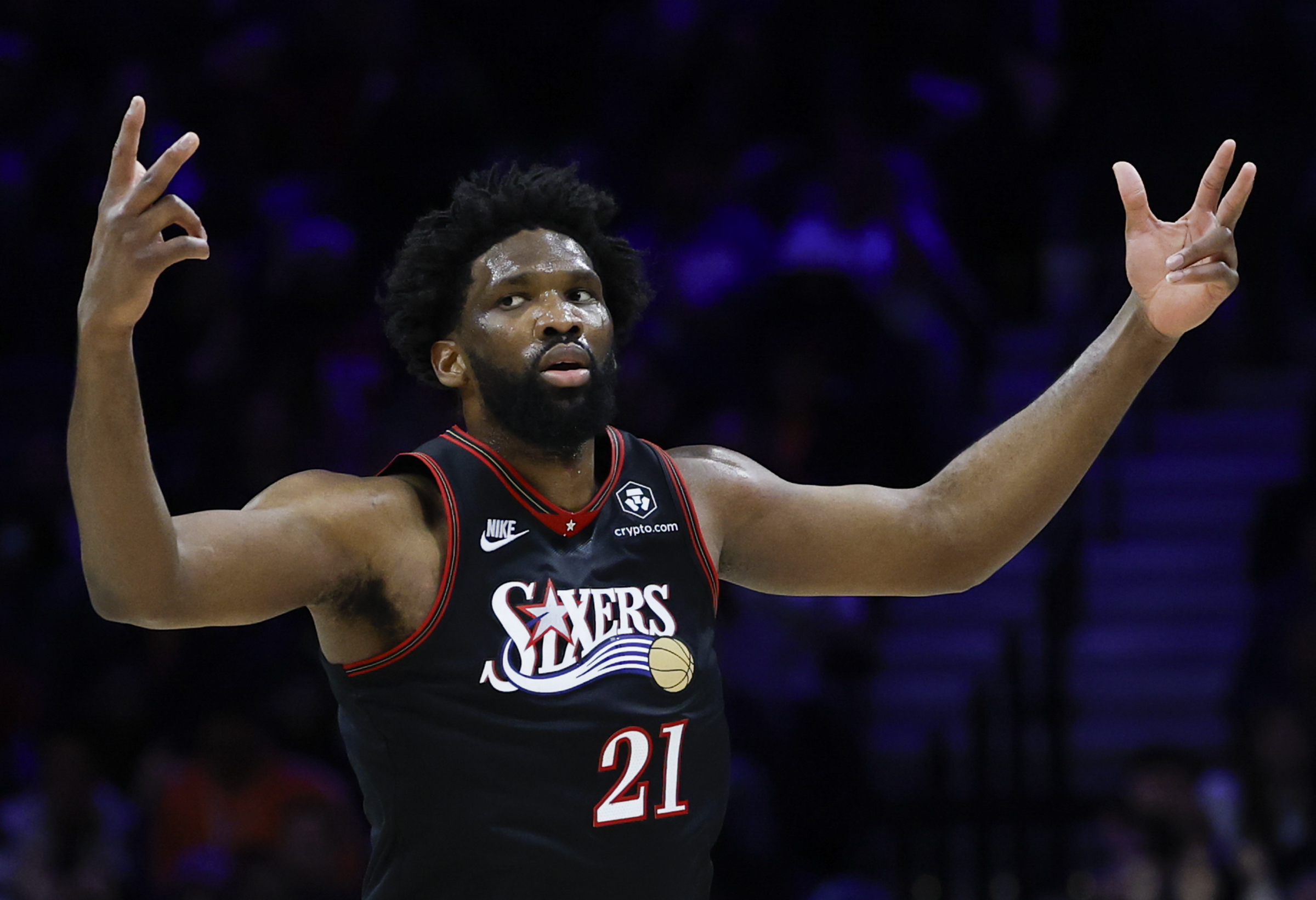
    Sixers center Joel Embiid has scored 27 or more points in his last three games.

    3. Joel Embiid helps to lead the Sixers to a first-round playoff upset and sparks trade interest among teams desperate to catch the Thunder and Spurs.

    Embiid entered the new year having scored 27-plus points in three straight games. That counts as an accomplishment these days. He looked like an empty husk of his former self in his first nine games of the 2025-26 season, averaging just 18.2 points on a woeful .441 effective field goal percentage.

    Question is, what if Embiid’s recent uptick in minutes and production is a signal that he has more left in the tank than we’ve given him credit for? He still needs to show a lot more defensively. And he has yet to play more than 71 minutes in a seven-day span. But he just logged 38 minutes in an overtime win over the Grizzlies, four days after playing a season-high 32 minutes in a loss to the Bulls.

    With three years and $188 million left on his contract after this season, Embiid would probably have to be playing at his prime MVP level to have positive trade value. A more realistic question is whether he can play well enough to change the Sixers’ short-term narrative.

    4. Eagles hire Shane Steichen or Mike McDaniel as offensive coordinator.

    The Colts would be foolish to fire Steichen, who has somehow managed to put together a 25-25 record with the following starting quarterbacks: Gardner Minshew (7-6), Daniel Jones (8-5), Anthony Richardson (8-7), Joe Flacco (2-4), and Philip Rivers (0-3). But here is what owner Carlie Irsay-Gordon told the Athletic recently:

    “Most people don’t like change,” said Irsay-Gordon, who has been patrolling the sidelines with a clipboard all season. “I think there’s something wrong with me, but I feel like it is the one thing that is a guarantee. I think it can be exciting.”

    Even if the Colts part ways with Steichen, a team like the Giants could easily snatch him up. I can’t imagine Nick Sirianni would demote himself from head coach in order to restore Steichen as the play-caller. It definitely would be a heck of a story.

    McDaniel might be a more realistic option, although he may be in the process of saving his job by leading the Dolphins to five wins in seven games.

    5. Bryce Harper takes another step backward, as do the Phillies.

    There has been enough passive-aggressive weirdness percolating between Harper and management that we have to at least flag him as the main character in a potential major story. Dave Dombrowski rankled Harper when he mused about Harper’s eliteness, but it is a legitimate question. At 32 years old, Harper is coming off his worst season in a decade. Another step backward would raise some serious concerns. And create some serious headlines.

  • Bryce Harper plans to play for Team USA in the World Baseball Classic

    Bryce Harper plans to play for Team USA in the World Baseball Classic

    Bryce Harper’s dream is to compete in the Olympics.

    First, he’ll suit up for the World Baseball Classic.

    Harper announced his plans Tuesday on Instagram, posting a photo of himself superimposed in a Team USA jersey. The Phillies star joins a loaded roster that includes Aaron Judge, Cal Raleigh, Bobby Witt Jr., teammate Kyle Schwarber, and ace pitchers Paul Skenes and Tarik Skubal.

    “Put the colors on my chest for the 1st time when I was 15,” Harper wrote in a caption below his photo. “No other feeling like it.”

    Harper was among the first players to commit to Team USA for the 2023 World Baseball Classic, but he was unable to play after undergoing Tommy John elbow surgery in the previous offseason.

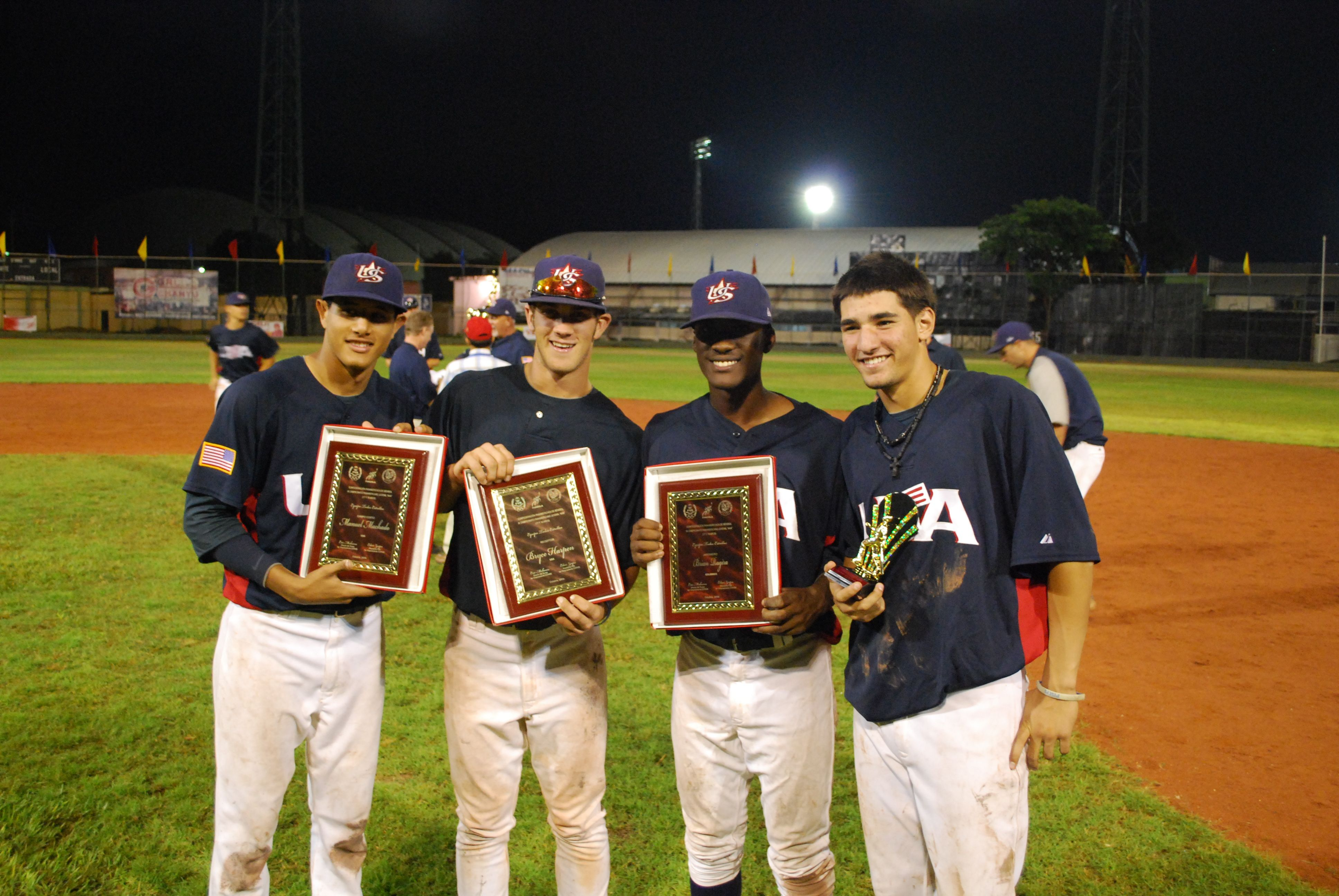
    As a teenager, Harper participated in several international tournaments. He won a gold medal at the 2009 Pan Am junior world championship for an under-18 U.S. national team that featured 10 future major leaguers, including Manny Machado and Nick Castellanos.

    Harper never misses an opportunity to stump for major leaguers in the Olympics. He discussed it at a postseason news conference in 2023 and brought it up again when the Phillies played in London in 2024. He said he has shared his feelings with commissioner Rob Manfred.

    From left, Manny Machado, Bryce Harper, Brian Ragira, and Nick Castellanos with the under-18 U.S. national team in 2009.

    Baseball will be reinstated as an Olympic sport in 2028 in Los Angeles. In October, Manfred told reporters at the World Series that MLB will consider extending the All-Star break in 2028 to enable major leaguers to compete in the Olympics.

    “I’ve been a huge advocate of baseball getting back in the Olympics and us taking that pause during the regular season, kind of like hockey does, to just let the guys go and play,” Harper told The Inquirer in 2023. “It’d be so much fun to have that and have the game and see that in the Olympics and have the best players in the world doing it.”

    Meanwhile, the WBC could serve as a warm-up act.

    Team USA will compete in Pool B of the WBC field. Players will leave their respective spring-training camps in early March. The United States will open the preliminary round March 6 in Houston against Brazil. The WBC final will be played March 17 in Miami.

    Harper, 33, batted .261 and slugged .487 with 27 homers and a 129 OPS-plus last season. And although those numbers were below his typical standards, he tied for sixth among first basemen in homers and ranked fifth in slugging.

    Phillies backup catcher Garrett Stubbs committed to playing in the WBC for Israel. Manager Rob Thomson said recently that he hasn’t been informed of other players who will be going to the WBC. Jesús Luzardo and José Alvarado pitched for Venezuela in 2023.

  • Despite challenges in 2025, Philly-area small businesses remain resilient and optimistic

    Despite challenges in 2025, Philly-area small businesses remain resilient and optimistic

    From inflation to tariffs to labor shortages, small businesses in Philadelphia have faced many challenges in 2025. But they remain resilient and, for the most part, are optimistic about the coming year.

    But that, of course, depends on the type of business.

    For example, the Monkey’s Uncle, a retro Philly sports apparel boutique located in Doylestown, had an “exceptionally strong” year, which was mostly driven by the Eagles’ Super Bowl win. Co-owner Derrick Morgan expects the holiday season to be busy but observes more people are shopping for holiday gifts much earlier this year as consumers are “spreading out their spending much more.”

    For small businesses in the Philadelphia region, consumer sales were up 2.4% in October compared to a year before, according to a monthly index from payment technology provider Fiserv. That’s compared to a 1.5% increase nationally. Small-business optimism remains above its 52-year average and uncertainty dropped this month, according to the National Federation of Independent Businesses.

    All in all, it hasn’t been such a bad year for most, despite the uncertainty.

    Looking to 2026, Morgan is optimistic due to Philadelphia hosting a number of major sporting events (like the MLB All-Star Game), and he is already coordinating commemorative merchandise with licensed vendors. But it’s not economic uncertainty that impacts his business as much as Jalen Hurts or Bryce Harper.

    “The nature of our business is very much at the mercy of the wins and losses from our Philly sports teams, which can certainly be unpredictable,” he said.

    Regardless of the economic uncertainty, physical fitness remains popular. Valerie Plummer’s Germantown-based Pilates studio — Pilates by Valerie — has had a “profitable and expansive year” thanks to “rising client retention, steady new enrollments, and an increasingly strong sense of community.”

    Plummer has used this year to double down on her business by broadening her programming with a series of new classes and apparatus trainings while developing instructor materials, improving internal systems, and strengthening her long-term training pipeline. As for next year? Plummer’s optimistic.

    “I am confident in the direction of the studio, the relationships we are building, and the value we are providing — and I’m excited for what’s ahead,” she said.

    The restaurant industry has been hit hard recently, thanks mainly to increasing costs and labor shortages. In Media, Rainy Culbertson’s breakfast restaurant, The Corner, has had a difficult year.

    “Customers are uncertain about their finances,” she said. “Eating out is a luxury and is one of the first cuts to a person’s budget in economically uncertain times. We’ve had ups and downs this year, but mostly down.”

    Like many restaurants, The Corner faces challenges in labor retention, cost increases, and competitive issues. And they’re still recovering from the pandemic, Culbertson said.

    “Most restaurants have not recovered from COVID, it’s just that we stopped talking about it because folks want it behind them, ourselves included,” she said. “Most restaurants still carry debt from COVID and now they have to deal with economic uncertainty and painfully thin profit margins due to inflation.”

    It’s not surprising that Culbertson remains very uncertain about 2026.

    “I’m optimistic it will be better but realistically, it will probably be more chaos and stress dealing with inflation and tariffs,” she said. “A lot depends on how long this madness of inflation, tariffs, and the unstable economy drags on. I’m really close to calling it quits.”

    Heather Herbert, the co-owner of Tail Spinz in Montgomeryville says her family-owned dog daycare has grown every year since its opening in 2023. It saw growth this year too, but some months were slower.

    “2025 has had its ups and downs, with some months of steady growth and others that have leveled off a bit,” she said. “Our business is built almost entirely on word-of-mouth and referrals, which creates a slower but more sustainable kind of growth. We have had a few families scale back or pause daycare due to budget changes, and we completely understand that we’re a ‘nice-to-have’ rather than a necessity for everyone.”

    Herbert is looking forward to even more growth next year and is currently gearing up for the holidays, with “a full lineup of festive events planned” including “a visit from Santa” with holiday photo ops and treats.

    “When you provide great care, build genuine relationships, and create a space that dogs are excited to come to, it’s hard not to feel positive about what’s ahead,” she said.

    Even in an uncertain economy, specialized businesses like Blevins Sommelier Services can flourish. Focused on bringing “affordable luxury experiences” directly into their clients’ homes, the company, which offers wine tasting and bourbon education events, has experienced strong growth this year with monthly bookings doubling over the prior year.

    “I’m optimistic for 2026,” said Amanda Blevins, who operates her business out of her home in Glen Mills. “The demand for wine events remains steady, and the demand for bourbon tastings has increased.”

    Tariffs and supply shortages have impacted Blevins’ business, particularly on wines from Italy and France, but like many business owners she’s pivoted and now features more local wines.

    “In many cases, hosting private in-home celebrations is more affordable than entertaining at a restaurant or larger rented venue,” she said. “There is always something new to discover in the world of wine and whiskey, and I consider it a wonderful life-long journey.”

  • How can Bryce Harper have an ‘elite’ season in 2026? It starts with examining his atypical 2025.

    How can Bryce Harper have an ‘elite’ season in 2026? It starts with examining his atypical 2025.

    Alec Bohm returned from the injured list last month and got eight hits in three games, giving rise to a theory: If Bohm stayed hot, maybe the star hitter who precedes him in the Phillies’ batting order would see more strikes.

    “I doubt it,” Bryce Harper said.

    Harper knew how that sounded, so he made clear that he meant no disrespect to Bohm. But his point remained. Harper faced a lower rate of pitches in the zone (43%) than any hitter in baseball this season (minimum 150 pitches), so the notion that any Phillies lineup protection short of peak Mike Schmidt would affect how he was pitched ranked somewhere between wishful thinking and delusion.

    It has been this way for most of Harper’s life. He recalls being 11 years old and competing in travel tournaments in which the opposing coach would point to him and direct pitchers not to give him anything to hit. In 2016, the Cubs walked him 13 times, four intentionally, in 19 plate appearances over four games at Wrigley Field.

    Quite simply, teams game-plan against Harper specifically.

    “When we go into a series, we circle guys’ names, too,” Harper said earlier in the season. “It happens that way.”

    Even so, there was something different about this season. When Harper did get pitches in the zone, he didn’t do as much damage. As such, he didn’t produce his typical numbers.

    Phillies first baseman Bryce Harper saw a lower rate of pitches in the strike zone (43%) than any hitter in baseball this season.

    Harper reached base at a .357 clip, his lowest mark since 2014. He slugged .487 with an .844 OPS, his worst totals since 2016. He mashed 27 home runs, despite missing a month with an inflamed right wrist. Although he outproduced the league average by 29%, based on OPS+, he has been 42% better than average over his career.

    So, upon being asked at his end-of-the-season news conference on Oct. 16 — coincidentally, Harper’s 33rd birthday — if the Phillies believe this was a down year and not the start of a downturn for the face of the franchise, president of baseball operations Dave Dombrowski offered an eyebrow-raising answer.

    “He’s still an All-Star-caliber player,” he said. “He didn’t have an elite season like he has had in the past. And I guess we only find out if he becomes elite [again] or he continues to be good. If you look around the league, Freddie Freeman, he’s a really good player, right? Is he elite like he was before? Probably not to the same extent. Freddie is a tremendous player, and that, to me, is Bryce.

    “Can he rise to the next level again? I don’t really know that answer. He’s the one that will dictate that more than anything else.

    “I don’t think he’s content with the year that he had. And, again, it wasn’t a bad year. But when you think of Bryce Harper, you think of elite, right? You think of one of the top-10 players in baseball, and I don’t think [this season] fit into that category. But again, a very good player. I’ve seen guys at his age — again, he’s not old — that level off. Or I’ve seen guys rise again.”

    Maybe we just aren’t accustomed to that level of candor from a high-ranking executive, especially at a news conference. Or maybe Dombrowski calculated that challenging a future Hall of Famer to be better would have the effect of poking a grizzly.

    Regardless, it sparked conversation — even idle speculation about Harper’s future with six years and $153.25 million left on his contract and no-trade rights based on more than 10 years of major-league service, more than five with the Phillies.

    “I’ve been reading that, ‘Oh, the Phillies may trade Bryce Harper.’ That couldn’t be further from the truth,” Dombrowski said the other day on Foul Territory TV. “We love him, think he’s a great player. He’s a very important part of our team.

    “When I think of Bryce Harper, it’s a compliment. Because the reality is, there are eight to 10 players in the game of baseball every year when they’re not, let’s say, in the MVP consideration for whatever reason — sometimes it can be an injury factor; sometimes they just have a bad year — it’s not an elite year for them.

    “I’ve seen him have better years. I look for him to have better years.”

    Especially if the Phillies give him more help.

    Bryce Harper hit 27 homers this season, despite missing one month with an inflamed right wrist.

    Missing the mistakes

    Let there be no doubt about Harper’s state of mind in the aftermath of the Phillies’ second consecutive divisional-round knockout.

    “I want [a championship] more than probably a lot of people,” he said. “I want to hold that trophy. On a personal level, I’m going to work my butt off this offseason again and get ready for next year and hopefully take another swing at it and see what we can do.”

    But who will follow Harper in the batting order?

    It was a topic of conversation early this season. Harper got walked intentionally twice with runners in scoring position on April 11 in Atlanta, prompting Rob Thomson to tweak the lineup the next day. Rather than keeping a struggling Bohm — or fellow right-handed hitters J.T. Realmuto or Nick Castellanos — behind Harper, the manager moved Kyle Schwarber into that spot.

    “Just trying to protect Harper the best we can,” Thomson said.

    Schwarber should have represented Secret Service-level lineup protection. He batted behind Harper for 42 consecutive games and hit 12 homers in that span.

    And yet Harper didn’t see many more pitches in the zone.

    “It’s actually gotten worse, which is crazy,” Harper told The Inquirer in May during a series in Cleveland. “Just got to try to hone in as much as possible and hit the mistakes. That’s one thing where [Barry] Bonds was so good at. You get the mistakes and let the other ones go.”

    Usually, it’s a trademark of Harper’s, too.

    Through six seasons with the Phillies (2019 to 2024), he saw only 42.6% of pitches in the zone, tied for second-lowest rate among 293 players who faced at least 500 pitches, according to Statcast. But he punished those strikes, slugging .680, fifth-best behind Aaron Judge (.763), Shohei Ohtani (.710), Yordan Alvarez (.695), and Mike Trout (.695).

    Kyle Schwarber (right) batted behind Bryce Harper early in the season before the Phillies got away from that alignment.

    This year, with opponents still coming after him in the zone only 43% of the time, Harper’s slugging percentage on those pitches fell to .591. His weighted on-base average slipped, too, from .424 to .378.

    Reasons for the drop-off weren’t clear. Harper’s average bat speed wasn’t diminished (74.2 mph vs. 74.0 mph in 2024). His average exit velocity (91.3 mph) and hard-hit rate (47.5%) were consistent with the last two seasons (91.5 mph, 47.5%).

    There was a notable difference in how teams attacked Harper. He faced fewer fastballs (46.7%) and more breaking pitches — curveballs and sliders (41.3%) — than ever before. By comparison, the breakdown last season was 52.9% fastballs and 32.3% breaking stuff.

    Why the change?

    “Because I’m not hitting them,” Harper said. “Like, don’t try to fix what’s not broken, right?”

    Indeed, Harper slugged .438 against curveballs and sliders, down from .458 in 2024, .466 in 2023, and .495 in 2022.

    At least Harper didn’t overreact by swinging at many more pitches out of the zone. His chase rate ticked up to 35.6%, according to Statcast, but wasn’t far off his 33.4% mark from each of the previous two seasons. He walked in 12.1% of his plate appearances, nearly identical to his 12% mark from 2024.

    But as the Phillies seek explanations for Harper’s subpar season, they can start by tracing why he didn’t crush as many pitches — of any variety — in the zone as usual.

    Bryce Harper is a two-time Gold Glove finalist at first base. The Phillies haven’t discussed moving him back to the outfield.

    Better protection

    Maybe it would’ve helped if Thomson stuck with Schwarber behind Harper.

    Instead, Schwarber moved into the No. 2 hole while Harper was sidelined in June and stayed there en route to joining Ryan Howard in the pantheon of Phillies’ 50-homer hitters. Once Harper came back, he most often was followed in the order by Realmuto (41 games), Bohm (18), and Castellanos (13).

    Harper was the Phillies’ primary No. 3 hitter (117 games); Phillies cleanup hitters combined to rank 20th in slugging (.408) and OPS (.720).

    Scott Boras, Harper’s agent, didn’t respond to messages in recent days. But he told MLB.com that the best way for the Phillies to restore Harper’s elite performance is to “give Bryce Harper more pitches to hit.”

    Translation: Upgrade the lineup protection.

    Maybe it’s as simple as re-signing Schwarber and sticking him in the cleanup spot. Maybe the Phillies can add even more slug by putting the $24.5 million that will come off the books with the departures of Max Kepler, Jordan Romano, and David Robertson into an offer for, say, Alex Bregman, then swapping Bohm for Angels outfielder Taylor Ward.

    But unless 2006 Ryan Howard comes out of retirement, history suggests that Harper will continue to see fewer pitches in the zone than almost any hitter in baseball.

    He needs to get back to crushing them.

    “I think he’s highly motivated to have the best season of his career next year,” Thomson said. “He hasn’t told me this, but that type of person — and I’ve seen it before — they’ve had bad years, they’ll go like gangbusters during the offseason to get better because they want to get back to where they normally are at. I think that’s just Harp’s mindset. I think that’s what he’s going to do.”

  • Phillies 2026 infield outlook: Free-agent options, prospect forecast, and more

    Phillies 2026 infield outlook: Free-agent options, prospect forecast, and more

    While the Phillies are poised for some roster changes in 2026, at the moment it doesn’t seem like those will occur in the infield.

    The Phillies’ outfield has been a revolving door for the last few seasons, but the infield continues to run it back. And according to Dave Dombrowski, that seems to be the plan again. At least, for now.

    “The infield is pretty well solidified,” the Phillies’ president of baseball operations said at his end-of-season news conference on Oct. 16.

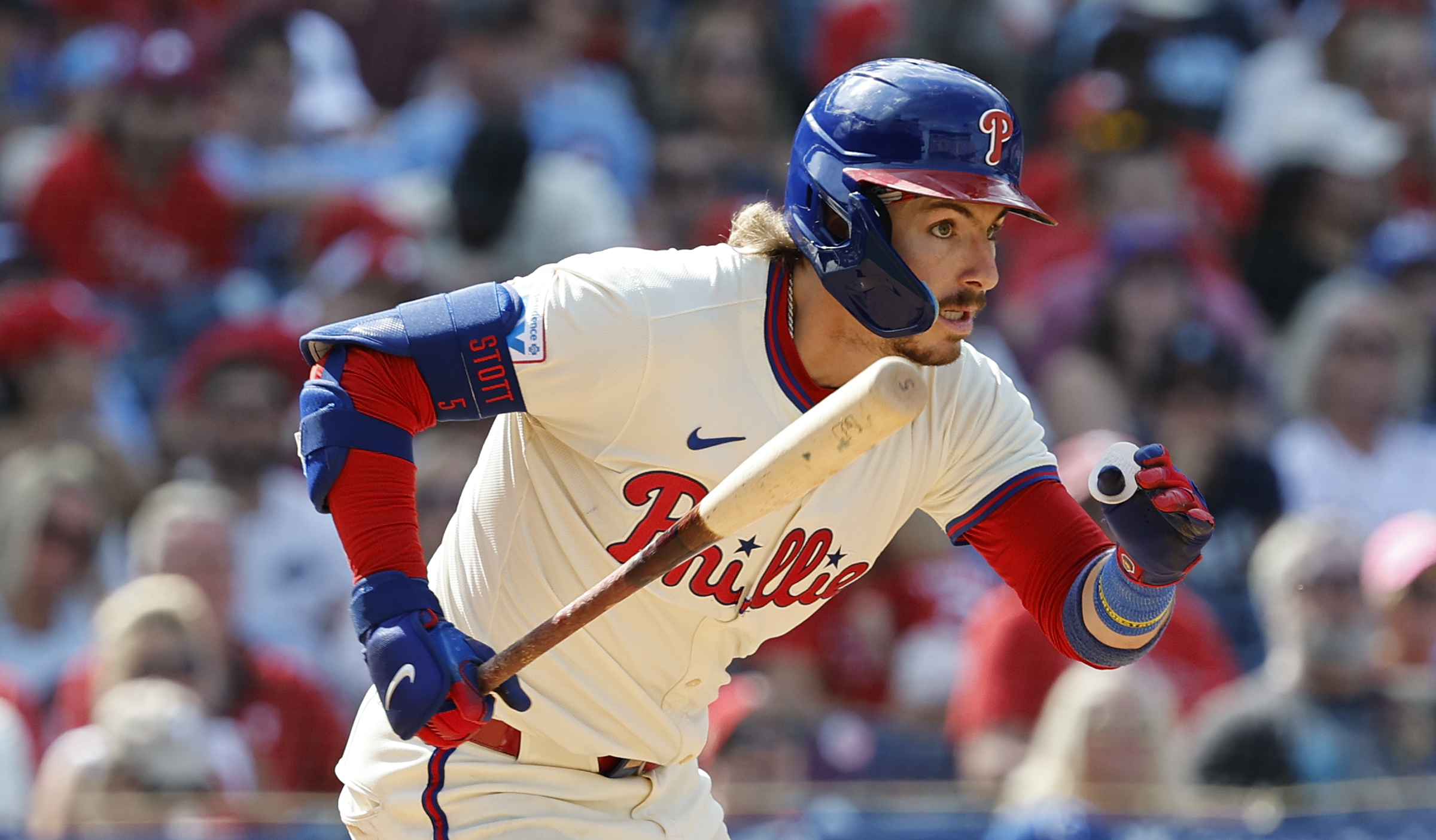
    And indeed, Trea Turner and Bryce Harper are under contract into the 2030s, while Bryson Stott, Edmundo Sosa, and Alec Bohm are arbitration eligible. Barring a trade, there isn’t much room for movement or change.

    Here’s an overview of the Phillies’ infield outlook next season and beyond.

    Trea Turner had his best overall season as a Phillie in 2025, winning the NL batting title with a .304 average and stealing 36 bases.

    Turner’s improvement

    This time last year, there were questions raised about Turner’s long-term future at shortstop after another below-average defensive season. But those questions have been all but put to rest after Turner made significant strides in 2025. His 17 outs above average were the highest of his career and tied for third among shortstops.

    On the offensive side, Turner bought into the Phillies’ plan for him as their new leadoff hitter. Manager Rob Thomson wanted him to focus on using his athleticism and getting on base, rather than hitting homers. Turner did just that, stealing 36 bases and posting a .355 on-base percentage, his best since arriving in Philadelphia. With a .304 batting average, Turner also became the first Phillie to win the batting title since Richie Ashburn in 1958 and was named a Silver Slugger finalist.

    He may have sacrificed some power to do it, hitting just 15 home runs compared to 21 last season. But overall, Turner did exactly what the Phillies wanted out of him in the regular season, both offensively and defensively.

    “He’s tough on himself,” Dombrowski said. “He’s like one of these guys, if he doesn’t hit 40 home runs and 40 doubles and 40 stolen bases, and lead the league in hitting, he’s probably going to think that he needs to do more.

    “That’s how he is, which is great. That’s a great quality and attribute, but he doesn’t have to hit with any more power for us. He really did a fine job.”

    The Phillies plan to keep Bryce Harper, a Gold Glove finalist for a second straight season, at first base.

    Harper to the outfield?

    Don’t expect Harper to change positions, either, despite the first baseman expressing some willingness last offseason and ahead of the trade deadline to return to the outfield.

    Harper, who earned his second straight Gold Glove nomination at first base this season, has said he would be open to making a position switch if needed for an offensive upgrade. But it doesn’t sound as if the Phillies will consider moving him back to the outfield to add, say, Pete Alonso, who plans to opt out of his contract with the Mets after a 38-homer season.

    “I think Bryce is a first baseman at this time,” Dombrowski said. “I mean, that’s where we look at him as, and he has asked to go out into the outfield. He would be willing to do so, but I think it would be more for the short term if we had done something at the trading deadline, but it’s been a while since he’s been out [there].

    “I’m sure he’d be fine, but he’s a really good first baseman, and I think for us, that’s the position we look at him playing for us.”

    Harper finished the season with an OPS of .844. Though that still ranked 11th in the National League, it was his lowest since 2016 (.814).

    Dombrowski seemed to lay down a challenge to Harper at his year-end news conference.

    “He’s still an All-Star-caliber player. He didn’t have an elite season like he has had in the past. And I guess we only find out if he becomes elite or he continues to be good,” Dombrowski said. “… He’s the one that will dictate that more than anything else, and that’s what it comes down to.”

    Bryson Stott hit .310 with an .880 OPS from Aug. 1 through the end of the regular season, but still struggled against lefties.

    Second and third base

    Stott continued to be elite defensively at second base, but had a roller-coaster offensive season. He struggled over the first half, but a midyear adjustment to his hand placement led to improved at-bats overall. Stott went from hitting .194 with a .637 OPS in July to a .307 batting average and .864 OPS in August.

    However, Stott’s .575 OPS against lefties kept him in a platoon with Sosa. When called upon, the Phillies’ utility man provided a spark of energy and clutch hits, plus an .895 OPS against left-handers.

    “I view Stott as an everyday player, but Sosa’s numbers are so good against left-handed pitching that you’ve got to fit him someplace, whether it’s at third base when Bohm was hurt or mixed in for Stott against the lefties,” Thomson said. “So I view Stott as an everyday hitter. I think if he played every single day against left-handed pitching, he’d get better and put up pretty good numbers.”

    On the other hand, Bohm spent last offseason amid a tornado of trade rumors. He will reach free agency in 2027, and his name will likely be floating around this winter, too, as one of the few ways the Phillies can change up their infield. The third baseman was afflicted by injuries — a rib fracture in July and shoulder inflammation in August — and slashed .287/.331/.409.

    While Bohm and Harper were on the injured list at different points this season, Otto Kemp was a key fill-in. He hit .234 with 28 RBIs in his first 62 major-league games, most of which he played through knee and shoulder injuries that he will address with offseason surgery.

    Kemp, 26, saw the bulk of his playing time at third but also appeared at first and second and in left field.

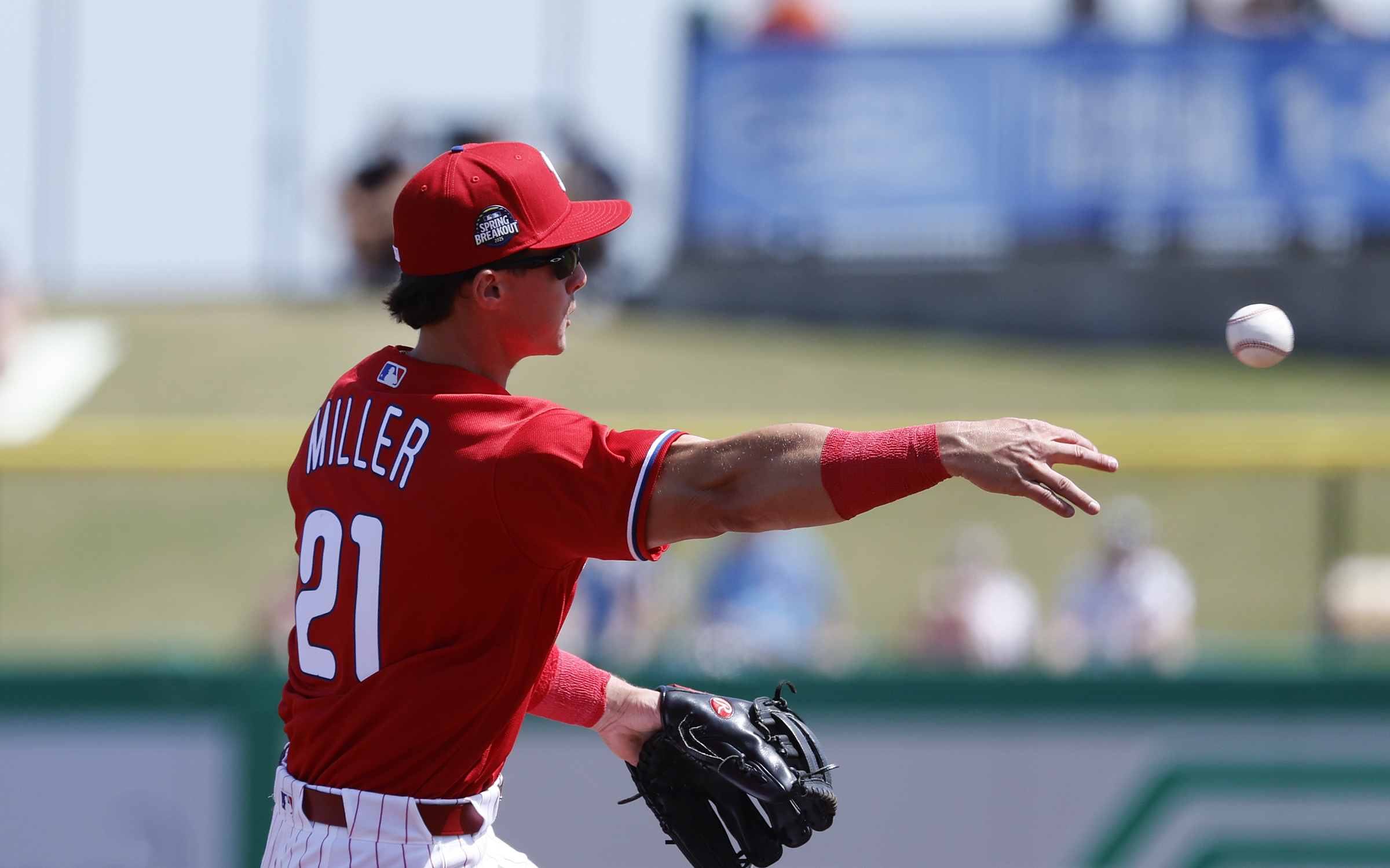
    The Phillies believe Aidan Miller can stick at shortstop, but that’s blocked by Trea Turner for now.

    Down on the farm

    The Phillies’ top infield prospect, Aidan Miller, is rising quickly. The 21-year-old posted an .825 OPS this year and stole 59 bases between double-A Reading and triple-A Lehigh Valley. But the question remains as to where he will play in the majors.

    Miller, who finished the season in triple A after a September promotion, has played shortstop throughout his minor-league career. Similar to the situation with top outfield prospect Justin Crawford, the Phillies believe that when Miller reaches the major leagues, he will need to be an everyday player.

    A Miller breakthrough next season would require some changes to the current infield configuration. And Turner, who is under contract through 2033, doesn’t appear to be on the move from shortstop anytime soon. Dombrowski said the Phillies are still having conversations about Miller’s long-term position.

    “When I talked to people in our organization, they feel he can play shortstop. Of course, we have an All-Star shortstop at this point,” he said. “… [Miller has] played some second, he’s played some third, but he’s primarily been a shortstop, so we’d have to make sure that we properly prepare him to do that, and that’s still a discussion that we’ll have to have.”

    Miller initially planned to participate in the Arizona Fall League, but the Phillies decided to prioritize rest instead.

    Further down the pike, second baseman Aroon Escobar is the Phillies’ No. 5 prospect, according to MLB Pipeline. Escobar, 20, ascended three levels in 2025 to finish the season at double A. He hit 15 homers and had 62 RBIs in 120 games.

    Also in double A to end the year is Phillies No. 13 prospect Carson DeMartini. In his first full professional season after being drafted in 2024 out of Virginia Tech, the third baseman posted a .707 OPS and stole 45 bases.

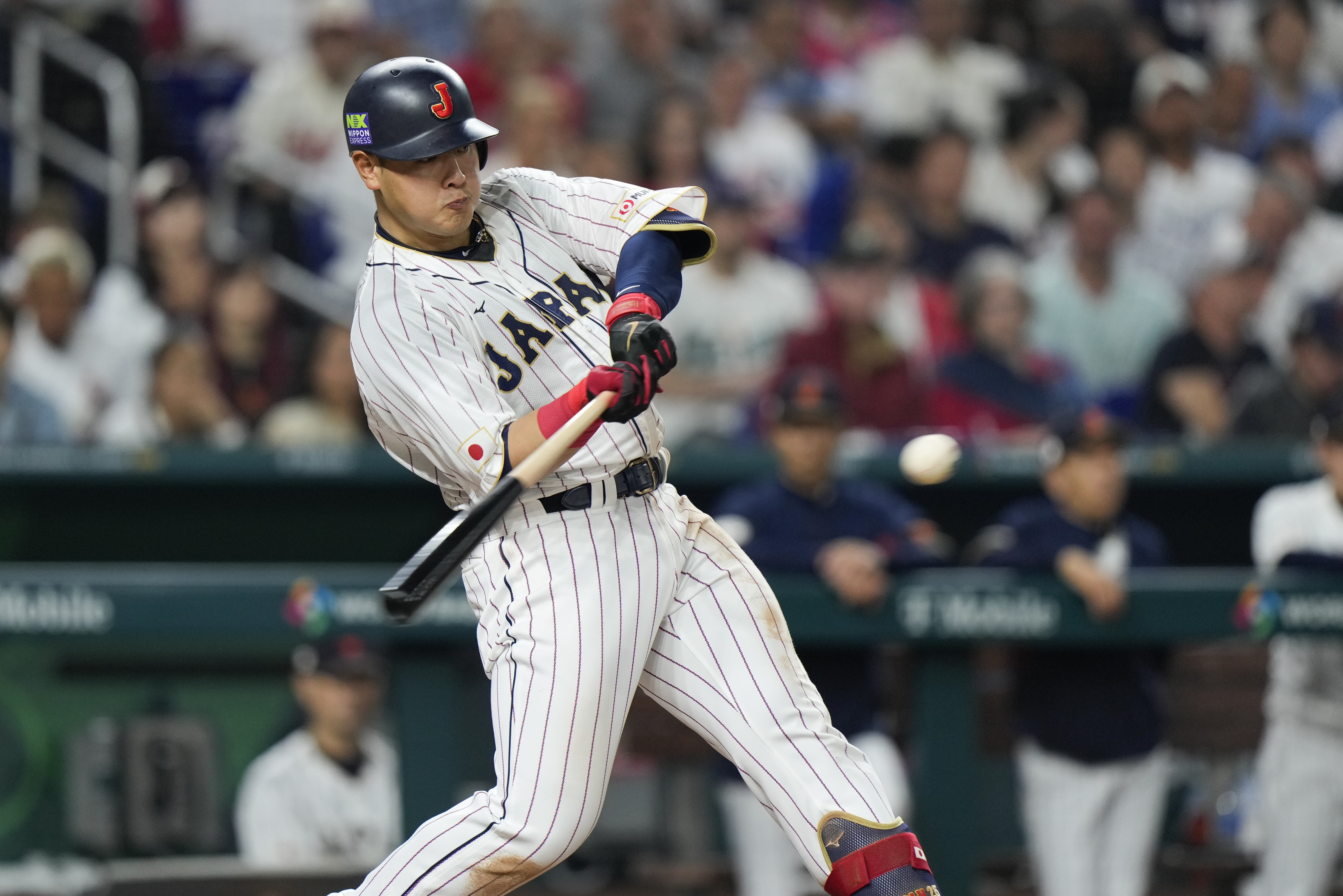
    Kazuma Okamoto has slashed .277/.361/.521 with 248 homers over 11 seasons in Nippon Professional Baseball in Japan.

    Free agency

    The Phillies don’t have a pressing free-agent need to fill in the infield, though that could change if a trade is made. (The battery will be covered later in this series.)

    Currently, one of the top available names on the market is righty third baseman Alex Bregman, who is set to opt out of his contract with the Red Sox after an All-Star season in which he slashed .273/.360/.462 with 18 homers.

    Third baseman Eugenio Suárez was one of the most coveted offensive trade deadline acquisitions this year and was linked to the Phillies before ending up with the Mariners. Suárez saw a dip in production in the second half, but he still had some big postseason moments for Seattle, such as a game-winning grand slam in Game 5 of the American League Championship Series.

    Gleyber Torres, 28, had an overall bounce-back year with the Tigers after the Yankees let him walk in 2024. The right-handed-hitting second baseman was named an All-Star for the first time since 2019. Torres saw diminished production later in the season, with a .812 first-half OPS compared to .659 in the second half, but revealed that he had been playing through a sports hernia late in the year.

    There are also international options. In recent years, the Phillies have attempted to expand their outreach in Japan in the hopes of attracting top stars there, but have yet to break through.

    The Yomiuri Giants of Nippon Professional Baseball have announced that they will be posting corner infielder Kazuma Okamoto. The right-handed 29-year-old has hit .277/.361/.521 with 248 homers over 11 seasons in NPB.

    According to an MLB.com report, Munetaka Murakami is also expected to be posted this winter. Murakami, 25, is a left-handed-hitting corner infielder with a career .951 OPS across eight seasons in NPB. He was named Most Valuable Player of the Central League in 2021 and 2022.

  • ‘Phillies Extra’ Q&A: Mike Schmidt on Bryce Harper’s fit in Philly, Pete Rose’s Hall chances, and more

    ‘Phillies Extra’ Q&A: Mike Schmidt on Bryce Harper’s fit in Philly, Pete Rose’s Hall chances, and more

    Forty-five years ago this week, the Phillies won their first World Series.

    At the center of it all, Michael Jack Schmidt.

    Schmidt went 8-for-21 with two homers and seven RBIs against the Royals and was named World Series MVP, a crowning achievement in his Hall of Fame career. But he badly needed that performance to change the narrative after several years’ worth of playoff disappointment, individually and for the team.

    On a recent edition of Phillies Extra, The Inquirer’s baseball show, Schmidt discussed how the 1980 Phillies finally got over the October hump. He also shared some thoughts on Bryce Harper, Kyle Schwarber, and Pete Rose’s potential Hall of Fame candidacy.

    Here’s an excerpt from our conversation, edited for brevity and clarity. Watch the full interview below and subscribe to the Phillies Extra podcast on Spotify or Apple Podcasts.

    Q: Kyle Schwarber has 340 home runs through age 32. What’s the key to maintaining the production on the back nine of a career?

    A: You’re getting into your middle 30s, moving a little bit into your late 30s, if you can stay healthy, continue a really, really strong workout program in the offseason. Your flexibility has to be there. Your bat speed obviously has to stay up. Your eyes have to stay — you’ve got to be able to see. I had 20/10 vision when I played. And it’s important to have good eyesight as you’re going forward, like you did when you were young.

    There’s a lot of nonmechanical baseball swing issues that have got to stay right because you’ve got to be quick.

    Schwarber is now quick to the ball, and you have to have confidence you could hit a 95 mph fastball as you get older. That’s what kind of sent me out of the game — that fastball just started to just get by me. My reactions weren’t as strong as they were when I was young. My bat speed wasn’t what it used to be.

    It’s like golf. As you get older, you wonder, ‘Why did I lose my length? How come I can only hit at 240 now? I used to be able to hit it 290-300,’ and things just change when you get older. So you’ve got to fight that off as long as you can. You’ve got to push that off into your 40s or whatever. And so, that’s a big issue.

    … We’re crazy to [only] use the number 500 [homers] with Kyle Schwarber. You’re only talking about what, five more years at 30 a year to get to 500? He’s probably got, let’s say, five more years at 50 a year. Five more years at 40-45, a year. So, his No. 500, I believe, is selling a little bit short.

    Q: Why do you think Bryce Harper has been such a good fit for Philly and maybe vice versa?

    A: I had my doubts in the beginning, from a distance, from what I knew about [him] playing at Washington. I had my doubts about that. Plus, you add in that crazy amount of money [$330 million] the Phillies gave him to come to Philadelphia and the number of years [13], and I just had my doubts. And he has taken to Philly like a duck to water. He’s got a fantastic team around him. He’s a great family man. He plays the Philly way — down and dirty, and that’s the way he is. And he brings the crowd into his game, and the game into the crowd. He’s a little bit the opposite of me. I kind of played with those blinders on, and he’s very emotional when he plays the game. The Philly fans love that. He’s gotten a lot of big hits. He loves that big moment. The fans love to be there when Bryce comes up in a big moment. So he’s a clutch player, there’s no question about that.

    And he knows the history of the game. He gives me a lot of respect. And also other players to play before him. That’s good. Players of my era like to see that in current-day players as a rule. … We don’t think that this generation of players knows as much about us as they should, because I know that when we played, we knew about the guys that came before us. We had their baseball cards when we were young, and … if somebody walked in, if Stan Musial walked into our clubhouse, we’d all rush over to meet him. We all knew who he [was]. I don’t want to get too deep into this, but I think over time, the sense of the people that came before you — and in all sports — I truly believe that is diminished from what it was 20-30 years ago. Not with Bryce. Bryce is very informed about the alumni like myself.

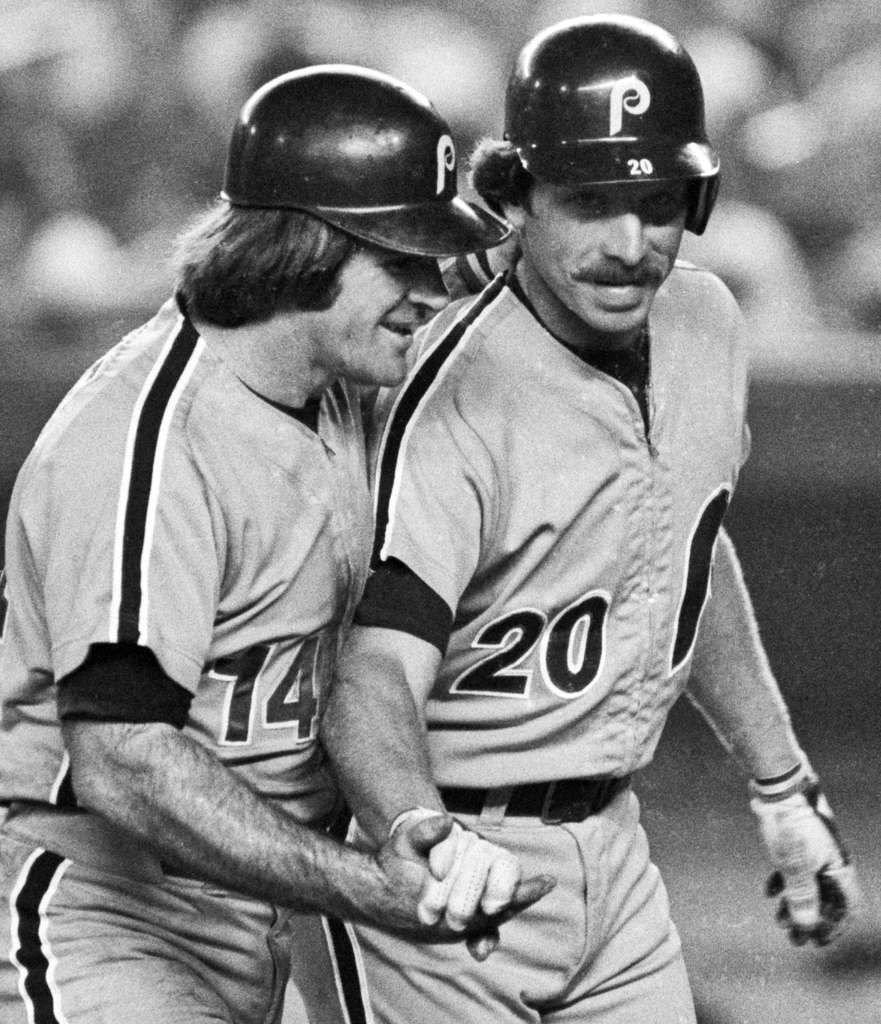
    Pete Rose (left) was Phillies teammates with Mike Schmidt for five seasons.
    Q: In May, the commissioner posthumously reinstated Pete Rose, whose name could be put before a Hall of Fame era committee for consideration for induction in December 2027. Within the Hall of Fame community, do you think there’s support to put Pete Rose in the Hall of Fame?

    A: I do, but I don’t know that it’s any more than 50% … There are as many detractors as supporters in Pete’s case. However [Hall of Fame chairman of the board of directors] Jane Clark forms the committee, that will determine Pete’s fate. And even if they put 16 ex-players, members of the Hall of Fame on it, I still think it would be 50/50. And if they put four or five Hall of Fame members on it, and GMs and team presidents and media people and historians, and they put all those guys on it, I still think it runs 50/50. [Note: 75% support is required for election.]

    … I can’t go one way strong or the other, based upon my experiences and talking about Pete, wherever I’ve been, be it around the members of the Hall of Fame or media types, Just general conversation at a restaurant or something with people.

    What a tumultuous life that man led. I don’t think he handled the whole situation very well. I’m not a proponent of him gambling on the game, which was the big issue, of course. The people’s lives that he affected through that, through his life during that period, the way he handled when he admitted on that, and the way that Mr. [former commissioner Bud] Selig was hoping that he would change his life and do some good, change his habits in life to positive things for the game of baseball and for himself and his family, which didn’t happen.

    So I think he created his own fate. And now we will find out, I guess in two or three years, when this committee votes whether he will have a plaque in the Hall of Fame. And I believe that if he doesn’t, I still think there should be a big corner in the museum somewhere that shows pictures and tells the story, maybe a video of some sort, of Pete Rose happening in the history of baseball. Because I think it’s important. Whether it was a negative stain on the sport or not, that’s part of it.