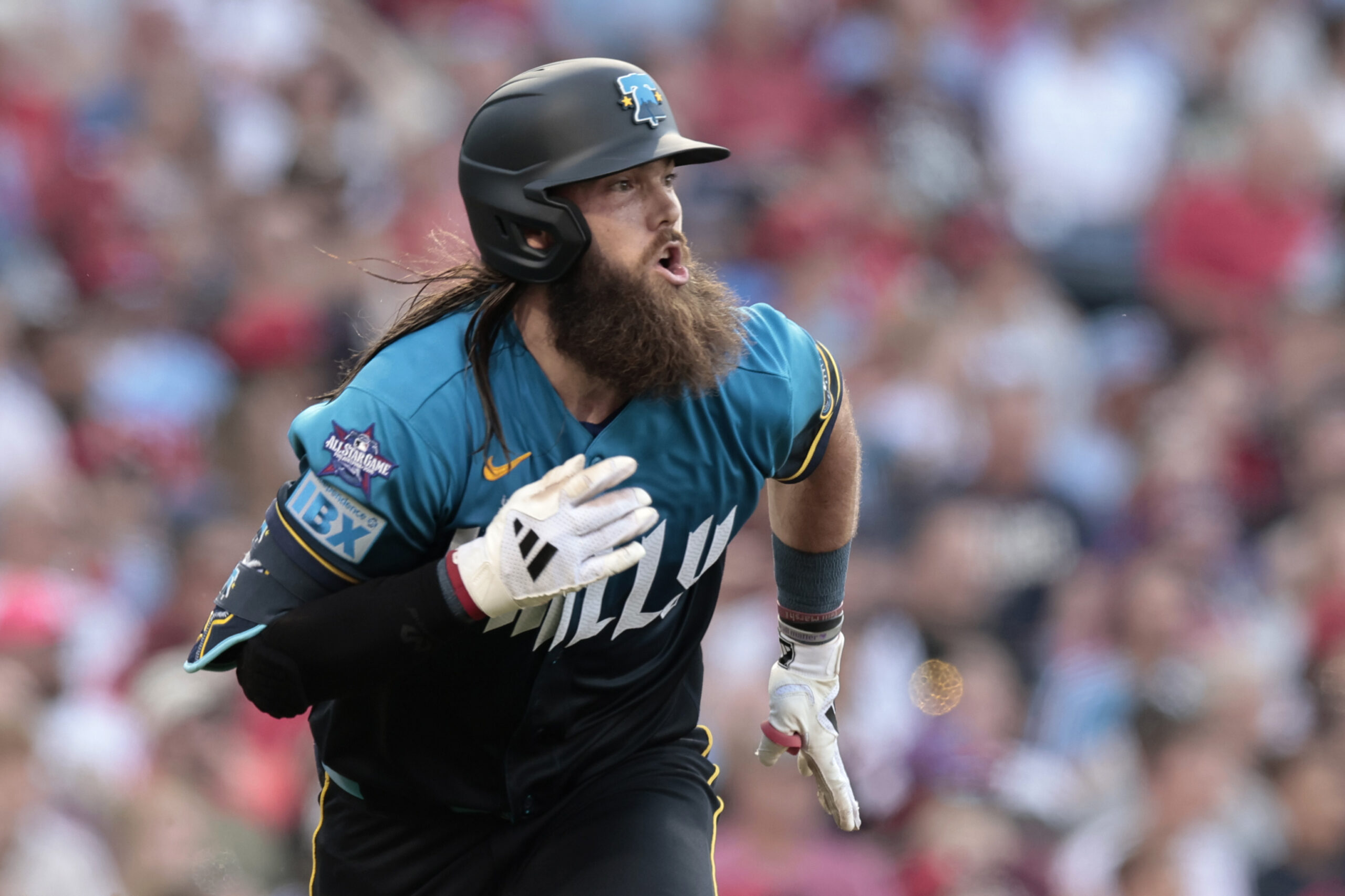
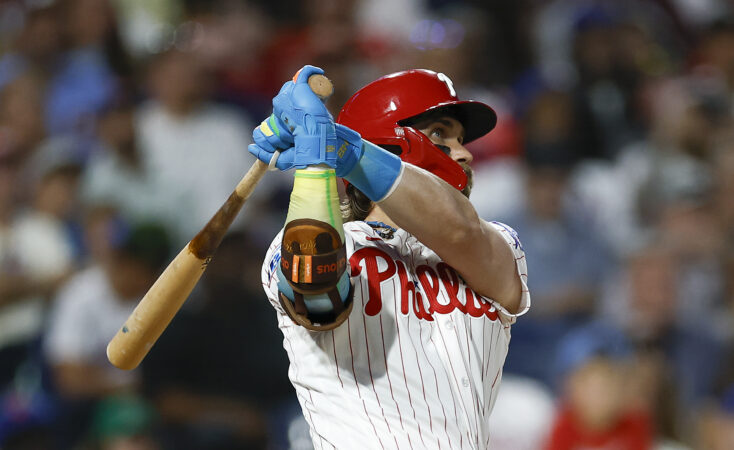
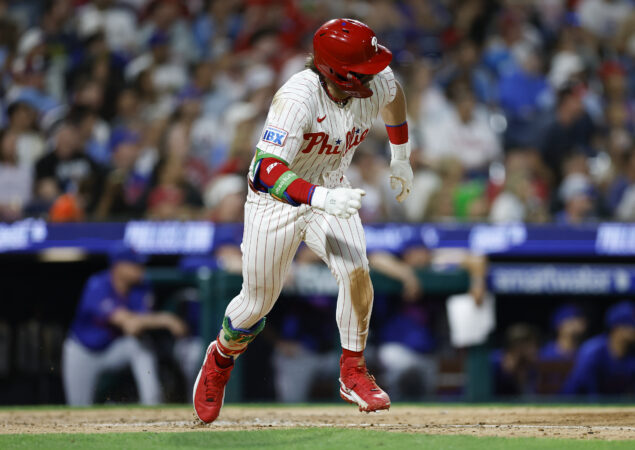
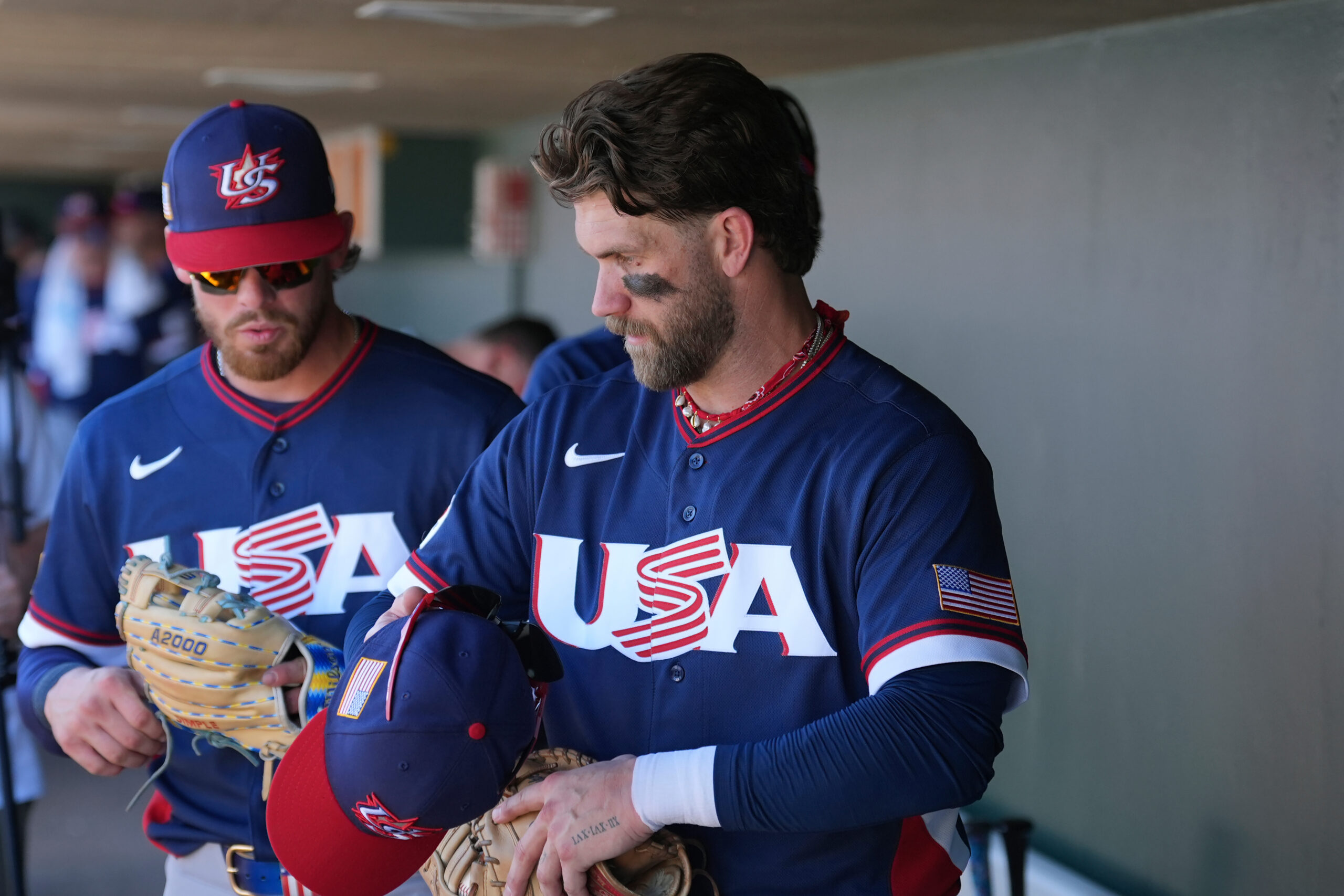
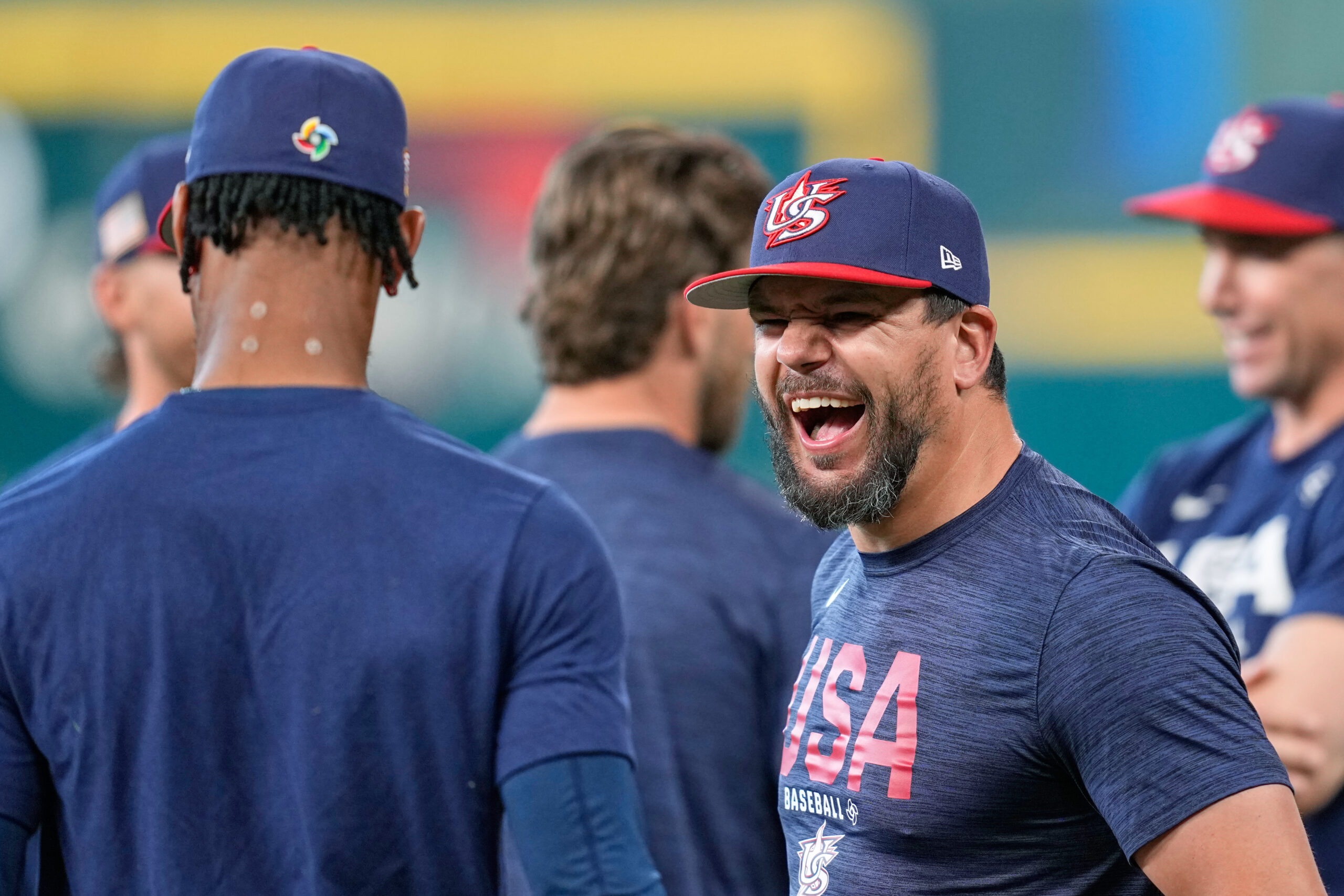
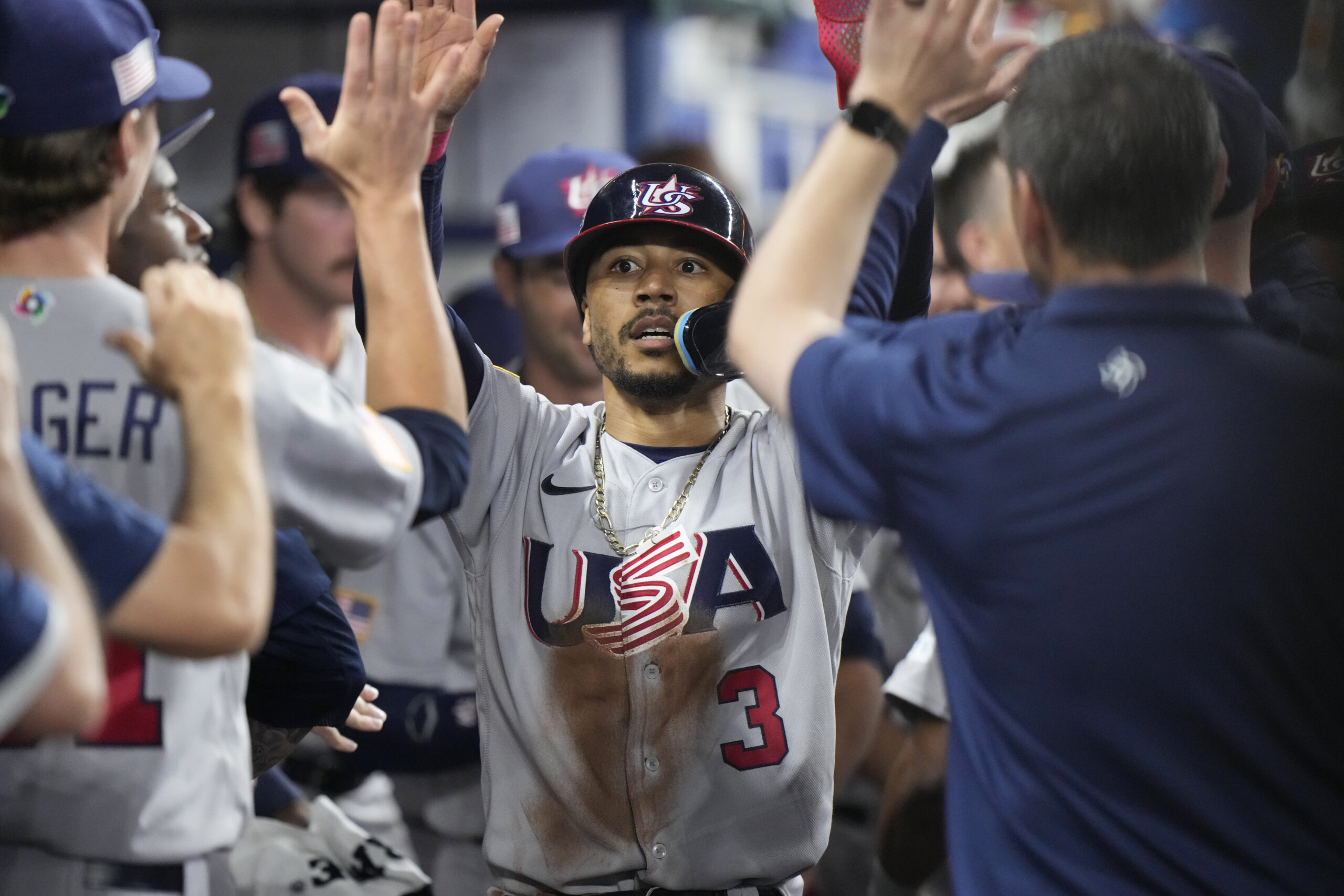
We will learn to believe in these Phillies. These Bryce Harper Phillies. These Kyle Schwarber Phillies. These Zack Wheeler and Cristopher Sánchez Phillies.
We will learn that, while they might occasionally lose, they are never defeated.
We will learn that, until the last strike of the last out is recorded, they have not yet lost.
We came to learn this about the core of these Phillies in the dead of summer in 2022, and perhaps we should relearn it as summer begins in 2026. Then, they sparked a drive to the World Series with a handful of exhilarating victories. Now, after a wild midweek series in Washington, they might be doing the same.
We will come to accept that, as long as Harp and Schwarbs and Wheels and Sanchey are active and competing and leading the charge, the rest will follow until the very end.
That quartet might not be the best players in baseball, but they are always the best players they can be, and that’s often all that matters, because it inspires their peers to be the same. That’s how the Phillies manage comeback miracles like they produced in D.C. this past week.
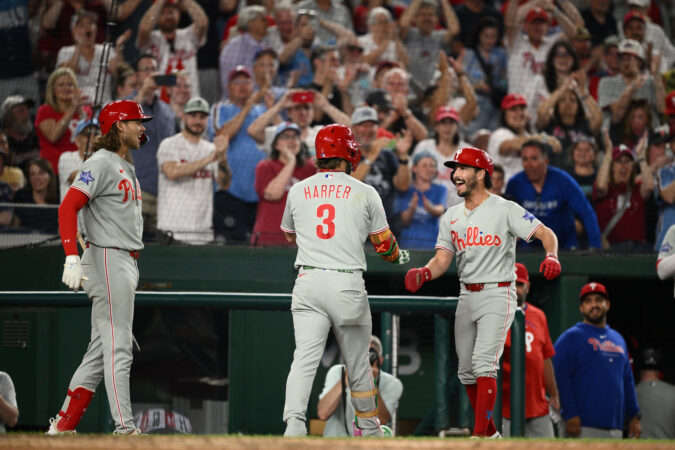
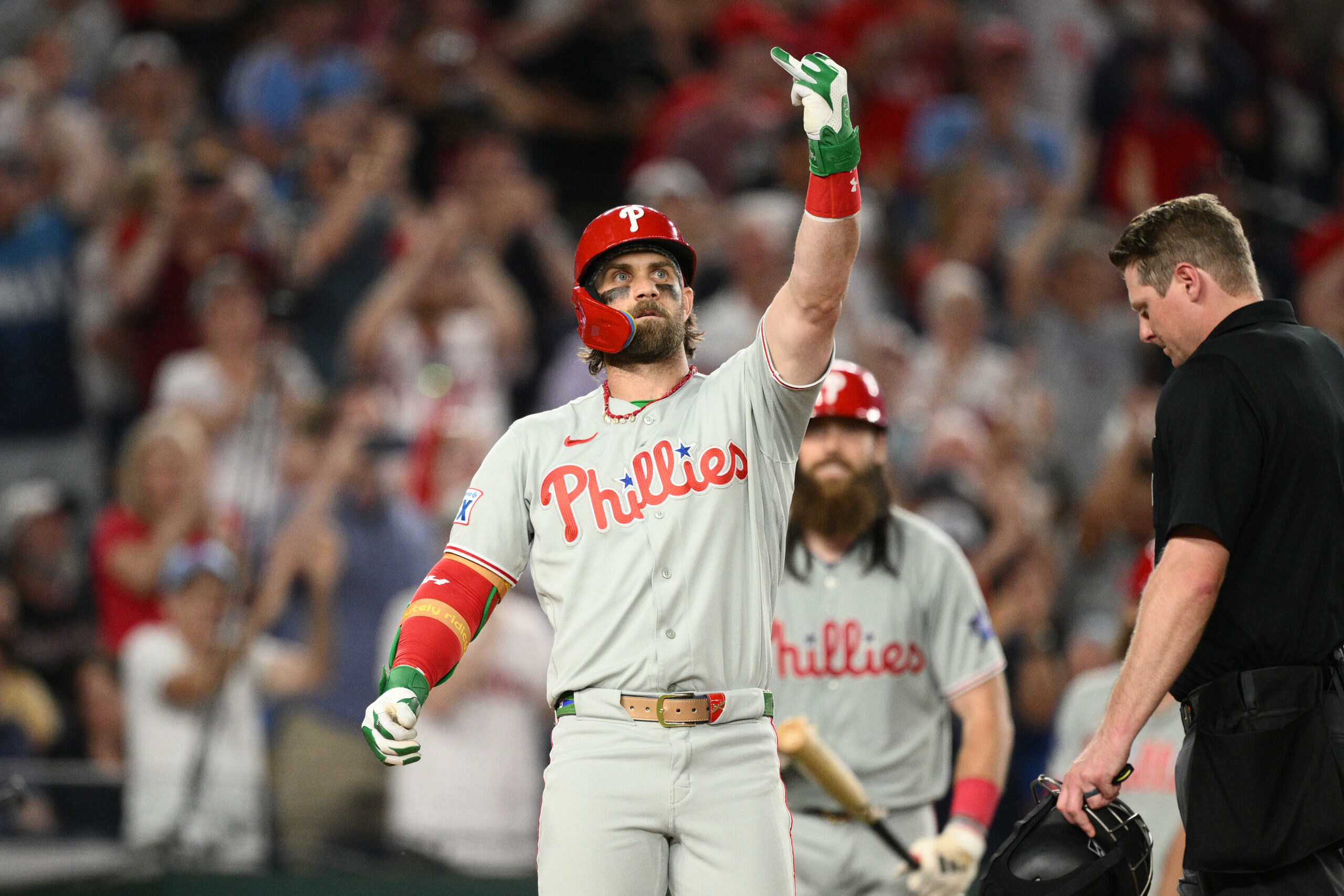
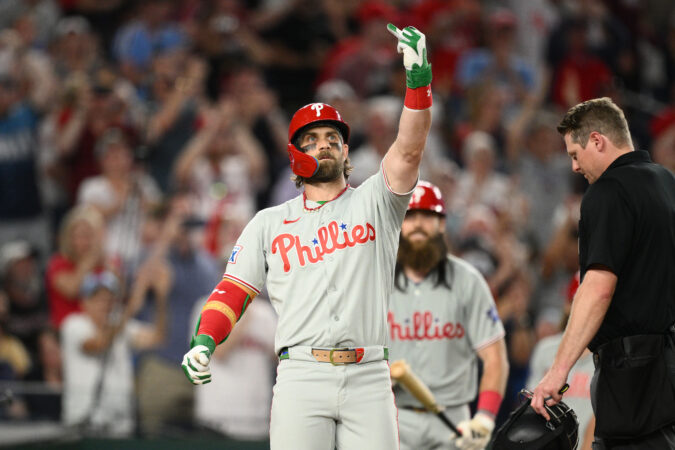
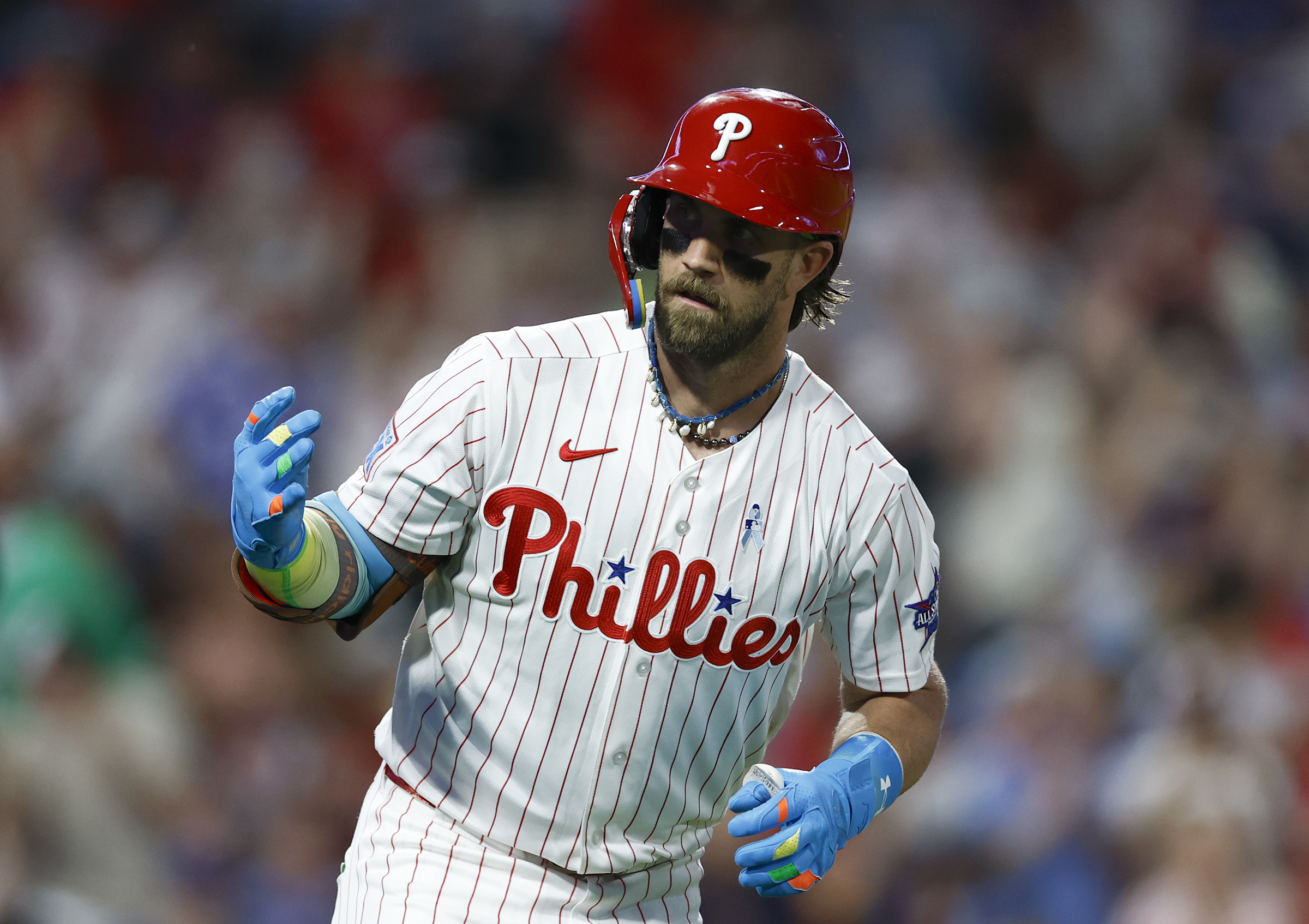
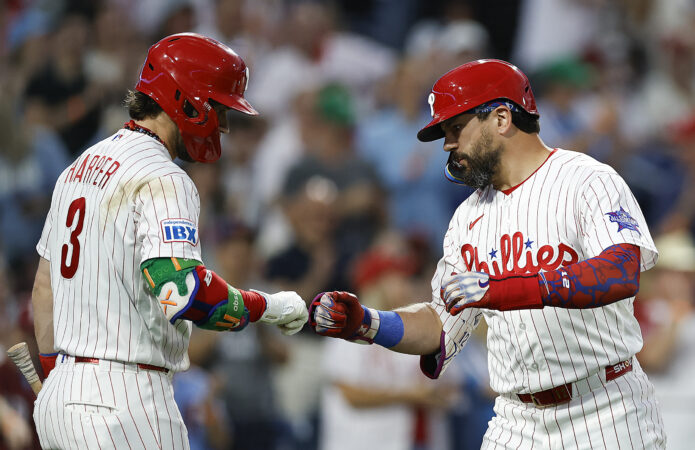
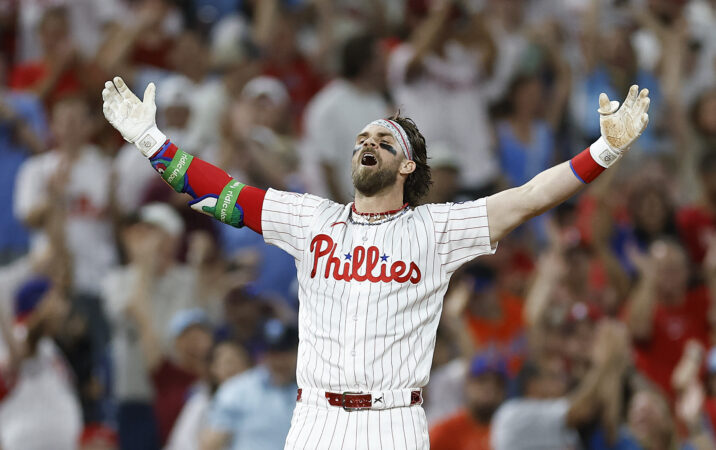
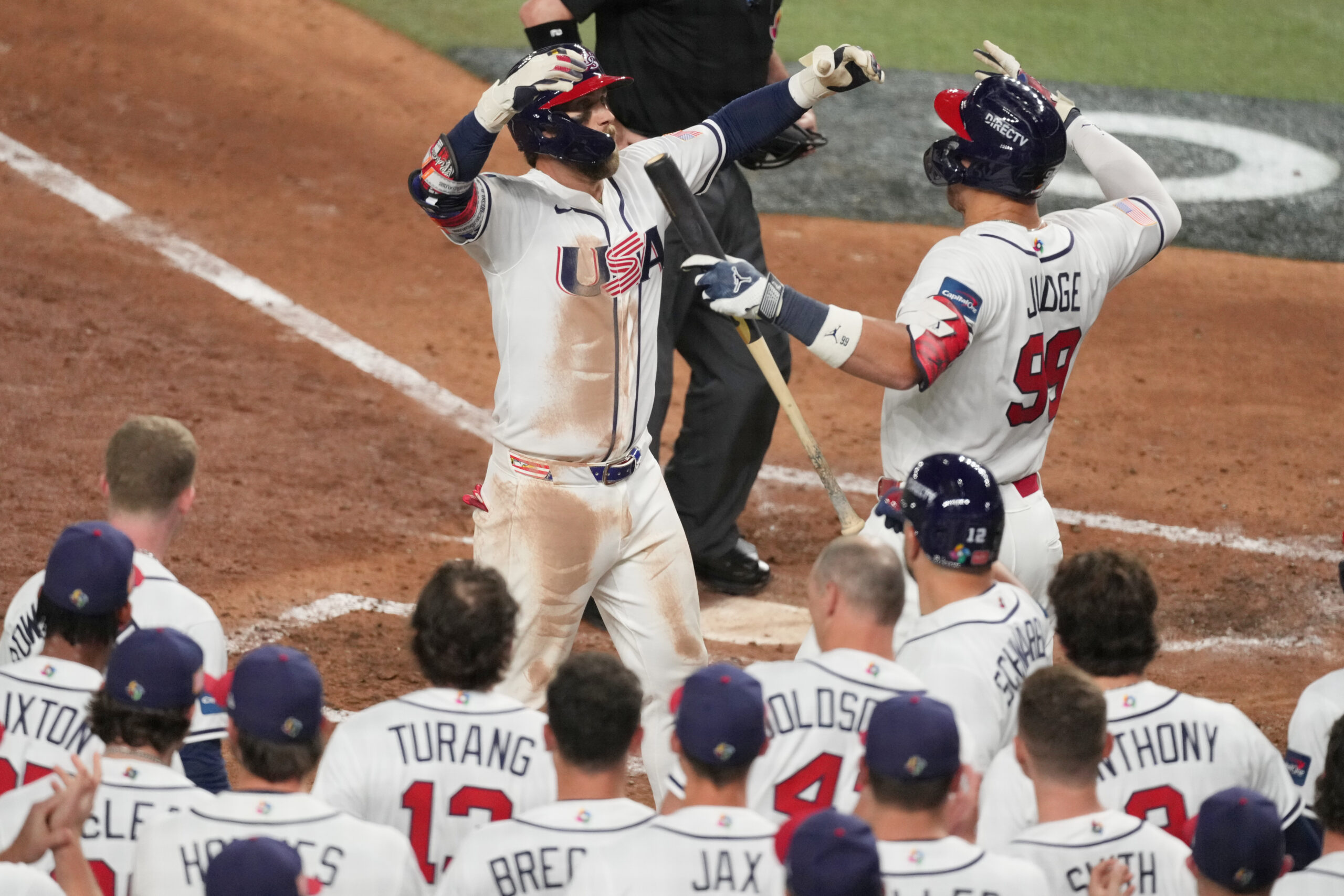
Bryce Harper flashed a finger — which he clarified was his ring finger — toward the upper deck in right field as he rounded the bases of his go-ahead two-run homer on Thursday in Washington.
Then, incredibly, it happened Thursday night, too, a 10-5 thriller that launched them to Queens for three against the last-place Mets, who, despite the presence of duplicitous error machine Bo Bichette, have lost six in a row, costing manager Carlos Mendoza his job on Friday.
They won three of four in D.C. Wheeler was scheduled to start Friday in New York.
“We’re coming. Watch out,” Harper told 94 WIP radio. “Obviously, we have a great ball club.”
Great? Maybe.
The momentum is palpable.
Why?
Because the Phillies hit go-ahead home runs in each of the ninth innings of those games, the first time that’s happened in Major League Baseball history.
Harper, scorching, was in the middle of it all Thursday.
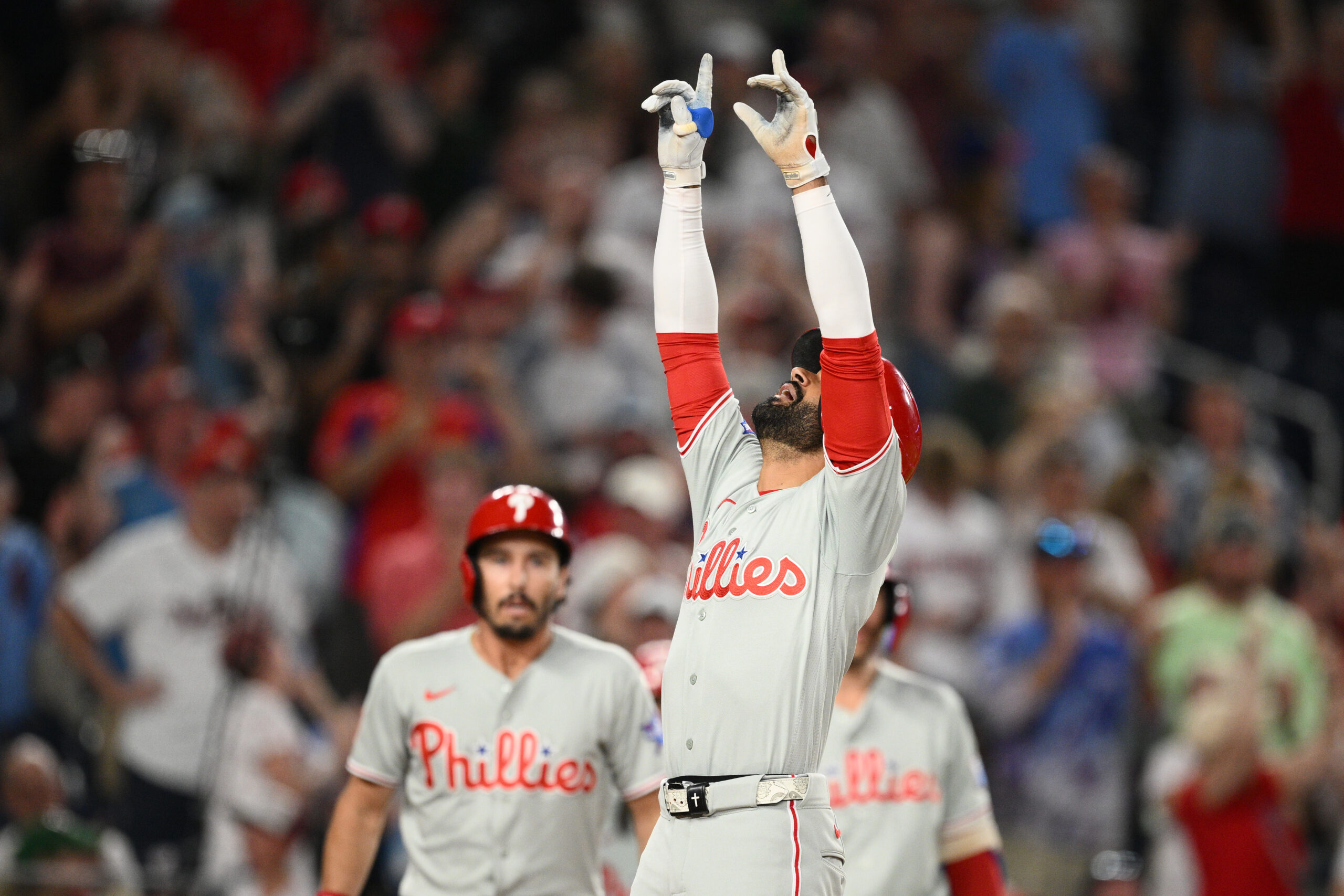
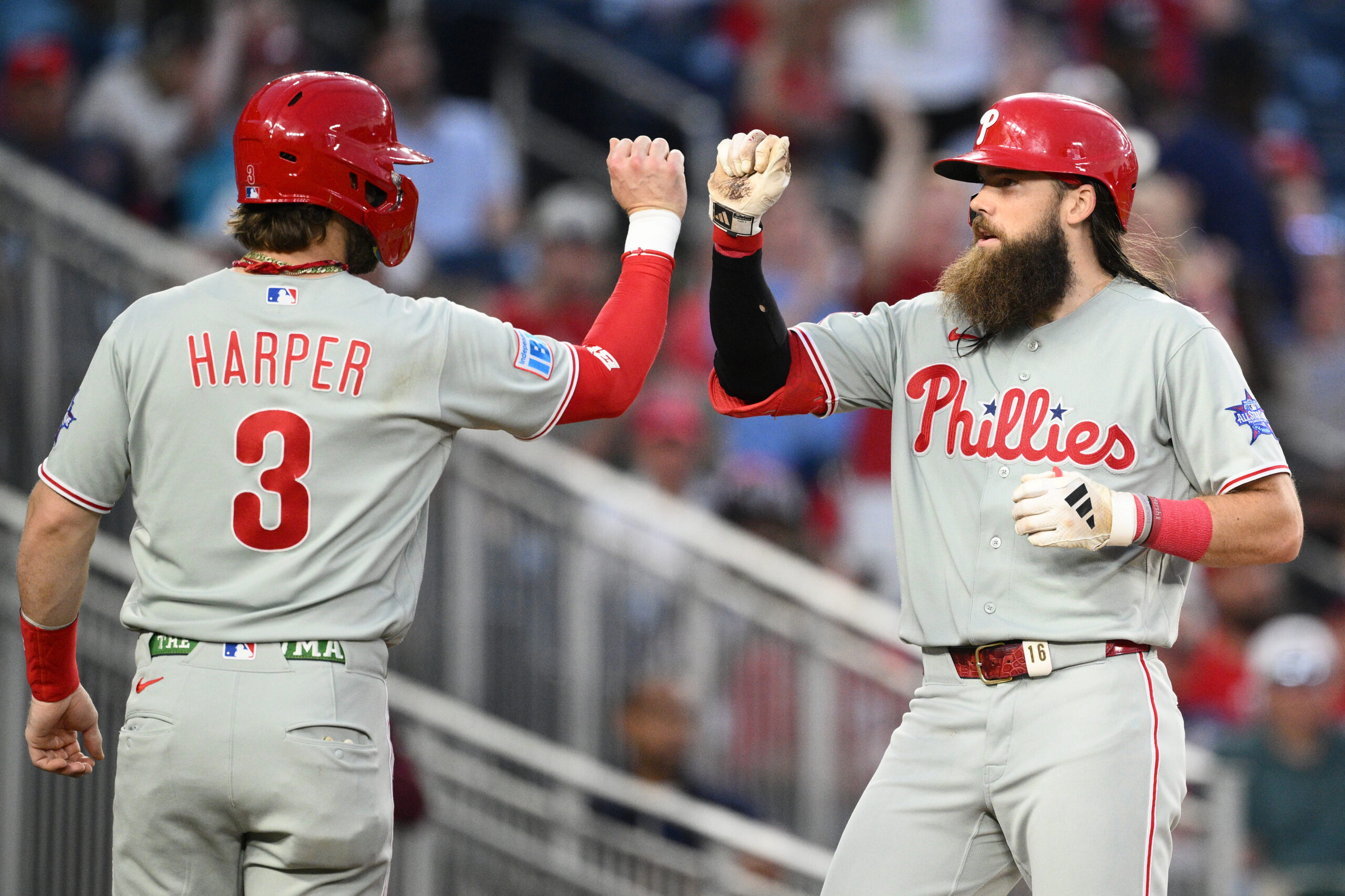
Down 5-0 in the fifth, Harper beat out an infield single and scored the first run on Brandon Marsh’s third home run of the four-game series. Harper drove in the third run in the seventh with a 3-2 bases-loaded walk that began a three-run, game-tying frame. Then Harper drove in the go-ahead runs with a 390-foot blast to left-center, the surest sign that Harper’s hot: When he’s going “oppo,” he’s unstoppable.
Harper is 13-for-31 with three homers and seven RBIs in his last eight games. The Phils entered the weekend having won five of six and sit four games behind the idle Braves, the closest they’ve been to the top of the NL East since tax day, when Rob Thomson was still their manager.
They were 9-19 when Thomson was fired 12 days later, and they’re 36-17 since bench coach Don Mattingly took over as interim manager. Maybe it’s been addition by subtraction. More likely, it’s coincidence, since this core group of Phillies has been winning in heart-stopping fashion since it came together in 2022, when the Phils fired Joe Girardi and Thomson took over as interim manager.
The DNA of this club seems independent of its boss.
“Each team is different,” Harper told reporters afterward. “It’s how we are. It’s who we are.”
There were other big moments from big names Thursday, and all week, really. Schwarber, who didn’t start Tuesday or Wednesday, worked a 10-pitch, two-out, pinch-hit walk in the ninth on Wednesday that framed a bigger moment for a lesser player. Trea Turner put his season from hell on hold for the ninth inning Tuesday, when his two-out single began an eight-run inning in which his second two-out single drove in the eighth run.
How could something like this possibly happen again Thursday?
“You’ve got to keep fighting back,” Harper said.
Sánchez stumbled to a 5-0 deficit after 2⅔ innings but stabilized and faced just one batter over the minimum in recording the final seven outs. That preserved the bullpen, as four relievers pitched a scoreless inning apiece. José Alvarado finally looked untouchable in the seventh, and Orion Kerkering, who’d blown a save two days earlier, earned the win when, in the eighth, he stranded a leadoff double at second base and preserved the tie.
It is contagious.
How contagious?
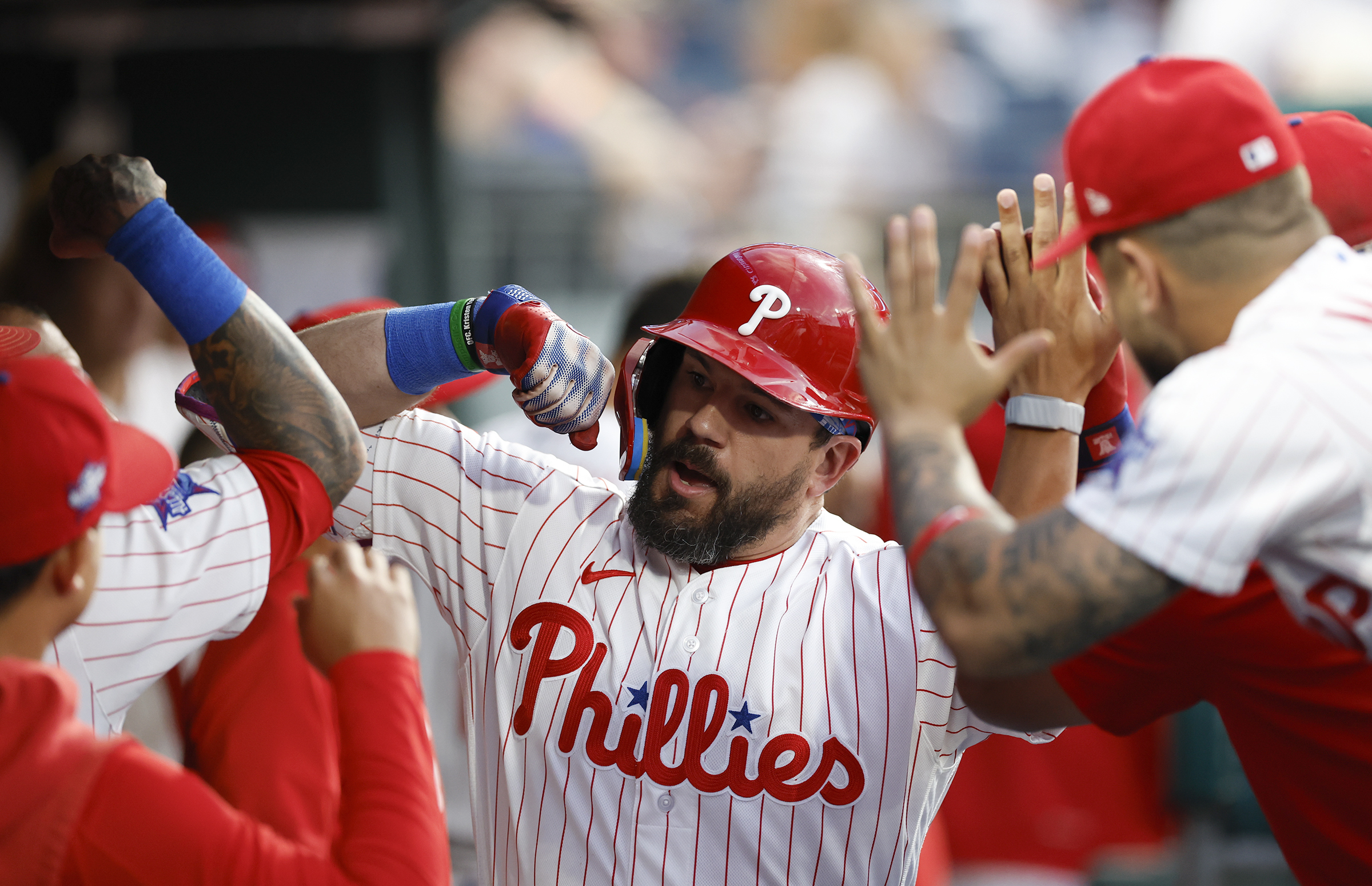
Derek Hill celebrates his two-run home run during the ninth inning on Wednesday.
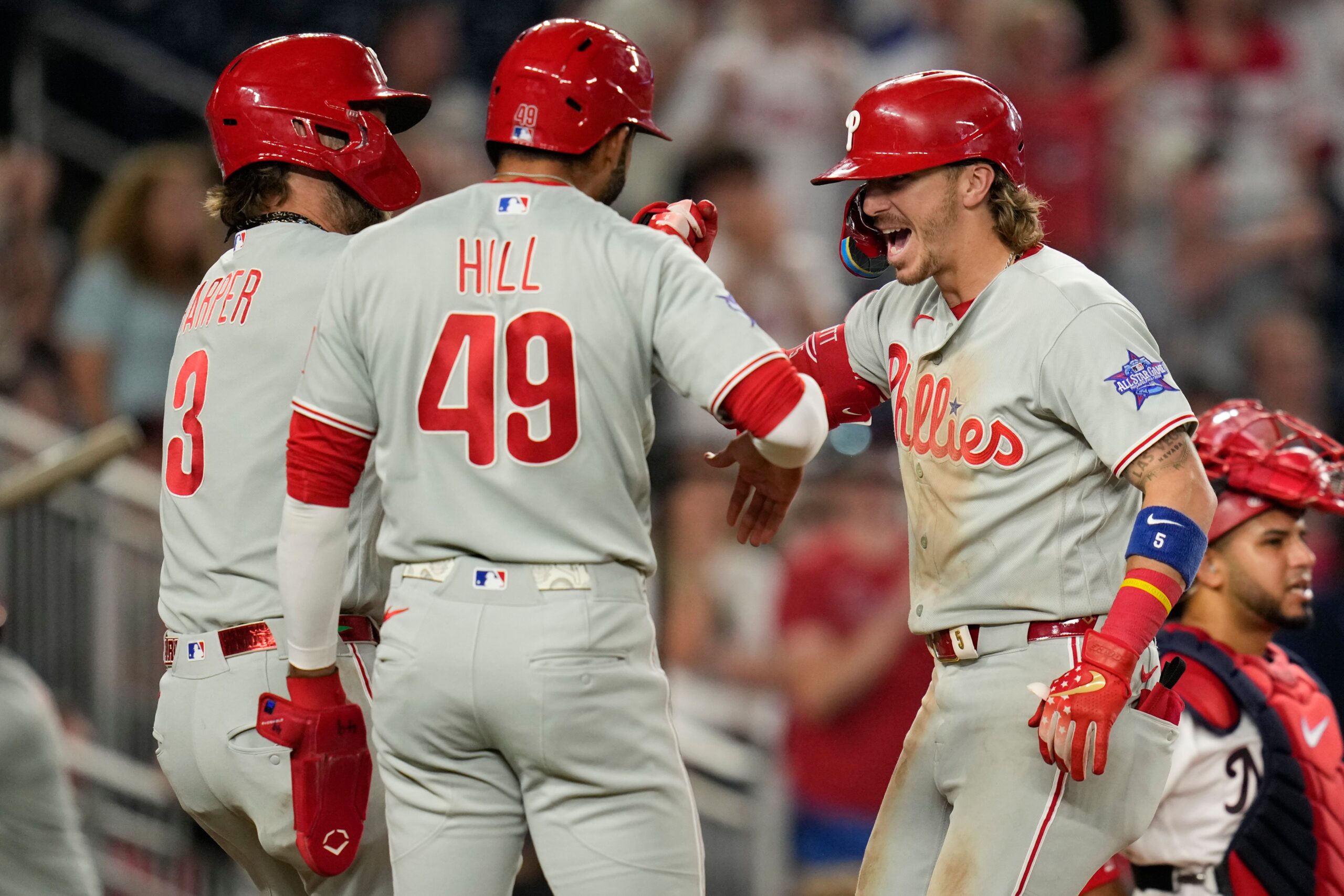
Derek Hill, who was Wednesday’s hero with a pinch-hit, go-ahead, ninth-inning homer, padded the lead Thursday with a two-run shot for a five-run lead. He’s a journeyman outfielder who has been a Phillie for just two weeks, the roster replacement for the Phils’ latest free-agent outfield bust, Adolis García, who had latissimus dorsi repair surgery and is done for the season.
How contagious?
Edmundo Sosa had the first homer, double, and five-RBI night of his eight-year career in Tuesday’s 14-9 win, when they erased a two-run deficit in the ninth. Sosa has a knack for the dramatic. He ended May with a two-run homer in the eighth inning to complete a late comeback in Los Angeles.
How contagious?
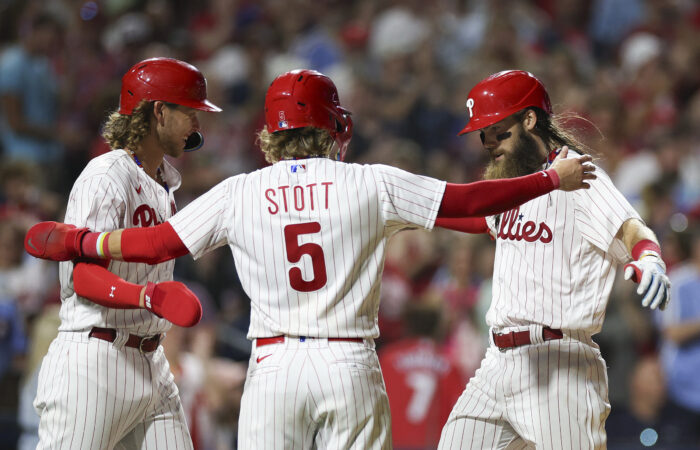
Bryson Stott’s three-run homer on Tuesday was his first go-ahead homer in the ninth inning in four years.
“We just have that never-quit mentality,” said Brandon Marsh, the team’s most consistent hitter this season.
Marsh padded his unlikely All-Star resume with a two-run shot in the ninth inning Tuesday that re-tied the game, 8-8, and set up Stott’s moment. Marsh was 9-for-14 and scored five runs in the three comeback wins.
Marsh knows of what he speaks because he’s lived this life before. It’s all he’s ever known, really.
Marsh landed in Philly as a deadline trade piece in 2022 from the Angels having played just 163 games in the majors. He landed in the middle of the Phillies’ crucial surge.
It began July 25, when Stott’s three-run home run in the eighth inning gave the Phillies a 6-4 lead over the visiting Braves. That was the first of 13 wins in 15 games, which allowed them to play .500 ball the rest of the season and still reach the playoffs for the first time in a decade.
Bryson Stott (right) hit the go-ahead three-run homer on Tuesday in the Phillies’ 14-9 comeback win over the Nationals.
It was the first of five games in that span that crackled with late-game electricity.
On July 29, in the top of the 10th inning, Rhys Hoskins ripped an 0-2 fastball 410 feet over the centerfield wall in Pittsburgh for a 4-2 win. The next night, again in the 10th, Hoskins put a ball in play that the Pirates threw away, and that was the difference.
On Aug. 3, the day after Marsh became a Phillie, he was in Atlanta and saw J.T. Realmuto drive in Hoskins with a fielder’s-choice grounder to tie it at 1 in the eighth, then saw the next batter, Nick Castellanos, blast a two-run game-winner.
A week later the Phils managed six hits and three runs in the bottom of the eighth to win, 4-3, over the visiting Marlins.
Does this recent competence mean that the Phillies will reach the World Series this season? Not necessarily.
What it means is, with this Core Four, the faithful should never forsake the season … and they should watch every game until the very last out.
WASHINGTON — In the right field corner of Nationals Park, a group of entirely shirtless fans took over Section 236.
They were steadily growing in number on Thursday night, while the Phillies — yet again — fell behind early against the Nationals. The fans, who were waving their discarded shirts and chanting for most of the game, were participating in a movement known as “Tarps Off.”
It’s a trend that is not unique to this series, and not unique to the Nationals. But the Phillies took notice of this particular group in right field earlier this week, when their chants started to include expletives directed at former Nationals Bryce Harper and Trea Turner.
The “F— Bryce Harper” chants resumed in full force on Thursday. And so when Harper blasted a two-run home run to break a 5-5 stalemate in the ninth inning, he made sure he acknowledged them. As he rounded the bases, he flashed a finger — which he clarified was his ring finger — toward the upper deck in right field.
“Obviously, everybody heard it,” Harper said. “We heard it the other night. I mean, they were doing same thing to Trea — which is crazy, because they should probably know their history a little bit with them winning the World Series here — but yeah, it’s part of it. I love coming in here and playing here.”
By the time Derek Hill stepped into the box and hit another homer, capping a five-run ninth inning and the 10-5 win, the Tarps Off group had mostly dispersed.
The Phillies secured the series victory over Washington with their third consecutive comeback win. Each of them had involved a go-ahead home run in the ninth inning.
“We just have that never-quit mentality,” said Brandon Marsh.
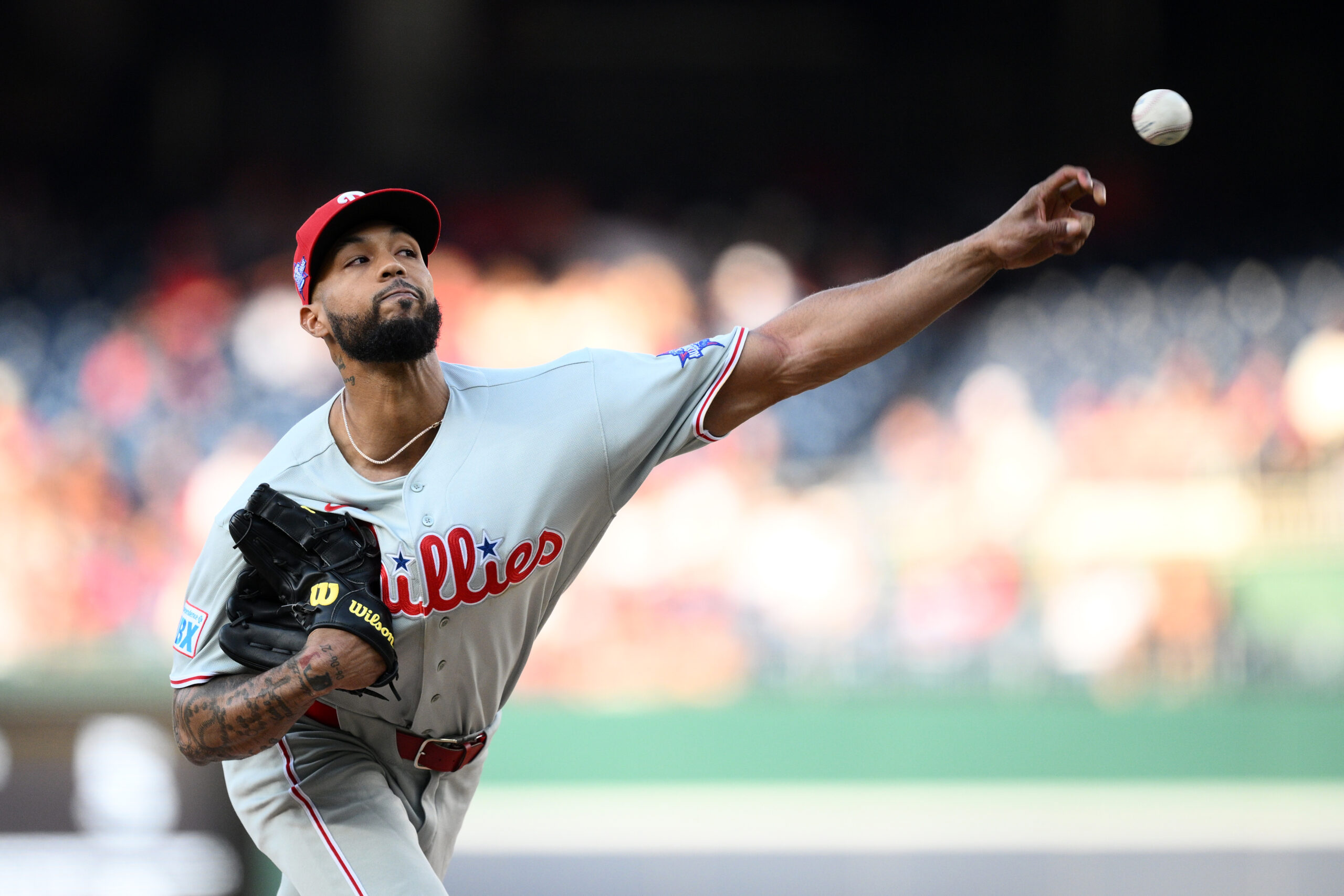
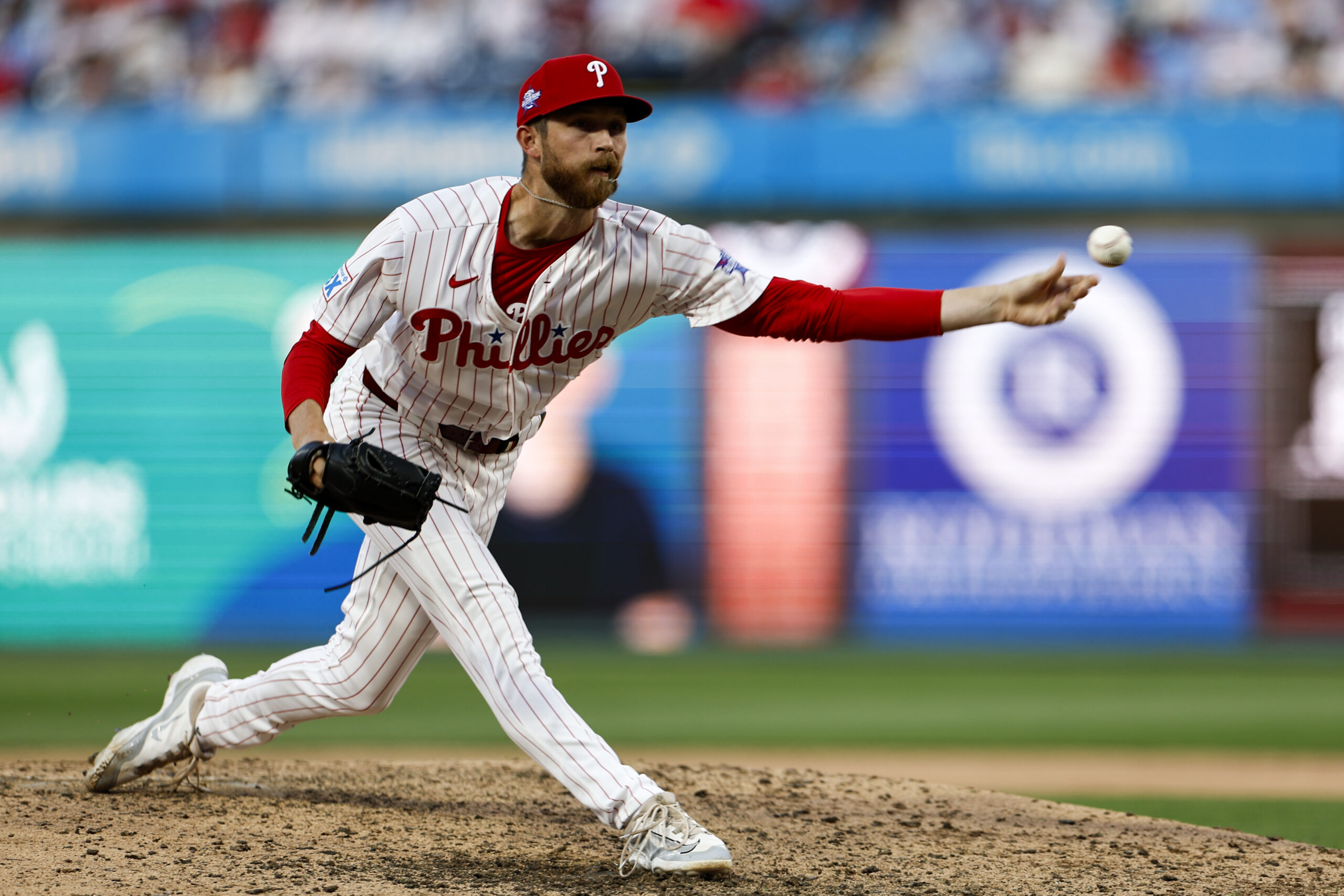
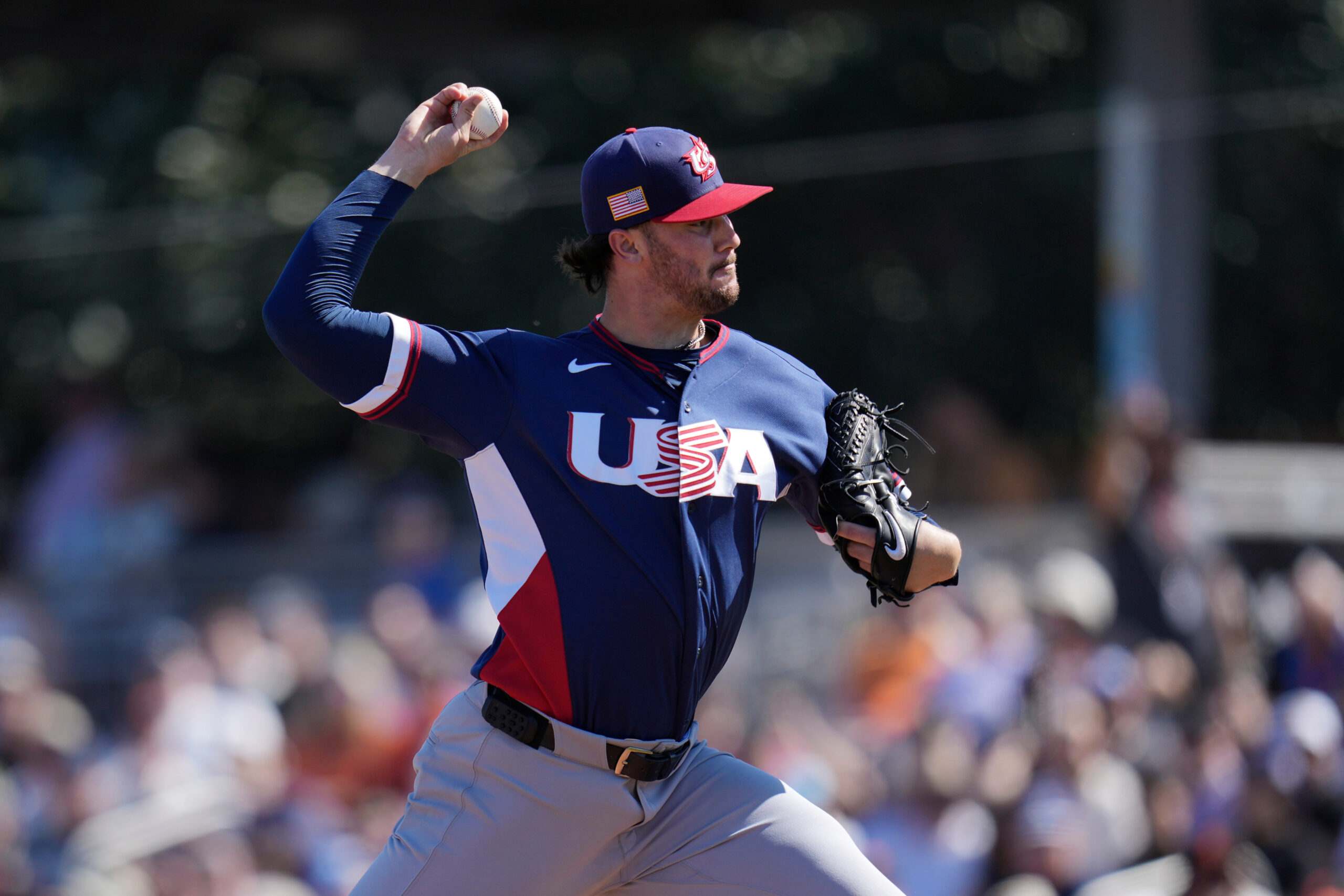
Phillies pitcher Cristopher Sánchez had his shortest outing on Thursday since April 7.
And in each ninth inning, the Phillies had a different hero. On Tuesday, it was Bryson Stott. On Wednesday, it was Hill. And on Thursday, it was the former face of the Nationals franchise.
“You guys know everywhere I go, I get booed and they say my name or boo or anything else. I love it. It’s all part of it,” Harper said. “It’s weird coming from a fan base that I sweated for for seven years, but there’s a lot of people around here that enjoy me, so it’s all part of it, it’s all fun.”
Their latest comeback helped the Phillies recover from an uncharacteristic start from Cristopher Sánchez. The lefty wasn’t as sharp as usual, and it seemed like Washington capitalized on every mistake he made to jump out to a four-run lead in the first inning.
Curtis Mead started it off. The former Phillies prospect they traded to Tampa Bay in 2019 to acquire Sánchez blasted a homer over the bullpen in left field. Sánchez couldn’t rebound, hitting the next batter and allowing three singles before finally getting out of the first.
“I thought probably his command tonight was not as good as we’ve seen,” said interim manager Don Mattingly. “Seemed like the changeup command was not great tonight. Stuff was good, he was throwing the ball good. Probably a little unfortunate on some plays, that if you get an out here and out there, it limits some of that damage.”
The defense didn’t help Sánchez, costing him quite a few pitches en route to his shortest outing — five innings — since April 7. J.T. Realmuto committed a throwing error in the third inning trying to catch Dylan Crews stealing second, and Alec Bohm booted a ball at third.
Sánchez struck out six batters, including five on his slider.
“I missed a couple pitches, and they got me, but outside of that, I think I felt great today,” he said through team interpreter Diego D’Aniello.
Brandon Marsh’s (right) two-run homer helped the Phillies chip away at a 5-0 deficit.
After the Phillies fell behind 5-0, their relievers locked things down as the offense chipped away. Marsh hit a two-run homer in the sixth inning to put the Phillies on the board. In the seventh, they capitalized on two singles and four walks to tie the game, as Washington’s bullpen — which has a National League-worst 5.05 ERA — collapsed again.
“We were very patient there in the seventh,” Mattingly said. “In the strike zone. We talked about it, hitting there. … [Justin Crawford] gets a hit, Trea gets a hit, gets it started, and then you’re into [Kyle Schwarber], and he walks, Harp walks, and it just kind of snowballs.”
Chase Shugart, José Alvarado, Orion Kerkering, and Tim Mayza each pitched a scoreless inning for the Phillies. Kerkering was the only reliever to allow a hit. He gave up a leadoff double in the eighth and then battled back to strike out two consecutive pinch-hitting lefties with his fastball and induced a groundout to preserve the 5-5 tie.
It set the stage for some more ninth-inning magic.
“Everyone heard what those group of dudes were saying up there,” Marsh said. “I feel like Harp gets a lot of heat just for being who he is and how good he is, and I feel like it just comes with being one of the best players to ever play.
“Him coming in clutch for us in that moment, I mean, I don’t even know the word to describe it. The boys needed it, and he came through for us, and another crazy ninth inning.”
With less than a week left to vote, it hardly qualifies as a surprise that three Phillies players are in the running to start Philadelphia’s first All-Star Game in 30 years.
Harper finished third among first basemen in the first phase of fan voting, MLB announced Thursday. If the Face of the Phillies gets selected to his ninth All-Star Game on July 14 at Citizens Bank Park, it will be through player balloting as a National League reserve.
But the Phillies may still be well-represented in the NL’s starting lineup. Brandon Marsh moved on to the second stage of fan voting by collecting the second-most votes among outfielders, while Bryson Stott and Alec Bohm did the same by finishing second at second base and third base, respectively.
Kyle Schwarber, who leads the majors with 29 homers, ran second among designated hitters. But Dodgers star Shohei Ohtani locked up a starting spot by getting the most votes of any NL player. Schwarber is a virtual lock to be chosen as a reserve.
Voting resumes at noon Monday on MLB.com and on the MLB app and concludes at noon next Thursday. Votes from the first phase of voting don’t carry over. MLB will announce the All-Star rosters, including starters, on July 4 at 7:30 p.m.
Phillies outfielder Brandon Marsh is a candidate to start the All-Star Game for the National League.
Marsh ranked third in the NL in hitting — and second among all major league outfielders — with a .321 average through Wednesday. He had 14 doubles, 11 homers, and an .860 OPS that was third among Phillies players behind Schwarber and Harper.
Six NL outfielders advanced to the final round of voting, with the Dodgers’ Andy Pages and Teoscar Hernández, the Braves’ Ronald Acuña Jr. and Michael Harris II, and the Mets’ Juan Soto joining Marsh. Hernández and Acuña are on the injured list with hamstring strains.
Bohm and Stott have recovered from awful starts to the season. Stott, in particular, was 19-for-58 (.328) with a .917 OPS in his last 16 games. He’s vying with Braves second baseman Ozzie Albies, and Bohm is pitted against Dodgers third baseman Max Muncy.
Harper (.877 OPS, 17 homers entering Thursday night’s game) finished behind the Dodgers’ Freddie Freeman (.859, 13 homers) and the Braves’ Matt Olson (.870, 20 homers). The NL carried three third basemen last season (Freeman, Olson, and Pete Alonso).
All-Star reserves and pitchers are selected through the player balloting.
Cristopher Sánchez, second in the NL with a 1.80 ERA entering his start Thursday night in Washington, and closer Jhoan Duran (1.69 ERA, 19-for-20 in save opportunities) are strong candidates. Zack Wheeler (2.11 ERA in 11 starts) is also a possibility, though he missed the first month of the season.
Schwarber and Harper said they’ll decide on competing in the Home Run Derby after they know whether they’re selected as All-Stars.
Also Wednesday, Don Mattingly was named to the NL coaching staff, as expected, by Dodgers manager Dave Roberts. Phillies head athletic trainer Paul Buchheit, strength and conditioning coach Morgan Gregory, and clubhouse manager Phil Sheridan will be part of the NL staff. Kevin Steinhour will be the AL clubhouse manager.
They gathered at the usual time (shortly before 3 p.m.), in the usual spot (around home plate) for early batting practice. Bryson Stott and Alec Bohm were there; J.T. Realmuto, too.
What else did you expect? Yes, the Face of the Phillies prefers the indoor cage for his pregame swings. But Harper felt like launching balls into the seats Saturday and wound up hitting for the cycle a few hours later.
So, there was Harper, hitting on the field again Sunday, and sticking with his 35-ounce “heavy” bat instead of the 31½-ounce model that he ditched the night before. And guess what? Yep, he got three more hits — a triple short of another cycle — in a 6-2 rubber-game victory over the Mets that was powered by another titanic Kyle Schwarber homer.
“I don’t know if that’s translating to the game,” Harper said of the early hitting, the heavier lumber, and seven hits in his last nine at-bats. “Obviously the last two days have been great.”
Surely, Harper wants to bottle this feeling.
But it isn’t only Harper. Or even Schwarber, who has blasted four homers in the last two games, leads the planet with 29, and is on pace to finish with 61, which would be a record for a franchise that has existed for 144 seasons.
The Phillies’ Bryce Harper celebrates after hitting a home run in the fifth inning on Sunday.
As the Phillies capped a winning homestand and caught a train to Washington to play four games this week, the bats are finally revving up. In going 4-2 against the Marlins and Mets, they produced a total of 44 runs on 60 hits, including 11 home runs, five of which came from Schwarber and two from Harper.
“It’s pretty, pretty special,” Zack Wheeler said after allowing two runs in 5⅔ innings. “I mean, it’s pretty cool to see, you know? They’re capable of doing that every day. It’s crazy.
“And we have the guys around them, too, getting on base. They aren’t just solo home runs and stuff. We’re putting good at-bats together and looking like a good, total offense.”
The pitching, notably co-aces Cristopher Sánchez and Wheeler and star closer Jhoan Duran, carried the Phillies from a 9-19 start back into wild-card position.
Now that they’re here, the offense is percolating, led by the Harper-Schwarber Show, just in time for summer.
“That’s kind of what we expect of ourselves as an offense, right?” Harper said. “When we get going and clicking like that, I think when me and Schwarbs have big swings or great at-bats, we’ve got a chance to win games.”
The Phillies won the finale against the Mets by taking advantage of mistakes early, scoring two first-inning runs without a hit out of the infield. Then came Schwarber’s three-run homer in the second inning and Harper’s solo in the fifth.
Harper also doubled in the second inning and singled in the seventh. Was he hoping for one more at-bat to take a shot at another triple for another cycle?
“Absolutely,” he said, laughing. “I’m not going to lie to you. I wanted that last go-around, yeah. No, it was definitely in my head.”
Take a moment to wrap your head around Schwarber’s latest power binge. After launching 456- and 457-foot missiles halfway up the second deck Saturday night, he returned to that territory against Mets lefty David Peterson.
Schwarber hit 46, 47, 38, and 56 homers in his first four seasons with the Phillies. His best power numbers through 77 games: 23 homers, .530 slugging, .909 OPS last year.
This season: 29 homers, .603 slugging, .972 OPS.
There’s no telling how many more Schwarbombs will drop before the All-Star break.
“It is June,” Wheeler said.
Exit velocities of the last five balls in play by Kyle Schwarber:
And everyone knows Schwarber has hit more homers in his career in June (74) than any other month.
Wheeler, meanwhile, kept rolling in his remarkable return from thoracic outlet syndrome. He sidestepped back-to-back singles to open the second inning and shrugged off Carson Benge’s leadoff homer in the third.
After Wheeler walked the bases loaded with one out in the sixth, and with his pitch count up to 101, interim manager Don Mattingly went to the mound.
“Do you have one more hitter?” Mattingly asked.
Wheeler nodded.
“I was a little tired, but I wasn’t too tired to just keep going,” said Wheeler, who has a 2.11 ERA through 11 starts. “I was honest with [former manager] Rob [Thomson], and I’ll be honest with him. I felt like I had more in me.”
Wheeler got a ground ball and a force at second base before Jonathan Bowlan struck out Marcus Semien to finish the inning.
But offense was the theme of the week. And Saturday night, as Harper (cycle) and Schwarber (three homers) put on dueling talent shows against the Mets, Wheeler stood in the dugout and caught himself marveling at all of it.
“It’s hard to kind of take a step back while you’re actually playing and in the moment as somebody watching,” Wheeler said. “You hear about all the greats before you, so to speak, and you watched them as a fan. But I’m actually here watching these guys do some magic and do something special.
“And it’s gone on a long time now. They’re putting together unbelievable careers, and it’s fun to be present and watch it happen live.”
The Harper-Schwarber show, featuring heavy bats and thunderous homers, went on all weekend. The Phillies are counting on an extended run.
It’s perfectly accurate to say that Bryce Harperhit for the cycle Saturday night.
But he also ran for it.
Never mind that the Phillies star tied a bow on his first career cycle by sprinting for a triple in the fifth inning. Two innings earlier, he stretched a single into a double with the overaggressive base running for which he’s often criticized.
Harper lashed a first-pitch fastball from Mets starter Freddy Peralta through the right side. He didn’t hesitate around first base, even though he had barely made the turn when right fielder Eric Wagaman cut off the ball and unleashed a throw.
A strong, accurate throw likely would’ve gotten Harper. But after backhanding the ball, Wagaman’s throw came up well short of second base. Harper’s risk, with nobody out in the third inning and the Phillies leading 4-0, paid off.
But even if it hadn’t, he wasn’t about to apologize for his daring run.
Chills.
How every hit from Bryce Harper's first career cycle sounded with Franzke and LA pic.twitter.com/hEUDpeEqlh
“I don’t really care what people think about my baserunning because that’s how I’ve always played,” he said. “I’ve done it since I was 7 years old. I don’t really play a different way when I know I can try to get to second base. I’ve made mistakes on the bases. I’m going to.
“Little kids are going to do the same thing. And I’ll preach to them that they just play the game hard. If they get thrown out at second or third, then so be it. If I don’t do that tonight, then I don’t have the opportunity to hit for a cycle.”
Harper has made three outs on the bases so far this season. He made six last year, including three at second base after trying to stretch a single.
In this case, given the situation in the game — and the fact that Wagaman, a utility player, was making only his second career start in right field — interim manager Don Mattingly agreed with Harper’s decision to take second.
“We want to take chances,” Mattingly said. “We want to take smart chances. That’s a good chance there because the guy’s got to backhand it. He’s not truly, truly the right fielder. It’s a guy that’s playing out there sparingly, but also a guy that has to go to his right, backhand the ball, and try to get something on it.
“So, it’s a good chance.”
Phillies right fielder Gabriel Rincones Jr., at bat against New York Mets on Saturday, June 20, 2026 in Philadelphia.
Rating Rincones
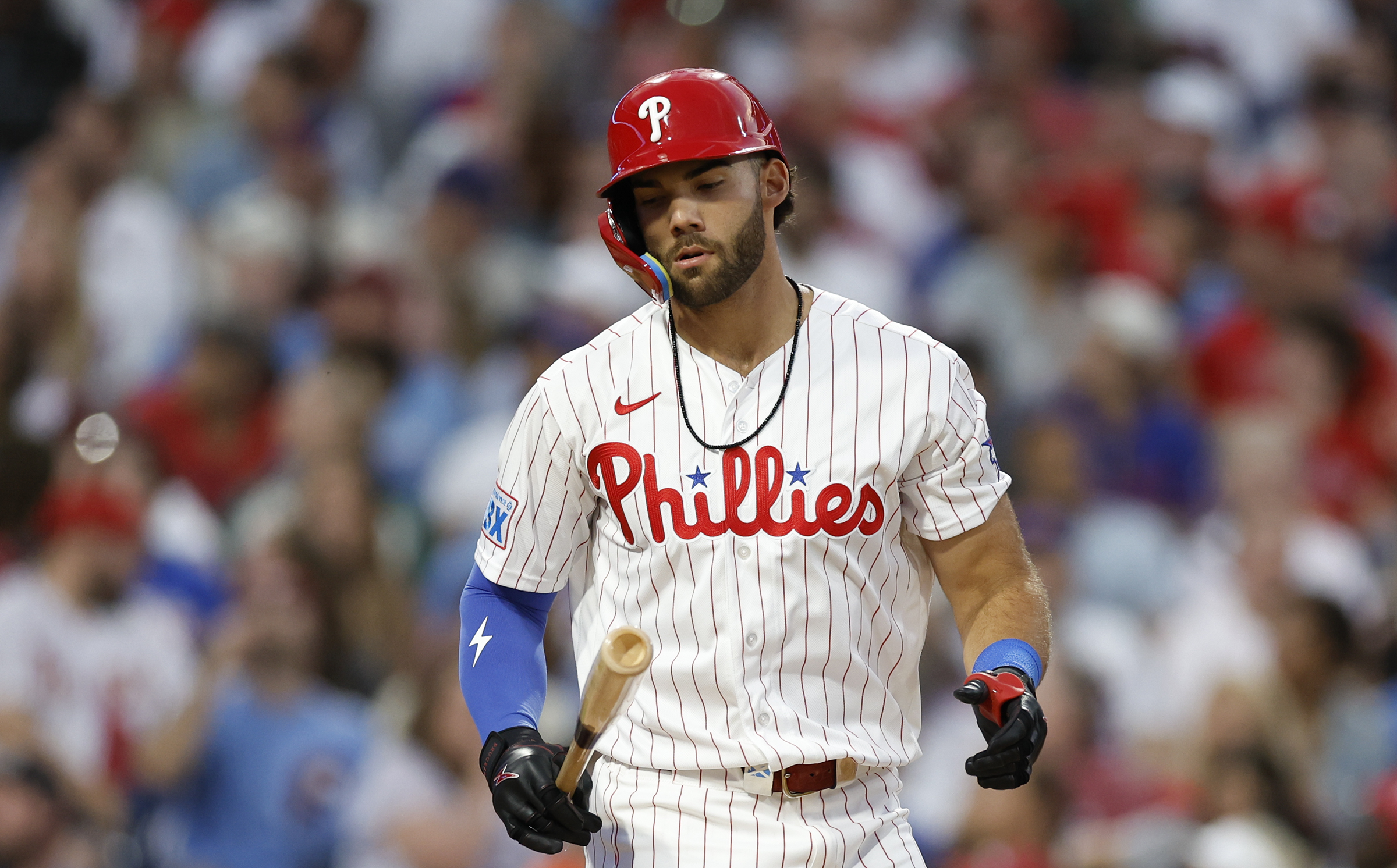
It’s been only 19 plate appearances over six games, but right fielder Gabriel Rincones Jr. has mostly struggled in his initial exposure to the majors.
Rincones, who didn’t start Sunday night against a lefty (the Mets’ David Peterson), is 2-for-19 with five strikeouts. He hasn’t drawn a walk. Since his homer in his first Citizens Bank Park at-bat Monday night, he’s 1-for-15.
“Some good, some bad,” Mattingly said. “I just don’t want him to be passive. I want him to make sure he’s being aggressive in the zone. He’s a guy that’s got a good eye. He’s young and he is starting out, so you don’t want to put too much emphasis on one day to the next. For me, you want to see the aggressive swings.“
Mattingly was encouraged by Rincones’ swing on a fly ball to center field in his last at-bat Saturday night. But in his two previous at-bats, he chased a low-and-away fastball from lefty Cionel Pérez for a strikeout and got called out on a fastball over the plate from starter Freddy Peralta.
The Phillies plan to move forward with Rincones, a left-handed hitter, in right field against right-handed pitching. Brandon Marsh moves to right field, with righty-hitting Derek Hill in center, against lefties.
Philadelphia Phillies pitcher Kyle Backhus throws during the ninth inning of opening day against the Texas Rangers at Citizens Bank Park on Thursday, March 26, 2026 in Philadelphia. The Philadelphia Phillies won 5 to 3.
Extra bases
With lefty Kyle Backhus poised to be reinstated from the injured list, the Phillies optioned reliever Max Lazar to triple A after Sunday night’s game. … Reliever Brad Keller (right forearm strain) began a throwing program, playing catch from 75 to 90 feet. … Reserve outfielder Johan Rojas, serving an 80-game suspension for testing positive for a banned substance, had surgery in which an internal brace was used to repair the ulnar collateral ligament in his right elbow. The typical recovery is 6-8 months, according to the Phillies, who expect he’ll be ready to begin next season. … The Phillies will open a four-game series in Washington at 6:45 p.m. Monday night. They haven’t named a starter to fill demoted Andrew Painter’s spot in the rotation, but after designated Bryse Wilson for assignment Sunday night, Alan Rangel is a decent bet. Left-hander Foster Griffin (7-2, 3.32 ERA) will start for the Nationals.
In three weeks, in the same sold-out ballpark, in front of another national television audience, Kyle Schwarber and Bryce Harper will probably be in the All-Star Game, maybe even the Home Run Derby.
But they won’t put on a show like this.
They can’t possibly.
Can they?
Whatever happens in the Bank’s All-Star closeup, take this to the bank: The Phillies’ stars put on dueling talent shows for the ages in Saturday night’s 15-3 demolition of the rival Mets. And, no, that isn’t mouth-agape hyperbole over feats we can’t believe we just saw.
“They stole the show from me, that’s for sure,” ace Cristopher Sánchez said, laughing, after a one-run, six-inning gem reduced his ERA to 1.84. “It was perfect.”
It started with Schwarber, who became the fourth player in Phillies history (dating back to 1883, by the way) to smash two homers in one inning before adding a third later in the game for good measure.
Not to be outdone, Harper tripled in the fifth inning to hit for the cycle for the first time in a career that has spanned 15 seasons and will eventually take him to the Hall of Fame. And it took him only four at-bats, to boot.
Only once before did teammates do those two things — at least three homers and a cycle — in one game: Lou Gehrig and Tony Lazzeri, Hall of Fame Yankees, in 1932.
“We were wondering that in the dugout,” Harper said. “We didn’t think there was going to be two guys that did it. But to have those two names up against ours is pretty cool. It’s a pretty awesome moment for both of us.”
Kyle Schwarber became the fourth Phillies player to homer twice in one inning when he did so in the third.
Or as Schwarber put it, after he and Harper had four hits apiece in a 17-hit Phillies onslaught: “It was a pretty cool overall night, in general.”
For Harper, it began a few minutes before 3 p.m. with something he rarely does. He took early batting practice on the field, an exercise he prefers to do underneath the stands in the controlled environment of the indoor cage.
But Harper was in a 1-for-22 funk, even though he’s been mostly pleased with his approach at the plate. He swung mostly at strikes and hit balls hard, but as he said, “it feels like there’s a big, old glove out there.”
So, Harper went out to the field with one objective.
“I was trying to hit home runs,” he said. “Haven’t hit really many balls over the fence in a while, so I felt like just going out there and just trying to hit some balls in the third deck. Sometimes that helps.”
OK, but hitting a fastball from Mets ace righty Freddy Peralta into the right-field seats on his first swing of the game for his first homer in 10 days?
That’s absurd. But it fits with the night’s theme.
Harper was using different lumber, too. He switched to a 34-inch, 35-ounce bat instead of his usual 34-inch, 31½-ounce model — “My heavy bat from the cage,” he said — because he thought he was out in front of too many pitches.
“That bat’s from 2023, just an old, heavy bat that I swing every day in the cage,” Harper said. “It’s just my workout-routine bat. I said to [hitting coach Kevin] Long about a month ago, I was like, ‘Man, I should use this thing in a game,’ and I never did. Finally I was like, ‘Screw it. I’m going to do it today.
“I don’t know if it translated to the game or anything else. But what a night to be able to have.”
Tell Schwarber about it. He led off an eight-run third inning by golfing a 456-foot drive halfway up the second deck in right field. By the time Schwarber’s spot in the lineup came back around, the Phillies had an eight-run lead. It ballooned to 11-0 with another Schwarbomb, 457 feet to almost the same spot.
“That was cool,” said Schwarber, who didn’t do anything unusual before the game. “First time I’ve done it in my career.”
In fact, the only other Phillies players to do it were Andy Seminick (1949), Von Hayes (1985), and Trea Turner (2023).
Why stop there? Schwarber tacked on a third homer in the seventh inning, skying a ball around the right-field foul pole. It marked the fifth time in his career that he hit at least three homers and raised his majors-leading total this season to 28.
“That’s what he tries to do, man,” Harper said of the sport’s most prolific home-run hitter. “It’s way different. Just the way he kind of connects to the baseball. He uses the ground so well. He’s got such a simple, short swing. It’s pretty impressive, you know?”
Almost as impressive as, say, scoring all the way from first base on Harper’s cycle-capping triple.
Everyone in the dugout was aware of Harper’s pursuit of the cycle. After his first-inning homer, he was typically overaggressive in hustling to turn a single into a double on a liner to right-center before ripping a single in the third inning.
“We kind of talked about it before, and I was like, ‘Hey, you’ve just got to aim at Monty’s Angle,’” Schwarber said, referring to the area where the wall juts out in left-center field. “And then he gets up there and he hits the ball to center field. I’m like, ‘I’m going to run through the stop sign.’
“I was pretty predetermined on going, and I’m glad [third base coach Anthony Contreras] was on the same page, too, with sending me.”
Not that they had much choice. Harper was intent on not stopping around second base, the helmet flying off his head between first and second.
Harper joked that Schwarber was well-rested because he “jogged a lot tonight.” And when he slid into third, Harper raised both arms skyward, then pumped his right arm and doffed his helmet.
It was only the 11th time in 144 seasons that a Phillies player hit for the cycle. J.T. Realmuto and Weston Wilson did it in 2023 and 2024, respectively. But it’s happened only five times in the last 63 years.
And never to Harper. Well, not since college.
“Super Regionals,” he said. “Seven-for-seven, four homers and a cycle.”
Where does a cycle rank for a two-time MVP with 379 career homers?
“It’s up there,” he said. “Doing that at the big-league level is really cool.”
And it makes you wonder what Schwarber and Harper could possibly have in store for an All-Star encore. Neither will commit to the Home Run Derby until they know if they’ll be named to the All-Star team.
But, really, is there any doubt?
“A crowd like [Saturday] shows you how electric it’s going to be, for not only that [Home Run Derby] night but the whole week in general,” Schwarber said. “I think it’ll be really special to have the All-Star Game here in Philly, and our fans are going to be able to show up for that.”
The Phillies’ biggest stars just gave everyone one heck of a preview.
Fifteen years into a career that will almost certainly take him to the Hall of Fame, Phillies star Bryce Harper did something he’s never done before.
He hit for the cycle.
And it took him only four at-bats.
Harper tripled in the fifth inning of a 15-3 rout of the Mets, and upon sliding into third, he pumped his right arm, then raised both arms skyward. Harper homered in the first inning, then reached on a hustle double and a single in the Phillies’ eight-run third inning.
“[Interim manager] Don [Mattingly] and all the coaches came up to me and were like, ‘Hey, if you get a chance, just go do it,’” Harper said. “So, kind of once I had their blessing to just go on any ball, it was kind of the perfect thing.”
It marked the 11th time a Phillies player hit for the cycle. Harper joined Lave Cross (1894), Sam Thompson (1894), Cy Williams (1927), Chuck Klein (1931 and 1933), Johnny Callison (1963), Gregg Jefferies (1995), David Bell (2004), J.T. Realmuto (2023), and Weston Wilson (2024).
“Doing that at the big-league level is really cool,” Harper said. “Got close a couple times, but being able to do that, having that moment is really, really cool.”
The triple capped the cycle, but it wouldn’t have been complete without a signature double from Harper in the third inning. He shot a ball into the gap in right-center and aggressively took second base, never hesitating out of the box. It was the sort of baserunning for which he’s often criticized.
“I don’t really care what people think about my baserunning because that’s how I’ve always played,” Harper said. “I’ve done it since I was 7 years old. I don’t really play a different way when I know I can try to get to second base. I’ve made mistakes on the bases. I’m going to. Little kids are going to do the same thing. And I’ll preach to them that they just play the game hard. If they get thrown out at second or third, then so be it. If I don’t do that tonight, then I don’t have the opportunity to hit for a cycle.”
Not to be outdone, Kyle Schwarber crushed three homers, including two in the Phillies’ big third inning, to raise his majors-leading total to 28. He became the fourth Phillies player to homer twice in one inning. The others: Andy Seminick (1949), Von Hayes (1985), and Trea Turner (2023).
Both of Schwarber’s third-inning homers landed halfway up the second deck in right field. The first was measured at 456 feet, the second at 457 feet.
Harper entered with 13 career four-hits games, including two games with five hits. But he hadn’t hit for the cycle since 2010 at the College of Southern Nevada.
So, when Harper hit a fastball from Mets lefty reliever Cionel Pérez into the gap in left-center field, he had no intention of stopping at second base. The helmet flew off his head between first and second. He went from the batter’s box to third base in 11.8 seconds.
MIAMI — The record will reflect that Venezuela, a baseball-rich country with a loaded lineup and passionate fans who ring your ears with songs and chants, won the sixth edition of the World Baseball Classic, 3-2, here Tuesday night.
Just not before the Showman showed up.
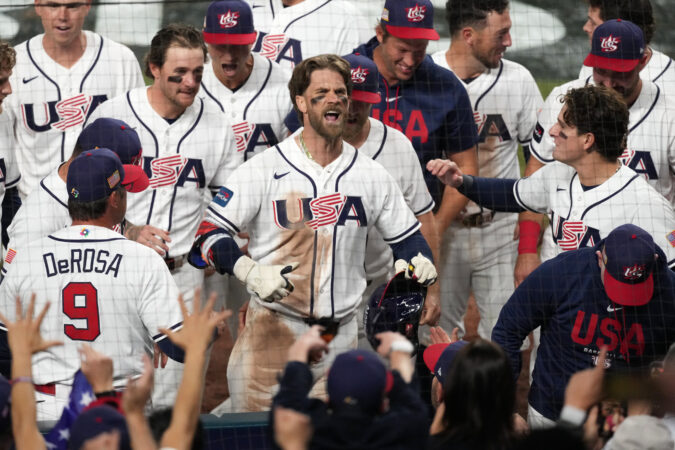
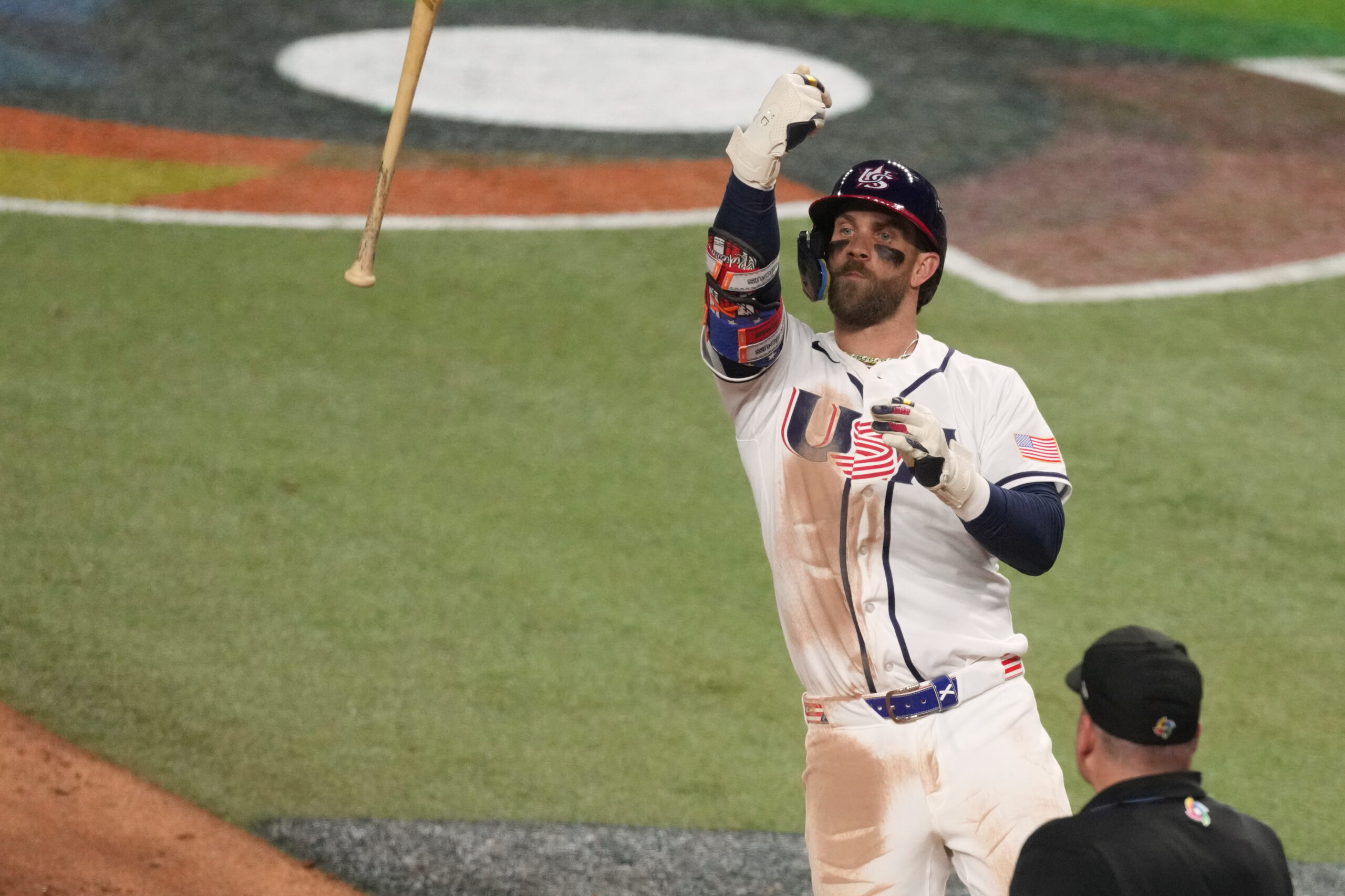
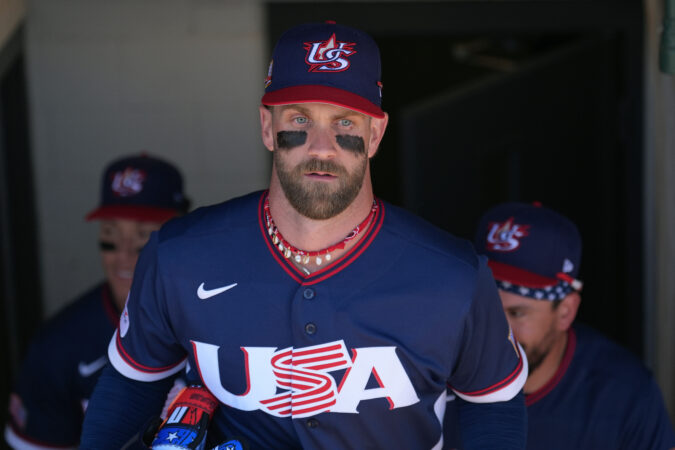
With the most talented U.S. team ever assembled in danger of getting shut out, and with the pro-Venezuela sellout crowd raring to party, Bryce Harper bashed a game-tying two-run homer to straightaway center field in the eighth inning, javelin-tossed his bat, pointed to the flag on his sleeve and flexed for a camera after rounding third base, and provided irrefutable evidence that Americans do, in fact, have fun playing the game.
“I was telling people, I go, ‘This isn’t going to shock you guys if it happens,’” said Kyle Schwarber, a witness in the Phillies’ dugout to Bedlam at the Bank and so many other vintage Harper moments. “And then, bam!”
Said U.S. manager Mark DeRosa: “I knew he was going to have a moment. That’s who he is, right? He has the ability to have big moments in big spots. He wants it. He wants to be up there in that spot.”
It just wasn’t enough to beat Venezuela. Not after Eugenio Suárez’s double to center field drove in the go-ahead run off reliever Garrett Whitlock in the ninth inning, nearly blowing the retractable roof off Venezuelan.
Bryce Harper throws his bat after delivering a game-tying two-run homer in the eighth inning of the World Baseball Classic final Tuesday night in Miami.
But Harper’s seismic shot was the highlight of the two-week tournament for Team USA, which overcame a loss to upstart Italy in pool play and criticism of its manager for being overconfident at best, clueless at worst.
Leave it to Harper to deliver — and not only with a dramatic homer. He tried to rally Team USA with a pregame speech, too.
“I think the just biggest thing [Harper said] was just being us, representing us, playing for us,” Schwarber said. “He had a great message. It was from the heart, right? I know getting in front of a group of people isn’t easy sometimes. There was a lot of respect for that.
Harper waited 17 years for this. He hadn’t played for the country since 2009, when he was 16. He raised his hand for the last WBC in 2023 but withdrew after having elbow surgery. He desperately wants MLB to allow players to compete when baseball returns to the Olympics in 2028.
But Harper was 3-for-20 with seven strikeouts in five games through the quarterfinals. Layer that on top of the Phillies’ divisional-round knockouts in the last two postseasons, and it had been a while — maybe all the way back to the Orlando Arcia game in the 2023 playoffs — since he had “The Moment.”
Where did this one rank in his 15-year career?
Bryce Harper hits a 432-foot home run to center field during the eighth inning to tie the game at 2.
“Probably No. 2,” he said. “Probably right behind the San Diego homer, in Game 5 [to clinch the pennant in 2022]. I’ll probably put this right behind it.”
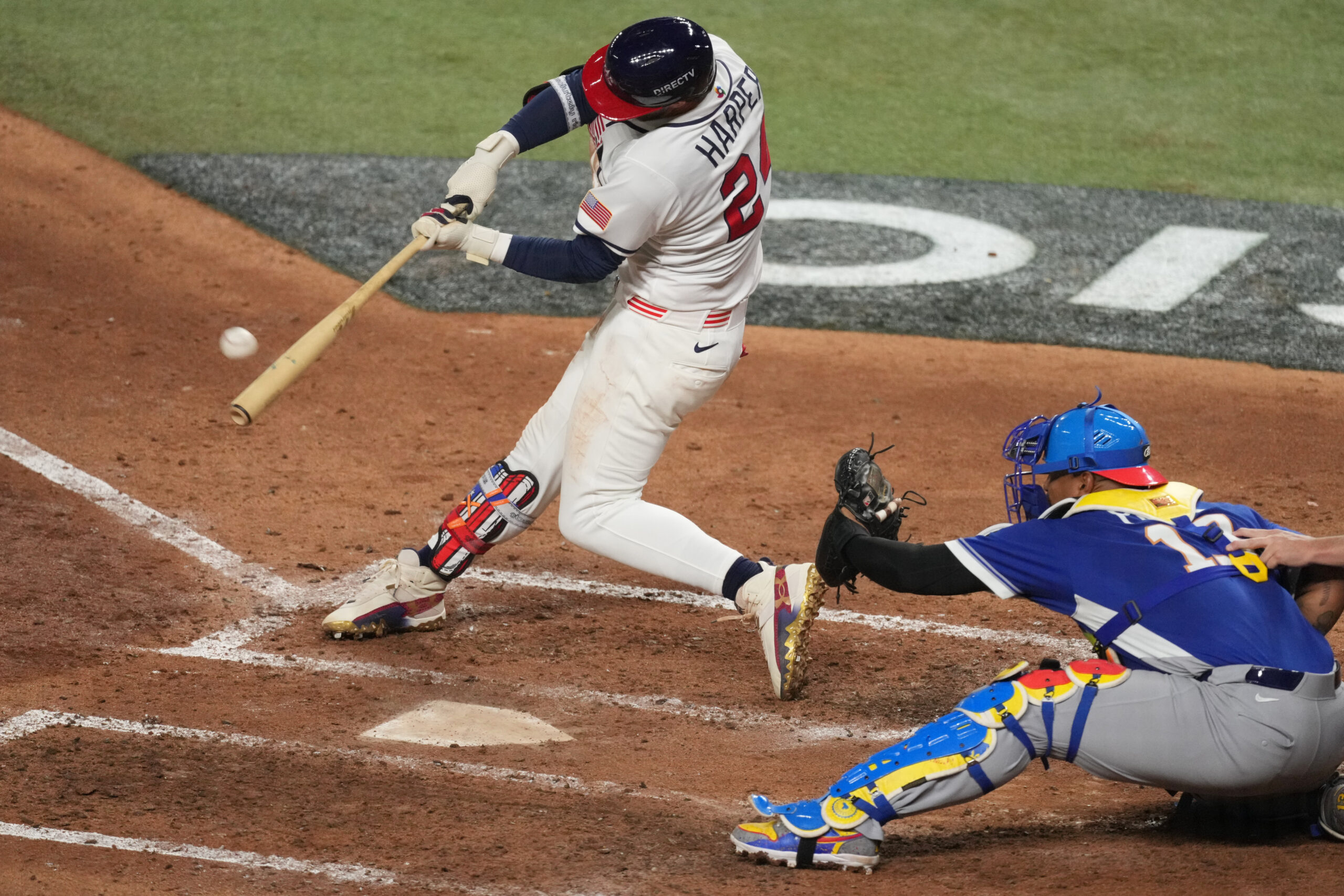
The Americans had only three hits against six Venezuelan pitchers. Two belonged to Harper. He lasered a 95 mph sinker to right field for a single in the sixth inning. In the eighth, he got a center-cut pitch from Andrés Machado. Statcast labeled it a changeup, although at 93 mph, it had the characteristics of a heater.
Either way, Harper unloaded — 109.4 mph off the bat, 432 feet to dead center.
“Yeah, what a moment,” Harper said. “I love the opportunity. I love the chance. I’m grateful for it. I thought when we tied it up right there that we had a good chance to win the game.”
And so, the emotion spilled out of him, as Team USA spilled from the dugout and met him at home plate.
“Just enjoy the moment,” he said.
The game was played against an unavoidable political backdrop two months after U.S. military forces captured Venezuelan president Nicolás Maduro. But Venezuelan manager Omar López and the native players on the roster repeatedly steered clear of the topic.
“We’re here to [play] baseball,” Ronald Acuña Jr. said earlier in the week.
The last few days also sparked a debate about whether Dominican and Venezuelan players, who exude emotion on the field, have more fun than the more staid Americans. Harper, rarely afraid to play with flair, offered himself as proof that they don’t.
“Every country has their way they play, right?” Harper said a few days ago. “Latin American countries, a lot of energy. And I love watching it because that’s how I played when I was younger. I got in trouble for it, right? I came up, I used gray bats. I used different cleats, got my cleats cut. MLB told me I couldn’t use gray bats, couldn’t use my eye black, all that kind of stuff, right? I kind of got pounded for it.
“So, there’s an American way of basically what everybody talks about. But I think that’s so far from the truth.”
Bryce Harper celebrates his home run with Aaron Judge.
And upon hitting a moonshot in the late innings of a winner-take-all game in international competition, well, Harper didn’t hold anything back.
When it was over, many of the American players and staff watched from the third-base dugout as a mass of blue, yellow, and red jerseys celebrated around closer Daniel Palencia.
They arrived dressed in game-worn USA hockey jerseys, a gift from the gold medalists. But they left with silver medals that they took off their necks almost as soon as they were presented to them.
Harper made a point of shaking hands with many of the Venezuelan players.
“Venezuela’s a very proud place for their baseball,” he said. “I’m really happy for them. Obviously I want to win no matter what. That’s what I play for, to win championships and gold medals. But in that moment, it’s not about me. It’s about us and our game.
“They had a great tournament. I just wanted to let them know and say congratulations. They’re the best team in the world.”
DeRosa said he shared a “special moment” with Harper in his office. They were teammates with the Nationals in 2012, when Harper was a 19-year-old rookie. He couldn’t have imagined the WBC without him.
“I knew what his career was going to be like, with the multiple MVPs and how he’s competed,” DeRosa said. “I was just proud he was a part of the team, share a clubhouse with him again.”
Maybe Harper will do it again at the Olympics in two years.
Who remembers when the greatest collection of basketball talent ever assembled on one roster took the court for the first time at the 1992 Summer Olympics in Barcelona?
“Yeah,” Kyle Schwarber said, “I was too young for that.”
Too polite, also, to acknowledge that he wasn’t born yet. But never mind that the Phillies slugger didn’t come along until March 1993. Everyone’s heard about when Michael Jordan, Magic Johnson, and Larry Bird headlined a group of NBA stars that flexed U.S. basketball might on the world stage.
The story of the “Dream Team” transcends generations.
Thirty-four years later, USA Baseball has put together its version to compete in the triennial World Baseball Classic and avenge a 3-2 loss to Japan in 2023 on Shohei Ohtani’s championship-clinching strikeout of Mike Trout.
A few names on the team of U.S. manager Mark DeRosa’s dreams:
Aaron Judge. Paul Skenes. Cal Raleigh. Tarik Skubal. Bryce Harper. Bobby Witt Jr. And, yes, Schwarber.
“It’s a great team,” Schwarber said on Phillies Extra, The Inquirer’s baseball podcast. ”Another stacked lineup. The lineup that we had out there in ’23 was full of studs, MVPs, All-Stars, everything. This lineup, All-Stars, MVPs, and the cool thing is there’s a little bit more youth on it, too.
“You’re starting to see some of these younger faces that could really have those chances to be future MVPs. Those future perennial All-Stars are going to be on this team, as well. I’m just excited about it.”
It makes you dream, doesn’t it? And not just about whether the most talented American baseball team ever assembled can win the WBC for the first time since 2017.
No, dream bigger. Dream of 2028, the Summer Olympics in Los Angeles, where baseball will return as a medal sport for the first time since 2020. And dream of a best-on-best international tournament made possible if MLB chooses to pause the season, just as the NHL did in 1998, 2002, 2006, 2010, 2014, and again for 11 riveting days last month in Milan.
“We have the WBC, but it’s not the same,” said Harper, who has lobbied MLB for years to make concessions for the Olympics. “People can say as much as they want, but the Olympics is so worldwide. The WBC is great and brings a lot of people together, but the Olympics is something you dream about playing in.”
Indeed, although the WBC generates interest, there are limits to how seriously it can be taken given its timing on the sport’s calendar. It’s still spring training, after all, and for years, many of the best pitchers — American pitchers, in particular — declined a WBC invitation to focus on building arm strength for the season.
DeRosa, USA Baseball’s “Uncle Sam,” said there was more buy-in for his “I Want You” recruitment this time around, and not only from Skenes, the NL Cy Young Award winner who pitched in college at Air Force and is unlikely to start meaningful games down the stretch for the perennially noncontending Pirates.
“I just think it was the fear of missing out,” DeRosa said at baseball’s winter meetings in December. “I think guys watched in ’23 and saw the game against Japan, the iconic moment between Trout and Ohtani, Trea Turner’s [grand slam] against Venezuela.
“These are moments in time. It’s like, you’re going to miss out on three weeks of the greatest time of your life as a professional if you never win a World Series. That’s what this is.
“You see the way Latin America and Japan is. I just feel like there’s been a groundswell with the United States player that, all right, it’s time for us to go.”
Yankees slugger Aaron Judge captains a USA team full of All-Stars and future Hall of Famers looking to avenge their WBC title game loss to Japan in 2023.
Sure, but the WBC lets players go only so far. Pitchers are capped at 65 pitches in the preliminary round, 80 in the quarterfinals, and 95 in the semis and final.
WBC managers also organized their pitching rotations in consultation with major league teams. Webb started Team USA’s opener Friday night against Brazil because the Giants need their ace to line up for opening day. Skubal will pitch only once. If the U.S. gets to the final, Mets rookie Nolan McLean will likely start, not Skubal or Skenes.
Most of the restrictions and guardrails could be lifted for the 2028 Olympics, which are scheduled from July 14 to 30. Injuries are unavoidable no matter the time of year. But pitchers will be fully built up, so workloads won’t need to be massaged.
Harper was among the first players to commit to Team USA in 2023 but withdrew after Tommy John elbow surgery. He signed on for this year’s tournament in December and said he was excited to play for the country for the first time since he was 18 — 15 years ago.
Yet it feels like only the appetizer before the main course if major leaguers are allowed to play in the Olympics.
“I think that would be awesome,” Schwarber said. “We all grew up watching the Olympics and watching sports that you never thought that you’d watch.
“I feel like it would be such a great thing for our game just to have major leaguers there who are performing at the highest level to represent their countries. It would be amazing to have that, not just on the WBC size but on the world size.”
And then the U.S. could field a baseball Dream Team.
But a lot can change in two years. Using the WBC roster as a base, and organizing players into tiers (with their 2028 age in parentheses), let’s examine who might get to wear “U-S-A” across their chest when L.A.’s Olympic flame is lit.
Pirates ace Paul Skenes will anchor Team USA’s World Baseball Classic pitching staff.
The ‘pillars’
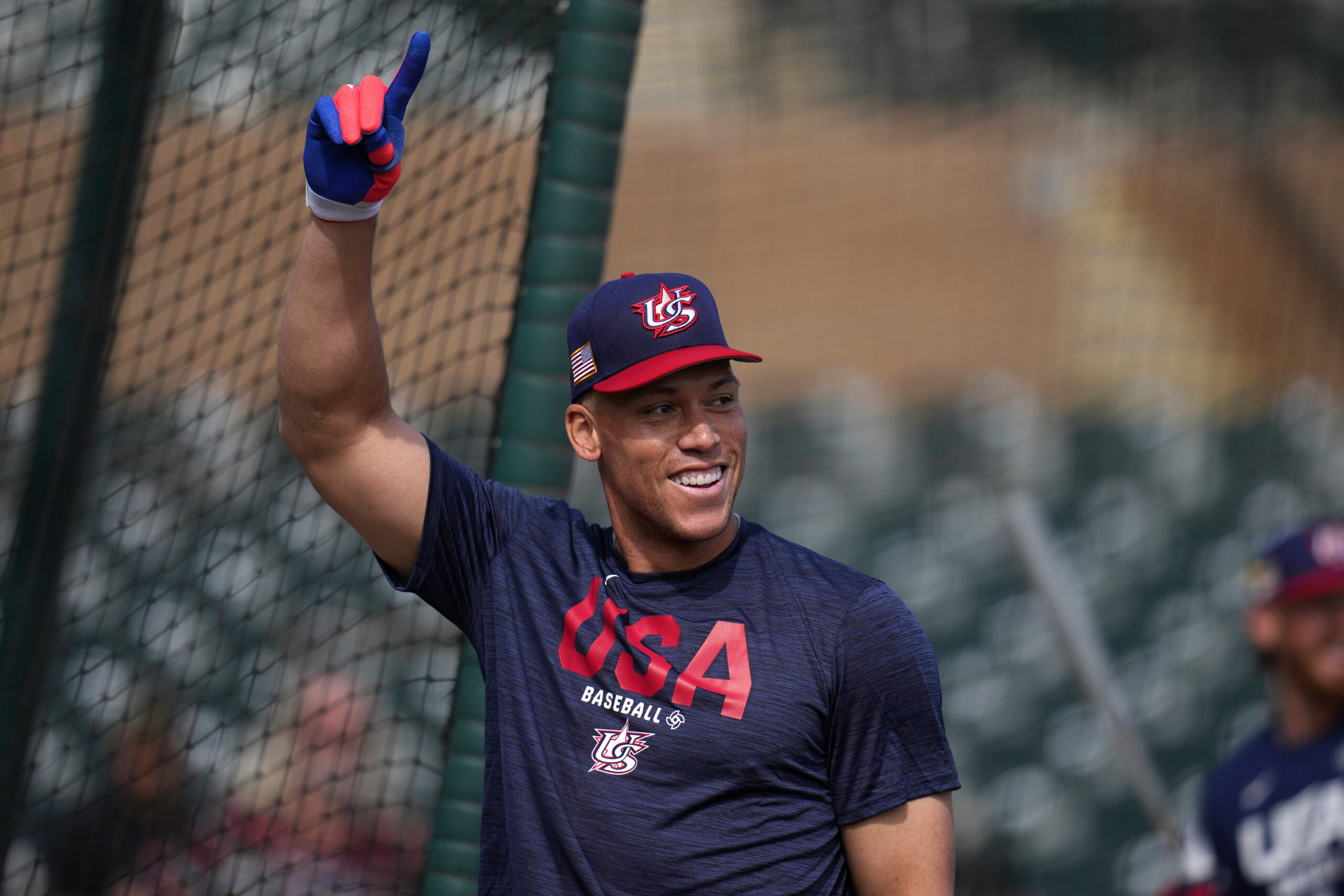
Aaron Judge, RF, Yankees (36)
Paul Skenes, SP, Pirates (26)
After skipping the WBC in 2023, the captain of the Yankees agreed to be Captain America. But Judge’s commitment didn’t signify as much as Skenes’.
“Every other country, their best arms show up,” DeRosa said. “For whatever reason, in the United States, our best arms don’t show up. We’re trying to change that narrative. [Skenes] has certainly changed it.”
DeRosa often refers to Judge and Skenes as Team USA’s hitting and pitching “pillars.” They’re set in stone.
Bryce Harper (right), with and Bobby Witt Jr., would be 35 during the 2028 Olympics, but he’d still be a surefire pick.
The core holdovers
Bobby Witt Jr., SS, Royals (28)
Gunnar Henderson, SS, Orioles (27)
Roman Anthony, OF, Red Sox (24)
Pete Crow-Armstrong, CF, Cubs (26)
Corbin Carroll, OF, Diamondbacks (27)
Cal Raleigh, C, Mariners (31)
Bryce Harper, 1B, Phillies (35)
Tarik Skubal, SP, Tigers (31)
Nolan McLean, SP, Mets (26)
Mason Miller, RP, Padres (29)
Turner smashed five homers, including a grand slam, in six WBC games in 2023. This time, the Phillies shortstop said he didn’t even get a call from DeRosa, who went younger at shortstop.
A new wave of talent will wash ashore by the summer of 2028. But Witt, Henderson, Anthony, and Crow-Armstrong will still be under 30 and difficult to supplant. Ditto for Carroll, who dropped out of the WBC after breaking a bone in his hand.
At 35, Harper would be an elder statesman. But unless he gets injured or his production drops off a cliff, his face-of-the-sport star power gets him a place on the roster.
Kyle Schwarber laughs while talking with Byron Buxton during a Team USA workout for the World Baseball Classic on Thursday.
The veteran leaders
Kyle Schwarber, DH, Phillies (35)
Alex Bregman, 3B, Cubs (34)
Schwarber’s presence in the middle of Team USA’s loaded order is undeniable. But here’s a word on his influence within the clubhouse:
“He’s the chemistry guy for me,” DeRosa said. “He was the guy. He’s in the dugout going, ‘Everyone relax. Do what you do.’ Even to me, he’s coming up, rubbing my shoulders, just like, ‘I got you.’ There’s just no panic with this guy. … He’s an infectious personality, and everyone loves him. And he backs it up.”
Bregman brings a similar vibe as a leader and a winner.
Others whose roster spot will be challenged by younger players: Will Smith, C, Dodgers (33); Byron Buxton, CF, Twins (34); Brice Turang, 2B, Brewers (28); Paul Goldschmidt, 1B, Yankees (40); Logan Webb, SP, Giants (31); Joe Ryan, SP, Twins (33); David Bednar, RP, Yankees (33).
After playing in the 2023 World Baseball Classic, Mookie Betts is not on the 2026 squad.
Imagine if Team USA had Crochet and Brown in the rotation behind Skenes and Skubal. Or if Greene or Tucker were in left field. And how the heck is Betts not on the WBC roster? Wheeler said he considered playing before getting injured last season. Maybe he or Cole could fill Clayton Kershaw’s role on the staff in 2028.
This is only a partial list of stars who won’t compete in the WBC. And the omissions serve only to amplify the pool of talent that Team USA has at its disposal.
Young stars like the Athletics’ Nick Kurtz will be in the mix for a 2028 Olympics team.
The next generation
Nick Kurtz, 1B, Athletics (25)
James Wood, OF, Nationals (25)
Wyatt Langford, OF, Rangers (26)
Jackson Merrill, OF, Padres (25)
Drake Baldwin, C, Braves (27)
Konnor Griffin, SS, Pirates (22)
Colson Montgomery, SS, White Sox (26)
Kevin McGonigle, SS, Tigers (23)
Jackson Holliday, 2B, Orioles, (24)
Trey Yesavage, SP, Blue Jays (24)
Jacob Misiorowski, SP, Brewers (26)
Bubba Chandler, SP, Pirates (25)
Andrew Painter, SP, Phillies (25)
Another partial list. Another trove of talent that will elbow its way into the conversation in two years, assuming that the door to the Olympics is opened to major leaguers.
“To be able to say that you’re an Olympian, that would be a really cool thing, a bucket-list item that you could cross off,” Schwarber said. “I guarantee you’d have a really big pool of players that would want to sign up and put their name in a hat to represent their country.”
Why are Americans allowed to place bets on death and destruction?
An advertisement by the American company Polymarket shows Zohran Mamdani and Andrew Cuomo ahead of the New York City mayoral election on Nov. 4, 2025, in New York.
Donald Trump’s splendid and not-so-little war that started during a Saturday rush hour in Tehran and has spread like a coronavirus to numerous other countries is entering its fourth day on Tuesday — far too early for one of journalism’s oldest clichés: the “winners and losers” piece.
Except for these winners: a few “lucky” — if that word can even apply to such a ghoulish enterprise — gamblers who woke up Saturday morning and learned that the first deadly explosions across Iran had already made them a lot richer, regardless of who wins or loses on the battlefield.
The initial weekend of war wasn’t even over before we learned that Polymarket, one of the two leading prediction markets that are the inevitable next downward spiral of our national sports gambling addiction, was hit by suspicious trading by six individuals who showed up to bet big on when the war would commence.
One trader up for particular attention earned a reported $553,000 over the weekend by placing large bets on when Iran’s supreme leader, Ayatollah Ali Khamenei — killed in the war’s initial minutes, reportedly — would be deposed. The handle on that well-timed, if macabre, gambler? “magamyman.”
My man, you aren’t even trying to hide it.
Polymarket’s brush with possible insider trading on predictive bets over the Iran war that is now a reality came as its customers bet a stunning half a billion dollars on the long-rumored conflict.
Many of them, presumably, are just regular schlubs desperate to get ahead in a dog-eat-dog economy. But it’s also hard not to contemplate that some may have had real advance knowledge of Pentagon war planning that loose-lipped insiders were audibly discussing in Joe’s Stone Crab just hours before the first cruise missile was fired.
I know … it’s shocking that something in America’s death spiral of late-stage capitalism is actually a rigged game, right? Still, it’s hard to decide which is worse about this new low of predictive betting on a war that’s already killed scores of innocent schoolgirls and hospital patients, and at least six U.S. service members: the rank immorality of wagering on death and destruction, or the insider trading that corrupts this already unholy process even further?
Over the weekend, even with the main focus on the latest missile attacks and changing Trump regime explanations for this undeclared war, there was growing outrage over the popularity of predictive betting on the news, especially when the news is deadly. Or, there’s the word the chief U.S. government official tasked with regulating Polymarket, Kalshi, or their rival firms has used to describe what’s happening.
Michael Selig, the lawyer tapped by Trump last year to head the U.S. Commodity Futures Trading Commission (CFTC), which — controversially — regulates these prediction markets, seems less a regulator and more of a cheerleader, maybe as much as “magamyman.” As several states have pushed to regulate or ban predictive markets as akin to sports betting sites, also under its purview, Selig has worked hard to override them with a claim of federal supremacy.
“The CFTC will no longer sit idly by while overzealous state governments undermine the agency’s exclusive jurisdiction over these markets by seeking to establish statewide prohibitions on these exciting products,” Selig wrote in a Wall Street Journal op-ed.
It’s worth noting Selig’s moves came at the same time that six Democratic senators wrote the CFTC chair to urge him to ban gambling on outcomes that result in death or physical harm — inspired by outrage that people were betting on whether a NASA spacecraft would fail to launch, as well as predictions around the fate of the former Venezuelan strongman Nicolás Maduro, seized in January by U.S. troops. Not surprisingly, the high volume of Iran war betting has sparked fresh calls to ban predictive market betting altogether.
“Life stops being something we live, but something we sell and trade,” Connecticut Democratic Sen. Chris Murphy posted on X, before saying he is studying legislation to ban prediction markets. “It will breed both corruption [and] emptiness.”
Unlike sporting events, betting on political or social developments whose occurrence and timing are controlled and known by humans is incredibly prone to insider trading. In a case that seems to typify the fundamental flaw of non-sports prediction markets, and which Kalshi was forced to acknowledge in an internal investigation, an editor for the wildly popular YouTube star Jimmy Donaldson, better known as MrBeast, was caught betting $4,000 on predictions about what MrBeast would say in his next video.
Because betting on influencer video topics is how far off the deep end we are going here. The addictive nature of online sports betting, which was once mostly banned until elite schemers realized how much money was to be made from increasingly desperate people, was always pointing American society in this warped direction.
Zoom out and there’s a much bigger picture here: A society where the traditional pathways to prosperity are rigged for the Epstein class has created an entire ethos that seeks to match that level of wealth through unconventional not-40-hour-workweek paths, like online influencers, or by hitting the big one, whether that’s through buying a meme stock, betting on college basketball, loading up on the right crypto, or — now — gambling on stuff like when Israel is going to bomb women and children in Gaza.
It seems no one near the top of the American kleptocracy is immune to cashing in, including — sigh — Big Media. It was bad enough that CNN partnered with Kalshi to promote predictive odds on events like Tuesday’s Texas primary, but now the venerable Associated Press picked Monday — amid all the negative publicity about the Iran war wagers — to announce its own deal with the site.
Meanwhile, the only safe bet would be a prediction that no one in Washington, D.C., will be able to successfully stop this in the near future. It’s not only that reckless and potentially corrupt get-rich-quick maneuvers like crypto, artificial intelligence, and now these “exciting” predictive markets are simply in the Trump regime’s toxic money-grubbing DNA.
To seal the deal, Donald Trump Jr. joined the advisory board of Polymarket last August, and his venture capital firm, called 1789 Capital, has reportedly invested tens of millions of dollars in the firm, as well. In a remarkable coincidence, two federal investigations into predictive markets that began during the Joe Biden presidency were shut down around the same time.
Today’s dollars stained with blood from the Middle East are the, dare I say it, predictable result. Why merely wage war when you can also wager on it? Our leaders, whether in D.C. or our 50 statehouses, can’t shut down Polymarket, Kalshi, and all their imitators fast enough.
Yo, do this!
Escaping from a global crisis is always a good time to get back to the basics, and for boomers of a certain age, nothing is more fundamental than the power chords and pounding drums of Led Zeppelin. Listening to and thoroughly enjoying Andrew Hickey’s A History of Rock Music in 500 Songs’ two-part episode on how the most classic of all classic rock bands came together at the end of the 1960s made me discover that there’s also an acclaimed 2025 documentary, Becoming Led Zeppelin, streaming on Netflix. Let’s watch it together.
The rising thermometer this week should serve as your reminder that the arrival of March means it’s also time for some baseball that actually counts. The World Baseball Classic, the sport’s World Cup knockoff that comes every three years, starts Thursday and runs through the March 17 final in Miami — site of 2023’s thrilling conclusion in which Japan’s Shohei Ohtani struck out the USA’s (and South Jersey’s) Mike Trout. Some 10 Phillies are competing, including Bryce Harper, Kyle Schwarber, and Brad Keller — on this year’s Team USA — and Dominican Republic ace Cristopher Sánchez, so let the games begin.
Ask me anything
Question: So one school of thought is that they are already trying to steal the midterms; another is that they really can’t. Where are you on the spectrum from mildly worried to totally anxious about this? Especially with Pa. being rather swingy. — Penthesilea (@hansklocker.bsky.social) via Bluesky
Answer: Yes, this is something I’ve already thought about quite a bit, and my answer — for now, anyway — is pretty much smack in the middle of the spectrum. It’s clear Donald Trump intends to use every implement in the voter suppression toolbox — extreme gerrymandering, executive orders aiming to require voter ID, or banning mail-in ballots — that would warp the voting outcomes, without going full Mussolini and canceling the election altogether. But I don’t think that can work for him — partly because any orders will almost certainly be struck down in the courts, but mainly because it looks like a Democratic landslide too large to easily suppress is building momentum. Just look at Texas, where the scheme to gerrymander five new GOP seats depended heavily on Latinos continuing to shift Republican, when polls show the exact opposite happening. Of course, in 2020-2021, few folks thought he would go so far as an attempted coup (I did). Who knows how far he’ll go to maintain power this time around?
What you’re saying about …
Last week’s question about how to handle the new prediction markets — anticipating the mess that occurred with the wagers on the start of the Iran war — and the surge in sports betting drew a tepid response. But it was pretty unanimous that sites like Polymarket and Kalshi should, at the bare minimum, be regulated under state gambling laws, and not as commodities trades — if not banned altogether. Wrote Mary Clare Gumbleton, who would ban Polymarket and Kalshi: “It’s just unregulated corruption and an incredibly awful incentive to both lose your shirt (as it were) and game the system where a handful of corrupt people can make a lot of money.”
📮 This week’s question: There’s only one thing on everyone’s mind: That crazy war in the Middle East. Now that Donald Trump and Benjamin Netanyahu have started it, how on earth do we end it? Please email me your answer and put the exact phrase “Iran war end” in the subject line.
History lesson on when the Iran thing really started
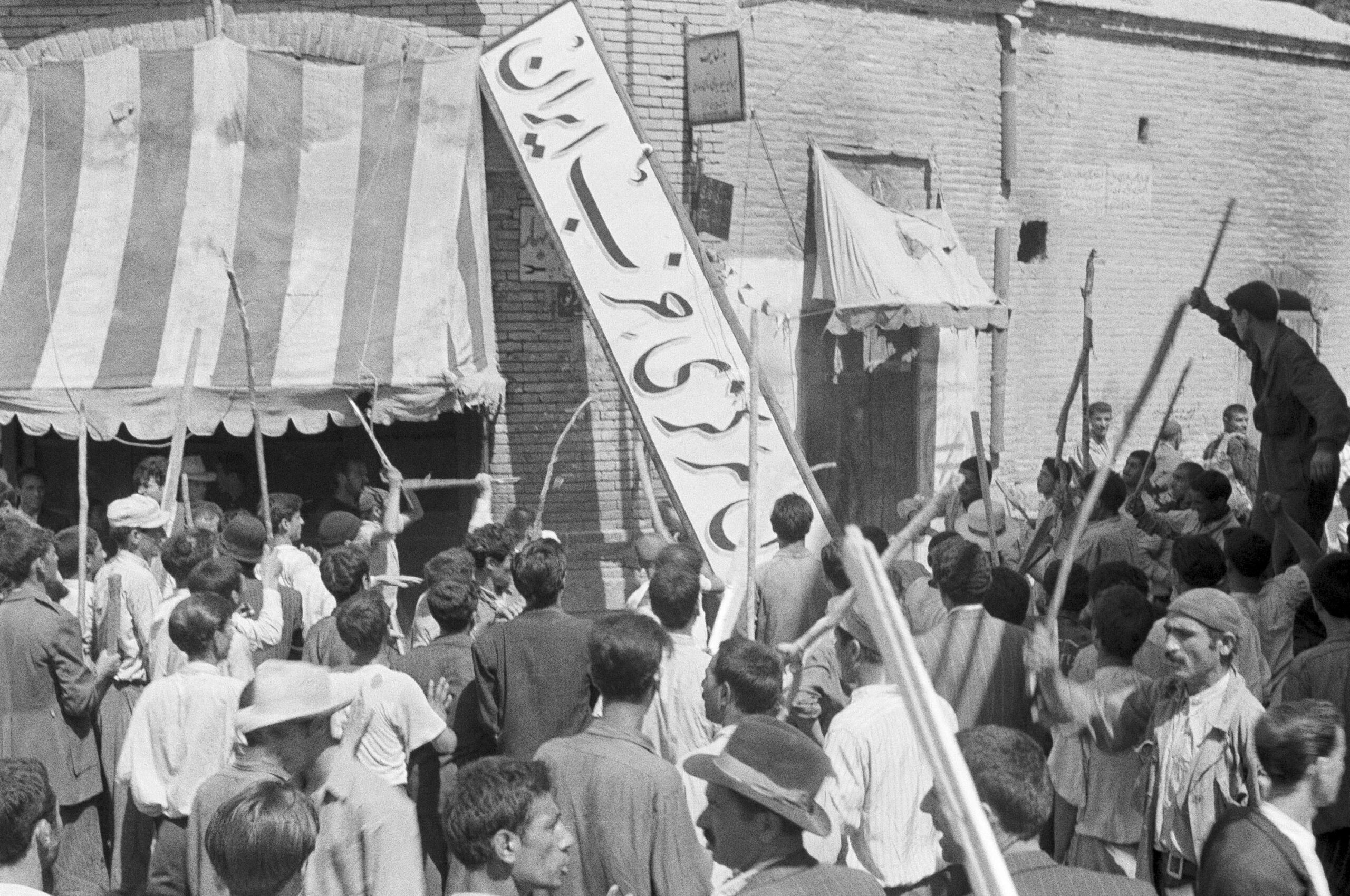
A crowd of demonstrators tear down the Iran Party’s sign from the front of its headquarters in Tehran on Aug. 19, 1953, during the CIA-backed coup that ousted Prime Minister Mohammad Mosaddegh and his government. The operation cemented the rule of Shah Mohammad Reza Pahlavi for more than 25 years before the 1979 Islamic Revolution.
It’s been a while since the last history lesson in this space, but the poor quality of the TV punditry about the four-day-and-counting Iran war screams out for better information. A lot of the folks advocating for this war of choice in the Middle East argue that we didn’t start the fire, that the roots go all the way back to the 1979 Iranian Revolution. That’s the year when Americans who never paid much mind to foreign affairs were shocked to see huge throngs in the streets of Tehran chanting “Death to America” and taking 52 hostages at the U.S. Embassy.
What did we do to deserve this? Well …
For most historians, and for many Iranians, the year that matters is not so much 1979, but 1953. In a post-World War II geopolitical environment where many nations sought to break free of imperialism, Iran in 1951 democratically elected a surprisingly left-leaning prime minister, Mohammad Mosaddegh, whose main project was to nationalize the then-British-controlled oil industry. This sparked great alarm in London, where U.K. leaders spent months lobbying Washington to join them in an effort to depose Mosaddegh in a coup that would advance Western oil interests.
It’s a messy story. The United States wavered and even flirted with backing Mosaddegh for a time, according to histories of the period, but ultimately British leaders leaned on the Eisenhower administration and America’s ongoing anti-left “Red Scare” of that era to get the relatively new CIA and its man in Tehran — Kermit Roosevelt Jr., grandson of Teddy Roosevelt — on board with the plot. The Americans threw around money and anti-Mosaddegh propaganda, and eventually organized street protests ahead of the government’s ouster.
To be sure, there is a never-ending debate over whether the U.S. involvement was central or just a subplot to the coup that gave power to the shah of Iran, Mohammad Reza Pahlavi, who ruled the nation with ruthless brutality for the next 26 years. Certainly, the nation’s Islamic clerics — powerful then, as now — played a key part in ousting a secular government. But the American role was so great that Barack Obama apologized in his 2009 Cairo speech, stating as fact that the CIA played a key role in the “overthrow of a democratically elected Iranian government.”
Whether the U.S. led the coup or was a bit player, the Iranian people have never forgotten our involvement or our close ties to the eventually despised shah. “The rancor has never melted,” a 24-year-old Iranian woman told the Associated Press in 2023, on the 70th anniversary of the coup, as she compared the American meddling to being “like wishing for an earthquake to get rid of a bad neighbor.”
So did a state of war between the United States and Iran start in 1979, as some GOP lawmakers insist, or in 1953, or on Feb. 28 of this year? In arguably the world’s most violent neighborhood, the cycles of violence often seem to have no beginning and no end. An imperial America chose to jump into the middle of this mess 73 years ago, and now getting out feels more impossible than ever.
What I wrote on this date in 2016
He’s all but forgotten now, but up until his mysterious death 10 years ago, the flamboyant Oklahoma natural gas mogul Aubrey McClendon had reshaped the Pennsylvania landscape as king of the commonwealth’s fracking boom. The company that McClendon (known to sports fans as an owner of the NBA’s Oklahoma City Thunder) cofounded, Chesapeake Energy, promised riches to Pennsylvania landowners, but left a trail of lawsuits and pollution. Less than 24 hours after his indictment by a federal grand jury, McClendon drove at full speed into a bridge embankment and was killed instantly. I wrote: “In Pennsylvania, Aubrey McClendon is survived by a legacy mostly of conflict, of thick lawsuits, of protesters facing off against armed marshals, of lawmakers and a governor at war over the taxes that gas drillers never had to pay, of brackish water and leaking methane adding to the greenhouse gases that may someday strangle the planet — of a promise of buried treasure that wasn’t really all it was cracked up to be.”
America is now at war on two fronts. In one column, I tackled the ongoing conflict in the streets of America, and looked at the tragic death on a frigid Buffalo street of the Rohingya refugee, Nurul Amin Shah Alam — a disabled and nearly blind man who was arrested by Border Patrol agents, and then dumped at a closed coffee shop five miles from his family’s home. It was a low point that spotlighted the unrelenting cruelty of a xenophobic mass deportation crusade by the Trump regime that has brought a mounting death toll. On Saturday morning, I knocked out my instant reaction to the news that the Trump regime had joined Israel in an all-out attack on Iran, which was that the war is both unconstitutional without the consent of Congress and also a clear violation of international law.
In moments of national and global crisis such as this, it’s easy to forget that many of the political decisions that shape people’s everyday lives occur on the local level. Here in Philadelphia, the school district’s plan to modernize its schools while closing 20 older buildings came as a shock to city parents, and The Inquirer’s coverage, anchored by our Pulitzer Prize-winning city public schools reporter, Kristen A. Graham, has been all over this story. The newsroom has explained the plan in detail, and covered the community protests and the fights over individual buildings, as well as Philly’s move away from middle schools. One advocate told me The Inquirer’s aggressive coverage of the story is why two schools have now been removed from the plan. A healthy community is one that has a vibrant news media. You nurture a better Philadelphia when you support The Inquirer by subscribing.
By submitting your written, visual, and/or audio contributions, you agree to The Inquirer’s Terms of Use, including the grant of rights in Section 10.