By 2019, after a decade of producing dozens of documentaries about Philadelphia history, the filmmakers at History Making Productions realized they had more than just the story of a city.
They had the story of America.
On Friday, the studio released its epic, new telling of that 400-year-old story: In Pursuit: Philadelphia and the Making of America. Directed by documentary filmmaker Andrew Ferrett and written by author and historian Nathaniel Popkin — and mixing modern footage with historical recreation and more than 600 on-camera interviews — the 10-episode series explores the history of America through the lens of Philadelphia, its birthplace.
Belinda Davis as Sarah Forten in “In Pursuit: Philadelphia and the Making of America.”
Timed to coincide with the 250th anniversary of the Declaration of Independence in 2026, known as the Semiquincentennial, the series provocatively grapples with urgent questions, like how did the American experiment actually unfold? And how can it endure?
“Philadelphia is not just the birthplace of American democracy — it has been its proving ground,” said Sam Katz, series creator, executive producer, and founder of History Making Productions. “This series looks honestly at how ideals were formed, challenged, expanded, and sometimes betrayed, and why that history matters so urgently.”
‘A national moment’
Spanning 400 years of Philadelphia history, from its indigenous roots to the MOVE Bombing the series is equal parts entertainment and civic project. Funded by Katz and philanthropies like Pew Center for Arts & Heritage, Penn Medicine, and Lindy Communities, the series premiered at the National Constitution Center on Thursday.
Episode One is now streaming online. Katz and the filmmakers will host screenings and community conversations at Pennsbury Manor in Bucks County on Sunday, and another screening Feb. 26 at the Bok Building in South Philadelphia.
Throughout 2026, as the city and country celebrate the national milestone, a citywide “In Pursuit of History Film Festival” will promote each new installment with monthly screenings and public events. 6ABC will also air monthly hourlong shows to highlight new episodes.
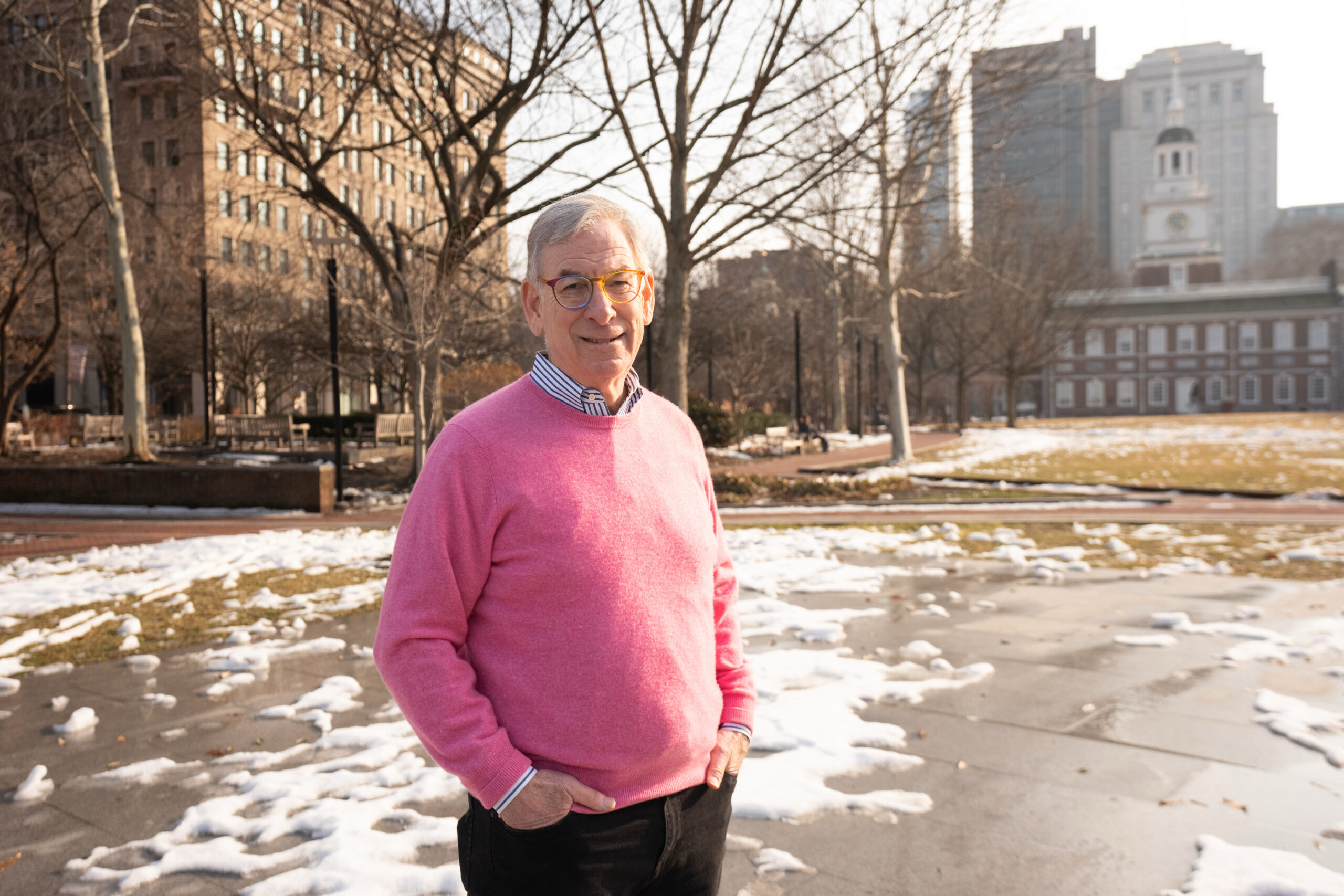
Sam Katz at Independence Hall, in Philadelphia, Tuesday, Feb. 17, 2026, in Philadelphia
From the beginning, the project was meant to get people talking about the true meaning of the American experience, and those it has left behind.
“We’re going to get partners all over the city, and we’re going to have screenings all over the place,” said Katz, the civic-leader-turned-producer. “We’re going to create opportunities for people to come and meet the filmmakers, or meet a historian or an artist, who will then lead a conversation. It really is an opportunity for Philadelphia to take stock of itself.”
Popkin, who co-founded Hidden City Daily, said the project tells the story of events that shaped a city and a country founded on ideals not yet fully realized — and now divided and tested as they’ve been in decades.
“The timing is perfect,” he said. “I think a film can really launch a lot of conversations. This is a moment for us as a nation.”
Fresh portals
Ferrett, who grew up in Bucks County, and has been directing and producing films at History Making Productions for more than 15 years, said the project revealed itself.
For earlier Philly projects — including The Great Experiment, an Emmy-award winning, 14-part docuseries spanning 500 years of Philly history, and Urban Trinity: The Story of Catholic Philadelphia — the filmmakers had amassed hundreds of unused hours of interviews with local and national historians, artists, and cultural leaders.
Over the years, much of it had to be left on the cutting room floor, including magical moments that he said opened fresh portals to Philly history, said Ferrett.
“We talked to pretty much anyone you can imagine who was either involved with studying Philadelphia history, or in the case of 20th-century history, a lot of witnesses to it,” he said.
Poet Ursula Rucker during filming of “In Pursuit: Philadelphia and the Making of America.” The new 10-part docuseries examines the history of America, through the story of Philadlephia.
Besides, he said, nowhere else could hold a better mirror to America, than the place of its birth.
“It really became obvious to us that what we have here is much more than a local history,” he said. “It’s a history of the whole United States because so many consequential moments that shaped the country’s history went through Philadelphia.”
History that feels alive
Setting out to tell the story anew, Katz raised money to shoot updated interviews and fresh historical recreations.
Meanwhile, history did not slow down, from the COVID-19 pandemic, to the killing of George Floyd, and the Black Lives Matter movements, to Trump, and immigration crackdowns.
“We were asking how do we deal with history while all this is happening,” Katz said. “We were writing about it right now.”
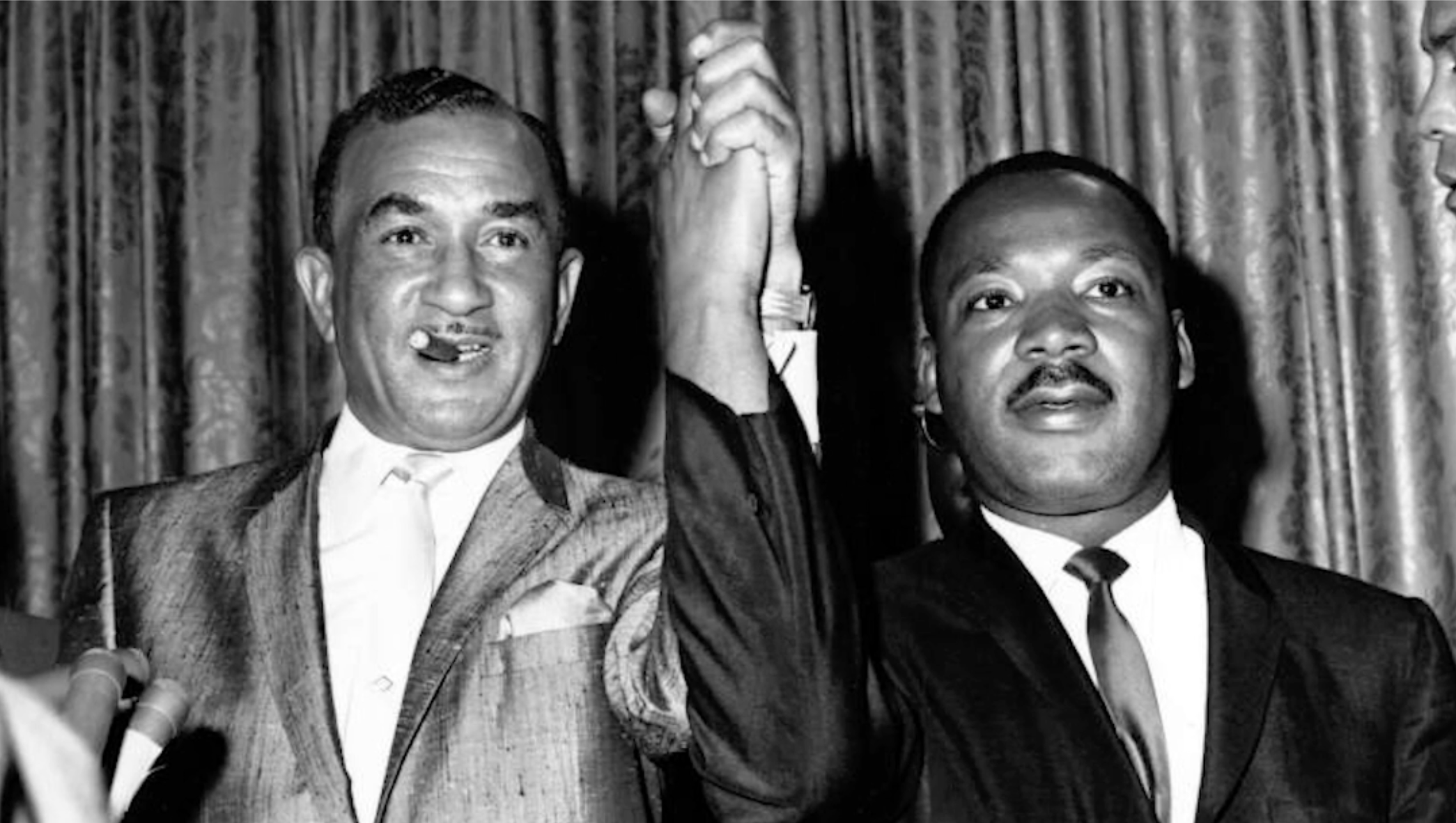
Cecil B. Moore and Martin Luther King, Jr in footage from “In Pursuit: Philadelphia and the Making of America.”
Narrated in a warm, resonant baritone by actor Michael Boatman, known for roles in shows Spin City and The Good Wife, In Pursuit is no dull, black-and-white history. The city feels alive, the stakes serious and undecided.
Threading modern day footage of bustling Philly streetscapes and soaring neighborhood shots with commentary and historical recreations imprints the series with a powerful immediacy.
The story stretches far beyond 1776, though the dramatic details of that sweltering summer in Philadelphia are recounted in episode three in gripping scenes of refreshingly believable historical recreations.
“We were able to shoot these lush and full reenactments,” said Ferrett, of all 10 episodes. “Sam was always like, ‘Where’s the dirt? I don’t want to see people with perfect teeth and smiling.’”
The start
Episode One, “Freedom (to 1700),” begins at the beginning, pulling no punches as it tells the story of the Lenape people, Philadelphia’s earliest Indigenous settlers — and of the generations of Dutch and other European colonists’ efforts to eradicate them through violence and disease.
It surprises even in the telling of William Penn, recounting how the rebellious aristocrat’s non-conformist ways landed him in jail more than once, before he founded a City of Brotherly Love meant to be a better world, and a testing ground of the most advanced ideals in Europe.
The episode also showcases what Ferrett describes as “deepeners,” when the story cuts away from the arc of history for moments of reflection from modern Philly voices.
“We all feel it here … it’s all in our bloodstream,” poet Ursula Rucker says in the episode. “What does this city mean to me? Everything. Everything.”
The Upper Darby Township Council passed a resolution Wednesday to restrict cooperation with U.S. Immigration and Customs Enforcement in response to growing concerns about the agency’s activities in the diverse township.
The 11-member council, made up entirely of Democrats, voted unanimously to pass a resolution saying the town will not use its resources to assist ICE with non-criminal immigration enforcement. But the largely symbolic resolution nearly mirrors the municipality’s existing guidelines, leading to criticism that it does not go far enough.
The resolution’s passage comes after Parady La, an Upper Darby resident struggling with addiction, died last month in a hospital while in ICE’s custody. It also follows the chaotic scenes in Minneapolis, where federal agents fatally shot Renee Good and Alex Pretti last month as President Donald Trump’s administration targeted the city with a massive immigration enforcement operation.
Those events have fueled anxiety in Upper Darby, where nearly a quarter of the population is foreign-born, compared with 15% in Philadelphia. Armed ICE agents wearing masks have become a familiar sight in the township, prompting residents to question why their community is suddenly under pressure, including high school students who held a walkout earlier this month.
Council President Marion Minick called the resolutiona chance to show immigrants in the community “they are not alone.”
“We can demonstrate through our votes and through our voices that Upper Darby Council will do everything within our legislative power to shield our residents and their families from this climate of intimidation,” he said.
The council’s resolution comes as localgovernmentsacross the country and in the Philadelphia area try to curb ICE’s impact on their residents. Last month, Haverford passed a similar measure and Bucks County ended its agreement with the agency that allowed sheriff’s deputies to act as immigration enforcement.
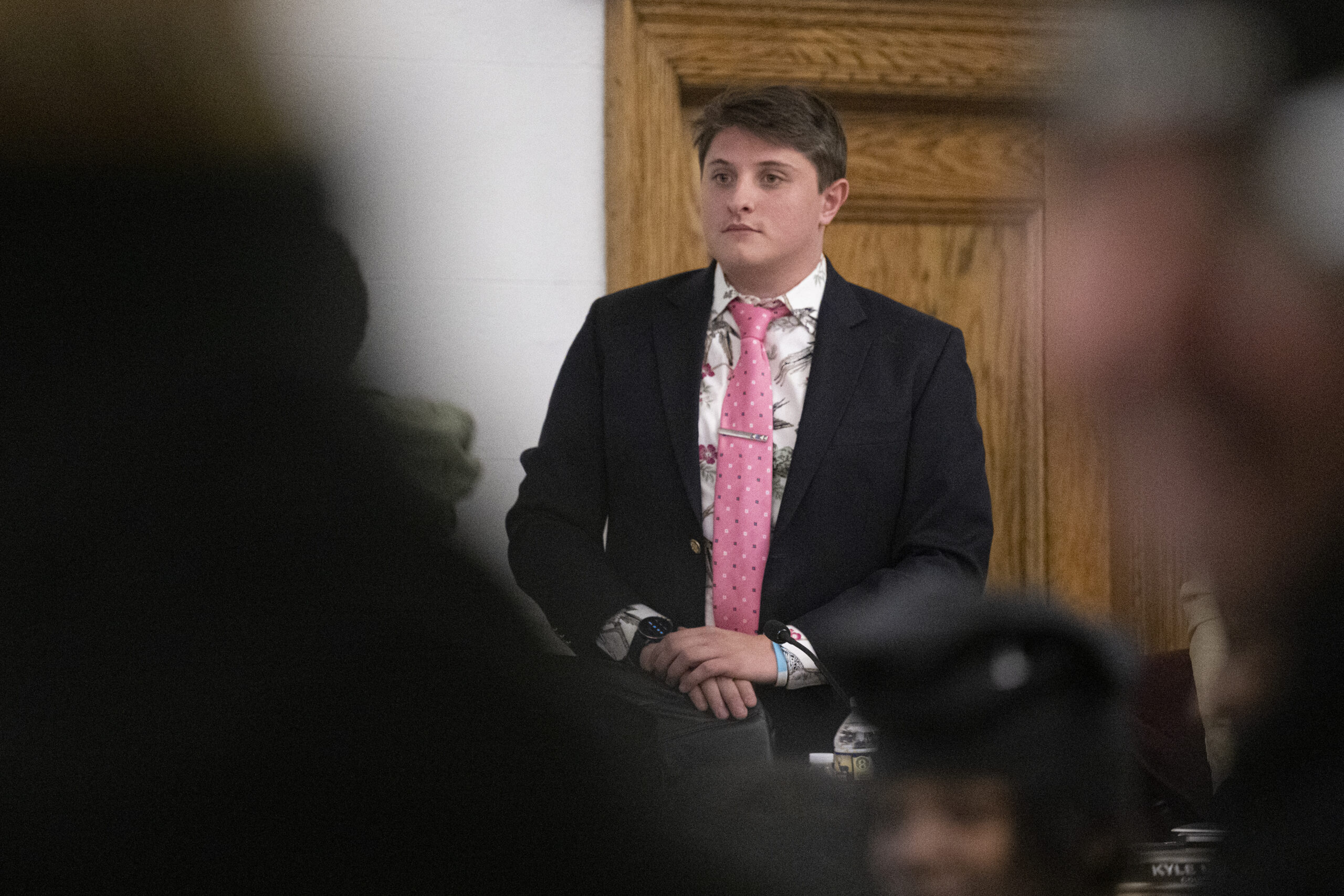
Council member Kyle McIntyre, a progressive community organizer who began his term last month, emphasized that the resolution is “just the start.”
“There is so much more than we can do, and we will be doing, and I make that solemn promise to the community right now,” he said before the vote.
“If we don’t do more, hold us accountable,” he added.
Kyle McIntyre, an Upper Darby Township council member, listens to residents’ comments during a township meeting on Wednesday, Jan. 21, at the Upper Darby Municipal Building in Upper Darby, Pa.
Township solicitor Mike Clarke said that police will cooperate with ICE if the agency has a criminal warrant signed by a judge.
“Local law enforcement is not supposed to be in the immigration enforcement business, and essentially that’s what this resolution is saying … but if it’s a criminal warrant, they will be involved,” Clarke said.
A list of frequently asked questions about ICE on the township’s website already stated that Upper Darby does not participate in civil immigration enforcement or ask residents their immigration status, though it does cooperate with lawfully issued criminal warrants and court orders. Township spokesperson Rob Ellis confirmed that the resolution reaffirms the town’s existing internal policy.
The lack of cooperation seems to be going both ways.
Upper Darby Mayor Ed Brown said earlier this month that ICE would no longer communicate with local police to tell them when agents are operating in the township, calling the change “scary.” ICE did not immediately respond to a request for clarity on Thursday.
Some residents at the meeting expressed concern about the reaffirmed policy getting in the way of public safety, and McIntyre later said the policy ensures anyone in Upper Darby can feel comfortable reporting crimes to the police. He said “anybody that commits a crime in Upper Darby Township will be held accountable,” regardless of immigration status.
Jennifer Hallam, who said she has worked with immigrants in Upper Darby for almost a decade, urged the council to postpone its vote and instead pursue legislation that has more teeth.
“The current resolution really just preserves the status quo,” she said.
She called for a resolution that would restrict ICE from municipal property without judicial warrants, prohibit the collection and sharing of immigration status among municipal employees, and prohibit ICE from wearing masks. Philadelphia lawmakers are attempting to ban ICE from wearing masks, though experts are split on whether the measure would be legally sound.
McIntyre said in an interview that Wednesday’s resolution puts the council’s values down on paper and provides clarity to the community, but he acknowledged that a resolution is not enforceable.
A death in ICE custody close to home
The community has been grappling with the death of La, a 46-year-old Cambodian immigrant and Upper Darby resident who, according to his widow, Meghan Morgan, struggled with addiction. La came the United States in 1981 as a refugee around the age of 2. He became a lawful permanent resident a year later but lost his legal status after committing a series of crimes over two decades, ICE said.
ICE said agents arrested La outside his home last month before he received treatment for severe withdrawal in a Philadelphia detention center. He was admitted to the hospital in critical condition, where his condition worsened and he died, the agency said.
Morgan and La’s daughter Jazmine La said they believe he was not given proper medical treatment and the Pennsylvania ACLU filed a Freedom of Information Act request surrounding his detention and death.
McIntyre last month called on Delaware County District Attorney Tanner Rouse and Philadelphia District Attorney Larry Krasner to investigate La’s death.
Rouse said at the time that Delaware County law enforcement was not involved or aware of La’s detainment when it happened, and that his office would investigate it. He said Thursday that surveillance footage showed La was detained “without violence” but that his death in Philadelphia should be addressed by “investigating authorities” in the city.
Krasner’s office declined to comment, saying it was a federal matter.
Staff writer Jeff Gammage contributed to this article.
Northampton police went to the first-floor condominium on Beacon Hill Drive for a welfare check onDolores Ingram, an 82-year-old grandmother of three known for gifting her sewn and crocheted creations to family, friends, and those in need.
Inside, officers found the living room in disarray, a heap of household items stacked haphazardly. They moved the things aside — a flipped-over futon, glass plates, a shattered aquarium that once housed two lizards — until they uncovered a bare foot. It was cold to the touch.
The body was that of Dolores Ingram, who authorities say died from blunt-force trauma, asphyxiation, and lacerations inflicted by her son, William Ingram, before he fled in her car.
On Wednesday, nearly two years later, a Bucks County judge sentenced WilliamIngram, 51, to 30 to 64 years in prison for killing her inside the home they shared.
Ingram pleaded guilty in December to third-degree murder in the June 2024 killing of his mother, as well as abuse of a corpse and related crimes. He also pleaded guilty to a string of drug offenses, including possession with intent to distribute.
Investigators said that as they continued searching the pile atop Dolores Ingram that day, they found approximately six pounds of marijuana and more than $53,000 in cash — proceeds, prosecutors said, from a marijuana and psilocybin distribution business that William Ingram ran from the home.
They also found the family’s pet reptiles dead on the floor.
“The money you threw on top of her was more than most people make in a year in this country,” said Bucks County Court Judge Stephen Corr, adding that it illustrated Ingram’s “disrespect” for his mother.
In court on Wednesday, Dolores Ingram’s two daughters described their mother as “generous” and “kind, a “good example of how to treat people.” She loved yard sales and thrift stores, they said. She also had “lifelong anxiety,” including over her son, who suffered from mental illness, they said.
Authorities initially charged Ingram with first-degree murder, which carries a potential life sentence. In exchange for a guilty plea to the lesser charge of third-degree murder, Bucks County prosecutors agreed to a sentence of 26 to 54 years in state prison.
Corr used his discretion when he sentenced Ingram to four to 10 years in prison for the drug crimes. He also sentenced Ingram to consecutive terms, calling the move “necessary” given the circumstances of the crimes and the need to “protect the community” from Ingram.
At the sentencing hearing, Downs asked Ingram if he missed his mother. “Yeah,” Ingram replied. He added: “I didn’t mean for this to happen. It doesn’t even seem real to me.”
Ingram denied hitting his mother and said he did not remember piling things on top of her. However, in an affidavit of probable cause for Ingram’s arrest, Northampton Township police said he confessed to hitting his mother in the head during an argument, then throwing “all this stuff” on top of her body.
Then, police said, Ingram stole his mother’s Honda Civic and drove to Washington. There, authorities said, he assaulted a local police officer while naked and was taken into custody about a day after the killing.
Downs asked the judge to sentence Ingram to 26 years, arguing that he would be 75 years old at his first chance at parole — an amount of time he called “significant” for a man Ingram’s age.
Prosecutor Monica Furber pressed for consecutive sentences. While she acknowledged Ingram’s mental illness, she countered that it “did not stop him in any way from running a criminal enterprise” or covering his mother’s body “in the drugs and proceeds.”
Before announcing the sentence, Corr said Ingram had “turned” on “the one person who was trying to help him.”
He added: “I hope you have an opportunity to grow while you spend what is likely the rest of your life in prison.”
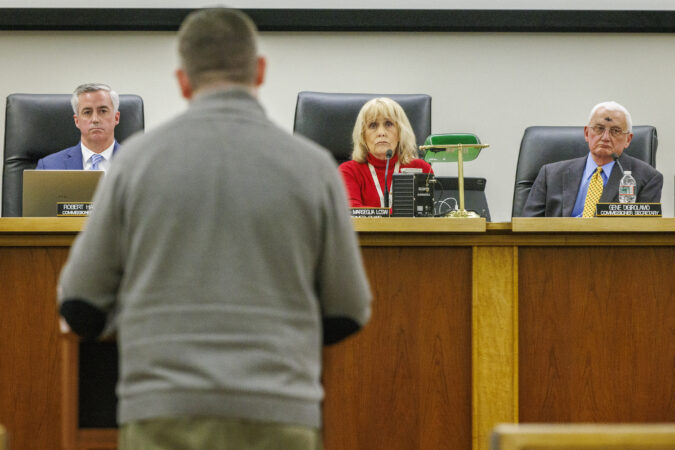
The contentious national discussion over the rapid expansion of ICE came to the doorstep of the Philadelphia region on Wednesday, as the Bucks County commissioners voted to oppose having any processing or detention facilities in the county.
Commissioners said they learned that the federal government had recently approached warehouse owners in two communities, Bensalem Township and Middletown Township, about possible conversions. Neither owner is going forward, they said.
The commissioners voted 3-0 ― including the board’s lone Republican ― to approve a resolution that said such a center would be harmful for county residents and the people who would be confined there.
ICE officials did not immediately reply to a request for comment.
The commissioners voted a day after U.S. Rep Brian Fitzpatrick said that he would oppose such a facility ― and that he had received federal assurances none was planned in his district, which covers Bucks County and parts of eastern Montgomery County.
Fitzpatrick, a Republican who is seeking reelection in the purple district, faces a likely November challenge from Democratic Bucks County Commissioner Bob Harvie, who also opposes ICE sites.
In Doylestown on Wednesday, Commissioner Gene DiGirolamo, a Republican who serves with two Democrats, said he heard about the federal interest in two local sites and strongly disapproved.
Jake Didinsky of Southampton, said he opposes ICE warehouses in his county, comparing them to Japanese interment camps.
“Bucks County is not a county that needs or wants a detention facility,” he said.
Harvie, the board’s vice chair, said Bucks County “is no place for these kinds of facilities” and cautioned: “We have been down this road before, with Japanese Americans. And with Italian Americans.”
During World War II the U.S. government forcibly incarcerated thousands of people of Japanese descent, holding them in concentration camps mostly in the western part of the country. About two-thirds of those confined were American citizens.
Some Italian Americans endured the same treatment.
A resolution conveys the opinion and wishes of the board, but holds no force of law.
The Bucks resolution said the county opposes “the use of warehouses or similar industrial facilities not intended for human occupancy as facilities to hold, jail, detain, house or otherwise store human beings.”
In addition to humanitarian concerns, the resolution says, “such facilities, being hastily erected in areas and structures not intended for human occupation, would place unanticipated demands upon water and sewer systems, creating hazards to public health, as well as heaping new strain upon public safety services.”
The vote came as the growth of ICE leasing and purchases has become contentious in Pennsylvania and across the United States.
U.S. Immigration and Customs Enforcement expects to spend $38.3 billion to acquire warehouses around the country and retrofit them into immigrant detention centers to hold tens of thousands of people, the Washington Post reported. The newspaper analyzed agency documents that were provided to New Hampshire’s governor and published on the state’s website.
ICE intends to buy and convert 16 buildings to serve as regional processing centers, each holding 1,000 to 1,500 immigrant detainees. An additional eight detention centers would hold 7,000 to 10,000 detainees and serve as primary sites for deportations.
Last week Gov. Josh Shapiro formally asked Homeland Security Secretary Kristi Noem in a letter to reconsider the conversion of the Berks and Schuylkill sites, citing “real harms” to the communities.
He questioned the legality of the facilities and hinted at a possible lawsuit, saying if DHS goes forward, his administration will “aggressively pursue every option to prevent these facilities from opening.”
DHS spokesperson Tricia McLaughlin confirmed the plans for the Pennsylvania sites, saying that they would undergo community-impact studies and a rigorous due-diligence process, and that they would bring 11,000 jobs to the two Pennsylvania communities.
The two sites would hold a combined 9,000 people.
On Tuesday, Fitzpatrick’s office said it had received assurances from DHS and ICE that they had no plans or intention to open a detention facility within the First Congressional District.
“After hearing from concerned residents, our office immediately contacted U.S. Immigration and Customs Enforcement, and we have received assurances that no such facility is planned,” Fitzpatrick said.
One night in early December, the phones of Radnor High School students started buzzing. Some freshmen girls were getting disturbing messages: A male classmate, they were told, had made pornographic videos of them.
When one of the girls walked into school the next morning, “she said everyone was staring at her,” said her mother, who requested anonymity to protect her daughter’s identity. “All the kids knew. It spread like wildfire.”
So-called AI deepfakes — pictures of a real person manipulated with artificial intelligence,sometimes with “nudify” features that can convert clothed photos into naked ones — have become the talk of school hallways and Snapchat conversations in some area schools.
As Pennsylvania lawmakers have pushed new restrictions cracking down on deepfakes — defining explicit images as child sexual abuse material, and advancing another measure that would require schools to immediately alert law enforcement about AI incidents — schools say they have no role in criminal investigations, and are limited in their ability to police students off campus.
But some parents say schools should be taking a more proactive stance to prepare for AI abuse — and are failing to protect victims when it happens, further harming students who have been violated by their peers.
In the Council Rock School District, where AI-generated deepfakes were reported last March, parents of targeted girls said administrators waited five days to contact the police about the allegations and never notified the community, even after two boys were charged with crimes.
“They denied everything and kind of shoved it under the rug and failed to acknowledge it,” said a mother in Council Rock, who also requested anonymity to protect her daughter’s identity. “Everybody thought it was a rumor,” rather than real damage done to girls, the mother said.
Council Rock spokesperson Andrea Mangoldsaid that the district “recognizes and understands the deep frustration and concern expressed by parents,” and that a police investigation “began promptly upon the district’s notification.”
Mangold said that current laws were “insufficient to fully prevent or deter these incidents,” and that the district was “limited in what we know and what we can legally share publicly” due to student privacy laws.
In Radnor, parents also said the district minimized the December incident. A district message last month said a student had created images of classmates that “move and dance,” and reported that police had not found evidence of “anything inappropriate” — even though police later saidthey had charged a student with harassment after an investigation into alleged sexualized images of multiple girls.
A Radnor spokesperson said the alleged images were never discovered and the district’s message was cowritten by Radnor police, who declined to comment.
The district “approaches all student-related matters with care and sensitivity for those involved,” said the spokesperson, Theji Brennan. She said the district was limited in what it could share about minors.
In both Radnor and Council Rock, parents said their daughters were offered little support — and were told that if they were uncomfortable, they could go to quiet rooms or leave classes early to avoid crossing paths with boys involved in the incidents.
“She just felt like no one believed her,” the Radnor mother said of her daughter.
How an investigation unfolded in Radnor
In Radnor, five freshman girls first heard they were victims of deepfakes on Dec. 2, according to parents of two of the victims who requested anonymity to protect their daughters’ identities. They said boys told their daughters that a male classmate had made videosdepicting them sexually.
In a Snapchat conversation that night, one boy said, “‘Nobody tell their parents,’” a mother of one of the victims recalled. Reading her daughter’s texts, “it quickly went from high school drama to ‘Wow, this is serious.’”
The girls and their parents never saw the videos. In an email to school officials the next morning, parents asked for an investigation, discipline for the students involved, and efforts to stop any sharing of videos. They also asked for support for their daughters.
Schooladministrators began interviewing students. The mother of one of the victims said her daughter was interviewed alone by the male assistant principal — an uncomfortable dynamic, given the subject matter, she said.
One mother said the principal told her daughter that it was the boys’ word against hers, and that he was “so glad nothing was shared” on social media — even though no one knew at that point where videos had been shared, the mother said.
The principal said the school had no authority over kids’ phones, so the girl and her family would need to call the police if they wanted phones searched, the mother said.
Brennan, the Radnor spokesperson, said that administrators contacted Radnor police and child welfare authorities the same day they spoke with families. “The district’s and the police department’s investigations have found no evidence that the images remain or were shared, posted, or otherwise circulated,” she said.
The male classmate acknowledged making videos of the girls dancing in thong bikinis, the parents said police told them. But the app he used was deleted from his phone, and the videos were not on it, the police told them.
The parents didn’t believe the admission.
“I don’t think a 14-year-boy would report a TikTok video of girls in bikinis,” said one of the mothers, who said her daughter was told she was naked and touching herself in videos.
The police told parents they did not subpoena the app or any social media companies, making it impossible to know what was created.
Radnor Police Chief Chris Flanagan declined to comment, as did the Delaware County District Attorney’s Office.
In a message sent to the district community Jan. 16 announcing the end of the police investigation, officials said a student, outside of school hours, had taken “publicly available” photos of other students and “used an app that animates images, making them appear to move and dance.”
“No evidence shared with law enforcement depicted anything inappropriate or any other related crime,” the message said.
A week later, the police released a statement saying a juvenile was charged with harassment after an investigation into “the possible use of AI to generate non-consensual sexualized imagery of numerous juveniles.”
Asked why the district’s statement had omitted the criminal charge or mention of sexualized imagery, Brennan said the statement was also signed by Flanagan, who declined to comment on the discrepancy.
Brennan said the district had provided ongoing support to students, including access to a counselor and social worker.
Parents said the district had erred in failing to initiate a Title IX sexual harassment investigation, instead telling parents they needed to file their own complaints.
“They kept saying, ‘This is off campus,’” the mother said. But “my daughter could not walk around without crying and feeling ashamed.”
Parents say girls were ‘not supported’ in Council Rock
In Council Rock, a girl came home from Newtown Middle School on March 17 and told her mother a classmate had created naked images of her.
“I’m like, ‘Excuse me? Nobody contacted me,’” said the mother, who requested anonymity to protect her daughter’s identity. She called the school’s principal, who she said told her: “‘Oh, my God, I meant to reach out to you. I have a list of parents, I just have not gotten to it’ — you know, really downplaying it.”
The mother and other victims’parents later learned that administrators were alerted to the images on March 14, when boys reported them to the principal. But instead of calling the police, the principal met with the accused boy and his father, according to parents. Police told parents they were contacted by the school five days later. The Newtown police did not respond to a request for comment.
Mangold, the Council Rock spokesperson, declined to comment on the specific timing of the school’s contact with police.
Police ultimately obtained images after issuing a subpoena to Snapchat; in total, there were 11 victims, the parents said.
Through the Snapchat data, police learned that a second boy was involved, the parents said, which made them question what was created and how far it spread.
Parents said they believe there are more pictures and videos than police saw, based on what their daughters were told — and because the delayed reporting to police could have given boys an opportunity to delete evidence.
“That’s kind of what the fear of our daughters is — like, what was actually out there?” said one mother, who also requested anonymity to protect her child’s identity.
Manuel Gamiz, a spokesperson for the Bucks County district attorney, said Newtown Township police had charged two juveniles with unlawful dissemination of sexually explicit material by a minor. Gamiz said the office could not provide further information because the case involved juveniles.
Juvenile cases are not public, but victims’ parents said both boys were adjudicated delinquent. While the boys had been attending Council Rock North High School with their daughters, the district agreed to transfer both after their cases were resolved, according to a lawyer representing four of the parents, Matthew Faranda-Diedrich.
“How can you let this person be roaming the halls?” said Faranda-Diedrich, who said it took formal demand letters in order for the district to transfer the boys.
He accused the district of mishandling the incident and “protecting the institution” rather than the victimized girls.
“They’re putting themselves above these students,” Faranda-Diedrich said.
Parents said school leaders warned their daughters against spreading rumors, and never sent a districtwide message about the incident.
“These girls were victims,” one of the mothers said, “and they were not supported.”
She and the other mothers who spoke to The Inquirer said the incident has deeply affected their daughters, from anxiety around what images may have been created — and how many people saw them — to a loss of trust in school leaders.
Some of the girls are considering switching schools, one mother said.
State law changes and a debate around education about deepfakes
Those changes came in 2024 and 2025, after a scandal over deepfakes of nearly 50 girls at a Lancaster private school.
Another bill that passed the state Senate unanimously in November would require school staff and other mandated reporters to report AI-generated explicit images of minors as child abuse — closing what prosecutors had cited as a loophole when they declined to bring charges against Lancaster Country Day School for failing to report AI images to the police. That legislation is now pending in the House.
Schools can also do more, said Faranda-Diedrich, who also represented parents of victims in the Lancaster Country Day School incident. He has pressed schools to conduct mandated reporter training for staff. “By and large they refuse,” he said.
In Radnor, parents urged the school board at last week’s committee meeting to make changes.
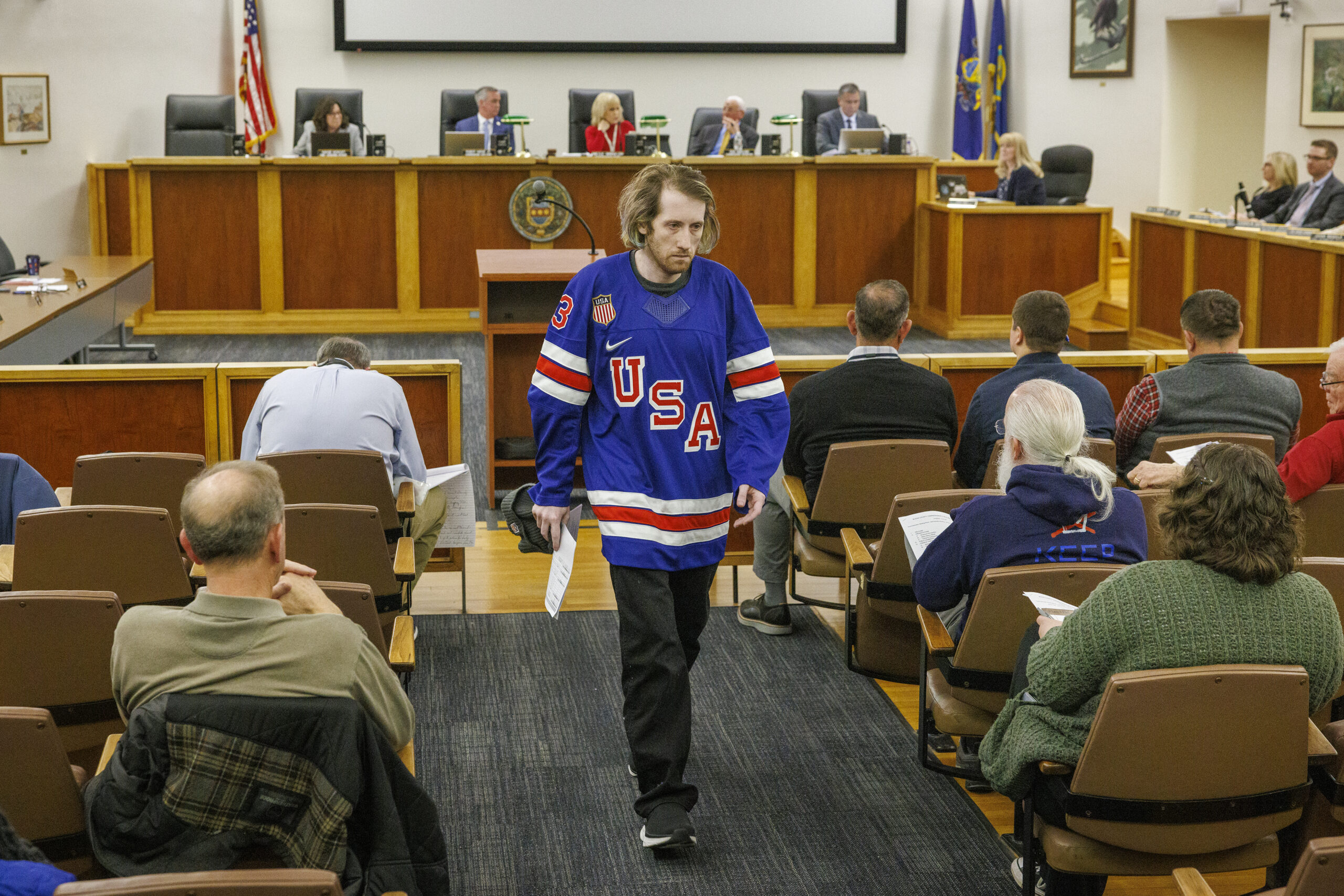
Parent Luciana Librandi walks back to her seat after speaking during a Radnor school board committee meeting last week.
Luciana Librandi, a parent of a freshman who said she had been “directly impacted by the misuse of generative AI,” called for timelines for contacting police following an AI incident, safeguards during student questioning, and annual education for students and parents on AI.
Others called for the district to communicate the criminal charge to families, to enforce existing policies against harassment, and to independently review its response to the recent incident.
Radnor officials said they are planning educational programming on the dangers of making AI images without a person’s consent.
There is somedebate on whether to teach children about “nudify” apps and their dangers, said Riana Pfefferkorn, policy fellow at the Stanford Institute for Human-Centered AI, who has researched the prevalence of AI-generated child sexual abuse material. Alerting kids to the apps’ existence could cause them “to make a beeline for it,” Pfefferkorn said.
While “this isn’t something that is epidemic levels in schools just yet,” Pfefferkorn said, “is this a secret we can keep from children?”
One of the victims’ parents in Radnor said education on the topic is overdue.
“It’s clearly in school,” the mother said. “The fact there’s no video being shown on the big screen in your cafeteria — we don’t live in that world anymore.”
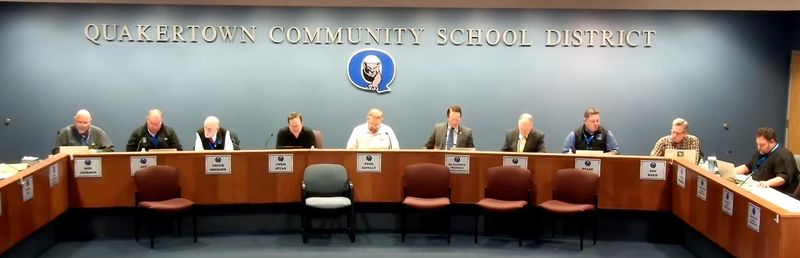
Quakertown Community School District Superintendent Matthew Friedman is on leave effective immediately, a district spokesperson said Friday.
The spokesperson, Melissa Hartney, said the district’s school board could not comment further.
“Because this is a personnel matter, the board is limited in the amount of information it can share at this time,” Hartney said in a statement.
Friedman did not return a request for comment.
Friedman took over the 4,600-student district in Upper Bucks County in 2023, after serving as superintendent of the Ocean City School District in New Jersey.
The Quakertown school board in November granted him a $10,000 raise, bringing his salary to $233,000, and extended his contract until June 30, 2028.
Assistant Superintendent Lisa Hoffman is taking over day-to-day operations of the district, Hartney said.
“The board is confident that district operations, instructional programs, and student services will continue without interruption,” Hartney said, adding that it “remains committed to transparency, accountability, and maintaining the trust of our students, staff, families, and community.”
Phil Sumpter, 95, formerly of Philadelphia, celebrated sculptor, artist, art teacher, TV station art director, veteran, mentor, urban cowboy, and revered raconteur, died Thursday, Jan. 1, of age-associated decline at his home in San Juan, Puerto Rico.
A graduate of John Bartram High School and the old Philadelphia College of Art, Mr. Sumpter taught art, both its history and application, to middle and high school students in Philadelphia for 27 years. He was an engaging teacher, former students said, and a founding faculty member at the Philadelphia High School for the Creative and Performing Arts in 1978.
He started teaching in 1955 and, after a break in the 1960s and ’70s, finally retired in 1992. “You are very lucky to have a teacher in your life that believed in you, nurtured you, challenged you, and loved you,” a former student said on Facebook. “Mr. Sumpter did all that and more.”
Other former students called him their “father” and a “legend.” One said: “You did a lot of good here on earth, especially for a bunch of feral artist teenagers.”
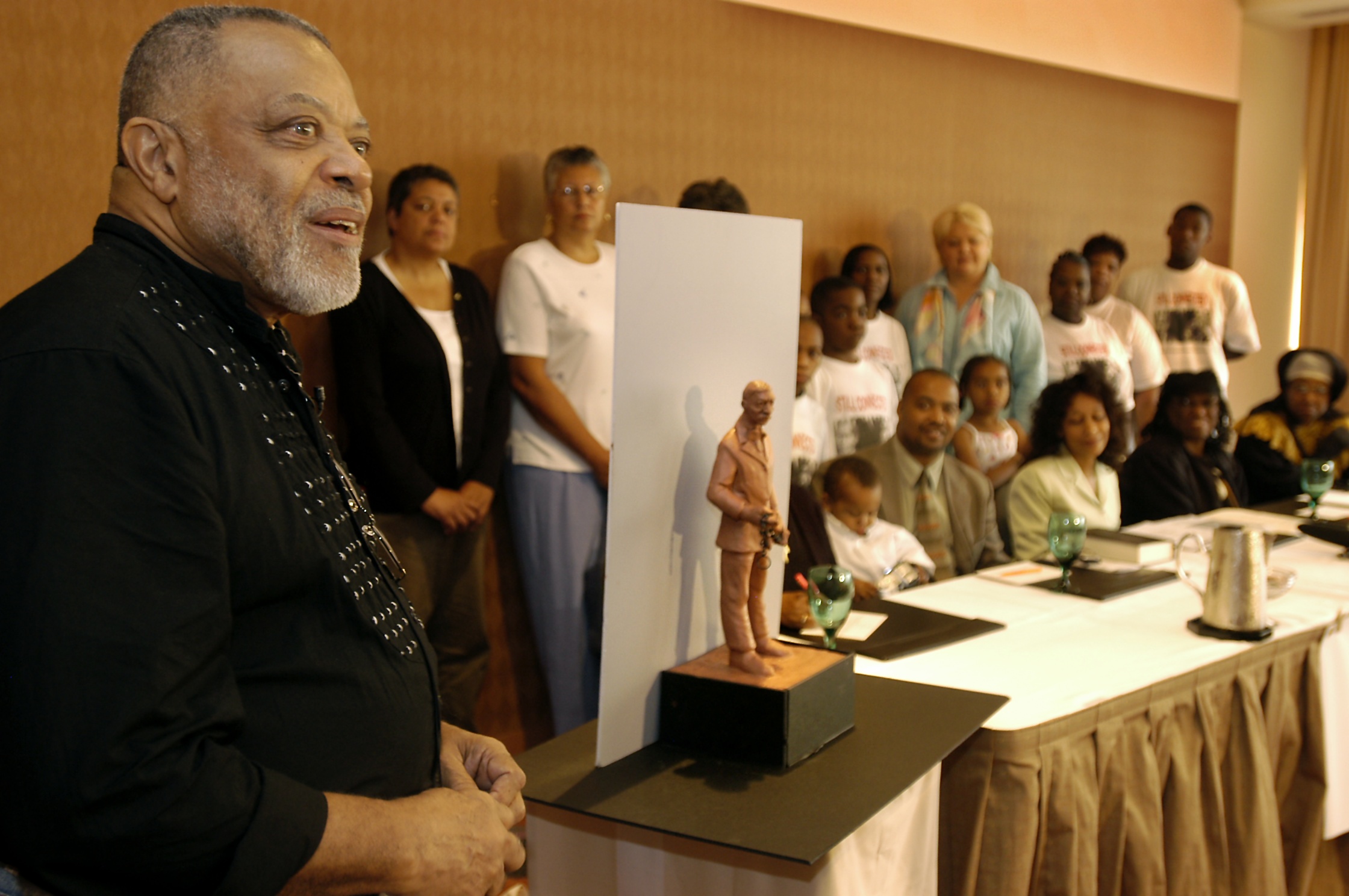
Mr. Sumpter (left) talks about his sculpture of Underground Railroad organizer William Still in 2003.
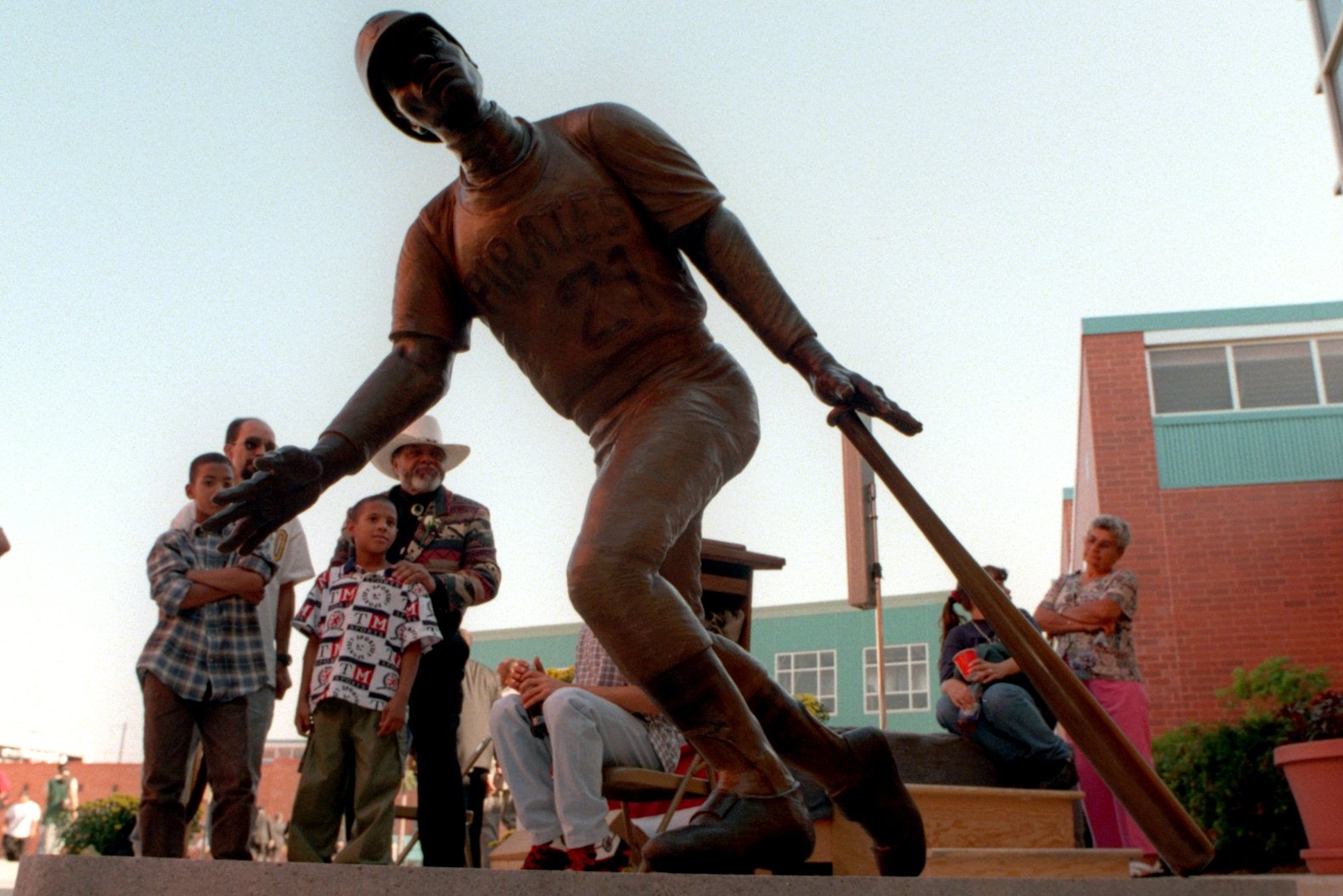
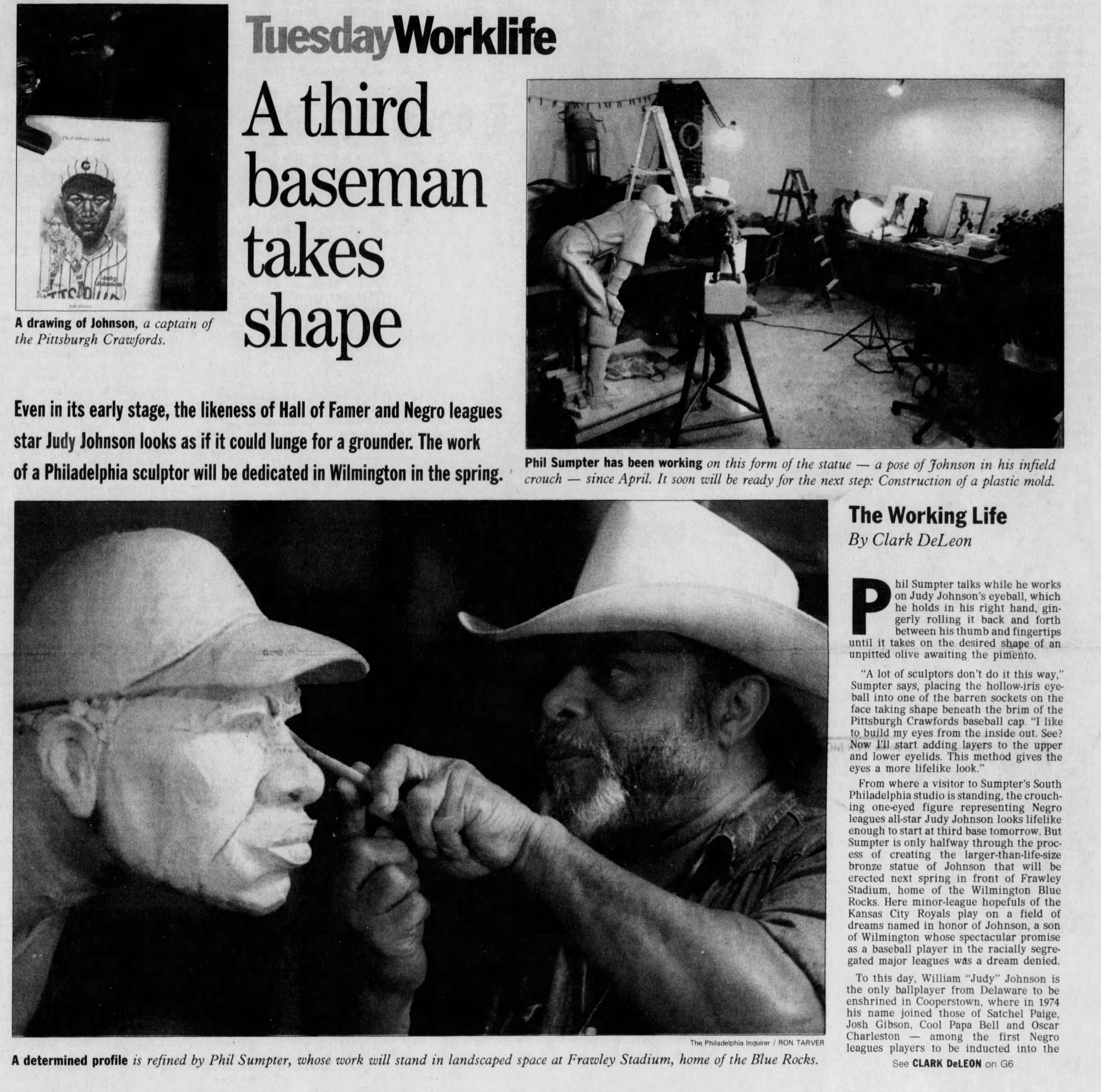
Outside the classroom, Mr. Sumpter sculpted hundreds of pieces and painted and sketched thousands of pictures in his South Philadelphia stable-turned-studio on Hicks Street. Prominent examples of his dozens of commissions and wide-ranging public art presence include the bas-relief sculpture of Black Revolutionary War soldiers at Valley Forge National Historical Park in Montgomery County, the action statue of baseball star Roberto Clemente in North Philadelphia, the Negro Leagues baseball monument in West Parkside, and the Judy Johnson and Helen Chambers statues in Wilmington.
He worked often in clay and paper, made murals, and designed commemorative coins and medals. He especially enjoyed illustrating cowboys, pirates, Puerto Rican jibaros, and landscapes.
His statue of Clemente was unveiled at Roberto Clemente Middle School in 1997, and Mr. Sumpter told The Inquirer: “I think I’ve captured a heroic image, an action figure depicting strength plus determination.”
He was among the most popular contributors to the Off the Wall Gallery at Dirty Franks bar, and his many exhibitions drew crowds and parties at the Bacchanal Gallery, the Free Library of Philadelphia, the Plastic Club, and elsewhere in the region and Puerto Rico. He hung out with other notable artists and community leaders, and collaborated on projects with his son, Philip III, and daughter, Elisabeth.
Mr. Sumpter worked often in clay and paper, made murals, and designed commemorative coins and medals.
He even marketed a homemade barbecue sauce with his wife, Carmen. His family said: “He is remembered for mentorship, cultural fluency, and presence as much as for material works.”
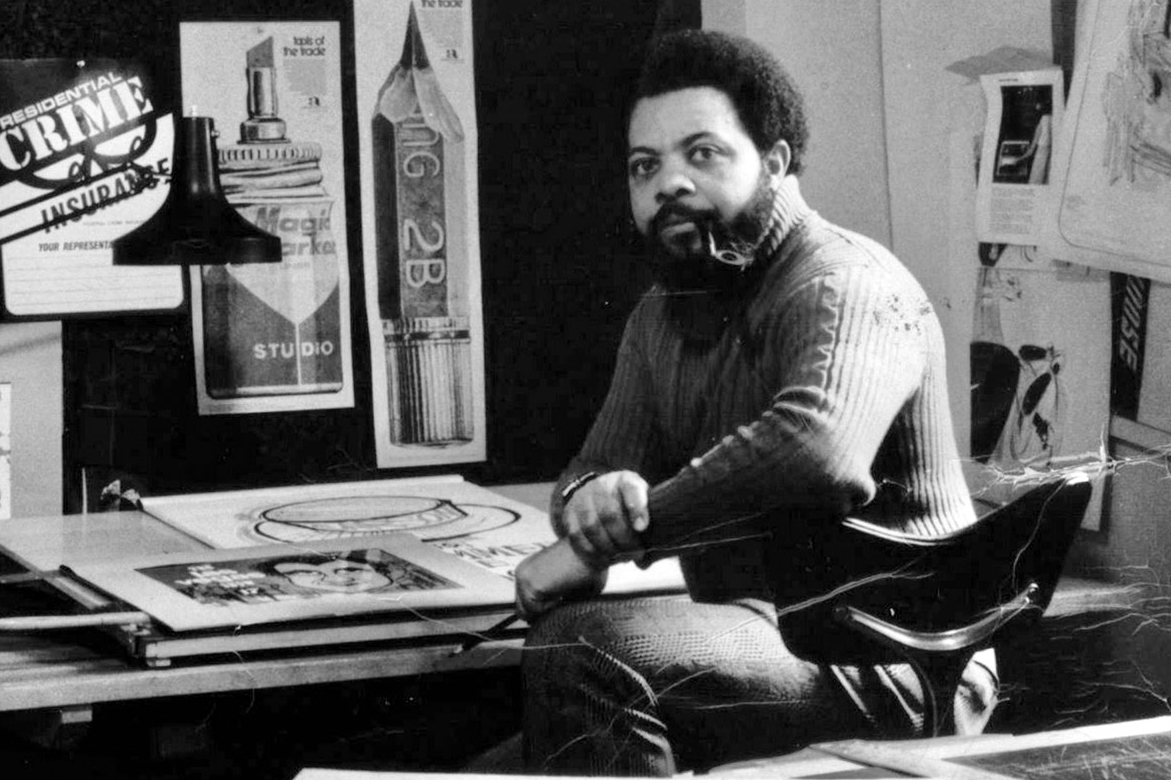
He founded Phil Sumpter Design Associates in the 1960s and worked on design and branding projects for a decade with institutions, educational organizations, and other clients. He was art director for WKBS-TV, WPHL-TV, and the Pyramid Club.
“The word for him,” his son said, “is expansive.”
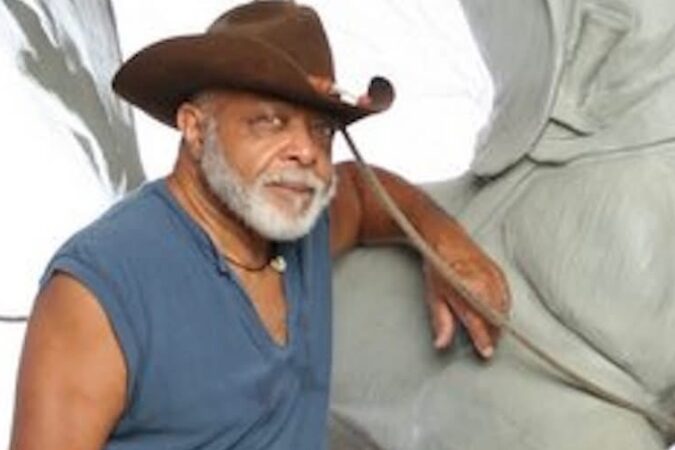
Mr. Sumpter was friendly and gregarious. He became enamored with Black cowboys and Western life as a boy and went on to ride horses around town, dress daily in Western wear, and depict Black cowboys from around the world in his art. His viewpoints and exhibits were featured often in The Inquirer, the Philadelphia Tribune, Philadelphia Magazine, Dosage Magazine, and other publications.
Mr. Sumpter (in white cowboy hat) views his statue of Roberto Clemente in 1997.
He was an air observer for the Air Force during the Korean War and later, while stationed in England, studied sculpture, ceramics, and drawing at Cambridge Technical Institute. His daughter said: “He taught me how to open the portal to the infinite multiverse of my own imagination, where every mind, every soul can be free.”
Philip Harold Sumpter Jr. was born March 12, 1930, in Erie. His family moved to segregated West Philadelphia when he was young, and he earned a bachelor’s degree in art education at PCA.
He married and divorced when he was young, and then married Florence Reasner. They had a son, Philip III, and a daughter, Elisabeth, and lived in Abington. They divorced later, and he moved to Hicks Street in South Philadelphia.
He met Carmen Guzman in Philadelphia, and they married in 2001 and moved to San Juan for good in 2003. He built a studio at his new home and never really retired from creating.
Mr. Sumpter (second from left) enjoyed time with his family.
Mr. Sumpter enjoyed singing, road trips to visit family in Pittsburgh, and bomba dancing in San Juan. He was a creative cook, and what he called his “trail chili” won cook-offs and many admirers.
“He was a larger-than-life person,” his son said. “He was fearless in his frontier spirit.” His wife said: “His joy for life was contagious, as was his laughter.”
In addition to his wife, children, and former wife, Mr. Sumpter is survived by other relatives.
A celebration of his life was held earlier in Puerto Rico. Celebrations in Philadelphia are to be from 2 to 5 p.m. Saturday, March 14, at Dirty Franks, 347 S. 13th St., Philadelphia,Pa. 19107, and from 2:30 to 4:30 p.m. Sunday, March 15, at the Plastic Club, 247 S. Camac St., Philadelphia, Pa. 19107.
Mr. Sumpter’s work was featured in The Inquirer in 1994.
When Yuan Yuan Lu’s boyfriend sexually assaulted her in his Pennsport home last week, her cousin said, she broke up with him and went to the police.
The 28-year-old Bucks County woman thought she was doing the right thing by reporting the crime, her cousin Natalie Truong said.
“She told me how safe she felt, how much better she felt opening up and telling the cops her story,” said Truong, who spent time with Lu the evening she reported the assault.
That was the last time Truong saw Lu alive.
On Sunday, less than 12 hours after Lu called police to say that her ex-boyfriend, Yujun Ren, had attacked her, police said, Ren, 32, stalked her. He followed her to her home in Levittown, police said, approached her as she sat in her car outside her house, and shot her in the head, killing her.
Lu’s death shook her loved ones and led to calls on social media for increased awareness of intimate partner violence.
Truong said Lu leaves behind dreams unfulfilled. Lu grew up in a small village in south China, and moved to the United States with her father in 2009 to seek a more prosperous life.
In Philadelphia, she attended Constitution High School, perfected her English, and always kept her friends abreast of her latest entrepreneurial pursuits, Truong said.
Lu went into the food business with friends, cooking homemade Asian cuisine and selling it in carts on local college campuses, and later worked in a bubble tea shop and at a nursing home.
Yuan Yuan Lu loved to eat at Philadelphia’s restaurants, according to her cousin, Natalie Truong.
She loved her pets — a corgi named Dundun and a cat named Milk Cap, after a creamy bubble tea topping. Lu and Truong frequented Philadelphia restaurants, most recently dining together at Kalaya in Fishtown, and took day trips to places like New Jersey’s Swaminarayan Akshardham, the second-largest Hindu temple in the world.
Despite the cousins’ close relationship, Truong said, Lu did not share a lot of details about her personal life, perhaps not wanting to trouble others with her concerns.
Truong said Lu did not talk a lot about her relationship with Ren, whom she had met at her nursing home job and had dated for about a year. Truong’s perception of the relationship changed the night her cousin opened up about Ren’s behavior, she said.
“She was struggling alone for a while,” Truong said, adding that initially, Lu “liked him, so we all trusted her judgment.”
On Sunday, the day after Lu reported the assault, Ren turned himself in to police in Middletown Township, and officers discovered Lu’s bodyin her white Hyundai shortly after noon, authorities said. He was charged with murder, stalking, and a firearms crime.
Ren told police that Lu had said “hurtful things” to him that day and that, in an attempt to scare her, he had brandished the firearm, which he said accidentally discharged. He was licensed to own the weapon, according to the affidavit of probable cause for his arrest.
Ren’s aunt later turned in her nephew’s 9mm handgun — a weapon Lu had told police he “carried everywhere,” leading her to fear for her safety, the affidavit said.
Truong said she wished law enforcement had had more time to investigate the sexual assault before Lu was killed. Her death was tragic, her cousin said, a life ended all too soon.
Lu’s father had recently left Philadelphia to join his wife and son in China. Truong has started a GoFundMe campaign to raise money to help the family with funeral expenses and to pay for travel to Philadelphia to attend the service.
As the family mourns Lu’s death, Truong said, they are hopeful that law enforcement officials will hold her killer accountable.
“We just want her to get the justice that she deserves, because she’s a really kind person,” Truong said. “She never thought this would happen to her — because you would never think someone you love can hurt you like that.”
Yuan Yuan Lu poses with her corgi, Dundun, and her cat, Milk Cap.
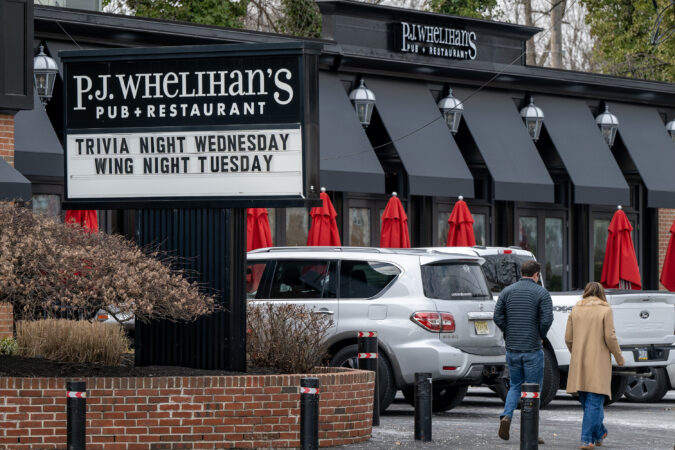
The company behind P.J. Whelihan’s is officially moving into a shuttered Iron Hill Brewery.
The Haddon Township-based PJW Restaurant Group has signed a lease for Iron Hill’s former location at the Village at Newtown, according to Brian Finnegan, the CEO of Brixmor Property Group, which owns the Bucks County shopping center.
PJW marketing director Kristen Foord confirmed the lease signing, saying in an email that the company was “not in a position to share additional specifics” at this time.
Like more than a dozen other former Iron Hills throughout the region, the nearly 8,000-square-foot space in Newtown has sat empty since the Exton-based brewpub chain closed all locations and filed for liquidation bankruptcy last fall.
As part of the revamp, the developer added new buildings, allowing it to bring in shops and restaurants like Iron Hill, Harvest Seasonal Grill, and Turning Point. The 30-acre complex is anchored by the high-end grocer McCaffrey’s Food Markets.
In Newtown, “we’ve got Free People and Lululemon and Ulta that we added to the shopping center,” Finnegan said Wednesday in an interview. “We’ve got a lot of strong service tenants. We also have Capital Grill and Harvest, so some great food and beverage options.”
And soon, he said, that list will also include P.J. Whelihan’s.
PJW’s most well-known restaurant is P.J. Whelihan’s, which started in the Poconos in 1983 and has expanded to include 25 P.J. locations, the majority of which are in the Philly region.
PJW also owns the Pour House in Exton, North Wales, and Westmont, Haddon Township; the ChopHouse in Gibbsboro; the ChopHouse Grille in Exton; Central Taco & Tequila in Westmont; and Treno, also in Westmont.
Some landlords are actively looking for tenants, with West Chester’s John Barry saying he hopes to have a lease signed by the end of this month.
“We have a number of groups interested in the space and a few [letters of intent] have been submitted,” Barry said in an email last month.
In other places, such as Voorhees, township officials and community members remain in the dark about whether another tenant will move in soon, and landlords can’t be reached.
A few of the closed breweries may be revived under new owners, though details are slim.
Twin brothers Larry and Kelly Ganges grew up outside of Trenton with people constantly mispronouncing their last name. “Grange, Grain, Ganger,” they’ve heard it all.
So they developed a standard reply: “It’s Ganges like the river [in India].”
Decades on, they’d find out the deep Philadelphia story behind it.
When the brothers, now 72, got older and traveled, they’d grab the phone book in whatever town they were in to see if anybody with their last name was listed. Then they’d call and ask if they knew anybody in their family; they often did.
“So we all thought, no matter where we were,” said Larry, “we were connected with somebody,”
But they were also connected with something — a ship, a travesty, and a providence.
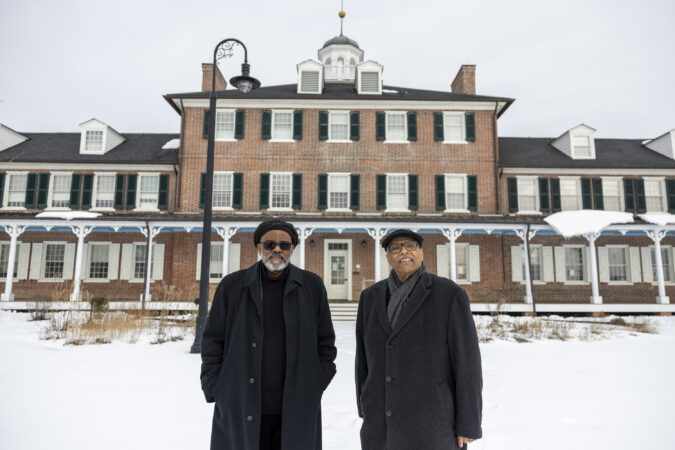
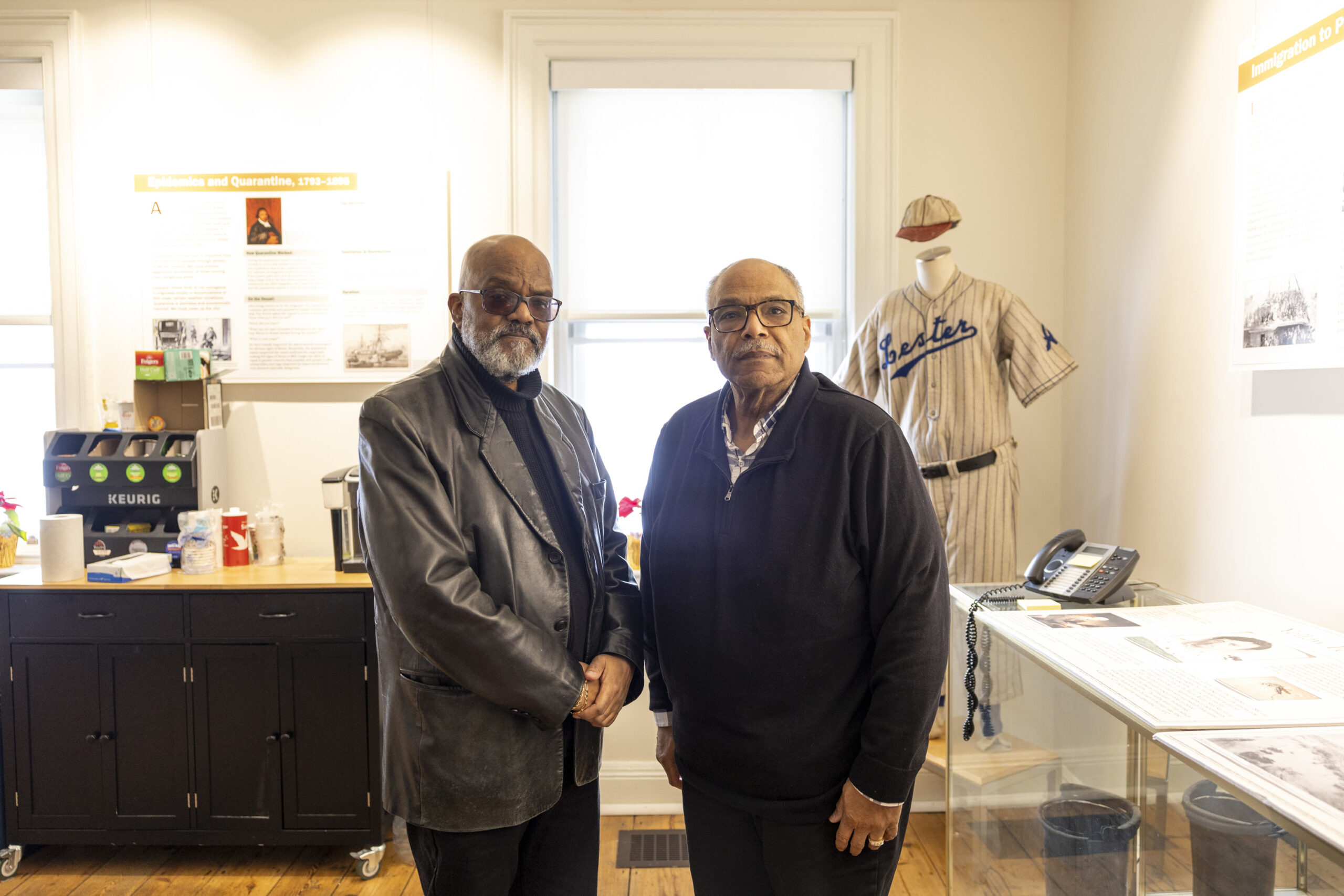
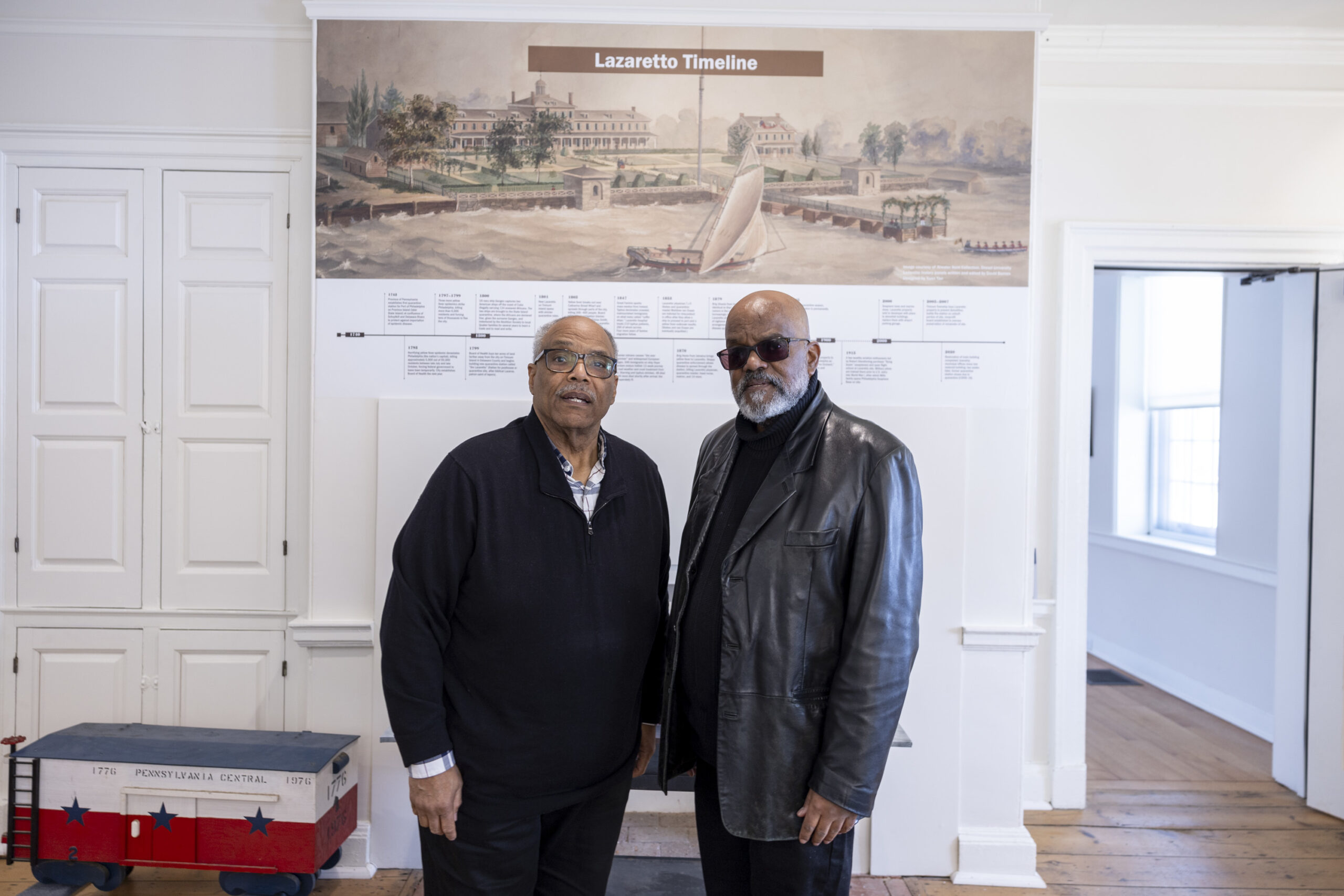
(From left to right) Twin brothers Larry Ganges, and Kelly Ganges, pose for a portrait at the Lazaretto in Tinicum, Pa., on Friday, Feb. 6, 2026. “It allows us to view and experience Black history,” Kelly said. “Pride in knowing our family was in this journey.”
The brothers’ first clue of their extended heritage arrived in 1975, when Kelly, was a student at Trenton State College. His journalism teacher, familiar with Bucks County cemeteries, asked if Kelly knew about the gravestones of two soldiers buried there.
Torbert and William Ganges had fought in the Civil War’s colored regiment, but Kelly couldn’t be sure if they were his relatives.
Nearly 30 years later, the brothers still don’t know if they are related to the soldiers, but they have discovered that their heritage is, as Kelly describes, “bigger than us, [it] extends beyond the continental United States and involves potentially the world.”
That information came in a phone call.
In the early aughts, Larry was working as the New Jersey Department of Health’s assistant commissioner for the HIV/AIDS division. His secretary told him that David Barnes, a University of Pennsylvania professor of history and the sociology of science, was on the line to talk about a different epidemic.
72-year-old twin brothers Kelly Ganges (left) and Larry Ganges, pose at the Lazaretto in Tinicum, Pa., on Friday, Feb. 6, 2026.
Barnes, who was seeking anyone with the Ganges name, had found Larry by chance in a New Jersey state employees directory. He wanted to discuss the 135 Africans who arrived in Philadelphia in 1800 and were detained at the old Lazaretto along the Delaware River.
At the time, every vessel arriving in Philadelphia was required to stop and be inspected at the Lazaretto — a hospital and quarantine station — where patients with yellow fever were treated.
Later, a brick facility replaced the old Lazaretto. Downriver from the original, the “new” Lazaretto, operational from 1801-1895, stands near present day Tinicum. It is the oldest surviving quarantine station in the Western Hemisphere and one of the 10 oldest in the world.
By the call’s end, Larry had learned not just the origin of his name but how his ancestors arrived in America.
“Wow, we had never heard about it. We just didn’t know,” he said.
The story goes: In 1800, the United States naval ship Ganges intercepted two schooners (the Phoebe and the Prudence) off the coast of Florida, near Cuba. Despite a new federal law banning the carrying of human beings for enslavement, the schooners, which experts believe disembarked from near Sierra Leone, contained 135 people from Africa, imprisoned as slaves, bound for the New World.
Ganges’ naval officers boarded the schooners — the Phoebe on July 19, 1800, and the Prudence on July 21, 1800 — took the enslaved into custody, and delivered them to the Ganges’ home port: Philadelphia.
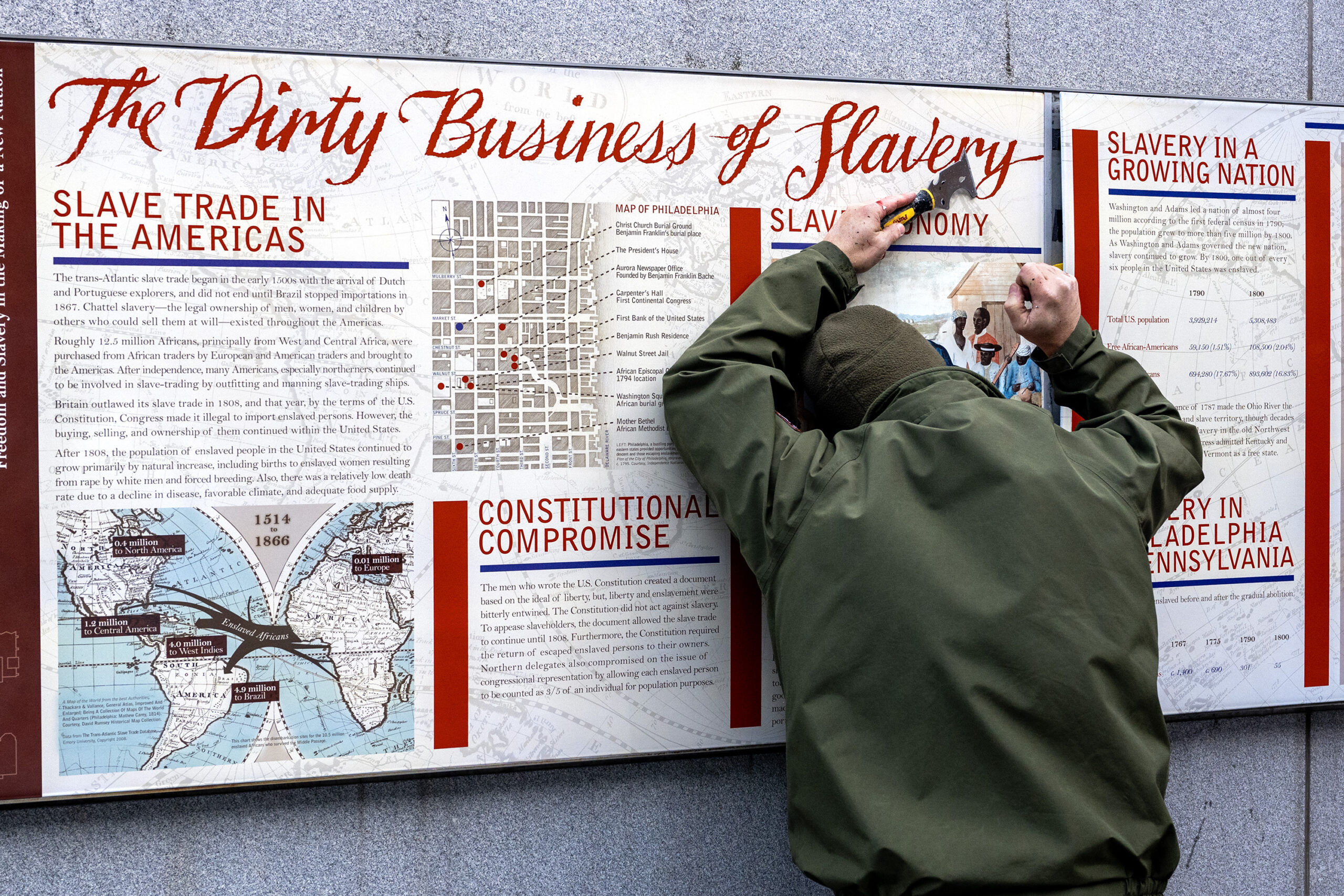
A NPS worker removes an interpretive panels – “The Dirty Business of Slavery” – at the President’s House site in Independence National Historical Park Thursday, Jan. 22, 2026.
When the schooners’ owners sued to reclaim their “property,” a Philadelphia judge ruled that the 135 aboard were people (not property) and ordered them freed. The Africans were remanded to the old Lazaretto for quarantine where they remained for up to three months.
Subsequently Sambo, Milnor, Yelle, and Culico Ganges and the rest of the 123 survivors were indentured to Pennsylvania Abolition Society members and others.
After Barnes’ phone call, the twins and their (late) older brother, Tendaji Ganges, visited the Lazaretto. At that time, the dilapidated building was locked. But Kelly returned with Barnes and gained access inside.
“I saw all of the little rooms … it was interesting to touch a piece of history, and know that that’s the genesis of how our family came to the United States,” he said.
“These modern-day heirs carry the legacy of resistance and survival into today’s conversations around justice, identity, and belonging,” said filmmaker Rah Crawford, whose documentary The Art of Brotherly Love focuses on the Ganges’ story.
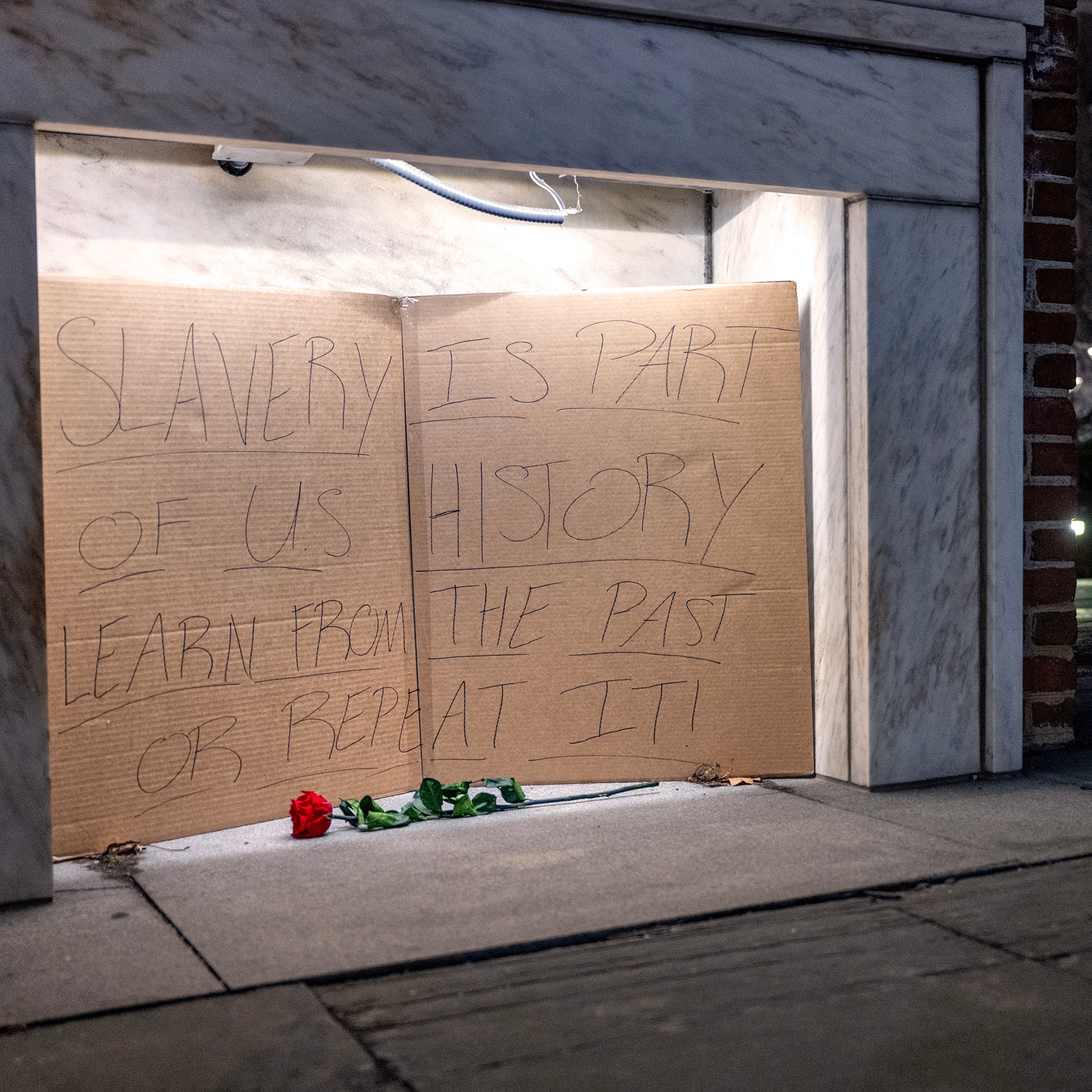
A single rose and a handwritten cardboard sign (“Slavery is part of U.S. history learn from the past or repeat it”) are inside an empty hearth at the President’s House site in Independence National Historical Park late Thursday, Jan. 22, 2026 after workers removed display panels about slavery.
When the film premiered in Brooklyn last year, Larry said that as he sat in the audience watching, he was shaking, almost in tears. His wife asked, “Are you OK? Are you cold?”
He was overcome with emotions: “I was sad, I was happy, I was mad.”
Although, as the brothers say, “we’ve got the generic connection to the name,” they don’t have a connection to identify individual family members that came through the old Lazaretto; they can’t yet determine how their bloodline was carried to them.
But thanks to the efforts of family historian Michael Kearney, who is tracking descendants of the Ganges’ survivors, Larry is confident that “my children and my children’s children [are going] to know what the story is, and to know how to access it, and know who the players are …. And hopefully this movie is not the last of what’s going to occur.”
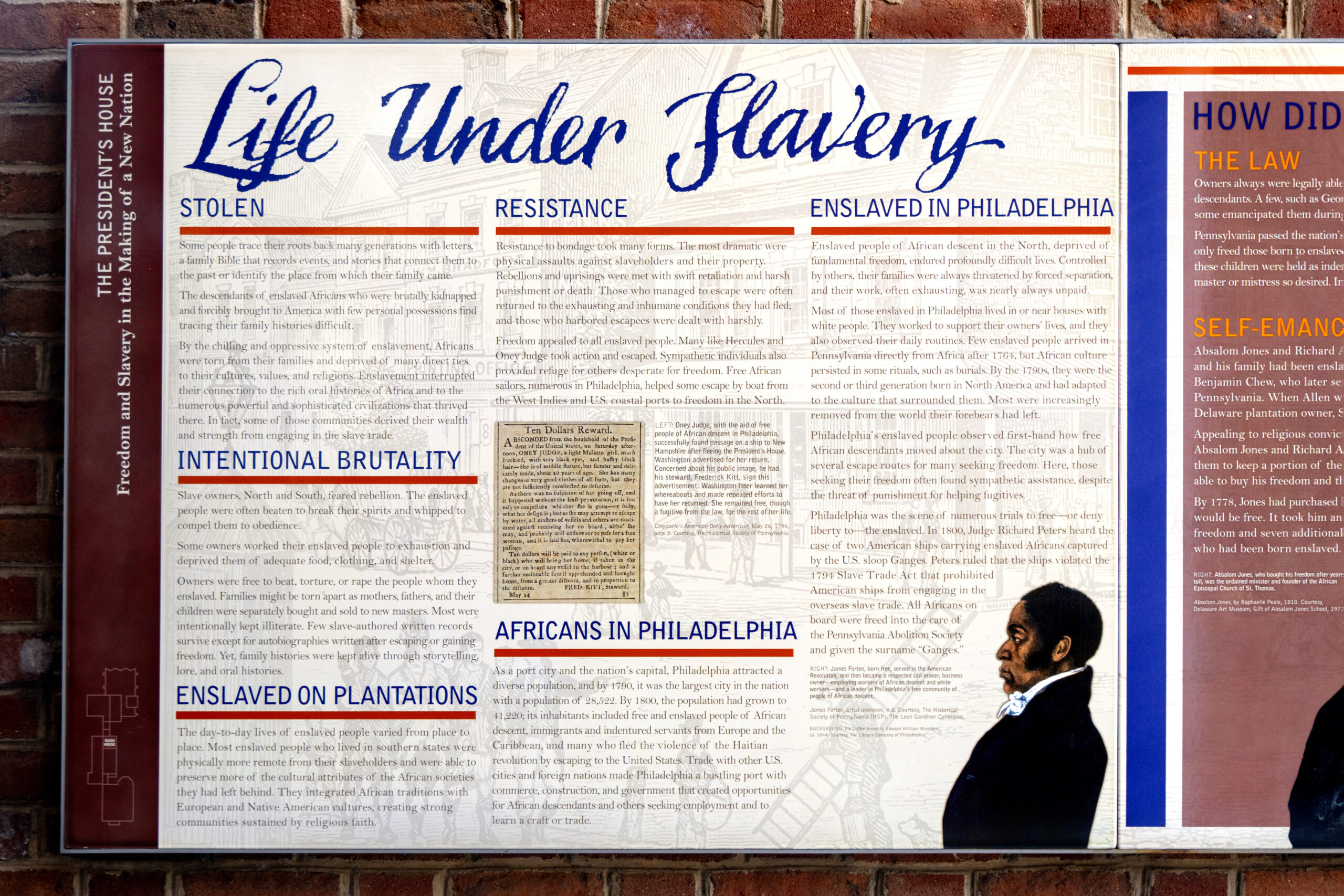
The “Life Under Slavery” sign at the President’s House in the Independence National Historical Park. The sign has since been removed. Photo from Sunday, Aug. 3, 2025.
“People made it through the troubled journey, the Middle Passage, and landed on American soil and contributed to make America a great nation,” said Kelly, “And nobody can ever deny that, and people can try and whitewash it and try to erase it, but it’s not going to work, because it’s real. Our contribution is documented.”
Prior to the opening of the President’s House in 2010, filmmaker Crawford was commissioned to create storyboards for a video installation at the site. Through his research, he first learned of the Ganges’ story, launching a 15-plus-year journey to produce the documentary.
Filmmaker Rah Crawford’s documentary “The Art of Brotherly Love” documents the story of the long-forgotten rescue of 135 enslaved Africans by the “Ganges” in the 1800s,
The Art of Brotherly Love, presented in partnership with Creative Philadelphia, is both a documentary and a trailer for a forthcoming animated feature. The Philadelphia premiere is slated for Feb. 14 at Ritz Five.
After the documentary screens, Kelly Ganges hopes that, “it just continues to cascade out — to inspire more genealogists and historians, and to reach more descendants and the next generation.”
“The Art of Brotherly Love,” Feb. 14, 11:30 a.m., Landmark’s Ritz Five, 214 Walnut St., eventbrite.com