Tag: Bucks County

  • Urban Outfitters’ Navy Yard headquarters is growing as the company adds employees

    Urban Outfitters’ Navy Yard headquarters is growing as the company adds employees

    The Navy Yard got a new boat this month. It isn’t a military ship and won’t be setting sail.

    The decommissioned 1977 tugboat, now painted in Urban’s signature yellow and marked by its logo, is now permanently stationed outside the company’s headquarters — as a sort of mascot, to company cofounder and CEO Dick Hayne.

    The tugboat’s arrival coincides with a momentous anniversary for Urban: the company’s 20th year at the Navy Yard. Urban staff started relocating 500 employees there in 2004, and the headquarters was fully operational by 2006. Now it has 15 buildings and just over 2,500 employees.

    And the company is continuing to grow.

    Urban Outfitters chief development officer Dave Ziel stands with a retired tugboat the company acquired for display at its Navy Yard headquarters.

    Urban’s newest addition at the Navy Yard is a 117,000-square-foot photo studio building, which opened in April.

    Urban announced earlier this month that it plans to hire at least 450 workers at the Navy Yard and at least 600 at a new Bucks County facility, which is set to open by 2028. Gov. Josh Shapiro joined Hayne for the news conference, and lauded the business as a home-grown global company bringing jobs to Pennsylvania.

    “We intend to stay here,” said CEO Hayne. “We have no thought of leaving.”

    How Urban grew from Philly roots to global retailer

    Urban was founded in 1970. The company’s roots are in West Philadelphia, where it opened its first store, a Free People. It now has almost 800 stores across the globe under the brand names Urban Outfitters, Free People, FP Movement, and Anthropologie.

    Walking into an Urban store doesn’t feel like stepping into a Macy’s where there are racks of clothes and bright fluorescent lighting, said senior analyst Gerard Machado at RetailStat.

    “It’s not like you’re running an errand to get something,” said Machado. “You might want to spend a little time looking at things. That’s a unique feature of Urban Outfitters.”

    Similarly, customers who wander into Anthropologie find artfully arranged dinner plates and glassware amid scented candles — not just items stacked in rows on shelves.

    Analysts say Urban is one of the more successful names in retail today, with strong sales numbers, loyal customers, and the ability to market to different audiences with its multiple brands. The company competes with the likes of J.Crew, Abercrombie & Fitch, Uniqlo, Ralph Lauren, Zara, and H&M.

    The company grew profits by more than 15% in its most recent fiscal year, with nearly $465 million in net income in the year ending Jan. 31.
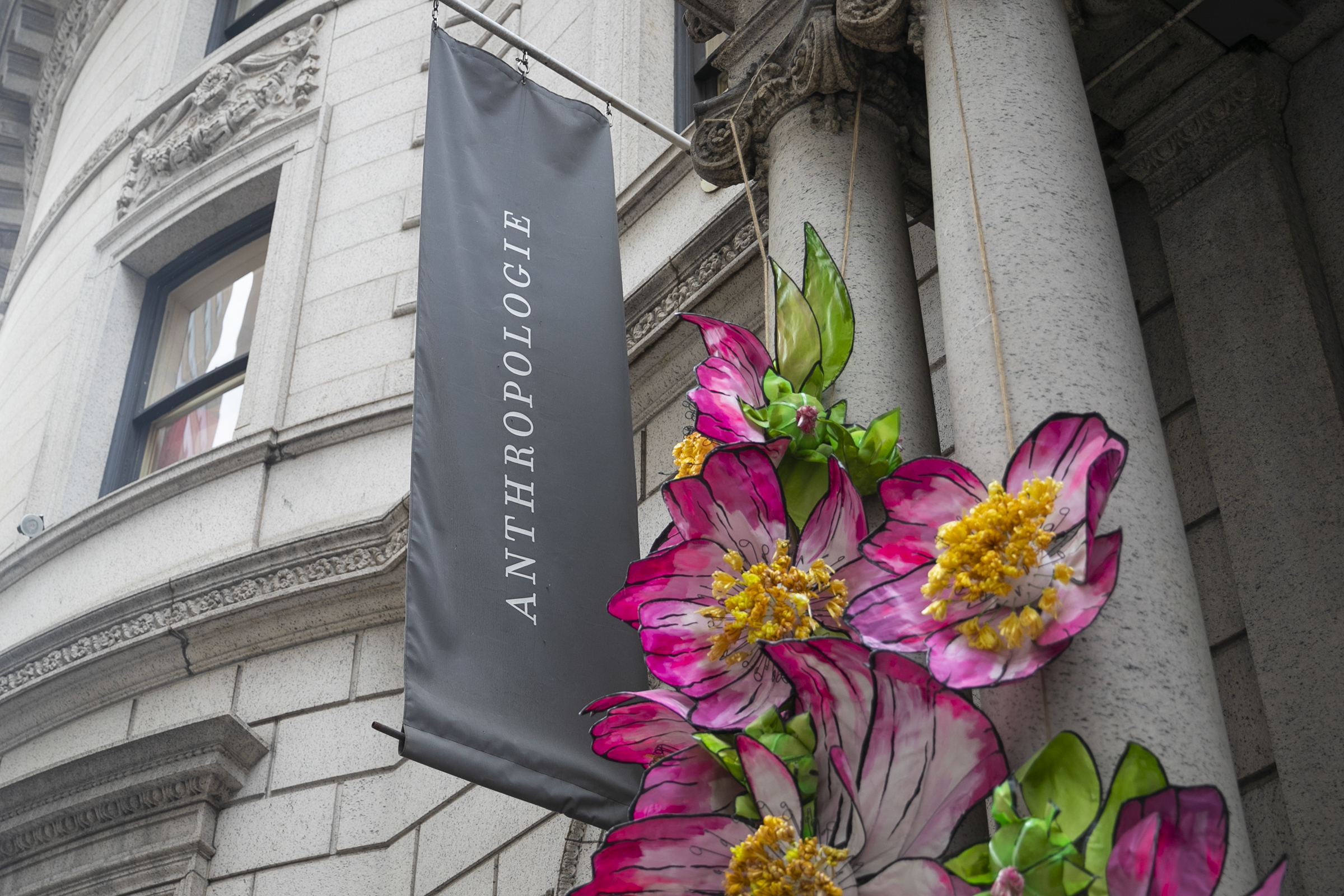
    The Anthropologie store at 18th and Walnut Streets in Center City is shown in this 2020 file photo.
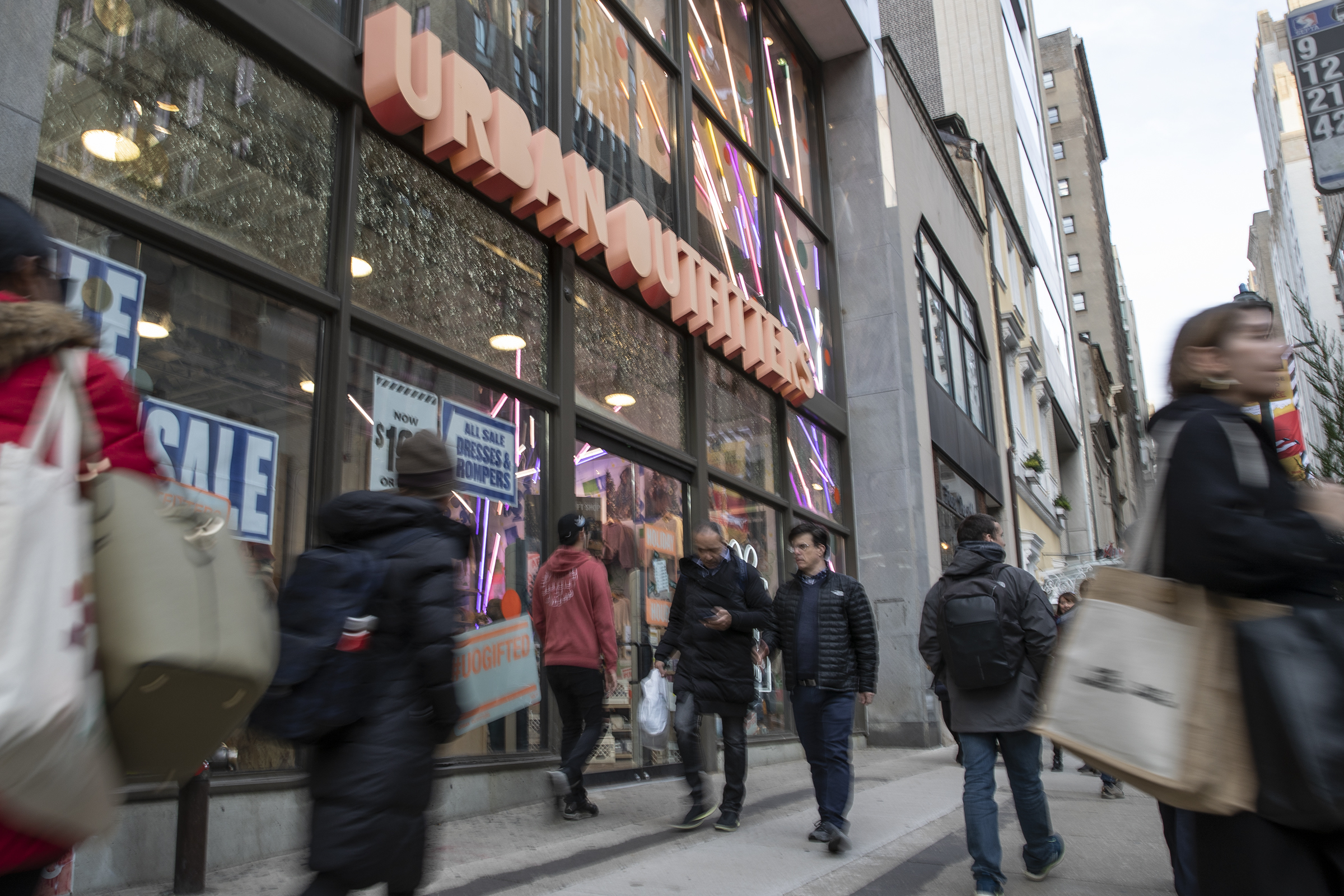
    People walk outside the Urban Outfitters store near 16th and Walnut Streets in Center City in November 2019.

    One key feature of Urban is that it’s experimental and innovative, said Neil Saunders, a retail analyst and managing director at GlobalData. Nuuly, the company’s clothing rental platform, which launched in 2019, is one of the “very few players that’s really successful” in that industry, he said. For $98 a month, subscribers get six fashionable items delivered to their door, which they can wear for a month and then ship back.

    But there have been financial hurdles, too.

    The Urban Outfitters brand struggled with declining sales in recent years. Gen Z consumers migrated “heavily into ultra fast fashion,” said Machado, and the brand didn’t adapt quickly enough. As merchandise piled up in inventory, Urban cut prices, which consumers grew to expect.

    To turn the brand around, the company set out to rebuild relationships with customers, bring on more items attractive to Gen Z, and engage with customers on platforms they were already on, like TikTok and YouTube, The Inquirer reported in 2023. The company hired a new president to helm the brand in 2024, and it returned to profitability last year.

    (function(){function e(){window.addEventListener(`message`,function(e){if(e.data[`datawrapper-height`]!==void 0){var t=document.querySelectorAll(`iframe`);for(var n in e.data[`datawrapper-height`])for(var r=0,i;i=t[r];r++)if(i.contentWindow===e.source){var a=e.data[`datawrapper-height`][n]+`px`;i.style.height=a}}})}e()})();

    Tariffs have also pushed the company to adapt in part by negotiating better terms with vendors, shipping items by sea instead of air, and slightly adjusting pricing.

    There have been workforce challenges too. In 2020, when a racial reckoning erupted in the country and seeped into corporate offices following the killing of George Floyd, Urban saw criticism from within its own workplace. Reports emerged of employees allegedly racially profiling customers as potential shoplifters, and some employees said people of color faced challenges to advancing their careers at the company, or reporting discrimination.

    “Since 2020, we have prioritized creating a culture of inclusion and belonging at our home office, in our stores, and at our facilities,” said Meaghan Condon, Urban’s director of communications and impact, in an emailed statement this month. She said that includes training for new hires and managers focused on inclusivity.

    Another key ingredient in the company’s culture: the Hayne family.

    Pennsylvania Gov. Josh Shapiro (left) with Urban Outfitters CEO Dick Hayne at the company’s newest building, which houses photo studios. They held a press conference in June to announce Urban Outfitters’ plans to hire over 1,000 new employees.

    Cofounder and CEO Dick Hayne’s son, Dave, is chief technology officer and president of Nuuly, and his nephew, Azeez Hayne, is chief administrative officer. His wife, Meg, is Urban’s co-president and chief creative officer.

    Together, Meg and Dick Hayne own roughly a quarter of the company shares, according to recent company filings.

    Frank Conforti, chief operating officer and co-president at Urban, said the family ties are an asset and part of the culture.

    Having a cofounder still at the helm has allowed Urban to focus on long-term strategy and take calculated risks, said Conforti, such as launching Nuuly. Investors weren’t all in on the idea to begin with.

    Now Nuuly has over 450,000 active subscribers — more than doubling that number since 2023.

    “We sort of don’t rest on what we did yesterday,” said Conforti. “It’s not about yesterday’s bestsellers.”

    Racks of clothing inside the Nuuly warehouse in Levittown, Pa., last year. Nuuly is a clothing rental subscription service that offers a variety of styles, sizes, and brands.

    A more efficient process

    In Urban’s newest building at the Navy Yard, rows and rows of wheeled clothing racks are spread across several rooms. Industrial metal shelves are filled with sneakers, sandals, and handbags. Lamps and armchairs wait to be photographed for e-commerce.

    The space was once used for building and housing ship components, noted Jennifer Calliagas, Urban’s North America director of planning, who led the new building’s development. Urban bought it from Rhoads Industries in 2016 for an undisclosed sum.

    Urban spent about $40 million to fit the space for its needs, which included stripping the building down to its structure, said chief development officer Dave Ziel. Construction started last year, and Urban employees began working in the space by mid-April.

    Inside the new building are adjoining rooms to seamlessly carry out the photography process: Clothing, shoes, and accessories are received in one room, then moved into the next room to be styled, and finally to the studio where they’re photographed. Staging areas are set up to portray bedrooms and bathrooms, functioning kitchens were built for cooking food to show in photos, and plants are on hand to finish off the staged living spaces.

    The Inquirer was not permitted to photograph the studios because the merchandise had not yet been released publicly.

    Not long ago, the company’s photo work was done in rented studios in New York City, Calliagas said, or scattered across the company headquarters.


    Vintage signage from the early days of Urban Outfitters, now displayed in the company’s Navy Yard headquarters.
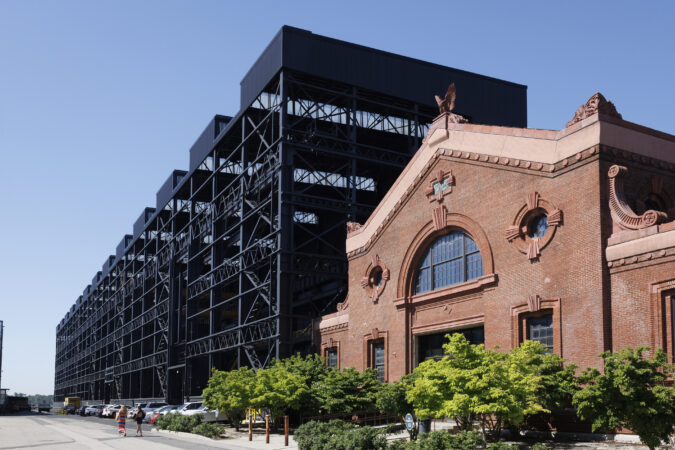
    Massive outdoor signage marks Urban Outfitters’ presence at the Navy Yard.

    “Anthropologie, for instance … would be receiving in one area and then going to another building for style-outs, and then sometimes going back into another building for shooting,” Calliagas said. “It was a really inefficient process.”

    At the Navy Yard, the company’s brands are housed in separate buildings, in part because they each “speak to their customer” in a different way, said Oona McCullough, executive director of investor relations. She called this kind of separation “states’ rights.”

    Consolidating the photo work under one roof has freed up space in other buildings, said Ziel, which is helpful for the continued growth of brands.

    “The brands are still growing pretty aggressively,” said Calliagas.
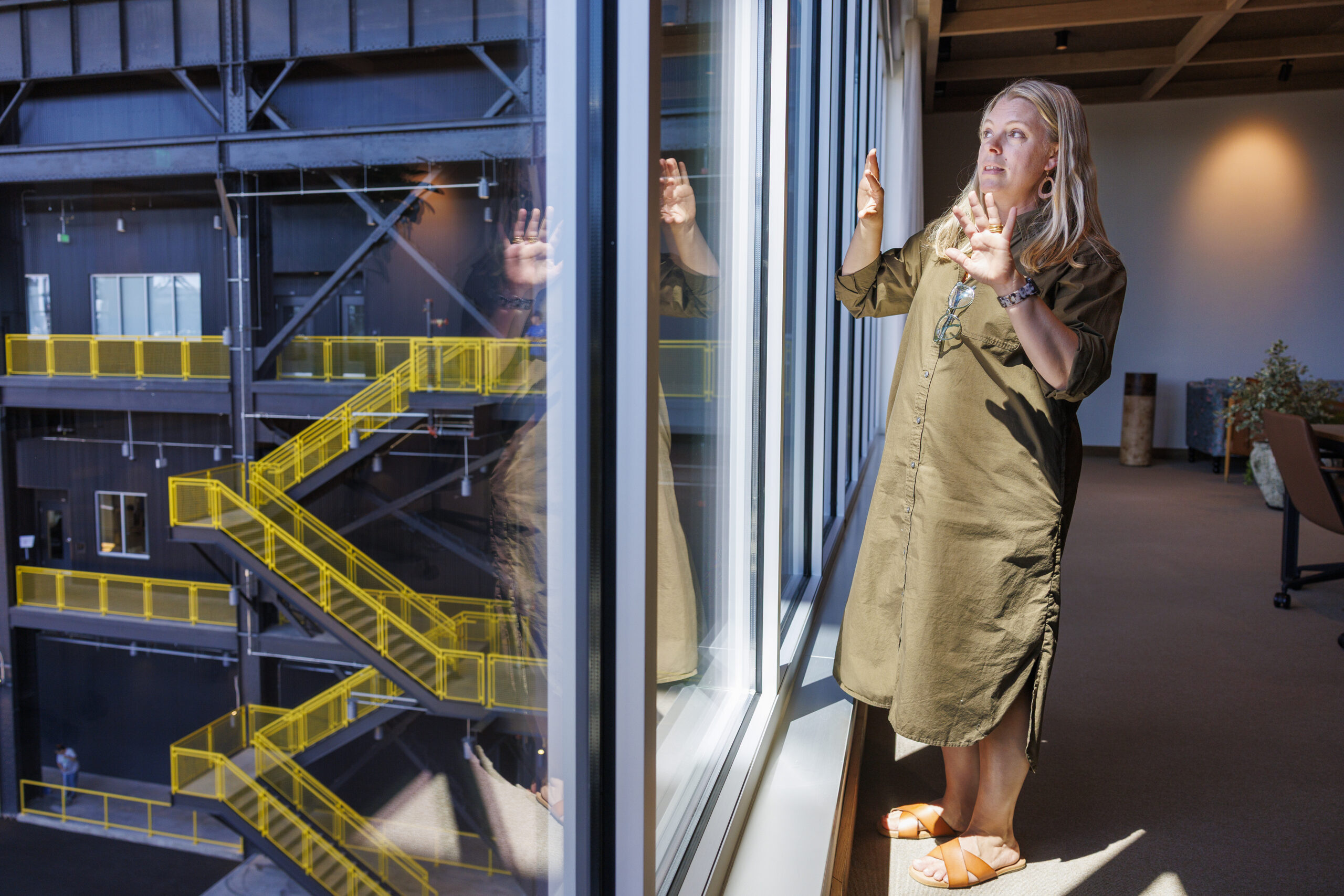
    Jennifer Calliagas, director of planning for North America, discusses how the company will use its photo studios at its newest building in the Navy Yard.

    A campus with more possibilities

    Conforti refers to the headquarters as a “campus,” with a “youthful” and “very collegiate” atmosphere. When bankers or investors visit the headquarters, “we tell them to dress down casual,” he said. “They drop their tie.”

    In keeping with standards set long ago by Google and other Silicon Valley tech companies, the campus is full of amenities. The newer ones include pickleball courts, a basketball court, and a walking track. And there’s plenty of green space for employees to walk their dogs, which are welcome in the workplace.

    Most people work in the office at least three days a week, said Conforti.

    “We’re not the most red-tape, bureaucratic company,” he said. “There’s just nothing like being here on campus getting things done. There’s an efficiency to it — and there’s a community.”
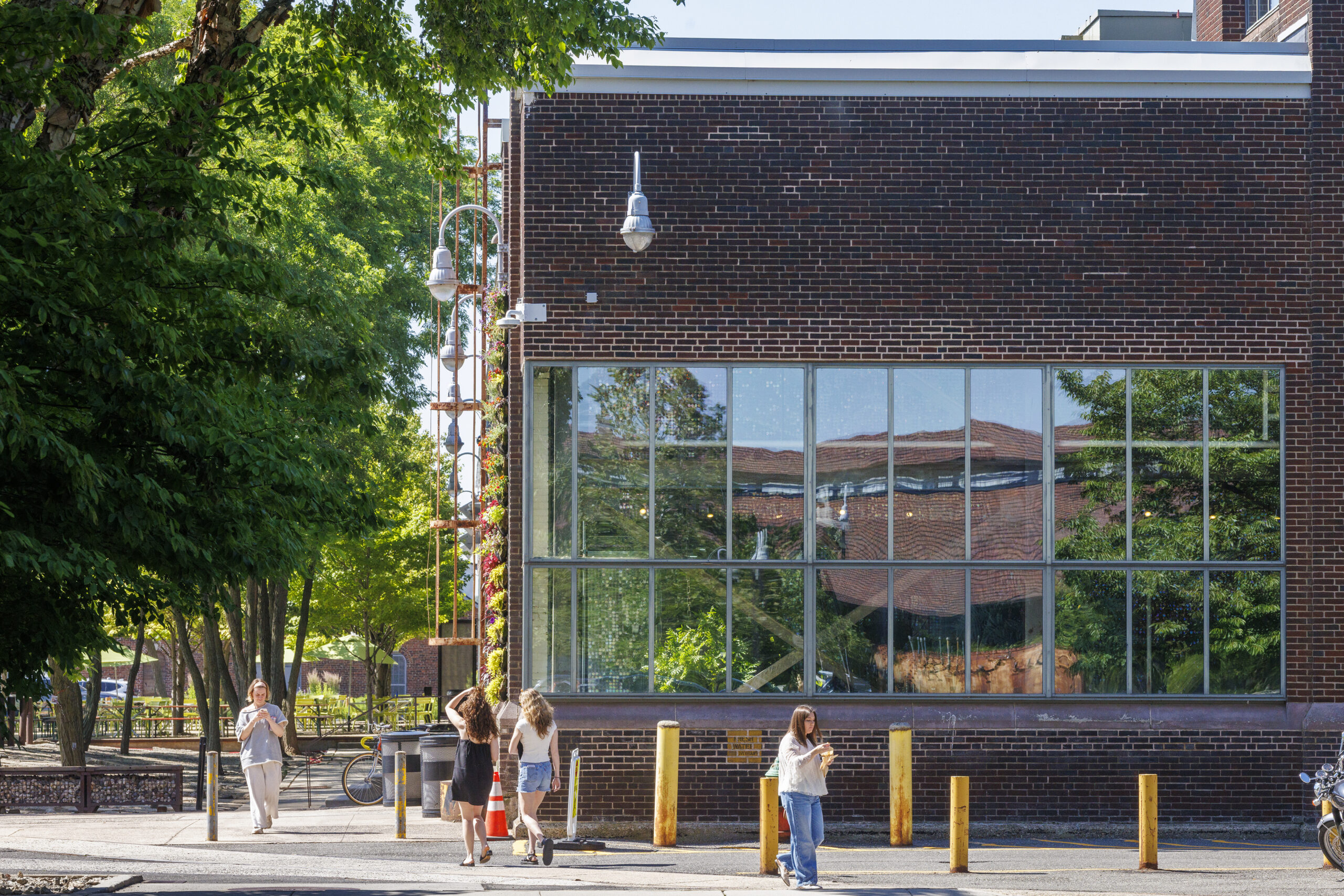
    People walk to and from the building that houses Urban Outfitters’ cafeteria, which is open to employees and the public.

    On a recent Monday, Urban’s cafeteria was just about to start serving warm lunches, and a few dozen people waited in line, while others roamed the large building with its decorative pools. Some wore U.S. Navy uniforms — the cafeteria is open to the public. Options included pizza, Teriyaki beef rice bowls, and grab-and-go items like ice cream bars and boxed sushi.

    CEO Hayne stopped in for a bag of chips and a wrap, seemingly unnoticed.

    At the June news conference, he recalled his first impression of the Navy Yard over 20 years ago: “I drove down Broad Street, came in Kitty Hawk [Avenue], looked at all these beautiful old brick buildings from the turn of the 20th century, and I said ‘sold!’”

    When Ziel, Urban’s chief development officer, first came to the Navy Yard with Hayne, he said, “there was nobody here.”

    “There was a raccoon — that was who I saw when we looked at the first buildings,” said Ziel, who has led the company’s real estate development.

    Decades later, Ziel still sees more opportunities for growth. “I have a couple excess buildings up my sleeve.”
  • Could a Pa. Supreme Court decision on skill games help fund SEPTA?

    Could a Pa. Supreme Court decision on skill games help fund SEPTA?

    More funding for SEPTA and dozens of financially strained mass transit systems across Pennsylvania has been on the back burner in this year’s budget debate, but it may get some more attention now.

    The Pennsylvania Supreme Court ruled June 15 that tens of thousands of the so-called skill games in bars and convenience stores are in fact slot machines — and illegal unless licensed, regulated, and taxed like casino-based slots.

    “By dedicating a portion of skill game revenue to transportation, we can protect and strengthen transit services without placing additional burdens on taxpayers, while ensuring our transit agencies have the resources they need,” Republican State Sen. Frank Farry of Bucks County said Friday in a statement.

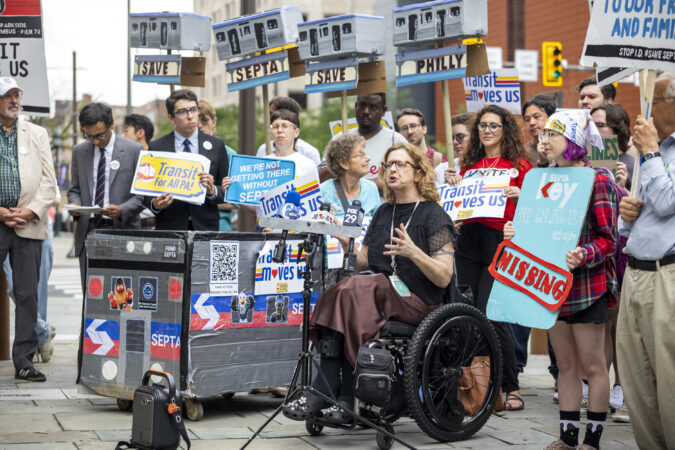
    Transit advocates renewed what has become an annual public push for more money for SEPTA and fellow transit agencies at a news conference in front of the Fifth Street/Independence Hall Station — prompted in part by the court decision.

    Farry issued the statement in support of that effort.

    “I have the freedom to be able to come here, thanks to this elevator behind us, which was recently renovated,“ said Julie Rea, an organizing fellow for Transit Forward Philadelphia who uses a wheelchair and depends on the Market-Frankford El (now called the L).

    “Without the long-term funding that SEPTA really needs, we’re not going to be able to keep the system accessible for all,” she said.

    Last year, lawmakers and Gov. Josh Shapiro failed for a third time to reach agreement on his proposal to dedicate an increased portion of general sales tax revenue to consistently fund transit agency operations for five years.

    Republicans, who control the Senate, did not want to take more sales tax revenue for transit, and the Democrats in charge of the House did not want to take up the GOP leadership’s counterproposal to use state money for infrastructure projects for operations instead.

    Farry offered legislation in 2024 to regulate and tax skill games and dedicate 50% of the revenue to create a stable source of funding for public transit. The most optimistic assessments are that taxes on the games at or near the rate casinos must pay for their slots could generate up to $1 billion a year.

    Taxing skill games has been discussed in budget deliberations for several years, though it never came together, in part because of differences of opinion in the GOP Senate caucus.

    “Maybe the court decision will spur people to get their act together,” Farry, who is up for reelection in the fall, said in an interview. “We have a pathway.”

    Shapiro has proposed taxing skill games at 52%, the same rate casinos pay for slot machine proceeds. Last year, the Senate GOP proposed a tax rate of 35% on the machines.

    When a transit funding deal failed to come together in 2025, SEPTA raised fares and slashed service, eliminating 32 bus routes outright, until a Philadelphia court ordered it to restore cuts in service.

    Shapiro then allowed SEPTA to use $394 million of reserved capital money in a state trust fund to pay to operate the transit system for two years; ironically, that was the same maneuver behind the GOP’s proposal.

    Meanwhile, this year, paratransit and shared-ride services are in trouble throughout the state and transit systems in Lancaster, Westmoreland County, and the Lehigh Valley are considering service cuts.

    “We know that the rural-urban divide is manufactured, and that a public good, like transit, touches us all,” said Connor Descheemaker, statewide campaign manager for Transit for All PA.

  • Mr. Edison brings old-school glamour — and chef Matt Levin — back to Center City

    Mr. Edison brings old-school glamour — and chef Matt Levin — back to Center City

    Veteran restaurateur Jeffrey Chodorow has spent decades in and around Philadelphia without ever opening a restaurant here.

    That changes Thursday at the Bellevue, where the mind behind such destinations as China Grill and Asia de Cuba is opening Mr. Edison, a supper club-style restaurant and bar built around dinner, drinks, and live music.

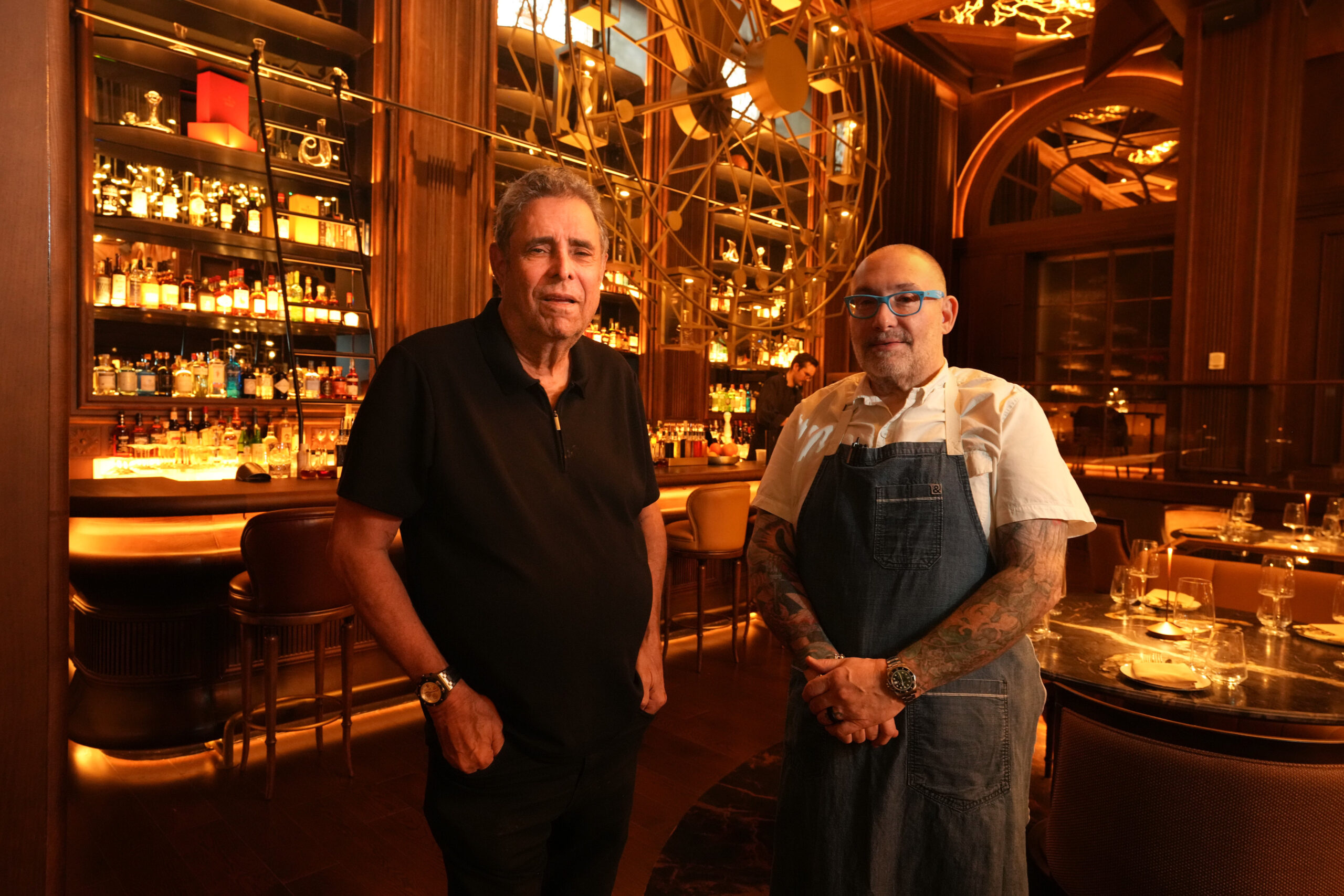
    Jeffrey Chodorow (left) with chef Matt Levin at Mr. Edison at the Bellevue.

    Mr. Edison is also a throwback: a large, theatrical restaurant built as much for occasion as for dinner.

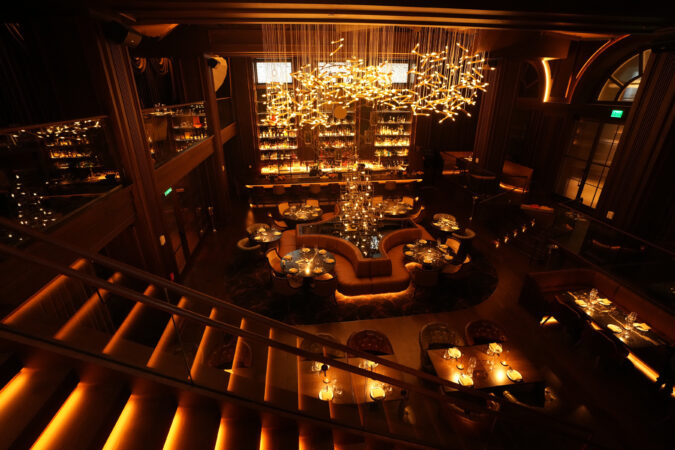
    The room, in the former Polo Ralph Lauren store, announces itself immediately from the new Walnut Street entrance just west of Broad Street: a two-story space topped by a dense canopy of suspended Edison bulbs, clustered in branching formations that cast the dining room in a warm amber glow.

    The ceiling seems to split open in places, allowing lightning bolt-like streaks of light through — all the work of Manuel Clavel of Spain’s Clavel Arquitectos. Behind the bar is a 12-foot-tall Ferris wheel, its dozen spokes each carrying a bottle of wine or spirits and turning the backbar into something like a stage set.

    Caviar service at Mr. Edison.

    Building owner Dean Adler, who is investing millions in the Bellevue as part of its redevelopment, put the 160-seat restaurant’s price tag at $10 million. “I think I got my money’s worth,” he said Tuesday. Adler also plans to install a library bar off the Bellevue’s lobby on the Broad Street side, where the Palm was before its closing in 2020.

    “I love history, so to take a genre — a 1940s-type environment — and bring it into 2026 has been really exciting,” said Chodorow, who of late has been shuttling between his Bucks County home and Miami Beach, where he opened China Grill Bar Harbour two weeks ago.

    Mr. Edison — named for Thomas Edison, who helped bring electricity to the Bellevue in 1904 — is calibrated to the building’s long identity as a grand social address. It also carries a personal connection for Chodorow. In 1982, when he was a lawyer at Blank Rome, he rented the roof for his own Rio-themed engagement party to celebrate with his wife, Linda.

    “This is not a tiny little neighborhood restaurant,” Chodorow said. “This is a place where you come to have a night.”

    Bottles glow inside niches at Mr. Edison.

    Chodorow built his reputation on restaurants that function as entertainment as much as dining. He rose in the business in the 1980s and ’90s with New York hotspots, such as Asia de Cuba, Kobe Club, and Red Square, and said he long avoided opening in the Philadelphia area because he wanted to keep work separate from family life.

    With his children grown, that changed. At the Bellevue, Chodorow said, he saw an opportunity to build destination dining — a place where patrons might stop in for cocktails and snacks or settle in for dinner and stay long into the evening. The room is arranged to support both. A large bar runs along one wall; tables and banquettes wrap around in multiple zones and along a mezzanine; and a piano with an old-fashioned microphone sits on a platform to one side.

    Chef Matt Levin at the stove at Mr. Edison.

    “We’re trying to create an experience,” he said. “Not just a restaurant.”

    To run the kitchen, Chodorow recruited chef Matt Levin to come back downtown. Levin, who made his name at Lacroix at the Rittenhouse and later at Adsum in Queen Village, has spent much of the last decade in catering, consulting, and Bucks County restaurants. Chodorow found him at Pineville Tavern in central Bucks County, where Levin had been consulting and where owner Andrew Abruzzese is an old friend and neighbor.

    Mr. Edison is more interested in reworking the classics than experimentation. Levin and Chodorow drew on dishes from Philadelphia landmarks, including the crab galette from Le Bec-Fin, where Levin worked for several years, the Milan salad from Jimmy’s Milan, and duck with orange sauce from La Panetière.

    Edison bulbs provide the lighting at Mr. Edison.

    Levin said the menu is a way of tapping into Philadelphia’s dining memory. “I think Philadelphia has a lot of shared history,” he said. “I think people will remember bits and pieces and say, ‘Oh, I remember that — let me try it.’”

    The challenge, Levin said, was to build a menu flexible enough to support several kinds of nights at once. “You want to be able to have people come in and just have a drink and a couple of things,” he said, “but also have the people who are coming in to really have dinner.”

    Jeffrey Chodorow in front of the bar and Ferris wheel at Mr. Edison.

    Chodorow said average tabs would be $100 to $110 per person for a dinner experience. He said roughly 25 dishes can work as a grazing menu, alongside larger-format entrees, raw-bar offerings, seafood, and steaks. Levin also brought over a foie gras tartlet with cherries and pistachio, adapted from a dish he served at Moonlight.

    The beverage program leans into the Edison theme with cocktails named for his inventions, including Patent Pending and Filament No. 6.

    Filament No. 6 at Mr. Edison.

    For Chodorow, the point of Mr. Edison is straightforward: “I wanted something that felt special,” he said.

    “I wanted people to walk in and say, ‘Wow.’”

    Mr. Edison opens Thursday at the Bellevue, Broad and Walnut Streets. Hours are 4:30 to 10 p.m. Sunday through Thursday and 4:30 to 11 p.m. Friday and Saturday. The bar will remain open later.

  • Yardley family is suing an infant formula company after their baby developed botulism

    Yardley family is suing an infant formula company after their baby developed botulism

    Erica and Micky Goldfin’s 2-month-old son wasn’t eating and seemed to be having trouble swallowing. His cries were weak, and his eyelids were droopy.

    Within weeks, the Yardley parents were rushing their baby to Children’s Hospital of Philadelphia, where he was admitted June 1 to the intensive care unit and treated for infant botulism, a rare, potentially deadly infection that affects the nervous system and can lead to paralysis, according to court records.

    The couple are now suing Nara Organics, the maker of the whole milk infant formula they began feeding their son days after his birth in March, and Target, where they bought it. New York-based Nara Organics voluntarily recalled all of its infant formula on June 13, after the U.S. Food and Drug Administration and Centers for Disease Control and Prevention reported three cases of infant botulism in babies who had consumed Nara formula in Pennsylvania, California, and Washington.

    In the lawsuit, filed Monday in the U.S. District Court for the Eastern District of Pennsylvania, the family alleges that Nara Organics did not do enough to protect customers after federal regulators cautioned that whole milk powder can carry the bacteria that cause botulism.

    “Parents trusted a label that told them this was the safest, most premium thing they could feed their child,” said Bill Marler, a foodborne illness lawyer and a managing partner at Washington-based Marler Clark, who is representing the family.

    The Goldfins, who declined an interview through their lawyer, are also represented by Cherry Hill’s Ferrara & Gable.

    Nara Organics did not respond to a request for comment, but said on its website that it had issued the recall “in an abundance of caution,” and that none of its formulas had tested positive for the botulism-causing bacterium C botulinum. Tests are ongoing, according to the lawsuit.

    “We believe in taking the strongest possible measure to protect the safety of babies,” the company wrote in its recall. “Your family deserves to have complete confidence in the safety of your baby’s food.”

    Target did not respond for a request for comment.

    This is the second recent botulism outbreak linked to powdered whole milk infant formula. An infant botulism outbreak associated with ByHeart formula that began in November sickened at least 28 babies.

    What is botulism?

    Infant botulism is caused when babies ingest C botulinum in foods or dust and dirt particles. The bacteria’s spores colonize in the large intestine and release a toxin that affects the nervous system.

    Symptoms include changes in facial expressions, such as smiling less; slow feeding; constipation; and low energy.

    Untreated, the toxin can spread and cause paralysis, making it hard for babies to breathe and eat.

    Infants are at greatest risk of illness because their digestive systems are still developing and less able to fight off infection. Nationally, there were 181 cases of infant botulism in 2021, the most recent year for which CDC data are available.

    The Goldfin infant, who was identified only by the initials W.G., spent two nights in the intensive care unit at CHOP, where he was treated with BabyBIG, the botulism antitoxin that is manufactured by the California Department of Public Health and must be flown to hospitals overnight. The medication’s antibodies bind to the toxin and neutralize it, and symptoms improve within 48 hours.

    On June 6 he returned home, where he is feeding well again, and regaining movement in his arms and legs. He is receiving weekly physical therapy for head lag and delays in his gross and fine motor skills, according to the lawsuit.

  • Inside the $70 million makeover of Roosevelt Mall

    Inside the $70 million makeover of Roosevelt Mall

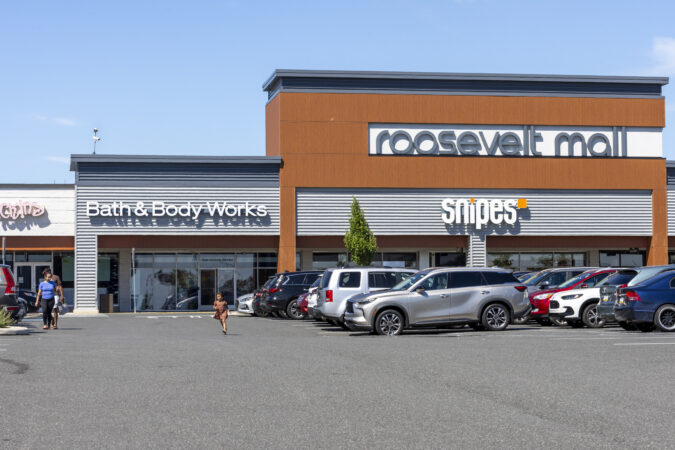
    As Brixmor Property Group executives began transforming the Roosevelt Mall, they briefly debated whether to change the name.

    After all, the 60-year-old Northeast Philly shopping center is undergoing a more than $70 million makeover that promises to bring it into the modern age with new tenants, upgraded facades, and a better layout.

    As Brixmor executives walked around the 620,000-square-foot complex on a recent day, they said they already see the outdoor mall becoming a community hub — with a gym, an organic grocer, and new fast-casual dining options.

    Despite these changes, they have decided the Roosevelt Mall should not be rebranded.

    “It’s an iconic name,” said David Vender, Brixmor Property Group’s executive vice president for the north region, who is based in Conshohocken. “People know it as a landmark.”

    Brixmor operates about 350 shopping centers nationwide, but some of its top executives — including new CEO Brian Finnegan, who grew up in Roxborough — have soft spots for Philly, forged by personal or family connections to the region.

    During a visit to the Roosevelt Mall last week, they said they were proud of their local properties.

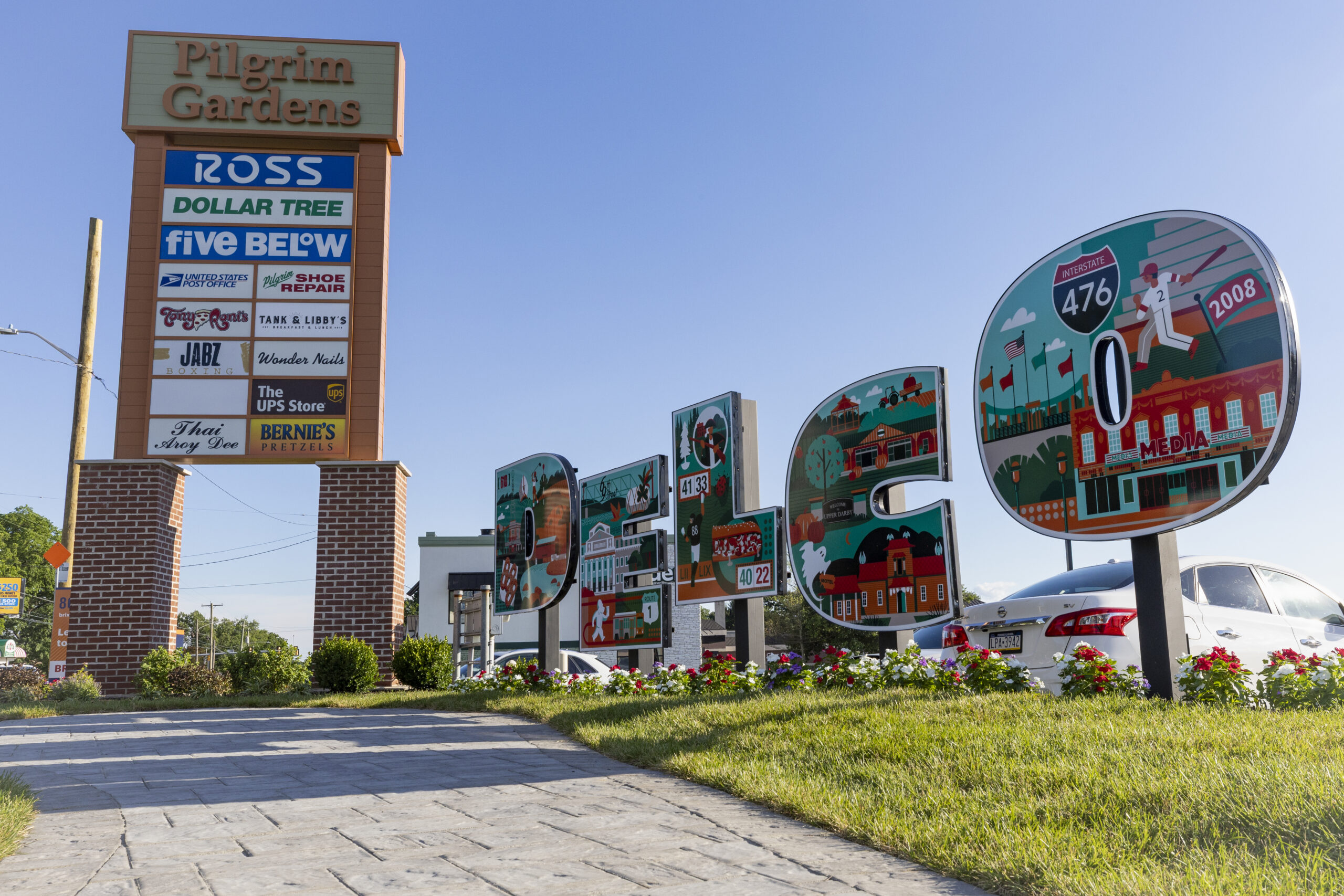
    Those include the Village at Newtown in Bucks County and Pilgrim Gardens in Drexel Hill, where the company recently built an artful “Delco” sign to tap into local pride.

    A new Delco sign is shown at Pilgrim Gardens in Drexel Hill on June 16.

    And they said their connection to the community around the Roosevelt Mall has only grown stronger since last year’s plane crash, which killed eight people, injured two dozen, damaged nearby homes, and left an 8-foot-deep crater in front of the mall.

    Even before the tragedy, they said, they considered how their local redevelopments affected the Philly-area residents who shop, eat, and drive by their centers every day.

    At the Roosevelt Mall — which sits on 36 acres between Cottman Avenue, Roosevelt Boulevard, and Bustleton Avenue — these decisions have begun to pay off.

    In the last year, the center logged 6.3 million visits, a 5% year-over-year increase and a 19% jump when compared with the 12 months before Sprouts Farmers Market’s 2024 opening, according to company executives.

    Occupancy was over 98% this spring, they said, and customers spend about 35 minutes there on average, on par with the national average for all Brixmor complexes.

    When you’re able to bring together “higher-quality food and beverage, fitness, service … then you’re also able to attract more elevated retail” stores, said Finnegan, noting that Ulta Beauty and Victoria’s Secret are among the tenants signed on for the next phase of the Roosevelt Mall’s redevelopment.

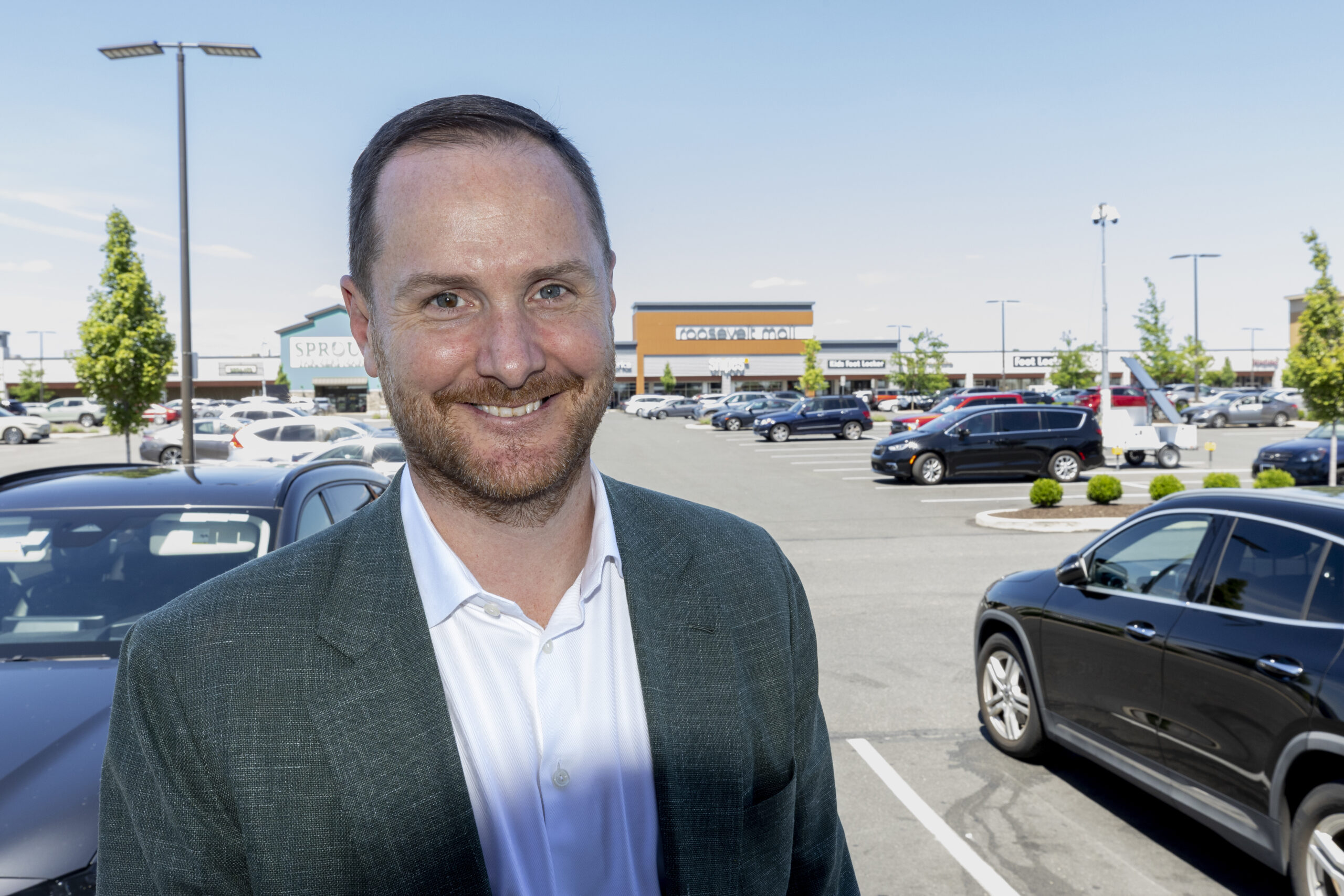
    Brian Finnegan, CEO and president, at Brixmor Property Group, at the Roosevelt Mall in Northeast Philadelphia.

    Achieving the tenant mix of a modern shopping center

    When the Roosevelt Mall opened in 1964, its main promenade was referred to as “Chestnut Street Northeast,” with several outposts of Center City clothing stores, according to an Inquirer article from the time.

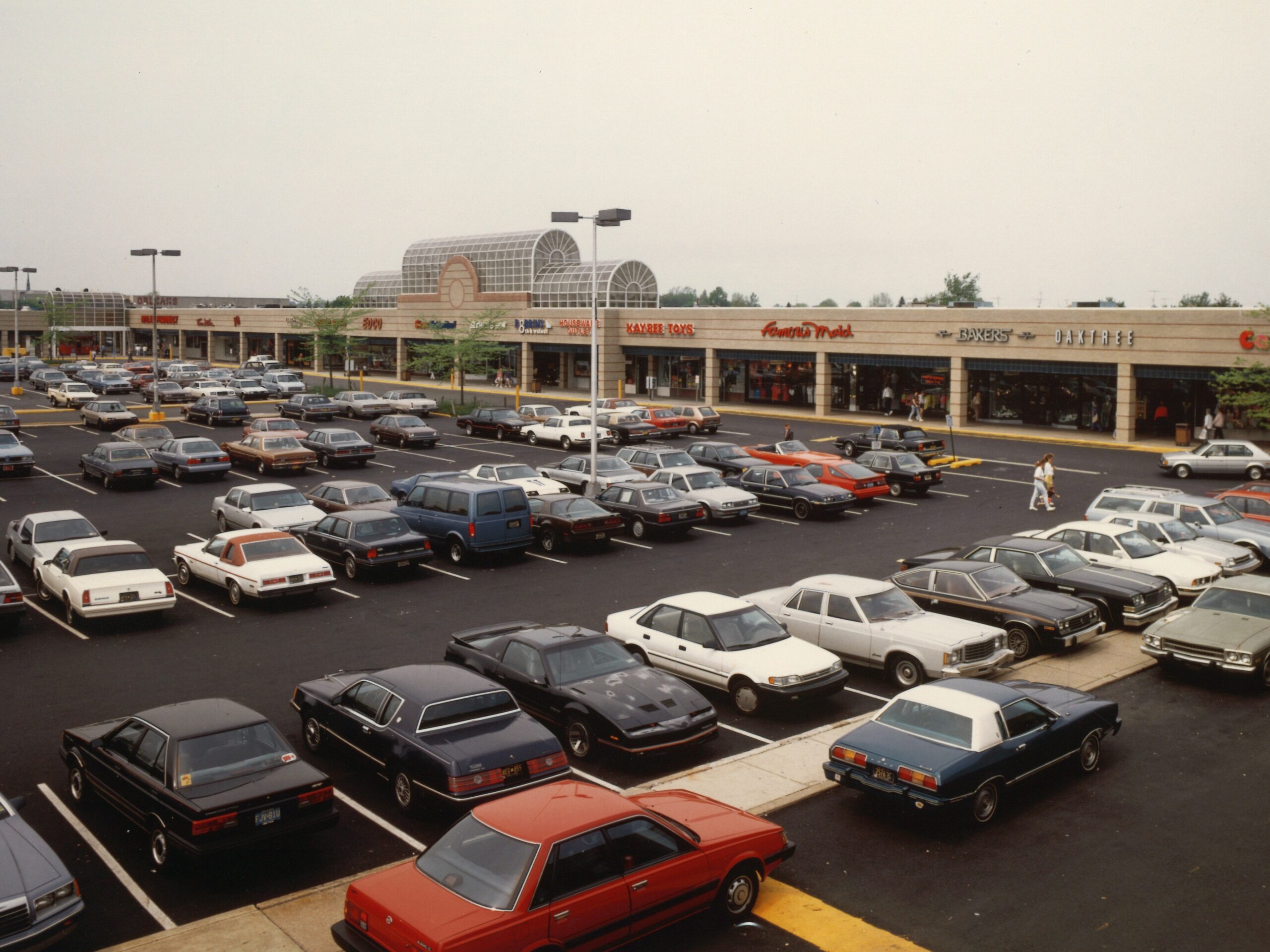
    The shopping center had apparel shops, such as Baker Shoes and Famous Maid, as well as “the Cavalier, a cafeteria-style restaurant with a game room and a retail bakery,” The Inquirer reported. It was anchored by an S. Klein’s discount department store.

    The Roosevelt Mall was built as part of the Roosevelt Boulevard shopping complex, bordered by Cottman and Castor Avenues. The larger development — which also had Gimbels and Lit Bros. department stores — was called the country’s largest “in-town” shopping center at the time.

    Roosevelt Mall in Northeast Philadelphia is shown in earlier days, long before Brixmor Property Group remodeled the property.

    Decades later, consumers can buy clothes, home goods, even groceries online with just a few clicks. So shopping centers need more than just retail stores, said executives at Brixmor, which became the Roosevelt Mall’s owner more than a decade ago.

    They said they have intentionally brought in tenants that customers may visit multiple times a week and added more pedestrian walkways, open-air plazas, and outdoor seating.

    “Historically, shopping centers were very utilitarian, and now they’re really becoming more community assets, so we’re really careful about our merchandising mix,” said Ryan Guheen, Brixmor’s senior vice president of development.

    Roosevelt Mall in Northeast Philadelphia is shown in earlier days, long before Brixmor Property Group remodeled the property.

    The latest redevelopment push began around 2020, when Brixmor opened an LA Fitness outpost on the site of a former Turf Club off-track betting venue, near a new Oak Street Health clinic.

    Since then, the company has constructed buildings in underused sections of the parking lot and filled them with popular chain eateries like Raising Cane’s chicken; the American-Chinese food spot Panda Express; and Tous les Jours, a Korean-French bakery and coffee shop.

    The Sprouts organic grocer has driven traffic to the center since it opened in 2024, and a nearby Wonder dine-in food hall and delivery kitchen opened last year.

    Annual customer visits to Roosvelt Mall have increased 13% since Sprouts organic grocer opened there in 2024.

    The 37,000-square-foot under-construction building, set to house a Victoria’s Secret and an Ulta, will also include fast-casual staples like Shake Shack and Cava, which serves Mediterranean bowls and pitas.

    Tenants like these, Guheen said, provide “multiple opportunities for people to stay on property to shop retail, get their workout in, go to the bakery, get a coffee.”

    Some mall retailers have found homes in shopping centers

    As Brixmor executives diversify the tenant mix at their shopping centers, they say they do not see retail stores going extinct.

    In fact, as some indoor malls deteriorate or become residential-focused town centers, “the open-air strip centers benefit,” Vender said, as traditional mall retailers look to open more stores in outdoor complexes.

    Elsewhere in the Northeast, the Franklin Mall, formerly Franklin Mills, has been in decline for years and was recently listed for sale. Real estate investor Dean Adler has said he wants to buy the 137-acre mall and turn it into a youth sports complex with a hotel and Margaritaville-themed water park.

    Seven miles away, the Roosevelt Mall is home to several shops that were once found almost exclusively in enclosed malls, such as Bath & Body Works, Foot Locker, and the forthcoming Victoria’s Secret. These companies’ higher-ups have pivoted in recent years, adding more locations in open-air centers.

    “It’s not like retailers are leaving malls en masse … at least in the best malls,” Finnegan said. But “as they open stores in open-air shopping centers with grocery stores, with fitness uses, with elevated food and beverage, they’re seeing the sales performance” — and then want to keep investing in shopping centers.

    Longer-standing retail tenants are continuing to see success, too. Finnegan said the Roosevelt Mall’s 300,000-square-foot standalone Macy’s is among the company’s top-performing locations in the region, rivaling the King of Prussia Mall store.

    The department store is the center’s largest driver of traffic, recording more than 900,000 annual visits, said Brixmor executives, who are not worried about the department store closing as the Center City store did last year.

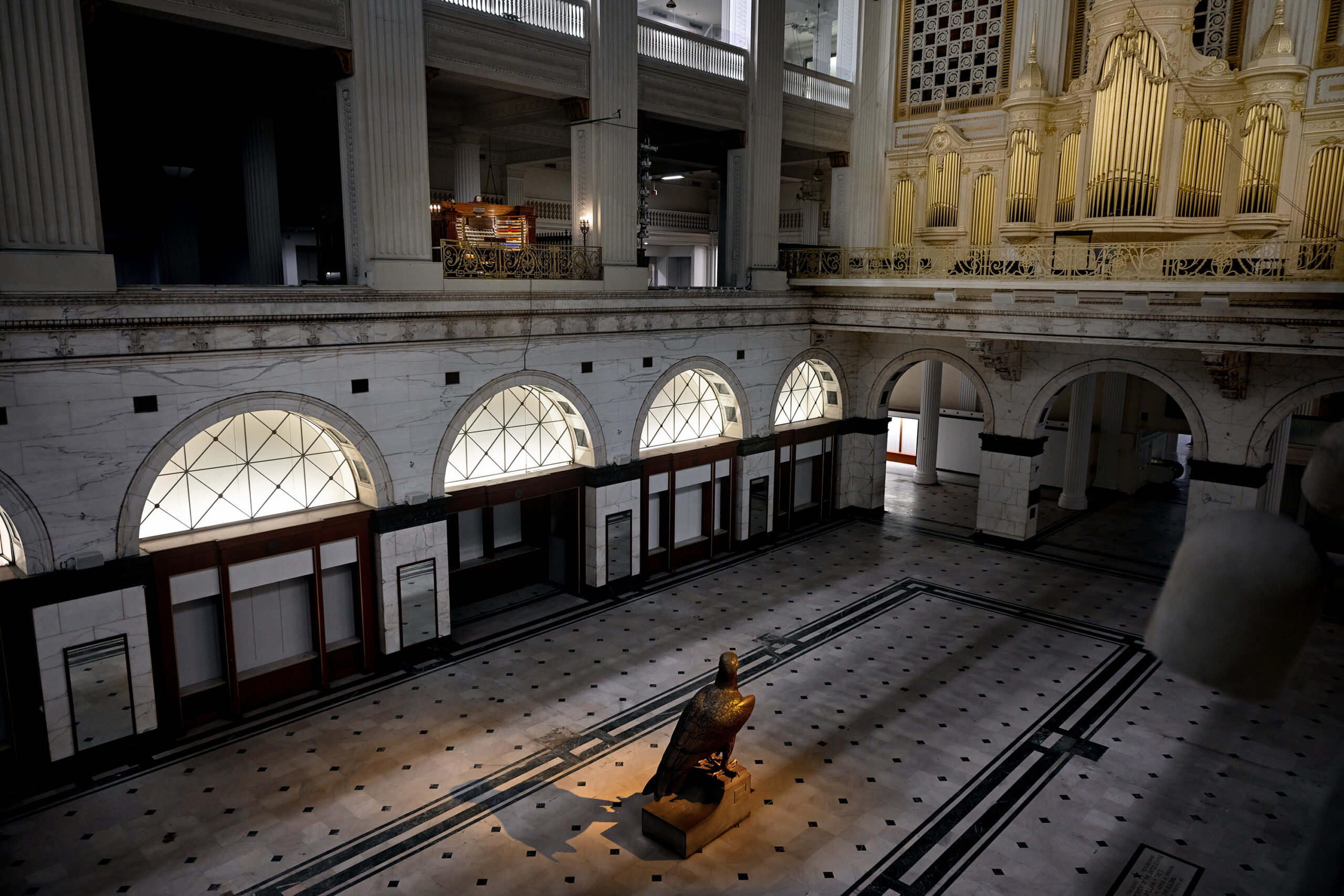
    As seen in September, the Macy’s in the Wanamaker Building in Center City now sits empty. It closed last year.

    A Rita’s Water Ice franchise has also stayed put in the Roosevelt Mall for decades, Finnegan said.

    Company executives said they are optimistic this momentum will continue. Along with the under-construction section, redevelopment plans also include another standalone building that has yet to break ground — and the cost of which is not included in the current price tag.

    Finnegan put it simply: “Opportunity begets opportunity.”

  • ‘I learned early on to leave while on top’: Bucks County Playhouse’s beloved producing director is stepping down after leading the theater through remarkable growth

    ‘I learned early on to leave while on top’: Bucks County Playhouse’s beloved producing director is stepping down after leading the theater through remarkable growth

    Before the opening of every new production at Bucks County Playhouse, producing director Alexander Fraser scans the audience and walks to the front of the stage to deliver a speech.

    In his 12 years with the Playhouse, he has talked about preparation, execution, and the magic of seeing all these things coalesce. He’s thanked all the people involved in the production and the rows of theatergoers who’ve made it worth the grind.

    When he arrived in New Hope over a decade ago, Fraser was “terrified” of these speeches. Now he relishes the spotlight.

    “I hated doing them in the beginning, but now I’ve turned into Joan Rivers,” he joked.

    Saturday’s opening of the 1949 musical South Pacific, however, won’t have him do his usual spiel. The opening of the Rodgers and Hammerstein classic is his last as the Playhouse’s producing director.

    Alexander Fraser finds a pair of shoes from the 1975 musical A Chorus Line as he clears out his office Tuesday, April 7, 2026. His dog is Milo.

    “It’s just surreal,” Fraser, who announced his departure last year, said. “It’s been a whirlwind couple of months …It’s been sweet and I feel really complete. I don’t have any regrets about it. I think it’s the right thing to do.”

    Fraser is retiring from full-time production, and instead lending his services to develop new musicals and nightclub experiences. His production partners, Robyn Goodman and Josh Fiedler, will also be departing to work on current and future productions under their company, Aged in Wood.

    Fraser said he already has a few irons in the fire, but he plans on spending the majority of his days sun-soaked on a beach in Puerto Vallarta, Mexico, and tanning like the “raisins” that walk the beaches of Palm Springs.

    The departure, Fraser said, is easier knowing there’s an incoming leader with experience and ideas that mirror his own.

    On June 22, theater veteran BT McNicholl will step in as the Bucks County Playhouse’s producing artistic director.

    “I’m at home here,” said McNicholl, who grew up in Connecticut and led Los Angeles’ La Mirada Theatre for a decade.

    Like Fraser, McNicholl has worked on several Broadway plays and musicals , including Billy Elliot, Cabaret, and A Funny Thing Happened on the Way to the Forum. As director, his work spans productions across Europe, Asia, and Australia, and his regional directing credits include productions at Goodspeed Musicals, the Walnut Street Theatre, and other places.

    He said he’s excited to be at the helm of the nonprofit theater and embrace its audience, one that’s seen tremendous growth under Fraser’s leadership.

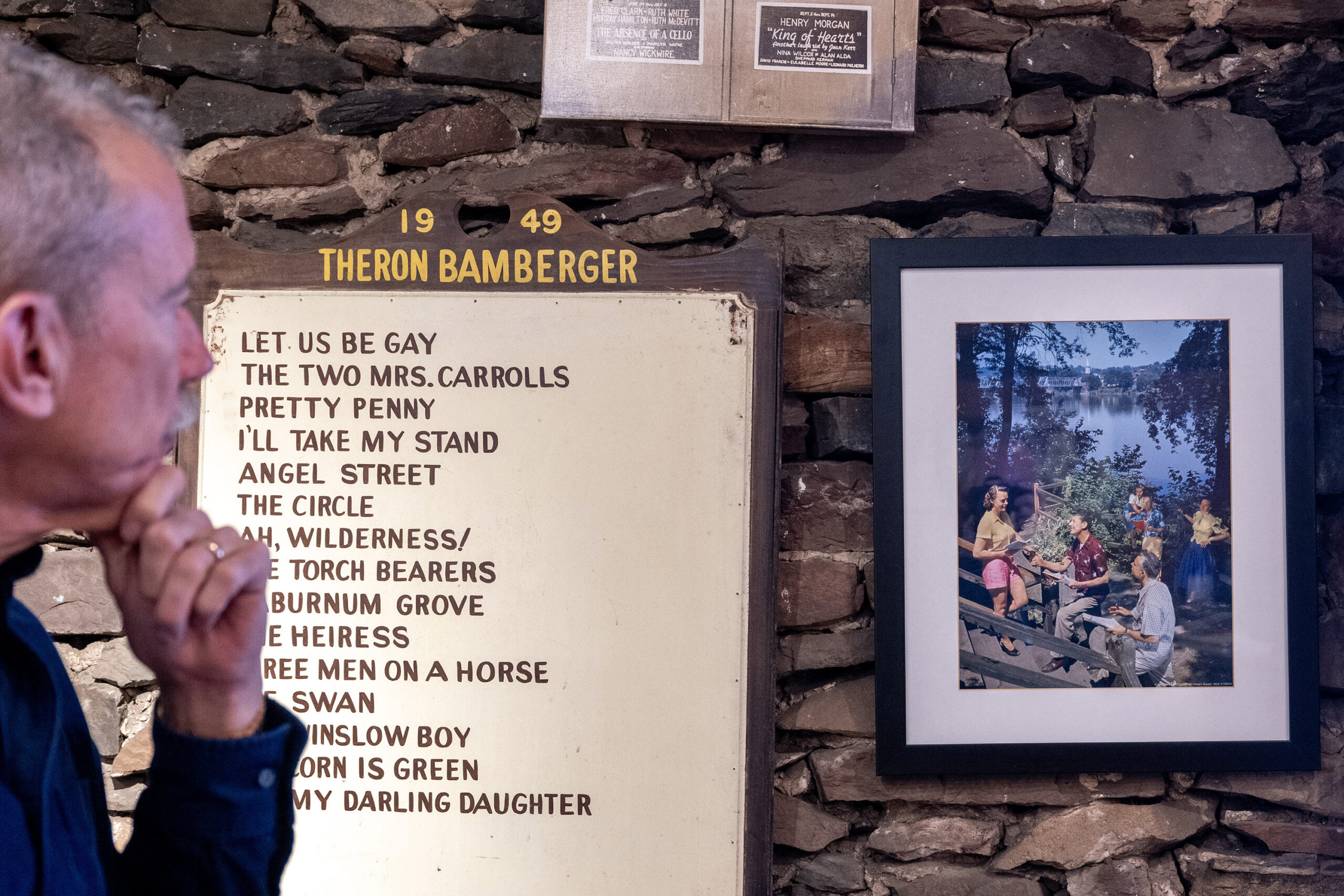
    Alexander Fraser, producing director of Bucks County Playhouse, looks at memorabilia as he clears out his office on April 7, 2026. At right is a photo from the July 1952 issue of National Geographic, by photographer Robert F. Sisson for an article about the Delaware River. The caption reads, in part,: “June Lockhart Rehearses Her Lines on the Steps of Bucks County Playhouse. At left is list of plays produced by Theron Bamberger in 1949.

    Fraser came to the Playhouse in 2014 from New York, where he produced on and off-Broadway productions for decades. It had only been three years since the historic theater’s $3 million facelift, thanks to Doylestown couple Kevin and Sherri Daugherty.

    The theater, founded in 1939, was in dire straits after longtime owner Ralph Miller fell into debt in 2010. The theater lost its status with the Actors’ Equity union and Miller’s mortgage holder seized the venue.

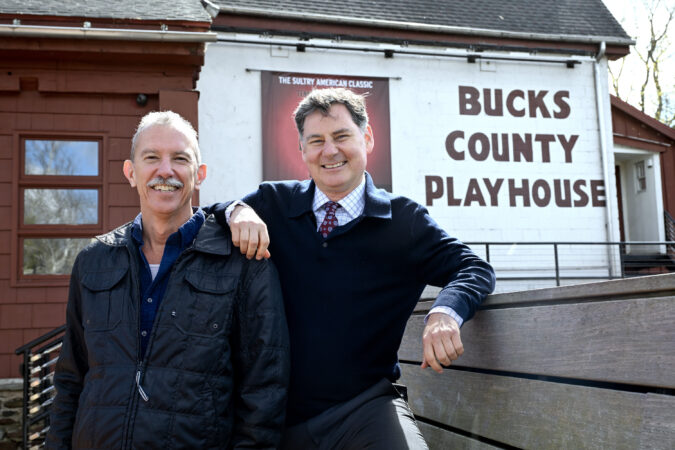
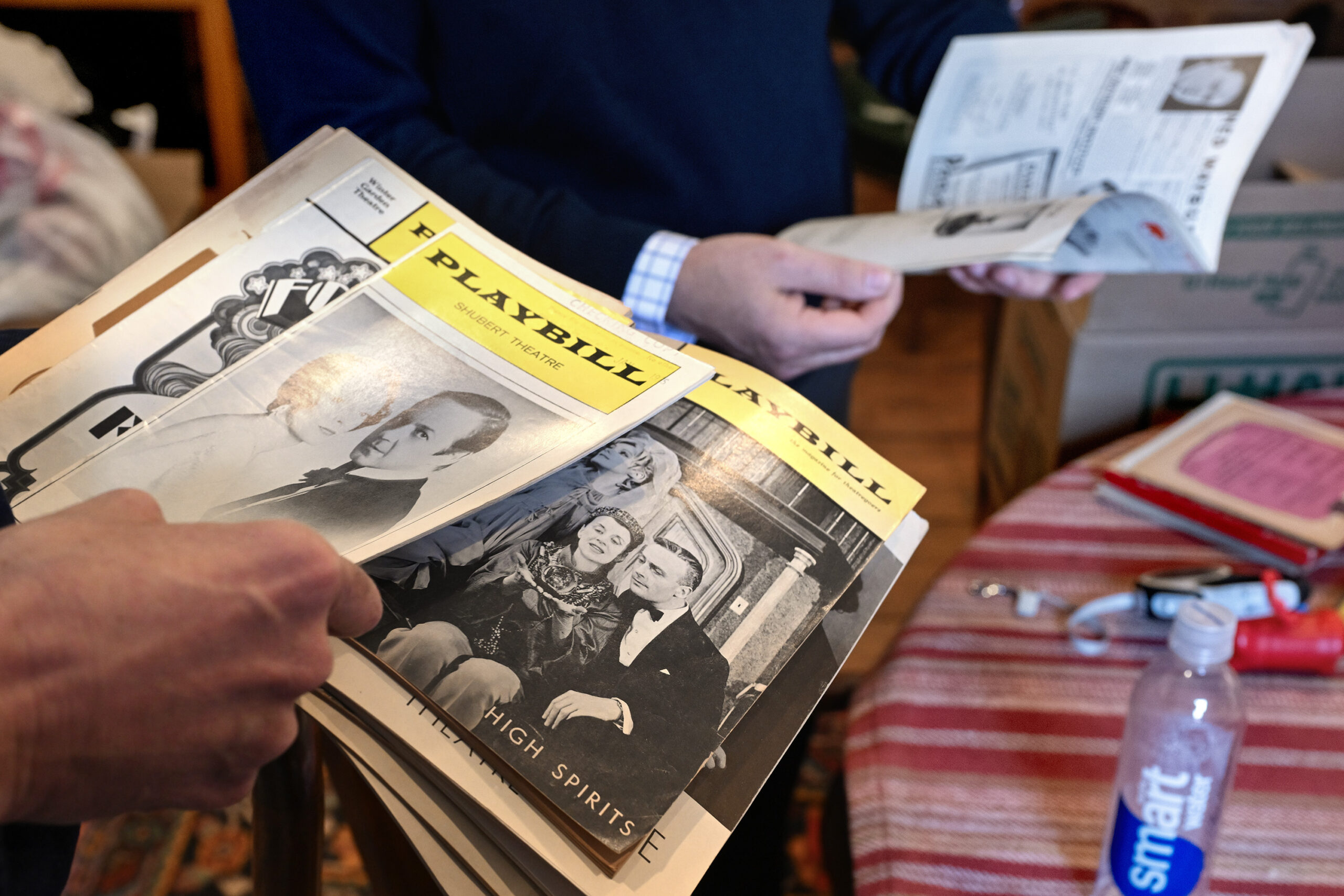
    Alexander Fraser (left), outgoing producing director of Bucks County Playhouse, clears out his office on April 7, 2026, joined by newly-appointed producing director BT McNicholl (right) going over old Playbills.

    The Daughertys purchased the Playhouse in 2011, and reopened the theater after a year of renovations and repairs. Jed Bernstein, then producing director, set the revamp in motion and went on to become the president of New York’s Lincoln Center. That’s when Fraser stepped in to expand the theater’s revitalization. He recruited Goodman and Fiedler to the Playhouse.

    The goal was to reinvigorate the Playhouse and New Hope’s theater community within two years. “It was naive on my part,” Fraser said.

    He said people talked about the theater’s heyday, but the majority of people who came to New Hope were “bikers” and not interested in local theater.

    “I didn’t realize how depressed [New Hope] was, and frankly, it was a challenge for me and my two producing partners to motivate this community and make this work,” he said.

    Around 2019, Fraser said he finally felt things had turned around.

    The trio went on to bring in productions like Steel Magnolias, Anastasia, Bridges of Madison County, Other Desert Cities, and Candace Bushnell’s one-woman show, True Tales of Sex, Success, and Sex and the City.

    The productions drew theatergoers, both from in and outside of the borough.

    During Fraser, Goodman, and Fiedler’s tenure, the organization’s annual attendance doubled, growing from just under 40,000 in 2014 to more than 85,000 in 2025, according to Playhouse officials. Subscriptions also increased, from 1,479 in 2015 to 3,303 in 2026.

    The Playhouse then transitioned from a seasonal producing theater to a year-round producing organization.

    The Bucks County Playhouse on April 7, 2026.

    Nicole Hackmann, executive director at the Playhouse, said Fraser was on the front lines, ensuring there was enough funding to bring in top-end productions, and Goodman and Fiedler used their resources and connections to fill in the gaps.

    The Playhouse’s revival didn’t just enliven the region’s theater community. It sparked an economic boom in the borough. As new restaurants, shops, and other businesses populated the town, New Hope Mayor Frank DeLuca said the Playhouse’s resurrection helped drive up support.

    “The Playhouse is far more than a theater. It’s one of the cornerstones of New Hope, and a vital part of our community’s identity,” DeLuca said in a written statement to The Inquirer. “It enriches the lives of residents, attracts visitors from throughout the region, and helps support our local businesses by bringing people into town year-round.”

    While leadership changes are difficult to navigate, Hackmann said, McNicholl is coming into a theater and arts community with “strong bones.”

    “The brick work has been done so well, and [McNicholl] can come in and take off like a shot,” she said. “He’s inheriting an organization with an incredible staff that’s dedicated, determined, and has built something, which means he can fly.”

    Alexander Fraser (left), outgoing producing director of the Bucks County Playhouse, clears out his office Tuesday, April 7, 2026, giving his old Broadway musical CDs to newly-appointed producing director BT McNicholl (right).

    With the “magic set in place,” McNicholl said he’s ready to accept the baton Fraser, Fiedler, and Goodman are handing off to him.

    “We’re part of the relay race,” he said. “I’m taking the next step on the trajectory that they’ve set in motion.”

    McNicholl intends to strengthen the “symbiotic relationship” between the New Hope theater and Broadway, not only by bringing New York artists to Bucks County, but also by nurturing in-house productions that end up on Broadway.

    At the top of his priority list, however, is to listen to the community that Fraser helped rebuild and the longtime theatergoers who grew up attending the regional gem.

    “My job as a steward is to continue that growth and expand upon it,” he said.

    Fraser is confident McNicholl will make those strides.

    “I learned early on to leave while on top,” Fraser said. “I’m really happy this all worked out. The theater is doing great and there’s a great person coming in after me.”

    As for his last speech on Saturday, Fraser doesn’t have notes prepared. He’s usually an “easy crier,” he said, so a friend convinced him to place a rubber band on his wrist, and then snap it whenever he felt the tears coming.There’s no telling how many times he will flick the rubber band against his wrist.

    He looks forward to the journey that lies ahead but doesn’t think about his legacy.

    “It sounds pompous to me.”

  • How Bucks County’s sheriff redefined his office to zero in on domestic violence

    How Bucks County’s sheriff redefined his office to zero in on domestic violence

    In January, Danny Ceisler inherited a Bucks County Sheriff’s office that was a lightning rod for debate over deputies’ role in federal immigration enforcement. Now, as he reflects on the changes he’s made in his first six months in office, Ceisler says he is bringing the office back to standard procedure with a shift in staffing to prioritize addressing domestic violence.

    That shift comes amid an increase in the number of warrants — called Protection From Abuse orders — served against alleged perpetrators of domestic violence.

    Between February and May, Ceisler’s office has served 441 PFAs — an increase from the 370 that were served during the same time period last year.

    Ceisler, a Democrat who flipped the seat after four years of GOP control, has dedicated more staffing and resources to ensure those warrants are served in a timely manner, which can often be a life-or-death situation.

    “I view it as one of our real life-saving duties,” Ceisler said. “I mean if we can get an abuser out of a house at 8 p.m. on a Friday instead of 9 a.m. on a Monday — which is kind of what used to happen if they came in on Fridays — you could save a person’s life.”

    Last November, Ceisler ousted former Sheriff Fred Harran, a Republican, who came under scrutiny for his embrace of President Donald Trump’s style of politics and his willingness to commit his office to a controversial agreement to assist U.S. Immigration and Customs Enforcement in federal immigration enforcement in the county.

    In addition, Ceisler has developed a so-called “armory” that holds confiscated weapons and added six people to a round-the-clock unit dedicated to evicting alleged abusers from their homes based on judicial orders.

    In the United States, one in three women and one in four men will experience domestic violence in their lifetime, according to the Pennsylvania Coalition Against Domestic Violence.

    Jen Locker, executive director at A Woman’s Place, a Bucks County-based shelter and community organization for survivors of domestic and intimate partner violence, said that throughout her 13 years working at the nonprofit, the sheriff’s office has always been “really phenomenal” at being present during hearings for PFA warrants and ensuring survivors feel safe. The organization offers court accompaniment services and assistance in filling out PFA petitions.

    But the biggest shift came when A Woman’s Place and the sheriff’s office met early on in Ceisler’s tenure and advocates expressed that one of the biggest challenges survivors face is the delay in serving PFAs.

    Soon after the meeting, Locker said, Ceisler prioritized the eviction unit.

    “Getting the offenders out of the home and getting the weapons out of the home are really, really crucial in maintaining safety for the survivors who are just trying to find a path forward safely,” Locker said.

    Ceisler’s counterparts in the other Philadelphia suburbs say the work he’s doing is one of the core functions of any sheriff’s office.

    And Ceisler argues that he’s bringing the office back to basics, noting that at one point he had to reassign deputies who were tasked with planning firearms training and that the office spent a lot of time on ICE training.

    “One of my predecessor’s issues was he was stepping on the toes of police departments and trying to do more police work or federal, you know, immigration work,” Ceisler said. “We’re just doing what we are statutorily empowered to do, and trying to do it to the very best of our ability.”

    According to data provided by the sheriff’s office, there has been a 94.1% clearance rate for PFAs under Ceisler’s tenure between February and March and a 90.4% rate during that same period last year under Harran. A “cleared” PFA means the warrant was successfully delivered, and any weapons were confiscated.

    In an interview, Harran pushed back on the characterization that the office, under his leadership, was dedicated to anything but local law enforcement issues. And he was adamant that deputies working under him also served PFA warrants, with a dedicated, four-person unit doing that work exclusively.

    “Danny knows the truth: We were never doing the work of immigration. I’ve said it a million times, I’ve testified with my hand on a Bible to it,” he said. “I don’t know what more I could’ve done to tell people that’s not what we were doing.”

    Ceisler’s “armory,” he said, is also not a new concept. Harran said he was in the process of establishing one.

    “Domestic violence is not going away,” he said. “To say he created a new unit, tomato, tomahto, call it whatever you want, we were doing same thing.”

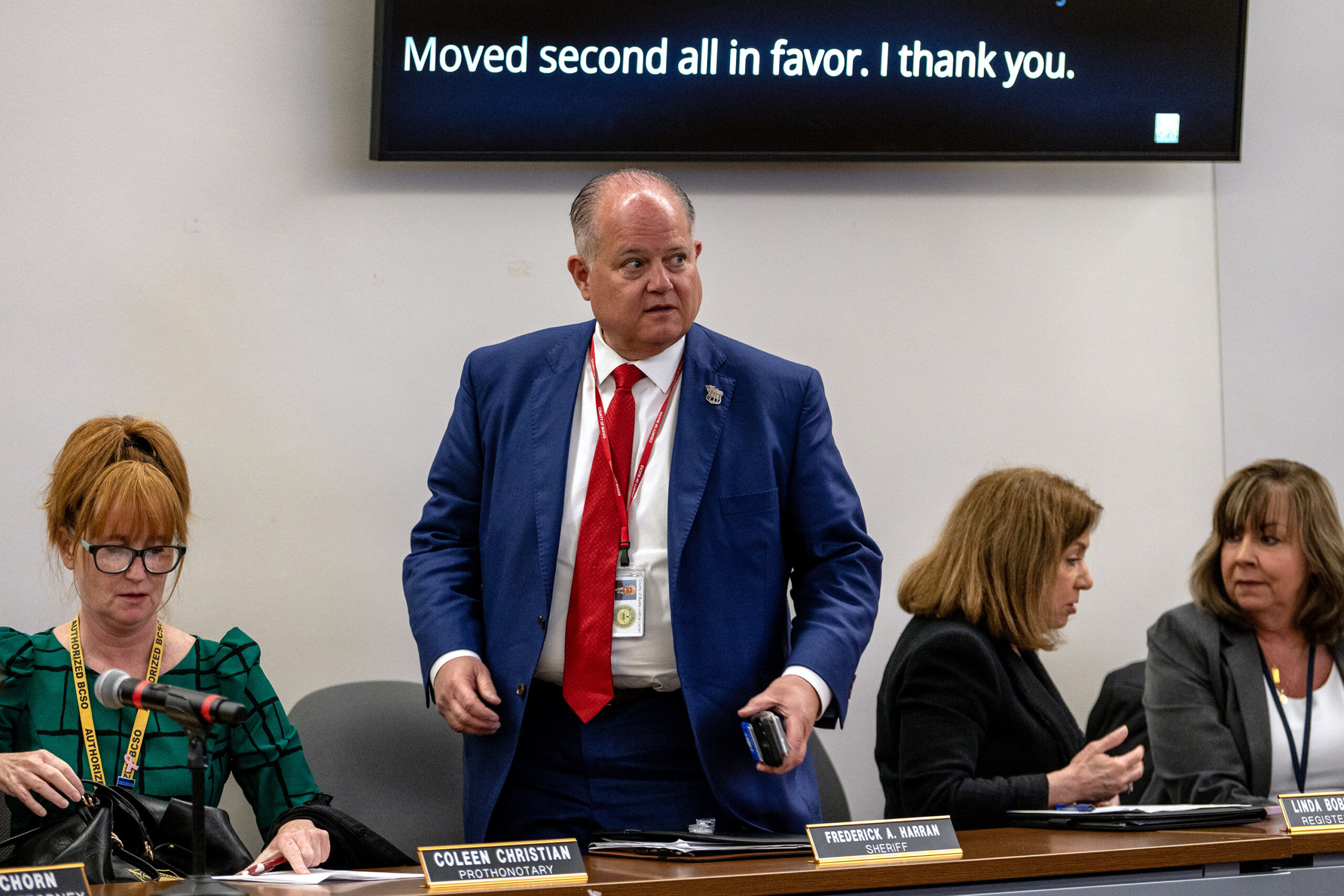
    Former Bucks County Sheriff Fred Harran stands following County Commissioners meeting last year when they approved a resolution opposing his deputies participating in an Immigrations and Customs Enforcement 287(g) program to act as ICE officers.

    In most of the other suburban counties, the sheriffs — all Democrats — say their offices have been serving the vast majority of PFA orders.

    In Chester County, Sheriff Kevin Dykes said his office has processed 247 PFA orders in the first quarter of 2026, as well as recovered eight firearms relinquished through that process. Dykes said his office rarely, if ever, has a backlog of PFA orders waiting to be filed, and works closely with local police departments to avoid that situation.

    “I think where the issue came in with Bucks is that Danny stepped into an office where the person running it had different priorities,” Dykes said. “In this instance, it’s just how the nature of this business is. One day we could have a high-profile trial in the courthouse, and the next we could have a threat on an official. It just changes day-to-day for us.”

    In Montgomery County, Sheriff Sean Kilkenny said his deputies are responsible for serving three-quarters of the PFAs filed. Last year that amounted to about 1,600.

    Kilkenny formerly headed the state’s Sheriff’s Association, and said having those departments take the lead in handling PFAs is the industry standard, one that he said has worked well for counties across Pennsylvania. He added that Ceisler “getting under the hood” of the process is part of the job for a new official.

    In Delaware County, where newly elected Sheriff Saddiq Kamara is wrestling with a staffing shortage, the sheriff’s office one day hopes to use Ceisler’s initiatives as a model.

    Kamara, a former Yeadon Police officer and onetime member of Gov. Josh Shapiro’s security detail, said his office currently has 35 vacancies for deputies. He’s working to reverse that, and has recently hired seven new deputies, but said the shortage has forced him to leave the serving of PFAs to local police departments.

    “It’s something that I really would like for us to do as well, but the Delaware County Sheriff’s Office is the third-busiest in the state,” said Kamara, referring to the number of prisoners they transport daily, as well as applications they receive for gun permits and other filings.

    “We just don’t have the capability of the resources and the man and woman power in our office,” he said. “What Danny is doing I think is a phenomenal idea, and we’re planning to do that in the near future as well.”

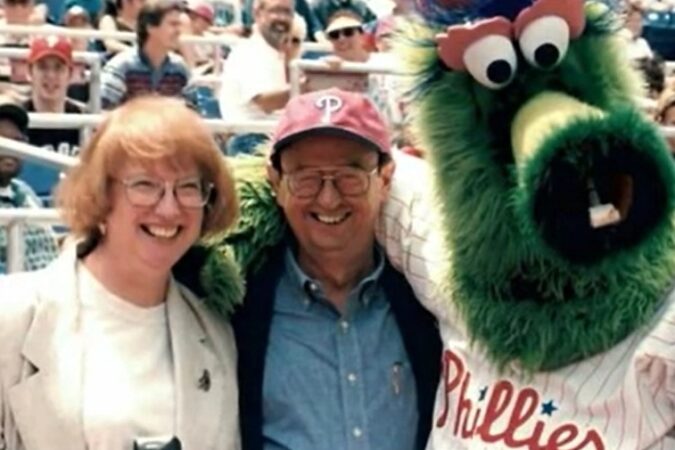
  • MaryJane Hackney, longtime first grade teacher and diehard Phillies fan, has died at 80

    MaryJane Hackney, longtime first grade teacher and diehard Phillies fan, has died at 80

    MaryJane Hackney, 80, of Gloucester Township, longtime first grade teacher at Loring-Flemming Elementary School, singer, theater devotee, and diehard Phillies fan, died Sunday, May 3, of Alzheimer’s disease at the Residence at Voorhees Senior Living Center.

    Inspired by her own favorite grade school teacher, Mrs. Hackney knew early in life that she wanted to be a teacher, too. She earned a bachelor’s degree in education, taught elementary school students in Pennsylvania for a few years, and spent nearly three decades, from 1981 to her retirement in 2010, working with thousands of first graders at Loring-Flemming in Gloucester Township.

    “She loved the energy first graders have,” said her husband and caregiver, David. “She taught fourth, fifth, and sixth grades at first. But after going to first grade, she said she would never go back.”

    Mrs. Hackney was so influential at school and at Loring-Flemming for so long that she taught children of her former students. Until a few years ago, she was routinely greeted around town by 40-year-olds who said: “Do you remember me?” Often, she did.

    “MaryJane was a force to be reckoned with,” a former colleague said in an online tribute. “When I arrived at Loring-Flemming with only one year of teaching experience, she took me under her wing and taught me so many important lessons about life and education.”

    Mrs. Hackney especially enjoyed teaching her students to read, and she told her husband that “one of her greatest joys was seeing the excitement of young children when they realized they could read.” The father of one of her former students told David Hackney recently that his son became an avid reader — and the father had to buy many books — thanks to Mrs. Hackney’s tutelage.

    “She was a constant source of good books and brought all of her best reads for us to share,” a former teaching colleague said in a tribute. “Everyone drifted to her classroom for support, information, or just to have a good laugh.”

    Affable, innovative, and energetic, Mrs. Hackney participated in projects for the local and state education associations, and raised funds to buy new school equipment. She was a champion of new early education programs and a popular guest on the local Emmy Award-winning public TV program “Classroom Close-up, NJ.”

    Mrs. Hackney stands with her Grade 1 students at Loring-Flemming during the 1962-63 school year.

    She was funny and witty, a former colleague said, “and her ability to know what was going on in our school, district, county, and state was incredible.” Before Loring-Flemming, Mrs. Hackney taught for a few years at a Lutheran elementary school in Delaware County and Ralph Waldo Emerson Elementary School in Bucks County.

    Outside the classroom, Mrs. Hackney enjoyed singing, the theater, and the Phillies. She sang alto in choirs in high school and college, and attended nearly every performance of the Arden Theatre Co. in Philadelphia from 1996 until recently. Her husband worked several jobs over the years, and her absolute favorite, he said, was the one that had company tickets to Phillies games.

    “She even met the players,” he said.

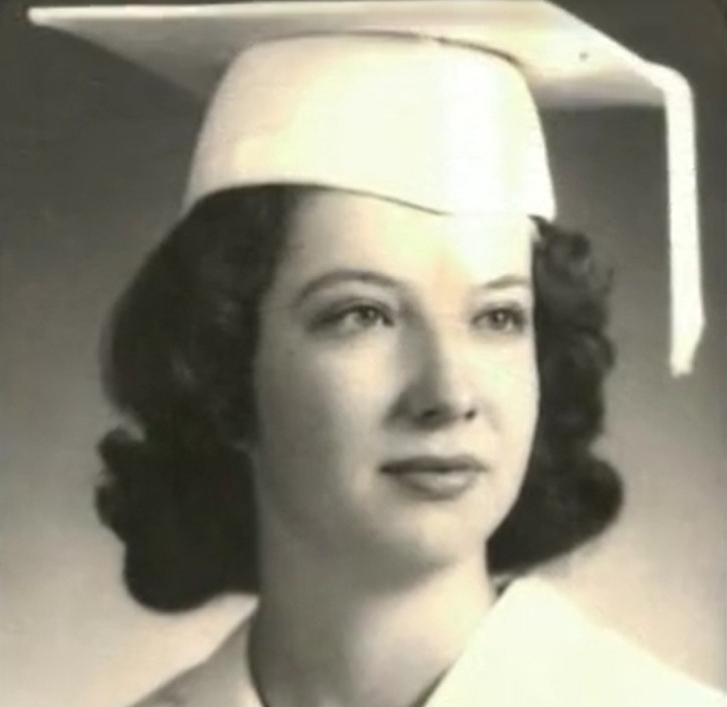
    MaryJane Pierce was born June 22, 1945, in Abington. She grew up in Croydon, was so smart that she skipped third grade, and graduated from Delhaas High School in 1962.

    Mrs. Hackney studied education and American history in college.

    She studied education and American history at what is now Concordia University Chicago in Illinois, and later enjoyed traveling to historic sites with her husband. She knew David Hackney from high school, and they got serious during a double date to celebrate her 21st birthday in 1966.

    Eight weeks later, they got engaged. They married in 1967 during the famous Glassboro Summit Conference, had a daughter, Jennifer, and lived in Drexel Hill and Havertown before moving to Gloucester Township in 1974.

    Mrs. Hackney liked histories and mysteries, and was longtime friends with local author Lisa Scottoline. She knew the words to Elvis Presley songs, doted on her daughter and grandson, Joshua, and visited relatives in Ireland several times after retiring.

    She moved to the Residence at Voorhees a year ago. “I will forever remember her lessons, her delicious brownies, and helping hand that was used not just for her students but for the entire faculty and staff,” a former colleague said.

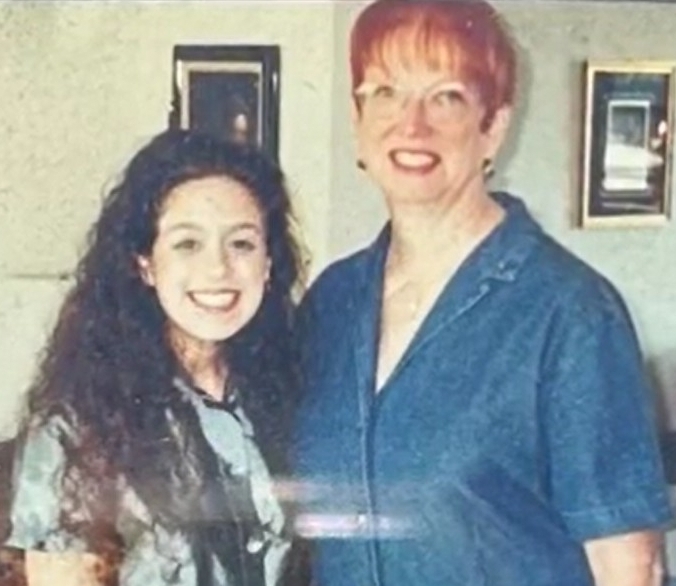
    Mrs. Hackney smiles with her daughter, Jennifer.

    Her husband said: “She was fascinated by people, curious about people. And if you started talking about teaching, she could go on for hours.”

    In addition to her husband, daughter, and grandson, Mrs. Hackney is survived by a sister, Deborah, and other relatives.

    Services were held earlier.

    Donations in her name may be made to the Alzheimer’s Association, 399 Market St., No. 250, Philadelphia, Pa. 19106.

    Mrs. Hackney doted on her grandson, Joshua.
  • A Bucks County music teacher and serial molester of 18 boys sentenced to decades in prison

    A Bucks County music teacher and serial molester of 18 boys sentenced to decades in prison

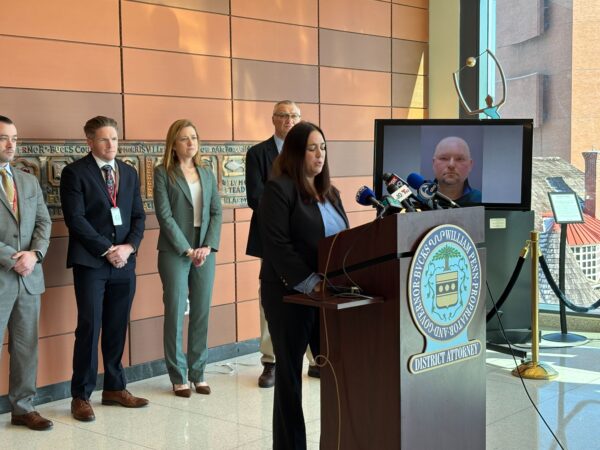
    Over three decades, in music shop backrooms and, sometimes, his own home, Timothy Shay molested 18 boys whose parents trusted him to teach them piano and saxophone lessons.

    On Tuesday, as Shay, 50, was sentenced to 18 to 54 years in state prison, Bucks County Court Judge Stephen Corr expressed outrage over his crimes.

    “You stole from these boys their childhoods, you stole from them their love of music, you stole from them their ability to love, and you stole from them their adulthood, because they are still living with this,” Corr said.

    “Quite frankly, if someone hadn’t spoken up and given these men the courage to speak up, you might still be out there perpetrating your crime on other victims,” he added.

    Shay, of Middletown Township, pleaded no contest in September to corruption of minors and related crimes in connection with the assaults, which began in the late 1990s and ended only with his arrest in February 2025, prosecutors said. That arrest came after one victim, decades after his abuse occurred, filed a police report.

    For years, Shay advertised himself as a piano and saxophone teacher based at music stores throughout Central Bucks County, including D-Town Guitars & Skateboards in Doylestown and Coyle’s in Richboro, according to First Assistant District Attorney Kristin McElroy.

    During those lessons, she said, Shay groomed his young students. The 18 men who came forward described a similar pattern: Shay targeted them when they were preteens, and would start each lesson by massaging their wrists as a way of “warming them up” before gradually moving his hands toward other parts of their body.

    In subsequent lessons, they said, Shay touched their genitals or performed sex acts. Some said Shay would use neurolinguistic programming to put them into a meditative state before groping them. Others said Shay touched them dozens of times.

    One man who spoke in court Tuesday said the abuse ended only when he begged his parents to stop sending him to music lessons.

    “Timothy Shay took his position of trust with me as a child, in a closed setting, to satisfy his own perversions,” he said. “Today marks a sense of closure I thought I’d never receive.”

    Another man said his ability to form lasting relationships or be intimate with women was destroyed by Shay’s abuse. He struggled, he said, to trust even his family.

    A third told the judge Shay was a friend of his family’s and molested him while serving as his babysitter. He dropped out of school, struggled with drug addiction, and isolated himself from his family, he said.

    “Tim Shay stole my self-esteem, my libido, and my faith in God and left me with a head full of passive ideation about my death,” he said.

    Shay’s manipulation extended to the boys’ parents, according to McElroy, the prosecutor. He would wait until their parents trusted him, and no longer attended the music lessons, before beginning to assault the boys.

    “The families were literally paying this defendant to enrich their children’s lives through music, and he took it as an opportunity to abuse them,” she said. “It speaks to the level of cruelty he showed.”

    And she noted that as county detectives were investigating Shay, they found a cache of child pornography on his cell phone.

    Shay’s attorney, Stephanie Moyer, asked the judge for leniency, noting that Shay had been the victim of sexual abuse as a child.

    But Corr was not swayed, and fashioned a prison sentence for Shay that took into account each victim.

    “You don’t get a bulk discount for coming here with 18 victims,” Corr said. “We have to bring justice for each of these men.”

  • There’s now a ‘Club America’ at Great Valley High School. Turning Point USA says interest grew after Charlie Kirk’s assassination.

    Making his pitch to the Great Valley school board, Jed Lu said he and fellow students seeking to bring slain conservative activist Charlie Kirk’s Turning Point USA organization into their high school weren’t racists or extremists.

    “We simply have a different perspective,” Lu told the board at a late February meeting.

    The Chester County district is one of the latest in the Philadelphia area to approve a Club America chapter — the high school offshoot of Kirk’s group. The organization seeks to mobilize “anti-woke warriors” and has rapidly been adding new local chapters since his assassination in September, provoking debate around right-wing influence in public schools.

    Nationally, chapters have nearly tripled — from 1,200 prior to Kirk’s death, to more than 3,300, according to Turning Point officials. Governors in Republican-led states like Arkansas and Nebraska are partnering with Turning Point to expand clubs throughout their states.

    In eastern Pennsylvania, there were 11 Club America chapters at the end of last school year. Now, “we’re currently approaching 40,” said Nick Cocca, Turning Point’s enterprise director.

    The group’s expansion might be overstated in the Philadelphia region. Seven area high schools listed by Turning Point on its website or Instagram graphics as having Club America chapters said they didn’t have clubs.

    Souderton Area High School, for instance, appears on Turning Point’s map, but doesn’t have a club. The school’s assistant principal, Matthew Haines, said “a student made an inquiry” in September about starting a chapter, but never applied to do so.

    In some schools, like Springfield High School in Delaware County, “we have a few students who started running an after-school student pilot a few months back,” said principal Monica Conlin, but the district doesn’t officially recognize the club. Conlin said new clubs must complete a three-year pilot before gaining district approval.

    Still, the organization has gained traction. In addition to Great Valley, Penncrest High School in Rose Tree Media School District lists Club America among its student clubs; district officials and staff didn’t respond to requests for comment.

    Turning Point says it also has a Club America chapter at Pennsbury High School, and an Instagram account for “Club America at Pennsbury” invited students to a Feb. 25 meeting to discuss the State of the Union and “participate in prayer for law enforcement and our nation.” District officials didn’t respond to requests for comment.

    ‘An outpouring of support’ after Kirk’s death

    A spokesperson for Turning Point couldn’t explain the discrepancy between its list and schools that say they don’t have any Club America chapters.

    The organization was also unable to provide a local student willing to be interviewed.

    Cocca said Turning Point “saw an outpouring of support and outreach from young people across the country” in the wake of Kirk’s Sept. 10 assassination. To support its growth, the organization is hiring more field representatives to work with high school students, Cocca said.

    People hold posters of Charlie Kirk during a Turning Point USA rally at Utah State University, as a part of the organization’s push to memorialize Kirk in Logan, Utah, in September.

    Turning Point, which began as an organization advocating for conservative views on college campuses, had previously been expanding its presence in high schools. (A Turning Point chapter launched years ago at Pennridge High School in Upper Bucks County, for example.)

    Turning Point last July renamed its high school operation Club America. “We wanted a brand that spoke specifically to them,” Cocca said. He said that “when Charlie was alive, he used to say ‘I want a Club America chapter in every high school in America.’”

    The expansion has spurred conflict. Critics have highlighted Kirk’s controversial statements, including referring to the Rev. Dr. Martin Luther King, Jr. as “an awful person” and calling the passage of the 1964 Civil Rights Act a “mistake.”

    Kirk also promoted the so-called “great replacement theory,” framing non-white immigration as a plot to replace white populations.

    “This club is an easy way to incorporate hate and discrimination within our high school. This should not be normalized,” a Change.org petition launched in January against a proposed Club America chapter at West Chester East High School read. An update to the petition later declared that Turning Point “was shut down at West Chester East.”

    Molly Schwemler, a district spokesperson, said that earlier this year, some students expressed interest in starting a Club America chapter.

    But “after discussing the process and need for sponsorship from a teacher with school administration,” students “instead decided to organize independently outside of the school,” Schwemler said. (On its website, Turning Point lists West Chester East as having a chapter.)

    In an Instagram post, the club said it decided to operate independently “because people can’t be mature, open minded or respectful at our school.”

    Activism hubs and kits

    In addition to identifying a teacher adviser, students looking to form clubs often have to supply information to administrators like their purpose, planned activities, and funding needs.

    Schools have little discretion to reject a new club, based on the federal Equal Access Act and First Amendment, said Jeffrey Sultanik, a solicitor for numerous Philadelphia-area districts.

    Districts need “to be viewpoint-neutral,” Sultanik said, noting that “once you open up the door to clubs coming in,” administrators can’t pick and choose which to permit.

    In its handbook for Club America chapters, Turning Point calls it “imperative that every chapter works to become officially recognized by the school,” offering students help if schools deny them.

    Students can form an “activism hub” outside of school for a specific geographic area “as a last resort,” the handbook says.

    In Downingtown — where Turning Point says there is an activism hub — a school district spokesperson said the district has not sponsored any clubs “related to religious or political groups in recent history.” (Some other area schools have official political clubs: Penncrest High School, for instance, lists Penncrest Democrats of America.)

    Turning Point says its Club America chapters are nonpartisan and don’t support specific candidates.

    But the group’s ideology is clear from materials it supplies to student members. Presentations available in Turning Point’s “Activism Library” for students to use have titles including “Taxes Are Shady,” “Socialism Kinda Sus,” and “Big Gov Scares.”

    “Why are those on the left not proud to be Americans?” a presentation titled “Always Love America” asks.

    Kids can order “Activism Kits” from Turning Point with posters and stickers. A “2A” kit features slogans like “Gun rights are women’s rights” and “Guns are the greatest equalizer.”

    Cocca said Turning Point provides students “anything they may need, to promote what they want to promote, and what they want to make their club about” — whether that’s registering students to vote, or learning about the Constitution, he said.

    “Ultimately, it’s up to the students to use those resources the way they want to use them,” he said.

    Opposition to Club America groups

    Critics accuse Turning Point of trying to indoctrinate high schoolers.

    “They are grooming at the high school level, and college level, for a generational change,” said Sherry Lawrence, a parent in Great Valley who opposed the district’s new Club America chapter. “All the red flags are there for people who don’t subscribe to this brand of conservatism, or this brand of Christianity.”

    Lawrence questioned whether adults were driving some efforts to organize Club America chapters.

    In an October Facebook post in a Turning Point Pennsylvania Action group, George Sabo, then a GOP candidate for township supervisor in East Whiteland, said his daughter was starting a chapter at Great Valley High School. “We had discussed it over the summer but pulled the trigger after Charlie’s assassination,” Sabo wrote.

    In a brief phone interview, Sabo said it was his daughter’s idea to start the chapter.

    “My daughter and family, who believe in the Bible, and believe God is king, value those properties and want to see that brought more into the school district,” Sabo said.

    He said that while there had been pushback from other kids, “there’s some support from other kids, too.”

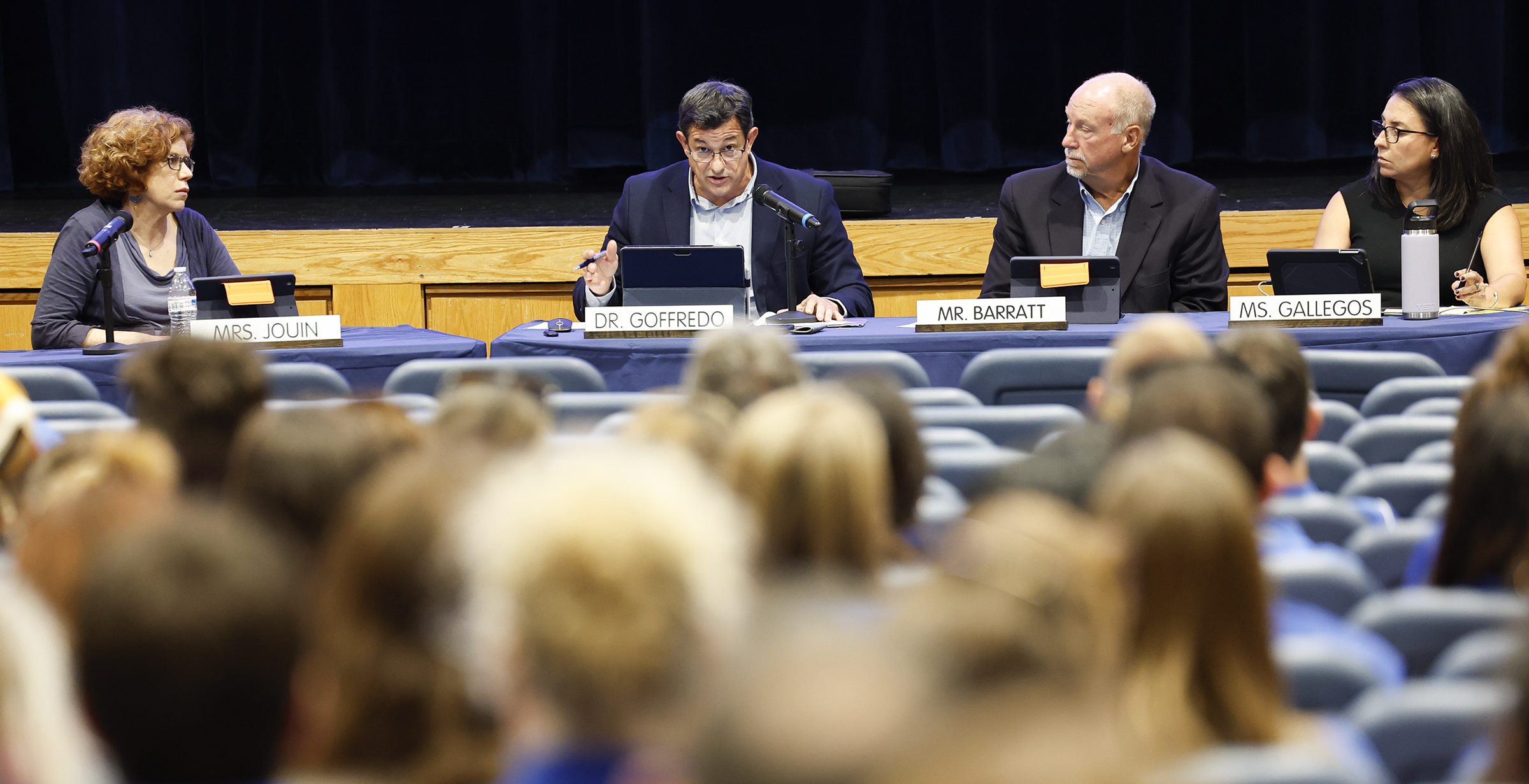
    Great Valley school board members during a meeting at Great Valley High School in Malvern in 2024.

    The Great Valley board approved the club 7-0 at its February meeting.

    At the board meeting, Lu, the club president, said he and the three other club officers had initiated its formation.

    While the club has a “conservative viewpoint,” Lu said, “our purpose is civic debate and civil discussion.” He added that the club is motivated by “the Christian value of love and compassion.”

    The club hopes to be an “impactful addition to Great Valley High School,” Lu said.