Tag: Bucks County

  • Mavis Staples is playing Phoenixville, plus Florry, Ratboys, Sheer Mag, and more in Philly music this week

    Mavis Staples is playing Phoenixville, plus Florry, Ratboys, Sheer Mag, and more in Philly music this week

    This week in Philly music features gospel-soul great Mavis Staples in Phoenixville, Philly favorites Florry and Sheer Mag returning to town, Culture Club in Atlantic City, and the Everyone Orchestra and zydeco scion C.J. Chenier on the Main Line.

    Wednesday, Feb. 25

    Homegrown Live

    This is the South Jersey edition of the free Homegrown Live concert series presented by WXPN-FM (88.5). The three-act bill is topped by Linwood quartet Fat Mezz, who blends classic rock influences with a touch of jazz. The band’s name was inspired by late clarinet player and civil rights advocate Milton Mezzrow. Nicoletta Giuliani fronts Ocean City’s Polaroid Fade, whose beguiling full-length debut, Chaos Into Poetry, displays an affection for jangly 1990s bands like the Smiths and Sundays. The band’s sound meshes nicely with Atlantic County quartet Te Vista, whose dreamy power pop recalls melodic guitar bands Nada Surf and Gin Blossoms. 7:30 p.m., The Lounge at World Cafe Live, 3025 Walnut St., xpn.org

    Thursday, Feb. 26

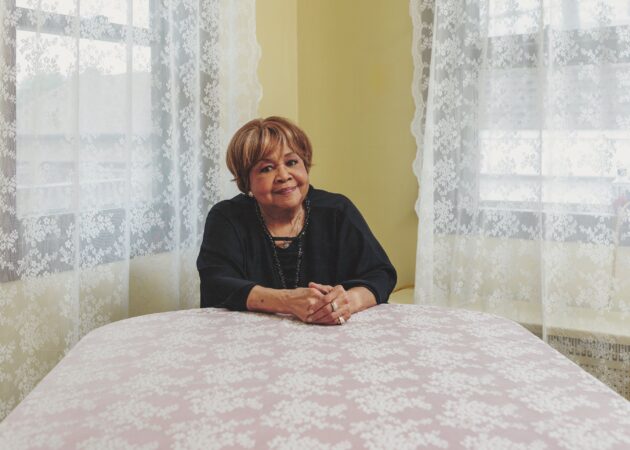
    Mavis Staples

    Mavis Staples’ place in music history has long been secure. Her family band, the Staple Singers, marched with the Rev. Dr. Martin Luther Ling Jr. during the Civil Rights Movement in the 1950s and 1960s, and her powerful vocals anchored counterculture-era hits like “Respect Yourself” and “I’ll Take You There.”

    But the 86-year-old national treasure’s creative output has continued and even increased in recent years with the Chicagoan recording a series of albums with Jeff Tweedy and Ben Harper. Her newest is the soulful and deeply moving collection Sad and Beautiful World, which was produced by Brad Cook and includes covers of Frank Ocean, Tom Waits, Leonard Cohen, and Curtis Mayfield.

    The title cut is by Mark Linkous of Sparklehorse. Another new song, “Human Mind,” is written by Allison Russell and Hozier. Massachusetts singer-guitarist Kimaya Diggs opens. 8 p.m., Colonial Theatre, 227 Bridge St., Phoenixville, ColonialTheatre.com

    Blackwater Holylight play Johnny Brenda’s on Thursday. The California band’s new album is “Not Here Not Gone.”

    Blackwater Holylight

    Portland, Ore.-born and now Los Angeles-based doom metal-meets-shoegaze heavy rock band Blackwater Holylight is touring behind its bruising fourth album Not Here Not Gone. The Sunny Faris-fronted band will be joined by like-minded Austin, Texas, trio Glassing and Philly’s Cigarettes for Breakfast. 8 p.m., Johnny Brenda’s, 1201 N. Frankford Ave., johnnybrendas.com

    Friday, Feb. 27

    The Record Company & Jontavious Willis

    Los Angeles blues rock trio the Record Company is celebrating the 10th anniversary of its 2016 breakthrough album, Give It Back to You. Make sure to arrive on time for Jontavious Willis, the country blues singer and guitarist whose sound is shaped by regional predecessors like Blind Willie McTell. 8 p.m., Union Transfer, 1016 Spring Garden St., utphilly.com

    Marshall Allen + John Morgan Kimock

    The hardest-working centenarian in showbiz, Sun Ra Arkestra leader Marshall Allen, makes his way to Bucks County for this noteworthy show in Henry Chapman Mercer’s Moravian Pottery and TileWorks building in Doylestown. Drummer John Morgan Kimock will also perform. The show is part of the Tileworks’ monthly “A Night of Song” series. 6:30 p.m., Tileworks of Bucks County, 130 E. Swamp Road, Doylestown, thetileworks.org

    Everyone Orchestra

    Matt Butler conducts two nights of improvised music from a cast of leading musicians from the jam band world, including Dave Matthews’ associate Tim Reynolds, Aron Magner of Disco Biscuits, Rob Mercurio of Galactic, and Camden trumpeter Arnetta Johnson, who has toured with Beyoncé. 8 p.m. Friday and Saturday, Ardmore Music Hall, 23 E. Ardmore Ave., ardmoremusichall.com

    Boy George and Culture Club

    Boy George and original Culture Club members Roy Hay and Mikey Craig are back together for a 2026 tour. The British New Wave-era band, which scored hits with “Karma Chameleon” and “I’ll Tumble 4 Ya,” is playing two nights in the region. 8 p.m. Friday, Borgata Event Center, One Borgata Way, Atlantic City, borgata.mgmresorts.com, and 8 p.m. Saturday, Wind Creek Event Center, 77 Wind Creek Blvd., Bethlehem, windcreekeventcenter.com

    Philadelphia band Sheer Mag plays Johnny Brenda’s on Sunday. Left to right: Tina Halladay, Kyle Seely, Matt Palmer, and Hart Seely.

    Sunday, March 1

    Sheer Mag

    Mighty Philly foursome Sheer Mag — most recently heard from on its 2024 album Playing Favorites, released on Jack White’s Third Man Records label — tops a four-band bill. The similarly hard-hitting acts opening are Dirty Fences, Nancy, and the Smarthearts. 8 p.m., Johnny Brenda’s, 1201 N. Frankford Ave., johnnybrendas.com.

    C.J. Chenier & the Red Hot Louisiana Band

    Zydeco accordionist C.J. Chenier has spent his life carrying on the legacy of his father, Creole musician Clifton Chenier. That legacy got a welcome boost with 2025’s A Tribute to the King of Zydeco, featuring Chenier, Geno Delafose, the Rolling Stones, and Taj Mahal, winning a Grammy earlier this month. Rev Chris and Les Garçons Crasseux open. 7 p.m., 118 North, 118 N. Wayne Ave., Wayne, 118NorthWayne.com.

    C.J. Chenier & the Red Hot Louisiana Band at 118 North in 2024. The zydeco accordion player and band leader returns to the Wayne venue on Sunday.

    Monday, March 2

    The Ike Reilly Assassination

    Pugnacious rock and roll troubadour and Sirius/XM satellite radio host Ike Reilly has released 12 albums since his 2001 debut, Salesmen and Racists. He’s also the star of the documentary Don’t Turn Your Back on Friday Night, which was produced by Tom Morello, whom he shared a bill with last month at the anti-ICE benefit show in Minneapolis. It’s the same where Morello brought onstage Bruce Springsteen, who has added Morello to the E Street Band for his upcoming tour. Another cool booking at Nikki Lopez. 7 p.m., Nikki Lopez, 304 South St., @nikkilopezphilly on Instagram.

    Chicago indie band Ratboys play the First Unitarian Church on Tuesday with Florry.

    Tuesday, March 3

    Ratboys & Florry

    A double bill headlined by Ratboys, the Chicago quartet fronted by Julia Steiner and founded in 2010. The band hit its stride with 2023’s The Window. It keeps up its winning streak on the new twangy, Neil Young-ish Singin’ to an Empty Chair, produced by Death Cab for Cutie’s Chris Walla. It is well-matched with Florry, the Philly-bred loose-limbed collective led by Francie Medosch, whose 2025 Sounds Like… landed on this publication’s best albums of the year list. 8 p.m., First Unitarian Church, 2125 Chestnut St., r5productions.com.
  • Teens arrested in Quakertown ICE protest charged with aggravated assault

    Teens arrested in Quakertown ICE protest charged with aggravated assault

    Five teenagers arrested during a protest in Quakertown last week face charges of aggravated assault and related crimes after a judge ruled Tuesday that prosecutors had presented sufficient evidence for the case against them to proceed, according to sources.

    The teenagers had been held since Friday, when they were taken into custody after a scuffle with Quakertown police officers — including the department’s chief, Scott McElree.

    Officials have released few details about the arrests, but two people with knowledge of the case who asked not to be identified to discuss an ongoing investigation confirmed the charges. The police department and the district attorney’s office have declined to disclose the teens’ names, ages, or charges they face.

    After the more than three-hour hearing in Doylestown, which was closed to the public, prosecutors left the courtroom without answering questions. The teenagers’ parents, speaking through intermediaries, also declined to comment Tuesday.

    But Ettore Angelo, a lawyer representing one of the teenagers, said his 15-year-old client had been released to her parents and placed on house arrest. He said she faces an aggravated assault charge — a felony offense that, if sustained in juvenile court, can carry a penalty of up to five years in a detention facility.

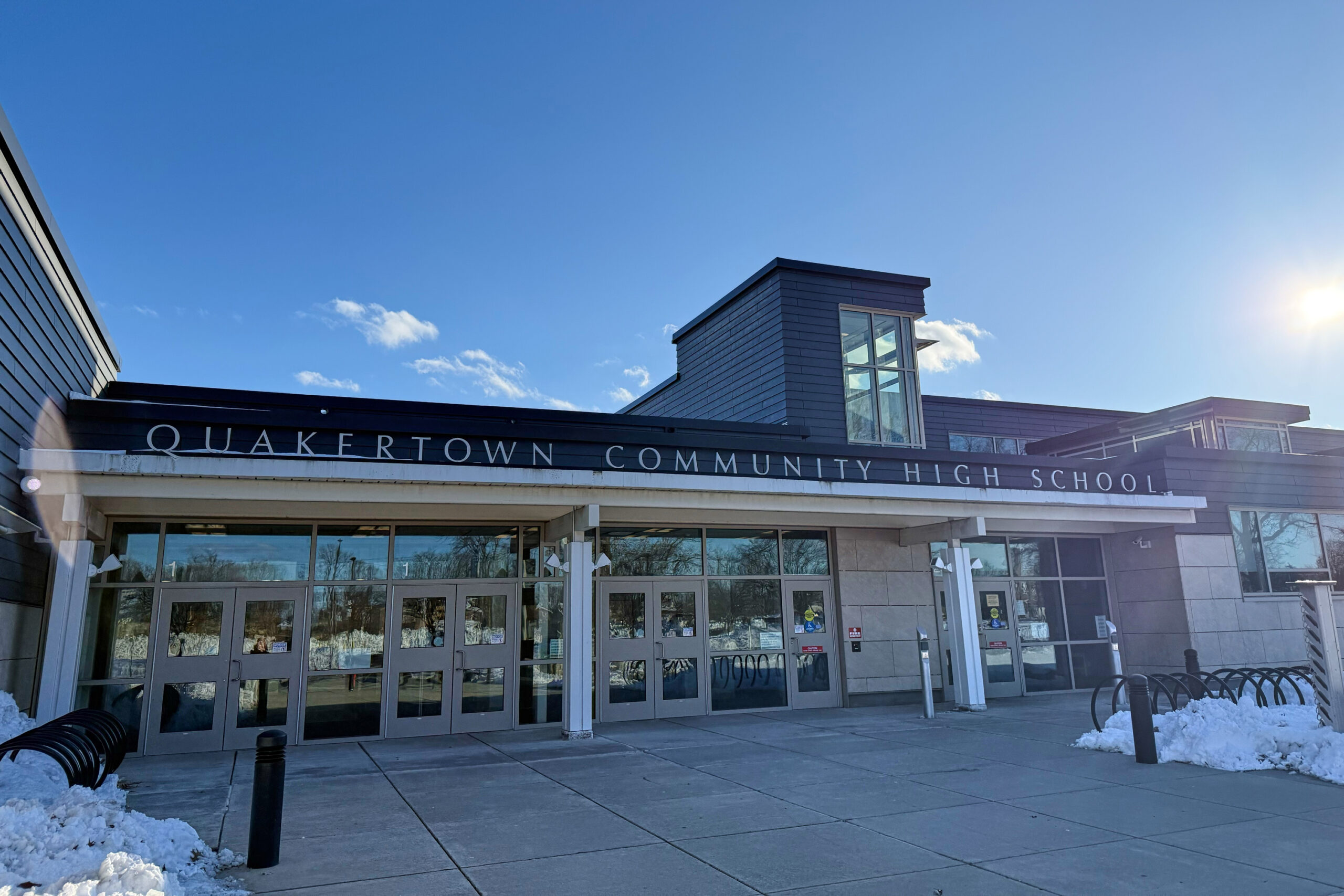
    The teenagers who were arrested had been taking part in a protest of Immigration and Customs Enforcement that began at Quakertown Community High School and moved off campus to Front Street. Witnesses have said that a confrontation erupted there, in front of Sunday’s Deli and Restaurant.

    Students at Quakertown Community High School took part in a protest of Immigration and Customs Enforcement that began at the school and moved off campus to Front Street.

    McElree, the police chief, who was dressed in plain clothes, grabbed a teenage boy and placed a teenage girl in a chokehold, they said, prompting other students to intervene and a larger scuffle to break out.

    Angelo said the central allegation against his client is that she struck McElree during the melee, an accusation she denies. He contended that students reacted in confusion and fear when a man rushed into the crowd.

    He said McElree “put himself smack in the middle and created a melee” when he charged up to the teenagers while out of uniform and without announcing who he was. “I think he owes the community and these teenagers an apology,” the lawyer said.

    He added that, in his view, some of the teenagers had acted instinctively to protect one another.

    Speaking by phone Tuesday afternoon, a 17-year-old girl who participated in the protest but was not among those arrested described what she said had been a peaceful demonstration even as counterprotesters drove past in vehicles, honking and shouting.

    The teen, who asked not to be identified for fear of retaliation, said teenagers were gathered on the sidewalk and speaking with a uniformed officer when a man pushed through the crowd and “barged onto the sidewalk.”

    The man — whom she later learned was McElree — grabbed a teenage boy by the back of the neck, she said. “All the kids thought he was a counter protester,” she said. “So everyone started to protect their friends.”

    The girl said she saw McElree throw one student to the ground and place another in a chokehold. At least three students were injured, she said — one with a broken nose and another who required stitches to his chin. McElree, too, was injured, she said, and left the scene bleeding from his head.

    She recorded portions of the confrontation and shared the videos with The Inquirer.

    “It was really scary, because it was a group of kids versus this really angry man,” the teen said, adding that it took what felt like several minutes for uniformed officers to step in. “It was the kids doing what the police should have.”

    The girl said she did not realize that the man at the center of the fight was the police chief until she returned home and showed the footage to her father, who recognized McElree.

    Manuel Gamiz, a spokesman for the district attorney’s office, said Monday that the investigation remains ongoing and that no additional information was available.

    Police initially said an adult had also been arrested during the confrontation. But the district attorney’s office later said no adults had been charged in the melee.

    Outside the courthouse and along the hallway leading to the courtroom of Denise M. Bowman, more than two dozen community members gathered in quiet support Tuesday. Some held handmade signs: “We support Quakertown students” and “Keep families together.”

    Among them was Lolly Hopwood, 47, of Doylestown, who held a poster reading, “We stand with you.” She said she and others wanted to counter what she described as harsh online criticism directed at the families.

    “There’s a lot of negativity online right now that the parents are seeing,” Ms. Hopwood said. “We wanted to show them the community is really here for them.”

    On Monday night, the episode had spilled into borough politics. At a Quakertown council meeting, several residents called for the teenagers’ release and demanded the resignation of McElree, who also serves as the borough manager. After the public session, the council met privately with its attorney. As of Tuesday morning, it was unclear whether any action would be taken against the chief.

    Members of the borough council and the borough’s attorney, Peter Nelson, did not respond to requests for comment on Tuesday.

    A GoFundMe campaign created to help cover the teenagers’ legal expenses had raised more than $41,000 by Tuesday afternoon. The funds will be divided evenly among the five families, said Heidi Roux, director of immigrant justice at the Welcome Project PA, which organized the drive.

  • Philly got its biggest snow in 10 years. This time nature will help with the cleanup.

    Philly got its biggest snow in 10 years. This time nature will help with the cleanup.

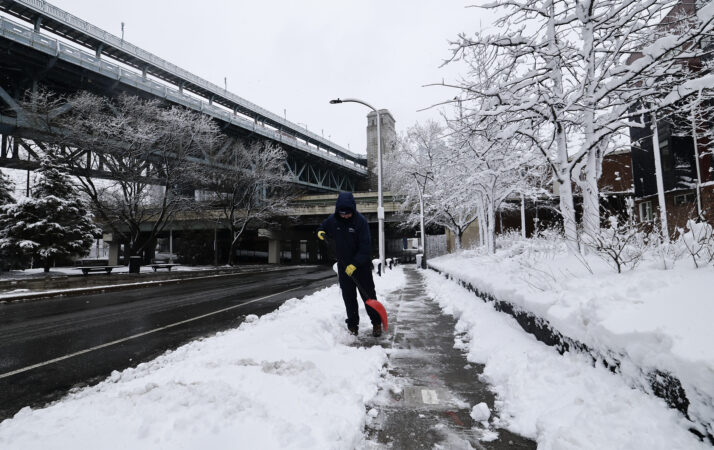
    If it wasn’t an actual blizzard, Philly’s biggest snowfall in a decade sure acted like one, and the weather the rest of this week isn’t expected to be particularly pleasant.

    But in terms of disruption — not to mention aesthetics — this was in a wholly different category from the Jan. 25 siege of snow and ice. And the aftermath should not be anywhere near as punitive and burdensome.

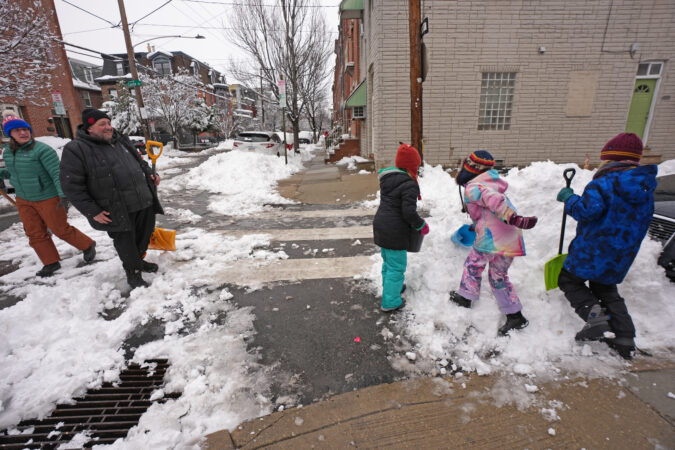
    Although the 14 inches measured officially at Philadelphia International Airport, dwarfed the 9.3 inches of snow and sleet that accumulated in last month’s storm, Zach Schwartz, 33, was among those who found the picturesque snow more palatable than the attack of ice balls and an Arctic freeze.

    “The last snowstorm was a tough time for everyone,” said Schwartz, who was at a Point Breeze playground helping a friend build an igloo for their kids, “and I think the city was kind of in shock a little bit.”

    The most recent storm, which left as much as 20 inches of snow in parts of South Jersey and southeastern Bucks County, did cause some issues.

    More than 130,000 households lost power at some point. Scores of trees came down as the snow, heavy and wet at the start, glommed onto branches that took beatings from the winds that gusted past 40 mph.

    The storms closed schools to the chagrin of hundreds of thousands of learning-eager children, and museums on Monday. It disrupted SEPTA services and airport operations.

    At least 87 trees across the city were downed as a result of the storm as of Monday afternoon, and the city was working to determine which ones to prioritize clearing first, Parks and Recreation commissioner Susan Slawson said.

    Mayor Cherelle L. Parker advised Philadelphians to avoid unnecessary travel as crews worked to clear the streets.

    Yet early fears that the snowfall would reach what the National Weather Service called “potentially historic” levels didn’t quite materialize, and it was not known if the storm had met “blizzard” criteria. Stopping short of “historic,” New Jersey Gov. Mikie Sherrill called it “a generational storm.”

    This one likely won’t have the staying power of last month’s storm

    While the volume of snow is formidable, road crews throughout the region now have a tremendous ally — the late-February sun.

    The city did adjust its response after the prior storm cleanup left many residents chock-full of complaints. Director of Clean and Green Initiatives Carlton Williams said Monday instead of one snow melter, the city secured three, with two already on the road Monday, despite the much shorter notice of the storm.

    But the big melter is in the sky.

    The amount of solar energy beaming toward Philadelphia is more than 35% stronger than it was on Jan. 25, according to NASA’s figures, and blacktop is great absorber of sunlight. Plus the region now is getting an hour more of daylight.

    Plus, instead of an Arctic freeze, it is forecast to be moderately cold this week, with highs in the low 30s Tuesday, and in the 40s Wednesday and Thursday.

    A weak clipper could produce an inch or less of snow early Wednesday, but, sorry kids, that won’t be another school-closer. More light rain or snow or a mix is possible Thursday.

    Computer models on Monday were seeing a potential for more snow early next week, but they may well sober up come Tuesday.

    After the Jan. 25 storm, Philly had 18 consecutive days of at least 3 inches on the ground officially at the airport, the longest stretch in 65 years. That streak won’t be challenged this time around.

    One other huge difference: Those 14 inches didn’t include a speck of ice, which, as we learned, is amazingly melt-resistant.

    Why snow totals varied tremendously

    The nor’easter that generated the snow did qualify as a “bomb cyclone,” said Tom Kines, senior meteorologist with AccuWeather Inc. The technical criteria aside, a bomb cyclone is particularly powerful storm.

    In fact, the storm’s intensity, based on a measure of its central pressure, was equal to that of a Category 1 hurricane, he added.

    Fortunately, the Shore escaped major flooding, but the winds circulating around the storm’s center over the ocean hurled back snow far inland.

    window.addEventListener(“message”,function(a){if(void 0!==a.data[“datawrapper-height”]){var e=document.querySelectorAll(“iframe”);for(var t in a.data[“datawrapper-height”])for(var r,i=0;r=e[i];i++)if(r.contentWindow===a.source){var d=a.data[“datawrapper-height”][t]+”px”;r.style.height=d}}});

    South Jersey locations received the most, along with areas in southeastern Bucks County. However, totals backed off precipitously to the west.

    “There was a really tight gradient,” said Amanda Lee, a weather service meteorologist in Mount Holly. All areas in Philly’s neighboring Pennsylvania counties did report at least several inches of snow.

    Within that broad east-west divide, however, amounts varied considerably from place to place, due in part to “banding,” in which narrow corridors of snow, caused by rapidly rising air, migrate from place depositing rapidly accumulating snow to areas underneath.

    Conversely, areas on either side of the band are snow-deprived.

    As to whether this qualified as Philadelphia’s first blizzard in 33 years, that is a verdict deferred.

    By the National Oceanic and Atmospheric Administration’s decree, a blizzard requires “frequent winds of 35 mph or higher with considerable falling and/or blowing snow that frequently reduces visibility to 1/4 of a mile or less. These conditions are expected to prevail for a minimum of 3 hours.”

    That’s a lot to ask for a snowstorm, and it is going to take considerable forensic work of poring through observations to determine whether those conditions were met in Philadelphia or elsewhere in the region, said Nick Guzzo, a weather service meteorologist in Mount Holly.

    Another big difference between this and the January storm

    Whatever else it is called, this was the most spectacularly beautiful snowfall of the season, thanks to the snow’s remarkable adhesive power.

    On the morning of Jan. 26 the trees were bare, as though they wanted no part of the snow and ice-ball assault.

    On Monday this time around, snow enchanted the branches and uncannily worked its way into architectural details.

    Cape May Mayor Zack Mullock said his town, famous for its Victorian buildings, “looks beautiful” covered in the foot of snow that had fallen.

    Said Mullock, “It looks like a snow globe.”

    Staff writers Ximena Conde, Kristen A. Graham, Michelle Myers, Amy S. Rosenberg, Henry Savage, and Nick Vadala contributed to this article.

  • Philly schools will remain virtual on Tuesday; other Pa. and N.J. districts are a mixed bag

    Philly schools will remain virtual on Tuesday; other Pa. and N.J. districts are a mixed bag

    School districts around the region made varying calls for how they’re handling classes Tuesday as the region continues to dig out from the massive snowstorm that dumped more than a foot of snow in many places — with some closed altogether, others fully open, and others open, but delayed.

    The Philadelphia School District opted for another day of virtual instruction.

    Superintendent Tony B. Watlington Sr. has said the nation’s eighth-largest school system favors in-person instruction, but places student and staff safety as its highest priority.

    In Upper Darby, Delaware County, Superintendent Dan McGarry made the call to bring students in on time.

    “The district transportation team and facilities team have been working hard all day to clear snow from our facilities for in-person instruction,” McGarry wrote in a message to families and staff. “We have been in communication with the township as well, and I want to thank them for their hard work getting roads clear for school tomorrow.”

    Districts including Council Rock and Pennridge, both in Bucks County, called two hour delays.

    In Montgomery County, Cheltenham and Lower Merion schools both announced a two-hour delay.

    “Buses are expected to arrive at bus stops two hours after their normal pickup times; however, please be patient as snow and ice on some streets may cause additional delays,” Lower Merion spokesperson Amy Buckman said in a message to families Monday evening.

    Cherry Hill and Moorestown, in Camden County, will also hold classes with a two-hour delay.

    Renewed debate over virtual instruction in New Jersey

    And while some Pennsylvania districts pivot to virtual instruction when significant snow falls, that’s not possible in New Jersey, where state law prevents it.

    A handful of New Jersey districts opted for total closures. Lenape Regional, Evesham, and Medford schools, all in Burlington County, cancelled classes altogether.

    Winslow schools in Camden County will remain closed Tuesday for a second consecutive day, said interim Superintendent Mark Pease. The district was shut down for three days during the last storm.

    Pease said the district would use two days from its spring in April to make up the missed days. The break will be cut to three days, he said.

    “If we get another storm, we will be extending the school year,” Pease said. “Let’s hope this is it for the winter.”

    The snow storm renewed calls among some New Jersey educators to the state to allow virtual and hybrid instruction to avoid closing schools due to inclement weather.

    In a social media post, Camden Education Association President Pam Clark said she was asking Gov. Mikie Shirrell to revisit the virtual option for traditional public schools. She used the hashtag “not fair.”

    New Jersey allowed virtual and hybrid instruction when the pandemic shut down schools.

    However, state law now strictly limits remote learning, according to the state Department of Education. Districts must meet a state requirement of 180 days.

    School districts may seek approval for virtual learning for school closures lasting more than three consecutive days because of a declared state of emergency or a declared public health emergency.

    There has been pushback against virtual learning because of concerns about learning loss suffered during the pandemic. There also are concerns that some schools don’t have enough Chromebooks or devices for students to log on.

    Timothy Purnell, executive director of the New Jersey School Boards Association, said districts should have the flexibility to pivot when circumstances warrant such as a snow day.

    Districts have invested in technology and training to successfully implement virtual instruction, he said.

    “Limiting virtual instruction days exclusively to public health emergencies is yesterday’s logic,“ Purnell said in a statement.

  • As ICE enforcement intensifies, one man works to keep undocumented families fed in Bensalem

    As ICE enforcement intensifies, one man works to keep undocumented families fed in Bensalem

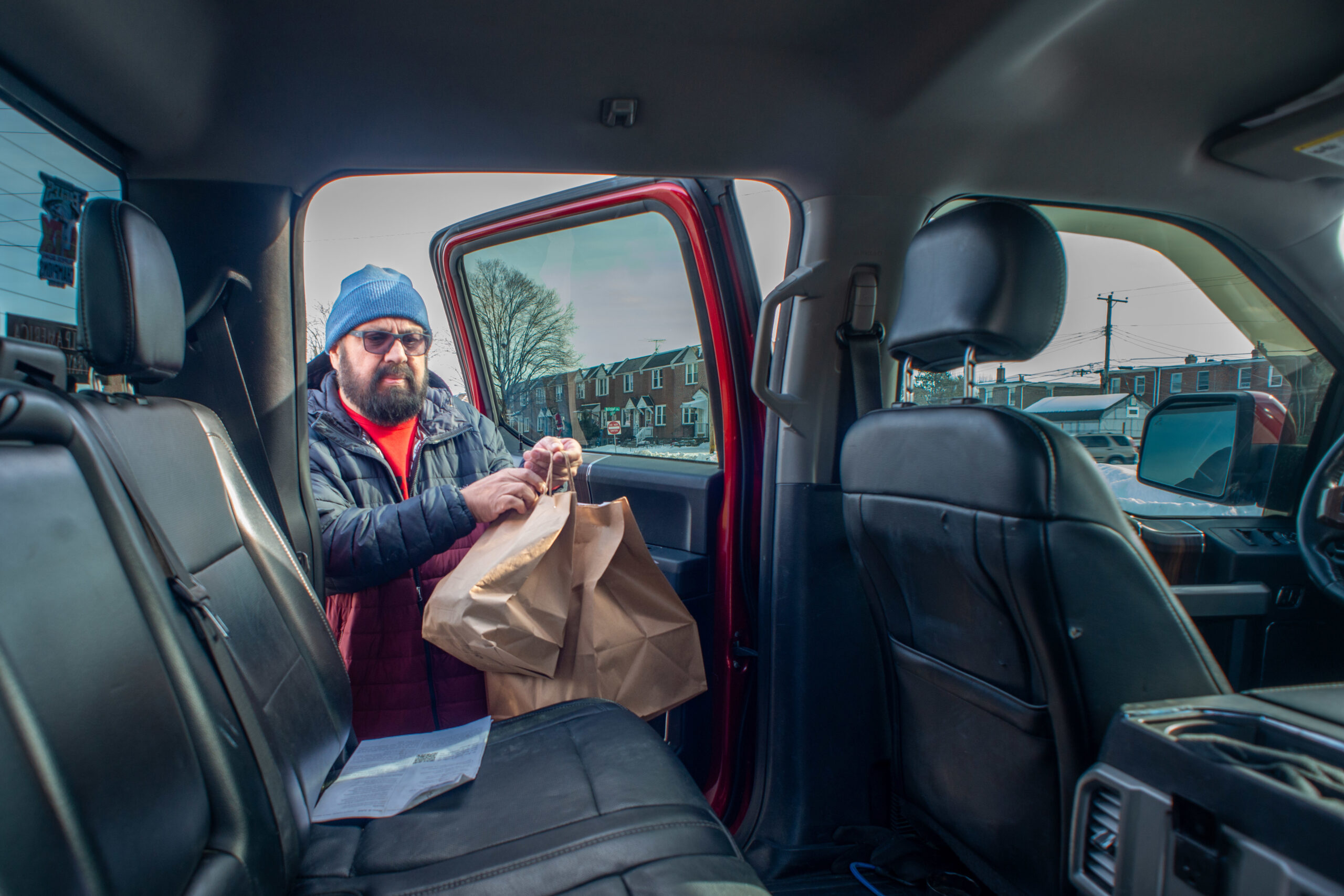
    On an icy, 13-degree Saturday morning in January, José Hernández sat in his pickup truck outside a Bensalem church, waiting for his phone to ring.

    It didn’t take long.

    Calls, texts, and emails have become constant, as Hernández, a machinist by trade, has become a crucial connection for many township residents who are living in the United States without official permission.

    What started as a simple good deed, delivering groceries to a few people worried about attracting ICE attention, has for Hernández, 61, become a full-time, unpaid job. Worry has hardened into fear amid the Trump administration’s dramatic escalation in immigration enforcement, leaving some people afraid to leave their homes.

    Hernández’s weekend rounds ― picking up people’s grocery orders at stores, bringing the food to their homes, always with a glance over his shoulder ― ensures sustenance for families for whom discovery would mean arrest, separation, and likely deportation.

    About 14% of the Bucks County township’s 63,000 residents are Latino. Among immigrants, everyone has a friend or family member who has been arrested by ICE and not seen again. And many fear that they’ll be next.

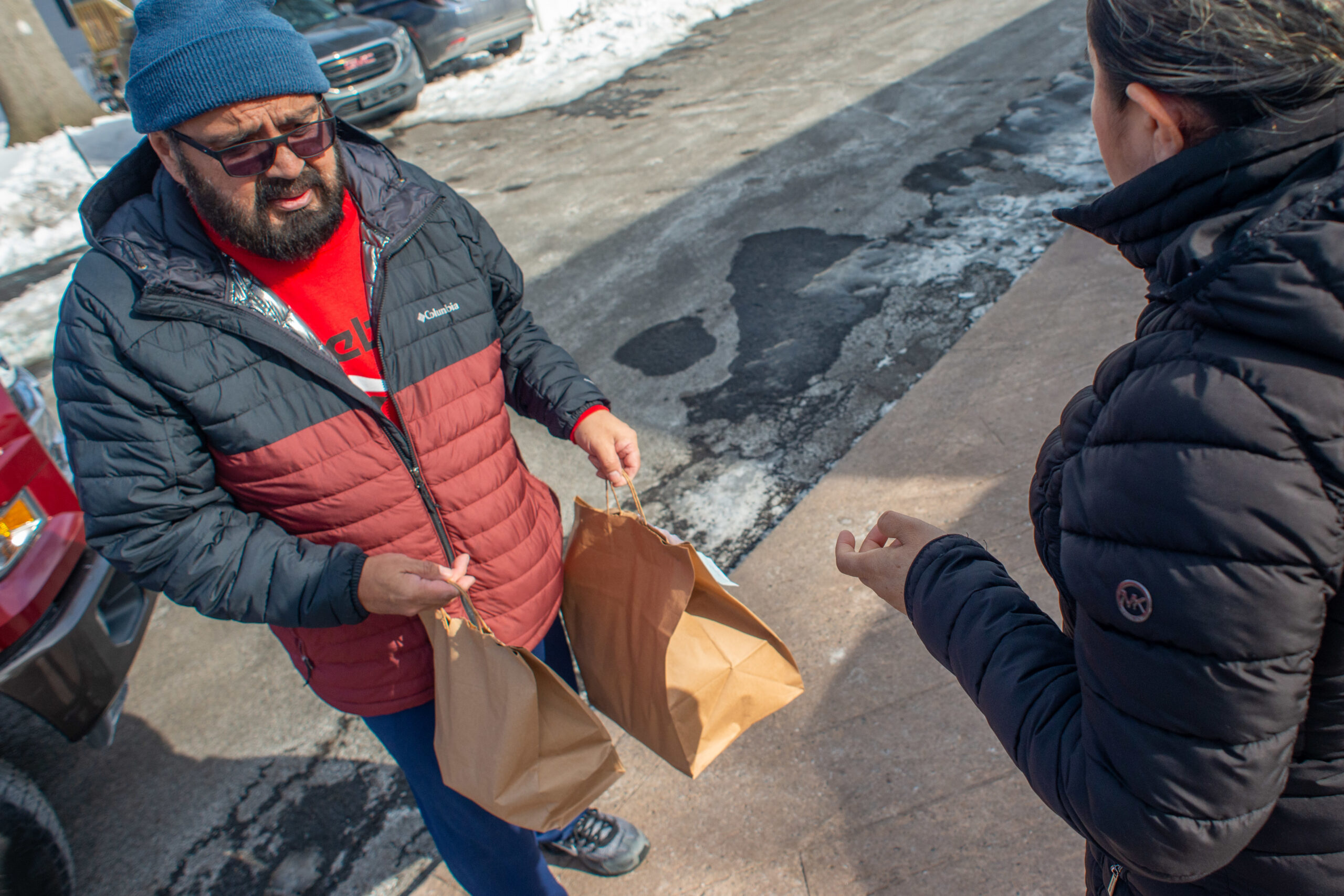
    Connie and Ivan came from Mexico over two decades ago. Fear of being detained by ICE has led them to turn to Hernández for food-delivery help.

    “They come out to pick up their order and you can see the fear in their faces,” Hernández said. “Many people come out saying, ‘Please hurry up, los del Hielo can be here any second.’”

    That’s what some community members call ICE agents — los del Hielo, meaningthe iced ones.” There are other names too, like el Escalofrío (“the chills”) and los Helados (“the frozen ones”).

    The nicknames come not from anger but from anxiety — fear that even speaking aloud the words Immigration and Customs Enforcement could summon danger.

    “We try to only go out when the darkness of the night protects us,” said an Ecuadoran mother, 32, who declined to provide her name for fear of arrest. “It’s a false sense of safety, but we must hold on to it.”

    Hernández recently delivered two bags of groceries and a birthday cake to her home, as her son was turning 12.

    “When I am in school,” the boy said, “the only thing I think about is if dad will make it home today. I wait all day, and then he comes, and I am happy he is still here. I am learning that being an American means that I have to be worried for the people I love.”

    A third of his immediate family ― an uncle and two cousins ― was arrested in November and December.

    José Hernández works to deliver groceries to local undocumented immigrants.

    Today an estimated 14 million people live in the United States without government permission, including about 76,000 in Philadelphia.

    Intensified ICE enforcement in the region and the nation has altered their lives ― exactly as the Trump administration intended when it promised to carry out the largest deportation program in U.S. history.

    For undocumented residents, freedom is no longer guaranteed by living quietly, obeying the law, and staying off the government radar. Now, discovery of having entered the country without approval, a civil violation, often means the end of an American life built across years.

    As a result, people are staying indoors.

    Many have stopped going to the doctor. And to church. They keep their children home from school when news of ICE activity surges. Businesses have had to temporarily close when workers stay away.

    ICE officials did not reply to requests for comment.

    In 2025, the agency detained 307,713 people in the U.S. ― detentions closely mirror arrests ― compared to 93,342 in 2024.

    That’s more than a 230% increase.

    Today more and more of those arrested face no criminal charges, even as the Trump administration pledges to deport “the worst of the worst.”

    Hernández uses his own money, earned from his job as a machinist, to pay for gas for deliveries.

    Hernández didn’t plan to be doing this work, spending his weekends traversing Bensalem.

    A decade ago he founded a group called Movimiento Guadalupano, a committee to organize Catholic activities. That grew into a broader support group for Latinos, and now he’s one of four volunteers who have become a central source of assistance and information on ICE activity.

    “Don’t go out today,” the Movimiento website warned on a recent weekend. “Volunteers will deliver your groceries from Hispanic stores to your home free of charge.”

    Hernández is a U.S. citizen, born in this country. He carries no fear of ICE, but plenty of worry that people in the Latino community will struggle without reliable food deliveries.

    In the truck, Hernández’s phone rang.

    Soon he was parked and walking through the doors of a Bensalem store stocked with traditional Mexican foods. He looked around, to be sure he wasn’t followed, but also so he could update Movimiento’s Facebook page if he saw ICE agents.

    A married couple shopping at the store recognized him and said hello ― Hernández had brought groceries to their home, bags of chorizo, tortillas, milk, cereal, and coffee.

    “Having the groceries delivered has been a huge relief,” said the man, Ivan, 44, who declined to provide his surname for fear of being identified to ICE. “We don’t have to choose between risking ourselves and feeding our children.”

    Maira wasn’t acquainted with Hernández, as her sister usually delivers her groceries. A recent medical emergency made it impossible, and with her family of four running out of food, she dialed the number Movimiento listed for delivery.

    Bensalem has been their home for 24 years, the couple explained, but their efforts to obtain legal status have failed. Meanwhile personal disaster has crept close.

    In December, at a construction site where he worked, Ivan said, two coworkers left for lunch and never returned. He later learned they had been arrested by ICE.

    “It’s just very difficult to be in a country that we know isn’t ours,” said Ivan’s wife, Connie, “but we love it as if it were.”

    A clerk interrupted: Hernández’s food order was ready. He grabbed the bag and headed out, Ivan watching him as he left.

    “He could be at home with his family, instead, he is helping,” Ivan said. “He brings a little bit of peace in this environment, like we still are a community.”

    Ten minutes later, Hernández slowed his truck near a row of houses, looking for anyone who might seem like they were waiting.

    A woman at a doorway froze when their eyes met.

    “Did you order a delivery?” Hernández called to her from the truck, watching relief come over her face.

    “You scared me,” she said, explaining that his car looked like one driven by a man who phones ICE to report people.

    The woman, who asked to be identified only by her first name, Maira, because she worried about immigration enforcement, said her husband hasn’t left the house since late November, when he barely escaped an ICE raid at a Norristown construction site. She still goes to work each morning, once she and her sister, who is a U.S. citizen, check the Movimiento site for a safe route.

    “I feel like crying all the time,” said Maira, 48. “I feel like a fugitive without having done anything, but I still have to keep working and paying taxes.”

    A receipt attached to a bag of groceries that José Hernández will deliver to local undocumented immigrants in Bensalem.

    After 25 years, she said, she thought she was part of Bensalem. That changed when a neighbor complained there were “too many cars” on Maira’s driveway when her sister visited. After that, she said, she stopped hosting family gatherings, concerned that the neighbor would call ICE.

    Hernández handed her the groceries and turned to leave.

    Maira tried to give him a $5 bill.

    “No, no, no,” he said. “How can I be of help if I charge you?”

    Hernández likes to think he brings more than groceries, that with him comes a kind word, a smile, and maybe even some hope. Don José, as folks call him, says his worry is not the weight of the bags or the length of the checkout lines in stores.

    “I am scared,” he said, “that we will get used to this [ICE enforcement], that it will be so normalized that people stop helping one another.”

    As the day wound down, Hernández’s wife phoned to see how he was doing. He drove to a nearby Walgreens pharmacy to check out a report that ICE agents were in the parking lot. They weren’t.

    His phone rang.

    “Hi, is this Don José?” a young man asked, apologizing for calling. “I really need your help with a delivery.”

    “Don’t worry, place your order,” Hernández replied. “I will be right there.”

  • After five Quakertown teens were arrested during protest against ICE, petitioners call for the police chief to resign

    After five Quakertown teens were arrested during protest against ICE, petitioners call for the police chief to resign

    People are calling for the longtime Quakertown Borough police chief to resign, two days after videos emerged that appear to show him barreling into a crowd of teenagers, sustaining a barrage of punches, and grappling with a girl on the ground.

    The incident happened Friday after about 35 Quakertown Senior High School students walked out of class to protest Immigration and Customs Enforcement (ICE). The school initially approved the walkout but canceled it for safety reasons earlier that morning. Quakertown Borough Police said it arrested five students and one adult after a scuffle with officers.

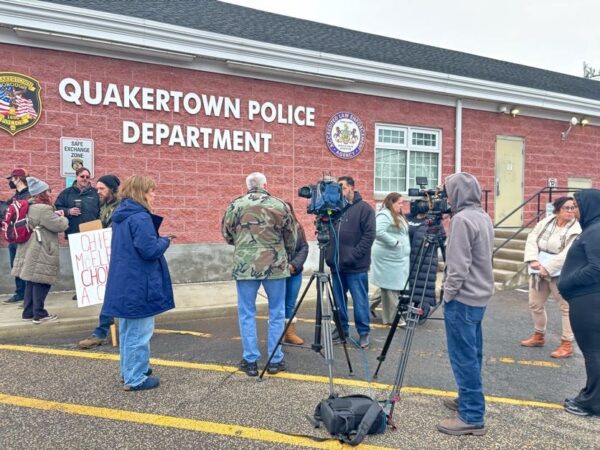
    Police Chief Scott McElree and the police department have not responded to requests for comment over the weekend. But as videos of the incident have spread online, demands for answers and accountability have grown. Community members held a rally outside the police department Saturday morning. Hours later, the office of Bucks County District Attorney Joe Khan said that it is investigating the police response.

    As of Sunday afternoon, more than 4,000 people have signed a Change.org petition, “Demand Chief Scott McElree’s resignation.” It’s not clear how many of the signers are locals.

    “The video made me cry,” wrote a petition signer identified as Karen. “I know every one of those children. They were taught to trust the police. They were also taught to fight back against an attacker.”

    Karen and other petition signers noted that McElree was not wearing anything identifying himself as a police officer in the videos.

    Another petition signer, identified as Sora from Quakertown, said the students should be held accountable for walking out of class. But that didn’t justify McElree’s response.

    “This protest got violent because the chief [of] police chose to start the violence, the students were ready to defend because they have seen everything happening in other states with ICE,” the commenter said.

    “Once students left school grounds without authorization and walked into town … they were no longer under the district’s custodial control or supervision, and we have almost no legal ability to regulate or investigate their behavior,” Lisa Hoffman, acting superintendent of schools for Quakertown Community School District said in a statement Sunday night.

    According to the Quakertown Borough website, McElree serves as chief of police, borough manager, and open records officer for the community. About 9,400 people live there, recent U.S. census numbers show. Quakertown is in northwest Bucks County about a half hour from Allentown.

    McElree has served as both police chief and borough manager since 2007, according to news reports. He previously was a Whitemarsh Township police officer for about 30 years, according to his LinkedIn profile.

    Contacted by phone Sunday, Quakertown Borough Council Member Michael Johnson said the council may discuss the matter at a work session set for Monday night at 7:30 p.m.

    Johnson, who has earned accolades for his work as a local law enforcement officer, declined to say whether he was concerned about McElree.

    “I’m going to wait to see all the video before I make any comments,” Johnson said.

    Other council members and borough council president Donald E. Rosenberger did not respond to requests for comment Sunday.

    Scant details are available about the teenagers’ status.

    “These are juvenile arrests, and because of that, their files are shielded by the Pennsylvania Juvenile Act,” said Bucks County District Attorney’s Office spokesperson Manuel Gamiz Jr.

    Due to a major storm expected Sunday night, Gamiz noted, the Bucks County Justice Center is closed Monday.

    That could potentially delay the students’ legal proceedings.

    Editor’s note: A statement from Quakertown school officials was added after publication.

  • Chesco towns are among the Philly area’s wealthiest, but big Bucks County is making gains

    Chesco towns are among the Philly area’s wealthiest, but big Bucks County is making gains

    It abuts an internationally famous garden. It may well be the most affluent community in the nation that hosts a prison, a source of some unwanted attention a few years back.

    And, according to recently released U.S. Census data, picturesque Pocopson Township is in a rarified zone for wealth in the eight-county Philadelphia region, with an annual median household income of $230,000.

    Chester County towns dominated the top 50 list in an analysis of incomes in the region’s municipalities — compiled from self-reported American Community Survey data — calculated for the five-year period that ended in 2024.

    But the analysis also showed that not only has Bucks County been gaining star power, some of its towns may merit the label “Big Bucks County.”

    Legendary locale New Hope and neighboring Solebury — places associated with Real Housewives of Beverly Hills alumna Yolanda Hadid and actor Bradley Cooper — are among the towns that have made significant moves up the income chart, compared with the five-year period that ended in 2014.

    Inflation-adjusted median annual incomes jumped 58% in New Hope, to $175,000. Incomes were up nearly 30% in Solebury, to $196,000, among the highest in the region.

    The national median income was around $80,000, according to census figures.

    Income figures are estimates, rounded to the nearest hundred, and are subject to margins of error. A total of 286 municipalities were included in the analysis; those with fewer than 2,500 residents were excluded. Here are some key findings.

    window.addEventListener(“message”,function(a){if(void 0!==a.data[“datawrapper-height”]){var e=document.querySelectorAll(“iframe”);for(var t in a.data[“datawrapper-height”])for(var r,i=0;r=e[i];i++)if(r.contentWindow===a.source){var d=a.data[“datawrapper-height”][t]+”px”;r.style.height=d}}});

    Chester County still has the wealthiest towns

    Chester County towns held six of the top 10 spots, including Birmingham, adjacent to Pocopson.

    The county evidently is rich in an amenity attractive to the wealthy — and to others.

    “Chester County has been a leader in terms of the amount of land preserved,” said Andrew Svekla, Office of Smart Growth manager with the Delaware Valley Regional Planning Commission. “The availability of open space is an amenity that everyone is looking for.”

    While the natural environment is an understandable attraction, not everyone who spends time in Pocopson comes for the green space: The Chester County Prison has been a mainstay in the township since 1959.

    In August 2023, Pocopson and Longwood Gardens became international news when inmate Danilo Cavalcante escaped and set off a two-week investigative frenzy that mutated into a massive exercise of Where’s Danilo? He spent time hiding in Longwood and was eventually captured in South Coventry Township, about 20 miles away.

    Otherwise, the likes of Pocopson and Birmingham have not exactly been centers of media attention, and the towns even have avoided the development-vs.-open-space conflicts that have erupted elsewhere, said Matthew J. Edmond, executive director of the Chester County Planning Commission.

    “They aren’t in the path of growth,” he said. “These areas are off the beaten path.” The residents represent a mix of old and new money, he said.

    He likened Chester County to a macro-version of Lower Merion Township, where neighborhoods vary from ultra-wealthy Gladwyne to the middle-class sections of Ardmore.

    While overall the county has the highest median income in the state, “when you get down to the granular level, it’s a very diverse county,” he said.

    Incomes in other counties in the region have grown

    The overall picture of wealth in the eight-county region was quite a diverse one in the census survey, ranging from Pocopson’s median income to the $40,000 levels of Camden, the City of Chester, and Darby Borough.

    But the preponderance of the higher incomes clearly were west of the Delaware River.

    Jersey’s wealthier municipalities tend to be clustered in the New York metro area, Svekla said, and only six were on the top 50 list in the Philly region. They included Camden County’s Haddonfield, with a median income of $200,500, and Moorestown, at $160,000 and a favorite of professional athletes. They include ex-Phillie Nick Castellanos, onetime 76er Ben Simmons, Flyers legend Bobby Clarke, and former Eagle Terrell Owens, who famously drew media attention by doing push-ups on his driveway.

    It also is the home of Kevin Patullo, the Eagles’ former offensive coordinator whose house was pelted with eggs in October after one of the team’s lackluster performances.

    Haddon Heights and Haddon Township did not join Haddonfield in the top 50 but were high on the list of towns where incomes had grown substantially in the last 10 years.

    Other places that experienced substantial paycheck bumps in the last 10 years included the Blue Route towns of Conshohocken and West Conshohocken. Both are close to I-476 interchanges and have experienced growth spurts in population and wealth since the highway connecting the Pennsylvania Turnpike to I-95 opened in the 1990s.

    Bucks lags in population growth, but not wealth

    Led by Chester County, population increased in all eight counties between the 2010 and 2020 census counts. “We’re growing mainly due to international immigration,“ said Greg Diebold, the Delaware Valley planning commission’s senior data analyst.

    “Bucks has been one of the slower-growing counties,” he said, having added only about 4% to its population between 2010 and 2020.

    In terms of median-income growth over the last 10 years, however, it had seven municipalities in the top 20, more than any other county.

    window.addEventListener(“message”,function(a){if(void 0!==a.data[“datawrapper-height”]){var e=document.querySelectorAll(“iframe”);for(var t in a.data[“datawrapper-height”])for(var r,i=0;r=e[i];i++)if(r.contentWindow===a.source){var d=a.data[“datawrapper-height”][t]+”px”;r.style.height=d}}});

    Not all the gainers were wealthy towns

    One Delaware County town, Upland Borough, adjacent to the City of Chester and the location of part of the closed Crozer-Chester Medical Center, made the biggest-growth list with incomes up more than 40% to $61,000.

    Bankrupt Chester itself, with one of Pennsylvania’s highest poverty rates, reported a 10% gain, to $41,000.

    However, half of the 10 towns where incomes decreased the most were in Delaware County.

    Speaking to the region’s overall prosperity, fewer than 25% of the 286 towns showed drops in income in the period that ended in 2024, compared with the five-year period that ended in 2014.

    And only 20% this time around reported incomes below the national median.

  • A new streaming series tells the story of America through the lens of Philadelphia

    A new streaming series tells the story of America through the lens of Philadelphia

    By 2019, after a decade of producing dozens of documentaries about Philadelphia history, the filmmakers at History Making Productions realized they had more than just the story of a city.

    They had the story of America.

    On Friday, the studio released its epic, new telling of that 400-year-old story: In Pursuit: Philadelphia and the Making of America. Directed by documentary filmmaker Andrew Ferrett and written by author and historian Nathaniel Popkin — and mixing modern footage with historical recreation and more than 600 on-camera interviews — the 10-episode series explores the history of America through the lens of Philadelphia, its birthplace.

    Belinda Davis as Sarah Forten in “In Pursuit: Philadelphia and the Making of America.”

    Timed to coincide with the 250th anniversary of the Declaration of Independence in 2026, known as the Semiquincentennial, the series provocatively grapples with urgent questions, like how did the American experiment actually unfold? And how can it endure?

    “Philadelphia is not just the birthplace of American democracy — it has been its proving ground,” said Sam Katz, series creator, executive producer, and founder of History Making Productions. “This series looks honestly at how ideals were formed, challenged, expanded, and sometimes betrayed, and why that history matters so urgently.”

    ‘A national moment’

    Spanning 400 years of Philadelphia history, from its Indigenous roots to the MOVE Bombing the series is equal parts entertainment and civic project. Funded by Katz and philanthropies like Pew Center for Arts & Heritage, Penn Medicine, and Lindy Communities, the series premiered at the National Constitution Center on Thursday.

    Episode One is now streaming online. Katz and the filmmakers will host screenings and community conversations at Pennsbury Manor in Bucks County on Sunday, and another screening Feb. 26 at the Bok Building in South Philadelphia.

    Throughout 2026, as the city and country celebrate the national milestone, a citywide “In Pursuit of History Film Festival” will promote each new installment with monthly screenings and public events. 6abc will air monthly hourlong shows to highlight new episodes.

    Sam Katz at Independence Hall, in Philadelphia, Tuesday, Feb. 17, 2026.

    From the beginning, the project was meant to get people talking about the true meaning of the American experience, and those it has left behind.

    “We’re going to get partners all over the city, and we’re going to have screenings all over the place,” said Katz, the civic-leader-turned-producer. “We’re going to create opportunities for people to come and meet the filmmakers, or meet a historian or an artist, who will then lead a conversation. It really is an opportunity for Philadelphia to take stock of itself.”

    Popkin, who cofounded Hidden City Daily, said the project tells the story of events that shaped a city and a country founded on ideals not yet fully realized — and now as divided and tested as they’ve been in decades.

    “The timing is perfect,” he said. “I think a film can really launch a lot of conversations. This is a moment for us as a nation.”

    Fresh portals

    Ferrett, who grew up in Bucks County, and has been directing and producing films at History Making Productions for more than 15 years, said the project revealed itself.

    For earlier Philly projects — including The Great Experiment, an Emmy-award winning, 14-part docuseries spanning 500 years of Philly history, and Urban Trinity: The Story of Catholic Philadelphia — the filmmakers had amassed hundreds of unused hours of interviews with local and national historians, artists, and cultural leaders.

    Over the years, much of it had to be left on the cutting room floor, including magical moments that Ferrett said opened fresh portals to Philly history.

    “We talked to pretty much anyone you can imagine who was either involved with studying Philadelphia history, or in the case of 20th-century history, a lot of witnesses to it,” he said.

    Poet Ursula Rucker during filming of “In Pursuit: Philadelphia and the Making of America.” The new 10-part docuseries examines the history of America through the story of Philadelphia.

    Besides, he said, nowhere else could hold a better mirror to America than the place of its birth.

    “It really became obvious to us that what we have here is much more than a local history,” he said. “It’s a history of the whole United States because so many consequential moments that shaped the country’s history went through Philadelphia.”

    History that feels alive

    Setting out to tell the story anew, Katz raised money to shoot updated interviews and fresh historical recreations.

    Meanwhile, history did not slow down, from the COVID-19 pandemic, to the killing of George Floyd and the Black Lives Matter movements, to Trump, and immigration crackdowns.

    “We were asking how do we deal with history while all this is happening,” Katz said. “We were writing about it right now.”

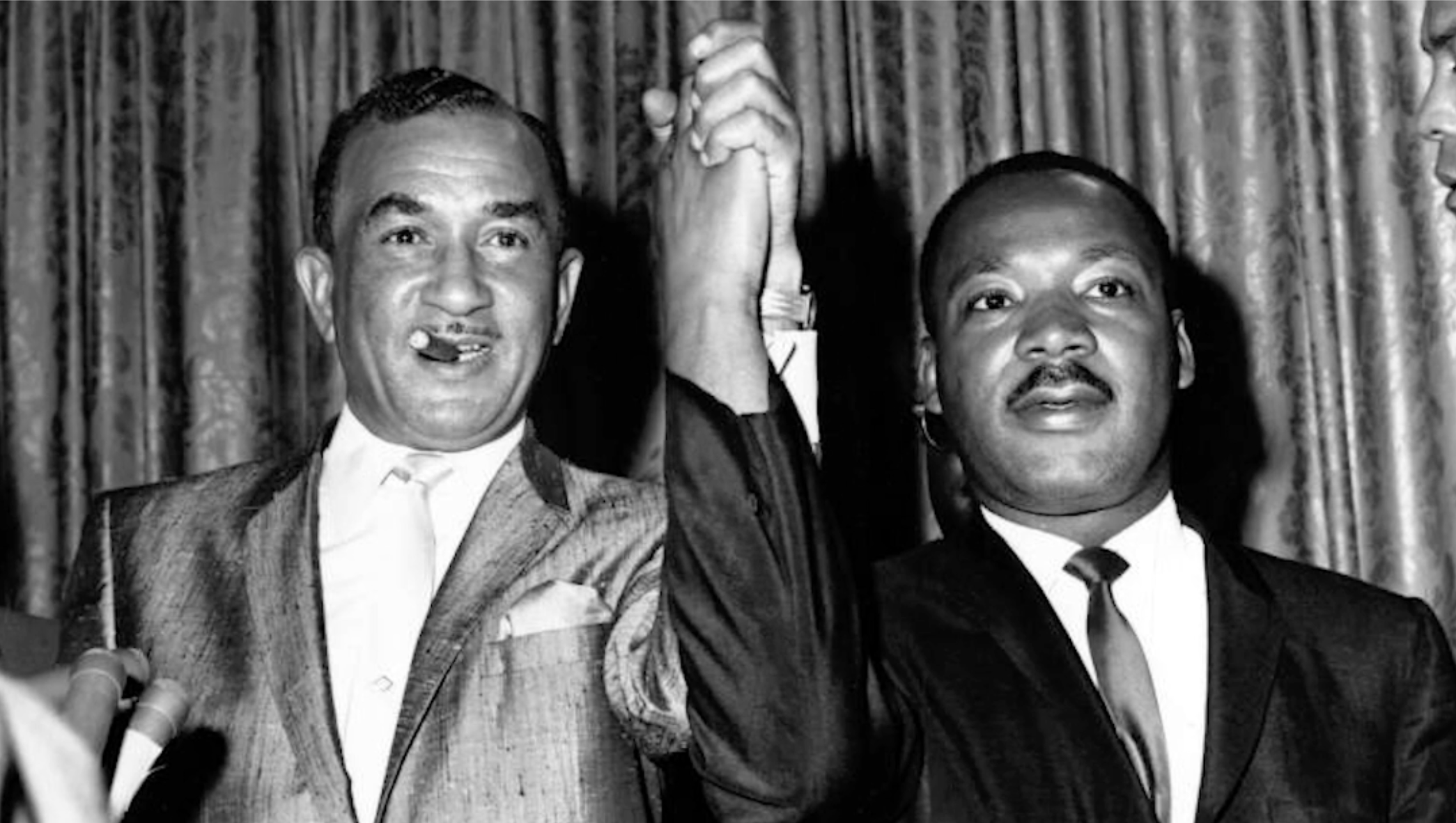
    Cecil B. Moore and Martin Luther King Jr. in footage from “In Pursuit: Philadelphia and the Making of America.”

    Narrated in a warm, resonant baritone by actor Michael Boatman, known for roles in shows Spin City and The Good Wife, In Pursuit is no dull, black-and-white history. The city feels alive, the stakes serious and undecided.

    Threading modern-day footage of bustling Philly streetscapes and soaring neighborhood shots with commentary and historical recreations imprints the series with a powerful immediacy.

    The story stretches far beyond 1776, though the dramatic details of that sweltering summer in Philadelphia are recounted in episode three in gripping scenes of refreshingly believable historical recreations.

    “We were able to shoot these lush and full reenactments,” said Ferrett, of all 10 episodes. “Sam was always like, ‘Where’s the dirt? I don’t want to see people with perfect teeth and smiling.’”

    The start

    Episode One, “Freedom (to 1700),” begins at the beginning, pulling no punches as it tells the story of the Lenape people, Philadelphia’s earliest Indigenous settlers — and of the generations of Dutch and other European colonists’ efforts to eradicate them through violence and disease.

    It surprises even in the telling of William Penn, recounting how the rebellious aristocrat’s nonconformist ways landed him in jail more than once, before he founded a City of Brotherly Love meant to be a better world, and a testing ground of the most advanced ideals in Europe.

    The episode also showcases what Ferrett describes as “deepeners,” when the story cuts away from the arc of history for moments of reflection from modern Philly voices.

    “We all feel it here … it’s all in our bloodstream,” poet Ursula Rucker says in the episode. “What does this city mean to me? Everything. Everything.”

  • Upper Darby Council passes resolution to restrict cooperation with ICE following resident’s death in the agency’s custody

    Upper Darby Council passes resolution to restrict cooperation with ICE following resident’s death in the agency’s custody

    The Upper Darby Township Council passed a resolution Wednesday to restrict cooperation with U.S. Immigration and Customs Enforcement in response to growing concerns about the agency’s activities in the diverse township.

    The 11-member council, made up entirely of Democrats, voted unanimously to pass a resolution saying the town will not use its resources to assist ICE with non-criminal immigration enforcement. But the largely symbolic resolution nearly mirrors the municipality’s existing guidelines, leading to criticism that it does not go far enough.

    The resolution’s passage comes after Parady La, an Upper Darby resident struggling with addiction, died last month in a hospital while in ICE’s custody. It also follows the chaotic scenes in Minneapolis, where federal agents fatally shot Renee Good and Alex Pretti last month as President Donald Trump’s administration targeted the city with a massive immigration enforcement operation.

    Those events have fueled anxiety in Upper Darby, where nearly a quarter of the population is foreign-born, compared with 15% in Philadelphia. Armed ICE agents wearing masks have become a familiar sight in the township, prompting residents to question why their community is suddenly under pressure, including high school students who held a walkout earlier this month.

    Council President Marion Minick called the resolution a chance to show immigrants in the community “they are not alone.”

    “We can demonstrate through our votes and through our voices that Upper Darby Council will do everything within our legislative power to shield our residents and their families from this climate of intimidation,” he said.

    The council’s resolution comes as local governments across the country and in the Philadelphia area try to curb ICE’s impact on their residents. Last month, Haverford passed a similar measure and Bucks County ended its agreement with the agency that allowed sheriff’s deputies to act as immigration enforcement.

    Council member Kyle McIntyre, a progressive community organizer who began his term last month, emphasized that the resolution is “just the start.”

    “There is so much more than we can do, and we will be doing, and I make that solemn promise to the community right now,” he said before the vote.

    “If we don’t do more, hold us accountable,” he added.

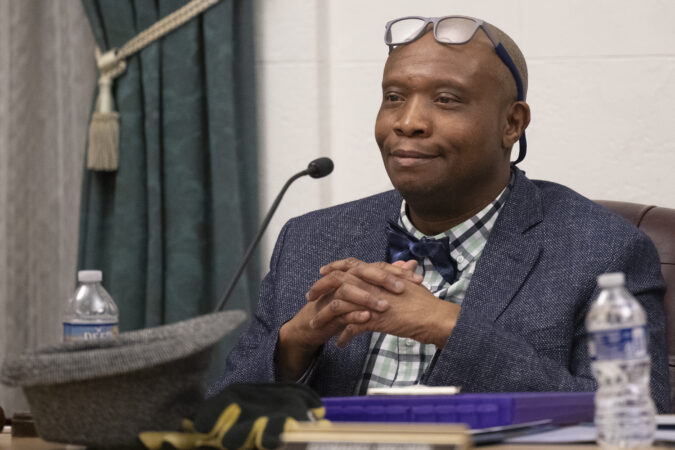
    Kyle McIntyre, an Upper Darby Township council member, listens to residents’ comments during a township meeting on Wednesday, Jan. 21, at the Upper Darby Municipal Building in Upper Darby, Pa.

    Township solicitor Mike Clarke said that police will cooperate with ICE if the agency has a criminal warrant signed by a judge.

    “Local law enforcement is not supposed to be in the immigration enforcement business, and essentially that’s what this resolution is saying … but if it’s a criminal warrant, they will be involved,” Clarke said.

    A list of frequently asked questions about ICE on the township’s website already stated that Upper Darby does not participate in civil immigration enforcement or ask residents their immigration status, though it does cooperate with lawfully issued criminal warrants and court orders. Township spokesperson Rob Ellis confirmed that the resolution reaffirms the town’s existing internal policy.

    The lack of cooperation seems to be going both ways.

    Upper Darby Mayor Ed Brown said earlier this month that ICE would no longer communicate with local police to tell them when agents are operating in the township, calling the change “scary.” ICE did not immediately respond to a request for clarity on Thursday.

    Some residents at the meeting expressed concern about the reaffirmed policy getting in the way of public safety, and McIntyre later said the policy ensures anyone in Upper Darby can feel comfortable reporting crimes to the police. He said “anybody that commits a crime in Upper Darby Township will be held accountable,” regardless of immigration status.

    Jennifer Hallam, who said she has worked with immigrants in Upper Darby for almost a decade, urged the council to postpone its vote and instead pursue legislation that has more teeth.

    “The current resolution really just preserves the status quo,” she said.

    She called for a resolution that would restrict ICE from municipal property without judicial warrants, prohibit the collection and sharing of immigration status among municipal employees, and prohibit ICE from wearing masks. Philadelphia lawmakers are attempting to ban ICE from wearing masks, though experts are split on whether the measure would be legally sound.

    McIntyre said in an interview that Wednesday’s resolution puts the council’s values down on paper and provides clarity to the community, but he acknowledged that a resolution is not enforceable.

    A death in ICE custody close to home

    The community has been grappling with the death of La, a 46-year-old Cambodian immigrant and Upper Darby resident who, according to his widow, Meghan Morgan, struggled with addiction. La came the United States in 1981 as a refugee around the age of 2. He became a lawful permanent resident a year later but lost his legal status after committing a series of crimes over two decades, ICE said.

    ICE said agents arrested La outside his home last month before he received treatment for severe withdrawal in a Philadelphia detention center. He was admitted to the hospital in critical condition, where his condition worsened and he died, the agency said.

    Morgan and La’s daughter Jazmine La said they believe he was not given proper medical treatment and the Pennsylvania ACLU filed a Freedom of Information Act request surrounding his detention and death.

    McIntyre last month called on Delaware County District Attorney Tanner Rouse and Philadelphia District Attorney Larry Krasner to investigate La’s death.

    Rouse said at the time that Delaware County law enforcement was not involved or aware of La’s detainment when it happened, and that his office would investigate it. He said Thursday that surveillance footage showed La was detained “without violence” but that his death in Philadelphia should be addressed by “investigating authorities” in the city.

    Krasner’s office declined to comment, saying it was a federal matter.

    Staff writer Jeff Gammage contributed to this article.

  • Judge sentences Bucks man who killed his mother and hid body beneath drugs and money to decades in prison

    Judge sentences Bucks man who killed his mother and hid body beneath drugs and money to decades in prison

    Northampton police went to the first-floor condominium on Beacon Hill Drive for a welfare check on Dolores Ingram, an 82-year-old grandmother of three known for gifting her sewn and crocheted creations to family, friends, and those in need.

    Inside, officers found the living room in disarray, a heap of household items stacked haphazardly. They moved the things aside — a flipped-over futon, glass plates, a shattered aquarium that once housed two lizards — until they uncovered a bare foot. It was cold to the touch.

    The body was that of Dolores Ingram, who authorities say died from blunt-force trauma, asphyxiation, and lacerations inflicted by her son, William Ingram, before he fled in her car.

    On Wednesday, nearly two years later, a Bucks County judge sentenced William Ingram, 51, to 30 to 64 years in prison for killing her inside the home they shared.

    Ingram pleaded guilty in December to third-degree murder in the June 2024 killing of his mother, as well as abuse of a corpse and related crimes. He also pleaded guilty to a string of drug offenses, including possession with intent to distribute.

    Investigators said that as they continued searching the pile atop Dolores Ingram that day, they found approximately six pounds of marijuana and more than $53,000 in cash — proceeds, prosecutors said, from a marijuana and psilocybin distribution business that William Ingram ran from the home.

    They also found the family’s pet reptiles dead on the floor.

    “The money you threw on top of her was more than most people make in a year in this country,” said Bucks County Court Judge Stephen Corr, adding that it illustrated Ingram’s “disrespect” for his mother.

    In court on Wednesday, Dolores Ingram’s two daughters described their mother as “generous” and “kind, a “good example of how to treat people.” She loved yard sales and thrift stores, they said. She also had “lifelong anxiety,” including over her son, who suffered from mental illness, they said.

    Authorities initially charged Ingram with first-degree murder, which carries a potential life sentence. In exchange for a guilty plea to the lesser charge of third-degree murder, Bucks County prosecutors agreed to a sentence of 26 to 54 years in state prison.

    Corr used his discretion when he sentenced Ingram to four to 10 years in prison for the drug crimes. He also sentenced Ingram to consecutive terms, calling the move “necessary” given the circumstances of the crimes and the need to “protect the community” from Ingram.

    Defense attorney Riley Downs argued that Ingram has been diagnosed with schizoaffective disorder, which went untreated in the days before the slaying.

    At the sentencing hearing, Downs asked Ingram if he missed his mother. “Yeah,” Ingram replied. He added: “I didn’t mean for this to happen. It doesn’t even seem real to me.”

    Ingram denied hitting his mother and said he did not remember piling things on top of her. However, in an affidavit of probable cause for Ingram’s arrest, Northampton Township police said he confessed to hitting his mother in the head during an argument, then throwing “all this stuff” on top of her body.

    Then, police said, Ingram stole his mother’s Honda Civic and drove to Washington. There, authorities said, he assaulted a local police officer while naked and was taken into custody about a day after the killing.

    Downs asked the judge to sentence Ingram to 26 years, arguing that he would be 75 years old at his first chance at parole — an amount of time he called “significant” for a man Ingram’s age.

    Prosecutor Monica Furber pressed for consecutive sentences. While she acknowledged Ingram’s mental illness, she countered that it “did not stop him in any way from running a criminal enterprise” or covering his mother’s body “in the drugs and proceeds.”

    Before announcing the sentence, Corr said Ingram had “turned” on “the one person who was trying to help him.”

    He added: “I hope you have an opportunity to grow while you spend what is likely the rest of your life in prison.”