A Michigan man who drove across the country to set fire to a Bensalem family’s home in a targeted attack on a romantic rival was sentenced Thursday to 20 to 40 years in prison.
Harrison Jones, 22, pleaded no contest to six counts of attempted murder and two counts of animal cruelty for the killing of the family’s two dogs, which perished in the blaze. He also pleaded guilty to a slew of related crimes in connection with the February 2025 incident.
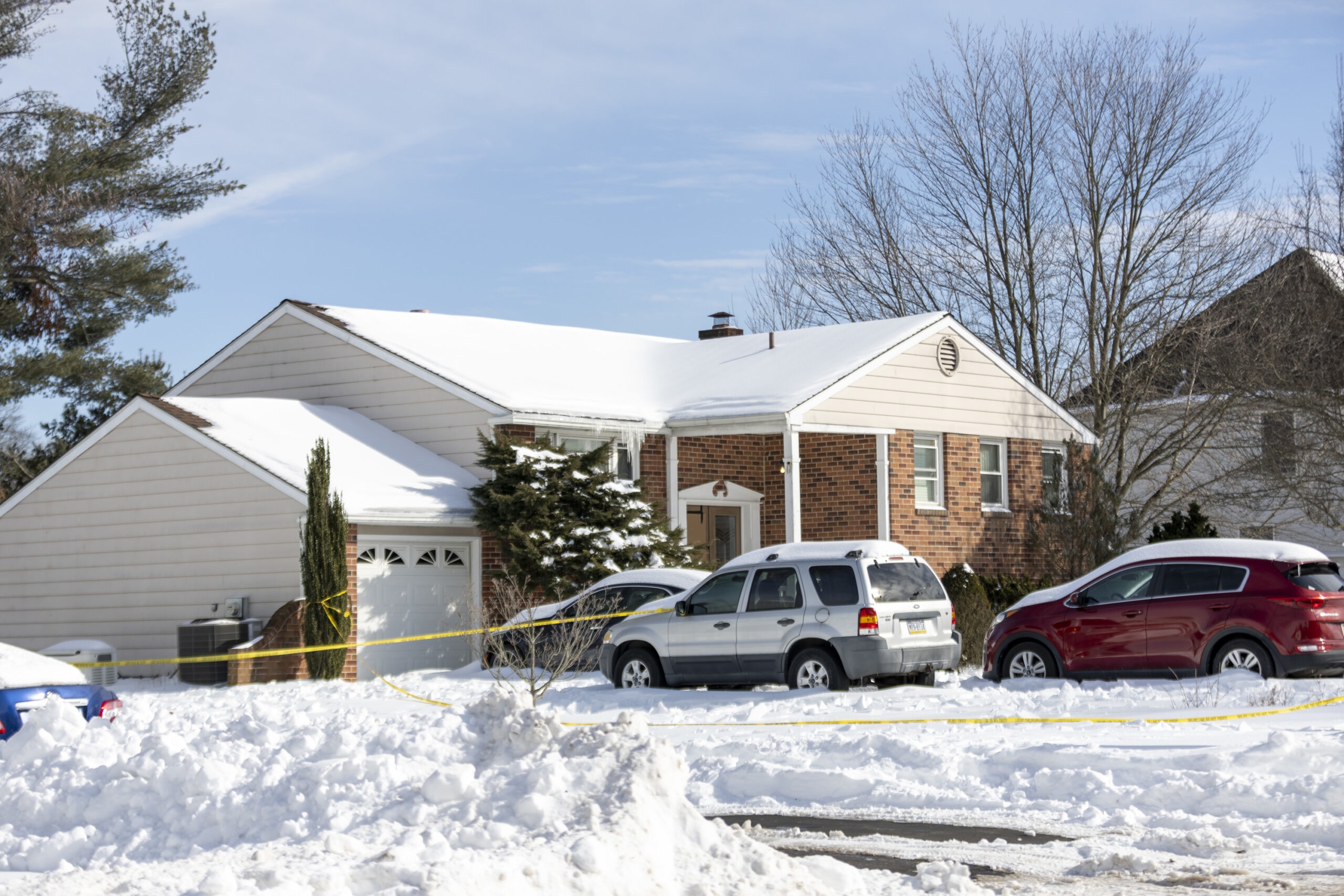
Bucks County prosecutors said Jones drove more than 700 miles from his native Rockford, Mich., that winter to set the blaze at the home of Alex Zalenski, a man Jones’ ex-girlfriend and high school sweetheart had recently begun a long-distance relationship with.
Zalenski, along with his father, mother, sister, and grandparents, was sleeping when Jones broke in and set off an incendiary device in the living room and kitchen around 5 a.m. Their dogs, Jett and Trey, barked, waking up the family, who all managed to escape.
Alex Zalenski’s sister, Ava, recalled being awakened to the sound of yelling and heavy smoke clouding her room, choking her airways.
“My dad told me to get down to breathe,” she said. “At age 20, I was ready to accept death.”
The family had just minutes to escape the blaze, which consumed the property and left them without a home.
Andrew Zalenski, the father of Alex and Ava Zalenski, recalled telling them to crawl on the floor to avoid inhaling smoke.
He forced them out of a window before going to look for his wife, Stacy, he said, but could not find her and fled.
It was challenging to describe the feeling of watching your home ablaze “believing your wife is burning to death inside,” he tearfully recounted.
Stacy Zalenski had been trying, unsuccessfully, to save the dogs. The woman, who is battling breast and lung cancer, ultimately jumped from a second-floor window to survive.
Andrew Zalenski suffered from severe smoke inhalation and was put in an induced coma in the hospital, he said.
Meanwhile, Alex Zalenski — the young man whose relationship with Jones’ ex had enraged the Michigan man — said the attack “shredded any normalcy I had.”
He had to withdraw from college after the incident, he said, and has since had trouble sleeping.
“It felt as if my entire world had been set ablaze,” he told the court.
Jones, wearing a yellow prison jumpsuit and shoulder-length hair, showed little emotion during the Zalenski family’s remarks.
Given the opportunity to speak, however, Jones took full responsibility for the crime.
“I need to take accountability,” Jones said, his voice breaking. “I’m guilty — I’ve done what I’ve done.”
Jones’ family, including his father, mother, sister, stepfather, stepmother, and stepbrother, were in the gallery behind him.
Jones’ attorney, Paul Lang, said Jones had no previous criminal record and had suffered physical abuse growing up. To cope, he had turned to abusing Xanax and marijuana, Lang said.
Jones, for his part, alluded to being under the influence of drugs during the attack.
In addition to sentencing Jones to decades in prison, Bucks County Court Judge Matthew D. Weintraub ordered him to pay more than $500,000 in restitution to the Zalenski family.
Weintraub told the Zalenskis that the trauma of the attack had clearly bonded their family.
Addressing Jones, the judge said he believed the young man had attempted to “effectuate maximum damage” that day.
U.S. Rep. Brian Fitzpatrick has more cash on hand than any other GOP incumbent in a swing district nationwide as the party prepares for a tough election.
The Bucks County lawmakerraised about $4.3 million in the most recent cycle, more than any other House candidate in the state and the 21st most of all the candidates running for the 435-member House in 2026. He ended 2024 with nearly $4.4 million when removing debt and had more than $7.3 million cash on hand as of Dec. 31. That haul makes him the best-funded of the 16 candidates on the National Republican Congressional Committee’s Patriots program, a group of vulnerable incumbents in key swing districts, according to Federal Election Commission data.
“Brian Fitzpatrick has years of electoral success under his belt and will continue to be unbeatable in Bucks County because Pennsylvanians know he’ll always put them first in Washington … this race was over before it began,” NRCC spokesperson Reilly Richardson said in a statement.
But Fitzpatrick’s district is one of four in Pennsylvania that could determine the control of the U.S. House and has long been coveted by Democrats because of its purple electorate. It is one of nine GOP-held districts in the country that former Vice President Kamala Harris won in 2024.
Bob Harvie, a Democrat who chairs the Bucks County commissioners, has emerged as the front-runner to face Fitzpatrick in the 2026 election.
Harvie, who would need to win the May primary to face Fitzpatrick,raised nearly $930,000 last year and has more than $400,000 cash on hand. He surpassed $1 million after getting $100,000 in the first few weeks of the year, according to his campaign.
“Based on the outpouring of support we are receiving, it’s clear voters agree and are fired up to be a part of this campaign,” Harvie said Wednesday in a news release about his fundraising.
Harvie made history flipping the Bucks County board six years ago, has strong name recognition in the district, and has the backing of national Democrats. But Fitzpatrick ended the year with nearly 20 times more cash on hand.
Fitzpatrick received more money from each of New York and Florida than from in-state donors in 2025, according to FEC data. Harvie received the vast majority of his money from Pennsylvania.
Fitzpatrick could be less vulnerable than other swing-state Republicans
He recently joined Democrats and two other swing-district Republicans in the state to vote to extend Affordable Care Act subsidies, which Republicans quashed. Fitzpatrick criticized House Speaker Mike Johnson (R., La.) and called some of his Republican colleagues “intellectually dishonest.” But Democrats have argued that Fitzpatrick has not been critical enough of the president, whom he often avoids naming when challenging his policies.
Jim Worthington, a GOP mega-donor in Pennsylvania and owner of the Newtown Athletic Club, said that Fitzpatrick’s approach makes him “the perfect representative for a purple county.”
“Everybody that’s moderate and people that are independents, they love him because he votes to what best represents his constituents, and by the way, sometimes he takes some votes that make me cringe a little bit, but I understand why he does it,” Worthington said.
Heather Roberts, a spokesperson for Fitzpatrick’s campaign, attributed the incumbent’s fundraising success to his ability to break the partisan mold.
“Strong fundraising follows strong leadership — and Congressman Fitzpatrick has built a broad coalition of Republicans, Democrats, and Independents who are rejecting the extremes and backing two-party, patriotic, common-sense solutions,” Roberts said in a statement.
Fitzpatrick “is no maverick and no John McCain — he is a doormat for Trump’s worst instincts and a greenlight for D.C. Republicans’ dangerous agenda that is hurting our community,” Harvie said Wednesday in a statement to The Inquirer.
“Pennsylvanians deserve a Congressman who will stand up to Trump and actually do something to lower prices — but Fitzpatrick is weak and caves to his own party when it matters most,” said Eli Cousin, a spokesperson for the Democratic Congressional Campaign Committee, in a statement.
Harvie has less cash on hand than the other Democratic front-runners in the state’s swing districts.
Janelle Stelson, a second-time challenger to Perry, ended 2025 with about $1.5 million cash on hand. Scranton Mayor Paige Cognetti, who is challenging Bresnahan, ended the year with a little more than $800,000 cash on hand. Former federal prosecutor Ryan Croswell, Mackenzie’s Democratic challenger with the most cash, has $612,000 for the Lehigh Valley race.
Does name recognition make Harvie a ‘formidable’ challenger?
Harvie’s campaign is confident that he can cash in on name recognition, having won two countywide commissioner races in the last seven years that could help raise his profile among voters in the 1st Congressional District, which includes all of Bucks County and a sliver of Montgomery County.
Provided he wins the primary, Harvie would be the first Democratic challenger to Fitzpatrick’s seat who has held countywide elected office.
But will that help Harvie’s chances?
“The starting point that Bob Harvie has with his name ID as a commissioner is just a much better starting point,” said Brittany Crampsie, a Democratic consultant in Pennsylvania, noting that he would not need to spend as much money introducing himself to voters in an expensive Philadelphia-area media market.
“He has a lot of advantages going into this race, not the least of which is his name ID, but he would be probably the most formidable matchup we’ve seen against Fitzpatrick in his tenure,” she added.
“Maybe,” GOP consultant Christopher Nicholas said as to whether Harvie has valuable name recognition, adding that “among hardcore Democrats his name ID is decent because they’re hardcore Democrats.”
“But if you stood out on the streets of Tullytown or Riegelsville or Dublin and said, ‘Who are your county commissioners?’,” residents may be unfamiliar, Nicholas said.
As of October 2025, 43% of respondents to an internal Harvie campaign survey conducted by Public Policy Polling could identify Harvie, with 26% giving him a favorable rating and 17% an unfavorable. That poll had the commissioner and Fitzpatrick tied at 41%.
This article has been updated to include a comment from Fitzpatrick’s campaign received after publication.
PJM Interconnection — the region’s dominant electric grid operator — is poised to play a central role in the expansion of data centers, as the independent organization has been shoved into the national spotlight and subjected to mounting pressure over the last year.
It has been a frequent target of Shapiro, officials from other states, consumer advocates, and the federal government.
In many ways, PJM may be one of the most consequential Philly‑area institutions that most residents have barely heard of, even though their electricity supply and monthly bills hinge on its decisions.
The organization has faced escalating scrutiny nationwide and across the region because of its position as the country’s largest independent grid operator and the challenges tied to surging energy demand.
What is PJM?
Based in Audubon, Montgomery County, PJM manages the minute-by-minute flow of electricity for 67 million people across 13 states and the District of Columbia.
It helps keep the lights on for 13 million Pennsylvanians.
Why are there concerns about PJM and data centers?
Concerns have risen over the cost to consumers posed by hyperscale data centers — the massive server farms needed to run artificial intelligence — that are poised to come online across Pennsylvania and the U.S.
PJM plays a major role in getting those data centers powered and connected to the regional electrical grid.
Consumer advocates say the data centers are forcing consumers to pay for the new power plants and equipment needed to keep up with that demand. And they fear that huge demand could result in electrical outages during times of peak demand.
Already, consumers have seen electricity prices spike — and that’s before most of the proposed data centers are even built.
How much consumers pay is influenced by an annual auction held by PJM designed to get enough commitments from power producers so that the electrical grid can meet forecast demand for several years and to ensure power during peak times. That is known as grid reliability.
Map produced by The National Resources Defense Council estimates electricity capacity costs to utility companies based on PJM forecasts through 2032.
Why is Gov. Shapiro critical of PJM?
Shapiro and other governors have been sharply critical of how PJM has designed its auction, saying the process lacks transparency.
In a 2024 lawsuit, Shapiro’s office referred to PJM’s decisions as “inept” and responsible for “the country’s most snarled interconnection queue,” in reference to projects lined up for approval to be added to the grid.
After the 2025-26 auction, Shapiro reached an agreement with PJM on a price cap that he said would save consumers over $21 billion and avoid historic price hikes. The cap limited the increase of wholesale electricity payments to power plant owners.
PJM forecasts that data centers will drive a need for more than 30 gigawatts of peak electricity capacity by 2030 — enough to power more than 20 million households, or approximately all the homes in New Jersey, Pennsylvania, Ohio, Virginia, and Maryland, according to the Natural Resources Defense Council (NRDC).
The NRDC says that could lead to another spike in electricity costs through 2033 and cost homeowners and businesses an estimated extra $70 per month.
At the same time, however, officials are also pushing PJM to fast-track data centers.
Late last year, the Federal Energy Regulatory Commission issued an order on so-called colocation that will allow tech companies to plug their data centers directly into power plants.
In January, the Trump administration and a group of governors, including Shapiro, urged PJM to move quickly to boost power supplies and keep bills from rising.
They also want PJM to hold a separate power auction in which tech companies would bid on 15-year contracts to build new power plants. That way, data center operators, not regular consumers, would pay for the power.
Data centers that do not have their own power source and do not volunteer to be cut off from the grid during power emergencies should be billed for the cost of new power plants, they said.
Why do people resist data centers near their homes?
The quick rise of data centers has met stiff resistance from residents who fear the projects will radically alter the character of rural neighborhoods, increase electricity and water costs, and harm the environment.
Developers have submitted applications for at least 20 hyperscale data centers in Pennsylvania. PJM would have to find a way to make sure they can be powered and connected reliably to the grid, or provide their own power.
At least six data centers are being planned or proposed in the Philadelphia region, with some reaching 2 million square feet. Residents have fought the proposals, some of which have run into zoning and planning problems.
Residents of some of those communities are alarmed by a new Pennsylvania House bill (HB 2151), which is backed by Shapiro. It provides a model ordinance designed to speed data center development.
Opponents believe the bill is an attempt by the tech industry to get data centers approved.
“HB2151 would undermine Pennsylvanians’ herculean grassroots efforts to keep dirty data centers out of our communities — it must be stopped,”said Ginny Marcille-Kerslake, an organizer for Food and Water Watch, an environmental advocacy nonprofit.
“This bill pushes Shapiro’s reckless embrace of data centers even further onto communities struggling to grapple with Big Tech’s land, power, and water grab,” she said, calling it a part of “backroom deals” the state is making.
A vote on the bill before the House Energy Committee is scheduled for Wednesday.
What’s next?
Environmentalists and other groups, including some legislators, say a process by PJM to fast-track electricity-producing projects excludes clean energy and gives special treatment to fossil fuel power plants, allowing them to cut ahead in the queue over renewable sources that have waited years to connect to the grid.
That plan calls for changes in PJM policies to bring new power online quickly by providing a streamlined path for state-sponsored power generation projects, improving load forecasts, giving a bigger role in the process to states, and offering ways for data centers to bring in their own power generation while curtailing power in times of system need.
The plan, PJM said, “will also help address the supply-and-demand imbalance that has the potential to threaten grid reliability and is currently driving up wholesale costs that can impact consumer bills.”
Jeff Shields, a spokesperson for PJM, said the imbalance has been created as sources of power generation are being retired without enough new generation coming online to keep pace. At the same time, demand for electricity has increased substantially due to the proliferation of data centers.
“PJM is doing its part to bring new generation onto the system, and any suggestion otherwise is just not true,” Shields said.
He also noted that while PJM does run wholesale power markets, it does not directly set rates for residential, commercial, or industrial customers. Those rates are set by utilities, such as Peco, along with government agencies, such as the Pennsylvania Public Utility Commission.
Denise Bruce paid a stranger $75 to shovel out her Hyundai Venue, which was encased in snow and ice outside her East Kensington rowhouse.
“My car was really badly packed in on all sides,” said Bruce, 36, who works in marketing. “I just didn’t have the strength honestly to dig it out myself.”
The West Coast native also didn’t have a shovel.
So she was elated to find a woman on Facebook who agreed to dig out her compact SUV for between $40 and $60. After the endeavor took four hours on a frigid evening, Bruce thought it was only fair to pay more.
After Bruce forked over the money — digitally via Cash App — she asked herself: What should one pay to outsource the onerous task of shoveling?
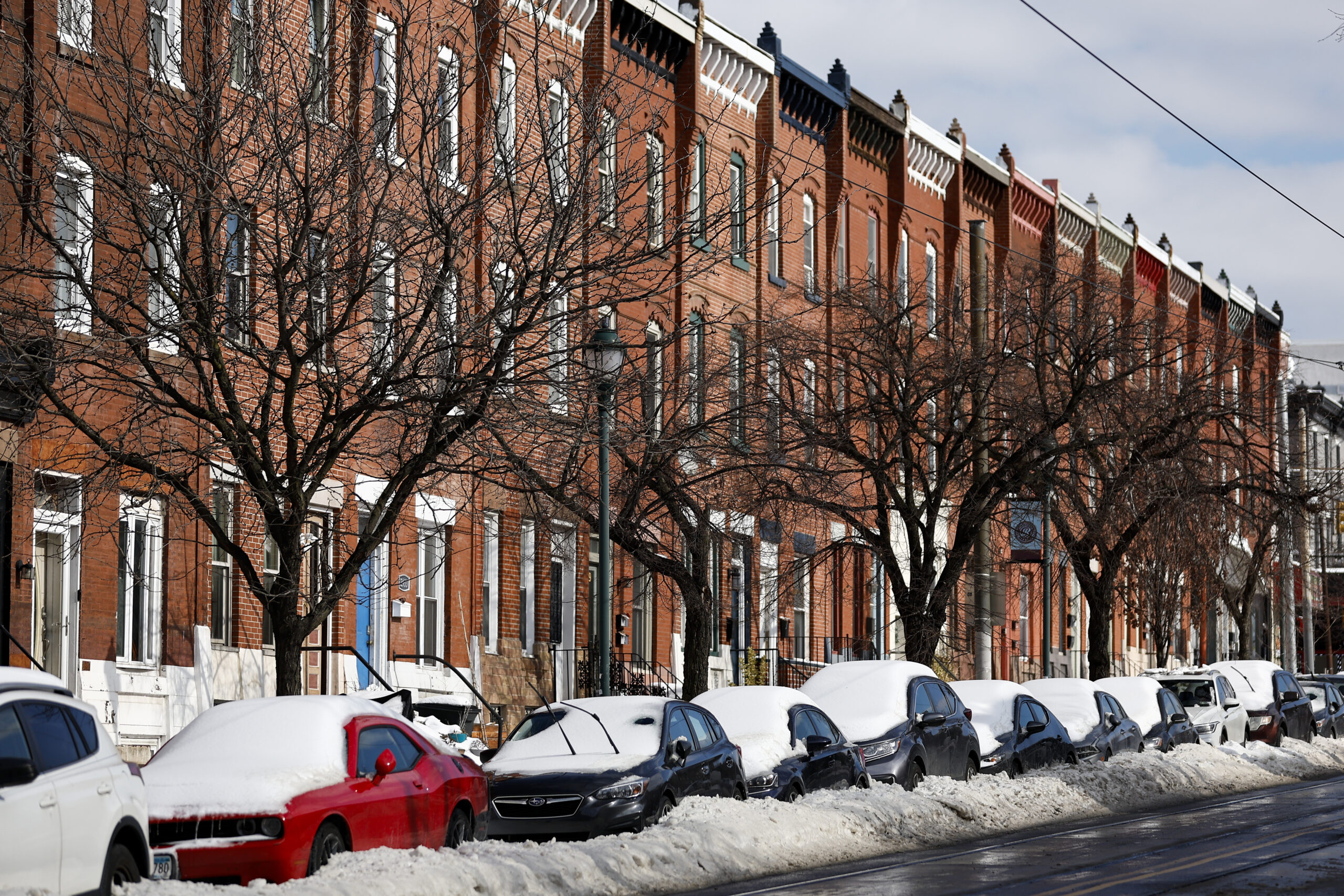
Snow-covered cars lined Girard Avenue in Brewerytown on Monday.
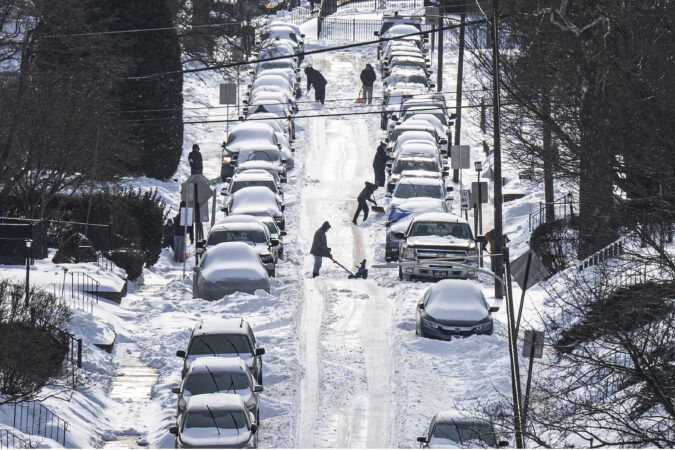
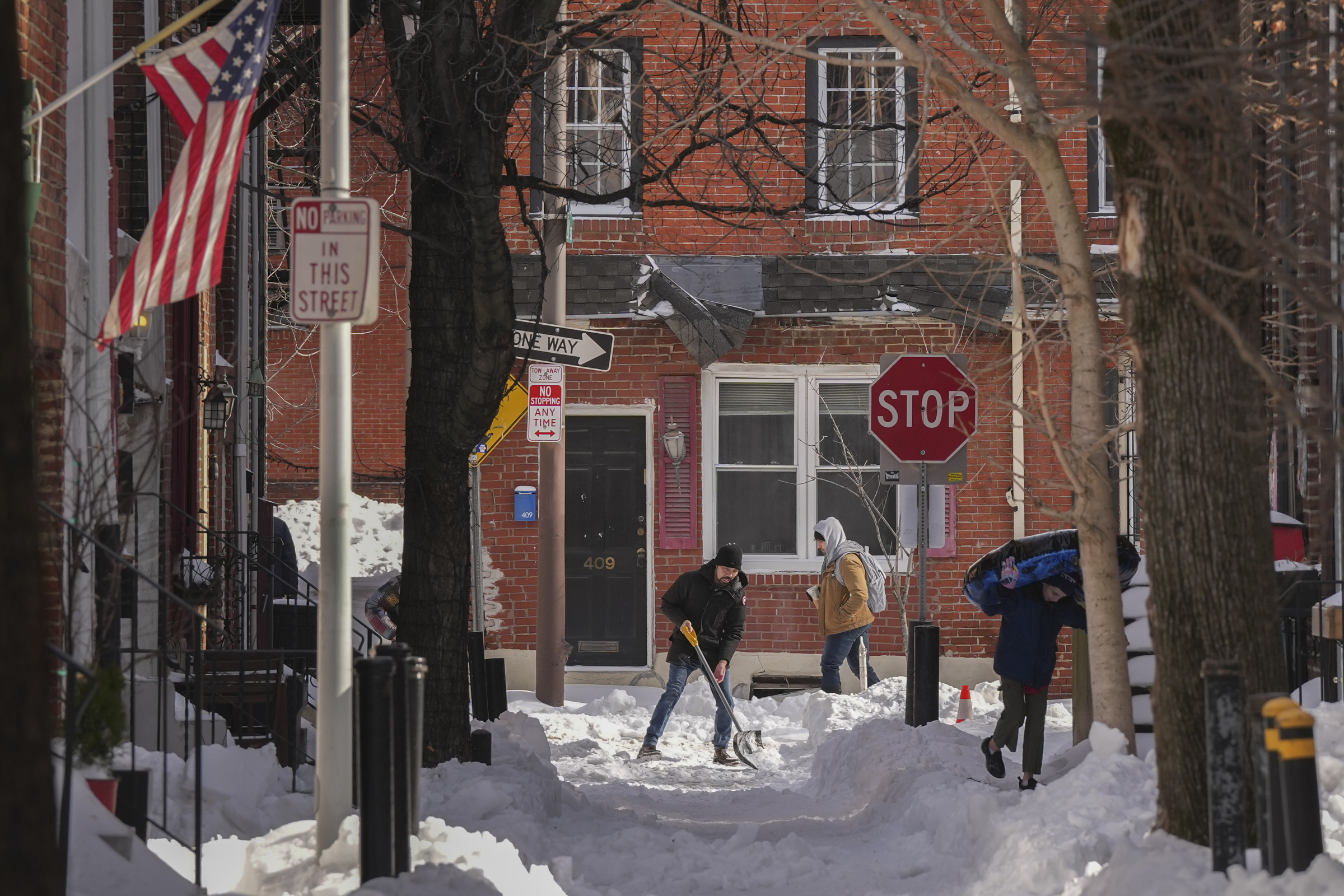
While some shoveled themselves or hired professional snow removal companies with fixed rates, others turned to an ad hoc network of helpers who hawked shoveling services on neighborhood Facebook groups, the Nextdoor app, and the online handyman service TaskRabbit.
On online forums, strangers agreed to dig out the cars of folks like Bruce, who didn’t have the strength, tools, or time to do so on their own. Others signed up to clear the driveways and sidewalks of older people, for whom shoveling such heavy snow can increase the risk of heart attacks.
Prices per job vary from $20 to $100 or more. Some freelance shovelers are upfront about their rates, while others defer to what their customers can afford.
Higher prices now for ‘trying to dig through concrete’
Alex Wiles stands on North Second Street on Tuesday before taking the bus to another snow-shoveling job.
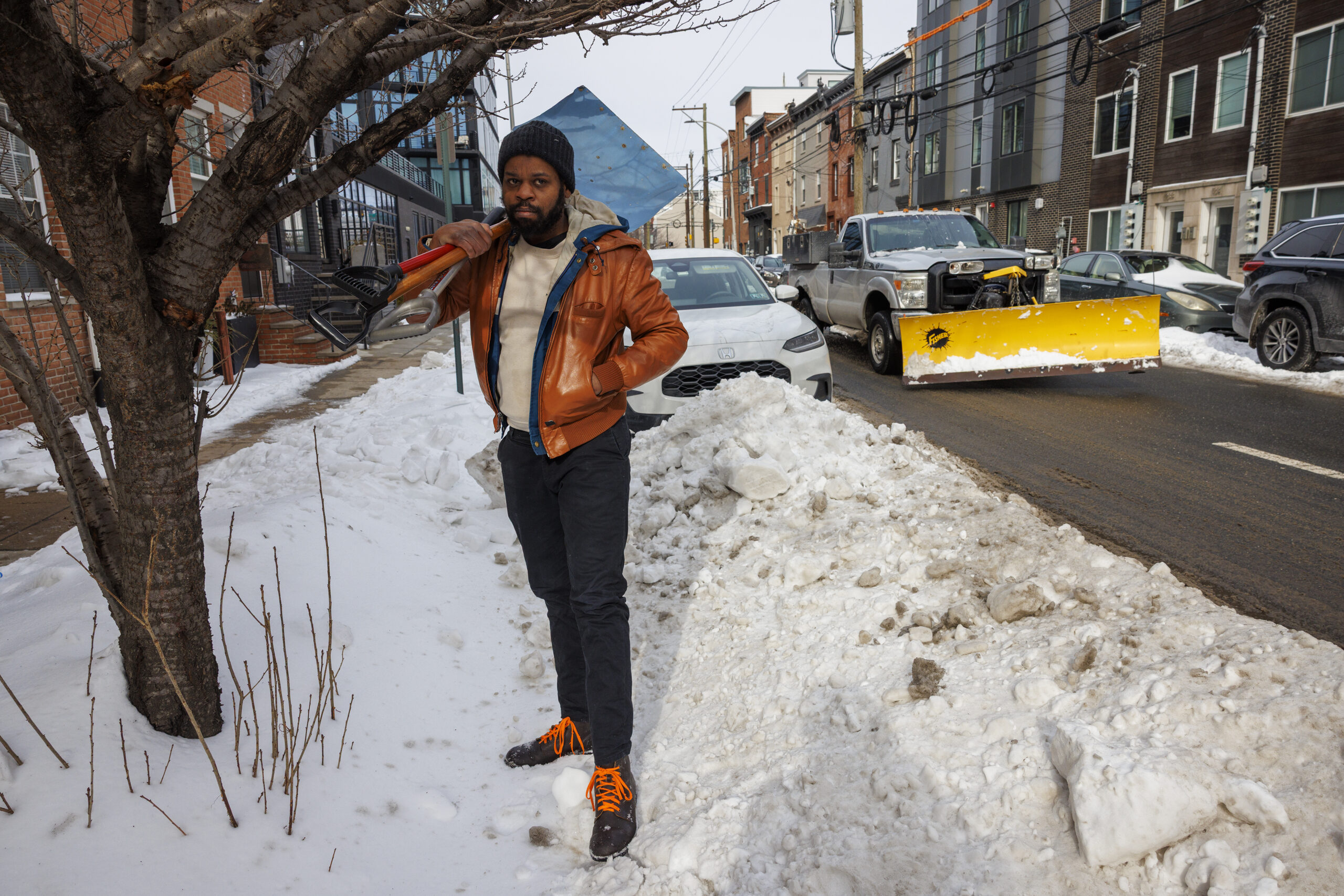
On Monday, the day after the storm hit, Alex Wiles, 34, of Fishtown, shoveled out people’s cars, stoops, and walkways for between $30 and $40 per job. As the week went on, he increased his rate to about $50 because the work became more physically demanding.
“At this point, it feels like trying to dig through concrete,” Wiles said. As of Thursday, he had shoveled for nearly 20 people across the city and broken three shovels trying to break up ice. He said most people tip him an additional $5 to $20.
“I want it to be an accessible service,” he said, “but I also want to be able to make money doing it and remain competitive with other people,” including teenagers who often shovel for less.
For Wiles, who works in filmmaking and photography, his shoveling earnings go toward paying rent.
He said he sees his side hustle as essential service, especially since the city did “a terrible job,” in his opinion, with snow removal.
“A lot of the city looks like a storm happened 10 minutes ago,” Wiles said Thursday.
Shoveling is “necessary and people are just otherwise going to be stuck where there are,” he said. “They aren’t going to be able to get to work easily. They aren’t going to be able to walk down the street.”
Some adults see themselves filling in for ‘the young kids’
When Max Davis was a kid in Hopewell, N.J., he’d compete with his neighbors to see who could shovel the most driveways during snowstorms.
Now, the 28-year-old said he seldom sees or hears of kids going door to door when it snows.
That was part of the reason Davis got off his Northern Liberties couch on Monday and started shoveling out cars for a few neighbors who posted on Facebook that they needed help.
A snow shoveler on Waverly Street on Monday.
Davis, a founding executive at an AI startup, said he didn’t need the money, so he accepted however much his neighbors thought was fair. He ended up making about $40 to $50 per car, money he said he’ll likely use for something “frivolous” like a nice dinner out in the city.
If there is another snowstorm this winter, he said, he’d offer his shoveling services again.
“Why not?” Davis said. “I’d love to see the young kids get out there and do it. I think they’re missing out.”
In Broomall, Maggie Shevlin said she has never seen teenagers going door to door with shovels, but some of her neighbors have.
During this most recent storm, the 31-year-old turned to Facebook to find someone to clear her mother’s driveway and walkway in neighboring Newtown Square. Shevlin connected with a man who showed up at 6:30 a.m. Monday, she said, and did a thorough job for a good price.
“I figured it would be somewhere around $100. He charged me only $50,” said Shevlin, who works as a nanny and a singer. “Oh my god, [my mom] was so thankful.”
How a professional company sets snow removal prices
A snow removal contractor clears the sidewalk in front of an apartment building in Doylestown on Wednesday.
Some Philadelphia-area residents, especially those with larger properties, use professional snow removal services. They often contract with these companies at the start of the winter, guaranteeing snow removal — at a price — if a certain amount falls.
In Bristol, Bucks County, CJ Snow Removal charges $65 to $75 to remove two to four inches of snow from driveways, walkways, and sidewalks at a standard single-family home, said co-owner John Miraski.
The cost increases to $95-$115 for a corner house, he said, and all rates rise about $25 for every additional two inches of snow.
Last week, he said, several people called him asking for help shoveling out cars, but he was too busy to take on the extra customers. He passed those requests to other companies, he said, and recommended they charge “nothing less than $50 to $60, because you’re dealing with [nearly] a foot of snow plus a block of ice.”
Miraski said he recommends professionals because they are insured. That’s especially important, he said, in storms that involve sleet or freezing rain, as Philly just experienced.
“You start throwing ice, who knows where it is going and what it is hitting,” Miraski said.
Professionals are more expensive, he acknowledged, but often more thorough. “Some of my properties we went back to two or three times to make sure they were cleared.”
And sometimes, regardless of who shovels, a resident can find themselves unexpectedly stuck in the snow again.
In Northeast Philadelphia, J’Niyah Brooks paid $50 for a stranger to dig out her car on Sunday night. But when she left for her job as a dialysis technician at 3 a.m. Monday, her car had been plowed in.
“I was out there kicking snow,” said Brooks, who was eventually able to get to work.
The Grammys are here, with lots of familiar faces.
Kendrick Lamar, who won five awards at last year’s show, leads with nine nominations and Lady Gaga, Bad Bunny, and Billie Eilish are up for major awards.
As is Sabrina Carpenter, the Bucks County native who is the Philly region’s great hope. She won twice last year and is nominated six times for her album Man’s Best Friend.
Neither Taylor Swift nor Beyoncé released music in the eligibility period, which runs from Aug. 31, 2024, to Aug. 30, 2025, so that’s why they’re missing from this year’s list.
I’m picking winners in the four major categories, which will be among the dozen or so given away on the awards show hosted by Trevor Noah and broadcast on CBS from the Crypto.com Arena in Los Angeles at 8 p.m. Sunday, and streaming on Paramount+.
A total of 95 Grammys will be given out, however, with most presented in a pre-telecast ceremony streamed on grammy.com and the Recording Academy’s YouTube page, starting 3:30 p.m. Sunday.
That’s where you’ll find the Philadelphians.
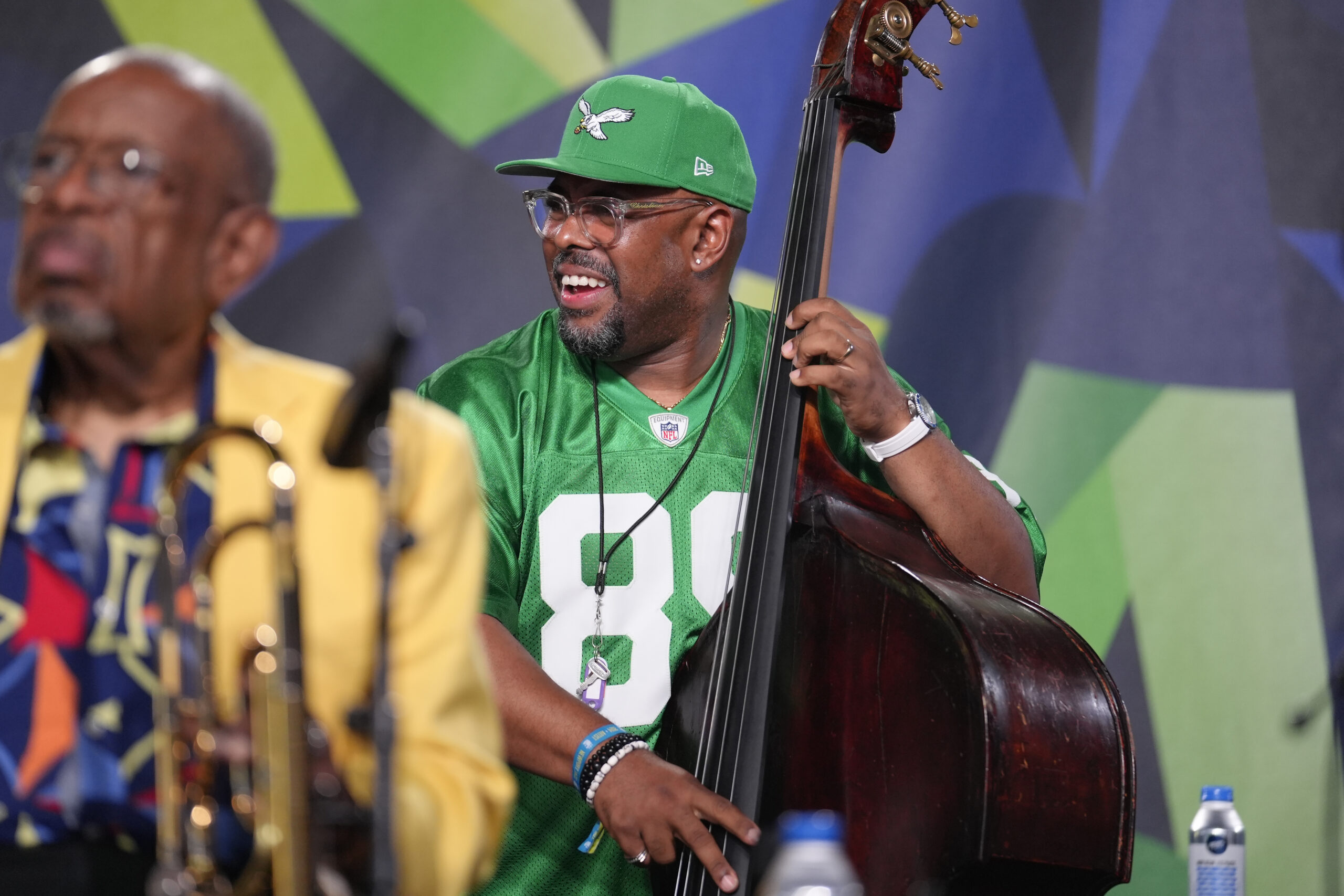
Jazz bassist Christian McBride is up for three awards, with his Big Band’s Without Further Ado, Vol. 1 vying with Sun Ra Arkestra’s Lights on a Satellite for best jazz large ensemble.
Philadelphia Orchestra and music and artistic director Yannick Nézet-Séguin are up for two, and Nézet-Séguin is also nominated for one with the Metropolitan Opera orchestra.
Jazz saxophonist Immanuel Wilkins and University of Pennsylvania graduate John Legend have two noms each. The Crossing Choir, Camden gospel bandleader Tye Tribbett, songwriter Andre Harris, and producer Will Yip each have one.
Bassist Christian McBride (right) performs during the Newport Jazz Festival, Sunday, Aug. 4, 2024, in Newport, R.I. The Philadelphia musician is up for three Grammys on Sunday.(AP Photo/Steven Senne)
As the first major live TV awards show since the death of Alex Pretti in Minneapolis last weekend, the Grammys are likely a platform for anti-ICE protests. We’ll see which, if any, performers or presenters — who include Charli XCX, Teyana Taylor, Queen Latifah, Lainey Wilson, Nikki Glaser, and Chappell Roan — speak out.
Here’s who I think should — and will — win.
Album of the Year
Nominees: Bad Bunny, Debí Tirar Más Fotos; Justin Bieber, Swag; Sabrina Carpenter, Man’s Best Friend; Clipse, Let God Sort ‘Em Out; Lady Gaga, Mayhem; Kendrick Lamar, GNX; Leon Thomas, Mutt;Tyler, the Creator, Chromakopia
My prediction: The most prominent of these in my rotation these days is LetGod Sort ‘Em Out, the topflight reunion of hip-hop brothers Gene “Malice” and Terence “Pusha T” Thornton. But it has little chance among these heavy hitters.
Carpenter will have to be satisfied with a performance slot in the prime-time show, a prize showcase on “Music’s Biggest Night.” But Man’s Best Friend isn’t quite up to the level of her tart 2024 Short n’ Sweet.
The consensus says this is a race between Lady Gaga, Bad Bunny, and Kendrick Lamar. All have an excellent chance, with Gaga being a veteran Grammy favorite back on form. Lamar’s album released way back in November 2024, but he continued to impact culture through his “Grand National” tour with SZA and “Luther,” their collab that topped the pop charts for 13 straight weeks.
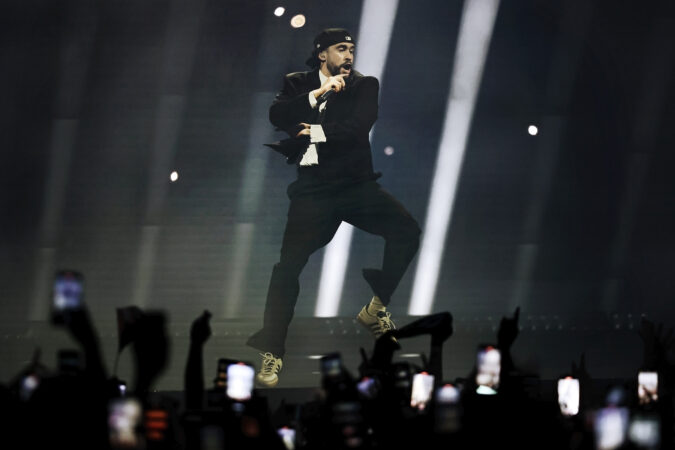
But this feels like Bad Bunny’s year. Debí Tirar Más Fotos — which translates as “I should have taken more photos” — is the Puerto Rican singer, rapper, and producer’s most confident, varied, and politically potent work.
It’s poised to become the first Spanish language album of the year, and thus a Grammy statement of multicultural solidarity when immigrant populations in the U.S. are under threat. And it would make for a pretty good start to February for the Super Bowl halftime headliner.
Should win: Bad Bunny
Will win: Bad Bunny
Chappell Roan performs “Pink Pony Club” during the 67th annual Grammy Awards in Los Angeles, Feb. 2, 2025. The singer is nominated for two Grammy awards on Sunday and will also be a presenter at the ceremony, which airs on CBS at 8 p.m. and streams on Paramount+. (AP Photo/Chris Pizzello, File)
Record of the Year
Nominees: Bad Bunny, “DTMF”; Sabrina Carpenter, “Manchild”; Doechii, “Anxiety”; Billie Eilish, “Wildflower”; Kendrick Lamar & SZA, “Luther”; Lady Gaga, “Abracadabra”; Chappell Roan, “The Subway”; Rosé & Bruno Mars, “APT”
My prediction: This is a strong group, including Carpenter’s cheeky “Manchild” and Doechii’s “Anxiety,” which samples Gotye and Kimbra’s 2011 “Somebody I Used to Know.”
Roan’s “The Subway” hearkens back to classic pop and Eilish’s “Wildflower” is lovely, though it’s a little ridiculous that it’s nominated. It’s from Eilish’s Hit Me Hard and Soft, which came out in May 2024 but qualifies because it became a single last February. When the Grammys want you to be part of the show, they’ll find a way to sneak you in.
My pick to win is “APT.” The duet between Bruno Mars and K-pop star Rosé is a super-catchy global hit that borrows from Toni Basil’s 1982 hit “Mickey,” which older Grammy voters will surely remember. It’s the second-fastest song to reach a billion streams after Mars and Gaga’s 2024 “Die With a Smile.”
Will win: “APT.”
Should win: “Luther”
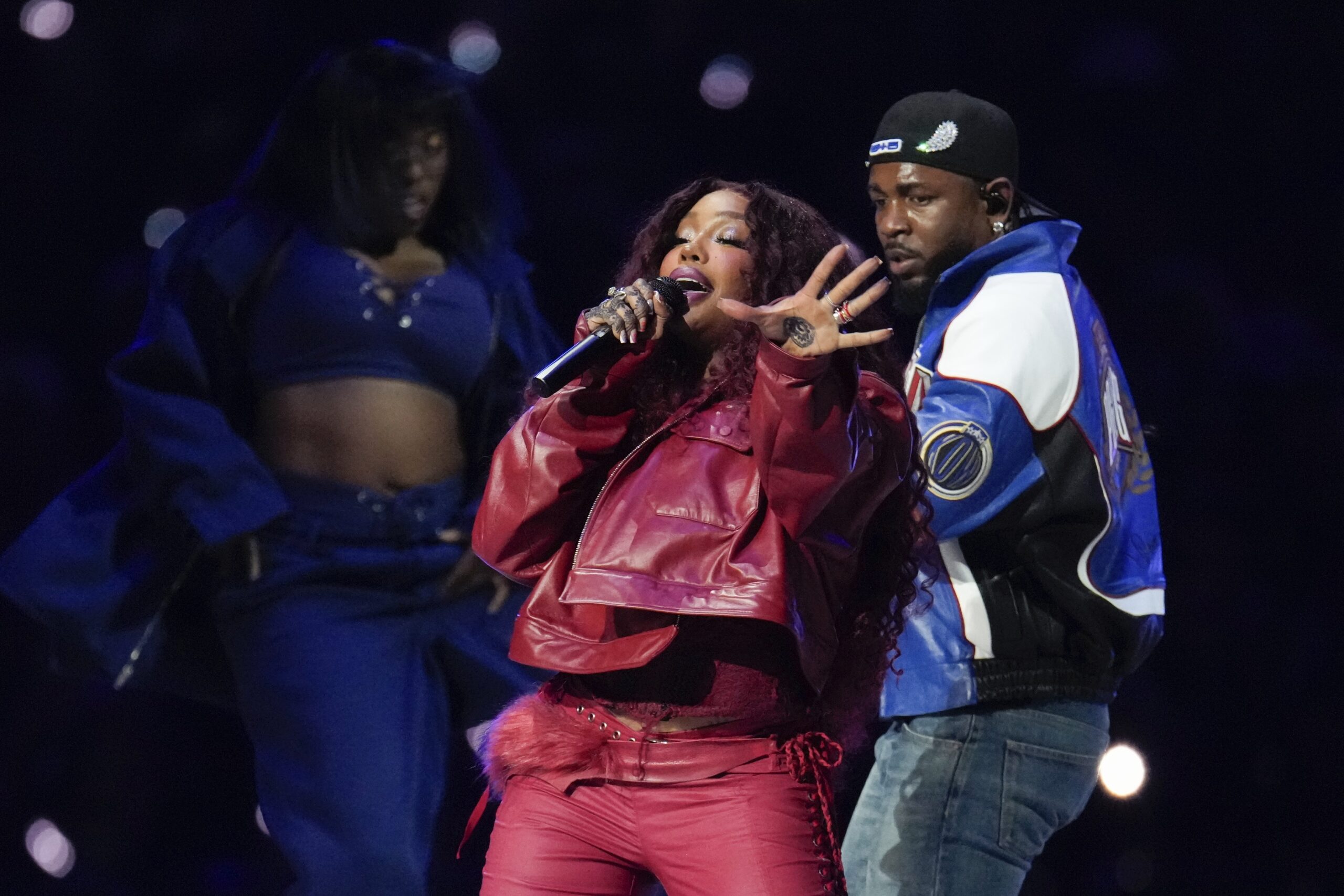
SZA and Kendrick Lamar perform during halftime of the NFL Super Bowl between the Kansas City Chiefs and the Philadelphia Eagles, Sunday, Feb. 9, 2025, in New Orleans. (AP Photo/George Walker IV)
Song of the Year
Nominees: Bad Bunny, “DTMF”; Sabrina Carpenter, “Manchild”; Doechii, “Anxiety”; Billie Eilish, “Wildflower”; Huntr/x — “Golden”; Kendrick Lamar & SZA, “Luther”; Lady Gaga, “Abracadabra”; Rosé & Bruno Mars, “APT”
My prediction: The Grammys are silly. Why are there separate record and song of the year categories? In theory because the latter is a songwriter’s award. But these categories are virtually identical, the only difference being dropping Roan for “Golden” from the Netflix movie KPop Demon Hunters.
Let’s give this one to last year’s Super Bowl halftime headliners to reward their overall excellence and songwriting skills.
Should win: “Luther”
Will win: “Luther”
Olivia Dean performs at the Austin City Limits Music Festival on Oct. 11, 2025, in Texas. The British singer-songwriter is nominated for Best New Artist at the Grammy Awards on Sunday.(Photo by Jack Plunkett/Invision/AP, File)
Best New Artist
Nominees: Olivia Dean, Katseye, The Marías, Addison Rae, Sombr, Leon Thomas, Alex Warren, Lola Young
A little rant detour: Another failing: The Recording Academy has completely ignored country music in the major categories. The Grammys are, in many ways, a popularity contest. Unlike the Oscars, which sometimes reward niche and art house fare and look askance at commercial success, the Grammys are intent on showing they’re in step with the zeitgeist by recognizing big sellers.
Except they don’t bother when it comes to country, thus reinforcing America’s cultural divide. The Recording Academy isn’t too blame when it comes to Morgan Wallen, whose I’m the Problem was the most streamed album in the U.S. in 2025 — because he chose to not submit his music.
But completely credible and widely popular country artists like Ella Langley and especially Megan Moroney are obvious candidates for best new artist. They have been shown no love, either due to cluelessness or a conscious decision to shut out mainstream country. End of rant!
My prediction: In this last of the major categories, Addison Rae is to be commended for making a smart, catchy transition from TikTok to pop star. Leon Thomas emerged as a serious R&B artist with staying power, and Lola Young is a major talent whose “Messy” is a terrific universalist earworm.
But my most confident prediction in these four categories is Olivia Dean. The British songwriter is marked for stardom, simultaneously coming off as a youthful ingenue and an old soul. Her vocals have a slight Amy Winehouse tinge without being imitative. Her breezy, immediately likable The Art of Loving mixes neo-soul 1970s Los Angeles soft-rock is right up the Grammy alley.
Even as a child, Dan McQuade let his imagination run wild. “What are you doing?” his mother, Denise, would ask if she hadn’t heard any noise from his bedroom for a while. “I’m making stories,” he would reply.
Later, as a young man about town, his compassion for fellow Philadelphians inspired his father, Drew. Dan volunteered to give blood often, donated brand-new sneakers to other guys in need, and continually reached out to people he saw struggling with drug abuse and homelessness. “His kindness was what I loved about him the most,” his father said.
Dan McQuade was already an award-winning writer, blogger, and journalist when he met his future wife, Jan Cohen, online in 2014. To her, his jovial humor, wide-ranging intelligence, and shoulder-length hair made him unique in her circle. “I thought he was too cool for me,” she said.
His empathy, likely inspired by his parents, his wife said, led him to toil tirelessly for charitable nonprofits such as the Everywhere Project, Back on My Feet, and Prevention Point. “Service was always part of his life,” his wife said.
His coolness, as unconventional as it sometimes was, made those he encountered feel cool, too. Molly Eichel, an Inquirer editor and longtime friend, said: “He was annoyingly smart and incredibly kind.”
Dan McQuade died Wednesday, Jan. 28, of neuroendocrine cancer at his parents’ home in Bensalem. He was 43. His birthday was Jan. 27.
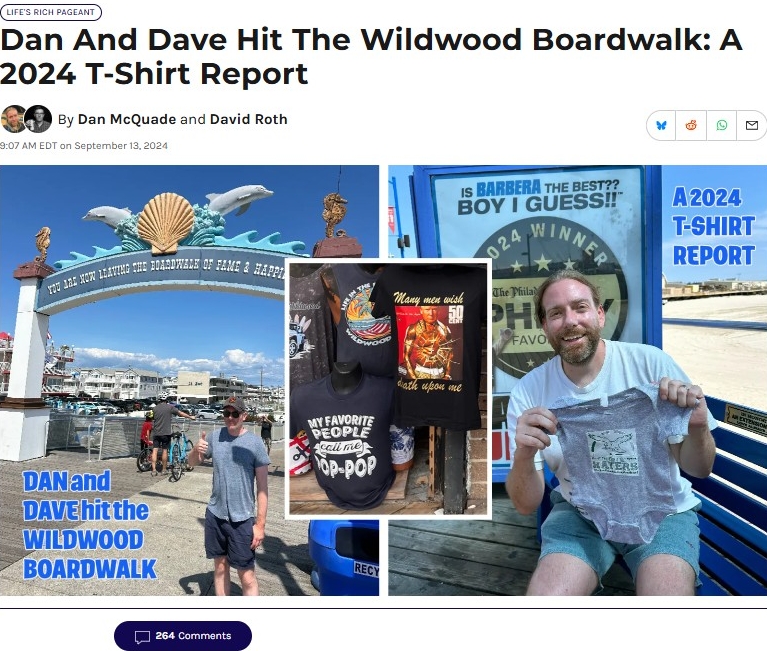
Mr. McQuade’s annual Wildwood T-shirt report was a favorite of his many readers and fans.
“It’s incredibly hard for me to imagine living in a Philadelphia without Dan McQuade,” said Erica Palan, an Inquirer editor and another of Mr. McQuade’s many longtime friends. “He understood Philadelphians better than anyone because he was one: quirky and funny, competitive and humble, loyal and kind.”
A journalism star at the University of Pennsylvania in the early 2000s, Mr. McQuade was a writer, sports editor, and columnist for the school’s Daily Pennsylvanian, and managing editor of its 34th Street Magazine. He earned two Keystone Press awards at Penn, was the Daily Pennsylvanian’s editor of the year in 2002, and won the 2003 college sports writing award from the Philadelphia Sportswriters Association.
He went on to create Philadelphia Weekly’s first blog, “Philadelphia Will Do,” and was a finalist for the Association of Alternative Newsmedia’s best blogger award. He served an internship at the Bucks County Courier Times in Levittown and worked for a while at the Northeast News Gleaner.
Often irreverent, always inventive, he filed thousands of notable stories about, among other things, the Wildwood T-shirt scene, the origin of “Go Birds,” sneaker sales, Donald Trump, Wawa hoagies, the Philly accent, parkway rest stops, the Gallery mall, soap box derbies, and Super Bowls. His stories sparkled with research and humor.
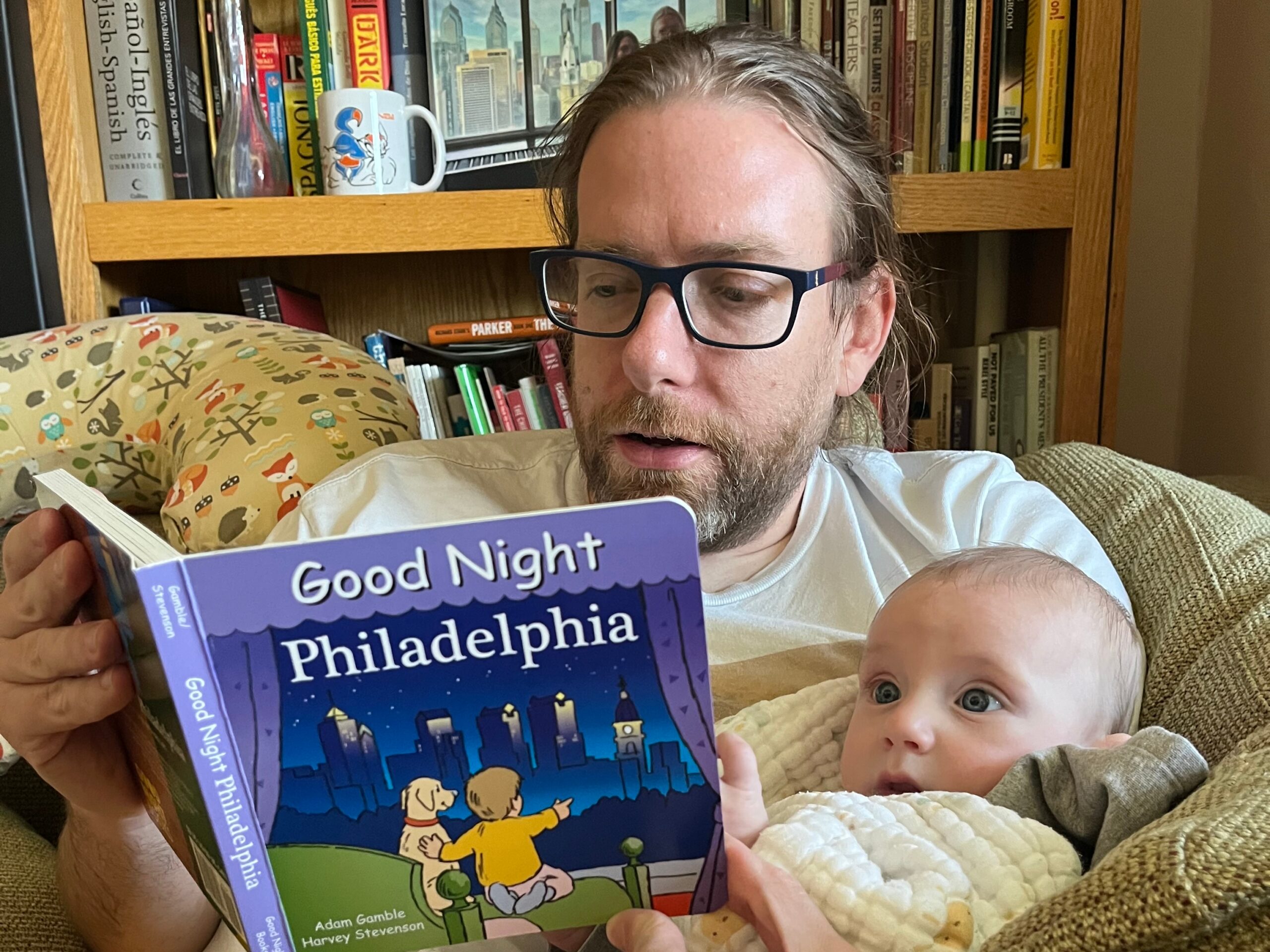
An avid reader himself, Mr. McQuade enjoyed reading local tales to his son, Simon.
“Dan was a truly authentic and engaging person,” Tom Ley, editor-in-chief at Defector, said in an online tribute. “His curiosity was relentless, and his interests were varied and idiosyncratic.”
For example, Mr. McQuade wrote in Philadelphia Magazine in 2013 that Sylvester Stallone’s famous training-run montage in Rocky II — it started in South Philly and ended two minutes of screen time later atop the Art Museum steps — actually showed city scenes that would have had the actor/boxer run more than 30 miles around town. “Rocky almost did a 50K,” Mr. McQuade wrote. “No wonder he won the rematch against Apollo!”
In 2014, he wrote in Philadelphia Magazine about comedian Hannibal Buress calling Bill Cosby a rapist onstage at the old Trocadero. The story went viral, and the ensuing publicity spurred more accusations and court cases that eventually sent Cosby to jail for a time.
When he was 13, Mr. McQuade wrote a letter to the editor of the Daily News that suggested combining the Mummers Parade with Spain’s running of the bulls. Crossing Broad’s Kevin Kinkead said he had “an innate gift for turning the most random things into engaging reads.”
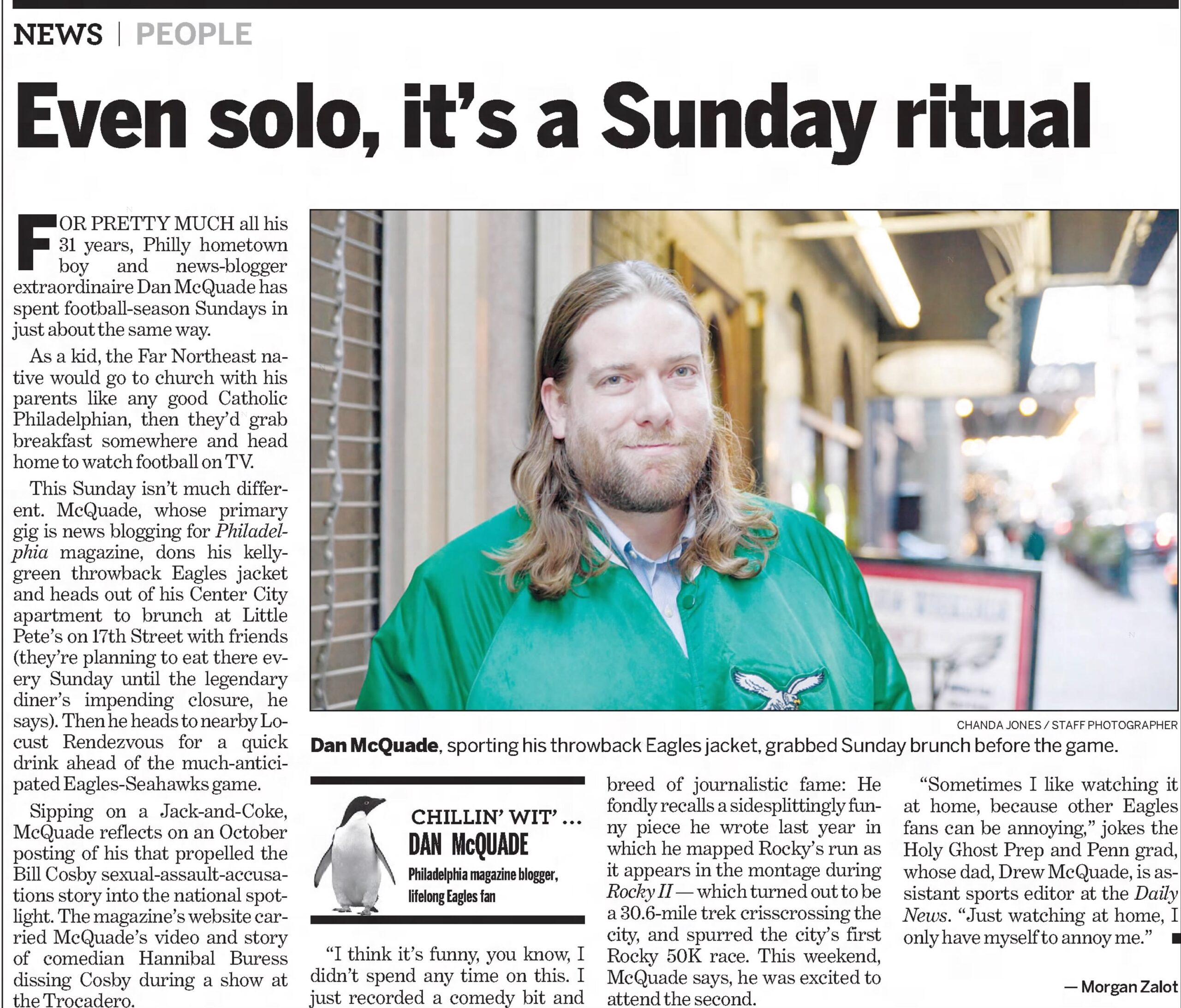
This story about Mr. McQuade appeared in the Daily News in 2014.
“Without Dan’s voice, Philly Mag wouldn’t be Philly Mag,” editor and writer Brian Howard said in a tribute on phillymag.com. “And, I’d argue, Philadelphia wouldn’t quite be Philadelphia.”
Other colleagues called him “a legend,” “a Philadelphia institution,” and “the de facto mayor of Philadelphia” in online tributes. Homages to him were held before recent Flyers and 76ers games.
“Sometimes,” his wife said, “he inserted himself into stories, so readers had a real sense of who he was because he was so authentic.”
Daniel Hall McQuade was born Jan. 27, 1983, in Philadelphia. His father worked nights at the Daily News for years, and the two spent many days together when he was young hanging around playgrounds and skipping stones across the creek in Pennypack Park.
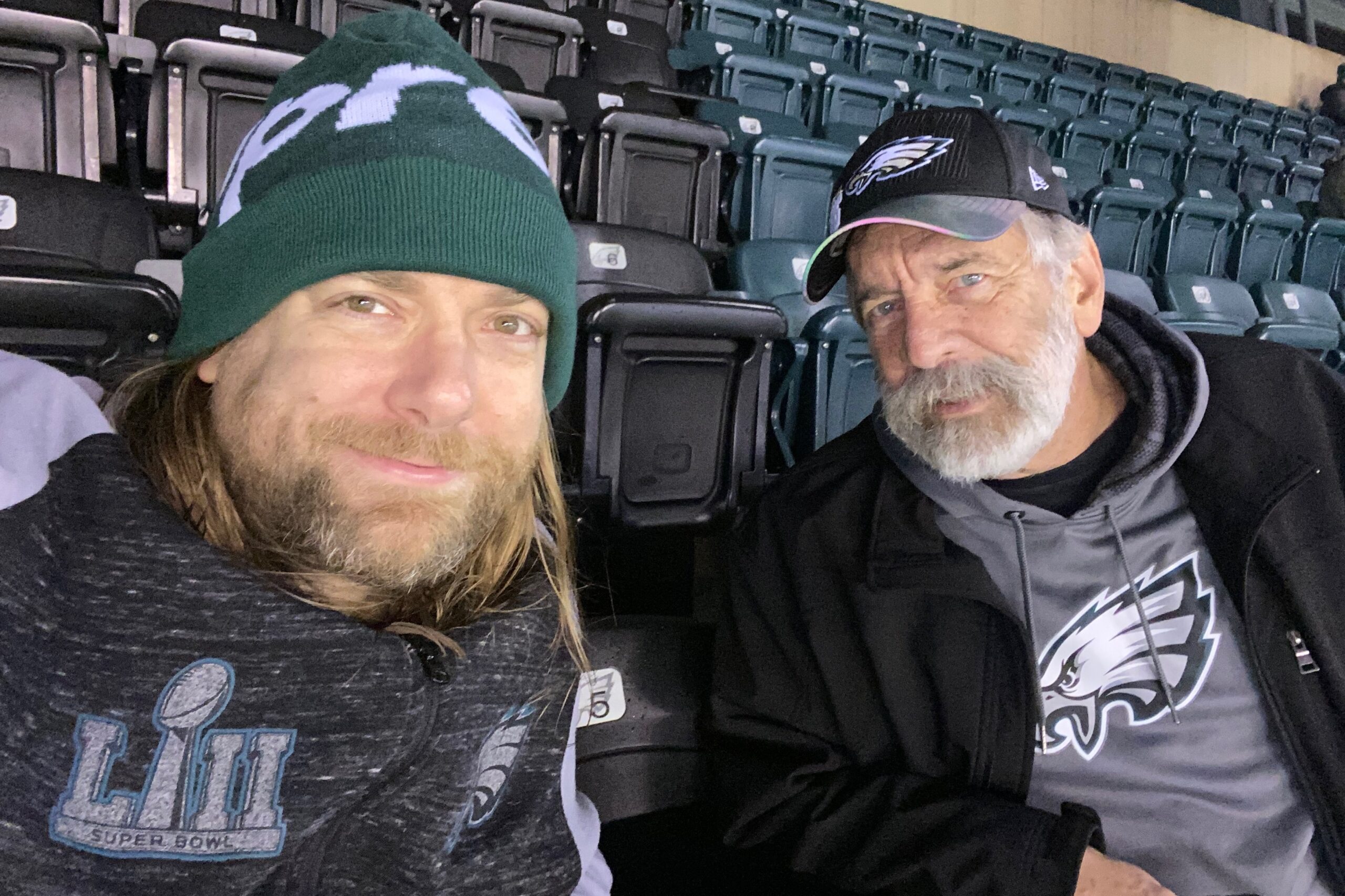
Mr. McQuade (left) and his father, Drew, shared a love of Philly sports and creative writing.
Later, they texted daily about whatever came to mind and bonded at concerts, Eagles games, and the Penn Relays. He grew up in the Northeast, graduated with honors from Holy Ghost Preparatory School in Bensalem, and earned a bachelor’s degree in English at Penn in 2004.
He overcame a serious stutter as a teen and played soccer and basketball, and ran cross-country and track at Holy Ghost. He married Jan Cohen in 2019 and they had a son, Simon, in 2023. They live in Wissahickon.
Mr. McQuade was a voracious reader and an attentive listener. “He never wanted to stop learning,” his wife said. He enjoyed going to 76ers games with his mother and shopping for things, his father said, “they didn’t need.”
He was mesmerized by malls, the movie Mannequin, the TV series Baywatch, and his wife’s cat, Detective John Munch. During the pandemic, he and his wife binged all 11 seasons of Baywatch.
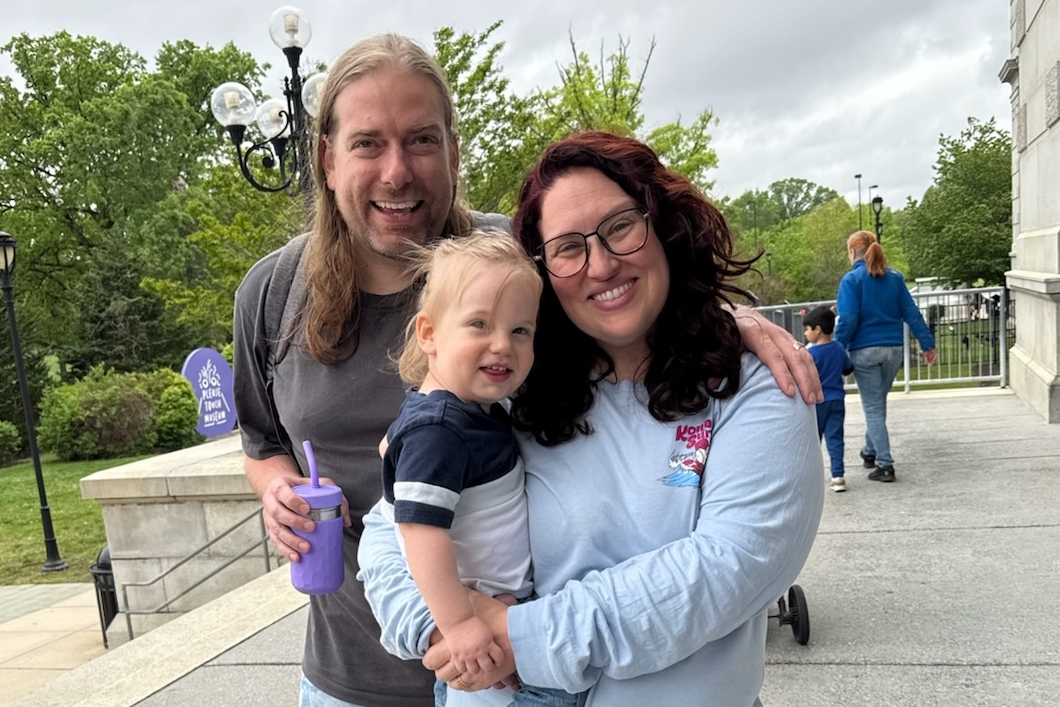
Mr. McQuade doted on his wife, Jan, and their son, Simon.
He could be loud, his mother said, and Molly Eichel described his laugh as “kind of a honk.” His friend and colleague Alli Katz said: “In 50 years I’ll forget my own name. But I’ll remember his laugh.”
He was a vintage bootleg T-shirt fashionista, and his personal collection numbered around 150. He named Oscar’s Tavern on Sansom Street as his favorite bar in a recent podcast interview and said he would reluctantly pick a pretzel over a cheesesteak if that was the choice.
In September, Mr. McQuade wrote about his illness on Defector.com under the headline “My Life With An Uncommon Cancer.” In that story, he said: “Jan has been everything. My son has been a constant inspiration. My parents are two of my best friends, and I talk to them every day. Jan’s parents have been incredible.”
He also said: “I believe there are no other people on earth with my condition who are in as fortunate a situation. … For the past thousand words you have been reading about a bad break I got, but if only everyone in my position had it this good.”
Mr. McQuade and his wife, Jan Cohen, married in 2019.
His wife said: “He was truly the best guy.”
In addition to his wife, son, and parents, Mr. McQuade is survived by his mother-in-law, Cheryl Cohen, and other relatives.
Visitation with the family is to be from 9 to 10 a.m. Thursday, Feb. 5, at St. Martha Parish, 11301 Academy Rd., Philadelphia, Pa. 19154. Mass is to follow from 10 to 11 a.m.
Donations in his name may be made to the Everywhere Project, 1733 McKean St., Philadelphia, Pa. 19145.
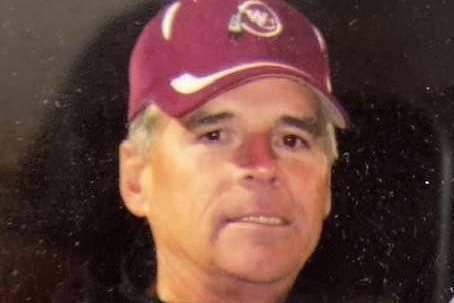
Joe Walsh, 75, of West Chester, member of four athletic Halls of Fame, longtime high school and college football coach, retired health and physical education teacher at West Chester Henderson High School, mentor, and neighbor extraordinaire, died Tuesday, Jan. 27, of cancer at his home.
Mr. Walsh grew up in the Farmbrook section of Levittown, Bucks County, and played football at the old Woodrow Wilson High School and what is now West Chester University. He got a job as a health and physical education teacher and assistant football coach at Henderson in 1972 and spent the next five decades coaching thousands of high school and college athletes, teaching thousands of high school students, and mentoring hundreds of friends and colleagues.
He coached football, wrestling, lacrosse, and tennis at Henderson, and his football teams at Henderson and Sun Valley High School combined to win four league championships. He coached in 13 all-star football games and was named the Chester County area football coach of the year four times, the Ches-Mont League coach of the year three times, and the Del-Val League coach of the year once.
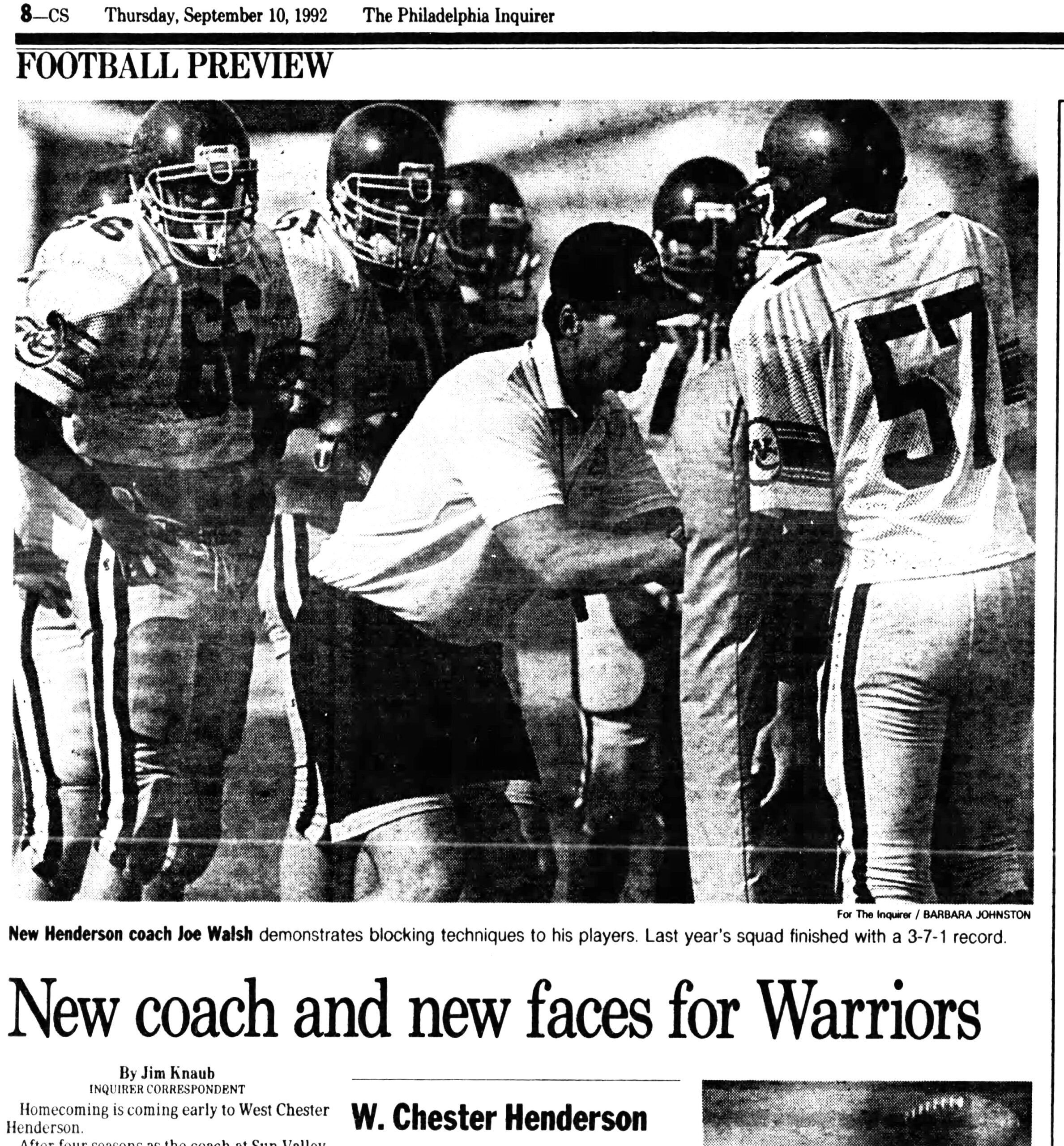
In 1992, an Inquirer reporter asked him to describe himself. “I am an easygoing, volatile kind of coach,” he said with a big chuckle, the reporter wrote. “Actually,” he said, “I think I’m a player’s coach. I think my rapport with my players is my strong point.”
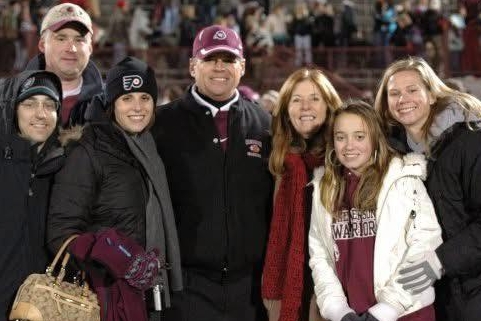
Mr. Walsh (center) had many occasions to celebrate with family and friends on the football field.
Former colleagues, players, and friends said in online tributes that Mr. Walsh was “an inspiration,” “a great coach,” and “a positive example for many, many young people.” On Threads, his brother, Russ, called him a “Hall of Fame human being.”
“He was always there,” said John Lunardi, assistant principal at Henderson, who played quarterback for Mr. Walsh and served later as his assistant coach, “a steady, reliable role model, somebody who could be counted on no matter what.”
In 20 years as head football coach at Henderson, from 1992 to 2011, Mr. Walsh’s teams won 131 games, lost 104, and captured three Ches-Mont League championships. From 1988 to 1991, he went 17-25 as head coach at Sun Valley and won the 1990 Del-Val League championship.
His 2007 team at Henderson went 12-2, won the Ches-Mont title, and made it to the district championship game. “Our motto,” he told The Inquirer in2004, “is no excuses, just results.”
Mr. Walsh and his Henderson football team were featured in The Inquirer’s 1992 preview section.
In 2025, he was inducted into the Chester County Sports Hall of Fame, and colleagues there noted his “remarkable achievements and contributions to local athletics” in a Facebook tribute. He earned a standing ovation after speaking at the ceremony, and Henderson officials recognized his legacy with a moment of silence at a recent basketball game. They said in a tribute: “Joe Walsh was a Hall of Fame person in every possible way.”
Mr. Walsh taught health and physical education at Henderson from 1972 to 2008. He organized offseason clinics to encourage all students to join sports teams and told The Inquirer in 1992: “I’ve always tried my best to get as many people out and make it enjoyable for them so they stay out.”
He served as board president for the Killinger Football Foundation and cofounded W & W Option Football Camps LLC in 2001. “It wasn’t about the wins and losses for him,” said his wife, Pam. “It was all about the kids, and he was that way in all aspects of his life.”
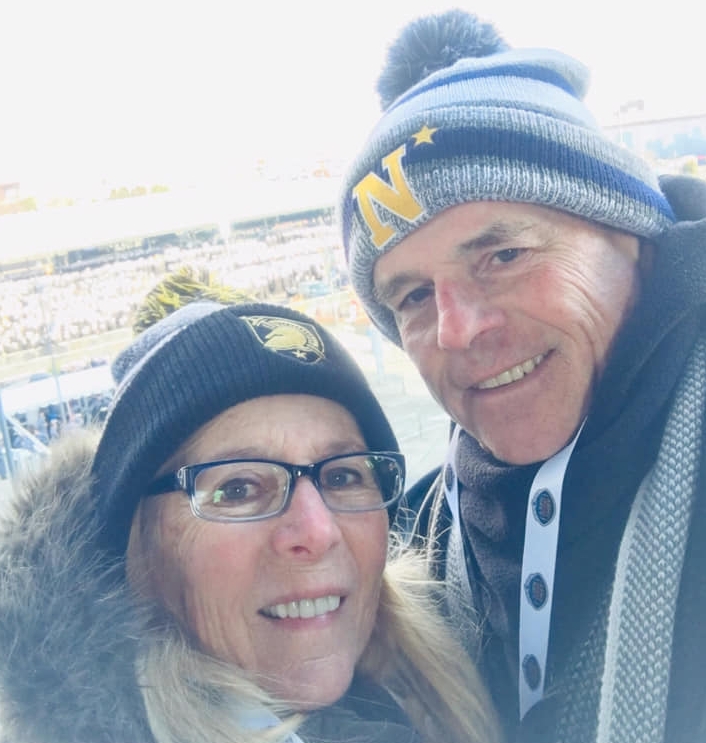
Mr. Walsh and his wife, Pam, had many adventures together and spent countless afternoons at football games.
Joseph Richard Walsh was born Feb. 5, 1950, in Philadelphia. He lettered in football, wrestling, and track in high school, and graduated from Wilson in 1968.
He earned a bachelor’s degree in health and physical education at West Chester in 1972 and played center on its two-time championship football team.
He married Sharon Clark, and they had a son, Joe, and a daughter, Kelly. After a divorce, he married Pam Connor in 1978, and they had a daughter, Jen, and lived in Downingtown and then West Whiteland Township since 1985.
Mr. Walsh enjoyed all kinds of fishing and golf. In 2023, he and his wife visited half a dozen college football stadiums on a wild cross-country road trip to Yellowstone National Park.
Mr. Walsh enjoyed time with his children.
They entertained often at home, and his gourmet soups were usually the hit of the party. He doted on his children and grandchildren, and never lost his sense of humor, they said.
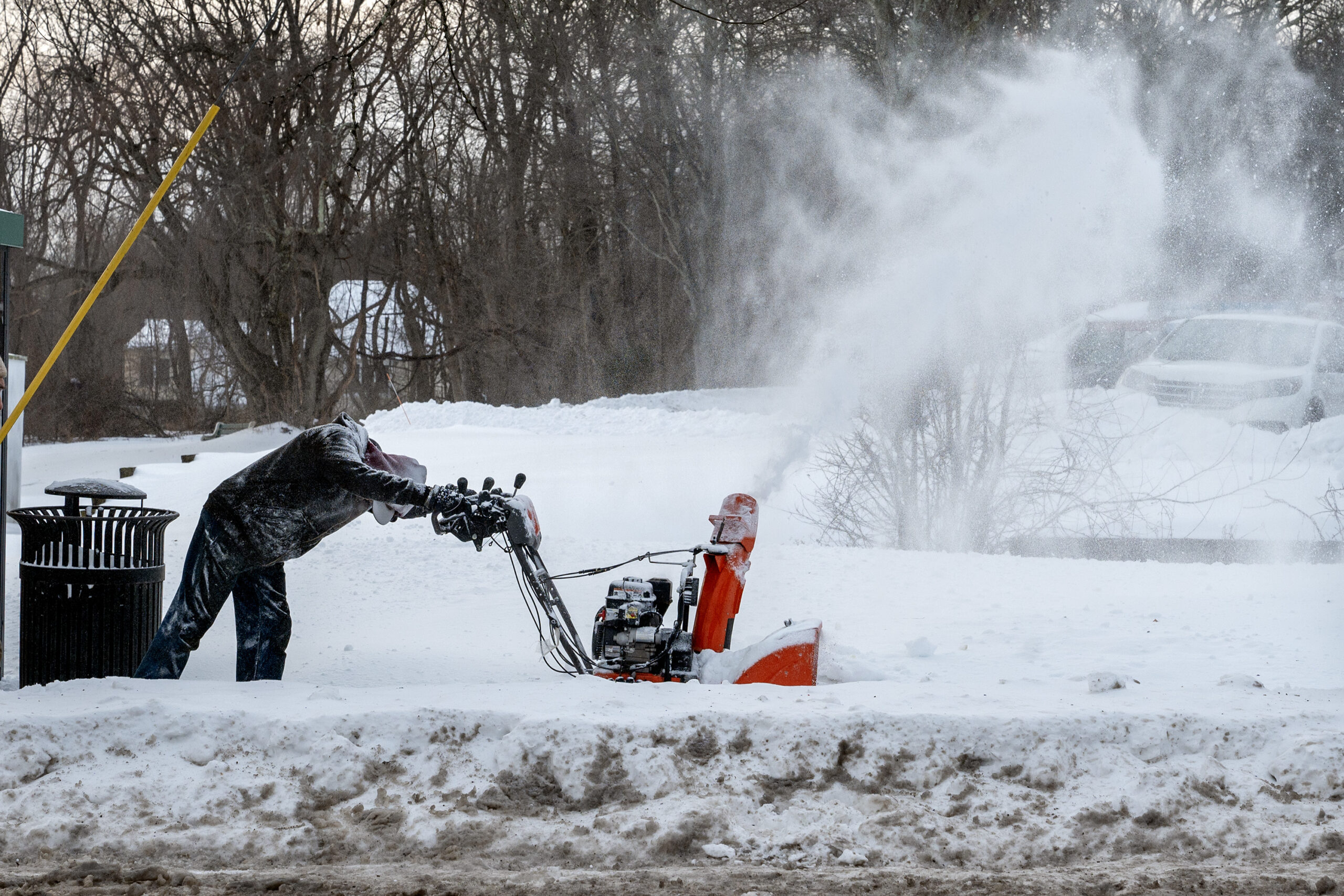
He was the best neighbor ever, friends said. He cleared miles of sidewalks and driveways with his snowblower every winter, hosted late-into-the-night firepit parties every summer, and could fix practically anything.
“He was gentle but strong,” his wife said. “He was kind and considerate, and he never badmouthed anybody. He truly was a great man.”
In addition to his wife, children, brother, and former wife, Mr. Walsh is survived by seven grandchildren, one great-granddaughter, sisters Eileen and Ruth, and other relatives.
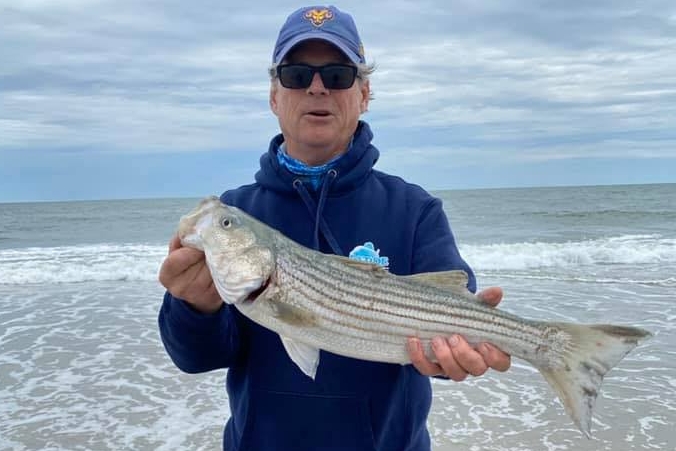
Mr. Walsh rarely let the big ones get away.
Visitation with the family is to be from 5 to 8 p.m. Thursday, Feb. 5, and from 9 to 10:30 a.m. Friday, Feb. 6, at DellaVecchia, Reilly, Smith & Boyd Funeral Home, 410 N. Church St., West Chester, Pa. 19380. A celebration of his life is to follow Friday at 10:30.
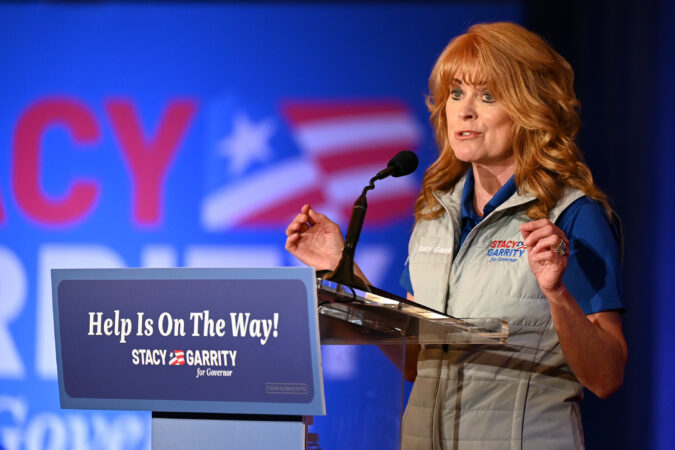
Pennsylvania Treasurer Stacy Garrity on Thursday announced her pick for a running mate in the governor’s race, as state Republicans mount their campaign to more seriously challenge Democratic Gov. Josh Shapiro in November’s election.
Jason Richey, a longtime Pittsburgh attorney and chair of the Allegheny County GOP, announced his campaign for lieutenant governor on Thursday morning. Garrity, the state party-endorsed candidate for governor, quickly endorsed him afterward.
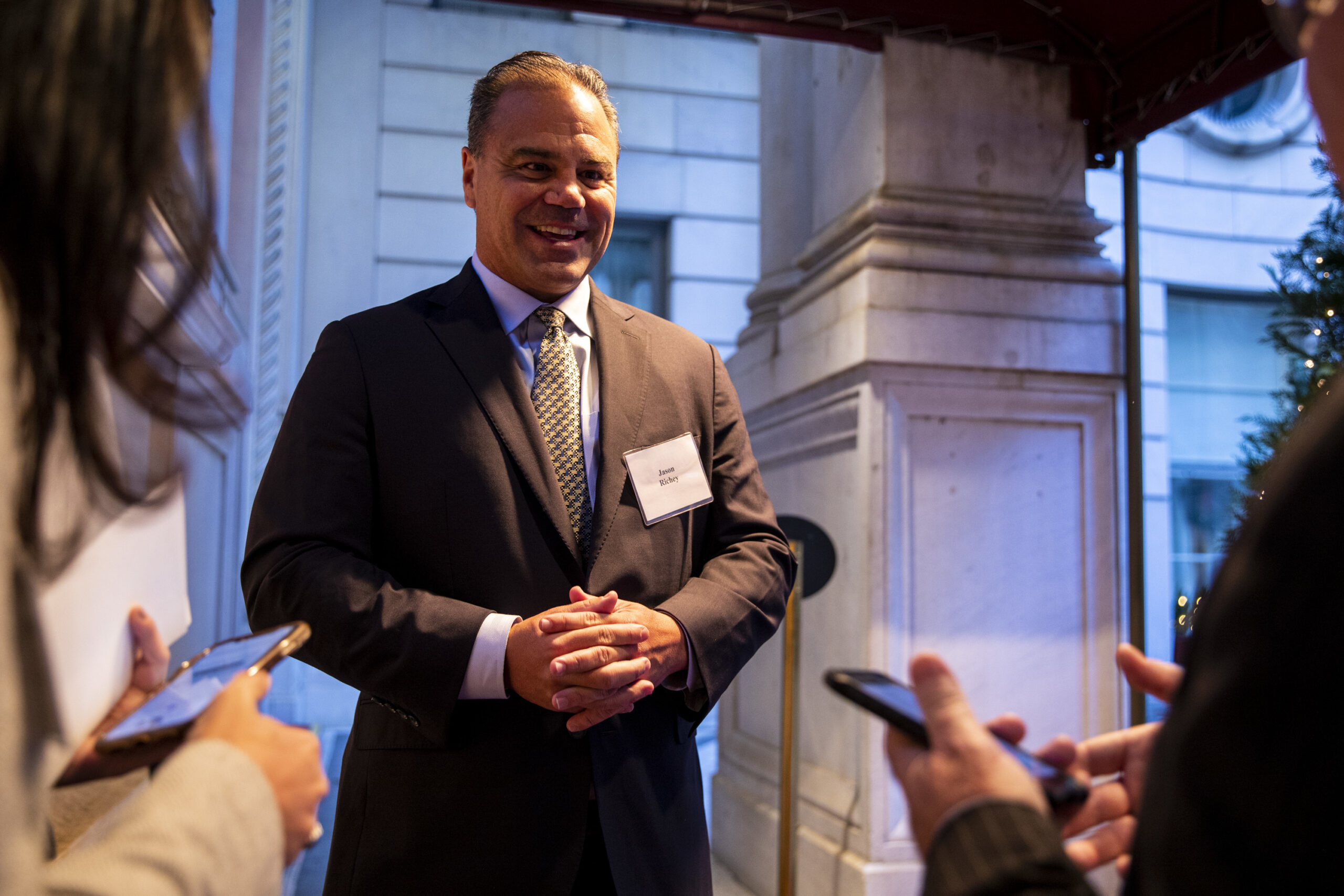
Jason Richey, Aliquippa, Pa., Republican Candidate for Governor speaks with Inquirer Reporters at the Pennsylvania Manufacturers Association held at The Metropolitan Club in New York, N.Y., on Saturday, Dec., 4 2021.
Garrity said Richey “rose to the top” as the best candidate to be her running mate to challenge Shapiro.
“Jason understands the potential Pennsylvania has, but only if our Commonwealth has the right leadership,” she said in a news release, noting that he shares her concerns with Shapiro’s tenure as governor. “Jason Richey will not just be an incredible running mate on the campaign trail, but a terrific partner in governing for all the people of Pennsylvania.”
Until Richey’s announcement, few moderate candidates had emerged to run alongside Garrity. Meanwhile, other potential candidates declined to run with her in the uphill battle election against Shapiro, a popular incumbent with a $30 million war chest and a growing national profile. Garrity announced earlier this month she had raised nearly $1.5 million in the first few months of her campaign, from August to December.
Richey is running to be Garrity’s No. 2 among a field of several other potential lieutenant governor candidates, including State Sen. Cris Dush (R., Jefferson) and Bucks County businessman and political newcomer Brian Thomas. Other candidates who have considered a run for lieutenant governor but have yet to announce include former gubernatorial nominee State Sen. Doug Mastriano (R., Franklin) and former State Rep. Rick Saccone (R., Allegheny).
In Pennsylvania, candidates for lieutenant governor and governor run in the primary election separately. Whoever wins the primary nomination joins on one ticket for the general election. For example, Mastriano won the primary nomination but his endorsed lieutenant governor candidate did not, leading him to run with another running mate in November. At least one of the lieutenant governor candidates — Dush — said he would run for the office in the primary election even without the party’s support.
Shapiro is expected to again run unopposed in the Democratic primary, alongside Lt. Gov. Austin Davis, the first Black person elected to Pennsylvania’s executive branch.
“We must turn Pennsylvania around now and I believe that Stacy Garrity is the person who can fix Pennsylvania,” Richey said in a release Thursday. “I’m excited to join Stacy on the ticket that’s going to save Pennsylvania. Stacy has demonstrated leadership, fiscal discipline, a deep commitment to serving Pennsylvanians and the ability to win statewide.”
In an interview weeks before he decided to enter the race, Richey said he believed Garrity should pick a lieutenant governor candidate who is politically moderate and comes from Pittsburgh or Philadelphia, the state’s population centers.
Earlier this month, Richey said a running mate who has “a little more urban understanding,” since Garrity hails from a rural part of the state, “would make a lot of sense” on the Republican ticket.
Garrity secured the state party endorsement for governor last fall, as Republicans sought to coalesce around a gubernatorial candidate after their failures to do so in 2022 led to Mastriano’s nomination to oppose Shapiro. Mastriano went on to lose to Shapiro by nearly 15 percentage points, or 800,000 votes.
Richey ran in 2022 for governor as part of the crowded GOP primary, but withdrew and did not appear on the ballot with the other nine candidates in the running.
Garrity, of rural Bradford County, captured President Donald Trump’s endorsement earlier this week, in which Trump called her a “true America First Patriot, who has been with me from the beginning.” Garrity will appear in Philadelphia at the National Constitution Center on Thursday for a live taping of the political podcast RUTHLESS, alongside Fox News analyst Guy Benson.
In addition to his duties as chair of the Allegheny County GOP, Richey is a partner at K&L Gates law firm in Pittsburgh with a focus on energy law.
Richey, 54, lives in a suburb of Pittsburgh with his wife and has three sons.
Staff writer Katie Bernard contributed to this article.
Hours after authorities discovered three of his relatives dead in a Bucks County home, Kevin Castiglia confessed Monday to killing his parents in their sleep and then fatally stabbing his sister when she discovered their bodies, authorities said.
Castiglia, 55, is charged with three counts of criminal homicide, abuse of a corpse, and related crimes in the deaths of his father, Frederick, 90, his mother, Judith, 84, and his sister, Deborah, 53.
Northampton Township police arrested him Monday after he barricaded himself inside his parents’ home on Heather Road for more than five hours with their bodies inside. He was armed with bloody knives as officers surrounded the house and attempted to persuade him to surrender, authorities said.
After his arrest, Castiglia was taken to a local hospital, where, according to the affidavit of probable cause for his arrest, he told a doctor, “I killed my parents in their sleep.” He also said he killed his sister “when she found them,” the affidavit said.
Later at police headquarters, investigators said, Castiglia told officers he had stabbed all three relatives to death.
Castiglia was being held without bail at the Bucks County Correctional Facility.
Bucks County District Attorney Joe Khan speaks at a press conference.
At a news conference Wednesday afternoon, Bucks County prosecutors declined to discuss a possible motive for the slayings. Deputy District Attorney Monica Furber, who is prosecuting the case, said investigators believe Castiglia killed his parents on Friday and his sister on Saturday.
Deborah Castiglia was a longtime teacher in the Centennial School District. She joined the district in 1999, teaching math at Klinger Middle School, according to an email school officials sent to students, parents, staff, and community members. In 2018, she joined the teaching staff of William Tennent High School.
She taught math students with “dedication, care, and compassion,” Superintendent Abram Lucabaugh wrote in the email. “Her loss is profoundly felt across our school community.”
The district is offering counseling and support services for students and staff, Lucabaugh added.
Castiglia’s parents, who had lived in the two-story redbrick home since 1970 and shared it with their son, had recently celebrated a wedding anniversary, Furber said.
Police were called to the home after Deborah Castiglia’s boyfriend reported that Kevin Castiglia had threatened him when he went to the house looking for her, authorities said. He grew concerned after he saw her vehicle parked in the driveway, but could find no footprints in the snow, District Attorney Joe Khan said at Wednesday’s news conference.
When officers arrived, Castiglia greeted them at the front door holding two knives, authorities said.
They used a Taser to try to subdue him — to no avail, according to the affidavit: He pulled the probes from his body and retreated into the house.
Bucks County Detectives and Police are at the Northampton Township home where three people died.
Authorities established a perimeter around the home as negotiators worked to bring the situation to a peaceful end. During the standoff, officers repeatedly attempted to communicate with Castiglia, urging him to come out of the house, police said. But he would not engage, the affidavit said.
A tactical team eventually broke into the house through the front door, as snipers positioned themselves in a nearby house to give on-the-ground officers cover.
“I had no idea what was happening,” said neighbor Erica Titlow, 35. Snipers used the second story of her home during the standoff, she said, calling them “polite” and “grateful.”
The standoff ended when officers took Castiglia into custody, authorities said. No officers were injured.
Police found Deborah Castiglia’s body in the kitchen. The bodies of Frederick and Judith Castiglia were discovered in their bedroom, according to the affidavit, not in the basement as police previously reported.
Furber said one weapon used in the killings was recovered inside the house. Investigators “don’t believe there was any kind of struggle” during the attacks, she said.
Khan praised law enforcement’s efforts to take Castiglia into custody. “Bringing him in alive, despite being faced with an armed and eventually barricaded individual, is truly remarkable,” he said.
Staff writer Jesse Bunch contributed to this article.
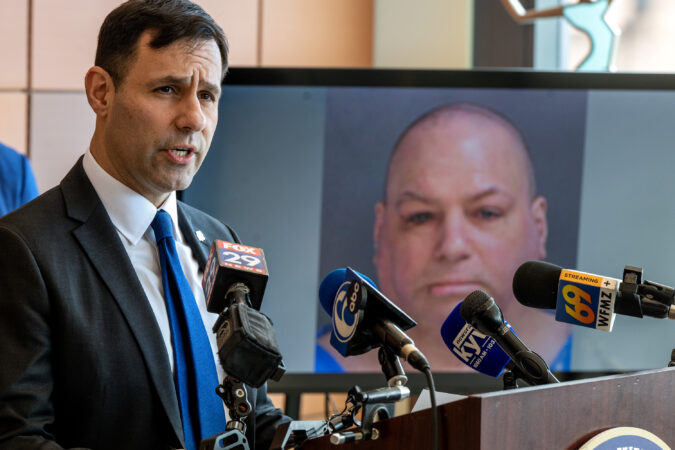
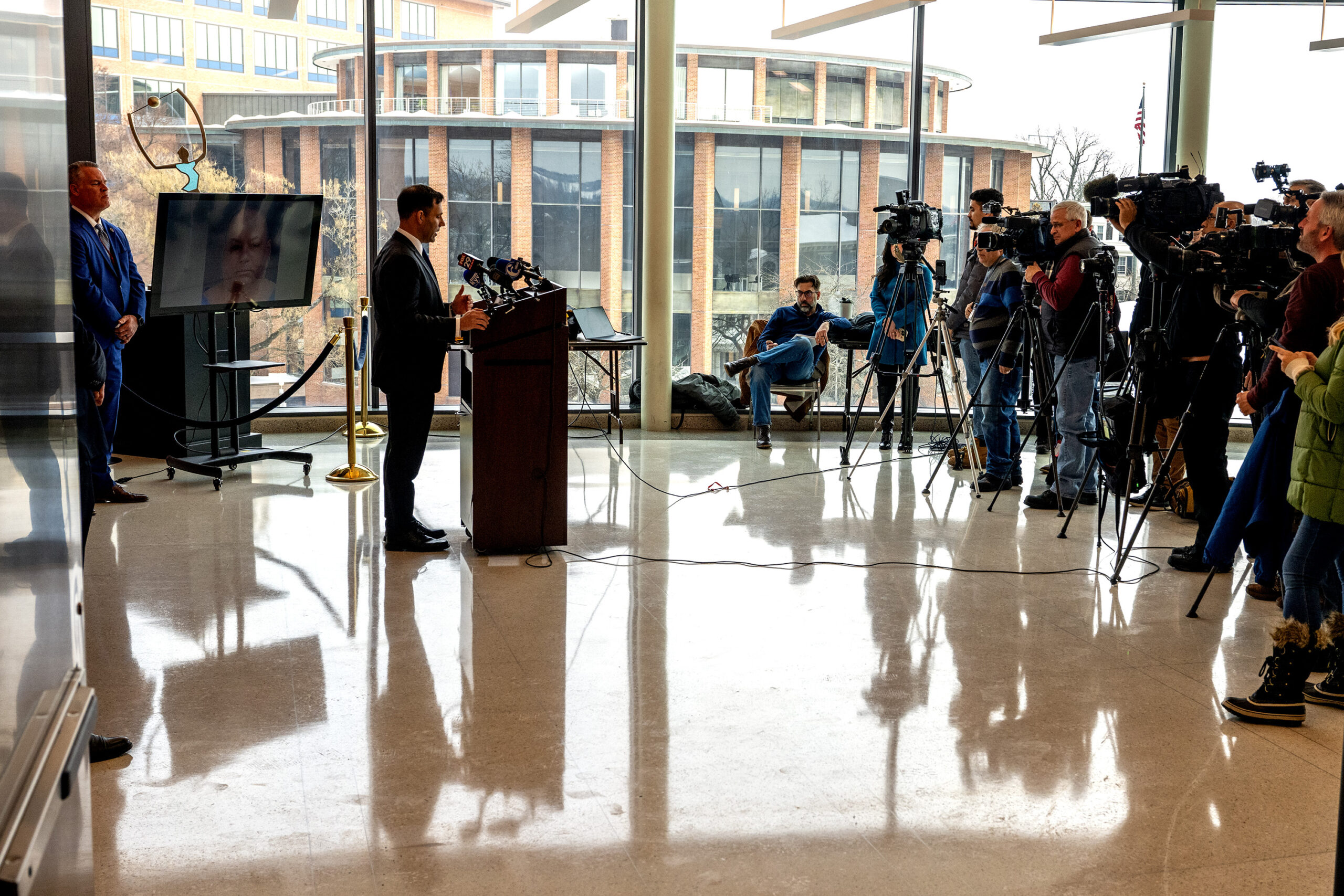
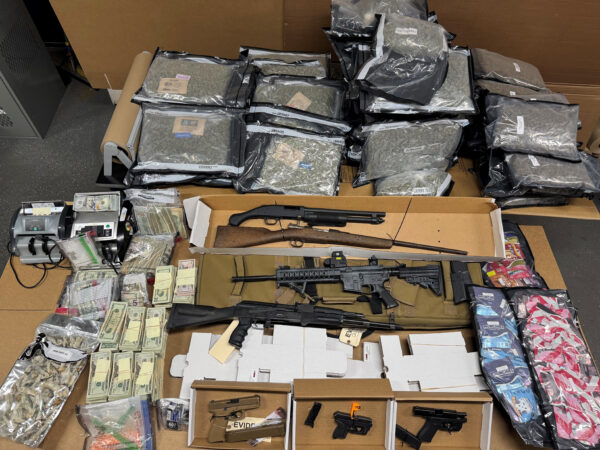
Bucks County prosecutors charged a man who fired a gun at police during a narcotics operation this month with attempted murder and related crimes, authorities said Tuesday. It was the latest development in a multistate investigation that led to the recovery of eight firearms and $4 million in drugs.
Police arrested the man, Nicholas Sperando, 26, of Philadelphia, on Jan. 15 after the shooting at his rowhouse on Fairdale Road in Northeast Philadelphia, according to Bucks County District Attorney Joe Khan’s office.
Sperando’s home was one of several locations involved in an extensive drug-trafficking organization, officials said.
After announcing their intent to serve a warrant at Sperando’s home that day, agents with the Pennsylvania Attorney General’s Office and Pennsylvania state troopers prepared to breach Sperando’s door with a battering ram.
Instead, they were met with gunfire from inside the home.
After firing a round, Sperando fired a second shot through the front door, “directly targeting the position where the officers had been standing,” officials said.
No officers fired their weapons or were injured in the operation.
“This cowardly act against our officers was an attack on the rule of law, and our office will always protect those who risk their lives to protect us, even when that happens across county lines,” Khan said when announcing the charges.
Sperando surrendered during the incident and is being held without bail on two counts of attempted murder and attempted murder of a law enforcement officer, as well as three counts of aggravated assault and related drug crimes.
The arrest, Khan’s office said, was the culmination of a monthslong investigation that “dismantled” a multimillion-dollar trafficking organization.
For months, authorities said, undercover officers had purchased drugs from Sperando in Levittown and Northeast Philadelphia. Bucks County officials asserted control of the Philadelphia jurisdiction for the sake of their investigation, according to officials.
Investigators searched Sperando’s residence and recovered a FN Herstal 5.7 pistol that they said was used in the shooting — including a live round jammed in the gun, which, in prosecutors’ view, likely prevented fatalities among law enforcement officers.
Meanwhile, authorities said, investigators found a variety of controlled substances and other weapons located across Sperando’s residence, his place of work on James Street, and a stash house on Day Street.
At the Day Street house, officers arrested another man, David Tierney, who they say was also involved in the operation.
Investigators said they seized an AR-style rifle, a Glock handgun with extended magazine, and bulk quantities of marijuana and proceeds from drug sales from Sperando’s home, while the alleged stash house yielded a firearm found under a pillow and a trailer containing “enormous quantities” of marijuana and THC vaporizers.
At Sperando’s workplace, which officials did not name, officers recovered a Mossberg pump shotgun, a Ruger .380 pistol, and a “significant supply” of psilocybin mushrooms and edibles, authorities said.
In all, officials said, the operation yielded 300 pounds of marijuana and 17,000 vaporizers, as well as 80 pounds of THC concentrate, 600 bags of THC edibles, 15 pounds of mushrooms, 75 mushroom edibles, 300 Adderall pills, and two ounces of cocaine.
Sperando is being held in custody without bail. Tierney is being held on $250,000 bail. A third suspect in the operation, Nicholas Keenoy, surrendered to authorities on Tuesday.