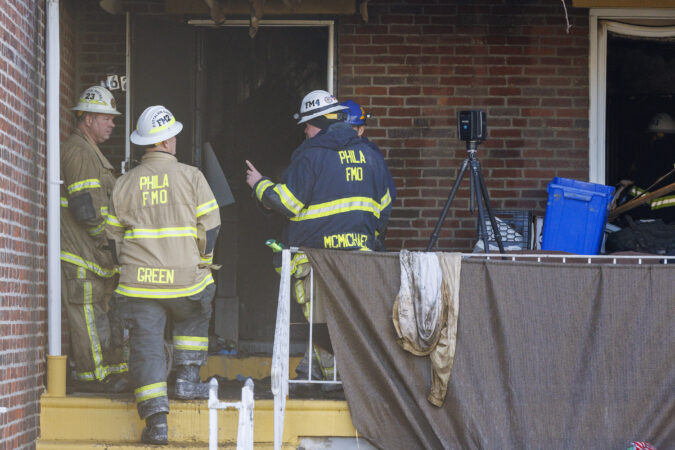
North Philadelphia restaurant Bella Vista is temporarily closed after a fire caused severe damage to the building on Friday morning.
The Philadelphia Fire Department responded to a report of a “heavy fire” at the surf and turf restaurant, located on Whitaker Avenue, just before 4 a.m.
“Thankfully, there are no reported injuries,” said PFD spokesperson Rachel Cunningham. “Philadelphia Fire Department members are still on scene making sure all hot spots are extinguished.”
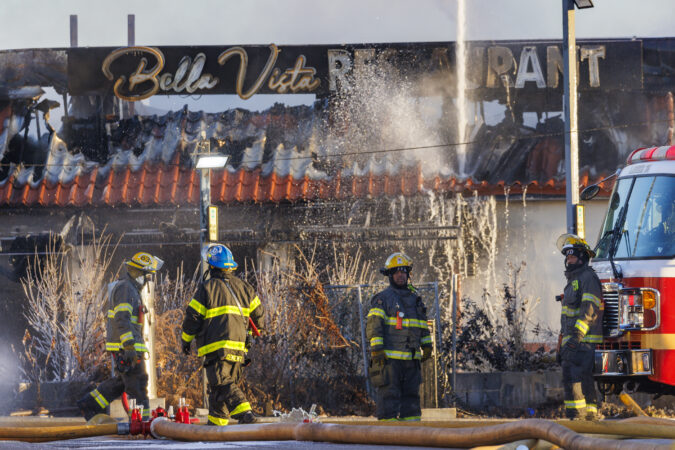
A Philadelphia firefighter salts the roadway at a fire at Bella Vista Restaurant on Whitaker Avenue at Hunting Park Avenue, in Philadelphia, Friday, Jan. 16, 2026.
The fire’s size required the responding crew, Battalion 10, to place all hands in service. They also called for three more engine companies and another ladder company, according to a PFD spokesperson. A total of 80 firefighters and support staff placed the fire under control at 6:26 a.m.
Large sections of the restaurant’s roof were caved in and blackened from the fire, and the building’s “Bella Vista Restaurant” sign was charred. Bella Vista’s owners could not be reached for comment.
Philadelphia firefighters work at Bella Vista Restaurant, Whitaker Avenue near Hunting Park Avenue, Philadelphia, Friday, Jan. 16, 2026.
PGW and PECO were also contacted to ensure that no electricity or gas-related issues occurred. The Fire Marshall’s Office is investigating the cause of the fire.
A rooftop fire next to the award-winning Fishtown restaurant, Suraya, forced the Lebanese restaurant to temporarily close two weeks ago. It reopened the following day.
Haverford Township officials voted this week to bar the township’s police department from cooperating with U.S. Immigration and Customs Enforcement in the agency’s civil deportation efforts.
Township commissioners overwhelmingly approved the resolution, which says Haverford police officers and resources will not be made available for ICE’s 287(g) program. The nationwide initiative allows local police departments to perform certain federal immigration duties, should they choose to enter an agreement with the agency.
The Monday evening vote came after a weekend of anti-ICE protests in cities across the country spurred by the fatal shooting of 37-year-old Renee Good by an immigration agent during an enforcement operation in Minneapolis.
“The last thing I want to see happen is that our relationship with our police department be hurt by the reckless and criminal activity of ICE,” Haverford Commissioner Larry Holmes said before the vote. “We have the power to prevent that.”
Local law enforcement agencies that enter a 287(g) agreement with ICE are offered a variety of responsibilities and trainings, such as access to federal immigration databases, the ability to question detainees about their immigration status, and authority to issue detainers and initiate removal proceedings.
The program is voluntary and partnerships are initiated by local departments themselves, though some Republican-led states are urging agencies to enter them. The Department of Homeland Security recently touted that it has more than 1,000 such partnerships nationwide, as the Trump administration continues to make a sweeping deportation effort the focus of its domestic policy.
Critics such as the American Civil Liberties Union say the program turns local departments into an “ICE force multiplier” and that the agreements, which require officers to shift from local to federal duties, are a drain on time and resources.
Haverford Township’s police department has not made any request to initiate such an agreement with ICE, according to commissioners, who called the resolution a preemptive measure. While ICE has ramped up enforcement in Philadelphia and in surrounding communities like Norristown, there have not been sizable operations in Delaware County.
Judy Trombetta, the president of the township’s board of commissioners, said the resolution was about protecting the civil liberties of those living in Haverford, as well as the township’s public safety.
In Trombetta’s view, a 287(g) agreement could mean those without legal immigration status could be deterred from reporting crimes to Haverford police or showing up to court hearings, while leaving officers confused about their own responsibilities.
And as a township, she said, it is “not our role” to act as federal immigration agents.
“It’s our job as a township to keep people safe, [to] uphold the Constitution,” Trombetta said.
Commissioners voted 7-2 to approve the resolution.
The motion still requires Haverford police to cooperate with federal immigration agencies in criminal investigations. But because many cases involving those living in the country illegally are civil offenses, much of ICE’s activities are exempt.
Commissioner Kevin McCloskey, voicing his support for the resolution, said the week after Good’s killing had been “incredibly taxing on the American people,” and in his view, it was important to adopt the resolution even if ICE wasn’t active in the community.
But for Commissioner Brian Godek, one of the lone holdout votes, that reality made the resolution nothing more than “political theater.”
Tensions over Good’s killing were on full display during the meeting, as both the resolution’s supporters and detractors filled the seats of Haverford’s municipal services building.
“I do not want my tax dollars or Haverford’s resources to be used to support a poorly trained, unprofessional, and cruel secret police force that is our current federal U.S. Immigration and Customs Enforcement agency,” said resident Deborah Derrickson Kossmann.
Brian Vance, a resident and a lawyer who opposed the resolution, said he was approaching the matter like an attorney. He questioned whether noncompliance with a federal department would open up the possibility of lawsuits, or the federal government withholding funds for the township.
“It’s legal, it’s proper, whether we agree with it or not,” Vance said of ICE’s authority.
After the vote, McCloskey, the commissioner, made a plea for unity to those divided over the issue.
That included residents who said the resolution’s supporters had gotten caught up in the “emotion” of the Minneapolis shooting.
“I just ask that you take a step back,” McCloskey said. “On some level, we should all be able to appreciate that none of us wanted to see a 37-year-old mother in a car get shot.”
Bucks County Sheriff Danny Ceisler terminated his office’s controversial partnership with ICE Wednesday, citing negative impacts on public safety and immigrants’ trust of law enforcement.
The partnership, known as a 287(g) agreement, which enabled 16 sheriff deputies to act as immigration enforcement, was initiated by formerSheriff Fred Harran,the Trump-aligned Republican who Ceisler defeated in November.
Ceisler said Wednesday that he signed two orders, one revoking the 287(g) partnership, and another that prohibited deputies from asking crime victims, witnesses, and court observers about their immigration status.
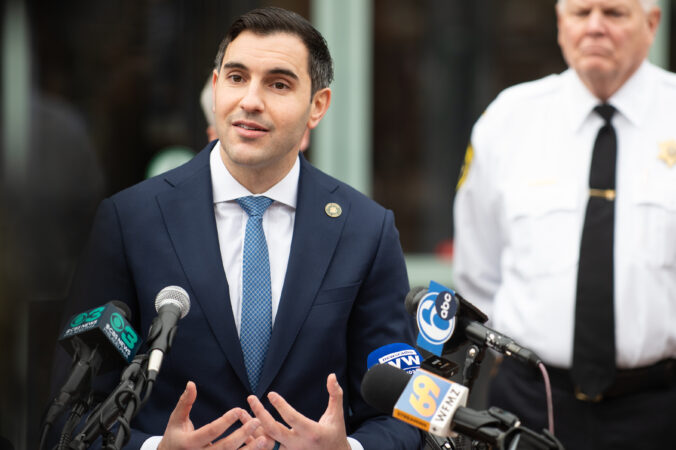
“Bucks County is home to over 50,000 immigrants … those immigrants are our neighbors,” said Ceisler, a Democrat who took office last week, during a news conference outside of the Bucks County Justice Center Wednesday. “They are our friends. They are taxpayers and they deserve the protection of law enforcement in this community.”
Ceisler’s decision to terminate 287(g) was expected, but his announcement comes amid a nationwide reckoning over federal immigration agents’ deployments to U.S. cities as ordered by the Trump administration. Protests againstU.S. Immigration and Customs Enforcementescalated across the country, including in Philadelphia, after an ICE agent shot and killed a woman in Minnesota last week.
Wednesday’s decision “has nothing to do with what’s going on in Minneapolis,” Ceisler said.
Other officials in the region have spoken out directly in response to the Minnesota incident. Philadelphia Sheriff Rochelle Bilal’s comments calling ICE “fake, wannabe law enforcement” went viral.
Ceisler, on Wednesday, called Bilal’s comments “completely counterproductive, and said she was the “wrong messenger for them.”
The Bucks sheriff was adamant Wednesday that his order does not make Bucks County a so-called sanctuary jurisdiction, which have been increasinglytargeted by President Donald Trump.
The president announced Wednesday morning that on Feb. 1 he would cut off federal funding to states that have cities with sanctuary policies, which prohibit local law enforcement cooperation with ICE. Ceisler’s directive prohibits sheriff deputies from acting as immigration authorities, but does not cut off the county’s cooperation with ICE.
People and press gather at a press conference announcing the termination of Bucks County’s partnership with ICE.
“Bucks County has not, has never been, and will never be a so-called sanctuary county,” Ceisler said. “Our county has not severed all ties with ICE, nor precluded future partnership with ICE when it comes to dangerous criminals. Instead, we are returning to a level of partnership we’ve been operating under for decades.”
Bucks was the only county in the Philadelphia area that wasn’t named as a sanctuary jurisdiction by the Trump administration last year when it rolled out an initial list of state and local governments in danger of losing funding — which was later deleted. Officials from the other collar counties disputed the designation at the time.
Democratic Gov. Josh Shapiro downplayed concerns about Trump’s Feb. 1 funding threat during a Wednesday appearance at the Pennsylvania Farm Show in Harrisburg.
“We don’t pay attention to the bluster, we pay attention to what’s written in the directive,“ Shapiro told reporters. ”Pennsylvania’s not a sanctuary state. I would anticipate us not losing funding at the state level unless they wanna be punitive.”
The sheriff said that the county Department of Corrections will continue to share information with law enforcement agencies, including ICE. Federal immigration agents will also continue to have access to county jails and honor judicial warrants to hold individuals who are incarcerated for immigration enforcement.
The motivation for the sheriff’s orders Wednesday were in response to “heartbreaking feedback” from Bucks’ immigrant community that they were afraid to report crimes or engage with law enforcement, Ceisler said
“To the members of our immigrant communities, you are safe to call 911, you are safe to report crime and you are safe to come into this courthouse and testify,” Ceisler said.
Heidi Roux, an immigration advocate, said her “community is breathing a collective sigh of relief” by ending the 287(g) agreement, but noted that continuing to partner with local law enforcement is crucial to public safety.
“I believe criminal activity can be addressed while simultaneously supporting the human rights and dignity of our residents,” Roux said.
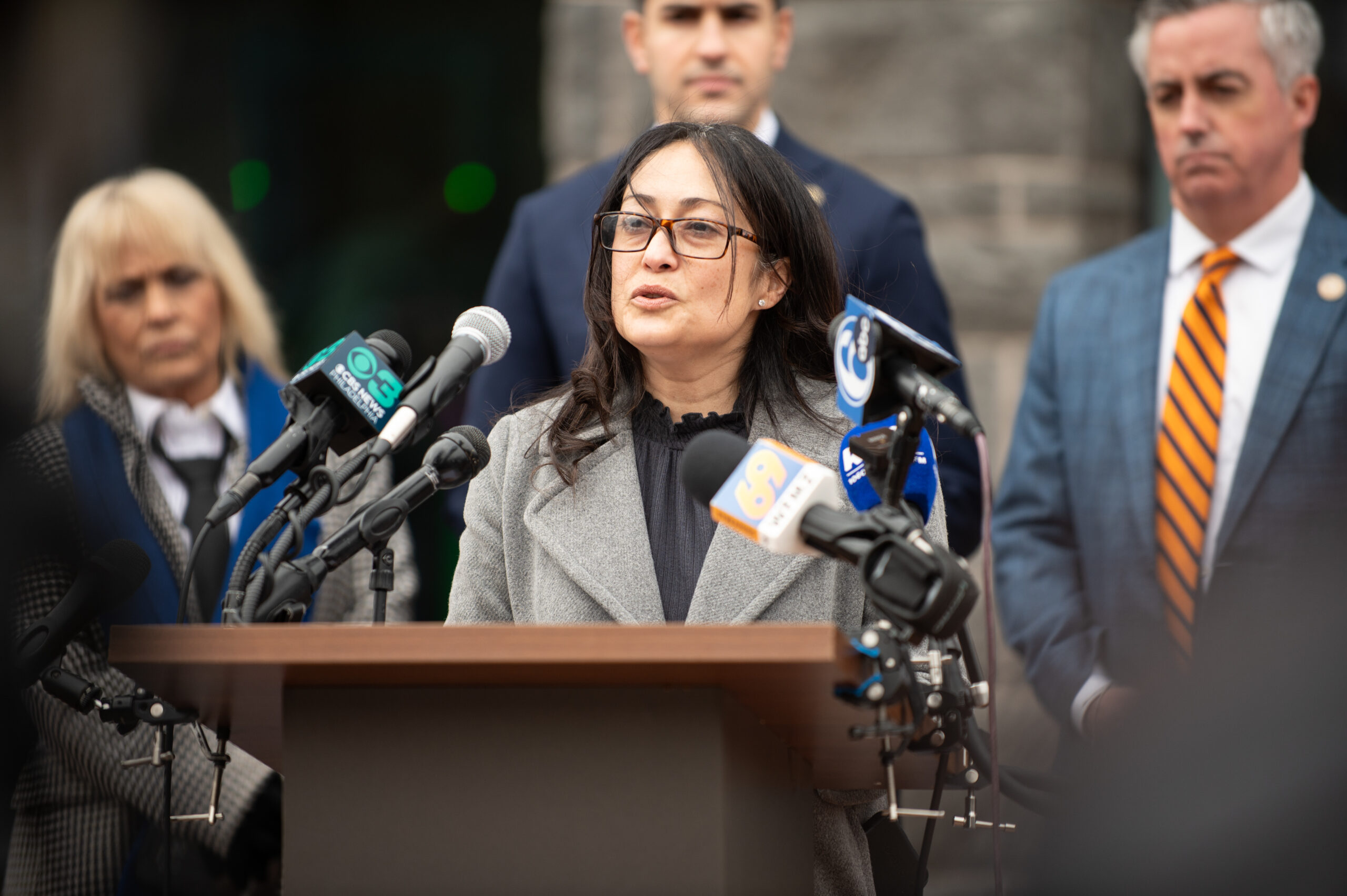
Heidi Roux, executive director at Immigrant Rights Action, speaks at a press conference about the termination of Bucks County’s partnership with ICE.
The 287(g) affiliation stirred up controversy when then-Sheriff Harran announced the department’s alliance with ICE in April of last year. The agency had 455 agreements with police authorities in 38 states across the country.
Since then the number has exploded, to 1,318 in 40 states, with 11 additional agreements pending as of Monday, according to ICE.
ICE says the program helps protect American communities, a force-multiplier that adds strength to an agency workforce that numbers about 20,000 nationwide. Opponents, however, insist that turning local officers into immigration agents breaks community trust with the police and puts municipal taxpayers at risk of paying big legal settlements.
In Pennsylvania, the number of participating agencies has grown from 39 in September to 52 today.
The growth in Pennsylvania and across the nation has been driven by Trump, who has pumped incentive money into the program as he pursues plans to arrest and deport millions of immigrants.
On Trump’s first day in office in January, he directed the Department of Homeland Security to authorize local police to “perform the functions of immigration officers” to “the maximum extent permitted by law.”
No one had yet been detained under that program, but opponents saw Ceisler’s election as the last chance to stop the Sheriff’s Department’s alliance with ICE, and the Democrat said he would act quickly to end the alliance.
The former sheriff said his only goal was to make the community safer, that the department would not conduct random immigration checks or broad enforcement but “those who commit crimes must face the consequences regardless of immigration status.”
The Democratic-led Bucks County Board of Commissioners warned county employees that they could be personally liable for helping ICE, passing a resolution that said the alliance was “not an appropriate use of Bucks County taxpayer resources.” Democratic Commissioners Diane Ellis-Marseglia and Bob Harvie were at Wednesday’s news conference but did not speak.
In October, however, Bucks County Court Judge Jeffrey Traugerruled that Harran’s cooperation with ICE was “clearly lawful under Pennsylvania jurisprudence,” and both “reasonable and necessary” in fulfilling his lawful duty to keep the citizens of Bucks County safe.
Ceisler said that terminating the agreement is the first step to regaining trust of the county’s immigrant communities. Next, he said, comes getting out into the communities.
“It’s about letting people know that they are safe,” he said.
HARRISBURG — State Treasurer Stacy Garrity has been the Pennsylvania Republican Party’s endorsed candidate for governor since September, but few candidates have stepped up to run alongside her for lieutenant governor.
Only two candidates have officially thrown their hats in the ring for Republican lieutenant governor, as Garrity faces the uphill battle of running against a popular incumbent in Democratic Gov. Josh Shapiro. And despite amassing unusually early support from the state party, recruiting someone to run as her No. 2 has proven challenging, as some potential candidates have declined to run.
Garrity said Monday at the Pennsylvania Press Club luncheon she’s in talks with “a lot of people,” and she’s confident she’ll find a running mate “perfect for the ticket.”
But time is of the essence, as she has less than a month until the state GOP meets for its winter meeting, where the party is expected to endorse a lieutenant governor candidate. Whomever she picks is likely to get the nod.
“In many respects, it’s up to Stacy Garrity,” said GOP strategist Charlie Gerow. “The lieutenant governor candidate has to not only be a good political fit, but has to be a good personal fit for her. Otherwise, the ticket falls apart before you get to Election Day.”
So far, the only two GOP candidates to formally announce their campaigns for lieutenant governor are State Sen. Cris Dush (R., Jefferson), who is one of the most conservative members of the Senate GOP caucus, and Bucks County businessman and political newcomer Brian Thomas. Dush said he’d likely pursue the GOP primary nomination even if he isn’t endorsed by the state party, while Thomas announced his candidacy last week in a press release and said he is now reaching out to party leaders seeking their support.
And more far-right Republicans have publicly floated a run, teeing up a potential battle among some of the state’s most conservative members to run alongside Garrity on the November ballot.
In Pennsylvania, candidates for lieutenant governor face their own primary races separate from the candidates for governor. After the primary, the winners are joined onto one ticket and run together in the general election.
Former State Rep. Rick Saccone, who previously ran for lieutenant governor and was on U.S. Capitol grounds during the Jan. 6, 2021 riot but did not face criminal charges, has publicly stated his interest in the role. Saccone said he would not enter the race if the state party backed another candidate.
And State Sen. Doug Mastriano, a far-right Republican who lost to Shapiro in 2022 and last week ruled out a second run for the GOP nomination, later claimed on a local radio station that Garrity would need him as her running mate if she wants to win.
Few more moderate options have emerged.
Montgomery County Commissioner Tom DiBello, a Republican from Shapiro’s home county, said in an interview that he had been approached about pursuing the role. DiBello said he received a positive reception when he traveled the state contemplating a run, but he implied Monday that he’d moved on. On Tuesday night DiBello lost his bid to be the next chair of the county party to his former running mate, Liz Ferry.
“I had a lot of support out there as far as potentially running for lieutenant governor, but I’m right now very dedicated to Montgomery County,” DiBello added.
A number of other officials are rumored to have withdrawn themselves from consideration or are still in talks with Garrity’s campaign, several Republican insiders said.
This time around, the sense among Pennsylvania state party members is that Garrity should be given leeway to choose her running mate and party faithful will endorse her choice.
Many hadn’t even heard who might be in the running. But several Republicans who spoke to The Inquirer said they think Garrity needs to pick someone who will appeal to Democrats and independents who voted for Shapiro four years ago.
“We’re a purple state, and my sense is a more moderate candidate that appeals to a bigger swath of the electorate would be, if I were selecting, would be a preference here,” said Jason Richey, the chair of the Allegheny County GOP.
Or, as Val Biancaniello, a Republican state committeewoman from Delaware County, put it, a candidate needs “statewide appeal.”
State Treasurer Stacy Garrity greets supporters following a campaign rally in Bucks County on Sept. 25, 2025. The GOP gubernatorial candidate visited the Newtown Sports & Events Center, in one of Pennsylvania’s top swing counties.
DiBello argued that Garrity’s running mate needs corporate and government experience, though he refused to name anyone else being considered behind the scenes. Garrity said she believed that DiBello was no longer “in the mix” for the job, but she did not expand further.
“I’m not putting my finger on the scale,” DiBello said before joking: “I’ve heard this Montgomery County commissioner would be awesome. I’ll put my finger on that scale.”
Garrity largely declined to comment on the candidates whose names have been circulating for her running mate, except for Mastriano.
“I didn’t even know he wasn’t running for governor until last week,” Garrity told reporters, noting her friendship with Mastriano. “We’re in discussion with a number of people, and I know that we will have the absolute best partner as lieutenant governor when the time is right.”
In his campaign launch Thursday, Shapiro tied Garrity to the extremes of her party, asking voters to choose between “getting stuff done” and “chaos.” A far-right running mate will make that message easier for Democrats as they work to secure the governor’s mansion for another four years.
Despite this, Mastriano was bullish Friday morning speaking on WEEO News Talk 103.7 FM in central Pennsylvania.
“That’s a possibility,” Mastriano said about a potential lieutenant governor run. “To be honest, that probably [is] the only way to generate some excitement for the Garrity ticket, and we know Garrity being on top of the ticket, that’s probably the only way the party would win if I did that.”
Prosecutors say Trevor Christopher Weigel, of Churchville, broke into the Yardley home of 19-year-old Jaden Battista in February 2024 with the goal of stabbing the young woman to death.
The couple had broken up months before, prosecutors said, and Weigel became enraged after learning that Battista had blocked his phone number.
In all, prosecutors say Weigel stabbed Battista 13 times throughout her upper body, leaving her bleeding outside the home just as police arrived.
“If he couldn’t have her, nobody was going to have her — and he made sure of it,” Assistant District Attorney A.J. Garabedian told jurors Tuesday in a Bucks County courtroom.
Garabedian said prosecutors have a variety of evidence showing Weigel broke into the house, where Battista was on a FaceTime call with her friend at the time. The friend called 911, spurring Lower Makefield police to respond while Weigel led Battista to his car, prosecutors said. With the passenger door open, prosecutors said, Weigel began chasing Battista and stabbed her repeatedly.
A police officer captured Battista’s final breaths on a body-worn camera, they said.
Meanwhile, Weigel ran away, and another officer chased him on foot to the nearby Interstate 295 freeway as the young man repeatedly stabbed himself in the neck. Police used a Taser to subdue and apprehend him.
Prosecutors later charged Weigel with first-degree murder, burglary, attempted kidnapping, and related crimes.
Weigel’s defense lawyers, meanwhile, disputed the prosecution contention that the couple had split. Lead defense attorney Brian McBeth told jurors Weigel had not left his house that morning planning to kill Battista. Rather, he said,Weigel had acted in response to the “soul-crushing” realization that the young woman had cheated on him.
McBeth said that did not excuse Weigel’s actions. But he urged jurors to question prosecutors’ suggestion that the crime was premeditated and consider whether Weigel had committed involuntary manslaughter, a lesser crime that does not carry the same penalties as first-degree murder.
In prosecutors’ telling, Weigel had left his job at a Warminster manufacturing plant that afternoon with a clear intent to kill.
They said Battista, still on a video call with her friend when Weigel arrived, became distressed as he banged on the door and demanded to be let inside. The friend told Battista to run and hide, prosecutors said.
Weigel lied to Battista, prosecutors continued, telling her he wanted to come inside to collect belongings he had left there after their two-month relationship ended late in 2023.
Once inside, Weigel forcefully led Battista outside to his red Ford Mustang, prosecutors said. Garabedian told jurors they would hear from a neighbor who described Battista as barefoot and not wearing clothing suited for winter.
“She’s not going willingly,” Garabedian said.
Defense attorneys strongly disputed that account.
McBeth said Weigel and Battista had gotten back together in early February, even going out to dinner together on Valentine’s Day.
Over the following days, however, Battista stopped responding to Weigel’s calls and texts in which he asked whether she was OK, McBeth said.
McBeth said Weigel left work early because he was worried about Battista, who he said had previously struggled with depression and self-harm. The young woman let Weigel inside the home willingly, he said, and an argument began when Weigel noticed hickeys on the girl’s neck.
“She told him she cheated, and he snapped,” McBeth said.
Proceedings are set to continue in the courtroom of Bucks County Judge Charissa J. Liller over the next week.
Temple University Health System and Jefferson Health are the latest area health systems to sue pharmaceutical companies and pharmacy benefit managers over high insulin pricing.
Temple filed its suit last week, and Jefferson sued just before the new year.
Eli Lilly, CVS Caremark, and Sanofi are among the major companies named in the suits, which accuse drugmakers and pharmacy benefit managers, or PBMs, of conspiring to drive up profits on diabetes drugs.
PBMs work with drug manufacturers, insurers, and pharmacies, negotiating prices and developing formularies — lists of prescription drugs that are available on a given insurance plan.
The health systems and other plaintiffs say drugmakers inflate prices for their insulin products in order to secure lucrative placements on formularies. Then, they pay a portion of the resulting profits back to PBMs, according to the lawsuits.
Jefferson and Temple officials said they are paying more for employees’ insulin as a result, impacting the health systems’ budgets and hurting their ability to “provide necessary services […] to the larger Philadelphia community.”
Representatives from both health systems declined to comment.
Eli Lilly has worked for years to reduce out-of-pocket costs for insulin, the company said in a statement, noting that some plaintiffs filing the lawsuits are choosing higher-priced medications over more affordable options.
Lilly capped insulin prices at $35 per month, the statement said, and in 2024 the average monthly out-of-pocket cost for its insulin was less than $15.
CVS Caremark said pharmaceutical companies “alone are responsible” for pricing their drugs in its latest statement, released after Philadelphia officials joined the litigation last month. The company said it would welcome lower prices on insulin.
“Allegations that we play any role in determining the prices charged by manufacturers for their products are false, and we intend to vigorously defend against this baseless suit,” they wrote in an email.
A statement from Sanofi said that the company has always complied with the law when it comes to drug prices and works to lower prices. PBMs and insurers sometimes negotiate savings on drugs, but those are “not consistently passed through to patients in the form of lower co-pays or coinsurance,” the statement read.
“As a result, patients’ out-of-pocket costs continue to rise while the average net price of our insulins declines.”
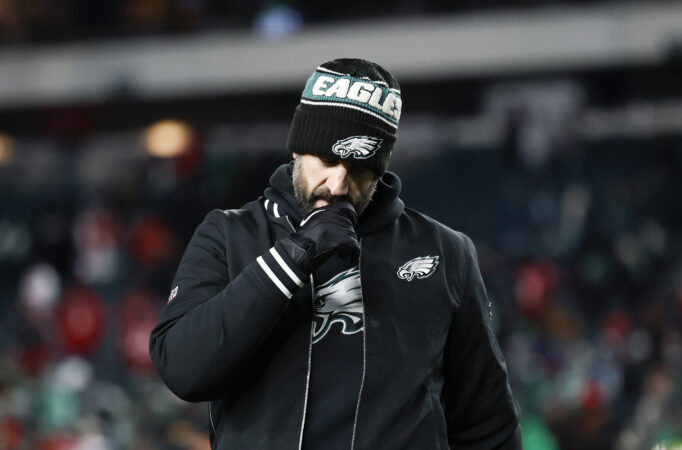
With less than a minute remaining in Sunday’s game against the 49ers, with the Eagles down 23-19 and their back-to-back Super Bowl aspirations on the line, fans crowded together in McGillin’s Olde Ale House erupted into E-A-G-L-E-S chants as a way to keep hope alive.
Unfortunately, Jalen Hurts was sacked and threw three straight incompletions to end their playoff run early. The Birds’ journey had ended, and with it, the hopes of the region.
Eagles wide receiver A.J. Brown is unable to make the catch as 49ers cornerback Deommodore Lenoir defends during the second half Sunday.
Brandon LaSalata, 24, made the drive from Richmond, Va., to watch Sunday’s wild-card matchup surrounded by Eagles fans.
“I don’t know what happened,” LaSalata said. “We need to get rid of Kevin Patullo. I think that hopefully next year we’ll be a better playoff contender. We should have gotten through this round. I don’t know what happened. I’m very upset.”
On the other side of the pub, 27-year-old Lancaster native Dominic Polidoro sat with his head hanging low in defeat.
“I feel pretty deflated,” Polidoro said. “This team was probably the most talented team in the league. It’s really disappointing to see them fall short. We had higher hopes.”
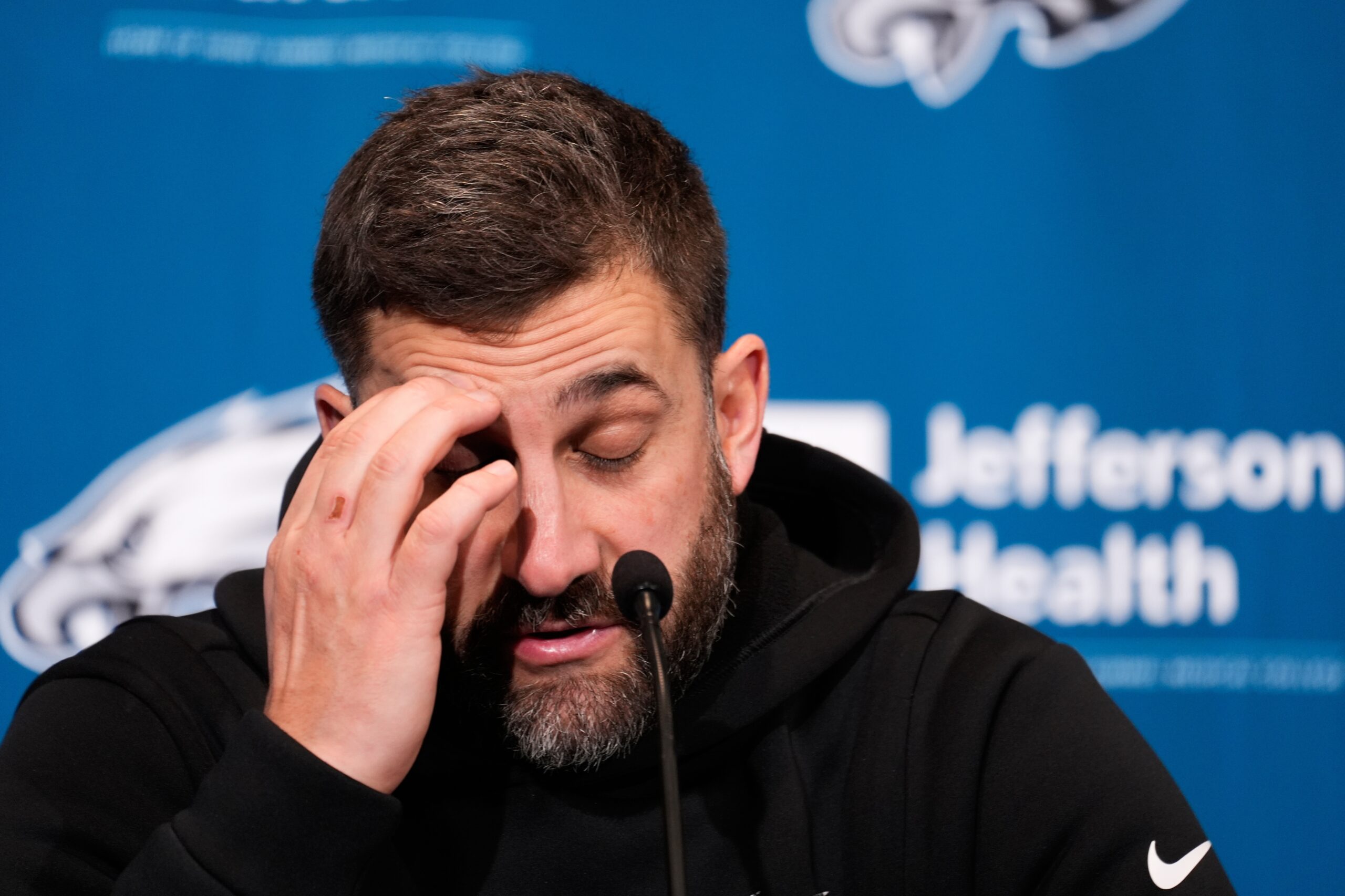
Eagles coach Nick Sirianni speaks during a news conference after the loss.
Somber morning commute for Eagles fans
On Monday morning, the air in Center City was dry, stiff, and unforgiving. And so were the Eagles fans cussing out their favorite team after the season-ending loss.
“I don’t mind losing, but give me an effort. A.J. Brown has to get traded. [Nick] Sirianni has to get fired. Offensive coordinator, fired,” said 73-year-old North Philadelphian Rodney Yatt. “And then we’ll go from there.”
Sunday’s game was marred by incomplete passes, a sideline argument between Sirianni and star wide receiver Brown, and, according to fans, tough calls from referees.
Clay Marsh, 35, of Manayunk, doesn’t think a loss falls to one player.
“I don’t think it was A.J.’s fault,” Marsh said. He saw the offense as disjointed and questioned offensive coordinator Patullo’s strategy, which Marsh said was an overreliance on “running it up the middle” with Saquon Barkley.
“Even if we won, it felt like we were going to go into Chicago and probably get spanked anyway,” Marsh said. “Maybe we saved ourselves some real embarrassment.”
Patullo has been at the center of fans’ ire, not only after last night’s loss but throughout the season. That agita hit a new low when someone egged Patullo’s family home in November after a 24-15 loss to the Chicago Bears.
The latest Patullo roasting comes in the form of a Bucks County golf simulator that allows players to drive balls directly into a digital fairway featuring Patullo’s face. The Golf Place co-owners Justin Hepler and Killian Lennon shared a video of themselves relieving theirfrustrations and honing their swings.
West Philadelphian James Booker, 49, said the small mistakes in the game added up to the loss. He pointed to Brown’s dropped passes and a missed extra point by kicker Jake Elliottthat could have brought the Birds into tie-game territory later on.
Despite the hard loss, Booker doesn’t think Sirianni should be canned.
“You can’t just say you want to up and fire him, even though fans like to do that a lot — Sirianni got us to this point,” Booker said. “I only hope for a better season next year.”
Philadelphia firefighters pulled a 60-year-old woman away from a burning building where she was trapped early Thursday morning, but she later died at a hospital.
The fire department responded to the blaze around 4:45 a.m. on the 6200 block of Ogontz Avenue in North Philadelphia. Firefighters arrived to find a heavy fire scorching throughout the two-story rowhouse.
About 60 firefighters, medics, and support staff were at the scene, officials said. Upon searching the house, firefighters found an unresponsive woman, who did not survive. The Medical Examiner’s Office will soon determine the cause of death, with the Fire Marshal’s Office investigating the cause of the fire.
There have been at least two deadly fires in the area over the last month, in addition to Thursday. Additionally, two people were rescued and survived a fire in South Philadelphia Wednesday, according to CBS.
Earlier this week, Bucks County officials confirmed the death of a third person related to the Bristol Health & Rehab Center fire, which claimed the lives of two other people and injured 20 others. Days before the Bristol fire, a deadly fire in Upper Darby killed one person, critically injured another, and left a firefighter and a handful of others with less-severe injuries.
Anna Stone was doing the first rounds of her nursing shift at St. Luke’s Upper Bucks Campus when she noticed a patient’s heart rate was elevated, a sign that they could be at risk of a cardiac emergency.
Before she could look into the patient’s chart and decide whether to call for help, a critical care doctor came rushing to the patient’s bedside.
A drop in the patient’s oxygen levels had been detected by a monitor that uses artificial intelligence to continuously evaluate vital signs. This triggered an automatic alert for the hospital’s critical care team to send help.
The AI tool is intended to help doctors and nurses more quickly identify patients whose condition is deteriorating — often before signs of distress are visible to medical staff — and intervene sooner.
The approach contributed to a 34% decline in cardiac arrests, and a 12% drop in patients crashing so hard and fast that they required rapid response transfers to the ICU between 2022 and 2024, according to St. Luke’s.
Survival rates among cardiac arrest patients rose from 24% to 36%.
St. Luke’s experiment with a program called the Deterioration Index, created by healthcare software giant Epic, is among the latest ways hospitals are bringing artificial intelligence into their patients’ rooms.
In other Philadelphia-area initiatives, Jefferson Health and Penn Medicine recently debuted an ambient listening tool that records conversations between doctors and patients, distilling the critical details into a well-organized visit note.
St. Luke’s has been using its AI monitoring system across all 16 of its campuses, including Quakertown, Upper Bucks, and Grand View, which the health system acquired in July.
The health system’s initiative was recognized by The Hospital and Healthsystem Association of Pennsylvania, the region’s largest industry group for hospitals, with an award honoring safety and quality initiatives that improved patient care while reducing hospital costs.
Using AI to predict emergencies
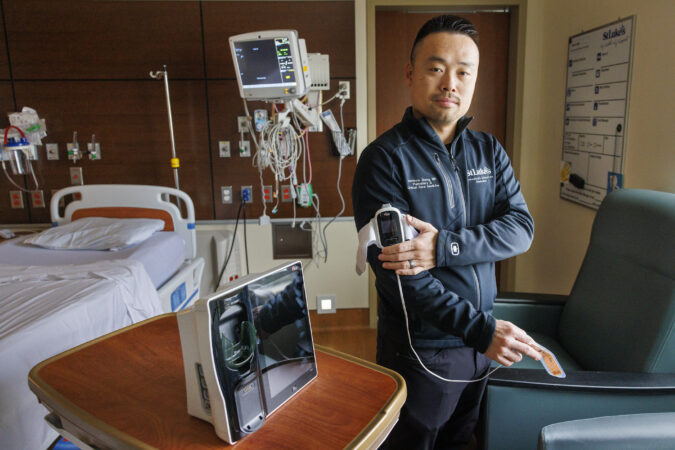
The monitoring device, which attaches to a patient’s finger, records and continuously updates patients’ electronic medical records with vital metrics such as heart rate, blood pressure, and lab work results.
Using this matrix of data points, it assigns each patient a “deterioration index” — a score between 0 and 100 indicating their overall stability — and automatically alerts critical care when the score rises too high.
Matthew Zheng, a doctor at St. Luke’s Upper Bucks, holds the monitoring device used to continuously track patients’ vital signs.
It is not intended to replace in-person monitoring, but serves as an extra set of eyes when nurses are away from their bedside.
What’s more, the sophisticated technology is capable of picking up on nuanced changes in a patient’s status before they show physical signs of distress.
“We would ideally like to intervene on these patients before they reach a point where the intervention isn’t that helpful,” said Matthew Zheng, a critical care doctor at St. Luke’s Hospital — Upper Bucks. “Our nurses work very hard, but they can’t be in the same room all the time.”
When a patient’s “deterioration index” rises above 60, the device sends an alert to the hospital’s virtual response center — a remote hub where a nurse monitors three screens showing the status of all patients.
Alerts may also be sent directly to a patient’s care team or the rapid response unit, if the AI monitoring detects that a patient is quickly deteriorating and needs emergency care.
“What that’s allowed is for us to have a proactive response instead of being reactive to patients,” said Charles Sonday, an associate chief medical information officer at St. Luke’s who leads AI initiatives.
Stone, the Quakertown nurse, said having the tool to constantly watch over patients while she’s out of their room is reassuring.
Doctors like that it enables them to quickly get up to speed on the status of a patient they transferred out of the ICU, and respond more immediately to their new medical needs, said Zheng, the critical care doctor.
St. Luke’s plans to continue fine-tuning the technology, and customize it to meet the unique patient profiles of each of its campuses, which span 11 counties and two states, from the Lehigh Valley to New Jersey.
The social and economic factors that affect patient health, such as pollution, and illness rates, vary significantly across the health system’s sprawling network, Sonday said.
The system will also explore customizing the tool for specialty services, such as pediatrics and behavioral health.
Bristol Township identified resident Patricia Mero, 66, as the latest death following the fire that destroyed parts of the Bristol Health & Rehab Center in Bristol Township on Dec. 23. Mero died Monday morning, according to the Bucks County Coroner’s Office. The cause of death was listed as a chest trauma; the manner of death an accident.
Nurse Muthoni Nduthu and a woman whom Bristol Township Police identified as Ann Reddy, another resident, were also killed in the fire.
First responders work the scene of an explosion and fire on Dec. 23, 2025, at Bristol Health & Rehab Center.
An explosion occurred at the nursing home in the early afternoon on Dec. 23, flattening a section of the building that collapsed the first floor and sent people and debris tumbling into the basement. Bristol Fire Chief Kevin Dippolito said that at one point, a heavy odor of gas forced firefighters out of the building, only for another explosion to go off 30 seconds later.
Investigators work the scene at Bristol Health & Rehab Center on Dec. 24, 2025 in Bristol Township.
The National Transportation Safety Board is leading an investigation into the cause of the fire, while the owners of the nursing home, Saber Healthcare Group, Peco, and others are being sued for their alleged negligence in the fiery explosion.
On Monday, the NTSB said it had completed on-scene work in Bristol and would release a preliminary report on its findings by early February.
The investigation into the fire will likely take months, with experts telling The Inquirer that federal investigators would focus on Peco and the nursing home operator’s actions leading up to the explosion.