Tag: Business of health care

  • Rothman Orthopaedics is refocused on Philly region, opening three new surgery centers

    Rothman Orthopaedics is refocused on Philly region, opening three new surgery centers

    Rothman Orthopaedics plans to open three new surgery centers over the next year and keep adding doctors in its Philadelphia-area market, as the large physician-owned group refocuses growth efforts on its original territory.

    “Our biggest priority in the near term is strengthening our core business here, in Southeastern Pennsylvania and New Jersey,” Rothman CEO Christian Ellison said. “We’re not gonna ignore opportunities. We’ll be opportunistic around things that make strategic sense.”

    The new approach comes after a now abandoned effort to break into the New York market, first in a partnership with Northwell Health in 2017 and then with NYU Langone Health. That foray ended last year with the sale of Rothman Orthopaedics of Greater New York and its three locations to NYU Langone.

    Rothman has seen more success after following the lure of fast population growth to Florida, where it opened offices in the Orlando area in 2020 in partnership with AdventHealth.

    “Florida has been a big success, because we’ve had the partnership down there with Advent Health that’s been kind of mutually beneficial,” said Ellison, who became Rothman’s CEO last fall.

    The Philadelphia draw

    The practice headquartered in Center City already has 24 locations in the Greater Philadelphia market. That number includes facilities that Rothman operates in partnership with Jefferson Health, Main Line Health, AtlantiCare, and RWJ Barnabas.

    Rothman located its newest office in West Chester, an area where Rothman had little market share, according to Ellison. He also sees opportunity in other parts of the Philadelphia region and contiguous markets.

    To make that growth possible, Rothman is partway through an effort to hire 41 physicians by the end of this year. That represents a 20% increase and will bring Rothman’s total to 214 physicians, the company said.

    The need for ambulatory surgery centers

    Rothman is a partner in nine surgery centers in Pennsylvania and New Jersey and two surgical hospitals (Rothman Orthopaedic Specialty Hospital in Benslam and Physicians Care Surgical Hospital in Limerick).

    Those outpatient facilities account for nearly two-thirds of Rothman’s surgeries. Even the surgical hospitals function primarily as ambulatory centers, Ellison said. The remaining third of surgeries takes place in acute-care hospitals.

    “We are challenged for operating room capacity right now, both in the acute care hospitals, as well as in our ASCs, and so we feel like we need to bring more operating rooms online,” Ellison said.

    What’s more, Medicare and private insurers want more procedures done in lower-cost surgery centers. In the future, insurers will pay the same price for an outpatient knee replacement whether its done in a hospital of freestanding surgery center, Ellison predicted.

    Rothman hasn’t finalized locations for the new surgery centers, but Ellison said he expects two to be in Southeastern Pennsylvania and one in New Jersey. The centers will likely be in areas where Rothman has an established patient base.

    The physician group prefers to open the new centers independently, as opposed to going through partnerships like it has historically. “We think we’re uniquely positioned to manage that patient experience in the surgical environment,” Ellison said.

  • How much did Philly-area nonprofit health system CEOs make in 2024?

    How much did Philly-area nonprofit health system CEOs make in 2024?

    Jefferson’s Joseph G. Cacchione ranked as the highest-paid CEO at the Philadelphia region’s nonprofit health systems in 2024, with total compensation of $7 million, according to The Inquirer’s annual review of public tax forms.

    Madeline Bell at Children’s Hospital of Philadelphia collected $5.5 million in 2024, giving her the number two spot.

    Both also were top earners in The Inquirer’s 2023 compensation analysis. Jefferson is the largest system based here, both by revenue and number of hospitals, with 33 stretching from South Jersey to near Scranton. CHOP is among the nation’s top-ranked children’s hospitals.

    Janice Nevin at ChristianaCare joined the ranks of the top five. She received $3.5 million, about the same pay as the region’s fourth highest earner, Al Maghezehe at Capital Health, which has a network of outpatient clinics in Bucks County and two hospitals in Mercer County. Maghezehe’s compensation stands out because Capital had by far the lowest revenue among the systems with the 10 highest-paid CEOs.

    A couple of CEOs who left their positions before 2024 continued collecting long-term compensation, as is common in the industry.

    Most notably, Jefferson’s former CEO Stephen K. Klasko collected just over $1 million in 2024. He retired at the end of 2021, but remained an adviser through June 2022. The 2024 payment brought his total through 2024 to $48.7 million for 8½ years as CEO.

    Lori Herndon left AtlantiCare in June 2023. Her compensation the following year was $1.3 million.

    Other CEOs left during 2024, making it possible they will be listed in the next round of 990s. Those executives include Donald Mueller at St. Christopher’s Hospital for Children, Michael Laign at Redeemer Health, and Ronald W. Johnson at Shore Medical.

    Here’s a look at the numbers from The Inquirer’s review of the latest 990 tax returns of 20 nonprofit health systems, covering 11 health systems with operations concentrated in Southeastern Pennsylvania, seven in South Jersey, and two in northern Delaware:

    (function(){function e(){window.addEventListener(`message`,function(e){if(e.data[`datawrapper-height`]!==void 0){var t=document.querySelectorAll(`iframe`);for(var n in e.data[`datawrapper-height`])for(var r=0,i;i=t[r];r++)if(i.contentWindow===e.source){var a=e.data[`datawrapper-height`][n]+`px`;i.style.height=a}}})}e()})();

  • NovaCare Rehabilitation’s parent, Select Medical, was sold in $3.9 billion private equity deal

    NovaCare Rehabilitation’s parent, Select Medical, was sold in $3.9 billion private equity deal

    NovaCare Rehabilitation’s parent company, Select Medical Holdings Corp., was taken private in $3.9 billion private equity deal this week.

    NovaCare has more than 100 physical therapy locations in the Philadelphia region, including some through a partnership with Rothman Orthopaedics.

    For 25 years, NovaCare sponsored the Philadelphia Eagles practice complex in South Philadelphia. Jefferson Health took over the sponsorship this year.

    Top management joined private-equity firm Welsh, Carson, Anderson & Stowe in the acquisition of Select Medical, which is based in Mechanicsburg, Pa. The sale was completed Wednesday. The price per share was $16.50 per share, an 18% premium to the latest close before the deal was announced in November.

    In addition to outpatient physical therapy through NovaCare and other subsidiaries at 1,850 locations in 36 states, Select Medical operates 104 long-term acute-care hospitals in 28 states and 38 rehabilitation hospitals in 15 states. The company has more than 45,000 employees and had $5.5 billion in revenue last year.

    Select Medical acquired NovaCare in 1999. Publicly traded NovaCare fell on hard times because of Medicare reimbursement changes under the federal Budget Reconciliation Act in 1997. The law capped reimbursement for speech, physical, and occupational therapy in nursing homes.

    The company, then headquartered in King of Prussia, lost $700 million in annual revenue because of those changes, The Inquirer reported at the time.

  • Connolly Dermatology, a once fast-growing practice, faces N.J. lawsuit over unpaid wages

    Connolly Dermatology, a once fast-growing practice, faces N.J. lawsuit over unpaid wages

    A former Connolly Dermatology employee filed a lawsuit Thursday in Atlantic County, N.J., seeking unpaid wages for herself and other employees of the once fast-growing skin care practice.

    The plaintiff, Tracy Piccardo, worked in the Linwood office as a receptionist. More than 70 employees owed back pay had been identified, according to her lawsuit, filed in Superior Court by David R. Castellani. Piccardo did not immediately respond to a text seeking comment on the lawsuit.

    The practice’s owner, dermatologist Coyle S. Connolly, did not provide an on-the-record comment.. At its peak, Connolly had 30 locations, mostly in New Jersey and Pennsylvania. It’s not clear if any of them are open now.

    Connolly’s practice stood out as Medicare’s top biller three consecutive years for a skin cancer treatment that saw a 40% reimbursement cut this year under the government insurance program.

    The lawsuit alleges violations of the state’s Wage Payment Law/Wage Theft Act, breach of contract, and unjust enrichment.

    It seeks payment of back wages with interest, damages to be determined at trial, and attorney’s fees. The complaint had no estimate of how much money is at stake.

    Increasing financial pressure

    Piccardo told The Inquirer in May that the practice had been short on supplies, such as paper towels, toilet paper, paper toner for months.

    At that point, Piccardo and other employees hadn’t been paid for three weeks, she said at the time. That was the second payroll lapse this year, Piccardo and other employees told The Inquirer.

    The New Jersey Department of Labor said in May that it was investigating complaints about missed payrolls.

    At least two Connolly landlords have sued over unpaid rent since May.

    In early May, the owner of a Montgomeryville office sued to take possession of it after Connolly allegedly failed to pay rent in April.

    Last month, a landlord sued Connolly for unpaid rent on a property in Middle Township, N.J., that the practice had occupied since 2007. The lawsuit says Connolly was delinquent on more than $39,000 of rent.

  • Two more Philly-area oral and maxillofacial surgery practices have joined a New Jersey group

    Two more Philly-area oral and maxillofacial surgery practices have joined a New Jersey group

    MAX Surgical Specialty Management, a private-equity backed company consolidating oral and maxillofacial surgery groups in the Northeastern U.S., has acquired two more practices in the Philadelphia area.

    The latest deal, announced Friday, gives the Hackensack, N.J., firm 12 surgeons at 12 locations in Pennsylvania. Surgeon Jason M. Auerbach founded MAX in 2022 with private-equity backing and entered Pennsylvania two years later.

    The two newly acquired practices have six offices in Bucks and Chester Counties.

    Oral and Maxillofacial Surgeons P.C. has three surgeons, and offices in Doylestown, Quakertown, Warminster, and Chalfont. Oral Associates of the Main Line has two surgeons and offices in Exton and Paoli.

    MAX did not disclose financial terms of the transactions.

    In addition to New Jersey and Pennsylvania, MAX has practices in Connecticut, New York, and Vermont. The company — a management services organization — is majority-owned by its physicians, Auerbach said.

    Oral and maxillofacial surgeons work at the crossroads of dentistry and medicine. Most have dental degrees, but some also have medical degrees. They remove wisdom teeth, install dental implants, repair facial traumas, and treat jaw injuries, among other services.

    North Jersey origins

    Auerbach founded Riverside Oral Surgery in Bergen County in 2007 and grew it to 12 locations before founding MAX with private equity partners. Part of his motivation was to create a home for independent physicians, Auerbach said in a May interview.

    The Philadelphia region still has a high concentration of independents, with strong patient demand. “It’s hard nowadays to be an independent oral-maxillofacial surgeon, in terms of the complexities in running a healthcare business,” Auerbach said.

    Robert Mogyoros, whose Greater Philadelphia Oral Surgery is in Elkins Park, said he valued his independence above all, but decided to look for a group to join after the business side had gotten too challenging.

    Physician groups get better prices from vendors, better deals with insurers, and have an upper hand in physician and employee recruitment, said Mogyoros, who became part of MAX last July.

    “What attracted me to MAX was that it’s doctor-driven and doctor-run,” he said in a May interview.

    Rothman and Kim Oral & Maxillofacial Surgery, with offices in Northeast Philadelphia and Cinnaminson, was MAX’s first acquisition in Southeastern Pennsylvania. That deal also happened last year when MAX announced that it had borrowed $77 million to support growth.

    When doctors sell their practices to MAX, they typically invest about 30% of the value into MAX, Auerbach said. MAX’s outside investors are MedEquity Capital near Boston, RF Investment Partners in New York, and Kian Capital in Charlotte, N.C.

    Editor’s note: This article was update to correct the year when MAX made its first Pennsylvania acquisition.

  • Bill Gates’ nuclear company plans $450 million plant in Philly’s Bellwether District making radioactive cancer treatments

    Bill Gates’ nuclear company plans $450 million plant in Philly’s Bellwether District making radioactive cancer treatments

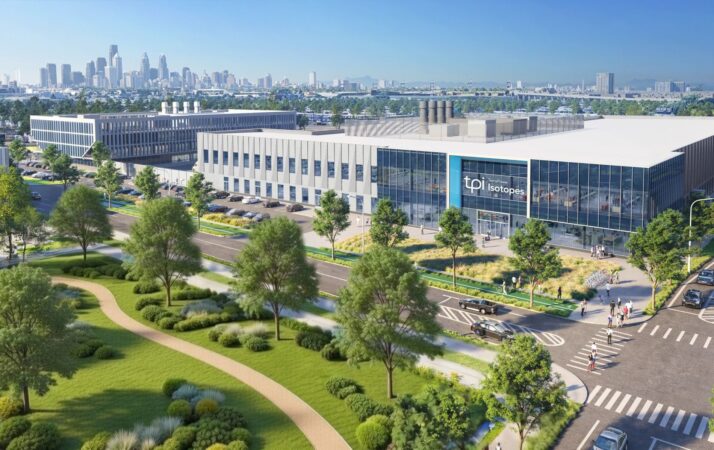
    TerraPower Isotopes, part of a nuclear power company founded by Bill Gates, plans a $450 million plant in the Bellwether District to make radioactive molecules for cancer research and potential treatments, Gov. Josh Shapiro announced Tuesday.

    Bellwether’s developer HRP Group will build a 250,000-square-foot facility for the Bellevue, Wash., company at the former refinery site. TerraPower Isotopes is expected to employ 225 people in Philadelphia to meet anticipated demand for a type of molecule that can be used to kill tumors without damaging surrounding tissue.

    TerraPower’s material, an isotope called actinium-225, is ultimately derived from weapons-grade uranium. Researchers are exploring precision cancer treatments that involve attaching actinium-225 to an antibody that is targeted to specific cancer cells. The isotope then emits high doses of radiation at close range.

    “This new facility is a testament to the demand for actinium-225 as part of the growing industry, which is transforming how cancer is treated,” TerraPower Isotopes President Scott Claunch said in Shapiro’s announcement. “Our team is proud to be building a large-scale manufacturing facility in Philadelphia, which will play a pivotal role in expanding global access to this rare isotope.”

    Pennsylvania government is supporting the project with $10 million in grants. The Bellwether District is in a Keystone Opportunity Zone that has tax benefits through 2043. That means TerraPower Isotopes won’t have to pay many state and local taxes, though it will remain responsible for city wage taxes.

    TerraPower Isotopes, part of a bigger nuclear sciences company called TerraPower, is the second radiopharmaceutical company to announce a factory in the region. In 2024, Nucleus RadioPharma, which counts Fox Chase Cancer Center among its investors, shared plans for a 48,000-square-foot facility in Spring House, Montgomery County.

    TerraPower’s move to South Philadelphia is the third significant life sciences development announced this year by Shapiro and his economic development team.

    Eli Lilly & Co. said in January that it is building a $3.5 billion pharmaceutical plant in the Lehigh Valley to expand manufacturing capacity for next-generation weight-loss medicines. Last month, Johnson & Johnson shared plans for a $1 billion cell therapy plant in Montgomery County.

    TerraPower is the second tenant in the 1,300-acre Bellwether District, which HRP is trying to develop into a new industrial and life sciences hub. Late last year, it announced that California-based canned beverage manufacturer DrinkPAK will build a 1.4 million-square-foot factory that will product 3 billion cans a year.

  • Jefferson Health will close four Einstein pediatric practices and move three others to True North Pediatrics

    Jefferson Health will close four Einstein pediatric practices and move three others to True North Pediatrics

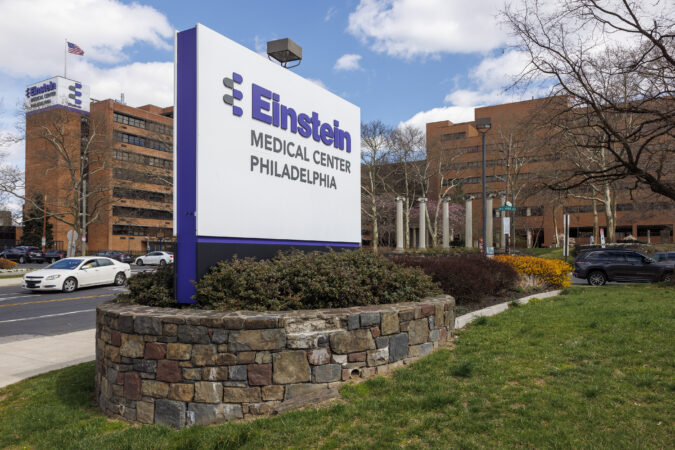
    Jefferson Health is closing four legacy Einstein pediatric practices, including one at Jefferson Einstein Hospital Philadelphia in a low-income area of the city, and moving three others to True North Pediatrics, a private group with a dozen mostly suburban locations.

    The nonprofit health system did not respond to questions Thursday about how many children the practices serve, how many jobs will be cut, or why it was making the change, which is expected to significantly reduce the amount of pediatric care in North and Northeast Philadelphia.

    This week’s pediatric cutbacks are a significant move affecting patient care amid a yearslong effort to make the system with more than $15 billion in annual revenue financially sustainable. From 2015 through 2024, Jefferson grew from three hospitals to more than 30 and now stretches from South Jersey to near Scranton.

    The locations scheduled to close June 30 are the Pediatric & Adolescent Ambulatory Center at Einstein Philadelphia and three Holland Pediatrics locations (Center One/Bustleton in Northeast Philadelphia, Buck Road in Southampton, and Frankford in Torresdale), Jefferson said in a statement.

    The three clinics going to True North are Trappe Pediatric Care at Iron Bridge, Pennypack Pediatrics, and Einstein Pediatrics Elkins Park. Jefferson did not provide details on transaction terms.

    A practice manager at True North, which is based in suburban Philadelphia, did not respond to a request for more information. True North’s website said the practice is independent, “not managed by any big business or larger institution.”

    Jefferson said in a statement that it will continue offering pediatric services through its primary care network, urgent care centers, emergency departments, and Lehigh Valley Health Network’s Reilly Children’s Hospital.

    The pediatric clinics affected had been part of the former Einstein Healthcare Network when Jefferson acquired the system in 2021.

    “With three excellent inpatient pediatric hospitals right here in our region, partnering with True North Pediatrics — an organization whose singular focus is pediatric care — allows us to ensure that families across our region continue to receive the specialized, dedicated attention they deserve,” Jefferson said in an internal communication Monday.

    It’s possible that St. Christopher’s Hospital for Children, which is about 3½ miles by car from Einstein Philadelphia, will pick up many of the thousands of dislocated patients.

    St. Chris already serves almost exclusively patients with Medicaid insurance for low-income families and struggles to make ends meet because of the low rates it receives.

    “We are committed to delivering trusted, compassionate care for every patient who walks through our doors,” St. Chris said in a statement. “Families can access care at our nearby locations, including our Center for the Urban Children and Northeast Pediatrics office.”

  • Jefferson Health Plans had big gains in Medicare Advantage during open enrollment last year

    Jefferson Health Plans had big gains in Medicare Advantage during open enrollment last year

    Jefferson Health Plans added nearly 12,000 new customers to its Medicare Advantage plans during the open enrollment period for coverage this year, the biggest annual gain ever for the insurance arm of Thomas Jefferson University.

    About half of Jefferson’s enrollment gains were in Philadelphia, Montgomery, and Bucks Counties. Still, Jefferson remained the sixth largest provider of private Medicare plans in Southeastern Pennsylvania. The Inquirer compared February 2025 with last month.

    Philadelphia-based Independence Blue Cross was leader, with one-third of the region’s 383,000 Medicare Advantage customers. National companies Aetna, UnitedHealthcare, Humana, and Cigna occupied the next four spots.

    “This was the strongest Medicare Advantage enrollment period in Jefferson Health Plans’ history,” Jefferson Health Plans president Krista Hoglund said in an email.

    “That level of growth signals a clear gap in the market for coverage that is anchored in the local community, easier to use, and closely connected with the doctors and hospitals they know and trust,” she said.

    window.addEventListener(“message”,function(a){if(void 0!==a.data[“datawrapper-height”]){var e=document.querySelectorAll(“iframe”);for(var t in a.data[“datawrapper-height”])for(var r,i=0;r=e[i];i++)if(r.contentWindow===a.source){var d=a.data[“datawrapper-height”][t]+”px”;r.style.height=d}}});

    New Jersey has been a harder market for Jefferson. Enrollment more than doubled this year, but the eight counties in South Jersey where Jefferson sells plans still account for less than 10% of its members.

    Jefferson gained about 2,400 members in Lehigh Valley counties served by Lehigh Valley Health Network, which Jefferson acquired in 2024. Jefferson’s ownership of an insurer was a key reason why Lehigh Valley chose to become part of Jefferson, health system officials said at the time.

    Jefferson’s gains in the Lehigh Valley came amid a contract dispute with United HealthCare, leading to LVHN going out of network in January for UnitedHealthcare Medicare Advantage plans. Jefferson had warned in October that the contract was expected to end.

    United said then that the timing of the warning during the Medicare Advantage open enrollment period looked like a “negotiating tactic” that could lead United customers to choose other plans.

    The two Pennsylvania counties where United had the biggest percentage declines were Lehigh and Northampton, where LVHN has substantial operations.

    The biggest gains, however, went to Capital Blue Cross, of Harrisburg.

  • Pa. insurance regulators fined Aetna $550K for violations of mental health parity regulations

    Pennsylvania insurance regulators fined CVS Health’s Aetna health insurance subsidiary $550,000 for violating rules meant to ensure that mental health services are as accessible as medical or surgical care, the state Insurance Department said Tuesday.

    Regulators found that Aetna applied standards of review for certain autism therapies and inpatient opioid addiction treatment services that were more stringent than those applied broadly to medical claims submitted to the insurer. The result was limits on the scope and duration of the treatments that violated parity rules.

    The department said Aetna would have to fix its practices within a year and repay affected customers. It did not specify how much money Aetna needs to repay, or how that process would work.

    “Aetna has long been an advocate of the Mental Health Parity and Addiction Equity Act. Aetna has received the results of the market conduct exam from the Pennsylvania Insurance Department and will implement, as appropriate, any corrective actions,” the company said in an email.

    The violations were found during a regular periodic review of insurers’ practices. The Aetna exam covered the period from October 2021 through Dec. 2022. Aetna and regulators signed a consent order in January.

    The insurance department fined Aetna $190,000 in 2019 for similar violations of the Mental Health Parity and Addiction Equity Act, a federal law passed in 2008.

  • Most Philly-area health systems had improved financial results in first half of fiscal 2026

    Most Philly-area health systems had improved financial results in first half of fiscal 2026

    Six of eight nonprofit health systems in Southeastern Pennsylvania and northern Delaware posted improved financial results for the six months that ended Dec. 31 compared to the year before. Still, half of them had operating losses, according to financial data reported last month to bond investors.

    Jefferson Health and Temple University Health System reported results that were worse than the same period last year.

    Children’s Hospital of Philadelphia remained the region’s most profitable health system, with a 6.2% operating margin, up from 5.2% the year before. CHOP posted $2.7 billion in total revenue in the last six months of 2025, up from $2.4 billion the year before.

    Nonprofit health systems in South Jersey, such as Cooper, Inspira, and Virtua, do not report comparable financial results until they file their annual audited financials statements in the spring.

    Here’s a summary:

    Jefferson Health: Jefferson had an operating loss of $201 million in the six months that ended Dec. 31, compared to a $55 million loss the year before. The $201 million loss included a $64.7 million restructuring charge related to severance for 600 to 700 people laid off in October and other changes designed to improve efficiency in the 32-hospital system that stretches from South Jersey to Scranton, Jefferson said.

    University of Pennsylvania Health System: Penn had an operating profit of $189 million in the first six months of fiscal 2026, up from $117 million in the same period a year ago. Operating income increased, even after Penn put $43 million into reserves for medical malpractice claims. Two years ago, Penn had recorded charges totaling $90 million for the same purpose.

    ChristianaCare: ChristianaCare, Delaware’s largest health system, posted a $37 million operating gain, up from $33 million in the first six months of fiscal 2025. The health system’s revenue rose 9% to $1.75 billion, helped in part by its expansion into Pennsylvania. ChristianaCare took over five of Crozer Health’s freestanding outpatient locations in Delaware County.

    Temple University Health System: Temple had a $50.5 million operating loss in the six months that ended Dec. 31. In the same period the year before, Temple reported a $13.5 million operating gain. The nonprofit attributed some of the losses to costs related to the opening of Temple Women & Families Hospital in September.

    Main Line Health: Main Line had an $8.7 million operating profit in the six months that ended Dec. 31. Main Line’s swing from an $8.9 million loss in the same period of 2024 benefited from a change in accounting for depreciation that reduced expenses. Without that change, Main Line would have had another loss.

    Tower Health: Tower had an operating loss of $16 million in the first six month of fiscal 2026, according to its report to bondholders Friday. In the same period a year ago, the Berks County nonprofit’s loss was $16.1 million.

    Redeemer Health: Redeemer reported an operating loss of $14.7 million, compared to a loss of $19.5 million the year before. The improvement happened even though the health system in Philadelphia’s northern suburbs increased revenue by just 1.2%, to $227 million.