Tag: Camden County

  • Teaching an old don new tricks: How ‘Skinny Joey’ Merlino went from wiseguy to influencer

    Teaching an old don new tricks: How ‘Skinny Joey’ Merlino went from wiseguy to influencer

    At noon on a bright June Tuesday, the scene at Skinny Joey’s Cheesesteaks & Pizza on the Wildwood boardwalk felt more like a South Philly block party than a soft opening.

    Joseph “Skinny Joey” Merlino worked the crowd at his new shop — hugging, shaking hands, posing for photos — moving easily among his friends and admirers. At 64, five years removed from the criminal justice system, the onetime alleged head of Philadelphia’s underworld is enjoying a second act that few could have predicted: cheesesteak entrepreneur, podcaster, and social-media personality.

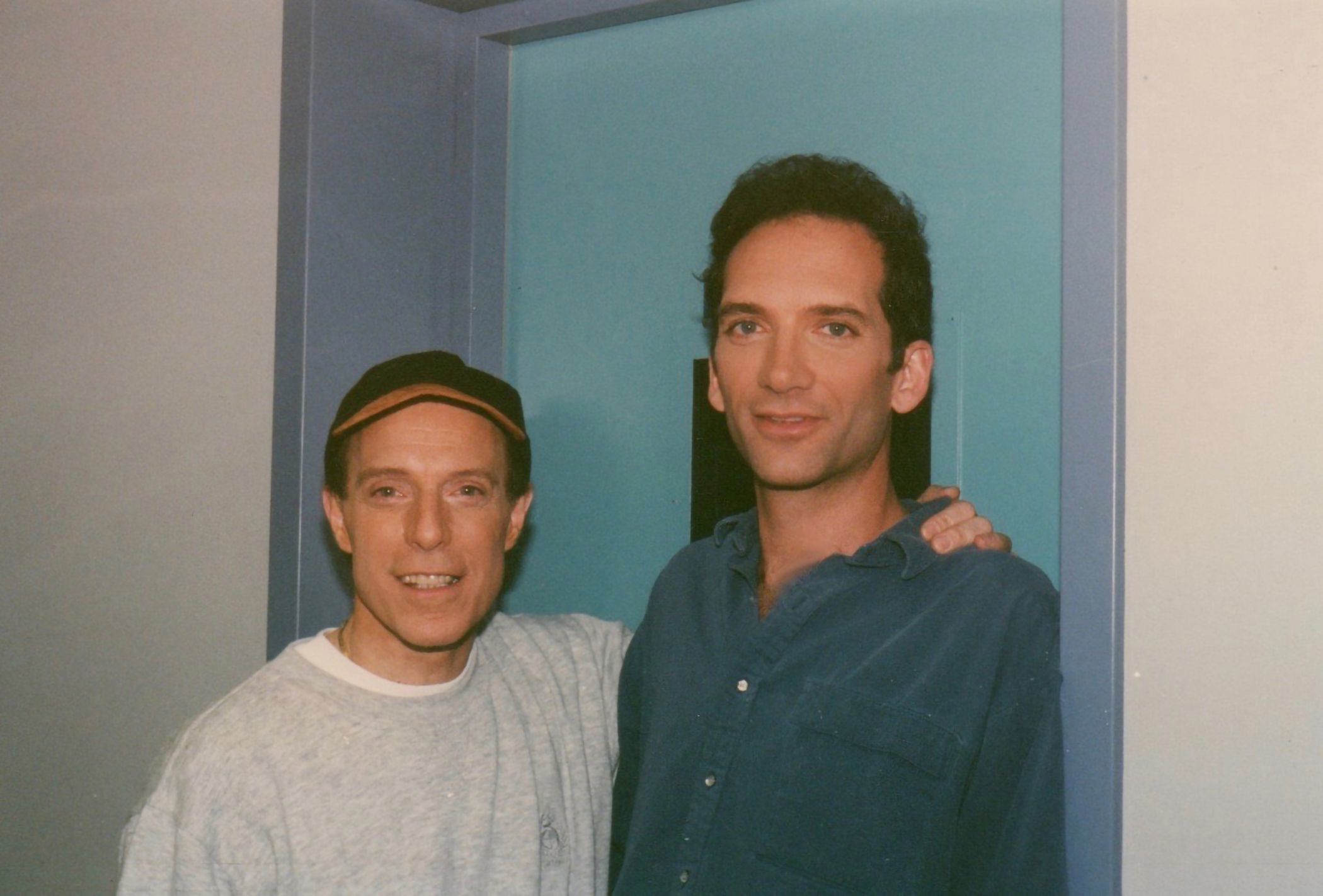
    Joseph “Skinny Joey” Merlino (left) and Joe “Lil Snuff” Perri Jr. (right) posing with a customer outside the Skinny Joey’s Cheesesteaks & Pizza shop in Wildwood.

    Orbiting him with a phone and a grin was Joe “Lil Snuff” Perri Jr. — 30 years his junior — Skinny Joey’s collaborator and the man who helped set him up with a new career. While customers lined up out front for steaks, slices, photos, $35 hats, and $25 T-shirts, Perri was shooting clips for social media.

    Their partnership has transformed Merlino from a flashy, polarizing tabloid fixture into a flashy, polarizing Instagram-age brand. Merlino provides the mythology, while Perri supplies the algorithm.

    Symbiotically, they are building an unlikely enterprise. Merlino gives Perri access, credibility, and a bigger stage. Perri gives Merlino comic relief, social-media fluency, and a way to be seen as entrepreneurial rather than simply infamous as a reputed former mob boss.

    “Without me, there’s no him,” Perri said. “Without him, there’s no me. It’s just a good mix.”
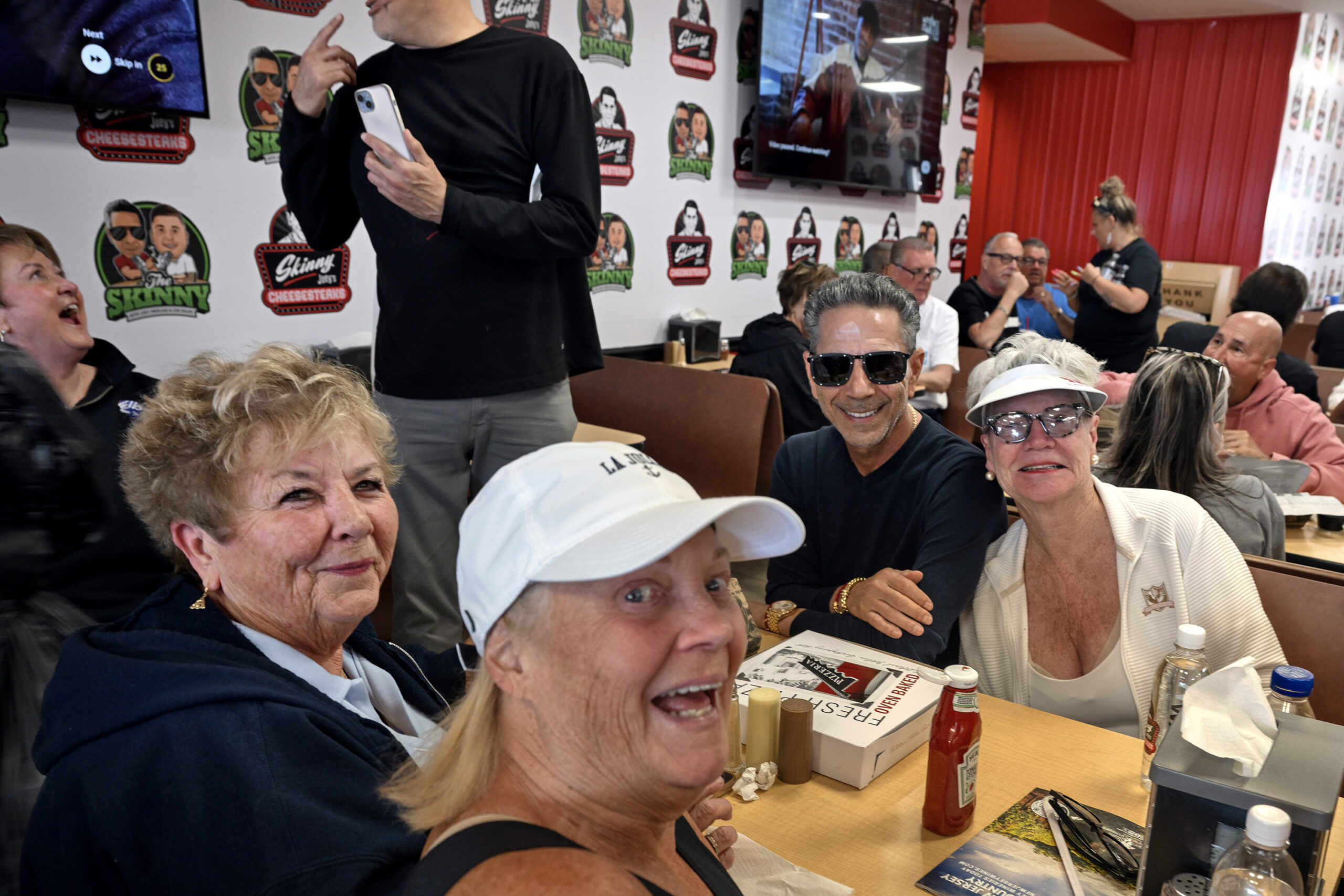
    Joseph “Skinny Joey” Merlino joining customers at Skinny Joey’s in Wildwood during its soft opening on June 2. They call themselves “the Schuylkill Girls” (from left): Julie Shelton, Cindy McCullough, and Terry Landy, all of whom now live in Wildwood.

    A ‘mob media’ moment

    George Anastasia, who covered organized crime for more than 30 years at The Inquirer and now teaches an organized-crime course at Rowan University, said Merlino’s new career fits a broader moment in mob media.

    Former wiseguys, associates, historians, and fans now gather in a true-crime subculture known online as “MobTube,” where the lore is packaged into YouTube shows, Patreon feeds, podcasts, clips, and merch.

    Merlino has lived the story that fuels the genre. One of Philadelphia’s most recognizable organized-crime figures, Merlino was convicted in 1990 for his role in a $352,000 armored truck robbery in 1987.

    In 2001, he and six co-defendants were tried on federal racketeering charges, including three counts of murder and two of attempted murder. Merlino was acquitted on those counts, but served about 12 years on other charges, including gambling and extortion. A supervised-release violation briefly returned him to prison in 2014, and a second major racketeering case ended in 2018 with a guilty plea to a single illegal-gambling charge after a mistrial. In a separate trial in 2004, he was acquitted of the 1996 killing of Joseph Sodano, an underling in North Jersey. Merlino completed federal supervision in 2021, but he’s been banned from New Jersey casinos since 1988 and from Pennsylvania casinos since a 2016 incident at the former SugarHouse Casino.

    And Merlino has made it no secret that he is different from many of the former figures who populate the MobTube genre. Unlike Sammy “The Bull” Gravano, John Alito, and Jimmy Calandra, Merlino never cooperated with prosecutors.

    “He saw guys who cooperated come back and become media sensations,” Anastasia said. “And I think he got [annoyed] that these are all guys who, in his view, violated the code, and now they’re making money on that old life. He did his time as a stand-up guy. ‘So [to heck with that] — I’m going to make money, too.’ And he created this brand.”

    Joseph “Skinny Joey” Merlino (left) and Joe Perri Jr. on the set of “The Skinny” podcast.

    Perri helped make that legible to a younger audience.

    “Lil Snuff is part sycophant and part guide,” Anastasia said. “He’s the one who, in a lot of ways, sets the flow. Joey is going to be Joey, but somebody has to keep bringing him back to the point.”

    The rise of Lil Snuff

    Before he was Merlino’s co-host, Perri was Lil Snuff.

    The nickname came from his father: As a 10-year-old, Joe Sr. turned around when a cousin was calling for a dog named Snuffy. Boom. He was Snuff. When his son was born at Methodist Hospital in 1992, Snuff became Big Snuff.

    As a teenager, Lil Snuff bussed tables at Stogie Joe’s, the Saloon, and Fitzwater Cafe. At 18, he joined the stagehands union. At 21, he got a job at Mall Chevrolet in Cherry Hill. The older salesmen had relationships and repeat customers. Perri’s mentor told him that he needed a lane.

    It was 2013, and social media was beginning to reshape promotion. Perri started making his own brassy, unscripted commercials. “Selling Chevys for less” became his tagline.

    He also made videos about gambling and food, his two passions. He was not famous, but he was visible in the South Philly-to-South Jersey social media corridor where restaurants, sports, betting, family, and neighborhood identity blur into one feed.

    At the same time, Perri said, he was abusing pills. In 2014, at 22, his parents found him a rehab center in South Florida. To make sure he got there safely, they called a family friend whose Italian restaurant in Boca Raton had recently opened:

    Joey Merlino.

    “My father grew up with his grandfather,” Merlino said, explaining the bond. “I grew up with his father. I’ve known him since he was born.”
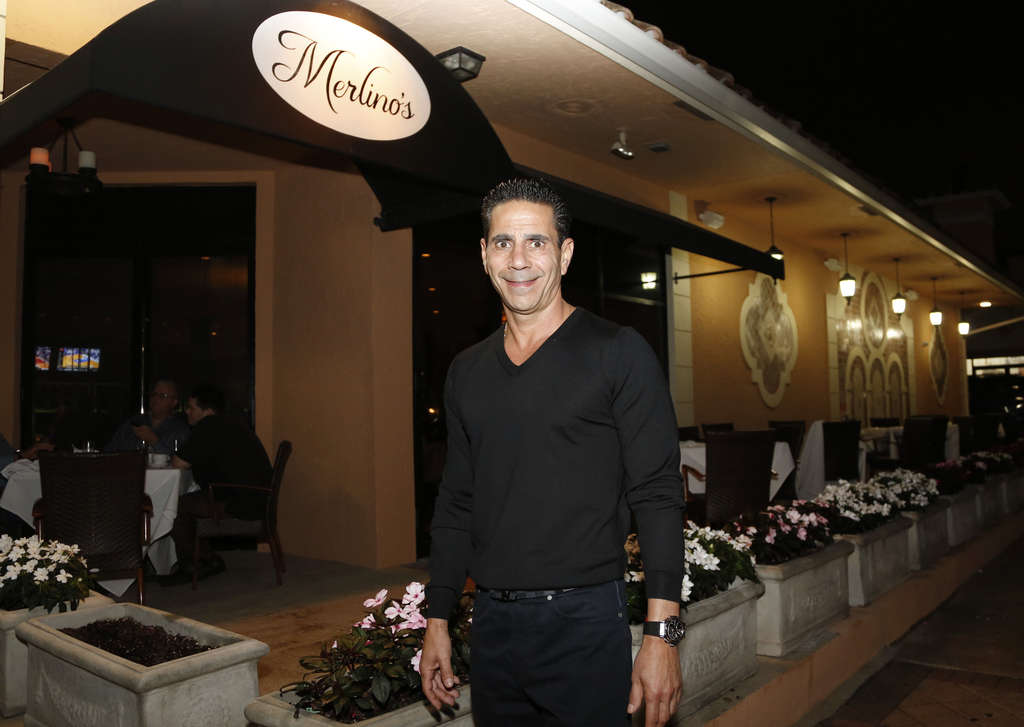
    Joseph “Skinny Joey” Merlino in 2014 at the Boca Raton restaurant bearing his name.

    Perri said it took several attempts before recovery stuck. He has been sober since Sept. 11, 2016. “I’m big with recovery,” he said. “That’s the main thing in my life. I put sobriety first and then everything after that.”

    Merlino’s — where Merlino was maitre d’ because his legal situation then precluded ownership — closed in 2016, just before the feds arrested Merlino at his home in Boca in the lead-up to his second racketeering case. “If I didn’t have this trouble, it would still be open,” Merlino said earlier this month.

    After Merlino attained freedom in July 2021, producers called with movie, television, and book deals. Merlino turned them all down. “Nothing seemed right,” Merlino said. Someone brought up the idea of a podcast.

    “I didn’t even know what that was,” Merlino said.
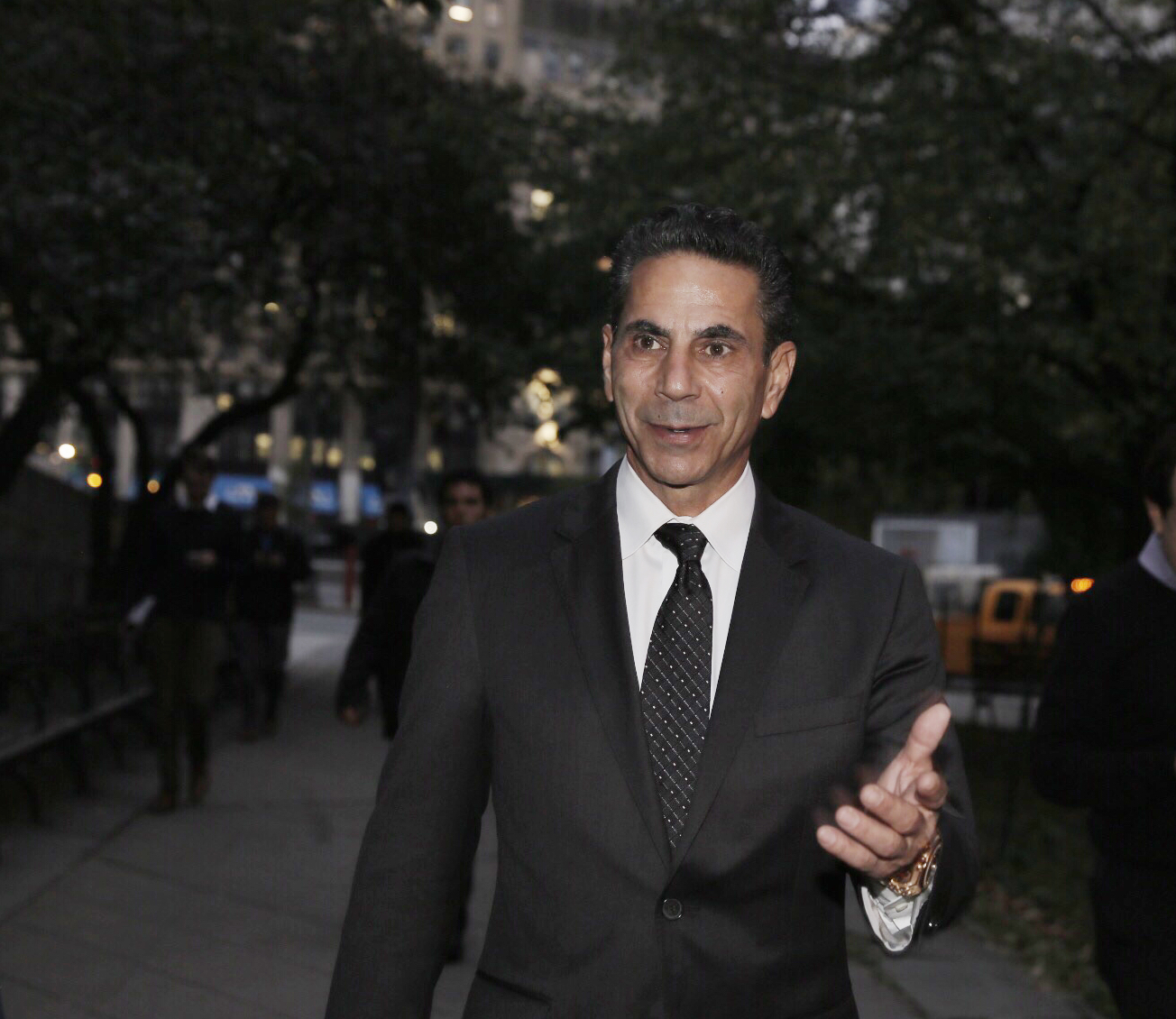
    Joseph “Skinny Joey” Merlino leaving the federal courthouse in Manhattan after being sentenced on Oct. 17, 2018.

    His friend Raymond “Wags” Wagner explained the concept and suggested a loose format built around food and sports betting. Actor Kevin Connolly of Entourage fame, who was involved early as a producer, told Merlino that he needed a co-host.

    “They said, ‘Who would you want?’” Perri said. “They were sending him people, and he was like, ‘I’m not doing nothing with these people.’”

    Then Ray Wags suggested Perri.

    “Joey was like, ‘100 percent. Get him on the phone,’” Perri said. “Kevin Connolly said, ‘Send me your videos.’ I sent him my videos, and he said, ‘You’re the guy.’ The rest was history.”

    The world of ‘MobTube’

    Merlino and Perri launched the video podcast in 2023. Viewers are not just watching Merlino talk about the old life. They see him bust Perri’s chops about eating too much and mock his parlays. They get gambling tips, watch them interview athletes and celebrities — all part of a South Philly generational comedy.

    Perri describes it in family terms. “My dad’s my dad, but he’s also my best friend, too,” Perri said. “We gamble together. We go out together. We have fun together. So they see me and Joey as that, and they can’t figure out how we mix so good.”

    “He’s good,” Merlino said. “I’m old, he’s young. He talks good, he’s funny. He’s a pain in the balls, but it’s a good fit.”

    They began The Skinny podcast on YouTube, but now focus more on Patreon, where the content is unfiltered. And better monetized. Perri says The Skinny has 1,600 Patreon subscribers paying $15.95 a month. He said their social-media pages combined average 30 million views a month.

    Perri’s wife, Danielle, handles bookings and schedules. “I produce,” Perri said. “I cut the clips. I do everything. It’s me and Joey. Two-man show.”

    A wider audience

    When they started, Perri was still selling cars at Mall Chevrolet. But the now-shuttered dealership got tired of people showing up hoping to see Merlino instead of test-driving a Suburban.

    Perri quit. The show grew. Merlino’s reinvention has coincided with a broader shift in the gambling world. Legal sportsbooks, now ubiquitous on television and online, have largely supplanted the corner bookmaker, turning an activity once associated with organized crime into a mainstream consumer business. Guests span sports, hip-hop, gambling, and entertainment, including Wallo267, Fat Joe, Ric Flair, and Bernard Hopkins.

    Each booking widened his audience, and Merlino was being absorbed into a broader celebrity ecosystem.

    Last October, Netflix released Mob War: Philadelphia vs. The Mafia, a docuseries revisiting the violent 1990s power struggle between John Stanfa and Merlino’s younger faction. It steered even more viewers to Merlino and Perri’s world.

    ‘Skinny Joey,’ wit’

    Then came the cheesesteaks.

    One night, Perri, Merlino, and friends were playing poker. Merlino wanted cheesesteaks. Perri said he’d make them.

    “He’s like, ‘You can’t make cheesesteaks,’” Perri said. “I said, ‘Are you nuts? I’ve been making them my whole life.’”

    Perri cooked some. “He was like, ‘This is the best f— cheesesteak ever,’” Perri said. “He said, ‘Let’s open up a cheesesteak place.’ I said, ‘All right. Call it Skinny Joey’s Cheesesteaks.’ And that was it.”

    The first shop opened in March 2025 at 3020 S. Broad St., near the sports complex. From the start, Skinny Joey’s was more than a sandwich shop. It was a set. The shop leaned into Merlino’s notoriety; the sandwiches are wrapped in a collage of newspaper articles about his past.
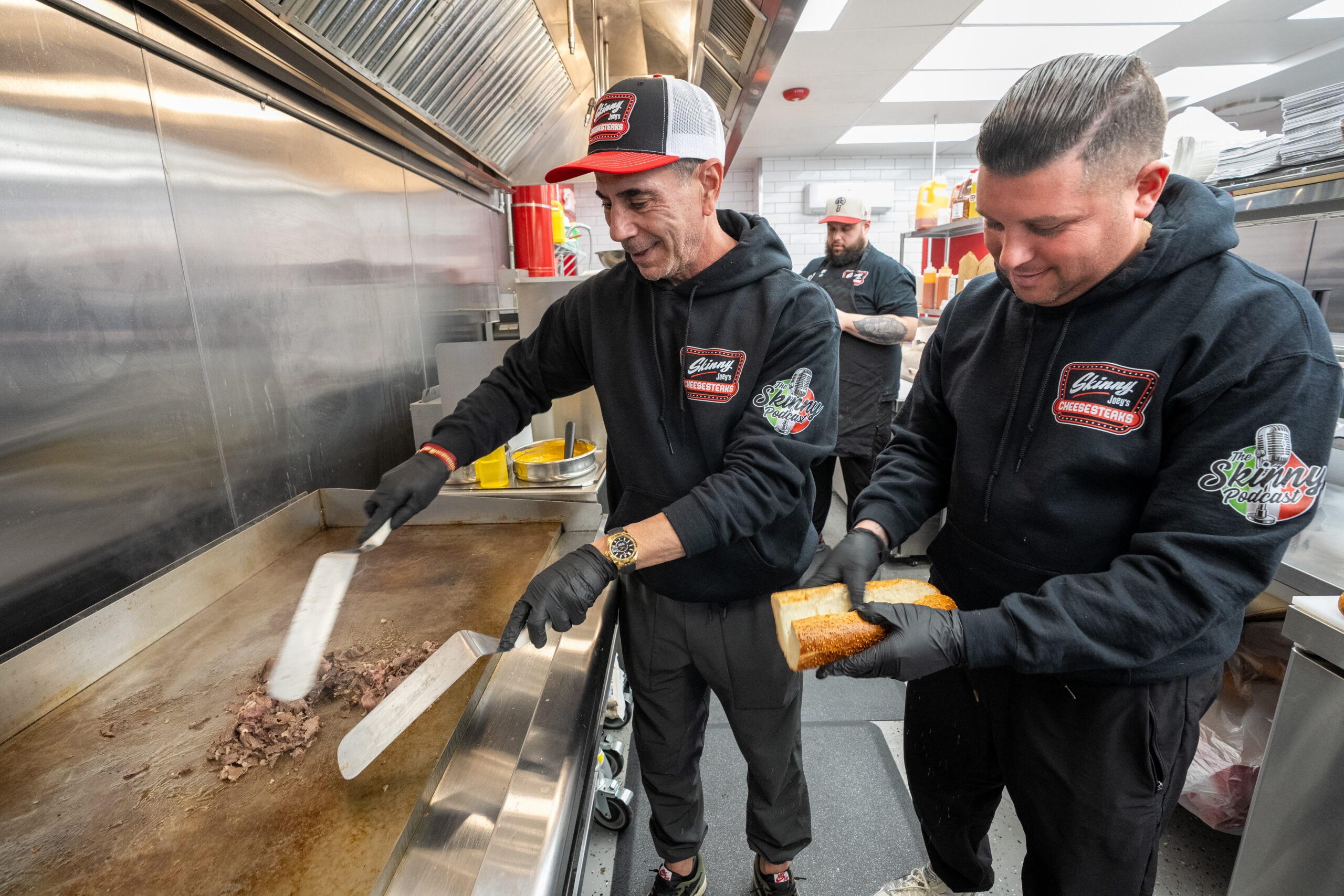
    Joseph “Skinny Joey” Merlino (left) working the grill beside Joe “Lil Snuff” Perri Jr. at the Skinny Joey’s Cheesesteaks in Philadelphia at its opening in March 2025.

    Celebrities showed up: Jason Kelce, Landon Dickerson, Mack Wilson. A customer eating a cheesesteak was good content. A recognizable person eating one on camera was better.

    The restaurant also became a magnet for the kind of drama that fuels digital engagement: online beef. Podcaster Gene Borrello, a former Bonnano crime family associate and Merlino antagonist, weighed in last year on an apparent feud between Skinny Joey’s camp and Frank Olivieri of Pat’s King of Steaks. Merlino and Perri had taken issue with a video posted by Olivieri — whose great-uncle invented the steak sandwich — in which he chided shops that chop the meat on the grill. Like most online food feuds, this seems to have subsided.

    Then came the deal for Wildwood, where Skinny Joey’s replaced Joe’s Pizzeria, which had been on the boardwalk at Magnolia Avenue for 15 years. There, Skinny Joey’s added pizza and stromboli, which are not sold at the South Philadelphia location.
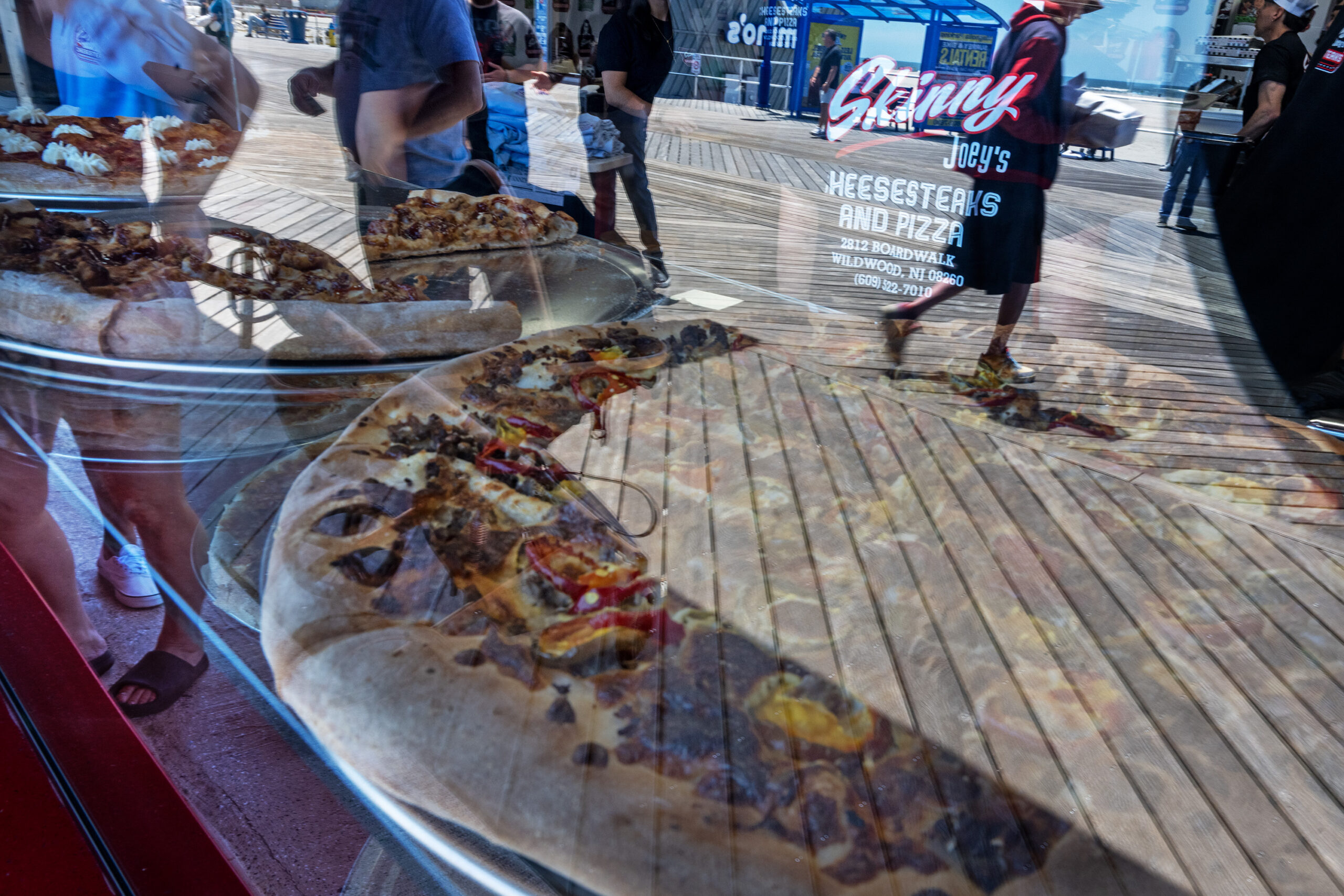
    Reflections in the pizza display case on the boardwalk at Skinny Joey’s Cheesesteaks & Pizza in Wildwood.

    The pizza recipe comes from Vito’s on Haddonfield Berlin Road in Cherry Hill, and the stromboli from Pizza Shack at 15th and Oregon in South Philadelphia, both owned by Skinny Joey’s business partners Stephen Casasanto and John Fioravanti, whom Merlino also described as longtime friends.

    More locations are planned. Perri said a Boothwyn shop is expected around Sept. 1, and several others are in the pipeline.

    Bypassing the gatekeepers

    Merlino is an extreme case of a recent phenomenon. People with complicated histories — criminal, scandalous, controversial, or simply overexposed — no longer need traditional gatekeepers to reintroduce themselves. They can speak directly to followers and monetize the attention.

    Perri is not a journalist, of course, or a publicist, exactly. He is not merely a manager, producer, or sidekick. He is something in between — a new kind of local media operator.

    He knows the scene, and how to make content feel unscripted even when the business behind it is deliberate. He is close enough to Merlino to bust his chops and deferential enough to preserve the hierarchy. He can translate Merlino to younger audiences without making him seem managed.

    Perri softens Merlino without sanding him down. Merlino still curses, rants, and mocks rivals. Anyone they disagree with is a “bedbug.”
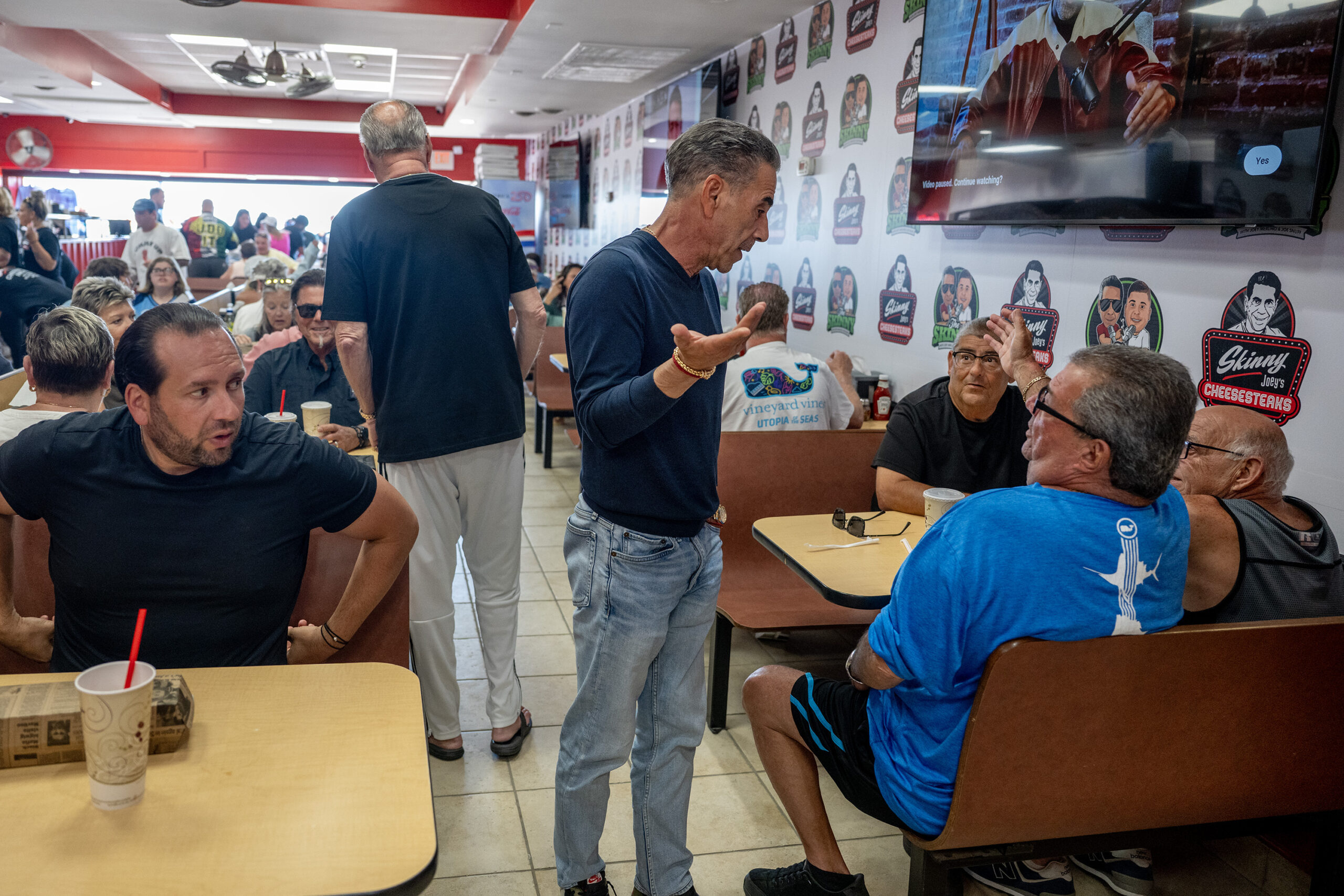
    Joseph “Skinny Joey” Merlino greets a table of customers at Skinny Joey’s Cheesesteaks & Pizza in Wildwood.

    “At the end of the day, Joey isn’t going to change who he is for anybody,” Perri said. “If he can’t talk the way he wants to talk, what’s the point?”

    That is part of the appeal and part of the discomfort. The audience knows Merlino’s history. They may see him as funny, defiant, loyal, misunderstood, or simply entertaining.

    “There’s a segment of the American population that has always been fascinated with the outlaw: Billy the Kid, Jesse James, Don Corleone, Al Capone,” Anastasia said. “What the internet has provided is: Here are these guys in their own words. Are they being genuine? I don’t know. You can say that about any personality. But here’s a look at them without any filter.”

    The filter used to be people like Anastasia.

    “I was, in a lot of ways, the middleman between the people who were interested in this and the guys who were doing it,” he said. “And people who are interested in this don’t need the middleman anymore. They just go online and listen to whoever they want to listen to.”

  • MaryJane Hackney, longtime first grade teacher and diehard Phillies fan, has died at 80

    MaryJane Hackney, longtime first grade teacher and diehard Phillies fan, has died at 80

    MaryJane Hackney, 80, of Gloucester Township, longtime first grade teacher at Loring-Flemming Elementary School, singer, theater devotee, and diehard Phillies fan, died Sunday, May 3, of Alzheimer’s disease at the Residence at Voorhees Senior Living Center.

    Inspired by her own favorite grade school teacher, Mrs. Hackney knew early in life that she wanted to be a teacher, too. She earned a bachelor’s degree in education, taught elementary school students in Pennsylvania for a few years, and spent nearly three decades, from 1981 to her retirement in 2010, working with thousands of first graders at Loring-Flemming in Gloucester Township.

    “She loved the energy first graders have,” said her husband and caregiver, David. “She taught fourth, fifth, and sixth grades at first. But after going to first grade, she said she would never go back.”

    Mrs. Hackney was so influential at school and at Loring-Flemming for so long that she taught children of her former students. Until a few years ago, she was routinely greeted around town by 40-year-olds who said: “Do you remember me?” Often, she did.

    “MaryJane was a force to be reckoned with,” a former colleague said in an online tribute. “When I arrived at Loring-Flemming with only one year of teaching experience, she took me under her wing and taught me so many important lessons about life and education.”

    Mrs. Hackney especially enjoyed teaching her students to read, and she told her husband that “one of her greatest joys was seeing the excitement of young children when they realized they could read.” The father of one of her former students told David Hackney recently that his son became an avid reader — and the father had to buy many books — thanks to Mrs. Hackney’s tutelage.

    “She was a constant source of good books and brought all of her best reads for us to share,” a former teaching colleague said in a tribute. “Everyone drifted to her classroom for support, information, or just to have a good laugh.”

    Affable, innovative, and energetic, Mrs. Hackney participated in projects for the local and state education associations, and raised funds to buy new school equipment. She was a champion of new early education programs and a popular guest on the local Emmy Award-winning public TV program “Classroom Close-up, NJ.”

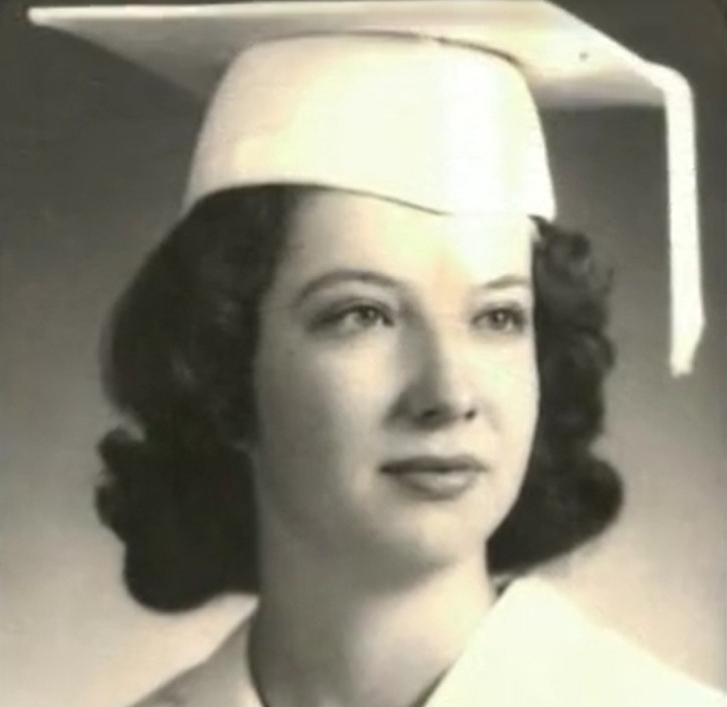
    Mrs. Hackney stands with her Grade 1 students at Loring-Flemming during the 1962-63 school year.

    She was funny and witty, a former colleague said, “and her ability to know what was going on in our school, district, county, and state was incredible.” Before Loring-Flemming, Mrs. Hackney taught for a few years at a Lutheran elementary school in Delaware County and Ralph Waldo Emerson Elementary School in Bucks County.

    Outside the classroom, Mrs. Hackney enjoyed singing, the theater, and the Phillies. She sang alto in choirs in high school and college, and attended nearly every performance of the Arden Theatre Co. in Philadelphia from 1996 until recently. Her husband worked several jobs over the years, and her absolute favorite, he said, was the one that had company tickets to Phillies games.

    “She even met the players,” he said.

    MaryJane Pierce was born June 22, 1945, in Abington. She grew up in Croydon, was so smart that she skipped third grade, and graduated from Delhaas High School in 1962.

    Mrs. Hackney studied education and American history in college.

    She studied education and American history at what is now Concordia University Chicago in Illinois, and later enjoyed traveling to historic sites with her husband. She knew David Hackney from high school, and they got serious during a double date to celebrate her 21st birthday in 1966.

    Eight weeks later, they got engaged. They married in 1967 during the famous Glassboro Summit Conference, had a daughter, Jennifer, and lived in Drexel Hill and Havertown before moving to Gloucester Township in 1974.

    Mrs. Hackney liked histories and mysteries, and was longtime friends with local author Lisa Scottoline. She knew the words to Elvis Presley songs, doted on her daughter and grandson, Joshua, and visited relatives in Ireland several times after retiring.

    She moved to the Residence at Voorhees a year ago. “I will forever remember her lessons, her delicious brownies, and helping hand that was used not just for her students but for the entire faculty and staff,” a former colleague said.

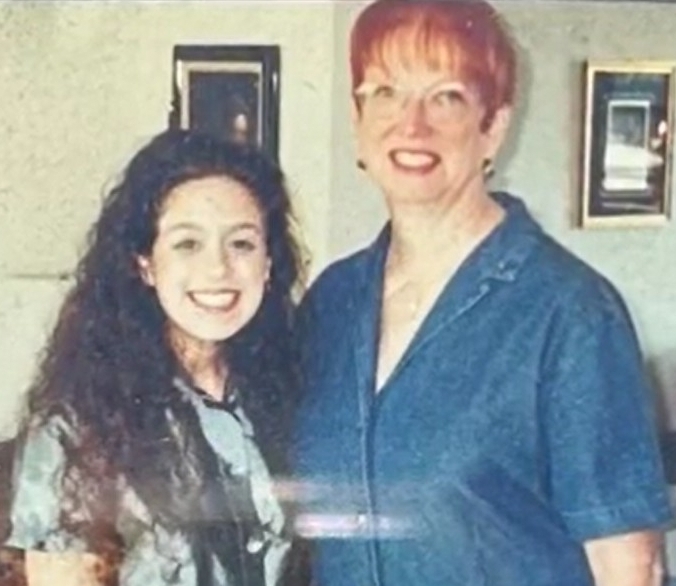
    Mrs. Hackney smiles with her daughter, Jennifer.

    Her husband said: “She was fascinated by people, curious about people. And if you started talking about teaching, she could go on for hours.”

    In addition to her husband, daughter, and grandson, Mrs. Hackney is survived by a sister, Deborah, and other relatives.

    Services were held earlier.

    Donations in her name may be made to the Alzheimer’s Association, 399 Market St., No. 250, Philadelphia, Pa. 19106.

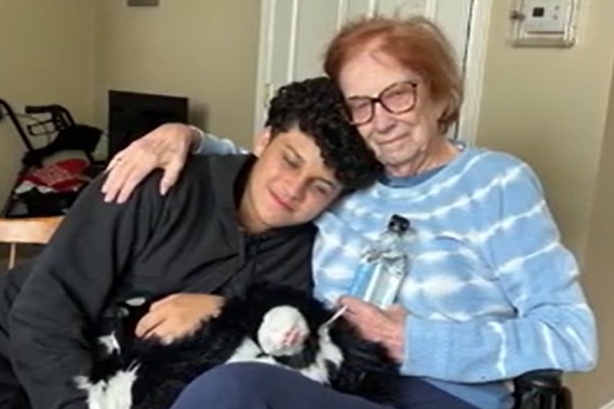
    Mrs. Hackney doted on her grandson, Joshua.
  • A Camden preschool teaching assistant is the first-ever from the city to win statewide award

    A Camden preschool teaching assistant is the first-ever from the city to win statewide award

    From the moment her rambunctious preschoolers arrive, instructional assistant Angela Feliciano tends to their every need, doling out lessons and discipline.

    Affectionately known as Miss Angie at the Riletta Twyne Cream Early Childhood Center in Camden, Feliciano has been a classroom assistant for nearly 30 years. She is also working to become a teacher soon.

    Feliciano has received accolades for her dedication and was recently recognized by the New Jersey Education Association as its Educational Support Professional of the Year for 2025-26.

    She is the first instructional assistant from Camden schools to get the recognition. She will represent New Jersey later this month at the National Education Association’s ESP conference in Anaheim, Calif.

    “She’s the first from Camden. It’s a proud moment,” said Camden Education Association president Pamela Clark, who represents about 1,050 teachers and support staff, including secretaries, clerks, bus drivers, custodians, and security officers.

    Clark nominated Feliciano, a childhood friend, for the award. Feliciano is well-liked by students and respected by parents in the community, and puts in extra effort to encourage learning, she said.

    Nominees were considered based on professional practices, advocacy and association involvement, community engagement, personal achievement, and how well they advance the image of support professionals.

    “I’m representing Camden. Not just bad things happen in Camden,” Feliciano said.

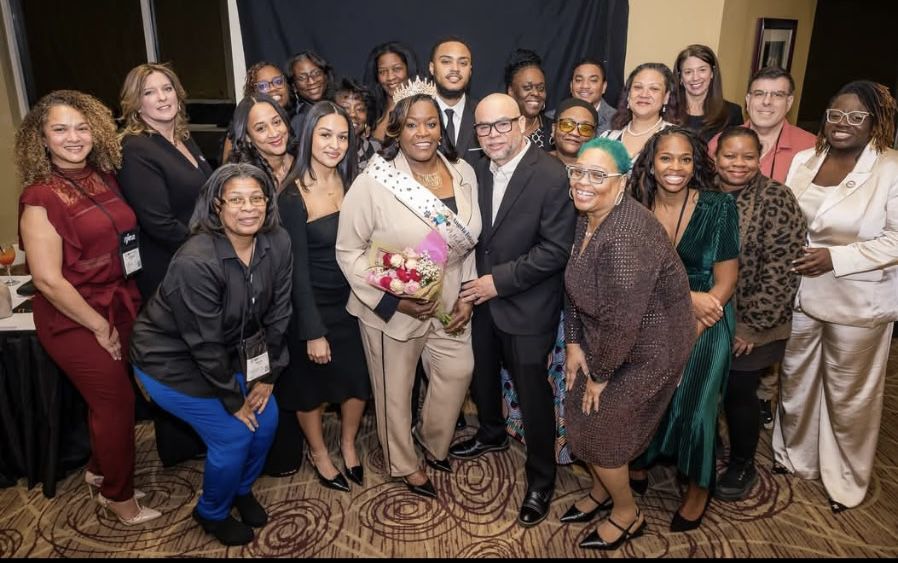
    Angela Felicano (center, third from left) celebrates her award with Camden Education Association members.

    Principal Medinah Dyer credited Feliciano with boosting preschool enrollment at Cream from about 120 students to 350 in three to four years. Feliciano attended weekend events to encourage parents to enroll their children.

    Feliciano purchases toiletries and items for students in need, and has been an advocate for children who experienced trauma or have behavioral issues, Dyer said. She is the first to arrive at school, and the last to leave, she said.

    “She is a role model for both students and staff, and her contributions have made our school a better place for everyone,” Dyer wrote in her nomination letter.

    Teaching assistant Angela Feliciano with students in the pre-K classroom of teacher Carey Hiatt at the Riletta Twyne Cream Early Childhood Center in Camden last month.

    During a recent morning at Cream, located in the city’s Centerville section, Feliciano and teacher Carrie Hiatt were in full swing with 15 preschoolers. The students are 3 to 5 years old.

    Feliciano and Hiatt crisscrossed the room, working with small groups of students for music instruction and reading. Feliciano sat on the floor with her charges or in tiny chairs to talk with them at eye level.

    In one corner, Feliciano played a game with a boy, pretending it was her birthday.

    “How old are you?” he asked.

    “I’m 7 years old,” she replied with a smile.

    Teaching assistant Angela Feliciano “spies” students as they clean up in a pre-K classroom at the Riletta Twyne Cream Early Childhood Center in Camden last month.

    Feliciano moved to different stations, engaging in dramatic play with a student, donning miniature clothes. At one point, she used a puppet for a letter exercise.

    “I just come to work and do what I do,” Feliciano said. “They’re my kids from 8:40 a.m. to 3 o’clock.”

    The entire class stood in place for a lively round of “Head, shoulders, knees and toes,” an exercise song that had the giggling preschoolers and Feliciano huffing and puffing.

    “That was so hard,” a preschooler gasped.

    The preschoolers spend the entire day in the classroom with Feliciano and Hiatt. The pair served lunch — chicken, rice, and plantains — while jazz played softly in the background.

    “She goes out of her way to make this place special for the kids,” Hiatt said. “She is excellent, an amazing teammate.”

    Feliciano was born and raised in Camden. After graduating from Camden County Technical School, she worked for two years as a data processor.

    It was always her dream to become a teacher, and she got a chance in 1989 when she joined the district as a paraprofessional. She has worked with older children, but enjoys the little children the best.

    “I love to see them grow,” she said. “I love when they grasp things, and they look at me and smile.”

    Feliciano, 53, now lives in Pennsauken and has acquired the credentials to become a teacher, earning bachelor’s and master’s degrees from Wilmington University.

    She still needs to pass the New Jersey Praxis exam to obtain her teaching certification, which has been a challenge. She has taken the exam three times and failed — the last time by a single point.

    Feliciano plans to take the exam again this spring. She has been studying vigorously and getting coaching from Hiatt. She hopes to inspire other paraprofessionals.

    “We are the core of the building. If it wasn’t for us, teachers wouldn’t be able to teach,” Feliciano said.

    Hiatt said Feliciano has already demonstrated an ability to prepare lessons, manage the classroom, and reach students. She believes she will be a great teacher, but would miss having her in her classroom.

    Married and the mother of two adult sons, Feliciano said she wants to remain in the classroom for many years, hopefully as a teacher.

    “I’m not ready to go. I don’t want to leave the babies yet,” she said.

    Teaching assistant Angela Feliciano helps students eat lunch in her pre-K classroom at the Riletta Twyne Cream Early Childhood Center in Camden one day last month.
  • Boyd Sands, Hall of Fame educator and retired executive director of the New Jersey State Interscholastic Athletic Association, has died at 88

    Boyd Sands, Hall of Fame educator and retired executive director of the New Jersey State Interscholastic Athletic Association, has died at 88

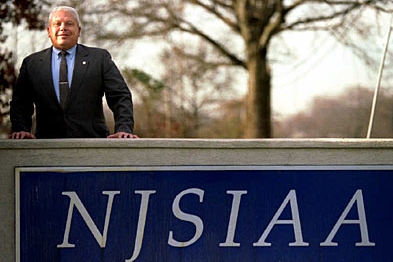
    Boyd Sands, 88, formerly of Glassboro, Gloucester County, retired teacher, coach, principal, and superintendent of the Delsea Regional School District, and Hall of Fame former executive director of the New Jersey State Interscholastic Athletic Association, died Saturday, Jan. 17, of complications from a stroke at Cape Canaveral Hospital in Florida.

    An All-Star football player in high school and college, and a longtime baseball umpire and basketball referee, Mr. Sands directed the NJSIAA from 1993 to his retirement in 2006. He and the association’s executive committee organized hundreds of statewide championship playoff tournaments, hired thousands of game officials, and enforced eligibility and sportsmanship rules for high school athletes in more than 30 sports at more than 400 public and private high schools.

    He was an expert on all kinds of rules and a champion of the state’s expanded football playoff format and more programs for girls. He oversaw ever-changing conference alignments and supervised the association’s multimillion dollar budget.

    He attracted dozens of corporate sponsorships to fund new initiatives regarding improved officiating, violence at sports events, and drug education. He forged working relationships with the state’s Sports and Exposition Authority, Boardwalk Hall in Atlantic City, the NHL’s New Jersey Devils, and other organizations.

    Overall, Mr. Sands served more than three decades as a member of the NJSIAA advisory committee and executive committee, and executive director. In an online tribute, former colleagues there called him “a respected leader in education and sport. A consummate professional.”

    Steve Timko, his successor as executive director, told the Times of Trenton in 2005: “He has taken the association to the next level.” In 2003, Mr. Sands told the Record of Hackensack: “I really just enjoy high school athletics.”

    He joined Delsea in 1966 as assistant principal, was promoted to principal, and served as district superintendent from 1971 to 1994. Before school, he was known to greet students as they exited the buses in the morning. After school, he handed out programs at events, prowled the sidelines at Delsea, and officiated games at other high schools.

    He taught social studies and coached football for six years at two high schools in North Jersey before going to Delsea. He oversaw the building of the district’s middle school in the 1970s, and colleagues named the entrance road leading to the new building after him.

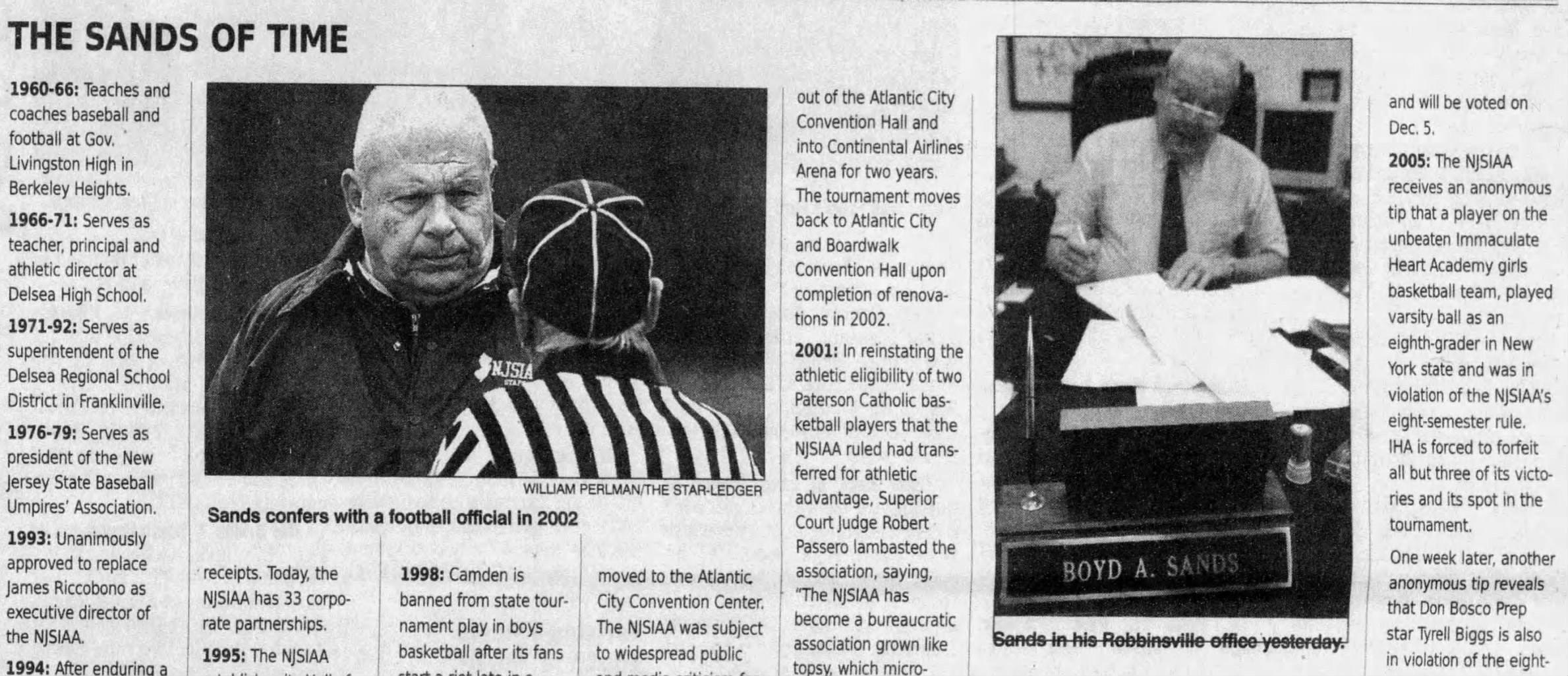
    The Star-Ledger of Newark featured Mr. Sands when he announced his retirement from the NJSIAA in 2005.

    “His influence lives on in the students he inspired, the educators he mentored, and the community he helped shape,” Delsea superintendent Fran Ciociola said in a tribute.

    Mr. Sands was onetime president of the Camden County chapter of the New Jersey Baseball Umpires Association. He won achievement awards from the NJSIAA, the National Federation of Interscholastic Athletic Officials, and the Union County Interscholastic Athletic Conference.

    He was an executive committee member of the National Federation of State High School Associations and lifetime member of the International Association of Approved Basketball Officials. “His spirit, kindness, and dedication will be remembered always,” colleagues at the IAABO said in a tribute.

    Mr. Sands was inducted into the Gloucester County Sports Hall of Fame in 1989, the NJSIAA Hall of Fame in 2007, and the South Jersey Baseball Hall of Fame in 2009. He attended many continuing education classes and earned certifications at Rowan, Rutgers, and Seton Hall Universities, and elsewhere.

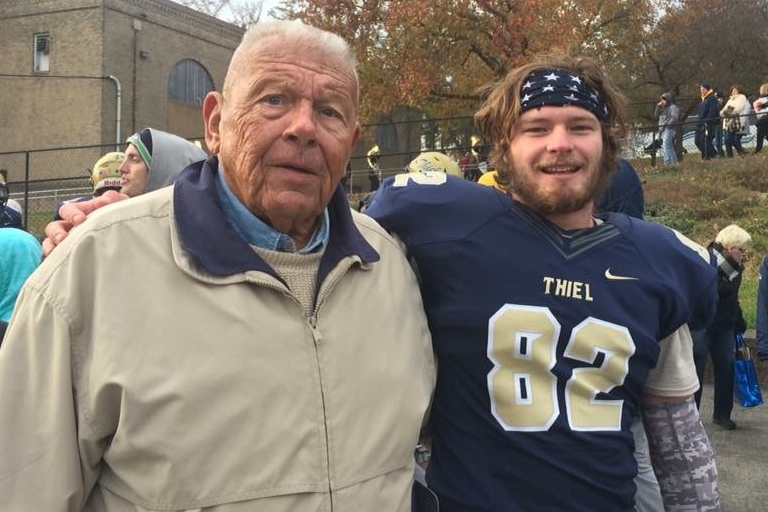
    Mr. Sands liked nothing more than attending a football game.

    He never changed his signature flattop crew cut. “Bear of a man, great guy,” a former student said in a Facebook tribute. A friend said online: “Boyd was a wonderful man and terrific mentor.”

    Boyd August Sands was born Feb. 16, 1937, in Newark, N.J. He played football and basketball in high school, and earned a bachelor’s degree in education at Colby College in Maine and a master’s degree in administration at what is now Kean University in New Jersey.

    He met Frances Curto at a New Year’s Eve party, and they married in 1958. They lived in North Jersey, moved to Glassboro when he worked at Delsea, and had daughters Susan, Nancy, Karen, and Lori, and a son, Michael. His son died earlier.

    Mr. Sands studied history and enjoyed road trips to family reunions in Florida and stops at historical sites along the way. He loved his dogs, followed the Eagles and Phillies closely, and was sure to be greeted by former students and old colleagues whenever the family went out.

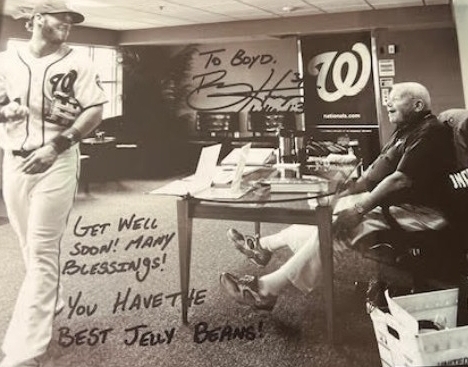
    Mr. Sands (right) became friendly with baseball star Bryce Harper when he worked at the Washington Nationals’ spring training complex in Florida.

    He and his wife moved to Cape Canaveral in 2006, and he helped run spring training for the Washington Nationals baseball team and worked security for a cruise line. He had bypass surgery in 2015.

    “My father was a man who found joy in two of life’s greatest gifts: family and sports,” said his daughter Nancy. “My dad was a man who always showed up and pushed us hard to do our best.”

    His daughter Susan said: “He saw everyone as a person.”

    Nearly everyone has a memorable umpiring story about Mr. Sands, like the time he got drilled by a line drive down the first base line. In 1994, he told The Inquirer that he enjoyed officiating high school baseball and basketball games more than anything.

    “It was my hobby and outlet,” he said. “I tried golf, and I figured I’d rather get hit by a hard ball.”

    Mr. Sands and his wife, Frances, married in 1958.

    In addition to his wife and daughters, Mr. Sands is survived by 16 grandchildren, 28 great-grandchildren, a brother, and other relatives. A brother died earlier.

    Services were held earlier.

    Donations in his name may be made to the Brevard County Sheriff’s Office Animal Care Center, 5100 W. Eau Gallie Blvd., Melbourne, Fla. 32934; and the Church of Our Saviour, 5301 N. Atlantic Ave., Cocoa Beach, Fla. 32931.

    Mr. Sands enjoyed time with his dogs.
  • Philly schools will remain virtual on Tuesday; other Pa. and N.J. districts are a mixed bag

    Philly schools will remain virtual on Tuesday; other Pa. and N.J. districts are a mixed bag

    School districts around the region made varying calls for how they’re handling classes Tuesday as the region continues to dig out from the massive snowstorm that dumped more than a foot of snow in many places — with some closed altogether, others fully open, and others open, but delayed.

    The Philadelphia School District opted for another day of virtual instruction.

    Superintendent Tony B. Watlington Sr. has said the nation’s eighth-largest school system favors in-person instruction, but places student and staff safety as its highest priority.

    In Upper Darby, Delaware County, Superintendent Dan McGarry made the call to bring students in on time.

    “The district transportation team and facilities team have been working hard all day to clear snow from our facilities for in-person instruction,” McGarry wrote in a message to families and staff. “We have been in communication with the township as well, and I want to thank them for their hard work getting roads clear for school tomorrow.”

    Districts including Council Rock and Pennridge, both in Bucks County, called two hour delays.

    In Montgomery County, Cheltenham and Lower Merion schools both announced a two-hour delay.

    “Buses are expected to arrive at bus stops two hours after their normal pickup times; however, please be patient as snow and ice on some streets may cause additional delays,” Lower Merion spokesperson Amy Buckman said in a message to families Monday evening.

    Cherry Hill and Moorestown, in Camden County, will also hold classes with a two-hour delay.

    Renewed debate over virtual instruction in New Jersey

    And while some Pennsylvania districts pivot to virtual instruction when significant snow falls, that’s not possible in New Jersey, where state law prevents it.

    A handful of New Jersey districts opted for total closures. Lenape Regional, Evesham, and Medford schools, all in Burlington County, cancelled classes altogether.

    Winslow schools in Camden County will remain closed Tuesday for a second consecutive day, said interim Superintendent Mark Pease. The district was shut down for three days during the last storm.

    Pease said the district would use two days from its spring in April to make up the missed days. The break will be cut to three days, he said.

    “If we get another storm, we will be extending the school year,” Pease said. “Let’s hope this is it for the winter.”

    The snow storm renewed calls among some New Jersey educators to the state to allow virtual and hybrid instruction to avoid closing schools due to inclement weather.

    In a social media post, Camden Education Association President Pam Clark said she was asking Gov. Mikie Shirrell to revisit the virtual option for traditional public schools. She used the hashtag “not fair.”

    New Jersey allowed virtual and hybrid instruction when the pandemic shut down schools.

    However, state law now strictly limits remote learning, according to the state Department of Education. Districts must meet a state requirement of 180 days.

    School districts may seek approval for virtual learning for school closures lasting more than three consecutive days because of a declared state of emergency or a declared public health emergency.

    There has been pushback against virtual learning because of concerns about learning loss suffered during the pandemic. There also are concerns that some schools don’t have enough Chromebooks or devices for students to log on.

    Timothy Purnell, executive director of the New Jersey School Boards Association, said districts should have the flexibility to pivot when circumstances warrant such as a snow day.

    Districts have invested in technology and training to successfully implement virtual instruction, he said.

    “Limiting virtual instruction days exclusively to public health emergencies is yesterday’s logic,“ Purnell said in a statement.

  • Ben Vaughn does the impossible task of explaining the Geator to a non-Philly outsider in his new podcast

    Ben Vaughn does the impossible task of explaining the Geator to a non-Philly outsider in his new podcast

    Ben Vaughn is a man of many moods, and an equal number of career twists.

    The Camden County native and radio host’s hourlong show The Many Moods of Ben Vaughn — “broadcasting weekly from the Relay Shack, from parts unknown” — airs Saturdays at 6 p.m. on WXPN-FM (88.5). It’s also heard on 19 other stations in the U.S. and one in France.

    The singer-guitarist has released 20 albums, starting with his 1986 debut, also called The Many Moods of Ben Vaughn, and including one, 1997’s Rambler ’65, recorded entirely in his car.

    His collaborative album with Providence, R.I.-based band and Ben Vaughn fanboys Deer Tick is due in October, and his first U.S. tour in nearly three decades will follow. (He plays regularly in Spain, France, and Italy.)

    In the 1990s, the Mount Ephraim-native moved to Los Angeles and worked as a music composer for the hit TV sitcoms 3rd Rock From the Sun and That ‘70s Show. His credits as a record producer include legends and eccentrics such as Charlie Feathers, Alex Chilton, Los Straitjackets, Nancy Sinatra, and New Hope duo Ween.

    Along the way, he’s accumulated a lifetime of stories, from his encounter with Billy Joel’s hippie band Attila in Philly head shop 13th Street Conspiracy to playing harmonica with Lynyrd Skynyrd at the Spectrum in the 1980s.

    Those tales — an encounter with composer Lalo Schifrin, producing soul music great Arthur Alexander, or how Duane Eddy’s guitar changed his life — are now collected in Straight From the Hat, Vaughn’s new podcast with Sun Records marketing and social media manager Laura Pochodylo.

    Ben Vaughn’s new podcast with Laura Pochodylo is “Straight From the Hat.”

    This week’s episode of the pod, which debuted in January with episodes released every other Thursday, concerns a subject dear to Vaughn’s heart. Philly DJ Jerry Blavat — the Geator with the Heater, the Boss with the Hot Sauce — was Vaughn’s “mentor without knowing it” for years until the two became close friends and then collaborators late in the life of Blavat, who died in 2023 at 82.

    Straight From the Hat took shape because Sonny Bono brought Vaughn and Pochodylo together.

    In 2022, Vaughn was digging into the Sun vaults to curate a compilation for the storied label’s 70th anniversary. With songs by Feathers, Harmonica Frank, and the Prisonaires, it shows the flair for unearthing musical gems that Vaughn displays in the 552 Many Moods episodes that have aired since launching on Valentine’s Day 2009. (Over 300 are available on podcast platforms.)

    Speaking from Many Moods headquarters near Joshua Tree in California’s Mojave Desert, Vaughn says that “even though she’s a lot younger than me” — he’s 70, Pochodylo is 33 — “her record collection is almost identical to mine.”

    They bonded over “non-ironic appreciation” of Bono, the late singer, actor, and politician famed for his work with his wife Cher. Bono also wrote songs recorded by Sam Cooke, Jackie DeShannon, and the Rolling Stones. Pochodylo calls herself “a Sonny Bono evangelist.”

    Vaughn told Pochodylo stories about musicians in Sun Records’ collection who he had worked with.

    “And then we came up with the idea to write all these names down and throw them in a hat. She picks one out, and I say whatever comes to mind. No preparation, no planning.”

    In this week’s episode, Pochodylo pulls out Blavat’s name, and Vaughn has plenty to say about the Philadelphia life force he first felt at age 10 in 1965, when he tuned into Blavat’s afternoon TV show The Discophonic Scene.

    “I started going to these dances he would put on at gymnasiums and Knights of Columbus Halls,” Vaughn said. “The first song I ever played lead guitar on in front of an audience was ‘Sheba’ by Johnny and the Hurricanes because the Geator was using it as a theme song.”

    Jerry “The Geator” Blavat with Ben Vaughn in 1997.

    Vaughn played drums in his first band when he was 12, and got a South Jersey musical education at Blavat package shows seeing vocal groups like the Dells and Delfonics.

    A Four Tops performance at the Steel Pier in Atlantic City “spoiled me,” he said, “because the Four Tops were one of the most professional acts in the history of entertainment. So everything was perfect.

    “And then I saw Canned Heat [at the Pier], and I remember they were very high, and couldn’t keep their guitars in tune because of the salt air. I remember thinking: ‘There are several ways to go as an entertainer, and this is one way I will never go!’”

    The free-form nature of The Many Moods, which last week featured songs under two minutes by artists like Francoise Hardy, Bob Dylan, and Nina Simone, was shaped not by Blavat but by early 1970s Philly DJs like David Dye and Michael Tearson on WMMR-FM (93.3).

    Ben Vaughn in Philadelphia in the summer of 1970.

    But the unstoppable self-confidence and business acumen of Blavat, who Vaughn got to know in the 1980s, shaped Vaughn’s career.

    “There was a way the rest of the world did things, and a Geator way,” Vaughn said. “He told me I should own my own show, which I do.” Blavat emphasized self-belief. Whatever Vaughn did would have value, as long as it was truly unique.

    “The Geator would buy time on the radio, and sell ads himself. I would drive around with him to pizzerias and shoe stores and car dealerships and watch him. And then we’d drive away with a car with his name on the side. The Geatormobile!”

    Philly musicians in future Straight episodes include “Mashed Potato Time” singer Dee Dee Sharp and rock and roller Charlie Gracie, who befriended Vaughn in the 1970s at the Mount Ephraim club Capriotti’s, where Gracie was nightly entertainment and Vaughn a dishwasher.

    Vaughn’s own stature as a Philadelphia institution was underscored when he was contacted by the Delco-set HBO series Task. They asked him to record a Many Moods snippet for the show. In one scene, Tom Pelphrey’s character, Robbie Prendergast, rolls a joint, listening to Vaughn on air pods.

    “I watched it and you can hardly hear me. But I show up in the close captions and they spell my name right. So that’s a victory.”

    In 2021, Vaughn helped Blavat move out of his office on East Market Street and found unopened letters from 1964 with song requests to play on Blavat’s WCAN-AM (1320) radio show. Blavat and Vaughn opened them on air on XPN in 2021 in a show called The Lost Dedications.

    “The Geator created something that never existed before,” Vaughn said. “Geatordelphia! It was a subculture. The way he talked, the kind of records he played, the way he had of communicating with the audience.

    “He connected so many human beings, and made everybody feel good. He made us all feel like we were better looking than we really were. Only South Philly could have produced a guy like him. It didn’t make sense to anyone outside of a 90-mile radius. The Jersey Shore, Trenton, Wilmington, that’s it.

    “That was the great thing about doing the podcast. Laura is originally from Detroit, and she didn’t know anything about the Geator. And trying to explain the Geator to an outsider is an amusing thing.”

    “Straight From the Hat” episodes are at straightfromthehat.com and on all podcast platforms.

  • 1,100 dead or sick geese in N.J. spark bird flu warning, prompt lake’s closure

    1,100 dead or sick geese in N.J. spark bird flu warning, prompt lake’s closure

    At least 1,100 dead or sick birds, mostly Canada geese, have been reported across New Jersey in an outbreak that started on Valentine’s Day, according to state officials.

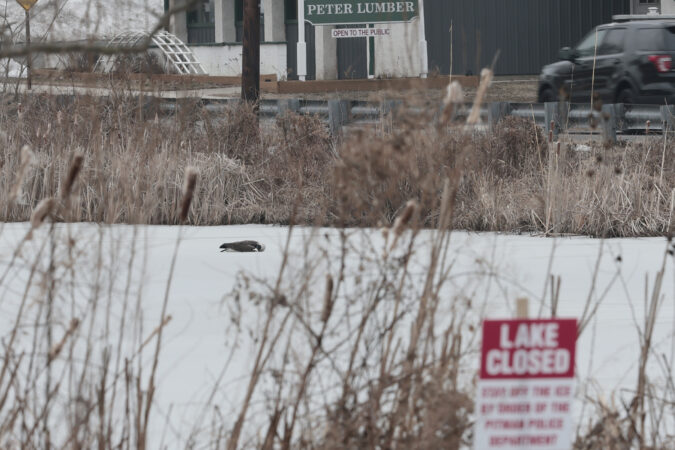
    At least 50 geese have died at Alcyon Lake in Pitman, Gloucester County. Officials have closed the lake and the adjoining Betty Park out of precaution.

    The fish and wildlife division within the New Jersey Department of Environmental Protection (DEP) and the U.S. Department of Agriculture are tracking them as suspected cases of highly pathogenic avian influenza (H5N1), or bird flu.

    Bird flu is not new. But it began to spread in the U.S. in January 2022 and has infected wild and domestic birds in every state.

    While bird flu can infect humans, the U.S. Centers for Disease Control and Prevention has said it is primarily a threat to animals and poses little risk to the public.

    State officials say large numbers of dead geese may be concentrated in areas where birds gather to look for open water as ice melts. They said that the 1,100 dead or sick wild birds were reported between Saturday and Monday.

    Where have dead geese been found?

    The DEP says it has received reports of dead Canada geese in South Jersey, including in Hainesport, Burlington County; Sicklerville, Camden County; and Pitman.

    Annmarie Ruiz, Gloucester County’s health officer, said the dead geese were noticed in Pitman on Tuesday. She said that there were probably more than 50 at Alcyon Lake, but that there were reports of dead geese elsewhere in the municipality.

    “Right now, we have to presume that it is bird flu based on the signs the birds were exhibiting,” Ruiz said.

    The New Jersey Department of Agriculture took some of the birds for testing. The results could take weeks, she said.

    “Right now, we’re just erring on the side of caution,” Ruiz said.

    Ruiz said workers use face shields and gloves when handling the birds, which are triple-bagged before being disposed.

    She said people can report sick or dead wild birds to Gloucester County animal control at 856-881-2828 or the DEP at 877-927-6337.

    A lifeless bird lays on the ice at Alcyon Lake in Pitman, N.J. on Wednesday, Feb. 18, 2026. Two adjacent parks, Betty Park (in background) and Alcyon Park (not in photo) are closed as a result of the mysterious birds deaths.

    Caryelle Lasher, Camden County’s health officer, said there have been only a small number of reports of dead birds in the county.

    Those were concentrated in the lake off Mullen Drive in the Sicklerville section of Gloucester Township, she said.

    Overall, however, the county has not seen a spike in reports, she said.

    Ruiz and Lasher — as well as state officials — stress that people should not touch sick or dead wildlife of any kind. And they should keep pets away.

    Even though the risk is low, the potential for human infection exists.

    The DEP also has an online form to report sick or dead birds.

    H5N1 is a respiratory bird disease caused by influenza A viruses. Wild birds, such as ducks, gulls, and shorebirds, can carry and spread these viruses but may show no signs of illness, according to the DEP.

    The disease can kill domestic poultry such as chickens. Typical symptoms include diarrhea, nasal discharge, coughing, sneezing, and incoordination.

    It continues to infect not only birds, but also mammals.

    Tips to prevent infection:

    • Do not touch sick or dying animals, or bring them into your home.
    • Keep pets away from them, as well as away from droppings.
    • Wash hands frequently if you are near wildlife.
    • Do not eat undercooked eggs, poultry, or beef.
    • Prevent cross-contamination between cooked and raw food.
    • Avoid unpasteurized milk or cheese.
  • South Jersey guy becomes the face of ICE resistance | Will Bunch Newsletter

    I was cranking out the newsletter in Tuesday’s predawn darkness when we learned that the Rev. Jesse Jackson Sr., who’d been our greatest living bridge to the civil rights heroics of the 1960s and ‘70s, had died at age 84. Covering his groundbreaking 1984 campaign as a cub reporter at the Birmingham News is still a career highlight four-decades-plus later — a memory that was reinforced recently listening to Abby Phillip’s excellent new book on Jackson. He leaves us right when his victories for African Americans in arenas such as corporate hiring and college admissions are under attack, and it challenges us to fight to preserve them. RIP to an American original.

    If someone forwarded you this email, sign up for free here.

    How ICE protest by ‘an average Joe’ from Haddon Heights went viral

    “I never want to see a child run away from our own government again,” said this self-described first-time protester, Joseph Zobel from Haddon Heights, at a rally in Lindenwold, N.J., the day after children ran from a school bus stop after ICE appeared to conduct an operation in the area.

    Last Friday, “an average Joe who grew up in Haddon Heights” named Joseph Zobel was at work when he saw a viral video from the nearby South Jersey town of Lindenwold that shocked the nation, and shocked him.

    The clip from a Ring doorbell camera showed a gaggle of fourth and fifth graders running in a panic, screaming, “ICE! ICE!” as masked federal immigration agents had approached their morning bus stop the day before.

    “I just thought, ‘How can that be happening here in the United States?’” Zobel told me Monday in his first media interview, conducted by email. When he got home from work, he saw online that the group Cooper River Indivisible was holding an “ICE Out” protest at the Lindenwold municipal building at 4 p.m.

    He looked at the clock. It was 3:58.

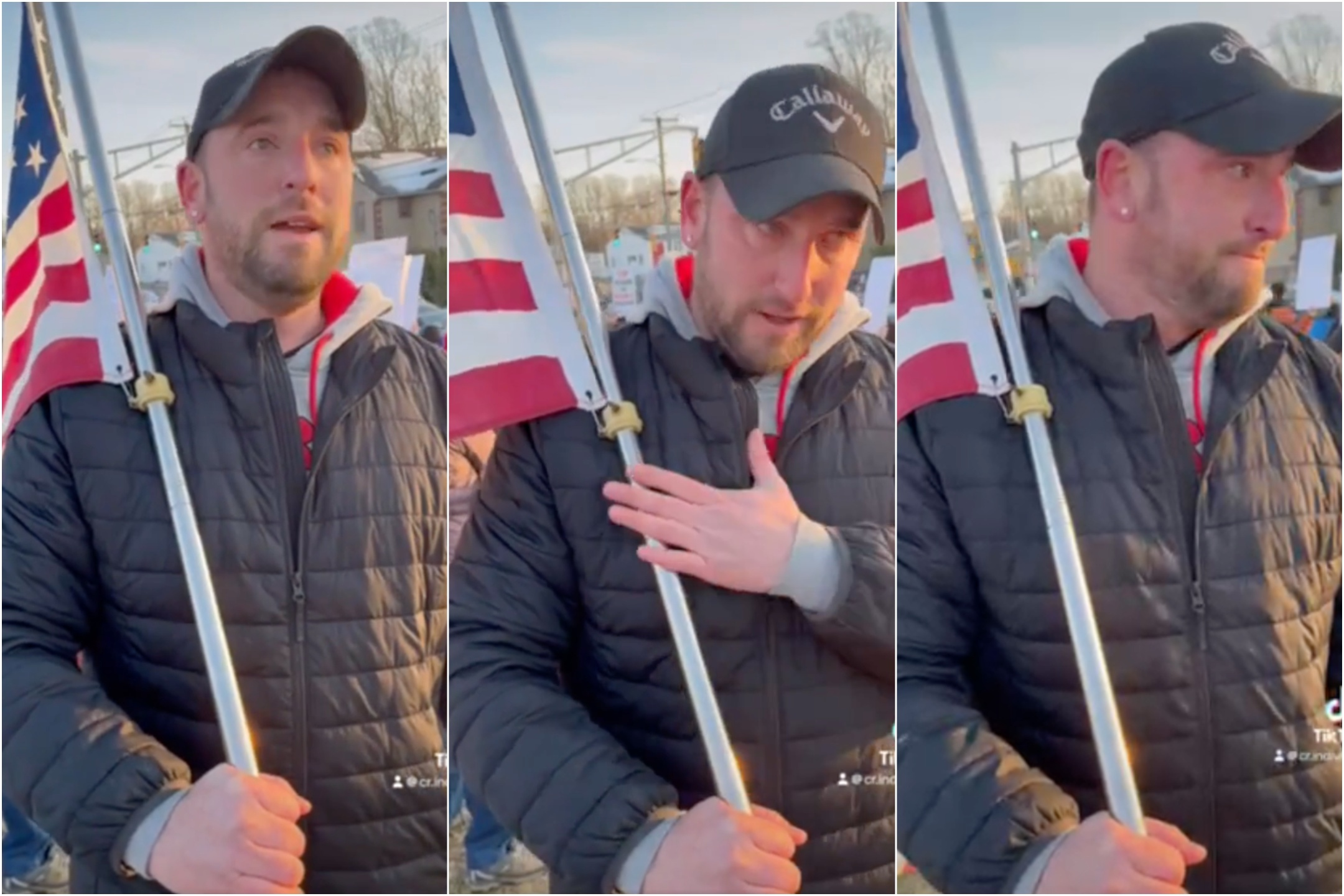
    “Something inside of me said, ‘Go up there and stand with these people,’” said Zobel, a 36-year-old school coach who said he’s never been to a protest before in his life. “I wanted to stand for what is right.” As he dashed out, Zobel also grabbed one thing — the American flag he flies in front of his house most of the time (except during football season, when an Eagles flag replaces it).

    As many as 300 people were at the protest, as Indivisible organizer Amber Clemments asked the flag-bearing Zobel if he’d be willing to film a video. Zobel’s raw emotion, choking back tears as he said, “I watched fourth- and fifth-grade kids run away from our own government,” soon ignited across social media over the long Presidents Day weekend.

    By Tuesday morning, the 47-second clip of Zobel had been watched an astronomical 2.9 million times on TikTok — and liked by some 709,000 viewers — even as it also went viral on Bluesky, X, Threads, and other social media platforms.

    It’s not hard to understand why. Zobel, who described himself as a patriotic regular voter but never very political, instantly became the bearded, baseball hat-wearing, anguished face of a new American majority — an Everyman shocked into action by the horror of immigration raids, wondering how best to protect his neighbors.

    The two South Jersey viral videos — the one depicting the raid itself and Zobel’s raw reaction — revealed how both the terrorizing tactics of masked immigration cops and the powerful reaction from often nonpolitical Americans, dubbed “neighborism,” are spreading far beyond the Minnesota tundra where this battle was initially met.

    Indeed, local activists say Lindenwold — last stop on the heavily traveled PATCO line, just over 15 miles southeast of Philadelphia — has been under a relentless siege from U.S. Immigration and Customs Enforcement (ICE) and other federal agents since last spring, not long after Donald Trump became president. The transit hub has become a magnet for immigrants in recent years, with a local school population that is just under 60% Latino.

    Craig Strimel, a leader of Cooper River Indivisible, a local chapter of the group that organized the large “No Kings” protests, said activists first learned of the ICE activity when a Lindenwold immigrant couple escaped agents last year by taking refuge in the local high school, where the principal blocked the feds at the doorway. Since then, Strimel said, ICE watchers have seen frequent activity in and around a cluster of five apartment complexes with large immigrant populations, but few known arrests.

    “It was becoming apparent early on that this was all about creating terror,” said Strimel of the frequent ICE sightings. Some local residents stopped leaving their apartments, he said, and a once-popular restaurant in Lindenwold just closed its doors amid rumors that the couple that owned it has returned to Mexico.

    All of this set the stage for last Thursday, when masked federal agents wearing tactical gear arrived early in the morning at Lindenwold’s Woodland Village Apartments just as 44 elementary school kids were waiting for their school bus. The sighting triggered a panic that saw some kids running away and others frantically hustling onto the bus as the driver arrived. No one was apprehended or reported hurt.

    On Monday, U.S. Department of Homeland Security officials said the agents went to the complex hoping to arrest a Honduran immigrant who’d once been convicted of aggravated assault. The man was not taken on Thursday and remains free.

    Although some outlets reported the large protest was in response to the high-profile raid — which has been covered by the CBS Evening News, MS Now’s Morning Joe, and elsewhere — that took place just a day and a half earlier, the rally actually had been in the works for several weeks.

    It had been organized by a young woman from Lindenwold named Tatiana — a 20-year-old business major at Camden County Community College who spoke with me Monday on the condition that I not use her full name — who’d been seeing the ICE activity in her hometown and felt it was time local people spoke out.

    Tatiana told me that the idea behind the Lindenwold protest was “to give the community a voice — to be able to say, ‘No, we don’t stand for this.’ That’s the most important thing for me. It’s just bringing community together and deciding we’re not OK with this at all.” But she agreed the bus stop raid had given the event a boost from residents believing “that children should not be scared of federal law enforcement.”

    Zobel was one of those neighbors. In the email interview, he described himself as “just your average Joe who grew up in Haddon Heights.” He did volunteer that he’s voted in every election since he turned 18, and that his first ballot was cast for Barack Obama, “and I felt proud walking out of the booth that day.”

    Fittingly, Zobel sounded somewhat Obama-esque when he described his dismay over America’s bitter partisan divide. “We as a nation are so angry with one another, and that makes me so sad,” he said. Not surprisingly, he’s as stunned as anyone at the millions of views for Friday’s video, and somewhat concerned about the impact, saying, “I just hope this video does not divide people.”

    But Zobel’s words and teary-eyed emotion went viral because it was such a shot of hope — that in a moment when hate is on public display in the streets of the United States, “your average Joe” who’d once stood on the sidelines is now grabbing the American flag and taking the field to fight for their neighbors. An authoritarian movement dependent on rage simply never counted on the brotherly love that sent this nonpolitical Eagles fan to his first protest.

    It might not be his last. “I am always happy,” he said, “to help support humanity.”

    Yo, do this!

    • With several inches of snow still on the ground, it might shock you to hear this, but American soccer is back! The Philadelphia Union — despite winning the 2025 Supporters Shield and boasting Major League Soccer’s best winning percentage in the 2020s — radically shook things up during the offseason. With new strikers Ezekiel Alladoh and Agustín Anello looking to amp up their attack, the Union’s quest for the CONCACAF Champions Cup begins Wednesday in Trinidad against Defence Force FC at 6 p.m. on FS2. Saturday night at 7:30 p.m., it’s back to the chillier climes of Washington for the MLS opener against DC United on Apple TV (with no need in 2026 for an additional Season Pass subscription, as in past years).
    • In the quest for what’s new in American popular culture, sometimes we take for granted the established jewels in our midst. I’ve long felt that MS Now’s 9 p.m. (now just on Monday nights) host Rachel Maddow is our best TV commentator because of the way she weaves the historical past into the headlines of America’s tortured present. But since last summer, she has upped her game. Maddow’s coverage of two stories underreported in most of the mainstream media — grassroots resistance to the Trump regime, and now the push for a nationwide network of warehouse concentration camps — has created appointment television every Monday.

    Ask me anything

    Question: What is your take on the latest CBS censoring of [Stephen] Colbert? — @bcooper82.bsky.social via Bluesky

    Answer: Another Tuesday morning breaking story on deadline: The CBS overseers of Late Night with Stephen Colbert — the top-rated talk show that’s nevertheless ending this year in what critics see as genuflecting to the Trump regime that the program frequently mocks — would not air a recorded interview with Texas state lawmaker and Democratic Senate primary candidate James Talarico. The backstory here is that the Federal Communications Commission has long exempted late-night talk shows from its equal time rule about political candidates on licensed broadcast outlets, but last month, FCC chair Brendan Carr — a pro-Trump MAGA pit bull — said this is changing. That apparently was enough for CBS’s new Trump-friendly management, which would not broadcast the interview (available on YouTube, now certain to get more views than if it hadn’t been censored). This new flap just highlights what a perilous moment this is for the First Amendment and American democracy writ large. Government limits on what viewpoints you can see or hear are a sign of dictatorship, full stop.

    What you’re saying about …

    Last week’s question about a winning Democratic strategy for the 2026 midterms drew a robust response, and almost all of the replies were thoughtful and nuanced. If there was a consensus, it was that Democrats should tailor their candidates to the divergent views of the congressional districts they hope to win. As Naomi Miller stated, “I think progressive candidates should run in progressive districts, and mainstream democrats in mainstream, purple, and red districts.” Still, a number of you think America’s bad experience with MAGA extremism means a sharp left turn is warranted in response. “I’d like for the Democrats to become more progressive and combative toward Trump than they already are,” wrote Benjamin Spohn, voicing an opinion many share these days.

    📮 This week’s question: Tuesday’s passing of the Rev. Jesse Jackson is one more reminder that many icons of America’s tumultuous 20th century are disappearing. So who do you think is the current greatest living American, and why? Please email me your answer and put the exact phrase “greatest living American” in the subject line.

    Backstory on the main reason the media is not trusted

    Exterior images of CNN headquarters in Atlanta and the New York Times Building in Manhattan.
    Exterior images of CNN headquarters in Atlanta and the New York Times Building in Manhattan.

    It’s rare these days to write something that everyone can agree on, but here goes: Public trust in the media has never been lower than it is today. How low? A Gallup poll last fall found that public trust in the ability of newspapers, TV, and radio to fairly and accurately report the news had plunged to 28%, the lowest ever recorded. Why? It’s complicated. The people’s faith in every major institution has declined in the 21st century, after all. And it’s clear that in a deeply divided America, rage against the media machine looks different from the left than it does from the right.

    This weekend, in a New York Times piece largely about the broken promises of one media-mogul billionaire — Washington Post owner and Amazon founder Jeff Bezos — columnist Lydia Polgreen put forth an explanation for sinking media trust that jibes with a lot of what I’ve witnessed since graduating into full-time journalism back in 1981. I believe it’s not the only reason — but the biggest, and maybe the most misunderstood.

    Polgreen noted that the common theory for the public turning against Big Media — that journalists grew more partisan and biased after the tumult of the 1960s and ‘70s — doesn’t comport with the bigger reality. The era that peaked with the publication of the Pentagon Papers and the Watergate scandal launched a decades-long golden era of profitable news organizations spending big on investigative and accountability journalism — exactly what viewers and readers claimed they wanted.

    Yet, trust declined as that happened. Polgreen cited a study in the late 1990s that compared then-contemporary media to 1960s newspapers and found the earlier times were “naïvely trusting of government, shamelessly boosterish, unembarrassedly hokey and obliging.” Polgreen wrote that moving “away from deferential stenography and toward fearless investigation … led to declining trust in the news media. Aggressive, probing and accountability-oriented journalism held up a mirror to American society — and many Americans didn’t like what they saw.”

    I think this explanation is spot on, but before readers jump all over me, let me quickly add a couple of caveats. Starting way back in Ronald Reagan’s 1980s, there was also a response to the growing backlash — especially in elite, Beltway journalism — that resulted in too much groveling to authority, and thus stenography around government lies like the 2003 Iraq War. This has only gotten worse with the current wave of billionaire owners like the Post’s Bezos. This means many liberals now also distrust the media, but not for the same reasons as conservatives, who’ve long loathed journalism for probing America’s inequities around race or gender.

    The explanation offered by Polgreen jumped out at me because it fit with what I explored in my 2022 book, After the Ivory Tower Falls, which looked at Americans losing trust in another large institution: colleges and universities. The liberal ideas that were nurtured on campuses in the postwar college enrollment boom — including the civil rights movement — triggered the same grievance-filled, largely white working-class backlash as did journalism about social injustice. Today, the only road back for the media is to hold the powerful to account — and understand that not everyone is going to like it.

    What I wrote on this date in 2022

    People can’t say they didn’t see America’s current crisis coming. On this date four years ago, I expressed my shock and amazement that little more than one year beyond Donald Trump’s attempted coup to stay in power, the right-wing’s creation of a political fantasy world was spiraling out of control, with lies about Hillary Clinton spying on Trump’s 2016 campaign and Joe Biden giving out free crack pipes (?!!). I wrote, “[Historian Ruth] Ben-Ghiat told me that the failure of the Jan. 6 insurrection only forced the GOP to double-down on embracing alternate realities, because ‘they have to reckon with the fact that [Trump] lost, that he’s no longer the leader.’”

    Read the prescient rest:After Trump’s Big Lie, half of U.S. lives in a fantasy world. This won’t end well.”

    Recommended Inquirer reading

    • There’s been no rest on the mass deportation beat. In my Sunday column, I looked at the out-of-control lying from the Trump regime, with unbelievable fictions about everything from shootings and rampant brutality by masked immigration officers to Commerce Secretary Howard Lutnick’s whoppers about his friendship with Jeffrey Epstein. I argued that government lying is fundamentally unconstitutional and that the perpetrators need to be punished, including prison time. Over the weekend, I wrote about how, while Minneapolis was a victory for the forces resisting American authoritarianism, that won’t stop Homeland Security from putting thousands of new officers on the street and expanding its concentration camps. The fight for the soul of the nation has only just begun.
    • What was I saying higher up in this newsletter about accountability journalism? Ever since Lyndon B. Johnson’s Great Society push in the mid-1960s, community nonprofits have been a valuable source of urban renewal, yet are sometimes dragged down by waste, fraud, and abuse. It’s a problem that sadly persists, as shown last week by a major Inquirer investigation into Philadelphia’s NOMO Foundation, one of the best-funded nonprofits attacking youth violence and crime. Ace reporters Ryan W. Briggs and Samantha Melamed found that the foundation has received more than $6 million in public funds in recent years, but faced an IRS lien and eviction lawsuits while it was forced to close its housing program. This is why we have a First Amendment, so that a free press can report on the problems a corrupt or inept government refuses to deal with. Subscribing to The Inquirer gives you access to this type of essential journalism, and you’ll also feel good about supporting this vital work.

    By submitting your written, visual, and/or audio contributions, you agree to The Inquirer’s Terms of Use, including the grant of rights in Section 10.

  • Jersey’s historic diners keep closing. This legislation aims to keep more alive.

    Jersey’s historic diners keep closing. This legislation aims to keep more alive.

    There may be new hope for diners in New Jersey.

    In recent years, a string of the state’s iconic diners have shuttered their doors. New state legislation aims to keep the lights on at those still in business.

    The bill, which was introduced in the New Jersey Senate in January, would provide some diners and other historic restaurants with tax benefits.

    “Diners, and specifically historic diners, are a cornerstone of our great state, having served residents and visitors for many decades. They are part of our culture and our history, and we have a duty to help them thrive,” State Sen. Paul Moriarty of Gloucester County, a sponsor of the bill, said in a statement Thursday.

    The legislation, which would establish a registry of historic diners and restaurants, would give the businesses a tax credit of up to $25,000. Only diners and family-owned restaurants operating for at least 25 years will qualify.

    The bill has been referred to the Senate Budget and Appropriations Committee.

    “It has been heartbreaking to see so many of these well-known establishments close or dramatically cut their hours,” Moriarity said.

    Where have diners closed in New Jersey?

    The origin of the modern diner can be traced back to a horse-drawn lunch wagon in 19th-century Rhode Island and the model has evolved since then. New Jersey has been coined the “diner capital” of the U.S. but has seen closures in recent years due to increased operating expenses, the challenge of finding employees, and the impact of the pandemic.

    The Cherry Hill Diner closed in 2023 after 55 years in business and following the co-owner’s unsuccessful search for a buyer. South Jersey’s Gateway Diner in Gloucester County closed that same year amid construction of the Westville Route 47 Bridge and the state’s acquisition of the site. The Red Lion Diner in Burlington County also sold, making way for a Wawa.

    In January 2024, the Star View Diner in Camden County closed. Last year, the Collingswood Diner shut its doors in August, to be replaced by a marijuana dispensary.

    The trend extended in Philadelphia where the Midtown III closed in 2020. Last year, the Mayfair Diner in Northeast Philadelphia was listed for sale.

  • Shareholders approve merger of American Water and Essential Utilities, which serve Pa. and N.J.

    Shareholders approve merger of American Water and Essential Utilities, which serve Pa. and N.J.

    Shareholders of Camden-based American Water Works and Bryn Mawr-based Essential Utilities, which owns the Aqua water and sewer companies, voted overwhelmingly Tuesday to merge and create a combined company with nearly $30 billion in yearly water and sewer sales.

    More than 99% of the 161 million American Water shares that were voted were cast in favor of the deal, the company told the Securities & Exchange Commission. Essential’s online proposal to merge was approved by around 95% of voting shareholders.

    The planned combination of these rivals, which have competed for more than 100 years to manage water and sewer for the small number of U.S. communities that allow for-profit operators, still needs approval from state public utility commissions.

    The combined companies’ sales are concentrated in Pennsylvania and New Jersey. In suburban Philadelphia, Aqua serves West Chester, northern Delaware County, parts of Lower Bucks, and Main Line communities. American Water serves Abington, King of Prussia, Norristown, Phoenixville, and nearby towns.

    New Jersey American Water serves towns along the PATCO rail line in Camden County, in northern and central Burlington County, and in Shore communities such as Absecon and Ocean City. Aqua New Jersey has customers in the three suburban South Jersey counties and at the Shore.

    American Water’s 14 million U.S. customers include systems in 12 other states, and on 18 U.S. military bases. Essential has around 3 million customers, including systems in six other states, and Pittsburgh-based Peoples Gas, which serves 750,000 in western Pennsylvania and Kentucky.

    American Water is already the nation’s largest private operator of water and sewer systems, and the deal will make it a larger player in competition with Florida-based NextEra Water Group and France-based Veolia’s U.S. operations, among other private systems that have been seeking to expand.

    A separate vote on an Essential executive pay package drew some opposition, with 85%approving.

    That package included more than $17 million in severance compensation and stock grants for departing Essential CEO Christopher H. Franklin, plus medical benefits and up to three years’ professional assistance helping him land another job, plus millions more for his four top deputies.

    The merged company’s larger size, as big as many of the leading natural-gas companies that dominate utility stock-index funds, will boost its visibility to investors, John C. Griffith, the American Water chief executive who will run the combined companies, said in announcing the deal last fall.

    The companies disclosed the approvals Tuesday afternoon and said more details on the vote and their plans would come later this week.

    Deal backers say the combination should enable Griffith to cut management costs, boost profits, drive up the share price, and could ease pressure to keep raising water rates.

    Regulators in New Jersey and Pennsylvania are weighing the company’s latest rate increase requests. American Water’s New Jersey affiliate is asking the state Board of Public Utilities for an average 10% water and 8% sewer rate hike on Jan. 16 for 2.9 million customers, which it said would fund improvements to aging water and sewer systems. Customers would pay an average of $18 more a month.

    Pennsylvania’s Public Utility Commission said last month that it would consider the company’s request to boost water and sewer rates on 2.4 million customers by an average 15%, or $20 a month.

    Critics had urged Essential to seek rival buyers to drive up the share price and shareholder profits from the sale, noting that both stocks had dropped after the merger was proposed last year.

    Tim Quast, founder of Colorado-based ModernIR, a consultant the companies hired to help explain the merger, said share price declines are now typical, even for merger-target companies like Essential whose shares command a premium from buyers like American Water because index-fund investors such as Vanguard and BlackRock tend not to buy more shares of merging companies until a deal is completed.

    Even after long competition from U.S. and foreign utility owners, private water companies serve only about one in six Americans. In recent years, customers of public utilities serving parts of Chester, Delaware, and Bucks Counties have defeated privatization campaigns, though some towns in Pennsylvania and New Jersey have signed on. Pennsylvania also has asked private operators to take over small, troubled public systems.