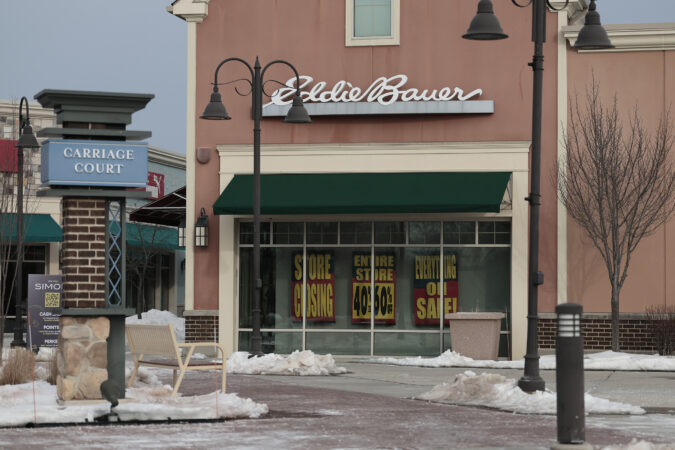
Over 60 years ago, the first American to climb Mount Everest sported an Eddie Bauer coat. Now the company behind the outdoor apparelfinds itself conducting liquidation sales.
The operator of Eddie Bauer filed for Chapter 11 bankruptcy in the U.S. Bankruptcy Court for the District of New Jersey on Monday and is winding down stores as it seeks a buyer.
Eddie Bauer is laying off some 58 employees in New Jersey at locations in Burlington, Gloucester, Middlesex, and Monmouth Counties, according to a layoff notice filed with the state.
“In an effort to rightsize the company’s store footprint and close underperforming stores, the company will be closing a number of retail locations in N.J.,” reads the notice.
In Pennsylvania, a spokesperson for the state’s Department of Labor and Industry said they had not received a layoff notice for Eddie Bauer stores as of Tuesday morning.
Before filing for bankruptcy, the company chose not to renew leases for 49 stores that had leases ending Jan. 31. Those locations have since closed, bankruptcy documents indicate.
The company is liquidating the remaining 175 stores as it seeks out a buyer.
In the Philadelphia area, Eddie Bauer stores are located at the Gloucester Premium Outlets in Camden County, at the Philadelphia Premium Outlets in Montgomery County, as well as in Concordville in Delaware County.
As of Tuesday, the Fashion District location in Center City appeared to be closed, according to the Eddie Bauer website.
What led to the bankruptcy?
Eddie Bauer stores have been operated by Catalyst Brands, which was formed in January 2025 in a merger that brought together brands including Aéropostale, Brooks Brothers, and JCPenney.
The CEO of Catalyst Brands, Marc Rosen, said in a news release Monday that the Eddie Bauer operator had been in a “challenged situation,” even before the new parent company was formed last year. The company was dealing with declining sales and supply chain challenges amid other issues, he said.
“Over the past year, these challenges have been exacerbated by various headwinds, including increased costs of doing business due to inflation, ongoing tariff uncertainty, and other factors,” Rosen said. “While the leadership team at Catalyst was able to make significant strides in the brand, including rapid improvements in product development and marketing, those changes could not be implemented fast enough to fully address the challenges created over several years.”
Federal and private grants totaling nearly $29 million were announced Wednesday for conservation projects within the Delaware River Watershed, including a South Philadelphia wetlands park, a water trail in Camden County, and support of the Lights Out Philly program to keep birds from crashing into buildings.
The money comes from nearly $12.5 million in grants to the Delaware Watershed Conservation Fund from the National Fish and Wildlife Foundation (NFWF) and the U.S. Fish and Wildlife Service. An additional $17 million comes in matching funds from nonprofits such as thePhiladelphia-based William Penn Foundation.
The total is about $9 million less than last year’s grant awards of $38 million. A representative for the two federal agencies did not state a reason for the decline.
However, the reduction comes as many federal grants have been cut or reduced by President DonaldTrump’s administration.
What’s being funded?
In all, the new funds will flow to 30 conservation projects, including local trail creations, stream restorations, shoreline enhancements, and wildlife habitat improvements. The money will go toward planning, hiring for, and construction of projects in Pennsylvania, New Jersey, Delaware, and New York.
Jeff Trandahl, executive director and CEO of NFWF, said the projects “demonstrate the impact that public-private partnerships can have at a landscape scale and will help ensure a healthier and cleaner future for the Delaware River watershed and the communities and species that depend on it.”
The watershed is within a densely populated corridor but remains 50% forested. Four hundred miles of it is classified as a National Wild and Scenic River, largely undeveloped but accessible for recreation.
The grants cover a wide range of projects.
For example, $498,800 will go toward reducing migratory bird collisions into buildings throughout the Delaware Watershed, which includes Philadelphia and New Jersey. The project of the Wildlife Management Institute, along with Bird Safe Philly, will identify and retrofit buildings to be bird-friendly, inform the public about built-environment hazards, and how to mitigate them.
Leigh Altadonna, coordinator for Bird Safe Philly, a collaborative of five organizations, welcomed the grant.
“These funds will reinforce Bird Safe Philly’s continuing work with nature centers, libraries, arboretums and other buildings as part of our mission to mitigate bird collisions with glass,” Altadonna said.
She said money would go toward educating the public about howto make their homes and communities bird-friendly.
Bird Safe Philly coordinates with owners of the city’s skyscrapers to turn off or dim lights, which can attract birds during the spring and fall migration seasons.
A sample of grants with total federal and private funding
Pennsylvania
$650,000 for South Philadelphia Wetlands Park II, a project of the Delaware River Waterfront Corp. The money will go toward completing needed documentation for the park located just south of the base of Tasker Street through Pier 70. The goal is to restore wetland habitat and increase public access to piers and berths, add a kayak launch and a natural pier park, and restore two acres of forested upland, meadow and wetlands.
$2 million for stream channel restoration in the south branch of French Creek, a project of the French and Pickering Creeks Conservation Trust. The stream channel and surrounding wetland will be improved as a habitat for brook trout and bog turtle, restore 6.7 acres of riparian buffer, and more than 13 acres of surrounding wetland and flood plain.
$900,400 to reintroduce wild brook trout in restored agricultural watersheds in Chester County, a project of the Stroud Water Research Center, which will monitor the re-establishment effort and implement agricultural best management practices to give trout the best chance of recovery.
New Jersey
$3.5 million for horseshoe crab and shorebird habitat at the Kimbles Beach and Bay Cove area in Cape May Court House, a project of the American Littoral Society. The money will go toward restoring one mile of critical habitat along the Delaware Bay, by placing 49,000 tons of sand to stabilize the beach, reverse coastal erosion, and protect the shoreline.
$1.2 million for restoration and recreational projects on the Cooper River Water Trail, which is spearheaded by the Upstream Alliance. The money will go toward engaging 3,000 community members through hands-on recreational programming, hiring local youth, and promoting public access on the new trail in Camden County. It will include paddling and fishing programs for the community and create a Friends of the Cooper River Water Trail group.
$487,400 for ecological restoration and wildlife habitat improvements at Swede Run Fields in Moorestown, Burlington County, for a project by the township to eradicate invasive species and establish native plant communities within the wetlands, riparian forest, and upland meadow buffers.
February’s crop of restaurant openings includes two restaurants’ expansions to Narberth, a reopened brewery in South Jersey, a chic restaurant/lounge in Center City, an intriguing wine bar/bottle shop in Chestnut Hill, and two French newcomers.
Restaurants can take awhile and owners are often hesitant to pinpoint an opening date. I’ve listed the targeted day where possible; for the rest, check social media.
Duo Restaurant & Bar (90 Haddon Ave., Westmont): Brothers Artan and Arber Murtaj and Andi and Tony Lelaj, who own the Old World-style Italian Il Villaggio in Cherry Hill, are taking over Haddon Avenue’s former Keg & Kitchen with a pub serving a bar menu supplemented with seafood.
Eclipse Brewing (25 E. Park Ave., Merchantville): Last August, food trucker Megan Hilbert of Red’s Rolling Restaurant became one of the youngest brewery owners in New Jersey when she bought this 9-year-old Camden County brewery, open as of Friday.
Lassan Indian Traditional (232 Woodbine Ave., Narberth): The second location of the well-regarded Lafayette Hill Indian BYOB takes over the long-ago Margot space in Narberth.
LeoFigs, 2201 Frankford Ave., as seen in January 2026.
LeoFigs (2201 Frankford Ave.): Justice and Shannon Figueras promise the delivery of their long-awaited bar/restaurant, with an urban winery in the basement, at Frankford and Susquehanna in Fishtown. The food menu will be built around comfort-leaning small plates.
The bubbly selection at Lovat Square in Chestnut Hill.
Lovat Square (184 E. Evergreen Ave.): Damien Graef and Robyn Semien (also owners of Brooklyn wine shop Bibber & Bell) are taking over Chestnut Hill’s former Top of the Hill Market/Mimi’s Café property for a multiphased project: first a wine shop with indoor seating, then a courtyard with a full dinner menu, followed later by a cocktail bar/restaurant component. Opens Feb. 12
Malooga (203 Haverford Ave., Narberth): The Old City Yemeni restaurant is expanding to Narberth with lunch and dinner service plus a bakery, with expanded indoor/outdoor seating and space for groups.
Mi Vida (34 S. 11th St.): Washington, D.C.-based restaurant group Knead Hospitality + Design is bringing its upscale Mexican concept to East Market, next to MOM’s Organic Market. Target opening is Feb. 18.
Napa Kitchen & Wine (3747 Equus Blvd., Newtown Square): A California-inspired restaurant rooted in Midlothian, Va., opens in Ellis Preserve with an extensive domestic and international wine list in a polished setting. Opens Feb. 9.
Ocho Supper Club (210 W. Rittenhouse Square): Chef RJ Smith’s Afro-Caribbean fine-dining supper club starts a six-month residency at the Rittenhouse Hotel, tied to the Scarpetta-to-Ruxton transition, serving tasting menus through July. Now open.
Piccolina (301 Chestnut St.):A low-lit Italian restaurant and cocktail bar at the Society Hill Hotel from Michael Pasquarello (Cafe Lift, La Chinesca, Prohibition Taproom). Targeting next week
Pretzel Day Pretzels (1501 S. Fifth St.): James and Annie Mueller’s pretzel-delivery operation is becoming a takeout shop in the former Milk + Sugar space in Southwark. Expect classic soft pretzels plus German-style variations (including Swabian-style) and stuffed options.
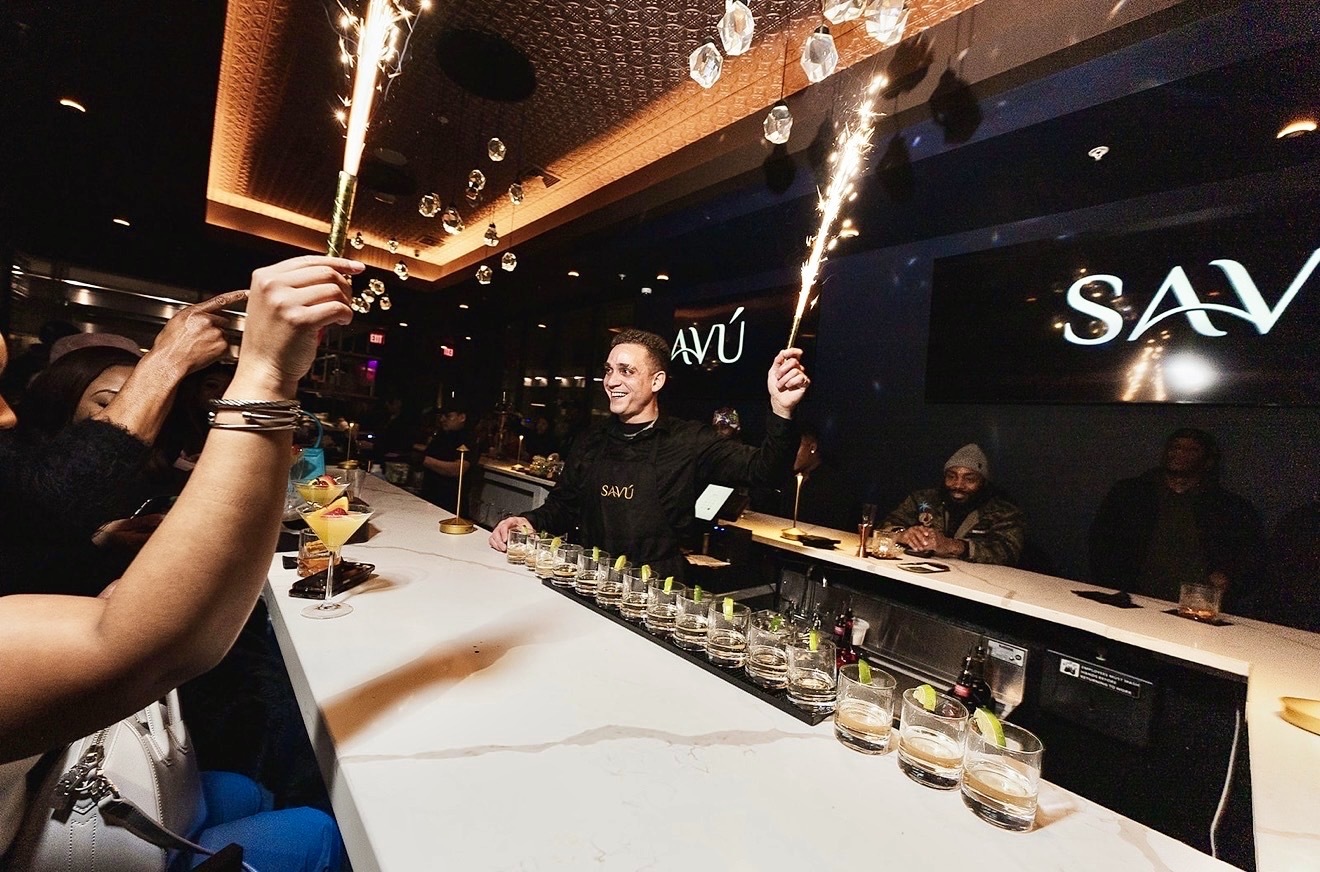
Merriment at the bar at Savu, 208 S. 13th St.
Savú(208 S. 13th St.): Kevin Dolce’s Hi-Def Hospitality has converted the former Cockatoo into a modern, bi-level dining and late-night lounge with a New American menu from chef Maulana Muhammad; it just soft-opened for dinner Thursday through Sunday and weekend brunch.
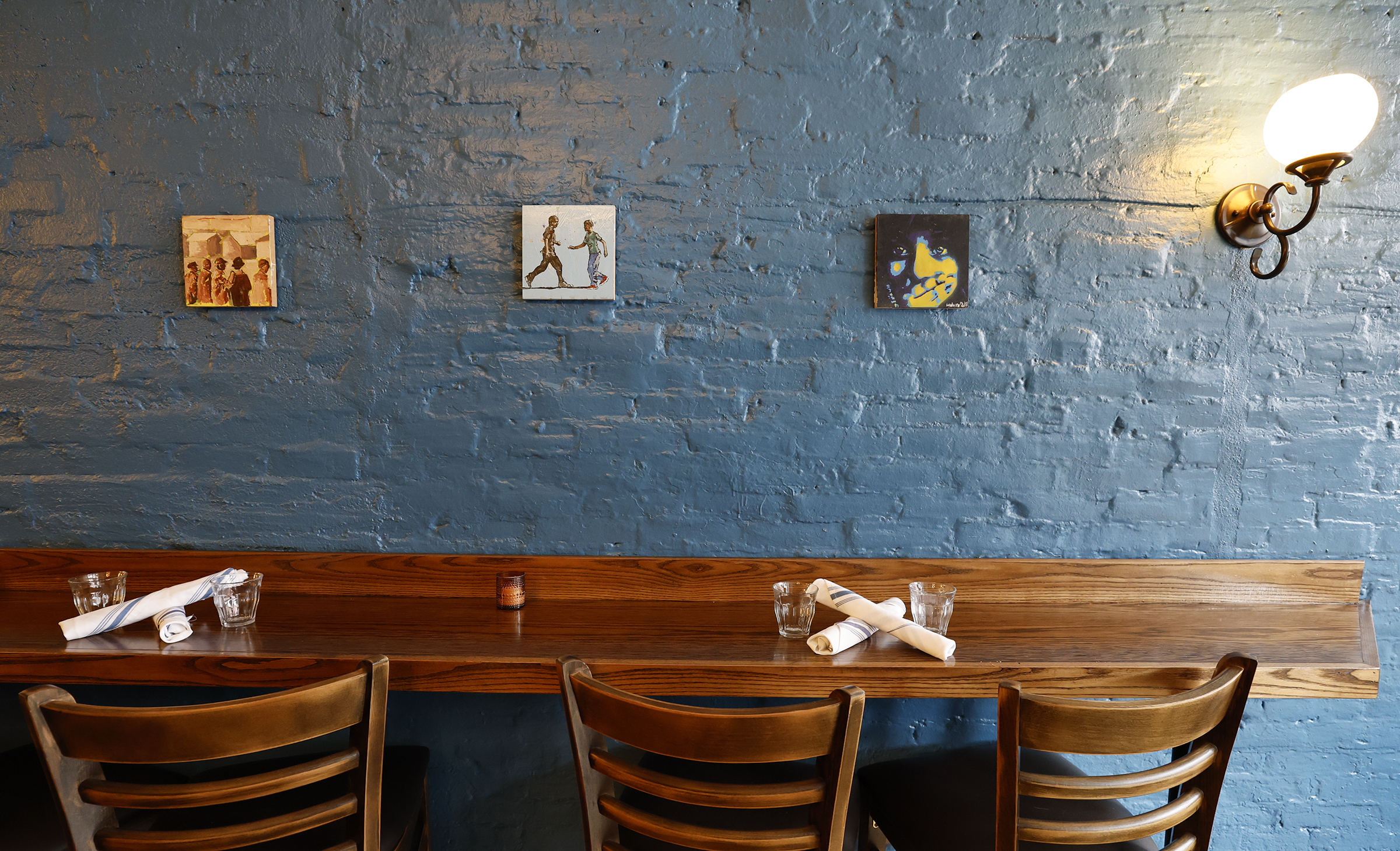
Bar-adjacent seating at Side Eye.
Side Eye (623 S. Sixth St.): Hank Allingham’s all-day neighborhood bar takes over for Bistrot La Minette with “French-ish” food from chef Finn Connors, plus cocktails, European-leaning wines, beer, and a late-night menu. Opens 5 p.m. Feb. 7 with 50% of the night’s proceeds going to the People’s Kitchen.
Soufiane at the Morris(225 S. Eighth St): Soufiane Boutiliss and Christophe Mathon (Sofi Corner Café) say there’s a 90% chance of a February opening for their new spot at the Morris House Hotel off Washington Square. It’s billed as an elegant-but-approachable restaurant inspired by classic French bouillons/brasseries, with a menu spanning small plates and full entrées alongside Moroccan-influenced tagines. Expect evening service indoors, daytime service outdoors.
South Sichuan II(1537 Spring Garden St.): A second location for the popular Point Breeze Sichuan takeout/delivery specialist, near Community College of Philadelphia; this one will offer more seating.
March openings are in the offing for the much-hyped PopUp Bagels in Ardmore, as well as the long-delayed Terra Grill (a stylish room in Northern Liberties’ Piazza Alta) and ILU (the low-lit Spanish tapas bar) in Kensington.
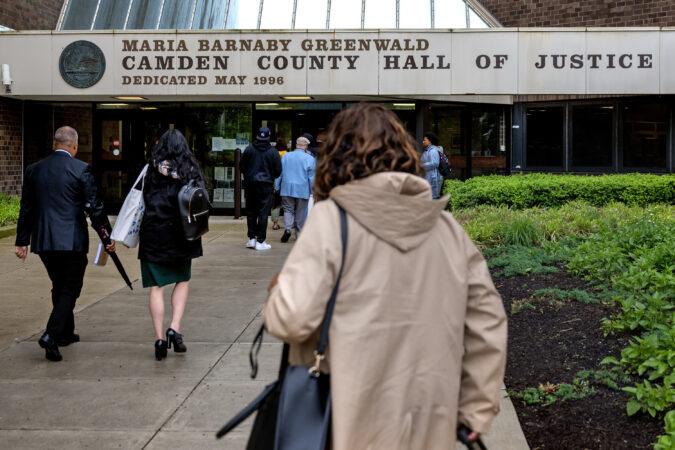
The Camden County Hall of Justice is closed through at least Wednesday after a sprinkler system pipe froze and then burst at the facility Sunday afternoon, said New Jersey courts spokesperson Pete McAleer.
The damage to the building was significant, McAleer said. Parts of the first floor and lower-level areas of the building were flooded. However, the courtrooms were unaffected, he said.
Courtroom operations will be held remotely as tests are conducted to assess if the damage created any environmental hazards.
The judiciary staff will continue coordinating with county officials and the county sheriff’s office as they relocate services temporarily, McAleer said.
Philadelphia is expected to see its most significant winter storm in years this weekend, with nearly a foot of snow and ice expected from a formidable low-pressure system sweeping across the eastern United States.
Official National Weather Service forecasts say six to 18 inches of snow is possible across most of New Jersey and Pennsylvania, including Philadelphia as the storm pushes through the region Saturday night to early Monday morning. More than 21 states are expected to experience at least moderate impacts from the storm, the weather service said.
Forecasters said that mixing with sleet and freezing rain could hold down overall snow totals across Philadelphia and South Jersey, but the storm is likely to hinder if not halt most travel on Sunday, regardless.
The National Weather Service puts out forecasts for every few square miles of land in the United States four times a day through a system called the National Digital Forecast Database.
The maps below display that data. Use it to find how much snow is expected anywhere in the eastern United States. It will show the most recent forecast for the next three days.
(function () {window.addEventListener(‘message’, function (e) { var message = e.data; var els = document.querySelectorAll(‘iframe[src*=”‘ + message.id + ‘”]’); els.forEach(function(el) { el.style.height = message.height + ‘px’; }); }, false); })();
A considerable amount of freezing rain and sleet may also fall during the storm, leading to icing concerns. The map below displays the forecast for ice accumulation, or accretion, over the next three days.
(function () {window.addEventListener(‘message’, function (e) { var message = e.data; var els = document.querySelectorAll(‘iframe[src*=”‘ + message.id + ‘”]’); els.forEach(function(el) { el.style.height = message.height + ‘px’; }); }, false); })();
Hours before leaving office, New Jersey Gov. Phil Murphy on Tuesday signed legislation that could make it easier for commercial real estate projects in Camden to qualify for hundreds of millions of dollars in state tax incentives.
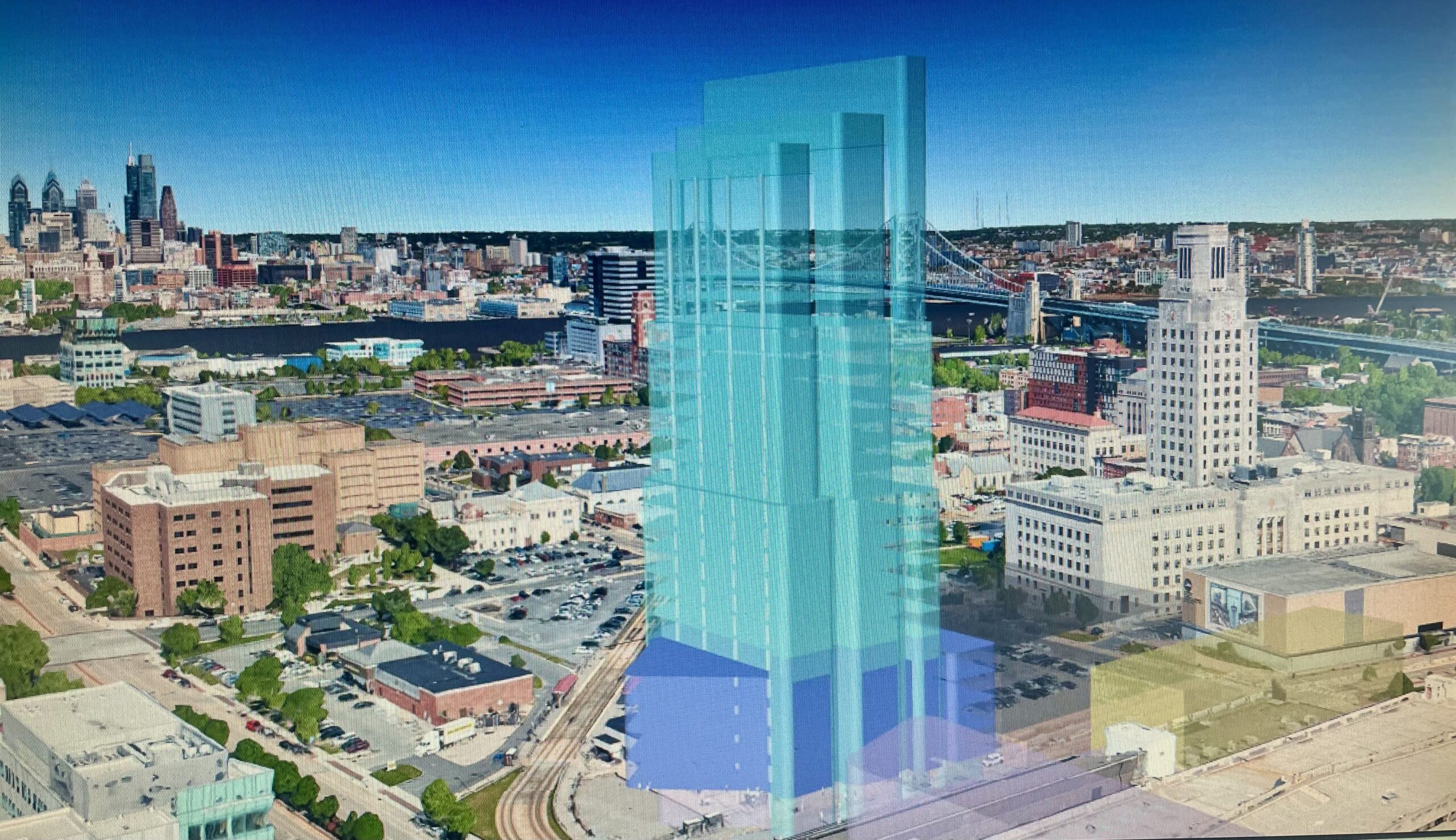
One planned development that could benefit is the Beacon Building, a proposed 25-story office tower downtown on the northwest corner of Broadway and Martin Luther King Boulevard, The Inquirer previously reported.
Murphy approved the bill and dozens of others on the final day of his second term, shortly before fellow Democrat Mikie Sherrill was sworn in as governor. Another newly signed law authorizes up to $300 million in tax breaks to renovate the Prudential Center in Newark, home of the New Jersey Devils. The hockey team is owned by Harris Blitzer Sports & Entertainment, which also owns the Philadelphia 76ers.
The Camden-focused law makes changes to the state’s gap-financing program, known as Aspire, which authorizes up to $400 million in corporate tax credits over 10 years for “transformative” redevelopment projects that have a total cost of $150 million and meet other requirements.
To qualify for the incentives, most commercial projects must generate a net positive benefit to the state, based on the Economic Development Authority’s economic modeling. The new law exempts certain projects from that “net benefit test.”
The law applies to redevelopment projects located in a “government-restricted municipality” — as described in the Aspire program’s statute — “which municipality is also designated as the county seat of a county of the second class.” In addition, the project must be located in “close proximity” to a “multimodal transportation hub,” an institution of higher education, and a licensed healthcare facility that “serves underrepresented populations.”
A rendering of the 25-story Beacon Building proposed for the northwest corner of Broadway and Martin Luther King Boulevard in Camden. It would be the tallest building ever constructed in the city.
The site of the proposed Beacon Building is across the street from the Walter Rand Transportation Center and Cooper University Hospital. Rutgers’ Camden campus is also nearby. Lawmakers said projects in New Brunswick and Trenton could also qualify for exemptions under the law.
Development firm Gilbane is leading the project with the Camden County Improvement Authority. Gilbane has yet to announce any commitments from tenants.
Assembly Majority Leader Louis Greenwald (D., Camden), who sponsored the legislation, has said it wasn’t written with a specific project in mind but rather to remove a barrier to investment in South Jersey.
Critics said that the law removes a key safeguard meant to protect taxpayers and that it represented an about-face for Murphy, who earlier in his tenure sought to reform corporate incentive programs.
“Just in terms of the governor signing the bill, this is a massive disappointment,” said Antoinette Miles, state director of the New Jersey Working Families Party.
“Broadly, if there’s a so-called transformative project that can’t pass the net benefit test, maybe it isn’t so transformative,” she said.
Murphy’s office announced the bill signing without commenting on it, though he has previously cheered state investment in Camden. Any Aspire tax incentives must be approved by the state’s Economic Development Authority.
New Jersey lawmakers on Monday approved a bill that would make it easier for development projects in Camden to qualify for hundreds of millions of dollars in tax credits.
Under current law, most commercial real estate developers must show their projects would generate more dollars in economic activity than they would receive in subsidies in order to qualify for tax credits under New Jersey’s gap-financing program, known as Aspire.
The new legislation — which was introduced late last month and approved by the Democratic-led Legislature days before Democratic Gov. Phil Murphy is to leave office — would exempt certain projects from the program’s so-called net benefit test.
Lawmakers on Monday also passed a bill increasing the cap on the size of the Aspire tax-credit program from $11.5 billion to $14 billion and authorized $300 million in tax breaks to renovate the Prudential Center in Newark, home of the New Jersey Devils hockey franchise. The team is owned by Harris Blitzer Sports & Entertainment, which also owns the Philadelphia 76ers.
‘Competitive market’
Supporters of the Camden bill, A6298/S5025, said it would make South Jersey more competitive in the Philadelphia market, while critics contended it would weaken a provision of a 2020 economic development law signed by Murphy that was intended to ensure fiscal prudence.
The test has impeded big projects in South Jersey, said Assembly Majority Leader Louis Greenwald (D., Camden), a sponsor of the bill. Since the law was signed, the region hasn’t attracted a single “transformative project” — a designation in the Aspire program for developments that have a total cost of $150 million and are eligible for up to $400 million in incentives over 10 years, Greenwald said.
“We started to ask people, what’s the barrier?” he said. “And when you look at the competitive market of what [developers] can get in Philadelphia or Pennsylvania compared to other areas in the state that don’t have to compete with that, that net operating loss test, that net benefits test, is a barrier.”
The legislation was not drafted with a specific project in mind, Greenwald said, but he acknowledged that one that might benefit is Beacon, which would feature 500,000 square feet of office space.
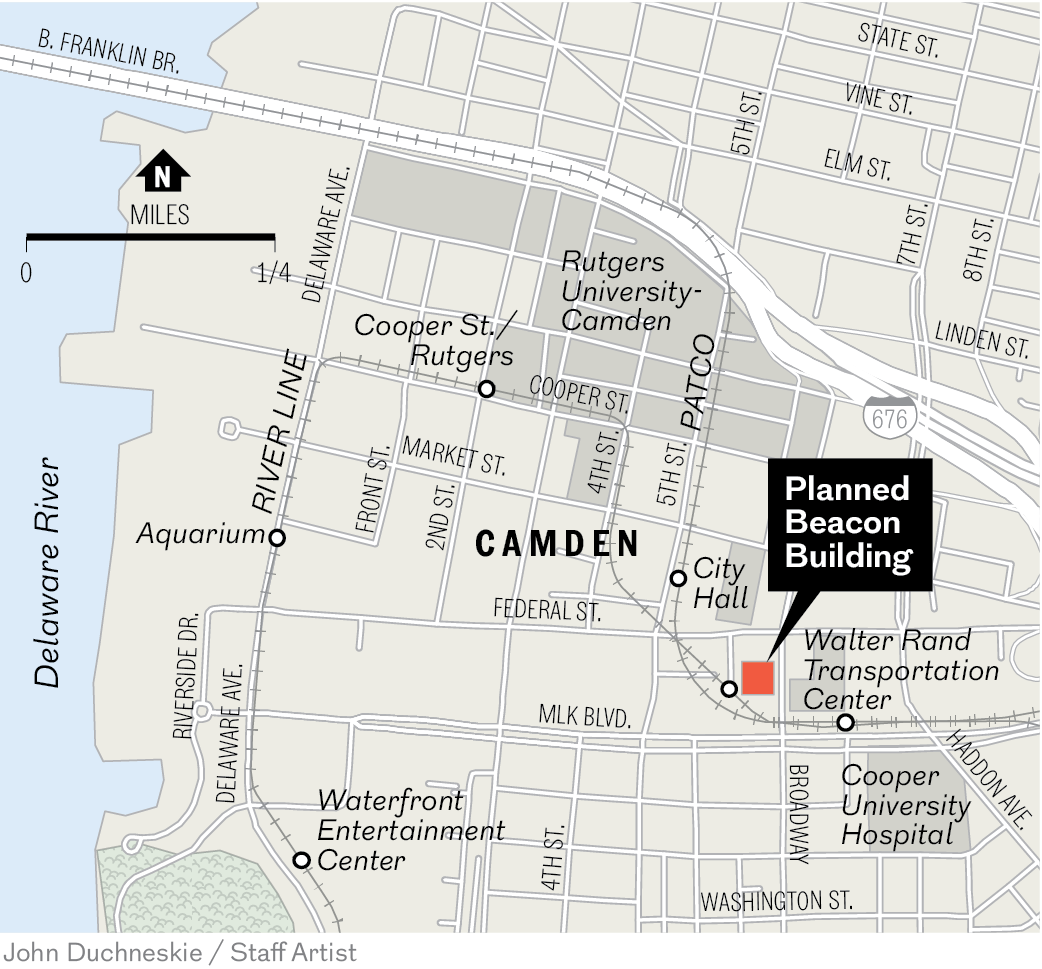
Developer Gilbane is leading the project with the Camden County Improvement Authority at a vacant site on the northwest corner of Broadway and Martin Luther King Boulevard across the street from the Walter Rand Transportation Center and Cooper University Hospital.
Map of the planned Beacon Building in Camden.
“The goal is to attract projects, maybe like Beacon Tower, to capitalize off of the growth that we’ve seen in Camden city,” Greenwald said.
Any project seeking Aspire subsidies must apply to the Economic Development Authority.
Camden County officials have said they expect tenants to include Cooper University Health Care, which has said it needs additional office space to accommodate its $3 billion expansion. They also hope to entice civil courts to relocate there.
County Commissioner Jeff Nash said last year that tenants had yet to commit, in part because the development team was still working on an application for Aspire tax credits.
The incentives will help determine rent, he told the Cherry Hill Sun. The land is owned by the Camden Parking Authority, and Nash has said officials are still trying to determine who will own the site and the building going forward, according to Real Estate NJ.
County spokesperson Dan Keashen said that those talks remain ongoing and that the improvement authority may issue a request for proposals for a new developer. Gilbane, the current master developer, didn’t respond to a request for comment.
Wendy Marano, a spokesperson for Cooper University Health Care, said she didn’t have an immediate answer to a question about whether the hospital network planned to obtain an equity stake in the development.
In 2014 the state awarded $40 million in tax credits to incentivize Cooper Health’s relocation of suburban office jobs to Camden, and Cooper later bought a stake in the development.
The possible new state investment in Camden comes after Murphy’s administration separately allocated $250 million to renovate the state-owned Rand center — which serves two dozen NJ Transit bus lines and the River Line, and includes PATCO’s Broadway station.
Construction on the transit center is expected to begin soon, according to county officials. While that renovation is underway, the Beacon site will serve as a temporary bus shelter, Keashen said, adding that possible construction on an office tower is still years away.
Fast track
Critics of the bill said that it was rushed through the Legislature with minimal public input and outside the normal budget process, and that it appeared to be designed to benefit specific projects. The bill passed the Assembly, 48-25, and the Senate, 24-14. It now heads to Murphy’s desk. The governor’s second term ends on Jan. 20, when he is to be succeeded by fellow Democrat Mikie Sherrill.
The legislation applies to redevelopment projects located in a “government-restricted municipality” — language included in the Aspire program’s statute — “which municipality is also designated as the county seat of a county of the second class.” The project must also be located in “close proximity” to a “multimodal transportation hub,” an institution of higher education, and a licensed healthcare facility that “serves underrepresented populations.”
“I say to you that there’s going to be one project that fits all those criteria,” Assemblyman Jay Webber (R., Morris) said on the floor of the chamber during debate Monday.
“The net benefits test was put in as an accountability measure to make sure these projects were at least by some measure benefiting the taxpayer,” Webber added in an interview.
“And now apparently one or more projects can’t meet that test,” he said. “And so rather than stick to the rules that they agreed to and pull the credits, they’re going to change the rules, lower the bar so that somebody can step over it. It’s wrong.”
Greenwald said the legislation has “nothing to do with [Beacon] in particular,” adding that he hopes it is one of many projects that could benefit. Possible developments in Trenton and New Brunswick could also qualify for incentives under the bill, he said.
Assembly Majority Leader Louis Greenwald in 2019.
The net benefit test
The test relies on economic modeling based on data such as projected jobs and wages. Under current law, most commercial projects seeking Aspire credits must demonstrate a minimum net benefit to New Jersey of 185% of the tax credit award — meaning, for instance, an applicant that receives $100 million in credits must generate $185 million in economic activity.
Projects located in “government-restricted municipalities” — a half-dozen cities, including Camden, selected by the Legislature — already face a lower threshold of 150%, according to the state Economic Development Authority.
Some projects, including residential and certain healthcare centers, are exempt from the net benefit test.
The test was strengthened in the Economic Recovery Act of 2020, signed by Murphy, because “we saw in previous iterations of the tax credit program that if the guardrails weren’t strong enough … then companies could simply not meet the test, or, you know, not follow through on their promises, and nonetheless collect the funds,” said Peter Chen, senior policy analyst at New Jersey Policy Perspective, a liberal-leaning think tank.
The 2020 law changed that, he said. “It’s one of the most important guardrails of the entire corporate tax credit program,” Chen said in an interview last week. “So exempting any project from the net benefit test requires a pretty large, pretty strong reason for doing so, and in this case, no reason was given.”
Criminal case
The renewed push for tax credits in South Jersey comes as a criminal case involving an earlier round of corporate subsidies continues to play out in court.
Democratic power broker George E. Norcross III — founder of a Camden-based insurance brokerage and chairman of Cooper Health — and five codefendants were indicted in 2024 on racketeering charges related to development projects on the city’s waterfront.
A judge dismissed the charges last year, and the state Attorney General’s Office is appealing the decision. Norcross has denied wrongdoing. He and his allies say state incentives have helped revitalize the city.
During his floor speech on Monday, Webber alluded to “incredible allegations of corruption” in the earlier economic development program and noted that Murphy had previously championed reform of the system.
The governor’s spokesperson, Tyler Jones, declined to comment on pending legislation.
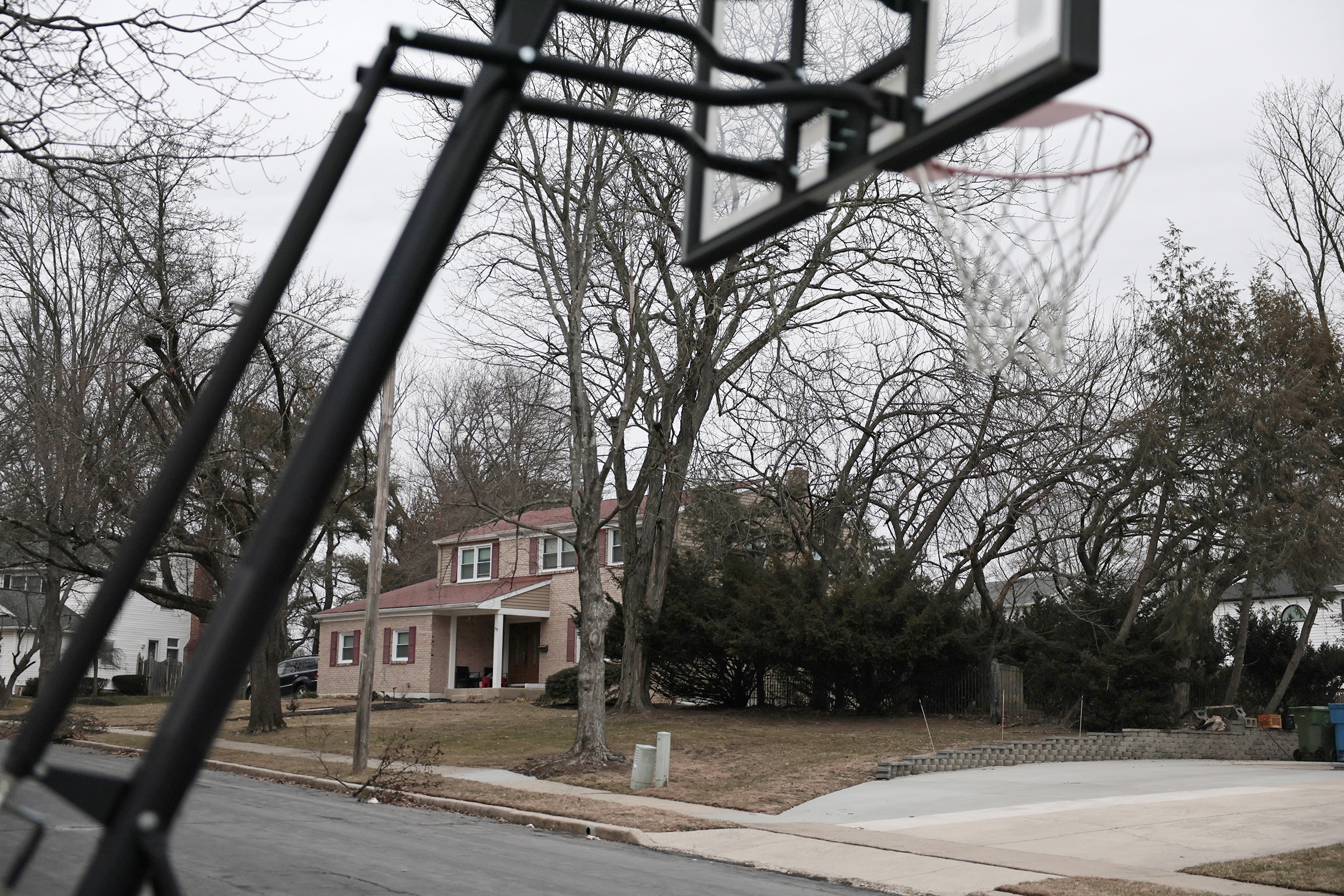
Giancarlo Brugnolo moved to Cherry Hill’s Woodcrestneighborhood in 2014, but it wasn’t until last year that he heard about the centuries-old cemetery just a stone’s throw away from his house. When friends first mentioned it, he assumed they were joking.
“I was like, ‘What are you talking about? What graveyard?’” he remembers saying. “We live in a residential neighborhood, there’s no way there’s a graveyard.”
Yet tucked away under sassafras trees and in the shade of neighboringhouses, members of one of South Jersey’s first colonial families are laid to rest.
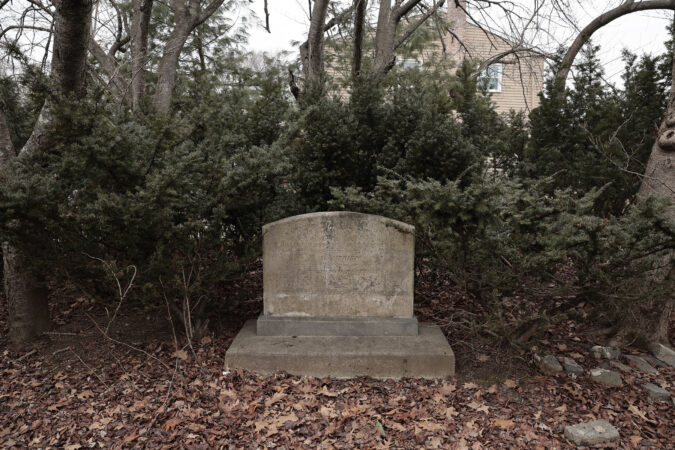
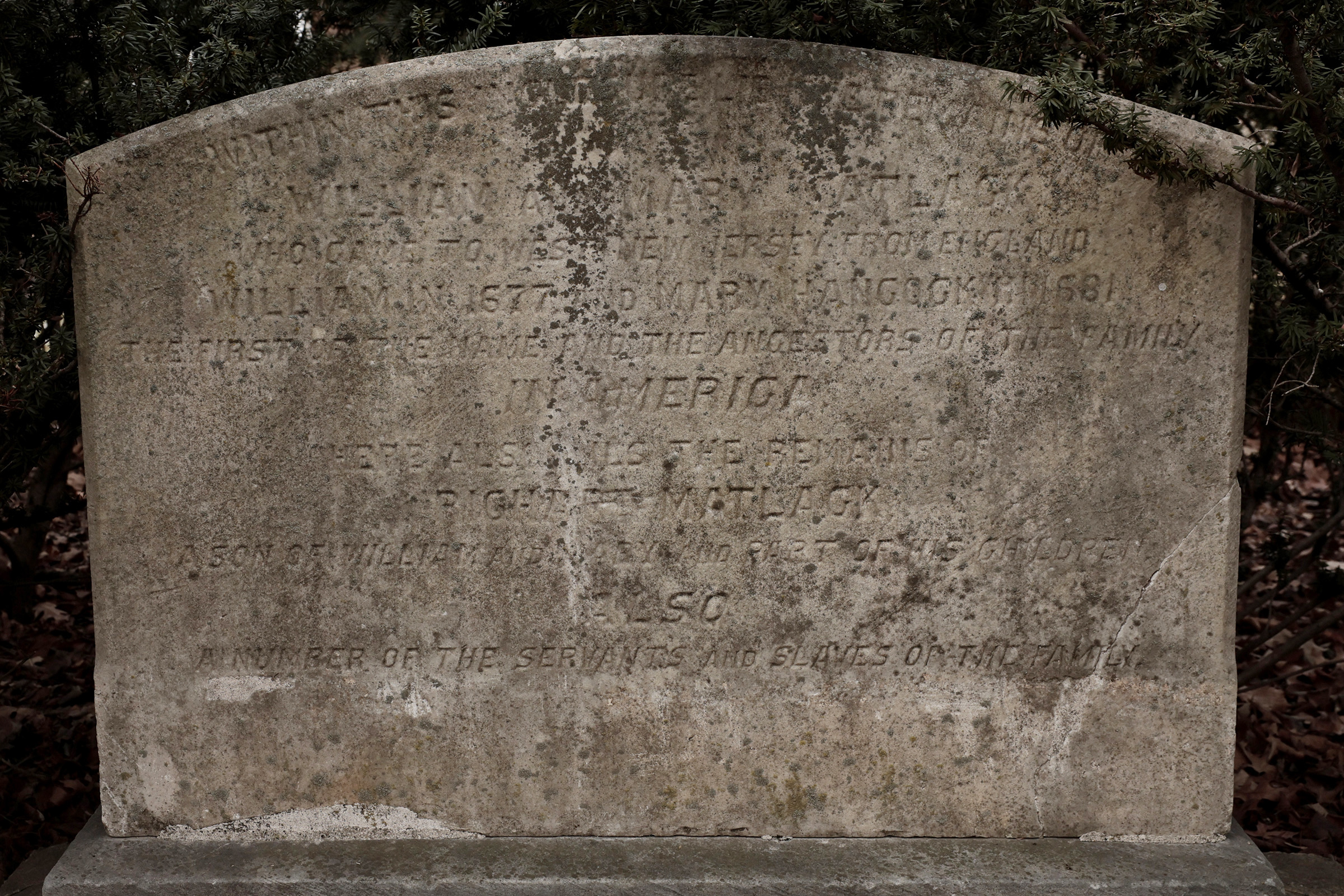
The Matlack Family Cemetery is located on the 500 block of Cherry Hill’s Balsam Road. At the small grave site lie the remains of William and Mary Matlack, some of their descendants, and an unspecified number of servants and enslaved people. William Matlack is believed to have died in 1738, at around age 90, and Mary Matlack in 1728, at around age 62.
Wanting to know more about the cemetery,Brugnolo took his question to Curious Cherry Hill, The Inquirer’s forum for answering local questions. Who was the Matlack family, and how did their grave site end up in a residential neighborhood?
William Matlack, a carpenter, came to New Jersey in 1677 from Cropwell Bishop in Nottinghamshire, England. He traveled to the Americas on a ship named the Kent as an indentured servant to Thomas Ollive and Daniel Wills. Willswas appointed as the commissioner of West Jersey and sent to make deals with the Lenni-Lenape people who had long lived on the land. Many of the Kent’s travelers, including Matlack, were Quakers. The ship traversed the Atlantic Ocean from England, ultimately heading up the Delaware River to present-day Burlington County. Matlack is said to have been the first European settler to put his foot on the shore of what is now the city of Burlington (however some historians believe Swedes settled there a half-century earlier).
At the time Matlack and Wills arrived in South Jersey, the spot was “a bleak haven” from their English homes, covered in dense forest and impenetrable at night, according to a 1970 article in the Courier-Post. Yet South Jersey stood out as a “long-sought destination thousands of miles from the brutality of bigots” in England who persecuted them for their Quaker practices.
Matlack owed Wills four years of servitude and, in 1681, was granted 100 acres of land in return. While working for Wills, Matlack helped build two of the first houses and the first corn mill in the area.
The headstone in the Matlack Family Cemetery on the 500 block of Balsam Road in Cherry Hill.
Matlack would become the patriarch to one of the largest families in colonial South Jersey. In the early 1680s he married Mary Hancock, who had recently come to New Jersey from England with her brother, Timothy. At the time of their marriage, William Matlack was 34 and Mary Matlack was 16. The Matlacks lived between two branches of Pennsauken Creek in present-day Maple Shade. William Matlack would come to own around 1,500 acres of land across South Jersey. The couple had six sons, three daughters, and an estimated 40 grandchildren.
Though Quakers became one of the first religious movements to reject slavery, many Quakers in early America, including the Matlacks, enslaved people. Research turned up little information about the enslaved people buried at the Matlack grave site. Birth and death records for enslaved people were often poorly kept in the age of chattel slavery, making it difficult to conduct genealogical research and historical inquiries into the lives of people held in slavery.
We do know, however, that slavery was pervasive in Philadelphia’s suburbs during and after the colonial era. Despite abolitionist activism, much of which was driven by Quakers in the Philadelphia region, thousands of people remained enslaved in New Jersey through the turn of the nineteenth century. New Jersey was the last Northern state to officially abolish slavery in 1866, when Gov. Marcus Ward signed a state constitutional amendment outlawing the institution. The amendment followed the 1865 ratification of the 13th Amendment to the U.S. Constitution, which New Jersey had initially rejected.
The Matlack Family Cemetery is a small graveyard in a residential neighborhood.
One well-known descendant of the Matlacks was Timothy Matlack, a politician and delegate to the Second Continental Congress who inscribed the Declaration of Independence. In Facebook groups and blog posts, dozens of residents of the Mid-Atlantic region say they are descendants of the first New Jersey Matlacks — likely claims given the expansive Matlack family tree, but difficult to prove.
William and Mary Matlack were not originally buried at the Balsam Road site, according to archival materials from the Rancocas Valley Chapter of the National Society of The Colonial Dames of America. They were initially buried on their son Richard’s farm near Springdale and Evesham Roads and were moved to the Balsam Road grave site in the late 1800s.
The grave was discovered by a Girl Scout troop on a camping trip in what was then an apple orchard, according to a Courier-Post article from 1990. The housing development surrounding the grave site went up in 1972, but the graveyard was left in tact due to its historical value. Today, it’s owned and maintained by the township.
This suburban content is produced with support from the Leslie Miller and Richard Worley Foundation and The Lenfest Institute for Journalism. Editorial content is created independently of the project donors. Gifts to support The Inquirer’s high-impact journalism can be made at inquirer.com/donate. A list of Lenfest Institute donors can be found at lenfestinstitute.org/supporters.
The Price Point compares homes listed for similar sale prices across the region to help readers set expectations about house hunting.
Looking for a new home for the new year? You’ve got options if you have the region’s typical homebuying budget.
Across the Philadelphia metropolitan area, homes sold for a median of $390,000 last month, according to the multiple listing service Bright MLS. That typical sale price is up more than 3% from last year.
Here’s what a home shopper could get with a budget like this in three different neighborhoods in the region.
Lower Merion condo in star location
Wolverton & Co., a Montgomery County-based real estate company, sells and manages a lot of condos in the area of West Montgomery Avenue in the Haverford section of Lower Merion Township.
“I call that stretch the golden mile of Haverford as it relates to condominiums,” said Will Wolverton, owner and broker of record at Wolverton & Co. “It’s a very desirable area.”
There are restaurants and national and local stores, including at the nearby Haverford Square and Suburban Square shopping centers. Condo residents can walk to SEPTA’s Haverford station to catch Regional Rail trains. The Merion Cricket Club offers sports facilities and hosts dinners and galas.
One condo currently for sale in the area is a two-bedroom, two-bathroom unit at Haverford Hunt Club, a building with 16 units on four floors. Condos there include both one-bedroom and two-bedroom units.
The building is about 45 years old but has been “thoughtfully updated” in both looks and critical infrastructure, such as the elevator and the roof, Wolverton said.
The condo for sale gets a lot of natural light, he said. And it’s on the top floor, so buyers won’t have upstairs neighbors. It also has a private balcony and a reserved space in the property’s parking lot.
The last several serious buyers have been most interested in the neighborhood, Wolverton said.
“It’s a very good property,” he said, “and a great location.”
This home in the Mayfair neighborhood of Northeast Philadelphia stands out in a few ways, said listing agent Xiao Zhen Zhao, who works throughout this section of the city, as well as Fishtown and Northern Liberties.
The open kitchen is “very unique” for the area and includes bar seating, said Zhao, an agent with Legacy Landmark Realty.
The primary bedroom has a private bathroom, which isn’t common in older homes in Northeast Philadelphia, she said. A lot of houses have only one full bathroom, she said. One of the bathrooms features a skylight and pink tiles on the walls.
And the home is “a bigger twin,” she said. It spans 1,868 square feet.
The home has a backyard and a walk-out finished basement, which has a half bathroom. It also has a garage and driveway.
The twin is in an area of the city where houses are more affordable and parking is easy. It’s within walking distance of schools. It’s minutes from stores and restaurants along Cottman Avenue, and it’s right off Pennypack Park.
Potential buyers have liked the layout of the home and also the look of it, Zhao said.
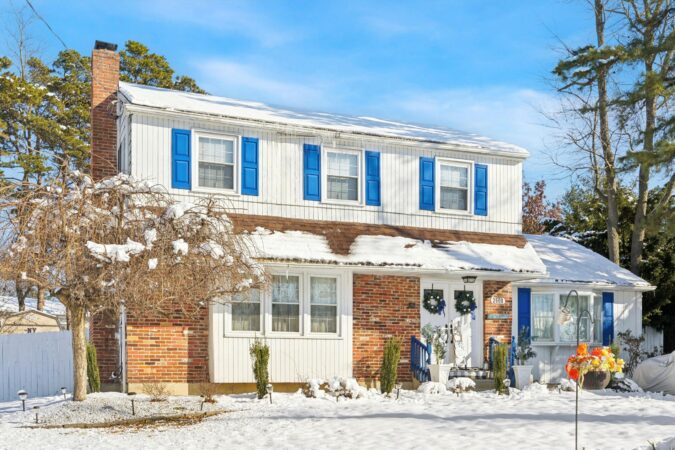
Potential buyers touring this Colonial in Camden County have fallen for its charm, said real estate agent Evangeline Gambardella. “Because it is a very charming space.”
The living room features a brick fireplace and a large window that lets in natural light and frames views of the front yard.
The layout is more open than in a traditional Colonial, especially in this area of Gloucester Township, said Gambardella, a real estate agent with the Mike McCann Team, which is an affiliate of Keller Williams.
The owners have recently updated the property. The home has new landscaping, a roof that is about 4 years old, a new fence, and a new heating, cooling, and ventilation system.
“It presents a really lovely value for its price point,” she said.
The home’s kitchen includes an island with seating. And a door in the formal dining room opens to the deck, which has a retractable awning.
Home shoppers who have visited the property like its spacious backyard and its location. It is minutes from the Gloucester Premium Outlets and the Deptford Mall, has easy access to major highways, and is close to parks and restaurants.
The home’s unfinished basement also is a “huge selling point for a lot of people” who want to decide what to do with the space, Gambardella said.
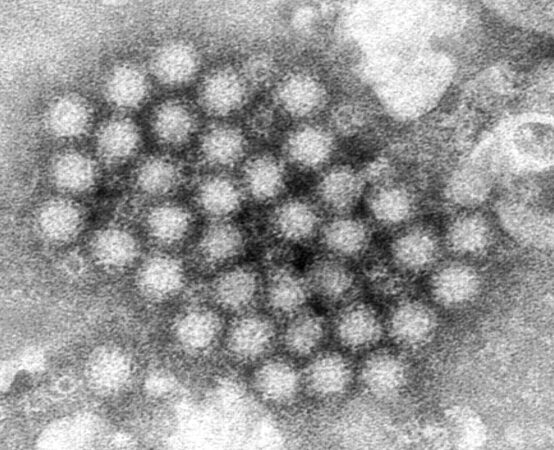
A South Jersey school was hit with an outbreak of gastrointestinal illness last week, as cases of norovirus, a common stomach bug, recently surged nationwide.
Camden County officials could not definitively say the illness was norovirus, since no lab testing has been done. However, they noted it was a candidate.
“The symptoms, infectious period, and incubation periods seem to be consistent with norovirus,” said Caryelle Vilaubi, director of the Camden County Department of Health and Human Services.
The school in Haddonfield, which officials declined to identify further, first reported a spike in gastrointestinal symptoms among students on Dec. 10, followed by an increase the next day.
Cases have since fallen dramatically, Vilaubi said, as outbreak control measures — including use of disinfectants, sending sick students home, and promoting proper hand hygiene — have been put into place.
They’re hoping to end the outbreak in the school community as early as next week, if they can go without new cases for four days, she said.
A variety ofsources can cause gastrointestinal illness, including viruses, bacteria, and parasites. Norovirus is one of the common culprits this time of year.
“We typically see a spike from November through April, not just in Camden County, but throughout the state, and often throughout much of the country,” Vilaubi said.
The highly contagious virus can spread through close contact with an infected person or with contaminated food, water, and surfaces. Symptoms usually include nausea, vomiting, diarrhea, and stomach pain, and start 12 to 48 hours after exposure.
Most people will feel better after one to three days.
Here’s what to know about the virus:
How can you protect yourself against norovirus?
Norovirus is a “hardy and resistant virus,” Vilaubi noted, making it especially hard to clean off. Hand sanitizers are not effective against it.
It is also relatively resistant to heat, able to survive temperatures up to 145°F.
People should make sure to regularly disinfect high-touch surfaces such as doorknobs, keyboards, and light switches.
How long does norovirus last in adults?
Though people will usually feel better after one to three days, they are still highly contagious for a few days after.
“If your child begins to show symptoms, please keep them home until at least 48 hours after symptoms resolve to prevent further spreading the illness,” Virginia Betteridge, liaison to the Camden County Department of Health and Human Services, said in a Dec. 12 news release.
Those infected with norovirus should avoid contact with others as much as possible during this period.
How to treat norovirus at home?
There is no cure or specific treatment for norovirus. The advice generally is to let the virus run its course.
To ward off dehydration, people should make sure to drink lots of fluids to replace what’s lost from vomiting and diarrhea. Taking small sips of water and sucking on ice chips may be easier on an upset stomach.
People can also consider drinking clear broths, noncaffeinated sports drinks, and oral rehydration solutions, which are available over the counter.
Drinks that contain a lot of sugar, including soft drinks and certain fruit juices, can make diarrhea worse and should be avoided.
How does norovirus spread from person to person?
Norovirus is considered highly contagious, as only a small amount of virus is needed to infect someone.
People contract it by accidentally touching tiny particles of stool or vomit — where the virus is primarily shed — from an infected person and getting them in their mouths.
These particles easily contaminate hands, surfaces, food, or water.