Tag: Chester County

  • Rape crisis centers are finally getting funding from Pennsylvania’s budget, but advocates say it’s not enough to support survivors

    Rape crisis centers are finally getting funding from Pennsylvania’s budget, but advocates say it’s not enough to support survivors

    Rape crisis centers in the Philadelphia region are sounding the alarm that the slight increase in funding in the recently passed state budget won’t be enough to sustain or improve crucial services for survivors of sexual assault.

    The Pennsylvania Coalition to Advance Respect (PCAR), which funds rape crisis centers via the state allocation, estimates centers will only see an average increase of $5,300 from the state to support their work assisting victims of sexual violence.

    The Philadelphia Center Against Sexual Violence had to lay off most of its staff and reduce services due to the nearly five-month state budget impasse. And while leaders in the region appreciate the funding — the first increase for rape crisis centers in years — it’s only a fraction of what Philly’s only rape crisis center says it needs to survive.

    “Even with the budget now passed, the funding increase is minimal compared to the overwhelming need,” said LaQuisha Anthony, senior manager of advocacy at the center, in a news release last week. The center is known as WOAR, the initials of its former name, Women Organized Against Rape.

    Now advocates in Philadelphia and the suburbs are turning their focus to next year’s budget, pushing for an $8 million increase in state funding to rape crisis centers, which, among other services, offer victim advocacy, legal services, and crisis hotlines. A surge in funding will help provide stability for survivors and adequately compensate staff who dedicate their lives to this work.

    “An $8 million increase would help ensure that every survivor across the Commonwealth, urban, suburban, and rural, has access to care, advocacy, and prevention,” said Joyce Lukima, coalition director and chief operating officer at PCAR, in a statement.

    More than $12 million of a $50.1 billion state budget was allocated to rape crisis this year, a $250,000 increase from last year. Lukima said this $250,000 will be split among 47 rape crisis centers in the state.

    In a statement, a spokesperson for the Pennsylvania Department of Human Services, which oversees rape crisis center funding, highlighted Gov. Josh Shapiro’s history of support for survivors of sexual violence.
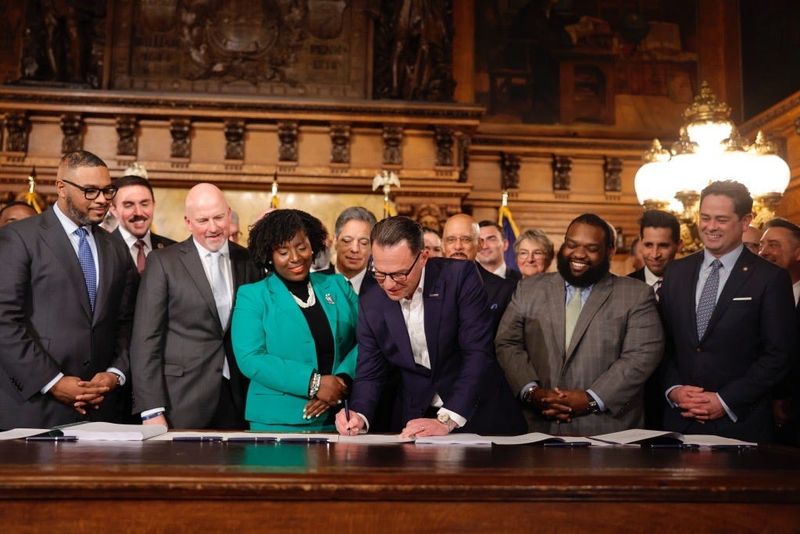
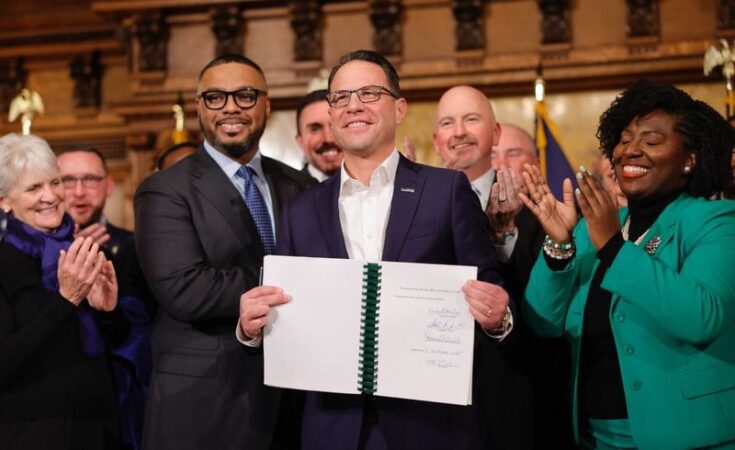
    Gov. Josh Shapiro signs the fiscal year 2025-26 budget surrounded by General Assembly members on Nov. 12 at the Capitol in Harrisburg. The state budget had been due June 30, and Pennsylvania is the final state in the country to approve a funding deal.

    “The final budget reflects the realities of working with one of the only divided legislatures in the entire country – but Gov. Shapiro will continue to fight for survivors and the Commonwealth’s rape crisis centers,” said Ali Fogarty, the DHS spokesperson.

    Victim services centers in the suburbs, which also offer rape crisis services, are echoing WOAR and PCAR’s message, highlighting the urgent need for greater funding. These suburban centers receive funding from additional sources because they support victims of other crimes.

    “For now, we’re doing OK, but another year of no increase in funding while the cost of living is going up has a significant impact on our staff as well as our organization,” said Penelope Ettinger, executive director of Network of Victim Assistance – Bucks County.

    Trying to stay afloat

    While Pennsylvania lawmakers were failing to come to an agreement on a far overdue state budget last month, rape crisis centers in Philadelphia and the suburbs were trying to make ends meet and provide services to survivors of sexual violence.

    For instance, the Victim Services Center of Montgomery County had to use a line of credit, delay bill payments, institute a hiring freeze, increase the number of interns, and commit to “triaging services,” said Mary Onama, executive director.

    “If they hadn’t passed the budget the time that they did, by December or January, we would have had to close, because we couldn’t go much longer,” Onama added.

    At the Crime Victims’ Center of Chester County, it “added a layer of stress to an already very stressful job,” though the center did not have to reduce services, said Christine Zaccarelli, the organization’s CEO.

    And at WOAR, the changes were drastic.

    The nonprofit cut their 30-person staff and paused counseling and therapy services and prevention-education programs. Other programming was kept afloat by the handful of staff members that remained.

    WOAR’s release last week said the closure of therapy and counseling services left “106 individuals wait-listed, 33 group clients waiting for services to resume, and eight child clients referred elsewhere for care.”

    The center has been serving Philadelphia since 1971 and was one of the first rape crisis centers in the United States, according to the organization. Between January and October, the center said it responded to 3,820 calls on its crisis hotline.

    But there have been recent shake-ups at the nonprofit, including the hiring of Gabriella Fontan, WOAR’S executive director, which was announced roughly a week before layoffs began in October. Prior to Fontan, the center had two interim executive directors since 2022.

    The dysfunctional approval of the state budget, though, will have lingering effects on WOAR, warning in the news release that without a “long-term, sustainable investment,” the center won’t be able to meet a rising demand for resources.

    The Bridge Loan, from the Pa. Treasury Department, provided WOAR funding owed for July through September, but it still wasn’t enough to return WOAR to full capacity, said Demetrius Archer, PCAR’s communications director. The center also brought back two employees this month, but it’s still in need of community support and is hoping to bring back more staff when possible.

    “When services are underfunded, survivors and entire communities feel the impact,” said Fontan in the news release. “In a city as large and diverse as Philadelphia, every minute counts when someone is in crisis. Survivors deserve to know that when they reach out for help, someone will be there to answer.”

    All eyes on Harrisburg

    At Temple University’s campus Tuesday, student advocates bundled up in their coats, hats, and scarves and gathered at the Bell Tower to discuss an anti-sexual violence state bill they helped develop.

    The Every Voice Bill, which primarily focuses on sexual violence prevention resources on college campuses, is even more important now that survivor services from WOAR are “unstable,” said Bella Kwok, a senior criminal justice major and president of Temple’s Student Activists Against Sexual Assault, in an interview prior to Tuesday’s event

    “This bill would ensure that stability at least on an institutional level,” Kwok said.
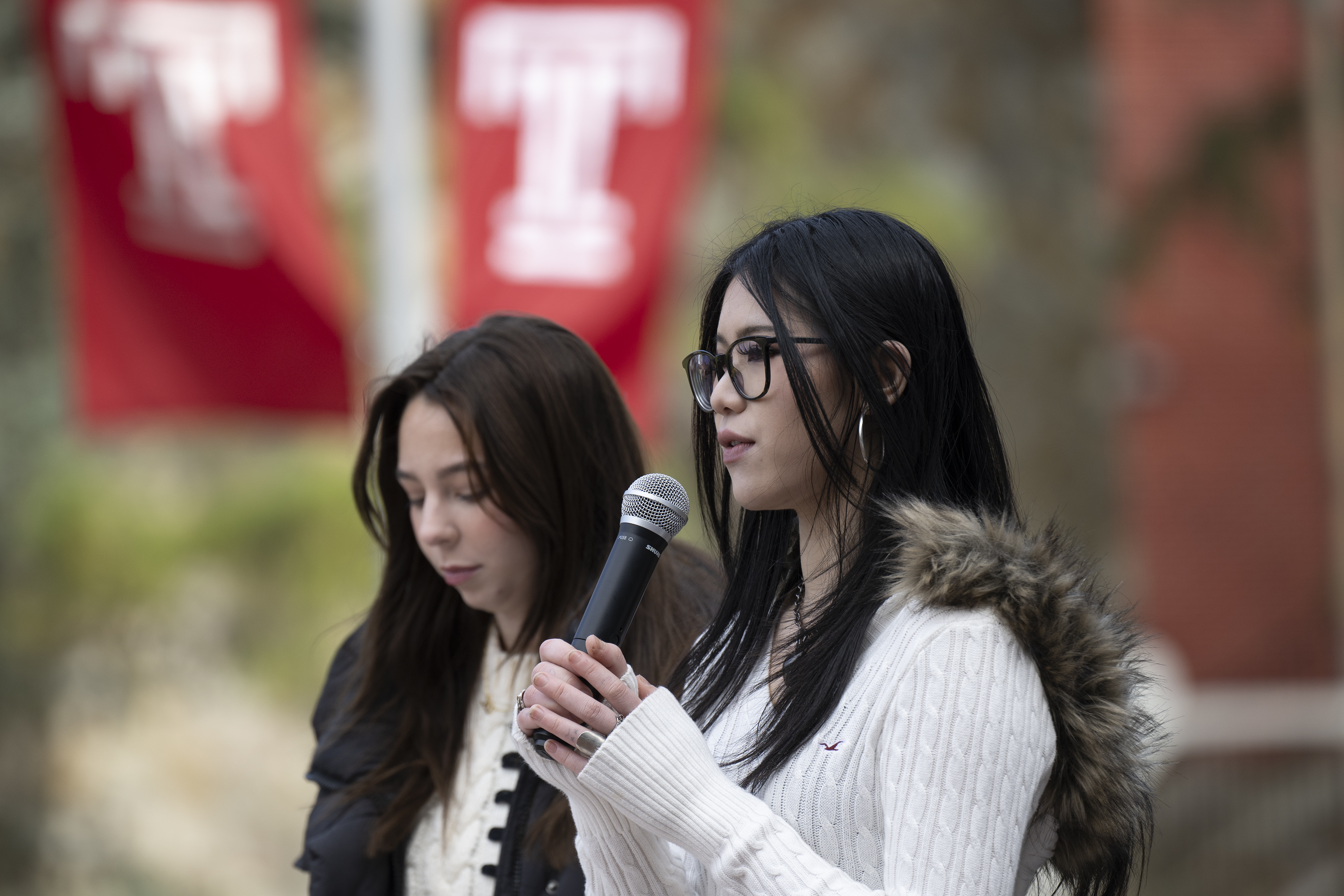
    Temple University students Emma Wentzel, left, and Bella Kwok speak at a podium on Polett Walk on Tuesday, Nov. 18, 2025, about campus sexual assault and a state bill they helped craft to strengthen protections against sexual violence at colleges.

    Kwok is not the only one who is turning their attention to Harrisburg. PCAR and other rape crisis centers are continuing their push for next year’s budget to include an $8 million increase in the Pa. DHS line item for rape crisis.

    As the first increase for rape crisis centers in a few years, the new budget’s funding gives advocates “hope,” even if the amount is “disappointing,” said Zaccarelli, of the Crime Victims’ Center of Chester County.

    “Maybe our advocacy is making a little bit of a difference and shining a light on survivors and their needs and how important our centers are in the community,” Zaccarelli said.

    Ettinger said that Bucks County’s state lawmakers have been supportive of NOVA Bucks, which had to place a hiring freeze on some positions and issue “significant” restrictions on spending due to the impasse, but that a lack of increased funding from the state is “very telling.”

    “I believe that the fact that the state did not allocate a significant increase is very telling to what they believe, where they put it on the priority list,” Ettinger said.

    For his part, Shapiro signed Act 122 in October 2024, which aimed to increase transparency by requiring a statewide electronic system to track evidence kits for sexual assaults, Fogarty, the DHS spokesperson said. And in December 2023, he signed Act 59, which aims to improve access to treatment for survivors of sexual assault.

    It’s a “societal” problem, not a government problem, said Vincent Davalos, interim executive director of the Delaware County Victim Assistance Center.

    “When we talk about sexual violence, the first thought is, of most people, is to say ‘Maybe this didn’t happen,” Davalos said. “And even if they do believe it happens… it’s just a really difficult topic for people to engage and talk about it plainly.”

    This week, victim services leaders across Pennsylvania will gather in Harrisburg for an annual conference to address funding challenges among other concerns, Davalos said, noting that with more funding, his center could improve staff retention.

    But this year, the newly passed state budget is likely to be top of mind.

    “I think money is going to be a big topic,” Davalos said.

  • Trump accuses Democratic vets in Congress of sedition ‘punishable by death,’ including two lawmakers from Pa.

    Trump accuses Democratic vets in Congress of sedition ‘punishable by death,’ including two lawmakers from Pa.

    U.S. Rep. Chrissy Houlahan was in her Washington office when she saw attacks directed at her and other military veteran members of Congress from President Donald Trump, days after they urged members of the military and intelligence community to “refuse illegal orders.”

    Trump called the Democrats “traitors” in a Thursday post on Truth Social and, in a second post, accused them of sedition that he said is “punishable by DEATH.”

    Houlahan, a Chester County Democrat and an Air Force veteran, was one of six Democratic members of Congress who released a video Tuesday contending that Trump’s administration is “pitting” service members and intelligence professionals against American citizens and urging them not to “give up the ship.”

    All six lawmakers are either veterans or members of the intelligence community.

    “The idea that the most powerful man on the planet, who wields the power of the United States military and should be emblematic of all the things we value in this republic, would call for the death and murder of six duly elected members of the House of Representatives and the Senate — I’m speechless and I’m devastated,” Houlahan told The Inquirer on Thursday afternoon.

    Houlahan said she had anticipated there might be a response from the president after Stephen Miller, Trump’s deputy chief of staff and homeland security adviser, spent much of Wednesday railing against the lawmakers in the video. But Trump’s comments went beyond anything Houlahan imagined even from a president known for extreme and sometimes violent rhetoric.

    “I’ve been struggling with the right words for this,” she said. “‘I weep for our nation’ would be an understatement.”

    U.S. Rep. Chris Deluzio, a Navy veteran who was also featured in the video, called Thursday “a dark day in America” in an interview with The Inquirer.

    “It tells me who he is and it tells me exactly why we should be talking about the rule of law and the Constitution,” said Deluzio, an Allegheny County Democrat.

    In the video that set Trump off, the lawmakers, finishing one another’s sentences, reminded service members of their oath to the Constitution and instructed them to refuse to follow any order that would violate it.

    “Right now, the threats to our Constitution aren’t just coming from abroad,” Deluzio says in the video.

    “But from right here at home,” adds U.S. Rep. Jason Crow (D., Colo.) a former paratrooper and Army Ranger.

    The video was shared by U.S. Sen. Elissa Slotkin (D., Mich.), a former CIA officer, and also included U.S. Sen. Mark Kelly (D., Ariz.), a former Navy captain, and U.S. Rep. Maggie Goodlander (D., N.H.) a former intelligence officer.

    Houlahan said she considered the video “innocuous.”

    “It literally talked about the fact that you should follow only lawful orders, an obvious reminder that those of us who served have grown up on,” she said.

    On Thursday morning, Trump shared a Washington Examiner article about the video with the headline “Dem veterans in Congress urge service members to refuse unspecified unlawful orders,” saying their message “is really bad, and Dangerous to our Country.”

    “Their words cannot be allowed to stand. SEDITIOUS BEHAVIOR FROM TRAITORS!!! LOCK THEM UP???” the president wrote on Truth Social, his social media platform.

    About an hour later, Trump added in his second post: “SEDITIOUS BEHAVIOR, punishable by DEATH!”

    Sedition and treason cases in modern U.S. history are very rare.

    Democratic condemnations of Trump’s comments poured in from across the country Thursday. Republicans were more muted. House Speaker Mike Johnson (R., La.) defended Trump’s claim that the Democrats had engaged in “sedition,” describing the video as “wildly inappropriate.”

    “It is very dangerous. You have leading members of Congress telling troops to disobey orders,” he told CNN.

    Sen. Dave McCormick, a Pennsylvania Republican and U.S. Army veteran, who has called out political violence in the past, both after Charlie Kirk’s killing and an arson at Gov. Josh Shapiro’s residence, defended the president’s verbal attacks on the lawmakers. “Not a single unlawful order is cited in this video — because there aren’t any,” he said in a statement.

    “The video is inappropriate and unwarranted, and I didn’t hear any of these calls to defy orders when Democrats were using lawfare against President Trump,” he added, “Giving outlandish pardons, or intimidating tech companies to stop free speech.”

    About an hour later McCormick’s spokesperson sent a second comment from him, adding: “President Trump can speak for himself, but as I’ve said repeatedly, there is no place in either party for violent rhetoric and everyone needs to dial it down a notch.”

    One of the few Republicans to offer any criticism of the president was U.S. Rep. Brian Fitzpatrick, a former FBI agent, who said in a statement that in the FBI he saw “how inflamed rhetoric can stoke tensions and lead to unintended violence.”

    Fitzpatrick, a moderate from Bucks County who has butted heads with Trump in the past, did not name him in the statement but said the “exchange” was “part of a deeper issue of corrosive divisiveness that helps no one and puts our entire nation at risk. Such unnecessary incidents and incendiary rhetoric heighten volatility, erode public trust, and have no place in a constitutional republic, least of all in our great nation.”

    Houlahan and Deluzio respond

    Houlahan served three years on active duty as an Air Force engineer and an additional 13 years as a reserve, and reached the rank of captain. She has been outspoken against the Trump administration on military issues, particularly surrounding women serving in combat roles.

    The lawmakers did not refer to any specific orders from the president in their video, but they had numerous concerns in mind.

    Houlahan said it was sparked, in part, by military troops being deployed to U.S. cities and lethal strikes against suspected drug boats in the Caribbean.

    Trump has suggested that American cities should be “training grounds” for the military, and targeted Los Angeles, Chicago, Washington, and Portland for National Guard deployments. His administration’s boat strikes, which have led to protests in Philadelphia, have come under scrutiny by experts who say they are illegal, per the New York Times, which found Trump’s claims justifying the attacks to be questionable.

    “What we were speaking to is the future, those who are currently serving, and making sure they remember who they serve and what they serve,” Houlahan said.

    She said the lawmakers felt “a responsibility to … make sure people understood there are people in Congress who have your back.”

    Deluzio pointed to reporting about concerns from military personnel who were deployed to U.S. cities. PBS reported this week that people in uniform have been seeking outside legal advice about some of the missions the Trump administration has assigned them.

    “This is a guy who’s been documented in a meeting with the secretary of defense talking about shooting unarmed civilians in the legs,” Deluzio said, citing an account from former Defense Secretary Mark Esper.

    Deluzio said he learned about the oath the first day of boot camp and trained sailors on it when he gained rank.

    “This is something that is fundamental to how our military works and the respect we show our service members,” he said.

    Deluzio served six years in the Navy including three deployments. He cofounded the Democratic Veterans Caucus in June, which was formed in opposition to the Trump administration.

    He said he has heard from people on both sides of the aisle and encouraged Republican colleagues to speak out publicly against the president’s remarks.

    “Republican officials should be stepping up loudly and clearly and saying the calling of death by hanging to members of Congress is out of bounds,” he said.

    James Markley, a spokesperson for the Pennsylvania Republican Party, declined to comment on Trump’s remarks and said in a text that “the woke left continues to attempt to rip apart the fibers of our communities and our country.”

    “Our party will continue focusing on making our country safer, prosperous and more affordable,” he added.

    A spokesperson for Pennsylvania Treasurer Stacy Garrity, an Army veteran who is running for governor next year with the state GOP’s endorsement, did not respond to a request for comment.

    Sen. John Fetterman, a Pennsylvania Democrat who has made a name for himself working across the aisle, said in a post on X that threatening members of Congress is “deeply wrong” without exception, regardless of political party.

    “I strongly reject this dangerous rhetoric,” he said.

    Gov. Josh Shapiro also quickly denounced Trump for calling for violence against Houlahan and Deluzio, describing them in a post on X as “two outstanding members of Congress from Pennsylvania who have fought for our country.”

    “There should be no place for this violent rhetoric from our political leaders, and it shouldn’t be hard to say that,” said Shapiro, who has consistently spoken out against the threat of political violence since a politically motivated arsonist firebombed the governor’s mansion while he and his family slept inside in April.

    Trump’s attack on Houlahan and other Democratic veterans marks the second time in two months Democratic lawmakers who served in the armed forces have been the subject of attacks from across the aisle.

    U.S. Rep. Scott Perry, a Trump ally who represents parts of central Pennsylvania, told a conservative radio station in October that Democrats in Congress “hate the military,” based on their voting records.

    Deluzio and Houlahan, both members of the House Armed Services Committee, also banded together then to push back on Perry’s comments, calling them “garbage.”

  • A new Pa. tax credit could put up to $805 in your pocket. Here’s what to know.

    A new Pa. tax credit could put up to $805 in your pocket. Here’s what to know.

    Nearly 1 million Pennsylvanians are expected to qualify for a new state tax credit that is meant to ease the burden of making ends meet.

    The new Working Pennsylvanians Tax Credit will allow eligible low- and moderate-income filers to receive a state tax credit that is equal to 10% of what they qualify for through the federal Earned Income Tax Credit (EITC). Like the EITC, the state credit will depend on income and number of children. The highest credit will be $805 and, according to Gov. Josh Shapiro’s office, the average credit will be around $240.

    In Philadelphia alone, 175,393 people are estimated to benefit from the new state tax credit totaling $41.7 million, according to Shapiro’s office. Statewide, it is expected to provide a total of $193 million in tax relief to 940,000 Pennsylvanians.

    The policy had bipartisan support since 2023, and was led by State Rep. Christina Sappey, a Chester County Democrat. Sappey and a team of Democrats sponsored a bill that passed the Democratic-led House in May that would have allowed a 30% credit, but that figure was lowered to 10% as a result of budget negotiations with the Republican-led Senate and Shapiro.

    It’s one of the measures being hailed as a major win for Democrats in the $50.1 billion state budget deal, which was approved last week after a more than four-month impasse.

    Sappey said that she was approached by the United Way of Pennsylvania “several years ago” about the idea.

    “I think of all of the folks who are really just struggling right now to make ends meet — but they’re working,” Sappey told The Inquirer.

    “They get thrown a curveball, like an unexpected healthcare expense, get in a car accident, need a giant car repair, something like that,” she added. “They really get kind of knocked off the rails, and then they kind of spiral.”

    At a news conference on Tuesday, Shapiro listed examples of Pennsylvanians who will qualify for the tax credit.

    “That single mom who’s raising three kids whose making about $25,000 a year as a waitress, she can get $770 back on her state taxes on top of whatever relief she was going to get from the federal government,” Shapiro said.

    “This isn’t some giveaway … we’ve come together on a bipartisan basis to say, ‘If you’re working, if you’re doing everything right by the book, we’re going to put money back in your pockets,’” he added.

    Who is the Working Pennsylvanians Tax Credit for?

    The tax credit is designed for working Pennsylvanians with a total income up to $61,555 if filing alone, and up to $68,675 if filing jointly as a married couple, according to the IRS guidelines for the EITC.

    Eligibility for the state credit is based on the federal EITC, which is meant for low- to moderate-income workers. Workers with kids can qualify for a bigger credit that increases with the number of children up to three or more kids.

    Individuals must be employed and earn income to qualify.

    Households that can benefit from this program may earn too much to qualify for public assistance while not earning enough to be able to handle an unplanned financial emergency, according to the United Way. About 28% of Pennsylvanians fall into this group, according to testimony from the United Way of Pennsylvania president Kristen Rotz.

    How does the tax credit work, and how much is it for?

    Pennsylvania’s state credit will be 10% of the EITC amount a filer qualifies for. Filers will automatically qualify for the state credit.

    “This is probably one of the more easy tasks you’re going to have to deal with as you’re helping people fill out their taxes,” Shapiro told a group of Widener University students Tuesday.

    The program will begin for tax year 2025, so Pennsylvanians can use it this forthcoming tax season. The credit is refundable, so taxpayers will get money back if the credit exceeds how much they owe.

    The credit amount initially increases based on how much money the earner makes and then decreases after it reaches a certain amount, resembling a bell curve, said Montgomery County accountant David Caplan. That “tipping point” differs depending on the tax filer’s status and number of dependents, he said.

    The maximum state credit for filers with no kids is $65, and about 261,739 Pennsylvanians are expected to fall in that tier, according to the Office of state House Speaker Joanna McClinton, a Philadelphia Democrat.

    That maximum raises to $432 for households with one child, $715 for two children, and $805 for households with three or more kids. About 133,641 Pennsylvanians are expected to fall in that maximum credit tier, according to McClinton’s office.

    There were 802,000 claims for the federal EITC in Pennsylvania for the 2023 tax year, totaling $2.086 billion, according to the IRS. The average federal credit amount was $2,600. Under the new state credit, that would amount to $260.

    “While it’s not much, it’s certainly a help, and that’s something that’s tangible,” said State Rep. Tarik Khan, a Democrat who cosponsored the state tax credit bill and represents parts of Philadelphia.

    Do other states have a credit like this?

    According to the National Conference of State Legislatures, 31 states, D.C., Guam, Puerto Rico, and some municipalities have their own version of the EITC.

    Most of those states calculate their credit as a percentage of the federal program, ranging from 4% in Wisconsin to 125% in South Carolina, according to the group.

    Neighboring New Jersey offers a 40% credit and Delaware has 4.5% refundable and 20% nonrefundable credits.

    State Rep. Steve Samuelson, a Northampton County Democrat who chairs the House Finance Committee and cosponsored the tax credit bill, called the credit a “commonsense” measure. He pointed out how existing states have varying political leanings, from the redder Oklahoma, Indiana, and Kansas to bluer states like New York, Hawaii, and California.

    “Better now than never,” Samuelson said.

    Is a 10% tax credit the right amount?

    Sappey and other Democrats see the 10% credit as a starting point. They hope to increase the size of the credit in future years.

    “If this is a program that both sides can agree to, getting a program established is more important than, you know, how big it is at the beginning,” she said in an interview.

    Caplan, who chairs the Pennsylvania Institute of Certified Public Accountants’ Local Tax Thought Leadership Committee, said he believes the 10% tax credit could be higher, but maybe not as high as the 30% initially approved by the House.

    “I don’t think the 10% is outrageously low that it’s kind of chintzy,” he said. “I think it’s just a nice thing to do.”

    Sen. Lynda Schlegel Culver, a Republican from Northumberland County who said she championed the policy, lauded the program for helping taxpayers who work.

    “This credit rewards work, strengthens household stability, and helps those doing everything right, working, paying their bills, and supporting their families,” she said in a statement. “This is a commonsense investment in both our workforce and the future of our Commonwealth.”

    Concerns from other Republicans about the program were related to the cost and its size.

    Sappey said “that’s legitimate” but contends that the program helps people “increase their earning power” and that the hope is, in turn, for them to no longer be eligible for the credit. And when they get it, she argues, “they are spending it in really good ways.”

    “We’re keeping people in the workforce, we’re generating revenue, and we’re keeping them out of social safety net programs,” she said.

    Rotz, of the United Way, said in her testimony that EITC recipients often spend their credit on grocery stores, vehicle and home repairs, paying off debt, and sometimes education.

    Khan lauded House Democratic leaders for holding onto the tax credit in negotiations — and compared their long-delayed negotiations to the Eagles’ season, which has seen the team rack up wins despite offensive struggles.

    “You love them, and then you watch the game, and you’re like, ‘Goddamn it. Why can’t you just play like a normal team?’ But then they win in the end, and you’re like, ‘You know what? That was a tough game, but damn it, I’m so happy right now,’ and so that’s how I feel with this.”

  • Citing extraordinary circumstances, Chester County will count the vast majority of provisional ballots cast after Election Day chaos

    Citing extraordinary circumstances, Chester County will count the vast majority of provisional ballots cast after Election Day chaos

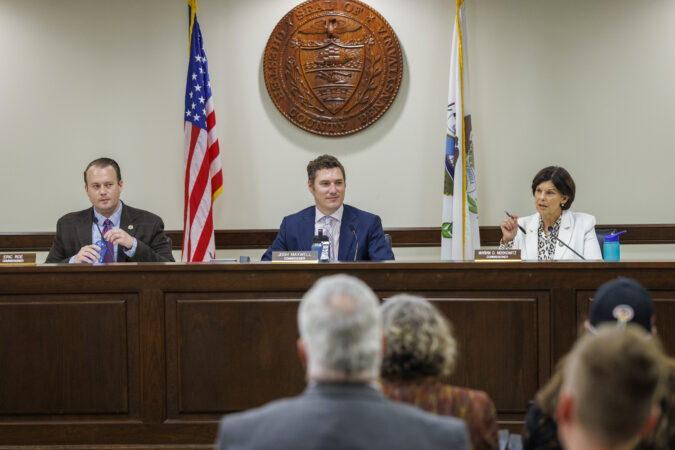
    The Chester County Board of Elections rejected Republican challenges to provisional ballots Monday as the board prepares to launch an investigation into a poll book error that forced thousands of independent and third-party voters to cast provisional ballots during this month’s election.

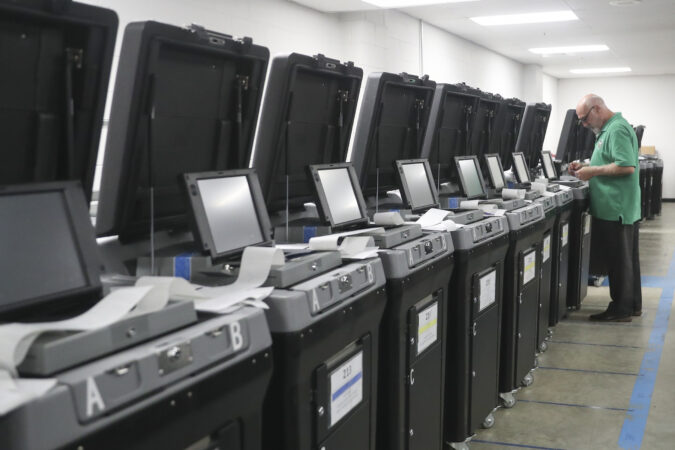
    In a nearly six-hour meeting, the Democratic-led board heard from dozens of voters and poll workers who described the chaos they endured on Nov. 4 during the high-turnout municipal election. The election resulted in more than 12,000 provisional ballots being cast primarily by independent and third-party voters blocked from voting on machines — an unusually high amount.

    The election board, which is made up of the county’s commissioners, voted to count the vast majority of the provisional ballots, arguing that the county’s mistake allowed the board to accept ballots that would be rejected under normal circumstances.

    “People’s ballots deserve to be counted in this circumstance,” said Josh Maxwell, a Democrat who chairs the three-member board. “If we make a mistake, we have to remedy it.”

    The error was caused when officials mistakenly sent poll books to precincts that did not include the names of independent and third-party voters. Until supplemental poll books were provided to precincts late in the day, those voters were asked to cast a provisional ballot.

    Provisional ballots are cast when voters are unable to vote by machine on Election Day, most often because they already requested a mail ballot or are at the wrong polling place.

    The ballots require an additional level of review before they are counted. Provisional ballots are often more likely to be rejected than mail ballots or ballots cast on voting machines in person because voters are less familiar with the voting method and are required to place ballots in a secrecy envelope and sign in two places.

    The Chester County Republican Committee objected to the counting of more than 1,000 ballots ahead of Monday’s meeting. That number whittled down as the committee withdrew objections to ballots where the error was likely caused by election workers. But the GOP committee’s attorney argued that it would be illegal to count ballots missing the first required voter signature or a secrecy envelope.

    By allowing the votes to count, she argued, the board was setting a dangerous precedent.

    “These votes are not going to change the outcome of elections, but what they do is they change the way the law is interpreted. They give someone the ability to bypass the safeguards that are in the law,” said Dolores Troiani, an attorney for the county GOP.

    The ballots, the party argued, needed to be rejected to preserve voter confidence in county elections. In a letter to the commissioners, the party argued that voter confidence had dropped after the poll book error, the office’s failure to include a county row office on the primary ballot, and high turnover in the county election office.

    In response, the letter said, county officials should not certify the November election.

    Democratic officials rejected all the GOP challenges.

    “We should not, especially when it is of no fault of their own, be disenfranchising voters,” said Democratic Commissioner Marian Moskowitz.

    Republican Commissioner Eric Roe voted against counting the ballots, arguing that there was no legal basis to do so.

    “If the legislature wanted to make exceptions, it should have and would have said so,” Roe said. “I will be relying on what the law says and not what I wish it says.”

    Voters on Monday voiced frustration and confusion at having learned their ballot, which they were told would count, would be rejected for an error they were not aware of at the polling place. Several were angry that the county GOP asked for eligible voters’ ballots to be rejected.

    Edith Jones, a poll worker, approached the podium nearly in tears Monday to tell commissioners that she worried she’d caused more than a dozen voters to have their ballots thrown out. As the day began, she said, she directed voters to fill out their provisional ballots but forgot to provide them with the required secrecy envelope.

    “I gave them instructions, but when somebody in authority tells you what to do, who’s going to read all those words on the paper?” Jones said.

    Throughout testimony, voters and the Republican Party questioned how the error could occur and demanded remedy moving forward.

    “We have no guarantee they’ll fix it,” Troiani said in an interview after the meeting. However, the attorney said the party would not appeal the board’s decisions.

    Last week, the county announced plans to hire an outside firm to investigate the poll book error.

    This suburban content is produced with support from the Leslie Miller and Richard Worley Foundation and The Lenfest Institute for Journalism. Editorial content is created independently of the project donors. Gifts to support The Inquirer’s high-impact journalism can be made at inquirer.com/donate. A list of Lenfest Institute donors can be found at lenfestinstitute.org/supporters.

  • William L. Elkins, pioneering research immunologist at Penn and innovative Chester County cattle rancher, has died at 93

    William L. Elkins, pioneering research immunologist at Penn and innovative Chester County cattle rancher, has died at 93

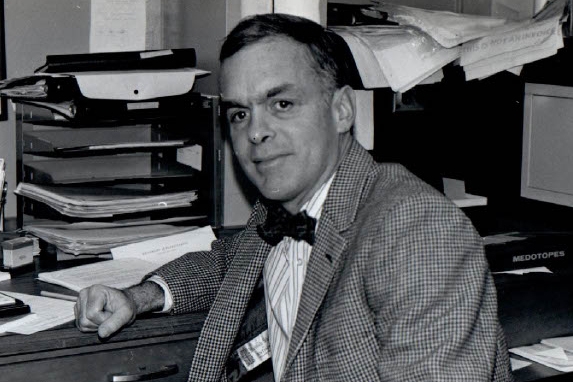
    William L. Elkins, 93, of Coatesville, pioneering research immunologist at what is now the University of Pennsylvania’s Perelman School of Medicine, associate professor emeritus of pathology and laboratory medicine, innovative longtime Angus cattle rancher in Chester County, avid sailor, and veteran, died Tuesday, Nov. 11, of complications from pneumonia at Chester County Hospital.

    The great-great-grandson of Philadelphia business tycoon William Lukens Elkins, Dr. Elkins fashioned his own distinguished career as a scientist, medical researcher, and professor at Penn from 1965 to 1985, and owner of the Buck Run Farm cattle ranch in Coatesville for the last 39 years.

    At Penn, Dr. Elkins conducted pioneering research on how the human immune system fights infection and disease. He collaborated with colleagues in Philadelphia and elsewhere around the country to provide critical new research regarding bone marrow transplants and pediatric oncology.

    His work contributed to new and more effective medical procedures at Penn, Children’s Hospital of Philadelphia, and elsewhere, and he instructed students and residents at Penn. But his lifelong love of the fields and rolling hills he roamed as a boy in Chester County never faded, he told Greet Brandywine Valley magazine in 2023.

    Dr. Elkins was a lifelong outdoorsman.

    “Farming is in my blood,” he said. “So even when I went to medical school and all that, the enthusiasm never left, and I wanted to go back to it.”

    So he retired from medicine at 53, and he and his wife, Helen, bought nearly 300 acres of the old King Ranch on Doe Run Church Road in Coatesville. She kept the books and looked after the business. He became an expert on breeding cattle and growing the high-energy grass they eat.

    Wearing floppy hats and riding a colorful ATV from field to field, Dr. Elkins worked his land for decades. He mended fences and tended daily to his 120 cows, heifers, and prize bulls.

    He championed holistic regenerative farming and used new scientific systems to feed his cattle. He rejected commercial fertilizer and knew all about soil composition, grass growing, and body fat in cattle.

    Dr. Elkins and his wife, Helen, married in 1966.

    In a 1995 Inquirer story, he said: “Cattle are just like anyone else. If you just turn a few cattle out in a great big field, they will wander around, eat the grass they like best, and leave what they don’t want. That means the less desirable grasses tend to predominate.”

    He traveled the country to confer with other cattlemen and helped found the Southeast Regional Cattlemen’s Association in 1994. He sold his beefsteaks, patties, jerky sticks, and kielbasa grillers to private customers online and to butchers and restaurants.

    At least one local chef featured an item on the menu called Dr. Elkins’ Angusburger. Lots of folks called him Doc.

    He earned his medical degree at Harvard University in 1958 and served two years in the Navy at the hospital in Bethesda, Md. He was a surgical intern in New York and discovered that he preferred the research lab. Before Penn, he worked at the Wistar Institute of biomedical research.

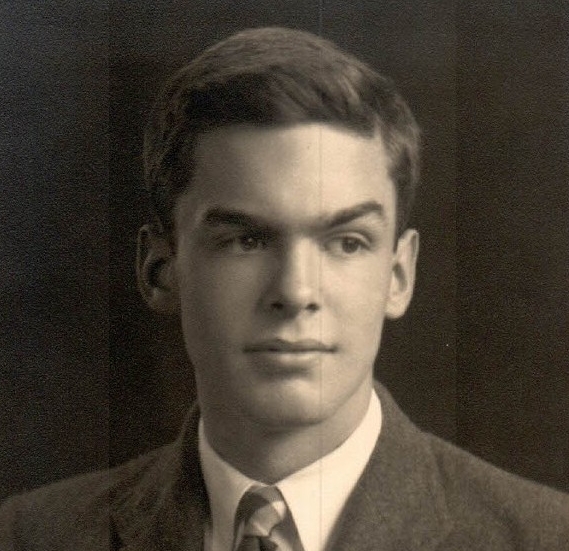
    Dr. Elkins graduated from St. Mark’s School in Massachusetts in 1950.

    Away from the lab, Dr. Elkins was an ocean sailor, expert navigator, and former boat club commodore. He was active with the Brandywine Conservancy, Natural Lands, and other groups, and was lauded by national organizations for his wide-ranging conservation and wildlife efforts.

    He made his farm a haven again for the bobolink grassland songbird and other migratory birds and butterflies that had dwindled. “Buck Run Farm is more about growing grass and trees than beef,” he told Greet Brandywine Valley. “We’re blessed by the land.”

    William Lukens Elkins was born Aug. 2, 1932, in Boston. He lived on the family dairy farm in Pocopson, Chester County, when he was young, went to boarding school in Massachusetts for four years, and earned a bachelor’s degree in biology at Princeton University.

    He met Helen MacLeod at a party in Washington, and they married in 1966 and had a daughter, Sheila, and a son, Jake. They lived in Center City, Society Hill, and Villanova before moving to the farm. “He was easy to be with,” his wife said.

    Dr. Elkins enjoyed sailing and fishing.

    Dr. Elkins loved nature, fishing, and baseball, and he followed the Phillies, the Flyers, and other sports teams. “He had a wonderful bedside manner,” his daughter said. “He was a great listener. He really knew how to support people.”

    His son said: “He was unassuming and direct. He spoke his mind. He connected with so many different people. He was curious about the world around him.”

    His wife said: “He was thoughtful and always concerned about people. He had good humor. He was fun.”

    In addition to his wife and children, Dr. Elkins is survived by five grandchildren and other relatives. A sister died earlier.

    This article about Dr. Elkins and his ranch appeared in The Inquirer in 1995.

    A celebration of his life is to be held later.

    Donations is his name may be made to the Stroud Water Research Center, 970 Spencer Rd., Avondale, Pa. 19311.

  • Tower Health’s audit for fiscal 2025 reversed its reported operating profit

    Tower Health’s audit for fiscal 2025 reversed its reported operating profit

    Tower Health’s preliminary financial report in August for fiscal 2025 showed a $5.9 million operating profit, a gain that came thanks for the sale of a shuttered hospital in Chester County.

    But that apparent annual profit, the Berks County nonprofit’s first since 2017, turned into a $20.6 million loss when Tower released its annual audit.

    Auditors from KPMG decided that Tower should boost medical malpractice reserves and give up on collecting millions owed by patients, Tower said in a statement.

    “As part of our standard accounting process, the audited financials for the full year reflect increased malpractice insurance reserves and final adjustments to accounts receivable,” Tower said.

    Most of the $26 million swing to a loss came from medical malpractice, but Tower also reduced what is called patient accounts receivable, representing unpaid bills, to $236.6 million from $251.6 million in August’s preliminary results, according to Tower’s audited financial statements that were published Friday.

    Separately, Tower reported a $15.9 million operating loss for the three months that ended Sept. 30. That loss was a bit bigger than the $14.2 million loss in the same period last year. Tower’s revenue for the quarter was $501 million, up 4% from $479.8 million last year.

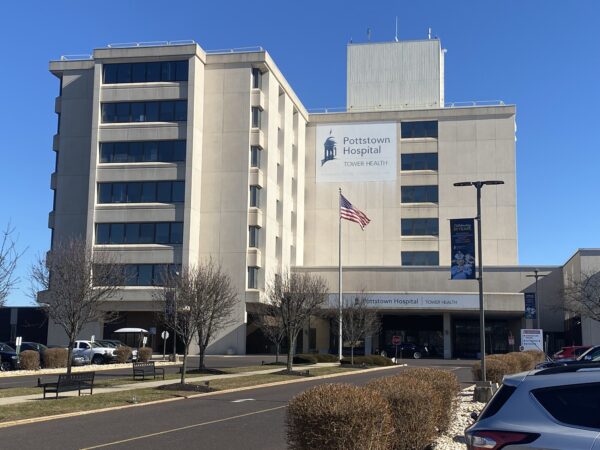
    The results for the first quarter of 2026 did not include expenses for Tower’s layoff of 350 employees, or about 3% of its workforce, earlier this month. The cuts hit Pottstown Hospital particularly hard. Tower is eliminating 131 jobs there and eliminating some services.

    The closures include the combined intensive care/critical care unit, the Pottstown location of the McGlinn Cancer Institute, and the hospital’s endoscopy center.

    Two unions that represent Pottstown employees, the Pennsylvania Association of Staff Nurses and Allied Professionals and SEIU Healthcare Pennsylvania have decried the cuts and called on management to engage in discussions on how to preserve jobs and services.

  • Chester County officials promise to investigate poll book omissions, after they’ve finished counting the votes

    Chester County officials promise to investigate poll book omissions, after they’ve finished counting the votes

    The Chester County Board of Commissioners apologized to voters Wednesday after an error forced independent and third-party voters to cast provisional ballots through much of Election Day.

    Speaking at their twice-monthly board meeting, Democratic Commissioners Josh Maxwell and Marian Moskowitz and Republican Commissioner Eric Roe promised to determine how the error was made and ensure it doesn’t happen again.

    “Know that we will look into this. We need to finish the election first,” Maxwell said.

    Election officials in Chester County sent poll books to precincts that included only the names of registered Republicans and Democrats, omitting all other voters.

    The error meant poll workers had no way to ensure voters not affiliated with a major party were eligible when they arrived to vote Tuesday morning. As a result, those voters cast provisional ballots until supplemental poll books were delivered to each precinct by around 3:45 in the afternoon.

    Provisional ballots will be counted, but they are counted slower as election officials must first verify they were cast by an eligible voter who had not already voted.

    The county left polling places open for an additional two hours Tuesday, allowing voters who arrived after 8 p.m. to cast provisional ballots. About 75,000 voters in Chester County are not registered with either party. The error likely affected far fewer people, as many voters had cast mail ballots and odd-year elections tend to have lower turnout.

    To get through the day, Maxwell said, Philadelphia’s election office delivered a “truckload” of provisional ballots to the suburban county.

    While some online have called for the resignation or firing of Chester County’s director of voting services, Karen Barsoum, Maxwell said discussions of personnel matters were premature.

    “We have a lot of very good people who are very well-intentioned who set a very high standard for themselves,” Maxwell said, adding that the county had had to increase security for some staff members in response to online threats.

    Roe and Moskowitz each thanked poll workers who managed a chaotic, and longer than normal, day at the polls.

    County officials said they would work to better understand how the error occurred after they have finished tallying votes and certifying the election.

    “We will be working on it,” Roe said. “We will get to the bottom of it. Accountability will come.”

    This suburban content is produced with support from the Leslie Miller and Richard Worley Foundation and The Lenfest Institute for Journalism. Editorial content is created independently of the project donors. Gifts to support The Inquirer’s high-impact journalism can be made at inquirer.com/donate. A list of Lenfest Institute donors can be found at lenfestinstitute.org/supporters.

  • Downingtown elects Erica Deuso, Pennsylvania’s first openly transgender mayor

    Downingtown elects Erica Deuso, Pennsylvania’s first openly transgender mayor

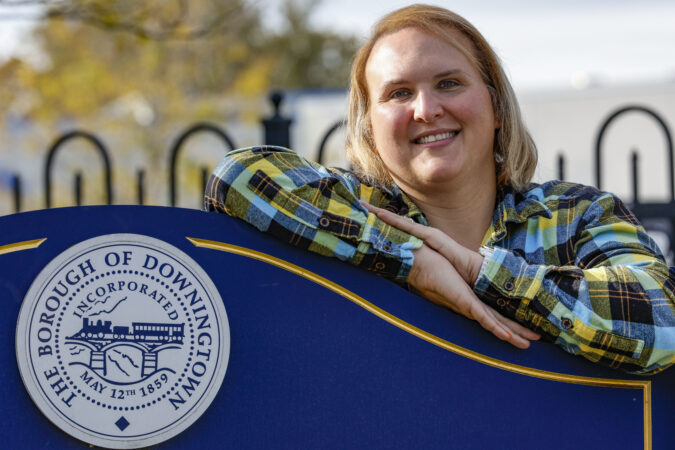
    Erica Deuso will be Pennsylvanias first openly transgender mayor. She won Tuesday’s contest to lead Downingtown after a campaign focused on bread-and-butter local issues in the face of attacks to her identity.

    The longtime Democratic advocate who works in management at a pharmaceutical company earned 64% of the vote as of Wednesday morning defeating Republican Rich Bryant who had 35% of the vote to serve as the next mayor of Downingtown, a Chester County borough of roughly 8,000 people.

    “Voters chose hope, decency, and a community where every neighbor matters,” Deuso said in a statement at 1:30 a.m. Wednesday. “I am honored to be elected as Pennsylvania’s first openly transgender mayor. I carry that responsibility with care and with purpose.”

    Deuso joins a small but growing rank of transgender officials in Pennsylvania and nationwide. There are 52 out transgender elected officials across the United States and three in Pennsylvania, all who govern at the local level , according to the Victory Institute, the research arm of the Victory Fund, which supports LGBTQ+ candidates and backed Deuso.

    While her gender identity attracted attention, and online vitriol, Deuso’s campaign didn’t dwell on it. Instead she prioritized public safety, sustainable growth and community in the historic borough now home to Victory Brewing.

    She ran with the support of the borough’s last two mayors, Democrats Phil Dague and County Commissioner Josh Maxwell.

    Bryant, a retired cybersecurity expert, argued he was better experienced for the job, which primarily leads the borough police department. But Bryant faced accusations of bigotry as Deuso posted screenshots online of her opponent making misogynistic and transphobic remarks on X, (Bryant said 90% of the posts were AI-generated, but offered no proof.)

    In a statement, Bryant congratulated Deuso and pledged to continue working to serve the community.

    “To those who voted differently, I respect your decision and share your hope for a stronger, safer, and more united Downingtown. I will continue to serve, to listen, and to advocate for responsible growth, fiscal transparency, and accountable local leadership,” he said.

    This suburban content is produced with support from the Leslie Miller and Richard Worley Foundation and The Lenfest Institute for Journalism. Editorial content is created independently of the project donors. Gifts to support The Inquirer’s high-impact journalism can be made at inquirer.com/donate. A list of Lenfest Institute donors can be found at lenfestinstitute.org/supporters.

  • Chester County poll book error forces independents to vote provisionally through the afternoon

    Chester County poll book error forces independents to vote provisionally through the afternoon

    Independents in Chester County were forced to cast a provisional ballot through the morning hours and early afternoon on Election Day.

    Poll books delivered to Chester County’s precincts Tuesday morning did not include the names of independent and third-party voters, the county’s voter services department said in a post to X. As a result, poll workers were unable to allow those voters to cast ballots on machines as normal.

    The county resolved the issue, delivering supplemental poll books to precincts, by 3:45 p.m. Tuesday. In response to the problem, the county extended voting hours by two hours. Voters who arrive at their polling places between 8 and 10 p.m. will have the opportunity to cast a provisional ballot.

    Poll books are the records poll workers use to verify that each voter is an eligible voter seeking to cast a ballot in the correct precinct.

    Until the supplemental books were delivered, voters were asked to cast provisional ballots.

    A provisional ballot is used when poll workers cannot immediately verify the eligibility of a voter. The ballots will be counted, but they are counted later than other votes, as election officials must first verify that the voter is eligible and has not already cast a ballot by mail or at another polling place.

    All eligible voters in the county ultimately had the opportunity to cast a ballot and have it be counted.

    Just over 75,000 Chester County voters are unaffiliated or registered to vote with a third party. Far fewer voters were likely to be affected by the error, however, as many cast mail ballots ahead of the election and odd-year elections tend to be lower in turnout.

    A spokesperson for Chester County said the county will conduct a formal review to determine how unaffiliated and third-party voters were left off poll books and how to prevent it from happening again.

    Voters can track the status of their provisional ballot at https://www.pa.gov/agencies/vote/voter-support/provisional-ballot.

    This suburban content is produced with support from the Leslie Miller and Richard Worley Foundation and The Lenfest Institute for Journalism. Editorial content is created independently of the project donors. Gifts to support The Inquirer’s high-impact journalism can be made at inquirer.com/donate. A list of Lenfest Institute donors can be found at lenfestinstitute.org/supporters.

  • The new Borough in Downingtown is a sports bar, a pizzeria, a sushi bar, and a music venue all in one

    The new Borough in Downingtown is a sports bar, a pizzeria, a sushi bar, and a music venue all in one

    When Keith Critchley and JT O’Brien were looking to buy a restaurant last year, they toured the dining room and kitchen of Georgio’s in downtown Downingtown, which Georgio Malle was selling after more than 30 years.

    “Keith and I went to lunch and I said, ‘There’s no way we’re buying this for what he wants. It’s not that big,’” O’Brien said. They went back to negotiate, he said, Malle told them flatly, “My price is my price.”

    Crispy chicken sandwich on a doughnut at the Borough in Downingtown.

    It quickly became evident that Critchley and O’Brien had not seen the upstairs of the rambling building on Lancaster Avenue. “When I saw the upstairs, I thought, ‘Now I can start thinking of different ideas and concepts that we can do,’” O’Brien said.

    They seem to be throwing everything at the Borough, which began opening in phases in recent weeks. There is a 35-seat sports bar/restaurant with 40 TVs, 20 taps, and a full cocktail menu on the ground floor, connected to a large patio through garage doors. Upstairs, there’s a 20-seat bar, a six-seat sushi bar, and a venue hosting live music. Programming such as open-mic nights, karaoke, trivia nights, and comedy shows will ramp up in November. Big brunches — think mimosa towers and full entertainment — will start after Thanksgiving.

    Critchley and O’Brien retained pizzaiolo Ptah Akai to set up the pizza kitchen.

    Five years ago during the pandemic, the Swarthmore-born Akai noticed that the successful restaurants were offering pizza — “and not because they were making great pizza.”

    Consultant Ptah Akai at the Borough in Downingtown.

    Akai began teaching himself, using YouTube and setting up an oven in his backyard. By day, Akai, 33, works as an installer for Toast, the restaurant point-of-sale company. He quickly became popular among his neighbors. “It brings people together,” he said. “You can go anywhere in the world and make pizza and probably make a friend.”

    A lifelong vegan, Akai wanted to make pizza he could eat himself, and the challenge of making tasty nondairy pizza became motivation. When he learned that Critchley and O’Brien were opening, he offered to get them started. (Georgio’s had a fairly extensive pizza kitchen, including a large mixer.)

    Forager pizza at the Borough in Downingtown.

    Akai’s pies are beautifully puffy-crusted, sort of neo-Neapolitan, with zero flop and a light char. The sliced garlic gave a subtle roast to a cheeseless tomato pie that he made for me off the menu. His Forager ($23), with basil pesto and three kinds of mushrooms, was balanced and did not sink under the mozzarella. There’s also a plain cheese ($18), pepperoni ($21), and a margherita ($19).

    As they did with the other restaurant amenities, Critchley and O’Brien created a something-for-everyone menu, served anywhere in the space. There are pork belly burnt ends ($18); Bavarian pretzel ($13); meat-and-cheese board ($32); crispy chicken sandwich ($16) with a sesame soy glaze and kimchi on a glazed doughnut bun; and a lamb gyro ($19) with sumac red onion and tzatziki on a house-made pita. Rolls make up the sushi menu, and the few entrees include miso striped bass ($34), seared scallops ($36), cauliflower steak ($25), and steak frites ($36).

    O’Brien started in hospitality 25 years ago bartending at Reed’s in Blue Bell and counts six years at Seacrets in Ocean City, Md., and 11 years with P.J. Whelihan’s in Downingtown and Montgomeryville in his work history. Critchley, who has no hospitality background, recently sold his business, Lang’s Lawn Care in Malvern, but runs it under the new owners.

    Downingtown has always had a solid restaurant scene, with La Sponda, Myrtos, and Jads nearby and R Five Wines and East Branch Brewing Co. across the street from the Borough, and Dressler Estate serving ciders nearby. The other newcomer is mother., with a creative menu of tacos plus beer, wine, and cocktails.

    The Borough, 149 E. Lancaster Ave., Downingtown. Hours: 11 a.m. to midnight Sunday to Thursday, 11 a.m. to 1 a.m. Friday and Saturday. Tip: Do not park in the adjacent private lot. Use the municipal lot across the street.