Peco is expanding its real estate footprint in the Philadelphia region.
The gas and electric utility company purchased a property at 100 Chesterfield Parkway in Malvern for $5.95 million in January, according to Chester County property records. The Philadelphia Business Journal first reported the purchase.
Peco’s Malvern acquisition “is part of a comprehensive, multi-year strategy to support the recent expansion and future growth of our operations teams,” Peco spokesperson Matthew Rankin said Thursday.
Administrative staff and “other support teams,” will work out of the new office, Rankin said, but did not say how many.
The property is near Peco operations facilities, Rankin said.
Peco’s expansion comes as the company brought in $814 million in net income in 2025, up 48% from the previous year. Exelon, the utility’s parent company, has said the increase was in part due to “favorable weather” and higher distribution rates.
The company proposed a rate hike again this year, but quickly withdrew the proposal after backlash. Peco had said it needed to increase prices for upgrades, to meet demand, including to prepare for data centers, and increase grid reliability. The company also cited extreme weather conditions, which can damage infrastructure.
Peco and its worker union, IBEW local 614 reached a tentative agreement on a new union contract this week, ending the company’s first worker strike in its history, which lasted three days.
The developer of a 1.5 million-square-foot data center project proposed for an East Whiteland Superfund site has again returned to the township requesting changes to the plan — even as they’ve already started preparing for construction.
But on Wednesday, the developers asked for a “field change,” requesting permission to put into place some of the changes that would have been included in those amended plans.
The changes — which include the ambitions they’ve had since January — would remove the cooling towers, eliminate water cooling for the computer equipment, and install air-chilled units on the building’s roofs. These changes are permitted under the Land Development Agreement, Township Manager Steve Brown told the community at the meeting. But they require the board’s approval.
The request drew ire from community members who have for months been opposed to the project, fearing the data center’s impact on health and the environment. They’ve also raised concerns that it will rest atop the former Foote Mineral Co., a contaminated industrial site that landed on the federal list of hazardous places.
The board voted, 2-1, to table approval of the proposed changes; chairman Scott Lambert and supervisor Clinton Smith said there were still too many questions. Supervisor Peter Fixler cast the dissenting vote.
“What’s been presented to us this week, as I said before, I think is a gift. … What’s in front of me now is a data center that’s a third the size of their original proposal,” Fixler said ahead of the vote. “It would, I feel, be environmentally irresponsible to not approve this plan. I know that doesn’t sound popular.”
The developer said the reason for the change is water conservation, Brown said. The approved plan would use more than 3 million gallons of water a day, vs. the proposed plan, which would use air chillers.
Separately, the developer proposed slashing the size of the buildings, down from a sprawling 1.5 million square feet total build-out — with two data center buildings roughly 772,000 square feet each — down to a total of 536,000 square feet. It would strike a basement in the current plans, and also reduce the height of the building. These changes don’t necessitate board approval, Brown said.
In an email Thursday, Lou Colagreco, the attorney representing the developers, said they would respond to any of the board’s questions “that may still be outstanding.”
“At the end of the day, this is a simple question: Will we use a cooling system that consumes millions of gallons of water a day, as approved, or not?” he said. “We believe this is a very easy decision. We are at a moment in the job where we have no choice but to move forward with whatever path provides us certainty of execution. If the Board wants us to build with evaporative water cooling, we will continue to do so.”
As he discussed his decision, board chairman Lambert told residents that “we could get a call tomorrow from the developer, and he may say, ‘That 536,000 square foot offer we put out there to make it smaller, it’s gone.’”
On Wednesday, the community called for the rejection of the plans, saying that it was too big a transformation to be considered a field change.
“This isn’t moving a pipe from five feet away to have some mud moved on top of it. This is a half-a-million-square-foot change,” resident Tony Gianino said. “This is crazy. This is a completely new project. I’ve been saying this since the beginning. This is a substantial change. If not this, then what counts as substantial?”
Jeff Katz, another resident, said that the plans looked like those initially presented to the township in the spring, which were ultimately withdrawn.
“Bringing substantially the same changes back tonight … looks like an attempt to get through the back door of what could not be brought through the front,” he said.
This suburban content is produced with support from the Leslie Miller and Richard Worley Foundation and The Lenfest Institute for Journalism. Editorial content is created independently of the project donors. Gifts to support The Inquirer’s high-impact journalism can be made at inquirer.com/donate. A list of Lenfest Institute donors can be found at lenfestinstitute.org/supporters.
The entirety of the 83-acre St. Peter’s Village will be sold at auction this September.
The future of St. Peter’s Village hangs on the auction block, where it will be sold this September to the highest bidder.
The entirety of the 83-acre historic village in the northwest of Chester County is up for sale in what is a decidedly unusual offering. That includes 121 homes and 13 historic and commercial village buildings.
As the bidding nears, some are expressing concerns over its future, while others are hopeful for revitalization.
The dining room at Bluebird Distilling and Dough House was expanded as part of a larger renovation.
Popular Phoenixville distillery Bluebird Distilling reopened yesterday with a new look and fresh menu items following a $2.2 million renovation.
Now known as Bluebird Distilling & Dough House, the concept offers a “neo-Neopolitan” pizzeria and restaurant, in addition to an expanded bar, dining room, and bottle shop.
The idea to add pizza came after owner Jared Adkins started taking classes to learn the art.
Two county residents were recently diagnosed with measles, marking the first cases in the Philadelphia area this season. There’s been an uptick in cases statewide, which is at a three-decade high.
In case you missed it, last week the developer of a proposed East Whiteland data center was ordered to temporarily stop work that disturbs the soil. Here’s why.
North Coventry Township’s zoning board is scheduled to discuss an application for a Sheetz at 1395 S. Hanover St. and several neighboring parcels tomorrow at 7 p.m.
Oxford Borough council is hosting a meeting tonight at 7 p.m. to discuss potential changes to its police services as it weighs its finances.
In other higher-ed news, longtime Immaculata University president Barbara Lettiere plans to retire next summer after leading the school for a decade.
Spring City is relocating its borough hall and police department to temporary offices today as work continues on the new municipal building. The borough office will temporarily be located at 2 Riverside Dr., with borough meetings taking place at Liberty Fire Company’s social building, while the police will temporarily be at 7 Riverside Dr.
Lit Fitness is taking over the former ImpactFit in Exton at 35 E. Uwchlan Ave. There’s no timeline yet for the official transition.
Ash Park reopened yesterday in Coatesville after undergoing a yearlong overhaul. The updated 9.3-acre park has a new pavilion, an expanded playground, new water fountains and lighting, an expanded basketball area, and meadows.
French and Pickering Creeks Conservation Trust has preserved 34.9 acres in North Coventry Township, adding to the 13,700 acres it’s conserved nearby.
🏫 Schools Briefing
Octorara Area School District has named Nancy Young as its director of special education and student wellness.
🍽️ On our Plate
Longwood Garden’s 1906 is the lone Chester County restaurant to earn honors in this year’s Wine Spectator Restaurant Awards. The magazine recognizes establishments with wine lists offering what it deems interesting selections that are “appropriate to their cuisine” and “appeal to a wide range of wine lovers.” It recognized 1906 — which Inquirer food critic Craig LaBan recently called one of the best restaurants in the suburbs — for its selection of wines from California and France.
🎳 Things to Do
🎙️ Sound of Summer Free Concert Series: Pop-rock artist Olivia Rubini headlines this week’s show. ⏰ Wednesday, July 8, 6:30-8:30 p.m. 💵 Free 📍 Anson B. Nixon Park, Kennett Square
🎭Ain’t Misbehavin’:This summer musical will transport audiences back to the Harlem Renaissance. ⏰ Select days from Wednesday, July 8-Sunday, Aug. 16, times vary 💵 Prices vary 📍 People’s Light, Malvern
🎹 Tredyffrin Township Summer Concert Series: Hear party music from the ‘60s through the ‘90s when The O’Fenders takes the stage. ⏰ Thursday, July 9, 7 p.m. 💵 Free 📍 Wilson Farm Park, Wayne
📽️ Blobfest: This year’s three-day festival is circus-themed and kicks off with a screening of the film and the run-out. Other events include a ball, “dinner en blob,” and screenings of other films. ⏰ Friday, July 10-Sunday, July 12, times vary 💵 Prices vary 📍 The Colonial Theatre, Phoenixville
🍖 KS-Que BBQ Festival: Sample local barbecue as teams compete for bragging rights. ⏰ Saturday, July 11, noon-5 p.m. 💵 $25 📍 The Creamery, Kennett Square
🎶 Eagleview Summer Concert Series: American rocker Sophie Gault will headline the upcoming show. Local Americana band Lazy Villains will also perform. ⏰ Tuesday, July 14, 7-9 p.m. 💵 Free 📍 Eagleview Town Center, Exton
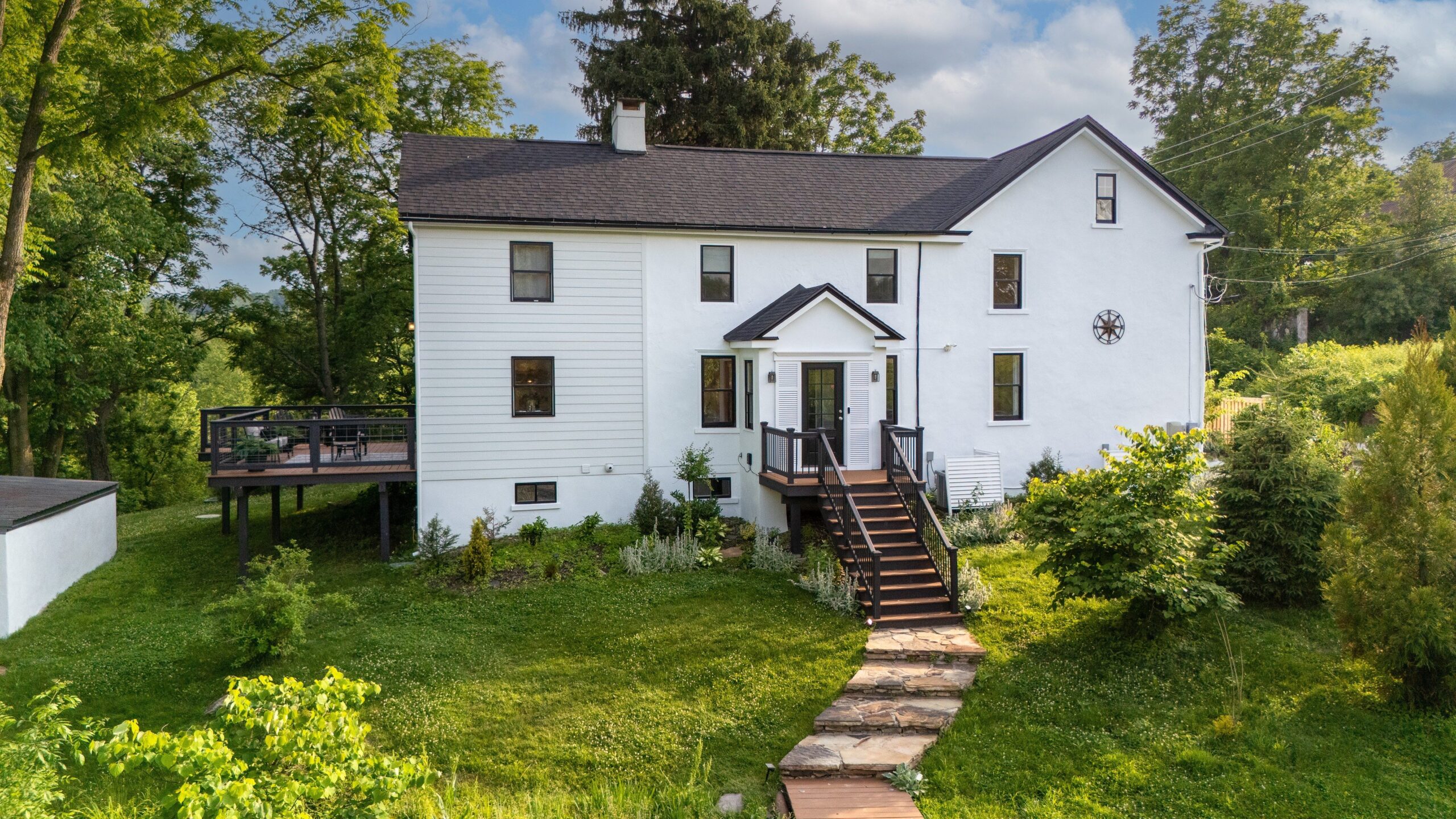
Dating back to the late 18th century, this updated five-bedroom Phoenixville home is replete with preserved period elements like millwork and fireplaces. The first floor has a family room, living room, office, and a kitchen with an exposed stone wall and radiant heated brick floors. It opens onto a sunroom with space for dining and lounging that overlooks the woods of Pickering Creek Preserve. The primary suite features exposed beams, its own sitting room, and a bright bathroom with skylights. There’s an open house Saturday from noon to 2 p.m.
By submitting your written, visual, and/or audio contributions, you agree to The Inquirer’s Terms of Use, including the grant of rights in Section 10.
This suburban content is produced with support from the Leslie Miller and Richard Worley Foundation and The Lenfest Institute for Journalism. Editorial content is created independently of the project donors. Gifts to support The Inquirer’s high-impact journalism can be made at inquirer.com/donate. A list of Lenfest Institute donors can be found at lenfestinstitute.org/supporters.
Roadwork continues on several major thoroughfares throughout Chester County this week, including Route 30. Elsewhere, other projects will get underway, including a monthslong update to Conestoga Road in East Nantmeal Township that will result in a lane closure.
Here are all the possible delays and detours you need to know, starting July 7:
Birmingham Township: Weather depending, expect roadwork and a closure on Old Wilmington Pike between Knolls and Birmingham Roads through Friday as Peco undertakes tree removal.
Coatesville; Caln, East Fallowfield, and West Bradford Townships; and South Coatesville: Overnight paving work from 7 p.m. to 5 a.m. will cause a lane closure on Hazelwood Avenue between Marshallton Thorndale Road and First Avenue through Friday.
East Nantmeal Township:Fairview Road will be closed between Little Conestoga and Conestoga Roads from 7 a.m. to 5 p.m. through Friday. Starting Wednesday and continuing through July 15, Fairview Road will be closed between Conestoga Road and Pottstown Pike, also from 7 a.m. to 5 p.m. Starting Tuesday, expect a lane closure on Conestoga Road between Nantmeal and Moores Roads that will continue from 7 a.m. to 3 p.m. through the end of September.
East Pikeland Township: Starting Monday and running through July 24, Spring Hollow Road will be closed between Route 724 and Spring Lane.
Franklin Township: Roadwork continues on Church Hill Road near Hilltop Road, resulting in an ongoing lane closure. Work is expected to continue throughout the summer and into the fall as the township undertakes stability repairs and partial roadway reconstruction.
Honey Brook Township: There will be a lane closure on Cambridge Road between Horseshoe Pike and the Lancaster County line from 6 p.m. to 6 a.m. through July 14, followed by milling and paving through July 21.
North Coventry Township: There will be a lane closure as resurfacing of eastbound Route 422 between its interchanges with Route 100 and Armand Hammer continues 9 to 5 a.m. through Thursday.
West Chester: South Church Street will be closed between Price and West Barnard Streets for utility work through Friday. The 200 block of Linden Street and the 600 block of Maple Alley will be closed from 7 a.m. to 3 p.m. through Friday for sewer line work.
West Pikeland Township: The driveway for Pine Creek Park will be repaved on Thursday and Friday, resulting in the park’s temporary closure.
West Sadsbury Township:Route 30 will have an overnight lane closure between Octorara Trail and the Lancaster County line from 7 p.m. to 5 a.m. through Friday.
This roundup will be updated every Tuesday.
This suburban content is produced with support from the Leslie Miller and Richard Worley Foundation and The Lenfest Institute for Journalism. Editorial content is created independently of the project donors. Gifts to support The Inquirer’s high-impact journalism can be made at inquirer.com/donate. A list of Lenfest Institute donors can be found at lenfestinstitute.org/supporters.
When Jared Adkins gets interested in something, he goes all in. That’s how he ended up learning about distilling, opening Bluebird Distilling in Phoenixville roughly a decade ago. Then, he became infatuated with pizza dough.
It’s led to an expansion of the business: Bluebird Distilling & Dough House, which will open its doors officially on Tuesday.
The $2.2 million renovation adds a whole new component to the cocktail bar, which will now offer a “neo-Neapolitan” — a modern, Americanized take on the classic — pizzeria and restaurant. Changes also haveexpanded the bar itself, added to the dining room, and enhanced the retail and bottle shop.
Adding food was something Adkins, Bluebird’s owner and master distiller, didn’t initially anticipate when they opened the distillery in 2015. But in 2022, he started to get the itch. He considered a full-scale restaurant, and began the early planning for one. But then there was just something about pizza dough that caught his attention.
He signed himself up for pizza school, and spent three days in Washington, D.C., learning from chefs about the art of pizza making.
“There was like a light bulb that went off,” he said. “We’re already doing so much fermenting that just seemed the natural next step to get into dough making.”
Bluebird Distilling founder and master distiller Jared Adkins. The expansion has been a year in the making, a longer consideration for Adkins.
As he threw himself into dough-making a few years ago, he connected with pizzaiolo Gregorio Fierro to learn the basics. That helped get his vision off the ground, as he began designing what the kitchen would look like.
DevonMigeot is joining as executive chef to bring the menu to fruition every night. Migeot spent roughly a decade working as sous chef at Philadelphia’s Zahav and Laser Wolf, plus Tresini in Ambler, and as chef du cuisine at Rosalie in Wayne.
Together, they’ll offer pizza made with 100% Petra stone-ground Italian flour, milled from 100% Italian wheat, with no preservatives or additives. The business will have house-baked breads, plus shareable small plates. Offerings will include ricotta gnudi with sweet corn, brown butter, and scallions; meatballs with beef, pork, gravy, and Parmesan; beets and burrata; chicory salad; a snacking plate of meats and cheeses; and more.
The decision to expand into food comes at a particularly salient time, Adkins said. The industry as a whole has been seeing a decrease in people drinking.
“It’s kind of perfect timing that it’s going to fill a niche where maybe people aren’t coming in solely just for drinks anymore as much, but now [we’re] giving another artisan aspect of having pizza, or something that we’re really putting a lot of time in, to craft the best,” he said.
A look at the expanded cocktail bar, part of the distillery’s larger renovation.
The distillery will still, of course, honor its roots with its spirits and cocktails. It’ll feature old favorites, such as Bluebird (a vodka, blueberry, lime, and mint mix) and the Phoenixville Old Fashioned.
But new additions will join too. Customers can try the Huntsman, which will feature French cigar bourbon, morel-infused vermouth, tobacco bitters, and stave smoke; or the Rum Ham, a pancetta fat-washed Bluebird dark rum along with burnt pineapple syrup, and tiki bitters; or Off the Vine, a “garden-inspired” martini composed of Juniperus Gin, basil, lemon, agave nectar, Aleppo pepper, and “clarified” tomato.
The renovation also came with some aesthetic changes. In 2015, they led with a steampunk vibe, Adkins said. They refreshed the interior, using a Japanese-style charred wood that resembles the inside of a barrel.
A transformed Bluebird Distilling will open July 7 after a $2.2 million renovation has expanded founder Jared Adkins’ vision. The space adds a new neo-Neapolitan pizzeria and restaurant, plus a reimagined cocktail bar, dining room, and retail and bottle shop.
The outside patio is now enclosed, featuring a “huge” rectangular bar, which can seat up to 30 people. Adkins described the bar area as light and airy, where it feels communal and social. It feels more “upper casual” than “too-serious speakeasy.” Surrounded by windows, it feels like you’re sitting on the street, in the middle of the action, he said.
When customers are ready for dinner, they can head back to the lounge, which curates a masculine, Western style.
And the kitchen, where customers get to enjoy watching the whole process unfold, embraces that steampunk essence with barrels hanging from the ceiling.
“I feel like as you walk through the area, you’re getting two or three different experiences all at once,” he said.
The bar was open through renovations, but operating with 50% of the facility for the last seven or so months, and maintaining about 80% of their normal crowds. It took some ingenuity, he said.
As they look at the new chapter, it feels like starting all over again, he said.
“I think it fills a gap on one side for us there, of now we have something else that we can present to our customers for an overall experience,” he said. “That’s what we’re going for the most. We’re giving our cocktail experience, our spirits experience, and now a dough side of it.”
This suburban content is produced with support from the Leslie Miller and Richard Worley Foundation and The Lenfest Institute for Journalism. Editorial content is created independently of the project donors. Gifts to support The Inquirer’s high-impact journalism can be made at inquirer.com/donate. A list of Lenfest Institute donors can be found at lenfestinstitute.org/supporters.
“Any work involving earth disturbance of any kind must cease,” the township said.
The stoppage was requested “until greater clarity is provided with respect to the ongoing review” of thesoil and health and safety plans by the township and U.S. Environmental Protection Agency.
The EPA said in a statement that it had nothing to do with the work stoppage.
Permits needed for the development such as fencing, construction trailers, and signage are still valid.
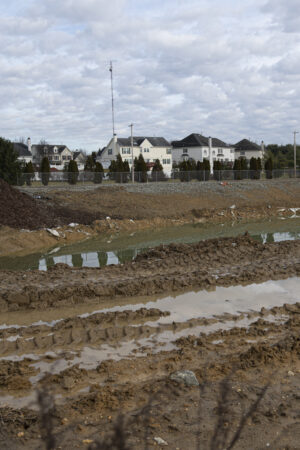
Township residents have raised concerns that the planned 1.5-million-square foot data center will be built on top of the Cyprus Foote Mineral Co., which was contaminated by chemicals such as lithium, arsenic, and hexavalent chromium.
The developers, Green Fig LLC and Sentinel Data Centers, have said the site has been cleaned.
A representative for the developers said they agreed to the stoppage “so that [the township] had a few more days to satisfy its questions.”
Residents told The Inquirerthey saw dust plumes rising from the site last month. It resurfaced concerns about what contamination may still exist on the land that previously housed the 79-acreFoote Mineral, which was added to the Superfund list in 1992.
Contamination likely started as soon as 1941 when the company began crushing ores and minerals. Lithium metal, lithium chemicals, and inorganic fluxes were part of the process.
Cleanup so far has included capping contaminated quarries, stabilizing waste areas, and maintaining a long-term monitoring program for an evolving groundwater plume. Pollutants included lithium, boron, and low-level radiation.
The work stoppage is another wrinkle in the ongoing saga of the project, which first secured approvals in 2018 and 2024. The project has seen staunch opposition from residents since it resurfaced last year with amended plans.
This story has been updated to clarify that the EPA had no role in the decision to order a work stoppage.
This suburban content is produced with support from the Leslie Miller and Richard Worley Foundation and The Lenfest Institute for Journalism. Editorial content is created independently of the project donors. Gifts to support The Inquirer’s high-impact journalism can be made at inquirer.com/donate. A list of Lenfest Institute donors can be found at lenfestinstitute.org/supporters.
On a small Lancaster County farm last month, five of the eight King siblings sprawled on the living room floor, sucking on ice pops and listening to calming music, trying not to scratch their itchy skin.
The next county over, in Hershey, children were lying in hospital beds as their immune systems battled an infection damaging their organs.
Pennsylvania is now seeing its worst measles outbreak in 30 years, centered around rural counties just west of the Philadelphia metro area. Lancaster County has emerged as a particular hot spot, with 51 of the 89 total measles cases reported this year in the state.
Anti-vaccination sentiment is prevalent in Lancaster County, where vaccination rates among kindergarteners are some of the lowest in the state. Known for its agricultural bounty and the Amish and Mennonite communities that dot its rural landscapes, Lancaster is also home to the state’s eighth-largest city with an economy heavily supported by tourism and entertainment.
In Lancaster, doctors say many are flocking to local clinics and pop-up vaccination events as cases rise. But others, like the King family, remain resolute in their decision not to vaccinate, instead preparing to ride out what they hope will be an inconvenient summer interruption that builds character and family bonding.
The family isolated in their home for weeks in June while all eight unvaccinated children, who range in age from a 1 to 15, recovered from measles. Their 14-year-old son experienced the most severe symptoms, and went to the emergency department when coughing and nausea rendered him unable to keep down water or medicine.
“Measles isn’t fun, seeing your kids sick isn’t fun,” said Gina King, 41, who lives outside New Holland. But, she added, “I know this is going to be added to the King family core memories.”
The 89 cases Pennsylvania has recorded so far this year exceed by more than five times the cases recorded in 2025. Doctors say the official tally may be an undercount, with many cases going unreported.
An Inquirer analysis found both the metropolis and state increasingly have become vulnerable to a major outbreak.In the 2024-2025 school year, kindergarten vaccination rates in 50 of Pennsylvania’s 67 counties were below the 95% vaccination rate scientists consider necessary to keep the virus from spreading. And even in counties with vaccination rates near so-called “herd immunity,” school-level vaccine data show that susceptible communities pockmark the region.
The majority of measles cases resolve in weeks with mild-to-moderate flulike symptoms, but the disease can take life-altering and even deadly turns, especially for young children.
Doctors and nurses who spoke to The Inquirer could not comment on the King family’s experience because they did not treat them.
But they cautioned that they have seen the harm measles can do to a child’s body: neurological damage, respiratory infections, and pneumonia, which can lead to death.
“Each one of those cases where a child suffers something really devastating — it only takes seeing one for it to really be something that hits home very hard,” said Evan Shirey, a pediatric infectious disease physician who has treated several children with measles at Penn State Health Golisano Children’s Hospital this year.
On the front lines of measles
As a medical student, Shirey never expected he would treat a measles case himself. By 2000, vaccination rates across the United States were so high that the disease was declared eliminated.
“I read the textbooks like they were history books,” Shirey said.
But as vaccination rates decreased, he and other providers began preparing in the last couple of years. He feared inevitably seeing cases like the several adults and children treated at Penn State hospitals this year.
He declined to share details on the cases, saying hospitalization numbers are low enough that doing so would risk compromising patients’ privacy.
Shirey said he’s also fielding “constant” phone calls from pediatricians all over the state as they prepare for — or deal with — emerging measles cases.
Intensive protection measures implemented at Penn State hospitals in Dauphin County, for example, include testing patients with respiratory symptoms, or who were potentially exposed to measles, and isolating them while they wait for test results.
The virus is so contagious, it can infect nine in 10 people who haven’t been vaccinated.
“Airborne diseases are a whole other world,” said Nancy Himmelberger, a critical care registered nurse at Golisano Children’s Hospital and the vice president of its nurses’ union, which is affiliated with SEIU.
Shirey tries to explain to parents why vaccination is the best defense against measles. “I do encounter a lot of parents who truly want the best for their child, and they’re afraid because of what they see on TV or social media.”
The Centers for Disease Control and Prevention recommends children receive two doses of the measles, mumps, rubella (MMR) vaccine at 1 year of age and before starting kindergarten, typically around age 5.
The vaccine is among those required for students to attend school, though Pennsylvania’s lax rules allow families to opt out for medical, religious, or philosophical reasons.
In response to rising cases, Pennsylvania earlier this year updated its guidelines to recommend babies be given their first dose as early as 6 months.
Once someone is infected with measles, Shirey stresses, no treatments are available that specifically target the virus.
Vitamin A may be given to children who have been hospitalized with severe measles symptoms, but it is not a cure and cannot prevent the disease. Excessive amounts of vitamin A can be dangerous.
“For measles, it is supportive care and trying to manage the complications that occur,” Shirey said.
Gina King and her daughters pick strawberries at their home in Lancaster County.
Trying to change vaccine perspectives
When King and her husband, Shawn, began their family 15 years ago, they thought carefully about each vaccine recommended for their babies. They read package labels and looked up ingredients. For each shot, they considered whether they were more comfortable with the risk of side effects from the vaccine, or the risk of illness from skipping it.
When their pediatrician recommended a hepatitis shot before traveling to India, the Kings decided the risk of the disease was greater than any potential side effects.
But when it came to the measles, mumps, rubella (MMR) vaccine, they were uncomfortable that the rubella portion of the vaccine was developed using cells of an aborted fetus.
Vaccines themselves do not contain fetal material. And most major religions promote vaccination, even if they oppose abortion, reasoning that parents have a moral duty to protect their children and the health of the public.
Gina and Shawn King’s sons relax in hammocks after being cooped up inside with measles for several days.
Measles at home
The Kings weren’t aware their children had been exposed to measles, but knew cases were spreading locally. When their two oldest sons, aged 14 and 15, began showing symptoms, they locked down their home.
They appreciated how people can be contagious before and after they experience symptoms. They have relatives with cancer and Down syndrome, conditions that could put them at risk of severe illness if they contracted measles.
“If you made the choice to not vaccinate, you knew there was a risk of getting sick,” King wrote in a tip sheet she created to share with other families. “We should care about others enough to be willing to make some sacrifices to protect vulnerable people.”
Grandparents offered to help care for the children, but the Kings declined for fear of getting anyone else sick.
Instead, friends and family left treats for the kids on the front porch, picked up grocery orders, and checked in through video chat.
Days four, five, and six, were the thorniest, King said. She draped chilled washcloths over the foreheads of her usually independent teens, brought them tea, and read books to them.
She spent at least one night sitting beside the bed of her 14-year-old son, whose coughing and nausea were so bad he couldn’t eat or drink, and she worried he’d become dehydrated.
“I just wanted to be there and keep an eye on him,” she said.
A few days after the boys started feeling well enough to go outside, the five girls, who range in age from 4 to 12, were sick. The baby experiencedthe most mild symptoms among the siblings.
King, who is vaccinated, also got sick, though her husband, who is not vaccinated, has yet to develop symptoms. Vaccinated people, in rare instances, can contract measles, and infection is more likely in an outbreak.
After being inside all day, it became part of the family’s routine to tuck the kids into the back of their family ATV with blankets and more ice pops, and ride around their property to say goodnight to the sheep, cows, horses, and fruit trees.
(function() {
var l2 = function() {
new pym.Parent(‘HE_MEASLES6.html’,
‘https://media.inquirer.com/storage/inquirer/projects/innovation/arcgis_iframe/HE_MEASLES6.html’);
};
if (typeof(pym) === ‘undefined’) {
var h = document.getElementsByTagName(‘head’)[0],
s = document.createElement(‘script’);
s.type = ‘text/javascript’;
s.src = ‘https://pym.nprapps.org/pym.v1.min.js’;
s.onload = l2;
h.appendChild(s);
} else {
l2();
}
})();
Community support
Elsewhere in Lancaster, church communities and friend groups are encouraging people who are sick to stay home, as well asthose who are unvaccinated with a higher risk of severe illness.
Claudia Beiler, a Lancaster mother of five and a Christian wellness influencer,said she has dropped off vitamins, coffee, and dinner for friends and others in her community who were quarantining at home.
Beiler has posted frequently to her more than 110,000 Instagram followers about her decision not to vaccinate her children. She has also offered tips about how to weather measles cases at home.
Like the Kings, she says families who don’t vaccinate must avoid spreading the virus to vulnerable people.
“There’s a seriousness I’m proud of,” she said. “It feels like a lot of care and kindness.”
At Penn Medicine Lancaster General Hospital, physician JeffreyMartin is heartened when he hears that residents have decided to isolate themselves when diagnosed with the virus. He sees it as a measure of the community spirit inherent to Lancaster County.
But isolating once symptoms emerge isn’t enough to protect the community, since the virus can spread days before the first sneeze or cough. The disease’s signature rash typically does not appear for several days.
“‘I can accept the risk’ doesn’t play well with infectious disease,” he said. “Creating space for people to think about that on another level is really important.”
Amid the latest outbreak, Martin said, clinics run by the state health department and Penn Medicine have seen high attendance, with unvaccinated patients choosing to get the shot.
Martin and his colleagues don’t ask many questions about why: “We’re just thankful that people are showing up,” he said.
Roughly 83 acres of the historic St. Peter’s Village in Chester County will go up for auction this fall to the highest bidder, opening up potential for massive development of the land. And it already has seen thousands of interested parties.
The auction, scheduled for Sept. 30 at The Desmond Malvern, will put on offer the entirety of the Warwick Township village, in what auction and preservationist experts call an “unusual” type of sale.
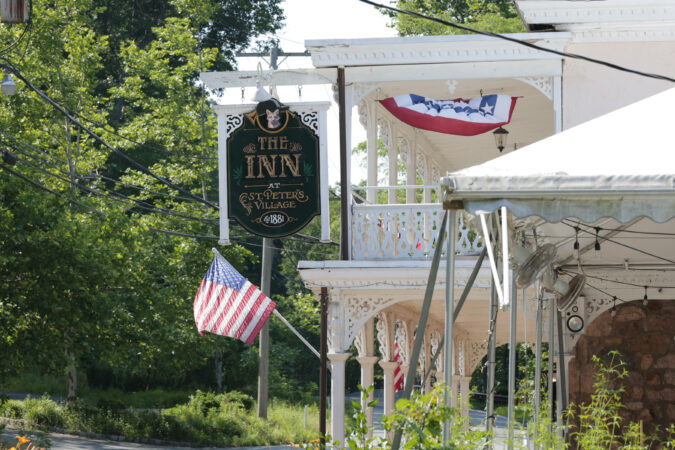
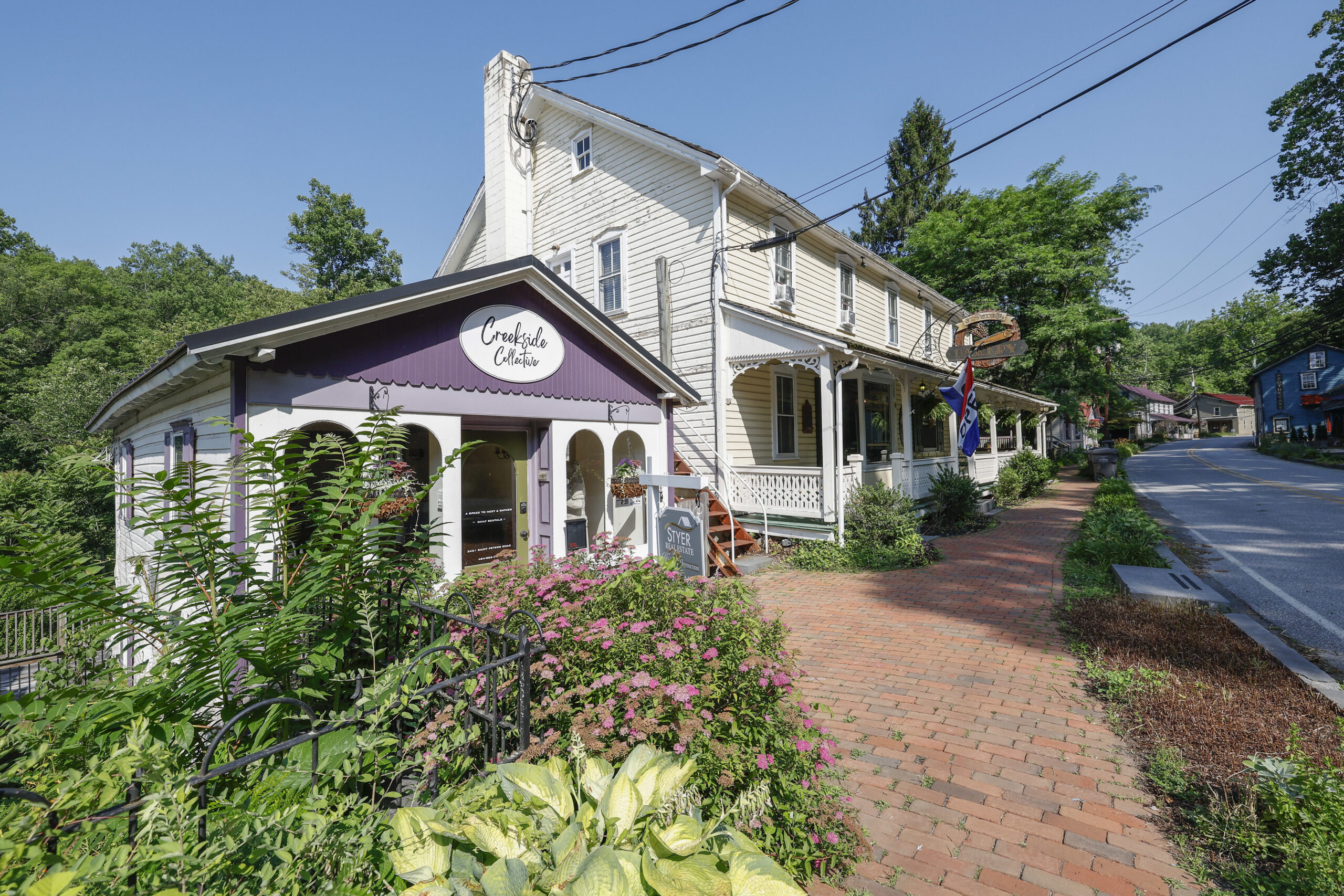
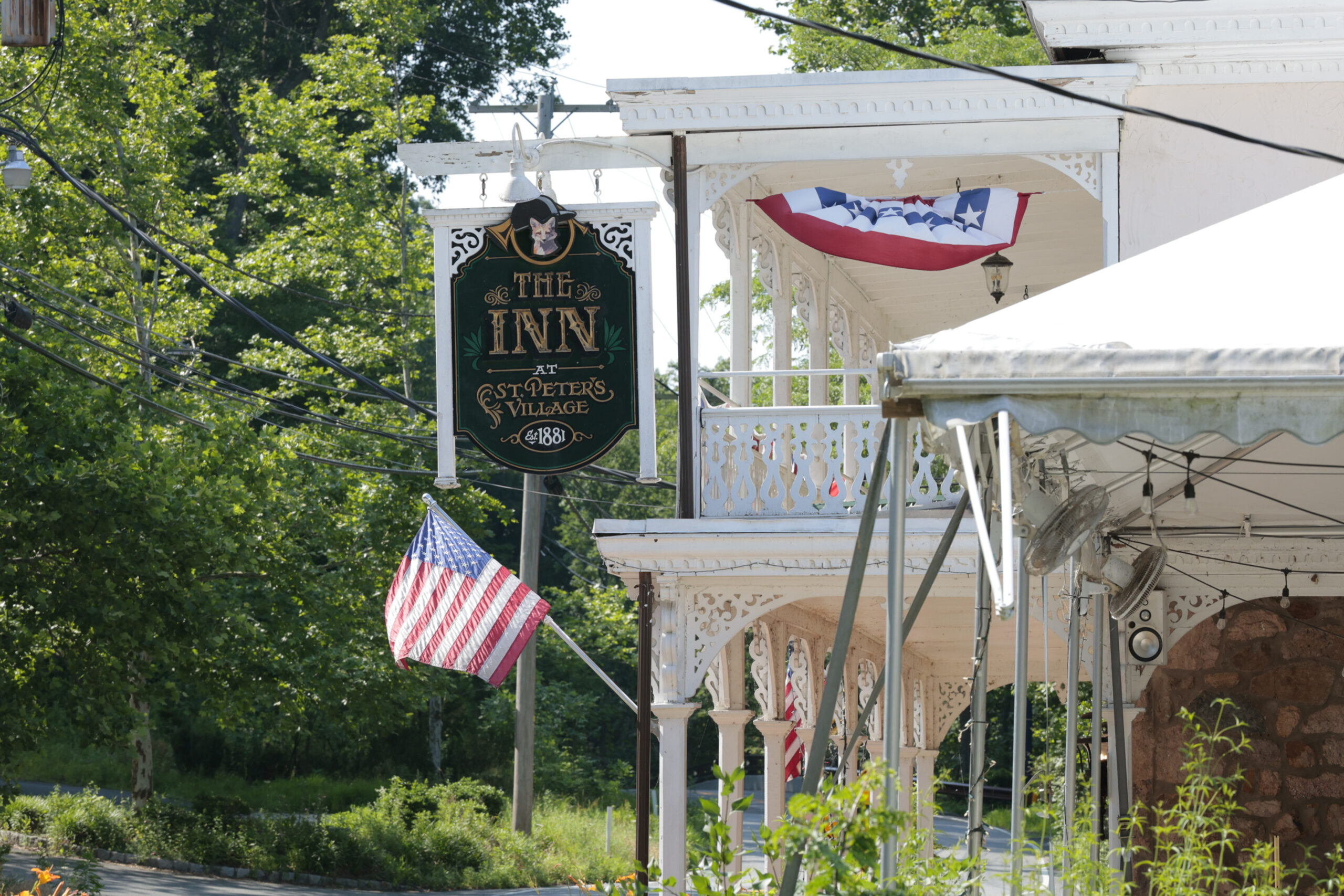
On the table: 121 homes, which consist of 33 single-family homes, 33 twins, 34 townhomes, and 21 two-acre home sites; a wastewater treatment plant that serves the existing buildings; and 13 historic and commercial village buildings — including The Inn at St. Peter’s — which total about 43,500 square feet.
The new owner could also clinch iron ore deposits on site, “adding a rare investment dimension,” the auction website notes.
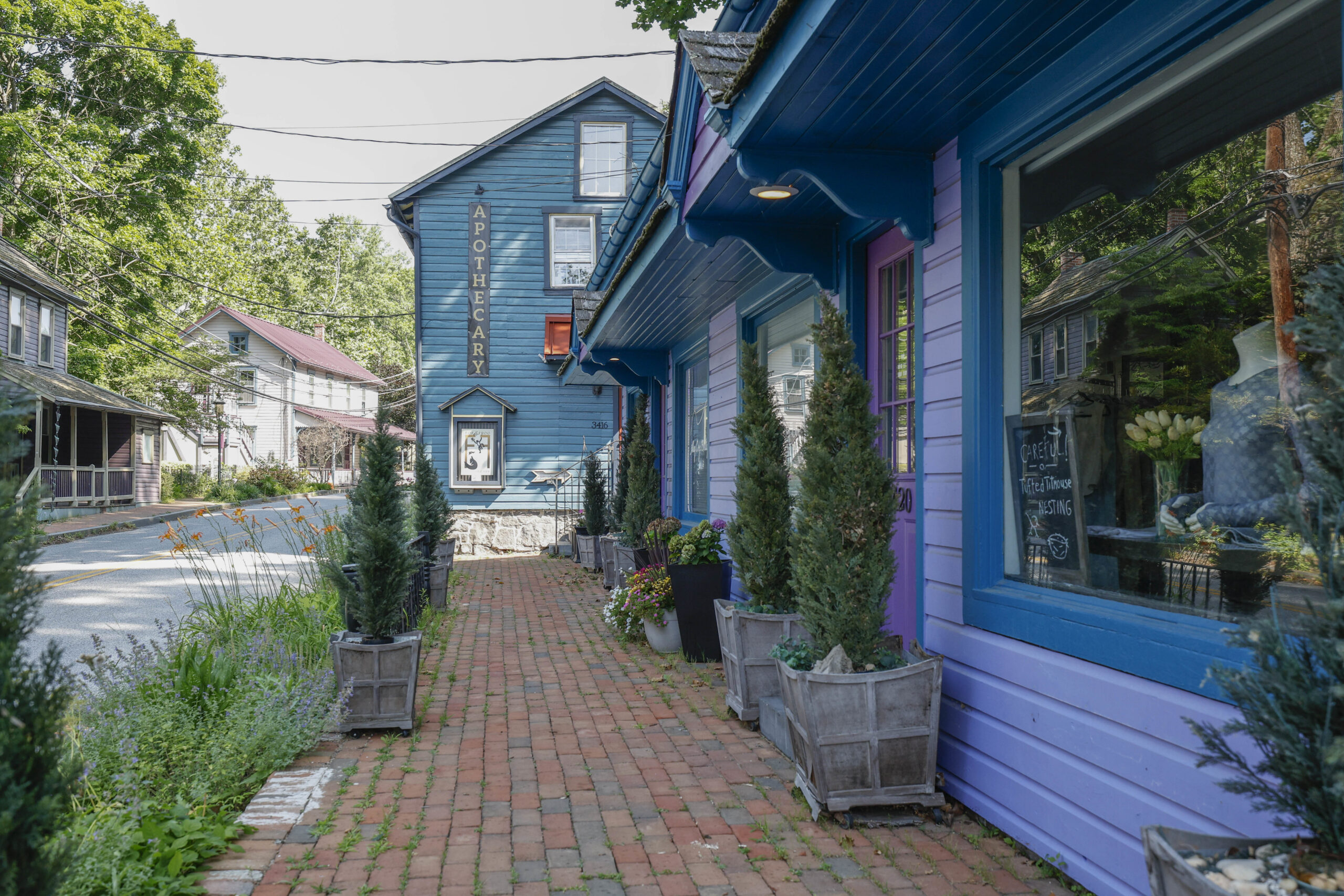
The 83-acre St. Peter’s Village — a historic destination in Chester County — will be sold at an absolute public auction to the highest bidder in September. The Inn and various shops on the main drag. Wednesday, July 1, 2026
The property is being sold as one unit. The buyer will have to improve the existing wastewater treatment plant for a full build out. The land is zoned for residential and neighborhood business uses.
It is definitely an “unusual property” and the auction is unusually large as well, said Doug Clemens, chief executive officer of the Traiman Real Estate Auction Company, which is overseeing the sale. Clemens said the property is owned by one entity. The Piazza family, which runs the Piazza Management Co. and owns multiple Main Line car dealerships, is listed on associated parcels. A spokesperson declined to comment.
“We’ve sold properties that were thousands of acres, but they weren’t builder properties, so this is a large property for a builder,” Clemens said.
Its good reputation, long history, and the sheer size of the parcel are why Clemens suspects they’ve seen remarkably high interest. The auctioneers put out a news release about the upcoming sale last week. They’ve received 14,000 responses since, he said.
St. Peter’s Village sprung up because of its nearby natural assets: the French Creek, timber, good soil – and resources like iron ore, copper and black granite.
Bidders must register at the auction with $150,000 guaranteed funds, but the bids will start wherever they’re comfortable.
“At the conclusion, we’ll know what the bidders were willing to pay for it,” Clemens said.
Following the curves of the French Creek, the village was established in the 1880s during the Gilded Age — a point in history where America was going through “growing pains” of both capital and labor, as well as whether it would be an “industrialized or agrarian nation,” said Jared Frederick, a history professor at Penn State Altoona.
Like many a small village or hamlet in Pennsylvania, St. Peter’s sprung up because of its nearby natural assets: the French Creek, timber, good soil – and resources like iron ore, copper and black granite.
Its economy flourished, thanks to those natural resources, which it transported to Philadelphia. It’s a “fascinating little enclave that demonstrates how some places were caught in the middle” of semi-ruralness and proximity to the big city, Frederick said.
Alongside that growing economic engine was also leisure, though. St. Peter’s Village became a recreational getaway due to its beautiful, scenic vista — something considered a “majestic retreat for commoners,” Frederick said. And while Chester County places high value on its green spaces now, it was even more essential for people living in urban areas to have access to such places in the 1880s through the 1900s, Frederick said.
St. Peter’s Village is on the National Register of Historic Places, but that may not safeguard it from development after it is auctioned off.
Its sale has prompted concern about what it could become, with the auction site touting it as “suitable for major builders, venture capitalists, historic preservationists, and entrepreneurs.”
Places like this are increasingly rare, Frederick said. And while the village is on the National Register of Historic Places, that doesn’t necessarily safeguard it, Frederick said. There’s a “fairly lengthy list” of places that have earned such recognition, but been bulldozed or neglected.
And while development and other attractions could help revive the village by drawing in tourism, he believes it’s a careful balancing act.
“Something that I always impart to my students in the classroom when we talk about the power and the need to preserve historical places, is that regret only goes one way,” he said. “When a place is gone, it’s gone forever, and that is something that very much needs to be kept in mind when pondering the fate of places like this.”
This suburban content is produced with support from the Leslie Miller and Richard Worley Foundation and The Lenfest Institute for Journalism. Editorial content is created independently of the project donors. Gifts to support The Inquirer’s high-impact journalism can be made at inquirer.com/donate. A list of Lenfest Institute donors can be found at lenfestinstitute.org/supporters.
Longtime Immaculata University president Barbara Lettiere said she will retire next summer, following a decade at the helm of the Catholic school.
Lettiere, an Immaculata alumna, donor, and former board chair, was named the first lay president of the Chester County university in 2017.
“The time has come in my life and the life of Immaculata for the next chapter,” Lettiere, 76, said in a statement. “I did not make this decision easily, and it comes with some very mixed emotions.”
The university, which is affiliated with the congregation Sisters, Servants of the Immaculate Heart of Mary,enrolled nearly 2,800 students last academic year, and plans to do a national search for her replacement.
“The board accepts her decision with deep gratitude for her outstanding leadership and dedicated service over the past ten years,” Peggy Behm, board chair, and Sister Mary Ellen Tennity, IHM’s general superior, said in a statement. “Her deep dedication to Immaculata, its students, faculty and staff, and her love for the mission of the IHM Congregation have left a lasting and meaningful impact on the University community.”
Lettiere, a 1972 graduate, had previously served as vice president for finance and administration at Trinity Washington University.
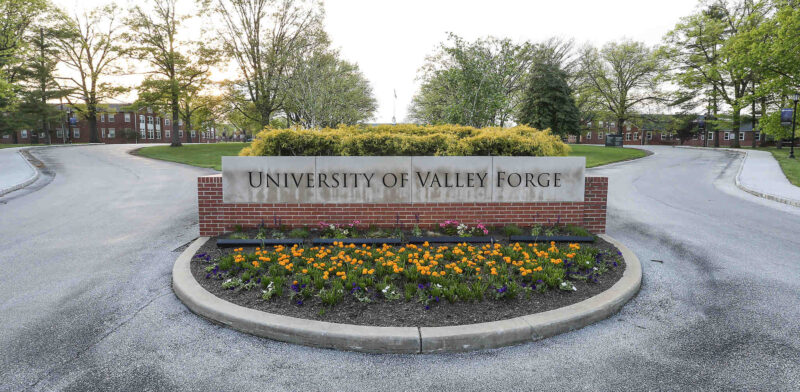
The University of Valley Forge, a small Christian school that prepares students for leadership in the church and the world, has been given a serious warning that it is in danger of losing its accreditation.
The Phoenixville-based college has until Sept. 1 to “show cause” to justify why it should not lose accreditation, according to the Middle States Commission on Higher Education, which posted the action on its website this week. Colleges need accreditation to keep their students eligible for federal aid.
The “show cause” action is the most serious that the commission issues. Others include warning and probation.
The commission cited “insufficient evidence that the institution is in compliance” with standards involving planning, resources, and institutional improvement, and governance, leadership, and administration.
The university must document in its show-cause report “financial resources, funding base, and plans for financial development to support its educational purposes and programs and to ensure financial stability,” the commission said. The school also must provide information on long-range financial planning that includes “realistic enrollment projections and the assumptions on which they are based,” the commission said.
The university did not immediately return a call for comment Wednesday, and when asked for the current enrollment, an employee said she was not permitted to disclose any information and hung up. The school enrolls 589 students, according to the National Center for Education Statistics.
Under the action, the school is required to immediately notify its community of Middle States’ action.
The university started in 1939 as the Eastern Bible Institute, which was aimed at training pastors, evangelists, missionaries and Christian educators, and lay workers, according to the school’s website. It became a college in 1975 and the University of Valley Forge in 2014. The university is part of an international network of Assemblies of God colleges and universities and offers more than 60 degree programs, according to its website.