Tag: Chester County

  • 🏓 Ping-pong prowess in Phoenixville | Inquirer Chester County

    Hi, Chester County! 👋

    The USA Table Tennis Pennsylvania Open is coming to Phoenixville this weekend. Local players say the sport is about winning glory, but also forming community. Also this week, the county announced a new voter services director, the man accused of randomly shooting a CHOP nurse in Tredyffrin Township appeared in court, and the Spring-Ford school district is moving to fire a teacher supported by community members.

    If someone forwarded you this email, sign up for free here.

    ‘I’m finally trying to live my childhood dream’

    About 40 to 50 table tennis players will compete for rankings, cash prizes, and trophies in Phoenixville on June 27 as part of the USA Table Tennis Pennsylvania Open.

    Dozens of Philly-area ping-pong enthusiasts will take to the Phoenixville Recreation Center on Saturday for the USA Table Tennis Pennsylvania Open.

    Local players will square off for cash prizes, trophies, and rankings, gathering official points that could even help to one day elevate their USA Table Tennis standing high enough to qualify for the Olympics. Categories include women’s singles, juniors, and over 40.

    But aside from the fame and glory, many Chester County ping-pongers are building community and living out their childhood dreams via the sport. Deepak Gupta, the owner of Exton Table Tennis, said he has built friendships as he plays against other local fathers.

    “Once I started playing table tennis with some of the other dads, we started getting to know each other more as individuals and more as friends,” the 52-year-old said, “and then taking that spirit and … expanding it to a community.”

    The Inquirer’s Brooke Schultz has the details, including on which popular table tennis movie has elevated the sport the most.

    Chester County hires new voter services director

    People fill out mail-in ballots for the 2024 general election at a Voters Services satellite office at the Chester County Government Services Center, Friday, Oct. 25, 2024, in West Chester, Pa.

    West Chester resident Michele DiCaprio will soon take over as Chester County’s new director of voter services, inheriting an office recently marred by controversy, including staff turnover, hostile work environment allegations, and election administration-related issues.

    DiCaprio’s experience as a former foreign service officer sets her up for success in the role, the county said in a news release.

    She replaces Karen Barsoum, who announced her resignation in March and ended her tenure on June 12. DiCaprio will begin the role on July 20.

    Reporter Fallon Roth has more on DiCaprio and what’s on her plate when it comes to repairing residents’ trust in the county’s voting security practices.

    📍 Countywide News

    💡 Community News

    • Steve Jahn, the Berwyn man accused of fatally shooting Children’s Hospital of Philadelphia nurse Megan Nieberle, 53, in Tredyffrin Township in March, appeared for the first time in court Monday. The apparently random act shocked the Chester County community and incited conversation about mental illness and firearms. Jahn, 44, has been charged with first- and third-degree murder, among other crimes.
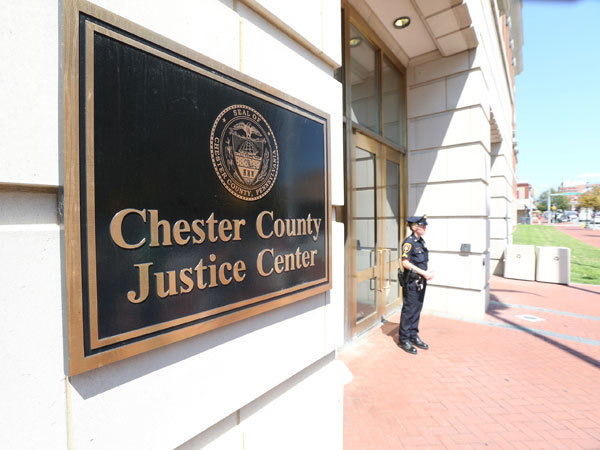
    • The Chester County District Attorney’s Office is investigating after an officer with the North Coventry Township Police Department was involved in a shooting Monday. Few details were available about the incident as of Tuesday, including whether anyone was injured.
    • Coatesville couple Mousa Hawa and Holly Back were sentenced to decades in prison last week for the murder of their 8-year-old son. Prosecutors said Hunter died of an overdose in 2023 after ingesting drugs in their home, The Inquirer’s Vinny Vella reports.
    • Wawa has filed for a liquor license for its forthcoming location at 799 Valley Forge Rd. in Schuylkill Township.
    • The Borough of West Chester is seeking feedback about a potential shared shuttle bus program with West Chester University. Take the survey here.

    🏫 Schools Briefing

    • Spring-Ford Area School District is moving to fire an eighth-grade Spanish teacher, Jasmine Ewing, for reasons it has not made public. The school board vote to approve a statement of charges came amid an outpouring of community support shared during a public meeting Monday, The Inquirer’s Maddie Hanna reports.
    • Phoenixville Area School District’s board approved Kathryn “Kate” Pacitto as its next assistant superintendent at its most recent meeting. Pacitto currently serves as executive director of curriculum and pupil services for the district. She’s been signed to a five-year contract and will assume the new role July 1.
    • Registration is open for West Chester Area School District’s school safety summit, which will take place Aug. 6 at Rustin High School.

    🍽️ On our Plate

    🎳 Things to Do

    🎙️ Sound of Summer Free Concert Series: Delaware rock band Too Tall Slim and the Guilty Pleasures headlines this week’s show. There will also be food trucks. ⏰ Wednesday, June 24, 6:30-8:30 p.m. 💵 Free 📍 Anson B. Nixon Park, Kennett Square

    🎹 Tredyffrin Township Summer Concert Series: Philadelphia-area band The Sin Brothers headline this week’s show. ⏰ Thursday, June 25, 7 p.m. 💵 Free 📍 Wilson Farm Park, Wayne

    🍿 Movie Night: West Bradford will screen Wicked: For Good outdoors. There will also be $1 ice creams. ⏰ Thursday, June 25, 8:30 p.m. 💵 Free 📍 Broad Run Park, Downingtown

    🍺 Rhythm & Brews: There will be live music, food trucks, and yard games at this recurring New Garden event. ⏰ Tuesday, June 30, 6-8 p.m. 💵 Pay as you go 📍 New Garden Park, Landenberg

    🎶 Eagleview Summer Concert Series: Hear local cover band LeCompt, along with special guest and fellow local Lia Menaker. ⏰ Tuesday, June 30, 7-9 p.m. 💵 Free 📍 Eagleview Town Center, Exton

    🗞️ What other Chester County residents are reading this week:

    By submitting your written, visual, and/or audio contributions, you agree to The Inquirer’s Terms of Use, including the grant of rights in Section 10.

    This suburban content is produced with support from the Leslie Miller and Richard Worley Foundation and The Lenfest Institute for Journalism. Editorial content is created independently of the project donors. Gifts to support The Inquirer’s high-impact journalism can be made at inquirer.com/donate. A list of Lenfest Institute donors can be found at lenfestinstitute.org/supporters.

  • A police-involved shooting in North Coventry Township is under investigation

    A police-involved shooting in North Coventry Township is under investigation

    The Chester County District Attorney’s Office is investigating an officer-involved shooting that occurred on Monday evening in North Coventry Township.

    The office said it was assisting the North Coventry Township Police Department with investigating this case.

    Authorities did not provide any details on the circumstances of the shooting, how many officers or others were involved, or whether anyone was injured.

    “This remains an active and ongoing investigation, and additional information will be released as it becomes available,” a spokesperson for the office said in a statement on social media. The prosecutor’s office could not be reached for additional details on the investigation.

    Local news was on the scene at Lindberg and Kline Avenue in South Pottstown to find police activity on the street Monday night.

  • ‘Snuffed her life out’: Man accused of randomly shooting CHOP nurse in Tredyffrin Township appears in court

    ‘Snuffed her life out’: Man accused of randomly shooting CHOP nurse in Tredyffrin Township appears in court

    Hours before Steve Jahn shot Megan Nieberle to death on a March evening this year, prosecutors said, he drove around Tredyffrin Township for hours with a gun in his hand.

    In dashcam videos played in a Chester County courtroom Monday, Jahn is seen gripping a semiautomatic handgun in his Chevy Silverado truck, muttering to himself and glancing back and forth erratically as cars pass by.

    Those utterances, prosecutors said, offer a view into the mindset of a man about to commit murder.

    “Get out of the [expletive] way,” Jahn says an one point, one hand on the wheel, another on his firearm. “You don’t belong here.”

    “Ya’ll [expletive] are dead,” the 44-year-old says in another clip.

    Though it would be hours before Jahn, who police said was homeless, encountered Nieberle, a 53-year-old mother of three and a nurse at Children’s Hospital of Philadelphia, prosecutors used the videos from Jahn’s dashcam to bolster their contention that he had been prepared to harm someone that Saturday.

    Jahn, a Berwyn native, was arrested a day after the March 7 shooting and charged with first- and third-degree murder, aggravated assault, and reckless endangerment.

    The hearing marked the first time Jahn appeared in a case that shocked the Chester County community and kick-started a conversation about mental illness and firearms.

    Some residents questioned why police did not act more forcefully to ensure that Jahn, who had been in a mental health crisis that day, was checked into a nearby psychiatric unit.

    Jahn, wearing a red prison jumpsuit and sporting a beard, showed little emotion during the hearing, as Nieberle’s loved ones looked on, some in tears.

    Assistant District Attorney Kathleen Wright said prosecutors had linked Jahn to the crime scene using GPS data from his vehicle, gunshot residue recovered from his hands and clothing, and remarks he made while in police custody.

    Though the footage of Jahn was illuminating, Wright said, the shooting itself was not captured on the dashcam because Jahn had removed the device shortly before the shooting.

    Wright called Tredyffrin police officers and county detectives to the stand to testify about the scene they had encountered near the intersection of Old State Road and Contention Lane, where Nieberle was found in the driver’s seat of her silver Acura SUV around 10:47 p.m. with a gunshot wound to the head.

    She was bleeding heavily, the officers said, and was taken to a nearby hospital, where she died the next morning.

    Chester County Det. Matthew Shumway of Chester County said data recovered from Jahn’s truck allowed investigators to identify him driving down the dimly lit residential street that night.

    Approaching Nieberle’s vehicle, Jahn slowed his truck to 6 mph, Shumway testified. He fired once through her driver’s side window, the detective said, a shot captured on a neighbor’s doorbell camera.

    Played in court, the short video showed Jahn’s headlights cut through the darkness and illuminate an approaching vehicle. Within seconds, a loud bang rang out.

    Jahn’s attorney, Brian McCarthy, did not contest many of prosecutors’ assertions about how events unfolded that night, but he argued that first-degree murder was not appropriate because Jahn had not shown premeditation and intent to kill, conditions required to meet the threshold for that crime.

    “What we did see does not establish murder in the first degree,” McCarthy said of the dashcam footage. The person in that video, he said, was a “troubled man looking back and forth, not a cold-blooded killer.”

    Wright, the prosecutor, countered that Jahn’s actions were premeditated. She said Jahn had rolled down his window, aimed his weapon, and would have “had to have known” that there was someone inside an oncoming vehicle.

    Of Nieberle, Wright said, Jahn “snuffed her life out and left her there to die.”

    District Judge Patricia A. Zaffarano ruled that prosecutors had presented sufficient evidence for the case to proceed to trial on all charges.

    Jahn will be formally arraigned on July 2. He remains in custody in the Chester County Correctional Facility after being denied bail in March.

  • The USA Table Tennis Pennsylvania Open is coming to Phoenixville this month, with rankings and cash prizes — and community — up for grabs

    The USA Table Tennis Pennsylvania Open is coming to Phoenixville this month, with rankings and cash prizes — and community — up for grabs

    For Deepak Gupta, playing Ping-Pong is something of living out a childhood dream for him.

    Later this month, he’ll be taking that dream to the next level, as he makes his tournament debut at the USA Table Tennis Pennsylvania Open in Phoenixville.

    “I’ve never met two people who play the same … they have a unique style of playing, and every player has strengths and weaknesses, the way they spin the ball, the way they serve,” he said. “I’m looking forward to playing against more people whom I’ve never met, so that’ll be challenging.”

    Gupta, 52, will be among the 40 to 50 players from the region competing; the tournament has six events and will be held at the Phoenixville Recreation Center.

    Players will compete in women’s singles, juniors, over 40, the open, or skill-capped events. On the line: cash prizes, trophies, and national ratings points.

    It’s the fourth time the Phoenixville Table Tennis Club, established in 2009, is holding a USA Table Tennis tournament, and its second Pennsylvania Open.

    “We do have a lot of lower-level players participating in those events, and one, it gives them the opportunity to win trophy and money, but two, it gives them the opportunity to continue to compete … and get better in their games,” said Nick Flor, organizer and one of the founders of the Phoenixville club. “Say you come across your archnemesis that you play at the club in the tournament. … It’s going to give you that drive to learn to beat them, to learn to get better.”

    Gupta will be playing in the “under 1200″ event, for beginner to intermediate players whose rating is below 1200. A rating represents their skill level and determines where a player is seeded in an event. Low-level players would be rated around 900 or 1000, while high-level players approach 3000, Flor said. As players win matches and tournaments, up goes their rating. The tournament will have several events split by rating level.

    Players will also be competing for ranking points as part of the USA Table Tennis’ system. Depending on how many tournaments players win, they earn points. Top-point earners are considered for the Olympics, or the sport’s World Cup.

    Aside from rankings, players are drawn to the community the sport has given them.

    Serving up community

    Gupta loved the game passionately as a child, but it faded into the background after high school. Some 30 years later, he started playing against a couple of friends in the basement. He found out about the Phoenixville club, which meets twice a week at the recreation center, hosts a smattering of smaller tournaments and competitions, and provides support for new players. But it wasn’t enough; he ended up opening his own club in Exton, called Exton Table Tennis.

    The club is run by friends, for friends, he said. Before he started playing table tennis a few years ago, he had few of them. He met other parents in school groups, but those social interactions were limited to talking about their kids.

    “Once I started playing table tennis with some of the other dads, we started getting to know each other more as individuals and more as friends,” he said, “and then taking that spirit and … expanding it to a community.”

    Flor, 53, caught the bug in high school, when he’d play with his friends in the senior lounge. They started playing before and after school. They were “terrible,” Flor recalls. But they kept playing, deciding to enter a tournament. They got crushed and had the experience he’s seen in many players: the shock and awe at the level of gameplay, of technique, and skill it takes. The group began going to a club in Pottstown, getting tutelage from an older gentleman, and eventually opened their own club, he said.

    He’s seen the sport change over time, fluctuating in popularity. They see surges around the Olympics, and during the colder months. Marty Supreme drummed up excitement among players but didn’t seem to inspire a new generation. (Forrest Gump has probably done more for the sport, he noted.)

    A game for all

    Flor’s love of Ping-Pong has seeped into his marriage, as he slowly turned his wife, Janel Flor, into a convert. Now the two are evenly matched.

    It’s been a journey for Janel, whose first experience was in the place that makes or breaks anyone’s love of sport: gym class. It put her off table tennis for years. She was supportive of her husband but felt it was “kind of a dumb sport.” But, ever persistent, he coaxed her into a lesson. About a month later, she felt it sink in and sent the ball exactly where she wanted it to go. She was hooked.

    She was not very competitive until she was able to beat Nick. “Once I could do that,” she said, “I was like, you know what, I actually really like this game.”

    It’s been her goal to get more women into the game and to have fun doing it.

    “My goal is always to help build confidence and help get them playing, so that they’re not overthinking everything,” she said.

    Janel, 50, will compete in the women’s event in the upcoming tournament, against roughly six others. She has gotten over some of the initial fears of tournament play but said she still gets butterflies when she steps up to the table.

    Despite those butterflies, it’s often an encouraging, but still competitive, game, she said.

    For Gupta, it’s a game where people of all ages, genders, and abilities can thrive. The clubs welcome kids, whom they have watched level up over time.

    “Table tennis is one game where it evens everything out. It doesn’t matter,” he said. “If you have skills, you can become really good, that’s one thing that I really love about this game. … I think now I’m finally trying to live my childhood dream, and I hope other kids can enjoy the same passion that I had as a child.”

    This suburban content is produced with support from the Leslie Miller and Richard Worley Foundation and The Lenfest Institute for Journalism. Editorial content is created independently of the project donors. Gifts to support The Inquirer’s high-impact journalism can be made at inquirer.com/donate. A list of Lenfest Institute donors can be found at lenfestinstitute.org/supporters.

  • Five Chester County centenarians, ranging from 99 to 104, give their life secrets

    Five Chester County centenarians, ranging from 99 to 104, give their life secrets

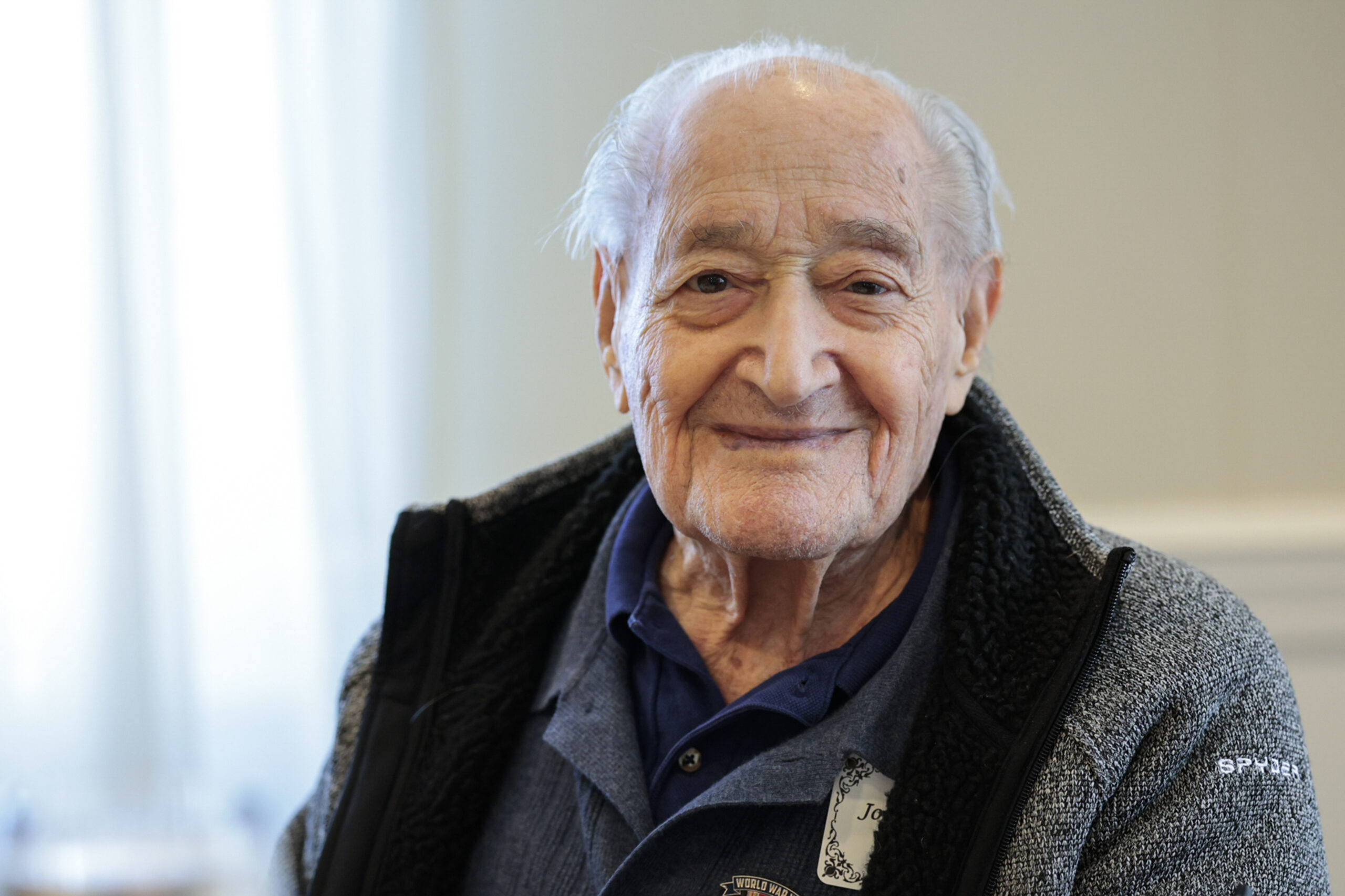
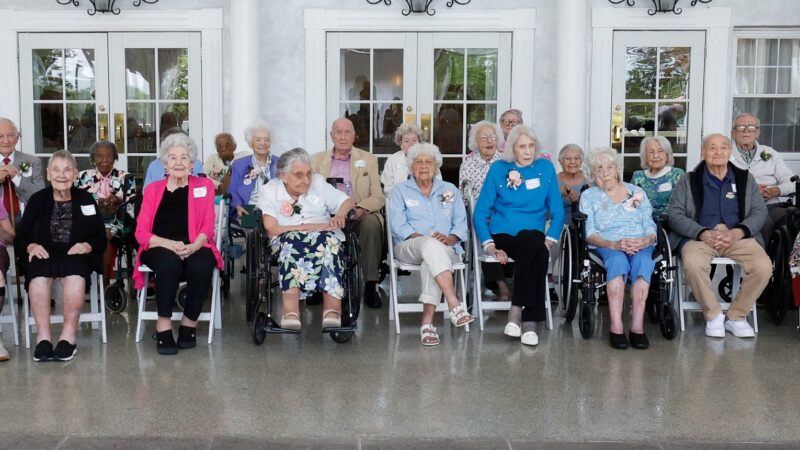
    From horses giving way to cars and the invention of television, to the election of more than a dozen presidents, World War II, and even the sale of sliced bread — the 45 Chester County centenarians who gathered for an annual luncheon this week have watched the world remake itself time and time again.

    “I saw a lot of things. A lot of wars, and a lot of popes. There’s a lot of good things,” said Anne Caporale, who will turn 100 in July. “I got married, had a family. I had a good life.”

    The annual luncheon celebrated Chester County’s group of centenarians — a total of 57 residents reaching or surpassing the milestone. Tuesday’s celebration saw a dozen who would turn 100 this year, plus quite a few returning attendees, including 108-year-old Evelyn Fair, who still writes poetry.

    “You are the builders, the teachers, the parents, the neighbors, and the foundation of the Chester County community,” Josh Maxwell, chair of the board of county commissioners, told attendees. “Every single comfort and freedom we enjoy today is a direct result of the hard work, sacrifice, and grace you poured into the world decades and decades ago. We are walking today on paths that you have all cleared.”

    Meet some of Chester County’s longest residents.

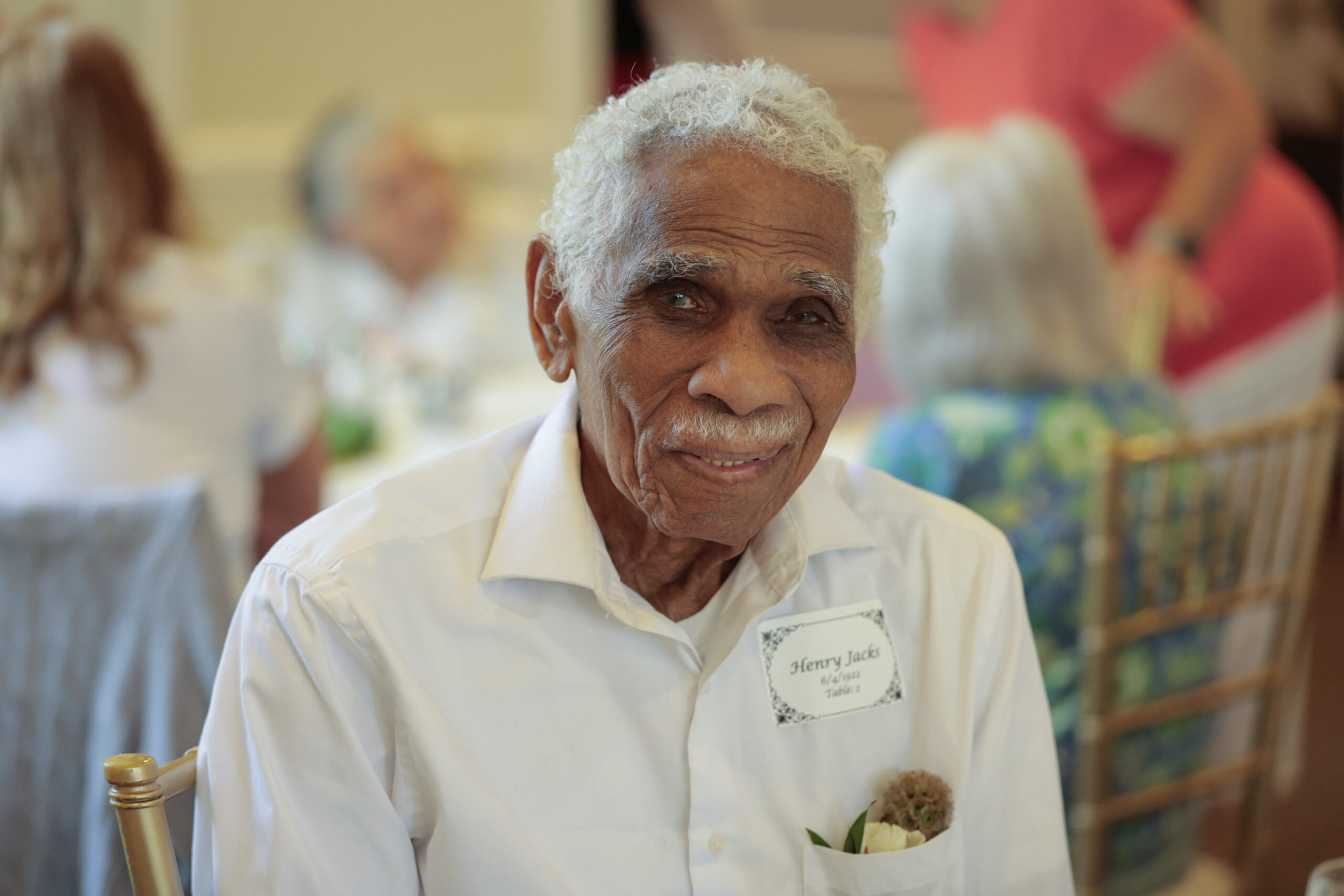
    Henry Jacks, 104

    Henry Jacks, 104, enjoys the annual centenarian luncheon hosted by the Department of Aging.

    Henry Jacks moved to South Coatesville when he was 4 years old, and has called it home ever since. He’s witnessed “quite a bit of change.”

    He remembers watching deliveries come by horse and wagon and recalls the hard days of the 1930s during the Great Depression (“cost of living wasn’t as bad as it is now,” he noted). Jacks joined the Army in 1940 during World War II, serving in the 92nd Engineers Regiment, and was stationed in Africa and Italy. He came back home to have three children, a boy and two girls.

    He was a Boy Scout leader, the first Black mail carrier in Coatesville, a city council member, and a judge of elections. He still sings in the church choir. (His advice: “Treat people right. Go to church.”)

    “So many changes that I’ve seen in the days,” he said. “I remember when I first saw TV; one of the neighbors had one, and all of the kids used to watch through his window. I’ve seen from the horses, to the cars, to the jet airplanes. And it’s been a wonderful life.”

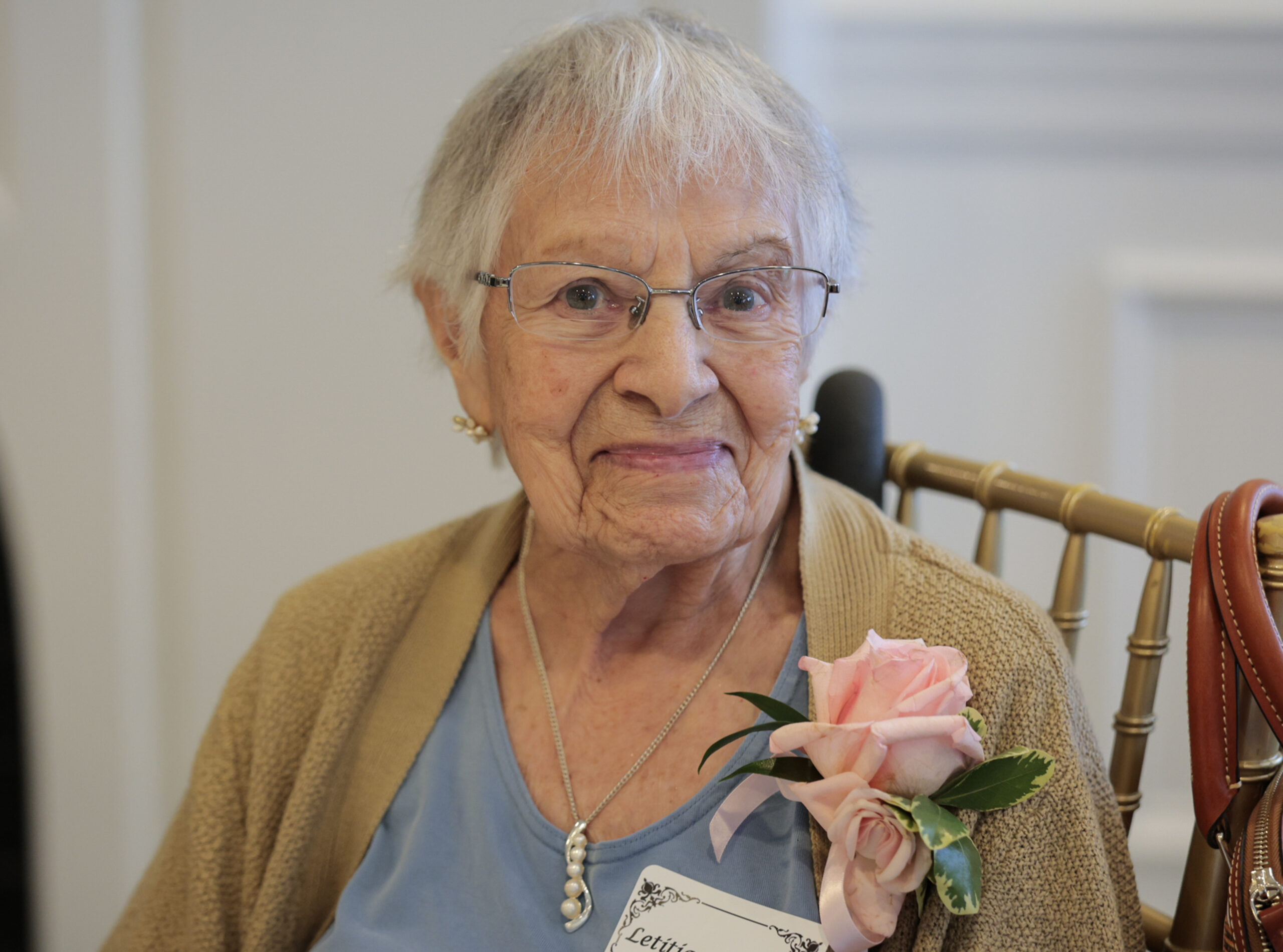
    Letitia Hemphill, 103

    Letitia Hemphill, 103, at Tuesday’s luncheon.

    Letitia Hemphill started her working life at the candy counter at the former F.W. Woolworth’s five-and-dime in her hometown of West Chester. Though her father remarked she wasn’t good at math, she’d go on to have a long career using her skills while filling the registers and doing the end-of-day count in a department store and later at the treasurer’s office.

    She retired in 1986 but had trouble sitting still.

    “I got bored of not working,” she said.

    She started cleaning houses. It was something she’d always done: help her mother clean in the morning, and then go to the park in the afternoon. She kept up the tradition with her two grandkids and her two great-grandkids, whom she babysat for 14 years.

    An active life has been key to Hemphill, who did 10 years of ballroom dancing and more than 20 years at the gym.

    “Keep your body moving and keep your mind moving,” she said.

    She keeps her mind active by painting landscapes in watercolor, a hobby she took up in 1995.

    Hemphill was born in West Chester to a stonemason father and a stay-at-home mother. Once, someone asked Hemphill if she had a lot of friends. With 11 brothers and sisters, she remarked she didn’t need any.

    When she journeys through West Chester, she points out all the stores that have changed over time.

    Still, Chester County is “beautiful,” and much of her family is still around to keep her moving: two children, two grandchildren, and two great-grandchildren.

    Joseph Donia, 100

    Joseph Donia, 100. There were 45 centenarians in attendance at Tuesday’s luncheon.

    Up until last year or so, Joseph Donia’s hobby was building boats. He constructed a 20-foot wooden cabin cruiser from scratch. He had it for 40 years.

    “The only reason I sold it — my wife couldn’t get on it anymore,” he said.

    He had a lifelong love of boats, and spent five years at sea for the U.S. Merchant Marine in World War II. His time in service was the only time he wasn’t living in West Chester, where he bought a house and raised three kids. He also has six grandkids and three great-grandkids.

    His most recent project was a 35-foot sailboat. It’s still sitting behind his West Chester home, but he’s given it to his son to finish.

    It kept the 100-year-old active — something he advises.

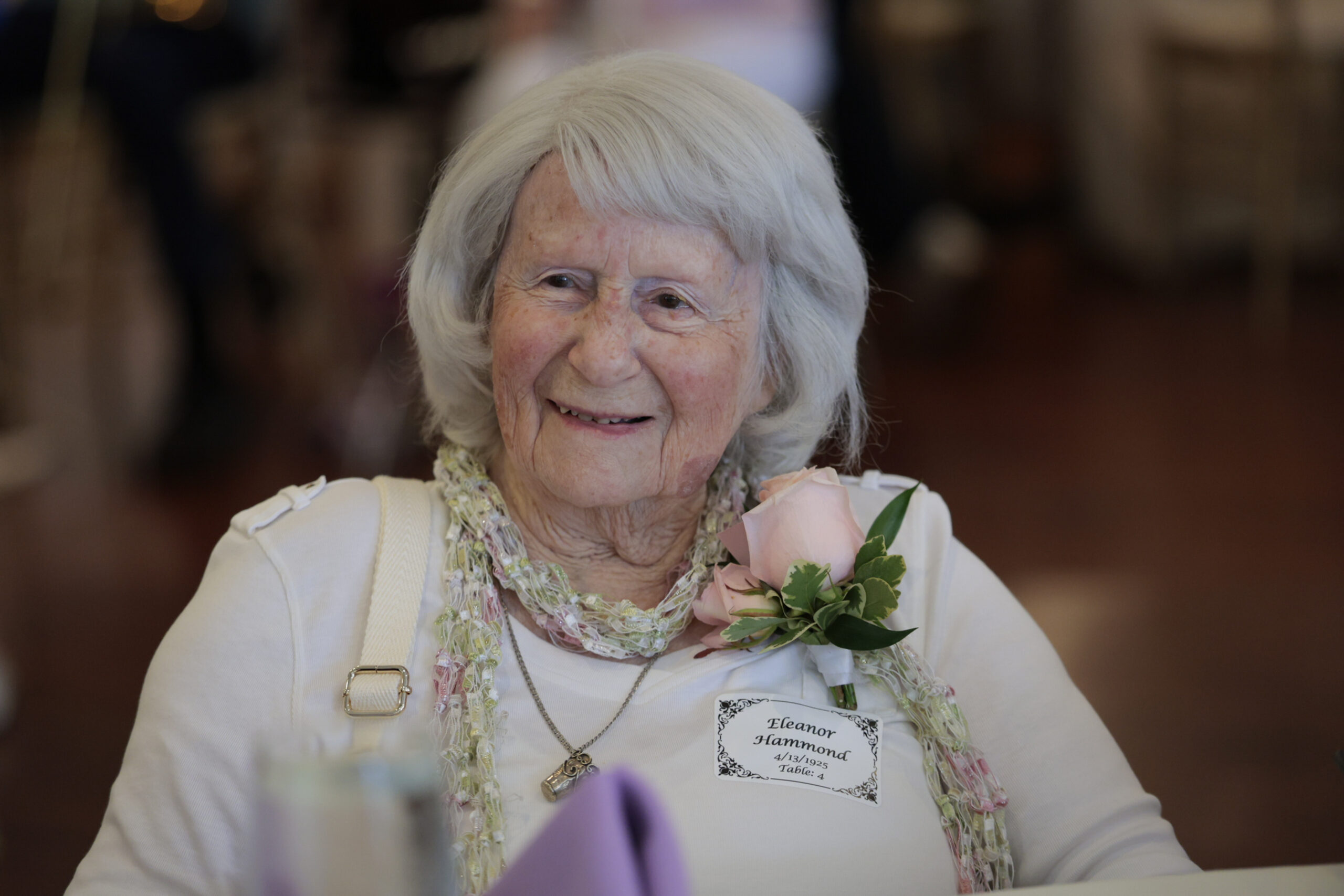
    Eleanor Hammond, 101

    Eleanor Hammond, 101, enjoys Tuesday’s annual luncheon.

    Eleanor Hammond has always been a fan of creative pursuits: a voracious reader who knitted and sewed. She stitched her daughter’s wedding gown, and, perhaps more memorably, a jacket for her husband.

    “He insisted I make him a jacket because I sewed for everyone else. He picked out the material; looked like Liberace. It was horrible,” she said. “I wouldn’t go out with him when he wore it.”

    A graduate of Coatesville High School, Hammond would go on to work there until she was 81, in the principal’s office. She was once a disciplinarian, and truancy officer. She’s watched the county change over time, marveling at the amount of development. And, less positively, the traffic.

    “The way to get here, I used to zip here,” she said. “But I can’t do that now.”

    Still, she likes it, and the changes that have come with time.

    “I’ve been here a long time. Everything about it is beautiful. The people are friendly, and it’s a beautiful place,” she said.

    And as much as she loves home, she recommends travel. If you don’t know the language, be nice, smile, and “use your arms” to convey your meaning.

    Anne Caporale, 99

    Anne Caporale, who turns 100 in July.

    Anne Caporale graduated alongside Hammond at Coatesville High School. She went on to raise six kids, and has 10 grandchildren, 27 great-grandchildren, and three great-great-grandchildren.

    “We have quite a group,” she said. “I love them.”

    She has found Chester County to be a good place to live and “wouldn’t want to live anywhere else.”

    She lives at home, right by one of Downingtown’s high schools, which she loves because “the kids are great.” She still does her laundry and cooks every day. The luncheon Tuesday was a treat for her. “Let somebody else do the cooking,” she said.

    Keeping active is the secret, she said.

    “I know we’re here for a reason, but I don’t know it. I don’t question it,” she said.

    This suburban content is produced with support from the Leslie Miller and Richard Worley Foundation and The Lenfest Institute for Journalism. Editorial content is created independently of the project donors. Gifts to support The Inquirer’s high-impact journalism can be made at inquirer.com/donate. A list of Lenfest Institute donors can be found at lenfestinstitute.org/supporters.
  • Philadelphia asks Pa. judges to approve opioid settlement spending on Kensington revitalization projects

    Philadelphia asks Pa. judges to approve opioid settlement spending on Kensington revitalization projects

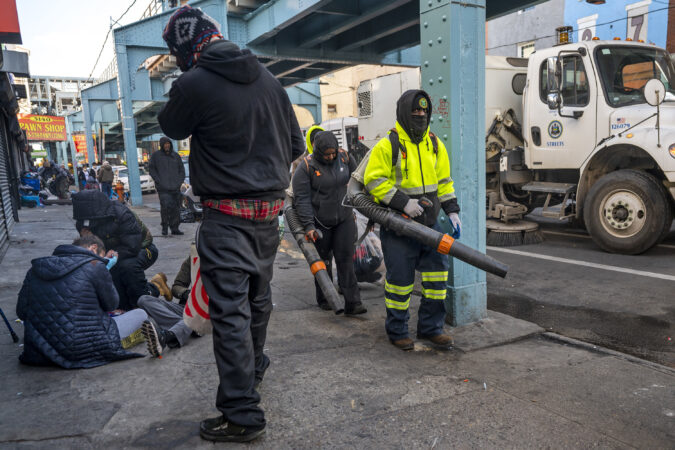
    More than three years ago, Philadelphia officials decided to direct part of a multimillion-dollar settlement with opioid drug makers toward fixing harm done in Kensington. They developed projects to repair homes and help small businesses in the neighborhood long at the center of the city’s overdose crisis.

    After the money was spent, the state trust overseeing the settlement said it was not an appropriate use of the funds. Philadelphia appealed, and the dispute landed before a panel of three Commonwealth Court judges on Tuesday.

    The panel also heard appeals from three other counties, including Chester County, which appealed the trust’s rejection of its plan to spend settlement money on a prosecutor in its drug treatment court.

    The hearing was the latest step in a yearslong debate over how Philadelphia and other counties chose to spend opioid settlement money. The Pennsylvania Opioid Trust was created to oversee their spending decisions for more than $2 billion in settlement funds from lawsuits against opioid painkiller manufacturers and distributors accused of fueling a deadly addiction crisis.

    At times on Tuesday, the panel of judges questioned the trust’s decision-making process, which has been criticized for a lack of transparency. Work groups meet privately to discuss spending priorities before the trust delivers a decision.

    “Apparently, the procedure you’ve adopted is, ‘If we like it, we’ll say yes, and if we don’t, we’ll say no,’” said President Judge Emerita Bonnie Brigance Leadbetter. “How can we review that?”

    Jayson Wolfgang, a lawyer representing the trust, said the group’s members joked at times that “we were building the plane as we were flying it.”

    He noted that the trust has approved hundreds of programs, and that many counties have accepted the trust’s decision to reject some spending priorities.

    Counties do not have to return money already spent, but the trust can reduce or withhold future opioid settlement payments if it determines that a county is spending funds outside the settlement’s purview.

    Philadelphia’s appeal centered on portions of the $7.5 million “Kensington Project,” a package of community improvement plans that included a home repair program, supports for small businesses, and park and school improvements.

    In 2024, the trust ruled it was not an appropriate use of the funds.

    The city appealed, and the trust partially reversed the decision, approving park and school improvements but continuing to reject spending on the home repair program and small business supports.

    Ryan Smith, a lawyer representing Philadelphia, said the city did not receive detailed communications about why its spending was being rejected during the trust’s review process.

    The city appealed to the Commonwealth Court in December to approve funding for the remaining projects, arguing that the trust’s idea of permissible spending was too narrow and that research shows efforts to improve blighted lots and abandoned buildings decrease fatal overdoses.

    Lawyers for the trust countered that the city failed to convince the trust that its plans fall under the parameters of a document from the opioid settlement lawsuits that outlines how counties can spend the money, including on overdose prevention strategies — referred to in court as “Exhibit E.”

    Lawyers for other counties also argued that the trust had erred in rejecting their spending.

    In Somerset County, on the western side of the state, it rejected spending on an outdoor program for young people aimed at improving mental health. County officials argued that the program was permitted funding under Exhibit E’s provisions for youth-focused prevention programs.

    But a lawyer for the county said that six of seven members of a trust committee that rejected the spending “had no background in drug or alcohol anything.” The seventh was the only member who voted to fund the program, she said.

  • There’s now a ‘Club America’ at Great Valley High School. Turning Point USA says interest grew after Charlie Kirk’s assassination.

    Making his pitch to the Great Valley school board, Jed Lu said he and fellow students seeking to bring slain conservative activist Charlie Kirk’s Turning Point USA organization into their high school weren’t racists or extremists.

    “We simply have a different perspective,” Lu told the board at a late February meeting.

    The Chester County district is one of the latest in the Philadelphia area to approve a Club America chapter — the high school offshoot of Kirk’s group. The organization seeks to mobilize “anti-woke warriors” and has rapidly been adding new local chapters since his assassination in September, provoking debate around right-wing influence in public schools.

    Nationally, chapters have nearly tripled — from 1,200 prior to Kirk’s death, to more than 3,300, according to Turning Point officials. Governors in Republican-led states like Arkansas and Nebraska are partnering with Turning Point to expand clubs throughout their states.

    In eastern Pennsylvania, there were 11 Club America chapters at the end of last school year. Now, “we’re currently approaching 40,” said Nick Cocca, Turning Point’s enterprise director.

    The group’s expansion might be overstated in the Philadelphia region. Seven area high schools listed by Turning Point on its website or Instagram graphics as having Club America chapters said they didn’t have clubs.

    Souderton Area High School, for instance, appears on Turning Point’s map, but doesn’t have a club. The school’s assistant principal, Matthew Haines, said “a student made an inquiry” in September about starting a chapter, but never applied to do so.

    In some schools, like Springfield High School in Delaware County, “we have a few students who started running an after-school student pilot a few months back,” said principal Monica Conlin, but the district doesn’t officially recognize the club. Conlin said new clubs must complete a three-year pilot before gaining district approval.

    Still, the organization has gained traction. In addition to Great Valley, Penncrest High School in Rose Tree Media School District lists Club America among its student clubs; district officials and staff didn’t respond to requests for comment.

    Turning Point says it also has a Club America chapter at Pennsbury High School, and an Instagram account for “Club America at Pennsbury” invited students to a Feb. 25 meeting to discuss the State of the Union and “participate in prayer for law enforcement and our nation.” District officials didn’t respond to requests for comment.

    ‘An outpouring of support’ after Kirk’s death

    A spokesperson for Turning Point couldn’t explain the discrepancy between its list and schools that say they don’t have any Club America chapters.

    The organization was also unable to provide a local student willing to be interviewed.

    Cocca said Turning Point “saw an outpouring of support and outreach from young people across the country” in the wake of Kirk’s Sept. 10 assassination. To support its growth, the organization is hiring more field representatives to work with high school students, Cocca said.

    People hold posters of Charlie Kirk during a Turning Point USA rally at Utah State University, as a part of the organization’s push to memorialize Kirk in Logan, Utah, in September.

    Turning Point, which began as an organization advocating for conservative views on college campuses, had previously been expanding its presence in high schools. (A Turning Point chapter launched years ago at Pennridge High School in Upper Bucks County, for example.)

    Turning Point last July renamed its high school operation Club America. “We wanted a brand that spoke specifically to them,” Cocca said. He said that “when Charlie was alive, he used to say ‘I want a Club America chapter in every high school in America.’”

    The expansion has spurred conflict. Critics have highlighted Kirk’s controversial statements, including referring to the Rev. Dr. Martin Luther King, Jr. as “an awful person” and calling the passage of the 1964 Civil Rights Act a “mistake.”

    Kirk also promoted the so-called “great replacement theory,” framing non-white immigration as a plot to replace white populations.

    “This club is an easy way to incorporate hate and discrimination within our high school. This should not be normalized,” a Change.org petition launched in January against a proposed Club America chapter at West Chester East High School read. An update to the petition later declared that Turning Point “was shut down at West Chester East.”

    Molly Schwemler, a district spokesperson, said that earlier this year, some students expressed interest in starting a Club America chapter.

    But “after discussing the process and need for sponsorship from a teacher with school administration,” students “instead decided to organize independently outside of the school,” Schwemler said. (On its website, Turning Point lists West Chester East as having a chapter.)

    In an Instagram post, the club said it decided to operate independently “because people can’t be mature, open minded or respectful at our school.”

    Activism hubs and kits

    In addition to identifying a teacher adviser, students looking to form clubs often have to supply information to administrators like their purpose, planned activities, and funding needs.

    Schools have little discretion to reject a new club, based on the federal Equal Access Act and First Amendment, said Jeffrey Sultanik, a solicitor for numerous Philadelphia-area districts.

    Districts need “to be viewpoint-neutral,” Sultanik said, noting that “once you open up the door to clubs coming in,” administrators can’t pick and choose which to permit.

    In its handbook for Club America chapters, Turning Point calls it “imperative that every chapter works to become officially recognized by the school,” offering students help if schools deny them.

    Students can form an “activism hub” outside of school for a specific geographic area “as a last resort,” the handbook says.

    In Downingtown — where Turning Point says there is an activism hub — a school district spokesperson said the district has not sponsored any clubs “related to religious or political groups in recent history.” (Some other area schools have official political clubs: Penncrest High School, for instance, lists Penncrest Democrats of America.)

    Turning Point says its Club America chapters are nonpartisan and don’t support specific candidates.

    But the group’s ideology is clear from materials it supplies to student members. Presentations available in Turning Point’s “Activism Library” for students to use have titles including “Taxes Are Shady,” “Socialism Kinda Sus,” and “Big Gov Scares.”

    “Why are those on the left not proud to be Americans?” a presentation titled “Always Love America” asks.

    Kids can order “Activism Kits” from Turning Point with posters and stickers. A “2A” kit features slogans like “Gun rights are women’s rights” and “Guns are the greatest equalizer.”

    Cocca said Turning Point provides students “anything they may need, to promote what they want to promote, and what they want to make their club about” — whether that’s registering students to vote, or learning about the Constitution, he said.

    “Ultimately, it’s up to the students to use those resources the way they want to use them,” he said.

    Opposition to Club America groups

    Critics accuse Turning Point of trying to indoctrinate high schoolers.

    “They are grooming at the high school level, and college level, for a generational change,” said Sherry Lawrence, a parent in Great Valley who opposed the district’s new Club America chapter. “All the red flags are there for people who don’t subscribe to this brand of conservatism, or this brand of Christianity.”

    Lawrence questioned whether adults were driving some efforts to organize Club America chapters.

    In an October Facebook post in a Turning Point Pennsylvania Action group, George Sabo, then a GOP candidate for township supervisor in East Whiteland, said his daughter was starting a chapter at Great Valley High School. “We had discussed it over the summer but pulled the trigger after Charlie’s assassination,” Sabo wrote.

    In a brief phone interview, Sabo said it was his daughter’s idea to start the chapter.

    “My daughter and family, who believe in the Bible, and believe God is king, value those properties and want to see that brought more into the school district,” Sabo said.

    He said that while there had been pushback from other kids, “there’s some support from other kids, too.”

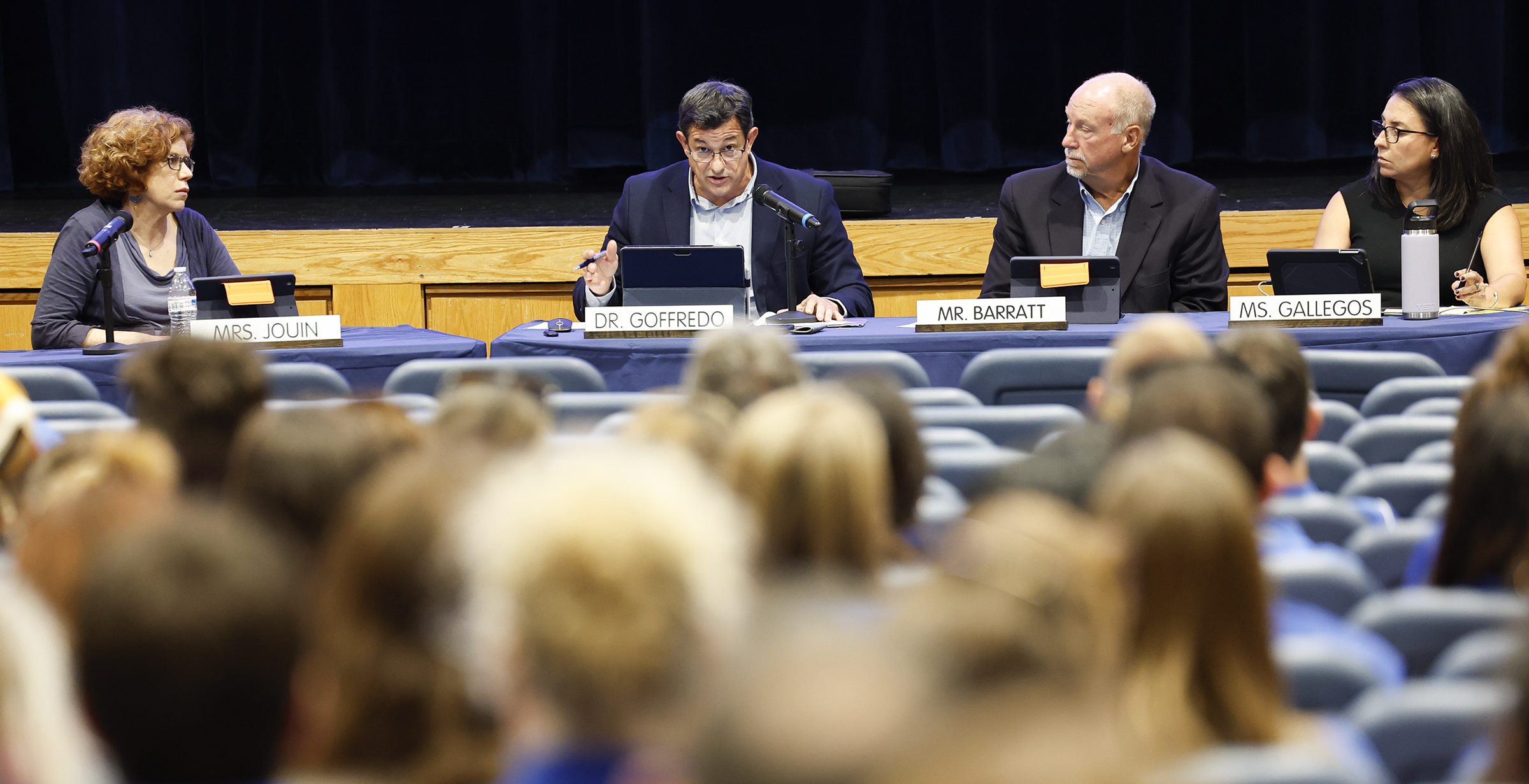
    Great Valley school board members during a meeting at Great Valley High School in Malvern in 2024.

    The Great Valley board approved the club 7-0 at its February meeting.

    At the board meeting, Lu, the club president, said he and the three other club officers had initiated its formation.

    While the club has a “conservative viewpoint,” Lu said, “our purpose is civic debate and civil discussion.” He added that the club is motivated by “the Christian value of love and compassion.”

    The club hopes to be an “impactful addition to Great Valley High School,” Lu said.

  • Tredyffrin residents are concerned over the police response to the suspect who allegedly shot and killed a woman in a random attack

    Tredyffrin residents are concerned over the police response to the suspect who allegedly shot and killed a woman in a random attack

    Residents in Tredyffrin, where a woman was killed in a random act of violence last weekend, said Monday that more could have been done in the hours leading up to the shooting and criticized the township’s lack of communication before and after the crime.

    The remarks were brought before the township’s elected board of supervisors in the first public meeting since Steve Jahn, 44, was arrested and charged with murdering Megan Nieberle, a 53-year-old nurse, while she was driving home from seeing friends late in the evening of March 7. She died the next day.

    Residents were chilled by the fact that, in the hours before Jahn killed Nieberle, he had called the police himself, telling them he was being followed by undercover officers, according to authorities. Officers, who said Jahn was showing “frantic behavior,” escorted him to Paoli Hospital for a voluntary mental health evaluation but let him leave when he requested it, knowing he legally owned firearms and had one with him. Jahn was arrested and charged with murder the day after the shooting.

    “We can frame this a lot of ways: It was a random act of violence,” said resident Joe Maugeri. “But we could also frame it as: Was it a preventable act of violence? And I think that’s the question that all of us are thinking. Were there tools that police had? Were there things that could have been done?”

    Authorities said that Jahn had no connection with Nieberle, a Children’s Hospital of Philadelphia nurse and mother of three. A few hours after leaving the hospital, Jahn allegedly drove to the intersection of Contention Lane and Old State Road in Berwyn and shot Nieberle from his car.

    Passersby who saw Nieberle’s crashed car called police, who rushed her to Paoli Hospital.

    Her death has “left a profound void in the hearts of the many who were fortunate enough to know and love her,” loved ones wrote in her obituary last week. Nieberle’s “warmth, humor, and loyalty made her a cherished presence in the community,” the obituary says.

    In his opening remarks Monday, board chairman David Miller said that officers were limited in what they could do that day. Pennsylvania has no “red flag” law, which allows for the temporary removal of lawfully owned guns when the owner appears at risk for danger.

    “Now I’m not saying a red flag law would have changed what happened on [that] night. I can’t know that, but certainly would have given our police another tool to help manage the situation,” Miller said.

    Such a measure has repeatedly failed to get enough support in politically divided Harrisburg. Another version of the bill was introduced this session.

    Democratic State Rep. Melissa Shusterman, who represents the area, said in a statement that there had been an increase in interest in extreme risk protection orders in the community.

    “The loss of our neighbor was tragic, and while we may not know for certain if an ERPO would have prevented this senseless tragedy, we do know they help to reduce gun violence and keep our communities safer,” she said.

    Residents also criticized the township for not notifying the community of the possible danger, saying they went more than 30 hours before knowing Jahn had been arrested.

    “What are the protocols and policies that we have in place around notification when things like this happen?” resident Katie Angstadt asked. “From what we’ve understood is that there was someone in our community who was very dangerous, armed for six or seven hours, and we were not notified.”

    Superintendent of Police T. Michael Beaty said he understood why the incident was concerning.

    “Questions about firearm laws and policy are ultimately determined by legislators at the state and federal levels. Our role as law enforcement is to enforce the laws as they exist and to investigate crimes thoroughly when they occur,” he told them. “That said, when tragedies like this happen, it often leads to important conversations about how we can strengthen public policy, improve crisis intervention, and ensure officers and communities have the tools that they need to prevent violence whenever possible.

    “This is a very devastating situation, which has left a profound impact on many of our community members. At this time, my deepest condolences are with Megan’s family and loved ones as they navigate this unexpected loss. While I cannot speak on the timeline or specifics of the investigation, I know it remains ongoing.”

    This suburban content is produced with support from the Leslie Miller and Richard Worley Foundation and The Lenfest Institute for Journalism. Editorial content is created independently of the project donors. Gifts to support The Inquirer’s high-impact journalism can be made at inquirer.com/donate. A list of Lenfest Institute donors can be found at lenfestinstitute.org/supporters.
  • Who is Chris Kearney? This Downingtown teacher tested his knowledge on ‘Jeopardy!’

    Who is Chris Kearney? This Downingtown teacher tested his knowledge on ‘Jeopardy!’

    On TV, you may not have been able to see the thrill that went through Chris Kearney when Jeopardy! host Ken Jennings read the clue, “Mrs. Proudie is the domineering wife of a bishop in this Victorian’s The Last Chronicle of Barset and Barchester Towers.”

    But five years ago, as he studied up for the possibility of ending up on the long-running game show, Kearney decided to search friends’ names to see if they had a famous counterpart. His freshman roommate happened to be a Trollope — though pronounced slightly differently — which brought Kearney to Victorian author Anthony Trollope. He penned a flashcard on the novelist to add to his ever-growing studying hobby.

    Kearney rung in first.

    “Who is Trollope?” he said, pronouncing it à la his roommate’s name.

    That flashcard scored him $2,000 in the “Recurring Characters” category last week, as the Downingtown High School West teacher competed against two others on Jeopardy! Kearney ultimately placed second, behind then three-day champion James Denison (Denison’s reign ended after his fourth win).

    “After the game’s over, Ken Jennings does a postgame chat session with the contestants for about five minutes, and he asked me about getting that clue, because that was a tougher clue,” Kearney recalled. “I just told him … it’s my freshman college roommate’s last name. I just wanted to make sure I knew that. So he got a chuckle out of that.”

    Kearney’s appearance on Jeopardy! last Wednesday was the culmination of a lifelong dream for the social studies teacher.

    Kearney, 48, grew up watching Jeopardy!, regularly tuning in when he was in middle school and all through high school. But about eight years ago, he decided he was going to try his hand at getting on the show.

    To appear on Jeopardy!, first you must take an “anytime test” — a 50-question exam that you can take at any time on the show’s website. If you pass the test — rumor has it, you have to get 35 out of the 50 questions correct — then you may move on to another 50-question test that is proctored online live.

    Should you pass that exam, then you could move on to a mock game and interview over Zoom. After that hurdle, you join a pool of candidates who could, at any time in the next two years, get a call inviting you to be on the show. If those two years lapse without a call, you return to the start.

    Kearney completed the anytime test almost every year. He ascended to the candidate pool in 2021, but never got the call. In 2023, he tried his hand again, but never heard back. The next year, he took the entry exam again, and did hear back. In January, he was invited to the show.

    “It was a dream come true, something that I had been just working on for a long time,” he said. “A feeling of relief too — that, ‘All right, finally.’ So: A lot of emotions, but ones I had to kind of keep quiet.”

    Preparing for if he ever got that call became something of a hobby — or perhaps a part-time job, he said. He was constantly reviewing, studying, and learning new things. There’s a strategy to playing the game, which he became familiar with, and there’s major topics and categories that are typically featured. He built up a base knowledge in those areas, and then tried to get more and more specific. Hence, Trollope.

    But it was a natural fit for someone who always liked school, and who just likes learning about things.

    It helped expose Kearney to new topics, too. He didn’t know much about art and historic art movements, but he began to look at various paintings and sculptures. He hadn’t listened to much classical music, but he became familiar with major composers, listening to their famous pieces. It gave him a new perspective on things.

    “I think it just kind of helps me appreciate the world around me a little better,” he said.

    Kearney arrived on set in California within about two months of getting the call (he had to lie to his colleagues that he was sick; they have since forgiven him). He was surprised that he wasn’t too nervous. Instead, he felt like he had accomplished his goal — that this was exactly where he wanted to be. He bonded immediately with his fellow contestants, and found it to be a welcoming environment, where people treated it like the special event that it was.

    “I was cognizant of the fact that many people want to be there and haven’t been there yet, and so I just appreciated every moment I was there,” he said.

    And though he knew the experience of the game would be different from playing from the comfort of the couch, he realized how hard it was to prepare for what it feels like to be on stage.

    The first part of the game he was just trying to acclimate to the pace and choosing when to ring in. There was a lot to consider — and to consider quickly. Still, it was “kind of a good stress,” he said.

    Friends and family celebrated with a watch party in Downingtown. Surrounded by screens of the show, he watched the people around him root for him. He played the episode for his students the day after, pausing to tell them what was going through his mind at certain points of the game.

    Of course, Kearney hadn’t been able to share the results before the show aired. As he watched people around him getting excited, he told his wife he felt bad that they were going to see him lose.

    “But they didn’t care. They were just so happy to be a part of it, to celebrate and cheer me on,” he said.

    This suburban content is produced with support from the Leslie Miller and Richard Worley Foundation and The Lenfest Institute for Journalism. Editorial content is created independently of the project donors. Gifts to support The Inquirer’s high-impact journalism can be made at inquirer.com/donate. A list of Lenfest Institute donors can be found at lenfestinstitute.org/supporters.
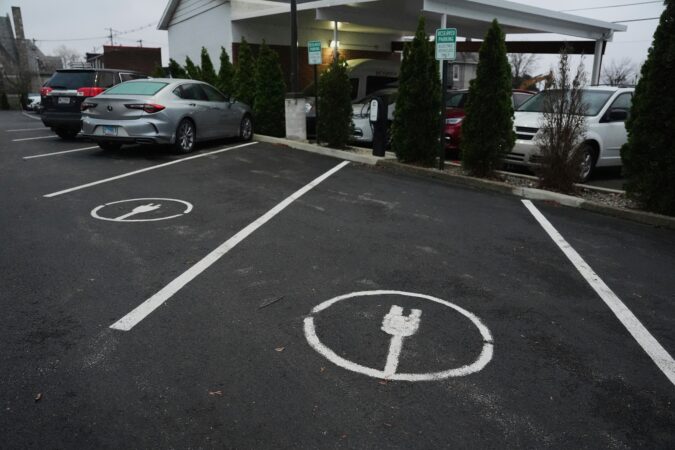
  • Chester County has more than 9,000 EVs. Now it wants to build more public electric vehicle charging stations

    Chester County has more than 9,000 EVs. Now it wants to build more public electric vehicle charging stations

    Chester County, home to one of the largest numbers of electric vehicles in the state, hopes to grow its footprint of public charging stations.

    Through the federally funded National Electric Vehicle Infrastructure program, administered through the Pennsylvania Department of Transportation, the county is looking to build up its community-based public EV charging stations for people who have or want an electric vehicle but do not have a charging station installed at home.

    Funding from the program flows directly to municipalities or other applicants for EV chargers. PennDot expects to fund more than 100 projects through the grant.

    It builds on an initial federally funded project under the same program, which sought to place charging stations every 50 miles along the major travel corridors to address long drives across the state. Through that program, Chester County projects received $3.2 million.

    Chester County’s proposal would increase the number of public chargers speckled around the county, from workplaces to businesses, giving drivers a place to charge their cars as part of their day-to-day routines.

    Chester County, which has both densely packed development and rolling agricultural pockets, saw its rates of EV ownership double between 2022 and 2024, with more than 9,000 EVs registered in the county in the state’s most recent data. The county is behind only Montgomery in overall EV registrations in the southeastern part of the state.

    “Things are pretty spread out, and with the infrastructure that we have in place right now, other modes of transportation that are carbon-free or less carbon intensive than single-occupancy vehicles are not as viable here as they are in other places that are more dense,” said Rachael Griffith, sustainability director for the Chester County Planning Commission. “If we’re looking at a lower carbon future for our transportation network, EVs are really a great option for that here in our land-use setting. Building out the network of EV chargers is really the way that we incentivize that.”

    EVs are expensive, but Chester County has the highest median income in the state, so it makes sense it would see the higher ownership rates, Griffith said.

    Under former President Joe Biden’s administration, there had been a broader push nationally for electric projects. But that shifted with President Donald Trump’s return to office, as the president slashed electric goals. Experts in clean transportation anticipated seeing more projects focused on propane and natural gas in response.

    Despite the policy shifts, “it’s very clear that the future of transportation is electric,” Griffith said.

    “The more that we can do to plan for that future, I think the better prepared we will be in the long term,” she said.

    The county’s planning commission is reaching out to municipalities and chambers of commerce to drive applications for the program, Griffith said. Applications are open until Aug. 21; any business registered in Pennsylvania is eligible for funds.

    This suburban content is produced with support from the Leslie Miller and Richard Worley Foundation and The Lenfest Institute for Journalism. Editorial content is created independently of the project donors. Gifts to support The Inquirer’s high-impact journalism can be made at inquirer.com/donate. A list of Lenfest Institute donors can be found at lenfestinstitute.org/supporters.