Tag: Chester County

  • Noel Mayo, groundbreaking Black industrial designer and college professor, has died at 88

    Noel Mayo, groundbreaking Black industrial designer and college professor, has died at 88

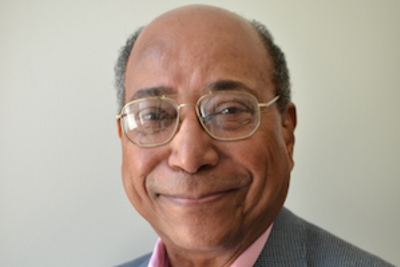
    Noel Mayo, 88, formerly of Philadelphia, widely recognized as the first Black owner of an American industrial design firm, first Black American college chair of an industrial design department, first Black industrial design graduate of Philadelphia College of Art, award-winning super mentor, and champion of professional diversity, equity, and inclusion, died Thursday, Jan. 29, of a probable heart attack at an assisted living center in Delaware County.

    Rejected for an industrial design job after college because he was Black, Professor Mayo went on to found Noel Mayo Associates Inc. in Philadelphia in 1964. He spent 11 years in the late 1970s and ’80s as a professor and first Black chair of the industrial design department at what became the now-defunct University of the Arts, and 27 years, from 1989 to 2016, as a governor-appointed eminent scholar in art and design technology at Ohio State University.

    “Dr. Mayo leaves behind a transformative legacy,” former colleagues at Ohio State said in a tribute, “whose impact shaped generations of students, elevated the field of design, and advanced diversity and inclusion across the profession.”

    As the trailblazing owner and president of Noel Mayo Associates for decades, he and his staff designed all kinds of products, interiors, exteriors, graphics, mobile exhibits, and signage systems for companies and private clients around the world. He worked with NASA, IBM, Black & Decker, Philadelphia International Airport, museums, government agencies, and public institutions.

    He collaborated with Lutron Electronics for 45 years and is named on hundreds of its design and utility patents. In 1984, he remodeled the mayor’s City Hall office after Wilson Goode replaced Bill Green. In 1988, he advised officials at the old Spectrum on the placement of a Julius Erving statue in South Philadelphia.

    He designed computer-driven telephones in the 1980s that could dial 96 phone numbers automatically and leave messages. “I realize how pressured this is,” he told the Daily News for a 1984 story about design and technology’s effect on modern life. “But people want it.”

    Professor Mayo was featured in a 1977 story by Inquirer design critic Ellen Kaye, and she praised the “visual fluidity” he created in a refurbished Bala Cynwyd high-rise condo. She wrote about his work again in 1978, and he said design “revolves around problem-solving from a logical point of view.”

    In a 1995 story, Inquirer design critic Thomas Hine noted his commercial success with early light-dimmer switches and said it “helped Lutron to transform itself from a small manufacturer to an important name in its industry.” In a recent video interview, Professor Mayo said: “I see the problems as kind of opportunities that other people didn’t see. … So I look for opportunities for innovation.”
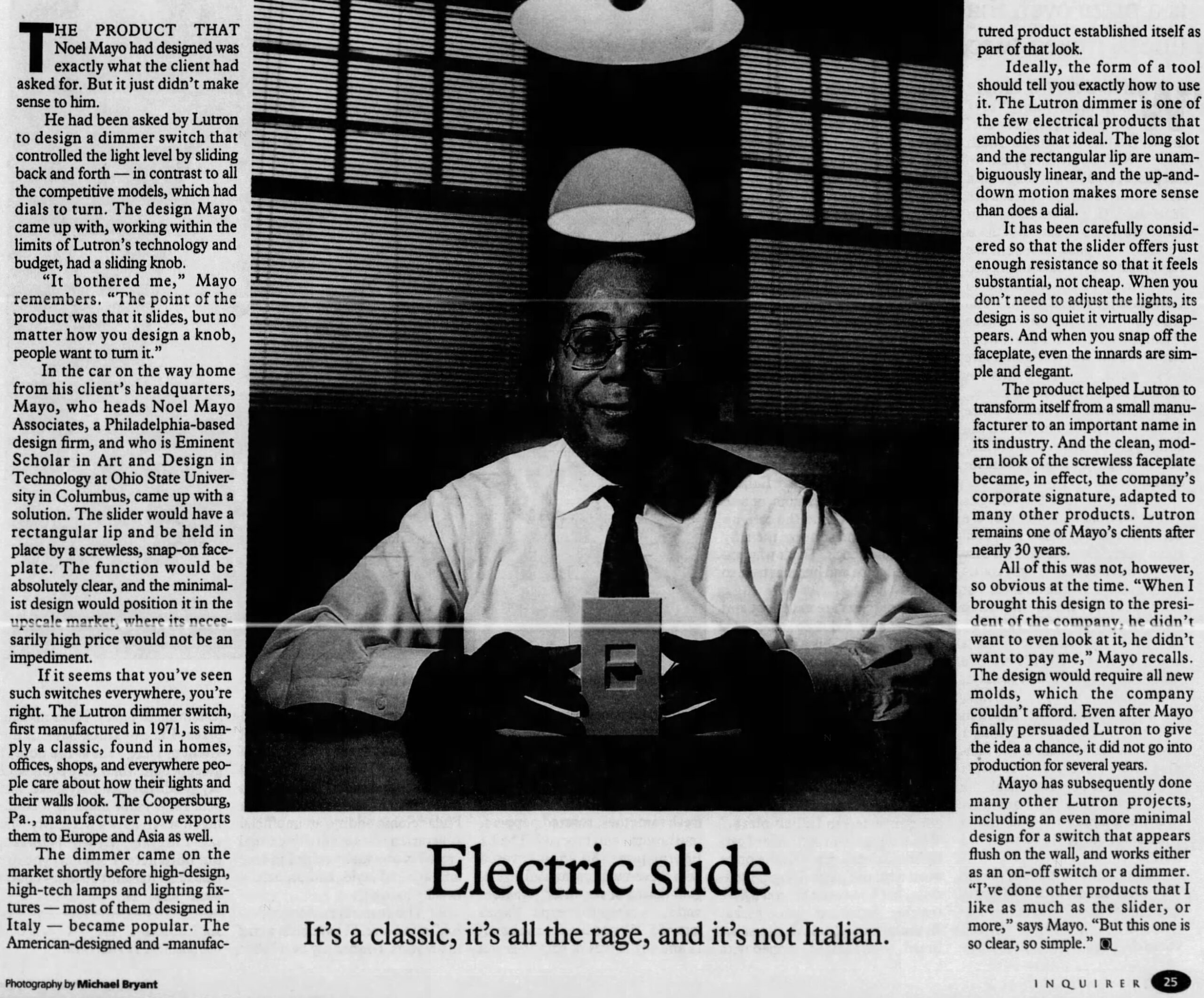
    Professor Mayo was featured in The Inquirer in 1995.

    As chair at Philadelphia College of Art and its successor, University of the Arts, he grew the industrial design department from the school’s ninth largest to its third largest. In online tributes, former students called him “a true icon” and “a doorway into a world of possibility, dignity, and community.”

    He told The Inquirer in 1978: “Something looks good when it looks rational. That is how I work myself, and that is what I try to teach my students.”

    At Ohio State, Professor Mayo taught product, interior, and graphic design courses, and researched accelerated learning processes using music, color, relaxation techniques, interactive computers, and video. Former colleagues there praised “his blend of rigor, generosity, calmness, and mentorship” in a tribute.

    Professor Mayo worked hard to recruit Black and other minority designers and students to his company and college courses. He created mentoring programs and developed an extensive network of minority business contacts.

    Professor Mayo designed this telephone.

    “He did not treat diversity as a slogan,” a former colleague said in an online tribute. He earned lifetime achievement awards from the Industrial Designers Society of America in 2006 and the Design Management Institute in 2019. In 2021, Ohio State alumni created and funded the Mayo Mentoring Program.

    He was one-time president of the Philadelphia Economic Council and the Greater Philadelphia Community Development Corp. He wrote articles for many publications and served on boards at University of the Arts, the Society for Environmental Graphic Design, and other groups.

    He was a fellow of the Interior Design Council of Philadelphia, a juror for art and design competitions, and a member of the Philadelphia Art Commission. Asked to advise young designers in the recent video interview, he said: “Try to be as innovative as you can. … Ask questions. … Being open is critical.”

    Noel Mayo was born Dec. 30, 1937, in Orange, N.J. He attended a boarding school in Chester County and earned a bachelor’s degree in design in 1960 at what became Philadelphia College of Art and then University of the Arts.
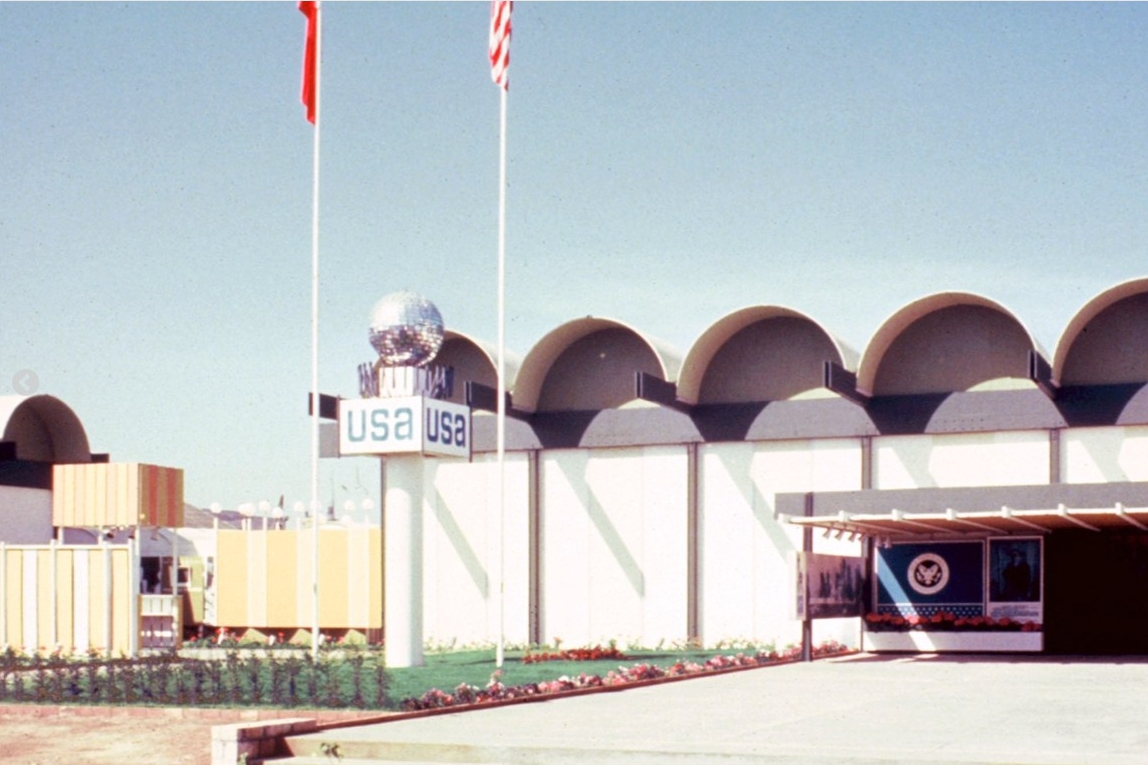
    Professor Mayo designed this exterior.

    He married, divorced, and later married Leslie Butler.

    Professor Mayo enjoyed roller skating, was good at darts, and earned an honorary doctorate from Massachusetts College of Art and Design.

    “He was easygoing with a great sense of humor,” said Virginia Gehshan, a design colleague and longtime friend. “He was really an amazing genius. He was ahead of his time.”

    In addition to his wife, Professor Mayo is survived by other relatives.

    A celebration of his life is to be held later.
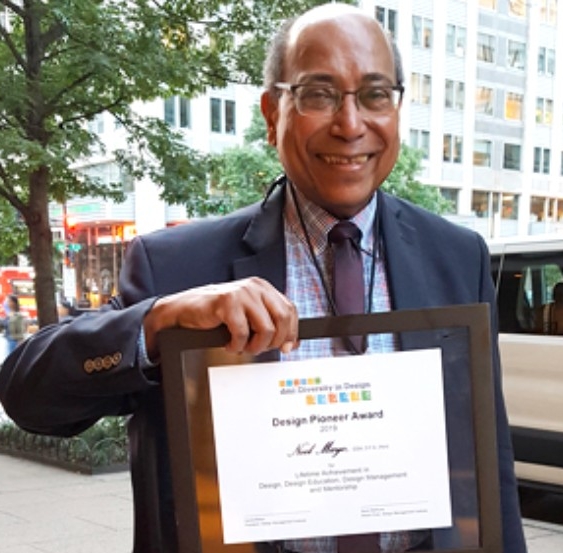
    Professor Mayo received the Design Pioneer Award in 2019.
  • A suburban office park in Chester County is getting converted to apartments. Is it a sign of things to come?

    A suburban office park in Chester County is getting converted to apartments. Is it a sign of things to come?

    When COVID-19 pushed many professionals to work from home, empty buildings across the country showed that the United States had too much office space.

    At the same time, the nation also had too few homes. Some real estate experts saw an opportunity to take advantage of the crisis in commercial real estate to produce more housing. Vacant office buildings could be transformed into apartments or, in some cases, razed to make way for new development — especially in high-demand suburban areas.

    But six years later, some sprawling campuses in suburbs like Horsham, Plymouth Meeting, and Wayne have soaring vacancies — and there are only a couple suburban conversions underway.

    Developers agree that the primary challenge is the buildings themselves, which have more difficult floor plans for residential development than their urban counterparts, making demolition easier than conversion in many cases.

    “Transforming an office building tucked inside a suburban office park is a completely different equation than converting a building on Walnut Street steps from Rittenhouse Square,” said Sarah Maginnis, executive director of the Philadelphia chapter of the Commercial Real Estate Development Association. “Location, context, and building design all matter a lot.”

    The lack of suburban office redevelopment is partly due to the fact that many of the highest-vacancy buildings are in remote, less desirable corners of the region. The patchwork quilt of hyperlocal zoning regulations across dozens of municipalities is a challenge, too, as builders have to negotiate with officials on almost every project.

    “A lot of townships are fighting residential development because it comes with burdens on the school systems. Office buildings don’t do that,” said Glenn Blumenfeld, principal with Tactix Real Estate Advisors. “Zoning is more liberal in the cities [which is why residential conversion] has not come to the suburbs.”

    Architectural challenges of conversion

    Most suburban office buildings date to an era when office and residential structures began to look very different from each other.

    When office work began to move into undeveloped land surrounding cities in the mid-20th century, developers generally built out instead of up, taking advantage of the abundant space. Almost everyone commuted by car, so vast parking lots were required.

    Suburban office buildings often have a lot of dark interior space. The windows that do exist mostly cannot be opened because of ubiquitous air-conditioning. The parking lots that wreath the buildings make for unsightly and dull vistas.

    In large rectangular glass buildings, residential conversion would entail what longtime suburban developer Eli Kahn calls “bowling-alley-shaped apartments … that just don’t work.”

    “In the city, a 30-story office tower doesn’t look a whole lot different from an apartment building,” said Kahn, president of E. Kahn Development Corp.

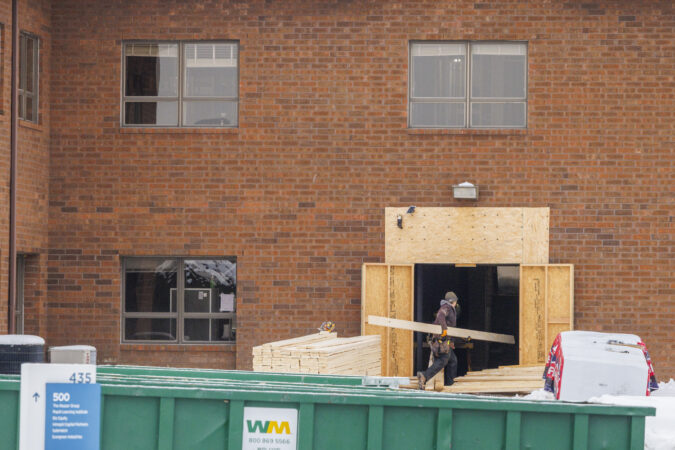
    One of the eight two-story buildings at 435 Devon Park Dr. that have been used as offices and are being turned into apartments.

    An exceptional suburban conversion

    The redevelopment of an eight-building office complex at 435 Devon Park Dr. in Chester County’s Tredyffrin Township is one of the only suburban office-to-residential conversions underway right now.

    Notably, none of its former office structures are big glass rectangles.

    “This just happened to be perfect for conversion,” said Mark Thomson, founder of Love Communities, which is developing the project in partnership with E. Kahn Development Corp. and Triple Crown Corp.

    “It’s going to be the largest garden-style suburban conversion in the whole Northeast, maybe even a bigger area than that,” Thomson said.

    Kahn also is part of the team behind the conversion of 435 Devon Dr., and he developed the complex when it was built in the 1980s.

    This office park broke from the standard big glass box model of suburban offices and instead offered two-story, L-shaped buildings with brick facades and windows that open.

    That makes conversion cheaper, too. To make those big box buildings livable, the glass facade would need to be torn off and windows installed that actually open.

    “The most expensive part of construction is the windows,” Thomson said. “If we had to do that, it would probably make this not economically feasible.”

    The project is also able to move forward because it accords with the goals of local political leadership, who are wary of family-size apartments.

    The 162-unit office-to-residential project will be largely composed of studio and one-bedroom apartments in an attempt to appease concerns about strains on the school district and to produce unsubsidized affordable housing in this wealthy township.

    Zoning rules everything

    In many suburbs, building apartments, townhouses, and other more modestly scaled housing is often not allowed by zoning laws. Office parks are usually zoned to exclude residential development.

    That’s a sharp contrast with Philadelphia, which has few barriers to office-to-residential conversion in Center City, and a citywide 10-year property tax abatement is available for building renovations. Wilmington also offers a variety of incentives.

    In Tredyffrin, officials were opposed to the idea of either very high density apartments — at almost 10 acres, the site could support hundreds of units — or new single-family homes.

    So to make 435 Devon Park Dr. work, the developers knew they couldn’t demolish the buildings and construct new homes.

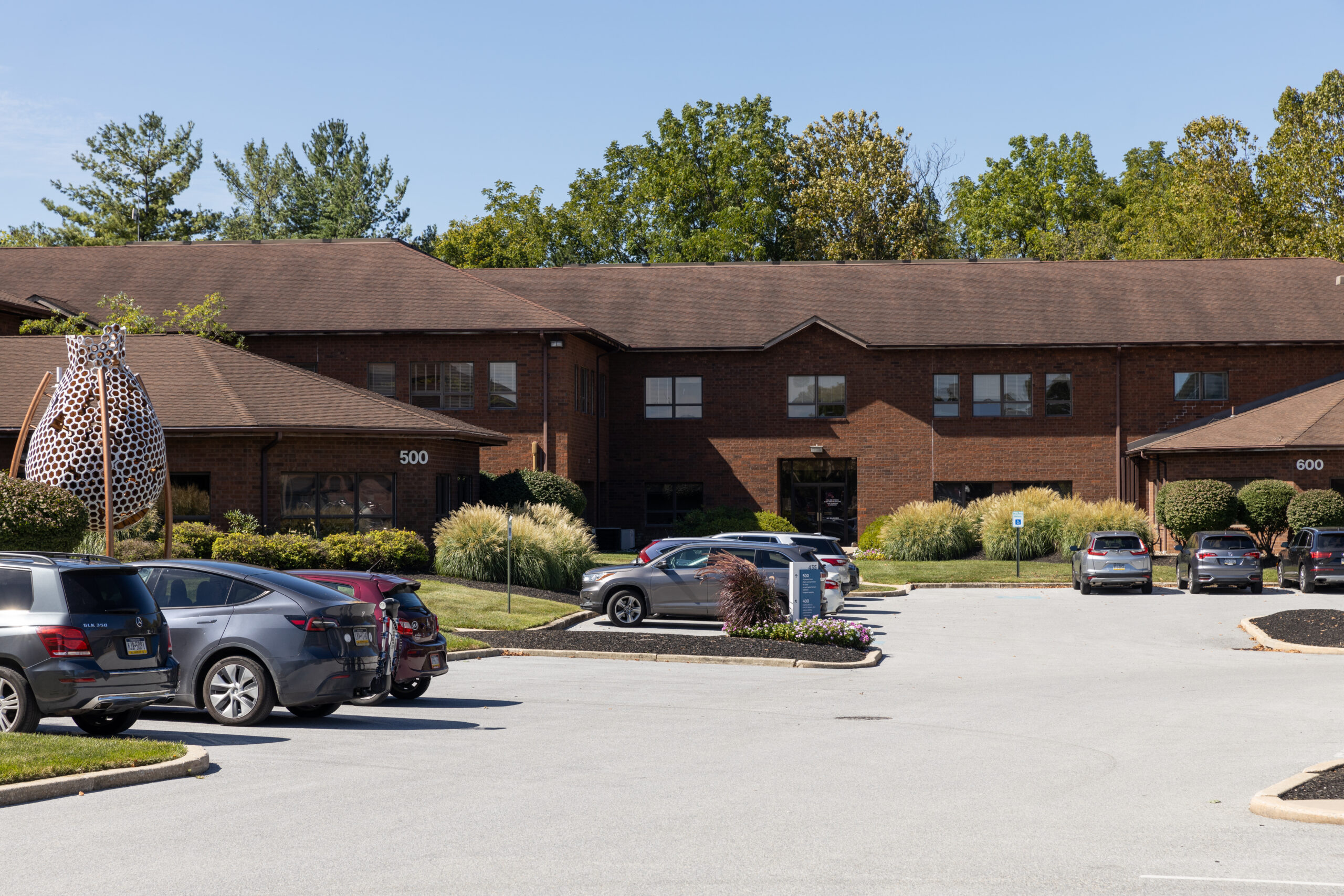
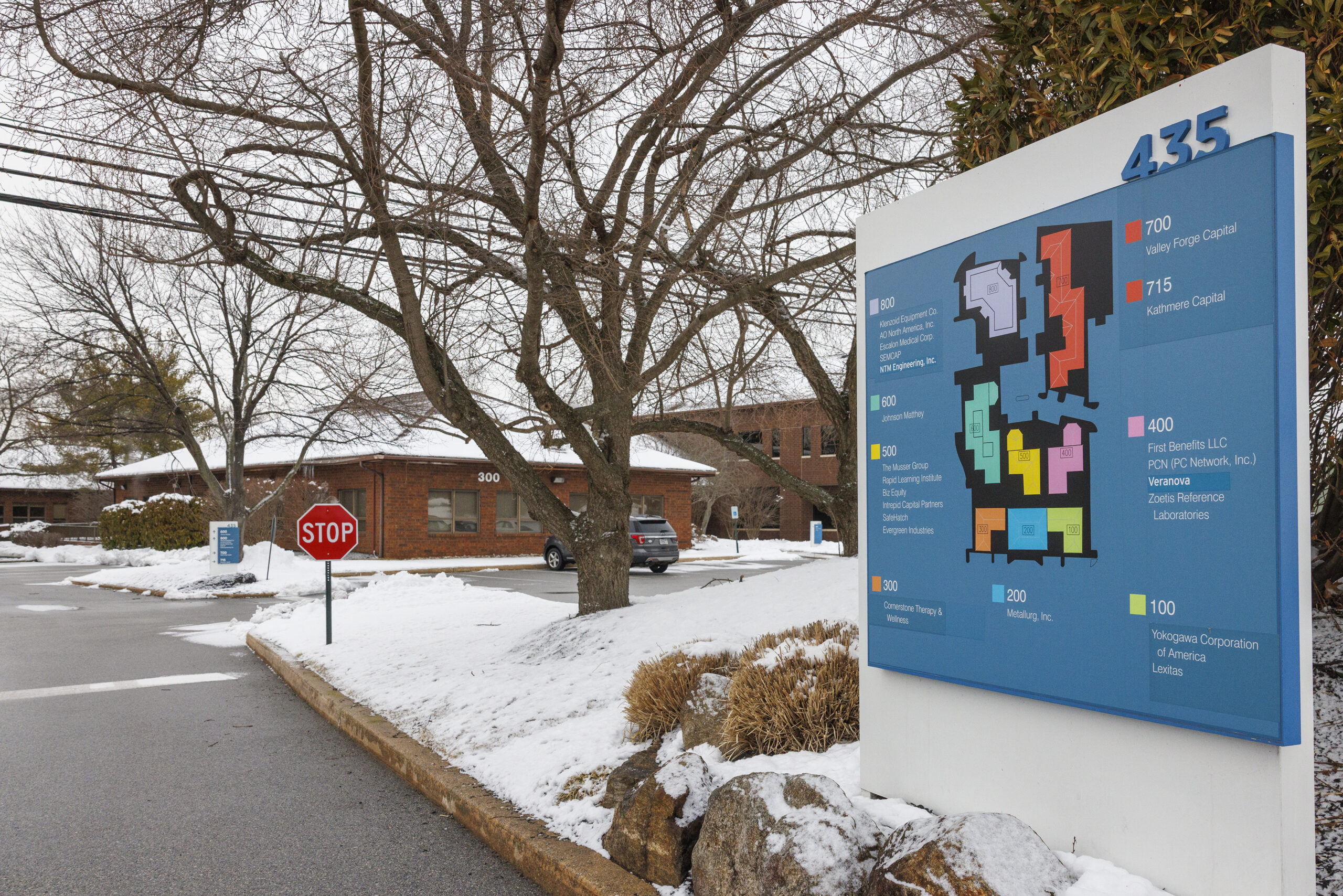
    The entrance to 435 Devon Park Dr. with the brick office buildings, which are planned to be converted to residential in the background.

    Instead, the developers pitched the conversion not as luxury apartments, but as affordable homes for nurses, teachers, and other middle-income workers in Tredyffrin. They also plan to convert some parking lots into green space for residents.

    The units can be priced more affordably because of the relatively small scope of the conversion and because the developers essentially purchased the campus for its land value.

    Working in partnership with Triple Crown Corp. also helps because the company has in-house contractors and architects.

    The paucity of multi-bedroom units lowers rental costs, too, and assuages fears about overburdening schools.

    “None of these communities have made it easy like Philadelphia, because they’re all their own fiefdoms,” Kahn said. “But if you make the right argument and you show them how it’ll benefit them financially, they generally come around.”

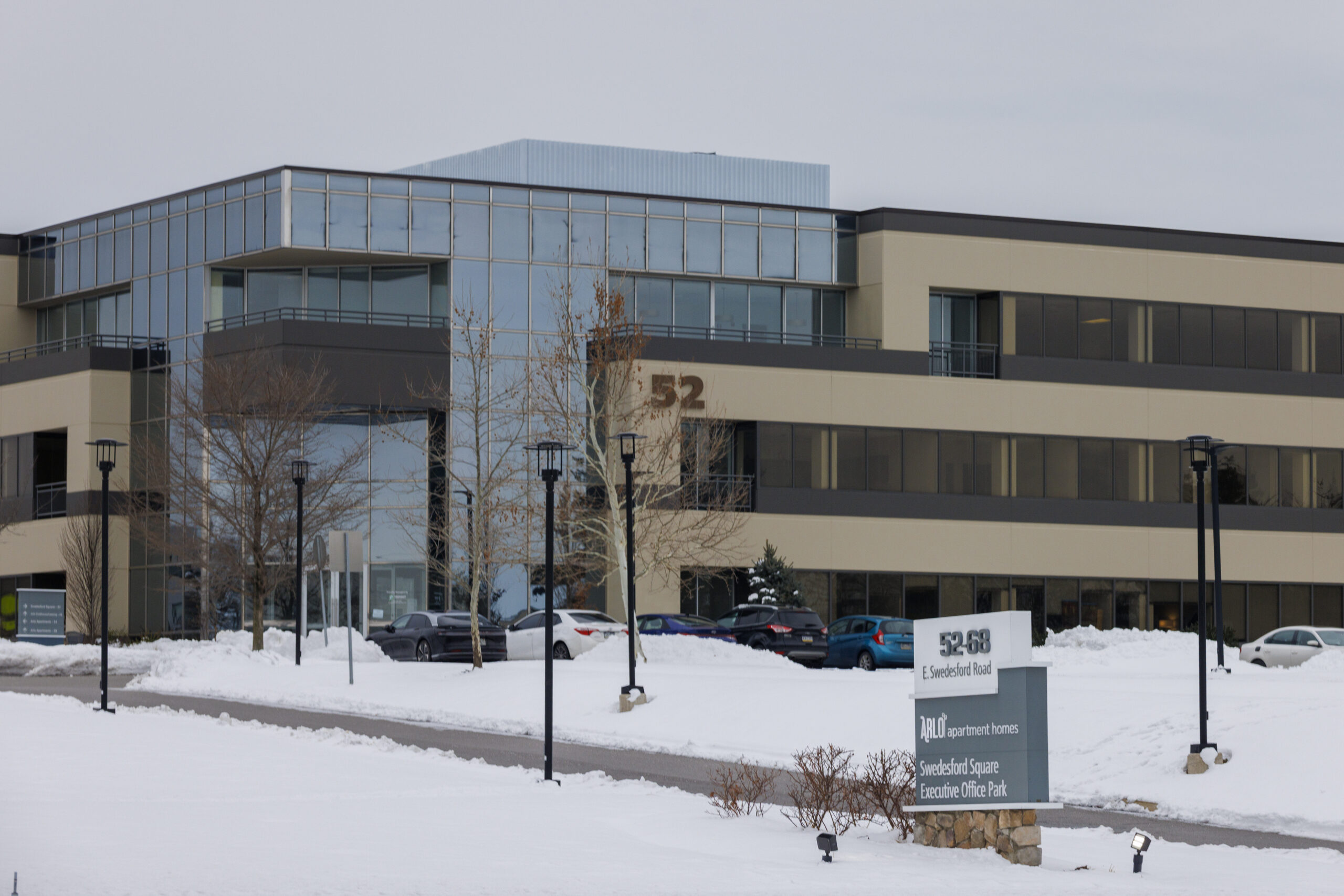
    The East Whiteland office building at 52 Swedesford Rd., which is slated by TriPoint Properties for demolition and replacement with apartments.

    The future of (some) suburban offices

    There are few other conversion projects underway in Philadelphia’s suburbs.

    Keystone Property Group has a more traditional office-to-apartment tower in the works at the Plymouth Meeting Mall. The Parkview Tower next to the Valley Forge casino was considered for conversion last year. The Buccini Pollin Group is weighing a conversion project at BNY Mellon’s old headquarters in Bellevue State Park, north of Wilmington, and is looking at opportunities in the Pennsylvania suburbs.

    But it is more common for developers to consider demolishing old office buildings to make way for something new.

    In Chester County’s East Whiteland Township, which contains the Great Valley Corporate Center, office-to-residential conversion proposals have met a chilly reception.

    “The proposals to rezone large vacant office buildings for direct conversion to apartments were really viewed negatively,” said Scott Lambert, chairman of the East Whiteland Township Board of Supervisors. The plans were seen as “short-term fixes that created long-term challenges.”

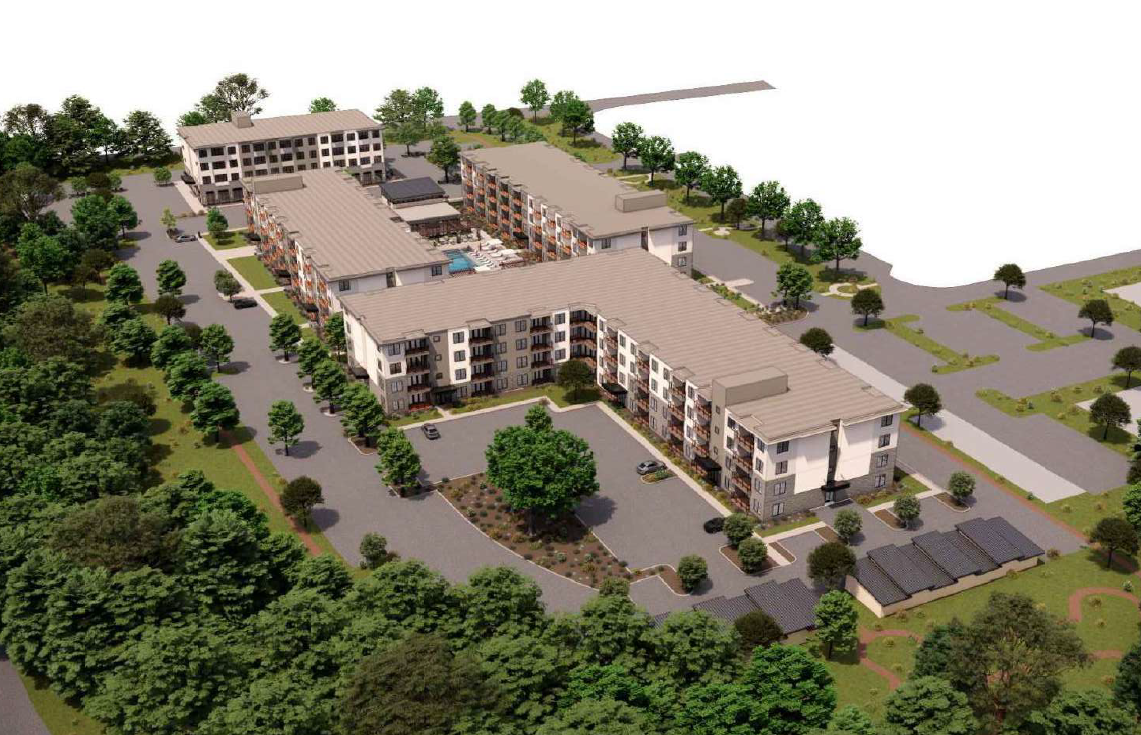
    An overhead rendering of the 250-unit apartment project that will replace an old office building at 52 Swedesford Rd.

    East Whiteland’s government looked more kindly on Tripoint Properties’ proposal to demolish a standalone office building at 52 Swedesford Rd. — outside the corporate center — and replace it with 250 apartments.

    The vacant office building is surrounded by four-lane roadways, which eased congestion concern. Developers also proposed mostly small apartments, with 30 rented for below market rate, which helped earn support from the township.

    “On the school side, they were OK with limiting the units to either one- or two-bedroom apartments,” Lambert said. “We would like to be in a position to limit the number of three-bedroom apartments in the township because of the impact it has on schools.”

    But some real estate experts say eventually, municipalities will need to replace the tax revenue lost from dead office buildings.

    “The centerpiece of tax bases in commercial areas has been office space,” Kahn said. “If the tax base goes down, and they can’t pay for the schools, who gets the burden? A couple years of 30% property tax increases on your constituents, you’re going to get voted out of office real quick.”

  • A Kennett Square woman’s heirloom diamond went missing. It turned up 1,100 miles away, in a shoe.

    A Kennett Square woman’s heirloom diamond went missing. It turned up 1,100 miles away, in a shoe.

    She didn’t even like diamonds. That was the funny thing. Costume jewelry, yes. A pair of handmade earrings, certainly. Diamonds, well, she’d always found them a bit showy.

    She liked this one, though, because it had been Jim’s.

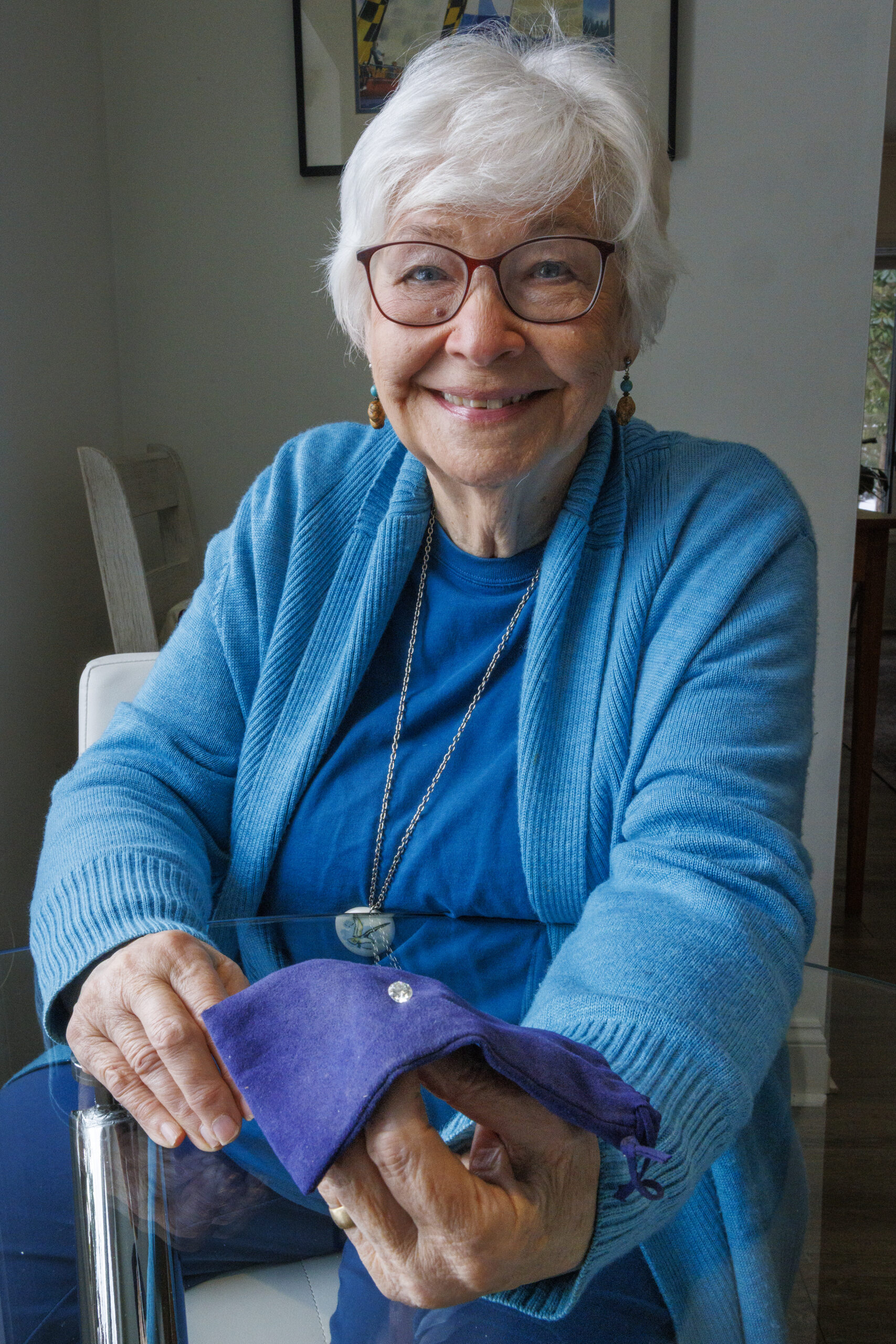
    It was a man’s ring, a 1.3-carat diamond, round cut, set on a simple gold band, and when her husband, Jim, passed away a few years ago, Cindy Ware made it hers.

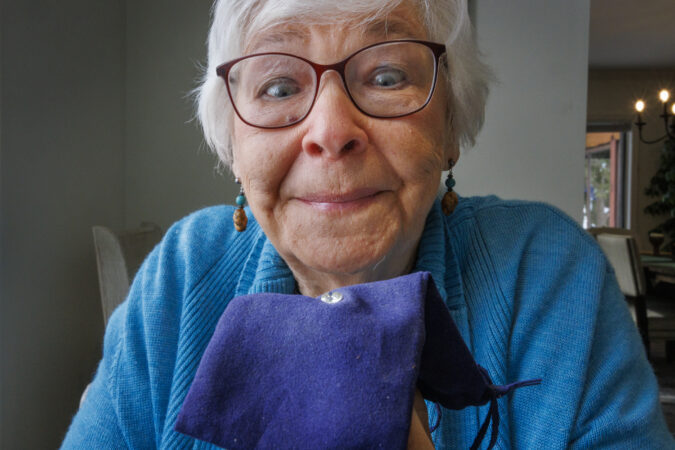
    Cindy Ware of Kennett Square with diamond inherited by her late husband, Jim. She lost it but it was discovered embedded in a neighbors shoe in Florida. Photograph taken at her home on Wednesday, Feb. 25, 2026.

    She wore it everywhere — to the grocery store, to lunch with friends, to her morning water aerobics class. It brought her comfort. A few times a day, she would look down at it, think of Jim, and smile.

    “I never took it off,” says Cindy, who is 82 and impossibly sweet and sometimes wears a sweatshirt that says I’m often mistaken for an adult because of my age.

    So when the diamond went missing last December, shortly before Christmas, Cindy was devastated. She felt sick, like she’d let Jim down.

    She thought to herself: “Cindy, you just lose everything that’s important.”

    A 60-year love story

    Cindy Ware met the man she would marry in Pinkie Patterson’s second-grade class. This was in Mount Holly, N.C., in 1951. On Valentine’s Day of that year, while out sick with the mumps, Cindy had been allowed to come to the school parking lot to collect her Valentines.

    The teacher sent a little boy out to deliver a box of treats.

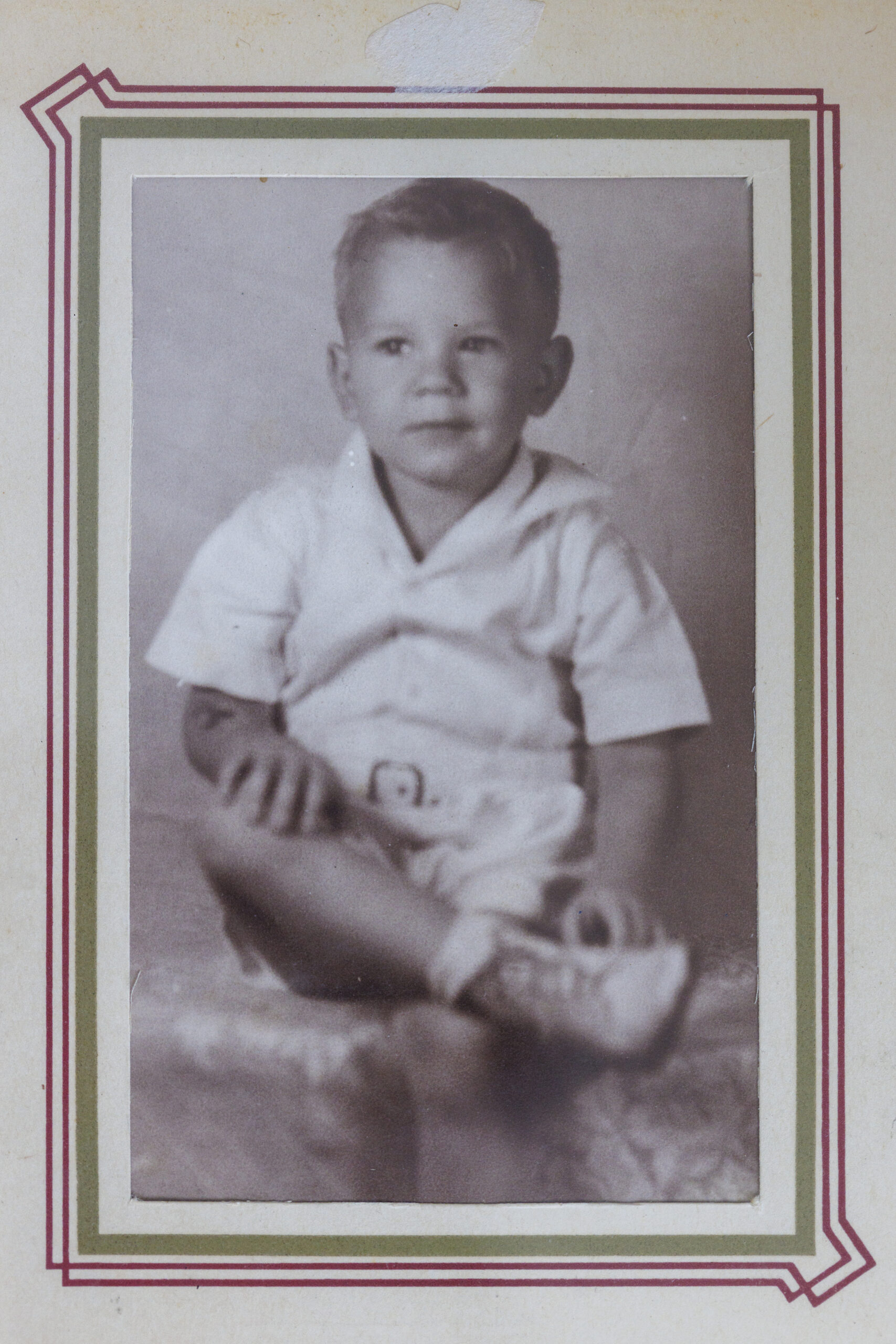
    He had a buzzcut and a little cowlick and his name was Jim.

    Childhood photograph of Jim Ware the late husband, Cindy Ware of Kennett Square. She lost the diamond he inherited but it was discovered embedded in a neighbors shoe in Florida. Photograph taken at her home on Wednesday, Feb. 25, 2026.

    Well, Cindy’s mother thought Jim was about the most precious little boy she had ever seen. And Cindy — who until that point hadn’t given it much thought — soon decided that maybe she agreed.

    By high school, they were an item — inseparable, Cindy explains, “except when we were mad at each other and dated other people.”

    They got together for good during college, and theirs was a 60-year love story.

    They married in 1965. They moved to New Jersey, then to Pennsylvania. They raised three boys. Their boys grew up and had children of their own. A few years ago, they settled into a retirement community in Kennett Square, where they liked to take morning walks and eat pizza with mushrooms and pepperoni.

    “We never needed a lot of anything else,” Cindy says. “Just the two of us.”

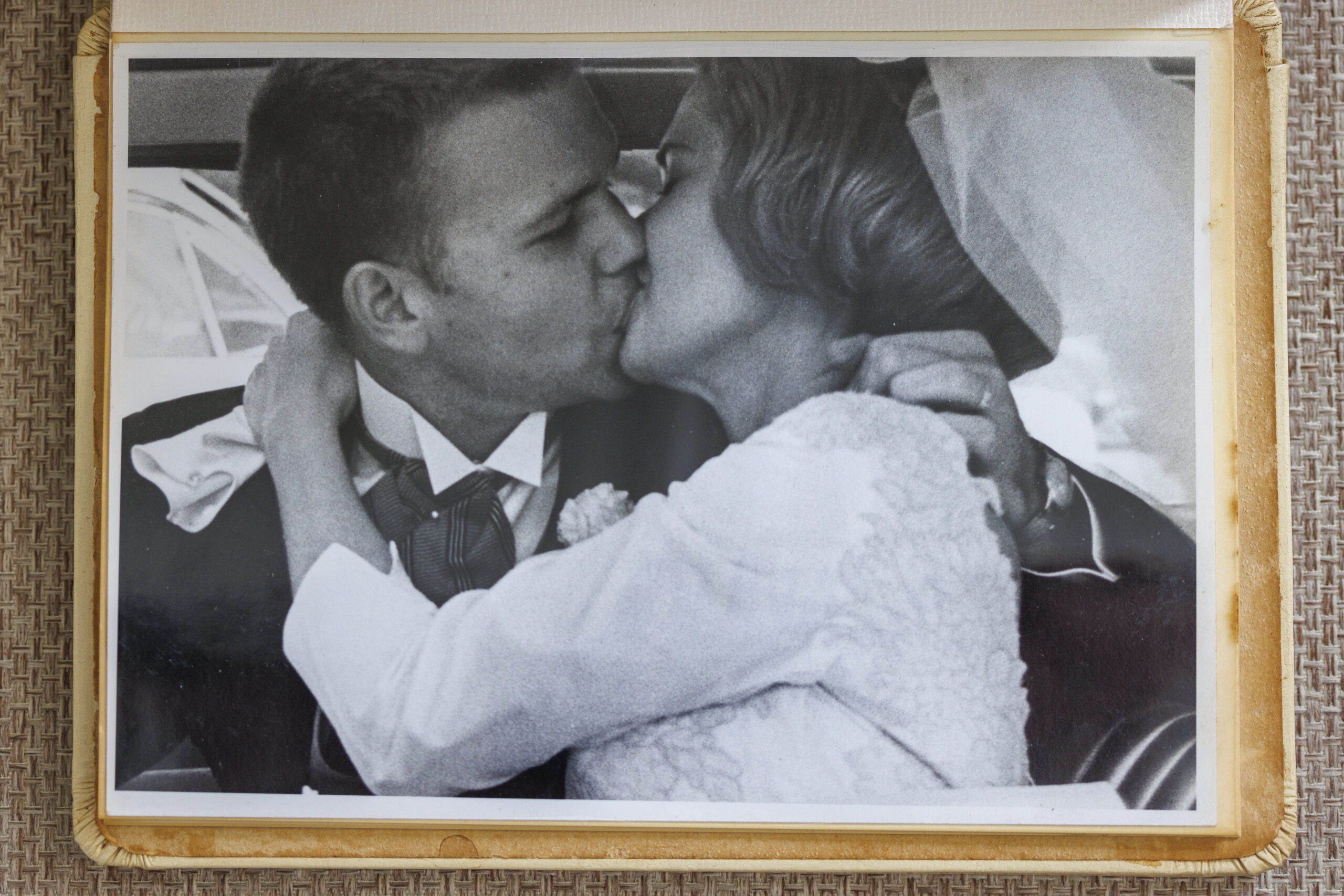
    Wedding photograph of Jim (late) and Cindy Ware of Kennett Square. She lost a diamond he inherited but it was discovered embedded in a neighbors shoe in Florida. Photograph taken at her home on Wednesday, Feb. 25, 2026.

    When Jim got sick, in 2020, it was horrible. Months of doctor’s visits, then specialist visits. Then, finally, hospice.

    “The worst year of my life,” Cindy says.

    Not long after Jim passed, in 2023, Cindy was getting the family’s affairs in order. One day, at a local bank, she opened an old lockbox and discovered a diamond ring — an heirloom that had been passed down through generations of Jim’s family.

    Back when she and Jim married, and they didn’t have much money, he had told her she could have her pick: a ring or a car. “That’s a no-brainer,” she had replied. “I want a car.”

    Still, something about the diamond spoke to her.

    She plucked it from the lockbox and slid it onto her middle finger, and that’s where it remained for the next three years.

    The missing diamond

    She was having lunch with a friend last December when she glanced down and realized it was gone.

    The diamond had dislodged from the setting, and it was nowhere to be found.

    “I was just bereft,” Cindy says.

    It could have been anywhere. In her car. In the grass outside her home.

    At one point, she wondered whether she had lost it during her water aerobics class at the retirement community’s swimming pool. Things could get a little intense with the arm exercises. Maybe it had jostled loose and sunk to the bottom.

    But what could be done? Even if they drained the pool, the likelihood of them ever finding the diamond was minuscule.

    Her sons urged her not to worry, assured her that it was OK. There was always the chance that it might still turn up.

    But weeks passed, then months.

    Eventually, she resigned herself to the fact that the diamond was never coming back.

    ‘That might be a diamond’

    One afternoon a couple weeks ago — on a pool deck 1,100 miles from Kennett Square — a man named Coleman looked down and noticed, lodged in the tread of his Lands End pool shoe, what appeared to be a small piece of glass.

    Or wait. Maybe it was some kind of gem.

    At a pool in South Florida earlier this month, a Pennsylvania man looked down at his pool shoe and discovered what at first appeared to be a gem or piece of glass stuck in the tread.

    For days he had been wearing the pool shoes — to the pool, through locker rooms. He had stuffed them into his gym bag, into a suitcase. Earlier that day, he had worn them on a walk in the gritty sand of a South Florida beach.

    He also wore them back home in Kennett Square, where he lived in a retirement community. In the afternoons — after the ladies finished their morning water aerobics — Coleman’s group played pool volleyball. He always wore his pool shoes during games.

    Now, sitting poolside in Florida, Coleman’s husband, John, examined the stone and said, “Uh, that might be a diamond.”

    Intrigued, but not yet convinced, the couple went the following day to a Pompano Beach jeweler.

    Nine times out of 10, the jeweler told them, when people think they’ve found a diamond, it turns out to be nothing.

    This was not one of those times.

    Yes, the jeweler said, it was a diamond, all right — 1.3 carats, nicely colored, likely from the 1950s or ’60s. Probably worth a bit of money.

    Tickled, Coleman posted a photo of the diamond to Facebook.

    A diamond in the sole of his shoe

    Back in Pennsylvania, Cindy was on the phone with her good friend.

    It was Valentine’s Day, and the two were chatting about this and that, and at the end of their conversation, in passing, her friend mentioned a man from their neighborhood, Coleman, who had just posted a photo from Florida.

    Apparently, he had found a diamond lodged in his shoe.

    As it happened, Cindy and Coleman knew each other well. They lived just a couple streets apart, worked out in the same pool. Once, when Jim was in hospice, Coleman and his husband had brought her flowers.

    Cindy tracked down the photo. Saw the small gem lodged in her neighbor’s pool shoe.

    Impossible, she thought.

    She dialed Coleman’s number.

    “Hello,” she said, “I think you have my diamond.”

    The return

    It was confirmed a day later.

    Back from Florida, Coleman delivered the diamond to Cindy’s house, along with a collection of yellow roses. Neither of them could stop smiling.

    Best they can tell, the diamond fell to the bottom of the community pool, where Coleman — while playing pool volleyball — happened to step on it, just right. How it had remained lodged in his shoe’s tread for days or weeks or months — across multiple states — was anyone’s guess.

    “It could never happen in a million thousand years,” Cindy says.

    Says Coleman, “It does make you sit back and think for a minute about what is going on here.”

    As you might imagine, their story has been the talk of their retirement community. Everyone, it seems, wants to talk about the little diamond that traveled halfway across the country in a shoe.

    As for the diamond itself, Cindy has decided that it‘s time to pass it on, to her oldest son.

    “I can no longer be trusted,” she jokes.

    In the meantime, she has stopped wearing it to water aerobics.

  • These Chesco spots are the wealthiest in the region | Inquirer Chester County

    These Chesco spots are the wealthiest in the region | Inquirer Chester County

    Hi, Chester County! 👋

    Local communities dominate a new list looking at the Philadelphia region’s wealthiest areas by income. Also this week, East Vincent’s planning commission has voted against a proposed data center at Pennhurst, North Coventry Township officials headed off a different data center before it was even formally submitted, plus Tired Hands Brewing Company has closed its Kennett Square outpost.

    If someone forwarded you this email, sign up for free here.

    Chester County dominates a list of the region’s wealthiest spots

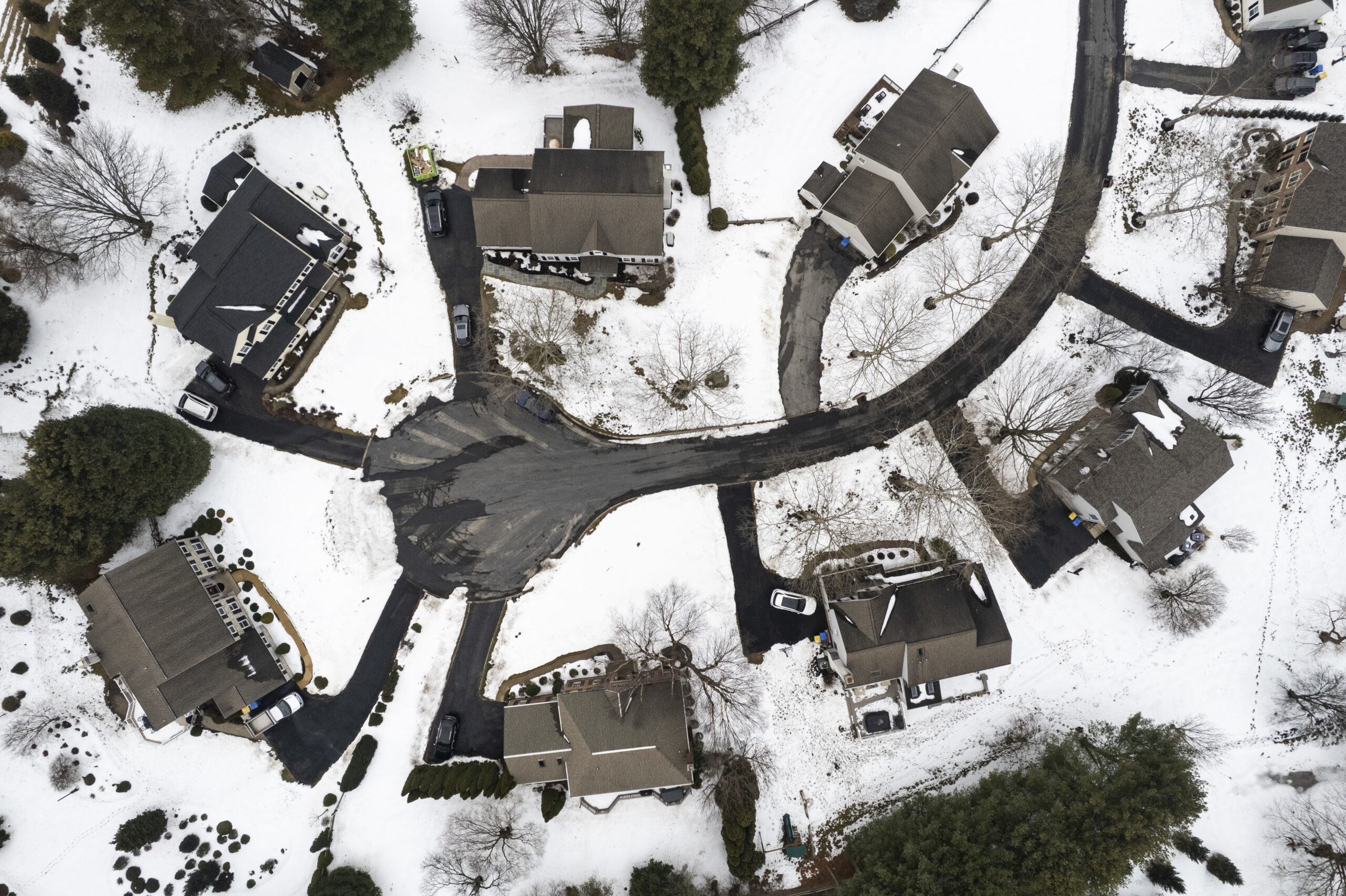
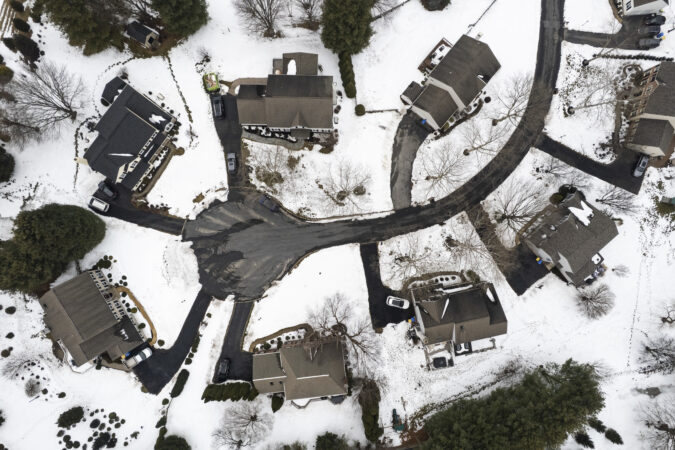
    Homes along Yorkshire Way in Birmingham Township, one of the wealthiest communities in the Philadelphia region.

    Chester County is home to six of the 10 wealthiest spots in the Philadelphia area, according to the latest U.S. Census American Community Survey, which compiles self-reported income data.

    Topping the list is Pocopson Township, which had a median annual household income of $230,000 during the five-year period ending in 2024. It’s followed by West Pikeland ($226,100), Birmingham ($215,000), and Easttown ($214,900). West Vincent ($202,600) and Charlestown ($202,200) were the other two Chesco spots in the top 10, ranking No. 7 and 8, respectively.

    The Inquirer’s Anthony R. Wood and John Duchneskie delve into the data and map the wealthiest pockets.

    📍 Countywide News

    • The county saw widely ranging snowfall totals from this week’s storm thanks to heavy banding. According to figures reported to the National Weather Service, Malvern saw the largest total in Chester County at 12.3 inches, while East Coventry came in at the lower end, with 5.5 inches. See a map of how much snow fell near you earlier this week. Keep an eye out for a bit more snow today.
    • Former Chester County detective Christine Bleiler, who was a technical adviser on HBO’s popular drama Mare of Easttown, is suing the county and her former supervisor over alleged sex discrimination. Bleiler was a police officer in Oxford Borough before becoming a county detective in 2015. She resigned from her post in September.

    💡 Community News

    • In case you missed it, East Vincent’s planning commission recommended last week that the township’s board of supervisors deny a proposed data center at the Pennhurst site when it comes in front of them next month. The commission said the proposal, which calls for five two-story data center buildings, a sixth building, an electrical substation, and a solar field, was not in compliance with the zoning ordinance. The board of supervisors is holding a public hearing on March 16 at 6:30 p.m. at East Vincent Elementary School.
    • Pennhurst isn’t the only data center proposed in the area that’s getting pushback from local officials and residents. Envision Land Use has decided to look elsewhere to develop what it’s calling a “boutique” data center after public outcry over its plans, which called for building a 120,000-square-foot, three-story center at 299 Schuylkill Rd. On Monday, North Coventry Township’s board of supervisors took a preemptive vote that they’d reject the proposal, before it was even formally submitted.
    • The developer looking to build a data center on a remediated Superfund site in East Whiteland Township has submitted updated plans following last month’s planning commission meeting. The applicant is expected to attend tonight’s planning commission meeting, which will begin at 7 p.m. at the township building, and will also be live streamed.
    • Last week, Constellation Energy Group withdrew its application for data center code amendments, which were set to come before the East Coventry Township board of supervisors next month. The energy company was seeking changes that would have allowed data centers on five properties.
    • The 300-year-old village of Cochranville is one step closer to getting its first public water line after West Fallowfield Township secured a $1 million grant to fund the project. It’s estimated to cost $5 to $6 million total and is still years away from a groundbreaking.
    • Lincoln University in Lower Oxford Township is planning to implement new safety measures for large events after a shooting at homecoming in October left one dead and six others injured. The university said it won’t host outdoor events after dusk, and events will be held within “a controlled environment” so visitors can be screened.
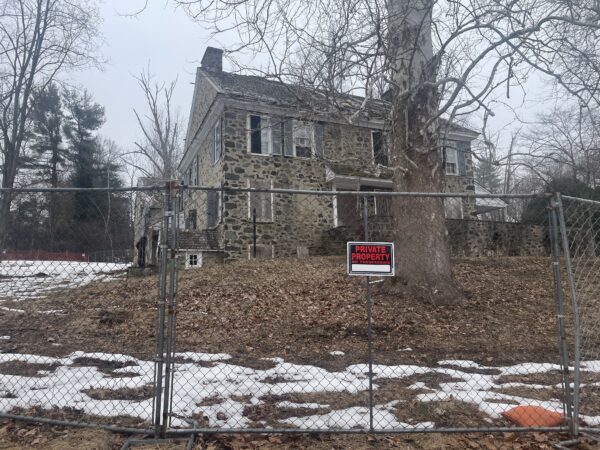
    • A group of residents is trying to save a deteriorating West Goshen fieldstone home from being demolished, with hopes of restoring it and converting it into an education center about the county’s Quaker history and involvement in the Underground Railroad. A judge will decide the fate of the property, which was built in 1900 and has been left to deteriorate for the past two decades.
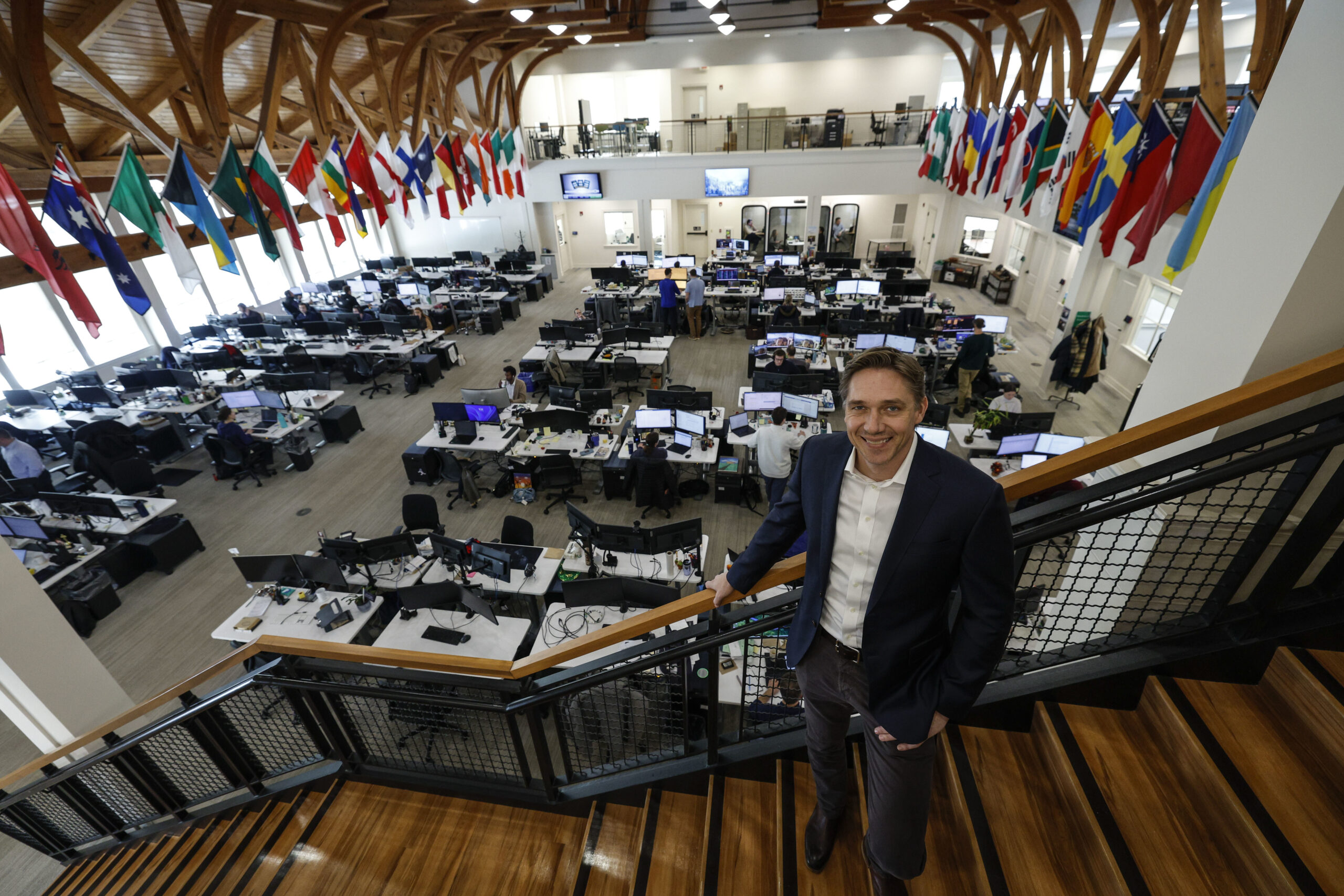
    • John Michael Bontrager, founding head of investment-risk adviser Chatham Financial, is focused on revitalizing Kennett Square, including spaces like beer garden The Creamery. He recently sat down with The Inquirer’s Joseph N. DiStefano to talk about the projects he’s focusing on.
    • West Chester-based home shopping giant QVC Group, parent company to HSN, is being sued for $30 million by fashion designer and longtime former HSN host, Antthony Mark Hankins, who says he was abruptly and unjustifiably terminated last July.
    • Heads up for drivers: A monthslong Peco project to improve natural gas infrastructure in Willistown Township is set to get underway Monday. Work will take place on Paoli Pike between Frazer Avenue and South Cedar Hollow Road and on Fairview Road between Paoli Pike and Gable Road. Paoli Pike will be closed weekdays from 9 a.m. to 3 p.m. until the end of July. During the closures, drivers will be directed to use Devon and Darby Roads and Lancaster Avenue. The project is expected to wrap up by July 31. In Caln Township, Olive Street between South Caln Road and 13th Avenue will continue to be closed on weekdays from 8 a.m. to 4 p.m. for utility construction. Work is now expected to wrap up on April 30.
    • A new gating system at the Oxford Borough parking garage at 2nd Street and Octoraro Alley will go into effect Monday. The system will have 24-hour enforced payments, though free or reduced-cost parking may be implemented in the future.
    • Enrique Lopez-Gomez, 32, of West Grove, pleaded guilty this month to third-degree murder after allegedly punching a 9-month-old baby who was in his care in 2024 and not seeking medical attention for the child afterward. Lopez-Gomez will remain in prison while he awaits sentencing.
    • Uwchlan Township is seeking residents’ feedback as it prepares for a five-year strategic plan. Find the survey here.
    • A few pieces of early childhood education news: In Downingtown, a new Kiddie Academy is opening this weekend at 595 Bell Tavern Blvd. Also, The Learning Experience is planning to open two new Chester County locations. They will be at 715 Pike Springs Rd. in Phoenixville and 43 Lancaster Pike in Malvern. A timeline for opening hasn’t been announced yet. (Philadelphia Business Journal)

    🏫 Schools Briefing

    • Great Valley School District is discontinuing its use of the Bus Status app and will instead send communications through ParentSquare.
    • The Octorara Area School District is looking for a resident of Sadsbury or West Fallowfield Townships to fill an open board director seat. Applications are due Monday.
    • Tredyffrin/Easttown School District will open applications for a redistricting steering committee April 6 to 24. The committee will be comprised of 10 parents or guardians who will work with Wendy Towle, the district’s director of curriculum, instruction, staff development and planning, plus an external facilitator and “observers,” on a redistricting process in anticipation of the opening of the new Bear Hill Elementary School.

    🍽️ On our Plate

    • Tired Hands Brewing Company has closed its Kennett Square taproom and bottle shop at 201 E. State St. after its owner decided it no longer made sense to continue operating there. Tired Hands will continue to distribute its beers in the area.
    • Cup of Dreams Coffee and Tea in the Paoli Village Shoppes is closing on Saturday as its lease ends. The owner is looking for a new location.
    • Tasty Table Catering has opened a new storefront known as The Table: Kitchen + Market for private events for up to 40 people. It’s located at its headquarters at 10 Leopard Rd. in Berwyn.
    • West Chester Restaurant Week continues through Sunday. See all the participating restaurants here.

    🎳 Things to Do

    🎭 Twelfth Night: William Shakespeare’s comedy gets a modern twist. ⏰ Wednesday, Feb. 25-Sunday, March 29, times vary 💵 Prices vary 📍People’s Light, Malvern

    🍸 Hush: An Immersive Speakeasy Experience: The Franklin Follies will perform parlour noir-style music, while cocktails featuring Bluebird Distillery libations will be served. ⏰ Friday, Feb. 27, 8 p.m. 💵 $35 📍The Colonial Theatre, Phoenixville

    🍺 Kennett Winterfest: Over 60 craft breweries will be at this annual event, along with food trucks, live music, and vendors. ⏰ Saturday, Feb. 28, 12:30-4 p.m. 💵 $20.80 for non-alcoholic tickets, $62.40 for regular admission 📍South Broad Street, Kennett Square

    🪈 Family Concert with BVS Woodwind Quintet: This family-friendly and interactive performance features woodwind instruments. ⏰ Saturday, Feb. 28, 2-3 p.m. 💵 $10-$30 📍Kennett Library, Kennett Square

    🏡 On the Market

    A Chester Springs estate with two primary suites

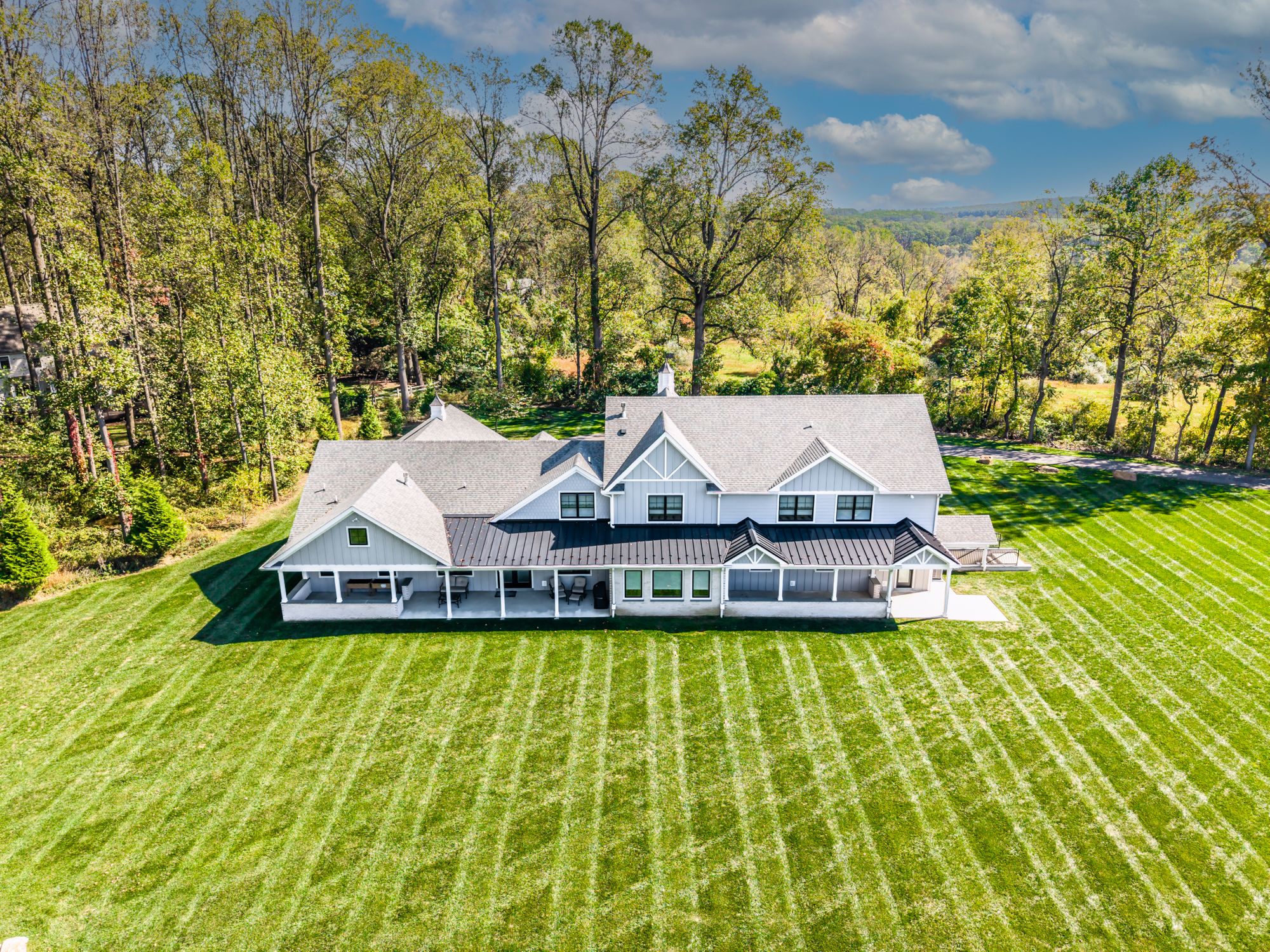
    The home has a covered porch that looks out on the surrounding property.

    Built in 2021, this sprawling Chester Springs estate has plenty of privacy thanks to both conservation land and surrounding pastures. The home features a two-tone kitchen with a quartz-topped island and a walk-in pantry that opens onto a dining and living room with a fireplace. Spanning six total bedrooms, the home has two primary suites, one on the first floor and another upstairs. The first-floor suite has a double vanity and a large walk-in shower, while the second-floor suite also has a soaking tub. Other features include a walk-out finished basement, a five-car garage, and a whole-house backup generator.

    See more photos of the property here.

    Price: $1.895M | Size: 9,130 SF | Acreage: 2.34

    🗞️ What other Chester County residents are reading this week:

    By submitting your written, visual, and/or audio contributions, you agree to The Inquirer’s Terms of Use, including the grant of rights in Section 10.

    This suburban content is produced with support from the Leslie Miller and Richard Worley Foundation and The Lenfest Institute for Journalism. Editorial content is created independently of the project donors. Gifts to support The Inquirer’s high-impact journalism can be made at inquirer.com/donate. A list of Lenfest Institute donors can be found at lenfestinstitute.org/supporters.

  • A deteriorating West Goshen house is at the center of a preservation fight

    A deteriorating West Goshen house is at the center of a preservation fight

    Posts online beckoned urban explorers to creep through a century-old West Goshen home that has sat empty and deteriorating for more than two decades. Police have frequented the property — responding to sounds of gunshots, or finding the doors open, but halting their searches, worried the floor might collapse.

    The once-impressive three-story fieldstone house, with its private bridge and stonemason barn, has become something of an “attractive nuisance,” as a court document says, and a safety threat as it deteriorates.

    After the township intervened, the future of the privately owned property at 905 Westtown Rd. is now in the hands of a judge, who will weigh whether the property can be restored or if it ought to be demolished.

    But a group of residents fear losing the house, even in its much-diminished state, and have launched an effort to save the property. The hope is to halt possible development and instead turn it into a heritage center that would educate visitors on Chester County’s Quaker history and its roots to the Underground Railroad.

    It’s one example of a broader push and pull in Chester County, where residents want to preserve open space and history, and hold off development. But with privately owned land, especially land that is not protected for being historic, municipal officials can only do so much.

    “It’s a beautiful place. When you spend some time there, it’s like a window through time,” said Stephen Lyons, who is leading the preservation group Save Forsythe Farm, an unofficial name for the property derived from John Forsythe, who lived from 1754 to 1840, eventually owning the land and helping establish Westtown School.

    “It has a spirit of beauty,” he said.

    After sitting vacant for 20 years, the house has rotted from the inside

    The home was built more than a century ago — a structural engineer’s report puts it at 1900, a datestone on the property indicates 1818, and others suggest it may be older.

    The property, purchased by Joseph Kravitz in 2003, has descended into disrepair in the last two decades. Kravitz was found to have violated property maintenance codes in recent years. The property went into foreclosure and was listed for sheriff’s sale several times.

    But in September, with the property still owned by Kravitz, West Goshen officials submitted a 350-page petition to Chester County Court seeking conservatorship, arguing the house was neglected and in need of substantial rehabilitation.

    A judge approved the petition in November and appointed BDP Impact Real Estate as the conservator, which was tasked with creating a plan for abatement. Its final report will be heard in court on March 16, and the judge will determine what path should be followed. To retain ownership, Kravitz can reimburse the conservator and pay a fee, township officials said.

    Kravitz did not respond to phone calls or an email seeking comment.

    Under the conservatorship, a fence was placed to fend off explorers, and a structural engineer was brought in to assess the structures on the property. The engineer would not go beyond the front door of the house, out of fear of falling through the floor.

    But without going inside, the engineer found significant interior deterioration from a leaking roof, according to the report. Plaster, which once covered the ceilings, had rotted, fallen, and created mounds on the floor, revealing the skeletal wooden beams. The gutters have been disconnected, with water saturating the soil near the foundation. Cracks were seen on some windows.

    An in-ground swimming pool had “substantial” algae growth. A pool equipment shed was distorted. And a masonry barn structure was “in a state of impending collapse.”

    A single-lane bridge, allowing access from Westtown Road across a creek, is “not suitable for permanent use without repair or reconstruction.”

    When township solicitor Carl Ewald visited the property with the structural engineer in November, he mistook the swimming pool for a murky patch of grass.

    “It’s a very unfortunate situation, because I was able to find online pictures of this property from 20-some years ago, when it last went up for sale, and it was a really nice property back then,” he said.

    Along with an estimated $171,730 to install a temporary bridge to ferry equipment to the property, it would cost roughly $121,600 to demolish the main house, the conservator estimated.

    The estimated cost of rehabilitation was much higher: $1.2 million. Under that plan, the masonry walls would have to be stabilized and retained, and the interior fully gutted.

    It is unclear whether that is feasible and where the money would come from, Ewald said.

    “The court will be looking at that and determining whether that’s something that could be done, or whether demolition is the only real option,” he said.

    He thinks people might not realize how far gone the property is.

    “It’s unbelievable how fast water penetration into a structure really damages it, and how a house like this that stood for many years and, in 20 years, was really reduced to a shell,” Ewald said.

    The ability to ‘synthesize all these histories’

    With such a difficult path ahead, why not let the property go?

    For residents, it represents the region’s deep historical ties, and it offers the potential for preserving open space.

    Lyons grew up one mile away from the area. After living in New York as a musician and actor, he returned during the height of the COVID-19 pandemic to care for his parents, and Lyons became immersed in learning about the history of West Goshen, and the abolitionist and Quaker histories entrenched in the community.

    The goal for Save Forsythe Farm would be to create an open space that connects to the nearby Barker Park. In the group’s vision, the home would become a historic site that teaches about abolition, Black history, civil rights history, Quaker history, and more.

    “Forsythe Farm has a tremendous potential to synthesize all these histories and our connection to land and also First Nations people as well,” Lyons said.

    But this experience has prompted a proposed ordinance to address how demolition by neglect is handled amid private property rights, which the township’s board of supervisors and historic commission are set to discuss Thursday.

    Still, the hope is to keep the house from being demolished, said Brittany Schugsta, vice chair of the Save Forsythe Farm group. Her family once tried to buy the property, but ended up in East Goshen.

    “When I lived in West Goshen … it felt much more convenient. There was all the shopping hubs and all of those kind of places around, but it lacked that richness of history,” she said.

    If the owner does not reimburse the conservator, the property would be sold by the court to the highest bidder, Ewald said. The money would pay off the liens, debts, and the conservatorship. Any money left over would go to Kravitz.

    The township could buy the property, if officials are willing to spend a couple of million dollars “at minimum,” Ewald said. But it is not yet clear how much the property would cost, or if officials would want to purchase it.

    The house is something of a symbol of the past, said Bill Aaronson. He can see 905 Westtown from his front porch on Bob-O-Link Lane, where he has lived since the 1980s. He watched the home sell. He didn’t think much about it, until his son took a stroll and saw how much it had declined.

    And then he heard what it could become: a development.

    Speaking at a historical commission meeting last year, Kravitz said he envisioned several draftsman-style houses, called “Forsythe’s Homes” or “Barkerville.”

    (Though Kravitz has discussed his intentions previously, township officials said no plans had been submitted or were under review.)

    The concept prompted Aaronson to become more involved with Save Forsythe Farm.

    “The house itself is an extraordinary presence, and it symbolizes what the history here was, more than a plaque ever would,” Aaronson said.

  • The detective who helped advise ‘Mare of Easttown’ is suing Chester County over discrimination

    The detective who helped advise ‘Mare of Easttown’ is suing Chester County over discrimination

    A former Chester County detective — who served as a technical adviser for the HBO crime drama Mare of Easttown — is suing her former employer and supervisor in federal court over alleged sex discrimination.

    Christine Bleiler, who became Kate Winslet’s “go-to person” on developing her Emmy-winning performance as titular character Mare Sheehan, says she was subjected to a “prolonged pattern of hostile, discriminatory, and demeaning treatment based on her sex,” according to a complaint filed this month in the Eastern District of Pennsylvania.

    And though an internal investigation “corroborated” that she was being harassed, according to the suit, the county failed to remedy the harassment to which she was subjected.

    In addition to Chester County, the lawsuit names as a defendant Thomas Goggin, who was Bleiler’s supervisor from 2021 to 2023. Bleiler resigned in September.

    A spokesperson for the county declined to comment on ongoing litigation. An attorney for Goggin, who now serves as police chief in West Pikeland Township, did not immediately respond to a message seeking comment.

    Bleiler, who worked as a police officer for nearly a dozen years in Oxford Borough before beginning as a Chester County detective in 2015, began working under Goggin in February 2021. He accused her of talking too much, yelled at her repeatedly over how she handled suspects or on differences in opinion, demeaned and condescended to her, and told her “she ‘better not’ tell anyone that he was a problem,” according to the complaint.

    In August 2023, Bleiler brought the complaints to the detective division’s leadership, prompting an internal investigation that ultimately corroborated her claims, the suit says. Goggin was suspended for two weeks and was demoted, according to the complaint.

    Bleiler was worried about working near Goggin once he returned from his suspension, the suit says, fearing that he might retaliate. She was instructed by the department’s leadership to “bury her head in her work” and “move on from this.” Though she began reporting to a new supervisor, working in proximity to Goggin “caused her significant discomfort, anxiety and distress over potential retaliation and continued harassment,” the complaint says.

    Bleiler is asking a judge to declare that the county and Goggin’s actions violated federal and state antidiscrimination laws. It asks the court to grant her compensation for past and future lost earnings, earning capacity, and benefits, which the complaint argues Bleiler lost due to the “discriminatory and retaliatory conduct.”

    “The conduct of defendants, as set forth above, was severe or pervasive enough to make a reasonable person believe that the conditions of employment had been altered and that the working environment was hostile or abusive, and in fact made plaintiff believe that her working environment was hostile and abusive because of her sex and her complaint of sex discrimination,” the complaint states.

    While a detective for the county, in 2019 Bleiler served as a technical adviser for HBO’s Mare of Easttown, taking phone calls from Winslet morning and night to discuss upcoming scenes or to answer questions. At one point, Winslet visited her at the Justice Center in West Chester.

    “She insisted,” Bleiler told The Inquirer in 2021. “I told my lieutenant at that time, he couldn’t believe it. He said, ‘All right, she’s your responsibility. Get her in and get her out, keep it quiet.’”

  • The 300-year-old Cochranville is moving toward its first public water line

    Cochranville is moving toward getting its first public water line, after West Fallowfield Township secured a grant to fund the project earlier this month.

    Installing public water in the 300-year-old village situated within the largely agricultural township in western Chester County has been more than a decade in the making, said Duane Hershey, the chairman of the board of supervisors.

    Residents told officials water was a concern in a survey a few years ago, and the township has a desire to bolster the commercial landscape of Cochranville, Hershey said. But leadership wants to accumulate as much funding as possible to limit the blow to residents.

    The $1 million federal grant is the springboard for the municipality to gather more funds for the project, which Hershey estimates could cost $5 million to $6 million. The township is still years out from breaking ground.

    West Fallowfield covers a relatively large geographic area, but a majority is composed of agricultural properties. Its town center — the village of Cochranville — boasts a population of roughly 500, with a small number of residences and businesses sitting around the major intersection of state Routes 41 and 10. The lots are relatively small, and have on-site well water and septic.

    “It’s difficult for anybody to drill a well, and it’s really difficult to put any kind of a septic system in, other than a tank that has to be pumped and hauled,” Hershey said.

    That can be challenging for new businesses to come in without existing public utilities, said Michael Crotty, the township’s solicitor.

    “We are hoping it strengthens our particular commercial core right there, at the main intersection, by giving them a much easier base to build and develop,” he said.

    But, Hershey cautioned, it’s not because they want to vastly expand Cochranville. Rather, it’s to improve quality of life for people already there, and to bring in businesses to expand the tax base. The community has high nitrates due to its water setup, he said, which can be dangerous, particularly for babies. Consuming too much nitrate can lead to negative long-term health for adults, too.

    “We’re not doing this because we want to develop Cochranville and build a whole bunch more houses,” Hershey said. “The reason we want to do it is just to improve the infrastructure that’s already there, that is struggling because of our water issues.”

    The township plans to connect a water line to Cedar Knoll Homes at Honeycroft Village, a 55-and older-community about a half mile away, which has public water through the Chester Water Authority, Hershey said. It’s cheaper than if the township were to build its own water system.

    They’ll connect most-needed areas first, and possibly expand in the future. Officials couldn’t say exactly how many households would be connected to the line. The project is in early development stages, Hershey said.

    It’s not unusual for new water lines to be installed; that’s pretty much what happens whenever a new development is being constructed. But it’s a bit more unusual for the houses to come before the water line. The homes in Cochranville that will connect to the line are “long existing,” Crotty said.

    “The way this might be handled elsewhere would be a big, huge residential development comes in, and that would bring public water, and maybe that only brings it for itself, or maybe it brings it part of the way, but that could often be at the expense of the agricultural land that we’re all seeking to preserve,” Crotty said.

  • This Mennonite pastor’s kid made a Wall Street fortune, hired hundreds, and is rebuilding Kennett Square

    This Mennonite pastor’s kid made a Wall Street fortune, hired hundreds, and is rebuilding Kennett Square

    After John Michael Bontrager came home to Pennsylvania from Wall Street to start an advice firm for big investors, he located his company in Kennett Square, “America’s Mushroom Capital” and the most populous of the old factory and farming towns along Old Baltimore Pike in southern Chester County.

    Bontrager and those who joined him prospered. In 2018, he stepped down as founding head of investment-risk adviser Chatham Financial, which now employs 850 at its campus just east of the square-mile borough of 7,500.

    Now, he’s devoting himself to the redevelopment of Kennett Square and nearby towns.

    Using his own fortune, donations, and state and local government funds, Bontrager and his allies have developed a string of projects — restaurants, hotels, and nonprofits — under the loose umbrella of his Square Roots Collective. Their affiliates have purchased 2% of the town’s houses to redevelop as rentals. Their goal: Make the area more attractive to college-educated young people, while also boosting the quality of life for longtime residents and working people.

    Last year Bontrager announced his ALS diagnosis. He has recruited staff and allies, including family members, former Chatham employees, and a multi-ethnic group of Southern Chester County professionals to build Square Roots into a movement that can survive him.

    In December, the borough council endorsed Bontrager’s “public, cultural, and social impact initiatives,” calling them “key to shaping the inclusive community.” They voted unanimously to ceremonially rename Birch Street, an industrial road Bontrager has visibly transformed, as “Bontrager Walk.”

    In local government meetings and town election campaigns, some residents have expressed concerns about Square Roots’ concentration of power and conflicts of interest.

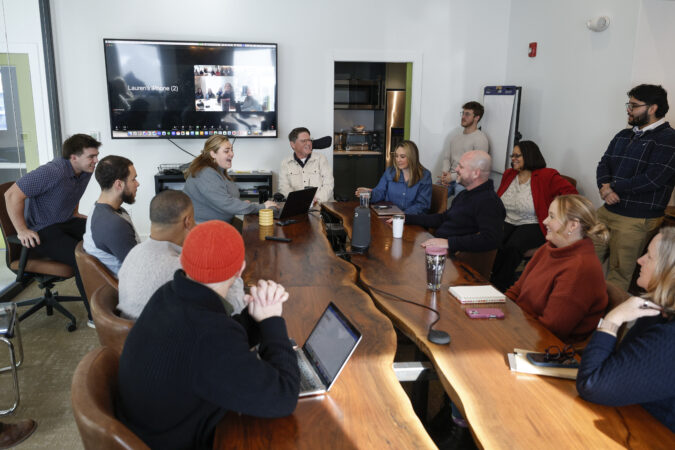
    Bontrager agreed to take questions at his Kennett Square office. His daughter, newly designated co-CEO Stephanie Almanza, and his chief of staff, Luke Zubrod, a Chatham Financial alumnus who serves on the borough planning commission, sat in.

    The conversation has been edited for length and clarity.

    Why did you start local projects while you were still building your company?

    [I wanted] to convince people we wanted to hire, between the ages of 25 and 33, that Kennett is a reasonable place for them to live. How do we make this attractive for people to move here and to bring people who grew up here back?

    Thirty years ago when I came here, it was a great community for families. But it was harder to convince singles and couples with no kids.

    I read sociology, for example Chuck Marohn’s Confessions of a Recovering Engineer; Yoni Appelbaum’s Stuck about zoning; The Logic of Failure by a German neuroscientist [Dietrich Dorner].

    The elements I came up with: A community is totally interconnected, people and organizations. All decisions have ripple effects. When communities focus only on solving the near term problem, it’s probably not going to be good.

    For example, we have about 30% of Chester County “preserved.” Well, it’s great to have open space. But if you take a third of your land out of commission, without providing for housing, housing prices will go up dramatically. And taxes.

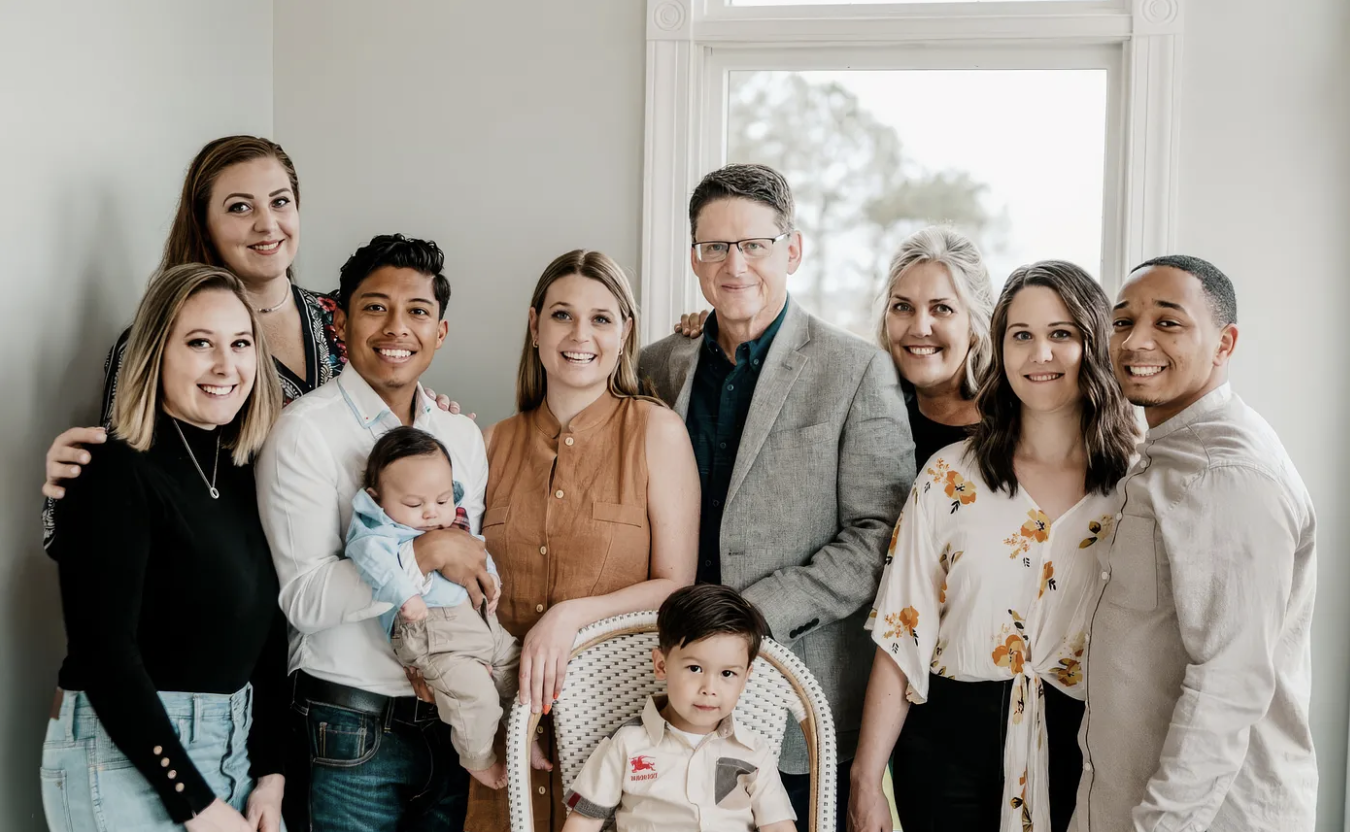
    Mike Bontrager (center, in grey jacket) with family members (from left) Stephanie, Kymm, Luis, Cruz, Katherine, Mason, Mike, Dot, Lauren, and Willie.
    How do you solve issues in concert?

    Collaboration, trust, working together. A lot of elected officials are volunteers. It’s easier to focus on one issue at a time and react to the three or four people who show up at your meeting with pitchforks.

    Of course you want a say over what happens in your neighborhood. But the consensus favors the status quo, the entrenched interest.

    Not everyone loves what we’re doing. Luke, Stephanie, and myself have said, ‘Let’s understand people’s concerns. We’re neighbors.’ We listen; we have a lot of meetings.

    What are the institutions you’ve set up?

    The Square Roots Collective is our brand for all the activities. It includes Square Roots Community Initiative, a 501(c)4 nonprofit that’s the umbrella group. There’s our for-profit businesses; the profits go to support the nonprofits. We donated more than $1 million last year to nonprofits and projects in the area.

    On Birch Street, there’s our offices, and the Creamery [converted from an old condensed-milk plant site], which we started as a beer garden in 2016, it’s now a restaurant, and Artelo, the art hotel.

    We are also working on the Francis, an eight-room hotel in the middle of town. And we are opening a really cool cocktail bar, the Star and Lantern [referencing the Underground Railroad and the area’s abolitionist history] in 2027. And we are preparing Opus, a restaurant.

    On the nonprofit side, there’s the Kennett Trails Alliance, a 14-mile loop. About half is open, and we have easements for most of the rest, not all. It connects some of the open spaces, the Brandywine Creek, Anson B. Nixon Park, the YMCA.

    And there’s Voices Underground, an organization we initiated in partnership with Lincoln University and Longwood Gardens, elevating the stories of the Underground Railroad.

    Artelo Hotel Kennett Square, which has works by local artists in each room. This is “Floating Free,” by Philadelphia artist Philip Adams.
    Your groups own about 40 of the 2,000 or so houses in the borough. Is there a shortage of affordable rentals, given demand from mushroom farms and other industry?

    Yes. What we have is tenant housing, market rate, including some we rent to area charitable and community groups [for their clients].

    How did you decide to start Chatham in 1991?

    When I was 13, I worked for an appliance repairman, John Schmucker. He was brilliant at fixing washers, dryers, dishwashers. But he was a disastrous business guy. He never collected. I saw building a business is very different from being smart and an expert.

    My father was a Mennonite pastor in Christiana, Lancaster County. I went to Lancaster Mennonite School. I went to Wheaton College in Illinois. I was so naive; I had never met a real professional.

    I would sign up for any kind of recruiter interview. I eventually went to see someone who worked for Chemical Bank [predecessor of JPMorgan Chase]. I got a job offer.

    I joined this new unit selling these emerging derivatives — interest-rate swaps, currency and commodity hedging — to help clients manage the risks.

    There were products that were inappropriate for most investors. Municipalities got in trouble buying things that didn’t need, where the banks took out a lot of money.

    People needed advice. I loved helping clients, maybe it was a big company, or maybe an oil distributor in Queens who needed to hedge his fuel-pricing risk.

    Why did you return to this area from New York?

    My wife wanted to move back to our families. In August 1991, I bought a place in Cochranville. We had a satellite dish that brought in Telerate [a stock-tracking service], which was just a year old. That’s what made it possible to do this work anywhere. I started over the garage, me and my dog.

    It turned out to be the best time to start a derivatives advisory business. There were a lot of properties available from [recently failed] savings-and-loans at cents on the dollar, and someone figured out a legal structure that allowed real estate investments trusts to go public. We did their hedging. Same with private equity.

    I called a few of my old clients, Milton Cooper at Kimco Realty Trust, we helped him go public, he recommended us. We advised [mortgage-bonds pioneer Ethan Penner] on the first mortgage-backed securities. In 1994, I cold-called a young associate at a firm buying failed S&L loans. He hired us to hedge. That was Jon Gray, who worked his way up and is expected to be the next CEO of Blackstone.

    We mastered hedge accounting. We had more derivative hedging experts than anyone. The Big Four accounting firms and their clients found we spoke their language.

    By 2000, we had built a real business. We moved to Kennett because it was a larger town [and closer to Philadelphia and its airport].

    How did you prepare your work to go on after you left, under your successor Matt Henry?

    At Chatham, I wanted us to be internally owned, the people who are joining should reap rewards. I did not want any outside investors. [Employees own most of the stock, and elect top officers.]

    I have been diagnosed with ALS, which is a pretty devastating diagnosis. I don’t how long I will be able to be actively involved. I still get to do purposeful work with people I love. Isn’t that what we all want? So I’m going to go until I can’t.

    CEO Matt Henry of Chatham Financial center, just outside Kennett Square.
  • Lincoln University announces new plans for event safety following homecoming shooting last year

    Lincoln University announces new plans for event safety following homecoming shooting last year

    Lincoln University at its board meeting Saturday announced new safety plans for large events after the on-campus shooting at homecoming last October that left one dead and six others shot.

    No outdoor events will be permitted after dusk, and events will be held within “a controlled environment” so that guests can be screened, Lincoln University Police Chief Marc Partee told the board. The university will employ a zone plan for security with help from Chester County emergency management, the Pennsylvania State Police, and Lower Oxford Township, and at the upcoming Spring Fling event, only one registered guest will be permitted per student, Partee said.

    University officials did not say at the meeting when Spring Fling would be held this year — Partee did not return a call for comment Sunday — but it’s typically in April.

    “We’ve … cultivated those relationships that were sorely needed in this area so that we can do what we need to do and protect our students and keep the community itself happy about what we’re doing,” Partee said.

    Lincoln, a historically Black university with 1,650 students in rural Chester County, has been under pressure from its neighbors and Lower Oxford Township to make changes since the Oct. 25 homecoming shooting. Several officials in Lower Oxford had reported ongoing problems with parking, trash on neighbors’ lawns, disturbances, and, in some cases, crime when the university hosts events. After thousands gathered for homecoming, emergency personnel had to use all-terrain vehicles to transport patients on stretchers because ambulances could not access the campus, given how many cars were parked around the venue, they said.

    The township’s board of supervisors has been discussing a plan to enact a special events ordinance. A vote could come as soon as the supervisors’ March meeting.

    Andrew Cope, who lived near Lincoln for nearly two decades and still owns property there, said Lincoln’s plan is “progress compared to past years,” but that concerns remain. He said there should be screening at the university gates, not just at the entry to an event, and that there was no indication as to how parking and trash will be managed.

    A strong events ordinance is still needed with a permit process, he said.

    “I am encouraged that we have seen a plan come out of the university,” he said. “I need to give them credit for doing something. I’m pleasantly optimistic … but I would still like to see some of the T’s crossed and I’s dotted.”

    Partee said the new plans followed a meeting earlier this month between about 30 people from Lincoln, local and state law enforcement, emergency management, and the township. The Chester County district attorney and county detectives also participated, he said. And the collaboration will be ongoing, he said, as Lincoln plans for other events, such as homecoming

    “We’re getting a lot more resources, a lot more collaboration,” Partee told the board.

    But he said Lincoln ultimately has control over the plan.

    “We’re not stepping back and saying, ‘We had this immense tragedy. Come in and take over,’” he said. “This is still our legacy.”

    The plans also include input from the Student Government Association, he said.

    Events after dark would be moved indoors, he said, noting issues that have arisen after dark at outdoor university events.

    “What you’ll see is, and something that I saw, the crowd changed as the sun went down,” Partee told the board. “Our family started leaving. Other people started coming in.”

    He noted potential sites for outdoor events, such as the auxiliary field with a fence.

    “We’re able to control access to the fence, which means we can screen people coming in,” he said. “We have wands, all of these things that we can put in place to protect the event. We’re working on not having just a free-for-all because free-for-all gives people the impression that they can come here and do whatever they want to do.”

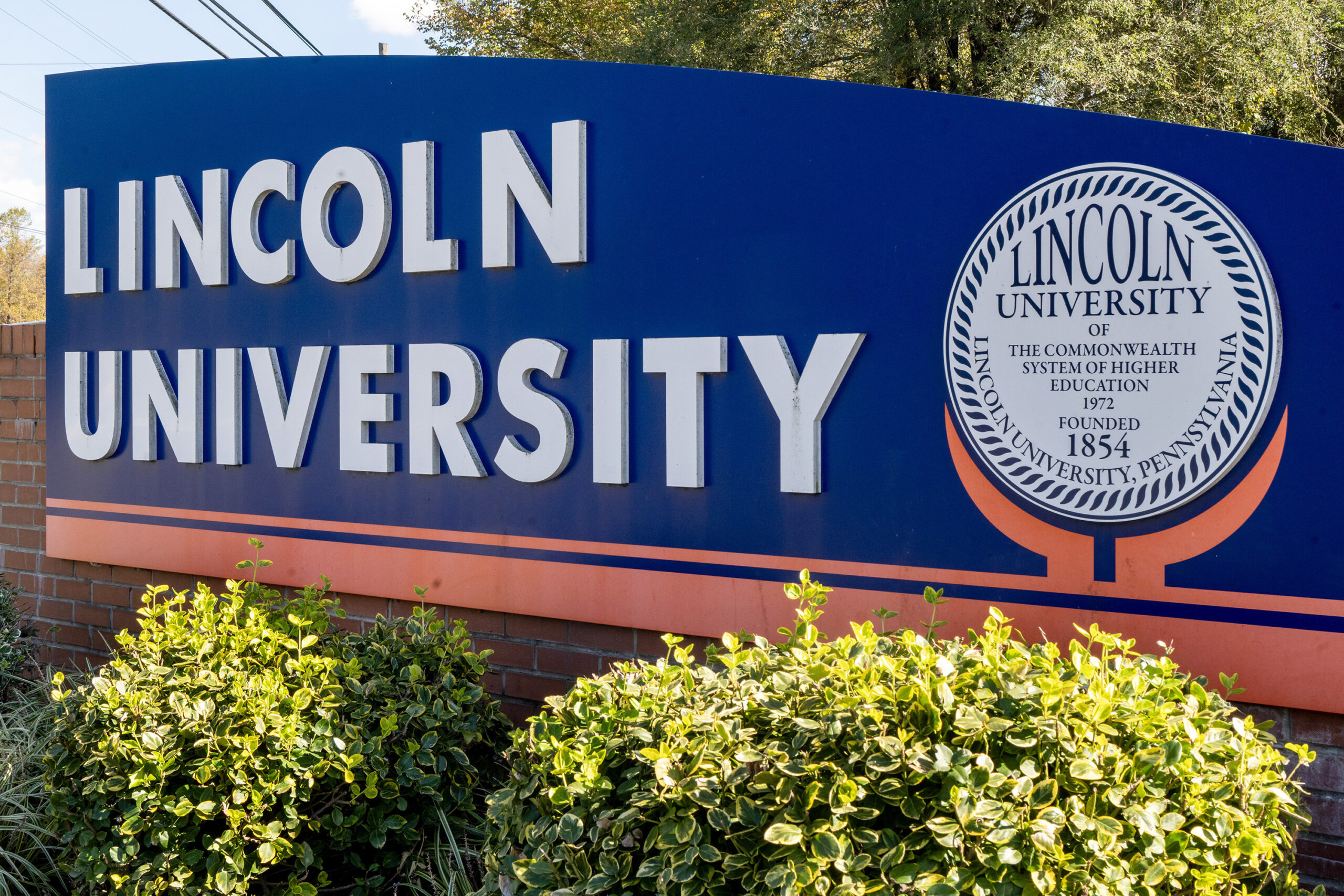
    A sign for Lincoln University on its campus in Chester County.

    He said events will be more structured, noting that students are talking about “zip lines and food trucks” for Spring Fling.

    As for the zone security, Partee said his university police and security would man the “center ring” or “hot zone” for Spring Fling. The outer ring will be covered by Pennsylvania State Police, which have allocated 10 troopers that will be deployed in two-man teams, he said.

    Other patrols will be stationed at areas outside the university gates to monitor illegal parking and other issues, he said. And Chester County, he said, has offered its mobile command post where cameras placed strategically around campus can be monitored and all radio communication can be patched together on one channel, he said.

    “We’re going to have somebody dedicated to just watch cameras from Chester County Emergency Management,” Partee said.

    For larger events, such as homecoming, more safety personnel will be deployed, he said.

    “We’re able to scale it up and down,” he said of the plan. “Spring Fling will be our test case.”

  • Chesco towns are among the Philly area’s wealthiest, but big Bucks County is making gains

    Chesco towns are among the Philly area’s wealthiest, but big Bucks County is making gains

    It abuts an internationally famous garden. It may well be the most affluent community in the nation that hosts a prison, a source of some unwanted attention a few years back.

    And, according to recently released U.S. Census data, picturesque Pocopson Township is in a rarified zone for wealth in the eight-county Philadelphia region, with an annual median household income of $230,000.

    Chester County towns dominated the top 50 list in an analysis of incomes in the region’s municipalities — compiled from self-reported American Community Survey data — calculated for the five-year period that ended in 2024.

    But the analysis also showed that not only has Bucks County been gaining star power, some of its towns may merit the label “Big Bucks County.”

    Legendary locale New Hope and neighboring Solebury — places associated with Real Housewives of Beverly Hills alumna Yolanda Hadid and actor Bradley Cooper — are among the towns that have made significant moves up the income chart, compared with the five-year period that ended in 2014.

    Inflation-adjusted median annual incomes jumped 58% in New Hope, to $175,000. Incomes were up nearly 30% in Solebury, to $196,000, among the highest in the region.

    The national median income was around $80,000, according to census figures.

    Income figures are estimates, rounded to the nearest hundred, and are subject to margins of error. A total of 286 municipalities were included in the analysis; those with fewer than 2,500 residents were excluded. Here are some key findings.

    window.addEventListener(“message”,function(a){if(void 0!==a.data[“datawrapper-height”]){var e=document.querySelectorAll(“iframe”);for(var t in a.data[“datawrapper-height”])for(var r,i=0;r=e[i];i++)if(r.contentWindow===a.source){var d=a.data[“datawrapper-height”][t]+”px”;r.style.height=d}}});

    Chester County still has the wealthiest towns

    Chester County towns held six of the top 10 spots, including Birmingham, adjacent to Pocopson.

    The county evidently is rich in an amenity attractive to the wealthy — and to others.

    “Chester County has been a leader in terms of the amount of land preserved,” said Andrew Svekla, Office of Smart Growth manager with the Delaware Valley Regional Planning Commission. “The availability of open space is an amenity that everyone is looking for.”

    While the natural environment is an understandable attraction, not everyone who spends time in Pocopson comes for the green space: The Chester County Prison has been a mainstay in the township since 1959.

    In August 2023, Pocopson and Longwood Gardens became international news when inmate Danilo Cavalcante escaped and set off a two-week investigative frenzy that mutated into a massive exercise of Where’s Danilo? He spent time hiding in Longwood and was eventually captured in South Coventry Township, about 20 miles away.

    Otherwise, the likes of Pocopson and Birmingham have not exactly been centers of media attention, and the towns even have avoided the development-vs.-open-space conflicts that have erupted elsewhere, said Matthew J. Edmond, executive director of the Chester County Planning Commission.

    “They aren’t in the path of growth,” he said. “These areas are off the beaten path.” The residents represent a mix of old and new money, he said.

    He likened Chester County to a macro-version of Lower Merion Township, where neighborhoods vary from ultra-wealthy Gladwyne to the middle-class sections of Ardmore.

    While overall the county has the highest median income in the state, “when you get down to the granular level, it’s a very diverse county,” he said.

    Incomes in other counties in the region have grown

    The overall picture of wealth in the eight-county region was quite a diverse one in the census survey, ranging from Pocopson’s median income to the $40,000 levels of Camden, the City of Chester, and Darby Borough.

    But the preponderance of the higher incomes clearly were west of the Delaware River.

    Jersey’s wealthier municipalities tend to be clustered in the New York metro area, Svekla said, and only six were on the top 50 list in the Philly region. They included Camden County’s Haddonfield, with a median income of $200,500, and Moorestown, at $160,000 and a favorite of professional athletes. They include ex-Phillie Nick Castellanos, onetime 76er Ben Simmons, Flyers legend Bobby Clarke, and former Eagle Terrell Owens, who famously drew media attention by doing push-ups on his driveway.

    It also is the home of Kevin Patullo, the Eagles’ former offensive coordinator whose house was pelted with eggs in October after one of the team’s lackluster performances.

    Haddon Heights and Haddon Township did not join Haddonfield in the top 50 but were high on the list of towns where incomes had grown substantially in the last 10 years.

    Other places that experienced substantial paycheck bumps in the last 10 years included the Blue Route towns of Conshohocken and West Conshohocken. Both are close to I-476 interchanges and have experienced growth spurts in population and wealth since the highway connecting the Pennsylvania Turnpike to I-95 opened in the 1990s.

    Bucks lags in population growth, but not wealth

    Led by Chester County, population increased in all eight counties between the 2010 and 2020 census counts. “We’re growing mainly due to international immigration,“ said Greg Diebold, the Delaware Valley planning commission’s senior data analyst.

    “Bucks has been one of the slower-growing counties,” he said, having added only about 4% to its population between 2010 and 2020.

    In terms of median-income growth over the last 10 years, however, it had seven municipalities in the top 20, more than any other county.

    window.addEventListener(“message”,function(a){if(void 0!==a.data[“datawrapper-height”]){var e=document.querySelectorAll(“iframe”);for(var t in a.data[“datawrapper-height”])for(var r,i=0;r=e[i];i++)if(r.contentWindow===a.source){var d=a.data[“datawrapper-height”][t]+”px”;r.style.height=d}}});

    Not all the gainers were wealthy towns

    One Delaware County town, Upland Borough, adjacent to the City of Chester and the location of part of the closed Crozer-Chester Medical Center, made the biggest-growth list with incomes up more than 40% to $61,000.

    Bankrupt Chester itself, with one of Pennsylvania’s highest poverty rates, reported a 10% gain, to $41,000.

    However, half of the 10 towns where incomes decreased the most were in Delaware County.

    Speaking to the region’s overall prosperity, fewer than 25% of the 286 towns showed drops in income in the period that ended in 2024, compared with the five-year period that ended in 2014.

    And only 20% this time around reported incomes below the national median.