Tag: Chester County

  • Brandywine Valley businesses are getting a Christmas bonus — from Longwood Gardens

    Brandywine Valley businesses are getting a Christmas bonus — from Longwood Gardens

    It’s December, by far the coldest week of the season to date and due to get colder, but to Jeff Hulbert, the Brandywine Valley these days evoke July — July at the Jersey Shore, that is.

    Business has been brisk, and the human traffic thick along State Street, where he and partner Sandra Morris own and operate the popular Portabello’s of Kennett Square restaurant.

    Like the peak summer weeks at the Shore, where Hulbert used to work in Atlantic City, this time of year, the Kennett Square area “is twice as busy.” The reason, in a word, is “Longwood.”

    Specifically, the annual “Longwood Christmas” festival, an “economic engine” not only for Kennett but for other towns in the region, said Cheryl B. Kuhn, CEO of the Southern Chester County Chamber of Commerce.

    Longwood has played a “significant role in the area’s growth,” said Nancy Toltain, director of hotel operations at the Hilton Garden Inn in Kennett. Some guests book their reservations a year in advance, she said.

    This year, the merchants on Kennett Street got a jump on the season by turning on the holiday lights and staging the July Fourth-style parade — complete with Mummers and a marching band — on Nov. 22, a week earlier than usual.
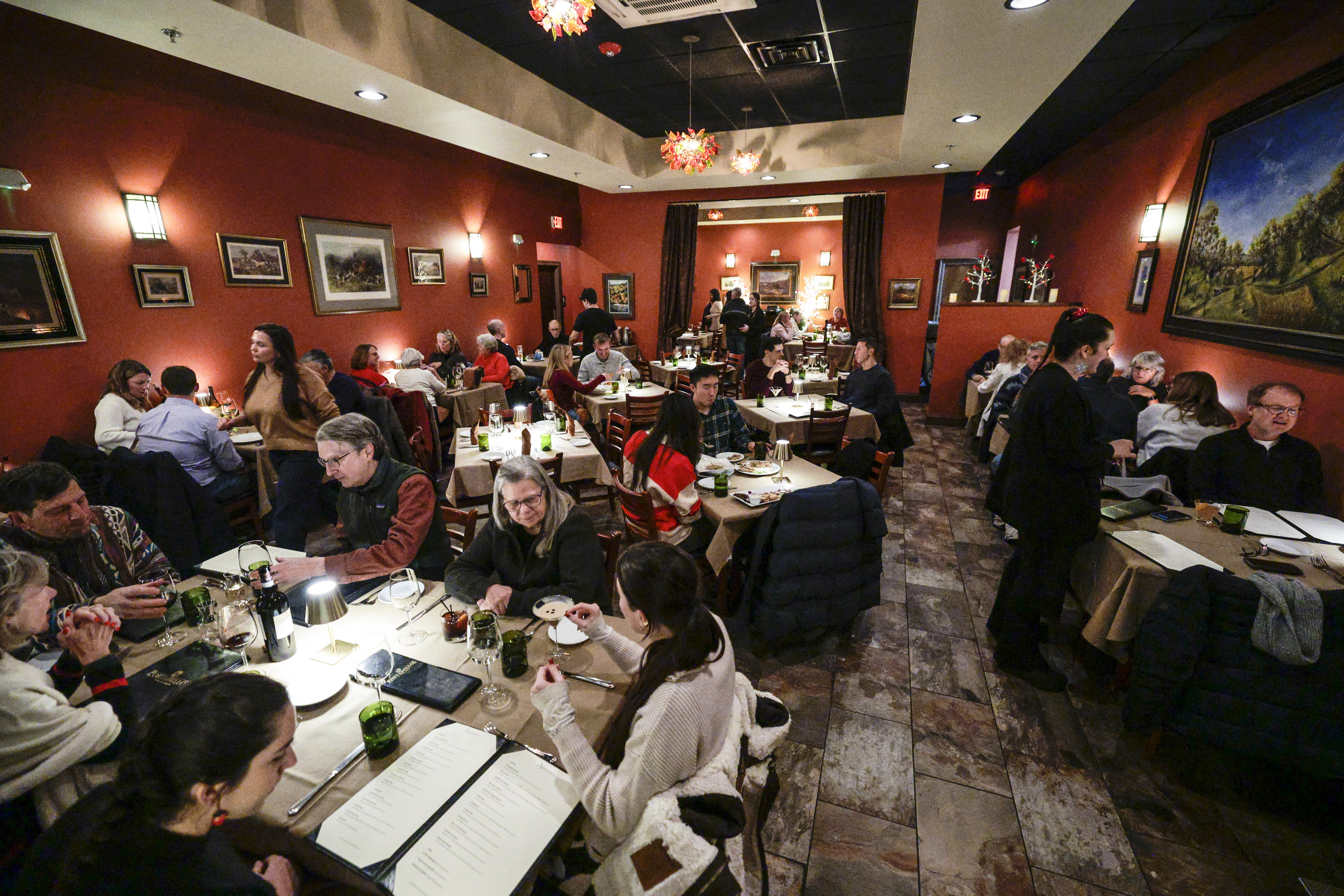
    Diners at Portabello’s on Friday evening.

    It was no coincidence that the event coincided with the first weekend that Longwood, four miles to the northeast and about twice the size of the borough, was throwing the switch to illuminate about 500,000 lights for its annual “Longwood Christmas” festival.

    The exuberance is understandable. The Longwood light show is a cause for celebration among the merchants in downtown Kennett Square, a time when business, shall we say, mushrooms in the so-called Mushroom Capital of the World.

    Longwood Christmas is a huge draw — 650,000 people visited last season, which ran from Nov. 22, 2024, to Jan. 11, 2025 — one-third of the annual total. And a whole lot of those who bonded with the plants and the lights ended up in downtown Kennett eating or shopping.

    Moving up the Kennett fest paid immediate dividends, said Daniel Embree, executive director of the Kennett Collaborative, a nonprofit development group that works with Kennett businesses.

    Downtown merchants reported “record-breaking” sales Thanksgiving week, he said, and it gave them five pre-Christmas weekends to make hay, rather than four. They’re planning an encore early start next year.

    Sandra Morris said she and Hulbert will be ready, that in the run-up to the Longwood Christmas, “We know that we need to be staffed up and ready.”

    Local business people and tourism officials say the region’s diverse population and attractions, in addition to Longwood, are tourist draws.

    The Brandywine Museum in Chadds Ford, famous for its Wyeth family paintings, not to mention its elaborate toy train set, and northern Delaware’s Winterthur, with a museum renowned for its Americana collection and its walking paths winding through 1,000 pastoral acres, have long lured holiday crowds.

    But if the area could be likened to a decorated room, Longwood would be the lighted tree with the star on top.

    “If there were no Longwood Gardens, there would be no Portabello’s,” said Hulbert.

    About the Gardens and the Longwood effect

    The theme for Longwood Christmas in 2021 was Fire and Ice, a study in contrasts.

    Longwood Gardens, located on land that Pierre DuPont opened to the public in 1921, is one of the nation’s preeminent horticultural attractions.

    It covers about 1,100 acres, the majority of which is in East Marlborough Township, with the rest in Kennett and Pennsbury Townships. (It has a Kennett Square postal address, but none of it is in the borough, popular perception notwithstanding.)

    About 1.78 million people visited in the fiscal year that ended Sept. 30, said spokesperson Patricia Evans, more than double the total of 15 years ago. According to its tax filing for the previous fiscal year, it generated about $35 million in admission and restaurant revenue.

    Longwood’s $250 million investment in new buildings and landscaping, part of the “Longwood Reimagined” project, was completed just before last season’s Longwood Christmas, and that likely contributed to a 7% increase in the holiday traffic, compared with last season, Evans said.

    All the land and its building are worth about $160 million, according to Chester County tax records.

    Close to 90% of that is tax exempt, Longwood having won a landmark case in the late 1990s, but local officials and business people say the region has reaped significant economic benefits from the gardens.

    “Longwood is an excellent regional partner,” said Chester County Tourism’s Nina Kelly.

    While the biggest impacts have been on local tourism and hotels, the presence of Longwood probably has given a boost to property values in the area, at least indirectly, said Geoffrey Bosley owner of the local real estate concern LGB Properties & The Market at Liberty Place, a food court and event space on State Street.

    In Kennett Square, aggregate commercial property values have increased nearly 30% in the last 20 years, adjusting for inflation, state tax records show.

    Longwood and Kennett Square

    Portabello’s Restaurant with the owners, Sandra Morris and Brett Hulbert.

    Kennett Square, literally a square mile, is home to many of those who work in the local mushroom industry. Latino residents constitute about half the borough’s population.

    Its median household income, about $75,000, according to Census figures, is among the lowest in Chester County and about half that of some of its wealthier neighboring towns.

    Tourism, particularly Longwood-related, has been a huge boon to the businesses by any measure.

    While the town has just under 6,000 residents, it has a total restaurant seating capacity of 2,000, said Hulbert.

    In all, the downtown has about 150 businesses, said Embree. Part of the allure is Kennett Square’s quaintness and unaffected small-town atmosphere, but Longwood is a huge factor. “That’s why they want to be here,” he said.

    Said Hulbert, “When Longwood Gardens is slow, we are slow. When they are busy, we are busy.”

    While moving up the Kennett Square’s holiday parade gave sales a healthy boost, “I don’t want to overstate the significance of the date,” Embree said.

    Longwood has supported the Kennett Collaborative financially and in other ways, said Embree. The illuminated decorative bunting on State Street was donated by Longwood, a highlight in the conservatory during the 2023 display.

    Said Geoffrey Bosley, “I don’t think you would have as robust a town if we didn’t have a Longwood that would drive so much traffic, especially during the holiday season.”
  • Gov. Shapiro ‘was instrumental’ in preventing SEPTA strike

    Gov. Shapiro ‘was instrumental’ in preventing SEPTA strike

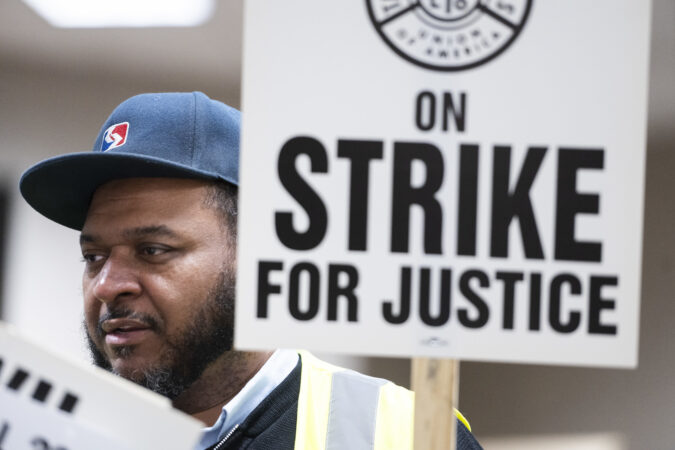
    Transport Workers Union Local 234 and SEPTA agreed Sunday night to continue contract talks in the morning, avoiding for now a strike that could have ground to a halt much of Philadelphia.

    Beginning in late afternoon, members of Gov. Josh Shapiro’s staff met with union leaders and SEPTA senior managers at the governor’s Philadelphia office. The goal was to unstick talks that had faltered, seeing if compromise was possible.

    The union’s push for an increase in pensions and SEPTA’s proposal for union members to pay a greater share of the cost of their healthcare coverage emerged over the last week as the biggest obstacles to an agreement, according to both union and transit authority sources.

    “Gov. Shapiro’s office brought the parties together and they made progress,” SEPTA spokesperson Andrew Busch said. “It was significant.”

    In a statement, the union said “significant progress” was made.

    “Gov. Shapiro was instrumental in preventing a strike that could have started as soon as Monday morning. We’re grateful for his close involvement,” said TWU Local 234 President Will Vera.

    Sticking points

    On Friday, Vera declared he was out of patience at what the union saw as SEPTA’s intransigence and threatened to lead members in a walkout.

    A work stoppage would have brought chaos to a mass transit system that carries a weekday average of 790,000 riders.

    TWU Local 234 represents 5,000 bus, subway, elevated train and trolley operators, as well as mechanics, cashiers, maintenance people and custodians, primarily in the city.

    Their one-year labor contract expired Nov. 7, but members stayed at their posts. On Nov. 16, they authorized Local 234’s leaders to call a strike if needed. The vote was unanimous.

    SEPTA and the union were not far apart on salary and both wanted a two-year deal after a series of one-year pacts during a time of financial crisis for the transit agency, sources said.

    Management wanted to hike what union members pay for health coverage and increase co-pays for doctor and hospital visits.

    The union pushed for an enhancement to the formula that determines retirees’ monthly pensions, based on years of service. It was last increased in 2016.

    SEPTA officials calculated that TWU’s proposed changes would have created an annual unfunded liability of about $6 million for an undetermined length of time. The union says the pension plan books showed a bump was affordable.

    Because TWU Local 234 is the largest SEPTA union, its contracts are used as a template for the other locals working for the transit system, which could boost costs.

    Regional Rail was a concern to SEPTA because commuter railroad workers, like others, receive a federal pension that has tended to be less generous. Those unions would have wanted a SEPTA sweetener to their retirement benefits too.

    TWU Local 234 also wanted changes to work rules involving sick time benefits and the length of time it takes new members to qualify for dental and vision benefits — currently 15 months.

    The local also represents several hundred suburban workers, primarily operators, in SEPTA’s Frontier district, which runs 24 bus routes in Montgomery County, Lower Bucks County, and part of Chester County.

    The Victory district has a similar number of employees, who are represented by SMART Local 1594. They run Delaware County’s two trolley lines, the Norristown High Speed Line, and 20 bus routes in the suburbs.

    Unions for both the Frontier and Victory districts could choose to strike alongside TWU Local 234. If that happened, Regional Rail, already plagued by delays and cancellations due to federally-mandated repairs on train cars, would be the only public transit running.

    Strike-prone reputation

    SEPTA unions have walked off the job at least 12 times since 1975, earning the authority a reputation as the most strike-prone big transit agency in the United States.

    TWU last struck in 2016. It lasted for six days and ended the day before the general election. Democrat Hillary Clinton’s presidential campaign was worried about voter turnout, and the city sought an injunction to end the strike. That proved unnecessary.

    Regional Rail would operate during a TWU strike. Locomotive engineers and conductors on the commuter service are represented by different unions than transit employees, and are working under current contracts.

  • Lincoln University receives $25 million donation from philanthropist MacKenzie Scott

    Lincoln University receives $25 million donation from philanthropist MacKenzie Scott

    MacKenzie Scott, one of the world’s richest women through her Amazon shares, has donated $25 million to Lincoln University, the college announced Friday.

    The money — part of the billionaire philanthropist’s series of multimillion-dollar, unrestricted donations to historically Black colleges and universities — will support scholarships and initiatives, according to a news release.

    Lincoln University officials said the no-strings-attached gift “exemplifies her confidence in the university’s mission, vision, and leadership.”

    “Lincoln University was founded to break barriers and create pathways for African Americans to thrive,” president Brenda A. Allen said in a statement. “This investment honors that legacy and propels us forward, enabling us to build on 171 years of excellence and innovation.

    “It is a powerful affirmation of the enduring value of Historically Black Colleges and Universities.”

    A spokesperson for the university and the board of trustees could not immediately be reached Saturday for additional comment.

    This is Scott’s second donation to the southern Chester County university, the first degree-granting HBCU in the nation. The ex-wife of Amazon founder Jeff Bezos gave $20 million in 2020 — then the school’s largest gift from a single donor in its history. As of June 2023, the school’s endowment was $54 million.

    A number of other historically Black colleges also received money from Scott in recent weeks, including Maryland’s Bowie State and Morgan State Universities and University of Maryland Eastern Shore. Scott’s total donations to higher education institutions this year have topped $1 billion, Forbes reported.

    The windfall comes six weeks after gunfire erupted during Lincoln’s Oct. 25 homecoming celebration, killing a 25-year-old man from Wilmington and injuring six people. At least one person was arrested.

  • Chesco residents may dodge a tax hike in 2026 | Inquirer Chester County

    Chesco residents may dodge a tax hike in 2026 | Inquirer Chester County

    Hi, Chester County! 👋

    Welcome to the first edition of The Inquirer’s new weekly newsletter, bringing you community news, important school district and municipal updates, restaurant openings, as well as events throughout the county.

    Chester County residents may avoid a property tax hike despite increased spending in next year’s proposed budget. Also this week, Chester County is home to the region’s most flood-prone waterway, a new Chester County Prison program is helping inmates find second chances, plus, a mixed-use development is being planned on former farmland in Kennett Square.

    As we start this journey together, we’ll want your feedback. Tell us what you think of the newsletter by taking our survey or emailing us at chestercounty@inquirer.com. Thanks for joining us!

    If someone forwarded you this email, sign up for free here.

    Chester County is poised to avoid property tax hikes in 2026

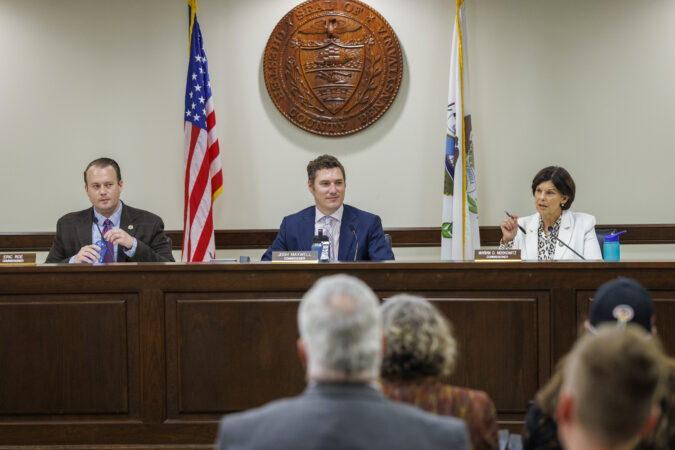
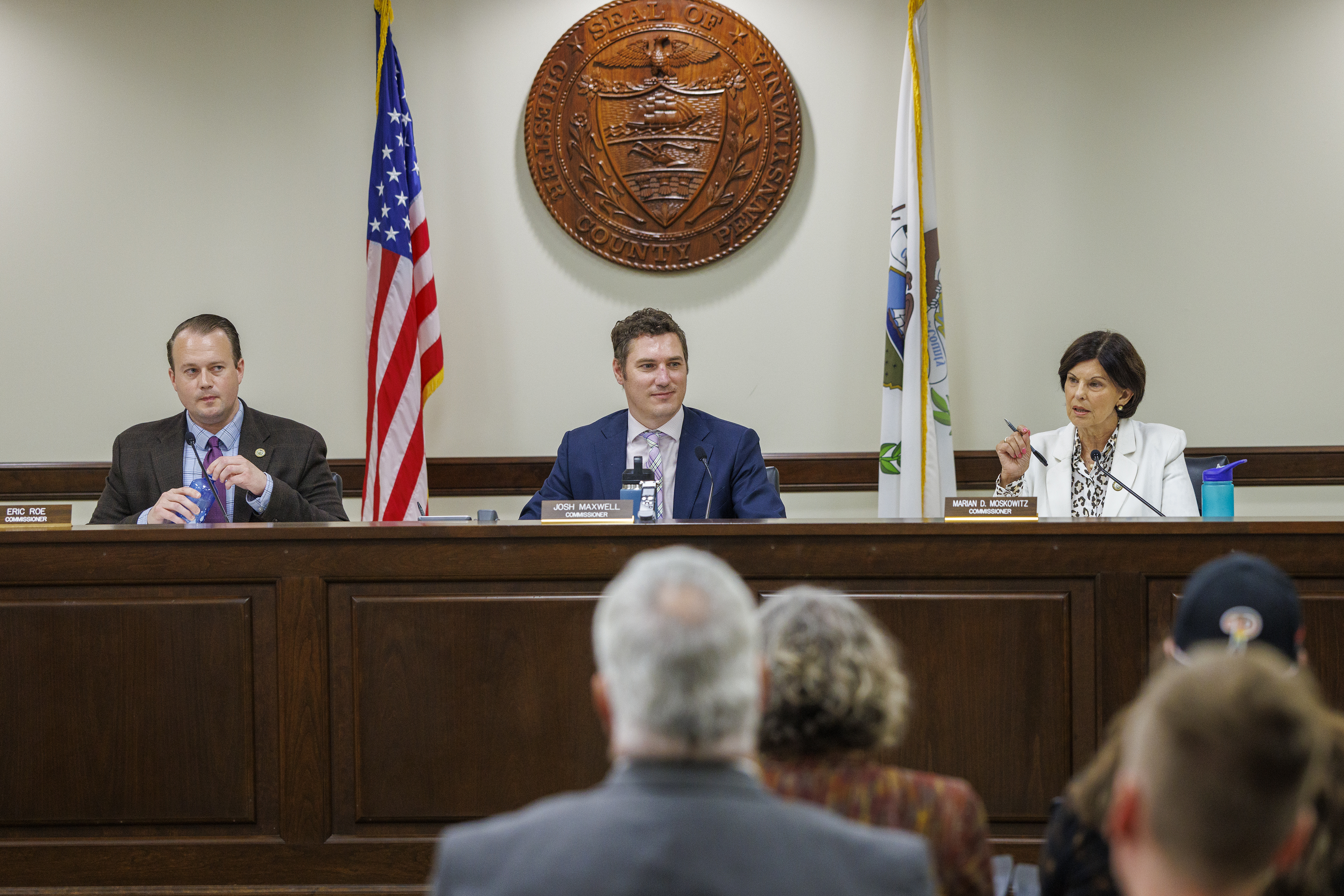
    Chester County Commissioners Eric M. Roe, Josh Maxwell, and Marian D. Moskowitz are expected to pass a 2026 budget that includes no property tax hikes.

    Chester County residents may be the only ones in Philadelphia’s suburbs to dodge a property tax hike in 2026.

    While the county’s proposed budget for next year has a 4.7% spending increase, officials don’t expect to pass that on to taxpayers. That’s thanks to non-personnel budget cuts initiated earlier this year across departments, as well as delayed projects.

    While still navigating financial uncertainty, the bipartisan Board of Commissioners tasked officials with holding “the line in terms of tax increases,” county CEO David Byerman said. The budget is expected to pass doing just that.

    Read more about how the county maintained property taxes for 2026.

    💡 Community News

    • An Inquirer analysis of U.S. Geological Survey data found that the East Branch Brandywine Creek near Downingtown is the most flood-prone waterway in the Philadelphia area. Between 2005 and 2025, it had 11 major and 22 moderate floods, including a record 19.1-foot surge in September 2021 from Hurricane Ida.
    • A portion of former mushroom farmland near the intersection of Routes 41 and 1 in Kennett Square is being eyed for development. Baltimore-based Stonewall Capital is looking to turn the 235-acre site into 622 residential units and shops. The developer plans to begin work on the $300 million White Clay Point project next fall. (Philadelphia Business Journal)
    • Main Line Health opened a new outpatient facility in Devon on Monday. The $13.8 million, 22,700-square-foot center at 80 W. Lancaster Ave. offers primary care, rehabilitation, imaging, and laboratory services.
    • In case you missed, HBO series Task, which was created by Berwyn native Brad Ingelsby, has been renewed for a second season. The crime drama scored a record $49.8 million tax credit from the state to film locally, the largest amount Pennsylvania has given to a single production.
    • Heads up for drivers: Peco will continue performing utility construction roadwork on Newtown Road between Sugartown and Waterloo Roads in Easttown Township on weekdays from 9 a.m. to 3 p.m. through Dec. 19. And in Caln Township, Pennsylvania American Water will continue water line installation that will shut down Olive Street between South Caln Road and 13th Avenue from 8 a.m. to 4 p.m. through February.
    • In other transportation news, PennDot is hosting a virtual meeting tomorrow at 7 p.m. to discuss proposed improvements to the intersection at Newark Road and Baltimore Pike in New Garden Township.
    • Avondale and West Grove Fire Companies recently voted to merge into a single department. They will operate under a combined name, which is yet to be announced, and continue to provide fire and EMS services to over 120 square miles in southern Chester County. The merger is expected to take about 12 months to complete. The newly formed department will have a mix of both career and volunteer responders.
    • In other emergency services news, Westtown-East Goshen Police Commission last week named a new chief of police for the Westtown-East Goshen Regional Police Department. David Leahy, a 26-year veteran of the department, has been elevated from his role as interim chief and will be sworn in on Dec. 19.
    • Chester County is home to three of the region’s most magical holiday light displays: In West Chester, there’s the Griswold display and the Lights Up Holiday Weekends, while in Nottingham, the Herr’s Holiday Lights Display dazzles with more than 600,000 lights.
    • Those heading into West Chester this season can expect plenty of crowds. The Greater West Chester Chamber of Commerce estimates 40,000 people will visit the borough throughout the holiday season, including for this weekend’s tree lighting, which features a new 28-foot tree. (Daily Local Times)
    • In Downingtown, borough parking lots will be free through Jan. 1.

    📍 Countywide News

    🏫 Schools Briefing

    • Kennett Consolidated School District is considering redistricting its elementary schools due to uneven enrollment and ongoing housing development. The district is drawing up a comprehensive map of planned attendance areas. (Chester County Press)
    • Kindergarten registration for the Coatesville Area School District is now open for the 2026-27 school year.

    🍽️ On our Plate

    • The Local opened its doors yesterday at 324 Bridge St. in Phoenixville, taking over the former Your Mom’s Place. It’s launching this week with breakfast and plans to expand to lunch service shortly. Menu items include breakfast sandwiches, omelets, pancakes, and French toast.
    • Several holiday-themed pop-ups have opened or will soon throughout the county. In West Chester, Station 142 has transformed into Miracle on Market Street; Hotel Indigo has converted its basement speakeasy Room 109 into the North Pole Social; and Slow Hand has added Sleigh Bar. Grain in Kennett Square is serving up holiday sips at its North Pole KSQ pop-up and on Saturday, a Christmas-themed pop-up is taking over 10 N. Main St. in Phoenixville.

    🎳 Things to Do

    🎁 Several holiday markets are popping up this weekend, including Historic Sugartown’s Holiday Craft Market & Biergarten on Saturday. Kennett Square’s Holiday Village Market kicks off its two-weekend run this Saturday and Sunday at The Creamery, and for the first time, Fitzwater Station in Phoenixville is hosting a Christmas Village. It takes place Saturday and Sunday and returns for two more weekends after that.

    Here’s what else is happening around Chester County:

    🎭 A Christmas Carol: Catch People’s Light’s adaptation of the Charles Dickens classic. ⏰ Through Jan. 4, days and times vary 💵 Prices vary 📍 People’s Light, Malvern

    💎 A Longwood Christmas: This year’s annual holiday display is inspired by gems. Timed reservations are required. ⏰ Through Sunday, Jan. 11, 10 a.m.-11 p.m. 💵 $25-$45 for non-members, free for members 📍 Longwood Gardens, Kennett Square

    🎄 West Chester Hometown Christmas Parade and Tree Lighting: The beloved events kick off with the tree lighting at the historic courthouse at 6:30 p.m., followed by the parade at 7 p.m. ⏰ Friday, Dec. 5, 6:30 p.m. 💵 Free 📍 Downtown West Chester

    ❄️ Coatesville Christmas Parade and Christmas Wonderland: Kick off the day with a parade. Later, Santa will help light the city’s tree. ⏰ Saturday, Dec. 6, parade starts at 10 a.m., Wonderland is 4-7 p.m. 💵 Free 📍 Downtown Coatesville

    💃 The Phoenixville Christmas Spectacular: Catch one of three performances of this dance-forward show celebrating Phoenixville’s holiday charm. ⏰ Saturday, Dec. 6, 2 and 7 p.m., and Sunday, Dec. 7, 2 p.m. 💵 $18-$25 📍 The Colonial Theatre, Phoenixville

    👸 Rodgers + Hammerstein’s Cinderella: The Broadway adaptation of the beloved fairytale comes to life on stage on Fridays, Saturdays, and Sundays. ⏰ Saturday, Dec. 6-Sunday, Dec. 28, select days and times 💵 $40-$50 📍 Uptown Knauer Performing Arts Center, West Chester

    🏡 On the Market

    A Chadds Ford home perfect for entertaining

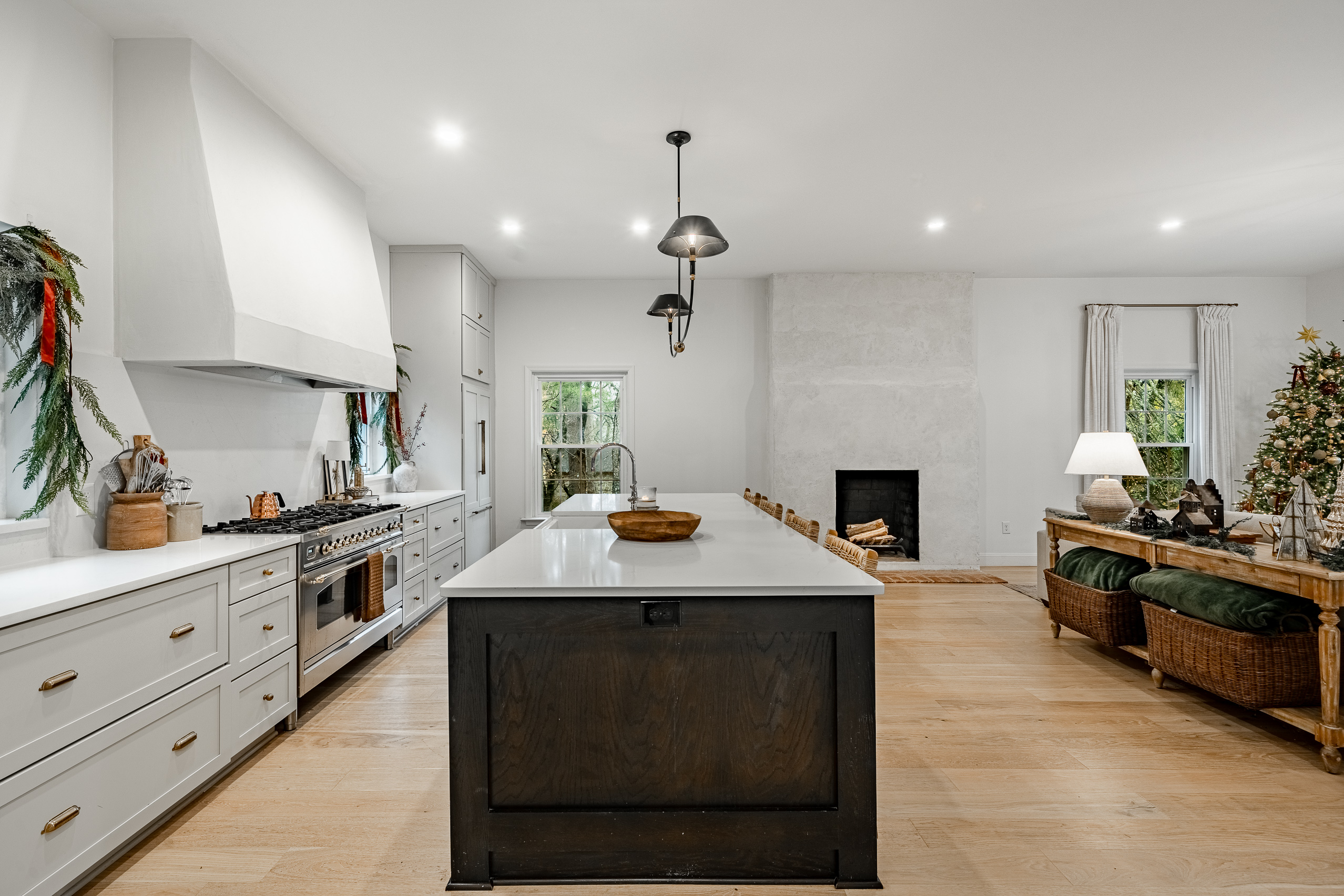
    The kitchen features an island and looks out on the living room.

    This Chadds Ford home is ideal for a home chef or host, featuring double ovens, a Sub-Zero refrigerator, and a 10-foot island with seating in the kitchen, plus a butler’s pantry with a bar sink and additional storage and prep space between the kitchen and dining room. The updated home, originally built in 1952 from a Sears kit and since expanded, has four bedrooms, including a first floor primary suite. Other features include a large deck and a suite with a kitchenette and a private entrance.

    See more photos of the property here.

    Price: $1.1M | Size: 4,129 SF | Acreage: 2

    🗞️ What other Chester County residents are reading this week:

    By submitting your written, visual, and/or audio contributions, you agree to The Inquirer’s Terms of Use, including the grant of rights in Section 10.

    This suburban content is produced with support from the Leslie Miller and Richard Worley Foundation and The Lenfest Institute for Journalism. Editorial content is created independently of the project donors. Gifts to support The Inquirer’s high-impact journalism can be made at inquirer.com/donate. A list of Lenfest Institute donors can be found at lenfestinstitute.org/supporters.

  • Chester County might be the only Philly suburb not raising taxes next year

    Chester County might be the only Philly suburb not raising taxes next year

    Chester County may be the only county in Philadelphia’s suburbs that will avoid a property tax hike next year.

    In the proposed 2026 budget, released last month, Chester County’s commissioners projected $666.3 million in operational spending, roughly 4.7% more than the county budgeted for 2025. The budget is expected to pass the three-member board of commissioners with bipartisan support.

    Despite the increased spending and more limited state and federal resources, county officials said, they expected to avoid a tax increase next year thanks to budget cuts across nearly every department and delayed projects.

    “This budget was really difficult for us, but we did what we had to to keep it at zero,” said Chester County Commissioner Marian Moskowitz, a Democrat.

    David Byerman, the county’s CEO, described the county as being in a “defensive crouch” financially.

    “We are in a very unpredictable environment in which we have a lot of conflicting information that we’re dealing with,” Byerman said, citing federal funding uncertainty under President Donald Trump. “We were charged by our commissioners in Chester County with crafting a budget that held the line in terms of tax increases.”

    How does Chester County compare with the rest of the region?

    The decision sets Chester County apart from its peers in a year that has been marked by budget uncertainty at the state and federal levels. In recent weeks, Delaware County’s executive director proposed a 19% property tax hike to address the county’s structural deficit. Montgomery County’s commissioners are proposing a 4% increase. Bucks County’s commissioners have floated a tax increase to address a deficit in next year’s budget.

    But on the heels of a 13% property tax increase that took effect in January, Chester County’s commissioners said they were eager to keep taxes flat for residents.

    “This is a pared-down budget because we didn’t know what the federal and state government were going to do,” said Josh Maxwell, a Democrat, who chairs the county board of commissioners.

    The biggest cost increases, he said, came in the form of employee and inmate healthcare.

    How did Chester County cut its budget?

    In the first quarter of this year, Chester County officials asked each county department to reduce non-personnel spending by 5% for the 2026 budget. By and large, officials said, they responded to the call, freeing up significant funds even as overall personnel costs increased.

    “We asked them to cut back, and some of them really did,” said Eric Roe, the lone Republican on the board of commissioners. “I’m really happy with how they helped us get to this point.”

    In this year’s budget, officials said, they opted to delay projects like park maintenance and computer system upgrades that could be put off.

    “The cuts are giving us an opportunity to prioritize and rethink our discretionary spending,” Maxwell said. “They may have to go to some of the things that the federal and state government used to do that they’re getting out of the business of doing.”

    Additionally, Byerman said, the county instituted a soft hiring freeze by requiring all new hires to be approved by top-level management.

    Can Chester County avoid tax increases in future years?

    Heading into next year, Maxwell said, he is bracing for cuts to federal social service programs that will result in larger expenditures from the county to serve its neediest residents.

    For example, anticipated cuts to the U.S. Department of Housing and Urban Development’s Continuum of Care program could leave 70 more families on the streets in Chester County, Maxwell said.

    “This is a year where we’re going to look at all of our programs and make sure that we’re investing in the areas that the community wants us to,” Maxwell said.

    This suburban content is produced with support from the Leslie Miller and Richard Worley Foundation and The Lenfest Institute for Journalism. Editorial content is created independently of the project donors. Gifts to support The Inquirer’s high-impact journalism can be made at inquirer.com/donate. A list of Lenfest Institute donors can be found at lenfestinstitute.org/supporters.

  • Kathleen A. Case, longtime writer, pioneering medical journal editor, and award-winning historian, has died at 80

    Kathleen A. Case, longtime writer, pioneering medical journal editor, and award-winning historian, has died at 80

    Kathleen A. Case, 80, of Bryn Mawr, longtime writer, pioneering medical journal editor, award-winning historian, researcher, and volunteer, died Friday, Nov. 14, of heart failure at Bryn Mawr Hospital.

    A natural wordsmith who was interested in the origins and nuances of language as well as its use, Ms. Case spent 24 years as a top editor for the Annals of Internal Medicine and vice president for publishing at the Philadelphia-based American College of Physicians. Later, for 15 years, she was publisher, archivist, historian, and director of strategic planning for the publishing division of the Philadelphia-based American Association for Cancer Research.

    She was adept at understanding and organizing complex research and other medical information, and helped Annals of Internal Medicine digitize its production process and content, expand its reach, and become one of the world’s most influential and cited medical journals. “She loved precise, concise, and unambiguous writing,” her family said in a tribute.

    She was one of the few female editors in the medical publishing industry when she joined Annals as an assistant editor in 1977, and she rose to managing editor, executive editor, and senior vice president for publishing by 1998. She attended many international medical publishing conferences around the world, and other journals tried unsuccessfully to lure her away from Philadelphia.

    Ms. Case and her husband, Jacques Catudal, married in 1995.

    “She set the highest editorial standards in medical publishing and expected the best from everyone around her,” a former colleague said in an online tribute. “But she also took the time to teach. … The lessons I learned from her have shaped my work ever since.”

    Ms. Case joined the American Association for Cancer Research in 2001, served two stints as head of the publishing division, and supervised its marketing campaigns, advertising sales, and product development. She retired in 2008 but continued part time as the AACR archivist, historian, and director of strategic planning until retiring for good in 2016.

    Away from her day jobs, Ms. Case was past president of the Society for Scholarly Publishing and what is now the Council of Science Editors. She also served on boards and committees for the American Medical Association, the American Chemical Society, the American Heart Association, and the International Committee of Medical Journal Editors.

    Even in retirement, she continued to work as a board member, writer, researcher, and historian for the Haverford Township Historical Society. She served on the Haverford Township Historical Commission, was a member of the Historical Society of Pennsylvania, chaired the Friends of the Polo Field, and helped establish the Brynford Civic Association.

    Ms. Case graduated from Radnor High School and Pennsylvania State University.

    “She was always busy, always involved with some project,” said her husband, Jacques Catudal. She edited his published academic papers, he said, and routinely marked up her two sons’ school reports in red ink for years.

    In 2019, she won a historic preservation award from the Heritage Commission of Delaware County. “She was an endlessly inspiring woman whose intelligence was matched only by her sharp wit and her extraordinary cultural sensitivity,” a friend said in a tribute.

    Kathleen Ann Case was born Sept. 13, 1945, in Westfield, N.J. The youngest of three children, her family moved to Omaha, Neb., and then Radnor when she was young.

    She graduated from Radnor High School, studied journalism at Pennsylvania State University, and earned a bachelor’s degree in English in 1967. She was a reporter and editor for the Penn State student newspaper and so active that school officials waived their prohibition of female students living alone off campus so she could reside near the paper’s office. In 1987, she earned a master’s degree in technical and science communication at Drexel University.

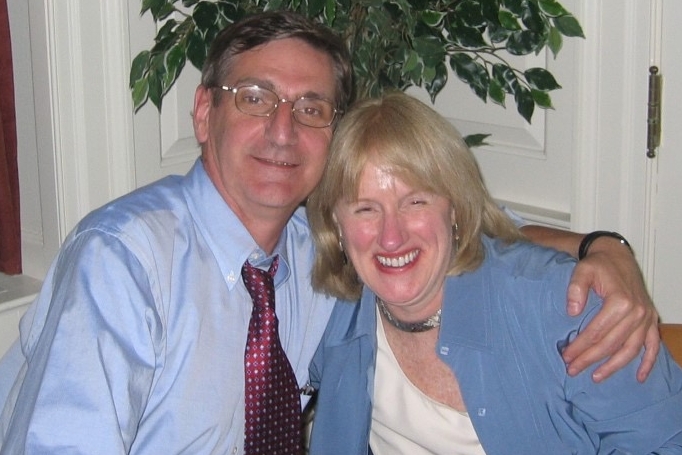
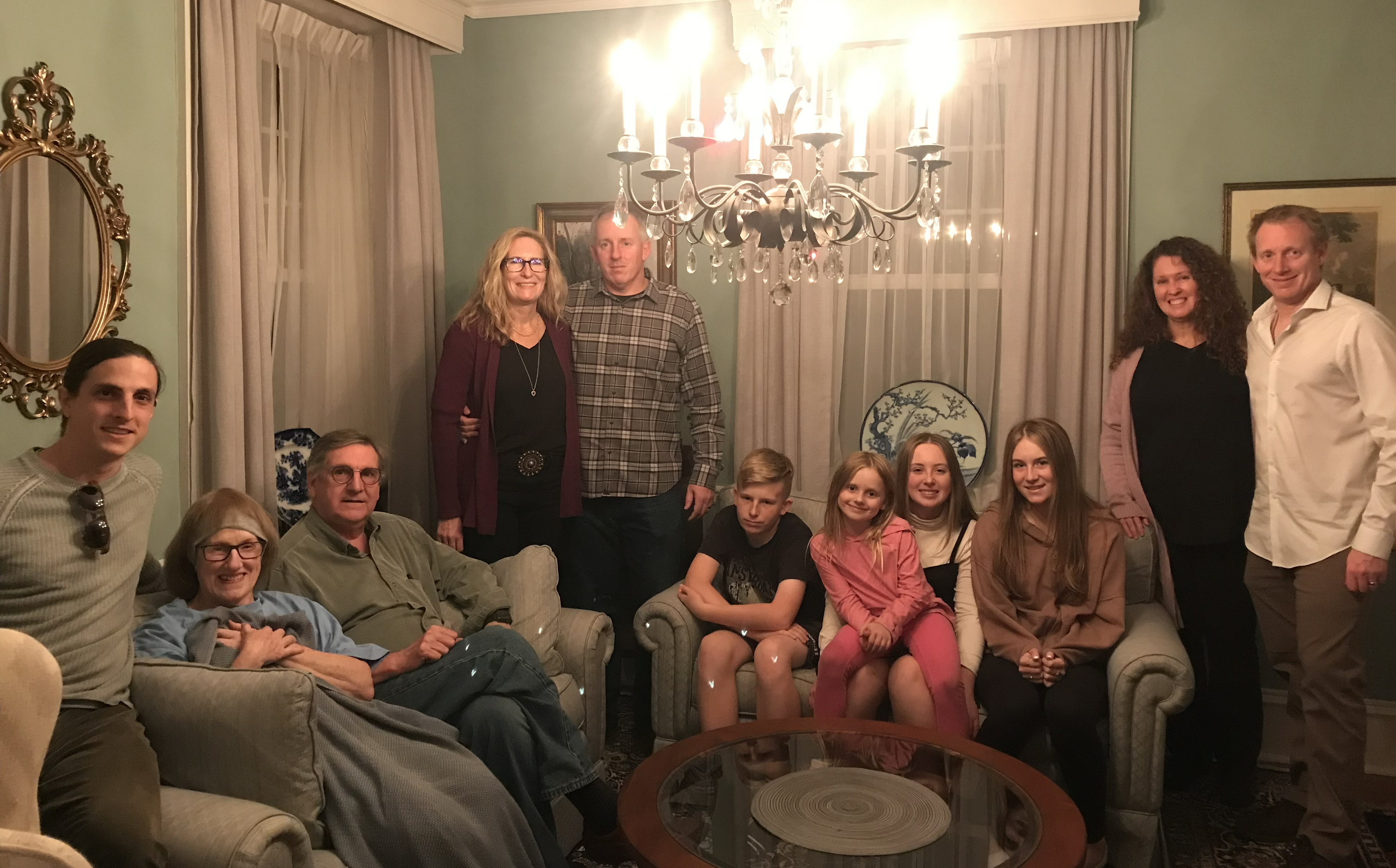
    Ms. Case (second from left) enjoyed time with her family

    She married D. Benjamin van Steenburgh III, and they had sons Ben and Jason. After a divorce, she married Peter Moor. They divorced, and she married Catudal in 1995.

    Ms. Case raised her sons as a single mother in Avondale, Chester County, for years and moved to Bryn Mawr in 1979. She read voraciously about history, collected antiques, and enjoyed travel, classic rock, and Irish folk music.

    She rode horses, was an expert archer, and followed the local sports teams. She tended her garden and investigated her genealogy.

    She liked to refinish and paint furniture and discuss current events. She and her husband camped, hiked, and canoed all over the world.

    Ms. Case enjoyed hiking and the outdoors.

    She also dealt with metastatic breast cancer and three heart attacks. “She always gave as much honesty, opinion, perspective, experience, literary acumen, word knowledge, help, advice, comfort, and love as could be needed,” said her son Jason.

    Her husband said: “She was brilliant and extremely funny. She was an organizer and always giving of herself.”

    In addition to her husband, sons, and former husbands, Ms. Case is survived by four grandchildren, a sister, a brother, and other relatives.

    A celebration of her life was held earlier.

    Donations in her name may be made to The American Association for Cancer Research, 615 Chestnut St., 17th Floor, Philadelphia, Pa. 19106; and the Haverford Township Historical Society, P.O. Box 825, Havertown, Pa. 19083.

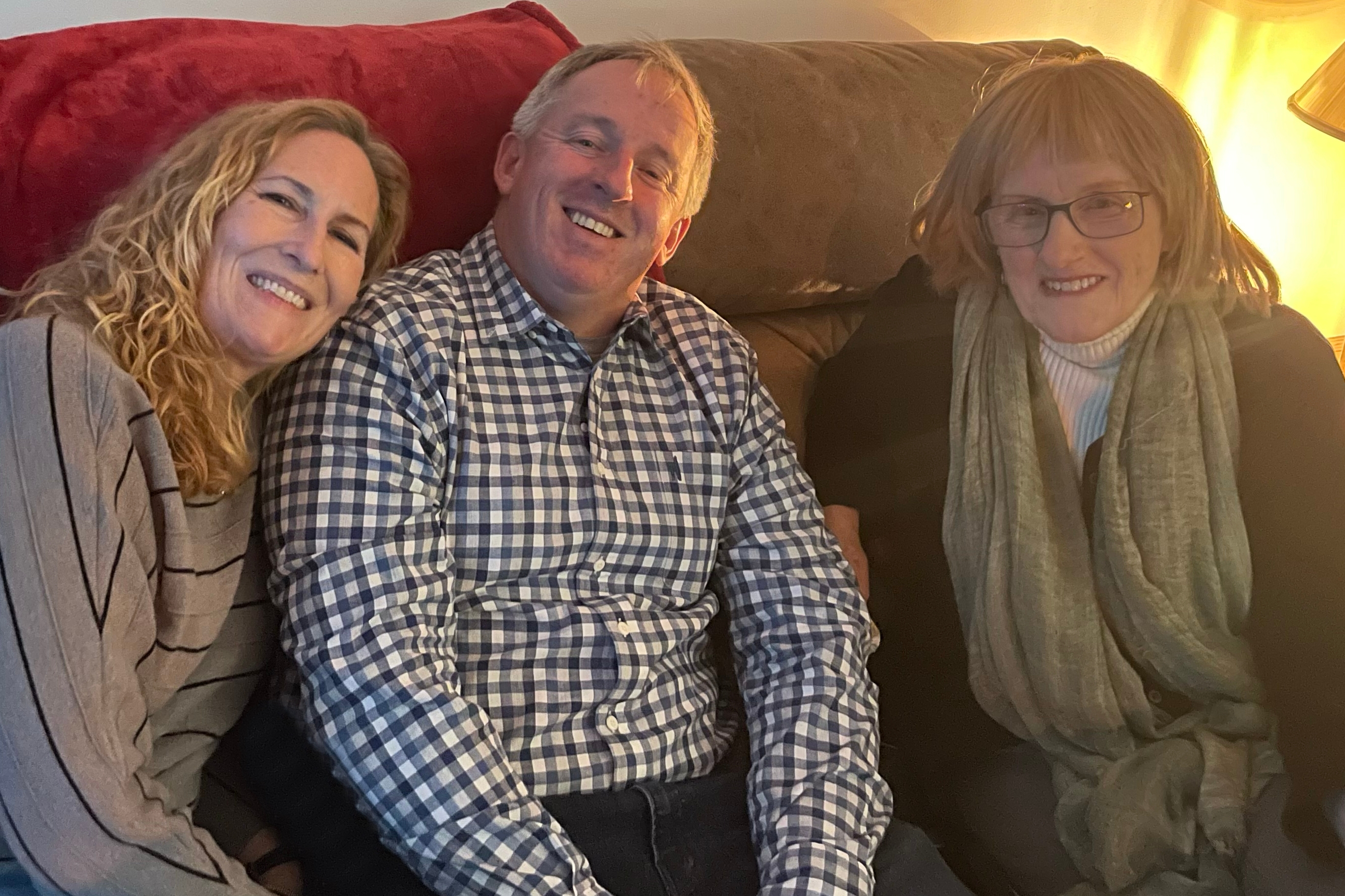
    Ms. Case (right) rode horses, was an expert archer, and followed the local sports teams.
  • In Chester County, inmates are getting workforce training and jobs to match post-release

    In Chester County, inmates are getting workforce training and jobs to match post-release

    Tyler Ramaley wakes up every morning grateful that he’s able to do “respectable work in a hardhat” as he clocks in for his shift at JGM, a steel fabrication plant in Coatesville.

    Nineteen months ago, that would have been impossible: He was struggling with an opioid addiction and waking up to a monotonous routine in a Chester County Prison cell.

    A new program offered at the jail, Exit, Enter, Employ, gave him an opportunity to move on from his past mistakes. He had help building his resume, getting certified in his chosen field, and, crucially, landing an interview for a job that was waiting for him after his release.

    “I was in there, and I just didn’t like who I was and I just knew I needed to change,” Ramaley, 37, said in an interview during a break from running a plasma cutter on a recent day. “It gave me a purpose to wake up every day, and it makes me not want to waste the opportunity I’ve been given.”

    Ramaley’s experience, county officials say, is just one of many success stories to come out of the E3 program since its inception in January 2023 through a partnership between the jail and the Chester County Intermediate Unit.

    More than 100 people have graduated from the course, with a recidivism rate of 2%, according to Jill Stoltzfus, the program’s career-readiness coordinator and a CCIU employee.

    “Everybody needs a second chance,” she said. “And I’m very candid with people when I interview them. Like, we’ve all made mistakes, I’m sure I’ve made mistakes that I could be in the same situation.”

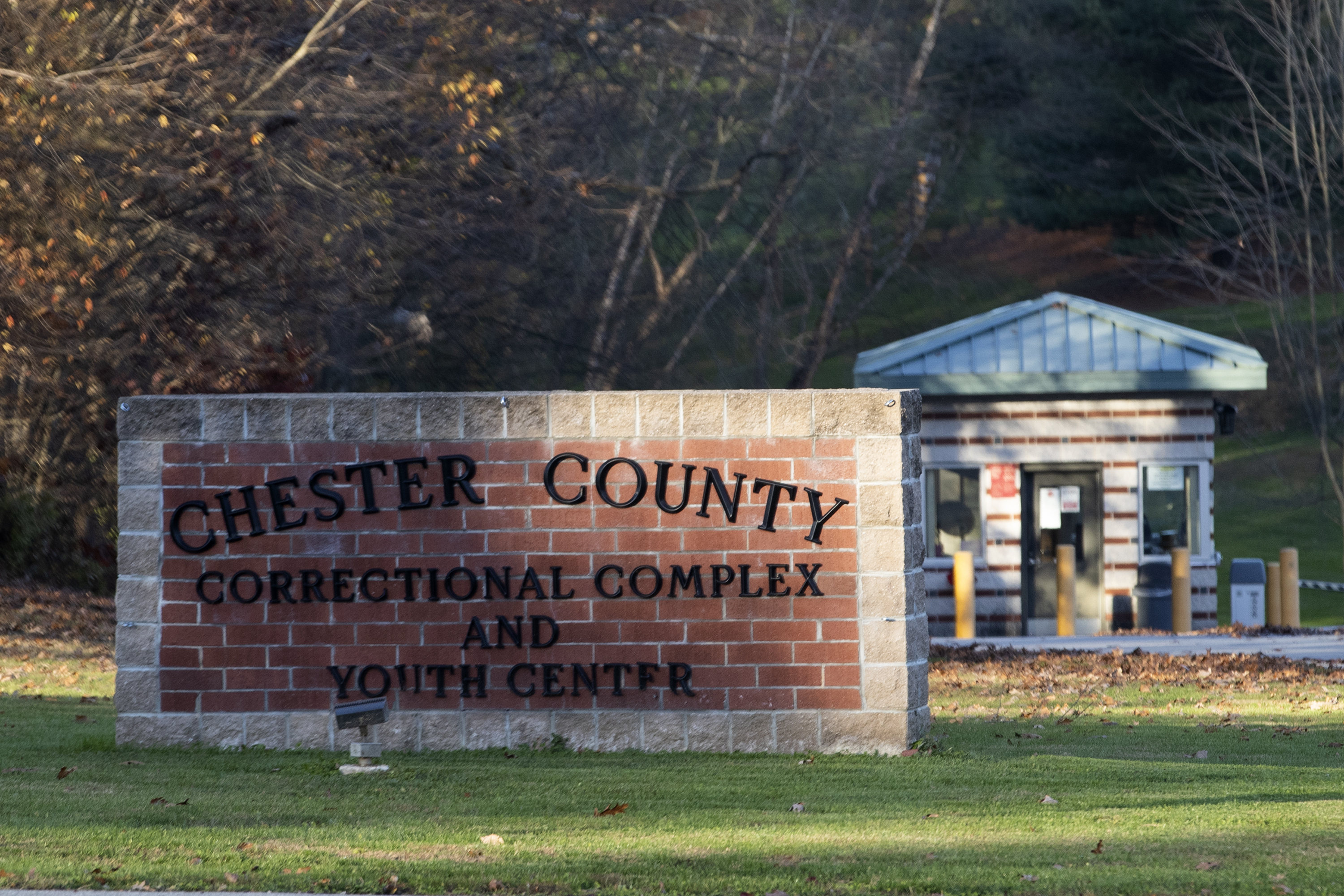
    More than 100 inmates at the Chester County Prison have graduate from the E3 program since its inception in January 2023.

    Job-readiness programs are nothing new for county jails — they’re offered almost universally across the region. But Stoltzfus said E3 is different because it provides a direct path, with job openings already lined up for graduating inmates from multiple companies that partner with the county.

    And in the first few months in those jobs, coordinators from the program follow up with former inmates, checking in to see how they are faring.

    “I don’t like the judgment we often hear of ‘Why should we fund this?’ or the idea that some people deserve a chance over others,” Stoltzfus said. “I think it’s crucial that we at least put that opportunity out to them.”

    E3 is available only to inmates who have been sentenced to county jail, meaning their crimes were not serious enough to warrant state prison time. And county officials carefully screen those who apply to the program to make sure they are ready.

    Besides workforce skills like OSHA certification and courses in customer service, E3 offers financial-planning advice, as well as cognitive behavioral therapy and anger management.

    Current partner employers, besides JGM, include J.P. Mascaro & Sons, FASTSIGNS, and MacKissic. Stoltzfus is hoping to expand the offerings to include agricultural and culinary posts.

    Howard Holland, the warden of Chester County Prison, views the program as a way to help incarcerated people prepare to reenter society in a productive way.

    “We’re engaging them in a way other than just ‘Here’s your cot, stay behind the bars,’” he said. “You just have that same cycle over and over and over again because that’s the way our institutions are run.

    “At the end of the day, we’re humans, right?” he added. “They’re here, and it’s our responsibility to, while they’re here, try to do the best we can for them.”

    Tyler Ramaley said he never thought he would be able to go to work, after years of addiction. The E3 program helped him connect with a job he loves.

    Ramaley, who was named JGM’s employee of the month in June, said the opportunity was an important step toward reversing years of bad decisions.

    His drug abuse, he said, began in 2020, when he was injured on the job while running a hammer drill at a concrete mill. The drill skipped and jerked his arm hard, shredding multiple tendons. After several surgeries, he said, he was prescribed Tramadol in bottles of 150 pills at a time. He became reliant on the pills, using them to deal with the pain.

    And when his workers’ comp ran out, he said, his doctor cut him off cold turkey and he turned to other ways to support his opioid habit and purchase drugs, racking up convictions for theft and forgery and landing in county jail.

    His moment of clarity came this spring, he said, and he graduated from E3 in April, weeks before his jail sentence ended and he was released.

    “When I was in my active addiction, I never thought I would be able to go to work and not be on something,” he said, “and there’s times I’ll stand out there and just kind of think about how happy I am here, actually doing hard work and respectable work and doing it the right way.

    “And that’s a better feeling than anything I had when I was in my addiction.”

  • Gov. Shapiro allocated $220 million to SEPTA to get Regional Rail back on track

    Gov. Shapiro allocated $220 million to SEPTA to get Regional Rail back on track

    Gov. Josh Shapiro is sending $220 million to SEPTA as it repairs fire-prone Silverliner IV Regional Rail cars and a damaged overhead power system in the trolley tunnel that together have brought commuting chaos.

    With the new capital funds, SEPTA will be able to restore Regional Rail to its normal capacity within a few weeks.

    Shapiro has directed PennDot to transfer money set aside for emergencies from the Public Transit Trust Fund to SEPTA, his office said.

    SEPTA’s increasing needs

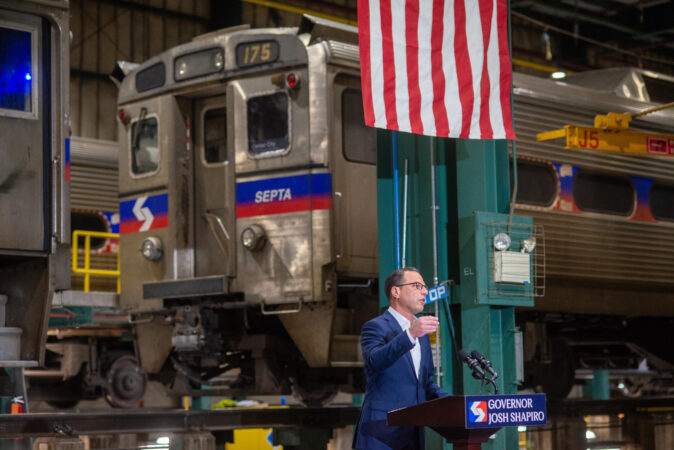
    He announced the aid Monday at the transit agency’s train yard and maintenance shop in Frazer, Chester County.

    Federal regulators on Oct. 1 ordered SEPTA to inspect and repair, as needed, all of its Silverliner IV fleet after five train fires involving the 50-year-old cars.

    Delays, cancellations, station skips, and overcrowded Regional Rail trains running with fewer than the normal number of cars have been regular challenges for riders during six weeks of inspections and repairs focused on electrical components of the 223 Silverliner IVs.

    Earlier this month, the Federal Transit Administration ordered SEPTA to inspect its trolley power system after four incidents, including two times trolleys stalled in the Center City tunnel, requiring 415 passengers to be evacuated.

    The budget impasse

    Shapiro said he was forced to act for the second straight year because Senate Republicans wouldn’t support additional recurring funding for mass transit operations in the state budget.

    “They’ve come up with a ton of excuses, but they haven’t come up with the funding,” Shapiro said.

    Last November, he redirected $153 million in federal highway funding to SEPTA following a similar impasse in passing state transit subsidies.

    After the governor decided in September that no budget agreement on transit funding was possible, PennDot allowed SEPTA to tap $394 million in state money allocated for future capital projects to pay for two years of operating expenses.

    The transit agency was facing a $213 million recurring deficit in its operating budget.

    In late August, SEPTA had canceled 32 bus lines and significantly curtailed other service as part of a “doomsday scenario” the agency said was caused by lack of new state funding.

    Riders were inconvenienced, a lawsuit was filed, and a Philadelphia judge ordered the cuts to be reversed.

    Then the $394 million reprieve arrived.

    Yet the problems with the rail cars and trolleys served to underscore the risks of using capital funds for day-to-day operations.

    “A history of chronic underinvestment has led us to this point,” said Chester County Commissioner Marian D. Moskowitz, who is vice chair of SEPTA’s board.

    She noted that SEPTA has a much smaller capital budget than other large transit agencies.

    What this money will do

    In addition to the repairs, $17 million of the new state money announced Monday is intended to pay for the lease of 10 Silverliner IV rail cars from Maryland’s commuter railroad and the possible purchase of 20 cars from Montreal.

    Highlights of SEPTA’s plans for the $220 million:

    • $95 million for electrical system upgrades, overhauled propulsion motors and more on the Silverliner IV train cars and the newer Silverliner V models.
    • $48.4 million to update the overhead catenary wires in the trolley tunnel, along with three new catenary-maintenance cars for the tunnel and along trolley lines, and on long Regional Rail lines.
    • $51.5 million to upgrade 13 escalators at SEPTA stations, install AI-powered inspection cameras to catch potential problems earlier, and technology improvements at SEPTA’s Control Center
    • $8 million to install replacement parts for Broad Street Line and Norristown High Speed Line cars.

    “These funds are going to make a significant difference in our efforts to overcome the current crises,” SEPTA general manager Scott Sauer said, and to help avoid future ones.

    He thanked the governor and pledged “a comprehensive effort to identify potential problems sooner before they grow and lead to delays, cancellations, or shutdowns.”

    Shapiro had proposed an increase in the share of general sales-tax revenue devoted to transit subsidies over five years.

    Leaders of the GOP-controlled Senate said the $1.5 billion price tag was too high and proposed shifting capital money to operating subsidies for the state’s transit systems and roads — an idea partially reflected in the Shapiro administration’s temporary solution.

    “I am glad the Governor continues to take our advice and use existing resources to support public transit,” Senate Majority Leader Joe Pittman (R., Indiana) said in a statement.

    “It’s unfortunate that just one year ago, he took $153 million of funding from critical [road] infrastructure projects to fund transit, neglecting the needs of those who use our roadways every single day,” Pittman said.

    Republicans also argued that SEPTA had been mismanaged and needs change.

    As the next state budget cycle nears, the debate is likely to continue.

    “I want you to know I’m going to be a continue to be a governor who supports mass transit, who gives a damn about SEPTA, who cares about those 800,000 people that rely on SEPTA every single day,” Shapiro said.

  • Is the Chester County poll book debacle a prelude to 2026 elections? After a heated local contest, this township hopes not.

    Is the Chester County poll book debacle a prelude to 2026 elections? After a heated local contest, this township hopes not.

    Now and then, we still see the Amish horse and buggy tooling its way down Fairview Road. Occasionally, someone will alert their neighbors in a Facebook post that a cow or a horse has escaped a pasture and is blocking the road. “That’s so Glenmoore,” a local resident will chime in nostalgically.

    But Glenmoore, like the rest of America, is changing, in ways both obvious and subtle.

    It’s rare now to see a horse travel down a road that has a steady flow of traffic. Where cows once used to escape to sip the water of the branch of the Brandywine Creek that flows through the part of town residents call “the village,” you can look up a hill and see the large homes of the newest development, just one in an array of luxury homes built on the hill.

    Don’t get me wrong. Wallace Township (the Glenmoore postal area is significantly larger) is still pretty amazing. It’s Glen Moore Fire Co. members lined up in a row at a funeral inside one of our historic churches to honor the wife of a longtime member. It’s Pete the cat walking his people to the elementary school on days when it’s in session. Some of my best friends are people I’ve met on walks, often punctuated with a stop at the village coffee shop, the Mean Bean.

    The Chester County poll book debacle in the Nov. 4 election didn’t help nurture a sense of calm about something many of us had taken for granted — the sanctity of our vote. In case somehow you missed the hubbub, when independent and third-party voters (there are approximately 18% of us) got to the polling place, we were told that, because they hadn’t gotten the right poll books for us, most of us would have to cast provisional ballots.

    I was aware of others in my position. We kept checking to see if our vote showed up on the Voter Services website. As of last Monday, resident Dorothy Kirk, an independent, said, “I am skeptical that our votes were counted.” It took almost 15 days to register Kirk and her husband’s votes on the Voter Services website.

    Unlike some other townships in our environs, which have become increasingly blue, Wallace voters are registered as more than 50% Republican, and have been for many years.

    This year, we already had more of a local stress test: a competitive race for one seat in the three-member board of supervisors — replete with candidate websites, campaign literature, and canvassing. That’s a lot of drama for our relatively small (less than 3,000 registered voters) township.

    Call me naive, but knowing the local judge of elections, I had confidence my vote would count.

    But it wasn’t long before I started to hear from other residents. Let’s just say, they had questions.

    Tish Molloy, a former Wallace poll worker, spent a few hours observing the ballot certification process in West Chester after the election, curious to see how it was done. Though onlookers could not see everything, she said, the workers seemed to be “careful, cautious, and mindful,” as well as efficient.

    Though Wallace Supervisor Rob Jones, serving as a Republican, had some pointed comments about the potential for mismanagement at the county level, he said he didn’t think anything “nefarious” had occurred. “I just think we have a basically honest populations out there,” said Jones. “I do think the county learned a lesson.”

    As for the township? Jones was ready to move on from what was a fairly heated campaign by Wallace standards, urging neighbors in this small community to avoid viewing each other through a political lens. “The way you show love for people with your township is through what you do. When I make a decision [about the township], I don’t care what their party is. How can I bless the most people in the township?”

    Though he came closer than other Democratic candidates in recent memory, Andrew Holets conceded the supervisor’s race to Republican candidate John Thomas last Friday evening. Perhaps it’s not surprising, in a town where so many people know and depend on each other, that his vision is similar to that espoused by Jones. Building trust isn’t just up to leadership, he said. It’s about practicing kindness and doing the right thing.

    “Everybody has responsibility,” said Holets. “How they wake up and how they spend their day makes a difference in how much we care for ourselves and others. I don’t want to buy into the division that seems to be here in our country. I don’t think we need to have that locally.”

    Nonetheless …

    The bonds of mutual trust and affection are still pretty strong around here. At the same time, it’s hard not to wonder what else could go wrong, and it’s arrogant to think ourselves immune from the polarization that has divided neighbor from neighbor and family from family.

    While it’s up to Chester County to rectify its mistake, the future of our community is also, as both Jones and Holets said, in our hands. We can’t afford to assume our neighbors trust us. We have to renew those bonds together, one act of service, citizenship, and kindness at a time.

    We’ve had our shot across the bows. Now it’s up to us to make sure we get safely to harbor. The cost of drifting is way, way too high.

    Elizabeth Eisenstadt Evans is a freelance journalist in Chester County. Her writing has appeared in Religion News Service, the National Catholic Reporter, Sojourners, Christian Century, the Washington Post, and The Inquirer.

  • Chrissy Houlahan says she is ‘profoundly disappointed’ in lack of support from GOP colleagues after Trump’s sedition accusation

    Chrissy Houlahan says she is ‘profoundly disappointed’ in lack of support from GOP colleagues after Trump’s sedition accusation

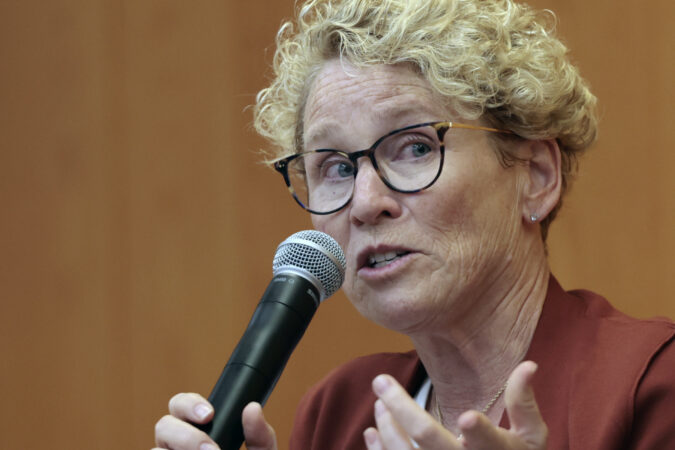
    U.S. Rep. Chrissy Houlahan, a Chester County Democrat, said Friday she is “profoundly disappointed” in her Republican colleagues for not speaking up after President Donald Trump accused her and five other Democratic lawmakers of sedition.

    Houlahan was one of six Democrats in Congress — all military veterans or members of the intelligence community — featured in a video urging members of the military and intelligence community to “refuse illegal orders.”

    In response, Trump went after the Democrats in a string of posts on Truth Social Thursday, accusing them of sedition that he said is “punishable by DEATH.”

    Early Friday evening, a spokesperson for Houlahan posted on the representative’s X account that her district office in West Chester was the target of a bomb threat.

    “Thankfully, the staff there, as well as the office in Washington, D.C., are safe. We are grateful for our local law enforcement agencies who reacted quickly and are investigating,” the post said.

    A spokesperson for Rep. Chris Deluzio, a western Pennsylvania Democrat also on the video, posted on X late Friday afternoon that the representative’s district offices were targeted with bomb threats as well.

    Houlahan lamented at a Friday news conference in Washington that “not a single” Republican in Congress “has reached out to me, either publicly or privately” since Trump’s post.

    “And with this, I am profoundly disappointed in my colleagues,” she added.

    In addition to calling for the lawmakers to be arrested and tried for sedition, Trump shared posts from supporters calling for retribution against the Democrats, including one that said “HANG THEM GEORGE WASHINGTON WOULD !!” and another calling them domestic terrorists.

    “This is not normal political discourse,” Houlahan said Friday alongside other veteran members of Congress. “Indeed, it is, in fact, a explicit embrace of political violence against the opposition.”

    “As a member who has spent my entire career calling for civility and decency and building relationships with the other side of the aisle, I’m dumbfounded by the silence,” added the Air Force veteran.

    Beyond not reaching out to her specifically, Houlahan broadly said that “not a single Republican member has condemned this call for violence, not publicly, not privately.”

    When reached by The Inquirer on Thursday, U.S. Rep. Brian Fitzpatrick (R., Bucks), a former FBI agent, condemned Trump’s rhetoric, but he did so without naming the president

    “This exchange is part of a deeper issue of corrosive divisiveness that helps no one and puts our entire nation at risk,” he said. “Such unnecessary incidents and incendiary rhetoric heighten volatility, erode public trust, and have no place in a constitutional republic, least of all in our great nation.”

    When asked for clarification, his spokesperson added that “He is 100% opposed to the president’s comments and 100% stands with all men and women who wear the uniform.”

    Sen. Dave McCormick (R., Pa.) said, “There is no place in either party for violent rhetoric and everyone needs to dial it down a notch,” in a follow-up statement to The Inquirer after initially placing blame solely on the Democrats.

    Some Republicans justified Trump’s response by saying the Democrats who made the video were in the wrong — even if the president’s rhetoric was over the top.

    House Speaker Mike Johnson (R., La.) said that he did not think the six Democrats committed “crimes punishable by death or any of that,” but criticized the Democrats’ video as irresponsible, Politico reported.

    “The point we need to emphasize here is that members of Congress in the Senate [and] House should not be telling troops to disobey orders,” Johnson said. “It is dangerous.”

    Karoline Leavitt, the White House press secretary, responded to a reporter asking if Trump wanted to “execute” members of Congress by saying “no,” and criticized the video put out by the veterans.

    The video that inspired Trump’s ire did not point to any specific order from Trump as illegal, despite urging troops to resist such an order.

    However, the video follows high-profile debates about the legality of Trump’s deployment of National Guard troops in U.S. cities and his ordering of strikes on boats in the Caribbean. Trump alleges that the boats are carrying drugs from Venezuela, but experts have said his claims about them are misleading.

    “He has shown time and time again that when he threatens to abuse his power, he acts on it,” Houlahan said Friday at the news conference announcing a bill that would prohibit funds for military force in or against Venezuela without congressional approval.

    Houlahan said Congress has not received intelligence on the strikes. She said that Trump’s administration has “repeatedly shown disregard for the military process.”

    U.S. Rep. Seth Moulton (D., Mass.), one of the bill’s sponsors, said military leaders who have expressed concern about the legality of the strikes have been “sidelined.” He also pointed out that threatening a member of Congress is against the law.

    “So put yourselves in the shoes of a young lieutenant or sergeant who’s in uniform right now watching the commander-in-chief threaten members of Congress to death for telling you to follow the law,” he said. “You’re watching him orchestrate legally dubious military strikes while sidelining military lawyers and commanders who say that those actions may be illegal and could therefore get you prosecuted for following those orders.”

    Moulton was not one of the six lawmakers featured in the video, but he shares a similar background, having served four tours in Iraq as a Marine.

    He said Congress should learn from its failure to question that war as it confronts the legality of Trump’s strikes in the Caribbean.

    “I’ve seen what being in a moral and legal gray area means in war,” he said.

    Staff writers Julia Terruso and Robert Moran contributed to this article.