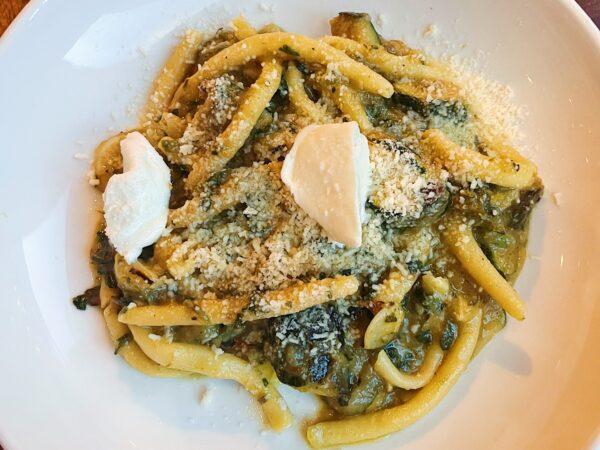
There’s something special about a thick, hand-rolled noodle. As part of its summer menu, Le Virtù’s ceppe — a chewy Abruzzese pasta shape that resembles a short and stout bucatini noodle — are made by hand and tossed in a bright squash blossom pesto. I later learned that ceppe gets its name from the wooden sticks or rods they mimic, a nice bit of pasta trivia I will stow away for quizzo. The hearty plate is topped with zucchini ragu, with a generous amount of the plant mixed throughout the dish, and mozzarella di bufala. It’s best enjoyed with a glass of wine on the restaurant’s beloved patio. Le Virtú, 1927 Passyunk Ave., 215-271-5626, levirtu.com
— Emily Bloch
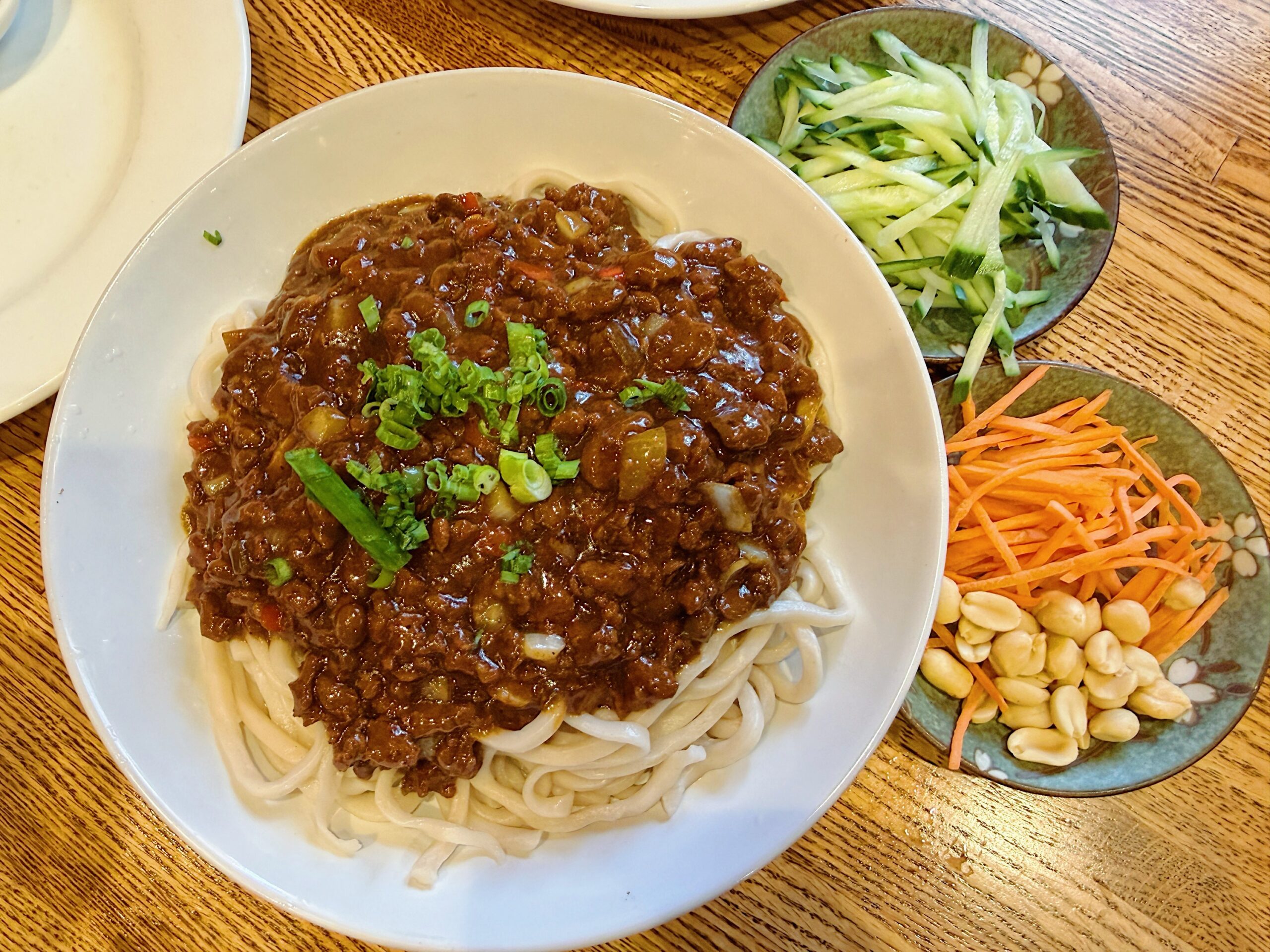
Zhajiang Mian at Opera House, 112 N. Ninth St.
Zhajiang Mian at Opera House
It has taken me far too long to get to Opera House, which opened about a year ago in the former Rangoon space. Rangoon had been my favorite restaurant in Philly for years, and I was admittedly bitter about them no longer occupying that storefront on Ninth Street. Now, I’m very pleased to report that my bitterness has now been assuaged.
Opera House is bright, beautiful, sparkling clean, a visual ode to Chinese opera that specializes in Northern Chinese food. They do have some Cantonese items on the menu (that are just fine), but the real star of the show is their $14.95 zhajiang mian. Saucy, with lean ground pork and lots of slow-cooked onions, these noodles are a true celebration of handmade textures. They’re intentionally a little wonky from being hand-stretched — some parts are thinner than others — so they sop up the super umami-rich fermented soy sauce in interesting ways. Served with sides of cucumber and carrot matchsticks and roasted peanuts, it’s likely the best version of the dish I’ve had in Chinatown, and such a beautiful play on varying textures and temperatures. Opera House, 112 N. Ninth St., 267-639-2376, operahousephilly.com
— Kiki Aranita
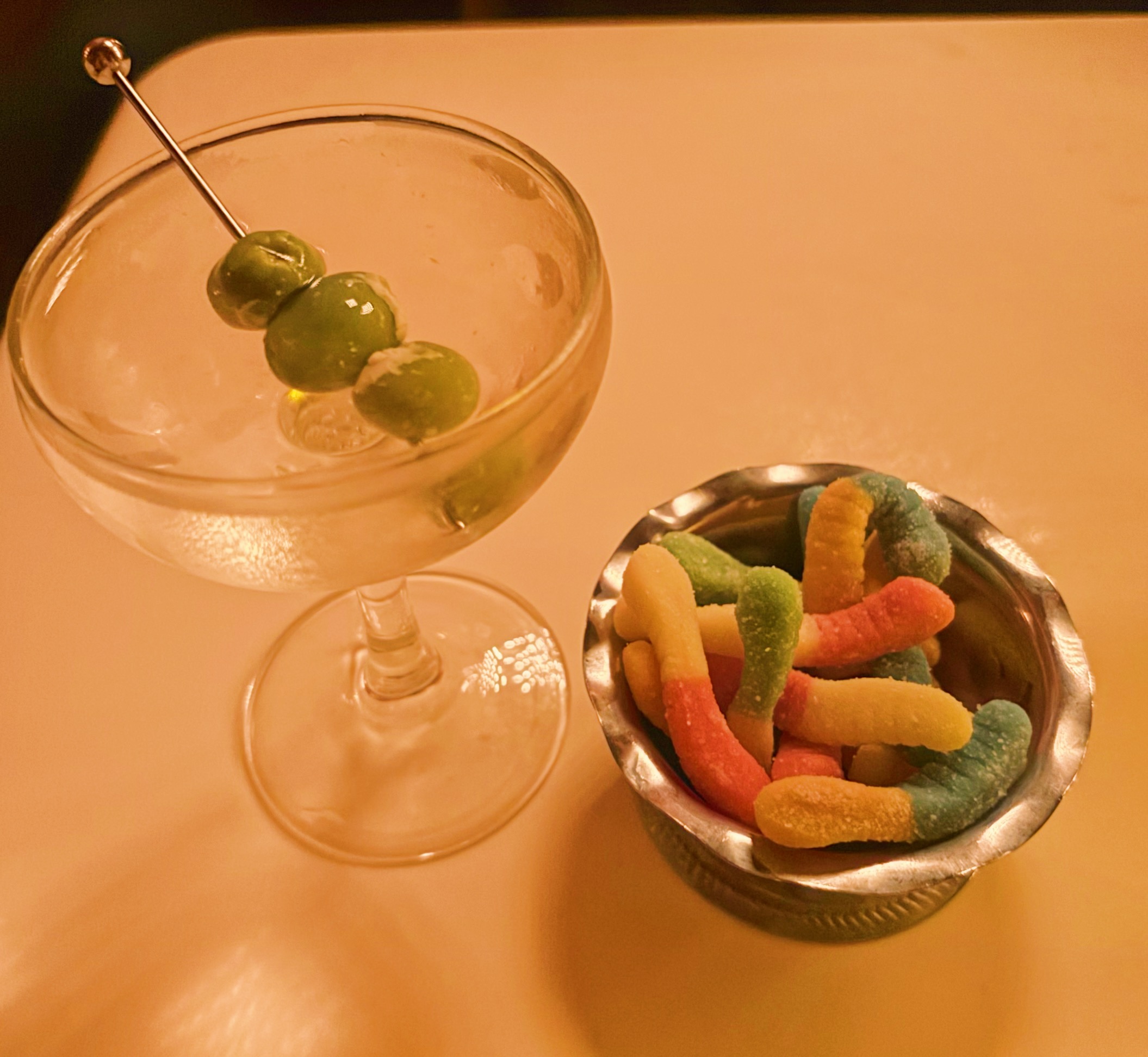
The Girl Dinner cocktail, a clarified gin martini with a sidecar of gummy worms, at Angeloni’s Club Madrid in Atlantic City, N.J.
Girl Dinner at Angeloni’s Club Madrid
Atlantic City is a weird and magical place, particularly for those of us who tend to visit in 24-hour increments. I made such a journey last weekend, and the highlight was finally getting to try Angeloni’s Club Madrid, the retro-styled Italian spot that opened in 2024 from the owner’s of the beloved Tony’s Baltimore Grill. Angeloni’s was everything I hoped it would be — part cozy dining experience, part lounge party. Case in point: a DJ somehow seamlessly incorporated Norah Jones into a dance-y set.
The menu included one of the best versions of cacio e pepe I’ve had in a long time. But the star of the show is the cocktail menu, which has interesting interpretations of classic cocktails, executed with both fidelity to the drink and total whimsy. My favorite was the Girl Dinner, a perfect dirty gin martini served with a blue-cheese stuffed olive and a sidecar of gummy worms. It shouldn’t work — blue cheese and gummy worms? — but it does. It has that kind of slightly off-kilter energy that a really fun party does, where things are always threatening to fly off the hinges but somehow stay just contained enough for a memorably good time. Angeloni’s Club Madrid, 2400 Arctic Ave., Atlantic City, N.J., clubmadridac.com
— Margaret Eby
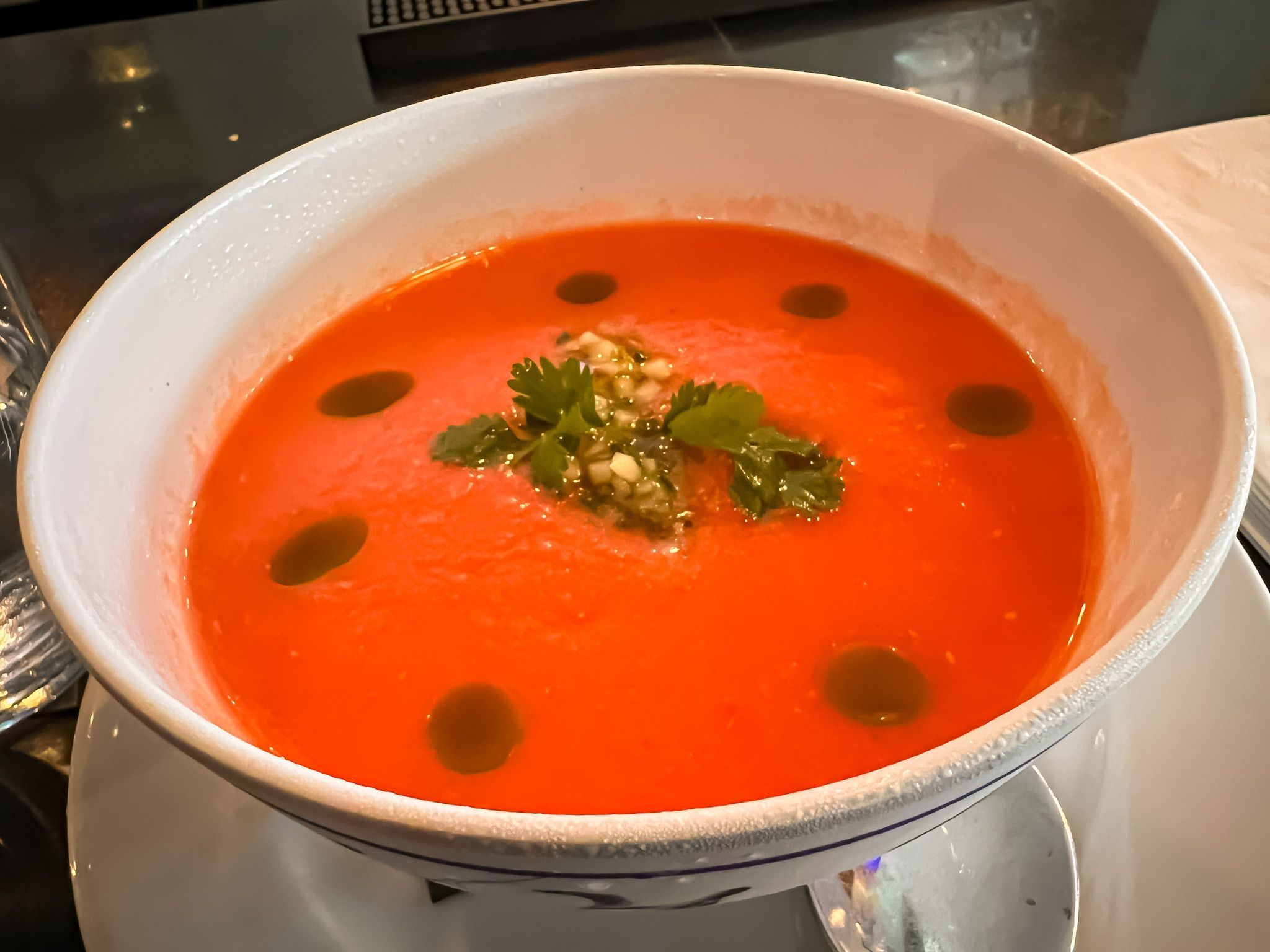
Watermelon gazpacho at Cantina Feliz, Ambler.
Watermelon gazpacho at Cantina Feliz
I always look to July 4 as the unofficial start of watermelon season. This year, that feels especially fitting: Forecasters are calling for one of the hottest Independence Days Philadelphia has seen in nearly a quarter-century, making cold watermelon all the more appealing. That spirit comes through in this watermelon gazpacho from Cantina Feliz in Ambler, which leans savory rather than sweet. Cucumber amplifies the freshness, while finely diced red onion and chives add bite without overwhelming the fruit. A drizzle of verdant herb oil lends richness, and the accompanying shot of sherry gives it a nutty, tangy depth. It’s a refreshing summer starter that becomes more layered with every spoonful. Cantina Feliz, 111 E. Butler Ave., Ambler, 215-646-1320, cantinafeliz.com
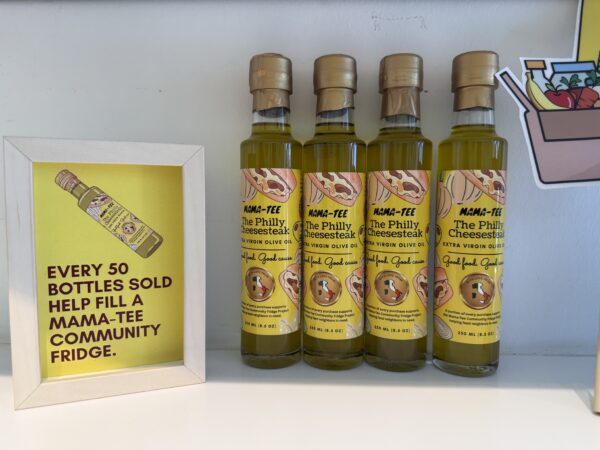
“It tastes like oil from a real cheesesteak wrapper,” proclaims the slogan of Mama-Tee’s Philly cheesesteak-flavored extra virgin olive oil.
Mama-Tees are community fridges, notable for their bright yellow paint jobs, that are scattered around Philadelphia. The cheesesteak oil ($19) is part of a fundraiser to combat food insecurity locally, along with three other flavored oils: Basil Bliss, Truffle Love, and Pepper Pleaser. Proceeds go to helping fill the fridges with food. So if the oil prompts cheesesteak-flavored burps, it would do so in the name of a noble cause.
We at The Inquirer had to do a taste test.
Is this merely a novelty or could it have legitimate culinary applications?
The ingredients of the Philly cheesesteak-flavored oil intriguingly are only “extra virgin olive oil” and “onion flavor.” How could these two ingredients, neither of which involves cheese nor steak, encompass the nuanced experience of consuming an actual cheesesteak? The Inquirer sought to get to the bottom of these questions.
“It smells like a deli case,” said food editor Margaret Eby. “There is a cheesiness to it. It’s like that cheese oil that gets trapped in a charred, upturned pepperoni cup on your pizza.”
“I think it should be called ‘hoagie oil,’” said food reporter Beatrice Forman.
“It is like unwrapping a hoagie,” agreed critic Craig LaBan. “When you get the vinaigrette soaking through the wrapper. And it tastes like French’s fried onions, but burnt.”
“I don’t know what it could be used for,” said food reporter Michael Klein.
“It tastes like old fryer oil,” grimaced reporter Ryan Briggs. “It’s gravitating toward capturing that cheesesteak shop smell when they’re frying all the onions.”
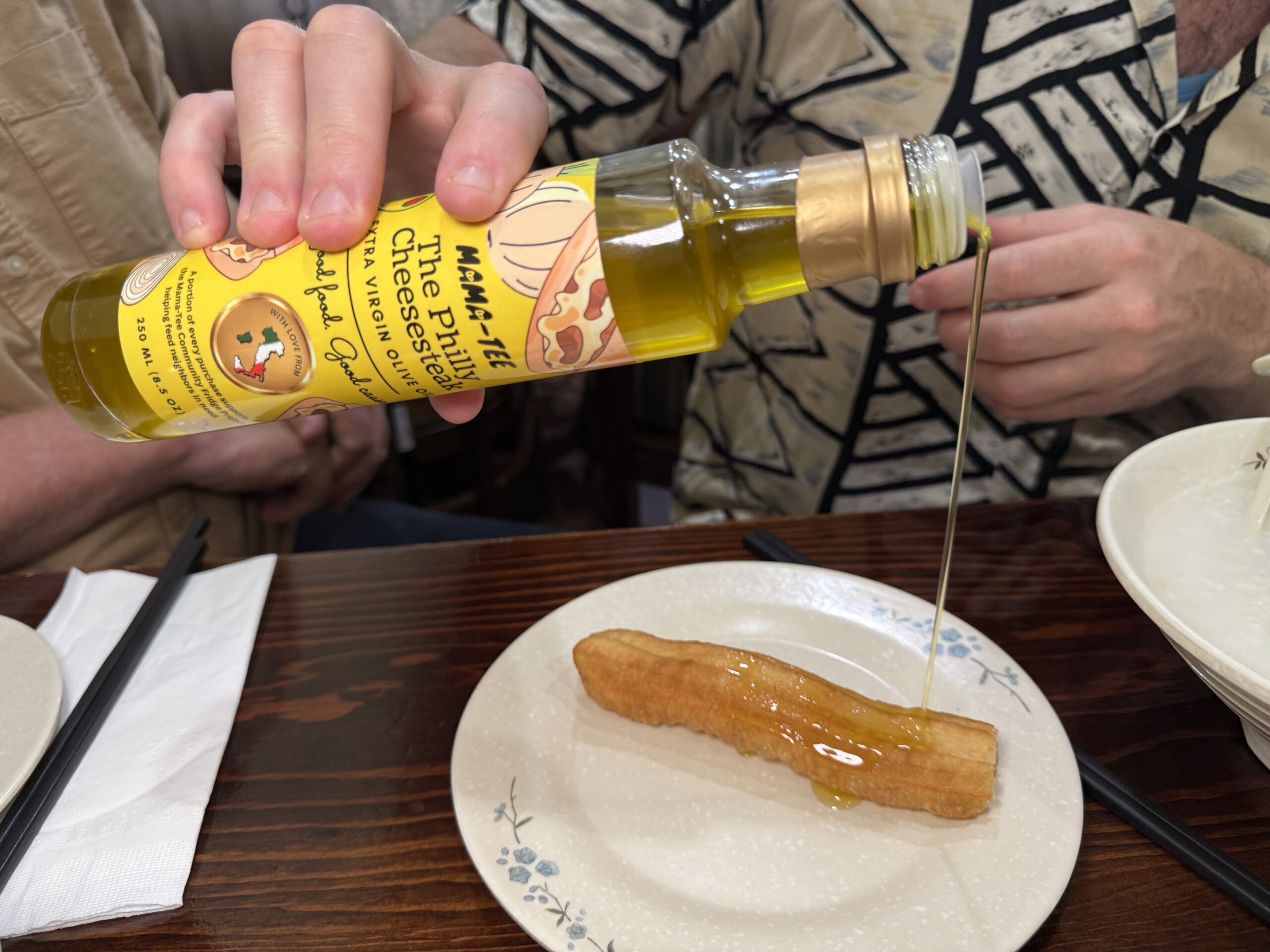
Reporter Max Marin poured the oil over his youtiao, a savory Chinese cruller, while at lunch at Lau Kee in Chinatown. “It’s got a chemical taste that makes me think there’s a number in one of its ingredients.” But does it make the youtiao taste like a cheesesteak? “It does not.”
Inquirer reporter Max Marin pours Mama-Tee’s Philly cheesesteak-flavored oil on his youtiao at Lau Kee.
Various Philly chefs were more open-minded in the cheesesteak oil’s applications.
“I think the flavor is great,” said Juan De Ocampo, sous chef at Fairmount’s Manong, as he poured the oil onto a pile of fried shrimp chips.
“I kind of like the cheesesteak oil,” said dancerobot’s Justin Bacharach. “It’s pungent and although I don’t cook with olive oil, I would use it to add a little funk and fat to a dish, like to dress an antipasto with South Philly vibes like sharp provolone and soppressata, and in the Japanese canon, I think it would be fun drizzled on top of a gyudon (beef and onions over rice) where you’d normally use mayu (a Japanese scorched black garlic oil).”
“It feels really heavy,” said Melissa Fernando, the chef behind long-running pop-up Sri’s Company. “In Sri Lankan food, we mostly use coconut oil to cook, but I suppose I’d use this to sauté onions and garlic.”
That perceived “heaviness” is easily addressed, according to 637 Sushi Club’s Kevin Yanaga, no stranger to unusual pairings. “I just need a lemon or something acidic with it. I could then use it on a fluke crudo. It’s rough and funky on its own, but salt and acid would help.”
After careful consideration of these diverse opinions, the Mama-Tee cheesesteak oil had only one test remaining to undergo: a side-by-side comparison between it and the oil from an actual cheesesteak wrapper.
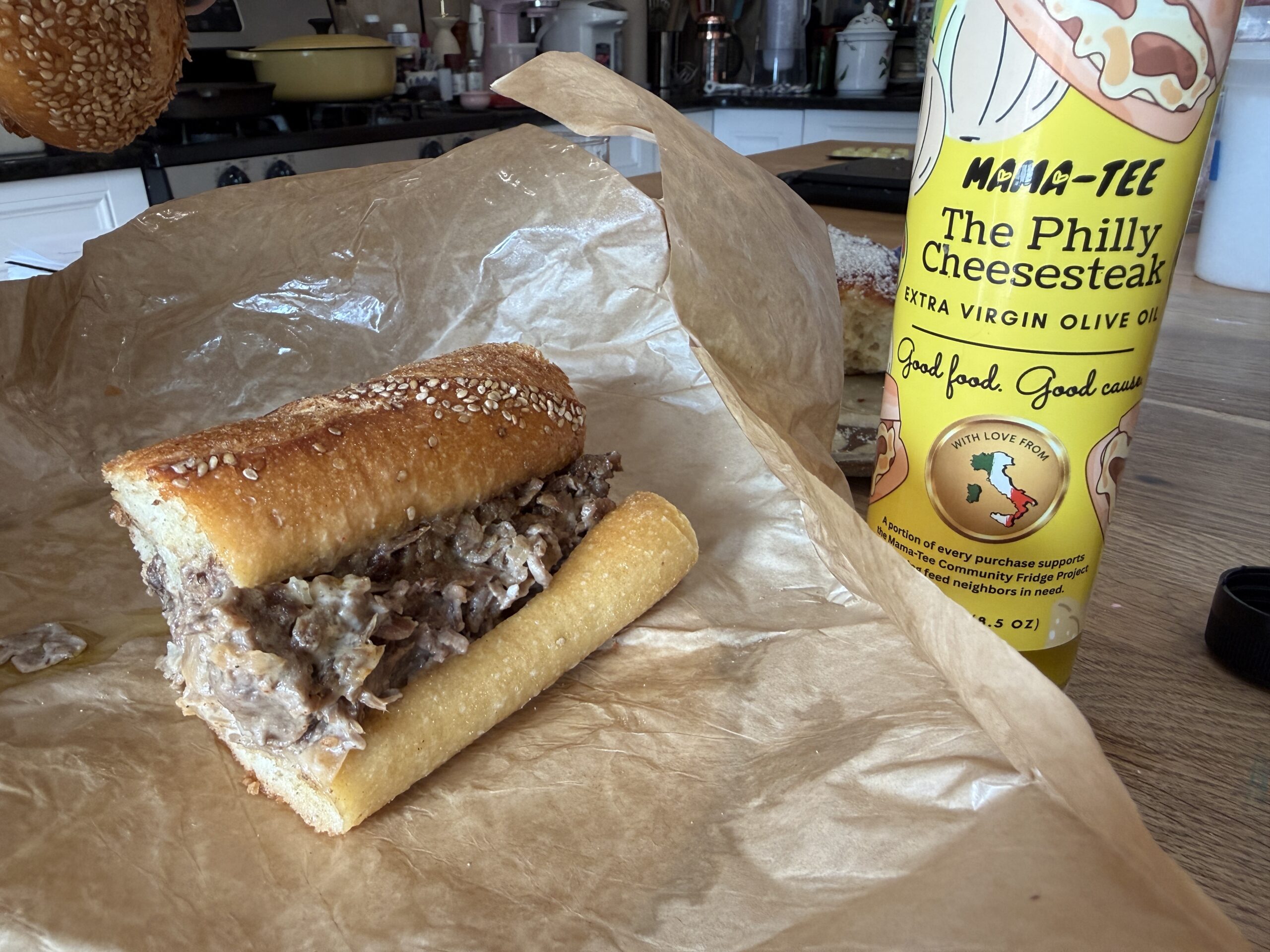
A Del Rossi’s cheesesteak (wit onions, of course) was summoned. A wrapper was licked. A shot of cheesesteak oil was taken. The wrapper had the distinct advantage of beefiness. When applied directly to the cheesesteak, the oil oddly enhanced the cheesesteak’s flavor. And another thing the oil had in common with a real cheesesteak? Real cheesy, oniony burps after consumption.
A Del Rossi’s cheesesteak and Mama-Tee’s cheesesteak oil, consumed in unison.
Mama-Tee’s Philly cheesesteak oil ($19) can be purchased at Wegmans in King of Prussia, though more locations may be added soon.
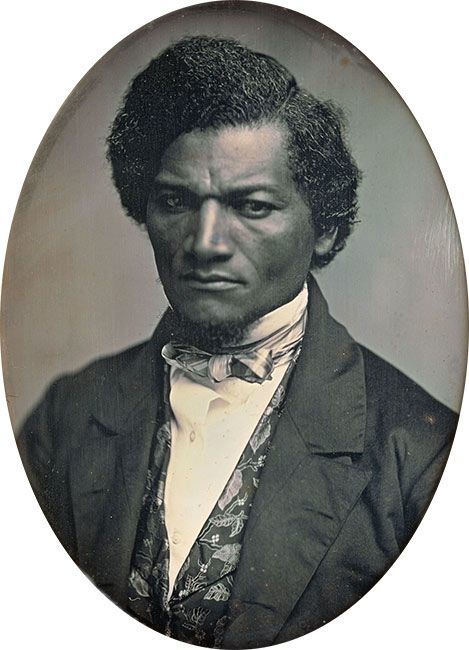
I’ve been thinking a lot about the speech Frederick Douglass gave on the 76th anniversary of the signing of the Declaration of Independence. Posed as a question, “What to the Slave is the Fourth of July?” the answer written in commentary form hasn’t lost its power or relevance in Philadelphia in 2026: “What, to the American slave, is your Fourth of July? I answer: a day that reveals to him, more than all other days in the year, the gross injustice and cruelty to which he is the constant victim.”
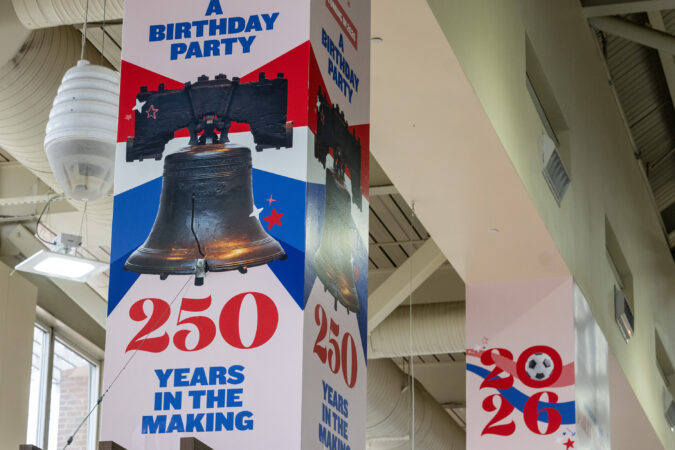
This summer will place Philadelphia in the spotlight not only with the celebration of America’s Semiquincentennial, but also as a host city for the FIFA World Cup, the PGA Championship, and the MLB All-Star Game.
Frederick Douglass, ca. 1847-1852.
Just as Douglass decried our delusions of progress and challenged why victims of a broken system would celebrate their own oppression, we see that patterns repeat.
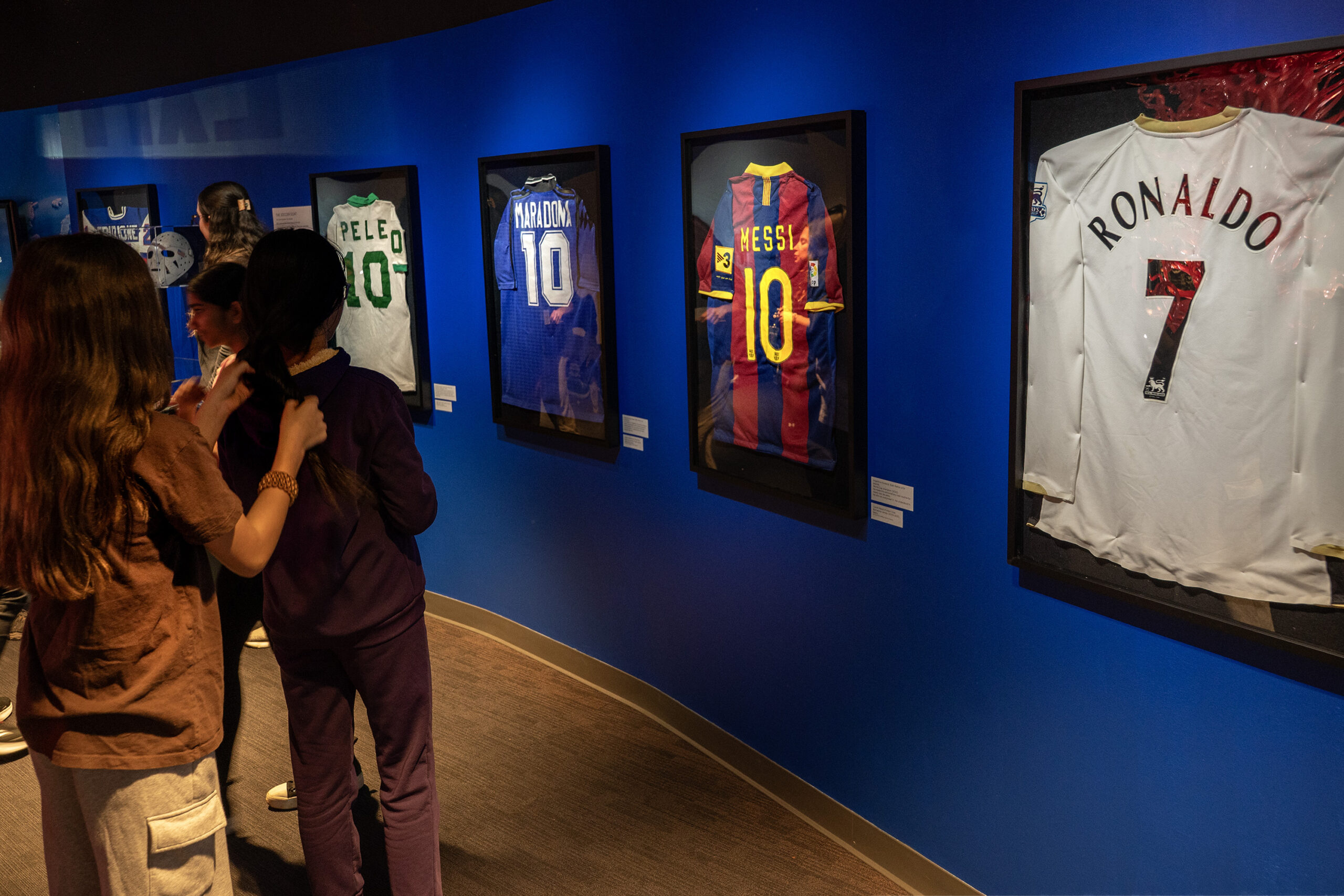
Soccer jerseys on exhibit at at the National Liberty Museum.
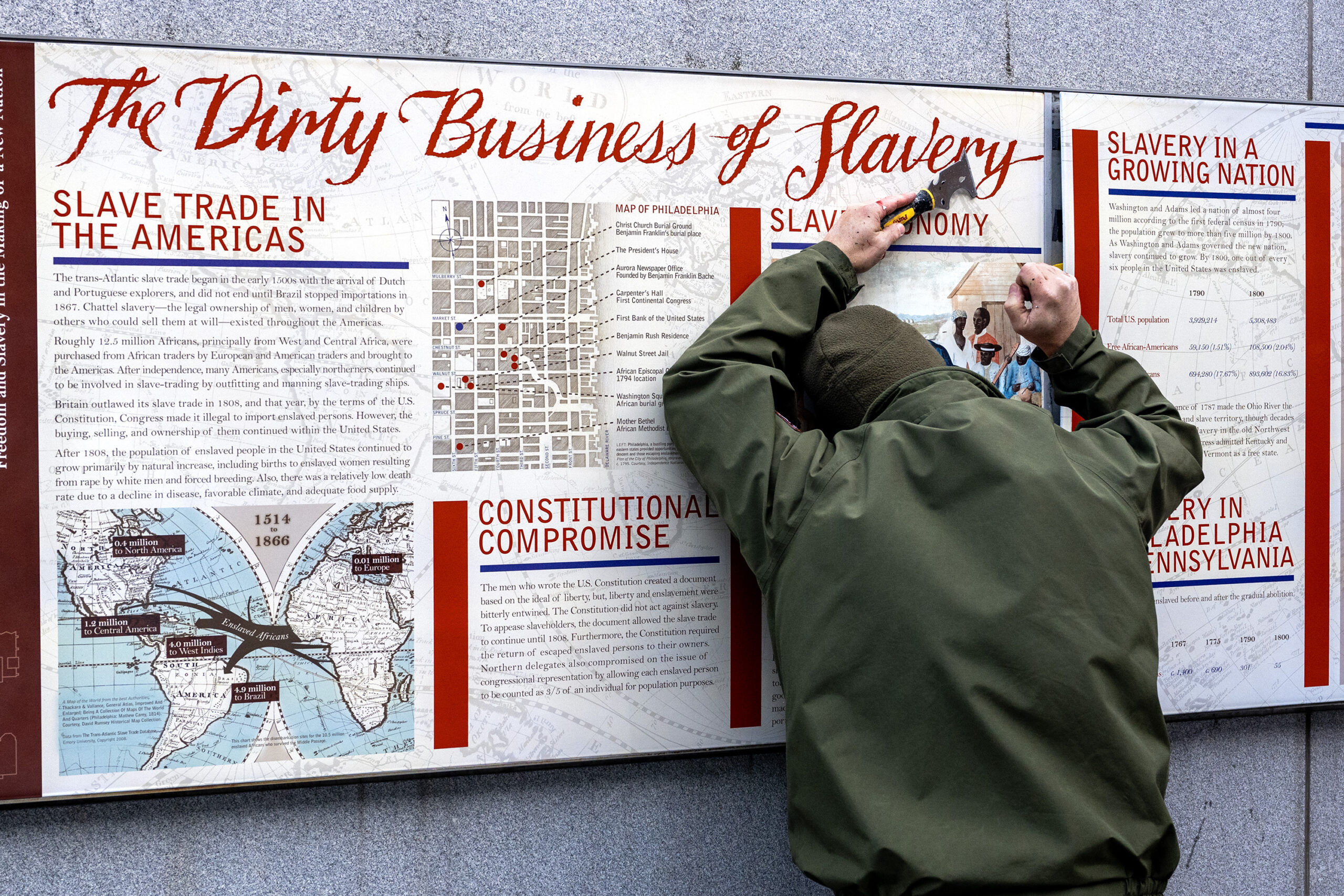
The events themselves will serve as an excuse for an influx of federal security agents — and there is nothing that makes me feel safe about them coming to Philadelphia this summer to keep us “safe.”
And we continue to ignore our broken carceral system, which hungrily awaits the failures of everything listed above.
As Douglass wrote in his famous speech: “I say it with a sad sense of the disparity between us. I am not included within the pale of this glorious anniversary! Your high independence only reveals the immeasurable distance between us. The blessings in which you, this day, rejoice, are not enjoyed in common.”
We hold these truths …
This summer is not just about the nation, but about Philadelphia trying to put its best foot forward to show the few gleaming spots in our house, while keeping visitors from seeing the dirt inside the closet or under the couch.
As Douglass likely experienced in 1852, I can already see the faces of some reading this and thinking, This is not the time for all your talk. We cannot allow Philadelphia to be disparaged.
I am not disparaging Philadelphia — I am holding onto the city’s multiple truths.
This is a great city and is the birthplace of independence for some — but instead of serving as the cheerleaders for despots and a city that submits to our nation’s current “king,” we should be the city that serves as the vanguard of resistance. Our city cannot stand on both sides of history and hold hands with our oppressors simply because we are desperate to be noticed.
As it was with Douglass 175 years ago, where we stand today will be remembered tomorrow.
The need for plain speaking
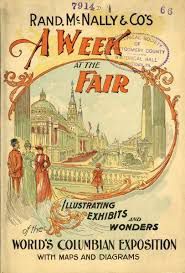
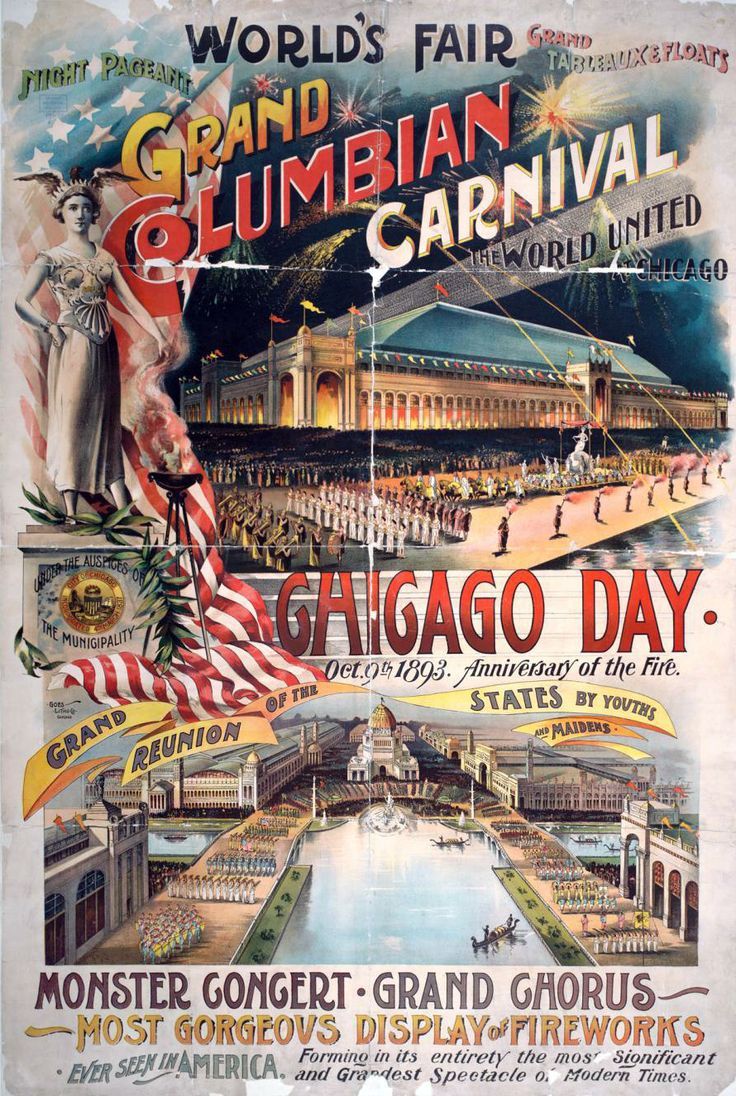
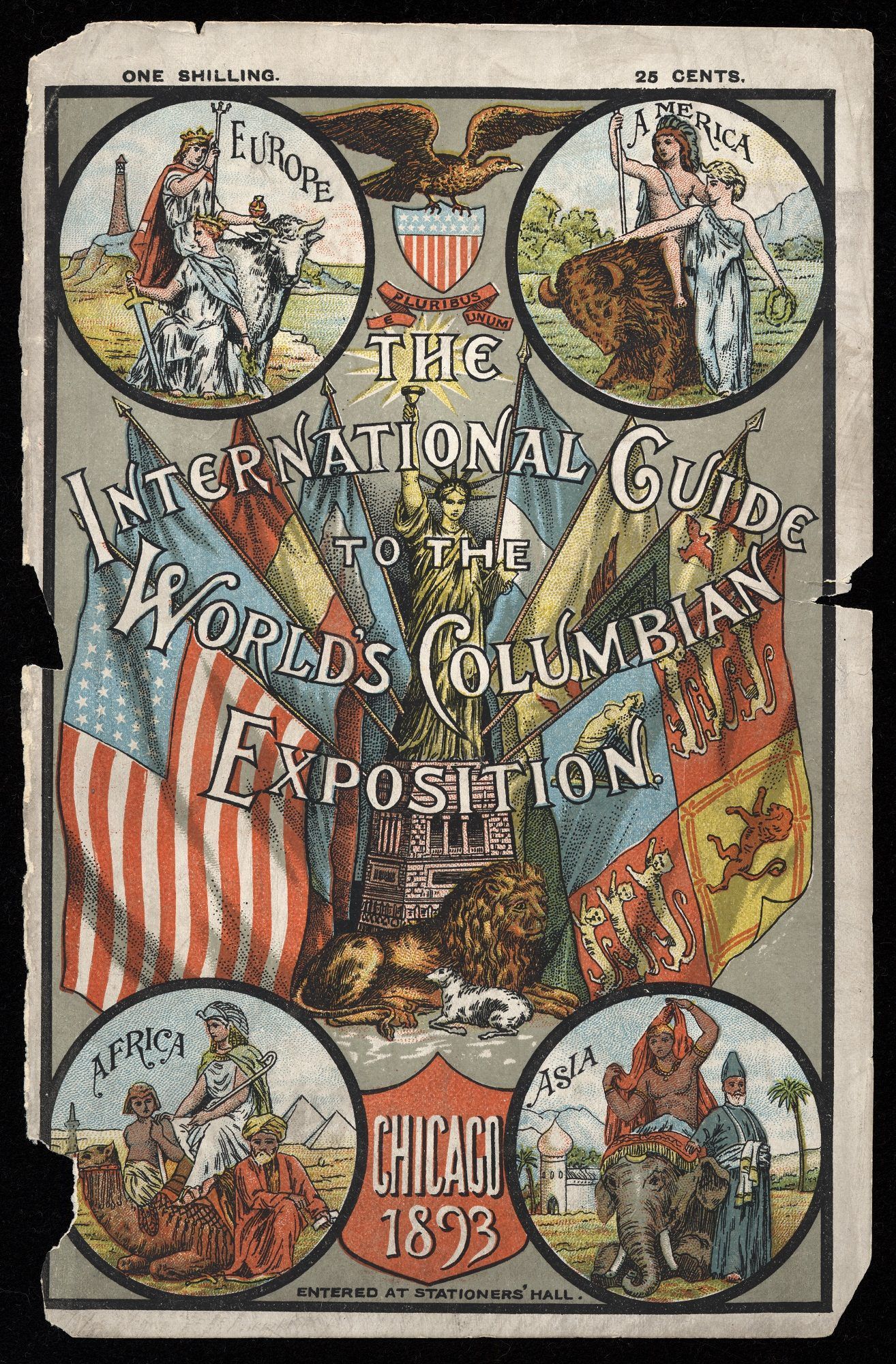
Forty years after Douglass shared his words about the Fourth of July, America had once again chosen to celebrate its history and place in the world — this time through the 1893 World’s Fair in Chicago, which marked the 400th anniversary of Christopher Columbus’ landing in the Americas.
Program from the 1893 World’s Fair in Chicago.Program from the 1893 World’s Fair in Chicago.
Just four years earlier, the event had been held in Paris, and marvels such as the Eiffel Tower were shared with the world, showing the importance and ingenuity of the host nation.
This era is often referred to as the “Gilded Age,” a time our current president fondly looks back on and wishes we would return to. “We were at our richest from 1870 to 1913. That’s when we were a tariff country,” President Donald Trump said in March. But it was also a time defined by government corruption, inequality, and exploitation, and it took place only 28 years after the end of slavery in America.
While Paris gave the world the Eiffel Tower, the 1893 World’s Fair in Chicago introduced the world to Cracker Jack, the first dishwasher, and the first Ferris wheel — which stood 264 feet tall and carried 2,000 passengers — a monument to America’s greatness!
While the fair was about all of America, the only space for Indigenous peoples was in the exotic exhibits of peoples from around the world. While the fair was about all of America, white women asked for their place within the fair and, after initially being denied a role, were eventually granted one through the creation of the World’s Congress of Representative Women.
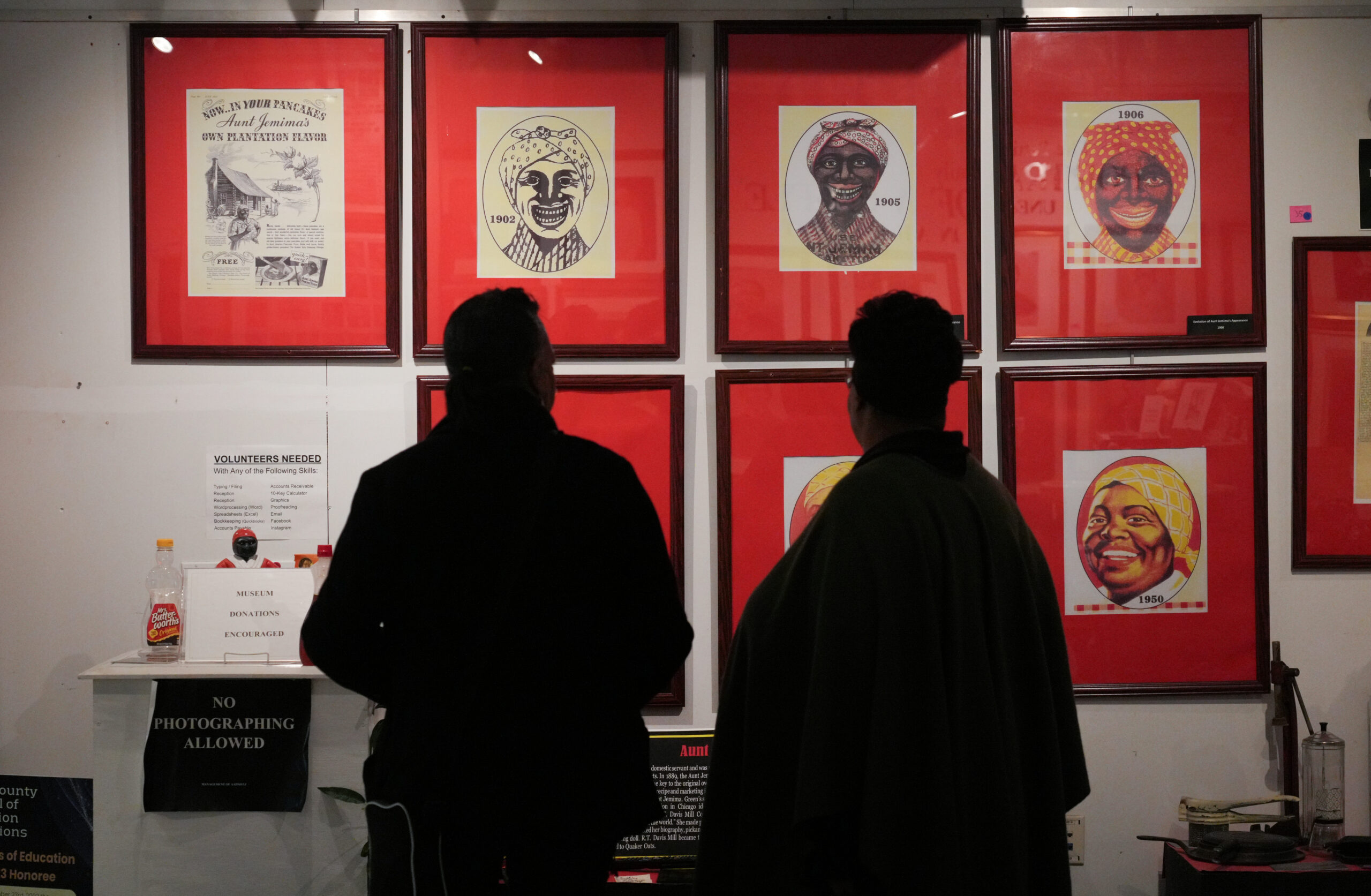
Aunt Jemima in ads at the African American Heritage Museum of Southern New Jersey.
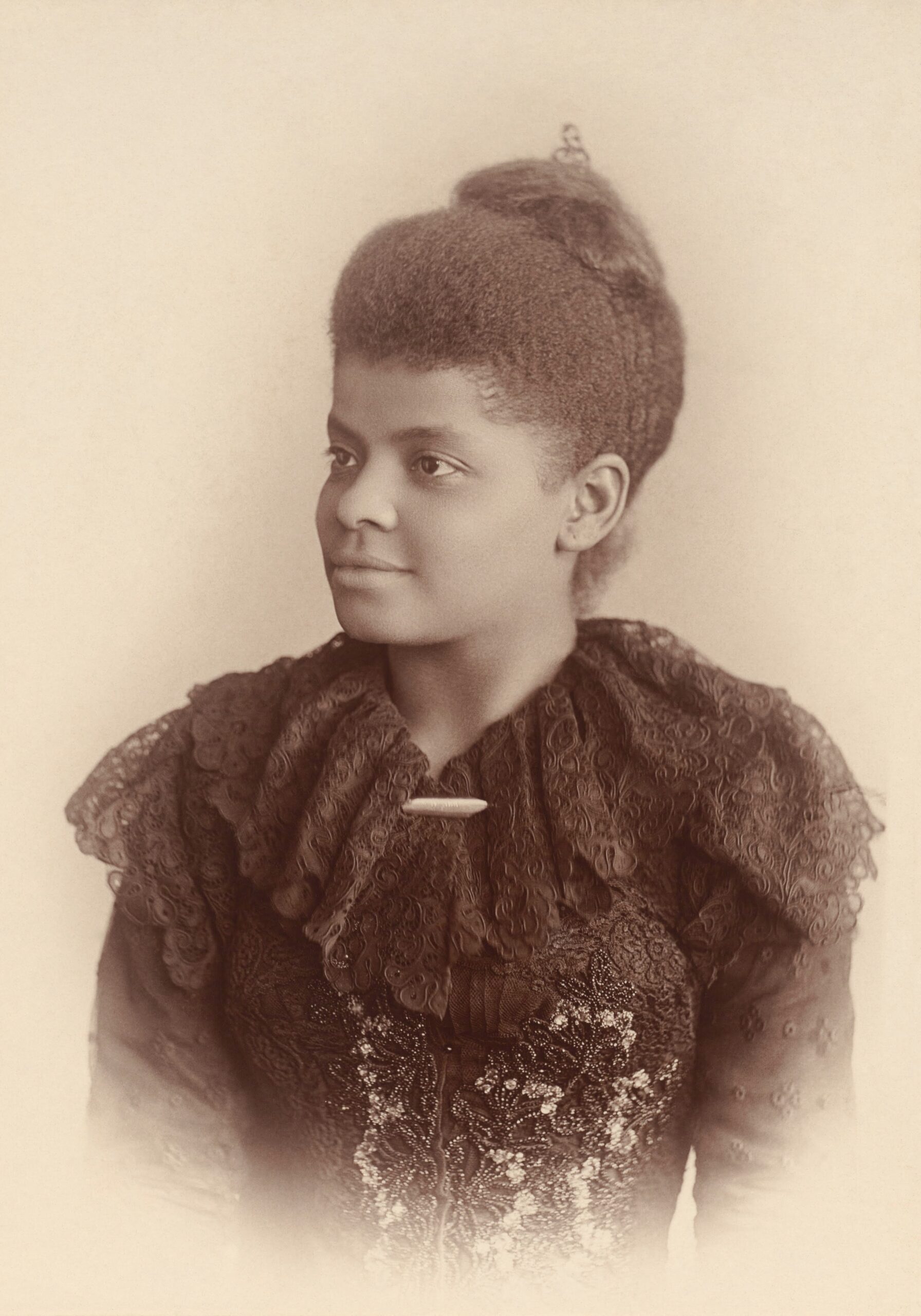
While the fair was about all of America, African American luminaries such as Douglass and Ida B. Wells were denied any formal space or role. Instead, it was determined by organizers that participation of African Americans would be marked by introduction to the character Aunt Jemima — a fictional depiction playing to all fantasies of the happy slave and the way of life lost after emancipation — and through Negro Day, during which the organizers of the fair gave away 2,000 free watermelons to visitors.
After being denied any real role within the fair, African American leaders appealed for sponsorship to the newly recognized World’s Congress of Representative Women, and that group said no — foreshadowing the next 150 years of American politics. With that denial, African American leadership turned to the Haitian delegation and received support from the only country that successfully established a new government from a slave revolt.
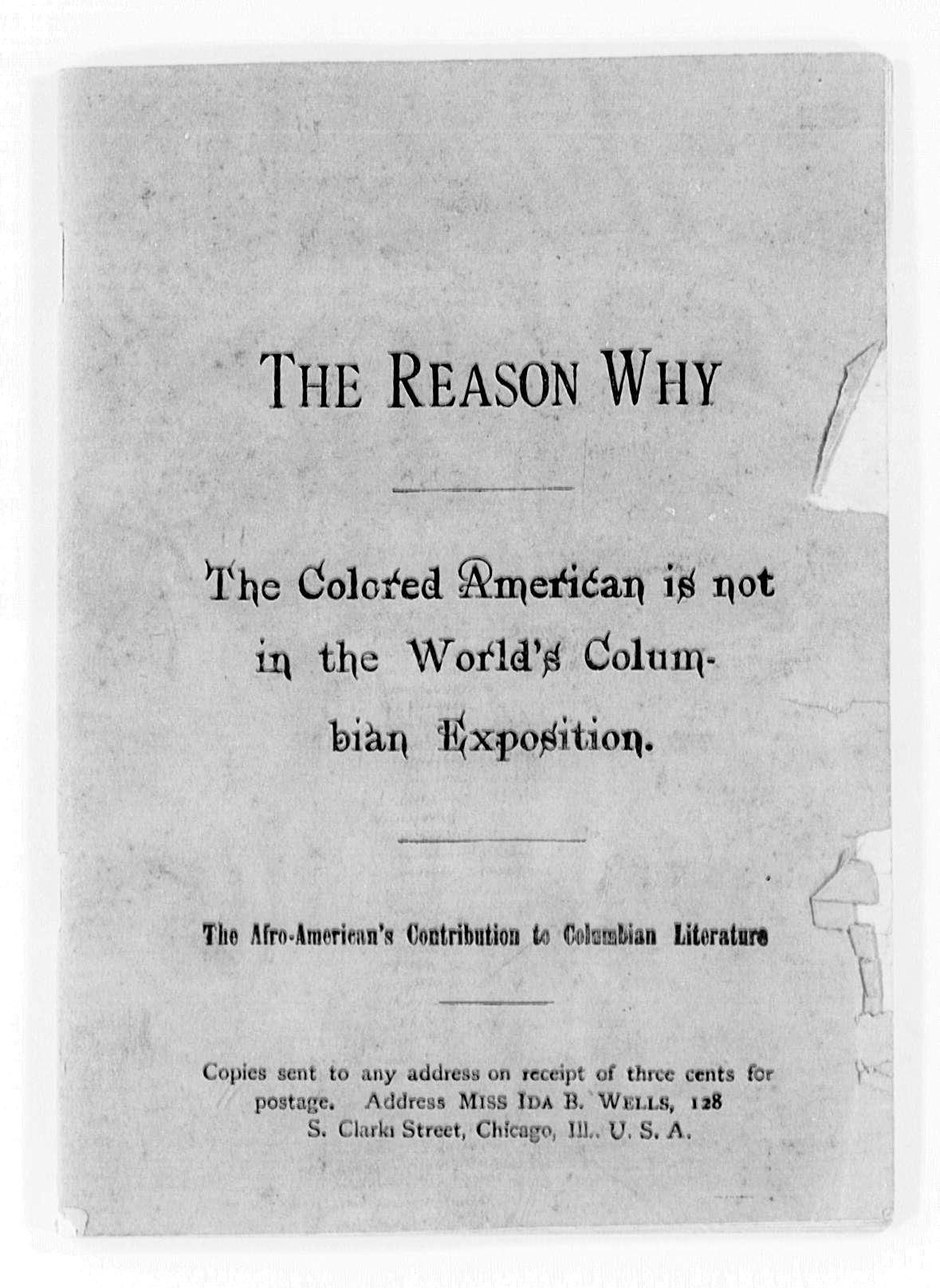
The pamphlet distributed from the Haitian exhibition space at the 1893 World’s Fair in Chicago.Ida B. Wells Barnett, c. 1893.
It was from the Haitian exhibition space that an alternative conversation took place, one that started with “The Reason Why: The Colored American is not in the World’s Columbia Exhibition,” a pamphlet which explained the current condition of the American Negro, but also spoke to the history, the successes, and a vision for the future.
In it, Douglass wrote that “it involves the necessity of plain speaking of wrongs and outrages endured, and of rights withheld, and withheld in flagrant contradiction to boasted American Republican liberty and civilization. It is always more agreeable to speak well of one’s country and its institutions than to speak otherwise; to tell of their good qualities rather than of their evil ones.”
I live and work in Kensington, an area of Philadelphia built during the Gilded Age to create wealth for a few. Our community is literally still trying to recover from that era; we have no interest in bringing it back or celebrating the destruction it caused.
Just as during the Gilded Age — when a false history was celebrated in order to justify and whitewash the failures of America — we are walking into the trap of reproducing our mistakes without recognizing the current conditions, or centering the voices of those most affected by them.
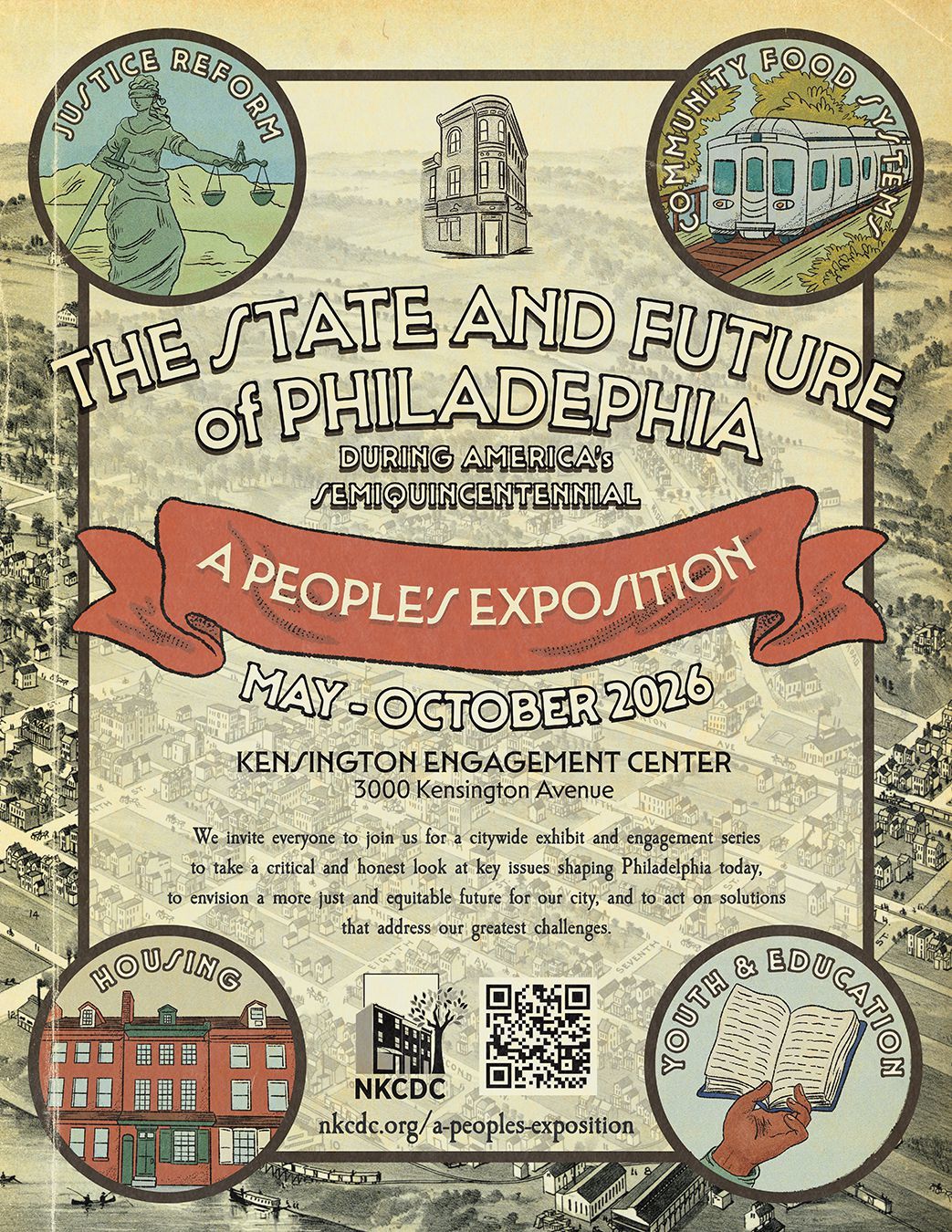
The 1893 World’s Fair in Chicago promotional flier.“A People’s Exposition” 2026 promotional flier.
Welcome to ‘A People’s Exposition’
In the spirit of Douglass and Wells, and the ways they challenged “the celebration of oppression,” New Kensington Community Development Corp., along with partners throughout the city, invite you to participate in “A People’s Exposition” at the Kensington Engagement Center — to take a critical and honest look at our city’s challenges, to envision a just and equitable future, and to act on cocreated solutions.
Opening on May 20 and running through October, partners from across the city will collectively create a welcoming space where we can learn about the status of Philadelphia’s most pressing issues, including the housing crisis, poverty and workforce development, the criminal justice system, youth and education, and community food systems and transportation.
We invite you into a space of the curious and the committed, to learn and connect to current efforts and campaigns that are working toward addressing our city’s greatest needs.
Leaving off with hope
We all need and deserve celebration and joy. Philly has many things to be proud of — be it housing wins, Chinatown wins, or the daily wins of just making it another day on the right side of the grass — but we can and should hold two truths at once.
While many in our city will only want to take part in performative displays of national and civic pride without facing the true underbelly of our nation and city, I encourage us all to resist whitewashing and to support participatory processes to fight the oppressive and exploitative machine that continues to be built and executed 250 years after independence. As a true patriot would.
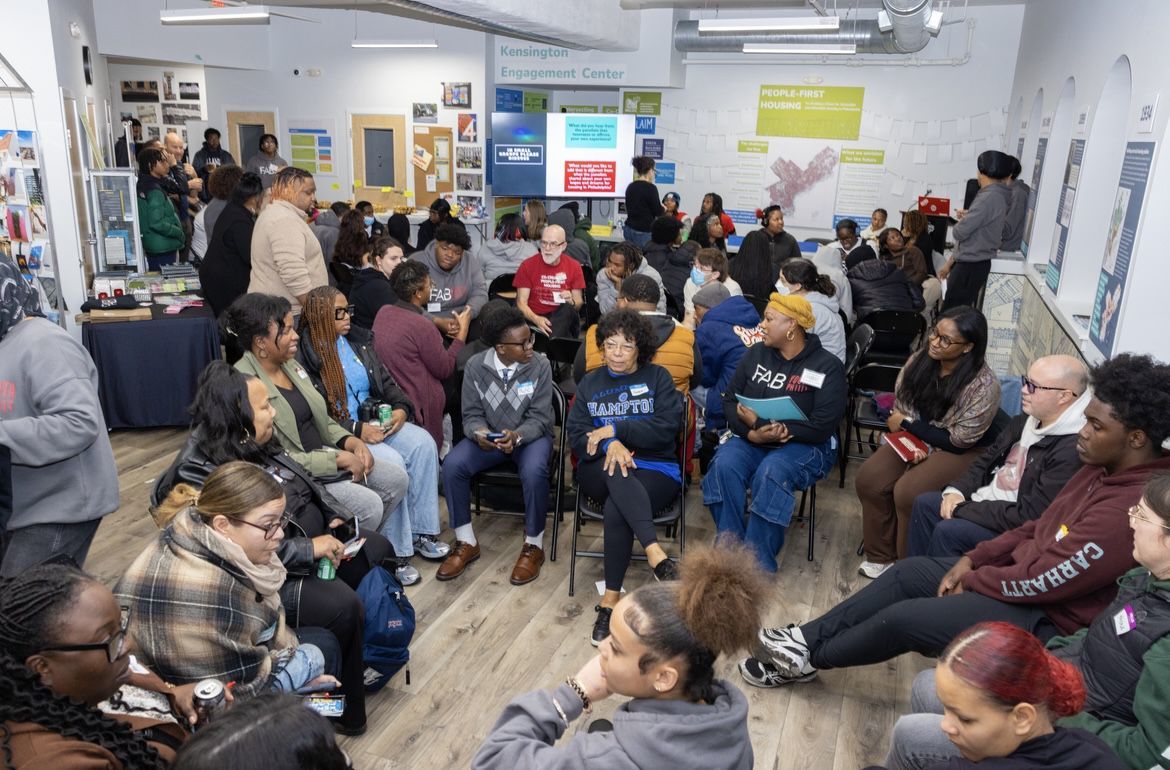
Participants in a teen town hall at the Kensington Engagement Center.
And as Frederick Douglass did on the Fourth of July.
He challenged us to remember that for many, there is very little, if anything, to celebrate, and we should instead be engaged in reflection and organizing to put into action what is necessary to create a just society for all.
“I do not despair of this country,” he wrote. “There are forces in operation, which must inevitably, work the downfall of slavery … I, therefore, leave off where I began, with hope.”
Bill McKinney is a Kensington resident and the executive director of the New Kensington Community Development Corp.
All images courtesy of the New Kensington Community Development Corp., except where noted.
Wrangling a big transportation project takes deft timing: scheduling the planning and construction stages in proper order, obtaining environmental approvals, and lining up financing from local, state, and federal sources.
Now officials are trying to figure out how best to keep the project moving while replacing the lost $159 million federal grant.
“This is a pretty unprecedented situation,” said Jesse Buerk, associate director of capital programs and project development for the Delaware ValleyRegional Planning Commission (DVRPC).
“I’ve never seen it before, where a project is funded and it’s moving along through the process, and then the funds are completely rescinded,” he said, speaking at the recent committee meeting.
It wasn’t just Philadelphiaor the Chinatown Stitch project that got nixed. That legislation rescinded $3.2 billion that had been awarded but not yet spent through the Biden-era program, 55 projects across the nation aimed at mitigating the impact of highway projects on marginalized communities.
President Donald Trump’s administration targeted equity and access transportation projects as wasteful “DEI”-style spending.
But at a meeting earlier this month, the DVRPC’s Regional Technical Committee voted to table the city’s request to study it further.
Several suburban residents on the technical committee, composed of experts from the eight counties in the region and the state governments of Pennsylvania and New Jersey, had raised concerns about spending up to $12.5 million on the design work without having construction money locked up.
“This request is a significant gamble if you’re not able to recoup those reconnecting communities [funds],” said Brian E. Styche, a transportation planner for Chester County. “We would just like more time to discuss what the plan B is.”
DVRPC’s board of directors is scheduled to discuss the city proposal on Thursday.
Christopher Puchalsky, policy director for the city’s Office of Transportation and Infrastructure Systems, said he understood the concerns: “I don’t think there’s any arguing with the fact there’s some amount of risk.”
Alternative construction funding
The city was able to complete planning and engineering work with $8.4 million of the grant. It needs to secure final design funding before federal environmental review and approval, Puchalsky said.
Not being able to move forward would add additional delay to the project, he said.
The city is exploring alternatives for construction money, including the possibility of tax-increment financing for at least some of the funds, Puchalsky said.
That form of financing uses property tax revenue for development in a specific local district.
“There’s just enormous community support and political support for this project that a lot of the folks have been waiting 40 years for,” he said.
What is the Stitch?
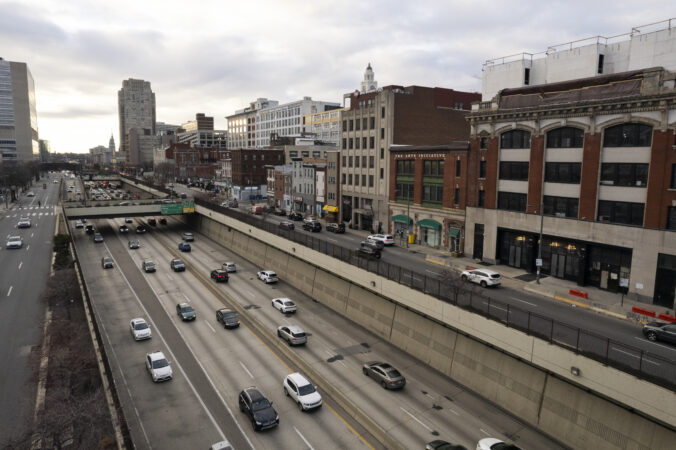
The Chinatown Stitch project involves building a cap over I-676 from just east of 10th Street to 13th Street, allowing for a park as well as more developable land. It would reconnect the north and south sides of the neighborhood, which are split by the interstate.
In many cultures, Chinese New Year, which falls on Feb. 17 this year, is a holiday spent at home. It’s a time to get together with one’s family, preparing auspicious dishes that represent wealth, like spring rolls that mimic the appearance of gold bars and dumplings that are shaped like ancient gold ingots.
Here in Philadelphia, it is the perfect opportunity to get out and about within the wider Pan-Asian community. Several restaurants are joining forces to celebrate the Year of the Horse, collaborating on menus that combine different New Year’s traditions, while others have special one-offs and time-limited offerings to mark the event.
Philly observes a truly global version of Chinese New Year, whichissometimes called the Spring Festival, celebrating the end of winter and onset of spring. Chinese New Year is also known more inclusively in the U.S. as Lunar New Year, though not every East Asian or Southeast Asian community celebrates the New Year at the same time (or for the same length of time). For instance, Khmer New Year occurs between April 14 and 16 this year, and Tibetan New Year, or Losar, is Feb. 18. In Vietnam, Tết is celebrated for several weeks (longer than in most Chinese cultures).
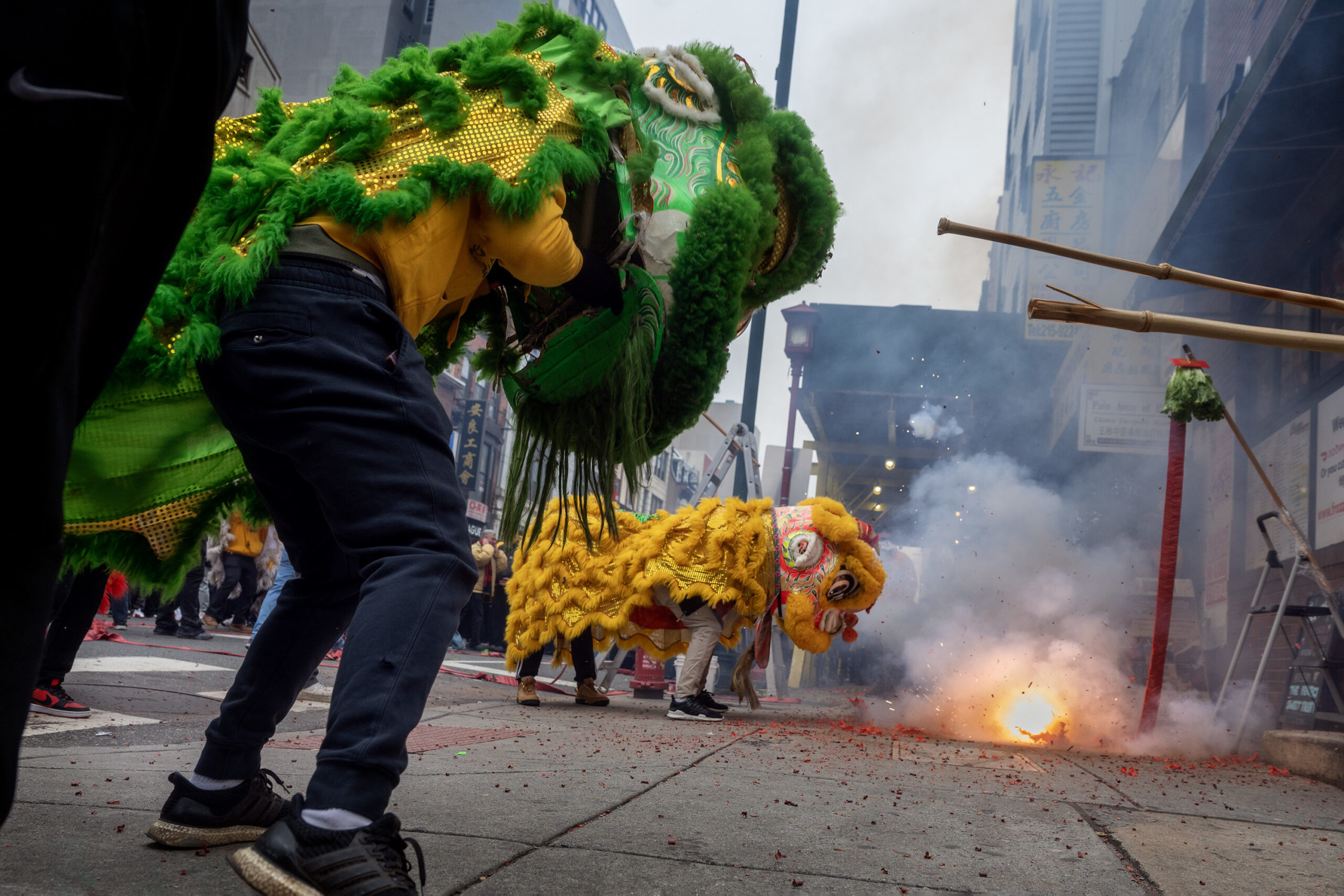
The Year of the Snake is celebrated in Chinatown Sunday, Feb. 2, 2025, bringing in the Lunar New Year with a parade, lion dancers and fireworks.
If you’re celebrating at home, Chinatown’s grocery store shelves are well-stocked with essential New Year foods like seeds and nuts for good beginnings and plants that are considered lucky, like mandarin trees and bundles of willow branches. Vendors are now selling red envelopes for lai see, or lucky money, and red scrolls denoting traditional well wishes on most Chinatown street corners. Expect some restaurants to be closed for the holiday.
Here are some noteworthy opportunities to celebrate.
This list may be updated as new information becomes available.
Dinner series and collaborations
Lunar New Year dishes for a special collaboration dinner between Gabriella’s Vietnam and Ember and Ash.
Ember & Ash and Gabriella’s Vietnam’s “Smoke meets Saigon”
Scott and Lulu Calhoun, the owners of Passyunk’s Ember & Ash, are hosting their fifth annual Lunar New Year celebration, this time welcoming Gabriella’s Vietnam chef Thanh Nguyen. There will be Vietnamese street food-inspired bites to start, then meat and fish cooked over live fire, along with noodle dishes (denoting long life) and rice and vegetable sides.
Dinner is $75 per person (not inclusive of tax and a 20% auto-gratuity) and will be served family-style starting at 5 p.m. in staggered seatings throughout the evening. Reservations, available on Resy, are strongly encouraged.
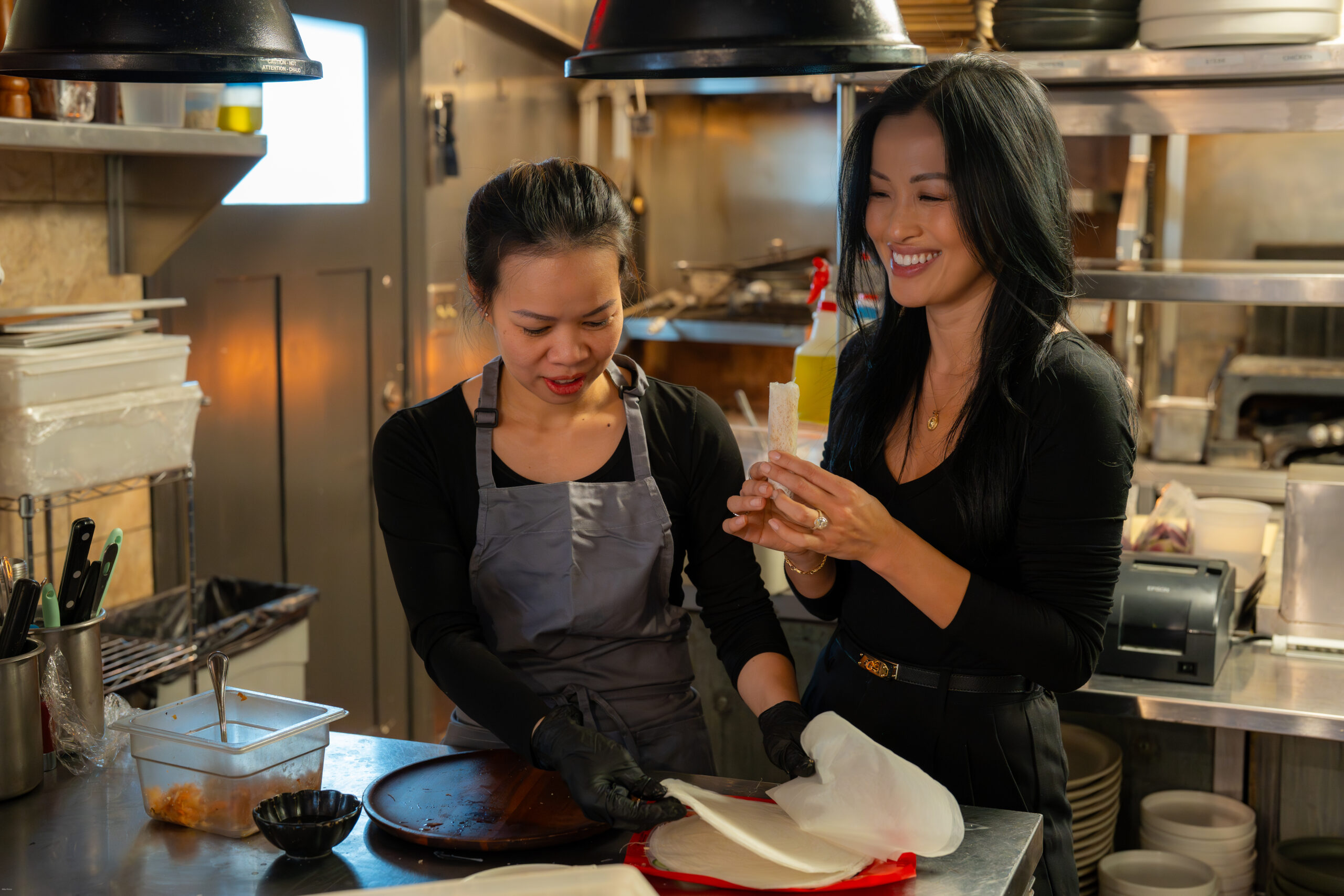
Thanh Nguyen of Gabriella’s Vietnam and Lulu Calhoun of Ember and Ash test Lunar New Year recipes.
The Muhibbah dinner at BLDG39 at the Arsenal
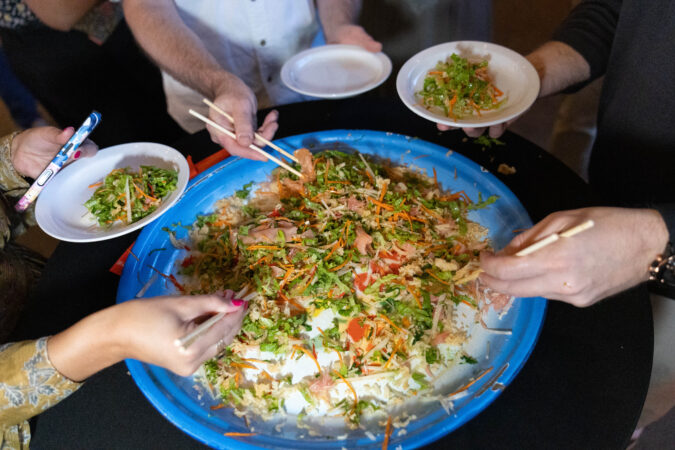
The Muhibbah Dinner series was started by chef Ange Branca of Kampar in 2017 to celebrate diversity and raise money for immigrant and refugee nonprofits in Philadelphia. Its next iteration is on Feb. 16. While it isn’t strictly a New Year’s celebration, dinner will commence with a prosperity yee sang salad, which diners traditionally toss in the air with chopsticks.
Dinner is BYOB and tickets are $170 per person. Sales will benefit Puentes de Salud, a nonprofit that promotes the health and wellness of Philadelphia’s Latinx immigrant population. Tickets are available at muhibbahdinners.org/tickets.
Feb. 16, BLDG39 at the Arsenal, 5401 Tacony St., 215-770-6698, bldg39arsenal.com
Com.unity’s Tết collaboration dinner at Yakitori Boy
Ba Le Bakery, Cafe Nhan, Le Viet, Miss Saigon, and more are teaming up for Com.unity’s third annual Tết dinner, hosted this year at Yakitori Boy in Chinatown. After dinner, guests can walk over to the Lunar New Year Parade presented by the Chinatown PCDC and the Philadelphia Suns. Áo dài, or traditional Vietnamese outfits, and other formal garment are strongly encouraged.
There will be one 60-seat seating, with doors opening at 6:30 p.m. A cash bar will be available for the LNY cocktail menu from the Yakitori Boy team. Dietary restrictions cannot be accommodated. Dinner tickets are $108 per person and can be booked via a link accessed through Com.unity’s Instagram profile.
Feb. 16, Yakitori Boy, 211 N. 11th St., 215-923-8088, yakitoriboy.com
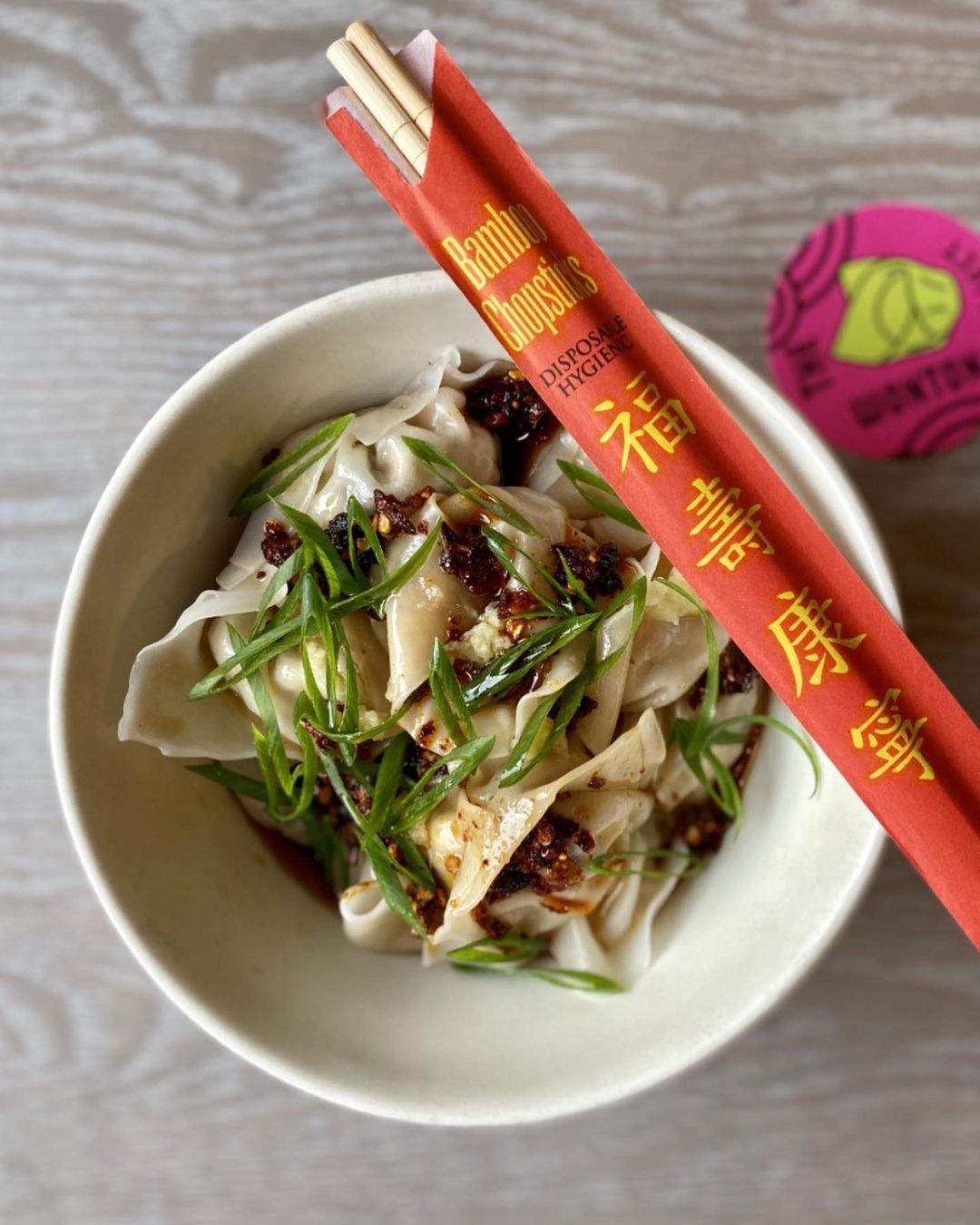
Chicken and ginger wontons from The Wonton Project by Ellen Yin.
Hot Pot at the Bread Room
Ellen Yin’s the Wonton Project will host Lunar New Year Hot Pot parties at the Bread Room for groups of six to eight ($125 per person, excluding tax and gratuity). The parties are inspired by an event the Bread Room hosted with Natasha Pickowicz, the author of the cookbook Everybody Hot Pot.
Diners will cook Lunar New Year menu staples together, such as noodles for longevity, Shanghai rice cakes, and dumplings for prosperity. There will also be whole fish on the menu and spring rolls. It will be available to book on OpenTable.
Feb. 17-21, the Bread Room, 834 Chestnut St., Suite 103, 215-419-5820, thebreadroomphl.com
Buddakan’s Lunar New Year brunch
Stephen Starr’s Buddakan will be serving a tasting menu of modern interpretations of traditional Chinese New Year dishes like trotter-stuffed spring rolls, Dungeness crab longevity noodles, whole fish with black bean sauce, as well as a horse-themed dessert (for the Year of the Horse). Brunch runs from 11 a.m. to 2 p.m. Seats are $75 per person (excluding tax or gratuity), with a four-person minimum for reservations. Reservations can be made on OpenTable. The Lunar New Year menu will also be available a la carte for parties of any size.
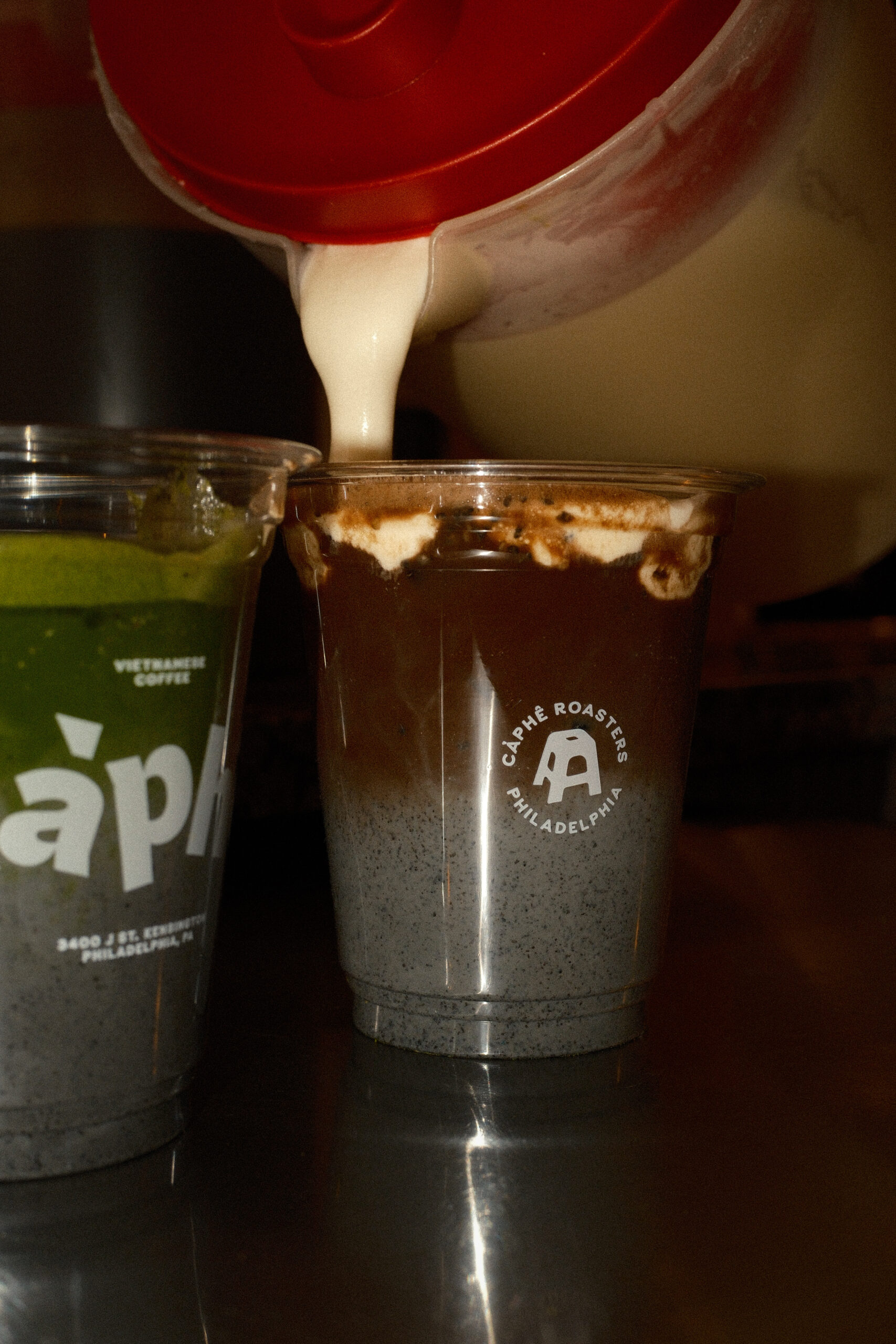
The Kensington-based Vietnamese coffee roaster and cafe will serve two specialty drinks based on Tết treats: a black sesame hojicha, consisting of black sesame paste, hojicha (roasted green tea), milk of choice, condensed milk, and topped with salted foam. “This drink reminds us of kẹo mè đen, which is a black sesame taffy usually found in the traditional Vietnamese Mứt Tết tray (the tray of dried fruits and candies),” said owner Thu Pham. They’re also making a black sesame banana matcha (black sesame paste, matcha, milk of choice, condensed milk, and topped with banana foam), reminiscent of kẹo chuối, a banana taffy also found in the traditional Vietnamese Mứt Tết candy tray.
Black sesame banana matcha and black sesame hojicha from Càphê Roasters for Lunar New Year 2026.
Luk Fu at Live! Casino
Luk Fu is serving an a la carte menu of very traditional Chinese New Year dishes such as braised pork trotters ($38), whole pompano ($48), and a New Year’s stir fry with spring vegetables and auspicious ingredients like snow peas, wood ear mushrooms, and sweet lapchong, or Chinese sausage ($28). Reservations are available on OpenTable.
At this Washington Avenue institution, you can pick up Tết essentials like the cylindrical bánh tét ($20) and square-shaped bánh chưng ($25), savory rice cakes made with mung beans and pork belly and wrapped in banana leaves. Takeout only. Order online.
Available now until Feb. 18 (or until sell-out), Ba Le Bakery, 606 Washington Ave., 215-389-4350, balebakery.com
Mayor Cherelle L. Parker’s campaign raised almost $1.7 million last year despite her not facing reelection until 2027, according to a new campaign finance report.
That is the most any Philadelphia mayor has raised during their second year in office since at least the early 2000s, when the city’s current ethics and campaign finance rules took effect, according to Parker’s campaign. She is also the only mayor in that time frame to avoid a dip in fundraising after her first year in office, when many donors shell out to support the city’s new leader.
“The Mayor has strong support from across the City and the region,” Aren Platt, the executive director of the mayor’s campaign committee, People for Parker, said in a written statement. “These numbers equate to people investing in her vision as Mayor for the City and supporting the work that she is doing.”
Her campaign also spent $812,000 in 2025, a huge sum for a nonelection year. Parker entered 2026 with nearly $1.6 million in the bank — a significant haul two years out from a municipal election cycle. (For context, Parker’s campaign in 2023 raised almost $3.4 million, and spent just over $3.2 million en route to winning the mayor’s race.)
State law gives politicians wide latitude in how they spend their campaign donations beyond traditional election expenses like buying TV ads and printing fliers.
Parker’s campaign expenditures last year included airfare to Colorado for a mayoral roundtable at the Aspen Institute, and almost $20,000 to cover costs for a constituent’s funeral.
Parker’s hefty off-year fundraising is reflective of the increasingly constant and professionalized world of political fundraising in Philadelphia. Local politicians no longer wait until challengers emerge to press donors for cash or host major fundraisers.
“Philadelphia elections keep getting more expensive, so now all the candidates have professional fundraisers, which means the frequency of their events and calls has risen dramatically as well,” said John Hawkins, a City Hall lobbyist.
City Council President Kenyatta Johnson, for instance, last year raised about $960,000 and entered 2026 with more than $1.1 million in the bank. Johnson, who, like Parker, will not face reelection until 2027, said he raises money in off years so that he can support other Council members and fund community programs.
“I am blessed to support 16 other hardworking members of Council,” he said Friday. “I always support different community initiatives that come before me, individuals always seeking support for a variety of different initiatives.”
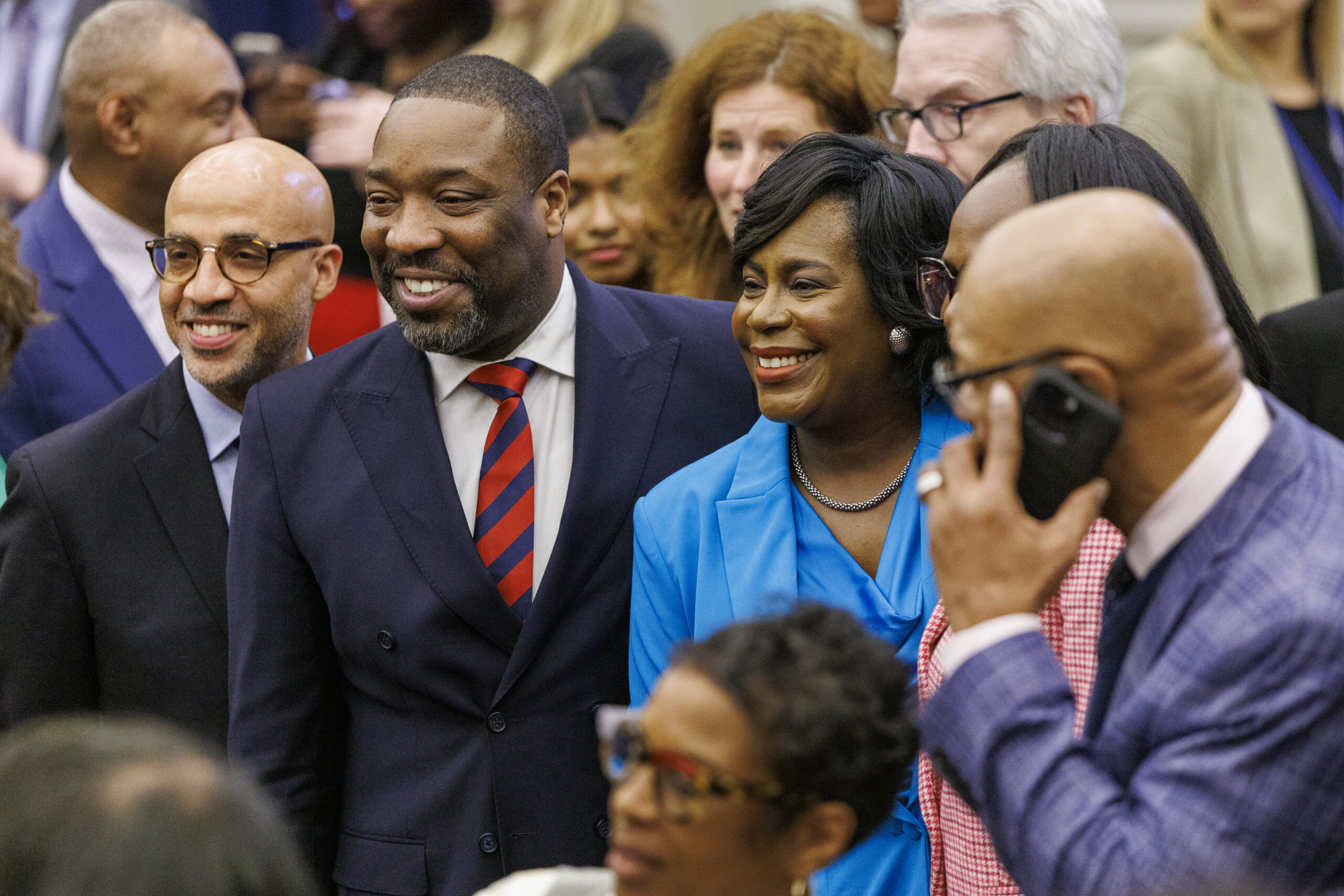
Philadelphia Mayor Cherelle L. Parker stands beside Council President Kenyatta Johnson (left) after she finisher her budget address to City Council, City Hall, Thursday, March 13, 2025.
Johnson, a close ally of the mayor, is also seen as a potential contender in the race to succeed Parker, which would happen in 2031 if she wins reelection. Racking up money between now and then could allow him to enter the race in a strong financial position.
“My focus is being the best City Council president that I can be,” Johnson said when asked if he was considering the city’s top job.
Using the rules to their advantage
Philadelphia’s campaign finance laws rules limit contributions to $3,700 per calendar year from individual donors, and cap political committees and businesses allowed to make political donations at contributions of $14,800 per year.
That means incumbents can collect the maximum amount from donors in each of the four years in their terms before running for reelection. That is not possible in federal elections, where contribution limits apply to the entire election cycle.
The city’s rules give incumbents a potential advantage over new candidates, who typically have the opportunity to raise money over only one or two calendar years after they enter a race.
Incumbents do not always maximize that opportunity. But Parker last year set a new standard.
She is also among the growing number of Philly elected officials taking advantage of a rule that allows politicians to accept donations larger than the city’s contribution limits if they do not spend the excess money on electioneering activities, such as buying ads or paying canvassers to knock on doors.
The electricians union, the politically active Local 98 of the International Brotherhood of Electrical Workers, for instance, gave $50,000 to Parker’s campaign in 2025. At most $14,800 of that can be spent on persuading city voters to support Parker during her next campaign. The remaining $35,200 will be deposited into a separate bank account known as a Segregated Pre-candidacy Excess Contribution, or SPEC, account.
While SPEC accounts are nothing new, more Philly elected officials are using them. In addition to Parker, at least a half dozen Council members, including Johnson, now have SPEC accounts, said Shane Creamer, executive director of the Philadelphia Board of Ethics.
“We haven’t seen this in the lead-up to past elections, certainly not in this number,” Creamer said, adding that the trend shows that politicians are being conscientious about the city’s rules. “I think it suggests that, fundraising aside, there’s an effort to comply with the contribution limits.”
How Parker raises money
Parker hosts major fundraising events, such her annual birthday party, which last September took place at the Live! Casino & Hotel. She also calls donors to ask for contributions, and her supporters sometimes host smaller fundraisers to collect money for her campaign.
Labor unions gave more than $330,000 to Parker last year, campaign finance reports show. That includes $50,000 from the electricians union, $64,800 from the Carpenters union, and $45,000 from the Laborers District Council.
Organized labor — especially the Philadelphia Building and Construction Trades Council, the Carpenters union, and Local 32BJ of the Service Employees International Union — fueled Parker’s victory in the 2023 mayor’s race.
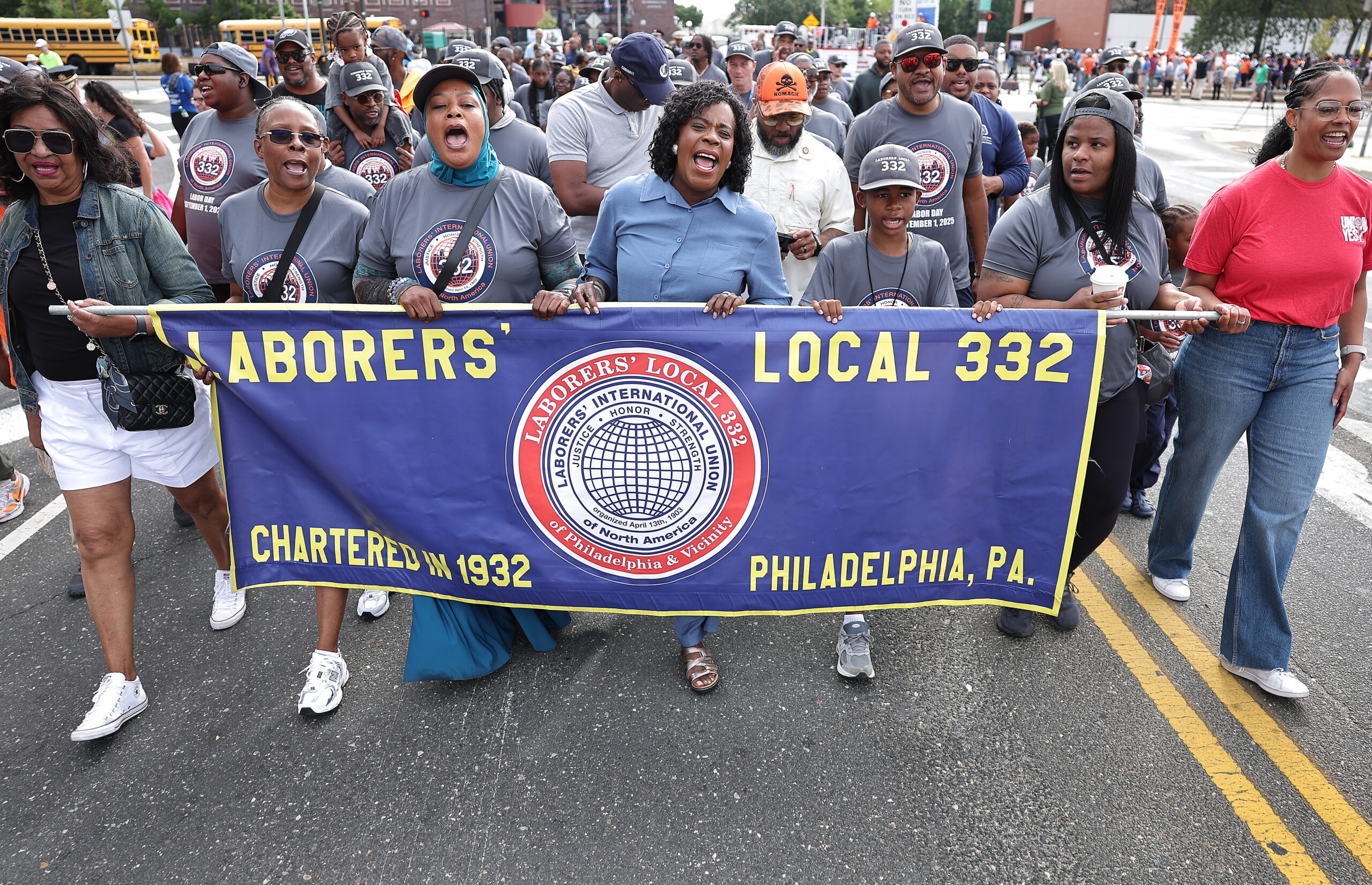
Mayor Cherelle L. Parker (center) joins the chant as she marches with Local 332 during the annual Tri-State Labor Day Parade in Philadelphia on Monday, Sept. 1, 2025.
“We’re very aligned on policy, and if you look at her campaign promises, she is doing fairly well. She’s made some progress on all of them,” said Brown, who serves on the mayor’s business roundtable and an advisory panel providing input on the city’s efforts to revitalize Market East. “I’m invested in the city, and I want to see a functional, good mayor who can lay out a vision and get things done.”
Corporate interests also donated heavily to Parker in 2025. Her campaign contributions from law firms last year included $10,000 from Ballard Spahr, $11,000 from Duane Morris, $5,000 from Buchanan Ingersoll, and $11,000 from Cozen O’Connor. She also received $5,000 from Comcast, $1,000 from Independence Blue Cross, and $4,700 from the Chamber of Commerce for Greater Philadelphia.
Wealthy individuals shelled out big bucks, too. Investor Richard Vague gave $16,000; developer Carl Dranoff contributed $15,000; former Aramark CEO Joseph Neubauer gave $30,000; and Firstrust Bank executive chair Richard J. Green gave $15,000.
How Parker spends campaign money
Although campaign donors may imagine their contributions pay for yard signs and radio spots, the money also often covers strategy meetings held at expensive restaurants, gifts for constituents, and costs related to officeholders’ public duties.
Elected officials are prohibited from using political donations for personal expenses. But beyond that, the rules for spending campaign cash are famously lax and rarely enforced.
Parker’s expenditures on the recently filed reports included a $1,200 tab at Vernick Fish, and 14 more modest purchases from Shanghai Gourmet in Chinatown, totaling $424.
In addition to the Aspen Institute roundtable, Parker’s campaign helped her pay for trips to Miami for a tour of wellness and homeless centers that are part of the Florida judicial system, to Martha’s Vineyard, Mass., for a Black Economic Alliance gathering, to Puerto Rico for a National League of Cities event, and to Harvard University’s Bloomberg Center for Cities.
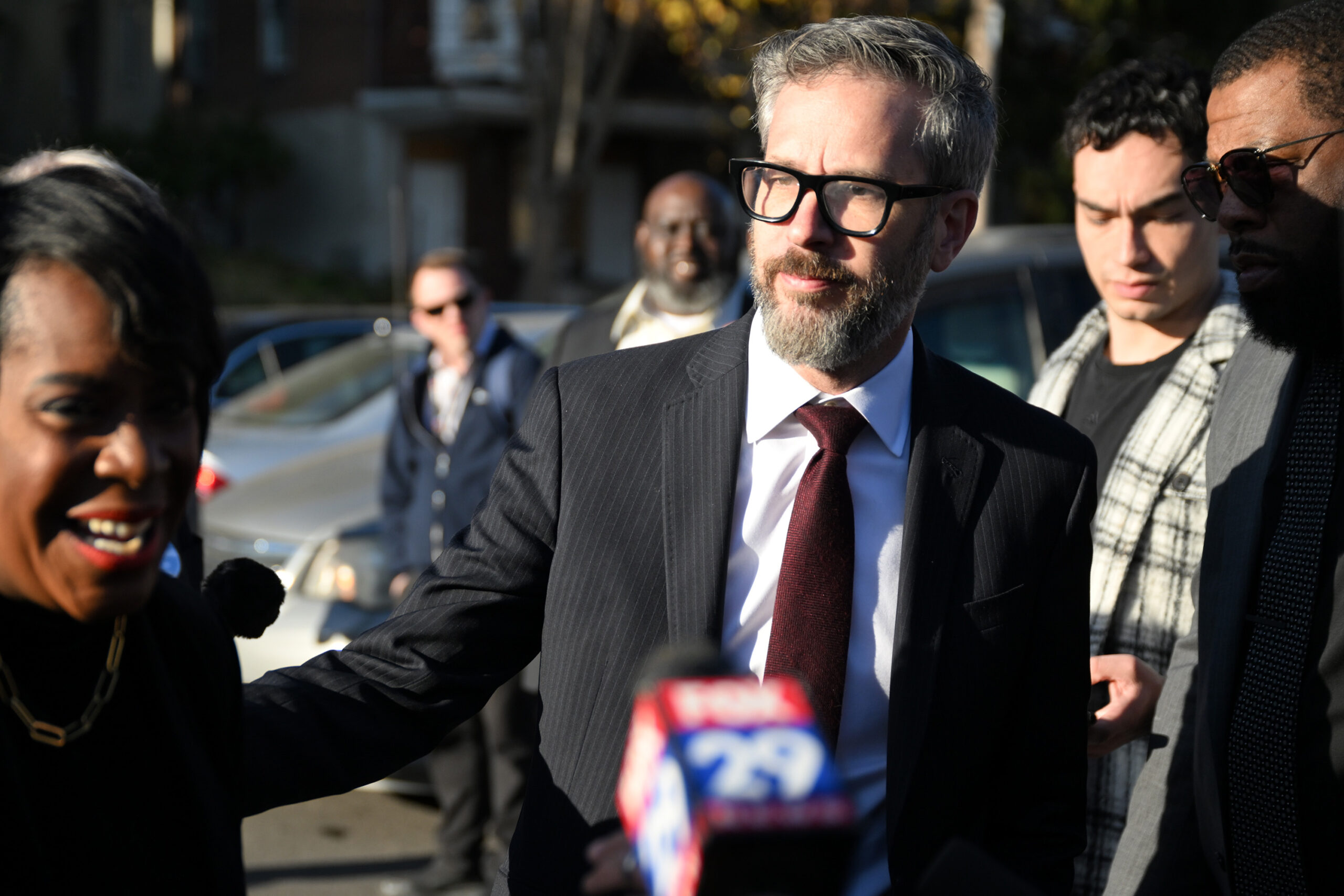
Aren Platt (right) executive director of Mayor Cherelle L. Parker’s political committee is with her after a Kamala Harris campaign event in Germantown Nov. 3, 2024. Platt was senior campaign adviser in Parker’s run for mayor, and served briefly as deputy mayor before leaving her administration.
The campaign paid $112,000 in consulting fees for ALP Impact Strategies, Platt’s firm; and $30,000 to 215 Bears, the private security company owned by Shawntee Willis, whom Parker has hired as a special assistant in the mayor’s office and who works closely with her police detail.
It also paid $158,563.73 to Rittenhouse Political Partners, the fundraising firm founded by well-known political consultant Aubrey Montgomery and used by Parker, Johnson, and five other members of Council who saw large fundraising hauls last year.
Rittenhouse’s clients include some of the most aggressive off-year fundraisers in Philly politics and some of the most prominent adopters of SPEC accounts.
Montgomery declined to comment.
Staff writer Anna Orso contributed to this article.
Custardy egg tarts are wiggly, lightly gelatinous conveyors of joy. The finest ones are not too sweet, but beyond that, they have variable compelling qualities, be it their lightly torched tops or innovative whole-fruit or vegetal flavors. There are three styles of egg tarts covered in this map: Portuguese pasteis de nata, flaky Chinese egg tarts, and cookie-style shortcrust egg tarts. They are all magnificent, whether you pick them up from a bakery by the dozen or nibble on them from a dim sum parlor’s lazy Susan.
Beijing Duck Seafood Restaurant
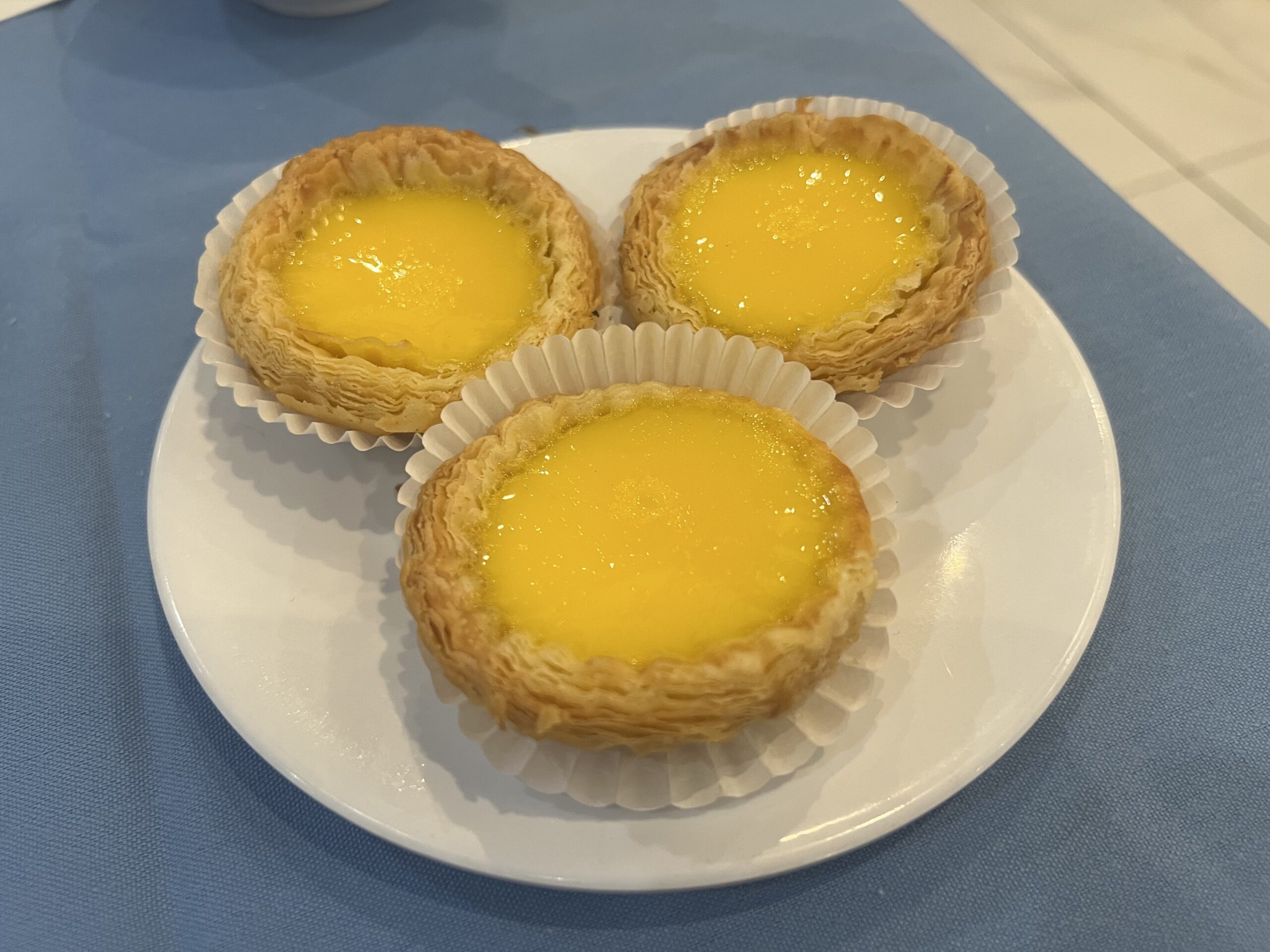
By night, this Race Street restaurant becomes a Peking duck emporium, with white-toqued chefs wheeling roasted ducks through the dining room, announcing their arrival at tables by striking a gong. But by day, Beijing Duck Seafood serves a menu filled with dim sum classics like char siu bao, turnip cakes, spring rolls, and, of course, delightfully and thoroughly classic dim sum-style egg tarts. These are some of the best egg tarts you can get in Chinatown. They’re served piping hot (as all the best egg tarts are), and they have molten, deep yellow custard centers encased by a flaky pastry crust that dissolves in your mouth with a slight chew. They’re small — but not the tiniest you’ll see — and come three to an order.
The pateis de nata at Gilda in Philadelphia on Thursday, Aug. 29, 2024.
Gilda
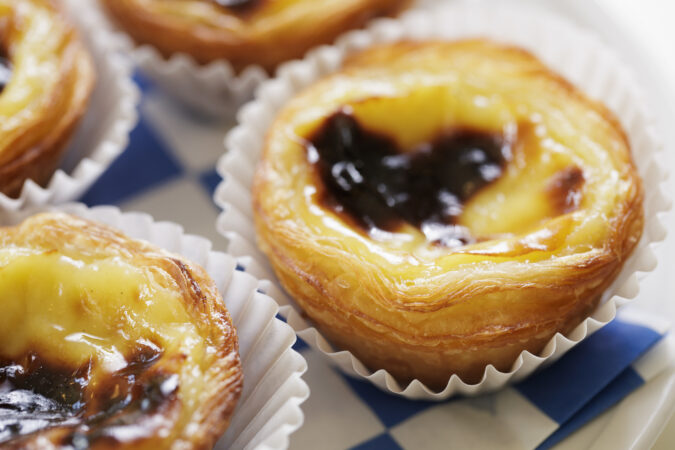
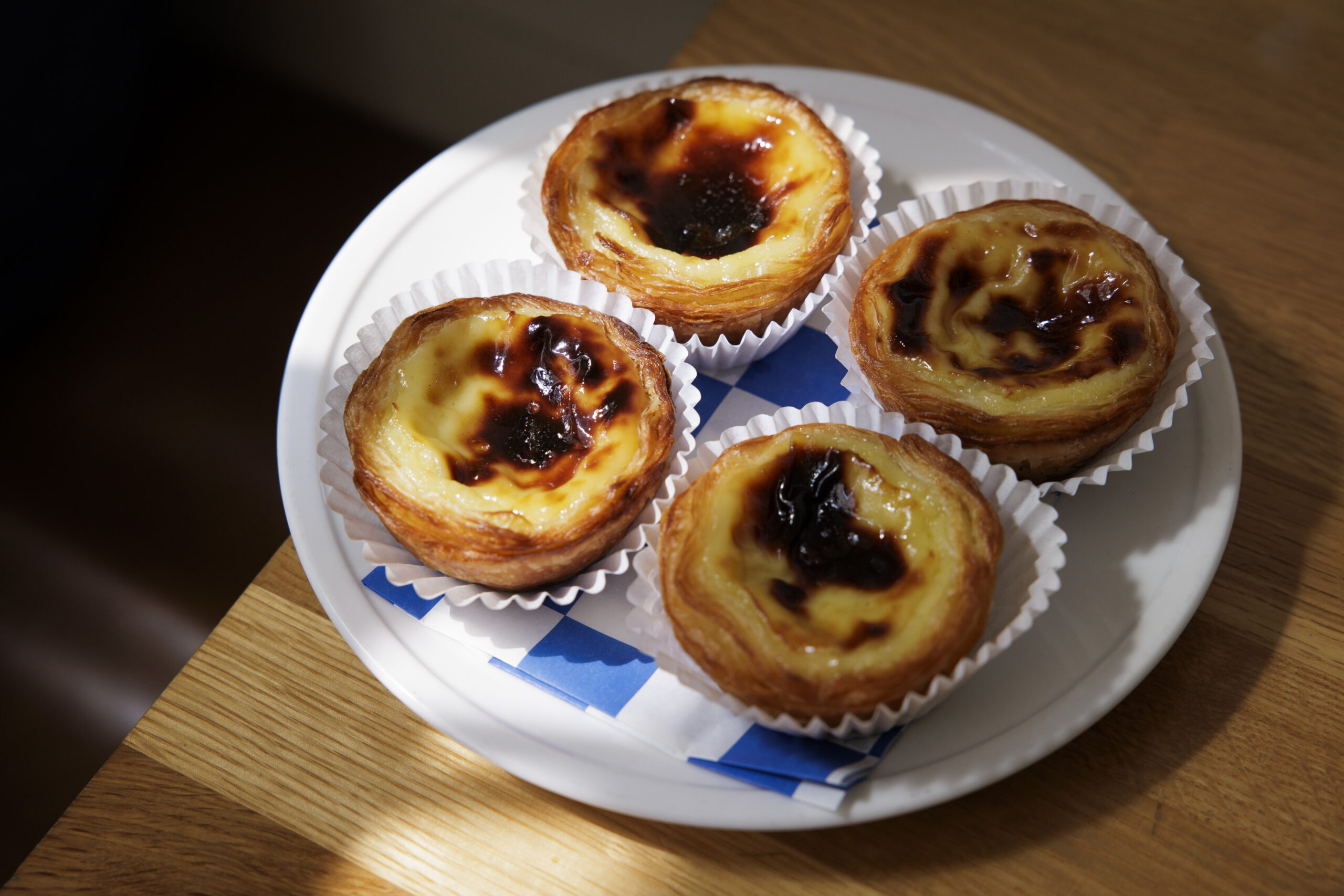
The flavors of pasteis de nata at Gilda rotate according to whims and seasons. All of the Portuguese tarts have a creamy, cinnamon-flecked egg-yolk custard base that is looser, jammier, and almost whipped compared to the harder-set centers of their Chinese-style counterparts. Baked at high heat, Gilda’s natas naturally develop bruleed brown leopard spots. The tarts themselves have firm, flaky crusts that get filled with core custards like lemon-raspberry and dark chocolate with sea salt. In summer, look for natas flavored with corn, passion fruit, and strawberry. The staff here even makes a sweet nata latte to mimic the three-bite treats, using a house syrup infused with vanilla, cinnamon, and a squeeze of lemon juice. All the egg whites the natas generate get fried and stuffed into a soft but crusty mealhada roll with cheese, avocado, and aioli, resulting in the Sammy, one of the city’s best breakfast sandwiches.
These are the Platonic ideal of dim sum-style egg tarts, which means they’re small — two perfect bites each — with pastry that flakes apart in crisp petals in your mouth. They’re filled with even, yolky custard that balances lightness and richness. These are the perfect mildly gelatinous coda to stuffing yourself with all the other goodies wheeled past your table during dim sum at China Gourmet, and no dim sum experience here is complete without them.
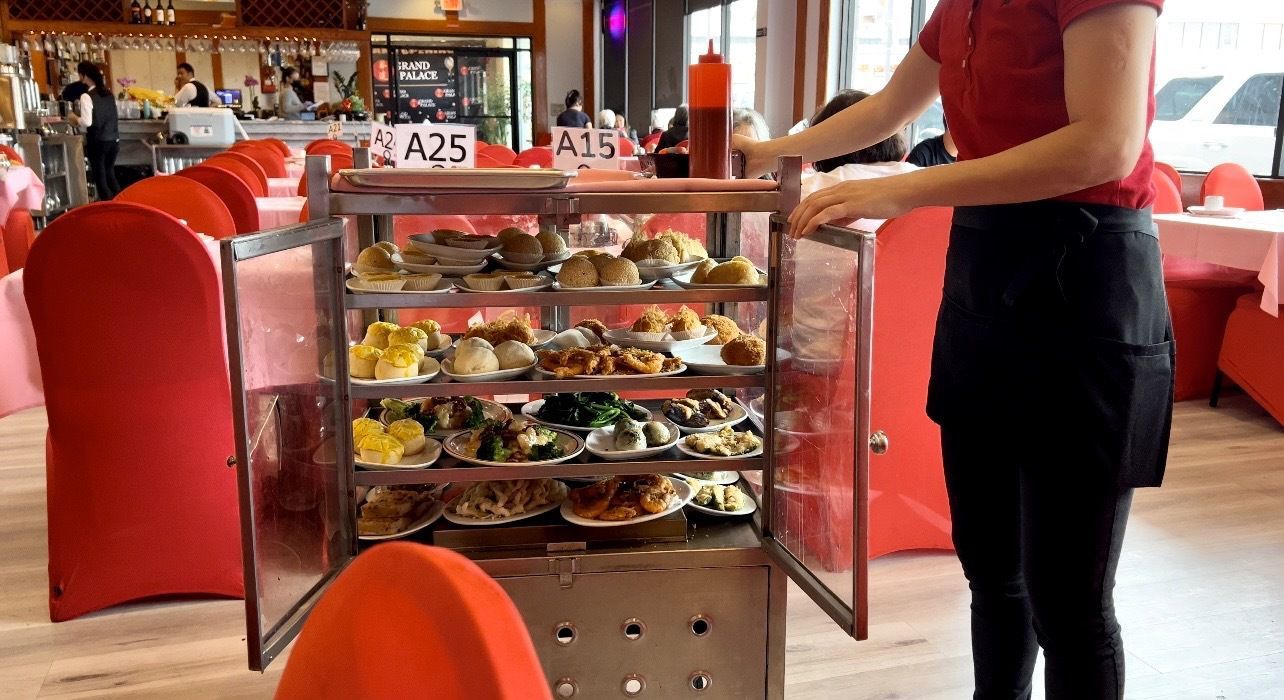
A dim sum cart with full-size dishes at Grand Palace restaurant, 600 Washington Ave.
Grand Palace
This Washington Avenue establishment’s name is not delusional — it truly is grand. This is where you want to bring your 10 best friends for dim sum or brunch, and shout engagingly back and forth with the ladies pushing carts piled high with bamboo steamer baskets. As a bonus, it’s a stone’s throw from Center City and there is parking. Grand Palace has absolutely mastered both steamed buns (its char siu bao is positively fluffy) and egg tarts. The tarts are larger than the average dim sum rendition, coming two to an order (vs. the usual three). The pastry shell crust is incredibly flaky, with a thinner layer of custard than typical Cantonese tarts. The filling is soft, barely sweet, and one of the highlights of a raucous dim sum experience.
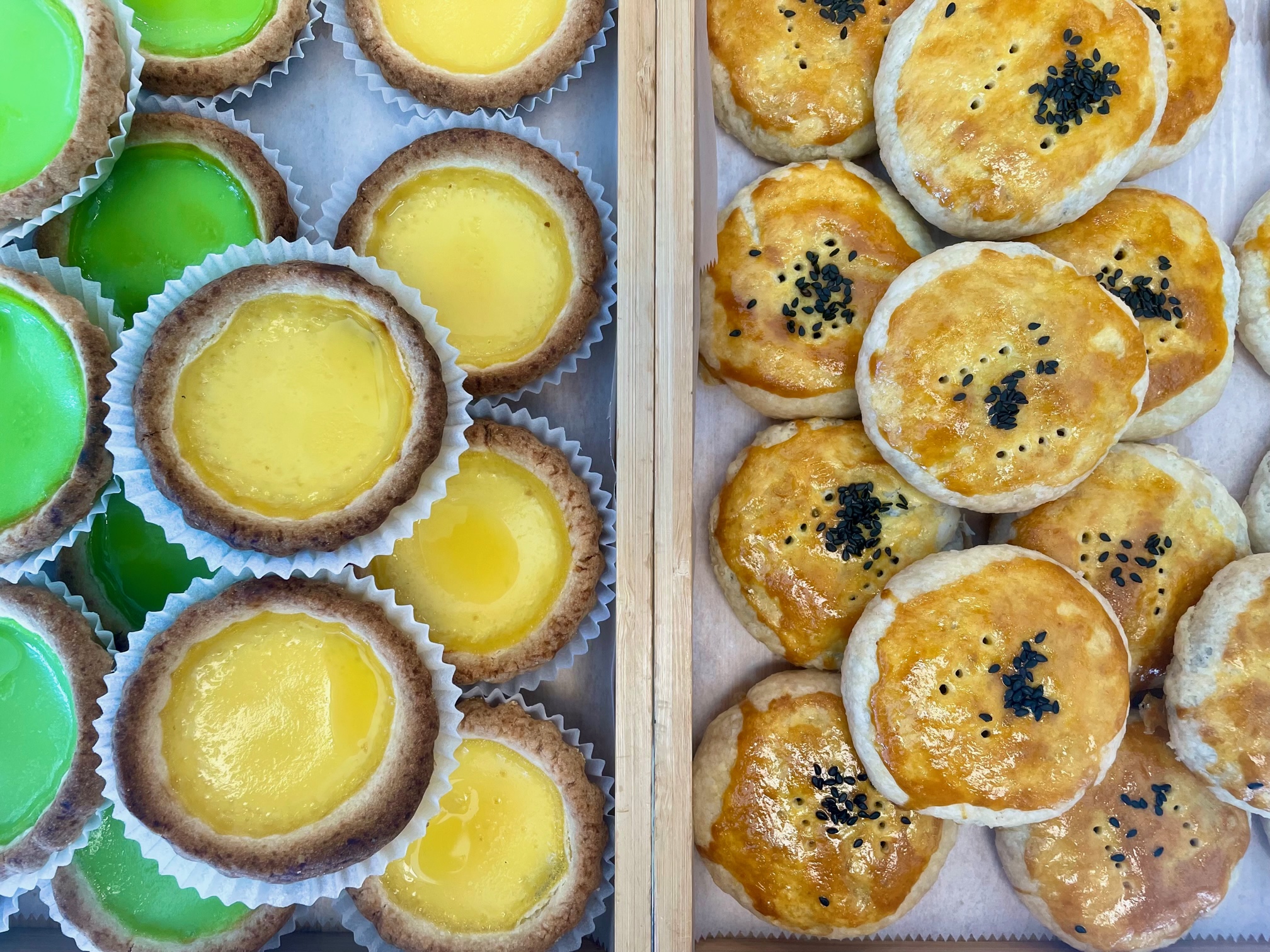
Occupying a cheerful, cartoon-muraled, bright blue corner in deep South Philly, Dodo Bakery peddles an impressive variety of Chinese-inflected baked goods, tea-based beverages, and smoothies. The kitchen makes two types of egg tarts: one in a traditional flaky pastry shell, and another whose egg yolk custard is spiked with pandan for a hint of grassy, coconutty flavor and a neon-green hue. Pop them in the toaster oven at home to revive their jiggly freshness. Dodo also churns out enormous renditions of classic Hong Kong pastries, like the staple Canto-British chicken pot pie and triangles stuffed with chopped, bright red char siu roast pork. Their red bean pastries are also excellent and extremely flaky.
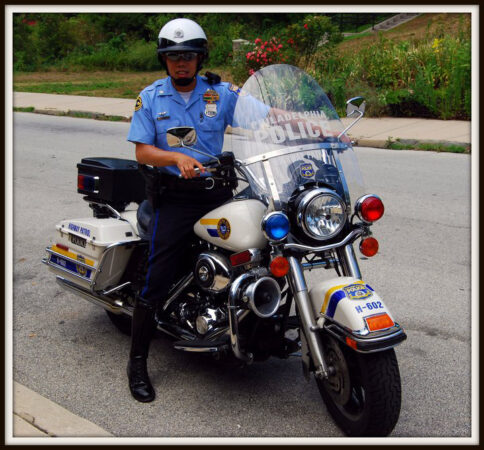
Philadelphia roads will be closed Monday and Tuesday for the funeral services of Highway Patrol Officer Andy Chan.
Several streets in the Callowhill, Chinatown, and Center City neighborhoods will begin closing Monday evening for a first viewing, with additional roads closing Tuesday for the second viewing and funeral.
Chan, 55, who suffered a critical brain injury six years ago in a motorcycle crash on his way to work, died Dec. 2. Since the crash, the 24-year police veteran had required around-the-clock care. His fellow officers fundraised for his medical expenses.
A viewing will be held Monday at Holy Redeemer Chinese Catholic Church, 915 Vine St., from 6 p.m. to 9 p.m. The second viewing will be held Tuesday at theCathedral Basilica of SS. Peter and Paul, 1723 Race St., from 8:15 a.m. to 10:40 a.m., with the funeral following directly after.
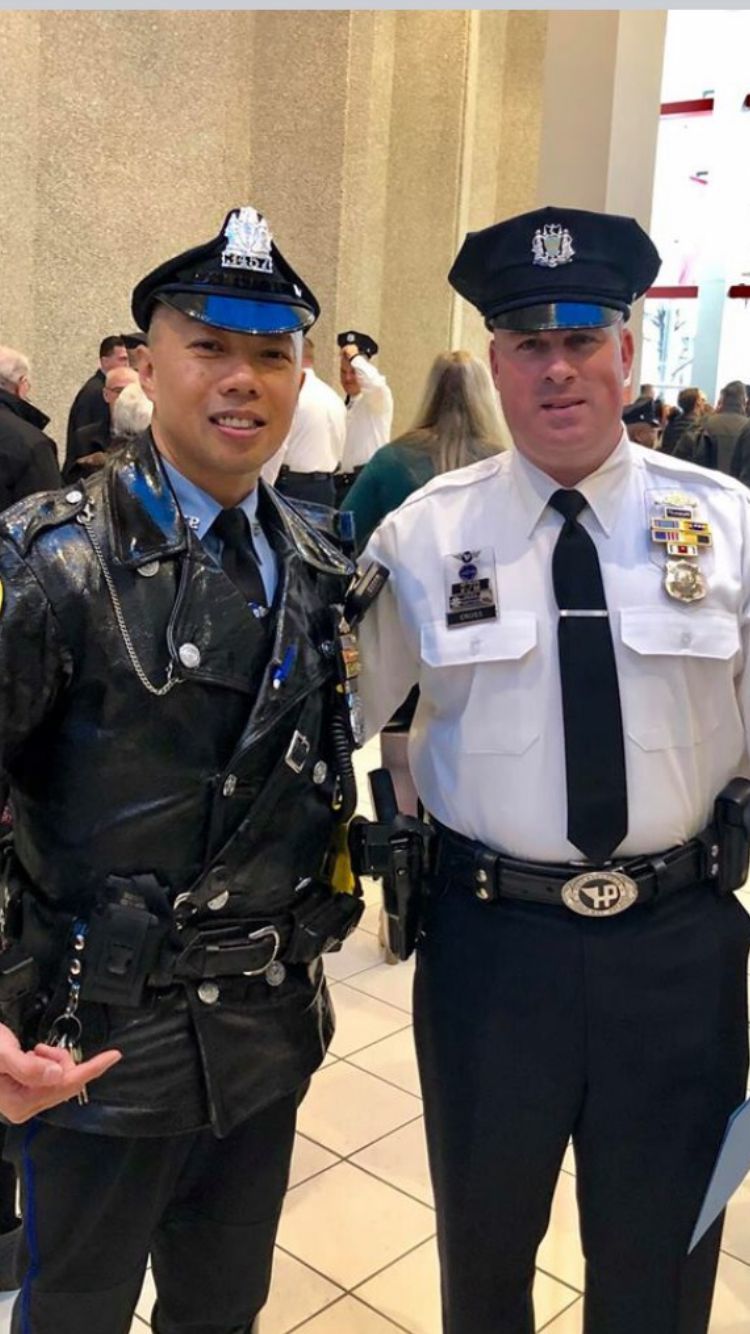
Highway Patrolman Andy Chan (l) at the promotional ceremony of his old partner Sgt. Kyle Cross.
Road closures
Drivers should avoid the areas listed, use alternate routes, and expect delays.
These streets will be closed at 4 p.m. Monday and will reopen at the conclusion of the viewing procession:
Ridge Avenue between Wood Street and Hamilton Street
Vine Street (westbound) between Eighth and 10th Streets
10th Street between Hamilton and Vine Streets
Ninth Street between Callowhill and Wood Streets
Callowhill Street between Eighth and 11th Streets
Wood Street between Ninth and 10th Streets
These streets will close at 5 a.m. Tuesday and will reopen at the conclusion of the service:
18th Street between the Benjamin Franklin Parkway and Vine Street
These streets will close at 5:30 a.m. Tuesday and will reopen at the conclusion of the procession:
15th Street between Spring Garden and Callowhill Streets
Broad Street between Spring Garden and Callowhill Streets
Callowhill Street between Broad and 17th Streets
17th Street between Callowhill and Benjamin Franklin Parkway
These streets will close at 6 a.m. Tuesday and will reopen at the conclusion of the service:
Benjamin Franklin Parkway between 16th and 22nd Streets
Vine Street between Logan Circle and 16th Street
Race Street between 16th and 18th Streets
17th Street between Vine Street and Benjamin Franklin Parkway
19th Street between Benjamin Franklin Parkway and Cherry Street
Additional streets near the Benjamin Franklin Parkway and Eakins Oval may be closed or detoured.
Parking restrictions
Parking is notallowed on the streets listed above during the designated times. “Temporary No Parking” signs are displayed along the streets.
Vehicles parked in these zones during the posted hours will be relocated. The Inquirer has a guide on what to do if your vehicle is “courtesy towed.”
Public transportation
SEPTA Bus detours will be in place, according to the city, but SEPTA has not shared these details yet. Get live service updates at septa.org.
We are standing at the crosswalk of a bold new era in street design and management.
Streets make up roughly 30% of a Philadelphia’s land. Yet, most are locked into a single use: moving and storing cars. What if, instead, we treated them as dynamic public spaces capable of changing function and meaning depending on the time of day, the season, or the needs of the neighborhood?
That question guided a recent pilot project I helped lead in Chinatown, which will be unveiled next month. As part of “the Chinatown Stitch” — an ambitious effort led by the city’s Office of Transportation and Infrastructure Systems, with state and federal partners, meant to heal a neighborhood long divided by transportation infrastructure. Our team designed a movable market stall, a piece of street furniture that serves as both a vendor kiosk and a community gathering space.
During Chinese New Year or other festivals, when the streets overflow with people and energy, the stall slides into the roadway, transforming asphalt into a festive plaza. When the celebration ends, it retreats, making way for traffic once again.
For a neighborhood starved of public space, this small, movable structure has become a powerful symbol: The street itself can flex, adapt, and respond. It embodies what planners and landscape architects call the Flexible Street Strategy — a vision for cities that recognizes streets as living systems, not fixed infrastructures.
Open Streets
For more than a century, street planning has been governed by rigid right-of-way definitions. Sidewalks for walking. Lanes for driving. Curbs for parking. These rules answer only one question: what belongs where? The flexible street concept asks another: when? When should a street prioritize cars, and when should it belong to people?
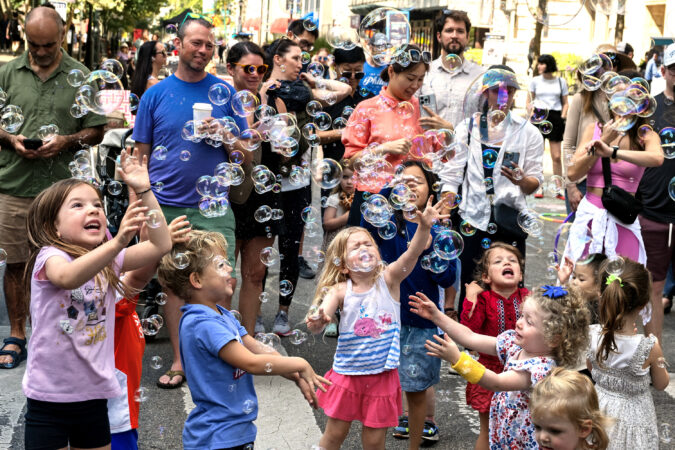
Based on research my team completed last summer, the results have been stunning. Foot traffic soars. Businesses thrive. And, perhaps most tellingly, children return. On a normal day, we counted two kids passing through a block in 15 minutes. During one Open Streets event, that number jumped to 39.
It’s not just a statistic; it’s a story of safety, belonging, and joy. For once, the street was everyone’s.
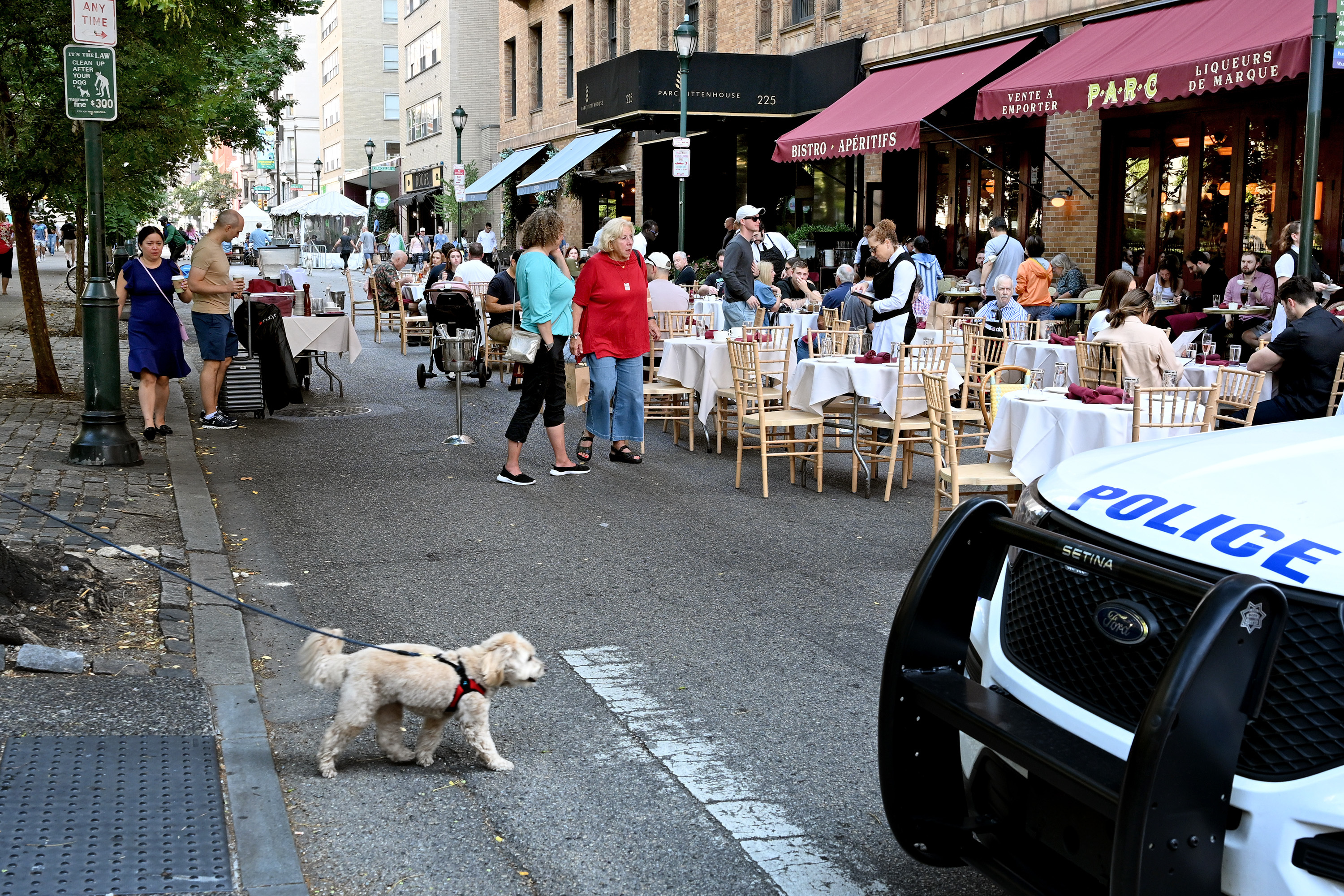
Restaurants take over 18th Street as the streets around Rittenhouse Square are closed to vehicular traffic for pedestrian-only zones for the city’s Open Streets program.
When the Open Streets program began, its organizers expected bureaucratic hurdles — clashes between departments, debates over lost parking revenue. Instead, city agencies from streets to parking embraced it. Post-pandemic, there’s a new understanding: Streets are no longer merely conduits for cars. They are the connective tissue of civic life.
The success of the program, first launched in 2024 and revived last summer, has inspired plans to expand across downtown. But as encouraging as such pilots are, they still exist as exceptions to the rule. But the Flexible Street Strategy holds that flexibility should not require special permission. It should be baked into the DNA of how cities plan, design, and manage their streets.
This means rewriting the system itself. Instead of rigid right-of-way codes, cities need regulatory frameworks that acknowledge streets as time-based spaces — spaces whose use shifts dynamically according to demand, culture, and context.
To move from philosophy to practice, flexibility can now be managed with precision through technology.
Using digital twin models, IoT sensors, and AI-driven analytics, our team is building a data platform that identifies “flex windows” — hours when converting a street from traffic to pedestrian use offers the greatest benefit with the least disruption. The system integrates live data on street anchor activities (schools, restaurants, parks, etc.), traffic volumes, safety, and equity to recommend optimal transformation times.
A community stage
Still, the real power of the flexible street idea lies in its simplicity. It doesn’t require new infrastructure — just imagination, data, and a willingness to test. Its nonpermanent, pilot-friendly nature allows cities to experiment at low cost and low risk. Just like the market stall installed in Chinatown, which amplified existing street events and vividly showed how a street can transform into a stage for community life.
If the official Chinatown Stitch aims to reconnect neighborhoods divided by a sunken highway through large-scale infrastructure, our market stall serves as a micro-stitch — achieving the same goal on the scale of the city block by redefining the street as public space and reconnecting residents, shops, and everyday social life.
Although the Chinatown Stitch funding was cut by the Trump administration’s One Big Beautiful Bill Act, the project has still secured planning funds. Led by OTIS and PennDot, the whole design team is actively finalizing the design. The market stall pilot project is part of this work and serves as an important advocacy and outreach tool for the overall project, supported strongly by Philadelphia Chinatown Development Corporation.
At the end of the day, whether they recognize it or not, our cities no longer have the luxury of static infrastructure. Between climate change, social fragmentation, and changing mobility patterns, flexibility is not a design preference — it’s survival. The street of the future isn’t just paved for movement; it’s programmed for life.
If we want streets that truly belong to everyone, we must give them the freedom to change.
Yadan Luo is a landscape architect, lecturer in the Department of Landscape Architecture at the University of Pennsylvania Stuart Weitzman School of Design, and the creative director of YH LAB.
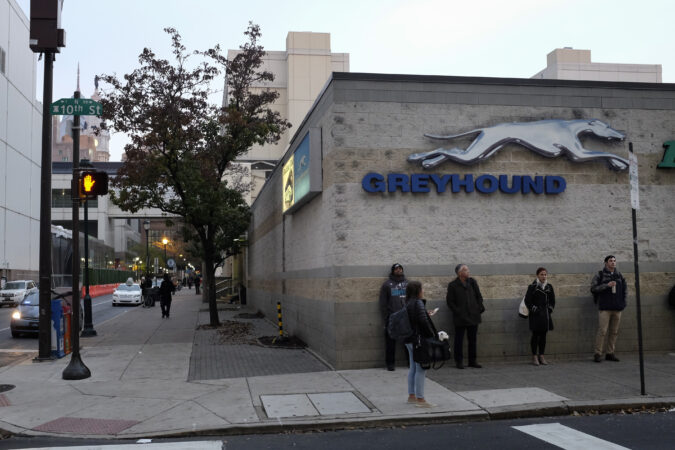
City Council passed legislation Thursday to restore the abandoned Greyhound terminal on Filbert Street as Philadelphia’s new intercity bus station in time for an expected flood of tourists in 2026.
Under the measure, the Philadelphia Parking Authority will operate the station on behalf of the city, collecting fees from bus companies to pay costs.
A refurbished facility is scheduled to open in May 2026, which would resolve more than twoyears of chaos after Greyhound ended its lease, forcing the city to allow the bus companies to operate at the curbs of public streets with few amenities and no shelter for riders.
The saga was embarrassing, and it became more untenable for city leaders with Philadelphia set to host celebrations of the 250th anniversary of the Declaration of Independence, and a round of international FIFA World Cup soccer matches.
The plan came together over the last few months as at least three city departments collaborated and reached an agreement with the parking authority. Mayor Cherelle L. Parker’s administration sent a bill to Council.
Councilmember Curtis Jones Jr. said in a Finance Committee hearing last week that he found the speed of “galvanized” departments working together impressive.
“You can’t put that genie back in the bottle. I know you can cooperate now, and that’s going to be the expectation from now on,” Jones said.
Greyhound ran the terminal at 10th and Filbert Streets for 35 years but ended its lease in June 2023 as the bus line (and its corporate parent) began shedding real estate and leases in the U.S. to cut costs.
First, the buses operated along the 600 block of Market Street. Since November 2023 they have loaded and unloaded passengers in the open along Spring Garden Street.
“This is an opportunity that kind of came from the heavens,” said Mike Carroll, the city’s assistant managing director for transportation.
Bus companies would pay a $40 fee for each stop in the city until the terminal is open, when it would be increased to $65. A smaller number of buses subsidized by the Pennsylvania Department of Transportation under a program to provide rural service would pay $16 a stop.
Operating the renovated terminal will cost $4.7 million to $4.8 million annually, Carroll said.
City officials say they plan to keep researching other possible locations for an intercity bus station but note the lease provides stability.
PPA will provide 24-7 security, 16-hour daily custodial coverage, maintenance staff, and an on-site program manager under terms of an intergovernmental agreement with the city that is part of the legislation.
It also will be responsible for enforcing rules, such as one that will require buses to bypass the heart of Chinatown.
Since the parking authority regulates rideshare and taxi services, its enforcement officers will help keep traffic flowing around the station, officials said.
Councilmember Nina Ahmad pressed city officials to plan for retail tenants and other ways to generate municipal revenue.
“There’s an element of rush,” Ahmad said during the Dec. 3 hearing. “I understand the urgency, but I hope we don’t overlook things that we should be doing to make it really a transit-oriented development.”