Tag: Chinatown

  • These 20 Philadelphia neighborhoods will have painted Liberty Bell replicas for 2026

    These 20 Philadelphia neighborhoods will have painted Liberty Bell replicas for 2026

    Philly is getting ready to dress itself up — with Liberty Bells. Lots of Liberty Bells.

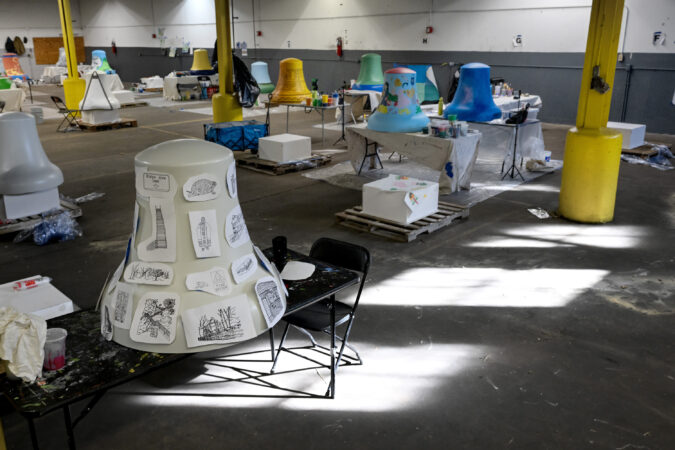
    Organizers of Philadelphia’s yearlong celebrations for America’s 250th anniversary in 2026 gathered in a frigid Philadelphia School District warehouse in Logan on Tuesday, offering a special preview of the 20 large replica Liberty Bells that will decorate Philly neighborhoods for the national milestone.

    Designed by 16 local artists selected through Mural Arts Philadelphia — and planned for commercial corridors and public parks everywhere from Chinatown and South Philly to West Philly and Wynnefield — the painted bells depict the histories, heroes, cultures, and traditions of Philly neighborhoods.

    As part of the state nonprofit America250PA’s “Bells Across PA” program, more than 100 painted bells will be installed across Pennsylvania throughout the national milestone, also known as the Semiquincentennial. Local planners and Mural Arts Philadelphia helped coordinate the Philly bells.

    “As Philadelphia’s own Liberty Bell served as inspiration for this statewide program, it makes sense that Philly would take it to the next level and bring these bells to as many neighborhoods as possible,” Mayor Cherelle L. Parker said in a statement. “We are a proud, diverse city of neighborhoods with many stories to tell.”

    Kathryn Ott Lovell, president and CEO of Philadelphia250, the city’s planning partner for the Semiquincentennial, said the bells are a key part of the local planners’ efforts to bring the party to every Philly neighborhood.
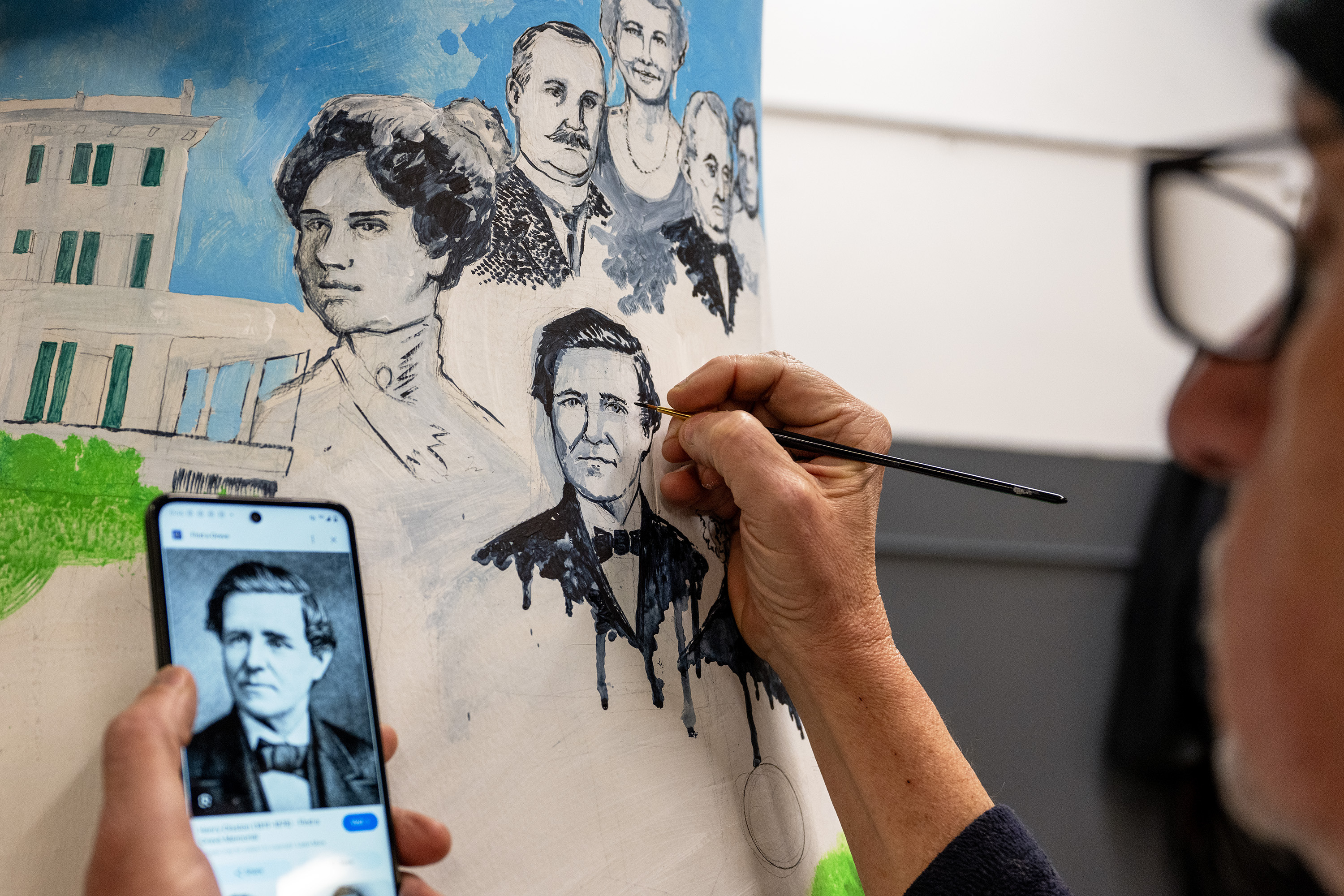
    Local artist Bob Dix paints a portrait of industrialist Henry Disston on his bell.

    “The personalities of the neighborhoods are coming out in the bells,” she said, adding that the completed bells will be dedicated in January, then installed in early spring, in time for Philly’s big-ticket events next summer, including six FIFA World Cup matches, the MLB All-Star Game, and a pumped-up Fourth of July concert.

    Planners released a full list of neighborhoods where the bells will be placed, but said exact locations will be announced in January. Each of the nearly 3-foot bells — which will be perched on heavy black pedestals — was designed in collaboration with community members, Ott Lovell said.

    Inside the massive, makeshift studio behind the Widener Memorial School on Tuesday, artists worked in the chill on their bells. Each bell told a different story of neighborhood pride.
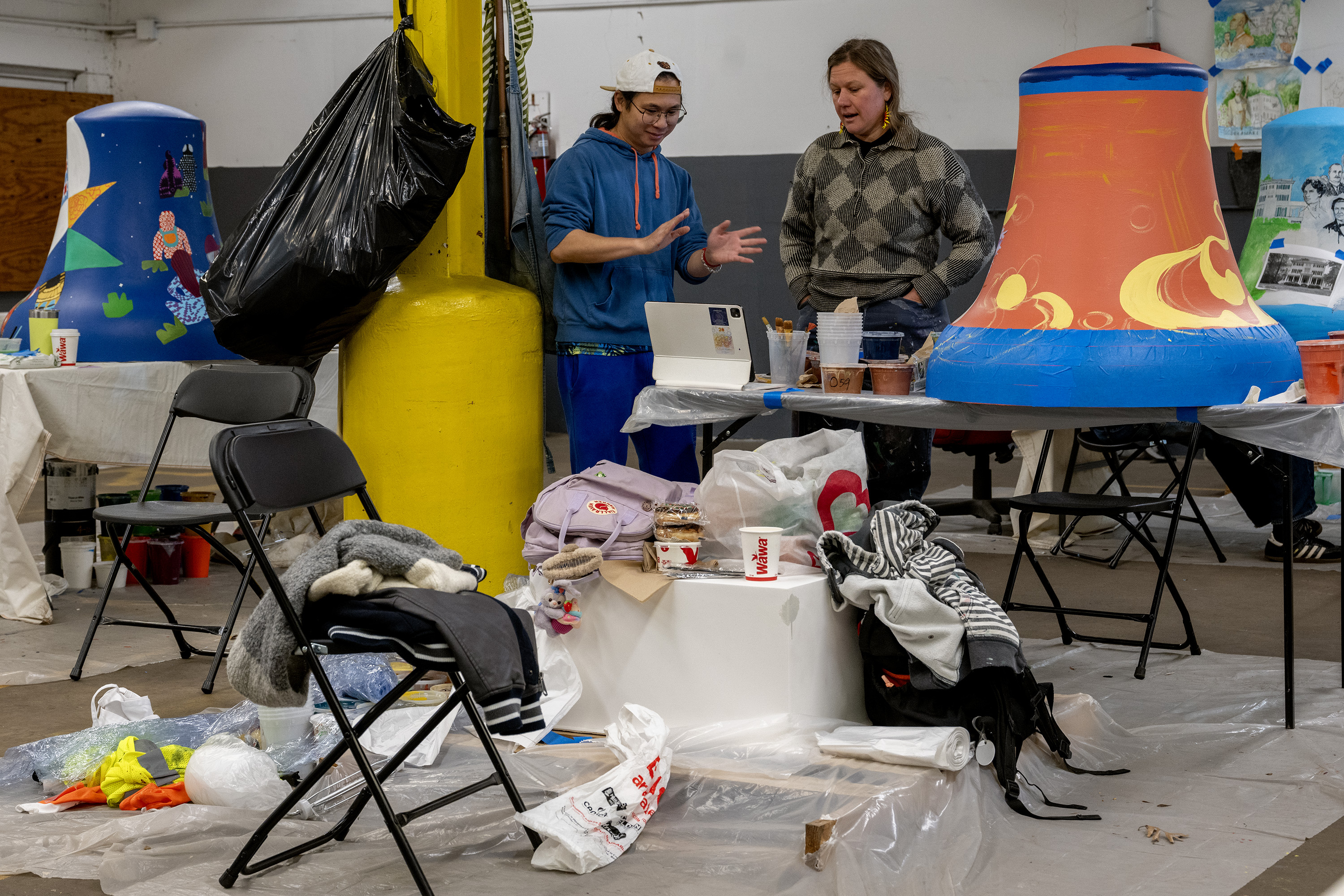
    Chenlin Cai (left) talks with fellow artist Emily Busch (right) about his bell, showing her concepts on his tablet.

    Cindy Lozito, 33, a muralist and illustrator who lives in Bella Vista, didn’t have to look for inspiration for her bell on the Italian Market. She lives just a block away from Ninth Street and is a market regular.

    After talking with merchants, she strove to capture the market’s iconic sites, history, and diversity. Titled Always Open, her bell includes painted scenes of the market’s bustling produce stands and flickering fire barrels, the smiling faces of old-school merchants and newer immigrant vendors, and the joy of the street’s annual Procession of Saints and Day of the Dead festivities. Also, of course, the greased pole.

    “It’s a place where I can walk outside my house and get everything that I need, and also a place where people know your name and care about you,” she said, painting her bell.

    For her bell on El Centro de Oro, artist and educator Symone Salib, 32, met twice with 30 community members from North Fifth Street and Lehigh Avenue, asking them for ideas.

    “From there, I had a very long list,” she said. “People really liked telling me what they wanted to see and what they did not.”
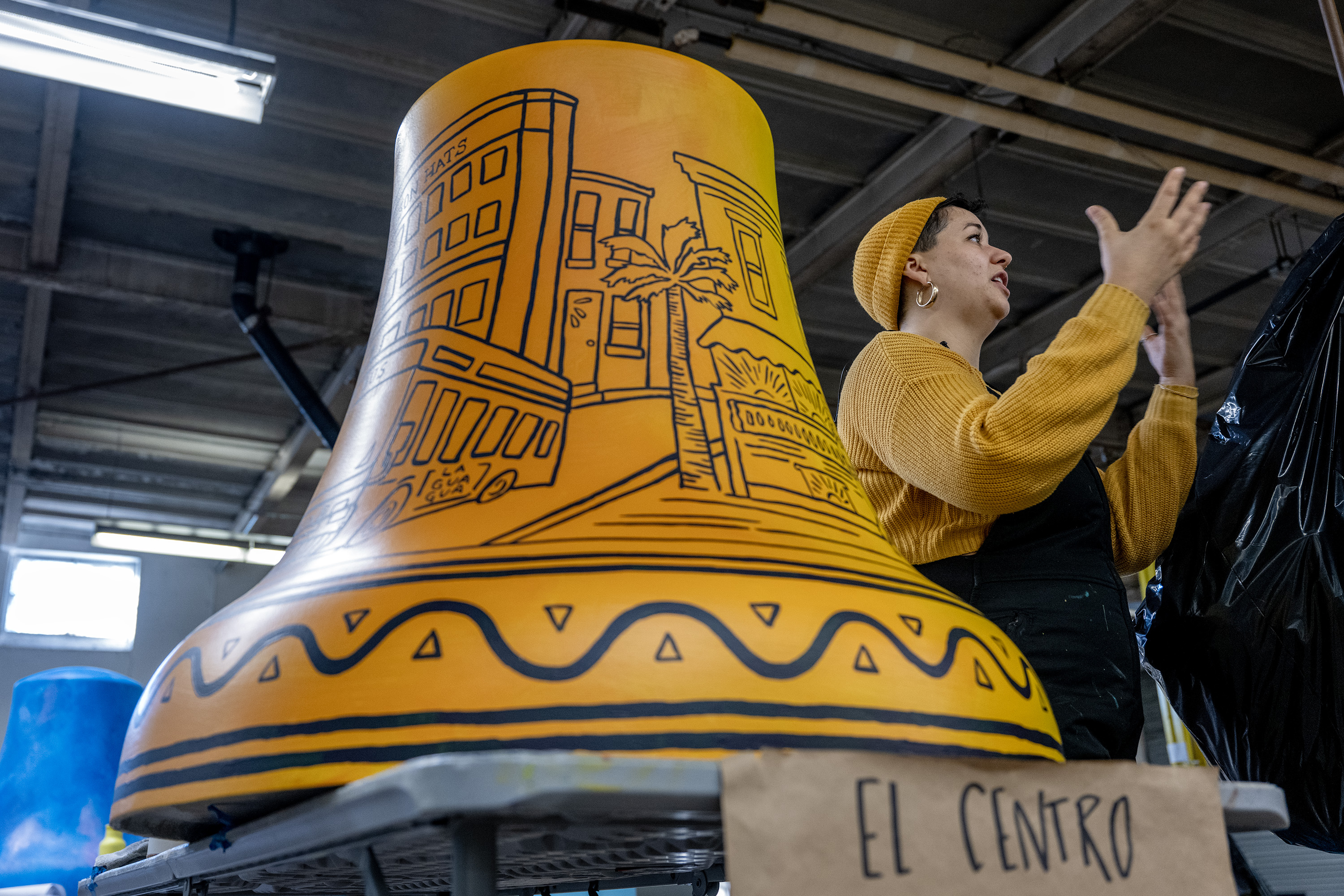
    Local artist Symone Salib talks with a visitor as she works on her bell.

    Titled The Golden Block, the striking yellow-and-black bell depicts the neighborhood’s historic Stetson Hats factory, the long-standing Latin music shop Centro Musical, and popular iron palm tree sculptures.

    To add that extra bit of authenticity to his bell depicting Glen Foerd, artist Bob Dix, 62, mixed his paints with water bottled from the Delaware River, near where the historic mansion and estate sits perched in Torresdale, overlooking the mouth of Poquessing Creek.

    “I like to incorporate the spirit of the area,” he said, dabbing his brush in the river water. “I think it’s important to bring in the natural materials.”
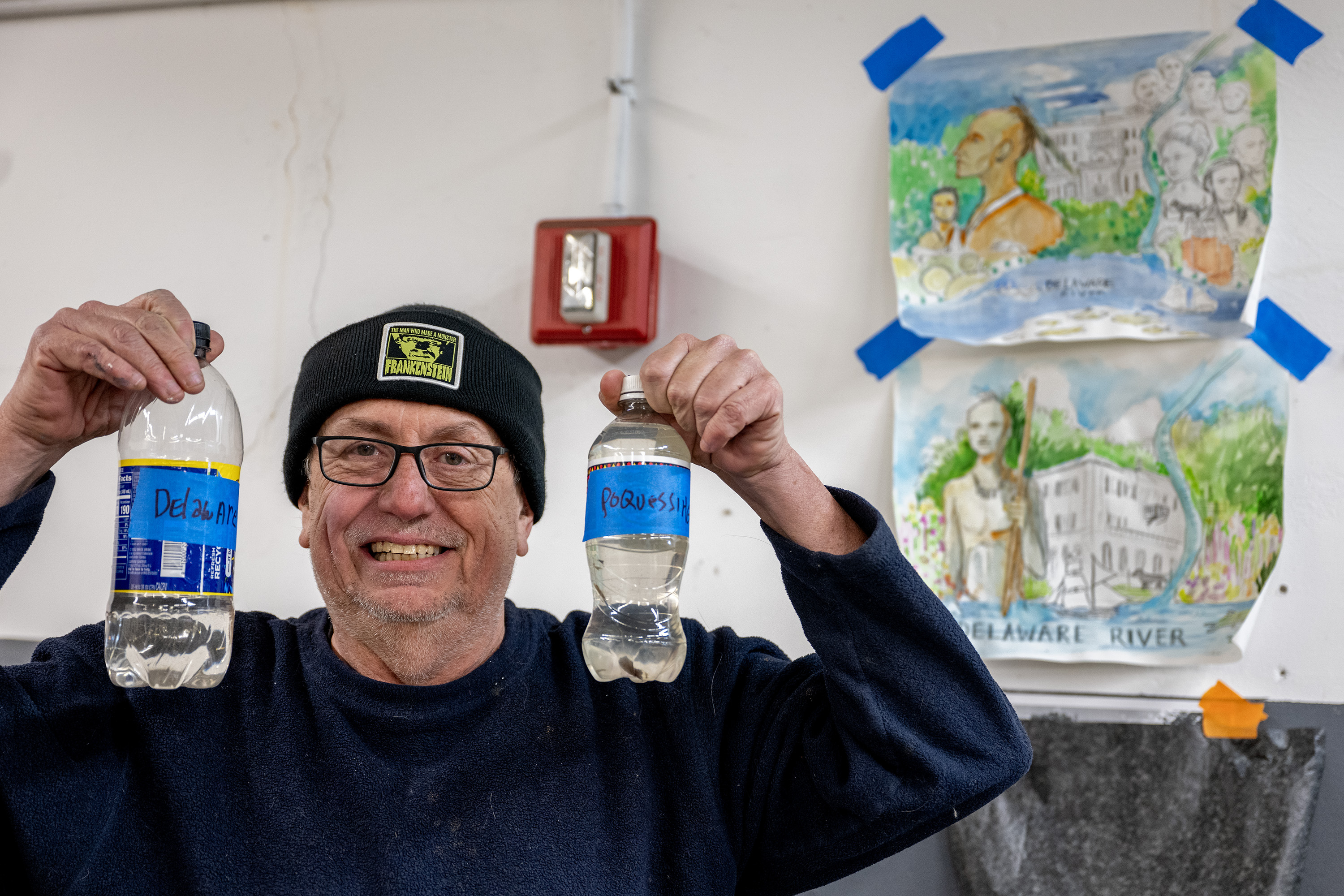
    Local artist Bob Dix displays waters he collected from the Delaware River and Poquessing Creek to use in his painting of one of 20 replica Liberty Bells representing different neighborhoods Tuesday, Dec. 9, 2025.

    Planners say they expect the bells to draw interest and curiosity similar to the painted donkeys that dotted Philadelphia neighborhoods during the 2016 Democratic National Convention.

    Ott Lovell said organizers will install the bells around March to protect them from the worst of the winter weather.

    “I don’t want any weather on them,” she said with a smile. “I want them looking perfect for 2026.”

    The bell locations

    • Chinatown

    • City Hall

    • El Centro de Oro

    • Fox Chase

    • Germantown

    • Hunting Park

    • Logan Square

    • Mayfair

    • Mount Airy

    • Ogontz

    • Olney

    • Parkside

    • Point Breeze

    • Roxborough

    • South Philadelphia

    • Southwest

    • Torresdale

    • University City

    • West Philadelphia

    • Wynnefield
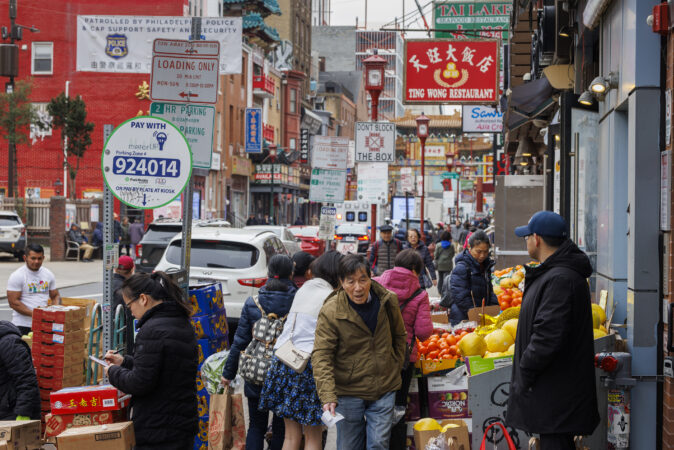
  • The share of Asian residents living in Philly’s Chinatown is decreasing, says a new report

    The share of Asian residents living in Philly’s Chinatown is decreasing, says a new report

    Philadelphia’s Chinatown neighborhood has grown significantly over the last decade, but a majority of its gains in population and business have resulted in a decline in the share of Asian residents amid concerns over gentrification and displacement, according to a new report.

    And the situation is not unique to Philly, a study from the Asian American Legal Defense and Education Fund found. Its counterparts in New York City and Boston — both also historic Chinatowns — are facing similar pressures.

    All three cities’ Chinatowns, in fact, saw declines in their share of Asian residents from 2010 to 2020, the report found. The findings in Philly, meanwhile, come following years of the neighborhood staving off locally planned developments that may have resulted in additional challenges for residents — including the proposed billion-dollar Sixers arena effort abandoned in January after years of heated debate.

    “The Chinatown community is no stranger to fighting off large-scale and predatory development,” said the report from the fund, which provided legal support to community groups during the arena saga. “The arena would have devastated the neighborhood, bringing in a renewed wave of gentrifying pressure for residents and competition for local businesses.”

    The fund recommends that cities like Philadelphia enact community-focused rezoning efforts to protect their Chinatowns’ cultures from those pressures. But, as the report found, Philly’s Chinatown is already seeing substantial demographic shifts.

    For population and race data in 2000 and 2010, the study used the U.S. Census Bureau’s decennial census, which conducts a 100% count of the nation’s population. Figures for 2020 were drawn from estimates from the Census Bureau’s American Community Survey for the five-year period of 2018 to 2022, as the study’s authors cited possible data issues in the 2020 decennial census because of the pandemic and the proposed citizenship question.

    An Inquirer analysis that used the decennial census for both 2010 and 2020 shows that Asians remain the largest racial group in Chinatown, with their share of the population falling slightly, from 61% to 57%. White residents’ share of Chinatown’s population grew from 24% to 28%.

    Here are three takeaways from the fund’s report:

    An older, less Asian population

    Between 2010 and 2020, Chinatown’s population grew by 15%, from roughly 5,900 people to nearly 6,800. During that time, much of the growth was driven by an influx of white residents, with that group’s population growing by roughly 76% during that time — and becoming the largest racial group in the area — the report found.

    The overall number of Asian residents, however, remained roughly the same — 2,464 in 2010 vs. 2,445 in 2020. That proportion accounted for about 36% of the neighborhood’s population in 2020, decreasing from 42% in 2010. The white population, meanwhile, accounted for 44% of Chinatown’s residents in 2020, compared with 29% in 2010.

    As a result, the report notes, the area’s growth can be “entirely attributed” to a rush of non-Asian residents over the last decade covered by the U.S. Census. The proportion of Latino residents also increased significantly between 2010 and 2020, with that group growing by 36%, the report found.

    The neighborhood’s population also appears in part to be aging in place, with the number of people 65 and older almost doubling from 2010 to 2020, from 444 residents to 849. Simultaneously, its population of residents up to age 17 decreased by 15% during that time period, and the group ages 18 to 24 decreased by 37%. The group of residents ages 25 to 64, meanwhile, saw a “modest” increase of 22% from 2010 to 2020, the report found.

    Higher rent — and home values

    As the proportion of Chinatown’s Asian population decreased, its rent costs, house values, and homeownership rates all increased, the report found. House values in Chinatown, in fact, were more than double the citywide median in 2020, standing at more than $491,000 in the neighborhood compared with $236,000 in Philadelphia overall.

    Homeownership rates were lower in Chinatown than in the city at large, however, standing at 40% in 2020 compared with 52% citywide. Still, homeownership in Chinatown increased from 31% in 2010 while it fell marginally in the city overall from that year, when it stood at 54%. By comparison, Boston’s homeownership rate in its Chinatown stood at 7% in 2020, while New York’s Chinatown had a 15% homeownership rate that year, the report found.

    Rent in Chinatown was also higher in 2020 compared with the rest of the city, the fund’s report found. The neighborhood’s median rent stood at nearly $1,900, while the city’s was about $1,150 that year.

    Boston, New York, and Philadelphia, the report found, all saw the “transformation of former warehouses, tenement buildings, or rowhouses into luxury apartments and condominiums” over the last decade. Those developments, the fund noted, “fail to expand the housing supply for Chinatown community members” and contribute to rising rents and displacement of low-income residents.

    “Affordable housing is quickly disappearing in Philadelphia’s commercial core,” the fund’s report found.

    Largely local business

    In total, the study found that 92% of Chinatown’s commercial land parcels were small or local businesses in 2020, with restaurants and retail outlets making up a lion’s share of storefronts. Restaurants were the clear growth leader, increasing in number by 40% from the decade prior.

    Nearly all of Chinatown’s restaurants were located south of the Vine Street Expressway, the fund noted. Of those, Asian restaurants dominated the cuisine offered, with most eateries serving Chinese food.

    Still, despite the dominance of Asian restaurants in the neighborhood, Philadelphia did observe the largest shift in Asian to non-Asian restaurants of the three Chinatowns examined in the study. Over the last decade, the proportion of neighborhood Asian restaurants decreased from 85% to 62%, while the area’s non-Asian eateries more than doubled from 15% to 38%.

    The presence of national chains in Philly’s Chinatown doubled between 2010 and 2020, moving from 4% of all businesses to 8%, the study found. Retail stores, meanwhile, made up about 30% of commercial businesses in the neighborhood in 2020, the largest proportion of which were beauty and hair salons, followed by grocery stores and markets.

    Many newer businesses, the study noted, were tailored for younger customers, such as bubble tea and upscale dessert shops, as well as convenience stores that sell snacks rather than groceries — many of which lack indoor dining rooms. That shift may affect older residents, the fund noted.

    “As these types of indoor dining rooms disappear, Chinatown elders have fewer options to spend their time in safe and affordable spaces,” the study said.

    Clarification: This story has been updated to further explain the data used in the Asian American Legal Defense and Education Fund study.

  • Joint city-Parking Authority proposal to reopen Filbert Street bus station advances in Council

    Joint city-Parking Authority proposal to reopen Filbert Street bus station advances in Council

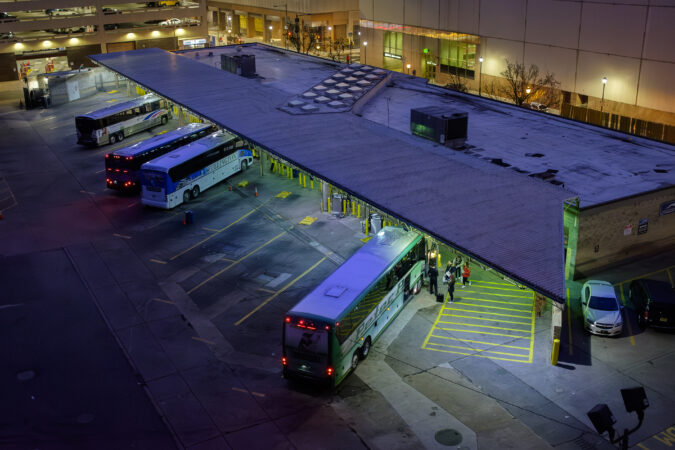
    The Philadelphia Parking Authority would renovate and run the abandoned Greyhound bus terminal on Filbert Street under legislation approved Wednesday by a key City Council committee.

    It was a step toward ending a two-year civic struggle to find a site for long-distance buses and their passengers. The renovated station could be ready for a series of big national and international events expected to draw millions of visitors next year.

    “A lot of people are going to be coming here for the first time, and when they’re in that station, they’re going to get their first taste of Philadelphia — and we want to make sure it’s a good one,” said Councilmember Mike Driscoll, who sponsored the bill on behalf of the Parker administration.

    The city will host events in 2026 for the 250th anniversary of the Declaration of Independence, as well as FIFA World Cup soccer matches and the Major League Baseball All-Star Game, among others.

    Greyhound ran the terminal at 10th and Filbert Streets for more than three decades but ended its lease in June 2023 when the business model of its parent company, Flixbus, called for divesting from real estate and moving toward cheaper curbside service in many U.S. cities.

    Since November 2023, customers of Greyhound, Peter Pan, and other interstate bus carriers wait, board, and arrive at curbside along Spring Garden Street in Northern Liberties — with no shelter from the weather and few amenities. It also has proved a nuisance to nearby businesses.

    Before that, the buses operated at curbside on Market Street between Sixth and Seventh Streets.

    PPA has a 10-year lease agreement with the property’s owner, 1001-1025 West Filbert Street LLC, with an option to extend it.

    The city senses that over the long term the owner anticipates selling the property, said Michael Carroll, assistant managing director for the Philadelphia Office of Transportation and Infrastructure Systems.

    “That’s the sweet spot, long enough that there’s a meaningful basis to invest in improvements and solve the problems,” Carroll told the committee.

    “At the 10-year mark, decisions will have to be made about whether this is a site that forever works best in Philadelphia, or whether there’s a better site,” he said.

    The unanimous Finance Committee vote came after it amended the measure to adjust the fees bus companies would be charged to stop in Philadelphia.

    Each stop in the city would cost $40 until the bus terminal is open, when it would move to a $65 fee. A smaller number of buses subsidized by the Pennsylvania Department of Transportation under a program to provide rural service would pay $16 a stop.

    Committee members also asked for suspension of a procedural rule so that all 17 lawmakers could consider the bill Thursday and clear the way for final passage before the holidays.

    In the agreement with the city that is part of the bill, PPA would run the terminal; assess the fees on bus carriers for the use of the facility and any street loading zones, such as those in University City; and handle enforcement.

    The Filbert Street proposal includes specific requirements designed to address concerns particular to Chinatown.

    For instance, the streets department would change traffic patterns so buses are routed to the station via Market Street instead of driving through the heart of the neighborhood as they did in the past.

    John Mondlak, first deputy and chief of staff of the city planning department, said that the through traffic had long been a chief complaint of residents and business owners in Chinatown.

    This story has been updated to include the name of the firm that owns the former Greyhound station.

  • A Philadelphia police officer critically injured in a motorcycle crash six years ago has died

    A Philadelphia police officer critically injured in a motorcycle crash six years ago has died

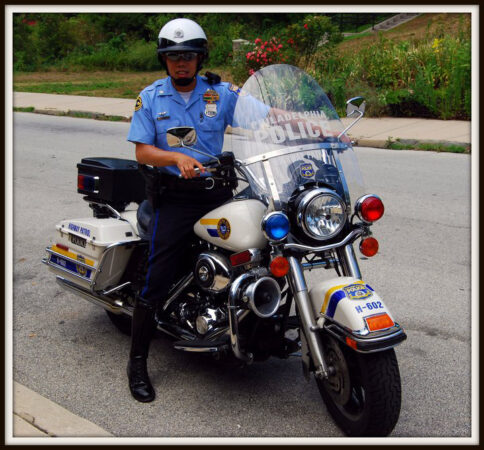
    Andy Chan, a Philadelphia Highway Patrol officer who suffered a devastating brain injury in a motorcycle crash while on his way to work six years ago, has died.

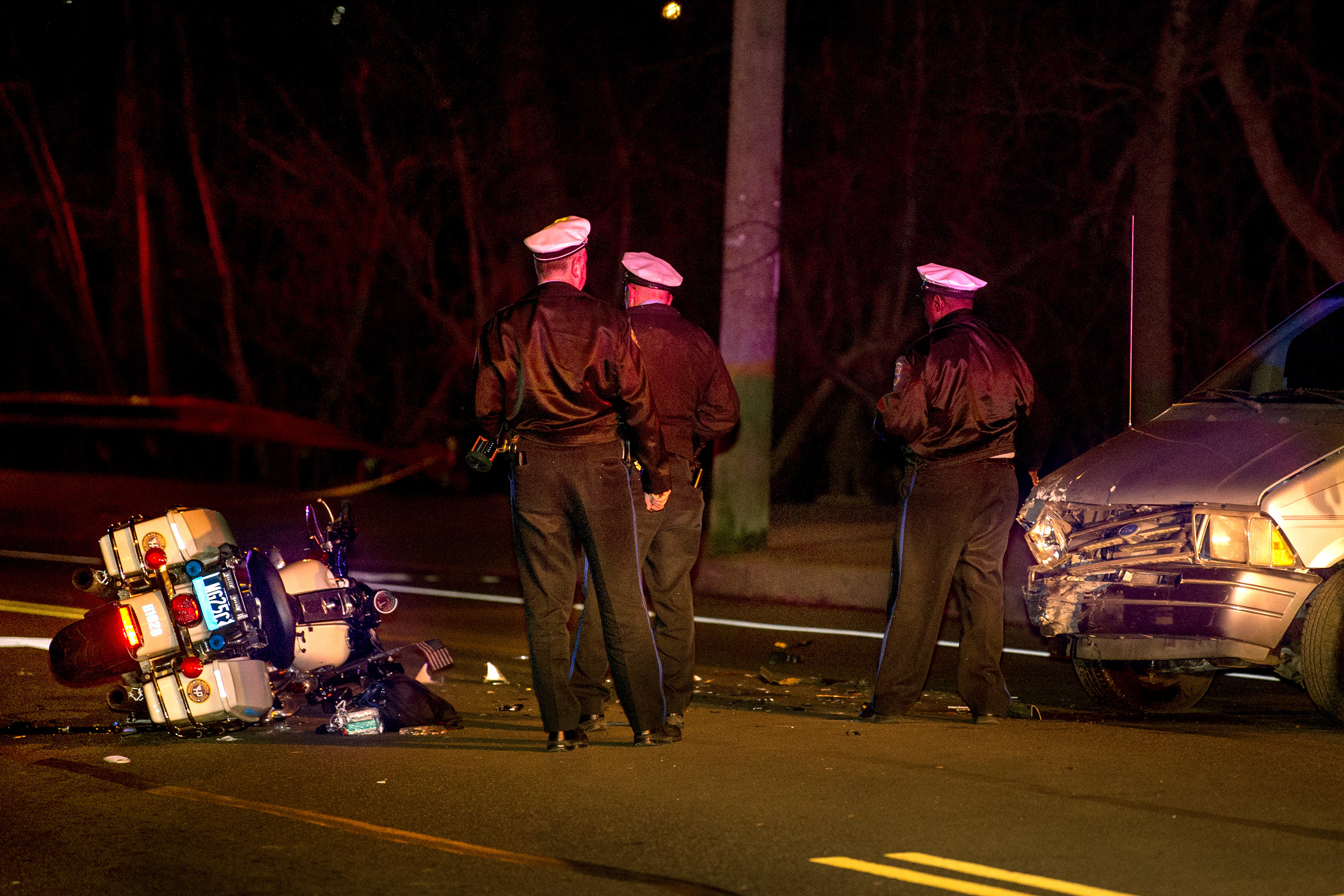
    Chan, 48, was riding through Northeast Philadelphia one evening in January 2019 when an elderly driver unintentionally struck him on the 3300 block of Rhawn Street. He was thrown about 20 feet, police said, and was critically injured.

    Chan, a 24-year veteran of the force, was in a prolonged coma and was hospitalized for weeks on a ventilator. In the years since, his injuries have required around-the-clock care, with family, friends, and colleagues in the Philadelphia Police Department regularly at his side.

    The Fraternal Order of Police Lodge 5 announced Chan’s death on Tuesday. The cause of death was not immediately clear.

    “Andy died a hero and we will always remember and honor his sacrifice,” the union wrote on Facebook.

    Andy Chan was thrown from his highway patrol motorcycle and critically injured in a crash on the 3300 block of Rhawn Street on January 3, 2019.

    Chan, a father of three, grew up in Chinatown and had always dreamed of being a highway patrolman. His family recalled how he watched with awe when the leather-clad officers approached his parents’ restaurant on their motorcycles.

    He decided, they said, that would be him one day.

    “That was the only place he strived to be in,” his wife, Teng, said years ago.

    After becoming a Philadelphia police officer in 1996, he was first assigned to the 39th District, working as a bike cop. Eight years later, he was promoted to the elite highway unit.

    He took such pride in his work that when he walked into police headquarters, instead of yelling, “Hi,” he would shout, “Highway!”

    And even when he met Teng nearly two decades ago, he introduced himself as such: “I’m Highway.”

    Chan and his partner, Kyle Cross, were among the first officers who responded to the Amtrak crash in 2015 that left eight people dead and nearly 200 injured. Cross, in an earlier interview, recalled how Chan kept his composure as he sought to rescue survivors from the wreckage.

    “What I remember from Andy was his poise — he stayed so calm, he really just led the way,” Cross recalled. “I followed his lead.”

    Police Commissioner Kevin Bethel, in an email to the department Tuesday morning, described Chan as “larger than life, not because of what he did, but because of who he was.”

    “He was the kind of officer whose reputation reached every corner of this Department and City; not because he sought attention, but because his work, his character, and his heart made him impossible to forget. Andy represented the very best of who we are and what we aspire to be: skilled, humble, kind, and unfailingly courageous,” Bethel wrote.

    “Andy,” he said, “will forever remind us of why this work matters.”

    Funeral arrangements have not been announced.

    Since Chan was injured, police and community members have gathered each December to support his family and raise money for his recovery. Supporters will continue to gather in his honor this year, on Dec. 12 at Craft Hall at 4 p.m., for the sixth annual Andy Chan Block Party.

  • One of Chinatown’s best restaurants is coming to East Passyunk Avenue

    One of Chinatown’s best restaurants is coming to East Passyunk Avenue

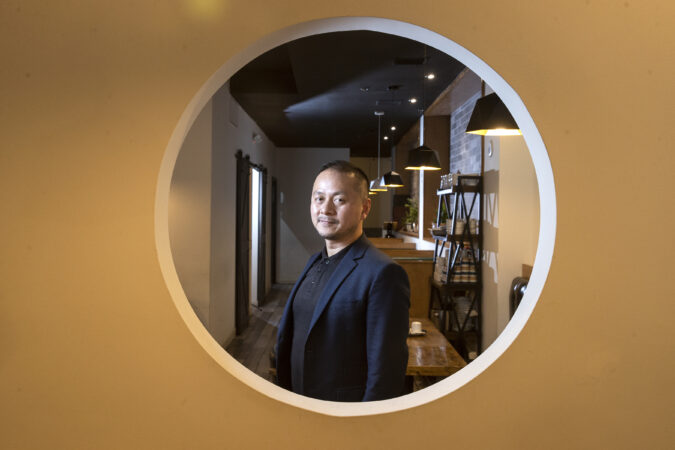
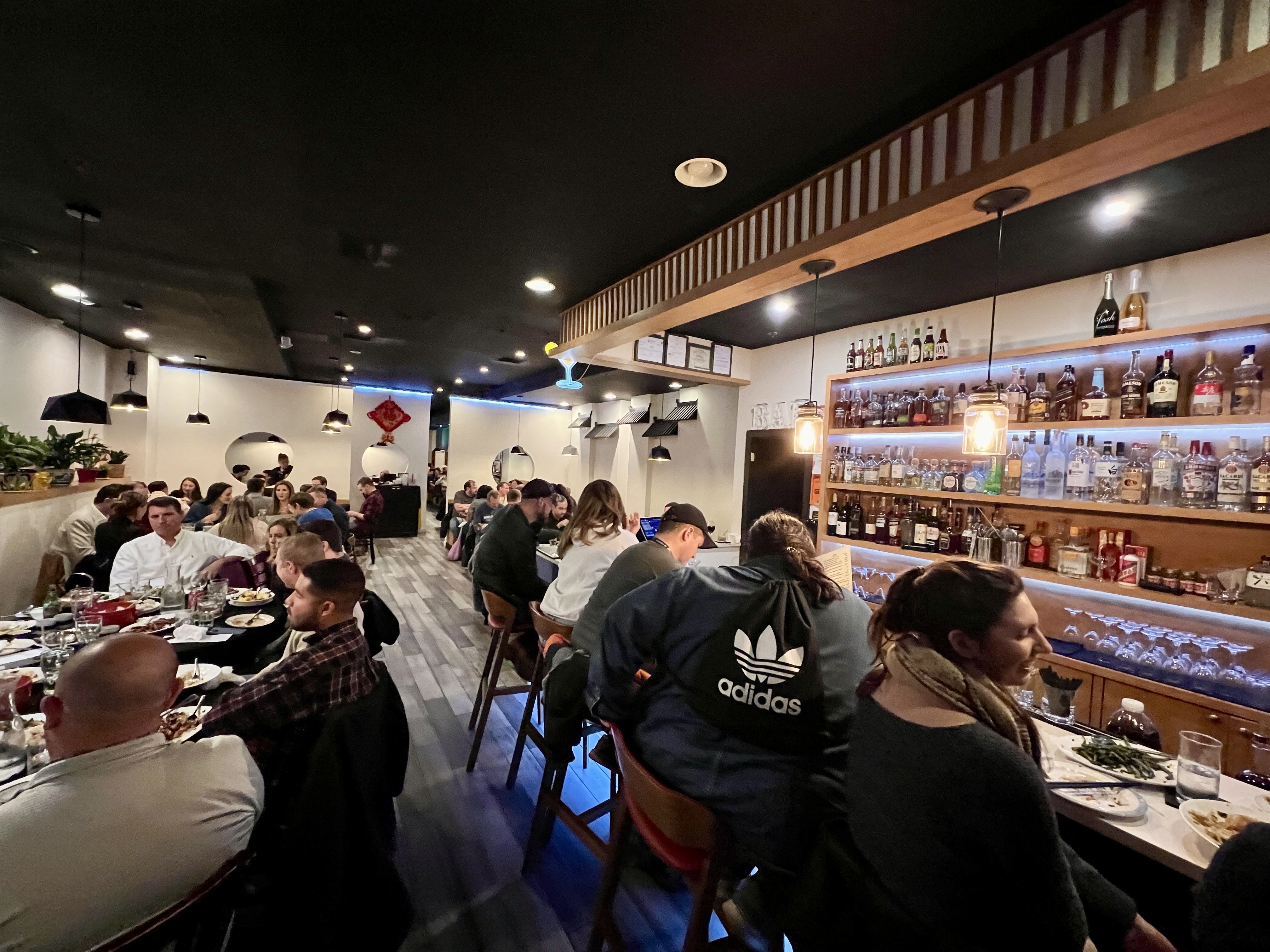
    One of Philadelphia’s most acclaimed Sichuan restaurants is expanding beyond Chinatown. With his purchase of the landmark Marra’s Restaurant & Pizzeria on East Passyunk Avenue, EMei owner Dan Tsao has set his sights not only on South Philadelphia but also to the Main Line and beyond.

    Several months ago, Tsao purchased the former John Henry’s Pub property on Cricket Avenue in Ardmore, where hopes to open another EMei next summer.

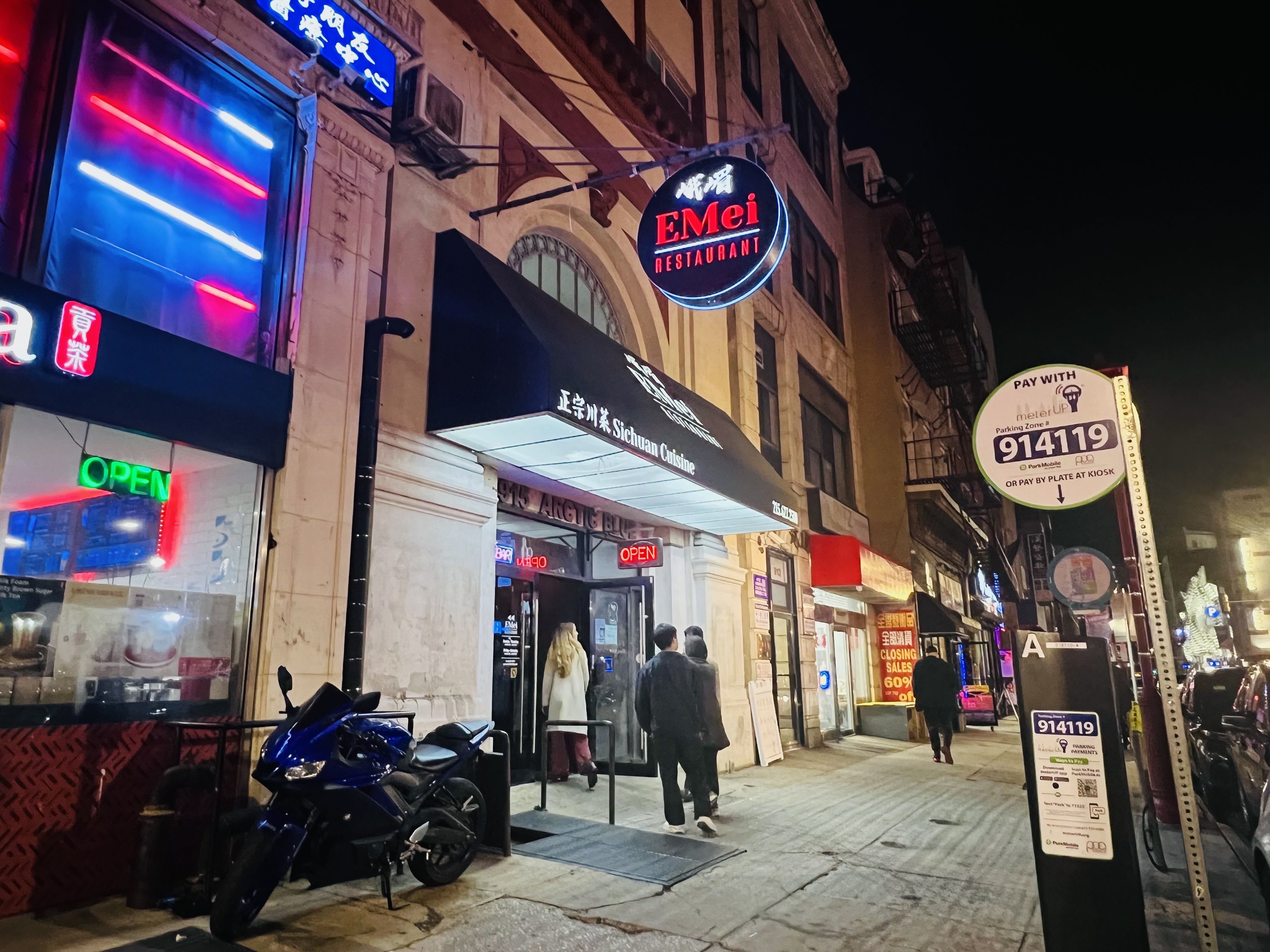
    Dan Tsao’s restaurant EMei at 915 Arch St. in Chinatown on Nov. 8, 2025.

    Tsao said the East Passyunk EMei would roll out in phases, with takeout and delivery launching in February during renovations and full dine-in service targeted for summer 2026. He said he wants to become part of the Passyunk Avenue community for decades to come.

    Real estate broker Greg Bianchi, who represents the family that owned the Marra’s building at 1734 E. Passyunk Ave., called the deal “a win-win for everybody. [Tsao is] going to bring more people and business to the other businesses. People don’t realize what a force he is in the Chinatown community.”

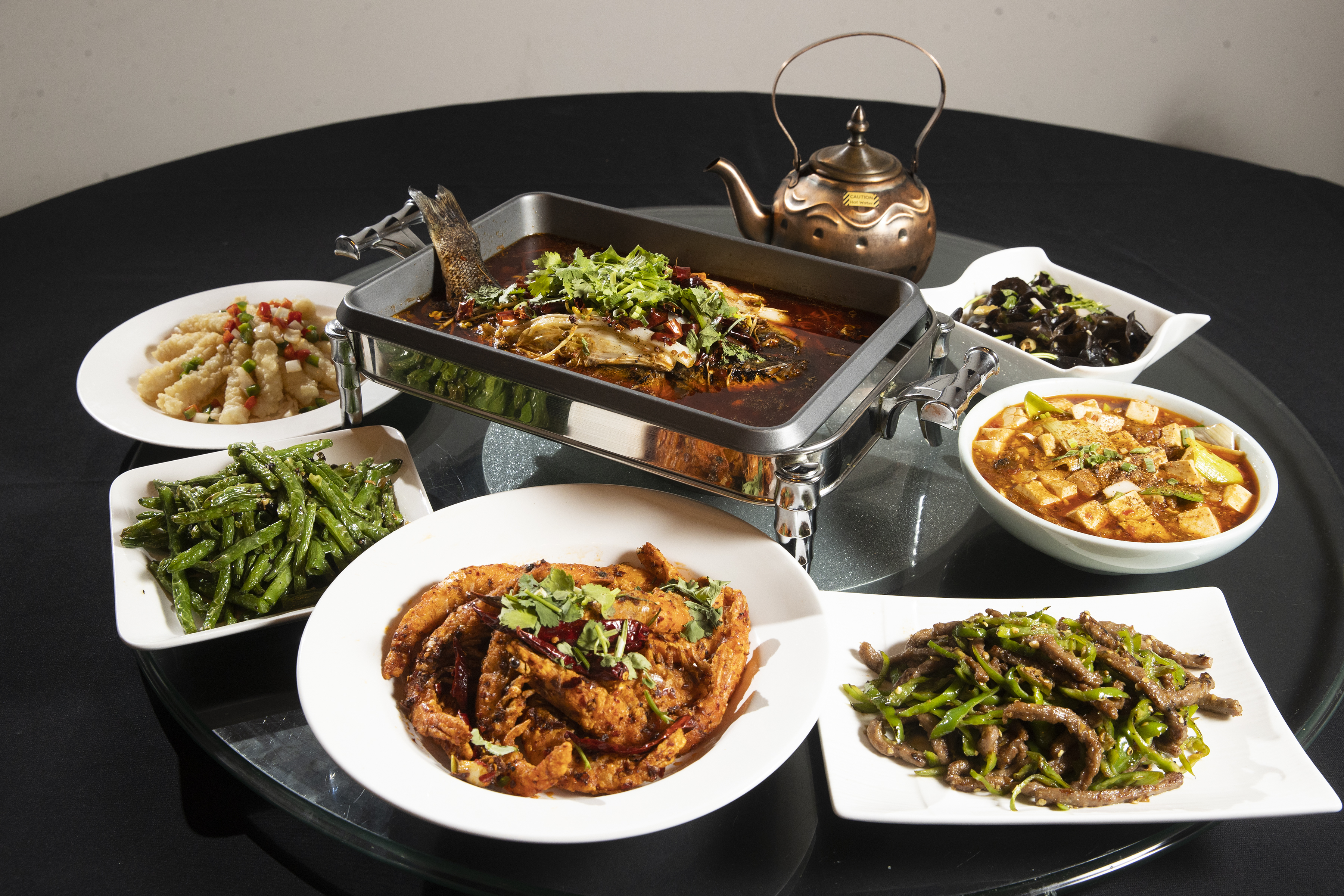
    Dishes served family style at EMei, 915 Arch St.

    Besides operating EMei, Tsao — who immigrated from China after high school and graduated from Penn State in 1999 — has been a newspaper publisher for 18 years. His New Mainstream Press operates Metro Chinese Weekly and Metro Viet News, offering deeper news coverage than the typically ad-heavy publications that had dominated the local Asian-language media.

    EMei (pronounced “E-may”), which Tsao’s mother-in-law opened in 2011, draws a loyal base of native Chinese patrons for its Sichuan specialties, including mapo tofu, Chongqing spicy chicken, dry pot, tea-smoked duck, dan dan noodles, and whole fish. Its accolades include a 2024 placement on The Inquirer’s 76 most vital restaurants list and the top ranking in the Daily Pennsylvanian’s Best of Penn student survey. Recently, chef Amanda Shulman cited EMei in Food & Wine as her favorite restaurant.

    EMei on the rise

    The kitchen at 915 Arch St., entirely in the basement, is now at capacity. Even after recent upgrades, including six new wok stations, 18 new kitchen staffers, and robots delivering foods to the tables, “growth requires new space,” Tsao said.

    Tsao analyzed sales data and found that many customers hail from Lower Merion, where he lives with his family — hence the opening in Ardmore. He also noticed that EMei is especially popular in South Philadelphia, whose four ZIP codes account for more than 20% of delivery volume.

    This made East Passyunk a natural site for expansion. He said he was immediately drawn to the Marra’s building and was surprised that it had been on the market for more than four years.

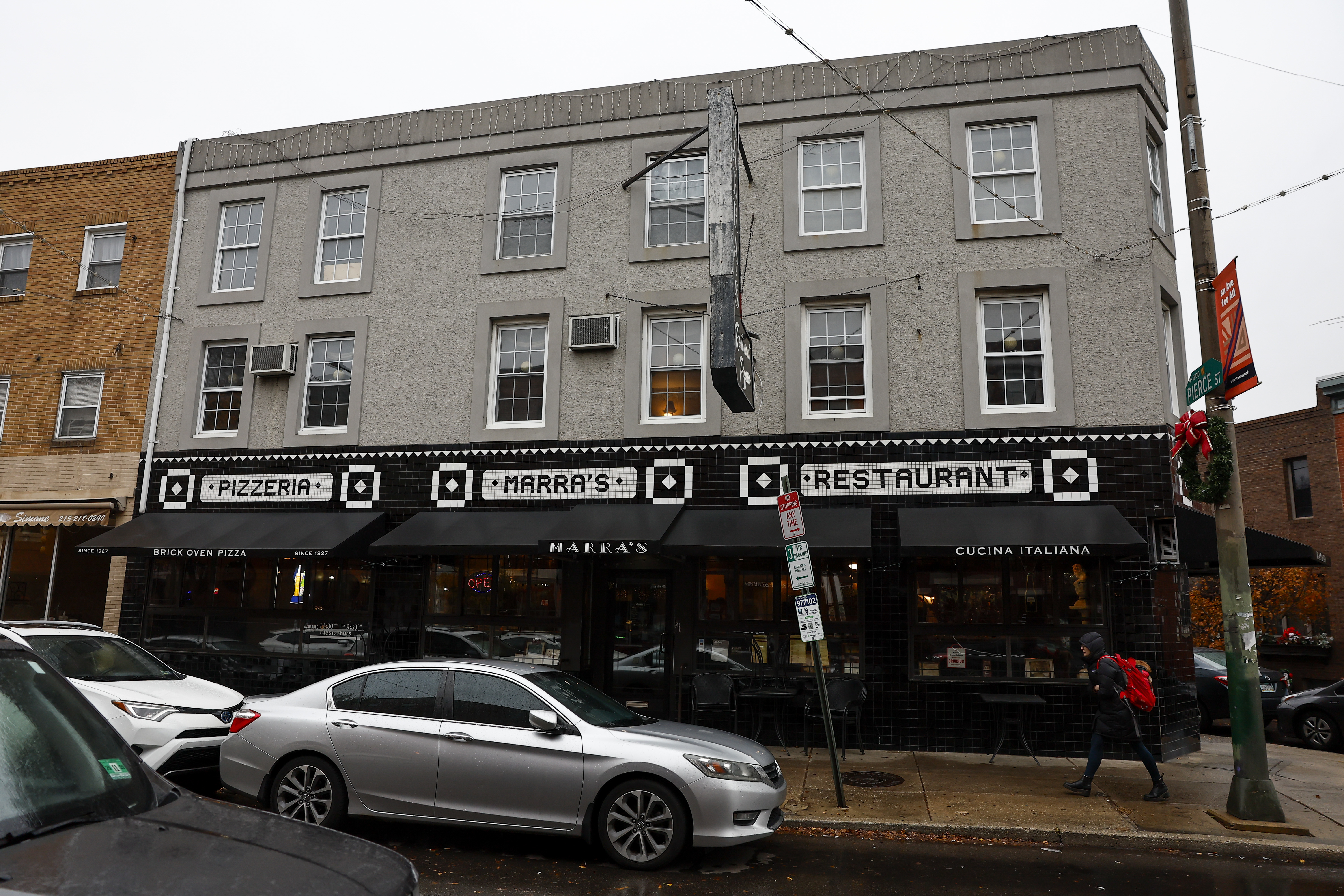
    Marra’s restaurant, as seen on Nov. 30, 2025, its last day.

    When Tsao learned that co-owner Robert D’Adamo — a grandson of Marra’s founder Salvatore Marra — was preparing to retire, Tsao saw parallels in his own experience: Before the pandemic in 2020, his mother-in-law, Jinwen Yu, and her business partner, chef Yongcheng Zhao, were looking to step aside; Tsao became an unlikely restaurateur, buying out partners and taking on responsibilities he had not expected.

    “My father spent his entire career as an executive at a food enterprise in our hometown in Zhejiang, and in college I worked every position in a Chinese takeout restaurant,” Tsao said. “Through my newspaper and digital platforms, I’ve also worked with more than 200 restaurant clients. I always knew this was a hard business. But I didn’t fully understand the challenges until I took over EMei.”

    He recalls fixing sewage backups until 2 a.m., working overnight with contractors to maneuver a 1,200-pound wok station into the basement, and spending hours after service refining the menu with chefs. “The industry is brutal,” he said. “If you stay mediocre, or stay in the comfort zone of only serving a niche customer base, you will struggle — even if the restaurant doesn’t close. I knew we had to evolve EMei into something much bigger.”

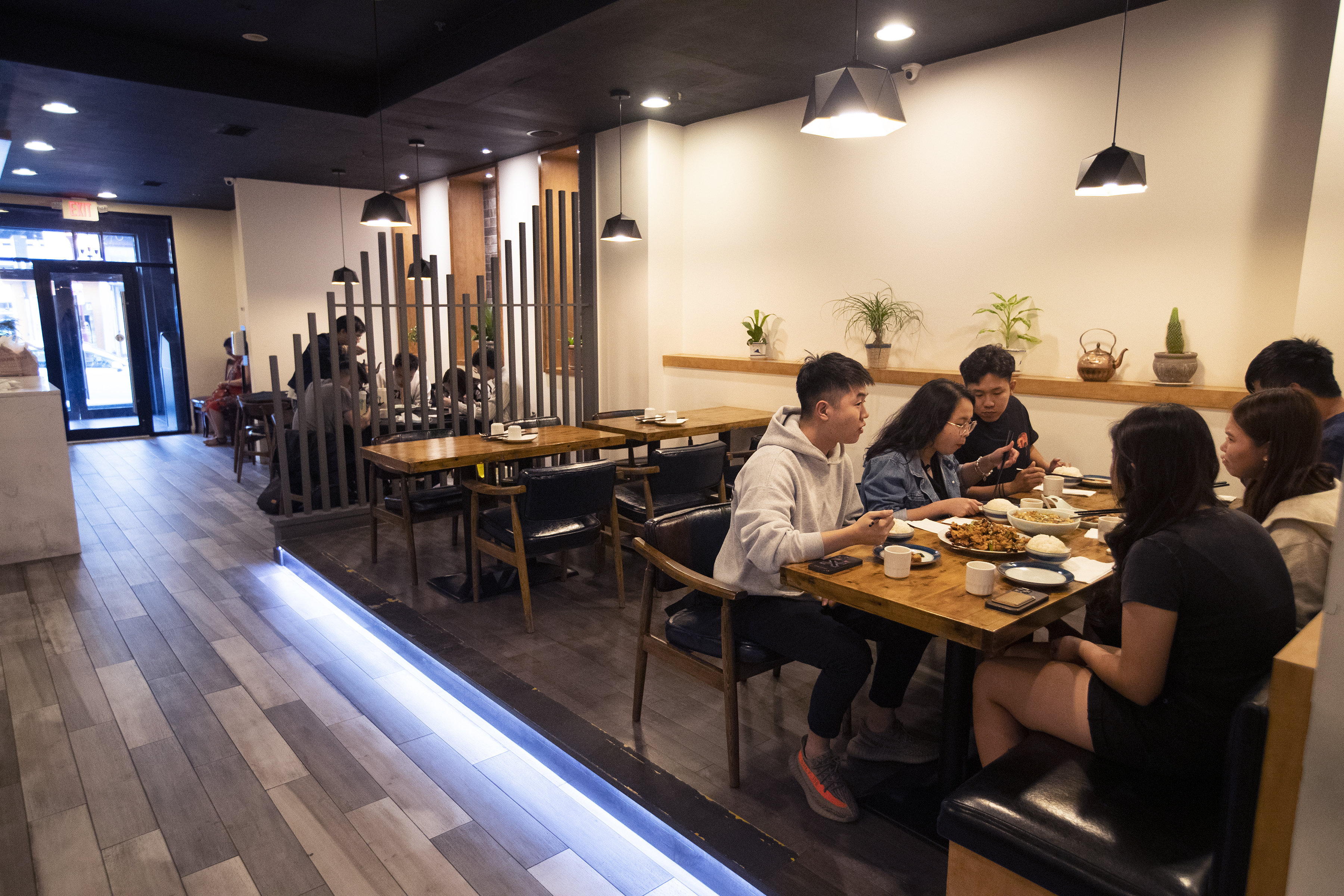
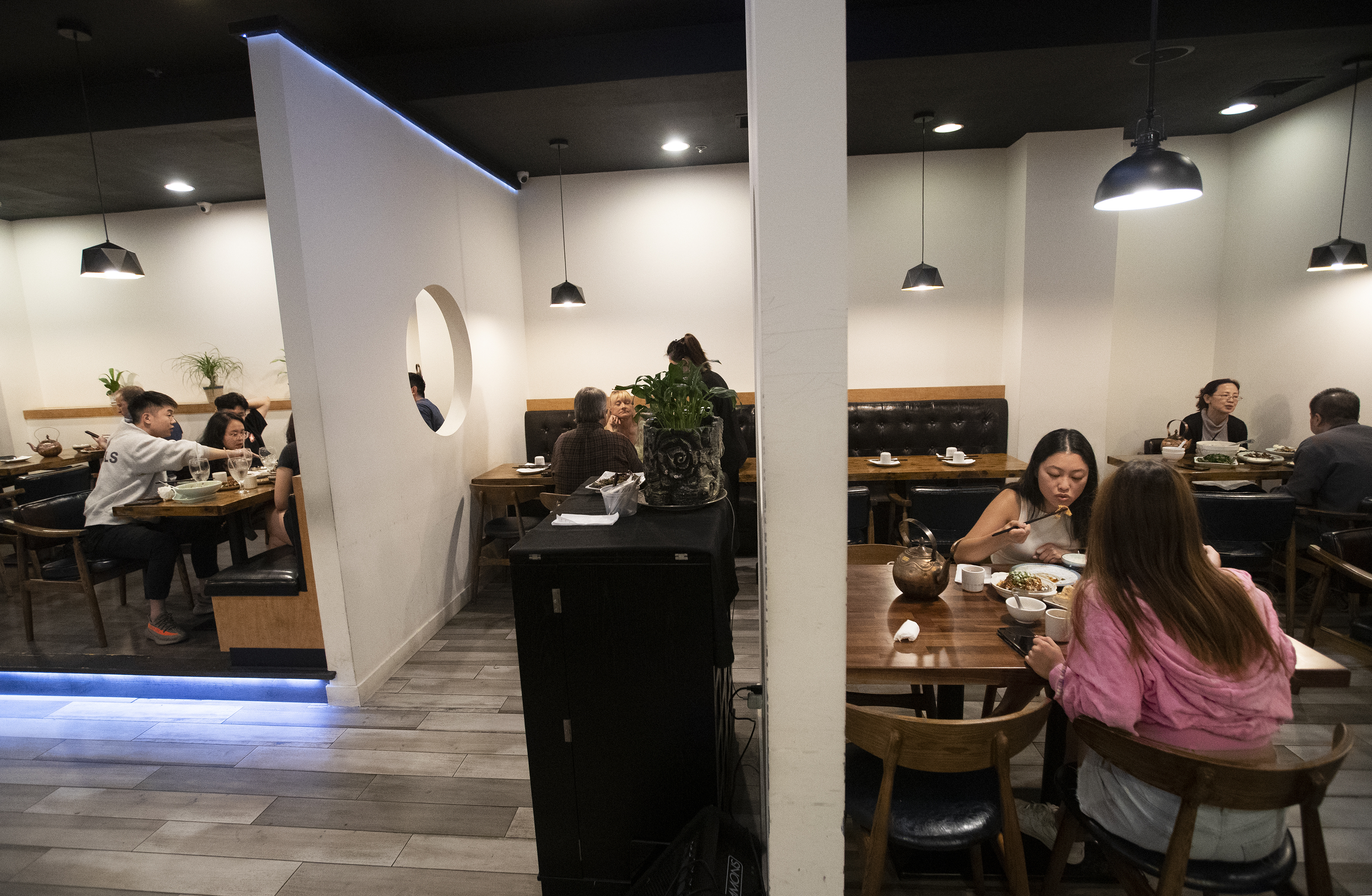
    The dining room of EMei at 915 Arch St.

    In 2019, he and his wife, Ting Ting Wan, closed the restaurant for two months to renovate. During the first two years of the pandemic, when sales dropped 50%, the entire family worked more than 60 hours a week to keep the business alive.

    Tsao also pulled two assistants from his media company to build formal back-office systems that later enabled EMei to scale. During the pandemic, Tsao launched RiceVan, a delivery and distribution service that transported Chinatown meals to suburban households and provided jobs for refugees and new immigrants.

    EMei restaurant at 915 Arch St., which opened in 2011.

    EMei has since grown from 11 full-time employees to 37, and sales have increased more than 300% compared with pre-pandemic levels, Tsao said.

    Tsao credits the restaurant’s founders — Yu and Zhao — for staying involved. “They still come in every day, even now,” he said. “Part of it is that retirement can be boring. But it’s also because once we took responsibility for operations and finances, they were able to relax, work fewer hours, and focus purely on the culinary side.”

    The dining room of EMei, 915 Arch St.

    A historic building reimagined

    The Marra’s building will undergo substantial structural and mechanical upgrades, Tsao said. Plans include a first-floor restroom to resolve long-standing ADA issues; full replacement of HVAC and electrical systems; and removal of window units in favor of central air.

    The vintage booths will be reupholstered. The bar will shift to the Pierce Street corner to improve flow. The second-floor private dining room will get new lighting and finishes; the third floor may be converted into a multipurpose or staff area. Tsao said he intends to address minor structural concerns while preserving the historic masonry and architectural character.

    One open question is the fate of Marra’s nearly century-old brick pizza oven, which Marra’s family member Mario D’Adamo said was failing. EMei will test whether it can be used. If removal becomes necessary, Tsao said the bricks, sourced from Mount Vesuvius, would be saved and possibly given to the D’Adamo family, the East Passyunk Business Improvement District, or incorporated into the renovation.

    “Our model has evolved — instead of putting over half a million dollars into leasehold improvements that don’t belong to us, we’d rather put that money into a building that becomes part of the company’s foundation,” Tsao said. “Restaurants come and go, but great restaurant buildings with stories — like this one — can last generations. We want to be the next chapter in that story, not just a tenant passing through.”

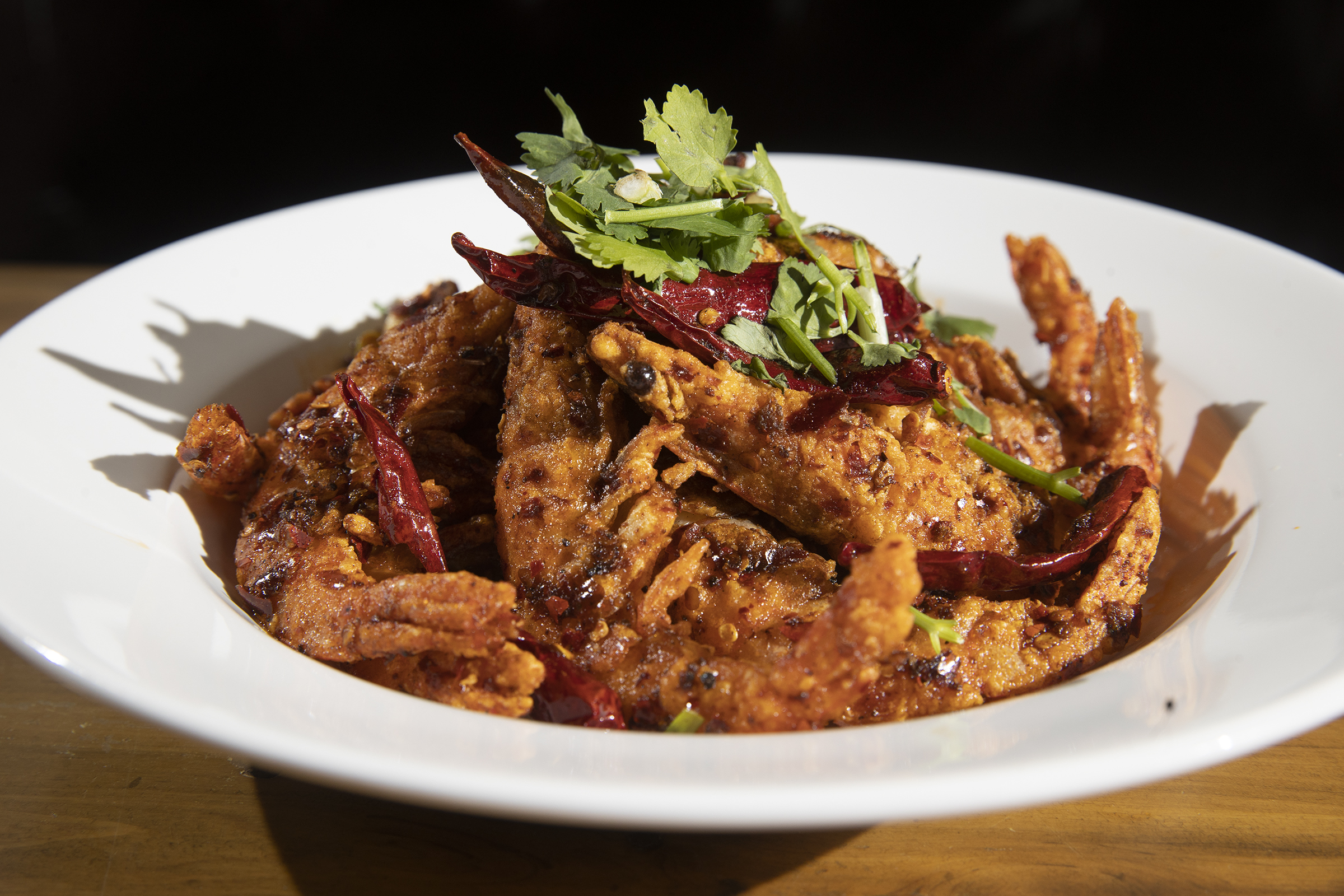
    The jumbo shrimp in hot peppers at EMei at 915 Arch St. on Sept. 15, 2022.

    What to expect on EMei’s menu

    The East Passyunk menu will reflect the Chinatown original while serving as a testing ground for contemporary Sichuan cooking – “lighter, seasonal, more ingredient-driven interpretations that show how Sichuan cuisine continues to evolve,” Tsao said.

    Roast duck and possibly Shanghai soup dumplings are under consideration, filling a void left by the closure of Bing Bing Dim Sum nearby. Some heritage dishes removed from the Chinatown menu will return there, helping differentiate the three locations while keeping them unified. EMei’s gluten-free program, including a separate fryer, will continue.

    Tsao said the neighborhood feels like home to his family. “I took my three kids — ages 6, 14, and 17 — to the East Passyunk Fall Fest again this year, and they instantly connected with the neighborhood’s energy,” he said. “They spent nearly 30 minutes exploring Latchkey Records, each leaving with something they picked out themselves. Watching them fall in love with the street the same way we did really made it feel like home.”

  • It’s essential that Mayor Parker’s H.O.M.E. plan prioritize resources for ‘people-first’ housing

    It’s essential that Mayor Parker’s H.O.M.E. plan prioritize resources for ‘people-first’ housing

    After months of state and federal budget stalemates that have threatened essential services for Philadelphia’s most vulnerable, we now know those budget outcomes don’t address critical housing needs, and as such, we have an opportunity right now as a city to meet the moment through the first year of spending in Mayor Cherelle L. Parker’s housing affordability plan.

    As a city, we are currently scrambling to decide what to do with $200 million per year for four years to address housing, when just last year we were discussing spending $1.3 billion on a Sixers arena in Chinatown. Clearly, the issue is not a lack of resources, but where we choose to direct them.

    Housing in Philadelphia has rarely been people-first in its approach; rather, it’s been about extraction from communities in one form or another. One could argue that the first great Philadelphia housing plan started with the city’s founding in 1682 and was built on the displacement of the Lenape people, who had inhabited the region for generations.

    In a neighborhood like Kensington — where I live and work — housing was developed at the turn of the 20th century to advance industry, and the profits to be made from it, by putting factories in formerly rural spaces and then surrounding those workplaces with as many homes as possible. This was a housing plan meant to extract as much as possible — rental payments, increased worker productivity, patronage of local businesses — from those who lived and worked here.

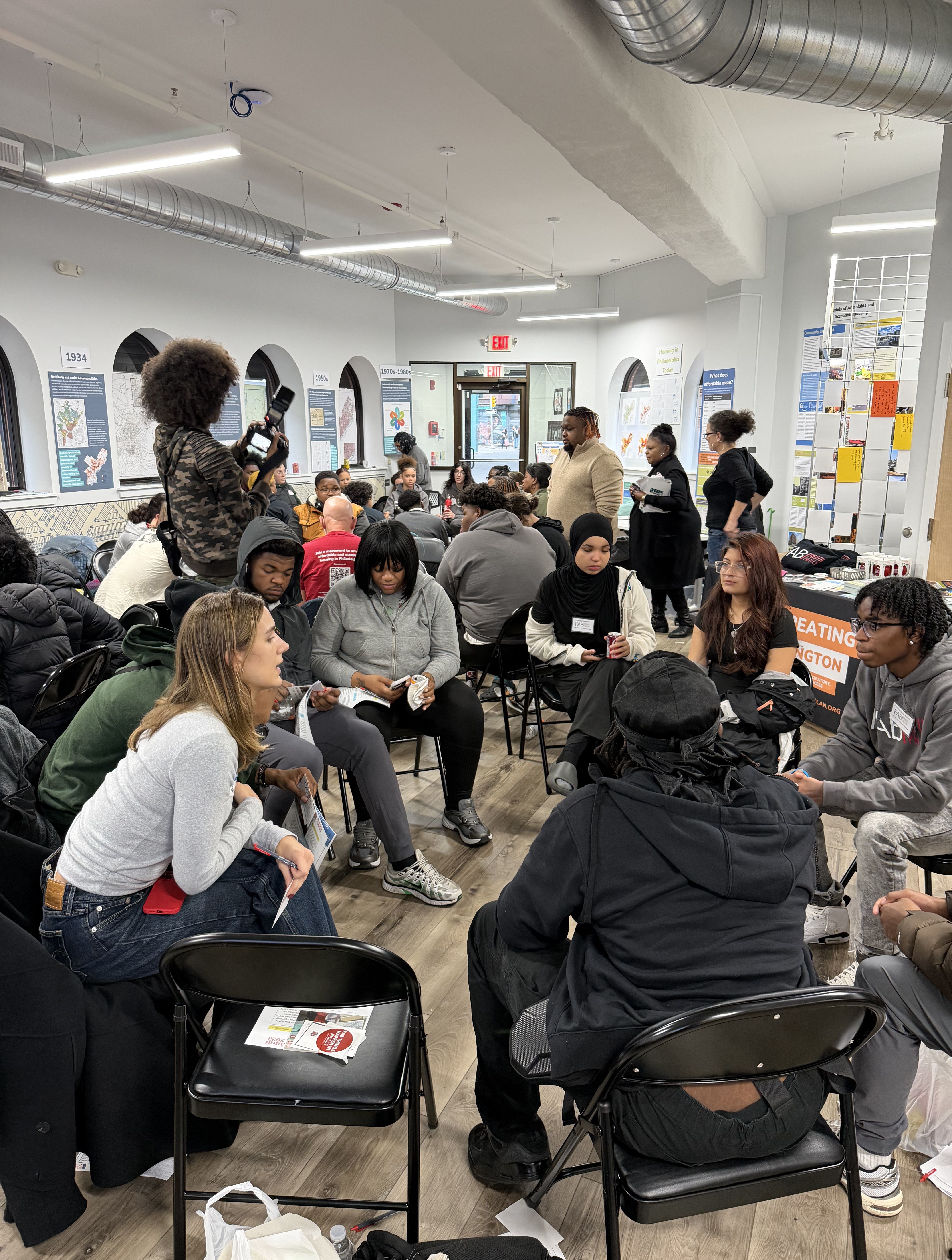
    Fab Youth Philly brings together young people for a teen town hall to discuss housing issues on Nov. 15 at the Kensington Engagement Center.

    Profit-first models aren’t only relegated to the past. Just a few weeks ago, the Reinvestment Fund reported that corporate investors are most active in Black and brown — often intentionally disinvested — neighborhoods, where they are responsible for one in four residential purchases, creating more extraction through landlords rather than creating and maintaining wealth among homeowners.

    Any transformative housing plan must be built on values: to address historical and current misaligned missions that continue to drive exploitative forces in our neighborhoods. The start of the mayor’s H.O.M.E. program is a moment to ensure the plans that we will be paying for over the next 30 years are people-first in their mission, purpose, and function.

    Real change happens when we are collectively grounded in hope, community, facts, and information about where we have been, all of which can serve as a guide to where we’d like to go.

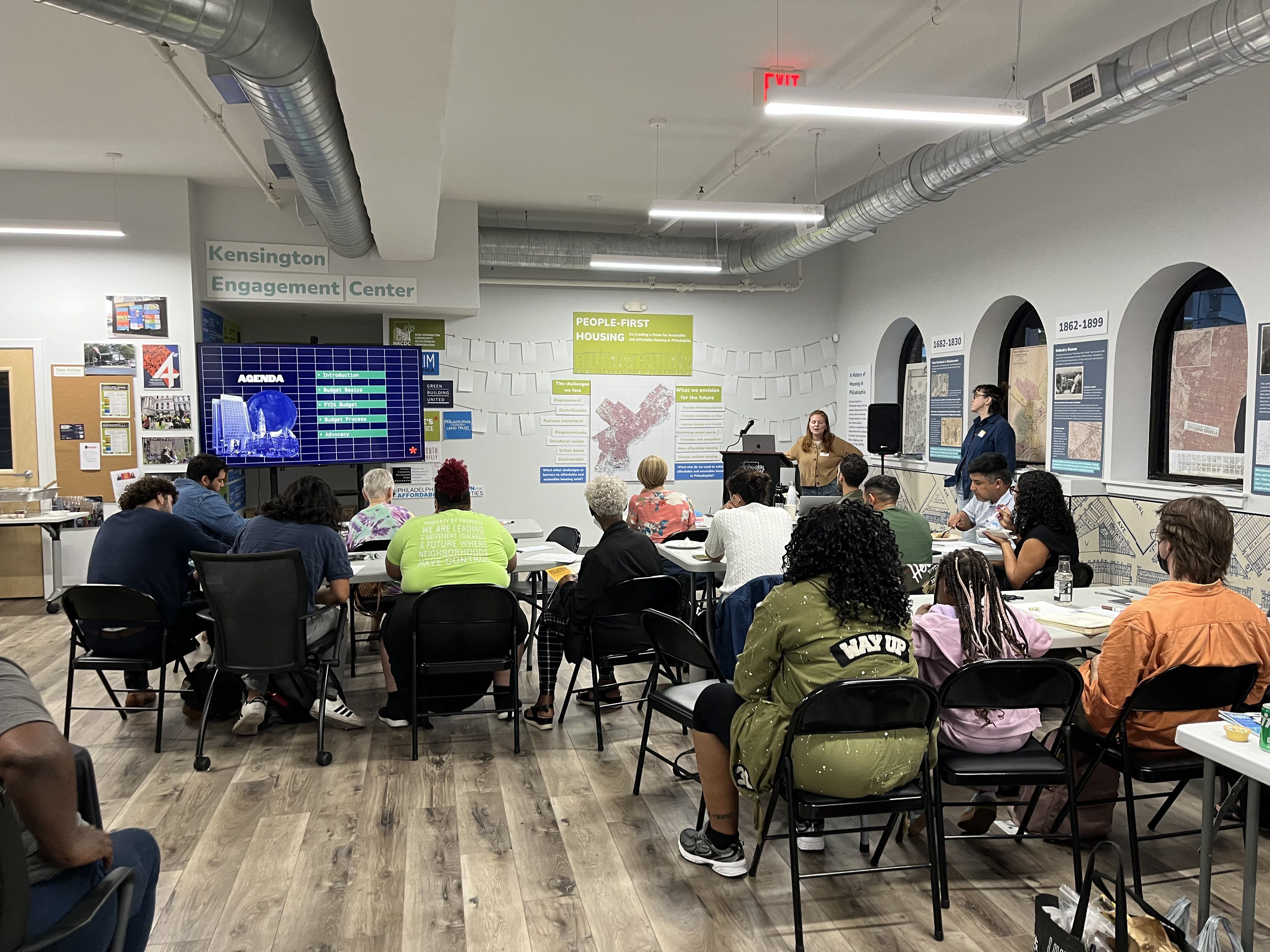
    Over the last few years, New Kensington Community Development Corp. has been facilitating the Co-Creating Kensington planning and implementation process, in which we have received feedback from 700 residents about their priorities. In January, we completed the rehabilitation of a three-story building at 3000 Kensington Ave., converting it into the Kensington Engagement Center, a meeting place and exhibition space that was designed to facilitate conversations with the community on their priorities.

    Conversations with our neighbors and partners revealed that housing is an increasingly pressing issue for Kensington residents (as well as for the rest of Philadelphia). We collectively recognized a moment of alignment with the release of the Philadelphia H.O.M.E. Initiative and the soon-to-be-released Pennsylvania Housing Action Plan.

    We convened several organizations already prioritizing housing affordability across the city, including Philly Boricuas, Green Building United, the Philadelphia Coalition for Affordable Communities, the Women’s Community Revitalization Project, Fab Youth Philly, and the Philadelphia Community Land Trust. Together, we codesigned a 14-part people-first housing workshop series and exhibit.

    This deep-dive approach is based on an understanding that community engagement needs to go beyond pizza parties and setting up tables at events. For a community to truly participate in its future, it needs to be informed, there needs to be shared power, and there needs to be collaboration and collective visioning.

    The People’s Budget Office facilitates a Budget 101 Workshop at the Kensington Engagement Center on Oct. 7.

    The workshop series has engaged more than 175 residents from 15 neighborhoods and has covered topics from housing wins, gentrification and displacement, how municipal resources are directed toward housing, environmental concerns, tenants’ rights, illegal evictions, and more.

    Angela Brooks, Philadelphia’s chief housing and development officer and new chair of the board of the Land Bank, came out for a workshop on the H.O.M.E. plan to help residents understand how the initiative will work and to hear resident feedback.

    Most recently, we hosted a teen town hall facilitated by Fab Youth Philly, in which more than 70 young people came together to share their hopes, dreams, and concerns and gave guidance on how the city can support young people — for example, looking at how the McKinney-Vento Homeless Assistance Act implements programs that serve youth.

    What we’ve learned so far is that the best way to build momentum for change is through informed, collective action and leveraging strategic pressure points by investing in relationships early. Creativity and diversity in leadership and lived experience are critical to ensuring movements are resilient, and we need to question the status quo.

    Communities must be built for the people who live in them, so that they aren’t just about four walls built by colonizers and conquerors, but about communities of choice and relevance so people can thrive.

    Trickle-down approaches do not work. The city’s H.O.M.E. plan needs to concretely prioritize resources for residents whose households earn no more than 30% of the area’s median income. We need to serve those on housing program wait lists before adding more and higher earners. We need to preserve the affordable housing we already have, and we need to invest more deeply in home repair programs like Built to Last.

    As someone serving on the H.O.M.E. advisory board and as a nonprofit leader of a community development corporation, I learned there are several housing issues we aren’t addressing at all in the city’s H.O.M.E. plan, such as those affecting young people and individuals impacted by the criminal justice system who have urgent needs but do not meet many of the traditional service categories.

    How do we move forward?

    For those of us who are currently centering housing, learning and being in community is essential. But we also need actionable moments.

    I recommend all these organizations because they put people first in housing plans — countering the notion that housing is just a commodity. Instead, they affirm the fundamental idea that housing is about people — and that people deserve a home.

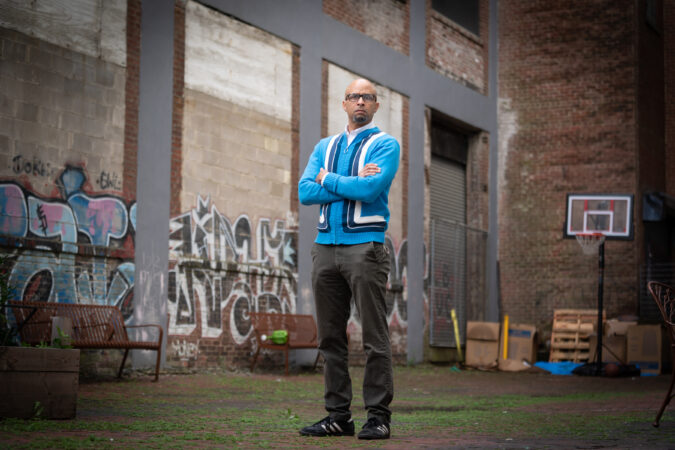
    Bill McKinney is a Kensington resident and the executive director of the New Kensington Community Development Corp.