Ikea has opened its first Delaware County location, though it doesn’t look like its massive stores in Conshohocken and South Philly.
The home design company’s “plan and order point” in Media opened Wednesday. At less than 4,000 square feet, the outpost is a fraction of the size of its typical stores, with square footage in the hundreds of thousands.
Ikea, which has its U.S. headquarters in Conshohocken, said in a statement this fall that the location would provide design consultation services for more complex projects like kitchens, bedrooms, and bathrooms. But the space doesn’t contain inventory. Instead, customers can order items for delivery or on-site pickup.
For some Delaware County residents, the new location means “no more trekking through that notorious I-476 ‘Blue Route’ traffic” to get to the Conshohocken or South Philly stores, Ikea U.S. market manager George Holtkamp said in an October statement.
But if those customers get a craving for the popular Ikea meatballs, they’ll still have to make the longer trip, as the Media site does not have an in-store Swedish bistro.
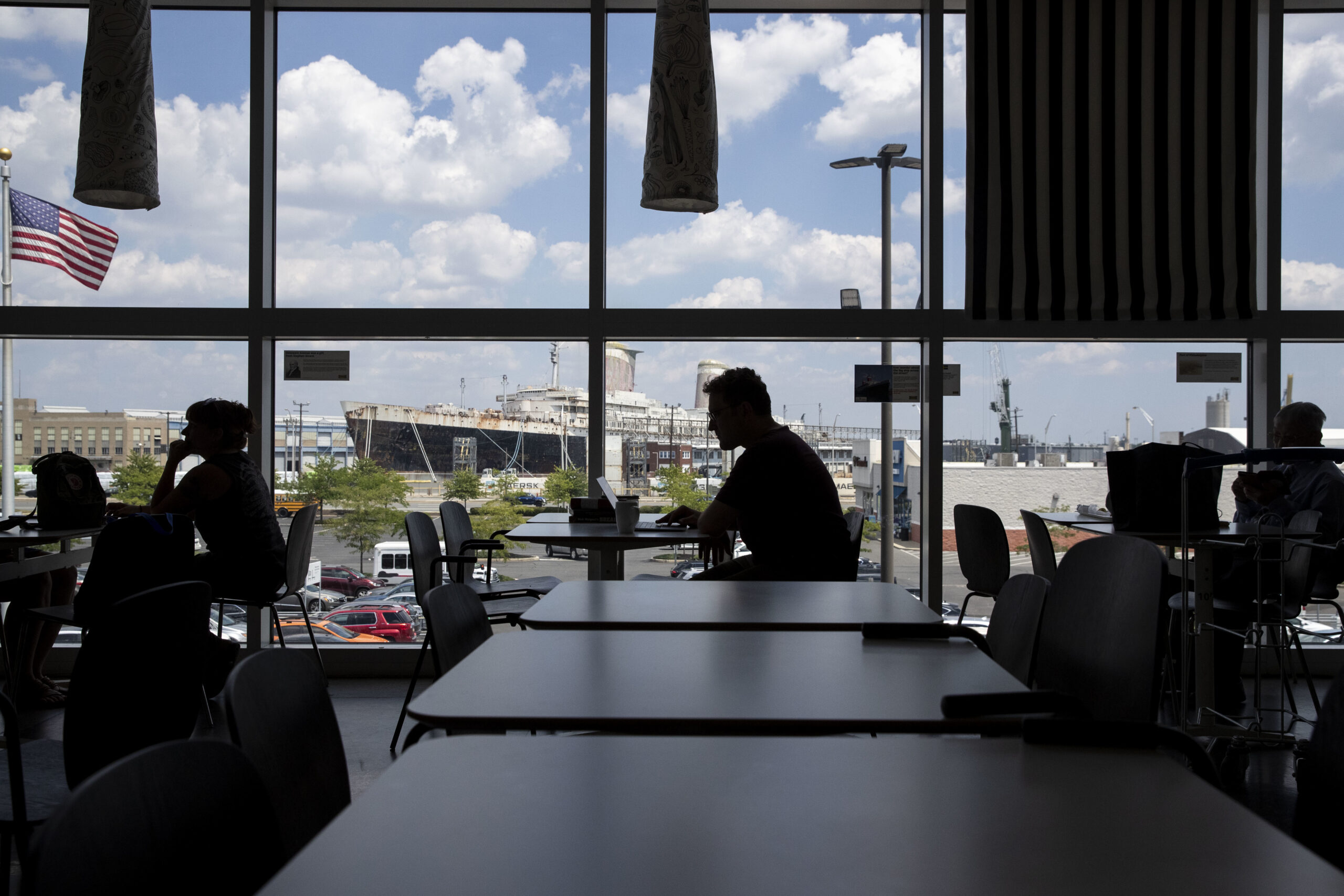
People worked in the cafeteria of the 300,000-square-foot Ikea in South Philly in 2022.
Ikea has been adding more locations after its U.S. arm reported $5.3 billion in sales last year, the majority of which were made in-person. Over the same period, about 61 million people visited its physical stores, while more than 457 million people browsed the website.
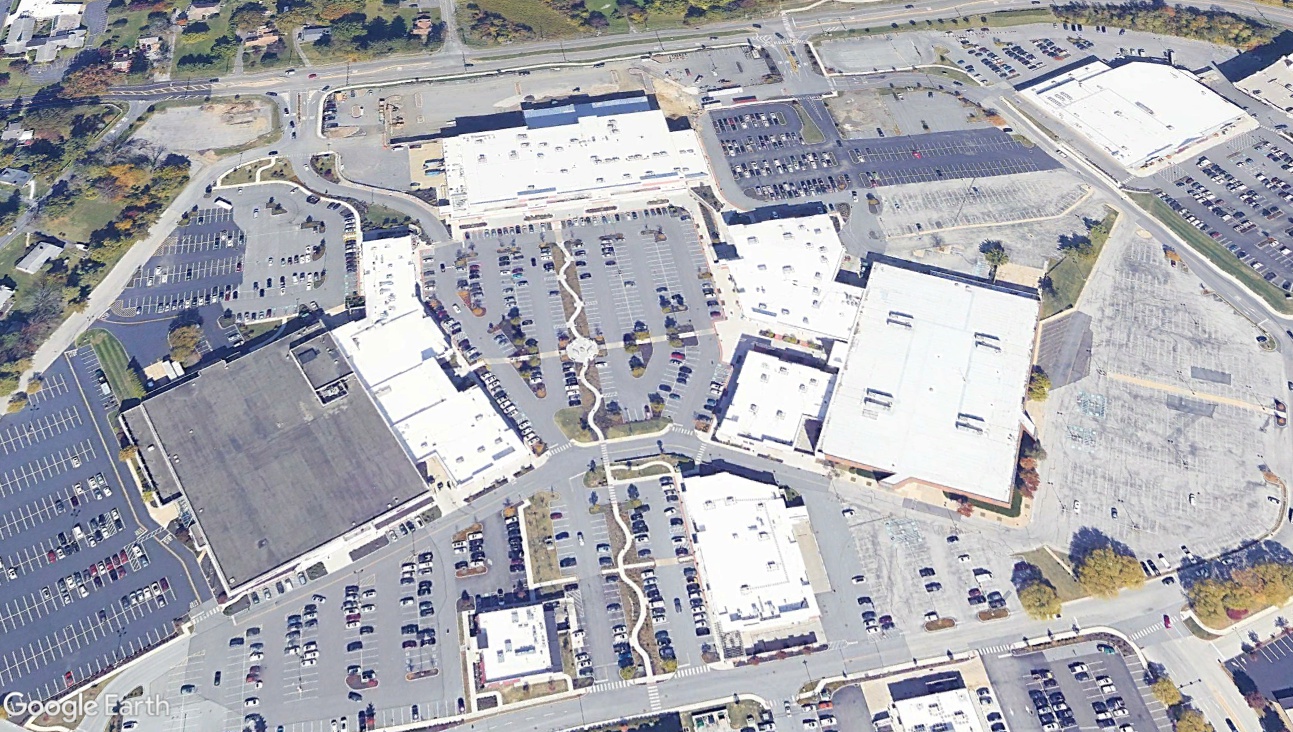
In Media, Ikea joins Michaels, TJ Maxx, Kohl’s, Boscov’s, and a slate of other stores that occupy the 830,000-square-foot retail section of the Promenade at Granite Run. The complex exemplifies how struggling malls can be reborn.
After the Granite Run Mall closed in 2015, BET Investments spent more than $100 million to demolish the building and build the open-air town center in its place, according to president Michael Markman. Along with an array of retailers, the complex now contains 400 luxury apartments, as well as several restaurants and medical offices.
An aerial photo shows the Promenade at Granite Run in June 2022.
Markman said in April that the retail portion of the complex is almost fully leased.
“Its only gotten better since we originally tenanted it,” Markman said at the time. “We signed a Nordstrom Rack. We signed a small-scale Ikea.”
A Colwyn woman and her boyfriend took on the responsibility of caring for the woman’s 20-year-old cousin after her previous caregiver died, Delaware County prosecutors said Thursday.
But instead of providing the woman, who has Down syndrome, with a safe environment, they fed her table scraps, beat her whenever she attempted to sate her hunger, and ultimately kicked her out of their home, into freezing April rain, for eating their Goldfish crackers.
Yahnae Clegg-Brown taunted the woman, whom police did not name in court filings, as she stood, rain-soaked, begging to be let back inside, according to the affidavit of probable cause for her arrest. Naiyr Sanders, Clegg-Brown’s boyfriend, demanded that she leave the property, according to the affidavit, then punched her in the head and pushed her down the house’s front steps.
A concerned neighbor called 911 after seeing the woman shivering and calling for help after a night spent outside, the affidavit said. When officers took the woman to Mercy Fitzgerald Hospital for treatment, she weighed just 80 pounds.
Clegg-Brown, 35, and Sanders, 31, have been charged with neglect of a care-dependent person, abuse of a care-dependent person, and related crimes. They remained in custody with bail set at 10% of $250,000. There was no indication they had hired attorneys.
District Attorney Tanner Rouse, in announcing the charges, said the case was heartbreaking and beyond comprehension.
“Those entrusted with another person’s care have a responsibility to protect them,” he said. “My office will continue to stand up for victims who cannot always stand up for themselves and will work tirelessly to hold those responsible accountable.”
Investigators said the woman began living with Clegg-Brown in November 2023 after the death of Clegg-Brown’s father, who had been caring for her.
The woman’s living conditions at Clegg-Brown’s home on Ellis Avenue were spartan, according to police: She was sleeping in an upstairs bedroom on a “deteriorating mattress” with no bed linens, the affidavit said.
Clegg-Brown had placed a surveillance camera on top of the refrigerator in the home’s kitchen, which she later told police was used to make sure her cousin was not “stealing” her food. Investigators noted in the affidavit that the woman was receiving regular government-assistance benefits, and that the money was supposed to be spent on her living expenses.
Clegg-Brown never took her cousin to her scheduled doctor’s appointments, and did not enroll her in school, the affidavit said. During meal time, she forced her cousin to sit on the floor and fed her leftovers or ramen noodles and oatmeal. As a result, the woman developed type 2 diabetes from malnutrition, according to the affidavit.
Clegg-Brown told investigators the “final straw” came on April 25, when she found her cousin hiding in her bedroom, eating a package of Goldfish crackers.
She and Sanders forced the woman outside, placed her clothes and bedding in trash bags that were too heavy for the woman to carry, and locked the door behind her, the affidavit said.
Clegg-Brown told the woman she was tired of dealing with her, and told her to find somewhere else to live, according to the affidavit.
Since her hospitalization, the woman has been placed in a new home with a different caregiver, police said, recovered to a healthy weight, and is now attending school.
A federal judge had some good news this week for Josh Shapiro, governor of Pennsylvania, but not so much for Josh Shapiro, resident of Montgomery County.
Shapiro, as governor, cannot be sued in his official capacity in a dispute over a strip of yard between his and his Abington Township neighbors’ adjoining properties, U.S. District Judge Harvey Bartle III ruled Tuesday.
But Shapiro and his wife, Lori, will still have to face their neighbors in federal court as homeowners, Bartle also determined.
The conflict came into public view in February, when Jeremy and Simone Mock, whose backyard abuts the Shapiros’ lawn in a tree-lined neighborhood near Pennsylvania State University’s Abington campus, sued Shapiro — both as governor and in his individual capacity — and George Bivens, acting Pennsylvania State Police commissioner. The lawsuit alleged the officials were illegally occupying part of the Mocks’ yard to build an eight-foot security fence last summer in what they claimed was an “outrageous abuse of power” that violated their constitutional rights. Bartle dismissed those claims in his ruling Tuesday, in what Shapiro’s administration called a major win.
But while Shapiro and Bivens are immune from the federal lawsuit as state officials, Shapiro as an individual and his wife are not, Bartle’s opinion said.
“We are pleased that the court has dismissed the claims against the office of the governor and the Pennsylvania State Police, and recognize that the allegations against these officials are without merit,” said Rosie Lapowsky, a spokesperson for Shapiro. “The Shapiros are confident that the facts will ultimately show that the Mocks’ remaining claims are meritless and politically motivated and will fail.”
Shapiro’s safety remains a priority for state police, as one of the nation’s most prominent Jewish elected officials. A Delaware County man was arrested Wednesday for threatening to burn down the governor’s residence, state police said.
But the Mocks’ attorney, Wally Zimolong, said the lawsuit at hand is about property rights and due process, and called Bartle’s ruling a “strong decision.”
“Make no mistake about it,” Zimolong said, “a federal court has said that the sitting governor of Pennsylvania can be held liable for damages over constitutional violations.”
The Delaware County lawyer who has represented high-profile Republican officials and candidates, including President Donald Trump, said it is “nonsense” to call the litigation political. Zimolong added that he hopes the Shapiros reconsider and attempt to resolve the case amicably.
The conflict’s origins
The dispute between the Shapiros and Mocks began last summer when, as part of a plan to build a security fence at the Abington house, a surveyor learned that a sliver of yard that the Shapiros had used for over two decades was actually on property belonging to the Mocks.
After the Mocks rejected the Shapiros’ offer to buy the land, court fillings said, Pennsylvania’s first couple invoked a state law that allows a person to gain ownership of a property they have actively used for at least 21 years. The Shapiros have lived in their Montgomery County home for 23 years.
“What followed was an outrageous abuse of power by the sitting Governor of Pennsylvania and its former Attorney General,” the Mocks’February lawsuit said.
(function() { var l = function() { new pym.Parent( ‘shapiroyard__graphic’, ‘https://media.inquirer.com/storage/inquirer/ai2html/shapiroyard/index.html’); }; if(typeof(pym) === ‘undefined’) { var h = document.getElementsByTagName(‘head’)[0], s = document.createElement(‘script’); s.type = ‘text/javascript’; s.src = ‘https://pym.nprapps.org/pym.v1.min.js’; s.onload = l; h.appendChild(s); } else { l(); } })();
A security fence was purchased but never installed, SpotlightPA reported. Instead, contractors hired by the state began planting arborvitae-type trees and other plants on the Mocks’ property. State police also flew drones over the Mocks’ property, threatened to remove healthy trees, and chased away contractors, the Mocks alleged in the suit.
The complaint also accused Shapiro of directing state police to patrol the property, and instructing the Mocks to leave the “security zone.”
The Shapiros’ countersuit in Montgomery County asks a judge to find that they are the “legal and equitable owners” of the area in dispute, having tended to the land that borders their front yard for 23 years. That suit is pending and a judge is expected to rule on preliminary objections filed by Zimolong.
Separately, the Shapiros and state attorneys filed motions asking Bartle to dismiss the federal complaint against them.
This week, the judge partially obliged, finding the stateofficials to be immune from the lawsuit while allowing the case against the Shapiros to proceed.
The judge also refused to freeze the federal case while the lawsuit in Montgomery County plays out, determining that the two cases are different enough to proceed.
“The claims here extend far beyond a disagreement between neighbors over the metes and boundaries of their properties,” Bartle wrote.
A Delaware County man was charged Wednesday after allegedly making threats againstGov. Josh Shapiro during a visit to a state representative’s office, including a threat to “burn down … [Shapiro’s] mansion with him in it,” Pennsylvania State Police said.
Police said the threats occurred when Richard John Franklin, 65, of Brookhaven, visited State Rep. Leanne Krueger’s legislative office in Brookhaven alongside his brotheron Tuesday to dispute and request help with an unanticipated and unpaid tax bill totaling $19, according to the criminal complaint. When a staffer tried to assist Franklin in completing a form to waive the taxes, Franklin “became irate and crumbled up the paper,” police said.
Franklin then began making threats the staffer believed were “threatening, harassing, and antisemitic in nature,” according to the complaint, including: “I guess I’ll pay that Jew. That Jew needs the money more than me” and “I’d like to burn down his [expletive] mansion with him in it.” Police said Franklin repeatedly referred to Shapiro as a “‘Jew’ multiple times in a negative manner.”
State law enforcement officers charged Franklin with felony levels of terroristic threats and ethnic intimidation, in addition to lower-level charges of harassment and disorderly conduct.
Shapiro, a Democrat who is among the most prominent Jewish officials in the country, has faced multiple threats of violence since becoming Pennsylvania’s top executive. In April 2025, a man broke into the state-owned governor’s mansion on the first night of Passover with a hammer and set several firebombs inside while Shapiro and his family were sleeping in a different part of the residence. The man, Cody Balmer, later pleaded guilty to attempted murder and was sentenced to 25 to 50 years in prison.
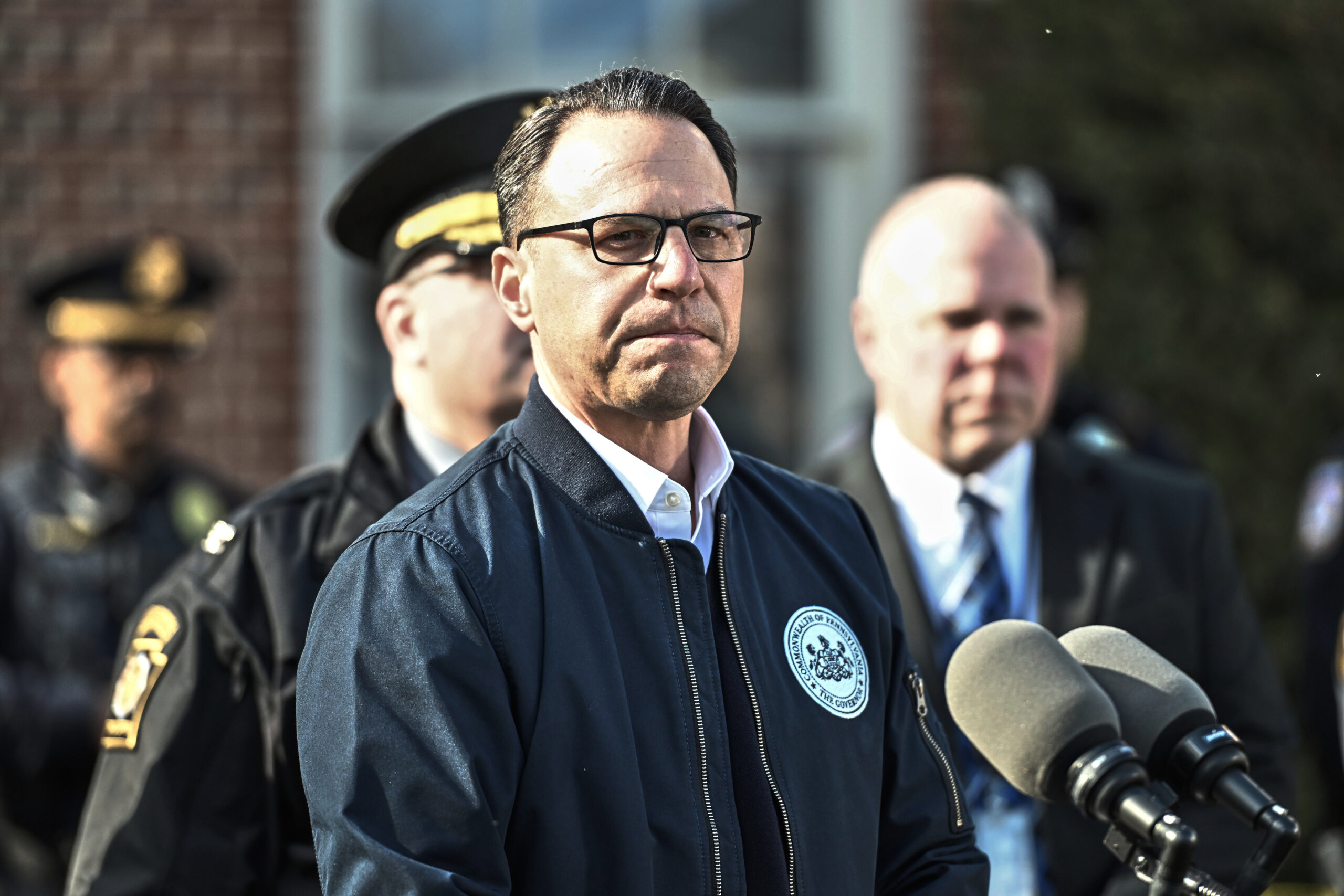
Pennsylvania Gov. Josh Shapiro pauses during a news conference at the governor’s official residence discussing the alleged arson that forced him, his family and guests to flee in the middle of the night on the Jewish holiday of Passover, Sunday, Apr. 13, 2025, in Harrisburg, Pa.
Early Wednesday, investigators from the state police political violencethreat unit visited Franklin at his Brookhaven home, where he provided conflicting accounts of what occurred at Krueger’s office before ultimately admitting to “calling the Governor a ‘Jew’ in a negative manner” and added that his “brother told him he should not have made the statement,” according to the criminal complaint. Franklin denied making any threats toward Shapiro, but admitted to referring to the previous arson attempt at the governor’s residence during the outburst, police said.
State police said they arrested Franklin without incident.
Franklin’s brother, who witnessed the events at Krueger’s office, disputed the state police account and said his brother never threatened the governor.
Leroy Franklin, 72, of Chester, said his brother visited the state representative’s office seeking information about a tax bill he had received, despite paying his state taxes through an accountant this year.
After the brothers spoke to a staffer who did not have answers for them, Richard Franklin became upset and raised his voice, Leroy Franklin said.
In a phone interview Wednesday, Leroy Franklin recalled his younger brother saying something to the effect of: “I’ve been on disability for 15 years, but I guess the state needs my money more than I do.”
The two were together at Krueger’s office the entire time, Leroy Franklin said, adding that he did not hear his brother use an antisemitic slur. He also disputed that his brother threatened arson.
“Anybody who said he did is lying,” Leroy Franklin said.
Around 2 a.m. Wednesday, Leroy Franklin said, he received a call from his younger brother. Richard Franklin told him that police were at his apartment and he was not sure where they were going to take him, Leroy Franklin recounted.
When the two spoke on the phone again later that morning, Leroy Franklin said, he learned police were taking his brother to jail.
“I don’t know what the heck anyone is talking about,” Leroy Franklin said Wednesday. “This is a bit extreme, to put it mildly.”
Richard Franklin was being held at the Delaware County prison with bail set at $100,000, according to court records. A preliminary hearing is scheduled for July 16, according to court documents. A lawyer for Franklin was not listed on court records.
Franklin is a registered Democrat, Pennsylvania voting records show. He has no prior convictions in Pennsylvania.
Shapiro’s office referred requests for comment about the incident to state police.
In a statement Wednesday, State Police Sgt. Logan Brouse said the agency “takes threats against the lives of public officials seriously,” noting the state police political violence threat unit was created “to address the growing amount of ideologically motivated violence against elected officials.”
The unit was created in May, after a Lebanon County man allegedly posted a “hit list” to social media targeting 20 state Democratic lawmakers. Adam Berryhill, 42, was arrested on May 6, after he was connected to an X account that posted a potential plan to attack the legislators. Some of the lawmakers named on the list said they had not been alerted to the threats against them, prompting state police leaders to update their communication protocols and create the investigations unit.
Krueger (D., Delaware) referred a request for comment to a spokesperson for House Democrats.
Nicole Reigelman, a spokesperson for House Speaker Joanna McClinton (D., Philadelphia), said in a statement that threats of political violence are becoming commonplace, “and every incident must be treated with the seriousness it deserves.”
“Healthy democracies depend on robust debate and respectful disagreement — not threats, intimidation, or violence,“ Reigelman added. ”Political violence has no place in our communities, and Pennsylvanians must unite in condemning it whenever and wherever it occurs.”
Robinson, 37, and Walton, 57, were held for trial on charges of murder, conspiracy, and related crimes after an hours-long preliminary hearing before District Judge Dawn L. Vann.
An autopsy revealed that Frank died in November from a laceration to his liver that caused significant internal bleeding, as well as bleeding in his brain that a forensic examiner said Tuesday was caused by either blunt trauma or severely shaking the boy.
Those injuries, Kemp said, were caused by Robinson, who has a documented history of abusing all four of her children, and who had been seen beating and striking Frank whenever he cried at the couple’s house in Chester.
Kemp said though Robinson dealt the fatal injuries, Walton was just as culpable — he waited to call 911 until the boy had died, despite seeing his condition worsen in the hours after the beating.
Walton also agreed to lie to police and attempt to blame his son’s injuries on his then-3-year-old daughter, whom Robinson claimed had pushed the boy down the stairs, Kemp said. The girl, according to testimony Tuesday, had spent the entire day with Walton and had not been home.
“They were afraid of law enforcement and investigators seeing that every aspect of that child had been abused,” Kemp said. “Only one thing could’ve happened with that baby, and that was his death.”
Robinson’s attorney, Michael Dugan, said that there was no evidence his client had intended to kill her son.
“At the end of the day, who calls 911? Mom. Who does CPR? Mom,” Dugan said. “I don’t think either one of these parents knew this child was dying, and when they knew his extreme condition, they called for help.”
Walton’s attorney, Wana Saadzoi, asserted that the charges against him should be dropped — he had never been seen abusing his son, and the mortal injuries took place when he was out working.
“He couldn’t have prevented it from happening if he wasn’t present,” she said. “This was a tragic failure that he was unable to appreciate the seriousness of his injuries.”
But Kemp doubted that theory of the case, saying Walton was well aware of Robinson’s history of child abuse and should have done more to protect the toddler.
“As a parent, you don’t get to bury your head in the sand,” she said. “You have an affirmative duty to intervene and save your child.”
Frank was born prematurely, according to the affidavit of probable cause for his parents’ arrests, and tested positive for cocaine and fentanyl. He was placed in foster care as a result, but was returned to his parents in May 2025.
Robinson’s half brother, Jason Weldon, testified Tuesday that he saw her carry Frank down the stairs by his T-shirt and drop him onto his back from about waist height hours before the boy died.
He said he saw Robinson slap Frank and forcibly cover his mouth when he cried, and heard her say she was going to “beat this little [expletive].”
Weldon testified that he threatened to report Robinson to county officials, but that she begged him not to because she did not want the boy to be taken away again.
He said he told Walton about the abuse and that he needed to protect his kids.
“If I would’ve known [Frank Jr. would be killed], I would’ve done something about it,” Weldon said.
Weldon said he woke up on the night Frank died to see Robinson frantically performing CPR on the boy. And he was in the room when she told police that her daughter had pushed Frank down the stairs, he said, but he “didn’t think it went down that way.”
An autopsy revealed that the injuries the boy sustained, especially the laceration to his liver, required force only an adult could apply, according to testimony Tuesday.
When a deal was struck to save 340 classroom-based jobs in the Philadelphia School District, Mayor Cherelle L. Parker and Superintendent Tony B. Watlington Sr. declared it “Christmas in June.”
It’s July now, but manystaffers still don’t have clarity on exactly who’s allowed to come back to positions that were almost cut and how that affects vacancies system-wide.
“It’s a mess, and it’s getting messier,” said Alison Andrawos, a teacher at Potter-Thomas Elementary in North Philadelphia who accepted a job in another district after learning this spring that her position would be cut and still doesn’t know whether it will be restored.
Monique Braxton, the school district spokesperson, said the system is “moving forward with restoring the approximately 340 school-based positions approved in the revised budget,” but that staffing the positions is separate from restoring them.
“We have been meeting with our union partners on implementation and are now working with principals on school staffing,” Braxton said in a statement. “All approved positions will be restored in the district’s budget system by Wednesday, July 9.”
The complex process is causing additional uncertainty for teachers and staff members andprolonging an already tumultuous hiring season as the district deals with fallout from 17 forthcoming school closings and the back-and-forth over millions in cuts stemming from a $300million district budget deficit.
Watlington this spring directed school principals to build their 2026-27 budgets factoring in the cuts, including about $50 million in school-based trims and the elimination of 340 classroom jobs. Parker then proposed a $1-per-trip rideshare tax she said would cancel the classroom cuts, but City Council balked, and for a time, the position losses appeared inevitable.
But restoring the positions was always going to be complicated.
Schools’ hiring timeline means that many of the teachers, counselors, and climate staff who were told they were going to be force-transferred because of the cuts sought and found new jobs over the past few months, either inside the district or elsewhere. Now, those workers eithermust rescind their acceptance of those new jobs or say “no thanks” to returning. Either way, that creates new vacancies in July, months after most schools have filled jobs and when many people are on vacation.
“We haven’t heard whether our positions are going to be reinstated, we don’t know what positions are available, and we don’t know what we’re doing in a few short weeks,”said Andrawos, an English as a second language specialist who began teaching in Philadelphia schools in 1997.
‘I’m pretty sure I’m going to be leaving’
Andrawos saidshedidn’t want to leave the city, but amid the worry of the past few months, she felt she had to explore jobs outside the district. Andrawos has been offered a position at a Delaware County school that comes with a raise and a shorter commute.
“I’m pretty sure I’m going to be leaving the School District of Philadelphia because of this,” Andrawos said.
Shesaid the decision is tough — she’s forged real bonds with her students’ families, and has been fielding messages saying they hope she stays at Potter-Thomas.
It’s not clear whether Andrawos’ position at Potter-Thomas, in North Philadelphia, will be restored because of the complicated way budgets are built, and the latitude principals have to shift positions based on school need and their own judgment calls.
Jobs are filled in city schools two ways — first, by a process called site selection, where principals hire any candidate they choose for open positions. Once the site selection window closes, district staff without positions choose from among open jobs in seniority order. Site selection closed weeks ago; force transfers without jobs have had their hiring sessions pushed back multiple times so far, and are still waiting.
Jane Roh, a spokesperson for the Philadelphia Federation of Teachers, said the union notified members June 19 that all positions cut due to the deficit would be restored; the PFT was told that district notifications to affected employees would immediately follow. So far, that has not happened.
That leaves staff sweating andfrustrated by a lack of answers, some said.
A roller coaster
One K-8 teacher, who asked that his name be withheld because he feared repercussions, was on the force transfer list because of budget cuts. With no notice that’s being walked back, he’s left with the possibility of having to get emergency certified to teach in another subject area, which would mean taking more courses.
The uncertainty is tough, and the answer to every question posed to the district and the union so far has been, we don’t know yet.
“For this whole summer, where teachers are supposed to have the space to reflect and rest and plan, we can’t do that to any degree,” the K-8 teacher said.
A teacher at a district high school, who also asked to remain anonymous because her employment situation is not settled, is in a similar boat. When her position was cut because of the deficit, she site selected into a job at another district high school.
The process has been frustrating, she said. She once got an email saying her transfer was canceled, but that turned out to be incorrect, though she never got official notice from the district about its error and had to make calls herself to figure it out.
When Parker and Watlington made their good-news announcement, she had no idea what to make of it. She still doesn’t, the teacher said.
“I’m on this roller coaster; I literally don’t know which school I’m going to work at in the fall,” said the high school teacher, who would be teaching different classes, depending on where she lands. “I want to prepare for the upcoming school year, and that’s impossible if you don’t know what you’re teaching.”
The school had been overstaffed four years ago as it navigated a complicated, unprecedented transition from a charter school back to a district school. It has soared, adding programs and opportunities and building a strong school culture; the community fears weathering steep staff cuts would jeopardize its progress.
Sarah Apt, a longtime Olney teacher active in the pushback against cuts, said Wednesday that the school was told it’s getting back three of its 17 staffers.
“We’re happy about that, but still fighting for more,” said Apt.
Among those still in limbo is Eric Baker, an Olney English teacher who’s been struggling with the back and forth, and the possible implications for the school he’s come to love — the school recruited students for a college prep track that’s potentially losing most of its teachers, including Baker.
“Because of this uncertainty, I’ve had to interview other places. I don’t know where I’m going to go. I would rather have the certainty of knowing where I’m going to work than having to deal with this,” said Baker. “It’s been frustrating.”
What are the defining characteristics of Media, and how should the borough plan for the next decade?
Those are the questions at the core of “Media 2035,” the comprehensive plan adoptedby Media’s borough council last month designed to shape the next chapter of land use, housing, economic development, traffic planning, and environmental decision making in the 5,900-residentDelaware County community.
“A comp plan is a long-term vision of how a community can look in the future,” Brittany Forman, Media’s borough manager, said.
The 166-page plan, built on feedback from around 500 residents, is centered around four guiding principles: Preserving Media’s character, fostering inclusivity through housing diversity, preserving the environment, and becoming a more connected and less car-dependent borough.
Media’s leaders have been tasked with stewarding a borough that has seen immense economic growth in recent decades, transforming it from a sleepy town wrought by financial disinvestment and crime to a cultural hub and destination for families settling in the suburbs. While Media’s metamorphosis has brought new residents and investment into the borough, it has also pushed the community’s limits around housing affordability, traffic, and growth.
“We’re a victim of our success, and it’s a good thing to be a victim of your own success,” said borough Council President Mark Paikoff. “But careful planning really is helpful.”
Here are fourkey takeaways from Media’s comprehensive plan.
Media’s charm has made it a desirable, and increasingly unaffordable, place to live
Surveyed residents said Media’s “small-town feel,” including its historic architecture, walkability, and diverse local businesses, is the borough’s most important asset. Yet the traits that make Media a great place to live have also made it a harder place to afford tostay.
“For generations, Media has prided itself on being ‘Everybody’s Hometown,’ a motto that reflected a genuine reality: a community where wealthy professionals, hourly service workers, young families, and retirees lived side-by-side,” the comprehensive plan states, adding that economic diversity was made possible by a “varied housing stock that offered entry points for people at every stage of life.”
As demand for walkable, transit-accessible living has surged in the Philly region, rising real estate costs are chipping away at this accessibility, creating a “severe burden” for a large segment of Media, notably seniors, teachers, nurses, and first responders, the plan states.
Recommendations outlined in the plan include deepening partnerships with affordable housing agencies, updating the borough’s zoning code to spur housing development in key areas, and promoting non-traditional housing options like in-law suites. Officials said there’s a significant opportunity in converting underutilized office spaces into housing, as many of Media’s vacant offices are already located in former residential properties.
Paikoff said the borough has had informal conversations with developers who are interested in both renovating older units and building new housing, though he stressed that bringing additional housing to the borough “will take some time.”
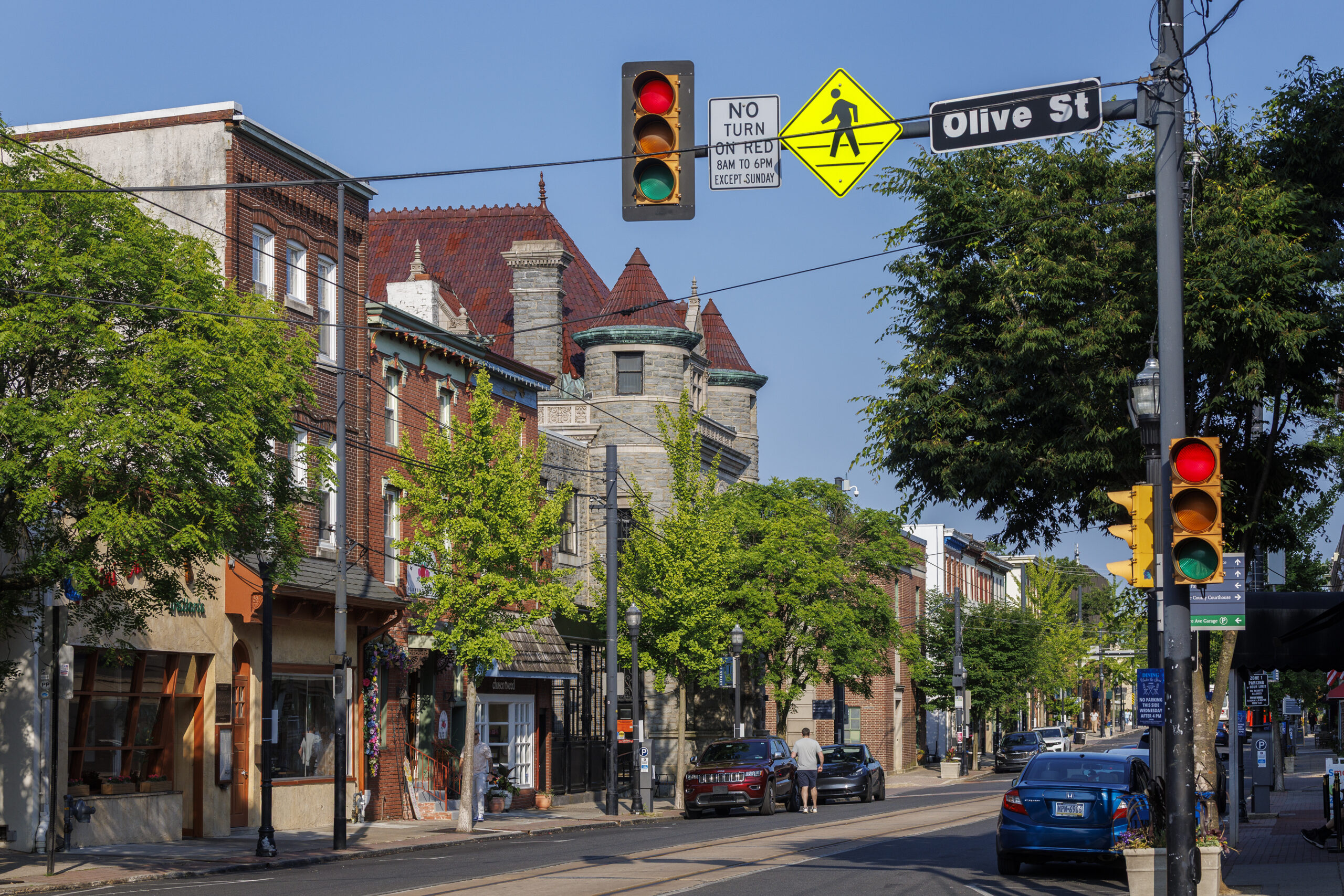
Downtown Media on a June day.
Media has strong transit access but ample traffic safety challenges
Media is defined by its density. The borough’s footprint is under one square mile, and it’s a place where pedestrians, cyclists, cars, buses, and SEPTA trolleys regularly interact.
“For a small town, I’d say we’re very sophisticated in terms of multimodal transportation,” said Forman.
Yet Media’s density and busy streets have also created the conditions for traffic safety issues. The borough recorded eight vehicle crashes resulting in serious injury and two resulting in death between 2013 and 2024. A 2020 traffic study conducted by the borough found that drivers regularly speed, especially along Baltimore Avenue, and roll through stop signs. Media’s only bicycle infrastructure comes in the form of painted road markings. Residents expressed a desire for more crosswalks, less disruptive downtown traffic patterns, and protected bike lanes.
Parking, too, remains a “source of friction.” The Baltimore Avenue parking garage is the anchor of the borough’s parking system, but it’s aging and requiring increased maintenance. At the same time, a surge in food delivery services has led to frequent double-parking outside of restaurants and blocking travel lanes. Media’s current parking and loading setup, the plan states, is “largely organized for a world that no longer exists.”
The vast majority of Media’s workforce lives outside the borough
Nearly all workers employed in Media commute from outside the borough. Of the approximately 9,800 primary jobs in Media, only 2.5% are held by residents. While Media’s accommodation, food service, healthcare, and arts and entertainment sectors have grown, its office administration, public administration, and wholesale trade sectors have shrunk. Overall tax revenues have increased in the past decade, led primarily by a growth in earned income tax revenues.
The post-pandemic shift to hybrid and remote work has also “fundamentally altered” travel behavior in the borough, according to the plan. Twenty percent of Media residents worked from home in 2023, up from 3% in 2014, according to estimates from the U.S. Census Bureau. With fewer residents and workers commuting on a daily basis, traditional 9-to-5 traffic on SEPTA’s Regional Rail and trolley lines has shifted, following regional and national trends. Local neighborhood activity, on the other hand, has increased during the workday.
Elizabeth Romaine, borough council vice president, said local businesses are already shifting to meet new consumer patterns, extending their hours or opening on weekdays when they would have previously been closed.
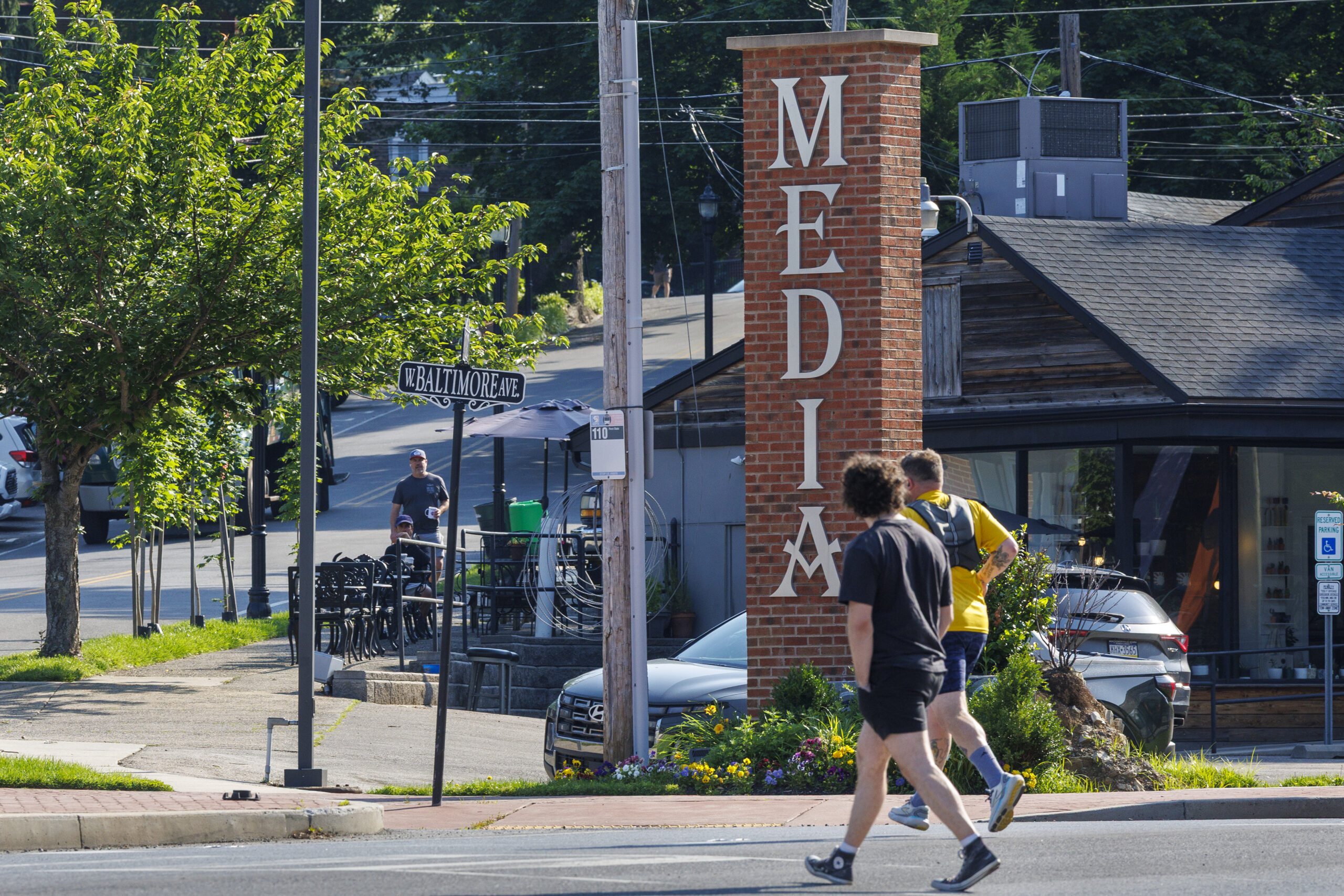
The intersection of W. State Street and Baltimore Pike in Media.
Residents love Media’s dining scene, but want more retail options
Nearly 80% of surveyed residents reported satisfaction with Media’s vibrant restaurant scene, which draws diners from across the region. Media’s downtown is viewed as the borough’s “defining economic and social heart,” according to the plan.
At the same time, residents expressed desire for a greater variety of retail, dining, and entertainment options. Non-food destinations and stores that fulfill everyday needs, specifically bakeries, clothing and home goods stores, and fitness centers, are outlined as particular areas of need.
The plan recommends increasing funding for the Media Business Authority, conducting a business-focused parking study and crosswalk inventory, and working to court new retailers. Recommendations also include enhancing programming at the Media Theatre to generate more foot traffic, deepen Media’s identity as a cultural destination, and “further solidify Media’s draw for visitors from across the region.”
This suburban content is produced with support from the Leslie Miller and Richard Worley Foundation and The Lenfest Institute for Journalism. Editorial content is created independently of the project donors. Gifts to support The Inquirer’s high-impact journalism can be made at inquirer.com/donate. A list of Lenfest Institute donors can be found at lenfestinstitute.org/supporters.
Auston Trusty plays centerback for the U.S. men’s national team, a position that doesn’t lend itself to scoring. But when he fired a goal against Turkey in the group stage finale of the World Cup, William Hall wasn’t surprised.
The University of Richmond junior was well-acquainted with Trusty’s shot. He’d seen it dozens, if not hundreds, of times, standing in the net at Chester Park in Wallingford, Pa.
It was the spring of2020. Hall was 14 years old, an incoming freshman at Strath Haven High School, and Trusty was 21, a starting defender on the Colorado Rapids. COVID-19 had, pushed back the MLS season, and Trusty was at home in his native Media, Pa.
He still needed to train, but there were few options available. So, the professional athlete decided to return to where it all began: Chester Park, home of youth soccer club Nether United, now 1776 United FC.
Trusty had played under coach John Waraksa for six seasons, two years above his age group, before going to the Philadelphia Union Academy in 2013. Hall was on Nether United’s U-15 team when the pandemic hit.
The teenager would often train with his teammates at Chester Park, and one day in late April or early May, Trusty showed up. They ran through warm-ups, then L-shape passing drills, then finishing drills, then shooting drills.
Hall was the only goaltender present, which put him in the unenviable spot of having to defend against a world-class athlete. It didn’t go well for the teenager.
Unlike players Hall’s his age, Trusty moved with a quicker pace and a harder strike. The ball would curl into the corner rather than launching straight ahead.
Auston Trusty (center) made his return to the Philly area in November as part of the U.S. men’s national team group that faced Paraguay at Subaru Park.
“He would just pound them into the net, over and over,” Hall said. “I would say if he shot 20 shots, he’d probably make 18. Maybe hit the post on one of them. And I could scrape a hand on the last one.”
Trusty continued coming back to Chester Park, training with Hall and a group of local players five or six times that spring. It was a thrill for the teenager then, but now, those moments mean even more.
The “Delco-head,” as national team goalie and Wayne, Pa. native Matt Freese calls him, has made an imprint on the sport’s biggest stage. His goal against Turkey on June 25, which came in the third minute, was the second fastest in U.S. World Cup history.
It was not only Trusty’s first international goal, but the first men’s World Cup goal scored by a player born in the Philadelphia region.
“The group chats were going crazy,” said Hall. “But I think my first thought was, ‘I played with a player who just scored in the World Cup. That is insane. I saved his shot as a young kid.’”
Others throughout the Delaware Valley soccer community felt similarly. Paul Norris, who coached Trusty as a freshman at Penncrest High School, said he became emotional just hearing his name and hometown during the roster reveal.
As was the case with Nether United, Trusty was playing far above his weight at Penncrest. Even as a 14-year-old, he was starting alongside players who were much older and bigger than he was.
Auston Trusty (center) celebrates scoring his first-ever U.S. goal in the final match of Group D for the Americans against Turkey.
“What people laugh at now is he plays professionally as a defender,” Norris said. “But at the time, he had obviously a lot of skill, and we had him as a striker. And he was our second leading goal scorer that year.”
For the last 25 years, Norris has worked both at Penncrest and at Springton Lake Middle School, where he taught Trusty physical education. He still sees that lanky kid when he’s roaming the defensive line for Team USA (even though that kid now stands at 6-foot-3, 172 pounds).
So does Waraksa. The 1776 United coach has known Trusty since he was 8 and was at his World Cup debut in Seattle against Australia on June 19. He was down the shore, in Ocean City, N.J., watching with friends and family when the Media native scored his first goal.
U.S. men’s soccer defender and Media native Auston Trusty (left), poses for an image with his former youth soccer coaches and his former club head coach John Waraksa (center).
It brought Waraksa back to 2013, when Trusty scored in Nether United’s state cup final against Lehigh Valley.
“Lehigh had won the last five state championships at our age group,” the coach said, “so he stepped up, even two years young, in a state cup final. I mean, who does that?”
Trusty found himself in some challenging situations with Nether United. Waraksa put him on a high back line, but even from an early age, he took to it. Once the centerback realized he could compete amid a more advanced style of play, his confidence only grew.
And as he continues to represent his country, that confidence is as high as ever. Norris is still coaching varsity soccer at Penncrest, and for the past few years, he’s shown his players clips of Trusty back when he was playing for the Philadelphia Union.
In addition to his time with Nether United, Trusty was also groomed in the Philadelphia Union’s academy and played for its first team.
A lot has happened since then. In 2022, Trusty signed with Arsenal. He returned to Europe in 2023, signing with Sheffield United, and in 2024, he penned a five-year-deal with Celtic.
But Norris now has the best Auston Trusty highlight reel of all, one that is “slightly updated” from his Union days. And with Penncrest’s preseason rapidly approaching, the coach can’t wait to show it off.
“We try to remind the kids that this was somebody who was local,” Norris said. “This was not that many years ago. These are things that somebody who was in this school, and in the seat that you may be sitting in, has done.
“You’re all capable of it. It’s just a matter of, do you want to put the work in for it?”
The Phillies game wasn’t over yet last month but it was over as Nick Piccone kept the TV on mute like a distraction in the background. The Phils trailed the Nationals by two runs and were down to their last strike with the bases empty in the ninth on June 23. It was over.
But Piccone — just like lots of diehards who accepted a loss but refused to stop watching — didn’t turn it off.
“Just in case,” he said.
And then it happened. The Phillies scored eight runs with two outs, delivering the most unlikely win of the season. It was time for Piccone to work. He’s built a following in recent seasons for being the guy who clips the radio calls of Philly sports highlights and posts them to social media.
First, he had to listen to how Scott Franzke — the Phils’ radio voice on 94.1 WIP — described the action.
“I got goose bumps when I listened to it,” said Piccone, who lives in Delaware County. “And I just knew Phillies fans are going to love this.”
He posted a montage of Franzke’s pitch-perfect calls that night and then watched them go viral. Philadelphia loves its teams but the city has always had a deep relationship with the voices, putting Piccone at the intersection of fandom and the way we enjoy it.
Brandon Marsh’s homer was thrilling, but how much better did Franzke’s narration make it feel?
“You could tell that the fan kind of came out,” Piccone said. “Like, he didn’t think that was going to happen. He had the same reaction that we did, and he’s calling it. He reaches that second level for a regular season game when I’m sure he probably thought this was going to be a loss. You could hear the surprise in his voice.
“If you’re listening live on the radio, you feel that instantly. And even if you’re watching the video, you’re like, ‘Oh my God.’ Having him feel what we feel and hear his voice match what we’re feeling inside, makes it so much better. It makes those moments so much better.”
Phillies radio play-by-play announcer Scott Franzke (left) with TV analyst John Kruk.
Piccone does not get paid to post his videos, but he commits himself every game — “I watch every pitch,” he said — to tracking the calls of the big plays and sharing them on social media. He does the same thing for other teams. It’s how he enjoys the game.
It takes about 10 minutes for Piccone to edit the clip on his computer and post it on social media.
“People would message me from Europe or Asia and say, ‘I’m stationed here’ or ‘I moved here for work, and your videos make me feel like I’m home,’” Piccone said. “When I started doing it, I wasn’t even thinking about that stuff. So when people say that I was able to provide that, I was like, ‘Wow.’ That’s a huge reason why I continue to do it.”
His hustle gives a radio broadcast a new life, allowing Franzke’s words to be heard again and again. Some people want to relive a moment they already enjoyed. Others want to feel closer to home.
“It’s flattering, honestly,” Franzke said. “It’s humbling to know that it resonates enough with someone to know that they’re willing to go through that sort of trouble and effort to spread the word.”
Brandon Marsh watches the ball after hitting a two-run home run against the Washington Nationals on June 23.
From Dolly to Franzke
Franzke was told when he first got into the business to have someone in mind to whom you are broadcasting.
“For me, the general Delaware Valley listener is stuck in traffic on the Schuylkill,” Franzke said.
His voice is the soundtrack of traffic jams, days at the beach, and backyard barbecues. Kids tune their radio to the Phils while they’re putting on their PJs, just like their grandparents used to sneak transistor radios under their pillows. They listen to Franzke on their porch at night and power walk around the neighborhood with his voice in their earbuds.
Radio broadcasters Larry Andersen (left) and Scott Franzke (right) call a Phillies game in 2011.
The Phillies broadcast their first game on the radio in 1936 with a former umpire named Dolly Stark calling the action. He was regarded as the National League’s top ump but quit after the 1935 season when the league balked at his request for a raise from his $9,000 salary.
“A new sports thrill,” said the advertisement for the games that were broadcast on WIP 610. “Seeing the game through the umpire’s eyes! Hearing what he thinks about every play, while that play is being made! And it’s a thrill that will last all summer.”
Stark called games for just one season before he returned to calling balls and strikes. But the game became the perfect radio sport. The pace is slow enough for the broadcaster to share a story and make you comfortable. Yet the action becomes exciting enough for them to build drama and make you feel something.
The umpire was followed by greats who became voices of summer like By Saam, Bill Campbell, Harry Kalas, and Franzke. Richie Ashburn ordered pizzas, Chris Wheeler taught you something, and Larry Andersen admires the umpire. There’s just something about baseball on the radio. It works.
“I think one of the reasons that baseball on the radio still works is because people can consume it passively,” Franzke said. “They’re driving, falling asleep in their beach chair, or doing yard work. They can do other things and be a part of it. A lot of people like the audio wallpaper, if you will. It’s there. It’s around them. They enjoy it passively and do other things in their life. We’re just along for the ride, I guess.”
Piccone’s clips show that Franzke is more than just enjoying the ride. He’s driving the car. It wasn’t a silent clip of Marsh’s homer that went viral last week. It was the clip of Marsh’s homer with the announcer sounding just as stunned as you were that it happened.
Franzke said it’s the moment that “generates the goose bumps,” since he’s just a guy. And it was the guy calling that moment last week that gave Piccone chills.
“It doesn’t matter when it is during the season, September or April, the story of the game takes over,” Piccone said. “I think he tells that story perfectly in his calls. Offense, a great defensive play, a strikeout. That emotion comes through and you know it’s a big moment.”
Nick Piccone says he’s “kind of jealous” of people who grew up listening to baseball games on the radio. “I didn’t even think of consuming sports in that way when I was younger. I’m glad I’m able to do it now.”
Being that guy
Piccone grew up on the 1993 Phillies and started watching the other teams in 1999 as a freshman at Kingsway High School. He soon was a diehard: devastated when they lost and elated when they won.
“I just consume it,” Piccone said last month. “Like, I’m mad the Phillies lost today.”
But the guy who chops up the audio of every radio broadcast didn’t grow up listening to the radio. He just watched it on TV.
“People who say they were brought up listening to sports on the radio, I’m kind of jealous of them,” Piccone, 40, said. “Because I didn’t even think of consuming sports in that way when I was younger. I’m glad I’m able to do it now.”
“We just have amazing play-by-play guys. You think of the Phillies, you think of Franzke. You think of the Flyers, you think of Tim Saunders. You think of the Sixers, you think of Tom McGinnis. Eagles, Merrill Reese and Mike Quick. They’re synonymous with the teams.”
Piccone planned to do what he does now — clip the radio call and match it to the TV feed — when the Eagles played the Patriots in Super Bowl LII. But his buddy’s Wi-Fi dropped that night, so Piccone closed his laptop and watched the game like a normal fan. And then the Eagles won, and he wished he had the clips.
He made sure to have a stronger connection in 2022 when the Phillies went to the World Series. He clipped every call that October, and his social media following soared.
He sends out Franzke’s call along with the team’s Spanish broadcasters and the opponent’s call. Piccone noticed that the TV calls are the ones usually shared by the teams or networks. The radio guys, he thought, weren’t getting their due.
People soon started messaging him for specific calls or pointing out things he may have missed. He suddenly felt like he had a responsibility. He became that guy.
“It’s fun being known for that,” said Piccone, who writes for Crossing Broad. “I like being that guy.”
The Phillies season likely will end in October again, giving Piccone plenty of moments to share. The goose bumps, he said, usually are felt in the fall when the stakes are higher. But sometimes the broadcaster makes you feel it on a weeknight in June. And that’s why you leave the game on.
“People will say, ‘I heard your call,’” said Franzke, who is not on X, formerly known as Twitter. “And there’s two places they heard it: WIP playing it back or on social media. It’s cool that Nick invests that kind of time. At the end of day, this promotes what we’re doing.”
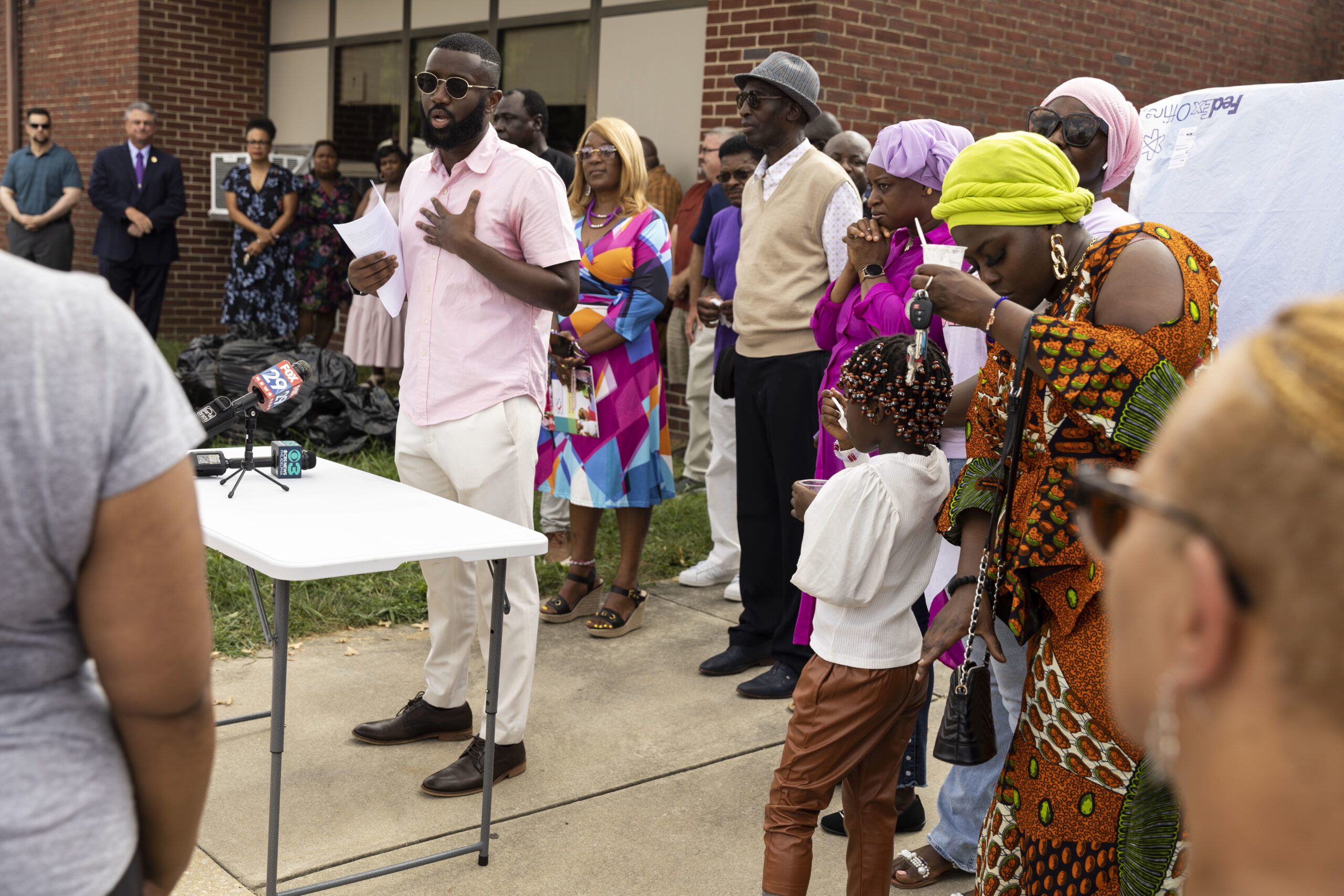
Siddiq Kamara remembers standing side by side with his aunt outside of the Delaware County courthouse and calling for changes in how police are trained after a stray bullet fired by Sharon Hill police officers killedhis cousin Fanta Bility.
Three years later, his office is inside that same building.
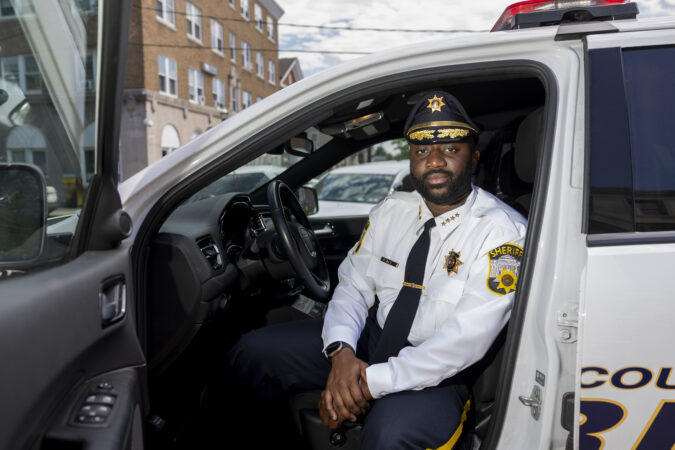
Kamara, 30, became the youngest sheriff in Delaware County history when he cruised to victory in November with 63% of the vote. The son of Liberian immigrants, Kamara turned his family’s tragedy into a platform for improving the way community policing is carried out in his home county.
“The people in Delaware County, I’m here to work with them, and my office is going to do that every single day,” he said.
“This is the greatest country in the world. Being 30, being Muslim, being a first-generation immigrant and being the sheriff of one of the biggest counties in Pennsylvania, it’s unheard of. And I don’t take that lightly.”
In his first six months in office, Kamara equipped all of his deputies with body cameras and beefed up recruiting efforts, including open fitness tests throughout the county, to help fill the 35 vacancies he inherited. He’s mandated de-escalation and regular firearms training for his deputies, in memory of his cousin.
Siddiq Kamara (left) stood by his aunt, Tenneh Kromah, in January 2025 as they renamed a park in Sharon Hill after his cousin Fanta Bility.
Delaware County Council President Monica Taylor said Kamara is bringing a fresh perspective to a row office that often gets overlooked.
“He doesn’t just talk. He does the work,” Taylor said. “That’s what makes him a great public servant. He’s bringing everyone to the table to make these improvements.”
That’s notable for a county sheriff, given the role traditionally, doesn’t require officials to stray too far beyond the county courthouse. But Kamara wants to change that, making sure he and his deputies are a frequent presence in the towns they serve.
That desire comes from Kamara’s own experience. After serving six years in the Army National Guard, Kamara became a police officer in Yeadon. He later took a job in the state Attorney General’s Office, working in various roles including narcotics and the personal protection detail for then-Attorney General Josh Shapiro.
Kamara’s cultural background and linguistic skills — he speaks African dialects including Mandingo and Fula, as well as French — were called upon by federal investigators as they built their case against Laye Sekou Camara, a Liberian war criminal.
He said he became a police officer because so many people in his community in Upper Darby, drawing on their experiences in their home countries, were distrustful of police.
“We interact with the public every single day, and sometimes these individuals, we’re not getting them at their happiest time. It’s their most vulnerable time, and you have to use empathy,” he said. “So we’ve been sending some of our supervisors to trainings so they can understand the tools when they’re out there in the community and they can teach their fellow colleagues how to de-escalate situations.”
But when Fanta Bility was gunned down in August 2021, Kamara’s professional ambitions changed. The 8-year-old was struck by a stray bullet after three Sharon Hill officers opened fire toward a crowd leaving a high school football game. They were aiming at a car they mistakenly believed was the source of a nearby shooting.
Those officers were later fired and pleaded guilty to reckless endangerment. But Kamara knew something had to change.
“If you understand what happened that day to my cousin, cops, unfortunately, we can’t make mistakes. It costs people’s lives,“ he said. ”And, that day, it cost my cousin’s life, so I wanted to make sure that in my capacity, as the sheriff, our officers are properly trained.”
Siddiq Kamara speaks during a backpack giveaway at Sharon Hill Elementary School in August 2023 held in memory of Fanta Bility.
State Sen. Anthony Hardy Williams, a Democrat who sponsored a bill nicknamed “Fanta’s Law” that would require all Delaware County police departments to be accredited and receive annual use-of-force training, has been a mentor and friend to Kamara for years.
“Back then, he was annoying,” Williams joked. “But he learned from my team, and it grew from him just being unapologetically persistent and curious, to him understanding he has a real value.”
From Kamara’s early days of volunteering at political events, it was clear to Williams that he was dedicated to public service. “Fanta’s Law,” Williams said, is their latest collaboration.
“He’s here to improve things, not just here to say ‘I have a title and have a position,’” Williams said. “It’s clear he wants to find out how to use this position to improve the office and also improve the lives of people who don’t even know about the office.”
Kamara, for his part, said he’s thankful for the opportunity to enact change in the county that raised him.
“When you’re in an office, and I teach my deputies this all the time, is that we do the protection part, but we’ll forget sometimes about serving,” he said. “And serving goes a long way.”